
After our lovely afternoon in Anzio, we decided to explore a different town. Son 1 had lots of enthusiasm, but I had less energy, so we compromised on a short trip into the hills to Sermoneta. Husband had found the town in his guide book—a paper book, from many years ago—and Son informed him that no one uses those any more, and the town was probably long gone. But it wasn’t. I doubt it ever will be. This town is older than anyone living in it, and that has a certain permanence.
We saw the town before we reached it, perched high on the peak of a hill. The road was steep, and there were several parking places, and we were keen that Husband should drive to one as near as possible to the town, and he was keen to not end up having to drive through the narrow streets of an ancient town. In the end it was fine, there was a car park very near to the town that did not involve one-way traffic or cobbles.
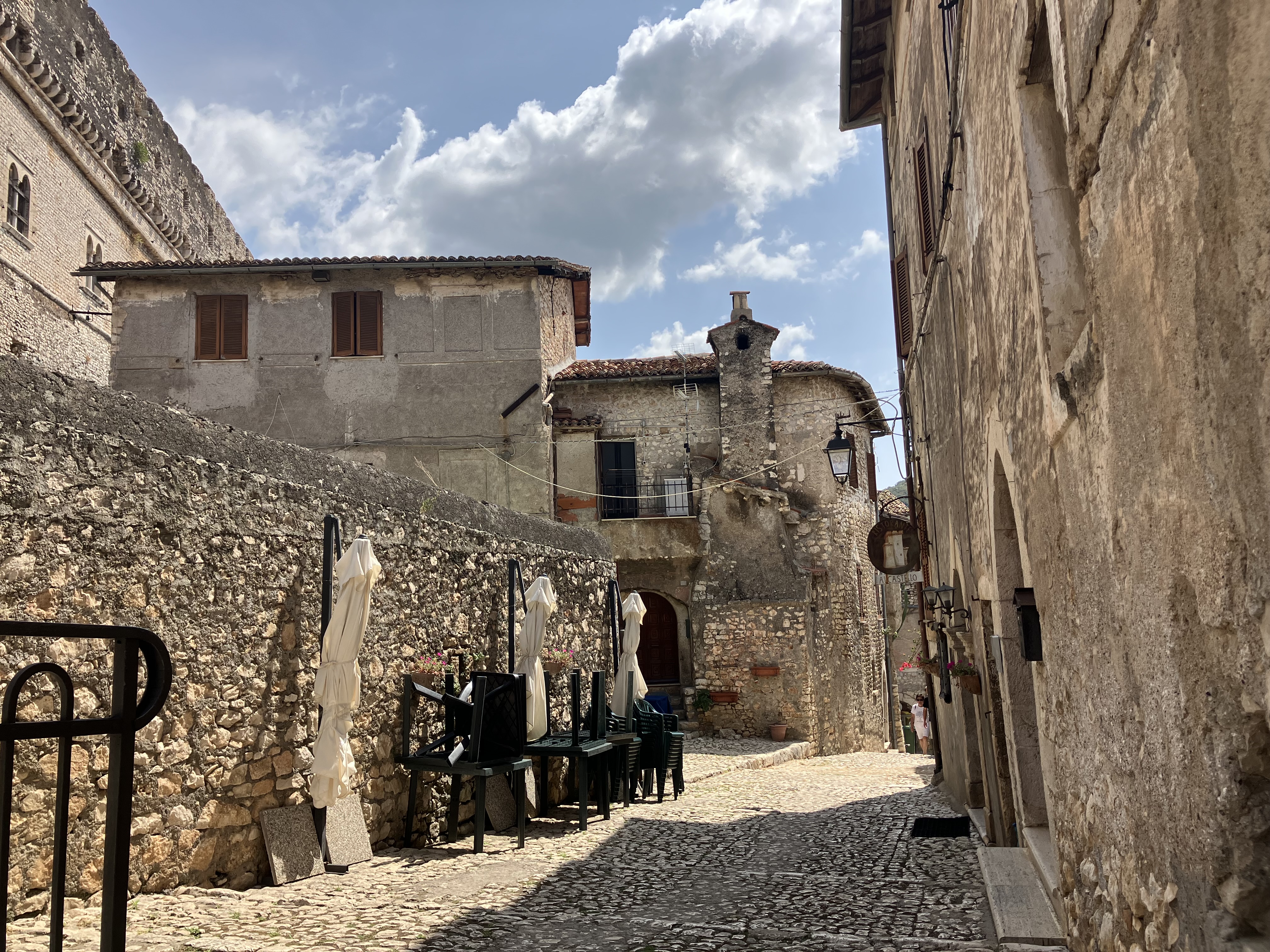
We climbed the stone steps that led into town, and instantly we were transported into a fairytale of narrow paths winding past ancient stone buildings covered in bougainvillea, arched doorways, cobbled roads, towers draped in ivy. So beautiful. We forgot about the sun searing down on us, and wandered happily past shops crammed with local honey and wooden puppets and fresh figs—all about to close for the afternoon. We explored the church, and the viewpoint, and watched a band of musicians who were setting up for an evening concert. Then we returned to the main square, and looked for a restaurant.
The main restaurant had a rather predatory man who tried to entice us inside with platters of cheese and meat, all at a bargain price. We have listened to similar patter before in Italy, and rarely does the price remain unchanged once we are actually sitting. We smiled, and continued down the road. Then, just as I was about to wilt and suggest we returned to the pushy man in the square, we saw a small restaurant with tables set alongside the road, and an old Italian man hunched over a glass of red wine and a plate of sausage and bread, and I was hooked. This was Italy. This is where I wanted to eat.
They pushed together the tiny tables so we could sit together, and they allowed me to buy a glass of wine even though the menu only listed it by the bottle. We shared platters of local cheese, which arrived with walnuts and a tiny wooden bowl of honey, and a brown paper bag of bread. Really, this is perfection. We were sitting right on the street, and occasionally a car drove past, and I wondered whether it would bump into the table, but after a large glass of red wine, I didn’t even care if it did. We finished our lunch with small cups of bitter espresso (the less grown up members—which includes Husband—spoiled theirs with milk) and I felt a surge of contentment.
Italy is littered with these walled cities, and they seem timeless. There is something magical about them, something that beckons to you, telling you to leave the real world, and set up home in one of the stone houses with shutters. Maybe, after I have finished my PhD, when I am very old, I will move here. I will serve scones and tea to tourists, and drive a Vespa with my dog in the side car, while the sun turns my skin to leather. I can think of worse places to grow old, and perhaps, living in place that has watched people for centuries, it would be impossible to ever feel properly old, because compared to the city, human life is just a flash.

Thank you for sharing my afternoon. I will tell you about Rome—the city that breathes history—in another blog.

 Anne E Thompson