
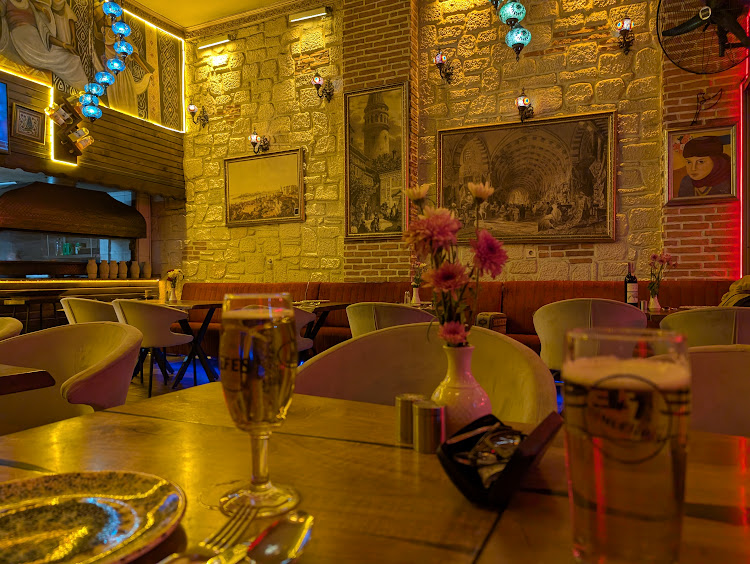
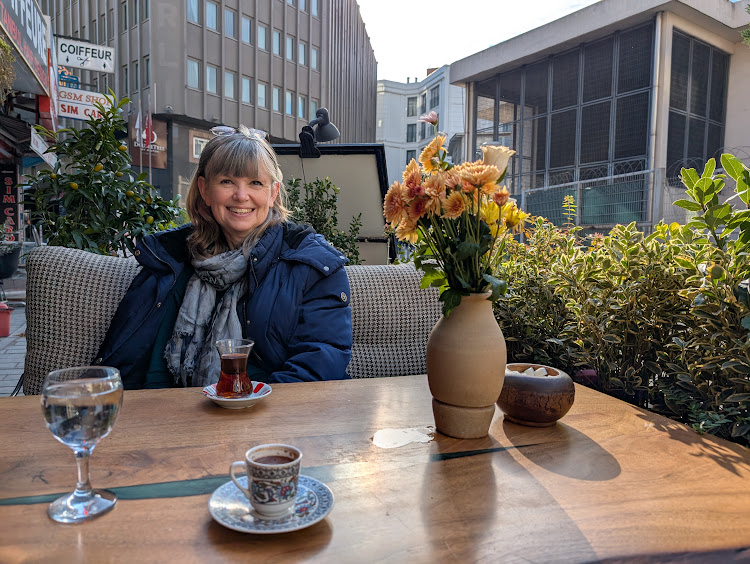
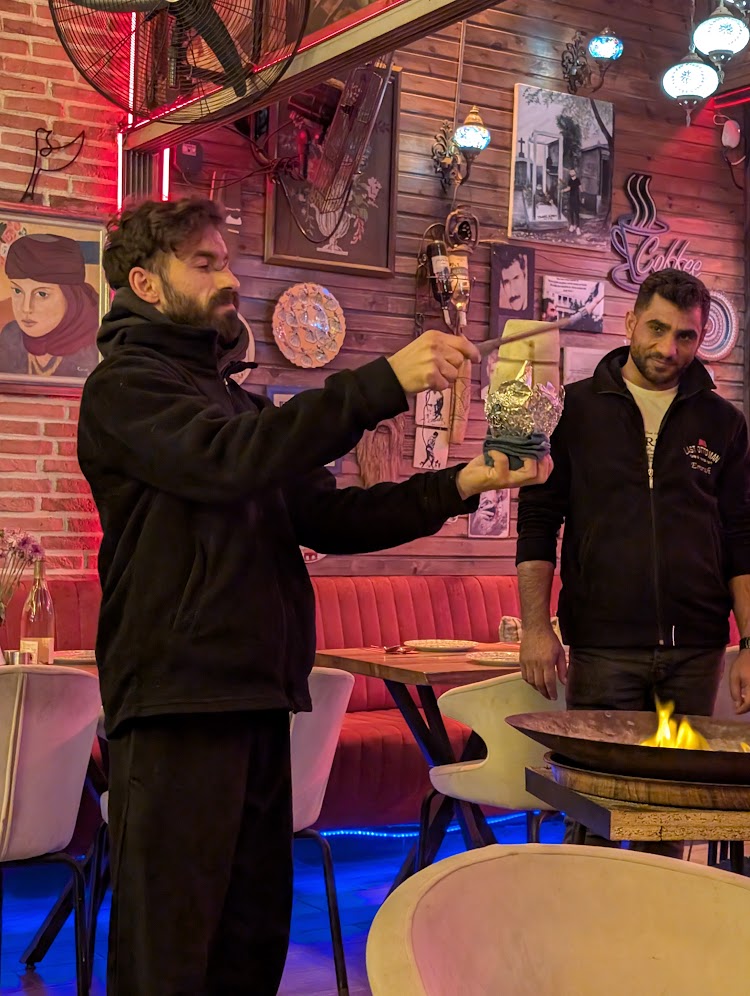
We soon developed a routine of a huge breakfast at the hotel, snacks for lunch, then a big dinner at the Last Ottoman Restaurant and Cafe which was our restaurant of choice because it had good reviews, sensible prices and the staff were very friendly. They are a Kurdish family, all working in the restaurant set up by their grandfather, and we found them warm and welcoming. (Though to be honest, I found most people in Turkey to be warm and welcoming.) One local dish is cooked in a small clay pot sealed with foil. It is stewed for a couple of hours, then (for the tourists) it is tossed in flames, and the pot is cut open and the hot food is tipped onto a sizzling platter. The performance is fun, and I bought one of the pots in a market for a couple of pounds. Very ethnic. They begin each meal with a complimentary bowl of lentil soup, served with steaming flat bread. You can taste different herbs, and mint, so I’m guessing it starts with a lamb stock. After the meal they bring warm squares of havila, and tiny glasses of clear tea on little white saucers. The restaurant is cosy, with walls full of pictures (lots of photos of revolutionaries like Che Guevara) and cushioned seats, and in the centre a wood stove bellows out heat. It is also, like everywhere I have been in Turkey, very clean.
My favourite thing was the ancient water cistern, hidden under the city near the Blue Mosque. It was built in Roman times (maybe by Hadrian) but fell into disuse and everyone forgot they were there. Which means they remained unspoilt until they were opened, drained, and made safe.
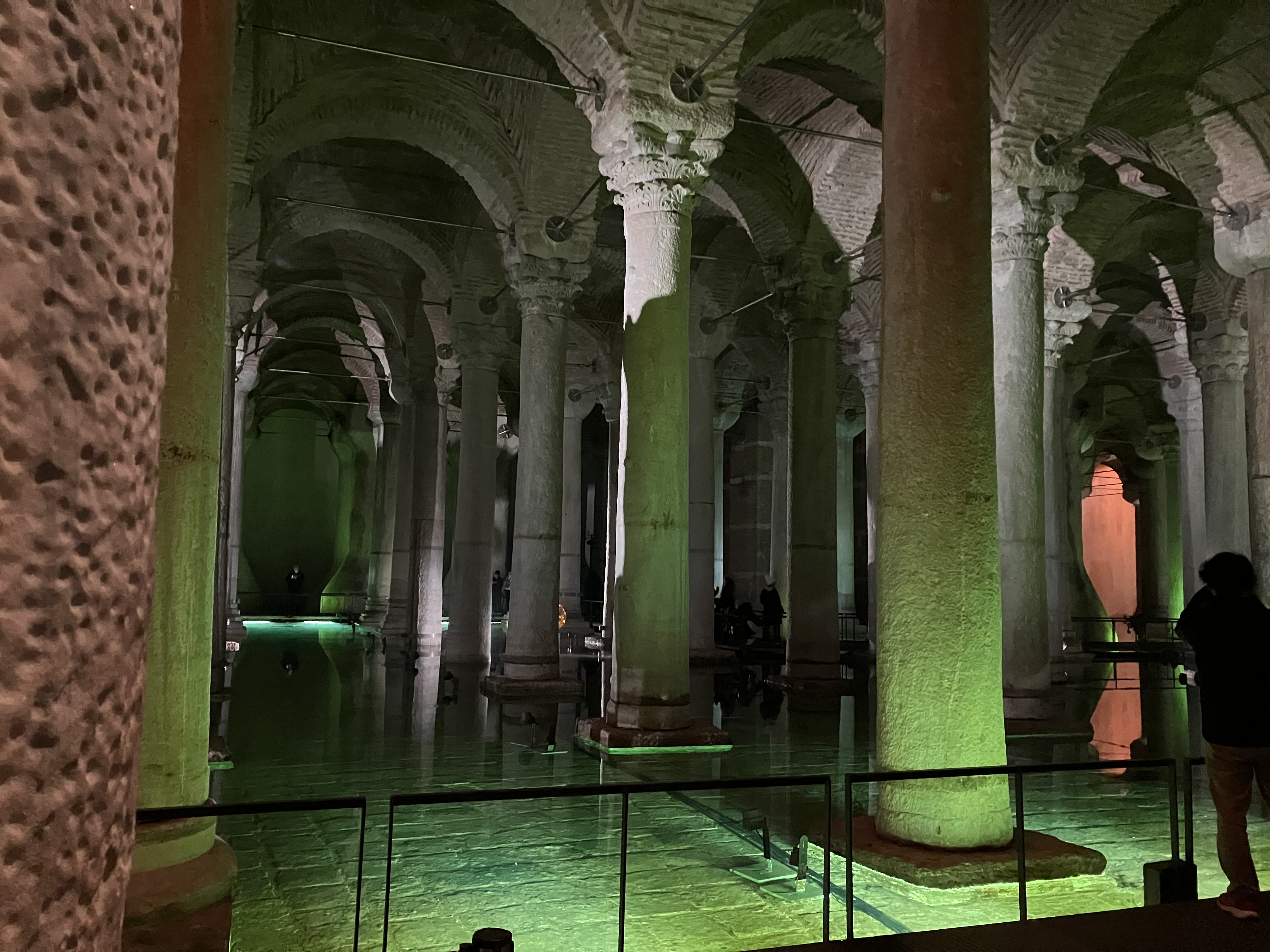
We paid 900 TL to enter (about £20 each) and wondered whether it was worth it. It was. We walked down a metal staircase, into a world of atmospheric lighting reflecting on the water and elegant arches over tall pillars. A subterranean palace for enchanted princesses, or ghosts, or maybe just James Bond (From Russia with Love).
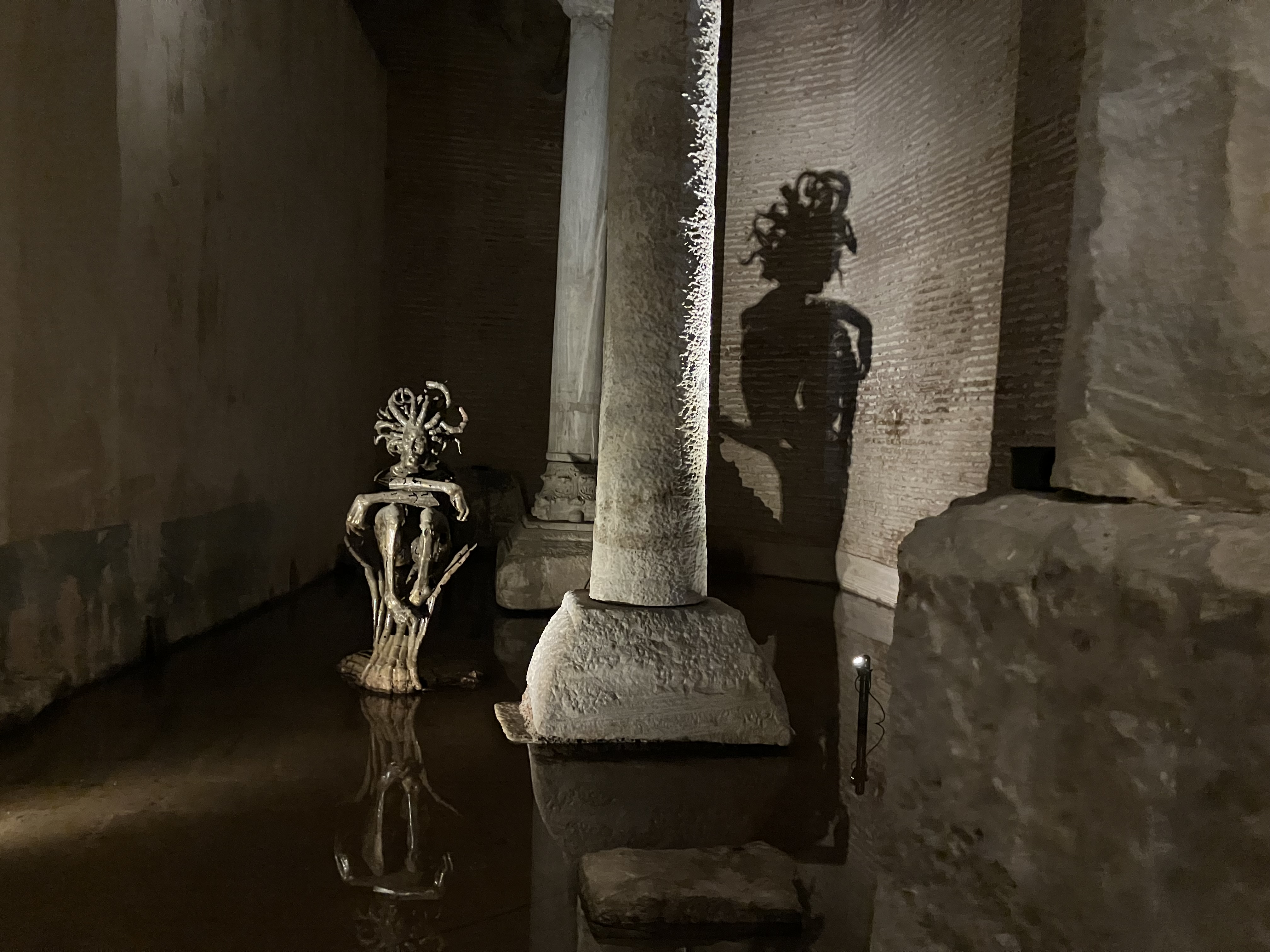
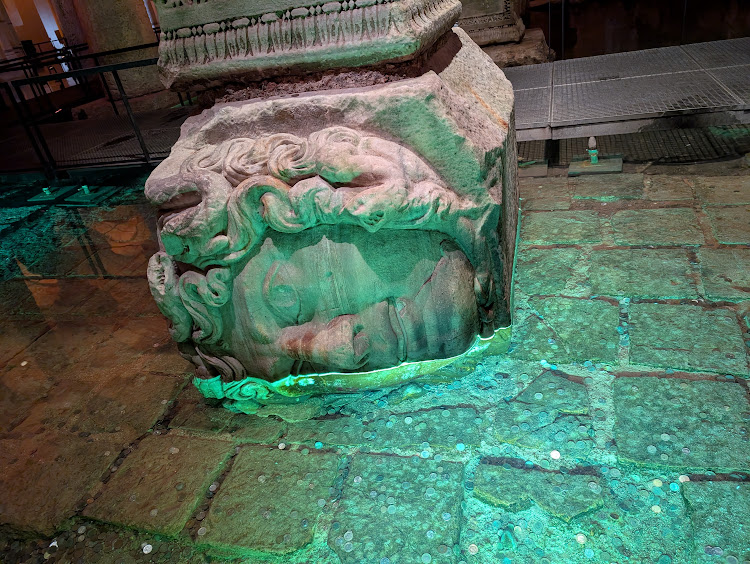
The cistern was made by slaves, and one pillar was engraved with eyes and tears to represent those who died. Other pillars stood on huge Medusa heads—thought to have been taken from Ephesus—which were placed on the side and upside-down. Whether this was to show that the Christian architects (who used slaves) no longer believed in the power of Medusa, or whether they were slightly nervous and so didn’t place them upright (just in case) is anyone’s guess. The modern architects have placed a sculpture of Medusa nearby, and the lights cast her shadow on the wall, which is brilliant.
On a November afternoon, there were few tourists, and we wandered along the suspended metal walkways enjoying the atmosphere, not hurrying, noticing the splendour of the place. I don’t know if they limit the numbers during peak times. Afterwards, when we had walked back up to street level, we crossed the road and sat, looking across the park at the Blue Mosque. I’ll tell you about our visit there tomorrow.

I loved being here, Istanbul is a city with a heart. November turned out to be a good time to visit—but be ready in case it snows.
Thanks for reading.
Take care.
Love, Anne x

anneethompson.com
*****

 Anne E Thompson