First Impressions of Tokyo


First Impressions of Tokyo

Arrived in Tokyo after a week of obstacles: dog kennels all full, no one able to cover Lunch Club or children’s work, house being painted (will not comment on the wisdom of deciding to arrange for renovations to coincide with a trip away). However, we did finally make it to the airport (after a brief return to the house because one of us forgot to put on shoes and suddenly realised they were wearing slippers – but we won’t comment on that either).

The flight, with BA, was about 11 hours, which is way too long wherever you’re sitting, but if your seat happens to be right next to the toilets, is even more unpleasant. The highlight – which almost made it worth it – was a brilliant view of the peak of Mount Fuji as we landed.

Finally arrived at The Westin in Tokyo. Hard to keep track of time when travelling, so several days had merged into one long one. Hotel was nice, dumped bags and went for a wander.

I have never been to Japan before, and had fairly low expectations. Tokyo is unexpected. It reminds me, on first impressions, of the Stockholm I visited 20 years ago, in that it appears to be very clean and functional but with ugly buildings. And massive flyovers. Things are designed to work efficiently, not to look nice. Perhaps in a city this is sensible – I’m not sure people who work in London are particularly enamoured with the time it takes to edge your way around Trafalgar Square.
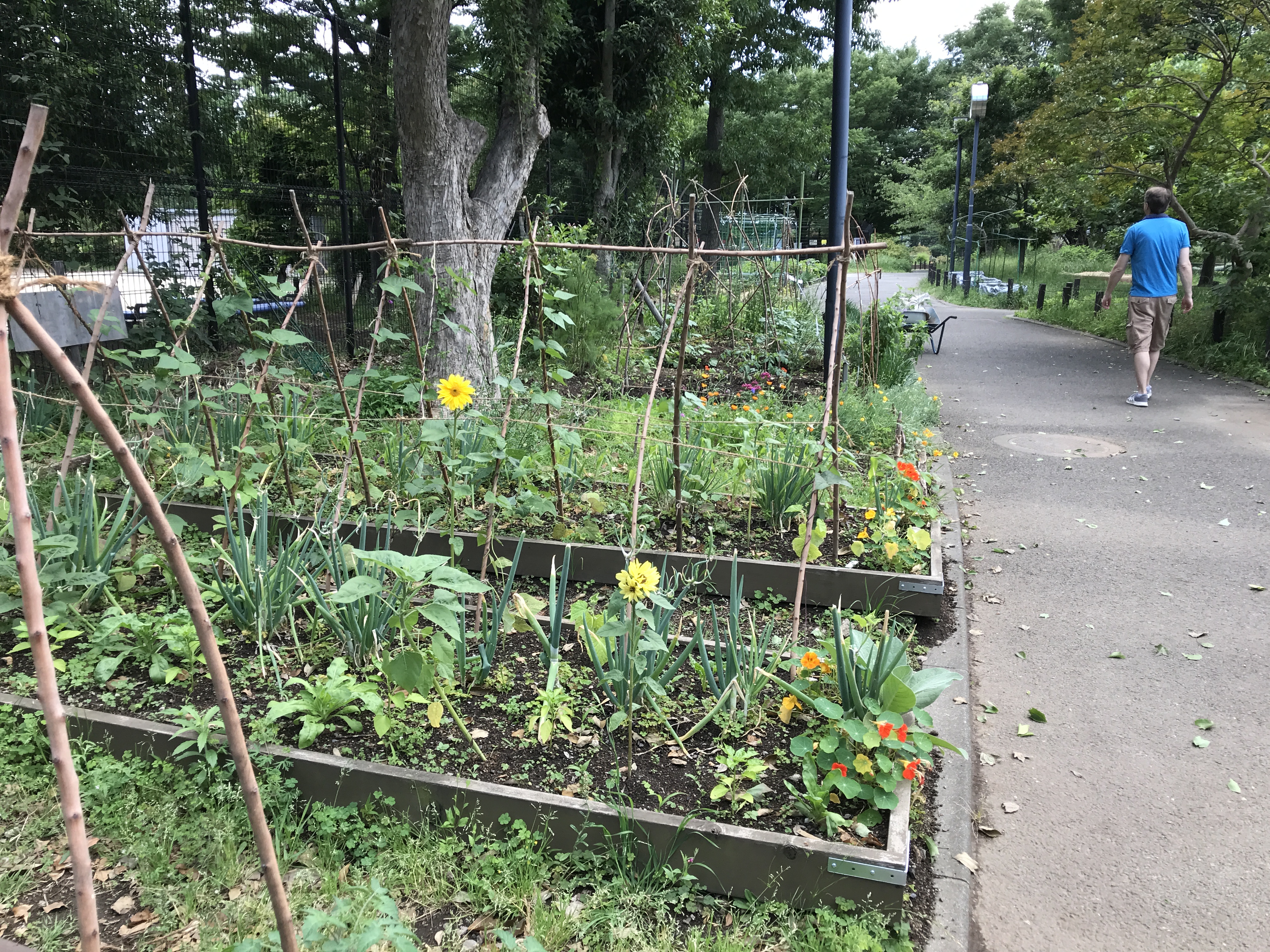
We went for a quick stroll, to a river near the hotel. The weather is humid but not too hot. We wandered through a little park, where school children were growing vegetables. We saw lots of bikes – many of them electric, and lots had a young child sitting in a child seat at the back. Japanese children are very very cute. I am guessing, by the number of bikes left unlocked, some with bags in the basket, that Tokyo has an unusually low crime rate. My mother tends to leave her bicycle unlocked and no one steals it (but then, it is particularly old and unfashionable) but I’ve never seen other bikes abandoned before, and certainly not in cities.
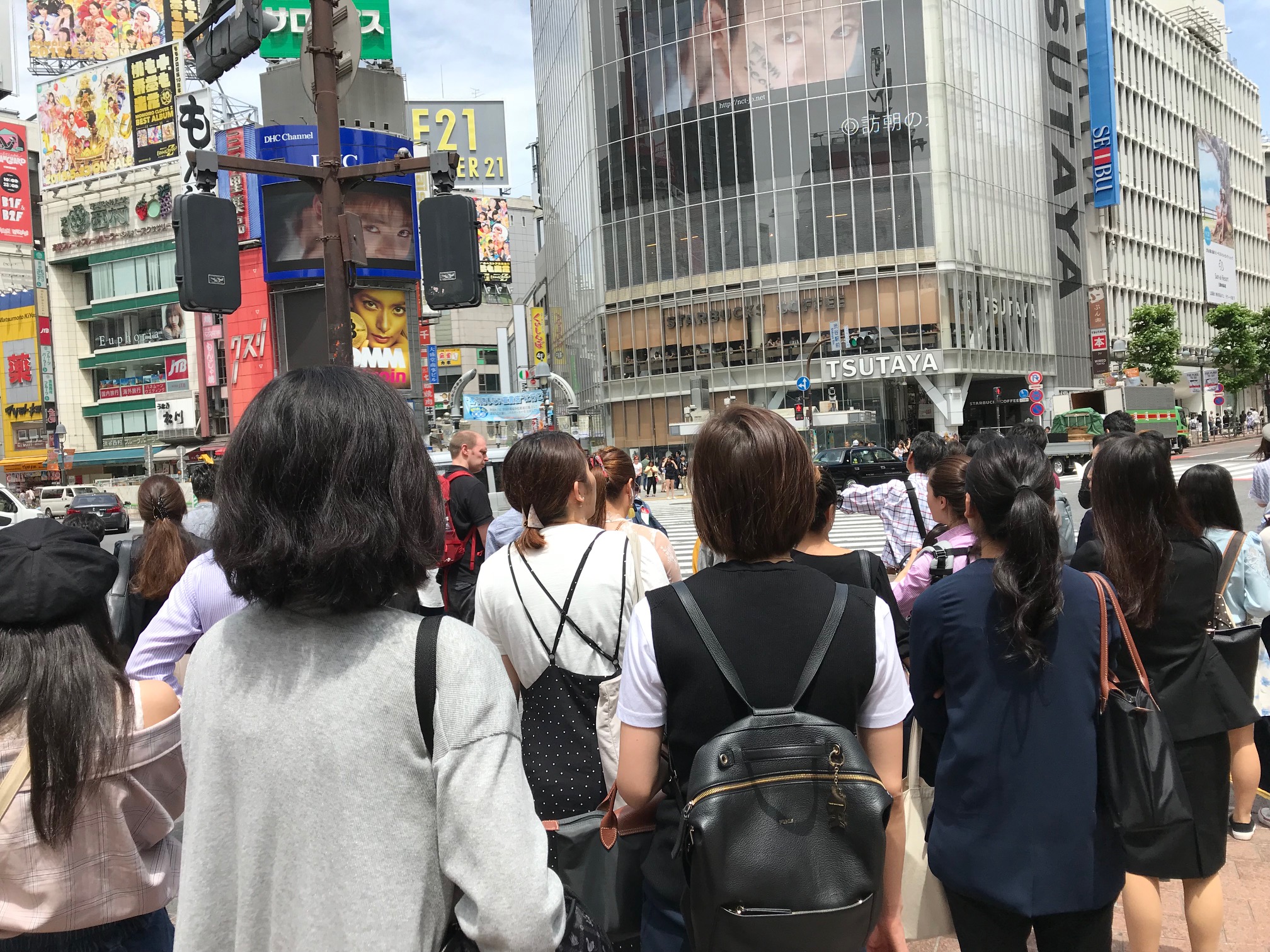
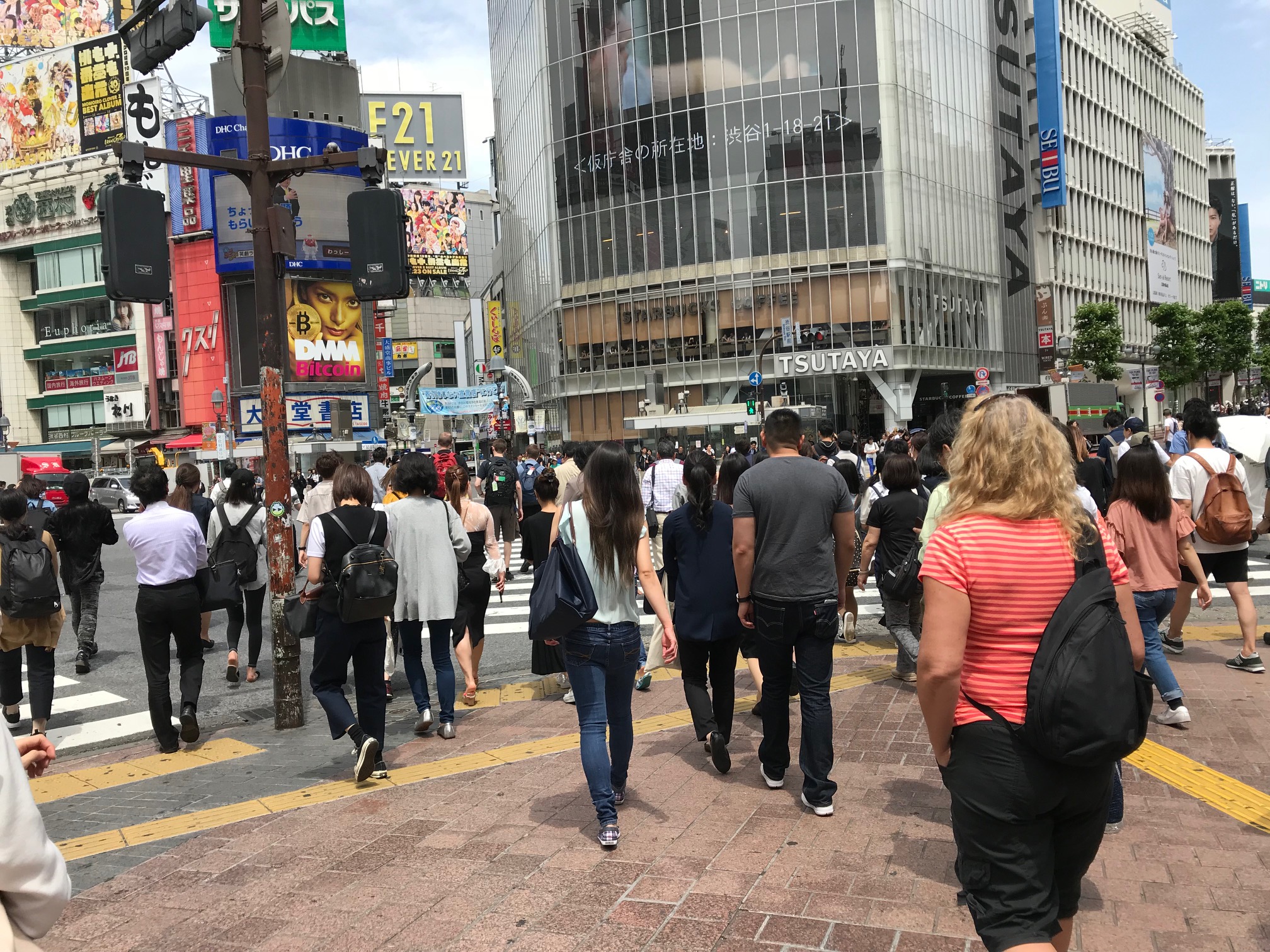
I can tell you that: everyone obeys the traffic signals, the streets are very clean, and everyone has the same hair as me. This is weird, and feels rather surreal (perhaps not helped by being awake for about 36 hours now). In England, straight dark hair is fairly unusual, but here everyone has it. It is like looking at the back of me all the time. People are also very smart, and I feel scruffy and crumpled. I may have to do some ironing while we’re here.

There are lots of men with flags, who wave you around every obstacle (sort of the opposite to India, where a deep hole in the street will be completely unmarked). There are also vending machines everywhere. As in, everywhere.

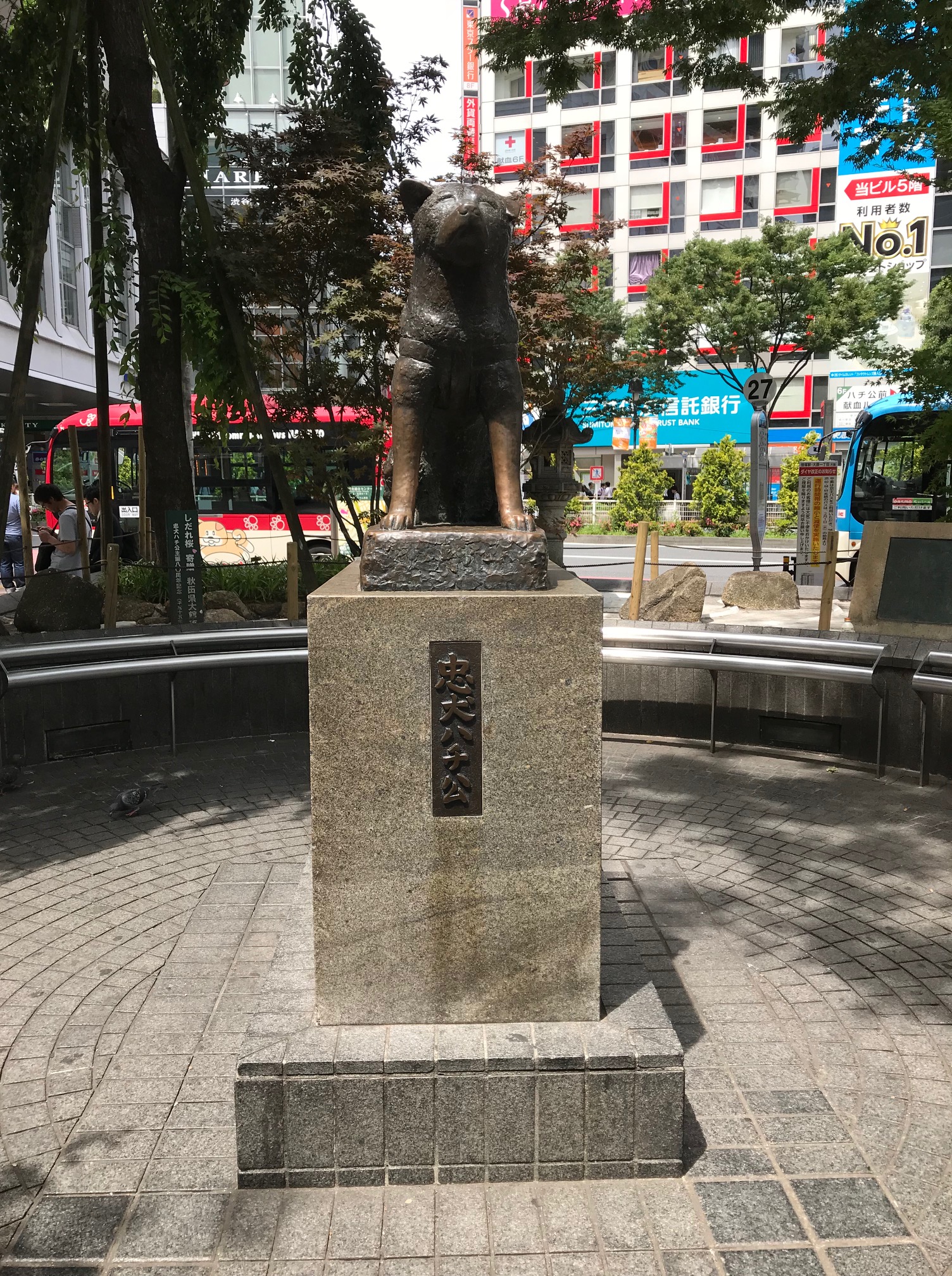
We went to the Shibuya district. There’s a statue of Hachiko, a dog who sat outside the station every night waiting for his master, for ten years after his death. We also saw a famous road crossing, where people were pausing, in the middle, to take photographs – it’s one of the iconic scenes of Tokyo.

We wandered around a district which appeared to be full of hairdressers – lots of shop windows filled with photos of women’s faces. Read the Chinese characters, and realised that they were in fact brothels – suggested to Husband that we might find a better area to walk around.

Went back to Ebisu district, which is where our hotel is. Wanted dinner, but didn’t have the energy to cope with anything unfamiliar, so opted for Burger King. Buying a burger in a foreign language is challenge enough, but a combination of pointing and smiling, plus a very helpful server, managed to buy a couple of burgers. In Japan, “small” means small – I think I had a child’s dinner (about 8 fries and a half-sized coke).

We pretty much sussed the underground system – I will explain it in another blog, but it’s a brilliant way to get around Tokyo. I’m looking forward to discovering more of this city.

Went to bed feeling exhausted but not at all sleepy. The joys of jet-lag…
*****

Thank you for reading.

Why not sign up to follow my blog?
anneethompson.com

*****

If you enjoyed this, you will love my new book: The Sarcastic Mother’s Holiday Diary.
I have always written a diary on holiday, so last Christmas, I decided to find all my old diaries and blogs, and make a book for my children. However, several other people also asked for a copy, so I have written a public version – it’s available on Amazon and has been described as “The Durrells meet Bill Bryson”!

Why not buy a copy today? I think it will make you laugh.

The US link is here:

https://www.amazon.com/Sarcastic-Mothers-Holiday-Diary-ebook/dp/B07N95281F/ref=sr_1_1?ie=UTF8&qid=1549015525&sr=8-1&keywords=the+sarcastic+mothers+holiday+diary

The India link is here:

https://www.amazon.in/Sarcastic-Mothers-Holiday-Diary-ebook/dp/B07N95281F/ref=sr_1_1?ie=UTF8&qid=1549015429&sr=8-1&keywords=the+sarcastic+mothers+holiday+diary

The UK link is here:

https://www.amazon.co.uk/Sarcastic-Mothers-Holiday-Diary-ebook/dp/B07N95281F/ref=sr_1_2?ie=UTF8&qid=1549014970&sr=8-2&keywords=the+sarcastic+mothers+holiday+diary


A Little London History


A Little London History

Walking around London is always fun – there is so much to see, so many tiny parts of our past left for us to find. However, not all of it is obvious, so here are a few snippets I learned recently.

Did you know, that if a name ends ‘sey’ it was once an island? Bermondsey, near London Bridge, was once a small area surrounded by marsh land. Most of the south bank was marshy, which is why there was only one bridge – London Bridge – crossing the Thames. When you are next crossing London Bridge, just after leaving the railway station, look down at the road underneath. You will see two metal tram lines. These mark the position of the original bridge. They are surprisingly narrow, considering the bridge was a main thoroughfare and had houses and businesses on both sides, over-hanging the river. There is a story (possibly not true) that because people crossing the bridge had to pass very close to each other, they would pass with their sword hands next to each other. Most people were right-handed, so people walked on the left side – and this is why today, English people drive on the left. Apparently Napoleon was left-handed, which is why the French drive on the right side.

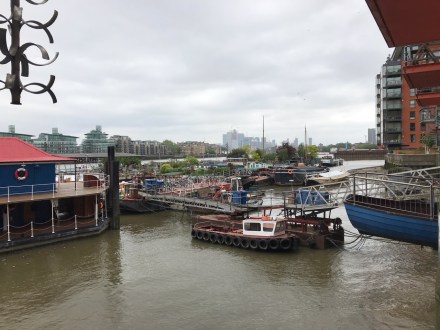
If you walk along the south bank through Bermondsey, there are many buildings which were the original dock buildings. Most are now converted to homes, but when you look at them, it doesn’t need much imagination to see how they would have been. At St. Saviours Dock you can see the setting where Dickens wrote the death of Fagin in Oliver Twist. If you walk back to the river, there are areas of floating gardens, and on Sundays they are open to the public.

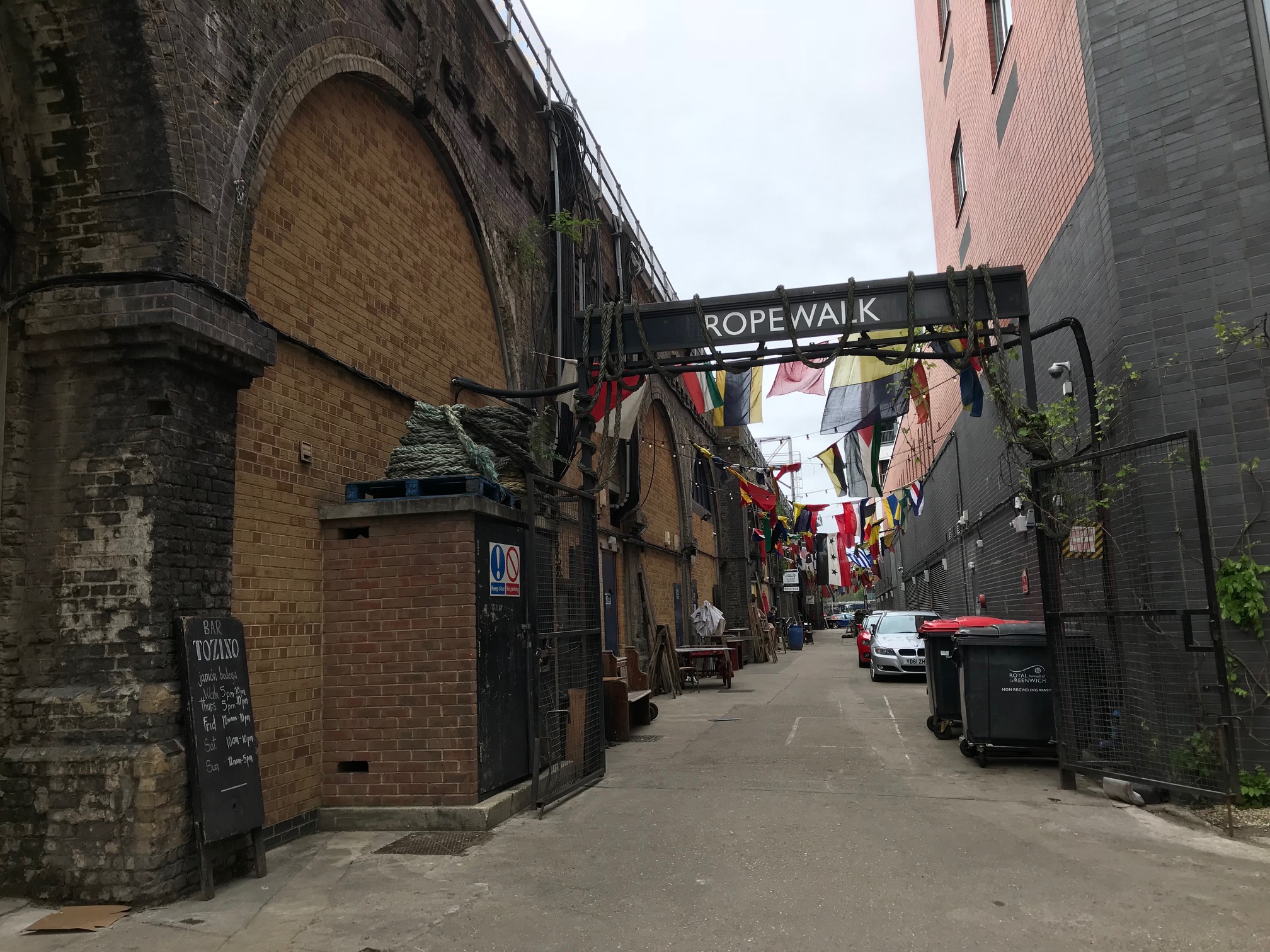
Many of the railway arches are now small businesses. If you wander around Bermondsey on a Saturday morning, you can buy all sorts of fine produce – a foodies paradise. There is a fine honey shop, which uses the honey from London beehives. Did you know there are beehives on top of Fortnum and Mason, which are shaped just like the shop? There are also hives on top of the KPMG building, though I doubt they are shaped like a set of accounts!

Near to London Bridge is Borough Market, a hive of human activity. This is the place to shop if you want unusual spices, fancy breads, or specialist fish. Just beyond, is Neal’s – the place to buy English cheese. There is also Monmouth coffee house, which I am told sells the best coffee.

The South Bank is where the prostitutes worked and they were called ‘wild geese’. A short walk from Borough Market is a plaque, marking their graves.

Many of the areas of housing are named after what the area was previously used for. So, the housing on the Neckinger estate is so named because it was an area of execution. I’m not sure that the current residents realise that…

****

Thank you for reading.
You can follow my blog at anneethompson.com

Anne E. Thompson has written several novels and one non-fiction book. You can find her work in bookshops and Amazon.

xxxx

If you enjoyed this, you will love my new book: The Sarcastic Mother’s Holiday Diary.
I have always written a diary on holiday, so last Christmas, I decided to find all my old diaries and blogs, and make a book for my children. However, several other people also asked for a copy, so I have written a public version – it’s available on Amazon and has been described as “The Durrells meet Bill Bryson”!

Why not buy a copy today? I think it will make you laugh.

The US link is here:

https://www.amazon.com/Sarcastic-Mothers-Holiday-Diary-ebook/dp/B07N95281F/ref=sr_1_1?ie=UTF8&qid=1549015525&sr=8-1&keywords=the+sarcastic+mothers+holiday+diary

The India link is here:

https://www.amazon.in/Sarcastic-Mothers-Holiday-Diary-ebook/dp/B07N95281F/ref=sr_1_1?ie=UTF8&qid=1549015429&sr=8-1&keywords=the+sarcastic+mothers+holiday+diary

The UK link is here:

https://www.amazon.co.uk/Sarcastic-Mothers-Holiday-Diary-ebook/dp/B07N95281F/ref=sr_1_2?ie=UTF8&qid=1549014970&sr=8-2&keywords=the+sarcastic+mothers+holiday+diary

Not A Pub Crawl…


Not A Pub Crawl

I was invited to a guided walk: ‘Ales and Pubs, Sipping the History of British Beer and the Social History of the South Bank’. As I like both history and beer, I accepted. I wasn’t entirely sure what I had been invited to though – was this an intellectual way of saying “pub crawl”?

I arrived on time at Bermondsey Underground, our starting point. Met the guides, a knowledgeable historian and the FT food and wine journalist. Began to realise this was going to be more of a guided walk, and less of a pub crawl. We walked to St James Church, and were told to notice the water pump outside, a source of clean water for local people, and the galleries inside the rebuilt church (it was bombed during the war). Definitely more of a guided walk.

We then went to Spa Terminus, which are several units built under the railway arches. All the railway lines from the South to London go through Bermondsey, and due to the marshy soil, they were all built on sturdy brick arches. These are now home to many different small businesses – including some breweries. We stood outside one, and learned a few historical facts while looking at the closed door, in the cold wind. I wished I had worn a coat, and was now certain that this was not a pub crawl.

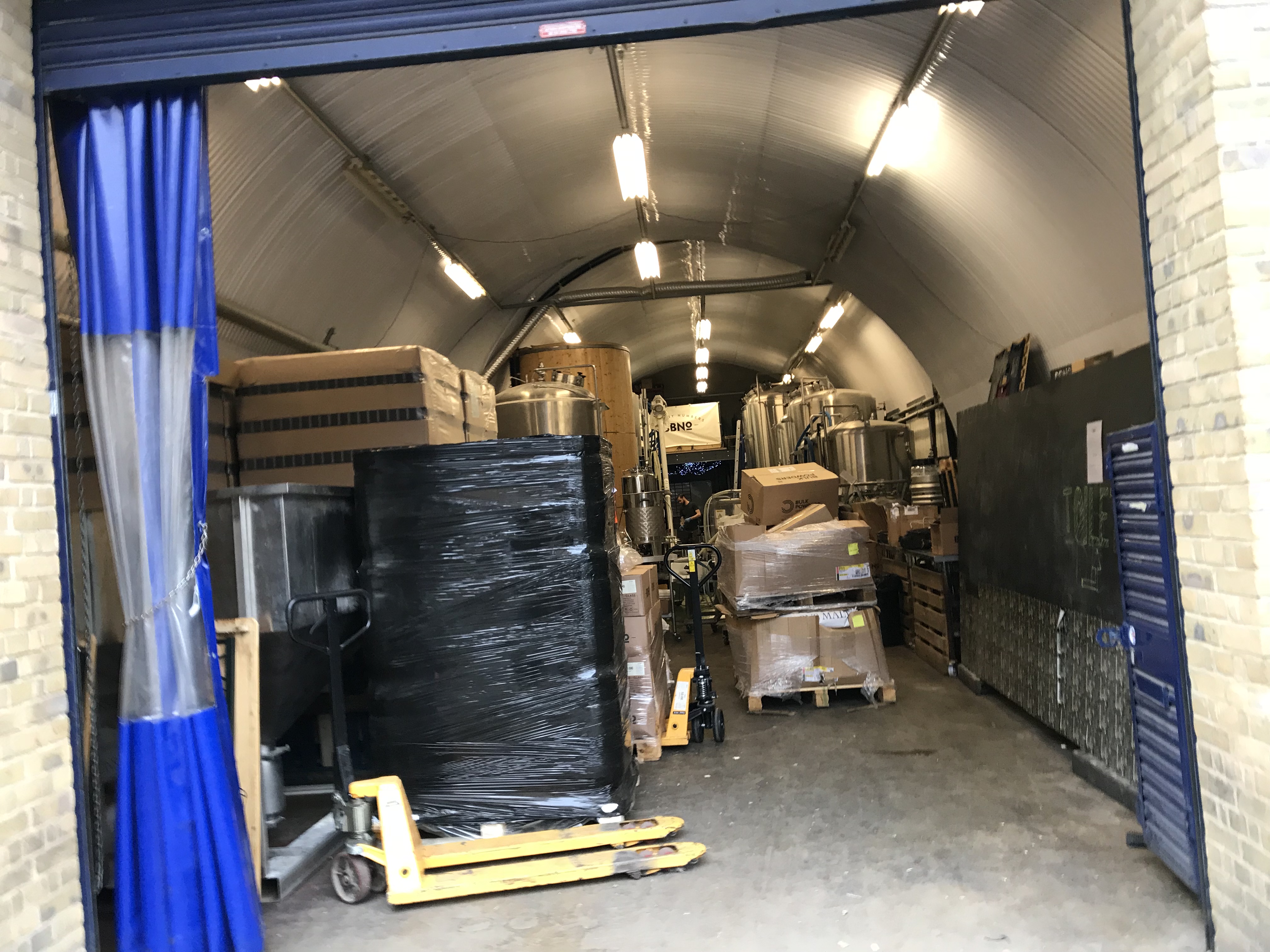
We then walked to the Brew By Numbers brewery, which was also under the arches. It was started by two blokes in their flat, and now has 11 full time employees and several part-time workers. We were allowed in, and stood, amongst boxes stacked by a forklift, while the owner told us how to make beer. A few men were working at a table, using microscopes and thermometers – this was more science than pub. The smell was wonderful, that warm sweet beery smell produced by fermenting yeast.

Making beer is relatively easy. Making good beer needs a little more skill. The basic recipe is hot water, to which you add mixed barley and leave for about an hour. This will activate the enzymes within the barley, turning the starch to sugar. This is then moved to a kettle and boiled – killing those enzymes. Sometimes it is dried and roasted (hence malted barley). It is passed into a ‘whirlpool’ (big metal thing) and hops are added. It is cooled, and yeast is added before it’s pumped into the conditioning tanks. They might add more sugar here (depends on the beer). It can then be put either into metal drums or bottles.

I can tell you that barley is just barley – the same stuff that grows in fields, and malted barley looks like coffee beans. Hops arrives looking like the pellets I feed to my ducks.

There is some snobbishness as to whether the fizz in beer should be natural, or carbon-dioxide added at the end. Historically, people didn’t have pressurised canisters of CO2 so it had to be natural fermentation that added the fizz. The difference between bitter and lager is how they are stored. (I have a fun little story here: When my boys were little, they wanted to make characters for a computer game who sounded grown-up. So, being ‘real men’, they decided to call them Bitter and Lager. Unfortunately, their spelling wasn’t as good as their ideas, so the characters are called Biter and Larger.)

We were invited to taste the beers. Only two, so still not a pub crawl, and only about an inch, so we weren’t singing when we left. There was a Saison, which had cucumber and juniper extracts added, and tasted light and acidic. The Porter tasted strongly of coffee, and was nice, but an inch was sufficient.

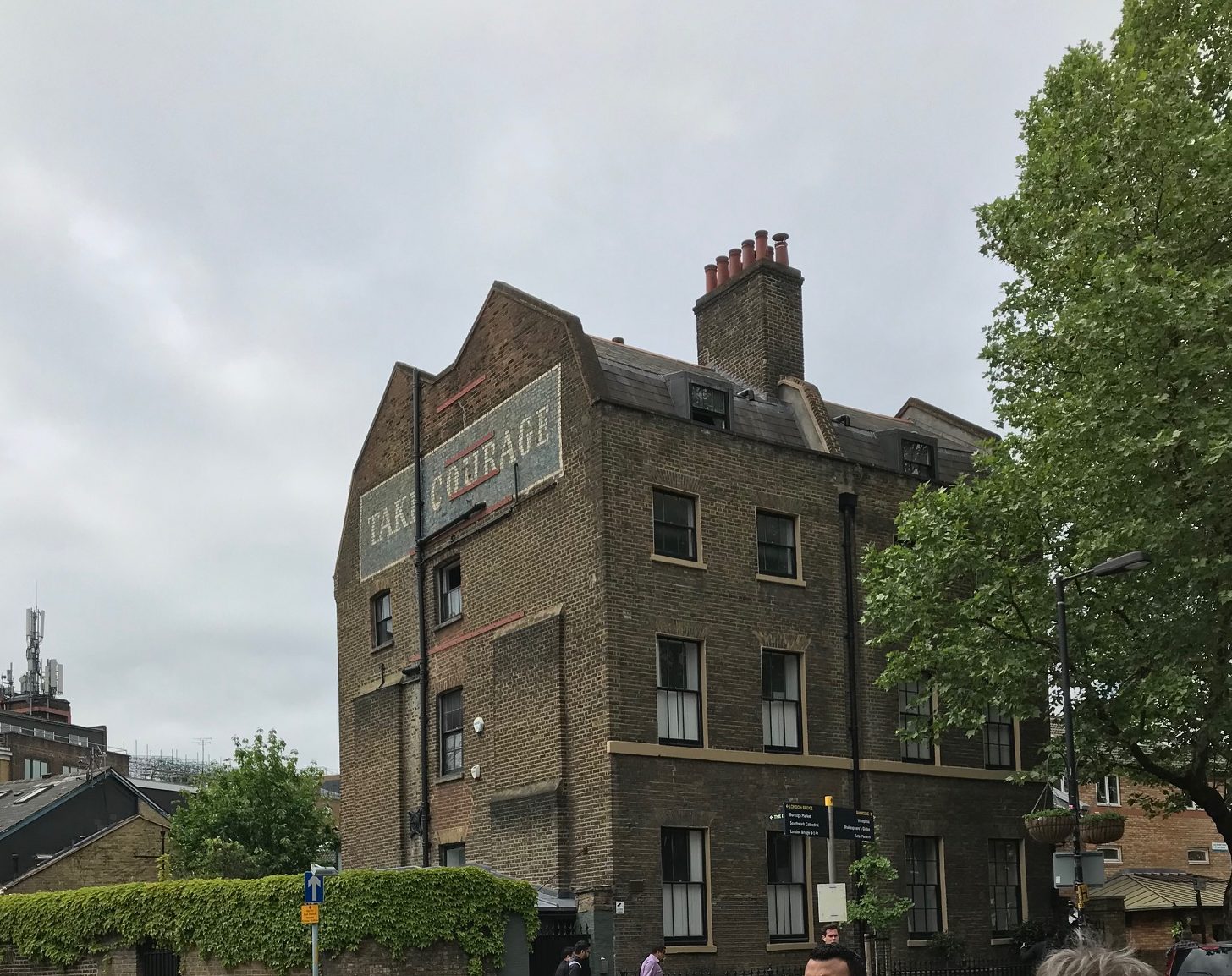
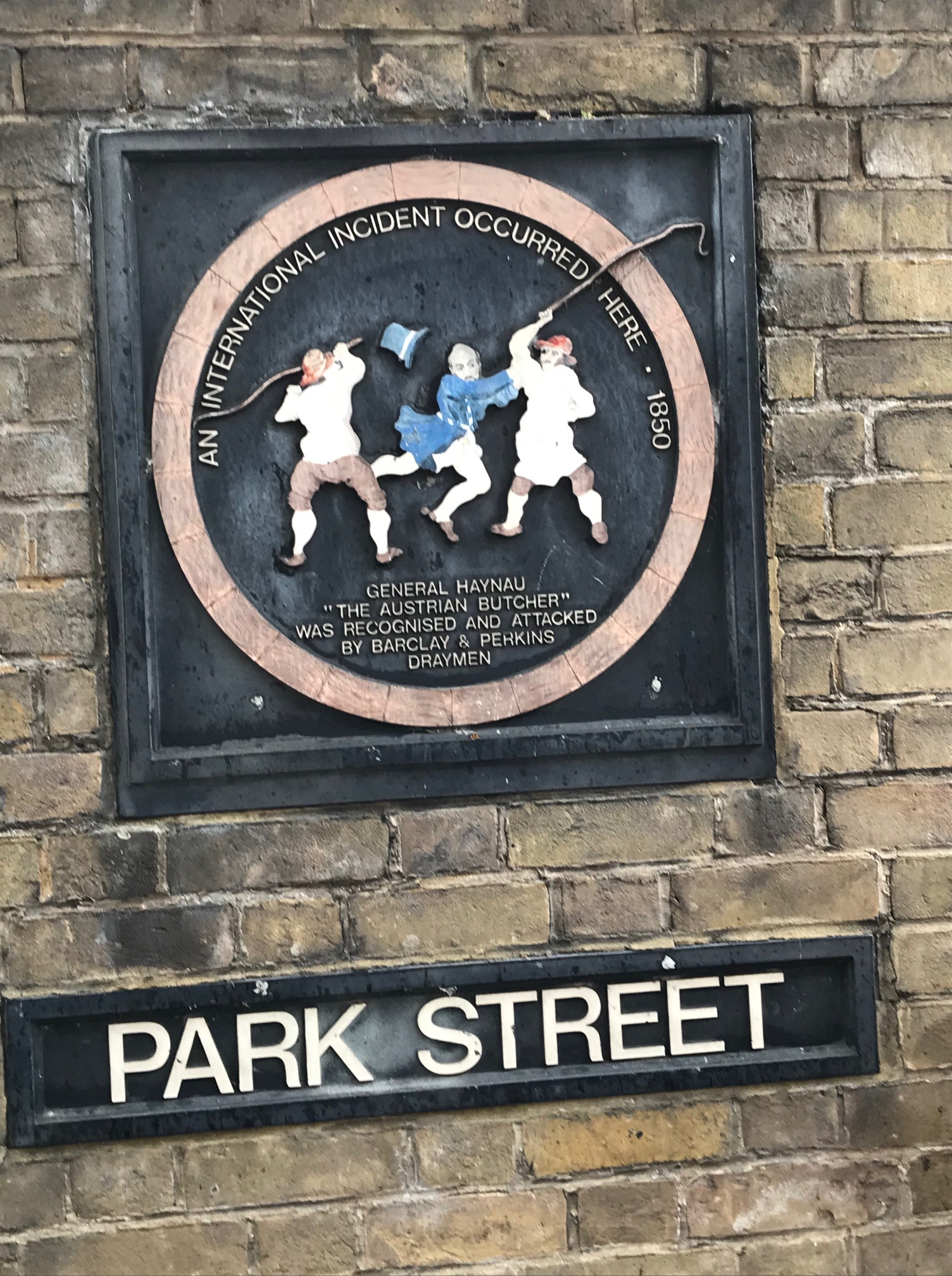
We moved on to another brewery, the Courage Brewery which at one time was the largest brewery in London, possibly in Europe. Unfortunately, it is now a housing complex. There was a plaque, which commemorated when the draymen beat up an Austrian general. The draymen were the delivery men, beefy workers, so the attack would have been painful. It caused an international incident at the time.

Apparently, when water in London was revolting due to being pumped along rotting wooden pipes and people drank much more beer, it was also more alcoholic. Which caused a few problems. So Lloyd George changed the law, and reduced the amount of alcohol that was allowed in beers.

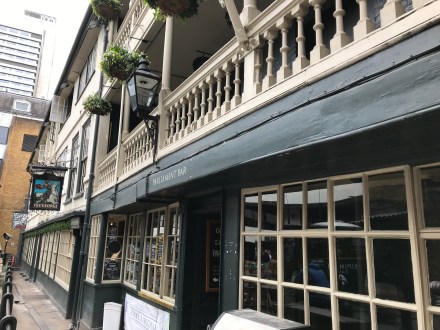
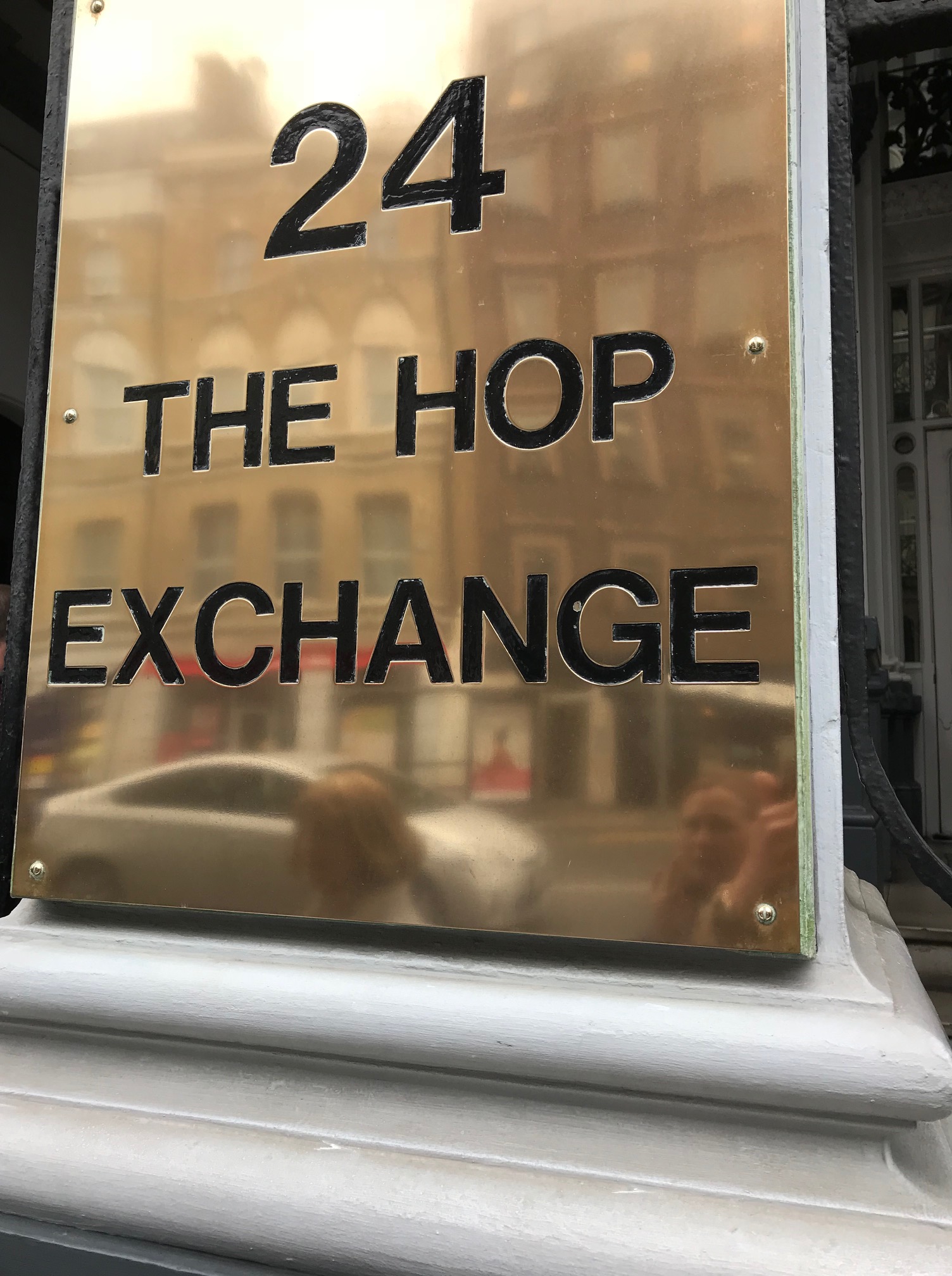
The end of the tour was a quick look at the Hops Exchange (where we weren’t allowed to take photos, though I have no idea why as it is just a tiered hall.) We also stood outside the George Inn, which has been there since Dickens wrote his novels. But we didn’t go in. This was not, even slightly, a pub crawl.

****
Thank you for reading.
You can follow my blog at: anneethompson.com

Anne E. Thompson has written several novels and one non-fiction book. You can find her work in bookshops and Amazon.

xxxxxxxx

P.S.

Hello, hope all is well.
I have a cheeky request (which you can ignore if you’re too busy, but I would be super-grateful if you can do this). Next time you are near your local library, please could you ask them to order you a copy of CLARA? It won’t cost you anything (other than time, which I know is precious, so I will be very grateful). The library order a copy, and let you know, and you will then have to collect it and read/pretend to read it, and return it a week later. Your part is then finished. But it means that the book will be available to a whole lot of other people.

I have tested the plan with my Mum, and there is now a copy in her local library, so I know it will work. Some libraries might refuse, if you are the only person who has requested the book, but the more people who ask, the more likely they are to stock it. I have had to deposit 6 copies with The British Library and 5 other libraries (which is a legal requirement, even though I lose the money) but it does mean that other libraries can stock the book.

The library will need:
Title: Clara

Subtitle: A Good Psychopath?
Author: Anne E. Thompson
Publisher: The Cobweb Press
ISBN: 9780995463257

They can order it through their normal channel (I think they tend to use a wholesaler).

The more people who request it from a single library the better, as they will display it in a better position if it’s popular (so do mention it to your friends and work colleagues).

Hope you don’t mind me asking. I don’t have the backing of a major publisher, so I need all the help I can get. Thank you oodles if you are willing to help.

Anne x

*****

An Hour at Victoria Station


An hour to wait at Victoria Station. Am lucky enough to find a seat, so I settle down with my M&S sandwiches and watch the world. Take a minute and watch with me (you don’t need to stay for the whole hour).

In the middle, next to the stall selling lurid coloured sweets (unwrapped and unhealthy) is a man speaking on the phone. At least, I’m hoping he’s on his phone – I can’t actually see it but he is wearing ear-plugs. He is also talking very loudly in accented English. He’s the sort of person you want to slap: too loud, too German, too aggressive. He’s talking about, “Five or six billion,” and, “it’s well within my experience.” Like I said, needs a slap.

Then there’s the man who plonks an empty coffee cup next to me and walks away. He needs a slap too.
German man is still talking as I glare after the departing back of coffee trash man.
A group of women arrive in front of me, hugging and kissing good-byes. One is heavily pregnant in a tight striped dress, her shape straining against the fabric.

There are young people with backpacks, and a mother with a pushchair, and men, with pull-along cases, who walk beside them as if they’re walking a dog. A group of teenagers giggles its way across the concourse, and a black girl sits next to me to eat her chips (she has to move trash man’s empty cup first). We exchange a smile, but don’t speak. Speaking might be deemed weird.

There are people hurrying to platforms, and others standing in the way as they stare at departure boards. Heels click past, rushing towards the toilets (they’re free now you know, it used to cost 70p to pee).
An intense young man in a pink shirt speaks into a phone while walking towards the platforms. German man has gone now – I didn’t notice him leave. An old lady with an orange carrier bag walks lopsidedly towards the sandwich shop. Mr Pink Shirt is now standing, still talking, fiddling distractedly with his trouser zipper – not a good habit. Two women walk arm in arm reading a timetable.

There’s a babble of languages, the background drone of engines, the tap of heels on the smooth grey floor. The tannoy, which no one appears to listen to, screeches its announcements, and an orange-lights-flashing vehicle beeps through the crowds.
An old man, flat cap, carrier bag, beard, leans heavily on his stick as he wheezes behind his wife. Or lover. Or work colleague. They are overtaken by a younger couple, both with small efficient cases. Hers has a giant hat box on top, and I wonder if she’s going to a wedding. Perhaps the wedding.

Victoria Station. No one is really here, everyone is passing through, waiting to leave, their mind somewhere else. The workers are invisible, in spite of their orange jackets, their beeping vehicles, their shiny booths. Who could describe the person they bought the panini from? Or the hair of the girl at the information desk? Or the shoes of the man unloading the heap of free newspapers while hands reach out, their attached bodies barely pausing, the commuters not breaking step for a second.

The information board flips, new platforms announced. I fold my sandwich box into my bag, and leave.

***

I wrote this at the station, whilst also chatting to my children on a Facebook group chat. I told them what I was doing, and asked if they thought it would be okay to add photographs of the people I’d mentioned. They replied:
Mark: “No Mum, definitely not.”
Becky: “Mother, I don’t think you should have taken photographs in the first place!”
As I am at the age whereby I have learnt it is best to obey one’s children, I’m afraid there are therefore, no photos.

***
Thank you for reading.
You can follow my blog at: anneethompson.com

Anne E. Thompson has written several novels and one non-fiction book. You can find her work in bookshops and Amazon.

xxxxxxxxxxxxxx

Agonies in a Craft Tent


Let me tell you about my weekend – another craft fair. Not my favourite activity. The thing is, writing books, creating a whole world with quirky characters and exciting happenings, is fabulous – best job in the world. However, taking those books, and trying to persuade people to risk a few hours and read one, is very scary. But there is little point in doing one without forcing yourself to do the other. This is how it tends to go.

First of all, is the venue. Usually you’re provided with a space in a marquee, booked at immense cost, which all adds to the pressure of how many books you need to sell to not lose a ton of money. The space can vary in quality. Sometimes you’re placed next to an aggressive seller, who has set her table well over the boundaries, and has squeezed your space to a tiny square. Sometimes the organiser has been more canny, and has marked on the floor exactly where each space begins and ends. There are good pitches – towards the centre of a walkway, and bad pitches – right next to the door (because people entering the tent don’t usually want to stop and listen to your sales pitch as soon as they get inside, and if you are the last stall, they are already thinking about leaving by the time they reach you. Though last is slightly better than first.) If it’s raining, you often get drips of water plopping onto your books. If it’s dry, you sometimes get condensation (see previous sentence). Sometimes it’s really hot, and then the air becomes too thick to breathe and after a couple of hours you are very red-faced and sweaty, and no one wants to approach your stall.

After you’ve set up, you can walk round and have a look at the other stalls. These tend to vary. There is the scowling old man who sits opposite the entrance, surrounded by his wife’s knitted cardigans. There are homemade stands: twigs stuck into flowerpots hanging with necklaces; husband-made constructions that would withstand a nuclear explosion; and the carefully selected textures and colours that make up the artists’ stalls. Most stalls represent hours upon hours of work, and everyone is feeling slighty desperate about trying to sell things, and trying hard not to show it.

There is lots of tension involved with selling books. Unlike jewellery and knitwear and paintings, they aren’t sold by how good they look, so the only way to sell is to tell people what they’re about. Not easy. You sit there, watching for potential customers, hoping for a flicker of eye-contact. It’s very bad form to start speaking while they’re looking at your neighbour’s stall, so you have to wait until they have moved into the space you ‘own’. These are moments of real tension, as you watch a couple meander around the tent, buying trinkets at other stalls (so they’re spending money today), they look intelligent (so sure to be readers); they walk nearer while I wait, ready with my patter, throat dry with nerves, waiting while they examine the stall nearest to me then, at last, they begin to approach, they glance towards my books, they turn to each other to make a comment, I begin to approach them and – they leave the marquee. I breath out, sip some water, wait for the next person.

And then there are the low points. The customer who arrives right after you’ve taken a swig of coke who you greet with a loud belch (she didn’t buy a book). Or the customers who arrive with a football team of uncontrolled kids who touch everything and ruin your display, and probably can’t read anyway. Or the owner of the small dog who lets it wee against your tablecloth. Not to mention the joys of portaloos. Or, depending on the fair, the happiness of sitting right next to where the bagpipes are playing.

However, I survived, and lots of lovely people did buy my books. There were also some interesting chats, like the one with the tiny old woman who told me she used to teach Camilla PE, and the palace have done wonders with her appearance, and she was always a very lazy girl who couldn’t do a handstand properly.

The problem is, selling books is personal. Every rejection feels like a put-down, and every sale brightens my day. So why not take a look at my books today – if you buy one, you’ll cheer me up immensely.

Thank you for reading. All my books are available on Kindle and in bookshops. UK Amazon link below.


The latest, and best book (in my opinion). An exciting novel written in the first person, which shows how a psychopath views the world. The story encompasses the world of women trafficked in India, and shows how someone very bad, can be used to achieve something amazing.

An exciting novel, set in the near future. One family shows how they cope with driverless cars, new laws, and schools run by computers.

A gritty thriller, which shows what it means to be a psychopath, and how it would feel if someone in your family did something awful. (Because every psychopath has a mother.)

A hilarious romance for when you want to relax.

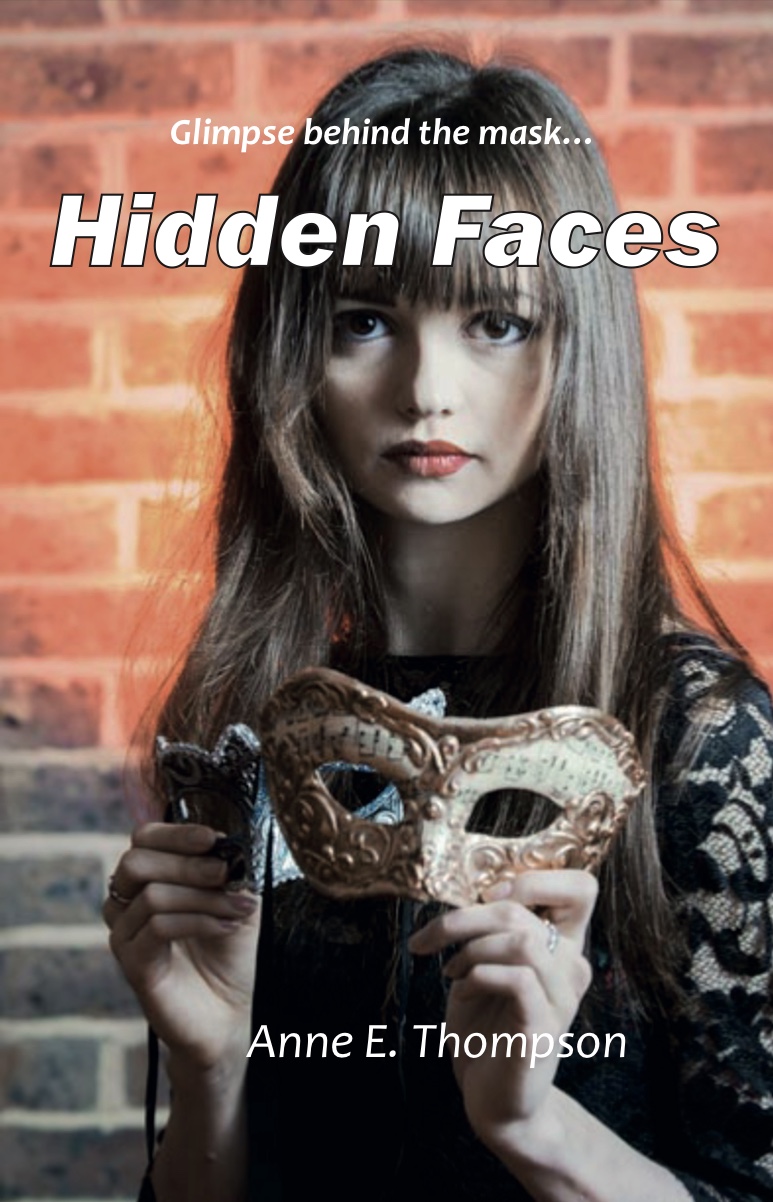
Hidden Faces by Anne E. Thompson.
An easy read, feel good novel, set in an infant school. An ideal gift, this is a book to make you smile.

Mother Hen


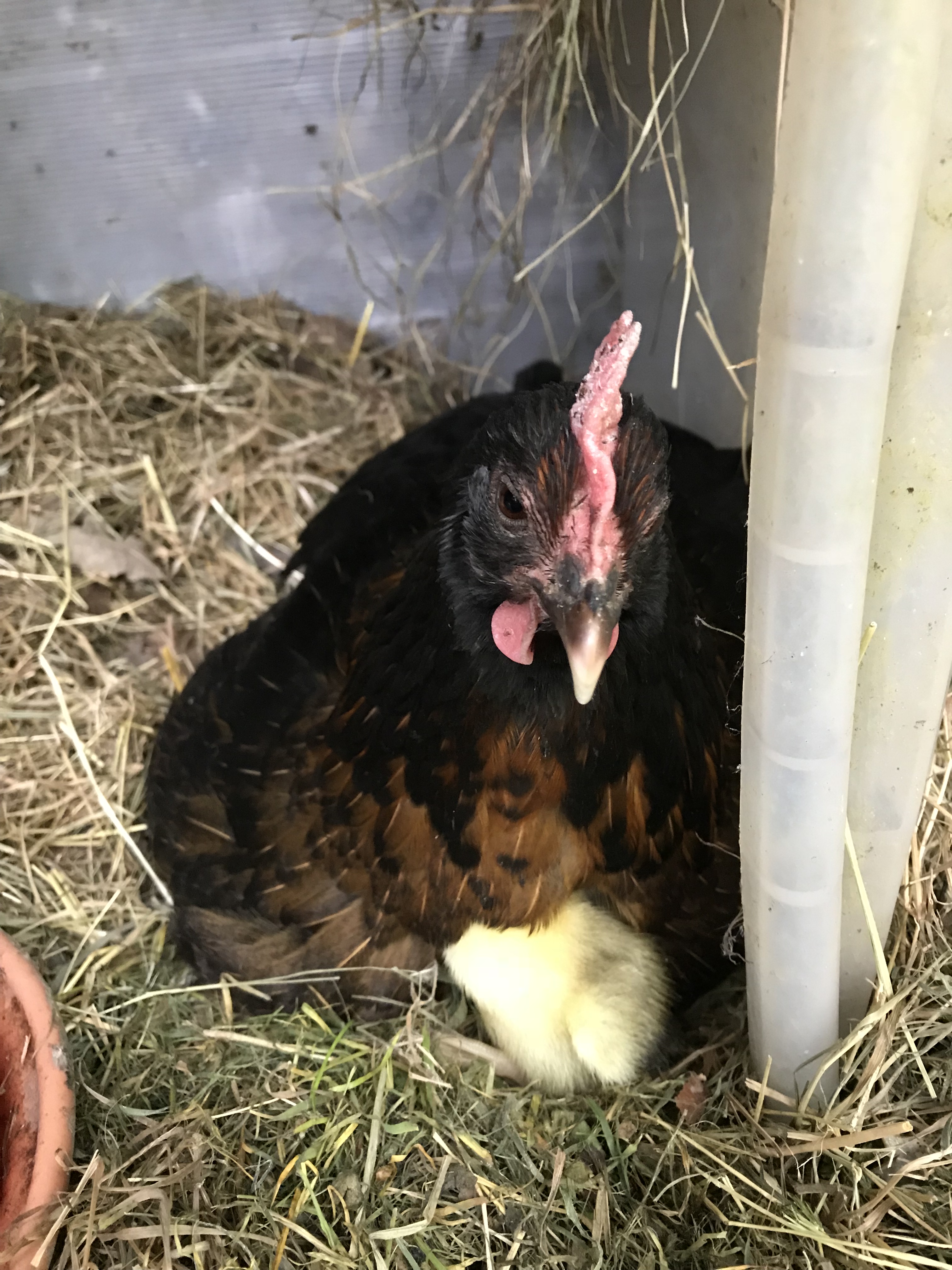
My broody hen has done rather well. Yesterday, when I went to let out the chickens, I could hear someone cheeping from the nest. I tried to see, but mother hen wasn’t moving, and I am wary of her beak. I checked several times during the day, but although there was often cheeping, there was no sign of any hatchlings. I wondered what it would be.

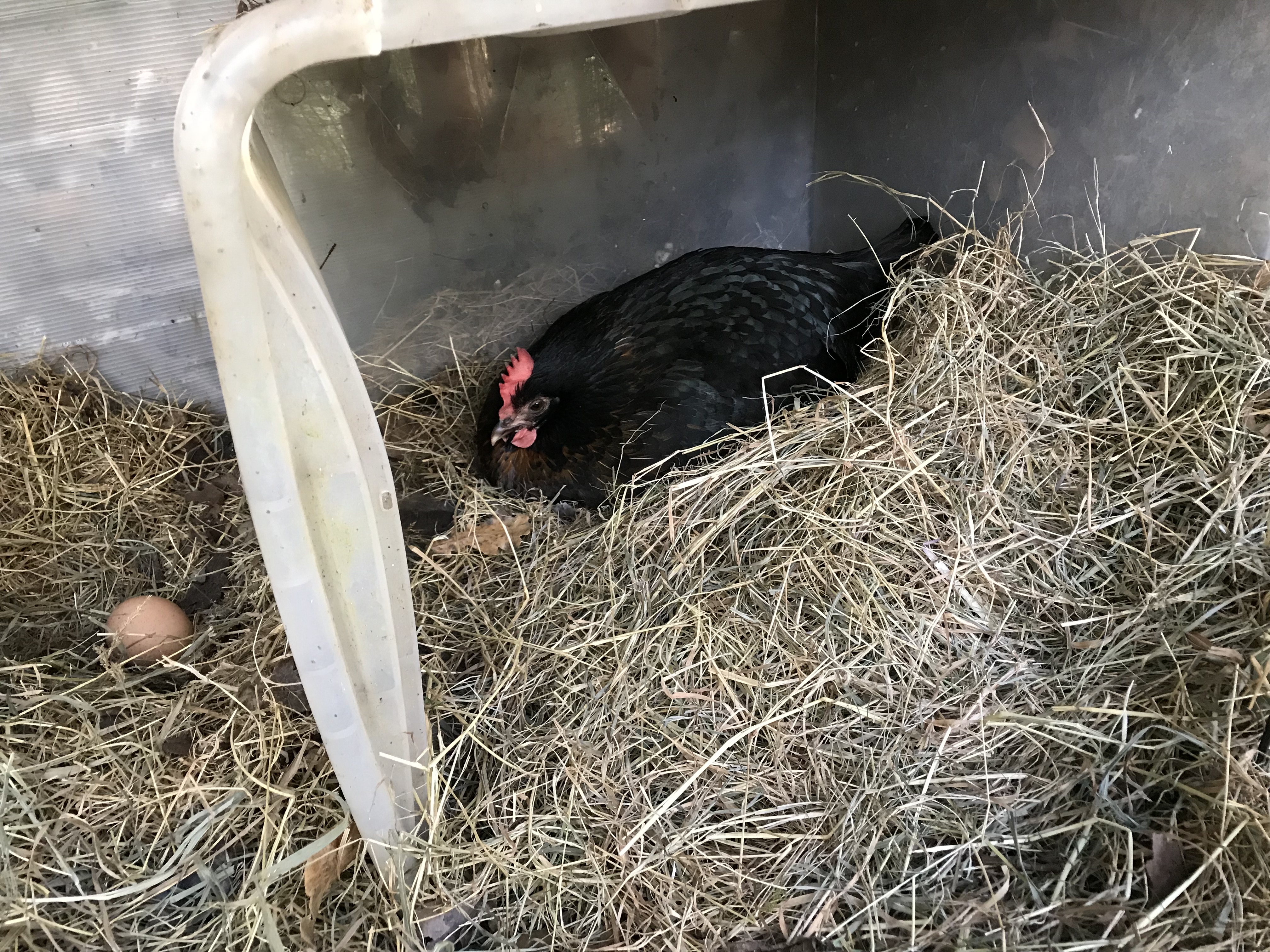
You might remember me telling you, a few weeks ago, one hen went broody and made a nest. I don’t want any more chickens, especially as at least half are cockerels, so I decided to remove the eggs. But a broody hen gets very upset when you take her eggs, and will sometimes disappear in an attempt to hide a nest. I do want some more ducks, and I had some duck eggs in the fridge, so as I removed the chicken eggs, I replaced with them with duck eggs. Mother hen hissed at me, but continued to sit.

Chicken eggs take exactly 3 weeks to hatch. Duck eggs take exactly 4 weeks to hatch – the cheeps were heard after 3½ weeks. So I had no idea what it was, duckling or chick?

Had the mother laid a sneaky egg after I’d removed them? Or had one of the other hens dumped an egg in the nest? I checked several times, but she wouldn’t budge. A very good mummy, but frustrating for me!

Finally, today, they had emerged from the nest. There were two empty shells, (and two dead eggs). I only saw one hatchling – who was being shy. I still couldn’t be sure if it was a duckling or a chick! 


Eventually, they started to move around. The duckling watched the mother, copying what she did. She learned how to eat the chick crumb, and drink from the water pot. I’m still not sure if there’s a second duckling – if not, I’ve no idea what happened to the other hatchling (perhaps they ate it!) I will let you know if it turns up (the hen hasn’t actually left the cage, so it could be hiding underneath her).


The mother hen was a bit perturbed when her ‘chick’ insisted on climbing into the water drinker, rather than just drinking from it. I fear she has a few water related surprises ahead. And she’s going to be very disappointed when her chick can’t fly this time next week. But so far, she’s doing brilliantly.

Thank you for reading. I hope your day is full of happy surprises.

Take care,

Love,
Anne x

xxxxxxx

You can follow my blog at: anneethompson.com

Anne E. Thompson has written several novels and one non-fiction book. You can find her work in bookshops and Amazon.

Does God Care About the Children in Syria?


Does God care about the children in Syria?
Does he even see them?

Photo: AFP rudaw.net

The other day, I was half watching the News, half eating my lunch, when they broadcast a report from Syria. I was suddenly faced with a little boy. He’d been sat on a chair, under the television lights, and he was bleeding – wounded from yet another attack in Syria. He had a cut on his head, and when he put his hands up to feel, he got blood on his fingers. He then didn’t know what to do. I watched as he instinctively went to wipe them on the chair, realised he was being watched, so instead slowly wiped them on his trousers. I nearly cried. He was a little boy, just the same as my sons were, as every little boy I have taught. I could see what he was thinking, that as he sat there, he was worrying about the blood on his hands and he didn’t know what to do. I wanted to tell him it didn’t matter, to take him to a sink and wash him and bandage him. I wanted to tell him that it wasn’t his fault, that this war – which is full of complex politics – was the fault of grown-ups. That he deserved better.

So, as my heart ached for this one child, I wondered – does God care? Does he even see? And if so, why doesn’t he act?

The reason I’m writing this, is because I have just listened to a talk about God seeing. (I tend to miss the talks at my church because I’m usually with the children, so I catch up online later.) The talk (which was brilliant) is too long to tell you completely, but it made one point I will share with you.

Imagine you are waiting for someone, and she is late. If they are a stranger to you, you might be irritated, or angry that they are wasting your time and not bothering to let you know. You might even decide to get up and leave, they have messed you around and missed their chance. But if you know that person, if they are a close friend or relative, and someone who has always been reliable in the past, who has always been on time, never let you down, then your reaction would be different. You might be concerned that something had happened to them. You would be confident that they are late because there is a valid reason.

The same is true with God. We may not understand why bad things are happening, but if we know him, if we have experienced his love in our own lives, if we are confident that he is truly good, truly God, then we can trust him with this too.

Sometimes we don’t know why. Sometimes things are too sad, too horrible, too painful to comprehend. In those times, all we can do is trust. The God who we know to be loving and faithful and right, the God who is God, does care. And he does see. And when the time is right, he will sort it.

Photo: Unicef

The link for the talk is below. It lasts about 40 minutes, and is worth finding the time to listen.

El Roi: The God Who Sees

Thank you for reading.
Have a good week.
Love, Anne x

*****
You can follow my blog at: anneethompson.com

Anne E. Thompson has written several novels and one non-fiction book. You can find her work in bookshops and Amazon.

(I took the photographs from Google. They are possibly copyrighted, so I have tried to credit them accordingly.)

Getting Old…


The painter man has left. My house is now smarter, though still untidy. It has been quite a good opportunity to have a sort out, and I have been ruthless with old ornaments and broken pottery that I should have thrown away years ago.

We also sorted out the DVD collection. Husband and I spent a cheery evening wading through the heap, deciding which ones we were likely to rewatch and which ones could be recycled. I was surprised by just how many DVDs we have managed to accumulate, and most of them I can’t remember watching. There was of course, some denial over who had actually ever bought some of them. All the Disney ones we blamed the children for (though there are a few that I’m suspicious may have been ordered by Husband). All the religious ones we blamed my mother for. Both of us were certain we never bought the dodgy film about a Ukrainian prostitute.

The sort out was such a success that Husband decided we should also sort out our CD collection. This was more difficult, as I never know the names of artists or albums, and needed to be reminded what the songs actually were. There were also a surprising number of CDs which were in the wrong boxes (must be the boys’ fault) and it was impossible to correct this as it seems to be trendy to produce black CDs with no discernible writing on them. Husband spotted that they all had a tiny symbol, which matched with a symbol on the box. Seems a very stupid idea to me. Felt very old.

Now sitting on duck eggs – but don’t tell her!

Other news: All my female ducks have gone. Not sure if they’ve flown away to find mates (it’s that time of year) or if the fox got them, or if they are hidden somewhere on nests. If it’s the last choice, I will find out in four weeks, when they appear with ducklings. I would like some more females, but don’t have time to hatch any eggs this year. I had a few duck eggs in the fridge still, and a chicken has gone broody, so I removed the single egg she was sitting on and replaced it with 5 duck eggs. She hissed at me, but is still sitting. We shall see what happens. It’s easier if she hatches them, as she’ll then raise the hatchlings for me.

I have also been invited to preach at a church near Bluewater. When the call came, I had gone to bed, so told Husband no, I don’t preach any more (I used to, several years ago, before I was ill). But then, when I woke the following morning, I thought that actually, although I’m not sure if I can still ‘preach’, I would really love to give a talk about all I learnt recently about the Prodigal Son. So I phoned the person who asked me, and said that I would come, but could I talk on the Prodigal Son? There was a long pause. He then said, rather hesitantly, that actually it was Pentecost Sunday. I said that was fine – please could I speak on the Prodigal Son? He agreed. He has now sent through the programme for their services, and they will be doing a series on ‘lost things’, so my talk will fit rather well. I hope I manage to do it okay. It is quite a test for me, to see if I can still do it. I will let you know how it goes.

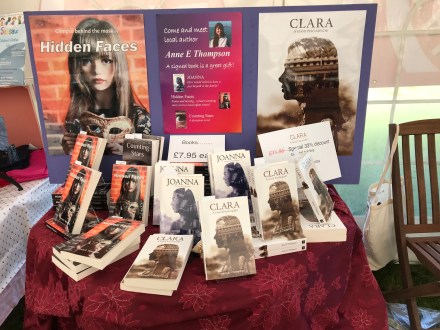
Now selling copies of Hidden Faces, JOANNA and CLARA.

In Author World, I am still not managing to write very much of the new book. I simply cannot see the characters clearly enough yet. Never mind, they will appear eventually, and there’s no hurry, because I hate having to sell the books when they’re finished anyway! The selling bit is pootling along. Mum had a stall at a local fair for me, and sold a few books. There is also a little community shop that has opened in a nearby village, and they’ve sold a few copies too. Plus all the normal outlets. I have sold a little over 100 copies of Clara since the launch at the end of February.

I have also – finally – submitted some blurb for an author page on Amazon. I’m not sure what, if anything, it will achieve, and I had no idea what to write, so I spent some time reading other people’s author pages. Some were very personal, some said nothing except blurb about their books. I decided to go for something in between. I also had to submit a photo. Struggled hard with the ethics of submitting photo of daughter instead (she’s prettier than me). Decided she might be cross.

Have a look if you have time, the link is:


Hope you have a good week. Thanks for reading.

Take care.
Love,
Anne x

******

You can follow my blog at: anneethompson.com

Anne E. Thompson has written several novels and one non-fiction book. You can find her work in bookshops and Amazon.


Feeling Frazzled


Feeling rather frazzled as I write this. There are several reasons, but the main one is a mouse, in the house, which is never a welcome adventure. Now, I am quite good with animals in general, and I think that other than spiders, I could sensibly handle any animal, big or small, that I needed to – if it was contained. But there is something about rodents, especially mice and rats, which, when I encounter them running around freely, makes me scream like a girl. Not really sure why.

We still have the painter/decorator in the house (possibly another reason for feeling frazzled) and he had just started to prepare the recently emptied lounge, when he mentioned that a mouse had run the length of the hall and disappeared under the study door. Super news, just what I was hoping to hear.

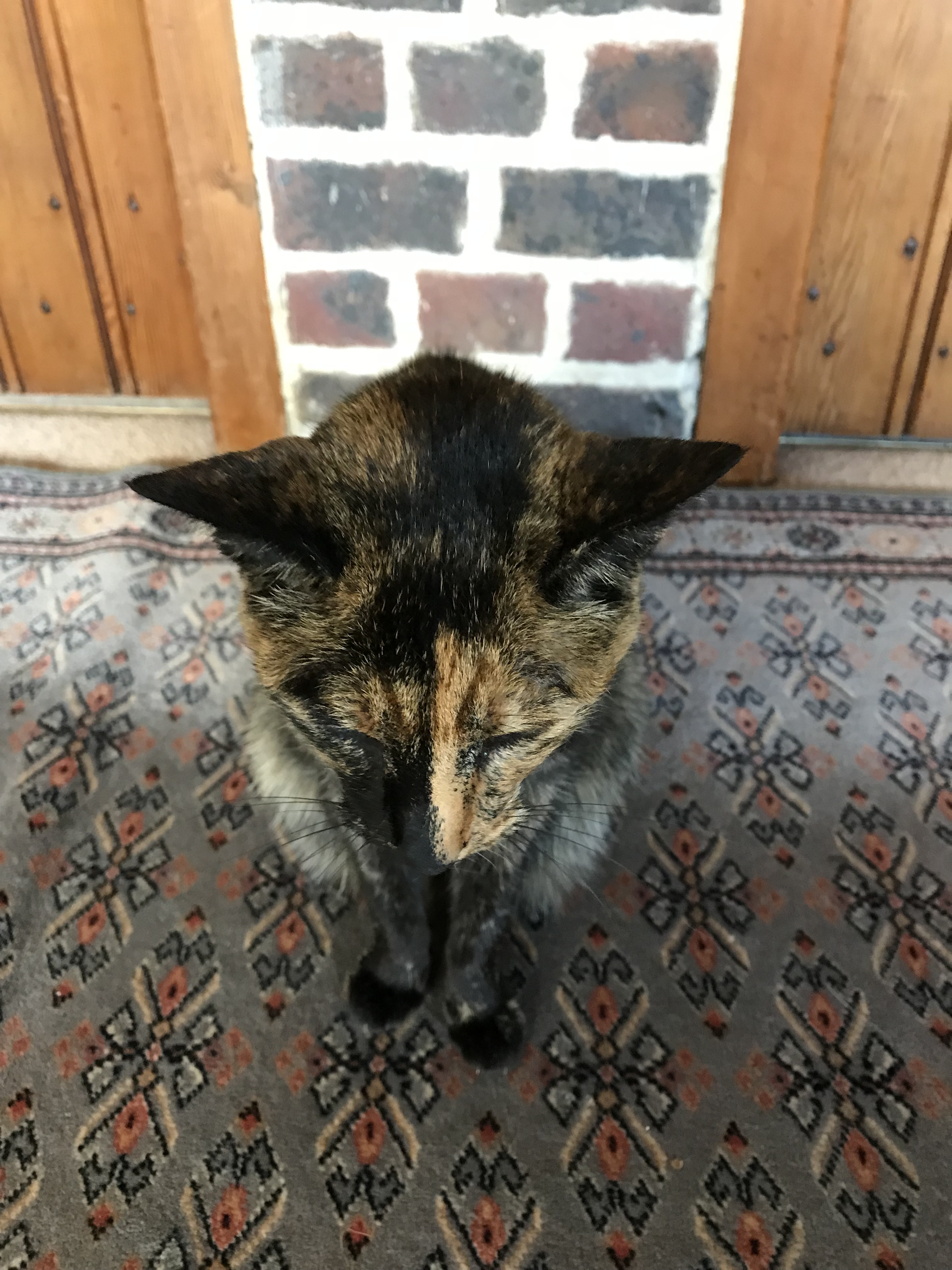
Old incontinent cat.

I collected old incontinent cat from her new home in the garage (she can’t live in the utility room while the painter is here) and dumped her in the study. Felt she might need back-up, so went into the garden and whistled for the outside cats. They are very good at coming when I whistle. Unfortunately, so is the dog and all the chickens (note to self:learn how to do two different whistles). Separated the cats from the general group of random animals, and took them into the study.

By this time, old incontinent cat had managed to catch the mouse, whilst also leaping over all the stuff recently removed from other rooms ready for the painter, and managing to break an assortment of complicated lego models. (Do not ask me why, when we have no children in the house, it is necessary to keep aforementioned lego models, but apparently it is.) Old incontinent stupid cat had then put down mouse to play, and mouse had run into fireplace.

We could see it, sitting there, completely still. The cats, however, seemed completely blind to all things rodent, and were busy exploring the shelves and desk.

Tried waving various cats in general direction of mouse. Mouse remained still, cats disliked being waved and struggled to be free.

Decided we needed to catch mouse ourselves. Managed to trap mouse in a plastic cup, and slide coal shovel underneath to contain it. Not sure what to do next.

Mouse sat there, looking quite cute, with big round ears and beady eyes. I think it was a baby one. Did not feel I could kill it, nor did I trust the cats to do the job for me if I released it. Nor did I want it to breed a whole family of new mice in my house.

Sent Husband down the lane, with mouse in plastic cup with shovel underneath to contain it. He complained a bit, but I coped. Opened window so incompetent cats could join chickens and dog in garden.

Now, I do know, that the mouse will probably walk back to my house. Though it was injured, so it might not make it. Plus, I am assuming that should it return, it will be slightly more careful to not be seen again. I also know that a quick killing would’ve been the most sensible course of action. But sometimes, there are some things, which I simply cannot manage to do.

Hope you have a rodent free week. Thank you for reading.

Take care,
Love,
Anne x

*********

Anne E. Thompson has written several novels and one non-fiction book. They are available from book shops and Amazon. She writes a weekly blog at: anneethompson.com

The latest, and best book (in my opinion). An exciting novel written in the first person, which shows how a psychopath views the world. The story encompasses the world of women trafficked in India, and shows how someone very bad, can be used to achieve something amazing.

A hilarious romance for when you want to relax.

An exciting novel, set in the near future. One family shows how they cope with driverless cars, new laws, and schools run by computers.

A gritty thriller, which shows what it means to be a psychopath, and how it would feel if someone in your family did something awful. (Because every psychopath has a mother.)

Hidden Faces by Anne E. Thompson.
An easy read, feel good novel, set in an infant school. An ideal gift, this is a book to make you smile.

Psalms – Next book in my Bible Blog


In my read through the Bible I have reached Psalms. I didn’t find it a very easy book to read through, as each Psalm is like a poem, and if I wasn’t in the right mood, it was hard to connect with what the psalmist was writing. Lots were written by David, when he was fighting for his life, so he was in a different situation to most of us. It’s quite difficult to hope all your enemies will die horrible deaths, if you don’t feel you actually have any enemies. However, there is still lots to glean from reading them.

This book is made up of songs, which we tend to read as poems (and is actually divided into five separate books). I used the books by Michael Wilcock to help me understand them, and if you want to study individual psalms in detail, I would recommend it. (It’s part of The Bible Speaks Today series, ISBN 9780851115061) He describes the Psalms as being like “a photograph album, full of pictures that show us a variety of places in a land of spiritual experience.” I rather like that description.

As I read through, there were three main themes which struck me: The absolute power and sovereignty of God, the importance of remembering what God has done in the past, and the realisation that we are very temporary. These themes are repeated and intermingled throughout the Psalms, and I think they’re important. (There is also a lot of poetry, but I’m not a great appreciator of poetry, so that side was a bit lost on me.)

If you have ever faced a potentially terminal illness, you will have faced the fact that you might die soon. This is probably not a bad thing to realise, especially in our culture, which tends to hide away from death. We need to acknowledge that we have a ‘use-by’ date, and that our life is relatively fleeting. I guess for the psalmists, who lived in an age when dying in battle was likely, when diseases were mostly incurable, and when life expectancy was short, knowing that you would die one day was much more relevant. But it’s something we all need to consider. Not because we want to be gloomy, but because then we will have some urgency to how we choose to live our lives. What exactly is important? What really matters? (Probably not the designer handbag, nor being a best-selling novelist, or the CEO of a major company!) In Clara – A Good Psychopath? Clara makes the observation that all the writers of the Bible were pretty weak people, who made lots of mistakes, and they’re all dead now anyway. And yet, their lives had meaning and significance, simply because they followed God and HE gave their lives significance. Their lives were worth something, because HE was worth something. I think this is what the Psalms remind us. Unless we look to God, it’s all pretty meaningless in the long term.

Which leads on to the importance of remembering. I don’t know about you, but I am fairly fickle when it comes to praise and worship. I remember, right after I had brain surgery, when I was so grateful to God for his support, that I wanted to tell everyone I met about it. Talking about how great God was, happened naturally, it was sort of bubbling up inside of me. But I’m not like that now. Most days I’m a grumpy middle aged woman who has a crisis when the cat brings in a mouse. Therefore, remembering is important. We need to stop, regularly, and remember what God has done. The Israelites were told to remember being rescued from Egypt, long, long afterwards – in fact, generations afterwards. Remembering what God has done for us is important, especially when life is tough. If life is like a series of mountain peaks and valleys, then remembering how we felt on the mountain will help us to get through the valley.

Finally, the Psalms deal with the absolute power and sovereignty of God. The God who created the heavens, who formed the mountains, the power of the waves – there is no other. When we’re in the doldrums, it’s good to lift our thoughts upwards, to think about who God is, to remember to worship him. Which challenges us to think about how we do that. Do we make time to pray regularly? Do we bother to kneel down when we pray? Do we make space for the God we claim to worship in the busyness of life?

So, Psalms was not a favourite book of mine, and is one I would rather dip into when I’m in the mood, than to read from beginning to end. But reading it has, I think, helped to change me, just a little.

*****
anneethompson.com

Thank you for reading. The UK Amazon links for the books mentioned are below.

Psalms by Michael Wilcock:

Clara by Anne E. Thompson: