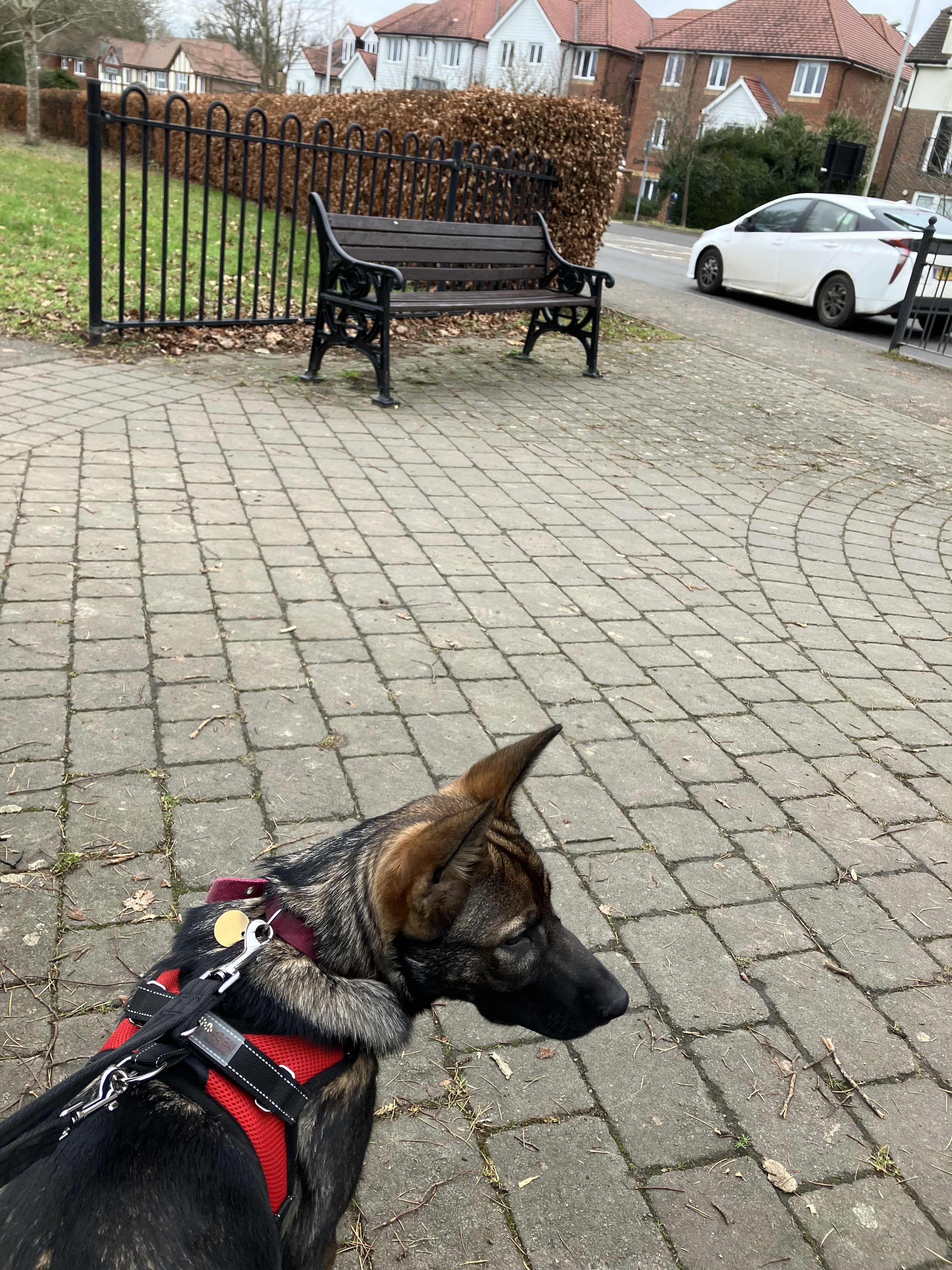
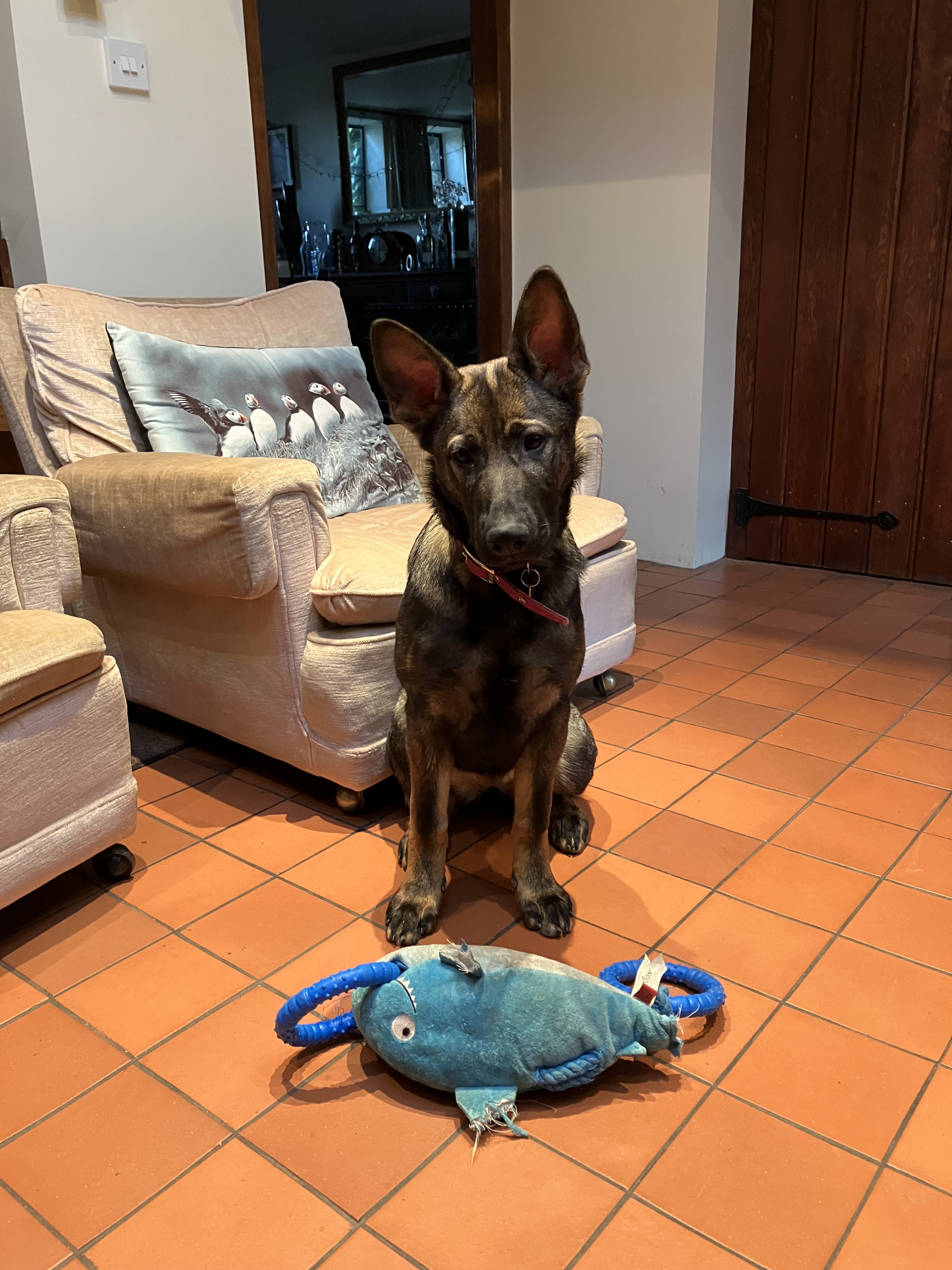
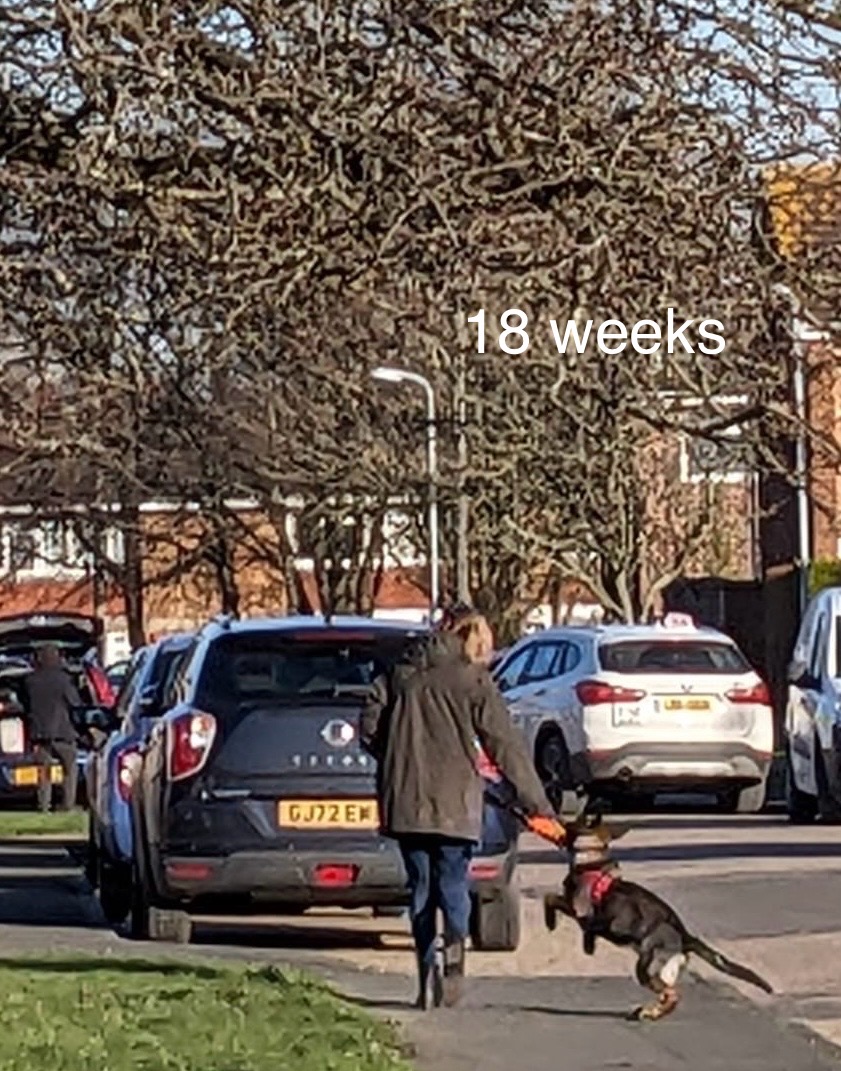
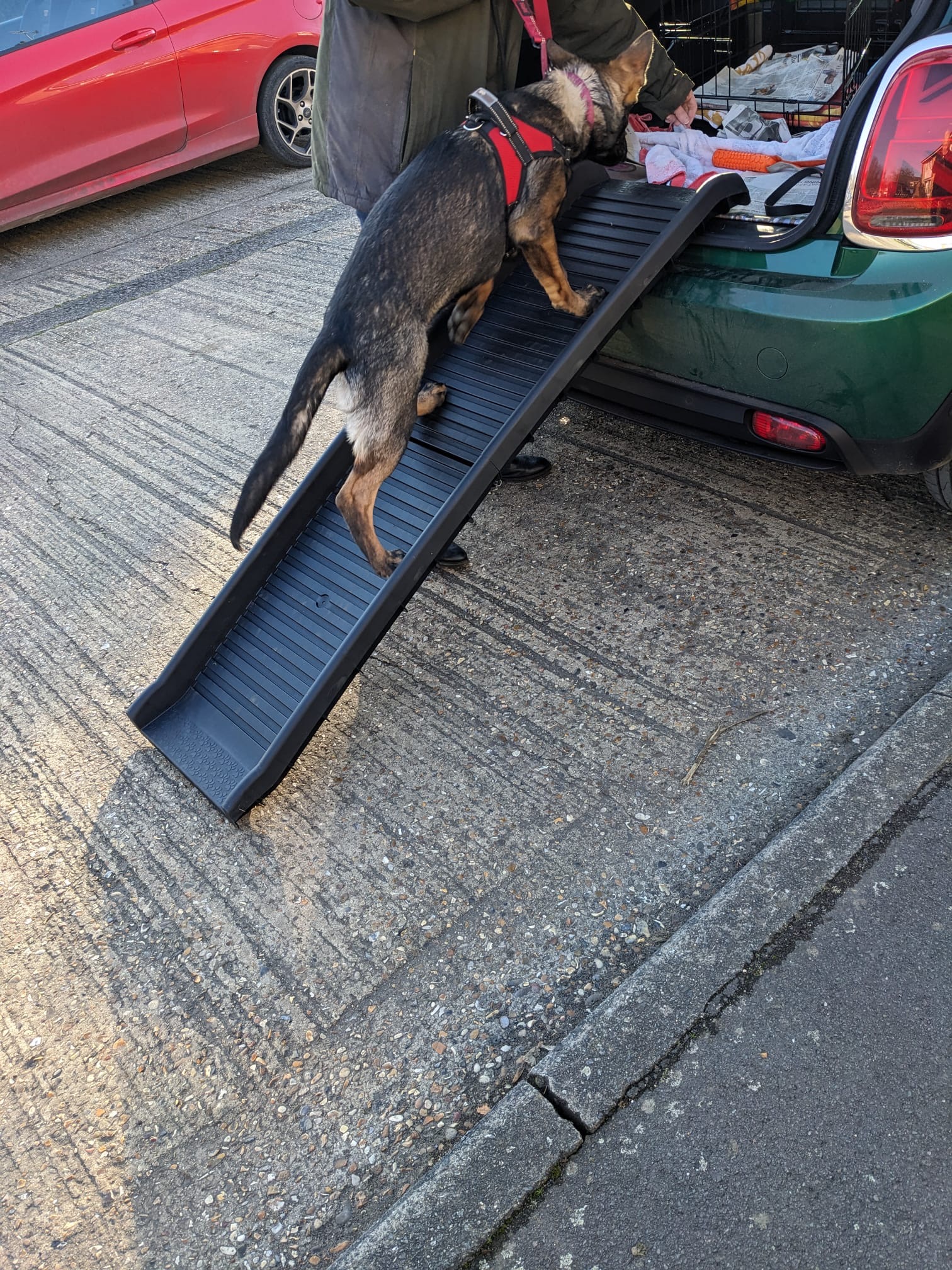
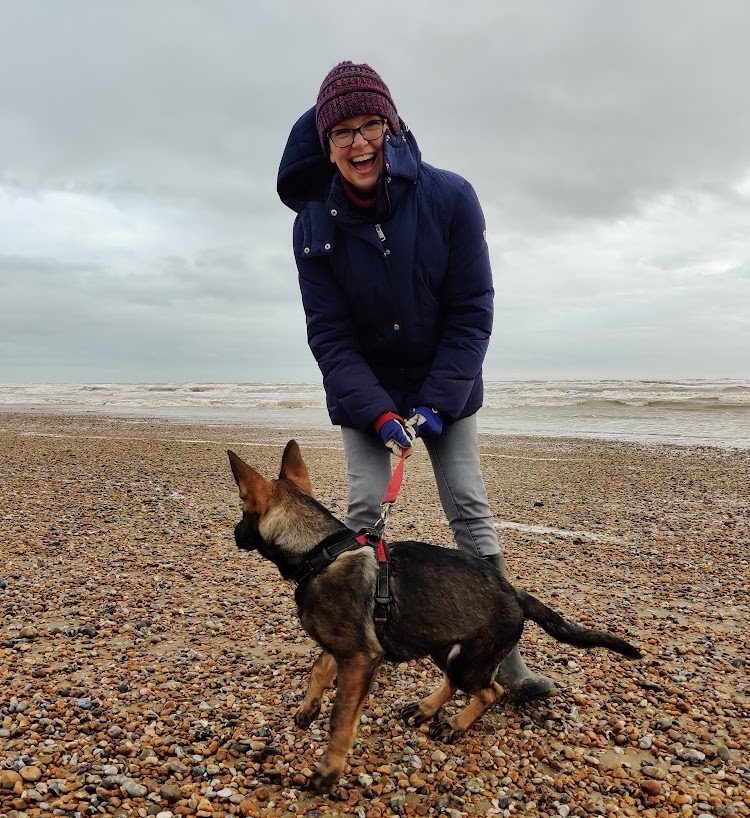
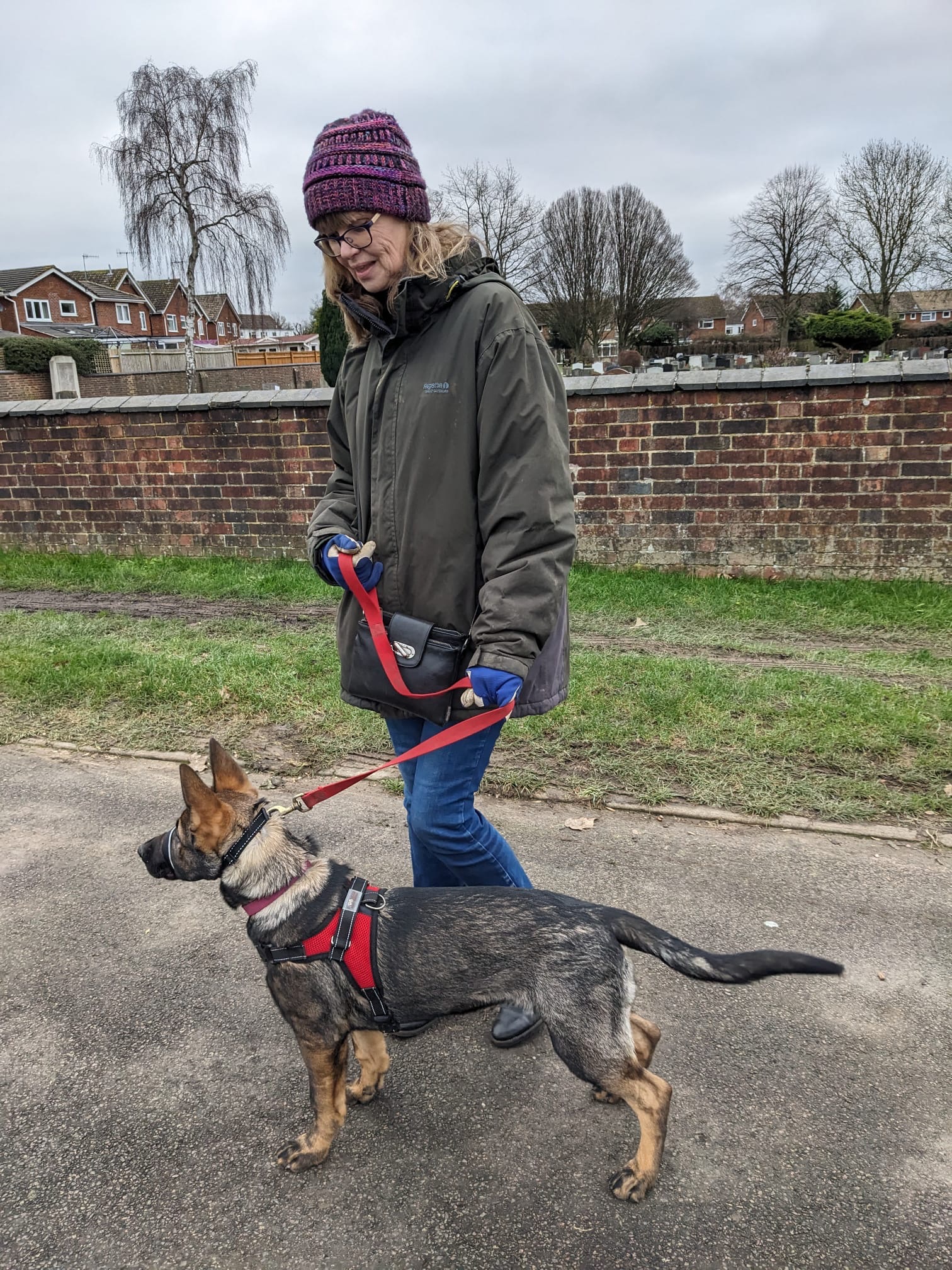
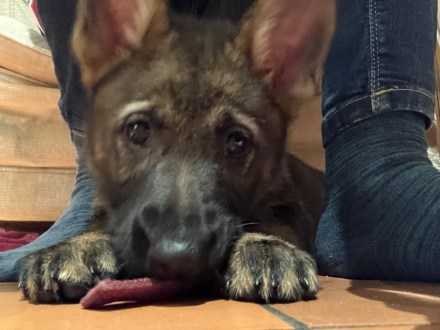
Meg’s Diary– 8 Weeks


The first week with Meg was exhausting—mainly because I needed to learn her, and I daren’t trust her for a moment alone. I also really hate poop in the house, so I was constantly watching to see if she needed to toilet. She was actually really good at this, and very quickly learnt what ‘Be quick!’ meant, so pretty much can pee on-demand in return for a treat. We managed to have only 2 accidents, and those were within a few hours of arriving home. It’s surprising how two adults can be so focussed on a small puppy’s bladder.

Sleep has got better. She goes out at midnight, and then sleeps until 6 am. We will gradually increase this, as her bladder gets stronger. She now is used to her crate, and knows she must sleep when put in it.

I found really helpful lessons online: Absolute Dogs, on Youtube. They teach all the things that the breeder also recommended, and it’s really helpful (especially for a clever breed). So I hand-feed Meg her food (which creates a bond—because I really need her to pay attention to me, or we will be doomed!) I also keep part of her meal in my pocket, for regular treats to reward good behaviour. This week we have concentrated on a few lessons.

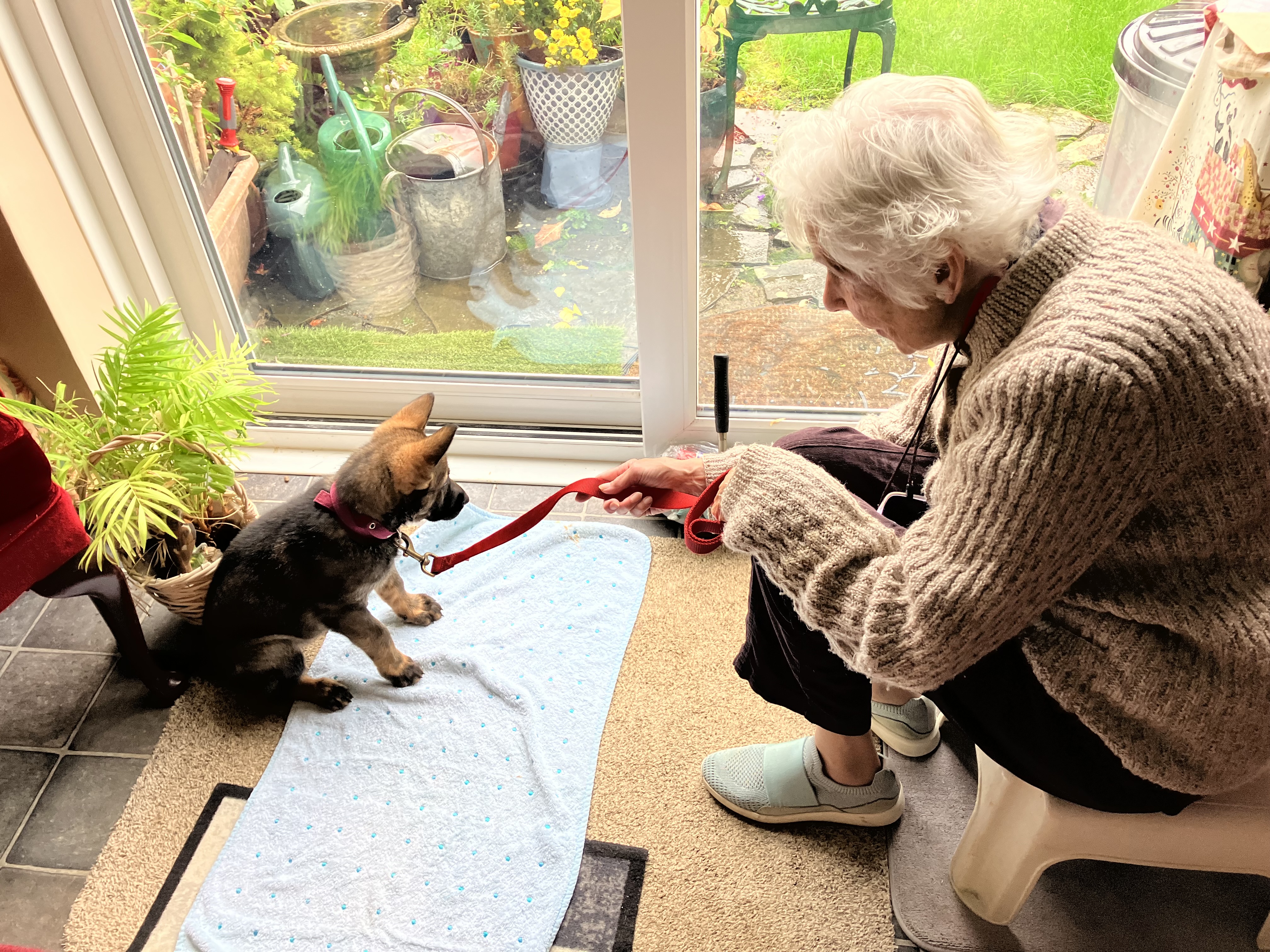
Meeting Grandma. When I go out, I take Meg with me. Mostly she is good.

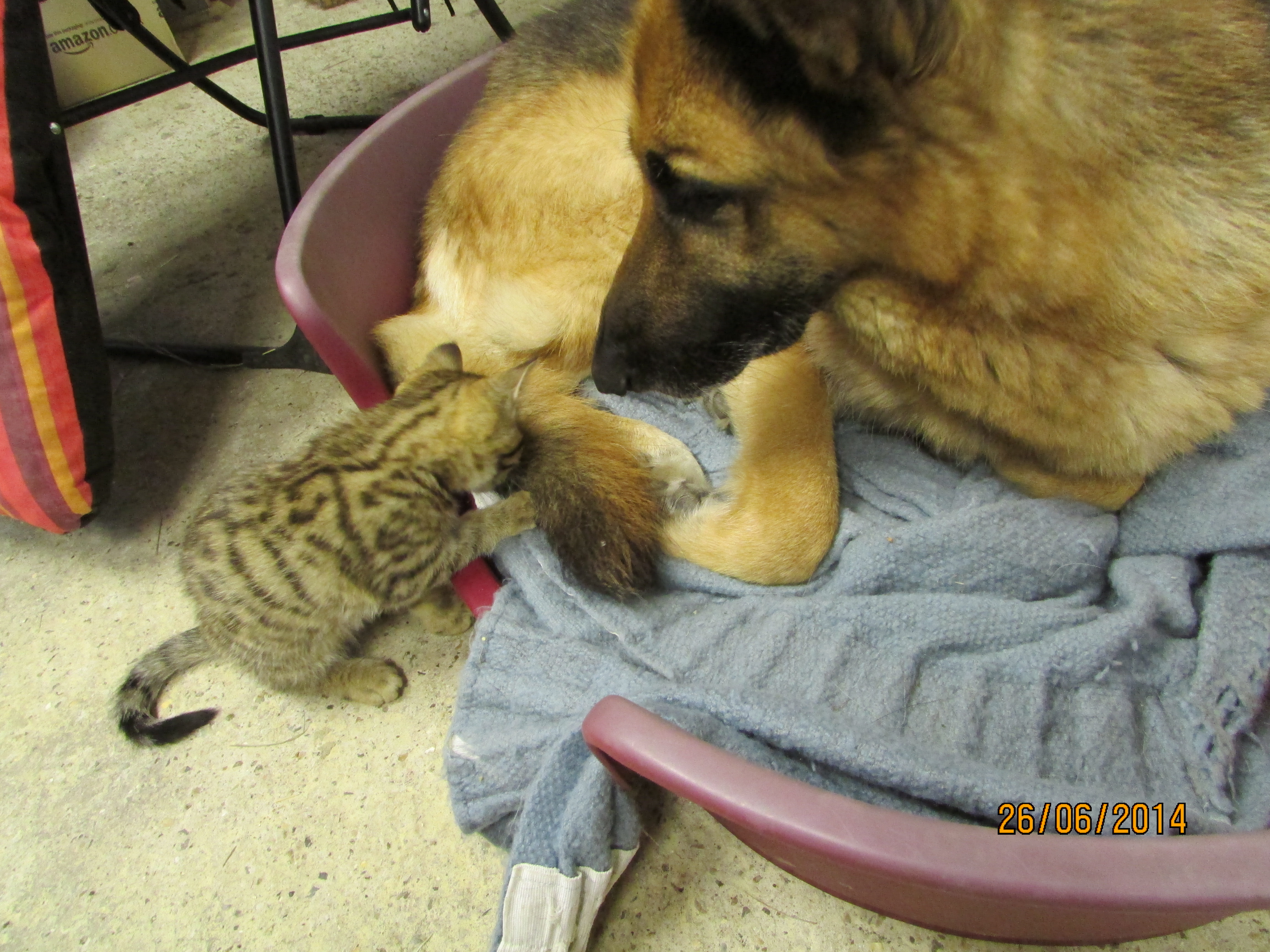
Most importantly, Meg comes when I call. I love to watch her short legs leaping across the garden! She also knows to sit, and that she will not receive her treat unless sitting. The main lessons (which will take a while) are that not everything is her business, and being calm is good. The first of these is super-important for a gsd. Although she’s gorgeous now, and everyone wants to touch her, in a few months she will be a big scary dog. She needs to learn now that bounding up to people is not the right behaviour, instead she should ignore everyone, and focus only on me (and the treat in my pocket!) This applies to people, children, and animals—she has to learn to ignore them. The cat, Millie, who comes in the house regularly, is helping with the training, and Meg is learning that interfering with a cat is a bad idea. We are still working on not chasing the poultry (and the cockerel has to learn not to fight the puppy—but that’s harder to teach).

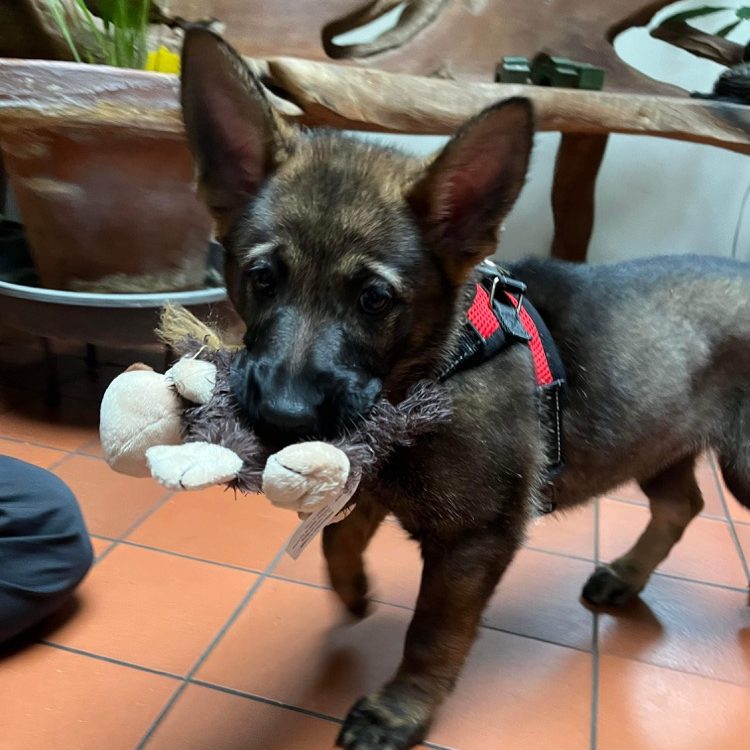
Being calm is also difficult, but she’s getting better. I bought some toys to chew, and she does, on occasion, lie at my feet and peacefully play. However, she views Husband as a hugely exciting game, and whenever she sees him all ‘calm’ disappears and she becomes an uncontrollable force. Unfortunately, there are no online lessons for teaching husbands to be calm. Though he assures me that he is trying.

It was my daughter’s wedding blessing this week, and Meg was introduced to being in a crowd—while ignoring everyone. I walked into the room, carrying Meg and feeding her treats while talking softly, trying to ensure she concentrated on me, and not everyone else. Apart from her tail (lots of mad wagging) she did very well at ignoring the crowd.

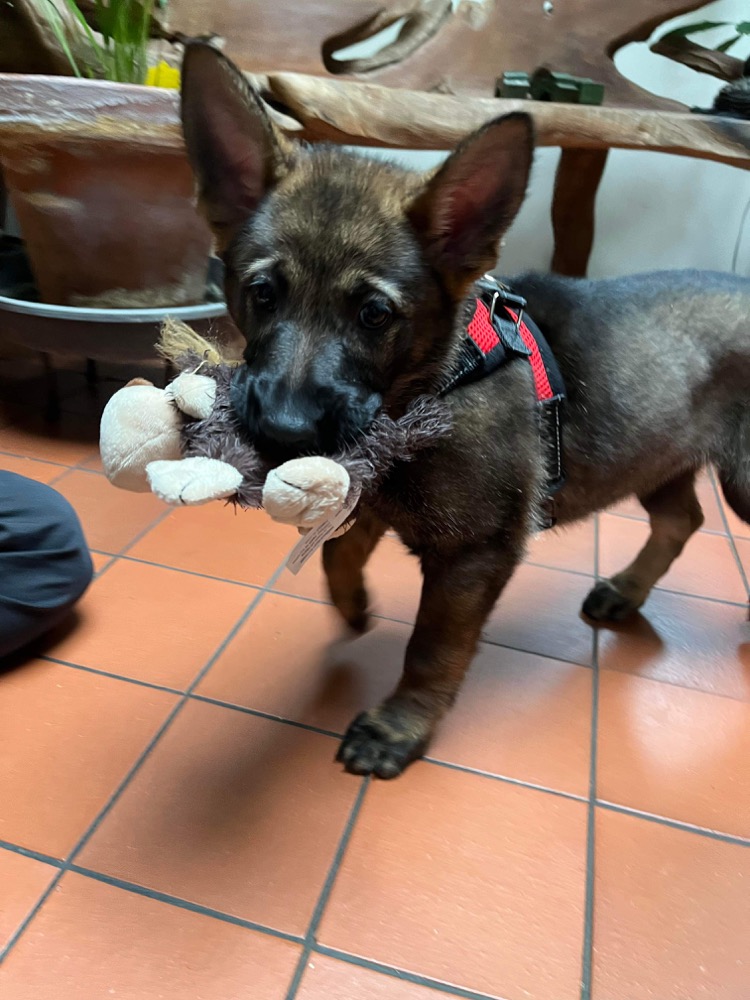
The main game she enjoys is collecting all her toys into a heap. So I throw a toy, she runs to get it, then takes it to the doormat. I repeat with the next toy. I guess it’s the puppy equivalent of herding sheep. She does the same with sticks, and the back step is now covered in sticks.

I feel this week has been about learning each other, and settling into a routine. She seems very clever, and very strong-willed, and I am hoping to be the boss before the teenaged-rebellion starts. There’s a long way to go, but we are making progress. And she is completely beautiful, which helps. Hope you have a good week. Take care, and thanks for reading.
Love, Anne x

Travelling is not her favourite thing. But she has stopped being car-sick, so that’s good.

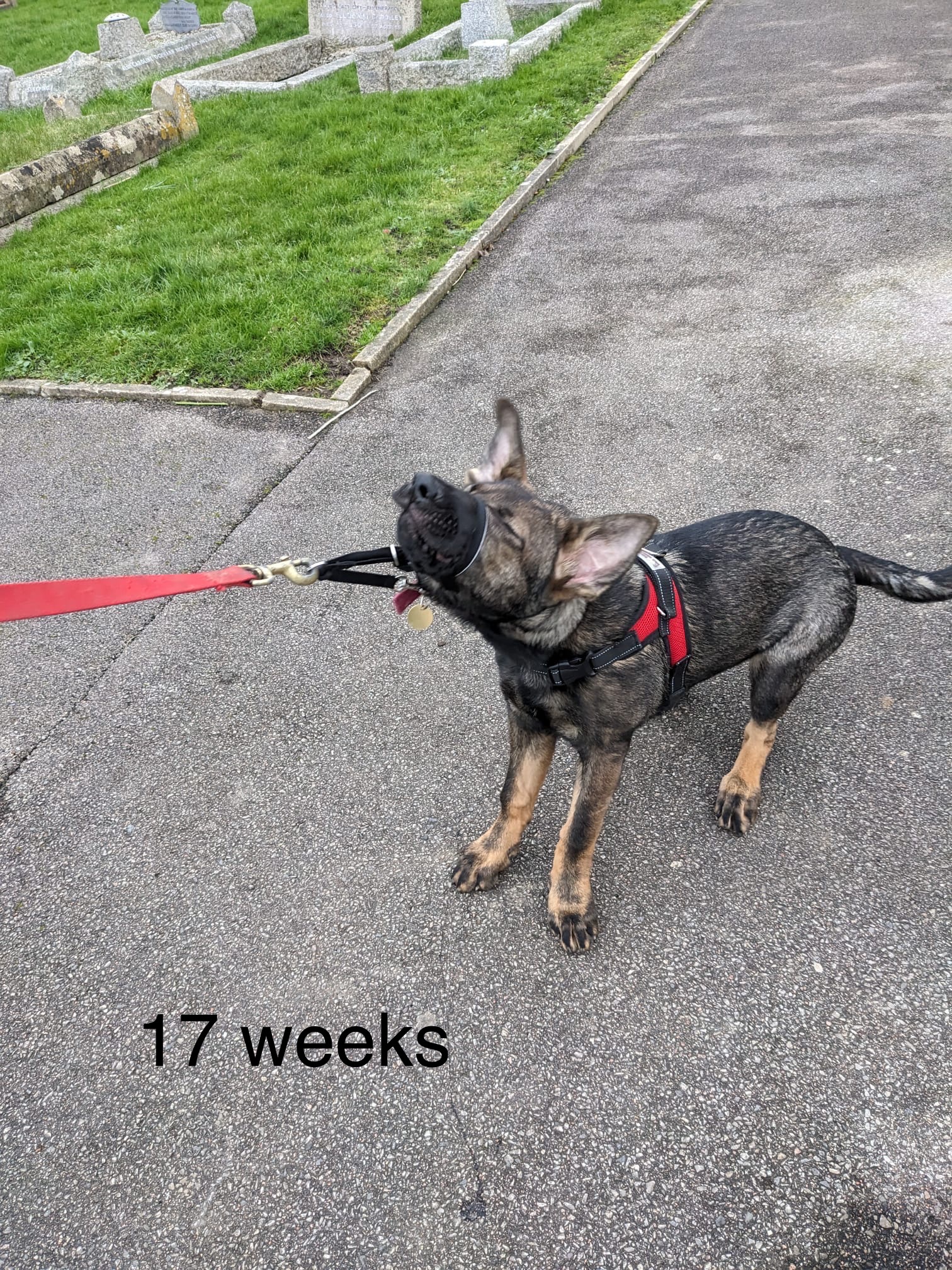
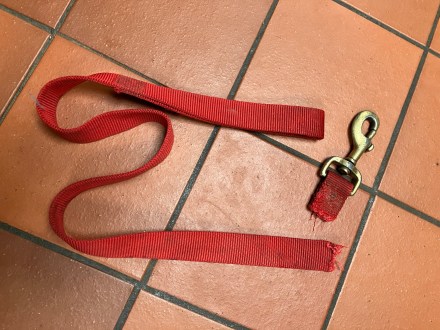
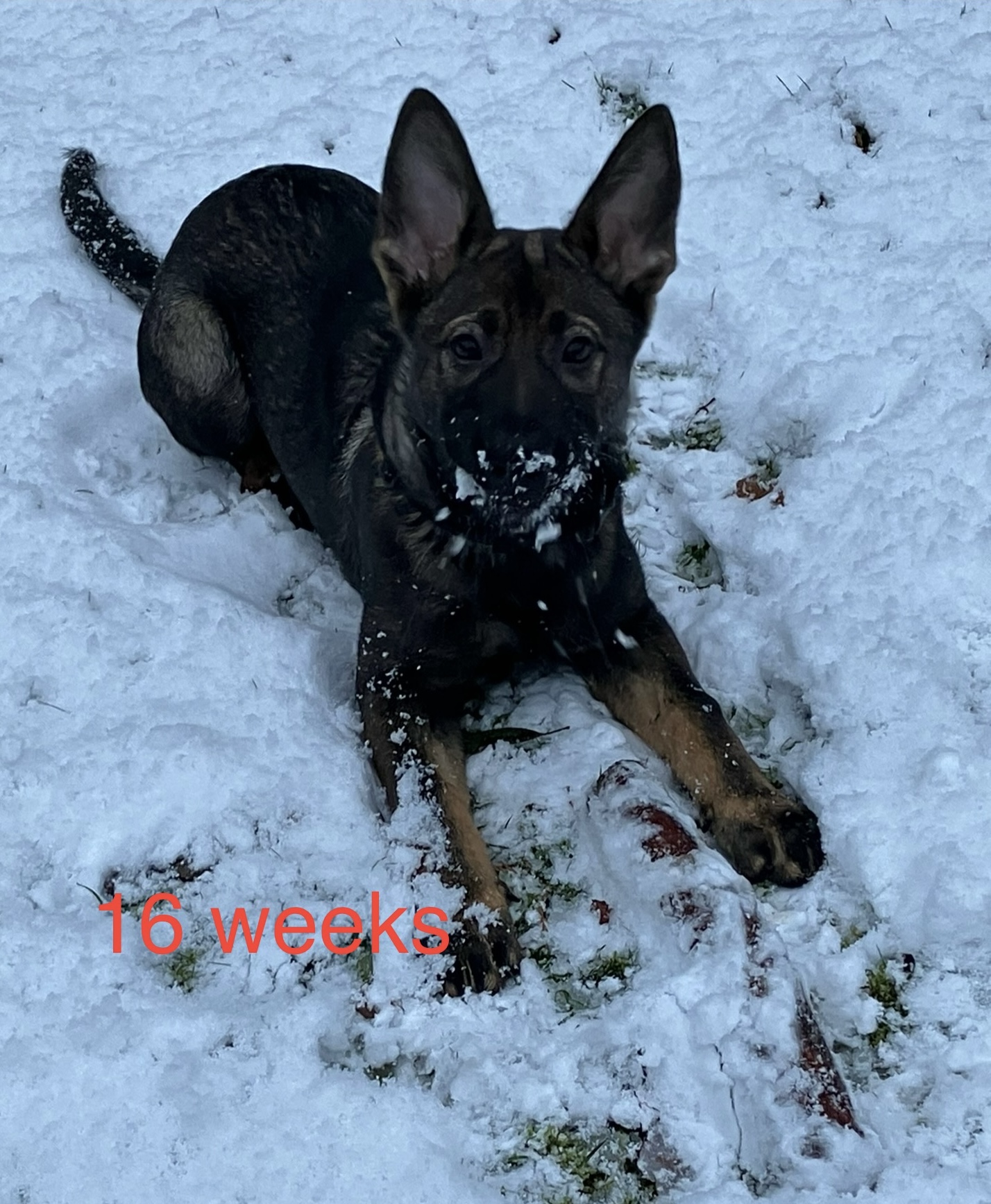
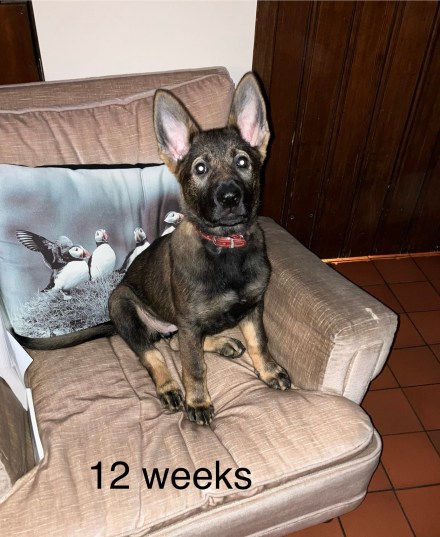
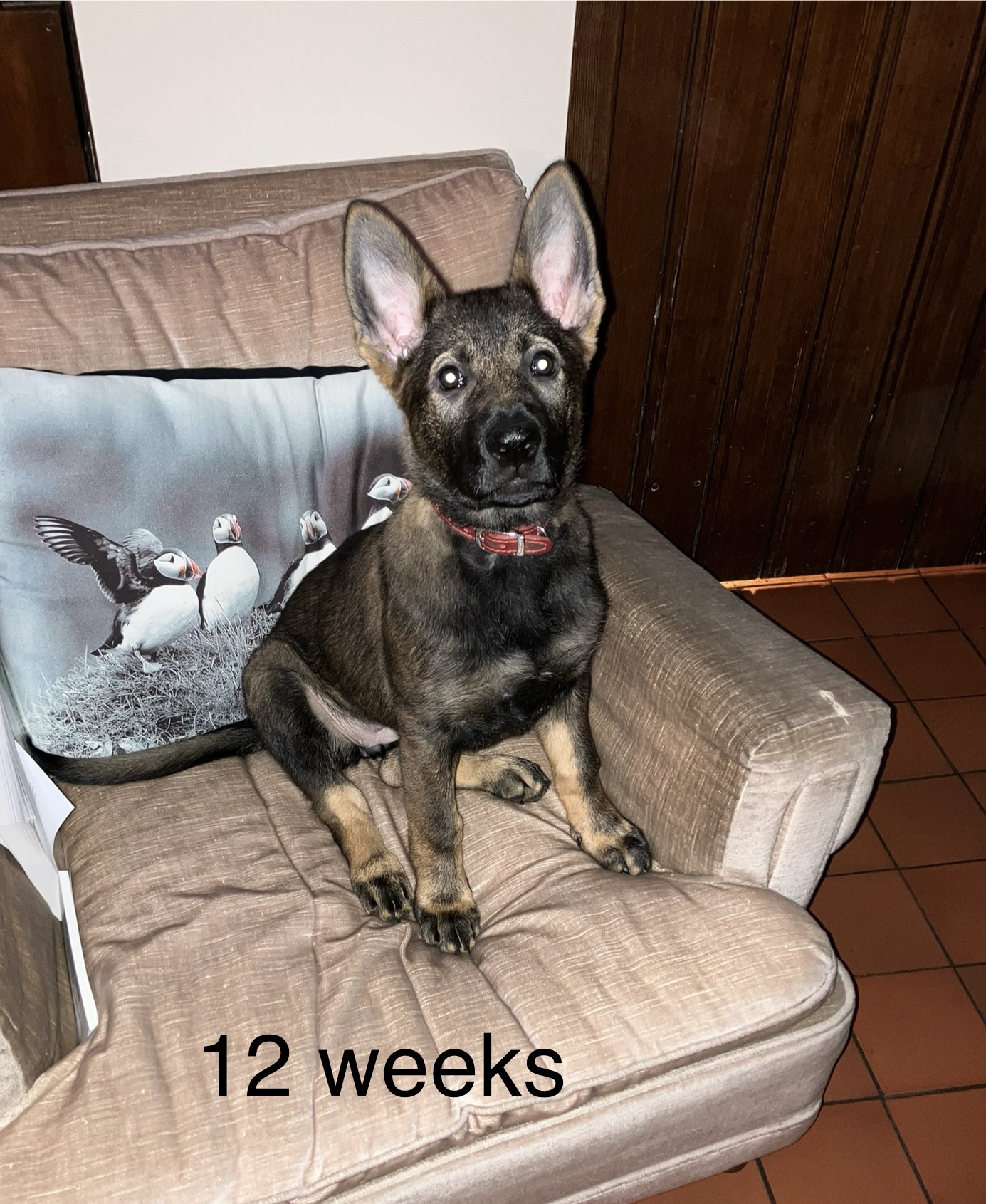
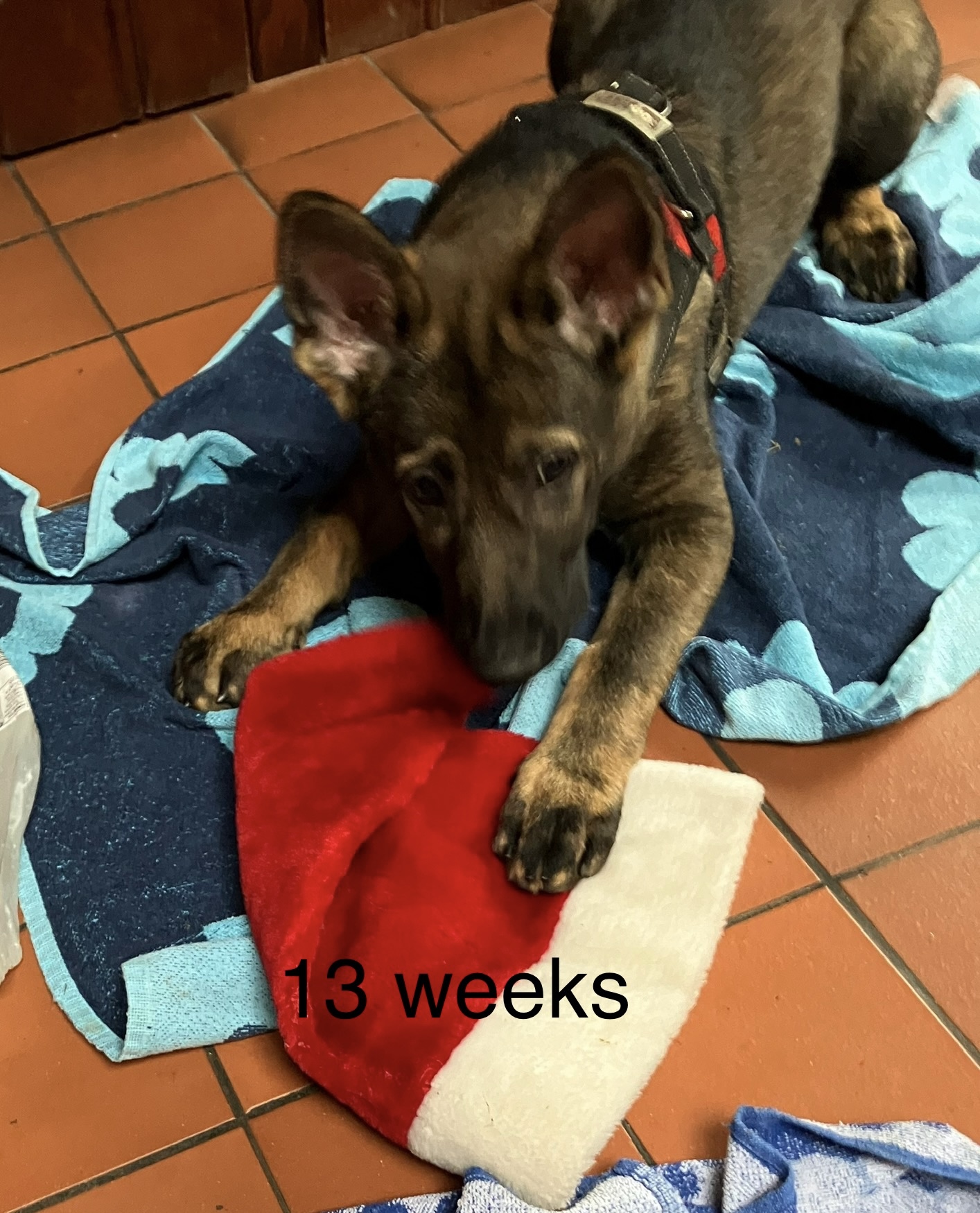
I will let you know how Meg develops. I am writing this postscript a few weeks later, and you will see from the photo below, that this dog is possibly too clever for me! This is what happened at 12 weeks, when I told her to ‘sit!’ (She’s not allowed on the furniture.)

A New Puppy


Meg’s Diary: First Day

We drove to near Northampton to collect Meg. You might remember from an earlier blog, that I was looking for a German Shepherd puppy, and learnt that working gsd are a very different strain. They are shorter, stockier, and generally have less health problems and nervous issues—so they are less likely to react badly due to fear. They also tend to have more energy/focus, which I worried might be a problem (as I don’t have sheep to be herded, only a few poultry) but we requested one, and I started reading. ‘Being calm’ was going to be an important lesson.

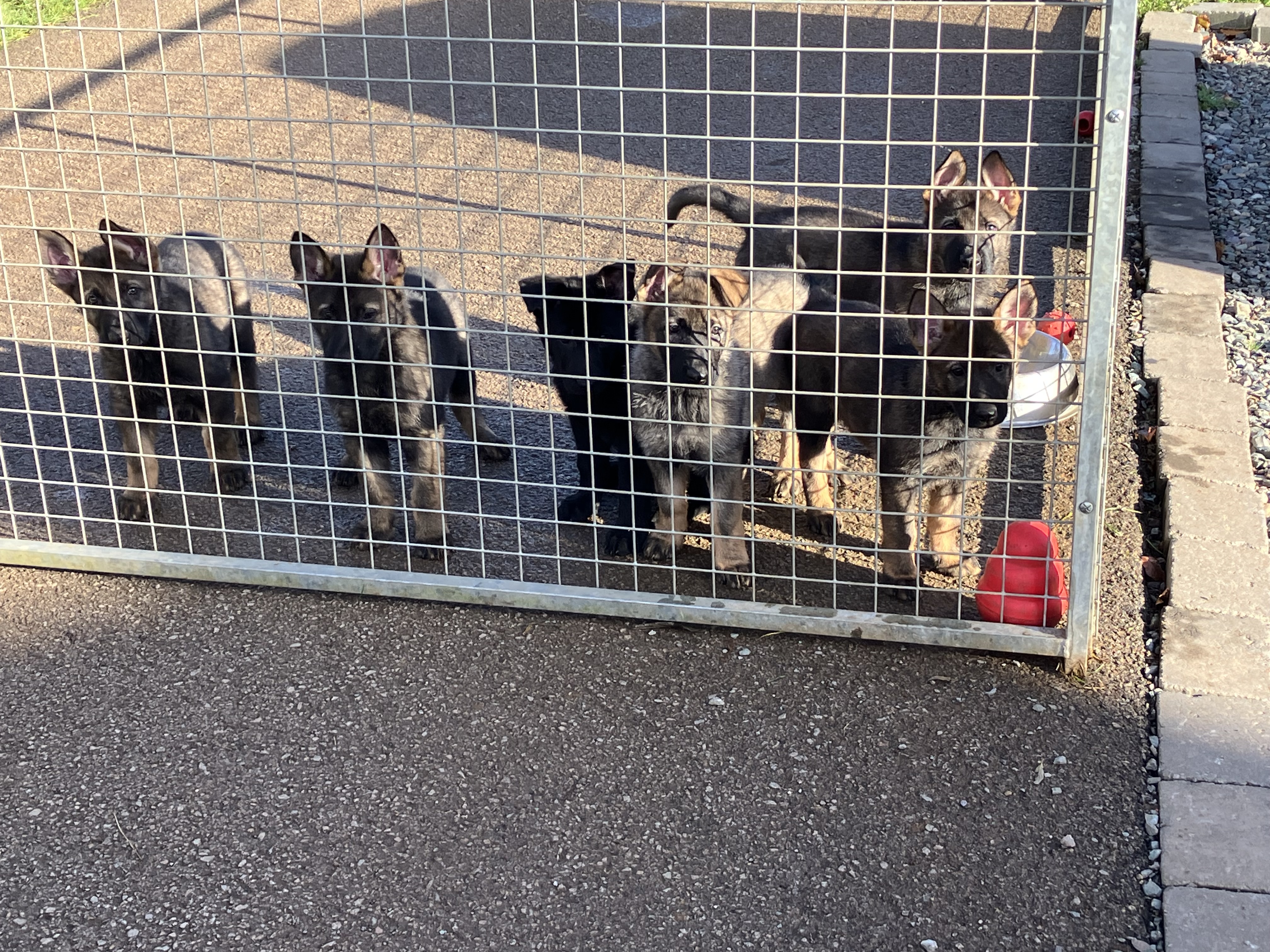
When we arrived, all the puppies were outside, in a pen. All my worries disappeared and I realised that I really really wanted a puppy—or maybe several! They were gorgeous, full of life as they chased each other and played with an empty milk carton and tried to leap the fence to say hello. Nearly all of their ears were up (a show strain gsd has floppy ears until they are several months old) and they had stocky little legs and nice straight backs and you could tell they were going to be strong dogs.

I asked to see their mother—because that seemed sensible. She was still lovely, though looked more tired than when I had seen her previously!

The breeder recommended Meg, as I had asked for a darker sable, and she knew I didn’t want a pup who was ‘very driven.’ Not that any of them looked particularly calm.

We paid and put her in the car. (£2,000 in case you are interested—a big increase from the £450 we paid for Kia when she was a puppy—but comparable to other reputable breeders. You have to divide that between 16 years, and then it’s worth the price.) The price covered her first vaccine and worm-course, a chip to identify her, and half a bag of dog food. I thanked the breeder (because she had sold me the best thing ever) and we left.

Meg started to cry as soon as we left. I really wanted her on my lap, but I wasn’t sure of the law/view of breeder (and gsd breeders are very fussy, and will refuse to release their puppies unless they are certain the new owner will be sensible). However, I also felt that the two-hour trip would be a good bonding time. So we stopped (like naughty children, as soon as we were out of sight!) and I transferred the puppy onto my lap.

She was easy to control, and I had piles of towels to hand in case of accidents, and I hoped she would just sleep. She didn’t. But she was settled, and she snuggled into me and watched Husband drive. A couple of times she was sick, but I am pretty nifty with bags after years of baby-vomit, so it was fine. By the time we arrived home, we knew each other.

I took Meg into the kitchen and put her on the floor. She ran round, knocked over a plant, tried to eat the plant, tried to eat me when I started to clear up. She has super-sharp claws and very pointy teeth. A friend had kindly leant me a puppy-pen. The first time we put Meg in it, she leapt at the sides, managed to get half-way up, and tried to leap the rest of the way. I worried she might either fall backwards, or climb over—either way she would be hurt. Husband managed to find a super-large crate at Argos, meant for a Wiemaraner but perfect for an energetic gsd puppy.

The first night, we did as the breeder had suggested. When we went to bed, we put Meg into a small crate, turned off the lights, left her. She cried, barked, sounded like she was being murdered, and then fell asleep. I slept within earshot. When she woke (2am) I went to her, didn’t turn on the lights or speak, took her in the garden to pee, returned her to the crate. She made a fuss, but fell asleep after about 10 minutes. When she woke again (4:30) I repeated. I got up at 5.30, and we started the day (I am usually up at 6ish, so that was fine). Whenever Meg toileted outside, she was praised and given a treat. She’s really clever, and we only had two accidents in the house. She cannot be left alone for a moment (unless she’s in her playpen-crate, which I don’t want to use too often). She seems very happy. I am exhausted.

Thanks for reading.

Take care.
Love, Anne x

***

Did You Know There Are Two Kinds of German Shepherd Dog?


I didn’t!

A Happy Young Kia

Ever since Kia died in January, I have missed her. This house feels very empty without a dog, but I needed to wait a while, so that I was emotionally ready for a new dog rather than trying to replace Kia. Because I can never replace Kia.

Kia was  German Shepherd Dog (GSD) and I don’t think I would want a different breed after owning one. I began to search the Kennel Club website, and I joined a few Facebook groups, and generally started to ‘ask around.’ I won’t be ready for a puppy until the winter, so I don’t want one immediately. This proved difficult, as most breeders breed in the summer. If necessary, I will wait until next year.

I am also fussy about the shape of GSD, as I don’t like the ‘sloping back’ that many show dogs tend to have. Someone told me that there are two strains of GSD: a ‘show’ strain and a ‘working’ strain, and as I wanted a straight-backed dog, I should look at the ‘working’ strain. I assumed this is what Kia was, as her back was straight. I was wrong.

We drove to meet a breeder of working GSD, and her dogs were completely unexpected! A ‘working’ GSD is almost like another breed, they are very different. The breeder taught me a little history:

GSDs were originally herding dogs in Germany, and a chap called Max von Stephanitz started to breed them for work. He chose dogs with good temperaments, high intelligence, and strength—because he needed them to be able to run for a long time.

These are very different to ‘show line’ GSD, which are the ones we tend to see. Kia was a ‘show line’ and therefore a big dog, with a fairly long coat, and distinct markings (a black ‘saddle’ and chestnut fur). The working dogs are smaller, and stockier, and they have short fur. Working GSD basically come in two colours—black or sable. They have lots of energy (think GSD on steroids!) and are confident—which means they are less likely to snap (because a nervous dog will snap when frightened). The police tend to use working GSD, because they need confident dogs to chase criminals, and a secure dog that is comfortable in schools surrounded by children.

The breeder I found mainly breeds dogs for the police and army—but they like males, and I want a female. I have seen videos of her dogs attacking people, and searching for hidden objects, and climbing over walls—but I wanted to check they weren’t aggressive. When we arrived, I was surprised by how small the dog we met was (about the height of a Labrador), and by how stocky it was (I am used to a lean GSD, this one was all muscle!) However, all the dogs were super-friendly and affectionate, and happily came for attention.

The breeder showed me a little routine with her dog – telling it to walk to heel (it was glued to her side) and then to sit while she walked away, then to run, then to lie down and wait. It was incredibly obedient (not like Kia) until the breeder came to remove the ball from its mouth. No way was that dog going to let her take its toy! They discussed it. (This was very like Kia!) I was rather pleased to see that even a highly trained GSD still has opinions, it will obey when it wants to.

I listened carefully to the breeder’s advice, because her dogs are very energetic. She said to read all the advice on Google—and then do the opposite! Apparently, a GSD should not be encouraged to play with lots of puppies, should not be exposed to lots of stimuli all at once, should not be petted by every child that wants a cuddle. Instead, they should be taught to be completely owner-focussed. Yes, they should meet other dogs—but their attention should be on their owner, not the dogs. They must learn to quietly walk past all distractions, watching only their owner. Then, when they are big scary animals, they won’t go bouncing up to scared people and terrify smaller animals—they will ignore them, and stay close to their owner. The breeder made her dogs completely dependent on her—even hand-feeding them, so they relied on her for everything, and it was in their interests to please her. They didn’t have eyes for anything else.

(There is a lesson here: Maybe if I was fully reliant on my God, all the ‘rubbish’ of life, all the trouble with people and politics, would matter less. I would still notice, but my focus would be on what is important.)

Luckily, the puppy I want does not yet exist, so I have plenty of time to learn how to train it properly. I need an obedient dog, who will help with my poultry (and not eat them!) I am considering training it as a support dog, so when I have one of my funny migraines and can’t see, I will have some support. More research needed. I will let you know what I learn.

Hope you have all the support you need this week. Thanks for reading.
Take care.
Love, Anne x

Thank you for reading.
anneethompson.com

Sign up below to follow my blog.

*****

A Week of Milestones


Hello, hope you’ve had a good week. Mine involved a crossing a few hurdles—nothing massive, but some were quite significant.

Firstly, my daughter moved into her new house. This feels very significant, as it’s unlikely that she will ever live with me again. She sold her flat a few months ago, so she and her fiancé moved in while they were between houses. I was hoping it might take longer than it did, but this week they completed all the legal stuff, and on Tuesday we visited their new house. It’s very nice, but I don’t envy them having to unpack lots of boxes and learn how to use new boilers and appliances. Moving is never fun. I will miss them.

The ducks also moved home. They are now fully feathered, so I started to put them on the pond (gradually, so the old ducks don’t panic and fly away). Each day, there was one less than I had put there the day before. It’s possible the fox was taking them, though it felt weird that it was only one each time—as they usually copy the established ducks and move to the island for the night. It’s also possible they have flown to another pond. Or are hiding. If they return, I will let you know.

It does mean I have an empty cage, which is very nice. Ducklings are mucky animals, and make a soup with anything they can reach. I cleaned out the cage, added some clean straw, and planted grass seed. Hopefully by the time Goose and chick are big enough to be outside, it will have some grass.

Roommates, if not exactly friends.

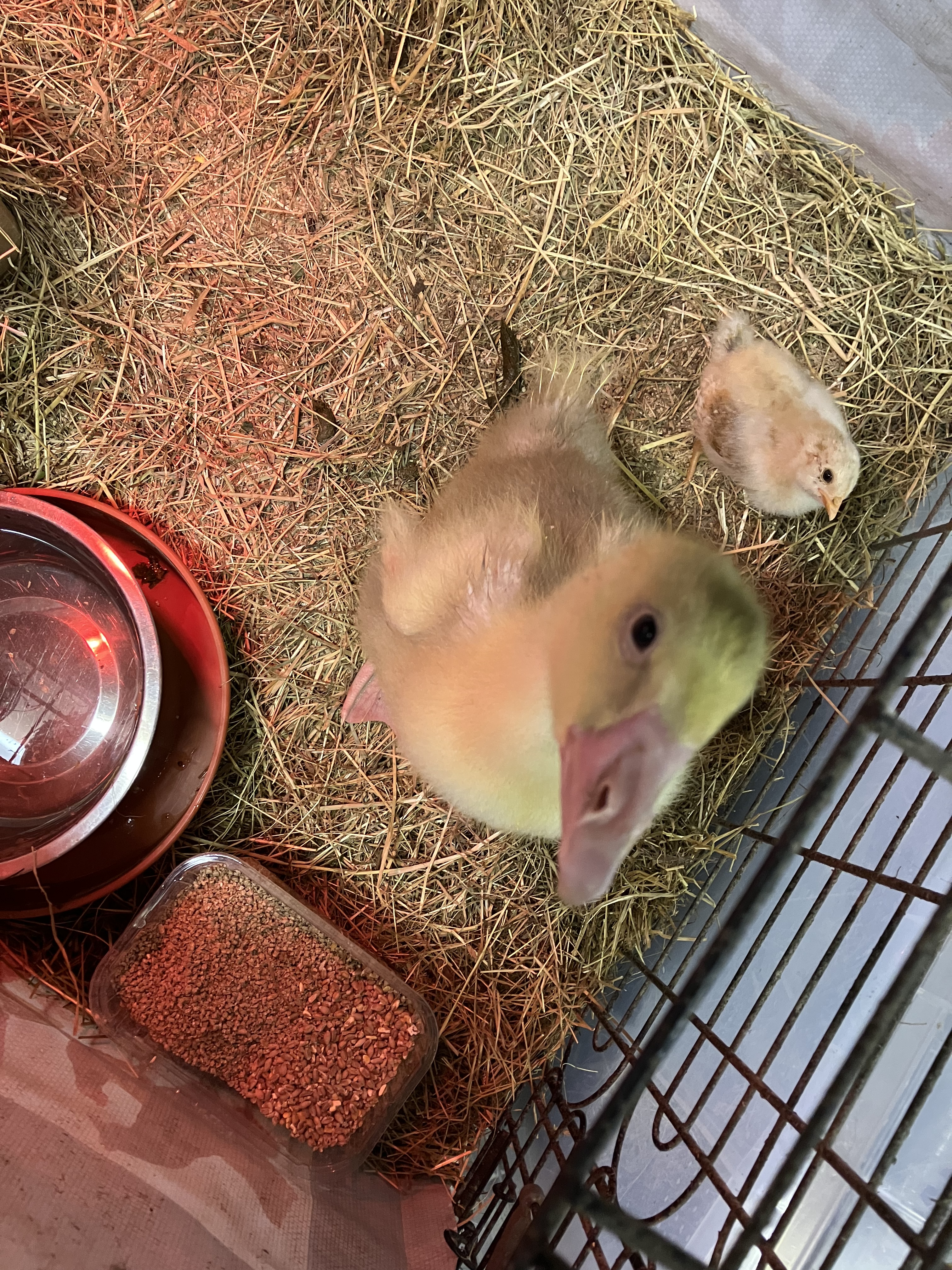
I have put the chick in with Goose. This is a risk, as it might get trampled. I have joined them for short periods, and watched, and a couple of times the chick was stepped on (much squealing) but nothing dangerous (like its head) so it survived, and is now alert to clumsy goose feet. The chick is completely desperate to be with the goose (it thinks it’s her mother) and was in danger of being hurt by trying to squeeze though the bars. It was actually in one of those plastic laundry baskets, within the goose cage, so close to goose, but safe. The clothes basket was left here by one of my moved-out offspring, so I hope they don’t ask for it back any time soon as it’s now rather grubby. Anyway, the chick is ecstatic that they are now together. The goose ignores her, because Goose thinks that I am its mother, and only wants to talk to humans—but it tolerates the chick, and I am still hopeful they will become friends. Maybe when they move into the outside cage.

Also, this was the week that I completed my dissertation proposal. This has been very stressful. I am not a planner, I am a ‘sort-it-out-when-it-happens’ person. I am very good at reacting to situations and averting disaster, not so good at sitting down and planning what chapters will be in a research project, and how I will find the resources for intelligent-sounding citations and (horrors!) writing a timetable of what I will do between now and April 2024. But it’s done, submitted, finished. I can now start the fun part of actually doing the research and reading some of those fascinating books.

I actually have bit of a problem with books, as I have developed attachment issues. I borrow a book from the library, spend hours reading it, enjoying the greasy pages and absorbing the words, feeling the weight on my lap as sip coffee and make notes…and then it ends…and I am supposed to return it to the library. But we have bonded. The book has become part of the fabric of my day, and I don’t want to abandon it to the unloving shelves of a dark library. So I renew it. Even though I have read it, made notes, finished with it—I renew it. I’m not quite sure how many times I can renew books, but I suspect I shall find out fairly soon. I do sometimes buy a copy to keep, but they’re not the same, they have shiny pages and they’re often too large, and they tend to cost a fortune (and sometimes the number of books arriving in the post is commented on). Maybe I will fill the now-empty duck cage with books that I have smuggled into the house. I can keep them in the grubby laundry basket.

Sadly returned…

Hope you have a great week. Thanks for reading.
Take care.
Love, Anne x

A little social interaction before the ducks moved out.
Anne E. Thompson
Thank you for reading
anneethompson.com
Why not sign up to follow my blog?
*****

Meet Goose


If you follow my blog, you may remember that last month, when we were staying in the Peak District, the farmer kindly gave me three goose eggs. Each one was the size of four chicken eggs. I wrapped them up in toilet paper (I didn’t have anything better) and we drove them home. After letting them rest for 24 hours, I put them into the incubator, and searched online to find out how to hatch geese eggs.

My incubator automatically turns chicken eggs, but these were much too large. Every day I turned them 180˚ an odd number of times (thus ensuring that they were never the same way up for two nights in a row). This is because the embryo can get stuck, and won’t develop properly. I kept them at 37.5˚C, and 50% humidity.

Different birds incubate for different periods. A duck is 4 weeks—though often hatch a few days early. A chicken is pretty much always exactly 21 days. A goose is anything from 28 to 35 days. After a week, I sat in a dark room, and shone a bright torch through the shell. Two eggs had the clear shadow of the yolk, turning as I moved the egg. One egg had tiny threads of veins, and when I turned the egg, the shadow of the yolk stayed still—fasten in position. Which meant I had one fertile egg.

Birds need a flock, so one goose would be lonely. Goose eggs are expensive, and I wasn’t certain that I would manage to hatch them anyway, so was loath to buy more. Instead I went on Ebay and bought some Buff Orpington chicken eggs. They should have arrived the following day, meaning they would hatch potentially at the same time. Unfortunately the annoying seller didn’t post them immediately, so they were about two weeks later than the goose egg going into the incubator (and therefore one week later hatching). But it was the best I could do.

After a couple of weeks, I started to spray the goose egg with cold water—mimicking the mother goose returning to the nest after a swim (not sure what the chicken eggs thought about that, as chickens are not known for their swimming). Only one chicken egg was fertile, so now I had two eggs, and hoped the hatchlings would be friends. After 28 days, I stopped turning the goose egg, and raised the humidity to 70% (which is not great for the chicken egg, but humidity is unlikely to kill it—they are only vulnerable to temperature change, and that remained at 37.5˚C).

After 29 days, nothing. After 30 days, nothing. After 31 days, I decided I would wait until the 35-day mark, and then chuck it away. After 32 days, I could hear very loud cheeping from inside the egg. After 33 days, a crack appeared down one side. After 34 days, the crack was a ‘zipper’ around the egg, and the gosling managed to push off the end and wriggle out. It was a poor little thing, very weak, and a chunk of fluff must have stuck to the shell, because it had a bald spot. It was also enormous!

Not a looker! Poor thing was exhausted after hatching.

I left it in the incubator to dry off, but when it started playing football with the chicken egg, I decided it was best to move it to the brooder. (Fancy name for a plastic box in the garage stuffed with hay, with a heat lamp hanging above it.) It had pots of water and chick crumb, and a mirror for company. It spent a lot of time chatting to the mirror. The following day was sunny, so I decided to put it in with the ducklings for a little while. As a social experiment, it was a failure. Even though they were separated by netting, the ducklings (almost fully grown) tried to push their heads through the bars to peck it. The gosling stood up, and raised its little stubby wings in a cute imitation of the scary pre-fight warning that adult geese do. I worried it might decide to go near enough to be pecked/killed, so put it back under the heat lamp with its mirror-friend. I will try again when it’s bigger.

Sometimes a friend in a mirror is safer than real life.

Hoping the chick hatches on time, and grows big fast so they can roam the garden together. I will keep you posted.

Hope you see some friends this week, and that no one makes aggressive gestures towards you. Thanks for reading.
Take care.
Love, Anne x

Thank you for reading.
anneethompson.com
Sign up below to follow my blog.

*****

Springtime Jobs


It’s time to do all those jobs that happen every year at this time. It doesn’t feel much like spring here at the moment, as we’ve had snow and frosts all week. But the mornings are lighter, and the animals know, even if we’re not sure. Depending on where you live, you will either have put your clocks forward an hour, or be preparing to do so. We move our clocks on the 26th March this year, so the US and Canada are ahead of us.

One Christmas gift (which feels like yesterday) was a pot and a packet of beans. We’re having a family competition, to see who can grow the tallest bean. It has to be in the pot provided, which wasn’t very deep. Mine grew to 67cm, then it decided the kitchen was too warm and the pot too small, and died. I planted the remaining seeds outside, and they don’t seem to mind the cold and are looking healthy. I expect the slugs will eat them, but here’s hoping.

My bean, growing next to a lemon pip (which is slower but less fussy).

The birds know it’s spring. The ducks have started laying, even though it’s cold, so April will be busy with ducklings again. There are already lambs in the fields. The cycle of life begins again.

We also have a wren in the garden. Male wrens are busy at this time of year, collecting things to build nests. Nests plural. A male wren builds several nests. When he manages to attract a female, he takes her on a tour of the nests, she chooses the best one, and lays her eggs. He then goes off and finds another female, and repeats the tour with the remaining nests. He’ll do this until all the nests have females, sitting on his offspring. Not the sort of male you want to introduce to your daughter. He’s a tiny brown bird, but has something (which I cannot remember the name of) in his lungs, which amplifies his voice. A tiny bird with a loud song. I’m rather fond of him, so I hope the cats don’t catch him.

Spring this year will be busy for me too. I need to sort out the house, because my daughter is moving home for a few months between selling her flat and buying a new property. This will be fun, but I need to make space for her. Though once I have emptied some cupboards, the job will be finished. I also need to write the proposal for my dissertation, which is less fun. I have to submit the title of my thesis, explaining what I plan to research and why, with a list of all the literature I plan to read and why it will be relevant. I am going to explore the dragon in the book of Job (chapter 41) which will be interesting, but being assessed makes it more stressful. But at least I only have to produce one, and I can submit that to the university and they will either love it or not. Being a wren and having to repeat that many times over each year must be a whole different game.

Hoping that all you attempt this week grows well and is completed on time. Thanks for reading. Take care.
Love, Anne x

Thank you for reading.
anneethompson.com
Sign up below to follow my blog.

A Sad Day


Today is a sad day. I know that I said I would continue to tell you about the best two papers at SOTS, but Kia died yesterday. Kia, my German Shepherd Dog, was my friend for 16 years. Although she had become old, and mostly lay on her big bed in the kitchen, she seemed very happy. A couple of times a day, she would come up the garden when I fed the poultry, and occasionally she would even start towards a stick—until she remembered how much effort it would be to bend down and pick it up. But yesterday, she suddenly took a turn for the worse, and her wobbly back legs were practically useless, and she gave me ‘that look’ which said she was tired, and had had enough, and it was time to say goodbye.

I worried that if she tried to get up during the night and couldn’t, or if she toileted and couldn’t move out of it, she would be very distressed. So I kissed her head, and whispered that we would meet again (because I firmly believe that God will take care of that) and we took her to the vet, and let her go peacefully.

Now I am clearing away the remains of her presence: washing her bed, finding a cupboard for the dog bowls, wondering why I bought quite so many poop bags. I have food to give away, and old towels to wash and fold. I cry a lot, and remember, and feel loss, but there is something therapeutic about the sorting of it all, something healing in the clearing up. Perhaps that’s why we need rituals when people die, we need something to do while we mourn.

Today is difficult. There is so much to miss, even of a dog who had limited her world to the kitchen and garden. The kitchen is horribly empty. When I picked up the compost bin, there was no head turned towards me, waiting to see if I was going into the garden. Kia would watch, waiting until I actually put on my coat—so she could be sure I wasn’t going to trick her and shut her into the utility room—and then she would heave herself up, and totter to the door. We would walk up the garden together, the cats coming to greet her, and she would watch me as I fed the ducks and chickens. In the past, she would bark in warning if the chickens made a fuss and tried to fly near me (she hated them flying) but recently that was too much effort, so she just watched, checking.

I realise today how often I touched her—scratching her neck every time I passed that big bed on the kitchen floor. As I use the sink, I wait for the shove of her nose in the back of my legs, reminding me to fill her water bowl. No one watches when I go to the fridge, waiting to see if something tasty is coming out, something like cold turkey, which would make it worth the effort of getting up, just in case I passed her a piece. She was very polite, and after a few attempts at stealing food as a puppy, she never stole, and never watched us eat (because I never fed her from the table).

But she knew that when we had steak, I would cut off the fat and put it in her bowl, and without fail, her nose would appear at the table just as we finished eating. I don’t know how she knew that we had finished, I guess she recognised the sound of the fat being chopped up. I don’t think we will be eating steak again for a while; it wouldn’t feel right.

German Shepherd’s are dogs with opinions, and Kia had an opinion on everything. I remember it being a surprise when she was young, how I had to learn that German Shepherd’s were different to my previous dogs. Nosier. I would open a cupboard door, and her head would be in front of mine, blocking the view, checking to see what was inside. Most visitors she liked, and would greet with enthusiasm. A few she disliked (not sure why) and she growled when she saw them. A favoured few she adored, and even in the last weeks she would stagger to greet them before returning to her bed.

Kia was always a ‘mouthy’ dog. As a puppy, it took ages to teach her not to nip (I would scream loudly, as if I was in agony, even if she gently touched me with her teeth). When an adult, she never snapped, and was gentle with the cats and chickens, but when we walked, she would sometimes take my hand in her mouth, like a child holding hands.

As a young adult, Kia had boundless energy. We walked for miles, and she would jump over stiles, and chase sticks. She was very good with livestock, and walked quietly next to me, greeting cows through the fence and looking cross when they licked her head (cows are very licky animals). Though she sometimes barked at horses. And if off the lead, I am pretty sure she would have chased sheep, so we never risked that one.

One of my fondest memories is when I came home after surgery, and was lying in bed, when I heard a noise at the door. Kia (who was not allowed upstairs) was standing there, checking. When I noticed, she tiptoed away, as if pretending it wasn’t her.

But most of my thoughts today are of the old Kia. At 16, she was old for several years, and it was a dignified, peaceful old age. It is with a sad, but very grateful heart, that I say goodbye.

Thanks for reading. Next time I will get back to those papers from SOTS (because they really were extremely interesting).

Have a good week, and take care.
Love, Anne x

I will leave you with some photos across the years. (I have grown older too!)

*****
anneethompson.com

Anne E. Thompson
Thank you for reading
anneethompson.com
Why not sign up to follow my blog?

A Good Day


Sometimes you just know a day is going to be good, don’t you? Everything seems to work well together, and even unrelated events turn out well. And sometimes, the opposite is true, and we go to bed wishing we had never got out of it because everything we have attempted has gone wrong.

Today, is a good day. I wasn’t sure it would be, because when I got home yesterday, tired from a day at college and a long drive, my back was hurting. I went to check on the animals, and there was lots of movement in the nest on the pond, and definite sounds of cheeping. Mother duck wasn’t moving, and when she saw me looking, she tried to cover herself with dirt—not sure whether she was trying to hide or was securing a hatchling that wanted to escape.

A duck will stay on the nest until the first hatchlings decide to leave the nest, then she’ll abandon any unhatched eggs (even if they’re nearly hatched) and take the ducklings to water. After they have fed, she’ll relocate to a new place and gather her ducklings under her. Any ducklings that haven’t managed to keep up will drown or be eaten by all the predators that swoop in as soon as they hear the cheeping. Of say, 25 eggs she lays, about half will hatch, and of those 13, maybe one will survive to adulthood. It’s a tough world out there.

Anyway, last night I had a choice: 1. I could leave them to their fate. 2. I could risk drowning and try to catch the mother, put her into the chicken coop and then try to catch the ducklings. Mother would then raise the ducklings in safety. 3. I could leave the mother (because she is the hardest to catch) and remove the ducklings. I would then have to raise the ducklings myself in the garage, which is a lot of work and I have an essay to write. What would you have done?

I decided that my back hurt too much, plus I was tired, so I left them. I would reassess the situation in the morning.

Today, I woke about 6:30 and went straight to the pond. A miracle! It looked as if the mother had only just left the nest. She was on the pond with 10 ducklings, but there were no predators, she was very relaxed, and the ducklings were still full of energy. I went to collect Husband (who muttered about ‘Husband-abuse’ and having to wade into pond before 7 a.m.) We knew the drill: First, secure the area (cats locked into workshop while one of us stayed at the pond to deter flying predators). In the few minutes it took to lock up the cats, the trees filled with crows and magpies. Collect big bucket as dumping place for ducklings. Catch mother. (Unless you have ever caught an angry duck on a big pond, you have no idea how miraculous this was.) Put mother into chicken coop, and turf out grumpy chickens (will have to combine the flocks this evening, which will cause them some angst.) Catch remaining ducklings, reunite ducklings and mother. Make coop safe, put down fresh food and water, leave them to settle. Phew! All achieved before my morning coffee. I put my pyjamas into the wash and made a drink.

When the post arrived, there was a little package. It was a painting that I bought online. I have often seen the artist’s work on twitter, and he does some tiny paintings, the size of a coin, and some slightly bigger. This one was of London (I happen to like his London ones best) and it was being sold on a tiny easel. It’s the perfect size to brighten up a dark corner of my study, and only cost £15 including postage, so I followed the link to Etsy and bought it. I wasn’t sure what to expect, it’s hard to assess a painting online. But it really is perfect, and such good value for an acrylic.

http://www.acmart.co.uk is worth a peek.

As I said, today is going to be a good day. Hope your day is good too.
Thank you for reading.
Take care.
Love, Anne x

Thanks for reading:
anneethompson.com
Anne E. Thompson
Thank you for reading anneethompson.com Why not sign up to follow my blog?
*****
A Foxy Problem


I decided to let the chickens into the garden. They had been shut in their cage for a few weeks while the local fox had cubs, and again while we were in the Lake District, and again while some plants were being established (because chickens like to dig). But it’s much healthier for them to be roam free, to have dust-baths to clean their feathers, and to fly into the trees. I opened their door, and out they rushed.

It was hours later, as I was cooking dinner, that I realised I had never collected the eggs. I left the potatoes bubbling on the stove, and walked up the garden. As I neared the pond area, I smelt the unmistakeable whiff of fox. I started to hurry, peering into the trees for signs of feathers.

As I reached the chicken coop, I could see all the chickens, peacefully digging in the earth as they searched for tasty bugs. No casualties. But as I rounded the corner, there in the coop, just sneaking through the door, was a fox. Without thinking, I rushed up, slammed shut the door, and locked it.

The fox leapt to the corner of the cage, then turned, eyes flashing, teeth barred, fur raised. It flung itself at the locked door, then leapt for the far corner. It dug at the earth, clawed at the bars, ripped the netting from the sides of the cage. But it was trapped. Now what?

I hadn’t really thought this through. If I released the furious fox, it would almost certainly snatch a chicken or duck as it passed. But I couldn’t keep a wild animal in a cage, and soon it would be dusk and the chickens would want to roost.

I watched the fox as it flung his angry body around the cage, then I went to get reinforcements. Jay happened to be visiting, and Husband was working in his study, so I told them I had caught a fox, and asked if they could help. Both appeared amazingly quickly.

(Later, Jay informed me that this was another instance of my not being normal. Apparently normal mothers do not catch foxes, nor do they ask in very calm ‘please-can-you-empty-the-dishwasher’ type voices if their sons can help with a trapped fox. But I have given up trying to be normal.)

The fox was still angry/upset/terrified. I thought the chances of one of us being bitten was fairly high, and I wondered if foxes, like bats, have rabies. It looked healthy enough. I was impressed with the energy it was expending on trying to rip up my chicken coop, and pleased with how strong the coop was proving to be. I watched the fox as it climbed a vertical wall, traversed the roof upside-down, then dropped to the floor. Agile as a cat, vicious as a hyena.

My animals were not much help. Kia arrived, but I worried she might fight and be hurt, so I took her back to the house. Three cats arrived, and sat staring at the trapped fox. Stupid chickens arrived—it was time to roost—and lined up next to the door, ready to go inside. Did they not recognise a predator? Clearly not.

The problem was: How to remove livid fox from coop in such a way as to ensure no chickens would be hurt? Or ducks. Or cats. Or humans.

We own a couple of metal dog crates. One was inside the coop, used as a nesting box. We got the second one, checked it would fit through the door if the coop, and placed it inside a huge bag used for collecting leaves. This made a dark space, somewhere a scared fox might try to hide. We tied string to the door, so we could shut it from afar. When the fox was at the far end of the coop, we placed this wrapped cage in the coop.

We then used sticks and noise to ‘shoo’ the fox into the wrapped cage. Not as easy as it sounds, but we managed it, pulled the string to close the door, then Husband rushed into coop and closed the latch. Fox was now secure in smaller dog crate.

Jay and Husband carried the dog crate away from the coop, all the chickens went back inside, and I closed the door for the night. Disaster averted.

Note to self: Next time I trap a wild animal, it would be good to have an end-of-plan strategy in place.

Hope you don’t have any disasters this week. Thanks for reading. Take care.

Love, Anne x


P.S. Pleeease don’t feed foxes. They are wild animals, and when they lose their fear of humans, and their gardens, they become a problem.

Anne E. Thompson
Thank you for reading anneethompson.com Why not sign up to follow my blog?

anneethompson.com

*****
All Things Duck


I have just sorted out the ducklings—not that they are ducklings anymore; they are pretty much full-grown after a few weeks. The 8 ducklings in the big cage were being lots of work, and the mother who unexpectedly hatched 3 extras were in a cage right next to the pond, even though they can’t go onto the pond until the new ducklings are big enough to avoid being a tasty snack for crows and cats. So, I decided to switch the cages. So easy to say…so much work involved.

The first job was to catch mother duck. I removed the door to the cage, and noticed I had been joined by 3 cats. Took a break and secured them in the shed—they had different plans for the ducklings. Went back to catch mother duck. Mothers can be scary when they think their offspring are at risk, but she knows me, so apart from crawling into a dirty cage, it was easy enough. I put her into a box while I caught the ducklings, which are as fast as rats when they think they’re going to be caught. Shoved them into the box with the mother.

Cleaned out cage (lots of cobwebs and poo and stinky hay and mouldy food involved in this—caring for animals is not glamorous). Moved big ducklings into the cage. As I said, they are not really ducklings anymore, and one never was as she is a chicken—but she identifies as a duck. While I moved them, I was able to determine their sex by the volume of their quacks. They’re too young for tail feathers (male ducks have curled tail feathers) but their voices are clearly different. The loud quack that you associate with a duck is only made by the females. The males make a sort of feeble grating noise. Out of 8 ‘ducklings’, I have: 1 chicken, 2 females and 5 drakes. Not a good ratio.

Lifted mother and her ducklings out of the box in the big cage and watched them for a while. They instantly went to dig in the wet mud, and now look revolting. But I think they’ll be happier in there. After a few days, I will open the end of the pond cage and let the full-grown ducks onto the pond. They will love that.

Not so cute when they’re muddy!

I am not entirely sure what will happen with the chicken/duck. I am assuming she will simply wander around the bank and the flock will join her in the cage in the evening. But we will see. Hope she doesn’t try and swim. I do have another hen who thinks she’s a duck, and I managed to integrate her into the chicken flock, but she has never been very happy and tries to return to the pond whenever she is released. I might try to combine the two of them, but introducing new chickens to each other is never easy—they are nasty birds compared to ducks, and will fight a bird they don’t recognise.

I am especially keen to see what colour eggs she lays. Her mother is a lovely black hen, and she came from a brown egg. Her father is white—and had he been female I think the eggs would be blue. I am really hoping for green eggs, but we shall see. They should be a good size anyway because the mother lays big eggs. Chicken-Duck is white, though might grow some darker feathers later because my grey/white hybrids have a few grey specks amongst the white.

The cage next to the pond.

Time to go and use some of the eggs to make cakes now. Hope you have a good week (and that it involves less smelly poop than mine generally does!)

Thanks for reading. Take care.
Love, Anne x

Something no one who owns poultry wants to see.

A sad footnote. I decided that enough time had passed for the local fox to have stopped using our garden as his territory, and I let the chickens out of their cage. I was wrong. At about 4pm, I went to check and found a trail of feathers. I locked the hens away quickly, but my lovely cockerel was killed. Not eaten, just killed. I saw the fox a little later, as it came back for more fun. It was still early, not even beginning to get dark.

If you are someone who feeds foxes, please note: You are not providing food for an hungry animal. Foxes kill for fun. If they are fed by humans, they lose all fear of humans and places like gardens become part of their territory. The natural balance of nature is upset, and foxes will breed more cubs than they can find food for in the wild, so they become dependent on humans, and their pets, for providing easy food. A fox will kill birds, and rabbits and an elderly cat if they happen to be within range.

A few years ago, there was lots of crying in the field opposite our house. Every ewe was standing next to a dead lamb. A fox had killed them, for fun. I have nothing against foxes, I like seeing them in the wild, where they belong. But foxes that have no fear of humans are a problem. Please do not feed foxes. If you want a pet, get a goldfish.

Anne E. Thompson
Thank you for reading anneethompson.com Why not sign up to follow my blog?

anneethompson.com

****