Quarantime to Read. . . Counting Stars: The Journey


Chapter Two

She doesn’t look, think, or fight like James Bond, but sometimes a mother simply has to do whatever it takes. . .

The Journey Continues


Thank you for reading.
Why not sign up to follow my blog?
anneethompson.com

****

Due to the KDP rules on Amazon, I am not allowed to upload a whole book anywhere other than on the KDP site. I can therefore share chapters with you, but must remove them when read.


If you would like to read the whole story, or perhaps buy a copy for a friend, it is available from an Amazon near you. The link is below:


https://www.amazon.co.uk/Counting-Stars-glimpse-around-corner/dp/0995463212/ref=sr_1_1?dchild=1&keywords=counting+stars+by+anne+e+thompson&qid=1589905723&sr=8-1

Slavery on the Plantations


I had planned to be in Italy now. In preparation, I wrote this post last year, and postdated it to be published today. It is weirdly relevant given what is happening. As I read Fanny’s book, it was fascinating to hear her say things that today would be considered blatant racism, even though she was fighting for the abolition of slavery. There is a lesson here for today. If we are protesting against racial inequality, is it okay to shop for cheap clothes, which are made by slaves in Bangladesh? Do we only want racial equality in the UK and the US? Or are we prepared to give our money to aid agencies to help fight Covid-19 amongst the poor in India, Africa, and beyond? What, I wonder, will the future think of us?

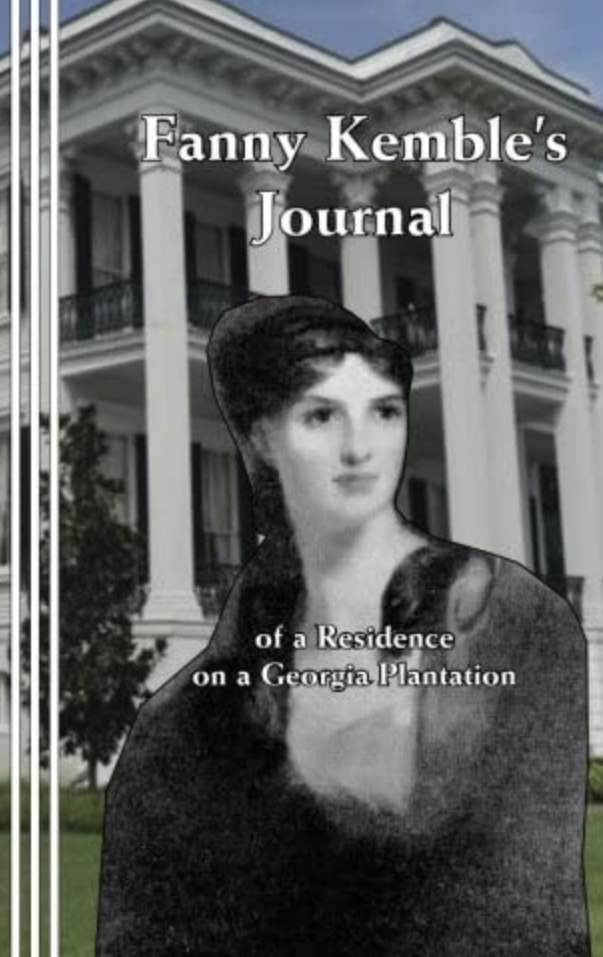
Journal of a Residence on a Georgian Plantation 1838-1839

by Frances Kemble

While we were visiting the Southern States of America last year, we were very aware of echoes of the past wherever we went. We saw old plantations, fields of cotton, museums, relics from the civil war, and were ever conscious of the comparatively recent slave trade. I began to explore this a little, to try and discover some facts beyond what we could see, and one of the books that I bought was the Journal of a Residence on a Georgian Plantation. It is a brilliant book, and allows the reader to see the slave trade, as it was, through the eyes of another investigator.

Fanny Kemble was an English actress. She was fairly well-known, as both an actress and an author, and during a tour of America with her father, she met Pierce Mease Butler. They married, and she went back to live with him in America, having no idea about how, exactly, he made his money. She then discovered that Butler owned a plantation, and slaves. Fanny deplored the idea of slavery, and insisted that she be allowed to visit the plantation, and see for herself the life of the slaves owned by her husband. The book is a series of letters and extracts from her journal, describing what she discovers.

I read the book shortly after arriving home from our road trip through Georgia and the Carolinas, so much of what Fanny describes is clear in my memory. She talks about the swamps, where the trees appear to be balanced on long fingers, and she calls them ‘woods of water.’ She describes the wildlife, the climate—all of which is pretty much unchanged even today. However, read through modern eyes, Fanny herself would be classed as racist, as her language reflects the thinking of the day. A strident abolitionist, Fanny makes a strong argument for the evils of the slave trade, whilst also describing black people in unflattering terms. It is unclear whether Fanny considers the slaves to be her equal, or whether she simply thinks the owning and degradation of human beings is deplorable (which is not quite the same thing).

The living conditions of the slaves are described as dirty, with no comfort, insufficient food. However, the aspect that affects Fanny the most is the whole being owned principle. Although the slaves married, and had children (which were then considered the property of the plantation owner) this was not respected beyond the confines of the slave residencies. So a man might return home from work one day to find, without warning, that his wife or child had been sold to a new owner, many miles away. Fanny also refutes the idea of benevolent owners, saying that those people who claimed to be kind to their slaves were still treating them as animals, and doubting whether a full-grown person would prefer to be treated as a much-loved pet dog, or as a donkey–both are belittling, and both undermine the basic principle that people of all colour, are human. This was radical thinking for her times.

One part which was interesting, is when Fanny is discussing Shakespeare (which would be very relevant to an actress). She ponders the play of Othello, and how the character, who is black, is described as a Moor, not a Negro. Fanny tells her friend that the hateful speech by Iago, Othello’s enemy, would be much more realistic if his hatred of “the moor” was changed to “the negro” and would add to his criticism of Desdemona, who has married a “negro.”

To discover what happened to Fanny later, beyond the pages of the book, I had to search the internet.

Fanny later divorces Butler and returns to England. Butler squanders his money, and eventually sells 436 slaves at The Great Auction in Savannah. This was notable, and is still part of the remembered history of Savannah today, used as an example of the horrors of the slave trade. Families were wrenched apart in the sale, and local people described the wailing and crying.

I found this book exceptionally interesting, though the style of writing was not my personal taste. It gives a clear account of how someone living in the times of slavery viewed what was happening, and I loved how her own biases were unconscious, and never addressed. I wonder what Fanny would think of her own writings if she was alive today. . . and I wonder what a future Anne would think about my own views. We are all products of the society in which we live, even if we like to think our generation has ‘sussed it’. I wonder if perhaps before we shout at those who we think are racist today, we had better look into our own hearts. You might claim that you believe all people are equal–but have you ever bought cheap clothes that might have been made by slaves in Asia? When did you last donate money to help downtrodden people? Would you allow the field near your home be used to build homes for refugees? I wonder. . .

Thank you for reading
anneethompson.com
Why not sign up to follow my blog?

Will You Look Outside of the Bubble?


Looking Outside of the Bubble

I miss my family. I want to see my son and his girlfriend, and I want to see my sister—who was due to visit from Canada but then had to cancel her trip because of lockdown and quarantine and all-things-Covid. I feel like I’m living in a bubble, much of which is not terrible, but there are snippets of life that I sorely miss, and people who I love are some of them. I also want things to be normal again, and I’m not sure they ever will be. I don’t much like living in a bubble, do you?

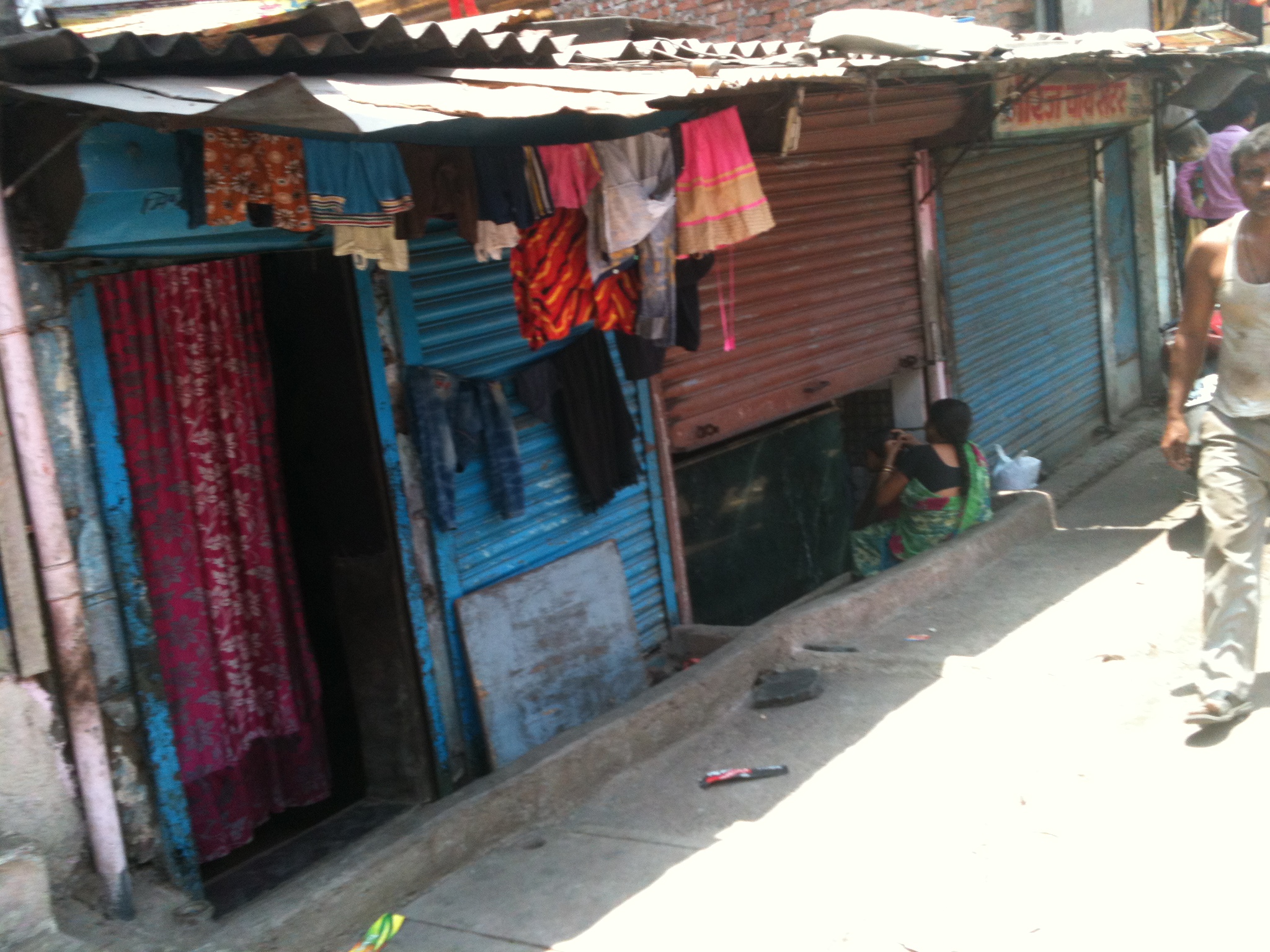
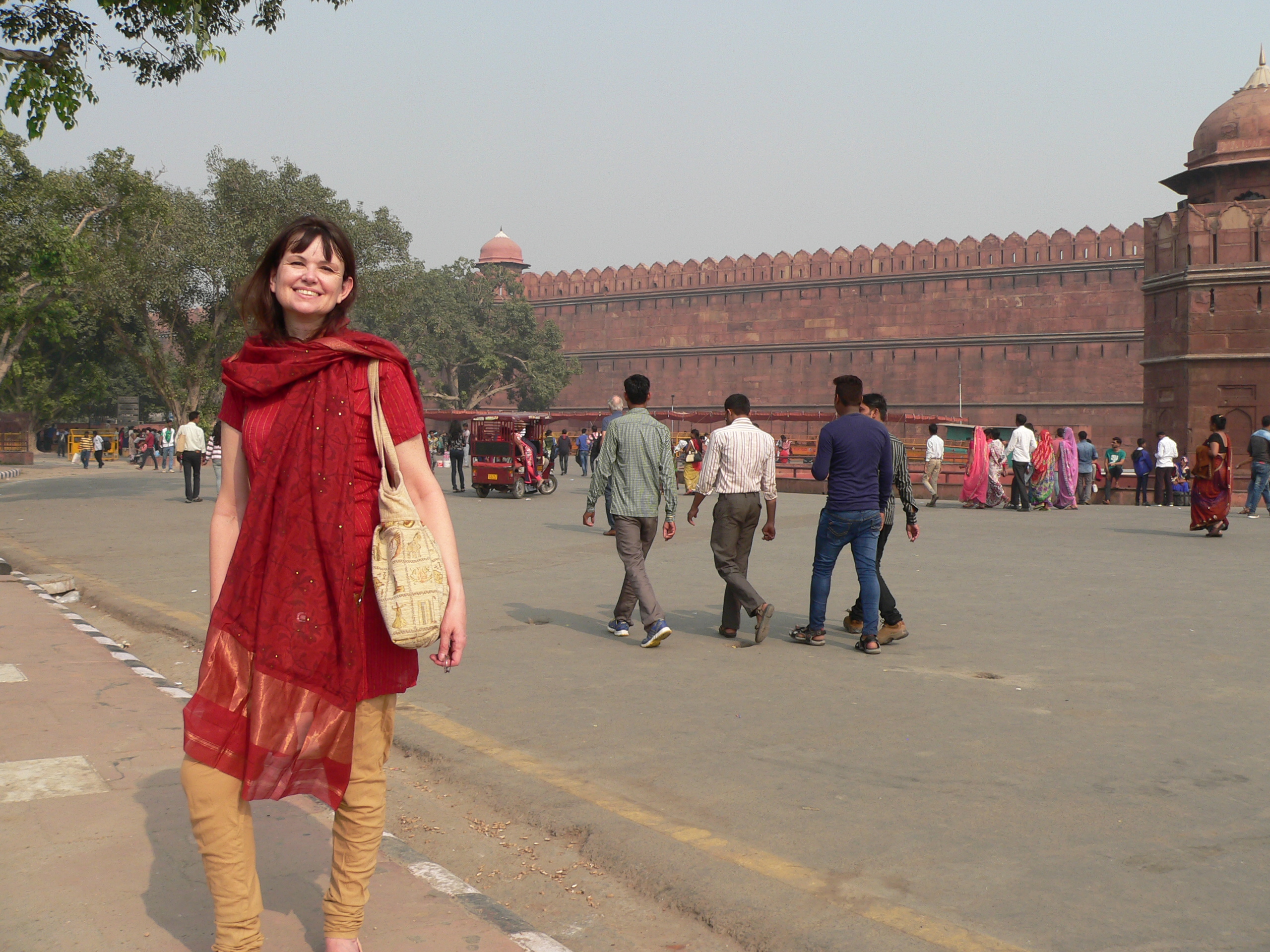
If I look further beyond my bubble, there is India. Do you ever wonder what is happening there now? All our news is as Covid-dominated as our everyday lives, and news from outside of England has been hard to find. But I know people in India, I have walked through the slums, and held babies, and giggled with children on the road outside a brothel. What has happened to them during lockdown—do you even care? Will you let me show you, for a few minutes, what is happening outside of your bubble?

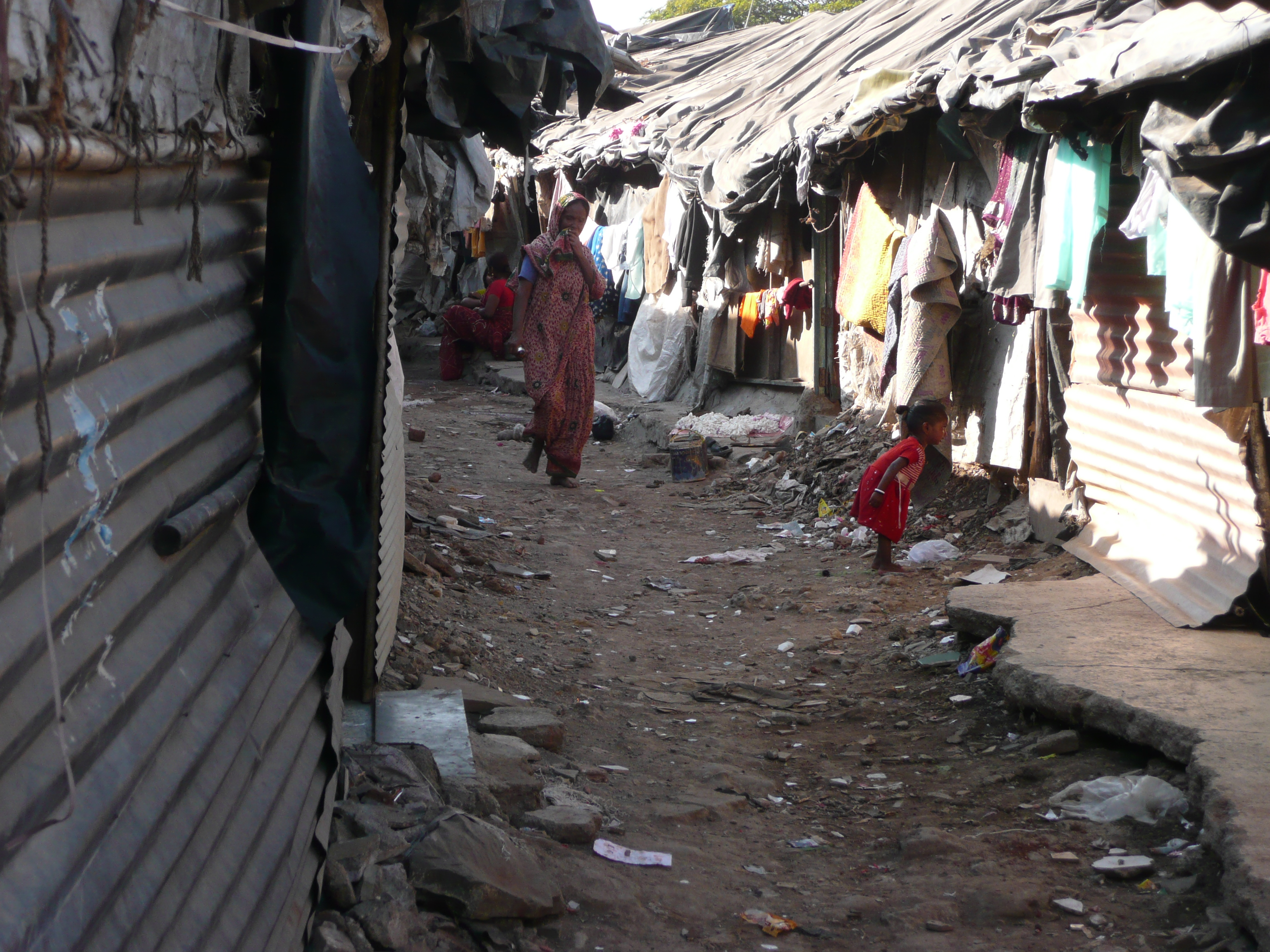
I want to show you Samir. Actually, Samir isn’t her real name, I have no idea what her real name is. She is a girl, caught on a photograph during one of our trips to India when we went to see the work Tearfund partners were doing among the poor. Look at her for a moment. She’s clearly having a laugh, teasing someone who’s inside the house. Someone has tied back her hair, found her clothes—but not shoes. Look at her poor feet as she walks through the discarded rubbish of her home. She captured my imagination with her dancing eyes and zest for life, and she’s the screen saver on my computer, and when I’m feeling fed-up, I look at her and remember that some people laugh when they live in a dump, children giggle even when they’re hungry.

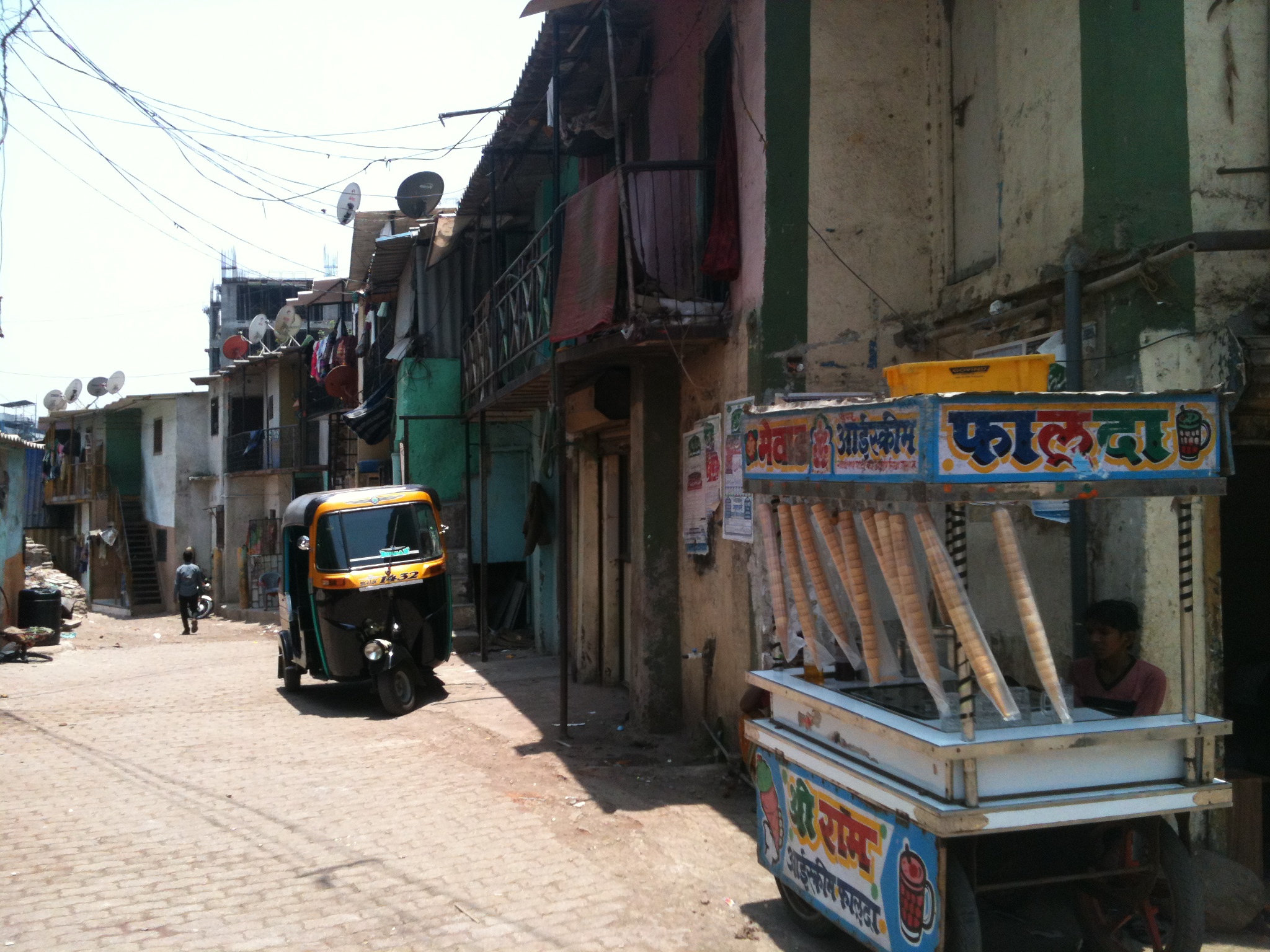
There are lots of poor people in India. They make their homes from what they can harvest from the society around them (okay—they probably steal it—I suspect building sites regularly lose stacks of bricks and sheets of corrugated iron). They live by what they can earn day to day on the streets. They clean the homes of rich people (that’s us) and they drive taxis, and they have food stalls, and do laundry, and a whole myriad of other jobs that allow them enough to feed their families. I love India because everyone seems to be busy, everyone is scurrying around, trying to improve their life.

But then came lockdown. The government suddenly announced everything was closing, people had to stay at home. If you think there was panic-buying in England, you can imagine what it was like in India. The initial restrictions were eased, and people were allowed out to buy essential food, but the shock, the severity of the situation, smacked into the poor of India with no warning.

In England, we had to stay at home for our lockdown, and could only meet friends online, and our activities were reduced to screens and books and going out for exercise once a day. Look beyond the bubble for a minute, and see what lockdown meant in India. They don’t have screens in the slums, or books. . . or food. Those people who have left their villages to crowd into the city because they can glean a living working among richer people, suddenly had no work, no income, no food. So what did many of them do? They realised they could either stay in their make-shift homes and starve, or they could take their families back to their villages—where at least they could try and grow food. And so they set off, in their tens and hundreds and thousands.

But there was no public transport due to the lockdown, so they walked. At first, they walked on the roads, but when the police came to turn them back (because a mass exodus from cities meant a spread of the virus) they used the train tracks. When people were killed on the tracks, they took to the fields, wading through rivers when necessary, with their possessions, and elderly relatives, and children. Desperate people will always find a way. Other people opted to stay in the cities, but the aid agencies that provided a meal every day could no longer operate in the same way, the fabric of their lives, their means to make a living, had all but disappeared.

Gradually, things are being organised in India. Aid agencies are finding ways round the rules, the government are trying to provide what is needed—but people are still falling through the cracks. The slum I visited had water barrels outside each building, because water was only available at certain times of the day, so they would fill the butt and then use it throughout the day. Homes didn’t have toilets—there were buckets or shared facilities in the street. Whole families crammed into a couple of rooms. How does social-distancing work somewhere like that? How can people wash their hands regularly when there is no running water? How do they escape a virus which will probably devastate them because their health is already worn down by malnutrition and TB and other illnesses? Yet these people are unlikely to be the first on the list when a vaccine becomes available. These are the forgotten people. . . we don’t even know their names.

Please will look with me for a moment, beyond the bubble that has become our lives? I know that you are tolerating your own hardships, your own struggles. But there are people beyond the bubble who still need the help of others, who struggle to survive and are constantly knocked down again. We might not know their names, but if we try, we can still see them, they are out there, beyond our bubble. Please will you try to see them? Please will you help? A few pounds might just help my little photograph-girl to have some dinner–even if we don’t know her name.

Thank you.

Please reach out of the bubble, and click the link below. Be part of something. . .

Tearfund link here

Thank you for reading. Why not sign up to follow my blog?
anneethompson.com

The next chapter from Counting Stars will be posted on Wednesday.


A Matter of Life and Death


I don’t know about you, but I am always surprised by how much life bursts forth in the spring. Suddenly, every weed in my garden is ten-foot-high, the chickens start hiding their eggs and going broody, wild birds start to go bananas. It is mostly wonderful.

There are a few downsides though—like the bag of potatoes I found at the bottom of the larder, with roots practically piercing the bag. Maybe not so good for mash. I had the clever idea of planting them, so the chickens could eat the new leaves when they sprouted (wouldn’t take long!) I took them up the garden, and found an area against the chicken coop fence. Ideal, I thought, I’ll chuck them there, toss a bit of compost over them, they can grow through the fence and the chickens can eat the leaves. All good.

About 3 days later, the potatoes appeared in a bucket next to the door.

“Look what I found!” announced pleased husband, beaming all over his face. “These must be the seed potatoes you planted last year, and they’ve grown new tubers.”

I told them I thought they were possibly some old potatoes that I’d found in the larder (I didn’t go into too much detail), but he assured me that the roots were really long, and there was no way they could possibly be from this year. I checked the area next to the chicken coop. No potatoes or heap of compost. I keep trying to avoid the subject, but husband has mentioned it about 50 times since then, saying how amazing it is. Might have to confess.

The welcoming committee. . .

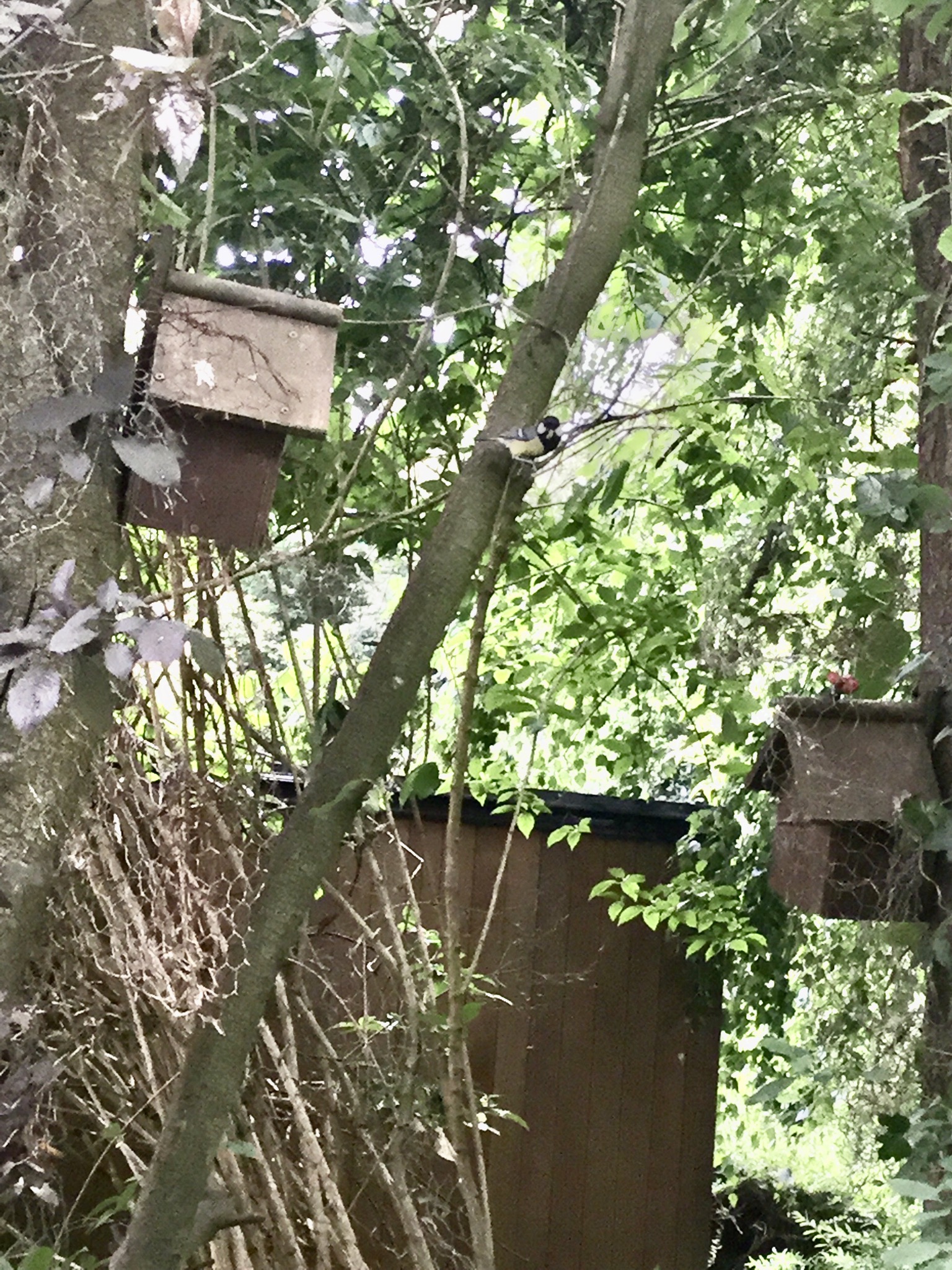
We also had birds in the nesting boxes that Uncle Frank made. He gave them to me ages ago, and I put them near the kitchen window (good plan) so I would see if any birds took an interest. We had some great tits in the area, and I guessed the eggs must have hatched when I noticed a welcoming committee of four cats staring at the nesting box. I started to shut the cats in during the day, letting them out at night. But then one morning, I came down to find one cat up the tree, and by the time I had run outside, he had fished a baby out of the box and was playing with it. I grabbed the baby, shoved it back into the box, and shut the cat inside. Husband then assembled some protective obstacles around the base of the trees. The view from my kitchen window resembled a cross between Guantanamo Bay and a WW1 trench. Not quite what I’d hoped, but at least the birds were safe.

A little like a ‘Where’s Wally?’ wildlife picture, but this is one of the birds.

We watched the parents feed the birds, and I did some online research. Did you know that great tits have a black stripe down the centre of their breast, and that the male has a wider stripe than the female? The width is directly proportional to how many sperm he produces, so female great tits will try to select a mate with a very wide black stripe. Our male was in the ‘acceptable but not a super-stud’ range. Cool fact huh?

We guessed the hatchlings were flying because several blue jays appeared in the garden. Am hoping they didn’t catch them all—maybe the blue jay family had a banquet that day. The next morning, the nesting box was empty except for moss and feathers.

In keeping with the explosion of life that is spring, I have some duck eggs incubating in the utility room, and my beautiful white leghorn chicken is sitting on some eggs in her nest. She has a choice of leghorn (white) cockerel or legbar (grey) cockerel to choose from. I am hoping to have a female chick from the legbar male, as they lay lovely blue eggs (though whether or not a hybrid will, remains to be seen). They are due to hatch next week, so I will let you know how they fare.

I also have a female pheasant (I can’t tell you how delighted Husband is about this!) I found her in a ditch, so am guessing she had been hit by a car. I knew the fox would get her, and I figured it would be nicer to die somewhere peaceful, so I carried her home and put her in an empty duck coop next to the pond. But she didn’t die. I’ve had her a couple of weeks now. I’m feeding her grain and apples (have to smuggle the apples out of the house because technically they belong to Bea’s boyfriend). She can’t actually walk (the pheasant, not Bea) but seems quite happy lolloping around the coop and watching the ducks. There is a ramp down to the pond, and I do have some worries that she might drown herself (pheasants are very silly birds) which means Husband will have to wade out and retrieve the body—which he will mutter about for several days—but at least it will stop him talking about the blessed potatoes!

I hope your week is full of life.

Take care, and stay safe.

Love, Anne x

Thank you for reading
anneethompson.com
Why not sign up to follow my blog?

Another chapter from Counting Stars will be posted on Wednesday.

Making Sour Dough Bread


Sourdough Bread

One of the things I have attempted during lockdown is making sourdough bread. I don’t actually like sourdough—it tastes too sour!—but Husband likes it, and I rather liked the idea of making it. It’s completely different to making ‘normal’ bread, and has no yeast. Instead, you have a sort of mini chemical plant bubbling away in your kitchen, which you feed each day, and when it has grown to the appropriate size, you use it to make bread.

It reminded me of when I was a child, and we made ginger beer, having a ‘plant’ of sludge bubbling away in a jam jar, feeding it sugar and ginger every day, and then on a Saturday, filling the sink with bottles we had begged from relatives, filling them with boiling water to sterilize them, and then filling them with ginger beer; which we stored under the kitchen table for a couple of weeks, before drinking copious amounts of wonderful fizzy ginger beer. Any fizzy drink in those days was wonderful, as my parents only ever bought them at Christmas, due to cost. I’m not sure how the cost of the sugar we added when making the beer compared, but to my childhood self, ingredients didn’t count as a ‘cost’ and the beer was therefore ‘free.’

There was the week when our boiling-water-method of ‘sterilization’ obviously didn’t work (I learnt a lot about what ‘hot’ and ‘hurts’ meant in those days) and one of the bottles exploded, all over the kitchen floor. My mother was very good about things like that, she never minded us taking over her kitchen to cook, and she was never angry when we spilt things or bottles of fizzy drink exploded everywhere. It is one of the things I tried to copy when I was a mother.

Anyway, all this fuelled my desire to try and make some sour dough. I was not disappointed.

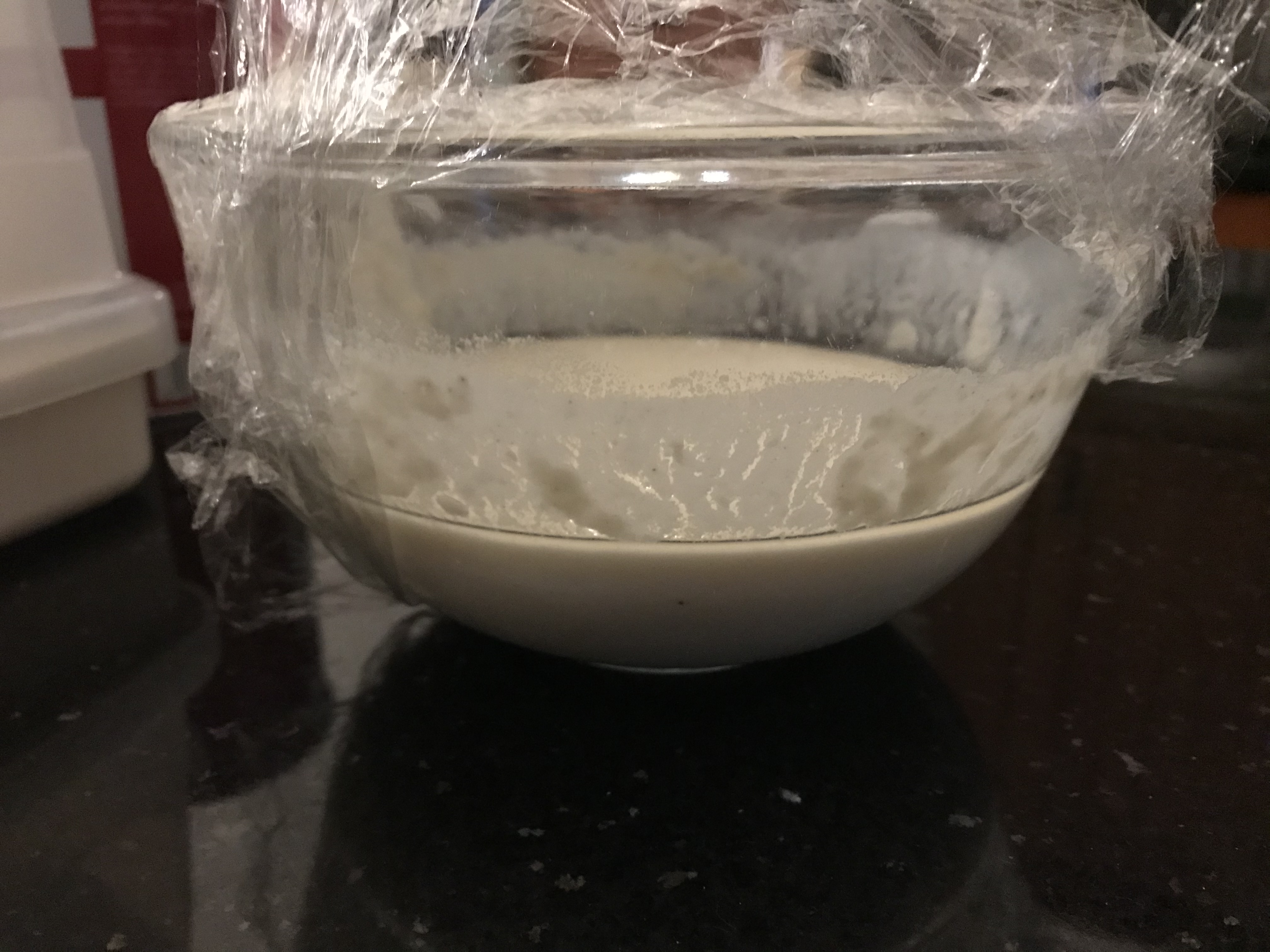
I found a recipe online, and made my ‘starter’. This was a goo of milk, yogurt and flour. Apparently, in days gone by, people made the starter simply by leaving flour (probably whole grain) to soak, until it started to ferment, and this became the base for the starter. But it’s quicker with yogurt, and less likely to go rancid. Each day, I added flour and water. The first couple of days, it expanded slightly, and bubbles appeared on the surface. But then it went flat, and looked dead. I think my house was too cold, and the bacteria couldn’t be bothered to do anything. I moved it to a warmer place, and it started to bubble again. I made it in a small Pyrex bowl, covered with clingfilm and a tea towel (to keep it insulated, as it needs to be warm, but not too warm).

Some days it looked as if the water and flour had separated, and there was water on the surface. This is actually alcohol (with a fancy name). I just stirred it back into the sludge. It looked gloopy, a bit like baby vomit, but it smelt wonderfully beery. If it starts to smell nasty (of poop) then it’s gone off, and you must throw it away and start again.

After six days, I was ready to make the bread. There was a lot of goo and sticky involved, and a good muscle workout in the kneading bit. It also took hours, as a sour dough starter is not as fast as yeast, so it needed two lots of 2 ½ hour rest periods to rise. The dough was never firm enough to support itself, so needed to be left to rise in a bowl. The instructions said to line this with a floured tea towel otherwise it would stick to the bowl. I did, and it stuck to the tea towel. When it was cooked, I was supposed to place tins of water in the oven, to produce a steamy atmosphere, but I forgot.

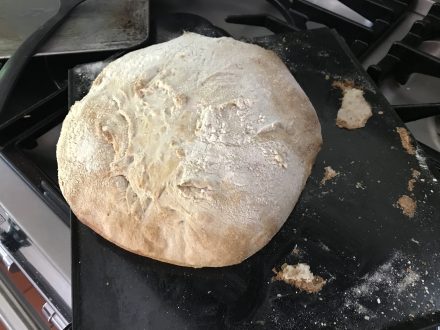
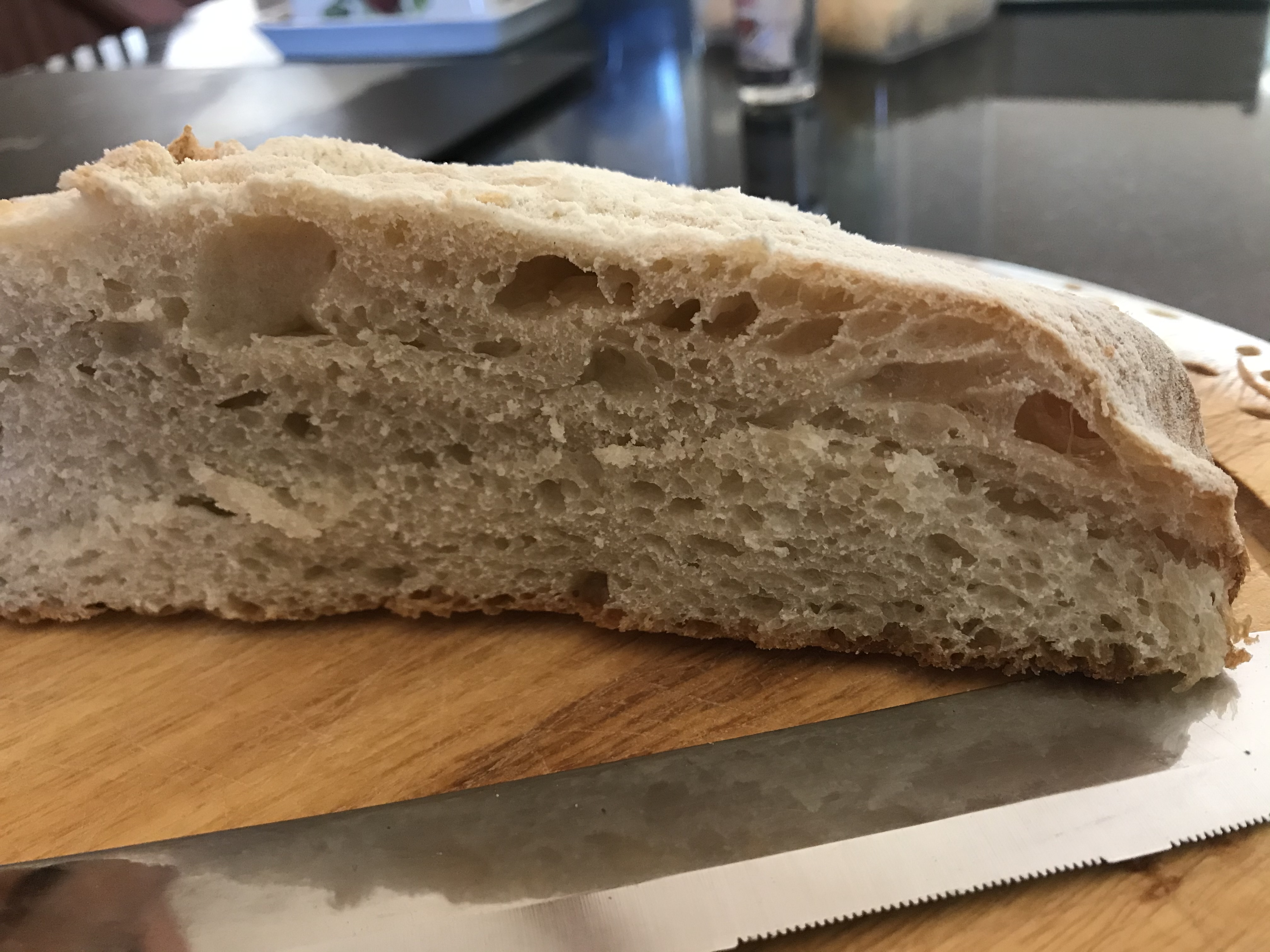
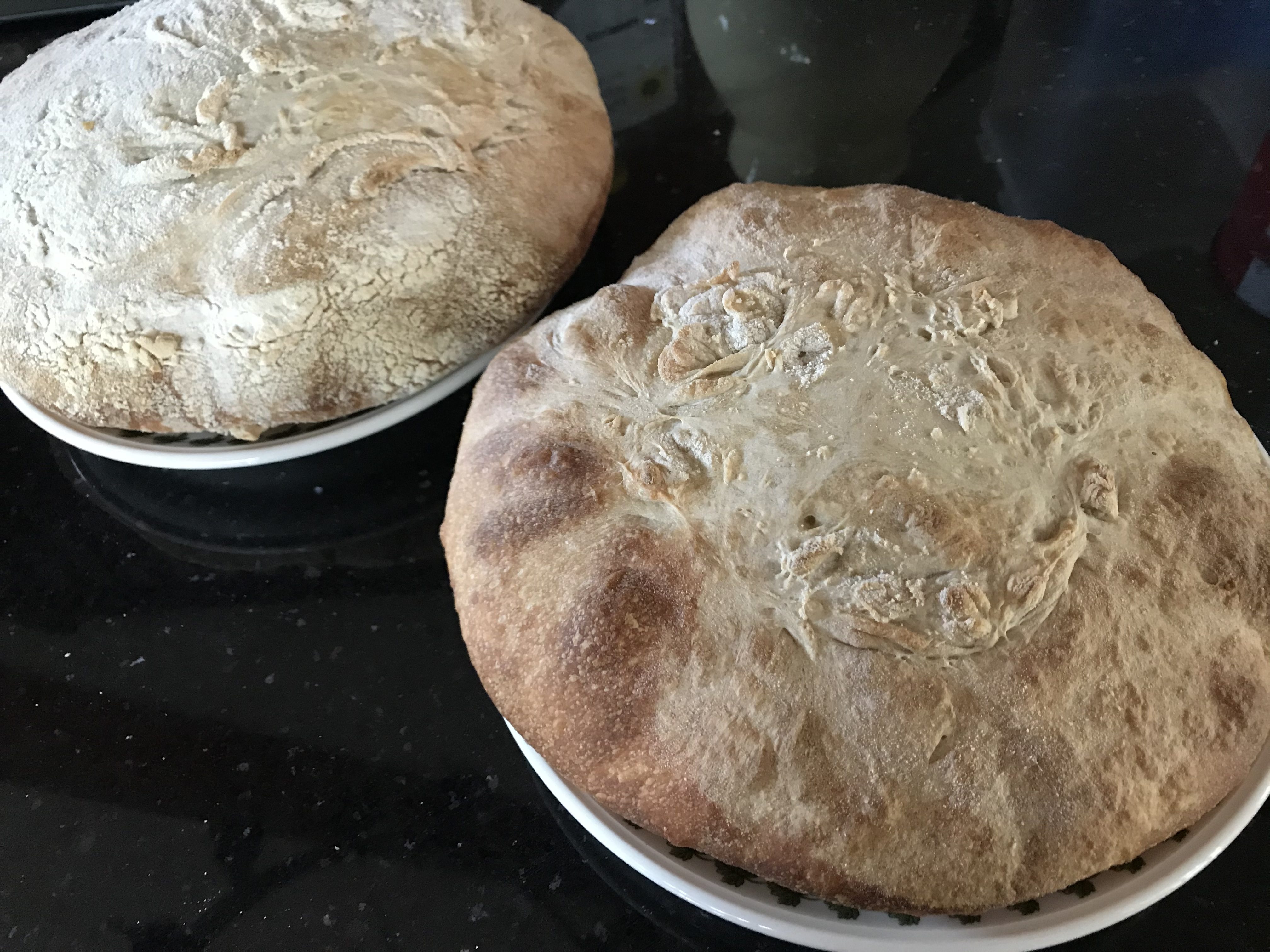
However, it was all great fun, and interesting, and I loved the slightly beery smell of the starter and the bread. I made two loaves, and they looked suitably rustic. Inside, they had the big bubbles we think of when we buy sour dough. It tasted—well, exactly like sour dough bread! So I didn’t much like it, but Husband was very pleased. I will make it again, because it was fun. I have included the recipe below, in case you fancy making some too.


Sour Dough Starter

  1. Day One: Heat 6fl oz skimmed milk (but not too hot to touch, or it will kill the bacteria, and bacteria is your friend here). Mix with 5 tblsp plain yogurt (you need the stuff with bacteria in, and not a flavoured one, as that would make very odd bread!) Cover the bowl. Leave 24 hours (somewhere not too cold). Stir.
  2. Day Two: Stir in 4oz (100g) white bread flour. It needs to be proper bread flour, not plain flour, as it needs the extra strength—otherwise your loaves will flop over in despair and you will have made weird sour pastry, not bread. Cover. Leave 48 hours.
  3. Day Four: Add 6oz (150g) bread flour, and 100 ml water, and 3 tblspn milk (I used semi-skimmed milk). Leave 24 hours.
  4. Day Five: Remove half the starter. You can throw it away, but I put it into another bowl, in the fridge. When I wanted to make more, I simply put it into the warm kitchen and started at Day Four again, hence making another lot of starter for more bread. Apparently, some people keep their starter for generations, passing it on and on, a sort of sludgy heirloom. Not sure my children would especially enjoy inheriting that.
    Add 5 ½ oz (150g) bread flour, 150 ml water. Mix well. Leave 24 hours.
  1. Day Six: Use the starter to make the bread.

Sour Dough Bread

500g Strong White Flour

300g Starter (this is what the above recipe will give you)

2 tsp brown sugar

2 tsp salt

oil for greasing

9fl oz (150 ml) warm water

loads and loads of extra flour to stop the dough sticking to your hands/board/tea towel


  1. Mix the starter and flour, gradually add the water until forms a soft dough, you will probably only need about 6 fl oz. (I added it all, because I didn’t read the recipe properly, and made a sticky mess. Had to add a lot of extra flour to make it workable.)
    Add sugar and salt.
    Knead for 10 minutes, stretching and pushing and squeezing the dough. It’s ready when you can stretch out a piece so thinly that it’s almost translucent. This means all the gluten in the bread has burst, and will hold the bubbles in the dough when it cooks. If the dough isn’t stretchy enough, keep kneading until it is, otherwise you will be making biscuits (ones that will break your teeth).
  1. Put into an oiled bowl. Leave somewhere warm for 2 ½ hours.
  2. Knock back (ie, knead a little bit more, so some of the air is released, but not enough to push out all of it). Shape into two loaves. Cover a tea towel with loads of flour (really, loads, push flour into the fabric with your fingers—it will still stick!) Place the tea towel into a bowl, and add your loaf. (If you leave it to prove on a tin, like normal bread, it will collapse into a dollop). Leave 2 ½ hours.
  3. Place loaf onto an oiled tin. (Good luck with that! I surgically removed the tea towel with a knife. But the scraggy top of the loaf looked quite nice when it was cooked.) Score a hashtag shape on top with a sharp knife (try not to press on the dough—you want to keep all the air bubbles inside now).
  4. Bake 200˚C for 35 minutes. If you remember, put a tin of water in the bottom of the oven, to create a steamy environment. The loaf will sound hollow when it’s cooked (so get it out and knock on the bottom if you’re not sure!)

Thanks for reading.
Why not sign up to follow my blog?
anneethompson.com

*****

Quarantime to Read. . . Counting Stars: The Beginning


About 6 years ago, I decided to write a dystopian novel, looking roughly 100 years into the future. At the time, my three children were all studying—economics, science, law—so I asked them what they thought was coming in the near future. They all gave me lots of ideas, and especially the scientist was very enthusiastic about discoveries which had been proven, but due to ethical or financial implications, were not considered viable.

It was written at a time when there were several religious terrorist incidents, and so I tried to imagine how the world might solve this problem—and what new problems would arise in its place. It was rather fun to look at the problems in the world—why do we still have people dying of hunger when we can send people into space?—and to solve them all, and then to consider what new problems my solutions would create. I also tended to go off on tangents when things took my interest. I had recently had brain surgery, so was fascinated by how we are affected by relatively small physical changes within the brain, and I became side-tracked with a quick study of Lamarckian theory (such fascinating ideas). I tried to incorporate all this within a story, about a family, set 100 years from now. My rule was that it had to be possible, even if it wasn’t probable. It was great fun to write, and in 2015 I put a new section on my blog each week. At the time, it was very popular, and I had students writing to ask me to send me the next chapter because they didn’t want to wait a week, and elderly ladies complaining they had been on holiday and missed a chapter, and middle-aged men who emailed to say it was the first time they felt properly represented by a character in a book.

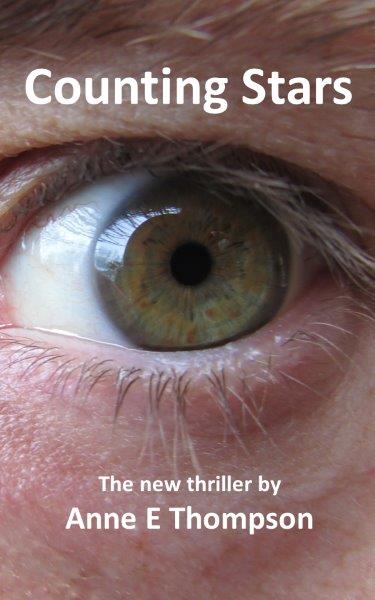
It is several years later, and a surprising number of those futuristic predictions are now beginning to appear (though thankfully not all of them). I thought it might be interesting to post it on my blog again, so I hope my faithful followers from 2015 won’t mind reading it again. When I had posted the last chapter, I rewrote it, and sent it off to an editor, who charged me £300 to improve it, and I then turned it into a short book, available from Amazon. I therefore hope that if you are rereading it, you notice some improvement! The editing took all my funds, so the cover was a DIY job, and I have reliable feedback that it’s pretty terrible. Please do not judge the book by the cover. One day, I will perhaps design a new cover, but I am always besotted with my work-in-progress, and the time to redesign a cover that is rarely seen is very low priority.

Anyway, of all my books, I think this was the most fun to write. I hope you will enjoy it too. I will post sections of it every Wednesday and Sunday. Enjoy. . .


Counting Stars

by Anne E. Thompson

She doesn’t look, think, or fight like James Bond, but sometimes a mother simply has to do whatever it takes. . .

Chapter One

 The Door

They wouldn’t know her, because they had never met. But that didn’t matter. What mattered was that she remembered. It was what she did—remembered. It was why she was useful.

Due to the KDP rules on Amazon, I am not allowed to upload a whole book anywhere other than on the KDP site. I can therefore share chapters with you, but must remove them when read.


If you would like to read the whole story, or perhaps buy a copy for a friend, it is available from an Amazon near you. The link is below:


https://www.amazon.co.uk/Counting-Stars-glimpse-around-corner/dp/0995463212/ref=sr_1_1?dchild=1&keywords=counting+stars+by+anne+e+thompson&qid=1589905723&sr=8-1

***

To be continued on Sunday.

Thanks for reading.
Why not sign up to follow my blog?
anneethompson.com

If you want to buy a copy for a friend, Counting Stars is available from Amazon: UK Link Here!

“There’s none so queer as folk. . .”


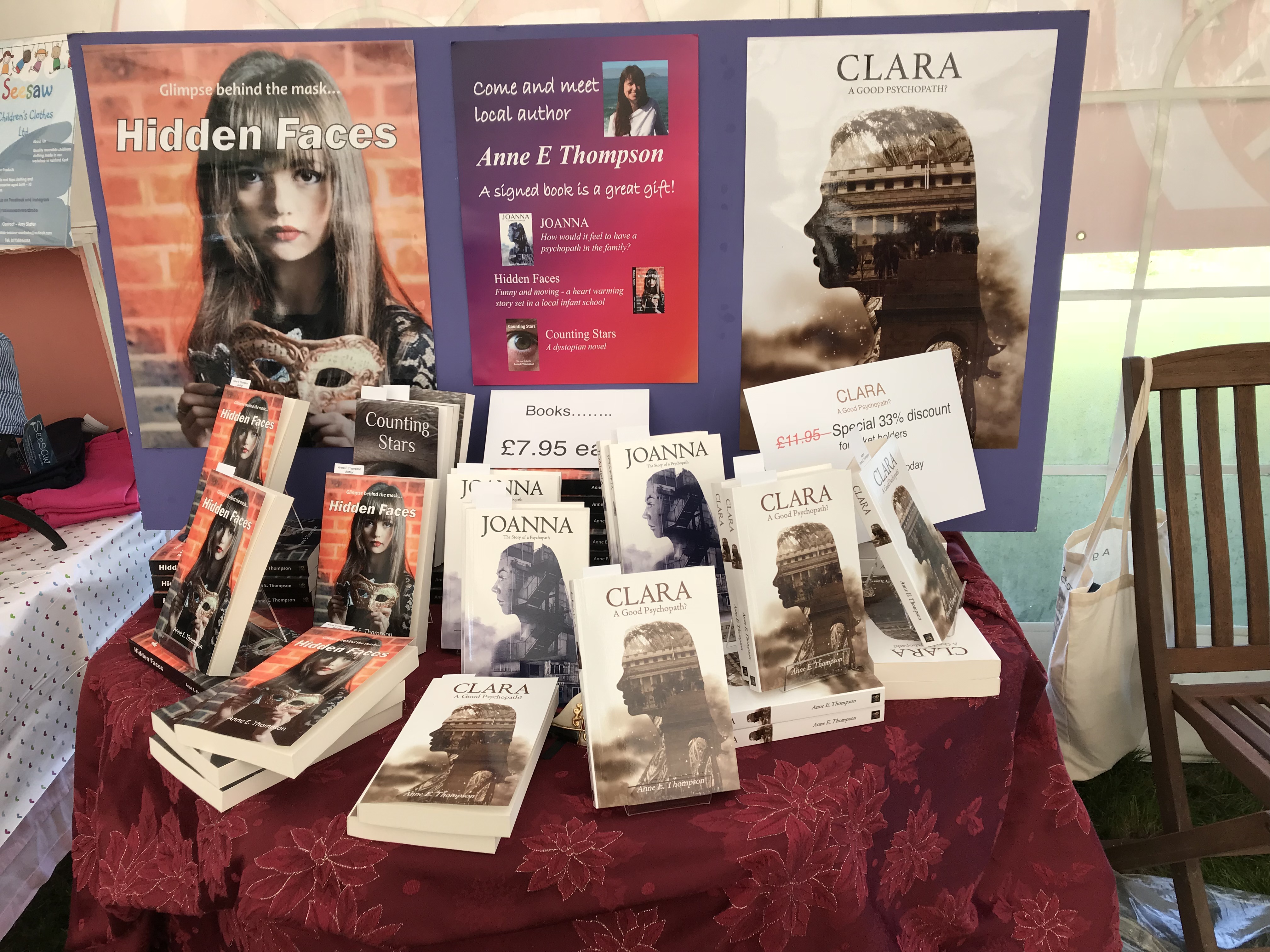
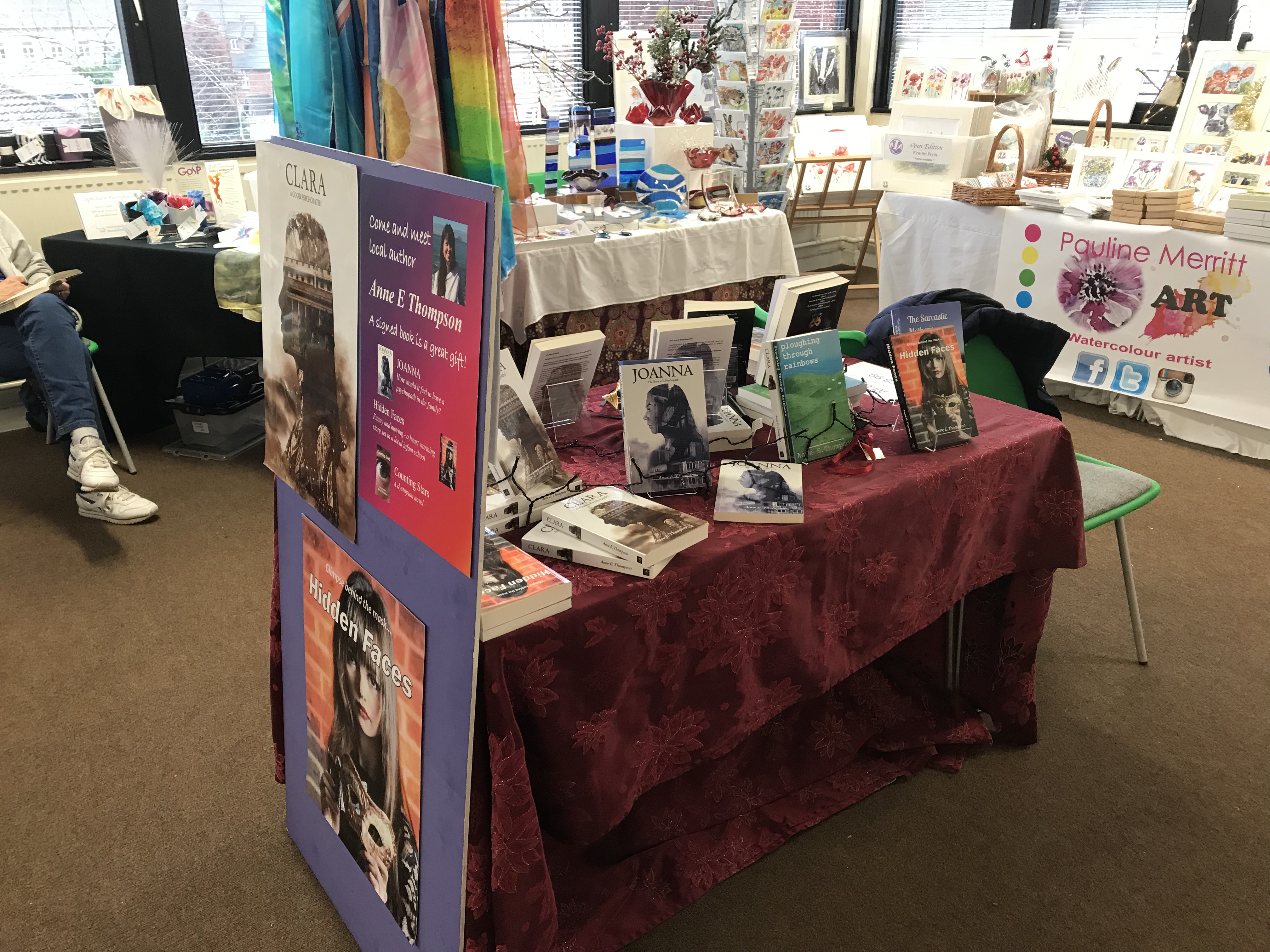
Sometimes, after selling books at a craft fair, I am dying to tell you about some of the people who I’ve met—sometimes because they were very odd, sometimes just because our conversation was interesting. But I try to hold back, and not say too much, because it feels like an invasion of privacy to tell you too much about people who do not expect to be written about.

However, as I have attended more and more fairs, there is a general pattern of types of shoppers emerging, and so, in general terms, I feel I am safe to tell you about them. (If you have ever spoken to me at a fair, then you might recognise yourself, but I am writing in very generic terms, so my descriptions will apply to several people rather than a single individual.)

First of all, there are the Rebuffers. These are the people who really do not want to buy a book, they are generally in a hurry, and will rebuff my initial approach briskly. Sometimes they manage to do this nicely, with a smile and shake of the head whilst not breaking step.

Sometimes they are rather rude, and will reply to my: “Hello, do you like reading?” with a curt: “No!”

I have even known people say: “Not those kinds of books” or, “Not books by a woman!”

Secondly, there are the Chatterers. These people consider that as I have approached them, I must be lonely and want to chat. They will talk, for a very long time, about the kind of book that they would write, if so inclined. It is sometimes difficult to move these people on, and I have watched with despair as several potential customers pass by while a non-buying woman launches into the year after her second child was born when they went on holiday to Paris and there was a man on the ferry who. . .

Thirdly there are the Predators. These people will ask lots of questions, they will examine my books in detail, asking who published them, how I sell them, how many I have sold. By the time they have asked their 57th question, I am beginning to realise that they have no intention of buying, they are simply checking out the opposition! Invariably they turn out to be authors themselves, who have never considered asking bookshops if they can do a book-signing, or taken a table at a craft fair, and they are trying to decided whether they should copy me. I will link these people with the authors who think that as I have told them about my books, I will now be interested to hear about their own. They tell me at length about the plot of their book, and who published it, and how I can buy it—without considering that I have paid £40 for my stall, and really I need to SELL enough books to cover my costs, not look around for other books to BUY!

Next, we have the Investigators. Some of my books are about psychopaths, and they were written after months of research: I read papers by neuroscientists, bought books by neurologists, listened for hours to convicted psychopaths, and found two mothers who would talk to me about raising a psychopathic child. So, although I am a lay-person, I felt sufficiently qualified to write novels about psychopaths. However, I find that some people—often but not always, health professionals—are deeply suspicious. They will start to ask questions about my research, and the questions turn into an aural examination/inquisition as to my understanding of the subject. Generally, I manage to answer satisfactorily, and they often go on to buy a book (one even asked me to write an article for a mental health magazine) but it is uncomfortable. Actually, it is often most uncomfortable when the person has no scientific knowledge themselves, but considers themselves to be an expert because they have read an article or watched a television programme, and often their own understanding is somewhat flawed, which makes it difficult when being ‘tested’ by them.

What if…you were the mother of a psychopath? The story of Joanna and her family – an exciting novel.

What if…a psychopath managed to do something good. Can psychopathy ever be a strength?

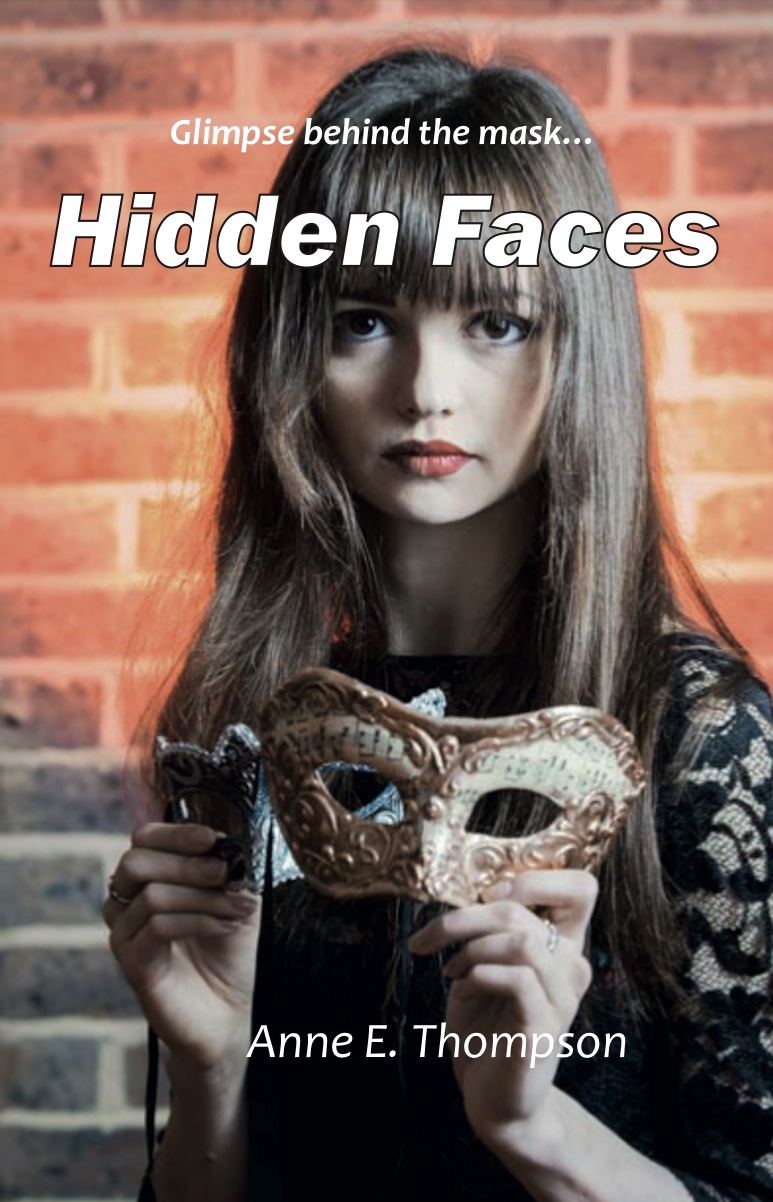
This is the story I always promised myself I would write ‘one day’ while I was teaching in an infant school. A light-hearted novel about 3 teachers.

These people contrast well with the Defensives. These people ask questions about my novels set in a school (Hidden Faces) or a farm (Ploughing Through Rainbows) and then go on to explain that they too could have written a book about their past employment. Perhaps they are a nurse with a lot of funny stories, or a teacher with more experience than me, or a prison warder. They inform me, fairly grumpily, that their lives are just as interesting as mine, and that their book, if they had found time to write it, would be much better than mine. I’m sure that in some cases this is true. However, they haven’t written a book and I have, so it is bit of a non-conversation in my mind. Nor am I quite sure why they are telling me this—am I meant to agree with them and pack up and go home?

A hilarious family saga set on a farm. Being a parent has no end-date, as Susan discovers when her adult sons begin to make unexpected choices in life.
A warm-hearted, feel good novel that will make you smile.

Finally, there are the Lovely people. These people show a genuine interest in my books, whether they buy a copy or not. They are polite, and interesting, and it is always nice to meet them and have a conversation.

I will leave it for you to decide which category you fit into—I’m sure it’s the last one!

I hope you meet some lovely people today. Thank you for reading.

Take care.

Love, Anne xx

Thank you for reading.
You can follow my blog at:
anneethompson.com


Have you read any of my books? Available from bookshops and Amazon. Check out my author page Here!

Covid-19 Test


Bit of excitement this week—I was asked to take part in some research, which involved taking a Covid-19 test at home and sending it off. I was picked at random, so it was unexpected. My week is not very full of exciting things at the moment so I was happy to take part. I had to reply to the letter online, and answer a couple of questions, and then they would send me the test.

I filled out the online survey, and waited. My children then informed me that this was potentially a scam, and what exactly had I answered, and had I given any passwords or my address or date of birth etc. This worried me, but all the personal data had already been added, and I simply had to confirm details, so I thought it was probably legit. Waited, hoping the test would arrive and not a burglar.

Yesterday, the test arrived. It came through the post in a big padded envelope, and inside were bits of paper and instruction booklets and other stuff. There was a covering letter. This told me to do the test without delay, and I was about to open it and work out what to do, when I decided to read all the instructions first, so turned instead to the instruction booklet. (This I feel, proves that I am female—not saying anything else, just mentioning it.)

The instruction booklet said NOT to take the test immediately, but to first book a courier. The test needs to be analysed within 72 hours, so first I must book a courier to collect it, THEN I do the test on the morning of the collection day. Lucky I read the booklet, feel they should have mentioned this in the covering letter (for all the non-females).

To book a courier, you had to go to a website (this was easy) and type in your ID number (not so easy). The ID code was on the “sheet with the two bar codes”. Well, I had a sheet with several stickers, of which one was a bar code, and a tube with a different bar code. I tried entering the numbers under each of them, both were rejected. The instruction book said “Do not include the GB at the start of the code.” Neither code started with ‘GB’. I searched the pack of stuff, but nothing else had anything remotely like a code. Then I realised that one of the codes started with ‘UK’. Maybe ‘GB’ was actually ‘UK’ and no one had noticed? I tried again, removing the UK from the start, and they accepted the code. Managed to book a courier for today.

This morning I did the test when I woke, because the courier was due between 8am and 8pm. The test was fiddly and uncomfortable, and I just hope I did it correctly. The instructions said I should first watch a Youtube video, but the link they sent didn’t work (rather lost faith in the instruction booklet by this point). I did a Google search, found a video of taking a sample, and tried to copy it. It basically involved sticking a long cotton-bud down your throat and touching your tonsils, then sticking it up your nose, before putting it into a tube and sealing it. Not very pleasant, and made me gag, but there are worse things. I wanted to keep everything clean, and also needed a mirror, so had the brilliant idea of placing a clean tray over the sink, and using this as a shelf. It would have worked better if the tap hadn’t been dripping, but I’m sure soggy labels are something researchers cope with all the time.

The (unreliable) instruction booklet said the courier would arrive and knock on the door, he would then place a box on the doorstep, step back 2 metres, and wait. I should place the test in the box, then shut the door so he would be safe to pick up the box and take it to the lab. In actual fact, the courier arrived, I opened the door, and he held out his hand for the test. I indicated that I would place it on a shelf, and he took it from there, but otherwise he would have taken it directly from my hand. Maybe they forgot to send him a copy of the instruction booklet.

There was also a padded envelope in the kit. No idea what that was for. It is a white, unused, padded envelope. I will keep if for if I need to post anything.

They said they would tell me the test result within a week, but as I have no symptoms, and have not been near anyone at all other than my family, for several weeks, I am fully expecting it to be negative—if I ever hear—not entirely trusting that booklet now. Let’s hope it is useful to the lab, and the clever people who work there manage to help manage Covid-19 so we’re all safe again. Perhaps I’ll apply for a job as their instruction book writer—I feel there is a need there.

Hope you have a nice weekend. Take care, and stay safe.

Love, Anne x

***

Thanks for reading.
Why not sign up to follow my blog?
anneethompson.com

****

Wishing for Water


I should be in Italy. Whenever I have a trip away planned, I write a blog ready to post in my absence, and then write about the trip when I’m home again. Obviously, we had to cancel the trip to Italy, but I rather liked this blog, so am posting it anyway. It was written ages ago, long before I had even heard of Covid-19. Enjoy.


Water

Woke yesterday morning, jumped in the shower, noticed the water pressure was slightly less than expected. Thought no more of it.

Went to sort the poultry. Refilled their water and noticed the hose wasn’t working too well. Thought no more of it.

About midday, made a jug of coffee. Noticed the kitchen tap definitely had less water pressure. Decided I would ask Husband when he got home from work.

By lunch time, the water in the taps had slowed to a steady trickle—enough to fill a kettle or wash your hands, but you wouldn’t have wanted to shower under it. Phoned the waterboard.

The woman who eventually answered the phone, after I had listened to numerous recorded messages and pressed a variety of keys, took my details, and said we probably had a leak somewhere on our property. I was given an appointment for an engineer in about 6 weeks time.

I searched the property. No sign of a leak. Water was now barely trickling from taps at all. Phoned unhelpful waterboard lady again. I was told that as we still had water (all be it not very much) then we did not count as an ’emergency’. I could cope for a few weeks.

About 2pm, the taps were empty. Checked with nearest neighbours—they had no water either, so fault was not on my property. I walked up and down the lanes near the house, looking for signs of water bubbling up. Only found puddles. Returned to house to phone unhelpful woman again.

I was told that I was now on the emergency list, and an engineer would visit shortly. I asked how long that would be. She didn’t know. I asked if it would be today. She didn’t know, but thought that it probably would be. I asked how long, legally, I could be left with no water. I was told 12 hours. There was a knock at the door, so I carried the phone, with unhelpful woman still talking, to the door.

There was a water engineer. I was impressed!

Thanked potentially helpful woman (actually, I think their arrival was unrelated, as they were checking the water in the area due to several complaints).

Engineer checked water pressure (none) and went off to try and find the problem. He was very friendly and apologetic and promised someone would deliver some bottled water, but he had no idea why we had no water.

 About 5:30, a delivery of bottled water arrived. As water to drink, it was loads. For cooking—not so sure. For washing hands, crockery, muddy dogs—it was a mere drop in the ocean. Decided everything would stay dirty. Hoped taps would fill again soon, and contacted relatives to discuss the possibility of an early morning shower at their house.

As I began to cook dinner, I realised how much water I usually use—and the amount that I regularly waste. Instead of reaching for the most convenient saucepan, I chose the one which was as small as possible and would still hold the vegetables. Instead of peeling potatoes, rinsing them, cooking them in a depth of water, I tipped in enough water to cover them, and put them on to boil. The main thing I noticed was how often I usually rinse my hands when cooking, how often I usually wipe the work-surface (rinsing cloth under the tap between each wipe). When things cooked, I usually sloosh water into the empty saucepans and tins, so they soak before they can be washed. This time I had to use the water that the veg had cooked in, straining them straight into dirty meat tins and using the ‘stock’ to soak the pans.

After dinner, we discussed a plan for the night. At some point we would need to flush the toilets, so Husband heaved buckets of pond water down to the garage. We stuck notes on the upstairs washrooms, reminding forgetful/tired/drunk off-spring that they couldn’t use the upstairs loo in the night!

The dog was shut in the utility room, covered in mud. She had ignored my instructions to stay clean on the walk.

At about 10pm, just as I was thinking about going to bed, Husband shouted to say the water was on! I ran to a tap, watched it choke and hiss out, expelling the air, gushing clean and cold into the sink. The relief was immense. I appreciate my plumbing in a whole new way!

I  am lying in bed, when I hear Husband open the door to a cheerful waterboard man who wants to check the water. Husband asks if he would mind removing his shoes. “Oh yes,” laughs dirty water man, “you don’t want to know where I’ve been today!” I hear Husband, and sewer water man head for my clean kitchen. What will sewer man touch? Where will he place his sewer toolbox while he works? Why the heck is Husband taking him into the KITCHEN???? I leap into a dressing gown and rush downstairs to monitor placing of hands, tools, dirty coat. Dirty sewer man puts his toolbox on my cooker hob (clearly a good place for a dirty toolbox) then turns on the kitchen tap. He collects samples of water, and tests it for clarity, and chlorine content, and possibly other things–I am more concentrating on what he touches. He tells us that the problem was in another town, which our water happens to be routed through.
Cheerful sewer man then leaves. I go to work with my detox spray, cleaning everything that has been touched, while Husband looks on, bemused.

Hope you have a nice clean day. Thank you for reading.

Take care.

Love, Anne x

Thank you for reading
anneethompson.com
Why not sign up to follow my blog?


Invisible Jane continues tomorrow. . .


Secrets Every Mother Should Know


Here is one of my earlier posts. I hope you enjoy it, and will share it. It makes me smile, as all my children are now adults, and parenting is still wonderful and challenging and full of adventure, as I explored in my novel: Ploughing Through Rainbows — have you read it yet? Amazon Link Here!

Mummy Secrets

1.Boys (of all ages) never look in the back of drawers. This is true. They open the drawer about half way, have a quick look and then tell you that what they are seeking is not in there. This can be used to your advantage if, as in my house, they frequently a) misplace their own scissors and b) borrow yours and don’t replace them. If I keep my things at the back of the drawer, even the drawer where they have always been kept, then they don’t find them. Things at the back are safe. Worth remembering.

2.When they ask which child you love best, pick one. I spent years trying to explain that I loved them all equally, that I could never choose which one I loved best, etc etc – they just kept asking. So one day I picked one and gave an outrageous reason:”Bea, because girls are better than boys,” “Jay because he’s the nicest,” “Emm, because he’s clever,” They still asked occasionally (and I did try to switch which one I chose) but it put them off for a long time and always ended the conversation pretty fast.

3.When your children argue with their siblings, always be the most unreasonable. I always wanted my children to be friends with each other, not least because one day I wont be here to care for them and I want them to look out for each other. All children argue with their siblings, that cannot be avoided. However, when there was no clear reason for the dispute, I would try to be much more unreasonable than any of them. Comments like, “Right, that is no television ever again” or “I am banning all chocolate, forever” would so outrage my children that they would mutter darkly about me – together – and forget all about whatever they had been arguing about. After an hour or so they would ‘persuade’ me to modify my punishment to a more sensible one.

4.Forcing your child to eat something will not make them less fussy eaters. I am an adult now, all grown up, but I still feel sick when I smell rhubarb or gooseberries cooking and I am sure it is because I was forced to eat them as a child. I did initially try the same parenting technique with my own children (most of us copy our parents to some extent) but I abandoned it when I found peas thrown out of the window and half a piece of steak blocking the toilet. If my children did not like something, they were not forced to eat it. They did have to taste it every so often, in case their taste-buds had changed, but they were happy to do that because they knew they could choose to not eat it, if they didn’t want to. They are all adults now and they all have a varied diet. You do of course need to ensure that they have a balanced diet. However, if your child does not eat vegetables, fruit is just as healthy.
 Also, occasionally check the ingredients of what your child is eating. If the list is full of stuff you are more likely to find in a chemistry lab than a supermarket, do you really want to feed it to your child?

5.You cannot reason with an angry boy. When girls are angry, the adrenaline stimulates the speech part of their brain and they want to talk. Sometimes for many hours non stop. The opposite happens with a boy. When they are angry, the speech part of their brain shuts down and they are more likely to hit out than discuss. Something to do with testosterone. I don’t understand the biology but I do know that it is true because I have seen it many many times with my sons and my pupils. So, if a boy is angry, do not bother explaining anything until he has calmed down. If he is small, pick him up and put him somewhere safe. If he is big, put yourself somewhere safe (the washroom is a good place. Even an angry boy will not want to risk seeing his mother using the toilet and there is usually a lock on the door.) When he is calm, then you can explain to him why he was wrong, why you behaved as you did, what is an appropriate punishment, etc.
6.You cannot raise a child on your own. We all need help, mothers especially. In an ideal world, a child is raised by two parents and four grandparents and a whole world of friends, teachers, neighbours. Ours is not an ideal world, but whatever your situation, recognise that you have limitations and get help when you need it. Lots has been written about this, about “it takes a whole village to raise a child”, or even films like “About a Boy”. It is true. When you get to the absolute limit of what you can cope with, get help. I am a sometimes praised for how nice my children are and was a successful teacher, but sometimes I couldn’t cope. I recall one evening when I phoned my brother and told him I could not cope with my teenage son. He talked to him for a while (I think they just agreed that women can be very irrational at times! But it didn’t matter, it broke a cycle that I wasn’t coping with.) Don’t let things get beyond what you can cope with, that’s when horrible things happen. If you need help, get help. It is the wise thing to do.

7.When they bring home a crap picture, tell them its crap. If you always praise them they will a) never trust you to be honest and b) always feel the need to do brilliantly. I firmly believe that if you teach your children how to fail well, then they will do well in life. One of my proudest parenting moments was when my daughter lost a race in the school sports event. She was last by a considerable margin and ran the last lap with the hugest grin to huge cheers from the crowd. She was not a sporty child, she knew she was not good at running and that was fine. In other areas she excelled and she knew that my praise was genuine. If I say something is good, they can trust that it is.

8.Treat your children differently. You can treat them equally without having to do exactly the same thing for each child. For example, I can never understand the parents who buy a gift for the other child on a sibling’s birthday. Letting someone else have a turn at the treat is a good learning point, this is life, they will not always be the one who gets the promotion/job/top mark etc. This is the same when choosing a school, clubs etc – see them as individuals especially if they have different talents.
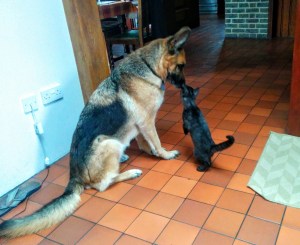
9.Don’t be fooled when your child tells you that you are either the best or the worst mother in the world. You are not. When they are about five and they tell you that you are the best mummy ever, that is very nice. Write it down and hold on to that memory. It wont be too long before they tell you that “all the other mother’s let their children do/have/go to, whatever” and they will reliably inform you that you are the worst mother ever. Brace yourself and ride the storm, taking regular peeks at the diary entry when they told you how wonderful you are and remembering that ALL good mothers are told this at some point. You are their mother, not their friend. They don’t have to like you all the time. You have to make decisions for what is best for them, not what they will necessarily want. Be brave, it is not easy. But you are the best mother that they have, so they will have to get over it. I regularly told my children, “I am not like other mothers.”

10.Do go with your gut feeling and monitor how long your child plays computer games or watches television, or uses their phone. They can stunt creativity and the ability to communicate and keep track of real life. It wont kill your child to be bored sometimes. Or even (horrors) read a book. Decide what works for you. I found that most games, whilst addictive, also needed a certain amount of time for them to be played satisfactorily. So in our house we had ‘computer weeks’. For one week, they could play computer games for as long as they liked (not including homework times, meal times and bed times, which were rigid unless they were ill.) Then, the next week, there was no computer at all. After a couple of days, they adjusted to the lack of life support and actually managed to enjoy something like cooking or reading or playing in the garden.

We never had the tricky decision of how old is old enough to have a phone–because they didn’t exist when my children were little. I don’t really agree with the ‘phones are bad’ lobby, but like everything, it can be abused and parents have a responsibility for teaching their children how to use a phone appropriately. Is having a phone at a meal table a good idea? Or when they should be concentrating on something else? Is it polite to glance at a phone when having a conversation with someone? I recently watched a programme exploring whether phones are addictive (another blog to follow). Since researching this, if I had a child with a phone, I would definitely go to settings and have the screen set to ‘greyscale’.

11.When your child is a teenager, have difficult discussions in public. This was one of the best things that I discovered. So, if I wanted to discuss with my fifteen year old his bed time, the amount of time spent on homework or any other ‘tricky issue’ I would take him out for lunch or even a to nice coffee shop. Somewhere public. Somewhere that having a meltdown would be embarrassing for him. The social pressure helped him keep a lid on whatever anger he would like to vent and we managed to have a few very sane conversations. It was well worth the price tag.

***

It should perhaps be noted, that when I began writing this article I asked my daughter if she could remember any of my parenting strategies. She informed me that:
I regularly told her she was adopted and suggested she could go and find her real parents (she looks EXACTLY like me, so this was never a problem for her.)
If something hurt, I told her it would probably fall off.
I wanted to burn down her primary school.
I made her move traffic cones that were blocking the road when I wanted to drive down it.
I also always told them that even if they did things that were rubbish, I would love them anyway (they liked that one.)

On reflection, I may have been a slightly rubbish mother. However, all my children have grown up to be happy, sane and good company. Maybe being rubbish doesn’t matter too much. God chose you to raise your child, He has confidence that you can do it. I remember reading: you don’t have to be a perfect mother, you only have to be good enough. There is hope for us all. . .

Thank you for reading. Enjoy your day.

Love, Anne x

Anne E. Thompson has written several novels and one non-fiction book. They are available from book shops and Amazon. She writes a weekly blog at: anneethompson.com

My novel explores the fun and problems when parenting adults (being a parent never ends…trust me!) A heart-warming family saga that will make you smile.
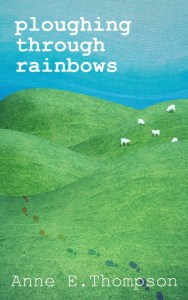
A hilarious family saga set on a farm. Being a parent has no end-date, as Susan discovers when her adult sons begin to make unexpected choices in life.
A warm-hearted, feel good novel that will make you smile.

Available from an Amazon near you — why not buy a copy today?

US Amazon link here

UK Amazon link here
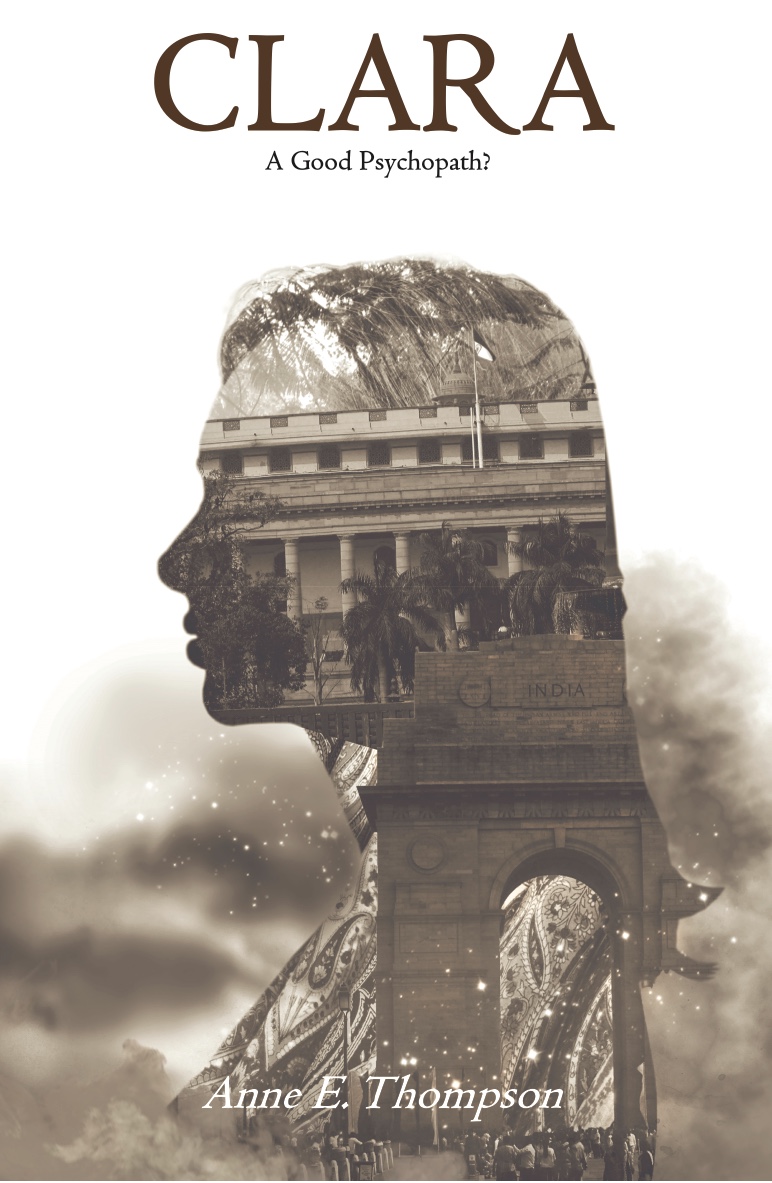
Amazon Germany link here