Are Trump’s Tariffs Fair?


In an attempt to not believe what politicians tell me without fact-checking, I tried to unravel the new tariffs from the US. I am taking the view that President Trump is trying to do the best for his country, you can decide for yourself whether you believe this. His rhetoric is that in the distant past things were more fair, since then the US has been plundered, and he now wants to even the score.[1] But is this true? The perception elsewhere is that since this time, the US has become a world power, and this is due in part to free trade.

Free trade (I am reliably informed by the economists in my world) is when countries have trading partners and allow goods and services into and out of their countries with relative ease. Economists seem to agree that free trade is what makes strong economies. With free trade, everyone has an easier life. But, have other countries eroded this (as Pres. Trump states)?

Well, to some extent, from what I can discover, there have been some limits to free trade. Sometimes a country wishes to protect its citizens from something considered unhealthy. (In the UK, only toys that meet a certain standard can be sold for children–so some toys from China are rejected. In the UK, we dislike genetically modified beef, so refuse imports based on that. And so on.) Countries also add their own taxes. (In the UK, we have VAT—a tax that is added to goods before they are sold—which in the US is called ‘sales tax’—but VAT is applied to those good wherever they come from, even if made in the UK. So to list these as a ‘tariff on the US’ would be untrue.) Some countries have made sale agreements: My understanding is that car manufacturing is particularly cosmopolitan, with different components being added in different countries, so a car may pass between Canada and Mexico and the US, getting bits added, until it is finally ready to sell. Each time it has a part fitted in a new country, there has been agreement that no extra tax will be added to the final cost.

Now, despite what Pres. Trump said, the US has actually benefited from the global economy. Evidence for this is found in things like: Any country in the world will accept dollars (we take dollars when we travel to India). The US is seen as powerful, and is included in talks concerning climate or security. Services from the US have prospered; in the UK, Amazon is huge, so is Google, and Apple, and Microsoft, etc. American banks are strong. Across the globe, countries have welcomed companies like McDonald’s. Normal people in the US have benefited from this, it has supported their own economy. Yes, there has been a decline in certain industries—this is true everywhere. In the UK, whole towns were built on coal or steel, and they have needed to diversify, and find new industry, and this has not always been easy or smooth. But the US has sold many services abroad, and overall has grown stronger. Therefore, it seems the world has not ‘raped’ the US, but rather the US has done very nicely out of free trade, thank you very much.

I looked into what tariffs have actually been set, and why. It seems they are based on trade deficit—this is when the country sells less of a product than it buys, it’s a number. (US buys 100 televisions, it sells 40 televisions, therefore the trade deficit is 60.) Pres. Trump took the trade deficit with each country, divided it by the number sold, then divided by 2. (In my example, 60/100 divided by 2) However, he has only looked at the trade deficit of goods (actual stuff) not services (like Amazon, or banks, or IT) so it is rather skewed. And my understanding is that his method is ‘deeply flawed.’[2] Never mind the human cost, because breaking trade agreements does not make you an attractive partner in the future.

My conclusion therefore is that, from the evidence I can find, the new tariffs are not wise. They are not ‘fair’ because they are based on faulty economics, and they will not benefit people living in the US. But they may isolate the US from the rest of the free world.

The advice to the rest of the world appears to be that we should assume the US is ‘going it alone’ and we should make fresh deals with non-US partners. (As I showed yesterday, some supermarket shoppers now avoid goods from the US.) This potential decline seems a shame to me, I like the US, I have no wish to see its economy slump. I think there is a real danger that poverty in the US will increase, which often leads to more crime and unrest. I find this very sad.

I also worry about the impact on less developed nations. The US was generous towards those countries struggling with HIV, it helped to keep peace in the world, it was a good country. I worry that the loss in aid will be devastating for the poorest in our world. Never mind that we will have to pay more for Apple products (and will probably switch to non-US ones)—that is insignificant. What will happen to the poor in our world? Those are who we should be fighting for, and I hope that the people in the US, who are mostly good people (in my experience) will remember they have a privileged place in helping to restore balance in the world.

Thanks for reading. If you have further insight, do add to the comments.
Have a good week, and take care.
Love, Anne x

anneethompson.com


[1] Trump ‘glorifies’ the ‘era of the late 19th century’ and hopes to return to this economy. Zanny Minton Beddoes, Economist Online, April 2025. See also point (1) from yesterday’s blog.

[2] Financial Times Online, April 2025.

Being Aware


I rarely write blogs about political issues, but I find the news very unsettling at the moment. As you know, we studied a little politics in our Ethics class at Spurgeon’s, looking at how fascism grew in the past. It grew quickly, centred around one individual, and I doubt if most people realised what was happening. The parallels with today are alarmingly similar.

This partly came to my attention last week, at a family dinner. As I listened to one family member telling about her experience in Canada, and another family member comparing his news of Mexico, I realised that in the UK we are very complacent. I had no idea that people in these countries (and I’m guessing Greenland) are genuinely worried. They see a threat to their sovereignty. Mexico and Canada are fighting back. But what about those countries with unsettled economies? Who is speaking for the poor?

 I didn’t realise that shops in Mexico and Canada now label the country of origin for their products, people are encouraged to buy local produce and to reject things from the US. Maybe this will help. Do you think we should support them in this? Do we need to buy from the US when there are alternatives? If one man attempts to stamp on the rest of the world, maybe the world should join together in their response. The world today is a global community, and putting your own country first when that means alienating everyone else, is not such a good idea. And what will happen to the poor? Do we just allow them to be sucked down in a whirlpool of powerful economic battles? Who is speaking for the poor?

Shelves in a Canadian Supermarket

One aspect of the news that worries me is the motivation behind what politicians are saying. It used to be that when a politician spoke, you could hear them pandering to popular opinion, they cared about what the voters thought. (This created problems of its own.) But now I hear something else behind the words, now I hear them pandering to an individual—and this has been seen in history. Listen carefully when you hear the news—who do you think the politicians are most aware of when they speak? Who are they trying to impress—and is this healthy? Does this leader show any compassion for the poor of the world?

I leave you with the key points of fascism from Jason Stanley (author of How Fascism Works). As you read the list, which can you apply to the news today?

  1. A Great Mythical Past. A fascist leader will talk about how things used to be better in the past. They ignore all the problems that were actually in the past, and focus on a mythical ideal.
  2. Propaganda. A fascist leader will promote their own message and say that any alternative view is a lie. Hitler and Mussolini both did this, saying that things reported in newspapers were untrue, telling the population that their opponents were liars. The idea of accusing the media of ‘fake news’ goes way back in time.
  3. Anti-Intellectualism. Fascist leaders appeal to people with limited education, the speeches are not necessarily clever (because truth doesn’t matter) and they appeal directly to emotions. They dislike, and try to discredit, academics (because they will offer a counter view, or question the authenticity of the claims being made). Experts are shunned, people are told to ‘think for themselves’ which really means, ‘don’t question what I am telling you and don’t listen to someone who might have studied this issue.’ (I think we should be wary of people who tell us ‘the experts don’t know what they’re talking about.’ In my experience the ‘experts’ usually know more than the rest of us!)
  1. Unreality. This is another interesting one—apparently fascist leaders tend to love conspiracy theories. They always have an enemy who is trying to sabotage them, talk of subterfuge is encouraged, they want people to be paranoid. They also blame past leaders.
  2. Hierarchy. Fascist leaders always have a dominant group of loyal followers, those who are ‘true to the leader.’ Anyone who questions the general message is eyed with suspicion, and removed from the ‘inner group.’ As stated earlier, everything focusses on the leader. [Listen to what they are saying—who are politicians trying to please?]
  3. Victimhood. Fascist groups always state that they are the victims of another group—they have been oppressed, or made poor, or cheated—and this has been caused by a definable ‘other.’ (Hitler blamed the Jews, gay people and Roma, but other groups held to blame over the years include black people, feminists, immigrants.)
  4. Law and Order. Fascists declare that they want a return to law and order, and the group against them are the criminals. The ‘other’ people are the ones to blame for crime, for stealing, for rape, for drugs, for violence. [In the introduction of any emergency measures to combat ‘a risk to security,’ the ‘risk’ should be fact-checked.]
  5. Anti-Decadence. Fascists claim that the moral fibre of society is under threat (blaming the ‘other’ group). Only they, and their followers, have good morals. Anyone not supporting them is described as a bad person.
  6. Work Ethic. Fascists claim that the ‘other’ group are lazy, mere parasites of society. Fascists claim they are hard-working, deserving of better.
  7. Nationalism. Fascists promote great nationalism, and shun other nations. They strive to make their country ‘great again’ and nothing else matters. This gives a great sense of belonging to the followers of fascism. [But in a global community, what are the consequences of this? We need to be shrewd.]

I add to this the current policy of saying what you want to be true, as if presenting it as true makes it true. It does not. It is still a lie, however loudly you say it. We can fact-check statements, and test whether they are really true.

I hear President Trump say that the US has been ‘cheated’ in the past, the new tariffs are to make trade fair for the US. Is this true? We shouldn’t simply accept a statement just because someone says it loudly or repeats it several times. Personally, I know very little about tax and tariffs. I shall do some research and let you know tomorrow what I discover.

Please be wise, wherever you live. Please make good choices. I doubt if anyone in power reads my blog, but we have a voice even if no one listens. Let’s stand for what is right, because ‘those who are noble plan noble things, and by the noble things they shall stand.’ We need to be shrewd. We need to watch out for liars–just because someone says something, it doesn’t make it true.

Thanks for reading.
Take care.
Love, Anne x
There is a lot on social media at the moment, mocking the people in power. Maybe this is one way that people are ‘fighting back.’ Maybe things seem less scary if we make them a joke. Certainly it is good to laugh, but let us not forget what is serious.

When someone includes you in a military chat by mistake.

The McDonald Islands have a tariff. There is not a human population there (apparently) but the penguins are confused.

Link to previous post:
 https://anneethompson.com/2022/11/28/what-is-fascism-and-are-you-a-fascist/

Sign up below to follow my blog.
Then you won’t miss my post exploring whether the tariffs are fair or sensible and wise.
anneethompson.com
****

More Jamaica Inn


I am beginning to relax into the rhythm here. I wake about 5, and lie in bed, listening to the frogs (which are very loud—they sound like the ceiling fan is struggling to turn, a volley of squeaks—they start at sunset and continue until dawn). At 6 am an urn of Blue Mountain coffee is put out on the veranda. It’s super-strong, and kick-starts the day wonderfully. Today as I stood on the veranda, looking across the palm trees to the sea, something wafted, very quickly, overhead, then disappeared behind the branches. Pretty sure it was a ghost, pale grey, silent, floating at speed. Began to wonder what, exactly, might be in the coffee. Then the ghost reappeared, did a speedy lap of the bar and library before floating back towards the sea. A huge grey bat. It was light grey, and much bigger than the mouse-like bats we have living in our garden at home. I don’t know much about bats, or whether they bite people, so I went back to the room. (Later research found it was probably a fruit bat.)

The library, sans bat.

I persuaded Husband to come to the exercise room, and ran for half an hour. Then we had a quick dip in the pool before breakfast. We have freshly squeezed orange juice, strong coffee, and a whole selection of food. I’m trying to not eat too much fat (many meals here, so bit of a losing battle). I tend to order mint tea, porridge (called oatmeal) and fresh fruit. Then I eat bits of Husband’s Egg Benedict or pastries or toast, and steal sips of his coffee. He has started moving his food further along the table…

Breakfast room.

There are activities here, which Husband is keen to investigate and I am keen to avoid. He has already made friends with some croquet players, and today he plans to go out in a boat and snorkel. I want to stay in the room, staring at the beautiful view, reading theology books. Today, by chance, I have started to read a book by J.Richard Middleton, about the image of God or imago Dei. He begins by explaining that as a white man growing up in Jamaica, surrounded by mainly black friends and neighbours, he felt unsure about his identity, which led to his research into the imago Dei.  (Genesis describes humans being created ‘in the image of God’ and people have decided this is what defines us—and they then argue about what exactly ‘the image of God’ might be!) It feels very appropriate to be reading a book written by a Jamaican, about an aspect of creation, while being in Jamaica, surrounded by Eden-like beauty. I will let you know what he writes (unless it’s boring—some theology books are best forgotten).

While reading Mr. Middleton’s book, a waiter appeared on the veranda, delivering drinks to the room next door. He asked if we had had our complimentary drinks, and said we are entitled to a free drink every day, after 11, from the bar. I’m not sure if this is true. He then said he would collect us some—would I like a rum? Well, it would have been rude to refuse. He yelled to the man in the beach bar, telling him to bring us a complimentary rum. (Husband had an orange juice. You can make a man retire, but you can never remove the accountant within.) I drank my rum. It was strong. Feeling very fuzzy. Mr. Middleton is now not making as much sense as he did 10 minutes ago!

Tuesday

We spent the day at the hotel. It’s too perfect to want to leave.

We have to dress smartly for dinner here—men must wear long trousers and a shirt with a collar. It’s quite fun.

This evening they set up the beach area for a gala. There were drinks on the terrace then a buffet on the beach. Lanterns were strung from the trees, and a band played. I had bit of a headache, which was a shame. They let us take our food back to the room—a waiter carried a tray and set up the table on our veranda with a cloth, salt and pepper, cutlery and napkins, glasses of iced water, a basket of fresh bread—as well as the plates of food we had collected. We could see the beach, with lanterns hanging from trees, and hear the band playing. It was a shame to miss it, but where we ate was still beautiful. This is one of the things I love about this hotel—they seem to genuinely want you to have a lovely time, there are very few ‘rules’ and if you prefer to eat alone on your private veranda, well that’s fine, and they will carry your food and set your table, and do everything they can to make it special.

I hope you have something special today, wherever you are. Thanks for reading.
Take care.
Love, Anne x

Florida in February


Day 3 of Road Trip

Woke about 5 am (definitely changing my internal clock now). Drank coffee, went for run about 7am, which was around dawn, so it was light enough to feel safe. We ran along the dock, with several other runners/walkers (people here don’t say hello to strangers, and most seemed to be deep in conversation with their mobile phones). Breakfast in a cafe attached to the hotel (not great). There is a conference here, so steered Husband past the rather nice breakfast put out for people wearing purple tabards.

We went shopping for shoes. Not a usual thing for us to do, but Husband’s trainers are falling to bits. We found an excellent shop, with an excellent assistant, and bought two pairs in the sales. Then we looked for a bagel shop, because I hankered for a cinnamon bagel that I could eat outside, somewhere pretty. We failed on this one, though as we wandered around the docks area we did see lots of pretty places. Returned to Fresco’s Waterfront Bistro for an early lunch. I had a fish burger (again) which was nice (would have been nicer if I actually liked fish, which I don’t much, but I am trying to not eat meat). It was a pretty place to sit, right on the water, with flags and lights and blue umbrellas to shade us from the sun.

Then we wandered to the Salvador Dali museum, which we visited in 2019 and both enjoyed. The gift shop has very attractive merchandise, which is as lovely to look at as the pictures, not that I would actually want to own any of it, but it’s fun to look at. Then we walked up the spiral stairs to the galleries and were amazed again at Dali’s skill, enjoying the colours and images, especially the paintings that had images within images. I felt that Dali enjoyed telling a story, or making a statement, or sometimes just enjoying the science of how the brain detects images. The best (in our opinion) display of 2019 had gone, which was a shame—previously there had been an audio-visual digital display explaining the paintings, helping you see what was hidden within them.

In the evening we went to a bar. We found the same bar where we sheltered in 2019 during a typhoon, and ever since I have wished we had drunk shots rather than cokes. It was raining again when we walked there, so was very reminiscent. I had an espresso martini, which was very tasty but tasted as if there was very little alcohol in it (which was fine, it still felt very grown-up to sit at a bar and sip a martini). It was ‘happy hour’ so a martini and a beer only cost $5.

Dinner was at The Ford’s Garage restaurant, which has a car suspended over the bar, and has oil rags as napkins and sauces in buckets. The food is good—fresh veg and not giant portions, which suits me. I drank still lemonade, and as I finished the waitress replenished it, which is always a nice thing and one of the things that makes US service the best in the world. Lazy evening, I watched Rebecca on Netflix while Husband planned tomorrow. He likes planning.

Day 4 of Road Trip

Woke at 2. Went back to sleep (sort of) until 5am. Made coffee. After looking at various options, and discussing different attractions we could visit, I suggested that we just drove. So we chose a route that avoided motorways and meandered through small towns, and we set off, heading down the centre of Florida.

We like driving. Husband enjoys driving the Mustang, with the roof down, on the wide straight roads that cover most of the US. I can cope with the wind and draughts by wrapping in several layers and wearing a cap to stop my hair knotting up, and I enjoy being driven, and looking. Just looking. Seeing unfamiliar things, and half-forgotten things—like the yellow school bus with it’s flashing lights, which means all the traffic, on both sides of the road must stop, while the small boy hops down and runs with his school bag across his lawn and into his house. Or the long lawns of green grass, with the houses set right at the back of the plot (so everyone can see how much land you own, whereas in the UK we put our houses at the front of the plot, and fence the back, so no one can see and it’s all very private). We drove past lakes, which would be full of alligators. And the trees hung with Spanish moss (named after the wispy beards of early Spanish settlers, not because the air-plant originated in Spain). We drove through acre after acre of orange trees, laden with fruit, with smaller younger trees wrapped in protective plastic. We passed areas of swamp, and palm trees, pine trees, scrubland. We were passed by big trucks, and giant lorries with their exhaust pipes sticking up next to the driver’s cab, and cars with outsized wheels. But mainly trucks. Lots of trucks, with a flat bed at the back, and a high cab at the front for a cowboy (but usually a woman, or a family, or a couple of teenagers).

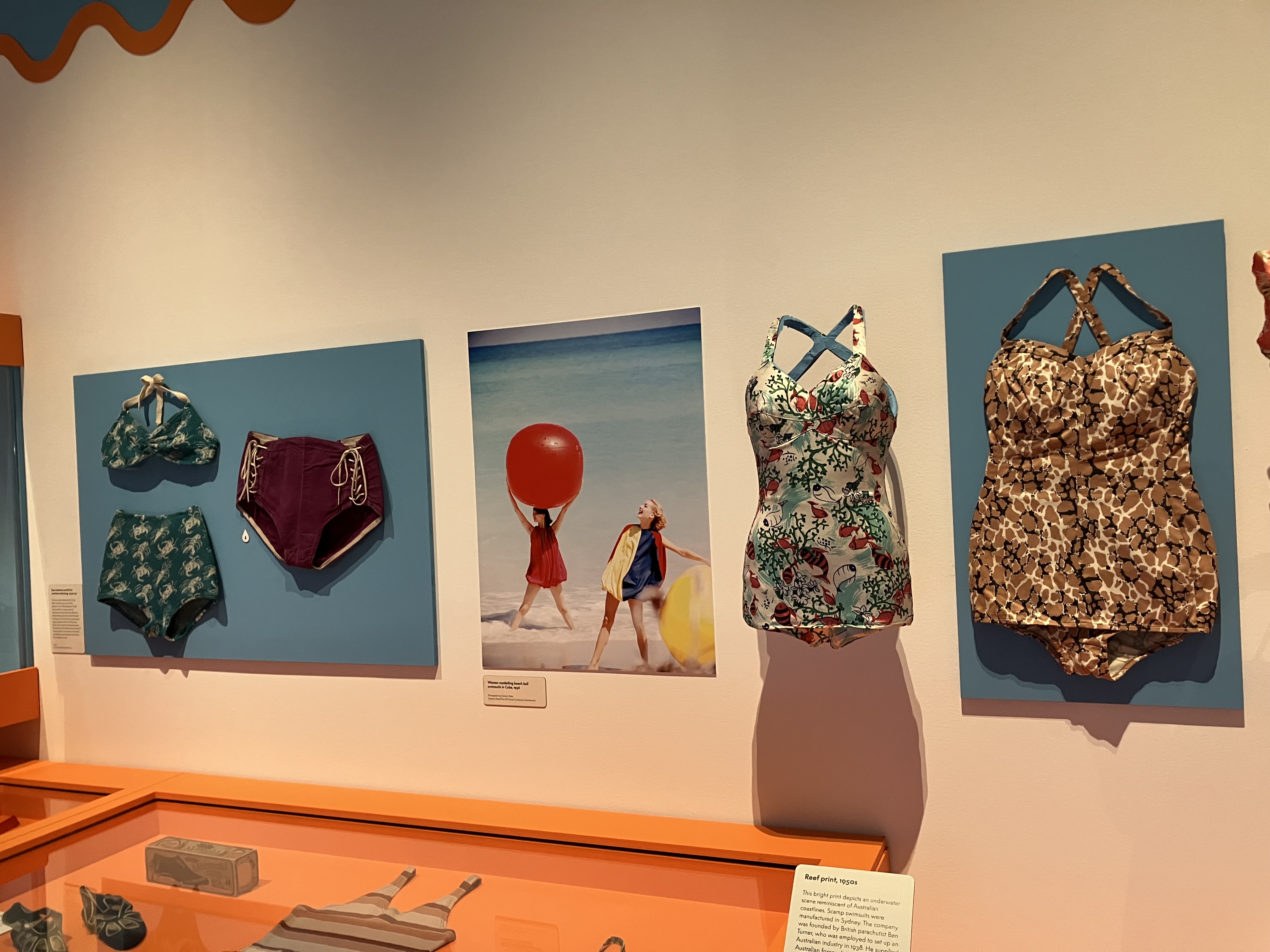
I needed to buy swimwear (because we go to Jamaica next week, and after 20 years, the elastic in my swimwear has died, leaving me exposed in unfortunate places!) We visited a T.J. Maxx (the US version of TK Maxx in the UK) where I liked to shop when we lived here because they sell end of season stuff, so you can buy good quality things at cheaper prices. I selected a few swimming costumes to try on, but the fitting rooms were shut. They told me to buy them, and return them for a full refund. Which doesn’t work as well when you’re travelling. So I bought them (I could tell Husband was feeling anxious as I paid about $400 for a big selection of swimwear) and then I went to a different shop, tried everything on in their fitting rooms, returned most of them to T.J.Maxx. It seemed to work, and I now own a couple of nice things to wear on the beach.

We stopped for lunch at a diner Husband found online. It looked a bit seedy as we approached, but inside was magnificent. Egg City is a 50’s diner, and the turquoise and white decor was full of memorabilia— juke boxes and records and shiny lights. The washrooms were labelled eggs or sausages which made me laugh! I ate pancakes, which of course were much too much, so I took the leftovers with me in a polystyrene box.

We (Husband) decided to stop at Bok Gardens. I am not a fan of public gardens (except in Japan, where they are a work of art). Usually they are filled with plants that excite gardeners but don’t really interest me, and I much prefer the wild countryside or farmland to organised gardens. These were particularly boring, as most plants seemed to be dead (with fake ones to show what was supposed to be there!) Not my kind of thing. There was a tower, which was beautiful, and inside (we couldn’t go inside) was an instrument made of bells, which a man played. We watched a film—it looked like he was playing an organ keyboard. I suspect a campanologist would be fascinated. I was not. It was just noisy. [*Fun fact: Did you know that a campanologist is someone who studies bells? A bell ringer is called a … bell ringer! Or possibly a carillonneur if you want to be annoying.] 

We drove to Sebring, and our next motel. This one is a ‘Residence Inn’ and our ‘room’ is actually a small flat, with a kitchen area and sitting room. It’s lovely, overlooking a lake. We had dinner at Cowpoke’s Watering Hole which was on a very busy road, full of marshals for the motor-racing tomorrow, and extremely well run. They served hundreds of people, very efficiently, and the food was very nice. We sat in their straw-roofed outside area, and there was music from the 80’s, and friendly waiting staff, and the drinks and salad and garlic bread were ‘bottomless’ so they kept topping them up until we were completely full.

Went to bed but unfortunately didn’t sleep, as there is a fan, which is not operated by the thermostat, and it blew cold air over the bed all night. Very annoying, and a shame, as the room (apart from that) is perfect.

Hope your day has no annoying things. Thanks for reading.
Take care.
Love, Anne x

If you let your eyes fuzz—or view from a distance, you should be able to see Abraham Lincoln. Very clever.

Alligators and Herons on Babcock Ranch


Day 2 of Florida Road Trip, Feb. 2025

Woke up in the Four Points by Sheraton in Punta Gorda. Waited for Husband to wake, then went for a run. It was still dark, and I worried about crocodiles and snakes and criminals. Some of the walkways were well-lit, with fairy lights wound up the palm trees (very pretty). But the main cycle path, which was attractively placed next to the water, was very dark and I was too nervous to run that way. So we had a not-great run mainly next to the main road. Arrived back at the hotel without being murdered/eaten, which I considered a success.

Breakfast in the hotel. We had a voucher, which covered everything we ordered except a $2.75 order of extra toast. I was interested that they charged us for this (Usually Husband’s  loyalty card means breakfast is included—even the toast.) Very nice hotel though, with no broken ice-machine roaring outside our door all night, so no complaints.

We packed and left. I really dislike constantly having to rummage through a suitcase when we travel, and I find I waste a lot of time looking for things. I therefore organised everything into smaller bags: A bag of everything I need at bedtime, a bag of electricals, a bag for when we go out for the day, a bag of running clothes, etc. Not everything fitted back in the suitcase, but I decided it didn’t matter if I needed to do a couple of trips to unload at the next hotel.

We set off for Babcock’s Range, East of Punta Gorda—a find in the guidebook. (We are old, we still use guidebooks.) It was a ranch in the middle of nowhere, but they advertised ‘eco-tours’ which Husband decided would be worth doing (I wasn’t so sure—we don’t usually like tours because it’s impossible to make the guide stop talking and they are usually very irritating). We arrived, drove down the long driveway, and parked. There was a gift shop (with a rude woman serving, who did not pause her phone call to serve me, but I spotted a mug and a fridge magnet that I fancied, so I bought them). There were also washrooms (always welcome after a long drive). We were directed onto a school bus, which had been painted green and had the windows and side supports removed. One of the other tourists remarked that this made the bus structurally unsound should it roll, which was not reassuring when combined with a big sign stating that under Florida law, eco-tours were not liable in the case of death or injury. We sat at the back (I don’t like being breathed on.)

The driver/tourguide was a fairly cynical ex-fireman, and I liked his style. He drove us round the ranch, pausing to show us various features, and described the natural world that we were seeing. It was actually very interesting (I am much more interested in the life-cycle of an alligator than the history of the rich ranch owner.) It’s dry season here, and we drove through swamps that had no water, looking at the stubbs of cypress trees which form sort of ‘tent pegs’ to secure the underground roots in the wet soil when the swamp is flooded. We passed marshes, with alligators sleeping while water birds walked between them. (A swamp is standing water, so dries up. A marsh is moving water, so lasts unless the stream dries up.) 

Apparently the alligators and great blue herons cohabitate areas, each allowing the other to eat their young. Most young alligators are eaten by herons, and the herons will toss a couple of chicks to the alligators because they hatch more than they can find food for. In return, the adults ignore each other. Nature is a grisly affair, even without human intervention. But we didn’t see this, we saw peaceful ponds where gators and birds slept and fished side by side. It was lovely (though we weren’t tempted to go paddling).

The ranch also has ‘cracker’ herds, which are cows introduced by the Spanish. Most cattle died due to the heat in Florida, but this herd survived. They are small and thin, and no good for beef, but they are bred today as an historical herd and sold for rodeos (where cowboys show their skills at catching cows—which is still necessary on the vast ranches). I like the idea that some cows are bred today not for beef. We also saw wild pigs, which are common in Florida, and from the bus they were cute and funny (but I understand that pigs are way more vicious than alligators if you encounter them in the wild).

We heard that humans have tried introducing crocodiles in Florida (crocodiles are salt water animals). Crocodiles live much longer than alligators and grow much larger. Alligators are not generally a threat to humans because they never grow to be big enough for humans to be easy prey—they prefer small mammals like racoons and dogs and baby pigs. But recently there have been cases of hybrid alligator/crocodiles found in the everglades, which is very worrying because a huge alligator would definitely see humans as prey—and alligators are everywhere in Florida (we even saw one in a pool at a motorway rest area). There is now a reward for anyone who hunts the hybrid species, as they hope to stop it reproducing. Which is yet another example of humans interfering and messing up the natural order of the world and then trying to put it right when they realise how it negatively impacts them. Humans seems to constantly mess things up. Frustrating.

After the eco tour (as we were still alive) we drove to Arcadia, a nearby ‘cowboy town.’ Didn’t see any cowboys, though several shops sold hats and boots and saddles. We ate in Myshelly’s Kitchen, which was clean and friendly. The menu included things like ‘Bison Burger’ and ‘Gator Bites’ and ‘Boars Head Pastrami.’

Drove to St.Petersburg. Checked into the Hilton. They insisted on valet parking, so my multiple small bags instead of a single large suitcase proved rather embarrassing as we hurried to unload everything we would need before the car was whisked away. Room was nice, and we could see the waterfront from the window. Dinner in a nearby Italian restaurant (Gratzzi Italian Grille). Another good day. Went to bed about 8pm, so gradually converting to US time. Slept well.

Hope you stay safe today. Thanks for reading.
Take care.
Love, Anne x

Day 1, Florida Road Trip 2025


I’m writing this in a happy fuzz of espresso martini treat. This is my current drink of choice, and it’s always fun to see whether the order brings a look of joy or fear in the bar tender’s eyes. Sometimes it’s a very long time in arriving and I wonder if they have gone to search the recipe on the internet! I’m thinking of doing a survey—which place in the world serves the best espresso martini? So far the winner would be the King’s Head near Rye. Today’s entry was in Punta Gorda, Florida. It was nice, but very strong. I was quite giggly by the end. When I had finished the waitress came to offer me a second one, and Husband said No! in a very definite voice. He told me I was the same colour as my shirt. (I was wearing pink.) Tasty though.

I will try to remember the rest of the day through the blur. I woke at 2 am, stayed in bed until 3am, because I have decided to adjust to US time an hour a day. Made a coffee, and read until 6am, when the business lounge opened (they serve breakfast). Very nice breakfast. I had porridge, because it’s healthy and I am reducing my cholesterol. Then had a muffin, and a cake, so it didn’t finish so well. Husband went straight to the fried stuff, so he’s worse.

First job was to collect the car (a Ford Mustang convertible—treat for Husband’s birthday). It took a long time to walk to the correct place (which was right opposite the hotel) and even longer to drive back, because we kept missing the turning and all the roads were fast and multi-carriageways. Made it while still friends.

We left the hotel and drove to Sanibel. It was cold. Husband wanted the roof down on the Mustang, which was very chilly. Stopped at a nature reserve to use the washroom and walked along a raised walkway, looking at alligators and exotic water birds, and turtles and huge fish. Very peaceful with an undercurrent of threat. Didn’t actually see anything attacking anything else, but felt it was imminent.

Sanibel was devastated by a hurricane a couple of years ago, and some parts were still broken. Our favourite cafe (The Sanibel Cafe) had reopened, so we ate lunch there. It’s very nice. I ate a fish burger. Then we drove to Sanibel Moorings, where we have stayed a few times, and it was being rebuilt, though some apartments were already open. Walked along the beach, and saw scary looking puffer fish that had washed up in the tide and were drying on the beach, their spiky backs waiting to catch bare feet. I chose a pretty shell to keep. The weather was warmer, and it was fun to have the roof down. Sanibel is so pretty. It’s a bit false (really it should be covered in sand or swamp I suspect) but full of plants and flowers rather than plastic false, so I like it.

We drove north to Punta Gorda. Husband used his initiative a few times, which makes map reading more of a challenge, but we arrived eventually, I was really tired. We had an early dinner in the hotel. (Staying at the Four Points by Sheraton, Harbourside,) Nice meal, friendly staff. After dinner we walked along the dock. Saw a boat that had been wrecked by the hurricane, lifted from the water and smashed into the dock. Didn’t see any crocodiles or mosquitoes, but I’m guessing they were there somewhere. Lurking out of sight, waiting to bite us.

Went back to the room. Nice day.
I hope you have a nice day too. Thanks for reading.
Take care.
Love, Anne x

The Journey


Usually I hate travelling abroad—the rush, stressy people, irritable security staff with too many passengers and not enough time, the stale air, grimy seats, over-crowded, germ-laden, rule-induced tension of the whole experience. But this was different. This was a treat for Husband’s big birthday. This was a splurge of years of accumulated air-miles. This was Virgin Upper Class.

Our taxi drove through barriers, up a separate ramp and swept into an empty bay. Suited men appeared to carry our luggage and we followed them to the security desk. A smiling woman dressed in red checked our documents and we were guided to a conveyor belt. No need to remove electronics or separate liquids, everything stayed in the bags while we walked through the scanner. (I always hate these, I assume it’s an x-ray with accompanying cancer risk, but there’s no way to avoid them if you travel.) Then into the main terminal, with too many people and not enough air, along crowded walkways with shiny shops and too much perfume, up a spiral staircase, into the lounge.

Aaahhh, the lounge. We sat at a table and ordered food and drink. Husband went to the washroom so I selected a newspaper and sipped coffee until he returned. Life was comfy. I ordered a grapefruit (nice and sweet, didn’t need the small pot of Demerara sugar). The Eggs Florentine  (a single muffin half, which is perfect for me, with thick salmon, a poached egg blanketed in low-cholesterol-diet-busting hollandaise sauce). I finished with a ‘croffle’ which turned out to be a croissant pastry cooked in a waffle iron—which only half worked (very tasty but a bit too chewy) topped with fruit compote and coconut yogurt. Not a bad start to the day.

After our meal we chose something to read and settled into an easy chair. I chose Vogue magazine, which I read at my 6-monthly trip to the hairdresser. It’s heavy, over-priced, and mainly full of pretty adverts for expensive items aimed at beautiful people. Good for a mindless hour. I noticed that the photos of the various famous people (I didn’t recognise many, but they were all beautiful and even the old ones didn’t look old) included a description of their clothes. This was detailed—a long list of everything they wore, including belts and shoes. (Not underwear of course, that would be weird.) I wondered why, and whether most people (that undefined group of the masses which seems to move as a unit) are actually interested in such things. I assume the editor of Vogue wouldn’t bother with the details if no-one cared. I must be in the minority. I don’t always notice what I am wearing, never mind the rest of the world. I remarked on this to Husband (who dresses even more badly than me) and we agreed that for this reason alone, we must never become famous. We must save the world from the details: ‘He wore vintage Marks & Spencers from a decade ago teamed with slightly shrunk jeans from the tumble dryer.’ (It would be unkind to suggest it wasn’t the jeans that have changed size.) ‘She wore her husband’s old shirt under her favourite green sweater, with a matching but threadbare very comfy men’s cardigan, black jeans with a muddy paw-print on one leg, and black boots with a broken zip’ As I said, best if we never become famous.

Another nice feature is the washrooms. They have small cloth towels, and hand lotion. My only criticism is the mirror wall, which completely confused me when I first entered, so I apologised, thinking I had entered an occupied washroom, and then realised I was talking to myself! It was also unnecessary, I felt. Who needs to watch themselves peeing? Maybe they need to check all their clothes are straight before someone takes their photo for Vogue. It also meant you could see the back of your head, which I always hate because I hear my mother’s voice telling me to comb the back of my hair. I am sixty, sixty! and my mother still tells me to comb my hair. Perhaps she also notices what I am wearing. I will have to ask her. She would enjoy Vogue.

After enjoying the lounge, we were invited onto the plane. Now, a plane is a plane, wherever you are sitting. It’s a metal tube with recycled air and plastic food and it smells of toilet cleaner. But they do their best. I was given a whole pod to myself, with cupboards (more mirrors—they were going to be depressing towards the end of a nine-hour flight!) Lots of plug sockets, and a bag of bedding that rolled out during take-off and disobeyed the ‘keep the footwell clear’ rule, so I had to hold it, which would be substandard if I needed to leave in a hurry. The steward came to introduce himself and gave me a tour of the mirrors, sockets, hidden table and light switches. Which kept us occupied until take-off. 

The flight is too long, but it’s easier if you’re at the front. It was possible to get up without disturbing lots of other people, and there are fewer people using the washrooms. The chair could be made completely flat for sleeping, though as it stretched forwards into the hollow of the seat in front, it felt a lot like sleeping in a coffin. Not for the claustrophobic. The food was nicer, and we could help ourselves to snacks and ice-cream between meals, which was a nice treat.

Is it worth the price tag? No. Is it a fun treat if you have enough air-miles? Absolutely.

We landed at midnight UK time, which I found very tough. The arrivals hall was slow, it took nearly an hour to get through passport control, and I find US security to be one of the rudest in the world. Occasionally you find an official who is polite, very occasionally they are friendly, but mostly they are incredibly rude. The officious young man in Miami told us to stand in front of the camera, then glanced up and said ‘Glasses!’ (I was tempted to reply yes, yes they are glasses. Or, do you mean “please remove your glasses?” But I didn’t. Wrong time to be snarky.)

We were staying at the Sheraton at the airport, which I then discovered did not mean actually at the airport, it meant a bus ride. Which meant pushing our bags along a busy pavement, and waiting for the bus. It wasn’t a long wait, but I was so tired. The day was too long. I always (unreasonably) blame Husband in these situations and feel extremely cross with him. Managed to not say anything.

Eventually arrived in our room. Very noisy broken ice machine right outside our door. Lumpy mattress.  Slept badly. Woke early. I plan to adjust my clock one hour per day. Anything more and I will have a migraine. Difficult time complete. Now to enjoy our holiday.

Thanks for reading. I will let you know how the holiday goes—we’re driving round Florida, so hoping to see alligators. Then we go to Jamaica (which I am very excited about!)

Take care.

Love, Anne x

Being Mortal: Thinking About Being Elderly


Atul Gawande, Being Mortal (London: Profile Books, 2015)

I was lent the book by a medical friend, and after reading half I bought my own copy. It’s the sort of book you want to keep so you can refer back to it. As my PhD will finish by exploring the assisted dying  issue, I need to start learning about the issues that surround dying. This book helped to inform my own thinking, and introduced some new concepts. It also informed my thinking about ageing, and how people might want to live in the final stages of their lives. This has little to do with my studies, and a lot to do with real life. Whether we are old, or helping elderly parents, this book has practical advice and confronts some difficult issues.

Gawande is a doctor, and he spends some time explaining how in old age, it is very important to keep your feet healthy. People are not able to live independently if they cannot walk. A fall in an older person is dangerous—brittle bones break more easily, and the space inside the skull where the brain has shrunk means it gets a nasty jolt in a fall, which can cause all sorts of problems. Therefore, balance is important, and good balance relies on good feet. If someone is unable to properly care for their feet, they are likely to develop problems with balance. [Note to future self: Do some simple balance exercises every day, and keep lifting feet to where I can touch them. ‘Use it or lose it.’]

The first half of the book deals with the ageing process, and how western societies treat their old and infirm. Gawande is American, with Indian heritage, and his comparison of the two cultures was very interesting. Whilst the ‘traditional Indian’ setting of an elderly person living with the extended family, being helped through their old age by younger members sounds idyllic, Gawande is honest about the problems this can entail. Different problems to our western traditions, but still problems. He then discusses the situation in the US.

One topic he discusses are nursing homes. He doesn’t rate them very highly, and compares them to prisons! (p.73) He explains how nursing homes grew from the need in 1954 to provide hospital beds for the elderly when hospitals were too full—so their medical care was transferred to a purpose-designed home. (p.71.) They were all about medical needs, keeping the patients physically safe, and were run to be clean, efficient and safe. Then, in the 1980s, Keren Wilson tried to build a better model, and built an ‘assisted living’ community—where the aim was to allow elderly people to live independently, with the physical help that they needed. They had locks on their doors, privacy, and autonomy. If they wanted to wear pyjamas all day, or eat food that was bad for them, they could.

This led to the assisted living homes we have today, which tend to be a compromise between the two models. He makes the point that homes for the elderly advertise that they are safe and clean—not that the residents can make their own choices. This is because the homes tend to be chosen by the children, not the elderly—and children want their parents to be safe and clean. He writes that this is because ‘it’s often precisely the parents’ cantankerousness and obstinacy about the choices they make that drive children to bring them on the tour to begin with.’ (p.106) He also remarks that this is partly the fault of the parents, ‘because they disperse the decision making to their children . . . It’s sort of like, “Well you’re in charge now.”’(p.106.) [Note to future self: Don’t dump decisions on my children if I am capable of making them myself.]

He does also describe some excellent care homes, some of which introduce things like plants, or animals, or combine with a school so the residents can help the children. He discusses the motivation for living, and that in the end, being ‘safe’ is not enough. People need a role, something beyond themselves, a purpose. Otherwise it seems they disappear inside of themselves and lose the enthusiasm for life. He writes that ‘death rates can be traced to the fundamental human need for a reason to live.’ (p.123.) He discusses Maslow’s hierarchy of needs (the idea that physiological needs—food and water—are more important that safety, which is more important than love/friendship, which is more important than self-esteem, which is more important than self-actualisation.) Gawande considers that above ‘self-actualisation’ is the need for transcendence—the need to go beyond ourselves and help other living creatures. [Note to future self: Find someone/thing to care for.]

Gawande states that the problem, as he sees it, is that we have put issues of life and death with the medics—and they are not necessarily equipped for this. He describes ‘a still unresolved argument about what the function of medicine really is’. (p.187.)[This is my own view too—I think death should be left to philosophers and theologians, not medical professionals.]

Another modern problem—which affects the States more than the UK is the availability of treatments and the way that insurance works. Therefore medics no longer have to question whether a treatment is ‘worth it,’ either financially or in terms of benefit to the patient. If it’s available, and a patient wants it, then they check the insurance company will pay for it and the patient undergoes the treatment. This has a parallel in the UK with pet medical insurance. If our pets are insured, and if the vet suggests a treatment, it is very hard to step back from this, to take a holistic view and decide whether the treatment is actually in the best interests of the pet. We love our pets, we don’t want to lose them—but sometimes I think they suffer more due to invasive treatments than if we just made them comfortable and helped them to die peacefully. Gawande questions whether most of the money spent in the last months of life actually benefits anyone. He suggests this is particularly true at the very end, when patients are hooked up to expensive machines, their lives prolonged by a few days but with no ability to ‘die a good death.’ (My expression.) Unable to say goodbye, or come to terms with what is happening to them, their last moments are reduced to being a patient. He says that people who are dying have priorities other than living for an extra day or two, and ‘technological medical care has utterly failed to meet these needs’ and the financial cost is massive. (p.155.) He suggests that by putting our faith in modern medicine so completely, we have forgotten ‘how to die.’ (p.158.) [Note to future self: Decide what is important to me in the present.]

Gawande is a great believer in palliative care—help to live your final days as well as you can, rather than suffering intrusive uncomfortable treatments trying to extend life by a few more months. He discusses this in the setting of his own father’s death, which makes the discussion both personal and honest. It’s much easier to have a theory about death when it doesn’t touch you. He also lists some questions—difficult to ask ones—which enable families to help their relatives to die how they want to die. This involves asking the person what they fear most about their diagnosis, and what they want the most. (It might be to continue being able to eat, rather than to have the longest possible life!) He also suggests asking what the person would like in an emergency—do they want to have their heart restarted? Do they want aggressive treatments (such as being on a ventilator)? If the answers are known before the emergency happens, then people are able to make the right choices in a crisis situation. He talks about what the aim should be for a terminally ill person, saying it is not about ‘a good death, but a good life to the very end.’ (p. 245.) For Gawande, this means that assisted dying would be a rarity, not the norm—because so much can be done to help a person optimise their last few days, and very few conditions cannot be managed with drugs. [Note to future self: Communicate my wishes to my children, don’t make them have to guess.]

I am still unsure of my own view about assisted dying, so it’s helpful to hear what others think. I found Gawandes book to be a helpful resource, and I value his insight into the issues surrounding old age and the end of life. Now, don’t forget to take care of your feet!
Thanks for reading.
Take care.
Love, Anne x

Meg’s Diary, Life with the Cat


11/1/2025

Trying to force Meg and the cat to be friends is not, I think, going well. The cages are now pushed next to each other, and on the positive side, they are able to both sleep in them—so for many hours there is peace. But the cat’s cage makes a corridor into the utility room, and the cat knows that when Meg goes in and out, she can reach through the bars and scratch Meg. Meg also knows this, so is very wary of walking past the cage, which results in a lot of barking and bouncing (because that is what a nervous Meg does). I blame the cat for this.

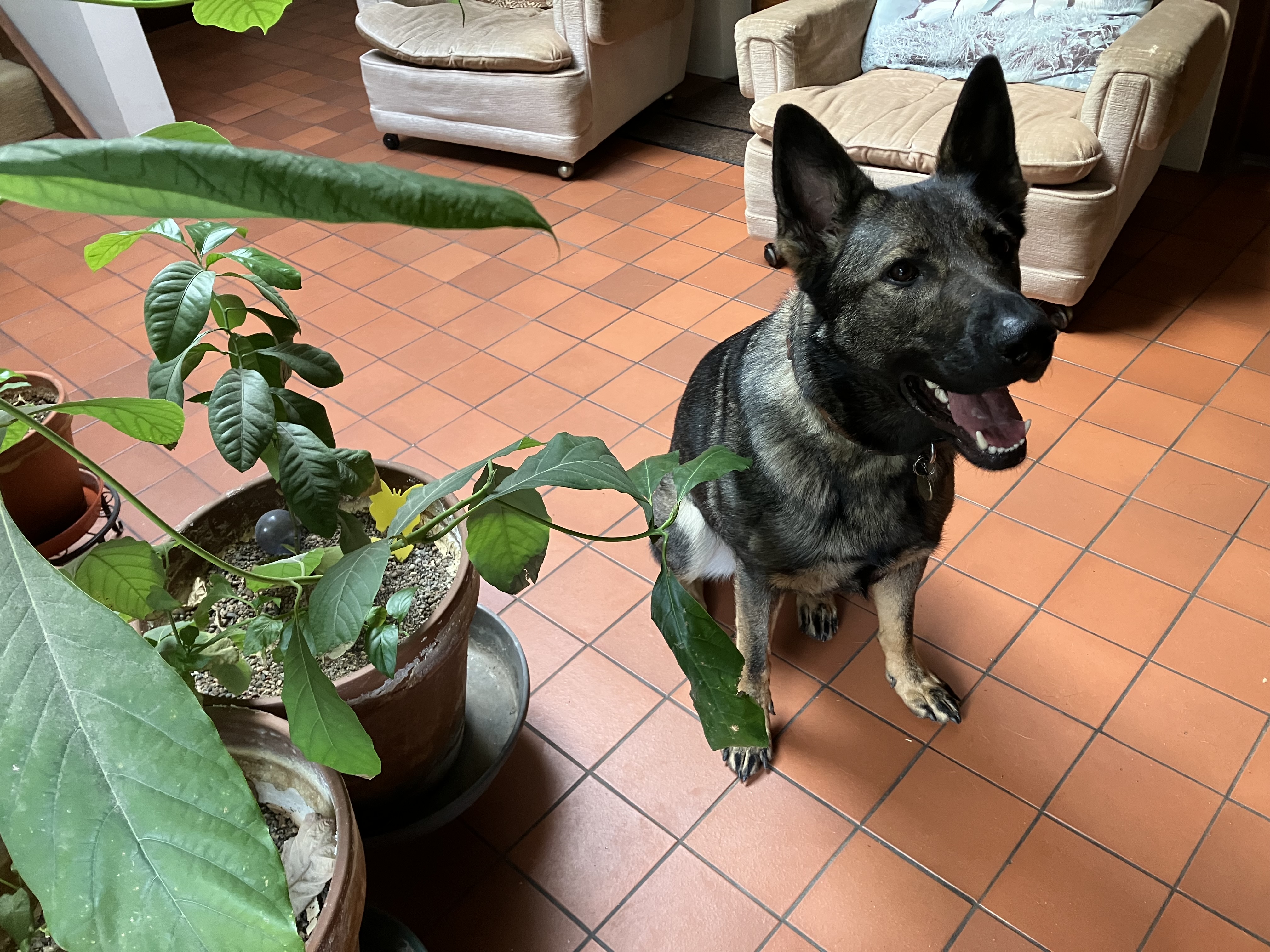
There is also chaos when the cat uses her dirt tray. I don’t know why, but as soon as the cat goes onto the tray, Meg starts to bark and bounce and bang against the cat’s cage. Maybe she doesn’t like the smell (though she emits such awful smells herself, I don’t think this can be the reason).

On the positive side, they have their bowls of food next to each other—either side of the bars—and they notice what the other is eating and don’t try to interfere. Lots of the time life is peaceful, even though they are in close proximity. The cat seems to be the boss, and is the main instigator of trouble—though as Meg is much bigger and has the potential to damage the cat, I really need them to co-exist peacefully, without a constant battle even if the cat starts it. The cat will have to be confined for another two weeks, until her snapped ligament has fully healed. Then we will see what happens. I’m not sure that anything has changed at all, and their relationship will continue to be one of Meg chasing the cat whenever she can, and the cat hissing at Meg from high vantage points. Which is exactly what it was before I started this exercise.

The woods are beautiful this week. The snow is clinging to the trees and the temperature has dipped below freezing, so it has stayed for a few days. Breathtakingly pretty. The ice means that walking is a bit dodgy, and the snow is packed hard from all the dog-walkers, and incredibly slippery. Everyone walks on the edges, where it’s less compacted, which means gradually the footpaths are widening.

The tree men are back, with their great machines of destruction, chopping down trees and churning up the mud. At least now its frozen the wheels will do less damage, but before Christmas was very wet, and they have ruined swathes of woodland by making trenches of mud and destroying the undergrowth. I hope they know what they are doing, and it’s necessary for the health of the woodland, but it looks to me like they are just blokes enjoying big machinery. Yesterday they started work in an area of mainly pines—which is where ‘my’ tree is. There is one tree (I think a beech) which has a very black trunk and a beautiful shape, and it’s very stark against all the surrounding pines. I have noticed it on my walks since 2001; twenty-four years ago when I used to walk my Labrador there. I even wrote a story about it. I do hope it survives the men and their machines.

Meg, as ever in the woods, is very good near the workers—she basically ignores them. Yesterday we needed to walk very close to where they were working, so I collected a few sticks, told her to walk on my right, and we kept our distance, throwing sticks into the woods every few minutes so Meg was on full-alert, waiting for the next one to chase. She ignored the noise of the machines, the moving lorries, the falling trees, the men shouting to each other and the whine of saws. The only thing in Meg’s world was the next stick, and when it would be thrown. (It made her appear very well-trained. But she’s not. She simply has a compulsive desire to chase sticks.)


15/1/2025

Meg has favourite places to lie now (like a proper dog!) She has discovered the radiator on the landing and will lie there for hours, soaking up the heat and waiting for me to come out of my room. She also (weirdly) likes her crate, and will sometimes put herself to bed in there. She also prefers it to the utility room, so if she starts fussing when we eat, I go to the utility room, open the door, call her. Meg stops and looks at me. She understands she is about to be shut away, and she walks, very deliberately, into her crate and sits down. It’s very funny!

Thanks for reading, and have a great week.
Take care.
Love, Anne x

Meg’s Diary: An Annoying Evening


It has been cold, with some snow but mainly lots of rain. The snow was fun, the males made a snowman at midnight, and Meg destroyed it with enthusiasm the following morning.

The rain is not so much fun. Everywhere is muddy, which means Meg is constantly covered in mud, and however much I try to hose her down (which she hates) it still seems to end up inside. The kitchen floor is gritty and I waste lots of time with the vacuum cleaner. (This feels an utter waste of time, because it doesn’t stay clean, and I’m not sure that having a dirty floor matters too much. But I do it anyway.)

Today Meg was very annoying in the evening, and it felt unfair because we had enjoyed a nice day together. I took her to the woods early morning, and we had a good long walk, Meg chasing sticks, me enjoying the peace of the woods and the few flakes of snow that drifted down. At home I hosed her (which she protests about, and nearly wrenches my arm off, but she is completely covered in mud because she wades through all the puddles so it is necessary). Then I left her in the utility room to dry.

I worked most of the morning, and when Meg was dry enough to be let into the rest of the house she lay next to me, chewing her toys and farting. She had a run in the garden while I ate lunch—followed by another short stint in the utility room—then she followed me round the house while I did some cleaning, occasionally barking at the cat, mostly just following me and poking her head into cupboards that I opened, adding her toys to piles of laundry, watching from a distance when I cleaned the sinks. It was companiable.

I needed to buy food for dinner, so Meg came in the car. When I went into the supermarket I tied her up outside (she seems to enjoy this, as she watches everyone and often gets attention from dog-lovers on their way into the shop). She walked back to the car beautifully, stopping for traffic and not pulling on the lead. When we reached the car she paused before jumping into the boot. She paused for about 2 minutes, letting me know that this had not been a ‘proper’ walk, and she was not ready to go home, and perhaps she wouldn’t get back into the car. Then she jumped up, into her crate—discussion ended—and we went home.

A lovely day, and then she was bad. I put her briefly into the garden while I started cooking dinner, and then called her to come in. No sign of her. I shut the door, thinking that when she returned the door would be shut, and she would learn to come faster next time. Except she didn’t come. I called her at regular intervals while cooking dinner, but she ignored me. It was dark, and cold, and I was tired. I didn’t want to traipse up the garden to collect her, and I needed to cook dinner. I felt defeated. I knew she would be doing something bad, but I didn’t have the energy to go and sort it out. After about an hour, Meg decided to come back inside. I let her into the utility room. She was completely covered in mud. I couldn’t face finding out why, so I left her in there. After dinner Husband hosed her down (which was very kind of him because he’d been working in London all day and was probably as tired as I was). Then I put her into her crate for the evening. She protested and barked, letting me know that she wanted to come and watch telly with us—but she was wet, and not allowed on the carpets, so we put up with the barking and I felt cross. It was a shame after such a nice day together that Meg had ended it by being annoying. I know she’s a dog, and doesn’t know any better, but it feels personal. I feel (irrationally) that if I have made the effort to include her and give her lots of attention/stimulation, then in return she should be good. It doesn’t work like that with dogs, and that feels unfair. But that’s life isn’t it. Life is not fair, not very often, and we just have to get on with it. Went to bed feeling grumpy.

Hope your day is full of beautiful scenes and better than my evening–though sometimes we just have to cope with the bad bits of life. Thanks for reading.
Take care.
Love, Anne x

My favourite tree in the wood.