Travel in Japan


Travelling Around Japan

For the foreign traveller, Japan has a very user-friendly transport system. I have explained the Tokyo underground system in a previous blog, so I’ll tell you about the bullet trains and buses, and general other tourist stuff. Japan seems to be one of the safest countries I have ever explored, so if you are a nervous traveller, come to Japan.
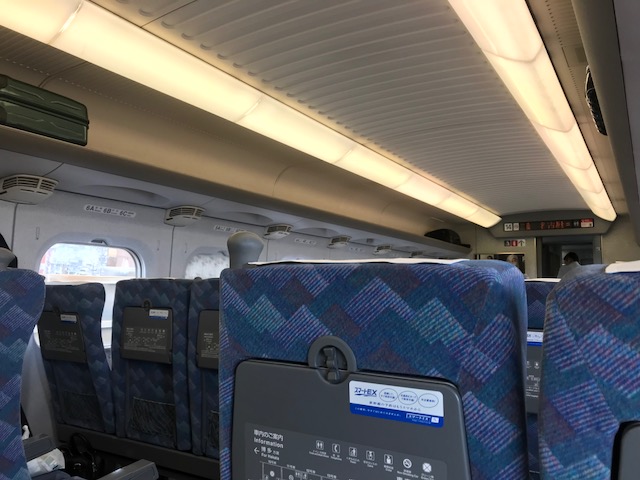
Everyone knows that Japan has bullet trains. They are quick and easy. They are not the cheapest way to travel though. In 2018, a trip from Tokyo to Kyoto takes about 2 hours and costs about £200 return. It’s a few pounds more if you want to reserve a seat. Announcements on the trains are in Japanese followed by English, and an onboard sign shows which station you are approaching. Each carriage has a map of the train, marking toilets, bins and crew positions. The seats are comfy, forward facing, and recline. When passengers disembark, they replace their seat to the upright position (Japanese people are very polite, they don’t leave things in a way to inconvenience other people).

Buying tickets was relatively easy. We went to the ticket office, and staff spoke enough English to be helpful. They also told us which platform we needed. Platforms can be confusing, as different ends of the same platform have trains going to different places, but we found that other passengers were willing to help. Carriage positions are marked on the platform, so you can queue in the correct place. Stations have a shortage of seats, so don’t go to the platform before you need to unless you enjoy standing.

Local trains stop at more stations, and have less comfy seats, but are still clean. The onboard facilities depend on the train.

Taxis can be hailed anywhere (unlike in Singapore, where there are special places, like bus stops for hailing cabs). When they are available, they have the Chinese symbol for ‘free’ lit in red lights in the windscreen.
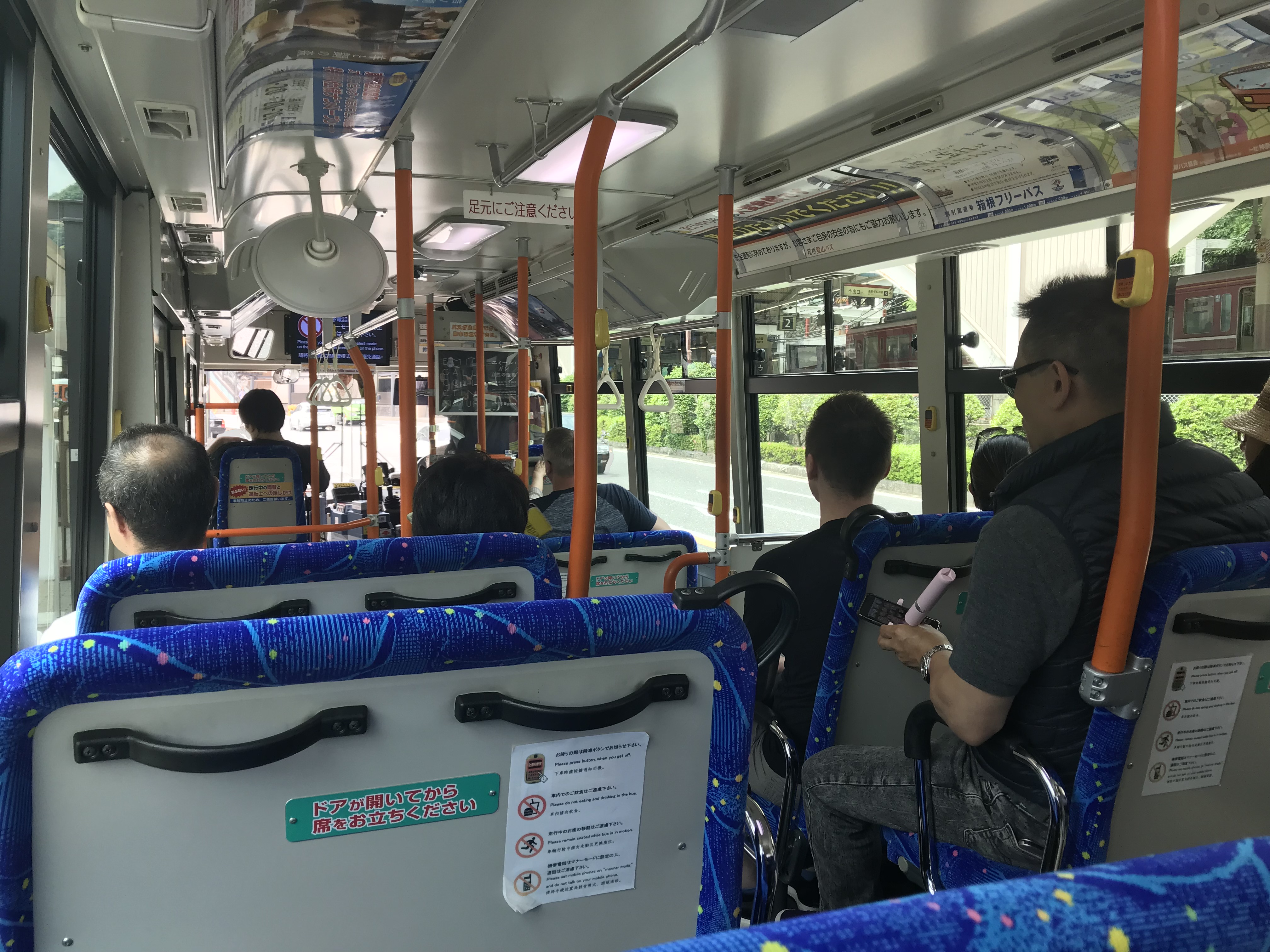
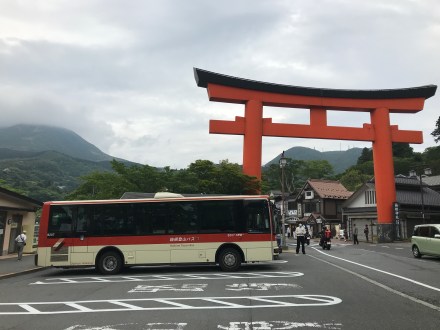
In some places (like Hakone) you can buy a ticket that covers trains, underground, and buses. The buses run to timetable, so be at the stop on time. The timetable will show the bus number or letter, which you then match with the sign on the bus stop. If you don’t have a prepaid ticket, you take a ticket when you get on the bus, and pay the driver when you leave (though I think this varies, as some have machines for paying). The next stop is shown on a sign at the front, and you press a button to request a stop. I think eating on a bus is impolite, as is blowing your nose. So you might want to sit separately from your husband. (Just saying.)

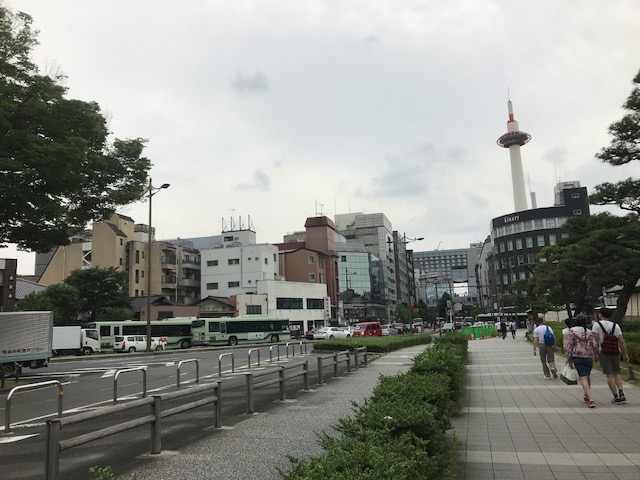
When you arrive, stations have good facilities. There are often shops and cafes. Tokyo station even has tunnels full of market stalls!

Public toilets are clean, and tend to have both traditional toilets and European style ones. All the ones I found were free to use. They also provide loo paper (some countries don’t). ALSO, Japan is the first country I have ever been in, where there is one cubicle designated for mothers of young babies. Inside, in the corner, there is a seat where you can strap a young child. This is SUCH a good idea – why do all countries not have them? Using the washroom with a young child tends to involve either abandoning them in a public place strapped into their buggy where you can’t see them, or leaving the door open so the whole world can watch you pee, or attempting to hold them while you use the toilet (which they always see as a time to wriggle unhelpfully). On behalf of mothers everywhere I would like to say, well done Japan!
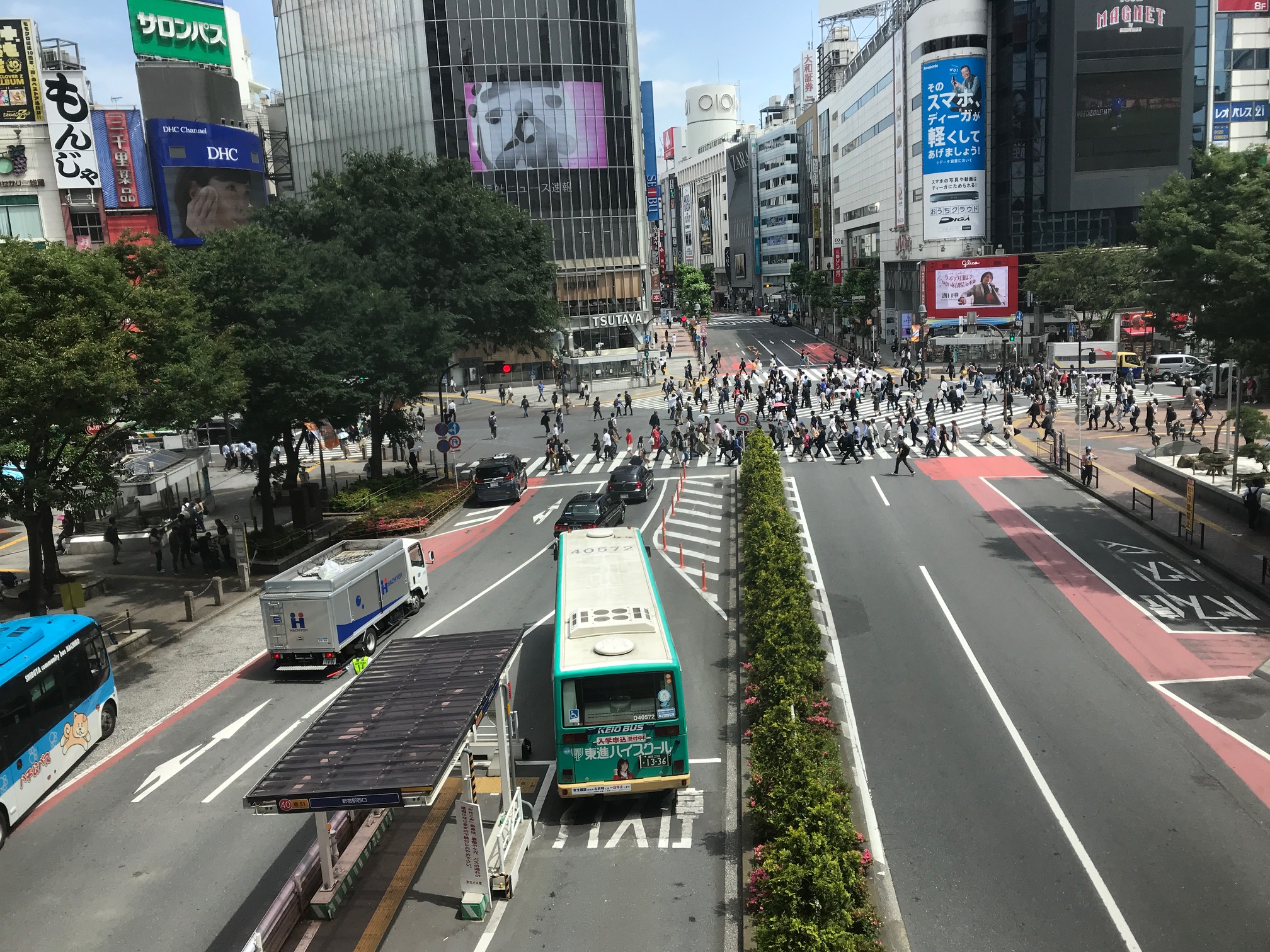
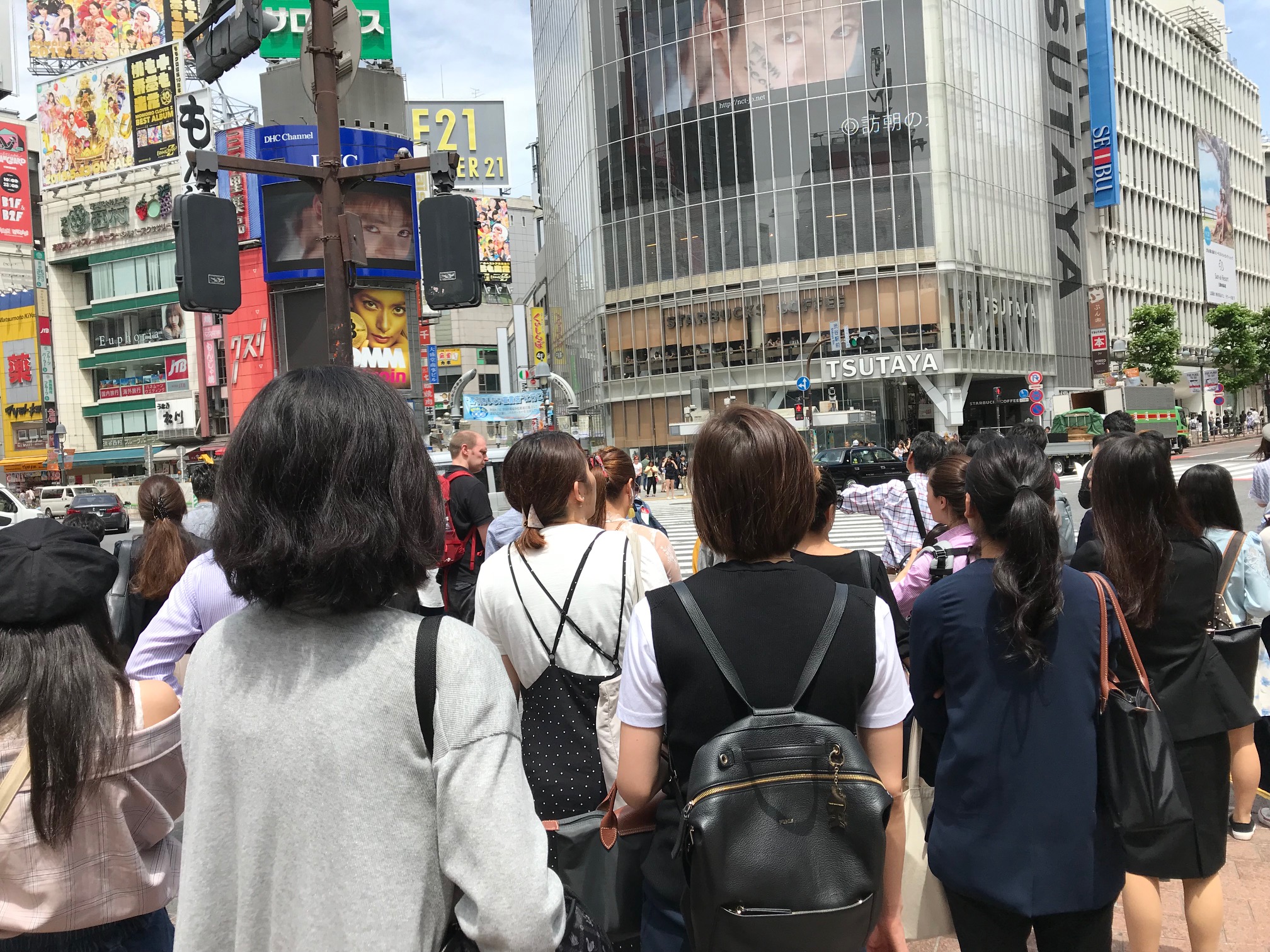
Walking around cities is safe, as pavements are clean and well maintained. Any building work or obstacles have men who wave red flags at you so you notice. Signs are in Japanese, so you need a good map. Roads have crossing points, with lights. Everyone obeys the lights. Sometimes you have to wait for a long time, but they tweet at you when the light is green, which is a helpful indication that you should stop writing emails if your wife has decided to ignore you. (Just saying.)

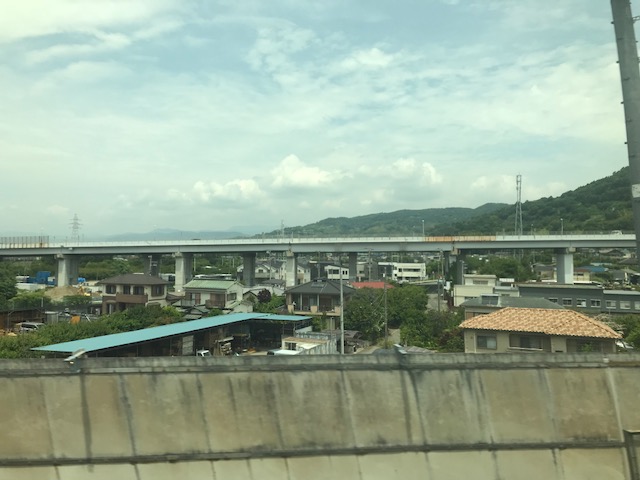
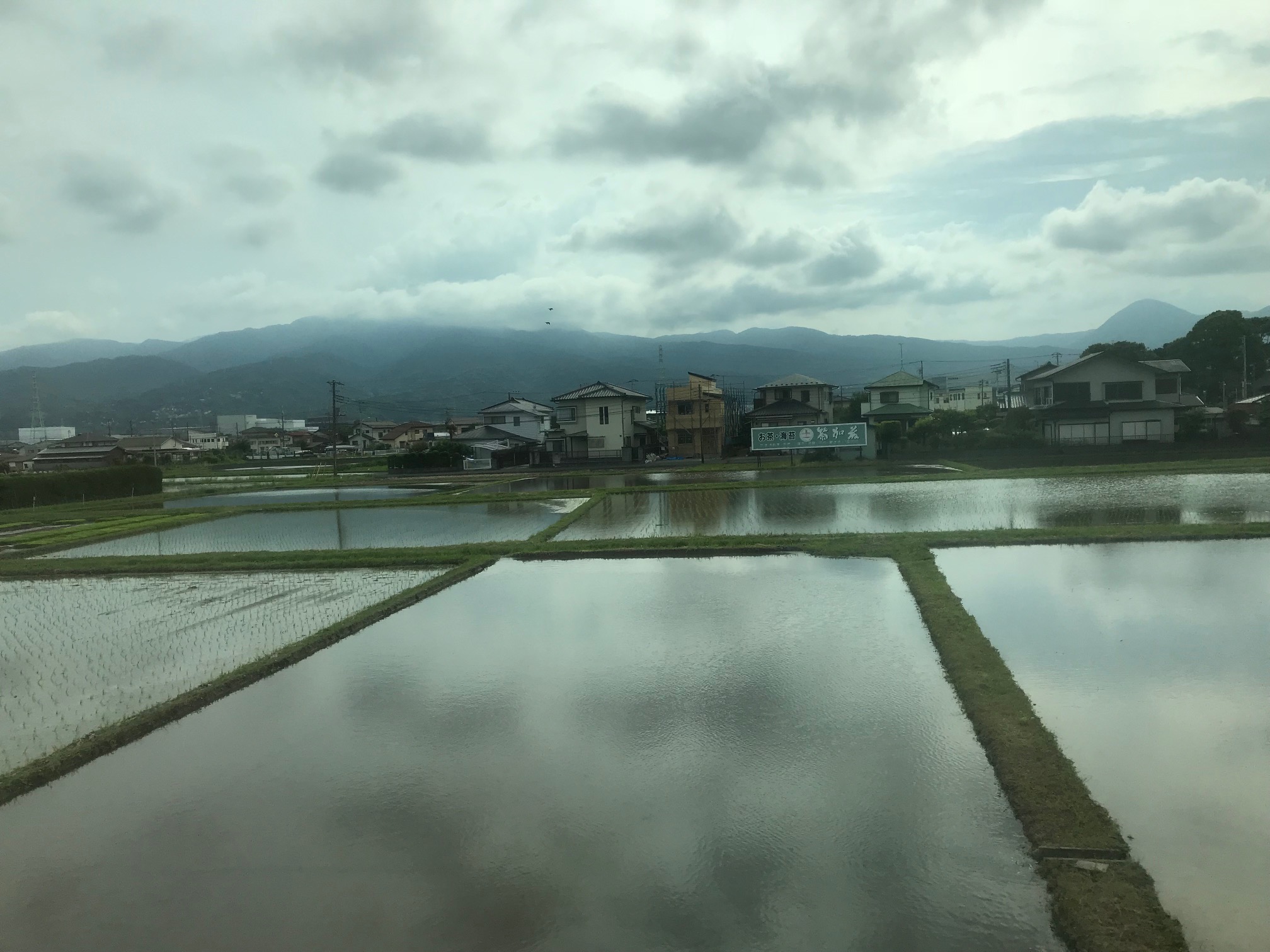
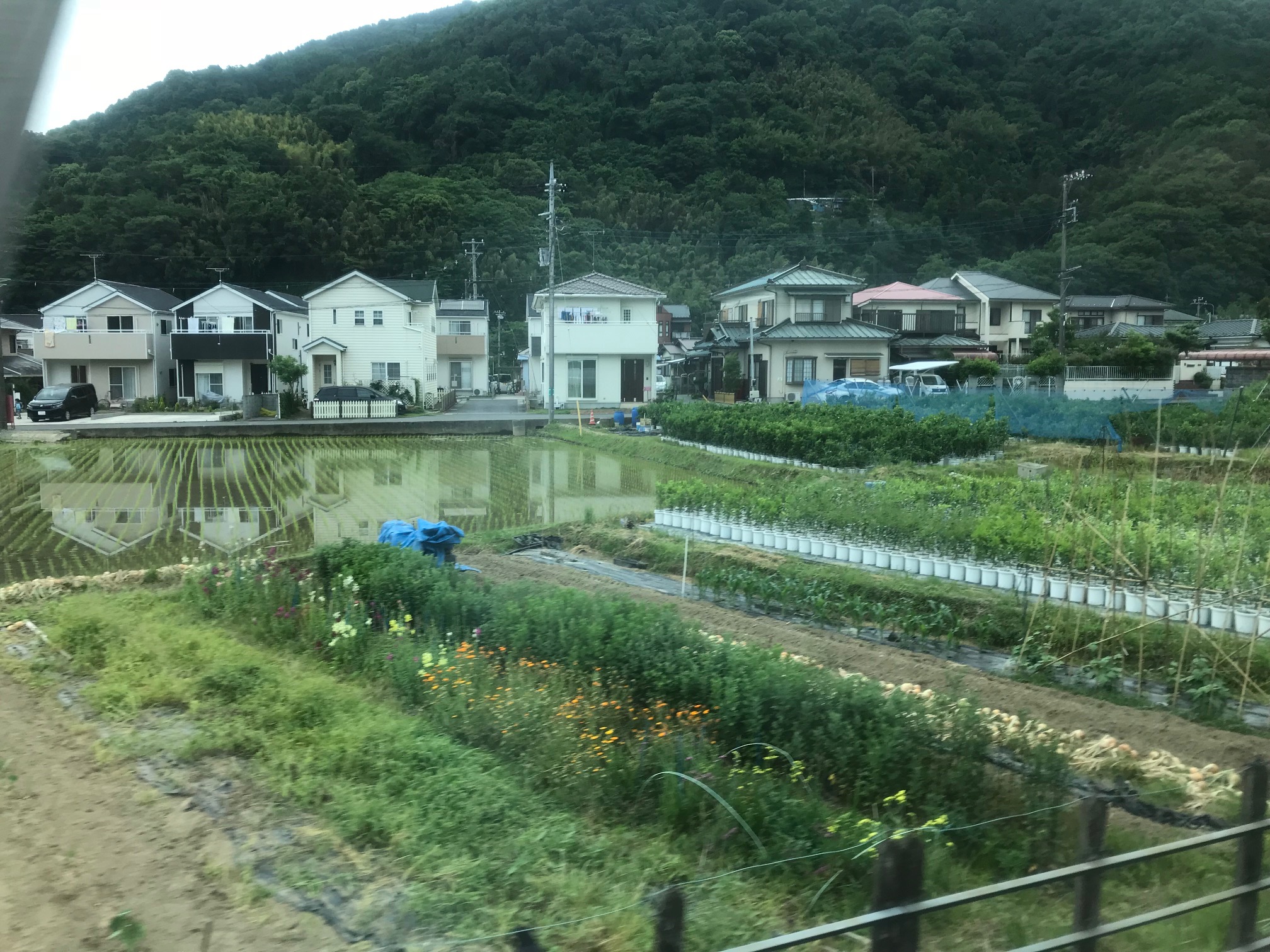
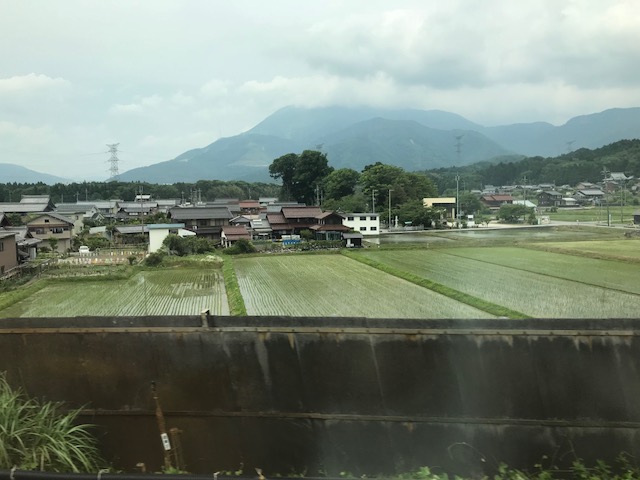
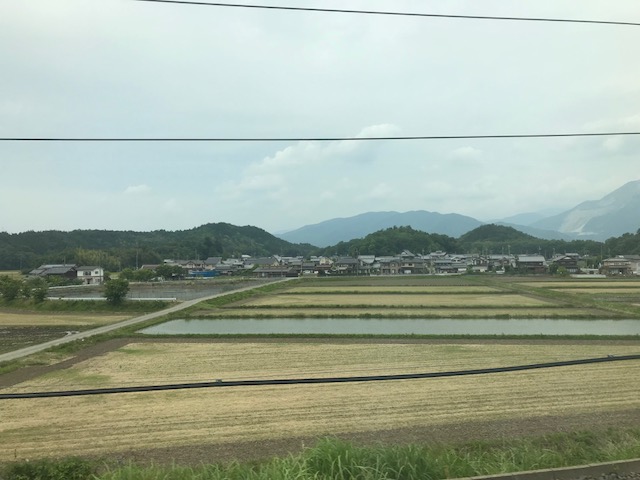
Trains in Japan are a good way to see the countryside. We saw houses, which tended to fill the whole plot, so gardens were tiny. In rural areas there were flooded fields (I assume for growing rice) and temples and mountains and plains. Here are a few fuzzy photos taken from the train:
Anne E. Thompson has written several novels and non-fiction books. You can find her work in bookshops and Amazon.

*****

Thank you for reading.

anneethompson.com


Geisha in Kyoto


A Day Trip to Kyoto

Although I know very little about Japan, even I have heard of geisha. Which means I have heard of the ancient capital city, Kyoto. When I saw that it was possible to do a day trip from Tokyo, I was keen to visit.

Ate breakfast after another ‘not much sleep’ night and walked to Ebisu Station. We got the underground to a mainline JR station, and then bought tickets for the bullet train to Kyoto. We had reserved seats on the way there, but left the return journey open, as we weren’t sure how much time we’d need in the city. There was a lot of flexibility, as trains left every ten minutes.

The bullet train was brilliant. At the end of the line, they turn all the seats, so you are always facing forwards. Your seat is comfortable, and reclines, with a pull-down table on the seat in front (like an aeroplane seat). There was a food/drink trolley. Eating on the train is acceptable (in Japan, eating in the street is considered very bad manners). The journey took about 2 hours.

 When we arrived, Kyoto seemed just the same as any other city – too much traffic, lots of tall buildings, people in suits looking busy, department stores. We popped in to the Tourist Information office in the station, and a helpful lady gave us a map and advice as to where we should walk. Her directions were good, but her distances were a little off, as we walked a very long way to reach the old part of the city.

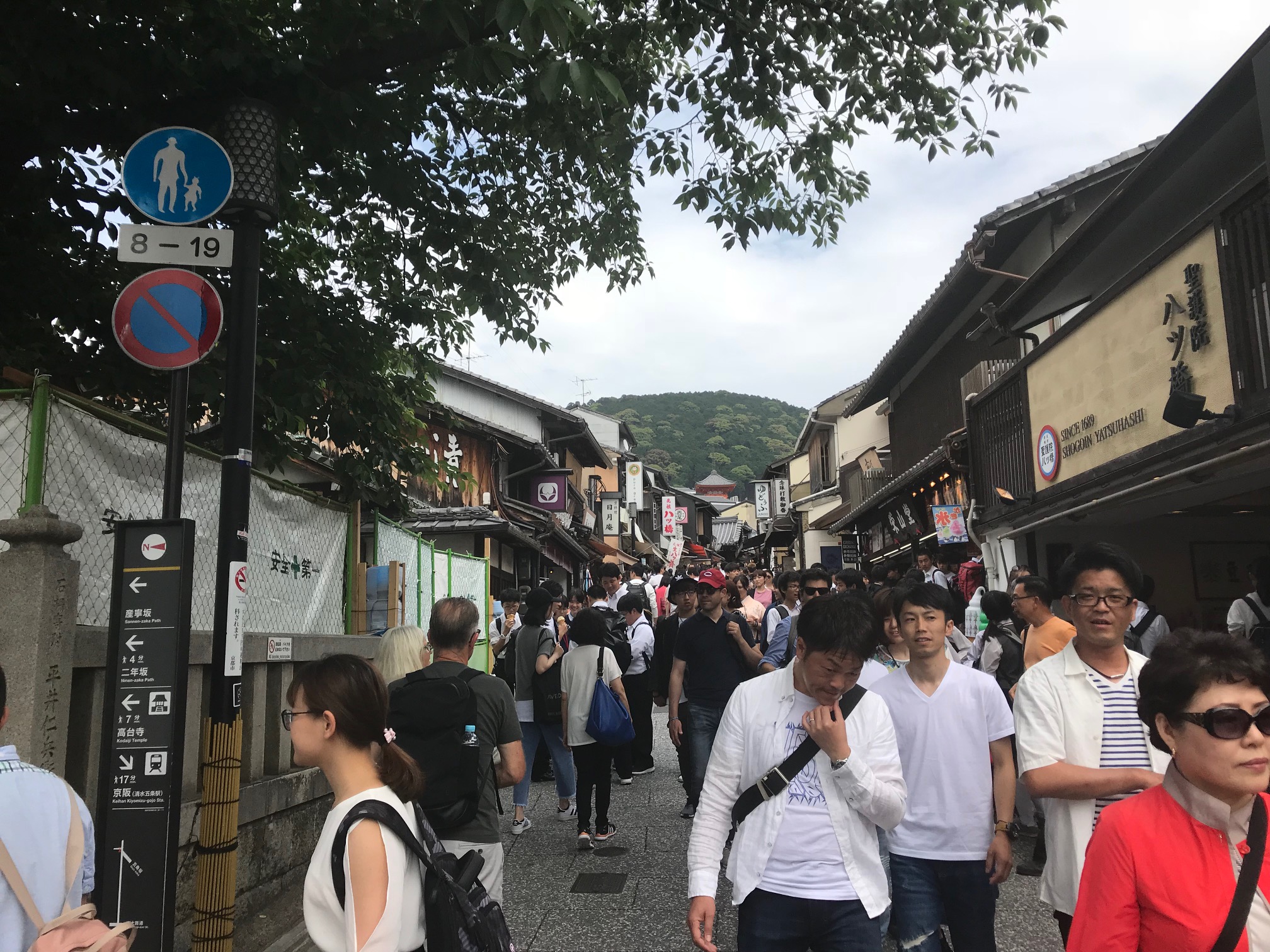
Old Kyoto is a bit like a Japanese Clovelly – there were way too many tourists, and it was almost impossible to imagine what it used to be like. As we walked up the main street, avoiding the coaches, the over-priced gift shops, the coffee shops; I began to wonder why we’d come. It was school-trip world, I think every school in Japan was on an outing to Kyoto.

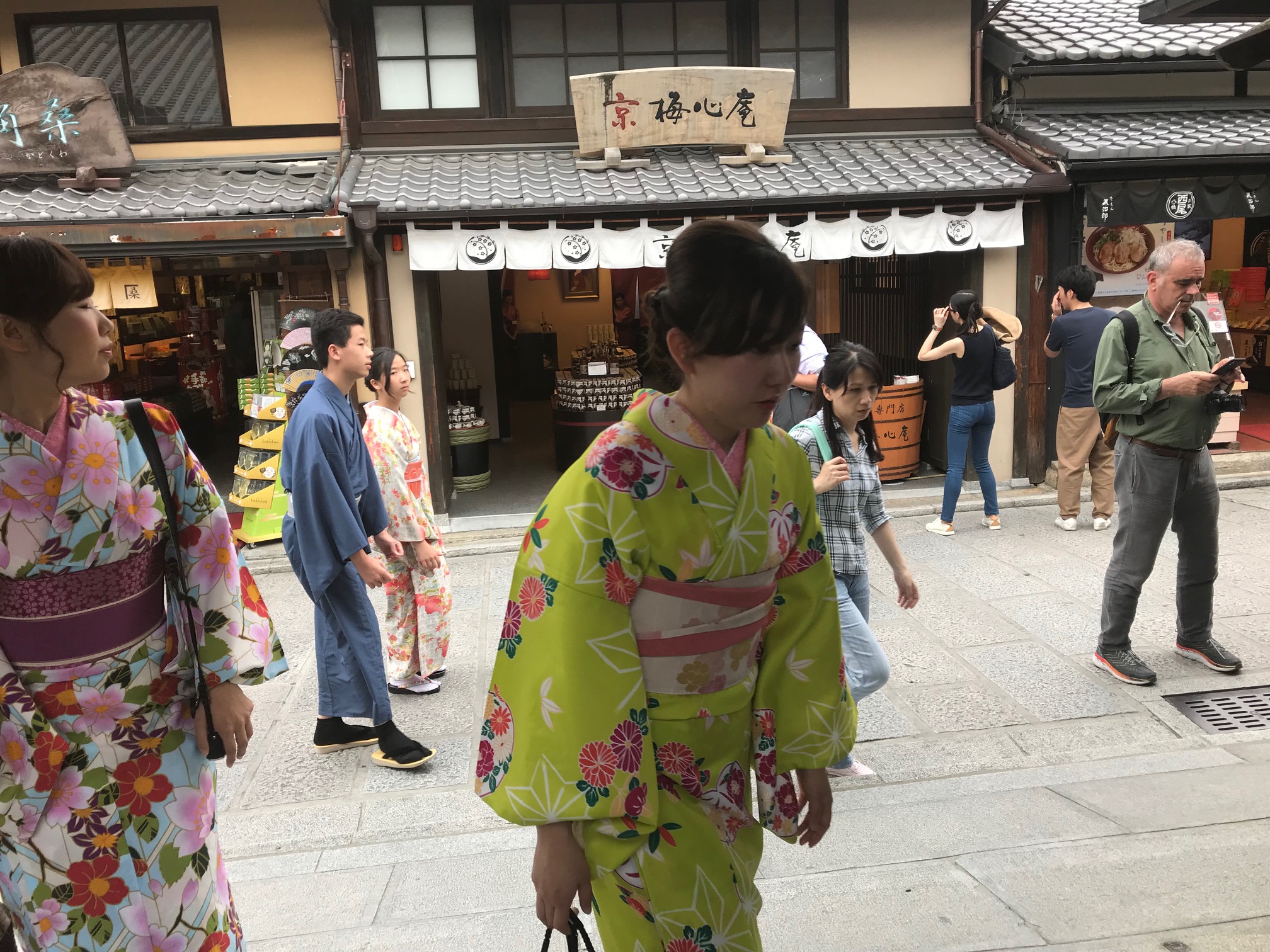
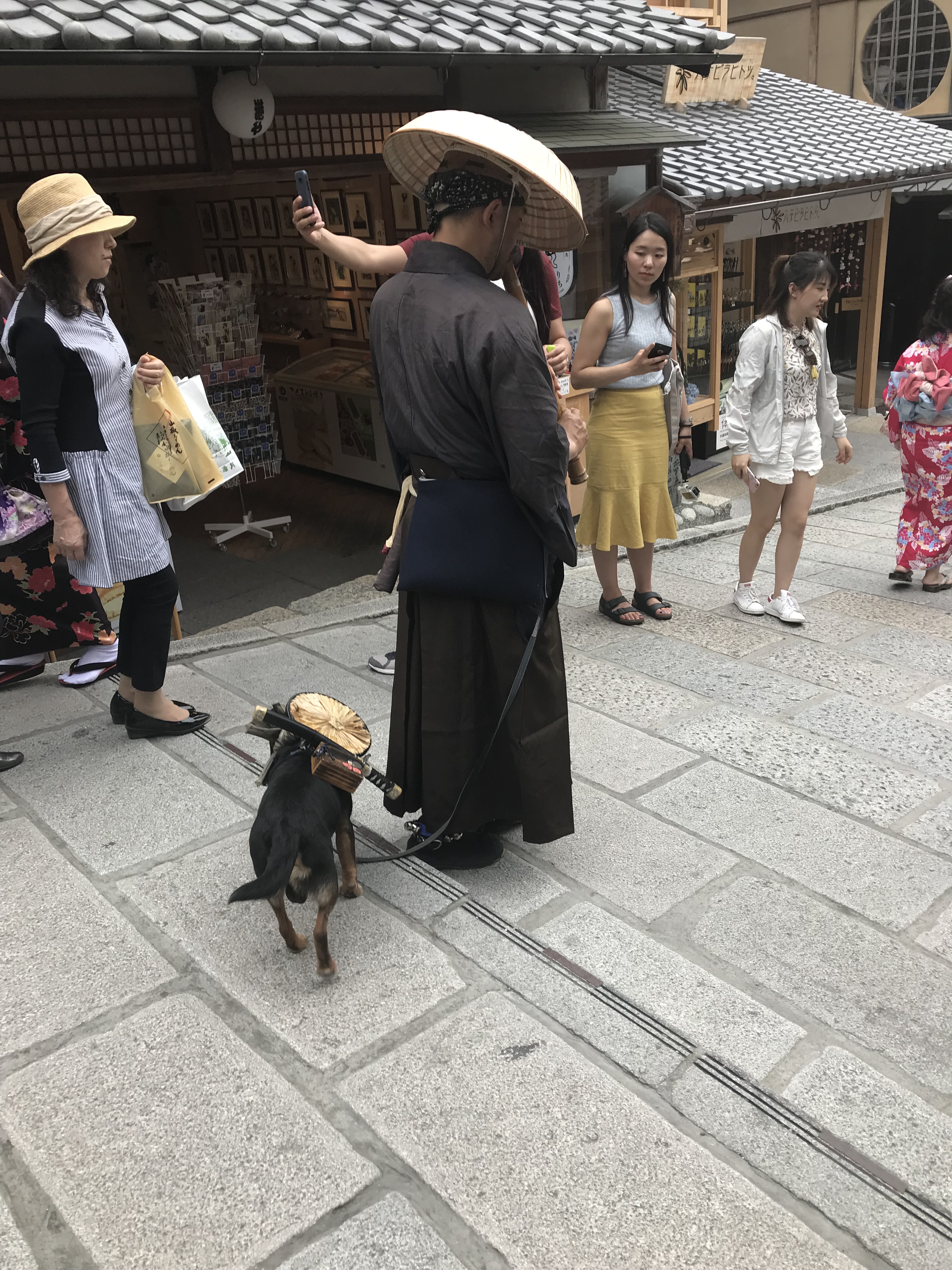
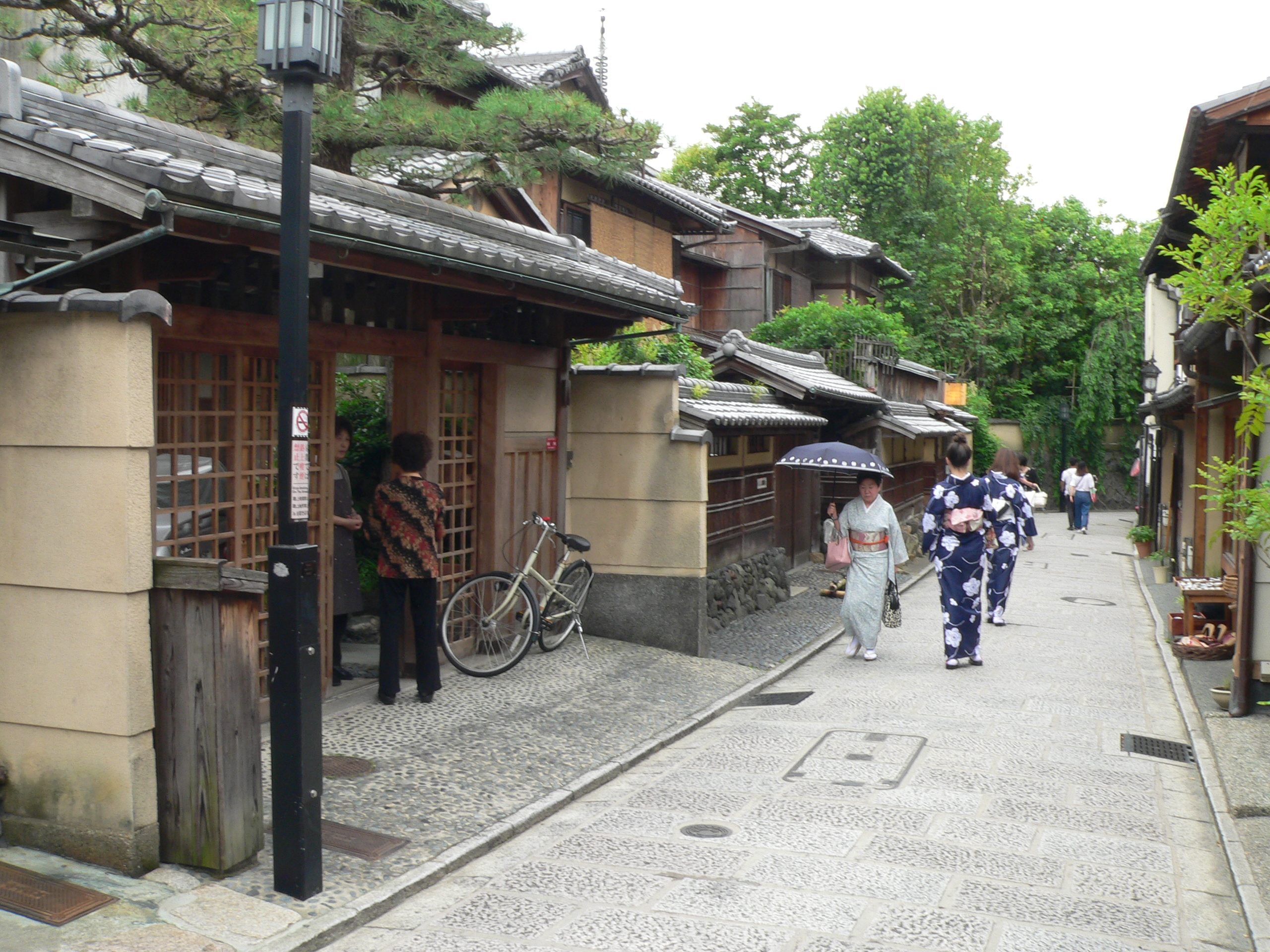
But as we found some back streets that were less busy, and got used to the general bustle, we started to notice things. There were lots of shops where you could hire a kimono for the day, and many of the Japanese tourists were wearing them. I’m not sure why, it’s clearly a thing to do. We glimpsed tiny gardens outside tea shops, many many temples, and streets of two-storey wooden houses in narrow lanes. I saw a geisha hurrying past, but whether she was a real geisha or someone dressed up, I couldn’t say.

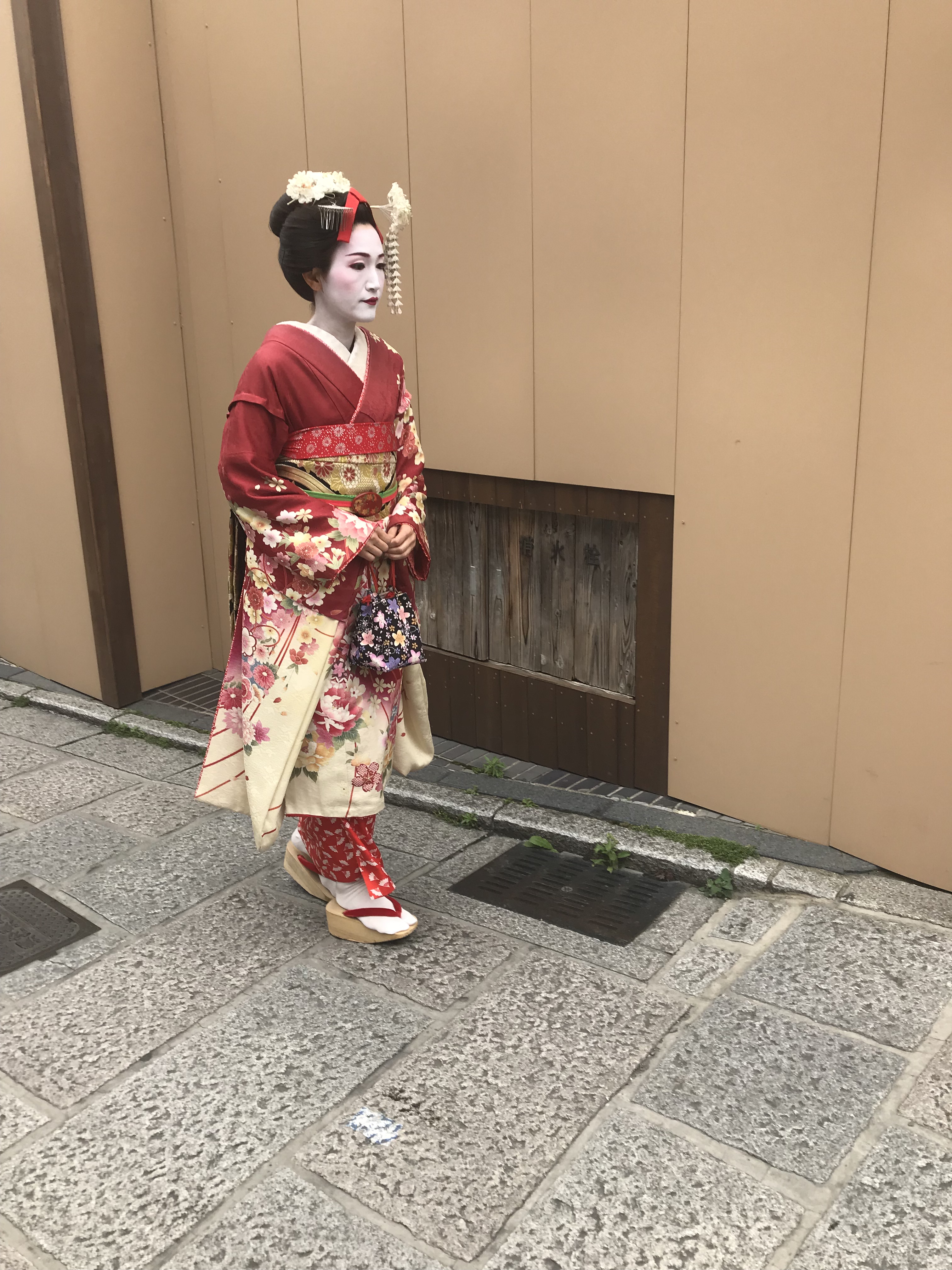
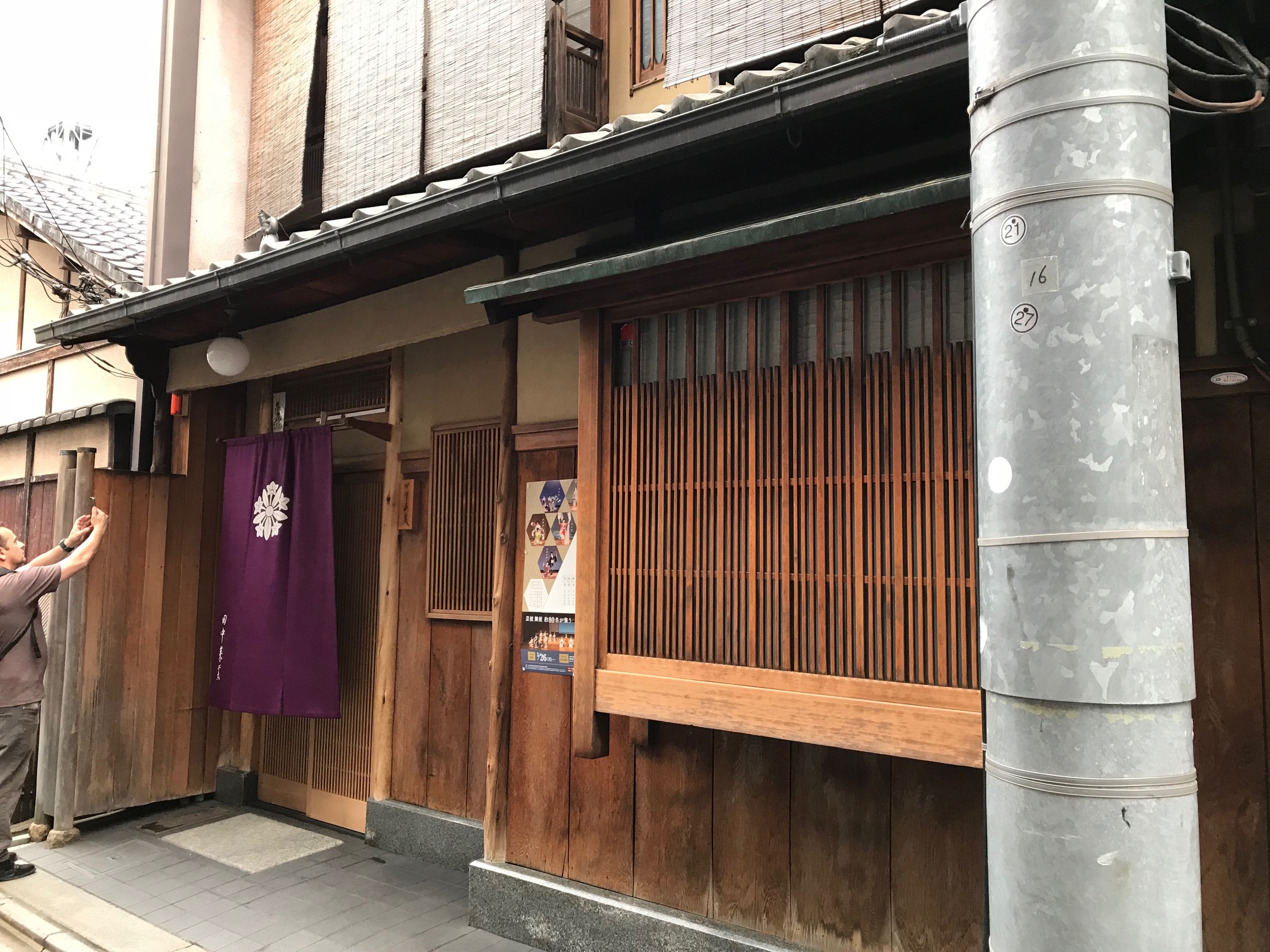
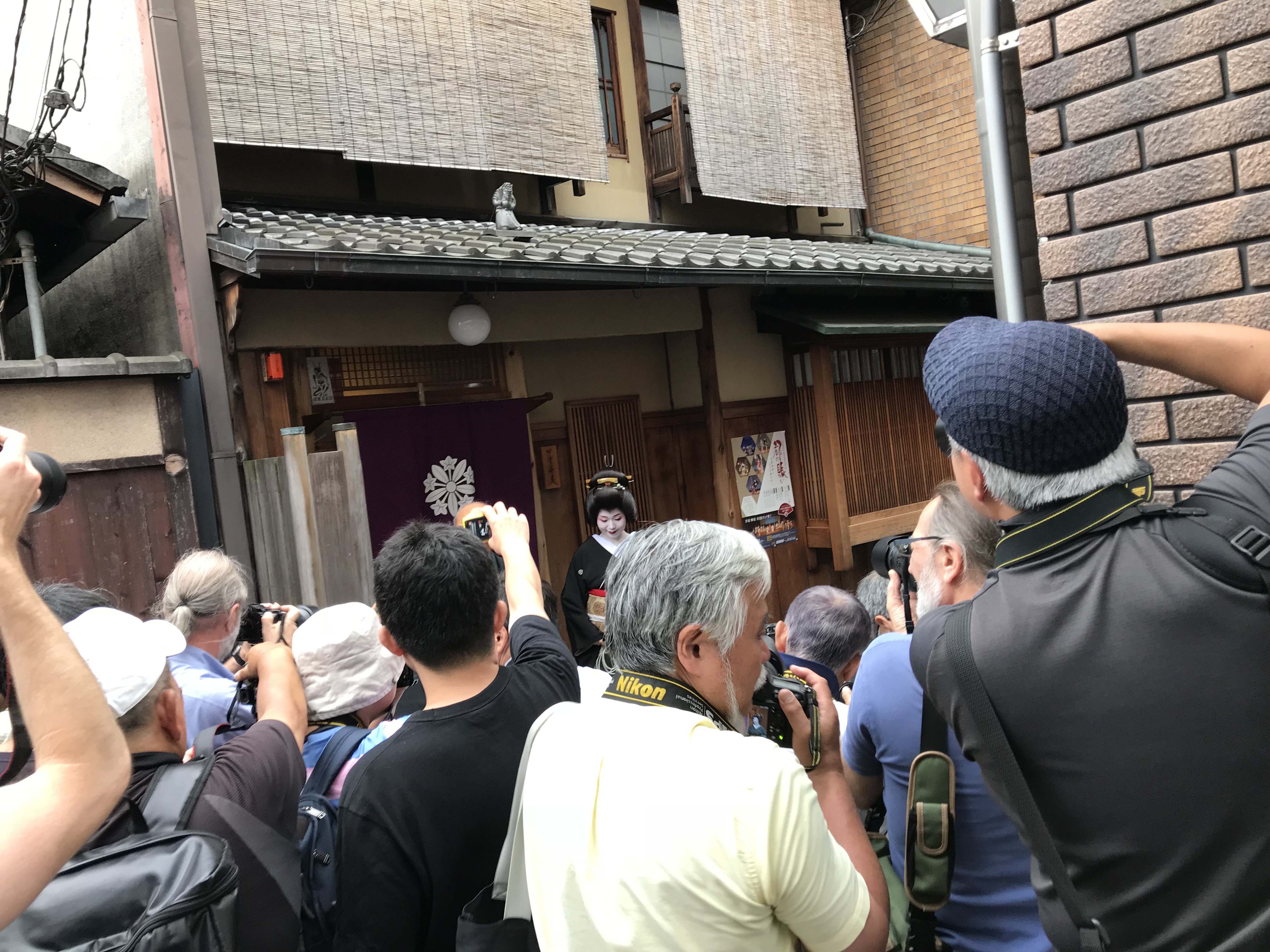
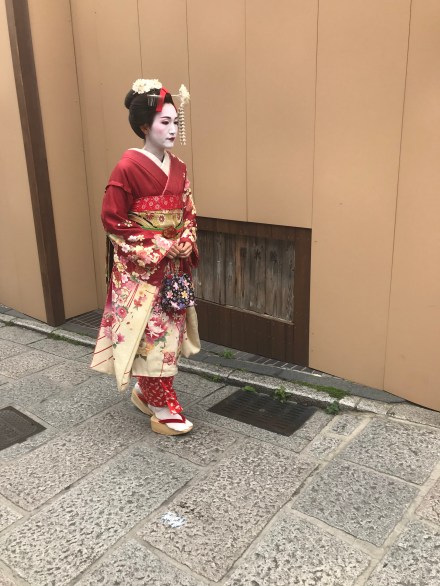
The guide book said that the main Geisha District was Gion, so we walked there. I knew that it is rare to see geisha, but I hoped to be lucky. We left the main street, and began to wander down the narrow lanes. This area felt more seedy, with clubs and shuttered buildings. I wouldn’t have walked there on my own. Then we saw lots of men with cameras, standing outside a small, wooden fronted house, which looked to me like an okiya – the house where girls live while they are training to be a geisha. In Kyoto, trainee geisha are called maiko. We asked a woman why all the photographers were there, and she told us that it was the debut day for one of the maiko. She was twenty, and had completed her geisha training, and would be taking her first walk as a geisha, which is a big event.

We were very lucky, as while we were talking, she emerged. All the photographers leapt forwards, cameras clicking, pushing for the best view. Then they followed her as she made her way down the street.

I’m not sure what my view of geisha is, as their role is slightly fuzzy. Historically, they were beautiful girls, trained to sing and dance and play a shamisen (a stringed instrument like a guitar). They were very elegant, witty, and trained as hostesses of the tea ceremony. They earned money by entertaining rich men, a sort of ritualised escort. Their aim seems to have been to be taken on as a mistress, so supported as a companion by a wealthy protector. They weren’t prostitutes, as they didn’t trade sex for money, and were more like concubines, faithful to one man. However, sometimes this was not by choice, and beautiful young girls were trafficked, sold to okiya. Clearly wrong.

Over time, the role of the geisha has changed. After the war, lots of allied troops came to Japan, and they wanted to sleep with geisha, so prostitutes copied their costume and style, and the word ‘geisha’ became synonymous to westerners with ‘prostitute’. However, the tradition of geisha continued, and today, they prefer to be called geiko, emphasising that they train in the arts, and are entertainers, not sex workers. I’m not sure if it’s the same as being an actress or ballet dancer in western culture (bearing in mind that a hundred years ago, ballet dancers were the scantily dressed girls who appeared at the end of an opera and posed for the men in the audience, hoping to procure a male protector – yet we do not today think that girls who want to be ballet dancers are sex workers).

I decided to not think about it too deeply, and simply enjoyed seeing a piece of Japanese culture. I glimpsed the white face, meant to resemble a mask, hiding the geisha’s real face. A section of her neck, an erotic area in Japan, was left unpainted (like a revealed shoulder, more seductive than a nearly naked body). Her hair was full of ornaments, and geisha have wooden head rests rather than pillows, so their hair is kept in place at night (which sounds extremely uncomfortable, and I’m surprised they’re not all cranky from lack of sleep). Their collar is dipped at the back, to expose that erotic neck, and a geisha has a white collar, whereas a meiko will have a coloured collar. They wear white socks, and walk on platformed wooden shoes, which also look extremely uncomfortable. The long sash is called an obi, and requires another person to help tie it. Their silk kimono are beautiful, and very costly. In the past, the okiya owned the kimono, which was a way of controlling the geisha, as she needed to remain with the house (and pay them some of her earnings) in order to work.

Human history is always interesting, and so much more complex than we first think. I’m glad I saw a geisha, as they seem like an intrinsic part of Japanese history. But I’m not sure how long they will be here for, there is too much that jars with modern life.

xxxx

Thank you for reading.

anneethompson.com
Anne E. Thompson has written several novels and one non-fiction book. You can find her work in bookshops and Amazon.

Thank you for reading. If you enjoyed this, why not buy one of my novels? For the month of June, I am selling them for the special summer price of £7.95* each, or all three for £20, with free UK postage. They make great holiday reading. If you would like a copy, use the contact form below.

← Back

Thank you for your response. ✨


The latest, and best book (in my opinion). An exciting novel written in the first person, which shows how a psychopath views the world. The story encompasses the world of women trafficked in India, and shows how someone very bad, can be used to achieve something amazing.

A gritty thriller, which shows what it means to be a psychopath, and how it would feel if someone in your family did something awful. (Because every psychopath has a mother.)

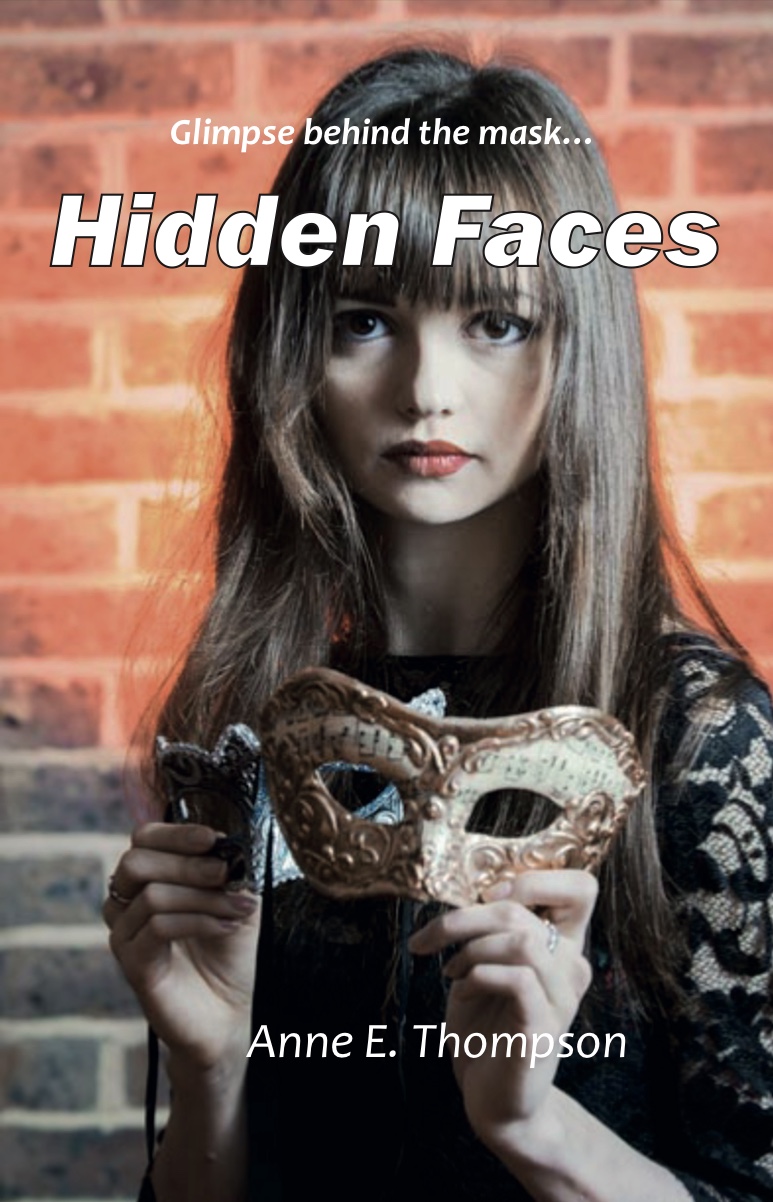
Hidden Faces by Anne E. Thompson.
An easy read, feel good novel, set in an infant school. An ideal gift, this is a book to make you smile.


Payment is on receipt of the books, by either cheque or bank transfer.

*as compared with the £11.95 plus postage if you buy from WH Smith or Waterstones.

Tokyo Underground Trains


Using the Tokyo Underground

Using the underground system in Tokyo is easy – even I managed to do it, and it’s much cheaper and faster than using taxis. It is the cleanest underground system I’ve ever encountered, and although it’s sensible to keep valuables hidden, I saw local people with phones shoved into back pockets and purses at the top of bags, so I’m guessing there is very little crime.

It’s much easier if there are two of you, as stations have lots of signs, and it takes time to read them all. One of you can check for arrows, showing which side you are meant to walk/queue/wait, and the other can read the less important ones about which platform and trains you need.

First of all, find a map, and work out which station you want to visit. I can’t read Japanese, but all the signs were also in English, so it wasn’t a problem. The map is topological, like the London underground (so the stations are shown in the right order, but the distances aren’t to scale). The stations are shown on coloured lines, and you need to know the names of the lines you want to travel on. You also need to know which direction you want, so take note of the final station on the line. This is all shown on maps, which are available at stations and displayed on walls.

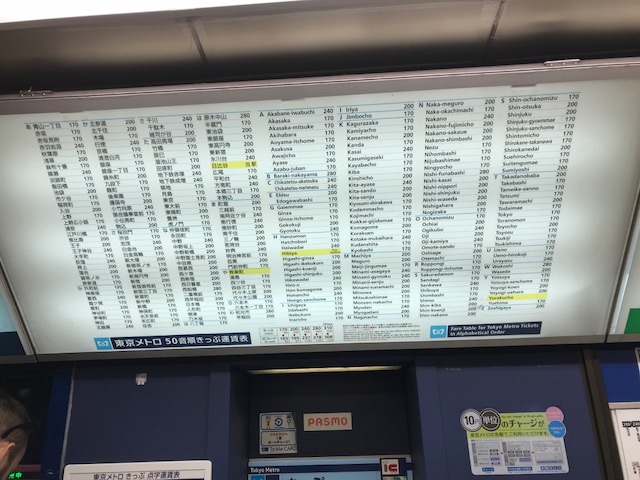
You then need a ticket. Find an automatic ticket machine. Nearby will be a list of all the stations, in alphabetical order, and next to them, the price of a ticket. Find the station you are aiming for, and remember the number next to it.


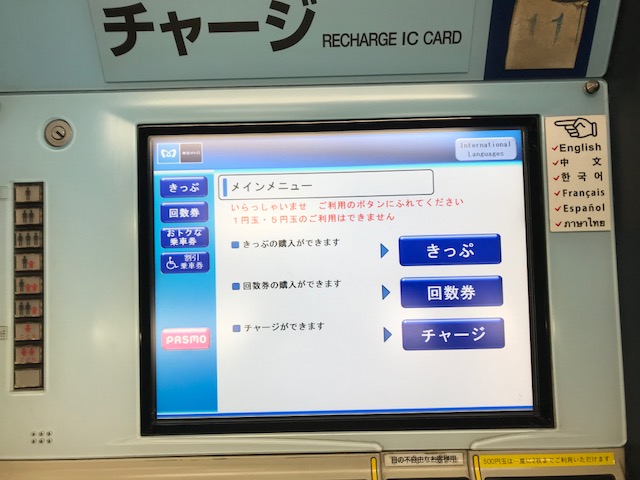
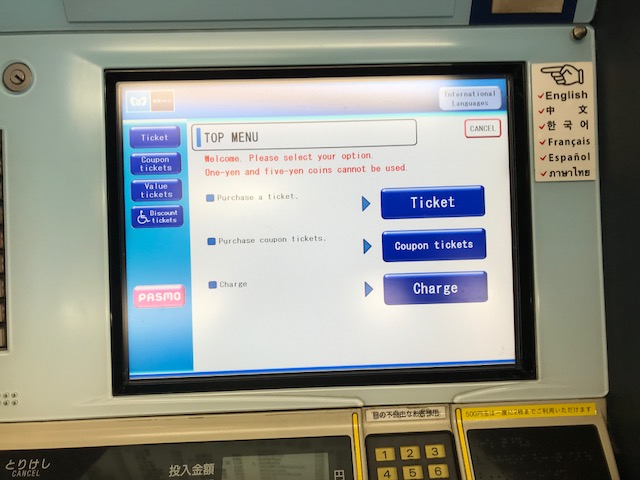
Go to the ticket machine. Press the button for ‘international languages’ and touch the English button. Then press to ‘buy a ticket’ and select the price (which you have remembered from the previous sign).

Then put in your money. Take your change, and the ticket.


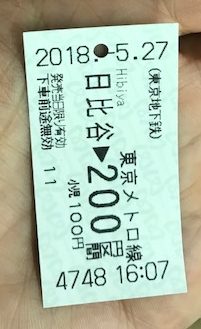
You then need to use the overhead signs to find the correct line. To enter the platform, you put your ticket into the machine – which snatches it in quite a fierce way and then spits it out for you to collect when you’re through the barrier.

You need to know which direction you’re travelling in, and follow the signs to the correct platform.

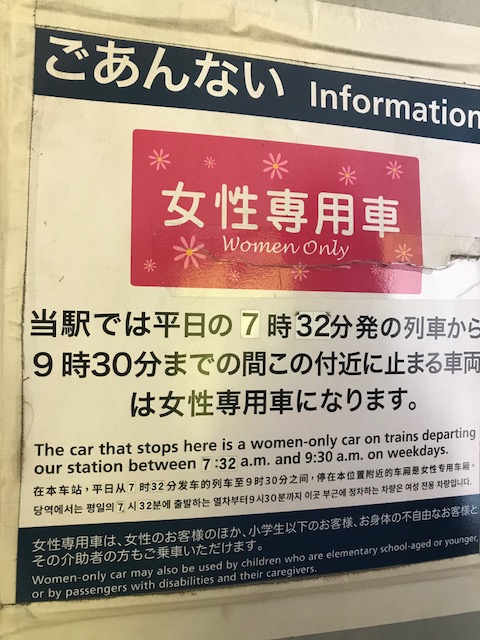
One thing to be careful of, is that some trains have ‘women only’ carriages. The position of these is marked by signs on the platform. I noticed a sign, and helpfully told some European-looking tourists, so they knew not to enter those carriages. Husband afterwards told me that the restriction only applies at certain times, and I had moved the tourists on unnecessarily. But I’m hoping they never realise that.


********

anneethompson.com

Anne E. Thompson has written several novels and one non-fiction book. You can find her work in bookshops and Amazon.

If you enjoyed this, you will love my new book: The Sarcastic Mother’s Holiday Diary.
I have always written a diary on holiday, so last Christmas, I decided to find all my old diaries and blogs, and make a book for my children. However, several other people also asked for a copy, so I have written a public version – it’s available on Amazon and has been described as “The Durrells meet Bill Bryson”!

Why not buy a copy today? I think it will make you laugh.

The US link is here:

https://www.amazon.com/Sarcastic-Mothers-Holiday-Diary-ebook/dp/B07N95281F/ref=sr_1_1?ie=UTF8&qid=1549015525&sr=8-1&keywords=the+sarcastic+mothers+holiday+diary

The India link is here:

https://www.amazon.in/Sarcastic-Mothers-Holiday-Diary-ebook/dp/B07N95281F/ref=sr_1_1?ie=UTF8&qid=1549015429&sr=8-1&keywords=the+sarcastic+mothers+holiday+diary

The UK link is here:

https://www.amazon.co.uk/Sarcastic-Mothers-Holiday-Diary-ebook/dp/B07N95281F/ref=sr_1_2?ie=UTF8&qid=1549014970&sr=8-2&keywords=the+sarcastic+mothers+holiday+diary


The Imperial Gardens in Tokyo


The Imperial Gardens in Tokyo

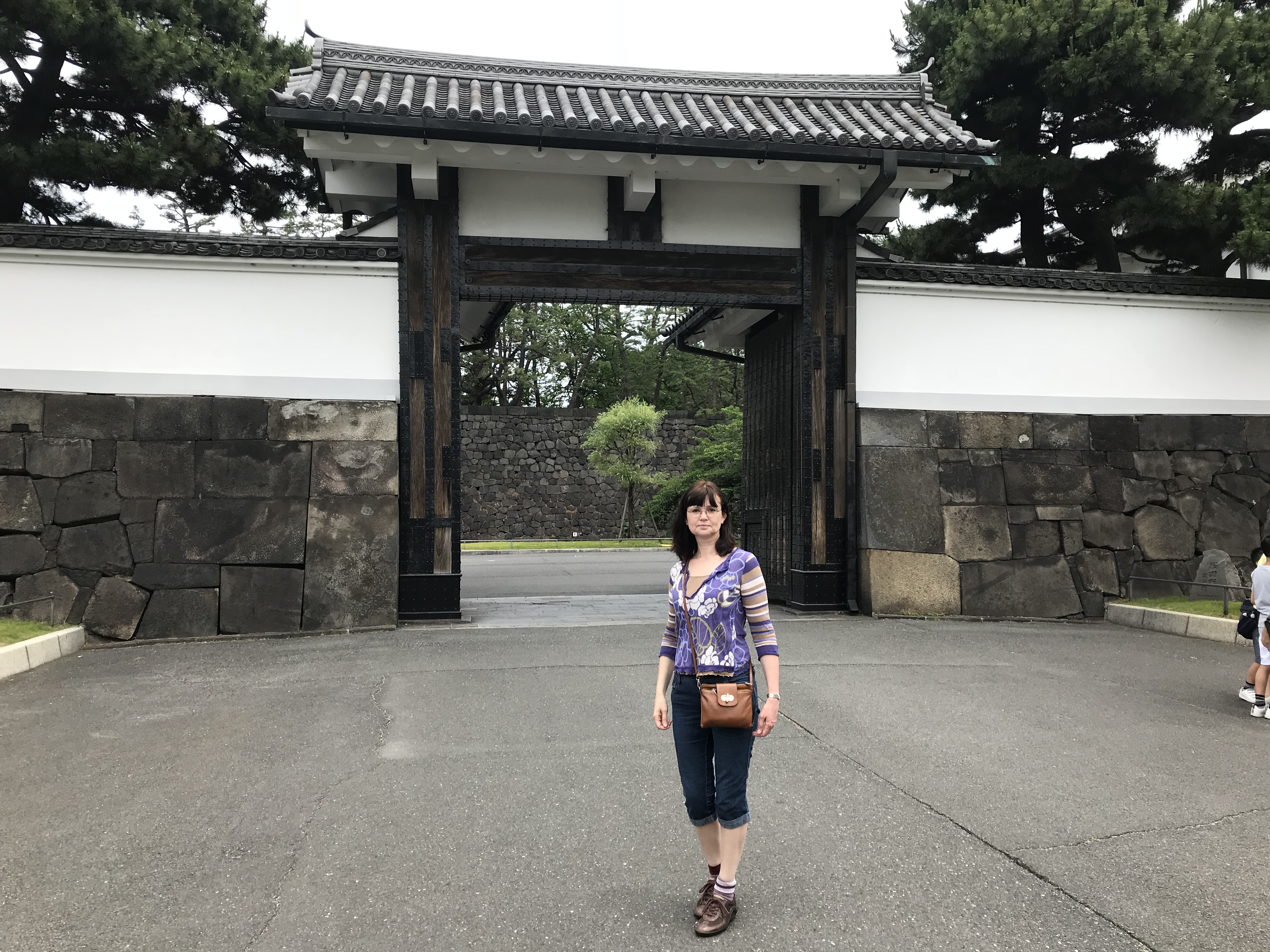
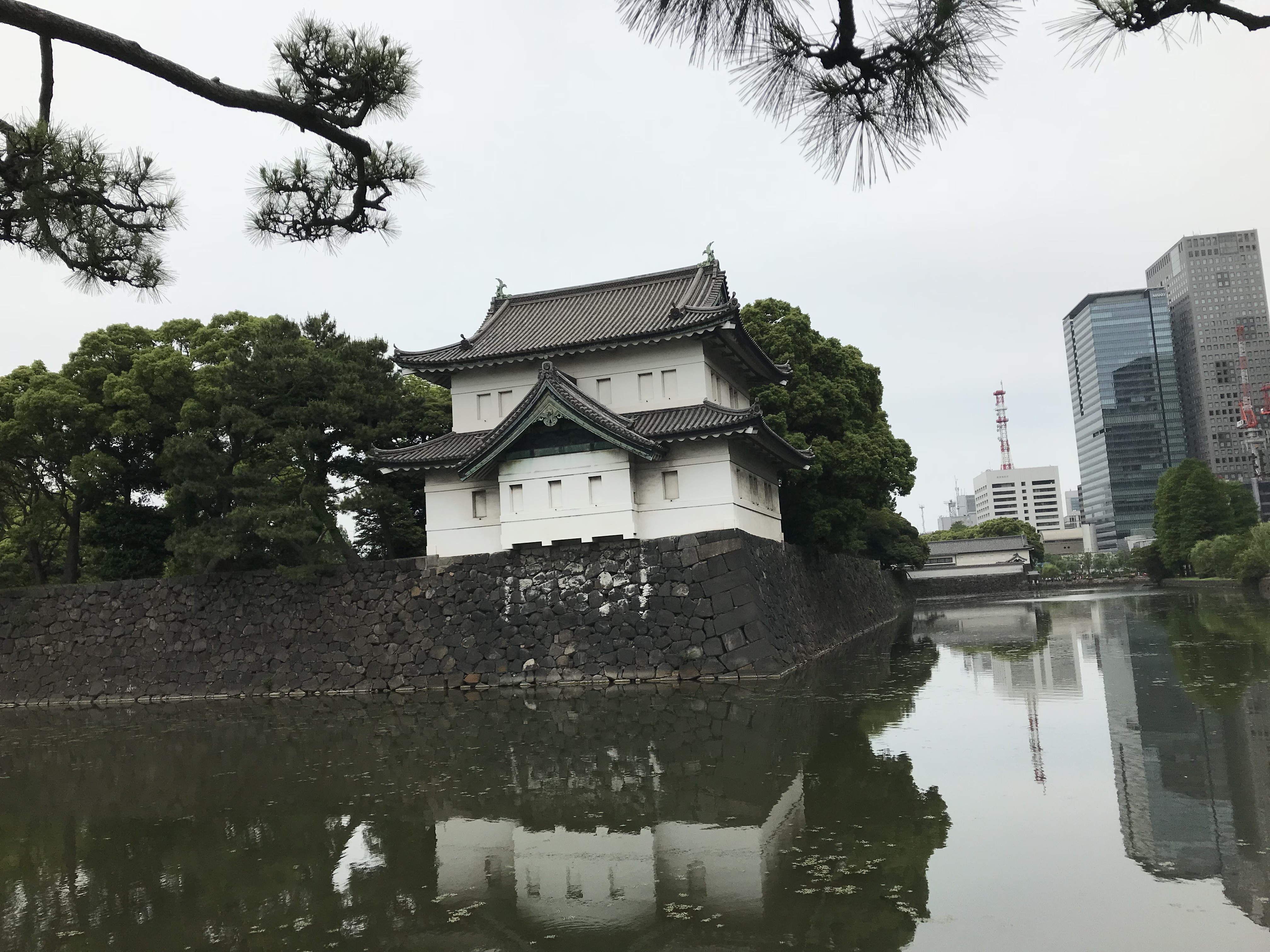
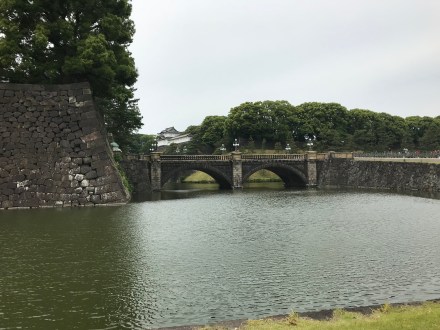
We got a taxi to the Imperial Gardens (which was very silly, as the underground is a fraction of the price, safe and clean and would have delivered us to Hibiya station in less time. But we’re tourists – knowing things takes time). We passed the Nijubashhi, which is a stone bridge over the river, and used to be the main entrance. Lots of people were taking photos, so we did too, assuming this was a famous landmark.

We walked to the park entrance, which seemed like a long way in the hot sun, and there weren’t many signs, but we found it eventually. I was glad I had worn comfy shoes (will not repeat Husband’s feedback comments).

We were issued with tickets, which were free, and had to be returned at the end (am not entirely sure of their purpose).

The gardens were a mix of huge walls (the Japanese are very good at walls) and random buildings. We passed a restroom, which is NOT a washroom, but rather a shady area to sit and rest. Most Japanese gardens seem to have them. They have vending machines (everywhere in Japan has vending machines) and seating, sometimes people remove their shoes to enter, and they are generally quiet. I like them.

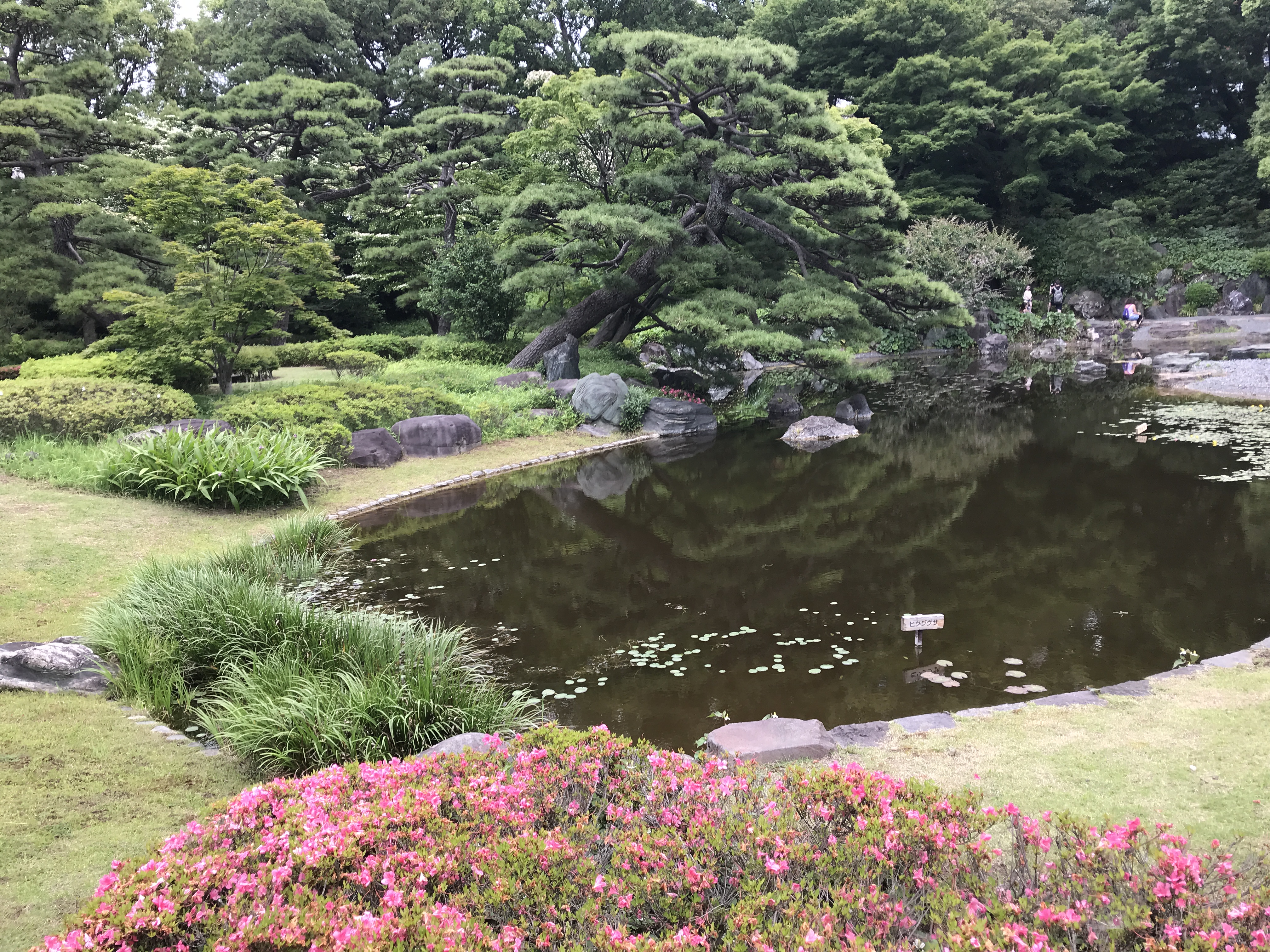
The gardens were also, at times, startlingly beautiful. I imagine that during different seasons, various areas would become more lovely. It is a garden you need to visit throughout the year. There were several trees that were bandaged and supported by posts, trimmed and encouraged to grow into the desired shape. Trees in Japan are also beautiful.

We went into an old guard’s barracks. We had to remove our shoes, and were provided with a plastic bag to carry them. A man seemed to be employed for the sole purpose of taking the plastic bags from the ‘finished’ bin, folding them, and replacing them in the ‘to use’ bin. I am not at all sure why we needed to remove our shoes. The barracks was rebuilt, and had a modern lino floor, so preservation wasn’t an issue. It was where the soldiers lived, not died, so I don’t think it had any sacred significance. Perhaps it was for cleanliness reasons – Japanese people are very clean.

***

The following day (after an almost completely sleepless night – jetlag is horrible) we returned to another park in the same area. This time we went by underground. I am not convinced that Husband read the scale on the map properly, but perhaps I was just tired. After walking for about 6 hours, we found the entrance. I was not really in the mood for wandering around a park, so we went straight to the park cafe for lunch.

We ordered burgers and cokes, using our pointing and gesturing method. Japanese people all seem to be very polite and helpful, and they cope very well with people who speak no Japanese at all. The burger was really nice, very fresh, and served with salad (not the mushy slime you tend to get in the UK). Portions are smaller than in England – it would be easier to be healthier here I think. Lots of areas are for jogging, and we saw several runners.

We then realised we had seen most of the park on our way to the restaurant. It wasn’t huge. We wandered around for a while, and found some shady tracks through trees, saw a couple of rest areas (vending machines and seats) and walked to a viewpoint over a river (somewhat marred by the massive flyover). Then we gave up, and went back to the hotel.

Tokyo is beginning to grow on me. The people are very polite, and friendly and helpful. When we are confused, people will stop, and ask if we need help. Everywhere is very clean, and it feels very safe. We saw people jogging around the parks, and they had left a bag with their belongings in, on a bench. Bikes are left unlocked. In restaurants and trains, people will leave their things – even mobile phones – on their seats while they order food or go to the washroom. No one seems to steal here, it is rather nice, how you feel society ought to be. We have not seen a single homeless person or beggar, which is very rare in a major city. Are there no homeless people in Japan?

I look forward to discovering more as we explore a little further.

xxx

Thank you for reading.

anneethompson.com
*****


Startled by Beauty


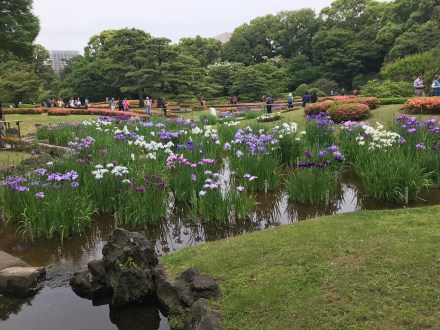
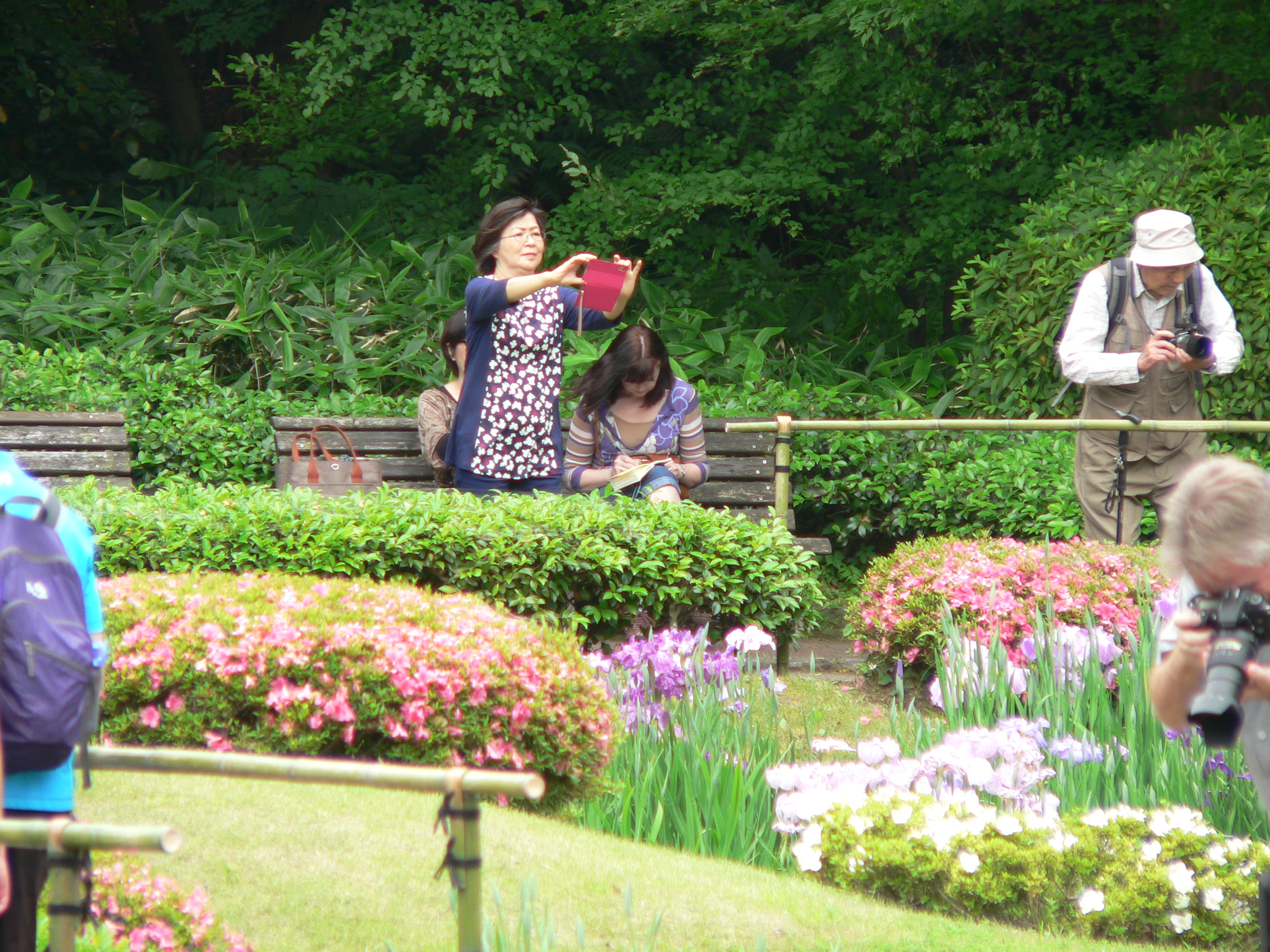
I turn a corner, and happen upon a small pond, filled with water irises all in bloom, their sword-shaped leaves reaching towards the sky. The pond is edged with azalea and has a backdrop of shaped fir trees. It is beautiful, a tiny spot of perfection.

Husband took a sneaky photo of me while I was writing this.

All around me, people are taking photographs. There are kneeling professionals, aiming long lenses for the best angle, tourists with iphones, teenagers taking selfies. Everyone pauses, surprised by the beauty, snaps a shot. Then they move on. Very few make use of the wooden benches, stop a while, take time to absorb the scene. We have become a species that rushes to record, to collect, to own. But we rarely live in the moment. How many of these photographs, I wonder, will be examined, enjoyed. Or will they too be quickly glanced at before put away, the next event always being more pressing, more important.

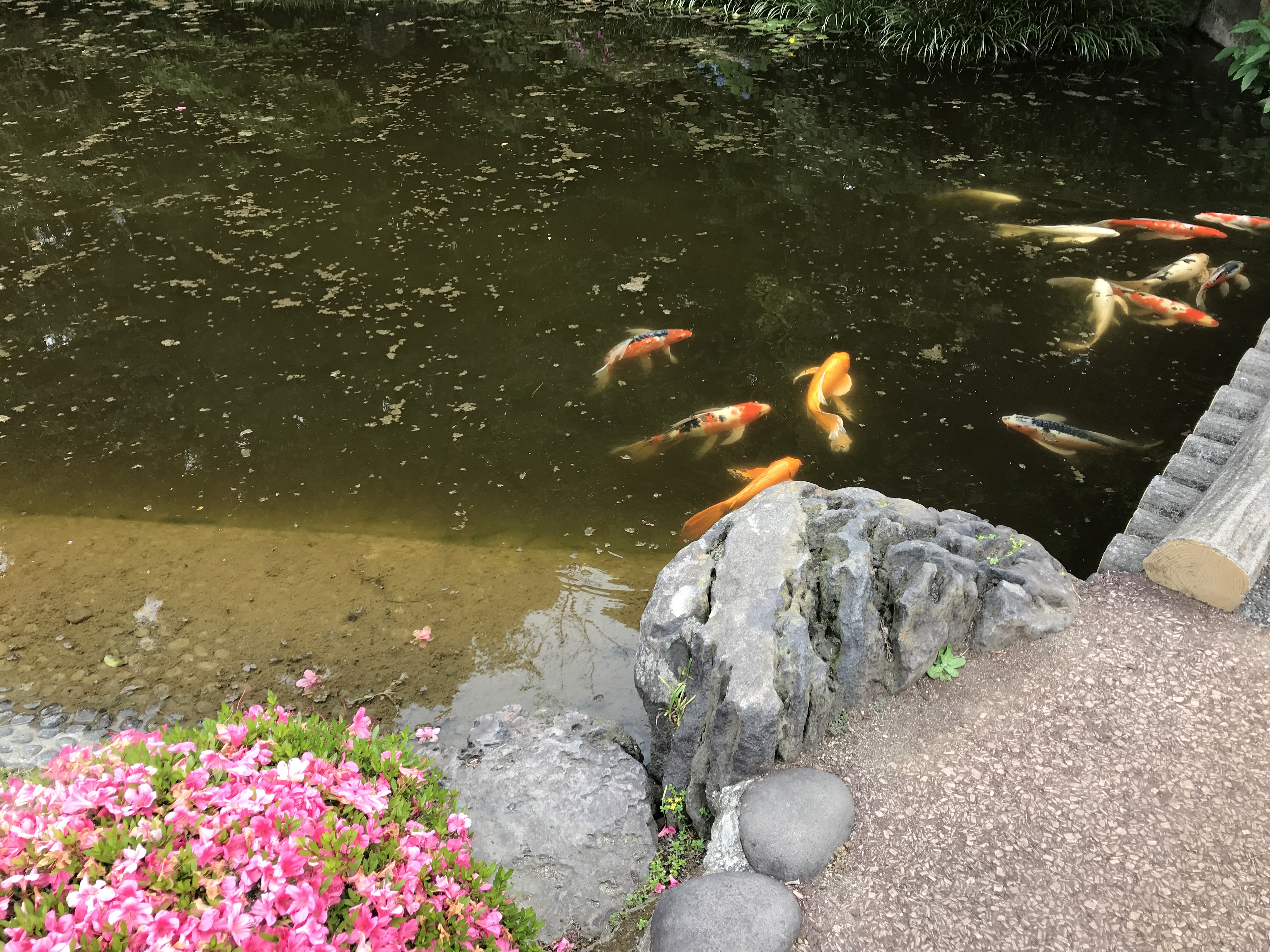
This was art. The sculptured trees, the colour, the trickle of water, the flash of bright koi as they swam through lilies. I was startled by the beauty. It is, perhaps, the most beautiful scene I have ever encountered. Thank you for sharing it with me.

****

The water irises can be seen at the Imperial Palace in Tokyo.

Why not sign up to follow my blog?

anneethompson.com
*****

The latest, and best book (in my opinion). An exciting novel written in the first person, which shows how a psychopath views the world. The story encompasses the world of women trafficked in India, and shows how someone very bad, can be used to achieve something amazing.

A gritty thriller, which shows what it means to be a psychopath, and how it would feel if someone in your family did something awful. (Because every psychopath has a mother.)

Hidden Faces by Anne E. Thompson.
An easy read, feel good novel, set in an infant school. An ideal gift, this is a book to make you smile.

Thank you for reading. If you enjoyed this, why not buy one of my novels? For the month of June, I am selling them for the special summer price of £7.95* each, or all three for £20, with free UK postage. They make great holiday reading.

If you would like a copy, use the contact form below.

← Back

Thank you for your response. ✨

*Compares with the £11.95 plus postage from Waterstones and WH Smith.

Payment is by cheque or bank transfer, and is required when books have been received.


First Impressions of Tokyo


First Impressions of Tokyo

Arrived in Tokyo after a week of obstacles: dog kennels all full, no one able to cover Lunch Club or children’s work, house being painted (will not comment on the wisdom of deciding to arrange for renovations to coincide with a trip away). However, we did finally make it to the airport (after a brief return to the house because one of us forgot to put on shoes and suddenly realised they were wearing slippers – but we won’t comment on that either).

The flight, with BA, was about 11 hours, which is way too long wherever you’re sitting, but if your seat happens to be right next to the toilets, is even more unpleasant. The highlight – which almost made it worth it – was a brilliant view of the peak of Mount Fuji as we landed.

Finally arrived at The Westin in Tokyo. Hard to keep track of time when travelling, so several days had merged into one long one. Hotel was nice, dumped bags and went for a wander.

I have never been to Japan before, and had fairly low expectations. Tokyo is unexpected. It reminds me, on first impressions, of the Stockholm I visited 20 years ago, in that it appears to be very clean and functional but with ugly buildings. And massive flyovers. Things are designed to work efficiently, not to look nice. Perhaps in a city this is sensible – I’m not sure people who work in London are particularly enamoured with the time it takes to edge your way around Trafalgar Square.

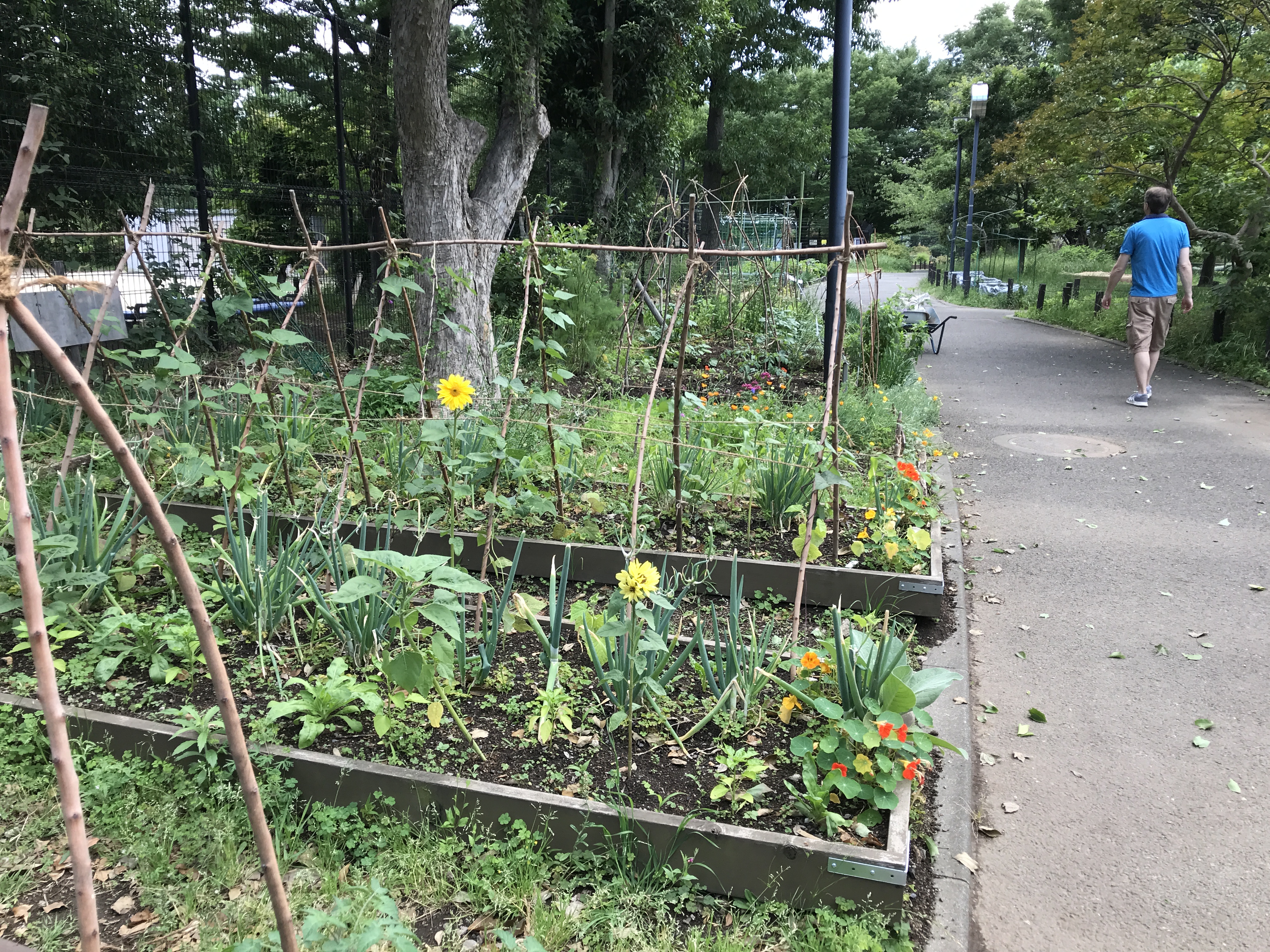
We went for a quick stroll, to a river near the hotel. The weather is humid but not too hot. We wandered through a little park, where school children were growing vegetables. We saw lots of bikes – many of them electric, and lots had a young child sitting in a child seat at the back. Japanese children are very very cute. I am guessing, by the number of bikes left unlocked, some with bags in the basket, that Tokyo has an unusually low crime rate. My mother tends to leave her bicycle unlocked and no one steals it (but then, it is particularly old and unfashionable) but I’ve never seen other bikes abandoned before, and certainly not in cities.

I can tell you that: everyone obeys the traffic signals, the streets are very clean, and everyone has the same hair as me. This is weird, and feels rather surreal (perhaps not helped by being awake for about 36 hours now). In England, straight dark hair is fairly unusual, but here everyone has it. It is like looking at the back of me all the time. People are also very smart, and I feel scruffy and crumpled. I may have to do some ironing while we’re here.

There are lots of men with flags, who wave you around every obstacle (sort of the opposite to India, where a deep hole in the street will be completely unmarked). There are also vending machines everywhere. As in, everywhere.

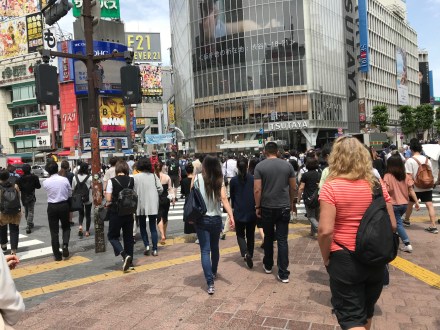
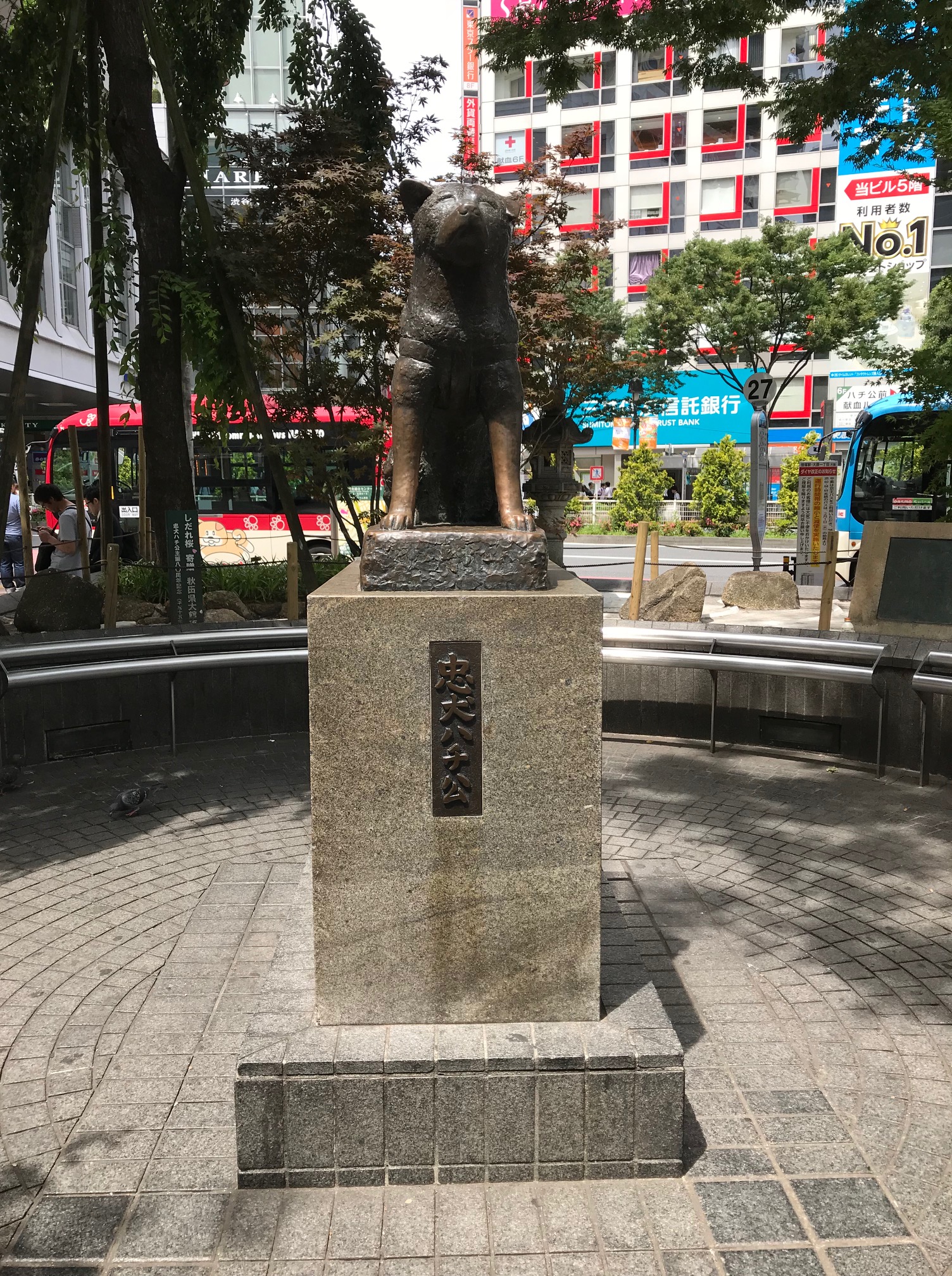
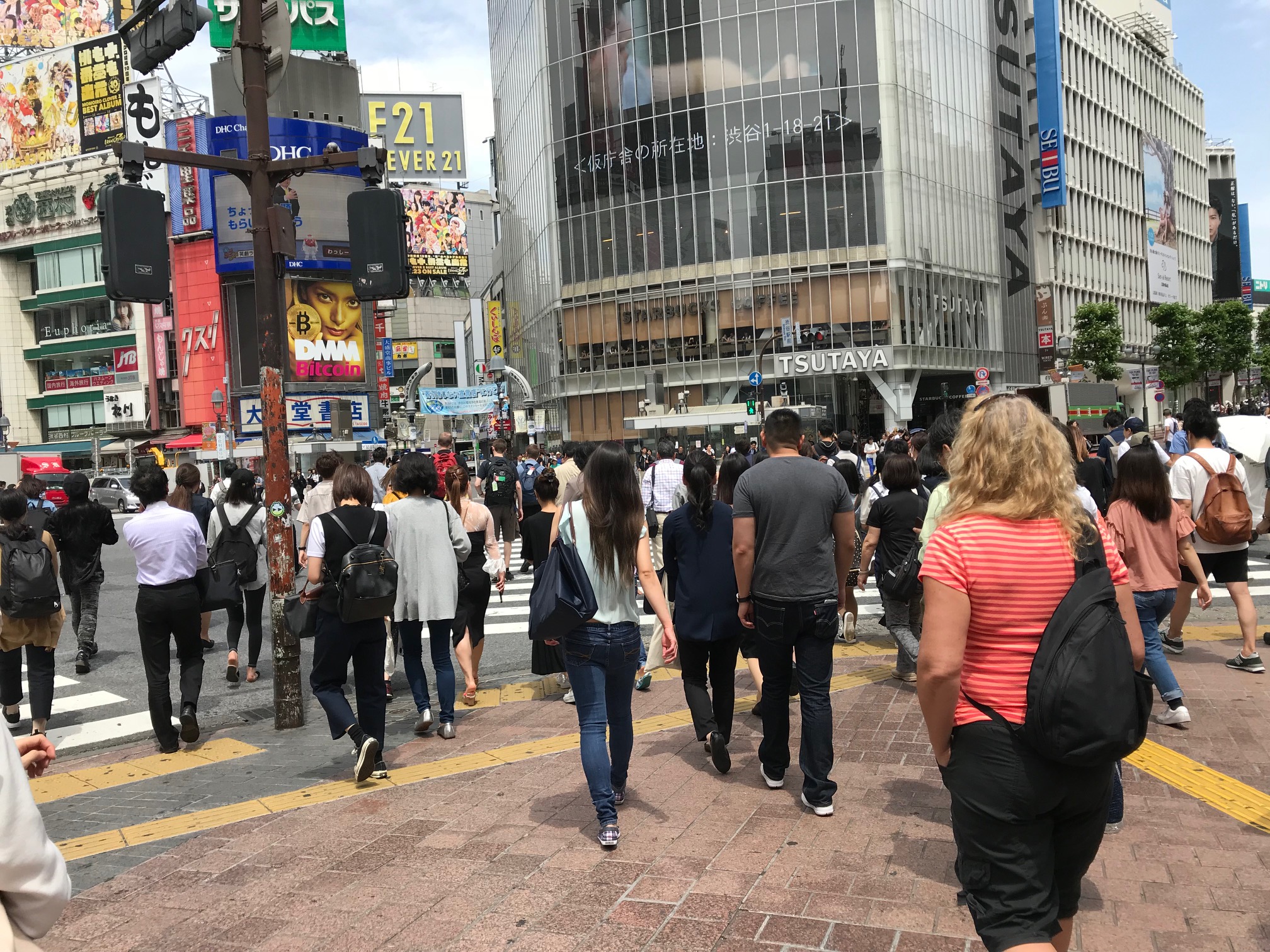
We went to the Shibuya district. There’s a statue of Hachiko, a dog who sat outside the station every night waiting for his master, for ten years after his death. We also saw a famous road crossing, where people were pausing, in the middle, to take photographs – it’s one of the iconic scenes of Tokyo.

We wandered around a district which appeared to be full of hairdressers – lots of shop windows filled with photos of women’s faces. Read the Chinese characters, and realised that they were in fact brothels – suggested to Husband that we might find a better area to walk around.

Went back to Ebisu district, which is where our hotel is. Wanted dinner, but didn’t have the energy to cope with anything unfamiliar, so opted for Burger King. Buying a burger in a foreign language is challenge enough, but a combination of pointing and smiling, plus a very helpful server, managed to buy a couple of burgers. In Japan, “small” means small – I think I had a child’s dinner (about 8 fries and a half-sized coke).

We pretty much sussed the underground system – I will explain it in another blog, but it’s a brilliant way to get around Tokyo. I’m looking forward to discovering more of this city.

Went to bed feeling exhausted but not at all sleepy. The joys of jet-lag…

*****

Thank you for reading.

Why not sign up to follow my blog?
anneethompson.com
*****

If you enjoyed this, you will love my new book: The Sarcastic Mother’s Holiday Diary.
I have always written a diary on holiday, so last Christmas, I decided to find all my old diaries and blogs, and make a book for my children. However, several other people also asked for a copy, so I have written a public version – it’s available on Amazon and has been described as “The Durrells meet Bill Bryson”!

Why not buy a copy today? I think it will make you laugh.

The US link is here:

https://www.amazon.com/Sarcastic-Mothers-Holiday-Diary-ebook/dp/B07N95281F/ref=sr_1_1?ie=UTF8&qid=1549015525&sr=8-1&keywords=the+sarcastic+mothers+holiday+diary

The India link is here:

https://www.amazon.in/Sarcastic-Mothers-Holiday-Diary-ebook/dp/B07N95281F/ref=sr_1_1?ie=UTF8&qid=1549015429&sr=8-1&keywords=the+sarcastic+mothers+holiday+diary

The UK link is here:

https://www.amazon.co.uk/Sarcastic-Mothers-Holiday-Diary-ebook/dp/B07N95281F/ref=sr_1_2?ie=UTF8&qid=1549014970&sr=8-2&keywords=the+sarcastic+mothers+holiday+diary


A Little London History


A Little London History

Walking around London is always fun – there is so much to see, so many tiny parts of our past left for us to find. However, not all of it is obvious, so here are a few snippets I learned recently.

Did you know, that if a name ends ‘sey’ it was once an island? Bermondsey, near London Bridge, was once a small area surrounded by marsh land. Most of the south bank was marshy, which is why there was only one bridge – London Bridge – crossing the Thames. When you are next crossing London Bridge, just after leaving the railway station, look down at the road underneath. You will see two metal tram lines. These mark the position of the original bridge. They are surprisingly narrow, considering the bridge was a main thoroughfare and had houses and businesses on both sides, over-hanging the river. There is a story (possibly not true) that because people crossing the bridge had to pass very close to each other, they would pass with their sword hands next to each other. Most people were right-handed, so people walked on the left side – and this is why today, English people drive on the left. Apparently Napoleon was left-handed, which is why the French drive on the right side.

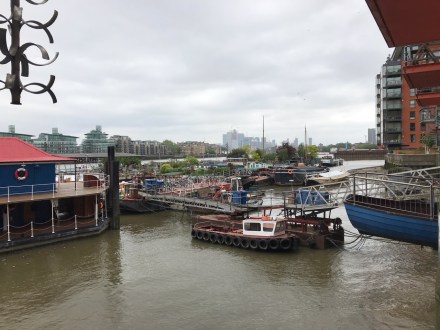
If you walk along the south bank through Bermondsey, there are many buildings which were the original dock buildings. Most are now converted to homes, but when you look at them, it doesn’t need much imagination to see how they would have been. At St. Saviours Dock you can see the setting where Dickens wrote the death of Fagin in Oliver Twist. If you walk back to the river, there are areas of floating gardens, and on Sundays they are open to the public.

Many of the railway arches are now small businesses. If you wander around Bermondsey on a Saturday morning, you can buy all sorts of fine produce – a foodies paradise. There is a fine honey shop, which uses the honey from London beehives. Did you know there are beehives on top of Fortnum and Mason, which are shaped just like the shop? There are also hives on top of the KPMG building, though I doubt they are shaped like a set of accounts!

Near to London Bridge is Borough Market, a hive of human activity. This is the place to shop if you want unusual spices, fancy breads, or specialist fish. Just beyond, is Neal’s – the place to buy English cheese. There is also Monmouth coffee house, which I am told sells the best coffee.

The South Bank is where the prostitutes worked and they were called ‘wild geese’. A short walk from Borough Market is a plaque, marking their graves.

Many of the areas of housing are named after what the area was previously used for. So, the housing on the Neckinger estate is so named because it was an area of execution. I’m not sure that the current residents realise that…

****

Thank you for reading.
You can follow my blog at anneethompson.com

Anne E. Thompson has written several novels and one non-fiction book. You can find her work in bookshops and Amazon.

xxxx

If you enjoyed this, you will love my new book: The Sarcastic Mother’s Holiday Diary.
I have always written a diary on holiday, so last Christmas, I decided to find all my old diaries and blogs, and make a book for my children. However, several other people also asked for a copy, so I have written a public version – it’s available on Amazon and has been described as “The Durrells meet Bill Bryson”!

Why not buy a copy today? I think it will make you laugh.

The US link is here:

https://www.amazon.com/Sarcastic-Mothers-Holiday-Diary-ebook/dp/B07N95281F/ref=sr_1_1?ie=UTF8&qid=1549015525&sr=8-1&keywords=the+sarcastic+mothers+holiday+diary

The India link is here:

https://www.amazon.in/Sarcastic-Mothers-Holiday-Diary-ebook/dp/B07N95281F/ref=sr_1_1?ie=UTF8&qid=1549015429&sr=8-1&keywords=the+sarcastic+mothers+holiday+diary

The UK link is here:

https://www.amazon.co.uk/Sarcastic-Mothers-Holiday-Diary-ebook/dp/B07N95281F/ref=sr_1_2?ie=UTF8&qid=1549014970&sr=8-2&keywords=the+sarcastic+mothers+holiday+diary

Not A Pub Crawl…


Not A Pub Crawl

I was invited to a guided walk: ‘Ales and Pubs, Sipping the History of British Beer and the Social History of the South Bank’. As I like both history and beer, I accepted. I wasn’t entirely sure what I had been invited to though – was this an intellectual way of saying “pub crawl”?

I arrived on time at Bermondsey Underground, our starting point. Met the guides, a knowledgeable historian and the FT food and wine journalist. Began to realise this was going to be more of a guided walk, and less of a pub crawl. We walked to St James Church, and were told to notice the water pump outside, a source of clean water for local people, and the galleries inside the rebuilt church (it was bombed during the war). Definitely more of a guided walk.

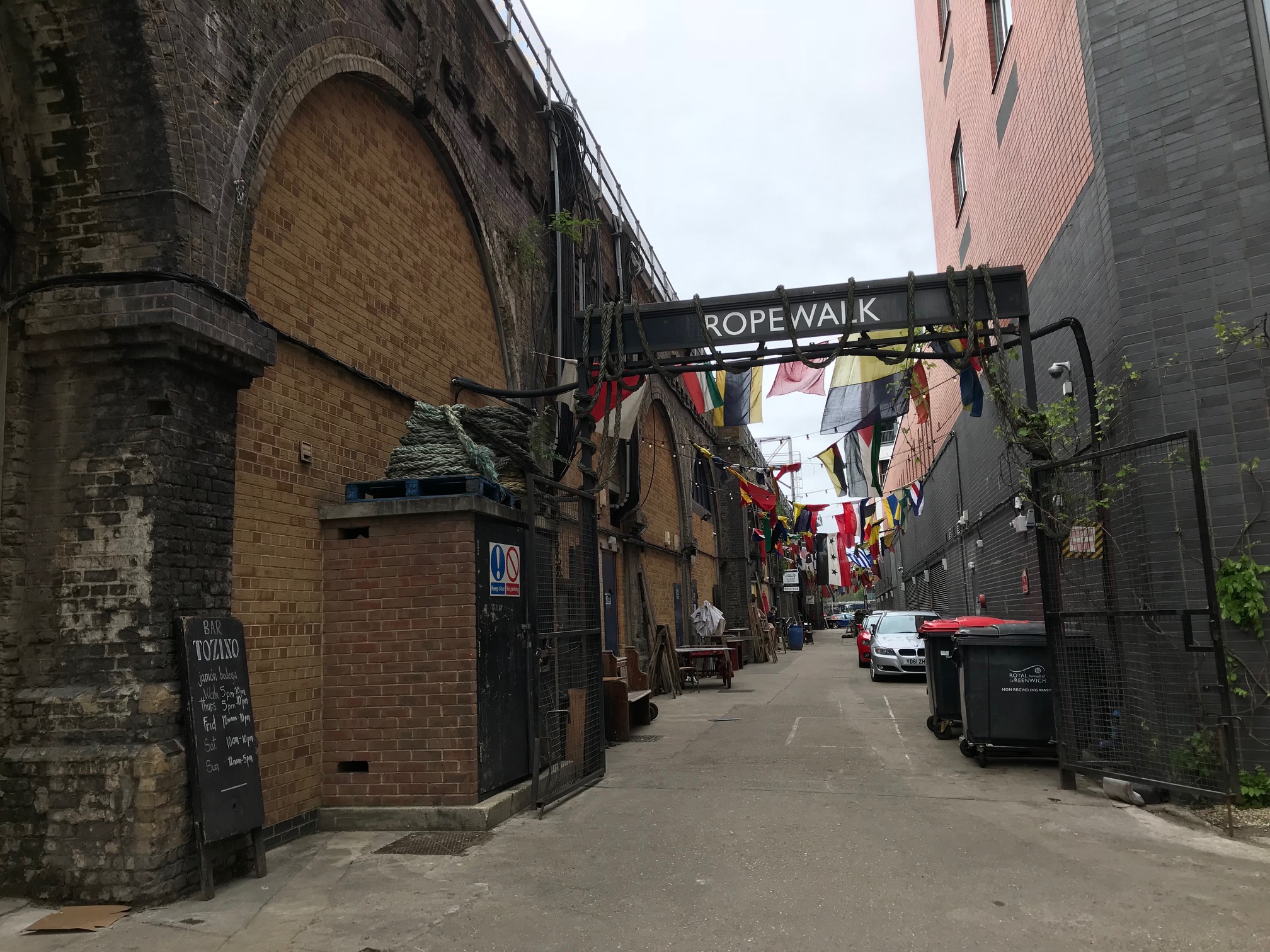
We then went to Spa Terminus, which are several units built under the railway arches. All the railway lines from the South to London go through Bermondsey, and due to the marshy soil, they were all built on sturdy brick arches. These are now home to many different small businesses – including some breweries. We stood outside one, and learned a few historical facts while looking at the closed door, in the cold wind. I wished I had worn a coat, and was now certain that this was not a pub crawl.

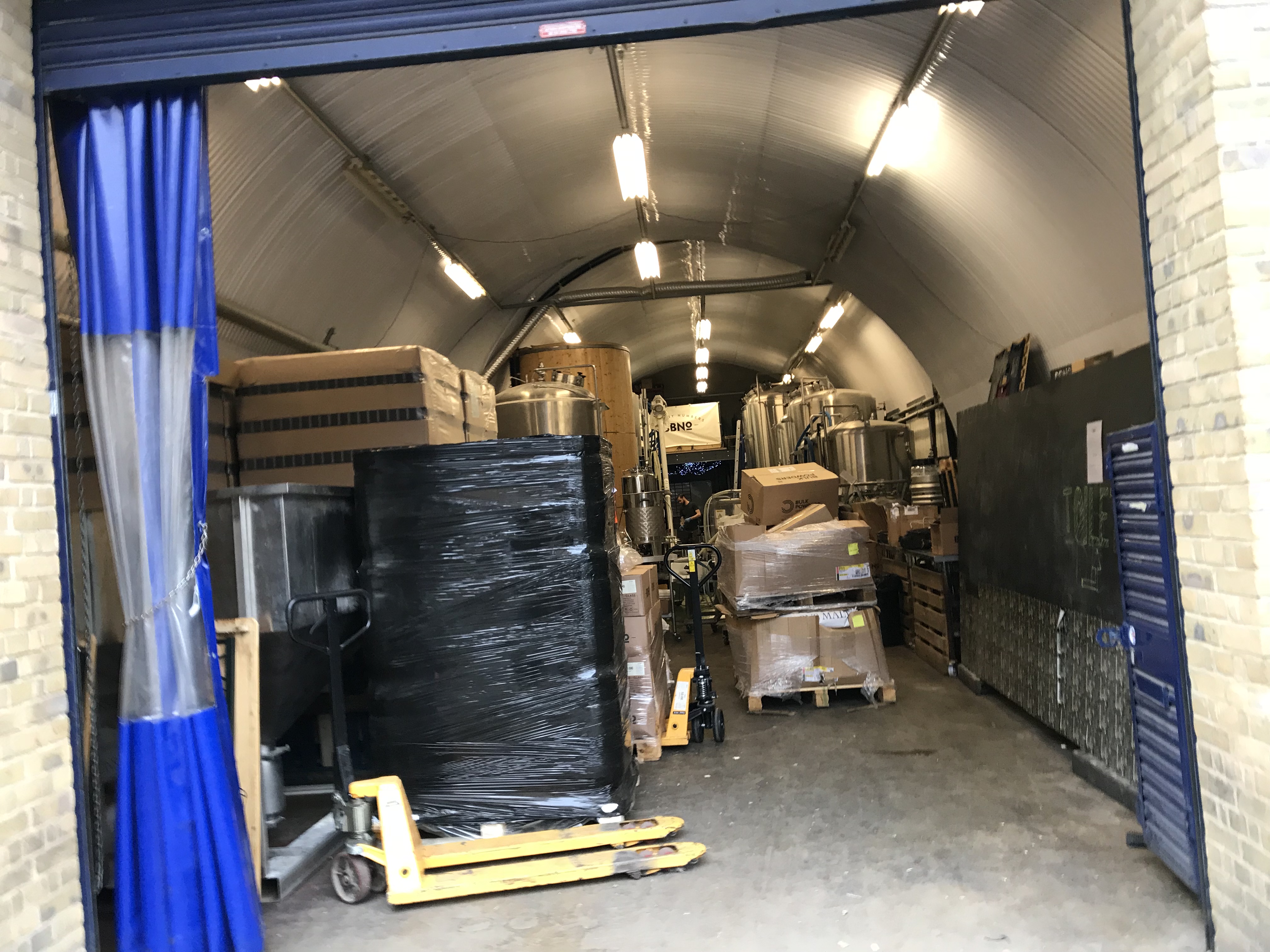
We then walked to the Brew By Numbers brewery, which was also under the arches. It was started by two blokes in their flat, and now has 11 full time employees and several part-time workers. We were allowed in, and stood, amongst boxes stacked by a forklift, while the owner told us how to make beer. A few men were working at a table, using microscopes and thermometers – this was more science than pub. The smell was wonderful, that warm sweet beery smell produced by fermenting yeast.

Making beer is relatively easy. Making good beer needs a little more skill. The basic recipe is hot water, to which you add mixed barley and leave for about an hour. This will activate the enzymes within the barley, turning the starch to sugar. This is then moved to a kettle and boiled – killing those enzymes. Sometimes it is dried and roasted (hence malted barley). It is passed into a ‘whirlpool’ (big metal thing) and hops are added. It is cooled, and yeast is added before it’s pumped into the conditioning tanks. They might add more sugar here (depends on the beer). It can then be put either into metal drums or bottles.

I can tell you that barley is just barley – the same stuff that grows in fields, and malted barley looks like coffee beans. Hops arrives looking like the pellets I feed to my ducks.

There is some snobbishness as to whether the fizz in beer should be natural, or carbon-dioxide added at the end. Historically, people didn’t have pressurised canisters of CO2 so it had to be natural fermentation that added the fizz. The difference between bitter and lager is how they are stored. (I have a fun little story here: When my boys were little, they wanted to make characters for a computer game who sounded grown-up. So, being ‘real men’, they decided to call them Bitter and Lager. Unfortunately, their spelling wasn’t as good as their ideas, so the characters are called Biter and Larger.)

We were invited to taste the beers. Only two, so still not a pub crawl, and only about an inch, so we weren’t singing when we left. There was a Saison, which had cucumber and juniper extracts added, and tasted light and acidic. The Porter tasted strongly of coffee, and was nice, but an inch was sufficient.

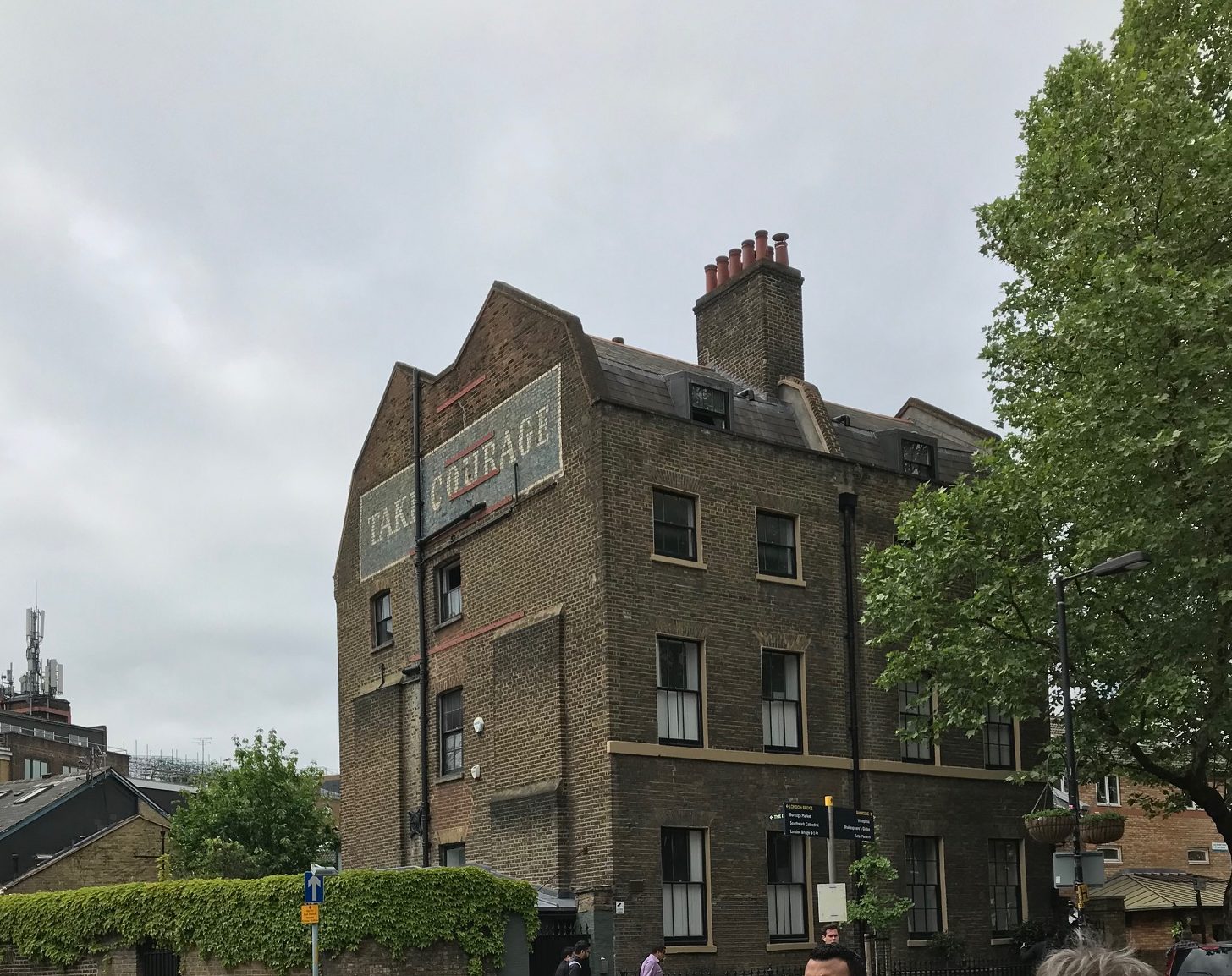
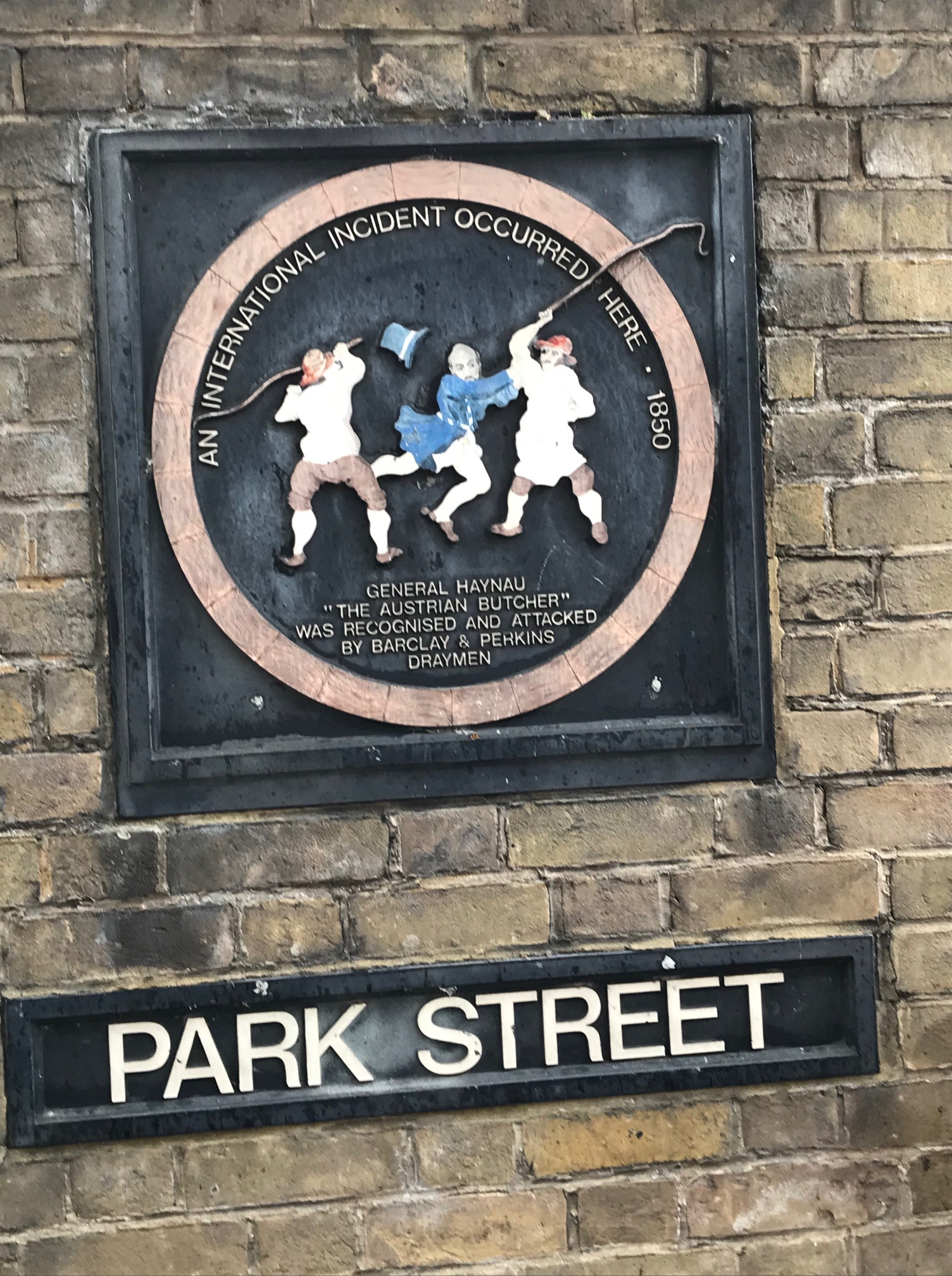
We moved on to another brewery, the Courage Brewery which at one time was the largest brewery in London, possibly in Europe. Unfortunately, it is now a housing complex. There was a plaque, which commemorated when the draymen beat up an Austrian general. The draymen were the delivery men, beefy workers, so the attack would have been painful. It caused an international incident at the time.

Apparently, when water in London was revolting due to being pumped along rotting wooden pipes and people drank much more beer, it was also more alcoholic. Which caused a few problems. So Lloyd George changed the law, and reduced the amount of alcohol that was allowed in beers.

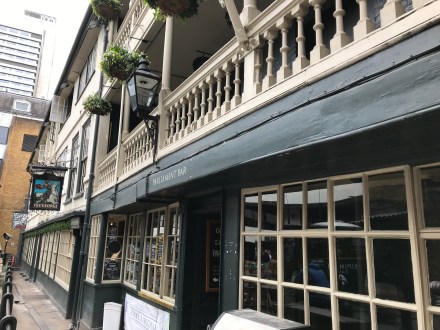
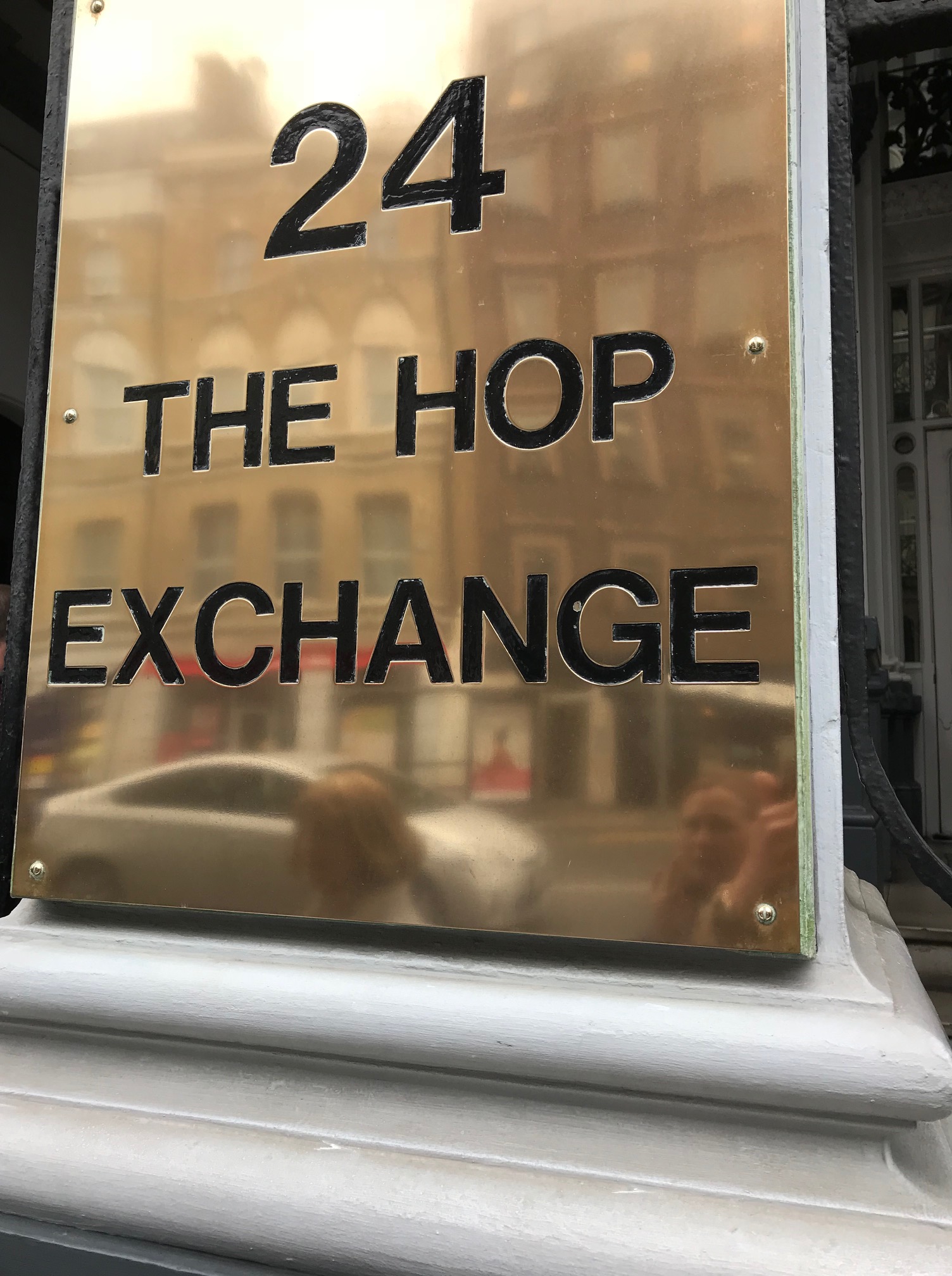
The end of the tour was a quick look at the Hops Exchange (where we weren’t allowed to take photos, though I have no idea why as it is just a tiered hall.) We also stood outside the George Inn, which has been there since Dickens wrote his novels. But we didn’t go in. This was not, even slightly, a pub crawl.

****
Thank you for reading.
You can follow my blog at: anneethompson.com

Anne E. Thompson has written several novels and one non-fiction book. You can find her work in bookshops and Amazon.

xxxxxxxx

P.S.

Hello, hope all is well.
I have a cheeky request (which you can ignore if you’re too busy, but I would be super-grateful if you can do this). Next time you are near your local library, please could you ask them to order you a copy of CLARA? It won’t cost you anything (other than time, which I know is precious, so I will be very grateful). The library order a copy, and let you know, and you will then have to collect it and read/pretend to read it, and return it a week later. Your part is then finished. But it means that the book will be available to a whole lot of other people.

I have tested the plan with my Mum, and there is now a copy in her local library, so I know it will work. Some libraries might refuse, if you are the only person who has requested the book, but the more people who ask, the more likely they are to stock it. I have had to deposit 6 copies with The British Library and 5 other libraries (which is a legal requirement, even though I lose the money) but it does mean that other libraries can stock the book.

The library will need:
Title: Clara
Subtitle: A Good Psychopath?
Author: Anne E. Thompson
Publisher: The Cobweb Press
ISBN: 9780995463257

They can order it through their normal channel (I think they tend to use a wholesaler).

The more people who request it from a single library the better, as they will display it in a better position if it’s popular (so do mention it to your friends and work colleagues).

Hope you don’t mind me asking. I don’t have the backing of a major publisher, so I need all the help I can get. Thank you oodles if you are willing to help.

Anne x

*****

An Hour at Victoria Station


An hour to wait at Victoria Station. Am lucky enough to find a seat, so I settle down with my M&S sandwiches and watch the world. Take a minute and watch with me (you don’t need to stay for the whole hour).

In the middle, next to the stall selling lurid coloured sweets (unwrapped and unhealthy) is a man speaking on the phone. At least, I’m hoping he’s on his phone – I can’t actually see it but he is wearing ear-plugs. He is also talking very loudly in accented English. He’s the sort of person you want to slap: too loud, too German, too aggressive. He’s talking about, “Five or six billion,” and, “it’s well within my experience.” Like I said, needs a slap.

Then there’s the man who plonks an empty coffee cup next to me and walks away. He needs a slap too.
German man is still talking as I glare after the departing back of coffee trash man.
A group of women arrive in front of me, hugging and kissing good-byes. One is heavily pregnant in a tight striped dress, her shape straining against the fabric.

There are young people with backpacks, and a mother with a pushchair, and men, with pull-along cases, who walk beside them as if they’re walking a dog. A group of teenagers giggles its way across the concourse, and a black girl sits next to me to eat her chips (she has to move trash man’s empty cup first). We exchange a smile, but don’t speak. Speaking might be deemed weird.

There are people hurrying to platforms, and others standing in the way as they stare at departure boards. Heels click past, rushing towards the toilets (they’re free now you know, it used to cost 70p to pee).
An intense young man in a pink shirt speaks into a phone while walking towards the platforms. German man has gone now – I didn’t notice him leave. An old lady with an orange carrier bag walks lopsidedly towards the sandwich shop. Mr Pink Shirt is now standing, still talking, fiddling distractedly with his trouser zipper – not a good habit. Two women walk arm in arm reading a timetable.

There’s a babble of languages, the background drone of engines, the tap of heels on the smooth grey floor. The tannoy, which no one appears to listen to, screeches its announcements, and an orange-lights-flashing vehicle beeps through the crowds.
An old man, flat cap, carrier bag, beard, leans heavily on his stick as he wheezes behind his wife. Or lover. Or work colleague. They are overtaken by a younger couple, both with small efficient cases. Hers has a giant hat box on top, and I wonder if she’s going to a wedding. Perhaps the wedding.

Victoria Station. No one is really here, everyone is passing through, waiting to leave, their mind somewhere else. The workers are invisible, in spite of their orange jackets, their beeping vehicles, their shiny booths. Who could describe the person they bought the panini from? Or the hair of the girl at the information desk? Or the shoes of the man unloading the heap of free newspapers while hands reach out, their attached bodies barely pausing, the commuters not breaking step for a second.

The information board flips, new platforms announced. I fold my sandwich box into my bag, and leave.

***

I wrote this at the station, whilst also chatting to my children on a Facebook group chat. I told them what I was doing, and asked if they thought it would be okay to add photographs of the people I’d mentioned. They replied:
Mark: “No Mum, definitely not.”
Becky: “Mother, I don’t think you should have taken photographs in the first place!”
As I am at the age whereby I have learnt it is best to obey one’s children, I’m afraid there are therefore, no photos.

***
Thank you for reading.
You can follow my blog at: anneethompson.com
Anne E. Thompson has written several novels and one non-fiction book. You can find her work in bookshops and Amazon.

xxxxxxxxxxxxxx

Agonies in a Craft Tent


Let me tell you about my weekend – another craft fair. Not my favourite activity. The thing is, writing books, creating a whole world with quirky characters and exciting happenings, is fabulous – best job in the world. However, taking those books, and trying to persuade people to risk a few hours and read one, is very scary. But there is little point in doing one without forcing yourself to do the other. This is how it tends to go.

First of all, is the venue. Usually you’re provided with a space in a marquee, booked at immense cost, which all adds to the pressure of how many books you need to sell to not lose a ton of money. The space can vary in quality. Sometimes you’re placed next to an aggressive seller, who has set her table well over the boundaries, and has squeezed your space to a tiny square. Sometimes the organiser has been more canny, and has marked on the floor exactly where each space begins and ends. There are good pitches – towards the centre of a walkway, and bad pitches – right next to the door (because people entering the tent don’t usually want to stop and listen to your sales pitch as soon as they get inside, and if you are the last stall, they are already thinking about leaving by the time they reach you. Though last is slightly better than first.) If it’s raining, you often get drips of water plopping onto your books. If it’s dry, you sometimes get condensation (see previous sentence). Sometimes it’s really hot, and then the air becomes too thick to breathe and after a couple of hours you are very red-faced and sweaty, and no one wants to approach your stall.

After you’ve set up, you can walk round and have a look at the other stalls. These tend to vary. There is the scowling old man who sits opposite the entrance, surrounded by his wife’s knitted cardigans. There are homemade stands: twigs stuck into flowerpots hanging with necklaces; husband-made constructions that would withstand a nuclear explosion; and the carefully selected textures and colours that make up the artists’ stalls. Most stalls represent hours upon hours of work, and everyone is feeling slighty desperate about trying to sell things, and trying hard not to show it.

There is lots of tension involved with selling books. Unlike jewellery and knitwear and paintings, they aren’t sold by how good they look, so the only way to sell is to tell people what they’re about. Not easy. You sit there, watching for potential customers, hoping for a flicker of eye-contact. It’s very bad form to start speaking while they’re looking at your neighbour’s stall, so you have to wait until they have moved into the space you ‘own’. These are moments of real tension, as you watch a couple meander around the tent, buying trinkets at other stalls (so they’re spending money today), they look intelligent (so sure to be readers); they walk nearer while I wait, ready with my patter, throat dry with nerves, waiting while they examine the stall nearest to me then, at last, they begin to approach, they glance towards my books, they turn to each other to make a comment, I begin to approach them and – they leave the marquee. I breath out, sip some water, wait for the next person.
And then there are the low points. The customer who arrives right after you’ve taken a swig of coke who you greet with a loud belch (she didn’t buy a book). Or the customers who arrive with a football team of uncontrolled kids who touch everything and ruin your display, and probably can’t read anyway. Or the owner of the small dog who lets it wee against your tablecloth. Not to mention the joys of portaloos. Or, depending on the fair, the happiness of sitting right next to where the bagpipes are playing.

However, I survived, and lots of lovely people did buy my books. There were also some interesting chats, like the one with the tiny old woman who told me she used to teach Camilla PE, and the palace have done wonders with her appearance, and she was always a very lazy girl who couldn’t do a handstand properly.

The problem is, selling books is personal. Every rejection feels like a put-down, and every sale brightens my day. So why not take a look at my books today – if you buy one, you’ll cheer me up immensely.

Thank you for reading. All my books are available on Kindle and in bookshops. UK Amazon link below.


The latest, and best book (in my opinion). An exciting novel written in the first person, which shows how a psychopath views the world. The story encompasses the world of women trafficked in India, and shows how someone very bad, can be used to achieve something amazing.

An exciting novel, set in the near future. One family shows how they cope with driverless cars, new laws, and schools run by computers.

A gritty thriller, which shows what it means to be a psychopath, and how it would feel if someone in your family did something awful. (Because every psychopath has a mother.)

A hilarious romance for when you want to relax.

Hidden Faces by Anne E. Thompson.
An easy read, feel good novel, set in an infant school. An ideal gift, this is a book to make you smile.