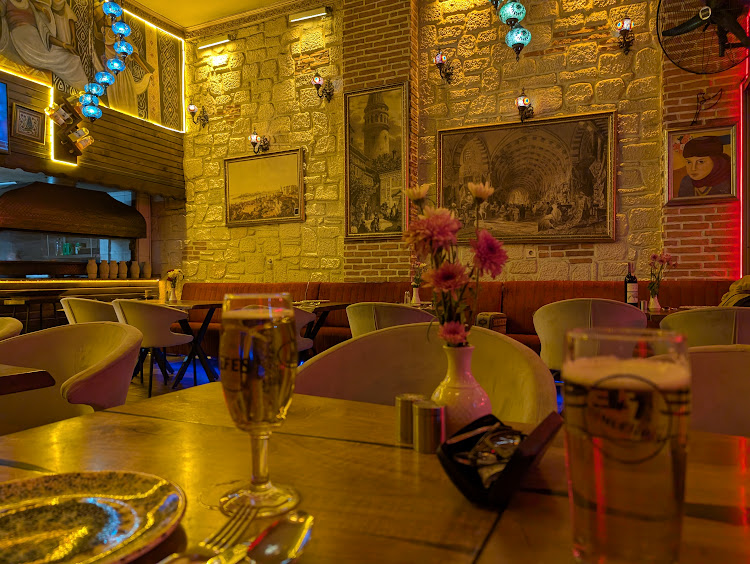
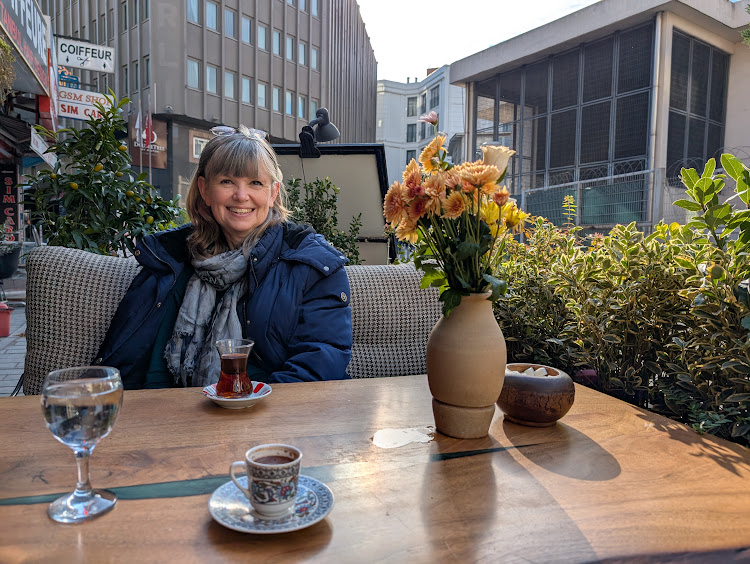
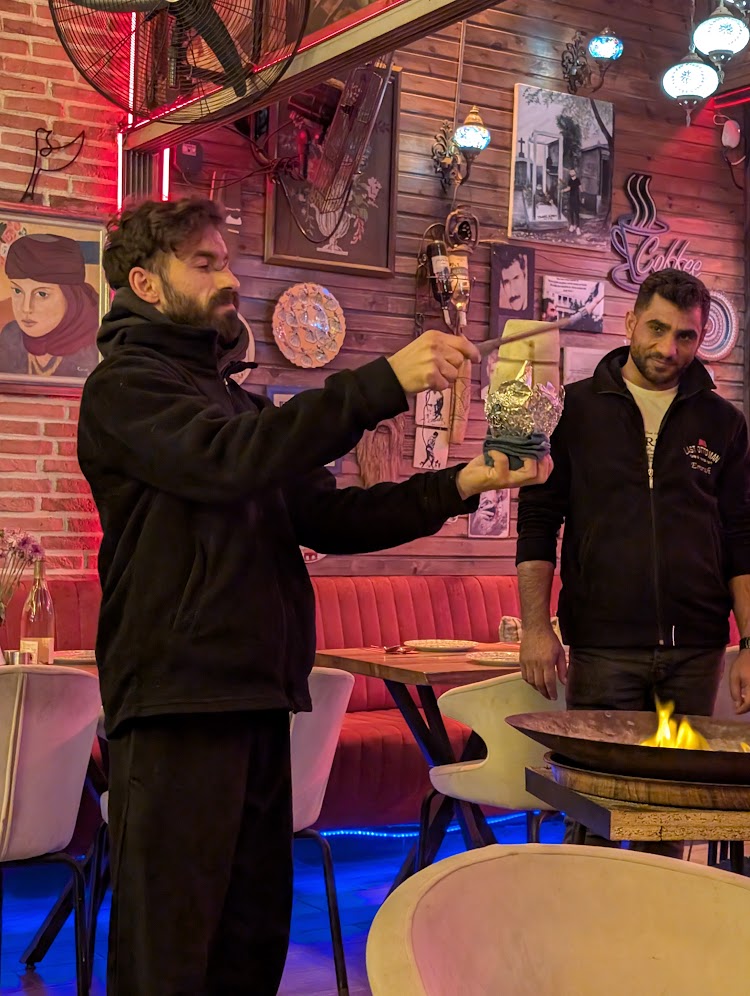
We soon developed a routine of a huge breakfast at the hotel, snacks for lunch, then a big dinner at the Last Ottoman Restaurant and Cafe which was our restaurant of choice because it had good reviews, sensible prices and the staff were very friendly. They are a Kurdish family, all working in the restaurant set up by their grandfather, and we found them warm and welcoming. (Though to be honest, I found most people in Turkey to be warm and welcoming.) One local dish is cooked in a small clay pot sealed with foil. It is stewed for a couple of hours, then (for the tourists) it is tossed in flames, and the pot is cut open and the hot food is tipped onto a sizzling platter. The performance is fun, and I bought one of the pots in a market for a couple of pounds. Very ethnic. They begin each meal with a complimentary bowl of lentil soup, served with steaming flat bread. You can taste different herbs, and mint, so I’m guessing it starts with a lamb stock. After the meal they bring warm squares of havila, and tiny glasses of clear tea on little white saucers. The restaurant is cosy, with walls full of pictures (lots of photos of revolutionaries like Che Guevara) and cushioned seats, and in the centre a wood stove bellows out heat. It is also, like everywhere I have been in Turkey, very clean.
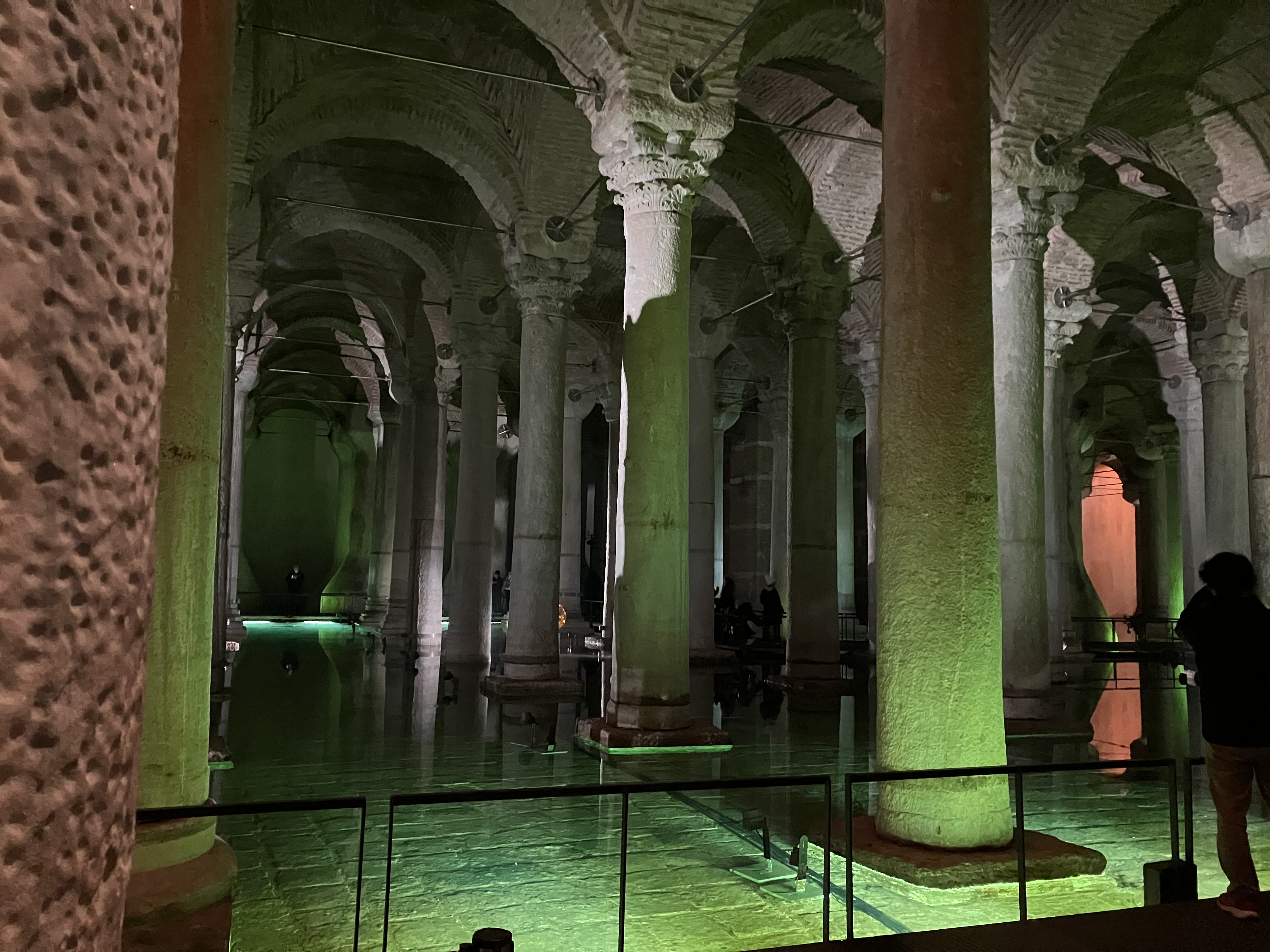
My favourite thing was the ancient water cistern, hidden under the city near the Blue Mosque. It was built in Roman times (maybe by Hadrian) but fell into disuse and everyone forgot they were there. Which means they remained unspoilt until they were opened, drained, and made safe.
We paid 900 TL to enter (about £20 each) and wondered whether it was worth it. It was. We walked down a metal staircase, into a world of atmospheric lighting reflecting on the water and elegant arches over tall pillars. A subterranean palace for enchanted princesses, or ghosts, or maybe just James Bond (From Russia with Love).
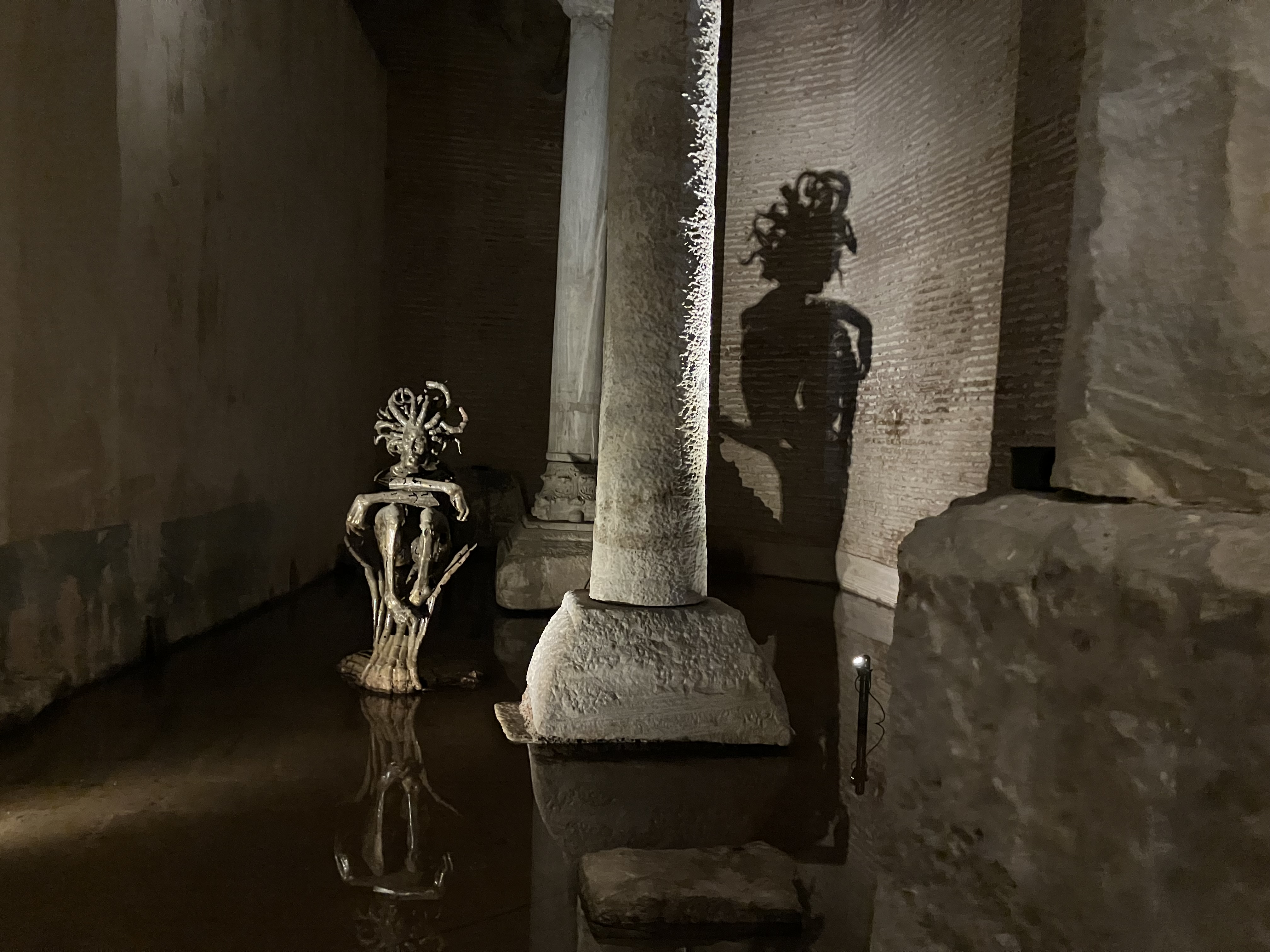
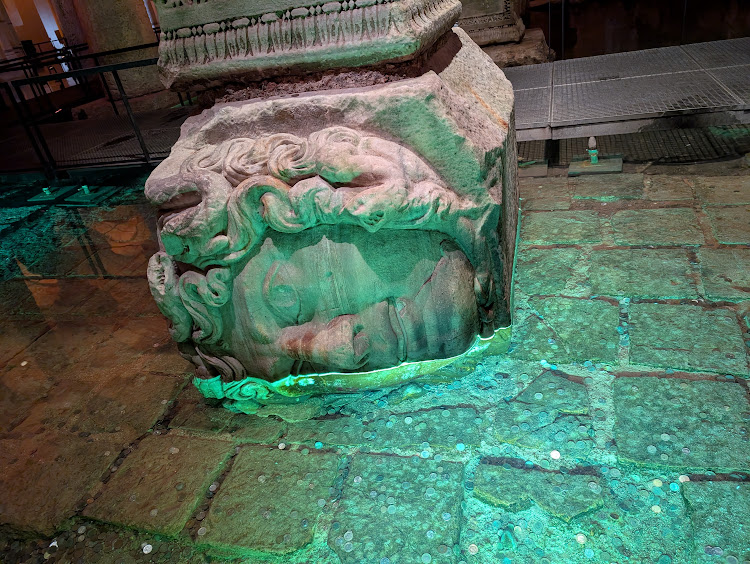
The cistern was made by slaves, and one pillar was engraved with eyes and tears to represent those who died. Other pillars stood on huge Medusa heads—thought to have been taken from Ephesus—which were placed on the side and upside-down. Whether this was to show that the Christian architects (who used slaves) no longer believed in the power of Medusa, or whether they were slightly nervous and so didn’t place them upright (just in case) is anyone’s guess. The modern architects have placed a sculpture of Medusa nearby, and the lights cast her shadow on the wall, which is brilliant.
On a November afternoon, there were few tourists, and we wandered along the suspended metal walkways enjoying the atmosphere, not hurrying, noticing the splendour of the place. I don’t know if they limit the numbers during peak times. Afterwards, when we had walked back up to street level, we crossed the road and sat, looking across the park at the Blue Mosque. I’ll tell you about our visit there tomorrow.
I loved being here, Istanbul is a city with a heart. November turned out to be a good time to visit—but be ready in case it snows.
I feel that Meg has changed. She is still challenging, but we have come to an understanding, and I feel she is slightly calmer. Very slightly. I am also trying to have her out of her crate for longer. This has mixed results. In the evening, we now watch telly in the lounge, while Meg chews a bone in the doorway. She knows she must not enter the room (or she gets sprayed with water!) and she is happy, watching us, and chewing her bone. During the day, if left for more than a minute, she will find her own entertainment. Today she was left for 5 minutes (washroom visit) and she found a newspaper and ripped it to shreds. That didn’t matter, but if it had been one of my plants, or a cushion, it would have been very annoying. We are getting to where I hope to be, but slowly.
Walking is easier because I don’t attempt to walk near roads. We go to the woods, and she stays near me, and comes when called (even if I do have to shout ‘Stick!’) so putting her back on the lead is reliably do-able. She will do anything for a stick.
10/8/24,
Meg is definitely calmer than she was. Not ‘calm’ but calmer than the completely hyper monster that she was a few months ago. I am also better at knowing what she can cope with.
In July, I went away for a week, and a son and his partner lived in the house with Meg. When I got home, I was greeted with a happy, calm dog. They had basically played with her for most of every day, and let her run free in the garden, and she had learnt to sleep on the kitchen floor when she was tired. The garden was a mess, with several pots shredded, but it seemed a good tactic. It was lovely to return home to a happy dog. I was however, disappointed by her reaction when she first saw me. There are some people who she is super-excited to see, so excited that she pees on the floor and does laps of the garden. Me, on the other hand, she wagged her tail for, and then went back to shredding the large log she had carried onto the lawn. She was sort-of pleased to see me, but definitely not super-excited. I am in charge of the home, so maybe that makes me more of an annoyance in her eyes than someone to have fun with–because if I wasn’t here, she would probably be in charge. I don’t know. It’s so different to Kia, who was part of me and would have died for me—whereas I have a sneaky suspicion that Meg might be secretly pleased if I disappeared because then she could do whatever she wanted.
On 31st July, we went to meet someone at the airport. I brought Meg, thinking it would be excellent training to walk through a crowded airport. It didn’t quite go to plan, because although she walked into the lift happily, they were broken, so we had to use the stairs. When we entered the stairwell, Meg froze. Four paws on the ground, not going anywhere. We didn’t have time to teach her how to use stairs, so Husband went to the arrivals hall, and I walked round the car park with Meg. It was still good training, walking past lots of people with luggage and moving cars, and going in and out of the stairwell. But not as good as I had hoped. We will work on stairs, and spooky stairwells.
Meg now walks through the woods on the lead very nicely, and we go every morning. When she’s off the lead, she happily greets other dogs, but she tends to chase them, and other owners get anxious, so I mainly keep her on the lead. We have met deer a few times when she was free, and I grabbed a stick, and led her away, and she absolutely prefers a stick to chasing a deer. I have no idea why. I’m worried that with so many deer, there are probably ticks, so I’m careful about keeping her flea/tick drops up to date, and I use insect repellent. (Ticks carry Lyme disease, and that can be dangerous for people.)
Every evening, Meg chews her bone in the hall while we relax in the lounge. She is very good, knows the routine, and does not attempt to enter the room (well, not very far). This is nice, I like having her around.
I started tempting her up and down the stairs with her ball. She’s hesitant, but getting used to using stairs in the house. Mostly, she will do anything for a ball. I still try to hand-feed her most of her food, and practise calling her, and teaching her to walk to heel. It’s all great unless there’s a distraction, and then she is still terrible. I can get her to sit near the main road and concentrate on a treat rather than the cars, but not yet in our lane. She still hares up and down the garden fence if a car goes up the farm lane.
Next week we go to Rome, and for the first time, Meg will go into kennels. I think she’ll enjoy it, she is very sociable. I am so looking forward to the break.
11 Months
12/8/24
I have started to keep Meg on the lead for longer, because I am more relaxed and it makes the walk more enjoyable. She has lots of time to run free in the garden, and walks are more for mental stimulation. Today, in the brief time that she was free, we met 3 large black Labradors. I think they were all males. Meg bounced up to the first one—and I didn’t attempt to stop her because they were a similar size to her, so wouldn’t be bounced, and they were Labradors so must be friendly. Except they weren’t (friendly—that is, they were Labradors!) The first one raised his hackles, obviously not keen to be greeted by an impertinent young female. The other two surrounded her, and before I knew it, Meg was lying on the floor while the Labrador owner shouted at her dogs. Meg managed to get up, and started to run, so I called her, and she came near enough to grab. (Not, of course, running directly to me, but sort of in my general direction, which is usually the best I can hope for.) At no point had Meg yelped, and in my experience, dogs yelp at the smallest discomfort, so I’m pretty sure the encounter was about dominating her rather than attacking her. The owner was extremely apologetic, but I wasn’t sure it was necessarily a bad experience for Meg. It might be good for her to learn that racing up to a big dog is not always a good idea. And as I say, there didn’t seem to be any viciousness to it, the Labradors were just making sure she knew her place in the pack—which was at the bottom!
We continued our walk on the lead. It’s really hot, so the whole world was walking their dogs early, and we met lots of people. When they saw Meg on the lead, most people called their dogs, thinking she was unfriendly, so I started to call to them, explaining she was friendly but super-bouncy. They then relaxed, and I worked on training Meg to sit while the other dog approached her, and I had little chats with the owners and it was all very sociable. Meg was friendly to all the dogs that passed us, so the earlier encounter with the Labradors had obviously not affected her badly.
It’s hard to keep Meg cool in this weather, and she pants continually. I can’t wet her, because she hates the hose, but I have wet her bedding, so she can lie on cool damp towels. Not that she does of course, she picks them up and runs round the kitchen with cool damp towels! But I tried.
She is getting better at stairs already. Today I put her ball on increasingly higher steps, and she walked right to the top of the flight without a problem. Coming down is more precarious, because she tries to leap the last few steps—which would be dangerous if she was on the lead—so I will keep teaching her to go slowly up and down. (And is quite dangerous if anyone stands near, as they might get a flying German Shepherd land on their head.) She’s fun to teach, because she learns so quickly. Just as long as she doesn’t kill someone by mistake…
Thanks for reading. Have a safe week. Love, Anne x
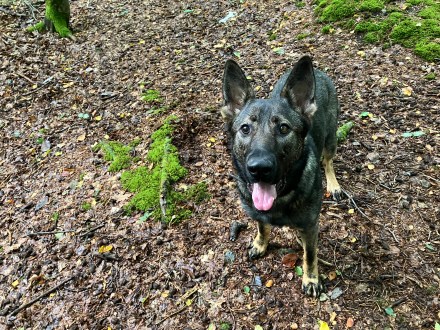
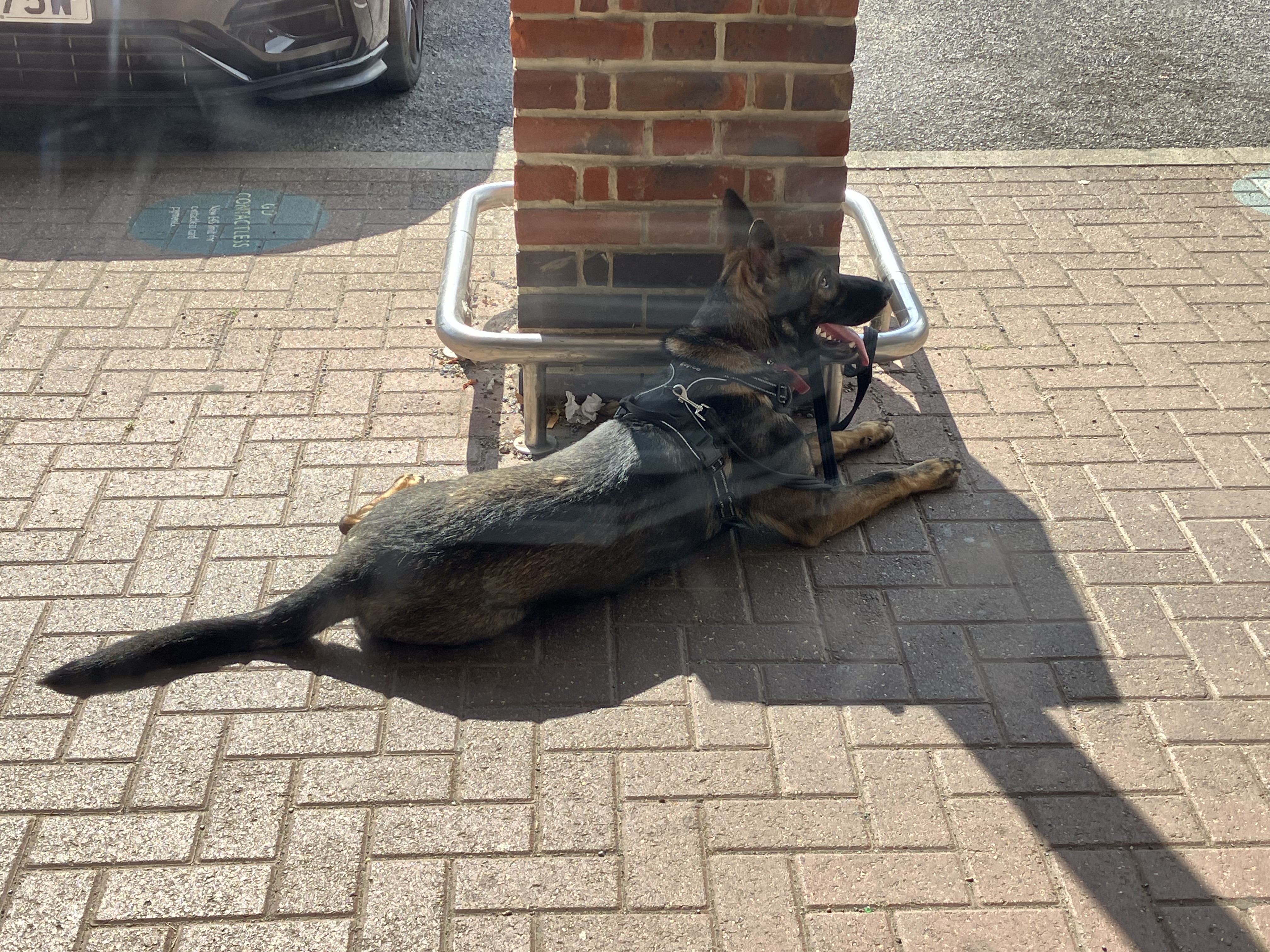
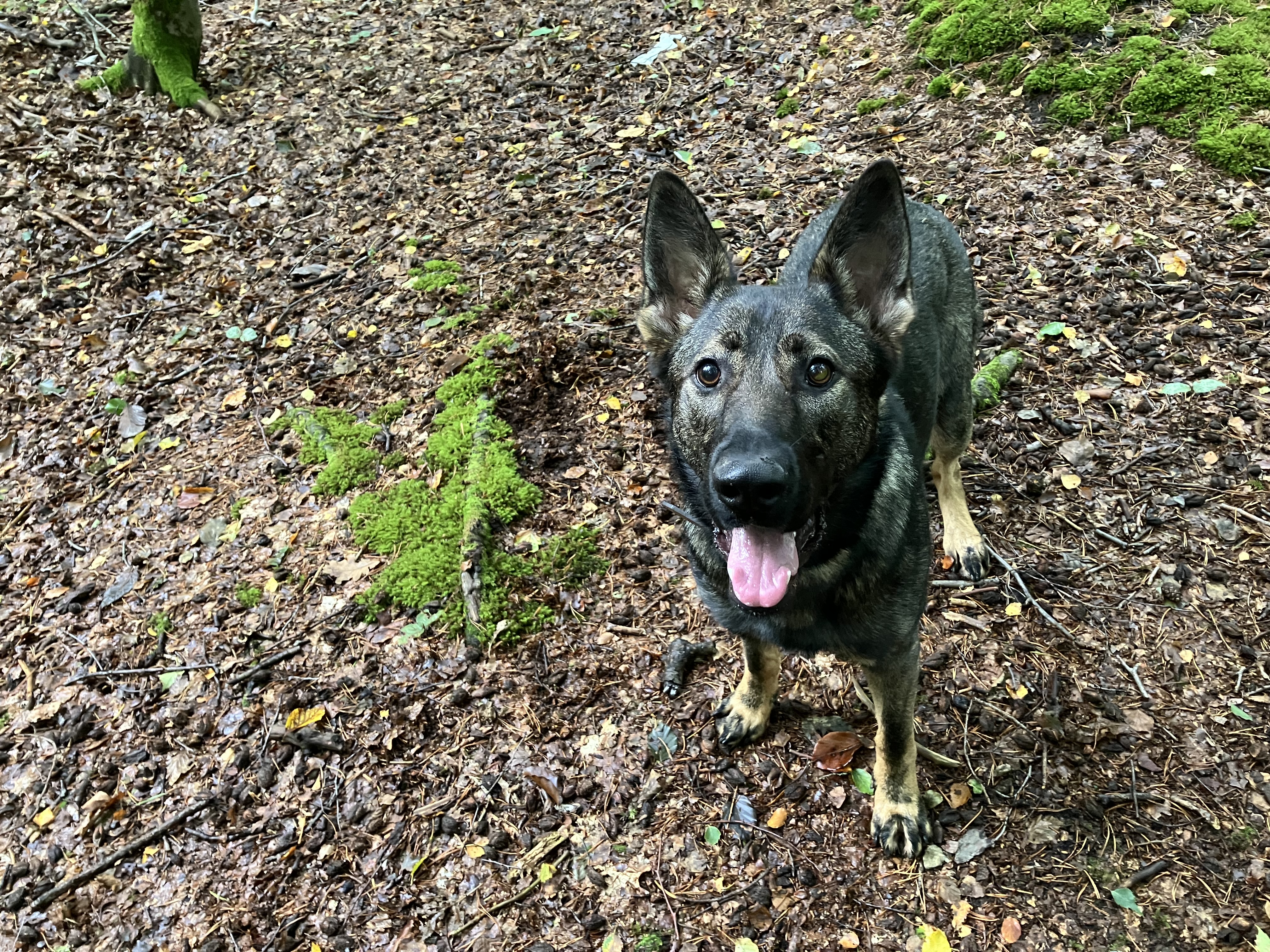
Walking calmly next to the trolleyWaiting outside the supermarketFocussed on a stick!Action shot
I very quickly want to tell you about a meeting that I’ve just had, with a couple of people who partner with Tearfund in India. Some of the meting was confidential, but some things I can share. Talking to people who live in vastly different places, with different problems, is always good. It’s so easy to stay in our own bubble, and to worry about our own problems, and hearing about people who mainly eat rats for supper helps to keep things in proportion.
I was learning about a project Tearfund are partnering with, which has the catchy title: Transforming Masculinities. (Honestly! I kid you not, this is the title they have come up with.) Unlike the title, the work has absolutely nothing to do with people who feel they are the wrong gender, or who want a sex-change, or any of the other modern inferences that you might imagine. The work is about educating men about the rights of women—teaching husbands that their wives are equal partners, and their daughters should have the same rights as their sons—that sort of thing. Crimes against women is still a big problem in India, and educating the men might be a good way of sorting it out. Especially because men in the churches are sometimes no better, when it comes to abusing women, than men outside of the church.
Tearfund is better than me at knowing how to meet need—and how to assess it. One of the workers made the excellent point that when assessing the success of a project like this, initially, you might expect the police stats on crime against women to increase. Because more people will be reporting it rather than hiding it, telling the women that it doesn’t matter. (The long-term aim, of course, is for the crimes to stop, but reporting them officially is a first step.)
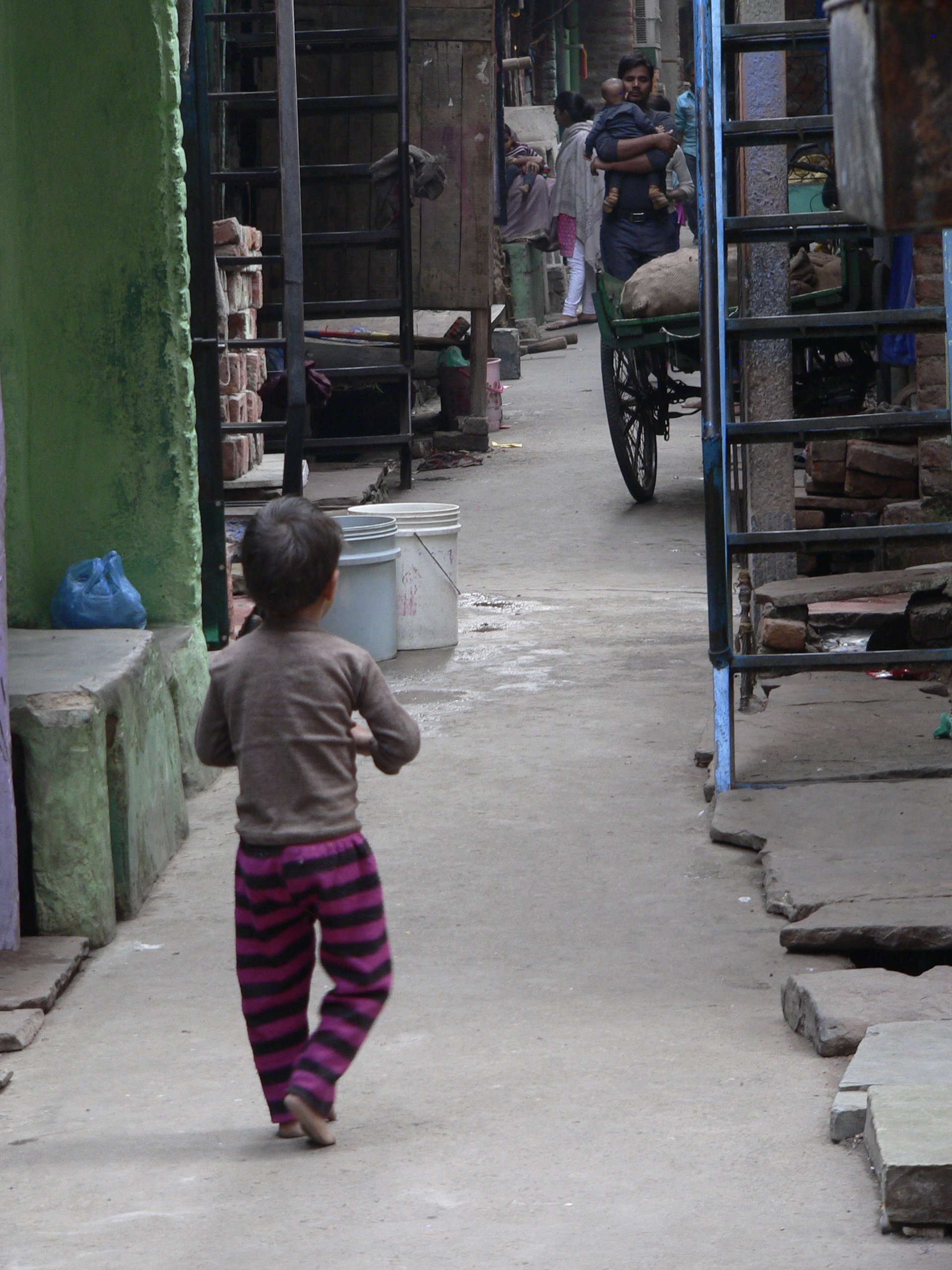
The workers also talked, as an aside, about some of their other work—like ensuring people who cannot read or write are able to access the government help that is available, or mending toilets and checking that people in the slums are using them, or ensuring there is clean water available. When you see lists of things like one toilet to every 33 people, or a clean water tap available to x number of families, it really makes you think. This is today, 2024, and there are still families sharing a single clean water tap? Really? How is this okay?
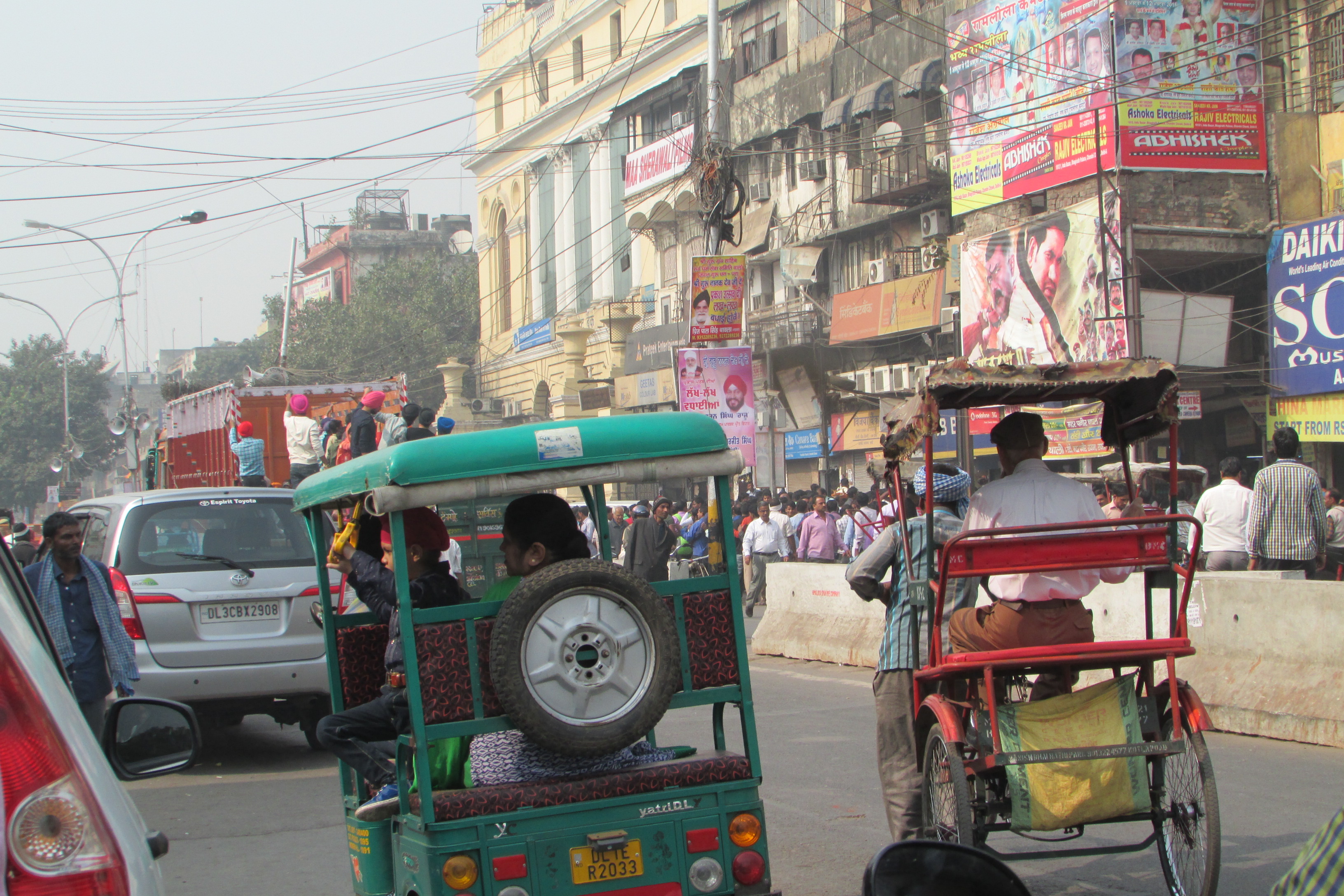
They also spoke about the issues today, which I was ignorant about. Did you know that currently (end of November 2024) the pollution in Delhi is so bad that people have been told to stay inside? So just like during Covid times, children are not able to attend school, people are struggling with child-care and online work—and those are the ones lucky enough to have a job that can happen indoors. The people who have to be out are getting ill, simply because they don’t have clean air to breathe. We talk a lot about our rights in the UK, and the sense of entitlement worries me. But surely, everyone has the right to clean air to breathe.
We need to be aware of these issues, because we are all part of the problem, aren’t we? As I said, we live in our bubble, and if climate change doesn’t directly affect us, it is easy to ignore. If our taps work (our own tap, in our own kitchen—not shared with several other families) then do we even think about clean water? And as you read this, are you hoping to catch some rats for your supper this evening? We live in a small world, we are able to be part of communities that have less than us. Please don’t just turn away. Please think about how you can be part of the change to improve their lives, because they are real people, coping with real issues, they are not just a photo on a charity poster. I know, because I chatted to them this morning.
Thank you for reading, and please don’t just forget about it. Have a good week. Take care. Love, Anne x Some photos from my last trip, which was several years ago, but I fear things may not have changed much.
Playing in a rubbish tipUnder the paving slabs is an open sewerWonderful, colourful, crazy traffic!
IKEA homeware packed in boxes, Heaps of stuff littering the hall, squashed into the back of the car. Last hugs, cheery goodbyes, the drive to uni. Snippets of home, spread around the strange smelling room, The lanky excited-scared almost-man says goodbye, And the mother remembers. She remembers the feel of the bowling ball weight on her hip when she carried him, The feel of his tiny hands on her cheeks when he offered snotty kisses, The snuffle of breath as he slept against her shoulder, She remembers the child as she looks at the man. As she wishes him well, holds back tears until she has driven away.
Billycans and clothes stuffed in kit-bag, A train to London packed up tight, hurry to find the right squad. Last hugs, tearful goodbyes, a band plays on. Heaving the bag, look around for friends joining too, The lanky excited-scared almost-man says goodbye, And the mother remembers. She remembers the feel of the bowling ball weight on her hip when she carried him, The feel of his tiny hands on her cheeks when he offered snotty kisses, The snuffle of breath as he slept against her shoulder, She remembers the child as she looks at the man. As she wishes him well, holds back tears until he has joined his unit.
The posts on Facebook show new friends and nightclubs, Texts assure his food is fine, his studies easy. He doesn’t discuss the drunken evenings, the sleepless nights, the fear of loneliness. But his mother knows, she reads it in unsaid words and tired-eyed photos. And she waits. As life goes on.
There are no letters and the News shows little, Bold battles move to the Front, the headlines proclaim. They do not discuss the fallen comrades, the sleepless nights, the fear of injury. But his mother knows; she reads it in unsaid words and tired-eyed photos. And she waits. As life goes on.
The war ends. The boy returns home. Yet, not a boy, become a man. A man who will not speak of horrors, Will not discuss the stench of death, The sight of his friends, falling. The nights when he still hears the screams, still fears the dark. But his mother knows; she reads it in sunken cheeks and, eyes so weary. And she waits. As time goes on.
The term ends. The boy returns home. Yes, still a boy, almost a man. A boy who chats and loves to amuse, Loves to debate the point of life, Who meets all his friends, laughing. The nights when they drink, talk at length, sort their beliefs. And his mother knows, he is safe and content with life, has a future. And she waits. As time goes on.
by Anne E. Thompson
Thank you for reading. anneethompson.com Why not sign up to follow my blog?
I used to spend a lot of time asking ‘What does this Bible passage really mean?’ I meant, what did it mean to the first people who heard it—what did the author intend? However, I have realised that actually, the early readers of the Bible texts didn’t do this. Even within the Bible itself, we see the New Testament characters taking Old Testament texts and using them in a new way. In the spirit of this, I considered the text in the book of Matthew, chapter 4, when Jesus was tempted in the wilderness.
We read of three different temptations of Jesus, and as I thought about them, I applied them to my own life. I wonder if your own reflection will be the same? I think it’s okay to put them into a different context, and to apply them to ourselves because just before this, Jesus had been baptised—which was a sign of repentance. Matthew tells us that he did this, not because he needed to repent, but to ‘fulfil all righteousness.’ In other words, he was doing what everyone else needed to do—I think to show that he was coming alongside people—we are meant to watch his example and copy it. So what were the temptations all about?
The first temptation was to turn stones into bread. He hadn’t eaten for over a month, he would be starving! But Jesus said it was more important to live ‘by every word that comes from the mouth of God.’ For me, this means that physical things may seem overwhelmingly worrying, but I need to focus more on spiritual things than the physical. Between you and me, I am not at all sure that I am clever enough or brave enough to do this PhD research—but I needn’t worry overly much about that, I should mainly worry about whether I am where I think God wants me. I need to live each day as if it was my last one—to live it well, thinking more about God than all the worrying things.
The second temptation was for Jesus to throw himself off the temple steeple, because the angels would save him. Jesus replied that it’s wrong to put God to the test. For me, this means that there are things which I should take responsibility for. I have a couple of health niggles, and I want to pray and ask God to sort them and then just ignore them. But that is not what I should be doing, God is not a genie in a lamp. I need to take responsibility, and to take myself to a doctor. (I really hate going to the doctor, it’s so much hassle to get an appointment, and then so unpleasant being examined, and it all takes ages.)
Finally, Jesus was tempted to accept the world from Satan, if only he would worship him. Jesus told him to get lost! Only God should be worshipped. For me, this means that I must not be distracted by the theology I am learning and lose sight of God. There are some very clever, very convincing theologians, who have written all kinds of fascinating papers showing that much of the Bible is historically inaccurate, and full of bias and error. I need to consider their arguments, and sometimes they are correct—but I must not lose sight of who God is, I must not be tempted to turn my faith into religious theory.
I wonder how you will apply the three temptations to your own situation? I guess the main thing is that it is good to pause, to reflect, to consider what might stop us becoming the people who we are meant to be. What might stop us from walking with God? Sometimes we need to take stock, see where we are in danger of going wrong, and get back on track.
Tomorrow I go home. I am really ready to go home, to be somewhere familiar, with people who I know, and nothing new or scary to force myself into! But it has been a good ten days, and I have learnt loads.
Today was the last seminar, for all the PhD students starting this term. It was very practical, and started with explaining exactly what a PhD is. You might be surprised by how many of us were grateful to have this clarified, it has felt a rather vague notion up until now. (It’s just 3 years—or 6 years part-time—researching a topic of my choice, and at the end I have to show knowledge in my area and contribute something new in an academic format that is good enough to publish.) We were also told how often we should expect to see our supervisor (roughly once a month) and who decides what we study and how we do it (we do). The supervisor is a bit like the editors who have edited my novels—the work is all mine, and my responsibility, but they bring an area of knowledge beyond mine, and contribute helpful advice to make my work better.
After the seminar I had lunch with a friend (see, I have even managed to learn names and make friends!) I also discovered that the library, which has seemed worryingly small, actually has 3 other floors that I had not discovered. I managed to successfully return a book I had borrowed, and was given a paper receipt.
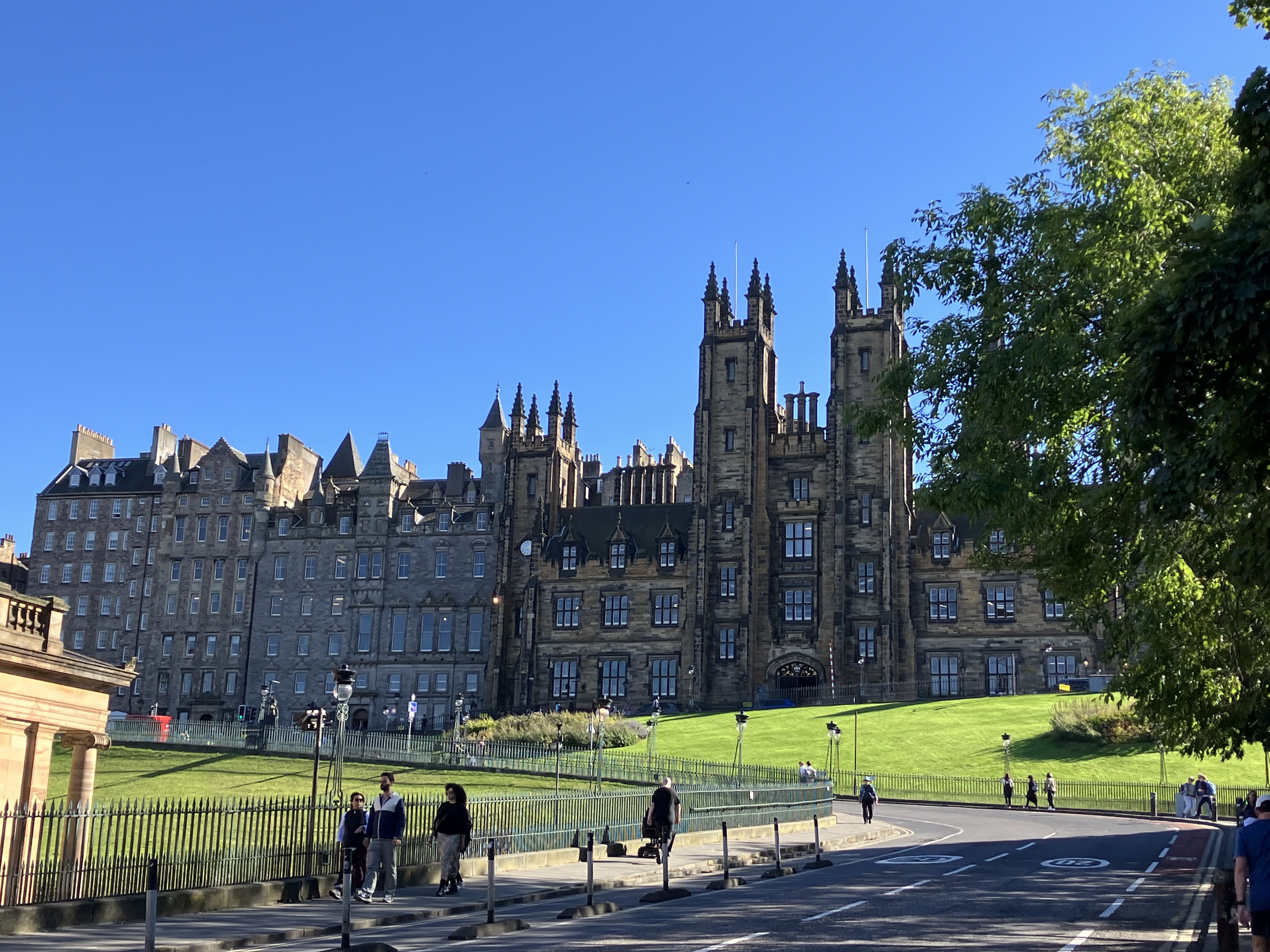
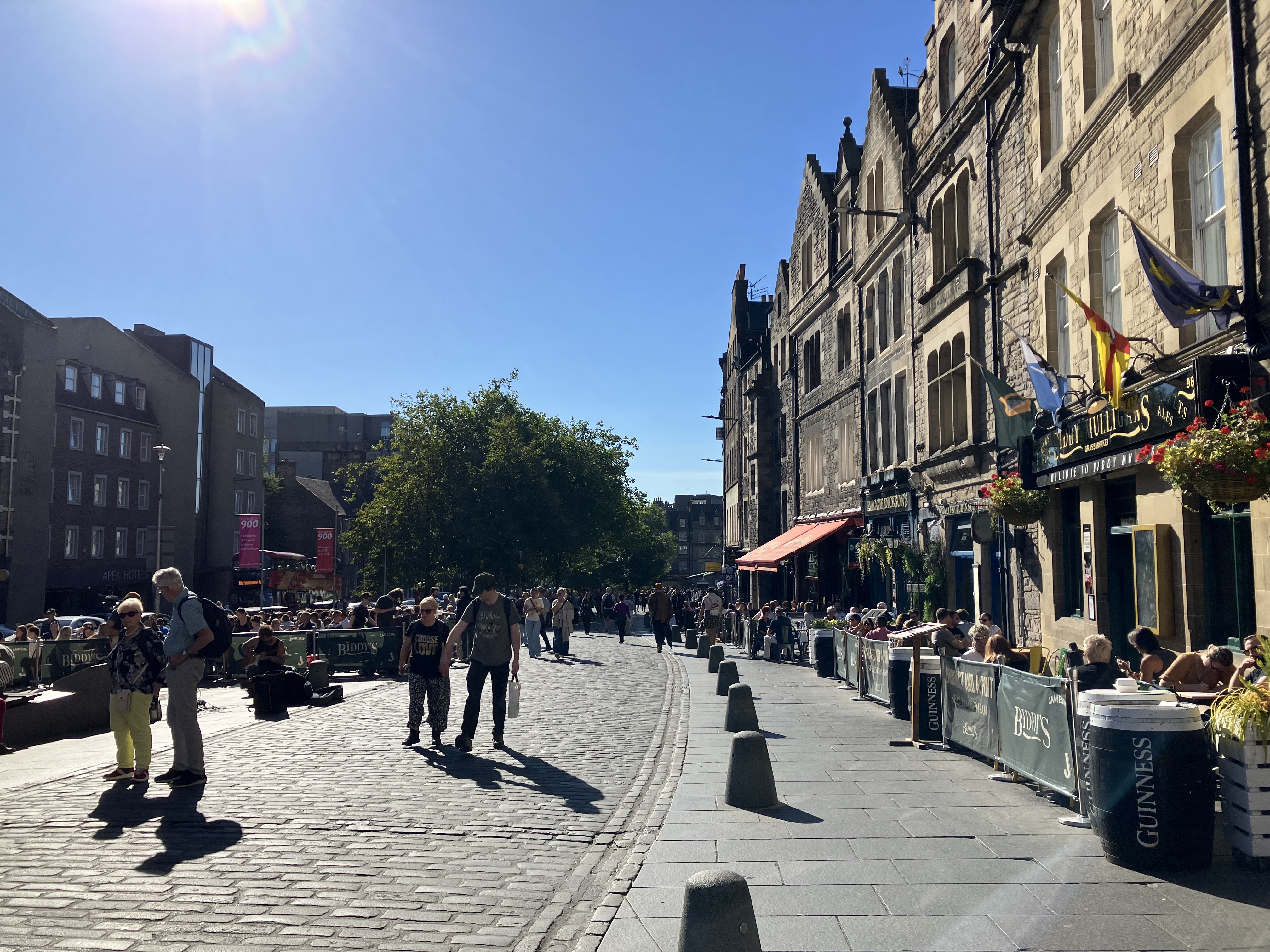
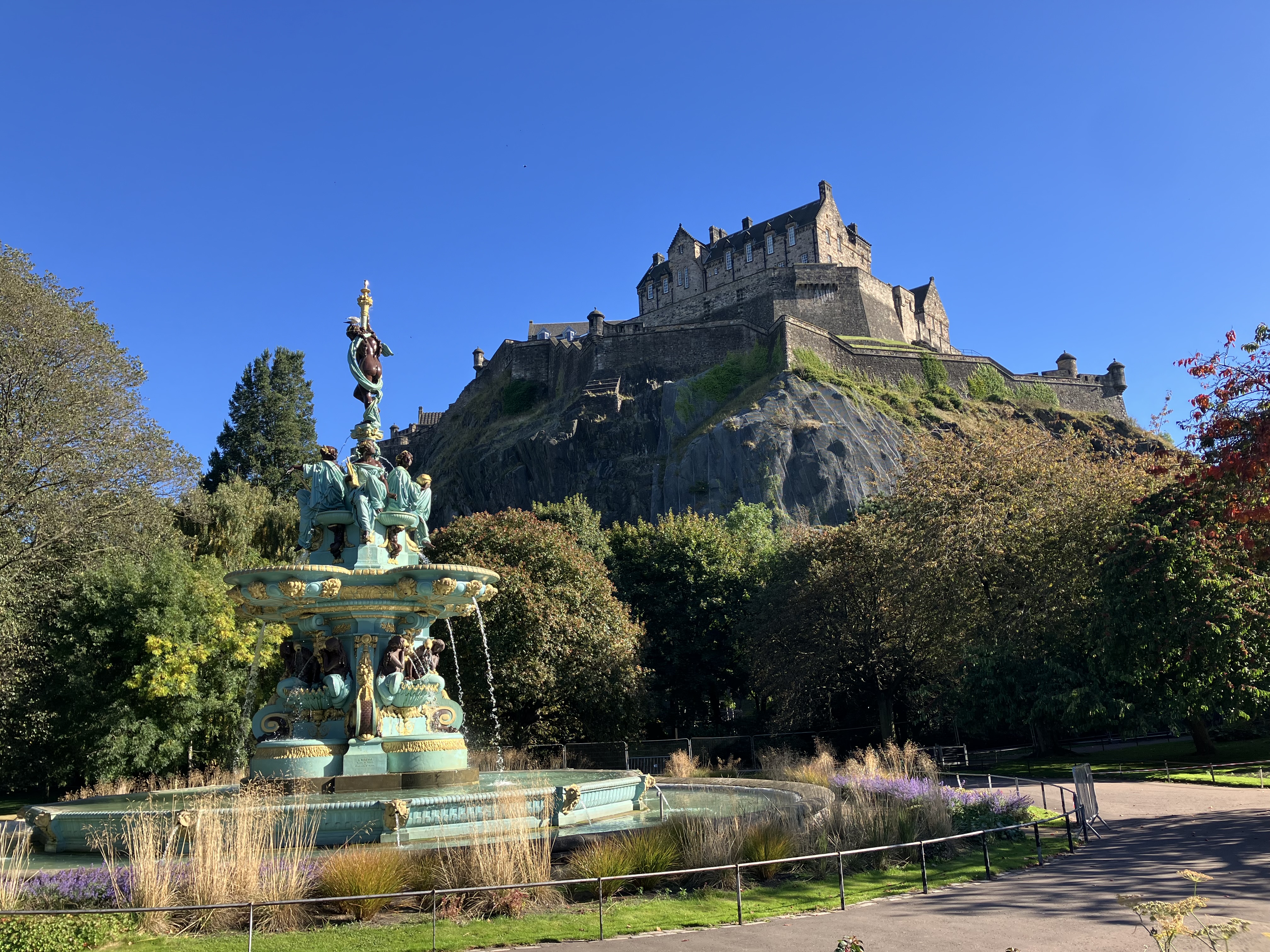
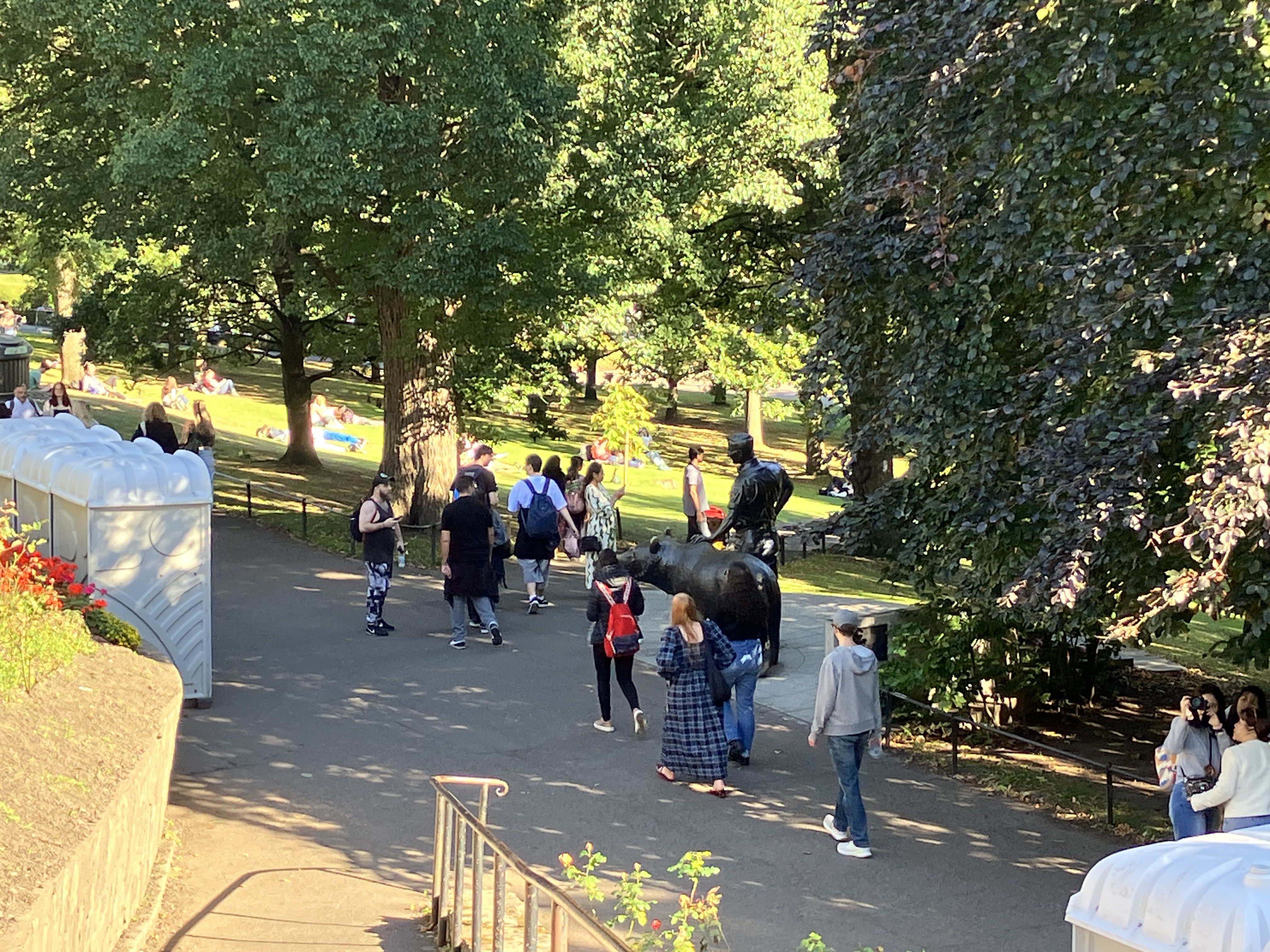
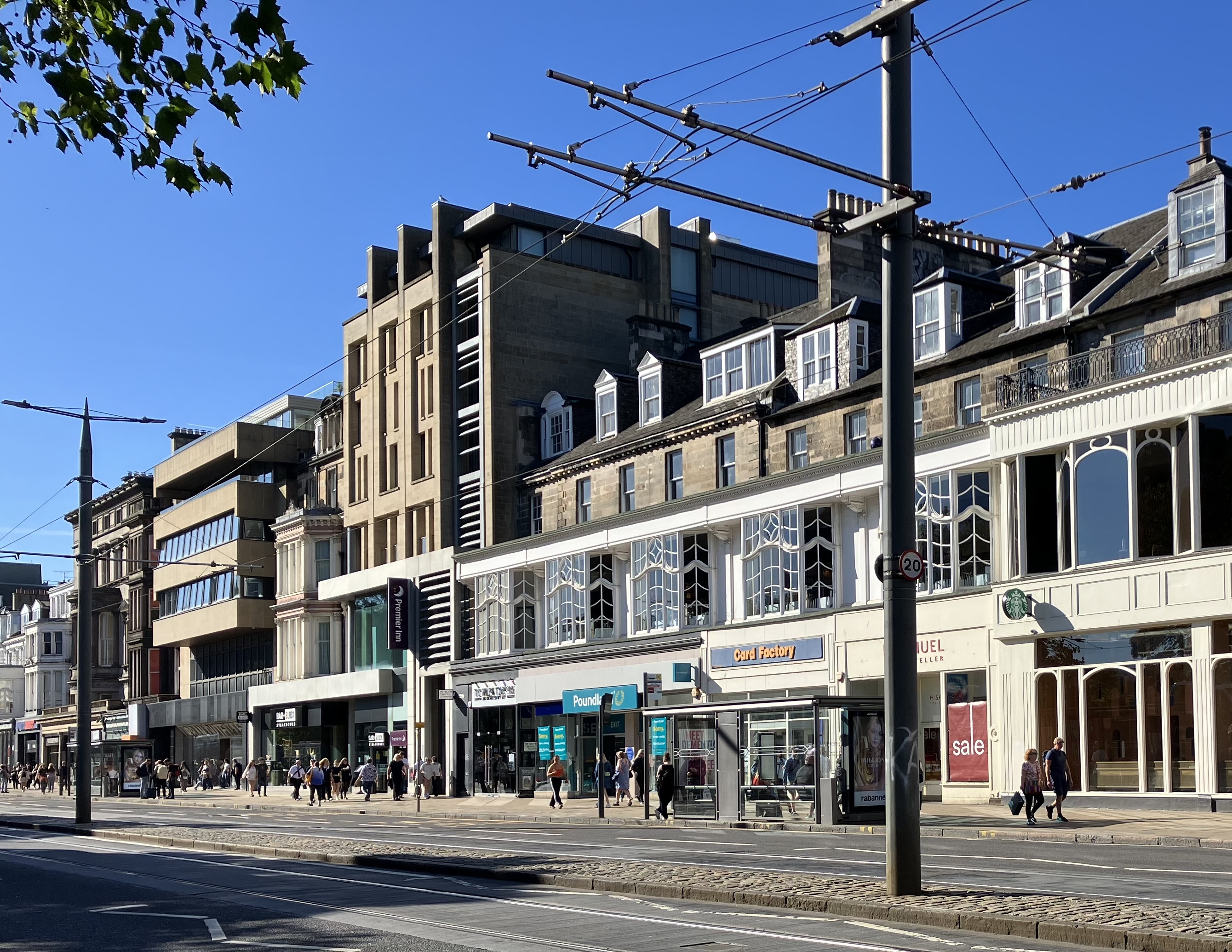
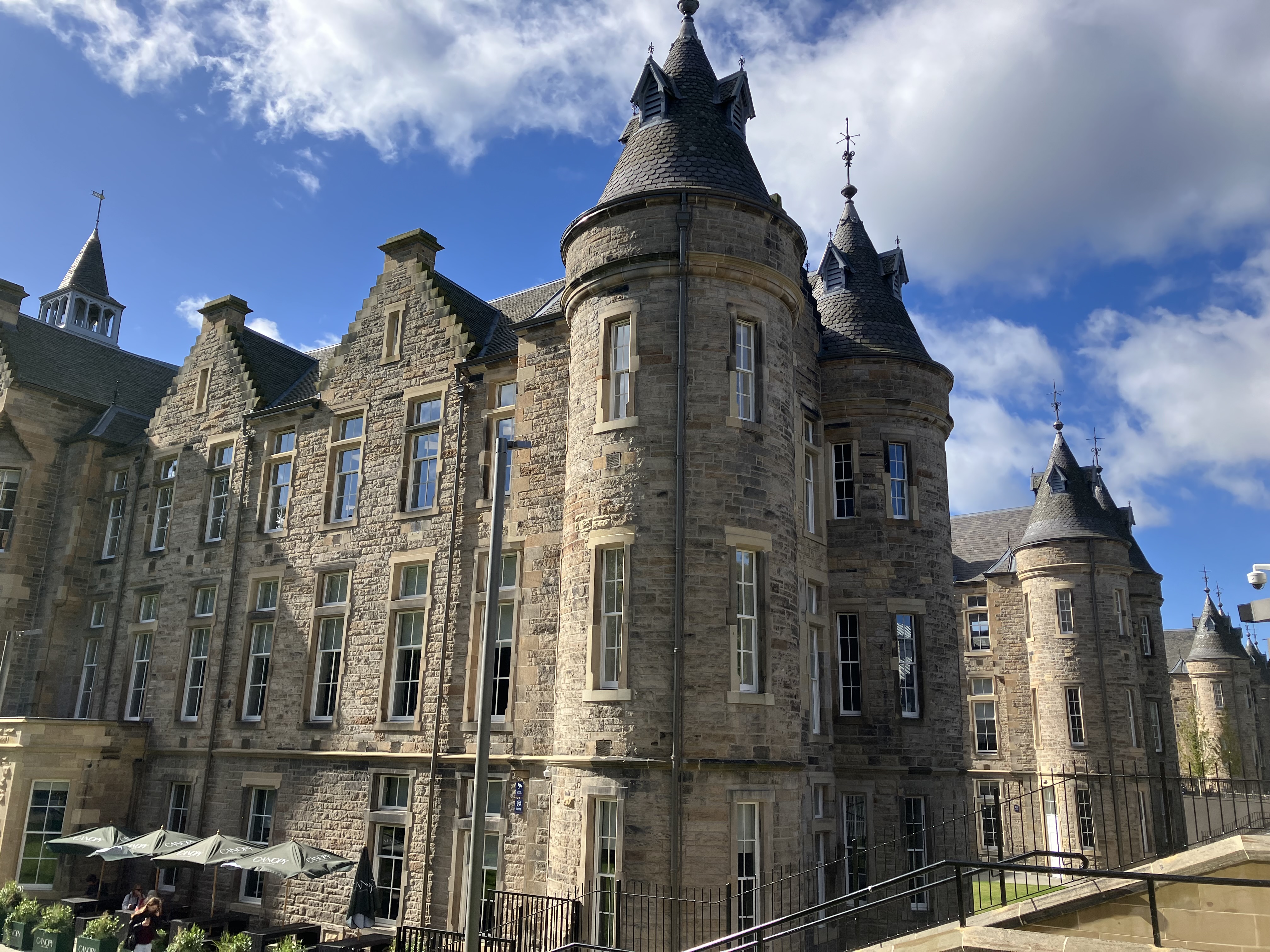
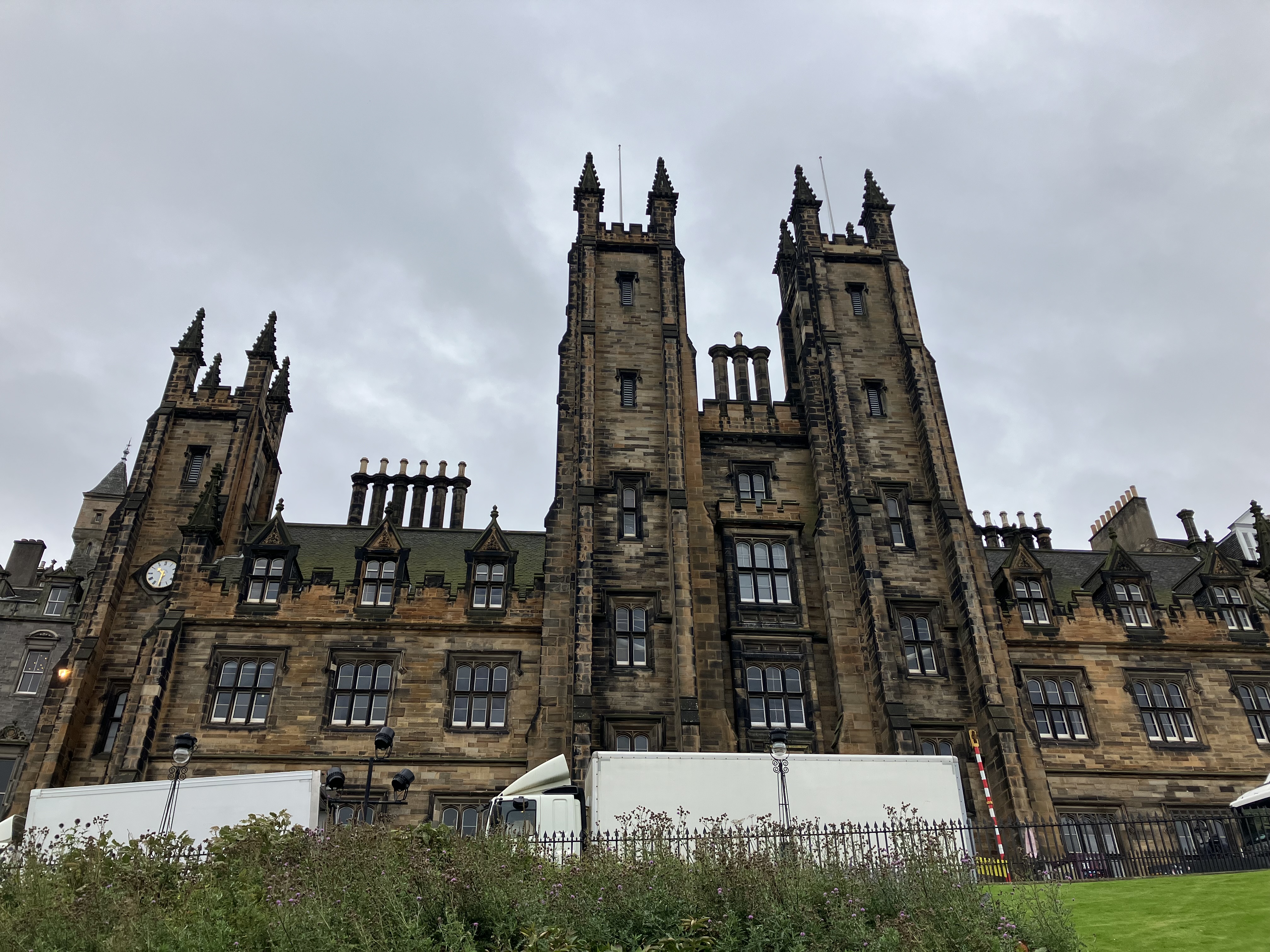
This afternoon, it was tempting to stay in my Premier Inn room, reading and writing and hiding from the world. But it’s my last day, and the sun was shining. I walked a loop of all the lanes that I have frequented during my stay, taking in the sights for a final time. There was my college, New College, perched on the hill. The entrance to the castle (which I have never seen without scaffolding either being erected or removed). There is the Royal Mile, with cobblestones and pretty buildings, bagpipers busking and a thousand tourists. Then down the lane which is thought to have inspired ‘Diagon Alley’ (Harry Potter.) Along Grassmarket, with the pub called Maggie Dickson’s—she was hanged in 1723 for murder, but survived and revived; so they changed the law thereafter to say ‘Hanged by the neck until dead’ to prevent further escapes from punishment. Then past ‘The Last Drop’ which is a pub with nooses in the window, marking the square where people were hanged. Past the castle, high above the city. Through a graveyard of huge gravestones (it’s easy to see how Edinburgh inspired the Harry Potter stories). Princes Park, with its fountain and sculptures and more tourists. Back to Princes Street, and my Premier Inn.
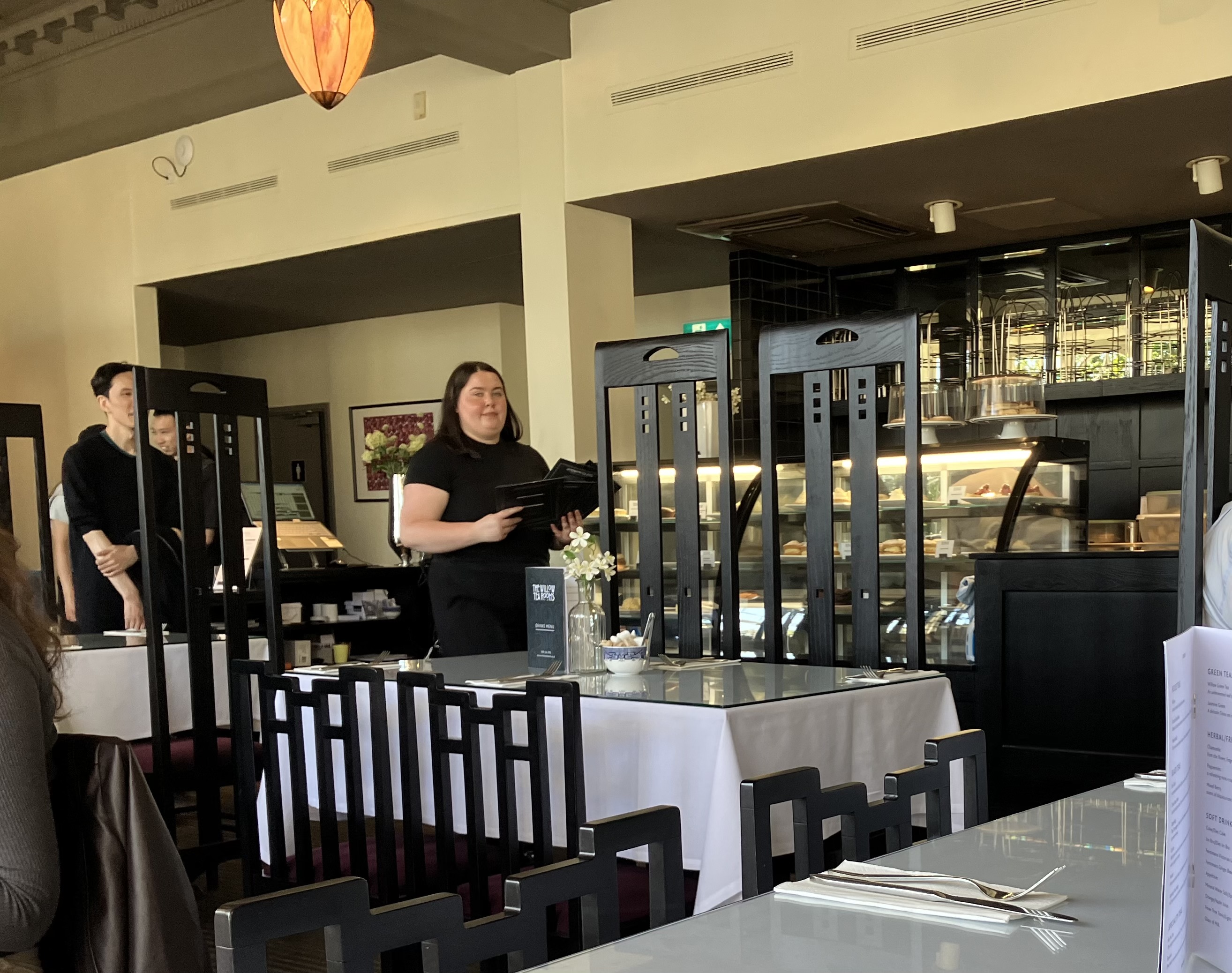
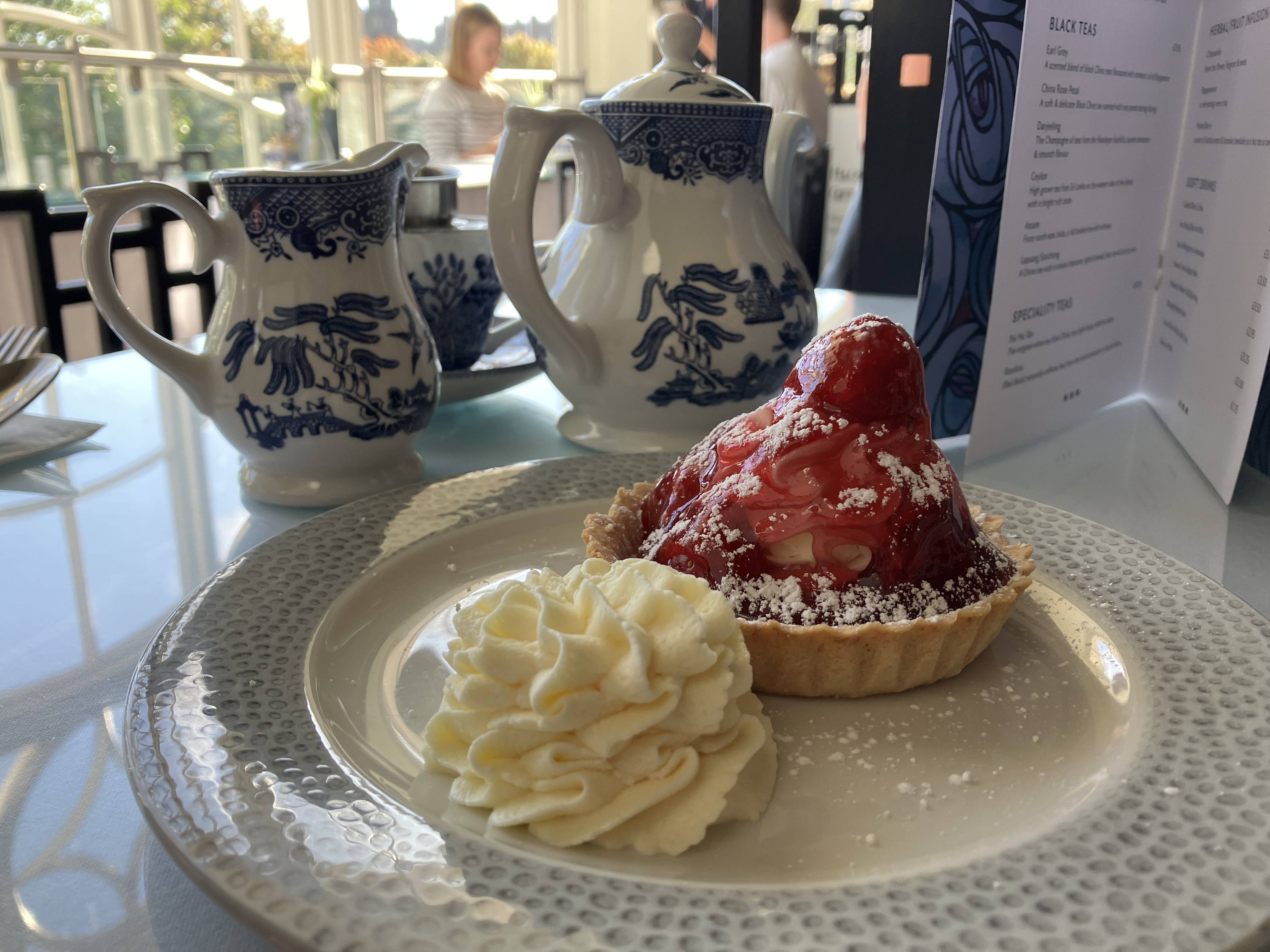
I pass a teashop each time I leave the hotel, and today I decided to treat myself. It had high-backed chairs that formed sort of screens, so the vibe was very Chinese Teashop. I had a pot of tea, and a strawberry tart, and sat there, enjoying the view and trying to understand the Chinese chatter of the group on the next table (I think they spoke Cantonese, so I didn’t understand more than the odd word.)
In the evening, I walked to a little Bistro round the corner, and ordered a glass of red wine and spaghetti bolognese, and a side salad. I don’t think they are used to people ordering side salads (it wasn’t on the menu) and my bolognese arrived with a few lettuce leaves draped on top! Later, the waiter noticed and went to the kitchen and I was given a very sweet little salad with slices of fresh orange decorating the edges, and lots of apologies from the waiter. I sat in the corner, and watched the world, and felt very brave for being there.
Now everything is done. I shall set the alarm, and walk to the station tomorrow morning, and get several trains back to Kent. It has felt like such a long trip, the longest 10 days ever. But I am pleased with what I have achieved, and am looking forward to settling down into my research.
Thank you for reading. I hope you have a good day.
I am writing this in a coffee shop on my own. This is a very scary thing for me! It’s Sunday, and we had to check out of the flat. Husband has taken most of the luggage home on the train, and I have moved into a Premier Inn until after a seminar on Wednesday. Unfortunately I had to leave the flat very early (so helpful Husband could carry my case down flights of stairs before catching his train) but I cannot check-in to the next room until later. Hence the scary coffee shop.
Now of course, like most of our fears, there is nothing intrinsically scary about being in the city on my own. I am unlikely to have any problems. But fear is rarely rational, and I find it can stop us doing all kinds of things. Sometimes we have to physically force ourselves to go somewhere, or apply for something, or say something. Usually, once we have started, things are not so bad. I find that praying and distracting my brain with something (like writing a blog!) are a huge help.
I have a rough plan for the day. I will sit here, sipping coffee and nibbling a cinnamon bun until it’s time to go to church. To be honest, I am mainly going to church this week because it will be a safe place to wait for an hour—which is entirely the wrong reason. I should be going because I want to be with other Christians (I don’t—I have met enough people this week) or to praise God. And I do want to worship God, because I could never be here without him, but mostly I am going to hide. We all need somewhere we feel comfortable that we can hide and after a lifetime spent going to churches, this is one of my places. (A bit odd perhaps, if you are not a churchy person and feel the exact opposite about being in a church service.)
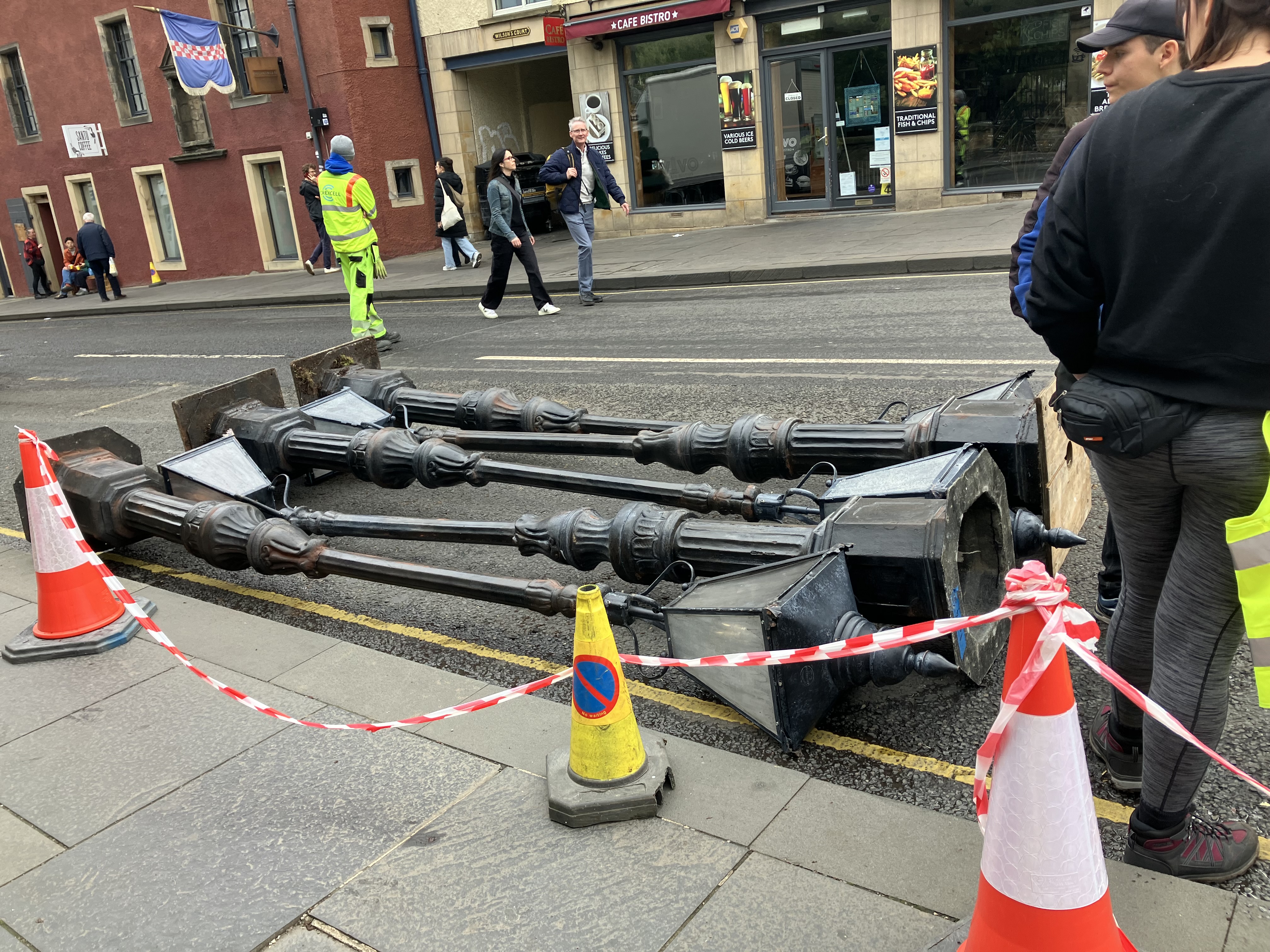
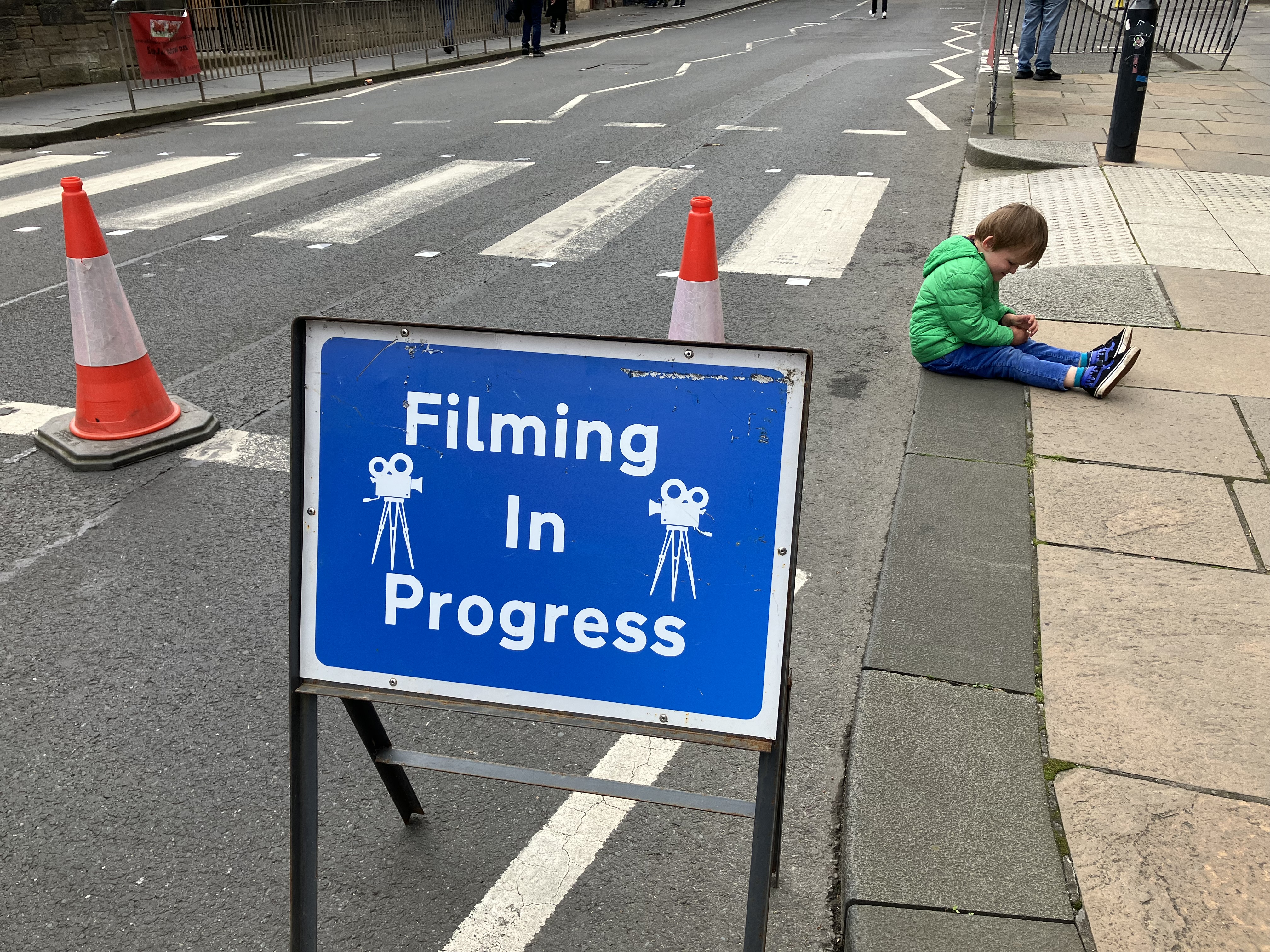
This afternoon there is a parade along the Royal Mile (the road down from the castle). There always seems to be something happening here. Earlier in the week they blocked the road to film a new Netflix series. It must be set in the past, because they were even replacing the street lamps with more authentic-looking ones for the era. There was also an old market scene, with baskets of bread. But I didn’t see any actors.
I will let you know if I manage to go to the parade. Time to eat the sticky bun, use the washroom and walk to church.
*****
It’s Monday, though it feels like a month since I wrote the above. Church was fine, though a bit odd for me because it was a very high church, and they whooshed incense around, and marched up and down the aisle at unexpected times. But the choir was amazing, and best of all, I met a couple of other students that I recognised from last week, so it felt a good place to be.
Later I found the parade in the Royal Mile. There was dancing (I watched) and marching bands. Best of all, it seemed as if every horse rider within reach of the city had brought their horse to Edinburgh for the day. So many horses. There were a few soldiers, but most were hunters, a few children riding ponies, farmers on cart horses and posh-looking riding clubs. It was fabulous. As I walked home, I could hear their hooves on the cobblestones echoing round the old city as they were returned to their horse-boxes.
Today I started work. (I am considering the issue of assisted dying through the Hebrew Canon creation texts about people and animals.) I have decided which texts in Genesis and Job I will study, and went to the library to look at a Hebrew version with an apparatus (lots of footnotes) showing all the contested words. I admit that I had another wobble. I sat there, pleased to have found the correct book, but suddenly overwhelmed by the extent of my ignorance. The book was full of symbols and languages that I didn’t understand. I felt as if I was rowing a tiny dinghy on a stormy sea. Took a few deep breaths and reminded myself that nothing is intrinsically difficult. I just had to go very slowly, and try to understand a tiny bit, until inch by inch I made progress. It took ages, but I began to unravel the key, to investigate the notes. I discovered things like that ‘S’ meant a Syrian text (so I could assume the strange squiggles next to it were a Syrian word) and the author thought there was a mistake due to the ignorance of the scribe (so not a typo, but a misunderstanding). And so on.
I also joined another library and have another laminated card with my photo on it. The National Library of Scotland is a deposit library, which means they have copies of every book. I can reserve a book in advance, and they will take it out of deposit (this takes a few hours) and then I can read it in the reading room. There is a list of rules—no pens allowed, no liquids, no coats or bags. I leave all my stuff in a locker, though I am allowed a phone and can take photos if I ask permission first (which I do not entirely understand). I am hoping the National Library in London will be the same, as it was all very easy. (The only hard thing was finding proof of my address, but eventually found an emailed invoice.)
It’s good to be here. I have to remind myself to look at things, to notice the cobbled streets, to hear the bagpipes, to enjoy the history of the place. It has not been an easy few days, but as I gradually learn how to do things, and as places become more familiar, it is beginning to feel less scary and I can begin to enjoy it. Thank you for reading and sharing it with me. I hope your week goes well, and you find the determination to succeed with the things you are struggling with.
I am so tired, and today I have a migraine. I have reached saturation point for encountering new people, in unfamiliar settings, and absorbing useful information. Feeling old and tired.
It is Thursday—and it feels like I have lived a whole month in the last few days! On the positive side, I have discovered lots about how to undertake a PhD, and met some friendly people, and I do believe that eventually, all will be well. But at the moment I am longing for familiarity and safety and to stop trying. It has all been an effort.
The week began on Sunday, with collecting my student pass. This had all been uploaded in advance, and we had been told to book an appointment, which was valid for 15 minutes. In practice, when I arrived at the allotted time, there was a long line of students snaking around the library square and out of sight. When I asked people if they had an appointment, they said no, they were just turning up on the off-chance (this seems to be the way new students do things). However, the library staff were seeing people in the order they arrived not the order of appointment—which didn’t seem to exist—so it was a long wait. It passed eventually, I chatted to some Mandarin-speaking students, and I ended up with my student pass. I am rather pleased with my pass, and it allows access to all sorts of exciting university buildings. First mission achieved.
Monday was mainly about learning the building of New College and meeting members of staff and other students. Only the postgraduate students were in the seminars, though we were a mix of Master’s and PhD students. There were some smaller meetings, when I discovered some more PhD students who planned to study remotely, and it was good to chat with them. The day ended with a guided walk, which I’ll describe in another blog. I met Husband and Son for dinner, which made a fun ending to the day. They told me about their day of whiskey tours and sightseeing, and I drank red wine and felt tired.
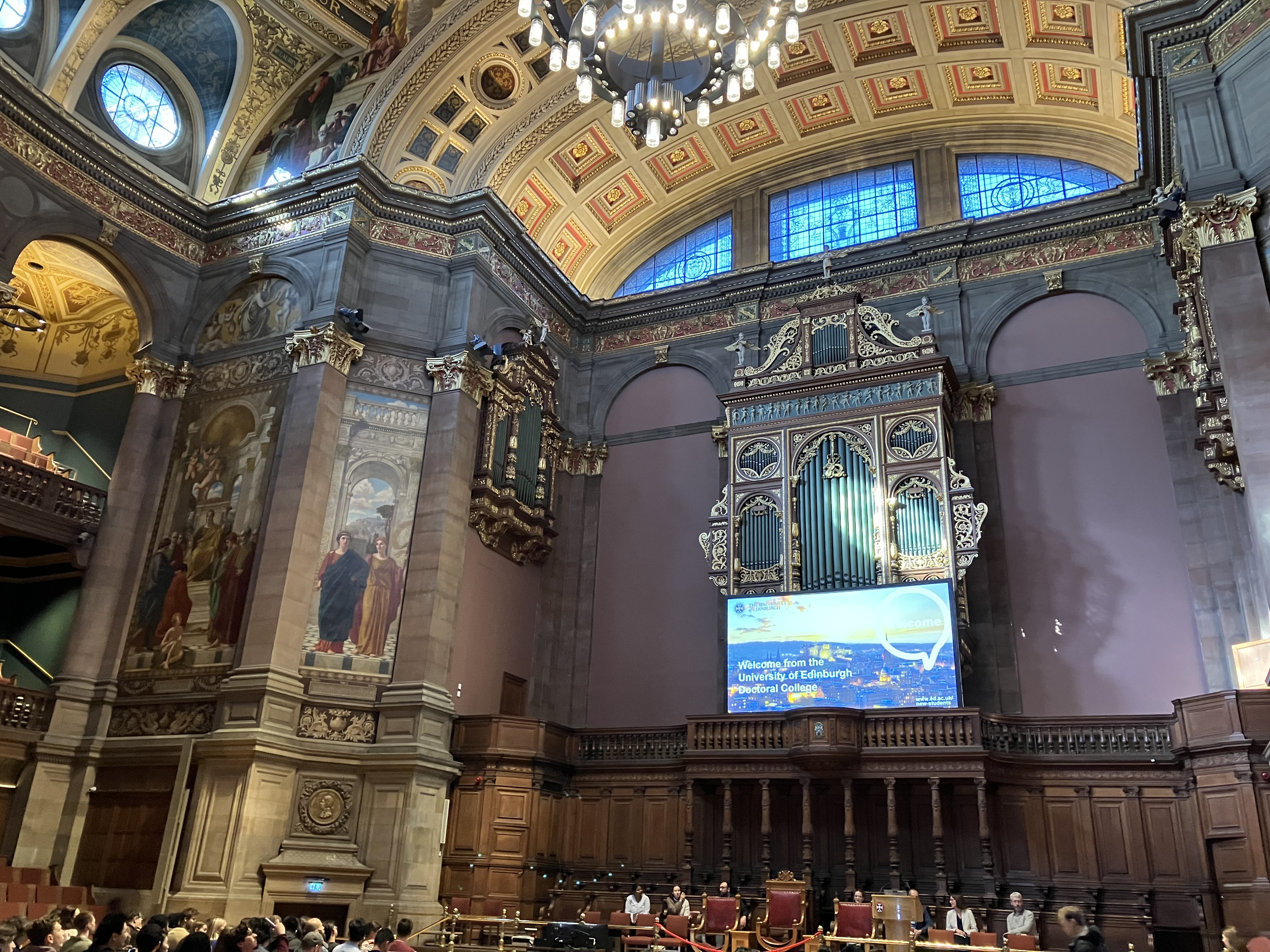
Tuesday were more welcome meetings. All the meetings were mainly fluff—nothing substantial was said but we learnt about the university and began to recognise each other. The main meeting was in McEwan Hall, in Bristo Square, which is the marvellous hall that we will eventually graduate in. It was very beautiful. Most of the university is very beautiful—I can’t quite believe I am here. Perhaps appreciating beautiful buildings is something that comes with age, as I’m not sure the younger students were necessarily noticing the ancient city. I also met my supervisor and the other PhD students working with her. It seems I am not the only one who feels like an imposter, hoping no one discovers that I’m not really clever enough to be here. Apparently this is a common feeling.
Wednesday was a full day of seminars, learning about things like ethics in research and how to avoid misconduct in academic writing. There was also an inaugural lecture, with members of staff wearing their gowns and processing into yet another marvellous hall, followed by more talking to strangers and trying to remember names and faces and areas of research. Husband and Son spent the day in St. Andrews, which apparently has the best ice-cream parlour in the UK, and the beach where Chariots of Fire was filmed. They sent me photos of themselves running along the beach like olympic athletes (though to be honest, not so much like olympic athletes…)!
Today was a morning of lectures, learning about the workings of the library and discovering which research seminars were available to assist our research. It was helpful—probably the first day of actually useful material as opposed to fluffy stuff, but I was more tired. I have met SO many people, and have now got to the point when I cannot approach people to ask their names, because I probably already have, but I don’t recognise them. I have started to make a list of the main new friends I have made, because the names are a blur. I checked with one friend, checking that she was called Sarah. She said no, she is called something else, but lots of people have called her Sarah. I admitted that was probably my fault, and wrote down her correct name.
Then, walking back to the flat, I had a migraine aura and cancelled my plans to visit the main library.
Migraines are annoying, but there’s not much I could do to prevent it. I took pills, drank coffee, and waited for the worst of it to pass. If I consider what I have achieved this week, I am pleased. But between you and me, I am ready to go home now. I am sure that when I start, the fog of new things will become clear, and I will get into a routine of studying. In time, it will be fascinating. But the next few days are going to be hard for me. I am looking forward to going home.
‘Welcome Week’ at Edinburgh University begins in September. I had my first ‘fresher’s Week’ in 1984–exactly 40 years ago, which is a nice round number. In case you’re interested, I don’t feel so very different, though perhaps I am worried about different things. In 1984, I worried that perhaps no one would like me, and whether I would manage to maintain my relationship with my new boyfriend, what would happen if they realised I wasn’t really clever enough to be there, and what if I was murdered. This time, I am worried less about what people might think about me (I’m old enough to be their mother, so it doesn’t matter if they don’t like me, though I hope that they will) and my ‘new boyfriend’ has now been my husband for many decades and came with me (maybe to check I wasn’t murdered, but mainly just for the fun of it). I am still worried though that someone will realise that I am not really clever enough to be here. Part of me doesn’t care—I am here because I have enjoyed studying theology with a passion and I want to continue—but managing to get a PhD would also be nice.
The train drivers unhelpfully went on strike, so we caught a train from Euston to Glasgow, and then a different train (from a different Glasgow station) to Edinburgh. The walk through Glasgow was quite exciting, with protestors and crowds and lots of police, including some on horses. Perhaps Husband would be needed to stop me getting murdered after all!
We arrived in Edinburgh and walked to ‘Hot Toddy’ for coffee. This is the only place I know, because it’s where my supervisor has suggested we all meet for a social gathering next week. It seemed nice, so we booked a table for dinner before walking to our Airbnb.
We have rented a flat in Grassmarket. It has a red door, and then is on the third storey, up lots of wide winding stairs. There’s no lift, and I have a dodgy back, so I worried Husband might not manage to carry up all the luggage, but he’s fitter than he looks, so we were fine. The flat is old, with sloping floors and peeling paint and wonderful views. It’s not the cleanest flat I have stayed in, but it’s good enough. It will do. The kitchen is well equipped, and it will be somewhere for me to hide when I am not doing scary new-student things and trying to look intelligent. (Actually, I don’t think I can manage to look intelligent, so I will just smile at people, and try not to talk too much, as I have learnt this is a good strategy in life,)
When we first planned to come, we had assumed there would be very little university stuff planned, so it would mainly be a week of tourism. But then my timetable arrived, and I had lots of seminars over 10 days. One difference with being an older student, is that I like to plan. It seems that 18 year-olds don’t think about university until they get here, so the university does not bother to tell you things very far in advance. Now I am older, I have to do things like organise someone to feed the chickens and sort out the goose and dog. Hence we had booked our train and flat as soon as we knew when term started, but before my timetable arrived. As Husband was not invited to the seminars (that would be terrible!) he quickly persuaded a son to also come to Edinburgh, to do tourism while I was busy. (This is an excellent reason for having children, so do try not to despair if your children are 10 years old and annoying. They do get better with age.)
We wandered round the city for a while before dinner. Edinburgh is built on hills. The castle stands on an extinct volcano, with a ‘tail’ formed in the ice age that is now a hill crammed with expensive buildings. The poor people lived in the valleys—the lower you lived, the poorer you were. There are lots of steep narrow staircases joining the two. It’s modern claim to fame is that Harry Potter was written here, and as we wandered along narrow streets, and saw exotic shops next to cobbled roads, it was easy to see how the city had inspired the books. It is very beautiful, but in a well-used historical way. There is still an undercurrent of poor—-though they are no longer confined to the valleys. You cannot avoid seeing the homeless, the addicted, the desperate, which always makes me pause when staying somewhere beautiful. Something is wrong, but I don’t know how to solve it.
We ended the day with dinner back at Hot Toddy. I went to bed exhausted, and nervously excited about the next ten days.
Thanks for reading and sharing the adventure. I’ll tell you more in another post.
The last day of our Italian holiday in August, and Husband had planned a packed day. (Which meant we all had to pack our suitcases late at night, ready for an early departure, but we won’t talk about that.) Our first stop was to The Garden of Ninfa, in Cisterna di Latina, about an hour’s drive from the villa.
We have all suffered from mosquito bites, and a garden sounded particularly insecty, so I dressed in clothes that covered me from head to feet. It wasn’t a good look (and the lovely thing with family, is they give honest feedback) but I felt safe. It was hot though, especially as the weather was in the low 30s.
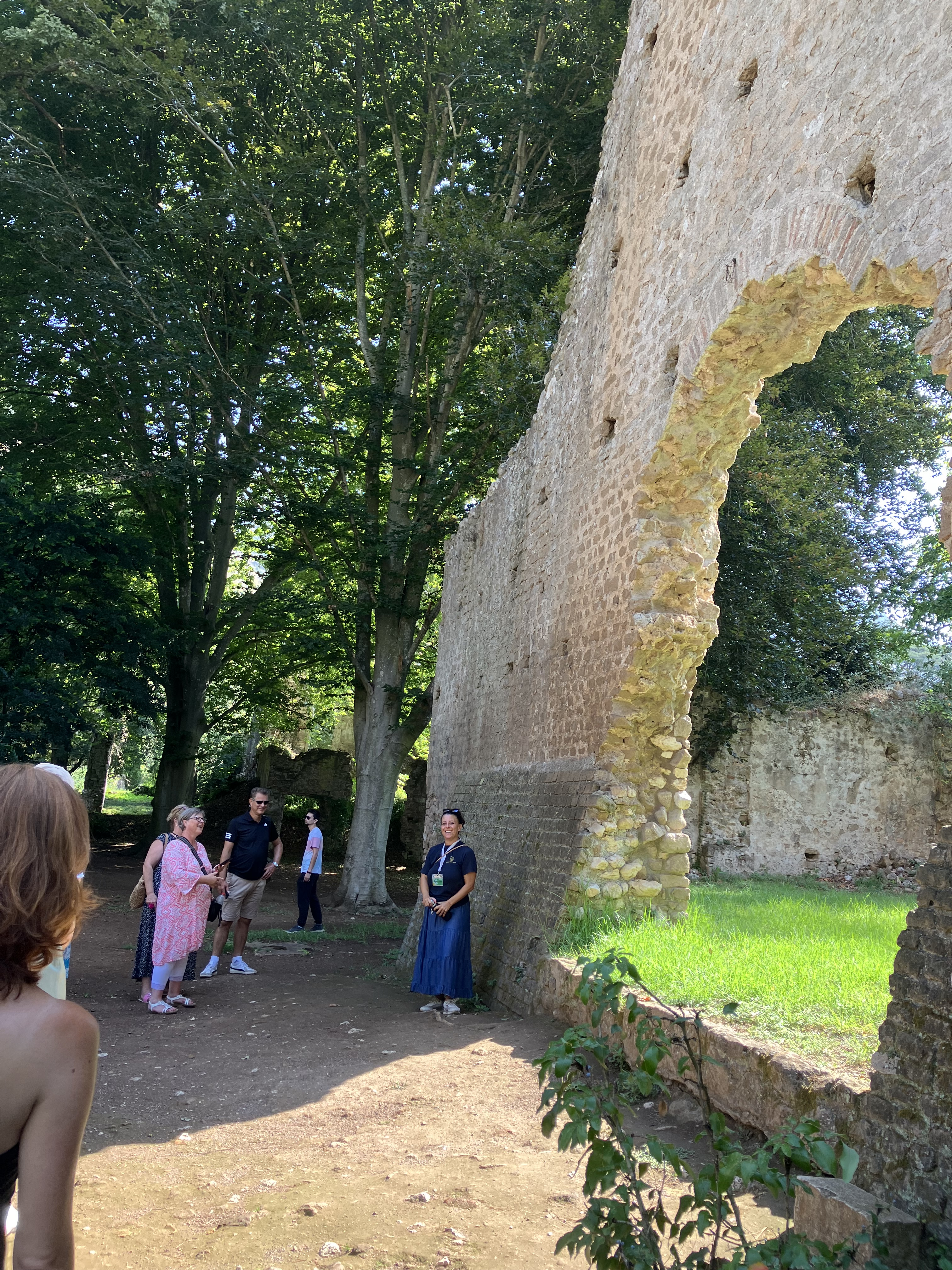
The garden is named after the Roman water nymphs, and was built on the site of a medieval city. It’s described as ‘the most romantic garden in the world’ and it might be, at the right time. However, it is only possible to view it in a tour group, and it’s very hard to feel romantic when herded from place to place by a tour-guide. It was a very prescribed tour. No wandering off, no touching, no feeling the magic.
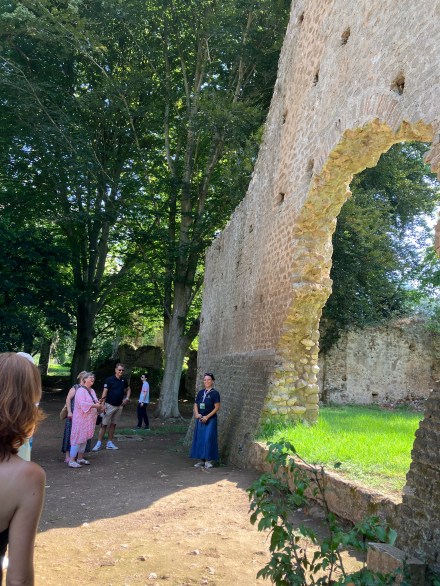
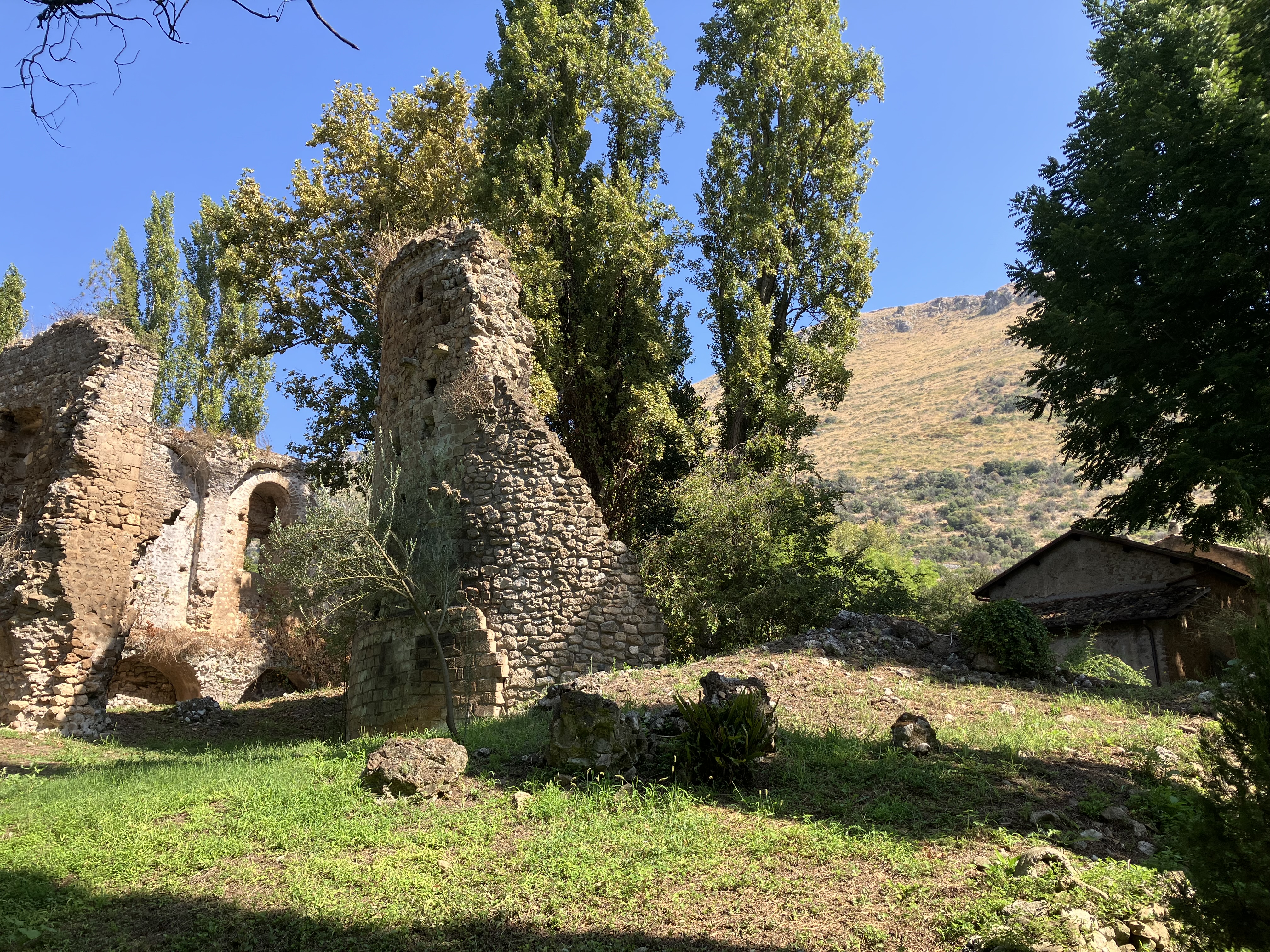
The ruins of the city had been left, and the garden planted around the crumbling walls and ruined towers. It was pretty. But the overriding impression was of standing for long periods while the guide told us information that we didn’t want to know, and waiting while the stragglers in the party finished taking their photos, and being very hot. There was shade, but not quite enough for a party of 30 people.
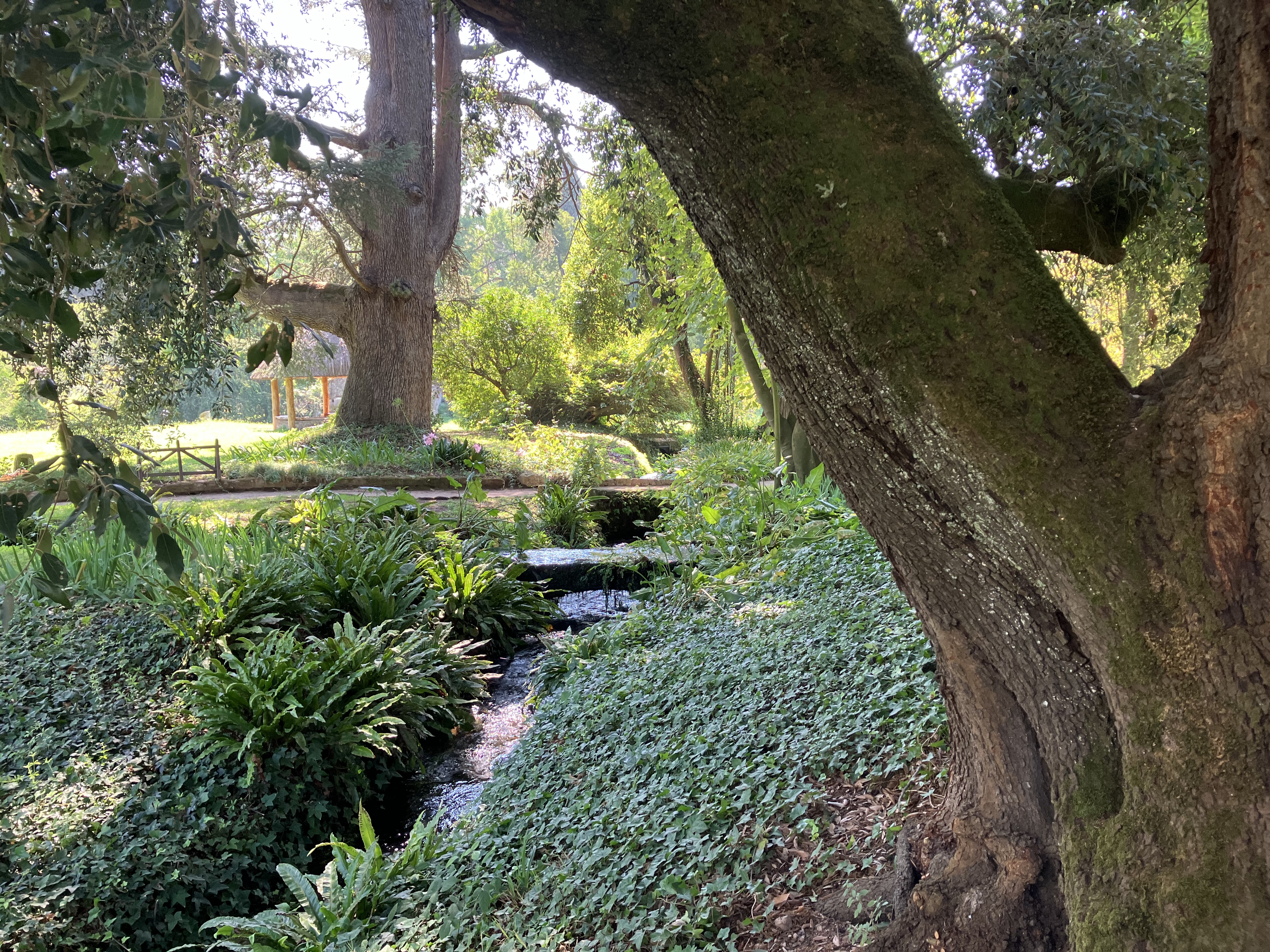
Then came the rather embarrassing mistake. We were standing in a loose huddle around our guide while she told us the name of plants, and when they had been planted, and one person (not me) decided to have a drink from their water bottle. They stood, in the ‘most beautiful garden in the world,’ enjoying the shade, looking at the green leaves and pools of water, while unscrewing the bottle top. And then, horror! The bottle top slipped from their sweaty fingers, bounced once on the pretty cobbled path, and plopped into the little stream. Lots of eye-contact between the family. The lid floated down the stream, passed the carefully planted greenery. There was no way to retrieve it without being reprimanded by the guide and trampling on the delicate foliage. The bottle top floated, over a tiny viaduct, and out of sight.
We lurked at the back of the group when they moved on, but the bottle top had gone. We continued with the tour. This would have been bad, and we would have felt guilty, but it got a whole lot worse.
We rounded a corner, past another crumbling wall (a man was told off for leaning against it) and towards a forest of bamboo, when the guide stopped next to a pool. This pool, she told us, was one of the most pure water pools in the world. The streams we had passed were all from fresh springs, and the water had been channelled to this pool. The water was clear, and there were black trout, an indicator species as they can only survive in completely pure water. Everyone was very impressed, except for my family, who were all waiting for a blue plastic bottle top to come floating round the corner. We didn’t see it, and are hoping the special black trout didn’t eat it.
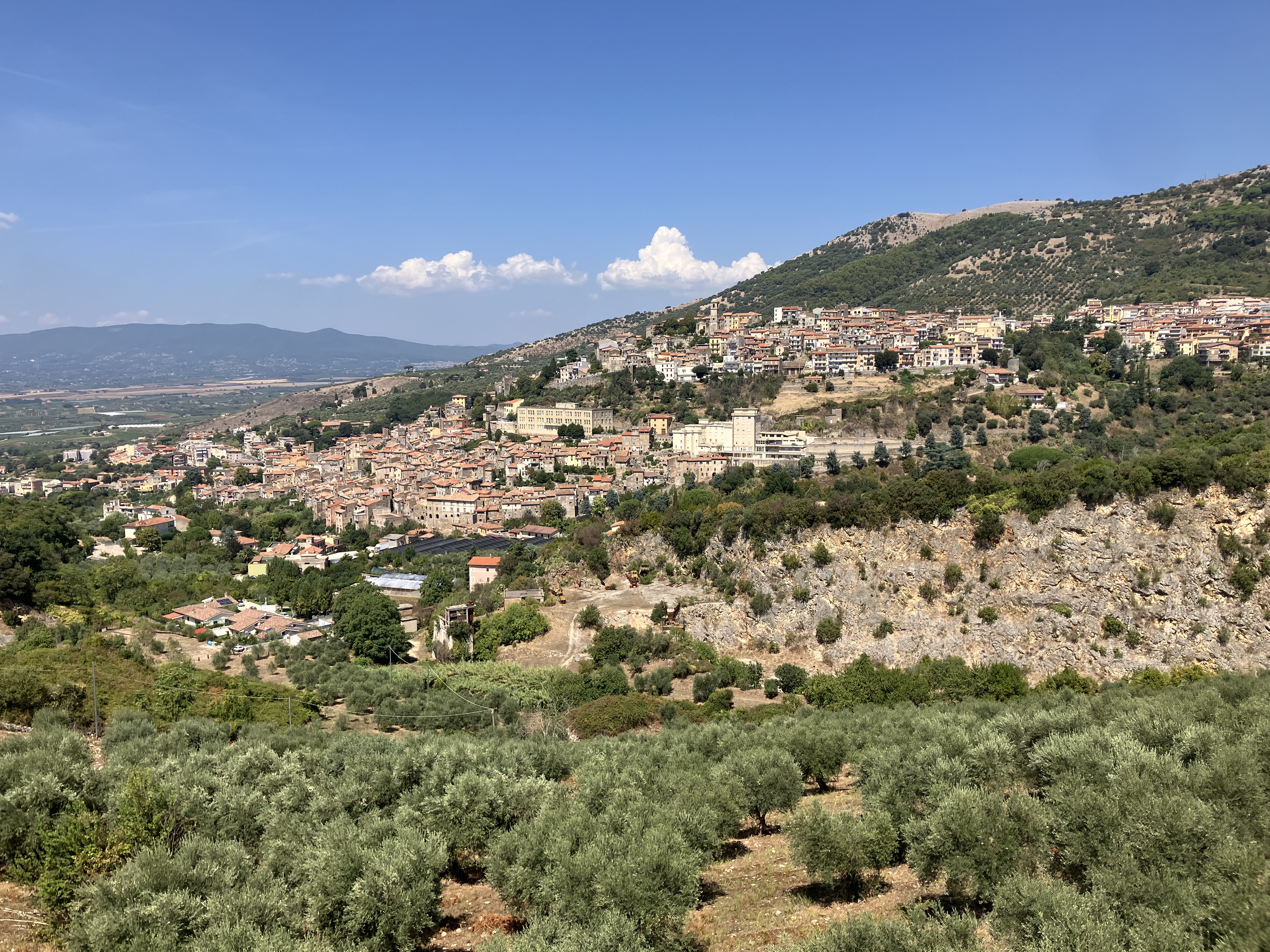
We left the gardens, thinking they would be so much easier to enjoy if we had been allowed some freedom (and had left the sweaty-fingered person at home). The garden is surrounded by mountains, which produce a microclimate, and we drove up, in search of lunch. We ate in a restaurant overlooking the hills, and it was very beautiful. I chose platters of cheese and bread. It was spoilt slightly by the staff, who served all the Italians before us (even though we had arrived first) and who even at one point walked round us to hand an invoice to the man standing behind us when we queued to pay. But the view was great.
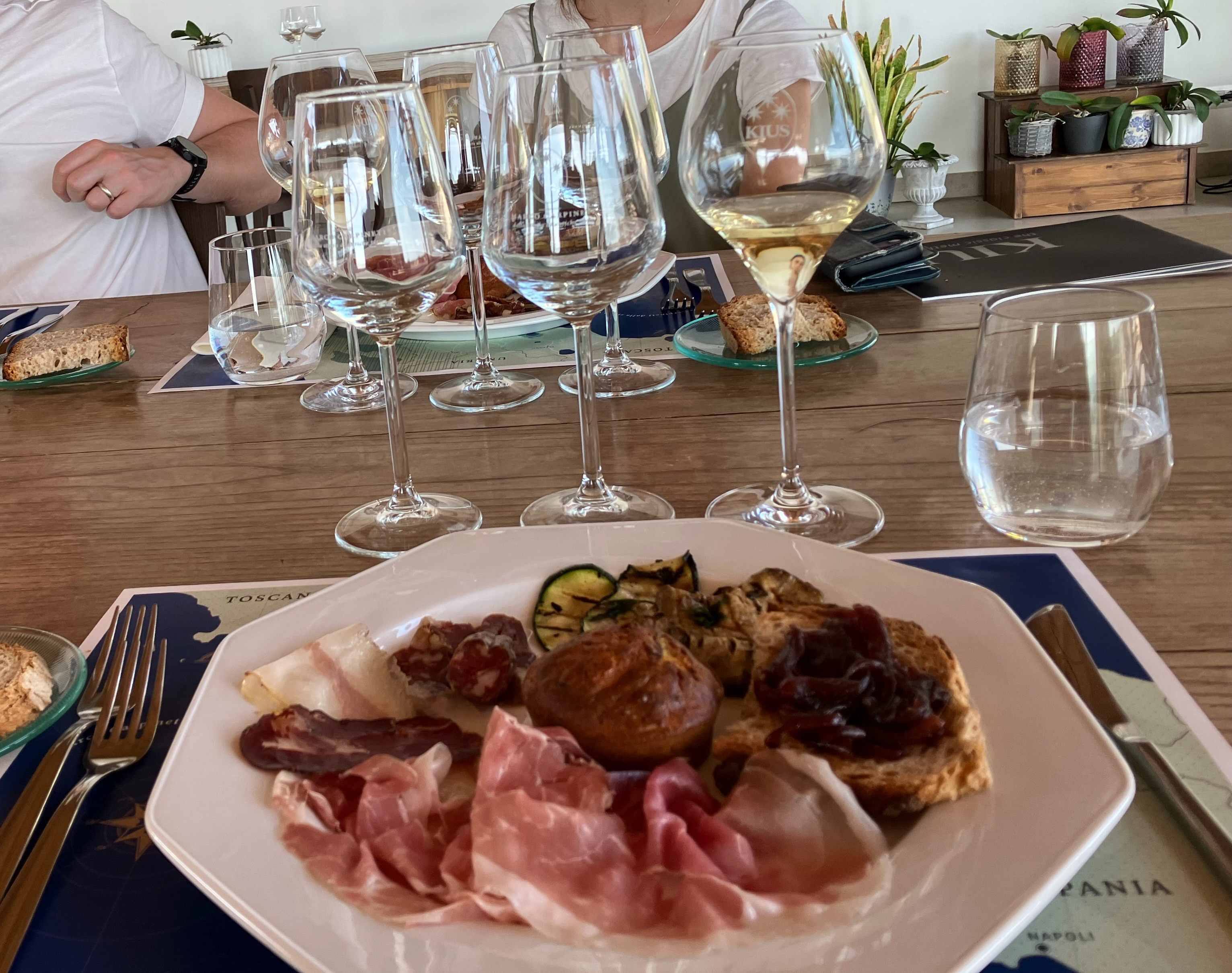
We then went to a small vineyard, and had a tour, followed by wine tasting. The tour was much the same as every tour of a winery—lots of wonderful-smelling vats of things, and huge barrels in a dark basement, and information about adding 4 grams of sugar for one kind of wine and 6 grams of sugar for another. I’m not really sure why we need this information as we don’t plan to start our own vineyard, and it doesn’t much matter to me whether or not yeast has been added to the wine I am drinking. But other people were more interested.
The wine tasting was excellent. We were also given plates of local produce, which turned out to be platters of cheese, so rather a repeat of my lunch. But I enjoyed it a second time. The wine (Cantina Marco Carpineti) was okay—but had lots of tannins (which I don’t especially like, I prefer a ‘soft’ wine like Malbec). It was a lovely end to the day.
The following morning we left the house at 7am (with slight headaches) and caught a flight home. Thank you for sharing our trip to Italy. My main tips are: try to visit Rome when it’s cooler (so NOT in August) and take care when opening a water bottle in a beautiful garden. Oh, and take lots of insect repellent.
Hope you feel prepared for whatever you have planned this week. Thanks for reading. Take care. love, Anne x