Assisted Dying—A Discussion


I was recently invited to lead a discussion on assisted dying. I had a few concerns, because I was keen that no one should be upset by the debate, and talking about death and dying will inevitably evoke painful memories, and possibly fear. As I don’t know the histories of the people attending the discussion group, I decided to be very safe, to keep the discussion as impersonal as possible and to encourage discussion at at a very broad, metaphysical level. I personally find details of the ‘mechanics’ of dying perturbing (I don’t think anyone needs to be reminded of what it looks like when food and water are withheld from a patient). I therefore wrote a little talk, to start the discussion and hopefully guide it in a direction that would be helpful, interesting, and not upsetting. This is what I said:

“The debate surrounding assisted dying takes place in a variety of arenas—I have attended debates in government and medical schools and universities. I argue that fundamentally it is also a theological issue—and perhaps it is the philosophers and theologians who should be the loudest voices, though in practice it is the medics and politicians who we mostly hear.

Even the semantics are emotive—are we discussing ‘assisted dying’ or ‘assisted suicide’ or ‘euthanasia’ or ‘mercy-killing’? The terminology can be confusing, so to clarify: ‘Voluntary Euthanasia’—means a doctor will administer medication (Netherlands and Belgium).‘Assisted Dying’—means the medication is provided by a medic, but the patient must take it themselves. (Switzerland, the state of Oregon, and Australia).

 I hear people say that it should not be introduced, because ‘Humans are made in the image of God’ (I would love to know what they understand by the image of God) or, ‘Only God should decide life and death’ or ‘Assisted dying is murder, and murder is wrong’.

On the other side of the debate, I hear that ‘We would not allow an animal to suffer, it is cruel to make a human suffer’, ‘Palliative care cannot remove all suffering in all circumstances so we need another choice,’ or ‘Humans should be allowed dignity in life and dignity in death’, or ‘At the moment people have to travel alone to a different country so they can die with dignity’. All of these statements are both true and an over-simplification of the issue.

If we look to the Bible, the issue is one of finding an underlying ethic rather than finding clear examples in the biblical texts. Death in the Old Testament is seen as good (from God—we were created as mortal) and the ‘right’ end to life was die a natural death after a long life, and to be ‘gathered to the ancestors.’ Only premature death (by murder, killing or accident) was seen as a bad thing.

The Bible certainly does not condemn suicide in all cases, as Samson killed himself (and a hall full of enemies) when he pulled down the temple in Judges 17. There are only two cases of ‘assisted dying’ in the Bible of which I am aware. One is in Judges 9:54 (when a man has a millstone dropped on his head by a woman and he would rather a man killed him so he asked his servant to kill him before he died). The other is 1 Samuel 31:4, when King Saul asked his armour-bearer to kill him so that he wouldn’t die by the hand of the enemy. Both of these examples have reasons which today seem unacceptable—but I wonder if they are so different from the motivation today that is sometimes given, of not wanting to be a burden, or not wanting to lose one’s dignity. People want to be in control of their own life, and this includes their own death. In Oregon, reason for assisted dying is most often ‘loss of dignity.’

There are examples in New Testament about ‘laying down life’ for others—such as Jesus, and the good shepherd (for his sheep) and John 15:13 (Greater love has no man than this…) St Paul put himself in danger, and said ‘to die is gain’. This shows that death is not ‘to be avoided at all costs’. (p.35)[1]The New Testament teaches we should love others as Jesus loved us—but should there be limits on this? Should someone feel obligated to ask for assisted suicide, because they don’t want to be a burden on their family, or because they want to spare their family the upset of seeing them as their body deteriorates, or (worse) because they don’t want to use their children’s inheritance to pay for palliative care? How much should love for others obliterate our own rights?

I find it more thought-provoking that in the New Testament, there was the a case which one feels is an obvious time to mercifully aid death. When Jesus was on the cross, he was next to two men, who were also dying, in agony. Crucifixion can take many painful hours to die. One assumes that Jesus, who could summon healing from a distance, would also have been able to summon death, to stop the suffering of the men next to him, who were certainly dying, and who were in agony. Yet he did not. We know that Jesus died first, and that the men had to be killed cruelly (by breaking their legs) for the convenience of the soldiers. It provokes the question of why. Why would Jesus not accelerate death? Is it possible that in dying, people learn something?

Badham suggests the reasons people now want assisted dying are because:

1. People are now enabled to live much longer, and well past the point that they actually want to be alive. (He notes that pneumonia used to be called ‘old man’s friend’ but now it is almost always cured.) As statistics indicate that healthy lifespan is not increasing, the editor of Bulletin of Medical Ethics suggest that the NHS is basically simply involved in ‘the prolongation of dying’. (p.9)

2. People demand autonomy over every area of their lives. People who are used to being autonomous do not wish to be dependent. (p.13)

3. When the medical intervention is stopped (including feeding) death can be slow and painful. (p.14) Dying naturally might not be quick and easy.

Badham examines utilitarianism (the greatest good for the greatest number of people) and states that as 80% of people now want euthanasia in the UK, the law should be changed. (p. 47) He dismisses that this same ethic was used by the Nazis to justify euthanising the handicapped and infirm who did not want to die. (p.53)

In the UK, doctors can already give life-shortening medication, when death is ‘foreseen but not intended’ and therefore changing the law is simply clarifying what already happens, thus protecting medics from potential law suits. (p.105) At present, the doctor cannot discuss this possibility with the patient, they have to ‘intuit’ that this is what the patient and relatives want, which is open to abuse. Badham says there will be more trust if the situation is more open, and the possibility is legalised formally.

 The work of Dr Monika Renz, who undertook research of dying patients in Switzerland, is also relevant.[2] As a psychotherapist and theologian, she helped many patients during the final moments of life, and she suggests that like birth, death is a transition from one state to another. She proposes that understanding this transition enables care-givers and relatives to both help the patient and to view death as a natural process that should not be shortened.

Renz has studied palliative care patients, and concludes that as they die, they pass through a process—which she names ‘transition’—whereby they reach a state where they welcome death and pass peacefully into it. She describes a ‘pre-transition’ phase, when patients often become agitated, they see various ‘visions’ or hallucinations, they feel the need to correct past wrongs or let go of certain relationships. They then reach ‘transition stage, when they relax and are peaceful and all awareness of self/ego appears to have completely disappeared. Like a return to the early stages of life, when a baby is unaware of what it looks like, and bodily functions are of no matter. Renz says this stage can be hard for other people to watch, but for the patient, it is a time of peace. They then gradually slip into death.

This view of death is a natural one. Death is not to be feared, but rather welcomed (and Renz warns against things that force a ‘return to life’ like a last ride in a car, or a visit to a certain place—the patient’s focus should be on letting go, accepting that they are dying.) This tallies with the few references we have of death in the Canon, whereby a character ‘lived to an old age, and then was gathered to their ancestors’.

The implications for assisted dying are therefore somewhat fuzzy. If this process, whilst possibly difficult is also natural, and helpful, and prepares a person for death, then to curtail it would seem wrong. Assisted dying would be akin to sudden unnatural death—which is portrayed as a bad thing in the Canon—like murder or accident. Assisted dying would be to deny a person the time to process what is necessary, to let go of life, to ‘transition’.

‘The inner world of patients and their changing perceptions is strongly related to the spiritual dimension of being, and many dying patients—religious (followers of all religions) as well as agnostic—have impressive spiritual experiences.’ p.6.

‘Nowadays, more and more dying persons proclaim a right to die, as if they owned life and death. The term “self-determination” is misleading: self-determination is important in life to prevent an individual becoming nothing but an object of others, power structures and medical systems. Self-determination however, finds its absolute limits in facing nature, fate, the earth or the divine.’ p.7.

She views humans as essentially spiritual beings (though she avoids using this phrase) and therefore dying is a process whereby a person, whether religious or not, gradually accepts their spiritual identity and moves away from the world with dignity. She writes: ‘such dignity touches on the divine realm, which in post-transition draws close and is almost tangibly present.’ p.43.

She disagrees with the ‘right to die’ or ‘dying with dignity’ campaigns, saying: ‘It is ‘a catchphrase that obscures the question of ultimate human dignity. It is assumed that dignity depends on the autonomous functioning and decision-making capacity of the ego.’ p.117. She goes on to argue that true dignity is found in ‘letting go’ of the ego, and is not something that exists only in relation to how other people view one. She uses children living in poverty as an example, people who have little to ‘offer’ and who suffer daily, yet they still have the right to dignity. She separates ‘dignity’ and ‘autonomy’, saying they are not the same thing and should not be linked. p.117. She views dignity as stemming from God. p.120.

Renz notes there is value in suffering and endurance, and modern society does not value these things and wants to remove them. She worries that health professionals are now pressured to do what people demand, and not what they consider to be right. p.121. (A similar point was made at the Edinburgh debate at the medical school Nov. 2024.)

Badham notes that for Christians, death is not the end—as Bonhoeffer said as he was taken to be hanged: ‘This is the end. For me the beginning of life.’ When Cardinal Hume phoned Timothy Wright, the Abbot of Ampleforth to say he had terminal cancer, the Abbot replied: ‘Congratulations! That’s brilliant news. I wish I was coming with you.’ (p.119)
Questions for Discussion

  1. When you consider your own experiences of people dying, how much do you think they influence your view on assisted dying? Is this a good basis on which to form an ethical view?
  2. From a biblical perspective, do you think assisted dying is right or wrong in any circumstances?
  3. Should a person feel ‘obligated to die’ to spare their relatives inconvenience, embarrassment, sadness, financial loss?
  4. Should doctors still adhere to the Hippocratic Oath?
  5. In regard to assisted dying, is it possible to have a rigid ethic that applies to all situations in every age—or does everything depend on circumstances? In what situations do we think killing is definitely right, or definitely wrong?
  6. Do we think the Bible is still relevant today when deciding contemporary issues?
  7. The Old Testament presents death/dying as good, ordained by God, a natural planned part of life on earth. What do you consider the good aspects of dying are? What are the bad aspects?
  8. If we consider the ‘bad aspects,’ which of these will assisted dying address? Could they be resolved differently?
  9. Do you think that humans should be in control of their own death? If yes, would you place any limits on this, and why? If no, what are your reasons? Are individuals always competent to decide what is an ‘acceptable’ quality of life? If not, who should make that decision? Does dignity depends on the autonomous functioning and decision-making capacity of the ego.’
  10. Monika Renz states that dying and birth are similar processes, and that in dying we are transformed into a different state. Which of her reasons for a ‘natural death’ do you agree/disagree with?
  11. If we consider how assisted dying will be implemented, which do you consider to be the biggest problem that must be overcome?
  12. How should vulnerable people be protected— how will they be protected from coercion?

[1] Paul Badham, Is There a Christian Case for Assisted Dying? (London: SPCK, 2009)

[2] Monika Renz, Dying a Transition trans. Mark Kyburz with John Peck (NY: Columbia University Press, 2015)

Assisted Dying Debate


When I started my PhD research, I contacted my MP, asking whether I would be able to attend any Parliamentary debates on assisted dying. I heard nothing for months, and assumed my email was lost. However, earlier this week I received a reply, inviting me to the debate on Friday in the House of Commons. This was very exciting! I took Husband (I was allowed a guest) and we caught an early train to London.

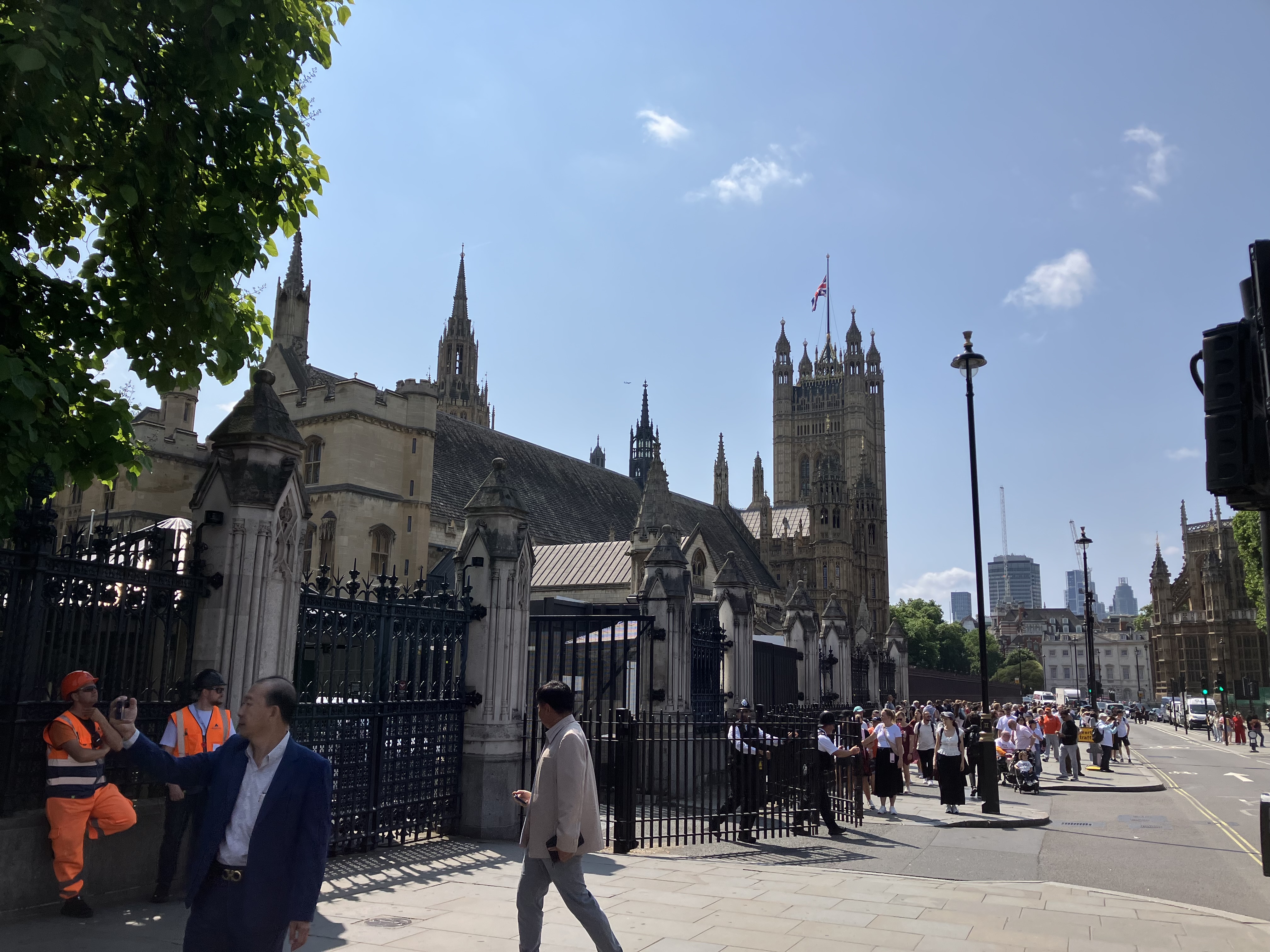
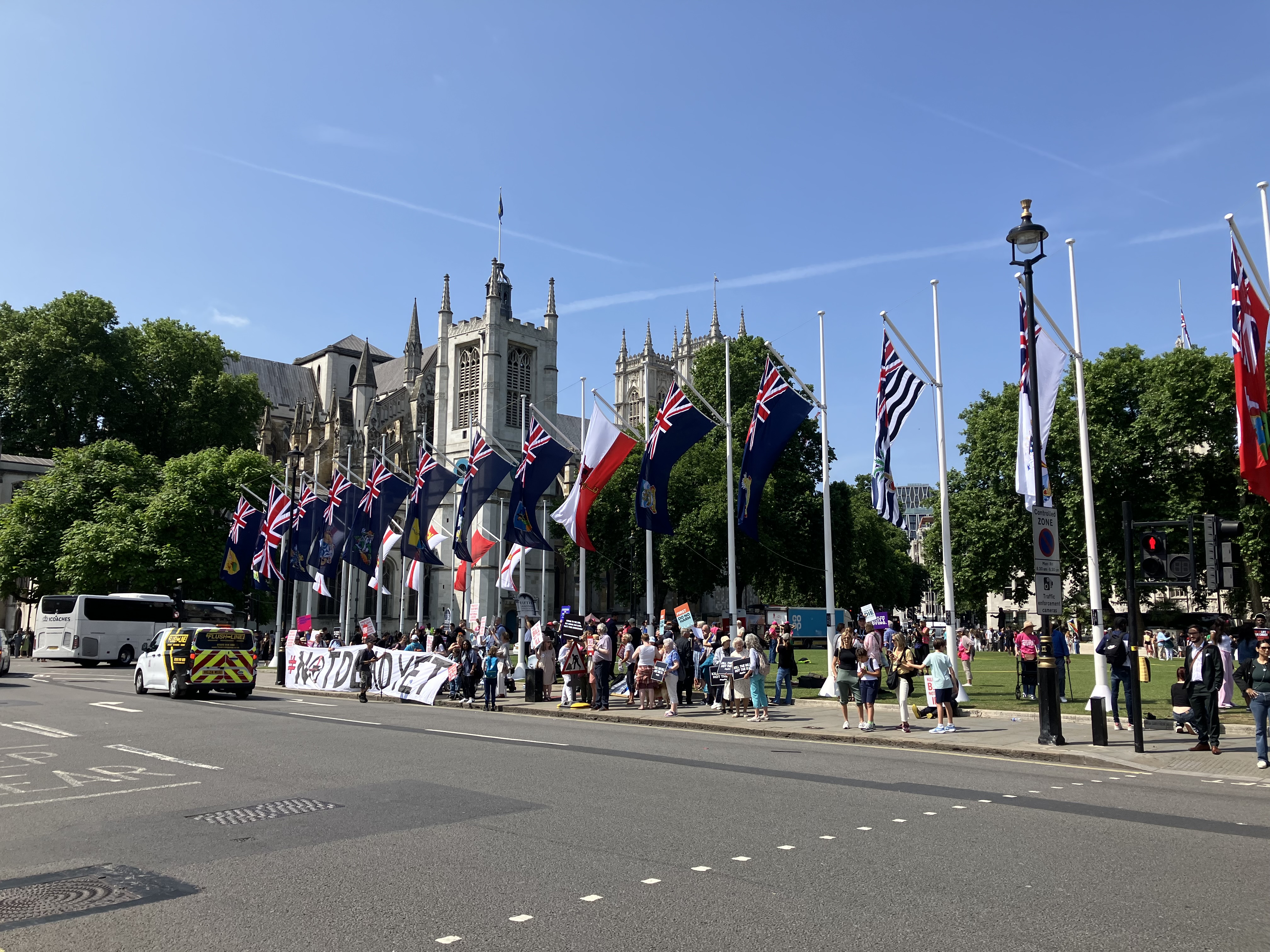
At the House of Commons, we waited at the Cromwell Green entrance, as instructed and waited to pass through security. There was woman with placards on the green opposite, and as I watched she was joined by several other people, some carrying signs with Bible verses written on them. Later, there were also people in pink tee-shirts, asking for the right to have dignity. I am guessing they were on opposite sides of the debate (though actually, each slogan could have been used in both support or opposition to the Bill). The issues are complex. I wondered if their being there could achieve anything.

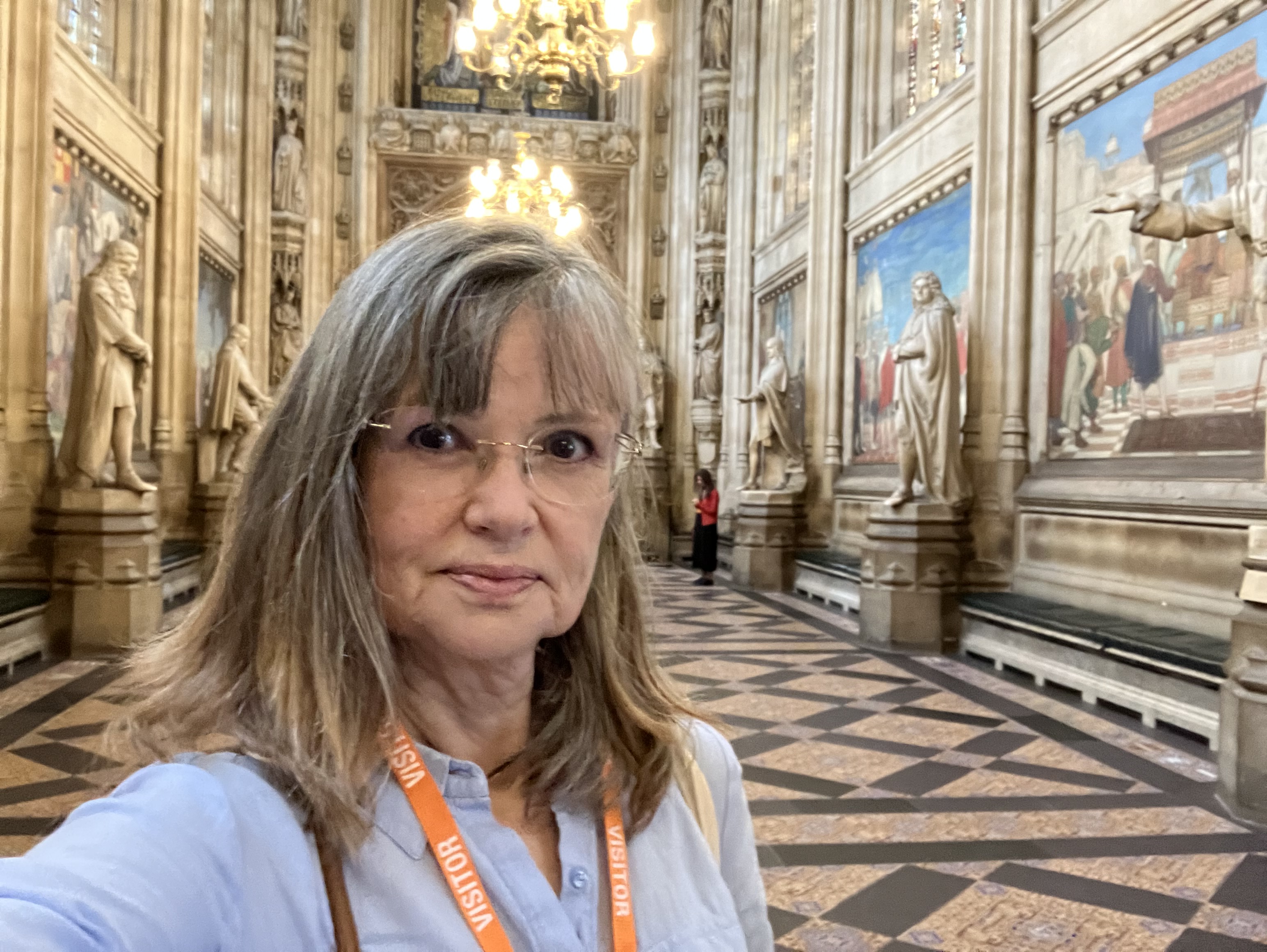
After passing through security (like at an airport, but more thorough as they individually checked each person) we walked through the cathedral-like Westminster Hall, along St. Stephens Hall, to the central lobby. The admissions office is behind a statue of Gladstone. I gave our names, and we were asked a couple of questions and then issued with our tickets and told where to wait. Our tickets gave us access to to the Speaker’s Gallery, which guaranteed seats (I think anyone can turn up to watch a debate, but will be in the pubic gallery, and may not get a seat). We had to wait in the central lobby until the Speaker arrived, and luckily there were comfy seats for older ladies (but no coffee, for older men, which was bit of an issue as I had been anxious to arrive on time and therefore we had not gone to a Pret on the way).

There was shout in a corridor, answered by a shout from one of the policemen who had also entered the lobby. Then he shouted ‘Hats off!’ and everyone wearing a hat/helmet tucked them under their arms, and round the corner came a little procession, of police and the Serjeant-of-Arms carrying the mace (a long silver club that dates back to the time of Charles II) and the Speaker. They strode round the lobby, passed the line of waiting people and police, and swept into the House of Commons. We followed them, and were directed up steps, to a small room where we had to leave all our bags and phones and coats (though I was allowed to keep my notebook and pen) and then we were ushered to seats, in a gallery, right opposite the Speaker’s chair.

The Speaker was talking about the India airplane crash that had happened overnight (but not the Israel attack on Iran, which also happened overnight–maybe we missed that) and then he turned to the business of the day: the Public Health Bill on assisted dying. MPs had submitted questions in advance, and the Speaker said there were too many, and had therefore chosen in advance who would speak, and he suggested a time-limit of 6 minutes. I was interested by the amount of power the Speaker had here–obviously the people chosen to speak would potentially influence the outcome of the debate, and it would be easy to be biased. (He would, I assume, choose from both sides of the debate, but he could pick those Mps who speak well or those MPs who did not. Definitely some of the MPs we heard spoke better than others.)

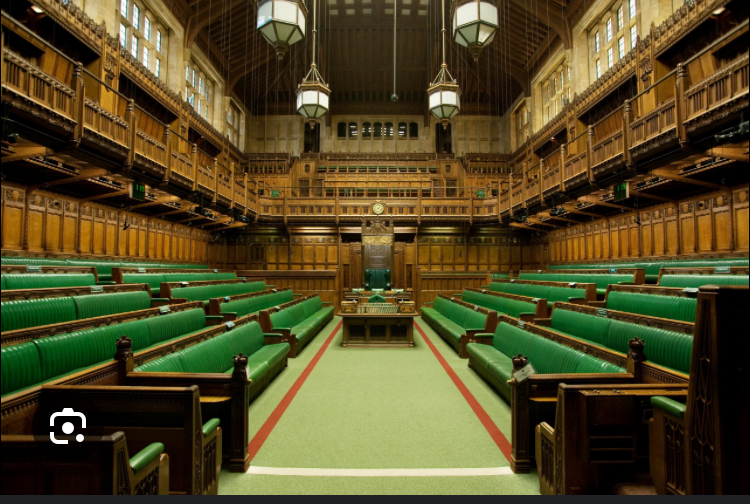
Image taken from learning.parliament.uk
It does not show the mics hanging from the ceiling, nor the screens. I was not allowed to take photographs.

The debate was about amendments to the Bill (which was read a few months ago). Kim Leadbeater spoke first, reading out the amendment, giving way to certain questions with a, ‘I give way to…’ (I’m not sure whether these were agreed in advance) and ignoring others with a ‘No, I will progress…’ The main thing I noticed was that to be an MP you need to speak very fast. There were screens, showing what was being debated, the name of the person speaking, and the time. The Speaker kept order, telling people if they spoke too long, or if their speech was irrelevant to the debate on the amendment (some seemed to be giving their view on the Bill, which has already been debated). Some MPs were clearly intelligent, thoughtful people who spoke well. Others less so.

The issues are too complex to include in a single blog post. The debate covered things like whether advertisers would be allowed to influence which medication was used, whether ethnicity should be considered in the debate, whether vulnerable people are protected by the law, whether it would be considered a ‘natural death’ or should an autopsy follow an assisted death, how to prevent permissive legislation in the future, what ‘error rate’ is acceptable?

The overall impression was of a well-ordered discussion, but with not enough time for everyone to be heard. It was also fast, moving from one speaker to the next, no time to pause, to consider the points raised, to ask supplementary questions. My understanding is that everything is written down, and I assume that afterwards, MPs can ask to see the transcript, and can consider the points carefully, deciding what they think. I wonder how many do; I wonder whether they have the time or if they then rush off to deal with other issues, no time to reflect. Which means that we, as normal people, have a responsibility to make our own views known, so our MP can represent us—or at least be aware that our viewpoint exists. Maybe those people waiting outside with placards were not futile, perhaps simply seeing them would ensure the Ministers were aware of their opinions.

My own opinion about assisted dying changes as I consider different issues. The one thing I am sure of, is that it is a very complex issue. It is not as simple as saying: ‘I would not allow my beloved pet to suffer in death, so we should not refuse to euthanise people.’ Nor as simple as: ‘We are created in the image of God, only God can decide life and death of a human.’ It is a big issue, and one which I think should be clarified in law—but also one which we all, as individuals in society, need to consider.

I hope you have an interesting day. Thanks for reading.
Take care.
Love, Anne x

What is ‘The Image of God’ and Do You Have It?


Part of my university research has involved looking at ‘the image of God’ (or imago Dei as it tends to be written in scholarly articles). One of the reasons I hear Christians give for not wanting assisted dying, is that people are created ‘in the image of God’ and therefore they are different to animals, and should not choose when/how to end their life. The ‘image of God’ is what many people believe makes humans special. So what is it, and where does it come from?

You might remember that when we were in Jamaica, I started to read The Liberating Image by the Jamaican Dr Middleton.[1] He explores the different possible meanings for the image, and discusses which are the most plausible explanation—because the problem with the ‘image of God,’ is that although I have heard a lot of people talk about it, few people are agreed on what it actually is. The phrase appears right at the beginning of the Bible, in Genesis 1, when God creates the cosmos. In Genesis 1:26-27 we read:

 ‘Then God said, “Let us make humankind in our image, according to our likeness; and let them have dominion over the fish of the sea, and over the birds of the air, and over the cattle, and over all the wild animals of the earth.” So God created humankind in his image, in the image of God he created them; male and female he created them.’

The term is only used twice more in the whole Hebrew canon, both times in Genesis (Gen.5:1, Gen.9:6). None of the references define what is actually meant, and although the Genesis 9 mention links it to ‘not shedding blood’ of a person because they are in God’s image, this certainly never crops up later, when the Israelites/Judahites (who are believed to have written Genesis) are busy killing the people who are in their way. So the Bible itself does not use as a reason for not killing people, even if Christians today use it that way.

I have read a lot on this, and Middleton’s book is helpful for looking at what God’s image might have meant to ancient people. He examines the term in the context of the ancient world, and decides that it is linked to the statues that kings used to set up in remote places, to remind the people of his presence. That is one possible explanation, but there are others. Middleton looks at several other ancient creation stories, and these are interesting (though possibly, I think, irrelevant) so I will tell you the tales in other blogs. Personally, I think the problem with Middleton’s approach is he looks too much at religions outside of the Hebrew one, and I’m not sure how helpful that is. If I want to understand my religion, I’m not sure how helpful it is to examine what other religions teach. I think the key is within my own sacred books.

After lots of reading, I decided that the image of God was a role—a way we are meant to behave (caring for the world, like God does in Genesis). The trouble with this, is that if people are not acting in this way, are not behaving like God, does that mean they do not have the image of God? And the problem with that conclusion is it is scarily like the conclusion of Hitler when he wrote Mein Kampf—and I am not keen to align myself to his views! I am now busy trying to justify how some people might not be living ‘in the image of God’ but they do possess the potential to do so—which means we are all equal but not necessarily fulfilling our potential. Overall, due to how little the term is used in the whole Hebrew canon/Old Testament, plus the fact that it is never defined so we don’t even know what it is, I mainly think it is not very important. Which means it should not be used as a reason for not allowing assisted dying. (There may be other reasons, I will let you know when I finish my studies, but imago Dei is not one of them.)

I have therefore spent several months learning about something which I now think is irrelevant to my final dissertation. Such is the joy of research! I hope you have a good week, and enjoy doing things even if they are not especially useful. Thanks for reading.
Take care.
Love, Anne x


[1] J. Richard Middleton, The Liberating Image (Grand Rapids, MI: Brazos Press, 2005).

Debating Assisted Dying


There was a debate about assisted dying in Edinburgh, so I went. It’s the first time I have done a random short trip to the university, and it was rather fun. I’m also feeling rather pleased with how brave I was (because I am not a happy single traveller).

I arrived in Edinburgh mid-afternoon. I had booked a Premier Inn near to where the debate was, so I set Google maps to ‘wheelchair access’ and pulled my suitcase through the city. (Google still took me up some incredibly steep inclines, so I’m glad I wasn’t really pushing a wheelchair!) The city is lovely in November in a new way. They are setting up the stalls for Christmas markets, and several places already had lights on, and it was very pretty and exciting.

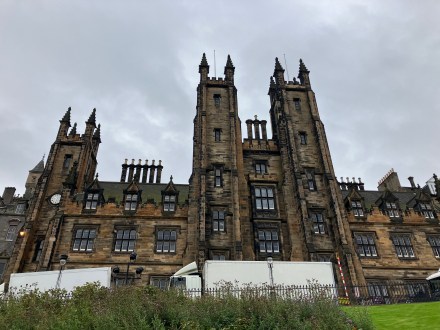
I checked into the hotel, left my bags, and went to where the debate was going to be held—a sort of dry-run so I knew where to go and how long it would take to walk there. I suspect no other students did this, but they are probably better at finding things than me, and less embarrassed if they arrive late. People who get anxious like to be prepared. I’m glad I did, as it was in one of the lecture theatres of the medical school, and I needed to ask directions when I was in the building. The seats all faced the doorway, so arriving late would be awful!

Once my plan was sorted, I looked for somewhere to eat. The debate was at 6.30, so I ate early and braved the hotel restaurant. I sat in a completely empty restaurant, drinking red wine and eating dinner, feeling like ‘a real grown-up.’ You would be surprised how often grown-up things, like attending a conference in a city on my own, seem difficult. But they’re not really. It has taken me many decades to realise this.

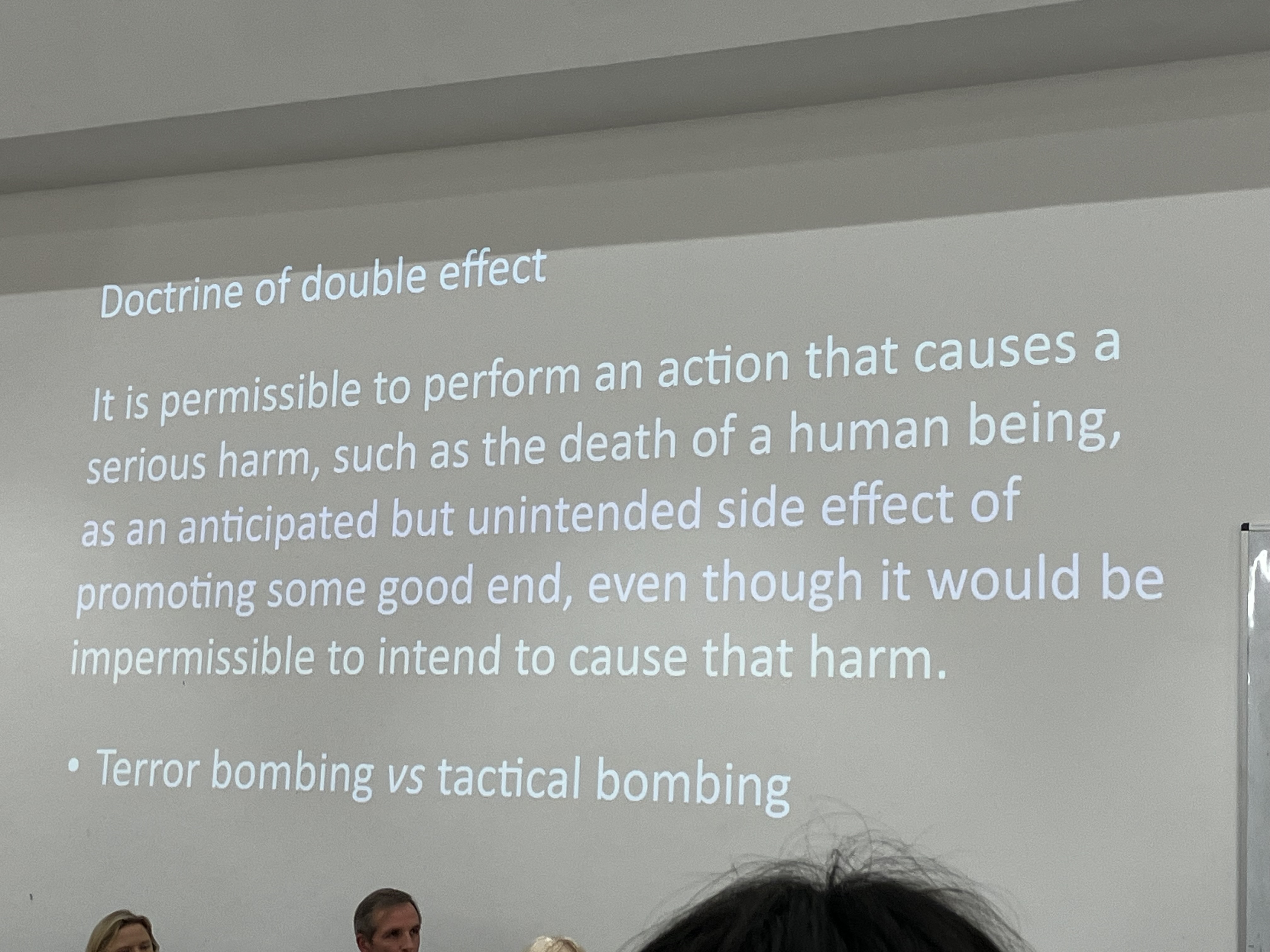
The debate was excellent. I will write a separate blog about what was said, but they had speakers on both sides of the debate who made clear logical arguments. The lecture theatre was mainly full of medical students (who looked like children to me) and they were very invested in the issue. If the law changes they will be involved with administering it in a couple of years time. Which must affect them, I would think. (More on that another time!) In my nerves I had left my notebook and pen sitting on my desk, so had to make notes on my phone, which was less good. I also took a photo for my mother, who had made a comment about a flower arrangement at the front, so I wanted to show her that a university lecture theatre and a church conference hall are very different styles. (There is also less leg room in a lecture theatre, so I was very uncomfortable.)

After the debate there was a drinks reception. I was keen to speak to some of the panel, so I grabbed an apple juice and looked around. I found one of the speakers, but I couldn’t remember his name (of course) and as I have a problem with recognising faces, I asked him if he was ‘the philosophy chap?’ Which he coped with very well, and told me his name. Turns out he’s the Head of Philosophy at the university, so I got that bit right if not his name. We had an interesting chat as we negotiated our way passed the boy opening bottles of Prosecco by popping the corks up into the ceiling. I asked him (the head of philosophy, not the boy trying to injure us with corks) whether assisted dying should be called suicide (which one of the panel had). Given the choice, the people would choose to recover, not die, so surely they weren’t suicidal? He pointed out that philosophically, it’s the same thing, as people suffering from depressive illness would probably choose to be cured rather than die too. (Which was a good point.) Though he did allow that assisted dying was more about choosing how to die than whether to die.

As I said, it was an interesting evening, and I have lots to think about. (Especially, I question whether assisted dying should be decided by either the medics or the politicians. It’s about death, and this is a matter for theologians and philosophers I feel. When someone is about to die, I think a chaplain or counsellor would be better qualified to help than a doctor. But contemporary society doesn’t particularly value theologians or philosophers. Perhaps it should.)

It was late when I left, so I phoned Husband as I walked through the city back to my hotel (because then he would know exactly when I was murdered). Got back safely, slept badly because I couldn’t work the room thermostat. 

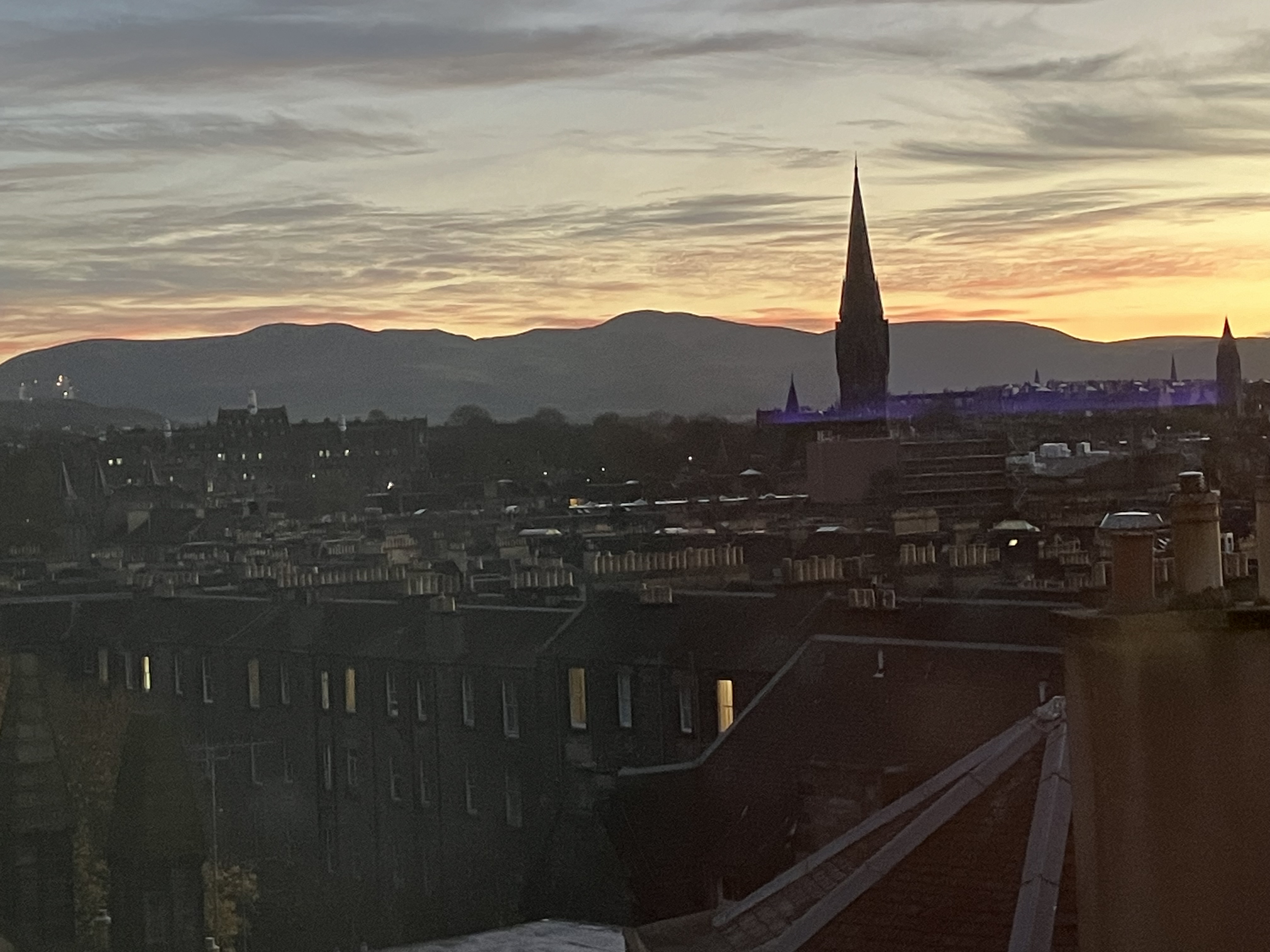
Breakfast in a pretty Cafe Nero that had fairy lights and Christmas wreaths. Felt very pleased I had come as I walked back to the station, listening to the seagulls and looking at the lovely old city that is Edinburgh.

Thank you for reading, I hope you have a great week.
Take care.
Love, Anne x

anneethompson.com
*****