Bible Blog 5 – continuing my read through the Bible…


I am still ploughing through Exodus – fairly boring in parts, but there are some nuggets of interest. Here are some thoughts:

Exodus 21 – laws concerning slaves. This bit I don’t understand at all. It seems like God is saying that owning, in fact, mistreating, slaves is okay – as long as you don’t hit them so hard they die. This does not, in any way, reconcile with my understanding of the nature of God (which is why it’s so dangerous to read a snippet of the Bible and then say, “Ah, this proves such and such.” It probably doesn’t!) So, how to make sense of this bit? – I am open to suggestions. All I can think is either we just cannot, in our English version, thousands of years later, really understand what was originally meant by these words. Or, perhaps when they were written, the abuse of slaves was very extreme, and these words were a moderator, toning down the abuse, until such a time as society had progressed enough for everyone to be treated properly. Sometimes God allows people to progress slowly, and maybe society of those days wouldn’t have coped with being told “no slaves”. But I’m clutching at straws, really, I have no idea what this bit means. It seems especially ironic when you consider it was being given to people who, until very recently, had been slaves themselves.

Nor do I understand why they were told not to boil a young goat in its mother’s milk. I think this is the basis for Jews today not eating cheese and meat in the same dish, but I don’t know why it mattered.

Then we have the details of how to build the tabernacle, a special tent for God to ‘dwell in’. It’s very detailed – not especially thrilling to read. It does however raise some questions. The materials were costly and beautiful – why? God had better beauty in nature: flowers, sunsets, stars, seas. Why would he want a tent, even an expensive one? Obviously the point was that it was not ‘for’ God, it was for the people, so they had a special place to worship. I wonder if we’re missing that today. Perhaps having a place that is special, that’s our very best, is important. Maybe we physical beings need reminding that God is worthy of more than we can offer, and we should designate somewhere suitable to worship him. Yes, when we have no time, we can pray anywhere (when you have toddlers and babies, sometimes the only place you can think for a second is in the bathroom.) But when life is not so extreme, should we be making more effort? If we snatch times to pray when in bed, or at the kitchen table, are we missing something of the holiness of God? I wonder if other religions, such as Muslims who wash before prayer, have something to teach us here. Yes, we need to be careful that the ritual doesn’t become an end in itself, but I wonder if we have lost something by rejecting rituals so completely. Even our churches tend to be a bit shoddy. We have an attitude of “take the cheapest biscuits to have with coffee, it’s only church”. I think we should take more care to only bring the best, because it helps to remind us that the God who we claim to worship is worth our best. Always.

In Exodus 29 we have the consecration of Aaron and his sons. They are told to “…lay their hands on the head of a bull. Then you shall kill the bull…” We often have bulls in the fields near us. They are huge. These instructions are no simple thing. It also means the priests were in essence, butchers. They would smell like your local butchers shop – not especially pleasant. I wonder if they could wash the clothes they were told to wear?

Talking of smells, in Exodus 30 there is the recipe for a perfume. I read this weeks ago, right after I had visited Floris, the exclusive perfumery in London (see blog). So I was extremely interested that there was a special smell used for the place where people were to worship. The part of your brain that deals with smells is right next to the part that stores memory, which is why smells can evoke such strong memories. For me, one whiff of Old Spice aftershave in a supermarket, and I’m a little girl again, being hugged by my Dad. So, for people to have a smell that they associated with worship, would be very special. I guess that’s why they were forbidden to use the perfume anywhere else – it was only to be associated with God. Smells, memories, emotions, would all be intermingled when they came to their special place. I know some people light a candle when they pray. Maybe keeping a special scented one, not to be burnt at other times, would also be helpful. God never forgets we are physical beings, even if we like to sometimes. I’m not sure we should ignore all this as much as we do.

In fact, we tend to see gifts from God in mainly spiritual terms. But in Exodus 31, there’s a chap called Bezalel (unfortunate name) who is “filled with the Spirit of God” and is therefore intelligent, artistic, and a skilled craftsman.

I’ll post more of my notes next week. Thanks for reading. (If you sign up to follow my blog, you won’t miss the other things I discover.)

anneethompson.com

Bible Blog 4


After the plagues, Pharaoh decides to let Moses take the Israelites out into the wilderness to make sacrifices to God. I found it interesting that Moses was still pretending they planned to return – he at no point told Pharaoh they were leaving for good. Does this mean dishonesty is okay in some situations? Not sure, certainly Moses gave canny answers to people, he was a good politician.

Pretty soon after leaving Egypt, God tells the people they need to celebrate the Passover every year – a festival with special food and rituals, to remind them that God saved them. Sometimes I think Christians today have forgotten the importance of rituals – especially in non-conformist denominations. Other religions are better at this. We are physical beings, we need to do physical things to help us remember. I guess that’s why times like Christmas and Easter are so important, and the sacraments (communion, baptism). I think ‘occasions’ are important. We try to celebrate them in our family, to recognise things like exams, birthdays, graduations, (my book launch!) with family meals. Also important to make spiritual ‘occasions’ I think.

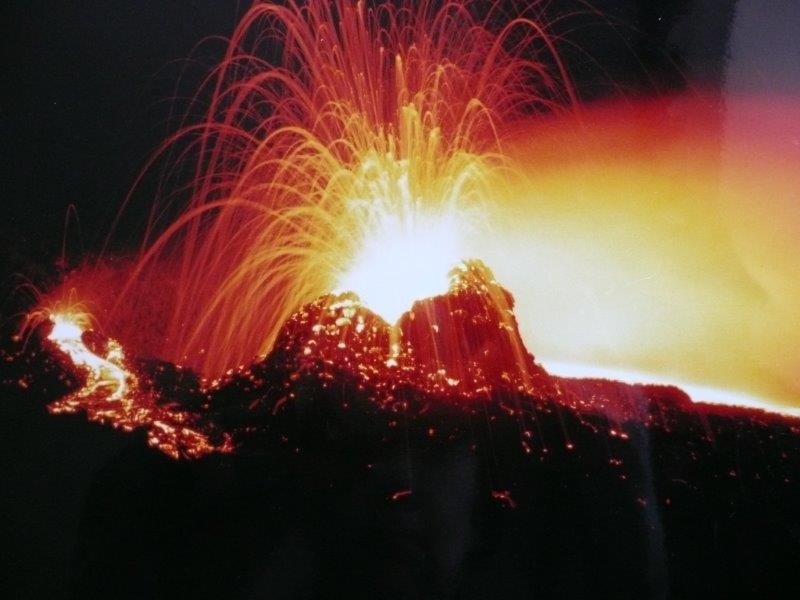
Then we get to the part about the people following a pillar of cloud and fire, the parting of the Red Sea and the drowning of the Egyptians. Now, several years ago, I watched a documentary on BBC, which was examining the physical evidence of the events of Exodus. It was very interesting, but I can’t remember most of it now. One thing they said was they thought the Israelites crossed the Sea of Reeds, not the Red Sea (which is possible, if you look at the Hebrew words). They made quite a strong case for the miracles being a result of volcanic activity in the area. If you read the descriptions while thinking about volcanoes, this does seem likely. Movement of the earth’s plates could cause a tidal wave, which would (I understand – I’m not a geographer) first draw the water back, so the Israelites could cross the sea, and then cause a tidal wave which fits with the Egyptians seeing the wall of water that’s described, and being swamped. The Exodus account implies all this happened at night, which would be completely terrifying.

The pillar of cloud/fire also fits with the stuff that’s expelled from a volcano, and certainly the later descriptions of Moses up the mountain are incredibly similar to the terrifying experience of being on an erupting volcano.

The journalists tried to plot the route of the Israelites, assuming they had crossed the Sea of Reeds, and they decided the mountain that most people today think was Sinai was wrong, and it was one in Saudi Arabia – for which they couldn’t get permission to test for historical eruptions. So, what do you think? As I said in a previous blog, I believe God made the world with all its natural phenomena, so it seems logical to me that he would use those. It doesn’t, for me, make it any less miraculous. In fact, if ancient people are describing so accurately what they encounter when a volcano erupts, surely we should also give credence when they describe hearing God speak directly to them.

When God sends the manna for the people to eat, we get another reminder of the law to keep the Sabbath as a day of rest. Interesting to note that the Sabbath was “given to” them – it was a gift. Although Christians keep Sunday rather then Saturday, it seems to be important that for one day we rest, think about God. I have read that in the early days of communism in the old Soviet Union, they tried to introduce longer weeks, but they found that productivity actually decreased. Not sure if that’s true, but there does seem to be some evidence that we are physically designed to need to rest every 7 days. So you might as well enjoy it!

There was lots of moaning from the Israelites. Just 3 days after they watched the Egyptians destroyed, they started to complain. Every time things got a bit tough, they complained. They also tended to blame Moses, even though they surely recognised that he was simply relaying messages from God. Always easy to blame the leader when things go wrong….

One of my favourite parts is when Jethro, Moses’ father-in-law arrives. Moses welcomes him and tells him what’s been happening. Jethro is not a Jew, he doesn’t even believe in the same God (he was a priest of another religion.) Yet Moses doesn’t tell him he’s wrong, he doesn’t even try to persuade him, he simply tells what God has done for him. He then listens. He takes advice from the priest of another religion. This is so rare today, we are so determined to convince people that our way is best, everything else is wrong, that we don’t even listen to good advice when we hear it. There is a time to learn from other people, even if they believe different things to us. It goes well with the verse in Matthew which says, “…be as shrewd as snakes and as innocent as doves..” Sometimes Christians today forget the shrewd bit.

Bible Blog 3


This week I read the beginning of Exodus – the stories of Moses and Pharaoh and the plagues. I guess it makes for an interesting read, and probably most people know the stories because it’s a fun one to teach in primary schools.

The bits I found interesting were:

End of chapter 2, when it’s saying what a rough time the Israelites were having, and it says, “and God knew.” We tend to forget that, when things are going particularly badly, we assume God doesn’t know. But this shows that even if he’s not actually doing anything obvious, there is still a plan, we’re just not privy to it.

There’s a bit in chapter 3, where God says he knows Pharaoh won’t let the people go unless he’s forced. This balances later chapters, where it says “God hardened Pharaoh’s heart” – which makes it look as if Pharaoh had no choice. But he did, and God knew what that choice was beforehand.

In chapter 4, Moses is told to throw his staff on the floor, watch it turn into a snake, and then pick it up by the tail. The tail bit is important – even I know that you pick up a snake by the head so it can’t bite you. (Well, actually, I think it’s best to NOT pick up a snake at all, but you get my point.) This was a relatively small test for Moses, to show he could trust God. I think God does that today too – he gives us small challenges, before he gives us big things to cope with. God takes us slowly.

However, Moses still doesn’t trust he can do the talking (big lack of self-confidence going on here, which also shows he thinks he can mess up what God has planned, which people never can.) God is angry, but also kind, and lets him take his brother. This bit reminds me of my boys, because they’re very good friends and I think if one had to do something scary, he’d want to take his brother along for support too. I like when we see the ‘human bits’ of the Bible. Moses’ brother was 3 years older, so presumably was born before all the ‘killing of the baby boys in Egypt’ bit.

Then we get to the plagues. The bit I’m not sure about is that, the first couple of plagues (water turned to blood, frogs appearing), the Egyptian magicians could also do. We skipped that in Sunday School when I was a child. What does it mean? Is this ‘proof’ that there are effective evil forces in the world, or that ‘magic’ is real? Not sure what I think about that (if you have a view, write it below!)

One really interesting/funny bit is after there are frogs everywhere (most unpleasant) and Moses tells Pharaoh he can ask God to get rid of them (so presumably the magicians could only produce frogs, they couldn’t then make them disappear). Pharaoh says, “Tomorrow”. Why would he say that? Did he fancy another night with the frogs?! I can think of two reasons.

Firstly, he wanted to see for a bit longer if they would go naturally. Perhaps Moses was tricking him and knew the frogs were about to disappear, so he thought, wait until tomorrow, see if I really need God’s help. I guess people do that today too – they have a problem (probably not frogs, more likely to be an illness or relationship problem) and they think, I’ll wait a bit first, see if it gets better on its own before I ask for help (especially God’s help).

The other reason is simply procrastination. Which again, people do today. They plan, at some point, to think about God, and what accepting him might involve, but not today. They’ll think about it tomorrow.

There does feel like there’s a natural order to the plagues. First, the river turned to blood. That would cause all the frogs to leave it. Then the frogs die, the land stinks, and lots of gnats appear. Then bigger flies came (perhaps they ate the gnats), which wouldn’t be very hygienic, so all the animals dying might be expected. Lots of dead animals wouldn’t make for a great environment, so then people developed skin problems. The hail storm wouldn’t be a result of that, but the hail might well have driven locusts from surrounding places to Egypt looking for food. Then there’s darkness, and finally death, which cannot be explained naturally. But the fact that some can, I think, shows that God sometimes works through the natural order of the world. If God created the world (through evolution or in 7 days, whichever you believe) then he must have instigated the laws of physics/nature that we see today. So it makes sense for him to use those.

My last thought on the story is when the Israelites leave Egypt, they take all their herds and flocks. Flocks. What are these – ducks? Geese? Chickens? I know about herding ducks and chickens. It’s very slow, and they’re likely to run off in all directions. It says they were “on foot”. This was not a quick exit….

I have read lots more – I’m at Exodus 29 now, but to comment on anything more will make these posts more like essays. I’ll continue to write comments as I read, and post them each week – even if my own reading has moved on. I’ll let you know at the end where I’m actually up to. Which will work quite well as I’m guessing some books will simply be endured, with nothing to say at all!

xxx

Thanks for reading. I’ll let you know what I discover next.

anneethompson.com

Bible Blog 2


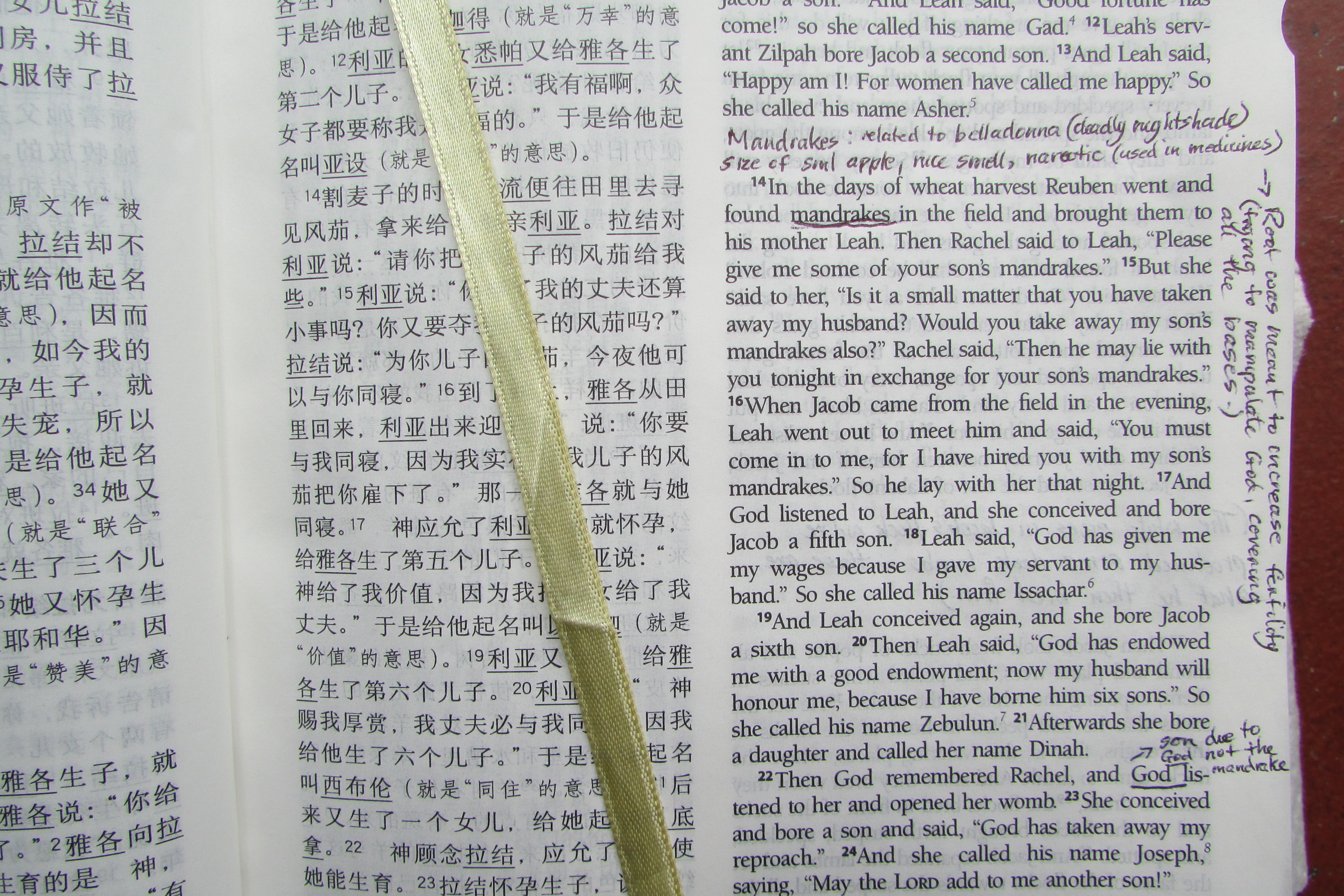
I continued my read through the Bible. I’ve started adding notes to the margins, so I don’t forget things as I discover them. It makes it scruffy, but I’ve always thought that it’s the content of the Bible that’s important, not the physical book. (Unlike some other religions, where the book itself is holy – I know for example the Jews will not even touch the Torah with their hand, and use a gold pointer to follow the words.) Not sure if I’m right on this – let me know if you have an opinion, I’m interested.

I read the stories in Genesis about Jacob and his wives. Was rather interesting to read that his father, Isaac, didn’t much like his daughter-in-law, Judith. It’s funny when you read about relationships hundreds of years ago that mirror modern day ones – people really have not changed very much.

I read the part about Jacob’s two wives vying to have babies, and there was a story about Rebekah asking Leah (who was cross-eyed) for some mandrake. What is a mandrake? I thought it was an imaginary plant from the Harry Potter books! Apparently, it exists in real life too, is the size of a small apple and has a lovely aroma and narcotic properties (it’s related to the belladonna, deadly nightshade, plant.) It was also thought to increase fertility. Which makes you wonder if Rebekah was covering the odds, she’d asked God for a baby, now she was trying to improve the situation herself – first by eating dodgy plants, and secondly by giving her servant as a womb substitute. I guess sometimes we do that too. Not the dodgy plant bit (well, you might, I’ve never gone that route). Nor the offering a servant as an available womb. But the covering our odds bit. Do I sometimes ask God about something and then worry about it and look for other avenues? A bit like the teenager asking God for help with study and then wearing his ‘lucky socks’ to the exam, just in case.

The thing is, all these characters seem very flawed. I don’t think I would like them much. They deceived each other, looked for ways to get what they wanted and pretty much ignored God. But God used them anyway, he didn’t change his plans, even when they tried to sidestep him, even when they got it wrong. God had decided to work through them, so he did, even though they proved many times that they weren’t good enough. I find that reassuring.

There are more lists of names. Chapter 36 of Genesis is weird, because there’s a list of names, and in the middle is a mention of Anah, who found the hot springs in the desert while pasturing his Dad’s donkeys. Why??? I tried to research this, and found a few opinions about whether ‘donkeys’ represented stubborn people or if ‘hot springs’ is the best translation, but it felt like people were just trying to be clever and actually no one knows why this is included. I suspect as I read on, there will be several texts that I’ll put in the ‘don’t understand’ box, some bits are just odd. I guess the decision we all have to make is, does not understanding part of something make the whole thing irrelevant? I don’t think so. I don’t understand lots of things – like how gravity really works, or why if space is a vacuum we’re not all sucked up into it, or how a bulb knows when to start growing – but the bits I do understand are still useful.

I have read to the end of Genesis now. Whilst some of it was weird, it was interesting. I have a feeling some of the next books might be rather heavy going.

If you want to follow my progress as I read through the Bible, why not sign up to follow my blog?

anneethompson.com

Thanks for reading

xxx

Bible Blog


I’ve decided to read through the Bible. I have, since childhood, read various parts of the Bible many times, but I have never read through it, beginning to end. So I thought it was time that I did. I don’t have ‘a system’ – I’m not that sort of person. I’m just going to read, in order, from beginning to end, as time/enthusiasm allows.

I will try to post each Sunday a short update about how I’m getting on. Partly to motivate myself, and partly because you might be interested. (If you’re not, you can just skip the blogs headed Bible Blog each week – I will still continue to post my newsy, family, travel blogs every Monday.) I’ll be honest about what I read and think, I won’t just regurgitate churchy views.

April 30th

I started at the beginning (which is actually, NOT a good place to start if reading the Bible for the first time! Better to begin in the New Testament, with Mark’s book.) Here are my thoughts/ramblings thus far:

There are two different stories about creation. I have studied these before, when teaching RS, so could really write a whole blog on them alone. However, my only comment here is I think it’s important to remember what question they are answering – they are not explaining HOW God made the world, they are explaining WHO and WHY. I think they are pictures, illustrating ideas, clearly showing that God was the creator. They were told at a time when there were lots of stories from the Babylonians, about dragons using things to create the world, so the point about God creating it from nothing, using just his word, is important. Personally, I don’t think it’s meant to be taken literally. Things like plants being created before light just seem too illogical.

Having said that, the first bit of Genesis is still weird. It is full of pictures and giants and strangeness. It is, on first glance, every bit as unbelievable as the myths that other cultures and religions have about how the world began. I think to understand it properly, you need to do further reading. One excellent book (I think) is Creation or Evolution, do we have to choose?

After creation comes the flood. Most old cultures have a flood story, which is interesting – who knows, perhaps it really did happen. Certainly the instructions for building the ark (about the size of a multi-storey carpark) are detailed, if not especially interesting. After the flood, there’s a story about Noah getting drunk and his son having sex with him (they didn’t cover that little gem in Sunday School when I was a kid!)

There are many lists of genealogies. No idea why, they don’t make for an interesting read. However, recently I watched “The Good Lie”, about children being rescued in Sudan. One clip showed the children reciting all their ancestors. Perhaps in some cultures it’s important.

Next are the stories about Abram, Lot, Isaac. These seem more historically factual, they read like real events about actual people. One part that interested me was when Abraham plants a tamarisk tree. I did some research into what this was. It’s a tree that’s very unusual because it puts down very deep roots, and so can reach deep water tables. It uses a lot of water, so starves the surrounding soil of moisture, so other plants cannot grow near it. It also is able to take up salt, which it expels as a salty layer on its leaves. When they fall, this makes the soil salty, which again means no other plants can grow near it. So, it is a lonely tree, very different to other plants and not able to mix with them. It was introduced to the western states of America, where it flourished and is now seen as a pest, but hard to kill due to its deep roots. Now, Abraham is seen as ‘the father of the Jews’. It seems to me that the tamarisk tree makes a good metaphor for how the world views the Jewish race.

Another story I found interesting was the one where Abraham sends his servant to find a wife for his son. He feels that he wants his son to marry from his own people, so makes a plan. However, he also has a backup plan, he tells the servant to come home without a woman if she isn’t willing to go with him. So, he was doing what he thought God wanted, but if he was wrong, he had made a decision about what to do instead. He hoped he was right, that he was following God’s plan, but he didn’t assume it. Of course, when the servant did find the wife, Rebekah, it all proved to be what God wanted. But I found it interesting that Abraham didn’t know that for sure, he was just doing his best, doing what he thought was right. Which sometimes, is all that we can do.

xxx

Thanks for reading. I’ll let you know how I get on in the next week.

If you’re interested, why not sign up to follow my blog?
anneethompson.com

xxx

Understanding Stories


How well do you know the stories in the Bible? I’m guessing that anyone who lives in the UK knows at least some of them. Which of these do you know?: Adam and Eve, Noah’s Ark, Joseph and his dreams, Moses and the Plagues, The Nativity, The Lost Sheep, The Prodigal Son.

As you know, I am rather keen on knowing what the Bible says, and have been reading it for most of my life. However, sometimes I read a commentary that shows how little I still know. This was true recently, when I was looking at the story of The Prodigal Son. I thought I’d let you know about the bits I have been getting wrong for the last 50 years.

Firstly, when you think of the story, where do you see it set? I have this image of a house surrounded by fields – so when the father runs to meet his returning son at the end, he is running down this long straight road. A bit like a farm on the American plains. This is so wrong! When the story was told, land owners, even wealthy ones, lived in small communities. They might send someone to sleep near the fields when the harvest was ready, but their home would be in a community. So, when we read this story, we need to be aware of all the friends and neighbours who would have been part of the story, even though they’re not specifically mentioned. (They weren’t mentioned, because everyone listening already knew this. If I write a story today, about a family eating roast beef, I don’t say that the food is served on a china plate, because anyone reading my story already knows that.)

So, what happens in this story? It begins with a man and two sons, and the younger one asks for his share of the inheritance, before his father has died. Now, in those days (actually, today it still holds true) this was in effect, telling his father, “I wish you were dead”. You would expect the father to be angry, to throw out his son and not give him anything. However, the father in the story doesn’t do this. He divides his money between both his sons. Which is interesting for two reasons. Firstly, in order for this to be legal, it would have to be done in a way that the community believed this was the father’s free choice – so he was protecting his son even though he’d been insulted. Secondly, the oldest son also took the money. He didn’t protest, tell his father he’d wait for his share. Nope, the money was divided between both of them. (Leaving the father in a very vulnerable position). The community would be angry at how the sons shamed the father.

Next, the youngest son leaves. This is where the community matters. In those days, it was very important to a community, that all wealth remained with Jews. If you sold property, you sold to Jews. If you spent money, you spent it with Jews. To lose money to non-Jews (Gentiles) was disgraceful. They actually had a ceremony, called the kezazah ceremony where a community would smash a pot filled with burnt corn and nuts in front of the individual, to show he was cut off from the community. We know that the youngest son lost his money amongst Gentiles, because he is later employed as a pig farmer (Jews don’t eat pork). He is working because the only way he can return to his community is if he manages to repay the money he lost. But we read that no one ‘gave him anything’ – so he’s not managing to earn money to cover his loss.

So, the son is in a pickle. He has lost his money to Gentiles, and he’s hungry and poor. What to do? Now, here comes an interesting bit. The story says he says to himself, ‘I will go back to my father and say, “I have sinned against heaven and before you”’. He then plans to ask his father for employment (so he can pay back what he owes, and no longer be in disgrace). He has a plan. Now, I always thought that these words meant that the son was sorry, and was returning to his father to ask for forgiveness. But no, that’s wrong.

This story was told by Jesus to the pharisees, who were annoyed because Jesus was eating with sinners. Pharisees would know the old testament extremely well (better than I do). So, when they heard the words, “I have sinned before heaven and before you”, they would recognise them at once. As you, if you enjoy old films, might recognise “I go to the hills for the sound of music”, or if you read, “It was the best of times, it was the worst of times”. You see, the words spoken by the son are a direct quote from the story of Moses and Pharaoh and the plagues. They are the words that Pharaoh says when he wants the plagues to stop. Was Pharaoh sorry? Did he accept that Moses was right? No! He just wanted the problem to end. It was the same with the son. He had his plan all clear in his mind. He would go home, manipulate his father into letting him work for him, earn enough money to pay back what he’d lost, then his problem would be over, the community would accept him back.

However, that’s not how it turned out. Before he even reached the community, his father saw him and came running. He ran because he wanted to show the community that he accepted his son, that there was no need for the kezazah ceremony. Men in those days did not run. Mothers did, not fathers. The father is again breaking the mould, doing what is necessary, to save his son. When they meet, the son starts on his prepared speech – but he doesn’t finish it. He is overwhelmed by his father’s love and forgiveness. He stops and simply accepts what the father is offering.

Then we have the feast. I always thought there was a party to welcome the son home, which to my mind seemed a bit unfair, because he didn’t deserve one. But the friends came to the feast to honour the father, not the son. Another interesting twist is this, when the feast happens, the father (good man) is eating with the son (bad man). Which is exactly what those listening to the story had accused Jesus of doing.

Now we return to the older son, the one who had been the silent benefactor of his brother’s abuse of the father. He is outside, and hears the party, and asks what it’s for. The story is clear here, he is not angry because his brother has returned, he is angry because his father has accepted him back. He is angry and jealous and refuses to go inside. In those days, that would be another huge insult to the father. The father could be expected to be angry, to cast him out. (It would be like someone at a wedding standing up and criticising, in public, the parents of the bride. Not done.) Instead, the father again risks his own humiliation and leaves his guests and goes to find his son. He listens to his grievances and reminds him that he has all he wants. It is important to remember here, the banquet is for the father – to celebrate what he has done for the son – NOT to celebrate the wayward son. If the older son wants to truly be unified with his father, he must also accept his brother. Which is, I think, the point that Jesus was making to the pharisees. If they wanted to be part of God’s work, the shepherds of his flock, then they must accept everyone who God accepts; and God accepts sinners.

So, what is the point of this story for us? It tells us what it means to be reunited with God (who is represented by the father in the story). It tells us that there is no scheme that we might have that makes us good enough, all we can do is accept the amazing generosity of God. It tells us that ‘being a Christian’ is not a belief system, is not a list of rules, is not a hereditary condition. It simply means we have chosen to accept what God has done, we choose to accept being taken back. Which ties in very well with everything that we celebrate and remember at Easter. So I hope you had a great time.

Thank you for reading.

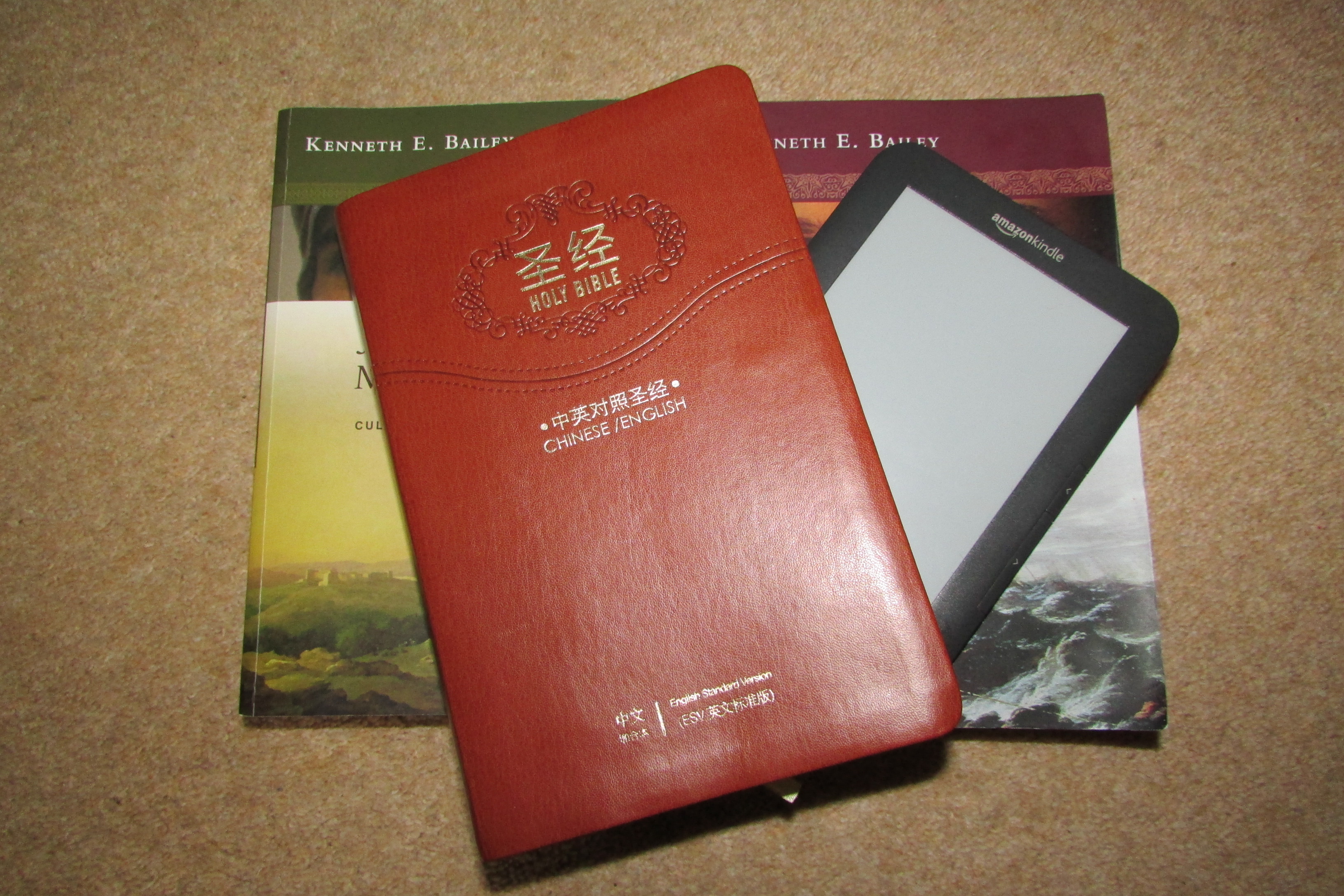
I learned all this through reading “Jacob and the Prodigal” by Kenneth E Bailey. Great book!

You can’t always trust what you read…….which is scary.


img_5568

Several months ago, a friend recommended a book: Jesus Through Middle Eastern Eyes by Kenneth Bailey. It sounded interesting, so I bought it, read it, loved it (many thanks Rev Hatfield). I have since devoured all Kenneth E Bailey’s other books, and was disappointed to learn he has died recently, so won’t be writing any more.

The books are interesting because Mr Bailey is a clever man. He has a knowledge of both middle Eastern culture, and also the languages the Bible was written in. He takes a passage, one that anyone who reads the Bible knows well, and puts in into context. He shows how people of Bible times would have responded to the things said and done, what the language is likely to mean, why things have been translated as they have.

So, take for example, the story of the Samaritan woman at the well, who Jesus asks for a drink. I already knew that Jews and Samaritans were enemies, and that a man speaking to an unknown woman was unusual, but the book explains so much more. It points out the flirtatious nature of the woman’s initial words to Jesus, how she was assuming he wanted something more than water! It also shows how she tried to misdirect the conversation, to move it away from a personal discussion about her own faith. All very interesting.

My Bailey also spends a lot of time showing how words have been translated. He very often challenges why particular words have been used in the English translation, why passages have been broken up into certain chapters. He points out that sometimes whole meanings have changed because the end of one chapter has been placed at the beginning of the next one, which makes the reader assume it is part of something else. I’m not sure if I’m explaining this properly – but unless I copy vast chunks of his text (which will make this very long) I need to just give you an overview. Really, you need to read some of his books for yourself.

Now, the thing that has caused me a problem, is when Kenneth Bailey looks at particular translations. Why Luke would have used a certain word, and whether the translation is reliable. It is fascinating, especially if you speak another language, so have a feel for how direct translations are rarely possible between languages with different roots. (If you are someone who believes you can put a phrase into the Biblical language equivalent of ‘Google Translate’ and come up with a phrase you can trust, this article is not aimed at you!) However, it has left me with a slight insecurity. The whole church practice of taking a text – one verse that explains an ethos – seems very flawed when you realise how unreliable our translations are. How much can we trust what we read in the Bible?

There is great danger in thinking along these lines. Although the Bible never claims to be infallible – Christians do NOT claim that it was dictated word for word (which some other religions claim about their holy books) – it is what we rely on to learn about God. The Bible claims to be the word of God, to point the way to God, to explain something of the character of God. It should not therefore be dismissed as unreliable. Except, our translations ARE unreliable. As you read what Bailey writes, you realise that to take individual verses literally is actually a bit dodgy. It can give a very skewed idea about what Jesus taught, about how we should view God, about how the church should be functioning.

What then is the solution? I do believe the Bible is an important way that God teaches us. I do believe we can learn the character of God within the pages of the Bible, that it guides and shapes us. I am just not sure any more that we should take snippets and be confident that “This says such and such, therefore, we must behave in this way.” I’m sure there are people who will label me as ‘liberal’, who will dismiss what I am saying as ‘diluted Christianity’. But actually, I am simply one person who is trying to discover who God is. I now believe, that to take individual verses as ‘proof’ of something is dangerous. We might be heading off in the wrong direction. I believe that the only reliable way to use the Bible is to read LOTS of it. To look at individual passages in the light of all the others. That the whole Bible will give us a taste of the essence of God, and that will lead us into the right choices. But to base any action on a single verse is foolish. We should not be ignoring certain parts of the Bible, even the difficult boring bits, they were put there for a reason. They all work together to give us an overview, an understanding, of God.

Take for example the story of Jesus allowing the children to approach him, when he took them onto his knee and said, “Let the little children come to me, and do not hinder them, for the kingdom of God belongs to such as these.”
I have heard many sermons use this as a text. We are urged to come to God trustingly, openly, simply. Which might be right. But do read what else has been written guys, don’t just take that snippet. Children have lots of attributes: They are very selfish. They don’t plan ahead (“I need the toilet NOW”). They will eat sweets until they are sick. They believe in everything that looks true, including monsters and talking teddies. Are we meant to approach God like this? With no forward planning? No questioning? No regard for others beyond our own immediate comfort? I don’t think so. To know what was meant, you need an understanding of the whole.

Or look at the passage where women are told to “not speak” during church services because it is “shameful”. Yet according to scholars, “speak” is better translated as “chatter” and the “shame” is like, “a shame if I don’t do that”, a sort of “not quite proper” rather than a strong condemnation. Yet many English churches have used this passage to stop women preaching, ignoring the places where Paul refers to women prophets and female leaders in the early church.

When I discussed this at home, it was pointed out that some people like to keep things simple. They like to take things at face value, they would feel I was over complicating things. The trouble is, it is because people have taken things at face value, have used snippets of the Bible to set their direction, that Christians have done some terrible things. Wars, murder, oppression, all done with the backing of a few verses from the Bible, all justified as “God’s Will” because of things written in the Bible. If we study the whole Bible, learn the character of God, and use that as our guide, then I feel this is much more reliable. We are working with a translation people, written thousands of years ago and transcribed millions of times. YES it points the way to God. NO, each and every word cannot and should not, be relied upon. The whole “God won’t let us misinterpret his will” argument is rubbish too – try living in Henry VIII times. Which is a bit scary because it means that to understand God requires effort. To live as God intends us to live, whatever our age, means we have to work hard. We cannot simply clutch at a few random verses and announce we’ve “got it”.

Knowing God takes time. Perhaps a whole life time. Perhaps that is the point.

xxx

Thank you for reading.

anneethompson.com

xxx

God’s Body


God’s Body
The
Body
Was created
to travel and move
and grow and
touch others
The
brain
was told the
route. The eyes saw
where there were dangers. The feet walked on and on.
The legs used strength to keep up. Everything worked and
The body was strong and grew and travelled. But. One day, a hand
slipped into a warm
pocket, thinking,
“The other hand
can do my work,
it’s warm in here.”
And no one noticed.
Body travelled on. He
reached a gate. One hand,
working alone could not undo
the latch. “It’s fine,”thought brain,
“Foot can do it, he has toes.”But
foot could not. So body had to
climb through hedge. This took
longer. Foot got a thorn in heel.
No one cared though. Legs and
stomach said, “It’s fine, we can
cope, we can slither.” So they
did. But now body was low.
Mud went in eye.
Nose complained,
he had to sniff
the route
and breathe.
It was too hard.
Brain tried to think of a solution.
So he stopped listening to directions.
The body fell. Into a pit. Body is hurt,
blind, crippled, fallen, weak.
Then God, in wondrous grace and kindness, gently helps hand from pocket.
He lifts body to his feet once more and sets him back onto the right path.
The body begins to move and travel and grow until at last he can touch others.