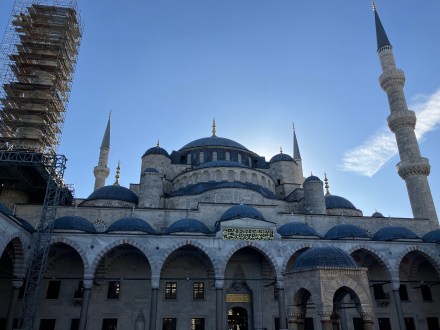
The Blue Mosque


We visited the Blue Mosque. I was expecting it to be more blue and only the roof was blue. But it was still very pretty, and they managed to herd lots of tourists through their holy space in a dignified manner. There was no entrance fee. Very well done.

There were clear signs, telling us what was expected (like women wearing a headscarf and everyone removing their shoes) so you knew what to expect before you arrived.

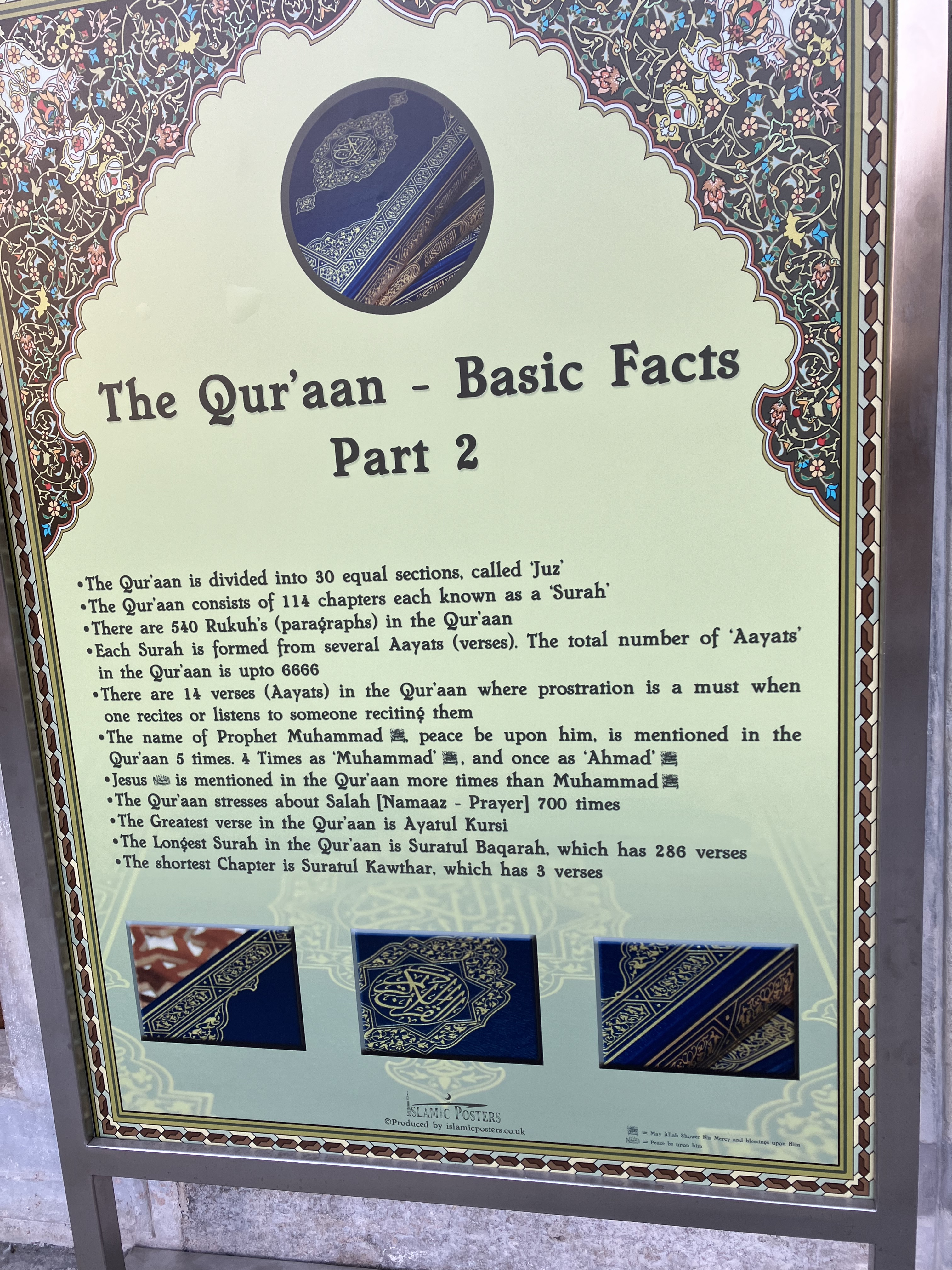
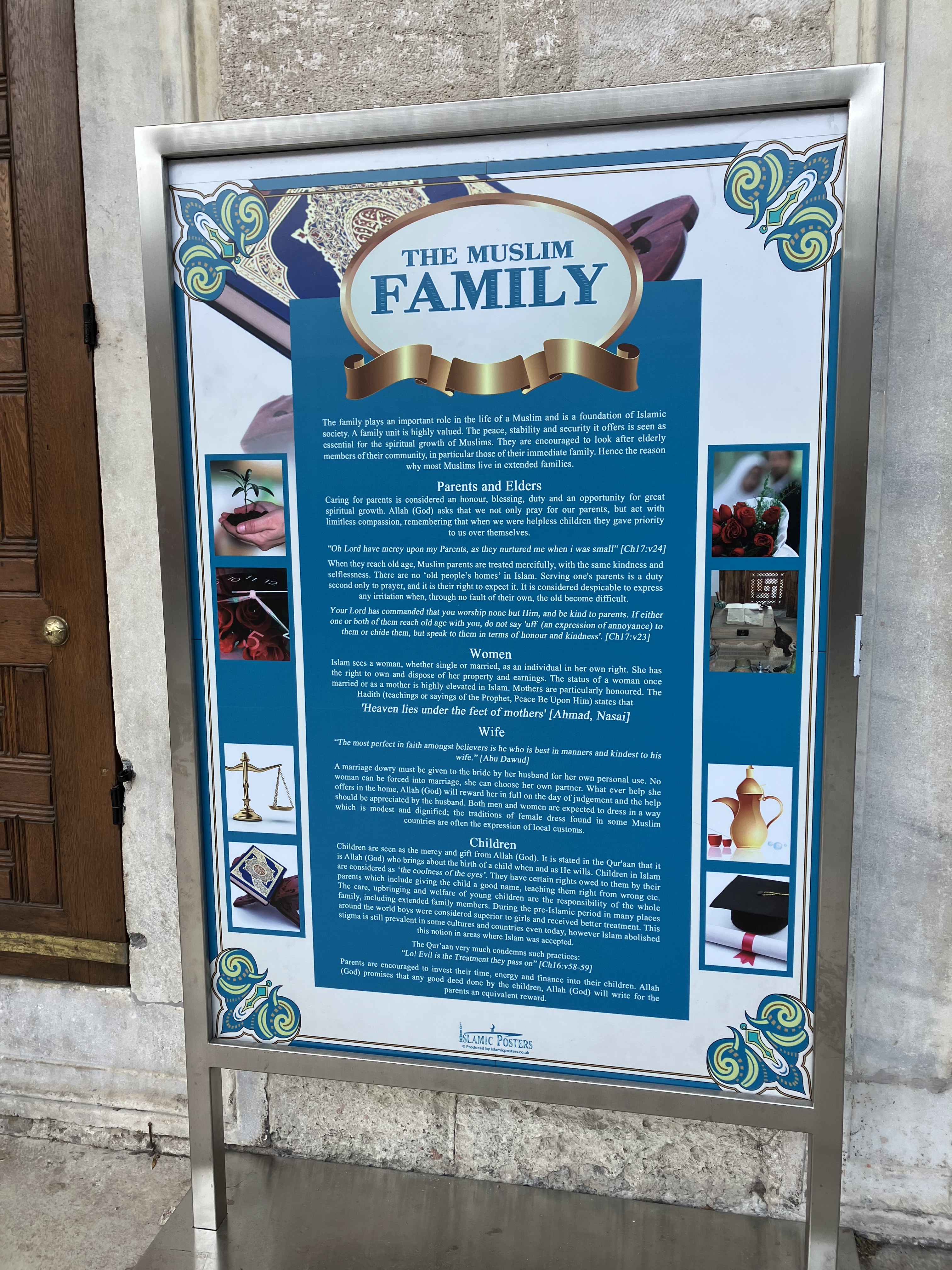
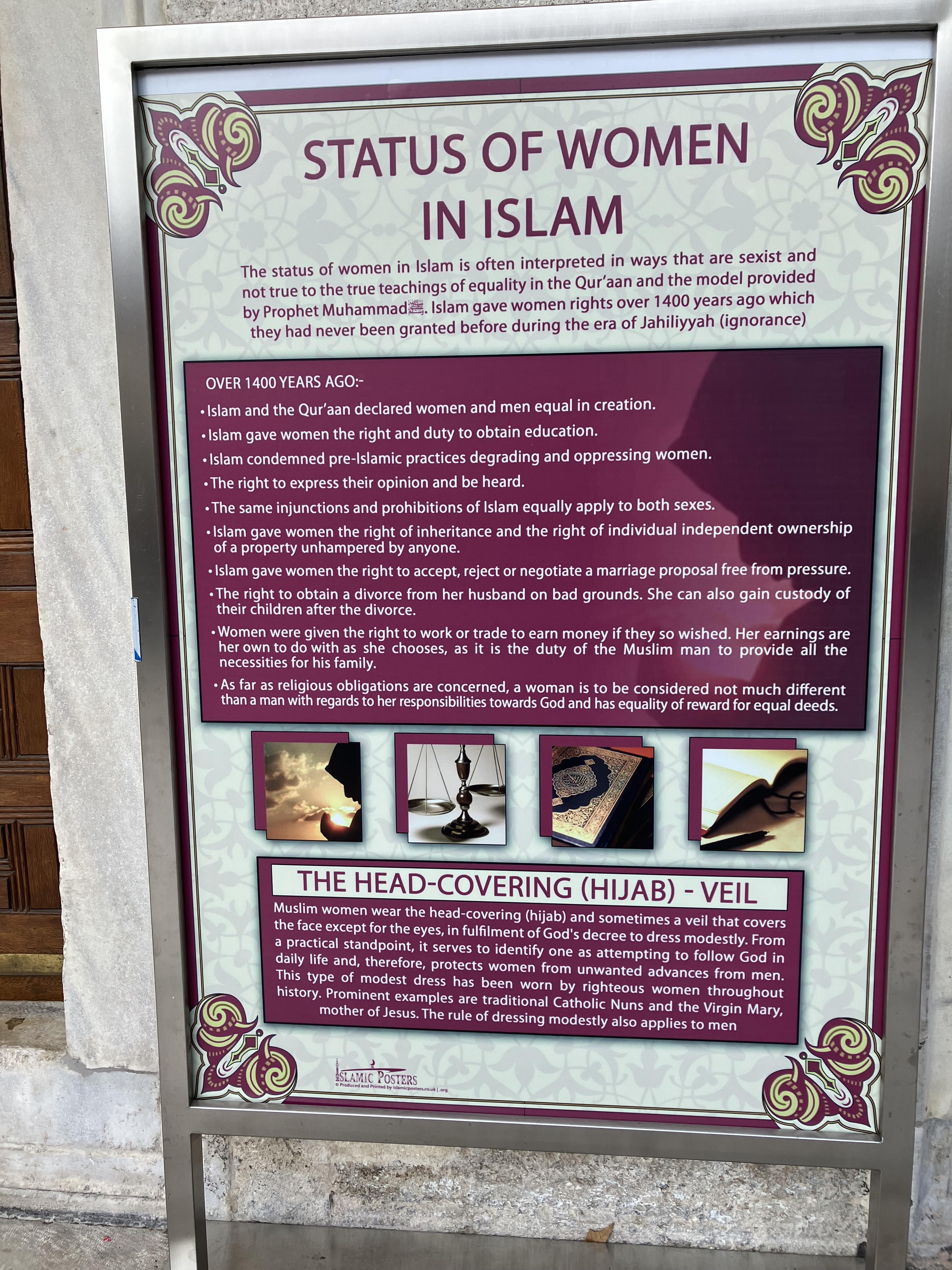
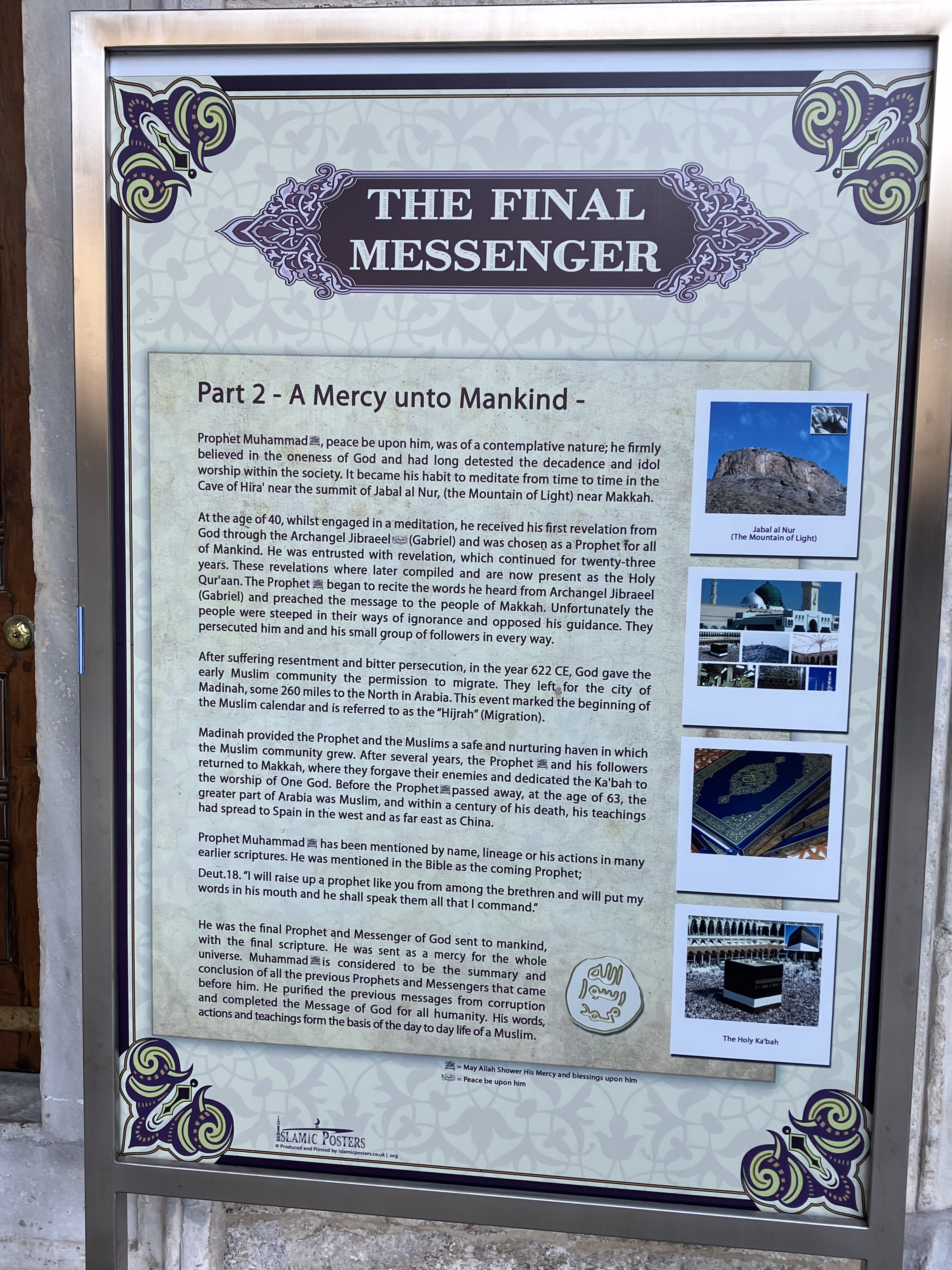
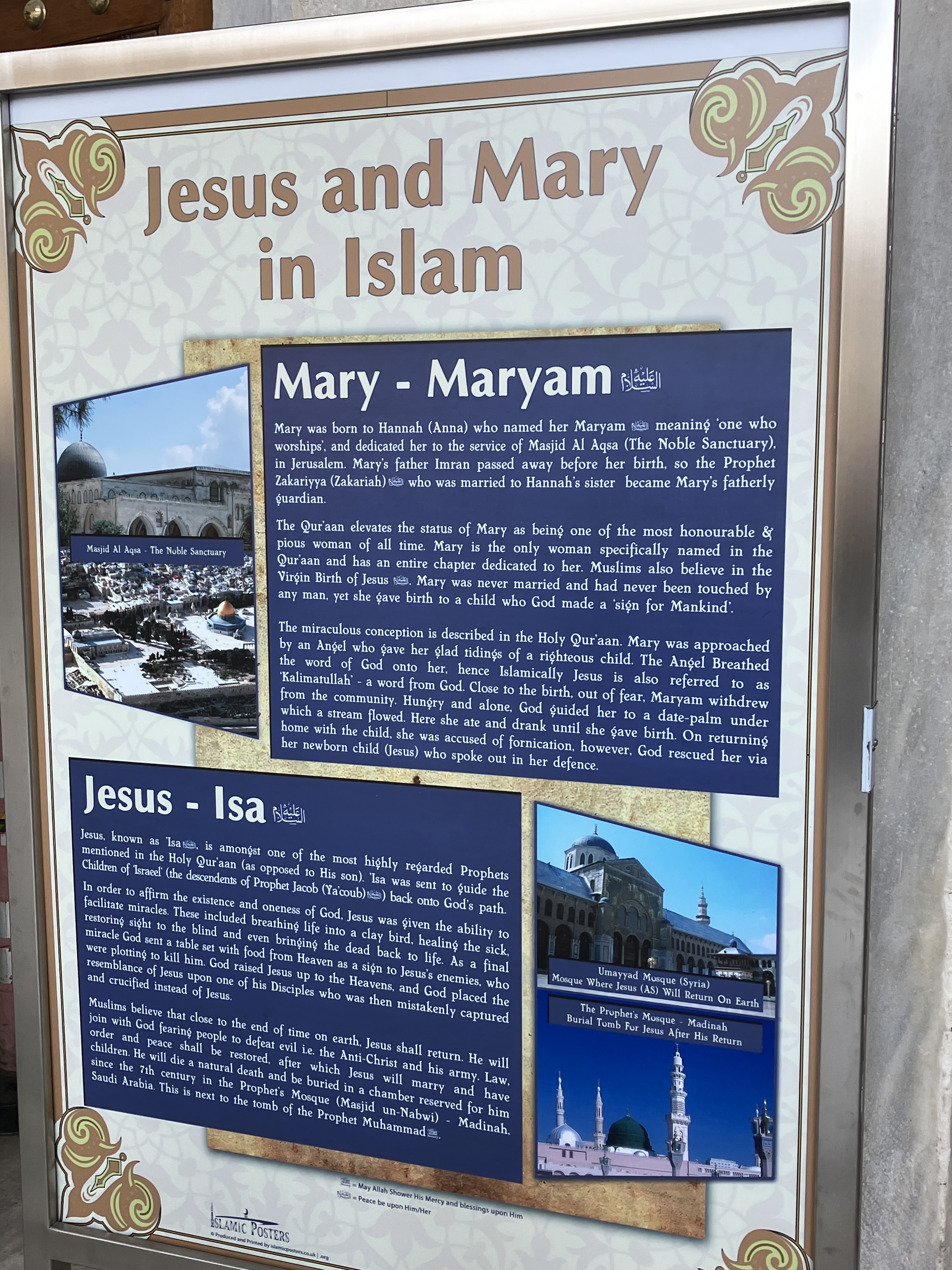
The outer courtyard had information boards, explaining their beliefs. (I checked, and they were happy for me to post them on my blog.) Do read them, and think about whether they compliment or threaten your own views. It’s helpful to know what other people believe, even if we differ from them (and perhaps you don’t differ as much as you thought you did!)

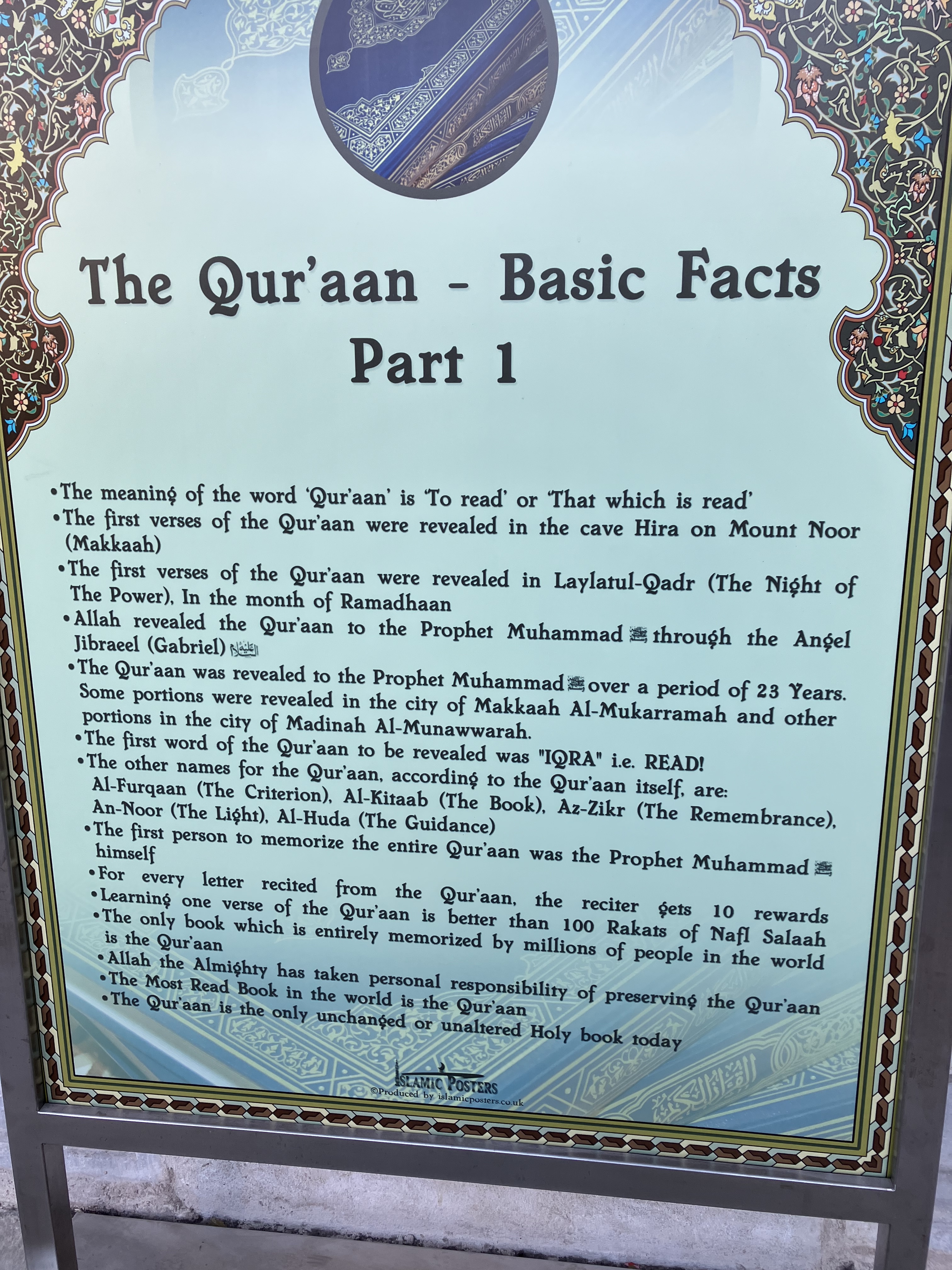
It interests me how many overlaps there are with Jewish, Christian and Muslim beliefs. Obviously there are extremes within each religion, and I would not, as a Christian, want to be linked with the violent hateful sects that call themselves Christian (like the Klu-Klux-Klan in the US) while not showing much in the way of love or purity that Jesus taught. We should remember this when viewing other religions, I think, and not judge the whole by the extremes at the fringe. When I read the boards I did feel some were written in a slightly unrealistic light though, especially the ones referring to the equality of women. I am not sure the ethos described reflects the thinking in practice. But maybe it does sometimes. It’s always hard to remove religion from the culture it has developed within.

We filed into the entrance area, removed our shoes and put them into a bag to carry with us. (Some places have an area where people leave their shoes, but I worry they might be stolen, so this felt more comfortable.) Inside the floor was carpeted, and the prayer area was sectioned to one side. People had hushed voices, though photography was allowed.

There was an information desk, and I had a question about the plurality of words for God in Hebrew, and whether the Quran was the same (it is). The person was well-informed, and spoke excellent English, and probably I could have asked about anything that I didn’t understand. (In case you’re interested, the Hebrew Canon/Old Testament has several places where a plural word for ‘God’ is used, even though Jews and Christians believe in one God. I am exploring why this might be, so I am interested that the Quran is similar.) Whilst my beliefs are different to Islam, I am aware there are overlaps, and there is lots that we agree on. (To be honest, while I do disagree with some of what Islam teaches, I also disagree with what some Christians teach. I guess it’s a matter of deciding what is essential–dogma, and what is variable–doctrine.)

It was, I think, a much better experience than when tourists visit our cathedrals, which seem to lose all reverence and become places that want to collect money rather than inform about Christian belief. This makes me sad. We could learn a lot from Turkey. Tourists can’t enter mosques during prayer times, which are advertised outside.

The call to pray sounds five times a day, reminding people to pray. I liked it, though it sounds very foreign to English ears. It’s too easy to forget about God and all spiritual things when we are busy with our day, it’s good to be reminded to pause.

I hope you will remember to pray today (even if not five times). Thanks for reading.
Take care.
Love, Anne x

anneethompson.com
****

Istanbul


We arrived in snow. It was Saturday, 23rd November, and Istanbul was colder than expected. The grass between the runways was white, and parked planes were frosted with snow. When we left the airport (which seemed very efficient) we stepped over slushy puddles to reach our hotel car. Pre-booking a car (with a fixed price) was definitely a good decision, as there were queues into the city and the journey was a long one. We crossed a long bridge over the river that divides Asia and Europe, and saw the new mosque (which is not called the new mosque) perched high on a hill overlooking the city.

The snow continued for a while, and we saw cars that had parked on the motorway so people could throw snowballs! Then it turned to rain, and by the time we reached the city everything was cold and grey and damp. 

The hotel is nice, and warm and very clean. But there are no cupboards or drawers so we can’t unpack, and the light switches are confusing so every time we try to adjust the lighting one of us touches the master switch and we are plunged into darkness! We ate in the restaurant on the roof, and the food was nice but grossly overpriced. The linen had embroidered cuneiform script, which said Mesopotamia, and I felt clever for recognising it was script (not that I could read it, or even know whether it went left to right or vice versa). We found out later that some cuneiform tablets had been found here—of a receipt for a delivery of furniture. (Cuneiform script is when they pushed a wedge-shaped stick into clay to make symbols, a very early form of writing.)

Breakfast the next day was fun, as we ordered a Turkish breakfast and lots of tiny pots arrived with honey and jam, meats and cheeses and fruits and nuts. There was no room left on the table. All so pretty. I remembered this from our last visit, Turkey is a very hospitable place, with friendly people who seem to enjoy feeding you.

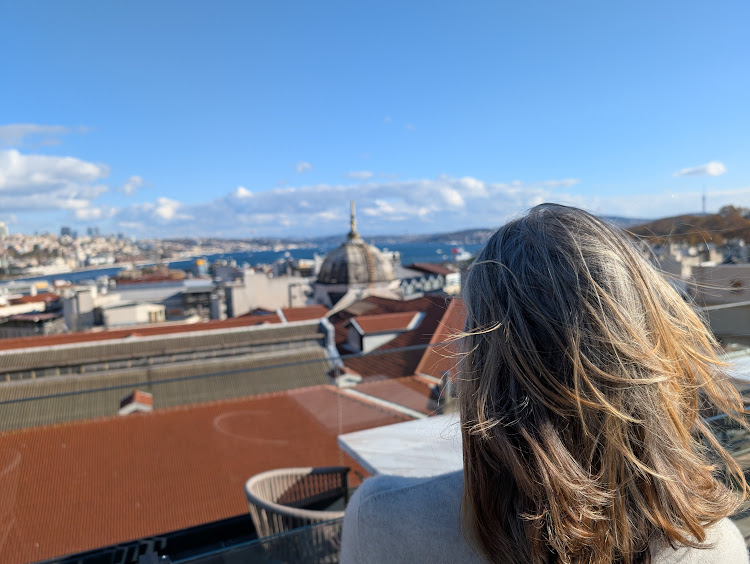
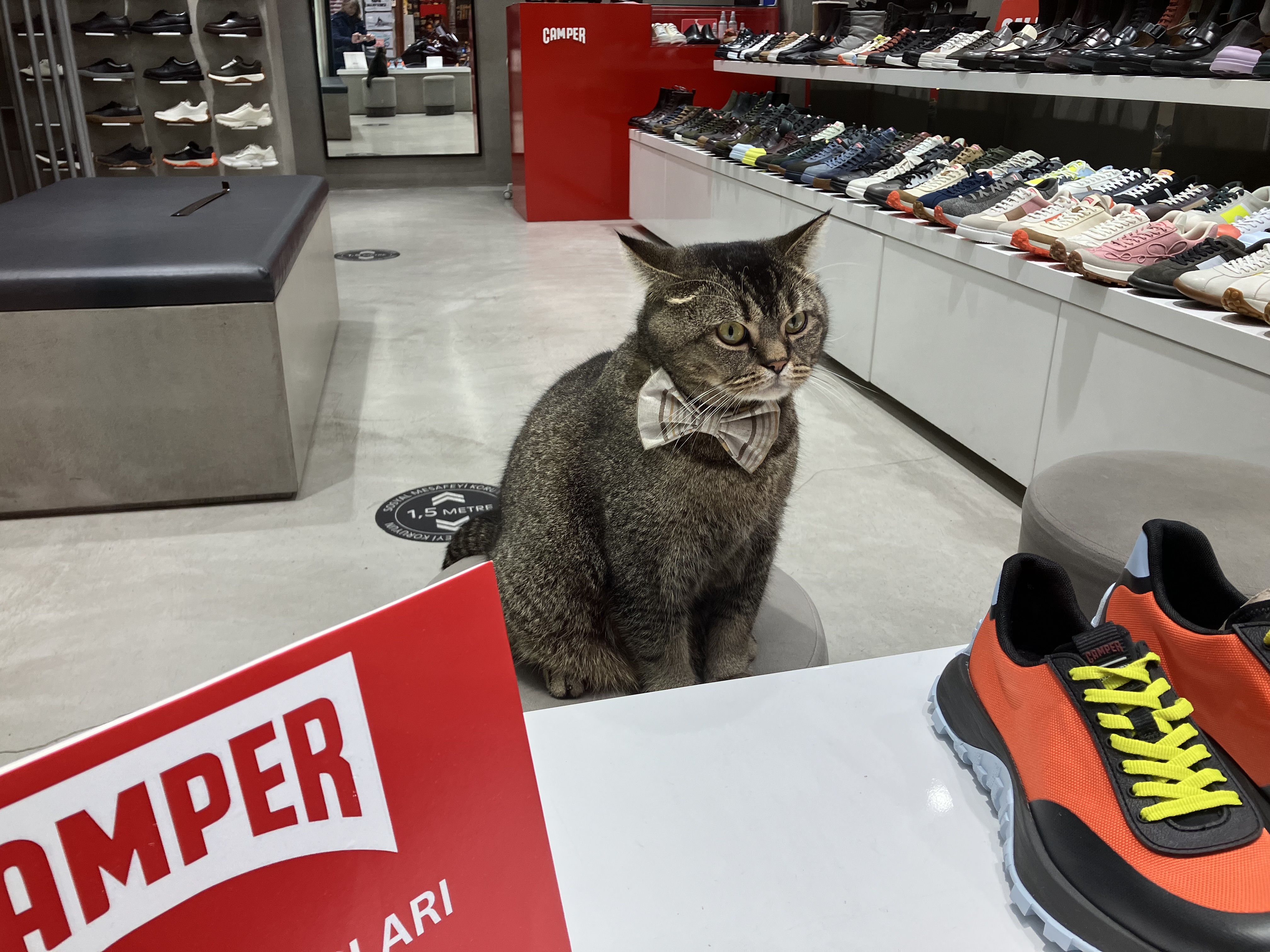
Our hotel is in the old town, and we walked along cobbled streets, sharing the space with motorbikes and men hauling heavy trolleys. There were tourist shops with shiny wares, colourful sweets and bright fabrics and heaps of spices. The skyline is full of minarets, there are so many mosques. We walked to the nearby spice market. It was pretty, a mass of colour and smells in a high-arched ceiling hallway. But it was very touristy, no locals seem to shop there, which made it feel rather artificial. (Though I don’t know who would buy spice when on holiday—I have never felt the urge to take home a few grams of cumin after a week away!) There were streets of stalls outside the spice market, and these felt less tidy and more authentic. Tahtakale is much nicer I think. There were pots and linens and tools and spices, with local people buying them, while men with trays of glasses of tea glided between them and cats watched from every corner. Cats are everywhere here, they are fed by the shopkeepers and stallholders, and they watch everyone and seem very content. I guess they keep the rodents in check. (New York should learn from this: people put out bowls of food and water, the cats are free to roam, and I didn’t see a single rat the entire visit.)

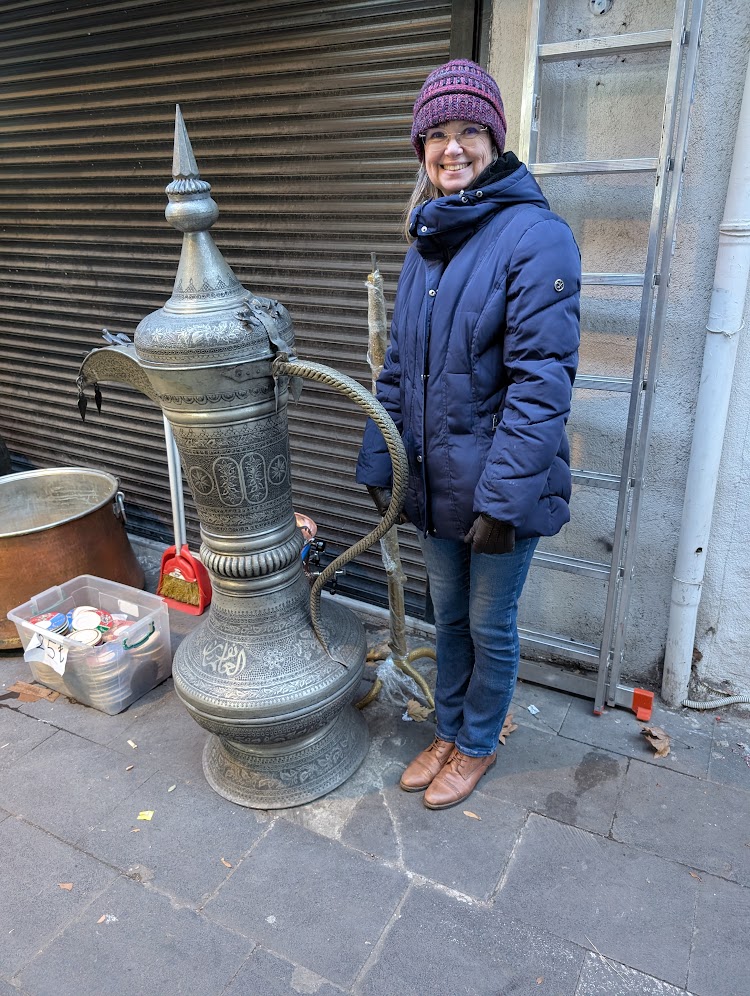
I was keen to buy a teapot, and found a set that is bright green, and slightly garish, and very Turkish-looking. They sell them in sets, a smaller one for tea balanced over a larger one for hot water. Turkish tea is served in fluted glasses, boiling hot and without a handle so you hold them by the rim to sip the tea. But I didn’t buy those. We spent most of our days just wandering. There is lots to see, and people seem happy enough with strangers wandering round. One area was manufacturing goods, the items put into boxes and wrapped into huge white bundles that were heaved onto small lorries or the backs of motorbikes or metal trolleys. You had to watch out for them when you walked, and take care not to fall down one of the gaping holes that plummeted to a warehouse cellar, or to trip over the various uneven paving stones or steps that were randomly on the narrow pathways. I stopped trying to look and walk at the same time, because there were too many hazards, so we stopped frequently, to notice the crumbling buildings above the modern shops, or to stare at the bright wares, or to simply look up at the hills. There are domes, and minarets,  and it is all very beautiful.

I will tell you more in another blog. Thanks for reading.
Take care.
Love, Anne x