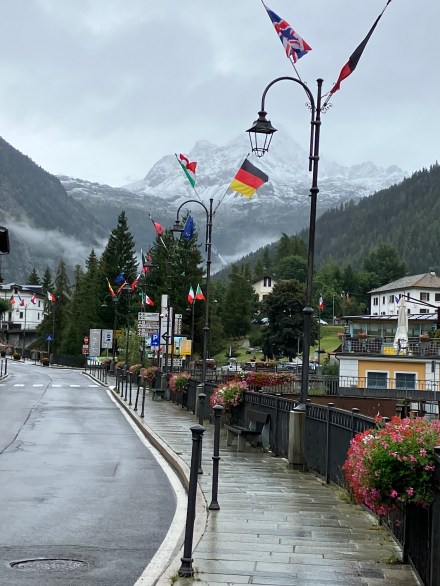
We arrived in LaThuile in bright hot sunshine. It was too hot to walk far, and even the shade was warm (which has not been my experience previously in the Italian Alps). However, within a day, the weather changed: the temperature plummeted and we woke up to snow on the mountains. This was very exciting! I love snow. Never before have I experienced snow in August.

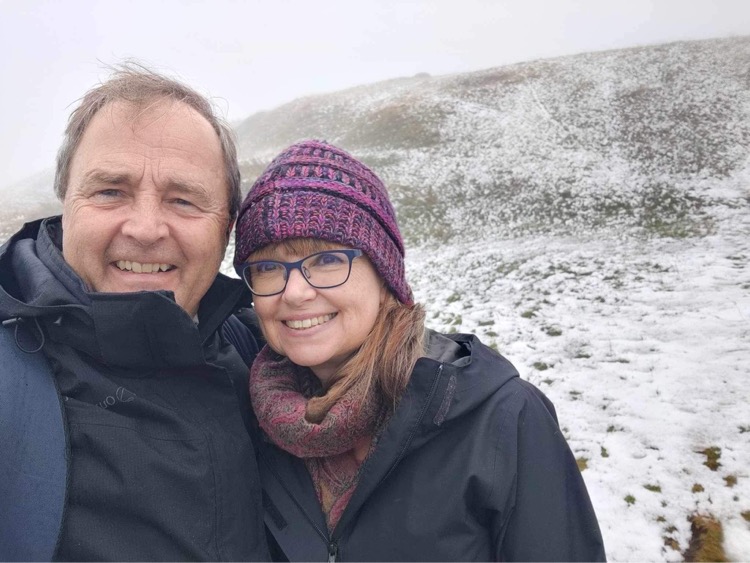
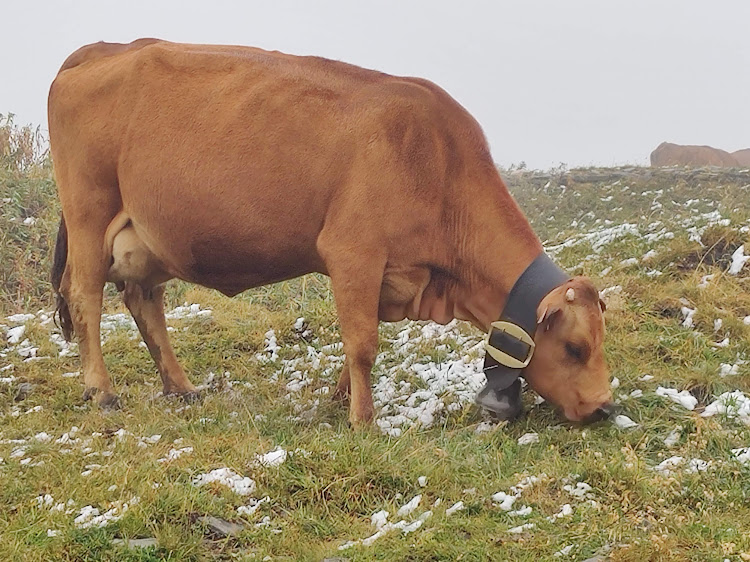
After lunch, we found the car where we had abandoned it in the town garage (because we are staying in a little apartment in the town centre and the narrow cobbled streets barely fit a bike, definitely not a car), We drove up the winding road to St Bernardo’s Pass, and there we found snow! It was jolly cold. I had brought my woolly hat but most of my clothes were the thin impracticable kind that you take on holiday. (Husband was so pleased to see it again so soon after it had been put away at the end of winter. He loves that hat.) Husband strode off, looking for the best ‘snow photo’ spot. I spoke briefly to some pretty cows with donging bells round their necks (who ignored me) and then went in search of warmth in a cafe. The cafe had a few toys, and I bought a cute St. Bernard dog toy, because this area has lots of them (the real variety) and even I realise that owning one would not be wise given where we live.


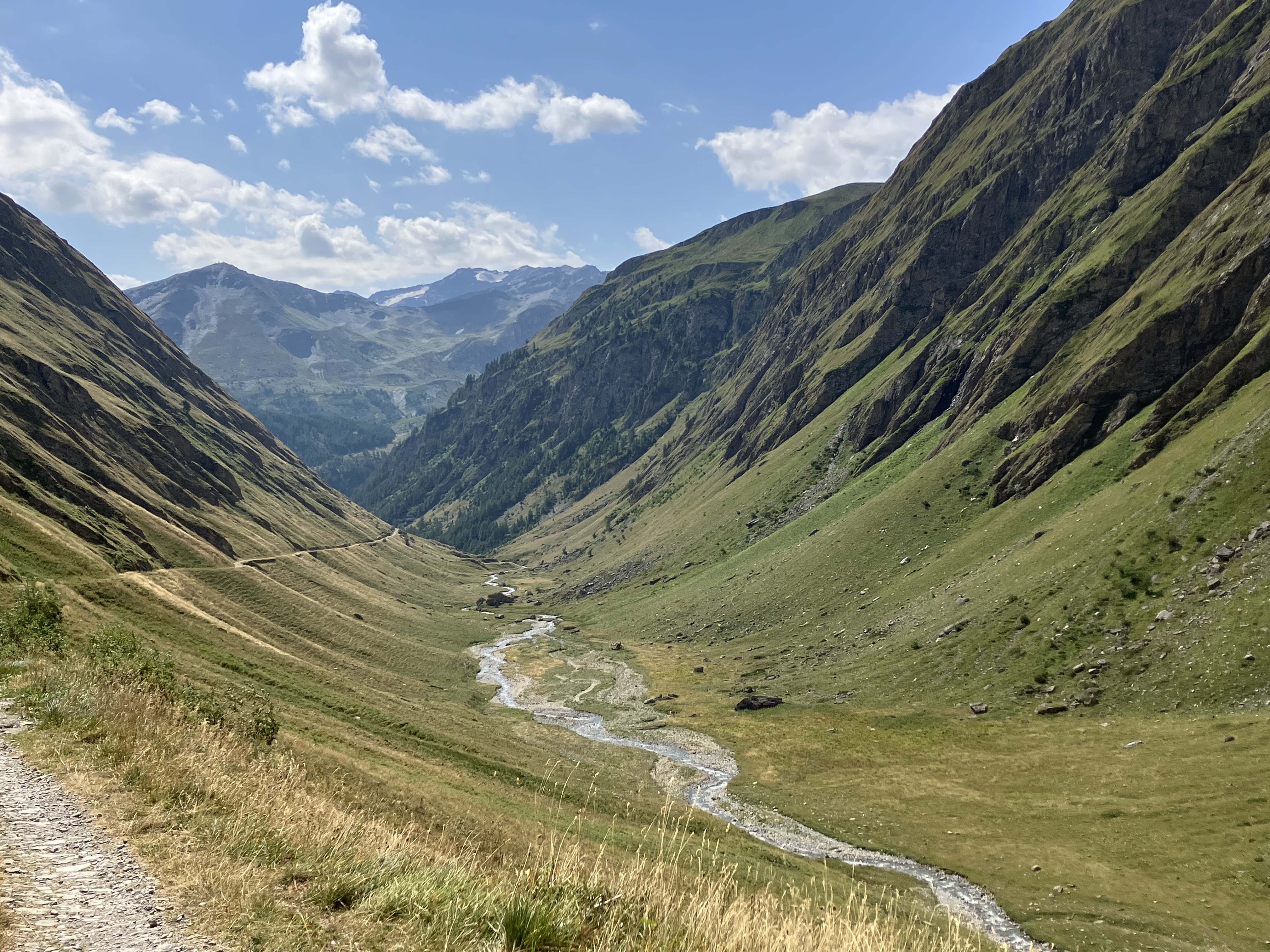
The rest of the holiday passed peacefully enough. We returned to the most beautiful valley in the world (Route 11) that we found last year. It continues to earn the title, it’s too beautiful to describe and even photos don’t really show the beauty of the place (especially my photos!) You will have to visit yourself. Just be careful as you drive to a parking place, as the road is very narrow and there are no barriers and the drop is very long if you fall. Nice place to die though.


We were very good, and went for a run every morning. We found a relatively flat road to run along (beside a bubbling river and looking at mountains). But it was hard to breathe. Husband informed me it was very good for my lungs because the high altitude makes them work harder. It didn’t feel good though, it made running very hard work and not at al enjoyable (apart from the scenery). Afterwards we went to Angela’s Cafe, which was crammed with local people all speaking Italian and drinking espresso coffee. I also drank espresso coffee, of which I am rather proud. I noticed a few years ago that only foreigners drink things like cappuccino or latte, and all locals drink tiny cups of strong black coffee. I therefore forced myself to drink it—like a teenaged boy forces himself to drink beer even though he would rather have a lemonade. I now enjoy drinking it, but I especially enjoy the approval I see in people’s eyes when I order it. Husband orders a cappuccino, and often this is passed to me, as the more ‘girly’ drink. Anyway, Angela’s Cafe has very good coffee, and it advertises that it’s grown by women, to help raise the standard of living in families, so I rather like that too. We always reserved croissants for the following day, because they are eaten in the morning by the earlier customers. This then was our routine: run by the river, recover and shower, breakfast in Angela’s Cafe, buy bread for lunch, return to little apartment. Not a bad way to start every day.


We finished each day by eating dinner in La Maison—the restaurant we ate in almost every evening last year. They allow us to have a table in the wine cellar, and they know that I like a chair rather than a bench, and that our Italian is terrible. It’s a friendly place to eat and the food is delicious.
One evening, when walking towards the restaurant, I noticed that my dress felt odd. I ran my hand down the side, and realised I could feel the seam. When I glanced down, a big white label was flapping at the side, and all the buttons were on the inside! I had somehow managed to put on my dress inside-out and not notice. We were next to a little chapel at the time, so I ducked inside while Husband stood guard, and quickly turned my dress the right way round. I was so pleased that I noticed before we arrived at the restaurant. Made a note to always look in the mirror before I leave home in future. (I do of course blame Husband, who really should have noticed.)


Other than clothing issues, the holiday was lovely. The Italian Alps are so lovely in the summer. I hope to come again. Thanks for reading, have a good week. Take care.
Love, Anne x

Thanks for reading.
anneethompson.com




 Anne E Thompson