Nearly Naked


Quick Trip to Cambridge

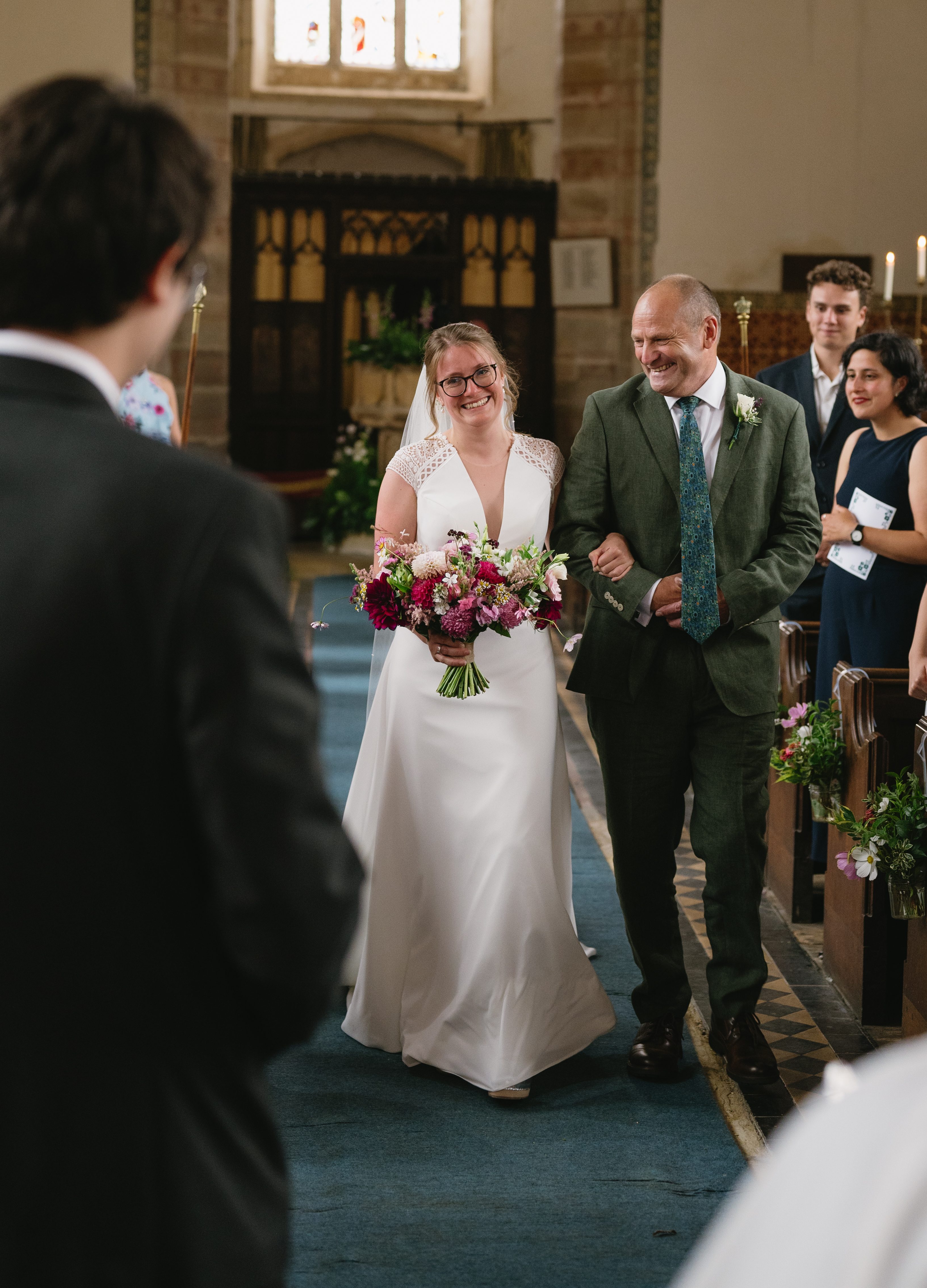
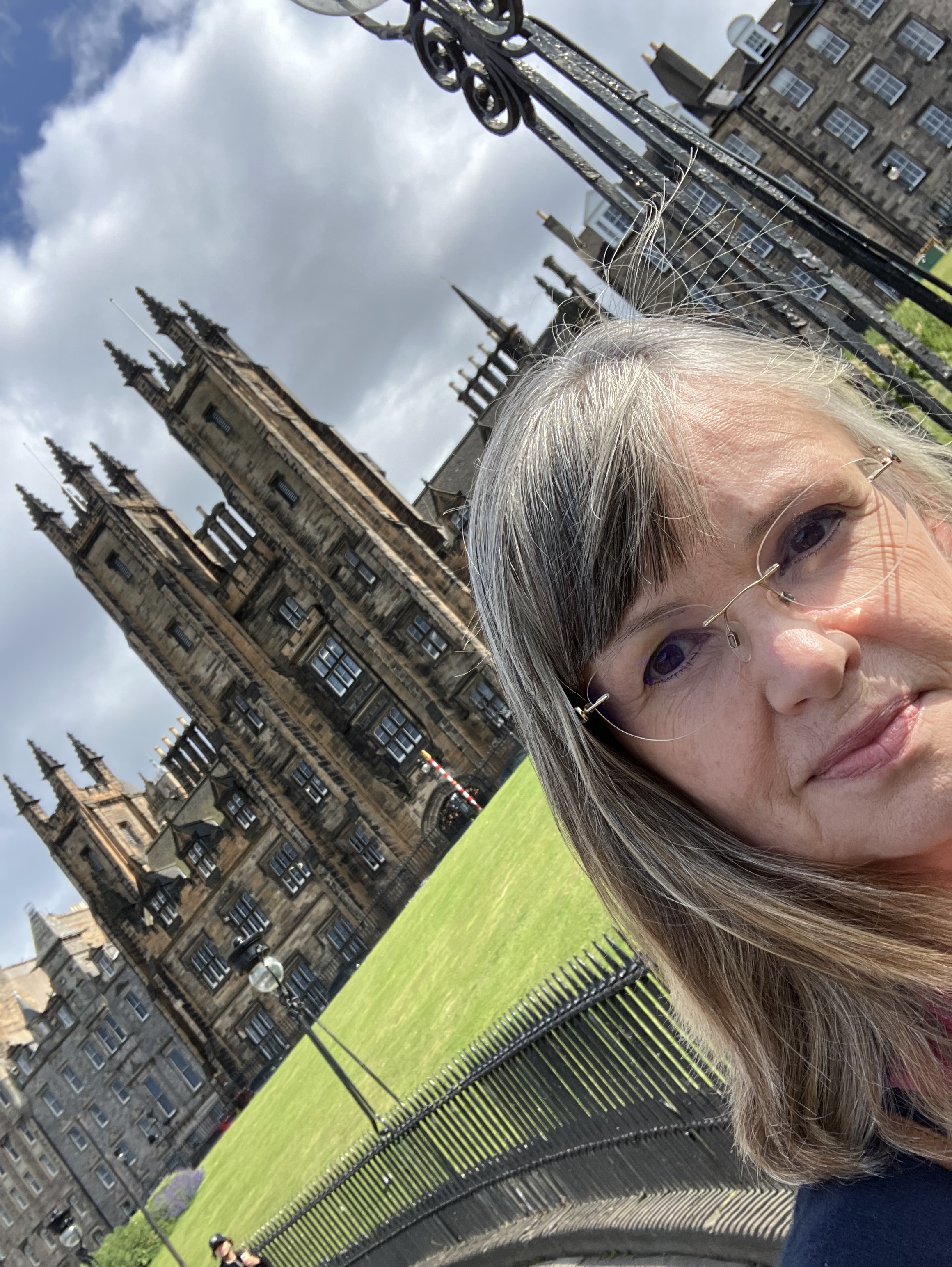
The wedding banns of our son were being read in Cambridge, which is very exciting! As a sort-of-Baptist (I attend an Anglican church but was raised a Baptist) I am a little fuzzy on some of the rituals/laws surrounding the Anglican Church. Apparently, if you marry in one of their churches, it is a legal requirement for banns to be read in advance (just in case someone wants to object to the marriage). They are read in the Parish of the ceremony, and in a church where you live (if that is different). Son lives in Cambridge. Lovely Daughter and SiL agreed to take mad dog for the weekend, so off we went.

Cambridge is always lovely (other than Fresher’s Week, when there is a lot of vomit). I love the history of the buildings, the river full of people having fun, the cows loose on the common. (Honestly, who couldn’t love a city that has cows wandering around?)

We had drinks on Saturday at The Pickering Inn. This was one of those ancient buildings blended with contemporary life that is commonplace in Cambridge. We sat under a ceiling built in the 1600’s, reading about ghosts, while the huge television showed the FA Cup Final. They had used old books to show reservations, and I started to read mine (because I don’t much enjoy football). A lovely way to spend an afternoon. Then we wandered back out into the sunshine, walked round the corner to an Italian restaurant, and I decided to forget about my low-cholesterol diet for an evening, so had a wonderful meal.

The following morning was church. We found the right church, and lots of friendly people came to ask who we were and welcomed us to the service. The church was quite full, and had a mix of ages, and the vicar had the same name as Husband. All was going well. There was a band, and the singing was good, and then they read the banns. I hadn’t realised that they would read out the full names, and they asked if anyone had a reason to object to the wedding (no one did) and then they prayed for the couple, and I felt unexpectedly emotional because it all felt very significant. Very serious. Very right.

The service continued to the usual formula of songs and readings and notices, and then there was a sermon. The sermon was about the woman who washed Jesus’ feet with her hair, which was a pretty outrageous thing to do in those days, and not at all what people were expecting. Then, from the back of the church, there came a loud: ‘Can we have a round of applause?’ and down the aisle marched a large man wearing a towel. I think just a towel, knotted at the waist. I sat up, this was interesting, was there going to be a short sketch? A bit of drama to explain the text?

The man strode to the front, went to the lectern and started to speak into the microphone. The vicar moved quietly to his side, and pushed the mic away, explaining that it was time for the sermon, it wasn’t the right time for the man to speak. Was this a sketch? Two other leaders appeared at the man’s side, and suggested he might like to join them somewhere quiet, where they could listen to him.

Is this a sketch?’ I whispered to Son.

I don’t think so,’ he answered, staring at the scene, ‘I think this is real.’

My first instinct was that maybe I should help—which I dismissed pretty quickly because I have absolutely no experience with either mental health or spiritual oppression, and I would just get in the way. The men were moving to the side door now, very calmly, leading the man out of the church. My second thought was whether that towel would stay in place, and whether I would resist laughing loudly if it fell off—but fortunately it didn’t fall. The man left, the sermon continued.

At the end of the service, the senior vicar returned, and explained that the man was being helped by counsellors, and please could the congregation leave by the side door, so we didn’t disturb them. He prayed for the man, and the service ended. It was certainly not boring.

As we left, I noticed the man (still wearing his towel) talking with two men in the glass-fronted foyer. Sensible to remain in a public place, I thought, sort of private but not hidden. I was impressed with how the whole thing was handled actually. The man was treated with dignity, but also moved away from where he could potentially harm people. The church clearly has some good policies in place.

We had coffee and homemade cookies, and then went to the pub for lunch. We drove back, collected mad dog (tempting to leave her for a few more days) and went home. A lovely trip.

I hope you had a good weekend too. Thanks for reading.
Take care,
Love, Anne x

Splash!


Hello, how was your week? I have just had a lovely morning, so I shall share it with you. It started earlier than expected (I sometimes accept invitations from my husband without checking the fine details first). We were standing on the station at 7am, which was bit of a rush as I had to sort out Goose, and the randy cockerel (who now has to sleep in a prison because he hurts my other birds) and the 7 ducklings (who make a muddy soup of wherever they are living). But after a quick shower, I was in the car at 6:55 as directed, and at the station in time for the train. (Also discovered I cannot use my railcard until 9:30, so more expensive as well as much earlier, than expected.)

As we waited, the power at the station gradually stopped working: first the automatic ticket machine died, then the credit card machine at the hatch, then the information boards. A little weird that it didn’t happen all at once. We decided to opt for the first train—a diesel—in case the electric train also died. So we ended up on a train to London Bridge, when we were heading to Kensington High Street. It all added to the excitement.

After squeezing into over-crowded tube trains (don’t think about the germs) we escaped into fresh air at Kensington. Kensington is very posh—even the tube station has artificial flowers and fake-Italian coffee shops. We turned right, walked past a few posh shops and cafes, then left into the modern forecourt of the Design Museum.

Husband had been invited to a ‘Breakfast and Preview of Splash.’ Splash is the new exhibit (about swimming), and I wasn’t sure how keen Husband was when the invite first arrived, so I told him I thought Pamela Anderson was there because I’d seen her photo online. Though I’m sure that didn’t influence him at all.

We arrived and had our names checked at the door, then were offered coffee (in proper cups and saucers) and pastries. We didn’t know anyone, and it wasn’t a ‘work-do’ so Husband chatted to me (rather than networking) and it was rather nice.

We went to see the Splash exhibit. It was mainly a display showing various styles of swimwear—some of which would be rather draughty! Pamela Anderson obviously decided not to attend in person after all, but her swimwear was there, so I didn’t feel I had been dishonest. (I have similar measurements to Pamela Anderson, just arranged in a different order.)

There was also a display about mermaids, and one stating that very few black people in England can swim, though I don’t know why this would be a thing. (The black people not-swimming, not the mermaids—mermaids are definitely a thing.) I grew up on a council estate, and we all learnt to swim, and beaches in England are free—so it’s not a financial thing. Maybe their parents didn’t think it was important—most black people I know can drive, and learning to drive is much more hassle than learning to swim, so it must be a lower priority. I shall have to ask them.

The exhibit was not extensive, but it was bright and fairly interesting, and made a good excuse to go into London.

Before we came home we went to a cafe for brunch, and that was the best thing of all. We sat at a little wooden table, perched on slightly wobbly chairs, and watched the world go past. Most of the world (in South Kensington High Street) wear expensive shoes, and have manicured hair, and walk with purpose. I wondered who they were, and where they had come from, while sipping coffee and eating a huge almond croissant which fell into crumbs that scattered across my clothes—so I fear I did not look especially manicured myself. But I felt very contented. We talked about nothing, and I tasted Husband’s salmon on avocado toast, and it was all rather lovely, and one of those mornings that remind you of why you got married all those years ago. Sometimes, just being, is rather lovely.

We got home at midday, released mad dog, and started work for the rest of the day. A fun little interlude.

I hope you have something fun this week too. Thanks for reading.
Take care.
Love, Anne x

Not a Great Week Here, How About You?


This too shall pass. . .

Hello and how was your week? Mine was pretty rubbish to be honest, but I survived and by the time you read this (as I write blogs several weeks before I post them) I am sure all will be well again. But this week has been disappointing.

One disappointment is my cockerel, who is super-randy and sees everything else as a competitor to fight. Which means when anyone is in the garden, he starts to dance around them, ready to attack. It also means he attempts to copulate with anything he considers appropriate. He hurt Goose, so I moved him in with the chickens. He is so big and strong, he was damaging their heads (he holds onto the back of their head to keep them still while he ‘covers’ them) and one of my lovely white hens was so badly hurt she died. I now don’t know what to do. He was raised to be company for Goose, and they have been good friends—I love seeing them walking round the garden together, and at night they snuggle in the hay box. But he is currently too dangerous to be free. I have run out of safe places, because I have a mother duck and her ducklings in the spare cage. I am fond of him, so unwilling to eat him or leave him for the fox, but he is a problem.

When I first decided to move him, I shoved him into the duck house, just to keep him safe from the fox and the chickens safe from him. The duck house opens onto the pond. In the morning, I was extremely surprised to find him in the second duck house. This means he must have attempted to escape in the night, and tried to cross the pond—which involves swimming. Chickens cannot swim. He must have had a near-death experience! Silly thing. At least he will have learnt that he can’t swim. (He can fly, but he doesn’t seem to know that yet, and stays inside the fence.) My only solution is to leave him in the pond area during the day (because the ducks can swim away from him) and lock him into the nesting box at night (when the hens are roosting). But moving him is a lot of effort, and it won’t work when I go away, so it’s not a long-term solution.

Another major disappointment was receiving a form from university. It is an assessment form, and has 9 sections, each section is 4,000 words. I did not expect this until next summer, as I am part time, and I have not allowed time to complete it this month. This makes me very stressed. I am hoping it was sent in error, and I need to complete it in 2026, but I haven’t yet heard back from my supervisor. I am trying to be philosophical about this, and I am telling myself that if God wants me to complete the PhD, then as long as I work hard (which I am) all will be fine. But I am still stressed out!

One reason I have so little time is my venesections have started. I have to have a blood test 7 days beforehand (which wastes most of a morning due to delays in waiting rooms). The actual venesections are awful, mainly because they are in the oncology department, and it is very sad being with lots of brave people who are struggling with cancer. The staff are lovely, but the logistics of getting to hospital, and trying to park, and waiting until I can be seen (because health stuff always involves waiting) and then having blood removed for an hour is not my idea of fun. I am tired afterwards—I think mainly due to the stress of it all. And I know I am very fortunate that my condition is treatable, and I am grateful it was discovered in time, but it is still awful.

Not enjoying being a patient.

My last worry is the local election, when the Reform party won in my area. I find this extremely worrying. I am not political, but the only broadcast I have heard by Reform stated that: ‘we have too many immigrants. Most of them are young men. The majority are criminals.’ In my mind, this is hate-speech. This is the sort of rubbish Hitler was spouting in the 1930’s. It ignores the difference between immigrants and asylum-seekers. It ignores the fact that many immigrants are hard-working and our country needs them. It ignores the fact that if people are asking for asylum, and if they genuinely need it, we should be prepared to help them. In my opinion, the ‘criminals’ are the traffickers who bring them on unsafe transport, and the politicians who spread lies and fear. The Reform party have now said they will use their status (and the money that comes with it) to challenge the government so they are side-tracked from governing. This is not what I want my local councillor to do. It saddens me that this is happening. I also feel guilty, because I didn’t make the effort to vote in the local election. We need to start speaking against the mis-information and hate-speech, and we need to be sure to do our duty and vote.

As I said, by the time you read this, I expect my stress levels will have reduced and life will be calm again. Sometimes life is difficult, and we keep going until it’s better again. This too shall pass. Though I have no idea what to do with my randy cockerel.

Thanks for reading, I hope your week is better than mine.
Take care.
Love, Anne x

I will try to focus on the lovely ducklings instead. Their world is full of danger, but they simply get on with living with enthusiasm. They are my happy zone.
****
anneethompson.com
*****

Finding Comfort in Uncertain Times


Well, isn’t the news depressing at the moment! I find I am drawn to it, like a moth to a flame, with a sort of horrible fascination, wondering which world leader will have done something stupid today. There is a lot going on, and it can feel rather unsettling. However, today I read a few verses that reminded me to keep everything in context, not to get carried away by the stressy-gossipy-conspiracy of the whole thing—especially some of the things being posted on social media.

Now, I am taking these verses (Isaiah 8) completely out of context, and I am applying them in a way that was not at all how the original author expected them to be applied, and I am ignoring all the verses before and after. Usually I would think this was a slightly dodgy way to use Scripture, but I think, if I am only applying it to myself, and not using it to teach/correct other people, then it’s okay. (Sometimes the writers of the New Testament did the same thing.) I think sometimes a few verses might apply directly to the reader (me) and that is how Scripture ‘speaks’ today. So, with the health warning that I am not trying to teach anything from these out-of-context words, which you can apply however you feel is appropriate, this is what I read this morning:

Hoping you find them a comfort.

They are copied from stepbible.com (great if you want to compare translations) the ESV and the JPS TANAKH.

Enjoy your day.
Take care.
Love, Anne x

anneethompson.com
******

Meg’s Diary


27/1/2025

We went to New York (this is January, before the tariffs), Meg went to kennels. She was happy enough to walk in, and greeted the staff like long-lost relatives, so I don’t feel guilty leaving her there. They take her for a walk each day, and she walks around the woods carrying logs (though she’s on a lead, so no chasing sticks).

However, when we collected her this time, they said she is aggressive towards other dogs, and lurches towards them when walking—though is fine when next to them in the kennel. This is a bit like when we drive—every dog we pass Meg barks at (it doesn’t make for peaceful journeys). I’m not sure what to do about it really, as she is fine when she’s with me in the woods.

Actually, she is brilliant in the woods. I forgot to take the lead yesterday, and I didn’t need it. I held a stick when I opened the boot, and Meg waited next to the car, watching to see where I would direct her. Other dog-owners were returning to the car park, and cars were whizzing along the main road, but Meg ignored them all. We had a lovely walk through the woods, I threw sticks, and called her when she got too far away, and she was completely obedient. We passed several other dogs, crossing paths with them, but whether they barked at her or not, Meg completely ignored them. Great. At the end of the walk I called her to heel, and we returned to the car (still no lead). I opened the boot, told Meg to jump in, and …nothing.

This has become a feature. When we return to the car, whether after a quick trip to the supermarket or a long walk round the woods, Meg refuses to get back into the car. She stands there, and looks at me. In her favour, she does not chase other cars or dogs, she just stands there, quietly waiting for me to take her for a longer walk. And I stand there, quietly waiting for her to jump into the car. Sometimes we stand there for a full 5 minutes, staring at each other, fully understanding what is being expected, refusing to give in. I usually break first, and practically choke her by trying to haul her into the boot. At which point she jumps nimbly in, giving me a withering ‘you have no patience’ look. Which is correct, I do not.

I’m not sure whether this counts as obedient or bad. She knows what I want, and doesn’t run away—but nor does she obey and get into the car. When I’m in a rush, it’s infuriating. I have started keeping dried fish treats in the car, as a bribe. The only change is that my car now stinks for fish, Meg still won’t get in.


14/2/2025

Meg has been fun this week. She is now fairly reliable when left alone in a room, and usually settles down near a radiator and snoozes. Only fairly reliable, as she did empty a plant all over the kitchen floor—so I wouldn’t leave her alone for too long, but gradually I am trusting her more.

I still cannot let her interact with my other animals though. I doubt she would hurt them on purpose, but she would definitely chase them, and might bounce them, which would be the equivalent to a truck landing on your head. When I’m sorting out the poultry, Meg rushes around, barking and trying to chase them through the side of the fence, which they find very upsetting. I realise I ought to spend time training her –taking her to the coop several times a day, and training her to sit or fetch her ball, thus teaching her to ignore the birds. But life is too busy, and it’s easier for now to just leave her in the kitchen whenever I need to be with the birds. Not ideal, but it works for now.

My other failure is chasing cars in the lane next to the garden. Whenever a car goes up the farm track, Meg charges at full speed along the fence line, trying to keep up with it. It’s good exercise I suppose, but it’s also reinforcing the drive to chase cars, which I really want to break her of—but I cannot be in the garden with her all the time, and there is no other way to stop her. I am telling myself (fully aware that I am probably lying to myself) that she can chase cars in the garden but can learn not to chase cars in other situations. I think this is untrue, but other solutions seem too difficult at this point. Maybe she will grow out of it.

When I return from my morning run, I usually spend some time training Meg. This is very simple—I lie on the lounge floor (where she is not allowed) doing my exercises, and Meg sits in the doorway. I have a ball, which she is not allowed to touch, and every few minutes I throw it, she retrieves it, I take it from her, put it on the floor and tell her to ‘leave!’ and then we start the whole exercise again. Today, Husband was working in the study, and I wasn’t sure throwing the ball up and down the hall would be quiet enough, so I decided to do my exercises on the landing carpet. Disaster! We went upstairs, Meg sat on the mat next to the radiator (her favourite place) I lay down on the floor and whump! A very happy German Shepherd dog landed on top of me! She was so excited, bouncing on me and licking my face, her tail smashing into anything in range as it swung backwards and forwards like a mad propeller. I couldn’t get her off me for ages, she is so strong, and was so excited that I was joining her on the carpet. I’m not quite sure what game she thought we were playing, but it clearly made her very happy. By the time I managed to stagger to my feet, I decided the wrestling match had been more than enough exercise for one day, so I went for a shower.

One afternoon this week, I was very tired but wanted to listen to an online lecture. So I took my phone to bed, and nestled into the pillows, ready for a sleepy listen. Meg followed me into the bedroom (where she is not allowed, but this happens more often than I like to admit) and lay down on the mat. She must have been tired too, because she started to snore. Then the lecture started, and I turned up the volume on my phone. Meg stopped snoring, and groaned. I ignored her. She groaned again. I ignored her. Then her head appeared alongside mine on the bed, and she stared at me, very pointedly, and groaned again. Clearly she was not appreciating the lecture on apologetics. She had a look in her eye that told me that if the noise didn’t stop, she might jump up onto the bed. Not to be encouraged. I took her downstairs, and listened to the lecture in a different room.

Usually when I work, Meg is very good. She lies on the carpet behind me, snoring and farting, with the occasional groan if I work for too long. It’s good (if smelly) company.

I hope you have some good (not smelly) company this week. Thanks for reading.
Take care.
Love, Anne x

*****
anneethompson.com
*****

The Sheep’s Poem


We had such an interesting seminar last week. It was a joint initiative, the biblical studies students (that’s me!) joined with the Islamic studies students, and we had a guest speaker who joined us via the internet from the West Bank in Palestine. That alone made it pretty exciting.

There is a man (Jakub) and he is trying to get translations of the Bible in local Arabic dialects. He isn’t trying to ‘convert’ anyone, there’s no agenda here, he simply reads the passages to local people and asks them to interpret the texts according to their own understanding. How do local people (likely to be Muslim) interpret texts, when they are removed from our Western understanding? What do the texts mean today, to local people?

There is no problem with studying the Bible in the West Bank; this surprised me. I assume there would be a problem with trying to ‘convert’ people, but the book itself is openly sold in shops and it’s not uncommon to see Arabic versions of the Christian Bible in Muslim homes. For his research, Jakub asks people to tell him what the words mean to them, and then he translates them using the most suitable words in the dialect. Language is personal to people, so although in time A.I. will replace translators, it won’t understand the nuances of meaning in the same way as real people, in real time. It’s an interesting project, but I was especially excited by the next bit.

One of the example texts that Jakub has been working with is Psalm 23. You remember it—the one about the Good Shepherd, looking after his sheep? We listened to how a local man, Ahmed, interpreted the words, and I realised that perhaps my understanding of this well-known Psalm has been wrong. Perhaps the words mean something slightly different.

 You should also know that scholars have debated the interpretation of this Psalm for decades, and do not agree (this is pretty normal for scholars—they like to debate, and rarely agree). The Psalm begins with a relaxing pastoral scene, the sheep being led to pastures, with streams of water, and told to rest. Then there is reference to a table—so does the action now move into a house? Then the Psalm describes anointing with oil—so has the subject now changed to a person, maybe a king being anointed? It finishes in ‘the house of the LORD’ which would be the temple, which is where a sheep would be slaughtered as a sacrifice—so what does that mean???

 Ahmed is from a shepherding family in Palestine. He has spent time with his family’s flocks, caring for them in the wilderness. He told us how shepherding traditions are passed down, and have probably changed very little over the centuries. A sheep is still a sheep, they need the same food and water, and the landscape in the Palestinian wilderness is not much different to when the Psalmist cared for flocks and wrote his poem. He described how he understood the Psalm, and it helped me to understand it in a whole new light. Ahmed’s words made me understand the Psalm from the viewpoint of the sheep. Imagine a shepherd, who was also a poet (so a creative sort of chap) and he thinks about God, and he looks at his flock, and he writes a poem with the sheep as the subject—not a metaphor—this is the sheep talking. I will rename this: The Sheep’s Poem.

The LORD is my shepherd, I shall not need anything. Ahmed said a shepherd wants to raise healthy sheep, so he will ensure they have everything they need.

He makes me lie down in green pastures; he leads me beside still waters; he restores my soul. God the shepherd takes the sheep to where they will find food, where they can rest safely, he cares about the sheep’s soul—the internal wellbeing of the speaker.

He leads me in right paths for his name’s sake. In Muslim thinking, the paths of God have special meaning, it is about living in the way that pleases God. In this Psalm, the sheep is being kept safe so he can please God the shepherd.

Even though I walk through the darkest valley, I fear no evil; for you are with me; your rod and staff—they comfort me. Ahmed described how predators lurk in the valleys of the wilderness, and the sheep get frightened. A frightened sheep becomes erratic, so the shepherd uses his rod and staff to control them, to keep them safe, keep them on the right path.

You prepare a table before me in the presence of my enemies; you anoint my head with oil; my cup overflows. Ahmed said that sometimes, if he has a ewe about to give birth and he wants to supplement her feed, he would make a little table by setting a plank of wood on logs, and he would put some grain or milk in bowls, and take the ewe there to eat. He also frequently rubbed oil on the heads of his flock, to calm them down, and improve their health. He said a sheep that is regularly anointed with olive oil has a much healthier coat and is less likely to get ill. It is the pinnacle of caring for a sheep.

Surely goodness and mercy shall follow me all the days of my life, and I shall dwell in the house of the LORD for the rest of my days. In Islam, an animal is only ever killed as part of a ritual, a sacrifice to God (otherwise it is viewed as murder). Only after this ritual can a sheep be eaten. This sheep, which has been so cared for, is content to know that its purpose is to serve God as a sacrifice, it will go to the temple ready to die—death is not seen as an end, but as a beginning of something new—the sheep will be with God forever.

*

I love when something familiar can be understood in a new way, and it makes perfect sense to me that this Psalm is about a sheep (because we see animals as periphery in the biblical texts, but I don’t think God does). Now, obviously the text wasn’t written for a sheep, even if it’s about a sheep. I’m not pretending sheep can read! But if we read this Psalm, about a sheep, can we not learn something? Does it not show what it means to have absolute trust? To know that our purpose is simply to be what we were designed to be (not what the rest of the flock thinks we should be)? The sheep doesn’t fear the future, or what will happen after it is time to physically die—the main event happens in the LORD’s house. It is never scary going home.

I hope you find this interpretation helpful. May we never stop learning new things in the biblical texts, they are such a helpful guide in life. Thanks for reading.
Take care.
Love, Anne x

Are Trump’s Tariffs Fair?


In an attempt to not believe what politicians tell me without fact-checking, I tried to unravel the new tariffs from the US. I am taking the view that President Trump is trying to do the best for his country, you can decide for yourself whether you believe this. His rhetoric is that in the distant past things were more fair, since then the US has been plundered, and he now wants to even the score.[1] But is this true? The perception elsewhere is that since this time, the US has become a world power, and this is due in part to free trade.

Free trade (I am reliably informed by the economists in my world) is when countries have trading partners and allow goods and services into and out of their countries with relative ease. Economists seem to agree that free trade is what makes strong economies. With free trade, everyone has an easier life. But, have other countries eroded this (as Pres. Trump states)?

Well, to some extent, from what I can discover, there have been some limits to free trade. Sometimes a country wishes to protect its citizens from something considered unhealthy. (In the UK, only toys that meet a certain standard can be sold for children–so some toys from China are rejected. In the UK, we dislike genetically modified beef, so refuse imports based on that. And so on.) Countries also add their own taxes. (In the UK, we have VAT—a tax that is added to goods before they are sold—which in the US is called ‘sales tax’—but VAT is applied to those good wherever they come from, even if made in the UK. So to list these as a ‘tariff on the US’ would be untrue.) Some countries have made sale agreements: My understanding is that car manufacturing is particularly cosmopolitan, with different components being added in different countries, so a car may pass between Canada and Mexico and the US, getting bits added, until it is finally ready to sell. Each time it has a part fitted in a new country, there has been agreement that no extra tax will be added to the final cost.

Now, despite what Pres. Trump said, the US has actually benefited from the global economy. Evidence for this is found in things like: Any country in the world will accept dollars (we take dollars when we travel to India). The US is seen as powerful, and is included in talks concerning climate or security. Services from the US have prospered; in the UK, Amazon is huge, so is Google, and Apple, and Microsoft, etc. American banks are strong. Across the globe, countries have welcomed companies like McDonald’s. Normal people in the US have benefited from this, it has supported their own economy. Yes, there has been a decline in certain industries—this is true everywhere. In the UK, whole towns were built on coal or steel, and they have needed to diversify, and find new industry, and this has not always been easy or smooth. But the US has sold many services abroad, and overall has grown stronger. Therefore, it seems the world has not ‘raped’ the US, but rather the US has done very nicely out of free trade, thank you very much.

I looked into what tariffs have actually been set, and why. It seems they are based on trade deficit—this is when the country sells less of a product than it buys, it’s a number. (US buys 100 televisions, it sells 40 televisions, therefore the trade deficit is 60.) Pres. Trump took the trade deficit with each country, divided it by the number sold, then divided by 2. (In my example, 60/100 divided by 2) However, he has only looked at the trade deficit of goods (actual stuff) not services (like Amazon, or banks, or IT) so it is rather skewed. And my understanding is that his method is ‘deeply flawed.’[2] Never mind the human cost, because breaking trade agreements does not make you an attractive partner in the future.
My conclusion therefore is that, from the evidence I can find, the new tariffs are not wise. They are not ‘fair’ because they are based on faulty economics, and they will not benefit people living in the US. But they may isolate the US from the rest of the free world.

The advice to the rest of the world appears to be that we should assume the US is ‘going it alone’ and we should make fresh deals with non-US partners. (As I showed yesterday, some supermarket shoppers now avoid goods from the US.) This potential decline seems a shame to me, I like the US, I have no wish to see its economy slump. I think there is a real danger that poverty in the US will increase, which often leads to more crime and unrest. I find this very sad.

I also worry about the impact on less developed nations. The US was generous towards those countries struggling with HIV, it helped to keep peace in the world, it was a good country. I worry that the loss in aid will be devastating for the poorest in our world. Never mind that we will have to pay more for Apple products (and will probably switch to non-US ones)—that is insignificant. What will happen to the poor in our world? Those are who we should be fighting for, and I hope that the people in the US, who are mostly good people (in my experience) will remember they have a privileged place in helping to restore balance in the world.

Thanks for reading. If you have further insight, do add to the comments.
Have a good week, and take care.
Love, Anne x

anneethompson.com


[1] Trump ‘glorifies’ the ‘era of the late 19th century’ and hopes to return to this economy. Zanny Minton Beddoes, Economist Online, April 2025. See also point (1) from yesterday’s blog.

[2] Financial Times Online, April 2025.

Being Aware


I rarely write blogs about political issues, but I find the news very unsettling at the moment. As you know, we studied a little politics in our Ethics class at Spurgeon’s, looking at how fascism grew in the past. It grew quickly, centred around one individual, and I doubt if most people realised what was happening. The parallels with today are alarmingly similar.

This partly came to my attention last week, at a family dinner. As I listened to one family member telling about her experience in Canada, and another family member comparing his news of Mexico, I realised that in the UK we are very complacent. I had no idea that people in these countries (and I’m guessing Greenland) are genuinely worried. They see a threat to their sovereignty. Mexico and Canada are fighting back. But what about those countries with unsettled economies? Who is speaking for the poor?

 I didn’t realise that shops in Mexico and Canada now label the country of origin for their products, people are encouraged to buy local produce and to reject things from the US. Maybe this will help. Do you think we should support them in this? Do we need to buy from the US when there are alternatives? If one man attempts to stamp on the rest of the world, maybe the world should join together in their response. The world today is a global community, and putting your own country first when that means alienating everyone else, is not such a good idea. And what will happen to the poor? Do we just allow them to be sucked down in a whirlpool of powerful economic battles? Who is speaking for the poor?

Shelves in a Canadian Supermarket

One aspect of the news that worries me is the motivation behind what politicians are saying. It used to be that when a politician spoke, you could hear them pandering to popular opinion, they cared about what the voters thought. (This created problems of its own.) But now I hear something else behind the words, now I hear them pandering to an individual—and this has been seen in history. Listen carefully when you hear the news—who do you think the politicians are most aware of when they speak? Who are they trying to impress—and is this healthy? Does this leader show any compassion for the poor of the world?

I leave you with the key points of fascism from Jason Stanley (author of How Fascism Works). As you read the list, which can you apply to the news today?

  1. A Great Mythical Past. A fascist leader will talk about how things used to be better in the past. They ignore all the problems that were actually in the past, and focus on a mythical ideal.
  2. Propaganda. A fascist leader will promote their own message and say that any alternative view is a lie. Hitler and Mussolini both did this, saying that things reported in newspapers were untrue, telling the population that their opponents were liars. The idea of accusing the media of ‘fake news’ goes way back in time.
  3. Anti-Intellectualism. Fascist leaders appeal to people with limited education, the speeches are not necessarily clever (because truth doesn’t matter) and they appeal directly to emotions. They dislike, and try to discredit, academics (because they will offer a counter view, or question the authenticity of the claims being made). Experts are shunned, people are told to ‘think for themselves’ which really means, ‘don’t question what I am telling you and don’t listen to someone who might have studied this issue.’ (I think we should be wary of people who tell us ‘the experts don’t know what they’re talking about.’ In my experience the ‘experts’ usually know more than the rest of us!)
  1. Unreality. This is another interesting one—apparently fascist leaders tend to love conspiracy theories. They always have an enemy who is trying to sabotage them, talk of subterfuge is encouraged, they want people to be paranoid. They also blame past leaders.
  2. Hierarchy. Fascist leaders always have a dominant group of loyal followers, those who are ‘true to the leader.’ Anyone who questions the general message is eyed with suspicion, and removed from the ‘inner group.’ As stated earlier, everything focusses on the leader. [Listen to what they are saying—who are politicians trying to please?]
  3. Victimhood. Fascist groups always state that they are the victims of another group—they have been oppressed, or made poor, or cheated—and this has been caused by a definable ‘other.’ (Hitler blamed the Jews, gay people and Roma, but other groups held to blame over the years include black people, feminists, immigrants.)
  4. Law and Order. Fascists declare that they want a return to law and order, and the group against them are the criminals. The ‘other’ people are the ones to blame for crime, for stealing, for rape, for drugs, for violence. [In the introduction of any emergency measures to combat ‘a risk to security,’ the ‘risk’ should be fact-checked.]
  5. Anti-Decadence. Fascists claim that the moral fibre of society is under threat (blaming the ‘other’ group). Only they, and their followers, have good morals. Anyone not supporting them is described as a bad person.
  6. Work Ethic. Fascists claim that the ‘other’ group are lazy, mere parasites of society. Fascists claim they are hard-working, deserving of better.
  7. Nationalism. Fascists promote great nationalism, and shun other nations. They strive to make their country ‘great again’ and nothing else matters. This gives a great sense of belonging to the followers of fascism. [But in a global community, what are the consequences of this? We need to be shrewd.]

I add to this the current policy of saying what you want to be true, as if presenting it as true makes it true. It does not. It is still a lie, however loudly you say it. We can fact-check statements, and test whether they are really true.

I hear President Trump say that the US has been ‘cheated’ in the past, the new tariffs are to make trade fair for the US. Is this true? We shouldn’t simply accept a statement just because someone says it loudly or repeats it several times. Personally, I know very little about tax and tariffs. I shall do some research and let you know tomorrow what I discover.

Please be wise, wherever you live. Please make good choices. I doubt if anyone in power reads my blog, but we have a voice even if no one listens. Let’s stand for what is right, because ‘those who are noble plan noble things, and by the noble things they shall stand.’ We need to be shrewd. We need to watch out for liars–just because someone says something, it doesn’t make it true.

Thanks for reading.
Take care.
Love, Anne x

There is a lot on social media at the moment, mocking the people in power. Maybe this is one way that people are ‘fighting back.’ Maybe things seem less scary if we make them a joke. Certainly it is good to laugh, but let us not forget what is serious.

When someone includes you in a military chat by mistake.

The McDonald Islands have a tariff. There is not a human population there (apparently) but the penguins are confused.

Link to previous post:
 https://anneethompson.com/2022/11/28/what-is-fascism-and-are-you-a-fascist/

Sign up below to follow my blog.
Then you won’t miss my post exploring whether the tariffs are fair or sensible and wise.
anneethompson.com
****

Jamaica Warmth


Thursday

I was tired, and I twisted my ankle yesterday when getting into the sea, so I walked rather than ran in the exercise room this morning. It’s a very good exercise room—everything works (not always the case!) and there are remote buttons to work the air-con and telly, clean towels, wipes to clean the machines, a water dispenser and rubber mats for stretching afterwards. I think it would be too hot to run outside (plus we would probably be hit by a car on the crazy roads).

After breakfast we went back to the supermarket to buy more water. It was busier today, with security guards at the carpark entrance (free parking for 2 hours, but we needed to get the ticket stamped in the supermarket). We looked at the shops in the small precinct. Lots of bright clothes, a barber shop, two book shops, a shop of spare engine parts. Plus a toy shop—which displayed white babydolls in the window. Why white? Nearly everyone here is black. Makes no sense to me.

After the supermarket we went to look at a ‘craft fair’ opposite. It was full of stalls, all selling the same thing (as far as I could see)—brightly coloured dresses and hats, fridge magnets, beads, knitted goods, carved wooden goods. It reminded me of a similar craft fair we visited in Zambia. All the stall holders encouraged us to look at their goods (even though they were identical to the stall next door) and asked us to name our price. I checked the price of their fridge magnets (in Jamaican dollars). Most were $1,000 (about £5) though some were double and some were half that price. One lady was nice—friendly but not pushy, and her price was $600, plus she had some nice wooden magnets rather than just plastic ones. I bought one, and asked for a photograph. She was called Dianna. You can look for her if you ever visit Ocho Rios—I liked her.

One stall had an open Bible on the table. I asked the man serving what he was reading. He told me it was a Bible, and he had it open to encourage good vibes. I felt like I should say something—to maybe encourage him to read it, or to ask him what he believed—but it felt inappropriate. Not the time for a deep discussion, and I thought it might appear intrusive. (I tend to react against the ‘scalp-hunting’ mentality that typified my teenaged religious experience.)

We drove home without incident. It was a fun little excursion, and I feel more comfortable now. I am used to being the only white person.

Friday

Another lovely day in Jamaica. After running in the gym, we had breakfast next to the sea. I had pancakes. The menu lists the food—so it said banana pancakes with caramalised banana and maple syprup. I have learnt that when I order food here, I need to include the whole description, otherwise half the dish is missing. (So when I ordered grilled fish and veg, I received grilled fish and veg—but not the potatoes or sauce listed in the menu), Today I forgot, and asked for pancakes. Therefore I received plain pancakes. Luckily I relised my error and snaffled a banana from the fruit plate. Nice breakfast.

As we walked back to our room I threw some leftover toast into the sea (I have watched other guests doing this). Lots of striped ffish (I think called Sargeant Major fish) scurried over (can fish scurry? These could!) to eat it. Fun.

We chatted to one of the hotel managers, who spotted that we are new guests (most people have been coming here for years, and the staff also tend to stay, so it has a family atmosphere). The hotel is relatively small (50 rooms) and there is a sense of space and privacy even when (like this week) there are no vacant rooms. It has also hosted a few famous faces (Marilyn Monroe honeymooned here).

We heard there is a deserted beach further along the coast, so drove there. Driving in Jamaica is quite an adventure—massive pot holes to avoid, while someone sits inches from your bumper (sometimes beeping) and drivers whiz towards you on the wrong side of the road. Husband is very calm in these situations, and we arrived without incident (but personally, I would never drive here). We followed Google Maps to Duncan beach, and parked on the verge of an unmade road, near to where some houses are being built. There was a pathway, towards the sea. It looked private, but we went along it anyway. At the end, a man was leaning against a tree, watching us. We asked if we were allowed there—was this the right way to the beach? He smiled, and waved us on, and said yes, we were welcome, have a great day. This typifies my interaction with people here—they have mostly all been friendly, smiley, and helpful.

The beach was narrow, with volcanic rock beneath the surface of the water—the water was turquoise, and warm, and completely clear. We walked along the beach for a while, looking for shells, finding washed-up coconuts, and saweed, and lots and lots of plastic bottles. In the sea, tiny fish darted (these were not the scurrying kind) and crabs scuttled away from us. It was very sunny, so we didn’t stay too long (I have already managed to burn one arm, which was very silly of me). We ate a picnic of digestive biscuits and water before driving back to the hotel.

As we drove, I tried to take photos, to capture a flavour of the place. This part of Jamaica (St, Anns/Ocho Rios) has some luxury resorts, and some fairly basic-looking housing. Everywhere has bright colours. Goats and dogs wander next to the road. There are a few places with heavy industry, linked to the bauxite quarrying. (Bauxite is a metallic mineral, and it’s the only source of extractable aluminium.) Bauxite is a soft red clay, and as we drove near to where it was being loaded onto ships, the road and trees were tinged with the red dust. I worry it might not be too healthy for people living nearby. I didn’t manage to capture photos of the fishing boats bobbing on the sea, or the children playing, or the animals. But you can see how green everywhere is, with lush plants filling almost every space, and trees covered with vines and air-plants.

I have enjoyed Jamaica, even though we have seen very little of it. Maybe next time we will do more touring, and try to see more of the island, but even this short week has given us a flavour of the place (and a warm flavour of rum and smiles). The service here is warm and relaxed, and you have to lean into the pace and forget the English schedules. Jamaica is a place to relax.

I hope you find time to relax too this week. Thanks for reading.
Take care.
Love, Anne x

I am going to miss the fruit punch!

anneethompson.com

Who Has Got Your Back?


As part of my research, I have gone back to Genesis, exploring the text for new insight. It never ceases to surprise me how often reading a passage that I ‘know’ extremely well, offers something new. A new teaching, or way of looking at life, something helpful for life ‘beyond theology.’ (Afterall, the biblical texts would be pretty useless if they were only good for academic debate.) I’ll share my recent discovery with you.

I am looking at the story about the garden of Eden, which begins near the start of Genesis (after the narrative about the 7 days of creation). There are different ways of understanding these stories. Some people view them as historically accurate—these describe actual events about actual people. Others understand them as myths or parables—stories to explain something important, but the things in them didn’t actually happen.[1] To be honest, I’m not sure it matters really, as long as you are reading openly, listening for God to speak to you (the main fault, in my opinion, is to read them as a weapon, to ‘prove’ your own belief or show someone else that they are wrong.) Anyway, for this nugget of wisdom, it doesn’t matter what your viewpoint is. Personally, I sit in the ‘parable’ camp, but to properly understand the texts I think we have to enter the world of the story, leave behind our scientific knowledge for a moment, and try to understand what is being taught.

It helps if you can read them in Hebrew, but I’ll write this in English (just be aware that the words are not exactly as written). The story begins (Gen.2:4) with the earth being bare and barren—because, we are told, there is no human to work the ground and God hasn’t sent any rain yet. God creates the man, forming him from the dust of the earth (so he’s literally an earthling!) God plants a garden in a place called Eden and places the man there. God causes trees to grow, so the man has food. (In the middle was the tree of knowledge of good and evil—but that’s not relevant for this bit of the story.) God made rivers, to water the garden, and then we are told (again) that God put the man into the garden (and this is important) לְעָבְדָהּ וּלְשָׁמְרָֽהּ to work it and to guard it. Remember that bit—especially the ‘guarding’ bit. These were the roles given to people: to work the ground, and to guard.[2]

There is lots of speculation (academics prefer the word ‘deduction’ but really it cannot be more than educated guesses) about what, exactly, the man was guarding the garden from. Some say it has an ecological meaning—showing that humans were meant to care for the world (we’ve certainly made a mess of that!) Others say it’s evidence that there were other people, outside the garden, and the man was to guard against them.[3] God then commands the man to eat from every tree, but warns that if he eats from the tree of knowledge of good and bad, then he will die that very day.

We’re going to skip through the next bit. The man needs a companion, and God makes a woman to help him. (The word עֵזֶר helper is the same word used when God helps people—just in case you were wondering if there was a hierarchy here.) Then a snake appears (described as עָרוּם prudent/shrewd which is a clever little pun, because it’s pronounced ‘aroom’ and the people are עֲרוּמִּים  naked which is pronounced ‘aroomim’.) The people eat from the forbidden tree, they and the snake are punished and the people are banished from the garden. They still have to ‘work’ the ground, but now it’s harder. There is no mention here of guarding anything.

Then we skip ahead, to when the couple have two sons, Cain and Abel. Both sons make an offering to God, and Cain’s is rejected. I wrote an earlier blog on how this wasn’t fair.

Right, we’re nearly at the bit I want to talk about.

Cain takes his brother into a field (presumably because there were other people around—and he didn’t want to be seen). Cain kills Abel. God asks Cain, where is your brother? Cain replies (this is important): לֹא יָדַעְתִּי הֲשֹׁמֵר אָחִי אָנֹֽכִי  ‘I don’t know, am I my brother’s keeper/guard?’ We have that word again, שָׁמַר to keep or guard. Remember, the word at the beginning, when the man was told to work and guard the ground.

So, this is my understanding. People were given two tasks: to work the ground (care for nature) and to guard. At first, they had to keep/guard the garden. Then, when there were other people, they were supposed to guard each other. When Cain asked, ‘Am I my brother’s guard?’ our reply is: Yes! Yes, you are supposed to look after your brother. You are supposed to watch out for each other. That is what people are supposed to do.

This seems to me to be true today, it is how things are meant to be. When someone is having a rough time, when they have a health issue or a problem or something difficult, does anything help like having someone watch their back? It’s what parents do—they guard their children. It’s what siblings do—they support each other. It’s what friends do—they make it known that they are there, supporting, keeping, guarding. Let’s try to do this in the next week, let’s look for people who need to be ‘guarded.’ People who we can help as they cope with the muddle that is life as we know it.

Thanks for reading. I hope you have someone to watch your back.
Take care.
Love, Anne x


[1] Joseph Fitzpatrick, The Fall and the Ascent of Man (2012).

[2] Kristin M. Swenson, ‘Earth Tells the Lesson of Cain,’ in Exploring Ecological Hermeneutics, ed. Norman C. Habel (2008).

[3] Ziony Zevit, What Really Happened in the Garden of Eden? (2013).