A New Puppy


Meg’s Diary: First Day

We drove to near Northampton to collect Meg. You might remember from an earlier blog, that I was looking for a German Shepherd puppy, and learnt that working gsd are a very different strain. They are shorter, stockier, and generally have less health problems and nervous issues—so they are less likely to react badly due to fear. They also tend to have more energy/focus, which I worried might be a problem (as I don’t have sheep to be herded, only a few poultry) but we requested one, and I started reading. ‘Being calm’ was going to be an important lesson.

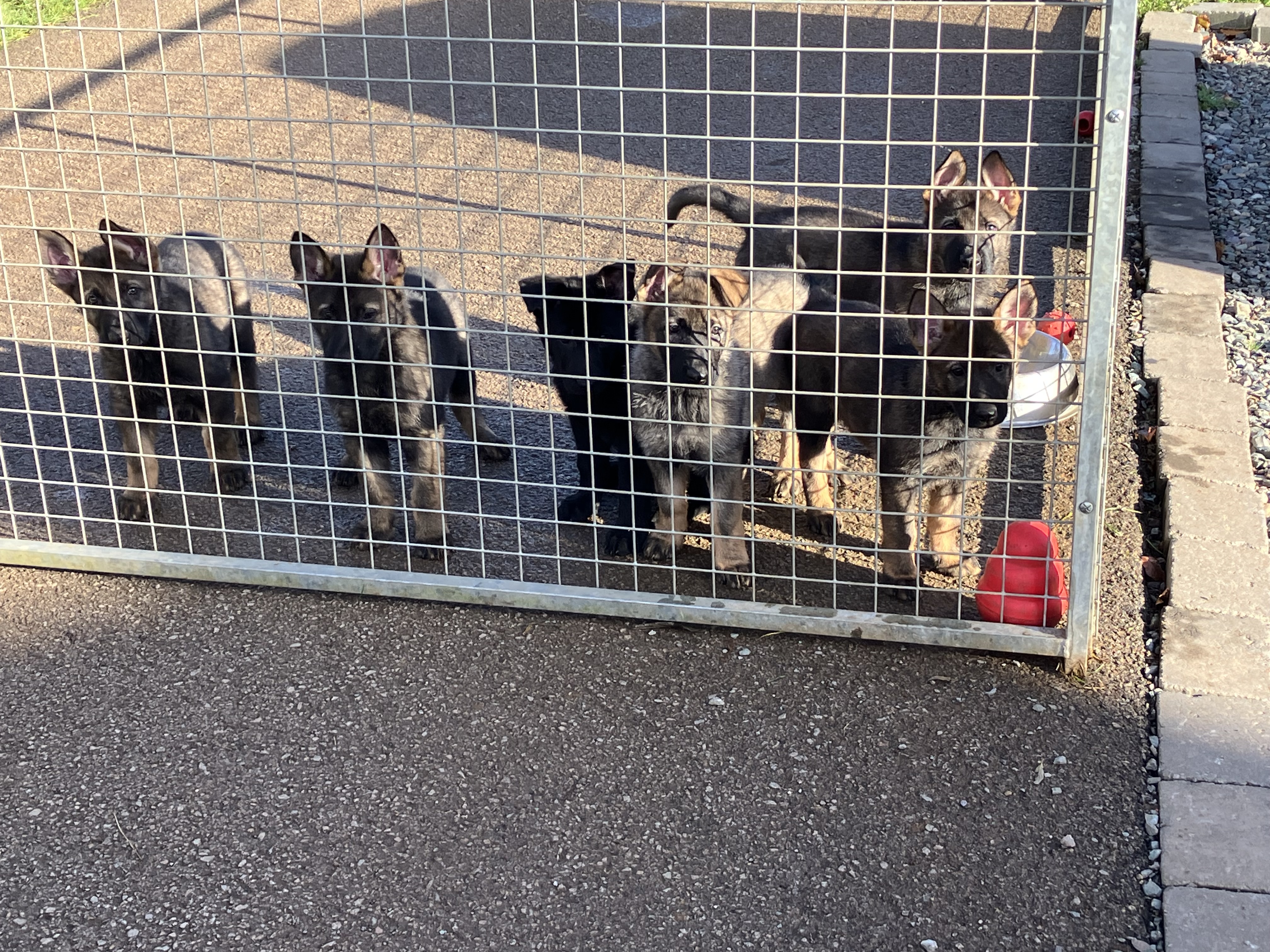
When we arrived, all the puppies were outside, in a pen. All my worries disappeared and I realised that I really really wanted a puppy—or maybe several! They were gorgeous, full of life as they chased each other and played with an empty milk carton and tried to leap the fence to say hello. Nearly all of their ears were up (a show strain gsd has floppy ears until they are several months old) and they had stocky little legs and nice straight backs and you could tell they were going to be strong dogs.
I asked to see their mother—because that seemed sensible. She was still lovely, though looked more tired than when I had seen her previously!

The breeder recommended Meg, as I had asked for a darker sable, and she knew I didn’t want a pup who was ‘very driven.’ Not that any of them looked particularly calm.

We paid and put her in the car. (£2,000 in case you are interested—a big increase from the £450 we paid for Kia when she was a puppy—but comparable to other reputable breeders. You have to divide that between 16 years, and then it’s worth the price.) The price covered her first vaccine and worm-course, a chip to identify her, and half a bag of dog food. I thanked the breeder (because she had sold me the best thing ever) and we left.

Meg started to cry as soon as we left. I really wanted her on my lap, but I wasn’t sure of the law/view of breeder (and gsd breeders are very fussy, and will refuse to release their puppies unless they are certain the new owner will be sensible). However, I also felt that the two-hour trip would be a good bonding time. So we stopped (like naughty children, as soon as we were out of sight!) and I transferred the puppy onto my lap.

She was easy to control, and I had piles of towels to hand in case of accidents, and I hoped she would just sleep. She didn’t. But she was settled, and she snuggled into me and watched Husband drive. A couple of times she was sick, but I am pretty nifty with bags after years of baby-vomit, so it was fine. By the time we arrived home, we knew each other.

I took Meg into the kitchen and put her on the floor. She ran round, knocked over a plant, tried to eat the plant, tried to eat me when I started to clear up. She has super-sharp claws and very pointy teeth. A friend had kindly leant me a puppy-pen. The first time we put Meg in it, she leapt at the sides, managed to get half-way up, and tried to leap the rest of the way. I worried she might either fall backwards, or climb over—either way she would be hurt. Husband managed to find a super-large crate at Argos, meant for a Wiemaraner but perfect for an energetic gsd puppy.

The first night, we did as the breeder had suggested. When we went to bed, we put Meg into a small crate, turned off the lights, left her. She cried, barked, sounded like she was being murdered, and then fell asleep. I slept within earshot. When she woke (2am) I went to her, didn’t turn on the lights or speak, took her in the garden to pee, returned her to the crate. She made a fuss, but fell asleep after about 10 minutes. When she woke again (4:30) I repeated. I got up at 5.30, and we started the day (I am usually up at 6ish, so that was fine). Whenever Meg toileted outside, she was praised and given a treat. She’s really clever, and we only had two accidents in the house. She cannot be left alone for a moment (unless she’s in her playpen-crate, which I don’t want to use too often). She seems very happy. I am exhausted.

Thanks for reading.

Take care.
Love, Anne x

***

Can You Name the Character?


Quiz

  1. Who lost their home, possessions, children during a wager between God and the accuser, and were then ignored by God?
  2. Which prophet determined the outcome of a battle?
  3. Which unarmed, untrained civilian killed the head warrior of the opposition in a one-on-one encounter?
  4. Who was forced into a position of subservience, due to their talents rose to a position of authority within a foreign palace, and then used their wisdom to save the Israelite people?
  5. Who was the longest follower of Jesus, who never deserted him, and was there at the crucifixion?
  6. Whose action was stopped in the wilderness, and they then named God: ‘God who sees’?
  7. Name a child used to further God’s plan.
  8. Who defied the authorities to save the life of God’s people?
  9. Who were Mahlah, Noa, Hoglah, Milcah, and Tirzah?
  10. Which story in JOSHUA 15:16-19 is repeated in JUDGES 1:12-15? Why is it important? How often have you heard it mentioned in church?
  11. What characteristics make a good leader?


    Answers
    1. Might be Job, but actually it’s Job’s wife.
    2. Deborah (Judges 4:9)
    3. You might have said David (against Goliath) but actually it was Jael, a housewife who hammered a tent peg through the man’s head! (Judges 4:21)
    4. Esther
    5. Mary, his mother
    6. You might think Abraham, when he was going to sacrifice Isaac, but actually it was Hagar. (Gen 16:13)
    7. You may have said Samuel, but it was Miriam—Moses’ sister.
    8. You may have Rahab in Jericho, Michel with David, or the Midwives in Exodus. Brave women, who risked their lives to defy the authorities.
    9. Numbers 27, daughters of Zelophead who asked for share in inheritance—radical protestors! Their story is told twice, and (unusually) they are named — but did you know who they were?
    10. The story of Caleb’s daughter. Yet she is rarely mentioned.
    11. Strong, leads from the front, not afraid to make mistakes, sense of direction, decisive, task-focussed, sense of gravitas? These are ‘masculine’ characteristics. Feminine leadership is about consensus, working as a group, collaboration, listening—Eg. Mo Mowlan in Ireland. Either gender can lead using either style, so Margaret Thatcher led with a ‘masculine’ leadership style. If groups are listing certain criteria when looking for leaders, they might be introducing bias.

So, how many answers did you know? When I did the quiz with a class of 12 year old’s, they all named different men in the Bible (It was an RS lesson, so they knew they all were in the Bible.) The point is, the answers are all females, yet they are rarely preached about, and often we don’t even know their names. At college, we have been studying feminist theology—so what is it? Some definitions are:

“Feminist theology is a theological movement primarily within Christianity and Judaism that is intended to re-examine scriptural teachings on women and women’s roles from a woman’s perspective. Feminist theology attempts to counter arguments or practices that place women in inferior spiritual or moral positions.”

Ann Bock:Feminist theology, the study of God with special attention to women’s experience and their struggle for equality and justice, can be approached from at least three different perspectives: feminist theology as story, as history, and as traditional concepts and categories of academic theology. Each has its strengths and weaknesses, but all together, in combination with one another, they offer us a more complete picture and understanding of feminist theology”.

When using story, there will be a triangle between the author/story/reader When looking at history, we look at how women have been treated/recorded—Eg. Phyllis Trible wrote a well-known book, ‘Texts of Terror’. The treatment of women can be examined in history, and then evaluated—do we want to continue/copy the behaviour? How can it be addressed? If you look at some of the ‘terrible’ texts below, you will probably agree that no, we don’t want to treat women like this today.

Some texts that abuse women:
Gen 19:8 – daughters offered for rape
Numbers 30: 3-5, 6-8, 12-13 A man could overrule a woman’s pledge.
Numbers 5 A jealous husband can abuse/poison his wife to ‘prove’ her innocence.
Deut. 21:11-13 You can take a female captive as your wife, but first degrade her.
Deut. 22:13-30 Also chapter 24 Females were possessions, therefore ‘adultory’ was a property violation. A wife could not take action against her husband.
Exodus 21:7 A man can sell his daughter as a sex slave
Exodus 22:18 Female sorcerer should be killed (but not a male one???)
Judges 11:31, 34-40 Jephthah kills his daughter due to a bargain he made with God.

The problem with these texts is some men, in some places, use them to justify abusing women. This is never right, and we should all be helping to enable women to have value, to have a voice, and to have the same rights as men. I saw in Brazil, on a Tearfund trip, and in India, that people in poverty sometimes have an in-balance of gender power, and women have less justice than men.

I understand why ‘feminist theology’ is a thing, though I see problems too. There is a danger that some texts are disregarded as too misogynous, when we should be looking to see what we can learn from it. It also, like ‘liberation theology’ is in danger of creating ‘an other’ (men) and it is always dangerous to blame a whole group for all problems. I also dislike being put into a box, and I resent having a label, so most of these ‘theologies’ irritate me.

What do you think? Thanks for reading. Have a good week and take care.
Love, Anne x

Next week I will introduce you to Meg. Why not sign up to follow my blog so you don’t miss it?

anneethompson.com
*****

Talking to the Homeless Man


Hello and how was your week? In college, we have been looking at Liberation Theology in Hermeneutics. Don’t stop reading! These are fancy names for simple ideas—as most jargon turns out to be. Hermeneutics simply means looking at how different groups interpret the Bible—what is their bias when they read? (We all have a bias, even if we aren’t aware of it.) And what are they looking for when they read, what sort of things do they emphasize?

Before the lecture, we were given a task: Speak to a homeless person. I thought this might be too difficult, as there are not generally homeless people begging where I live, but I was wrong. When I went to the dentist, there was a man begging next to Morrison’s. He had a sign: ‘I am hungry. God bless you.’ As a marketing device, I thought it was rather effective—nothing confrontational, stated the need, offered a reward. I decided that after the dentist, I would pop into Boots and buy something for lunch, then chat to him. I felt quite holy about this, feeding the hungry is something the Bible talks about lots. It did, of course, go wrong, because I am not as holy as I like to think. But first, I will tell you about Liberation Theology.

Liberation Theology started in South America in the 70’s (I think—possibly earlier, but that seems to be when the loudest voices appeared.) It looks at what the Bible says about inequality, and poverty, and people who are oppressed, and it encourages people to fight this. It teaches that everyone is equal, and God has a special love for the poor, and poor people often have a clearer view of who God is. Therefore, the rich should give financially to help the poor, and they should also listen to them and learn from them. It is not the benevolence of the greater person giving to the lesser, but rather a fair sharing of resources, and those with less having a voice, and teaching ‘life lessons’ to the rich.

In many ways, I agree with the teaching. However, there is also a Marxist element, a stirring up of trouble, encouraging people to protest, which I don’t see in the Bible. It creates ‘an other,’ a group of people who are ‘different’ and who therefore can be hated, and I think that is dangerous. That’s what the Nazis did with the Jews. Encouraging poor people to blame ‘the rich’ is not okay. I think the Bible should be applied to ourselves. So yes, if we are wealthy we should seek to balance resources (and everyone living in England is wealthy, when compared to those people in the world who have literally nothing—no furniture, home, food). We should be sharing what we have—it doesn’t belong to us, it comes from God and we should be using it wisely. However, the poor should apply the Bible to themselves too. They should be seeking to change, to become who God wants, too—not reading it to apply it to others. The Bible is meant to change us, not give us a stick to bash-up others.

But back to my homeless man. I went to Boots, and chose some food. Not easy, as I didn’t know his religion, and whether he would eat meat, and the only vegetarian sandwiches looked horrible. I bought some sandwiches, and some juice, and some water. Then I had the not-so-clever idea of buying some vitamin pills, thinking that I was only helping for a single meal, but with vitamins his health would improve for the next month. Stupid idea.

I returned to the man, gave him the food, and asked where he was from. Then I tried to explain that the vitamins should only be eaten one per day, and they would be dangerous if more than one was taken each day. I worried that he might not understand this complicated English, so I tried miming, and was feeling very stressed as I repeated, several times, that more than one was dangerous, only eat one a day. I realised I was basically telling him off, and he was looking rather worried by this ranting woman. I wondered whether I should remove the pills, but thought that might turn into a scuffle, given how badly this was going. So I left.

I realised, walking away, that I had not even asked his name. I certainly hadn’t listened to him, or shown him any real respect; I had simply tried to enforce what I thought was good for him, and I had done it badly. This I suspect, is often the problem with trying to help—it becomes interfering, or is not done wisely. This is why I prefer to give to a professional organisation, rather than an individual. I trust Tearfund to feed the poor on my behalf, and not to end up shouting about vitamins being dangerous!

I hope you do better today than me, and may you be spared encounters with stressed middle-aged women! Take care. Thanks for reading.
Love, Anne x

Growing Weed


Do you know how to grow weed? I don’t mean the type you smoke (which I understand involves bright lights and a criminal record) I mean normal weeds—the stuff that freely sprouts in your flower beds. I am finding it surprisingly difficult to grow.

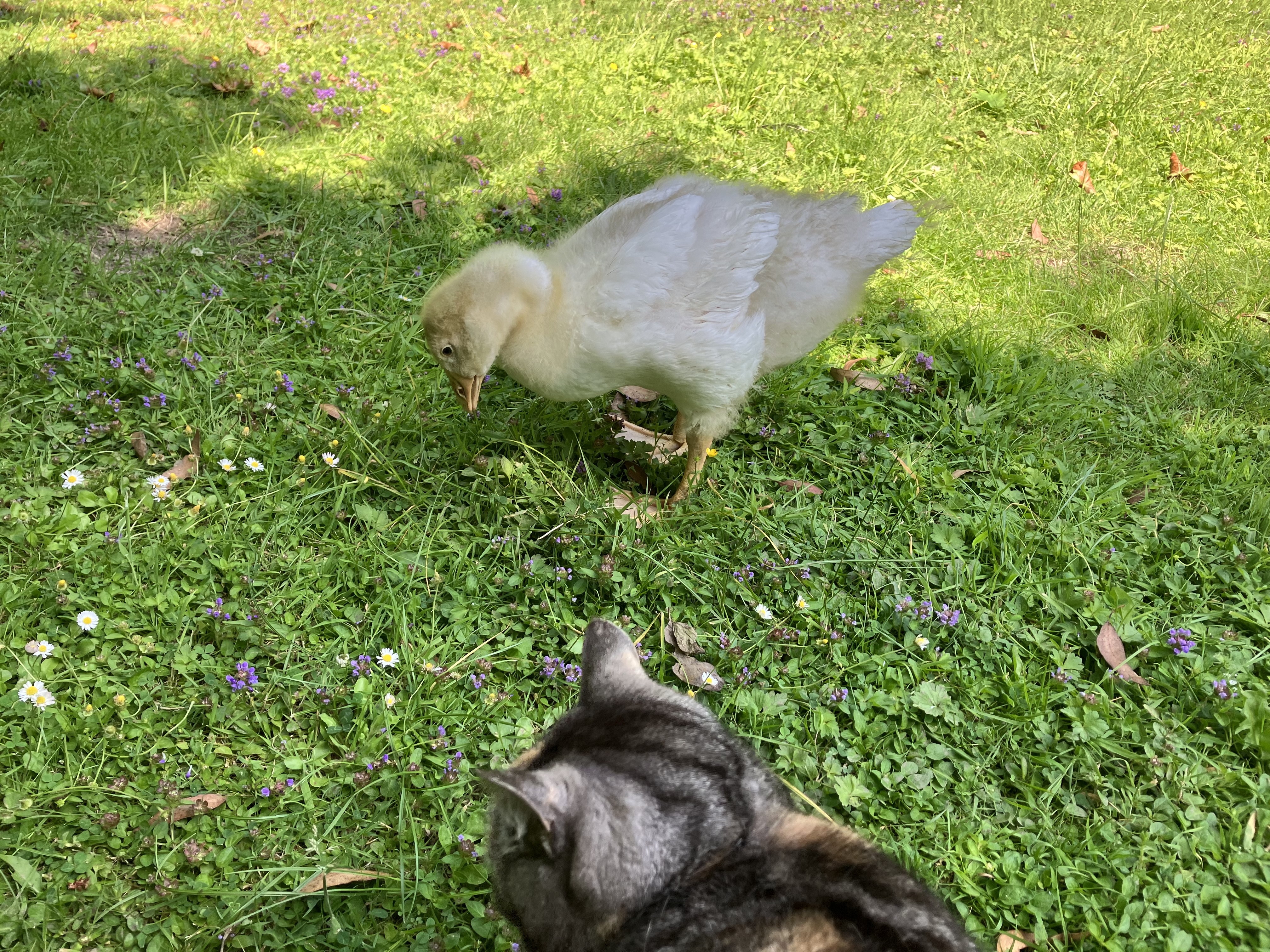
Cat wondering whether grass tastes nice. It doesn’t!

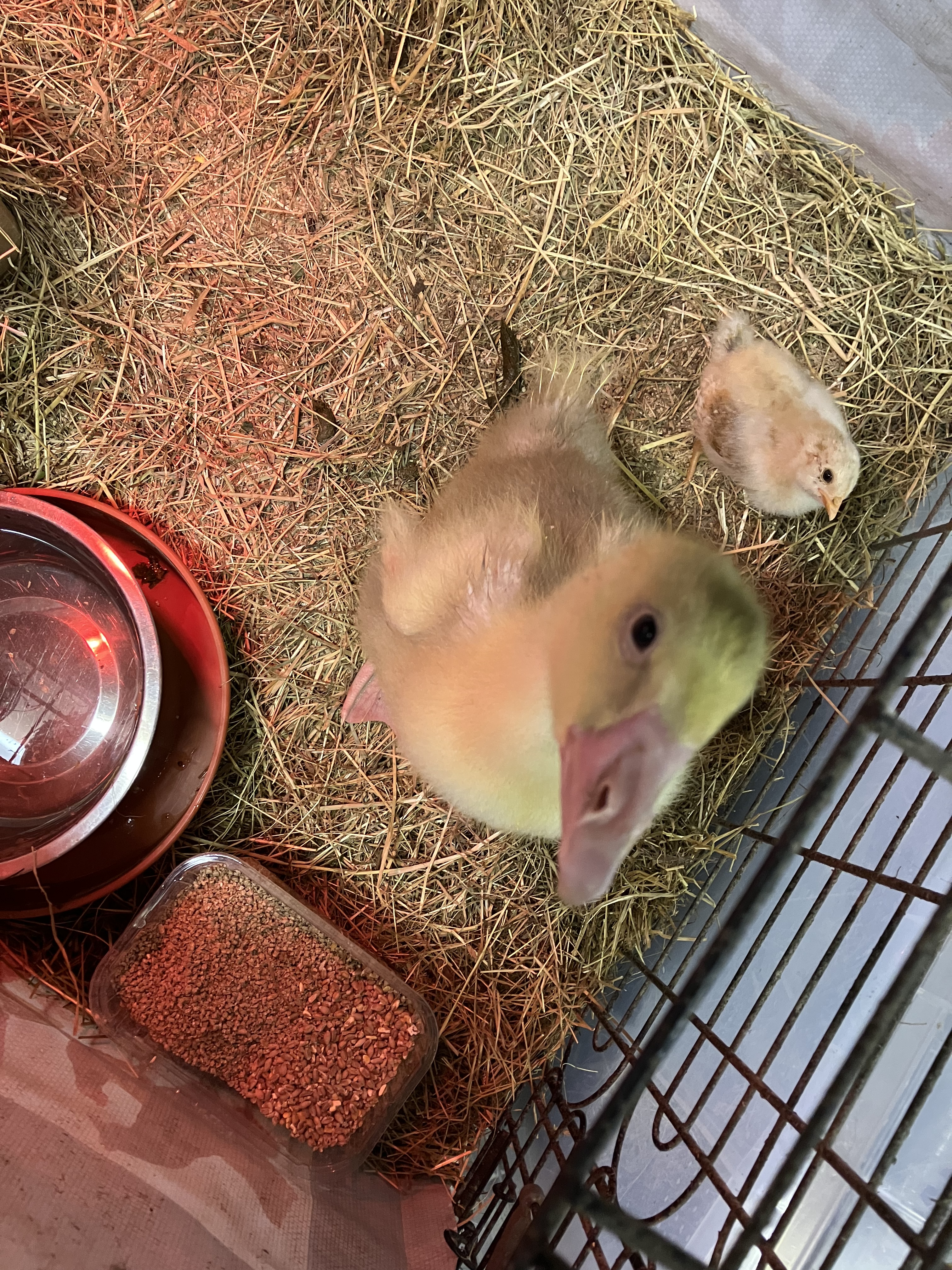
The problem is the goose I hatched (nattily named ‘Goose’). Goose eats grass and dandelions and other green weeds, and every day I let Goose out of the cage to wander around the garden, eating. But Goose is still too young to be allowed out alone, plus even when fully-grown the fox might kill him (might be a her) at night. Therefore, a certain amount of cage-time is necessary. But the cage is the one where I raised the ducklings, and ducklings turn everything into soup within minutes, so anything growing in there was quickly ‘drowned and mixed.’ The cage is devoid of green stuff. No weeds in sight.

Goose lives with chick, and chickens are also fairly destructive to plants because they love to dig up the roots hunting for insects. (I have some sad petunias that I replant every evening, when the chickens are away for the night. They have been dug up 5 times now.) Even though I have planted grass seed, I doubt if it will last more than a day.

Therefore, planning for when I am away for whole days, and unable to let Goose onto the lawn, I had the brilliant idea of having seed trays, full of grass, that I could lift into the cage for lunch. If I am away for a while, someone else can give Goose a daily helping of greens in a pot. I duly filled lots of seed trays and pots, sowed grass seed and a few bits of corn from their feed, and watered them lovingly.

Day 1. The chickens dug them up. I replanted them, and covered them in sacking, planning to remove it when the grass has grown.

Day 2. The cats (or gardener) removed the sacking, and the chickens dug them up again. I carried them down to the cold frame, and lifted them onto the shelves. They were heavy, so Husband helped with the high shelves.

Day 3. (A week later) lots of green was sprouting, but it was dry and we have a hosepipe ban. I asked Husband to lift down the trays so I could water them, and then replace them afterwards. There was a delay between the watering and Husband remembering to move them—the chickens found them, and emptied the whole lot all over the lawn. I said some bad words. Scraped everything back into the seed trays, and husband lifted them onto the shelves. No sign of anything growing now.

Day 4. (A few days later) Husband was feeling guilty, so kindly went to Homebase and bought some rolls of turf for me to cut and plant in the seed trays. I unrolled the turf, but only the edges were green, the rest looked rotten. Husband suggested it might turn green if left in the sunshine, so unrolled all the turf and laid it in a sunny spot.

Day 5. (A few days later.) After watering the turf for a few days, it still looked very rotten apart from the edges. When I checked beneath it, the grass on the lawn below had now died—I was now considerably worse off than before we started. Husband arranged for a refund from Homebase, I went back to trying to grow grass from seed.

And so it continues. Almost every day, any grass I manage to grow is either found by the chickens or destroyed by the cats. I have become obsessed—whenever I see grass going to seed in the fields, or dandelion clocks, I snaffle them back to the house and add them to my seed trays. Dandelions ( a Goose favourite) are particularly difficult—even when I dig up a small one from the garden, taking care to get the whole root, and plant it instantly in a pot of soil with plenty of water—it is always shrivelled by the next day. There are millions of the things in the fields, but growing them in pots is impossible. Who would have thought? I know I’m not much of a gardener, but I thought even I would be able to grow grass. Apparently not.

Thanks for reading. Hope you get your dose of healthy veg today.
Take care.
Love, Anne x

Do You Feel Old?


I ventured into London to watch my daughter’s choir. It was both enjoyable, and a learning experience (I felt older than most people). Here are some observations and ‘feeling older’ thoughts:

It is no longer possible to guess the age of women by their hair colour, as nearly everyone dyes it. However, there is a clear age-indicator in their shoes. At a smart event, women over 65 (I am guessing their age) wore high-heeled shoes; women 50 – 65 wear low-heeled shoes; women under 50 wear trainers. Even with floaty dresses, young women wear trainers—how wonderfully comfortable! I shall copy this.

Showing lots of flesh is the norm. I rather like the rule that you either uncover your legs, or your shoulders. It seems that some young women today feel comfortable uncovering practically everything! Perhaps this is good—they are clearly comfortable with themselves. But I’m not sure what messages it sends to the strangers they pass (some of whom will not be honourable people). Should we dress purely to please ourselves (in which case, I will throw away all outfits except for jeans and wellies) or should we be aware of how this affects other people? Is it rude to not dress appropriately, or is it freedom? And who decides what is appropriate anyway?

Men in jackets and ties is a rarity. On my journey, and at the event, the only jackets I saw were carried by girls from a private school, and worn by the porter on the door of the Ritz hotel. It seems jackets and ties are going the same way as bowler hats (which you see in the hundreds on old films, but rarely ever in real life today). This is, I think, okay — times change. But perhaps they should still appear for funerals? What do you think? Weddings? Posh restaurants? Important meetings? Again, it sends a message whether we want it to or not.

Young people are tall. Very tall. Okay, so not all of them are tall, but the tallest young people seem to be much taller than they were when I was young, and there seem to be more of them. Unless I happened to be in the same place as lots of models, which I suppose is possible as they were also beautiful.

Most people are completely oblivious to other people—lots of task-focussed behaviour. I don’t think the people who chatted loudly through the choir performances, or those who moved to take a photo and stood in front of people who were sitting, thus blocking their view, or those who let their litter blow away, were necessarily selfish people. I think they genuinely did not notice, they simply didn’t think about how their actions were affecting other people, they were busy focussing on what they wanted to do. Perhaps they achieve more than my generation did, or maybe they were rude. I blame their mothers.

A lot of people eat dinner very late at night. After the recital, we went to a nearby restaurant for dinner, and it was almost full, every table with noisy people enjoying a meal. This was long after the time I usually eat (let’s be honest, it was past the time I usually go to bed!) yet other people obviously eat at this time. I wonder if they need less sleep than me, or if they get up late too.

When we left London, which was even later than dinner (obviously) I was surprised by the number of people arriving at the station. Were they just beginning their night out? Did they live in London? Were they shift workers? I was too tired to ask (plus the family discourage me from approaching strangers to ask why they are there) but it was interesting. I wondered why they were there and where they were going. Perhaps I shall go back another time and follow them. (If I am arrested, please send help.)

Anyway, it was all very interesting, and I feel I should go into London more often, so I don’t completely lose touch with normal society—though I rather like my world of theology books and animals.

Hope you have a great week and encounter some lovely people, whatever their age. Thanks for reading.
Take care.
Love, Anne x

Thanks for reading.
anneethompson.com
Sign up below to follow my blog.

The World is Fuzzy


When I run along my lane, I always see a herd of deer nestling under a tree, a stag standing guard with his antlers against the sky. It’s a beautiful sight, and makes me smile.

Husband never sees this. Husband informs me that the deer are sheep, and the stag is a fallen branch from the dead tree. He is probably correct, as his eyes are better than mine, but I rather like living in a fuzzy world.

Unlike most people my age, who have gradually deteriorating eyesight, I lost most of my long-sight in a couple of weeks, when I had the brain tumour. I have not seen my feet in focus ever since. Maybe this is why I dislike wearing my glasses so much (I did have a brief flirtation with contact lenses, but we didn’t like each other much). I understand why people want to see—because it’s safer, and often missing details is a shame. But sometimes, in my opinion, living in a fuzzy world is okay. Certainly people are prettier. And younger. Needless to say, I rarely look in the mirror when wearing my glasses.

However, there are dangers in my fuzzy world. If I don’t wear my glasses when I leave the house, I misjudge corners and end up with bruises, or trip, or twist my ankle in holes. The lane is okay, because I have learnt every pothole (there are many) but anywhere unfamiliar requires glasses unless I want to risk pain.

All this made me think—I wonder whether all shortsighted people see the same thing. Would another nearly-blind person see deer in the field—or would they create their own fuzzy image? There is no reason to think we would all see the same imperfection, we would probably all make those brown splodges and the weird sticking-up shape next to the tree into something different, trying to make sense of what we can almost see, sort-of, if we squint.

Which makes me think about how we see God and Godly stuff. We all know that we don’t see God properly, because to see God would be too much for us.[1] Even things about God—most of the theology I have been studying—is slightly uncertain. We have the Bible, and our own experience, but we all come to slightly different conclusions because we don’t see clearly. We don’t properly understand because we are physical beings trying to grasp something beyond our understanding.[2] So whether you follow the teachings of Augustine, and believe in original sin, or if you believe like the monk Luther that we are saved by faith or whether like Origen you believe it will all be okay for everyone in the end—you cannot actually know. You can base your belief on what seems logical to you, you can choose how to interpret the Bible, decide who you trust, but you cannot know. Because when it comes to theology, we all have fuzzy eyes.

I think this is probably okay. I think this is how we were designed. But we do need to remember this. Because it is not okay, and it becomes a massive problem, when we start to tell other people that what we see fuzzily is, in fact, seen clearly. Sometimes it is necessary to grasp firmly the things we see clearly, and admit with humility that there is an awful lot that is fuzzy. Living in a fuzzy world can be comforting, but if I start to drive believing I don’t need my glasses, I become a danger to everyone.

Thanks for reading. Have a good week—and remember not to be too certain about things that are fuzzy for you.
Take care.
Love, Anne x


[1] Exodus 33:23.

[2] 1 Corinthians 13:12.

My Father


Yesterday, it was Father’s Day in England.

My own father died in 2006. Recently, when I told someone this, they said: ‘Oh, about 20 years ago then,’ and I opened my mouth to tell them, ‘No, 2006, just a couple of years ago,’ and then I closed it again. It feels like just a couple of years ago. I wonder if it always will.

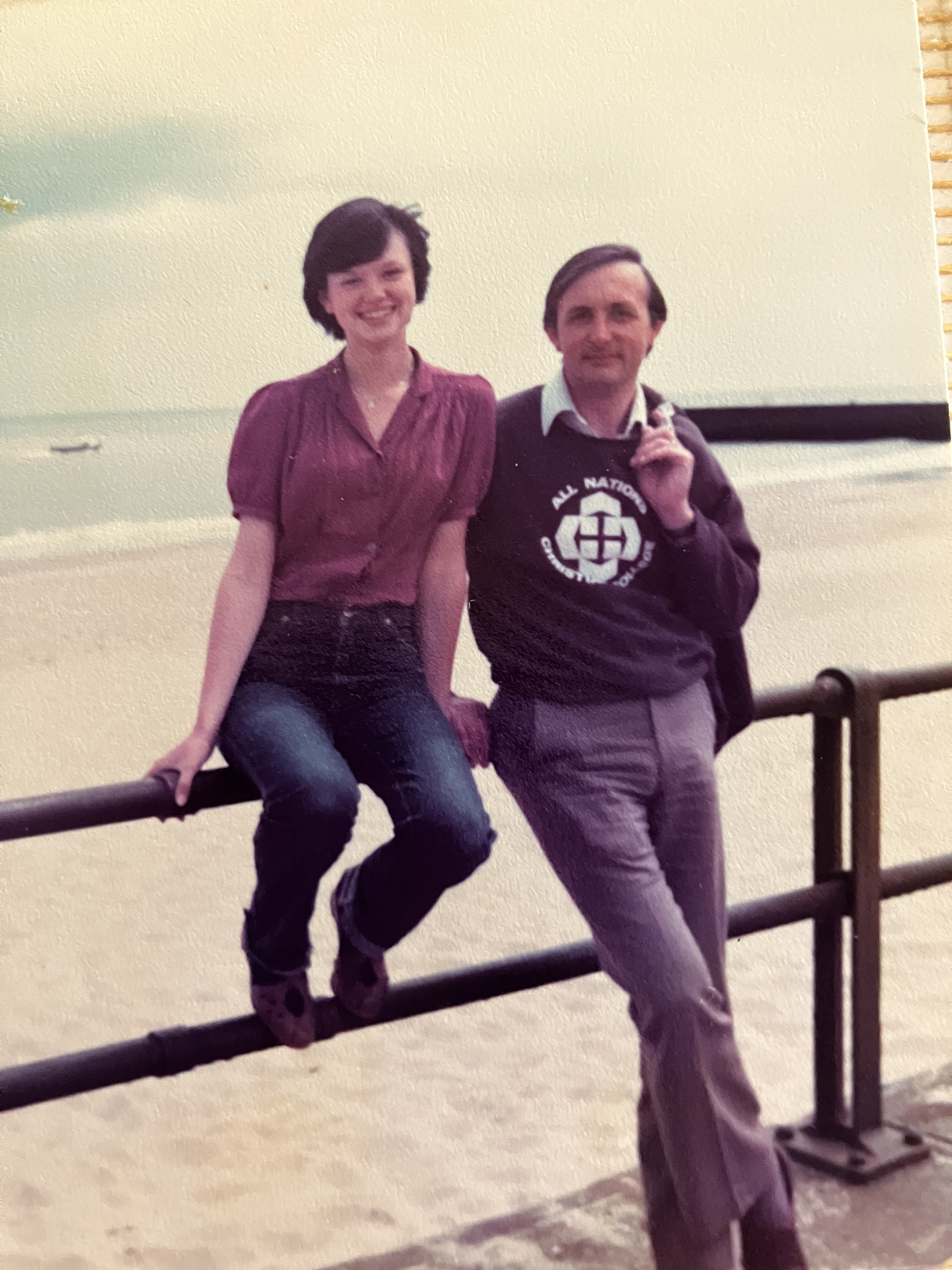
What are the strongest memories of your father? When I think of Dad, the memories come in a jumble. His smell: Old Spice aftershave and Extra Strong mints. Whenever I smell those, I am zapped back in time, I can almost feel him. Radio Four playing too loudly on the car radio. His great belly-laugh, which was rare, but reduced him to tears (I especially recall this laugh when our dog emerged from a river coated in black mud). His delight when cooking a tasty meal—especially his gravy. His huge hands. His wonderful singing voice. His loud piano playing, especially when he was angry. His smart appearance—he nearly always wore a shirt and tie, and kept his shoes shiny.

 I also remember the feel of my dad. He was a great hugger, and I remember his hugs engulfing me. I also remember when I was little, pretending to be asleep in the back of the car so he would carry me upstairs to my bed. I think my sister did the same, and sometimes, as his heavy steps plodded upstairs with us, one of us would giggle, so I suspect that he knew we were pretending, but he did it anyway. Perhaps he liked carrying us as much as we loved to be carried. I never thought about that before.

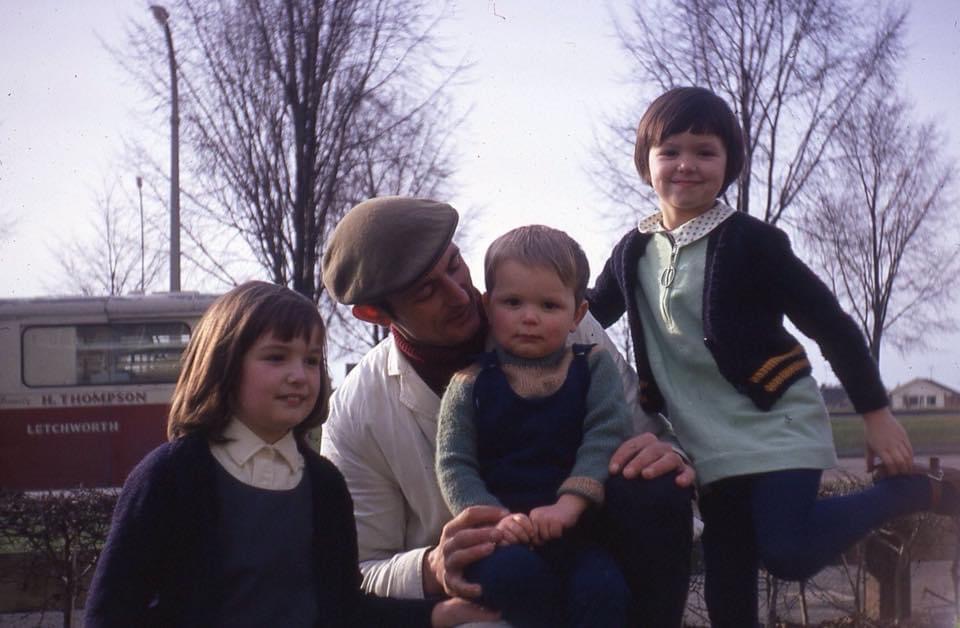
When I shut my eyes, I see him in his white butcher’s coat. This is an odd memory, as he sold the business when his father died (I guess about 1979) and went to Bible College, and then was a Baptist minister until he retired. But mostly, to me, my father was a butcher. When we were little, we would sometimes ‘go to work’ with him. He had sandwiches and a flask of coffee, and he let us deliver orders to the homes where we would get tips, which was very exciting.

I also think of his carpentry skills. He liked making things, but if I’m honest, I was never too impressed with the outcome (I was a tough audience). He made fitted cupboards for me and my sister. It had a dressing-table area, and we left heated curling-tongs plugged in, and nearly burnt the whole thing down! (Not on purpose.) He also made toys for my brother, and he would sneak me into the shed before Christmas to show me what he was making, which made me feel very grown-up, and part of the surprise. When I had my own children, he made toys for them too—a platform for the train set is the main thing I remember because it was huge, and heavy, and impossible to tidy away in a cupboard. (Still a tough audience.) He helped one of my sons to make a wooden sewing box for me, which I still use today.

My father was a good talker. He spoke to everyone, and he gave good advice. One of the more serious conversations I remember with him was in the wedding car, on the way to my wedding. He asked me if I was completely sure that I wanted to get married, because afterwards, if it didn’t work out, I wouldn’t be welcome at home again. I mainly remember this because it was such bad advice!

I think most brides are stressed/over-tired/not rational by the time they arrive at the day of the wedding. Absolutely the wrong time to make a life-changing decision—especially one that would deeply hurt another person. No one deserves to be jilted at the altar. Better to stick with the decision made months before, when you are sane, and if things have changed, then sort it out afterwards and quietly get an annulment. But I understand why Dad said it. He was feeling protective, and wanted to say the right thing, and I suspect emotion took over, and he said what he thought he ought to say, rather than what was sensible. Which is another of my father’s traits—speaking from emotion. Mostly it was good, and I knew I was loved, even when we disagreed on almost everything through my teenaged years.

Finally, I think of my father as a grandparent. He delighted in his grandchildren, and gave them all the time that he didn’t have when we were young. I have never seen anyone as besotted with another person as when I watched my father playing with my babies. His pleasure was tangible.

I had a good man for my father. I still cannot quite believe that he is no longer here. I hope that you have, or are building, happy memories of your own dad. Life is short, and time moves quickly.
Thanks for reading.
Take care.
Love, Anne x

Anne E. Thompson
Thank you for reading
anneethompson.com
Why not sign up to follow my blog?
*****

A Week of Milestones


Hello, hope you’ve had a good week. Mine involved a crossing a few hurdles—nothing massive, but some were quite significant.

Firstly, my daughter moved into her new house. This feels very significant, as it’s unlikely that she will ever live with me again. She sold her flat a few months ago, so she and her fiancé moved in while they were between houses. I was hoping it might take longer than it did, but this week they completed all the legal stuff, and on Tuesday we visited their new house. It’s very nice, but I don’t envy them having to unpack lots of boxes and learn how to use new boilers and appliances. Moving is never fun. I will miss them.

The ducks also moved home. They are now fully feathered, so I started to put them on the pond (gradually, so the old ducks don’t panic and fly away). Each day, there was one less than I had put there the day before. It’s possible the fox was taking them, though it felt weird that it was only one each time—as they usually copy the established ducks and move to the island for the night. It’s also possible they have flown to another pond. Or are hiding. If they return, I will let you know.

It does mean I have an empty cage, which is very nice. Ducklings are mucky animals, and make a soup with anything they can reach. I cleaned out the cage, added some clean straw, and planted grass seed. Hopefully by the time Goose and chick are big enough to be outside, it will have some grass.

Roommates, if not exactly friends.

I have put the chick in with Goose. This is a risk, as it might get trampled. I have joined them for short periods, and watched, and a couple of times the chick was stepped on (much squealing) but nothing dangerous (like its head) so it survived, and is now alert to clumsy goose feet. The chick is completely desperate to be with the goose (it thinks it’s her mother) and was in danger of being hurt by trying to squeeze though the bars. It was actually in one of those plastic laundry baskets, within the goose cage, so close to goose, but safe. The clothes basket was left here by one of my moved-out offspring, so I hope they don’t ask for it back any time soon as it’s now rather grubby. Anyway, the chick is ecstatic that they are now together. The goose ignores her, because Goose thinks that I am its mother, and only wants to talk to humans—but it tolerates the chick, and I am still hopeful they will become friends. Maybe when they move into the outside cage.

Also, this was the week that I completed my dissertation proposal. This has been very stressful. I am not a planner, I am a ‘sort-it-out-when-it-happens’ person. I am very good at reacting to situations and averting disaster, not so good at sitting down and planning what chapters will be in a research project, and how I will find the resources for intelligent-sounding citations and (horrors!) writing a timetable of what I will do between now and April 2024. But it’s done, submitted, finished. I can now start the fun part of actually doing the research and reading some of those fascinating books.

I actually have bit of a problem with books, as I have developed attachment issues. I borrow a book from the library, spend hours reading it, enjoying the greasy pages and absorbing the words, feeling the weight on my lap as sip coffee and make notes…and then it ends…and I am supposed to return it to the library. But we have bonded. The book has become part of the fabric of my day, and I don’t want to abandon it to the unloving shelves of a dark library. So I renew it. Even though I have read it, made notes, finished with it—I renew it. I’m not quite sure how many times I can renew books, but I suspect I shall find out fairly soon. I do sometimes buy a copy to keep, but they’re not the same, they have shiny pages and they’re often too large, and they tend to cost a fortune (and sometimes the number of books arriving in the post is commented on). Maybe I will fill the now-empty duck cage with books that I have smuggled into the house. I can keep them in the grubby laundry basket.

Sadly returned…

Hope you have a great week. Thanks for reading.
Take care.
Love, Anne x

A little social interaction before the ducks moved out.
Anne E. Thompson
Thank you for reading
anneethompson.com
Why not sign up to follow my blog?
*****

Hello From My World


Hello, and how was your week? I thought I would give you a quick update from my house. This isn’t really what I want to write about, as really I want to tell you about what I plan to write for my thesis. But I can’t. I’ll explain why in a minute.

Firstly, if you had Mother’s Day last weekend, was it lovely? I had lovely gifts from my family, and no one forgot this year. (I never assume…) I cooked dinner for my mum and mother-in-law, and it was all very pleasant.

I used it as an excuse to use the last of the turkey dinners from the freezer. Due to various off-spring changing their plans/announcing they no longer eat birds/incompetence on my part, I ended up with several turkeys, of different sizes, this Christmas. They all went into the freezer, and the last one has now been defrosted—which always takes longer than expected—and cooked.

Last Sunday was busy, because it’s also the day my daughter and her fiancé moved back home. They are currently between selling/buying houses, and they are living here for a while. Mostly this is brilliant. It’s the first time since Kia died that the house hasn’t been horribly empty. When I pop out, I now can shout through a bedroom door to my soon-to-be-son-in-law and tell him that I am leaving. And when I am home, I shout that I’m back. He probably can’t hear me, because he’s busy working, but I like having someone to tell. To be honest, Kia probably never understood when I told her these things, but I just liked telling her.

They did move back with more stuff than I was expecting, even though all their furniture has gone into storage. My house is rather full. But I like having a full house, empty rooms feel wasteful.

The cage by the pond is also very full at the moment. When Kia died, the local fox soon realised the garden was accessible again, and started to visit, so I have kept the ducks shut away (even thought they could be back on the pond now). They seem quite happy, but the cage is incredibly muddy as they spend all day transporting wet mud from the end with puddles to the rest of the cage. Ducks are mucky creatures. There are a couple of nests, in corners where they think I won’t notice them, and I think they must be almost ready to hatch. Depending on how many hatch, the cage will definitely be too full. And I can’t bring the ducklings into the garage this year, as that is full of daughter-stuff. Ah well, I shall decide on a plan when I know how many hatch.

Last year’s hatch.

I don’t have a huge amount of time for duck or daughter sorting, as I am preparing the proposal for my thesis. I want to tell you all about it, but I have to be careful—apparently ‘self-plagiarism’ is a thing. If I write and publish something, I cannot then put it into the thesis. So I can only tell you snippets, and nothing in academic language. Basically, I want to look at why the Leviathan, which is clearly not a crocodile (because it breathes fire/smoke) changes Job’s attitude in the Book of Job. What does it represent? I’m reading lots of books by scholarly authors, and have discovered ‘monster theory.’ Who knew that was a thing! Apparently, all cultures have monsters, and you can learn a lot about cultures, and what they valued, by examining their monsters. In a time/place of physical uncertainty, the monster might be extreme weather-monsters, or lions; before medical advances, the monster might represent disease; when there were warring nations, the monster might be violent. I wonder what our monsters today might be—loss of control? Racism? Mental disorders that result in unpredictable violence? The films/books we read seem to have lots about psychopaths and historical racism at the moment. When I was a teenager, there was lots about evil spirits/demon-possession (with films like ‘The Exorcist’). You don’t see so much about that now, maybe our monsters are changing.

The other thing you don’t see so much of now are—complete change of subject coming, so brace yourself: some of the sweets I ate as a child! My mum is doing a jigsaw, and on the back are photos of sweets from the 40’s, 50’s, 60’s and 70’s. I will leave you with them—how many do you recognise? Fruit gums have always been my favourite, though I am also keen on a bar of Cadbury’s milk chocolate.

Hope you have a good week, that has a manageable amount of stuff, and no monsters. Maybe there’ll be some sweets too.

Thanks for reading. Take care.
Love, Anne x

Springtime Jobs


It’s time to do all those jobs that happen every year at this time. It doesn’t feel much like spring here at the moment, as we’ve had snow and frosts all week. But the mornings are lighter, and the animals know, even if we’re not sure. Depending on where you live, you will either have put your clocks forward an hour, or be preparing to do so. We move our clocks on the 26th March this year, so the US and Canada are ahead of us.

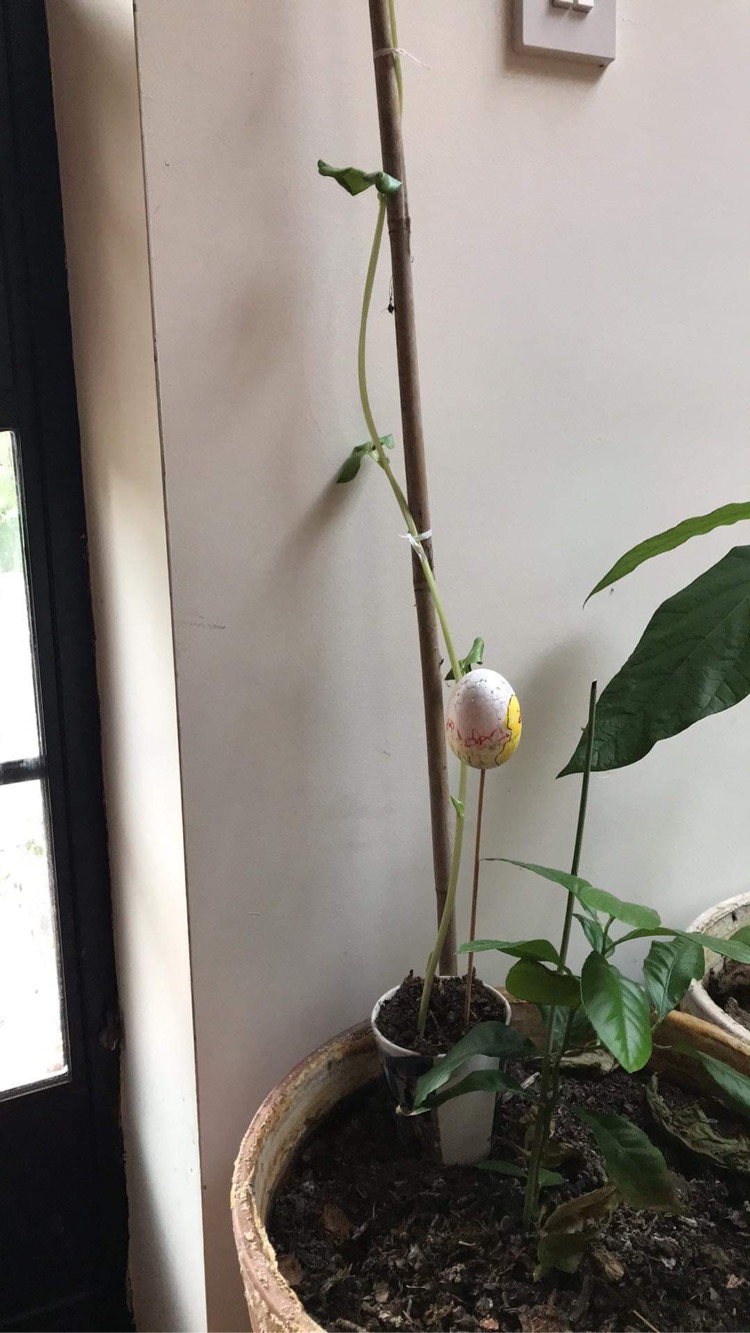
One Christmas gift (which feels like yesterday) was a pot and a packet of beans. We’re having a family competition, to see who can grow the tallest bean. It has to be in the pot provided, which wasn’t very deep. Mine grew to 67cm, then it decided the kitchen was too warm and the pot too small, and died. I planted the remaining seeds outside, and they don’t seem to mind the cold and are looking healthy. I expect the slugs will eat them, but here’s hoping.

My bean, growing next to a lemon pip (which is slower but less fussy).

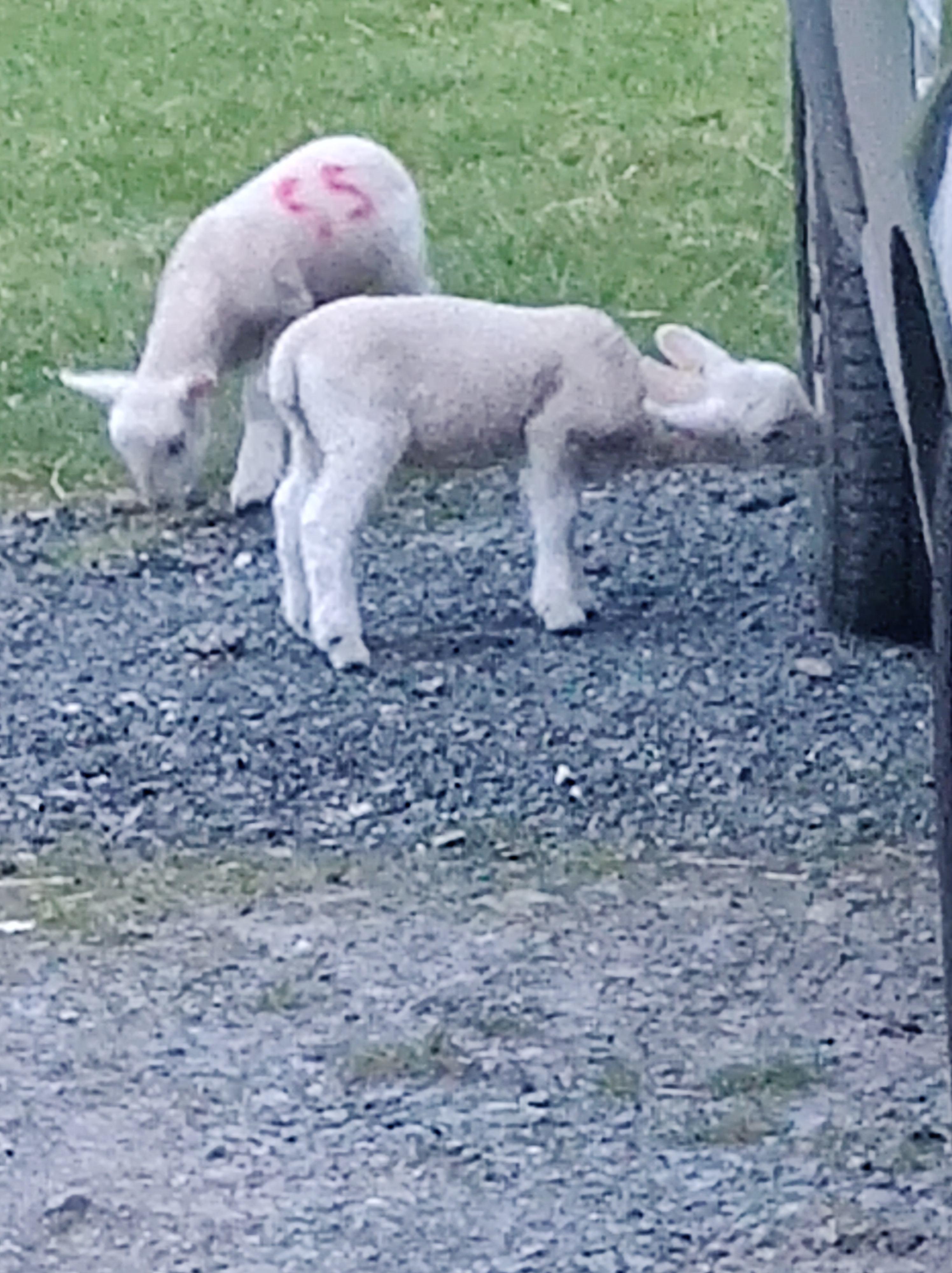
The birds know it’s spring. The ducks have started laying, even though it’s cold, so April will be busy with ducklings again. There are already lambs in the fields. The cycle of life begins again.

We also have a wren in the garden. Male wrens are busy at this time of year, collecting things to build nests. Nests plural. A male wren builds several nests. When he manages to attract a female, he takes her on a tour of the nests, she chooses the best one, and lays her eggs. He then goes off and finds another female, and repeats the tour with the remaining nests. He’ll do this until all the nests have females, sitting on his offspring. Not the sort of male you want to introduce to your daughter. He’s a tiny brown bird, but has something (which I cannot remember the name of) in his lungs, which amplifies his voice. A tiny bird with a loud song. I’m rather fond of him, so I hope the cats don’t catch him.

Spring this year will be busy for me too. I need to sort out the house, because my daughter is moving home for a few months between selling her flat and buying a new property. This will be fun, but I need to make space for her. Though once I have emptied some cupboards, the job will be finished. I also need to write the proposal for my dissertation, which is less fun. I have to submit the title of my thesis, explaining what I plan to research and why, with a list of all the literature I plan to read and why it will be relevant. I am going to explore the dragon in the book of Job (chapter 41) which will be interesting, but being assessed makes it more stressful. But at least I only have to produce one, and I can submit that to the university and they will either love it or not. Being a wren and having to repeat that many times over each year must be a whole different game.

Hoping that all you attempt this week grows well and is completed on time. Thanks for reading. Take care.
Love, Anne x

Thank you for reading.
anneethompson.com
Sign up below to follow my blog.