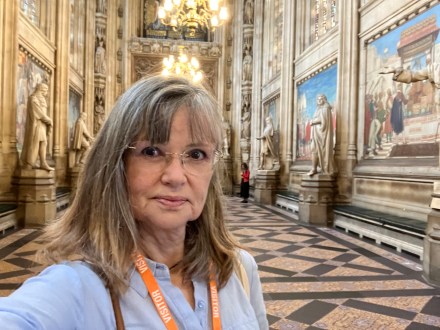
When I started my PhD research, I contacted my MP, asking whether I would be able to attend any Parliamentary debates on assisted dying. I heard nothing for months, and assumed my email was lost. However, earlier this week I received a reply, inviting me to the debate on Friday in the House of Commons. This was very exciting! I took Husband (I was allowed a guest) and we caught an early train to London.
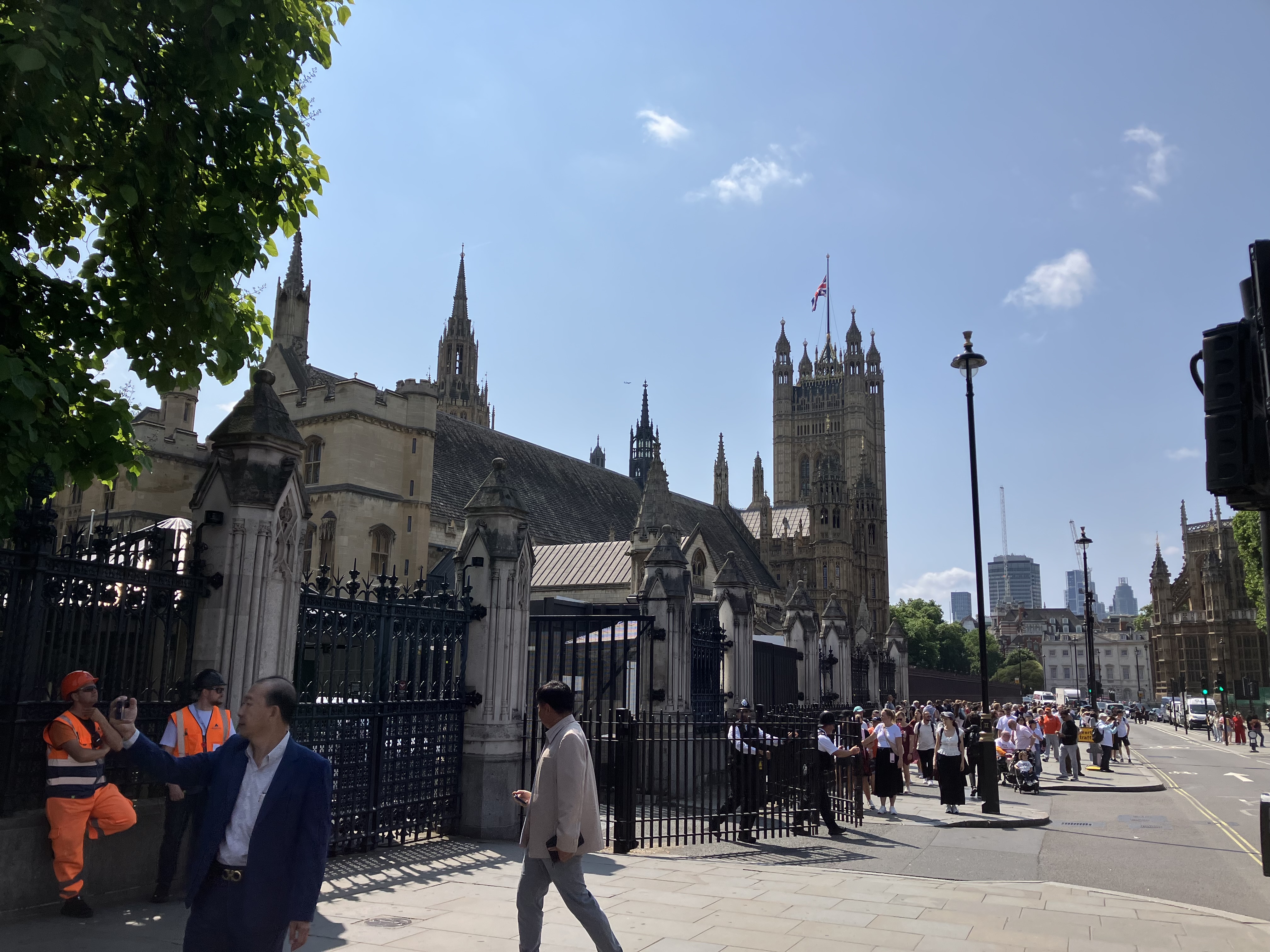
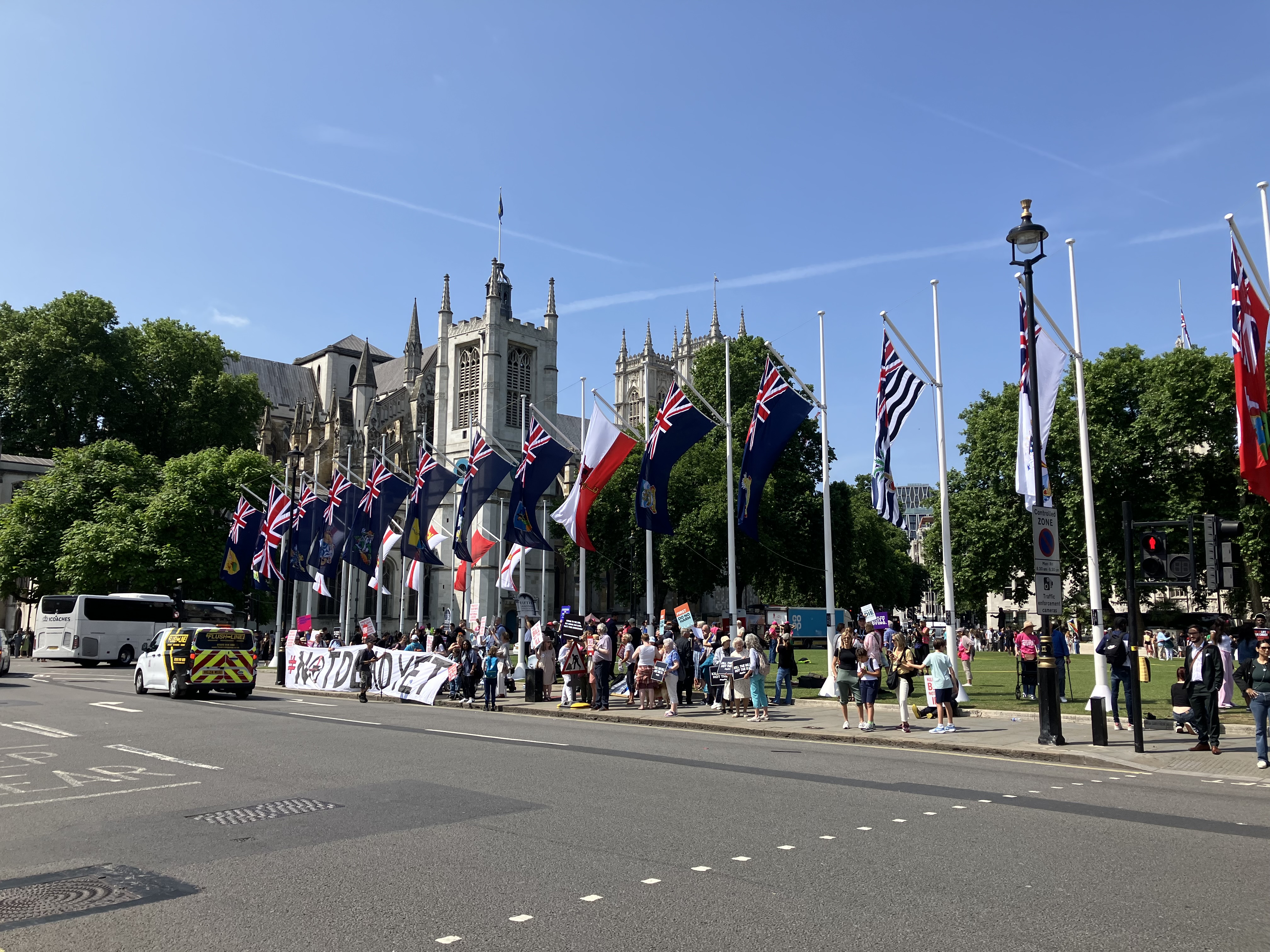
At the House of Commons, we waited at the Cromwell Green entrance, as instructed and waited to pass through security. There was woman with placards on the green opposite, and as I watched she was joined by several other people, some carrying signs with Bible verses written on them. Later, there were also people in pink tee-shirts, asking for the right to have dignity. I am guessing they were on opposite sides of the debate (though actually, each slogan could have been used in both support or opposition to the Bill). The issues are complex. I wondered if their being there could achieve anything.
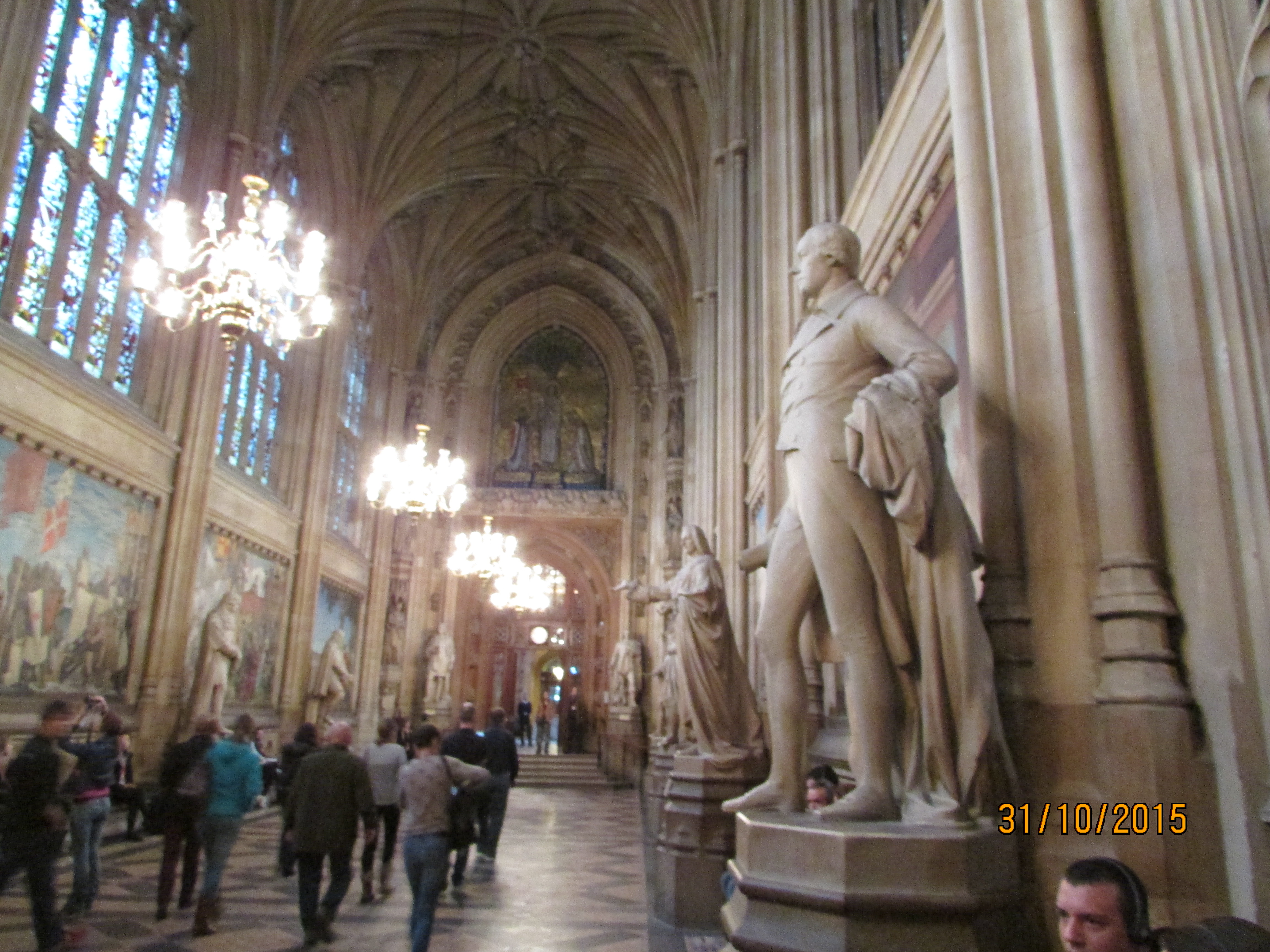
After passing through security (like at an airport, but more thorough as they individually checked each person) we walked through the cathedral-like Westminster Hall, along St. Stephens Hall, to the central lobby. The admissions office is behind a statue of Gladstone. I gave our names, and we were asked a couple of questions and then issued with our tickets and told where to wait. Our tickets gave us access to to the Speaker’s Gallery, which guaranteed seats (I think anyone can turn up to watch a debate, but will be in the pubic gallery, and may not get a seat). We had to wait in the central lobby until the Speaker arrived, and luckily there were comfy seats for older ladies (but no coffee, for older men, which was bit of an issue as I had been anxious to arrive on time and therefore we had not gone to a Pret on the way).
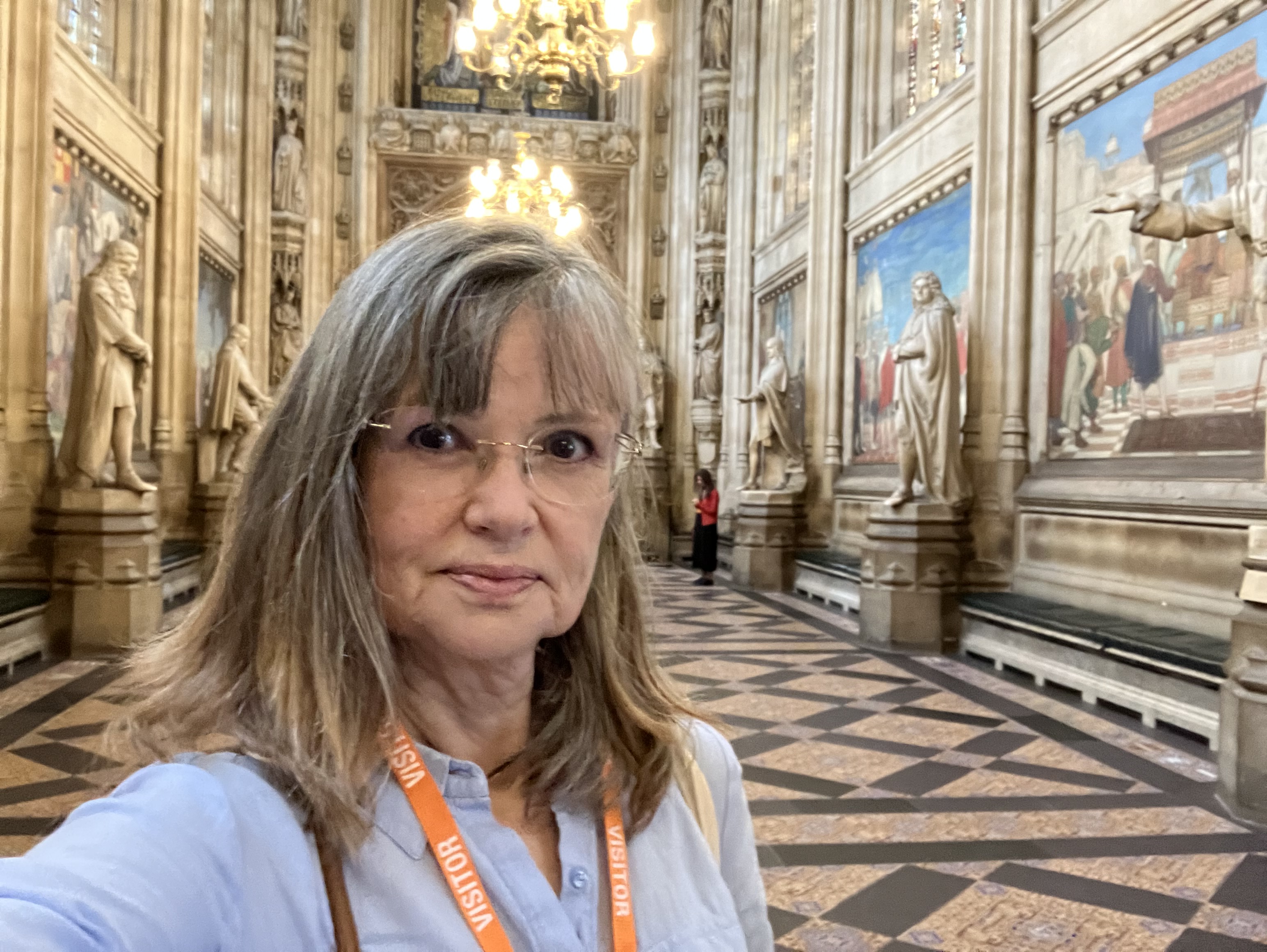


There was shout in a corridor, answered by a shout from one of the policemen who had also entered the lobby. Then he shouted ‘Hats off!’ and everyone wearing a hat/helmet tucked them under their arms, and round the corner came a little procession, of police and the Serjeant-of-Arms carrying the mace (a long silver club that dates back to the time of Charles II) and the Speaker. They strode round the lobby, passed the line of waiting people and police, and swept into the House of Commons. We followed them, and were directed up steps, to a small room where we had to leave all our bags and phones and coats (though I was allowed to keep my notebook and pen) and then we were ushered to seats, in a gallery, right opposite the Speaker’s chair.
The Speaker was talking about the India airplane crash that had happened overnight (but not the Israel attack on Iran, which also happened overnight–maybe we missed that) and then he turned to the business of the day: the Public Health Bill on assisted dying. MPs had submitted questions in advance, and the Speaker said there were too many, and had therefore chosen in advance who would speak, and he suggested a time-limit of 6 minutes. I was interested by the amount of power the Speaker had here–obviously the people chosen to speak would potentially influence the outcome of the debate, and it would be easy to be biased. (He would, I assume, choose from both sides of the debate, but he could pick those Mps who speak well or those MPs who did not. Definitely some of the MPs we heard spoke better than others.)
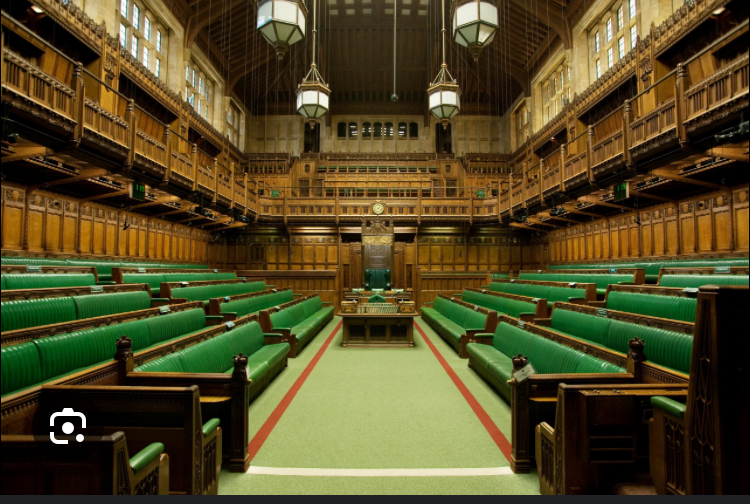
It does not show the mics hanging from the ceiling, nor the screens. I was not allowed to take photographs.
The debate was about amendments to the Bill (which was read a few months ago). Kim Leadbeater spoke first, reading out the amendment, giving way to certain questions with a, ‘I give way to…’ (I’m not sure whether these were agreed in advance) and ignoring others with a ‘No, I will progress…’ The main thing I noticed was that to be an MP you need to speak very fast. There were screens, showing what was being debated, the name of the person speaking, and the time. The Speaker kept order, telling people if they spoke too long, or if their speech was irrelevant to the debate on the amendment (some seemed to be giving their view on the Bill, which has already been debated). Some MPs were clearly intelligent, thoughtful people who spoke well. Others less so.
The issues are too complex to include in a single blog post. The debate covered things like whether advertisers would be allowed to influence which medication was used, whether ethnicity should be considered in the debate, whether vulnerable people are protected by the law, whether it would be considered a ‘natural death’ or should an autopsy follow an assisted death, how to prevent permissive legislation in the future, what ‘error rate’ is acceptable?
The overall impression was of a well-ordered discussion, but with not enough time for everyone to be heard. It was also fast, moving from one speaker to the next, no time to pause, to consider the points raised, to ask supplementary questions. My understanding is that everything is written down, and I assume that afterwards, MPs can ask to see the transcript, and can consider the points carefully, deciding what they think. I wonder how many do; I wonder whether they have the time or if they then rush off to deal with other issues, no time to reflect. Which means that we, as normal people, have a responsibility to make our own views known, so our MP can represent us—or at least be aware that our viewpoint exists. Maybe those people waiting outside with placards were not futile, perhaps simply seeing them would ensure the Ministers were aware of their opinions.

My own opinion about assisted dying changes as I consider different issues. The one thing I am sure of, is that it is a very complex issue. It is not as simple as saying: ‘I would not allow my beloved pet to suffer in death, so we should not refuse to euthanise people.’ Nor as simple as: ‘We are created in the image of God, only God can decide life and death of a human.’ It is a big issue, and one which I think should be clarified in law—but also one which we all, as individuals in society, need to consider.
I hope you have an interesting day. Thanks for reading.
Take care.
Love, Anne x




 Anne E Thompson