Are Trump’s Tariffs Fair?


In an attempt to not believe what politicians tell me without fact-checking, I tried to unravel the new tariffs from the US. I am taking the view that President Trump is trying to do the best for his country, you can decide for yourself whether you believe this. His rhetoric is that in the distant past things were more fair, since then the US has been plundered, and he now wants to even the score.[1] But is this true? The perception elsewhere is that since this time, the US has become a world power, and this is due in part to free trade.

Free trade (I am reliably informed by the economists in my world) is when countries have trading partners and allow goods and services into and out of their countries with relative ease. Economists seem to agree that free trade is what makes strong economies. With free trade, everyone has an easier life. But, have other countries eroded this (as Pres. Trump states)?

Well, to some extent, from what I can discover, there have been some limits to free trade. Sometimes a country wishes to protect its citizens from something considered unhealthy. (In the UK, only toys that meet a certain standard can be sold for children–so some toys from China are rejected. In the UK, we dislike genetically modified beef, so refuse imports based on that. And so on.) Countries also add their own taxes. (In the UK, we have VAT—a tax that is added to goods before they are sold—which in the US is called ‘sales tax’—but VAT is applied to those good wherever they come from, even if made in the UK. So to list these as a ‘tariff on the US’ would be untrue.) Some countries have made sale agreements: My understanding is that car manufacturing is particularly cosmopolitan, with different components being added in different countries, so a car may pass between Canada and Mexico and the US, getting bits added, until it is finally ready to sell. Each time it has a part fitted in a new country, there has been agreement that no extra tax will be added to the final cost.

Now, despite what Pres. Trump said, the US has actually benefited from the global economy. Evidence for this is found in things like: Any country in the world will accept dollars (we take dollars when we travel to India). The US is seen as powerful, and is included in talks concerning climate or security. Services from the US have prospered; in the UK, Amazon is huge, so is Google, and Apple, and Microsoft, etc. American banks are strong. Across the globe, countries have welcomed companies like McDonald’s. Normal people in the US have benefited from this, it has supported their own economy. Yes, there has been a decline in certain industries—this is true everywhere. In the UK, whole towns were built on coal or steel, and they have needed to diversify, and find new industry, and this has not always been easy or smooth. But the US has sold many services abroad, and overall has grown stronger. Therefore, it seems the world has not ‘raped’ the US, but rather the US has done very nicely out of free trade, thank you very much.

I looked into what tariffs have actually been set, and why. It seems they are based on trade deficit—this is when the country sells less of a product than it buys, it’s a number. (US buys 100 televisions, it sells 40 televisions, therefore the trade deficit is 60.) Pres. Trump took the trade deficit with each country, divided it by the number sold, then divided by 2. (In my example, 60/100 divided by 2) However, he has only looked at the trade deficit of goods (actual stuff) not services (like Amazon, or banks, or IT) so it is rather skewed. And my understanding is that his method is ‘deeply flawed.’[2] Never mind the human cost, because breaking trade agreements does not make you an attractive partner in the future.

My conclusion therefore is that, from the evidence I can find, the new tariffs are not wise. They are not ‘fair’ because they are based on faulty economics, and they will not benefit people living in the US. But they may isolate the US from the rest of the free world.

The advice to the rest of the world appears to be that we should assume the US is ‘going it alone’ and we should make fresh deals with non-US partners. (As I showed yesterday, some supermarket shoppers now avoid goods from the US.) This potential decline seems a shame to me, I like the US, I have no wish to see its economy slump. I think there is a real danger that poverty in the US will increase, which often leads to more crime and unrest. I find this very sad.

I also worry about the impact on less developed nations. The US was generous towards those countries struggling with HIV, it helped to keep peace in the world, it was a good country. I worry that the loss in aid will be devastating for the poorest in our world. Never mind that we will have to pay more for Apple products (and will probably switch to non-US ones)—that is insignificant. What will happen to the poor in our world? Those are who we should be fighting for, and I hope that the people in the US, who are mostly good people (in my experience) will remember they have a privileged place in helping to restore balance in the world.

Thanks for reading. If you have further insight, do add to the comments.
Have a good week, and take care.
Love, Anne x

anneethompson.com


[1] Trump ‘glorifies’ the ‘era of the late 19th century’ and hopes to return to this economy. Zanny Minton Beddoes, Economist Online, April 2025. See also point (1) from yesterday’s blog.

[2] Financial Times Online, April 2025.

Being Aware


I rarely write blogs about political issues, but I find the news very unsettling at the moment. As you know, we studied a little politics in our Ethics class at Spurgeon’s, looking at how fascism grew in the past. It grew quickly, centred around one individual, and I doubt if most people realised what was happening. The parallels with today are alarmingly similar.

This partly came to my attention last week, at a family dinner. As I listened to one family member telling about her experience in Canada, and another family member comparing his news of Mexico, I realised that in the UK we are very complacent. I had no idea that people in these countries (and I’m guessing Greenland) are genuinely worried. They see a threat to their sovereignty. Mexico and Canada are fighting back. But what about those countries with unsettled economies? Who is speaking for the poor?

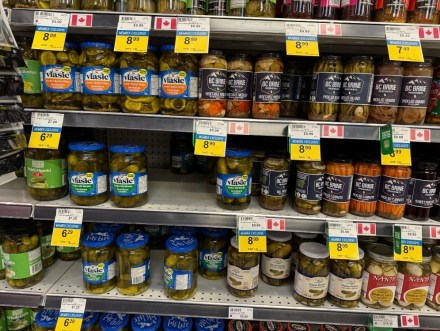
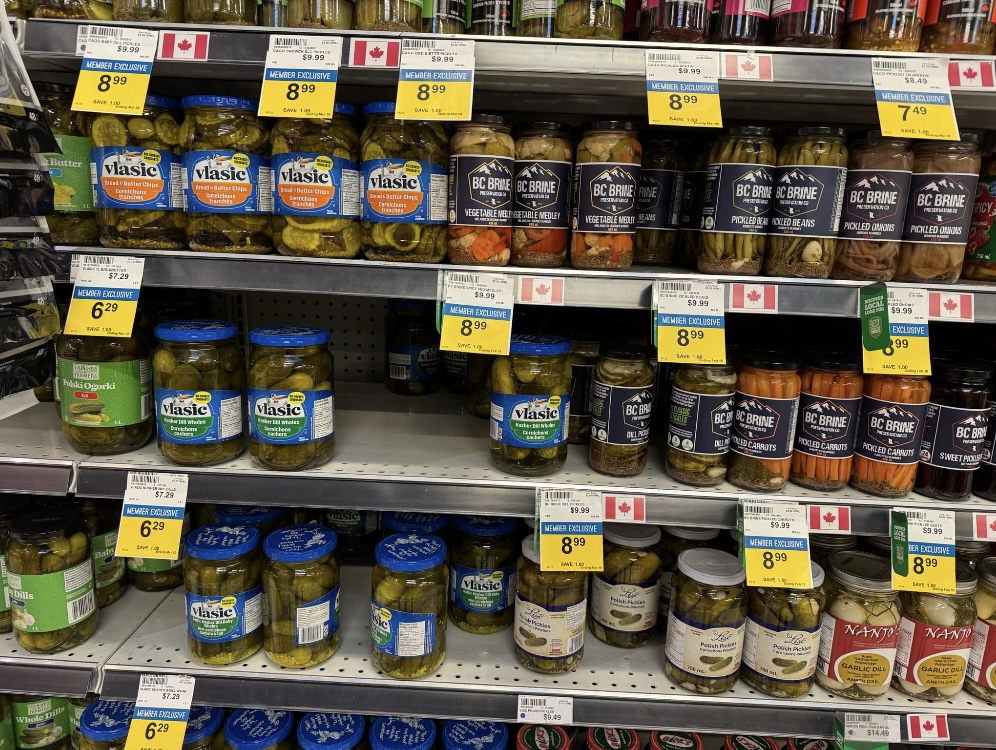
 I didn’t realise that shops in Mexico and Canada now label the country of origin for their products, people are encouraged to buy local produce and to reject things from the US. Maybe this will help. Do you think we should support them in this? Do we need to buy from the US when there are alternatives? If one man attempts to stamp on the rest of the world, maybe the world should join together in their response. The world today is a global community, and putting your own country first when that means alienating everyone else, is not such a good idea. And what will happen to the poor? Do we just allow them to be sucked down in a whirlpool of powerful economic battles? Who is speaking for the poor?

Shelves in a Canadian Supermarket

One aspect of the news that worries me is the motivation behind what politicians are saying. It used to be that when a politician spoke, you could hear them pandering to popular opinion, they cared about what the voters thought. (This created problems of its own.) But now I hear something else behind the words, now I hear them pandering to an individual—and this has been seen in history. Listen carefully when you hear the news—who do you think the politicians are most aware of when they speak? Who are they trying to impress—and is this healthy? Does this leader show any compassion for the poor of the world?

I leave you with the key points of fascism from Jason Stanley (author of How Fascism Works). As you read the list, which can you apply to the news today?

  1. A Great Mythical Past. A fascist leader will talk about how things used to be better in the past. They ignore all the problems that were actually in the past, and focus on a mythical ideal.
  2. Propaganda. A fascist leader will promote their own message and say that any alternative view is a lie. Hitler and Mussolini both did this, saying that things reported in newspapers were untrue, telling the population that their opponents were liars. The idea of accusing the media of ‘fake news’ goes way back in time.
  3. Anti-Intellectualism. Fascist leaders appeal to people with limited education, the speeches are not necessarily clever (because truth doesn’t matter) and they appeal directly to emotions. They dislike, and try to discredit, academics (because they will offer a counter view, or question the authenticity of the claims being made). Experts are shunned, people are told to ‘think for themselves’ which really means, ‘don’t question what I am telling you and don’t listen to someone who might have studied this issue.’ (I think we should be wary of people who tell us ‘the experts don’t know what they’re talking about.’ In my experience the ‘experts’ usually know more than the rest of us!)
  1. Unreality. This is another interesting one—apparently fascist leaders tend to love conspiracy theories. They always have an enemy who is trying to sabotage them, talk of subterfuge is encouraged, they want people to be paranoid. They also blame past leaders.
  2. Hierarchy. Fascist leaders always have a dominant group of loyal followers, those who are ‘true to the leader.’ Anyone who questions the general message is eyed with suspicion, and removed from the ‘inner group.’ As stated earlier, everything focusses on the leader. [Listen to what they are saying—who are politicians trying to please?]
  3. Victimhood. Fascist groups always state that they are the victims of another group—they have been oppressed, or made poor, or cheated—and this has been caused by a definable ‘other.’ (Hitler blamed the Jews, gay people and Roma, but other groups held to blame over the years include black people, feminists, immigrants.)
  4. Law and Order. Fascists declare that they want a return to law and order, and the group against them are the criminals. The ‘other’ people are the ones to blame for crime, for stealing, for rape, for drugs, for violence. [In the introduction of any emergency measures to combat ‘a risk to security,’ the ‘risk’ should be fact-checked.]
  5. Anti-Decadence. Fascists claim that the moral fibre of society is under threat (blaming the ‘other’ group). Only they, and their followers, have good morals. Anyone not supporting them is described as a bad person.
  6. Work Ethic. Fascists claim that the ‘other’ group are lazy, mere parasites of society. Fascists claim they are hard-working, deserving of better.
  7. Nationalism. Fascists promote great nationalism, and shun other nations. They strive to make their country ‘great again’ and nothing else matters. This gives a great sense of belonging to the followers of fascism. [But in a global community, what are the consequences of this? We need to be shrewd.]

I add to this the current policy of saying what you want to be true, as if presenting it as true makes it true. It does not. It is still a lie, however loudly you say it. We can fact-check statements, and test whether they are really true.

I hear President Trump say that the US has been ‘cheated’ in the past, the new tariffs are to make trade fair for the US. Is this true? We shouldn’t simply accept a statement just because someone says it loudly or repeats it several times. Personally, I know very little about tax and tariffs. I shall do some research and let you know tomorrow what I discover.

Please be wise, wherever you live. Please make good choices. I doubt if anyone in power reads my blog, but we have a voice even if no one listens. Let’s stand for what is right, because ‘those who are noble plan noble things, and by the noble things they shall stand.’ We need to be shrewd. We need to watch out for liars–just because someone says something, it doesn’t make it true.

Thanks for reading.
Take care.
Love, Anne x

There is a lot on social media at the moment, mocking the people in power. Maybe this is one way that people are ‘fighting back.’ Maybe things seem less scary if we make them a joke. Certainly it is good to laugh, but let us not forget what is serious.

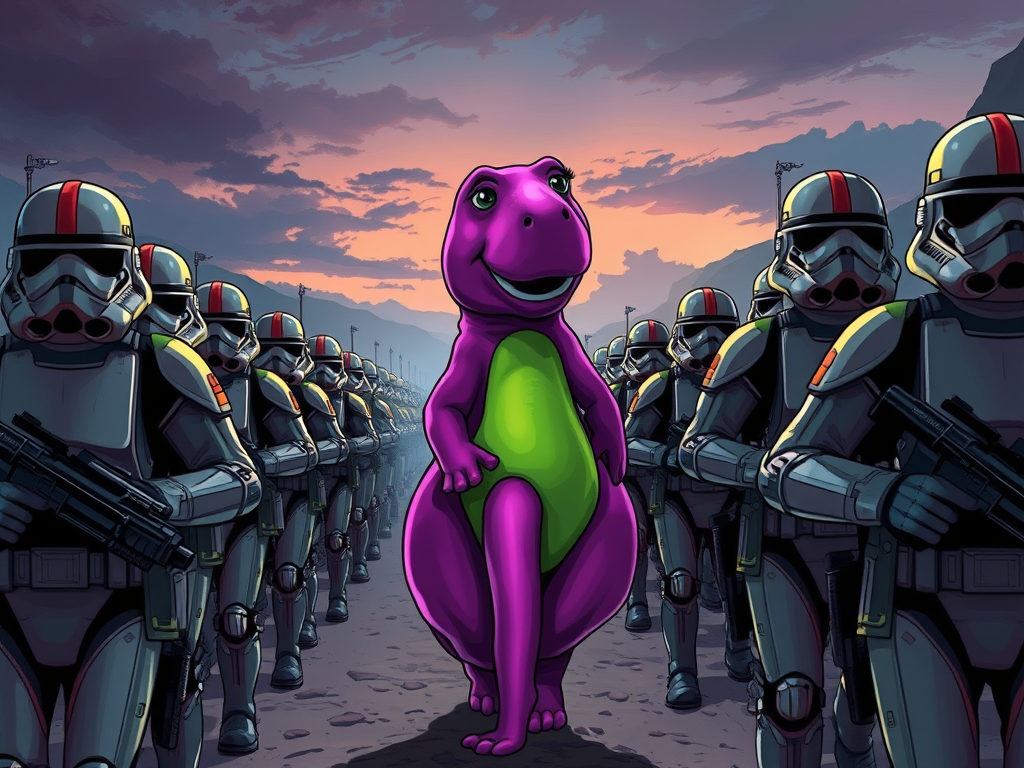
When someone includes you in a military chat by mistake.

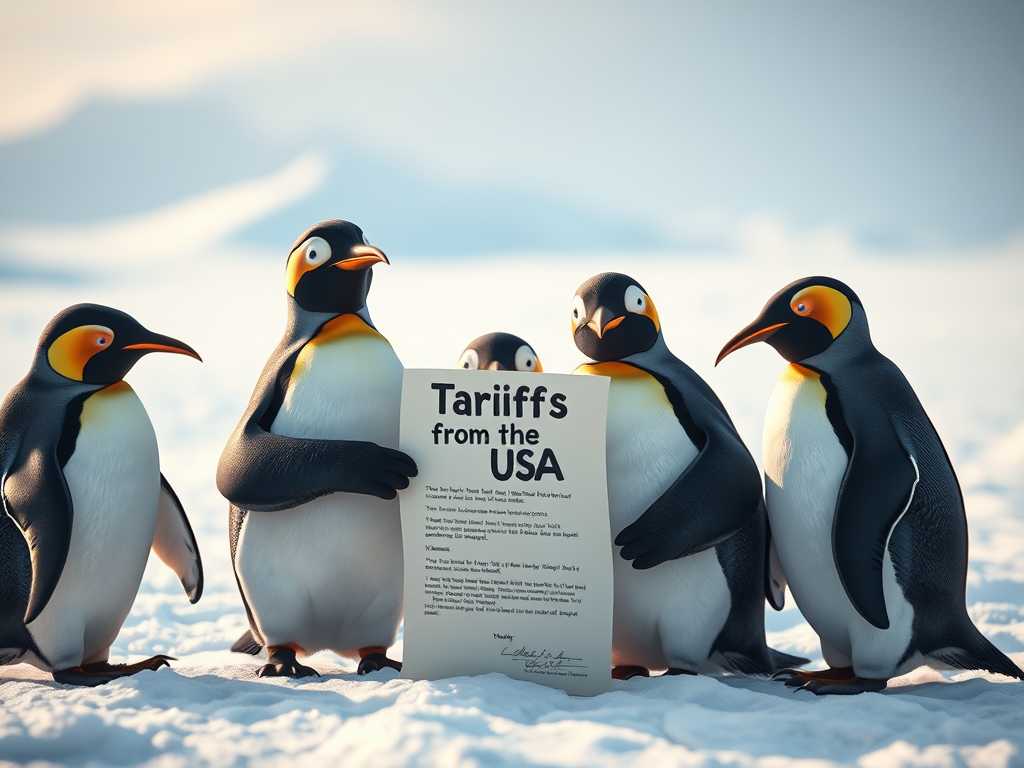
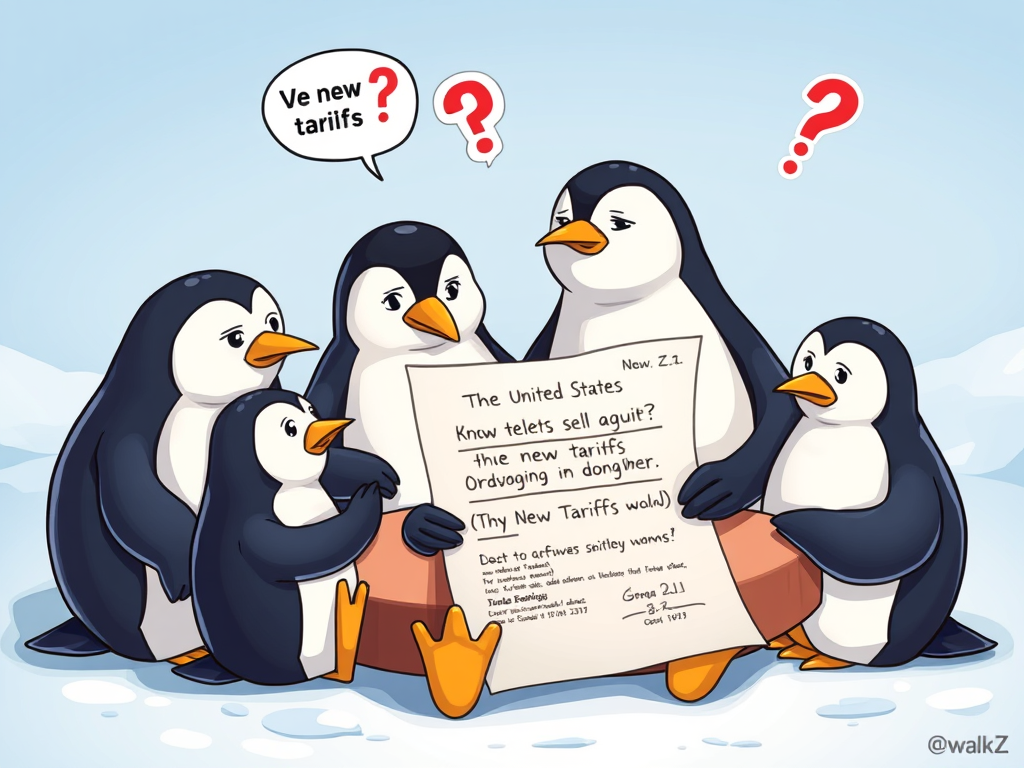
The McDonald Islands have a tariff. There is not a human population there (apparently) but the penguins are confused.

Link to previous post:
 https://anneethompson.com/2022/11/28/what-is-fascism-and-are-you-a-fascist/

Sign up below to follow my blog.
Then you won’t miss my post exploring whether the tariffs are fair or sensible and wise.
anneethompson.com
****