R woke with a headache, which was a shame as today was her choice of activity (port tour) combined with F’s (trip into Porto). She thought she would be okay, so after a slow get up, F and G ordered Ubers and off we went.
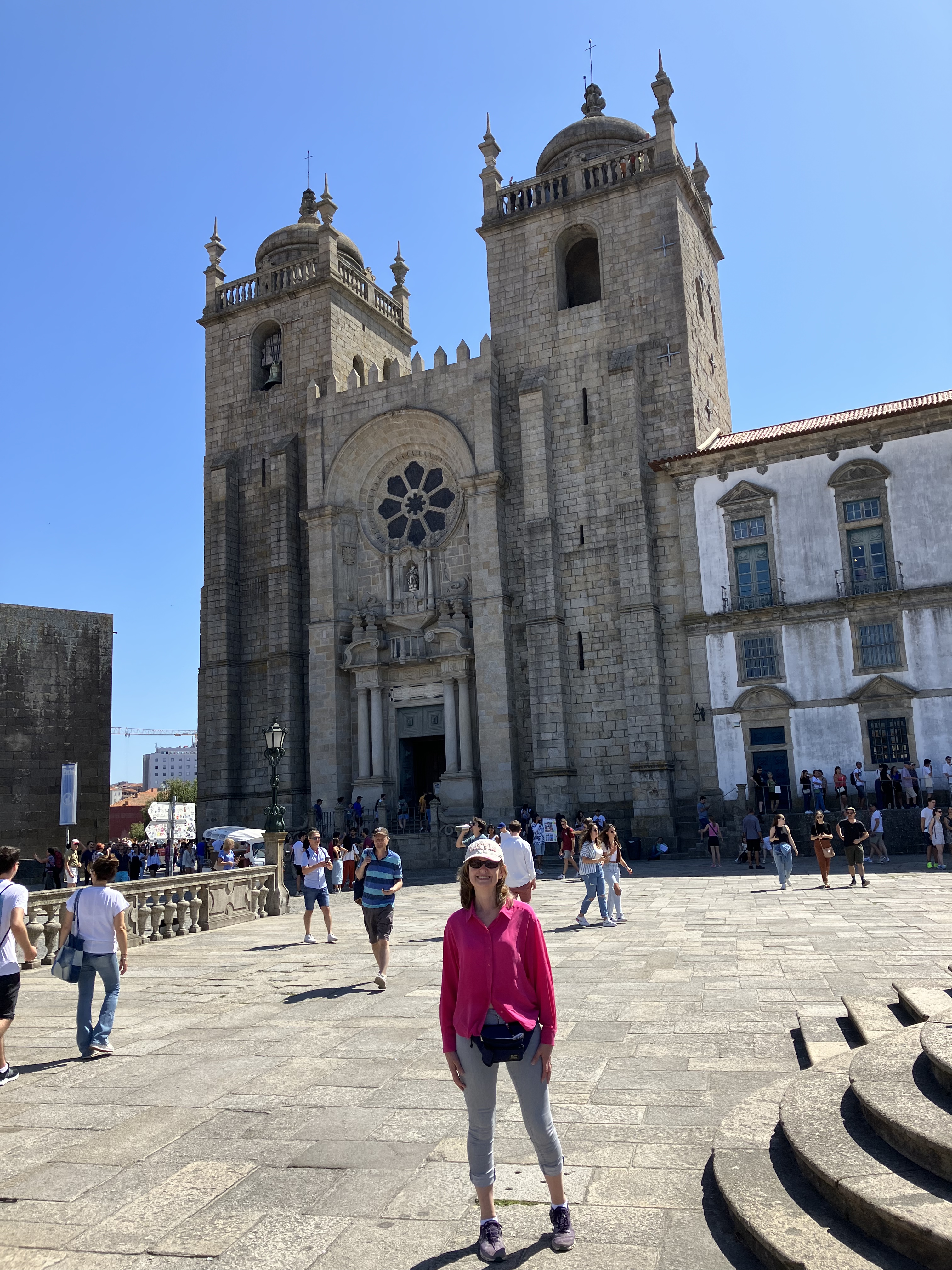
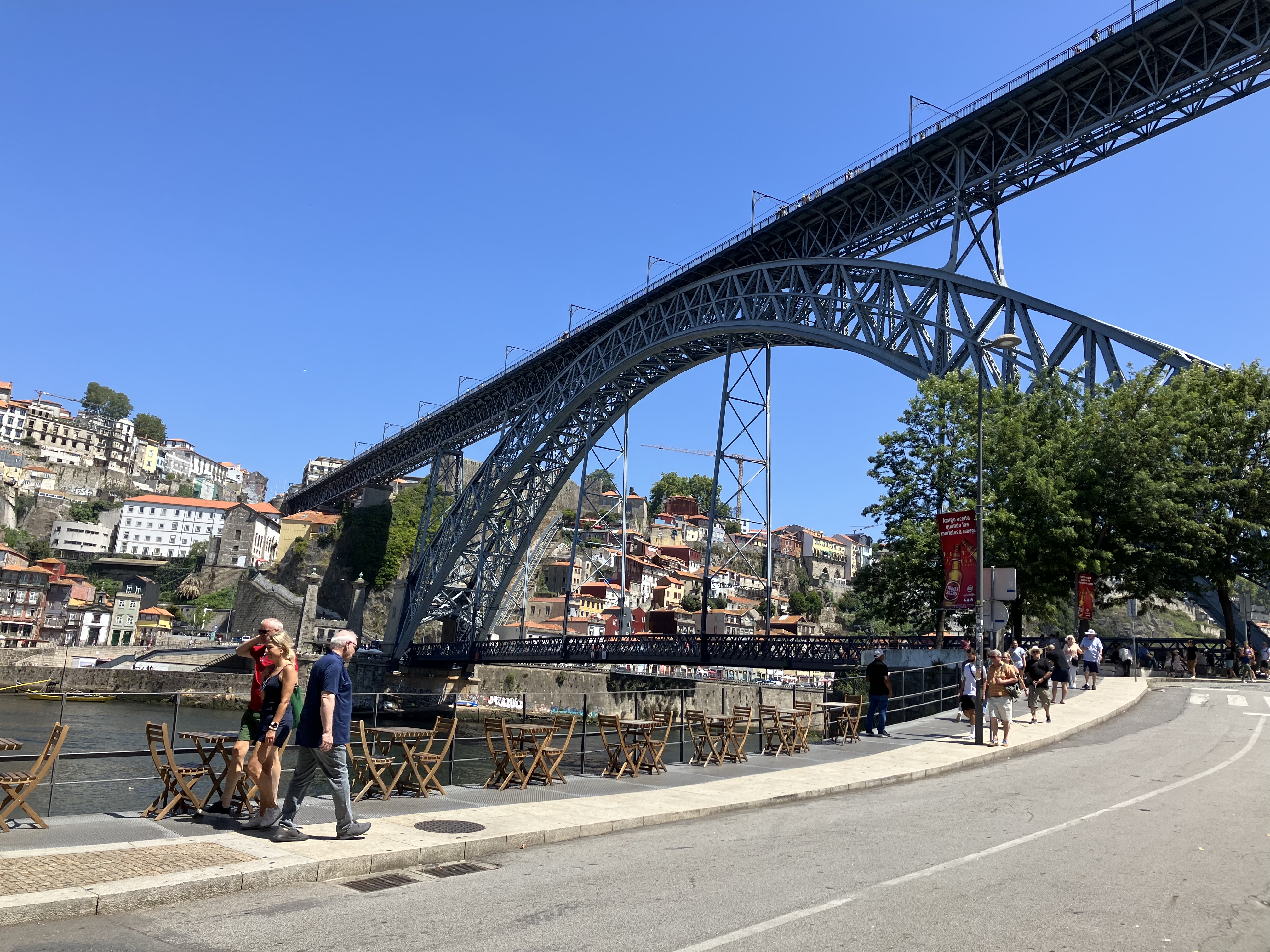
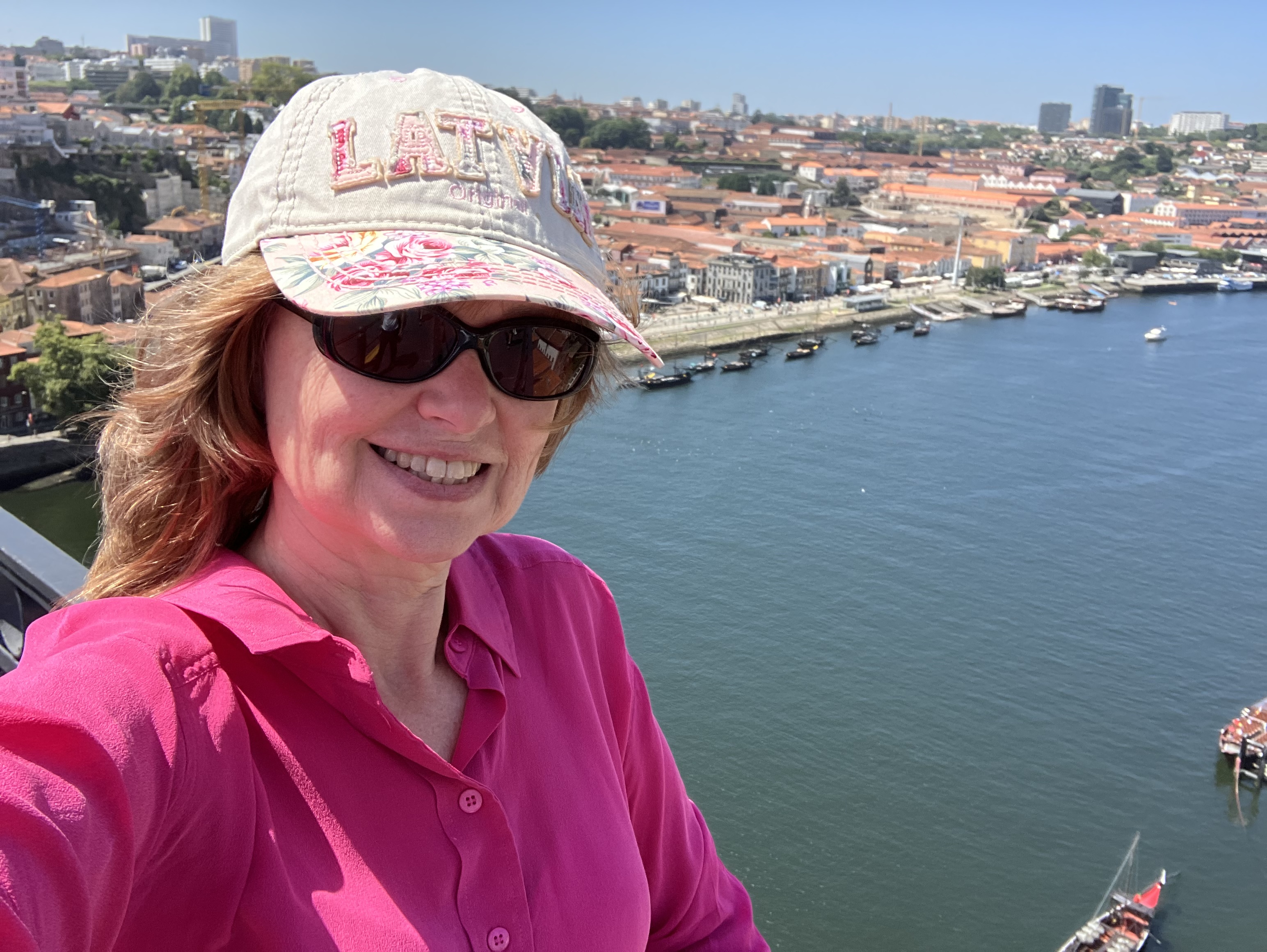
We were dropped at the cathedral. Porto reminds me of Rome—lots of pretty squares, old buildings, and music. The cathedral had various buskers, nice atmosphere. Husband suggested he could lead us on a walking tour. After following it for a few streets he was fired/resigned and F took over. We walked across the railway bridge (at the same time as trains, which I found as unnerving as the height of the thing) while M told us how fantastic it is (first ever bridge to double as both a suspension bridge on the lower deck and a sitting-on-a-support bridge on the upper level). It’s not pretty though.
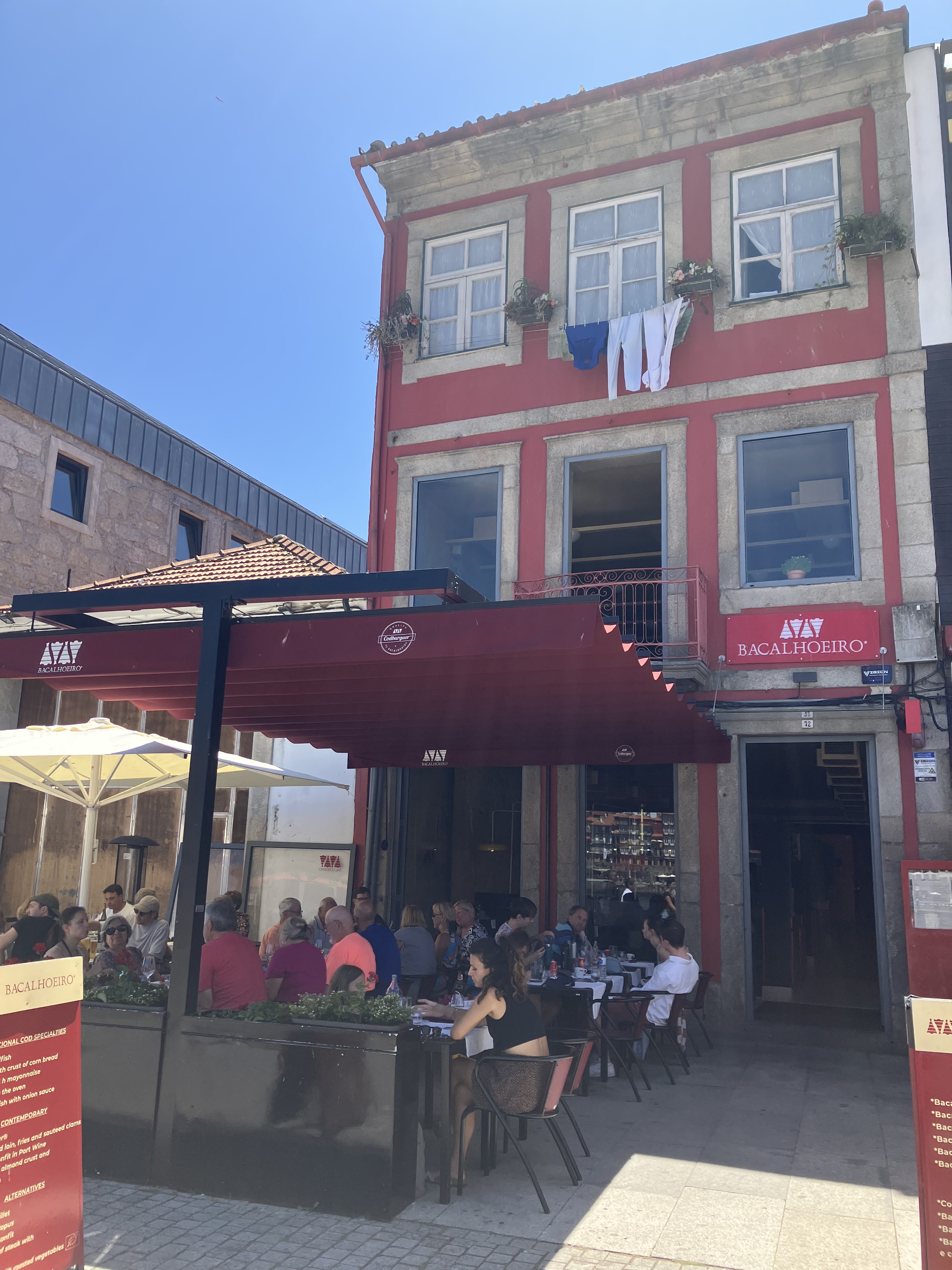
Husband persuaded M to climb a wall, and he grazed his fingers. More blood than expected. I was more concerned than he was. We wandered down to the river, and F suggested a restaurant area, and J found a suitable restaurant on Google, and we sat down for lunch. Patched up M with plasters. Food was really good (I had a cod burger, very tasty). Used the washrooms (because this is often not easy in a city). There was a busker nearby who couldn’t sing, but thought he could. It was painful. G had bites on his hand (I assume a mosquito not R) and his whole hand was swelling. We offered sympathy, but no one had anything more helpful.
Went for a walk. It was hot. M wanted to post a postcard, so went into the Tourist Information to ask where to post it. We were directed to a tiny shop selling trinkets, who had a shoebox-sized box in the doorway. This, apparently, is the box for international mail. It will be amazing if the card ever reaches home.
Went to Calem Port place. Had a tour, which we all remembered from when we did it last time (though it’s actually very well done). Went into the port tasting room. As we are seven people, we asked a couple if they would move so we could sit together. They refused. I photographed them (but family were adamant that I should not post it on my blog). R took some aspirin, which didn’t bode well. However, it turns out that aspirin and port is good for headaches, perhaps I’ll try this next time I’m ill.
We tasted 3 ports: a white, a rosé and a tawny. I preferred the rosé so gave my others away. M ended up with a row of tawnys, J did well with the whites. Husband chatted to the strangers next to him (of course he did). Nice afternoon. Ice creams, then ordered Ubers back to the villa. They arrived in about 5 minutes, it’s a really good service.
Within 3 minutes, at the most, of arriving home, Husband was persuading people into the pool to play a game. ‘Keepy-Uppy.’ It’s a game that’s very noisy and lasts for about 6 hours. They seemed happy, though I fear Husband might have hyper-active tendencies. R and I tried to read, but it’s hard to concentrate with the noise coming from the pool. Sometimes I think nothing has changed in the last 20 years.
Thanks for reading, I’ll tell you more in my next blog.
Hope you have a fun week. Take care. Love, Anne x
Thanks for reading. anneethompson.com Sign up below to follow my blog. *****
I am writing this in Portugal, in a rustic house near the coast of Porto. I can see a corner of the ocean as I write, a strip of blue glinting over the hedge between the trees and the house next door, and I can hear it, a steady sweep of waves over rocks providing a constant background to the dog barking, and the birds in the trees and the occasional car. In a nearby tree, a pigeon coos, and seagulls wheel over the garden in their screeching search for food, joined by the crow of a cockerel in a nearby garden.
We arrived yesterday afternoon. We should have arrived in the morning, as our plane landed soon after nine, but the owner had an electrician here (apparently) so it was not possible for us to arrive earlier—not even to drop our bags. After a 3:45 taxi, this was somewhat annoying, though everyone was polite (ish) when Husband told them the news. I noticed that he waited until we had landed before sharing.
It actually wasn’t too bad. We collected the hire cars—less hassle than usual, once we realised the system of getting seats in the shuttle bus before putting our luggage in the back, otherwise our luggage would leave without us (they need to rethink their logistics I feel). We drove (or to be exact, Husband and G drove, while J navigated despite his headache) to a fishing village near the villa. It was an exciting journey, with J doing his best to test G’s driving with lots of cobbled streets, and U-turns in narrow roads, and unexpected roundabout exits. (He claims it was due to closed roads and road works, and we believe him.)
We parked in a surprisingly convenient car park right next to the beach, which was guarded by an old woman under an umbrella who was collecting money for a saint. (Not quite sure which saint, or why the saint needed the money, but the old woman was diligent and shouted something foreign at us when we walked past without donating.) The car park was free. We knew this, because we very quickly ascertained that F speaks Portuguese that people here actually understand (unlike my Portuguese with is excellent but sometimes seems to confuse people) and we sent him off to read signs/ask random people whether there was a fee.
We left the cars and all our possessions except for the suitcase containing secret banking information that would cause the economy to crash if it got into the wrong hands, and walked along the prom.
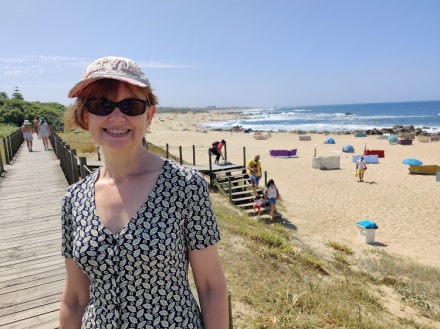
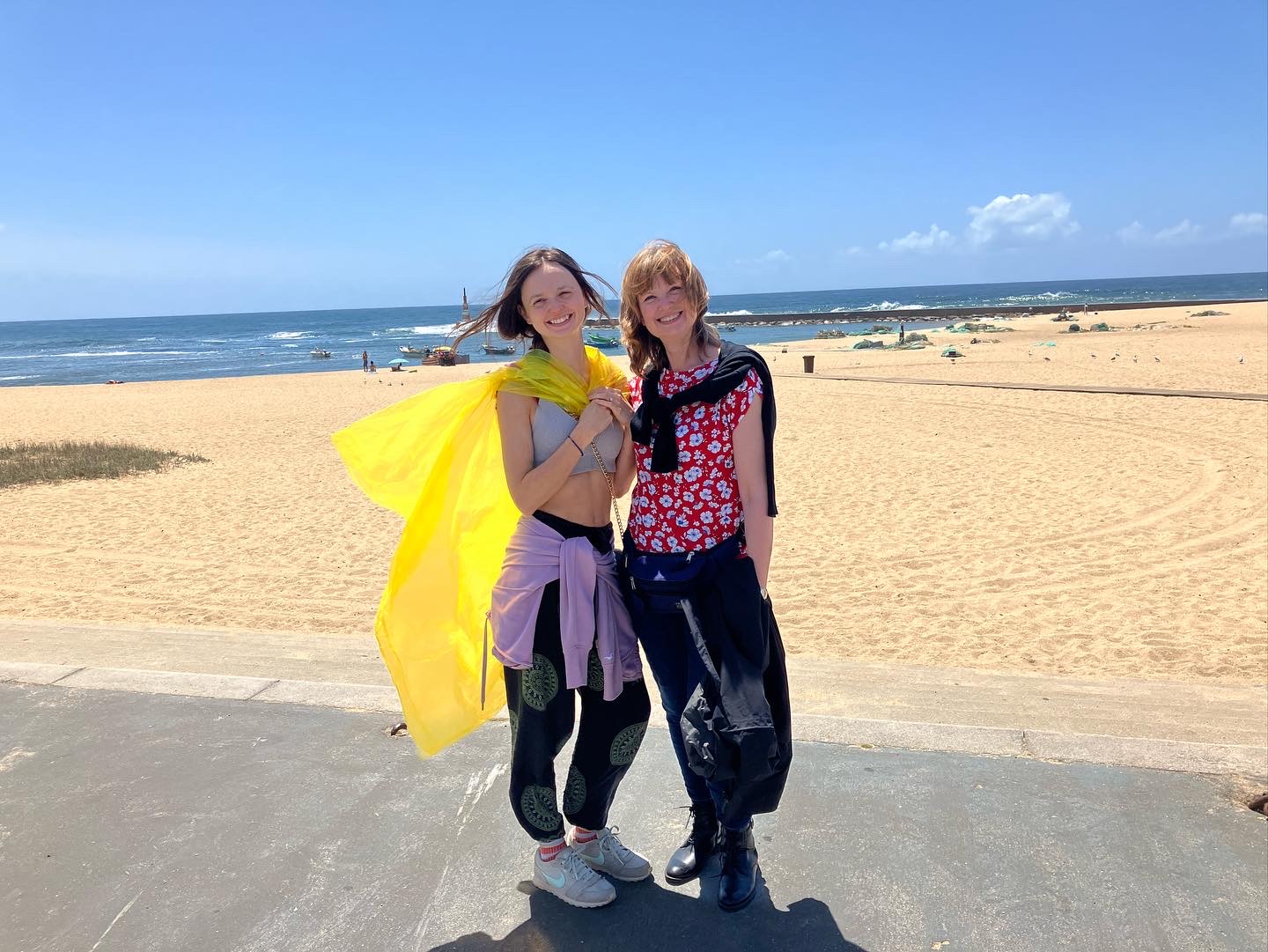
The beach was wonderful—sand and rocks, fishing boats sheltering behind a sea wall while the waves crashed over it, green nets strewn over the sand, and a chimney way down the beach. No idea what the chimney was for—smoking fish? Alfresco dining?
It started to rain, which made things less pleasant. A friendly fish restaurant allowed us to shelter under their awning while they set up ready for a 12 o’clock opening. When they opened, we went inside. It all looked very nice, and possibly expensive, but it seemed we were eating there.
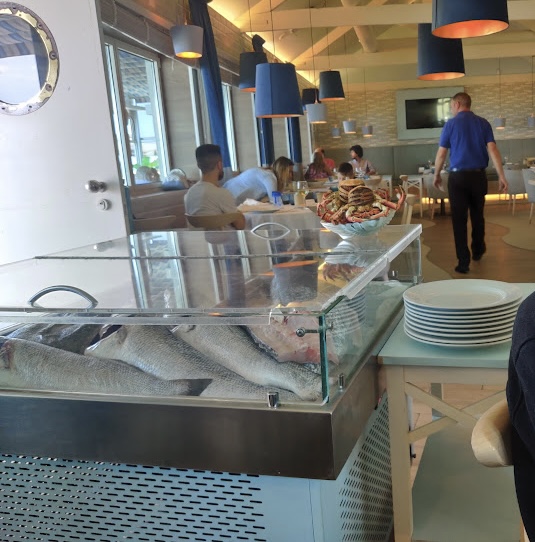
We had a round table between a display of very ugly fish arranged on ice, and a glass cabinet full of exciting-looking desserts. We were given English menus, and chose a variety of meals—sharing dishes between two was a thing, and they were priced differently. They brought bread and cheese while we ordered, and we gobbled it up pretty fast. The meals arrived in metal dishes, which the waiter served onto plates next to the table. Husband wondered if there were seconds (there were) and coped fairly well with having only a modest amount of food on his plate. Made it harder to plan mouthfuls I guess. I ate fried veg served with tomato rice—very tasty. Most people had fish in some form—J and F shared claws and legs and body parts of various sea creatures, which looked like a hassle to eat (one of them resorted to fingers before the end). We shared dessert and had coffee. F, being almost Portuguese, ordered a drink that sounded like Pingu, and he described as being a small white coffee, and it seemed to please the waiters (who probably get fed-up with inept tourists torturing their language).
We drove to the supermarket and parked. (This was not as easy as it sounds, we had a nice detour round the back of the shop.) I had a well-organised list, with difficult words translated into Portuguese, which I divided between the family. They all gave their list back to me, and told me they were going off to explore, so it was all just as chaotic as normal, with random things appearing in the trolley. I remembered to check the dishwasher tablets really were dishwasher tablets (because we washed crockery in de-scaler last year) and tried to look competent when weighing fruit and adding price stickers. M was very distracted by the stickers. We didn’t buy frozen stuff. We didn’t buy water (because the villa details said they had excellent drinking water).
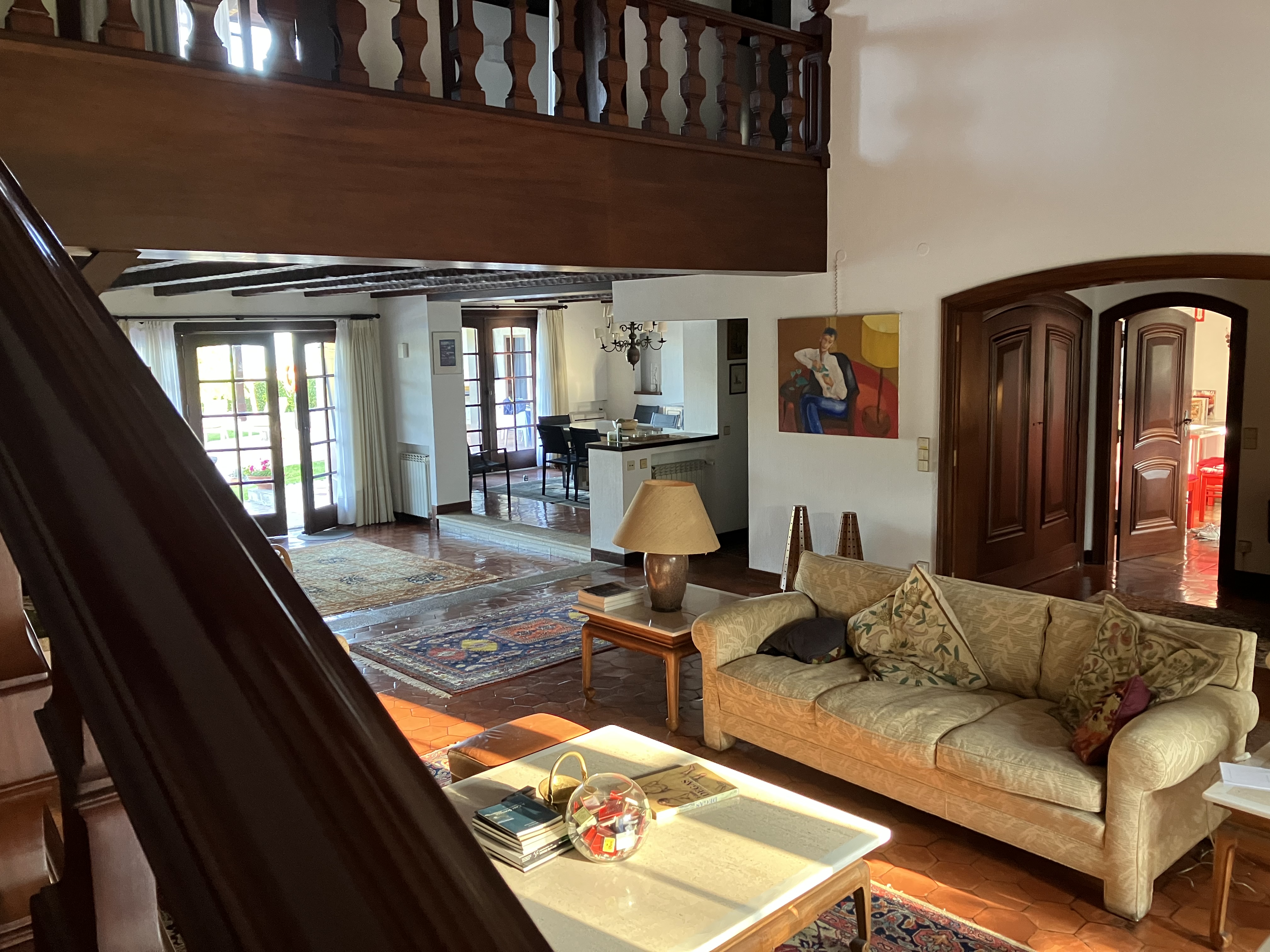
Arrived at the villa. Very pretty, full of rustic furniture with beautiful grounds. The owner told us the water was safe to drink, but in a way that clearly conveyed that she would not drink it herself! Husband went out to buy some water. We allocated rooms—no one was sure about the very pretty room with a balcony because it was lacking doors—though I think we were all tempted. J and F bravely took the murder suite/separate annex. M had no air-con, so kept the door to the hall open. R co-opted the spare upstairs bathroom as her private shower room.
We walked down to the pizza place on the beach. The view was stunning. I was going to photograph the restaurant afterwards, but it looked too much like a public toilet from the outside, so I will wait and take one inside. They were very friendly, and the meals were delicious, though needed more salt. The blokes mainly drank big beers (served in those tall glasses that have a waist so look bigger than they really are) and the rest of us drank sangria (which involved more choices—in Portuguese—than I was expecting). It was delicious, and I could have drunk the whole jug. Very nice evening.
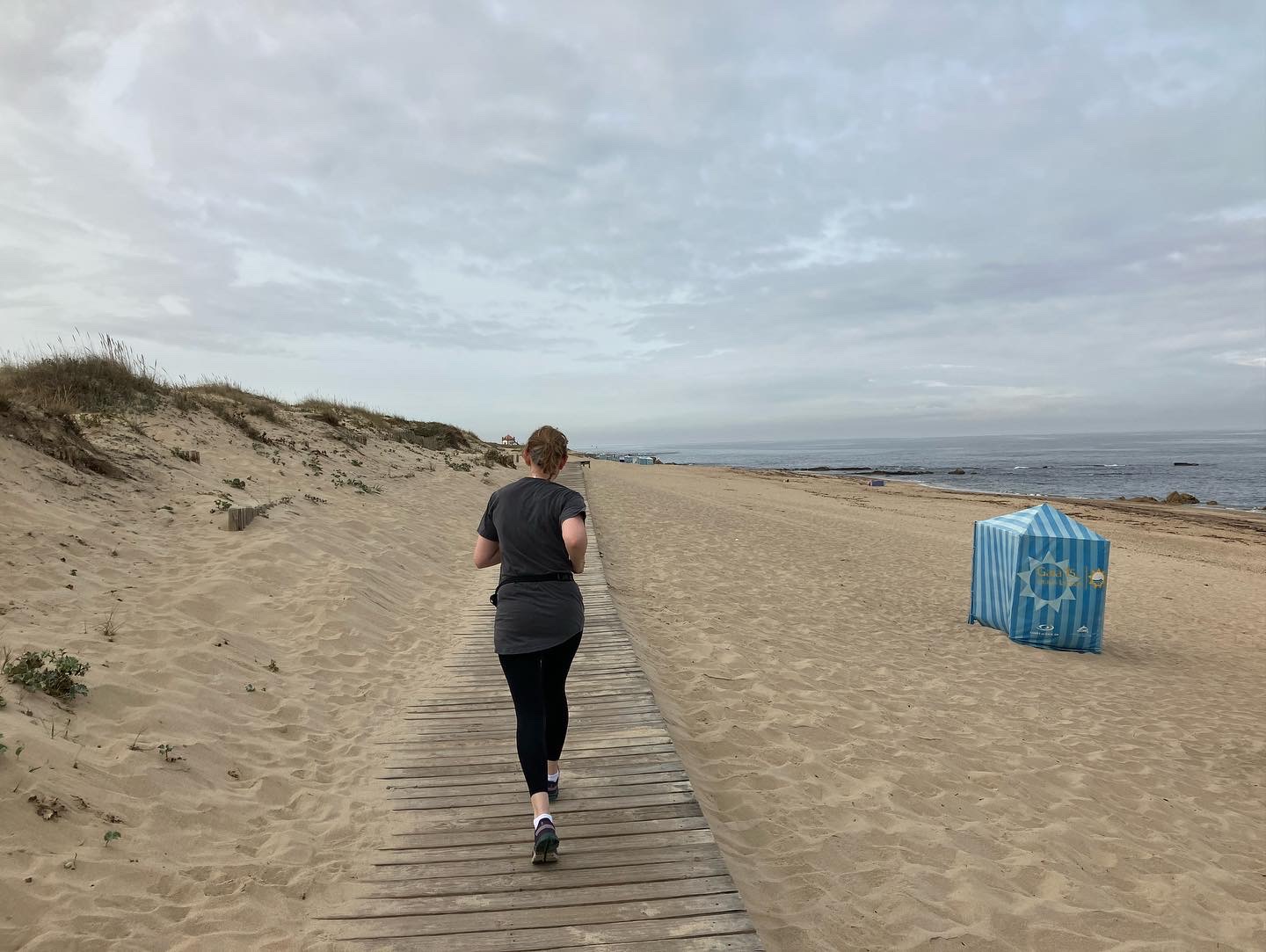
Today, I woke at 6:30, and waited until 7:30 before waking sleepy Husband and dragging him out for a run. We ran along the boardwalk, past several fat men and fully made-up women exercising next to the sea. Very lovely.
After a quick shower, we played tennis, and I learned that Husband is now almost as rubbish as I am. We changed the game to simply trying to get the ball over the net as many times as possible. It was fun, and I rediscovered muscles I never knew I had. Gradually the rest of the family emerged from their rooms. R took up her post lying next to the pool in the sunshine. M swam round the pool for a very long time. G went for a lonesome walk. We waited (for a very long time) while J showered, and then went for a walk with him and F.
The main coast road is fairly busy, and they have painted the pavement red, which means bikes feel free to whiz along them, and pedestrians don’t really have anywhere safe to walk—which seems like a silly idea. Parallel with the road, across the dunes, is the boardwalk (which is probably where pedestrians are supposed to walk). We walked to look at Galo Petisqueira restaurant, then joined the boardwalk. The beach is very pretty, with big waves and lumps of rock (but probably not a great place to swim).
Stopped at the little shop (open on Sundays, which was a surprise). Husband wanted some fresh bread (fresher than the stuff we bought yesterday) and some more water. No one here seems to speak English—it’s not a place for foreign tourists. Luckily, we have F, our secret weapon, who speaks very good Portuguese. He managed to negotiate that there were bigger water bottles in the store room. He also helped out when the woman was confused by Husband’s mime that he wanted 15 bread rolls. (Hard to know what she thought he meant—5 or 10?)
Ate lunch in the dining room. All agreed that we like this villa. Tried to plan whether we should do any excursions—and did not all agree. M want to do expensive cruise down the Douro valley, R fancies a wine tour, F wants to spend time in the city, I want to drink sangria at a beach cafe, Husband wants to build a dam o a river on the beach. (No one understands Husband’s choice, apart from the boys, who also want to. Genes are a funny thing.)
Males played ‘Small World,’ I read, R sunbathed. Then we tried another game of tennis, this time with M and F. I think we need to change the name of the game to ‘Sorry!’ We were fairly equally matched, but this is not a good thing. Dinner was at the pizza place again. We asked to sit outside, and they thought it would be fine to use a table for six and add a seat on the end. It was cramped. But the view was fabulous. People seemed to enjoy their meals better this time—and F chose very well, so we all intend to copy him next time. Three of us shared sangria, and R was the only one able to pour it without spilling it everywhere. This is now the second time I have shared my drink inadvertently with J (but it’s hard to feel guilty given the history).
I will tell you more tomorrow, we had such a lovely time.
Thanks for reading. Have a fun week, and take care. Love, Anne
Thanks for reading. anneethompson.com Sign up below to follow my blog. *****
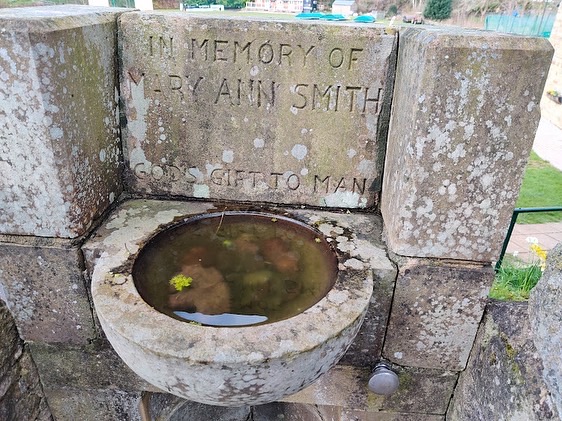
The forecast looked bad, so we left home at 8am for our morning walk. Beautiful sunshine, with dark clouds looming over the hills. We went down into Lower Bradfield, where there’s a Post Office selling coffees, and several smart-looking modern buildings, including a public toilet. There are not many public loos in the Peak District. There was also a small commemorative plaque, above what looked like a toilet, in memory of Mary Ann Smith, who was ‘God’s Gift to Man.’ Not quite sure how to read that—was she incredibly beautiful, or was it written ironically by the angry wives of Lower Bradfield? I feel there’s a story here, but not one I managed to find.*
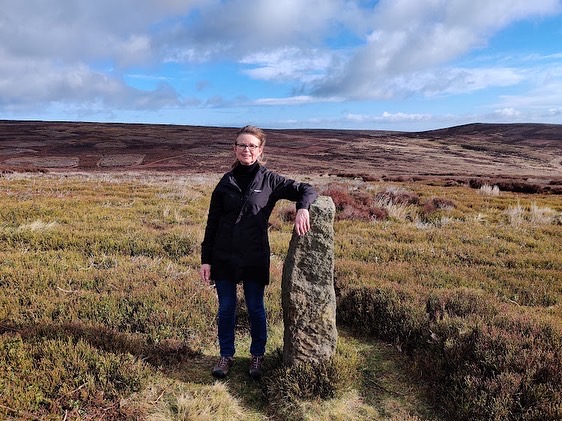
We then followed a footpath up the hillside, and walked across the moors. We didn’t see any other people, but there were grumpy sheep sleeping on the heather in sheltered places near the stone walls. Lovely windy walk.
As we walked down the lane, towards the cottage, we saw a dead ewe, with a tiny lamb shivering next to her. Another lamb, marked with the same red number 10, was attempting to follow a ewe who looked completely disinterested. I assumed the mother of the twins had died. When we got to the cottage, we went to the owner, to ask him to phone the farmer. It’s too cold for a tiny lamb to survive for long on its own.
We had brunch at The Schoolhouse. I am assuming this was once the school, now turned into a busy cafe, with a smarter area upstairs for meals. We had Eggs Benedict, which was absolutely perfect—freshly baked bread lightly toasted, a generous slice of moist bacon, poached eggs covered in hollandaise sauce. When you’ve been on a long walk, it’s perfect food. Life doesn’t get much better than this.
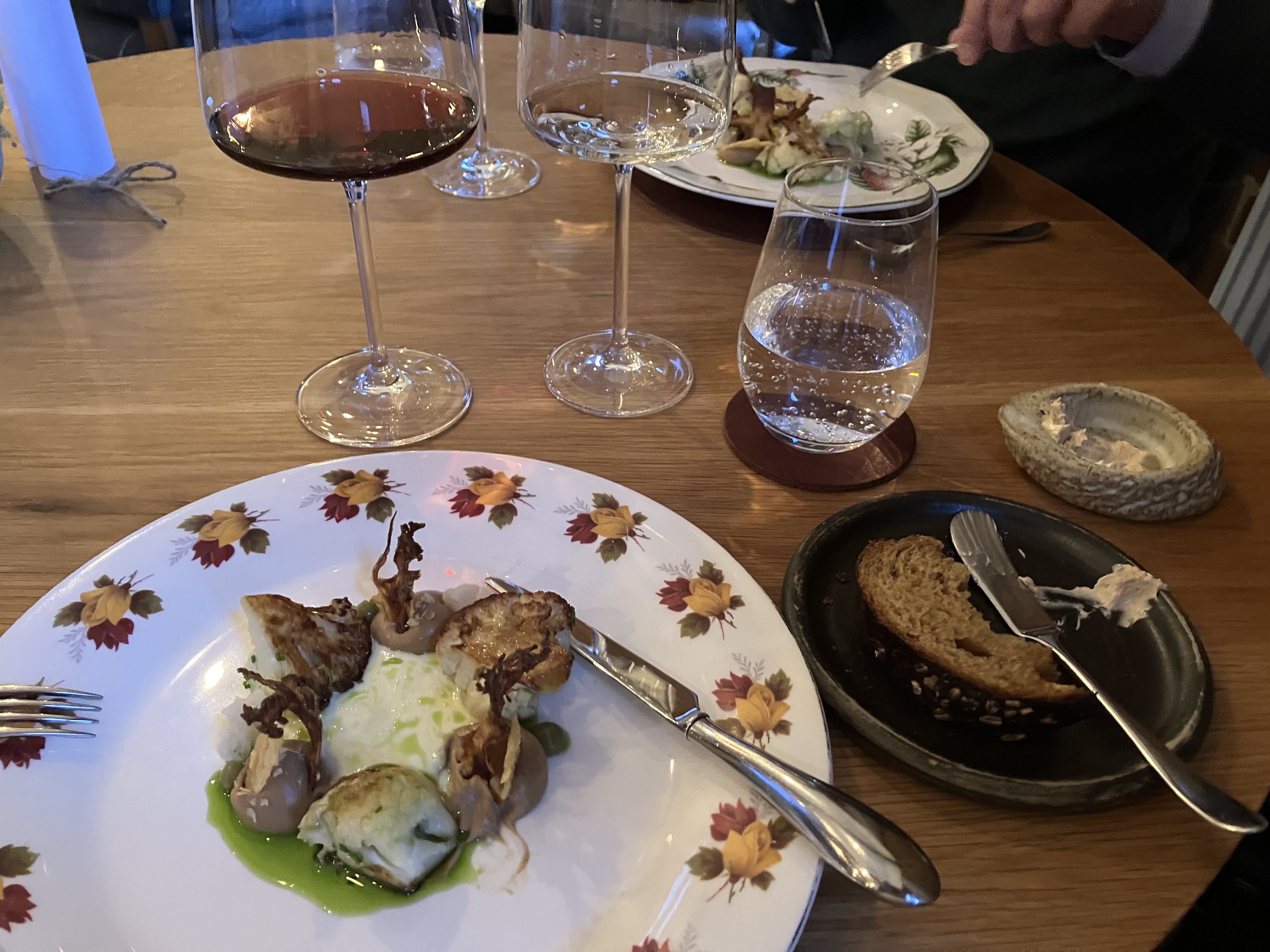
In the evening we ate more delicious food. There’s a restaurant on the edge of Sheffield: Rafters, which serves taster menus. We had a six-course meal (the courses were tiny, beautiful, and delicious.) It’s an unusual place, as usually restaurants selling ‘posh food’ have ‘posh staff’ and you worry that you might make a mistake—and I always feel that really, they would prefer someone posher than me to be eating the food. But Rafters had normal people, wearing jeans and white shirts, who were efficient and friendly. The other guests all wore casual clothes too, so it was another perfect dining experience. And the seats were comfy—I do like a comfortable seat!
This morning we left home slightly later—I was tired. The weather wasn’t as good—not terrible, but cold with a slight drizzle. We walked from the cottage, up into the hills behind the farm. There’s a ridge of rock sticking up over the hill, and streams bubbling out from the ground. It was a pretty walk, through fields of cows (who ignored us) and past sheep, who watched us suspiciously. We saw the sheep farmer, and asked about the dead ewe we saw yesterday. He said the number 10 twins were fine, it wasn’t their mother who died. The dead ewe probably had lambs inside her. He said most of the ewes in the field were lambing, and he checks each day to see what has been born. Apparently it’s healthier than lambing inside because you don’t have as many germs, but more risky when the weather is as cold as it is at the moment. But his sheds are full, so the remaining lambs will have to take their chances. Farming is difficult; hard work with brutal results if the weather goes wrong. I love seeing lambs in the fields, but I’m not sure I could cope with the loses.
As we arrived at the cottage, I noticed some eggs by the road, and an honesty box. Next to the cottage are beautiful white geese, and I rather fancy trying to raise a few in the garden. The eggs were a mixture—brown ones which were obviously chicken eggs, and some large white ones, which I am really hoping are goose eggs. I bought six and will incubate them when I get home. Really, really hoping they are goose eggs. (Or dragon eggs, that would also be fun, but I understand that is unlikely!)
Hope you have some excellent food today. Thanks for reading.
Take care.
Love, Anne x
Thank you for reading.
anneethompson.com
*I later discovered that the water fountain originally had ‘WATER’ written above ‘GODS GIFT TO MEN’ but a naughty person had removed it. Made me laugh.
I am writing this in a tiny cottage snuggled in the hills of Lower Bradfield. You might remember that in January I attended a conference for Old Testament Study in Sheffield, and Husband kindly drove me and rented a cottage in the Peak District? I stayed in the cottage for just one night, and was sorry to leave, so when we realised we had a week free after Easter, we decided to return.
We arrived on Easter Sunday, after lunch with the family in Cambridge. The cottage was warm and comfortable, and after unpacking we strolled up the steep lane behind the house. It was dusk, and an owl was hunting in the fields, swooping over the lane. There was the trill of curlews, who rose above us, warning us not to stray near their nest. Sheep watched from behind stone walls, their lambs snuggled under their legs. In the distance, hills rolled away, dotted with stone buildings and steep fields, up to the moors. It’s a open place, a place where you can breathe, and it feels weird that it’s only half an hour from Sheffield.
Monday morning, my Ocado deivery arrived at 8am. Perfect timing for breakfast. The delivery man was exceedingly grumpy, and told me he had worked all weekend, and no, he had not had a nice Easter. I felt slightly guilty as I unpacked my order. I seem to have ordered a lot of cakes, so won’t be losing any weight this trip.
We walked across Agden Nature Reserve to Canyard Hills. Muddy footpaths, twisted trees, a reservoir in the valley. I wished I hadn’t gone for a long walk a few days before Easter and given myself blisters. I blamed my walking boots (which I left at home) and was stomping along in wellies. Husband hardly mentioned it. We walked for two hours. There were beautiful views—and big black clouds. We got home just before it poured with rain.
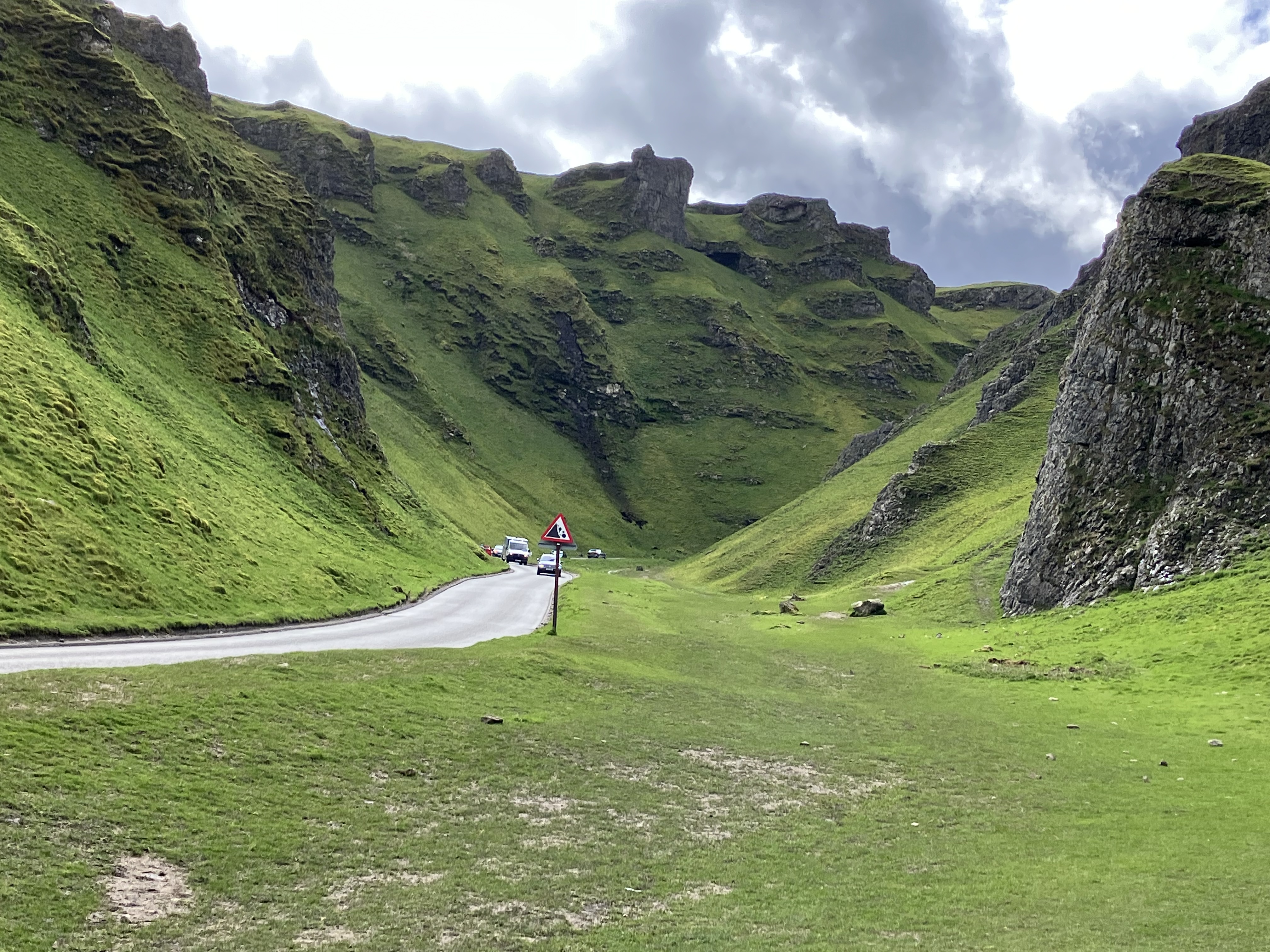
It was still pouring after lunch (ate some cake). We went for drive to Castleton—which we both remembered but couldn’t remember why (we are at that age when we can spend a happy half hour trying to remember things). Then we drove through Winnats Pass. This was spectacular, we turned the corner, and there it was—steep rocks rising on either side, tiny streams bubbling down to the valley. The road was single-carriage, and there were lines of cars waiting to pass, so I recommend you don’t visit in peak times. But definitely plan to visit, it’s amazing.
We had dinner at The Plough in Lower Bradfield. It was a ‘pubby’ sort of pub (as opposed to a ‘gourmet’ sort of pub) but after a nice glass of Merlot I decided it was lovely. We chatted about the day, and managed to remember when we last visited Castelton, and I bored Husband with interesting details about the theology book I am currently reading. A good day.
Tuesday, I got up at 6.30. At 9.30 we left the cottage and walked to Lower Bradfield on the footpaths. I was still in wellies. It was okay. The walk was very pretty, we went up the hill to High Bradfield, and the old church with dragon gargoyles and sheep grazing in the graveyard. Then back down, along pretty footpaths under trees and over rivers, to the village. There’s a new cafe, which advertised brunch and coffee, but it was shut. (Apparently it’s always shut on Tuesdays.) Walked back to the cottage for coffee and toast (and more cake).
I spent the afternoon reading my theology book (by a chap called Leo Perdue, about Wisdom Literature—very interesting). Sounds of fighting wafted upstairs. Husband was in the sitting room, watching a cartoon.
We decided to drive to a cheese factory advertised on Google Maps. We found the lane (very narrow) but not the factory. I think it must have closed. Drove into Hathersage, and I bought some walking boots in one of those outdoors shops that smell of sensible clothes and waxed jackets. These boots fit better than my last ones. And they have pink laces, which is an additional delight.
It was pouring with rain again. We drove home via Snake Pass, but it didn’t compare to Winnats.
Dinner at The Plough again. We had asked to sit in the same room, but they either forgot or decided to ignore us because they were busy. We were seated in a very ugly room, full of people who seemed to know each other. I ordered fish and chips, and the portion barely fitted on the plate, it would have fed three of me. Especially as I was already full of cake. A pleasant day, but not as perfect as Monday.
As I told you in my last blog, we have been studying spirituality around the world. In our lecture, we spoke to a Coptic Christian from Egypt. ‘Coptic’ is the type of Egyptian writing that came after hieroglyphics, and became the language of Egypt, and therefore the language of the early Christians—people like Origen & Co. The chap we spoke to, spoke to us in English. Not much has been written in the past by Coptic Christians, and we were told that this is partly because it was a difficult place to be a Christian. He spoke about the ancient church in Alexandria, commenting that, “We produced more martyrs than books!”
He explained that the Coptic church is known as the church of the people, and it works with the poor people in Egypt. He said that Christ was found with the poor people, and that is where their focus is. Later, I asked him about all the money, and gilt and splendour, that I had seen in the Coptic churches in Cairo. How does that tally with their aim to work amongst the poor? He told me that it generally is the poor people who provide the money for the beautiful churches, that they want to contribute, to show how much they value God. He also said that in a country where they are the minority religion, it is very important to have a ‘presence’ and to be seen. It would be easy for the media to discount them, for governments to say there were no Coptic Christians—harder to do that when there is a stonking great temple in every city. This is something I hadn’t considered (it’s very easy to judge cultures before we understand them).
As a minority church in the country, their ‘outreach’ has to be different than in Western countries. They strive to do everything well, to live their lives authentically, and to work honestly. This is the way they hope to be noticed, and for people to be attracted to their church. (I think that in an Islamic country, you are not allowed to speak with Muslim people about your faith.) This tallies with what we saw in Cairo, where the Zabbaleen people (who are Coptic) collect the city’s rubbish, and are known for doing it better than anyone else.
When asked about people converting to Christianity, he said that they would only want people to do that who are sure they want to follow Jesus, not because they have been ’persuaded’ into it—because converting from Islam means risking so much.
He showed us his ‘Book of Hours,’ which is a tiny book of Psalms. They read it at regular intervals throughout the day—like when they wake, at mealtimes, when they go to bed. I thought that was a good practice to copy, it’s hard sometimes to even think about God during the day, even, ironically, when studying for an MA in Theology. My Muslim friends are currently fasting during daylight hours for Ramadan, and I admire their determination and wonder whether we have grown too ‘soft’ in our Christian churches. Sometimes a routine/discipline is a good thing. He also spoke about the monastic tradition. He likened this to the Bible story where Moses is praying while Joshua fights a battle. He said the monks are the ones praying, and studying Scripture, aiding the Christians who are outside the monastery. Most people go to the monastery for retreats, when they join the quiet contemplation for a while and learn from the monks (and share with them what is happening in the world). It’s different, but I can see how it would work.
As I said on Monday, we only had one seminar about global Christianity, but even the little we covered challenged some of my preconceived ideas. Churches in different countries need to find the best way to do things within the culture they live in. Often, this will be very different to how we do things in the West.
Thanks for reading. I hope you have a good week. Take care. Love, Anne x
We visited a few towns on the south coast of Madeira. It wasn’t possible (I think) to reach them via pretty coastal roads, as the roads seem to be either blocked or fallen into the sea or abandoned to rock falls. Our drive was therefore through a series of tunnels. Madeira does tunnels very well, but you don’t get to see much scenery. I cannot imagine how different life must have been before the tunnels were built. Towns would have been fairly isolated, as visiting other places would have taken much longer.
We visited Ponta do Sol. As we drove down the steep road into town, we saw a small carpark. It was full, but we managed to arrive as someone was leaving, so parked the car and followed signs to the old town. The town is built on a steep hill, terraces of bananas reaching up the cliff side, cobbled streets and houses clinging to the lower levels. There were some good coastal views, but nothing to entice us to stay in the town. The busiest area was the beach, with families sitting on the black sand or swimming in the sea. I never like black sand. Although I know it’s no less clean than yellow sand, it feels dirty. As Madeira is basically just a big volcano, all the natural sand is black.
Next we drove to Madalena do Mar. We did attempt to follow the coastal road, but it petered out, so we had to do a difficult 3-point turn on a bendy road, and it wasn’t worth the hassle; we returned to the series of tunnels.
Madalena do Mar has a big car park next to the sea, and a lovely promenade lined with palm trees along the coast, a jetty for fishing or mooring boats . . . And very little else! There were plots of land waiting to be built on, and even an area designed for a café, but no one seemed to have actually arrived yet to build the hotels and cafes. It was lovely, in a sort of abandoned, not quite there yet, way. Not sure what it will look like in ten years time.
Quite windy!
Our last stop was Praia da Calheta. This was a busy town, full of people, cars trying to park, cafes and supermarkets. There was a small marina, with little boats bobbing in rows, and a long promenade with palm trees and cafes. There were also beaches, with yellow sand hauled from Africa. Despite the cold, several teenagers were swimming, their squeals piercing the air. Steep cliffs bordered the coastal road, and we sat in a cafe, sipping espresso and watching little black and white birds nesting in the rock while seagulls swept past looking for food.
We returned to Funchal for dinner, and ate in Noitescura, a restaurant near the apartment. It served traditional food, and last time we tried ‘Francesinha’ which were like burgers (beef, chicken, fish or vegetable) with a fried egg on top, and served covered in a sauce/gravy. I chose badly, and had the vegetable one, thinking it would be a mushroom burger, but it wasn’t, it was more like minced vegetables (tiny pieces of onion, broccoli, carrot) in a soggy bun. It was as horrible as it sounds. This time we shared a fish platter, which was lovely. It had a variety of local fish (scabbard, parrot fish, bass) and we ate it with fried sweetcorn, rice and chips. (No veg this visit, Husband chose the food.)
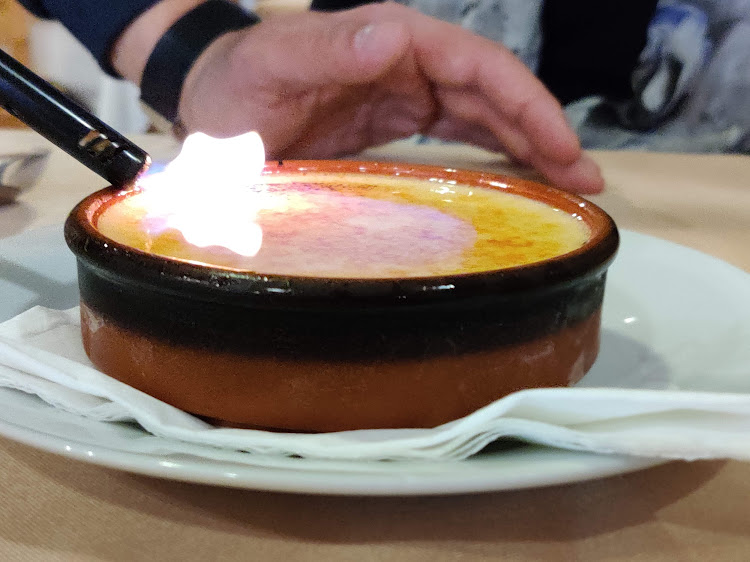
I also tried a poncha, which is a traditional drink, sold all over the island. I was expecting something like a caipirinha, as it’s made with sugarcane alcohol, but it wasn’t, it was more bitter, and orange, and served in a short fat wine glass with no ice. Not unpleasant, but I prefer caipirinha. I also had white wine with my meal, and a dessert with sambuca (which I remembered too late I don’t like, but luckily they poured it over the dessert and then set it on fire, so most of it burnt off). We finished with a glass of Madeira wine, but refused the rum that was offered with the bill. I don’t usually drink much. I didn’t sleep very well that night.
Thanks for reading. Have a good week. Take care. Love, Anne x
Thanks for reading. anneethompson.com Sign up to follow my blog, and it will be emailed to you each week.
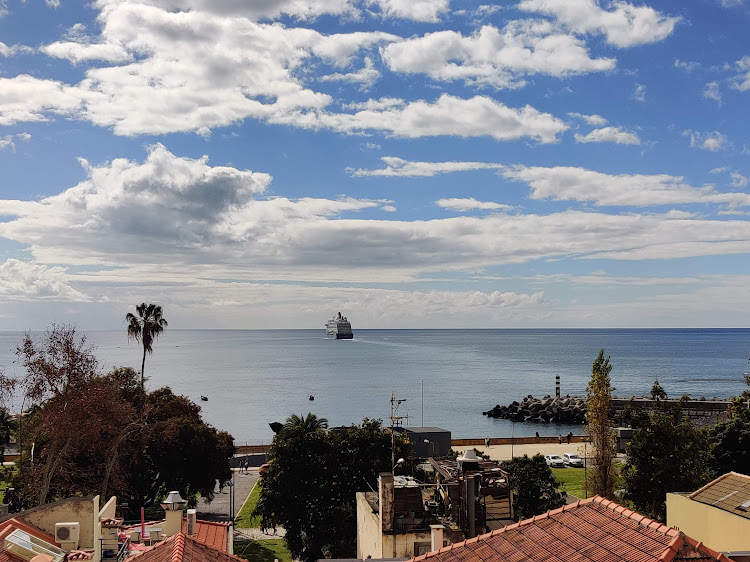
We found heaters in the apartment, and managed to warm up a bit. There’s no central air conditioning or central heating—I assume because usually all year round is ambient. It’s colder this year. I woke early, before sunrise (it’s not light here until about an hour after it’s light in the UK). When it was light, we went for a run. Although not sunny, it wasn’t cold. The light is different here. It’s a comforting light. Most of Madeira is mountainous, so lots of people run on the only flat land, along the promenade. It’s a pretty place to run, with little areas of garden, and interesting statues and the sea lapping onto pebbles next to you. There are often cruise ships, towering over the docks, and occasionally we had to dodge large groups who were touring the island, led by a guide to the most famous sights. I prefer living here, even for a few days, to try to absorb some of the real life. It was fun to watch the ships arriving though, such impossibly huge structures balanced on the water.
After a shower, we walked back to the little cafe where last year we went every morning, Husband always had a cheese and onion bolo, and I had an espresso. But the cafe was shut. What a shame. We wandered around, looking for somewhere to recreate the same ‘coffee with the locals’ feel, but most cafes looked very touristy. Then we settled on the cafe under the apartment, which wasn’t in such a nice location (okay, it is a horrible location, as it’s basically right on a busy road). But it had plastic chairs, and locals sipping espressos, and it looked clean. We ordered (Husband had chips. Chips. For breakfast.)
Note my disapproving face! The sandwich is actually very traditional in Madeira: sliced beef, ham and cheese. But the chips?
While we waited for our coffee (and chips) we saw the elderly man from last year’s café. He sat outside and had his coffee, and we wondered whether we should say hello, but decided we didn’t speak enough Portuguese and he didn’t speak English, and probably it would just confuse him. So we didn’t. But we mentioned it to the waitress, and she told us that he still runs his café, but the roof fell down, so he’s waiting for it to be fixed. This is why I like returning to the same places. Being on holiday is a break from life, but if you travel a lot, it can mean that you never engage in life, you are never part of anything, which seems a waste. When we return to the same places, we can be part of a different community — even if only very briefly. I think life is about connections, not being isolated. I’m not a great one for drifting, I like to have a purpose.
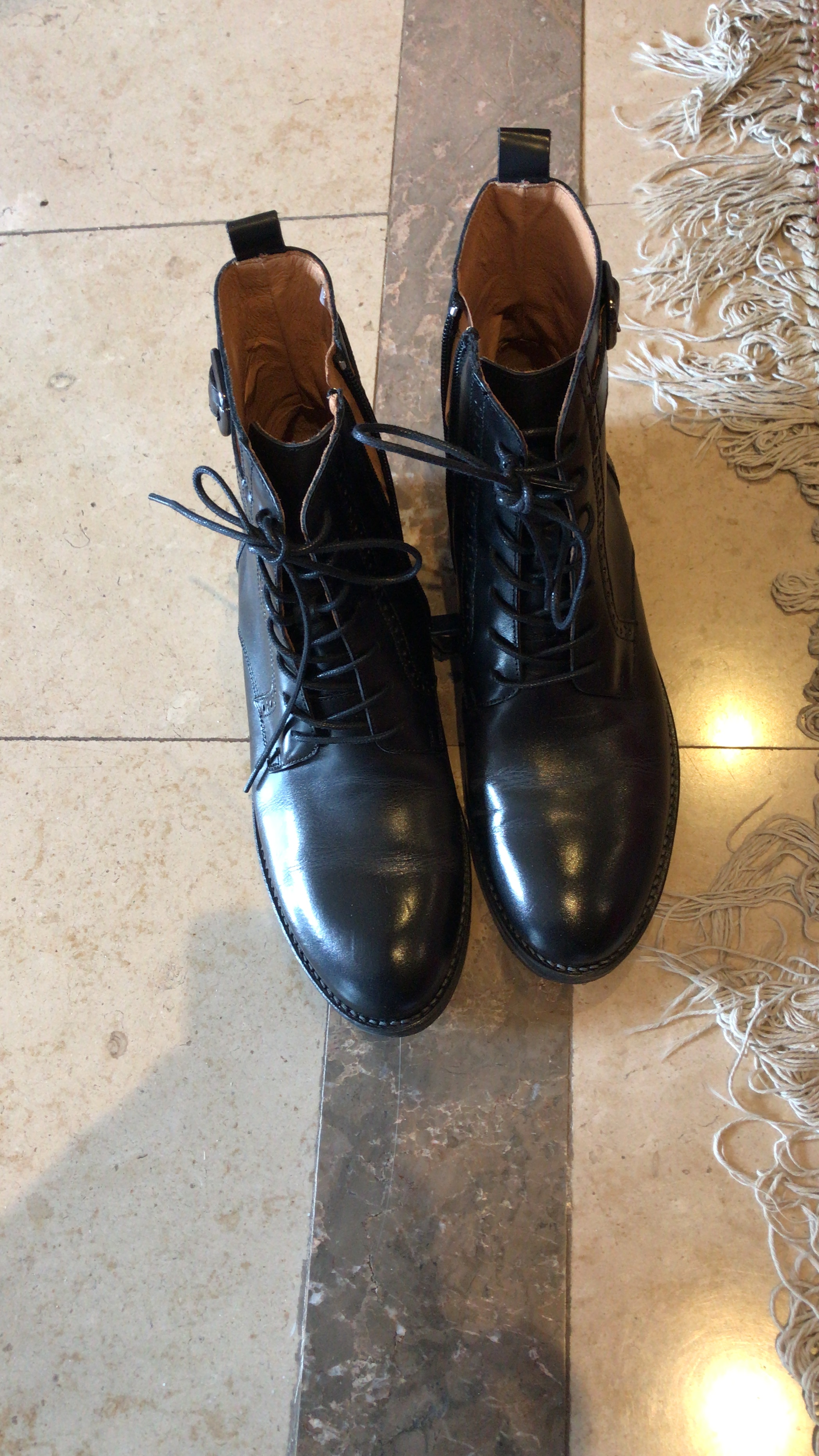
Caffeine replenished, we set off to find the boot shop. Last year I packed the right clothes, but not the right footwear, and when we had torrential rain, my only ‘waterproof’ shoes were drenched. We found a little shop that sold boots, and I bought a pair because they weren’t too expensive. They have been the most comfortable shoes I have ever owned, and are still worn all the time. They are brown boots, and I don’t like wearing brown shoes with grey trousers, so I was keen to buy some black ones. But would we manage to find the shop?
We set off, past the market (Mercado dos Lavradores) and all the aggressive salesmen selling fruit at inflated prices to unsuspecting tourists. We crossed the road, rounded the corner where they are building a Savoy hotel, and headed into the lanes of the old town. We half-remembered the road, and that the shop was opposite a larger shoe shop selling fashion shoes. We found a smaller shoe shop opposite, and went inside. It looked slightly different, but was in the right place, selling shoes. I explained what I wanted, showed the salesman my brown boots, and he went off to find some black ones. He returned with several boots, some of the black, none of them the same manufacturer as mine. I explained that I wanted the exact same boot, but in black (otherwise I may as well buy them in England). He came back with some similar boots, which he spent a long time stretching, undoing the laces, bending them open. I tried them on, knowing they were a size smaller than I wanted. I thanked him for trying, and left. The man suggested I should try in the big shop opposite, but I knew they only sold fashion shoes, and I wanted the same good quality leather boots.
I set off towards the apartment, refusing to listen when Husband suggested we should look in other shops, because I hate shopping, and only went to that place because I thought it would be easy. Husband insisted. I said I would look in one more shop. Husband led me up the road . . . To the exact same shop we had visited last year! We had been in a different shop, which explained why they hadn’t had my boots. This shop only sold Tapadas boots. Which begs the question: why did the other shop, when I was leaving anyway, not direct me back up the road? He must have known the Tapadas shop was there, and he wasn’t making the sale, so why not tell me? I dislike mean people. If you want comfortable boots (the sort of boots you can wear on an all-day hike on the day you buy them and not get blisters) then head to Abreu’s Sapataria.
I like Madeira, but I cannot quite get a feel for what it must be like to live here. Unless you want to work in the service/tourist industry, or to be an engineer (because there are some serious mountains to build on/through) then I’m not sure what work the island offers. There are the huge cruise ships that visit regularly, but the passengers tend to eat onboard, and only do brief excursions into town, making shops and attractions overly busy and then leaving, returning the narrow streets to the locals. The restaurants tout for business by trying to persuade passing people inside, which I always find uncomfortable, but maybe they have to, maybe there isn’t quite enough tourism for the number of restaurants. I suspect it’s a difficult place to run a business. We ate in some restaurants that were lovely, with delicious food and staff who worked very hard to keep everything clean and efficient. But they were rarely full, and sometimes we were the only customers, which felt sad given how hard people worked. But for us, it was lovely. I like visiting places out of season, pretending that I live here.
I will tell you more next week. Thanks for reading. Have a good week, and take care. Love, Anne x
Woke to a cloudy morning, but not actually raining. Went for a run. There were fishermen today when we ran beside the coast, casting their lines into the grey sea. After a quick shower we walked round the corner, and found a tiny café next to the law court. We had coffee and croissants while watching the criminals arriving! (Rather fun to try and guess who was a lawyer and who was the criminal and what crimes they committed. Especially exciting if someone arrived with a police escort. I didn’t take photos, as I didn’t want to end up in court myself.)
I read some more of my Ethics book (this is part of my college course, and I have to write a review on it, and it is NOT an easy read. More like reading an encyclopedia than a textbook.) Gave up after a couple of hours, and we drove to Gnejna Bay. Much more fun than a boring textbook. It was windy, and there were kite-surfers jumping the waves. We ate ice-creams (not very nice ones, I think mine had melted and refrozen) and watched the surfers enjoying the wind.
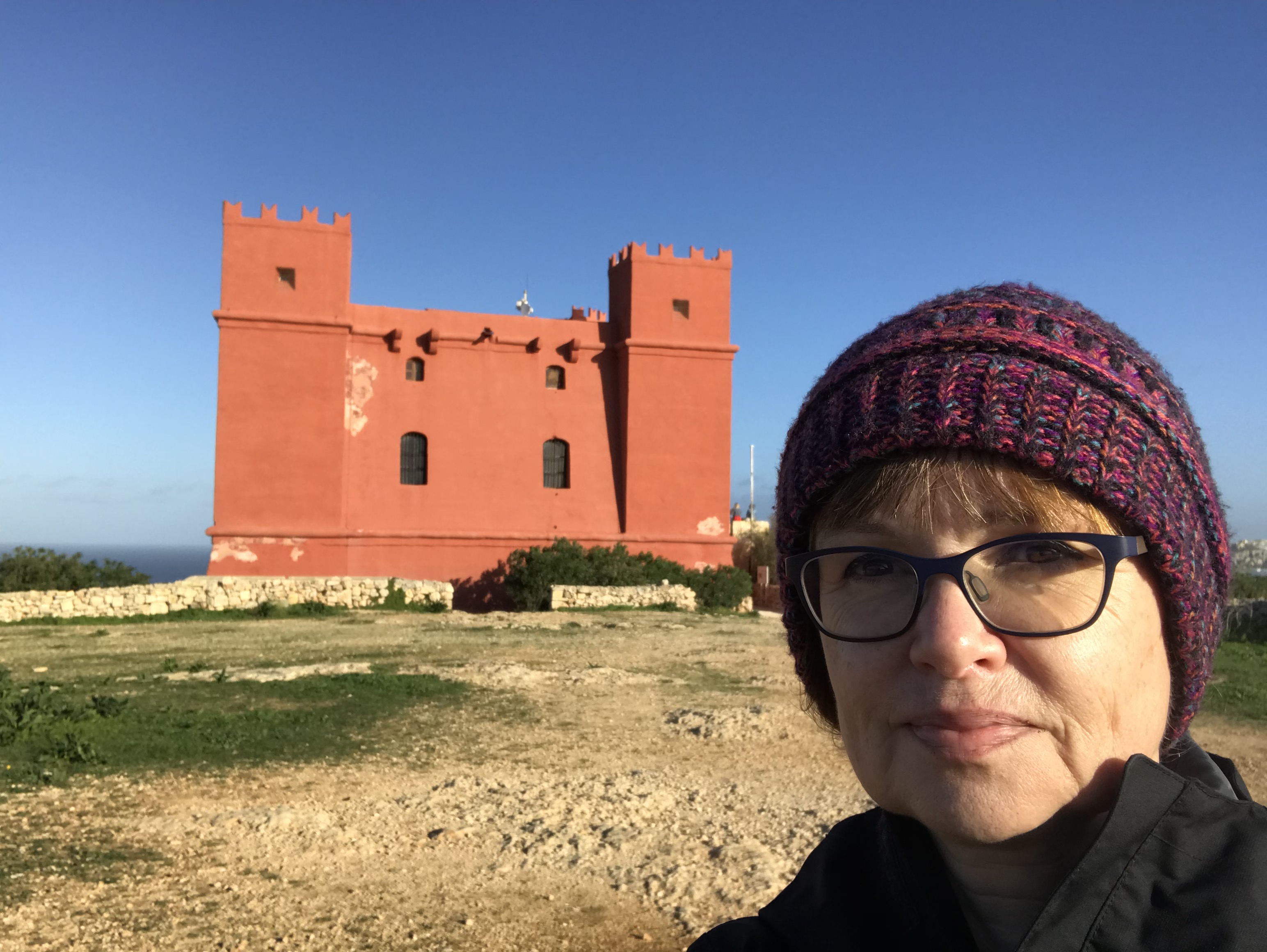
Drove towards a red fort, which looked exciting from a distance but more like a public loo when we arrived. We could also see a pyramid, far away in the distance. We worked out it was on Gozo, but there was NOT a pyramid on Gozo, so we were confused. Husband stopped for a walk (not my choice) and we strolled across scrubby land towards a tower. Malta is full of towers. Some are beautiful, some are imposing, this was neither.
We then followed signs to Popeye Village. This was my choice. We weren’t sure what to expect — possible a hotel complex or water park, maybe just a hamlet with a cute name. It turned out to be a film set, used in the Popeye film. We didn’t pay to go in, as you could see it across the bay. It was rather fun. There was a car park with a restaurant (and toilets) and a surprising number of other people had driven down the narrow lane to see the village.
Dinner in Café Sei as Papannis was closed on Thursdays. We found it by using Trip Advisor, but I’m suspicious the reviews weren’t authentic. It was okay, and our food was pleasant, but it wasn’t worth the reviews it had received.
Popeye Village
Friday 25th November
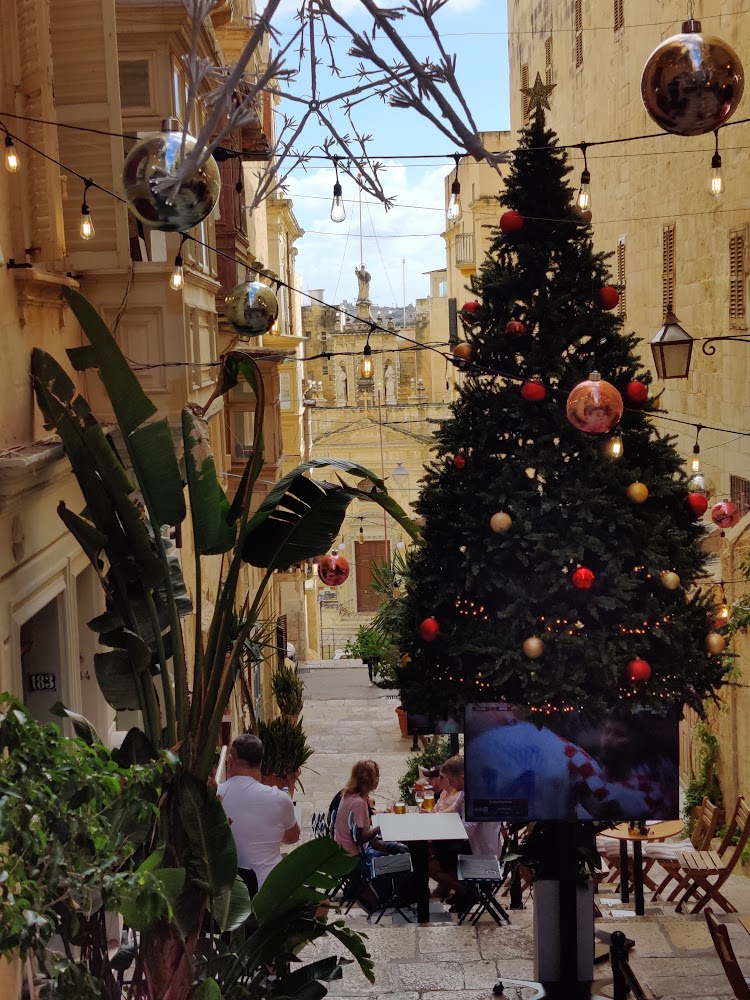
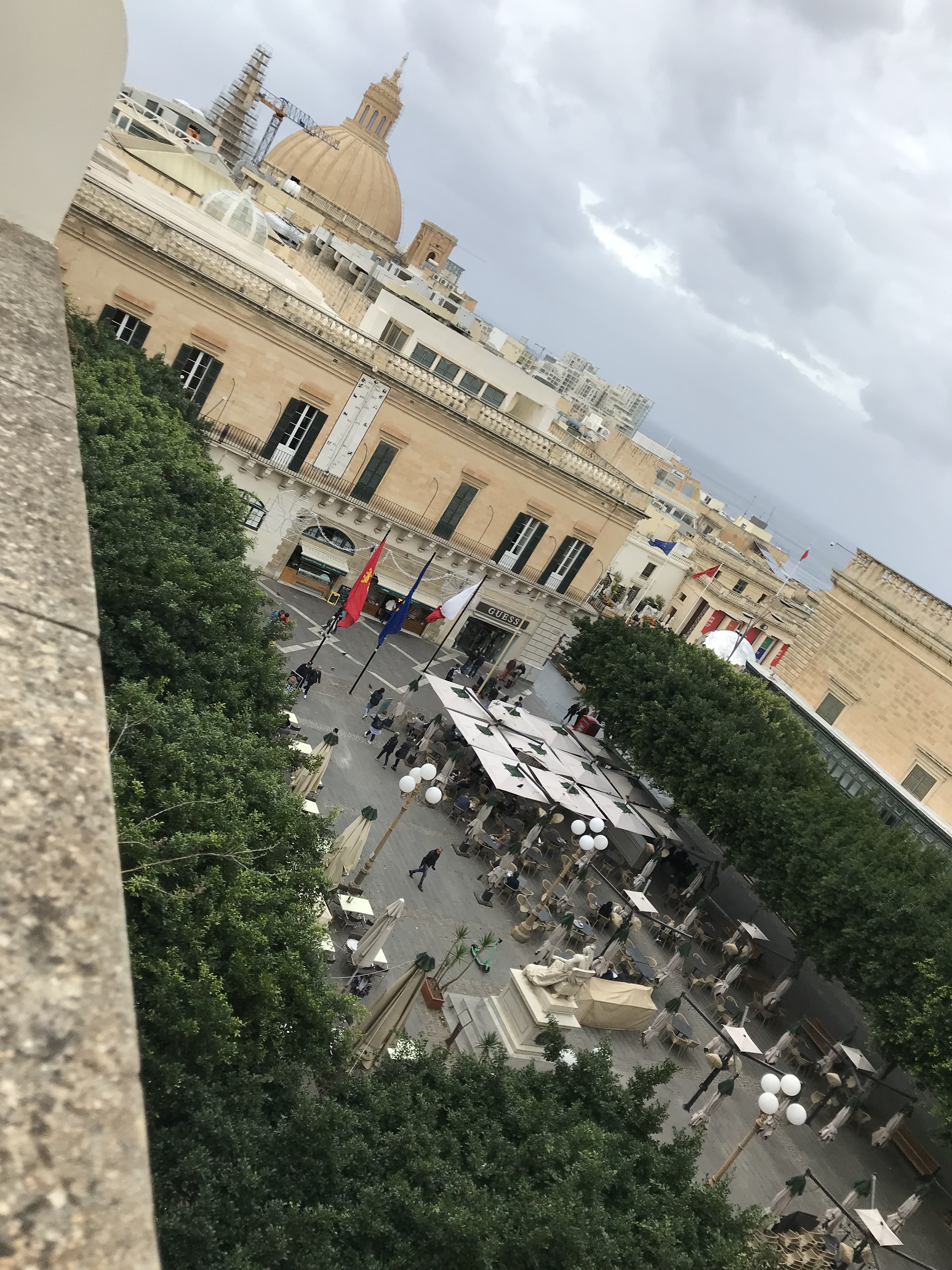
On the 25th November, Christmas arrives in Malta. We woke to sunshine. After our run, we had coffee and croissants on the balcony, looking across Republic Square to the blue sea in the distance. It was nice, though noisy as builders working on the Grand Palace opposite had their radio on full blast. Valletta IS noisy. If you live in a city you probably wouldn’t notice, but it was vastly different to our home in the countryside — not unpleasant, just different.
We drove to St. Paul’s Bay. This is where St.Paul was shipwrecked in Bible times. I assume there were fewer buildings in those days, though the hills would have been the same. We drove round the bay, and looked across the water to St.Paul’s Island (which has a giant statue of St.Paul on it).
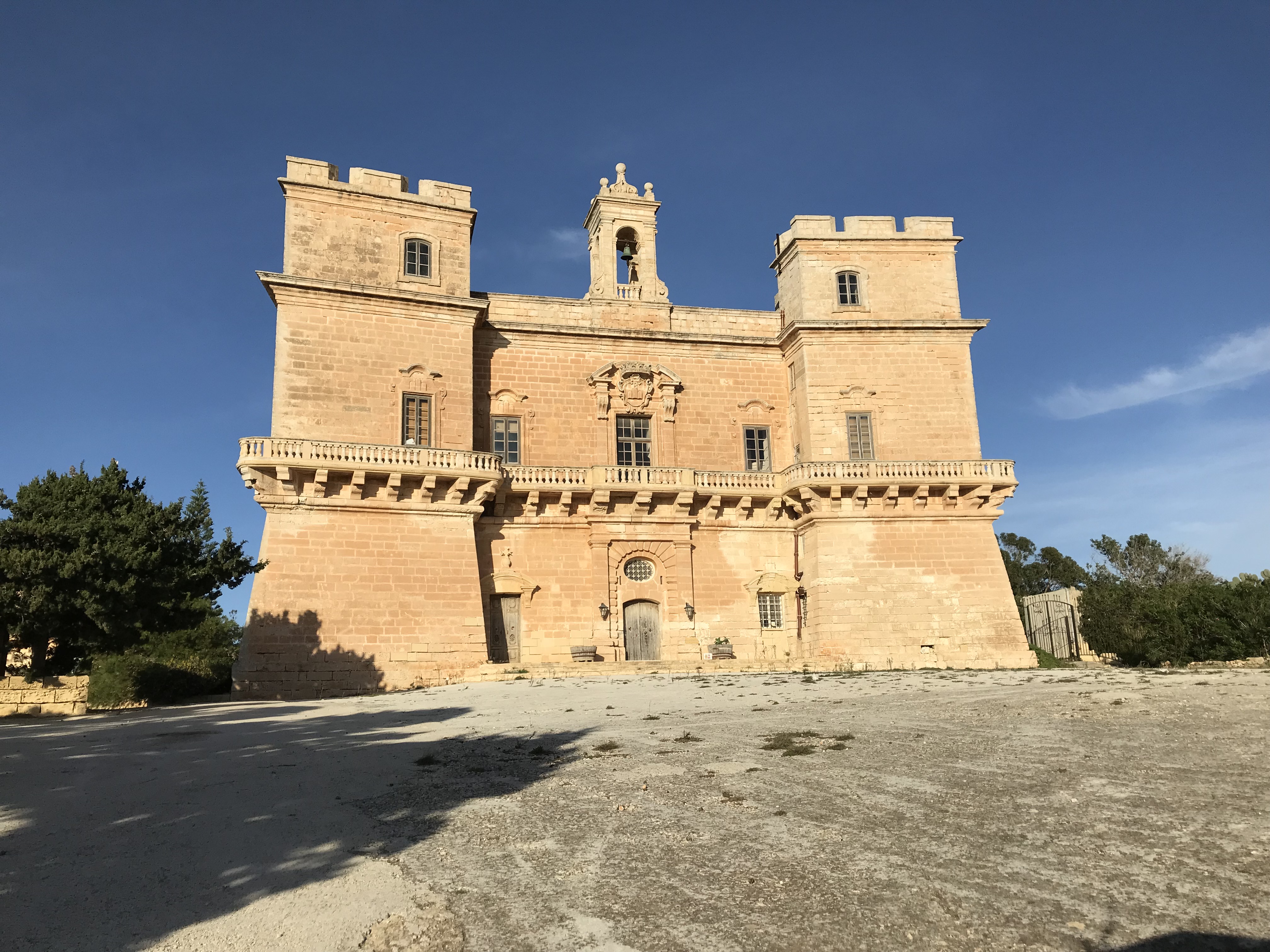
We then drove to Selmun Palace. This was built by a charity who were raising funds to ransom Christians who had been enslaved by the Ottomans. The palace was beautiful, set on a hill top, and very ornate. I’m not sure it was very good use of funds though — I suspect the enslaved Christians would have preferred the money had been used to set them free. Apparently, there were so many people that needed rescuing that the charity had a lottery to decide who would be ransomed. Tough if your name didn’t get picked. The palace was used as a hunting lodge, and knights would stay there and hunt rabbits — the income was used to free more slaves. (Though I am deeply suspicious that the cost of the building was more than any income raised.)
Dinner at Papannis. Lovely. The bar under our apartment had live music tonight, which lasted until very late. Not so lovely.
Saturday 26th November
We woke to the sound of cranes at 6am. Short night. Yesterday, people were talking about heavy rain storms, but it was still dry so we went for a run. We have learnt that in Malta, if it’s going to rain heavily there is very little warning — a few drips and then an instant deluge. We therefore abandoned our normal route along the coast and ran in the streets near the apartment. We saw lots of Christmas lights, and a Nativity scene (as I said yesterday, Christmas arrives on 25th November in Malta). As soon as we felt the first drips of rain, we raced back to the apartment. We got inside just as it started to pour.
There was a big storm. It tripped the fuse so we had no electricity for a while, and the bedroom roof started to leak so I put a saucepan underneath to catch the drips. We ate toast and coffee in the apartment, and I tried (many times) to photograph the forked lightening over the sea, but failed.
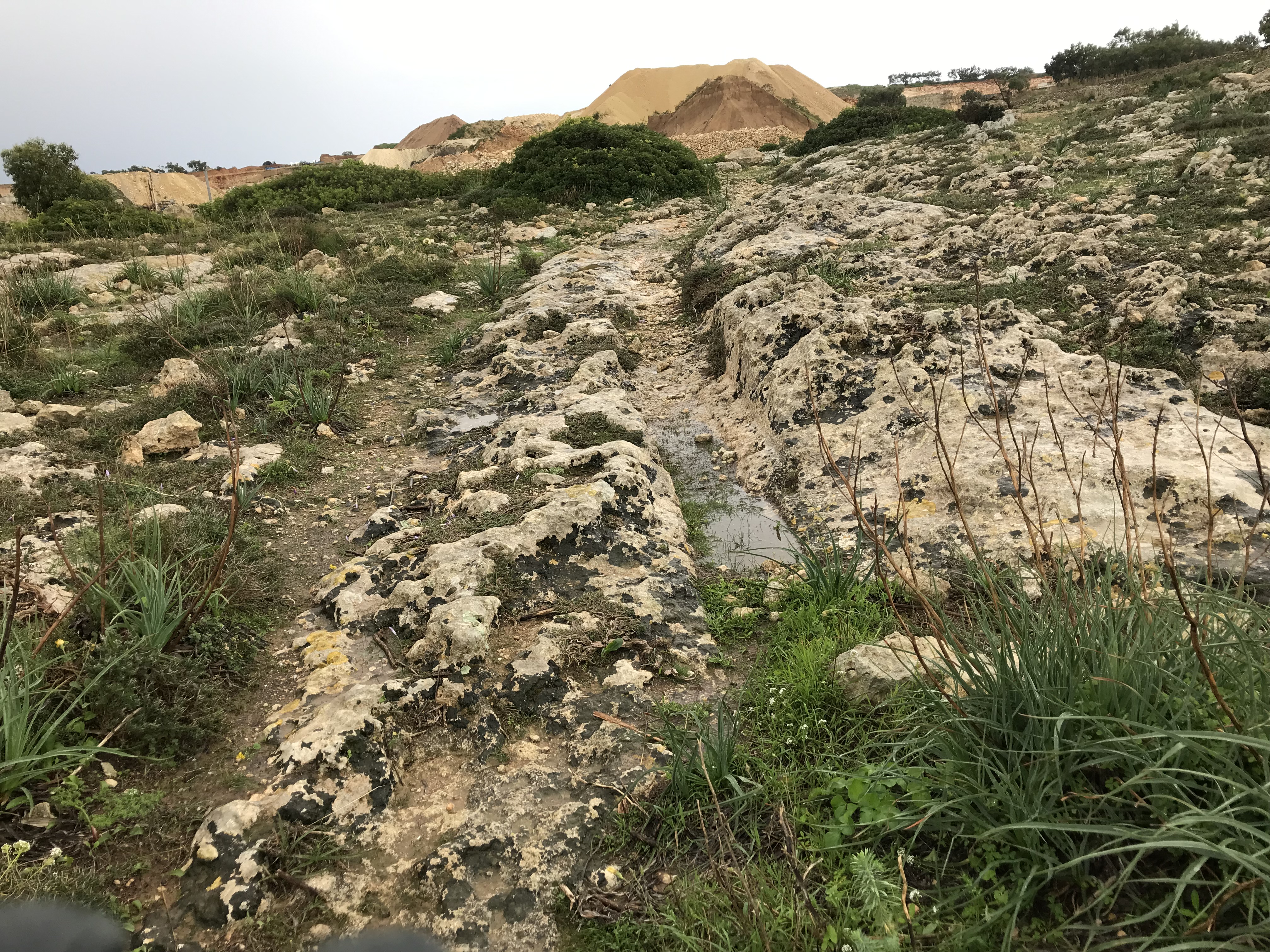
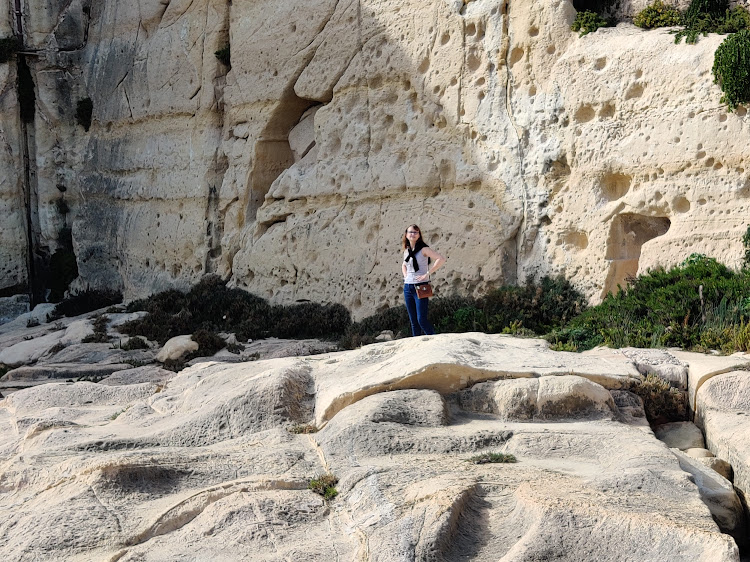
After lunch, we walked quickly to the car park and collected the car. We drove to ‘Clapham Junction’ which is so named because there are lines of cart tracks in the rock. No one knows exactly when the tracks were made — some people date them back as early as the Phoenicians — at least earlier than 700 BC. They are at a prehistoric site near Siġġiewi. We parked (no signs, so needed to follow Google maps) and started to walk towards where we thought they might be. But then it rained, so we hopped back into the car. Drove to a viewpoint on Dingli Cliffs (basically all grey and windy). The rain stopped, so we drove back to look at the tracks. It took us a while to find them, but once we had seen them, and realised what we were looking for, they were easy to see — very deep grooves worn into the limestone. They were much deeper than I was expecting.
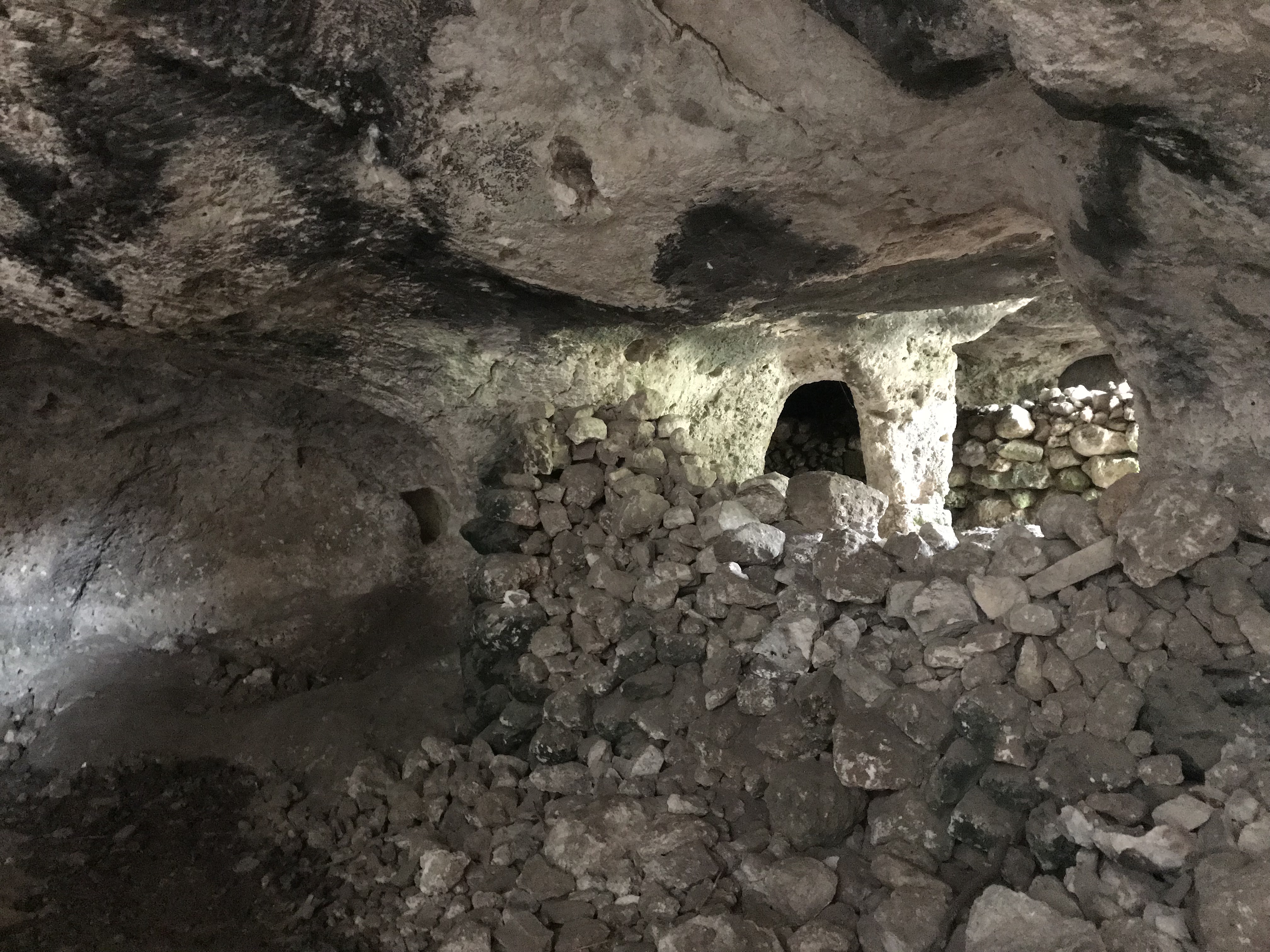
Nearby were some caves, which were part of a Bronze Age settlement.
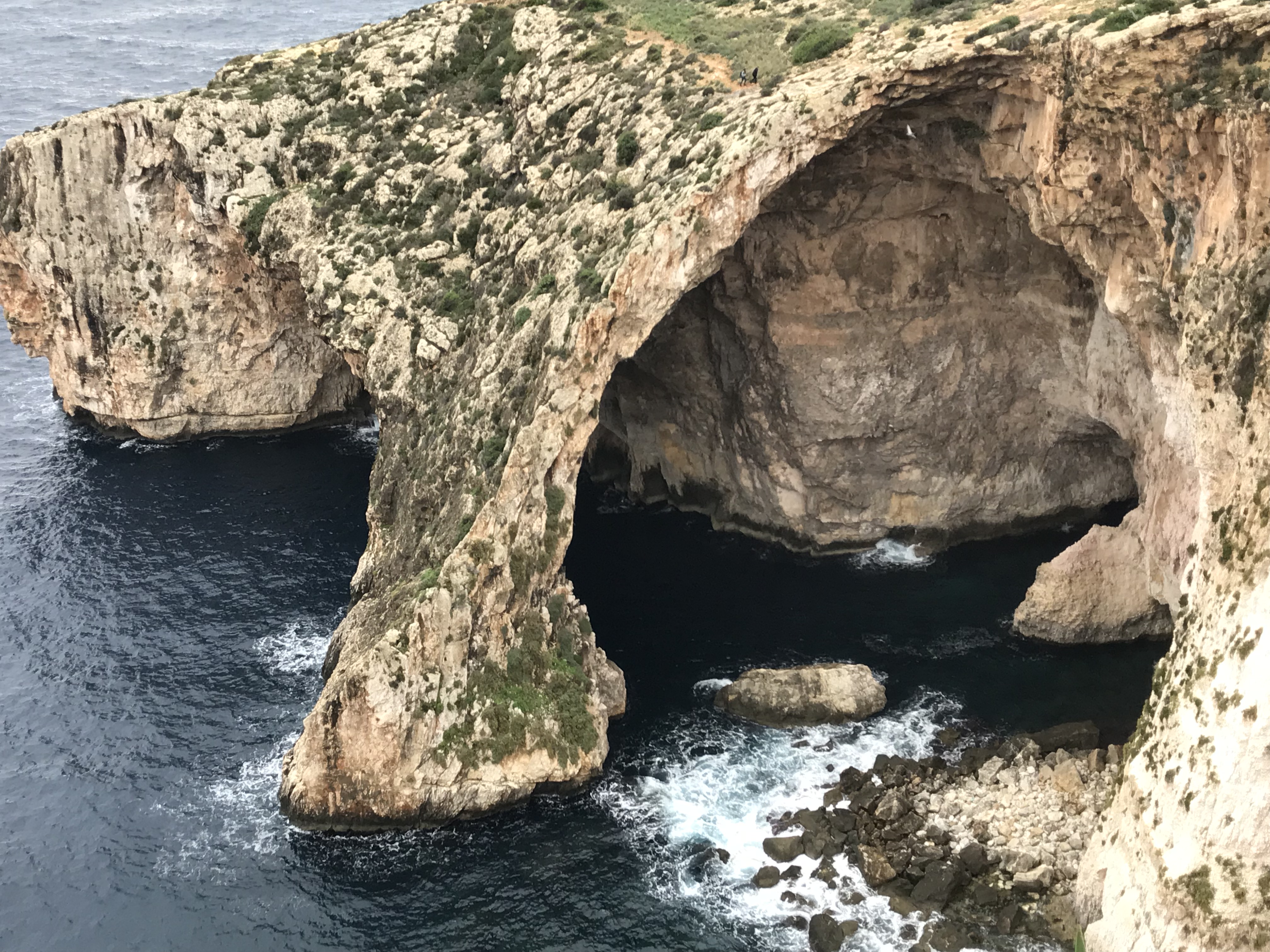
Next, we drove to the Blue Grotto. There was a parking area, and a pathway along the cliff edge to a viewpoint. I spent a long time looking at a pretty cove and taking photographs. Husband then told me this was not the grotto, and directed me round the corner. The grotto was spectacular — much better than the pretty cove!
Tracks worn into the rock.Ancient cavesBlue Grotto
There were also some really interesting plants growing on the cliff. They looked like little trees growing from a plant not dissimilar to an aloe vera. When I got close, I realised that the ‘flowers’ on the ‘trees’ were actually baby versions of the parent plant. I think that the long stalk falls over, and deposits the baby plants at a distance to the parent, where they can then fall off and start to grow. (I spent ages trying to find them on the internet, but I never found them. If you know the name, please let me know.)
If you know the name of this plant, please tell me.
Drove back to Valletta and made it into the apartment before the rain started again. Malta reminds me of Cyprus, but with lots of churches and ancient forts and towers. Even tiny fishing villages have watchman towers, guarding the coastline.
Sunday 27th November
Our last day. We had to leave the apartment by 10am, and our flight was in the evening, so we were homeless for a day. In the sunshine, this would have been a treat. Not so much in the rain. We drove back to see the ancient cart tracks, because we had realised that we never actually found the main set. This time we followed the map, and found them — lines and lines of tracks, running to the edge of a slope. Then it poured with rain, and we were completely soaked running back to the car.
We found a hyper market, and used the facilities, and tried to think of somewhere that would be fun to drive to in the rain. Gave up, and went to the airport. Camped in the corner of a food hall for a few hours (I tried to read more of the stodgy Ethics book that has defeated me all holiday). Eventually it was time to check-in, and leave Malta.
If you fancy visiting Malta in November, it has some lovely scenery. There are fewer people, so parking and visiting attractions is much easier. Valletta is beautiful. If you are lucky with the weather, it will be warm and sunny — but we had lots of rain, and it gets chilly. It’s a fun place to visit, but personally I prefer it in the summer.
By the way, the ‘pyramid’ we saw on Gozo turned out to be the Citadel when seen through binoculars!
Thanks for reading. Have a lovely day, and take care. Love, Anne x
(And if you can name the plant, please tell me!)
If you enjoy my travel blogs, you should read my book: The Sarcastic Mother’s Holiday Diary
Available from Amazon as a kindle book or paperback—it makes a great Christmas gift!
Arrived in Malta. The Airbnb is a 20 minute drive from the airport. Staying in Valletta, which is pedestrianised, so parked in multistorey car park and wheeled our suitcases through the city. Rain was forecast but never appeared, so felt very thankful.
Dumped bags in the apartment and went to McDonald’s. Sometimes, when you’re very tired, you just want something very easy/familiar. It hit the spot. We were the only people, including the staff, who were over twenty!
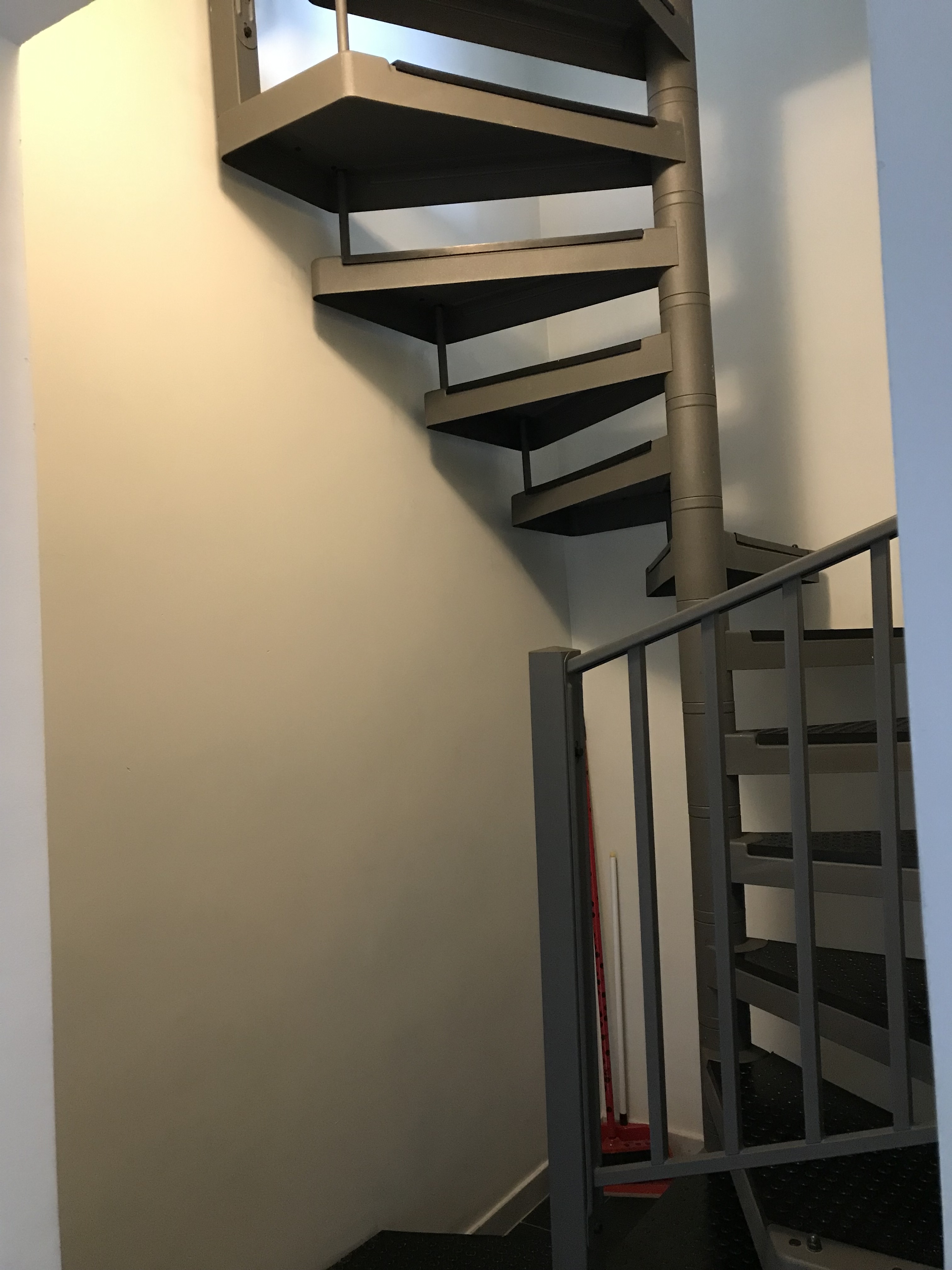
The apartment is weird. It’s all on one level except for the bedroom, which is reached via a steep spiral staircase. The bedroom contains a bed—nothing else. We left our bags in the sitting room, changed in the kitchen. Very odd.
Monday 21st November.
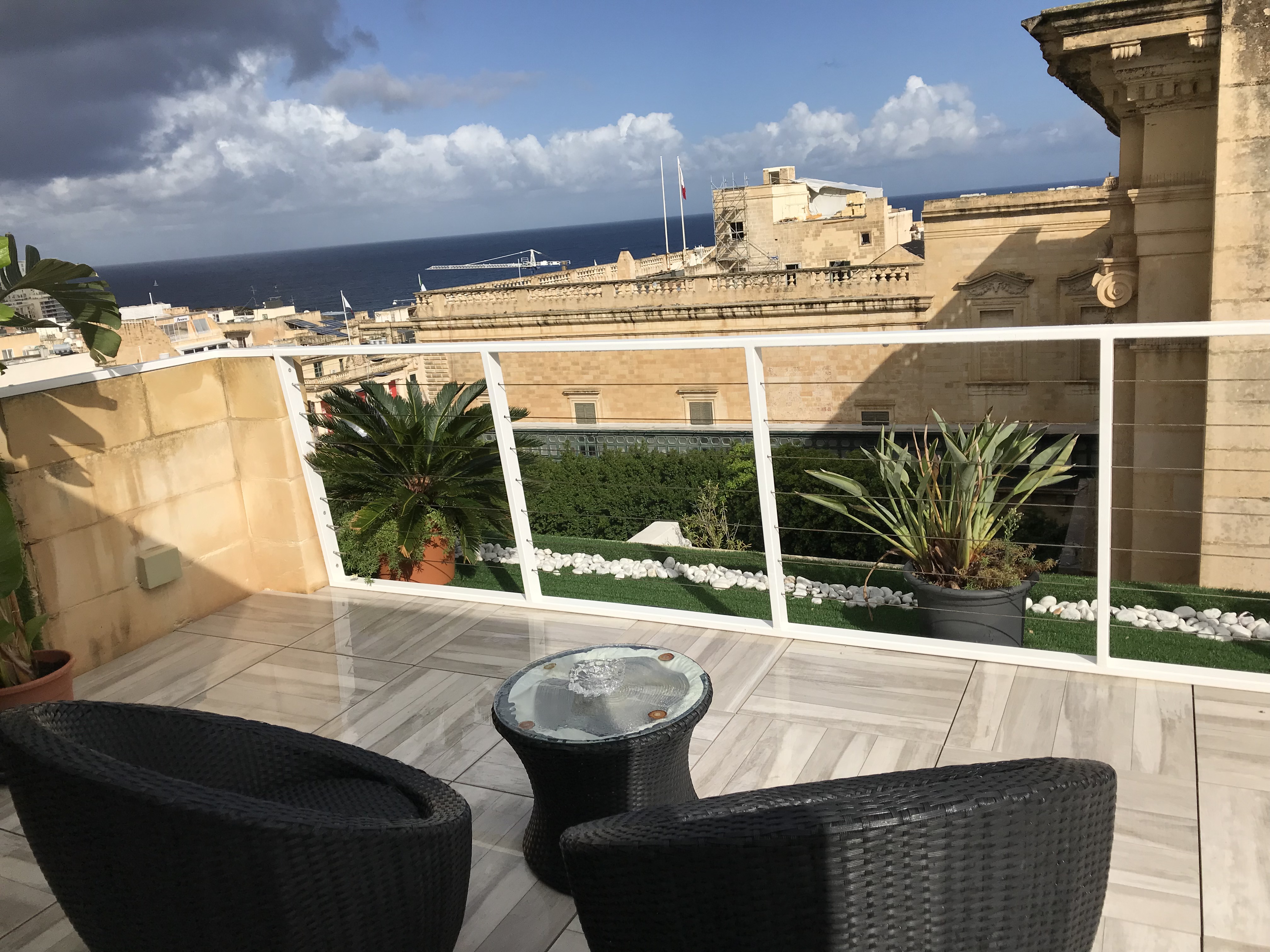
We woke early and went for a run. (Well, ONE of us woke early, and then had a hard job waking the other—but we did both go for a run.) The apartment looks better in daylight. It’s right in the centre of Valletta, and has two balconies that overlook the city. The bedroom, whilst odd, is also wonderfully light and has a view of the sea. Husband carried up a small set of shelves, so I can put a few things up there.
We had breakfast in Eddie’s Café in Republic Square. They didn’t serve croissants, so I tried a Maltese pastry—which was flakey pastry (quite greasy) filled with cheese. I wasn’t a fan. Husband had Eggs Benedict, which was much nicer, so I ate some of that.
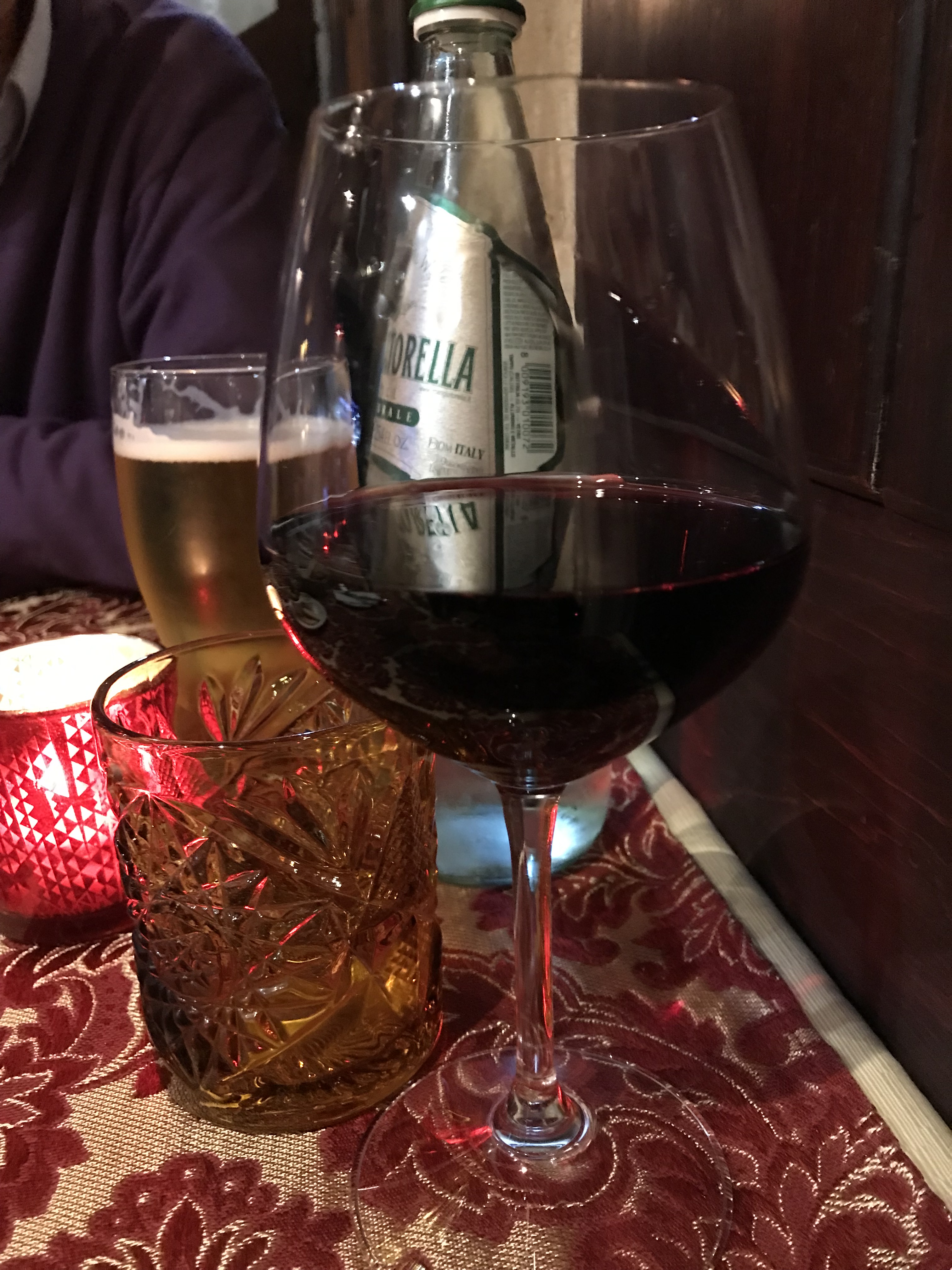
It then basically poured with rain all day. The bedroom has a tin roof, so I read an Ethics book while the rain rattled above me. The sea turned from blue to grey and then disappeared from view. We walked to a little Italian restaurant for dinner: Papannis. Great food and wine, with friendly service. Returned to the apartment feeling happy.
Tuesday 22nd November
Not raining. Brilliant! We ran through the Victoria Arch, along the coast, then up the hill to the apartment (one of us walked up the hill). Showered, then had coffee and croissant at Caffé Cordina in Republic Square. Perfect.
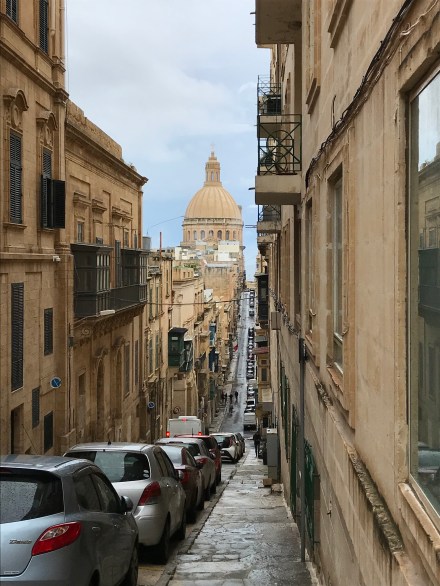
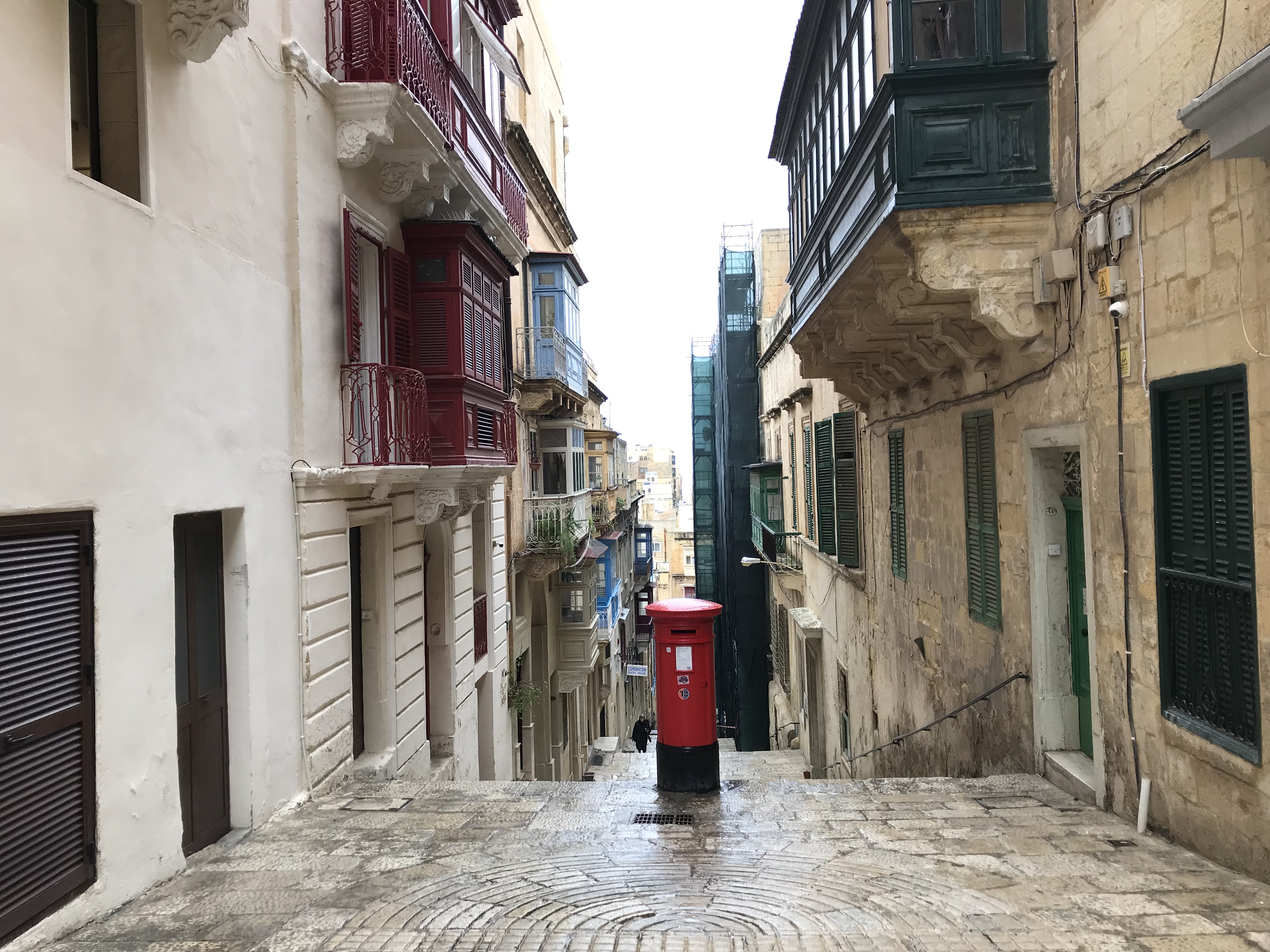
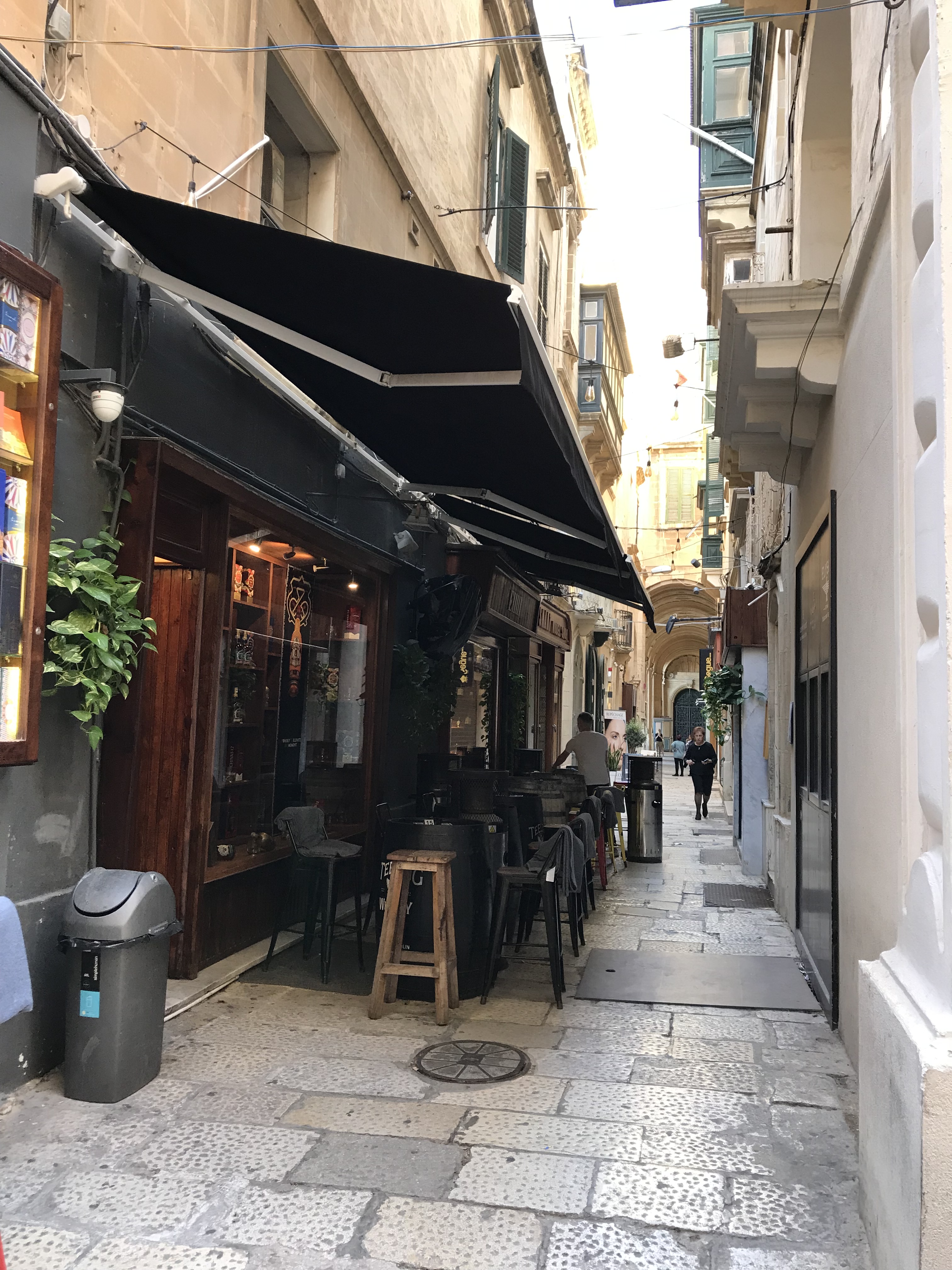
We can see a big dome from the apartment, so we walked there (it’s a big church, rebuilt after the war. A LOT of Malta needed to be rebuilt after the war.) We found our way down to Boat Street, and had a lovely walk next to the coast. As we passed the imposing city wall, we could see where the bricks had been cut from the rock. When the knights arrived in Malta, they must have cut the rocks into bricks (thus lowering the base) and built the wall right there (hence not needing to transport the bricks very far). Clever. The wall is now weathered, but I still wouldn’t fancy having to climb it to attack the fort.
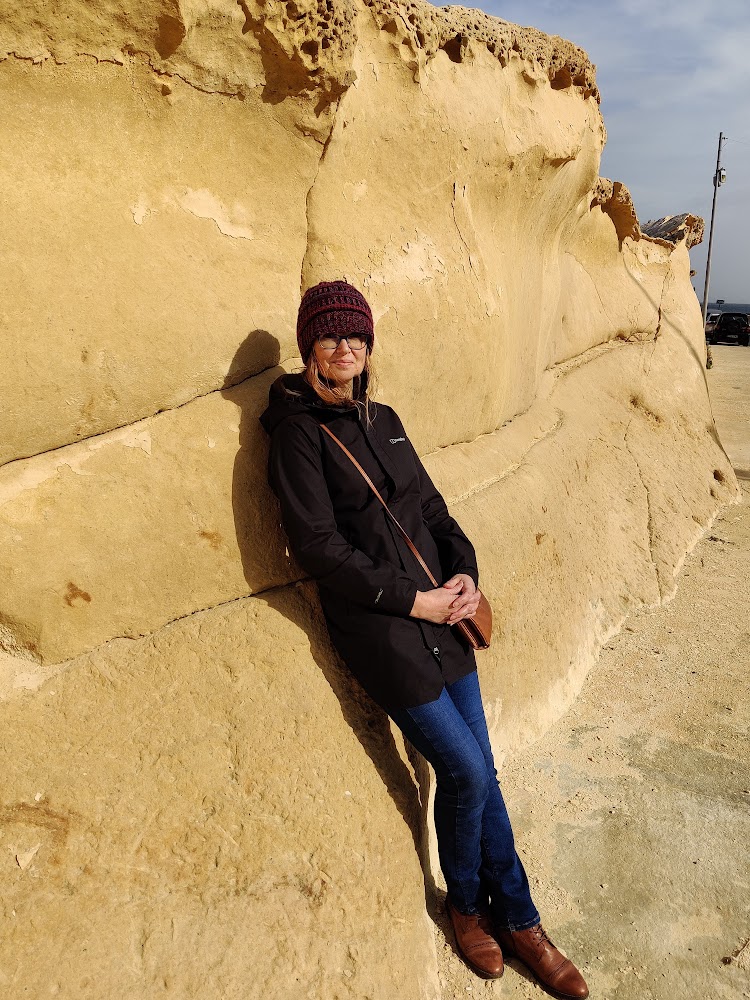
The weather was windy (needed my woolly hat) but sunny. When we sheltered from the wind, it was very warm—tee-shirt weather—but mostly we needed a jumper and coat. This was unexpected, I had assumed Malta would be warmer in November.
Returned to apartment and I read more of my Ethics book (quite heavy-going). Fell asleep while reading, and woke up to feel the bed shaking—thought it was Husband trying to wake me—realised it was an earthquake! It didn’t last very long, but there was quite a lot of movement. I checked Twitter (which is always the fastest way to confirm an earthquake I have learned). The earthquake was measured at 4.4.
Dinner at Papannis again. Lovely.
Wednesday 23rd November
Lots of wind and rain (and church bells) during the night, so woke up tired. It was grey and windy, but not actually raining, so we went for a run. I love running next to the sea, there’s something that makes me feel like a child again.
Breakfast at Caffe Cordina again. Today the pigeons were annoying. They’re very aggressive, and as soon as they see food they try to fly onto the table. If people leave uneaten food when they leave, the table is instantly swarmed with pigeons. Not very hygienic. I don’t like city pigeons much (they’re like rats).
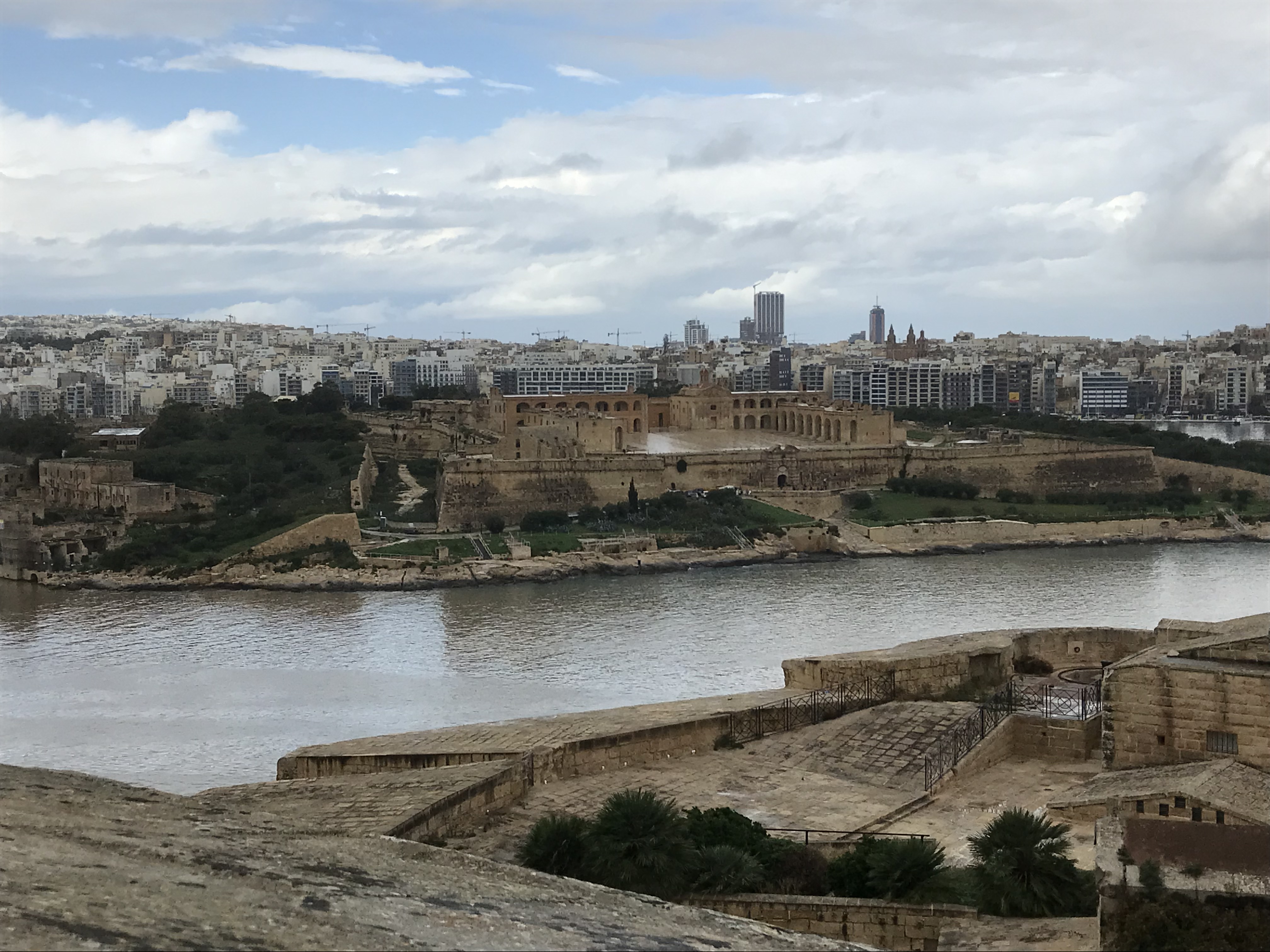
Went back to apartment and I tried to read more of the Ethics book. Managed to not fall asleep. Gave up, and we went for a walk along the south eastern coast. We could see warships and a cruise ship and more of Malta across the inlet. Malta is distinctive, with its cities of golden stone and steep walls rising up from the coast, and so many churches—domes and steeples in every direction. Which means lots of bells. The bells near the apartment were fairly random in when they rang, and some of them rang throughout the night.
Dinner at Papannis again—we will have to eat somewhere else tomorrow as they shut on Thursdays.
I will tell you more about our trip in my next blog. Thanks for reading. Take care. Love, Anne x
If you enjoy my travel blogs, you should read my book: The Sarcastic Mother’s Holiday Diary
Available from Amazon as a kindle book or paperback—it makes a great Christmas gift!
It was our last day in Cairo, and we weren’t sure what to do. Neither of us especially like monuments, and we felt we had seen everything we wanted to. I suggested that we had a short drive, out of the city, to the hills we could see in the distance. There was a church, so we looked on Google maps, found a location that looked interesting, and booked a driver. It turned out to be one of our best excursions.
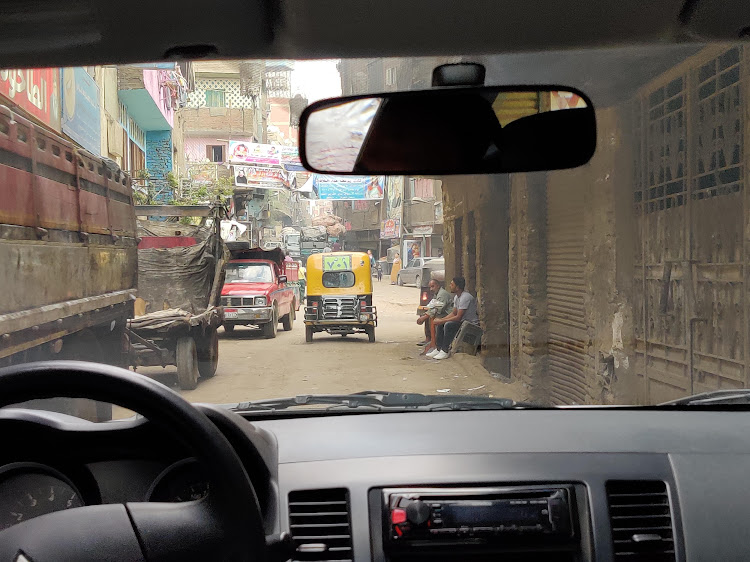
The church we were aiming for was called St. Simon the Tanner (or ‘the cave church’). On the way we drove through the Zabbaleen district, and this was amazing.
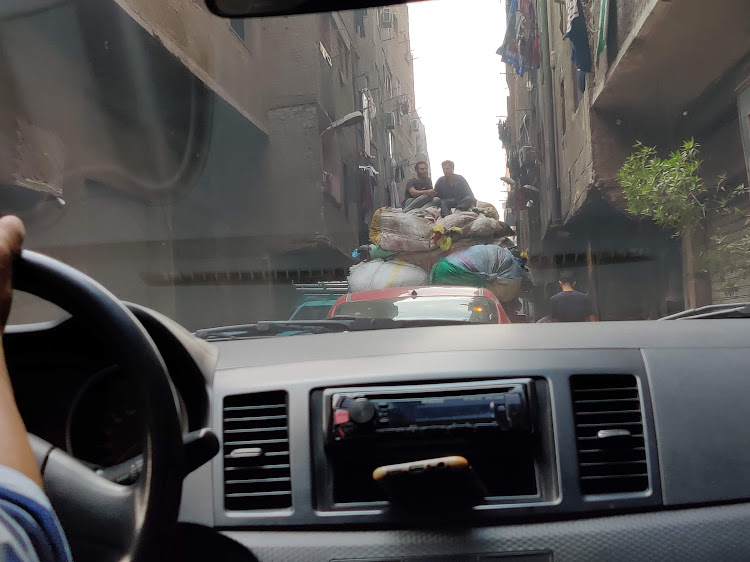
The Zabbaleen are the people who collect and sort out all the rubbish from the city; 80% is recycled. As we drove up the steep narrow street through the Zabbaleen district, we saw the people working. There were lorries and trucks and hand-pulled carts arriving with rubbish loaded high, stacked in huge sacks. The road was slow, often jammed while a lorry unloaded, tuktuks and cars edging round them. The rubbish was everywhere—carried on heads, balanced on vehicles, stacked on the roofs of the houses. Flies and smells are part of life here. The rubbish is then sorted—sacks neatly folded, plastics tied together—everything made tidy ready for sale to the recycling companies.
We passed several small shops and roadside stalls. One woman was selling packets of flatbread, and had a box of fluffy yellow chicks. I guess that chickens eat the food waste too. I have read that the Zabbaleen keep pigs, feed them on the organic waste, and sell the pork to tourist hotels. But we didn’t see any, and I have also read that during the swine flu epidemic—even though there were no cases in Cairo—all the pigs had to be culled. So I don’t know whether they are still there or not. I only saw the chicks, and some cows sleeping in a room under a house. (But I don’t think cows eat anything but vegetables.)
The people looked busy, and whilst they were clearly not rich, neither did they look desperately poor. They were clean, and well-nourished, it wasn’t a sad place, it was just busy. These people provide a vastly important service to the city, and I hope they are valued.
We drove through a barrier, and everything changed. The bustle of the streets became a smooth wide road, and instead of rubbish-laden trucks inching past each other, there were coaches of school children. We had arrived at the church complex.
The church of St. Simon the Tanner is relatively modern, with picnic areas and washrooms and signs. We followed the pathway down, under the wall, to an auditorium built into a huge cave. It was pretty, decorated with carved scenes from Bible stories, and the light limestone gave it all an airy feel. It seats 17,000 people—I expect an outdoor church is rather nice to attend. Unfortunately, alongside the Bible stories are several myths and claimed miracles; religion and superstition seem to have got muddled together.
Pretty place though.
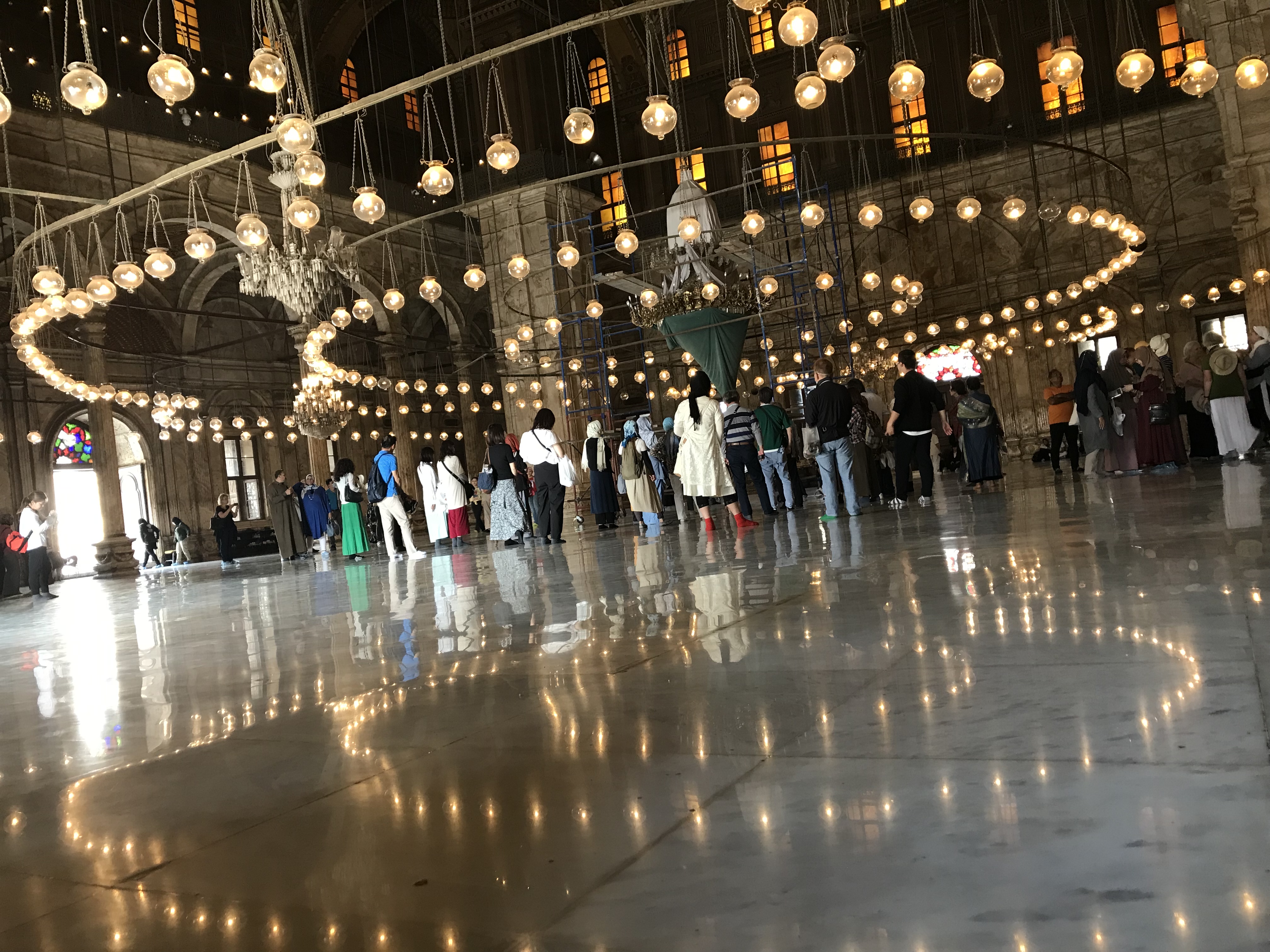
On the way home, we stopped at the Citadel. I’m not too keen on monuments, and I much preferred the real-life-chaos of the Zabbaleen district, though the main mosque was spectacular. (And as I have said before, I think the design of mosques would be more likely to point you towards God and prayer than the highly ornate churches.)
It was a good last day in Cairo, and we returned to our room to pack, then sat on the balcony and watched the mesmerising traffic below. I have loved Egypt. One day, I hope to return. Thanks for sharing my trip.
I hope you have a lovely day. Take care. Love, Anne x
Thanks for reading. anneethompson.com Why not sign up to follow my blog?