What is Scripture?
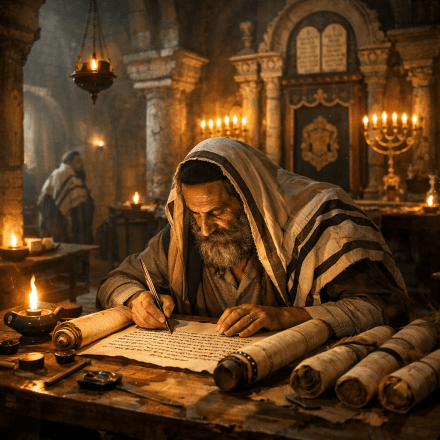
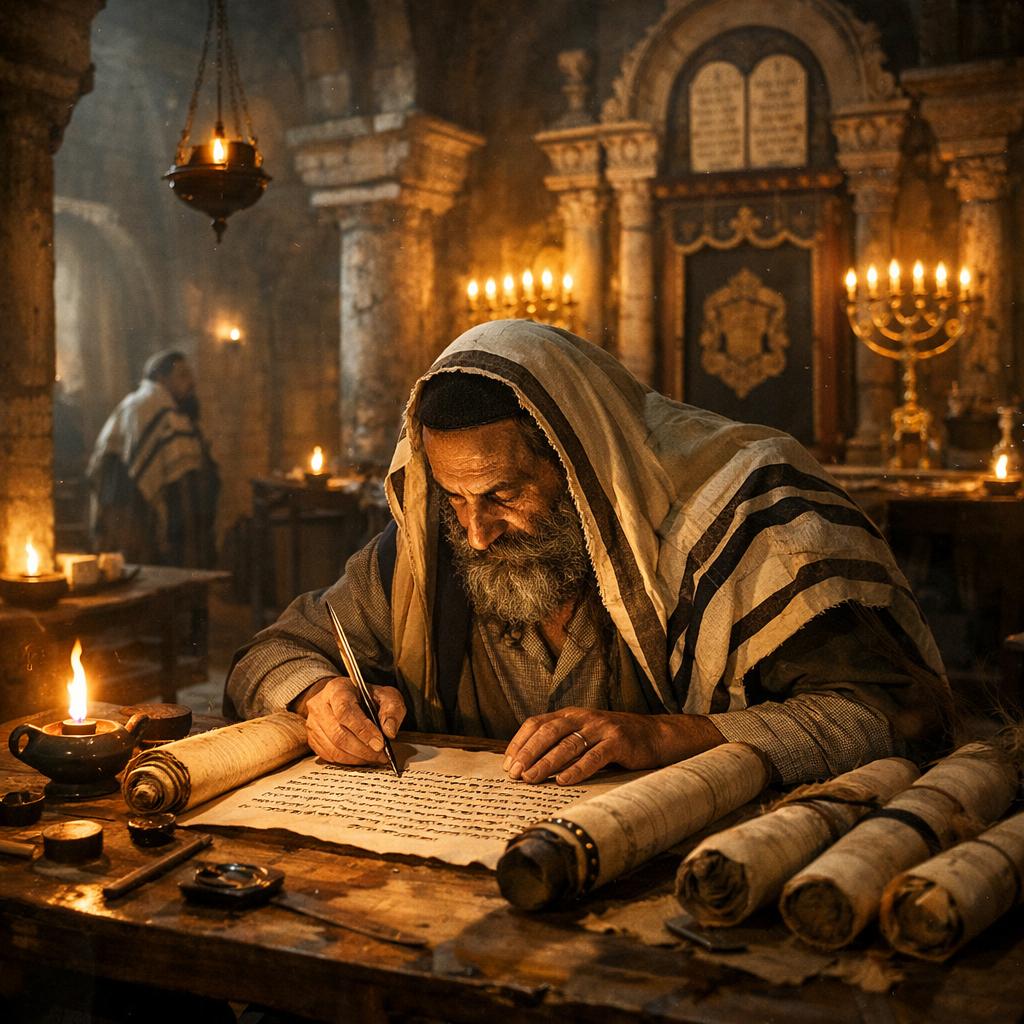
I have read two books recently which challenge my view about Scripture. Both are readable, and not full of academic vocabulary, so I recommend them. The first is by James Barr, Holy Scripture: Canon, Authority, Criticism. He writes a few things that challenge me. One observation he makes, which is very obvious when you think about it, is that the biblical characters had no ‘Bible.’ At least, not in the way that we think about it. For characters like Abraham, he had his relationship with his God, and there were certain traditions he would have inherited from the surrounding cultures (like sacrifice) but he had no written holy texts, no Scripture. Later characters, like the disciples of Jesus, or Paul—the people who wrote much of my Bible, had nothing similar themselves. They did have sacred texts, but these would be scrolls, kept in synagogues, and not every synagogue would have every text. Therefore, although I glibly assumed they had ‘the Old Testament’ they would have had some of ‘my’ Old Testament, and some texts which have since been lost. It was pretty inconsistent.
The thing the more recent ancient people had was the Torah—the 5 texts (the Pentateuch) which is ascribed to Moses. This was the Law, the ‘Word of God,’ the rules they were to follow, the texts which affected how they lived. They also had the texts of various prophets, and the Psalms—but these were probably not seen as being as important as the Torah. The other texts were ‘Scripture’ because they were viewed as sacred texts, but they were not ‘Canon’ as in ‘these texts are from God, and no others.’ The Canon (an exclusive set of texts which were considered ‘from God’ which should not be added to) came much later.
The ’Canon’ is something my next book discusses. John Barton, A History of the Bible, explains how the sacred texts were put together, and how they were treated. The thing I found extremely challenging is this: The writers of the New Testament were not trying to add to Scripture. They already had the Torah and other (various) texts which they held as sacred—they did not need more sacred texts. What they had, which differed from the Jews, was the new understanding that Jesus gave. Jesus explained the Law in a new way, he explained that concentrating on the ‘letter of the Law,’ like the correct way to wash your hands, was missing the point. The Law was about being right before God, about right actions following from right intentions. They still had the Law, but they understood it in a new way. The very last thing they intended to do was write a new Law, a new Scripture. The teaching of Jesus was what made them enthusiastic, and they spoke about it, and lived it, and wrote about it—but there was no hint that this new writing would become like the Law. They were moving away from rigid adherence to a written text, towards a new living based on the intention behind the text.
This is what I find challenging. I grew up in an evangelical church that taught me that everything should be based on biblical texts. By this, I mean ‘my Bible text.’ The Bible text which included other books (the books accepted as Scripture by other Christians) was ‘wrong.’ And everything in ‘my’ Bible text should be followed closely. Like the Jews with their Torah. But was this missing the point of Jesus? Was this making ‘My Bible’ equal to God? It was certainly using the text in a way far removed from how the writers of the text used it—they didn’t strive to find the infallible text to replace the Torah. They did not refer to their own writing as ‘The Word of God.’ They held the text very lightly—it was Jesus that excited them, not what was written on scrolls or in letters. When they discussed ‘Scripture’ they meant the Torah, some texts by prophets, the Psalms—not an ‘infallible closed canon’ and certainly not one that included any of the post-Jesus texts. (That’s not to say they didn’t give authority to the letters of Paul, for example, but they did not view them as equal to the Torah, and nothing was as important as the teaching of Jesus. Not the ‘exact words of Jesus’ because they remembered different things, but the essence of what Jesus showed them.)
Now, I have always considered that my ‘religion,’ my doctrine, was Bible-based. By this I mean based on ‘my’ Protestant Bible. However, James Barr’s book queries this. He notes that doctrine does not really follow the biblical texts, but rather we translate the biblical texts according to our doctrine. For example, I as a good Protestant do not believe we should pray for the dead. Therefore, I interpret texts like 1 Corinthians 15:29 (about being baptised for the dead) to mean something different. I also don’t believe in reincarnation, therefore I translate Matthew 17:12-13 (about John being Elijah) accordingly. There are several examples like this—where I use my understanding of God, and what I believe, to interpret texts accordingly, even though at face value they appear to say the opposite.
So what do we do with this new way of looking at things? To be honest, I’m not sure, but I find it strangely liberating. When I read the New Testament texts as written by people who were excited to share their understanding of what Jesus taught, not as a new Law to be followed, I catch the excitement. I want to think about what the meaning of the narrative is about, not concentrate on every (translated) word, the nuance of every sentence. It doesn’t mean God doesn’t speak through the text, it means it was not meant to be Law. That deserves some thought.
Thanks for reading.~Take care.
Love, Anne x
PS. As every with academic blogs, I want to add the observation that I don’t feel any of this study changes my understanding of God. I know who I believe in. I’m just exploring the best way to decide on my religion. I don’t think any of this makes me a better person—that happens by following God. It’s just very interesting!


