I had cycled down to visit my mother. We sat on her sofa, slurping tea, when Mum said she could not see any of my photographs on facebook. We spent some time looking at her computer (which is actually an ipad my brother lent her) but neither of us could work out what the problem was. Then she asked me why I never send her messages on facebook. I explained that I would much rather use email, because I don’t really know what I’m doing and I might send them to the wrong place.
“Oh!” she said, “It’s easy, I’ll show you. Look, Ruth has posted a picture of chocolate, I’ll just send her the message ‘Ha,Ha,Ha’!” She did.
Then she realised that actually, she had not sent the message to Ruth. She had sent the message to somebody’s prayer request on one of her religious sites! All the other posts were things like, “I feel for you,” or, “God bless you in this time of need,” – then there was “Mary Thompson: “Ha,Ha,Ha.” We could not stop laughing! It was so funny and of course, neither of us had the first idea if it was possible to ‘unsend’ a message once it was sent! We laughed for ages, but it did rather illustrate my point…..!
This is simply an honest account of the things I wish I had known when I had a brain tumour. It is necessarily subjective and you will disagree with some of it but I hope that some of it is useful. I have added to these notes, edited them, and produced a little book that’s now available on Amazon. (You can read it for free if you have a kindle.) I hope these thoughts are helpful.
Finding Out
You will probably have either a CT scan or an MRI. A CT scan is much quicker but uses lots of radiation – about 13 times the amount of a normal X-ray. An MRI is scary before you have had one but is nothing more than lying on a hard bed. The amount of time it takes seems to depend on the age of the machine. I dislike confined spaces so always keep my eyes shut.
The main thing to know is that it is noisy. At my first MRI I was offered a choice of music to listen to whilst in the machine. However, when it began the machine was so loud I could not hear anything. It made me laugh and I still have no idea why they offer it. The machine sounds like someone is digging up the road right next to your head. Sometimes the machine also vibrates. I am always sure that there has been a nuclear explosion and I am the only person left alive, but when I emerge everyone is completely fine.
Sometimes they inject you with a dye because some tumours enhance with contrast. If they are planning to do this, you may have a blood test a few days before so they can check your kidney function is good enough to flush out the dye afterwards. The rules on this seem to change quite often. They inject the dye into your arm. I told my mother that they put it in one ear and I had to lie on my side while it dripped through my brain (it made me laugh…) My cyst did not enhance and I did not much like being injected with dye unnecessarily, so I asked for them to not do it after the first couple of MRIs. Remember, it is your body and if you would prefer for something to not happen, it is okay to ask if it is necessary. Sometimes we just accept everything that happens and feel it would be rude to ask questions. It is not.
When you first discover you have a brain tumour, whatever the type, it is shocking. I put it in the same category as cancer – it was something completely horrible and soon I would be dead. However, a little research shows that there are many different types of brain tumour (as there are cancers) and some are more sinister than others. That said, I personally think they are all nasty. So, what to do?
I suggest that you try to find out some facts. This is not always easy. I was diagnosed incidentally after a CT scan due to a bumped head. The hospital told me nothing and sent me to my general practitioner. He told me nothing and sent me to a neurologist. He told me very little (he told me he had read about them) and sent me to a neurosurgeon.
All this took time. Meanwhile I had looked on the internet. This has mixed results. I did not understand much of what I read and a lot was very scary. “Sudden instant death” seemed to be a feature of my particular tumour (a colloid cyst), which was not terrifically reassuring. If I could go back in time, I would tell my newly diagnosed self that things move very slowly in the medical world, so learn patience (unless they think something is life-threatening, then they move quickly. So, if the medics are being slow, probably you will not die today.)
However, you can be proactive. You can ask your GP for the number of the person they are referring you to and you can then phone their secretary and make an appointment. You do not have to wait for your GP to write, then for the next person to receive the letter and write back with an appointment. It does not speed things up much but it helps you to feel that something is happening.
Decide how much you want other people to know. I decided that my children (then all teenagers) would realise that something was wrong and actually not knowing is more worrying than knowing. I wanted them to trust in the future that I wasn’t holding back information, so I was open with them from the start. Obviously that depends on the age and personality of your children. However, you will need some support, so I strongly recommend you tell some close friends or relatives. Choose who you tell carefully. Some will immediately plan your funeral, others will offer practical help, others will just tell as many other people as they can and invent any details they are unsure of.
Sort out what you believe. Brains are in a compact space with not much room for anything else. Many people live for decades with benign brain tumours and never even know that they have one. However, mostly they cause trouble. I think it is sensible to be realistic about this and it is a good time to sort out exactly what you believe in terms of religion. Most of us tend to follow our parent’s faith (or lack of) and it’s easy to never actually make clear decisions for ourselves. Now is an excellent time to change that. Personally, I have been a christian my whole life, but this made me really think about what I actually believed as opposed to ritualistically ‘followed due to habit’. None of us know when we will die, but being faced with a possibly terminal illness is definitely not the time to delay making a few grown up life decisions. Our society dislikes talking about death. I am not sure that this is always very helpful. Modern medicine is amazing, but no one lives for ever, so decide what you think will happen next. It also helps to take away some of the fear. If the worst that can happen is death and you have sorted out your beliefs on that, then some of the fear will go too.
Find some people who are in a similar position. I did not know anyone who had ever had a brain tumour or brain surgery. However, I soon found a chatroom called “Braintalk Communities” and found a wealth of helpful information and could read about people who felt the same as me. I later joined a group on Facebook, which was very similar. Obviously you need to use some common sense, some people will be depressed or lonely or have other issues that make them write things that may not be especially balanced. However, mostly I found it a huge support and a wealth of information. If you cannot find a group that relates to your tumour, I would recommend starting one.
Finding a Surgeon
At some point, hopefully fairly quickly, you will meet a brain surgeon. I don’t know how the system works in other countries, so this advice is based on the UK.
Decide what you want to ask. You may want all the details about your tumour, you might just want to know what s/he plans to do. However, it is worth being clear with your questions and I would recommend writing a list beforehand.
Take someone with you. It is amazingly easy to not hear correctly when you are stressed. If you have someone with you, they can often explain things you didn’t understand and repeat information that you misheard or forgot. However, agree beforehand whether you want them to speak during the consultation or just listen.
Decide what you want from your surgeon. If they intend to just observe the tumour, you might want the surgeon to be someone very approachable who you can discuss things with. If S/he plans to remove it, you probably don’t really care what their conversation is like, you just want a good surgeon. In the UK you have a choice. I did not find my first neurosurgeon very easy to talk to, he tended to try and convince me of a course of action rather than answer my questions. (When I asked “How big is the tumour?” I did not want to be convinced it was too small to undergo a dangerous operation, I just wanted to be told the size.) I knew, from various chatrooms, that it was possible to change surgeons and this is normal and not a massive insult to the one who you change from. I read on the chatroom about a surgeon at NHNN in Queens Square who sounded good and I asked my doctor if I could switch. She wrote a letter, and it was as easy as that. I am so very glad that I did. It is of utmost importance that you trust your surgeon. It removes a lot of anxiety, so decide what you need, ask different people for recommendations and find one.
It is also worth learning a few phrases that surgeons use. I do not mean especially technical terms, but sometimes what we hear is not what they mean to say. For example, I was repeatedly told my tumour was “asymptomatic” when clearly it was causing headaches. I felt as if they thought I was lying about the pain. However, what they meant was that they could not find a proven physiological reason that showed on scans for the tumour to be causing pain. I think the hydrocephalus was very intermittent, and because they could not see it, they did not acknowledge it. Once we cleared up the terminology problem, we could discuss the pain and I was referred to a neurologist for pain relief medicines.
Living with the Stress
Okay, so whether they operate or not, you will probably be rather stressed. There are a few ways that I found it helpful to deal with this.
Occupy your mind. I found that I could not stop thinking about the fact that I had a brain tumour and was in danger of it defining who I was. It is impossible to ‘not think’ about something, so I think filling your mind with something else is a huge help. I started to learn Mandarin at the same time as my diagnosis and this was wonderful. I am not a linguist, cannot speak any other language at all and gave my language teachers at school nervous breakdowns. However, Mandarin was fabulous. It is fairly difficult, so I concentrated with my whole mind during lessons and there was no time to worry about anything else. When the pain was horrible and I could do nothing all day, I could at least listen to a DVD in Mandarin, and I felt more positive about myself. Learning words was a great distraction in all those boring hospital waiting rooms. Obviously a language might not be your ‘thing’, but I really would suggest that you find some hobby to occupy your mind and give it a break from worrying. Whether it is chess, knitting or kick-boxing, find something that is quite difficult, fits into your schedule and that you enjoy.
Secondly, do some exercise. Whether they operate or not, you want a healthy body. Cycling as fast as you can or swimming a few laps, is another good way to burn off some stress and give yourself a break. Even if you are too weak for anything else, go for a walk. I had lots of pretty bad headaches but I found that cycling did not make them any worse and I felt better in myself after I had exercised. You should check with your doctor that you are safe to exercise, but if there is no reason not to, I would say force yourself to.
Thirdly, be nice to yourself. If it was a close friend suffering, you would give them treats, encourage them to do things they enjoy, etc. Do the same for yourself. You are special, going through a tough time, allow yourself some treats.
Try not to face things you do not need to. Sometimes our thoughts run away with us and we imagine being handicapped, mute, dependent and so on, when actually these things are unlikely to happen today. Try to live in the present, each day face what has to be faced that day. Don’t worry about the future until you have to. (You could still get run over by a bus, then all that worry will have been for nothing.)
Pray. If you have sorted out what you believe, now is the time to put it to the test. It’s not worth having faith in something that cannot help you right now. Praying is not a ‘genie in a lamp’, it changes us over time but I do believe that it helps hugely. If you decide that you do not believe in any God at all, then I don’t know what to suggest (maybe re-think?)
If You Are Having Brain Surgery
Depending on the type of tumour, surgery might happen very quickly or not at all. I was told that my tumour was unlikely to ever change and they would simply monitor it. After five years, it did change and within a week it was removed. Many people have their tumour removed as an emergency procedure and have no real choice. However, if things move a bit slower, what do you need to know?
Firstly, is the surgeon you have been seeing one that you trust to operate? There is a lot on the internet about surgery going wrong, people being left mute or unable to move and so on. Do not bother to read that. All that really matters is, has your surgeon operated on this type of tumour a few times before? If he has, how many of his patients were left with serious complications? Then you can make your decision. If you do not trust him, find a new surgeon. This is not something you want to mess about with and it is important to really trust the person who’s going to be fiddling inside your head.
Secondly, decide what you want to know. I am a coward. When my consultant started to explain what he planned to do, I stopped him and said that I planned to be asleep during the operation and did not need to know anything. This was a slight mistake. True, I did not need to know about the actual operation (though some people would want to know) but I was completely unprepared for what would happen before the operation.
For example, soon after arriving at hospital the day before surgery, a very nice young doctor came to attach stickers to my head. They were about 2cm diameter and were put in several places around my head. Each one needed hair shaved off first and then she drew around them with a marker pen. For some reason, this was very perturbing. I had of course known that some hair would be shaved but I had assumed I would be asleep. I also found being drawn on weirdly dehumanising. It was silly and the stickers were necessary (they did an MRI which showed the stickers and then used this as a map during surgery) and actually I found the reason very interesting but I was unprepared and so it knocked my confidence. I then had to walk down to the MRI room covered in pieces of chopped off hair. Again, had I known, I could have brought in an old shirt and used it as a ‘hairdresser’s gown’ to keep the hair off my clothes.
I also did not know what I needed to take to the hospital. This was in part the fault of the hospital, who should have sent me a list however, brain surgery is often done quickly and things get forgotten. I should have phoned the ward and asked what I needed to bring in the way of towels, clothes and food.
Do take a mobile phone and recharger. I found that friends and family sent texts and emails and this was a huge support and made the whole experience strangely special. I was never alone. However, take some care with what you send after surgery. I sent a ‘selfie’ to show my mother how I looked to help prepare her. I have no idea why I also sent it to people who I hardly know, my child’s school, the postman, etc. My daughter checked my phone after my surgery and had to send some explanatory texts to a few people. Brain surgery does somewhat muddle us.
I also should have asked what I should expect after the operation. It can help to prepare visiting relatives if they have some idea of how many machines you will be attached to, if you will be able to speak, will you be in pain and so on. One of my children arrived at hospital expecting me to be sitting up in bed chatting. He told me that seeing me look like I was dead was very traumatic and he would never visit me in hospital again unless I was dying. This could be a problem if I break a leg and he arrives – it will be like a visit from the Grim Reaper. However, joking aside, it is good to prepare both ourselves and our visitors.
I read that my surgery often results in memory loss. If that is also the case for you, it is worth writing down PIN numbers, passwords and important numbers and making sure that someone else knows where they are.
If the surgery affects the left side of your brain, it may affect your language. This is not just your ability to speak but also to form words in your head. This will probably improve over time but it is worth letting people know beforehand—you cannot speak, them giving you something to write with will probably not help much.
After surgery I mostly slept. I was nauseous but the nurses gave me anti sickness pills. They also gave me injections to prevent blood clots (in the stomach – most unpleasant.) I was on a drip. I had a drainage tube in my head and before I came home this was removed and the hole was stitched. The stitches hurt – listen to something distracting or recite poetry or something.
I went home five days after surgery. My face swelled up, starting at the top, then my nose (I looked like a centaur.) Apparently this is normal but I was not expecting it so I worried.
I also had problems with my ears, everyone’s voices sounded weird, as if they were a Darlek. I heard popping noises and buzzing. Again, this was normal and due to excess fluid settling down, but I did not know and so was worried.
Prior to surgery I had hydrocephalus (fluid on the brain.) This caused a bruised feeling at the top of my head, like a hairband was pulling my hair, even though there was no bruising when I touched it. After surgery, I sometimes had the same feeling, especially when lying down. I was worried but the surgeon told me that the fluid levels in my brain were having to readjust and it would take time, so the feeling was normal.
Similarly, reading anything in the morning had been difficult due to the fluid levels (I did not have double vision but to focus on small print was uncomfortable.) This also continued for a couple of weeks after surgery. I also worried about my stitches. They became very itchy and the wound felt tight. Again, this was normal and a doctor could reassure me that the wound looked healthy and was not ‘angry’ or inflamed or weeping.
I was expecting a lot of pain after surgery but actually there was very little. In hospital they gave me morphine a few times (which I have since added to my Christmas list but am not hopeful.) but mostly I just took paracetamol. I did have a few headaches but they were not as bad as the pain prior to surgery. I was very worried about things like sneezing in case I dislodged something important. I did sneeze soon after surgery and nothing bad happened.
Whatever the reason for being in hospital, it seems very normal to feel anxious afterwards. I know some completely sensible people who had a panic attack after being in hospital and I found that I worried about the tiniest thing. It did improve. I think perhaps it is because we lose all control when we are in hospital and it can be scary when you first get home. I also felt that I had been brave enough and I could not be brave about anything else afterwards.
I was told that it would take six months before I started to feel ‘normal’. I did not believe them. After six weeks we drove to Italy for a holiday and I expected to feel completely well afterwards. I did not. Brain surgery takes a long time to heal. You will need to rest a lot. Fill the freezer with easy meals, arrange for someone else to look after your animals and try to relax. I think that people tend to feel different afterwards too. I have heard people talk about the “old me” and the “new me”. It is not terrible, you will adjust, you just need to allow yourself time. My surgery was on the right side and they removed a cyst from the third ventricle (the middle of the brain.) I still find multitasking difficult and I burn most things that I cook. I am assuming that eventually this will improve or I will find new ways of doing things.
Whether you are reading this because you have a brain tumour or because someone you care about does, remember, it does not have to be as scary as we fear. Even when life is unpleasant, there are usually new things to learn and unexpected special times.
Thanks for reading. Take care. Love, Anne x
Thank you for reading anneethompson.com Why not sign up to follow my blog?
Look on your device for this icon (it’s probably right at the bottom of the screen if you scroll down). Follow the link to follow my blog!
I must begin by stating that I merely have an Honours degree in Education and an outdated first aid certificate, so nothing I say should be taken as having any medical knowledge at all. This is simply an honest account of the things I wish I had known when I had a brain tumour. It is necessarily subjective and you will disagree with some of it but I hope that some of it is useful.
Finding Out
You will probably have either a CT scan or an MRI. A CT scan is much quicker but uses lots of radiation – about 13 times the amount of a normal X-ray. An MRI is scary before you have had one but is nothing more than lying on a hard bed. The amount of time it takes seems to depend on the age of the machine. I dislike confined spaces so always keep my eyes shut. The main thing to know is that it is noisy! At my first MRI I was offered a choice of music to listen to whilst in the machine. However, when it began the machine was so loud I could not hear anything. It made me laugh and I still have no idea why they offer it.
When you first discover you have a brain tumour, whatever the type, it is shocking. I put it in the same category as cancer – it was something completely horrible and soon I would be dead. However, a little research shows that there are many different types of brain tumour (as there are cancers) and some are more sinister than others. That said, I personally think they are all nasty.
So, what to do? I suggest that you try to find out some facts. This is not always easy. I was diagnosed incidentally after a CT scan due to a bumped head. The hospital told me nothing and sent me to my general practitioner. He told me nothing and sent me to a neurologist. He told me very little (he told me he had read about them!) and sent me to a neurosurgeon. All this took time.
Meanwhile I had looked on the internet. This has mixed results. I did not understand much of what I read and a lot was very scary. “Sudden instant death” seemed to be a feature of my particular tumour (a colloid cyst), which was not terrifically reassuring.
If I could go back in time, I would tell my newly diagnosed self that things move very slowly in the medical world, so learn patience (unless they think something is life-threatening, then they move quickly. So, if the medics are being slow, probably you will not die today.)
However, you can be proactive. You can ask your GP for the number of the person they are referring you to and you can then phone their secretary and make an appointment. You do not have to wait for your GP to write, then for the next person to receive the letter and write back with an appointment. It does not speed things up much but it helps you to feel that something is happening.
Decide how much you want other people to know. I decided that my children (then all teenagers) would realise that something was wrong and actually not knowing is more worrying than knowing. I wanted them to trust in the future that I wasn’t holding back information, so I was open with them from the start. Obviously that depends on the age and personality of your children. However, you will need some support, so I strongly recommend you tell some close friends or relatives. Choose who you tell carefully. Some will immediately plan your funeral, others will offer practical help, others will just tell as many other people as they can and invent any details they are unsure of.
Sort out what you believe. Brains are in a compact space with not much room for anything else. Many people live for decades with benign brain tumours and never even know that they have one. However, mostly they cause trouble. I think it is sensible to be realistic about this and it is a good time to sort out exactly what you believe in terms of religion. Most of us tend to follow our parents’ faith (or lack of) and it’s easy to never actually make clear decisions for ourselves. Now is an excellent time to change that. Personally, I have been a Christian my whole life, but this made me really think about what I actually believed as opposed to ritualistically ‘followed due to habit’. None of us know when we will die, but being faced with a possibly terminal illness is definitely not the time to delay making a few grown-up life decisions. Our society dislikes talking about death. I am not sure that this is always very helpful. Modern medicine is amazing, but no one lives for ever, so decide what you think will happen next. It also helps to take away some of the fear. If the worst that can happen is death and you have sorted out your beliefs on that, then some of the fear will go too.
Find some people who are in a similar position. I did not know anyone who had ever had a brain tumour or brain surgery. However, I soon found a chatroom called “Braintalk Communities” and found a wealth of helpful information and could read about people who felt the same as me. I later joined a group on Facebook, which was very similar.
Obviously you need to use some common sense, some people will be depressed or lonely or have other issues that make them write things that may not be especially balanced. However, mostly I found it a huge support and a wealth of information. If you cannot find a group that relates to your tumour, I would recommend starting one!
Finding a Surgeon
At some point, hopefully fairly quickly, you will meet a brain surgeon. I don’t know how the system works in other countries, so this advice is based on the UK. Decide what you want to ask. You may want all the details about your tumour, you might just want to know what s/he plans to do. However, it is worth being clear with your questions and I would recommend writing a list beforehand.
Take someone with you. It is amazingly easy to not hear correctly when you are stressed! If you have someone with you, they can often explain things you didn’t understand and repeat information that you misheard or forgot. However, agree beforehand whether you want them to speak during the consultation or just listen.
Decide what you want from your surgeon. If they intend to just observe the tumour, you might want the surgeon to be someone very approachable who you can discuss things with. If s/he plans to remove it, you probably don’t really care what their conversation is like, you just want a good surgeon.
In the UK you have a choice. I did not find my first neurosurgeon very easy to talk to, he tended to try and convince me of a course of action rather than answer my questions. (When I asked “How big is the tumour?” I did not want to be convinced it was too small to undergo a dangerous operation, I just wanted to be told the size.) I knew, from various chatrooms, that it was possible to change surgeons and this is normal and not a massive insult to the one who you change from. I read on the chatroom about a surgeon at NHNN in Queens Square who sounded good and I asked my doctor if I could switch. She wrote a letter, and it was as easy as that. I am so very glad that I did.
It is of utmost importance that you trust your surgeon. It removes a lot of anxiety, so decide what you need, ask different people for recommendations and find one.
It is also worth learning a few phrases that surgeons use. I do not mean especially technical terms, but sometimes what we hear is not what they mean to say. For example, I was repeatedly told my tumour was “asymptomatic” when clearly it was causing headaches. I felt as if they thought I was lying about the pain! However, what they meant was that they could not find a proven physiological reason that showed on scans for the tumour to be causing pain. I think the hydrocephalus was very intermittent, and because they could not see it, they did not acknowledge it. Once we cleared up the terminology problem, we could discuss the pain and I was referred to a neurologist for pain relief medicines.
Living with the Stress
Okay, so whether they operate or not, you will probably be rather stressed. There are a few ways that I found it helpful to deal with this:
Occupy your mind. I found that I could not stop thinking about the fact that I had a brain tumour and was in danger of it defining who I was! It is impossible to ‘not think’ about something, so I think filling your mind with something else is a huge help. I started to learn Mandarin at the same time as my diagnosis and this was wonderful. I am not a linguist, cannot speak any other language at all and gave my language teachers at school nervous breakdowns. However, Mandarin was fabulous. It is fairly difficult, so I concentrated with my whole mind during lessons and there was no time to worry about anything else. It also was a great distraction in all those boring hospital waiting rooms. Obviously, a language might not be your ‘thing’, but I really would suggest that you find some hobby to occupy your mind and give it a break from worrying. Whether it is chess, knitting or kick-boxing, find something that is quite difficult, fits into your schedule and that you enjoy.
Secondly, do some exercise. Whether they operate or not, you want a healthy body. Cycling as fast as you can or swimming a few laps, is another good way to burn off some stress and give yourself a break. Even if you are too weak for anything else, go for a walk. I had lots of pretty bad headaches but I found that cycling did not make them any worse and I felt better in myself after I had exercised. You should check with your doctor that you are safe to exercise, but if there is no reason not to, I would say: force yourself to!
Thirdly, be nice to yourself. If it was a close friend suffering, you would give them treats, encourage them to do things they enjoy, etc. Do the same for yourself. You are special, going through a tough time, allow yourself some treats!
Try not to face things you do not need to. Sometimes our thoughts run away with us and we imagine being handicapped, mute, dependent and so on, when actually these things are unlikely to happen today. Try to live in the present, each day face what has to be faced that day. Don’t worry about the future until you have to. (You could still get run over by a bus, then all that worry will have been for nothing!!!)
Pray. If you have sorted out what you believe, now is the time to put it to the test! It’s not worth having faith in something that cannot help you right now. Praying is not a ‘genie in a lamp’, it changes us over time but I do believe that it helps hugely. If you decide that you do not believe in any God at all, then I don’t know what to suggest (maybe re-think..?)
If You Are Having Brain Surgery
Depending on the type of tumour, surgery might happen very quickly or not at all. I was told that my tumour was unlikely to ever change and they would simply monitor it. After five years, it did change and within a week it was removed. Many people have their tumour removed as an emergency procedure and have no real choice. However, if things move a bit slower, what do you need to know?
Firstly, is the surgeon you have been seeing one that you trust to operate? There is a lot on the internet about surgery going wrong, people being left mute or unable to move and so on. Do not bother to read that! All that really matters is, has your surgeon operated on this type of tumour a few times before? If he has, how many of his patients were left with serious complications? Then you can make your decision. If you do not trust him, find a new surgeon. This is not something you want to mess about with and it is important to really trust the person who’s going to be fiddling inside your head.
Secondly, decide what you want to know. I am a coward. When my consultant started to explain what he planned to do, I stopped him and said that I planned to be asleep during the operation and did not need to know anything. This was a slight mistake. True, I did not need to know about the actual operation (though some people would want to know) but I was completely unprepared for what would happen before the operation…
I have described the surgery, and my recovery in my book: How to Have a Brain Tumour by Anne E. Thompson. It has helpful information about what to take into hospital, how to get back your driving licence after recovery, and what to expect after a craniotomy. You can read it for free if you have a Kindle, and it’s also available as a paperback, available from an Amazon near you. Amazon Link Here
I think that people tend to feel different afterwards surgery. I have heard people talk about the “old me” and the “new me”. It is not terrible, you will adjust, you just need to allow yourself time. My surgery was on the right side and they removed a cyst from the third ventricle (the middle of the brain.) I still find multi-tasking difficult and I burn most things that I cook. I am assuming that eventually this will improve or I will find new ways of doing things.
Whether you are reading this because you have a brain tumour or because someone you care about does, remember, it does not have to be as scary as we fear. Even when life is unpleasant, there are usually new things to learn and unexpected special times. Things will still be funny, you will laugh again; be kind to yourself and never stop hoping.
Thursday: Flight from Heathrow. David used his Virgin Gold card to get us all into the executive lounge. Very nice, will forgive him for all those business trips. We made good use of the facilities. Becky had a haircut. We had cocktails and champagne, then a meal. Boys played snooker while we read papers and had coffee. Very nice.
Flew Economy to JFK. Flight lasted forever.
Arrived JFK. Got monorail to Avis. Rented totally massive car.
Drove to Hilton in Montvale. Nice but am way too tired.
Friday: Got bus into Manhattan. Checked into W hotel in Times Square. Very trendy. Suite. Bathroom had a glass wall, very strange – who wants to watch someone using the toilet?
Looked down into Times Square. Pedro spent ages looking out and learnt the sequence of all the electronic billboards. Can recite them. Sad. Clever, but sad.
Walked around. You feel like you are in a movie set in NY. So many people, everyone rushing, shops you can get lost in, sirens and cars beeping, smells wafting from all the fast food places and delis.
Ate at Smith and Wollenskys. David and James shared a huge steak (half a cow.) I ordered chicken, expecting a portion and a WHOLE chicken arrived! Delicious food but too much. Excellent red wine. Fun evening, ate and laughed a lot. Didn’t see anyone famous.
Saturday: Breakfast at Starbucks.
We all queued outside Abercrombie and Fitch, waiting for it to open. I had an argument with a woman who pushed in. Can’t quite believe I did either of those things, embarrassing.
Went downtown. Saw Statue of Liberty, China town, Little Italy. It’s nice to just walk around, looking at places.
Lunch in a diner. So american! Had booths and everything! Pedro had philly cheese steak. Very NY.
Got bus to Woodcliffe Lake, then taxi to Hilton.
Dinner at Applebees. A comfortable restaurant, reminds me of Beefeater in the UK but with lots of sports paraphernalia on the walls. Becky got told to move further from the bar – I always forget how strict the US drinking laws are.
Shopped.
Really really tired.
Sunday: Church at Cornerstone Christian Church in Wycoff. Saw a few people we recognised. Good music with a band, interesting talk, friendly people.
Went into city with some friends. Ate at a mexican restaurant. They kept bringing us huge platters of food. Really nice.
Walked through central park and round zoo. Very hot. Central Park always surprises me, such a big park in the middle of the city. Saw lots of places I recognise from films. The zoo is small and smelly but nice if you like zoos (which I do.)
Back to friend’s house. Take-out pizza.
Monday: Pancakes at IHOP on Route 17. Perfect! Quantities still huge though. It is not possible to only order one pancake, they come in stacks. All the coffee everywhere is ‘bottomless’ (free refills) which is wonderful.
Went to a friend’s pool. Swam, chatted, relaxed. BBQ chicken and corn with friends. Then went to Paramus Park Mall in the evening. So big! Dairy Queen ice creams, then said goodbye – always sad.
Tuesday: Gym and swam at hotel. It’s a nice hotel, very inexpensive and convenient being so near the city but also in New Jersey, so you can see a little of ‘real’ America too. Breakfast in hotel lounge. Bagels – I had forgotten how fantastic the bagels are in NY.
Drove round Upper Saddle River, saw the house where we used to live. Remembered all the traffic laws – like having to drive slowly past schools, not being allowed to park on the street at night, having to stop if you see a stationary school bus. Also all the ‘unwritten’ rules, like watching the opposite traffic lights and moving the very second your light turns green or you get honked!
Went to Summit, met friends.Sandwiches from a deli for lunch. Had forgotten how easy it is to get nice food in US. Summit is nice, lots of trees, lots of typically american houses, clean and peaceful.
Went to town pool. In US, most towns seem to have a town pool. You have to be a resident of the town to become a member but can then invite friends. It’s where people meet their neighbours and spend summer afternoons. It doesn’t really have an english equivalent.
Wednesday: Breakfast. Packed.
James informed me that if you hide shampoo they keep leaving more. (Horrid image of hotel shampoo stashed in mini fridge comes to mind…..) Becky added that it doesn’t work with hairdryers. (Not sure how she would know that.) The boys swivel chair was in the bathroom. They told me they had used it in a game. I decided not to ask… (Tip for parents of boys: If its not dangerous, illegal or mean, then you are probably happier not knowing.)
Boys raved about how comfortable their beds were and even went as far as looking at the name on the mattress!
Newark airport. Awful.
Flew to Denver.
Collected another car the size of a caravan and drove to Best Western in Dillon. Next to a lake. Very pretty.
Ate in an American Restaurant. Nice.
James threw lemonade over Pedro, who was surprisingly good about it.
Thursday: Beds do not compare well with Hilton, bad night’s sleep.
David went for early walk and came back with coffee for everyone.
Breakfast bar in hotel. James used internet in lobby. I looked at views across lake.
Supermarket trip. Family stocked up on bottles of water and gateraid (which no one likes, so not sure why.)
Drove. Went through a dodgy town (it had a ‘Kum and Go’ – didn’t stop to find out WHAT that was!) Listened to audio book. Drove. Denver to Vegas is shorter on the map…..
Amazing scenery. Amazing weather. Few rain showers, fantastic clouds, snow at one point when we were really high. Mountains, lakes, trees, rivers, cattle ranches.
Stopped at Bongo Billy’s deli (yes, real name!) and bought sandwiches. Boys bought food from a Subway opposite.
Had ice creams in Ouray. Cute houses, looks like a cowboy film set. Spent some time wandering around. Interesting curiosity shops.
Drove up a steep mountain pass – scary. Brilliant red rocks. Followed annoyingly slow lorry.
Pizza Hut in Durango.
Arrived at Holiday Inn in Cortez. Really nicely decorated with lots of American Indian stuff.
Friday: Slept well.
Breakfast not so good. Polystyrene plates and plastic spoons. David burnt finger on bagel. I put sugar on oatmeal, then discovered it was mushroom soup (don’t know how I missed that one!)
Got petrol.
Becky spotted meercats. But they aren’t really meercats, must be cousins.
Found track to Valley of Gods (not easy, drove along someone’s driveway at one point. Lucky we didn’t get shot.) Saw amazing rocks. Road very rough.
Back on main road. Totally straight, no bends for many miles.
Saw eagles eating dead horse.
Looked at American Indian stuff on stalls next to road. Interesting but expensive.
Went to a visitors centre. Looked across a valley to an ancient town built into canyon wall. Looked like a toy town because the canyon is 4 miles across.
Drove to Tuba City, checked into Quality Inn Motel.
Lots of American Indian stuff.
Ate in restaurant next door. All other customers Native American Indian. Not sure if that’s a good sign or not. Nice pink lemonade. Very pink. Menu had food poisoning warning at the bottom, rather put me off my dinner.
Bad night due to motel having a blocked toilets problem (not ours). Maybe related to food poisoning warning on menu…..
Saturday: Went to Indian Trading Post. Interesting, some good stuff.
Drove to Grand Canyon. Found really good place to stop, amazing views.
Saw eagles soaring. Beautiful. You cannot help but be amazed at the size of the canyon. It deadens all sound and sucks you into its peacefulness. Best if you avoid the main car parks which are touristy. Bought a Christmas ornament.
Drove to Las Vegas. Queues at Hoover Dam, checking for terrorists.
Drove down The Strip. Checked into Mandalay Bay hotel. Nice room, tele in bathroom.
Met my sister who has come down from Calgary.
Mandalay Bay is nice if you like massive hotels. It was clean and the rooms had everything we needed.
Sunday: Starbucks breakfast. James awake and smiling. Pedro awake but not speaking, just making rude gestures.
Pool, incredibly hot. Lazy river nice but too crowded.
You remember you are in a desert as soon as you step outside of the hotel.
Lunch in a diner. Huge portions again.
Walked to other casinos: Luxor – impressive (though males rather distracted by bikini clad girl in lobby.) Excaliber – pretty castle outside. MGM – boys remembered rainforest cafe. Too hot to walk further.
Las Vegas seems different to when we visited in 1999. It seemed smarter then, everything looked new and people were well dressed. Also, all the food was very cheap due to hotels making their profit primarily from the casinos. This time it felt slightly old. Lots of people were very casually dressed and the food was pricey. It felt like it was trying too hard.The casinos didn’t feel excitingly low lit, they just felt dark, as if they couldn’t afford any more light bulbs.
After dinner, drove to Bellagio. Amazing lobby, like a giant garden. Watched fountain/music display.
Monday: Coffee and donuts in room. Swam, chatted, relaxed.
Drove to Venetian to pick up theatre tickets. Ate in their Italian restaurant (waiters were arguing.)
Saw gondoliers and giant toffee apples.
Went to Phantom of Opera show. Nearly late because traffic was so bad. Show was short but good scenery and singing.
Drove home past erupting volcano and fountain display.
To date, seen 4 brides, 2 Elvis’, 2 show girls in a car park.
Tuesday: Donuts and coffee.
Packed.
Swam and sunbathed.
Drove to airport, which is right at the end of The Strip, so very easy.
Nine and a half hour flight home. Ugh.
xxxxxxxxxx
Please note: Some (one) names changed to protect the identity of persons involved. (I do not know why their identity needs protecting and maybe should be worried……)
Have you seen the girl with the dancing black eyes? With the bubbles of laughter,
And chuckling stomach thrust forward
In mischievous game.
An exuberant bundle of fun.
Who provides for the girl with the dancing black eyes?
What cost the torn red dress patterned with white?
Do you sell your body,
Abandon safety and pride to a willing stranger?
Or do you wear down sore fingers
Making rugs from rags?
Or is it begged from tourists,
With outstretched hand and pitiful eyes
And gentle tugs at their clothes?
Who cares for the girl with the dancing black eyes?
Who pulls back her fringe with elastic hair band?
Gives her food and cuddles
And notices should she wander?
Who knows her feet are sore and red
As she dances over rubbish strewn paths?
Who shelters her from rain,
Pain,
Or harm? Who loves the girl with the dancing black eyes?
When we were in Mumbai, David visited the surrounding slums to see some of the work that Tearfund is doing. I was ill and stayed in the hotel room but when he returned, I could see from the tension in his face that he had seen some sad sights. As he carefully removed his clothes and sealed them into a plastic bag, I could guess at the hygiene standards in the slum.
We then looked at his photographs. He had taken several of a ‘street’ in the slums and there was the little girl. We have no idea who she is, but she is clearly having a laugh and teasing someone inside the make-shift house. She is laughing with her whole being. Something about her tugged at my heart. Every fibre of my maternal being wanted to take her home, wash and dress her and take her to school. Clearly it was more appropriate to instead give money to a charity that could improve her situation in her own home but I cannot forget her. She is the screen saver on my computer and reminds me that when I think life is hard, I do not really know what ‘hard’ is. When I raise money to be used in India, it is her laugh that motivates me.
Fear When all consuming Saps all mobility from limbs Removes the ability to make Even the softest sound. So it was in silence That he killed her Repeatedly killed her. You can die many times In thirty seconds. When he left To continue with his living She found a tiny shred Of life within her. She stretched it out Thin and taut To fit the shape Of who she had been. Because the shape was the same No one noticed she had gone. So she fed the brittle remains With normality and routine, And the remnant began to grow, To fill her shape more naturally To fit her life more comfortably. But she always knew That it might tear again And leave the shell Without a soul.
In Zambia we saw a truck full of boys driving around town. They were banging on the sides of the truck, like a drum beat. We were told that it was part of a funeral.
African Funeral
Bang away the anger Beat away the pain. Another friend is gone now Another brother slain. Riding on the truck top Travelling thro’ the dust, Black voices shouting, Hard thumping palms.
Bang away the anger Beat away the fear. Driving round the town now, Funeral service tears. Lowered in the ground now, Covered with red mud, More goodbyes spoken Heart rending done.
Bang away the anger Beat away the pain. Disease has claimed it’s victim, Disease has won again. Hatred in our hearts now, Sorrow fills our eyes. So quickly taken, More broken lives.
Tearfund Poems
A few years ago I was fortunate enough to visit Zambia and Mumbai, India.
I loved India, though every time I ventured from the hotel I found every sense was bombarded! Almost too much colour and noise and smell and warmth and life.
In Zambia I saw that lives which were lived very differently to my own shared the common bond of loving family and striving for our children.
Both countries have huge problems. In Mumbai, many women are trapped in prostitution or abusive relationships. In Zambia, life expectancy is 35, due to AIDS. We did not see many people older than us and many families are left without parents, uncles or aunts.
Tearfund works in both of these countries. Look on tearfund.org for more details.
More poems, articles and stories at: anneethompson.com
Below is a story about death. In England, we rarely talk about death. It would perhaps be considered bad manners. Even when we know someone has lost a close friend or relative, we are uncomfortable confronting it and avoid using words such as “dead’ or “died”. We do not often see dead bodies and when we do they have usually been ‘modified’ by the undertaker and made up to look as if they are merely asleep. I am not sure this is terribly helpful.
I don’t really want to discuss the death of someone else. In my experience, the death of someone we love is like a physical wound which leaves a scar. It never really gets better. I have never found the belief that they are somewhere better, free from pain and troubles, to be particularly comforting. Maybe I am just way too selfish, but basically I just want them back with me.
However, I do think that considering ones own death is a worthwhile pursuit. Lets face it, we all have a ‘Use By’ date, even though we try to avoid thinking about it.
Death is not an unexpected accident, we are all designed to die, it is what was intended when you were created. You are not just a lump of flesh, there is more to you than that. So consider for a moment what that means.
I did not ever think about death until my Dad died. He died on a bank holiday (note to self: avoid dying on a bank holiday, everything shuts and relatives have no one to ask for help.) His body therefore remained in his bedroom for most of the day and I found myself alone with it for a while. I had previously said that I did not want to see his body, preferring to remember him alive. However, in the event, I had no choice as the body was there and we needed to sort out things in the room.
It taught me something important. Dad was not there. I was not in a room with a dead parent, I was in an empty room with a discarded body. That was an entirely different thing and made the whole burial bit much easier because it was not ‘Dad’ going in the ground, it was just his body.
I was forced to confront death again when I found I had a brain tumour. I was advised that a feature of that particular cyst was ‘sudden instant death’ but that removing it involved some brain damage and possibly would be fatal, so they would just monitor it unless it looked to be obviously dangerous. This was something of a shock. I was not planning on dying until much older. It did though make me think about what death meant and I believe it made me live better. Knowing that you may well die tomorrow really makes you live today carefully. It also helps you to keep things in perspective. If someone was rude to me it mattered less – I might be dead the next day, that was bigger! It also made me really sort out what I believed.
I did not want to die (I still don’t actually) but what was I worried about? What did I actually believe about God and eternal life? This became especially urgent in 2014, when the cyst changed and I began to develop hydrocephalus and be dangerously ill. The surgeon decided he needed to operate within a few days. He was very open about the fact that there was a risk of dying during the operation (even though he assured me the odds were in my favour!) I now had to be sure that what I claimed to believe about God was true. It is one thing to trust that God will lead you through life, it is another to trust that he will look after your children for you should you die. Could I trust that God loved my family even more than I did? That if I weren’t there he would take care of them?
I did not actually have any choice about having the operation – I would probably not have survived without it, so these were issues that I could not ignore. There was also no point in fooling myself. If what I believed about God was not true, now was the time to face it. I did not want a ‘sop’ that wasn’t real, pretending would be worse than pointless.
I know that friends and family were praying for me and actually, the amount of prayer was quite overwhelming. When I was actually in hospital, I felt God’s presence like never before. I felt I could almost have reached out and touched him, it was a physical presence, like being surrounded in warm cotton wool. I cannot now, after the event, talk about the operation without talking about God. (Much to the surprise of my hairdresser, postman, lady at the bus stop…….)
I did not though, receive any kind of ‘message’ or assurance that I would not die during the operation. I think God knew that I needed to be prepared, whatever the outcome. I had to trust him completely, even if that involved dying before I wanted to. It was still scary (I cannot describe how I felt as I walked from the ward to the operating room, but it was not something I want to repeat) but it also was not full of despair. It was weirdly peaceful in a strong way.
My point is this. You may not believe in God, that is your absolute right. But you definitely ought to sort out what you DO believe and you need to be sure that when you die it is right. Even people who claim to be christians, seem to avoid talking about death. I was interested that even when people knew I was having the operation, only two people actually mentioned death (apart from the doctors, who kept asking me to sign consent forms and disclaimers!)
Why are we so uncomfortable mentioning something which is inevitable? In the Bible, Jesus often spoke about death, even when people really wanted him to talk about other things. When one man came to be healed, Jesus first forgave his sin. Why? I think because that was the most important thing. If the story had ended there, he still would have done what was best for the man. We read that he only then continued to physically heal the man because that helped the people who were watching. It was not crucial for the man himself. (You can read this story in the Bible, Matthew chapter 9.)
The quote I love most from C S Lewis is the one that says,
“You do not have a soul. You are a soul, you have a body.”
If that is true, if we are more than a bundle of flesh, then we cannot be what we are intended to be unless we die.
I have watched many ducklings hatch. They can never become a proper bird and swim away unless they first struggle out of that egg. That is what I believe about death. It is not terrifying (other than that the unknown is always a bit frightening), it is what needs to happen for us to become who we are intended to become.
I survived this operation but I will die one day. So will you. What is it about our own death which scares us? In the Bible, the only times that ‘after death’ is mentioned, it sounds more like a party than a church service! Actually, when things are going badly or we are depressed, it can be a comfort to remember that we are temporary, that this life is not intended to be the only existence that we will know.
I do believe absolutely that our time of dying is a matter for God. It is too big a decision for us. (I think this applies to prolonging life indefinitely as well as ending it prematurely. We should not mess around with some things. I don’t think humans should have to carry the weight of those decisions.)
So, I challenge you to think about your own death. Not in a morbid, ‘Goth’ manner. But openly and honestly. What worries you about it and can this be resolved before it is too late? I wrote the story about Death, based on my own imagination, my understanding of what the Bible implies and seeing my Dad’s body. I wrote it because I don’t think dying has to be horrible. As I said, I do not want to die, not today anyway, but I do believe that when I do it will not be because of some cosmic mistake. We do not know what comes next but we can prepare for it.
xxxxxxxxxxxxxxxxxxxxxxxxxxxxxxx
Death
We all died together. That in itself is not especially surprising, given the number of families that will only travel abroad together. The very opposite of the royal family, who preserve their heirs by travelling separately. However, the manner of death is unimportant, it is the death itself which may be of interest. It began with the light.
An enticing, beckoning, light which could not be ignored. I have heard surgeons discuss the image of a light that the brain manufactures as it begins to shut down. This was not a simulation or physical aberration, this was real. I was unable to resist but nor did I want to and I left my body without a thought, hastening towards the light. Pause a moment.
Think about the significance of that. My body, which I had fretted over, spent money colouring my hair, spent time applying make up and agonising over for decades and I left it without a second thought. I didn’t need it anymore you see. Like a much loved bike when you learn to drive, or your childhood bedroom abandoned on the day you marry – no longer necessary, no longer needed. I discarded it as easily as I shed my pyjamas at the start of a day.
I could not ignore the light you see. Imagine a shaft of late autumn sunlight that takes you by surprise so you lift your face and for a moment, all you can feel is the gentle warmth and through your closed eyelids you see brightness imprinted on your retina. A light that just for a moment obliterates all other thoughts and makes you smile, glad to just exist. That is something like the light that called me forwards.
As I drew closer there were sounds too. At first I couldn’t discern if it was one or many, merging and tangling, like the drops in a waterfall that unite to create a roar. It was a good sound, I knew that, even though I would be incapable of describing it. The sound and the light both drew me, I wanted to become part of them, be suffused in them.
I knew the others were with me, but in an undefined, unimportant way. Think of when you are engrossed in a film in the cinema, you know who is sitting next to you but are only vaguely aware of them. All attention is focused forward, you are fully absorbed in the film and any interruptions from other people is unwanted, irritating even. I don’t think I even glanced at them, I was just aware that they were alongside me, travelling with me towards the light.
I don’t know when I became aware that the light was God. Maybe I had known from the beginning. I was aware that I was slowing though, the feeling of longing also mingling with awe, fear even. How could anyone approach with anything other than trepidation?
I began to become aware of ‘me’ again. Not the physical, discarded form, but the things I had done, the unworthiness of my life and my advance became ever slower, more reticent. Could I, dare I approach? Everything within me longed to continue, to join that light and the sound. I knew it would complete me. But now there was also a touch of fear, a stone of doubt that cast sharp pricks of worry. Would I be rejected? Was it possible that I might be finally and everlastingly accepted when I had so often lived foolishly, made selfish choices that hurt people and become so absorbed in my own wants and desires that I had frequently ignored God’s voice, not even thinking of looking to him for guidance. The numerous times I had judged God by the irritating people who attended church, the unwillingness to separate God and man’s flawed religions. The moments when I had demanded the right to ‘be happy’.
Then I realised that he was with me. Indistinct, but very present. I could not see him yet I knew him and knew he had been with me for some time. Years even, certainly before I had died. I could not describe his appearance, though I knew he had been wounded, destroyed even and somehow recovered. And I knew he was kind, compassion flowed from him, reassuring me.
There were voices now, whispering, hissing, accusing,urging me to stop.
“You are not good enough. We all know what you did. We can see what you used to think,feel, want. Selfish…..thoughtless……greedy…….”
The voices combined and swelled, filling me with dread. They were true. All that they said was true. Yet still I progressed. Slower now, still unsure, but urged forward by him at my side. As I approached the light I began to understand.
Only the pure could join the light and I was not good enough. I never had been. But he by my side, who had joined me on my journey, was good enough for both of us.
It was very cold. All night, soft snowflakes had fallen and now the garden was white and silent. The dogs were very happy. They had leaped around in the snow, eating great mouthfuls of it and had left big muddy footprints across the lawn. The cats were cross. They looked at the beautiful white snow and decided it was much too cold to go outside. They had found somewhere warm and curled up to sleep. The chickens stayed in the coop, they were safe in there.
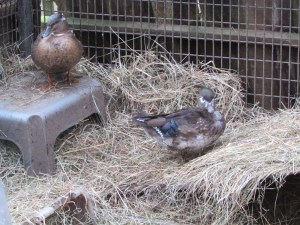
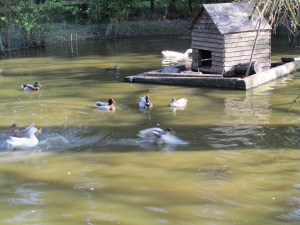
Annie was worried about the ducks. The pond had frozen and the water was hard, so Mr Fox could walk across it. He could walk to the island and catch ducks there. He could walk across the frozen water and into the nesting box and could catch ducks there. He could even catch ducks on the actual water, where they stood in an unhappy huddle, wanting to be able to swim.
Annie went to the pond. She took the dogs and her family. They moved the ducks into the big cage. The ducks would be safe in the cage.
Every day, Annie went up to the big cage. The ducks needed clean water. They couldn’t swim in the pond or drink the water. Every day Annie carried big bowls of water into the cage. Some of the little call ducks jumped into it and splashed and swam. The big ducks dipped their heads into it and had a wash and a drink.
The ducks couldn’t sleep in the nesting box. They couldn’t poop in the pond. Every day Annie took away the dirty hay and cleaned up the duck poop. Then she gave them clean hay to sleep on.
The ducks needed food. They couldn’t catch insects in the pond or eat the plants on the bank. Every day Annie took them duck food and corn to eat.
When Annie went to the pond, she saw fox footprints. They went round and round the cage. They went round and round the pond. They went round and round the island. But the ducks were safe. The ducks lived in the cage for a long time. They were sad. They wanted to play on the pond. They wanted to eat grass. They wanted to swim. But they were safe.
After lots and lots of days, the sun started to shine. The weather grew warmer. The ice began to melt. Mr Fox couldn’t walk onto the pond when the ice had gone and he didn’t like to swim. When all the ice had melted and the pond had turned back into water, Annie opened the cage door. Out flew the call ducks. They landed ‘splash!’ onto the pond. Out waddled the fat white Aylesbury ducks. They stepped carefully into the pond. Out ran little wood duck, she jumped straight into the pond. The ducks were all very happy. Now they could play and swim and find food, and they were all safe.
In some countries in the world, people are not safe in the places where they live. If there is lots of fighting in their country, sometimes they have to leave their homes and go to a safe place. This is called a refugee camp. The people need food. They need somewhere to sleep. They need clean water. They need toilets. Sometimes they need other people to help them. People in our country can give money to a charity to help people who have had to leave their homes. Tearfund is a charity that helps people. Ask someone to help you find tearfund.org on the computer and you can see pictures of some of the people they help.
Please share this.
Thank you for reading anneethompson.com Why not sign up to follow my blog?
Look on your device for this icon (it’s probably right at the bottom of the screen if you scroll down). Follow the link to follow my blog!








 Have you seen the girl with the dancing black eyes?



 Anne E Thompson
Oh this is sooo your Mum, made me chuckle
Like
Now I know why I get strange messages from your mum!!!!!!!
Like