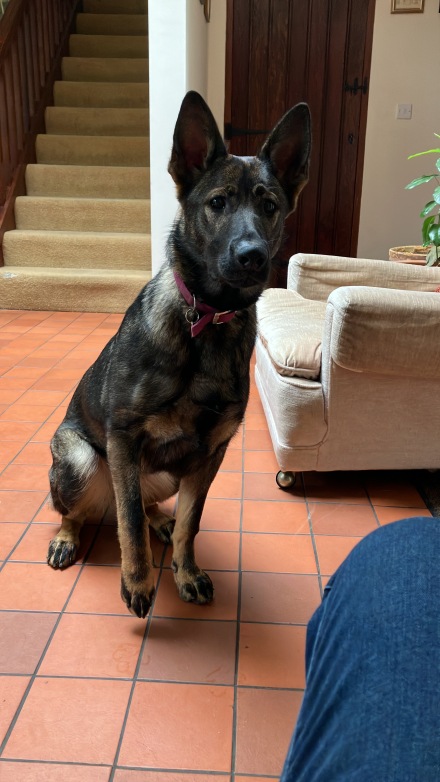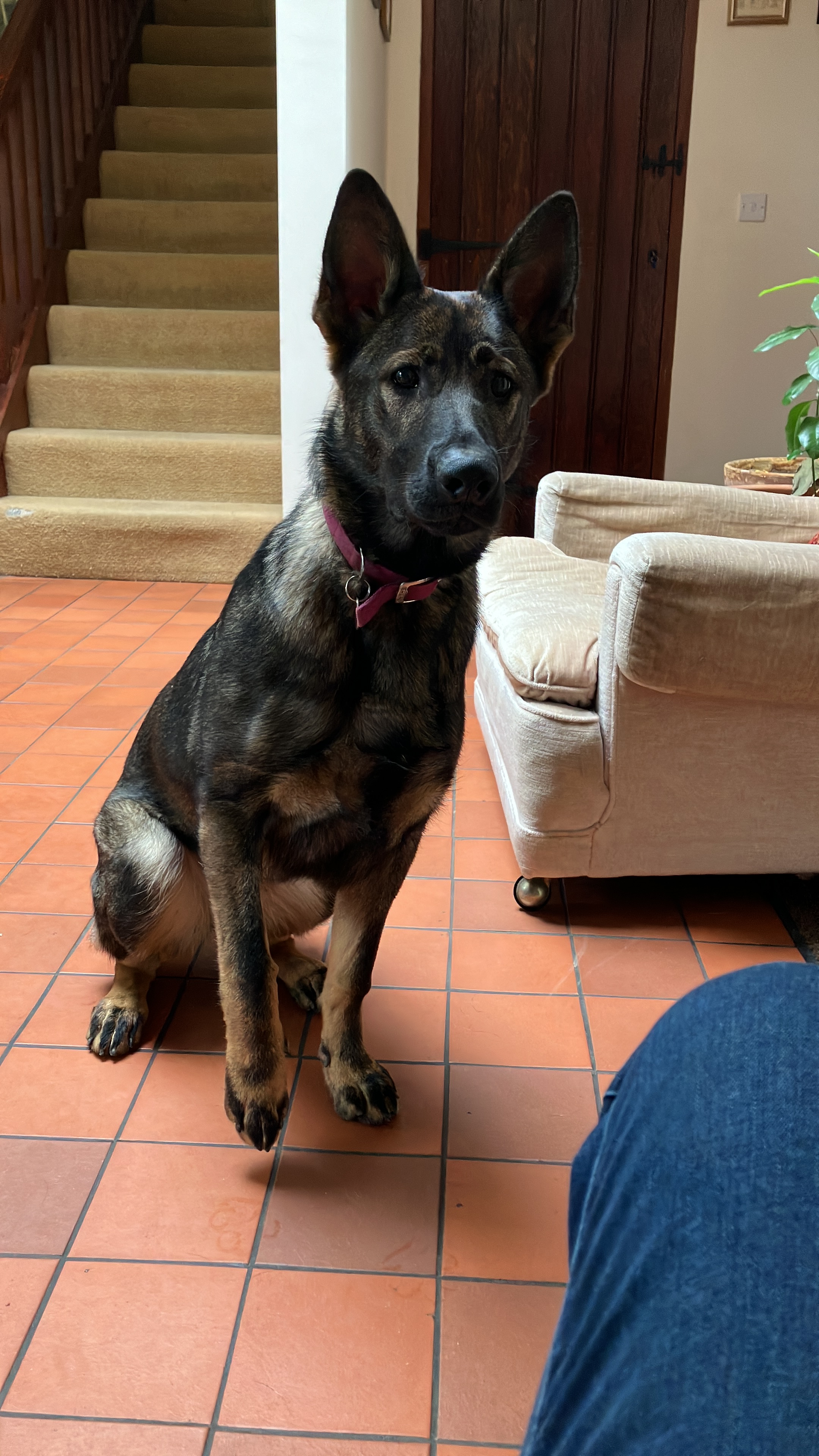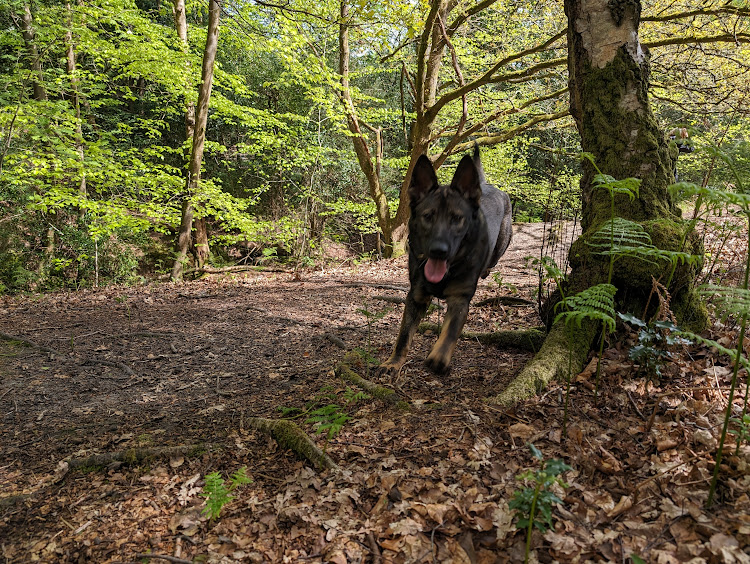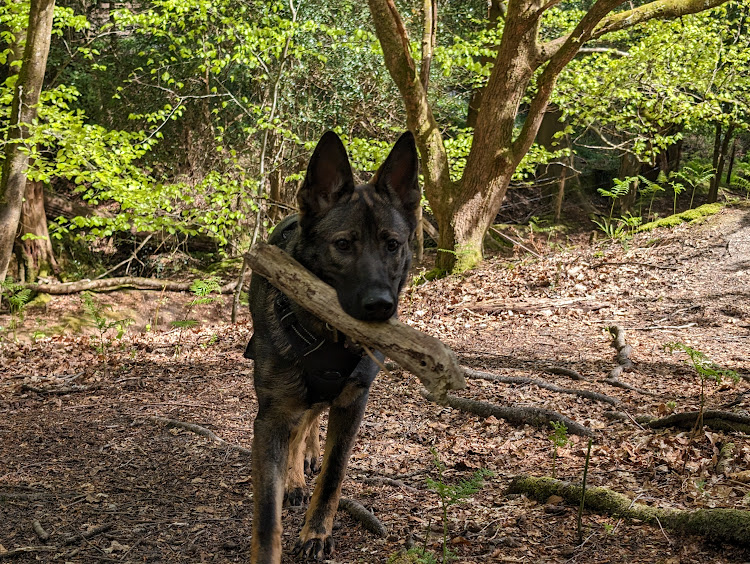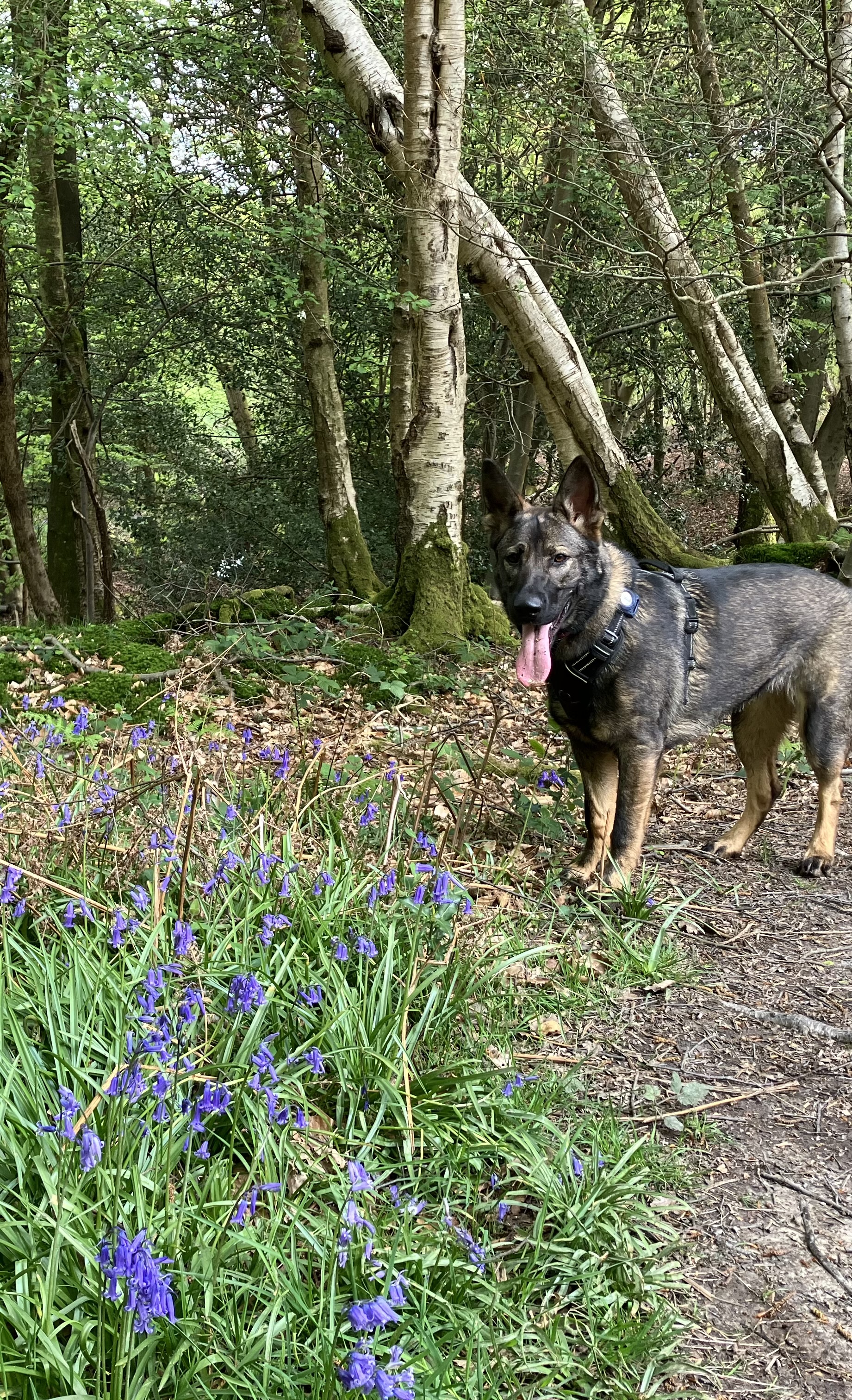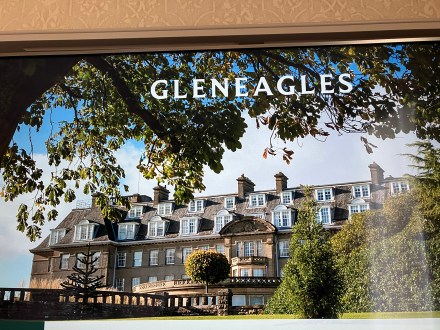
Meg at Gleneagles


11/6/2024
We continued our journey north. After packing up the Northumberland cottage, we drove back to Cresswell for some exercise before our next long drive. This time the beach was full, lots of people and dogs, everyone out for their morning walk. We let Meg run free, but every time she started to run towards another dog, I called her back and waved a stick or kicked a pebble, and she stayed near to us the whole time, ignoring the other dogs. Some dogs ran up to her, and she was friendly, but always followed us as we walked on. She is very sociable for a German Shepherd—let’s hope it continues.

We stopped a couple of times during the journey, and Meg was very good—we were still on the A1, but it was quieter, and the stops were more peaceful. Early afternoon, we arrived at the Gleneagles Hotel, where Husband had a work conference.
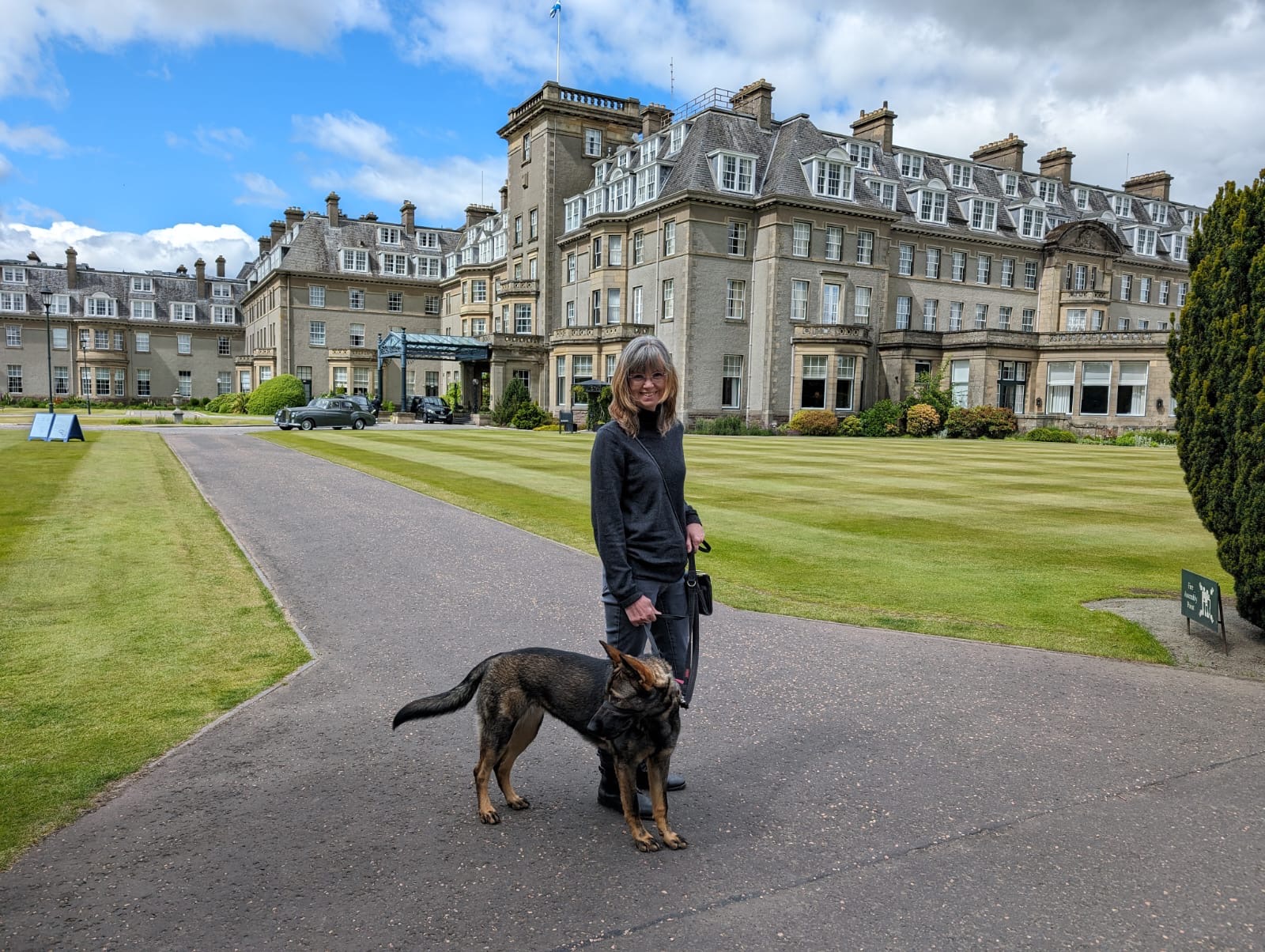
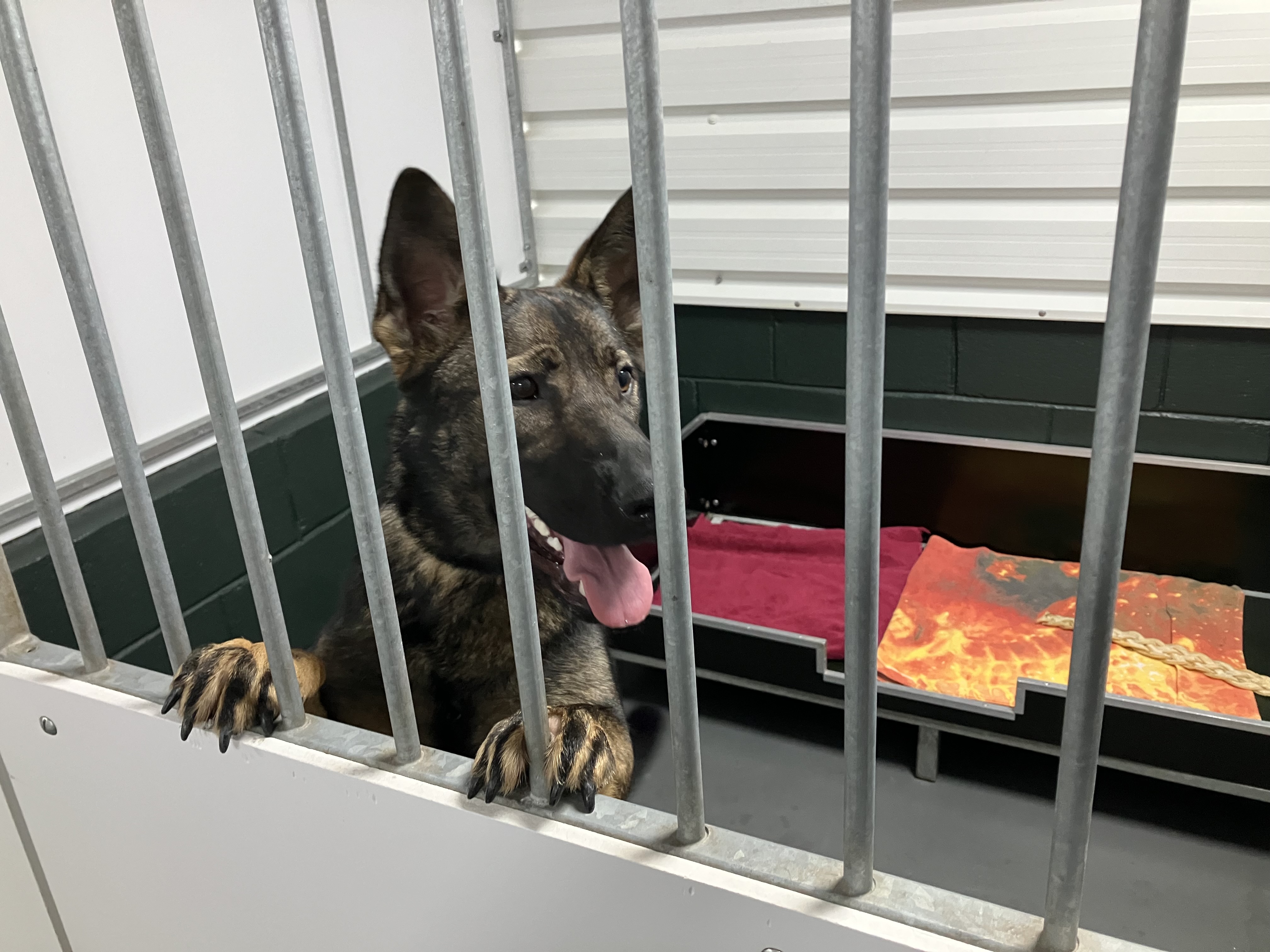
The hotel is big, and beautiful, and it allows dogs (and horses, if you want to take your horse on holiday!) We could have taken Meg into our room (with an additional cleaning charge) but we thought it would be easier to book her into the kennels. I am cautious about kennelling a young dog—it doesn’t take many bad experiences to change a character, and I would hate for Meg to be kennelled next to an aggressive dog. However, this was fine. The kennels were more a room in a separate block, with individual locks, and beds and bowls provided. We were responsible for feeding and exercising Meg, and taking her out so she could toilet. She was the only dog inside, so no danger of being threatened by a dog-bully. Outside, were the hotel’s working Labradors, who barked every time we passed, but that was okay. The staff were friendly, and said how beautiful and friendly Meg is (I suspect they say this to all owners). They lock the kennels at 10 pm, so we needed to toilet her before then, and they unlock at 8am, and take her out so that guests can enjoy breakfast before taking over. That is longer than Meg is usually left at night, so I hoped she would be okay. We exercised her, and then went to prepare for dinner.

Dinner at Gleneagles is an event. They have two Michelin stars, and honestly, it is the most delicious dinner I have ever eaten. We sat at large round tables, with candles and flowers all around, and the waiters brought trolley after trolley, offering Champagne, then wine, carving a beef wellington, adding caviar to a cod steak, explaining the taste of various cheeses, preparing crepe suzettes with flavours and flames. I ate and drank far too much, but I only had to walk upstairs, so it was fine. (Husband kindly did the last Meg shift.)

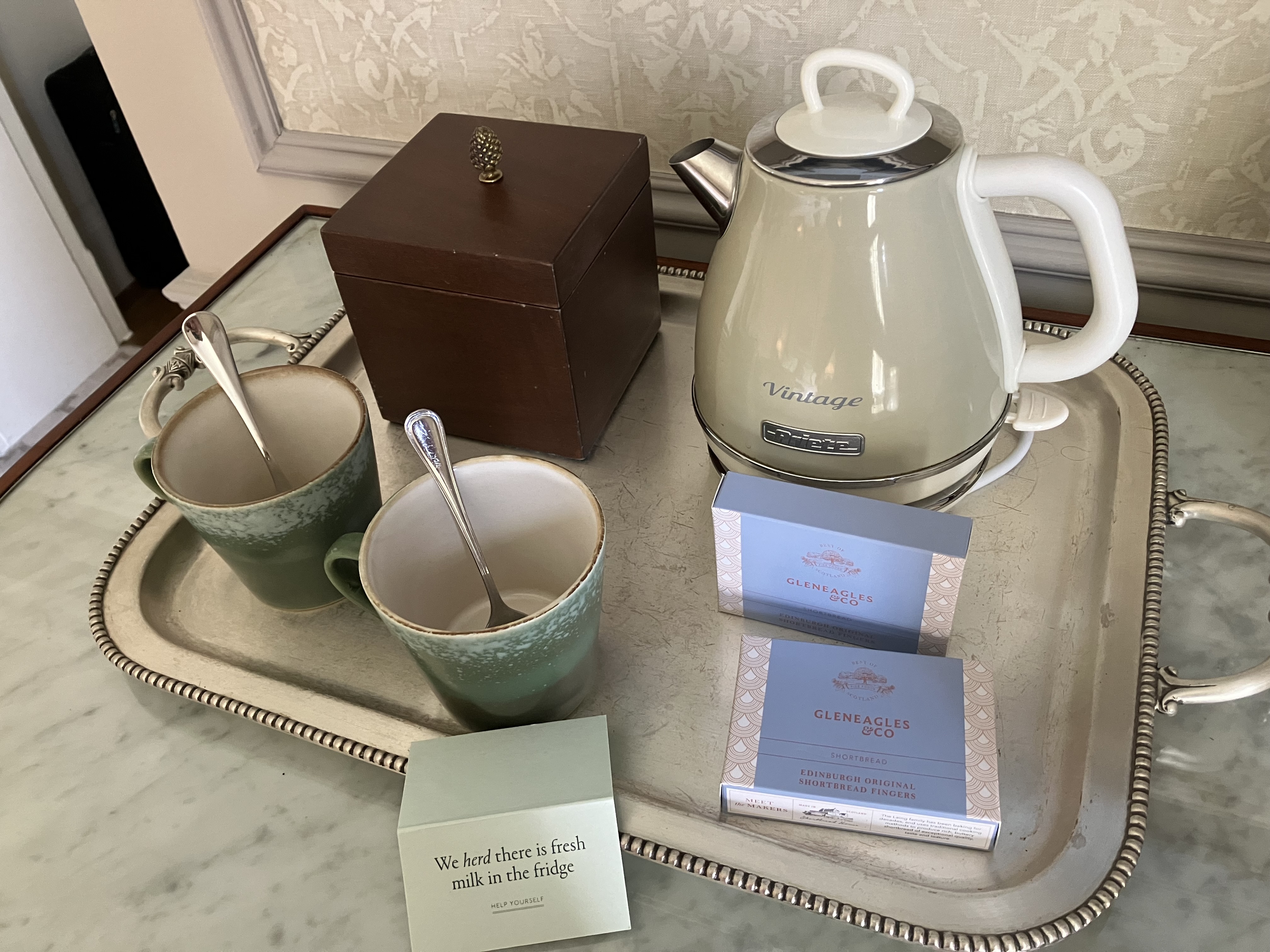
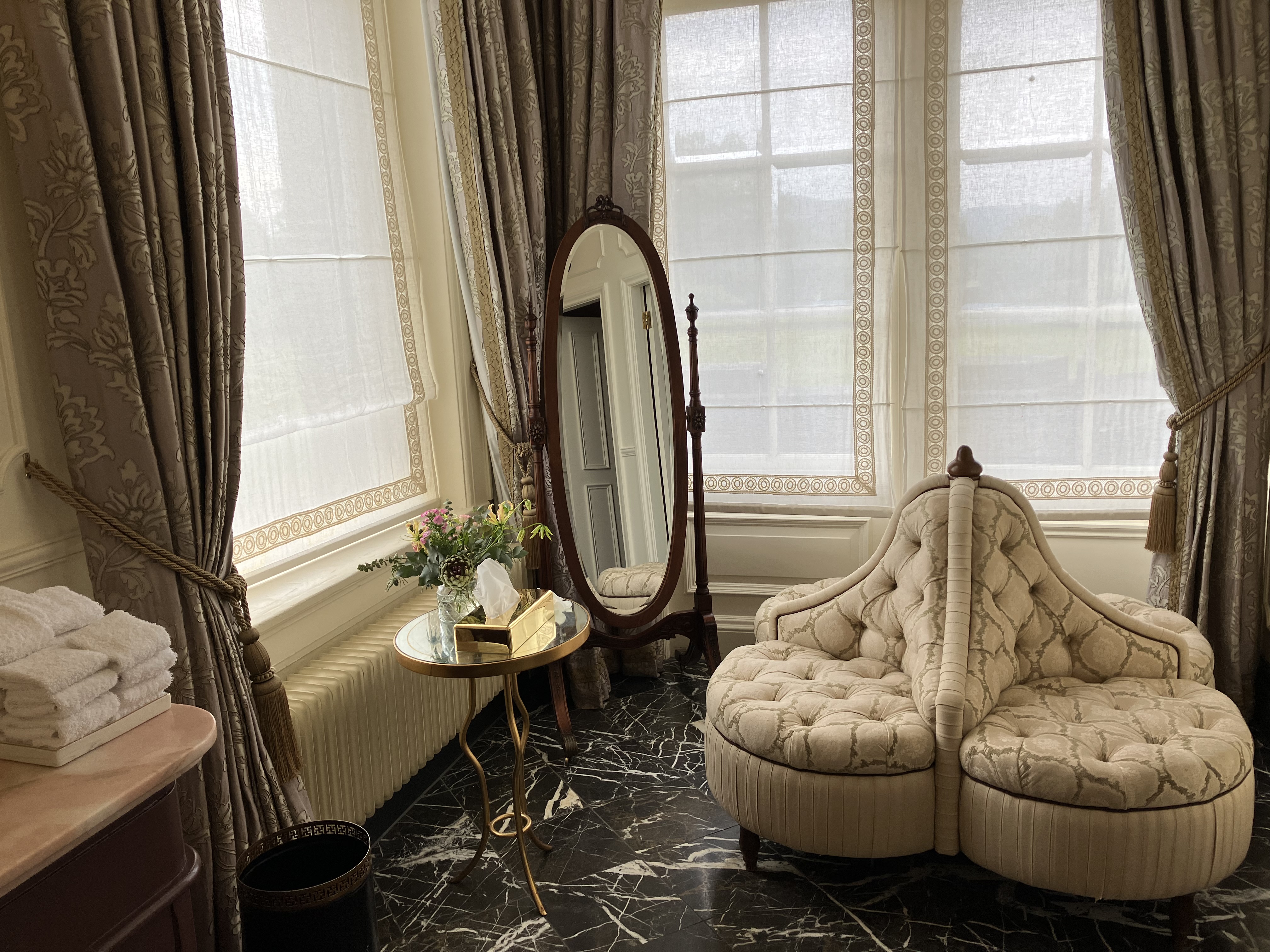
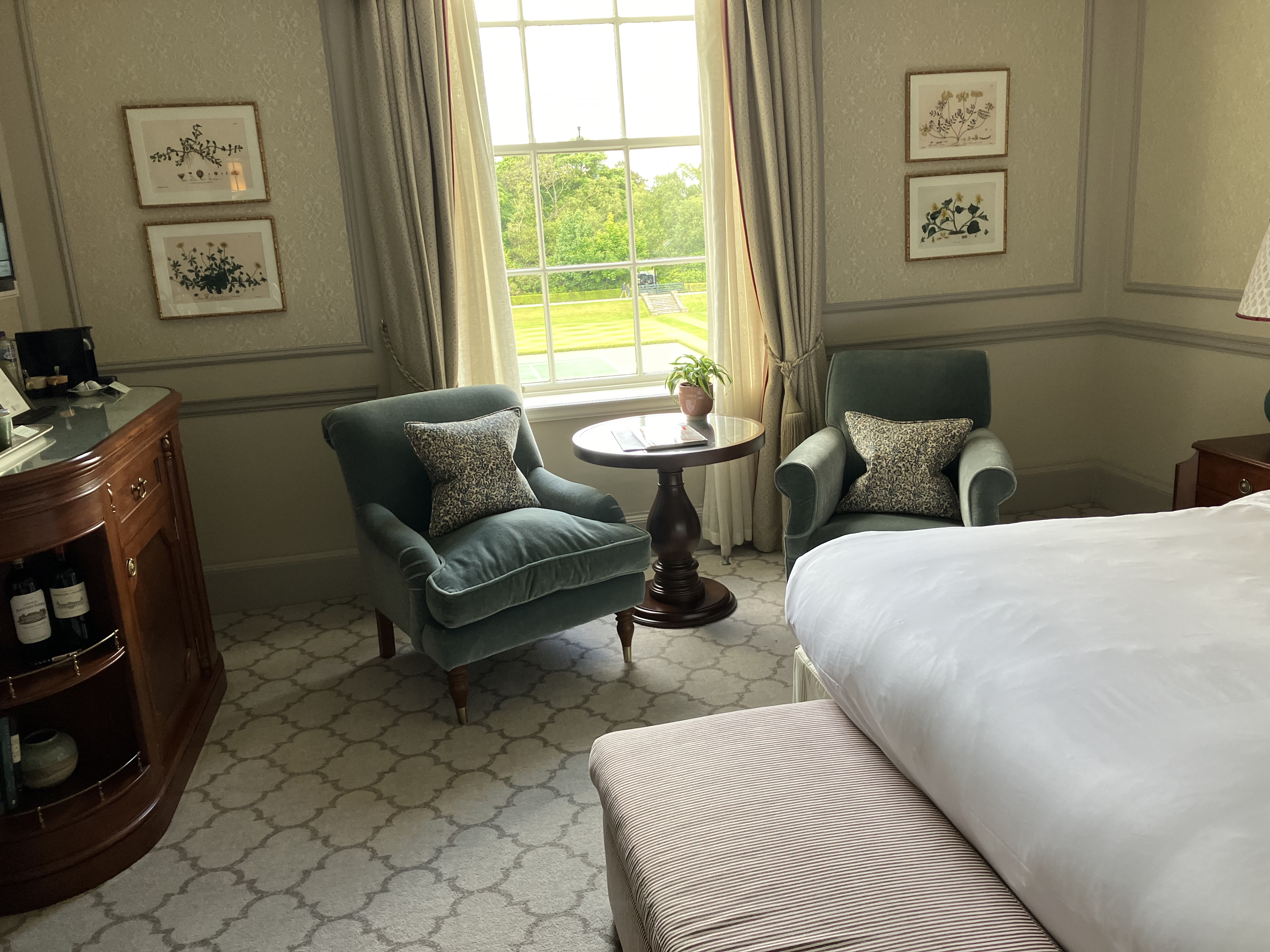
Our room was very luxurious, though was quite a long walk from reception (I don’t think it was one of their better rooms!) It had a desk and two easy chairs, and a huge telly. There was a cabinet offering free tea and coffee, bottles of water, and shortbread biscuits—and a cupboard displaying over-priced snacks that we could buy. The bathroom had double sinks, and a shower, and a huge free-standing claw-footed bath. The loo was in a separate room. There were toiletries, and dressing gowns and slippers, and—most importantly—plenty of plug sockets for phones and computers. Unfortunately, the pillows were very fat, but I had brought my nice flat pillow in the car (because hotels always seem to have very fat pillows).

12/6/2024
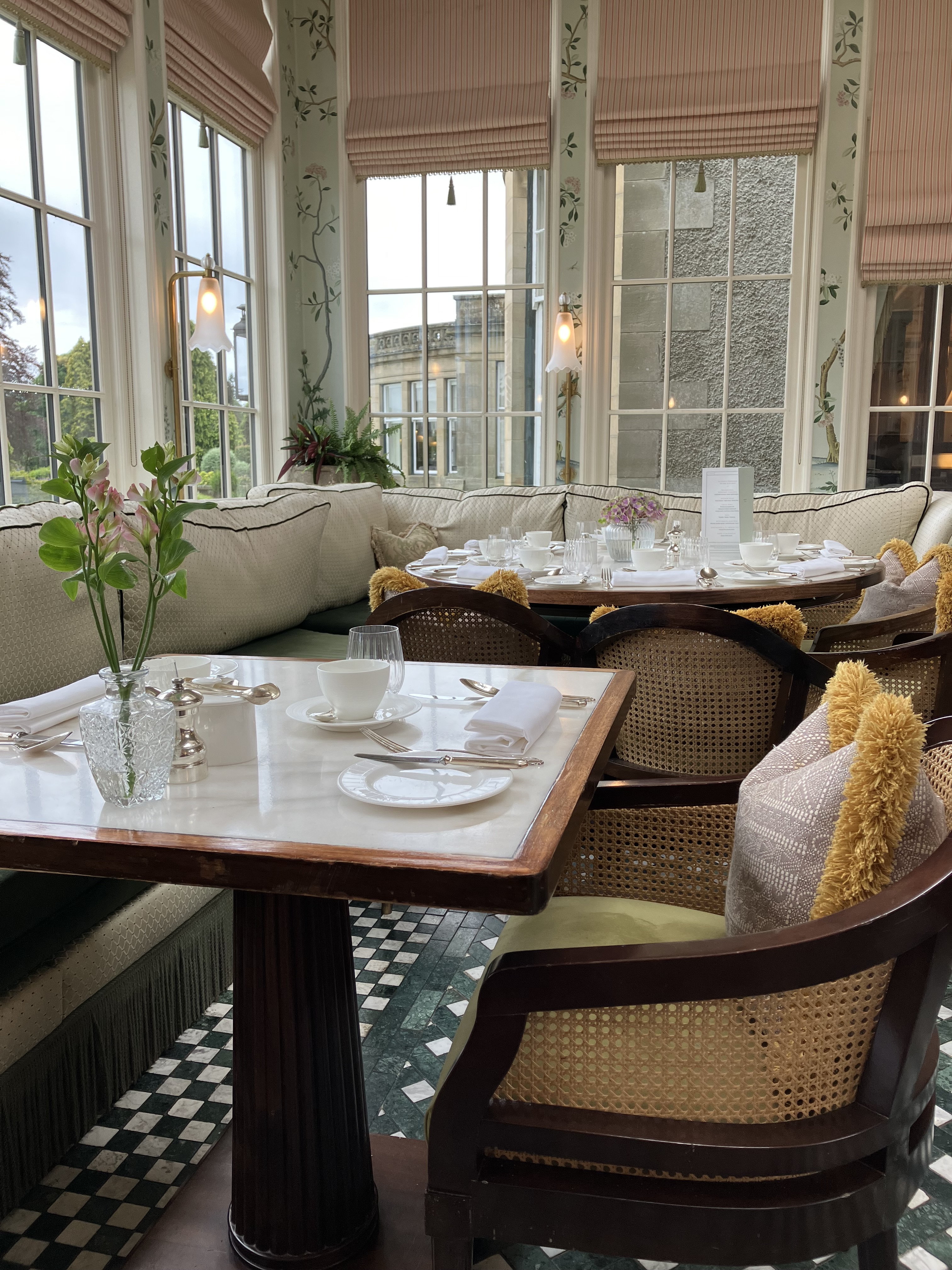
I didn’t sleep much—probably due to too much food and drink. I showered (marvellous shower—the water pressure wasn’t painful, but there was so much water a deluge of it, soaking me instantly). Went down for breakfast. Gleneagles has the best food. There was everything. We were offered fresh orange juice, and coffee, and I ordered buttermilk pancakes with smoked almonds and maple syrup. While waiting, we visited the buffet: displays of fresh fruit, and pastries, yogurts, cereals, every kind of cooked breakfast food, various breads and cakes. I filled a bowl with fresh strawberries (perfectly ripe) and Greek yogurt (perfectly creamy) and waited for my pancakes. Husband, who usually eats everything, restricted himself to sourdough bread with smoked salmon and poached egg, and another slice with bacon and mushrooms (proper mushrooms—hotels often use the nasty tinned variety). The coffee arrived in a silver pot, and we sat in a light conservatory filled with flower arrangements. Such a treat.

Husband then went off to work, and I returned to the room and was slightly ill (due to unusual food and too many nerves—because even though I can control my outside with lots of prayer and self-control, my insides get stupidly anxious when we travel. I tell you this in case you can relate—we like to hide our imperfections, but everyone has them, even in the near-perfection that is Gleneagles. You might think you are alone with your problems, but you are not.) I then prepared for the next day, and went to check Meg.

Meg seemed fine. I spoke to the kennel staff, who said she had been clean and dry when they arrived, and was pleased to see them. She commented that Meg is very quiet, which pleased me. We try hard not to respond whenever Meg barks, trying to teach her that barking does not result in whatever it is that she wants, training her to be quiet. (So if she wants to go outside, she sits quietly next to the door and looks at me… Occasionally… On a good day… Mostly she bounces at it, bounces at me, bounces at the door again, and then sits and looks at me. Work in progress.)

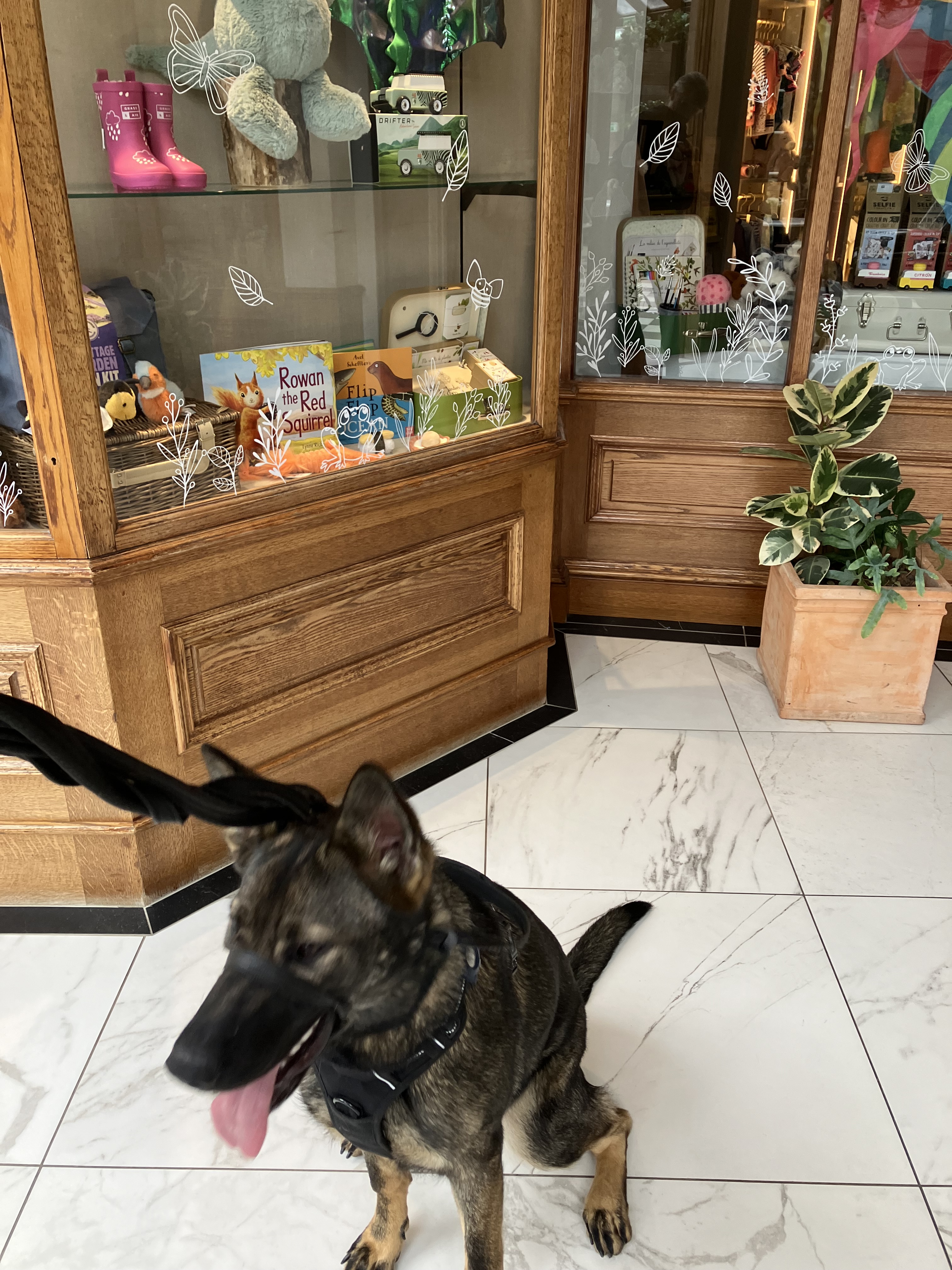
 I took Meg for a walk around the grounds, avoiding all the golf areas, and then, because I had been told that I could, I took her into the hotel. Meg walked beside me, over thick carpets, past all the guests waiting to check-in. We then walked along corridors lined with little shops selling expensive watches and jewellery and the sort of clothes that other, richer, people wear. The lights were dim, and the air was perfumed, and Meg plodded quietly next to me. I didn’t attempt the stairs, because we haven’t learnt stairs yet and I worried she might leap down them and pull me crashing behind her (which would cause quite a stir amongst the smart guests and the attentive staff!) We had a hiccup when we left, because a man had a Labrador next to the entrance, and Meg has obviously now decided that Labradors should be barked at (because that is what the hunting dogs in the pens outside her kennels do). So we walked quietly through the door, and then had a loop-out when we saw the dog. I calmed her, and managed to get her attention, and we left—not looking quite as professional as I hoped.
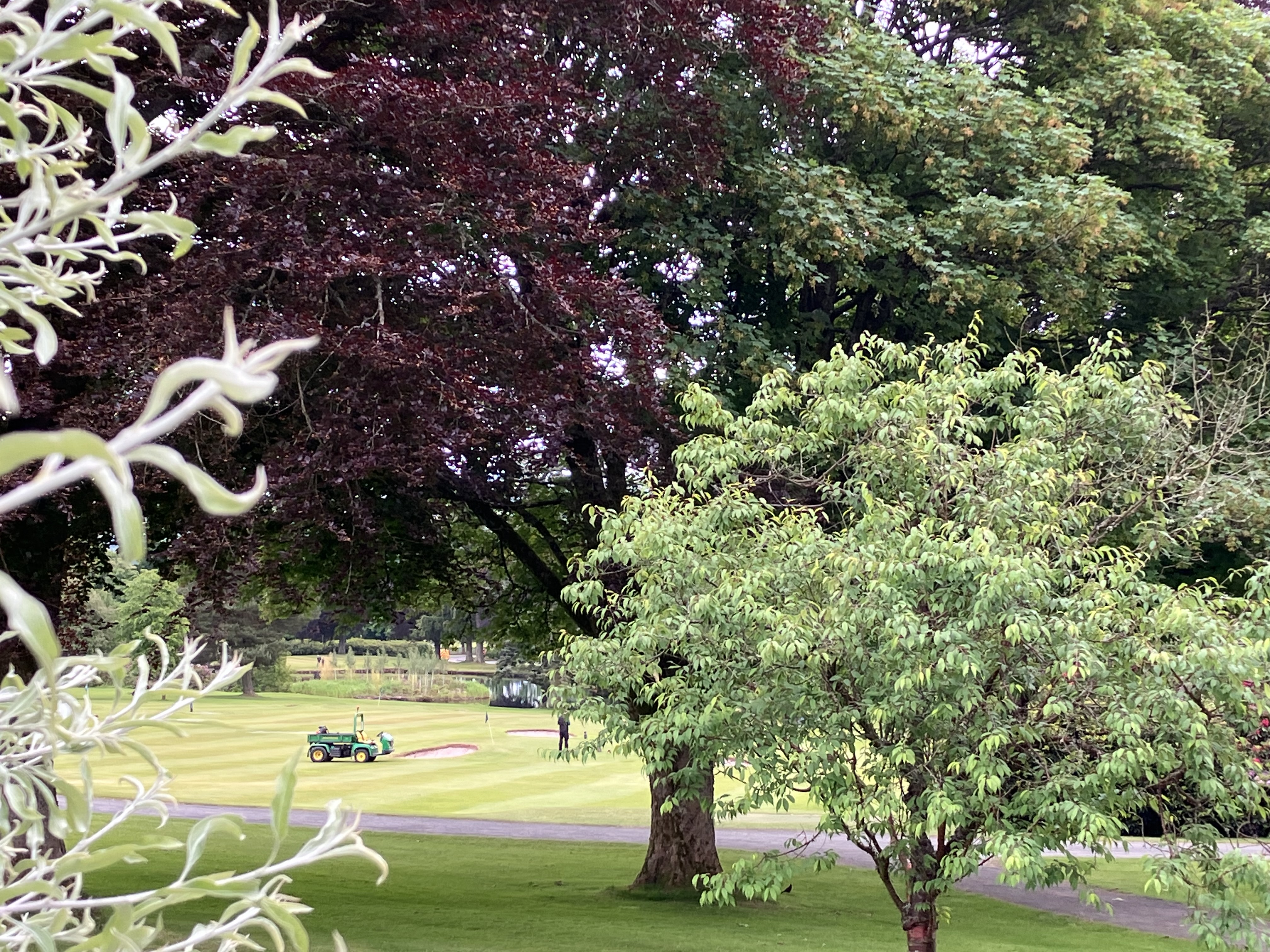
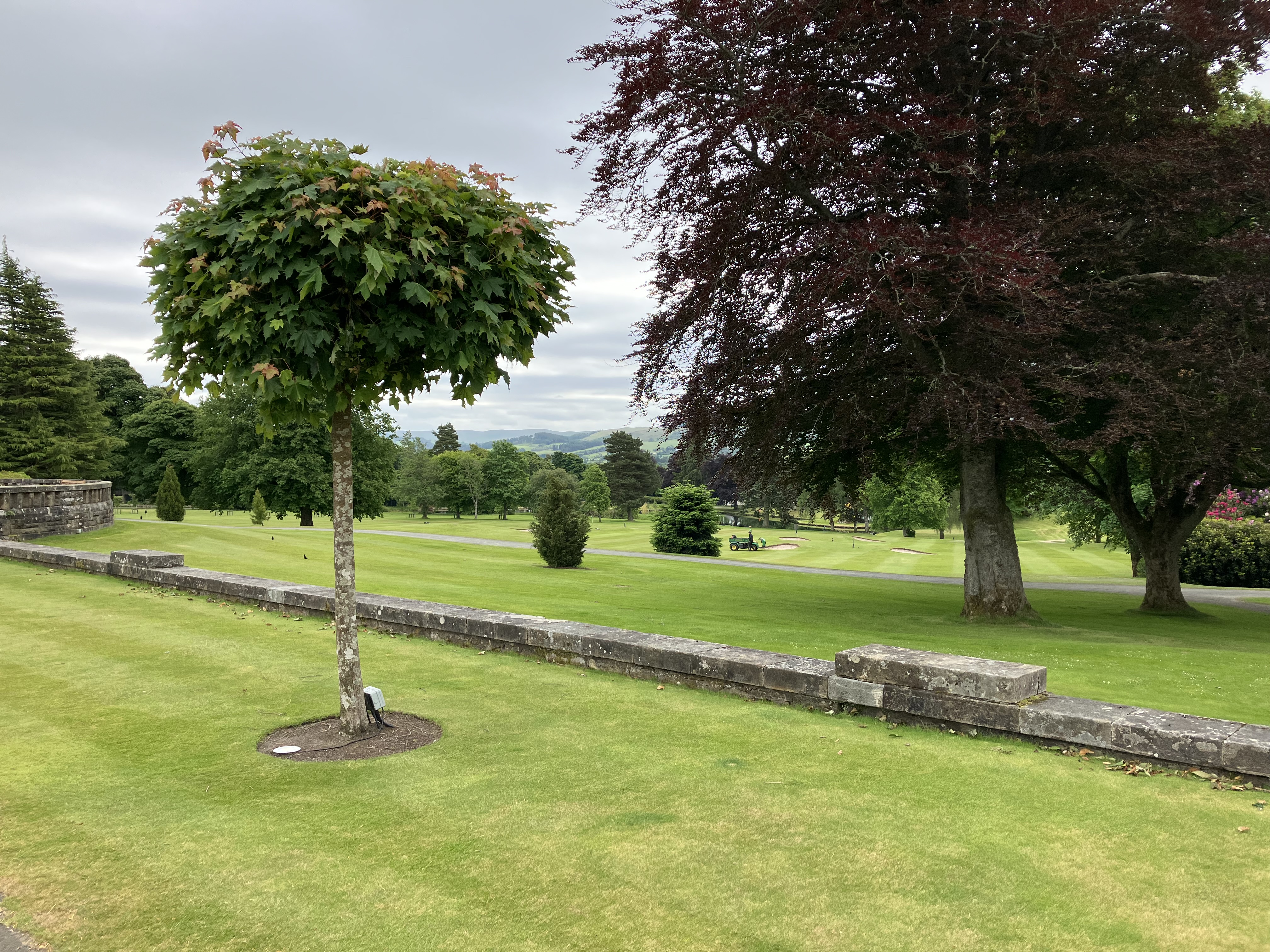
The grounds are beautiful. There is a vintage Rolls Royce parked in the driveway, and neat lawns with chairs next to an outside bar. Stone steps link various terraces, and low walls divide the lawns. There are mature trees and lakes with fountains and beds filled with lavender and poppies. In the valley is the golf course, and behind the hotel are tennis courts. An area to one side houses the kennels, and a caged ferret and birds of prey. Beyond the grounds are hills covered in heather and trees.
13/6/2024
We collected Meg from her kennel for the final time. It was noteworthy that she ate a lot last night—up until now she has eaten very little and ignored her chew. I guess she didn’t want to eat until things were familiar and she relaxed a little.

I have been very pleased with her. The kennel staff all commented on how friendly she was. Whenever we walk past the working Labs, they fling themselves at the cage wall and bark. Meg has managed to walk past them, not barking back (mostly) and concentrating on me and where we’re going. She has also been clean/dry for the long hours (10pm-8am) that she was locked inside. We put Meg into the car, and she fell asleep almost immediately.

Thanks for reading. I will tell you what happened next in another blog. Thanks for reading. I hope you have a good week.
Take care.
Love, Anne

anneethompson.com
*****

Meg’s Diary: Trip to Scotland


10/6/2024
Today was very long, but very satisfying. It started early, with a trip to the vet with cat-with-swollen-eye, then we finished packing the car, shoved Meg into her crate in the boot, and set off. Meg had woken antsy (some days she does—I haven’t discovered why) so she hadn’t eaten anything. But given her car sickness of the past, I decided this might be good.

Meg is always very good in the car. We ignore her—because I don’t want to encourage a ‘conversation’ whereby she barks to let me know she wants to stop. I am pretending that we cannot hear each other, and whether it’s due to that or just because she happens to like travelling, she is always silent and seems happy. However, I didn’t want to risk changing this happy equilibrium, so I requested that we never drove for more than 2 hours without stopping for a brief walk and a drink.

We drove up the M11 to the A1, and on to Northumberland. We stopped briefly at services, and Meg was excellent each time. She especially excelled at one, particularly busy service station, as it allowed dogs into the main concourse (most had signs saying guide dogs only). I therefore decided to walk her through the crowds (good dog training exercise). We walked through the sliding doors, following crowds of people, past various eateries with noise and smells, edging past legs of people waiting in line, past the entrance to the washrooms (more smells, and people) past a casino area, with noisy slot machines and teenaged boys shouting, and out the sliding door of the exit. Meg was brilliant! She walked closely by my side, alert but not jumpy or barking, noticing but not distracted. We walked through the area twice. I was so pleased with her. I also took her to areas of grass where she could toilet, but she was much too interested in all the smells and cars moving, and didn’t toilet once the whole journey. I hoped it wouldn’t be unhealthy (not much more I could do really).

We arrived at a little cottage in Ulgham that we had booked to break the journey. It had a tiny garden which was gravel—Meg likes to toilet on grass, so she still didn’t pee. (I am not usually interested in the toilet habits of my animals, but it is rather a feature of travel with a dog.) I tried walking her in the lane, but the cottage backed onto a railway, right next to the crossing, and there were fast trains from Edinburgh speeding to London every 10 minutes, so even though there was grass, Meg was much too intent on lurching towards trains. (Not so perfect.)

As there was a coast 5 minutes away, we put her back in the car and drove to Cresswell. Parked next to the road and walked through sand dunes to the beach. It was beautiful. The sky was heavy with rain, and no one else was on the beach. Sand stretched in both direction, huge waves billowed towards the beach, the grass on the dunes hissed in the wind. Most importantly, Meg made use of the facilities! Yaay! Back to the cottage.

The cottage was beautiful. It had obviously been recently renovated, and the owners had taken such care, and been very generous with what they provided. There was coffee and tea and biscuits, with fresh milk in the fridge, and bowls of chocolates, plus all the soaps/tissues/linen that we could need. The furniture was comfy, and there were warm throws and fat cushions and careful decorations. It was lovely. The proximity to the railway could have been annoying if Meg had decided to bark every time a train passed—and the trains did wake me in the night—but we sort of got used to them, and as long as they were out of sight, Meg ignored them. She ate and drank, and seemed very calm (well, as calm as she ever is).

We ate at the Widdrington Inn. It was actually quite nice (I was worried because we sat opposite the kitchen door, and I could see several floppy-haired young men preparing the food, which rang all sorts of food hygiene alarm bells!) But other than the sticky table, all seemed clean, and we had a nice meal. We had left Meg in her crate, in the cottage, because it’s never relaxing trying to eat when she is with us, even though we are trying to take her more often.

After dinner we collected Meg and drove back to the beach. This time we found a car park, and the tide was further out, so there was more sand. We still only saw a couple of people, so it was wonderfully relaxing, and we strode along the sand for an hour while Meg danced alongside us, investigating seaweed and rocks and the taste of seawater. The sea was stormy and the sky was huge, and all felt right with the world.

It wasn’t a great night’s sleep, because I woke when the trains whooshed past, and it was lighter than at home, and I was cold. But Meg was quiet all night, and seemed fine in the morning when I let her out of her crate.

Next stop Gleneagles. Husband has a work conference, me and Meg tagging along. I’ll tell you about it next week. Thanks for reading.
Have a great day.
Take care.
Love, Anne x

****

anneethompson.com
****

Ancient Texts and Deliberate Metaphors: Unveiling Hidden Meanings


This week, I was reading a fascinating paper on deliberate metaphors.[1] You remember from your school days what a metaphor is? Those descriptive words that often personify a thing ‘the wind marched’ or simple similes ‘like a puff of smoke’. They are often linked to certain traditional ideas—‘as dark as death’ and we tend to expect certain metaphors to appear—‘he took a wife’ (where he did not, literally, go to a house and take a wife, but rather he married a woman). The thing that’s fun with deliberate metaphors, is that they take descriptions that are usually linked with a particular subject (think of death: cold, dark, silent) and they are then used with a completely different subject. Which means, when someone reads the final text, they subconsciously link the two themes, even though they are not explicitly stated. Advertisers and poets use this a lot. The same works with car adverts and sleek beautiful bodies, or having fun zooming on things as a child, and they link those ideas to the car—so we see the car as either beautiful (it’s a car for goodness sake!) or an instrument of fun (though it will spend lots of hours in traffic jams and on the school-run).

There has also been lots written about whether metaphors apply mainly to speech, or if they are an unconscious element when we think. Therefore examining metaphors used by a particular culture or historical group, might give us clues into how they thought. For example, today when we describe relationships we use lots of metaphors that relate to travel, so we seem to view relationships like a journey. We start a relationship, they can go through a bumpy patch, we can get them back on track despite many obstacles. Likewise an argument or discussion is described using fighting metaphors: his points hit the target, he defeated the opposition and defended his case.

When the descriptive words are unrelated to the thing being described, we call them metaphors. (So fire and emotion are unrelated, but we say someone burned with anger.) If they are connected, we call them metonyms. So ‘I pay with plastic, not cash’ —(a credit card is made of plastic, so this has used a metonym not a metaphor). Or we might say that ‘Washington has passed a law’ — the Senate is in Washington, so this is another metonym.

Now, if we look at ancient texts, the same principles apply, but we often miss the subtle links because we are either reading a translation, or we don’t understand how the ancient culture would have used those words. So when we read ‘The LORD is my shepherd’ we have a completely different response to the ancient audience, who might link a whole bevy of different experiences to each of those words. Which I find very interesting.

Fascinating huh? It feels a little scary to finish my MA, the time has gone so fast, and there is so much still to learn. I do hope I can find a way to continue studying, but we shall see. I hope your plans are clear this week. Thanks for reading.
Take care.
Love, Anne x


[1] Ellen van Wolde, ‘A network of conventional and deliberate metaphors in Psalm 22,’ Journal for the Study of the Old Testament, 44 (2020), 642-666 (p.642) <https://doi.org/10.1177/0309089219862816> [Accessed 6/10/23].

I Nearly Kill Meg


Today started well. I persuaded Husband to come to Oxted with me, and help me to get Meg to walk through the underpass—the scary tunnel under the station. I have tried it a few times recently, and although she will walk down the ramp, she absolutely refuses to walk a single step into the underpass. This has been annoying, as when she was smaller she did it without a flicker, but she has grown more stubborn/wary with age. I need her to be able to walk through tunnels and enclosed spaces, before I can take her on the train.

We parked in Morrissons, and Meg walked through all the moving cars with no trouble at all. I’m not sure if it’s the speed of the traffic on the main road that triggers her reaction, or if it has become an ingrained response on that road. But in other situations, she seems much better with traffic. She also walks through groups of people, and shopping trolleys, and shop doors without reacting—all good. There was a collie tied up outside (not Leo) and it watched Meg—who stopped—stared—followed me past. Phew! Hopefully that positive encounter will balance the Leo experience. [You might need to refer to last week’s blog to understand this.]

At the underpass, we copied the routine that Sue (puppy trainer) had advised for the tunnel in Devon. Husband went ahead with a treat, stopped on the ramp. We walked to him, took the treat, immediately turned away (Meg understands the ‘Turn!’ command) and returned to the top of the ramp. Gradually Husband got nearer to the entrance, then a step into the underpass, then several feet inside. We kept going (with lots of funny looks from the Saturday morning shoppers!) until Meg was happily walking right through the underpass. We walked back without a flicker, and even ventured along the tunnel to the car park through the massive fire doors, and into the underground car park with all its echoes and smells and shadows. Meg was fine, alert but not resisting. I love when something works. I will practice a few times this week, and hopefully it will become mundane.

When we got home, I decided to have coffee in the garden, to celebrate our success. Huband made hot buttered toast, and I made coffee, and we carried them outside to watch Meg while she played. Meg bounced up to us, almost spilling the coffee. We sent her away and she ripped up a weed from the garden, then ran off to destroy a log on the lawn. We chatted for a few minutes, then started to discuss the cherry trees that Husband is training to grow over an archway. We moved to look at them, Meg came to join in, and started to destroy the lower branches of one of the trees. So annoying. I guess it was our mistake, for drawing her attention to the tree by looking at it when she was there. But sometimes we do make mistakes, and it seems that Meg always makes us regret it. She is too much. What a shame, after such a good morning. I put her in her crate with a chew, and went to clean out the chickens.

8 Months Old

I wanted to attend a seminar at college, and Husband was in London all day. I decided it was slightly longer than I’m comfortable leaving Meg alone, so I took her. I left home earlier than usual and drove to South Norwood. Meg was fine on the journey (she’s always good in the car and notices different things to me—a few times each journey there will be a low growl, or a bark, from the back, and I realise she has spotted a dog that needs sorting out!)

I went to the college office and asked whether I could park in the staff area, as it was shady. It was sunnier than when I left home, and I worried that even with a window open, it might get too hot in the car. They assured me it would be okay to park in a staff area, and directed me to some spaces right outside the lecture room, where there was lots of shade.

I let Meg out of the car, gave her a drink, and took her for a quick walk. We went up South Norwood Hill, where there is constant traffic. Perhaps it’s because the traffic was slow-moving, or because the path was wide, but Meg walked nicely on the lead, not reacting to the traffic at all. A completely different experience to walking in the lane. She lurched when a bus swooshed past, and when we had to wait at the central bollards to cross the road, but other than that, she was pretty perfect. (We do not do pretty perfect very often.)

We arrived at an entrance to Beaulieu Heights—which seemed to be a park so we walked through the gates. There was a path, and a lot of litter, and bushes and mud. We continued along the path and round the corner. I should mention that I was wearing a dark coat and black trousers, and Meg has a black harness. A group of teenagers was smoking on a fallen log, and I heard them whisper ‘police dog’ and they all threw away their cigarettes! I decided not to venture further into the park, so we turned (trying to look official) and returned to the road.

I gave Meg another drink—which she didn’t want, and went in to the seminar. It lasted for 2 hours. When I came out, the sun had moved and the car was now in dappled sunlight. I peered into the boot, and Meg was fast asleep, her chew was untouched, and I worried that even though the window was open, I had killed my dog. Bad moment. I hadn’t, she was fine, but it was surprisingly warm in the car for dappled, late afternoon, sunshine. It was a learning experience—I won’t risk it again on a sunny day. We drove home with the windows down.

I hope your mistakes this week turn out okay. It’s horrible when we realise we have messed up, but we all do. Thanks for reading.
Take care.
Love, Anne x

Determined to fit through the cat flap.
How it feels to walk a GSD puppy.
****

Mad Meg Nearly Kills Me


We had a great day on Tuesday. I drove to East Grinstead (Meg is still refusing to jump into the Mini, which is a real pain, she is very heavy to lift). Parked, and walked 10 minutes along the High Street. Meg lurched towards cars when we were right next to the road, but the High Street has a slightly raised path, a couple of metres from the road, and she ignored the traffic there. We were meeting a friend, and arrived early, so we sat at a table outside in the High Street. There was another dog, who Meg noticed, but she then settled down and was peaceful.

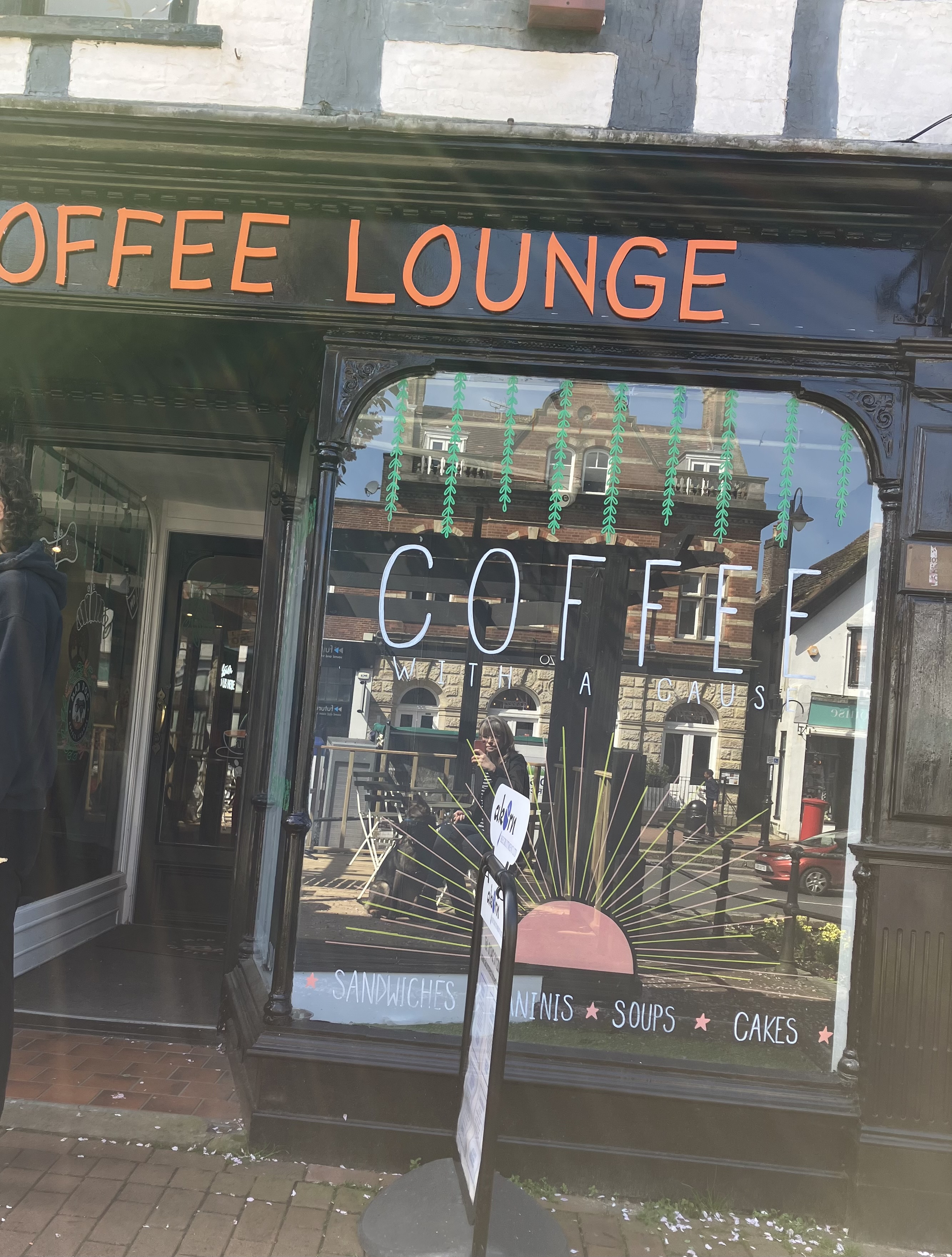
When my friend arrived we went into the cafe (the Mad Dog Cafe—appropriate name!) Meg, for some reason, baulked when we were inside and refused to walk any further. No idea what spooked her. We were next to a table, so sat there. Meg settled on the floor with her chew. She barked, briefly, at a woman carrying a tray, and at a baby shaking a toy. Other than that, she was very well-behaved, and I plan to return.

It was Puppy Classes in the evening. There was a new dog, a 10 month old poodle (a big one) and he barked at everyone. Meg responded initially, but then ignored him. It was fairly crowded this week, with puppies of all sizes, and she did very well, sitting and lying and walking in close proximity to lots of other dogs. Only dug one hole this week, so a success. (The class is in the sand school of a stables and we usually arrive to perfectly flattened sand, and leave to a mass of craters that Meg has dug.)

Yesterday was not so successful. I was feeling tired, so exercised her in the garden. During the afternoon I bent to pick up a stick, Meg dived for it, ran straight through my legs, and knocked me flying. Luckily I didn’t bang my head on a nearby tree, but I sprained my knee and ankle, and got a few bruises. While I lay on the floor, winded, with my glasses next to me, did Meg care? Not a jot! She bounced around with the stick and was in danger of trampling me. So much for the idea that dogs are attune with us and empathise with our emotions. I suspect if I had been knocked out, she might have eaten me! Hobbled back to the house for Nurofen and bandages.

**

My ankles are healing well (tight bandages, rested and raised—usually does the trick). I haven’t risked running yet, but yesterday I took Meg for a walk to the stream. This was such hard work. The main road has been shut for several weeks, due to a collapsed drain, which means there has been very little traffic. It is now open, and lots of cars zoomed past us—Meg lurched at every one. This is very disappointing, I have tried so hard to desensitize her to traffic. I’m guessing we made a mistake when she was little, in allowing her to pull on the lead. It’s now a real problem, and trying to make her walk to heel is futile. The best I could do was make her sit, before each car reached us, and held her on a tight lead, with one hand on her head (not sure if that was for comfort or because I was so angry with her I needed to be pushing her down!) There were many cars, it took a very long time to walk the 100 metres to the field entrance.

Once away from the road, I released Meg, and she ran into the field, hunting for sticks and sniffing smells, and always keeping relatively close as I marched away. There’s something about walking fast that is a great releaser of tension—for both of us I suspect. I’m sure if I couldn’t walk fast I would be taking anti-depressants.

Unfortunately, the happy walk was interrupted as soon as we rounded the first corner. A collie was there, called Leo, with his owner, and he was nasty. (I mean the dog was nasty, the owner was simply incompetent, I assume, as a nasty dog should not be loose where other people walk.) He snapped at Meg, who has never met an unfriendly dog before. He then pounced at her, and she yelped—I don’t know if he bit her or just frightened her. She ran off, back into the first field, and Leo followed. I could see her through the gate, she was watching me, but not daring to pass nasty Leo, who was baring the way. I called her, and Meg started to come, but Leo lurched towards her again. I asked the owner (in my very snotty schoolteacher voice) to ‘Please put your dog on the lead because he’s frightening my dog and she daren’t come back to me.’

Incompetent owner shouted, ineffectually, at Leo, and managed to move him further away (though still didn’t put him on the lead). I was furious. Meg is a German Shepherd dog, and they are known for being unfriendly towards other dogs. Meg, however, has a very sweet nature, and will happily ignore most dogs. It only takes one encounter with an aggressive dog to spoil this. I’m really hoping that Leo-the-nasty-collie will not cause Meg to be defensive whenever she sees another dog.

We marched off, round the field, releasing our tension. By the time we returned to the road, with all the whizzing traffic, I had recovered enough to cope with mad Meg trying to catch every car that passed (every single car). Arrived home exhausted.

Hope you have more success with the difficult things in your life–hopefully we will get there eventually. Thanks for reading.
Take care.
Love, Anne x

Thank you for reading. anneethompson.com *****
Feeling Lost


I was feeling lost this week. I felt as if everything was going wrong, and I was trying to do things that were too difficult for me. Plus the dog was being worse than usual, the cockerel was pecking everyone, and my favourite plant was dying—so all the things that are supposed to be fun, supposed to balance the rubbish bits of life, were adding more stress. It was a dark moment, emerging from a difficult week and being over-tired. It happens.

But then, as I was preparing to go to bed, I read Isaiah 42. I am trying to learn it (just 3 words, every day, but it gradually goes in) and I had reached verse 6, and the part that says: אַחְזֵק בְּיָדֶךָ וְאֶצָּרְךָ I will seize your hand and guard you. The direct translation is better than most English Bibles, as the verb for ‘holding/taking your hand’ is much stronger than just ‘holding’ or ‘taking’. It’s more of a ‘strong grab.’ Which, when you are feeling tired and defeated, is extremely comforting, don’t you think? I was, at that moment, feeling like a failure, but God (who never fails) was grabbing hold of my hand and would guard me. Like a parent grabs hold of their child to stop them falling or walking into danger.

 I realise that I am taking the text out of context, and the original author was not intending it to be about me—but I think that’s the thing with the Bible—sometimes it speaks straight into your situation, and you realise it is changing you. For me, this is why I am a Christian. It’s not so much about religion or theology, as about God being there—being part of the excellent bits of life, and the really rubbish bits. Frankly, I don’t think I could do it on my own, not really. I’m not very strong or clever or talented—I’m just a normal person who makes lots of mistakes. Like most of us. But I have a God who will seize hold of my hand when necessary, and that is very comforting.

I hope you find the help you need this week too. Thank you for reading.
Take care.
Love, Anne x

Thank you for reading.
anneethompson.com
*****
Why not sign up to follow my blog? Look for the symbol below and follow the link.

Using Artificial Intelligence


Hello, how are you? Have you ever deliberately used artificial intelligence? It is something that I have shied away from, but I noticed that my blog platform offers it as a tool. When I publish a blog, I can review it using A.I. It offers me an alternative picture, and will ‘read’ my writing and suggest improvements. I decided to test it. Below is a blog article that I wrote and uploaded.

Underneath the post, I show the suggestions offered by AI Assist.

My Original Blog Article: What does Leviathan Represent in Job 42?

The Book of Job in the Old Testament has been discussed for centuries, and scholars agree on very little. I therefore decided that this would be an excellent book to base my dissertation on. I have always been fascinated by the description of Leviathan in chapter 42—and even though my English translation has a footnote, telling me that Leviathan is a crocodile, I found this annoying. The Leviathan breathes fire, his breath kindles coals, he exhales smoke and is able to snap iron and bronze as if they are dried sticks—surely this describes a dragon rather than a crocodile.

I began by reading the Book of Job. Very briefly, the story is this:
God meets with the heavenly host, and speaks specifically to ‘the accuser.’ (Some people translate this as ‘Satan’ but the Hebrew word for ‘accuser’ is ‘satan’ and it has the definite article, so I think it’s unlikely to be a name, and more likely a role—like ‘the accuser’ in a court of law.)

God says how delighted he is in Job, who is a very good man, and he asks the accuser if he has noticed Job. The accuser replies that yes, he has, but he believes that Job is only good because of what God has given him. God then says the accuser can test his theory, but he mustn’t kill Job. Then we switch to a different scene, and most of the book describes what happens on earth.

Job is a good man, with family and wealth and good health. He basically then loses everything. His children die, all his wealth is stolen or destroyed, his health fails and he is in agony. At this point, three friends come and sit with him, for a while silently sympathising. Then Job speaks, saying that none of this bad luck is fair, and he would like to challenge God about it.

There are then several long (and quite boring) speeches that take an amount of resilience to read! The friends each in turn tell Job that he must have sinned, because God is good, and if Job repents than ‘voila!’ God will restore his health. Job replies to each one, stating that he didn’t sin, and it isn’t fair, and he challenges God to justify the situation. Then there’s a speech by another character, which says much the same as the friends.

Finally, God replies. In God’s first speech, he shows Job creation, displaying his splendour, comparing it to humanity’s insignificance. Job basically replies by agreeing that yes, he had always known that God was great—nothing has changed. But then, God speaks again. This time he shows Job two monsters, Behemoth and Leviathan. After seeing Leviathan, Job says ‘Now I get it! Now I see who you truly are.’ He worships God.

The book ends with (in my view) a strange contradiction of all that has gone before, as Job is given more children (though his first children remain dead—which any parent will tell you is not okay). Job also gets more wealth—though there is no mention that he is healed. He dies after a long life (potentially lived in constant pain).

My interest is in Leviathan. What was there, in God’s description, that changed Job? Why did he suddenly understand, why did he say he had seen God? Why did this mean that losing everything was okay? I will tell you more in another blog.

****

The A.I. generated suggestions for the title are as follows:

The Book of Job: Leviathan and Divine Revelation

This title highlights the central focus of the content, the divine revelation through God’s description of Leviathan and its impact on Job, attracting readers interested in biblical analysis and interpretations.

Understanding Leviathan in the Book of Job: A Dragon or Crocodile?

This title sparks curiosity by addressing the debate of whether Leviathan represents a dragon or a crocodile, engaging readers seeking insights into the symbolic meaning and theological significance within the Book of Job.

Significance of Leviathan in the Book of Job: Unveiling Divine Wisdom

By emphasizing the significance of Leviathan and its role in revealing divine wisdom, this title appeals to those exploring the deeper spiritual and philosophical themes in the Old Testament, capturing the interest of a wider audience.

***

The suggested improvements to my blog article are as follows:

AI Assistant


The content’s main language is English.

The post content is engaging and offers a thorough review of the Book of Job in the Old Testament. It provides a personal perspective and raises thought-provoking questions about the character of Leviathan and its impact on Job. Consider breaking down some complex sentences for easier comprehension and refinement of the message. Utilize subheadings to enhance the readability and structure of the content. Keep up the insightful analysis and continue to explore the significance of Leviathan in the next blog.

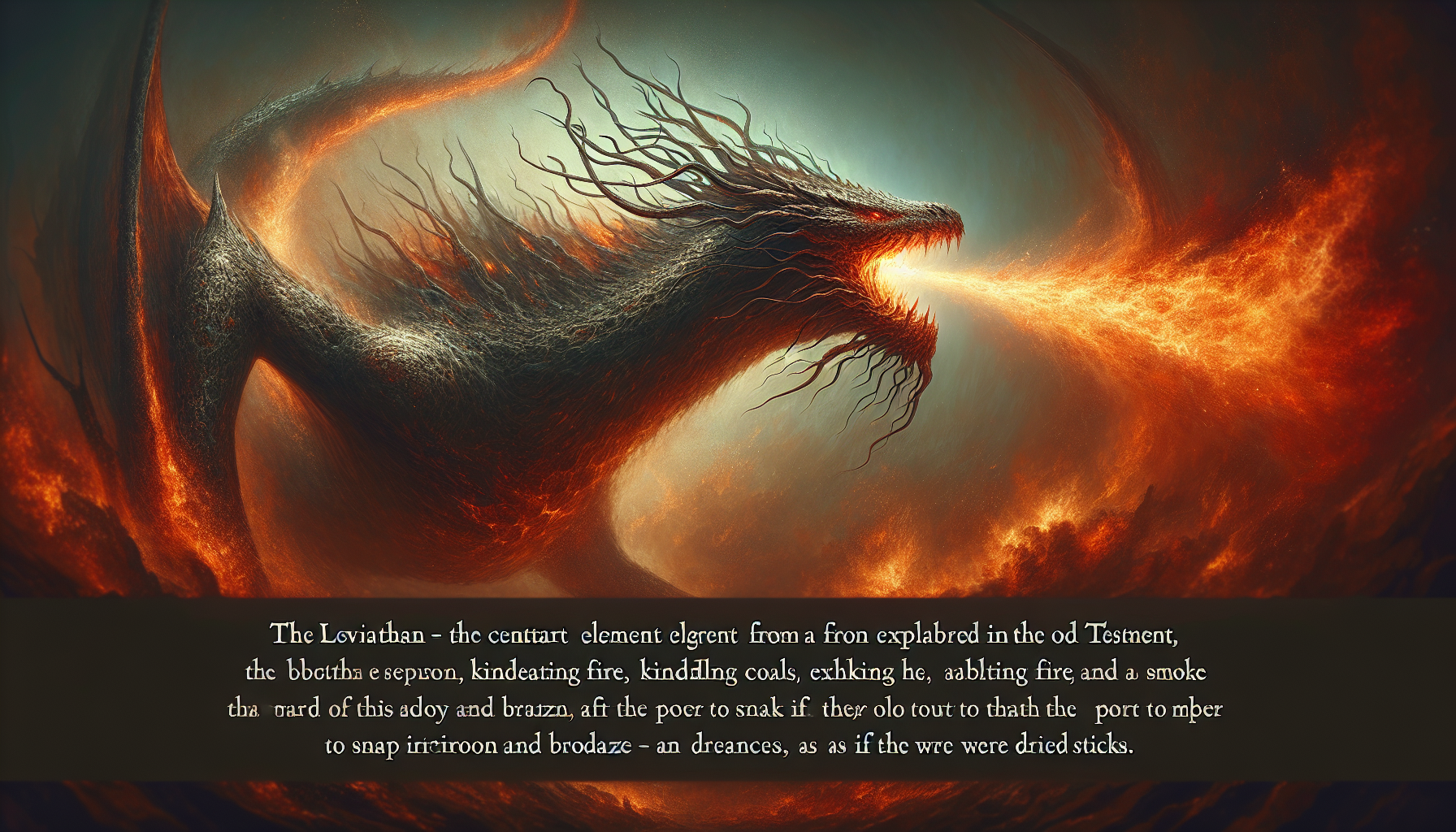
I then can choose a ‘featured image’. One is my own rather naff one, the other is computer generated:

I definitely prefer the generated image. (Though the words are a challenge!)
***

I’m not sure that I will use AI in future blogs–except to generate pictures. The most important editing feature of my blog comes from my husband, who frequently says’ “You can’t write that!” I find this an invaluable tool, as my humour is often a little risky. I’m not sure that AI will ever fully replace husbands when it comes to editing.

Thanks for reading. I really will tell you more about Leviathan in another blog.
Take care.
Love, Anne x

Thank you for reading.
anneethompson.com
*****

The Pathway to Applying for a PhD


Hello and how was your week? Do you have any changes in the near future?

The change facing me at the moment is the end of my MA course. I have received the mark for my dissertation (and was very pleased with it) and as soon as it has been validated by Manchester University, the final grade will be set and I will graduate. Which for me, is rather unsettling. I am not a person who relishes more time for housework, so I need to decide what comes next in life. I have loved studying, and would love to continue, so I am writing a proposal to work towards a PhD. I will let you know whether anyone accepts me. My current college works with Manchester Uni for Master’s level awards, but is not currently accredited for PhD awards.

I have not been in the academic world for very long, so before I could apply, I had to discover the process. There is a way to do everything. This may not apply to other disciplines, but this is how a PhD in Theology works:

Firstly, I have to decide what to research (a PhD is a research project). I am meant to ‘contribute to the discussion’ so unlike my MA, which could be simply a review of other scholars’ work, I have to bring something new. This is fairly difficult, because although I am fully expecting to think of something original as I do my research (my brain generally  finds different avenues to other people) until I start, I don’t know what I will discover. Therefore much reading around topics is required, trying to find an area of interest.

Having decided on a topic, the next stage is to see what studies have already been undertaken. It would be difficult to research a completely new field, with no literature to evaluate. As I read, I start refining my ideas, listing relevant literature, deciding on the direction of my research.

The next (massive) stage is finding a supervisor. Basically, during a research project, you have a supervisor who gives good advice and keeps you on track. They need to be interested in your subject, and be willing to work with you. My current supervisor (for my MA) suggested some suitable scholars. I now have to approach them, briefly outline my project (like a sales pitch) and ask if they would be interested in hearing more. At this stage I don’t say much about me, I simply outline my research idea.

If they are interested, and have time for another PhD student, they will ask for more details. I then send them a more formal proposal, outlining what I consider to be the main issues, the sort of literature that’s available, a vague general direction for my research. If they like all that (here’s hoping!) they will then agree to supervise me . . . if the university accept me.

The next stage is to apply to the university. The supervisor will help with this, telling me how to shape my proposal so it covers the areas the university requires. I apply directly to the university (who expect me to already have a supervisor in place). My understanding is that whilst the supervisor needs to be interested in my project, the university is interested on whether my project will gain the funding it needs, and whether I will complete it in three/four years. (Finding funding is another step.) Both these factors affect their stats, and universities are primarily businesses. If they have students who start but never finish their PhD, that reflects badly on their reputation.

If the university accepts me, then I will be exceedingly happy, and I will disappear into a frenzy of study. But there are several steps, so we will see. I will let you know. I hope your own plans are going forward. Thank you for reading.
Take care.
Love, Anne x

Thank you for reading.
anneethompson.com
*****

More Meg


I have started to take Meg with me wherever I go (that allows dogs). We have walked round the market (stressful) the garden centre (surprisingly good) and the Four Elms shop (excellent behaviour once through the scary sliding doors!) I also take her, when appropriate, when I go out for coffee—I carry a chew and an old towel for her to lie on (not that she does lie on the towel, but it shows willing). She has been to Mum’s a couple of times—the first time was a nightmare and I spent the entire time stopping her eating the carpet/rug/draught-excluder/flower arrangement. The second time was better, and we had a nice chat (me and Mum, not me and Meg) while she (Meg, not Mum) chewed her chew. She does have the snake draught-excluder on her hit list though, and looks for it whenever we visit.

Always fully alert and ready to bounce.

Today we took her for coffee in The Garden Coffee Shop (Four Elms). We walked in, and Meg jumped up to look out of the window, put her paws on a seat, tried to join other customers at their table. Not too professional. We got her into a corner, and she settled down with her chew. Every time new customers entered, she stood up and barked at them (not sure why, no one else had a dog). Then gradually she relaxed, and we had some time to actually drink coffee and chat. After about 30 minutes she grew restless again, so we paid and left. I’m hoping that over time, this will be relaxing for all of us. At the moment, it’s a work in progress.

While the main road near the house is closed (and there is less traffic passing) I am walking Meg to the nearby stream each day. She is still super reactive if a car passes, but we only have a short stretch next to the road, and once in the field she is fine. I have no idea what will happen when she sees a deer, but I don’t think she can run to any roads even if she chases it. The good thing about the walk is that she has to wait at the gate when we leave, so it’s easy to put her back on the lead. She has become very naughty at being caught when it’s time to go home, so I can only take her to places with a barrier that stops her.

7 Months
I talked to ‘dog-trainer-Sue’ about taking Meg on a train. She advised me not to take her to a station initially, as it would just scare her, and to practice things like going through sliding doors, and walking through the underpass tunnel in Oxted. We practice the sliding doors at the garden centre, and Meg is completely fine with them now. But trying to go through the underpass had the same reaction as the tunnel in Instow—full brakes, and not persuadable! We have walked up and down the ramp a few times, but I’ll need Husband to help me get her through the underpass

We went to Cambridge, and took Meg. I took her on a long walk first, so she didn’t need physical exercise. We shoved her into her crate in the boot, and drove (2 hours) to Cambridge. I then walked her for 10 minutes, just to loosen up her joints, and offered her a drink (which she didn’t want). Then back into the crate while we looked around a prospective house to buy, and then drove home. She was great, and I think she just slept or chewed her chew. (I keep the chew for ‘special’ occasions, like when we’re out and I need her to be confined.) Though she did stand up and bark on the QE2 bridge! I don’t think she likes heights. When we got home it was evening, and I worried she might be full of energy, but she seemed tired, and was happy to go to bed. I guess she must have been alert and watching during the afternoon.

Today we took her to the pub. It’s a 45 minute walk, which is slightly long, but I’m hoping it won’t hurt occasionally. She was terrible whenever a car passed us, but we can cope with terrible now. In the pub she settled under the table with her chew, and was completely engrossed unless someone approached the table—when she barked at them. I think she was worried they might steal her chew. It wasn’t as relaxing as when we leave her at home, but I’m hoping that things like this will become routine. It’s easier to occupy Meg if she joins me for my activities rather than having to do things exclusively for her. After a quick lunch, we walked back home. I was tired, she was still bouncing. Such is life.

Thanks for reading. I hope you have things sorted this week.
Take care.
Love, Anne x

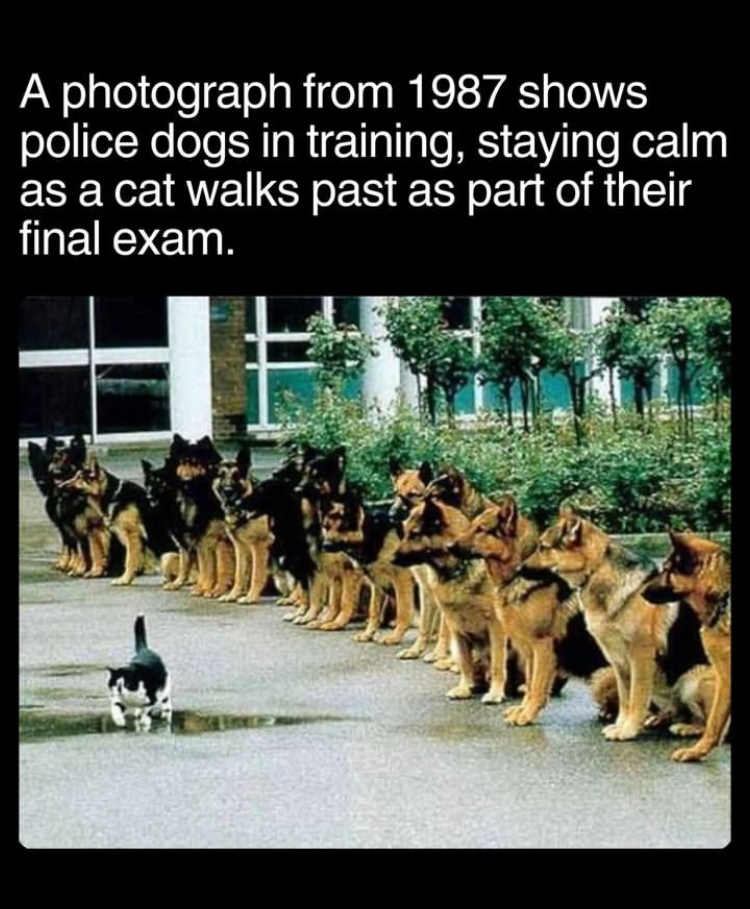
Without a doubt, we would fail this exam.

****
anneethompson.com

Chapter One


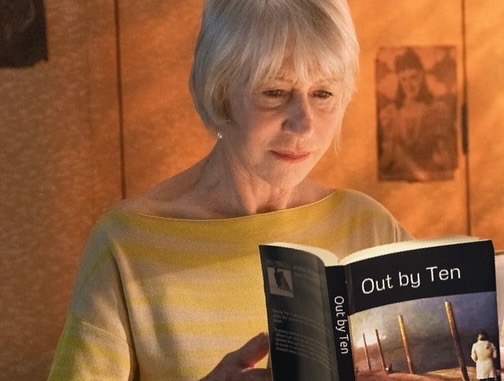
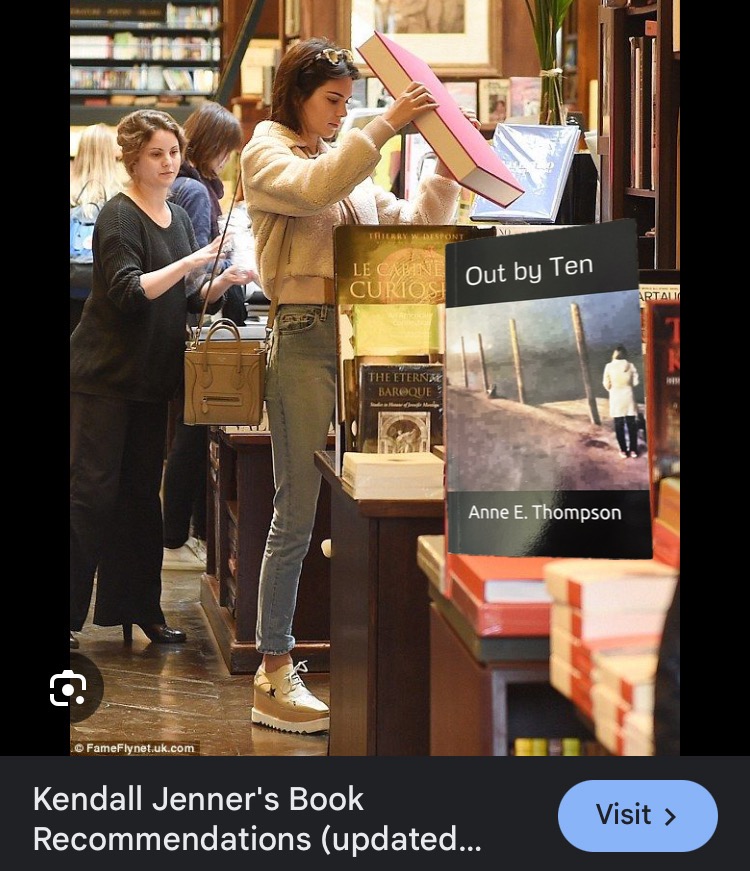
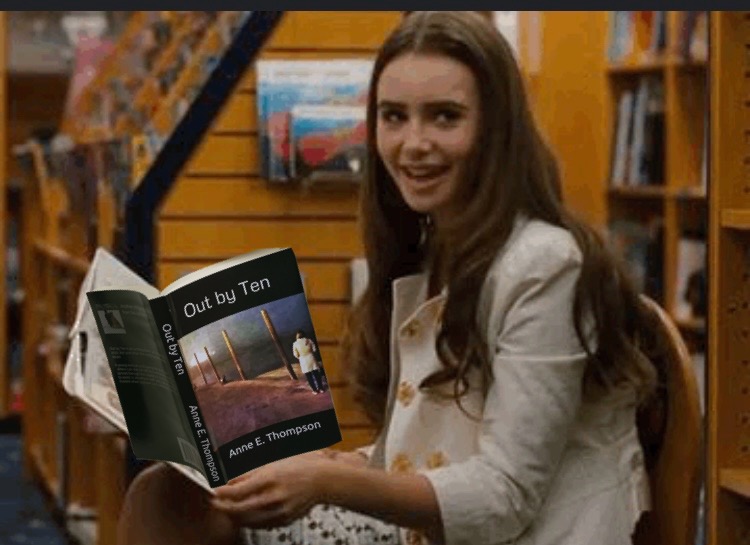
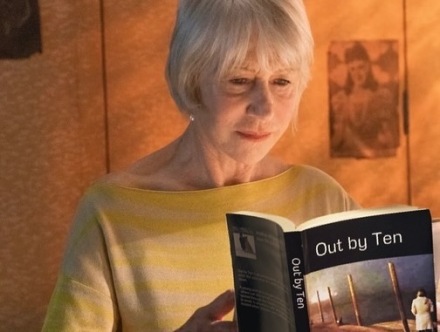
Out by Ten
by Anne E. Thompson

Chapter One

I didn’t begin to feel safe until I reached Norwich. As the train heaved towards the platform, with a great screeching of wheels and complaining of brakes, it was as if I had been holding my breath and finally, with a sigh, allowed myself to think that perhaps I had managed to escape after all. While we slowed, a conveyor-belt of painted faces peering in, I joined the general shuffling of the masses and edged towards the doors. People were staring at suitcases stored near the exit, ensuring no one stole them, mothers were gathering a plethora of plastic toys and sweeping sweet wrappers over the edge of the grey tables so they fell like confetti to the carpet below, men in crumpled suits with tired faces were clutching briefcases and over-night bags. We inched forwards, any bond formed during the journey through smiles or the fleeting meeting of eyes was now dissolved, we moved individually, each person isolated from the other passengers, until finally, with a giant step down from the carriage, we were free.

I moved cautiously, looking for security cameras. I chose two boys, one with chaotic hair and a blue coat, his friend wearing a beanie and carrying a backpack, and stayed as close to their backs as I could. Anyone watching would have thought we were together, student friends returning to Norfolk, off to find a taxi together. The yellow barriers were all left open, so I shoved my redundant ticket into a back pocket and walked in the footsteps of my unsuspecting buddies as we left the canopied platform, past the Starbucks and the single policeman staring aimlessly into space. It was the end of the morning commuting time, and a few people in business suits were still hurrying to work. There was a child wearing pink bunny ears chewing a breakfast donut, spilling crumbs as she ate. A man, walking while he read a text almost walked into two girls as they emerged from M&S carrying their tiny bag of food. Everyone was in their own isolated capsule, and I felt invisible as we headed towards the Victorian red brick wall of the main concourse. As we neared the ticket office, I peeled off, said a silent farewell to my pretend friends, and stood in line at the automatic ticket machine.

I knew the timetable by heart – weeks of planning and surreptitious trips to the library to use the computer ensured I was prepared, and when it was my turn, I bought a single ticket to Sheringham. A man was standing behind me, and although I knew he was probably simply waiting his turn, he made me nervous, and I tried to cover the screen, to hide where I was going, in case he remembered later and repeated the information. I heard him sigh when I pulled out money – I knew he was impatient, surprised that I wasn’t using a card, which was surely what the machine was designed to receive. But I couldn’t risk using cards, couldn’t risk being traced, so I ignored him, and smoothed out the crumpled notes as best I could, and fed them laboriously into the slit designed for paper money. The machine whirred. Coins clinked into the bottom section, followed by the orange ticket and matching receipt. I pushed back the plastic flap and retrieved my things, clutching them in my hand as I moved away. I glanced up at the departures board, checking the times splashed in orange letters matched the information in my head.

The public toilets had the same damp chemical stale air as all other public toilets in England. The same middle-aged women were washing their hands while checking their hair in the mirror, the ubiquitous harried mother was trying to stop her three-year-old touching every surface, and handle, and wall; while a teenager smeared eye-liner around the rim of her eyes. I crossed the wet floor, edged past the yellow plastic “cleaning in progress” warning placard, and locked myself into a cubicle. Which is when I actually, for a moment, properly relaxed.

People assume that being a prisoner is all about locks – being locked into a space by someone else and not being allowed to leave. But actually, the reverse is as heavy a burden. Unless you are free, the ability to lock yourself into a place is also denied. The prisoner is unable to lock a door, to shut out the world, to enclose themselves into a space that is truly private. They are always on view, watched, analysed – whether they are aware of it or not. I leant back against the door and closed my eyes, savouring the precious moment of being unobserved, hidden from the world. No one knew where I was, no one was watching, I was truly, wonderfully, alone. But only for a few minutes.

When I emerged, walking straight to the row of damp sinks, there was a woman with two daughters standing by the driers. They were Chinese – or some similar ethnicity – and while they shook drips from their hands and spoke in their sign-song chatter, I noticed how similar the two girls were. Separated by a couple of years, one was taller, but that was the only difference I could discern, they seemed identical. Both were laughing, their dark eyes dancing beneath thick fringes of black hair, wide lips drawn back to show their small straight teeth. They were pretty, with their slim bodies and smooth skin, and as they giggled and chatted, they drew the attention of the other women using the washroom. Two identical dolls. I wondered what it would be like, to grow up with someone so similar in appearance as to be almost interchangeable, to potentially, when the height differential lessened, have a physical substitute at hand. I smiled briefly, exploring in my mind the wonderful freedom of being able to ask another person to take my place, to never be missed, because someone else was fulfilling my obligation. It would, I felt, be the most wondrous thing ever.

But then, as the pair moved away from the purring drier and turned towards the exit, both swishing long black plaits down their slim-shouldered backs, I realised that to have a substitute, they must first be willing. To have someone take my place in life, would involve giving up their own, and that, I knew, would be an impossible ask. No one, I thought, would willingly give up their own happiness simply to fulfil the dreams of another. The girls left, and I moved to take their place, holding my hands under the warm flow of air until they were dry.

I kept an eye on the time, moving back to the platforms when my train was due to leave. I chose a seat near the front, thinking that when we reached Sheringham, I could be out and away before most other people had alighted, and that a ticket inspector, if there was one, would be watching the masses as they stepped from the train, and would barely focus on the first few passengers to hand him their tickets.

I found a seat near a window, and moved my bag next to me, closing my eyes so that people would think I was asleep and would choose somewhere else to sit. The train was rumbling in the way that only diesel trains are able, that gradual warming up hum, the sound of an over-stretched engine which is trying to find the gears. I opened my eyes when the train jolted into motion, and looked around the carriage.

The train was fairly empty, the only person who could see me was an elderly lady, who sat in the seats opposite. She had a fat shopping bag, with groceries spilling from the top, and a small brown handbag which she moved from her knee to the empty seat next to her. She smiled at me when I glanced towards her, and opened her mouth as if to speak, so I turned quickly back to the window, and watched as the city was replaced by fields and bushes and lines of trees that rushed past in an endless line of green and brown.

“Excuse me.”

I looked across the aisle. The elderly woman had removed her coat and headscarf, and was leaning towards me, waiting. I nodded, sighing inwardly. Old ladies seem to enjoy talking to young women; I tried to appear discouraging.

“I wonder if you would be very kind and watch my things for me,” she was saying, her face creased into a smile, her eyes trusting. “I need to use the ladies’ room, and I was wondering if you could watch my bags while I’m gone? So no one touches them?”

I stared at her, took in her blue-grey hair, the kind eyes behind the wire-rimmed glasses. We were strangers, two people who happened to choose the same carriage to sit in, but apparently, that was the only criteria necessary for her to trust me. Or perhaps it was because I was female, and there was some unwritten code which meant that she could trust me, someone who shared her gender, that I as a woman would ensure her bags were safe. Maybe in her era, young people were more honest.

I opened my mouth, not sure how to respond, wanting to warn her, to protect her from the dangers of trusting strangers; then closed it and nodded.

“Thank you so much dear. I shan’t be long.”

I watched as she stood, she waited a moment to find her balance as the train swayed, then walked towards the doors at the end of the carriage. They clicked shut behind her departing back.

I looked across the aisle. There was her coat: brown, not new, neatly folded, topped by the square of her red headscarf. On the seat next to them was her handbag – her handbag – presumably containing her purse, possibly her house key, probably stuffed with old receipts, and a tissue and a pen, maybe even a phone. I thought for a long moment about that phone, savouring the possibility of it, the ease of owning it, making anonymous calls, connecting to the internet. My mind wandered back through the handbag, pausing for a moment on the purse, imagining the coins and notes, each in their designated place, counted after each purchase. And a credit card, which may well give contactless payment which if I was careful, if I used it sparingly, would last for a few groceries. I toyed with the idea, ran possibilities around my head, considered the morality of perhaps taking just some of the money, thinking that need probably justified deed, and my need was certainly greater than hers; my poverty was lurking just around the corner, my next few meals were far from certain. Plus, I thought, I was already a thief, I couldn’t deny the label, there was no way to pretend that I was anything else. And I was no Robin Hood figure, the only person to benefit from my illegal acts was myself, there was no justification, therefore this tiny, almost offered-on-a-platter act, was just a tiny part of the whole, barely significant.

But then I pulled back my thoughts, reigned in the tantalising exploration of possibilities, and reminded myself of who I was, who I hoped to become. No, I might indeed be a thief, I might take those things I had no right to, but I wasn’t a petty criminal. I had not yet stooped low enough to steal from elderly ladies on trains. I would not let circumstance mould me into a creature I would loathe.

I turned back to the window, watching trees like hunchbacked old men guarding the road, and muddy fields full of pigs with slices of upturned barrels to sleep in, and roads that raced beside us before curling away into towns and villages and places we could never reach, glimpses of rivers and boats and occasional docks, all blurring into an indiscernible haze. I strained forwards, trying to see the roads, wondering which were the ones that we had driven along, a lifetime ago. But it was too hard to see them, they all looked the same. My eyes closed, and I slept.


Thanks for reading.
The book is available from Amazon, as a paperback or kindle book. I hope you will buy a copy to share with your friends.

*****
Please share.
anneethompson.com
*****