Artificial Intelligence


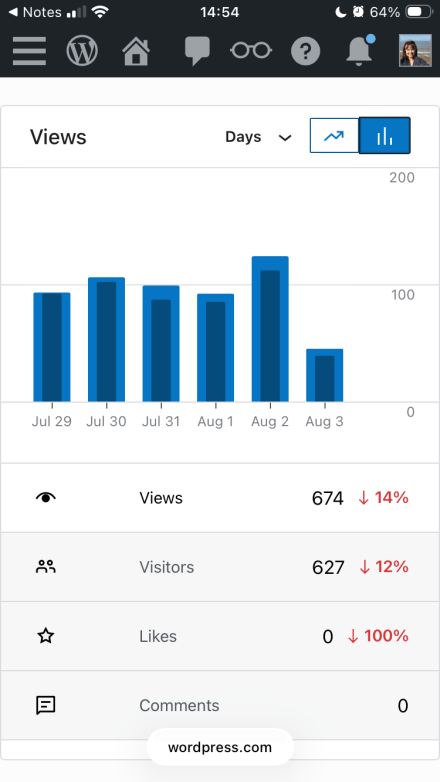
Have you used AI at all? I am bit of a dinosaur when it comes to technology, and I tend to only learn what I absolutely have to learn, in order to achieve what I want to achieve. (I am waiting for when AI can clean a dirty bathroom and sort the laundry out–that would be an excellent use of resources.) However, I have used the picture-drawing tool on my WordPress site, for my blog, and this has been fun. Mostly though, AI has removed some of my fun. One of the features that WordPress offers is details of various stats–how many people have read my blog, which countries it has been read in, which posts are particularly popular. It was fun, and after publishing a new post I would usually check to see how much traction it gained, always hoping it would be shared on social media so it would spread beyond my faithful email followers. Maybe one day something would ‘go viral’ and a post would become ‘famous,’ read by millions.

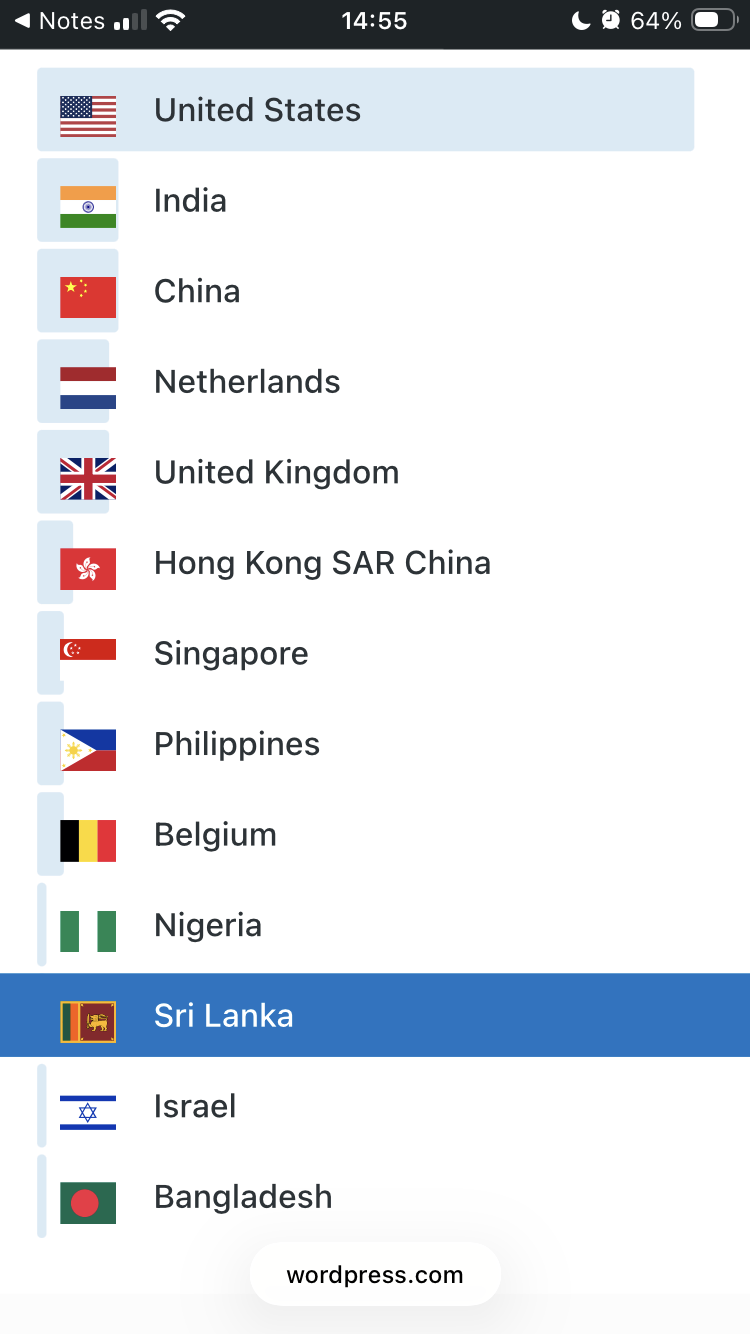
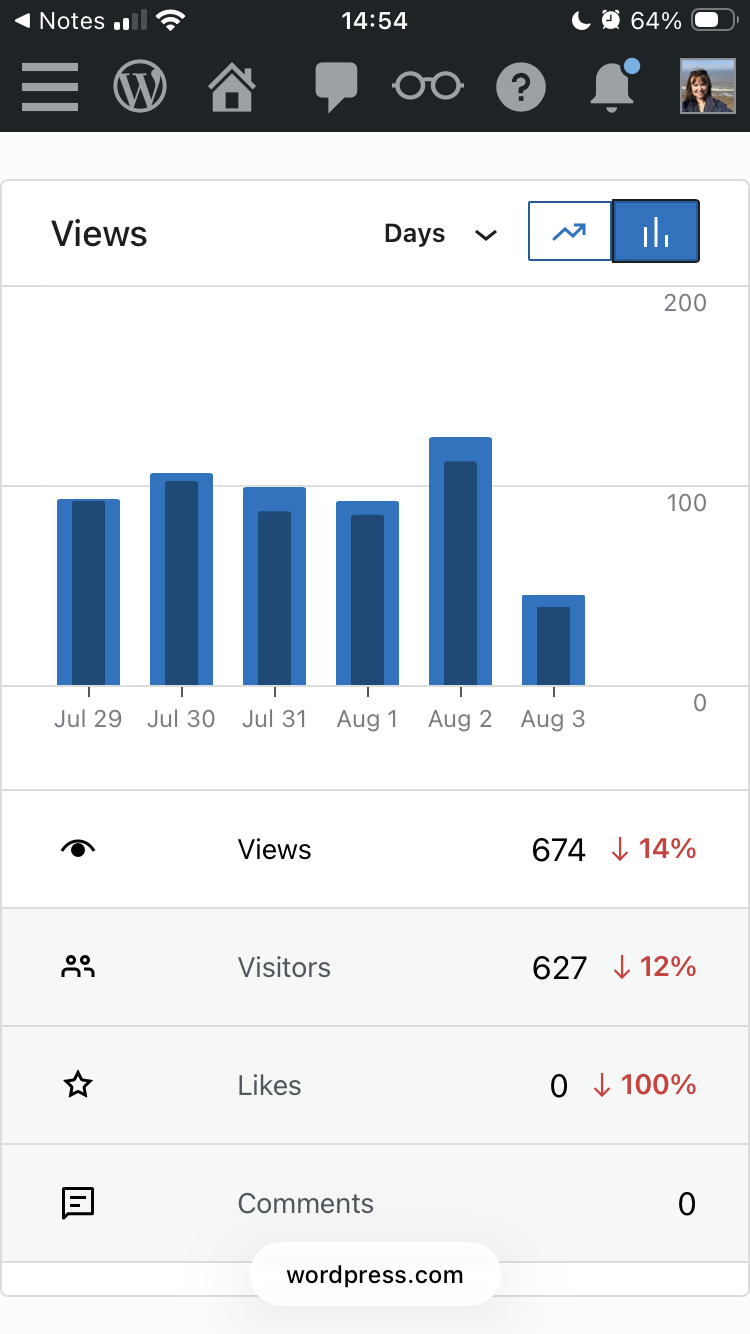
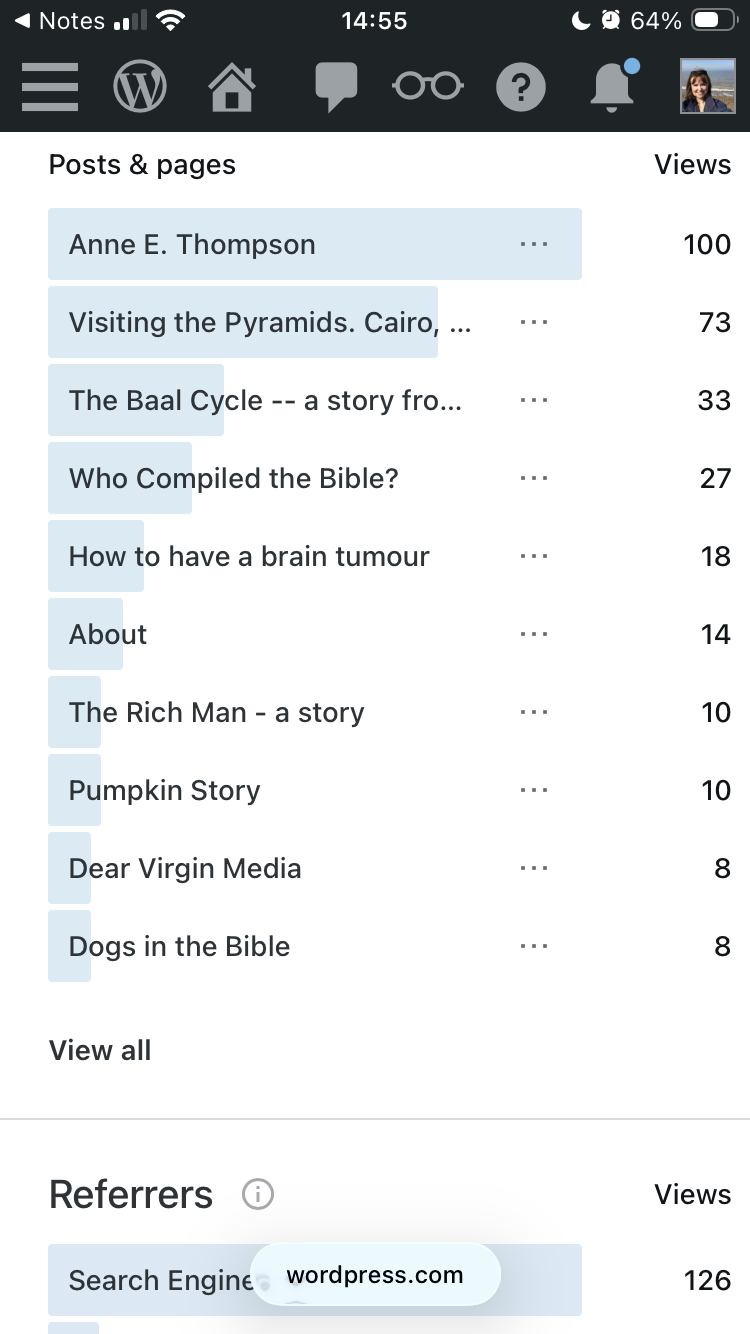
However, this changed recently. I noticed my normal stats (in addition to my 500 followers, usually around 30 extra readers each week) had suddenly shot up. I didn’t think this was because I was more popular, I think it’s because my work is being read by bots. I think computers are reading everything on the internet, AI is learning, my blog just happens to be one of the things hundreds of bots are reading. Which is much less satisfying than humans reading my work. I do not think it’s coincidental that most of my ‘readers’ are now in the US, India and China. It feels a little weird to be ‘read’ by a machine. But I guess if they are ‘learning’ then my blogs are as valid as any other voice. Perhaps they will one day even understand my humour.

I am regularly ‘fooled’ by AI in everyday life. Like when I try to complain about something, and am having an online conversation with a ‘person’ who seems to be on a loop–a sure sign that I am talking to a machine. I also believe things that I shouldn’t–like that a restaurant has lots of brilliant reviews, when I know that AI is able to write reviews and post them to any business willing to pay. I understand that even online news articles are sometimes written using AI, which means what we read as ‘fact’ might not be factual at all. It makes for a confusing world, one where we are not sure what to trust. I guess we need to learn new ways of looking at things.

I think it’s more of a problem for older people (like me). I was discussing my fears with one of my sons, saying that when I watch cute cat videos on Instagram, I am sometimes aware that they are fake. Cats would never behave like the ones in the video, it has been created by AI not filmed by a loving owner. My son said this problem was not particularly one for younger people. They have grown up knowing that anything online might be fake, seeing is not believing. He said it is my generation who read something in the news, or see a video, and automatically assume it is true. Because in the olden days, when I was a child, it would have been true. Something in a photo really happened. But not today. Today we need to be wise, we need to not trust the media, not trust what we see. Which seems a shame. But perhaps it has always been like that. Perhaps we gave authority too easily to the church, the school, the BBC. Perhaps even in the olden days we should have paused more often, we should have questioned ‘is this true?’ Perhaps information has always been unreliable, or biased, it’s just that today we are more aware of it. What do you think?

For my readers who are not bots (and who might enjoying sharing the occasional blog with other humans) thanks for reading. Be wise and pause before you trust.
Take care.
Love, Anne x
Using Artificial Intelligence


Hello, how are you? Have you ever deliberately used artificial intelligence? It is something that I have shied away from, but I noticed that my blog platform offers it as a tool. When I publish a blog, I can review it using A.I. It offers me an alternative picture, and will ‘read’ my writing and suggest improvements. I decided to test it. Below is a blog article that I wrote and uploaded.

Underneath the post, I show the suggestions offered by AI Assist.

My Original Blog Article: What does Leviathan Represent in Job 42?

The Book of Job in the Old Testament has been discussed for centuries, and scholars agree on very little. I therefore decided that this would be an excellent book to base my dissertation on. I have always been fascinated by the description of Leviathan in chapter 42—and even though my English translation has a footnote, telling me that Leviathan is a crocodile, I found this annoying. The Leviathan breathes fire, his breath kindles coals, he exhales smoke and is able to snap iron and bronze as if they are dried sticks—surely this describes a dragon rather than a crocodile.

I began by reading the Book of Job. Very briefly, the story is this:
God meets with the heavenly host, and speaks specifically to ‘the accuser.’ (Some people translate this as ‘Satan’ but the Hebrew word for ‘accuser’ is ‘satan’ and it has the definite article, so I think it’s unlikely to be a name, and more likely a role—like ‘the accuser’ in a court of law.)

God says how delighted he is in Job, who is a very good man, and he asks the accuser if he has noticed Job. The accuser replies that yes, he has, but he believes that Job is only good because of what God has given him. God then says the accuser can test his theory, but he mustn’t kill Job. Then we switch to a different scene, and most of the book describes what happens on earth.

Job is a good man, with family and wealth and good health. He basically then loses everything. His children die, all his wealth is stolen or destroyed, his health fails and he is in agony. At this point, three friends come and sit with him, for a while silently sympathising. Then Job speaks, saying that none of this bad luck is fair, and he would like to challenge God about it.

There are then several long (and quite boring) speeches that take an amount of resilience to read! The friends each in turn tell Job that he must have sinned, because God is good, and if Job repents than ‘voila!’ God will restore his health. Job replies to each one, stating that he didn’t sin, and it isn’t fair, and he challenges God to justify the situation. Then there’s a speech by another character, which says much the same as the friends.

Finally, God replies. In God’s first speech, he shows Job creation, displaying his splendour, comparing it to humanity’s insignificance. Job basically replies by agreeing that yes, he had always known that God was great—nothing has changed. But then, God speaks again. This time he shows Job two monsters, Behemoth and Leviathan. After seeing Leviathan, Job says ‘Now I get it! Now I see who you truly are.’ He worships God.

The book ends with (in my view) a strange contradiction of all that has gone before, as Job is given more children (though his first children remain dead—which any parent will tell you is not okay). Job also gets more wealth—though there is no mention that he is healed. He dies after a long life (potentially lived in constant pain).

My interest is in Leviathan. What was there, in God’s description, that changed Job? Why did he suddenly understand, why did he say he had seen God? Why did this mean that losing everything was okay? I will tell you more in another blog.

****

The A.I. generated suggestions for the title are as follows:

The Book of Job: Leviathan and Divine Revelation

This title highlights the central focus of the content, the divine revelation through God’s description of Leviathan and its impact on Job, attracting readers interested in biblical analysis and interpretations.

Understanding Leviathan in the Book of Job: A Dragon or Crocodile?

This title sparks curiosity by addressing the debate of whether Leviathan represents a dragon or a crocodile, engaging readers seeking insights into the symbolic meaning and theological significance within the Book of Job.

Significance of Leviathan in the Book of Job: Unveiling Divine Wisdom

By emphasizing the significance of Leviathan and its role in revealing divine wisdom, this title appeals to those exploring the deeper spiritual and philosophical themes in the Old Testament, capturing the interest of a wider audience.

***

The suggested improvements to my blog article are as follows:

AI Assistant


The content’s main language is English.

The post content is engaging and offers a thorough review of the Book of Job in the Old Testament. It provides a personal perspective and raises thought-provoking questions about the character of Leviathan and its impact on Job. Consider breaking down some complex sentences for easier comprehension and refinement of the message. Utilize subheadings to enhance the readability and structure of the content. Keep up the insightful analysis and continue to explore the significance of Leviathan in the next blog.

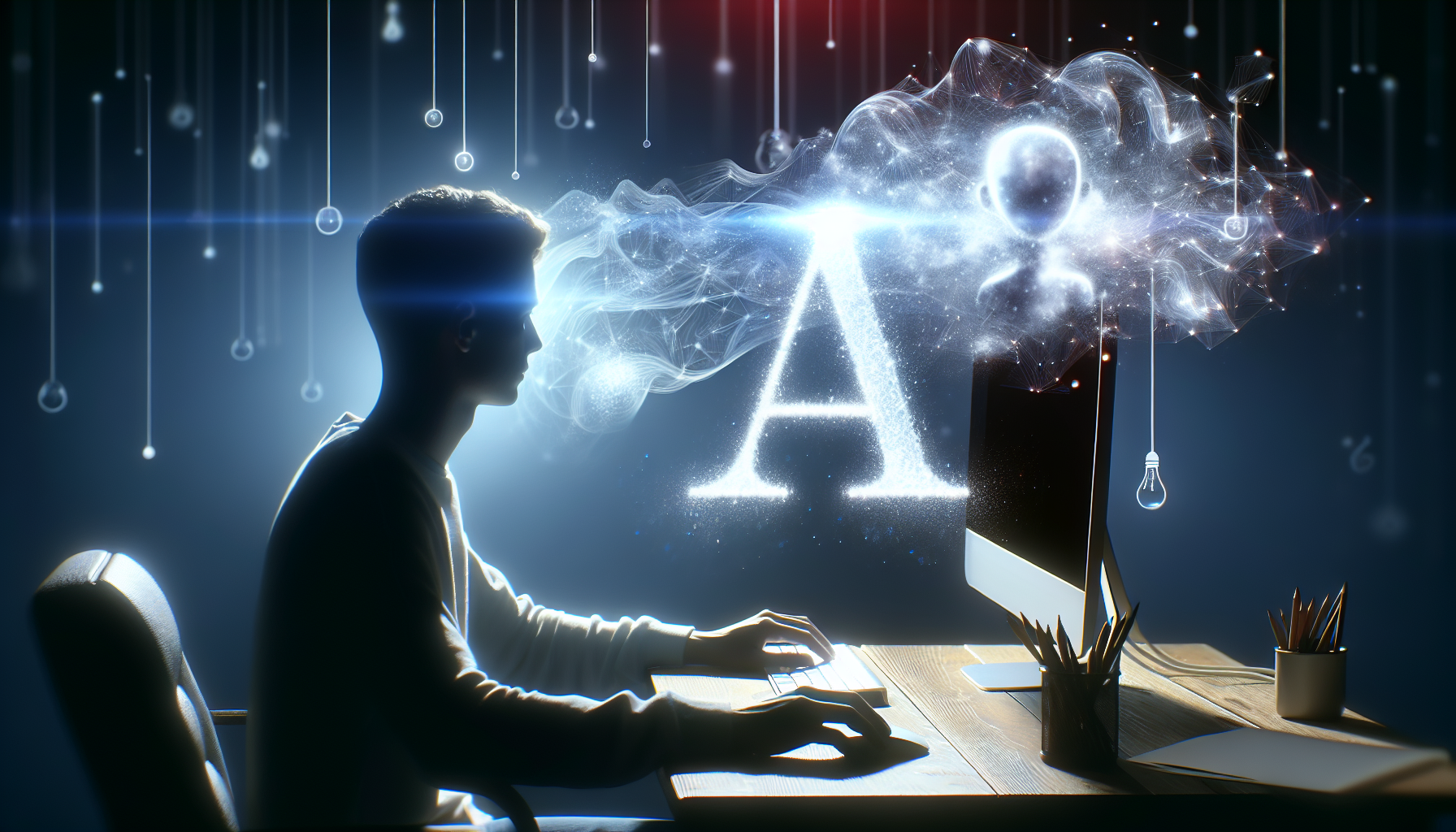
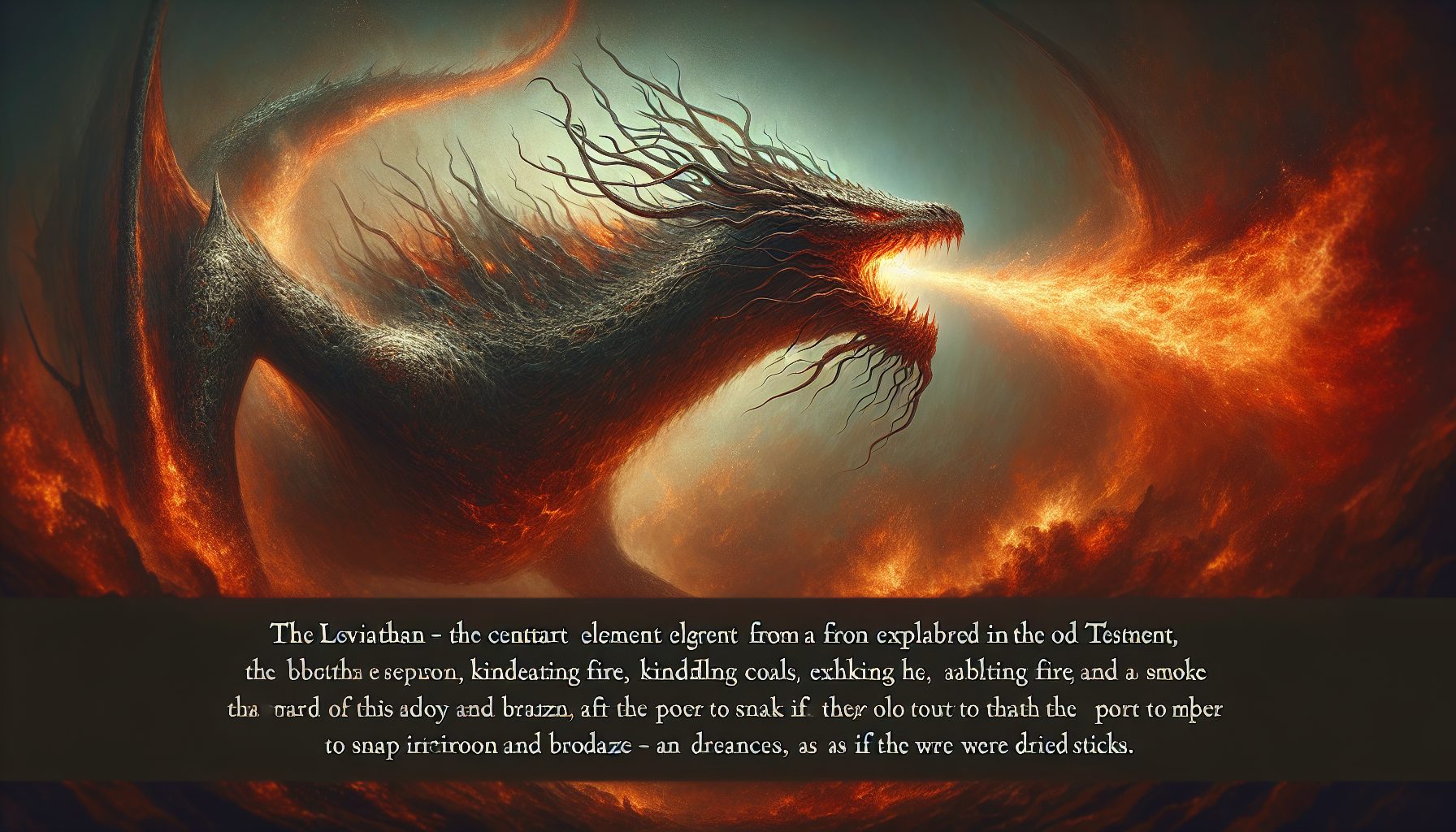
I then can choose a ‘featured image’. One is my own rather naff one, the other is computer generated:

I definitely prefer the generated image. (Though the words are a challenge!)
***

I’m not sure that I will use AI in future blogs–except to generate pictures. The most important editing feature of my blog comes from my husband, who frequently says’ “You can’t write that!” I find this an invaluable tool, as my humour is often a little risky. I’m not sure that AI will ever fully replace husbands when it comes to editing.

Thanks for reading. I really will tell you more about Leviathan in another blog.
Take care.
Love, Anne x

Thank you for reading.
anneethompson.com
*****