A Church — Not necessarily an evangelical one, I have never been inside.
Before I went to college, I would have described myself as an ‘Evangelical Christian.’ Now I’m not so sure. To be honest, I didn’t really know what the term meant—I assumed, as it contained the word ‘evangelical’ it meant that the person thought it was right to ‘evangelise,’ in other words, to tell other people about God. However, depending on who you speak to, it means different things. And sometimes it’s used as an insult in the Christian world. Shocking! Or maybe not…
There is a handy (if not scintillating) book that defines what ‘evangelicalism’ means, using seven points.[1] If I am honest, I have been aware of these within churches I have attended, and they’re not always good. What do you think?
Conversion. To be a Christian, evangelicals tend to emphasis a moment in time when you committed yourself to God. They talk about ‘repenting of your sins’ and ‘changing direction’ and asking God for forgiveness. I too think this is an important step, though I’m not so sure it happens only once, and certainly not necessarily at the start. I also don’t think there’s an ‘in’ and an ‘out’ and until you have ‘prayed the prayer’ you are definitely in the ‘out’ club (if you see what I mean!) Things are fuzzier than this, in my experience.
Assurance of Salvation. This means a belief that Christ becoming human, living, dying and rising again is all that is necessary for salvation. It slightly contradicts point one above (in my view). Now, being sure you have been accepted by God is important, but I’m not sure that everyone gets there all at once, in a single leap. Nor am I sure that we agree on what ‘salvation’ is. People talk about ‘going to Heaven when I die’ but (as discussed before) that’s what Plato taught, not the Bible. Again, I think things might be fuzzier than sometimes presented. I also worry that ‘assurance of salvation’ is most often used to point a grubby finger at the person who we are ‘sure has not been saved’! Comments such as: “Oh, he was ever so kind, and he’s not even a Christian you know,” tend to be revealing.
Biblicism. Evangelicals tend to say they believe the Bible is the ‘Word of God’ and available to everyone, but then go to great lengths to explain every contradiction and to teach things the way they believe them. Whilst they might be right, they might also be wrong, and maybe a little more caution is called for. It’s easy to find verses in the Bible that support your beliefs. The KluKluxKlan did it, so did the fascists. I think that using the Bible to learn who God is, is great. I think using the Bible to make rules for other people is not so great.
Prayer. Evangelicals believe that prayer is important—both private prayers and prayers in church. The early evangelicals taught that prayer should come ‘from the heart’ (which I agree with) and therefore pre-written prayers, and especially liturgy, are not really prayer. (This part I disagree with.)
The Cross/Penal Substitution. This goes back to point 2., that Christ died to save us from our sin. This is a huge concept, and I don’t think we really understand it, so I won’t comment. I do believe Christ died, and I do believe that somehow that repaired the relationship between God and us. But I don’t know how exactly, and I am suspicious when others seem very certain about concepts which seem to me to be beyond human understanding.
Holiness. When we are saved (see point 1.) it will affect the way we behave. The ancient Methodists believed it was possible to become sinless. The ancient Baptists believed holiness should be pursued through behaviour. In the 1870’s the Keswick Convention was set up, to try and decide this issue. They stated that ‘sin is perpetually counteracted.’ (Keswick is also home to an excellent kitchen shop, which is unrelated.) All I know is, I am not perfect, some terrible people do some really good things, and some apparently ‘holy’ people do really bad things.
Mission. After conversion (see point 1.) a Christian will be dedicated to God’s service, hoping to convert others. Sometimes this can feel like ‘scalp-hunting’ if done badly. At best, it’s the sense of having something special and wanting to share it with others.
Unfortunately, the Church is made up of humans, and none of us get it right. God is very patient with us. I find it helpful to step back, and look at what defines the things I believe, and then to decide whether they are really the things I believe, or if they are simply unquestioned teaching.
[1] Peter J. Morden, ‘Evangelical Spirituality’, in Andrew Atherstone and David Ceri Jones (eds.) The Routledge Research Companion to the History of Evangelicalism (London: Taylor and Francis, 2018).
Thank you for reading. anneethompson.com You can sign-up below to follow my blog.
It’s time to do all those jobs that happen every year at this time. It doesn’t feel much like spring here at the moment, as we’ve had snow and frosts all week. But the mornings are lighter, and the animals know, even if we’re not sure. Depending on where you live, you will either have put your clocks forward an hour, or be preparing to do so. We move our clocks on the 26th March this year, so the US and Canada are ahead of us.
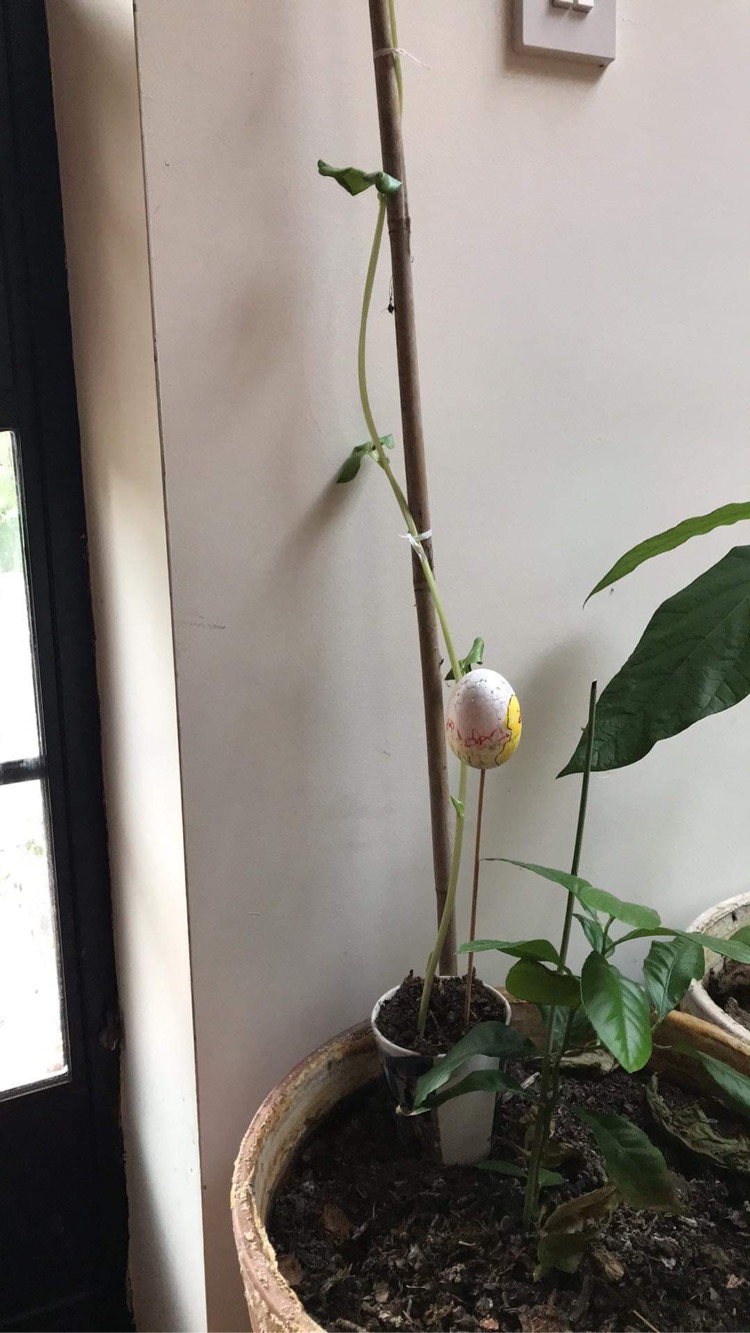
One Christmas gift (which feels like yesterday) was a pot and a packet of beans. We’re having a family competition, to see who can grow the tallest bean. It has to be in the pot provided, which wasn’t very deep. Mine grew to 67cm, then it decided the kitchen was too warm and the pot too small, and died. I planted the remaining seeds outside, and they don’t seem to mind the cold and are looking healthy. I expect the slugs will eat them, but here’s hoping.
My bean, growing next to a lemon pip (which is slower but less fussy).
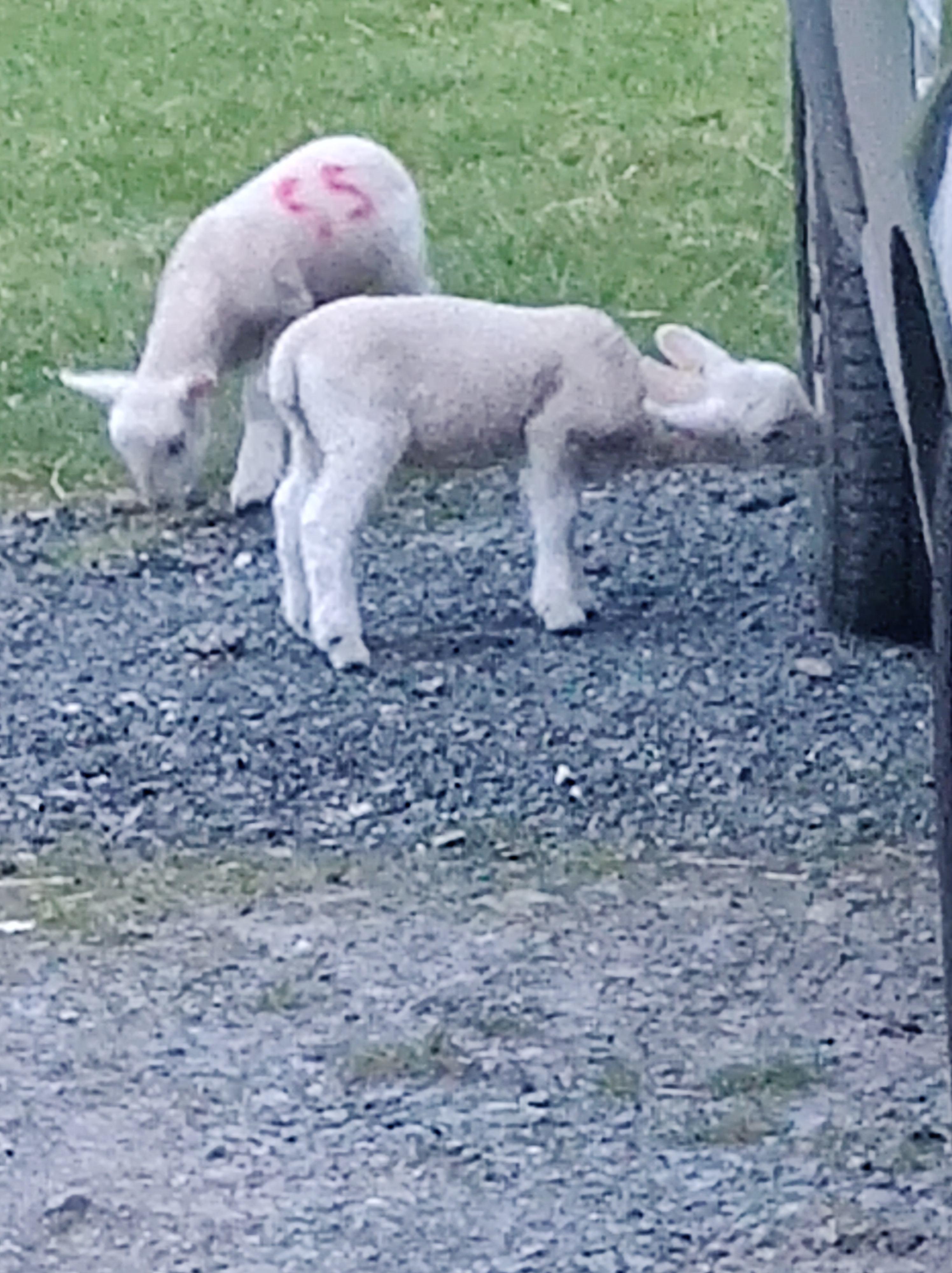
The birds know it’s spring. The ducks have started laying, even though it’s cold, so April will be busy with ducklings again. There are already lambs in the fields. The cycle of life begins again.
We also have a wren in the garden. Male wrens are busy at this time of year, collecting things to build nests. Nests plural. A male wren builds several nests. When he manages to attract a female, he takes her on a tour of the nests, she chooses the best one, and lays her eggs. He then goes off and finds another female, and repeats the tour with the remaining nests. He’ll do this until all the nests have females, sitting on his offspring. Not the sort of male you want to introduce to your daughter. He’s a tiny brown bird, but has something (which I cannot remember the name of) in his lungs, which amplifies his voice. A tiny bird with a loud song. I’m rather fond of him, so I hope the cats don’t catch him.
Spring this year will be busy for me too. I need to sort out the house, because my daughter is moving home for a few months between selling her flat and buying a new property. This will be fun, but I need to make space for her. Though once I have emptied some cupboards, the job will be finished. I also need to write the proposal for my dissertation, which is less fun. I have to submit the title of my thesis, explaining what I plan to research and why, with a list of all the literature I plan to read and why it will be relevant. I am going to explore the dragon in the book of Job (chapter 41) which will be interesting, but being assessed makes it more stressful. But at least I only have to produce one, and I can submit that to the university and they will either love it or not. Being a wren and having to repeat that many times over each year must be a whole different game.
Hoping that all you attempt this week grows well and is completed on time. Thanks for reading. Take care. Love, Anne x
Thank you for reading. anneethompson.com Sign up below to follow my blog.
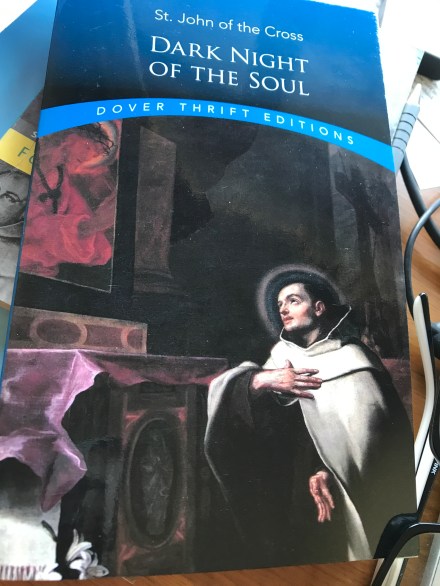
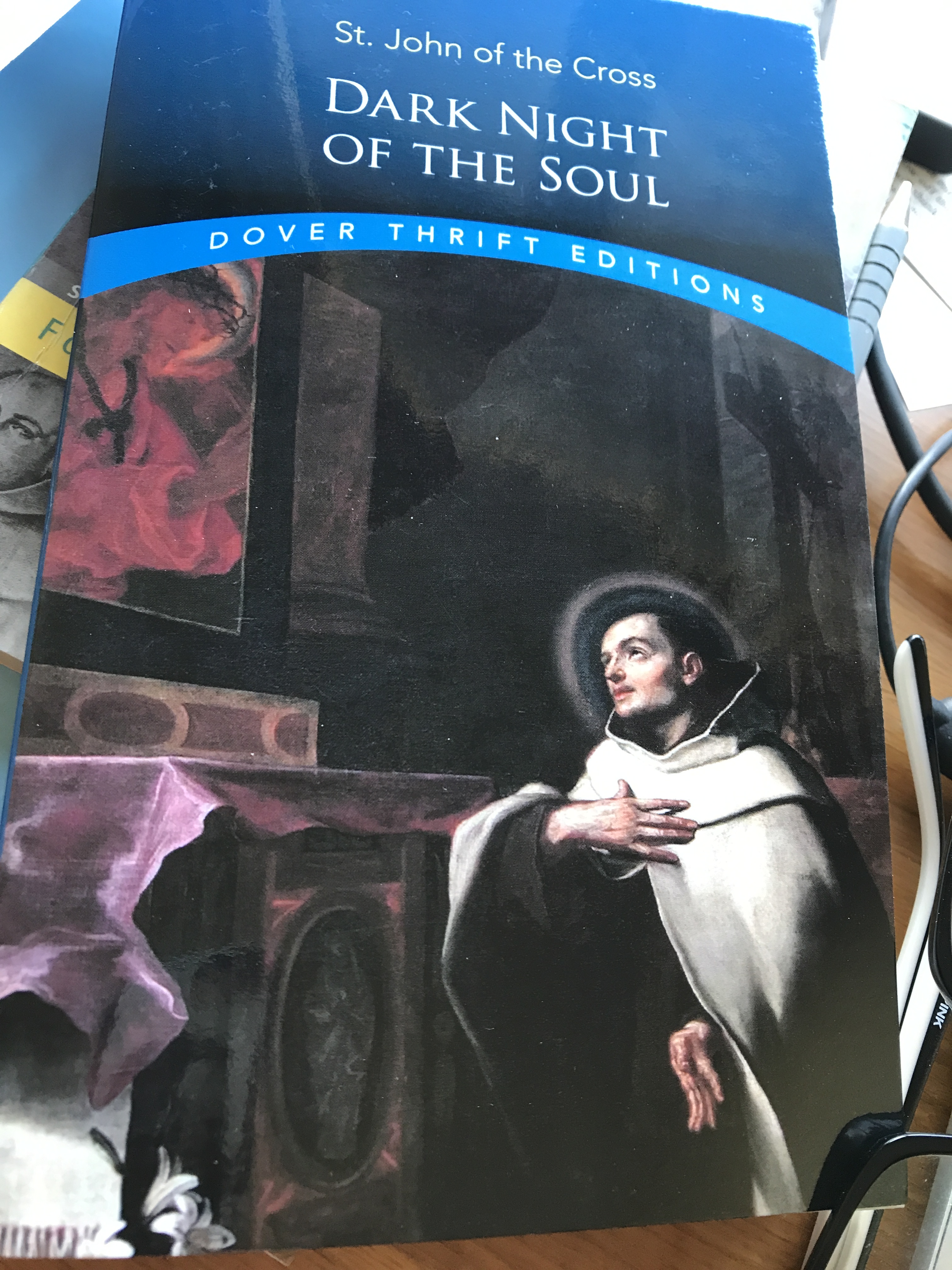
When my lecturer said that the influence of St. John of the Cross was hugely significant, even today, I thought, ‘Hmm…’ I have grown up amongst churchy people, and I had never heard of him. Then, later in the week I was watching an episode of ‘Call the Midwife’ and they referred to ‘The dark night of the soul.’ Perhaps my lecturer was right; if it’s reaching as far as a series on telly, I maybe ought to know more.
St. John of the Cross, or Juan de Yepes, was a Spanish monk in the 16th century – the time of Spanish wars with the Moors, Martin Luther writing his thesis, Queen Elizabeth ruling England, the Spanish Armada and the Europeans venturing to America. His father was a converso (from a Jewish family that had converted to Catholicism) and he was rejected by his rich family when he married John’s mother. John grew up poor, and when his father died his mother placed him in a Catholic orphanage, where he was educated and taught a trade—though Burke remarks that he was, “a spectacularly unsuccessful apprentice” and all his employers fired him![1] He ended up nursing in a hospital for syphilis patients, which was the equivalent of nursing AIDS patients in the 1980s. He later took vows, and then joined Teresa of Avila as a ‘barefooted’ monk, trying to reform the abuses of the Church from within.
St. John was a mystic, which means he considered things that cannot be explained. He believed the soul was separate to the mind and body, and I’m not sure that I agree with him. I think people are maybe more ‘whole’ than this (in the same way that I don’t think Heaven is full of dis-embodied souls floating around). Much of St. John’s thinking seems to have been influenced by Plato (who also separated the soul and the physical). Some people suggest we should have “a hermeneutics of suspicion” when examining the mystics.[2] (‘Hermeneutics of suspicion’ is bit of a fashionable phrase at college. ‘Hermeneutics’ simply means how we interpret the text according to our experience, so the phrase is a fancy way of saying ‘Don’t trust everything you are told.’)
St. John had a rough time, with lots of paranoia around, due to the Spanish Inquisition, and the Reformation—so when people rejected his beliefs, he was imprisoned and tortured. It was after this that he wrote a poem: ‘Dark Night of the Soul.’
The poem is similar in style to Song of Solomon in the Bible, and depicts God as a lover. The night reflects the horrors of his time in prison, but with God by his side he has no fear. Some time later, St. John wrote prose by the same name, to explain his poem. He’s fairly wordy, and writes very long sentences, but usually his meaning is clear (you do need to concentrate while reading though, and spousal interruptions are very annoying!) My feeling is that he wrote the poem in a splurge of emotion, putting words to his feelings. Later, he tried to explain the words and the theology behind them (I wasn’t sure that the explanation always fitted the poetry).
St. John believed that there were three different states of being a Christian: Beginner, Progressive and Perfect. Perfection is achieved after physical death. Many people never develop further than ‘Beginner’ as they become complacent, they enjoy using the gifts God gives them, and never seek to develop their relationship further. They are self-satisfied, they feel they know all the answers and are contented in their relationship with God. Although they strive to please God, and to pray, to give to charity, and offer penances, their religion has become more important to them than God himself, and they stop trying to develop their spiritual relationship. (This rings true.)
He describes ‘spiritual gluttony’ where Christians enjoy spiritual gifts for their own sake, and become increasingly religious whilst not being closer to God. They rely on feelings, and if their prayers or works don’t result in feeling peaceful, joyful, holy, they then consider them a waste of time. It is like they think God ‘owes’ them in return for their devotion.
To develop into a ‘Progressive’ one must pass through the ‘dark night,’ which is a state instigated by God. St. John describes a dark night of the senses, which tends to follow a time of spiritual happiness, when the person feels close to God and peaceful but is then plunged into depression, with God out of reach. (This reminds me of when as teenagers several of us were baptised, and afterwards most of us experienced a ‘low’ time, and some stopped coming to church completely.) He writes that God gives this time of depression so the person can become stronger, relying on God and not on the feelings of God (peace, joy, contentment). It reminds me of the Book of Job, which teaches that God is worthy of worship because he is God, not because it results in good things for the worshipper.
St. John views this time of depression as a purging of the soul, a time when instead of feeling good and happy, a person is turned back to honouring God through love and discipline, even though they feel they are gaining nothing in return. I’m not sure how this fits with our modern culture, where mental health seems to mean people should never be depressed. Whilst there is, I believe, a mental illness that should be treated, there is also perhaps a time when mentally healthy people feel depressed, and perhaps we shouldn’t run from this. Perhaps we can learn more from our ‘low’ times than our ‘highs.’ In the poem, the house represents the physical and mental state, which are allowed to rest while the soul meets with God. God then kindles a love, which is not necessarily felt, yet is still real. This is a good, happy thing. The soul is free to meet God without being confused by emotions, it has escaped.
La noche oscura del alma
En una noche obscura, con ansias en amores imflamada, ¡oh dichosa uentura! sali sin ser notada, estando ya mi casa sosegada.
A escuras y segura, por la secreta escala disfraçada, ¡oh dichosa uentura! a escuras y ençelada, estando ya mi casa sosegada.
En la noche dichosa, en secreto, que nadie me ueya, ni yo miraua cosa, sin otra luz ni guia sino la que en el coraçon ardia.
Aquesta me guiaua mas cierto que la luz del mediodia, adonde me esperaua quien yo bien me sabia, en parte donde nadie parecia.
¡Oh noche que me guiaste! ¡oh noche amable mas que el aluorada!, ¡oh noche que juntaste amado con amada, amada en el amado transformada!
En mi pecho florido, que entero para el solo se guardaua, alli quedo dormido, y yo le regalaua, y el ventalle de cedros ayre daua.
El ayre de la almena, cuando ya sus cabellos esparzia, con su mano serena en mi cuello heria, y todos mis sentidos suspendia.
Quedeme y oluideme, el rostro recline sobre el amado, ceso todo, y dexeme, dexando mi cuidado entre las açucenas olvidado.
Dark Night of the Soul
On a dark night, Kindled in love with yearnings –oh, happy chance!– I went forth without being observed, My house being now at rest.
In darkness and secure, By the secret ladder, disguised –oh, happy chance!– In darkness and in concealment, My house being now at rest.
In the happy night, In secret, when none saw me, Nor I beheld aught, Without light or guide, save that which burned in my heart.
This light guided me More surely than the light of noonday To the place where he (well I knew who!) was awaiting me– A place where none appeared.
Oh, night that guided me, Oh, night more lovely than the dawn, Oh, night that joined Beloved with lover, Lover transformed in the Beloved!
Upon my flowery breast, Kept wholly for himself alone, There he stayed sleeping, and I caressed him, And the fanning of the cedars made a breeze.
The breeze blew from the turret As I parted his locks; With his gentle hand he wounded my neck And caused all my senses to be suspended.
I remained, lost in oblivion; My face I reclined on the Beloved. All ceased and I abandoned myself, Leaving my cares forgotten among the lilies.
Translation by Edgar Allison Peers
I’m finding the writing of these ancient monks to be challenging. Whilst I disagree with the way they tried to find God, it’s hard to reject some of the things that they learnt along the way. I have noticed that it’s often in our hardest times that we draw closer to God, but I’m not sure I agree that without this ‘dark night’ people are limited in their spiritual journey. I also don’t know whether the monks’ rejection of marriage and society (and shoes!) was a sign of holiness or of being weird; but I do respect what they were striving to achieve.
Thanks for reading. I hope that when you have a ‘dark night of the soul’ it will be something precious rather than destructive. Take care. Love, Anne x
Thanks for reading. anneethompson.com Why not sign up to follow my blog?
[1] Gregory Burke, St John of the Cross (Alba House Publisher: New York, 2001) P.35.
[2] David Stewart, The Hermeneutics of Suspicion, in The Journal of Literature and Theology 3, 1989, Pp. 296-307.
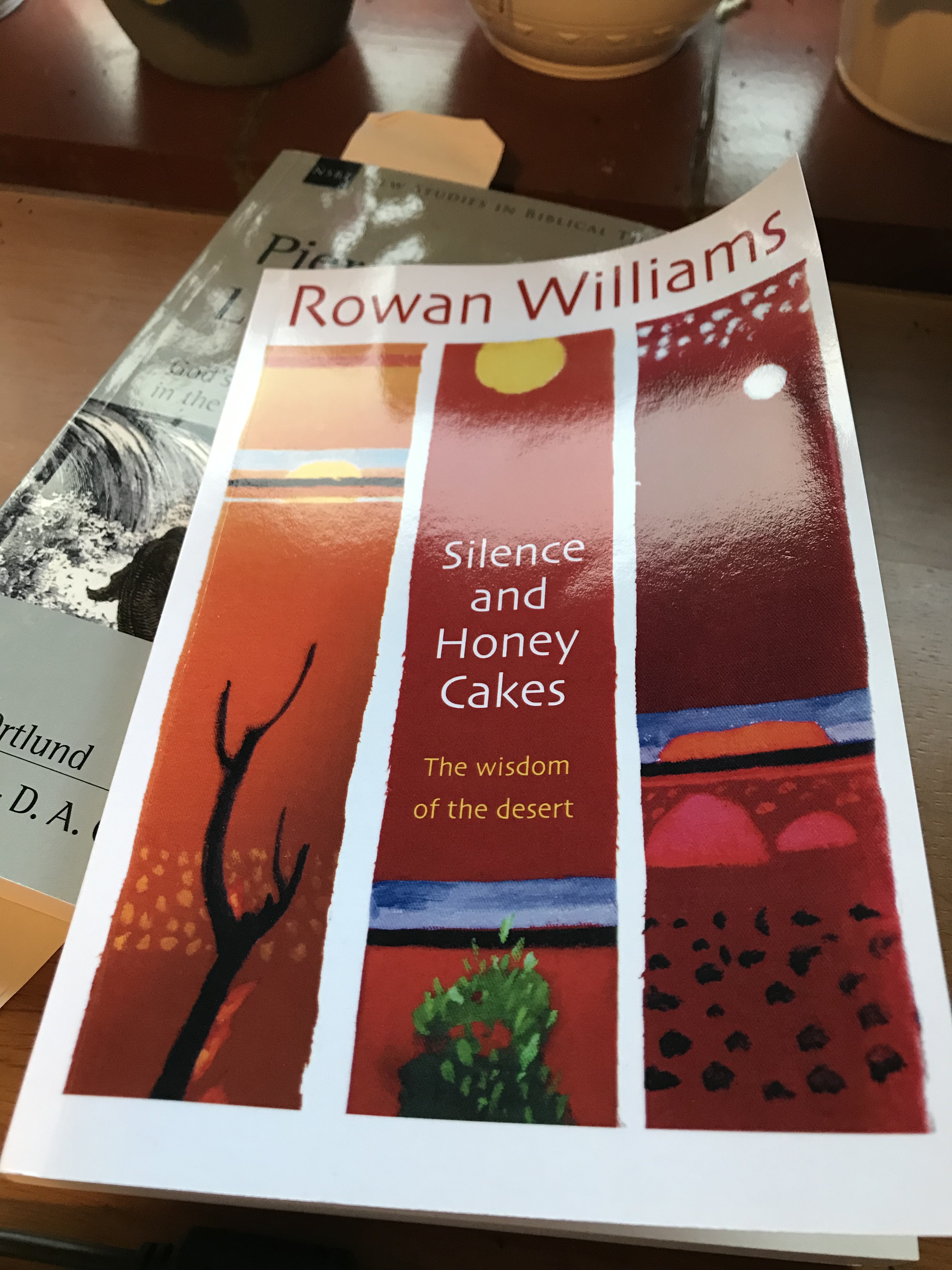
Early on in the Christian religion, after the books of the New Testament had been written and the message spread abroad, some people wanted to explore their relationship with God in detail. These were the monks and nuns who set up communities in the Egyptian desert, from about 350 AD. We still base lots of our theology on what they decided (so, you might think that you learned about ‘original sin’ from someone in your church, based on the Bible, but that was one idea which was introduced by one such monk).
The monks/nuns lived in communities, and their ‘spiritual life’ was connected to their ‘physical life.’ Although they removed themselves physically from contemporary society, they lived amongst other monks and nuns, and were dependent on each other. They considered their spiritual welfare to be closely entwined with other people. For example, one monk stated that he tried to focus entirely on his own sin, because then he would never be tempted to judge anyone else—how could he complain that dinner was burnt if he always had in mind that he had broken a plate yesterday? (Seems like a good rule.) They also talked about ‘putting the neighbour in touch with God’ which to be honest I don’t really understand. How can they claim to focus on this when they seemed to live in such remote places? I assume their ‘neighbour’ was restricted to other monks, which is rather limited. Though some monks were visited by people seeking advice, so maybe those were the ‘neighbours.’
They do seem to have been a very tolerant bunch, very accepting of differences. They spoke about people following different vocations, and that a life spent praying was no better or worse than a life spent mending shoes, if that was what you had been called to do. The book is named after the practices of two monks, one who worshipped God with silence, and another who worshipped by eating honey cakes with his visitors. (I know which one I would like to be.)
They also had great names! The book describes ‘Moses the Black’ who was from Ethiopia and before he was a monk, he was a highwayman. Another was ‘John the Dwarf’.
I think I might suggest we devise similar names at college for our fellow-students. I shall be ‘Anne the Old,’ as most people (including the lecturers) are younger than me.
In addition to giving each other names, the monks were also answerable to a mentor. This seems like a slightly dodgy idea to me. I can understand why they believed having a human to confess to, someone to be completely open with and to take advice from, might make people more accountable (because let’s be honest, although we say that we confess directly to God, how many of us do, diligently, every single day?) However, I think the risk of abuse, of the mentor taking wrongful control, or representing their own view rather than God’s, is too great. I know some modern churches have a similar idea, but it’s not something I would want to be part of. I don’t think I trust another human with those things.
They spent time considering some of the knotty problems of Christian theology. For example, when Jesus was in Gethsemane (praying in the garden the night he was arrested) did he have the option to change his mind and escape crucifixion? If he did then he cannot have known the limitations of humanity, and being trapped in a situation of temptation. If he didn’t then how could he be fully God, who is unrestricted? It might sound a bit silly, a bit convoluted, to us today. But it was the tackling of such issues, and the finding of sensible answers, that provides the basis of much of our theology.
(In answer to the above question, they decided that the ‘will’ cannot be separated from the person as a whole. Therefore, Jesus would always ‘choose’ what was right. In the same way as a mother feels intensely protective towards her child, and if a gunman was to burst into the room, in theory she could choose to hide, but in reality, she would throw herself in front of her child to protect them, because that is her nature. Choosing to abandon her baby would be impossible.)
The book discusses what is ‘personal’ as opposed to what is ‘individual.’ It gives examples of people who lived lives in tune with their own personalities, without necessarily striving to be different. ‘Self’ was not something to be flaunted, ‘different’ was something natural, not something militant. I think they were not trying to ‘find themselves’ but rather trying to find who God had created them to be. Sometimes what I read sounded like navel-gazing, a bit too much looking inside and not enough looking to God, but it’s hard to understand a lifestyle from a book written centuries later. Certainly they were on a quest to find truth—the kind of truth I wrote about a few weeks ago. ( https://anneethompson.com/2023/02/06/should-politicians-tell-lies/ )
The book considers several more ideas that arose from the desert monks/nuns. It’s a little book, but it took a while to read because I needed to keep pausing, pondering the ideas presented, deciding whether I understood them and whether I agreed with them. It’s worth the time spent; if you see a copy, I suggest you read it.
We visited a few towns on the south coast of Madeira. It wasn’t possible (I think) to reach them via pretty coastal roads, as the roads seem to be either blocked or fallen into the sea or abandoned to rock falls. Our drive was therefore through a series of tunnels. Madeira does tunnels very well, but you don’t get to see much scenery. I cannot imagine how different life must have been before the tunnels were built. Towns would have been fairly isolated, as visiting other places would have taken much longer.
We visited Ponta do Sol. As we drove down the steep road into town, we saw a small carpark. It was full, but we managed to arrive as someone was leaving, so parked the car and followed signs to the old town. The town is built on a steep hill, terraces of bananas reaching up the cliff side, cobbled streets and houses clinging to the lower levels. There were some good coastal views, but nothing to entice us to stay in the town. The busiest area was the beach, with families sitting on the black sand or swimming in the sea. I never like black sand. Although I know it’s no less clean than yellow sand, it feels dirty. As Madeira is basically just a big volcano, all the natural sand is black.
Next we drove to Madalena do Mar. We did attempt to follow the coastal road, but it petered out, so we had to do a difficult 3-point turn on a bendy road, and it wasn’t worth the hassle; we returned to the series of tunnels.
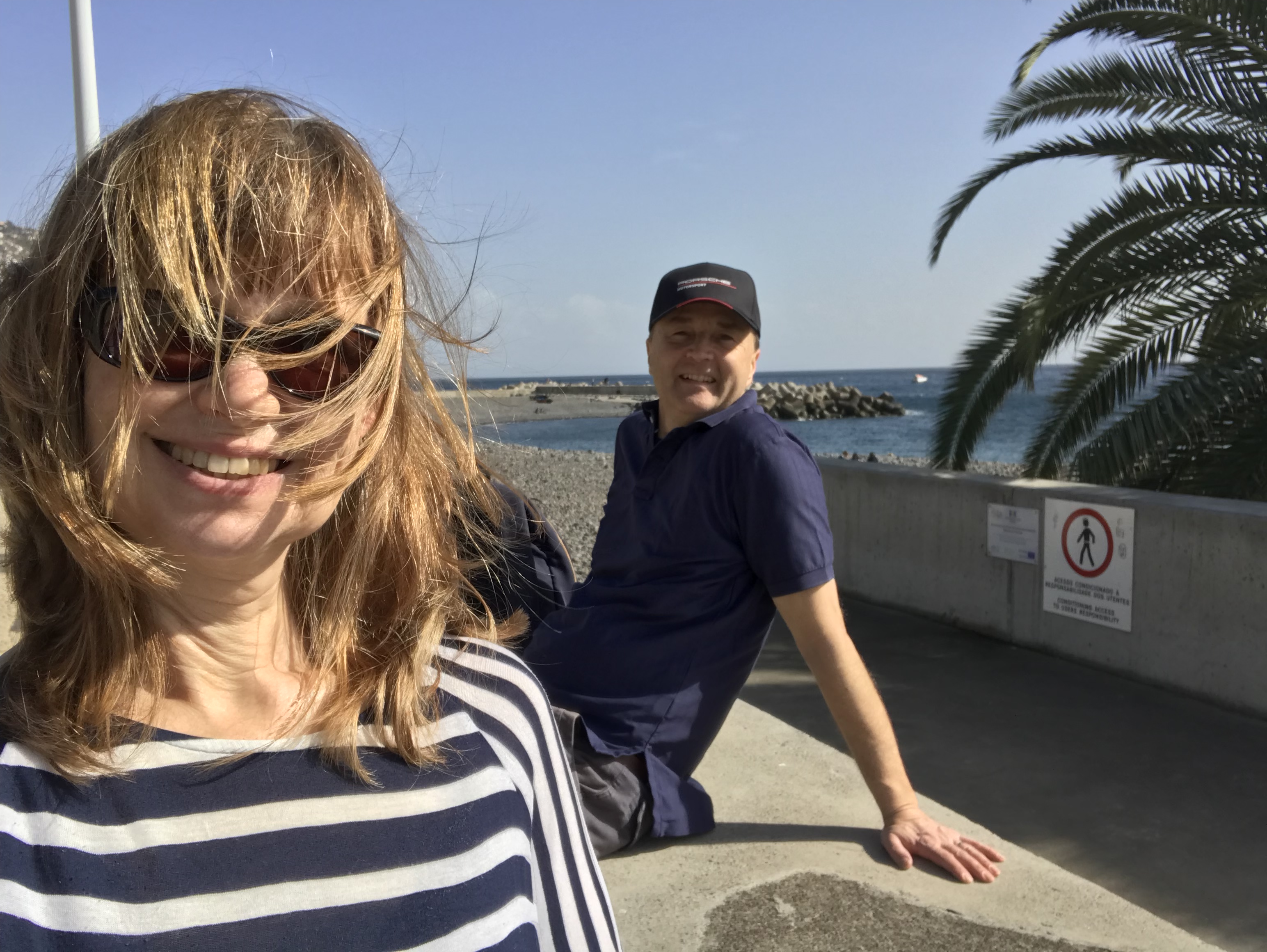
Madalena do Mar has a big car park next to the sea, and a lovely promenade lined with palm trees along the coast, a jetty for fishing or mooring boats . . . And very little else! There were plots of land waiting to be built on, and even an area designed for a café, but no one seemed to have actually arrived yet to build the hotels and cafes. It was lovely, in a sort of abandoned, not quite there yet, way. Not sure what it will look like in ten years time.
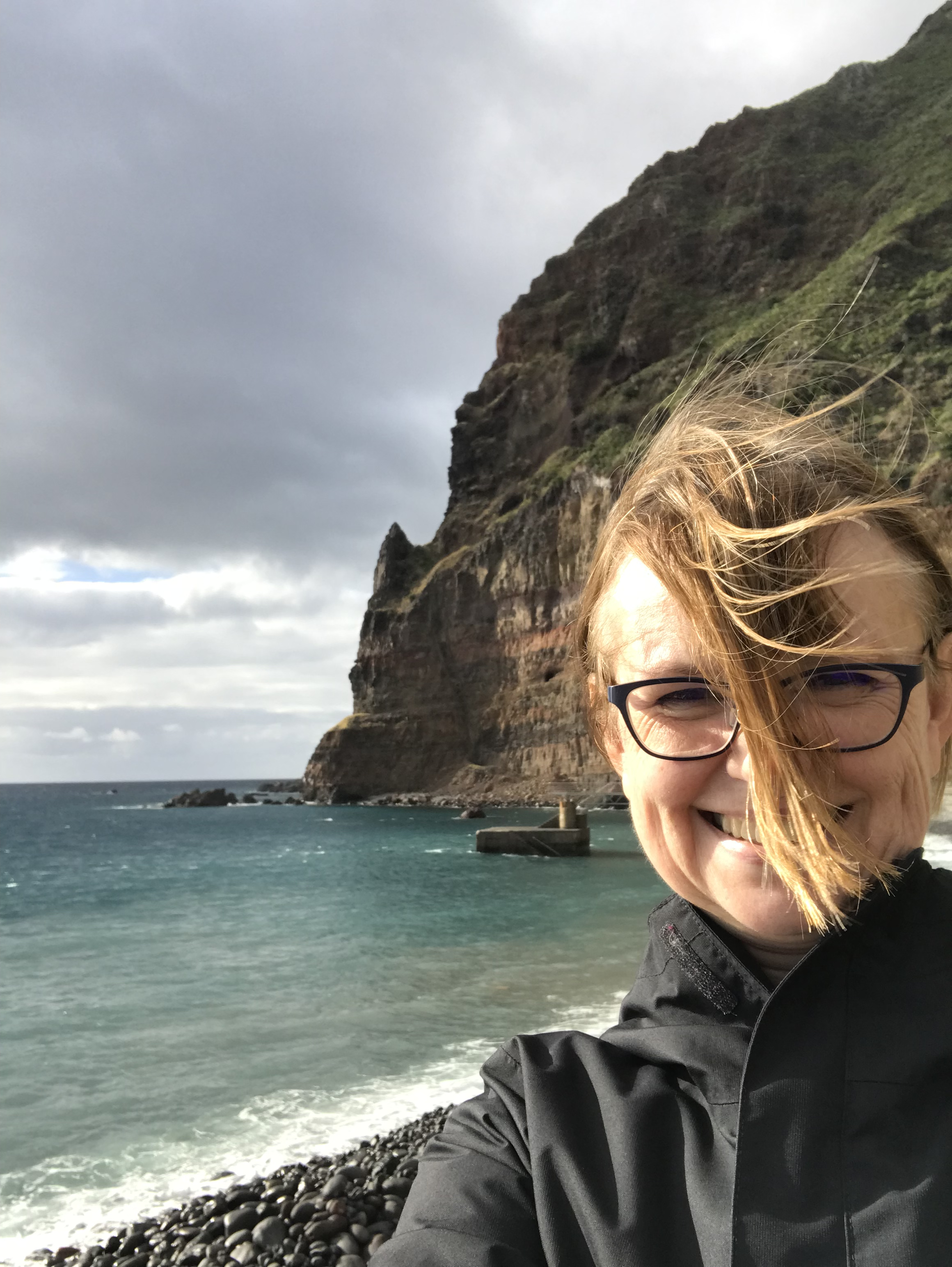
Quite windy!
Our last stop was Praia da Calheta. This was a busy town, full of people, cars trying to park, cafes and supermarkets. There was a small marina, with little boats bobbing in rows, and a long promenade with palm trees and cafes. There were also beaches, with yellow sand hauled from Africa. Despite the cold, several teenagers were swimming, their squeals piercing the air. Steep cliffs bordered the coastal road, and we sat in a cafe, sipping espresso and watching little black and white birds nesting in the rock while seagulls swept past looking for food.
We returned to Funchal for dinner, and ate in Noitescura, a restaurant near the apartment. It served traditional food, and last time we tried ‘Francesinha’ which were like burgers (beef, chicken, fish or vegetable) with a fried egg on top, and served covered in a sauce/gravy. I chose badly, and had the vegetable one, thinking it would be a mushroom burger, but it wasn’t, it was more like minced vegetables (tiny pieces of onion, broccoli, carrot) in a soggy bun. It was as horrible as it sounds. This time we shared a fish platter, which was lovely. It had a variety of local fish (scabbard, parrot fish, bass) and we ate it with fried sweetcorn, rice and chips. (No veg this visit, Husband chose the food.)
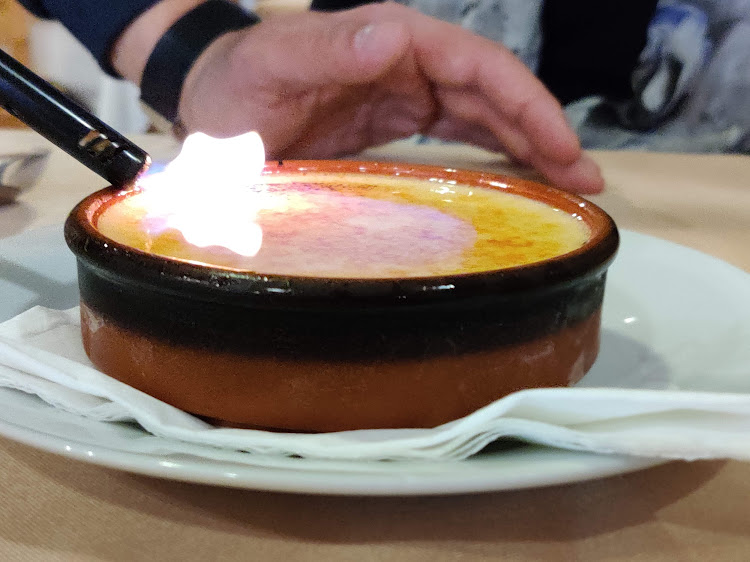
I also tried a poncha, which is a traditional drink, sold all over the island. I was expecting something like a caipirinha, as it’s made with sugarcane alcohol, but it wasn’t, it was more bitter, and orange, and served in a short fat wine glass with no ice. Not unpleasant, but I prefer caipirinha. I also had white wine with my meal, and a dessert with sambuca (which I remembered too late I don’t like, but luckily they poured it over the dessert and then set it on fire, so most of it burnt off). We finished with a glass of Madeira wine, but refused the rum that was offered with the bill. I don’t usually drink much. I didn’t sleep very well that night.
Thanks for reading. Have a good week. Take care. Love, Anne x
Thanks for reading. anneethompson.com Sign up to follow my blog, and it will be emailed to you each week.
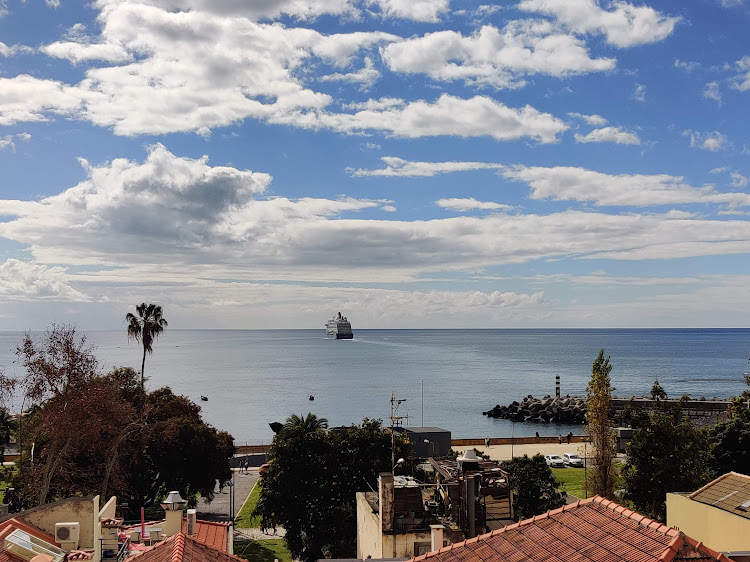
We found heaters in the apartment, and managed to warm up a bit. There’s no central air conditioning or central heating—I assume because usually all year round is ambient. It’s colder this year. I woke early, before sunrise (it’s not light here until about an hour after it’s light in the UK). When it was light, we went for a run. Although not sunny, it wasn’t cold. The light is different here. It’s a comforting light. Most of Madeira is mountainous, so lots of people run on the only flat land, along the promenade. It’s a pretty place to run, with little areas of garden, and interesting statues and the sea lapping onto pebbles next to you. There are often cruise ships, towering over the docks, and occasionally we had to dodge large groups who were touring the island, led by a guide to the most famous sights. I prefer living here, even for a few days, to try to absorb some of the real life. It was fun to watch the ships arriving though, such impossibly huge structures balanced on the water.
After a shower, we walked back to the little cafe where last year we went every morning, Husband always had a cheese and onion bolo, and I had an espresso. But the cafe was shut. What a shame. We wandered around, looking for somewhere to recreate the same ‘coffee with the locals’ feel, but most cafes looked very touristy. Then we settled on the cafe under the apartment, which wasn’t in such a nice location (okay, it is a horrible location, as it’s basically right on a busy road). But it had plastic chairs, and locals sipping espressos, and it looked clean. We ordered (Husband had chips. Chips. For breakfast.)
Note my disapproving face! The sandwich is actually very traditional in Madeira: sliced beef, ham and cheese. But the chips?
While we waited for our coffee (and chips) we saw the elderly man from last year’s café. He sat outside and had his coffee, and we wondered whether we should say hello, but decided we didn’t speak enough Portuguese and he didn’t speak English, and probably it would just confuse him. So we didn’t. But we mentioned it to the waitress, and she told us that he still runs his café, but the roof fell down, so he’s waiting for it to be fixed. This is why I like returning to the same places. Being on holiday is a break from life, but if you travel a lot, it can mean that you never engage in life, you are never part of anything, which seems a waste. When we return to the same places, we can be part of a different community — even if only very briefly. I think life is about connections, not being isolated. I’m not a great one for drifting, I like to have a purpose.
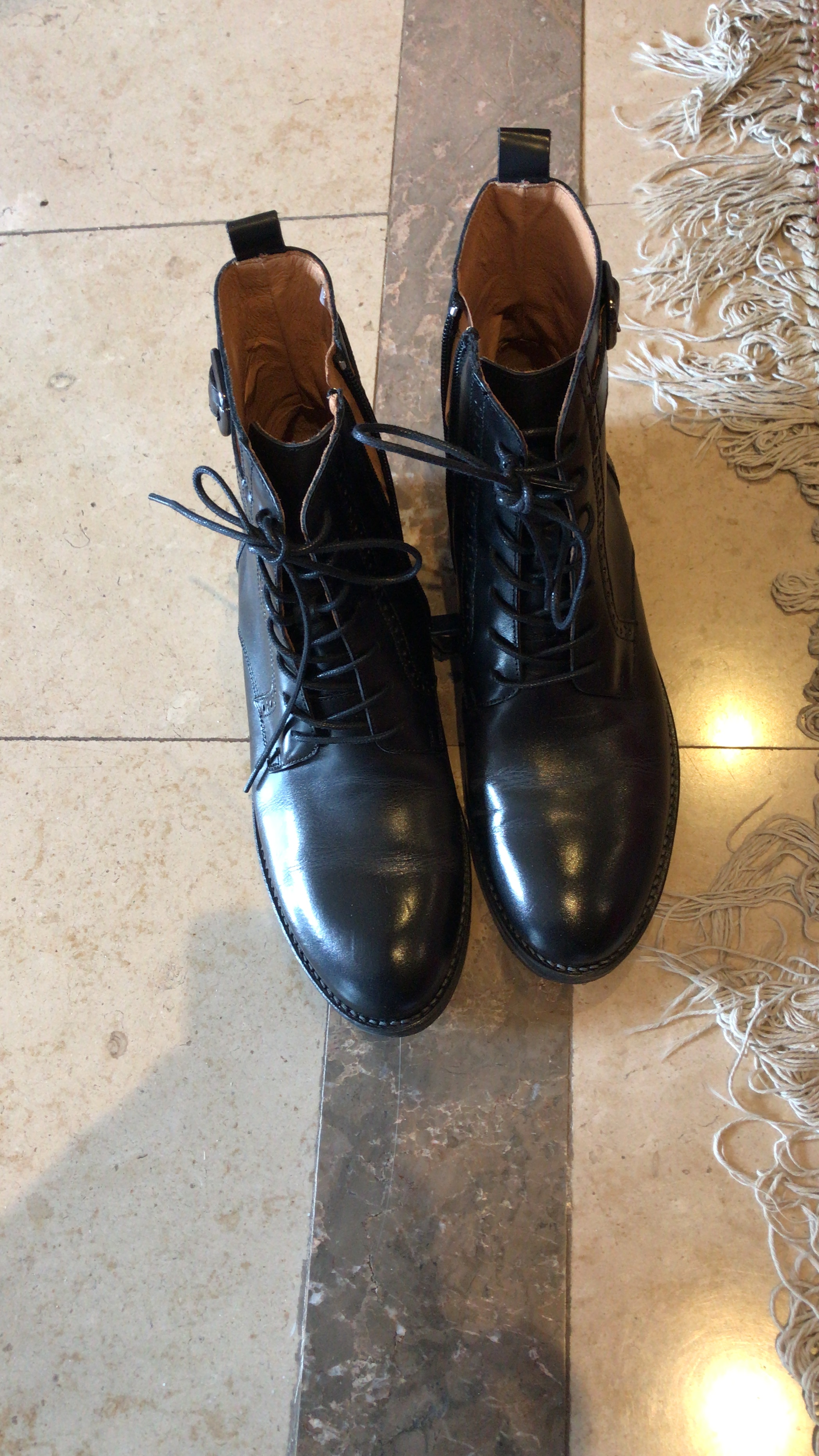
Caffeine replenished, we set off to find the boot shop. Last year I packed the right clothes, but not the right footwear, and when we had torrential rain, my only ‘waterproof’ shoes were drenched. We found a little shop that sold boots, and I bought a pair because they weren’t too expensive. They have been the most comfortable shoes I have ever owned, and are still worn all the time. They are brown boots, and I don’t like wearing brown shoes with grey trousers, so I was keen to buy some black ones. But would we manage to find the shop?
We set off, past the market (Mercado dos Lavradores) and all the aggressive salesmen selling fruit at inflated prices to unsuspecting tourists. We crossed the road, rounded the corner where they are building a Savoy hotel, and headed into the lanes of the old town. We half-remembered the road, and that the shop was opposite a larger shoe shop selling fashion shoes. We found a smaller shoe shop opposite, and went inside. It looked slightly different, but was in the right place, selling shoes. I explained what I wanted, showed the salesman my brown boots, and he went off to find some black ones. He returned with several boots, some of the black, none of them the same manufacturer as mine. I explained that I wanted the exact same boot, but in black (otherwise I may as well buy them in England). He came back with some similar boots, which he spent a long time stretching, undoing the laces, bending them open. I tried them on, knowing they were a size smaller than I wanted. I thanked him for trying, and left. The man suggested I should try in the big shop opposite, but I knew they only sold fashion shoes, and I wanted the same good quality leather boots.
I set off towards the apartment, refusing to listen when Husband suggested we should look in other shops, because I hate shopping, and only went to that place because I thought it would be easy. Husband insisted. I said I would look in one more shop. Husband led me up the road . . . To the exact same shop we had visited last year! We had been in a different shop, which explained why they hadn’t had my boots. This shop only sold Tapadas boots. Which begs the question: why did the other shop, when I was leaving anyway, not direct me back up the road? He must have known the Tapadas shop was there, and he wasn’t making the sale, so why not tell me? I dislike mean people. If you want comfortable boots (the sort of boots you can wear on an all-day hike on the day you buy them and not get blisters) then head to Abreu’s Sapataria.
I like Madeira, but I cannot quite get a feel for what it must be like to live here. Unless you want to work in the service/tourist industry, or to be an engineer (because there are some serious mountains to build on/through) then I’m not sure what work the island offers. There are the huge cruise ships that visit regularly, but the passengers tend to eat onboard, and only do brief excursions into town, making shops and attractions overly busy and then leaving, returning the narrow streets to the locals. The restaurants tout for business by trying to persuade passing people inside, which I always find uncomfortable, but maybe they have to, maybe there isn’t quite enough tourism for the number of restaurants. I suspect it’s a difficult place to run a business. We ate in some restaurants that were lovely, with delicious food and staff who worked very hard to keep everything clean and efficient. But they were rarely full, and sometimes we were the only customers, which felt sad given how hard people worked. But for us, it was lovely. I like visiting places out of season, pretending that I live here.
I will tell you more next week. Thanks for reading. Have a good week, and take care. Love, Anne x
We left home at 4 am, and arrived at the apartment about 12am. Arriving in Funchal is always an adventure. Funchal is a short drive from the airport in Madeira, and both times we have come, the little airport has been very efficient, with very few people arriving, short queues, helpful staff, and clean facilities. The car hire place is in the airport, and there is a short walk, including a lift down the side of the rock, to reach the cars. The drive from the airport is easy enough with Google Maps and the road is edged with amazing plants. I love the plants in Madeira, and it’s worth visiting simply to see them: great succulents with huge protruding stamen, sharp-leafed flowers clinging to rocks, impossibly tall trees that sort of resemble pine trees with a twist. However, once you leave the main road and enter Funchal, the fun starts!
The roads are steep, narrow, often cobbled. You feel like you are driving down a pathway. Then you meet a parked car, or tables spilling from restaurants, and you wonder if perhaps you really ARE driving along a pathway. But these rabbit-warren streets are the only route into Funchal. Then there is the problem of needing to park, and the entry-fob for the car park is in the apartment, but there is nowhere to park in order to collect said entry-fob.
At least this time we knew what to expect, and planned accordingly. (If you read the blog about our previous visit, you will know that Husband dumped me and all the luggage in the street outside, while he went off to find somewhere to park, which took longer than you might expect.) Husband drove to the garage entrance, and I jumped out and walked to the street where the apartment was. Somewhat confused by lack of numbers on doors—or at least, there were numbers, but they were all 18, so finding ‘number 18’ was less specific than I had hoped. Decided it was unlikely to be 18A, or 18B, as they were gyms. Then there was a door numbered 18, but that was locked. The adjoining door was unlocked, and as the buildings were connected, I entered. Tried the lift (I needed Apartment 36, which I guessed might be on the 3rd floor). The lift only went to floors -1 to -3. Left the lift and tried the stairs. Found myself in a doctor’s surgery. Showed the address to a woman who was leaving, and tried to remember how to ask for directions in Portuguese. Failed, but she understood me anyway and told me I needed to go ‘beyond the cafe.’ I didn’t, I needed to go through the locked door of number 18. Found some doorbells, rang number 36. Found the cleaner, who had the garage-fob. Returned to garage. No sign of Husband… You get the idea.
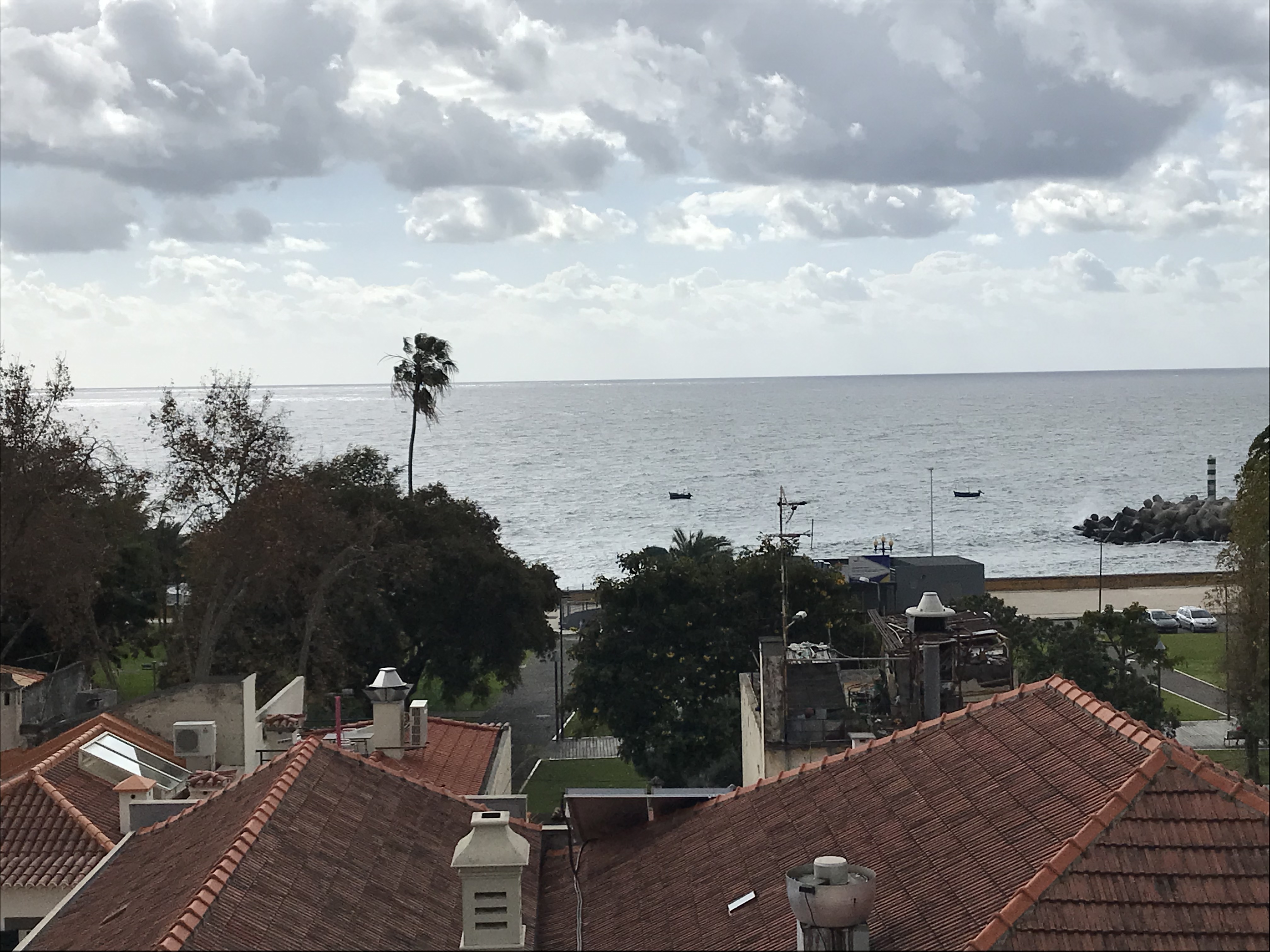
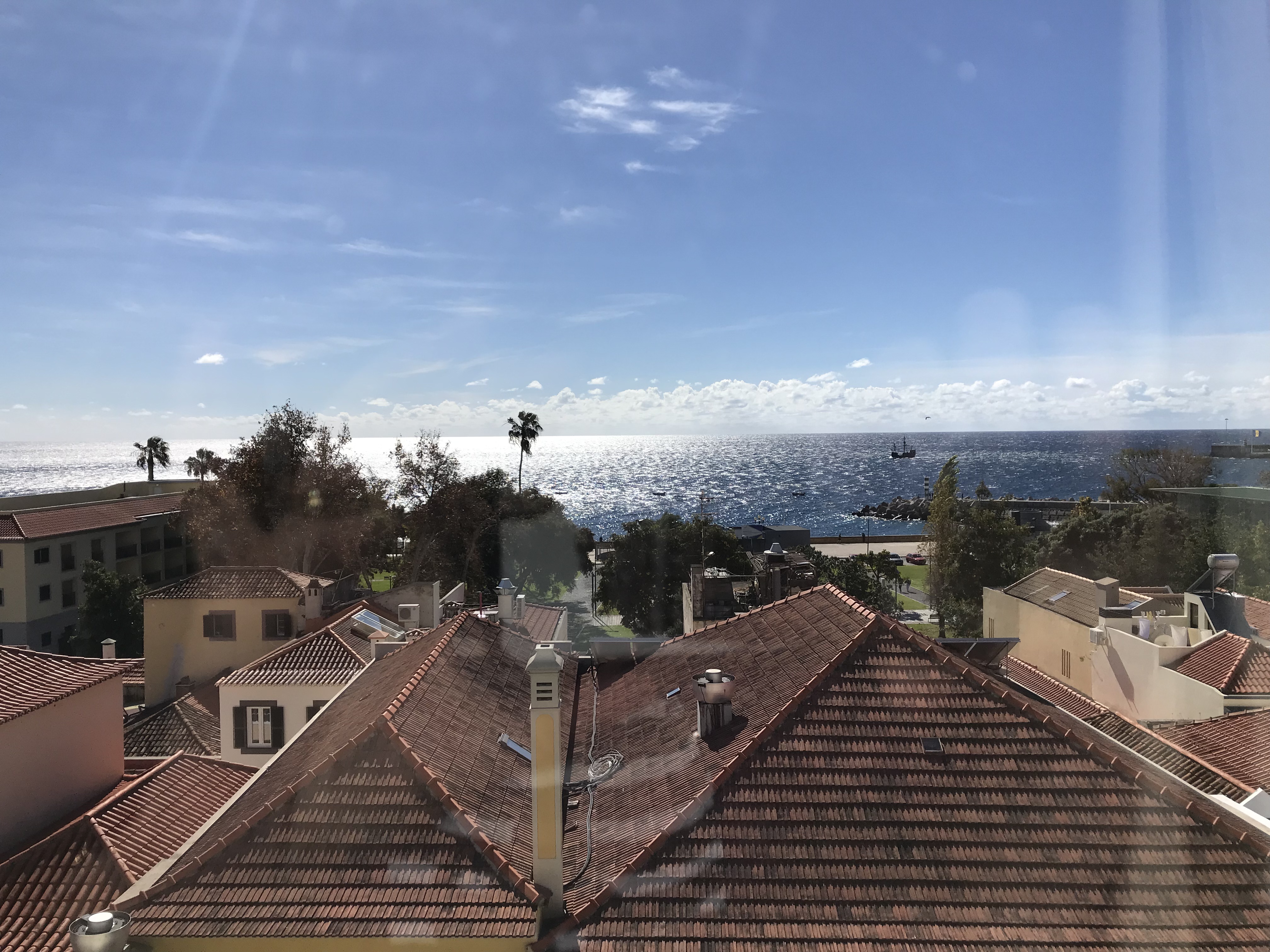
When we actually managed to enter the apartment, it was lovely. There are tiny balconies, and a view over rooftops to the sea. It has pretty wooden furniture, slightly antique in style. The kitchen is modern and clean. The bathroom is tiny, smelly, with a shower that doesn’t work very well. Not dissimilar to the bathroom at the last apartment we rented in Funchal, so am assuming Madeira doesn’t prioritise bathrooms.
We went for a stroll. The air was bright and balmy, not too hot—cardigan weather. We walked next to the sea for a while, then went to the supermarket and bought juice and water and milk. Probably we could drink the tap water, but I don’t want to discover it upsets my stomach; we’re only here for a week.
Mainly I want to rest while we’re here, read some books, and have a break from missing Kia. When your dog dies, you can never forget your loss while you’re at home, because everywhere is lonely. Hopefully Madeira will be different enough to not leave any gaps. Maybe I won’t go home again afterwards…
We walked back to the sea front for dinner, and found Xaramba, the restaurant we regularly ate in last year. The serving staff were the same, and they agreed it is much colder this year, and said it had even snowed. It IS cold here, especially in the evening after the sun has gone down. I packed all the same clothes that I wore last year, which basically means I have two outfits with thick jumpers (and a heap of summer stuff which won’t be worn). Will have to do some washing while we’re here.
I will write more tomorrow. Thanks for reading. Take care.
I thought I would share with you one of my essays, written for the Ethics course. I have slightly altered it, and it has no bibliography, but this is the sort of essay that I write for my course:
In what sense is truth a social and political virtue? Explain your answer from a Christian ethical perspective and use illustrations from contemporary society and politics.
This essay will define the biblical concept of truth, and consider how it is a political virtue. This will then be applied to a social and political setting. Political groups that have an opposing view of truth will be examined, and the outcomes of this considered, thus showing that usually society suffers when truth is excluded from politics; though there are exceptions.
Truth is complex, and the meaning varies between people. It might be defined as speaking factually. There are instances when ‘speaking factually’ will conflict with the commandment to love. For example, when I was diagnosed with a brain tumour and in passing people asked, ‘How are you?’ it would have been inappropriate to dump unexpected information, and was instead appropriate to answer ‘Okay,’ even though this was not factually true. A more extreme example would be when people lived and spoke falsely in order to protect Jews hiding from Nazis.[1] There are also instances when people do not want to know the truth themselves, such as in medical prognosis, and it is loving to respect this. There are instances in the Bible when God did not appear to be speaking the truth.[2] There is also an instance when Jesus appears to lie,[3] which is unlikely given that he is described as being, ‘full of grace and truth,’[4] and himself states that he is, ‘the way, and the truth, and the life.’[5] ‘Truth’ must therefore be more complex than the simple speaking of factually accurate information.
In the Hebrew Bible אמת [6] is the word used for ‘truth.’ It combines a sense of faithfulness, of lack of deception and of honesty. This was been called ‘thick truth’ by Kempson in a lecture, who said it epitomises more than the speaking of facts.[7] Gushee describes it thus: ‘truth is not simply something that is believed or spoken, but instead is a character quality, a way of being.’[8] He continues the definition by saying it is proved by actions. This essay will use this definition; therefore in the social and political arena, it is the ethos of truth and faithfulness, rather than simply whether or not something is factual, that will be considered.
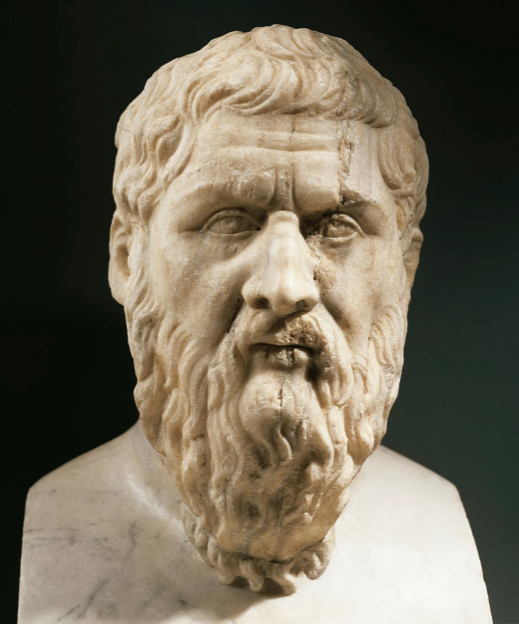
Plato
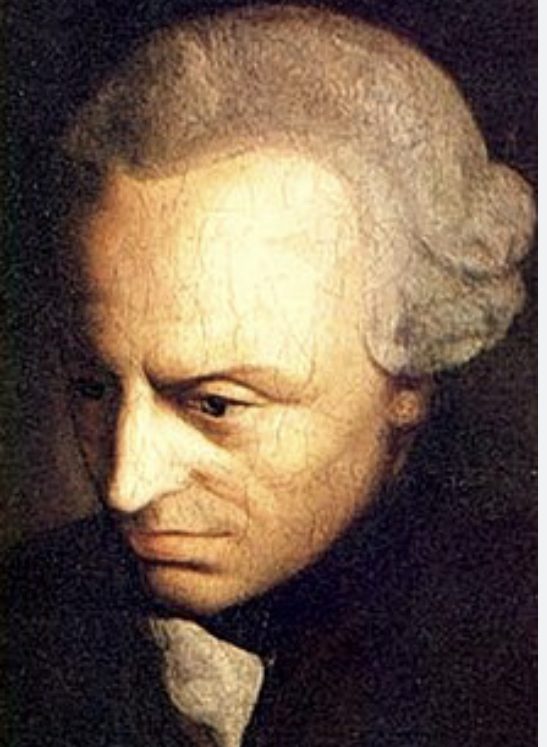
Plato thought that legislators (the equivalent of politicians in his time) should be wise and rational.[9] Taking the definition of truth above, it could be argued that a legislator might be wise whilst also dishonest, suggesting that Plato did not consider truth to be essential in politics. Aristotle’s views are closer to thinking that truth is necessary for politicians, as he viewed ethics, morals and politics to be intertwined. His understanding was that: ‘Good actions produce good habits; good habits and moral training create good dispositions; virtue names the ways good habits become inscribed on a person’s character.’[10] As he considered the state to be a ‘moral project’ for the benefit of the community, the truthfulness of its leaders would implicitly be part of this. Kant was more specific, believing in categorical, universal, principles. Hence, his view was that, ‘lying is never permissible, even to save a person’s life’,[11] which implies a narrow definition of truth. Whilst Plato, Aristotle and Kant are part of history, their teaching survives today, and I suggest that contemporary society still bases some of their expectations on these models.
Our politicians today do not always fit the model of truth above. Boris Johnson, during his election campaign, was accused of visiting a hospital to raise support, whilst his party had left them underfunded. It was during a news broadcast, and he protested that there were ‘no cameras’ with him. The television camera then turned, showing a bank of photographers.[12] Yet this appeared to have little impact on his election, people still voted for him, even knowing that he lied. People today sometimes vote according to which political party will deliver the policies they want, rather than according to the virtue of the politicians.
Another example is when Donald Trump was elected as president, despite his alleged propensity for mistruth.[13] McGranahan writes that politicians have always lied, but Trump’s lies were in excess of any other, and he often spoke ‘alternative truth.’ Again, the electorate knew this before the election, yet many still voted for him. Trump stood strongly against abortion, and I suggest that many voters voted according to this single policy, deciding that ‘truth’ was less important. In this instance, ‘truth’ was less a political virtue than delivering certain policies. (Though of course, some people believed Trump, and thought the allegation itself untrue.)
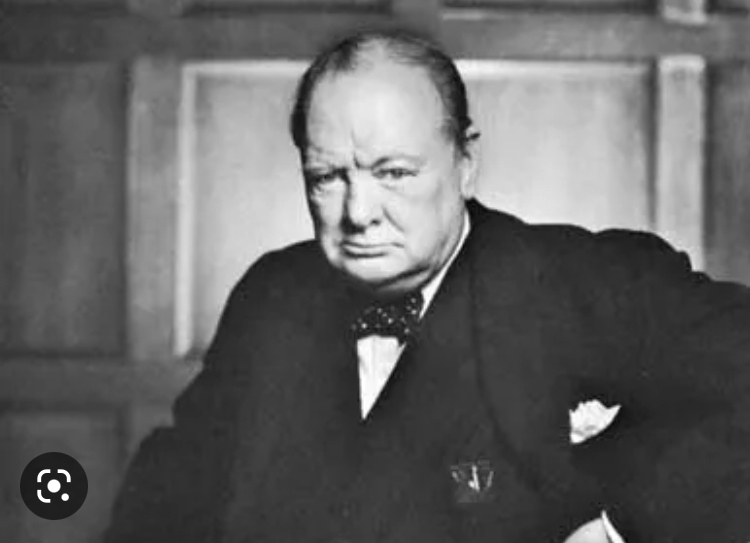
Sometimes when the lies of governments are revealed (such as when secret documents become unsealed) the population condones the lie. An example would be when Churchill moved model vehicles around the coast, hoping to deceive the enemy that the planned D-day attack would be in a different place.[14] This was not acting in ‘truth’ as per the above definition, as the intention was to deceive. Yet the perceived ‘greater good’ of defeating the enemy outweighed the lie. Thus was the consequential ethic of ‘outcome mattered more than the process.’[15] (A pacifist view would suggest that nothing justifies war, and therefore lies used to support war are immoral. However, I suggest that those with a Jewish heritage, who would not be alive had the allies not invaded Europe, mostly believe a greater good was served.)
Mosley
Given these examples, one might question whether truth is necessary within politics. Hays quotes Niebuhr as saying: ‘Christianity really had no social ethic until it appropriated the Stoic ethic.’[16] This suggests that Christian truth has no place in wider society and politics. However, there are dangers when truth is withheld. The rise of fascism under Mosley in the 1930s used lies, in the form of ‘anti-semitic conspiracy theory’ [sic].[17] By lying, twisting the truth and spreading propaganda against the Jews and other immigrants, the fascists gained support for their party. People wanted to belong, they wanted an enemy to blame for their troubles, and were keen to believe that life had been better in the past.[18] People who challenged the false information were themselves called liars, and it became difficult to know what was true and what was false. Society became unstable, and hatred in the form of racism began to grow. When people do not know what to believe, when truth is hidden or ridiculed, there is space for evil regimes to grow.
Society relies on laws, and laws rely on truth. An example of this is the method used for deciding justice in a court of law. Witnesses give evidence, a jury decides whether the accused is guilty. The truthfulness of witnesses is essential for justice. A witness is asked to swear they will tell the truth, which echoes the Ten Commandments.[19] Whilst it could be argued that Jesus spoke against swearing in court,[20] I agree with the view that the meaning behind his words was aimed at the custom of swearing unnecessarily to undermine truth,[21] and the ‘thick truth’ is unrelated to the practise of swearing in a court today.
I would therefore suggest that truth is a social and political virtue. As has been shown by the rise of fascism, when populations cannot rely on politicians for truth, a country might be led towards morally abhorrent behaviours. Whilst there are situations when the withholding of facts is wise, this does not contradict the wider understanding of truth as a virtue of honesty and faithfulness. Hence truth is a political virtue. The upholding of law depends on the truth being spoken in court, and if a society cannot rely on law (and by default, truth) then there is no solid structure on which to build. Hence truth is a social virtue.
If today, we voted for leaders based on their truthful character, their אמת, rather than their ability to make good speeches or deliver the policies we desire, then I believe countries would be stronger and ethical standards would be upheld.
****
Thanks for reading.
I hope you have a good (truthful) week. Take care. Love, Anne x
Thank you for reading
anneethompson.com
Why not sign up to follow my blog?
[1] Corrie Ten Boom, The Hiding Place (London, Hodder and Stoughton, 2004). This book shows how lying was necessary to protect those in hiding.
[2] Gen 2:17. God tells the man that on the very day he eats of the fruit he will die. As understood by the man (physical death) this was untrue.
[3] John 7:8 compared with John 7:10. As Jesus did know the future/his mission (John 8) it is unlikely he did not know that he was going to attend the feast.
[6] אמת is translated as ‘reliability, dependability, trustworthiness, truth’ by David Clines. English Bibles tend to use ‘truth’ as the translation in most contexts, with the other words being examples of the kind of truth being discussed. Ed. David Clines, The Concise Dictionary of Classical Hebrew, (Sheffield, Phoenix Press, 2009) p. 26.
[7] Emily Kempson, Postgraduate Seminars: The nature of truth in Christian theological thinking, 7/12/2022
[8] David P. Gushee and Glen H. Stassen, Kingdom Ethics, (Grand Rapids, MI, Eerdmans Publishing, 2003) p. 296.
[9] Samuel Wells, Ben Quash and Rebekah Eklund, Introducing Christian Ethics, (Oxford, Wiley Blackwell, 2017) p. 66.
Absolutely no idea what to buy for the man in your life? Join the club!
It’s Husband’s birthday, and I struggle every year to find a gift that I think/hope/pray he will like. (I blame my mother-in-law for having a baby so near to Christmas.) It’s impossible. Anything that he might need, he has either bought for himself, or has recently received at Christmas; which leaves me with nothing. Literally, nothing.
I know that some couples don’t buy gifts for each other, but we do—it’s one of the ways we express our love. Husband is extremely good at this in reverse, and I have over the years received many thoughtful gifts.
This year is worse than ever, because I cannot even think of little things to buy for him. I know that he already has a stash of chocolates and shortbread and men-magazines to read. (I should clarify, by men-magazines I mean magazines about cars, not naked women.) In desperation, I searched online shops under the ‘gifts for men’ tab. This is what I discovered:
Alcohol related gifts. These seem to be popular (but he already has these from Christmas). Men, it seems, like craft beers, whiskey, and (way down the list) gin-making kits. There are many variations on this, including beer mats/towels/tee-shirts, and appropriately shaped glasses and openers. Plus, of course, the actual drinks. A good idea if not buying right after Christmas, when the cupboards are full of half-full bottles of alcohol.
Curry related gifts. Strangely, this appears as the next popular choice. Clearly men in England eat a lot of curry. Many of the related gifts involve growing chillies, or sets of spices, or aprons. Do men also enjoy cooking curry? This has not been my experience.
Coffee is third on the list. Maybe after cooking curry and drinking beers/whiskey/gin, the man in your life likes to settle down with an exotic coffee? Unfortunately, Husband has settled on Ily coffee made in a cafetiere, and in his mind, nothing else compares in terms of flavour and ease—so not for him.
Massage devices. (Again, I will clarify: neck/feet massage kits, nothing dodgy!) I don’t know what Husband thinks about these, but he has never wanted a spa holiday, so I’m assuming he wouldn’t want to sit still long enough for something resembling a hairdryer to scratch his neck.
Toiletries, with various spicy smells. Do men want to smell like an Egyptian souq? I don’t think mine does. I think he would worry if I gave him a gift encouraging him to be cleaner.
Lego. This has proved popular in the past, and has provided many contented (and noisy) hours while watching telly with me, making various well-engineered vehicles. However, I think I have given too many of these recently. Also, it seems that once constructed, these intricate feats of engineering can never be dismantled, but must be displayed on a table or shelf. My life is too short to dust them (and no one else is going to) so they simply become dirty toys that are regularly smuggled by him into the sitting room (which I try to keep clean and tidy ready for unexpected guests/visits by the police) or, worse, on top of my kitchen units.
Multi-tools are also a thing that apparently, men desire. There are many varieties, and they resemble a grown-up version of a penknife, with a hammer, screw-driver, saw, all folded into one tool. I cannot believe this is ever useful. Either it would be too heavy to be fun, or the tools would be too flimsy for real work. But perhaps I need to do further research, maybe every man dreams of owning an all-in-one tool that he can produce from his pocket to save the world/fix the wobbly table at a moment’s notice. (If all else fails, this might have to be the gift this year.)
Lamps on heads are also a thing. You can buy them incorporated into a natty woolly hat, or on an headband. Maybe men all want to be coal miners really, and it makes them feel butch? Or perhaps the whole ‘torch held in the teeth’ thing happens more often than I think? But I don’t have the sort of husband who does much D.I.Y. in dark, inaccessible places, and I think it would be like buying me a mop—so I don’t want to encourage that sort of gift-giving.
Finally, there is a whole lot of tat which is either too sexual to mention here, or too useless to even bother with. Do men really want a structure to keep their bedside table tidy? Or an illuminated toilet seat? Or a pen that can bend into various shapes? A grow-your-own bonsai kit looks fun, but the sceptic in me feels it would never work. Therefore, I am stumped. Maybe I will dig out my knitting needles in the hope that a homemade gift will show that I care. Or maybe not. Please send help.
Hoping you find what you’re looking for this week. Thanks for reading. Take care. Love, Anne x
Thank you for reading. anneethompson.com Why not sign up to follow my blog?
(It was January 2023, so not entirely sure whether the date above is a typo or for when it was originally scheduled.)
As promised, I will tell you about the two papers which I enjoyed the most at the SOTS conference. They both helped to shape my understanding of who God is—and are far removed from the way God is presented at Sunday School. As before, please note that I am describing the lectures as per my own understanding, with apologies if I am not accurately describing what the papers said.
Peter Hatton: ברית as treaty
The Hebrew word ‘beret’ (ברית) is frequently used in the Old Testament, and is usually translated as ‘covenant.’ Therefore, God made a ‘covenant’ with Noah, that he would not flood the world again, and he made a ‘covenant’ with Abram that his descendants would be more numerous than the stars, and so on. However, Peter Hatton suggested that our understanding of ‘covenant’ is misleading, and ‘treaty’ would be a better word. He said, “You don’t make covenants with friends, but with enemies.” There is an element of threat when a covenant is made—and we tend to forget this today. A ‘covenant’ or treaty is very different to a contract, which is an agreement between two equal sides, with no underlying threat, and with a right to appeal if things change.
He then discussed the treaty made with Noah, which was symbolised by a bow in the sky. A bow was a sign of power, a threat of attack. Peter showed several examples of pictures of bows from the ancient world, and each time they were signifying threat and power. The bow shown to Noah is a bow (not a rainbow) and it is immediately after God has murdered/executed all the people and animals in the world (so definitely something of a threat would be understood). [This is not something my Sunday School teachers emphasized, with our songs about ‘When you see a rainbow, remember God is love…’]
The treaty with Abram included a sign too. Abram had slaughtered animals, and cut them in half, and fire had gone between the halves. In the ancient world, people sometimes walked between divided carcasses, to symbolise the idea that if they went back on the agreement, they would be like the dead animals. [A little like in a Court of Law, we swear to tell the whole truth ‘so help me God’ in other words, only God will be able to save me if I lie.] In the example of Abram, God was saying that he would be like a divided carcass if the covenant was broken. [I am unclear here as to who the he might be. According to my notes, Peter Hatton said that Abram would be like the dead animals, but when I later read a commentary, they said that it was God himself who was saying he (God) would be like the animals if he didn’t fulfil the covenant. I think the Hebrew can mean either, so you can decide for yourself. Either way, the covenant/treaty held an element of threat.]
Peter’s paper then considered why this element of threat might be important. When people are in situations of conflict, pretence tends to disappear, and people are very real/honest. Peter said that when he has counselled couples with marriage problems, they are in conflict, and they tend to be honest about the hurt and difficulty. He remarked that in this situation, when people are genuine about the pain, they can start to rebuild. He also said that marriage is a covenant/treaty between people who are different (because individuals are different). [He lost me a little here, perhaps I was tired, but I don’t entirely see the same link with a marriage covenant and conflict/threat. But maybe you can work that out for yourself.]
Philip Jenson: Mathematical Monotheism
For me, this was the most helpful paper of all, because I have been struggling with the idea that the Old Testament is very clear that there is ‘One God’ and yet Christians are very strong on the Trinity (which to my mind, is basically three Gods working as one).
Philip Jenson pointed out that ‘monotheism’ is a term that first arose in the 17th century, which is when understanding of mathematics and science was developing rapidly. The idea (rather than the word) of monotheism first arose during the exile. Before then, people held a belief in monolatry (that only one God should be worshipped, above all other gods).
The Hebrew word for ‘one’ is אחד and it means more than the mathematical idea of quantity. אחד is about quality, about being incomparable, being in a position above all others. ‘God’ is not countable. Numbers are unhelpful here. God is known by power. אחד might be better translated as ‘unique’ rather than ‘one.’
[I think some of these comments about inappropriate translations maybe arise because language is not static, and our understanding of words changes over time. Therefore, when Hebrew is being translated today, words like ‘one’ or ‘covenant’ have slightly different nuances than they did during the reign of King James and the Authorised Version.]
Another problem with this is our understanding of the word ‘god.’ What is a god? Modern people don’t like to think that there could be lots of different gods floating around. However, the Bible speaks of ‘Heavenly Beings’ and some are named (Eg. Seraphim). These might be who were understood to be ‘gods.’ Or perhaps the ‘gods’ were man-made, anything that was worshipped and revered, anything that people treated like a god. Anything that rivalled people’s loyalty to God. Therefore, they did exist, but not in a way that was separate from human perception. A carved animal was a god, because it was worshipped as a god but if placed on a shelf as a mere ornament, it was not a god.
The paper then considered texts that possibly contradicted this idea, such as Isaiah 44: 6, “…beside me there is no god.” This seems to exclude the possibility of other gods. But this ‘exclusion formula’ might refer to power rather than the existence of other gods, so is inconclusive.
The conclusion was that God, YWH, is incomparable, and his multiple titles add to the hierarchy (because a lack of names implied a lack of status in the ancient world). The implication in the Bible is that other gods were created by God, and were potentially mortal (ie. not eternal).
I found it all extremely interesting, with lots of ideas to mull on. I also find it helpful when thinking about the Trinity, because I don’t need to try and explain an apparent contradiction between ‘one God,’ and that I believe Jesus was God, and yet he prayed to his Father, who was God. I can stop worrying about how many I can count, and focus on the unique, incomparable being who is God. I am very happy to admit that this God is beyond my understanding, and leave it there.
Hope you have a great week. Take care. Love, Anne x
Thank you for reading anneethompson.com Why not sign up to follow my blog? *****





























 Anne E Thompson