Poem


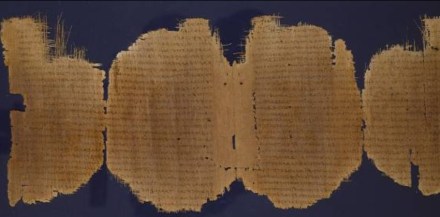
The festival was for Eastre,
Goddess of fertility
But they swept it away with
A cross of humility.
They took over the sunrise
Coloured eggs were hidden,
They introduced religion
And pagans were forbidden.

Then the bunnies
Hopped back,
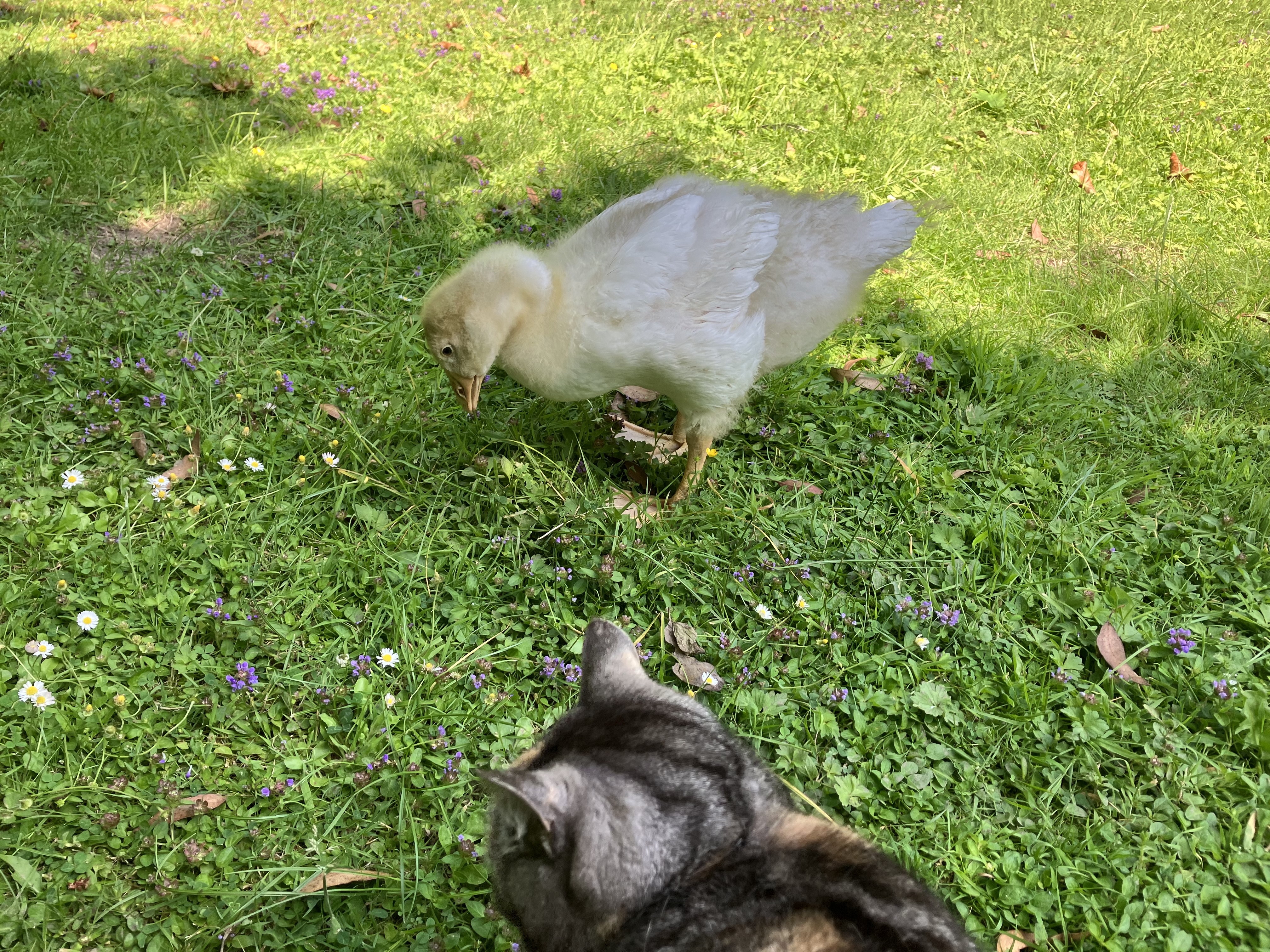
With the chicks
And the eggs.
Spring flowers
In bright posies
Feast times with friends
And fun with families.

But beneath it all
Well hidden within,
Was a story of death
And the blackness of sin.
The anguish of God
Turning his back.
A story of tears
When the world went black.
That tragic tale,
Which won’t go away,
Has a promise of peace
That we long for today.
And the torture and pain
And despair of that day,
Is why God turns and listens
When we kneel and pray.

*****

Having a chat.

I wanted to show that originally at this time of year, there was a pagan festival for Eastre (sometimes spelt with an ‘O’) who was the goddess of fertility. That is where the sunrise, eggs, bunnies and chicks come from. Then the Christians arrived and took over the festival to celebrate the death and resurrection of Jesus.

But all those pagan symbols still keep coming back. However, under it all, the message of what happened in the Bible story still remains true. (So when you are asked, “Why do we have eggs at Easter?” It has more to do with the fertility goddess than the Bible story. But they taste very nice.

Thank you for reading.
anneethompson.com
Sign up below to follow my blog.

A Sword-Pierced Heart


I watched my son die today. My beautiful boy, beaten, battered and left to die. And my heart broke.

I held my cloak close and I remembered the weight of him as a babe, like a boulder on my hip, wriggling to be free, to jump and climb and to run.

Those legs will run no more. Those long limbs—I was so proud when they grew. I remember when he grew as tall as me, then taller even than Joseph. I remember watching him, stretched out as he ate, those long limbs seemed to go on forever. “I grew him,” I used to think with pride. But those limbs will not sprawl, relaxed, in my home ever again.

I watched his hands, the hands that used to pat me cheekily on the head when he’d grown tall. Those strong hands which laboured with wood, which helped me carry heavy loads, which lifted young children playfully.

They are no longer strong. I saw them bang nails through the flesh, felt that I heard the sound of bone shattering over the thump of the hammer, heard his ragged breath as they forced the cross upright. And I wondered if I too might die.

But I watched. I am his mother and I would not leave him alone.

When they tried to take me home, when they told me to shield my eyes, avert my gaze, I did not. For he was my son. I would never leave him alone, not at a time of such anguished need. Others watched. Some women were there, terrified and hanging back. Not me, I am his mother. I stood with John, where he could see me. What could they do to me that was worse than this?

Some watched who hated him. They mocked and spat and called abuse. “It can’t hurt him now,” I thought, “let them shout.”

“He trusts in God,” they called, “Let God save him now,” and they laughed, even as he died, they laughed.

Yet even God deserted him by the end and that was hardest to bear. He called out with a loud shout, asking why God had turned from him.
“My God,” he called in anguish, “why have you forsaken me?”

But I was there. I did not leave. I saw them crucify him, naked upon a cross. No mother wants to see her grown son naked, but still I did not look away. I was there at the beginning, I would stay with him until the end.

The soldiers took his clothes, for fabric is costly and even that of a criminal should not go to waste. Most they tore and shared between them, but not his tunic. They cast lots for that, not wanting to spoil something precious. Yet my son was precious and they destroyed him.

It began last night. They woke me from my sleep and warned me there was trouble. He had been arrested, taken from a meal with his friends and questioned by the temple authorities. They feared the invaders, so he was then referred to a court of Godless law, a place that feared no God. They told me that he was scourged, beaten with whips that removed chunks of flesh as they struck. He was mocked and abused, then brought to this place.

I came, stumbling through streets full of people, full of noise and smells and fear and hatred. I came to this place, this Godforsaken hill beyond the city wall and I saw my son, my boy, diminished, shrunken somehow. I saw that what they had told me was true, smelt the repugnant stink of excrement mingle with the metallic stench of blood. I heard the shouts of abuse, the curses of the guards, the screams from the prisoners, the wails from friends. And him, like an oasis of calm amidst the turmoil, suffering but at peace.

And he saw me. Those dark eyes that as a baby had watched me intently when he fed. Those eyes that twinkled merrily when he teased me and became serious when he wanted to explain something important. Those eyes, red rimmed with exhaustion now, turned to me. Even hanging there, with parched mouth and dried lips, he spoke to me. His voice was hoarse, for he had refused the wine they offered, but I heard him well. A mother knows her child’s voice. I stood with John and my son told me that this was to be my son now and he was to care for me as a mother. Even in his torment he cared for me, fulfilled his duty as my son. Still I would not leave.

Then it ended. The sky had turned as black as my world and he drew his last breath. It was finished.
Those who had mocked became silent, some cried, some beat their breasts in despair. The blackness of the sky frightened them and many fled, wondering at what they had done.

I left, I let them lead me away. My soul was broken and my heart beat even though I bid it stop. My boy was gone, my firstborn, special baby, was no more. I carried that knowledge like a rock within me, I would have rather died in his place. How can I live, continue with my life knowing he is gone? There will be no more sunshine or laughter, nothing matters now. The core of me has gone. I cannot even cry.

Afterwards, I could not rest and I heard strange stories. They said the soldiers pierced his side, to check there was no life in him. His blood had separated so they took him down, a solid corpse that had no life.

A man came and took the body, they said they followed and knew where he lay, in a tomb that was guarded. They told me of strange things, of the temple curtain torn in two, of dead men walking and boulders breaking open. I do not know. I only know my boy is gone. That is all that matters.

It should not have been like this. It was so recently that people praised his name, sang and danced before him, treated him like a king. It should not have ended like this.

And yet, I recall a song, it comes persistently to mind, sung often in the synagogue. It speaks of one forsaken by God in his time of need, scorned by many. He belonged to God from before he was born, then suffered at the hands of many. They sung of bones poured out like water, a heart of melted wax, that is how my boy would have felt. They sung of hands and feet pierced like his and enemies gloating over him. They sang of lots being cast for clothing and of God’s ultimate victory. They sung of remembering him for ever, not just now but families of every nation, even those presently unborn. For he has done it.

Is this my son’s song? Were the words written for him? Are these the words he whispered while he died?

He spoke of his death often, he tried to warn me that he would die. But not like this, not before my own time has come. No mother should bury her child, it goes against what is natural and right. Though, he showed no fear, he knew what his end would be. And he told me there was more.

As I turn now to sleep, I wonder at his words. Will he truly return somehow and will I know?

Has he finished what he was sent to do?

************

If Mary was a young teenager when she learned she was pregnant (which would fit with the age that girls became betrothed in those days) then when Jesus died aged thirty-three, she would have been about forty-seven. How does a woman of that age cope with the things she was forced to witness and how much would she have understood at the time?  I have sons, contemplating their dying is too horrible for words. I am sure she loved her boy as much as we love ours.

Crucifixion was a ghastly way to die. We learn in the Bible that Jesus, who never sinned, who never did anything wrong, died to save the world.

However, many people were crucified, some probably unjustly accused. So is it the death that was important or was it that God became separate? I think that this is the key issue here: the part of Jesus that was God, left him. That was more terrible than crucifixion. That is what each of us deserves and what we do not have to suffer if we choose to come to God.
If we want to know God, we can, even if that means changing our minds.

The song which Mary recalled in the story was Psalm 22. It was written many years before Jesus, yet the words are uncannily appropriate.

****

Thank you for reading.

If you liked this, why not sign up to follow my blog?

anneethompson.com

Talking with a Coptic Christian


As I told you in my last blog, we have been studying spirituality around the world. In our lecture, we spoke to a Coptic Christian from Egypt. ‘Coptic’ is the type of Egyptian writing that came after hieroglyphics, and became the language of Egypt, and therefore the language of the early Christians—people like Origen & Co. The chap we spoke to, spoke to us in English. Not much has been written in the past by Coptic Christians, and we were told that this is partly because it was a difficult place to be a Christian. He spoke about the ancient church in Alexandria, commenting that, “We produced more martyrs than books!”

He explained that the Coptic church is known as the church of the people, and it works with the poor people in Egypt. He said that Christ was found with the poor people, and that is where their focus is. Later, I asked him about all the money, and gilt and splendour, that I had seen in the Coptic churches in Cairo. How does that tally with their aim to work amongst the poor? He told me that it generally is the poor people who provide the money for the beautiful churches, that they want to contribute, to show how much they value God. He also said that in a country where they are the minority religion, it is very important to have a ‘presence’ and to be seen. It would be easy for the media to discount them, for governments to say there were no Coptic Christians—harder to do that when there is a stonking great temple in every city. This is something I hadn’t considered (it’s very easy to judge cultures before we understand them).

As a minority church in the country, their ‘outreach’ has to be different than in Western countries. They strive to do everything well, to live their lives authentically, and to work honestly. This is the way they hope to be noticed, and for people to be attracted to their church. (I think that in an Islamic country, you are not allowed to speak with Muslim people about your faith.) This tallies with what we saw in Cairo, where the Zabbaleen people (who are Coptic) collect the city’s rubbish, and are known for doing it better than anyone else.

When asked about people converting to Christianity, he said that they would only want people to do that who are sure they want to follow Jesus, not because they have been ’persuaded’ into it—because converting from Islam means risking so much.

He showed us his ‘Book of Hours,’ which is a tiny book of Psalms. They read it at regular intervals throughout the day—like when they wake, at mealtimes, when they go to bed. I thought that was a good practice to copy, it’s hard sometimes to even think about God during the day, even, ironically, when studying for an MA in Theology. My Muslim friends are currently fasting during daylight hours for Ramadan, and I admire their determination and wonder whether we have grown too ‘soft’ in our Christian churches. Sometimes a routine/discipline is a good thing. He also spoke about the monastic tradition. He likened this to the Bible story where Moses is praying while Joshua fights a battle. He said the monks are the ones praying, and studying Scripture, aiding the Christians who are outside the monastery. Most people go to the monastery for retreats, when they join the quiet contemplation for a while and learn from the monks (and share with them what is happening in the world). It’s different, but I can see how it would work.

As I said on Monday, we only had one seminar about global Christianity, but even the little we covered challenged some of my preconceived ideas. Churches in different countries need to find the best way to do things within the culture they live in. Often, this will be very different to how we do things in the West.

Thanks for reading. I hope you have a good week.
Take care.
Love, Anne x

Thanks for reading.

anneethompson.com

*****

Global Christianity: What Does It Look Like?


One of my lectures this week was about Christianity around the world. It was only one lecture, and really it could be a whole course, but the little we covered was very interesting. We read various articles by author’s of different nationalities, and it was clear that their Christianity reflected the culture they lived in.

One example was the work of Sadhu Sundar Singh (1889—1929 ).[1] He lived in India, and you could hear chimes of the Indian culture in his writing—which was beautiful. He wrote that God is in everything, and unless we ‘see’ God in the natural world, we cannot fully appreciate what we have. God is reflected in creation. He wrote that prayer prepares the soul for God’s gifts, and we shouldn’t be praying in order to ‘get’ things. When we approach God in prayer, our thirst is quenched. He painted a picture of God using examples from nature.

At times, it was fairly close to pantheism (the idea that God is everything, and everything is God—which is roughly the teaching of the Hindu religion). But he didn’t actually say that, and instead gave an example of a sponge being filled with water—the sponge and the water are intrinsically different substances, but one is able to completely absorb the other.

His title of ‘Sadhu’ means ‘holy man,’ and he taught many people. There are stories that he left society and went to live in a cave, and he is still there now, waiting until the world is ready for him to emerge. Other reports (I suspect more reliable) are that he died in 1929.

We also read some of Richard Young’s work, about Christianity in Africa and Asia.[2] He writes about the role of ancestors in China. He suggests that the spirit of ancestors should be regarded as a force—either to help in the Christian journey or to flee from their influence—but they cannot simply be ignored. Chinese people cannot be expected to suddenly think ‘with a Western mind’ when they become Christians.

I’m not sure what I think about this. However, I do wonder if there is an example in the New Testament. If you read the Gospels, there were an awful lot of evil spirits/demon possession. And in today’s society, there seem to be less. I do not actually know anyone who has been possessed by evil spirits—do you? Yet we read of the disciples encountering such people regularly. Were they just unlucky? Or are we not noticing? Or, is it possible that those people were not possessed by spirits, they were simply ill, and erratic behaviour due to things like epilepsy was wrongly attributed to evil spirits? In which case, it is interesting that Jesus did not correct the wrong assumption. He met the people within the culture/thought-context of the time, and he knew that if he told the person they were healed, but ignored the ‘evil spirit’ then they would continue to suffer—because placebo is very strong, and a belief in an evil spirit would be enough for them to continue to suffer. Therefore, in kindness, Jesus did was what necessary, he appeared to ‘cast out’ spirits, so the person would be healed. If I am correct, then what Young suggests would fit with this example. Sometimes we expect people to change who they are before they can come to God, but this is a human requirement, not a Godly one. If God wants to change them, that’s his business, and that will happen later.

We also spoke to a Coptic Christian from Egypt—but I’ll tell you about that in my next blog. Thanks for reading, and I hope you have a great day. Take care.
Love, Anne x


Thank you for reading.
anneethompson.com
Look for the link below, and sign up to follow my blog.

[1] Sudhu Sundar Singh, At the Master’s Feet, (Edinburgh: Fleming H. Revell Company, 1922).

[2] Richard Fox Young, ‘Christian Spirituality in Africa Asia, Latin America and Oceania’, in Author Holder (ed.), The Blackwell Companion to Christian Spirituality, (Oxford: Blackwell, 2011).

******

Hello From My World


Hello, and how was your week? I thought I would give you a quick update from my house. This isn’t really what I want to write about, as really I want to tell you about what I plan to write for my thesis. But I can’t. I’ll explain why in a minute.

Firstly, if you had Mother’s Day last weekend, was it lovely? I had lovely gifts from my family, and no one forgot this year. (I never assume…) I cooked dinner for my mum and mother-in-law, and it was all very pleasant.

I used it as an excuse to use the last of the turkey dinners from the freezer. Due to various off-spring changing their plans/announcing they no longer eat birds/incompetence on my part, I ended up with several turkeys, of different sizes, this Christmas. They all went into the freezer, and the last one has now been defrosted—which always takes longer than expected—and cooked.

Last Sunday was busy, because it’s also the day my daughter and her fiancé moved back home. They are currently between selling/buying houses, and they are living here for a while. Mostly this is brilliant. It’s the first time since Kia died that the house hasn’t been horribly empty. When I pop out, I now can shout through a bedroom door to my soon-to-be-son-in-law and tell him that I am leaving. And when I am home, I shout that I’m back. He probably can’t hear me, because he’s busy working, but I like having someone to tell. To be honest, Kia probably never understood when I told her these things, but I just liked telling her.

They did move back with more stuff than I was expecting, even though all their furniture has gone into storage. My house is rather full. But I like having a full house, empty rooms feel wasteful.

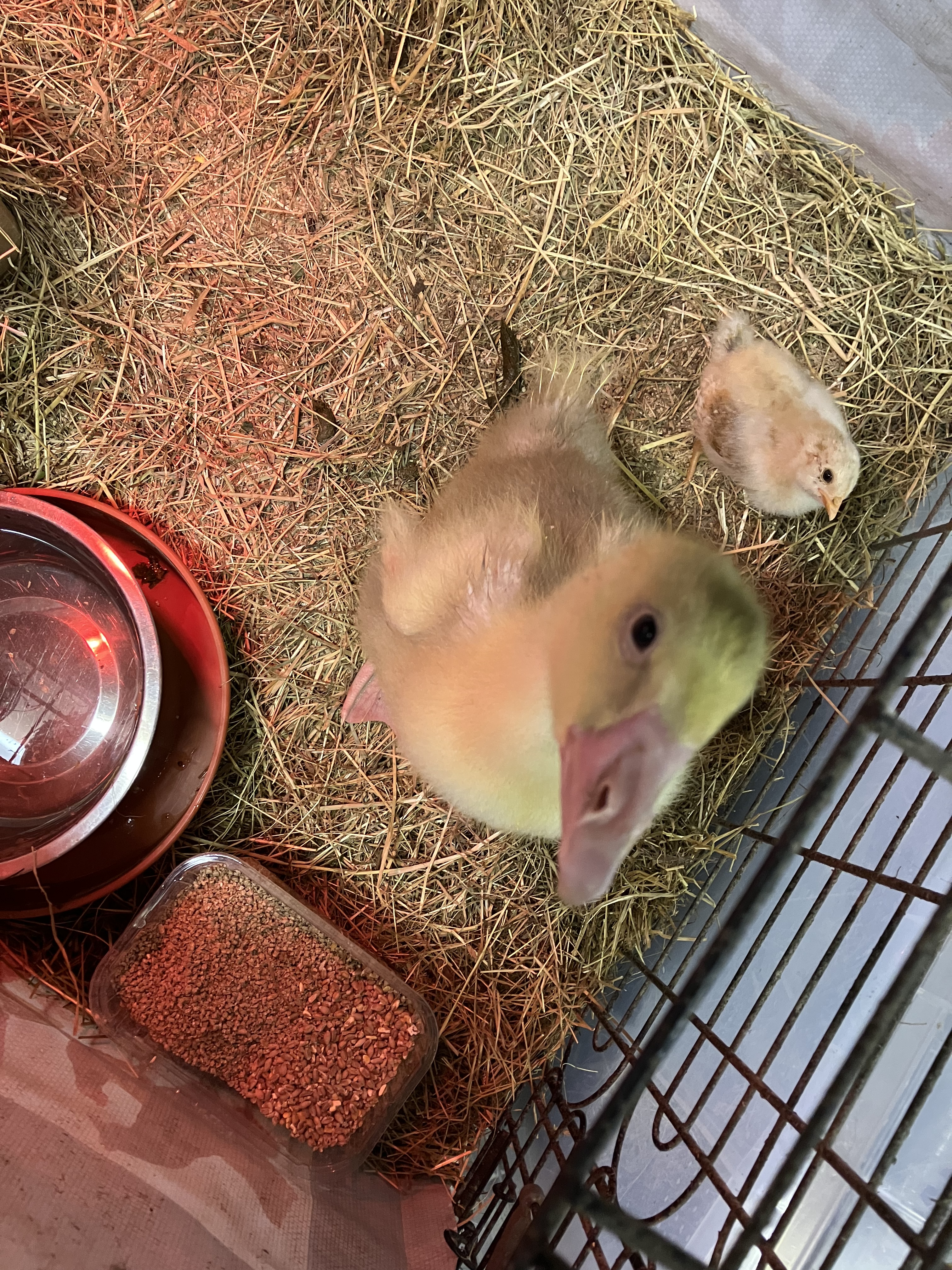
The cage by the pond is also very full at the moment. When Kia died, the local fox soon realised the garden was accessible again, and started to visit, so I have kept the ducks shut away (even thought they could be back on the pond now). They seem quite happy, but the cage is incredibly muddy as they spend all day transporting wet mud from the end with puddles to the rest of the cage. Ducks are mucky creatures. There are a couple of nests, in corners where they think I won’t notice them, and I think they must be almost ready to hatch. Depending on how many hatch, the cage will definitely be too full. And I can’t bring the ducklings into the garage this year, as that is full of daughter-stuff. Ah well, I shall decide on a plan when I know how many hatch.

Last year’s hatch.

I don’t have a huge amount of time for duck or daughter sorting, as I am preparing the proposal for my thesis. I want to tell you all about it, but I have to be careful—apparently ‘self-plagiarism’ is a thing. If I write and publish something, I cannot then put it into the thesis. So I can only tell you snippets, and nothing in academic language. Basically, I want to look at why the Leviathan, which is clearly not a crocodile (because it breathes fire/smoke) changes Job’s attitude in the Book of Job. What does it represent? I’m reading lots of books by scholarly authors, and have discovered ‘monster theory.’ Who knew that was a thing! Apparently, all cultures have monsters, and you can learn a lot about cultures, and what they valued, by examining their monsters. In a time/place of physical uncertainty, the monster might be extreme weather-monsters, or lions; before medical advances, the monster might represent disease; when there were warring nations, the monster might be violent. I wonder what our monsters today might be—loss of control? Racism? Mental disorders that result in unpredictable violence? The films/books we read seem to have lots about psychopaths and historical racism at the moment. When I was a teenager, there was lots about evil spirits/demon-possession (with films like ‘The Exorcist’). You don’t see so much about that now, maybe our monsters are changing.

The other thing you don’t see so much of now are—complete change of subject coming, so brace yourself: some of the sweets I ate as a child! My mum is doing a jigsaw, and on the back are photos of sweets from the 40’s, 50’s, 60’s and 70’s. I will leave you with them—how many do you recognise? Fruit gums have always been my favourite, though I am also keen on a bar of Cadbury’s milk chocolate.

Hope you have a good week, that has a manageable amount of stuff, and no monsters. Maybe there’ll be some sweets too.

Thanks for reading. Take care.
Love, Anne x

What is an ‘Evangelical Christian’? And Are You One?


What is an ‘Evangelical Christian’?

A Church — Not necessarily an evangelical one, I have never been inside.

Before I went to college, I would have described myself as an ‘Evangelical Christian.’ Now I’m not so sure. To be honest, I didn’t really know what the term meant—I assumed, as it contained the word ‘evangelical’ it meant that the person thought it was right to ‘evangelise,’ in other words, to tell other people about God. However, depending on who you speak to, it means different things. And sometimes it’s used as an insult in the Christian world. Shocking! Or maybe not…

There is a handy (if not scintillating) book that defines what ‘evangelicalism’ means, using seven points.[1] If I am honest, I have been aware of these within churches I have attended, and they’re not always good. What do you think?

  1. Conversion. To be a Christian, evangelicals tend to emphasis a moment in time when you committed yourself to God. They talk about ‘repenting of your sins’ and ‘changing direction’ and asking God for forgiveness. I too think this is an important step, though I’m not so sure it happens only once, and certainly not necessarily at the start. I also don’t think there’s an ‘in’ and an ‘out’ and until you have ‘prayed the prayer’ you are definitely in the ‘out’ club (if you see what I mean!) Things are fuzzier than this, in my experience.
  2. Assurance of Salvation. This means a belief that Christ becoming human, living, dying and rising again is all that is necessary for salvation. It slightly contradicts point one above (in my view). Now, being sure you have been accepted by God is important, but I’m not sure that everyone gets there all at once, in a single leap. Nor am I sure that we agree on what ‘salvation’ is. People talk about ‘going to Heaven when I die’ but (as discussed before) that’s what Plato taught, not the Bible. Again, I think things might be fuzzier than sometimes presented. I also worry that ‘assurance of salvation’ is most often used to point a grubby finger at the person who we are ‘sure has not been saved’! Comments such as: “Oh, he was ever so kind, and he’s not even a Christian you know,” tend to be revealing.
  3. Biblicism. Evangelicals tend to say they believe the Bible is the ‘Word of God’ and available to everyone, but then go to great lengths to explain every contradiction and to teach things the way they believe them. Whilst they might be right, they might also be wrong, and maybe a little more caution is called for. It’s easy to find verses in the Bible that support your beliefs. The KluKluxKlan did it, so did the fascists. I think that using the Bible to learn who God is, is great. I think using the Bible to make rules for other people is not so great.
  4. Prayer. Evangelicals believe that prayer is important—both private prayers and prayers in church. The early evangelicals taught that prayer should come ‘from the heart’ (which I agree with) and therefore pre-written prayers, and especially liturgy, are not really prayer. (This part I disagree with.)
  5. The Cross/Penal Substitution. This goes back to point 2., that Christ died to save us from our sin. This is a huge concept, and I don’t think we really understand it, so I won’t comment. I do believe Christ died, and I do believe that somehow that repaired the relationship between God and us. But I don’t know how exactly, and I am suspicious when others seem very certain about concepts which seem to me to be beyond human understanding.
  6. Holiness. When we are saved (see point 1.) it will affect the way we behave. The ancient Methodists believed it was possible to become sinless. The ancient Baptists believed holiness should be pursued through behaviour. In the 1870’s the Keswick Convention was set up, to try and decide this issue. They stated that ‘sin is perpetually counteracted.’ (Keswick is also home to an excellent kitchen shop, which is unrelated.) All I know is, I am not perfect, some terrible people do some really good things, and some apparently ‘holy’ people do really bad things.
  7. Mission. After conversion (see point 1.) a Christian will be dedicated to God’s service, hoping to convert others. Sometimes this can feel like ‘scalp-hunting’ if done badly. At best, it’s the sense of having something special and wanting to share it with others.


Unfortunately, the Church is made up of humans, and none of us get it right. God is very patient with us. I find it helpful to step back, and look at what defines the things I believe, and then to decide whether they are really the things I believe, or if they are simply unquestioned teaching.


[1] Peter J. Morden, ‘Evangelical Spirituality’, in Andrew Atherstone and David Ceri Jones (eds.)  The Routledge Research Companion to the History of Evangelicalism (London: Taylor and Francis, 2018).

Thank you for reading.
anneethompson.com
You can sign-up below to follow my blog.

*****

Springtime Jobs


It’s time to do all those jobs that happen every year at this time. It doesn’t feel much like spring here at the moment, as we’ve had snow and frosts all week. But the mornings are lighter, and the animals know, even if we’re not sure. Depending on where you live, you will either have put your clocks forward an hour, or be preparing to do so. We move our clocks on the 26th March this year, so the US and Canada are ahead of us.

One Christmas gift (which feels like yesterday) was a pot and a packet of beans. We’re having a family competition, to see who can grow the tallest bean. It has to be in the pot provided, which wasn’t very deep. Mine grew to 67cm, then it decided the kitchen was too warm and the pot too small, and died. I planted the remaining seeds outside, and they don’t seem to mind the cold and are looking healthy. I expect the slugs will eat them, but here’s hoping.

My bean, growing next to a lemon pip (which is slower but less fussy).

The birds know it’s spring. The ducks have started laying, even though it’s cold, so April will be busy with ducklings again. There are already lambs in the fields. The cycle of life begins again.

We also have a wren in the garden. Male wrens are busy at this time of year, collecting things to build nests. Nests plural. A male wren builds several nests. When he manages to attract a female, he takes her on a tour of the nests, she chooses the best one, and lays her eggs. He then goes off and finds another female, and repeats the tour with the remaining nests. He’ll do this until all the nests have females, sitting on his offspring. Not the sort of male you want to introduce to your daughter. He’s a tiny brown bird, but has something (which I cannot remember the name of) in his lungs, which amplifies his voice. A tiny bird with a loud song. I’m rather fond of him, so I hope the cats don’t catch him.

Spring this year will be busy for me too. I need to sort out the house, because my daughter is moving home for a few months between selling her flat and buying a new property. This will be fun, but I need to make space for her. Though once I have emptied some cupboards, the job will be finished. I also need to write the proposal for my dissertation, which is less fun. I have to submit the title of my thesis, explaining what I plan to research and why, with a list of all the literature I plan to read and why it will be relevant. I am going to explore the dragon in the book of Job (chapter 41) which will be interesting, but being assessed makes it more stressful. But at least I only have to produce one, and I can submit that to the university and they will either love it or not. Being a wren and having to repeat that many times over each year must be a whole different game.

Hoping that all you attempt this week grows well and is completed on time. Thanks for reading. Take care.
Love, Anne x

Thank you for reading.
anneethompson.com
Sign up below to follow my blog.

Dark Night of the Soul


by St. John of the Cross


When my lecturer said that the influence of St. John of the Cross was hugely significant, even today, I thought, ‘Hmm…’ I have grown up amongst churchy people, and I had never heard of him.
Then, later in the week I was watching an episode of ‘Call the Midwife’ and they referred to ‘The dark night of the soul.’ Perhaps my lecturer was right; if it’s reaching as far as a series on telly, I maybe ought to know more.

St. John of the Cross, or Juan de Yepes, was a Spanish monk in the 16th century – the time of Spanish wars with the Moors, Martin Luther writing his thesis, Queen Elizabeth ruling England, the Spanish Armada and the Europeans venturing to America.
His father was a converso (from a Jewish family that had converted to Catholicism) and he was rejected by his rich family when he married John’s mother.
John grew up poor, and when his father died his mother placed him in a Catholic orphanage, where he was educated and taught a trade—though Burke remarks that he was, “a spectacularly unsuccessful apprentice” and all his employers fired him![1] He ended up nursing in a hospital for syphilis patients, which was the equivalent of nursing AIDS patients in the 1980s. He later took vows, and then joined Teresa of Avila as a ‘barefooted’ monk, trying to reform the abuses of the Church from within.

St. John was a mystic, which means he considered things that cannot be explained. He believed the soul was separate to the mind and body, and I’m not sure that I agree with him. I think people are maybe more ‘whole’ than this (in the same way that I don’t think Heaven is full of dis-embodied souls floating around). Much of St. John’s thinking seems to have been influenced by Plato (who also separated the soul and the physical).
Some people suggest we should have “a hermeneutics of suspicion” when examining the mystics.[2] (‘Hermeneutics of suspicion’ is bit of a fashionable phrase at college. ‘Hermeneutics’ simply means how we interpret the text according to our experience, so the phrase is a fancy way of saying ‘Don’t trust everything you are told.’)

St. John had a rough time, with lots of paranoia around, due to the Spanish Inquisition, and the Reformation—so when people rejected his beliefs, he was imprisoned and tortured. It was after this that he wrote a poem: ‘Dark Night of the Soul.’

The poem is similar in style to Song of Solomon in the Bible, and depicts God as a lover. The night reflects the horrors of his time in prison, but with God by his side he has no fear. Some time later, St. John wrote prose by the same name, to explain his poem. He’s fairly wordy, and writes very long sentences, but usually his meaning is clear (you do need to concentrate while reading though, and spousal interruptions are very annoying!) My feeling is that he wrote the poem in a splurge of emotion, putting words to his feelings. Later, he tried to explain the words and the theology behind them (I wasn’t sure that the explanation always fitted the poetry).

St. John believed that there were three different states of being a Christian: Beginner, Progressive and Perfect. Perfection is achieved after physical death. Many people never develop further than ‘Beginner’ as they become complacent, they enjoy using the gifts God gives them, and never seek to develop their relationship further. They are self-satisfied, they feel they know all the answers and are contented in their relationship with God. Although they strive to please God, and to pray, to give to charity, and offer penances, their religion has become more important to them than God himself, and they stop trying to develop their spiritual relationship. (This rings true.)

He describes ‘spiritual gluttony’ where Christians enjoy spiritual gifts for their own sake, and become increasingly religious whilst not being closer to God. They rely on feelings, and if their prayers or works don’t result in feeling peaceful, joyful, holy, they then consider them a waste of time. It is like they think God ‘owes’ them in return for their devotion.

To develop into a ‘Progressive’ one must pass through the ‘dark night,’ which is a state instigated by God. St. John describes a dark night of the senses, which tends to follow a time of spiritual happiness, when the person feels close to God and peaceful but is then plunged into depression, with God out of reach. (This reminds me of when as teenagers several of us were baptised, and afterwards most of us experienced a ‘low’ time, and some stopped coming to church completely.) He writes that God gives this time of depression so the person can become stronger, relying on God and not on the feelings of God (peace, joy, contentment). It reminds me of the Book of Job, which teaches that God is worthy of worship because he is God, not because it results in good things for the worshipper.

St. John views this time of depression as a purging of the soul, a time when instead of feeling good and happy, a person is turned back to honouring God through love and discipline, even though they feel they are gaining nothing in return. I’m not sure how this fits with our modern culture, where mental health seems to mean people should never be depressed. Whilst there is, I believe, a mental illness that should be treated, there is also perhaps a time when mentally healthy people feel depressed, and perhaps we shouldn’t run from this. Perhaps we can learn more from our ‘low’ times than our ‘highs.’ In the poem, the house represents the physical and mental state, which are allowed to rest while the soul meets with God. God then kindles a love, which is not necessarily felt, yet is still real. This is a good, happy thing. The soul is free to meet God without being confused by emotions, it has escaped.

La noche oscura del alma

En una noche obscura,
con ansias en amores imflamada,
¡oh dichosa uentura!
sali sin ser notada,
estando ya mi casa sosegada.

A escuras y segura,
por la secreta escala disfraçada,
¡oh dichosa uentura!
a escuras y ençelada,
estando ya mi casa sosegada.

En la noche dichosa,
en secreto, que nadie me ueya,
ni yo miraua cosa,
sin otra luz ni guia
sino la que en el coraçon ardia.

Aquesta me guiaua
mas cierto que la luz del mediodia,
adonde me esperaua
quien yo bien me sabia,
en parte donde nadie parecia.

¡Oh noche que me guiaste!
¡oh noche amable mas que el aluorada!,
¡oh noche que juntaste
amado con amada,
amada en el amado transformada!

En mi pecho florido,
que entero para el solo se guardaua,
alli quedo dormido,
y yo le regalaua,
y el ventalle de cedros ayre daua.

El ayre de la almena,
cuando ya sus cabellos esparzia,
con su mano serena
en mi cuello heria,
y todos mis sentidos suspendia.

Quedeme y oluideme,
el rostro recline sobre el amado,
ceso todo, y dexeme,
dexando mi cuidado
entre las açucenas olvidado.
Dark Night of the Soul

On a dark night,
Kindled in love with yearnings
–oh, happy chance!–
I went forth without being observed,
My house being now at rest.

In darkness and secure,
By the secret ladder, disguised
–oh, happy chance!–
In darkness and in concealment,
My house being now at rest.

In the happy night,
In secret, when none saw me,
Nor I beheld aught,
Without light or guide, save that which burned in my
heart.

This light guided me
More surely than the light of noonday
To the place where he (well I knew who!) was awaiting me–
A place where none appeared.

Oh, night that guided me,
Oh, night more lovely than the dawn,
Oh, night that joined Beloved with lover,
Lover transformed in the Beloved!

Upon my flowery breast,
Kept wholly for himself alone,
There he stayed sleeping, and I caressed him,
And the fanning of the cedars made a breeze.

The breeze blew from the turret
As I parted his locks;
With his gentle hand he wounded my neck
And caused all my senses to be suspended.

I remained, lost in oblivion;
My face I reclined on the Beloved.
All ceased and I abandoned myself,
Leaving my cares forgotten among the lilies.

Translation by Edgar Allison Peers 

I’m finding the writing of these ancient monks to be challenging. Whilst I disagree with the way they tried to find God, it’s hard to reject some of the things that they learnt along the way. I have noticed that it’s often in our hardest times that we draw closer to God, but I’m not sure I agree that without this ‘dark night’ people are limited in their spiritual journey. I also don’t know whether the monks’ rejection of marriage and society (and shoes!) was a sign of holiness or of being weird; but I do respect what they were striving to achieve.

Thanks for reading. I hope that when you have a ‘dark night of the soul’ it will be something precious rather than destructive.
Take care.
Love, Anne x

Thanks for reading.
anneethompson.com
Why not sign up to follow my blog?

[1] Gregory Burke, St John of the Cross (Alba House Publisher: New York, 2001) P.35.

[2] David Stewart, The Hermeneutics of Suspicion, in The Journal of Literature and Theology 3, 1989, Pp. 296-307.

Book Review: Silence and Honey Cakes


Silence and Honey Cakes

By Rowan Williams

Early on in the Christian religion, after the books of the New Testament had been written and the message spread abroad, some people wanted to explore their relationship with God in detail. These were the monks and nuns who set up communities in the Egyptian desert, from about 350 AD. We still base lots of our theology on what they decided (so, you might think that you learned about ‘original sin’ from someone in your church, based on the Bible, but that was one idea which was introduced by one such monk).

The monks/nuns lived in communities, and their ‘spiritual life’ was connected to their ‘physical life.’ Although they removed themselves physically from contemporary society, they lived amongst other monks and nuns, and were dependent on each other. They considered their spiritual welfare to be closely entwined with other people. For example, one monk stated that he tried to focus entirely on his own sin, because then he would never be tempted to judge anyone else—how could he complain that dinner was burnt if he always had in mind that he had broken a plate yesterday? (Seems like a good rule.) They also talked about ‘putting the neighbour in touch with God’ which to be honest I don’t really understand. How can they claim to focus on this when they seemed to live in such remote places? I assume their ‘neighbour’ was restricted to other monks, which is rather limited. Though some monks were visited by people seeking advice, so maybe those were the ‘neighbours.’

They do seem to have been a very tolerant bunch, very accepting of differences. They spoke about people following different vocations, and that a life spent praying was no better or worse than a life spent mending shoes, if that was what you had been called to do. The book is named after the practices of two monks, one who worshipped God with silence, and another who worshipped by eating honey cakes with his visitors. (I know which one I would like to be.)

They also had great names! The book describes ‘Moses the Black’ who was from Ethiopia and before he was a monk, he was a highwayman. Another was ‘John the Dwarf’.

I think I might suggest we devise similar names at college for our fellow-students. I shall be ‘Anne the Old,’ as most people (including the lecturers) are younger than me.

In addition to giving each other names, the monks were also answerable to a mentor. This seems like a slightly dodgy idea to me. I can understand why they believed having a human to confess to, someone to be completely open with and to take advice from, might make people more accountable (because let’s be honest, although we say that we confess directly to God, how many of us do, diligently, every single day?) However, I think the risk of abuse, of the mentor taking wrongful control, or representing their own view rather than God’s, is too great. I know some modern churches have a similar idea, but it’s not something I would want to be part of. I don’t think I trust another human with those things.

They spent time considering some of the knotty problems of Christian theology. For example, when Jesus was in Gethsemane (praying in the garden the night he was arrested) did he have the option to change his mind and escape crucifixion? If he did then he cannot have known the limitations of humanity, and being trapped in a situation of temptation. If he didn’t then how could he be fully God, who is unrestricted? It might sound a bit silly, a bit convoluted, to us today. But it was the tackling of such issues, and the finding of sensible answers, that provides the basis of much of our theology.

(In answer to the above question, they decided that the ‘will’ cannot be separated from the person as a whole. Therefore, Jesus would always ‘choose’ what was right. In the same way as a mother feels intensely protective towards her child, and if a gunman was to burst into the room, in theory she could choose to hide, but in reality, she would throw herself in front of her child to protect them, because that is her nature. Choosing to abandon her baby would be impossible.)

The book discusses what is ‘personal’ as opposed to what is ‘individual.’ It gives examples of people who lived lives in tune with their own personalities, without necessarily striving to be different. ‘Self’ was not something to be flaunted, ‘different’ was something natural, not something militant. I think they were not trying to ‘find themselves’ but rather trying to find who God had created them to be. Sometimes what I read sounded like navel-gazing, a bit too much looking inside and not enough looking to God, but it’s hard to understand a lifestyle from a book written centuries later. Certainly they were on a quest to find truth—the kind of truth I wrote about a few weeks ago. ( https://anneethompson.com/2023/02/06/should-politicians-tell-lies/  )

The book considers several more ideas that arose from the desert monks/nuns. It’s a little book, but it took a while to read because I needed to keep pausing, pondering the ideas presented, deciding whether I understood them and whether I agreed with them. It’s worth the time spent; if you see a copy, I suggest you read it.

Amazon link:
https://www.amazon.co.uk/Silence-Honey-Cakes-Wisdom-Desert/dp/0745951708/ref=sr_1_1?crid=165TVHJDMS27O&keywords=silence+and+honeycakes&qid=1676559026&sprefix=%2Caps%2C60&sr=8-1

Thanks for reading. I hope you have something as sweet as honey cakes in your day. Take care.
Love, Anne x

Anne E. Thompson
Thank you for reading
anneethompson.com
Why not sign up to follow my blog?

*****
Madeira, February 2023


We visited a few towns on the south coast of Madeira. It wasn’t possible (I think) to reach them via pretty coastal roads, as the roads seem to be either blocked or fallen into the sea or abandoned to rock falls. Our drive was therefore through a series of tunnels. Madeira does tunnels very well, but you don’t get to see much scenery. I cannot imagine how different life must have been before the tunnels were built. Towns would have been fairly isolated, as visiting other places would have taken much longer.

We visited Ponta do Sol. As we drove down the steep road into town, we saw a small carpark. It was full, but we managed to arrive as someone was leaving, so parked the car and followed signs to the old town. The town is built on a steep hill, terraces of bananas reaching up the cliff side, cobbled streets and houses clinging to the lower levels. There were some good coastal views, but nothing to entice us to stay in the town. The busiest area was the beach, with families sitting on the black sand or swimming in the sea. I never like black sand. Although I know it’s no less clean than yellow sand, it feels dirty. As Madeira is basically just a big volcano, all the natural sand is black.

Next we drove to Madalena do Mar. We did attempt to follow the coastal road, but it petered out, so we had to do a difficult 3-point turn on a bendy road, and it wasn’t worth the hassle; we returned to the series of tunnels.

Madalena do Mar has a big car park next to the sea, and a lovely promenade lined with palm trees along the coast, a jetty for fishing or mooring boats . . . And very little else! There were plots of land waiting to be built on, and even an area designed for a café, but no one seemed to have actually arrived yet to build the hotels and cafes. It was lovely, in a sort of abandoned, not quite there yet, way. Not sure what it will look like in ten years time.

Quite windy!

Our last stop was Praia da Calheta. This was a busy town, full of people, cars trying to park, cafes and supermarkets. There was a small marina, with little boats bobbing in rows, and a long promenade with palm trees and cafes. There were also beaches, with yellow sand hauled from Africa. Despite the cold, several teenagers were swimming, their squeals piercing the air. Steep cliffs bordered the coastal road, and we sat in a cafe, sipping espresso and watching little black and white birds nesting in the rock while seagulls swept past looking for food.

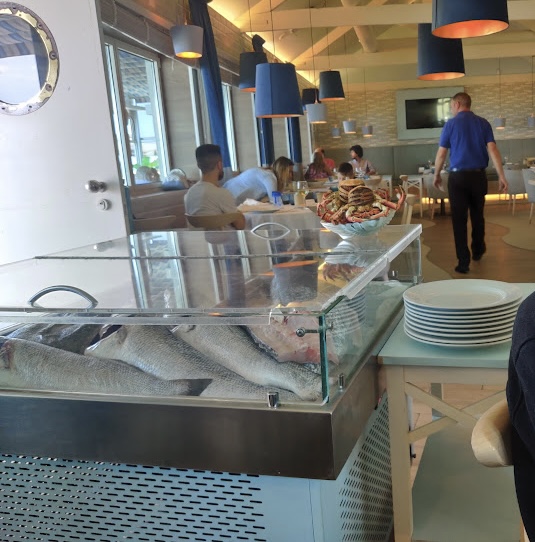
We returned to Funchal for dinner, and ate in Noitescura, a restaurant near the apartment. It served traditional food, and last time we tried ‘Francesinha’ which were like burgers (beef, chicken, fish or vegetable) with a fried egg on top, and served covered in a sauce/gravy. I chose badly, and had the vegetable one, thinking it would be a mushroom burger, but it wasn’t, it was more like minced vegetables (tiny pieces of onion, broccoli, carrot) in a soggy bun. It was as horrible as it sounds. This time we shared a fish platter, which was lovely. It had a variety of local fish (scabbard, parrot fish, bass) and we ate it with fried sweetcorn, rice and chips. (No veg this visit, Husband chose the food.) 

I also tried a poncha, which is a traditional drink, sold all over the island. I was expecting something like a caipirinha, as it’s made with sugarcane alcohol, but it wasn’t, it was more bitter, and orange, and served in a short fat wine glass with no ice. Not unpleasant, but I prefer caipirinha. I also had white wine with my meal, and a dessert with sambuca (which I remembered too late I don’t like, but luckily they poured it over the dessert and then set it on fire, so most of it burnt off). We finished with a glass of Madeira wine, but refused the rum that was offered with the bill. I don’t usually drink much. I didn’t sleep very well that night.

Thanks for reading.
Have a good week. Take care.
Love, Anne x

Thanks for reading.
anneethompson.com
Sign up to follow my blog, and it will be emailed to you each week.