Concluding the Garden of Eden Story


The Garden Story: To conclude.

Before we leave the story of Adam and Eve in the garden near Eden, I wondered if you have formed any conclusions of your own? It’s there, right near the beginning of the Bible, and the story is told in every UK school and every church—so why? What do you think it means?

Whatever you believe, I think you have to accept that you have decided to believe it. Belief is a choice. At this stage, we cannot ‘prove’ anything. We cannot deny that fossils of prehistoric life have been discovered, and scientists have aged them, and they suggest that animals evolved gradually over millions of years. However, to believe this is a choice—we cannot prove it. God may have created the world, in seven days of twenty-four hours, with the fossils already nestling in the earth for humans to find.

My own belief is that this scenario seems unlikely, and it doesn’t fit with my idea of who God is. Creating a world full of fossils feels like lying. I could dispute the aging of those fossils, but my science isn’t advanced enough for that, and everything that I read suggests that actually, the evidence for evolution is strong. We can see it happening today: if an animal’s environment changes, the animal changes too, it evolves into a new variation. When those changes mean that it can no longer reproduce with the animal group it used to, it is categorised as a new species. It happens every day, all the time. It’s not about monkeys waking up one day as humans (which is an argument I have heard when expressing disbelief in evolution). Sometimes, if intelligent people are saying something which sounds daft, it’s probably because we haven’t understood it.

So, I choose to believe in the evolution of animals, though I am aware that I might be wrong. Having studied the science a little, I find it impossible to believe that this can have happened randomly, and I believe (another choice) that this is how God created the world. At some point, humans evolved to be different to other animals, to have a soul. Humans have a moral code, an understanding of things beyond their experience, a conscience. I think that this change from animal to human is what the garden of Eden story is seeking to explain. God put a spirit into humans, at some point during evolution, and it made them different.

As an aside, I have wondered if this explains the extremely weird story just prior to the story about the flood. It talks about why God is angry with the world and decides to destroy it with a flood. I wonder if those early humans (with a soul) were mating with the lesser evolved hominids (without souls) and this was against God’s will. If God at some point gave souls to humans, they may physically have still been similar to lesser creatures, and their human-animal hybrid off-spring would cause big problems if allowed to continue. Therefore they were all destroyed in a flood. But this is just me speculating. I expect someone will tell me this is impossible.

 I think the story also shows that humans are not God, they have a propensity to disobey God, and this results in life being spoilt. I don’t, however, think there is enough support in the story for the idea of an inherited ‘original sin’ theology. I don’t think everything human or physical is bad (which is what Augustine and other theologians from the Middle Ages taught) and that humanity is basically rotten. But dismissing this theology raises other questions, which Augustine was trying to answer, and which, to be honest, are beyond me. People do sin, I’m just not convinced that a new-born baby is born sinful.

I’m not sure how much difference any of this makes to real life. Perhaps the only important thing is to understand that God made us (even if you’re not sure how) and this makes you valuable (even if you don’t feel it). It also shows that there is a God, and it’s not you (a hard lesson for teenaged boys to learn, that one!) Maybe one day, we’ll understand how it all fits together.
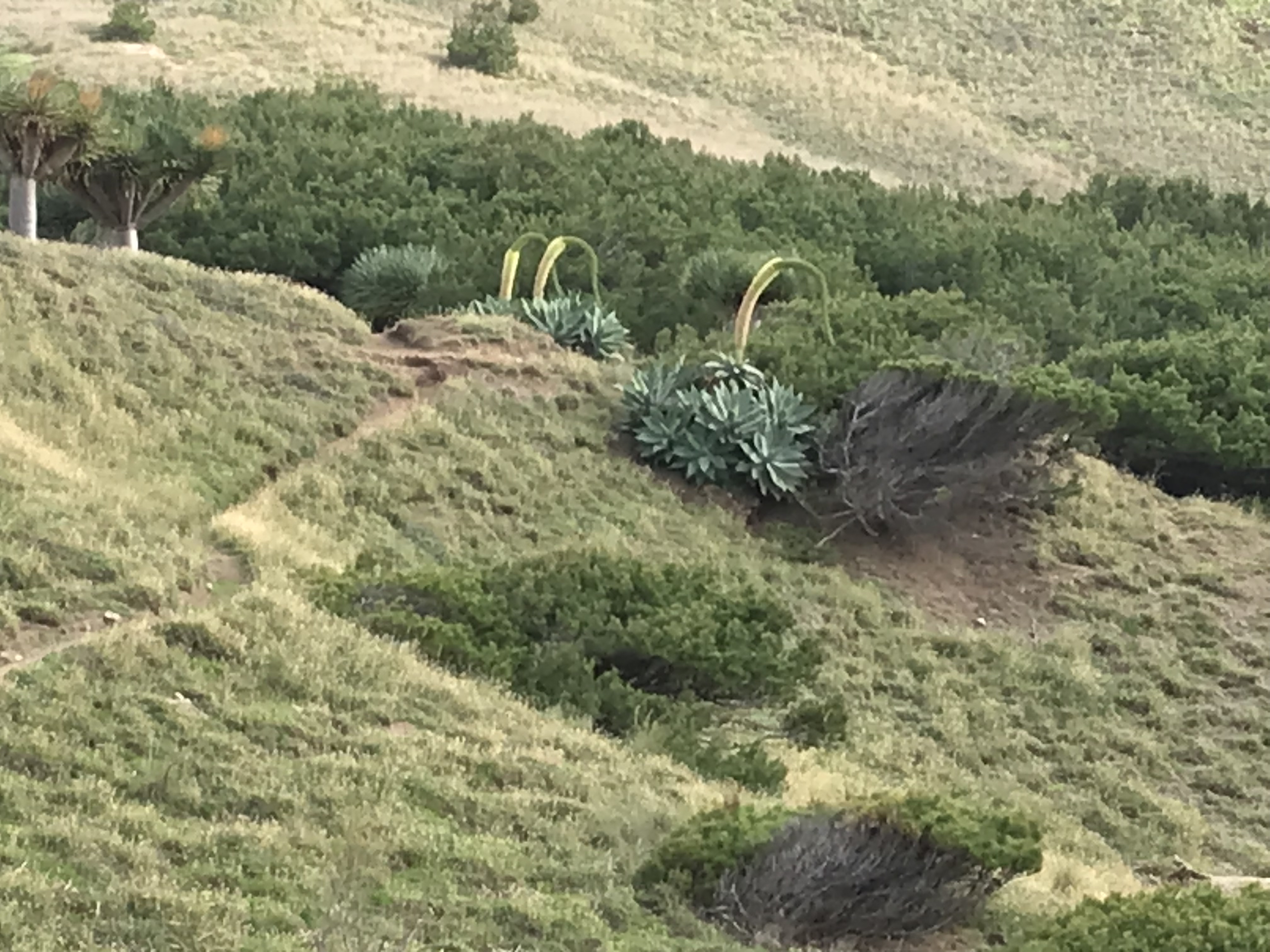
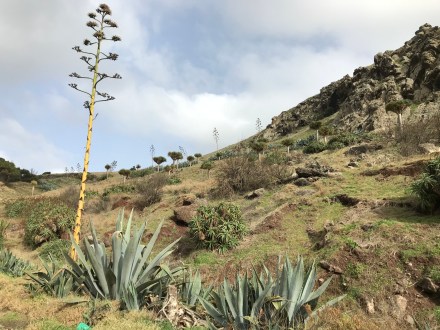
One thing I do know is that much of creation is extremely beautiful. Next week I’ll tell you about our trip to the island of Madeira, and all the exotic plants we saw and some of the unusual fruit we ate. Not sure any of it made us wiser though.

Enjoy your week. Take care.
Love, Anne x

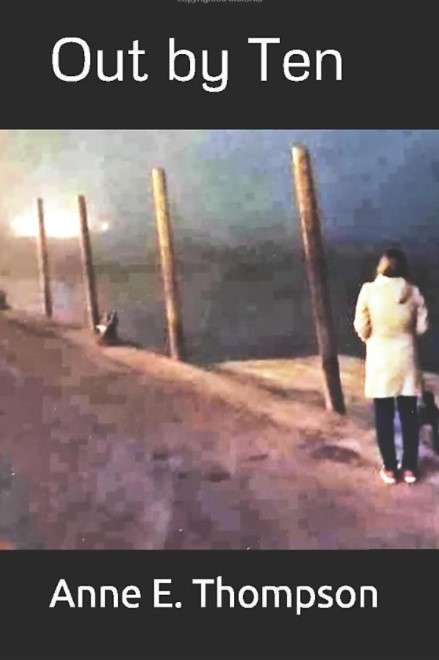
Anne E. Thompson
Thank you for reading anneethompson.com Why not sign up to follow my blog?

anneethompson.com

****

More on the Garden of Eden Story


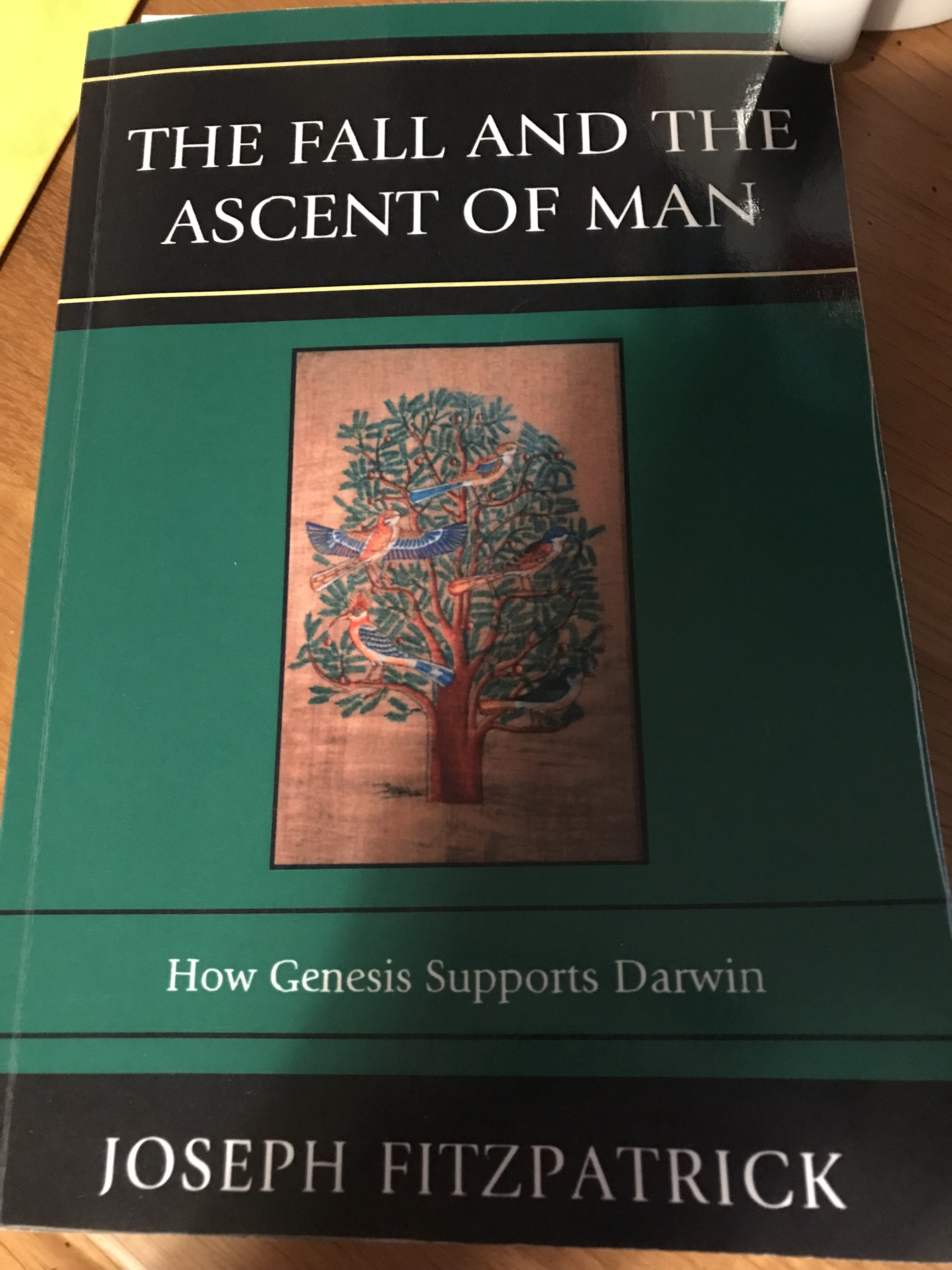
In my exploration of the garden of Eden story, I read books by a couple of authors which I found incredibly interesting (and a sort of antidote to the book by Zevit). James Barr and Joseph Fitzpatrick both seemed to be searching the story for truths rather than trying to fit the story around their own ideas. Neither of them believe the Genesis story is about original sin, and their conclusions are difficult to challenge.

Add this book to your shopping list.

I especially enjoyed The Fall and the Ascent of Man by Joseph Fitzpatrick. Add it to your shopping list. The book is too meaty for a blog, but I’ll give you a synopsis. He begins by explaining the ideas of predestination and original sin, showing how they arose. He then talks about the work of Mary Douglas, who extensively researched the culture of early societies and primitive religion. She found that people made sense of life by putting things into tight categories, and this became a way to remain safe. Fitzpatrick says the garden story was written as a myth, to explain a situation. Due to the tight boundaries that defined the categories of things, the garden story was challenging. When man was made ‘in the image of God’ this confused categories—was mankind animal or divine?

Fitzpatrick points out that the Hebrew story contains no words about sin, or punishment, or rebellion or disobedience. These terms do appear in other stories of this time, so the author could have included them, but he didn’t. Instead, Fitzpatrick thinks the story is a sort of ‘coming of age’ story, that explains why humans are higher than animals. He thinks that both the breath of God, and the eating of the fruit, signify humans evolving to a level higher than the other hominids. He doesn’t think the banishment from the garden was a punishment (it actually doesn’t say that it is, when you read it carefully). The people were banished to stop them eating from the tree of life, because immortality/eternal life is from God, and not something humans should think they can acquire by themselves. They were created mortal, and remained mortal. Death is not a mistake, we are meant to have a use-by date.

The story (according to Fitzpatrick) shows how humans evolved into a unique species, able to respond to God, and their task is to refine this, to become ‘more human’ until eventually they are complete, and able to commune fully with God. He thinks the prohibition to eat the fruit is part of the story, not an enforced command, and the warnings about death signify the death of their ‘animal-ness,’ their future inability to simply behave like a beast and not be aware of moral issues. (Though I must say, there are some people who I see in the media who seem to be having a pretty good attempt!) He shows how there is so much in the rest of the Old Testament that shows how God wants people to gain wisdom/knowledge, that it makes no sense to assume in this story he did not.

He seems to agree with Zevit, that God’s words after the fruit-eating were statements of fact, rather than future punishments. Due to the people eating the fruit, certain aspects of life would appear more difficult until finally they die. The snake is accursed (‘You are an accursed animal’ past tense rather than cursed/punished future tense.) The new awareness of the people would change their relationships, make them notice pain and hardship. (Though he seems to ignore that God says ‘I will increase…’ the bad things, so I’m not sure how he reconciles that.) He absolutely dismisses the idea of ‘original sin’ though he does believe that all humans do wrong, and need God to make them whole/complete.

One of his points is that if you believe in ‘original sin’ it allows you to behave in pretty atrocious ways. The Crusaders had every right to conquer and destroy nations if they believed those cultures were doomed to hell, and saving their souls was more important than their physical rights. Fitzpatrick thinks such actions cannot be justified, and the church should be serving not just its own members, but all of humanity. All humans are precious, simply because they are human and therefore in the image of God (as opposed to being dragged down by original sin and doomed to destruction unless they change). He writes: “As one Christian rather shockingly has said, ‘Jesus did not come to make us into Christians; he came to fulfil us as human beings.” Our evolution into Godly humans began in the garden of Eden story, and continues today. It’s an interesting thought.

In terms of the book (which has way more in it than I can do justice to here) I found it to be very accessible (no need for a dictionary to decipher long words!) He explains his views gradually, and clearly, so although some of his conclusions are complicated, by the time you get to them you understand what he’s trying to say. Like I said, add it to your shopping list.

Amazon link: https://www.amazon.co.uk/Fall-Ascent-Man-Genesis-Supports/dp/0761857540/ref=sr_1_1?crid=2E3Y908AYOLQZ&keywords=joseph+fitzpatrick&qid=1643218545&sprefix=joseph+fitzpatrick%2Caps%2C58&sr=8-1

Hope you have a great week and feel like you’re more than an animal. Thanks for reading.
Take care.
Love, Anne x

Anne E. Thompson
Thank you for reading anneethompson.com Why not sign up to follow my blog?

anneethompson.com

The Gilgamesh Epic


Here is the quick summary of the Gilgamesh epic that I promised you last week. As you read it, think about how it compares to the garden of Eden story told in Genesis. To remind you: Genesis was written during the Iron Age, though was told (orally) much earlier. If you choose to believe it was first told/written by Moses, then the date of the Exodus was about 1446 (according to my own calculations).

(The link to my long ramble about when Moses should be dated is here: https://anneethompson.com/2020/09/07/was-moses-real/

https://anneethompson.com/2020/09/07/was-moses-real/)

The Story of Gilgamesh is actually an epic poem, written in Akkadian, about 2000 BCE (so before Moses). It was written in cuneiform script, which simply means it was written in wedge-shaped marks on clay tablets. A chap called George Smith was working at the British Museum in 1872, deciphering things that were stolen/bought/being kept safe (depending on your viewpoint) and he managed to translate a fragment of tablet found in the site that was once Nineveh. (You might recognise Nineveh? Story of Jonah and the whale.) Anyhow, this fragment seemed to have the story of the Genesis flood, and everyone got very excited and sent George back to try and dig up more. I think that this is when Gilgamesh was discovered.
The Story of Gilgamesh

Gilgamesh is the name of a king. He was pretty nasty, so the god Anu decided to create a counterpart, called Enkidu. He is created from clay (similar to Adam in Genesis story) and is made in the image of a god. Enkidu sets off to meet Gilgamesh, but is waylaid by the temptress Shamhat, and they spend a week making love. He is somehow transformed by this, and realises he needs to wear clothes. This frightens the animals (who previously had been his friends) and they run away. He goes off to meet Gilgamesh, they fight and then become friends.

They travel to a forest, which is guarded by Huwawa. They chop down trees, there is a fight, Huwawa is decapitated. The gods are angry and send a bull to punish them, but they kill that too. The gods are more angry, and decide one of the pair should die, so Enkidu is made ill, and then dies, going to ‘the house of dust.’. (There is stuff here about how the gods let him be like a god, but in the end withheld immortality from him, which also mirrors one of the themes in the Genesis story.)

Gilgamesh mourns his friend, and sets off to try and achieve immortality. The poem then has side stories of scorpion people, and lands of darkness, a beautiful garden and a ferryman. He is looking for Utnapishtim, who survived the great flood, as he holds the secret to immortality. As an aside (this story has a lot of asides) Utnapishtim survived a great flood by building a boat, and taking two of every animal inside. They floated until the boat came to rest on a mountain top.

Gilgamesh manages to find Utnapshtim, and asks how he can gain eternal life. At first, Gilgamesh is told not to sleep. He then sleeps for 7 days (not a great start!) He’s then told that he needs to acquire the plant of life (which mirrors the tree of life). He manages to get the plant, but then leaves it by a pool while he swims (as you do) and it is stolen by a snake. The poem then becomes very confusing, but I think that eventually Gilgamesh becomes both wise and immortal. Though in some versions he simply becomes content to be mortal. My Akkadian is non-existent so I can’t confirm either.

(There’s an entertaining video on Youtube if you fancy watching another quick summary of the story:  https://www.youtube.com/watch?v=BV9t3Cp18Rc )

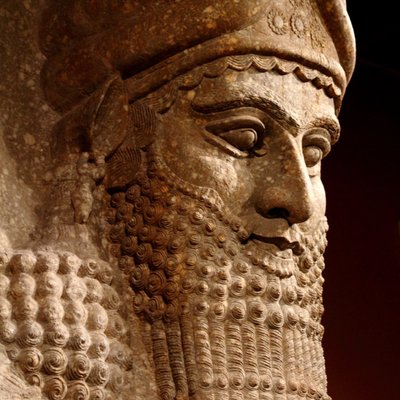
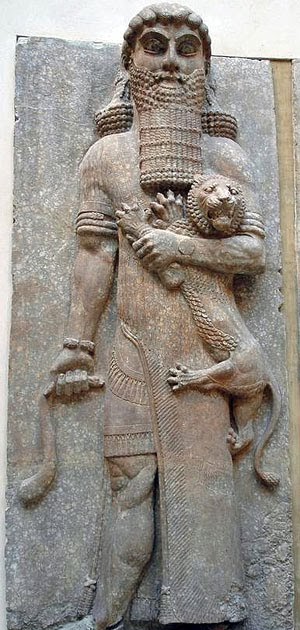
Mesopotamian art has lots of images of Gilgamesh.

So, what are your thoughts? Remember, this epic was written before the Old Testament was written. Though if the events in the Bible are factual, they would of course have happened before Gilgamesh, so you could argue that the Bible events influenced the writer of the epic, which then potentially influenced the writers of the Old Testament. I guess there’s no way of knowing, but it’s worth thinking about, because whatever you believe, you should be able to defend the logic of it.

Next week I’ll tell you about the arguments of James Barr and Joseph Fitzpatrick, who are very convincing. They also don’t think the garden story was about ‘original sin’. Thanks for reading. Take care, and try to avoid talking snakes.
Love, Anne x

Anne E. Thompson
Thank you for reading anneethompson.com Why not sign up to follow my blog?
Look on your device for this icon (it’s probably right at the bottom of the screen if you scroll down). Follow the link to follow my blog!

anneethompson.com

******

What Really Happened in the Garden of Eden? by Ziony Zevit … A Synopsis


Hello, and how are you? I hope you enjoyed my blogs last week—I messed up and sent two by mistake (I usually keep one in hand for the next week). Too much on my mind. However, I promised you a quick review of the garden story, as told in the book by Ziony Zevit. If you want to check your English version, it’s at the front of your Bible, Genesis 3 and 4, the story of Adam and Eve in the garden of Eden.

.

The book is more interesting than the cover.

Zevit is a Hebrew scholar, and says the story can only be understood if you read it in Hebrew. His book is worth reading, and you don’t need to understand Hebrew to read it (but you probably do to evaluate his claims, so read it with a sceptical mind). He looks at the language used, and tries to assess what the story meant to the people who wrote it. It was told orally long before it was written down, and Biblical Hebrew is a translation of ancient Hebrew, so we can’t be sure, even when we read the Hebrew. Zevit makes some bold claims.

Firstly, he claims the story wasn’t written as a myth, but as an historically accurate event. (Of course, this doesn’t mean it was historical, only that those writing it believed it was.) He also says it overlaps a lot with the Gilgamesh Story, which would have been well-known to those reading it. You might not be familiar with Gilgamesh, so I’ll give you a quick summary next week—but Zevit is right, lots of it is very like the Genesis story (and it was written first).

Zevit makes some interesting translation choices. The one which has earned him a not-too-flattering nickname is his claim that Eve was not made from Adam’s rib, but from his penis. His evidence for this is the Hebrew word used means ‘side’ in most other places, and that Hebrew writing of this time used various euphemisms for body parts and this is just another example. He also notes that humans are the only species which don’t have a bone there, as it works on hydraulics (and he provides drawings of skeletons to prove it). Whilst it’s an interesting view, I think it’s bit speculative (and slightly weird). It’s true that the Hebrew doesn’t mean ‘rib’ and ‘side’ would be a closer translation (and every scholar I’ve read agrees with that). But I don’t think he’s correct on the rest of it.

Another point he makes is that humans were created mortal—in other words, they were always intended to die. I have heard lots of sermons (especially at funeral services) that say death is a result of sin, and not what was intended, but I think Zevit is right here. The story seems reasonably clear that humans were created with the intention to die when old. Otherwise the world would become too full (because reproduction also seems to have been intended) and why would ‘the tree of life’ have been created if people already lived forever? The Old Testament doesn’t see death as a bad thing, it talks a lot about people living to a good old age, and ‘going to sleep’ and joining their ancestors.

He also says that the idea of idle paradise is not what the story is about. The humans were created to work in the garden—first Adam, and then the woman to help him. (Please note, the word used to describe Eve as a ‘helper’ does not imply Adam was the boss! It’s the same word used many times in the Old Testament to describe God helping people, and if anything it implies a stronger being helping a weaker being. But we won’t go there.)

The most dramatic (for me) of Zevit’s claims is that the humans did not sin, and they were not punished. The language used to describe the command given to Adam (before Eve was made) was, Zevit claims, more of an ‘aside’ than a specific command. The main command was to eat from every tree, followed by, “Oh, but don’t eat from the tree of knowledge.” He sees the story as a ‘coming of age’ story, whereby humans gained knowledge, and this resulted in them becoming aware of certain things, which increased their discomfort. If you don’t know childbirth is painful, then you don’t fear it and it’s less painful.

I think some of his points are true, and I’ll discuss them in a later blog. Scholars such as James Barr and Joseph Fitzpatrick have similar beliefs and I found them more reliable. Certainly some of Zevit’s points are true—the woman was not cursed (a point worth making as I have heard the pain of childbirth described as a curse). He also makes the point that the words used about Cain being born, are pluperfect, so Eve ‘had previously given birth,’ before they ate the fruit. This ties in with Adam naming her ‘Eve’ and calling her ‘the mother of all living beings’ because that would make no sense if she hadn’t yet had a child. Only the snake and the ground were cursed, the people were simply told things would be harder for them. There is no evidence of anger in the story, nor do words akin to ‘punishment’ appear.

Of course, if you decide Zevit is correct, and the garden story is not primarily about sin, then Augustine’s notion of ‘original sin’ (which I mentioned last week) would need to be re-examined. But you need more information before you can do that. Next week I’ll tell you the Gilgamesh story—it’s bit weird (but possibly not more weird than a talking snake).

Have a good week, and take care.
Love, Anne x

Anne E. Thompson
Thank you for reading anneethompson.com Why not sign up to follow my blog?
Look on your device for this icon (it’s probably right at the bottom of the screen if you scroll down). Follow the link to follow my blog!

My Week


Hello, how was your week? I am writing this in a rush, because it’s the end of my college semester and essays are due and exams need to be revised for.

Actually, if you take away the fear of failing the above, it has been quite a fun week. My lectures were interesting, and I managed to meet my daughter for lunch one day and have a good chat. I also managed to lose my purple gloves, which wasn’t so good, but maybe they’ll turn up.

We did Eschatology this week. Not sure if it’s possible to do that in one week, but we tried. (This is a fancy word for talking about ‘the end times’ and what might happen.) It sounds more exciting than it was.

Wednesday we had a lecture about digital theology. This was more interesting than it sounds. It showed all the ways that we now use technology, and how it has stopped being weird and has become part of everyday life (even my mother can now shop online). This extends to us actually incorporating technology into our bodies, so lots of people have artificial hips, or new knees. Some people have brain implants to help control an illness, or prosthetic limbs. The natural extension of this would be sort of cyber-hybrid-people. Some people apparently hope to ‘upload’ their brain into computers, or replace enough of their broken body to delay death for decades, maybe even longer. So we were asked to consider whether technology, with its ever-present, all-knowing, reaching-inside-us aspects was beginning to replace religion. Do people look to technology where they once looked to God? And how should Christians react to this?

Thursday I had a Hebrew test, when I desperately tried to remember all the different verb forms (and mostly failed, but remembered enough to pass). The big exam is in a couple of weeks, so I have verb paradigms scattered around the house in the belief that if I have copies of them next to the loo and stuck on the fridge door, I will magically assimilate them. Not working so far…Maybe future theologians will be able to simply upload a file of them straight into the memory part of their brain.

Friday I wrote an essay. Well, to be accurate, I deleted most of an essay, to try and squash it into the tiny word-limit that has been set. I have always talked too much, now I find that I also write too much, and squeezing all my arguments, and referring to various scholars, into a measly 4,000 words is very difficult. I have to evaluate a book, so I made rough notes, and this came to over 10,000 words before I’d even started to refer to other scholars or give my own opinions. To make it even harder, every time I refer to someone I have to add a footnote (which counts as part of the word count) saying what they wrote and when, and I can’t use contractions (‘would not’, instead of ‘wouldn’t’) which all adds to the length. Writing the first draft was great fun, and I wrote a blinder! Now I have to delete most of it and hope it still makes sense.

Then it was the weekend, which is when I try to clean the house and have conversations that aren’t linked to theology. Not very good at either of those things. I did however move all the unattractive cleaning products off the downstairs washroom window sill and replace them with a plant, and one of those smelly diffuser things that I was given for Christmas. It smells quite posh in there now. Hoping it will help me to learn the verb paradigms that are stuffed behind the toilet rolls. Hope you have a great week, whatever you’ve got planned. Thanks for reading.
Take care.
Love, Anne x

Anne E. Thompson
Thank you for reading anneethompson.com Why not sign up to follow my blog?

anneethompson.com

Look on your device for this icon (it’s probably right at the bottom of the screen if you scroll down). Follow the link to follow my blog!

Deconstructing My Religion


When I started my theology course, one of the first things they told us was that they hoped to make us question and evaluate every part of our faith, to take it apart, decide on what it was based, and then reconstruct it from a basis of understanding. I would now say that this is a fairly accurate description of the process I am experiencing; the lectures and books I am absorbing are raising lots of questions. It’s an uncomfortable process, sometimes difficult as I evaluate ‘truths’ that I have believed since childhood, only to discover that in the cold light of ‘logic’ and the piercing eye of ‘experience,’ some of them don’t seem as ‘true’ as I thought.

I was deliberate in my wording of the title. It is my religion, my beliefs, that I am questioning, not God. I have experienced too much in my life to ever be able to properly question God. I have heard his voice correcting me, felt the warmth of his peace at my most desperate hour, known his touch. I cannot deny those things even if I would. But everything else, the outworking of religion, what God actually wants, what I should believe—those things are less certain.

It began a while ago, when I started to learn biblical Greek and Hebrew, hoping to read and better understand the original manuscripts that our Bible is based on. Bit of a shocker to discover that we don’t have any existing original manuscripts, our English translation is based on scraps of parchment (some of them very scrappy!) which were written centuries after the original manuscripts were written. Copies of copies of copies…not all the same. This was huge for me. We do have other writings, carvings on Egyptian stones, and myths from Mesopotamia, which have survived. So the question has to be, why did God not ensure the books that form our Bible survived? Is it because he didn’t want us to be completely certain that we understood everything? Is it because humans have a horrible tendency to decide they know exactly what’s right, and then apply the rules that arise to other people? Perhaps we are meant to be a little uncertain.

I think perhaps we should read paraphrased versions of the Bible more often. I have always been irritated by Bibles such as The Message which give an updated version of the books. But actually, at least when we read them, we all know we shouldn’t take them literally, they are the essence of the Bible but not the actual words that were first written. All our English translations are also this, but sometimes we forget that.

What I realise is that to have a belief seems to create more questions. I am currently studying the Garden of Eden story (the one with Adam and Eve, and the forbidden fruit and the snake—you remember it?) Now, I have always believed that this was the point whereby sin entered the world, that by eating the forbidden fruit humans became sinful, and from then on, every generation that followed was also sinful. Some scholars (like Augustine, a monk from centuries ago) named this ‘original sin’ and taught a tidy lesson about what this means for humans. All humans, because they are descended from that first man, are sinful. The problem with this, is that we also believe that Jesus was human, descended from his mother Mary. We also believe that he was God (because his father was God) but logically this creates a problem. Did Jesus inherit ‘original sin’ from his mother, and if not, why not?

Some people solve this problem by stating that Mary was therefore without sin too. But was she? There isn’t much evidence for that from what I can see. And of course, if Mary was without sin, then what about her parents? Why didn’t she inherit sin from them? We end up having to form convoluted explanations about how Mary either was made pure somehow before conceiving Jesus, or Jesus somehow didn’t inherit that bit of humanity. It all feels a little unsatisfactory to me. I don’t doubt that everyone sins—I can see that for myself—but as to why? Not so sure.

Of course, the Garden Story causes all sorts of other problems. There are a few ways to view it, which one is you?

 Either you don’t believe it at all, think the whole thing was created by Iron-Age people as a story and it has no relevance today. Or you might think it literally happened, as stated, in an actual garden somewhere at the source of four rivers. Or you might think that it’s a myth or parable, not an historically literal event but a story that explains a situation. Which one is you?

I have spent several weeks reading the views of different scholars, looking at the story in biblical Hebrew, trying to discern what it means. It has been a fascinating study. There are so many ways of looking at the story, and a tangle of conclusions that people have drawn from it (like Augustine with his belief in original sin). I will write a few blogs describing the different views. Whether you believe in ancient giants, or carbon-dating and fossilised evidence of evolution, I hope you will find the different views interesting. You can draw your own conclusions when you have read the evidence.
Thanks for reading. Take care.
Love, Anne x

As the story was first written in Hebrew, I will begin with an appraisal of the book by Ziony Zevit (a Hebrew scholar). He shows how Eve wasn’t made from a rib, and Cain was born before the couple left the garden, and the snake never actually told any lies. All very interesting…

The Bad Student’s Guide to Writing an Academic Essay


Before we begin, it’s important to be prepared. Writing an academic essay is very stressful, and good preparation is key. I suggest a couple of whiskeys, but you might prefer gin. I decided to start late at night, a few hours before it is due. This will ensure everything I write is fresh and current.

Although they specify that they want electronic submissions, evidence suggests that lecturers much prefer work that is handwritten. Preferably on scented pink paper.[1] Pink paper is proving hard to find, which might be a problem.

Occasionally, lecturers use words that are unfamiliar. I decided to incorporate them into my work anyway, as I don’t have time to discover their meaning. Words like “elucidate” (a casual romance with Lucy?) will enhance my writing and give an impression of academia. If I run out of intelligent-sounding-vocabulary, there is always a dictionary. I will choose words at random, and smatter my sentences with unexpected phrases.

I’m thinking that pictures might be another good source of marks, especially as I’m not accustomed to writing long essays. ‘A picture is worth a thousand words’ is very true, hence a couple of well-crafted sketches of ancient scholars means 2,000 less words I need to write.[2] I suspect an oil painting would receive more marks, but even a pencil sketch is worth a shot. (You could trace it if art isn’t your thing.)

I decided not to read any books, it’s much more important to voice my own views, and the more extreme they are, the more I think a lecturer will enjoy them. As a teacher, I can confirm that reading variations of the same view 30 times is very boring. We are required to use footnotes, but I am hoping these can be of anything.[3] If I decide to add a quote of someone else’s words, I shall phone my mum or Aunty Ethel. They will be glad of the chat and I can jot down a couple of their sentences at the same time.[4] I also intend to add lots of random dates for emphasis.

Not reading any books will also avoid plagiarism. At school, we called this ‘copying’ and you were told to move seats. At university, it is more serious, and they take you into a small room and remove your thumbs. At all costs I must avoid plagiarism.

Writing a bibliography did seem daunting as I haven’t read any books, but this too can be easily remedied: I will go to the library and pick a shelf. Any shelf will do, it’s a theological college, so all the books will be relevant. Remove about 20 books. Write their details into my bibliography. Sorted.

Apparently, real scholars write papers which are then peer reviewed. This is mentioned frequently, so I assume it is important. I think a peer is another word for ‘friend’ and a review is basically just a comment. I therefore need to make some friends (cupcakes might help) and ask a couple of them (the friends, not the cupcakes) to read my work; then ask if they like it. Voila! I am a scholar.

I do hope these tips are helpful as we steer our way through the adventure of becoming an academic. Do feel free to quote me.[5] Thanks for reading.
Take care.
Love, Anne x


[1] Evidence for this may be found in the documentary: Legally Blonde.

[2] Whilst this phrase might seem an unsubstantiated claim, in research 99% of people could finish the phrase when asked, hence proving it is true.

[3] These little numbers make your essay look very academic, and it doesn’t really matter what they say. If you assume that marks are designated for appearance rather than content, then a footnote looks very professional. Add them at regular intervals.

[4] For example: Ethel Smith (2021) stated: “You can’t trust a monk.” (2021, Ipswich)

[5] Anne E. Thompson @ anneethompson.com (2022)

Anne E. Thompson
Thank you for reading anneethompson.com Why not sign up to follow my blog?

Being Part of the Story


In a novel, every character has a back story. The main plot might be about a governess falling in love with the master of the house, but before she met him, she was a poor orphan, raised by an uncaring aunt and sent to a harsh boarding school. Sometimes we learn the history right at the beginning, and sometimes the information is dripped to us, silver drops of information given as the story unfolds. Occasionally, the back story is more interesting than the main plot.

In real life, people have a back story too. Sometimes we learn it when we meet them, usually we discover it as we get to know them better. But we never learn the whole  story, we never see the entire cast of people that influenced them, we never completely understand.

Weirdly, our own lives are like that too, but in reverse. We know the back story—who shaped us, what moulded us into the people we are today—but we don’t know the next bit. We don’t know what will happen next, what is coming in our life, and what will happen after we have gone. We also don’t know who we have influenced, how many people we have been the back story for.

After Christmas, as the old year ends and a new one arrives, we start to take stock. To think about these things in our own life. Have we lived a good year? Will the next one be better?

I was thinking about this while I read the bit in the Bible when the father of John the Baptist, Zechariah, regains his speech and he makes a long prophecy all about his baby son and the man who would come after him (Jesus). It’s a song about being saved from enemies, serving God without fear, being led into peace. I’m sure when he said it, he believed it was true.

But here’s the thing. The people who heard that prophecy would then have watched the baby grow into a weird man who lived in the desert, eating locusts and wild honey, shouting about God and then being beheaded. Not much there about peace, not exactly saved from enemies. And it gets worse, because pretty soon after that, instead of being saved from Roman occupation, everything got harder for the Jews, their temple was destroyed, they were scattered around the world. Generations later, they may have heard about Zechariah’s words, shaken their heads, and agreed he was wrong. So very, very wrong.

It is only after all these things, now we know more about why the baby John came, how he was part of the plan for Jesus, part of the bigger plan of God, that we understand. God’s plan was never to save the Jews from the Romans, he had a bigger plan. Zechariah was part of the plan, but he didn’t understand it, he didn’t even really understand what the plan was, or how it would unfold. But he was part of it. His life mattered beyond what he could see.

I want my life to matter, don’t you? Sometimes it feels like it doesn’t matter at all, I have never achieved anything great—even my garden is bit of a mess. But if I keep trying to live how God wants me to live, talking to him, trying to respond to his voice, then I can be part of the plan, even if I don’t see it. The great people of history were all influenced by someone, and those people, the hidden characters of the back story, were crucial to the outcome. When you think of someone great, a person in history who achieved something wonderful, try to imagine who was in their back story. Someone taught them to be kind, to be brave, to control their temper, and without those people, the greatness wouldn’t exist.

I might always be in the background, I might never be a great leader of people, a famous author, the person who changes the world. But I am part of the back story, even if I don’t actually see it, and so are you. We matter, we influence the outcome, we just have to keep trying to be the people who we are meant to be. The wonderful thing is that this never ends, however old we are, however ill we might be, we can still be part of the back story. What we say and do, how we live, can matter, even in the tiniest of ways, it matters. We can all be part of the plan.

Thanks for reading. Have a good week, and happy new year.
Take care.
Love, Anne x

Anne E. Thompson
Thank you for reading anneethompson.com Why not sign up to follow my blog?

anneethompson.com

Anne E. Thompson

After Christmas


Hello, Happy Monday! How was your Christmas? Mine was wonderful, though with a few mishaps (there often are in my house).

Our first less-than-professional action was when we had friends for curry one evening before Christmas. They come most weeks, and Husband (bless him) decided it was time to use those left-over crackers that everyone has lurking in the Christmas decorations box from a bygone year. He didn’t mention his good idea to me, otherwise I would have warned him.

Friends arrived, smiled when they saw there were crackers, decided who would pull one with who, all very excited. I arrived too late to say anything, and sat there wondering if Husband understood about the crackers and had planned accordingly. He didn’t, and he hadn’t. The crackers were those ‘fill-your-own’ ones that I had bought (and filled) a few years ago, stuffing them with paper hats and packets of seeds and miniature whiskeys. Husband had not stuffed them with anything, so everyone pulled a completely empty cracker! We searched through the recycling bin and found the hats and jokes in the bottom of the box, but to be honest, they weren’t a great success.

The next major mishap was Christmas dinner, because I forgot to get the turkey out of the fridge and bring it to room temperature before I put it in the oven. Which meant that everything was ready to eat, except the turkey. The vegetarians didn’t care (I don’t like to think they were gleeful and suggested that none of us should have been eating meat) but I felt very annoyed with myself. I ended up slicing it (it was a turkey breast, not even a whole bird, so really I have no excuse). I then fried it, and people ate it after they had started eating everything else. At least I realised in time and didn’t give everyone food poison, but it was a rooky mistake and I should have known better.

The rest of Christmas was great. People were very generous, and we had some lovely moments with the family, just relaxing together, playing games and chatting. The house is now a mess, and my jeans have shrunk (happens every year at this time) and I’m tired. But it has been good.

My boys (who aren’t really boys any more because they grew into men while I wasn’t noticing) are currently downstairs cooking dinner. They are making a dish that involves a whole packet of blue cheese. I don’t like blue cheese, but they tell me that I will like it in the dish they are preparing, as it will taste completely different. This is the sort of thing I used to tell them when they were little, so I don’t like to argue (plus I am very grateful that I don’t have too cook). I’m sure it will be delicious.

Hope you had a nice Christmas, and are looking forward to the new year. Hoping for a healthy one.
Thanks for reading. Take care.
Love, Anne x

Anne E. Thompson
Thank you for reading anneethompson.com Why not sign up to follow my blog?