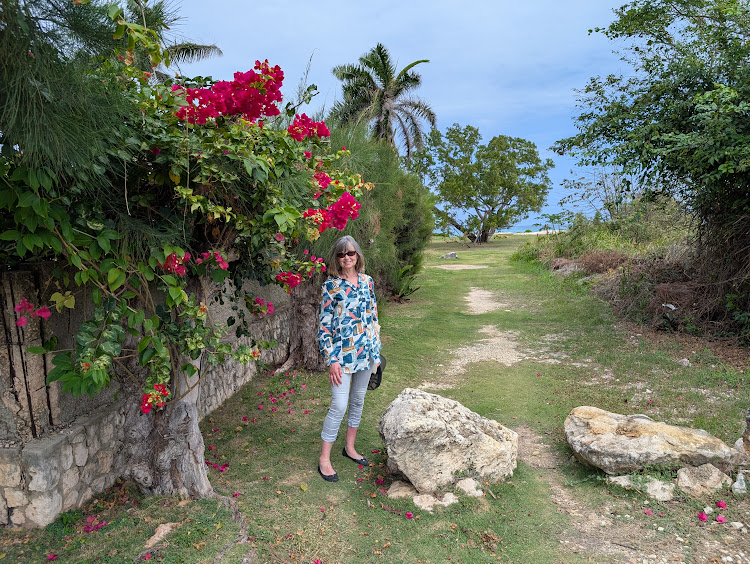
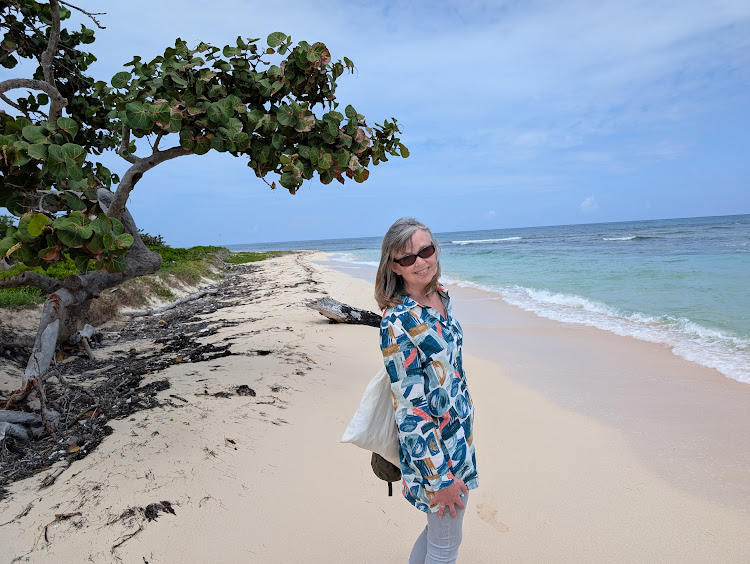
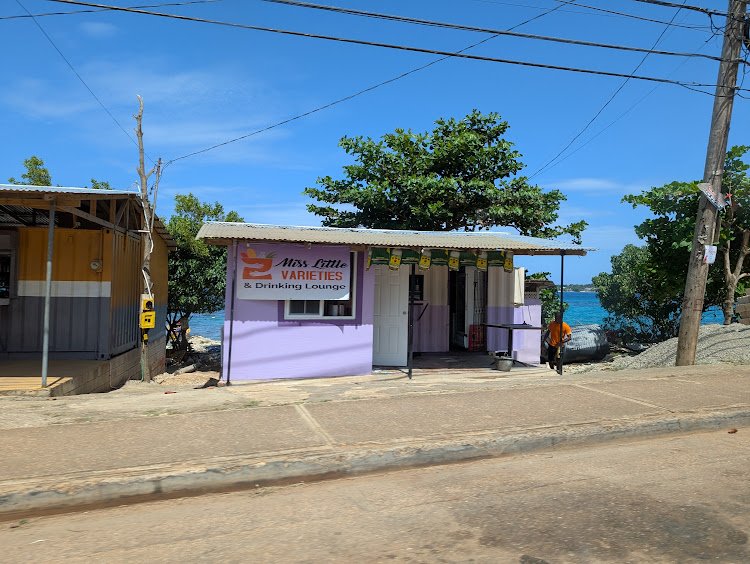
Day 1, Florida Road Trip 2025


I’m writing this in a happy fuzz of espresso martini treat. This is my current drink of choice, and it’s always fun to see whether the order brings a look of joy or fear in the bar tender’s eyes. Sometimes it’s a very long time in arriving and I wonder if they have gone to search the recipe on the internet! I’m thinking of doing a survey—which place in the world serves the best espresso martini? So far the winner would be the King’s Head near Rye. Today’s entry was in Punta Gorda, Florida. It was nice, but very strong. I was quite giggly by the end. When I had finished the waitress came to offer me a second one, and Husband said No! in a very definite voice. He told me I was the same colour as my shirt. (I was wearing pink.) Tasty though.

I will try to remember the rest of the day through the blur. I woke at 2 am, stayed in bed until 3am, because I have decided to adjust to US time an hour a day. Made a coffee, and read until 6am, when the business lounge opened (they serve breakfast). Very nice breakfast. I had porridge, because it’s healthy and I am reducing my cholesterol. Then had a muffin, and a cake, so it didn’t finish so well. Husband went straight to the fried stuff, so he’s worse.

First job was to collect the car (a Ford Mustang convertible—treat for Husband’s birthday). It took a long time to walk to the correct place (which was right opposite the hotel) and even longer to drive back, because we kept missing the turning and all the roads were fast and multi-carriageways. Made it while still friends.

We left the hotel and drove to Sanibel. It was cold. Husband wanted the roof down on the Mustang, which was very chilly. Stopped at a nature reserve to use the washroom and walked along a raised walkway, looking at alligators and exotic water birds, and turtles and huge fish. Very peaceful with an undercurrent of threat. Didn’t actually see anything attacking anything else, but felt it was imminent.

Sanibel was devastated by a hurricane a couple of years ago, and some parts were still broken. Our favourite cafe (The Sanibel Cafe) had reopened, so we ate lunch there. It’s very nice. I ate a fish burger. Then we drove to Sanibel Moorings, where we have stayed a few times, and it was being rebuilt, though some apartments were already open. Walked along the beach, and saw scary looking puffer fish that had washed up in the tide and were drying on the beach, their spiky backs waiting to catch bare feet. I chose a pretty shell to keep. The weather was warmer, and it was fun to have the roof down. Sanibel is so pretty. It’s a bit false (really it should be covered in sand or swamp I suspect) but full of plants and flowers rather than plastic false, so I like it.

We drove north to Punta Gorda. Husband used his initiative a few times, which makes map reading more of a challenge, but we arrived eventually, I was really tired. We had an early dinner in the hotel. (Staying at the Four Points by Sheraton, Harbourside,) Nice meal, friendly staff. After dinner we walked along the dock. Saw a boat that had been wrecked by the hurricane, lifted from the water and smashed into the dock. Didn’t see any crocodiles or mosquitoes, but I’m guessing they were there somewhere. Lurking out of sight, waiting to bite us.

Went back to the room. Nice day.
I hope you have a nice day too. Thanks for reading.
Take care.
Love, Anne x

The Journey


Usually I hate travelling abroad—the rush, stressy people, irritable security staff with too many passengers and not enough time, the stale air, grimy seats, over-crowded, germ-laden, rule-induced tension of the whole experience. But this was different. This was a treat for Husband’s big birthday. This was a splurge of years of accumulated air-miles. This was Virgin Upper Class.

Our taxi drove through barriers, up a separate ramp and swept into an empty bay. Suited men appeared to carry our luggage and we followed them to the security desk. A smiling woman dressed in red checked our documents and we were guided to a conveyor belt. No need to remove electronics or separate liquids, everything stayed in the bags while we walked through the scanner. (I always hate these, I assume it’s an x-ray with accompanying cancer risk, but there’s no way to avoid them if you travel.) Then into the main terminal, with too many people and not enough air, along crowded walkways with shiny shops and too much perfume, up a spiral staircase, into the lounge.

Aaahhh, the lounge. We sat at a table and ordered food and drink. Husband went to the washroom so I selected a newspaper and sipped coffee until he returned. Life was comfy. I ordered a grapefruit (nice and sweet, didn’t need the small pot of Demerara sugar). The Eggs Florentine  (a single muffin half, which is perfect for me, with thick salmon, a poached egg blanketed in low-cholesterol-diet-busting hollandaise sauce). I finished with a ‘croffle’ which turned out to be a croissant pastry cooked in a waffle iron—which only half worked (very tasty but a bit too chewy) topped with fruit compote and coconut yogurt. Not a bad start to the day.

After our meal we chose something to read and settled into an easy chair. I chose Vogue magazine, which I read at my 6-monthly trip to the hairdresser. It’s heavy, over-priced, and mainly full of pretty adverts for expensive items aimed at beautiful people. Good for a mindless hour. I noticed that the photos of the various famous people (I didn’t recognise many, but they were all beautiful and even the old ones didn’t look old) included a description of their clothes. This was detailed—a long list of everything they wore, including belts and shoes. (Not underwear of course, that would be weird.) I wondered why, and whether most people (that undefined group of the masses which seems to move as a unit) are actually interested in such things. I assume the editor of Vogue wouldn’t bother with the details if no-one cared. I must be in the minority. I don’t always notice what I am wearing, never mind the rest of the world. I remarked on this to Husband (who dresses even more badly than me) and we agreed that for this reason alone, we must never become famous. We must save the world from the details: ‘He wore vintage Marks & Spencers from a decade ago teamed with slightly shrunk jeans from the tumble dryer.’ (It would be unkind to suggest it wasn’t the jeans that have changed size.) ‘She wore her husband’s old shirt under her favourite green sweater, with a matching but threadbare very comfy men’s cardigan, black jeans with a muddy paw-print on one leg, and black boots with a broken zip’ As I said, best if we never become famous.

Another nice feature is the washrooms. They have small cloth towels, and hand lotion. My only criticism is the mirror wall, which completely confused me when I first entered, so I apologised, thinking I had entered an occupied washroom, and then realised I was talking to myself! It was also unnecessary, I felt. Who needs to watch themselves peeing? Maybe they need to check all their clothes are straight before someone takes their photo for Vogue. It also meant you could see the back of your head, which I always hate because I hear my mother’s voice telling me to comb the back of my hair. I am sixty, sixty! and my mother still tells me to comb my hair. Perhaps she also notices what I am wearing. I will have to ask her. She would enjoy Vogue.

After enjoying the lounge, we were invited onto the plane. Now, a plane is a plane, wherever you are sitting. It’s a metal tube with recycled air and plastic food and it smells of toilet cleaner. But they do their best. I was given a whole pod to myself, with cupboards (more mirrors—they were going to be depressing towards the end of a nine-hour flight!) Lots of plug sockets, and a bag of bedding that rolled out during take-off and disobeyed the ‘keep the footwell clear’ rule, so I had to hold it, which would be substandard if I needed to leave in a hurry. The steward came to introduce himself and gave me a tour of the mirrors, sockets, hidden table and light switches. Which kept us occupied until take-off. 

The flight is too long, but it’s easier if you’re at the front. It was possible to get up without disturbing lots of other people, and there are fewer people using the washrooms. The chair could be made completely flat for sleeping, though as it stretched forwards into the hollow of the seat in front, it felt a lot like sleeping in a coffin. Not for the claustrophobic. The food was nicer, and we could help ourselves to snacks and ice-cream between meals, which was a nice treat.

Is it worth the price tag? No. Is it a fun treat if you have enough air-miles? Absolutely.

We landed at midnight UK time, which I found very tough. The arrivals hall was slow, it took nearly an hour to get through passport control, and I find US security to be one of the rudest in the world. Occasionally you find an official who is polite, very occasionally they are friendly, but mostly they are incredibly rude. The officious young man in Miami told us to stand in front of the camera, then glanced up and said ‘Glasses!’ (I was tempted to reply yes, yes they are glasses. Or, do you mean “please remove your glasses?” But I didn’t. Wrong time to be snarky.)

We were staying at the Sheraton at the airport, which I then discovered did not mean actually at the airport, it meant a bus ride. Which meant pushing our bags along a busy pavement, and waiting for the bus. It wasn’t a long wait, but I was so tired. The day was too long. I always (unreasonably) blame Husband in these situations and feel extremely cross with him. Managed to not say anything.

Eventually arrived in our room. Very noisy broken ice machine right outside our door. Lumpy mattress.  Slept badly. Woke early. I plan to adjust my clock one hour per day. Anything more and I will have a migraine. Difficult time complete. Now to enjoy our holiday.

Thanks for reading. I will let you know how the holiday goes—we’re driving round Florida, so hoping to see alligators. Then we go to Jamaica (which I am very excited about!)

Take care.

Love, Anne x

Who Has Got Your Back?


As part of my research, I have gone back to Genesis, exploring the text for new insight. It never ceases to surprise me how often reading a passage that I ‘know’ extremely well, offers something new. A new teaching, or way of looking at life, something helpful for life ‘beyond theology.’ (Afterall, the biblical texts would be pretty useless if they were only good for academic debate.) I’ll share my recent discovery with you.

I am looking at the story about the garden of Eden, which begins near the start of Genesis (after the narrative about the 7 days of creation). There are different ways of understanding these stories. Some people view them as historically accurate—these describe actual events about actual people. Others understand them as myths or parables—stories to explain something important, but the things in them didn’t actually happen.[1] To be honest, I’m not sure it matters really, as long as you are reading openly, listening for God to speak to you (the main fault, in my opinion, is to read them as a weapon, to ‘prove’ your own belief or show someone else that they are wrong.) Anyway, for this nugget of wisdom, it doesn’t matter what your viewpoint is. Personally, I sit in the ‘parable’ camp, but to properly understand the texts I think we have to enter the world of the story, leave behind our scientific knowledge for a moment, and try to understand what is being taught.

It helps if you can read them in Hebrew, but I’ll write this in English (just be aware that the words are not exactly as written). The story begins (Gen.2:4) with the earth being bare and barren—because, we are told, there is no human to work the ground and God hasn’t sent any rain yet. God creates the man, forming him from the dust of the earth (so he’s literally an earthling!) God plants a garden in a place called Eden and places the man there. God causes trees to grow, so the man has food. (In the middle was the tree of knowledge of good and evil—but that’s not relevant for this bit of the story.) God made rivers, to water the garden, and then we are told (again) that God put the man into the garden (and this is important) לְעָבְדָהּ וּלְשָׁמְרָֽהּ to work it and to guard it. Remember that bit—especially the ‘guarding’ bit. These were the roles given to people: to work the ground, and to guard.[2]

There is lots of speculation (academics prefer the word ‘deduction’ but really it cannot be more than educated guesses) about what, exactly, the man was guarding the garden from. Some say it has an ecological meaning—showing that humans were meant to care for the world (we’ve certainly made a mess of that!) Others say it’s evidence that there were other people, outside the garden, and the man was to guard against them.[3] God then commands the man to eat from every tree, but warns that if he eats from the tree of knowledge of good and bad, then he will die that very day.

We’re going to skip through the next bit. The man needs a companion, and God makes a woman to help him. (The word עֵזֶר helper is the same word used when God helps people—just in case you were wondering if there was a hierarchy here.) Then a snake appears (described as עָרוּם prudent/shrewd which is a clever little pun, because it’s pronounced ‘aroom’ and the people are עֲרוּמִּים  naked which is pronounced ‘aroomim’.) The people eat from the forbidden tree, they and the snake are punished and the people are banished from the garden. They still have to ‘work’ the ground, but now it’s harder. There is no mention here of guarding anything.

Then we skip ahead, to when the couple have two sons, Cain and Abel. Both sons make an offering to God, and Cain’s is rejected. I wrote an earlier blog on how this wasn’t fair.

Right, we’re nearly at the bit I want to talk about.

Cain takes his brother into a field (presumably because there were other people around—and he didn’t want to be seen). Cain kills Abel. God asks Cain, where is your brother? Cain replies (this is important): לֹא יָדַעְתִּי הֲשֹׁמֵר אָחִי אָנֹֽכִי  ‘I don’t know, am I my brother’s keeper/guard?’ We have that word again, שָׁמַר to keep or guard. Remember, the word at the beginning, when the man was told to work and guard the ground.

So, this is my understanding. People were given two tasks: to work the ground (care for nature) and to guard. At first, they had to keep/guard the garden. Then, when there were other people, they were supposed to guard each other. When Cain asked, ‘Am I my brother’s guard?’ our reply is: Yes! Yes, you are supposed to look after your brother. You are supposed to watch out for each other. That is what people are supposed to do.

This seems to me to be true today, it is how things are meant to be. When someone is having a rough time, when they have a health issue or a problem or something difficult, does anything help like having someone watch their back? It’s what parents do—they guard their children. It’s what siblings do—they support each other. It’s what friends do—they make it known that they are there, supporting, keeping, guarding. Let’s try to do this in the next week, let’s look for people who need to be ‘guarded.’ People who we can help as they cope with the muddle that is life as we know it.

Thanks for reading. I hope you have someone to watch your back.
Take care.
Love, Anne x


[1] Joseph Fitzpatrick, The Fall and the Ascent of Man (2012).

[2] Kristin M. Swenson, ‘Earth Tells the Lesson of Cain,’ in Exploring Ecological Hermeneutics, ed. Norman C. Habel (2008).

[3] Ziony Zevit, What Really Happened in the Garden of Eden? (2013).

Being Mortal: Thinking About Being Elderly


Atul Gawande, Being Mortal (London: Profile Books, 2015)

I was lent the book by a medical friend, and after reading half I bought my own copy. It’s the sort of book you want to keep so you can refer back to it. As my PhD will finish by exploring the assisted dying  issue, I need to start learning about the issues that surround dying. This book helped to inform my own thinking, and introduced some new concepts. It also informed my thinking about ageing, and how people might want to live in the final stages of their lives. This has little to do with my studies, and a lot to do with real life. Whether we are old, or helping elderly parents, this book has practical advice and confronts some difficult issues.

Gawande is a doctor, and he spends some time explaining how in old age, it is very important to keep your feet healthy. People are not able to live independently if they cannot walk. A fall in an older person is dangerous—brittle bones break more easily, and the space inside the skull where the brain has shrunk means it gets a nasty jolt in a fall, which can cause all sorts of problems. Therefore, balance is important, and good balance relies on good feet. If someone is unable to properly care for their feet, they are likely to develop problems with balance. [Note to future self: Do some simple balance exercises every day, and keep lifting feet to where I can touch them. ‘Use it or lose it.’]

The first half of the book deals with the ageing process, and how western societies treat their old and infirm. Gawande is American, with Indian heritage, and his comparison of the two cultures was very interesting. Whilst the ‘traditional Indian’ setting of an elderly person living with the extended family, being helped through their old age by younger members sounds idyllic, Gawande is honest about the problems this can entail. Different problems to our western traditions, but still problems. He then discusses the situation in the US.

One topic he discusses are nursing homes. He doesn’t rate them very highly, and compares them to prisons! (p.73) He explains how nursing homes grew from the need in 1954 to provide hospital beds for the elderly when hospitals were too full—so their medical care was transferred to a purpose-designed home. (p.71.) They were all about medical needs, keeping the patients physically safe, and were run to be clean, efficient and safe. Then, in the 1980s, Keren Wilson tried to build a better model, and built an ‘assisted living’ community—where the aim was to allow elderly people to live independently, with the physical help that they needed. They had locks on their doors, privacy, and autonomy. If they wanted to wear pyjamas all day, or eat food that was bad for them, they could.

This led to the assisted living homes we have today, which tend to be a compromise between the two models. He makes the point that homes for the elderly advertise that they are safe and clean—not that the residents can make their own choices. This is because the homes tend to be chosen by the children, not the elderly—and children want their parents to be safe and clean. He writes that this is because ‘it’s often precisely the parents’ cantankerousness and obstinacy about the choices they make that drive children to bring them on the tour to begin with.’ (p.106) He also remarks that this is partly the fault of the parents, ‘because they disperse the decision making to their children . . . It’s sort of like, “Well you’re in charge now.”’(p.106.) [Note to future self: Don’t dump decisions on my children if I am capable of making them myself.]

He does also describe some excellent care homes, some of which introduce things like plants, or animals, or combine with a school so the residents can help the children. He discusses the motivation for living, and that in the end, being ‘safe’ is not enough. People need a role, something beyond themselves, a purpose. Otherwise it seems they disappear inside of themselves and lose the enthusiasm for life. He writes that ‘death rates can be traced to the fundamental human need for a reason to live.’ (p.123.) He discusses Maslow’s hierarchy of needs (the idea that physiological needs—food and water—are more important that safety, which is more important than love/friendship, which is more important than self-esteem, which is more important than self-actualisation.) Gawande considers that above ‘self-actualisation’ is the need for transcendence—the need to go beyond ourselves and help other living creatures. [Note to future self: Find someone/thing to care for.]

Gawande states that the problem, as he sees it, is that we have put issues of life and death with the medics—and they are not necessarily equipped for this. He describes ‘a still unresolved argument about what the function of medicine really is’. (p.187.)[This is my own view too—I think death should be left to philosophers and theologians, not medical professionals.]

Another modern problem—which affects the States more than the UK is the availability of treatments and the way that insurance works. Therefore medics no longer have to question whether a treatment is ‘worth it,’ either financially or in terms of benefit to the patient. If it’s available, and a patient wants it, then they check the insurance company will pay for it and the patient undergoes the treatment. This has a parallel in the UK with pet medical insurance. If our pets are insured, and if the vet suggests a treatment, it is very hard to step back from this, to take a holistic view and decide whether the treatment is actually in the best interests of the pet. We love our pets, we don’t want to lose them—but sometimes I think they suffer more due to invasive treatments than if we just made them comfortable and helped them to die peacefully. Gawande questions whether most of the money spent in the last months of life actually benefits anyone. He suggests this is particularly true at the very end, when patients are hooked up to expensive machines, their lives prolonged by a few days but with no ability to ‘die a good death.’ (My expression.) Unable to say goodbye, or come to terms with what is happening to them, their last moments are reduced to being a patient. He says that people who are dying have priorities other than living for an extra day or two, and ‘technological medical care has utterly failed to meet these needs’ and the financial cost is massive. (p.155.) He suggests that by putting our faith in modern medicine so completely, we have forgotten ‘how to die.’ (p.158.) [Note to future self: Decide what is important to me in the present.]

Gawande is a great believer in palliative care—help to live your final days as well as you can, rather than suffering intrusive uncomfortable treatments trying to extend life by a few more months. He discusses this in the setting of his own father’s death, which makes the discussion both personal and honest. It’s much easier to have a theory about death when it doesn’t touch you. He also lists some questions—difficult to ask ones—which enable families to help their relatives to die how they want to die. This involves asking the person what they fear most about their diagnosis, and what they want the most. (It might be to continue being able to eat, rather than to have the longest possible life!) He also suggests asking what the person would like in an emergency—do they want to have their heart restarted? Do they want aggressive treatments (such as being on a ventilator)? If the answers are known before the emergency happens, then people are able to make the right choices in a crisis situation. He talks about what the aim should be for a terminally ill person, saying it is not about ‘a good death, but a good life to the very end.’ (p. 245.) For Gawande, this means that assisted dying would be a rarity, not the norm—because so much can be done to help a person optimise their last few days, and very few conditions cannot be managed with drugs. [Note to future self: Communicate my wishes to my children, don’t make them have to guess.]

I am still unsure of my own view about assisted dying, so it’s helpful to hear what others think. I found Gawandes book to be a helpful resource, and I value his insight into the issues surrounding old age and the end of life. Now, don’t forget to take care of your feet!
Thanks for reading.
Take care.
Love, Anne x

Meg’s Diary, Life with the Cat


11/1/2025

Trying to force Meg and the cat to be friends is not, I think, going well. The cages are now pushed next to each other, and on the positive side, they are able to both sleep in them—so for many hours there is peace. But the cat’s cage makes a corridor into the utility room, and the cat knows that when Meg goes in and out, she can reach through the bars and scratch Meg. Meg also knows this, so is very wary of walking past the cage, which results in a lot of barking and bouncing (because that is what a nervous Meg does). I blame the cat for this.

There is also chaos when the cat uses her dirt tray. I don’t know why, but as soon as the cat goes onto the tray, Meg starts to bark and bounce and bang against the cat’s cage. Maybe she doesn’t like the smell (though she emits such awful smells herself, I don’t think this can be the reason).

On the positive side, they have their bowls of food next to each other—either side of the bars—and they notice what the other is eating and don’t try to interfere. Lots of the time life is peaceful, even though they are in close proximity. The cat seems to be the boss, and is the main instigator of trouble—though as Meg is much bigger and has the potential to damage the cat, I really need them to co-exist peacefully, without a constant battle even if the cat starts it. The cat will have to be confined for another two weeks, until her snapped ligament has fully healed. Then we will see what happens. I’m not sure that anything has changed at all, and their relationship will continue to be one of Meg chasing the cat whenever she can, and the cat hissing at Meg from high vantage points. Which is exactly what it was before I started this exercise.

The woods are beautiful this week. The snow is clinging to the trees and the temperature has dipped below freezing, so it has stayed for a few days. Breathtakingly pretty. The ice means that walking is a bit dodgy, and the snow is packed hard from all the dog-walkers, and incredibly slippery. Everyone walks on the edges, where it’s less compacted, which means gradually the footpaths are widening.

The tree men are back, with their great machines of destruction, chopping down trees and churning up the mud. At least now its frozen the wheels will do less damage, but before Christmas was very wet, and they have ruined swathes of woodland by making trenches of mud and destroying the undergrowth. I hope they know what they are doing, and it’s necessary for the health of the woodland, but it looks to me like they are just blokes enjoying big machinery. Yesterday they started work in an area of mainly pines—which is where ‘my’ tree is. There is one tree (I think a beech) which has a very black trunk and a beautiful shape, and it’s very stark against all the surrounding pines. I have noticed it on my walks since 2001; twenty-four years ago when I used to walk my Labrador there. I even wrote a story about it. I do hope it survives the men and their machines.

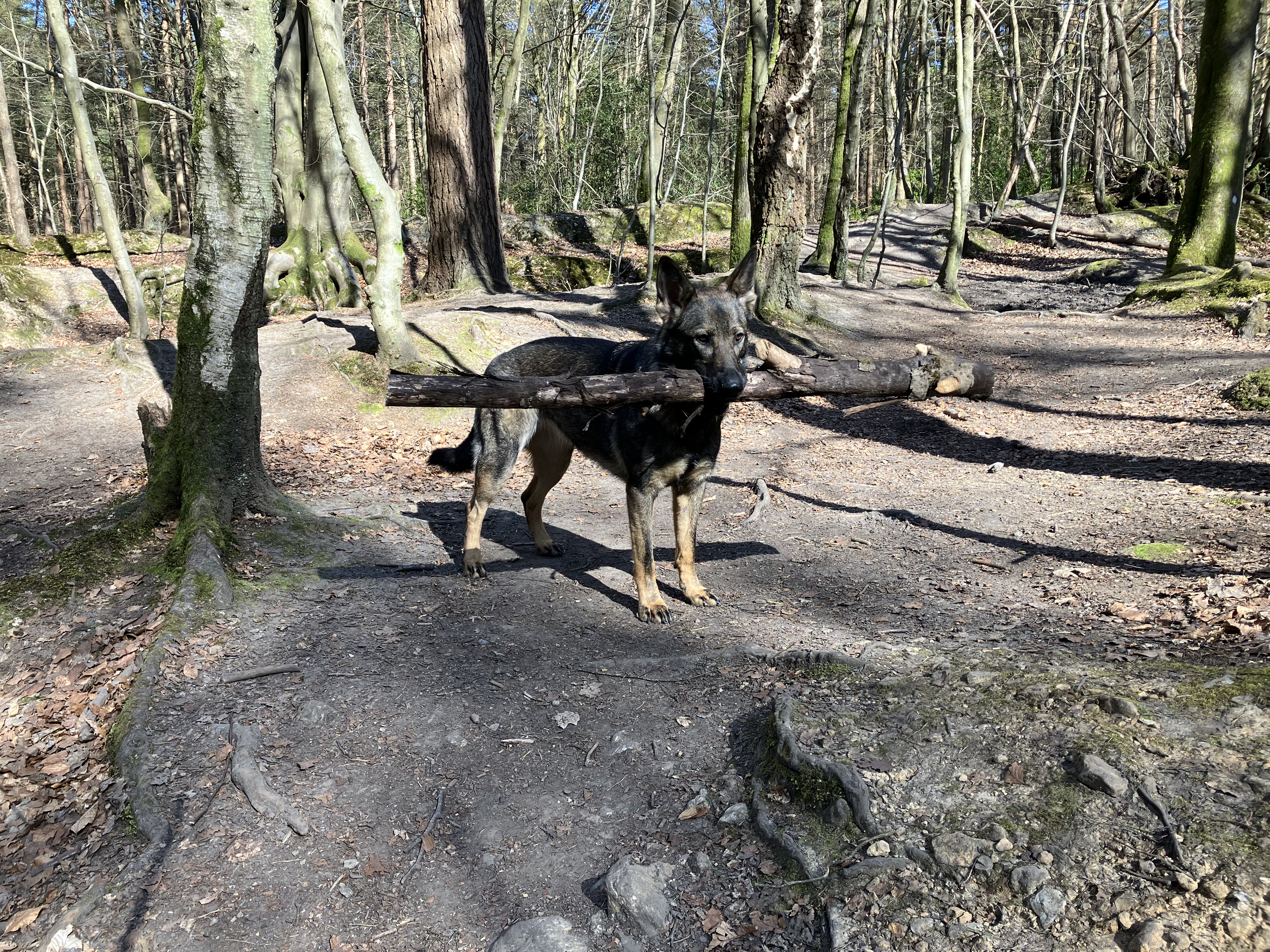
Meg, as ever in the woods, is very good near the workers—she basically ignores them. Yesterday we needed to walk very close to where they were working, so I collected a few sticks, told her to walk on my right, and we kept our distance, throwing sticks into the woods every few minutes so Meg was on full-alert, waiting for the next one to chase. She ignored the noise of the machines, the moving lorries, the falling trees, the men shouting to each other and the whine of saws. The only thing in Meg’s world was the next stick, and when it would be thrown. (It made her appear very well-trained. But she’s not. She simply has a compulsive desire to chase sticks.)


15/1/2025

Meg has favourite places to lie now (like a proper dog!) She has discovered the radiator on the landing and will lie there for hours, soaking up the heat and waiting for me to come out of my room. She also (weirdly) likes her crate, and will sometimes put herself to bed in there. She also prefers it to the utility room, so if she starts fussing when we eat, I go to the utility room, open the door, call her. Meg stops and looks at me. She understands she is about to be shut away, and she walks, very deliberately, into her crate and sits down. It’s very funny!

Thanks for reading, and have a great week.
Take care.
Love, Anne x

Meg’s Diary: An Annoying Evening


It has been cold, with some snow but mainly lots of rain. The snow was fun, the males made a snowman at midnight, and Meg destroyed it with enthusiasm the following morning.

The rain is not so much fun. Everywhere is muddy, which means Meg is constantly covered in mud, and however much I try to hose her down (which she hates) it still seems to end up inside. The kitchen floor is gritty and I waste lots of time with the vacuum cleaner. (This feels an utter waste of time, because it doesn’t stay clean, and I’m not sure that having a dirty floor matters too much. But I do it anyway.)

Today Meg was very annoying in the evening, and it felt unfair because we had enjoyed a nice day together. I took her to the woods early morning, and we had a good long walk, Meg chasing sticks, me enjoying the peace of the woods and the few flakes of snow that drifted down. At home I hosed her (which she protests about, and nearly wrenches my arm off, but she is completely covered in mud because she wades through all the puddles so it is necessary). Then I left her in the utility room to dry.

I worked most of the morning, and when Meg was dry enough to be let into the rest of the house she lay next to me, chewing her toys and farting. She had a run in the garden while I ate lunch—followed by another short stint in the utility room—then she followed me round the house while I did some cleaning, occasionally barking at the cat, mostly just following me and poking her head into cupboards that I opened, adding her toys to piles of laundry, watching from a distance when I cleaned the sinks. It was companiable.

I needed to buy food for dinner, so Meg came in the car. When I went into the supermarket I tied her up outside (she seems to enjoy this, as she watches everyone and often gets attention from dog-lovers on their way into the shop). She walked back to the car beautifully, stopping for traffic and not pulling on the lead. When we reached the car she paused before jumping into the boot. She paused for about 2 minutes, letting me know that this had not been a ‘proper’ walk, and she was not ready to go home, and perhaps she wouldn’t get back into the car. Then she jumped up, into her crate—discussion ended—and we went home.

A lovely day, and then she was bad. I put her briefly into the garden while I started cooking dinner, and then called her to come in. No sign of her. I shut the door, thinking that when she returned the door would be shut, and she would learn to come faster next time. Except she didn’t come. I called her at regular intervals while cooking dinner, but she ignored me. It was dark, and cold, and I was tired. I didn’t want to traipse up the garden to collect her, and I needed to cook dinner. I felt defeated. I knew she would be doing something bad, but I didn’t have the energy to go and sort it out. After about an hour, Meg decided to come back inside. I let her into the utility room. She was completely covered in mud. I couldn’t face finding out why, so I left her in there. After dinner Husband hosed her down (which was very kind of him because he’d been working in London all day and was probably as tired as I was). Then I put her into her crate for the evening. She protested and barked, letting me know that she wanted to come and watch telly with us—but she was wet, and not allowed on the carpets, so we put up with the barking and I felt cross. It was a shame after such a nice day together that Meg had ended it by being annoying. I know she’s a dog, and doesn’t know any better, but it feels personal. I feel (irrationally) that if I have made the effort to include her and give her lots of attention/stimulation, then in return she should be good. It doesn’t work like that with dogs, and that feels unfair. But that’s life isn’t it. Life is not fair, not very often, and we just have to get on with it. Went to bed feeling grumpy.

Hope your day is full of beautiful scenes and better than my evening–though sometimes we just have to cope with the bad bits of life. Thanks for reading.
Take care.
Love, Anne x

My favourite tree in the wood.

Eating In The City


This was a last-minute, bit of a risk trip. Husband needed to come to New York to work, and I cannot tell you how much I hate being home alone—mainly because I simply do not sleep. If I don’t sleep, I can’t work, so when he told me he was coming here, I was not a happy bunny. But then I began to explore the idea of coming too—the kennels had a place for the dog, a friend could feed the other animals, I could attend online seminars anywhere, and I could take my books with me. I decided I would risk it. How did it turn out? It was great!

Being away from home means no responsibilities. I could study all day, just taking breaks for fresh air and to find food. Finding food in New York is very easy. I kept to UK time, waking at 2am and studying for a couple of hours until Husband (who was doing more of a hybrid model) also woke. We went to the gym and ran for half an hour (to make us feel slightly less guilty about all the delicious but unhealthy food we were eating). After breakfast, he toddled off to work, and I had several hours of uninterrupted study. It has been brilliant.

I have achieved much more work than I would have done at home. For one thing, there is something about travel—probably the adrenaline and the change in routine—which enhances my ability to be creative. I have felt in bit of a rut with my work, thoroughly preparing the background of my research without a clear focus for where I was going. Then one morning, at 2am, it suddenly became clear! I began to have a thought, that led to a better thought, and I now have a plan on exactly what I want to study.

NYC has therefore been all about study, and all about food. The food here is great (especially if you decide to suspend any diets, and just enjoy what’s on offer). We both had food which we hoped to eat while we were here. Husband wanted a Philly cheesesteak, his sandwich of choice when we lived here in the 90’s. I was keen to eat a cinnamon bagel with cream cheese (nowhere has bagels like NY). I bought one from a deli, which was perfect–warm and fresh and thickly spread with cream cheese. The New Yorkers tend to speak very fast, with a thick NY accent, so I only understood most of the conversation but I managed to buy what I wanted. I also managed to eat New York cheesecake, which is unlike other cheesecakes, as it’s less sweet and lemony. Plus of course we had to have pancakes; and Eggs Benedict. Marvellous. My clothes are now all rather tight, but it was so worth it.

Thanks for reading, and enjoy your day.

Take care (and don’t eat too much—I am eating enough for both of us!)

Love, Anne x

The City Never Sleeps, But It Dozes…


The City That Never Sleeps (But Sometimes It Naps)

When you walk through New York City in the early hours of the morning, it’s quiet. Not asleep—this city really does never sleep—but it definitely dozes. The streets are well-lit, there are always cars edging between the millions of traffic lights, and several diners are open all night, serving a few shift-workers, and insomniacs, and us.

I have developed a fun routine, keeping roughly to English time. I wake at 2am, eat a pastry, then work for a couple of hours by torchlight until Husband wakes at 4. We then go down to the hotel basement and use the gym. It’s a good gym—lots of fancy equipment, and not many people at 4am. We run on the machines because it’s -11º outside. After a shower, we walk to the Flame Diner for breakfast. I’m edging back on-track with my healthy eating (vaguely) and order oatmeal (which is porridge) with strawberries and blueberries and a tiny pot of maple syrup (that they gave me on the first day, and I only use a bit of it, so I kept it and bring it back each day. If the lid ever comes off in my bag I will regret it!) Not as nice as pancakes, or cinnamon bagels, but I feel less guilty.

I have a sandwich/bagel for lunch, then we have dinner in the Westway Diner at about 1pm US time, when everyone else is finishing their lunch. I then use earplugs and eye-mask and go to bed about 5pm US time. It has worked well so far.

The first day here we walked down the island, which is my favourite thing, walking through the various districts and looking at the shops and restaurants. Midtown, Garment District, Chelsea, Greenwich Village, SoHo, then East to Little Italy and Chinatown and into Wall Street. Districts that are vaguely familiar (we lived in NJ in the late 90’s) but still exotic, unreal places that exist in films and distant memories.

We visited the World Trade Centre Memorial. In previous visits I haven’t wanted to, because I knew people who died there (not well—other parents at the school pick-up, people I would recognise by sight but not really friends). Enough time has passed for it not to be upsetting, though it’s still sombre, still reminds of the tragedy, the fear, the loss. They have built two huge fountains on the footprint of the building, with water sliding down, out of sight. It’s very dignified. Someone had left a rose in one of the names engraved on the edge—23 years is not long for those who lost loved-ones.

World Trade Centre Momorial.
World Trade Centre Memorial. (Look at the people for perspective on the size.)

A completely different vibe are the animal sculptures nearby. They are great fun, a storybook reminder that we need to care for endangered animals or we will lose them. Impossible to resist joining the animals for a photo op!

It snowed. We were forecast lots of snow, but weather forecasts always promise more than arrives. The next day was mainly ice, though there was more snow in the park. We thought the paths would be clear, but they weren’t, and it was quite precarious walking. People had salted, but the temperatures were so low the salty water had frozen, leaving sheets of ice across the paths. In Central Park everyone was walking their dogs, and enjoying the bright sunshine and the crisp air. Some people (us) had dressed appropriately and resembled walking duvets. Others were still beautiful, with uncovered hair and unbuttoned long coats that flowed in the breeze, showing designer outfits. Beautiful but uncomfortable I imagine, as it was absolutely freezing! I managed not to slip over on the ice (it was quite close a few times) and I actually managed to find the castle—which every other time I have come to the park has either been closed or impossible to find. It looks better in films.

I prefer to walk in NYC, but sometimes we use the subway. It’s easy, but always feels a bit scary—I think it features in too many crime and ghost films! South of 100th Street was always safe, but nowadays maybe everywhere is. I’ve used it several times, and never actually seen any crime (or ghosts).

Hope you stay warm today. Thanks for reading.
Take care.
Love, Anne x
A Cheeky Trip to New York City


Husband had a work trip, I hate being in the house on my own, plus (I told myself) I will manage to do more work if I’m not also juggling animals and housework, so I went too. We left home Saturday morning, flying from Heathrow—which is not my favourite place in the world. Airports are always too full of people and germs and flashing signs and hard deadlines. Everything that I find stressful, especially because everyone seems tense and everything matters—you really cannot forget to put your hand sanitiser in a separate plastic bag, and you can’t take too long taking off your boots—even though you find it a struggle to balance and there isn’t a chair—because the people behind you are also anxious and rushing and the staff are grumpy, and arghh, arghh, arghh.

But it was fine. I didn’t end up in a small room with a woman wearing plastic gloves, nor did I lose any valuables. Our departure gate was at the far end of the airport, and rather than use the transit we walked. Did you know that is a thing? I didn’t until recently. If you go down to the basement, you can walk the mile or so under the runways and avoid using the rail-link. It’s a bit spooky down there, so even though there are lots of security cameras I’m not sure I would feel comfortable walking on my own, but I prefer it to riding in a crowded train. You can stretch your legs and avoid the crowds for a minute, and although there’s no weather (another thing I dislike about airports and hospitals) it is at least cool, and the air feels cleaner, less artificial.

The plane ride was uneventful. Husband sat at the front because his ticket was paid for by work. I sat next to a tall Chinese boy (probably a man, but he looked young to me) who was on his way to New Zealand. I’m always pleased when I’m next to a man, because on the whole they understand it’s inappropriate to have physical contact with a stranger and therefore they keep within the confines of their own allocated space. Women do not—if a woman is larger than is comfortable on an airplane seat she will sometimes spread sideways, into my seating area, and is not as sensitive to territorial boundaries. I find it quite difficult to have a Christian attitude to this, and do not easily forgive.

I managed to work on the flight, which was good use of time. I read most of a book about animal theology. Did you know that was a thing? It’s very interesting. Plus, I have treated myself to a very fancy selection of sticker/post-it highlighter/marker things. They are brightly coloured and remind me of when I played post-offices as a little girl. Intrinsically pleasing to use. 

We are staying at the Sheraton, Times Square. I stayed here with my sister a few years ago, and it has become a bit more run-down since then and is currently being renovated. Not a great time to be staying here, but the room is clean and everything works (even if the taps do wobble and the lights have slightly dodgy switches). Being in New York is a treat in itself, and the position is great.

I am keeping to UK time, so I ate the sandwiches I had packed at home, and drank a tiny bottle of Merlot that I saved from the flight, and went to bed early. Husband went out for dinner, and I told him to be careful not to get mugged if he was going out in the dark. He muttered something about it being 4pm, and not as late as I thought.

This morning I woke at 2 am US time, and ate a stale croissant while reading by torch light. When Husband woke, we walked to a nearby diner. Nothing in the world beats a New York diner. This is why I came. We sat in a booth at 5am, it was clean and bright, with a large plastic menu. When we sat, we were given glasses of iced water and offered coffee. Perfect. I am trying to reduce the cholesterol in my diet—so that went out the window! I had pancakes (delicious) and dipped slices of banana in sweet smokey maple syrup, and snaffled a piece of bacon from Husband’s plate. (He had a full bacon, scrambled eggs, hash browns and toast breakfast—so his was even less low-fat than mine!) We had fat glasses of freshly squeezed juice, and I lusted after the pies and cakes in the glass cabinet. The diner was fairly empty (I wondered why anyone would be there are 5am). They were playing a church service on the radio, and it was all rather lovely.

Afterwards we walked down to Times Square. It was still before dawn, but Times square was as bright as daytime with the huge billboards flashing colours and light into the street. Walking through Times Square is like scrolling through Instagram. Lots of perfect young people looking happy and attractive as they dance or walk their dogs or show you a new toothpaste. In the early morning it’s quiet, so rather lovely, and we walked hand-in-hand, arguing about whether we should obey the traffic lights and remembering all the other times we have visited New York. I felt very happy (and very full of pancakes).

Walking through Times Square is like scrolling through Instagram. Lots of coloured lights and attractive images.

I hope you have something happy too this week. Thanks for reading.

Take care.

Love, Anne x
A Book on Dying


Book Review: Monika Renz, Dying, a Transition,
trans. Mark Kyburz, (New York: Columbia University Press, 2015)

When I attended the debate on assisted dying at the medical school of Edinburgh University, one of the panel suggested that I should read this book. We were discussing the dying process, and whether dying is something that medics are trained to help with—and whether, in reality, it is a process where they should be involved. I felt that perhaps dying (as opposed to illness/recovery) is a stage of life best left to philosophers and theologians. I am not sure that medics understand dying, or that it is particularly relevant to their role as healers. Dying, I argued, is something that happens after the role of the medic has ended.

The book is thought-provoking, and I recommend you read it for yourself. You might not agree with everything written (nor should you ever expect to agree with everything that anyone writes). But it might challenge you, and help you to formulate your own ideas about dying. Most people that I speak to dislike thinking about dying—they find it an uncomfortable topic except in the abstract, when it applies to ‘other’ people. When I was about to have surgery to remove a brain tumour, I found this extremely unhelpful. I needed to confront the possibility of dying. None of us can escape the dying process—first with those who we love, and eventually our own death. I think reading Renz’s book will help you with both. I found it tremendously reassuring.

Renz writes for professionals dealing with palliative care, so her style is academic, but I don’t think you need a degree to understand the book. (You can always skip over some of the more academic pages.) Renz works with cancer patients in Switzerland, and her initial study was with 600 patients (which isn’t a huge range, but is big enough to give an indication of general trends). She analysed her data, and compared it to other studies, then refined her conclusions. The book therefore represents the conclusion of several years of work.

The patients studied were all dying. Some were religious (various religions) others were not (and some were ‘devout’ atheists). Renz found that the dying process for all of them was similar, and went through the same phases—though the amount of time spent in each phase varied. She offers advice as to how each phase can be eased by practitioners and family members—which I assume will be helpful when you next are close to someone who is dying.

To summarise the whole book (and really, you should read it yourself) Renz views dying as a transition, with marked phases. She talks about people going through a final stage, which she names ‘transition’ when they lose all sense of ego. By ‘ego’ she doesn’t really mean pride, though that is a part of it—more that the patient loses all sense of self. Just as a young baby has no pride or shame—pooping is something that happens but the baby is not embarrassed, they don’t care if they dribble or make noises. As a person nears death they too go through a similar phase, which Renz says can be distressing for relatives—who do have a sense of ego and therefore feel embarrassed to see their loved one in a position they see as ‘shameful’. But it’s not shameful, it’s just a body behaving how bodies behave without an awareness of social conventions. Renz states that the patient is not embarrassed, they feel no shame because they have ‘transitioned’ to a state where their body is no longer important.

Part of this transition is also a letting-go of earthly things. She says that for some people this is difficult, they do not want to leave pets or family or a role—and this is a necessary struggle, that changes them into a state whereby they are ready to die. Renz understands the process to be formative, even if difficult. She also describes an ‘encounter’ with a spiritual world—even for people who are not religious or are staunch atheists. Sometimes this is a period of fear, and she suggests actions that can calm the patient, helping them to find peace. She describes patients ‘seeing’ their deceased ancestors, or spiritual beings who are waiting for them to die, and how this is often comforting to the patient (even if perturbing for the relatives).

I found it interesting that there seemed to be the same phases of dying for both the religious and the non-religious person. I have never been present when a person died, so I cannot evaluate the truth of what she says, but I did find it comforting. Renz views dying as a natural process, a natural part of life, and one that should be recognised and not feared. Even when a death is a struggle, Renz equates this to a difficult birth—where there is sometimes pain or fear, but it is a process that leads somewhere. She suggests that we should not shy away from difficult deaths, or seek to shorten them or dull the senses, because the struggle is part of the preparation for what comes next.

I’m not sure how Renz’s research shapes the debate on assisted dying, and she was a little fuzzy on instant death (like an accident or a murder). She simply thought the phases happened instantaneously—but obviously this is not something she could test. Therefore some of the ‘research’ was speculation, but I didn’t feel that detracted from her overall findings.

As I said, I recommend you read the book. I found it very reassuring, it took away the fear of death. Renz shows that death is as natural as birth. It may be beyond our control, but it does not need to be feared. (Though I would note that the death of other people is always, in my experience, completely horrible. But perhaps it helps if we can view the stages as both necessary and natural. I don’t know.)

I hope you have a good day, and that death doesn’t trouble you. Thank you for reading.
Take care.
Love, Anne x