What is Moral?


‘Humans are different to animals because we have morals.’ But is this true? Is it true that animals do not have moral capacity? Do they act purely on instinct? This is a question I continue to wrestle with, but as ever with academic research, the journey itself has been fascinating.

This week, I decided to read what Kant wrote. Immanuel Kant was a philosopher who lived in Prussia in the 1700s. People still quote him today, which is a sign that someone’s work was significant (even at my most optimistic, I do not dream that anyone will be reading my work in 2325). He wrote a couple of books about the metaphysics of morals. I decided that before I could answer my questions about animals, I needed to define what I meant by ‘moral’ and ‘moral behaviour’. As this is not something I have considered before, I hoped Kant would help.

The problem was, I did not understand what I was reading — even his titles needed deciphering. I was reading a translation, with a commentary, but even the commentary was impossible! Now, this is not a rare occurrence when I read academic books. Some academics, especially those who are not also teachers, tend to use language that usually only appears in a dictionary. Kant has the added bonus of writing sentences that never seem to end. Reading very long sentences, full of unfamiliar words, makes for difficult reading. But never fear, I have a tactic.

Reading something difficult can be stressful, because we feel stupid. My tactic is to read it aloud, in my ‘telling a story to 5-year-olds’ voice, while recording it on my phone. I do not attempt to understand it (you don’t need to understand something to read it aloud, it’s like handwriting practise). I use accents for the quotes, different voices for certain phrases, lots of expression and a generally calm slow voice.

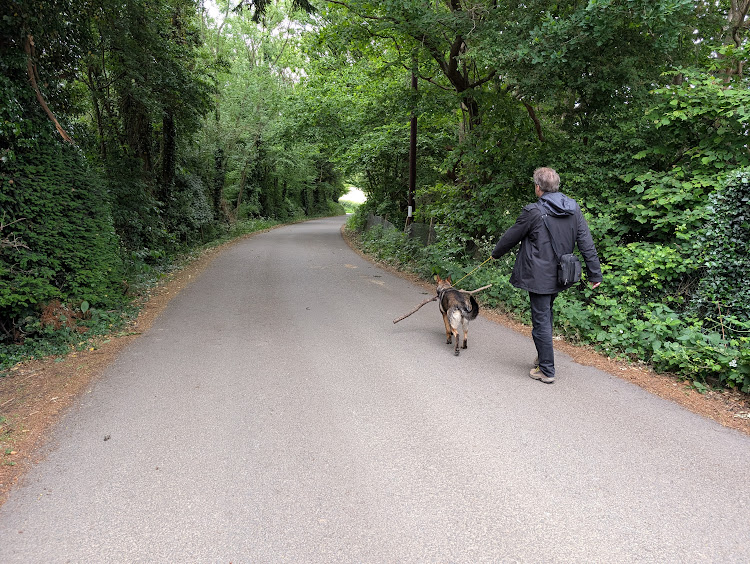
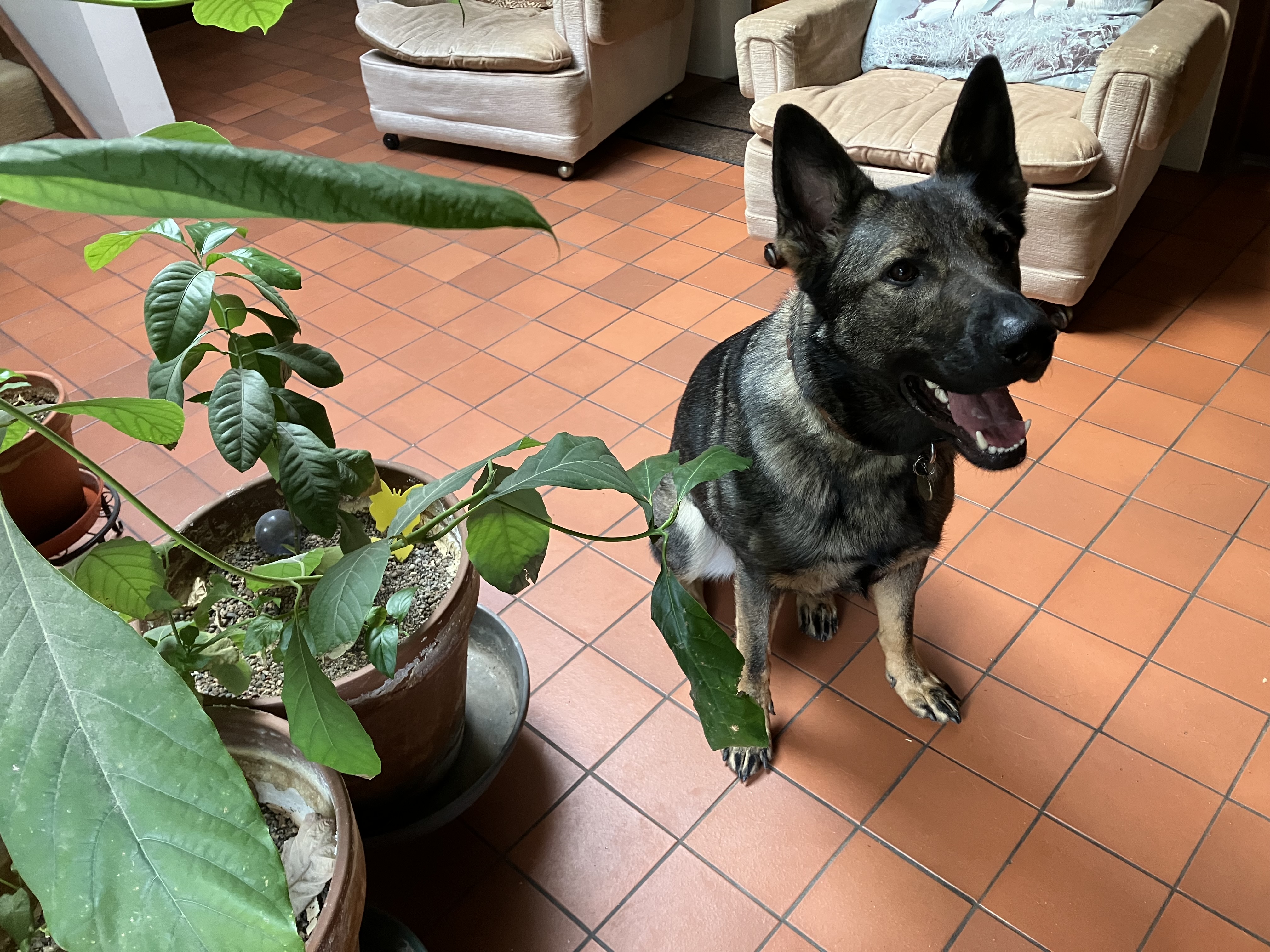
Then, when I am relaxed, perhaps on a train or baking a cake, I listen to the recording. The words are now in my own speech pattern, nothing is scary, I can listen properly, concentrating on the meaning. Now, Kant is still complicated, I still needed to pause the recording to check words in dictionaries or make notes. But by removing the stress, I can tackle the content. The recording isn’t perfect. I attempted a Prussian accent when reading direct quotes, and then giggled because it was so bad. Meg was with me, and did not appreciate Kant, so there are long groans from the dog, and at one point she came and panted into the mic and then licked the book, which sounds very weird. But I still found it helpful, and understood enough to give you a summary:

Kant was considering what makes good actions good. He described someone risking his life to save another person. He noted that even if they didn’t succeed in the rescue, or even if the person died in the attempt, we would still say their action was good. However, this is only good if their motive is good. If they were offered lots of money for the rescue, and especially if they believed there was no risk to themselves, then we would be less sure that their action was good. The motive matters. Kant decided that only motives of pure duty, with no other motives, means an action is moral. He said this motive (which he calls a maxim) should be as strong as a law. Other motives, like a reward, or because we like/want to do something, should not be a factor in how we decide to behave, as only an action based purely on duty an be called moral.

Now, I am not sure that I agree with him. I understand that reward muddles our motive (though I am not convinced it makes an action less moral) but I think that acting due to gratitude can also be moral. The idea of ‘not repaying good with evil’ is also, I think, a sign of morality. If someone helps me, and I therefore want to help them in response, I think this can still be moral. This is sort of the ethic of Christianity: God has loved me and that makes me want to be good— not because of what I will receive, but because of what I have already received. I think this is different to what Kant says — but I will continue listen to my Prussian accent while the dog groans a few more times, just in case I have misunderstood. I also need to decide how this applies to animals (the morality, not the groaning). Do animals behave in response to gratitude, and can this be called moral? More thought needed before I answer that one.

I hope you find ways to overcome difficulties this week. Thanks for reading.

Take care.

Love, Anne x

anneethompson.com

No Smiley Faces for PhD Students


As you will know if you are a regular reader of my blog, in June I was in Edinburgh for my annual assessment. This was rather scary. In the weeks beforehand, I completed an online form, and submitted a writing sample. I also sent an updated proposal. (A proposal is a document that describes what you want to research, and your method, and what literature already exists and how your work will be different.) In return, I was told where and when I would be assessed. As I said, all very scary.

On the day of my assessment I visited the washroom 376 times, and arrived at the room much too early. I was told to wait outside, while the panel of academics discussed their strategy. I worried I might need the washroom again. Or faint. Managed to not do either.

I was called into the room, introduced to the person on the panel who I didn’t know, and offered a choice of seats. I chose a low sofa, then instantly regretted it—it felt like the ‘naughty seat’ at school.

The panel consisted of three lecturers at the university, one of whom was my primary supervisor. They explained that my supervisor would say very little, as she already knew about my research, the questions all came from the other two. I was expecting questions about the writing that I had submitted, and I was ready to discuss what I had learnt, and the shape of my project to date, and some of the views of other scholars. I was wrong. They asked nothing about this.

Instead, they asked about where my research fitted into the academic world—which area did I feel it was addressing? Was it philosophy, theology, biblical studies, psychology? They noted that I had quoted scholars from all those fields, and appeared to be addressing many different disciplines. They asked which scholar, of the many I have read, did I most want to be like?—They then argued with my choice (which felt a little unfair). It was a very intense interview, and I felt very unprepared. Gradually, I worked out what they were saying—they felt my work was too broad, it covers too many disciplines, and will not go ‘deep enough’ if I continue on this trajectory. I need to narrow my research, focus on a single discipline and do it well.

I did not cry (though it was close). I tried to listen. I realised that what they were saying was correct, and they were trying to help me succeed. But to be honest, I have worked very hard this year, and what I really wanted was a sticker with a smiley face on it. I think perhaps universities don’t have those.

In some ways, the outcome of the review is a relief. I have been aware that I have been dipping into various disciplines (and it has been tremendous fun!) I have known, in the back of my mind, that trying to pull all my research into a single thesis would be a challenge, but I had decided I would worry about that nearer the time, assuming that it would become clear which areas I should ignore and which ones I should focus on. It will be easier to only focus on one area (biblical studies—because I really enjoy the Hebrew, and how it communicates meaning).

As I am a part-time student, I didn’t have to ‘pass’ this review (probably just as well!) That delight happens next summer. I spent time with my supervisor, and we planned a strategy for the next year, ways to improve my proposal and focus my research.

The rest of the week was spent attending seminars, and chatting to other students. Everyone who I spoke to had a similar experience in the review—no one received a smiley face. My supervisor explained that the first year of a PhD is all about exploring the field, deciding which area to concentrate on—and I hadn’t done anything ‘wrong’ but now it was time to focus.  Several students had decided to change direction completely, and were now doing research in a different field. Mine has stayed basically the same—but with fewer dips into other interesting areas.

I was thinking about all this on the train ride home. It was not a fun activity, but perhaps honestly reviewing our performance, reassessing where we are heading, is often uncomfortable. It’s something we often ignore in ‘real life’ but I wonder if perhaps we ought to do it more often. What exactly do we want to be, and are we achieving it? I thought about some of the people who I had met—the extremely intelligent ones, the high-achievers, the academically gifted, the leaders. I don’t think I fit into any of those categories. I think I want to be the ‘safe’ one, the person who people feel comfortable with, the welcoming one. If I also end up with a PhD at the end of it all, that will be excellent.

I hope you achieve your aims this week. Thanks for reading.
Take care.
Love, Anne x

I will leave you with some photos of beautiful Edinburgh.

Glasgow


I am in Edinburgh for my annual review (all very scary) and today there was a conference in Glasgow. The way that Edinburgh University works is that they will take remote students, who access everything online, but once a year, in June, it is compulsory for us all to be in Edinburgh for a week. Apparently being in Glasgow counts as being in Edinburgh.

I caught a 7:30 train from a bright sunny Edinburgh, and planned to walk from Glasgow station for 40 minutes to Glasgow University. However, there was a squall of rain, and when the train arrived (it takes about an hour) it was pouring!

I spotted some students that I recognised, so ran through the crowd to join them. None of them were keen to walk for 40 minutes in the pouring rain, so I ordered an Uber. This is more exciting than you might think, because although I put the app on my phone a while ago, I had never actually used it. They showed me how I could order a car by size (we needed a people carrier) and that Uber sends a map, showing where you are and where the car is, so you can watch it approach. It was all very easy.

Glasgow University is not easy. It’s incredibly difficult to navigate. The buildings are old and beautiful. I don’t know why but I was expecting them to be modern, with lots of blue glass!  Instead, they are weathered stone, and they have turrets and cloisters and squares of green in the quads — but not much in the way of helpful signposts! Never mind, we found the correct rooms eventually.

The conference was a series of papers, presented by PhD students from Edinburgh, Glasgow and St Andrews. It was good to meet other students, and to hear the sort of topics they are researching. Some were really interesting: the reversals in the book of Isaiah, whether Qohelet (Ecclesiastes) writes about the Messiah, what eyes represent in Proverbs… Some were very clever, but I didn’t understand them: Deuteronomistic Memory and the Redaction of 1 Kings had me stumped! I drew doodles in my notepad and tried to look intelligent.

There was food, if you managed to find the correct dining hall. (Maybe this was deliberate, only the people able to follow complicated instructions were fed!) There were also washrooms (obviously) and these were easier to find but not without problems. The one I used had a large clear window that looked out to the quad. There was a blind, but it was about an inch above the window sill, and I am shy, so I tried to lower it. It went up another inch. I twisted the rope the other way, it shot up a couple of feet! Whichever way I moved the string, the blasted thing just went higher. I gave up in the end, apologised to any unsuspecting passerby, and tried to keep my face hidden. Not a relaxed pee.

There were afternoon papers, and then people were invited to tour the city and have dinner in a pub. But I was tired. I ordered another Uber (I am good at it now!) and went back to the station. 

When I arrived in Edinburgh I walked to M&S in search of supper. I drank a whole carton of milk and ate a whole angel cake. Who needs nutrition? Feeling like a proper student now.

Hope you have a good day too. Thanks for reading.
Love, Anne x

Assisted Dying Debate


When I started my PhD research, I contacted my MP, asking whether I would be able to attend any Parliamentary debates on assisted dying. I heard nothing for months, and assumed my email was lost. However, earlier this week I received a reply, inviting me to the debate on Friday in the House of Commons. This was very exciting! I took Husband (I was allowed a guest) and we caught an early train to London.

At the House of Commons, we waited at the Cromwell Green entrance, as instructed and waited to pass through security. There was woman with placards on the green opposite, and as I watched she was joined by several other people, some carrying signs with Bible verses written on them. Later, there were also people in pink tee-shirts, asking for the right to have dignity. I am guessing they were on opposite sides of the debate (though actually, each slogan could have been used in both support or opposition to the Bill). The issues are complex. I wondered if their being there could achieve anything.

After passing through security (like at an airport, but more thorough as they individually checked each person) we walked through the cathedral-like Westminster Hall, along St. Stephens Hall, to the central lobby. The admissions office is behind a statue of Gladstone. I gave our names, and we were asked a couple of questions and then issued with our tickets and told where to wait. Our tickets gave us access to to the Speaker’s Gallery, which guaranteed seats (I think anyone can turn up to watch a debate, but will be in the pubic gallery, and may not get a seat). We had to wait in the central lobby until the Speaker arrived, and luckily there were comfy seats for older ladies (but no coffee, for older men, which was bit of an issue as I had been anxious to arrive on time and therefore we had not gone to a Pret on the way).

There was shout in a corridor, answered by a shout from one of the policemen who had also entered the lobby. Then he shouted ‘Hats off!’ and everyone wearing a hat/helmet tucked them under their arms, and round the corner came a little procession, of police and the Serjeant-of-Arms carrying the mace (a long silver club that dates back to the time of Charles II) and the Speaker. They strode round the lobby, passed the line of waiting people and police, and swept into the House of Commons. We followed them, and were directed up steps, to a small room where we had to leave all our bags and phones and coats (though I was allowed to keep my notebook and pen) and then we were ushered to seats, in a gallery, right opposite the Speaker’s chair.

The Speaker was talking about the India airplane crash that had happened overnight (but not the Israel attack on Iran, which also happened overnight–maybe we missed that) and then he turned to the business of the day: the Public Health Bill on assisted dying. MPs had submitted questions in advance, and the Speaker said there were too many, and had therefore chosen in advance who would speak, and he suggested a time-limit of 6 minutes. I was interested by the amount of power the Speaker had here–obviously the people chosen to speak would potentially influence the outcome of the debate, and it would be easy to be biased. (He would, I assume, choose from both sides of the debate, but he could pick those Mps who speak well or those MPs who did not. Definitely some of the MPs we heard spoke better than others.)

Image taken from learning.parliament.uk
It does not show the mics hanging from the ceiling, nor the screens. I was not allowed to take photographs.

The debate was about amendments to the Bill (which was read a few months ago). Kim Leadbeater spoke first, reading out the amendment, giving way to certain questions with a, ‘I give way to…’ (I’m not sure whether these were agreed in advance) and ignoring others with a ‘No, I will progress…’ The main thing I noticed was that to be an MP you need to speak very fast. There were screens, showing what was being debated, the name of the person speaking, and the time. The Speaker kept order, telling people if they spoke too long, or if their speech was irrelevant to the debate on the amendment (some seemed to be giving their view on the Bill, which has already been debated). Some MPs were clearly intelligent, thoughtful people who spoke well. Others less so.

The issues are too complex to include in a single blog post. The debate covered things like whether advertisers would be allowed to influence which medication was used, whether ethnicity should be considered in the debate, whether vulnerable people are protected by the law, whether it would be considered a ‘natural death’ or should an autopsy follow an assisted death, how to prevent permissive legislation in the future, what ‘error rate’ is acceptable?

The overall impression was of a well-ordered discussion, but with not enough time for everyone to be heard. It was also fast, moving from one speaker to the next, no time to pause, to consider the points raised, to ask supplementary questions. My understanding is that everything is written down, and I assume that afterwards, MPs can ask to see the transcript, and can consider the points carefully, deciding what they think. I wonder how many do; I wonder whether they have the time or if they then rush off to deal with other issues, no time to reflect. Which means that we, as normal people, have a responsibility to make our own views known, so our MP can represent us—or at least be aware that our viewpoint exists. Maybe those people waiting outside with placards were not futile, perhaps simply seeing them would ensure the Ministers were aware of their opinions.

My own opinion about assisted dying changes as I consider different issues. The one thing I am sure of, is that it is a very complex issue. It is not as simple as saying: ‘I would not allow my beloved pet to suffer in death, so we should not refuse to euthanise people.’ Nor as simple as: ‘We are created in the image of God, only God can decide life and death of a human.’ It is a big issue, and one which I think should be clarified in law—but also one which we all, as individuals in society, need to consider.

I hope you have an interesting day. Thanks for reading.
Take care.
Love, Anne x

Nearly Naked


Quick Trip to Cambridge

The wedding banns of our son were being read in Cambridge, which is very exciting! As a sort-of-Baptist (I attend an Anglican church but was raised a Baptist) I am a little fuzzy on some of the rituals/laws surrounding the Anglican Church. Apparently, if you marry in one of their churches, it is a legal requirement for banns to be read in advance (just in case someone wants to object to the marriage). They are read in the Parish of the ceremony, and in a church where you live (if that is different). Son lives in Cambridge. Lovely Daughter and SiL agreed to take mad dog for the weekend, so off we went.

Cambridge is always lovely (other than Fresher’s Week, when there is a lot of vomit). I love the history of the buildings, the river full of people having fun, the cows loose on the common. (Honestly, who couldn’t love a city that has cows wandering around?)

We had drinks on Saturday at The Pickering Inn. This was one of those ancient buildings blended with contemporary life that is commonplace in Cambridge. We sat under a ceiling built in the 1600’s, reading about ghosts, while the huge television showed the FA Cup Final. They had used old books to show reservations, and I started to read mine (because I don’t much enjoy football). A lovely way to spend an afternoon. Then we wandered back out into the sunshine, walked round the corner to an Italian restaurant, and I decided to forget about my low-cholesterol diet for an evening, so had a wonderful meal.

The following morning was church. We found the right church, and lots of friendly people came to ask who we were and welcomed us to the service. The church was quite full, and had a mix of ages, and the vicar had the same name as Husband. All was going well. There was a band, and the singing was good, and then they read the banns. I hadn’t realised that they would read out the full names, and they asked if anyone had a reason to object to the wedding (no one did) and then they prayed for the couple, and I felt unexpectedly emotional because it all felt very significant. Very serious. Very right.

The service continued to the usual formula of songs and readings and notices, and then there was a sermon. The sermon was about the woman who washed Jesus’ feet with her hair, which was a pretty outrageous thing to do in those days, and not at all what people were expecting. Then, from the back of the church, there came a loud: ‘Can we have a round of applause?’ and down the aisle marched a large man wearing a towel. I think just a towel, knotted at the waist. I sat up, this was interesting, was there going to be a short sketch? A bit of drama to explain the text?

The man strode to the front, went to the lectern and started to speak into the microphone. The vicar moved quietly to his side, and pushed the mic away, explaining that it was time for the sermon, it wasn’t the right time for the man to speak. Was this a sketch? Two other leaders appeared at the man’s side, and suggested he might like to join them somewhere quiet, where they could listen to him.

Is this a sketch?’ I whispered to Son.

I don’t think so,’ he answered, staring at the scene, ‘I think this is real.’

My first instinct was that maybe I should help—which I dismissed pretty quickly because I have absolutely no experience with either mental health or spiritual oppression, and I would just get in the way. The men were moving to the side door now, very calmly, leading the man out of the church. My second thought was whether that towel would stay in place, and whether I would resist laughing loudly if it fell off—but fortunately it didn’t fall. The man left, the sermon continued.

At the end of the service, the senior vicar returned, and explained that the man was being helped by counsellors, and please could the congregation leave by the side door, so we didn’t disturb them. He prayed for the man, and the service ended. It was certainly not boring.

As we left, I noticed the man (still wearing his towel) talking with two men in the glass-fronted foyer. Sensible to remain in a public place, I thought, sort of private but not hidden. I was impressed with how the whole thing was handled actually. The man was treated with dignity, but also moved away from where he could potentially harm people. The church clearly has some good policies in place.

We had coffee and homemade cookies, and then went to the pub for lunch. We drove back, collected mad dog (tempting to leave her for a few more days) and went home. A lovely trip.

I hope you had a good weekend too. Thanks for reading.
Take care,
Love, Anne x

English/Greek Grammar


A Little Grammar Revision

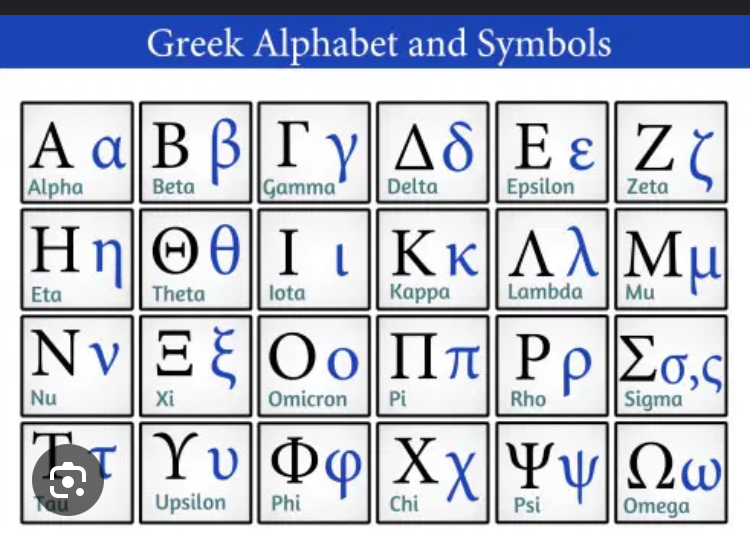
I decided to take a break from my studies this week, and instead to revise some Greek. I started learning Greek in 2020, and I have forgotten nearly everything (‘use it or lose it’ is certainly true with languages). I dug up my two text books—one has a fun but slightly muddled approach,[1] the other an incredibly dry but systematic approach.[2] I read them together, side-by-side, and the knowledge seeped back. However, one of the main things I remember when I started to properly learn a language was my lack of formal English grammar. I went to school in the era of creative writing, when it was all about free expression and writing from the heart and responding emotionally to what we read. I don’t think words like ‘pronoun’ or ‘intransitive verb’ were ever uttered in one of my English lessons. Not ever. Which was possibly an acceptable way to develop a love of words, but not so useful when learning a foreign language.

After several years of formal language learning (the Greek, and then the Hebrew) I have now assimilated most of the grammar that I need. But just in case you have never heard these terms, or for the fun of being reminded of them if you were educated in a different era, here are some quick definitions. How many do you recognise?

Nouns

Subject  This is the noun that ‘does’ the verb. Eg. The boy arrived. She sang. They ate.

Object This is the noun that ‘suffers’ the verb. Eg. Mary stole the cake.

Common Noun These are things in general. Eg. cup, nose, sky

Proper Noun These are names of people, places, or things. Eg. Jane, Oxford, or Hazelwood School

Abstract Noun These label abstract ideas, actions, states. Eg. Love, peace, destruction

Pronouns

A pronoun replaces a noun with a substitute word. The original word (noun) is the antecedent. Eg. she, it, who, are pronouns which can replace the antecedents: Mum, Meg, Dave.

A relative pronoun (is not your aunty!) but makes a relation (a fancy way of saying ‘a connection’) between clauses. So: ‘John hates Mary. Mary ate the cake.’ This changes to: ‘John hates Mary, who ate the cake.’ Thus ‘who’ is the relative pronoun, and ‘Mary’ is the antecedent.

Adjectives

An adjective describes the noun. We say it ‘qualifies’ the noun. Eg. Greedy Mary ate the cake.

Demonstrative adjectives answer the question: Which noun? Eg. this, those (Greedy Mary ate this cake.)

Possessive adjectives answer the question: Whose noun? Eg. my, your, his (Greedy Mary ate his cake.)

Interrogative adjectives are question words. Eg. Which, where? (Greedy Mary ate which cake?)

Definite article just means ‘the’ and indefinite article just means ‘a’. They are included as adjectives because they qualify the noun. (Greedy Mary ate the cake.)

Prepositions

Prepositions are generally ‘place’ words. Eg. on, in, over. In Greek and English they govern what follows them. So ‘I go into the house,’ the house is what follows the preposition. (In English, they can also do other things, but I am only bothering with the grammar that’s useful for Greek.)

Adverb

An adverb can qualify either a verb or another adverb. They usually end ‘ly’ in English. (Greedy Mary extremely hurriedly ate his cake.)

Verbs

A verb can be an action or a state (thus ‘stative verbs’ –which I am pretty sure never cropped up at my school, where we were only taught that a verb is a ‘doing word’.) Apparently, a ‘state’ is also an action, so if the boy is hot, then his ‘being hot’ is an action and therefore a verb—but a stative one. (I personally feel this is unfair grammar, because ‘the hot boy’ uses ‘hot’ as an adjective, not a verb. Which is very confusing for me, and I am English! My sympathy goes to those who are learning it as a foreign language.)

Transitive Verb A transitive verb effects something (the subject). Eg. They ate the cake. (So ‘ate’ is a transitive verb and ‘the cake’ is the subject—the cake was affected by the verb.)

Intransitive Verbs These do not effect anything else (there is no subject). Eg. I ate. I remain. I die.

Indirect Object This is indirectly affected (a clue in the name!) and usually follow a preposition. Eg. She ate the cake on a plate. (This sentence has a subject: she, a transitive verb: ate, an object: cake and an indirect object: plate.)

Finite Verb This may be indicative, imperative or subjunctive (explained below). A clause must have a finite verb, otherwise it’s a phrase. A complement completes the clause: He is _______. It can be a noun (He is a boy) or an adjective (He is good) or a pronoun (He is mine). In Greek, the complement is never the object, it is always linked to the subject.

Mood

This matters a lot in Greek, but we use it in English too (you just may not be aware of it). Verbs can either be finite or infinite.

Indicative –this is a finite verb, so describes a particular action, and can be a statement or a question. Eg. He went in.

Imperative—this is another finite verb (describes a particular action) and is a command, a ‘bossy verb.’ Eg. Get inside!

Subjunctive—this is another finite verb (describes a particular action) and is a wish, or a wonder.
Eg. I might go inside. Or: If you go inside... [needs to be completed].

Infinitive—an infinite verb, (so not specific, we need more information for it to make sense) a verb that is on-going. Eg. To sing, or to laugh. They tend to follow ‘to’. They are called ‘verbal nouns’ because they tend to follow another verb (I want to sing) like a noun, and they can take an object (to sing a song) like a verb.

While we’re describing mixes (verbal noun) we should also look at participles, a mix of a verb and an adjective.

Participles

Participle—this can be an active participle, which ends in ‘ing’. Eg. laughing, singing.
Or it can be a passive participle, which ends in ‘ed’. Eg. laughed, cried.
Participles are used in English and Greek as adjectives (even though they look like verbs to me!) Eg. The laughing man went inside. You are my beloved mother. (English also uses them as tenses—I am laughing—but Greek does not.)

Tenses

These really confuse me, but Mr Duff included a helpful chart, which I will attempt to copy. Basically, tenses show time (past, present, future) and aspect (continuous, simple, complete). Hold your hat, and we’ll look at some examples: (Depending on the device you read this on, the chart below is either helpful or completely muddled. I have therefore also included a photo, from page 247 of Duff’s book, ref. below.)

                                                Past                   Present                   Future

Continuous:         (imperfect)                       (continuous)          (continuous)
                               I was loving                      I am loving               I will be loving

Simple:                    (simple)                               (simple)                  (simple)
                                  I loved                               I love                        I will love

Complete:                (pluperfect)                       (perfect)                  (perfect)
                                 I had loved                       I have loved              I will have loved

If you still have brain left—well done, you are ready to learn Greek. Personally, I am going for a cup of tea and a lie down. Thanks for reading. Hope you have an interesting week.
Take care.
Love, Anne x

******
anneethompson.com
*****


[1] Ian Macnair, Teach Yourself New Testament Geek (Nashville, TN: Thomas Nelson, 1995).

[2] Jeremy Duff, The Elements of New Testament Greek (Cambridge: Cambridge University Press, 2005)

What is ‘The Image of God’ and Do You Have It?


Part of my university research has involved looking at ‘the image of God’ (or imago Dei as it tends to be written in scholarly articles). One of the reasons I hear Christians give for not wanting assisted dying, is that people are created ‘in the image of God’ and therefore they are different to animals, and should not choose when/how to end their life. The ‘image of God’ is what many people believe makes humans special. So what is it, and where does it come from?

You might remember that when we were in Jamaica, I started to read The Liberating Image by the Jamaican Dr Middleton.[1] He explores the different possible meanings for the image, and discusses which are the most plausible explanation—because the problem with the ‘image of God,’ is that although I have heard a lot of people talk about it, few people are agreed on what it actually is. The phrase appears right at the beginning of the Bible, in Genesis 1, when God creates the cosmos. In Genesis 1:26-27 we read:

 ‘Then God said, “Let us make humankind in our image, according to our likeness; and let them have dominion over the fish of the sea, and over the birds of the air, and over the cattle, and over all the wild animals of the earth.” So God created humankind in his image, in the image of God he created them; male and female he created them.’

The term is only used twice more in the whole Hebrew canon, both times in Genesis (Gen.5:1, Gen.9:6). None of the references define what is actually meant, and although the Genesis 9 mention links it to ‘not shedding blood’ of a person because they are in God’s image, this certainly never crops up later, when the Israelites/Judahites (who are believed to have written Genesis) are busy killing the people who are in their way. So the Bible itself does not use as a reason for not killing people, even if Christians today use it that way.

I have read a lot on this, and Middleton’s book is helpful for looking at what God’s image might have meant to ancient people. He examines the term in the context of the ancient world, and decides that it is linked to the statues that kings used to set up in remote places, to remind the people of his presence. That is one possible explanation, but there are others. Middleton looks at several other ancient creation stories, and these are interesting (though possibly, I think, irrelevant) so I will tell you the tales in other blogs. Personally, I think the problem with Middleton’s approach is he looks too much at religions outside of the Hebrew one, and I’m not sure how helpful that is. If I want to understand my religion, I’m not sure how helpful it is to examine what other religions teach. I think the key is within my own sacred books.

After lots of reading, I decided that the image of God was a role—a way we are meant to behave (caring for the world, like God does in Genesis). The trouble with this, is that if people are not acting in this way, are not behaving like God, does that mean they do not have the image of God? And the problem with that conclusion is it is scarily like the conclusion of Hitler when he wrote Mein Kampf—and I am not keen to align myself to his views! I am now busy trying to justify how some people might not be living ‘in the image of God’ but they do possess the potential to do so—which means we are all equal but not necessarily fulfilling our potential. Overall, due to how little the term is used in the whole Hebrew canon/Old Testament, plus the fact that it is never defined so we don’t even know what it is, I mainly think it is not very important. Which means it should not be used as a reason for not allowing assisted dying. (There may be other reasons, I will let you know when I finish my studies, but imago Dei is not one of them.)

I have therefore spent several months learning about something which I now think is irrelevant to my final dissertation. Such is the joy of research! I hope you have a good week, and enjoy doing things even if they are not especially useful. Thanks for reading.
Take care.
Love, Anne x


[1] J. Richard Middleton, The Liberating Image (Grand Rapids, MI: Brazos Press, 2005).

Splash!


Hello, how was your week? I have just had a lovely morning, so I shall share it with you. It started earlier than expected (I sometimes accept invitations from my husband without checking the fine details first). We were standing on the station at 7am, which was bit of a rush as I had to sort out Goose, and the randy cockerel (who now has to sleep in a prison because he hurts my other birds) and the 7 ducklings (who make a muddy soup of wherever they are living). But after a quick shower, I was in the car at 6:55 as directed, and at the station in time for the train. (Also discovered I cannot use my railcard until 9:30, so more expensive as well as much earlier, than expected.)

As we waited, the power at the station gradually stopped working: first the automatic ticket machine died, then the credit card machine at the hatch, then the information boards. A little weird that it didn’t happen all at once. We decided to opt for the first train—a diesel—in case the electric train also died. So we ended up on a train to London Bridge, when we were heading to Kensington High Street. It all added to the excitement.

After squeezing into over-crowded tube trains (don’t think about the germs) we escaped into fresh air at Kensington. Kensington is very posh—even the tube station has artificial flowers and fake-Italian coffee shops. We turned right, walked past a few posh shops and cafes, then left into the modern forecourt of the Design Museum.

Husband had been invited to a ‘Breakfast and Preview of Splash.’ Splash is the new exhibit (about swimming), and I wasn’t sure how keen Husband was when the invite first arrived, so I told him I thought Pamela Anderson was there because I’d seen her photo online. Though I’m sure that didn’t influence him at all.

We arrived and had our names checked at the door, then were offered coffee (in proper cups and saucers) and pastries. We didn’t know anyone, and it wasn’t a ‘work-do’ so Husband chatted to me (rather than networking) and it was rather nice.

We went to see the Splash exhibit. It was mainly a display showing various styles of swimwear—some of which would be rather draughty! Pamela Anderson obviously decided not to attend in person after all, but her swimwear was there, so I didn’t feel I had been dishonest. (I have similar measurements to Pamela Anderson, just arranged in a different order.)

There was also a display about mermaids, and one stating that very few black people in England can swim, though I don’t know why this would be a thing. (The black people not-swimming, not the mermaids—mermaids are definitely a thing.) I grew up on a council estate, and we all learnt to swim, and beaches in England are free—so it’s not a financial thing. Maybe their parents didn’t think it was important—most black people I know can drive, and learning to drive is much more hassle than learning to swim, so it must be a lower priority. I shall have to ask them.

The exhibit was not extensive, but it was bright and fairly interesting, and made a good excuse to go into London.

Before we came home we went to a cafe for brunch, and that was the best thing of all. We sat at a little wooden table, perched on slightly wobbly chairs, and watched the world go past. Most of the world (in South Kensington High Street) wear expensive shoes, and have manicured hair, and walk with purpose. I wondered who they were, and where they had come from, while sipping coffee and eating a huge almond croissant which fell into crumbs that scattered across my clothes—so I fear I did not look especially manicured myself. But I felt very contented. We talked about nothing, and I tasted Husband’s salmon on avocado toast, and it was all rather lovely, and one of those mornings that remind you of why you got married all those years ago. Sometimes, just being, is rather lovely.

We got home at midday, released mad dog, and started work for the rest of the day. A fun little interlude.

I hope you have something fun this week too. Thanks for reading.
Take care.
Love, Anne x

Not a Great Week Here, How About You?


This too shall pass. . .

Hello and how was your week? Mine was pretty rubbish to be honest, but I survived and by the time you read this (as I write blogs several weeks before I post them) I am sure all will be well again. But this week has been disappointing.

One disappointment is my cockerel, who is super-randy and sees everything else as a competitor to fight. Which means when anyone is in the garden, he starts to dance around them, ready to attack. It also means he attempts to copulate with anything he considers appropriate. He hurt Goose, so I moved him in with the chickens. He is so big and strong, he was damaging their heads (he holds onto the back of their head to keep them still while he ‘covers’ them) and one of my lovely white hens was so badly hurt she died. I now don’t know what to do. He was raised to be company for Goose, and they have been good friends—I love seeing them walking round the garden together, and at night they snuggle in the hay box. But he is currently too dangerous to be free. I have run out of safe places, because I have a mother duck and her ducklings in the spare cage. I am fond of him, so unwilling to eat him or leave him for the fox, but he is a problem.

When I first decided to move him, I shoved him into the duck house, just to keep him safe from the fox and the chickens safe from him. The duck house opens onto the pond. In the morning, I was extremely surprised to find him in the second duck house. This means he must have attempted to escape in the night, and tried to cross the pond—which involves swimming. Chickens cannot swim. He must have had a near-death experience! Silly thing. At least he will have learnt that he can’t swim. (He can fly, but he doesn’t seem to know that yet, and stays inside the fence.) My only solution is to leave him in the pond area during the day (because the ducks can swim away from him) and lock him into the nesting box at night (when the hens are roosting). But moving him is a lot of effort, and it won’t work when I go away, so it’s not a long-term solution.

Another major disappointment was receiving a form from university. It is an assessment form, and has 9 sections, each section is 4,000 words. I did not expect this until next summer, as I am part time, and I have not allowed time to complete it this month. This makes me very stressed. I am hoping it was sent in error, and I need to complete it in 2026, but I haven’t yet heard back from my supervisor. I am trying to be philosophical about this, and I am telling myself that if God wants me to complete the PhD, then as long as I work hard (which I am) all will be fine. But I am still stressed out!

One reason I have so little time is my venesections have started. I have to have a blood test 7 days beforehand (which wastes most of a morning due to delays in waiting rooms). The actual venesections are awful, mainly because they are in the oncology department, and it is very sad being with lots of brave people who are struggling with cancer. The staff are lovely, but the logistics of getting to hospital, and trying to park, and waiting until I can be seen (because health stuff always involves waiting) and then having blood removed for an hour is not my idea of fun. I am tired afterwards—I think mainly due to the stress of it all. And I know I am very fortunate that my condition is treatable, and I am grateful it was discovered in time, but it is still awful.

Not enjoying being a patient.

My last worry is the local election, when the Reform party won in my area. I find this extremely worrying. I am not political, but the only broadcast I have heard by Reform stated that: ‘we have too many immigrants. Most of them are young men. The majority are criminals.’ In my mind, this is hate-speech. This is the sort of rubbish Hitler was spouting in the 1930’s. It ignores the difference between immigrants and asylum-seekers. It ignores the fact that many immigrants are hard-working and our country needs them. It ignores the fact that if people are asking for asylum, and if they genuinely need it, we should be prepared to help them. In my opinion, the ‘criminals’ are the traffickers who bring them on unsafe transport, and the politicians who spread lies and fear. The Reform party have now said they will use their status (and the money that comes with it) to challenge the government so they are side-tracked from governing. This is not what I want my local councillor to do. It saddens me that this is happening. I also feel guilty, because I didn’t make the effort to vote in the local election. We need to start speaking against the mis-information and hate-speech, and we need to be sure to do our duty and vote.

As I said, by the time you read this, I expect my stress levels will have reduced and life will be calm again. Sometimes life is difficult, and we keep going until it’s better again. This too shall pass. Though I have no idea what to do with my randy cockerel.

Thanks for reading, I hope your week is better than mine.
Take care.
Love, Anne x

I will try to focus on the lovely ducklings instead. Their world is full of danger, but they simply get on with living with enthusiasm. They are my happy zone.
****
anneethompson.com
*****

Finding Comfort in Uncertain Times


Well, isn’t the news depressing at the moment! I find I am drawn to it, like a moth to a flame, with a sort of horrible fascination, wondering which world leader will have done something stupid today. There is a lot going on, and it can feel rather unsettling. However, today I read a few verses that reminded me to keep everything in context, not to get carried away by the stressy-gossipy-conspiracy of the whole thing—especially some of the things being posted on social media.

Now, I am taking these verses (Isaiah 8) completely out of context, and I am applying them in a way that was not at all how the original author expected them to be applied, and I am ignoring all the verses before and after. Usually I would think this was a slightly dodgy way to use Scripture, but I think, if I am only applying it to myself, and not using it to teach/correct other people, then it’s okay. (Sometimes the writers of the New Testament did the same thing.) I think sometimes a few verses might apply directly to the reader (me) and that is how Scripture ‘speaks’ today. So, with the health warning that I am not trying to teach anything from these out-of-context words, which you can apply however you feel is appropriate, this is what I read this morning:

Hoping you find them a comfort.

They are copied from stepbible.com (great if you want to compare translations) the ESV and the JPS TANAKH.

Enjoy your day.
Take care.
Love, Anne x

anneethompson.com
******