Imagine if…


Before you read this week’s blog – a quick update on last week. The lighthouse took a week to recover, and then, when I replaced the battery, the light flickered into life and began to turn. Brilliant!

With regard to the chick’s gender – not so brilliant. It’s still too early to be sure, but yesterday, one of the chicks which I was sure was a hen, was trying to crow. It is possible the five of the six chicks are cockerels. Ah.

Imagine if…

When you were young, did you ever pretend things? Did you ever dress up and pretend to be something else? I did – whenever I could.

For example, I remember visiting Aunty Daphne once, my mum’s cousin, and she lived in this big old house, which had stables in the garden, and big flagstones on the ground. The adults spent hours (literally, hours) talking, and I used the time to play in the garden. In my mind, those disused stables were full of horses, and I ran around, bringing them hay, curtseying to the master of the house, dancing in the moonlight (even though in reality it was a sunny afternoon). I became a different person.

As an author, people sometimes ask me where I get the ideas for my novels, but this has never been a problem. Even when I was very young, my mind was always full of the “what if?” question. “What if I was lost on the moors?” What if a monster landed in the garden?” What if I didn’t really live here, and was simply hiding under the bed?” I spent a lot of time on that last one, and would spend hours reading books under the bed, not hearing my mother when she called to me, sneaking down to the kitchen – desperately trying to not be seen – and stealing slices of bread and apples, which I would scurry back upstairs with and eat under the bed; all the time lost in this ‘other world’ where I was an orphan, sheltering in the house to survive. I didn’t ‘pretend’ to be other characters, I sort of ‘became’ them. I think it annoyed my brother and sister intensely, and I am a bit surprised my parents never sought psychological help for me.

As a teenager, I tried to use this game of ‘becoming a character’ to act. I joined the amateur dramatics group in the nearest town, and tried to ‘become’ the characters in a play. However, I found I didn’t especially like following a script, being what someone else has imagined, so although it was an excellent experience (I found my husband there) I didn’t continue.

I have a million books in my head, waiting to be written. Each one begins with the “what if?” question. What if a foreign government crashed all the infrastructure in England – how would I cope? What if I became aware of a smuggling gang using the lane beside the house to exchange goods? What if I was a teenager, and the boy I fell in love with had a horrible accident and lost his legs? What would it feel like to have dementia, and be slowly losing my mind?

Stephen King said that reading books about ‘nasty things’ is the way we prepare our minds for when disaster strikes, like dipping our toe into something. It allows us to examine our fears in a safe place, and consider them, before we put them away again. I’m not sure about that. I think I just like living in a pretend world.

Of course, each story begins in my head, but to make them authentic, I need to do some research. So if I want to write a story about smuggling, I need to find police reports about what is happening, I have to find the transcripts of police interviews to learn facts, I have to check on possible routes, and actual ways and means. There has to be a smattering of real facts to hold together the structure of imagining. Otherwise it would be like telling someone what my dream was about last night – and we all know how boring that is!

Reading books is a way of experiencing other people’s “what if?” – I think it helps us to understand situations beyond our own experiences. Reading books differs to watching films or television or plays, because the action takes place in our heads, we hear our own voice speak the lines, we become part of the action. (This is why I rarely read supernatural or ‘spooky’ books, because I don’t want that stuff in my head.)

I wonder what your “what if?” thoughts are. Perhaps you should write them into a story. I did.

Tomorrow, I’ll tell you about some of the support I received.

Thanks for reading.
Love, Anne x

This is the story I always promised myself I would write ‘one day’ while I was teaching in an infant school. A light-hearted novel about 3 teachers.
https://www.amazon.co.uk/gp/offer-listing/0995463204/ref=tmm_pap_new_olp_sr?ie=UTF8&condition=new&qid=1539091413&sr=8-1

What if…you were the mother of a psychopath? The story of Joanna and her family – an exciting novel.
https://www.amazon.co.uk/JOANNA-Anne-Thompson-ebook/dp/B071H3RCKC/ref=sr_1_1?s=books&ie=UTF8&qid=1539091592&sr=1-1&keywords=joanna+by+anne+e+thompson

Counting Stars Link

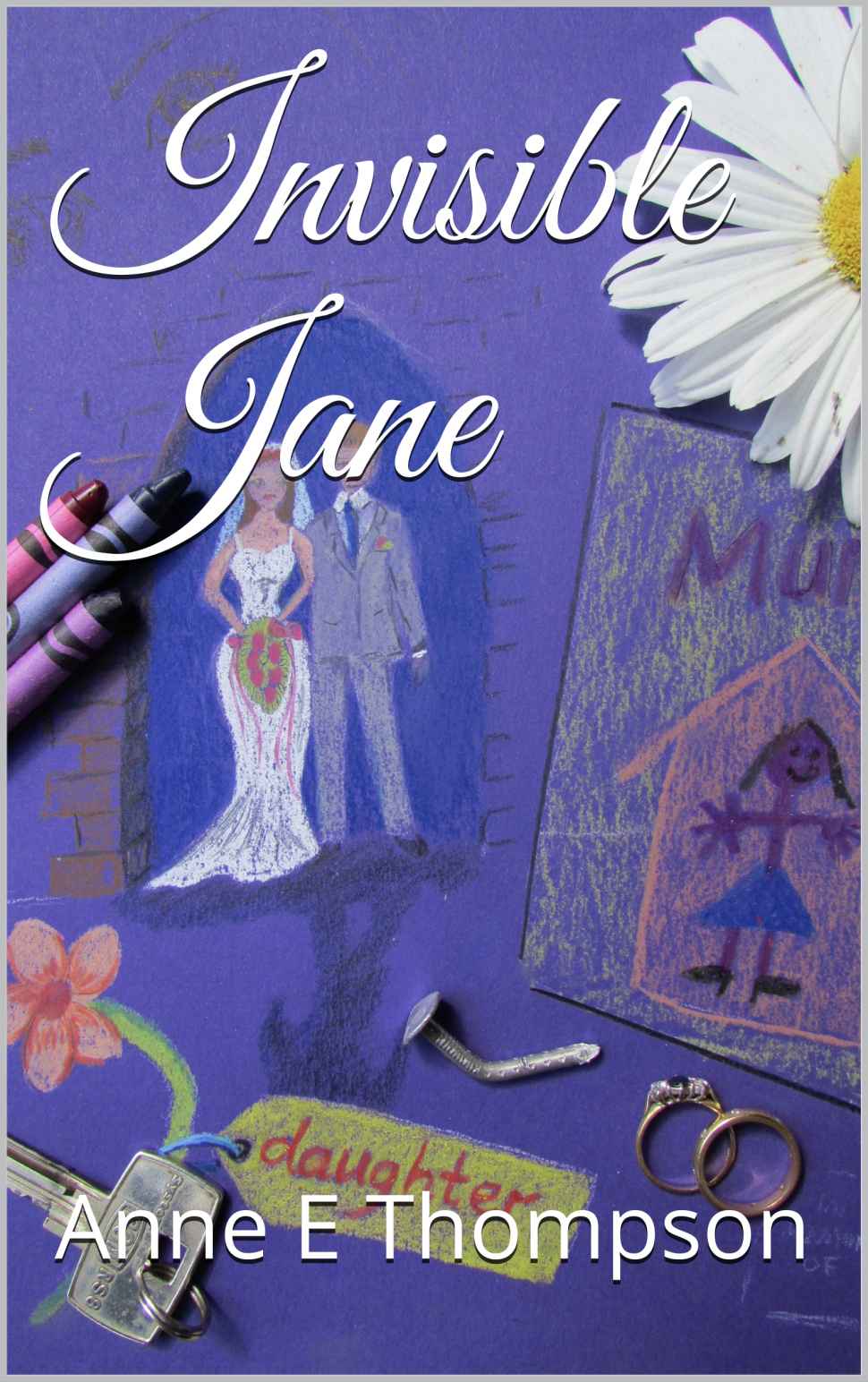
Invisible Jane Link

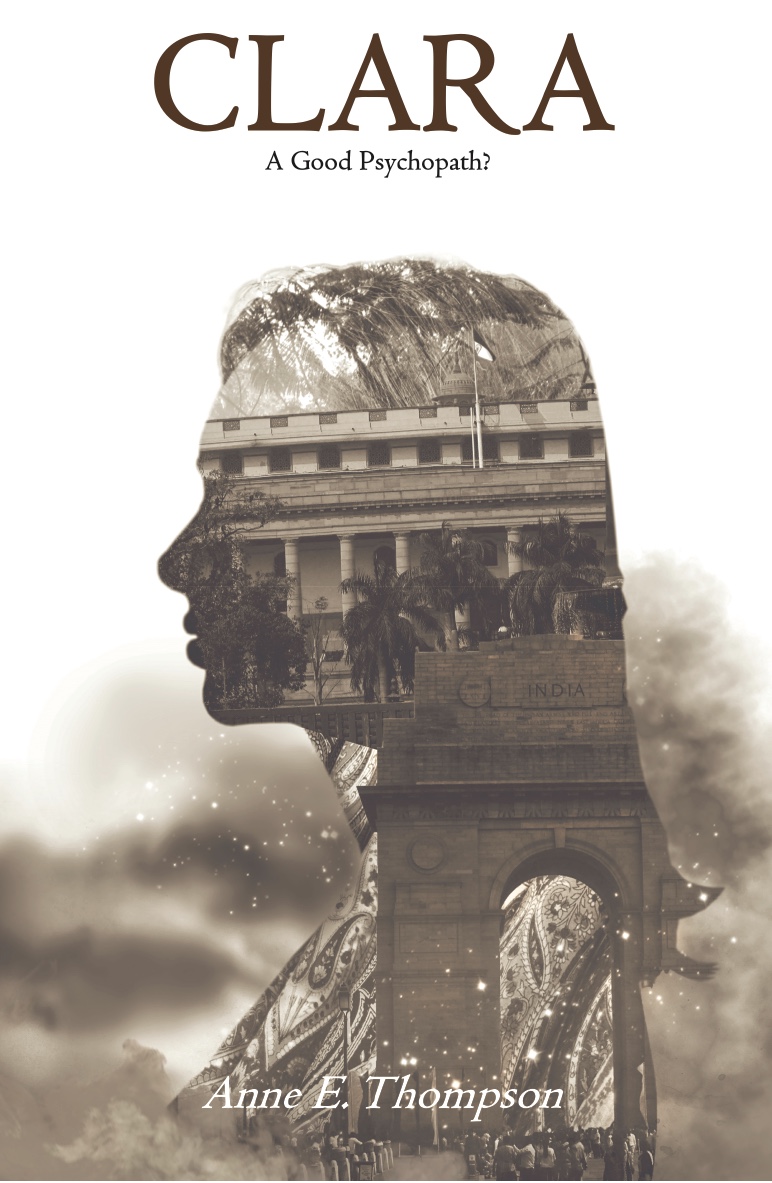
CLARA Link

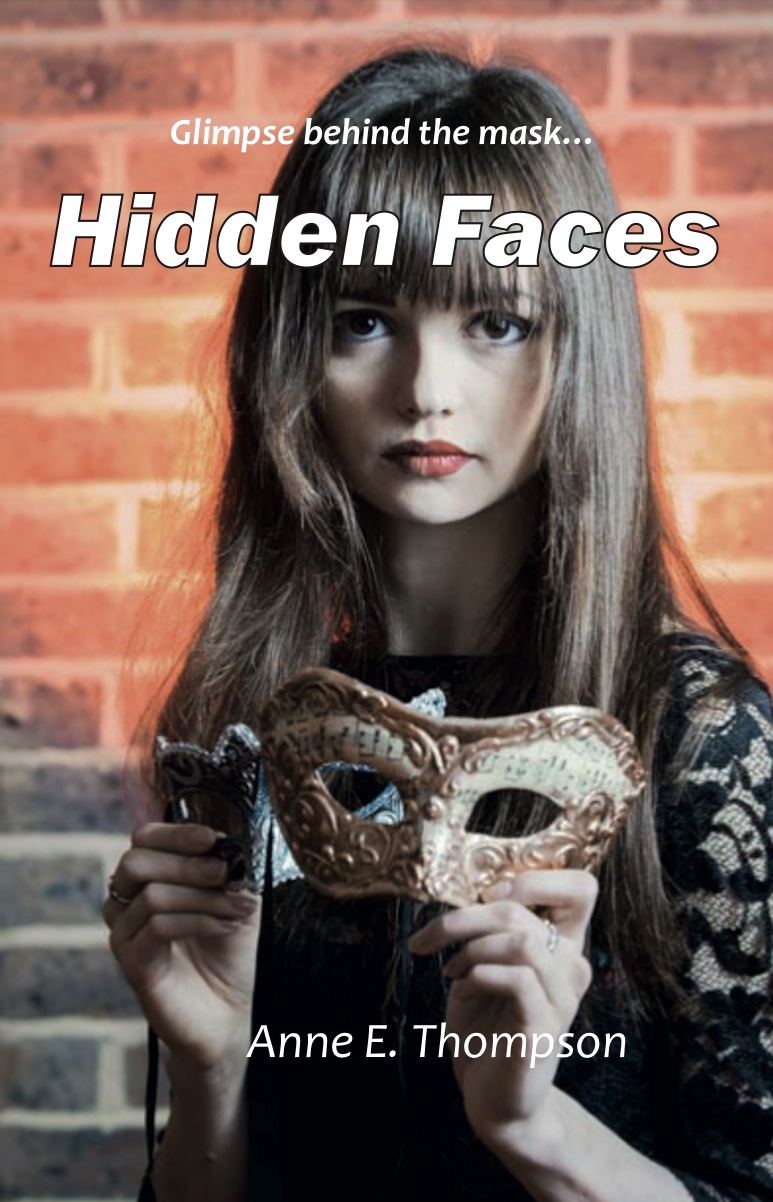
Hidden Faces Link

JOANNA Link

An exciting surprise!


Good Morning!

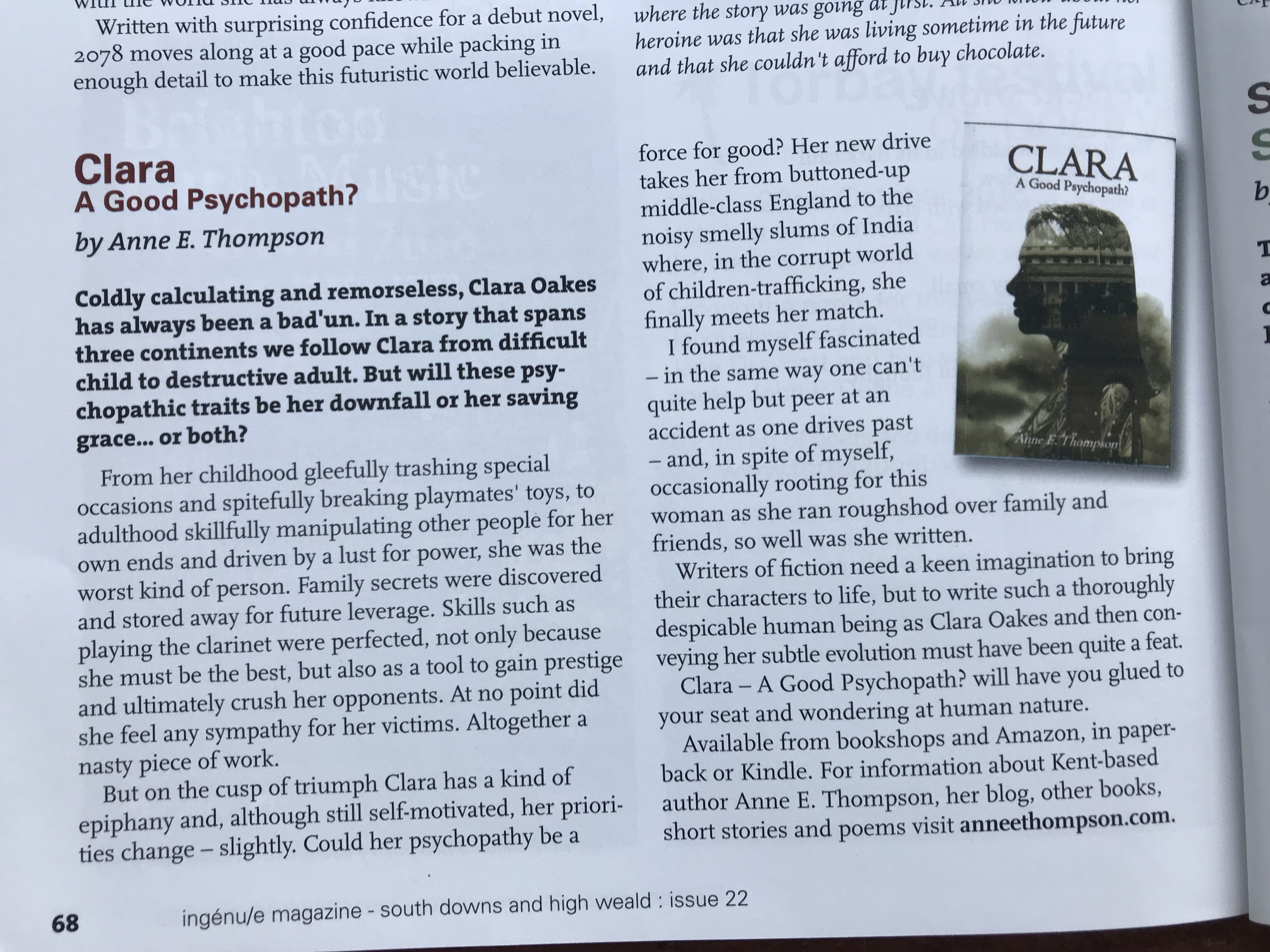
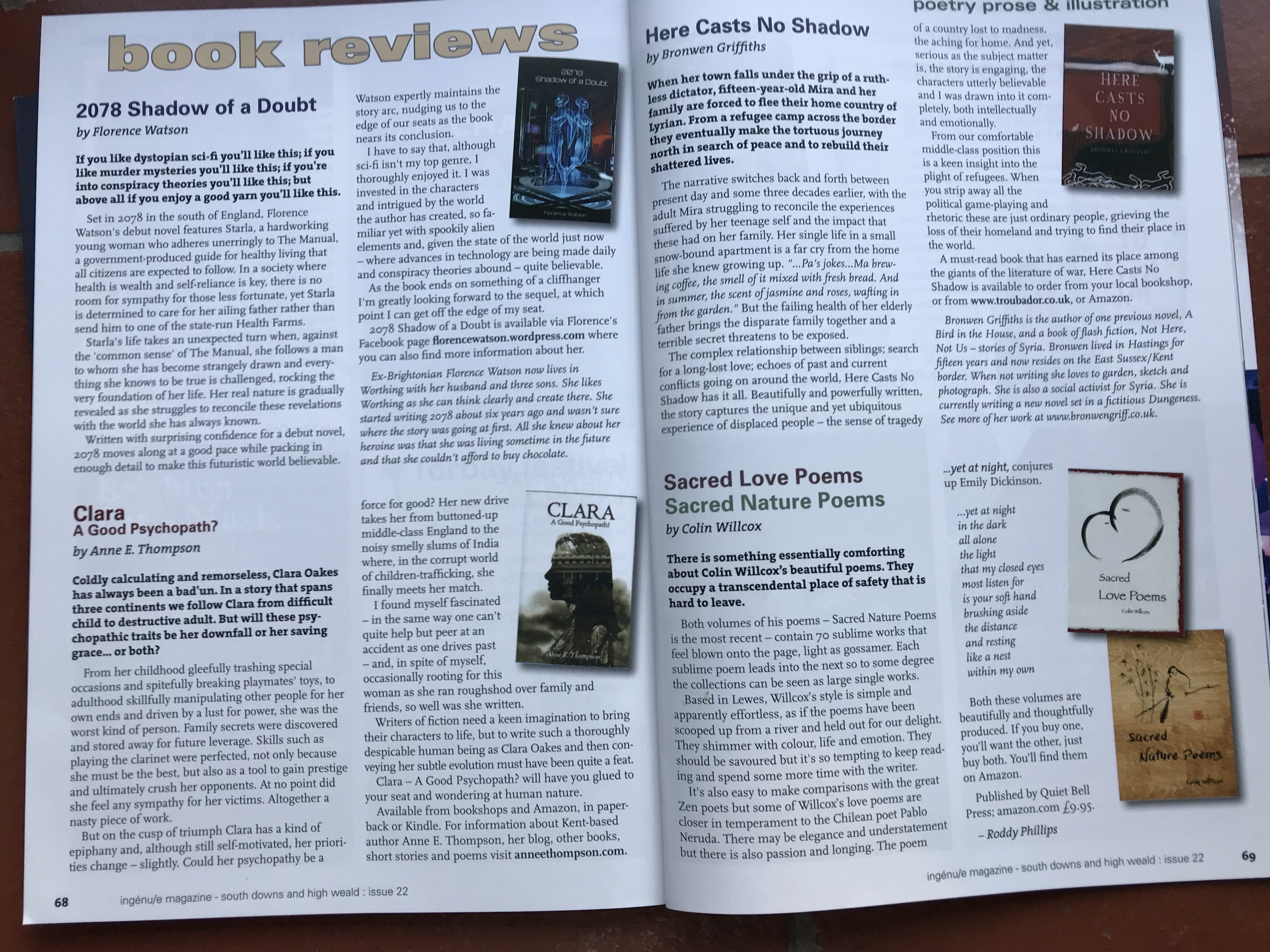
This isn’t my normal time for posting blogs, but I wanted to share some news with you (because I’m very excited, and Son is in bed and Husband is at work, and I have to tell SOMEONE!) This morning, when I woke up, an envelope was waiting at the bottom of the stairs. When I opened it, I found a magazine. It’s an Arts magazine, and reviews art, literature, music and dance. As I flicked through the shiny pages, I found, on page 68, a review of CLARA. Wow! This is my first ever unsolicited review. How exciting!

I skimmed the review first, heart in mouth, wondering if I was going to read something critical. But no, the reviewer had found the book gripping. They describe being “glued to your seat and wondering at human nature”.

Clara is a pretty awful person (slight understatement) but the reviewer says: “I found myself fascinated – in the same way one can’t quite help but peer at an accident as one drives past – and in spite of myself, occasionally rooting for this woman as she ran roughshod over family and friends, so well was she written.”

Have you read Clara yet? Here is the Amazon UK link:https://www.amazon.co.uk/dp/B079T5NJP7?ref_=k4w_oembed_94cpRjkhwVeJc3&tag=kpembed-20&linkCode=kpd

Reading a review of Clara, when it’s written by someone who has never met me (and therefore has no reason to be kind) was rather scary. But the reviewer wrote such a lovely article, it has brightened my day!

Clara tells the story of a young woman, who shows all the traits of psychopathy – so she lies, is self-absorbed, unable to empathise with others, and feels no guilt. But then she is shocked into changing her behaviour, and although she is still a psychopath, still not able to feel as most people feel, her actions change, and instead of being destructive, she begins to achieve great things.

Clara can be ordered at any book shop or library. You can also order a copy directly from me, or from Amazon. Buy a copy now, in paperback or on Kindle, and enjoy reading a different sort of book.

Amazon Link

CLARA – A Good Psychopath?
by Anne E. Thompson
ISBN:9780995463257
You can order copies from any library or bookshop. Also available from my website:
anneethompson.com

The Mystery of the Missing Lighthouse


Dear M,

I’ve had a nice weekend, how about you? I want to tell you about the lighthouse – but first I’ll tell you about chickens.

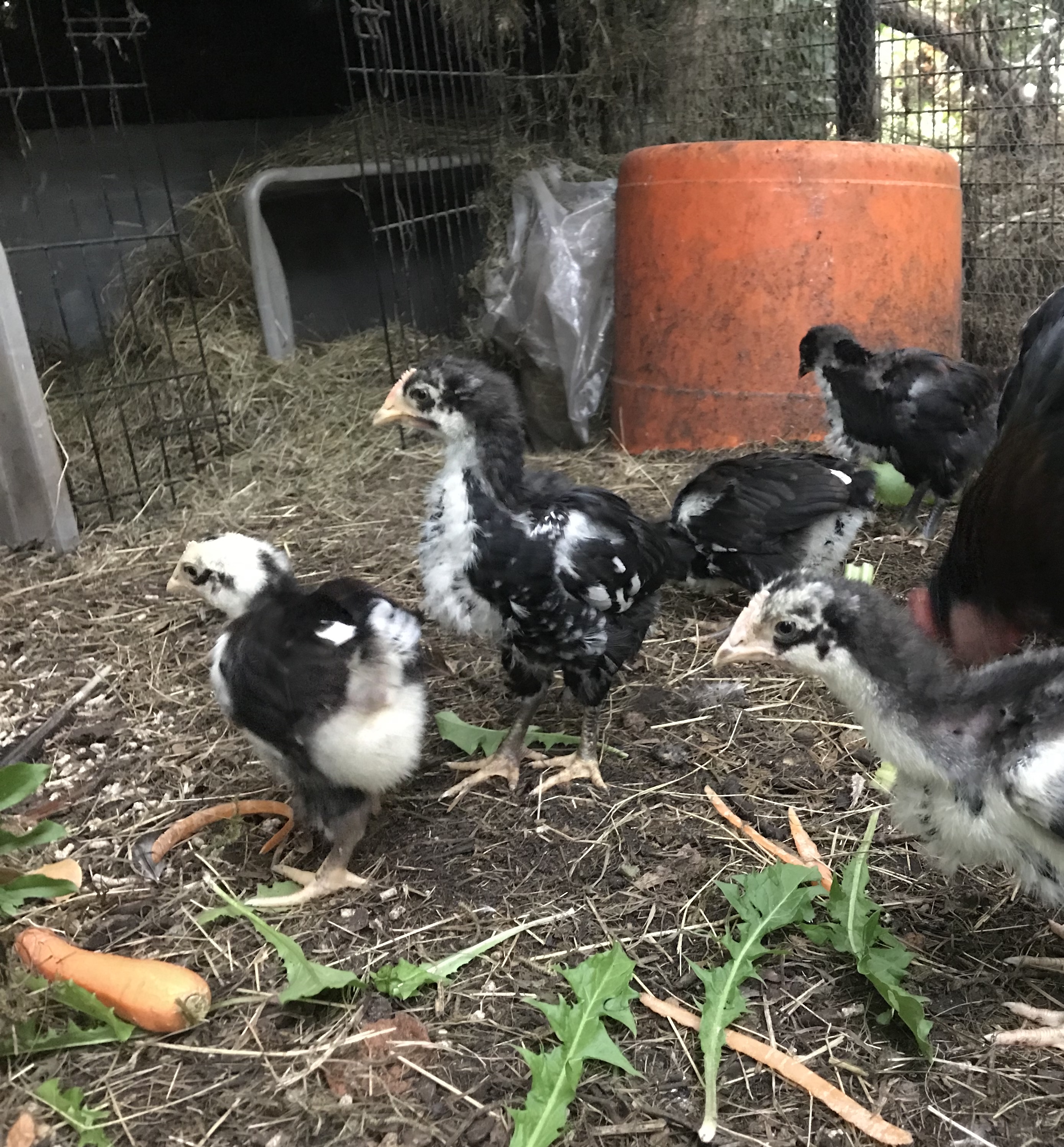
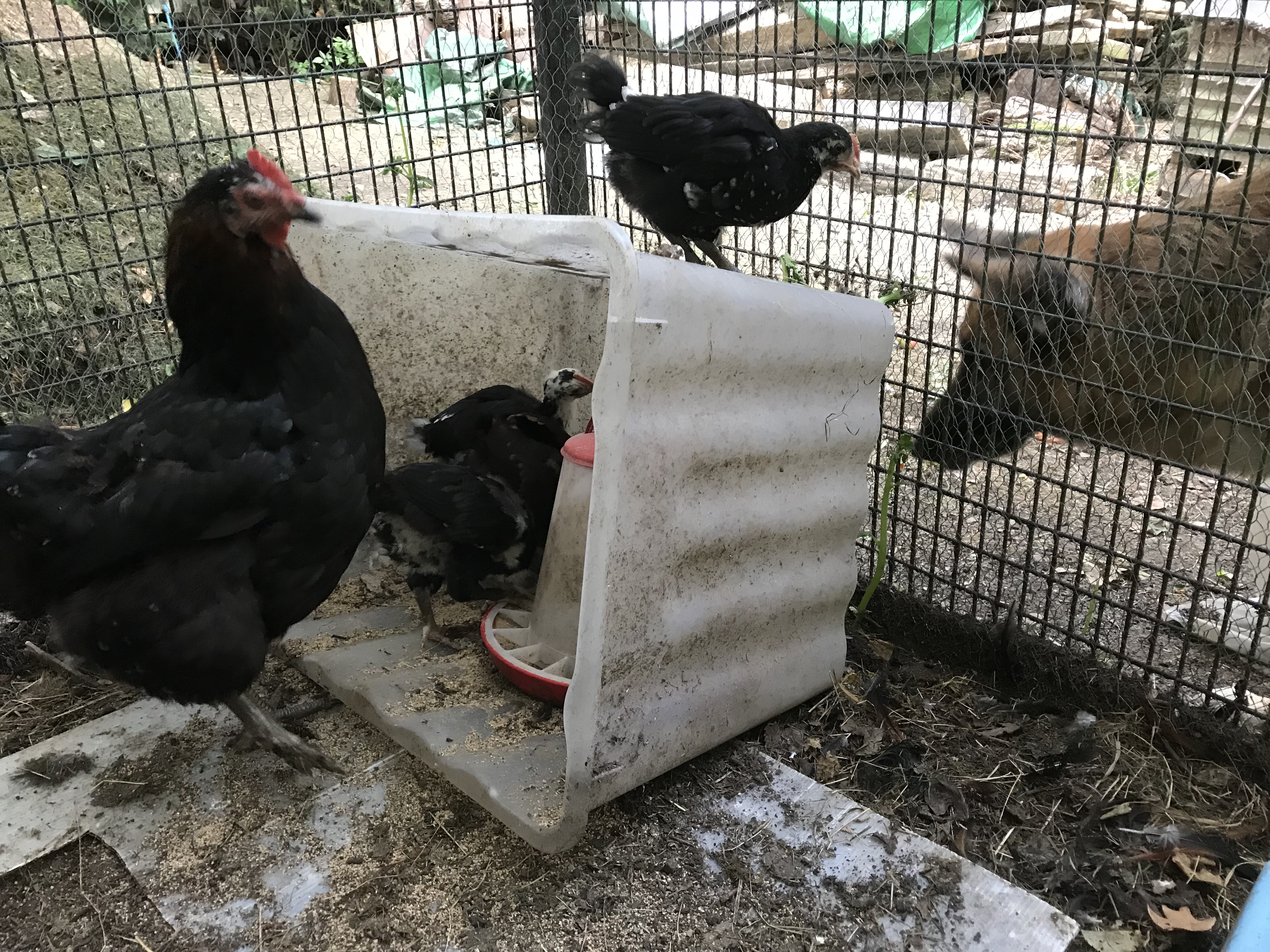
There’s a bit of chicken news, as I decided that the chicks are now big enough to be let out of the cage. The cats never touch the chickens, but would eat the chicks if they could, so I have to wait until they are definitely big enough to fit the cat definition of “chicken” and not “dinner”. The parents have been very antsy, waiting to be let out, and the cockerel has made a few escape attempts, by lurking near the door and rushing at it when I open it to feed them. Today, I let them out.

When I opened the door, the parents were waiting, and were out in a flash. The chicks started to follow – and then stopped – and waited. They stared for a while at the outside, and then, very slowly, turned back to the cage and walked away from the door. I waited for a while, and then just shut them in. Stupid birds. I’ll leave the door open again tomorrow, and see what happens; I didn’t want them to wander out after the parents had left, as they’re safer in a flock.

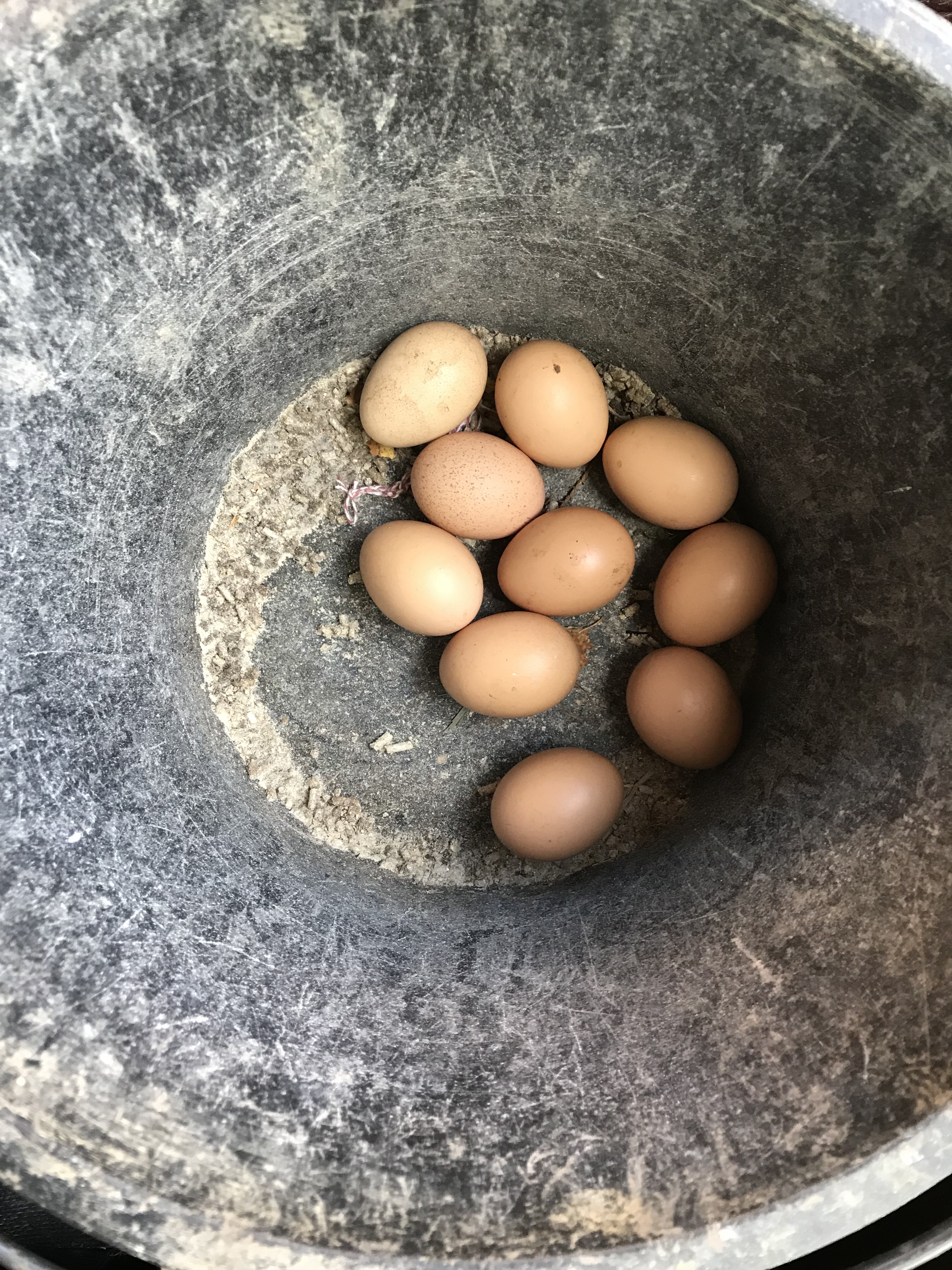
I thought the hen was still not laying, but when I did a proper clean up of the cage, I found a whole stash of eggs hidden where I couldn’t see them. Nice to have eggs again.

The chicks are still too small to be laying, but they do now roost on the perch at night. Very grown-up of them!

I keep looking, trying to guess which are males – cockerels have large red crowns on their head. Only two of the six have little crowns, which suggests I have four cockerels. (Four! Very bad news.) However, the mother has quite a large crown for a female, and so I’m also checking the chick’s legs. Two have definite thick, cockerel-sized legs, but two others are thinner. So, I am still hoping that I might be lucky and have more than two hens in the clutch.

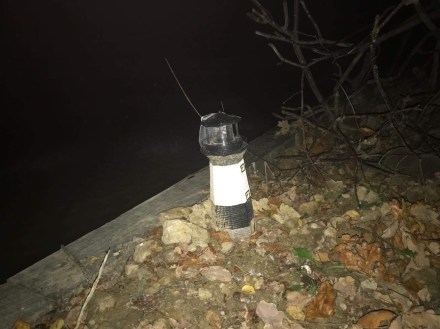
Now to the lighthouse mystery. You remember that S gave me a lighthouse for Christmas, to go next to the pond? I loved it, because it was solar-powered, and at night went round and round. But the ducks weren’t so keen, and made a big fuss, so for a few months it lived near the house. I became rather fond of it, seeing the light sweep round the garden every evening when I shut the curtains.

Anyway, when the new pond was finished, I wanted to persuade the ducks to sleep on the island, not the bank, and I thought I could use their dislike of the lighthouse. So, I set it up, with a piece of masking tape across the area that would shine on the island, and put it next to the pond. I didn’t want it to fall in, so I built a little clay wall between the lighthouse and the water. It worked really well, when it got dark each evening, the light would start to sweep around the pond, only the island was dark. I thought it might also help to keep the fox away.

However, a week later, when I went to feed the ducks, the lighthouse was gone. I looked all around the pond. The little clay wall was still there, but no sign of the lighthouse. It was too heavy for a duck to move it (even the big ducks have no weight to them, and would be unable to move it, even if they flapped their wings right on it). I felt so sad, I thought that either someone from the farm lane had seen the light and climbed into the garden to steal it, or else the fox was so annoyed by it he had carried it away. I tried to sweep the bottom of the pond with the long net, but no luck, the lighthouse was gone.

Then on Sunday, when I was lamenting, again, the loss of my lighthouse, Dad said he’d try and search the pond for me. He set off, in leaky waders and bare legs, into the muddy pond. I wasn’t hopeful, but about 20 minutes later, a soggy man appeared at the kitchen door, with the dripping lighthouse. I was so pleased. He said that it was about 2 metres from the bank, which suggests it had been thrown rather than fallen. Can angry foxes throw? Maybe they can.

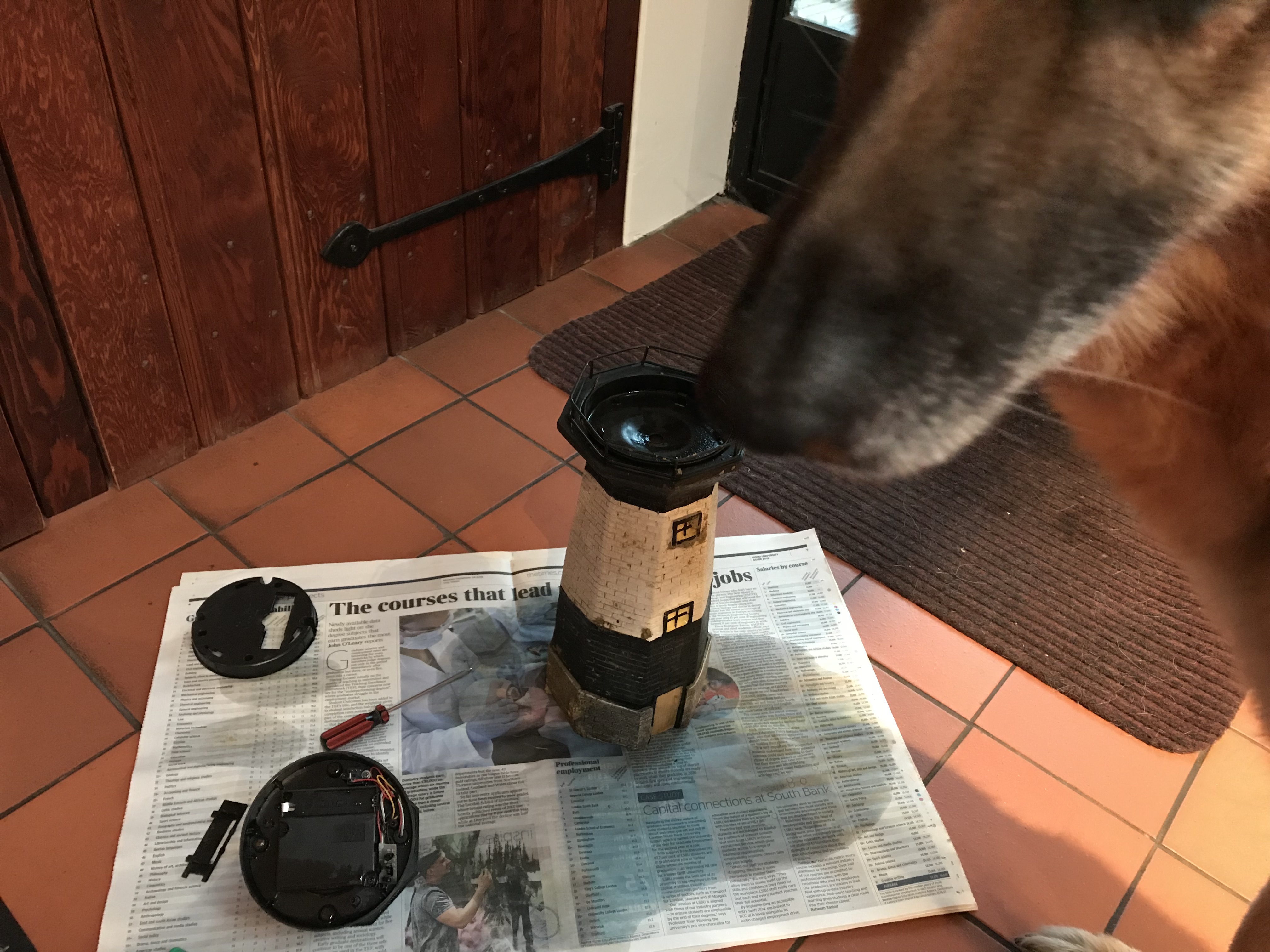
I don’t know if it will ever work again. I’ve unscrewed all the parts that I can without breaking it, and have spread it out on newspaper to dry out. Kia – nosiest dog in the world – tried to help. Next week I’ll reassemble it, and see if it works. But even if it doesn’t, I’m so glad it’s back. I’ll let you know next week if it works (or not…)

Hope you have a happy week.
Take care,
Love, Mum xxx


Anne E. Thompson has written several novels. They are available from bookshops and Amazon.
You can follow her blog at:
anneethompson.com
Why not sign up to follow today?

Written in 1605


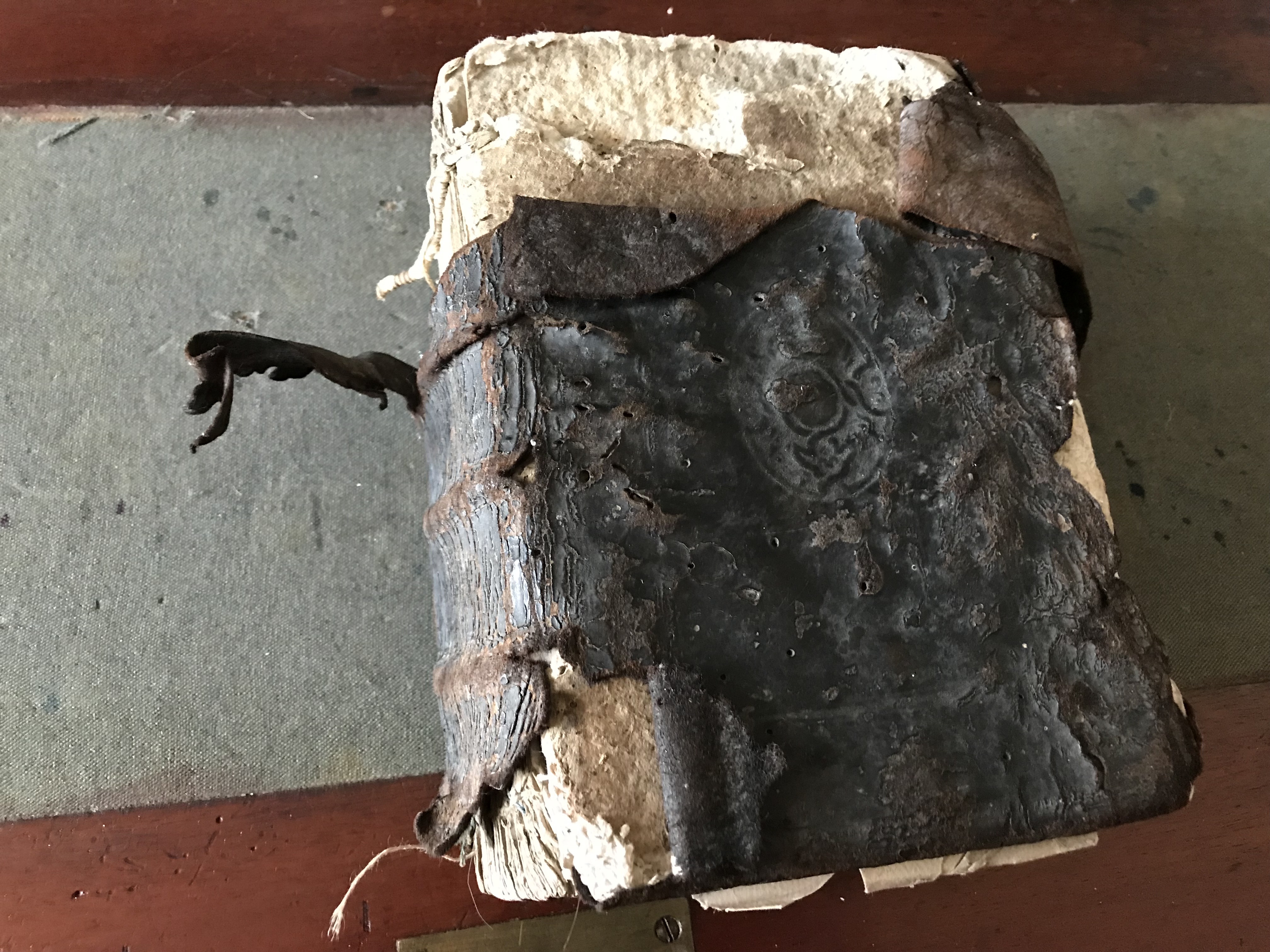
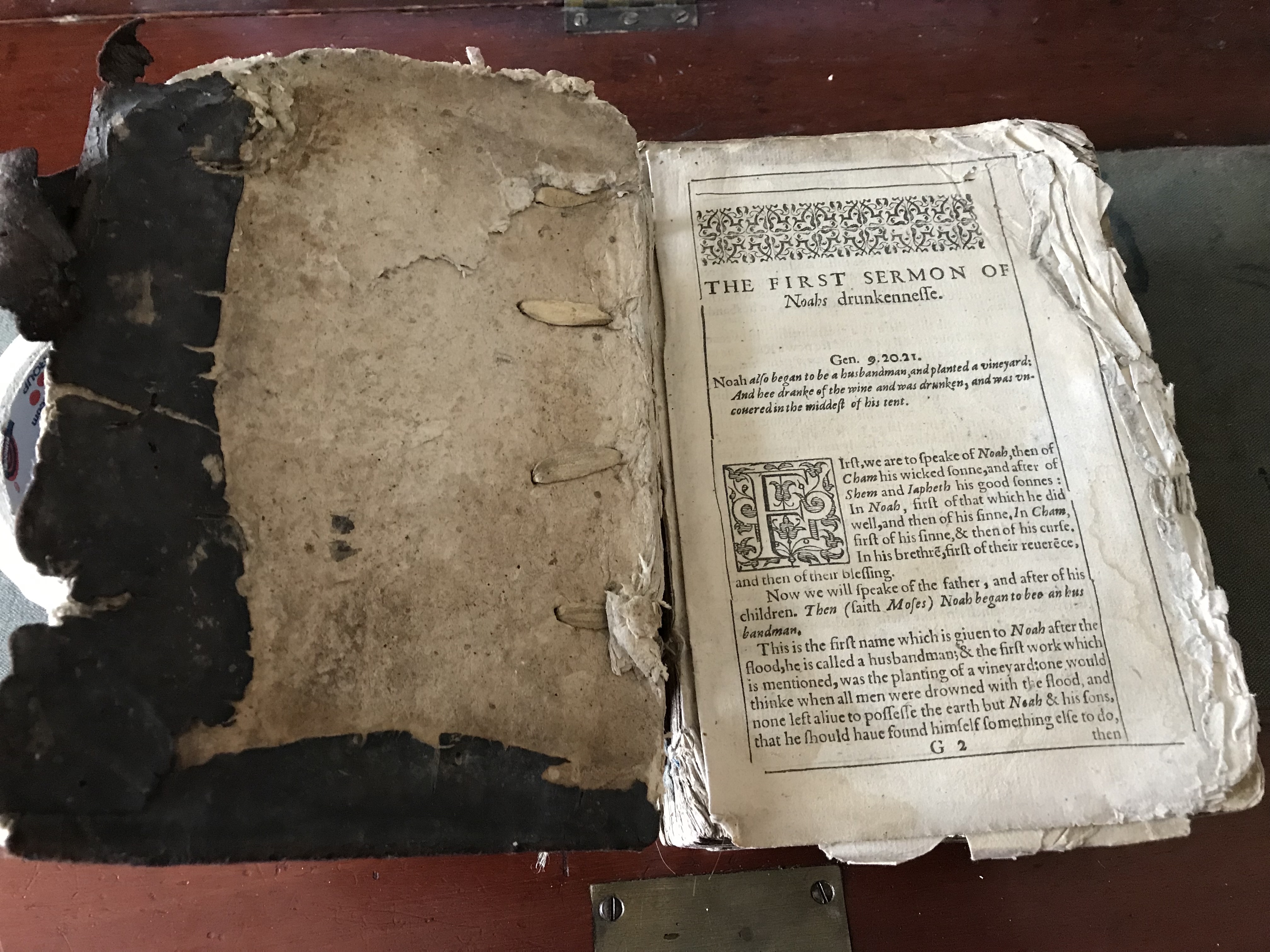
My family has an old book. We have had it for years, and I have never really taken any notice of it – I thought it was an old Bible. But recently, James happened to see it, and became fascinated with it, and I realised that actually, it was rather special. Even if it has no financial value (it is in terrible condition, my father even took with him on a trip to the US once, and showed it to a whole congregation of people!) it certainly has historical value. Let me show you.

The book contains sermons, written by Master Henry Smith, in 1605. Now, even if the book itself is a reproduction, have you ever read anything that was written so long ago? It’s only about 80 years after the first English, Tyndale, Bibles were printed. Think about what was happening in England during the 1600s – the plague, the fire in London, all the stuff about the reformation, people being burnt alive for what they believed. Elizabeth I died in 1603, so things weren’t exactly stable.

It also predates Dr. Samuel Johnson (who wrote the first dictionary and therefore standardised spelling) so the language is amazing. Why wouldn’t you want to spell “poison” as “poyson”? (You do, when reading it, need to remember that all the letters which look like ’f’ are actually ’s’.)

As you read it, you can hear how people spoke in those days, and can imagine yourself back in time, sitting on a hard wooden pew, listening while the preacher berated the congregation. He was pretty harsh about ‘Papists’.

Apparently my granny rescued it from a bonfire her sister had when their mother died.  I will try to find out more and let you know. I don’t know if it is of any historical value to the wider world beyond the family. I’m not sure how much literature survives from 1600s, so it might be of interest. I have emailed the British Library, to ask. No idea if anyone will reply.

The words are a little hard to read (unless you have had years of practise reading the writing of 5 year olds, in which case it’s easy!) I have translated a passage about transubstantiation for you (which is when people believe that bread and wine at a communion service change physically – a big area of dispute between the Anglican and Catholic church in the 1600s) I have changed the spelling, but not the grammar or punctuation:

“It followeth, As often as ye shall eat this bread and drink this cup, ye shall show the Lords death till he comes. Here are three invincible arguments against popish Transubstantiation, like the three witnesses, under which every word doth stand.

“First we are said to eat bread; then it is not flesh, but bread. Secondly, we are said to show the Lords death; then it is but a show or representation of his death. Thirdly, it is said, until he come; then he is not come: if he be to come, how can we say, until he come?”

There is another sermon, about Noah being drunk, which I enjoyed. I am guessing the sermons were to be preached to ordinary, working people, as they talk about working the land, and being humble:

“First we are to speak of Noah, then of Cham (Ham?) his wicked son, and after of Shem and Japheth his good sons: In Noah, first of that which he did well, and then of his sin. In Cham, first of his sin, and then of his curse. In his brother, first of their ‘reuerece’ (reverence?) and then of their blessing.
Now we will speak of the father, and after of his children. Then (father Moses) Noah began to be an husband.
This is the first name which is given to Noah after the flood, he is called a husband; and the first work which is mentioned, was the planting of a vineyard; one would think when all men were drowned with the flood, and none left alive to possess the earth but Noah and his sons, that he would have found himself something else to do, than them to plant vineyards: and that the holy ghost should have entitled him King of the world, and not a husbandman of the earth, seeing there be no such men as Noah was, which had more in his hand than any King has in the world, or shall have to the worlds end: but thereby the holy Ghost would show, that God does not respect kings for their titles, nor men for their riches, as we do, and therefore he named Noah after the work which he did, not after the possessions he had, a husbandman.
It seems that there was a great difference(?) between this age and ours: for if we should see now a king go to plough, a noble man to drive the team, a gentleman keep sheep, he should be scorned for his labour, more than Noah was for his drunkenness: yet when we read how this Monarch of the world thought no scorn to play the husbandman, we consider not his princely calling, nor his ancient years, nor his large possessions to commend his industry, or modesty, or lowly mind therein. Which may teach us humility, though we learn to disdain husbandry. Of whom will we learn to be humble, if kings give examples, and the son of God humbleth himself from heaven to earth, and yet we condemn(?) the example of the kings of the earth, and the king of heaven.
The time was when Adam digged and delved, when David kept sheep, and all the house of Jacob were called to be occupied about cattle: but as they for this were abominable to the Egyptians (as Moses saith in the same verse) so they which do like them, are abhorred of their brethren: and they which live by them, scorn them for their work, which would be chastened themselves because they work not.”

If I learn anything more about the book, I will let you know. I hope you enjoy the tiny extracts I have shown you. Am personally loving the thought that Adam “digged and delved”!

Thank you for reading. I’ll write again next Monday, have a great week.

Love, Anne x

Next week I’ll tell you about the mystery of the missing lighthouse…

Anne E. Thompson has written several novels. They are available from bookshops and Amazon.
You can follow her blog at:
anneethompson.com
Why not sign up to follow today?

Diary of a Harvest Festival


Diary of a Harvest Festival
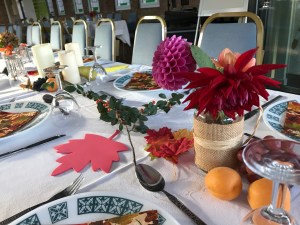
You might remember, if you follow my blog, that way back in March, I wrote a post about an idea I had for harvest, and I promised to let you know what happened. Here is a brief diary of events:

March: I read about the origins of our harvest festival in Leviticus, and was challenged by my apathy towards the festival. Had a clear idea of how the weekend might be planned. Decided to wait and see if idea faded or grew.

Next Sunday: As I sat in my church, I could clearly see how it might be decorated and arranged for a large family supper. Began to feel rather excited. My idea/vision was not fading.

Few Weeks later: A Missions Team Meeting – I shared my idea with the rest of the team, and was given permission from Rev P to start planning the event. He said he would arrange the Sunday bit. (This caused me some angst – what if he got the Sunday bit wrong? I am a control-freak.)

April: I chatted to J and C in church, and they agreed to help me plan the event. We met one evening, and I splurged out my ideas. They then discussed what they thought would work, and what should be dropped, and generally improved on my basic thoughts.

One idea which they modified was my “Thank you table,” which they thought had too much potential for precious items being lost/spoiled. They suggested instead a “thank you tree,” where people could write their thanks on autumn leaves, and attach them to the tree.

They also said there was too much for one evening, and they didn’t think my ‘sacrifice table’ would work, so we dropped that idea.

May/June: We met a few times. C planned some attractive fliers, which we could use to advertise the event. She also booked the church rooms for the evenings we needed them, and managed to book DJ to do the demonstration (which was brilliant news).

Rev P let us know that all the families I’d hoped would return had accepted the invitation. Very exciting!

We split the event, so each of us was leading a specific area: C would arrange the flower arranging demo on the Thursday evening. J would head-up a team to decorate the sanctuary ready for the meal/service. I would organise the catering.

July: We finalised the design for the fliers, setting the times for when we thought the most people would be able to attend (needed to juggle people who work on Saturdays with those families who are on an early clock). J told us the ‘thank you tree’ was under control, and she had ordered some rather smart autumn leaves. We discussed whether to have a flower demo followed by a workshop, or whether to split that over two evenings. We then realised we were suggesting people came Thursday, Friday, Saturday and Sunday to harvest events, and this might be too much for most people. Decided to drop the Friday workshop, and instead decorate the church Saturday morning.

We started to announce our plans in church, giving people advance notice. Husband told me my announcements were mainly confusing (always get very honest feedback from family).

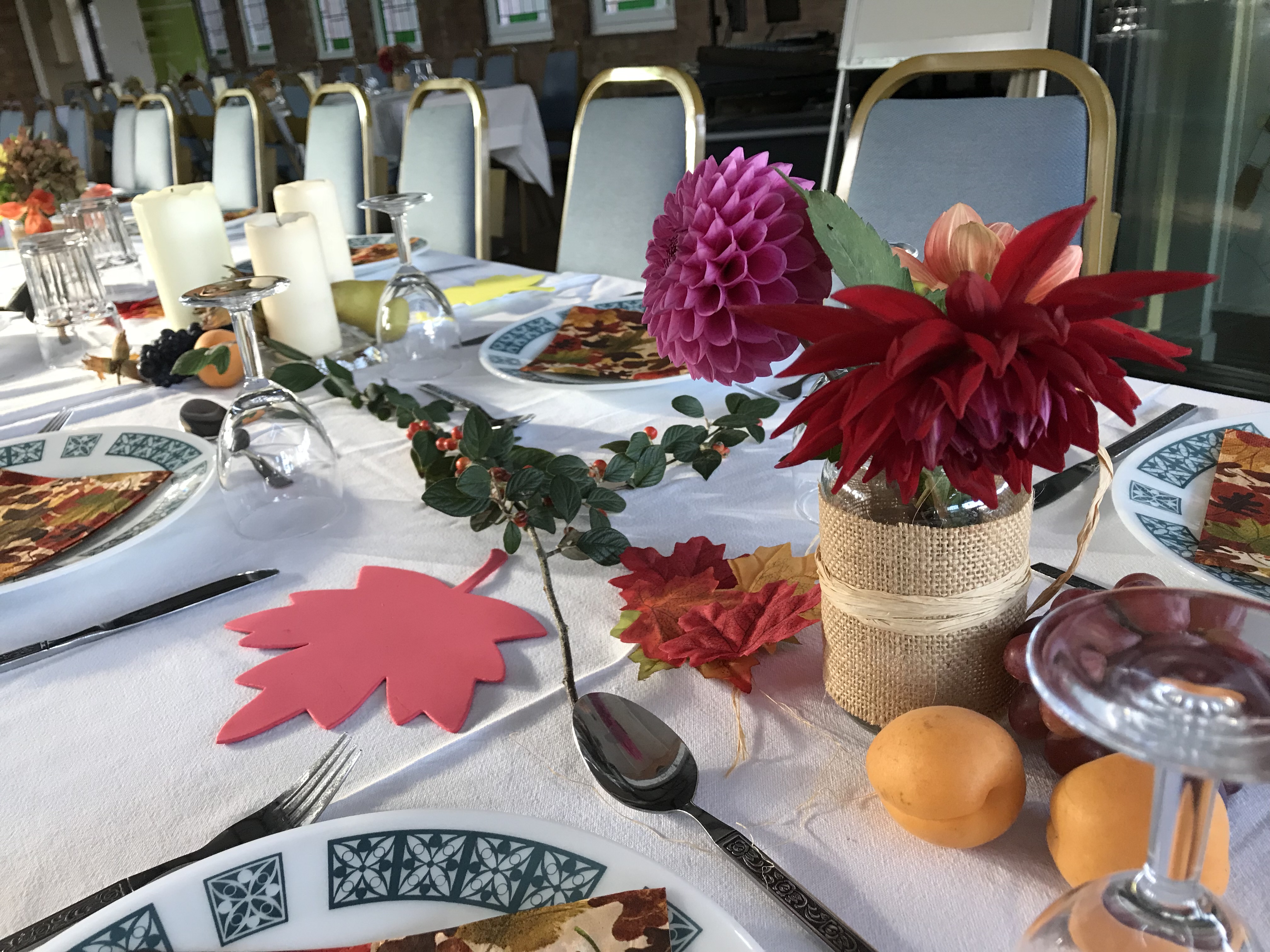
We spent an evening at the church measuring tables and rooms, deciding on the layout of the tables. We would have the demo in the back hall, and use the sanctuary (which is a lovely space) for the meal, arranging the tables as for a banquet – trying to give the impression of one big table (like a big family meal), even though the space only allowed for 3 separate tables.

The supper is a ‘Bring and Share’ supper. People will arrive, and sit at the table with their dish, which they will eat, and share with those around them. This means people with allergies/food preferences won’t worry about the food. It also eliminates the long queue of people waiting to go to the food table (and the need for there to be space for people carrying plates of food). It also means that people who have spent 3 hours cooking something delicious don’t arrive at the table to find only a cold burger and a hard baked-potato.

August: We all went on holiday and thought no more about it.

September: Returned from holidays, life became very busy with work/ill parents/health/start of all the church groups, and I began to wonder if harvest was all a big mistake. Very stressed. This was made even worse by reaching the part in my book where there is a barn dance, so I was also planning that (even though it wasn’t real). My head was full of how much a band costs (not real), how many people we could seat in the church (real), what food to serve (both real and not real). All got very confusing.

(Note: You may wonder, why— when I was busy planning an event— was I also trying to plan a virtual event for a book? The thing is, if authors are not disciplined, and keep writing, even when life ‘gets in the way’, then books are never finished. As in, never. I meet so many people who have been writing a book for about 25 years, and never finished it. To write a book, you have to write; you cannot wait until there is a ‘good time’ because there never is.)

Fliers were printed and distributed. Friends were invited. J arranged a team to help decorate. I tried to find people to help me cater, and printed off a quiz, so people who felt shy/bored had something to do at the tables.

The team has grown. We have someone who will wash all the white cloths we use at Lunch Club and return them to church for the Saturday. People setting up games in the hall for the children/young people to use during the meal. Someone collecting and returning wine glasses (borrowed from Waitrose). Someone sourcing some autumnal napkins. A team who will help decorate. People who will help set up tables and move furniture before and after the meal, and so on. I am beginning to feel excited.

One Week Before: Ordered food from Morrisons (15 stick loaves and 6 gammons) and bought drinks. I also cooked some dishes, and froze them, ready for next week. Other people in the church began to plan/buy/cook what they would bring.

Wednesday, day before the flower demo: C phoned to say our demonstrator had pulled out and could no longer come. I was flummoxed. Now what? We couldn’t even let most people know the event was cancelled, as we didn’t know who would have seen our advertising.

Son suggested I went to local florists and tried to find a replacement.

Chatted to C and we decided that I would pray, she could contact DJ and try to persuade him to still come. I wasn’t sure what to do if this failed.
Wednesday afternoon: C phoned and said DJ had agreed to still come (I think there had been a misunderstanding, which C had now sorted). Phew!

Thursday 6pm: Arrived at church, just as C and DJ were leaving, having set up his display tables. J arrived, and we set up chairs, refreshments, a place where I could give a 3 minute Tearfund talk (we were collecting donations for Tearfund at all 3 events). J had made mini chocolate brownies, sausages coated with herbs and honey, and tiny feta and olive pastries. I brought wine and soft drinks, J brought glasses.

Thursday 7–9pm: DJ gave a brilliant talk and flower demo. About 20 people attended (which was disappointing, as I’d hoped for more). The evening seemed a happy one. We raised about £35 for Tearfund.

Friday: Lunch Club. A last chance to advertise the event. Afterwards, on my way home, I bought food, so there would be enough at the meal for our guests (17 people, who were invited to come but who wouldn’t be bringing food as they were travelling a distance). When I got home, I picked some flowers and fruit for the display.

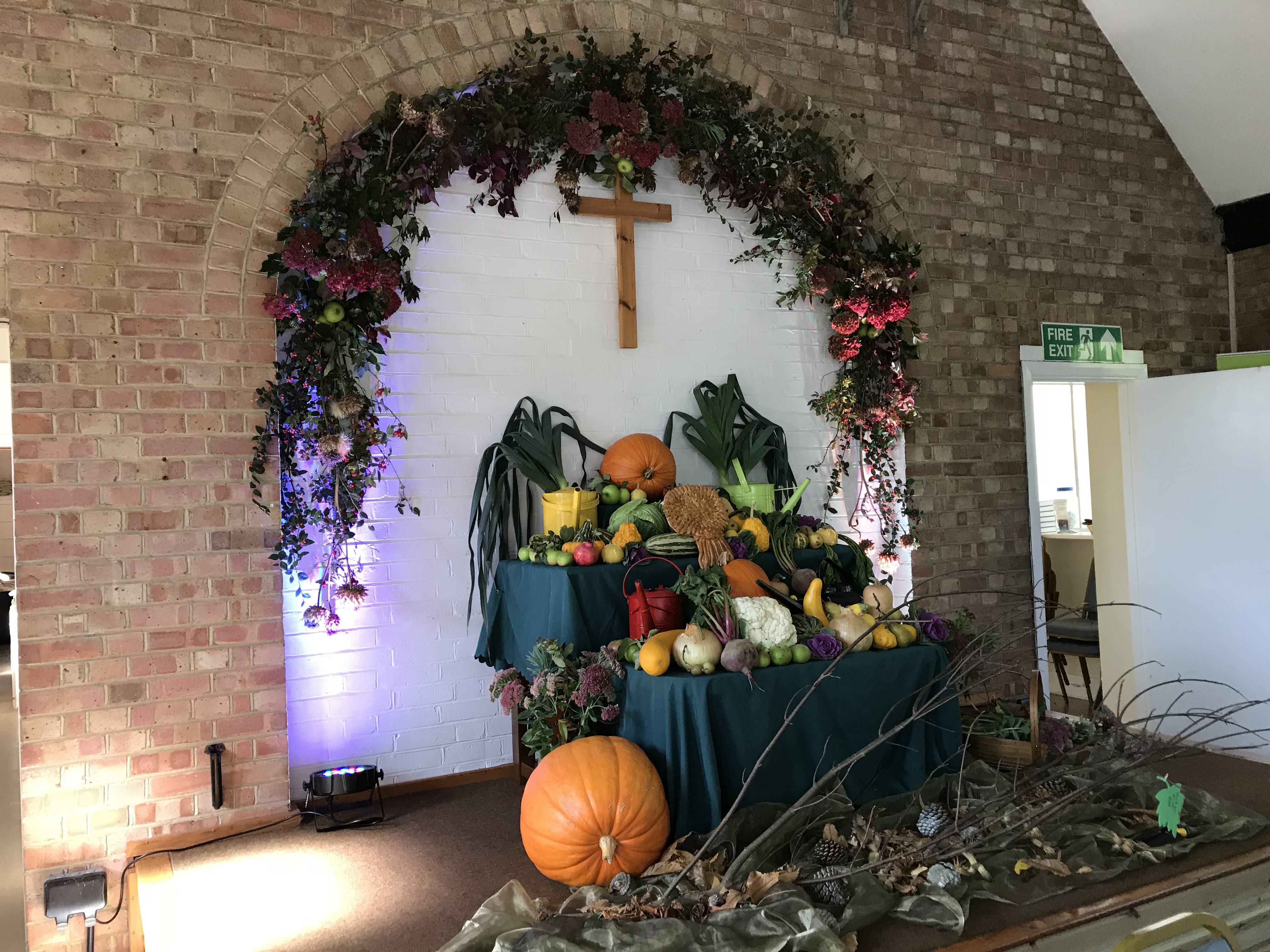
Friday evening: Popped into church to check: kitchen was clean, there was a supply of toilet rolls, I filled freezer with ice-creams. The stage was heaped with beautiful flowers and vegetables which people had grown and donated.

Saturday morning: I arrived at church to help decorate. People were already there, making the sanctuary look beautiful. Someone had also set up the back hall, with games for teenagers and toys for children. It looked fabulous already!
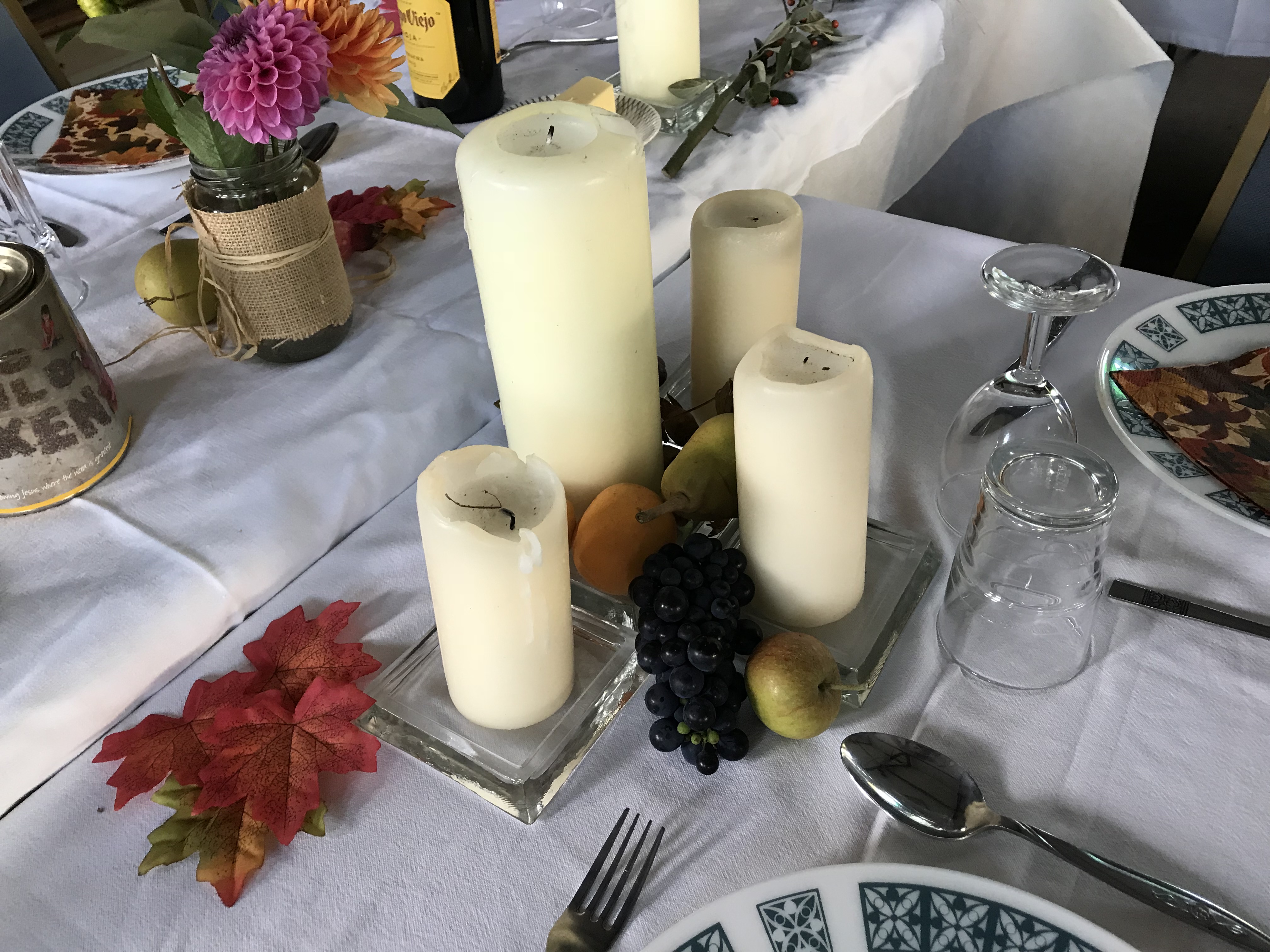
We set up tables (there was some discussion, as to whether to change the planned design, but eventually they were set up as planned, with a sort of ‘mini top-table’ to visually link the tables – wasn’t sure who would feel comfortable sitting there though). We had 85 people signed up to come, and finding enough cutlery/water glasses/serving spoons was a challenge. We ran out of knives, and had to use plastic ones. (I should’ve counted all the cutlery beforehand.)

The church began to look beautiful. Inspired by the Thursday demo, I decided to have a go at an arrangement with the stuff I’d brought. The last flower arrangement I attempted, my mum rearranged when she saw it. People were very polite about my attempts (but I could see in their eyes that they were lying). Then D, who is so sweet, said I had started a really lovely shape, and she had some flowers left over, how would I feel if she added to my arrangement? She then added flowers and foliage, and made it look amazing. I decided I would tell my family I had done it. Sent them a photo.

Left the church about 1pm. All looks exactly how I’d hoped. Very excited. Went home, sorted the animals, cooked lots of gammons, finished planning what I would do with the children on Sunday.

Saturday 6–8pm. People arrived (about 80 people) & everyone seemed to have enough to eat, the atmosphere was happy. I was busy, checking people had what they needed, washing up, passing wine, etc. At one point I glanced into the hall, and it was full of young people playing snooker and table-football and having a laugh. That warmed my heart. Another special thing was the ‘top table’, which I’d worried might remain empty, was full of little girls, who were clearly having a party!

Rev P did an entertaining and poignant talk, which fitted perfectly.

Cleared up. Lots of people helped, which was great. I got really tired, and at one point needed to rest my brain from all the noise, so sat in the car for a few minutes. Felt seriously exhausted – in the end decided to leave some of the washing up and do it on Sunday. Went home.

Sunday: When I went into the church kitchen, to sort out the dirty dishes I’d left, someone had already done them, and everything was clean and tidy.

Church was nicely full, and looked lovely.
D and I took the older children during the service. We had 13 young people, ranging from 7yrs old to 15yrs, in a fairly small room. It was a great hour. Many of them knew each other from before they’d moved away, so they were happy just to be there. At one point, one of them stared at the 7 year old, and said: “Is she the baby who used to smile at everyone?” (She was!) It was so nice to be there, in a sort of slightly disorganised family atmosphere. I did a short talk, then we played a variety of Pictionary/Jenga/Consequences games, the kids in teams of mixed ages. Happy morning.

Went downstairs after the service ended (a few minutes late, as the young people wanted to finish what we were doing). The atmosphere was very happy, people smiling, hugging, chatting. I tried to chat, but I was very tired, so I’m not sure I made much sense.

So, was it worth it? Well, yes, I think so. Afterwards, several people have contacted me, and although their comments aren’t intended for a public blog, I know that God did bless the events, he did speak to people. (Plus we raised about £1,500 for Tearfund.)

Harvest is about remembering what God has done in the past, what he has given to us, so that we don’t forget when times are tough. I think we managed to do this, our church was reminded that God has blessed us, that church is still a family and a good place to be. The work before and after was actually a crucial part of this – a group of people sitting together and making table decorations was as essential as the words said from the front. Church is God’s family, and I am happy to belong.

#

Have a great week, and I’ll write again next week (I want to tell you about an old book, written in 1600s – I bet they didn’t have trouble with publishers in those days!)

Love, Anne x

Thank you for reading.

Anne E. Thompson has written several novels. They are available from bookshops and Amazon.
You can follow her blog at:
anneethompson.com
Why not sign up to follow today?


If you want to read my post, written way back in March, the link is below:

Harvest Thoughts (yep, I do know it’s only March!)

Just Life


Hi, how’re you? Yesterday I had a grotty night, and woke up feeling snotty. I hate colds, don’t you? I know in terms of illnesses, they are very minor, but they don’t feel minor, they feel rotten. I gave myself an easy day.

On Friday (before I was ill) it was my turn to cook. Several of the staff were away, and a few have retired, so I had to be very well-prepared, and it was all quite hard work. While I was peeling potatoes, one of the team members came to chat to me. Most of the team are older than me, so I love hearing their stories. He was talking about the war, and he said that one of his friends was in the marines and belonged to the ‘special forces’ (whatever that might mean). Apparently, before they went on a mission, they were given drugs, so they could stay awake for ages, and wouldn’t feel frightened, even though they were going into extremely dangerous situations. He thought they were given heroin, but when I told my son, later, he said it was probably cocaine. I have no idea myself—I didn’t know such things happened in real life. When the marines returned, they went straight into hospital, where they had to stay for the week, until the drugs were out of their system.
I don’t know if this is true, or exaggerated. But it’s kind of interesting, don’t you think? I wonder if things like that happen today. War is always terrible; the rules change.

Anyway, I survived the cooking (without the need of narcotics) and the seniors survived eating it. They also survived the ‘keep-fit’ session we have introduced at the beginning. An ex-PE teacher came, and showed them some exercises they could do. Apparently, if you have arthritis, it’s very important to use your joints, otherwise they seize up.

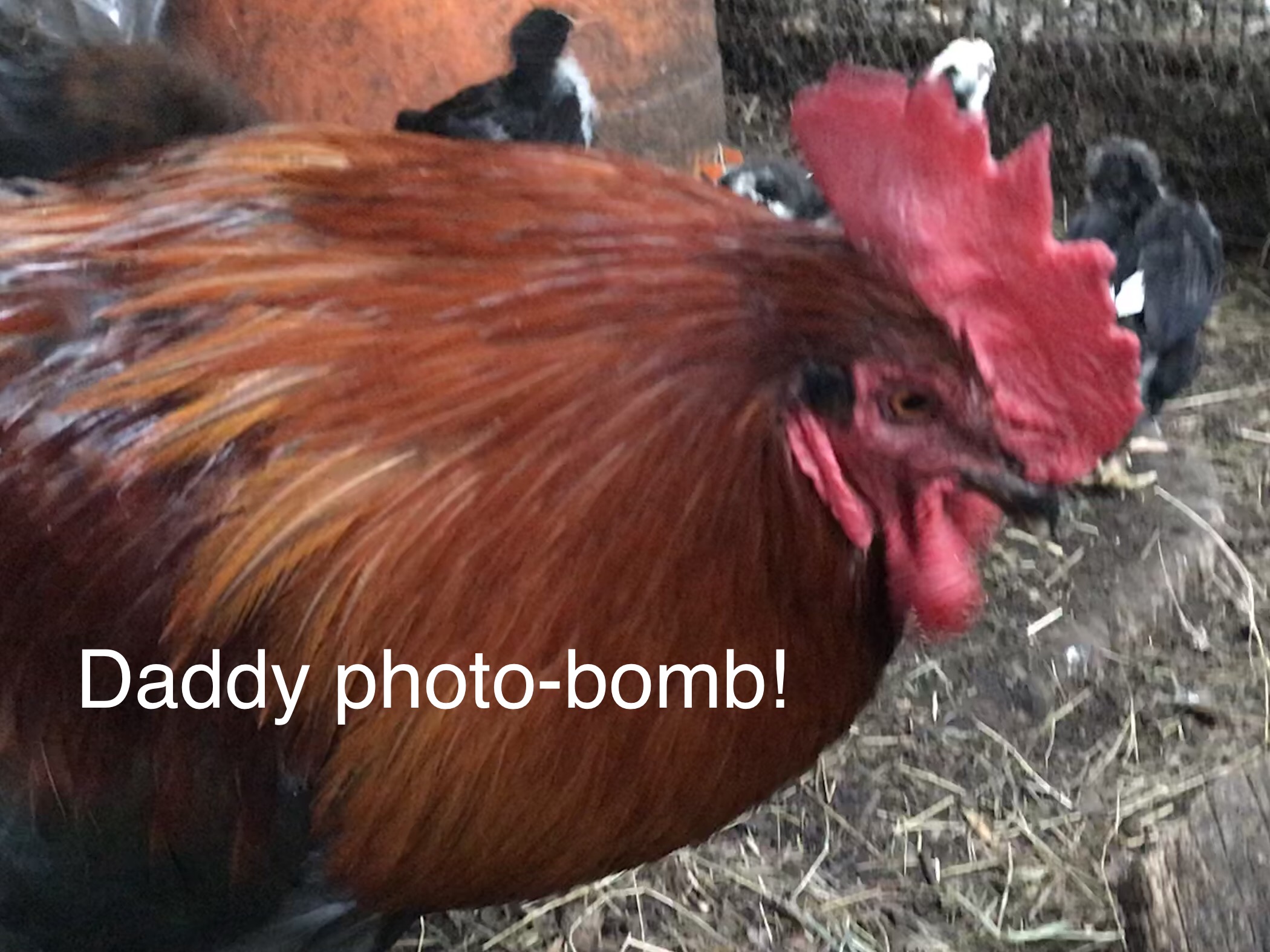
My other news in brief: The chicks are growing fast. Each day I look, and try to guess whether they’ll be cockerels or hens. Cockerels have a very red crown, and thicker legs, and even at this age they tend to be very dominant. I think 4 of the 6 chicks are cockerels, which is very bad. Last time, only 2 of the 6 were, and they lived peacefully together for ages (until the fox got one). I’m not sure how four will fare, plus their dad. I may have to separate them, which will be a right pain. Do you know anyone who would like a very noisy pet?

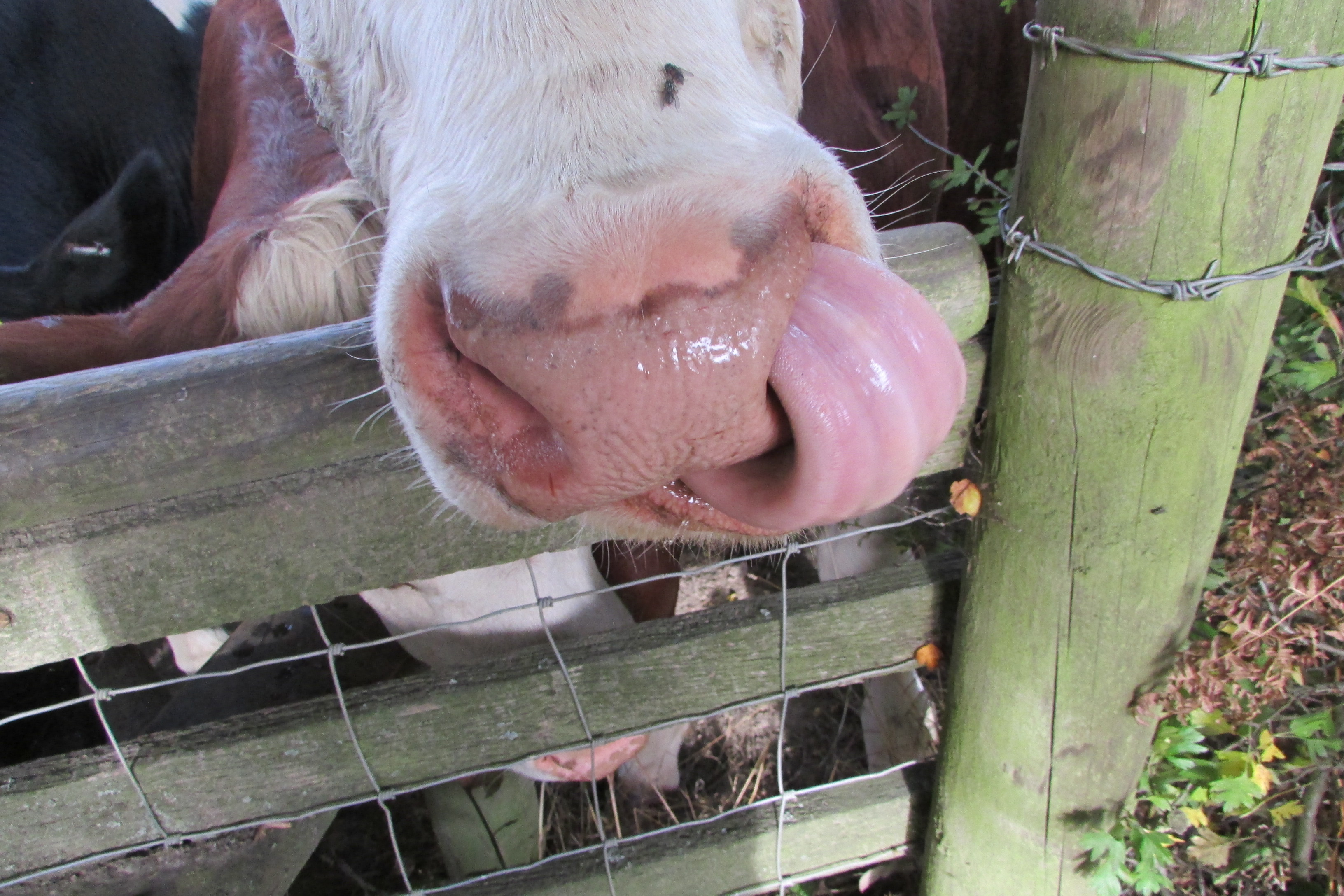
I have also nearly finished the first draft of my new book (due to be published in June 2019, because the next part takes ages!) This book has been fun to write, as it’s a lighter read than my last two, and has some funny parts. As it’s set on a farm, I thought I would take some photos of the cows in the field next to the house. They are young steers (boys) and when I arrived they were all lying under a tree, which was no good for a photo. I climbed over the stile, and called to them, but they ignored me. So very gradually, keeping an eye on how far I was from the gate, I walked towards them, my camera poised. One stood up, but they didn’t come any closer. I was talking to them, trying to look as if I might have food, making general cow-like noises. Eventually they all began to stand, and then, as a single mass, they lumbered towards me, their great fat sides swaying from side to side. I didn’t want to be pushed over, so I retreated to the stile, and stood on it. They came right up to me, the flies buzzing round their eyes, their wet noses dripping, their tongues reaching out to touch me.
I took several photos, while they took it in turns to lick me, and press their noses against my jeans. I returned home very soggy, and smelling of cows. I like cows though, there is something uncomplicated about them. Don’t you think so?

Hope you have a good week, and don’t feel the need to be drugged (and also hope you manage to avoid having a runny nose—there are a lot about!)

Take care.
Love,
Anne x

Anne E. Thompson has written several novels. They are available from bookshops and Amazon.
You can follow her blog at:
anneethompson.com
Why not sign up to follow today?


Listen With Your Eyes


Listening with your eyes

When you are an author, you are, in effect, a parasite of life. Every experience, every glimpse of people, is stored up, ready to use in a novel. Sometimes, when there’s time, it’s good to be able to simply notice. To walk through a crowd and store up memories. You don’t consciously decide that a stranger will be a psychopath, or that a young man will be a jilted lover, or the grandmother will be the wise woman in a story. But you notice, you listen with your eyes, and add to the store in your mind. So that when you are writing, perhaps months later, and you need a character, you have a whole bank of them, waiting, ready to be fleshed out with a personality and a backstory. It helps if you are alone, as chatty husbands can be something of a distraction. So when the family decided to build a sandcastle (yes, they are all adults) I didn’t object, and was happy to walk along the beach for a while.

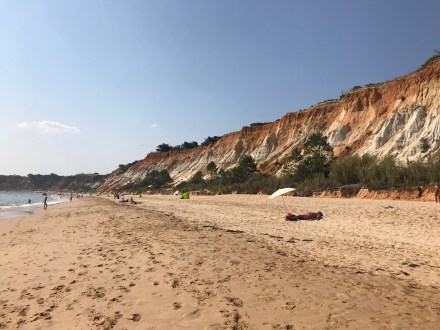
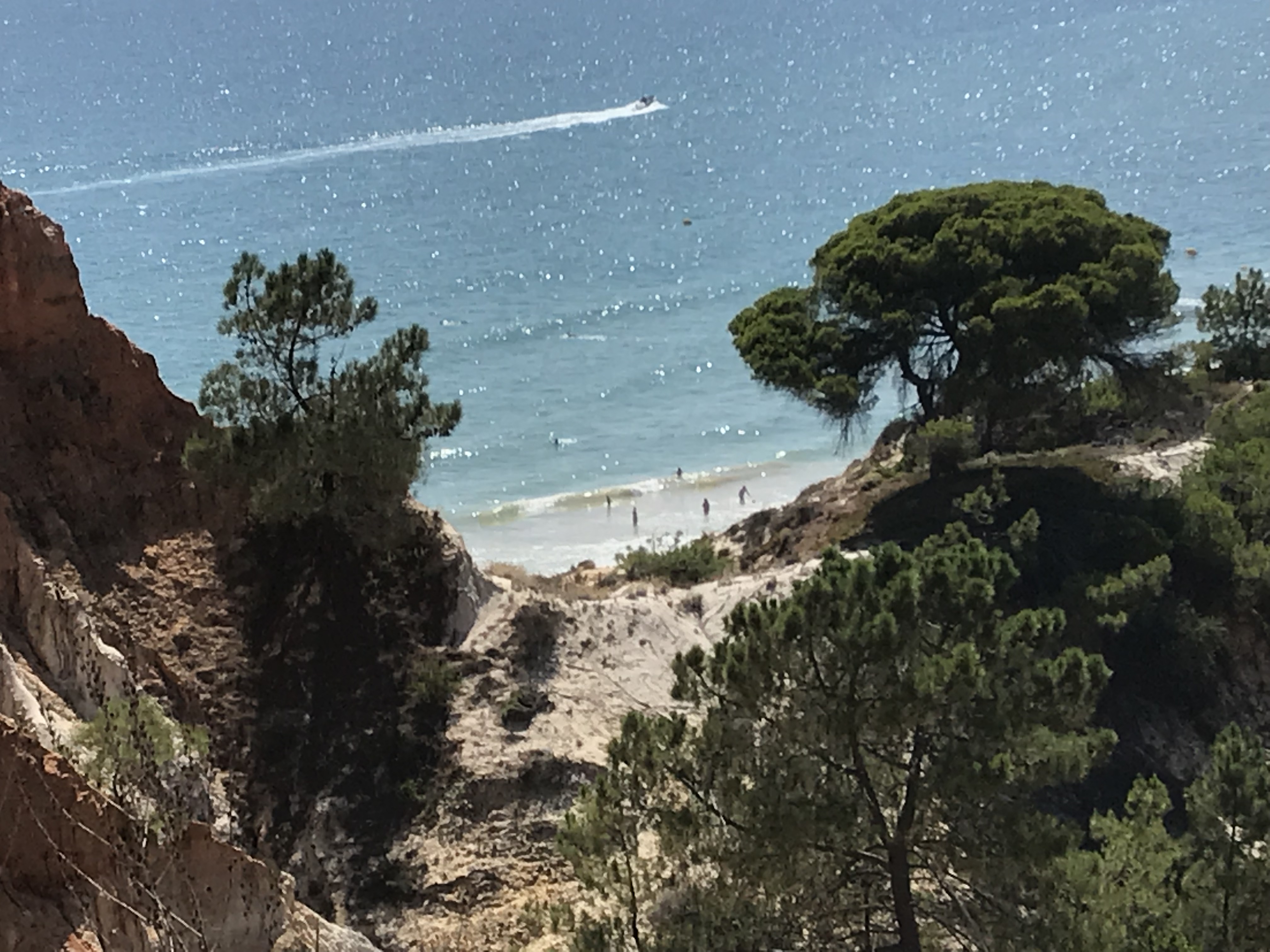
Walk along a beach in the Algarve with me, and notice. The Muslim family, with the mother covered from head to toe in black, sitting, child on lap, laughing as the waves rush over them. The bronze grandmother, wearing not a stitch, her stretched breasts flopping as she walks. The young men in tight swimwear, throwing a ball between them on the hard sand; the pretty teenager, sucking in her tummy, posed to one side, hoping, desperately, that one of the men will notice her. The mother of twins, sagging tummy oozing over her bikini, not caring because the two boys toddling through the waves are her whole world. The English woman, with the sensible haircut, walking through the shallows, her whole body red with sunburn except for the two white lines she has exposed where her sun-top straps went. The young girl with the tiny bikini walking next to her muscle-bound lover, the twin peaches of her perfect bottom moving from side to side, perfect ovals beneath the tiny pants. The old man, in straw hat and baggy shorts, walking along the sand. The father laughing as his young son spits water, after being swamped by an unexpected wave. The mother wrapping her shivering daughter in a big towel when she returns from her swim. The couple under the big umbrella, on the striped mat, eating a tidy salad from a plastic container, before they return to their New York Times bestsellers. The girl collecting shells in a purple bucket. The boys digging a trench next to their sandcastle; and the young men; and the grandfathers; and the fathers—while their children, bored, have wandered away. The young father holding his podgy baby in the waves, while she lifts her legs and squeals at the cold. The pregnant woman walking with measured steps along the tide line, watching other people’s children playing, anticipating.

And then there are the sounds. The crashing of the surf as it hits the shingle. The crunch of footsteps as you walk. The roar, somewhere out to sea, of the speedboat. The chatter of language you don’t understand, and the wisps of English that float towards you as you pass. The shrill of seagulls from the cliff behind you, the cry from sellers as they stomp the sand, showing their wares.

You can feel the sun, hot on your head. The trickle of sweat on your back. The grate of shells prickling your feet, the cold as the sea rushes over your skin. And the breeze, that blessed cool, that glides in from the sea and makes it all bearable, pleasant even, as you watch, and listen, and absorb all the life surrounding you; hold it tight, because one day you might need it.

Thank you for reading.

Anne E. Thompson has written several novels. They are available from bookshops and Amazon.
You can follow her blog at:
anneethompson.com

The Runway with a Pedestrian Crossing


The Runway with a Pedestrian Crossing

 If you’ve never flown to Gibraltar, it’s almost worth it for the airport alone. We initially arrived by car, from Spain, and were very surprised when we had to stop and wait for a plane to land. The road, and path, go right across the runway, and all traffic and pedestrians are stopped before the planes can land. Football matches in the nearby stadium also have to be paused, just in case a ball should escape and roll into the pathway of an incoming plane.

It is both bizarre, and rather wonderful. We weren’t there long enough to walk across it (my family were keener to see the wild monkeys) but it’s on my ‘one day’ list.

When we left Gibraltar, we managed to experience the little airport from the inside. I checked the Google ratings before we left, as I wanted to see if there were cafes. I was interested by the one-star ratings (they’re always the most interesting reviews to read, and often tell you more about the person writing it than the establishment being reviewed). Most of the one-star reviewers for Gibraltar airport were Spanish and based their rating on the belief that the airport was on land stolen from Spain, so shouldn’t exist anyway. (Not getting into the politics here, but am tempted to whisper the names of the cities in Morocco owned by Spain even though they are clearly within a different country.)

There was also however, an interesting review by someone who admitted that they had never actually landed in Gibraltar—as every time her flight had been diverted to Malaga. We investigated further, and discovered that unless the pilot can clearly see both ends of the runway, they will abort the landing and fly to Malaga. Which means of course that the aeroplane is then in the wrong place for the departing passengers and they all have to be bused to Spain. This caused a little consternation for Husband who tends to arrive at the airport 16 hours before the flight (just in case) as the family (all strangely strong-minded given their submissive parentage) were not easily persuaded to travel hours before the flight to a little airport which we could walk to in twenty minutes.

All was fine though. We arrived at the airport a couple of hours before the flight, and the check-in desk was actually open (a rare novelty for my family). There was then an excited few minutes when the boys spotted the price of the alcohol in the duty-free shop (I didn’t know it was even possible to buy Vodka in bottles that big!)

We walked from the airport to the plane. I was lucky enough to be sitting between chatty daughter and chatty husband, so it was quite difficult to finish reading my book. Daughter then looked at her holiday photos, and spent a happy hour deleting all the selfies that the boys had taken when she left her phone unlocked for a few minutes.

Final checks were done, the crew took their seats, and I concentrated hard on my book as we hurtled down the runway, trying to not think about all those cars and people who had been crossing a few minutes earlier, or about the length of the runway and the deep blue sea that was waiting at the end. Then we were up, Gibraltar was falling away behind us, and our holiday was finished. Thank you for sharing it with me.


Thank you for reading anneethompson.com

Why not sign up to follow my blog?

I usually write a post every Monday.


anneethompson.com

If you enjoyed this, you will love my new book: The Sarcastic Mother’s Holiday Diary.
I have always written a diary on holiday, so last Christmas, I decided to find all my old diaries and blogs, and make a book for my children. However, several other people also asked for a copy, so I have written a public version – it’s available on Amazon and has been described as “The Durrells meet Bill Bryson”!

2cdba13e-f433-49fd-9f1e-95b3ee7f87d8

The Sarcastic Mother’s Holiday Diary is available as both paperback and Kindle books.

Why not buy a copy today? I think it will make you laugh.

The US link is here:

https://www.amazon.com/Sarcastic-Mothers-Holiday-Diary-ebook/dp/B07N95281F/ref=sr_1_1?ie=UTF8&qid=1549015525&sr=8-1&keywords=the+sarcastic+mothers+holiday+diary

The India link is here:

https://www.amazon.in/Sarcastic-Mothers-Holiday-Diary-ebook/dp/B07N95281F/ref=sr_1_1?ie=UTF8&qid=1549015429&sr=8-1&keywords=the+sarcastic+mothers+holiday+diary

The UK link is here:

https://www.amazon.co.uk/Sarcastic-Mothers-Holiday-Diary-ebook/dp/B07N95281F/ref=sr_1_2?ie=UTF8&qid=1549014970&sr=8-2&keywords=the+sarcastic+mothers+holiday+diary

Lisbon to the Algarve


Breakfast. Boys only 10 minutes late.

We did a quick trip to the supermarket. After the trip to E.coli Service Station, everyone is a bit sensitive about where our food is from. Bought a range of breads and crisps and plastic looking cheese slices. My bread rolls have a use-by date of Jan 2019, so I’m not convinced they have much that’s natural in them. But hopefully that includes bacteria.

Left the Sheraton, Lisbon, at 11:30. The resort in the Algarve only had a P.O. box address, so Husband looked on their website and entered the town name—Praia da Falesia—into the SatNav. All seemed fine.

After driving for about an hour, the SatNav directed us off the motorway. J checked, and said he thought it was probably avoiding the traffic queues which were ahead. The roads grew smaller and smaller. When we were directed down an unpaved road, we began to suspect something was wrong. Could the SatNav have been tampered with by a gang of criminals, who were waiting to rob and kill wealthy tourists they had led to remote Portugal? No. There is another Praia da Falesia, a farm, in the middle of nowhere.

We found a very long route back to the correct motorway (some of the roads needed tarmac, but Husband didn’t comment). We passed several trees, which we worked out were cork trees, as all the lower bark had been removed.

We stopped at services for petrol and washrooms (not food). There were many queues. Husband had to queue before he could fill with petrol, then fill the car, then queue again to pay. This took 20 minutes, Which meant the people 3 cars behind had an hour’s wait. Crazy system. The washrooms were awful—over used and under supplied.
J touched a remaining half-Twix which was bought at the food-poison services. Why? Why do we even have an E.coli-Twix in the car? Is this normal? We showered him in hand sanitiser.
I’m not sure what happened to the E.coli-Twix. Sometimes I block things.

We found Pine Cliffs Resort in Algarve. Had rather more trouble finding reception. Drove 47 loops of the resort. It looks very lovely, with white buildings and fountains and beautiful gardens. Shortage of useful signage though. Eventually we found the reception, and received the keys for our ‘villa’.

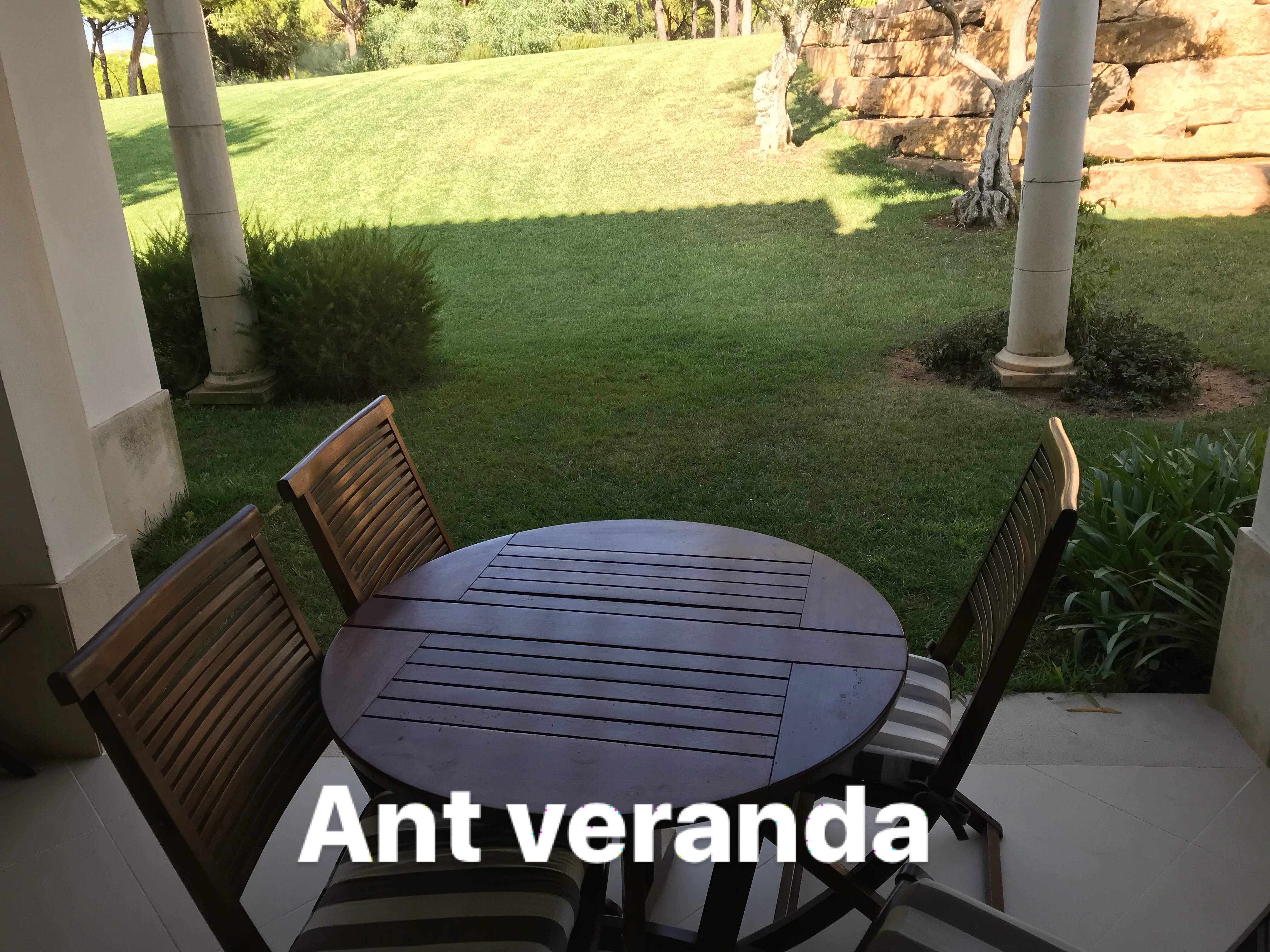
We are staying in Pine Cliffs Residences, which is a little flat with hotel services. We have 3 bedrooms, 3 bathrooms, a lounge/dining room, and a kitchen/utility room. They clean and change the towels and replenish the toiletries, just like in a hotel room. It’s pretty.
Unfortunately, it also has quite a lot of ants.

Family went to one of the swimming pools, Husband and I went to the Intermarche to buy food for lunches. And ant powder.

The resort has several restaurants, but they were very expensive (we were quoted €40 per person). A short walk away, there are several restaurants and a supermarket, so we used those. They were much cheaper, and still nice—in many ways they were better, as the resort is full of English people, and it was nice to eat in places that Portuguese tourists ate.

We had dinner in Ristorante Pizzeria S. Martino—a nice Italian restaurant with a good selection of pizzas. I had a nice gnocchi dinner, followed by a horrible marshmallow ice-cream (which tasted of bubble-gum).

Thank you for reading
anneethompson.com
Why not sign up to follow my blog?

If you enjoyed this, you will love my new book: The Sarcastic Mother’s Holiday Diary.
I have always written a diary on holiday, so last Christmas, I decided to find all my old diaries and blogs, and make a book for my children. However, several other people also asked for a copy, so I have written a public version – it’s available on Amazon and has been described as “The Durrells meet Bill Bryson”!

Why not buy a copy today? I think it will make you laugh.

The US link is here:

https://www.amazon.com/Sarcastic-Mothers-Holiday-Diary-ebook/dp/B07N95281F/ref=sr_1_1?ie=UTF8&qid=1549015525&sr=8-1&keywords=the+sarcastic+mothers+holiday+diary

The India link is here:

https://www.amazon.in/Sarcastic-Mothers-Holiday-Diary-ebook/dp/B07N95281F/ref=sr_1_1?ie=UTF8&qid=1549015429&sr=8-1&keywords=the+sarcastic+mothers+holiday+diary

The UK link is here:

https://www.amazon.co.uk/Sarcastic-Mothers-Holiday-Diary-ebook/dp/B07N95281F/ref=sr_1_2?ie=UTF8&qid=1549014970&sr=8-2&keywords=the+sarcastic+mothers+holiday+diary

A Day in Sintra


A Day in Sintra.

On a clear day, you can see Sintra from Lisbon. Husband suggested that we spent a day there, but a quick perusal of his guidebook, and we all declined, as it looked boring. The following morning at breakfast, M said his Portuguese friend had said we should definitely visit, and he’d checked on the internet, and it looked really interesting. He showed us exciting pictures of deep wells you could walk down, and fairy castles, and we all decided to go. Husband said very little.

Most online reports about Sintra said you shouldn’t drive, as there is nowhere to park and the walk to the palace is very steep. However, most online reports were written by tour companies, who earn their living transporting people to the palace, so we ignored them and drove. Parking in Sintra was something of a challenge, because although there was a massive car-park (where a person could lose their car for several days) there were not many spaces. As people returned to their cars, a man rushed to stand in the space, and his friend then guided arriving cars to that space and charged a fee. We managed to avoid both scammers and a fee, by following a returning parked pedestrian, and then parking in their spot.

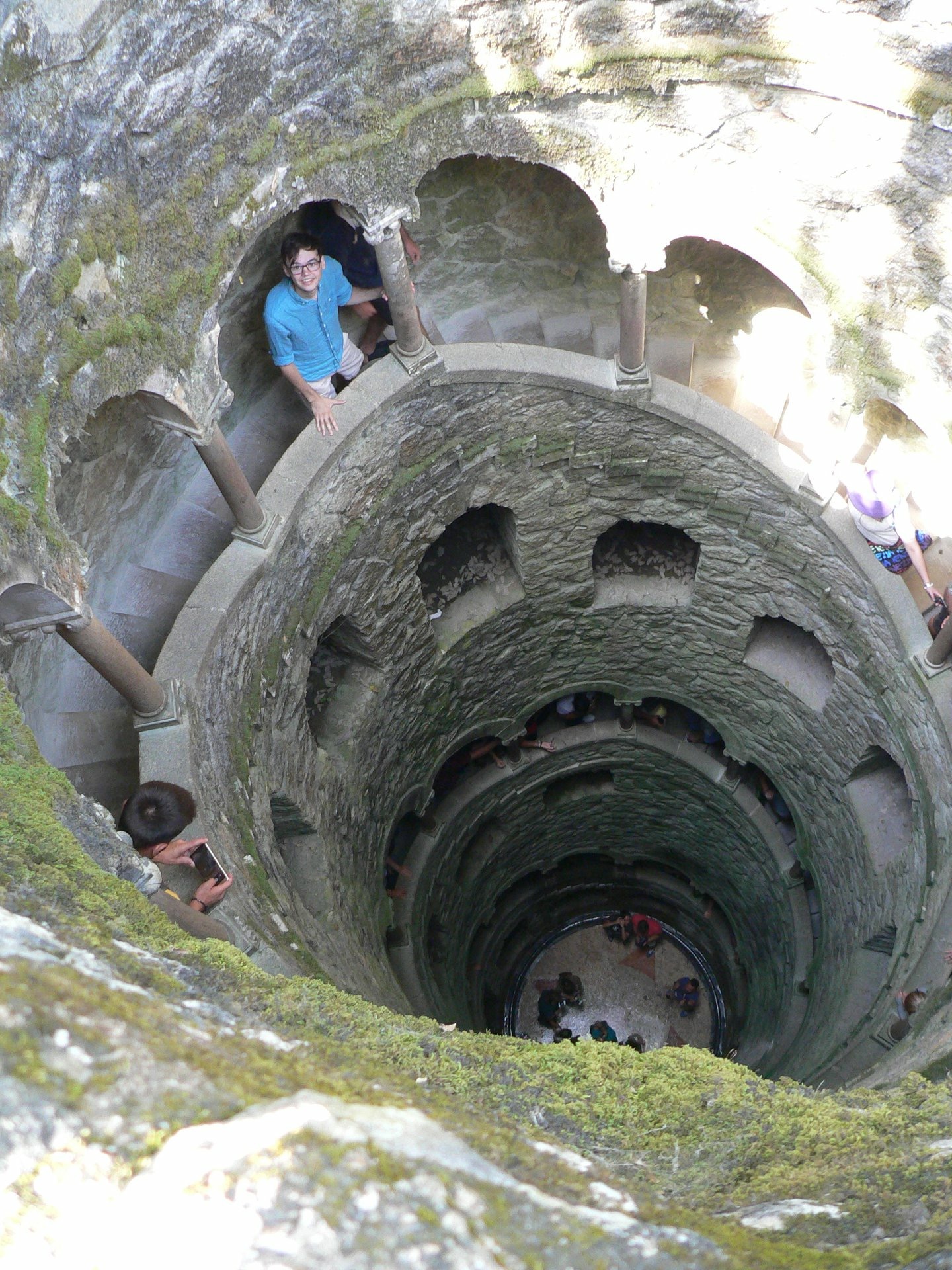
R then led us down lots of hills, and then up the same hills, to Quinta da Regaleira. This had very pretty grottos and follies, and way too many tourists. The best thing was the Tower of Initiation, which was the deep well we’d seen in pictures. It looked better in the pictures than in real life.

I wore practical clothes/shoes for the trip. I avoided full-length photos. However, as our next task was to walk up a mountain, I was quite pleased I had worn my big trainers. We walked up (a lot of up) a narrow cobbled road, diving into bushes to avoid the coaches which filled the whole space, and tuk-tuks whizzing down, so you hoped the 10 year old driving had good brakes. I think these are the people who wrote those reports.

We reached the palace, and more long queues. There were queues to buy tickets, then queues to enter the grounds, followed by a super-long queue to enter the actual palace. To increase the challenge further, there were two queues to buy tickets—one to a ticket office and one to a machine. Quick family discussion to decide strategy (not my genes) then family split; satellite group going to machine queue, main group staying in line for ticket office. Can life get more exciting? (If you prefer a less exciting trip, you can save time and buy tickets online at home.)

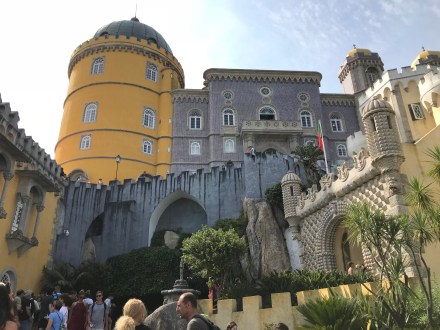
The castle was amazing. Ferdinand Ⅱ built it as a summer palace for the royal family. He commissioned Eschwege, a German architect who was well travelled and wanted to incorporate lots of different elements. It has parts that show Islamic influence, as well as Medieval elements. He said he wanted it to be like an opera—and it sort of is. It was completed in 1854. The last queen of Portugal, Queen Amelia, spent her last night here before she fled to Brazil. It really is amazing—sort of Taj Mahal meets Disney.
However, there were too many people, and too many queues. Some rude people managed to push in and not queue (clear psychopathic tendencies) so I took their photographs.

The inside of the palace was pretty, but with so many visitors it reminded me of the slow shuffle through the Vatican, and it wasn’t as worth seeing. The best part is the outside.

There is lots more to do in the area, like the Castle of the Moors, and of course the palace gardens and Sintra itself. But we were tired by the time we’d seen inside the palace, so we returned to the hotel via about 25 different motorways (car has a weird SatNav).

A nice day, if somewhat exhausting. Thank you for reading.
Hope you have a nice week.
Love, Anne x

Thank you for reading anneethompson.com
Why not sign up to follow my blog?
Anne E. Thompson has written several novels, available from bookshops and Amazon.

If you enjoyed this, you will love my new book: The Sarcastic Mother’s Holiday Diary.
I have always written a diary on holiday, so last Christmas, I decided to find all my old diaries and blogs, and make a book for my children. However, several other people also asked for a copy, so I have written a public version – it’s available on Amazon and has been described as “The Durrells meet Bill Bryson”!

Why not buy a copy today? I think it will make you laugh.

The US link is here:

https://www.amazon.com/Sarcastic-Mothers-Holiday-Diary-ebook/dp/B07N95281F/ref=sr_1_1?ie=UTF8&qid=1549015525&sr=8-1&keywords=the+sarcastic+mothers+holiday+diary

The India link is here:

https://www.amazon.in/Sarcastic-Mothers-Holiday-Diary-ebook/dp/B07N95281F/ref=sr_1_1?ie=UTF8&qid=1549015429&sr=8-1&keywords=the+sarcastic+mothers+holiday+diary

The UK link is here:

https://www.amazon.co.uk/Sarcastic-Mothers-Holiday-Diary-ebook/dp/B07N95281F/ref=sr_1_2?ie=UTF8&qid=1549014970&sr=8-2&keywords=the+sarcastic+mothers+holiday+diary