It’s time to do all those jobs that happen every year at this time. It doesn’t feel much like spring here at the moment, as we’ve had snow and frosts all week. But the mornings are lighter, and the animals know, even if we’re not sure. Depending on where you live, you will either have put your clocks forward an hour, or be preparing to do so. We move our clocks on the 26th March this year, so the US and Canada are ahead of us.
One Christmas gift (which feels like yesterday) was a pot and a packet of beans. We’re having a family competition, to see who can grow the tallest bean. It has to be in the pot provided, which wasn’t very deep. Mine grew to 67cm, then it decided the kitchen was too warm and the pot too small, and died. I planted the remaining seeds outside, and they don’t seem to mind the cold and are looking healthy. I expect the slugs will eat them, but here’s hoping.
My bean, growing next to a lemon pip (which is slower but less fussy).
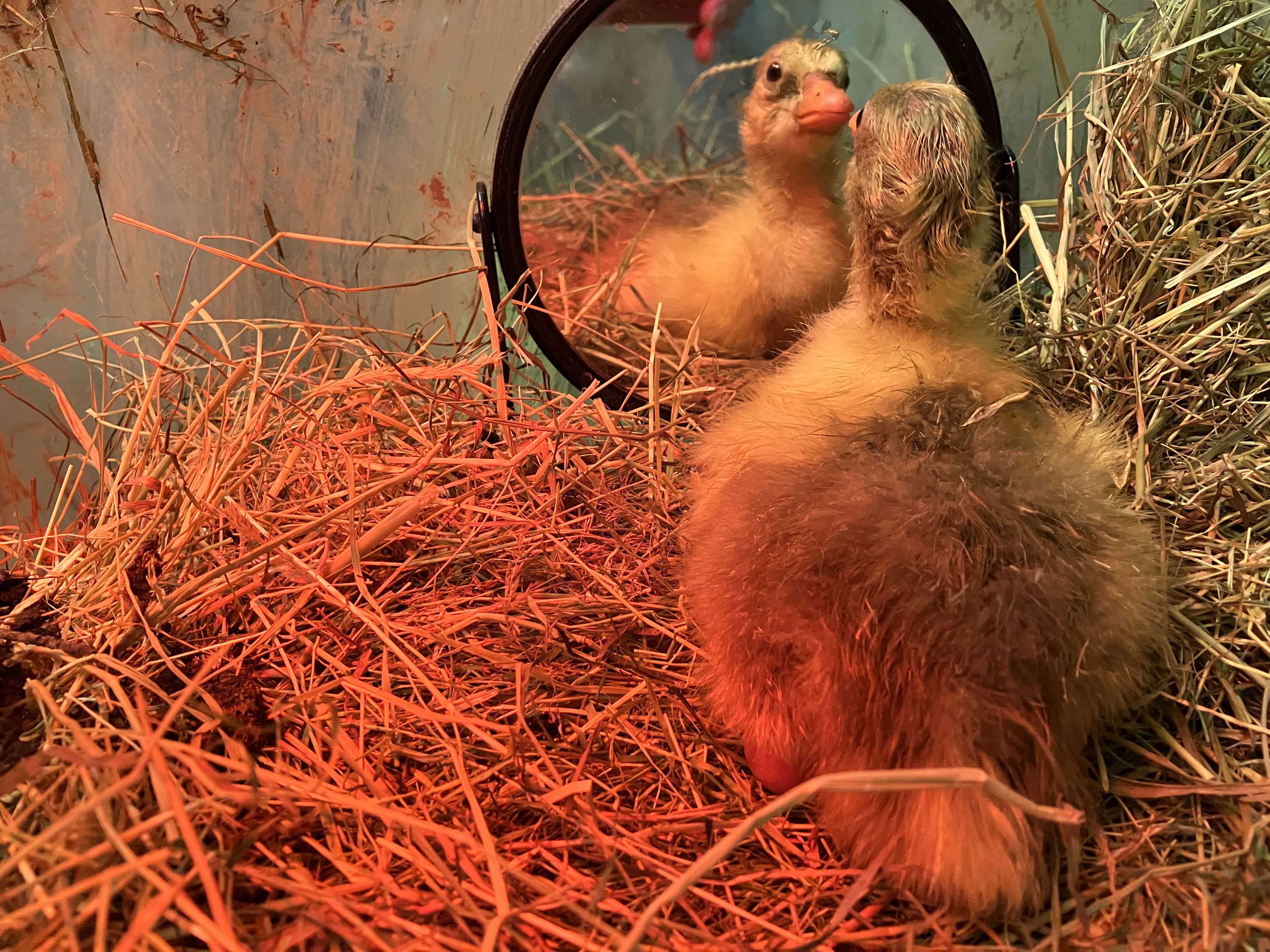
The birds know it’s spring. The ducks have started laying, even though it’s cold, so April will be busy with ducklings again. There are already lambs in the fields. The cycle of life begins again.
We also have a wren in the garden. Male wrens are busy at this time of year, collecting things to build nests. Nests plural. A male wren builds several nests. When he manages to attract a female, he takes her on a tour of the nests, she chooses the best one, and lays her eggs. He then goes off and finds another female, and repeats the tour with the remaining nests. He’ll do this until all the nests have females, sitting on his offspring. Not the sort of male you want to introduce to your daughter. He’s a tiny brown bird, but has something (which I cannot remember the name of) in his lungs, which amplifies his voice. A tiny bird with a loud song. I’m rather fond of him, so I hope the cats don’t catch him.
Spring this year will be busy for me too. I need to sort out the house, because my daughter is moving home for a few months between selling her flat and buying a new property. This will be fun, but I need to make space for her. Though once I have emptied some cupboards, the job will be finished. I also need to write the proposal for my dissertation, which is less fun. I have to submit the title of my thesis, explaining what I plan to research and why, with a list of all the literature I plan to read and why it will be relevant. I am going to explore the dragon in the book of Job (chapter 41) which will be interesting, but being assessed makes it more stressful. But at least I only have to produce one, and I can submit that to the university and they will either love it or not. Being a wren and having to repeat that many times over each year must be a whole different game.
Hoping that all you attempt this week grows well and is completed on time. Thanks for reading. Take care. Love, Anne x
Thank you for reading. anneethompson.com Sign up below to follow my blog.
We visited a few towns on the south coast of Madeira. It wasn’t possible (I think) to reach them via pretty coastal roads, as the roads seem to be either blocked or fallen into the sea or abandoned to rock falls. Our drive was therefore through a series of tunnels. Madeira does tunnels very well, but you don’t get to see much scenery. I cannot imagine how different life must have been before the tunnels were built. Towns would have been fairly isolated, as visiting other places would have taken much longer.
We visited Ponta do Sol. As we drove down the steep road into town, we saw a small carpark. It was full, but we managed to arrive as someone was leaving, so parked the car and followed signs to the old town. The town is built on a steep hill, terraces of bananas reaching up the cliff side, cobbled streets and houses clinging to the lower levels. There were some good coastal views, but nothing to entice us to stay in the town. The busiest area was the beach, with families sitting on the black sand or swimming in the sea. I never like black sand. Although I know it’s no less clean than yellow sand, it feels dirty. As Madeira is basically just a big volcano, all the natural sand is black.
Next we drove to Madalena do Mar. We did attempt to follow the coastal road, but it petered out, so we had to do a difficult 3-point turn on a bendy road, and it wasn’t worth the hassle; we returned to the series of tunnels.
Madalena do Mar has a big car park next to the sea, and a lovely promenade lined with palm trees along the coast, a jetty for fishing or mooring boats . . . And very little else! There were plots of land waiting to be built on, and even an area designed for a café, but no one seemed to have actually arrived yet to build the hotels and cafes. It was lovely, in a sort of abandoned, not quite there yet, way. Not sure what it will look like in ten years time.
Quite windy!
Our last stop was Praia da Calheta. This was a busy town, full of people, cars trying to park, cafes and supermarkets. There was a small marina, with little boats bobbing in rows, and a long promenade with palm trees and cafes. There were also beaches, with yellow sand hauled from Africa. Despite the cold, several teenagers were swimming, their squeals piercing the air. Steep cliffs bordered the coastal road, and we sat in a cafe, sipping espresso and watching little black and white birds nesting in the rock while seagulls swept past looking for food.
We returned to Funchal for dinner, and ate in Noitescura, a restaurant near the apartment. It served traditional food, and last time we tried ‘Francesinha’ which were like burgers (beef, chicken, fish or vegetable) with a fried egg on top, and served covered in a sauce/gravy. I chose badly, and had the vegetable one, thinking it would be a mushroom burger, but it wasn’t, it was more like minced vegetables (tiny pieces of onion, broccoli, carrot) in a soggy bun. It was as horrible as it sounds. This time we shared a fish platter, which was lovely. It had a variety of local fish (scabbard, parrot fish, bass) and we ate it with fried sweetcorn, rice and chips. (No veg this visit, Husband chose the food.)
I also tried a poncha, which is a traditional drink, sold all over the island. I was expecting something like a caipirinha, as it’s made with sugarcane alcohol, but it wasn’t, it was more bitter, and orange, and served in a short fat wine glass with no ice. Not unpleasant, but I prefer caipirinha. I also had white wine with my meal, and a dessert with sambuca (which I remembered too late I don’t like, but luckily they poured it over the dessert and then set it on fire, so most of it burnt off). We finished with a glass of Madeira wine, but refused the rum that was offered with the bill. I don’t usually drink much. I didn’t sleep very well that night.
Thanks for reading. Have a good week. Take care. Love, Anne x
Thanks for reading. anneethompson.com Sign up to follow my blog, and it will be emailed to you each week.
We found heaters in the apartment, and managed to warm up a bit. There’s no central air conditioning or central heating—I assume because usually all year round is ambient. It’s colder this year. I woke early, before sunrise (it’s not light here until about an hour after it’s light in the UK). When it was light, we went for a run. Although not sunny, it wasn’t cold. The light is different here. It’s a comforting light. Most of Madeira is mountainous, so lots of people run on the only flat land, along the promenade. It’s a pretty place to run, with little areas of garden, and interesting statues and the sea lapping onto pebbles next to you. There are often cruise ships, towering over the docks, and occasionally we had to dodge large groups who were touring the island, led by a guide to the most famous sights. I prefer living here, even for a few days, to try to absorb some of the real life. It was fun to watch the ships arriving though, such impossibly huge structures balanced on the water.
After a shower, we walked back to the little cafe where last year we went every morning, Husband always had a cheese and onion bolo, and I had an espresso. But the cafe was shut. What a shame. We wandered around, looking for somewhere to recreate the same ‘coffee with the locals’ feel, but most cafes looked very touristy. Then we settled on the cafe under the apartment, which wasn’t in such a nice location (okay, it is a horrible location, as it’s basically right on a busy road). But it had plastic chairs, and locals sipping espressos, and it looked clean. We ordered (Husband had chips. Chips. For breakfast.)
Note my disapproving face! The sandwich is actually very traditional in Madeira: sliced beef, ham and cheese. But the chips?
While we waited for our coffee (and chips) we saw the elderly man from last year’s café. He sat outside and had his coffee, and we wondered whether we should say hello, but decided we didn’t speak enough Portuguese and he didn’t speak English, and probably it would just confuse him. So we didn’t. But we mentioned it to the waitress, and she told us that he still runs his café, but the roof fell down, so he’s waiting for it to be fixed. This is why I like returning to the same places. Being on holiday is a break from life, but if you travel a lot, it can mean that you never engage in life, you are never part of anything, which seems a waste. When we return to the same places, we can be part of a different community — even if only very briefly. I think life is about connections, not being isolated. I’m not a great one for drifting, I like to have a purpose.
Caffeine replenished, we set off to find the boot shop. Last year I packed the right clothes, but not the right footwear, and when we had torrential rain, my only ‘waterproof’ shoes were drenched. We found a little shop that sold boots, and I bought a pair because they weren’t too expensive. They have been the most comfortable shoes I have ever owned, and are still worn all the time. They are brown boots, and I don’t like wearing brown shoes with grey trousers, so I was keen to buy some black ones. But would we manage to find the shop?
We set off, past the market (Mercado dos Lavradores) and all the aggressive salesmen selling fruit at inflated prices to unsuspecting tourists. We crossed the road, rounded the corner where they are building a Savoy hotel, and headed into the lanes of the old town. We half-remembered the road, and that the shop was opposite a larger shoe shop selling fashion shoes. We found a smaller shoe shop opposite, and went inside. It looked slightly different, but was in the right place, selling shoes. I explained what I wanted, showed the salesman my brown boots, and he went off to find some black ones. He returned with several boots, some of the black, none of them the same manufacturer as mine. I explained that I wanted the exact same boot, but in black (otherwise I may as well buy them in England). He came back with some similar boots, which he spent a long time stretching, undoing the laces, bending them open. I tried them on, knowing they were a size smaller than I wanted. I thanked him for trying, and left. The man suggested I should try in the big shop opposite, but I knew they only sold fashion shoes, and I wanted the same good quality leather boots.
I set off towards the apartment, refusing to listen when Husband suggested we should look in other shops, because I hate shopping, and only went to that place because I thought it would be easy. Husband insisted. I said I would look in one more shop. Husband led me up the road . . . To the exact same shop we had visited last year! We had been in a different shop, which explained why they hadn’t had my boots. This shop only sold Tapadas boots. Which begs the question: why did the other shop, when I was leaving anyway, not direct me back up the road? He must have known the Tapadas shop was there, and he wasn’t making the sale, so why not tell me? I dislike mean people. If you want comfortable boots (the sort of boots you can wear on an all-day hike on the day you buy them and not get blisters) then head to Abreu’s Sapataria.
I like Madeira, but I cannot quite get a feel for what it must be like to live here. Unless you want to work in the service/tourist industry, or to be an engineer (because there are some serious mountains to build on/through) then I’m not sure what work the island offers. There are the huge cruise ships that visit regularly, but the passengers tend to eat onboard, and only do brief excursions into town, making shops and attractions overly busy and then leaving, returning the narrow streets to the locals. The restaurants tout for business by trying to persuade passing people inside, which I always find uncomfortable, but maybe they have to, maybe there isn’t quite enough tourism for the number of restaurants. I suspect it’s a difficult place to run a business. We ate in some restaurants that were lovely, with delicious food and staff who worked very hard to keep everything clean and efficient. But they were rarely full, and sometimes we were the only customers, which felt sad given how hard people worked. But for us, it was lovely. I like visiting places out of season, pretending that I live here.
I will tell you more next week. Thanks for reading. Have a good week, and take care. Love, Anne x
We left home at 4 am, and arrived at the apartment about 12am. Arriving in Funchal is always an adventure. Funchal is a short drive from the airport in Madeira, and both times we have come, the little airport has been very efficient, with very few people arriving, short queues, helpful staff, and clean facilities. The car hire place is in the airport, and there is a short walk, including a lift down the side of the rock, to reach the cars. The drive from the airport is easy enough with Google Maps and the road is edged with amazing plants. I love the plants in Madeira, and it’s worth visiting simply to see them: great succulents with huge protruding stamen, sharp-leafed flowers clinging to rocks, impossibly tall trees that sort of resemble pine trees with a twist. However, once you leave the main road and enter Funchal, the fun starts!
The roads are steep, narrow, often cobbled. You feel like you are driving down a pathway. Then you meet a parked car, or tables spilling from restaurants, and you wonder if perhaps you really ARE driving along a pathway. But these rabbit-warren streets are the only route into Funchal. Then there is the problem of needing to park, and the entry-fob for the car park is in the apartment, but there is nowhere to park in order to collect said entry-fob.
At least this time we knew what to expect, and planned accordingly. (If you read the blog about our previous visit, you will know that Husband dumped me and all the luggage in the street outside, while he went off to find somewhere to park, which took longer than you might expect.) Husband drove to the garage entrance, and I jumped out and walked to the street where the apartment was. Somewhat confused by lack of numbers on doors—or at least, there were numbers, but they were all 18, so finding ‘number 18’ was less specific than I had hoped. Decided it was unlikely to be 18A, or 18B, as they were gyms. Then there was a door numbered 18, but that was locked. The adjoining door was unlocked, and as the buildings were connected, I entered. Tried the lift (I needed Apartment 36, which I guessed might be on the 3rd floor). The lift only went to floors -1 to -3. Left the lift and tried the stairs. Found myself in a doctor’s surgery. Showed the address to a woman who was leaving, and tried to remember how to ask for directions in Portuguese. Failed, but she understood me anyway and told me I needed to go ‘beyond the cafe.’ I didn’t, I needed to go through the locked door of number 18. Found some doorbells, rang number 36. Found the cleaner, who had the garage-fob. Returned to garage. No sign of Husband… You get the idea.
When we actually managed to enter the apartment, it was lovely. There are tiny balconies, and a view over rooftops to the sea. It has pretty wooden furniture, slightly antique in style. The kitchen is modern and clean. The bathroom is tiny, smelly, with a shower that doesn’t work very well. Not dissimilar to the bathroom at the last apartment we rented in Funchal, so am assuming Madeira doesn’t prioritise bathrooms.
We went for a stroll. The air was bright and balmy, not too hot—cardigan weather. We walked next to the sea for a while, then went to the supermarket and bought juice and water and milk. Probably we could drink the tap water, but I don’t want to discover it upsets my stomach; we’re only here for a week.
Mainly I want to rest while we’re here, read some books, and have a break from missing Kia. When your dog dies, you can never forget your loss while you’re at home, because everywhere is lonely. Hopefully Madeira will be different enough to not leave any gaps. Maybe I won’t go home again afterwards…
We walked back to the sea front for dinner, and found Xaramba, the restaurant we regularly ate in last year. The serving staff were the same, and they agreed it is much colder this year, and said it had even snowed. It IS cold here, especially in the evening after the sun has gone down. I packed all the same clothes that I wore last year, which basically means I have two outfits with thick jumpers (and a heap of summer stuff which won’t be worn). Will have to do some washing while we’re here.
I will write more tomorrow. Thanks for reading. Take care.
Absolutely no idea what to buy for the man in your life? Join the club!
It’s Husband’s birthday, and I struggle every year to find a gift that I think/hope/pray he will like. (I blame my mother-in-law for having a baby so near to Christmas.) It’s impossible. Anything that he might need, he has either bought for himself, or has recently received at Christmas; which leaves me with nothing. Literally, nothing.
I know that some couples don’t buy gifts for each other, but we do—it’s one of the ways we express our love. Husband is extremely good at this in reverse, and I have over the years received many thoughtful gifts.
This year is worse than ever, because I cannot even think of little things to buy for him. I know that he already has a stash of chocolates and shortbread and men-magazines to read. (I should clarify, by men-magazines I mean magazines about cars, not naked women.) In desperation, I searched online shops under the ‘gifts for men’ tab. This is what I discovered:
Alcohol related gifts. These seem to be popular (but he already has these from Christmas). Men, it seems, like craft beers, whiskey, and (way down the list) gin-making kits. There are many variations on this, including beer mats/towels/tee-shirts, and appropriately shaped glasses and openers. Plus, of course, the actual drinks. A good idea if not buying right after Christmas, when the cupboards are full of half-full bottles of alcohol.
Curry related gifts. Strangely, this appears as the next popular choice. Clearly men in England eat a lot of curry. Many of the related gifts involve growing chillies, or sets of spices, or aprons. Do men also enjoy cooking curry? This has not been my experience.
Coffee is third on the list. Maybe after cooking curry and drinking beers/whiskey/gin, the man in your life likes to settle down with an exotic coffee? Unfortunately, Husband has settled on Ily coffee made in a cafetiere, and in his mind, nothing else compares in terms of flavour and ease—so not for him.
Massage devices. (Again, I will clarify: neck/feet massage kits, nothing dodgy!) I don’t know what Husband thinks about these, but he has never wanted a spa holiday, so I’m assuming he wouldn’t want to sit still long enough for something resembling a hairdryer to scratch his neck.
Toiletries, with various spicy smells. Do men want to smell like an Egyptian souq? I don’t think mine does. I think he would worry if I gave him a gift encouraging him to be cleaner.
Lego. This has proved popular in the past, and has provided many contented (and noisy) hours while watching telly with me, making various well-engineered vehicles. However, I think I have given too many of these recently. Also, it seems that once constructed, these intricate feats of engineering can never be dismantled, but must be displayed on a table or shelf. My life is too short to dust them (and no one else is going to) so they simply become dirty toys that are regularly smuggled by him into the sitting room (which I try to keep clean and tidy ready for unexpected guests/visits by the police) or, worse, on top of my kitchen units.
Multi-tools are also a thing that apparently, men desire. There are many varieties, and they resemble a grown-up version of a penknife, with a hammer, screw-driver, saw, all folded into one tool. I cannot believe this is ever useful. Either it would be too heavy to be fun, or the tools would be too flimsy for real work. But perhaps I need to do further research, maybe every man dreams of owning an all-in-one tool that he can produce from his pocket to save the world/fix the wobbly table at a moment’s notice. (If all else fails, this might have to be the gift this year.)
Lamps on heads are also a thing. You can buy them incorporated into a natty woolly hat, or on an headband. Maybe men all want to be coal miners really, and it makes them feel butch? Or perhaps the whole ‘torch held in the teeth’ thing happens more often than I think? But I don’t have the sort of husband who does much D.I.Y. in dark, inaccessible places, and I think it would be like buying me a mop—so I don’t want to encourage that sort of gift-giving.
Finally, there is a whole lot of tat which is either too sexual to mention here, or too useless to even bother with. Do men really want a structure to keep their bedside table tidy? Or an illuminated toilet seat? Or a pen that can bend into various shapes? A grow-your-own bonsai kit looks fun, but the sceptic in me feels it would never work. Therefore, I am stumped. Maybe I will dig out my knitting needles in the hope that a homemade gift will show that I care. Or maybe not. Please send help.
Hoping you find what you’re looking for this week. Thanks for reading. Take care. Love, Anne x
Thank you for reading. anneethompson.com Why not sign up to follow my blog?
(It was January 2023, so not entirely sure whether the date above is a typo or for when it was originally scheduled.)
As promised, I will tell you about the two papers which I enjoyed the most at the SOTS conference. They both helped to shape my understanding of who God is—and are far removed from the way God is presented at Sunday School. As before, please note that I am describing the lectures as per my own understanding, with apologies if I am not accurately describing what the papers said.
Peter Hatton: ברית as treaty
The Hebrew word ‘beret’ (ברית) is frequently used in the Old Testament, and is usually translated as ‘covenant.’ Therefore, God made a ‘covenant’ with Noah, that he would not flood the world again, and he made a ‘covenant’ with Abram that his descendants would be more numerous than the stars, and so on. However, Peter Hatton suggested that our understanding of ‘covenant’ is misleading, and ‘treaty’ would be a better word. He said, “You don’t make covenants with friends, but with enemies.” There is an element of threat when a covenant is made—and we tend to forget this today. A ‘covenant’ or treaty is very different to a contract, which is an agreement between two equal sides, with no underlying threat, and with a right to appeal if things change.
He then discussed the treaty made with Noah, which was symbolised by a bow in the sky. A bow was a sign of power, a threat of attack. Peter showed several examples of pictures of bows from the ancient world, and each time they were signifying threat and power. The bow shown to Noah is a bow (not a rainbow) and it is immediately after God has murdered/executed all the people and animals in the world (so definitely something of a threat would be understood). [This is not something my Sunday School teachers emphasized, with our songs about ‘When you see a rainbow, remember God is love…’]
The treaty with Abram included a sign too. Abram had slaughtered animals, and cut them in half, and fire had gone between the halves. In the ancient world, people sometimes walked between divided carcasses, to symbolise the idea that if they went back on the agreement, they would be like the dead animals. [A little like in a Court of Law, we swear to tell the whole truth ‘so help me God’ in other words, only God will be able to save me if I lie.] In the example of Abram, God was saying that he would be like a divided carcass if the covenant was broken. [I am unclear here as to who the he might be. According to my notes, Peter Hatton said that Abram would be like the dead animals, but when I later read a commentary, they said that it was God himself who was saying he (God) would be like the animals if he didn’t fulfil the covenant. I think the Hebrew can mean either, so you can decide for yourself. Either way, the covenant/treaty held an element of threat.]
Peter’s paper then considered why this element of threat might be important. When people are in situations of conflict, pretence tends to disappear, and people are very real/honest. Peter said that when he has counselled couples with marriage problems, they are in conflict, and they tend to be honest about the hurt and difficulty. He remarked that in this situation, when people are genuine about the pain, they can start to rebuild. He also said that marriage is a covenant/treaty between people who are different (because individuals are different). [He lost me a little here, perhaps I was tired, but I don’t entirely see the same link with a marriage covenant and conflict/threat. But maybe you can work that out for yourself.]
Philip Jenson: Mathematical Monotheism
For me, this was the most helpful paper of all, because I have been struggling with the idea that the Old Testament is very clear that there is ‘One God’ and yet Christians are very strong on the Trinity (which to my mind, is basically three Gods working as one).
Philip Jenson pointed out that ‘monotheism’ is a term that first arose in the 17th century, which is when understanding of mathematics and science was developing rapidly. The idea (rather than the word) of monotheism first arose during the exile. Before then, people held a belief in monolatry (that only one God should be worshipped, above all other gods).
The Hebrew word for ‘one’ is אחד and it means more than the mathematical idea of quantity. אחד is about quality, about being incomparable, being in a position above all others. ‘God’ is not countable. Numbers are unhelpful here. God is known by power. אחד might be better translated as ‘unique’ rather than ‘one.’
[I think some of these comments about inappropriate translations maybe arise because language is not static, and our understanding of words changes over time. Therefore, when Hebrew is being translated today, words like ‘one’ or ‘covenant’ have slightly different nuances than they did during the reign of King James and the Authorised Version.]
Another problem with this is our understanding of the word ‘god.’ What is a god? Modern people don’t like to think that there could be lots of different gods floating around. However, the Bible speaks of ‘Heavenly Beings’ and some are named (Eg. Seraphim). These might be who were understood to be ‘gods.’ Or perhaps the ‘gods’ were man-made, anything that was worshipped and revered, anything that people treated like a god. Anything that rivalled people’s loyalty to God. Therefore, they did exist, but not in a way that was separate from human perception. A carved animal was a god, because it was worshipped as a god but if placed on a shelf as a mere ornament, it was not a god.
The paper then considered texts that possibly contradicted this idea, such as Isaiah 44: 6, “…beside me there is no god.” This seems to exclude the possibility of other gods. But this ‘exclusion formula’ might refer to power rather than the existence of other gods, so is inconclusive.
The conclusion was that God, YWH, is incomparable, and his multiple titles add to the hierarchy (because a lack of names implied a lack of status in the ancient world). The implication in the Bible is that other gods were created by God, and were potentially mortal (ie. not eternal).
I found it all extremely interesting, with lots of ideas to mull on. I also find it helpful when thinking about the Trinity, because I don’t need to try and explain an apparent contradiction between ‘one God,’ and that I believe Jesus was God, and yet he prayed to his Father, who was God. I can stop worrying about how many I can count, and focus on the unique, incomparable being who is God. I am very happy to admit that this God is beyond my understanding, and leave it there.
Hope you have a great week. Take care. Love, Anne x
Thank you for reading anneethompson.com Why not sign up to follow my blog? *****
Today is a sad day. I know that I said I would continue to tell you about the best two papers at SOTS, but Kia died yesterday. Kia, my German Shepherd Dog, was my friend for 16 years. Although she had become old, and mostly lay on her big bed in the kitchen, she seemed very happy. A couple of times a day, she would come up the garden when I fed the poultry, and occasionally she would even start towards a stick—until she remembered how much effort it would be to bend down and pick it up. But yesterday, she suddenly took a turn for the worse, and her wobbly back legs were practically useless, and she gave me ‘that look’ which said she was tired, and had had enough, and it was time to say goodbye.
I worried that if she tried to get up during the night and couldn’t, or if she toileted and couldn’t move out of it, she would be very distressed. So I kissed her head, and whispered that we would meet again (because I firmly believe that God will take care of that) and we took her to the vet, and let her go peacefully.
Now I am clearing away the remains of her presence: washing her bed, finding a cupboard for the dog bowls, wondering why I bought quite so many poop bags. I have food to give away, and old towels to wash and fold. I cry a lot, and remember, and feel loss, but there is something therapeutic about the sorting of it all, something healing in the clearing up. Perhaps that’s why we need rituals when people die, we need something to do while we mourn.
Today is difficult. There is so much to miss, even of a dog who had limited her world to the kitchen and garden. The kitchen is horribly empty. When I picked up the compost bin, there was no head turned towards me, waiting to see if I was going into the garden. Kia would watch, waiting until I actually put on my coat—so she could be sure I wasn’t going to trick her and shut her into the utility room—and then she would heave herself up, and totter to the door. We would walk up the garden together, the cats coming to greet her, and she would watch me as I fed the ducks and chickens. In the past, she would bark in warning if the chickens made a fuss and tried to fly near me (she hated them flying) but recently that was too much effort, so she just watched, checking.
I realise today how often I touched her—scratching her neck every time I passed that big bed on the kitchen floor. As I use the sink, I wait for the shove of her nose in the back of my legs, reminding me to fill her water bowl. No one watches when I go to the fridge, waiting to see if something tasty is coming out, something like cold turkey, which would make it worth the effort of getting up, just in case I passed her a piece. She was very polite, and after a few attempts at stealing food as a puppy, she never stole, and never watched us eat (because I never fed her from the table).
But she knew that when we had steak, I would cut off the fat and put it in her bowl, and without fail, her nose would appear at the table just as we finished eating. I don’t know how she knew that we had finished, I guess she recognised the sound of the fat being chopped up. I don’t think we will be eating steak again for a while; it wouldn’t feel right.
German Shepherd’s are dogs with opinions, and Kia had an opinion on everything. I remember it being a surprise when she was young, how I had to learn that German Shepherd’s were different to my previous dogs. Nosier. I would open a cupboard door, and her head would be in front of mine, blocking the view, checking to see what was inside. Most visitors she liked, and would greet with enthusiasm. A few she disliked (not sure why) and she growled when she saw them. A favoured few she adored, and even in the last weeks she would stagger to greet them before returning to her bed.
Kia was always a ‘mouthy’ dog. As a puppy, it took ages to teach her not to nip (I would scream loudly, as if I was in agony, even if she gently touched me with her teeth). When an adult, she never snapped, and was gentle with the cats and chickens, but when we walked, she would sometimes take my hand in her mouth, like a child holding hands.
As a young adult, Kia had boundless energy. We walked for miles, and she would jump over stiles, and chase sticks. She was very good with livestock, and walked quietly next to me, greeting cows through the fence and looking cross when they licked her head (cows are very licky animals). Though she sometimes barked at horses. And if off the lead, I am pretty sure she would have chased sheep, so we never risked that one.
One of my fondest memories is when I came home after surgery, and was lying in bed, when I heard a noise at the door. Kia (who was not allowed upstairs) was standing there, checking. When I noticed, she tiptoed away, as if pretending it wasn’t her.
But most of my thoughts today are of the old Kia. At 16, she was old for several years, and it was a dignified, peaceful old age. It is with a sad, but very grateful heart, that I say goodbye.
Thanks for reading. Next time I will get back to those papers from SOTS (because they really were extremely interesting).
Have a good week, and take care. Love, Anne x
I will leave you with some photos across the years. (I have grown older too!)
A happy dog.Now is an excellent time to read my travel book. Happy adventures from around the world.
Available from Amazon.Anne E. Thompson has written several novels and non-fiction books. You can find her work in bookshops and Amazon.
Why not sign up to follow her blog today?
anneethompson.com
Anne E. Thompson has written several novels and one non-fiction book. They are available from book shops and Amazon. She writes a weekly blog at: anneethompson.com
***** anneethompson.com
Thank you for reading anneethompson.com Why not sign up to follow my blog?
I was invited to attend the Society for Old Testament Study conference. It sounded interesting, and not something I have experienced before, so I was keen to attend. I sent off my application form and fee, booked a train to Sheffield and put the date in my diary. That was the easy part. (I also explained to my family that ‘SOTS’ did not mean what they thought it meant! They had images of drunken old men sharing sticky bottles of whiskey.)
British Rail announced strikes, and my train to Sheffield was cancelled. I decided that the conference was still worth attending, so booked a train for the day before, and a room in a Premier Inn. Worried that the cost/hassle was now increasing. A few other people from college were going, some by coach on the day of the conference, and one via the same train and Premier Inn as me. We would all travel home together after the conference. This is important. I have very annoying issues with anxiety, but usually if I force myself to do things, especially with other people to distract me, then it’s fine and no one notices. I strive to be normal.
However, the train drivers then announced a strike for the 5th, which is when we were travelling home. I agreed with my friends that we would catch a coach from Sheffield to Victoria. Which sounded easy until I thought about it. The coach picked up from a motorway junction. This might be tricky to reach with all our bags. The coach only went as far as Victoria, and there were no trains to bring me nearer home. It also looked like I would be travelling alone the day before the conference, and staying in the Premier Inn on my own, as the others opted for different travel plans. It was the final straw, and I was about to cancel. Husband then kindly said he would drive me, book an Airbnb where he could work, and drive me home afterwards. Phew! I was saved. (This is why I love the man. That and his wickedly funny sense of humour.)
The first day of the conference arrived and I desperately hoped it would be cancelled. It wasn’t. It was held at Sheffield University, which I found very confusing when arriving on a dark January afternoon. Managed to find the registration place, and checked into the ‘hotel’ (which was basically a student room. But a much nicer one than when I was a student.) I told my son, who knows the university, that the seminars were being held in ‘The Edge.’ He told me this is the student bar, and I should watch out for the jello-shots. (Not sure the family fully believed my explanation of SOTS.)
The smart (but ugly) university buildings.The university has ponds.
The itinerary was full, with lectures interspersed with drinks or meals. I soon got into the swing of it, my brain switched into conference mode: chatting to strangers over drinks, checking the timetable, listening to people present papers, learning almost as much from the questions that followed. Most of the papers were very interesting, despite being read. I have realised that this is a thing in academic circles. Someone writes a paper (Eg. ‘The false prophets were overly optimistic, which is a human trait.’) They are then given 45 minutes to read it, followed by 15 minutes of questions.
Often the questions were not really questions at all. Sometimes they seemed a veiled criticism, suggesting someone else had already written about the subject extensively. Sometimes they were adding information from their own studies in the past. Sometimes they were an opportunity to cite their own paper/book. And occasionally they actually were questions, usually asking for clarity or how the paper tackled a certain problem raised elsewhere. It felt combative, and whilst enjoying the intellectual to-and-fro, I was glad that I wasn’t presenting anything.
There were about 80 scholars attending each session.
I was aware that everyone was more learned than me (most seemed to be lecturers at universities). Most were probably more intelligent. I listened, and learned.
I also drank a lot of coffee.
There is not room here to talk about the papers that were presented. Some of them were brilliant, so I will write a few brief blogs to tell you about the ideas being discussed. I arrived home feeling drunk — nothing to do with alcohol, more complete saturation-point of my brain. I am so glad that I went.
Thanks for reading. I hope your brain has a work-out this week too. Take care. Love, Anne x
Thank you for reading anneethompson.com Why not sign up to follow my blog?
Look on your device for this icon (it’s probably right at the bottom of the screen if you scroll down). Follow the link to follow my blog!
It has been fascinating during my studies, to hear about different influences that have changed the way people see themselves and their world. Today, we accept things like a ‘sub-conscious’ or an ‘inner spirit’ without really thinking about where those ideas came from. They are part of our cultural thinking, and we refer to them effortlessly during conversations. Yet, they have not always been known concepts. They were introduced at a particular time by a particular philosopher.
The same has been true for centuries, and one aspect of studying the New Testament, is knowing which philosophers influenced the thinking at the time. This isn’t disputing any inspiration from God, but it’s recognising that the books were physically written by humans, and those people lived in a culture, and there were certain philosophies that we see reflected in what they wrote. They couldn’t have written about ‘outer space’ or ‘gravity,’ and especially not ‘cyber’ or ‘virtual’ because those things were not yet thought about. Here is a brief summary of the philosophies that were well-known the New Testament world. You can decide whether some of the thinking is incorporated into what was written. (I am only including the snippets of their teachings that I found interesting—you can do your own research if you want to know more!)
Socrates (470 -399 BC)
Socrates said: “The only wisdom is in knowing you know nothing.” He was killed by being forced to drink a cup of hemlock. He didn’t write anything, so we mainly know of his teaching via his pupils.
Plato (428 – 348 BC) Plato was heavily influenced by Socrates. He wrote a story, with Socrates teaching about cave dwellers:
‘A group of people lived deep in a dark cave. They sat behind a fire, and a puppeteer moved puppets, casting their shadow on the cave wall, telling the story of the world. This is how the cave people understood the world. But one day, a man left the group, and walked past the fire and out into the sunshine. At first he was blinded by the light, but gradually his eyes adjusted, and he saw that the plants and animals in the real world were better in every way to the shadow images he had seen previously. He went back into the cave and tried to tell his friends, but they refused to listen because his eyes could no longer see in the dark cave, and they decided he was blind.’ Plato wanted to teach people to ‘see’ the real world.
Plato said that the material world is transitory, and humans are capable of reaching an ideal state, which is eternal. He thought the intellect was the most important part of a person, and he differentiated between the intellect/spirit and the material/physical. Two separate parts of humans.
He also had an interesting idea for how society should operate: Plato divided people into those who were ‘rational’ (had wisdom) and said they should govern. The ‘spirited’ people were brave, so they should be soldiers and teachers. ‘Sensuous’ people should be providers, part of commerce, because they were temperate (knew moderation). This, he said, would bring social order and justice. [Looking for politicians who are wise might be difficult today, when being fast-talkers and good presenters seems more likely to get them elected than being wise. I guess Plato lived in a different time.]
Aristotle (384 – 323) Aristotle was Plato’s pupil. He thought that thinking (which he called ‘contemplation’) was superior to doing things. He thought the point of life was to contemplate God, and to serve him, and to pursue happiness. (I confess to be slightly confused by this, as he also said that contemplation is how humans can imitate gods, so not sure he was referring to God.) He taught that good action leads to good habits which leads to good disposition. All things should be tempered by moderation.
Sometime around Plato and Aristotle we had the Stoics. Stoicism taught that God was omnipresent, and everything was subject to his will. People should therefore not worry about what they cannot change (apatheia). Whatever happens, should be accepted. They said everyone should be treated well, because everyone shares the same spirit. Virtue is to know God’s will, and to follow it.
Plotinus (204 – 270 CE) He was a Neo-Platonic philosopher, and he tried to build on Plato’s work. He not only separated the body and soul, but also decided that ‘matter’ or the physical body was evil, and only ‘reason’ or spirit, are good. Therefore, the soul is more important than the body.
They all said lots more, obviously, but a lot of it was boring or confusing or both, so I have given you a brief overview. Interesting, huh?
I will tell you more about my studies in another blog. Thank you for reading.
Hope you have a philosophical day. Take care. Love, Anne x
Something completely different: Have you read a copy of Out by Ten yet?
Reviews for Out by Ten:
“Out by Ten is a thrilling read from the very beginning. Set in the early days of a Covid world, every reader can instantly connect with the narrative landscape. The story is full of intrigue which maintains the same pace through the entire book keeping you captivated. There are some delightfully unpredictable twists which add to the thrill. Some deep issues explored too making this an emotionally mature read. I enjoyed discovering the double meaning of the book’s title Out by Ten ( read it to find out! )- very clever and a surprising revelation.”
It was my birthday. Having a birthday in December is always bit of a mixed blessing, but thankfully it’s far enough from the 25th that it never gets tangled up with Christmas (though I can never display my birthday cards for more than a week). Anyway, my birthday this year was very pleasant.
Husband kept the day clear of work, and we went shopping at Bluewater. If you read my blog regularly, you will know that I hate shopping, especially for clothes. This was an exception, and it was rather fun.
A couple of weeks ago, I was invited to join a board dinner at Trinity House. Do you know Trinity House? (I think you can tour it during the day—it’s next door to The Four Seasons hotel, near the north bank of the Thames.) Anyway, it was nice to be invited for a posh meal, and I dressed carefully. I knew that the board members would be arriving straight from a board meeting—mainly in suits/office attire. So smart, but not evening dress. I am completely uninterested in clothes, but I do own a few ‘posh’ items, so wore some smart trousers with a silk blouse and cashmere sweater, added some pearls and earrings, checked my hair for bits of hay/chicken poop, found some clean shoes, and set off. I thought I looked fine.
The evening was lovely. Trinity House is beautiful. We left our coats in the cloakroom, and walked up a sweeping staircase to where drinks were being served. I was introduced to a few people, and then the gong sounded, and we were ushered into the dining room. There was a big fireplace, and oil paintings, and an huge oak table with flower arrangements. Dinner was very fancy, and the company was good, and I thoroughly enjoyed myself.
The following day, I made the mistake of mentioning my outfit. I explained to Husband that I intensely dislike wearing heels, and you can’t wear a dress with flat shoes, and was my outfit okay? Apparently, it was ‘surprisingly casual.’ I pointed out that the clothes were all expensive, but discovered this makes no difference. Apparently, there are certain items (like sweaters) that are ‘casual’ and other items (like jackets) that are ‘formal.’ I therefore decided that for my birthday, I should buy a ’formal’ outfit. But a comfortable one, because heels and tight bodices and cold knees spoil the evening.
Bluewater has lots of shops. I hoped to find everything in John Lewis, but they don’t keep many clothes in my size, so we failed, and had to venture into other shops. My sister had advised me to buy the whole outfit, so I wouldn’t go home wondering which cardigan or shoes to wear. Husband agreed that trousers can be smart, but only when worn with a jacket. This I do not understand. We found some trousers (they looked to me exactly like the ones I had worn). We found a jacket (which looks to me no smarter than my lovely sweater). We found some shoes, which honestly look exactly like the ones I wore—but when I remarked on this in the shop, the assistant told me that my shoes were ‘casual’ and these were ‘formal.’ In another shop, the assistant entered into the project and brought me several things to wear (which I rejected) including a gold top, which surprisingly, I kept. Goodness! Who would have thought I would ever wear a gold top? Very disco! But apparently it isn’t disco at all. Apparently, when worn with smart trousers and a jacket, it’s ‘formal.’
I admit, I have learnt nothing. I am still completely bemused as to what the difference between clothes is. However, I now own an approved formal outfit. Am just waiting for the next invitation…
Hope you are suitably attired this week. Thanks for reading. Take care. Love, Anne x
Thank you for reading anneethompson.com Why not sign up to follow my blog?
Look on your device for this icon (it’s probably right at the bottom of the screen if you scroll down). Follow the link to follow my blog!