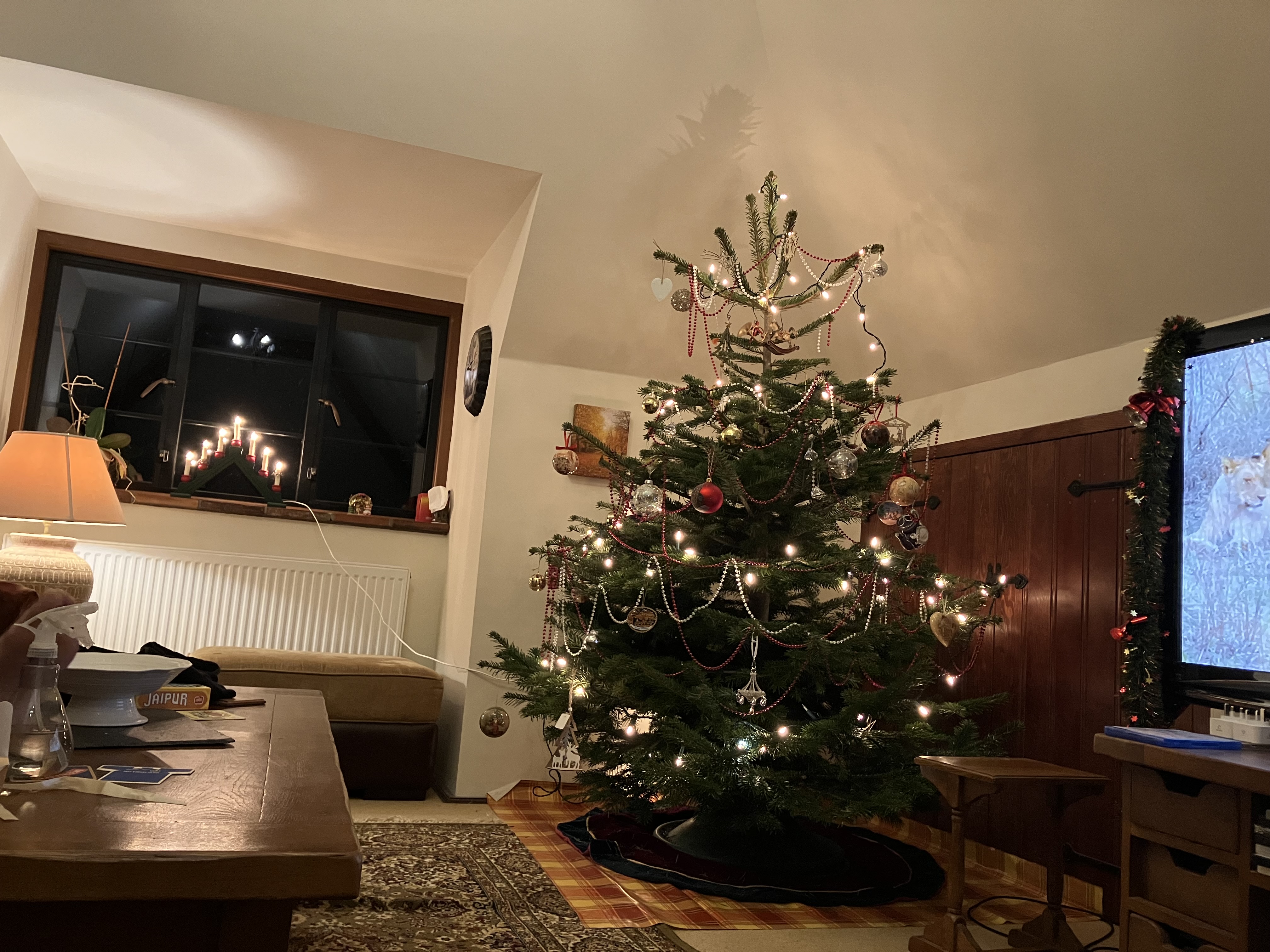
Christmas was super-exciting, with a tree in the lounge and decorations which were not for chewing, and lots of visitors which were not for bouncing, and a complete abandonment of schedule which had to be coped with. All this was way too exciting for Meg, and she returned to the slightly-hyper, never listening mad dog of previous months. It was a shame, because I had just started to feel that Meg was exactly the dog I had hoped for, and her behaviour combined with Christmas chaos made me feel like one of us needed to be booked into the nearest mental institution!
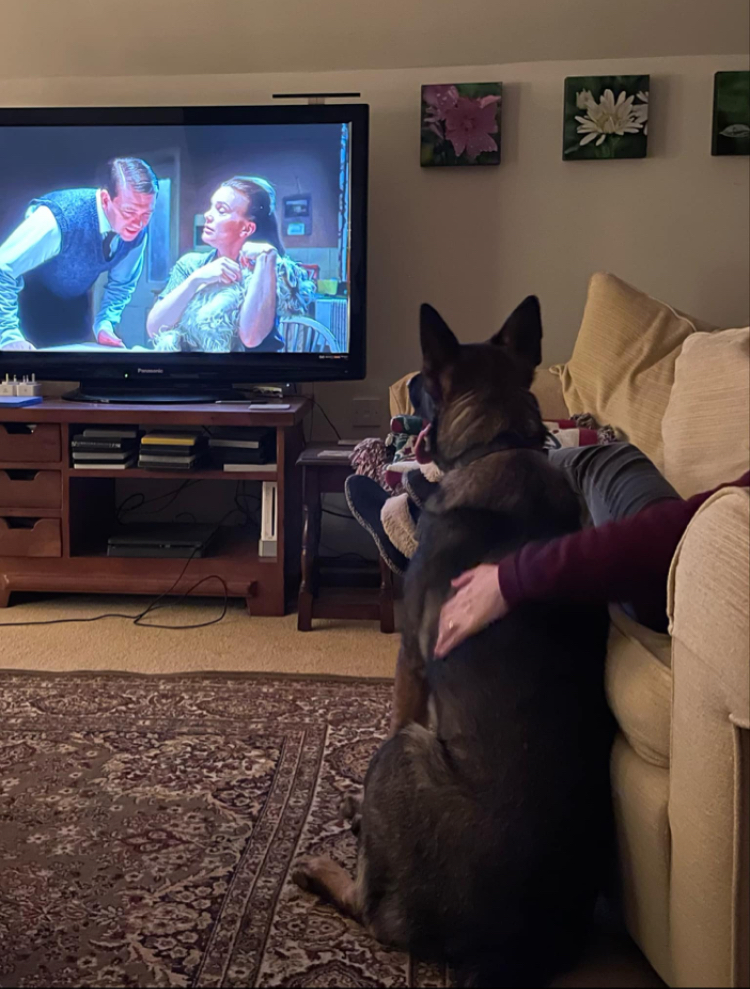
However, to be fair, Meg did not destroy the tree or decorations. Nor did she steal any of the food that was left around the house. (Food is not her thing really, it’s no good as a reward for good behaviour, but it also means that she has never stolen food.) She was overly excited by all the guests, but it was a friendly, ‘perhaps I could leap on you to greet you’, sort of excitement—there was no fear or aggression in it. Due to the age (and therefore fragility) of some guests, Meg did have to spend longer than normal locked in her crate. She mostly coped with this very well—though I do wonder if it added to the general hyper-excitement when she was free. The main disappointment for me was that she pretty much stopped listening. When we were relaxing watching telly, if Meg started to wander around and I told her to sit, or to take her chew to her mat, she completely ignored me. This was a shame, especially as it meant that when I was really tired and wanted to stop, I had to put Meg back in her crate because I couldn’t rest while she was free.
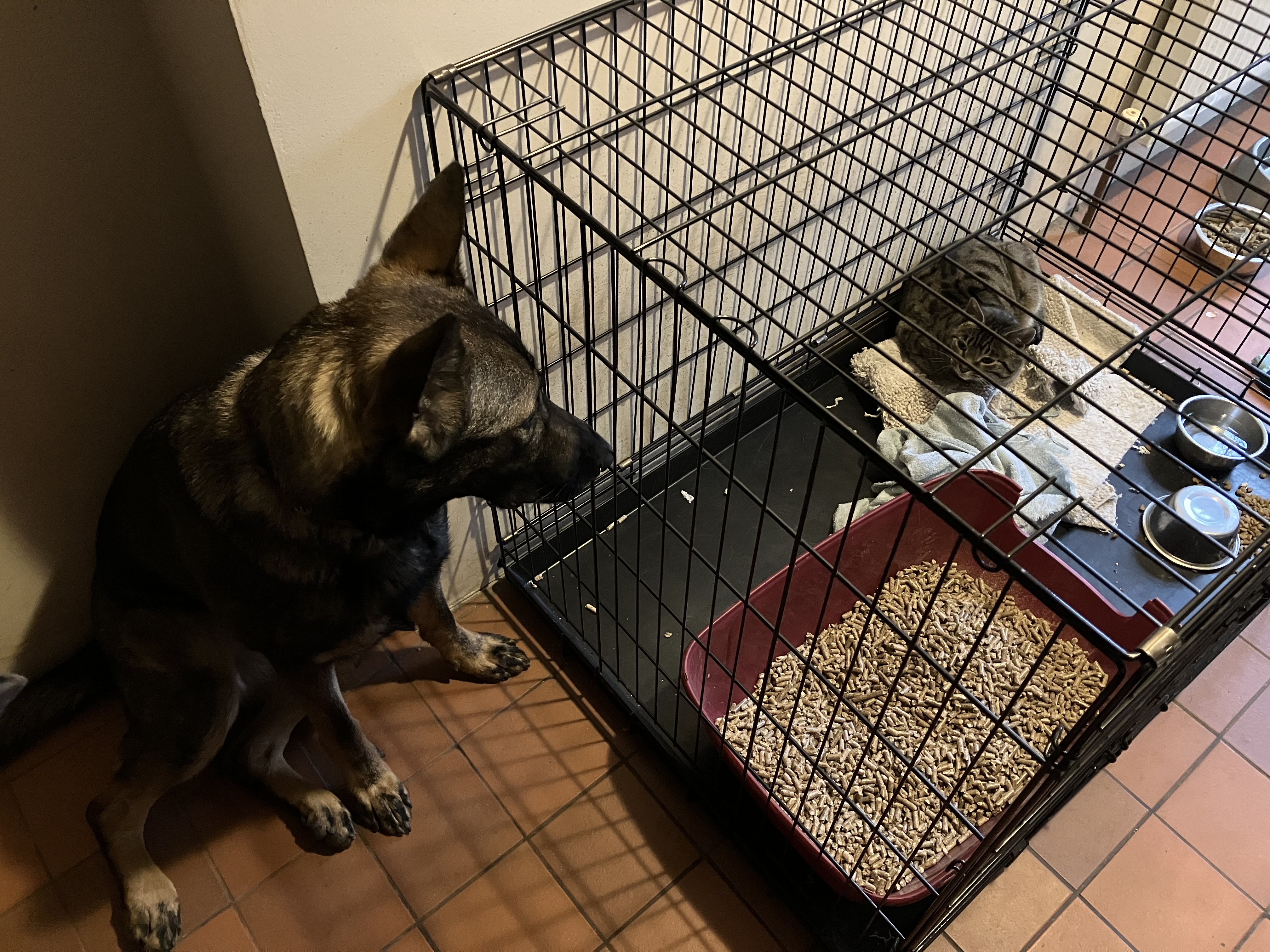
The cat-with-snapped-ligament is still locked in her crate (she will be for a while). Both Meg and Milly are behaving badly when together, as even if I am with Meg and ensuring she is calm, the cat will hiss at her and try to scratch her through the bars, which then quickly becomes a general shouting/bouncing match. Over the Christmas period there were times when I needed to use the utility room while Meg’s paws dried (and Milly had been moved in there as we needed to use the dining room and the smell of a cat litter tray is not a good accompaniment to a meal!) If Meg was in there after a walk—when she tends to be sleepy—then after an initial bounce/bark/hiss there was peace. This is good. Whilst they are not friends, or to be trusted for long together, there was certainly some kind of truce. It is a start.
I usually walk Meg in the woods, which is a popular place for dog-walkers (and the occasional horse rider) so it’s a good place for Meg to socialise. By ‘socialise’ I mean ‘learn to ignore other animals,’ not ‘go and play with them.’ I learnt this at puppy classes—I need to teach Meg that not everything is her business, and rushing up to an unknown dog is not acceptable behaviour. When there are sticks (and the woods has a steady supply) then Meg is now excellent at this. We can pass other dogs and their owners, and Meg walks with me, fully focussed on the stick in my hand, ignoring the dog/horse/deer that is passing. However, other owners clearly never attended such good puppy classes (or the dogs are less easy to train—though that seems unlikely in Meg’s case!) Fairly frequently, another dog will run up to Meg and some of them are aggressive. I have grown fearful of small dogs (it always seems to be the little dogs that snarl and show their teeth) and especially Spaniels. We have had some very bad interactions with Spaniels. Just before Christmas, we were walking through the woods which were beautiful with morning mist, and a black Spaniel came towards us. It looked young, and was darting through the trees, and I wondered, as we approached, whether she would play with Meg. I was throwing sticks, Meg was leaping over fallen trunks and into craters to retrieve them. Suddenly, without warning, the black Spaniel changed direction and chased after Meg. At first I thought it was joining in our stick-chasing game, but no, it trapped Meg next to a bush, growled and snarled and showed its teeth. The owner yelled at it, but there was no response. I called Meg, who managed to get past the Spaniel and run to me, and we began to walk away. At first the Spaniel followed, and I wondered whether I would be bitten (and to be honest, I measured the distance I would need to give it a big kick if it started to leap at me) but then it stopped, and returned to its yelling owner. I have no idea whether this was an unusual occurrence for this particular dog, but I am suspicious that some owners ought to put their dog on a lead if they are near other dogs but they choose not to. Which is a shame for everyone.
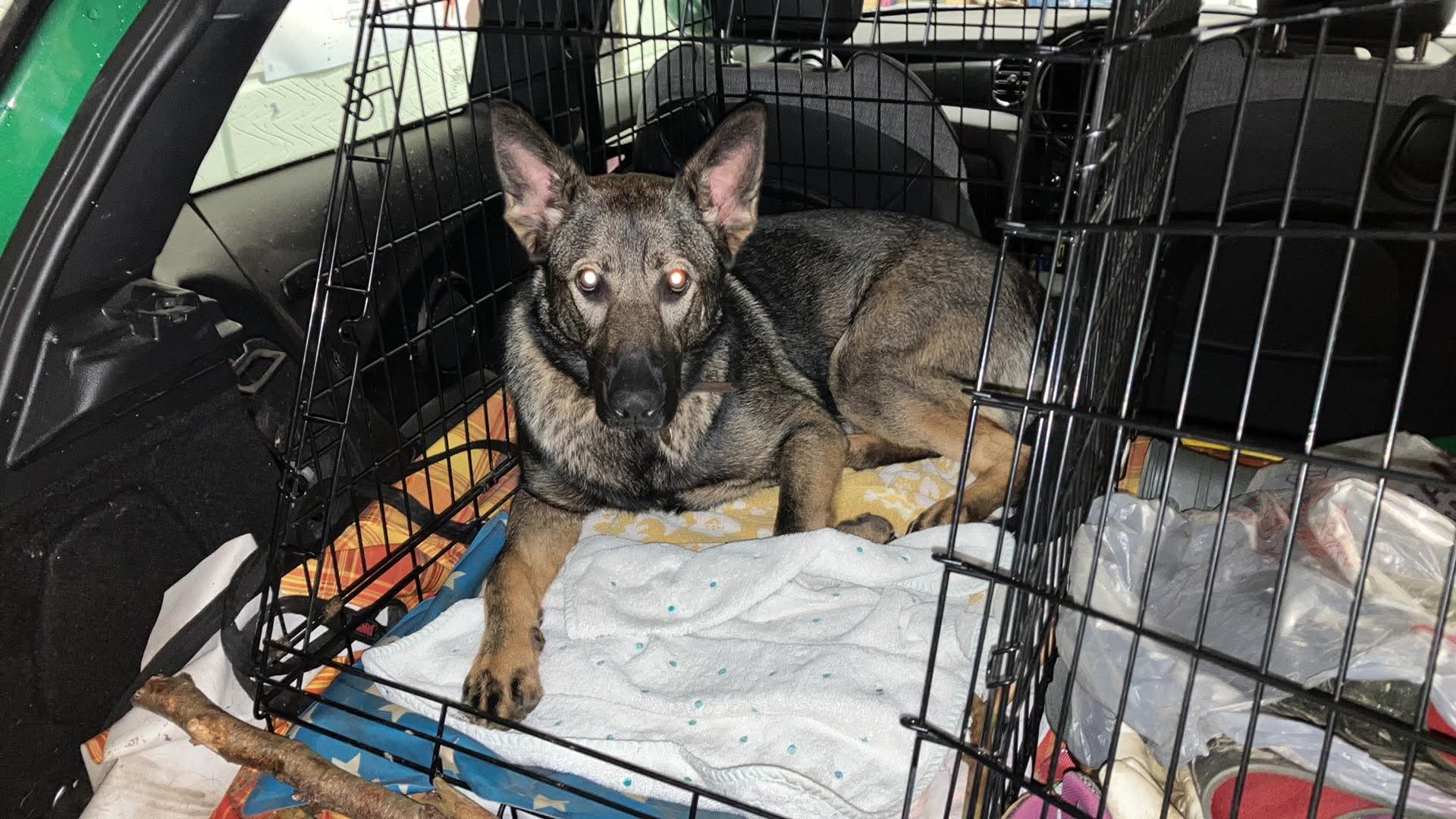
Meg in the car, with the sticks she keeps for emergencies!
Thanks for reading. I hope your Christmas was good, and exciting but not hyper! Have a good week. Take care. Love, Anne x
After eight days, Joseph came and circumcised the baby. How he wailed! It felt cruel, though I knew it was the right thing to do, even in this strange place we must obey the Jewish laws. We also formally gave him the name Yeshua, the name we had been told to give him by the angel all those months ago.
I wondered if Joseph minded, people would know it wasn’t a family name. I also had no one called Yeshua in my own family, though I did know a boy from my childhood with the name.
***
After forty days, we had to travel to Jerusalem, to pay for redemption at the temple. As Joseph was from the tribe of Judah, we had to pay five shekels of silver. We couldn’t afford a lamb, so bought two pigeons to sacrifice.
It was nice to leave Bethlehem and to have some exercise at last, to see people and to take my baby into the world. I felt quite excited as I approached the temple, our holy place. I didn’t recognise anyone, but everyone could see we had a new baby and lots of the women came over to see him. I felt so happy!
We walked through the Beautiful Gate and up to the Gate of Nicanor.
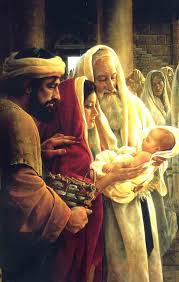
It was then that something strange happened. As Joseph and I walked through the temple, a man approached us. He came to look at Yeshua and indicated that he wanted to hold him. That was a little unusual but there was something about him, something that made you sure he was a good man, someone you could trust.
When he looked at the baby, the old man got all emotional and prayed, thanking God and saying that now he could die in peace. He blessed me and Joseph too and then he leant towards me and said something which was very strange.
He said Yeshua would cause “the fall and rising of many in Israel” and would be “a sign that would be opposed so that the thoughts of many hearts may be revealed.”
What does that mean? I know that he is God’s own son and that he is part of the plan to establish God’s reign on earth. Will he be opposed? Surely everyone will accept God’s anointed one, we have waited so long for him.
But then he said something that made me afraid; this old man with his determined face and bright eyes. His face was very near, I could smell his breath.
He said that a sword would pierce my soul.
Something inside contracted, all the joy of entering the temple evaporated into a lump of fear. Fear and anger. I practically snatched Yeshua away from him. I want my son to grow strong and be happy, will I suffer for this? I will do everything in my power to protect him; he is mine.
I knew I was tired, not getting enough sleep and it was hard to care for a new baby in a strange place without my mother to help me. I felt that I did not want to hear the man’s words, even if they were true. I was coping with enough, and I felt that although I had been brave, I couldn’t be brave any more.
Thankfully the man left us and almost at once an old lady approached. She was ancient, her white hair showed under her mitpahath and she leant heavily on a stick. What I noticed most were her eyes. They almost sparkled! You could tell at once that she was a holy woman and also one who loved to laugh.
As soon as she saw Yeshua, the elderly woman started to pray loudly, thanking God and telling people nearby that if they wanted Jerusalem to be redeemed, they should look to the baby. I was glad that no Romans were allowed in the temple; we would have been in trouble.
We finished making the offerings and then went back to Bethlehem. I didn’t know whether to tell Joseph what the old man had told me. I kept thinking about his words, worrying about what they might mean. I was so tired, I decided I would wait and maybe tell him later.
***
The months passed and we settled into life in Bethlehem. We moved into a little house and Joseph found work on the many building projects that the Romans have introduced.
Yeshua continued to thrive. He grew into a sturdy toddler and would walk around the room holding onto the stools and baskets. I loved to feel his solid weight when I carried him on my hip, the light touch of his chubby fingers when he reached up to touch my face. There was pure joy in the gurgle of his giggles. He started to sleep much better at night and Joseph and I were thinking about having another child. But then everything changed.
It was one evening, still quite early but we had filled the lamp with olive oil and lit the linen wick. Joseph put it on a bushel basket, so the room was well lit and we could talk about the day. Suddenly, there was a banging at the door.
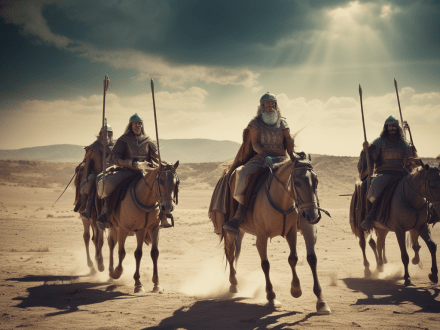
Joseph went at once and there, in the road, was a group of Persian travellers. They had dismounted from their horses and were peering intently into the house. They told Joseph they had seen a star and had come to worship the king. I was so glad I hadn’t gone to bed yet!
We let them into the house and I went to get Yeshua. He was damp from sleep and his tired eyes looked blearily around him. I wondered if he would cry but he seemed fascinated by our strange visitors. They wore their hair in long curls and one had a band of gold on his head. It glinted in the lamp light and I could see Yeshua watching it intently. Their clothes were patterned with birds and flowers.
We offered them wine; it was clear they were tired from their journey. I was embarrassed that we only had two stools to offer them, but they didn’t seem to mind and in fact insisted that I should sit on one with Yeshua and they were happy to sit on the rush mat. They didn’t really sit anyway, they wanted to kneel before Yeshua.
Then they gave him gifts. They were beautiful to look at. They gave him gold, signifying that he is a king. They gave him frankincense. The strong aroma filled the house and I wondered if Yeshua was to be a priest, even though he is not descended from Levi. They also gave him myrrh. Myrrh is costly but is for embalming a body. It was a strange gift for a baby and I wondered what it meant.
They told us their story before they left. In their Persian home, they were magi, watching the stars and foretelling the future. Many months ago, at the time of Yeshua’s birth, they had seen a special star which they knew meant a powerful new king had been born and they determined they would find him and worship him. Unfortunately, following the star caused them to go to Jerusalem first (I always knew that star gazing was a misleading activity). They went to Herod’s palace and asked where the new king was. This was scary; Herod had shown he was not a king to be trusted and his cruelty was well known. I would not have wanted to visit his palace.
However, it sounded as though he had decided to be helpful. Herod asked the scribes to research the early scriptures and they discovered that the promised king was to be born in Bethlehem. The king told the Easterners, asking them to find the king and then return and tell him theexact location, so that he too could worship.
I wondered what would happen next. Would Herod himself come to visit my precious baby or would we be summoned to the palace? This was not a comfortable thought.
I also wondered: why had the palace scribes not come to visit us? Why didn’t they travel with the Easterners to see the baby? Did they not believe the scriptures that they studied so diligently? Surely, if they were truly expecting a redeemer they would also have come? I frowned, feeling uneasy. There was something that I didn’t understand, and it nagged at me.
The men left. They planned to sleep in an inn and return to Jerusalem the next day. We could not offer them lodging in our tiny house and they seemed content to leave now they had seen Yeshua.
I returned Yeshua to bed and soon afterwards Joseph and I also went to sleep.
I had not been asleep for long when Joseph woke me. He shook me awake, then went to light the lamp. I could see his face was tense and instantly turned to check Yeshua was well. He was sleeping soundly.
Joseph told me I needed to get up—at once—we needed to leave. He said that he had had a dream, like the dream when the angel told him that the baby inside me was God’s son. It was so intense, so real, that he could not ignore it. Joseph said he had been told we must leave Bethlehem, leave Israel; Yeshua is in danger, Herod plans to kill him.
For a moment I paused, wondering why I too had not been warned. But then understanding flooded through me, as I realised—God had told Joseph to take care of me and Yeshua—that was a hard task for a man, to care for a son that was not his own. So now, God was telling Joseph alone what we needed to do, underlining his role, establishing him as head of our family. It was a kind act, asserting Joseph’s value, his part in all this.
I began to pack our things, Joseph was hurrying me, telling me to only take what was essential, we needed to leave.
We were to go to Egypt. Egypt! Could this be right? Was Yeshua not to be king of the Jews? I packed hurriedly and we left that very night.
What would the future hold? Would we ever return to our home town? The future was uncertain but I knew that something bigger than us was happening. Whatever happened, God had a plan and no one could alter the course of that, not Herod, not the Romans. We didn’t know what was going to happen, but we were part of the plan—and that was enough.
******
Thank you for reading.
This account necessarily involves some imagination but I believe it is also as historically correct as possible (and more accurate than some of our Christmas carols!) If you are aware of any historical errors, please tell me and I will modify it. I used a variety of sources including: The Gospels of Matthew and Luke Geoffrey Bromily (1995) William Hendriksen William Barclay Joseph P Amar (university of Notre Dame) Michael Marlowe Tessa Afshar Kenneth Bailey
Thank you for reading anneethompson.com Why not sign up to follow my blog?
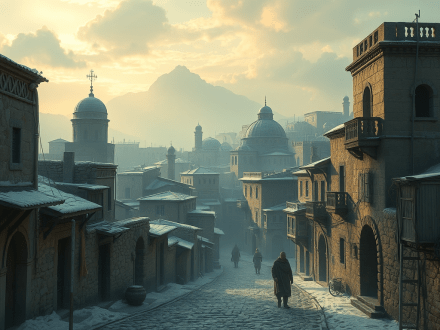
We arrived in the morning. It was Winter, and the ancient town of Bethlehem looked tired in the early-morning light, as if the colours had been muted. It reflected how I felt. Muted. Near that saturation point of worry and exhaustion whereby the world seems unreal and fuzzy. But it wasn’t unreal–it was a new dimension of reality, and it was just beginning. . .
I had travelled to Bethlehem in a small cart. Every bump (and there were many) was agony. As I was jolted along, I was racked with pain. The baby’s time was near, you see and the pain was almost unbearable. Later, they would sing songs about a cute donkey carrying me. Nice thought! I don’t think there’s any way you could have got me on a donkey. As each contraction cramped every muscle in my torso, I huddled up like an animal and prayed for it to be over.
I could see Joseph, watching me as he walked alongside. He really didn’t have the first idea what to do. Oh, how I wanted my mother. I yearned for her to be there, holding my hand, telling me everything was all right and would be over soon.
When we arrived at Joseph’s uncle’s house, the women folk came and helped me inside. The room was crowded. All Joseph’s male relatives from miles around had come to the house for shelter and food. The women were busy cooking supper and the men were drinking wine and comparing stories. They all told Joseph how much he resembled his grandfather, Matthan and laughed at old stories from years ago. The smell of fish and fresh bread was nauseating. I was so tired and so uncomfortable.
Joseph knew I was suffering and asked if there was somewhere quiet that I could go. There was no chance that we would get a place in the inn, they had filled up days ago. Somewhere quiet, in a little house packed with relatives?
There were some fraught discussions and then his aunt suggested that the animal shelter, down on the lower floor of the house, might be best. It wasn’t terribly clean, but it would be quiet and private and at least it wouldn’t smell of fish.
Joseph helped me to go down, and a couple of the women came too. One of them examined me and told me the baby was a long way off yet, first babies always take their time in coming. This was not great news but I felt better having her there. I felt that she knew what was happening, had seen this before; it took some of the fear away.
I was frightened, you see. I was horribly afraid that somehow I would damage my baby. My baby and God’s. I knew he was going to be special, I knew I had a great task ahead of me but it all seemed to be going horribly wrong. I trusted that God was still in control but he felt so far away.
Could the baby not have been born in a palace, surrounded by comfort? Would these poor beginnings really be part of a plan? Could they really make this king accessible to the people? I had no idea.
I was a mere girl; I had no education and my memory of scriptures was often fuzzy. To be honest, at this present moment, I didn’t even care. I just wanted this baby OUT! Special or not, my body was tired of carrying him, tired of being stretched and pushed, of fitting something inside that was now too big to be there. I needed this baby to be born and I was too exhausted to wait much longer.
How I longed for sleep. The pain in my back was terrible. Great waves of cramp that seared through my body, making me oblivious to everything else. I was vaguely aware that someone was sweeping the floor and moving the animals to a far corner. They had laid out a mattress and blankets for me to rest on but I couldn’t lie still for long. I felt better standing, rocking in time with the pain, trying to remember to breathe: in out, in out. Someone offered me water but I couldn’t drink. I wasn’t thirsty—I just wanted this baby to be born.
I could see Joseph with his big anxious eyes watching me. He didn’t know what to do. Someone suggested he should go into the house to eat and I nodded in agreement. There was nothing he could do and the poor man must have been tired too. He had endured such an emotional time lately. First there was his fear and anger when he first heard about the baby (now that was a difficult conversation!) Then he had to endure the smirks of his friends when the pregnancy became public knowledge. He never complained, but I know he felt embarrassed, wished that God could have chosen a different girl.
We had been travelling for five days, with hardly any rest and the last couple of days had been chilly. I know he felt the burden of caring for me, watching for bandits on the roads and wondering if we would make it to Bethlehem in time. If the baby had come early, I don’t know what he’d have done—left me with strangers on the road somewhere I guess and come to register on his own. One didn’t mess with a Roman decree. . .
The pain eventually became almost constant. Joseph had eaten and rested but I continued to sway in discomfort in the little room of animals. Every so often one of them would poop, and although the women with me cleaned it up quickly, the smell pervaded the atmosphere. It was hard to ignore.
I could hear the musicians gathering, someone must have told them the birth would be soon. They would stand outside, waiting to hear whether the baby was a boy so they could play. That gave me hope, maybe soon the baby would arrive.
Then at last, in a final searing pain, the baby was born. I looked down at his blue waxy body as he wriggled on the blanket, and I knew that he was mine. My love for him was overwhelming. He was part of me, I would die rather than let anything hurt him.
One of the women wiped him down with oil and salt and I held him in my arms while they looked for the swaddling bands in our luggage.
How beautiful he was. His indigo eyes would soon turn brown and they gazed at me trustingly. I loved him with my whole being.
Outside, there was the sound of music and singing as the musicians heralded the arrival of a boy, and I smiled, knowing they would have quietly slid away into the night if the baby had been a girl. But there had been no chance of that, not this time.
Joseph came and took the baby from me. He held the tiny baby in his giant carpenter’s hands, hands that spoke of hard work and safety. He didn’t say anything, this man who had been chosen to protect me; he simply stared at the baby—looking, wondering.
Then the baby started to mouth for food and Joseph passed him back. The women showed me how to feed him, but he was soon asleep. Then we gently wrapped him in the swaddling bands, securing his tiny limbs so he would feel snug and secure and his bones would grow straight and true. He was so beautiful. It was hard to remember what the angel had told me, that this was God’s son too. I began to wonder if I had imagined it, if it were all a dream. This baby did not look like God, he was a baby. My baby.
“If it’s true God,” I thought, “Let there be another sign. He is so little and I love him so much. Is all this travelling, and squashing into a crowded house with the animals, really part of the plan? Are you still in control? Can you still see me? Remind me again…”
I too needed to sleep. Joseph fetched fresh hay and put it in the animal’s manger, covering it with a soft blanket. I didn’t want him to put the baby there, I wanted to keep him on the bed next to me, but Joseph was worried I might roll on him in my sleep. Then he laid the baby down and told me to sleep. He looked deep into my eyes and brushed my collar bone lightly with his fingers.
“Soon you’ll be truly mine,” he whispered. I knew what he meant and felt myself blush. I was so tired, I thought I would sleep for a week.
I actually slept for about two hours. I was abruptly woken by loud voices and a draft of cold air as the door was flung open. There, standing uncertainly in the doorway was a group of youths. Their clothes were dirty and exuded the strong smell of sheep. Joseph was with them.
“Mary? Are you awake?” he asked.
It would be hard not to be with all the noise from outside.
“These shepherds want to see the baby. They were told by angels where they could find him and they have come to look at him.”
I checked I was decently covered before nodding, letting Joseph know that it was all right, they could come in. They trouped into the room. They seemed so big and clumsy in such a small space, with their long limbs and rough clothes. I worried they might hurt the baby.
But they didn’t try to touch him, they just stared for a while and then one of them knelt and they all followed suit, kneeling before the manger, staring at the baby.
Then they told me their story, how they had been in the fields and an angel had appeared. They had thought they were going to die, to be struck down right where they were.
The angel had reassured them, told them that a saviour had been born, the Christ who we’ve all been waiting for. They would find him lying in a manger. Then suddenly there were lots of angels, all praising God and saying he was pleased with people on earth.
After the angels had gone, finding they were still alive after all, the shepherds decided to come at once and see for themselves. It was as though they couldn’t quite believe what they had seen and heard, they needed to actually see the baby with their own eyes.
I felt so humbled and so cared for. God had heard my thoughts. He was reassuring me. It was all his plan, not some terrible mistake; circumstances hadn’t caused us to drop out of his control, he could still see me. We were meant to be here. He even knew about the manger!
I listened and smiled and treasured my thoughts.
The shepherds left as noisily as they came. I could hear them in the streets, shouting their news, telling everyone what had happened. They were so excited, I expect they woke up half the town. They had of course woken the baby who was now crying with a thin wail that jarred my nerves and was impossible to ignore. I fed him some more and then we both slept. A tired, contented sleep borne from exhaustion and wonder.
***
Continued tomorrow.
Why not sign up to follow my blog? Then you won’t miss the next installment.
Look on your device for this icon (it’s probably right at the bottom of the screen if you scroll down). Follow the link to follow my blog!
I woke up yesterday, and felt like I was falling. All I could think was that I needed to prepare those bedrooms by this date, and plan meals for those days, and I probably need to go food shopping because we have run out of juice, and I must find time to wrap the gifts, and I should do that load of washing before this happens, and I really need to clean out the chickens, and we are nearly out of cat litter and Goose needs her feeder changed, and, and, and … So much to do! Plus, of course all the ‘normal’ jobs like housework and meals and animal care. Too much to think about.
Do you ever feel like that? Like there is just too much? Like you need to pause things for a day so you can catch up? My guess is that at this time of year, many people feel like this. So I invite you to pause (yes, I know you don’t have time, but pause anyway).
Just stop. Breathe. Look.
Because I don’t think we feel this way because we have been caught up with consumerism, or because we are trying to keep up with the media’s image of Christmas, or any of those other negative comments that sometimes come washing down on use when we’re feeling overwhelmed. I think we feel like this because we love people, and we want to show them that we love them, and at Christmas we have a lot of contact with a lot of people all at once–who all need to be loved–and we cannot quite keep up.
But if we pause, and think, this is a good thing. We feel overwhelmed because we love so many people that we don’t want to disappoint anyone. This is good. We have people who we love. The opposite would be worse. (I once heard–not sure where–that Christmas acts as a magnifier, and if we have lots of people who we love, we feel very happy at Christmas, and if we have no one, we feel very lonely. This has some truth, but loving a lot of people also brings a lot of work!)
Therefore, my message today is simple. We need to pause, and realise that today is a gift that we may never have been given, so it’s a shame to squander it on worry. Today is overwhelming because we love people, and this is good. So we need to take a breath, and write our lists, and put our heads down and plough through the jobs–because that is what people like us do. But instead of feeling as if we are falling, we will try to feel as if we are flying, carried along on the winds of time (which travels very fast in the week before Christmas) because we are preparing to scatter love. Which is hard work, but worth it. So offer a prayer of thanks, and promise yourself a Bailey’s later, and know that you are not alone as you fly…
Hoping your day goes well. Take care. Love, Anne x
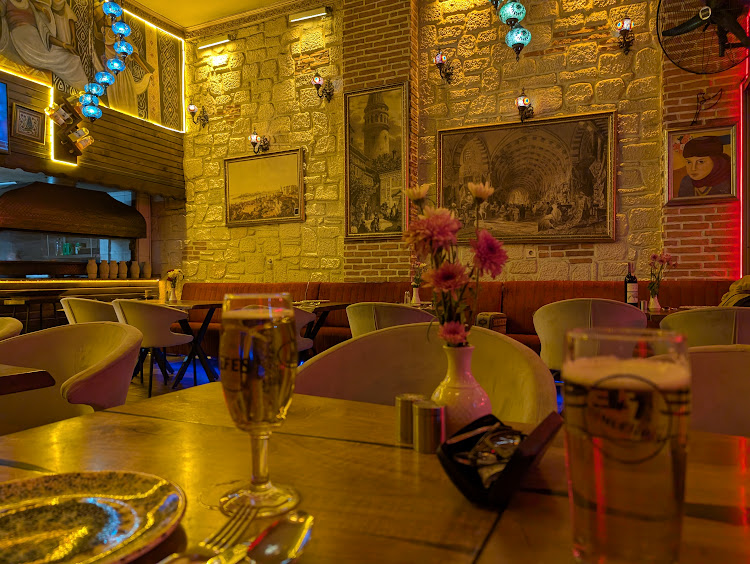
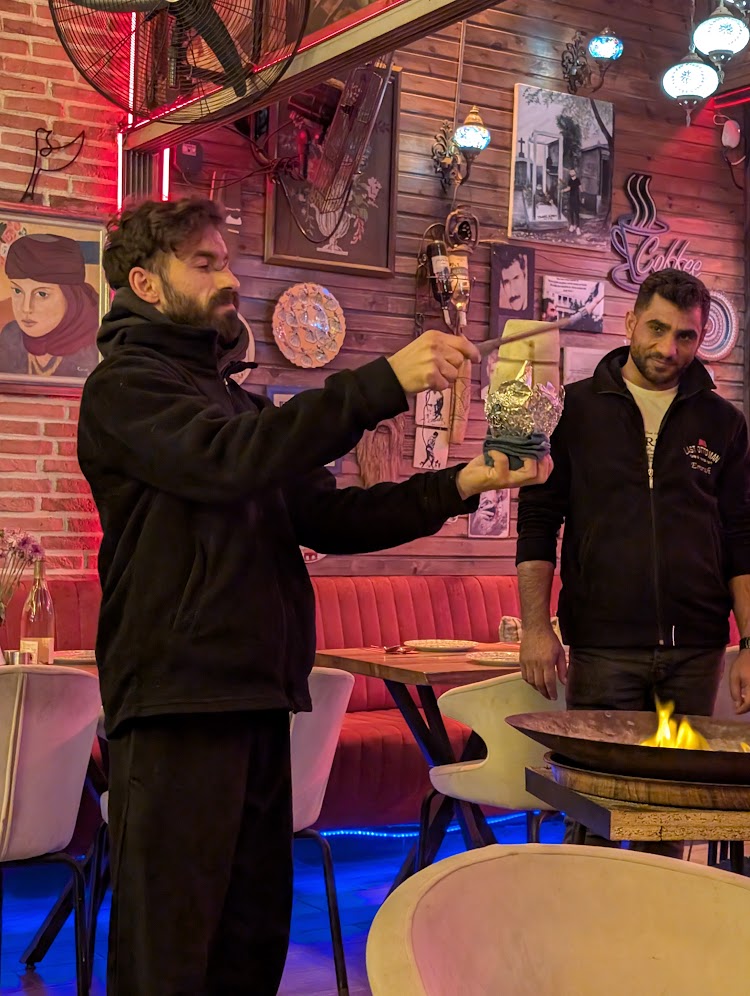
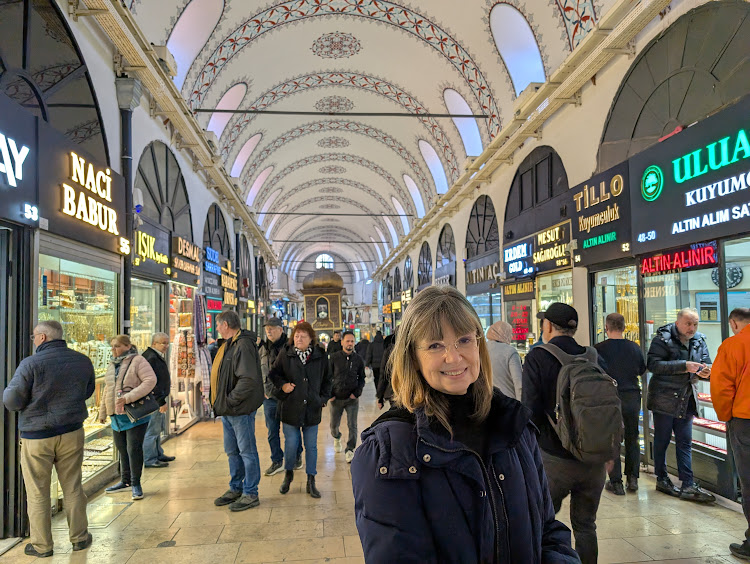
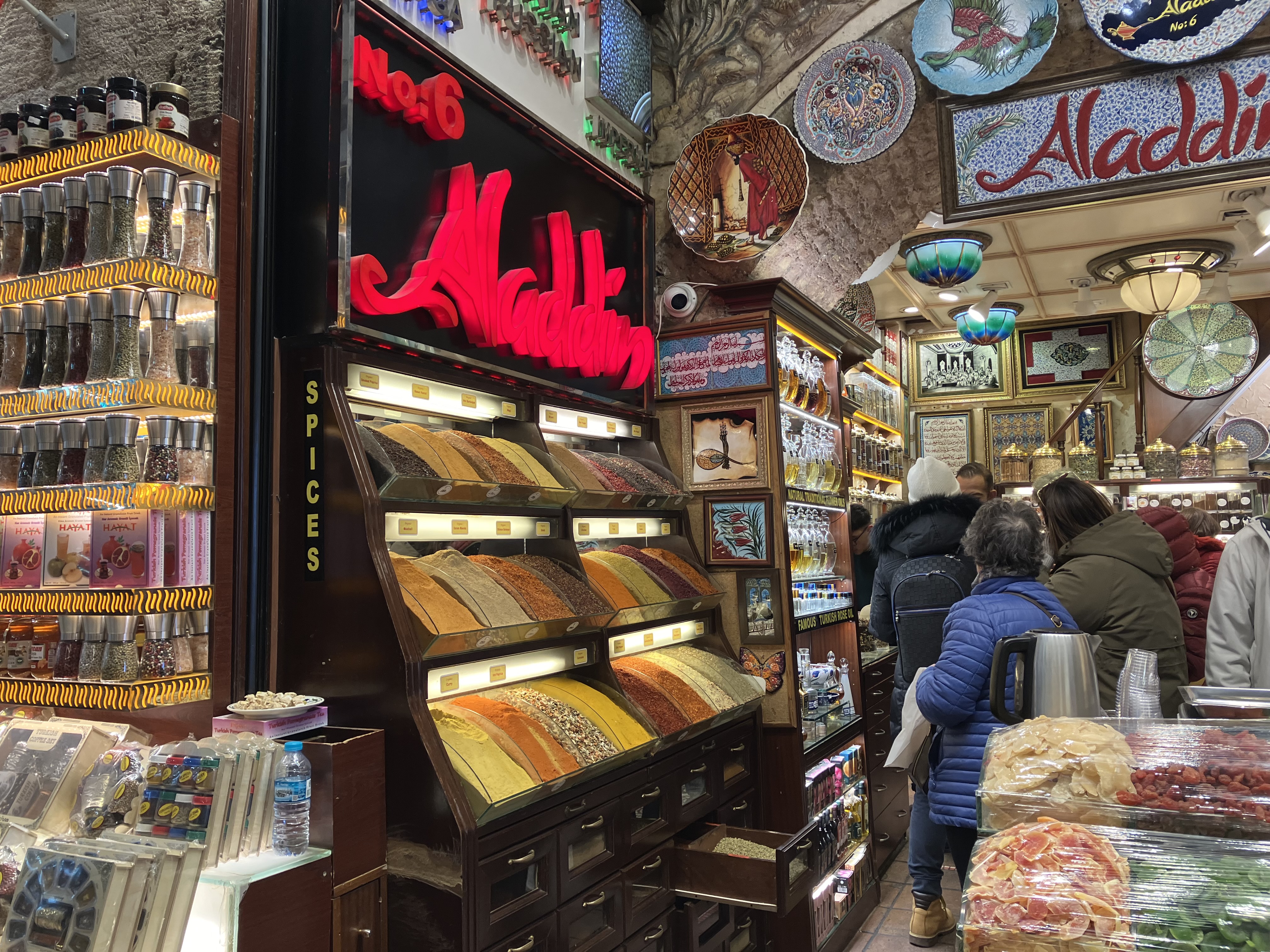
We soon developed a routine of a huge breakfast at the hotel, snacks for lunch, then a big dinner at the Last Ottoman Restaurant and Cafe which was our restaurant of choice because it had good reviews, sensible prices and the staff were very friendly. They are a Kurdish family, all working in the restaurant set up by their grandfather, and we found them warm and welcoming. (Though to be honest, I found most people in Turkey to be warm and welcoming.) One local dish is cooked in a small clay pot sealed with foil. It is stewed for a couple of hours, then (for the tourists) it is tossed in flames, and the pot is cut open and the hot food is tipped onto a sizzling platter. The performance is fun, and I bought one of the pots in a market for a couple of pounds. Very ethnic. They begin each meal with a complimentary bowl of lentil soup, served with steaming flat bread. You can taste different herbs, and mint, so I’m guessing it starts with a lamb stock. After the meal they bring warm squares of havila, and tiny glasses of clear tea on little white saucers. The restaurant is cosy, with walls full of pictures (lots of photos of revolutionaries like Che Guevara) and cushioned seats, and in the centre a wood stove bellows out heat. It is also, like everywhere I have been in Turkey, very clean.
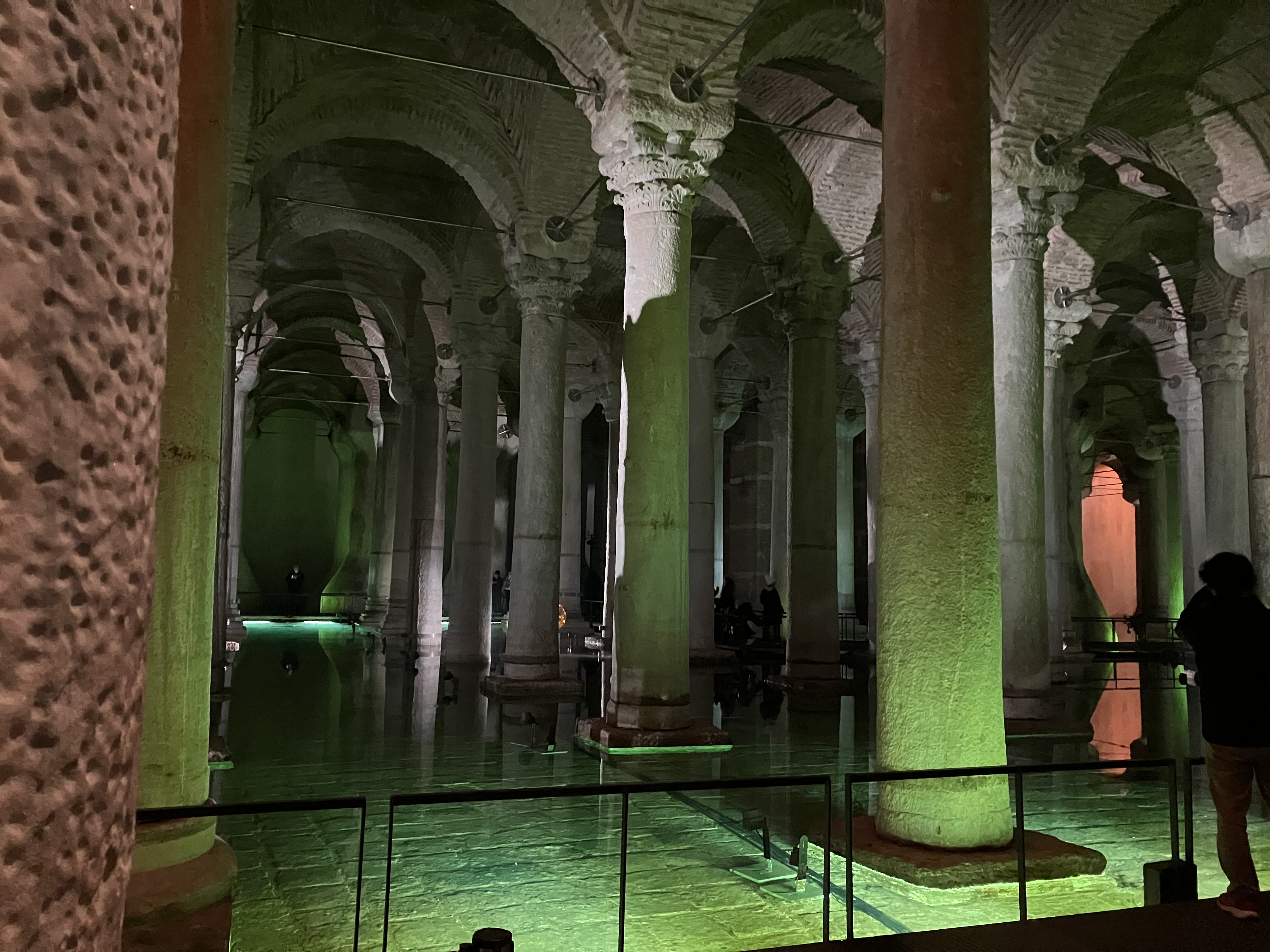
My favourite thing was the ancient water cistern, hidden under the city near the Blue Mosque. It was built in Roman times (maybe by Hadrian) but fell into disuse and everyone forgot they were there. Which means they remained unspoilt until they were opened, drained, and made safe.
We paid 900 TL to enter (about £20 each) and wondered whether it was worth it. It was. We walked down a metal staircase, into a world of atmospheric lighting reflecting on the water and elegant arches over tall pillars. A subterranean palace for enchanted princesses, or ghosts, or maybe just James Bond (From Russia with Love).
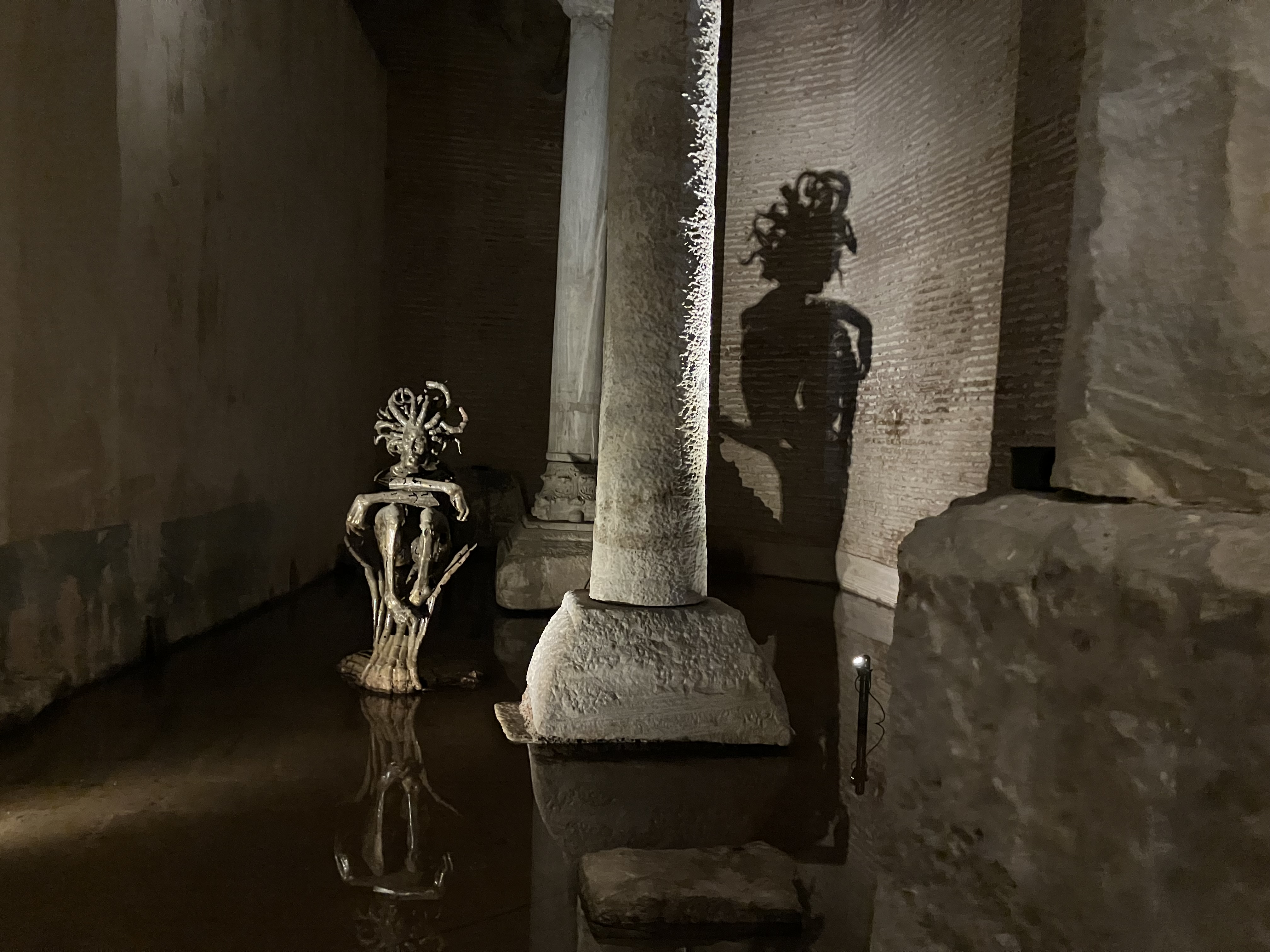
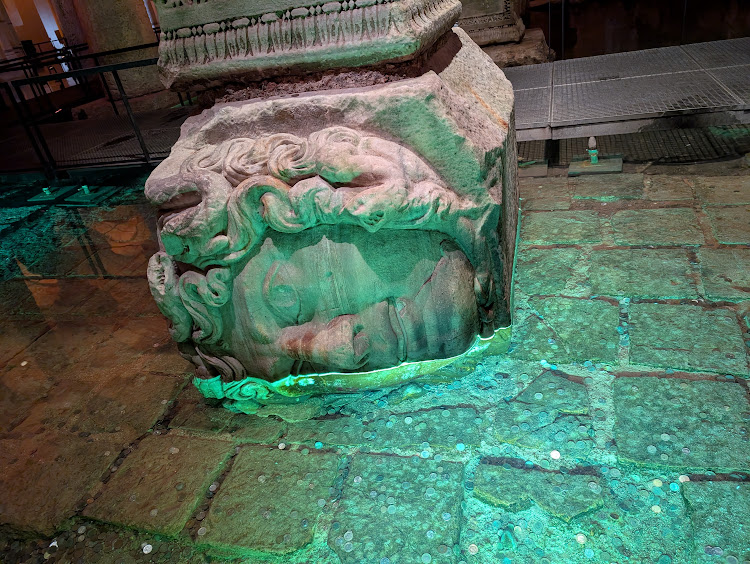
The cistern was made by slaves, and one pillar was engraved with eyes and tears to represent those who died. Other pillars stood on huge Medusa heads—thought to have been taken from Ephesus—which were placed on the side and upside-down. Whether this was to show that the Christian architects (who used slaves) no longer believed in the power of Medusa, or whether they were slightly nervous and so didn’t place them upright (just in case) is anyone’s guess. The modern architects have placed a sculpture of Medusa nearby, and the lights cast her shadow on the wall, which is brilliant.
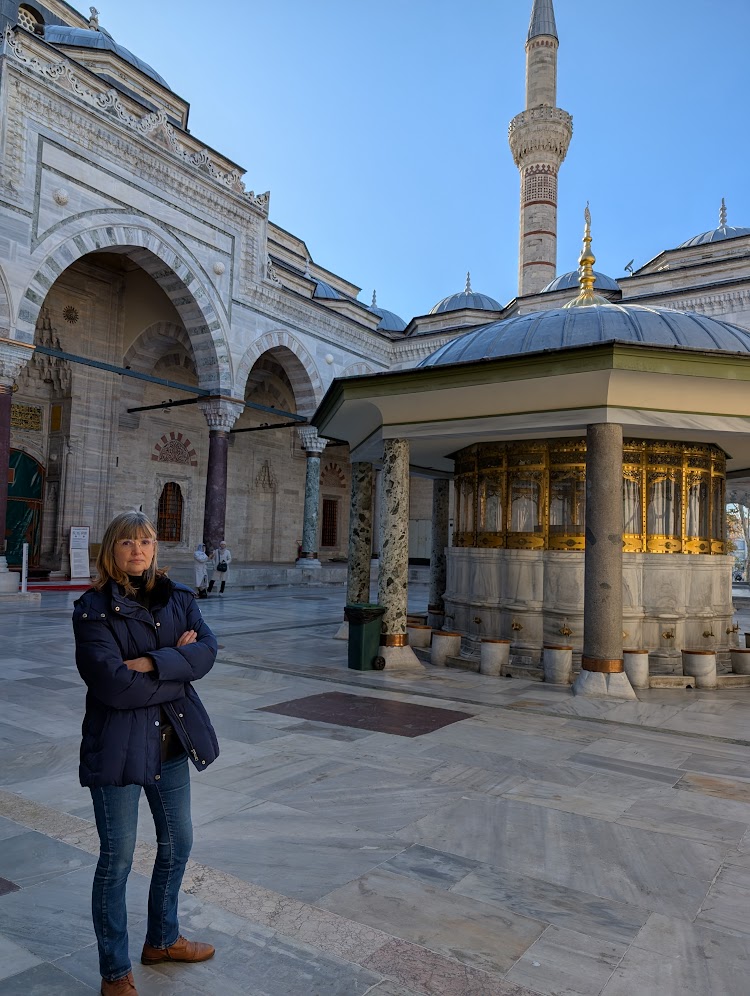
On a November afternoon, there were few tourists, and we wandered along the suspended metal walkways enjoying the atmosphere, not hurrying, noticing the splendour of the place. I don’t know if they limit the numbers during peak times. Afterwards, when we had walked back up to street level, we crossed the road and sat, looking across the park at the Blue Mosque. I’ll tell you about our visit there tomorrow.
I loved being here, Istanbul is a city with a heart. November turned out to be a good time to visit—but be ready in case it snows.
I feel that Meg has changed. She is still challenging, but we have come to an understanding, and I feel she is slightly calmer. Very slightly. I am also trying to have her out of her crate for longer. This has mixed results. In the evening, we now watch telly in the lounge, while Meg chews a bone in the doorway. She knows she must not enter the room (or she gets sprayed with water!) and she is happy, watching us, and chewing her bone. During the day, if left for more than a minute, she will find her own entertainment. Today she was left for 5 minutes (washroom visit) and she found a newspaper and ripped it to shreds. That didn’t matter, but if it had been one of my plants, or a cushion, it would have been very annoying. We are getting to where I hope to be, but slowly.
Walking is easier because I don’t attempt to walk near roads. We go to the woods, and she stays near me, and comes when called (even if I do have to shout ‘Stick!’) so putting her back on the lead is reliably do-able. She will do anything for a stick.
10/8/24,
Meg is definitely calmer than she was. Not ‘calm’ but calmer than the completely hyper monster that she was a few months ago. I am also better at knowing what she can cope with.
In July, I went away for a week, and a son and his partner lived in the house with Meg. When I got home, I was greeted with a happy, calm dog. They had basically played with her for most of every day, and let her run free in the garden, and she had learnt to sleep on the kitchen floor when she was tired. The garden was a mess, with several pots shredded, but it seemed a good tactic. It was lovely to return home to a happy dog. I was however, disappointed by her reaction when she first saw me. There are some people who she is super-excited to see, so excited that she pees on the floor and does laps of the garden. Me, on the other hand, she wagged her tail for, and then went back to shredding the large log she had carried onto the lawn. She was sort-of pleased to see me, but definitely not super-excited. I am in charge of the home, so maybe that makes me more of an annoyance in her eyes than someone to have fun with–because if I wasn’t here, she would probably be in charge. I don’t know. It’s so different to Kia, who was part of me and would have died for me—whereas I have a sneaky suspicion that Meg might be secretly pleased if I disappeared because then she could do whatever she wanted.
On 31st July, we went to meet someone at the airport. I brought Meg, thinking it would be excellent training to walk through a crowded airport. It didn’t quite go to plan, because although she walked into the lift happily, they were broken, so we had to use the stairs. When we entered the stairwell, Meg froze. Four paws on the ground, not going anywhere. We didn’t have time to teach her how to use stairs, so Husband went to the arrivals hall, and I walked round the car park with Meg. It was still good training, walking past lots of people with luggage and moving cars, and going in and out of the stairwell. But not as good as I had hoped. We will work on stairs, and spooky stairwells.
Meg now walks through the woods on the lead very nicely, and we go every morning. When she’s off the lead, she happily greets other dogs, but she tends to chase them, and other owners get anxious, so I mainly keep her on the lead. We have met deer a few times when she was free, and I grabbed a stick, and led her away, and she absolutely prefers a stick to chasing a deer. I have no idea why. I’m worried that with so many deer, there are probably ticks, so I’m careful about keeping her flea/tick drops up to date, and I use insect repellent. (Ticks carry Lyme disease, and that can be dangerous for people.)
Every evening, Meg chews her bone in the hall while we relax in the lounge. She is very good, knows the routine, and does not attempt to enter the room (well, not very far). This is nice, I like having her around.
I started tempting her up and down the stairs with her ball. She’s hesitant, but getting used to using stairs in the house. Mostly, she will do anything for a ball. I still try to hand-feed her most of her food, and practise calling her, and teaching her to walk to heel. It’s all great unless there’s a distraction, and then she is still terrible. I can get her to sit near the main road and concentrate on a treat rather than the cars, but not yet in our lane. She still hares up and down the garden fence if a car goes up the farm lane.
Next week we go to Rome, and for the first time, Meg will go into kennels. I think she’ll enjoy it, she is very sociable. I am so looking forward to the break.
11 Months
12/8/24
I have started to keep Meg on the lead for longer, because I am more relaxed and it makes the walk more enjoyable. She has lots of time to run free in the garden, and walks are more for mental stimulation. Today, in the brief time that she was free, we met 3 large black Labradors. I think they were all males. Meg bounced up to the first one—and I didn’t attempt to stop her because they were a similar size to her, so wouldn’t be bounced, and they were Labradors so must be friendly. Except they weren’t (friendly—that is, they were Labradors!) The first one raised his hackles, obviously not keen to be greeted by an impertinent young female. The other two surrounded her, and before I knew it, Meg was lying on the floor while the Labrador owner shouted at her dogs. Meg managed to get up, and started to run, so I called her, and she came near enough to grab. (Not, of course, running directly to me, but sort of in my general direction, which is usually the best I can hope for.) At no point had Meg yelped, and in my experience, dogs yelp at the smallest discomfort, so I’m pretty sure the encounter was about dominating her rather than attacking her. The owner was extremely apologetic, but I wasn’t sure it was necessarily a bad experience for Meg. It might be good for her to learn that racing up to a big dog is not always a good idea. And as I say, there didn’t seem to be any viciousness to it, the Labradors were just making sure she knew her place in the pack—which was at the bottom!
We continued our walk on the lead. It’s really hot, so the whole world was walking their dogs early, and we met lots of people. When they saw Meg on the lead, most people called their dogs, thinking she was unfriendly, so I started to call to them, explaining she was friendly but super-bouncy. They then relaxed, and I worked on training Meg to sit while the other dog approached her, and I had little chats with the owners and it was all very sociable. Meg was friendly to all the dogs that passed us, so the earlier encounter with the Labradors had obviously not affected her badly.
It’s hard to keep Meg cool in this weather, and she pants continually. I can’t wet her, because she hates the hose, but I have wet her bedding, so she can lie on cool damp towels. Not that she does of course, she picks them up and runs round the kitchen with cool damp towels! But I tried.
She is getting better at stairs already. Today I put her ball on increasingly higher steps, and she walked right to the top of the flight without a problem. Coming down is more precarious, because she tries to leap the last few steps—which would be dangerous if she was on the lead—so I will keep teaching her to go slowly up and down. (And is quite dangerous if anyone stands near, as they might get a flying German Shepherd land on their head.) She’s fun to teach, because she learns so quickly. Just as long as she doesn’t kill someone by mistake…
Thanks for reading. Have a safe week. Love, Anne x
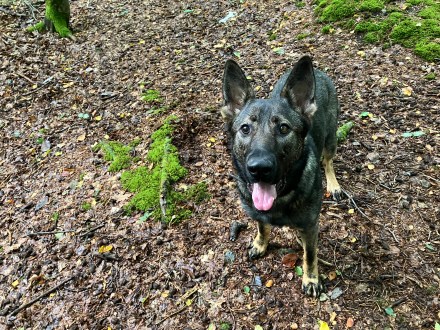
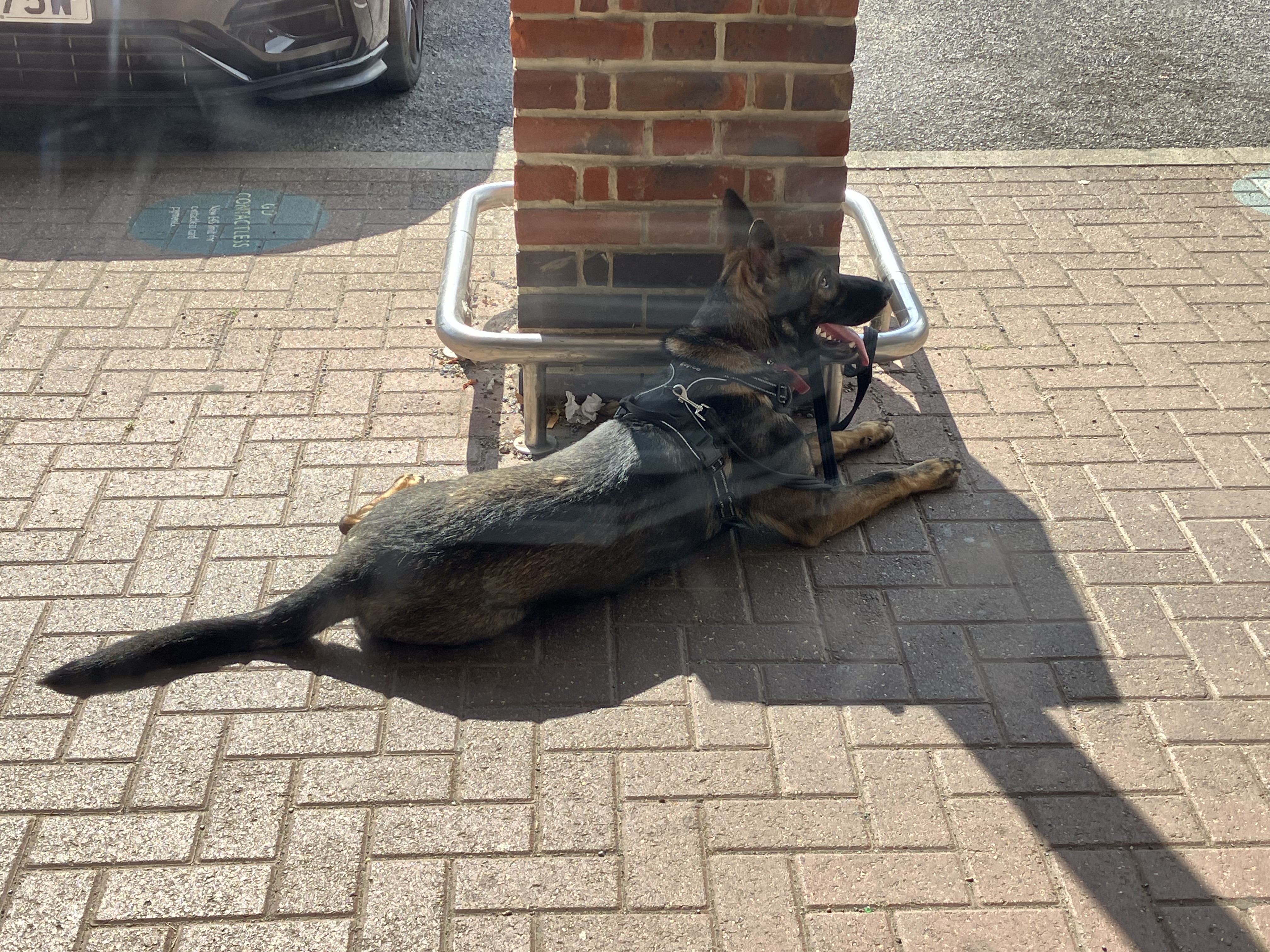
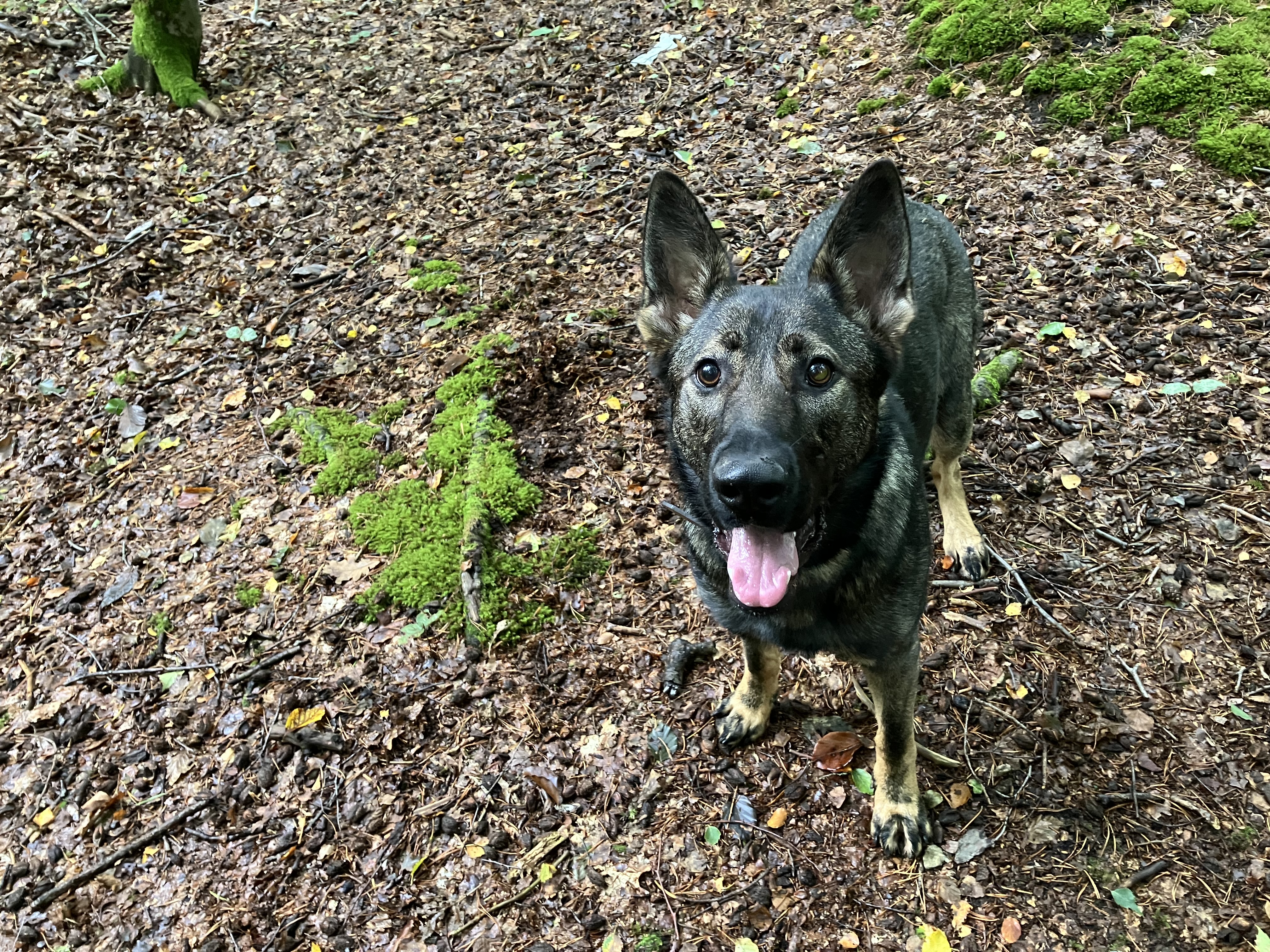
Walking calmly next to the trolleyWaiting outside the supermarketFocussed on a stick!Action shot
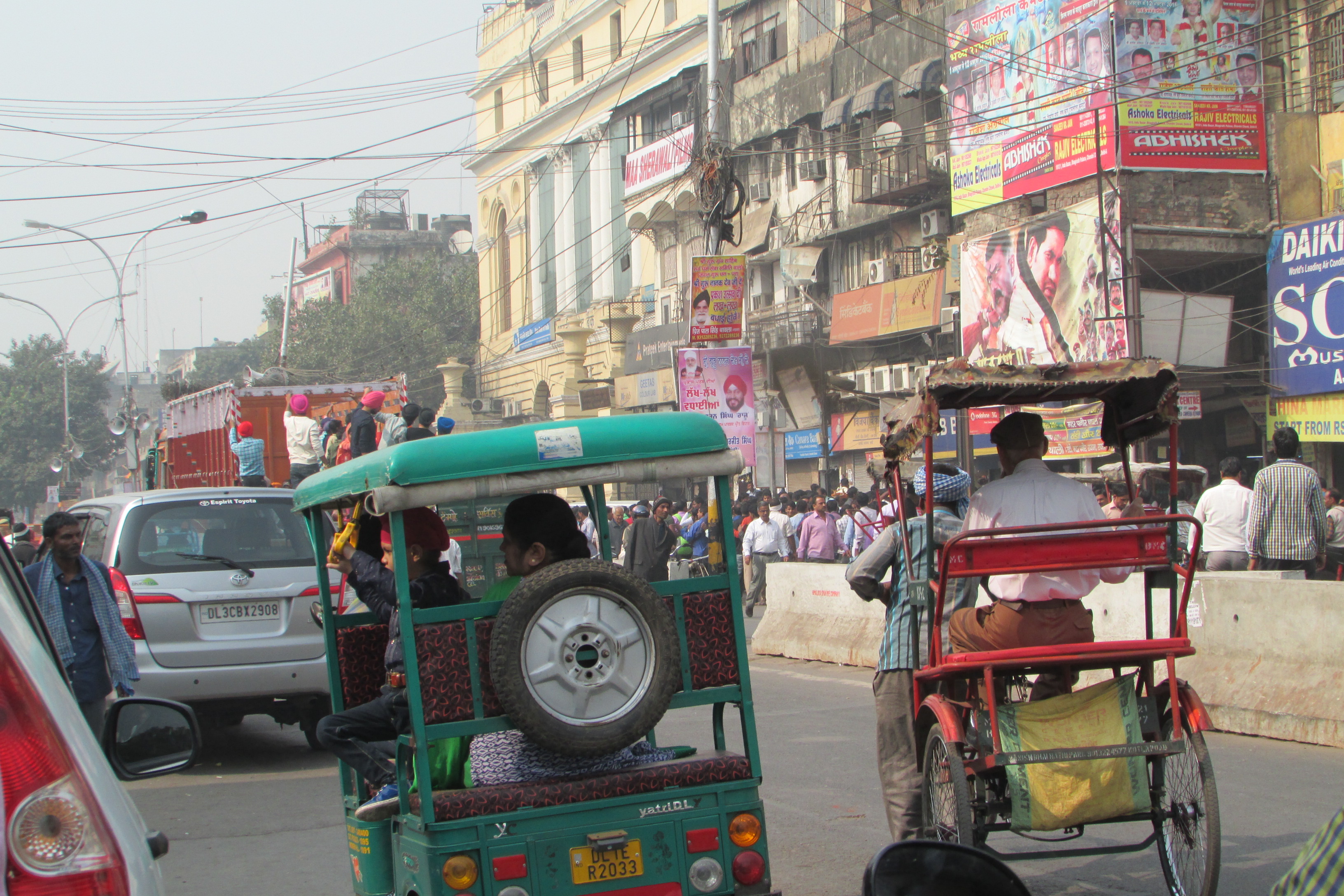
I very quickly want to tell you about a meeting that I’ve just had, with a couple of people who partner with Tearfund in India. Some of the meting was confidential, but some things I can share. Talking to people who live in vastly different places, with different problems, is always good. It’s so easy to stay in our own bubble, and to worry about our own problems, and hearing about people who mainly eat rats for supper helps to keep things in proportion.
I was learning about a project Tearfund are partnering with, which has the catchy title: Transforming Masculinities. (Honestly! I kid you not, this is the title they have come up with.) Unlike the title, the work has absolutely nothing to do with people who feel they are the wrong gender, or who want a sex-change, or any of the other modern inferences that you might imagine. The work is about educating men about the rights of women—teaching husbands that their wives are equal partners, and their daughters should have the same rights as their sons—that sort of thing. Crimes against women is still a big problem in India, and educating the men might be a good way of sorting it out. Especially because men in the churches are sometimes no better, when it comes to abusing women, than men outside of the church.
Tearfund is better than me at knowing how to meet need—and how to assess it. One of the workers made the excellent point that when assessing the success of a project like this, initially, you might expect the police stats on crime against women to increase. Because more people will be reporting it rather than hiding it, telling the women that it doesn’t matter. (The long-term aim, of course, is for the crimes to stop, but reporting them officially is a first step.)
The workers also talked, as an aside, about some of their other work—like ensuring people who cannot read or write are able to access the government help that is available, or mending toilets and checking that people in the slums are using them, or ensuring there is clean water available. When you see lists of things like one toilet to every 33 people, or a clean water tap available to x number of families, it really makes you think. This is today, 2024, and there are still families sharing a single clean water tap? Really? How is this okay?
They also spoke about the issues today, which I was ignorant about. Did you know that currently (end of November 2024) the pollution in Delhi is so bad that people have been told to stay inside? So just like during Covid times, children are not able to attend school, people are struggling with child-care and online work—and those are the ones lucky enough to have a job that can happen indoors. The people who have to be out are getting ill, simply because they don’t have clean air to breathe. We talk a lot about our rights in the UK, and the sense of entitlement worries me. But surely, everyone has the right to clean air to breathe.
We need to be aware of these issues, because we are all part of the problem, aren’t we? As I said, we live in our bubble, and if climate change doesn’t directly affect us, it is easy to ignore. If our taps work (our own tap, in our own kitchen—not shared with several other families) then do we even think about clean water? And as you read this, are you hoping to catch some rats for your supper this evening? We live in a small world, we are able to be part of communities that have less than us. Please don’t just turn away. Please think about how you can be part of the change to improve their lives, because they are real people, coping with real issues, they are not just a photo on a charity poster. I know, because I chatted to them this morning.
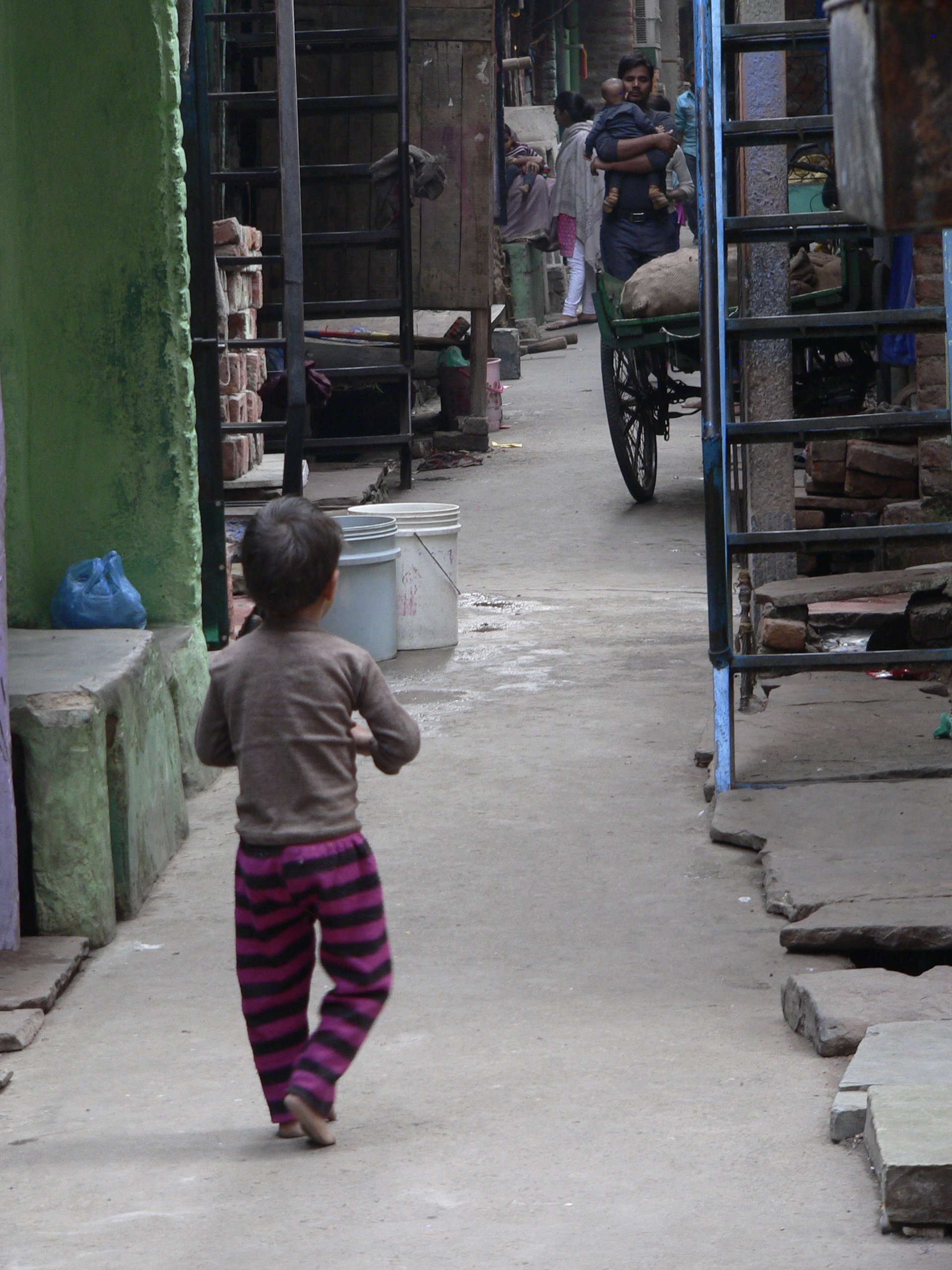
Thank you for reading, and please don’t just forget about it. Have a good week. Take care. Love, Anne x Some photos from my last trip, which was several years ago, but I fear things may not have changed much.
Playing in a rubbish tipUnder the paving slabs is an open sewerWonderful, colourful, crazy traffic!
IKEA homeware packed in boxes, Heaps of stuff littering the hall, squashed into the back of the car. Last hugs, cheery goodbyes, the drive to uni. Snippets of home, spread around the strange smelling room, The lanky excited-scared almost-man says goodbye, And the mother remembers. She remembers the feel of the bowling ball weight on her hip when she carried him, The feel of his tiny hands on her cheeks when he offered snotty kisses, The snuffle of breath as he slept against her shoulder, She remembers the child as she looks at the man. As she wishes him well, holds back tears until she has driven away.
Billycans and clothes stuffed in kit-bag, A train to London packed up tight, hurry to find the right squad. Last hugs, tearful goodbyes, a band plays on. Heaving the bag, look around for friends joining too, The lanky excited-scared almost-man says goodbye, And the mother remembers. She remembers the feel of the bowling ball weight on her hip when she carried him, The feel of his tiny hands on her cheeks when he offered snotty kisses, The snuffle of breath as he slept against her shoulder, She remembers the child as she looks at the man. As she wishes him well, holds back tears until he has joined his unit.
The posts on Facebook show new friends and nightclubs, Texts assure his food is fine, his studies easy. He doesn’t discuss the drunken evenings, the sleepless nights, the fear of loneliness. But his mother knows, she reads it in unsaid words and tired-eyed photos. And she waits. As life goes on.
There are no letters and the News shows little, Bold battles move to the Front, the headlines proclaim. They do not discuss the fallen comrades, the sleepless nights, the fear of injury. But his mother knows; she reads it in unsaid words and tired-eyed photos. And she waits. As life goes on.
The war ends. The boy returns home. Yet, not a boy, become a man. A man who will not speak of horrors, Will not discuss the stench of death, The sight of his friends, falling. The nights when he still hears the screams, still fears the dark. But his mother knows; she reads it in sunken cheeks and, eyes so weary. And she waits. As time goes on.
The term ends. The boy returns home. Yes, still a boy, almost a man. A boy who chats and loves to amuse, Loves to debate the point of life, Who meets all his friends, laughing. The nights when they drink, talk at length, sort their beliefs. And his mother knows, he is safe and content with life, has a future. And she waits. As time goes on.
by Anne E. Thompson
Thank you for reading. anneethompson.com Why not sign up to follow my blog?
I used to spend a lot of time asking ‘What does this Bible passage really mean?’ I meant, what did it mean to the first people who heard it—what did the author intend? However, I have realised that actually, the early readers of the Bible texts didn’t do this. Even within the Bible itself, we see the New Testament characters taking Old Testament texts and using them in a new way. In the spirit of this, I considered the text in the book of Matthew, chapter 4, when Jesus was tempted in the wilderness.
We read of three different temptations of Jesus, and as I thought about them, I applied them to my own life. I wonder if your own reflection will be the same? I think it’s okay to put them into a different context, and to apply them to ourselves because just before this, Jesus had been baptised—which was a sign of repentance. Matthew tells us that he did this, not because he needed to repent, but to ‘fulfil all righteousness.’ In other words, he was doing what everyone else needed to do—I think to show that he was coming alongside people—we are meant to watch his example and copy it. So what were the temptations all about?
The first temptation was to turn stones into bread. He hadn’t eaten for over a month, he would be starving! But Jesus said it was more important to live ‘by every word that comes from the mouth of God.’ For me, this means that physical things may seem overwhelmingly worrying, but I need to focus more on spiritual things than the physical. Between you and me, I am not at all sure that I am clever enough or brave enough to do this PhD research—but I needn’t worry overly much about that, I should mainly worry about whether I am where I think God wants me. I need to live each day as if it was my last one—to live it well, thinking more about God than all the worrying things.
The second temptation was for Jesus to throw himself off the temple steeple, because the angels would save him. Jesus replied that it’s wrong to put God to the test. For me, this means that there are things which I should take responsibility for. I have a couple of health niggles, and I want to pray and ask God to sort them and then just ignore them. But that is not what I should be doing, God is not a genie in a lamp. I need to take responsibility, and to take myself to a doctor. (I really hate going to the doctor, it’s so much hassle to get an appointment, and then so unpleasant being examined, and it all takes ages.)
Finally, Jesus was tempted to accept the world from Satan, if only he would worship him. Jesus told him to get lost! Only God should be worshipped. For me, this means that I must not be distracted by the theology I am learning and lose sight of God. There are some very clever, very convincing theologians, who have written all kinds of fascinating papers showing that much of the Bible is historically inaccurate, and full of bias and error. I need to consider their arguments, and sometimes they are correct—but I must not lose sight of who God is, I must not be tempted to turn my faith into religious theory.
I wonder how you will apply the three temptations to your own situation? I guess the main thing is that it is good to pause, to reflect, to consider what might stop us becoming the people who we are meant to be. What might stop us from walking with God? Sometimes we need to take stock, see where we are in danger of going wrong, and get back on track.
Tomorrow I go home. I am really ready to go home, to be somewhere familiar, with people who I know, and nothing new or scary to force myself into! But it has been a good ten days, and I have learnt loads.
Today was the last seminar, for all the PhD students starting this term. It was very practical, and started with explaining exactly what a PhD is. You might be surprised by how many of us were grateful to have this clarified, it has felt a rather vague notion up until now. (It’s just 3 years—or 6 years part-time—researching a topic of my choice, and at the end I have to show knowledge in my area and contribute something new in an academic format that is good enough to publish.) We were also told how often we should expect to see our supervisor (roughly once a month) and who decides what we study and how we do it (we do). The supervisor is a bit like the editors who have edited my novels—the work is all mine, and my responsibility, but they bring an area of knowledge beyond mine, and contribute helpful advice to make my work better.
After the seminar I had lunch with a friend (see, I have even managed to learn names and make friends!) I also discovered that the library, which has seemed worryingly small, actually has 3 other floors that I had not discovered. I managed to successfully return a book I had borrowed, and was given a paper receipt.
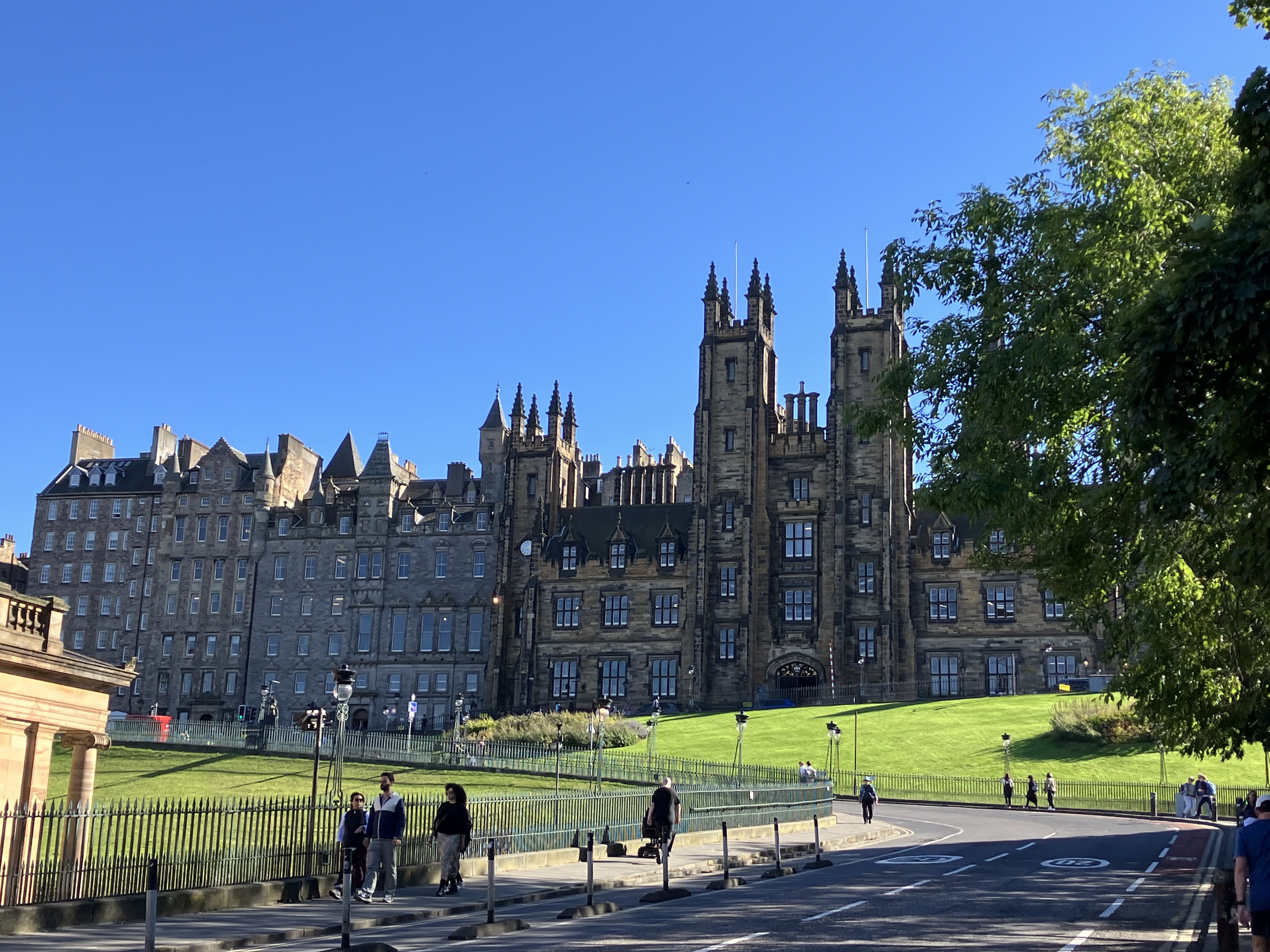
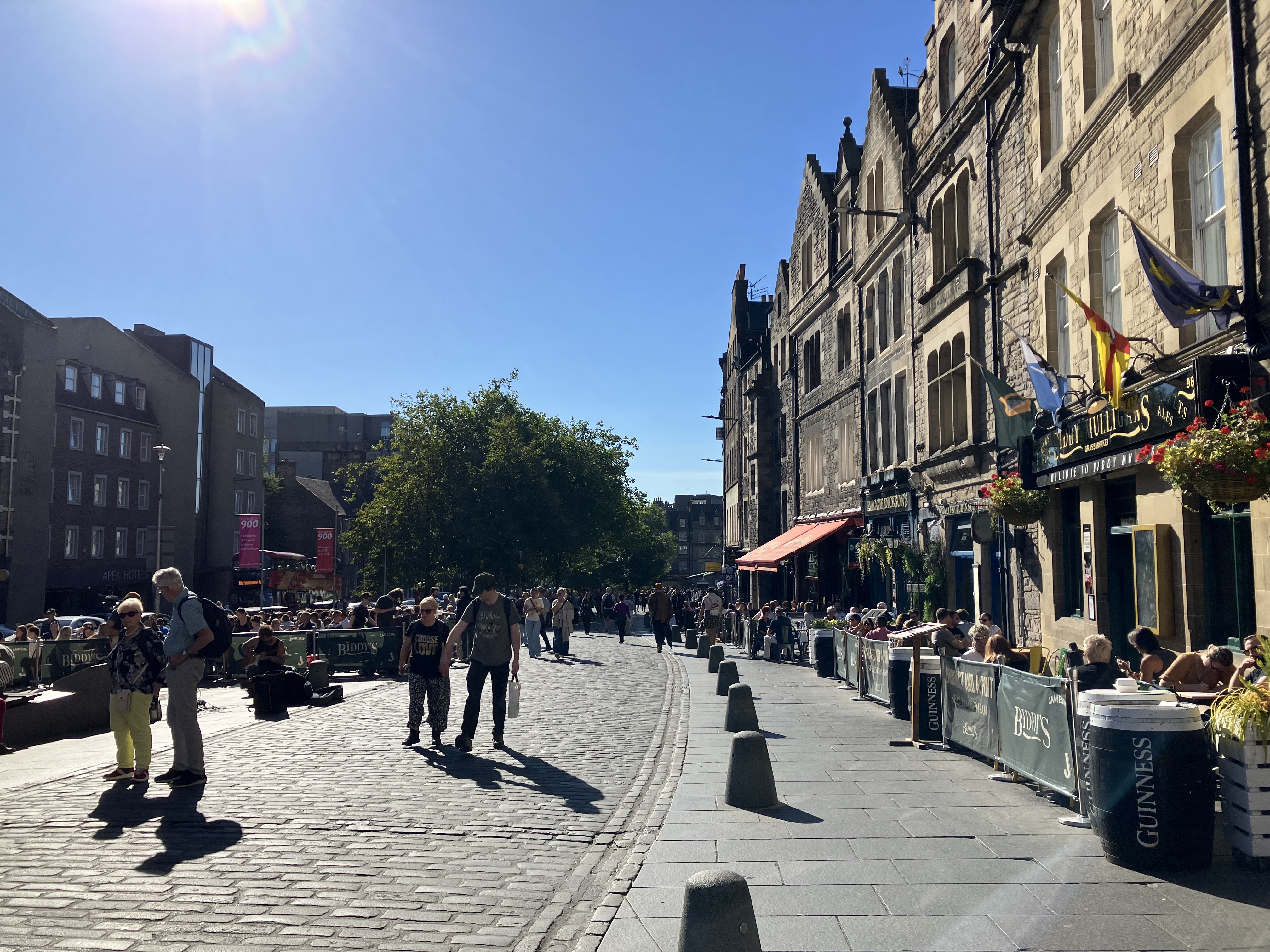
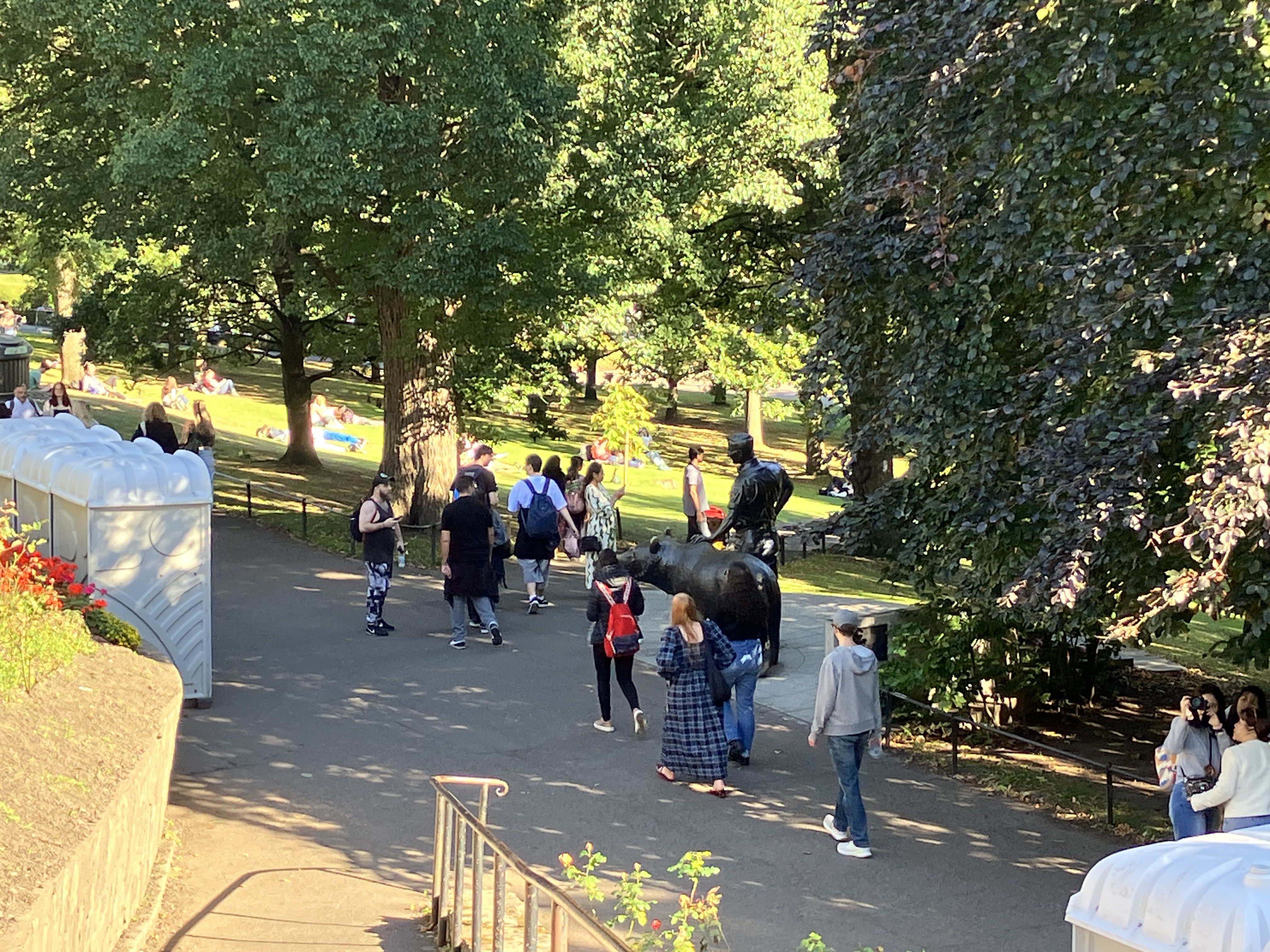
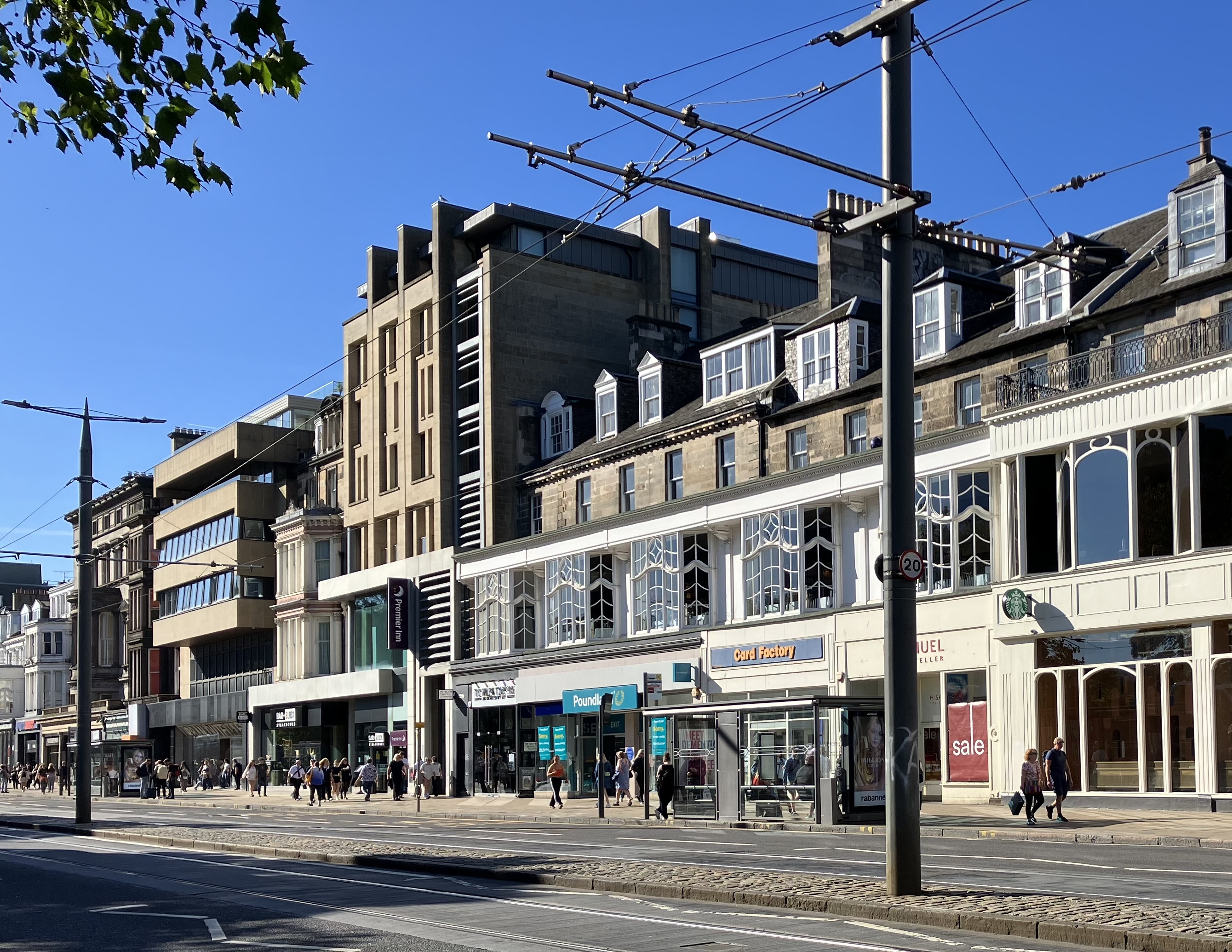
This afternoon, it was tempting to stay in my Premier Inn room, reading and writing and hiding from the world. But it’s my last day, and the sun was shining. I walked a loop of all the lanes that I have frequented during my stay, taking in the sights for a final time. There was my college, New College, perched on the hill. The entrance to the castle (which I have never seen without scaffolding either being erected or removed). There is the Royal Mile, with cobblestones and pretty buildings, bagpipers busking and a thousand tourists. Then down the lane which is thought to have inspired ‘Diagon Alley’ (Harry Potter.) Along Grassmarket, with the pub called Maggie Dickson’s—she was hanged in 1723 for murder, but survived and revived; so they changed the law thereafter to say ‘Hanged by the neck until dead’ to prevent further escapes from punishment. Then past ‘The Last Drop’ which is a pub with nooses in the window, marking the square where people were hanged. Past the castle, high above the city. Through a graveyard of huge gravestones (it’s easy to see how Edinburgh inspired the Harry Potter stories). Princes Park, with its fountain and sculptures and more tourists. Back to Princes Street, and my Premier Inn.
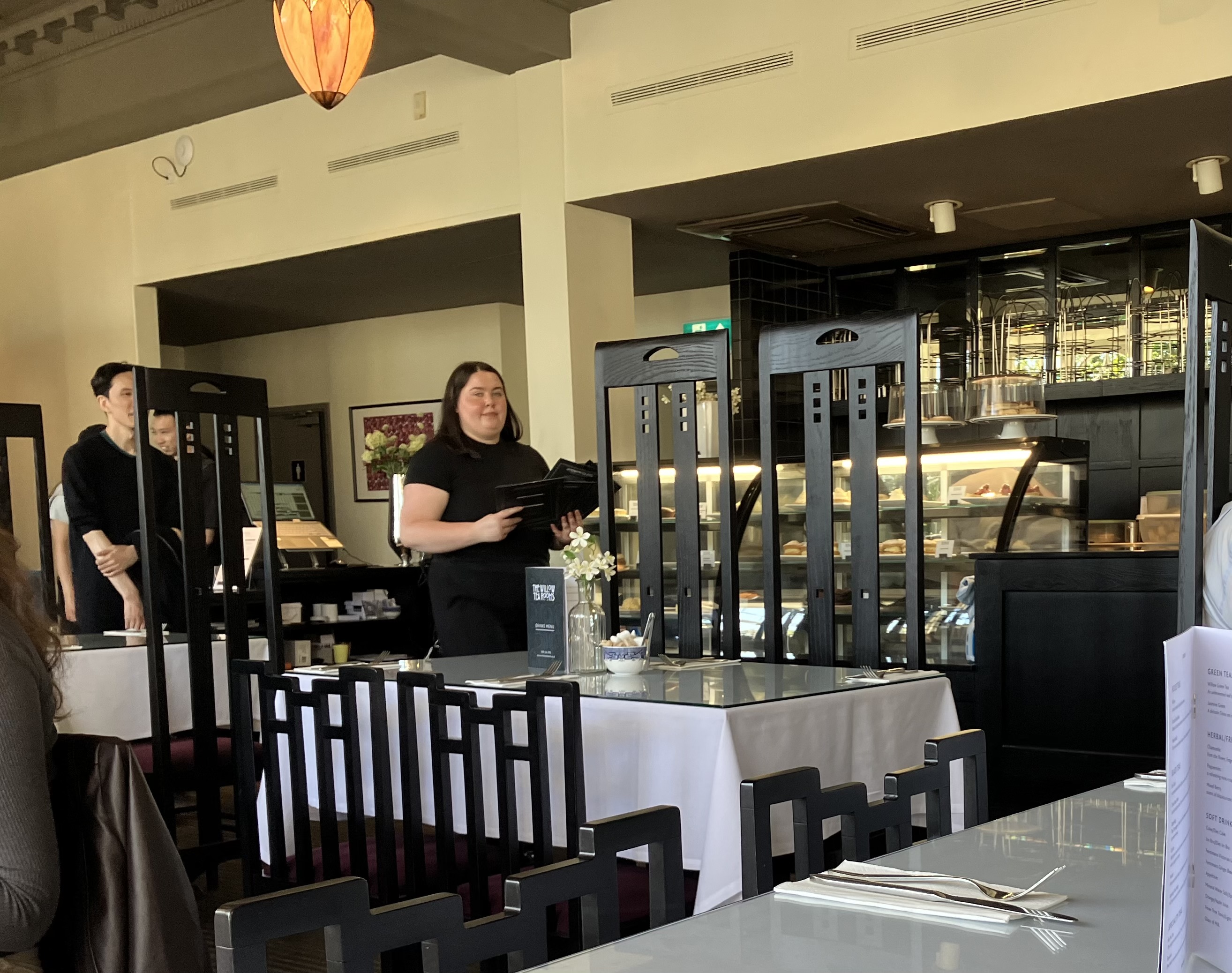
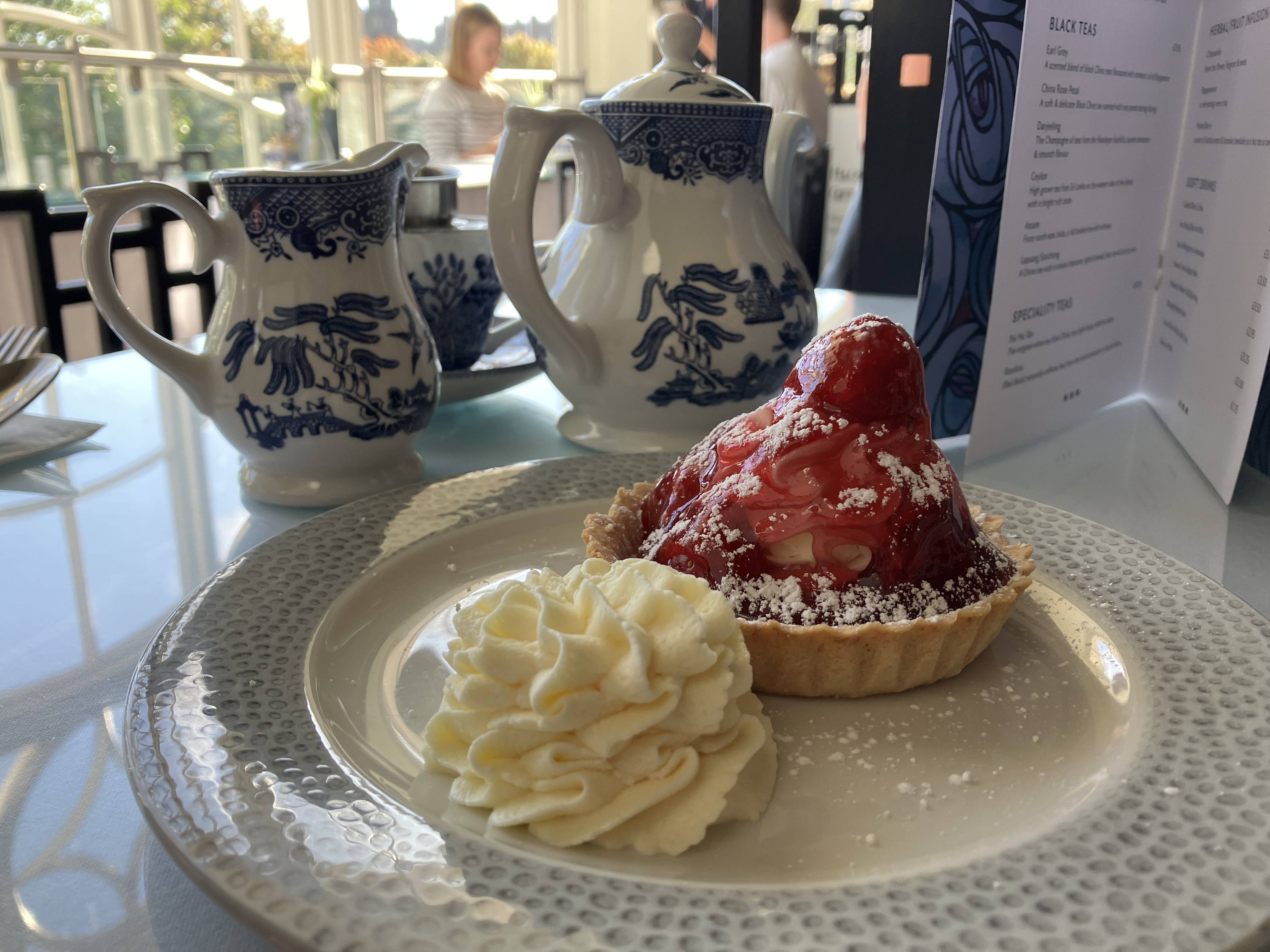
I pass a teashop each time I leave the hotel, and today I decided to treat myself. It had high-backed chairs that formed sort of screens, so the vibe was very Chinese Teashop. I had a pot of tea, and a strawberry tart, and sat there, enjoying the view and trying to understand the Chinese chatter of the group on the next table (I think they spoke Cantonese, so I didn’t understand more than the odd word.)
In the evening, I walked to a little Bistro round the corner, and ordered a glass of red wine and spaghetti bolognese, and a side salad. I don’t think they are used to people ordering side salads (it wasn’t on the menu) and my bolognese arrived with a few lettuce leaves draped on top! Later, the waiter noticed and went to the kitchen and I was given a very sweet little salad with slices of fresh orange decorating the edges, and lots of apologies from the waiter. I sat in the corner, and watched the world, and felt very brave for being there.
Now everything is done. I shall set the alarm, and walk to the station tomorrow morning, and get several trains back to Kent. It has felt like such a long trip, the longest 10 days ever. But I am pleased with what I have achieved, and am looking forward to settling down into my research.
Thank you for reading. I hope you have a good day.




























 Anne E Thompson