Being Mortal: Thinking About Being Elderly


Atul Gawande, Being Mortal (London: Profile Books, 2015)

I was lent the book by a medical friend, and after reading half I bought my own copy. It’s the sort of book you want to keep so you can refer back to it. As my PhD will finish by exploring the assisted dying  issue, I need to start learning about the issues that surround dying. This book helped to inform my own thinking, and introduced some new concepts. It also informed my thinking about ageing, and how people might want to live in the final stages of their lives. This has little to do with my studies, and a lot to do with real life. Whether we are old, or helping elderly parents, this book has practical advice and confronts some difficult issues.

Gawande is a doctor, and he spends some time explaining how in old age, it is very important to keep your feet healthy. People are not able to live independently if they cannot walk. A fall in an older person is dangerous—brittle bones break more easily, and the space inside the skull where the brain has shrunk means it gets a nasty jolt in a fall, which can cause all sorts of problems. Therefore, balance is important, and good balance relies on good feet. If someone is unable to properly care for their feet, they are likely to develop problems with balance. [Note to future self: Do some simple balance exercises every day, and keep lifting feet to where I can touch them. ‘Use it or lose it.’]

The first half of the book deals with the ageing process, and how western societies treat their old and infirm. Gawande is American, with Indian heritage, and his comparison of the two cultures was very interesting. Whilst the ‘traditional Indian’ setting of an elderly person living with the extended family, being helped through their old age by younger members sounds idyllic, Gawande is honest about the problems this can entail. Different problems to our western traditions, but still problems. He then discusses the situation in the US.

One topic he discusses are nursing homes. He doesn’t rate them very highly, and compares them to prisons! (p.73) He explains how nursing homes grew from the need in 1954 to provide hospital beds for the elderly when hospitals were too full—so their medical care was transferred to a purpose-designed home. (p.71.) They were all about medical needs, keeping the patients physically safe, and were run to be clean, efficient and safe. Then, in the 1980s, Keren Wilson tried to build a better model, and built an ‘assisted living’ community—where the aim was to allow elderly people to live independently, with the physical help that they needed. They had locks on their doors, privacy, and autonomy. If they wanted to wear pyjamas all day, or eat food that was bad for them, they could.

This led to the assisted living homes we have today, which tend to be a compromise between the two models. He makes the point that homes for the elderly advertise that they are safe and clean—not that the residents can make their own choices. This is because the homes tend to be chosen by the children, not the elderly—and children want their parents to be safe and clean. He writes that this is because ‘it’s often precisely the parents’ cantankerousness and obstinacy about the choices they make that drive children to bring them on the tour to begin with.’ (p.106) He also remarks that this is partly the fault of the parents, ‘because they disperse the decision making to their children . . . It’s sort of like, “Well you’re in charge now.”’(p.106.) [Note to future self: Don’t dump decisions on my children if I am capable of making them myself.]

He does also describe some excellent care homes, some of which introduce things like plants, or animals, or combine with a school so the residents can help the children. He discusses the motivation for living, and that in the end, being ‘safe’ is not enough. People need a role, something beyond themselves, a purpose. Otherwise it seems they disappear inside of themselves and lose the enthusiasm for life. He writes that ‘death rates can be traced to the fundamental human need for a reason to live.’ (p.123.) He discusses Maslow’s hierarchy of needs (the idea that physiological needs—food and water—are more important that safety, which is more important than love/friendship, which is more important than self-esteem, which is more important than self-actualisation.) Gawande considers that above ‘self-actualisation’ is the need for transcendence—the need to go beyond ourselves and help other living creatures. [Note to future self: Find someone/thing to care for.]

Gawande states that the problem, as he sees it, is that we have put issues of life and death with the medics—and they are not necessarily equipped for this. He describes ‘a still unresolved argument about what the function of medicine really is’. (p.187.)[This is my own view too—I think death should be left to philosophers and theologians, not medical professionals.]

Another modern problem—which affects the States more than the UK is the availability of treatments and the way that insurance works. Therefore medics no longer have to question whether a treatment is ‘worth it,’ either financially or in terms of benefit to the patient. If it’s available, and a patient wants it, then they check the insurance company will pay for it and the patient undergoes the treatment. This has a parallel in the UK with pet medical insurance. If our pets are insured, and if the vet suggests a treatment, it is very hard to step back from this, to take a holistic view and decide whether the treatment is actually in the best interests of the pet. We love our pets, we don’t want to lose them—but sometimes I think they suffer more due to invasive treatments than if we just made them comfortable and helped them to die peacefully. Gawande questions whether most of the money spent in the last months of life actually benefits anyone. He suggests this is particularly true at the very end, when patients are hooked up to expensive machines, their lives prolonged by a few days but with no ability to ‘die a good death.’ (My expression.) Unable to say goodbye, or come to terms with what is happening to them, their last moments are reduced to being a patient. He says that people who are dying have priorities other than living for an extra day or two, and ‘technological medical care has utterly failed to meet these needs’ and the financial cost is massive. (p.155.) He suggests that by putting our faith in modern medicine so completely, we have forgotten ‘how to die.’ (p.158.) [Note to future self: Decide what is important to me in the present.]

Gawande is a great believer in palliative care—help to live your final days as well as you can, rather than suffering intrusive uncomfortable treatments trying to extend life by a few more months. He discusses this in the setting of his own father’s death, which makes the discussion both personal and honest. It’s much easier to have a theory about death when it doesn’t touch you. He also lists some questions—difficult to ask ones—which enable families to help their relatives to die how they want to die. This involves asking the person what they fear most about their diagnosis, and what they want the most. (It might be to continue being able to eat, rather than to have the longest possible life!) He also suggests asking what the person would like in an emergency—do they want to have their heart restarted? Do they want aggressive treatments (such as being on a ventilator)? If the answers are known before the emergency happens, then people are able to make the right choices in a crisis situation. He talks about what the aim should be for a terminally ill person, saying it is not about ‘a good death, but a good life to the very end.’ (p. 245.) For Gawande, this means that assisted dying would be a rarity, not the norm—because so much can be done to help a person optimise their last few days, and very few conditions cannot be managed with drugs. [Note to future self: Communicate my wishes to my children, don’t make them have to guess.]

I am still unsure of my own view about assisted dying, so it’s helpful to hear what others think. I found Gawandes book to be a helpful resource, and I value his insight into the issues surrounding old age and the end of life. Now, don’t forget to take care of your feet!
Thanks for reading.
Take care.
Love, Anne x

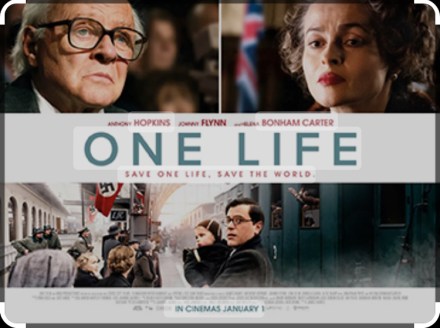
One Life


(Spoiler Alert!)
We went to the cinema this week—I haven’t been to the cinema with Husband for years. I had forgotten how chatty he is. Our local cinema is very nice, with fairly small theatres, and nice comfy chairs, and they offer a menu of food and drink, which they bring to the seat. I think perhaps it was too much like watching telly at home, because Husband gave me a running commentary on every advert (and there were lots) just like at home. Mainly he discussed how many adverts there were, and how misleading the ‘start time’ had been, and how he was ready to leave now, he’d watched enough. It was a lot like I had taken Meg with me (how did I manage to choose an antsy dog and an antsy husband? You would think I would learn!)

He ordered a coffee, which perhaps didn’t calm him down, but did give him something else to talk about. It was, apparently, very good coffee, but probably not worth the price.

The film began, and the commentary next to me stopped (thankfully). The film is very well made, with actors who make you believe in them, and the story is wonderful—about an ordinary man who manages to import lots of Jewish children before the war begins.

I was struck by two things. Firstly, I hadn’t realised what a complete cut-off the declaration of war was. I had assumed, because the Nazis were gradually moving across Europe, that travel between countries had gradually ceased. But it wasn’t like that at all. Access to much of Europe, including Germany, was possible for normal people with a visa right up until war was declared—and then it all stopped instantly. Hence there were British people in places like Czechoslovakia right up until the day we declared war—and they then had to leave pretty fast before the borders closed.

The other thing that struck me, was that the hero of the film was just a normal man. He wasn’t a great campaigner, not a particularly charismatic  figure; he was just a banker. He was ‘good with paperwork.’ Yet his skills managed to save hundreds of children, because he was passionate about what he was doing. There is a lesson here. None of us can say there’s nothing we can do, because we all have skills. Whether it’s admin, or teaching, or baking cakes—I bet there’s something you’re good at. The challenge is how are you using it? Is there a way that your skill can help other people? Because surely, that is what life, real life, is all about.

Of course, there were lots of other ‘heroes’ in the film who hardly appeared. Some families took Jewish children, and cared for them for life. That takes some courage, a bit of risk-taking and a lot of stamina. They weren’t part of the film though, they were barely mentioned. Sometimes the real heroes are the ones who we don’t notice.

I definitely recommend you try to see One Life. But do try to go with someone quiet.

Thanks for reading. Have a good week, and take care.
Love, Anne x

Thanks for reading.
anneethompson.com
*****

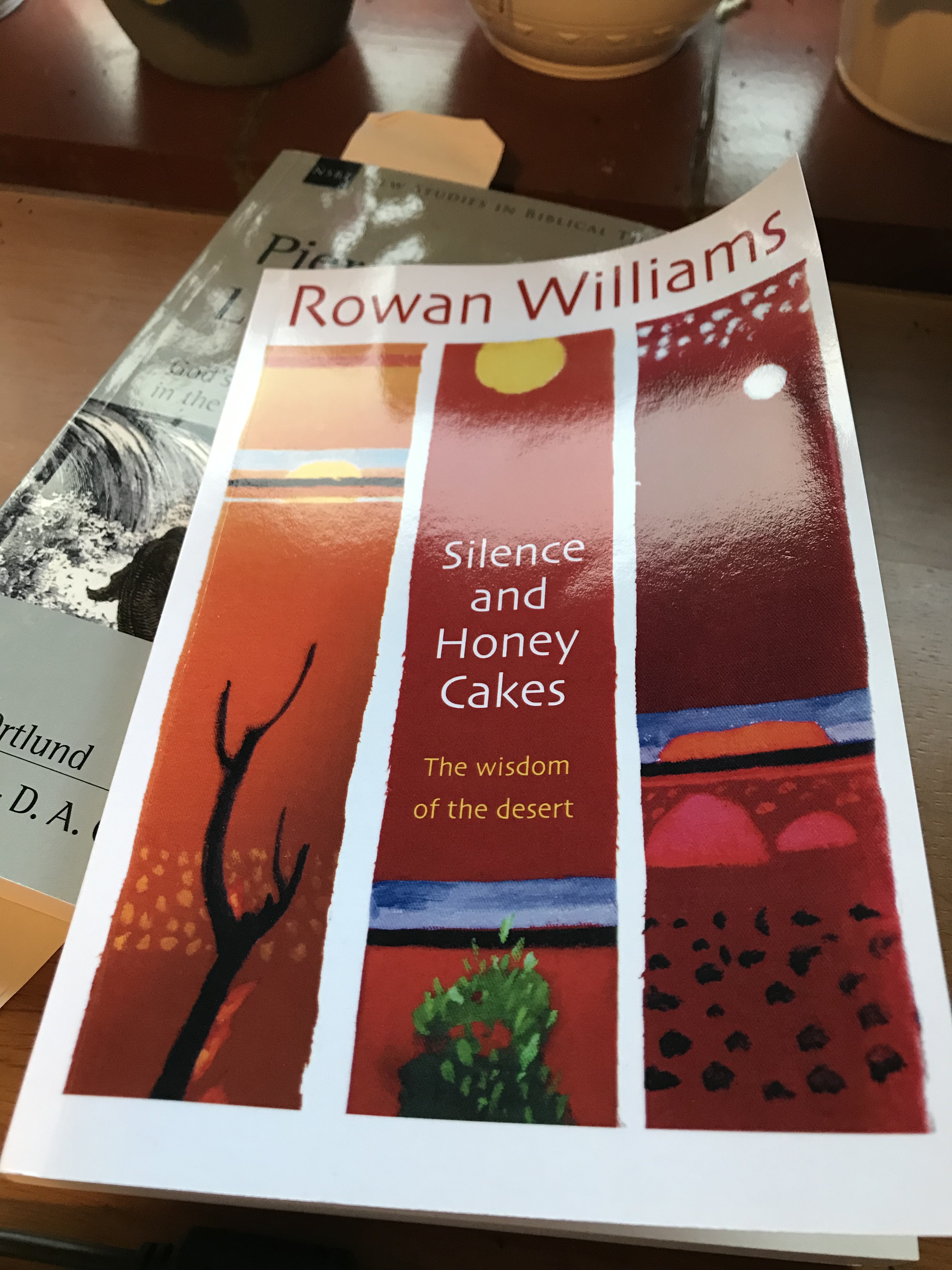
Book Review: Silence and Honey Cakes


Silence and Honey Cakes

By Rowan Williams

Early on in the Christian religion, after the books of the New Testament had been written and the message spread abroad, some people wanted to explore their relationship with God in detail. These were the monks and nuns who set up communities in the Egyptian desert, from about 350 AD. We still base lots of our theology on what they decided (so, you might think that you learned about ‘original sin’ from someone in your church, based on the Bible, but that was one idea which was introduced by one such monk).

The monks/nuns lived in communities, and their ‘spiritual life’ was connected to their ‘physical life.’ Although they removed themselves physically from contemporary society, they lived amongst other monks and nuns, and were dependent on each other. They considered their spiritual welfare to be closely entwined with other people. For example, one monk stated that he tried to focus entirely on his own sin, because then he would never be tempted to judge anyone else—how could he complain that dinner was burnt if he always had in mind that he had broken a plate yesterday? (Seems like a good rule.) They also talked about ‘putting the neighbour in touch with God’ which to be honest I don’t really understand. How can they claim to focus on this when they seemed to live in such remote places? I assume their ‘neighbour’ was restricted to other monks, which is rather limited. Though some monks were visited by people seeking advice, so maybe those were the ‘neighbours.’

They do seem to have been a very tolerant bunch, very accepting of differences. They spoke about people following different vocations, and that a life spent praying was no better or worse than a life spent mending shoes, if that was what you had been called to do. The book is named after the practices of two monks, one who worshipped God with silence, and another who worshipped by eating honey cakes with his visitors. (I know which one I would like to be.)

They also had great names! The book describes ‘Moses the Black’ who was from Ethiopia and before he was a monk, he was a highwayman. Another was ‘John the Dwarf’.

I think I might suggest we devise similar names at college for our fellow-students. I shall be ‘Anne the Old,’ as most people (including the lecturers) are younger than me.

In addition to giving each other names, the monks were also answerable to a mentor. This seems like a slightly dodgy idea to me. I can understand why they believed having a human to confess to, someone to be completely open with and to take advice from, might make people more accountable (because let’s be honest, although we say that we confess directly to God, how many of us do, diligently, every single day?) However, I think the risk of abuse, of the mentor taking wrongful control, or representing their own view rather than God’s, is too great. I know some modern churches have a similar idea, but it’s not something I would want to be part of. I don’t think I trust another human with those things.

They spent time considering some of the knotty problems of Christian theology. For example, when Jesus was in Gethsemane (praying in the garden the night he was arrested) did he have the option to change his mind and escape crucifixion? If he did then he cannot have known the limitations of humanity, and being trapped in a situation of temptation. If he didn’t then how could he be fully God, who is unrestricted? It might sound a bit silly, a bit convoluted, to us today. But it was the tackling of such issues, and the finding of sensible answers, that provides the basis of much of our theology.

(In answer to the above question, they decided that the ‘will’ cannot be separated from the person as a whole. Therefore, Jesus would always ‘choose’ what was right. In the same way as a mother feels intensely protective towards her child, and if a gunman was to burst into the room, in theory she could choose to hide, but in reality, she would throw herself in front of her child to protect them, because that is her nature. Choosing to abandon her baby would be impossible.)

The book discusses what is ‘personal’ as opposed to what is ‘individual.’ It gives examples of people who lived lives in tune with their own personalities, without necessarily striving to be different. ‘Self’ was not something to be flaunted, ‘different’ was something natural, not something militant. I think they were not trying to ‘find themselves’ but rather trying to find who God had created them to be. Sometimes what I read sounded like navel-gazing, a bit too much looking inside and not enough looking to God, but it’s hard to understand a lifestyle from a book written centuries later. Certainly they were on a quest to find truth—the kind of truth I wrote about a few weeks ago. ( https://anneethompson.com/2023/02/06/should-politicians-tell-lies/  )

The book considers several more ideas that arose from the desert monks/nuns. It’s a little book, but it took a while to read because I needed to keep pausing, pondering the ideas presented, deciding whether I understood them and whether I agreed with them. It’s worth the time spent; if you see a copy, I suggest you read it.

Amazon link:
https://www.amazon.co.uk/Silence-Honey-Cakes-Wisdom-Desert/dp/0745951708/ref=sr_1_1?crid=165TVHJDMS27O&keywords=silence+and+honeycakes&qid=1676559026&sprefix=%2Caps%2C60&sr=8-1

Thanks for reading. I hope you have something as sweet as honey cakes in your day. Take care.
Love, Anne x

Anne E. Thompson
Thank you for reading
anneethompson.com
Why not sign up to follow my blog?

*****

Who Needs Theology?


Who Needs Theology by Stanley J. Grenz and Roger E. Olson

This is an interesting book, which outlines exactly what theology is, and how it might be applied. Although the beginning is somewhat repetitive, the authors do thoroughly explain things, and if the concepts are new this would be helpful. The writing throughout was clear and easy to understand, and it was regularly smattered with examples from the Snoopy comic.

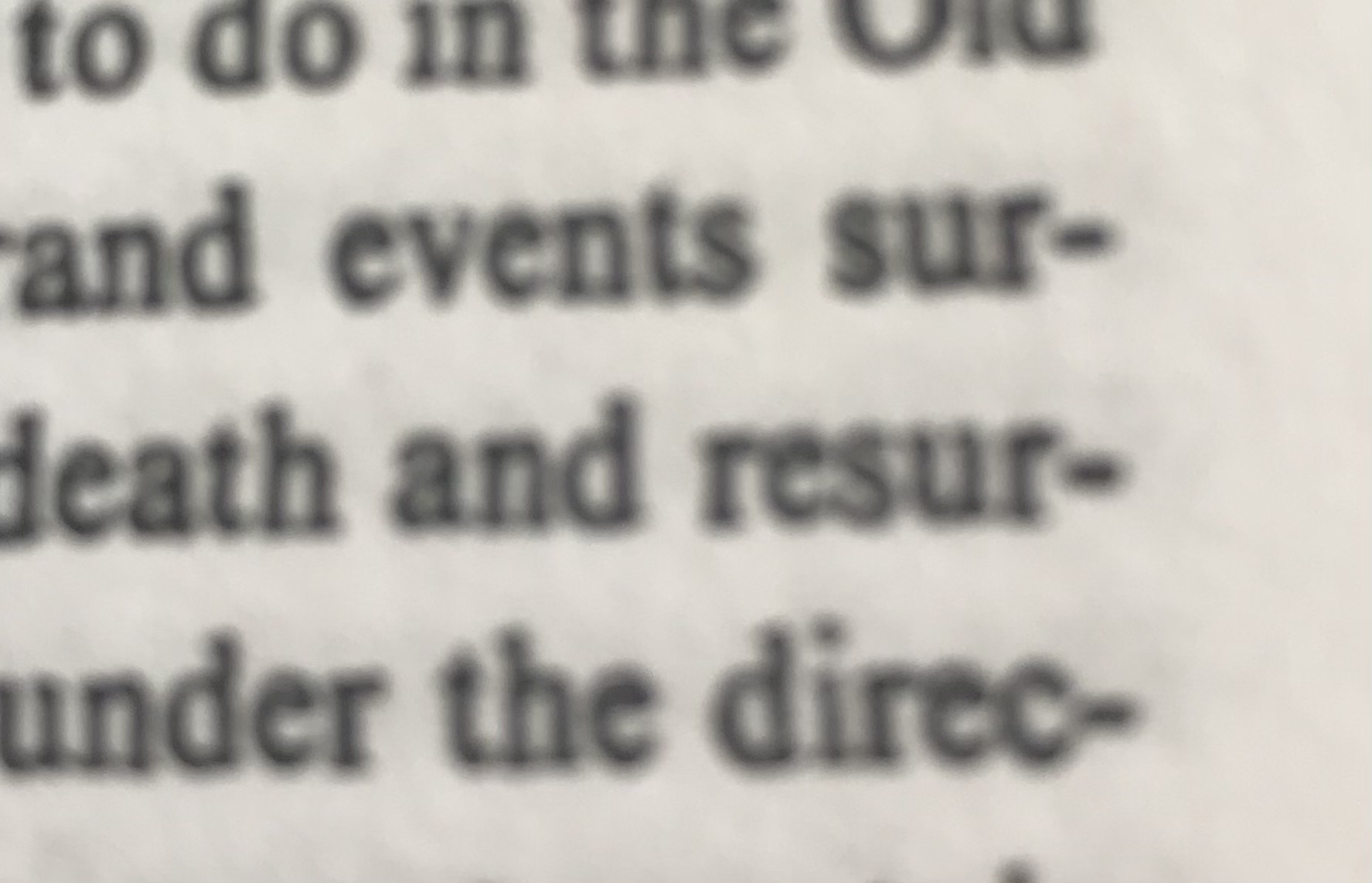
One slightly irritating aspect was the printing of the book. The typesetter had not kept the words complete, and on some pages there were many words split with a hyphen. When reading unfamiliar words, this was unhelpful. (I suspect it was done to reduce the number of pages and therefore the cost, but was, in my opinion, a mistake.) But if you can ignore the physical aspects (and I am being picky so you may not even notice) the content was excellent.

Irritating hyphenated words.

I especially enjoyed the description of different types of belief, such as the explanation of dogma, doctrine and opinion. The Bible contains many truths and rules. Some of these are dogma, i.e., if you don’t believe them, you aren’t a Christian. They include things like that there is only one God (so if you believe there are many gods, you cannot call yourself a Christian).

Then there is doctrine. A doctrine is a belief that is considered important by certain churches, and they would not allow you to be a leader in their church unless you believe them—though you would still be a Christian. For example, some people believe you should be baptised by being fully immersed, when a believer. They would not allow someone who believed in infant baptism to lead their church, though they would recognise them as being Christian.

Lastly, there are some parts of the Bible that are interpreted according to opinion. Two people might both be Christians (same dogma) both belong to the same church (same doctrine) but one might think women should wear a hat to pray, and the other think that’s irrelevant in modern times (different opinions).

Churches/Christians decide what is dogma, and what is doctrine, and what is opinion. Sometimes they disagree. Of course they do! However, it is helpful to keep these categories in mind when discussing issues. I have heard people protest that if you start saying one part of the Bible should be interpreted in the light of contemporary culture, where do you stop? The answer is now clear—you stop when you reach the truths that make up our dogma.


The book also includes a brief outline of church history:

The first Christian emperor, Constantine, called together the leaders of the church from all the Christian cities in the Roman Empire to write a creed stating what it meant to be a Christian. They met in Nicea (because Constantinople was still being built, and no one likes visitors when the builders are in). They wrote the Nicene Creed, which basically said that to be a Christian, a person must accept that Jesus was equal to/of the same substance as God. This was dogma (non-negotiable).

Until 1054, the church was unified.

In AD 1054: the church split into:

1) Eastern Orthodox (who believed that everything that was decided in Nicea in AD 325 and AD 787 constitutes a definitive body of Christian doctrine—so nothing should be changed.)

2)Roman Catholic Church—this includes the ‘Holy Office’ which decides what should be dogma/doctrine/opinion. They decided, for example, that dogma should include the immaculate conception of Mary, and her bodily assumption into heaven. This church has been further split as follows.

In 1517, Martin Luther, a German monk nailed 95 points for debate to the cathedral door. This evolved to become a new wing of the church, which protested the Roman Catholic emphasis of the authority of popes and councils—it was therefore called the Protestant Church. This then split again:
Luther founded Lutherism.
Zwingli and Calvin founded the Presbyterian church.
Cranmer helped establish the Anglican church (when Henry VIII wanted a divorce).
Simons led the Anabaptists/Mennonites.   

These wings of the church (Eastern Orthodox, Roman Catholic and Protestant) were all Christian. They all believed the same basic dogma.

In the early nineteenth century, modernism arrived. The Protestant church began to view Biblical truths in the light of modern culture—in some cases, refusing to believe things written in the Bible unless they complimented modern thought. The Roman Catholic church rejected modernism, thereby also rejecting scientific discoveries, the rights of humans, and so on. The Protestant church divided into two groups—those called ‘liberal’ who at their most extreme would only believe Biblical texts if they could be ‘proven’ by modern thought (so they rejected miracles as superstition, for example) and ‘fundamentalists.’ Fundamentalists at their most extreme tried to make all belief dogma, producing a tight list of everything found in the Bible and declaring that none was a matter of doctrine or opinion, and to be a Christian everyone must believe exactly the same things.

The book then explores the role of theologians, and how theology might be studied and applied. I found the book very accessible and immensely interesting. It is definitely worth reading if you have any interest in theology, or how the church evolved, and is continuing to evolve today.

A Celebration of Discipline — My Review


Celebration of Discipline by Richard Foster.

A book review (sort of—more a glimpse of my own experience with this book).


Leo Tolstoy: “Everybody thinks of changing humanity and nobody thinks of changing himself.”

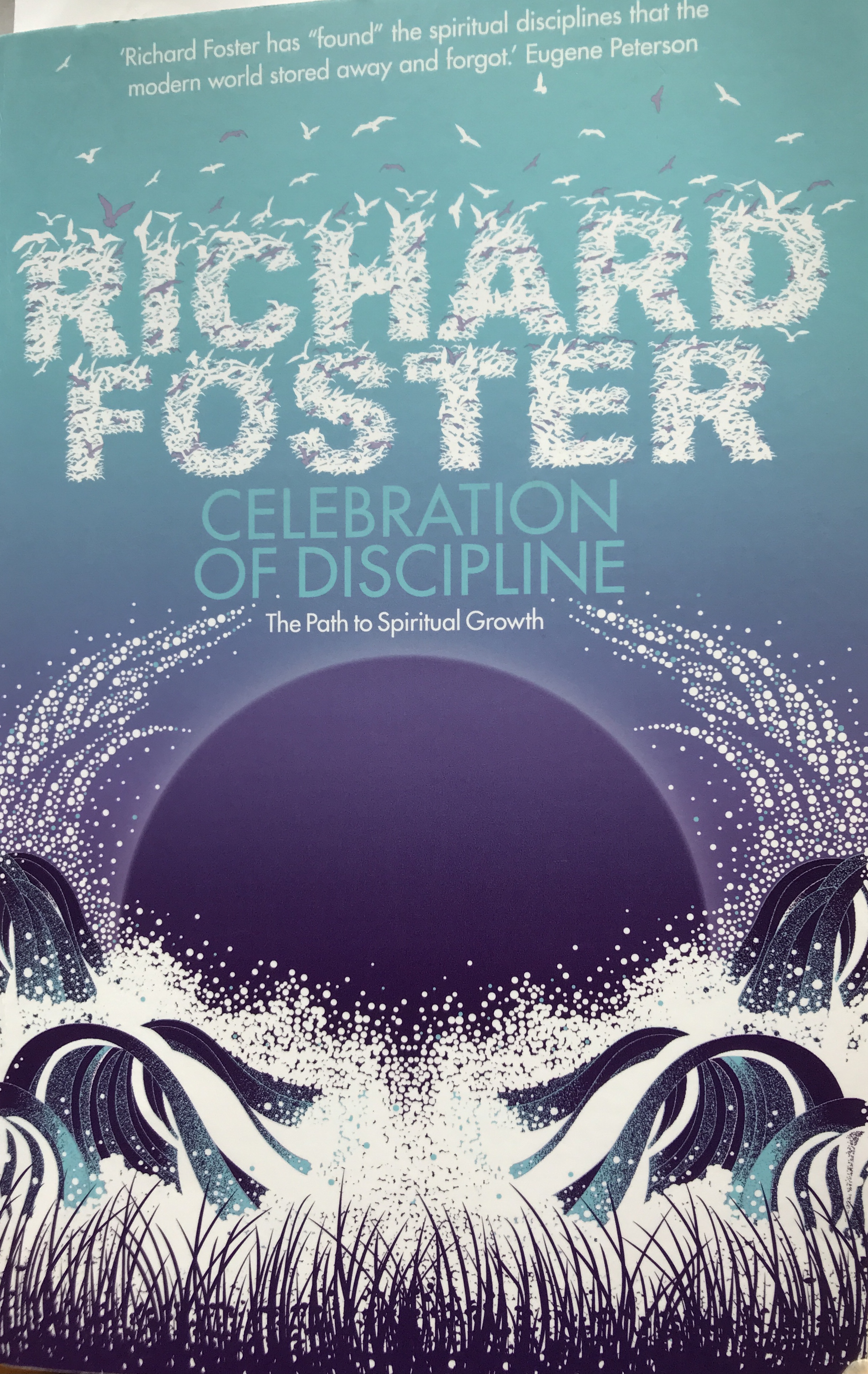
For me, the book didn’t start well. Firstly, there was the cover, which reminded me of a hairy bubble-bath with a planet in the background. “Never buy a book where the author’s name is bigger than the title” is a warning which I have pretty much ignored over the years, yet it still rings in my head. I have no idea who Richard Foster is, and probably he’s a very nice bloke, but the artistic writing of his name with flying birds made me wonder.

I opened the book, none the wiser for the cover but hoping to discover the link between hairy bubble-baths and flocks of birds and the celebration of discipline.

I met the Foreword, which turned out to be an advertisement for the book which I had already bought, so it felt unnecessary. I didn’t read further than the third paragraph.

Then there were the Acknowledgements. Strange positioning. They were dated, showing that the book has been republished many times. Perhaps that explains the large author name, perhaps this is a name that people-who-know-more-than-me look for. The 1978 Acknowledgement mentioned his children. The 1988 Acknowledgement mentioned his wife, who he said the book was dedicated to. This made me smile—images of irritated wife complaining that she had held fort while he dedicated himself to writing and only the kids got a mention. (I searched, but there was no dedication page in my copy, so maybe he changed his mind by the current edition.) The 1998 Acknowledgement was about his friend Bess, who had died. There were encouraging words about death and how it feels, and I began to have hope that this book would be worth reading after all, if only because he quotes both C.S. Lewis and Charles Wesley, who are eminently worth quoting (in my opinion).

The first chapter was very different. Foster stops writing about himself (and his abundant successes) and focusses on how a person can improve. He says that mere will-power is not enough, we can never force ourselves to be righteous, all the debris of selfishness bubbles back up. Righteousness is a gift, but Foster writes that this does not mean we have nothing to do. He quotes Dietrich Bonhoeffer, saying: “Grace is free, but it is not cheap.” Foster describes spiritual growth as being like a seed that is planted, ready to develop; he believes that Disciplines are a means for that development to take place. We cannot earn righteousness, we can only receive it, but we can put ourselves in a place whereby we are ready to receive. Foster warns against making laws, saying: “Once we have made a law, we have an ‘externalism’ by which we judge who is measuring up and who is not.” This rings true, I struggle with churches who seem to primarily want to apply rules to others and who have “a passion to set others straight.” (It is something I was guilty of myself, in the past.)

At this point, I wasn’t sure whether Foster was going to introduce a regime of ‘works’ disguised under the name of ‘discipline,’ but I was interested enough to want to read more. The chapter finished with suggested Bible readings for each day (which I ignored) and questions for discussion—so I guess this would be a good book for a group to study.

Foster makes many points that made me pause. Things like that the well-known text in Romans: “I stand at the door and knock…” was originally written for Christians, not non-believers. It isn’t suggesting non-believers should let God in, it’s showing that Christians have shut him out. Foster argues that we should include meditation as a discipline in our lives. Not the airy-fairy-mystical centring on self, but the conscious decision to centre internally on God.

I did meet a hiccup in the third chapter, about prayer. I agreed with some (but not all) of his views, but then he used ‘sexual deviation’ as an example of something to be prayed about. His definition of this was anything that differed to his own understanding that sex was only right if between one man and one woman. This irritated me intensely, especially in light of his earlier comments about externalism/law/judging others. I understand that this is his view, and I understand why he has formed this view—based on his reading of the Bible, in the same way that some people believe that black people were created to serve white people, and some believe that women have a unique role to support but never lead, and so on—all based on clearly written passages in the Bible. I am always furious when I read Christians stating their viewpoint as fact when they happily contextualise other teaching in the Bible and it is rarely in relation to themselves but rather their interpretation of what God is teaching other people.

At this point I was ready to use the book as kindling. However, I was perhaps over-reacting, and I remembered the saying: “A wise man learns more from the fool than the fool learns from the wise man.” Foster may not be a fool, and certainly wisdom is something I can only aspire to, but the principle holds true. I continued reading in the hope that I would learn something worth learning.

The other chapters covered many valuable subjects, such as: Meditation, Fasting, Solitude, Service, Confession and Worship to name a few. It is tempting to give details of each chapter, but then this becomes a precis rather than a review, so I will stop and let you read it for yourself. Brace yourself to disagree with some views, and try to glean the gold that’s hidden behind the words.

I felt that there was gold to be found, but I never managed to shake the feeling that I would dislike the author. A low point came on page 90, in the chapter on study, when he urges us to “make friends with the flowers and the trees and the little creatures that creep upon the earth.” I felt patronised. He also annoyed me when he writes: “In time we will be unable to pray like the Pharisee, ‘God, I thank thee that I am not like other men…'” It seemed ironic that simply by writing this, he was doing exactly what he claimed would be impossible. If you read this book, I hope you will absorb the wisdom without wanting to punch the author on the nose. I hope you are better than me…

Foster quoted Dietrich Bonhoeffer, so I have bought a copy of his book. A review will follow in due course. Next book on my list is about theology.

I hope you read something good this week. Thanks for reading my blog.
Take care.
Love, Anne x

Anne E. Thompson
Thank you for reading anneethompson.com Why not sign up to follow my blog?

anneethompson.com

*****

Review of the MINI Electric


My Review of the Electric Mini (for non-experts).

I had read an advert online: Make the new MINI Electric your own. Reserve online today with a £500 deposit. Learn more. 0-60mph in 7.3 seconds. From £25,500. Reserve yours today with our Feel Good Guarantee. Dual Zone Air Con. Intelligent E-Call. Front & Rear LED Lights. MINI Navigation

To be honest, I probably don’t understand all of that, but the thought of a small car (easy to park) that was fully electric (no more trips to the petrol station unless I run out of milk) was tempting. We went to have a look, and booked a test-drive—not that I intended to buy one, but don’t tell anyone!

When we arrived, there were several different minis on the forecourt. Some looked like they had been inflated with an air-pump (not keen) and some like they had been painted by 6-year-olds, with nice yellow rims around the lights and hubcaps. Not really my taste. But one was a beautiful green (if you ignore the adverts on the side). Obviously, you don’t choose a car for its paintwork, but if you did, this was the one. It had unfortunate hubcaps, that made it resemble a Playmobile car, but other than that, it was very nice.

We took our licences inside, and the salesman checked we weren’t listed as car thieves, and then said we could take one out for a drive. Due to the Covid regs at the time, he wasn’t able to accompany us, which was fine.

I went first. Driving the electric mini is unusual because there is no clutch pedal (like any automatic) but the accelerator pedal also acts as a brake—press to speed up, lift your foot to brake. As a driver who tends to coast and not use the accelerator, this took a little getting used to. There is a brake pedal as well, and you can switch off the clever multi-function pedal, but it was quite good once I trusted it.

The car is small (obviously) but it felt solid (not like our Fiesta, which feels a bit flimsy on fast roads). The acceleration was fierce—not that I properly tested it. I drove with Husband, who kept urging me to zoom away from junctions: “Go on, put your foot down, nip into that gap, give it some oomph.” But I simply wanted to drive slowly and get a feel for the car; I ignored him. He then drove it with Son 2, and I think they both thoroughly explored the whole “0-60mph in 7.3 seconds” and apparently, it’s true.

The interior was compact, but didn’t feel cramped with two adults. It would also be ideal for taking passengers in the rear, as long as they don’t have legs. It only has two doors (the third door is a lie, it’s the boot lid) so I fear Grandma might get stuck forever if she was put in the back. The back seats fold down flat, which makes an okay-sized space for a large dog who wants to breathe down your neck while you drive.

Interior was compact, but not too cramped for two adults.

 The steering wheel was a nice sporty size, in leather. The seats are only available in fabric unless you pay for a higher spec, which is a disincentive for putting large dog in the back (we decided not to include her in the test-drive trip, which was probably wise.) The higher spec also includes an ugly sunroof and fancy wing-mirrors, and front parking sensors. However, the higher spec also offers an automatic parallel-parking feature, which would be very attractive and save me many hours of humiliation (why are there always people watching when I attempt to parallel-park?) The higher spec is an extra £4,000 though, so not cheap (or worth it, in my opinion).

When I drive, I concentrate fully on what’s happening around me, trying to not hit anything. However, I was aware of a very fancy array of lights on the dashboard. There was a lack of dials and knobs, everything was digital. Things like CD players no longer seem to exist in cars, everything is linked to mobile phones or Ipods. For me to own one of these cars would require several hours of IT lessons if I wanted to use all the features on offer. There wasn’t even a slot to put the key into, simply having the key was sufficient it seems, and then there is a button to start the motor. Knowing which button starts the motor was not as easy as you might think, and when we returned the car, I turned on the radio and the set the air-conditioning before I managed to turn off the engine. I think Husband and Son had less trouble.

The electric mini has limited range due to the battery, and will only manage about 100 miles. It then needs to be recharged. (I think officially it does 145 miles, but I understand this is optimistic.) For me, this wouldn’t be a great problem as I can only drive for about 100 miles before I also need to rest and recharge. Though I suppose it would be annoying if there was a queue at the recharging points. The battery is guaranteed for 10 years, though I was assured it would last 15. It seems that the car will then be obsolete, as replacing the battery would cost more than a new car (the same as a mobile phone). Son assures me that batteries will improve over time, so unless you are particularly eager, it’s possibly better to wait a few years for the next grade of electric mini. It was temptingly nice though…

Thanks for reading. I hope you see something interesting this week.
Take care.
Love, Anne x
Anne E. Thompson
Thank you for reading anneethompson.com Why not sign up to follow my blog?

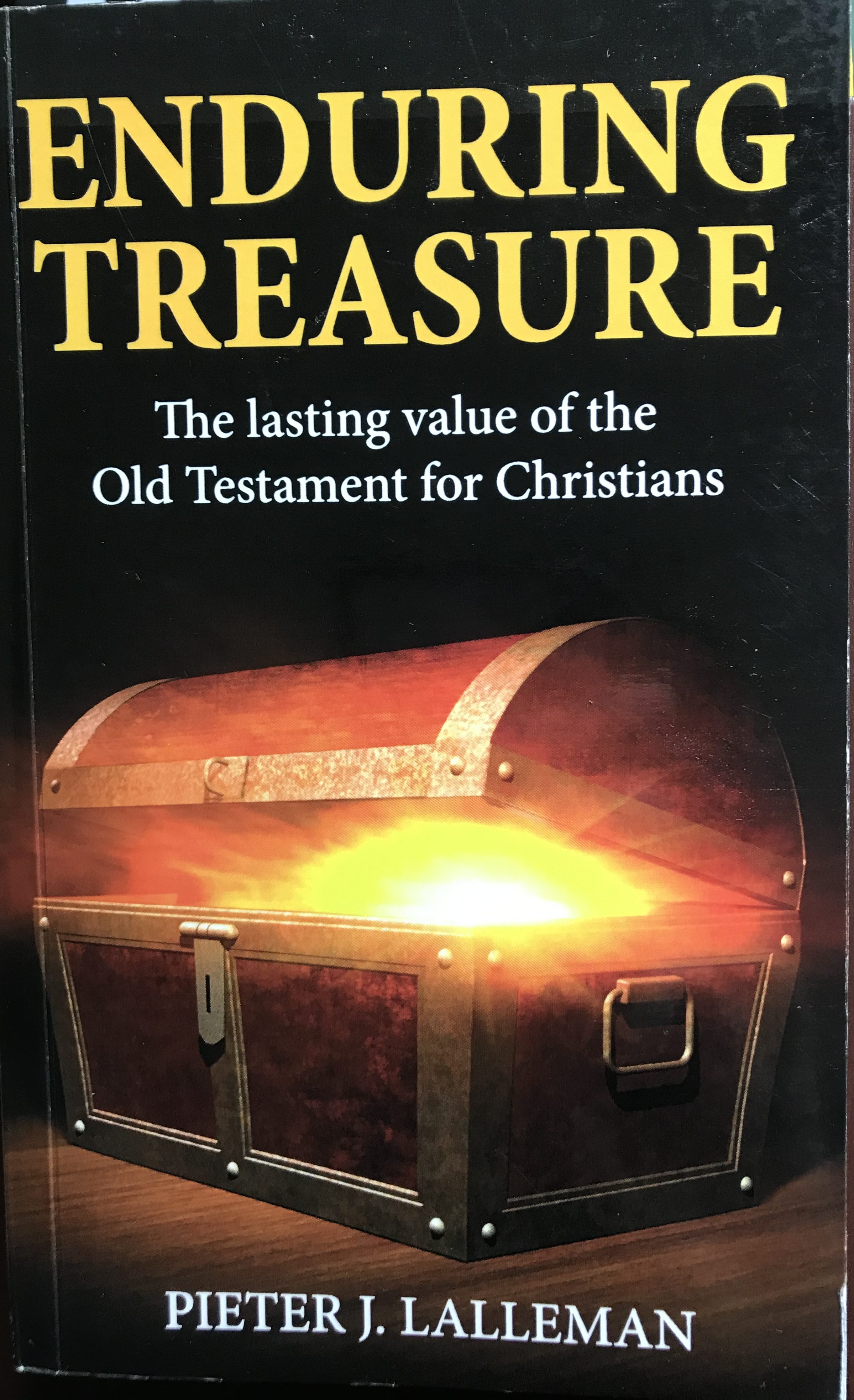
Enduring Treasure


by Pieter J. Lalleman

Is the Hebrew Bible, which Christians call ‘The Old Testament,’ irrelevant today? Were all the laws superseded and made obsolete when Jesus came, or are there still truths to be retained? We eat prawns and pork, and we no longer observe the Sabbath or stone to death adulterers and I for one wear mixed fabrics and would never sell my daughter as a sex-slave to pay my debts. And yet the books are still read, and quoted, and used to justify certain beliefs. So how do we decide what is relevant and what is simply part of history? Enduring Treasure might help you to decide…

A Book Review

Here is the review of the first book on my pre-course reading list. I’m not sure if I’m meant to declare that I have met the author (he taught my first semester of Greek) but it’s pretty irrelevant in terms of the review, because most authors tend to meet/know other authors. The only real difference from a personal perspective is that I did read the entire book with his accent.

I don’t usually read the Introduction of books, but I did this time, and I would recommend you do the same. It made me really want to read the book! Many of the issues about the relevance or otherwise of reading the Old Testament were addressed, and we were also introduced to Marcion—who said the Old Testament is no longer relevant and should be discarded. He pops up again later, and had I not read the Introduction I would have been confused, so take note!

The book then explores whether or not the Old Testament is relevant for today, and which parts should be firmly contextualised and which parts stand as unchangeable truths. As a non-theologian, I wasn’t sure how accessible the book would be, but actually everything was presented very simply, and even ordinary people like me could understand it.

There were two parts that made me laugh out loud (though I’m not sure they were meant to!) One was when Sarah and Abraham were described as a “giggly couple,” which I thought was a lovely phrase. Inappropriate laughing is something I also suffer with. The other was about church notices (the information about members and future dates for the diary that most churches list during a service). The author describes: “that someone is terminally ill, that a murder has been committed, when a case of adultery becomes public…” I have to say, the church notices in his church are way more exciting than in any church I have ever attended, where they tend to be about needing more leaders for the children’s work and someone to make a flower rota!

I was pleased that the book of Ecclesiastes was mentioned. As rather a cynical person, this is a book I have always related to. I also enjoyed the section about modern-day laments, and how most churches prefer to sing nothing but worship songs. (As I pretty much loathe the style of most contemporary church music, I possibly liked this section for the wrong reasons.)

I wasn’t sure if I agreed with the section about the book of Job—though as the author is a theologian and I am not, I assume that this means I am wrong. He writes that Job is about the meaning of suffering, but I don’t think it is. I love the book of Job, because I think it shows that God is worth following, simply because he is God. Everything is removed from Job, and he suffers horribly, yet still God is worth following. Being a Christian is not (for me) about the possibility that life will be easy or free of pain or unfair things happening—because I have known some tough times. Being a Christian is about God being worth following, whatever happens. Maybe the book is trying to show both things.

I did however, enjoy pondering his point about Esther. He says: “It shows us that God works in inconspicuous details and through people who simply do their duty without deep emotions or powerful experiences.” Our churches tend to be in awe of the people who do have big emotions and who proclaim their big experiences. We tend to ignore those who simply quietly plod on with the work behind the scene—perhaps we shouldn’t.

The only part that I didn’t understand was in an interesting section about how the books of the Bible were ordered. He writes that the Jews collected the books that they wanted to be in their Bible, and “recognised them as canonical—that is, authoritative and normative—” I’m not quite sure what that expression means. I’m also not familiar with the names of theologians who are quoted, and I don’t know whether they are alive or from the distant past; but that didn’t affect my enjoyment of the book.

My only other thought concerns those sections which the author suggests are now redundant in the light of the New Testament. This includes things like priests, and tithes and the Sabbath. Whilst I understand the point that they are no longer necessary, I wonder whether they might still be helpful. For example, I believe it is true that Jesus taught that we can all approach God directly, that we don’t need a priest as a go-between. However, for some people, in some situations, it might be easier/better to confess to a priest than in prayer, and perhaps the priest can facilitate approaching God—even if not strictly necessary. The same is true of tithes, which again should not be needed if people are generously giving so that everyone’s needs are met. But perhaps the general principle is a good one, and helpful for people (especially children as they are learning good practice) as it ensures that gifts are part of the structure of life.

In short, I enjoyed this little book (it was surprisingly little!) If you are interested in whether or not the Old Testament is relevant today, I recommend that you buy a copy. The language is easy to understand, and the concepts are interesting and worth considering. The Amazon link is below.

Thanks for reading. I hope you have a good week.

Take care.
Love, Anne x

Anne E. Thompson
Thank you for reading anneethompson.com Why not sign up to follow my blog?

anneethompson.com

*****

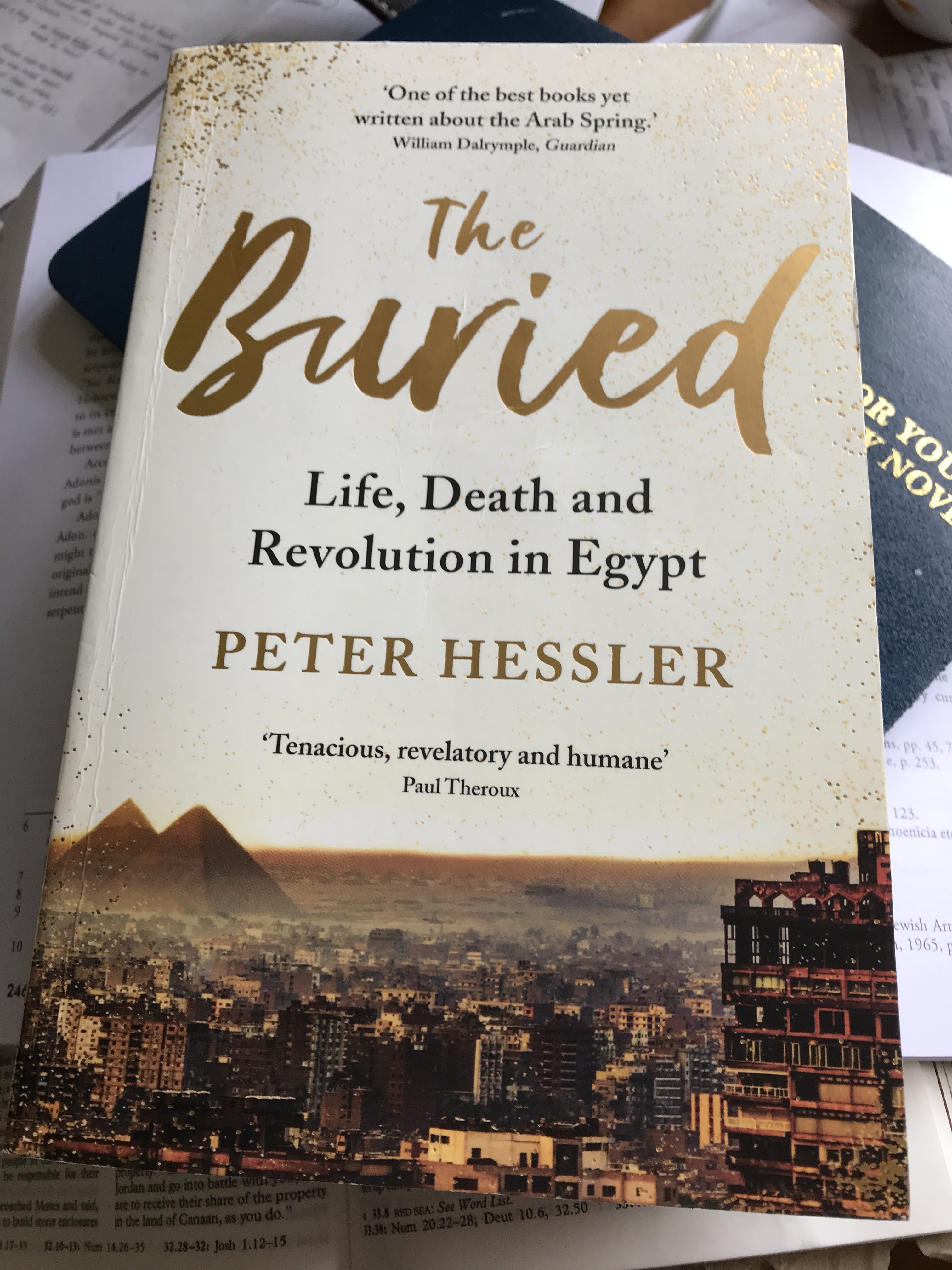
The Buried


The Buried

by Peter Hessler

I recently read The Buried by Peter Hessler, and I can definitely recommend it. I knew of Peter Hessler because when I started learning Mandarin, and scanned the bookshops for any English books with any link to China, his books popped up. He was sent to China as a young man, and worked in a remote town, teaching English (with an American accent) to Chinese students. His books described his adventures.

I loved his books. He wrote with humour, describing the many things that went wrong as he learnt Mandarin and described life in China. I felt that he wrote with tact, and had a real respect for the people he met. He seemed to genuinely like Chinese people (most foreign travellers seem rather condescending towards different cultures) and so I wasn’t surprised to learn that he is now married to a woman from China, and they have twin girls.

At the time of writing The Buried, Hessler had again left the US, with his wife and young girls, and had gone to live in Egypt. He applied the same amused patience as he tried to learn Arabic, and the culture in Cairo. He moved there at the beginning of the Arab Spring, and the book describes the events unfolding in the city.

Hessler writes in short sections, so this is a book to dip into during odd moments. I like the respect he shows towards the people he writes about. His says he always tries to learn a language using the books written in the country, because they reveal lots about the culture. I would agree with this. When I learnt Mandarin, the textbooks had lots about authority, and the vocab lists were about managers, and directors, and people in authority. Hessler compares this to the textbooks in Egypt, which were full of polite greetings and blessings, and the correct polite response in every situation. There is apparently even a correct way to thank your hairdresser!

Most people in Cairo spoke Arabic, though any quotes in newspapers were always translated into Fusha. Hessler describes one word, Yanni, which can be translated as: ‘yes,’ sort of,’ or ‘let’s pretend.’ That word alone tells you so much about the culture!

One of the charms of Hessler’s books, is that he befriends normal, working-class people. In Cairo, he befriends the man who collects the rubbish from the flats. There is lots to be gleaned from other people’s waste, much of which is recycled, any alcohol is sold (because good Muslim folk don’t drink alcohol). He also befriends a young gay man, who is struggling with the dangers facing a gay person in a strictly Muslim country (though I was interested to read that mostly, everyone knows that there is a certain place where gay people meet, and yet no one in authority is very bothered by it. It tends to be individuals who react strongly and cruelly, not the governing authorities per se.)

The political situation during the Arab Spring was obviously very interesting. Sometimes Hessler was in dangerous situations, though he writes: “What scared me most was the elevator shaft in our apartment.” He interviews people on the street and in the mosque, and attends news conferences. One feature of Egyptian politics seems to be the repeating of ‘facts’ over and over, until eventually people began to believe them. If something is asserted often enough, it becomes true…

While in Egypt, Hessler visits some of the archaeological sites. The book explores the links with ancient Egypt, and how the past continues to shape the future. The places he visited sound fascinating, and I now firmly want to visit.

Akhenaten c1346 BC

If you want to read something light and interesting, I recommend The Buried.

Thanks for reading. I hope you have a lovely week.

Take care,
Love, Anne x

Anne E. Thompson
Thank you for reading anneethompson.com Why not sign up to follow my blog?

anneethompson.com

Slavery on the Plantations


I had planned to be in Italy now. In preparation, I wrote this post last year, and postdated it to be published today. It is weirdly relevant given what is happening. As I read Fanny’s book, it was fascinating to hear her say things that today would be considered blatant racism, even though she was fighting for the abolition of slavery. There is a lesson here for today. If we are protesting against racial inequality, is it okay to shop for cheap clothes, which are made by slaves in Bangladesh? Do we only want racial equality in the UK and the US? Or are we prepared to give our money to aid agencies to help fight Covid-19 amongst the poor in India, Africa, and beyond? What, I wonder, will the future think of us?

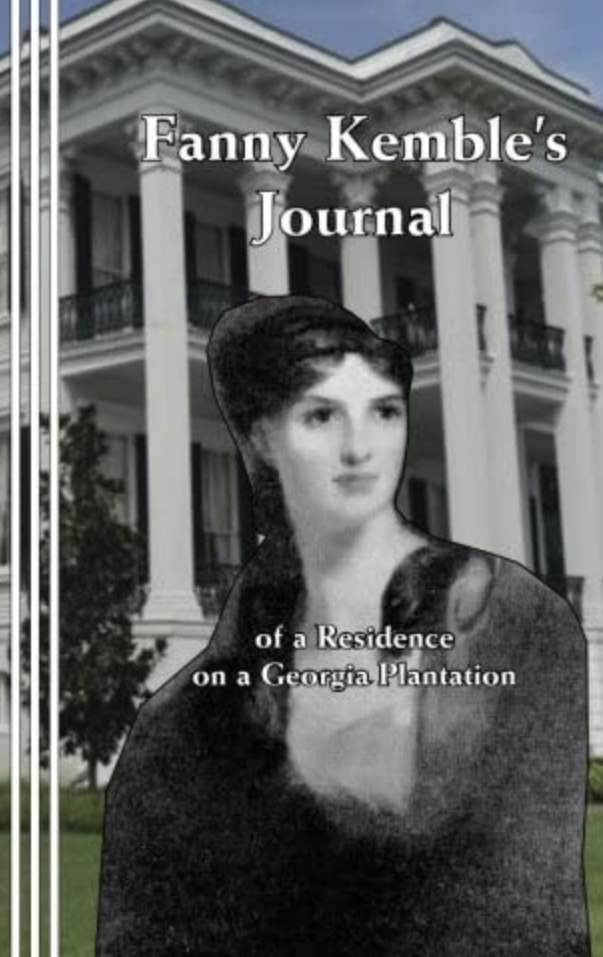
Journal of a Residence on a Georgian Plantation 1838-1839

by Frances Kemble

While we were visiting the Southern States of America last year, we were very aware of echoes of the past wherever we went. We saw old plantations, fields of cotton, museums, relics from the civil war, and were ever conscious of the comparatively recent slave trade. I began to explore this a little, to try and discover some facts beyond what we could see, and one of the books that I bought was the Journal of a Residence on a Georgian Plantation. It is a brilliant book, and allows the reader to see the slave trade, as it was, through the eyes of another investigator.

Fanny Kemble was an English actress. She was fairly well-known, as both an actress and an author, and during a tour of America with her father, she met Pierce Mease Butler. They married, and she went back to live with him in America, having no idea about how, exactly, he made his money. She then discovered that Butler owned a plantation, and slaves. Fanny deplored the idea of slavery, and insisted that she be allowed to visit the plantation, and see for herself the life of the slaves owned by her husband. The book is a series of letters and extracts from her journal, describing what she discovers.

I read the book shortly after arriving home from our road trip through Georgia and the Carolinas, so much of what Fanny describes is clear in my memory. She talks about the swamps, where the trees appear to be balanced on long fingers, and she calls them ‘woods of water.’ She describes the wildlife, the climate—all of which is pretty much unchanged even today. However, read through modern eyes, Fanny herself would be classed as racist, as her language reflects the thinking of the day. A strident abolitionist, Fanny makes a strong argument for the evils of the slave trade, whilst also describing black people in unflattering terms. It is unclear whether Fanny considers the slaves to be her equal, or whether she simply thinks the owning and degradation of human beings is deplorable (which is not quite the same thing).

The living conditions of the slaves are described as dirty, with no comfort, insufficient food. However, the aspect that affects Fanny the most is the whole being owned principle. Although the slaves married, and had children (which were then considered the property of the plantation owner) this was not respected beyond the confines of the slave residencies. So a man might return home from work one day to find, without warning, that his wife or child had been sold to a new owner, many miles away. Fanny also refutes the idea of benevolent owners, saying that those people who claimed to be kind to their slaves were still treating them as animals, and doubting whether a full-grown person would prefer to be treated as a much-loved pet dog, or as a donkey–both are belittling, and both undermine the basic principle that people of all colour, are human. This was radical thinking for her times.

One part which was interesting, is when Fanny is discussing Shakespeare (which would be very relevant to an actress). She ponders the play of Othello, and how the character, who is black, is described as a Moor, not a Negro. Fanny tells her friend that the hateful speech by Iago, Othello’s enemy, would be much more realistic if his hatred of “the moor” was changed to “the negro” and would add to his criticism of Desdemona, who has married a “negro.”

To discover what happened to Fanny later, beyond the pages of the book, I had to search the internet.

Fanny later divorces Butler and returns to England. Butler squanders his money, and eventually sells 436 slaves at The Great Auction in Savannah. This was notable, and is still part of the remembered history of Savannah today, used as an example of the horrors of the slave trade. Families were wrenched apart in the sale, and local people described the wailing and crying.

I found this book exceptionally interesting, though the style of writing was not my personal taste. It gives a clear account of how someone living in the times of slavery viewed what was happening, and I loved how her own biases were unconscious, and never addressed. I wonder what Fanny would think of her own writings if she was alive today. . . and I wonder what a future Anne would think about my own views. We are all products of the society in which we live, even if we like to think our generation has ‘sussed it’. I wonder if perhaps before we shout at those who we think are racist today, we had better look into our own hearts. You might claim that you believe all people are equal–but have you ever bought cheap clothes that might have been made by slaves in Asia? When did you last donate money to help downtrodden people? Would you allow the field near your home be used to build homes for refugees? I wonder. . .

Thank you for reading
anneethompson.com
Why not sign up to follow my blog?

Fortnum and Mason — Bit of a Treat


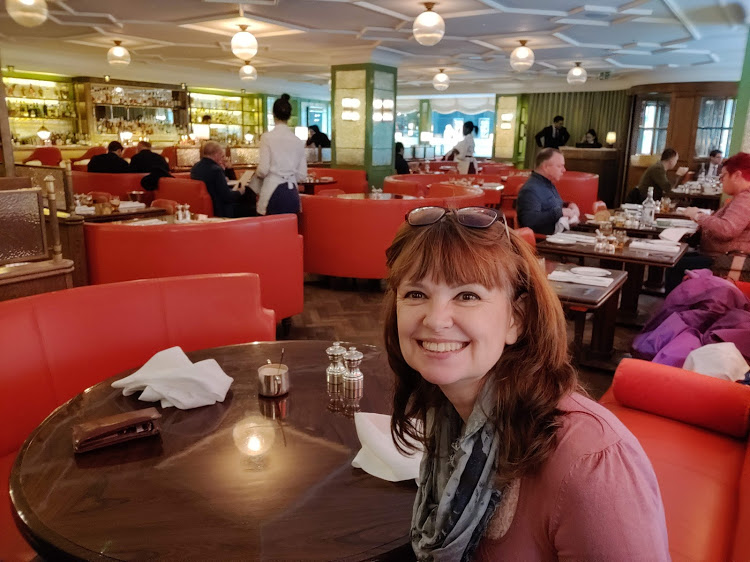
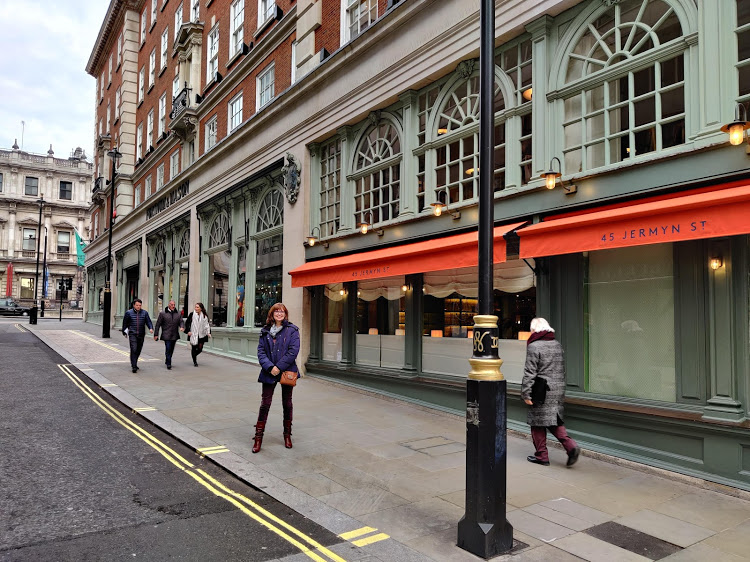
My Monday was great fun. It began with breakfast near Fortnum and Mason. Have you ever been? The best place for breakfast (I think) is not one of the restaurants inside the actual shop, but at the restaurant hidden at the back, 45 Jermyn Street. It has orange awnings, and a rotating door, with a man who stands outside to greet you. Inside, there are comfy orange seats (I do like a comfy seat!) and a desk where they take your coat and show you to the table.

The menu is nice—not too big so you don’t spend hours looking at a book trying to decide, and I don’t think they change it very often because it always seems to be the same when I visit. The prices are high, but not super high, not for London, and not as much as you might expect for somewhere rather lovely. The service is efficient and unobtrusive, and everything is very clean.

I chose what I always order—buckwheat pancakes, with caramelised pineapple and coconut yogurt. I don’t much like pineapple, but it’s so sweet, it’s easy to ignore. The coffee is delicious, and the orange juice is freshly squeezed. (Though do be careful, the drinks aren’t priced on the menu, and they add a lot to the final bill!)

The washrooms are behind a door marked: ‘Leeks and Peas’ (confused me for a moment!)

It really is a lovely place for breakfast, and it’s full of people in dark suits, so don’t arrive in your ripped jeans.

 Afterwards, we went into Fortnum and Mason. I have never properly explored the shop before, so we started at the very top (which was bit of a waste of time, as there were only restaurants up there!) On every floor, the staff greeted us, and asked if we wanted any help—but not in a condescending snooty manner (like in some posh shops). They seemed friendly, and willing to help. Even when we were looking at the hampers, and Husband (always to be relied upon for helpful comment) told the assistant they were a ridiculous price, she simply smiled, and said we would probably find the same products at a cheaper price in the rest of the shop.

The hampers were interesting. Some were themed, so you could order them for a wedding, or a birth, or a special occasion, like the Chinese New Year (this year is the year of the Rat, and everything was decorated with rats, which wouldn’t be my choice of decoration for a food hamper!) There were even hampers for animals (lots I could say here, but I won’t because I assume they give pleasure to the owner, even if the dog would be unimpressed).

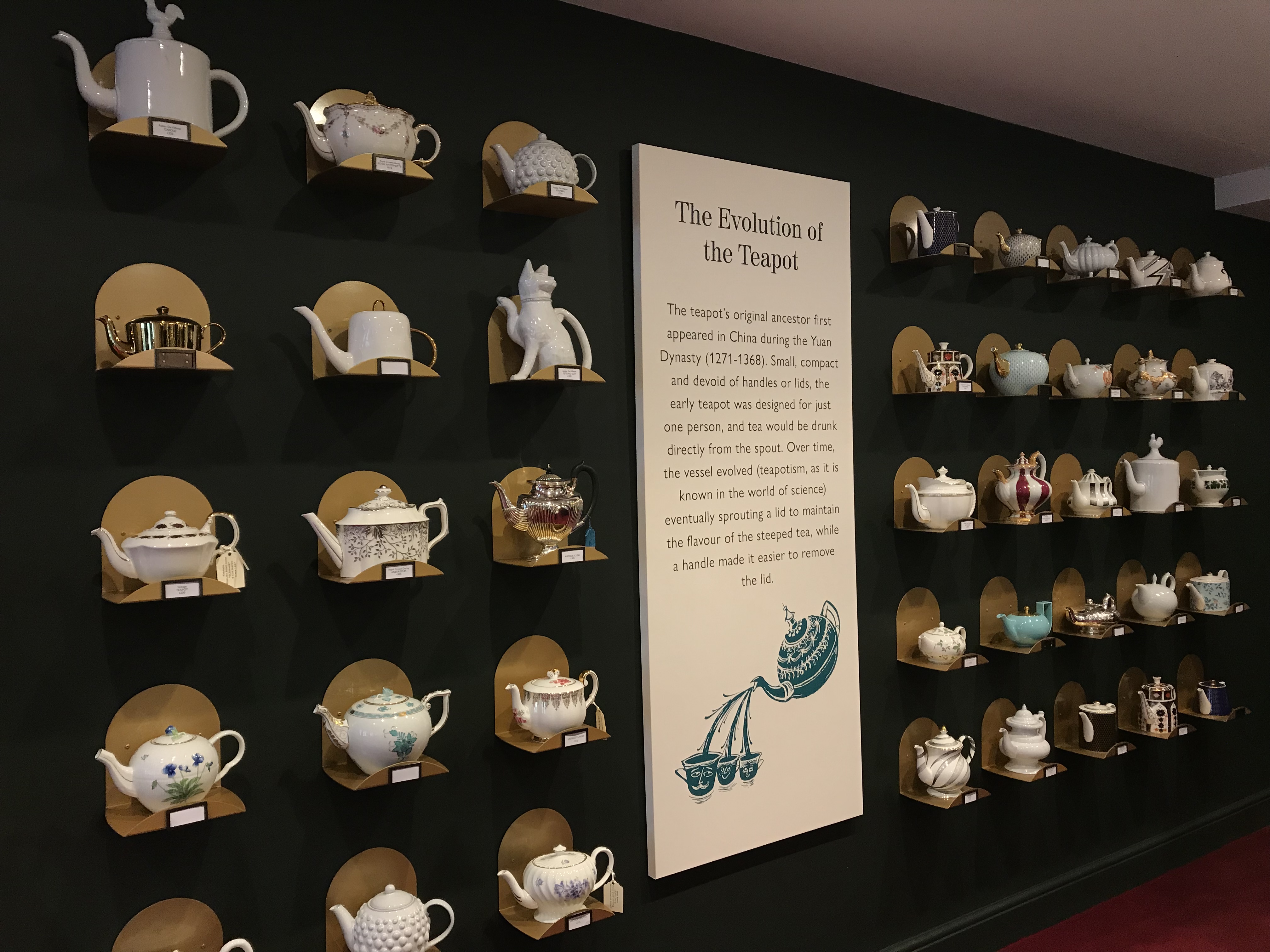
I walked around taking photographs, and no one seemed to mind. On one floor there was a display of teapots, with signs explaining their origins. A shop assistant told us they were preparing to do a tea-tasting, and if we came back in a few minutes we could try some tea. (We didn’t, but it was nice of her.)

 It’s a nice shop to browse. The lighting is bright, but never harsh, and the displays are beautiful and full of colour.

We skimmed the ground floor, which was full of tins of shortbread with chocolate chips in (always wrong) and chocolates in fancy boxes—all aimed at tourists, who were pushing through the ground floor in their masses. Instead, we went down to the basement.

The basement is full of food, and I had a voucher. There was a golden tree, surrounded by citrus fruits. I love pomelo (which look like giant grapefruit) but I first discovered them in Morrisons, and these were triple the price and not ripe. A chocolate orange was also tempting—brown-skinned and grown in Valencia, the sign said it was very sweet.

The bakery was full of bread and cake and tarts, all looking delicious, but all unwrapped (and therefore potentially sneezed on by tourists, which I found off-putting).

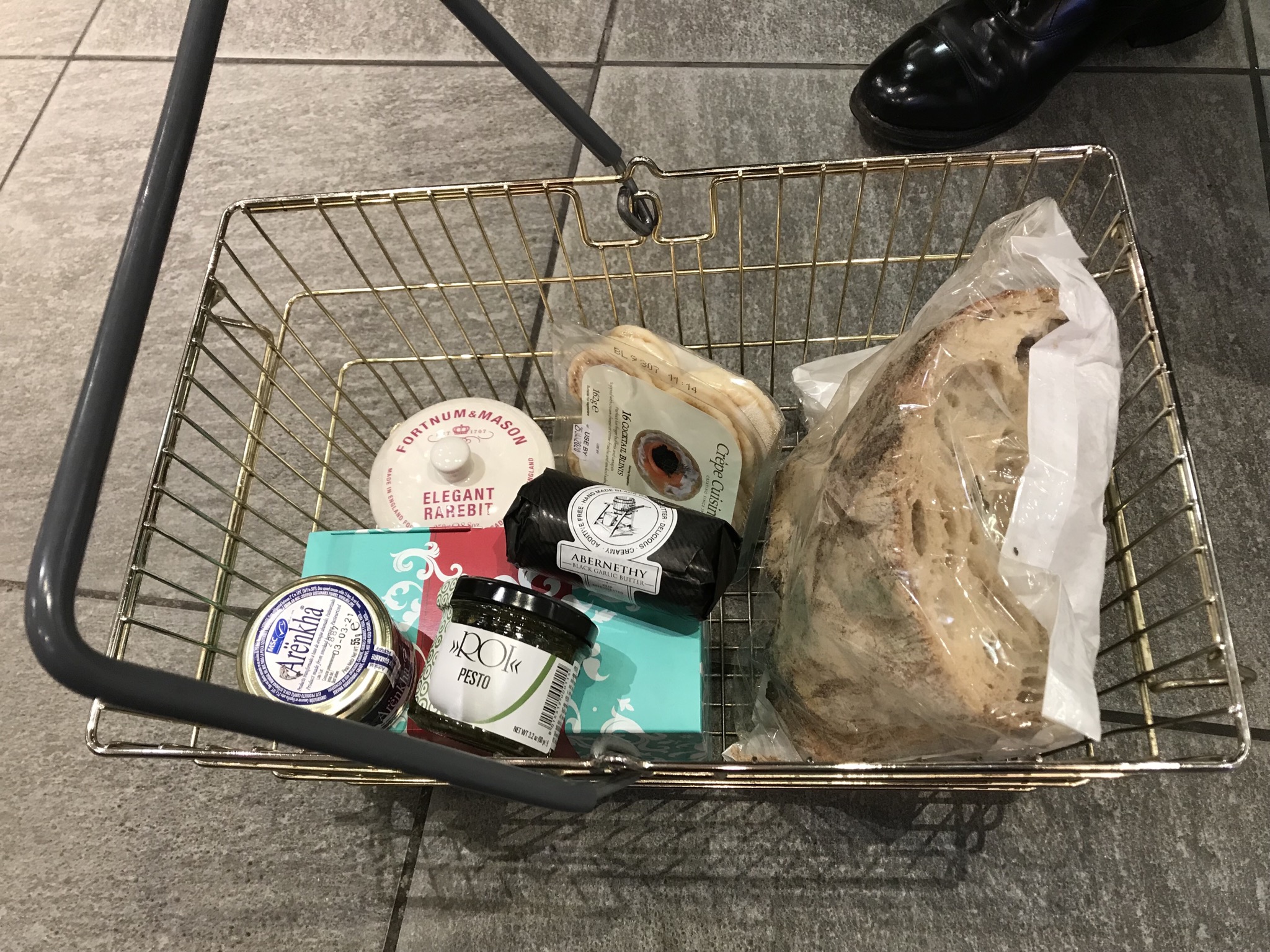
In the end, I chose a tiny jar of fish eggs (sort of pretend caviar, but rather cheaper than the £400 price tag I saw for the real thing!) A man was cutting thin slices of salmon, and he chatted to us for a while, and offered us a blini—a tiny pancake topped with salmon and cream cheese. Behind him, there was a blini-making machine, and we watched it while we chatted. Really, the staff were very friendly.

I also bought some sour dough bread (I found some that was wrapped, and safe from stranger-sneezes!) and a china pot of Welsh rarebit, four miniature puddings, a pat of black garlic butter, a packet of blinis, and a tiny pot of pesto.

We carried everything home, and had a sort of picnic in front of the fire, drinking some prosecco that we were given at Christmas time. What a lovely treat!

I hope you have some treats this week too. Take care.
Love, Anne x

Thank you for reading.
Why not sign up to follow my blog?
anneethompson.com

If you fancy a treat, why not read my latest book? A feel-good family saga, set on a farm that will make you smile.

Sowing Promises
by Anne E. Thompson
Available from an Amazon near you today.

UK link: Here

US link: Here