The City Never Sleeps, But It Dozes…


The City That Never Sleeps (But Sometimes It Naps)

When you walk through New York City in the early hours of the morning, it’s quiet. Not asleep—this city really does never sleep—but it definitely dozes. The streets are well-lit, there are always cars edging between the millions of traffic lights, and several diners are open all night, serving a few shift-workers, and insomniacs, and us.

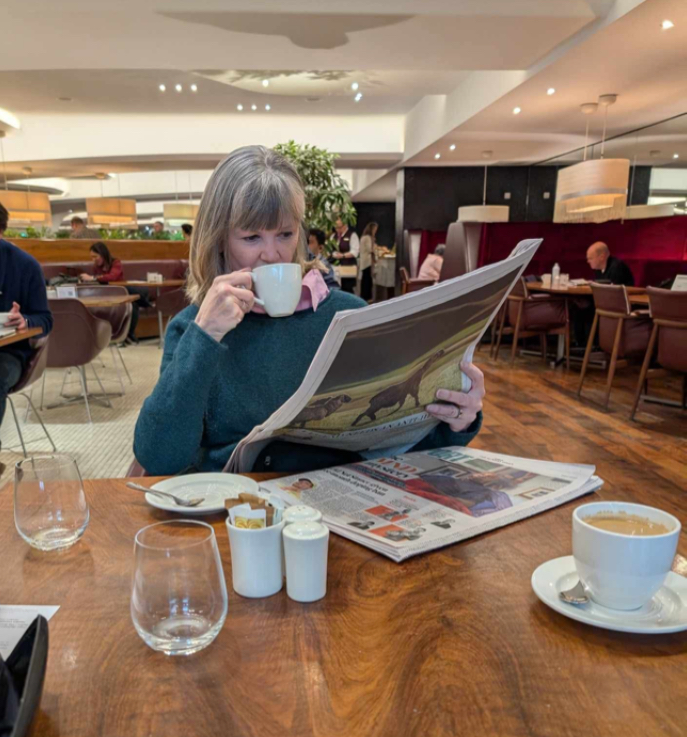
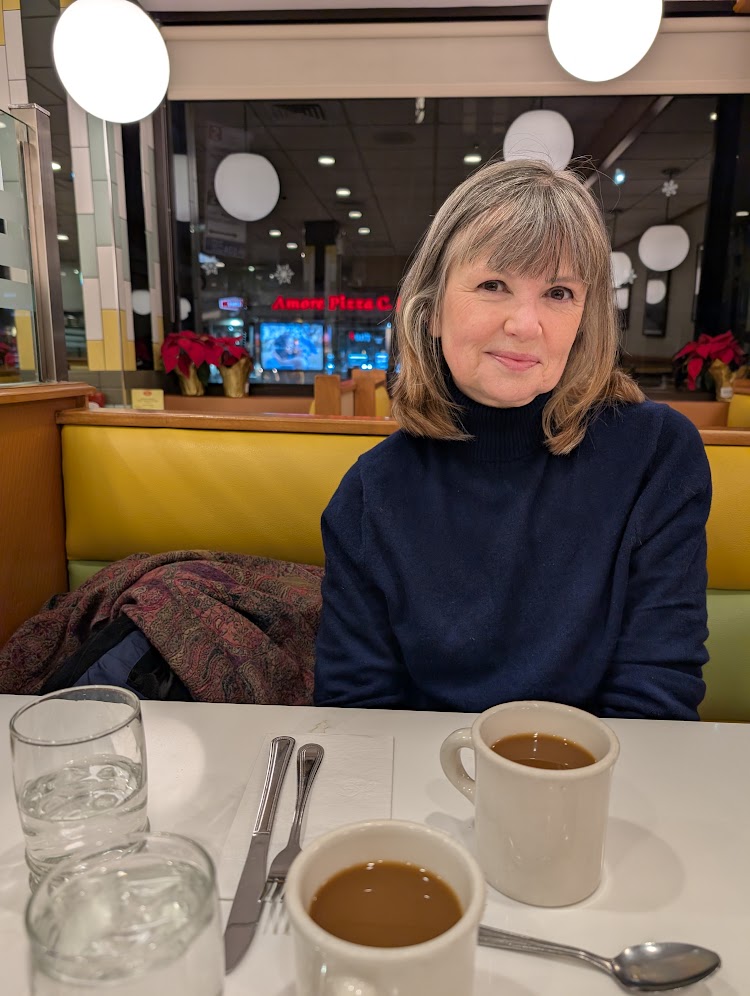
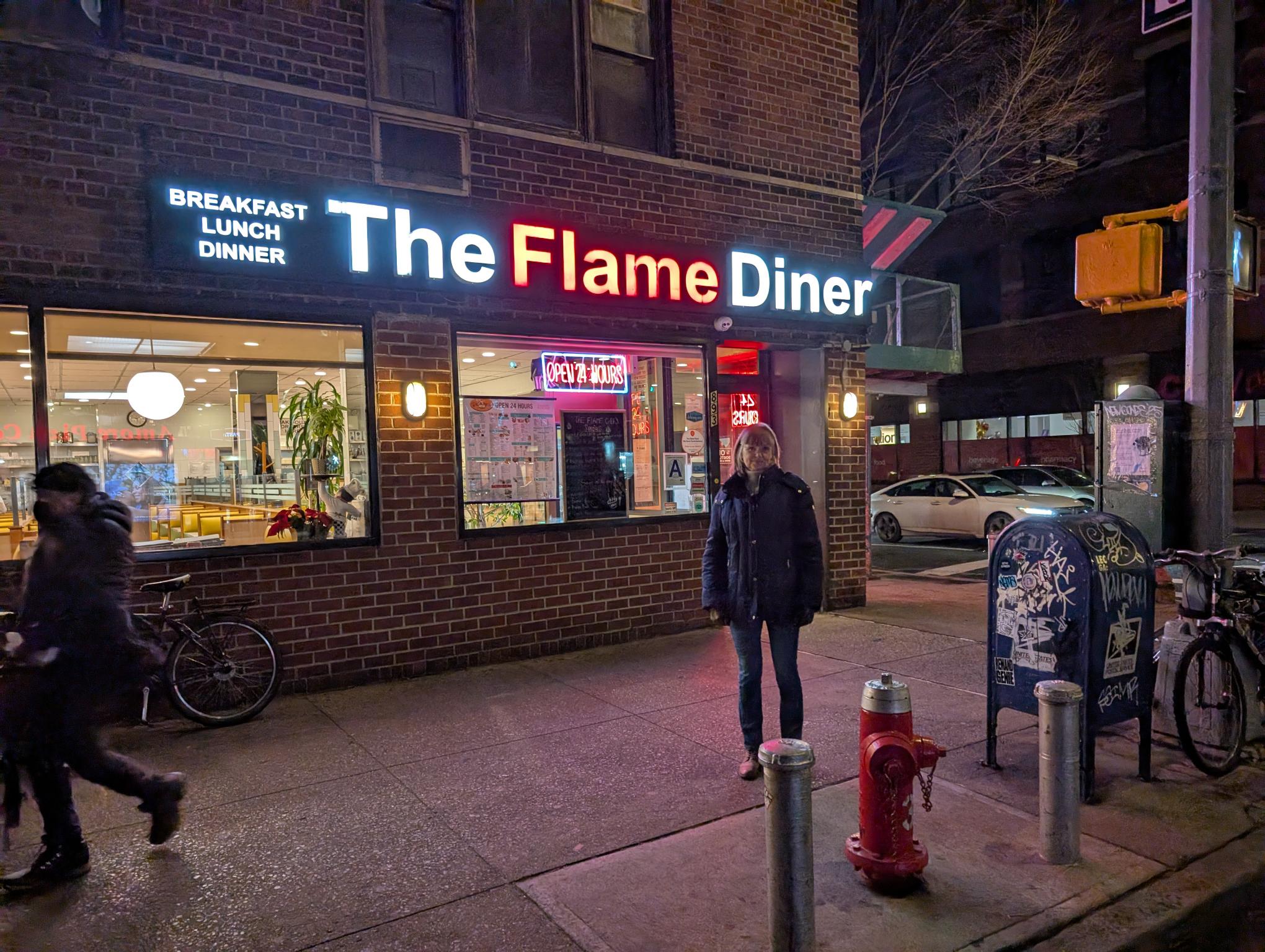
I have developed a fun routine, keeping roughly to English time. I wake at 2am, eat a pastry, then work for a couple of hours by torchlight until Husband wakes at 4. We then go down to the hotel basement and use the gym. It’s a good gym—lots of fancy equipment, and not many people at 4am. We run on the machines because it’s -11º outside. After a shower, we walk to the Flame Diner for breakfast. I’m edging back on-track with my healthy eating (vaguely) and order oatmeal (which is porridge) with strawberries and blueberries and a tiny pot of maple syrup (that they gave me on the first day, and I only use a bit of it, so I kept it and bring it back each day. If the lid ever comes off in my bag I will regret it!) Not as nice as pancakes, or cinnamon bagels, but I feel less guilty.

I have a sandwich/bagel for lunch, then we have dinner in the Westway Diner at about 1pm US time, when everyone else is finishing their lunch. I then use earplugs and eye-mask and go to bed about 5pm US time. It has worked well so far.

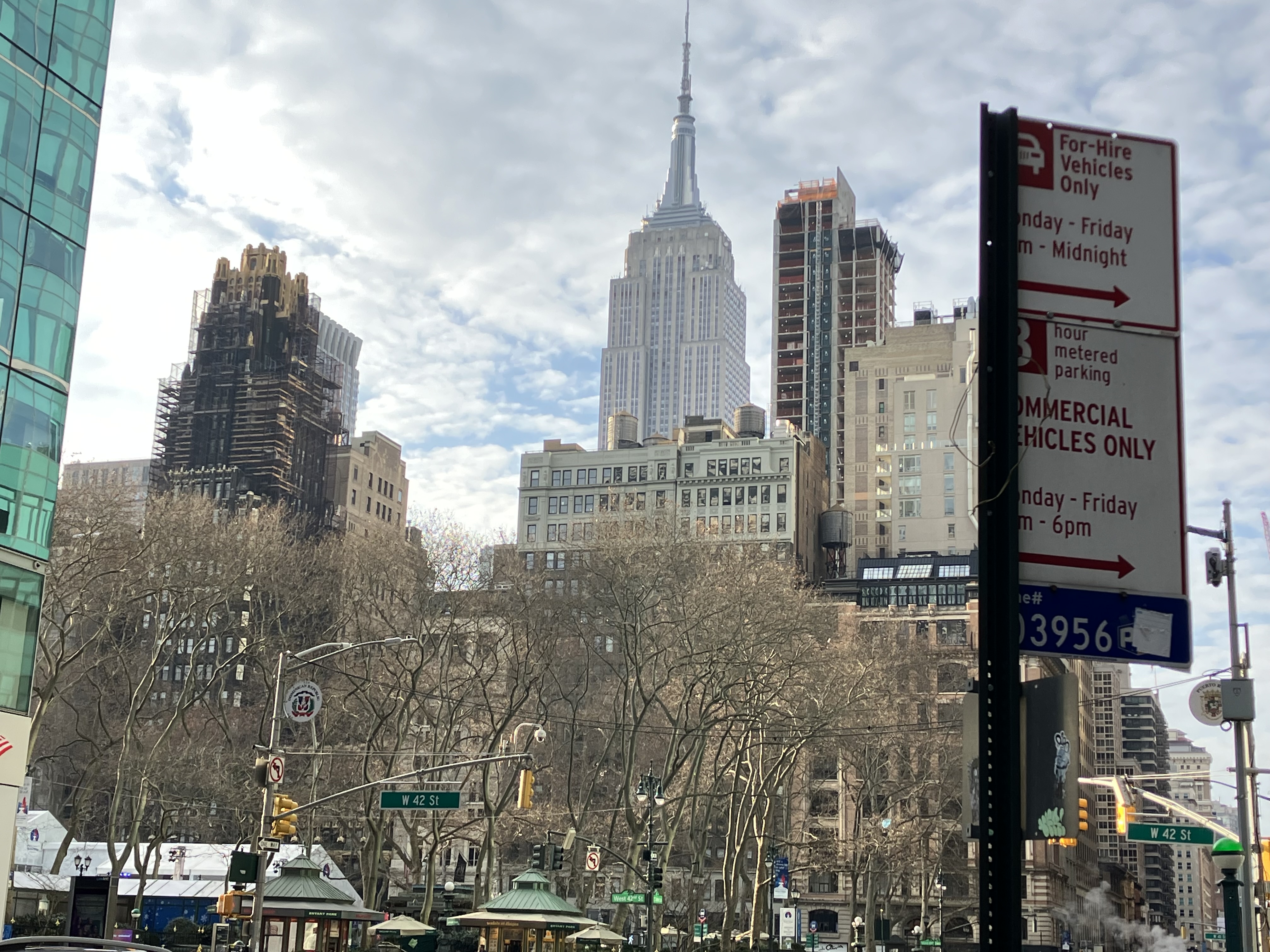
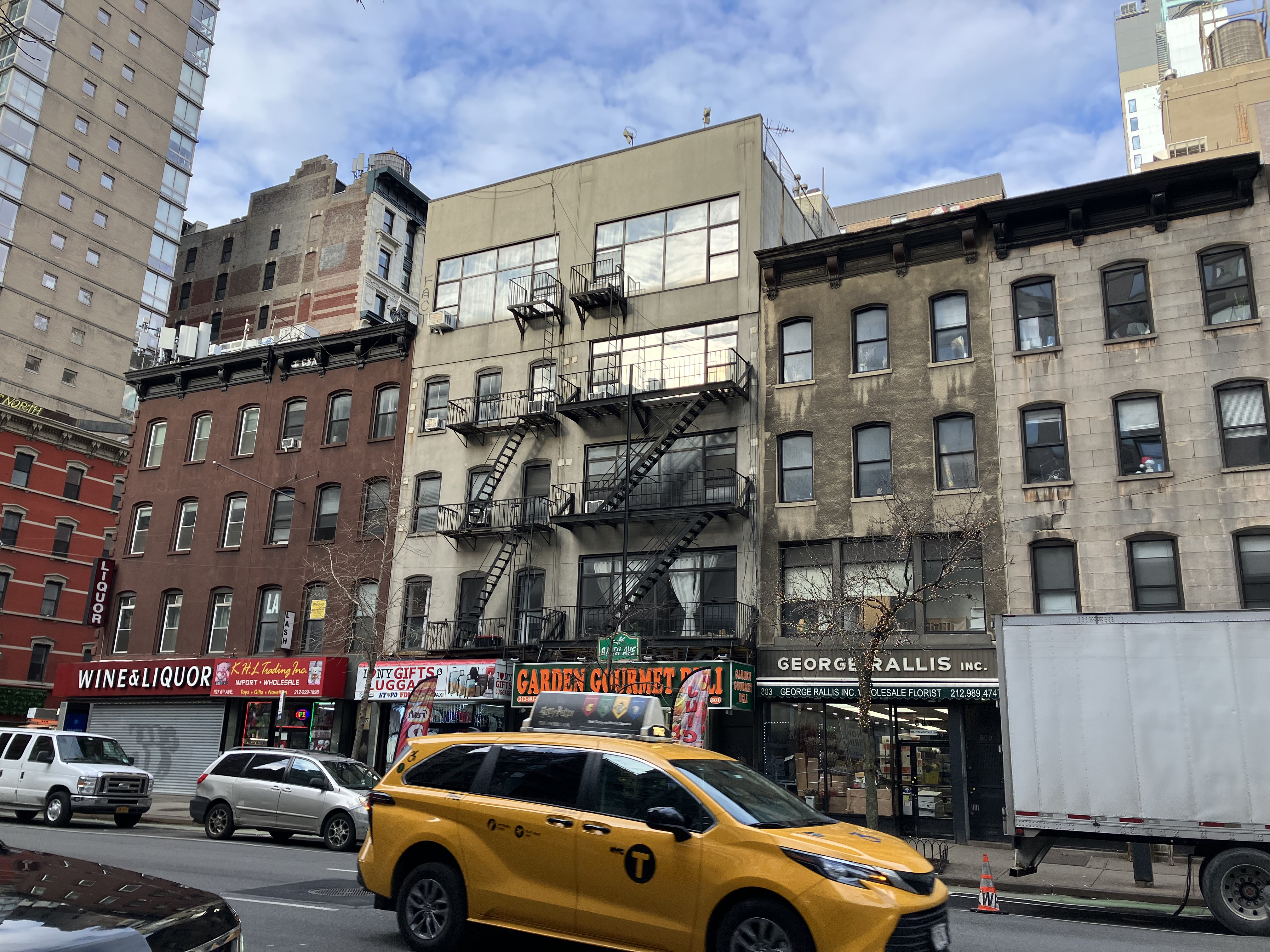
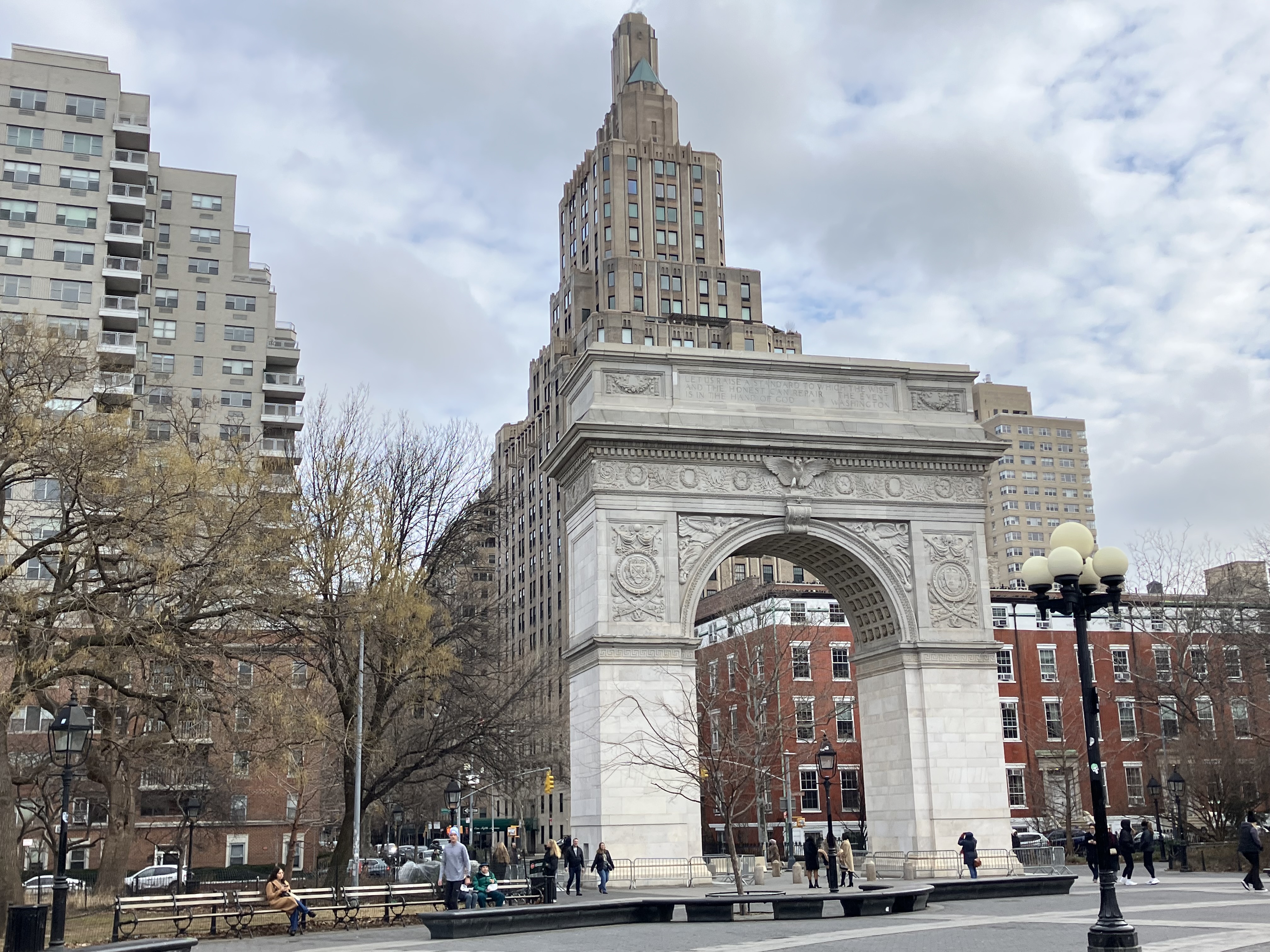
The first day here we walked down the island, which is my favourite thing, walking through the various districts and looking at the shops and restaurants. Midtown, Garment District, Chelsea, Greenwich Village, SoHo, then East to Little Italy and Chinatown and into Wall Street. Districts that are vaguely familiar (we lived in NJ in the late 90’s) but still exotic, unreal places that exist in films and distant memories.

We visited the World Trade Centre Memorial. In previous visits I haven’t wanted to, because I knew people who died there (not well—other parents at the school pick-up, people I would recognise by sight but not really friends). Enough time has passed for it not to be upsetting, though it’s still sombre, still reminds of the tragedy, the fear, the loss. They have built two huge fountains on the footprint of the building, with water sliding down, out of sight. It’s very dignified. Someone had left a rose in one of the names engraved on the edge—23 years is not long for those who lost loved-ones.

World Trade Centre Momorial.
World Trade Centre Memorial. (Look at the people for perspective on the size.)

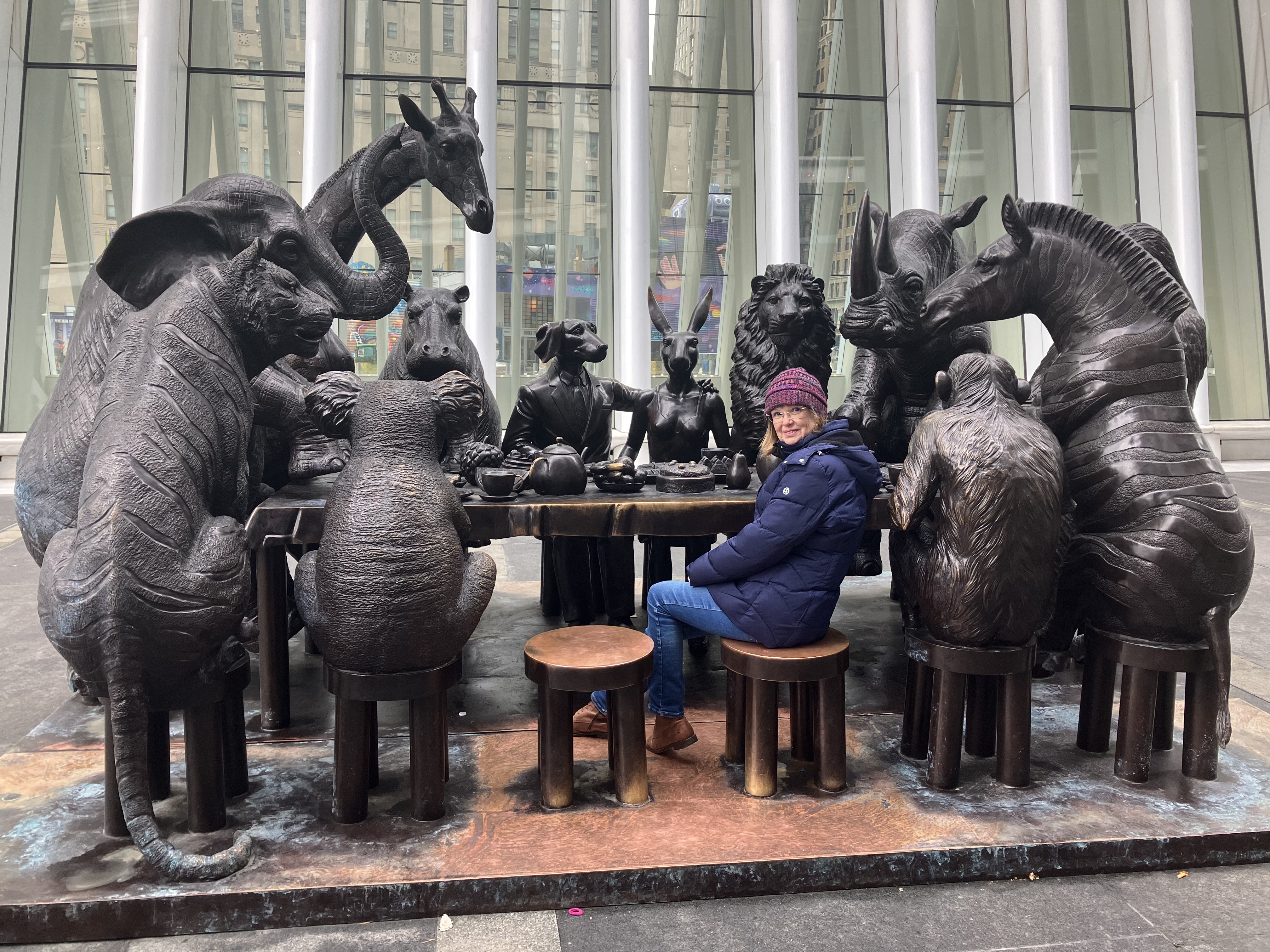
A completely different vibe are the animal sculptures nearby. They are great fun, a storybook reminder that we need to care for endangered animals or we will lose them. Impossible to resist joining the animals for a photo op!

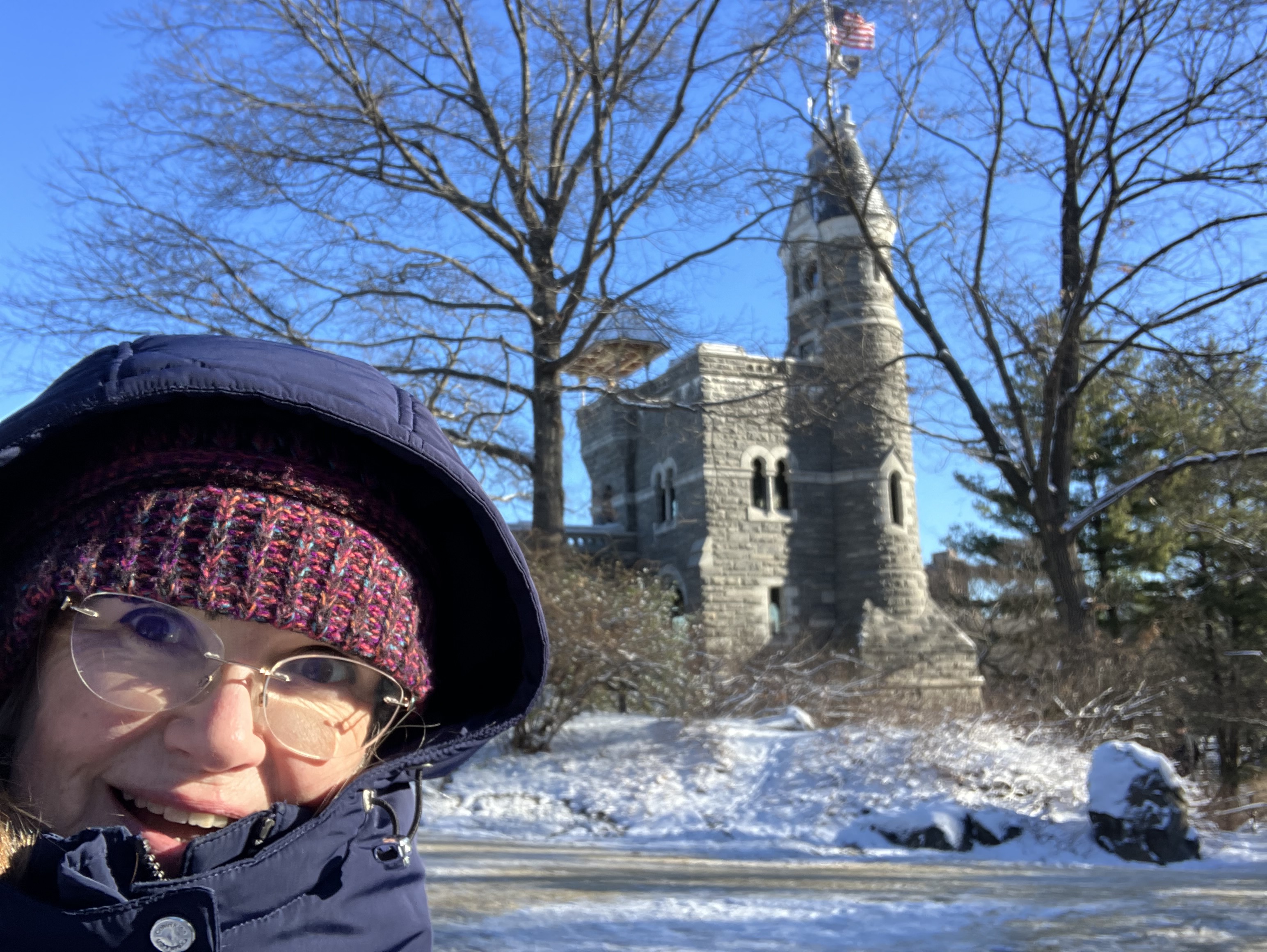
It snowed. We were forecast lots of snow, but weather forecasts always promise more than arrives. The next day was mainly ice, though there was more snow in the park. We thought the paths would be clear, but they weren’t, and it was quite precarious walking. People had salted, but the temperatures were so low the salty water had frozen, leaving sheets of ice across the paths. In Central Park everyone was walking their dogs, and enjoying the bright sunshine and the crisp air. Some people (us) had dressed appropriately and resembled walking duvets. Others were still beautiful, with uncovered hair and unbuttoned long coats that flowed in the breeze, showing designer outfits. Beautiful but uncomfortable I imagine, as it was absolutely freezing! I managed not to slip over on the ice (it was quite close a few times) and I actually managed to find the castle—which every other time I have come to the park has either been closed or impossible to find. It looks better in films.

I prefer to walk in NYC, but sometimes we use the subway. It’s easy, but always feels a bit scary—I think it features in too many crime and ghost films! South of 100th Street was always safe, but nowadays maybe everywhere is. I’ve used it several times, and never actually seen any crime (or ghosts).

Hope you stay warm today. Thanks for reading.
Take care.
Love, Anne x

A Cheeky Trip to New York City


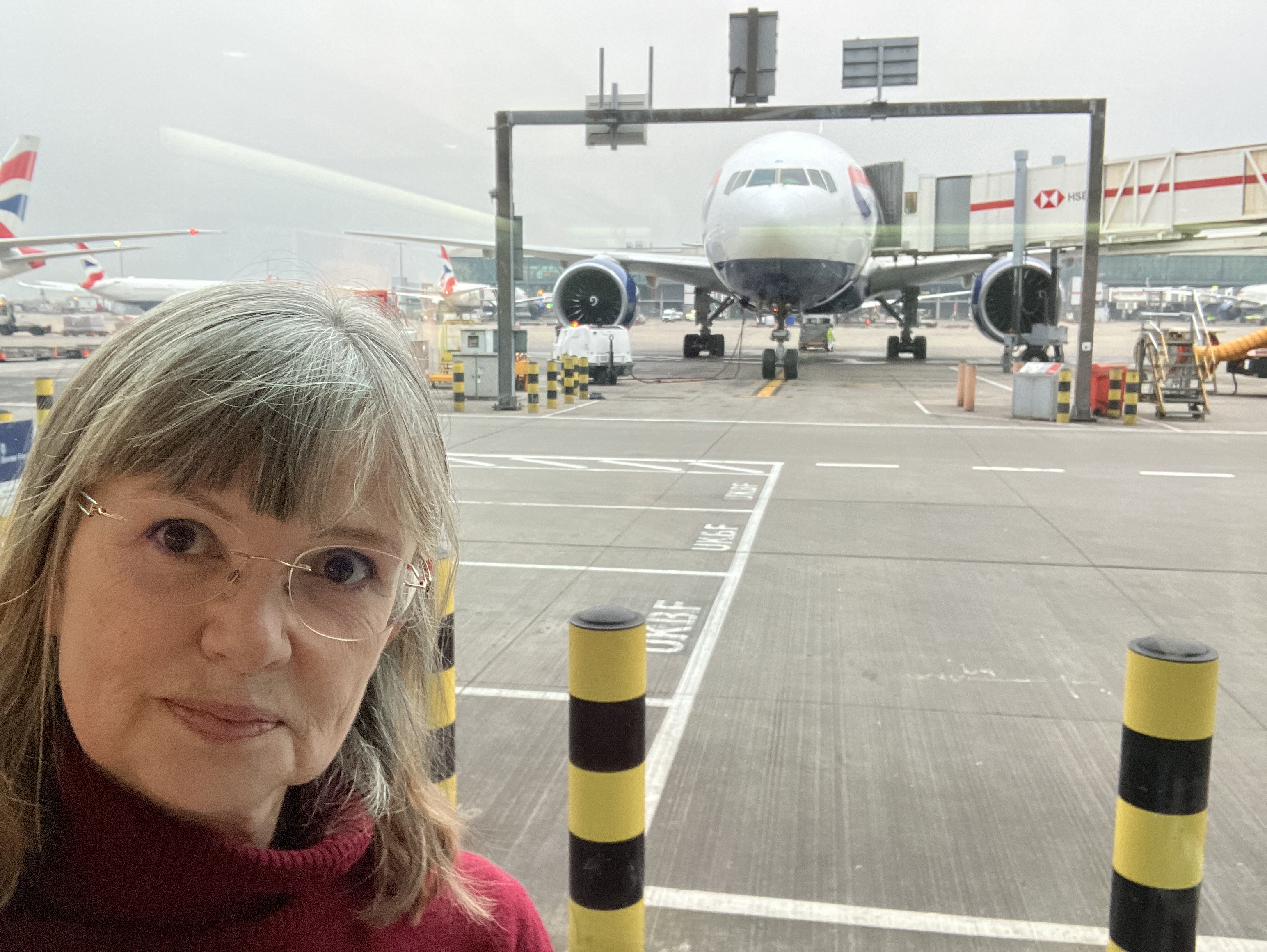
Husband had a work trip, I hate being in the house on my own, plus (I told myself) I will manage to do more work if I’m not also juggling animals and housework, so I went too. We left home Saturday morning, flying from Heathrow—which is not my favourite place in the world. Airports are always too full of people and germs and flashing signs and hard deadlines. Everything that I find stressful, especially because everyone seems tense and everything matters—you really cannot forget to put your hand sanitiser in a separate plastic bag, and you can’t take too long taking off your boots—even though you find it a struggle to balance and there isn’t a chair—because the people behind you are also anxious and rushing and the staff are grumpy, and arghh, arghh, arghh.

But it was fine. I didn’t end up in a small room with a woman wearing plastic gloves, nor did I lose any valuables. Our departure gate was at the far end of the airport, and rather than use the transit we walked. Did you know that is a thing? I didn’t until recently. If you go down to the basement, you can walk the mile or so under the runways and avoid using the rail-link. It’s a bit spooky down there, so even though there are lots of security cameras I’m not sure I would feel comfortable walking on my own, but I prefer it to riding in a crowded train. You can stretch your legs and avoid the crowds for a minute, and although there’s no weather (another thing I dislike about airports and hospitals) it is at least cool, and the air feels cleaner, less artificial.

The plane ride was uneventful. Husband sat at the front because his ticket was paid for by work. I sat next to a tall Chinese boy (probably a man, but he looked young to me) who was on his way to New Zealand. I’m always pleased when I’m next to a man, because on the whole they understand it’s inappropriate to have physical contact with a stranger and therefore they keep within the confines of their own allocated space. Women do not—if a woman is larger than is comfortable on an airplane seat she will sometimes spread sideways, into my seating area, and is not as sensitive to territorial boundaries. I find it quite difficult to have a Christian attitude to this, and do not easily forgive.

I managed to work on the flight, which was good use of time. I read most of a book about animal theology. Did you know that was a thing? It’s very interesting. Plus, I have treated myself to a very fancy selection of sticker/post-it highlighter/marker things. They are brightly coloured and remind me of when I played post-offices as a little girl. Intrinsically pleasing to use. 

We are staying at the Sheraton, Times Square. I stayed here with my sister a few years ago, and it has become a bit more run-down since then and is currently being renovated. Not a great time to be staying here, but the room is clean and everything works (even if the taps do wobble and the lights have slightly dodgy switches). Being in New York is a treat in itself, and the position is great.

I am keeping to UK time, so I ate the sandwiches I had packed at home, and drank a tiny bottle of Merlot that I saved from the flight, and went to bed early. Husband went out for dinner, and I told him to be careful not to get mugged if he was going out in the dark. He muttered something about it being 4pm, and not as late as I thought.

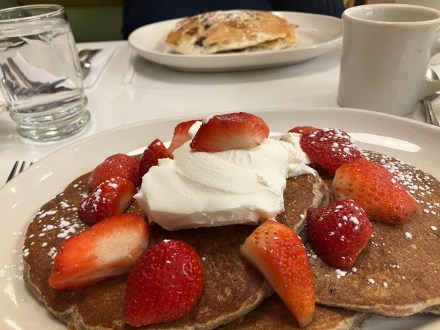
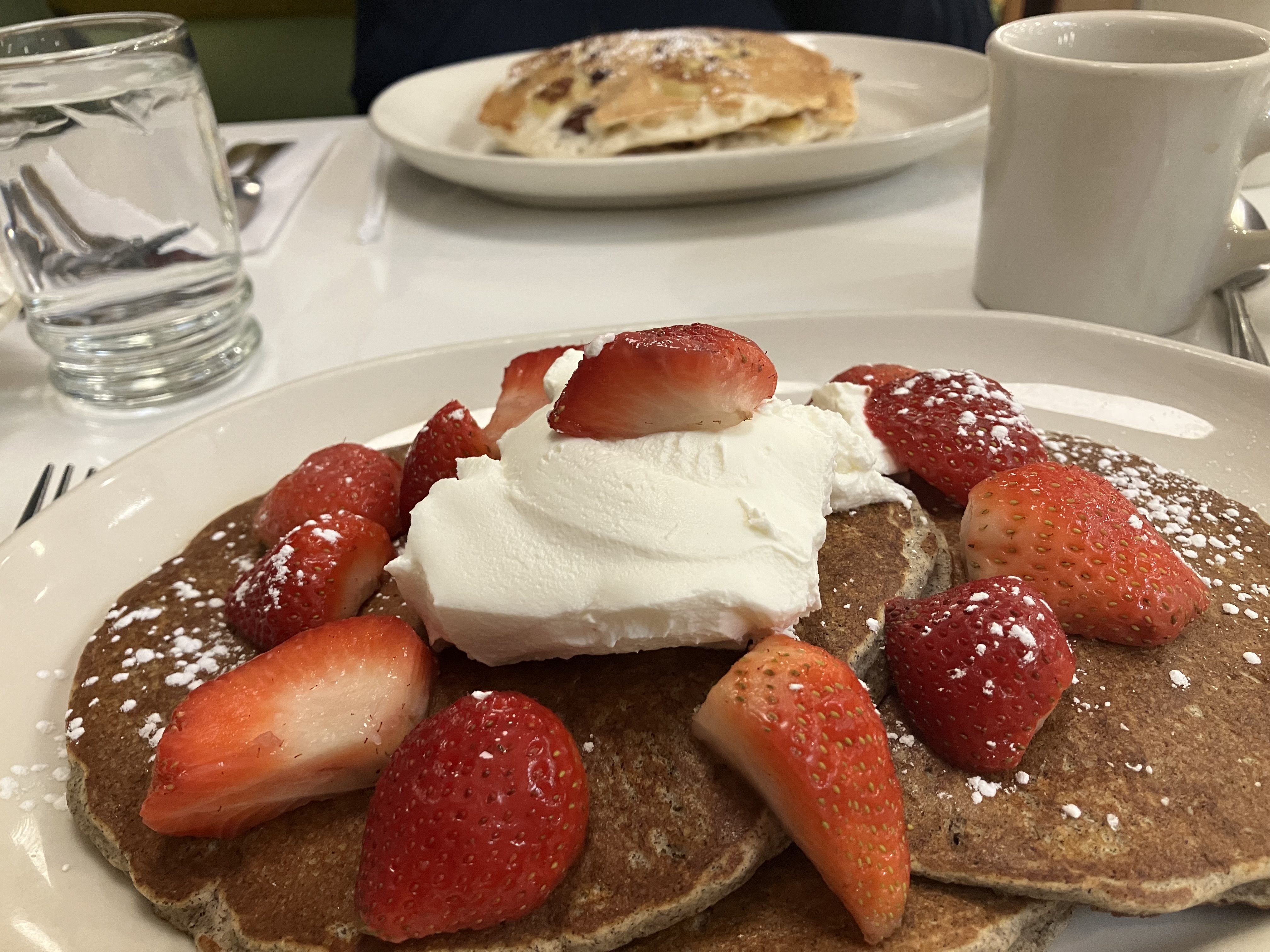
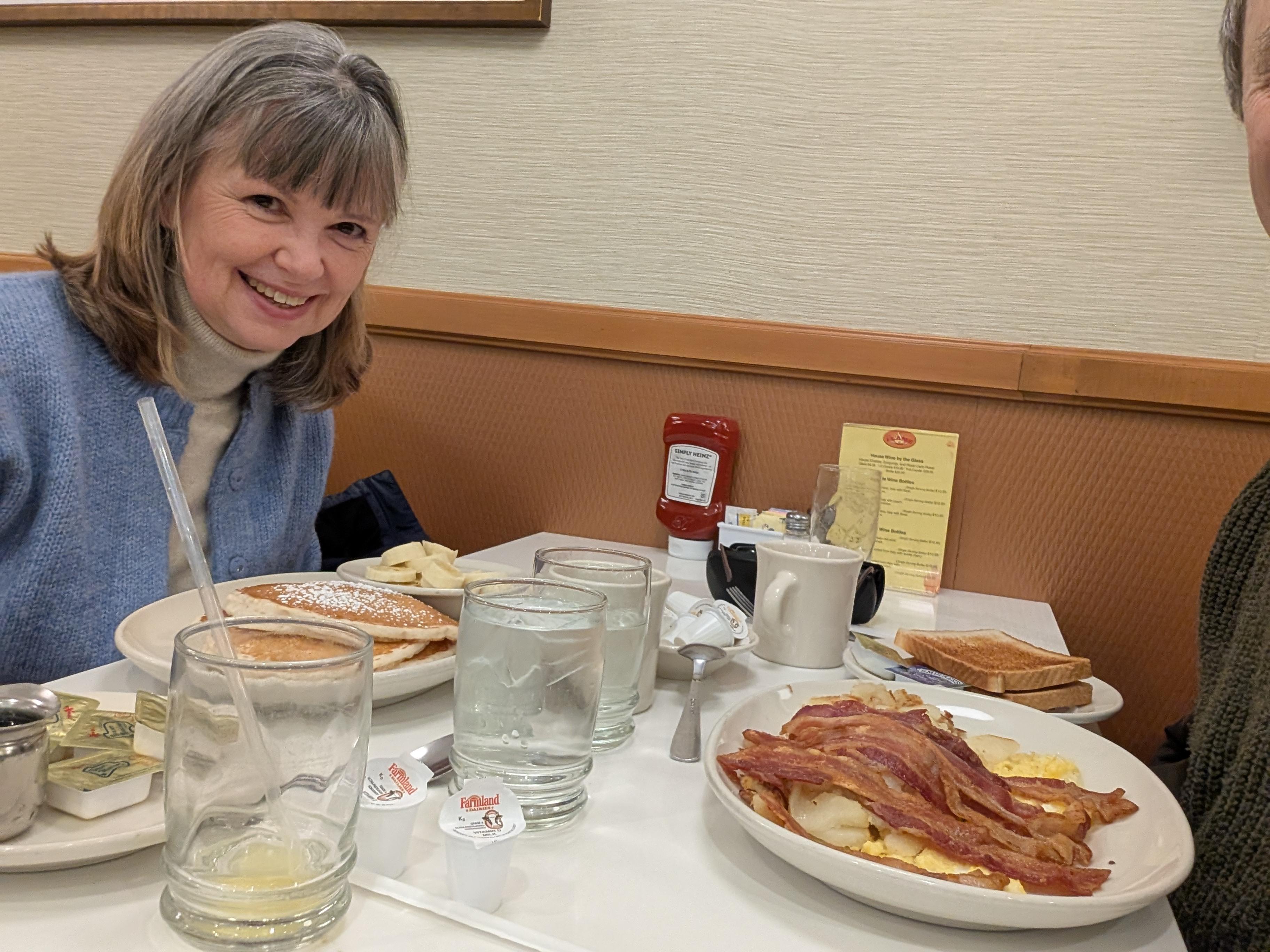
This morning I woke at 2 am US time, and ate a stale croissant while reading by torch light. When Husband woke, we walked to a nearby diner. Nothing in the world beats a New York diner. This is why I came. We sat in a booth at 5am, it was clean and bright, with a large plastic menu. When we sat, we were given glasses of iced water and offered coffee. Perfect. I am trying to reduce the cholesterol in my diet—so that went out the window! I had pancakes (delicious) and dipped slices of banana in sweet smokey maple syrup, and snaffled a piece of bacon from Husband’s plate. (He had a full bacon, scrambled eggs, hash browns and toast breakfast—so his was even less low-fat than mine!) We had fat glasses of freshly squeezed juice, and I lusted after the pies and cakes in the glass cabinet. The diner was fairly empty (I wondered why anyone would be there are 5am). They were playing a church service on the radio, and it was all rather lovely.

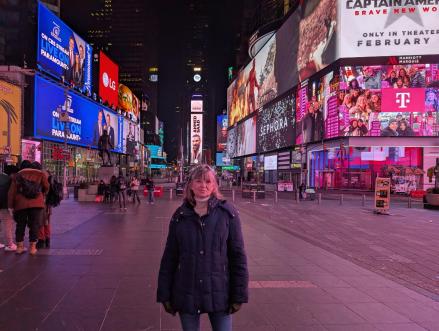
Afterwards we walked down to Times Square. It was still before dawn, but Times square was as bright as daytime with the huge billboards flashing colours and light into the street. Walking through Times Square is like scrolling through Instagram. Lots of perfect young people looking happy and attractive as they dance or walk their dogs or show you a new toothpaste. In the early morning it’s quiet, so rather lovely, and we walked hand-in-hand, arguing about whether we should obey the traffic lights and remembering all the other times we have visited New York. I felt very happy (and very full of pancakes).

Walking through Times Square is like scrolling through Instagram. Lots of coloured lights and attractive images.

I hope you have something happy too this week. Thanks for reading.

Take care.

Love, Anne x

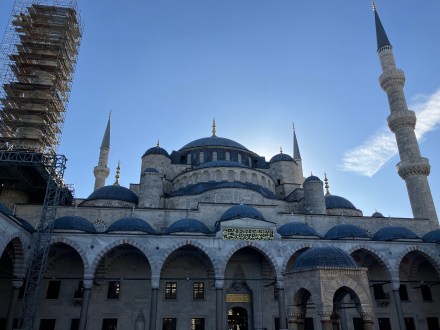
The Blue Mosque


We visited the Blue Mosque. I was expecting it to be more blue and only the roof was blue. But it was still very pretty, and they managed to herd lots of tourists through their holy space in a dignified manner. There was no entrance fee. Very well done.

There were clear signs, telling us what was expected (like women wearing a headscarf and everyone removing their shoes) so you knew what to expect before you arrived.

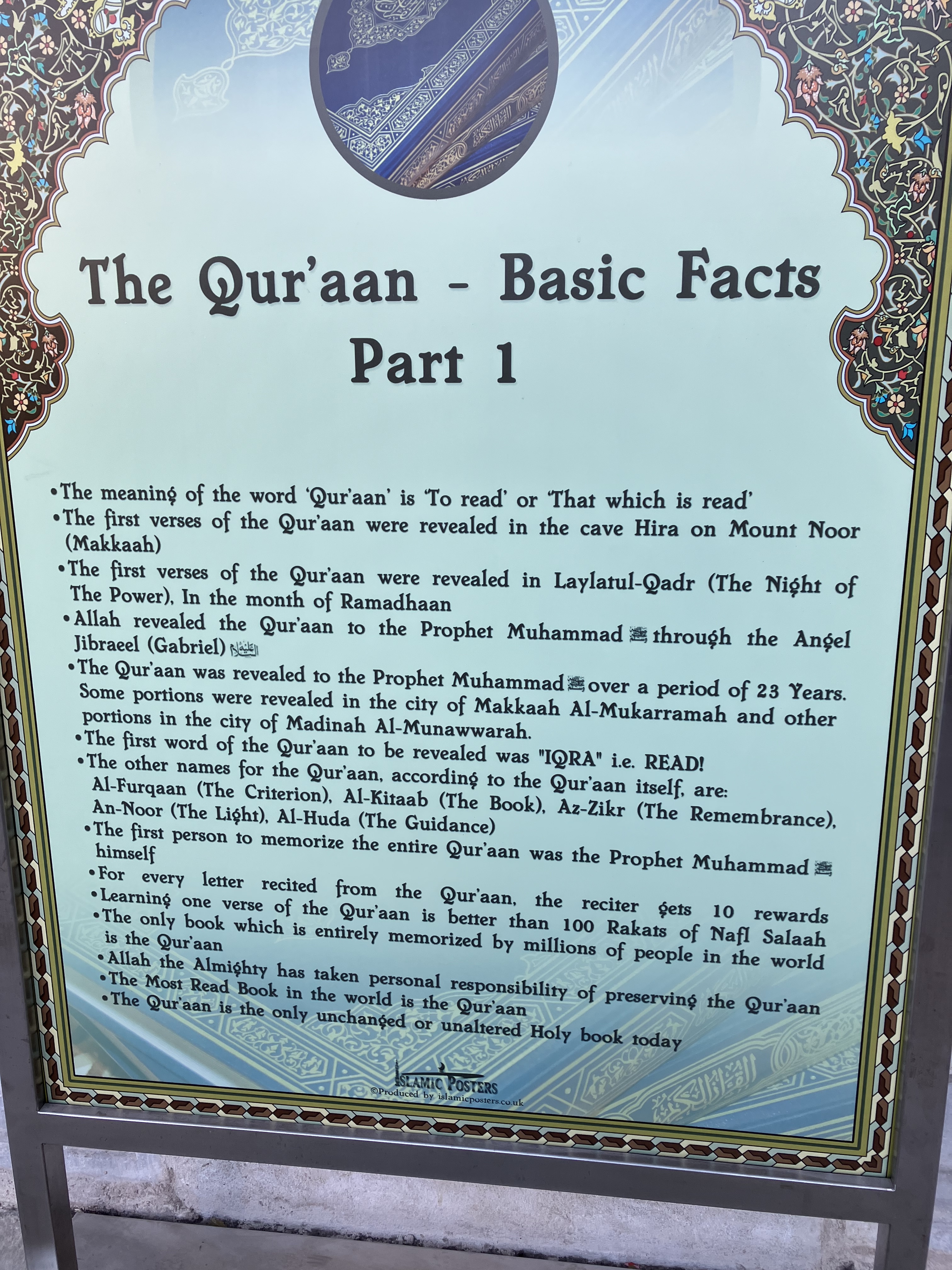
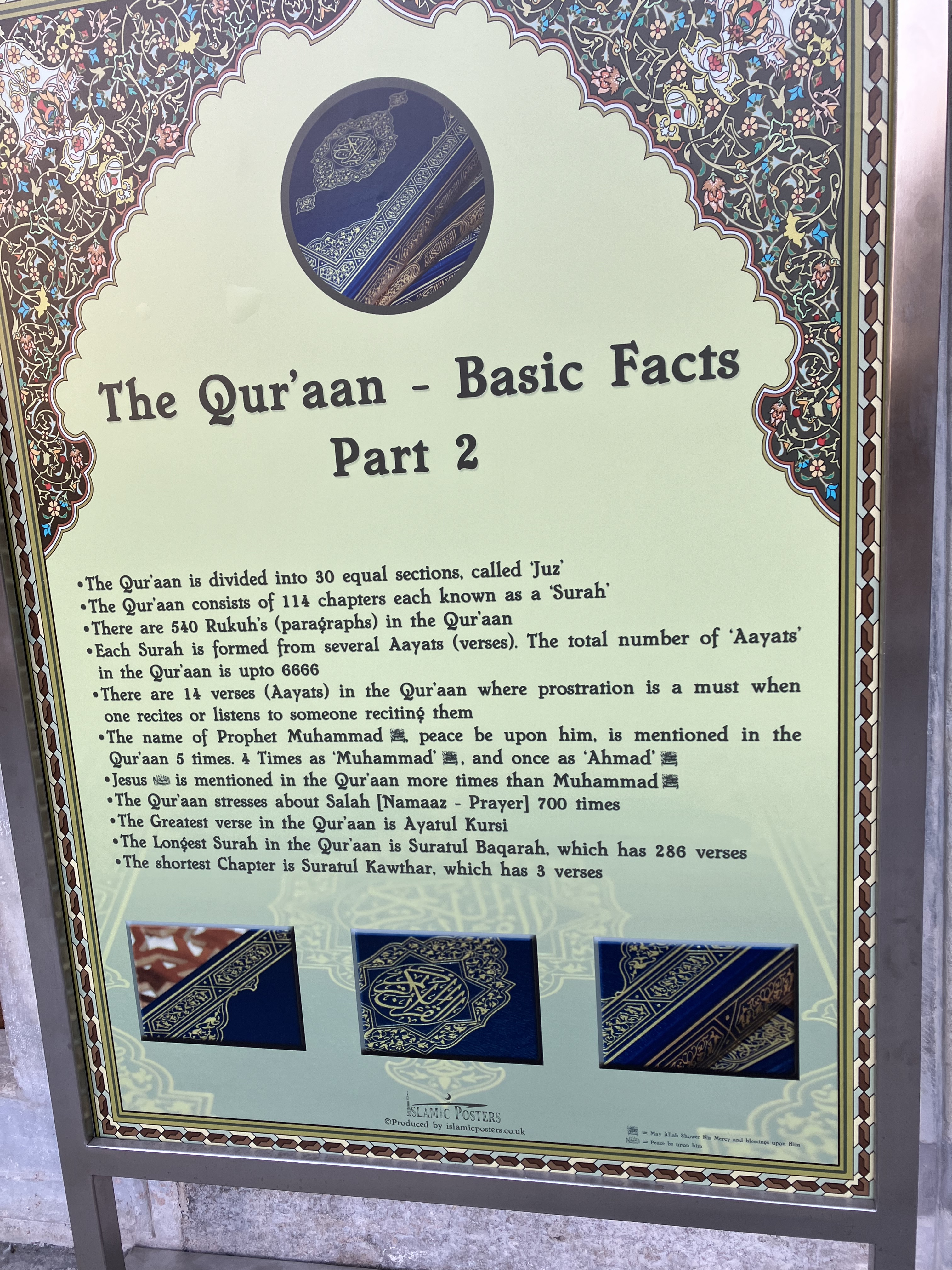
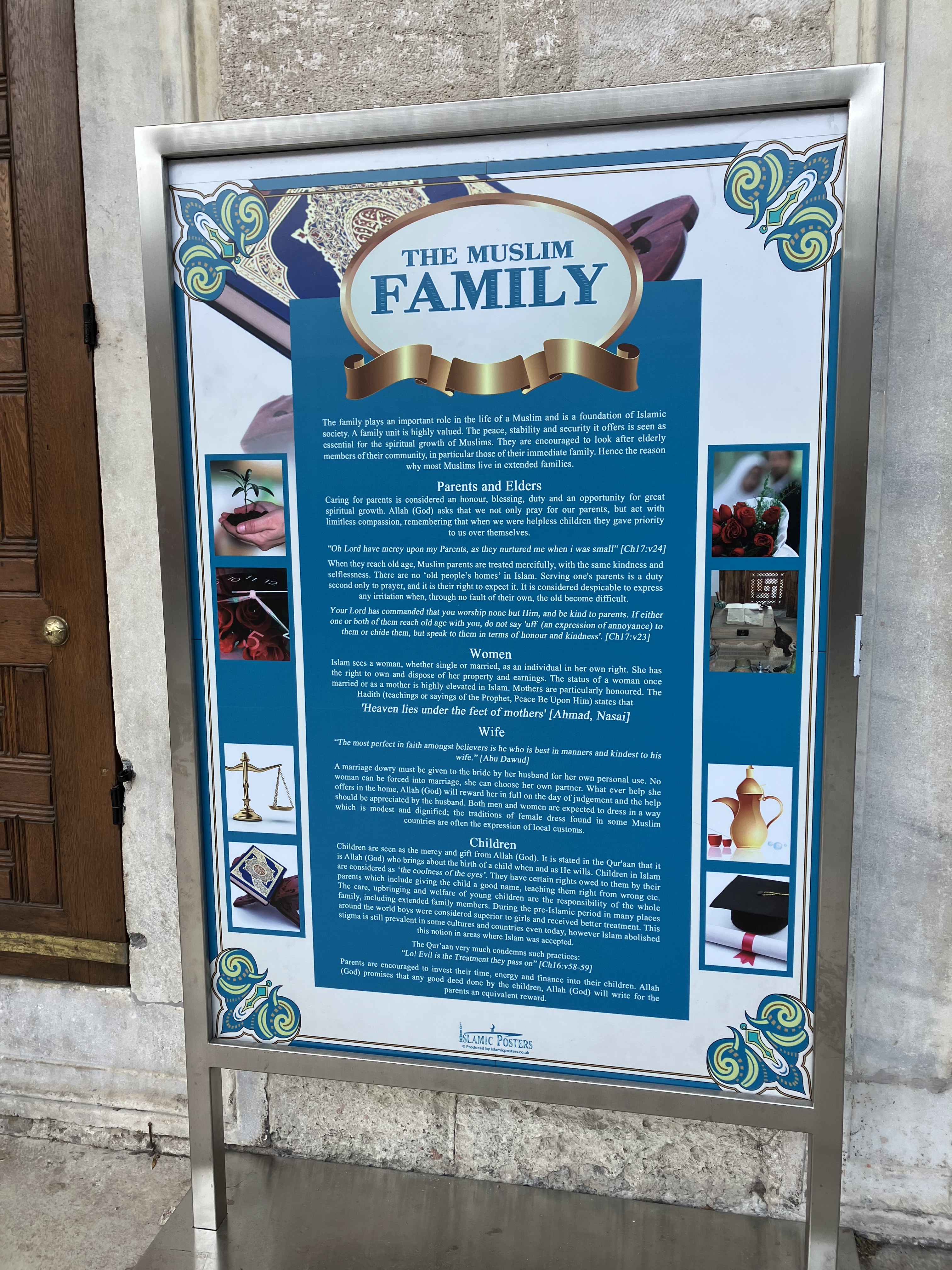
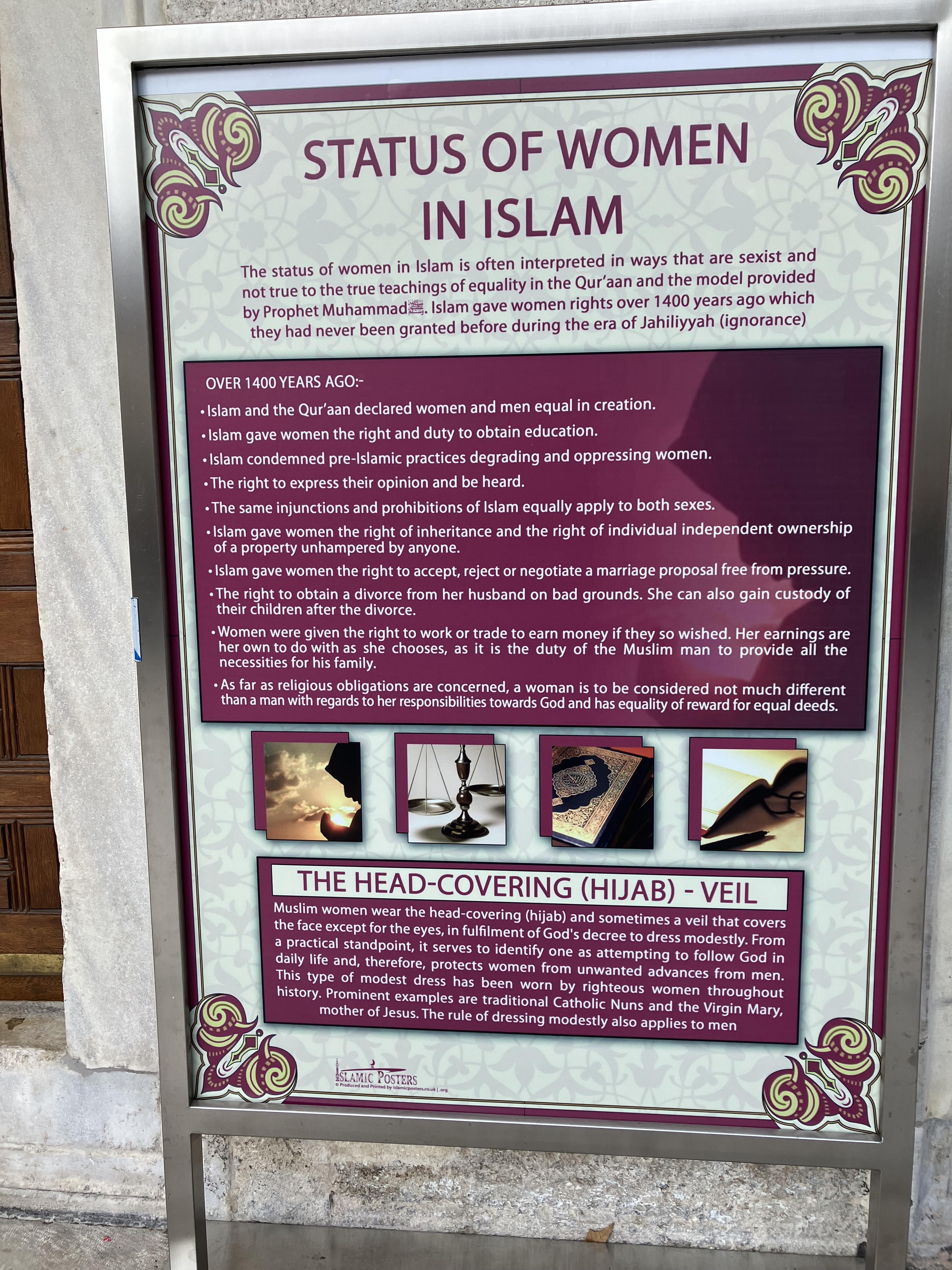
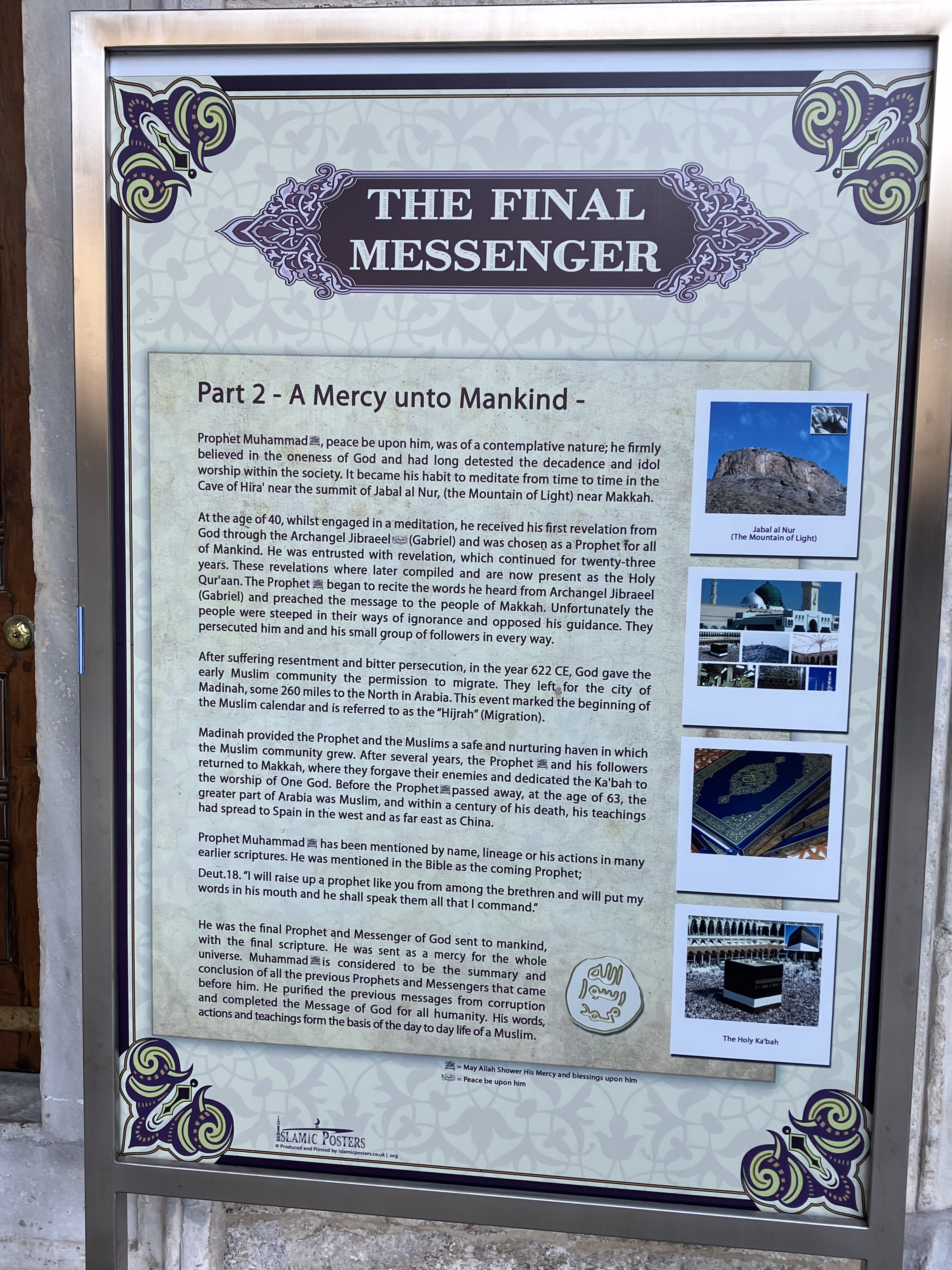
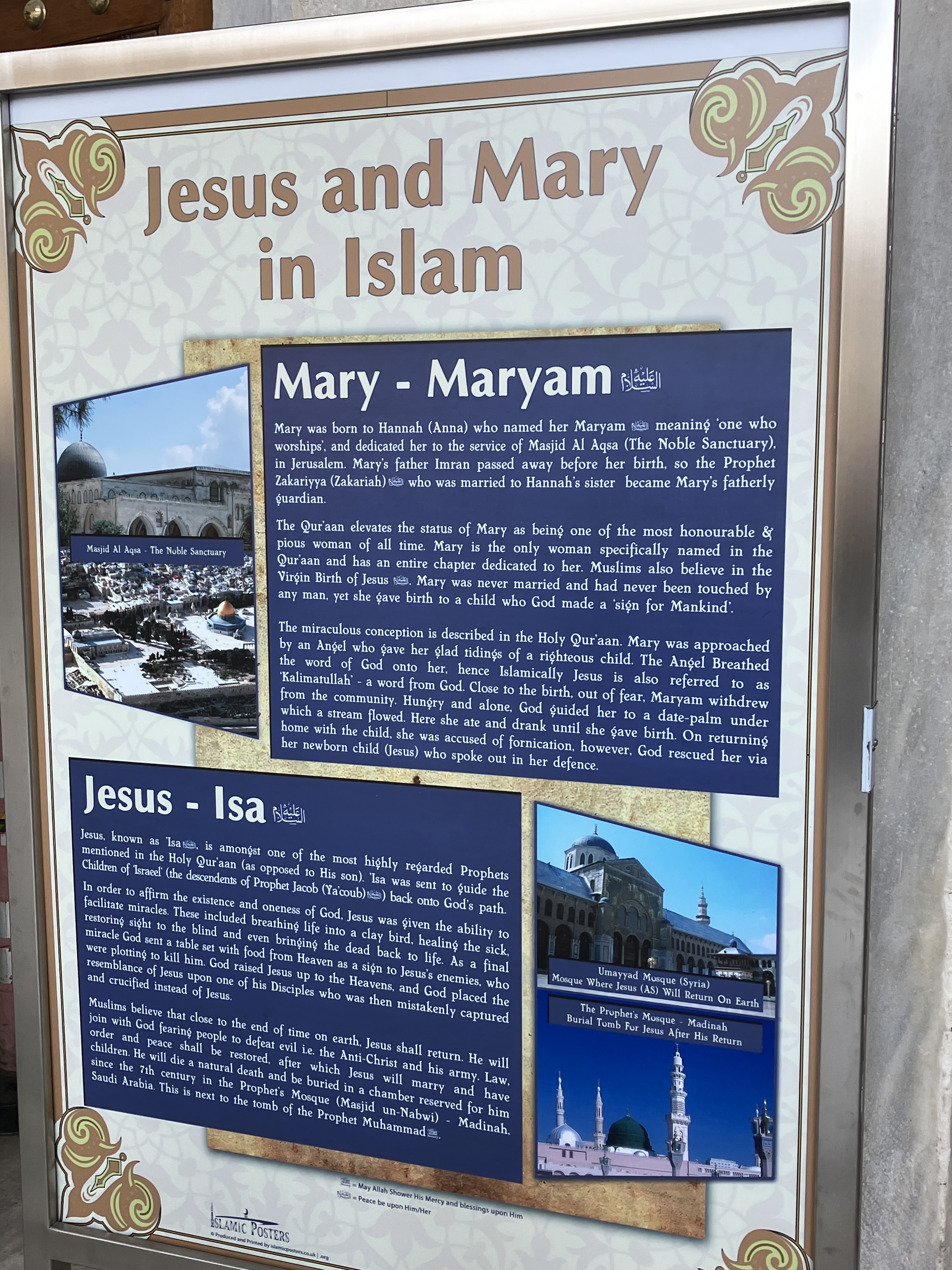
The outer courtyard had information boards, explaining their beliefs. (I checked, and they were happy for me to post them on my blog.) Do read them, and think about whether they compliment or threaten your own views. It’s helpful to know what other people believe, even if we differ from them (and perhaps you don’t differ as much as you thought you did!)

It interests me how many overlaps there are with Jewish, Christian and Muslim beliefs. Obviously there are extremes within each religion, and I would not, as a Christian, want to be linked with the violent hateful sects that call themselves Christian (like the Klu-Klux-Klan in the US) while not showing much in the way of love or purity that Jesus taught. We should remember this when viewing other religions, I think, and not judge the whole by the extremes at the fringe. When I read the boards I did feel some were written in a slightly unrealistic light though, especially the ones referring to the equality of women. I am not sure the ethos described reflects the thinking in practice. But maybe it does sometimes. It’s always hard to remove religion from the culture it has developed within.

We filed into the entrance area, removed our shoes and put them into a bag to carry with us. (Some places have an area where people leave their shoes, but I worry they might be stolen, so this felt more comfortable.) Inside the floor was carpeted, and the prayer area was sectioned to one side. People had hushed voices, though photography was allowed.

There was an information desk, and I had a question about the plurality of words for God in Hebrew, and whether the Quran was the same (it is). The person was well-informed, and spoke excellent English, and probably I could have asked about anything that I didn’t understand. (In case you’re interested, the Hebrew Canon/Old Testament has several places where a plural word for ‘God’ is used, even though Jews and Christians believe in one God. I am exploring why this might be, so I am interested that the Quran is similar.) Whilst my beliefs are different to Islam, I am aware there are overlaps, and there is lots that we agree on. (To be honest, while I do disagree with some of what Islam teaches, I also disagree with what some Christians teach. I guess it’s a matter of deciding what is essential–dogma, and what is variable–doctrine.)

It was, I think, a much better experience than when tourists visit our cathedrals, which seem to lose all reverence and become places that want to collect money rather than inform about Christian belief. This makes me sad. We could learn a lot from Turkey. Tourists can’t enter mosques during prayer times, which are advertised outside.

The call to pray sounds five times a day, reminding people to pray. I liked it, though it sounds very foreign to English ears. It’s too easy to forget about God and all spiritual things when we are busy with our day, it’s good to be reminded to pause.

I hope you will remember to pray today (even if not five times). Thanks for reading.
Take care.
Love, Anne x

anneethompson.com
****

Istanbul


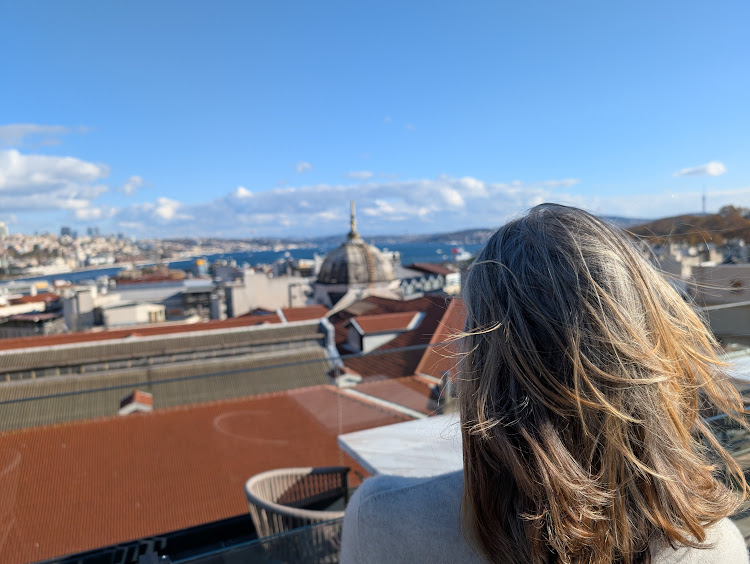
We arrived in snow. It was Saturday, 23rd November, and Istanbul was colder than expected. The grass between the runways was white, and parked planes were frosted with snow. When we left the airport (which seemed very efficient) we stepped over slushy puddles to reach our hotel car. Pre-booking a car (with a fixed price) was definitely a good decision, as there were queues into the city and the journey was a long one. We crossed a long bridge over the river that divides Asia and Europe, and saw the new mosque (which is not called the new mosque) perched high on a hill overlooking the city.

The snow continued for a while, and we saw cars that had parked on the motorway so people could throw snowballs! Then it turned to rain, and by the time we reached the city everything was cold and grey and damp. 

The hotel is nice, and warm and very clean. But there are no cupboards or drawers so we can’t unpack, and the light switches are confusing so every time we try to adjust the lighting one of us touches the master switch and we are plunged into darkness! We ate in the restaurant on the roof, and the food was nice but grossly overpriced. The linen had embroidered cuneiform script, which said Mesopotamia, and I felt clever for recognising it was script (not that I could read it, or even know whether it went left to right or vice versa). We found out later that some cuneiform tablets had been found here—of a receipt for a delivery of furniture. (Cuneiform script is when they pushed a wedge-shaped stick into clay to make symbols, a very early form of writing.)

Breakfast the next day was fun, as we ordered a Turkish breakfast and lots of tiny pots arrived with honey and jam, meats and cheeses and fruits and nuts. There was no room left on the table. All so pretty. I remembered this from our last visit, Turkey is a very hospitable place, with friendly people who seem to enjoy feeding you.

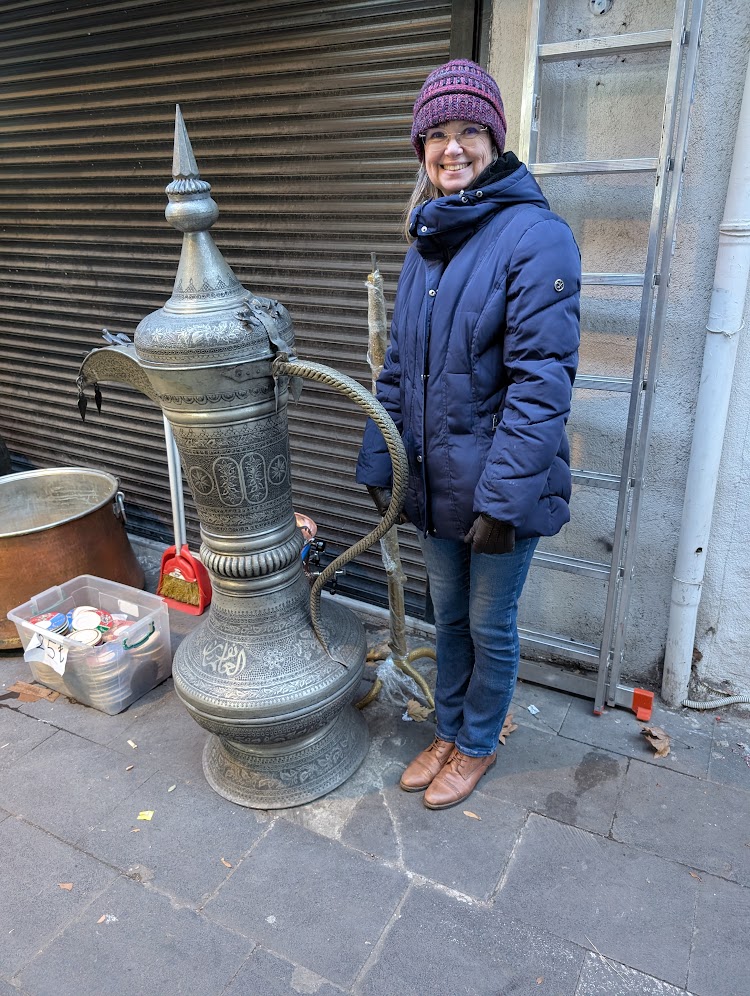
Our hotel is in the old town, and we walked along cobbled streets, sharing the space with motorbikes and men hauling heavy trolleys. There were tourist shops with shiny wares, colourful sweets and bright fabrics and heaps of spices. The skyline is full of minarets, there are so many mosques. We walked to the nearby spice market. It was pretty, a mass of colour and smells in a high-arched ceiling hallway. But it was very touristy, no locals seem to shop there, which made it feel rather artificial. (Though I don’t know who would buy spice when on holiday—I have never felt the urge to take home a few grams of cumin after a week away!) There were streets of stalls outside the spice market, and these felt less tidy and more authentic. Tahtakale is much nicer I think. There were pots and linens and tools and spices, with local people buying them, while men with trays of glasses of tea glided between them and cats watched from every corner. Cats are everywhere here, they are fed by the shopkeepers and stallholders, and they watch everyone and seem very content. I guess they keep the rodents in check. (New York should learn from this: people put out bowls of food and water, the cats are free to roam, and I didn’t see a single rat the entire visit.)

I was keen to buy a teapot, and found a set that is bright green, and slightly garish, and very Turkish-looking. They sell them in sets, a smaller one for tea balanced over a larger one for hot water. Turkish tea is served in fluted glasses, boiling hot and without a handle so you hold them by the rim to sip the tea. But I didn’t buy those. We spent most of our days just wandering. There is lots to see, and people seem happy enough with strangers wandering round. One area was manufacturing goods, the items put into boxes and wrapped into huge white bundles that were heaved onto small lorries or the backs of motorbikes or metal trolleys. You had to watch out for them when you walked, and take care not to fall down one of the gaping holes that plummeted to a warehouse cellar, or to trip over the various uneven paving stones or steps that were randomly on the narrow pathways. I stopped trying to look and walk at the same time, because there were too many hazards, so we stopped frequently, to notice the crumbling buildings above the modern shops, or to stare at the bright wares, or to simply look up at the hills. There are domes, and minarets,  and it is all very beautiful.

I will tell you more in another blog. Thanks for reading.
Take care.
Love, Anne x

A Day in Rome —Italy in August continued


We caught the train to Rome. Thankfully there was air conditioning on the train. Although you are probably reading this in somewhat cooler temperatures, I can assure you that Italy, in August, is almost unbearably hot. It’s not the best time to visit, but it was the only week when the whole family could meet, hence we were there, and coping.

The train to Rome took about an hour. It was a double-decker train and a screen showed which stations we were visiting, which made it very easy. We bought tickets at the bar next to the platform, and they seemed to work, so all was good.

When we arrived in Rome we looked for toilets at the station. Toilets in Rome are difficult—there are very few of them, and they are expensive and dirty. The ones at the station were hard to find, but there were some at the end of a foodcourt. The foodcourt looked good, and easy, so we ate lunch before setting off. My family always seems to do tourism at midday, which combined with the weather in August, is the absolute worst time to attempt tourism in Italy. But this is just how it works. It is impossible to motivate anyone to get up early when they are on holiday, and it always takes ages to leave the house, and after several decades, I have learned that coping with the midday sun is easier than trying to change my family.

Places to eat, and washrooms, at the main station.

We set off for the colosseum . This can be reached by the Metro, which is relatively easy to use once you have found it.  It seems that my family are not the only ones who do tourism at midday, as the colosseum was very crowded. There were people everywhere! Tourists from every continent—some in designer clothes, leathery skin and musical accents, some with umbrellas for sunshades, some with baseball caps and white sneakers and loud voices—some following guides with worried expressions, some looking lost, some striding confidently and ignoring the queues. The whole world was here, and everyone was hot. But when you paused, and for a moment actually looked then the heat didn’t matter. The colosseum rose next to us, timelessly strong and dominant, ignoring mere humanity as it loomed against the sky. You could almost hear the crowds as they thronged to watch the Roman games, you realised that the same hot sun had seared their heads, and whilst the noise of cars would be replaced with chariots and shouts and horses, it would not, I think, have been so very different.

Rome does this. History in Rome forces itself into the present day. You cannot avoid it. Wherever you look, whichever path you take, you are constantly confronted by another age, another civilisation, people from another era. There are steps, worn by feet that wore leather sandals two thousand years ago, and buildings that have witnessed the best, and the worst, that humans can achieve. Modern society may have built roads, and cars that speed through the city, but the ancient spires rise above them, the bridges guarded by angels are still the only routes over the river, the crumbling walls of  Caesars still emerge from the foundations.

We walked to the Trevi Fountain. Someone was playing opera, and the sound wafted through the remains of an ancient palace as we negotiated the traffic on narrow roads. The fountain was full of sunshine and tourists and traffic. We escaped for a while into the cool of McDonalds and drank bottles of water.

We  tried to catch a bus to the Vatican, failed, and hailed taxis. St. Peter’s Square was no less hot, no less crowded. The snake of visitors waiting to visit the cathedral wound round one side of the square. We have all visited before, so going inside seemed like more trouble than it was worth. There was a new sculpture though—a raft carrying immigrants—over to one side. I went to look at it. Some of the sculptured people were obviously Jewish, some looked like slaves from Africa, some were clearly poor. Something with wings was hidden in the middle, and I wondered if this was a Nazi raven, something representing the holocaust. Later, I read about it online:

The sculpture is called ‘Angels Unawares’ and it is based on the book of Hebrews in the Bible (Hebrews 13:2). Timothy Schmalz wanted to sculpt a raft carrying immigrants from every age, and the wings signify that amongst them is an angel—therefore we should care for them because we might be caring for an angels, whilst being unaware. It’s a lovely work (spoiled, I thought, by the people using it for Instagram photos). I walked round it, looking at the faces, hoping that perhaps, one day, the world (us) might be kinder to people who are forced to leave their homes.

We sat in the shade for a while, and then walked to Piazza Navona, which is near to where we stayed 10 years ago when we visited Rome. It is a lovely square, with amazing fountains, but unfortunately this time they were surrounded by scaffolding. Not as atmospheric as we had hoped. We then split up, those with energy staying for more tourism, the rest of us going back to the station. It was a quick trip, and there is more in Rome than we could hope to experience in a week, never mind a day. But even a short trip reminds you of the beauty of Rome. It is an exciting city, one that needs to be revisited many times. Preferably not always in August. I have put an October visit on my wish-list, we shall see…

Thank you for reading. I hope your week goes well.

Take care.

Love Anne x

anneethompson.com
*****

Corrie ten Boom: Life in Vught Concentration Camp Revealed


While we were in ‘s-Hertogenbosch, we realised there was a concentration camp a short walk away. It was used by the Germans in the war, and Corrie ten Boom was sent there. You may not have heard of Corrie ten Boom, but when I was young, I read all her books and she feels like a distant relative. Corrie and her family hid Jews in their house in Haarlem, near Amsterdam, during the war. They were betrayed by a visitor, and sent to prison. After a while, Corrie and her sister were sent to Vught.

The camp was about an hour’s fast walk from the town, so after my conference finished, we set off to find it. We followed Google maps, and the walk was very pretty, next to the river and then over the railway and through a wood. The wood was lovely, paths meandering through the trees, people walking their dogs, birds singing. Then we rounded a corner, and there was the camp.

Kamp Vught is now a memorial, with a prison (still used today) next to it. The memorial mainly shows a few rebuilt areas, with photos and information. It was okay, but not as effective as the Auschwitz camps—which changed your heart and soul slightly, simply because they were so vast and so cruel, and completely impossible to ignore. The remains of this camp were smaller, and it felt more like a museum than somewhere real—though for the inmates, it was very real. I will copy some extracts from Corrie’s book, so you can glimpse something of her experience, and add a few photos from my visit.

‘[…] We seemed to have stopped in the middle of a wood. Floodlights mounted in trees lit a broad rough-cleared path lined by soldiers with leveled guns.

‘Spurred by the shouts of the guards Betsie and I started up the path between the gun barrels. “Schneller! Close ranks! Keep up! Five abreast!” Betsie’s breath was coming short and hard and they yelled at us to go faster. It had rained hard here, for there were deep puddles in the path.’

‘[…] The nightmare march lasted a mile or more. At last we came to a barbed wire fence surrounding a row of wooden barracks. There were no beds in the one we entered, only long tables with backless benches pulled up to them. Betsie and I collapsed onto one of these. […] We fell into an exhausted sleep, our heads on the table[…]’

Days later, Corrie is processed into the main camp, and allocated to a room. During a roll call, she looks at the woods beyond the fence: ‘[…] The group of prisoners grew until there were forty or fifty of us standing in line beside a high anchor-chain fence topped with barbed wire. On the other side of the fence was a white birch wood, above our heads the blue Brabant sky. We too belonged to that wide free world. […]’

‘[…] The barracks appeared almost identical with the one we had left this morning, except this one was furnished with bunks as well as tables and benches. And still we were not allowed to sit: there was a last wait while the matron with maddening deliberateness checked off our documents against a list. […]’

‘[…] Part of the way [to her daily work detail] we walked beside a small wood, separated only by a roll of barbed wire from a glistening world of dew-drops. We were also marched past a section of the men’s camp, many of our group straining to identify a husband or a son among the ranks of shaved heads and striped overalls.

‘[… T]he discipline in the male section was much harsher than in the women’s; executions were frequent. Almost every day a salvo of shots would send the anguished whispers flying: How many this time? Who were they?

‘[…] The guards were noticeably tense. Roll call was an agony. The old and the ill who were slow reaching their places were beaten mercilessly. Even the “red light commando” came in for discipline. These young women were ordinarily a favored group of prisoners. Prostitutes, mostly from Amsterdam, they were in prison not for their profession—which was extolled as a patriotic duty—but for infecting German soldiers. […]’

‘[…] Then rifle fire split the air. Around us women began to weep. A second volley. A third. For two hours the executions went on. Someone counted. More than seven hundred male prisoners were killed that day. […]’

And then, as the camp was evacuated when the Allies drew nearer: ‘[…] At last the path ended and we lined up facing the single track, over a thousand women standing toe to heel. Farther along, the men’s section was also at the siding: it was impossible to identify individuals among the shaved heads glistening in the autumn sun.

‘At first I thought our train had not come; then I realized that these freight cars standing on the tracks were for us. Already the men were being prodded aboard, clambering over the high sides. We could not see the engine, just this row of small, high-wheeled European boxcars stretching out of sight in both directions, machine guns mounted at intervals on the roof. Soldiers were approaching along the track, pausing at each car to haul open the heavy sliding door. In front of us a gaping black interior appeared. Women began to press forward. […]’

Corrie ten Boom, The Hiding Place (London: Hodder and Stoughton, 1972)

The Hiding Place is available from Amazon, as either a paperback or on kindle. It gives real insight into what it was like during the war, the bravery of the Dutch Resistance, and the horror of the concentration camps. Throughout it all, Corrie is strengthened by her faith until finally she is released. It’s worth reading.

Thanks for reading. I hope your week is a good one.
Take care.
Love, Anne x

Amsterdam


We caught the train to Amsterdam. It was an interesting day, but I don’t need to go again, I much prefer ‘s-Hertogenbosch. But in case you’re planning to visit—and because they have the best pancakes in the world (I think) you had better continue reading.

We arrived by train. When we exited the station we were faced with blue sky and a vast expanse of water, and it was instant beauty. Then I was told we had exited on the ‘wrong’ side so we went round the station, and instead saw canals, and boats, and pretty buildings—and lots and lots of people.

The station

We decided to start with a boat tour. Everyone who has visited Amsterdam (including Husband, in 1984–so clearly an expert) recommends a boat tour. In my experience, boat tours can be very mixed, though this one wasn’t too bad. The main problem (for me) is that you tend to be lower than all the things you are urged to look at, so you either miss sights or end the tour with a crick in your neck. But I am old and grumpy, so this might not be a problem for you.

We found a pier where the boats departed from, very near to the station. An assertive young man informed us we could pay at the end of the tour, the boat would be arriving in ‘about 5 minutes’ and we should wait in line. (My general impression of Dutch people is they are polite, quietly spoken, and assertive.) We obeyed him.

After 15 minutes, the queue was fairly long, and most people seemed to have bought tickets online. We realised there was a good chance that we would not actually get onto the next boat. [*Tip: Buy your boat tickets online, before visiting Amsterdam.] It was fine, we were seated on the boat, there was a sort of bar in the middle, a young man (tall and slim—which seems to be another Dutch trait, if I may continue the unsubstantiated stereotypes) and an older man driving. We set off.

We were given bar menus, but there was no obligation to buy, which was good. The family opposite ate their packed lunch, and this seemed okay. The young man told us interesting trivia as we sailed along the canals.

Interesting facts are:

The houses were built on marsh land, so the foundations were built on wooden posts, which have started to sink, so some of the houses lean to the side.

The stairs were like ladders, which made carrying things to the higher storeys difficult, so all the buildings have a beam at the top, and a chain, for pulling things up. Due to this, they built houses that lean forwards slightly, so the stuff being hauled up doesn’t break the windows of the lower levels.

Amsterdam imported lots of spices.

There was once a tax on the width of the house and the number of windows, so people who wanted to display their wealth built very wide houses with windows made of lots of panes of glass (each pane counted as a ‘window’).

Many of the men went to sea for long periods. Therefore, to avoid accusations of inappropriate behaviour, the wives never closed the window blinds. This tradition continues today, and Dutch people (apparently) do not close their curtains. They have a saying that ‘Everyone has a naked neighbour, and if you do not, then you ARE the naked neighbour.’

(I have no idea if any of these ‘facts’ are true.)

As the boat left the harbour, the sun was shining, and I wondered whether it would be too hot. We were in an open boat, flowers (plastic ones) arranged around the edge. But then we rounded a corner in the canal, and black clouds loomed. It began to rain, quite heavily, and they distributed orange umbrellas, and headed for a bridge. For a while we stayed under the bridge, sheltering from the rain. This was less exciting than hoped—we had spent half an hour in a queue, and then half an hour under a bridge—quite a large proportion of our day in Amsterdam. But it couldn’t be helped. I’m not so sure about the quality of driving, as at one point we smashed into the edge of the bridge. The driver had enjoyed a beer during the hot morning, and I wonder how many he had enjoyed before we arrived, and whether ‘drink-driving’ laws apply to boats in Amsterdam.

In the rain.

After the boat trip, we walked (in the drizzle) to a restaurant. We had a quick lunch, then walked through the city, looking for a pancake shop that had been recommended. It was in a carousel—as in a fairground ride—and they served poffertjes—the tiny Dutch pancakes. I  ordered some with sugar, butter and whipped cream. When they arrived, they were hot, the butter melting over them, the cream was perfect for dipping. Delicious. I think it is worth coming to Amsterdam just for the pancakes. (Maybe don’t bother with the boat trip.)

We walked back to the station, in sunshine, passing canals and squares and pretty buildings, and lots and lots of tourists. It is a pretty city, but I never felt that I found the heart of it. There are lots of cafes selling sweet waffles, and lots of coffee shops that exude the sweet smell of cannabis—and I wonder how many people came for the novelty of legalised drugs. There was something missing in what I saw, but I can’t quite define what it was. Perhaps I was just in the wrong mood. We caught the train back to the ancient town where we are staying, and I wasn’t sorry to leave.  I really like the Netherlands, and there are plenty of beautiful things to see. I’m just not too sure about Amsterdam.

Thanks for reading. Have a good day and take care.
Love, Anne x

One of the ‘forward-leaning’ houses next to a river.

anneethompson.com
*****

Hieronymus Bosch


Got up, went for a run. ‘s-Hertogenbosch is a pretty town, lots of rivers and trees and clean streets. The weather is hot and humid—it felt like New Jersey, so I’m glad we ran before the sun made it too hot.

I wondered whether people used drugs in the 1400’s, and whether perhaps this had influenced some of the art.

Walked round town, and found the Jheronimus Bosch Art Centre. There seem to be various ways to spell his name, which is not the name he had as a child. Apparently he changed his name to ‘Bosch’ so people who wanted to buy his work knew which town to visit.

The building was previously a church, now it’s a gallery, with his art, and paintings by other artists who were influenced by his art, plus sculptures and videos. It cost 10 euro to enter, but it was worth it. Very well done. His work is quite dark—not dissimilar to Dali—maybe even more twisted. I like it, Husband less keen. Lots of it was religious art, commissioned by other people, but he added his own strange twist. He was very unusual for a 15th century artist. There are various sculptures around the town, based on his paintings—so it’s not unusual to look at a beautiful canal, with trees and ivy on each side, and ancient brick bridges, and a brightly painted pig eating a naked person! I suspect he was quite an angry person, he seemed to want to show that evil is everywhere, and even kings and bishops have evil intentions. He did it very well. But they are not happy pictures. The gallery, however, is amazing.

It also has a tower, with a view over the city. I was surprised to see how near the countryside is—lots of flat green land, with rivers and dikes. The dikes have paths along the top, and often someone is cycling on them, which is so Dutch!

Before we left the gallery, we visited the shop. I was about to buy my mother a fridge magnet, but Husband pointed out the one of the tiny figures was having something inserted in an unfortunate place. I decided this was an inappropriate gift for my mother.

Lunch at the house. Then we went for another walk mid-afternoon. The weather was balmy, much nicer than the searing heat of yesterday. Lots of people were sitting outside cafes having coffee and cakes. We stopped at a nice little café near to St Catherine’s church. The menu was in Dutch, so we did our best, and ordered cakes and coffee. It turned out it was a vegan restaurant, which was unexpected. The cakes came on a plate with cream (a variation of cream) and slices of orange, dusted with icing sugar. Very pretty. I like when a café cares about what it’s serving.

Many of the coffee shops smell of weed/cannabis. We avoid those, and I worry we might eat some by mistake. (I don’t like the idea of being drugged, though I suppose it would be the same as being tipsy, and I don’t mind that occasionally.) I’m surprised how many coffee shops seem to sell it. (I was told that ‘coffee shops’ serve cakes with it in, and ‘cafes’ do not. But it’s not always as easy as that.) I have heard that if someone is prone to schizophrenia then eating/smoking cannabis can trigger it—but I don’t know if that’s true. Everyone here seems very normal.

I’ll tell you about our trip to Amsterdam another time. Thanks for reading.
Take care.
Love, Anne x

Visiting ‘s-Hertogenbosch


We left home at 4am (not my planning) in a taxi to St. Pancras. We were there too early (what a surprise) so sat at a sticky table opposite a coffee shop and watched all the young people with heavy back-packs, and the hassled parents with fretful children. Then we joined the line of people snaking round the barriers, towards the check-in point. (Why do I always notice the people who  skip the queue, rudely pushing to near the front? It makes very little difference to me, but it irritates me intensely!)

Once we had scanned our tickets, we put our bags through the scanners. Liquids and computers were allowed in the bags, but we did have to lift them—which I wouldn’t have managed alone. Then we passed through the metal detector (which must be set quite high, because  usually I set them off—I assume due to the metal holding my skull together). We emerged into the ‘departure lounge’ which was every bit as unpleasant as at an airport. Everything felt overused and stale. But it was very easy — I didn’t find it as stressful as flying.

When our train platform was announced, we followed the crowd, up a moving walkway, to the platform. There was a high step up into the train—which again, would have been too high for me to lift my suitcase. Catching the train with a suitcase involves a strong back, so take a man.

We found our seats, and settled down for the ride to Amsterdam. Very smooth. There was a buffet car (not bad) and toilets (not too horrid) and it was much nicer than flying (in my opinion). I tried to read, and Husband tried to chat, and we managed to arrive without killing each other. As we entered the Netherlands, there was a windmill, exactly like the kind in picture books. (It probably had a mouse wearing clogs, but we passed too quickly to see.)

At Amsterdam station, we followed the crowds to the exit. There was what I assumed was another moving walkway down from the platform—realised too late that it was an escalator, and nearly killed several people by almost dropping my suitcase on their heads. Managed to hold onto it, precariously perched, with worried Husband trying to help. Survived.

We were travelling to ‘s-Hertogenbosch (which people call ‘Den Bosch’) for an Old Testament conference. We had no idea how to get to ‘s-Hertogenbosch (and couldn’t even pronounce it!) so went in search of an Information Office. There was a very helpful person, who spoke excellent English, and was un-phased by our massacre of her language, who told us the train and platform number, and suggested we time the journey and looked for the station after about an hour. When the train arrived, it was a double-decker, so more lifting of cases onto the train, and then down a few steps so we could sit downstairs. It was very busy, but we found somewhere for our luggage, and seats together and it was fun to watch the countryside whiz past the window while Husband tried to teach me about reclaimed land and dikes. The water in the rivers we passed was higher than the railway, which was interesting.

We arrived. Found a lift to leave the platform. Put the Airbnb house into Google maps, and set off. It was very hot. The town is pretty, with rivers, and old buildings with their stepped roofs next to modern ones. The traffic stops at zebra crossings (you can never be sure when in a new country) and there were lots of bikes, and it was clean.

The house is okay. We have never actually been scammed by Airbnb houses—so they always exist when we arrive, but the quality and comfort varies hugely (because Airbnb don’t actually visit to check). This one was in a great position, but was slightly worn out, and not very well equipped. It also had a funny sign in the bathroom, telling us to only use the downstairs toilet!

Husband needed an emergency Big Mac, so we left bags and returned to McDonald’s. Then we shopped in a supermarket we had passed, and used Google translate to decipher that the Dutch for ‘orange juice’ looks like ‘apppel juice’ and ‘roombotercake’ means ‘butter cake’ and is actually Madeira cake. We paid, and then couldn’t leave because the barrier didn’t open—watched another customer scan her receipt to exit and copied. Good system.

We ate in an Italian restaurant because it was easy, then walked round the town. We saw sculptures commemorating the Dutch resistance in the war, and one to Jewish school children who were all expelled from schools in 1940, and lots of unusual sculptures which I believe are based on the paintings of Hieronymus Bosch (who was born here in the 1500s).

Went to bed very tired. Didn’t sleep.

I will tell you more in another post. Thanks for reading. Have a great day.
Take care.
Love, Anne x

Lindisfarne, The Holy Island


22/6/2024
We decided to visit Lindisfarne (Holy Island) which has a causeway we could drive across at low tide. The island is home to a castle (lots of historic fighting of the Scots) and a monastery (where St. Cuthbert lived for a while). I sorely needed a break from Meg, so we checked the timings worked, gave her some exercise before we left and she had a morning in her crate in the house.

The island was lovely, a truly peaceful place. There were lots of dogs, all very well-behaved, and I was glad I had left my adolescent monster at home. We met a couple with a Malinois, and I stopped to speak to them. (Although a German Shepherd Dog, Meg looks very like a Malinois. But not as tall and slim.) Apparently this one had been a working dog, but was now a pet. The owners talked about her unending energy, and her active brain, and hyper personality—and assured me that in time, Meg would be easier. When I told them that Meg chases traffic, they suggested that I make her sit next to a road, until she loses the impulse. They said it would be hard, and at first she might only manage a few seconds, but gradually it should improve. I will try this when I get home (I could tell that they understood my battles, and knew about training a similar breed of dog).

The monastery was very peaceful. It was a forerunner to Durham cathedral (where St. Cuthbert was eventually buried) and it has a magnificent arch, high over the ruins. You could easily imagine the monks, hurrying to prayer, their gowns flapping in the wind, their bare legs and leather sandals, the beauty and harshness of the environment directing their thoughts to God.

There were also toilets (clean) and a shop selling ice cream (delicious). We bought salted-caramel waffle cones, and walked through the sunshine to the beach, looking at the castle in the distance. It was perfect. I was very glad we had left Meg at home. It’s easier to cope if I have breaks from her.

Lindisfarne, perfect with an ice-cream.

In the afternoon, we took Meg to Low Newton-by-the-Sea in the hope the beach would be less busy. It was, but only slightly. We found a coastal path that avoided going onto the busy sandy beach, and it dipped down in a few places so we could walk on the rocks. It was incredibly hot. When we reached Football Hole cove, we managed to persuade Meg to go into the sea to cool down a little. Then we returned to the car, without incident. I still have no confidence about controlling her, so she was often on the lead, which is a shame. I feel we have gone backwards quite a long way, but perhaps it will be better when some of her hormones have settled down.

24/6/2024
We attempted the same walk again. Meg was super-hyper the moment she got out of the car, and walking the short walk to the footpath was very difficult. I voted for abandoning the walk and just going home, but we persevered and made it to the coastal path.

When we reached the cove, I walked along, throwing stones into the water for Meg to dive for. She was enjoying the game, and it was good to see her cooling off. But then I mis-timed it, and as I reached for a pebble, Meg tried to grab it at the same moment. She caught my finger in her teeth, tearing the skin and bruising the flesh. Ouch. I sucked it clean, and found a plaster in my bag—there was a lot of blood. It rather ruined the afternoon, so we went home. I feel cross with myself when things like this happen. Meg was not, in any way, being vicious, she was just full of impulse with no restraint, and wanted to grab the stone. I should have been more aware, I should have told her to sit while I selected the pebbles. But I didn’t, and I was hurt. Again. She is such a challenge. The finger will mend. I will try to learn from the experience.

Thanks for reading. Hope you have a good day and manage to avoid troubles.
Take care.
Love, Anne x

anneethompson.com
*****