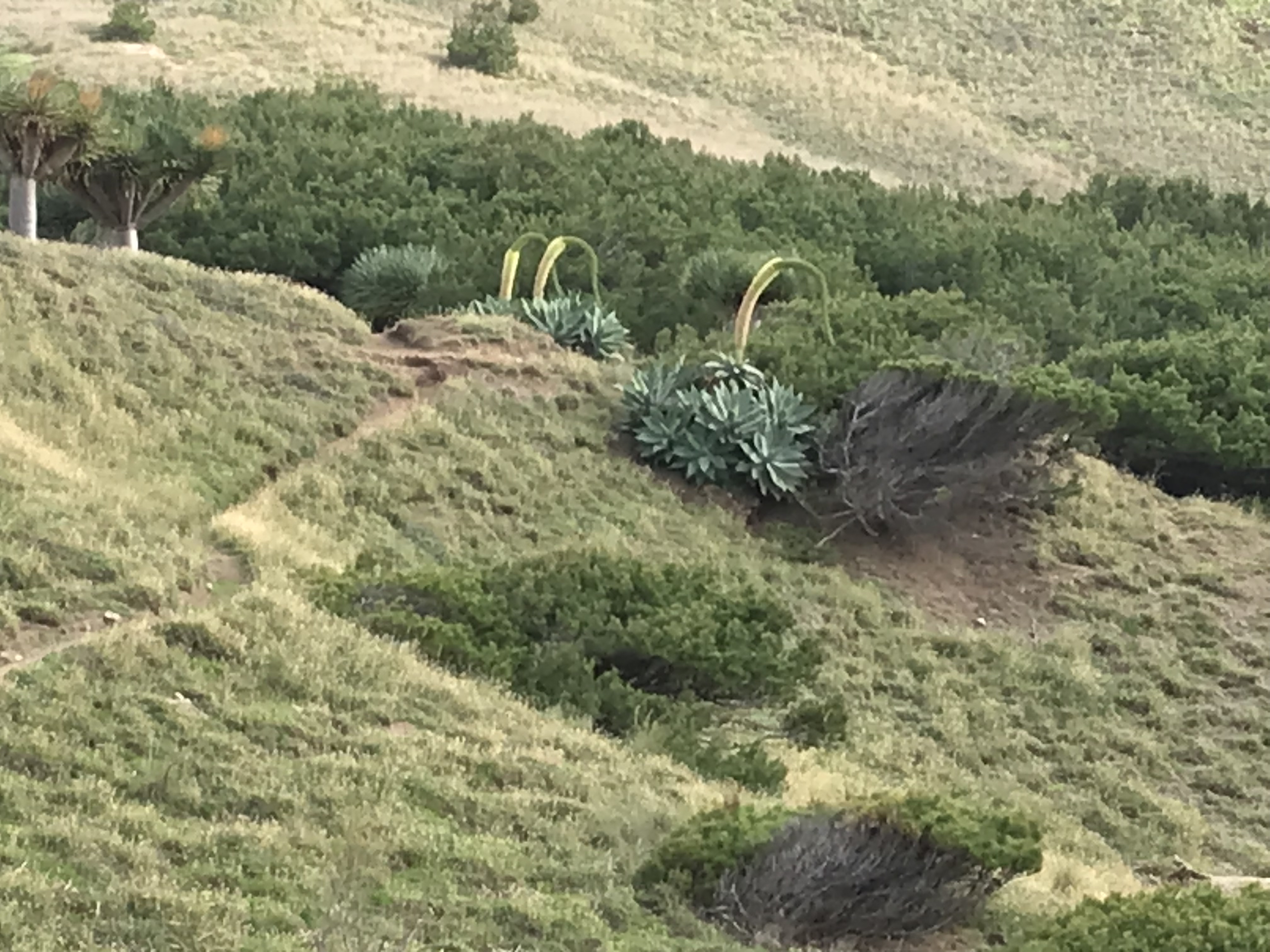
Madeira, February 2023


We visited a few towns on the south coast of Madeira. It wasn’t possible (I think) to reach them via pretty coastal roads, as the roads seem to be either blocked or fallen into the sea or abandoned to rock falls. Our drive was therefore through a series of tunnels. Madeira does tunnels very well, but you don’t get to see much scenery. I cannot imagine how different life must have been before the tunnels were built. Towns would have been fairly isolated, as visiting other places would have taken much longer.

We visited Ponta do Sol. As we drove down the steep road into town, we saw a small carpark. It was full, but we managed to arrive as someone was leaving, so parked the car and followed signs to the old town. The town is built on a steep hill, terraces of bananas reaching up the cliff side, cobbled streets and houses clinging to the lower levels. There were some good coastal views, but nothing to entice us to stay in the town. The busiest area was the beach, with families sitting on the black sand or swimming in the sea. I never like black sand. Although I know it’s no less clean than yellow sand, it feels dirty. As Madeira is basically just a big volcano, all the natural sand is black.

Next we drove to Madalena do Mar. We did attempt to follow the coastal road, but it petered out, so we had to do a difficult 3-point turn on a bendy road, and it wasn’t worth the hassle; we returned to the series of tunnels.

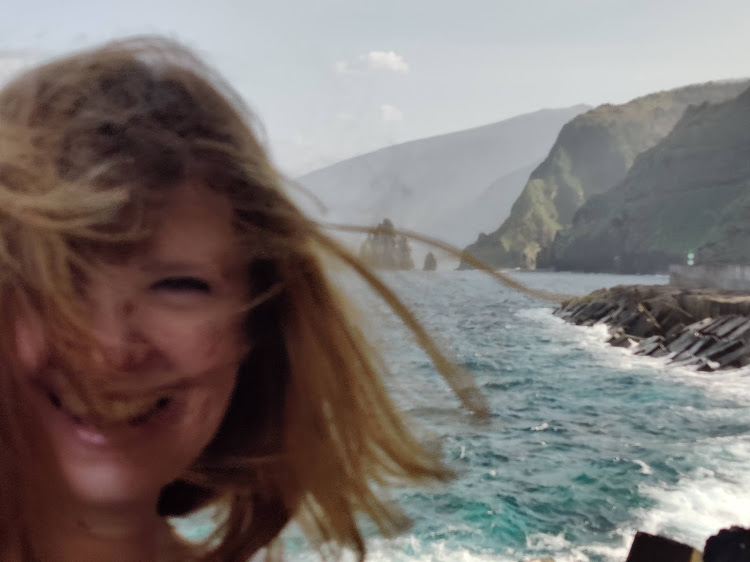
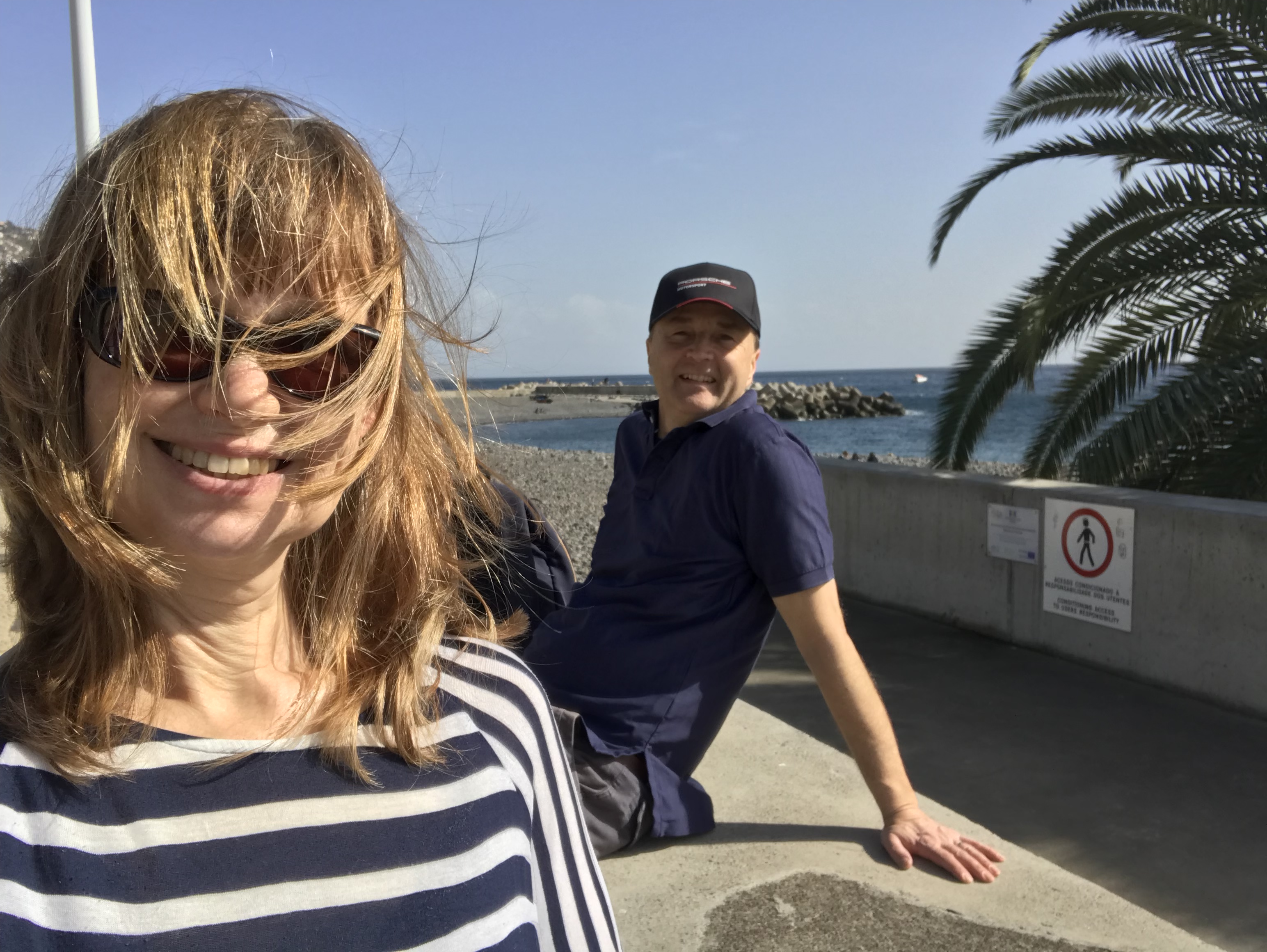
Madalena do Mar has a big car park next to the sea, and a lovely promenade lined with palm trees along the coast, a jetty for fishing or mooring boats . . . And very little else! There were plots of land waiting to be built on, and even an area designed for a café, but no one seemed to have actually arrived yet to build the hotels and cafes. It was lovely, in a sort of abandoned, not quite there yet, way. Not sure what it will look like in ten years time.
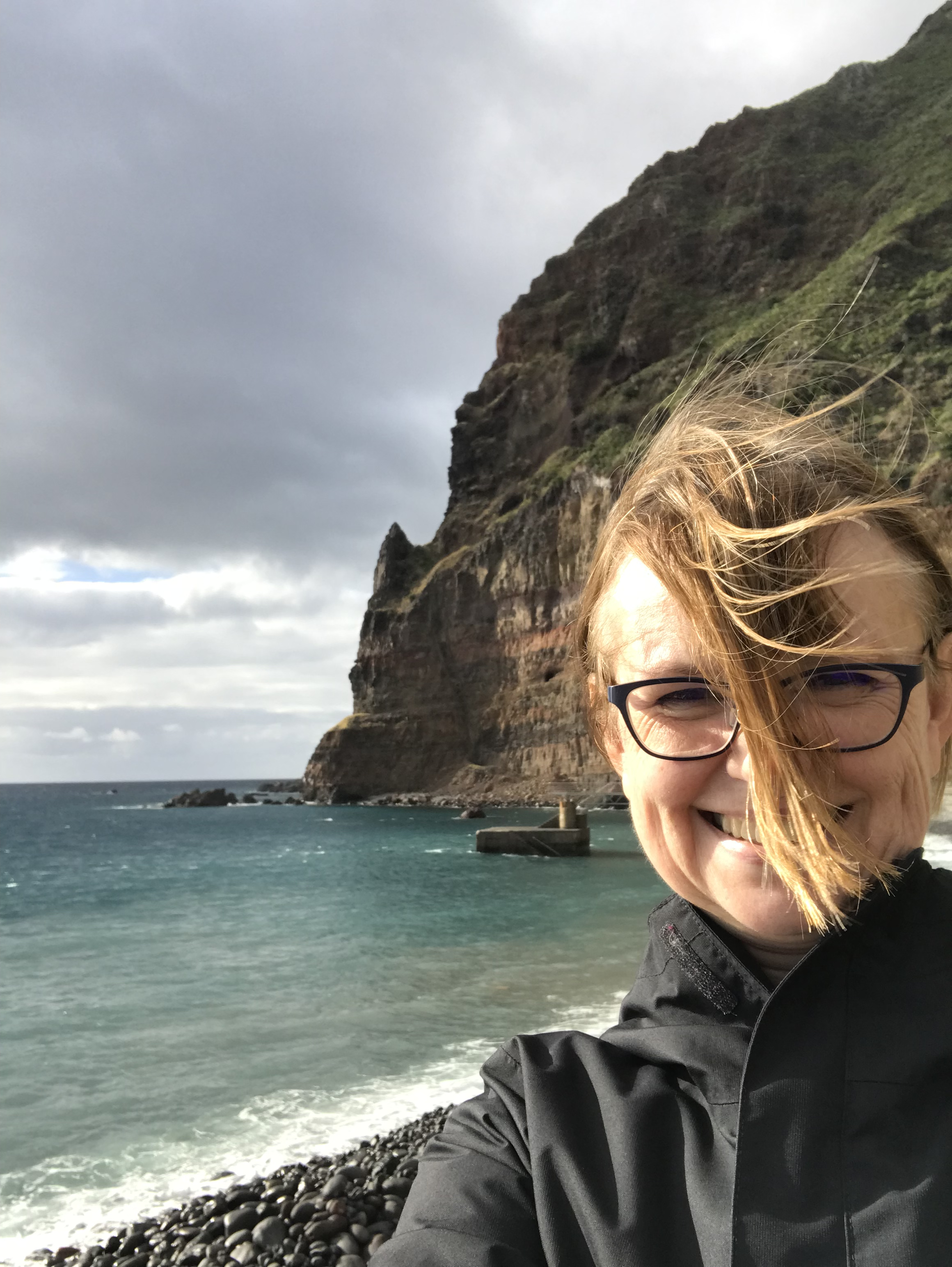
Quite windy!

Our last stop was Praia da Calheta. This was a busy town, full of people, cars trying to park, cafes and supermarkets. There was a small marina, with little boats bobbing in rows, and a long promenade with palm trees and cafes. There were also beaches, with yellow sand hauled from Africa. Despite the cold, several teenagers were swimming, their squeals piercing the air. Steep cliffs bordered the coastal road, and we sat in a cafe, sipping espresso and watching little black and white birds nesting in the rock while seagulls swept past looking for food.

We returned to Funchal for dinner, and ate in Noitescura, a restaurant near the apartment. It served traditional food, and last time we tried ‘Francesinha’ which were like burgers (beef, chicken, fish or vegetable) with a fried egg on top, and served covered in a sauce/gravy. I chose badly, and had the vegetable one, thinking it would be a mushroom burger, but it wasn’t, it was more like minced vegetables (tiny pieces of onion, broccoli, carrot) in a soggy bun. It was as horrible as it sounds. This time we shared a fish platter, which was lovely. It had a variety of local fish (scabbard, parrot fish, bass) and we ate it with fried sweetcorn, rice and chips. (No veg this visit, Husband chose the food.) 

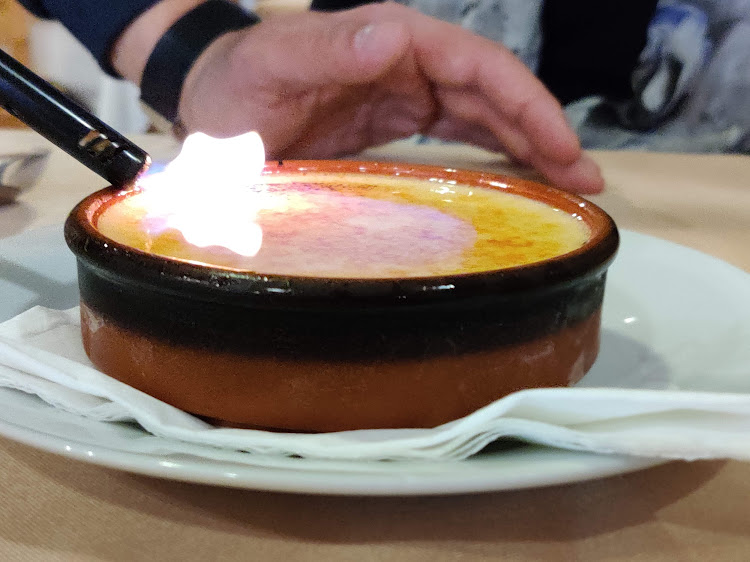
I also tried a poncha, which is a traditional drink, sold all over the island. I was expecting something like a caipirinha, as it’s made with sugarcane alcohol, but it wasn’t, it was more bitter, and orange, and served in a short fat wine glass with no ice. Not unpleasant, but I prefer caipirinha. I also had white wine with my meal, and a dessert with sambuca (which I remembered too late I don’t like, but luckily they poured it over the dessert and then set it on fire, so most of it burnt off). We finished with a glass of Madeira wine, but refused the rum that was offered with the bill. I don’t usually drink much. I didn’t sleep very well that night.

Thanks for reading.
Have a good week. Take care.
Love, Anne x
Thanks for reading.
anneethompson.com
Sign up to follow my blog, and it will be emailed to you each week.

More From Madeira


I’m writing this on the balcony, listening to the waves wash over rocks. No seagulls though, as Madeira seems to have more pigeons than seagulls. One comes and sits on the rails next to me, checking to see whether I am eating, before flying off in disgust. I will give you a quick tour of the rest of Madeira. Then you can add it to your list of places to visit. Coming in January/February was brilliant, because we had hot sun, cool wind, and very few other tourists. But perhaps we were lucky with the weather, it would have been gloomy if it had rained all the time. Either way, we needed summer clothes for the too-hot-to-sit-for-more-than-10-minutes sunny days, and warm clothes for the cold evenings. Wish I’d known that before we came. Also wish I had packed my walking boots because when it rained, it really rained, and all the walks we did were basically up, or down, the steep side of a mountain. Not much call for flip-flops because the streets are all cobbled.

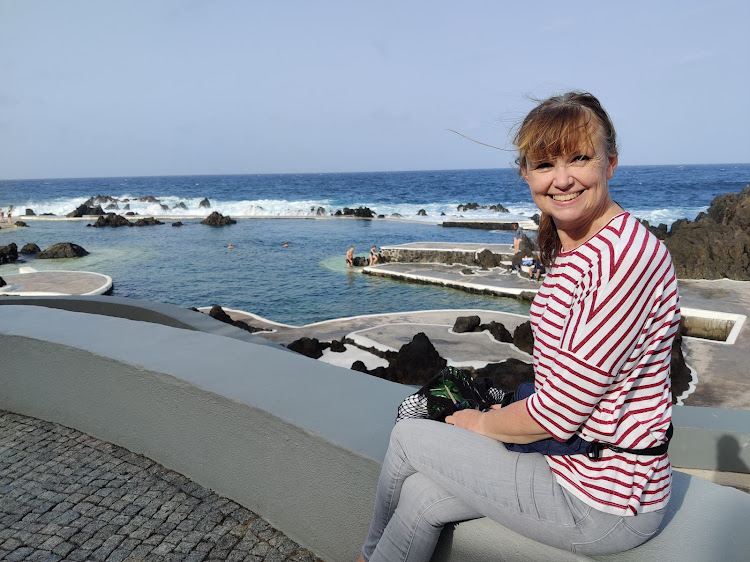
The north side of the island seems to be always under cloud or in the shade of the mountain. We need to remember to take jumpers when we drive north. There are some brilliant natural swimming pools, built into the rocks, and we had fun swimming there, watching the waves crash over the rocks while protected by the edge of the pool. It was freezing though.

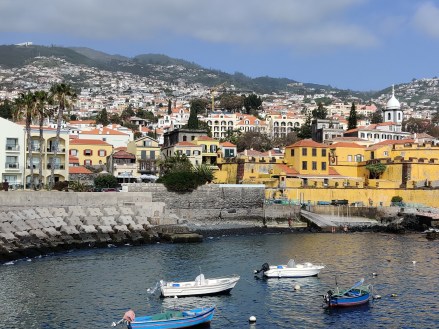
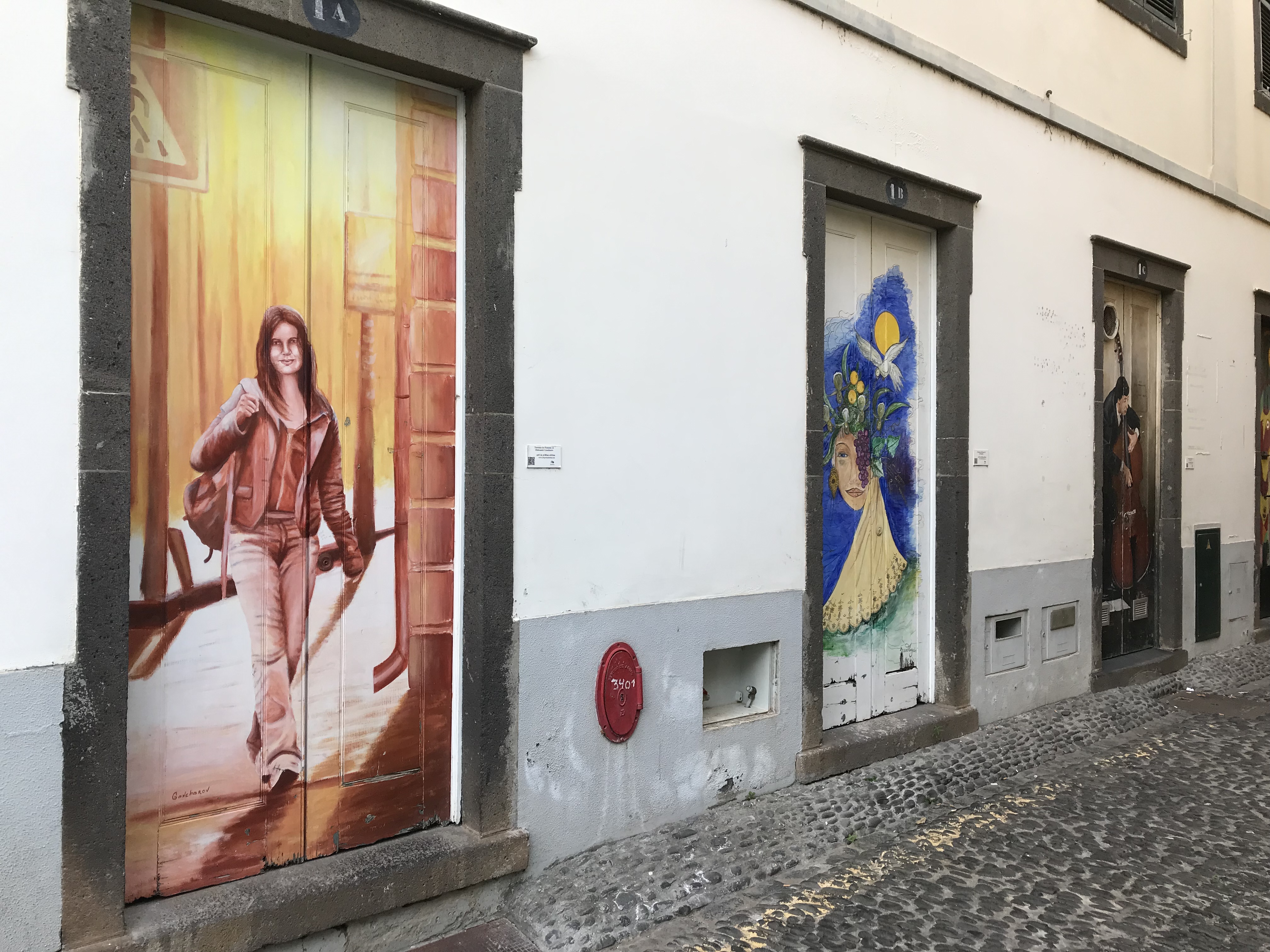
We stayed in the old town of Funchal. I am looking across orange-tiled roofs as I write, the cable-car sweeping past in the distance. If I walk down to street level, I am met with uneven cobblestone roads, palm trees, painted doors. Painted doors are a thing here.

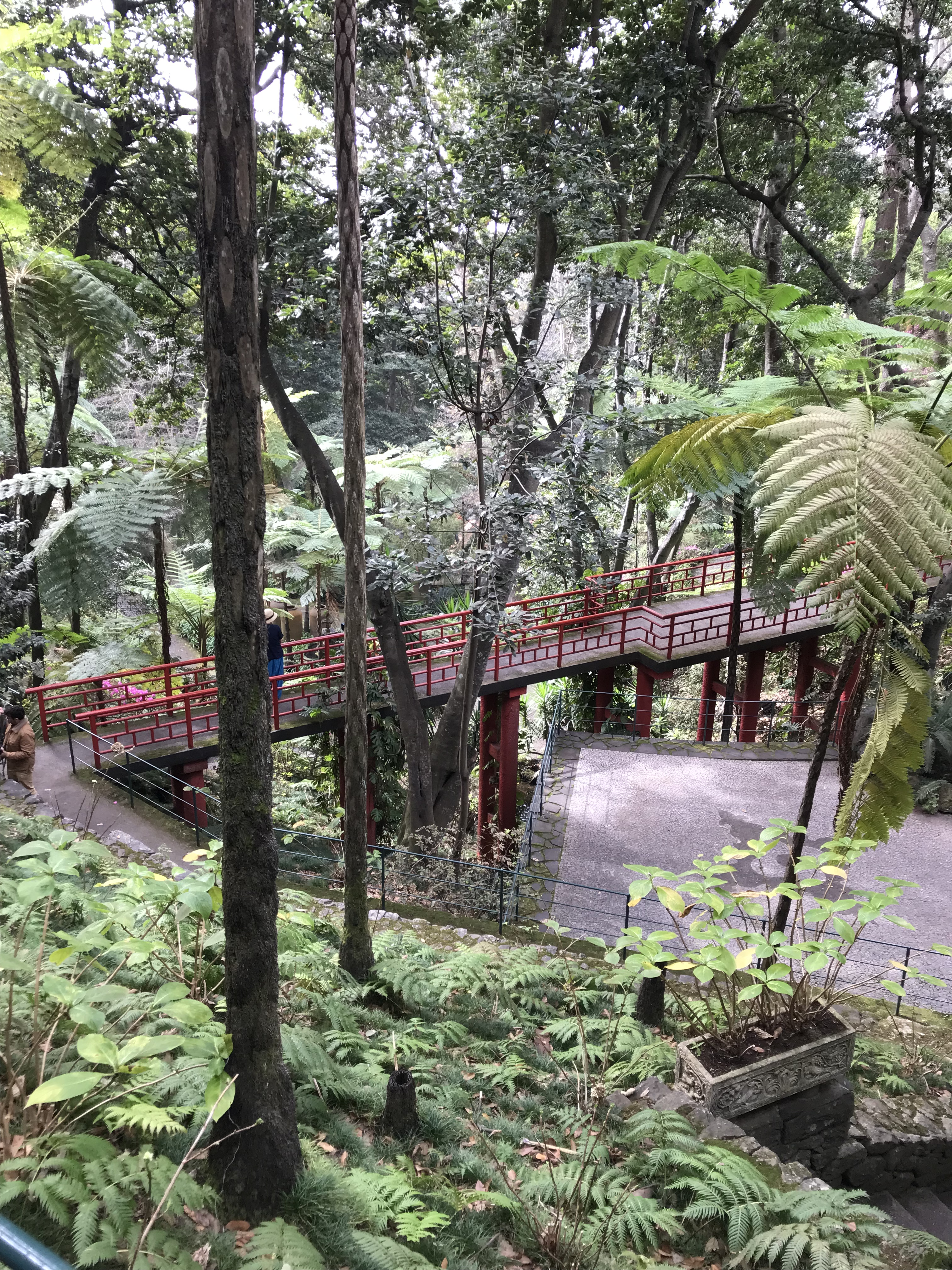
The plants on Madeira are brilliant, it really does feel like a tropical island, even in the winter. There also seem to be very few insects, which is a bonus. One day we walked up the mountain to the botanical gardens. This was not worth the effort. Perhaps it’s seasonal and we were unlucky, but the plants growing wild were better. The garden in Funchal was disappointing. In contrast, the garden of Monte Palace was beautiful, with exotic plants, and vibrant colours, and water features. There were little displays of African art and mineral crystals, plus a taste of Madeira wine all included in the ticket price. Worth the cable-car ride to get there.

One other disappointment was the fruit market in Funchal. It’s basically a tourist-trap, with aggressive stallholders trying to entice you to buy their fruit. I read online that they tend to soak fruit in sugar, offer some to tourists to taste, then sell the not-so-sweet fruit at inflated prices. It was worth a visit, just to look, but don’t buy any fruit! If you walk round the corner, there is a big supermarket, where you can buy all the same fruit at a much better price. It annoyed me that they were so blatantly ripping-off tourist. But maybe that happens in every city in the world.

It is, however, worth trying some of the fruit after you have bought it from the supermarket. There is the big green ‘custard apple’ which is white inside with big black seeds. It tastes of custard. The ‘delicious fruit’ (Monstera delicious) is the fruit of the cheese plant (the one with holey leaves in your auntie’s house). It tastes like a pineapple crossed with a banana, and is poisonous before it’s ripe (so only eat the soft ones). The peel falls off in hexagonal segments when ripe, and the inside is slightly slimy (like a banana). The ‘English tomato’ is not an English tomato and I thought it tasted more like a red version of kiwi fruit. The skin was very bitter, so not great if you take a bite, and you should scoop out the acidic seeds with a spoon. I didn’t like it much. Some of the more delicious local fruits were the bananas and avocados.

The water is carried around the island in levadas, which are sort of long drainage ditches. It’s possible to hike beside them, as they all have maintenance paths next to them, though some are dangerous. We followed the Levada do Risco to a waterfall, and the walk was beautiful (but incredibly steep, so hard work walking back to the car).

Santana has some examples (mostly modern copies) of tent-shaped houses that were typical in Madeira in the past. They are pretty, but I preferred the church of St. Ana (which is what they named the mother of Mary—I didn’t know that).

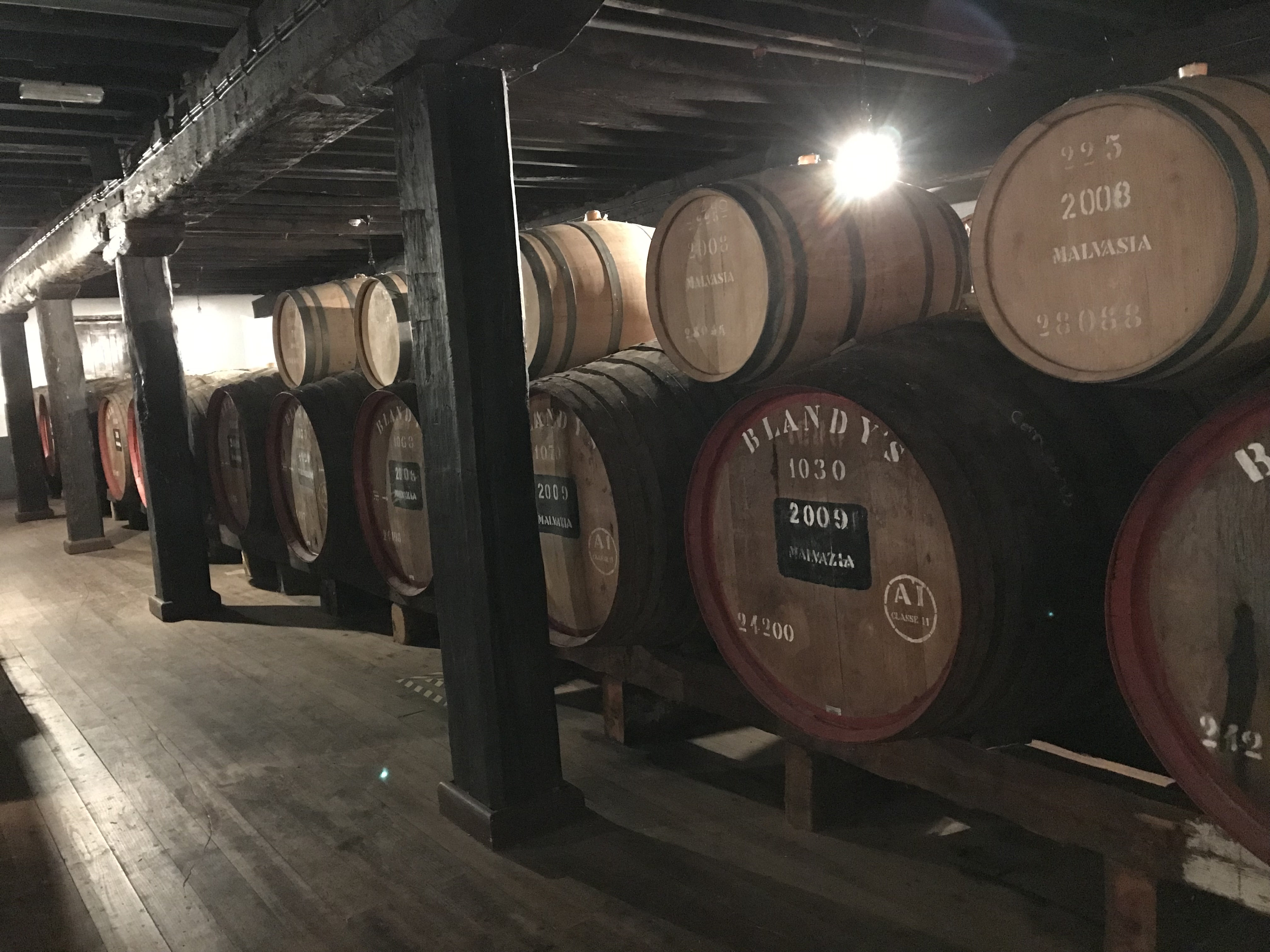
One day we did a tour of Blandy’s and learnt about the production of Madeira wine. It used to be fortified with rum, made from the sugar cane on the island. But the EU stopped that, saying a wine needed to be made only from grapes, so now they import the strong grape alcohol that fortifies it. There are different flavours, depending on the grape used. It tastes very like sherry, I think, and is nice to sip after a meal. Restaurants offer it, or limoncello, (which I’m not so keen on) when you pay the bill.

Eating on the island is very easy, and there are no queues in February, so we never needed to book. Most restaurants have outside eating, and it was often chilly but okay in a thick sweater. The food is nice, very like in Italy or Spain, and we found the staff friendly and helpful. Everyone speaks excellent English, and the menus are always available in English. Importantly for me, all the eateries seem very clean, with good hygiene procedures. Covid rules here seem less strict than in Zurich, but everyone wears masks in restaurants unless sitting.

If you want some winter sun, come to Madeira. England seems a long way away, and I can feel my batteries recharging. The perfect place for a holiday.

Thanks for reading. Hope you have something nice today too.
Take care.
Love, Anne x

My next few blogs will all be about the Lent challenge that I am going to attempt. More next week…

Whaling in Caniçal


Whaling in Caniçal

A short drive along the coast from Funchal is Caniçal, which used to be a whaling community but is now, according to the guidebook, at the forefront of whale conservation. We went to have a look.

The best place to start seemed to be Museu da Baleia, which looks like a huge warehouse. The museum had a strict covid protocol, and we were instructed to sanitise our hands, and show our covid certificates before we could enter. We were given headphones, charged 10 euros each, and sent off down a series of ramps to the lower level. The headset was very clever, with the commentary automatically changing as I wandered around, giving the correct information for the display I was standing next to. At one point we were given 3-d glasses, and watched a film about how whales evolved, the land mammals returning to the sea.

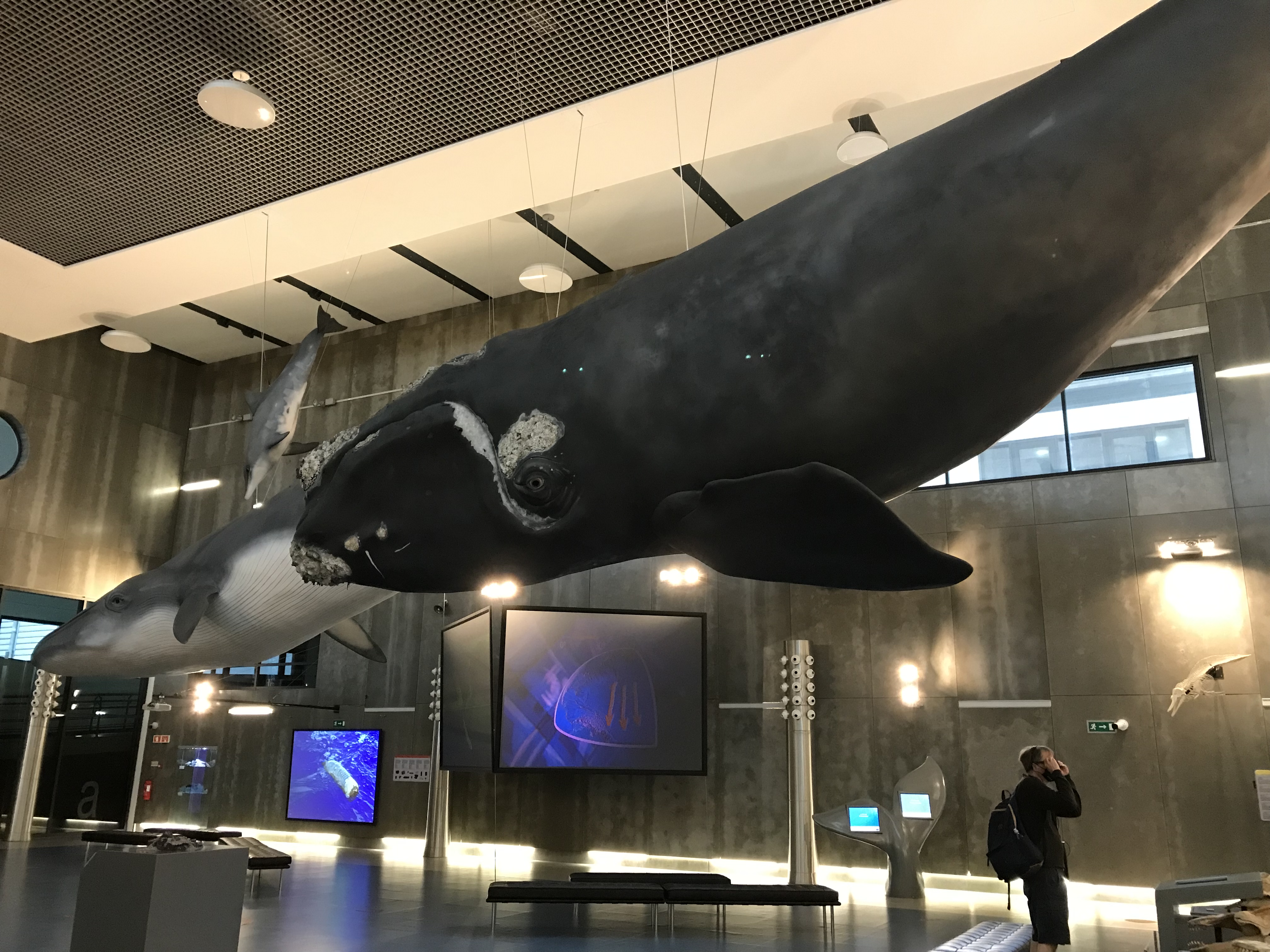
I was expecting the museum to be about whales, explaining their habitat, showing how they were protected, perhaps a model that I could stand next to and be amazed by their size. There were models hanging from the ceiling, but too far away to really appreciate their size. Mostly, the museum seemed to be about whaling.

A modern museum, with smart headsets and 3D films.

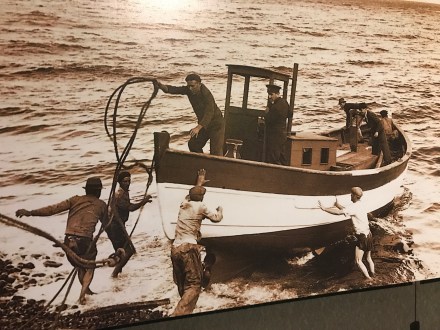
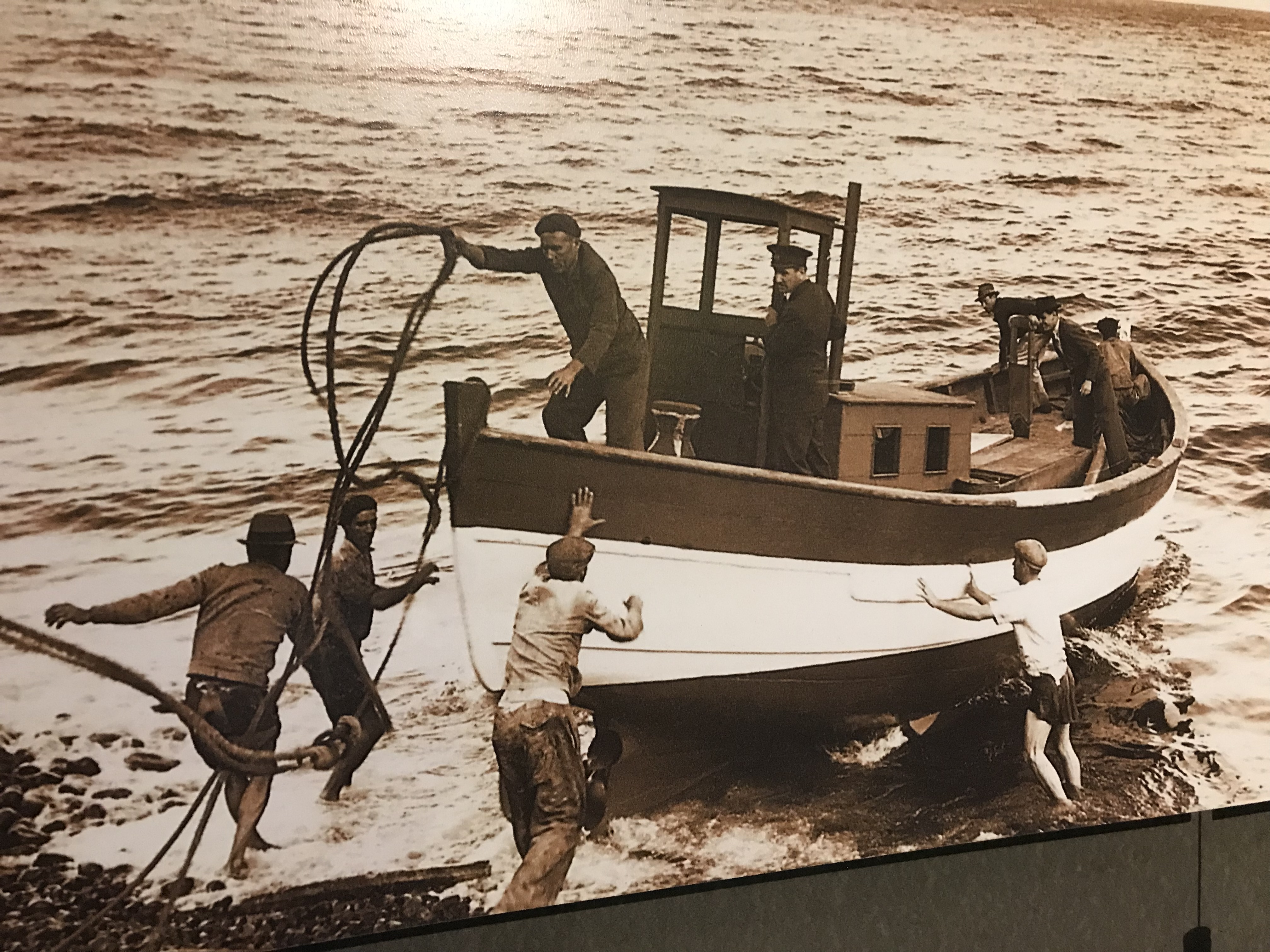
There was a photo wall of whaler portraits. There were models showing the process of stripping the whales after they had been slaughtered, explaining what each component was used for. There was even a film, showing whalers in the 1950s, running to their boats, putting out to sea, harpooning whales. The emphasis seemed to be on the courage of the whalers, the dangers they faced, the difficulty of catching such a huge animal on small wooden boats. It was uncomfortable to watch, like watching a film of hunting elephants. It was also telling that the film was so dated. Nothing from the late 1970s (whaling stopped in 1981) when the boats were more sophisticated, when the whales had no chance of escape. If I had been a ten-year-old on a school trip, I would’ve been impressed by those early sailors, they would appear as brave heroes. Perhaps, at the time, they were.

I guess it’s difficult to know how to portray whaling in a community that until relatively recently has survived due to the practice. School children will know that their grandad was a whaler, the teachers probably grew up in the home of a whaler. I wonder whether my grandchildren will feel the same about me eating meat, and if they will wonder how and why I did such a thing. I wonder if my abhorrence of whaling is hypocritical.

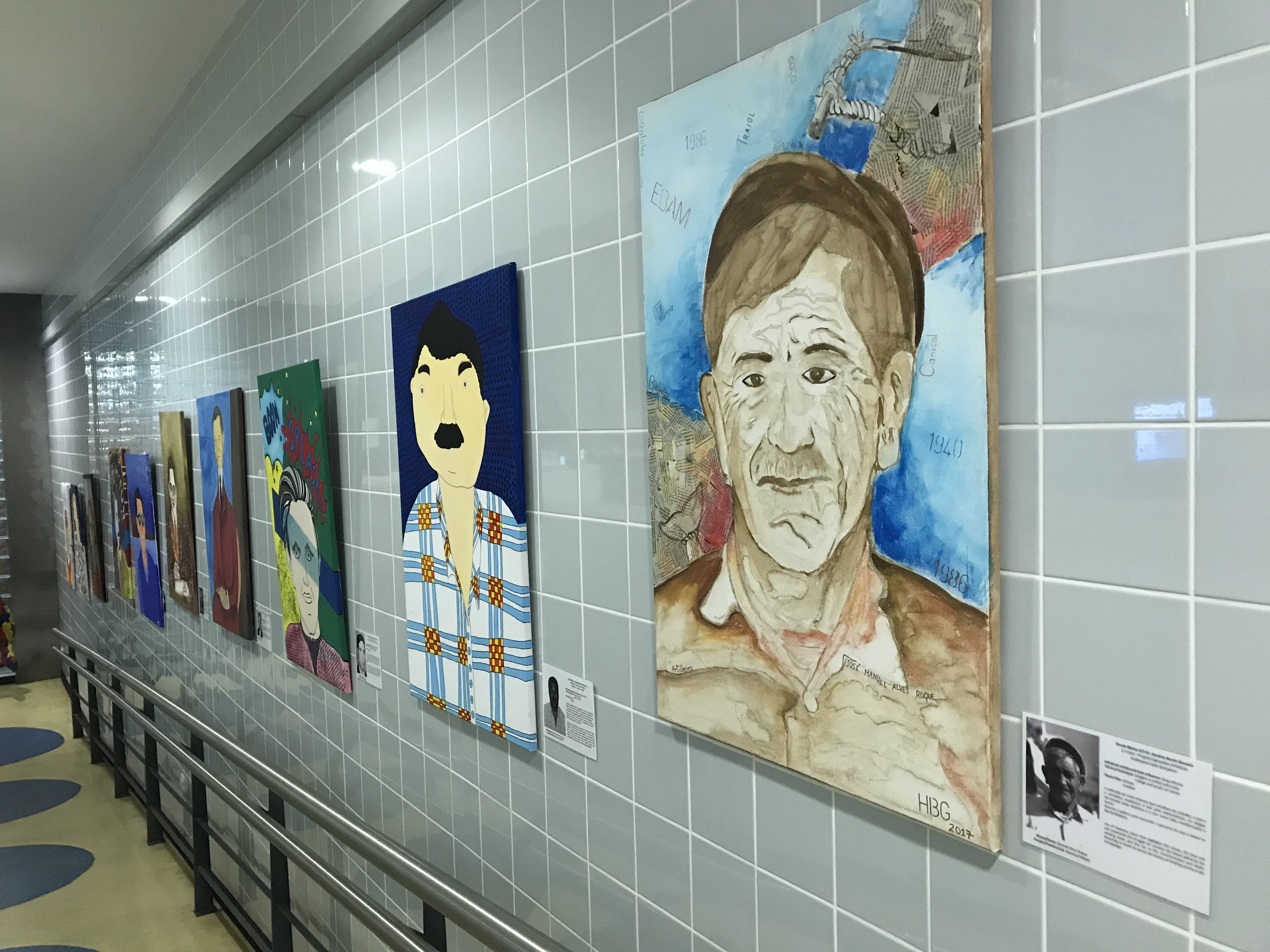
We left, walking up a ramp with portraits of the whalers painted by school children in the style of famous artists. They were clever, the sort of work I would have been pleased to encourage when I was teaching. Though I still felt uneasy with the subject. Were the children honouring their past—and should they have been? But should the community cope with judgement and condemnation when at the time, it was seen as a way of life? I don’t know. But I had hoped to learn more about whales, to stand in awe at their size, to understand how they are faring in today’s world. I had hoped that killing these magnificent creatures would be seen as wrong. Perhaps I was in the wrong town for that to happen, perhaps we need to be further removed from the mistakes of the past before we can face them.

Some talented artwork, portraits of whalers.

Thanks for reading. Take care.
Love, Anne x

Anne E. Thompson
Thank you for reading anneethompson.com Why not sign up to follow my blog?

Madeira in the Winter


Exams were over, essays submitted, it was a chance to relax. Husband, who is forever lurking in the background trying to entice me away from home (because his work is mostly online) persuaded me that some winter sunshine would be good for me. I didn’t take much persuading. We went to Madeira.

Have you ever visited Madeira? The only thing I knew about it was that it named a rather nice plain cake. I now know that the cake was invented in the UK, to eat when drinking Madeira wine. I now also know how to make Madeira wine (had a tour of Blandy’s) and that it’s delicious—but more of that in later blogs.

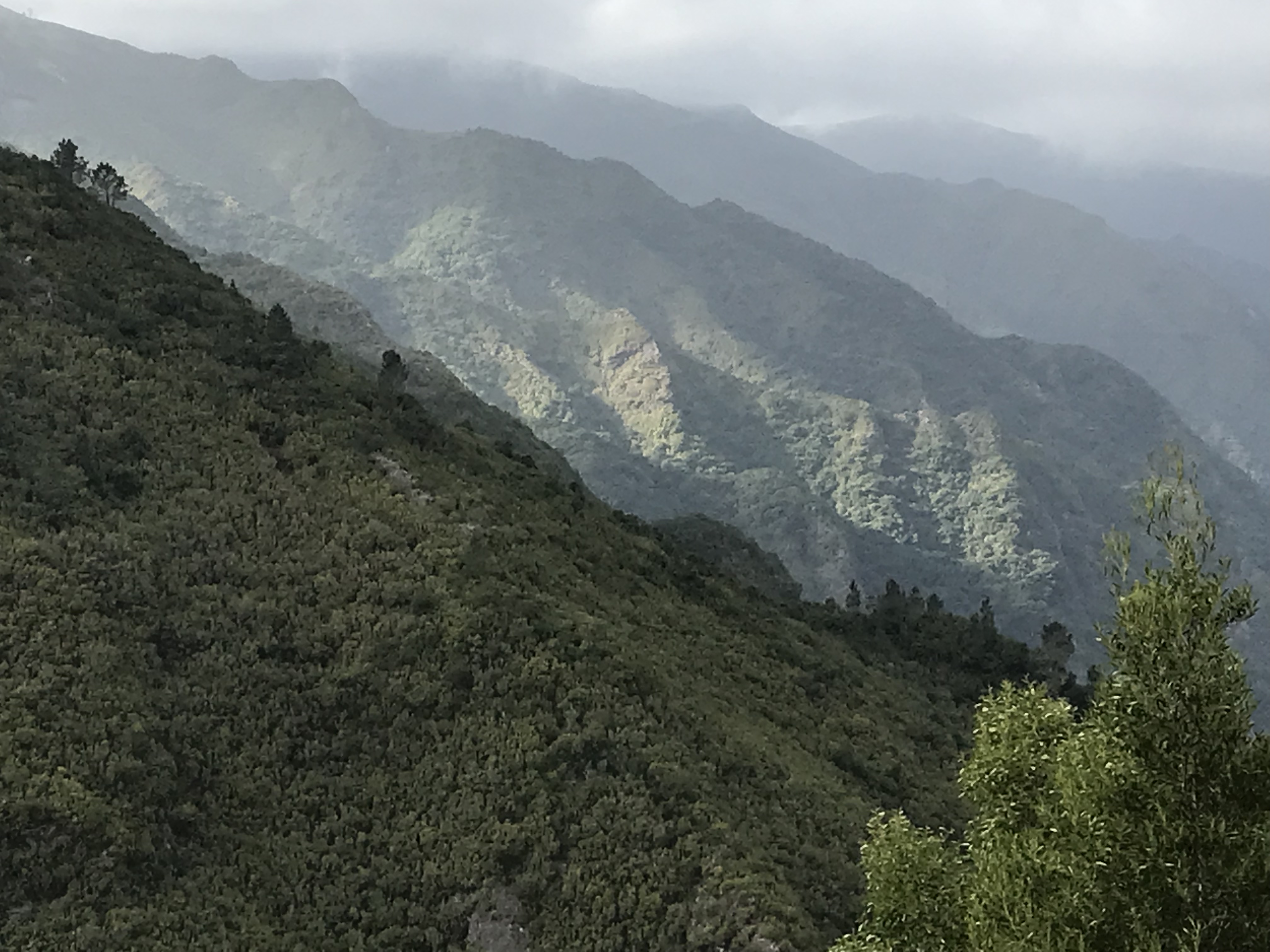
Madeira is a small island (about the size of the Isle of Man) owned by Portugal but actually nearer to Morocco, a drop of volcanic rock in the Atlantic Sea. My brother told me to look out of the window as we approached the airport, and I wish I hadn’t because I saw the rather flimsy-looking runway perched on stilts. I also saw that the island is basically a series of mountains, caused by an ancient volcano and now covered in plants. The plants are fascinating.

We visited right at the end of January, which is sort of their rainy season, though we mostly had glorious sunshine. We rented an Airbnb, which was owned by an agency so fairly plain (individual owners tend to care more and decorate the house a bit) but it was very clean. The main thing was the position, which was brilliant. We were right at the end of the old town, next to an old fort (which someone decided would look nice if painted yellow—a mistake I feel). We overlooked cobbled streets and the sea, and the bright yellow fort.

Driving to the apartment was an adventure. We picked up a hire car ( a small one, thankfully) and set off along the main road. But then the Satnav took us into the city of Funchal and the streets grew smaller and very steep. As we approached the old town, the streets sort of disappeared and turned into narrow cobbled pathways. Very steep narrow cobbled pathways. With blind-bends at the junctions, and parked cars and pedestrians. Some streets had tables spilling out from cafes, for even more excitement. I was map-reading, and we made a few wrong turns, but I decided it was best to not mention it and just to keep talking in a calm voice. We arrived at the apartment, but there was nowhere to park, the narrowed cobbled street/footpath was busy, and a couple of policemen were strolling towards us. Not the time to practice my Portuguese.

Hard to know what to do, so I took charge (I felt Husband had enough on his plate with not killing anyone). I told him to unload me and the luggage and drive off and find somewhere to park, before the policemen reached us. Then he could walk back to help me find the key and lug our bags up to the flat. He left me with the cases and drove off.

I was standing in the entrance to a student residence. The sun shone down, I could hear the sea, the cases were unstable on the old cobblestones. I shuffled into a space next to a wall. Felt conspicuous. Tried to edge cases further from oncoming traffic, and blend into the background. It was quite hot, the street was busy, I had heavy bags, no key to the flat, and limited Portuguese. Felt rather vulnerable and hoped Husband would arrive quickly.

Husband was gone some time. He finally showed up, still driving the car, which was rather disappointing. He told me he had done several laps of complicated one-way system up and down steep, narrow roads, and there was nowhere to park. The flat provided free parking in the town carpark (which cost 40 euros) but the ticket was in the flat. Super.

We left the car sort of jammed in the entrance to the student building and hoped no one (especially the police) would notice. I used the code to get the key, ran up to the flat, grabbed everything that might possibly be linked to parking instructions, and ran back. Husband took the wadge of papers and drove off again. I stood next to heavy bags, feeling things hadn’t really improved.

Eventually Husband returned without the car. Things were getting better. He lugged the bags up to the flat. The view from the balcony made it all worth the effort. I will tell you more in my next blog. Madeira is lovely. But hire a small car.

Thanks for reading. Have a good week, and take care.
Love, Anne x