More Scotland


Wester Ross, Scotland

The drive from Skye has everything that is the essence of Scotland: Christmas trees, heather, bracken, lochs and sea and streams, rowan trees, grassy bogs, craggy rocks—all framed by mountains. This is the edge of the Highlands, where long-horned cattle wander across beaches and sheep climb hillocks, and midges swarm round tourists. This is Scotland, and I love it. 

We had rented a studio flat with breakfast near Applecross, and we drove there from Portree on Skye. The road (there seems to be only one) was sometimes single-carriage, sharing space with a railway track that ran between us and a loch (or it might have been the sea—my most-asked question was is this the sea or a lake? and sometimes it was only possible to know if we looked at a map).

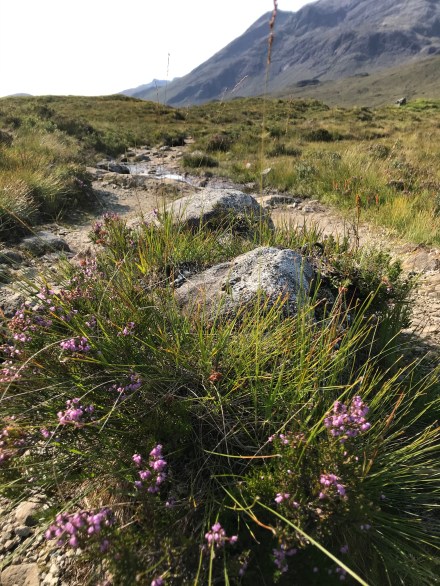
The mountains were crossed by the same road, twisting round hair-pin bends, rising above the valley, the occasional (too occasional in my view) barrier to stop cars plummeting down the mountain. Then down the other side, the sheer sides of rock blasted by dynamite long ago on one side, slopes of pink heather blowing in the breeze on the other.

Applecross was little more than a road junction, with a few buildings. We followed the road along the coast, past houses that seemed to have been randomly splattered along the cliff edge, until we reached Spindrift, the flat attached to the owner’s house.

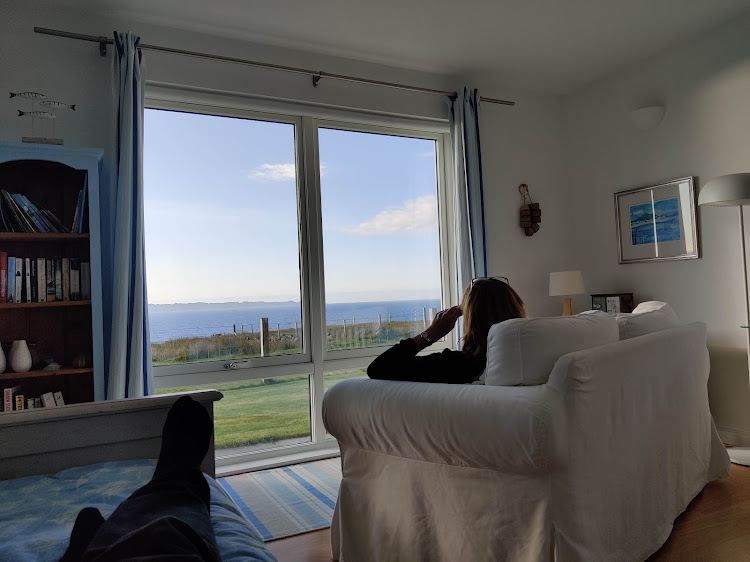
Inside, I walked to the window and stopped. We faced the sea, the sun was shining, and across the water was the island of Rona, with the blue shadows of mountains looming beyond. While I looked, a sheep wandered past the window.

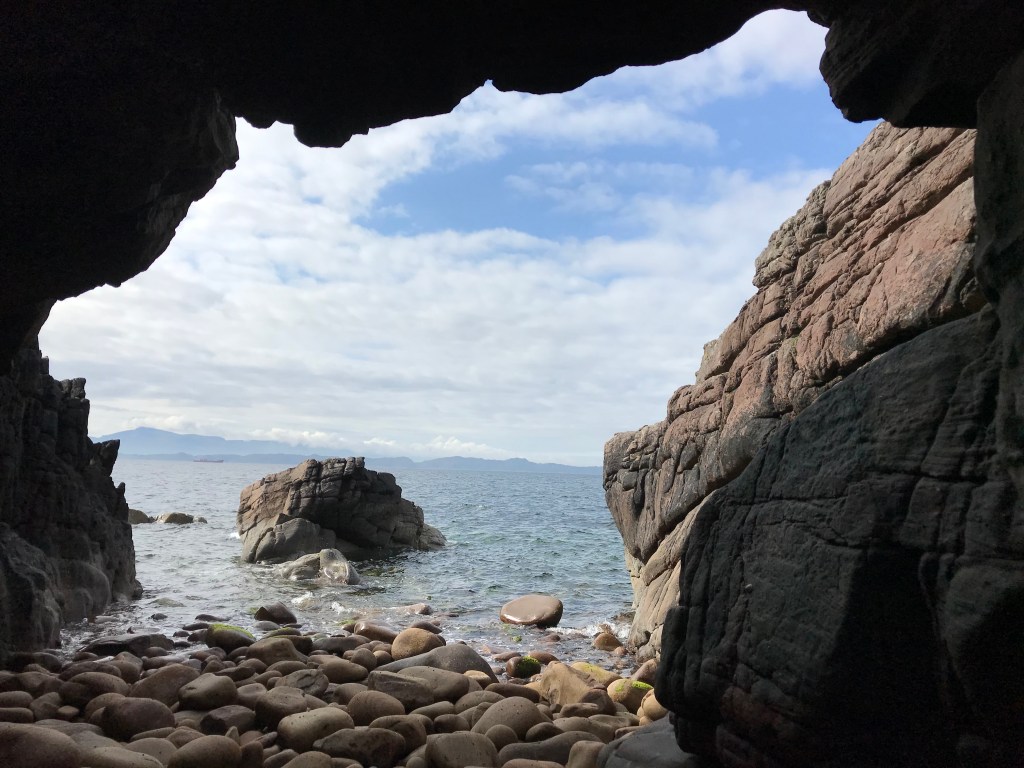
We scrambled down a path (made by sheep I’m guessing) to the beach. There was the tumbled remains of an ancient stone house, and pebbles down to the sea. We walked along, jumping from giant pebble to giant pebble, sometimes detouring to keep our balance when a stone wobbled. After about 200 metres, we arrived at the stone archway, carved by the sea, reaching over a pathway of rocks. We walked into the cold shadow beneath the arch, then out into the sunshine next to the waves. A solitary space.

When we returned to the house, I found my binoculars and scanned the water for whales or dolphins or seals. The waves part and black skin flashes in the sun before gliding back out of sight. I have no idea of perspective, no idea if I am seeing otters or whales, but I am certainly seeing something and that’s exciting enough.

Searching the sea for signs of life. The occasional sheep would wander past the window and stare in at me.

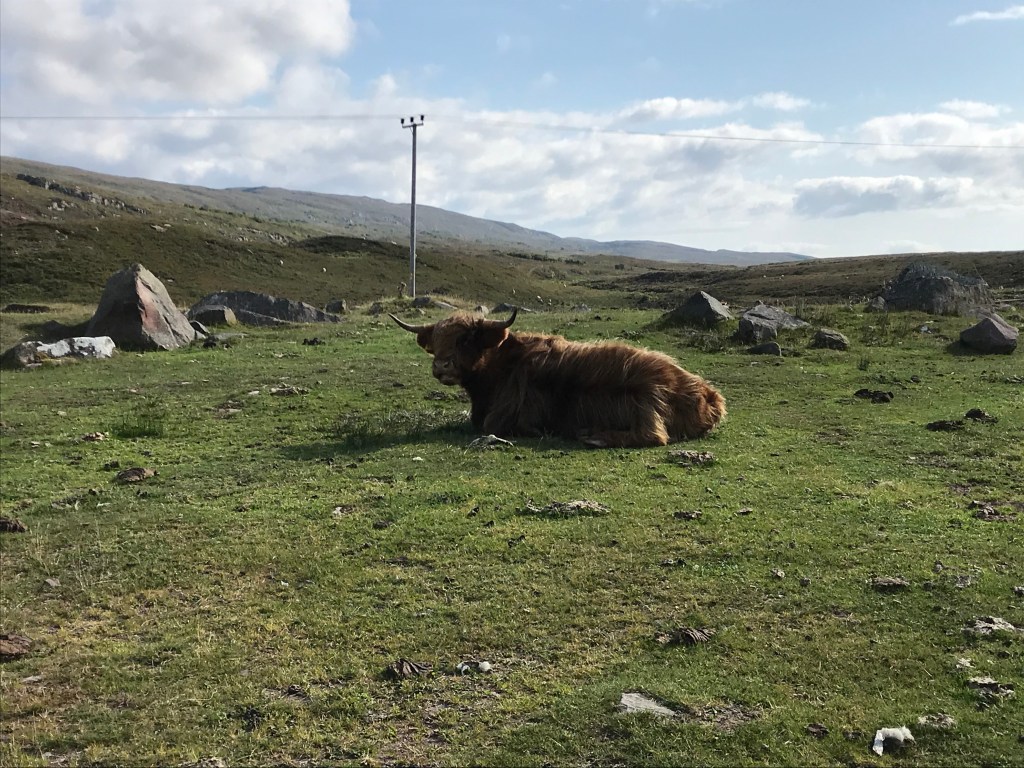
Later, we strolled along the cliff top. Something big and black was in the water—a submarine! We watched it drift away. There were Highland cattle wandering the cliffs, their sharp horns curled like Viking hats. One had a calf, creamy and shaggy and unbelievably cute. Some sheep had settled next to one of the many passing place signs, looking for all the world like they were waiting for a bus. Midges floated around us, but there was a breeze, so we only saw a few and they were only a bother when we stopped walking to look at the view.

This place is perfect, the most beautiful place I have ever visited. The peace is a tangible thing, there are miles in every direction of unspoilt countryside.

When we drove to Applecross for dinner, we could see the jagged mountains of Skye across the water. It is almost more beautiful from here than it was when we stayed there. We ate in The Walled Garden restaurant, where the food wasn’t as nice as the menu, but it was clean and friendly and set in the walled garden of a big house, so the outlook was pretty. I chatted to a couple on the next table, we discussed the beauty of Scotland and the annoyance of midges, and the woman gave me her midge repellent (Smidge) because it was nearly empty and she had plenty more, and because she was very kind.

On the way back to the flat we saw a herd of deer on the hillside, they raised their antlers as we passed and stared back at us, deciding whether to run. Beautiful.

The owner of the property was waiting when we returned, and she gave us warm bread for breakfast tomorrow. She had filled the fridge with salmon and ham and cheese, pots of yogurt and fresh milk. On the shelf was butter and marmalade, sachets of porridge and a bowl of eggs. Tomorrow we will eat salmon and scrambled eggs, with a pot of coffee. The perfection will continue.

Thanks for reading. More of my travels through Scotland in future blogs. If you want to stay at Spindrift, it’s a studio-flat, with a tiny kitchen area (sink, fridge, microwave) a modern bathroom, and a view to die for. Breakfast is provided. (spindrift-applecross.co.uk) We booked it through Airbnb.

Take care. Love, Anne x

Thanks for reading

Why not sign up to follow my blog?

anneethompson.com
Another ‘Most Beautiful Place in the World’. There seem to be a lot!


Skye

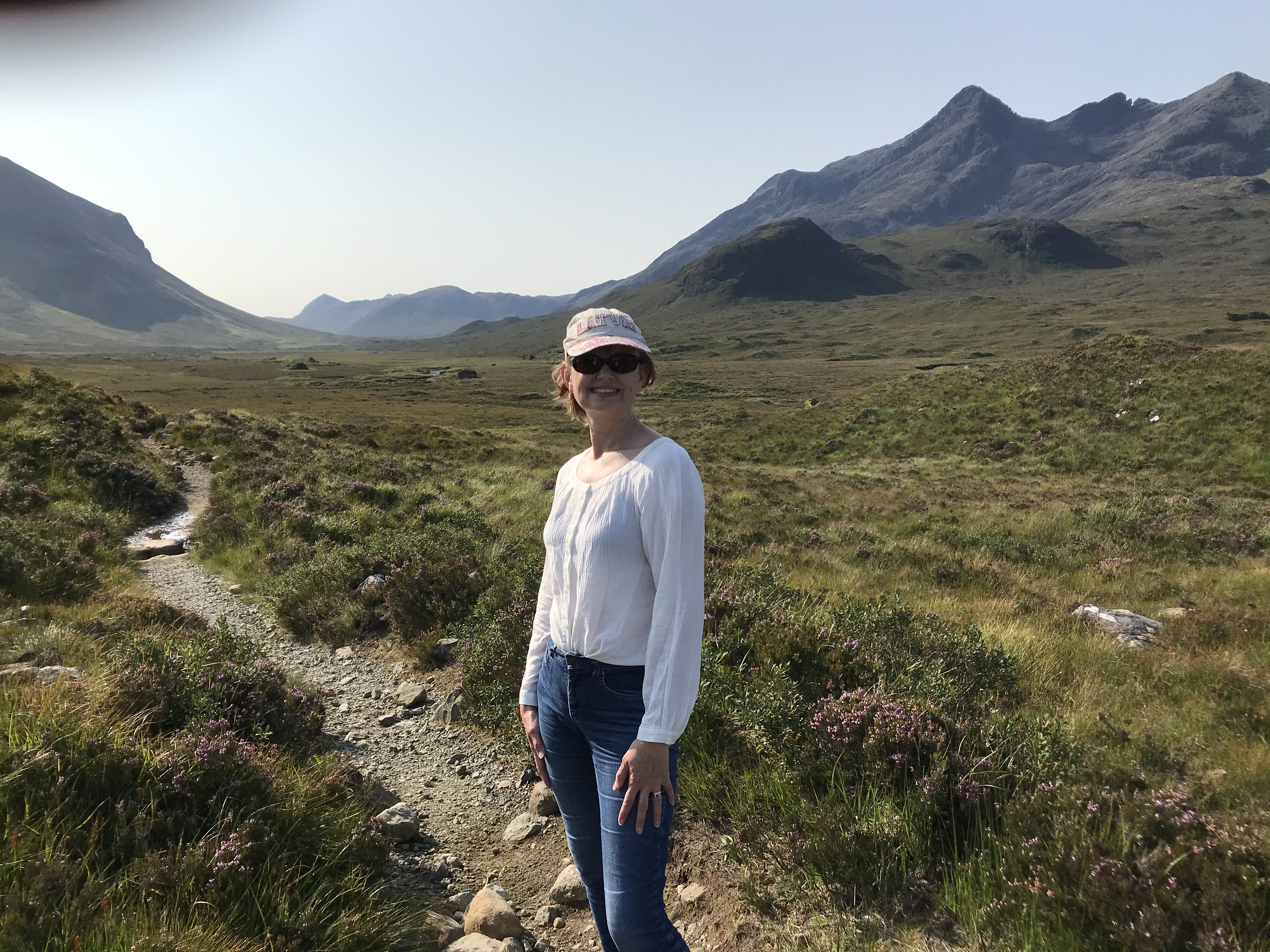
I thought Skye was the most beautiful place in the whole world. Perhaps it is. It was sunny while we were there, with a fresh breeze that blew away the midges, and we walked in the valley between mountains and watched an eagle (a real eagle for goodness sake!) swooping. I have shared my photo, but brace yourself—I’m not the photographer my sister is.

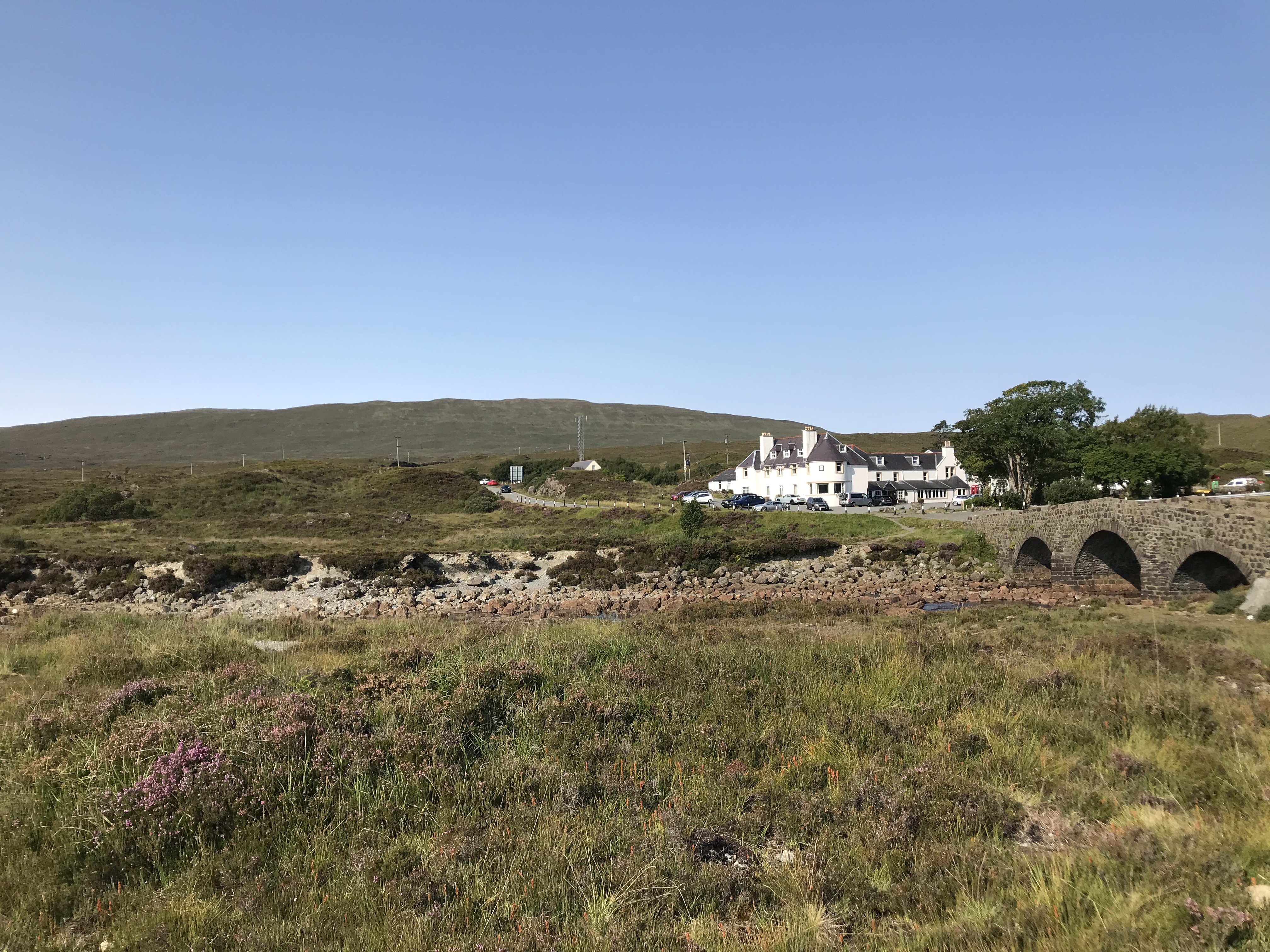
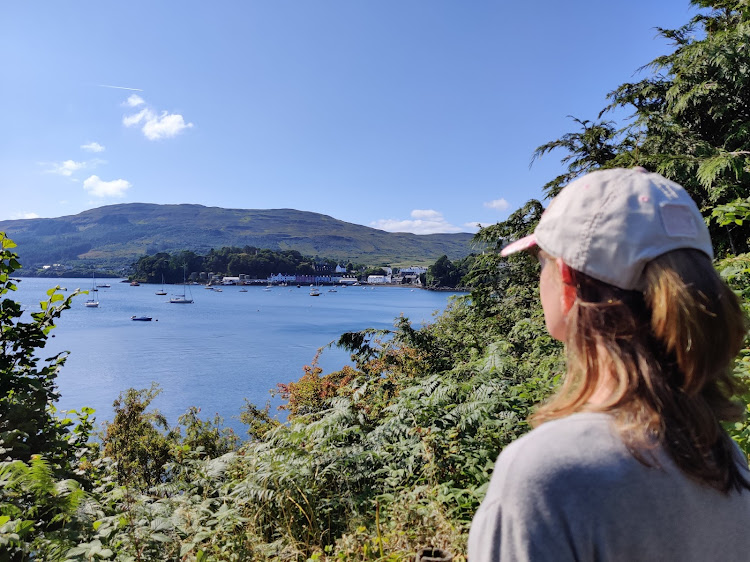
We stayed at Sligachan Hotel for one night, and we had a room in a tower, which was pretty exciting as I have never stayed in a tower before. We then drove to Portree, through more amazing countryside, and stayed for a few days in a little Airbnb on the hill. It wasn’t very fancy, though I was delighted to find it had a washing machine after 2 weeks on the road. It also had a view down to the harbour, and across the hills to the mountains we had walked through. Really, you cannot get enough of looking at those mountains.

The harbour at Portree is pretty, with painted houses and hills. There’s a lump of land, called The Lump, which today is a viewpoint and in the past was where they used to hang people. Nice place to die.

We drove to the Quiraing one day, which is an area of interesting geology because the earth has sort of slipped off the rocks. We didn’t really see any of that, as the weather was bad (or possibly ‘normal’ for Scotland) and it was misty. There were clouds of midges, but luckily we had bought some clever pop-up hats with midge nets. It was actually quite fun to wear them (and better than having my face covered in midges dying in the Avon oil I had bought). We also saw a dead sheep (but that’s probably not a great incentive to visit).

There were some lovely walks from Portree, with footpaths next to the coast, past fish farms. We looked across the water to islands, searched for otters (didn’t see any) and always those mountains, standing tall in the background. Too beautiful to describe.

There is a waterfall on Skye where the water falls into pools made by the rocks. The Fairy Pools. They are lovely, but when we visited there were so many people it was spoilt. We slogged up the hill feeling hot and avoiding people, then walked back to the car. Better to visit in the winter I expect.

Fairy Pools

Our best dinners were at Dulse and Brose. We shared a wonderful fish platter, complete with pickled herrings and heaps of crab meat. We ate so much good fish in Scotland—worth visiting for that alone.

When we left Skye I promised myself that one day I would return. It was such a beautiful place. I wondered where we were going next, and whether it could possibly be as lovely as Skye. Well actually yes, it was! I will tell you about it in my next blog.

Thank you for reading.

Take care.
Love, Anne x

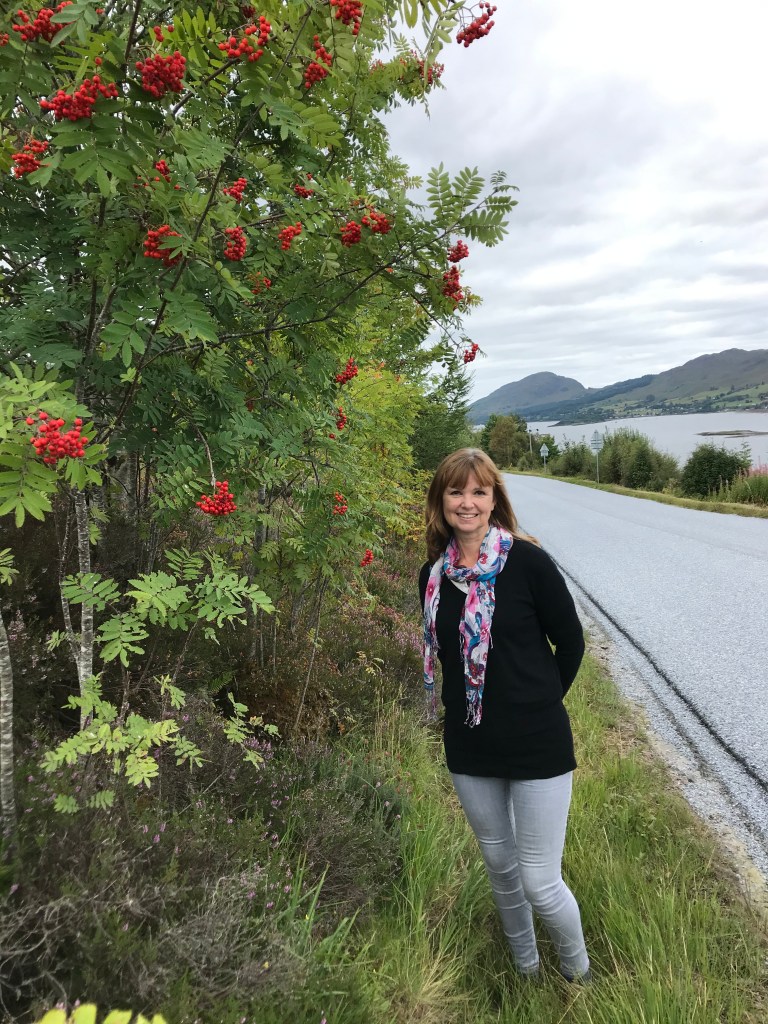
Scotland has lots of Rowan Trees
Thanks for reading. Why not sign up to follow my blog?
anneethompson.com
Onich


More stories from our Scottish road trip.

Lodge on the Loch

After staying in Crinan, we drove to an hotel in Onich, which overlooks Loch Linnhe. This was the first time (of many) that I asked: “Is this the sea?” because it was hard to know. It joins the sea, but is a lake (or loch, as it’s in Scotland).

We stayed at Lodge on the Loch. This is a hotel that has seen better days, but the rooms were large and clean, and the staff were friendly (there just weren’t enough of them). If they buy some beds that don’t sag in the middle, and employ a few more people, then it could be lovely again because the position is wonderful. Our room overlooked the loch, and we were a short drive from Glencoe (possibly the most beautiful place in the world) and Glen Etive (also beautiful and with fewer people).

In August, as well as beauty, Scotland has midges. Our first walk in Glencoe, once we had managed to find a parking place, we were beset with midges whenever we stopped walking. Tiny insects that float around—later in our travels we had one day when the air was thick with them. I had bought some ‘Skin-so-Soft’ from Avon, which was rumoured to protect against midges. In my experience, it didn’t keep them away, they simply died in the oil, so my skin was covered in oil and drowned midges. Not a highlight.

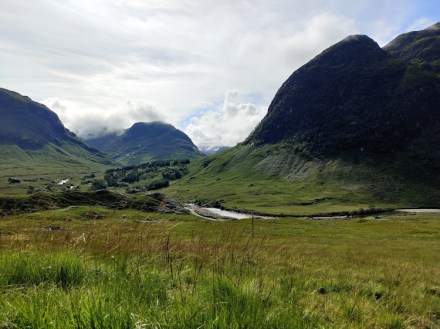
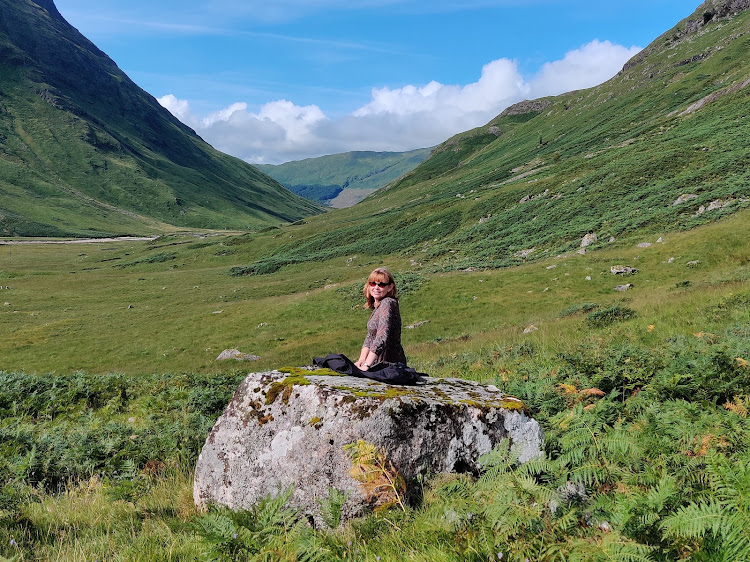
Not much could detract from the beauty of Glencoe though—not midges, nor the swarms of other tourists who were there. Mountains reaching the clouds, green valleys, waterfalls and rivers. Hard to think of a more beautiful place.

The following day we drove to Glen Etive. More beauty, with mountains, forests, waterfalls. We watched some canoes swooshing down the bubbling river, walked to a waterfall, enjoyed the peace.

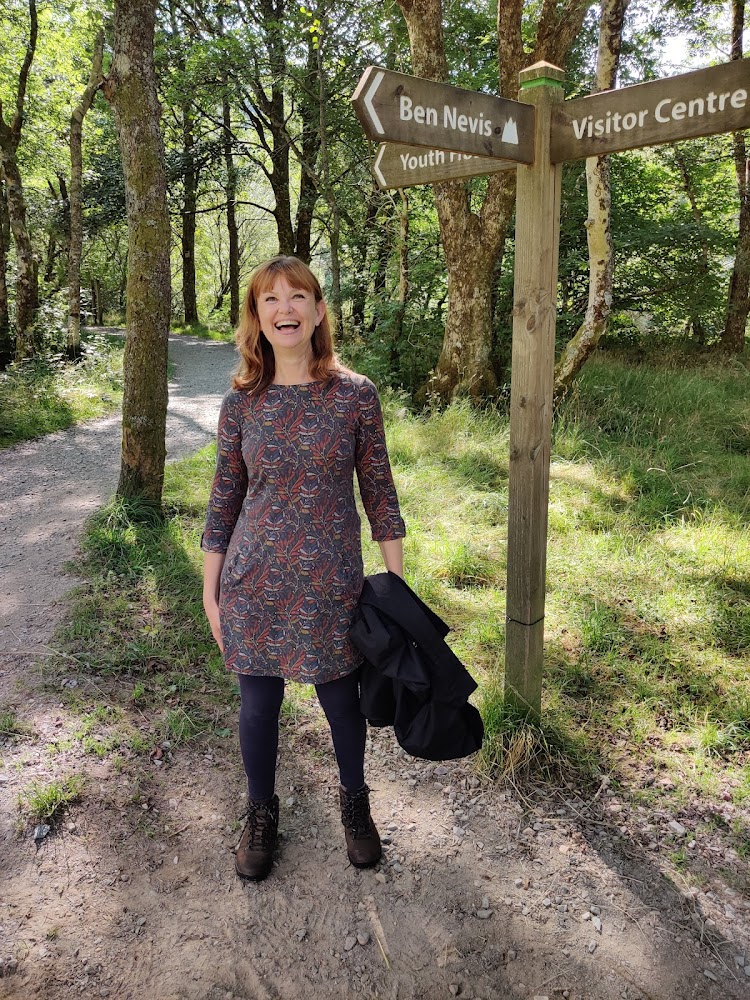
Lodge on the Loch is near Ben Nevis, so I persuaded Husband (who had a headache) that we should stroll up the mountain for a short while. The day was sunny and hot, and we arrived as most people were leaving. The mountain is well-signed, with a clear path (if you choose the easy route) and a cafe at the base. We chatted to a man who had started the climb that morning, and it had taken about 8 hours to the peak and back. He was drinking his fifth can of lemonade.

We joined the flow of people on the path, and walked up for about an hour. It was easy walking, with no scary edges. But in the sunshine, it was very hot. I was wearing a thick dress, and switched it for Husband’s cotton shirt because it was simply too hot to walk. After an hour, we came to a point where the path grew steeper, and although going up would be fine, I knew it would terrify me coming down (plus it was only meant to be a stroll) so we turned back. Probably I cannot claim to have climbed Ben Nevis (not sure a quarter of it counts) but nice to have done it.

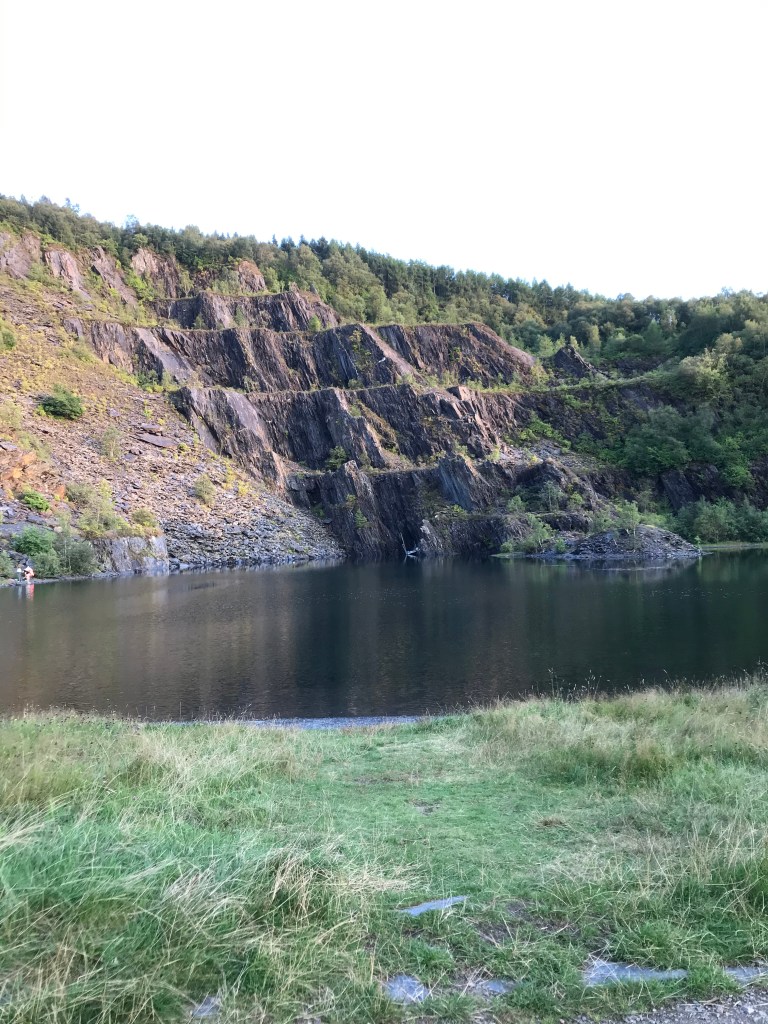
We ate in a lovely pub called Laroch in Ballachulish. Ballachulish was a tiny community that grew up around a slate mine. There were information signs, and we saw the flooded mines, and white worker-houses and imagined a time when their hobnailed boots would have rattled through the village on their way to the mine. The food in Laroch was brilliant—worth a visit if you’re in the area.

We left the hotel at 7 the next morning. My back was painful due to saggy bed, so I wasn’t sure the day would go well. We were due to catch a ferry from Oban to the Isle of Mull. I had thought Glencoe was the most beautiful place on earth, and that I had seen the best of Scotland. I was wrong, so very very wrong…

Thanks for reading. I will post more blogs of our travels through Scotland in the next few weeks. It was all planned as a surprise, and we stayed in some amazing places (including castles) so I hope you enjoy sharing the adventure with me.

Take care.
Love, Anne x

Thanks for reading.
Why not sign up to follow my blog?
anneethompson.com
Crinan


The Crinan Hotel

The Crinan Hotel is two hours north of Glasgow. There’s not much phone signal, so Google maps gets confused and places the hotel round the corner, whist it actually has prime position overlooking Loch Crinan off the sound of Jura (look at a map of Scotland, and it’s on the left, about half-way up).

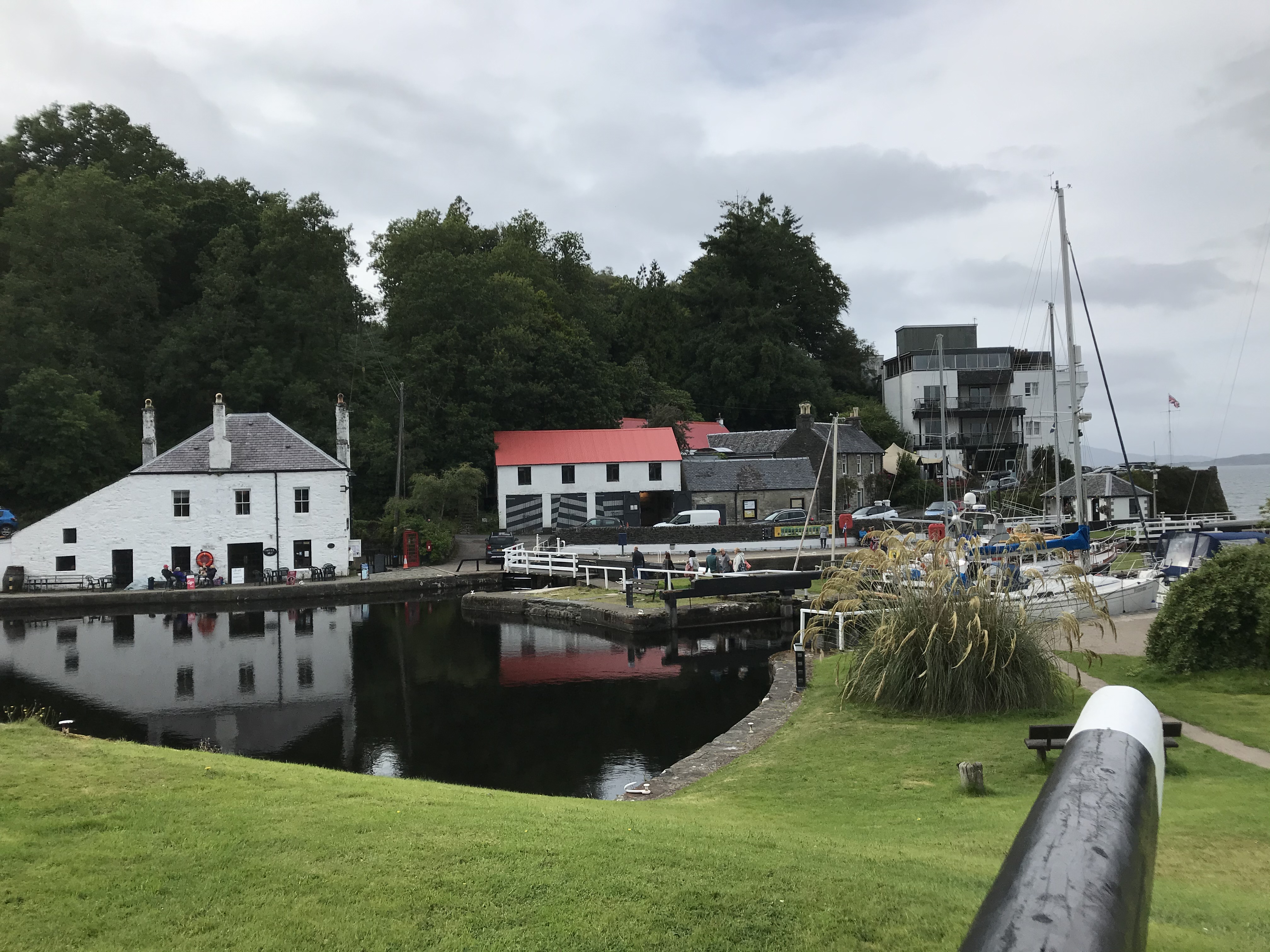
We arrived early afternoon, and followed the winding lane past whitewashed cottages down to the canal, then up to the bend in the road—which is basically the whole of Crinan in a single sentence. There were signs on the hotel door requesting that guests wore facemasks in the hotel, and lots of other signs and photographs and paintings, all muddled together in a visual feast of nostalgia. You knew instantly that this hotel was personal to someone, and they loved it.

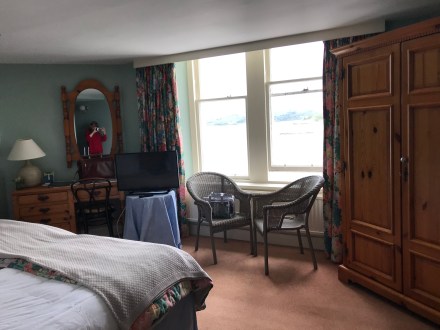
We checked in, and dragged our cases into the tiny lift (which closely resembled an upturned freezer). Our room was on the second floor, and the metal key was attached to a large, too-big-for-a-handbag wooden fish. The room was lovely, with a large window overlooking the loch. There was wooden furniture, and uneven floors, and a single vase with fresh flowers. In the wardrobe was a tray set with tea things and a tiny kettle, with a note telling us to ask reception for fresh milk. Everything looked clean, cosy, and slightly dated. I loved it. Very Miss Marple. All we needed was a body in the lobby and we would be in the quintessential English novel.

There was no safe in the room, but it all felt very secure so we left our stuff and wandered along the tow path. Husband loves canals, and enthused happily about how many locks would be needed for the boats to climb the hill behind the hotel, and why they had built the entrance to the 9-mile canal in Crinan, and not further round the coast (later investigations showed the water was a giant sandbank, so the canal needed to provide deep water from Crinan onwards). It was easily ignored as cheery background noise while I absorbed the water birds, and reflections on the loch, and the absolute peace of the area.

We ate dinner in Tayvallich (quite an adventure, but for another blog). Spent the evening trying to find Duntrune Castle, which the room information said was opposite the hotel, but all I could see through the binoculars was a big house. Went to bed. Slept well.

The following morning started at 6.30 when the people in the next room began to stomp across the creaky floorboards and turned on the noisy fan in their bathroom. The night had been silent though, so no complaints. We got up and ran along the towpath. Good shower (always excellent when an older hotel installs a decent bathroom) and then we went down for breakfast.

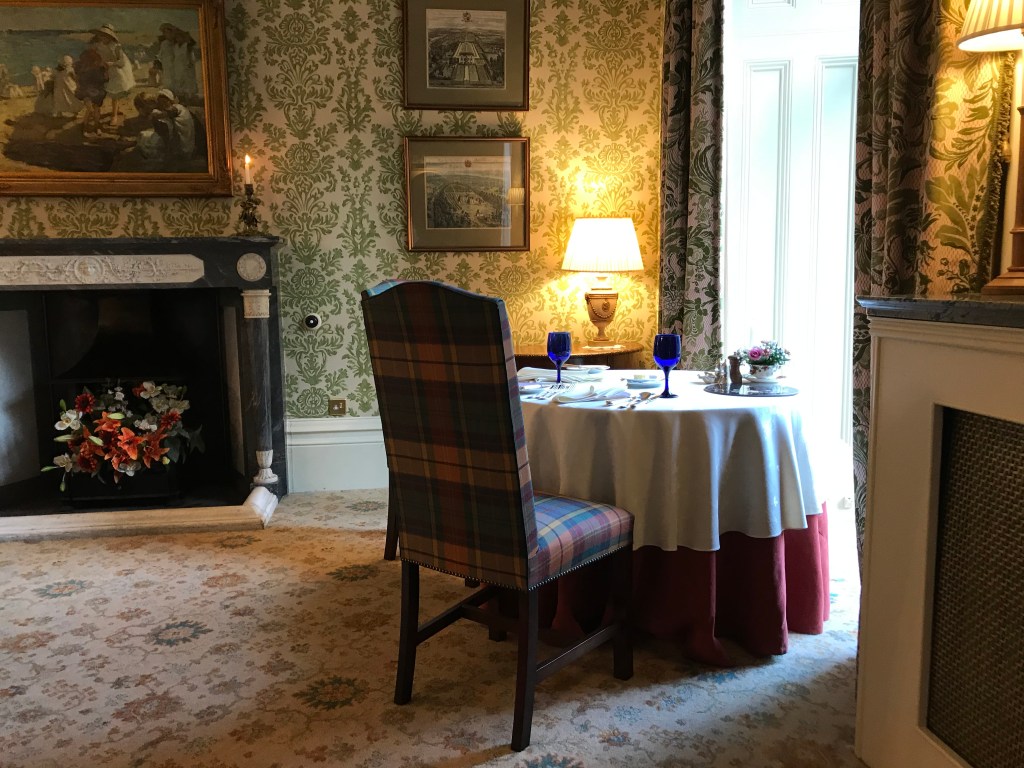
The dining room has bay windows overlooking the loch, and it was simply beautiful. Everything was very hushed, with thick carpets and heavy curtains, damask napkins and silver coffee pots. The waitress brought us juice and good strong coffee and took our order. I opted for porridge and fruit, Husband went the less healthy route—though neither of us were tempted by the kippers. There were a few other guests, but it all felt very proper, with tiny china bowls of butter and marmalade. It wasn’t a room for loud noises.

The hotel room had details of Duntrune Castle, which was fought over by various clans in the past. At one point, a piper from clan A remained after clan B had taken over, and when the way was clear, he played his pipes to alert clan A that they should attack. Clan B were somewhat miffed, so cut off his hands. He died (not unexpected). The ghost of the handless piper is said to haunt the grounds, or so the legend goes. Potentially not true. However, when recent owners were renovating the castle, the builders dug up a skeleton which had both hands cut off.

Now, I love a good story, so we had to visit. It’s privately owned, so we weren’t sure how near we could get, but we set off anyway. It was an adventure. Drove across moors, the only car on narrow roads. Wound our way to the castle, and the end of a private road. There are no footpaths in Scotland—instead they have a ‘right to roam’ law which we interpreted as anyone can walk wherever they want to. We parked on a verge, and walked down the road. No one stopped us. We walked right up to the gates of the castle. These gates were the inspiration for the Skyfall house in the James Bond film. The castle is still occupied, and we decided the ‘right to roam’ probably didn’t include walking actually into someone’s house. Was pretty cool though.

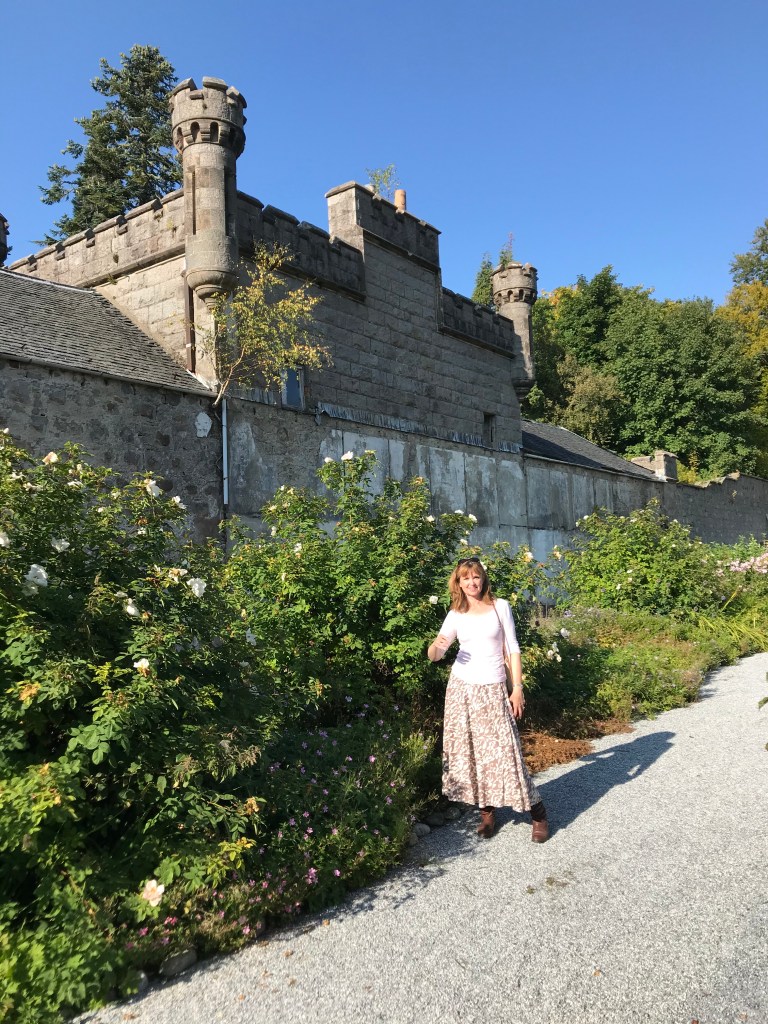
Beyond the castle is a garden, with an honesty box for donations to ActionAid and RNLI. We went inside, and they are very beautiful, a mix of wild and clever planting and pretty statues. Worth a visit (good Instagram-photo ops if you like that sort of thing!)

The hotel doesn’t have sandwiches, and even Hungry Husband felt that three cooked meals a day might be pushing it. There’s a little coffee shop (possibly linked to the hotel but in its own whitewashed old building). We wandered down and ordered filled rolls. My BLT was freshly cooked, with good fresh lettuce and tomato—but no mayo or butter. Perhaps you have to specify separately that you want those in Scotland. Or perhaps the coffee shop is linked to the hotel and they saw how much we ate for breakfast!

Thanks for reading. I will post further blogs (in a random order, because that is how I wrote them) so you can share our road trip through Scotland. Hope you enjoy them.

Take care, Love, Anne x

Sheffield Cutlery


A Quick Visit to Sheffield

Our ‘cottage in the ‘Peak District’ was a house fairly near to Sheffield. As I have never visited the city, we decided to pop in for a quick look. The only thing I know about Sheffield is The Full Monty was set there, and all the cutlery in the world is made there. The last fact might be an exaggeration, though I did hope to buy some cutlery as a memento of my visit.

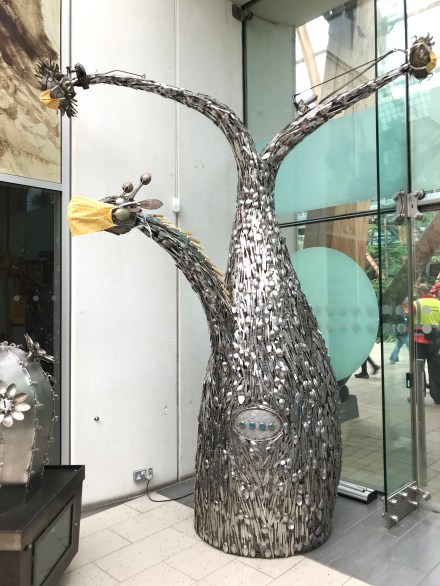
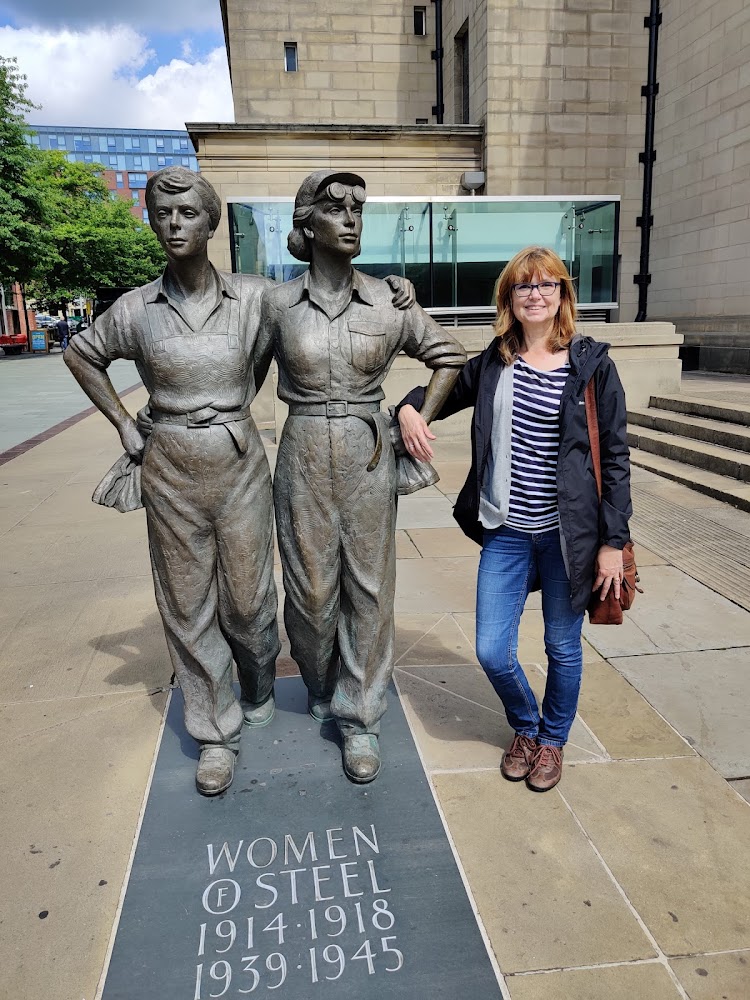
Lots of reminders of the steel industry in Sheffield.

We found a car park, and set off through the city centre. I was pretty desperate for the loo, and public toilets were hard to find. There was a large John Lewis department store, which looked a good bet, but it didn’t seem to have an entrance. We walked all around it, and eventually decided it was shut. This seemed to be a feature of Sheffield—a lot of large buildings were shut, and many were being demolished.

The city centre was not unpleasant, and there were a few holiday-related events happening—the main one being painted bears for children to find. I spotted a few family groups going round, hunting for bears as they followed a map. Nice idea.

I wanted to see the cathedral, and Son-who-knows-Sheffield confidently set off to show us. We arrived, and it was much smaller than expected. The inside was nice, not too ornate, and there were a few people praying, which is much nicer than the usual cathedral where there are more likely to be people taking photos. I wanted a photo, but it felt disrespectful to take one in the building, so I went and took one through the open doorway.

We wandered through the city, and saw a signpost to the cathedral, pointing away from where we had come. Followed it. Came to ‘another’ cathedral…or maybe Son-who-knows actually is Son-who-doesn’t-know! This cathedral was much bigger, with a slightly dodgy extension, lots of ornate stuff inside, and tourists taking photos. I didn’t spot anyone praying. I think I prefer the non-cathedral.

Slightly dodgy extension on cathedral. One of the bears is lurking outside, waiting to be found by the many bear-hunters in the city.

There was a notice board with a few Sheffield-related facts. Apparently Chaucer mentioned the city, so it’s been around for a while. I also read a little about the steel industry, and we decided to visit the museum, even though I don’t like museums.

We had a quick lunch, and I asked the waitress if she knew where was a good place to buy cutlery, as Sheffield is famous for cutlery. She looked at me blankly, and went to hide behind the counter. Maybe young people don’t realise that all our cutlery comes from Sheffield.

All the cutlery in the world is made in Sheffield. Probably.

Walked to the Winter Garden, but this just turned out to be a lot of plants in the lobby of a hotel (or maybe this was the equivalent of the non-cathedral and map-reading family were mistaken).

We found Kelham Island Museum, which disappointingly is no longer an island, though was well-signposted. It used to be a steel works, and shows the story of the steel industry through the ages. For a museum, it wasn’t too bad (it was fairly small, which helped). I learnt that the women used to tie brown paper over their clothes to protect them from oil, and that the term ‘cutlery’ applies only to knives (spoons and forks are ‘flatware’). They had a small giftshop, and I managed to buy an ‘antique’ sugar spoon (a small spoon with holes in, which I seem to recall one of my grandparents had, whereby you dribble sugar from the sugar bowl to your dish but it is then very useful for sprinkling on strawberries). Although I now know that I did not buy cutlery in Sheffield, at least I managed to buy some flatware.

Some pretty big machines were used in the steel industry.

Have a look at your cutlery next time you use it—I bet it was made in Sheffield.

Thanks for reading. Hope you have a good day. Take care.
Love, Anne x

Thanks for reading. Why not sign up to follow my blog?
anneethompson.com

Millthorpe is not The Peak District (though it tries).


Family Holiday 2021 continued.


We packed up the house in the Lake District and left. Everyone felt slightly dirty due to water shortage/lack of showering ability. Our next holiday home was in the Peak District, and we hoped they had more water. The drive was busy, as Saturdays in July are full of people leaving and arriving on holiday, but we didn’t meet any major hold-ups. Our journey took us through the outskirts of Sheffield, and we began to wonder how near the city our Airbnb would be. The details had described it as being in the grounds of Carpenter House, in an area of beautiful countryside, but we were beginning to worry.

At the last minute, the roads turned away from the city, we drove through a few fields, and arrived at the little hamlet of Millthorpe. It was not exactly the Peak District, but was far enough from the city to not feel crowded. There were several fields of horses, and lots of the houses had stables attached—clearly an area for the horsey people of Sheffield to live.

Went for a walk across the fields. More horses. I am very comfortable with all cows and sheep; horses make me nervous but we weren’t eaten or stampeded. Walked to the local Royal Oak for dinner. The pub was ancient, with low beams and a huge fireplace. The menu was limited unless you are a cheese-lover (everything had cheese, and fried cheeses made a very nice, if rather unhealthy, starter).


Sunday 25th July

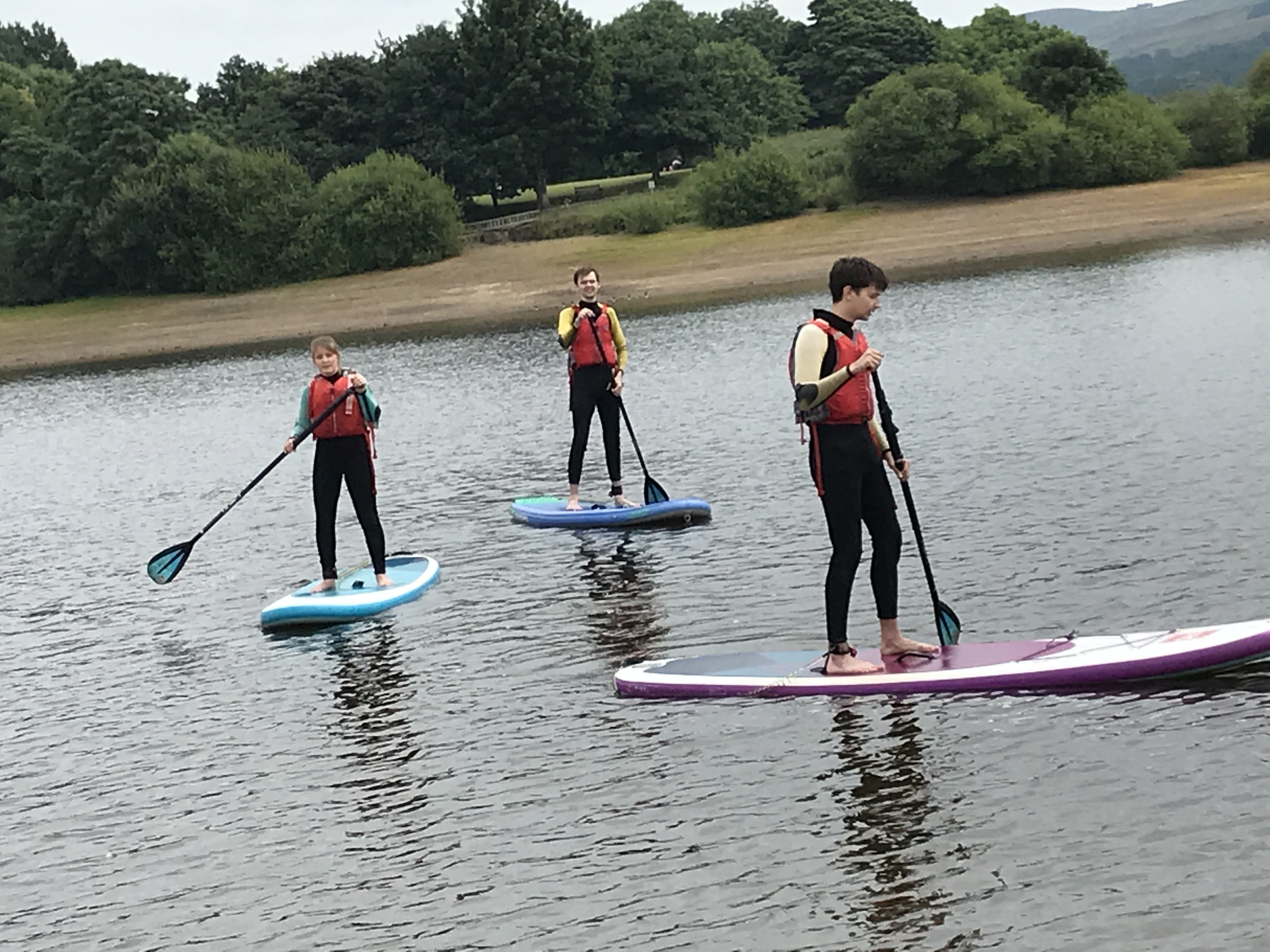
The family voted to go paddle-boarding. They discovered you could hire boards and wet suits at Tittesworth Reservoir (with a name like that, I really hope they did a Google search for ‘paddle boarding’ and not something else!)

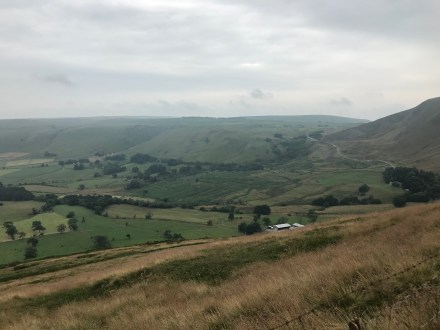
The drive took us through the Peak District, which is beautiful and very near to Millthorpe. The weather was less sunny than last week, but still warm. We arrived at the car park, and saw several families hiring wet suits, squeezing into the little changing cubicles, struggling to carry the unwieldy boards. I decided that paddle boarding was not something I wanted to do (I felt that complete lack of co-ordination, no ability to balance and not being a good swimmer would make it less fun). Went for a walk with Bea while the others pootled about on the water for an hour.

Paddle Boarding

Everyone seemed to have fun, and we discussed it (at length) in the pub afterwards. I had real trouble remembering that the term is ‘paddle-boarding’ and not ‘water-boarding’ so I kept asking them about their experience of torture.

Monday 26th July

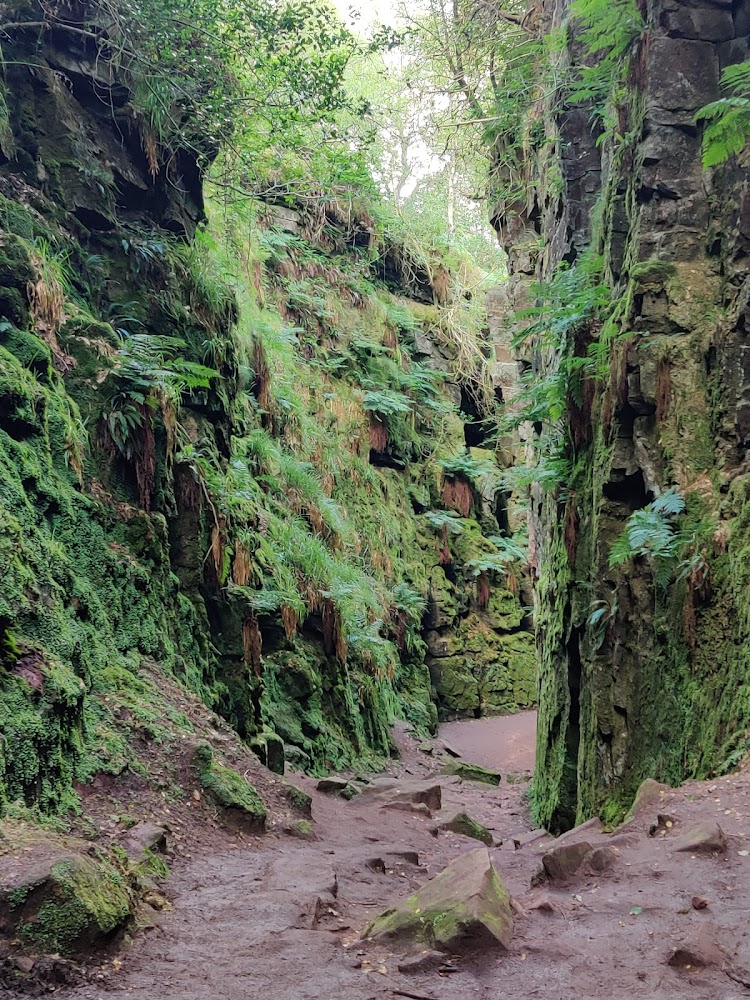
We went for a walk to Lud’s Church. This is a cavern, tucked into the Peak District, and makes for a pretty walk. There are many stories and legends swirling around the cavern, and Emm assured me it was the spookiest place in the world.

We walked along a pretty footpath through the woods, the sun was shining, birds singing, ferns carpeted the floor. Hard to see why it was spooky. We arrived at the cavern, and the temperature dropped as we walked between the giant-sided rocks, taking care not to slip on the moss. It was easier to understand (slightly) why someone might think the cavern was haunted. It then transpired that he had visited at dusk, on Halloween, when all the trees were bare and everywhere was gloomy and cold—that would definitely be spooky.

Lud’s Church

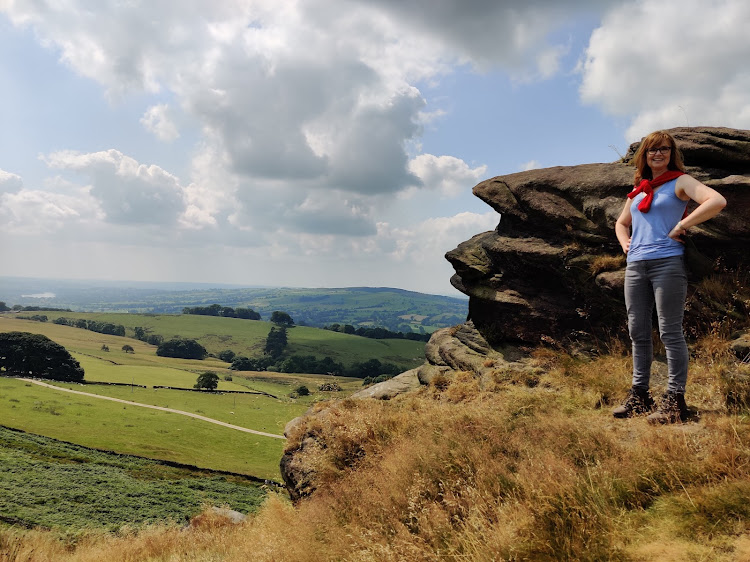
We left the cavern and walked up to the Roaches, which are big rocks protruding from the hills. Great views of the valley.

The Roaches


Tuesday 27th July

Walked up Mam Tor, near Castleton. This is about as high as my knees can manage, but actually was very easy as there are paths all the way and no scary precipice to make me dizzy. It was a long walk, and I was pleased to reach the top. Asked Husband to take photo for blog. Family photo-bombed. I informed them the photo was for a blog, and I would  use it whatever they looked like. Posed for another photo. No better. Decided to use it anyway.

Unhelpful Family

In the afternoon, we visited Chatsworth House. But that will have to wait for another blog.

Thanks for reading. Take care.
Love, Anne x

Thanks for reading. Why not sign up to follow my blog? anneethompson.com
Dial Square FC Win the FA Cup


Dial Square FC Win the FA Cup

Woolwich Warren and a Rather Famous Football Team


The Woolwich Arsenal used to be called the Woolwich Warren, due to being built on a Tudor house which had a warren (as in, a place that rabbits were raised for food). It then became the place gunpowder was made, and is now a swanky place to live. I popped in there for a quick inspection, and decided it was a rather lovely place to be.

Woolwich Warren Tudor tower

Photo: Kleon3
The tower of the Tudor mansion.

The original Tudor house was defined by a tall tower, which feels appropriate now the site has several high-rise buildings which are seen as you approach Woolwich.  The owner of the original mansion was later Lord Mayor of London. There are now several very new, rather exclusive apartment blocks, with balconies and views across London, mingled with some ancient squares and old army buildings. It is one of those places that England does best—modern architecture muddled up with ancient history. I was interested to learn a little of the history, so after wandering through squares with bubbling fountains and past yuppy pubs and wine bars, I stopped to read a few of the signs.

After the mansion was demolished, the Woolwich Warren was built to make armaments. In 1695, an ammunition factory was set up, making gunpowder, shell cases, gun cartridges. One of the original pavilions still exists:

A Pavilion at Woolwich Arsenal

Photo: Barrabus1312
One of the original pavilions.

Woolwich Arsenal guard house.

Photo: Kleon3
One of the guard houses at the entrance from the river.

By 1777, the warren covered 104 acres, conveniently placed next to the River Thames. In the 1700s, convicts were used to build a high wall (8ft high) around the boundary, and later (1814) they dug a canal along the eastern border. There were hexagonal guard rooms either side of the main entrance from the river. We walked past them, but there were no signs, so we had to guess what they were. They look a little like over-sized kiosks that sell newspapers (so I clearly guessed wrong.)

In 1886, the men working in the workshops around Dial Square formed a football team. They were called the Dial Square club, and their first game was against the Isle of Dogs club in December 1886. The club still exists today, is now known as Arsenal FC — even I have heard of that one!

By the time of the First World War, the warren had expanded, and now employed 80,000 people. I love thinking of the secret manufacture of cannons and gunpowder, all guarded by the military. Did the people living nearby have any idea how explosive the area was? After the war, most factories closed, and they produced steam engines for the railway instead.

The arsenal no longer produced gunpowder in the second world war, which is probably good as it was a target during the Blitz, and lots of buildings were destroyed. It was still involved in the manufacture of weapons, but mainly guns and bomb cases. After the war, the machines were modified to manufacture the knitting frames for silk stockings (bit of a change then!)

Gradually, the arsenal ceased to be an arsenal. The wall was dismantled, the buildings sold to the council—one was even used by the British Library to store books. (Note: I rather resent these books stores, as if you publish a book, you are required, by law, to send a copy to the library, so it can be placed into a store and never seen again. Rant over.)

Today, as you wander around the area, you can still see many of the historical buildings, and many have signs, explaining what they were. It’s a nice place to visit, you wander through squares, and walk next to the Thames, staring at the muddy banks looking for treasure (and finding washed-up shopping carts!) The other side of the main road, is the bustle of real life, with small shops and tiny markets and people from every corner of the world. Not a bad place to visit on a sunny Sunday afternoon.

Thanks for reading.

Counting Stars continues on Wednesday.

Coniston Water-gsd-lake district

Thank you for reading.
Why not sign up to follow my blog?
anneethompson.com

Look on your device for this icon (it’s probably right at the bottom of the screen if you scroll down). Follow the link to follow my blog!

*****

Walking to Stanley Ghyll Waterfall


Family Walk in the Lake District

More sheep, bogs and views

lake district fellsThe weather was dry (not to be assumed in the Lake District) so we went for another walk. Bea and Gee (The Bee Gees) weren’t working today, so there more of us, which meant it took even longer than usual to leave the cottage.

We decided to drive back to fell we walked on the day before, and walk in the opposite direction, towards Stanley Ghyll waterfall. We parked on Austhwaite Brow, found a footpath, and set off across the empty space. All the sheep on this side of the road were white, and they looked like they’d been washed because we’re used to seeing grey sheep and black lambs. Everyone wore boots or wellies this time, so bogs were less of an issue.

As we approached the waterfall, there were lots of warning signs, and I wondered whether Anne-who-hates-heights would actually manage to see anything. Am not keen on walking along rock edges with sheer slopes and long drops.

We rounded a corner, and there was a tightrope, and a group of people practising. I’ve never seen a ‘real’ tightrope walker before, so we watched for a few minutes. This is a skill I could never, ever, learn. They were so co-ordinated, so perfectly balanced. Even when they fell, they pulled themselves back onto the rope and sat there, feet crossed in front, arms outstretched. Very impressive.

tightrope walking, stanley waterfall, lake district,

We followed a path down some steep rock steps, to the bottom of the waterfall. It wasn’t scary, as there was a rail for support in the most difficult places, and there were so many plants that if it was a sheer drop, you were never aware of it. The bottom of the steps was wonderful—like being dropped into a rainforest. It was very sheltered, and the spray from the waterfall made the air moist. The cliff edges were covered in rhododendrons, which must be beautiful when they’re in flower.

There were bridges over the river, but the walkway the other side had been destroyed by a rockfall, and was no longer safe. (I think this means that if you plan to walk to the fall from the town, the signs say the path is closed).

Spent the evening eating and playing games and packing. I took Kia for a last walk up the hill behind the cottage. I stood, looking over the valley, with The Old Man of Coniston looming behind me. There are sheep, and rivers, moss-covered rocks, ferns and trees standing like deformed old men as they struggle to grow against the wind—all so beautiful. I don’t want to go home.

I hope you have a good day. Thanks for reading.
Take care.
Love, Anne x

Did you know you can read The Sarcastic Mother’s Holiday Diary for free if you have a kindle?
The paperback book makes a great gift for someone you love.
Follow the link and have a look:
Amazon Link Here

The Sarcastic Mother's Holiday Diary

Now is an excellent time to read my travel book. Happy adventures from around the world.
Available from Amazon.

*****

Anne E. Thompson-Lake District-The Old Man of Coniston-Little Arrow

Thank you for reading.
Why not sign up to follow my blog?
anneethompson.com


Quarantime to Read. . . Counting Stars: Chapter Eight


Chapter Eight


Maps and Plans

A new cover for the 2020 edition. Available from Amazon.


Counting Stars by Anne E. Thompson is available from an Amazon near you. UK Link Here!

Thanks for reading.
Why not sign up to follow my blog?
anneethompson.com
Look on your device for this icon (it’s probably right at the bottom of the screen if you scroll down). Follow the link to follow my blog!

******

Due to the KDP rules on Amazon, I am not allowed to upload a whole book anywhere other than on the KDP site. I can therefore share chapters with you, but must remove them when read.


If you would like to read the whole story, or perhaps buy a copy for a friend, it is available from an Amazon near you. The link is below:


https://www.amazon.co.uk/Counting-Stars-glimpse-around-corner/dp/0995463212/ref=sr_1_1?dchild=1&keywords=counting+stars+by+anne+e+thompson&qid=1589905723&sr=8-1

Hills of the Lake District

Walking in The Lake District


Seat How

Apparently Someone Counted All The Hills

We had a lazy morning. I took Kia to Coniston Water, which is about half an hour from the cottage. It’s very strange having an old dog—if you remember, until earlier this year she behaved as if she was still young, but then an operation for a twisted stomach added all her 13 years, and she can now only enjoy fairly short strolls. I miss walking with a dog when we go on long hikes, so it was lovely to walk through fields of sheep, under the gaze of mountains, to the lake.

This was our first properly warm day—I suspect the Lake District perpetually has autumn or winter temperatures. The walk was very typical, with lots of grey sheep, each one with a black lamb, and stone walls covered in moss with ferns growing next to rivers. It is such a pretty place. Kia collected sticks next to the river, and we watched a man trying to launch a canoe (and I was really glad we don’t own one, and Husband said how much he’d have liked to own a boat).

toadstools, Lake District,

Each dollop of poop had a toadstool growing in it. It was a feature of the walk.
They are possibly Coprophilous fungi, which have spores that can survive being eaten by herbivores and then grow after being expelled.

After lunch we drove back to the fells we drove through yesterday on our way home from Wast Water. We parked next to the road, and walked towards one of the large rocks. I later read that it was Seat How, which is hill number 3710—apparently someone counted all the hills. It’s in Thornthwaite (good luck with pronouncing that after a glass of wine!) which is basically a big empty space with boggy patches and mounds of moss and sheep trails through the grass. Husband and Jay climbed the rock, of course, because they are blokes and it was there.

Look on your device for this icon (it’s probably right at the bottom of the screen if you scroll down). Follow the link to follow my blog!

I decided I didn’t fancy scrabbling up another hill, so walked round it. I walked over the grass, trying to avoid boggy patches, disturbing sheep who were sunbathing on the stones. Then, as I rounded Seat How, a valley stretched out in front of me, with a lovely view of Devoke Water, and if I squinted at the horizon, I could just about see the glint of the sea. I stood for a few minutes, soaking up the smell of heather, listening to the bleat of lambs (and the shouts from above Seat How—my family are not known for being quiet). A little patch of peace.

Seat How, Devoke Water, Lake District,

View of Devoke Water.

We met up again, and set off in the direction of the car (which we couldn’t see). Husband used his ‘Jack Reacher skills’ and strode off in one direction. I was pretty sure he was wrong, and marched off in a slightly different direction. Jay walked somewhere between us, muttering: “Story of my life, both parents completely certain they are right, striding off in different directions. . .” But then, he had left his wellies at home, and was hopping over the boggy bits, so we don’t need to listen to him!

We found the car (one of us was right) drove home and ate apple pie.

Dinner was fish and chips from ‘Our Plaice’ in Coniston. It was actually haddock, as they don’t sell plaice. Husband collected them, and talked about the experience all evening. I think the highlight of his trip was the woman who kept pausing in serving the extremely long line of customers so she could answer the phone to tell the caller they were not taking phone orders. Apparently they were exceptionally busy, probably due to people finally venturing on holiday but not wanting to risk eating in pubs/restaurants (especially if their experiences are similar to our ‘not-Covid-safe’ meal in last week’s blog).

We watched a film (Rock n Roller) on Netflix, while Jay dried his shoes on the aga (so much I am not writing here).

Another happy day at the lakes.
I hope your day has a little patch of peace too. Take care.
Love, Anne x

Coniston Water

Thank you for reading. Why not sign up to follow my blog?
anneethompson.com
The Sarcastic Mother's Holiday Diary

Now is an excellent time to read my travel book. Happy adventures from around the world.
Available from Amazon.

******

Amazon Link Here

*****