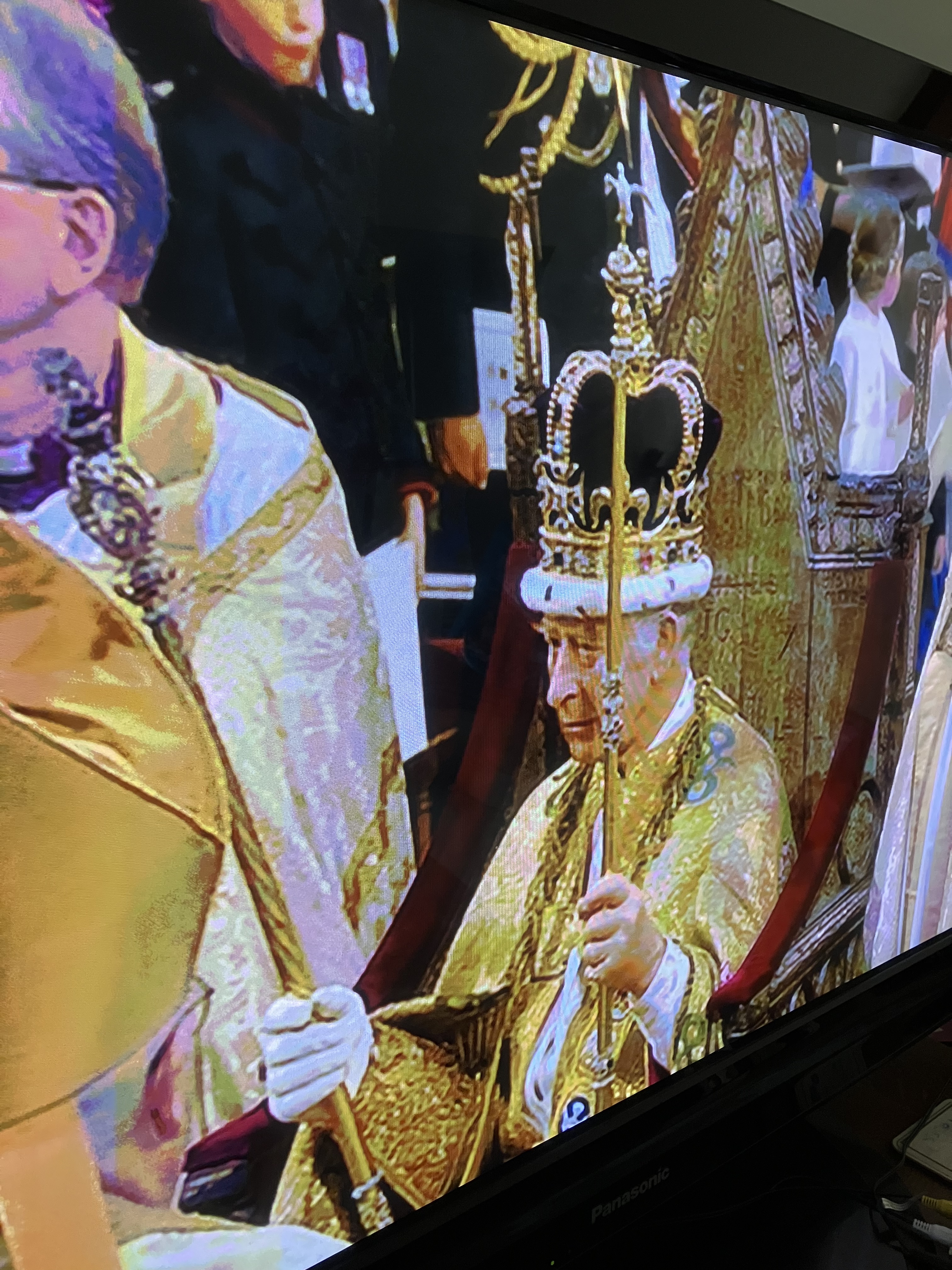
The Coronation of King Charles III


Hello, I hope you are enjoying the coronation weekend. In church this week, the service was introduced by the composer Richard Stilgoe (because he ‘knows’ King Charles). He said how both Charles and his late mother, were genuinely funny. Apparently, at a tea party with Queen Elizabeth, she picked up the teapot and poured everyone’s tea, commenting, “You see, I not only reign, I also pour!” Mr. Stilgoe also observed that if we decided to change from a monarch to a president, no one would be better qualified than Charles to take the role.

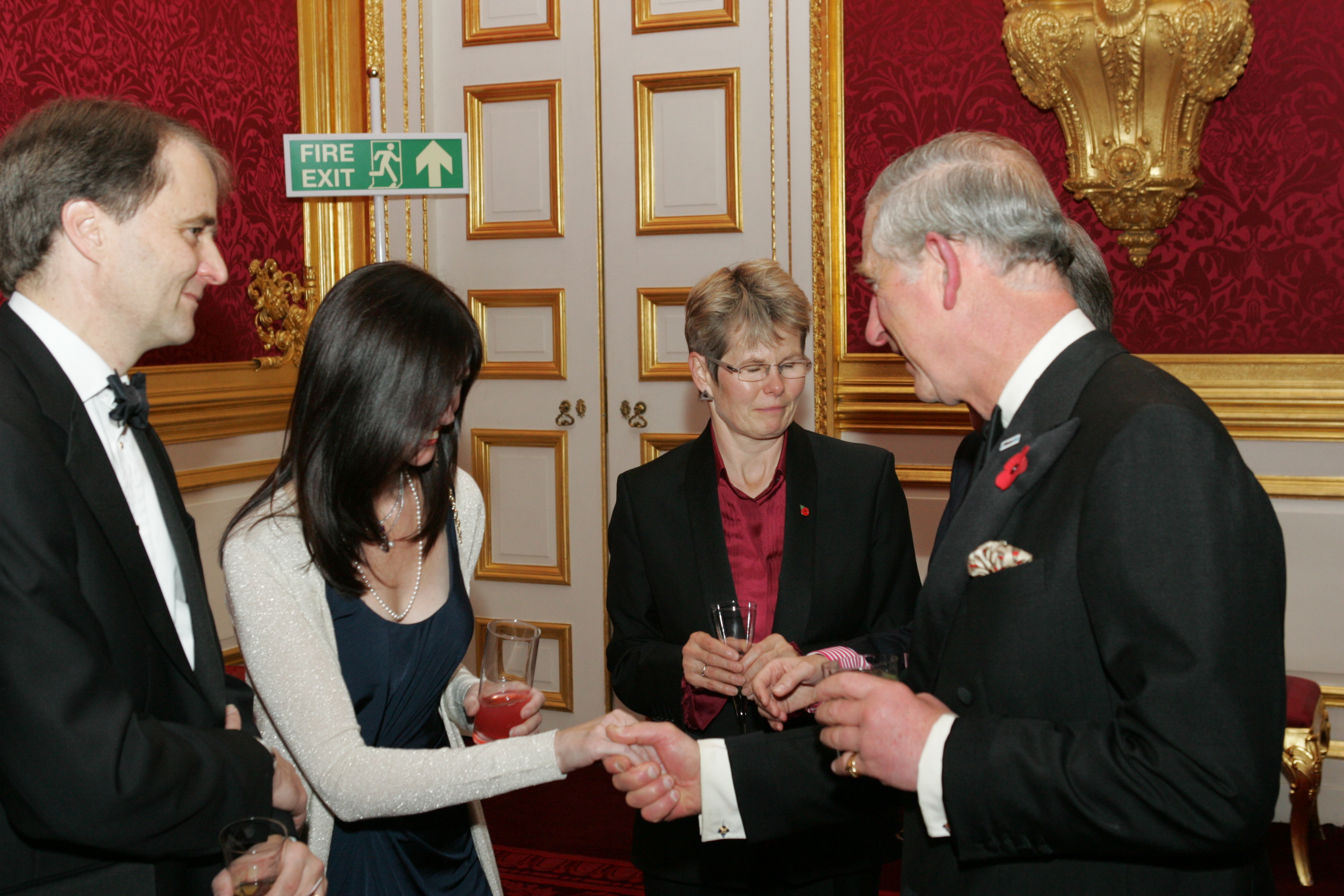
I was introduced to Prince Charles a few years ago. He might not remember.

We had a fun time on Saturday—Mum came for coffee and croissants, and we sat and watched people arriving for the ceremony while Husband made sarcastic comments. Our personal motivation was to get ideas for possible wedding outfits, as we have several weddings this year.

Orange seems to be a popular colour. There were a few big hats too—which in my view, is rather a selfish thing to wear to a ceremony where everyone will be vying for a view of the main event. I especially felt sorry for whoever was seated behind the soldier wearing the very tall helmet. Obviously he had no choice, given that it was his uniform, but can you imagine the person sitting behind him when he arrived? Not what you’d be hoping for.

Some of the words were very moving—that Charles promised to serve rather than seek to be served, and that he vowed to reign before God. The ceremony was full of pomp and tradition, and there were lots of symbols that I did not understand. Especially the single glove. The Coronation Gauntlet, which I think represents ‘holding power’ as it’s used to hold the sceptre. I imagine it would be very irritating to wear a single glove, though Michael Jackson seemed to manage.

But I have to be honest, some things I found irritating. Firstly, some of the people attending did not bow/curtsey as King Charles passed them on the way out. Now obviously, some people do not recognise the monarchy—and that’s their choice—but I assume they would not then be at the ceremony. So for those attending, learn some manners, and if the monarch passes you, even if you realise at that moment that you will be on telly in your new frock—have the good manners to dip your head in respect.

Then we have the ‘Not My King’ protestors. Honestly! Get over yourselves. You have every right to not agree with the monarchy, every right to lobby your politicians, and to try to change the law. But to spoil an event that millions will enjoy? No, you need to stay at home and read a book. I’m not sure myself, if given a vote, which way I would cast my ballot—but I do respect all the people who believe the monarchy are good for the country, who serve and respect the king and for whom the pageantry is important. Personally, I dislike most sports, and would certainly not be excited by a parade of the England football team. I slightly resent that my taxes pay for the police who are necessary to keep order at football matches. But I would not go with placards and inflammatory signs and try to disrupt the parade; I do not have that right. It is both rude and ignorant, and it makes me sad that we think that ‘free speech’ means we can be as rude as we want, to whoever we want, when anyone disagrees with us.

When I am monarch, I shall make good manners obligatory.

Enjoy the rest of your weekend (and do try to be polite). Thanks for reading.
Take care,
Love, Anne x

Anne E. Thompson
Thank you for reading
anneethompson.com
Why not sign up to follow my blog?

anneethompson.com
*****

The Frying Pan Experiment


I have several frying pans. One is a very expensive heavy pan, a Christmas gift a few years ago from my mother-in-law. It was perfect for a few months, but then every time I used it, the food stuck to the base and burnt—and it was a nightmare to clean.

I bought a couple of decent (but cheaper) pans from Lakeland. The instructions said they could go in the dishwasher, which was an added bonus. They were perfect for a few weeks, but then every time I used them, the food stuck to the bases and burnt—and the dishwasher never managed to get them properly clean.

Recently, I bought a heavy cast iron pan, which came with copious instructions (which I ignored). It was great the first time I used it, but then the food started to stick to the base and burn, and it was hard to get it clean.

You will notice a theme here.

Nothing seemed to make them better. My mother’s tip was to heat a clean pan with salt, to a very high temperature, and then wipe out all the salt and oil the pan. This improved things temporarily, but then the same problem started to occur. (I think the ‘salt method’ is good for thoroughly cleaning all the tiny pores in the metal.)

I dug out the copious instructions that arrived with the heavy cast iron pan. It said, very clearly, not to use detergent when washing the pan. I have heard this before, and seen chefs on the telly who claim to have never washed a pan in detergent. It seemed like a silly idea (because surely they would be less clean, and therefore more likely to stick). Discussed it with Husband (who does the washing up). He also thought it was silly, but eventually agreed we would try it, for a short period, as an experiment. He muttered a lot whenever there was a pan to wash.

For several weeks, we have not used detergent to wash the frying pans—just lots of very hot water and a plastic brush. I have designated one pan for ‘sweet’ food (pancakes) as the smell of onions and garlic tends to linger. But, to my surprise, food no longer sticks in the pans (unless I do something stupid like not use enough oil or get distracted and leave things to burn).

The experiment has worked. So, if you have a frying pan that sticks, I suggest the following:

  1. Wash pan thoroughly, and dry.
  2. Put salt into dry pan (enough to cover the base). Heat to a very high temperature, then scrape out while hot. I use paper towel to do this, and tip the salt onto a plate until it’s cool enough to go in the bin. (Be careful, because it doesn’t discolour when hot, so it’s easy to burn your fingers.)
  3. Rub a little oil around the pan if it’s cast iron (so it doesn’t rust).
  4. In future, wash frying pan in very hot water. DO NOT use detergent.

You’re welcome. Feel free to share the tip.

Hope you have a good week. Thanks for reading.
Take care.
Love, Anne x

Thanks for reading.

anneethompson.com

Sign up below to follow my blog.

*****

Continuing Our Mini Break in the Peaks.


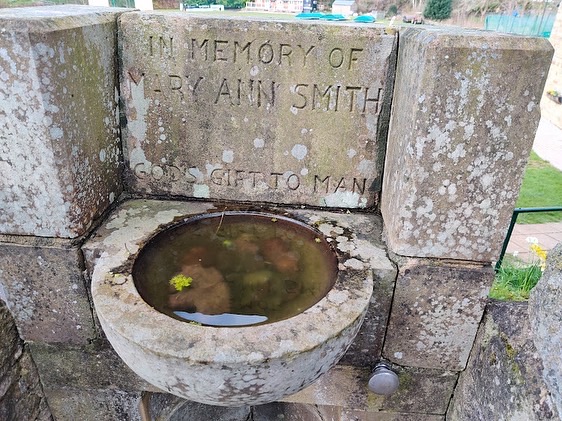
The forecast looked bad, so we left home at 8am for our morning walk. Beautiful sunshine, with dark clouds looming over the hills. We went down into Lower Bradfield, where there’s a Post Office selling coffees, and several smart-looking modern buildings, including a public toilet. There are not many public loos in the Peak District. There was also a small commemorative plaque, above what looked like a toilet, in memory of Mary Ann Smith, who was ‘God’s Gift to Man.’ Not quite sure how to read that—was she incredibly beautiful, or was it written ironically by the angry wives of Lower Bradfield? I feel there’s a story here, but not one I managed to find.*

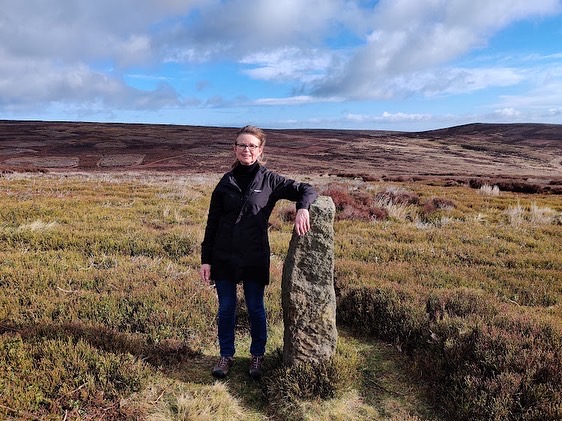
We then followed a footpath up the hillside, and walked across the moors. We didn’t see any other people, but there were grumpy sheep sleeping on the heather in sheltered places near the stone walls. Lovely windy walk.

As we walked down the lane, towards the cottage, we saw a dead ewe, with a tiny lamb shivering next to her. Another lamb, marked with the same red number 10, was attempting to follow a ewe who looked completely disinterested. I assumed the mother of the twins had died. When we got to the cottage, we went to the owner, to ask him to phone the farmer. It’s too cold for a tiny lamb to survive for long on its own.

We had brunch at The Schoolhouse. I am assuming this was once the school, now turned into a busy cafe, with a smarter area upstairs for meals. We had Eggs Benedict, which was absolutely perfect—freshly baked bread lightly toasted, a generous slice of moist bacon, poached eggs covered in hollandaise sauce. When you’ve been on a long walk, it’s perfect food. Life doesn’t get much better than this.

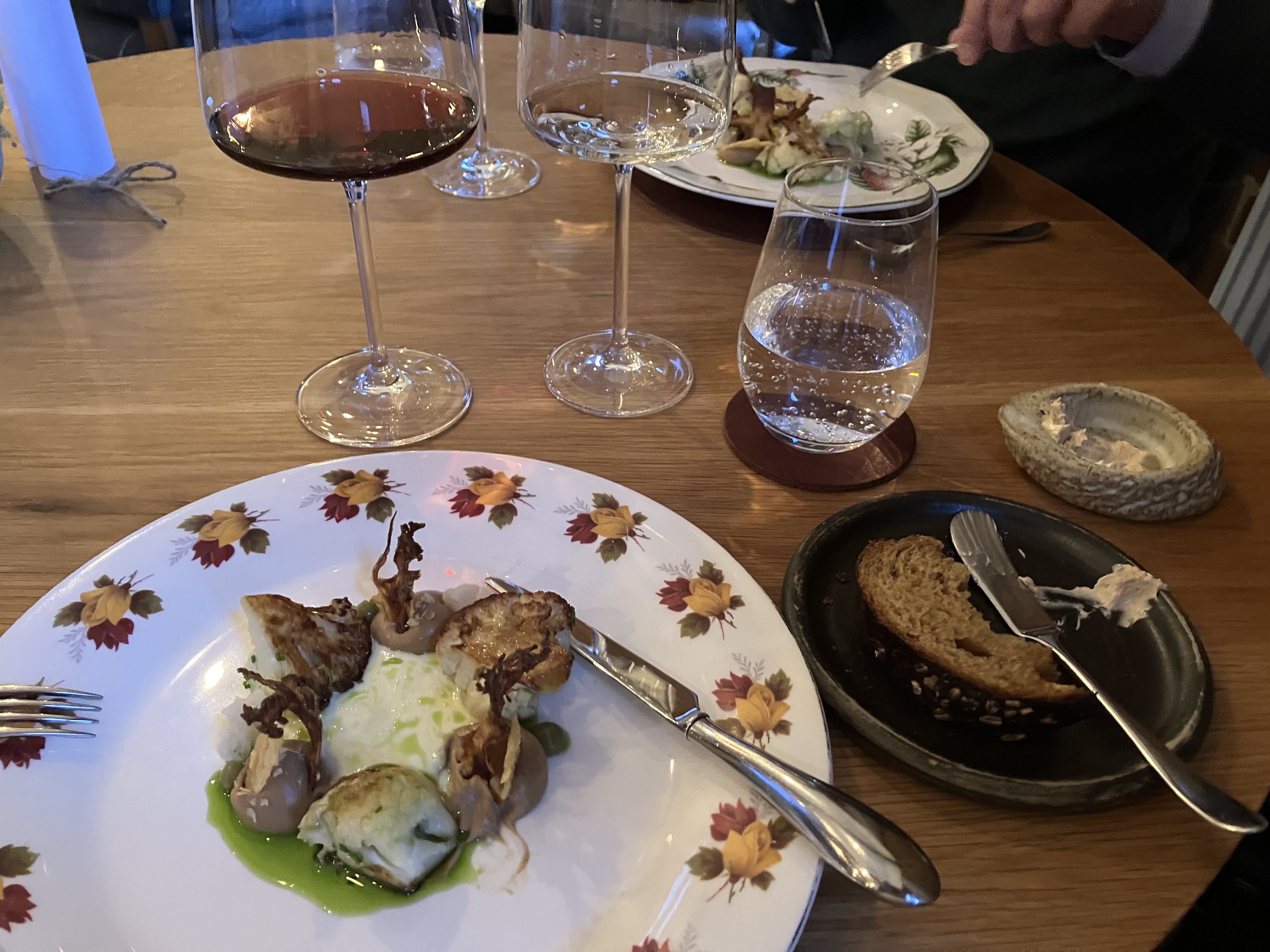
In the evening we ate more delicious food. There’s a restaurant on the edge of Sheffield: Rafters, which serves taster menus. We had a six-course meal (the courses were tiny, beautiful, and delicious.) It’s an unusual place, as usually restaurants selling ‘posh food’ have ‘posh staff’ and you worry that you might make a mistake—and I always feel that really, they would prefer someone posher than me to be eating the food. But Rafters had normal people, wearing jeans and white shirts, who were efficient and friendly. The other guests all wore casual clothes too, so it was another perfect dining experience. And the seats were comfy—I do like a comfortable seat!

This morning we left home slightly later—I was tired. The weather wasn’t as good—not terrible, but cold with a slight drizzle. We walked from the cottage, up into the hills behind the farm. There’s a ridge of rock sticking up over the hill, and streams bubbling out from the ground. It was a pretty walk, through fields of cows (who ignored us) and past sheep, who watched us suspiciously. We saw the sheep farmer, and asked about the dead ewe we saw yesterday. He said the number 10 twins were fine, it wasn’t their mother who died. The dead ewe probably had lambs inside her. He said most of the ewes in the field were lambing, and he checks each day to see what has been born. Apparently it’s healthier than lambing inside because you don’t have as many germs, but more risky when the weather is as cold as it is at the moment. But his sheds are full, so the remaining lambs will have to take their chances. Farming is difficult; hard work with brutal results if the weather goes wrong. I love seeing lambs in the fields, but I’m not sure I could cope with the loses.

As we arrived at the cottage, I noticed some eggs by the road, and an honesty box. Next to the cottage are beautiful white geese, and I rather fancy trying to raise a few in the garden. The eggs were a mixture—brown ones which were obviously chicken eggs, and some large white ones, which I am really hoping are goose eggs. I bought six and will incubate them when I get home. Really, really hoping they are goose eggs. (Or dragon eggs, that would also be fun, but I understand that is unlikely!)

Hope you have some excellent food today. Thanks for reading.

Take care.

Love, Anne x

Thank you for reading.

anneethompson.com

*I later discovered that the water fountain originally had ‘WATER’ written above ‘GODS GIFT TO MEN’ but a naughty person had removed it. Made me laugh.

*****

Dale Dyke Reservoir


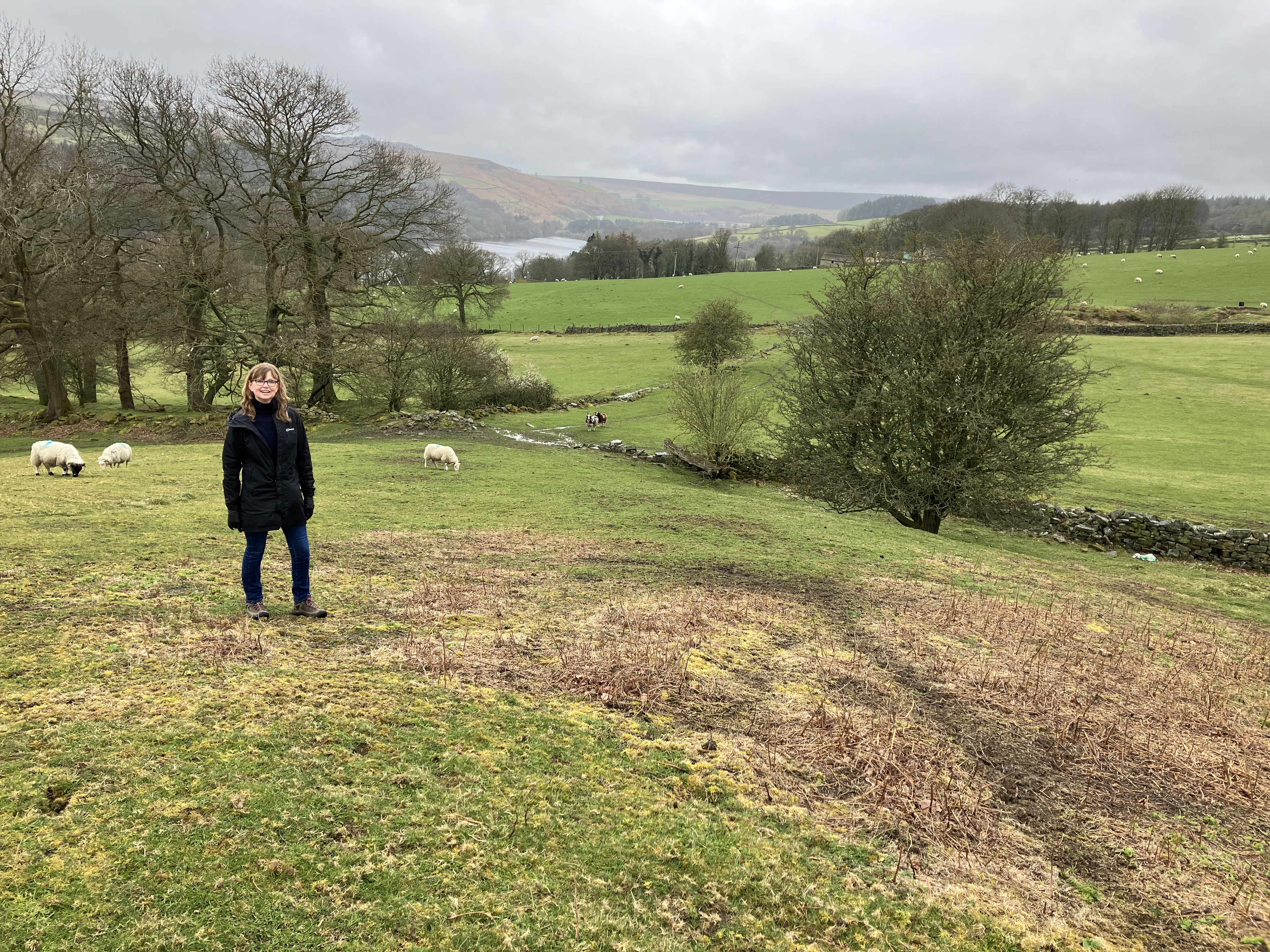
The weather was grey but dry, so we decided to walk up to Dale Dyke Reservoir. We followed muddy footpaths around Agden Reservoir (this area has a LOT of reservoirs—it’s a good place for water birds). The track rose over a grassy hill, with sheep begrudgingly moving out of our path, and then we saw it—first the steps of rushing water from the overflow channel, and then the reservoir itself, glinting under the grey sky, stretching across the valley.

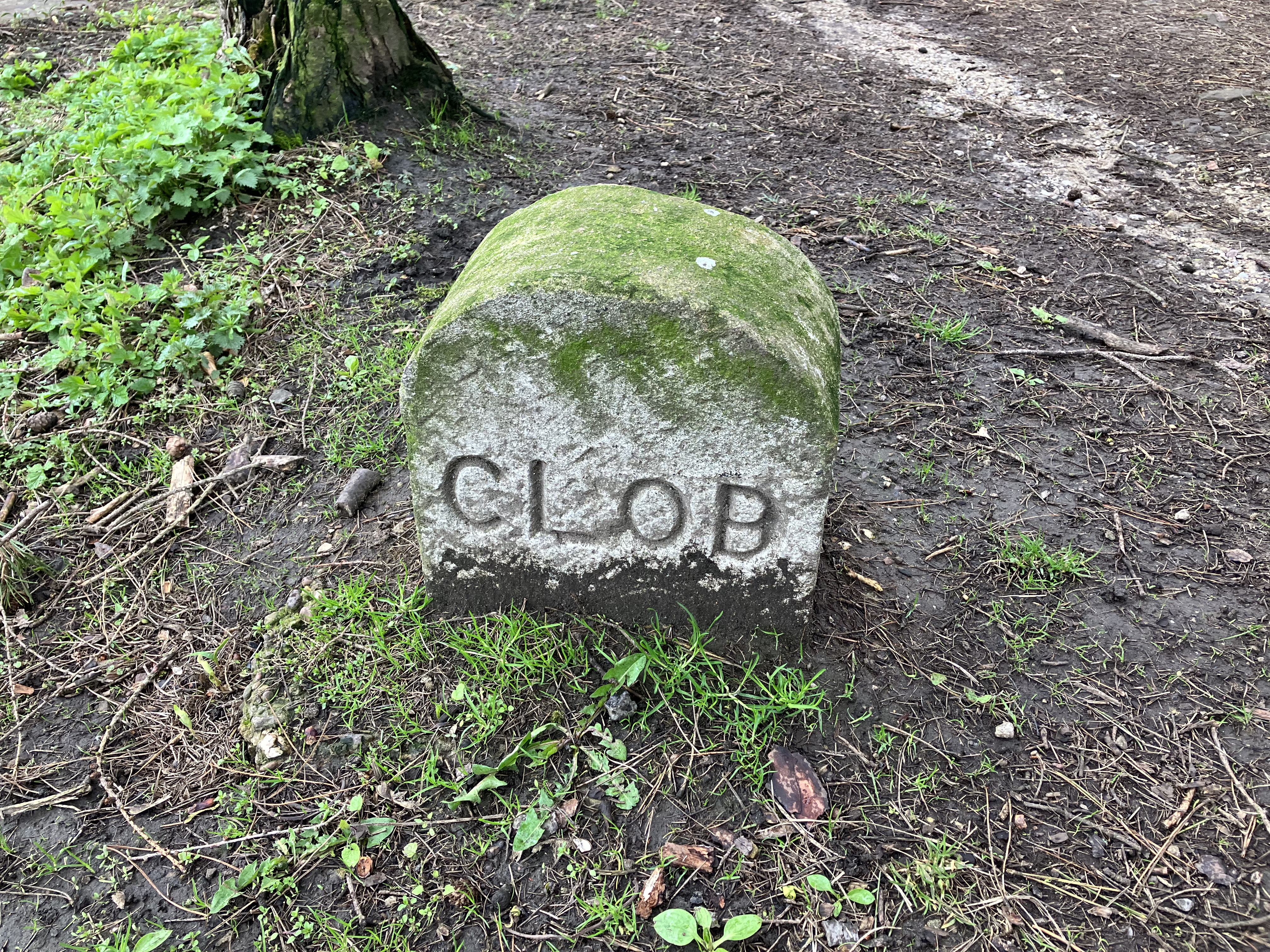
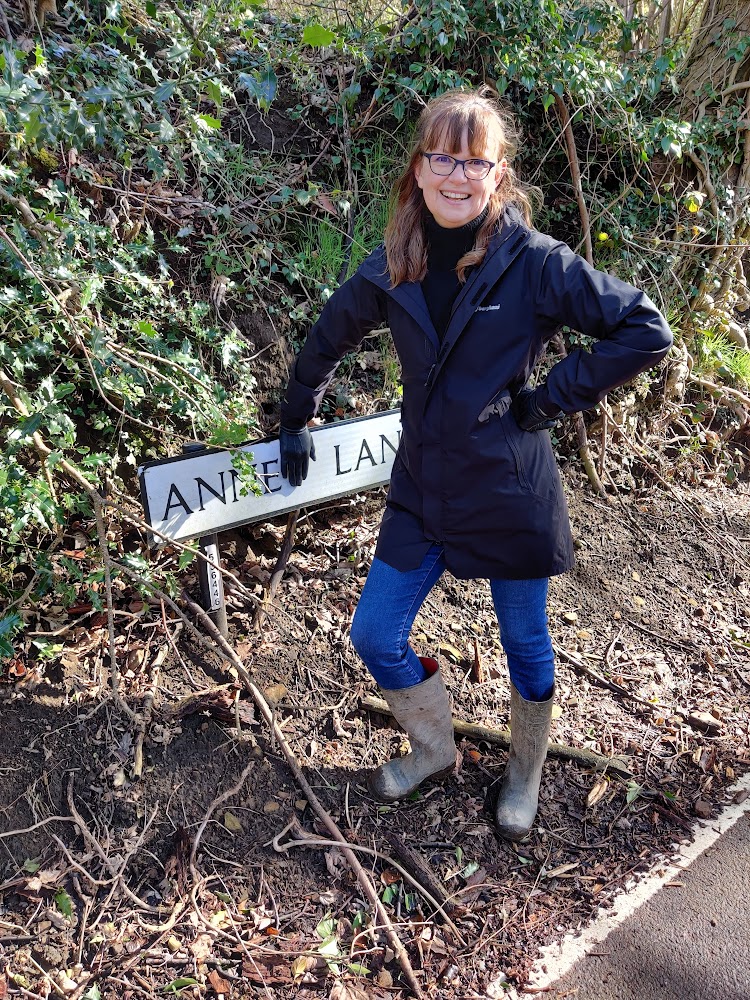
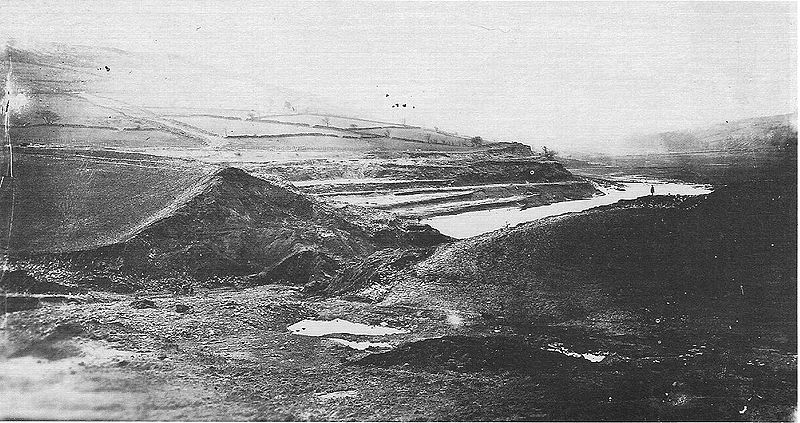
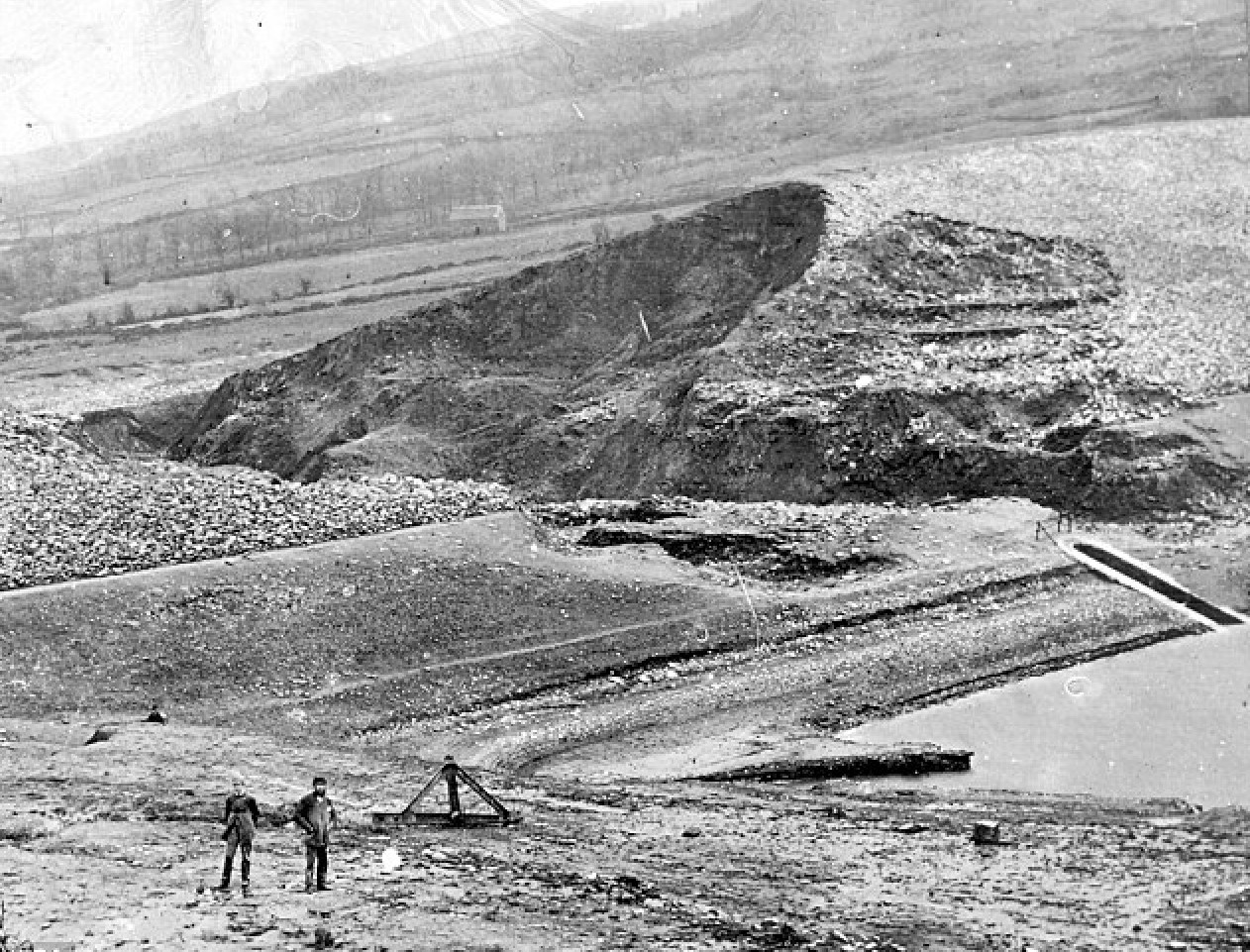
As we drew near, we saw a strange stone, like a mini gravestone, marked with CLOB, and I wondered whether it was the grave for a dog with a strange name. But then I read the board next to the path, and it took on a new significance. Dale Dyke Reservoir was built to replace another, larger reservoir—which in 1864 burst through the dam, rushed into the valley below, swelled the rivers to Sheffield and killed hundreds of people. We read the story.

Accounts of the incident vary slightly, but it seems that on 11th March, 1864, after several days of stormy rain, a local man, William Horsfield, crossed the dam on his way home from work, and noticed a crack. It was fairly small, but big enough for him to notice, and the dam was new—only recently finished. I wonder what he thought at that point. Did he have a sense of fear, knowing the reservoir was new, it hadn’t been there for years, it wasn’t yet something familiar, something he assumed was permanent. Was he frightened, or merely interested? Did he assume all would be okay? Maybe not, in an age when bad things happened more often, perhaps he was instantly concerned.

One of the dam builders, Mr. Fountain, was still in the area, so William told him, and they both examined the crack. Mr. Fountain thought it was probably nothing to worry about, but just to be cautious, he sent for the main engineer, Mr, Gunson, who lived in Sheffield. (To be accurate, he sent his son—sons have always been useful.)

By the time Mr. Gunson arrived (Sheffield is about 8 miles away, and I am guessing they travelled by horseback) the crack was bigger. Water was beginning to spill over the embankment.

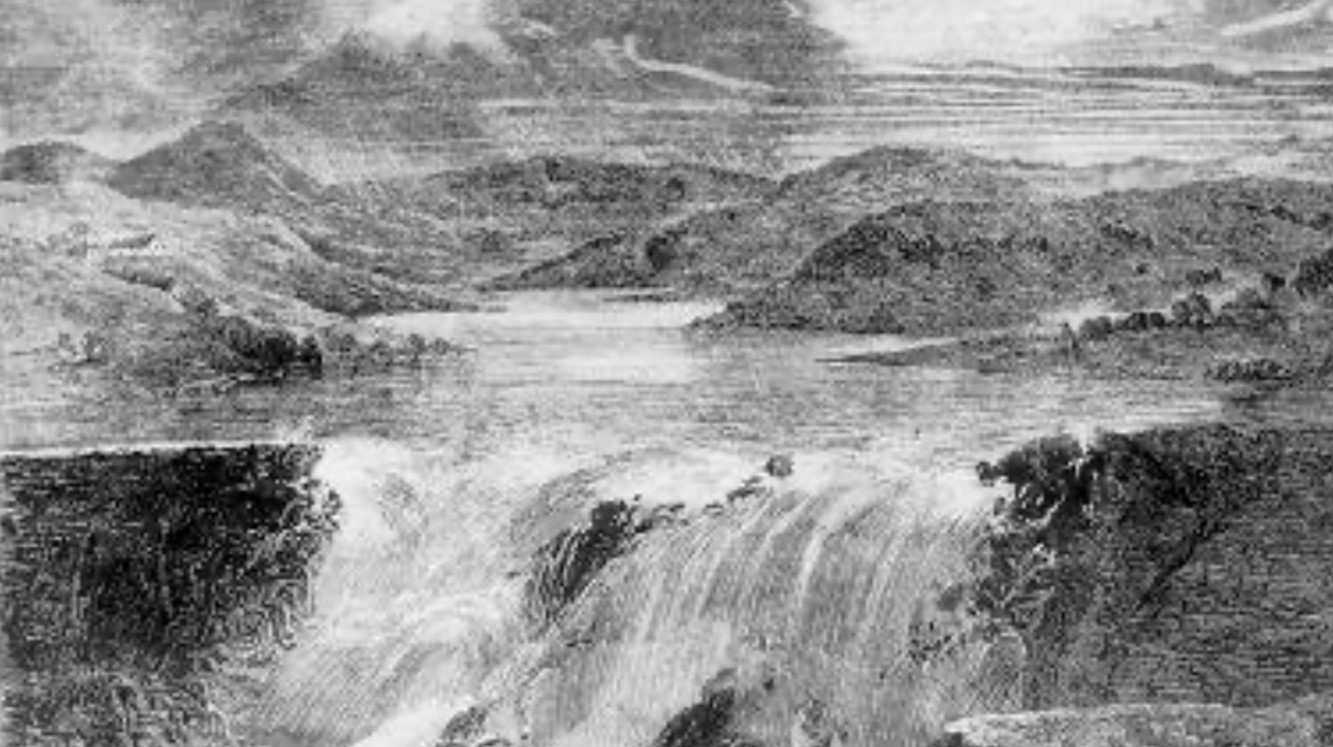
Suddenly, a huge gap opened—30 feet wide—and the water began to gush into the valley. At this point, there was nothing anyone could do to prevent tragedy. The men scrambled to safety as the dam gave way, and 700 million gallons of water swept towards Sheffield. There was no time to warn anyone, no telephones to contact people, nothing they could do but watch in horror.

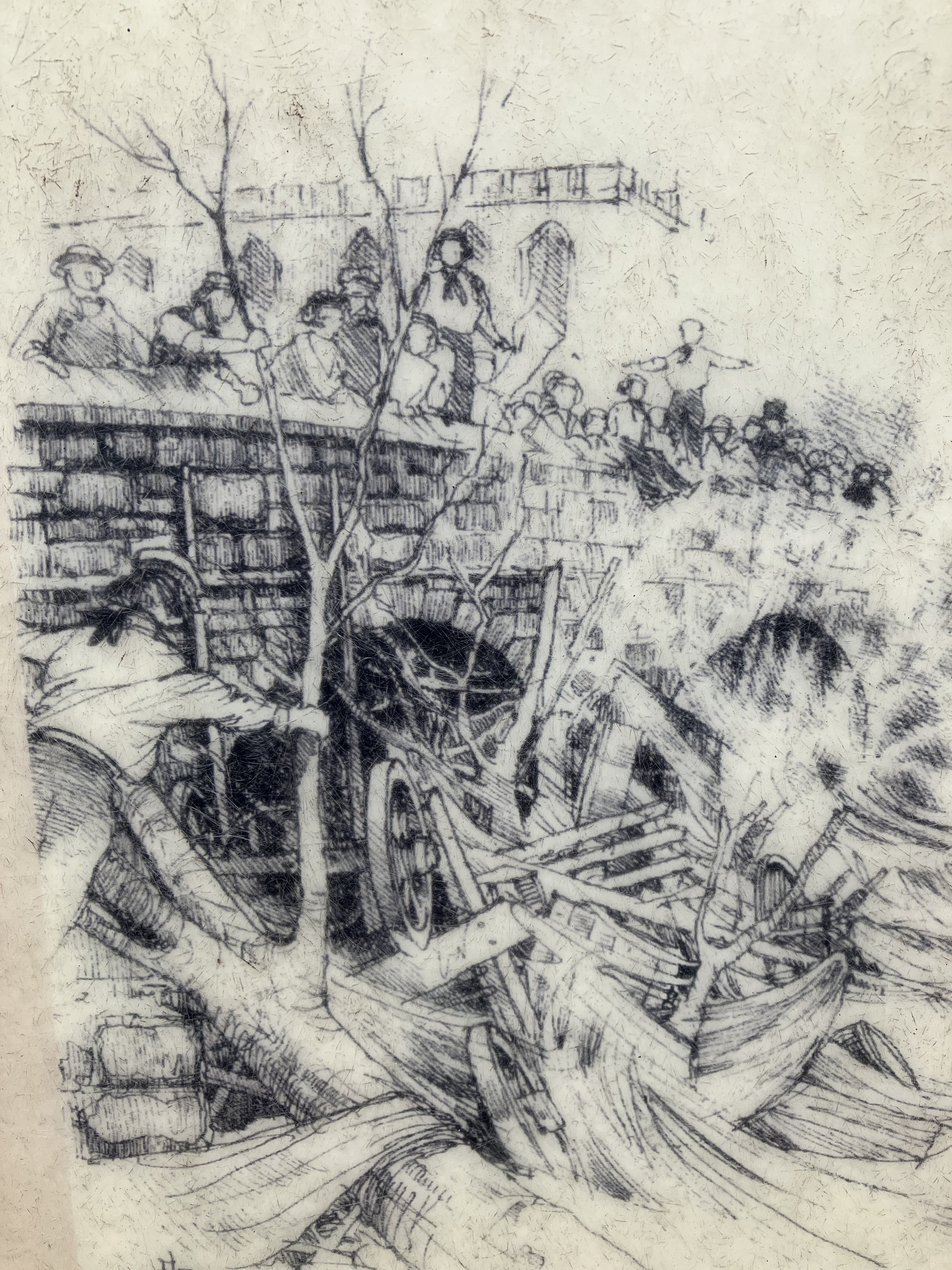
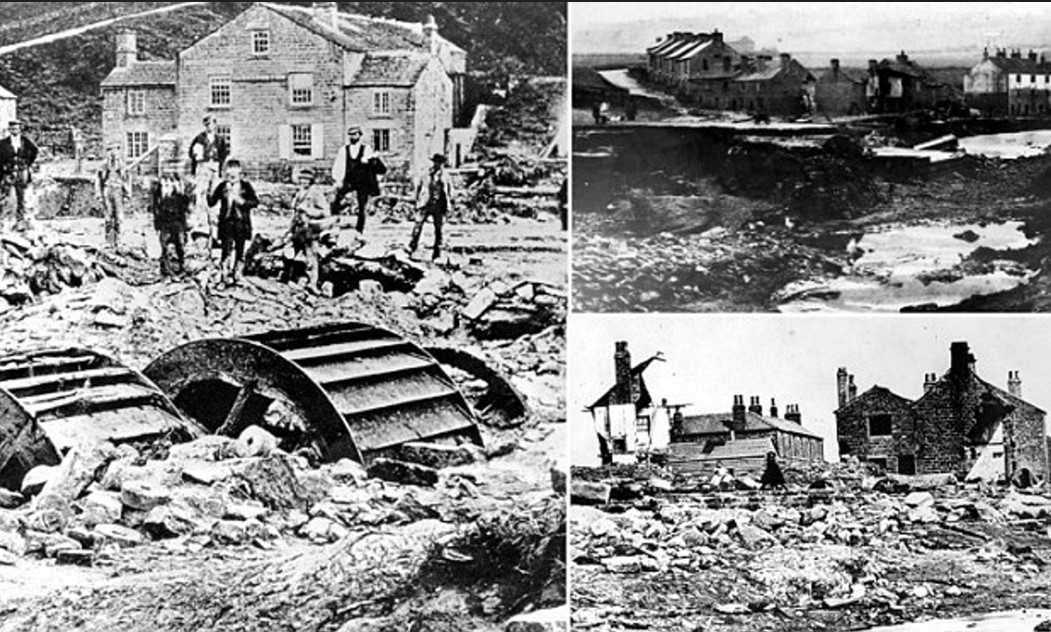
The water raced along the valley, swelling the rivers Loxley and Don. The River Don ran through Sheffield, and an area called The Wicker was badly flooded. The bridges were choked with fallen trees, destroyed mill wheels, carts and debris. People stood on bridges to watch, unable to stop the flow, helpless. About 250 people were killed.

After walking to the reservoir—which looked placid and innocent when we were there, we decided to visit Sheffield. Great-Grandpa Todd was a vicar in a church there, about a hundred years ago, and we were interested to see his church. It just so happened, that his church was in Wicker, next to the river Don, right where the flood water had been worst. We saw the church, and the river, and on the opposite bank, there is a memorial to those who lost their lives. Some of them are unnamed, just ‘servant, male, aged 27’, or ‘infant, 2 days old’. Some names were of people later found alive. Some people died later of their injuries.

It’s thought to be one of the worst man-made disasters in the UK. It reminded me of Aberfan, the mining town where the slag-heap slid over the school and killed the town’s children in 1966. Except I had never heard of the Dale Dyke disaster—perhaps because it was so much earlier. But the local people have not forgotten. In 2014, on the 150th anniversary, they commemorated the occasion. There were talks by historians and civil engineers, and the local brewery produced a beer named ‘Dam It,’ and they produced a CD of ‘flood songs.’

It is difficult to understand who was to blame for the disaster. Locals blamed the Sheffield Waterworks Company, who commissioned the dam in an attempt to provide clean water to the city. They were not held accountable at the later inquiry. Nor was Mr. Leather, their engineer (though interestingly, his uncle George Leather was the engineer for another reservoir that collapsed, near Leeds, killing 81 people). Maybe the reservoir was too large for the engineering of the times. Maybe (as claimed by the company) there had been unexpected earth movements (though I would’ve thought that their engineers/geologists should have checked for earth stability before building it—but maybe these things couldn’t be predicted in those days). Hard to know. I don’t know whether having someone to blame would help the grieving survivors. 

I do wonder though, how William Horsfield felt afterwards. Although he took immediate action, although it was in no way his fault, did he torture himself with regret? There was time to fetch the engineer from Sheffield, which means there was time to bang on doors, to try and warn people—even though at that point, they didn’t think it would breech. But should they have warned people anyway? Should they have risked looking stupid, of raising a false alarm, of causing unnecessary panic? What would we do? Remember, no one knew what would happen, it remained an unlikely possibility, right up until the time it happened—but would that have been a comfort to poor William? I suspect not.

Today, there are several, smaller reservoirs in the area, feeding water to the city. They look peaceful, places to walk to when on holiday. But water camouflages danger with gentle ripples and inviting cool blue calm. Once the restraints fall, the chaos can begin.

Thank for reading. Have a safe week.

Love, Anne x 

Photos a mixture of my own, from information boards, and the Daily Mail website.

Thank you for reading.
anneethompson.com
Sign up below to follow my blog.

Mini Break in the Peak District


Easter Away Trip

I am writing this in a tiny cottage snuggled in the hills of Lower Bradfield. You might remember that in January I attended a conference for Old Testament Study in Sheffield, and Husband kindly drove me and rented a cottage in the Peak District? I stayed in the cottage for just one night, and was sorry to leave, so when we realised we had a week free after Easter, we decided to return. 

We arrived on Easter Sunday, after lunch with the family in Cambridge. The cottage was warm and comfortable, and after unpacking we strolled up the steep lane behind the house. It was dusk, and an owl was hunting in the fields, swooping over the lane. There was the trill of curlews, who rose above us, warning us not to stray near their nest. Sheep watched from behind stone walls, their lambs snuggled under their legs. In the distance, hills rolled away, dotted with stone buildings and steep fields, up to the moors. It’s a open place, a place where you can breathe, and it feels weird that it’s only half an hour from Sheffield.

Monday morning, my Ocado deivery arrived at 8am. Perfect timing for breakfast. The delivery man was exceedingly grumpy, and told me he had worked all weekend, and no, he had not had a nice Easter. I felt slightly guilty as I unpacked my order. I seem to have ordered a lot of cakes, so won’t be losing any weight this trip.

We walked across Agden Nature Reserve to Canyard Hills. Muddy footpaths, twisted trees, a reservoir in the valley. I wished I hadn’t gone for a long walk a few days before Easter and given myself blisters. I blamed my walking boots (which I left at home) and was stomping along in wellies. Husband hardly mentioned it. We walked for two hours. There were beautiful views—and big black clouds. We got home just before it poured with rain.

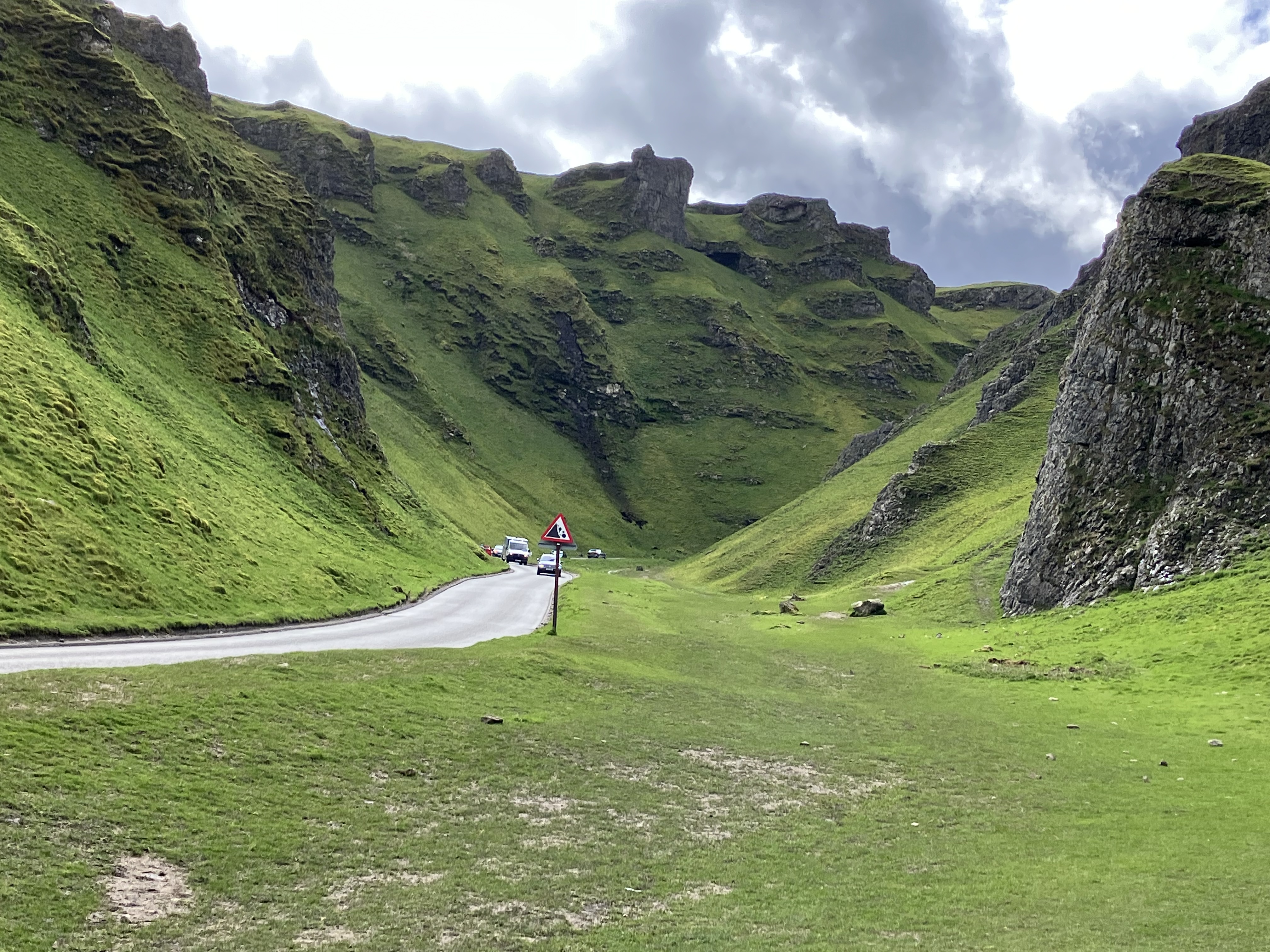
It was still pouring after lunch (ate some cake). We went for drive to Castleton—which we both remembered but couldn’t remember why (we are at that age when we can spend a happy half hour trying to remember things). Then we drove through Winnats Pass. This was spectacular, we turned the corner, and there it was—steep rocks rising on either side, tiny streams bubbling down to the valley. The road was single-carriage, and there were lines of cars waiting to pass, so I recommend you don’t visit in peak times. But definitely plan to visit, it’s amazing.

We had dinner at The Plough in Lower Bradfield. It was a ‘pubby’ sort of pub (as opposed to a ‘gourmet’ sort of pub) but after a nice glass of Merlot I decided it was lovely. We chatted about the day, and managed to remember when we last visited Castelton, and I bored Husband with interesting details about the theology book I am currently reading. A good day.

Tuesday, I got up at 6.30. At 9.30 we left the cottage and walked to Lower Bradfield on the footpaths. I was still in wellies. It was okay. The walk was very pretty, we went up the hill to High Bradfield, and the old church with dragon gargoyles and sheep grazing in the graveyard. Then back down, along pretty footpaths under trees and over rivers, to the village. There’s a new cafe, which advertised brunch and coffee, but it was shut. (Apparently it’s always shut on Tuesdays.) Walked back to the cottage for coffee and toast (and more cake).

I spent the afternoon reading my theology book (by a chap called Leo Perdue, about Wisdom Literature—very interesting). Sounds of fighting wafted upstairs. Husband was in the sitting room, watching a cartoon. 

We decided to drive to a cheese factory advertised on Google Maps. We found the lane (very narrow) but not the factory. I think it must have closed. Drove into Hathersage, and I bought some walking boots in one of those outdoors shops that smell of sensible clothes and waxed jackets. These boots fit better than my last ones. And they have pink laces, which is an additional delight.

It was pouring with rain again. We drove home via Snake Pass, but it didn’t compare to Winnats. 

Dinner at The Plough again. We had asked to sit in the same room, but they either forgot or decided to ignore us because they were busy. We were seated in a very ugly room, full of people who seemed to know each other. I ordered fish and chips, and the portion barely fitted on the plate, it would have fed three of me. Especially as I was already full of cake. A pleasant day, but not as perfect as Monday.

I hope your week is fun. And you have cake.

Thanks for reading. Take care.

Love, Anne x

Thanks for reading.

anneethompson.com

Why not sign up to follow my blog?

Poem


The festival was for Eastre,
Goddess of fertility
But they swept it away with
A cross of humility.
They took over the sunrise
Coloured eggs were hidden,
They introduced religion
And pagans were forbidden.

Then the bunnies
Hopped back,
With the chicks
And the eggs.
Spring flowers
In bright posies
Feast times with friends
And fun with families.

But beneath it all
Well hidden within,
Was a story of death
And the blackness of sin.
The anguish of God
Turning his back.
A story of tears
When the world went black.
That tragic tale,
Which won’t go away,
Has a promise of peace
That we long for today.
And the torture and pain
And despair of that day,
Is why God turns and listens
When we kneel and pray.

*****

Having a chat.

I wanted to show that originally at this time of year, there was a pagan festival for Eastre (sometimes spelt with an ‘O’) who was the goddess of fertility. That is where the sunrise, eggs, bunnies and chicks come from. Then the Christians arrived and took over the festival to celebrate the death and resurrection of Jesus.

But all those pagan symbols still keep coming back. However, under it all, the message of what happened in the Bible story still remains true. (So when you are asked, “Why do we have eggs at Easter?” It has more to do with the fertility goddess than the Bible story. But they taste very nice.

Thank you for reading.
anneethompson.com
Sign up below to follow my blog.

A Sword-Pierced Heart


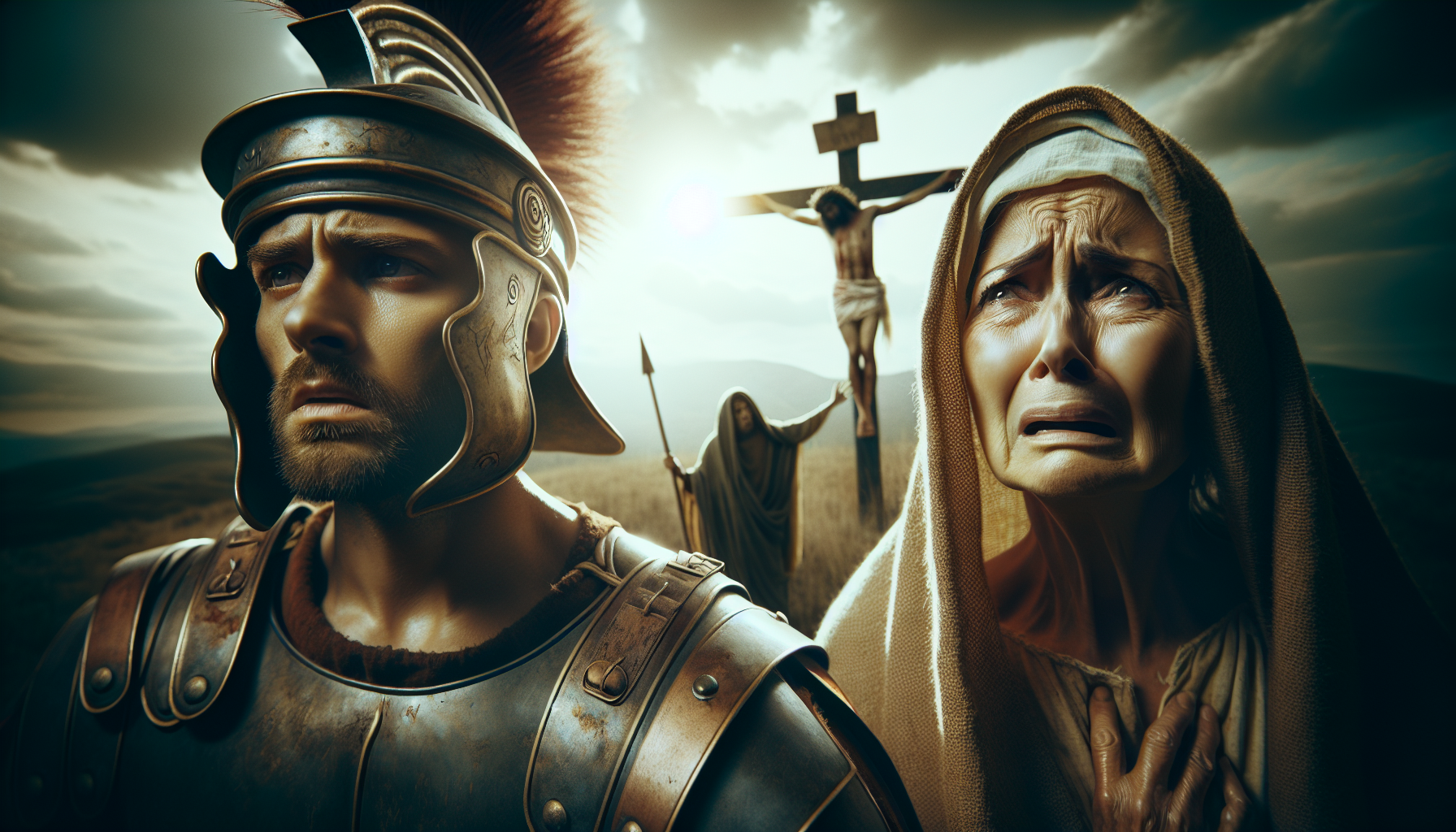
I watched my son die today. My beautiful boy, beaten, battered and left to die. And my heart broke.

I held my cloak close and I remembered the weight of him as a babe, like a boulder on my hip, wriggling to be free, to jump and climb and to run.

Those legs will run no more. Those long limbs—I was so proud when they grew. I remember when he grew as tall as me, then taller even than Joseph. I remember watching him, stretched out as he ate, those long limbs seemed to go on forever. “I grew him,” I used to think with pride. But those limbs will not sprawl, relaxed, in my home ever again.

I watched his hands, the hands that used to pat me cheekily on the head when he’d grown tall. Those strong hands which laboured with wood, which helped me carry heavy loads, which lifted young children playfully.

They are no longer strong. I saw them bang nails through the flesh, felt that I heard the sound of bone shattering over the thump of the hammer, heard his ragged breath as they forced the cross upright. And I wondered if I too might die.

But I watched. I am his mother and I would not leave him alone.

When they tried to take me home, when they told me to shield my eyes, avert my gaze, I did not. For he was my son. I would never leave him alone, not at a time of such anguished need. Others watched. Some women were there, terrified and hanging back. Not me, I am his mother. I stood with John, where he could see me. What could they do to me that was worse than this?

Some watched who hated him. They mocked and spat and called abuse. “It can’t hurt him now,” I thought, “let them shout.”

“He trusts in God,” they called, “Let God save him now,” and they laughed, even as he died, they laughed.

Yet even God deserted him by the end and that was hardest to bear. He called out with a loud shout, asking why God had turned from him.
“My God,” he called in anguish, “why have you forsaken me?”

But I was there. I did not leave. I saw them crucify him, naked upon a cross. No mother wants to see her grown son naked, but still I did not look away. I was there at the beginning, I would stay with him until the end.

The soldiers took his clothes, for fabric is costly and even that of a criminal should not go to waste. Most they tore and shared between them, but not his tunic. They cast lots for that, not wanting to spoil something precious. Yet my son was precious and they destroyed him.

It began last night. They woke me from my sleep and warned me there was trouble. He had been arrested, taken from a meal with his friends and questioned by the temple authorities. They feared the invaders, so he was then referred to a court of Godless law, a place that feared no God. They told me that he was scourged, beaten with whips that removed chunks of flesh as they struck. He was mocked and abused, then brought to this place.

I came, stumbling through streets full of people, full of noise and smells and fear and hatred. I came to this place, this Godforsaken hill beyond the city wall and I saw my son, my boy, diminished, shrunken somehow. I saw that what they had told me was true, smelt the repugnant stink of excrement mingle with the metallic stench of blood. I heard the shouts of abuse, the curses of the guards, the screams from the prisoners, the wails from friends. And him, like an oasis of calm amidst the turmoil, suffering but at peace.

And he saw me. Those dark eyes that as a baby had watched me intently when he fed. Those eyes that twinkled merrily when he teased me and became serious when he wanted to explain something important. Those eyes, red rimmed with exhaustion now, turned to me. Even hanging there, with parched mouth and dried lips, he spoke to me. His voice was hoarse, for he had refused the wine they offered, but I heard him well. A mother knows her child’s voice. I stood with John and my son told me that this was to be my son now and he was to care for me as a mother. Even in his torment he cared for me, fulfilled his duty as my son. Still I would not leave.

Then it ended. The sky had turned as black as my world and he drew his last breath. It was finished.
Those who had mocked became silent, some cried, some beat their breasts in despair. The blackness of the sky frightened them and many fled, wondering at what they had done.

I left, I let them lead me away. My soul was broken and my heart beat even though I bid it stop. My boy was gone, my firstborn, special baby, was no more. I carried that knowledge like a rock within me, I would have rather died in his place. How can I live, continue with my life knowing he is gone? There will be no more sunshine or laughter, nothing matters now. The core of me has gone. I cannot even cry.

Afterwards, I could not rest and I heard strange stories. They said the soldiers pierced his side, to check there was no life in him. His blood had separated so they took him down, a solid corpse that had no life.

A man came and took the body, they said they followed and knew where he lay, in a tomb that was guarded. They told me of strange things, of the temple curtain torn in two, of dead men walking and boulders breaking open. I do not know. I only know my boy is gone. That is all that matters.

It should not have been like this. It was so recently that people praised his name, sang and danced before him, treated him like a king. It should not have ended like this.

And yet, I recall a song, it comes persistently to mind, sung often in the synagogue. It speaks of one forsaken by God in his time of need, scorned by many. He belonged to God from before he was born, then suffered at the hands of many. They sung of bones poured out like water, a heart of melted wax, that is how my boy would have felt. They sung of hands and feet pierced like his and enemies gloating over him. They sang of lots being cast for clothing and of God’s ultimate victory. They sung of remembering him for ever, not just now but families of every nation, even those presently unborn. For he has done it.

Is this my son’s song? Were the words written for him? Are these the words he whispered while he died?

He spoke of his death often, he tried to warn me that he would die. But not like this, not before my own time has come. No mother should bury her child, it goes against what is natural and right. Though, he showed no fear, he knew what his end would be. And he told me there was more.

As I turn now to sleep, I wonder at his words. Will he truly return somehow and will I know?

Has he finished what he was sent to do?

************

If Mary was a young teenager when she learned she was pregnant (which would fit with the age that girls became betrothed in those days) then when Jesus died aged thirty-three, she would have been about forty-seven. How does a woman of that age cope with the things she was forced to witness and how much would she have understood at the time?  I have sons, contemplating their dying is too horrible for words. I am sure she loved her boy as much as we love ours.

Crucifixion was a ghastly way to die. We learn in the Bible that Jesus, who never sinned, who never did anything wrong, died to save the world.

However, many people were crucified, some probably unjustly accused. So is it the death that was important or was it that God became separate? I think that this is the key issue here: the part of Jesus that was God, left him. That was more terrible than crucifixion. That is what each of us deserves and what we do not have to suffer if we choose to come to God.
If we want to know God, we can, even if that means changing our minds.

The song which Mary recalled in the story was Psalm 22. It was written many years before Jesus, yet the words are uncannily appropriate.

****

Thank you for reading.

If you liked this, why not sign up to follow my blog?

anneethompson.com

Talking with a Coptic Christian


As I told you in my last blog, we have been studying spirituality around the world. In our lecture, we spoke to a Coptic Christian from Egypt. ‘Coptic’ is the type of Egyptian writing that came after hieroglyphics, and became the language of Egypt, and therefore the language of the early Christians—people like Origen & Co. The chap we spoke to, spoke to us in English. Not much has been written in the past by Coptic Christians, and we were told that this is partly because it was a difficult place to be a Christian. He spoke about the ancient church in Alexandria, commenting that, “We produced more martyrs than books!”

He explained that the Coptic church is known as the church of the people, and it works with the poor people in Egypt. He said that Christ was found with the poor people, and that is where their focus is. Later, I asked him about all the money, and gilt and splendour, that I had seen in the Coptic churches in Cairo. How does that tally with their aim to work amongst the poor? He told me that it generally is the poor people who provide the money for the beautiful churches, that they want to contribute, to show how much they value God. He also said that in a country where they are the minority religion, it is very important to have a ‘presence’ and to be seen. It would be easy for the media to discount them, for governments to say there were no Coptic Christians—harder to do that when there is a stonking great temple in every city. This is something I hadn’t considered (it’s very easy to judge cultures before we understand them).

As a minority church in the country, their ‘outreach’ has to be different than in Western countries. They strive to do everything well, to live their lives authentically, and to work honestly. This is the way they hope to be noticed, and for people to be attracted to their church. (I think that in an Islamic country, you are not allowed to speak with Muslim people about your faith.) This tallies with what we saw in Cairo, where the Zabbaleen people (who are Coptic) collect the city’s rubbish, and are known for doing it better than anyone else.

When asked about people converting to Christianity, he said that they would only want people to do that who are sure they want to follow Jesus, not because they have been ’persuaded’ into it—because converting from Islam means risking so much.

He showed us his ‘Book of Hours,’ which is a tiny book of Psalms. They read it at regular intervals throughout the day—like when they wake, at mealtimes, when they go to bed. I thought that was a good practice to copy, it’s hard sometimes to even think about God during the day, even, ironically, when studying for an MA in Theology. My Muslim friends are currently fasting during daylight hours for Ramadan, and I admire their determination and wonder whether we have grown too ‘soft’ in our Christian churches. Sometimes a routine/discipline is a good thing. He also spoke about the monastic tradition. He likened this to the Bible story where Moses is praying while Joshua fights a battle. He said the monks are the ones praying, and studying Scripture, aiding the Christians who are outside the monastery. Most people go to the monastery for retreats, when they join the quiet contemplation for a while and learn from the monks (and share with them what is happening in the world). It’s different, but I can see how it would work.

As I said on Monday, we only had one seminar about global Christianity, but even the little we covered challenged some of my preconceived ideas. Churches in different countries need to find the best way to do things within the culture they live in. Often, this will be very different to how we do things in the West.

Thanks for reading. I hope you have a good week.
Take care.
Love, Anne x

Thanks for reading.

anneethompson.com
*****

Global Christianity: What Does It Look Like?


One of my lectures this week was about Christianity around the world. It was only one lecture, and really it could be a whole course, but the little we covered was very interesting. We read various articles by author’s of different nationalities, and it was clear that their Christianity reflected the culture they lived in.

One example was the work of Sadhu Sundar Singh (1889—1929 ).[1] He lived in India, and you could hear chimes of the Indian culture in his writing—which was beautiful. He wrote that God is in everything, and unless we ‘see’ God in the natural world, we cannot fully appreciate what we have. God is reflected in creation. He wrote that prayer prepares the soul for God’s gifts, and we shouldn’t be praying in order to ‘get’ things. When we approach God in prayer, our thirst is quenched. He painted a picture of God using examples from nature.

At times, it was fairly close to pantheism (the idea that God is everything, and everything is God—which is roughly the teaching of the Hindu religion). But he didn’t actually say that, and instead gave an example of a sponge being filled with water—the sponge and the water are intrinsically different substances, but one is able to completely absorb the other.

His title of ‘Sadhu’ means ‘holy man,’ and he taught many people. There are stories that he left society and went to live in a cave, and he is still there now, waiting until the world is ready for him to emerge. Other reports (I suspect more reliable) are that he died in 1929.

We also read some of Richard Young’s work, about Christianity in Africa and Asia.[2] He writes about the role of ancestors in China. He suggests that the spirit of ancestors should be regarded as a force—either to help in the Christian journey or to flee from their influence—but they cannot simply be ignored. Chinese people cannot be expected to suddenly think ‘with a Western mind’ when they become Christians.

I’m not sure what I think about this. However, I do wonder if there is an example in the New Testament. If you read the Gospels, there were an awful lot of evil spirits/demon possession. And in today’s society, there seem to be less. I do not actually know anyone who has been possessed by evil spirits—do you? Yet we read of the disciples encountering such people regularly. Were they just unlucky? Or are we not noticing? Or, is it possible that those people were not possessed by spirits, they were simply ill, and erratic behaviour due to things like epilepsy was wrongly attributed to evil spirits? In which case, it is interesting that Jesus did not correct the wrong assumption. He met the people within the culture/thought-context of the time, and he knew that if he told the person they were healed, but ignored the ‘evil spirit’ then they would continue to suffer—because placebo is very strong, and a belief in an evil spirit would be enough for them to continue to suffer. Therefore, in kindness, Jesus did was what necessary, he appeared to ‘cast out’ spirits, so the person would be healed. If I am correct, then what Young suggests would fit with this example. Sometimes we expect people to change who they are before they can come to God, but this is a human requirement, not a Godly one. If God wants to change them, that’s his business, and that will happen later.

We also spoke to a Coptic Christian from Egypt—but I’ll tell you about that in my next blog. Thanks for reading, and I hope you have a great day. Take care.
Love, Anne x


Thank you for reading.
anneethompson.com
Look for the link below, and sign up to follow my blog.

[1] Sudhu Sundar Singh, At the Master’s Feet, (Edinburgh: Fleming H. Revell Company, 1922).

[2] Richard Fox Young, ‘Christian Spirituality in Africa Asia, Latin America and Oceania’, in Author Holder (ed.), The Blackwell Companion to Christian Spirituality, (Oxford: Blackwell, 2011).

******

Hello From My World


Hello, and how was your week? I thought I would give you a quick update from my house. This isn’t really what I want to write about, as really I want to tell you about what I plan to write for my thesis. But I can’t. I’ll explain why in a minute.

Firstly, if you had Mother’s Day last weekend, was it lovely? I had lovely gifts from my family, and no one forgot this year. (I never assume…) I cooked dinner for my mum and mother-in-law, and it was all very pleasant.

I used it as an excuse to use the last of the turkey dinners from the freezer. Due to various off-spring changing their plans/announcing they no longer eat birds/incompetence on my part, I ended up with several turkeys, of different sizes, this Christmas. They all went into the freezer, and the last one has now been defrosted—which always takes longer than expected—and cooked.

Last Sunday was busy, because it’s also the day my daughter and her fiancé moved back home. They are currently between selling/buying houses, and they are living here for a while. Mostly this is brilliant. It’s the first time since Kia died that the house hasn’t been horribly empty. When I pop out, I now can shout through a bedroom door to my soon-to-be-son-in-law and tell him that I am leaving. And when I am home, I shout that I’m back. He probably can’t hear me, because he’s busy working, but I like having someone to tell. To be honest, Kia probably never understood when I told her these things, but I just liked telling her.

They did move back with more stuff than I was expecting, even though all their furniture has gone into storage. My house is rather full. But I like having a full house, empty rooms feel wasteful.

The cage by the pond is also very full at the moment. When Kia died, the local fox soon realised the garden was accessible again, and started to visit, so I have kept the ducks shut away (even thought they could be back on the pond now). They seem quite happy, but the cage is incredibly muddy as they spend all day transporting wet mud from the end with puddles to the rest of the cage. Ducks are mucky creatures. There are a couple of nests, in corners where they think I won’t notice them, and I think they must be almost ready to hatch. Depending on how many hatch, the cage will definitely be too full. And I can’t bring the ducklings into the garage this year, as that is full of daughter-stuff. Ah well, I shall decide on a plan when I know how many hatch.

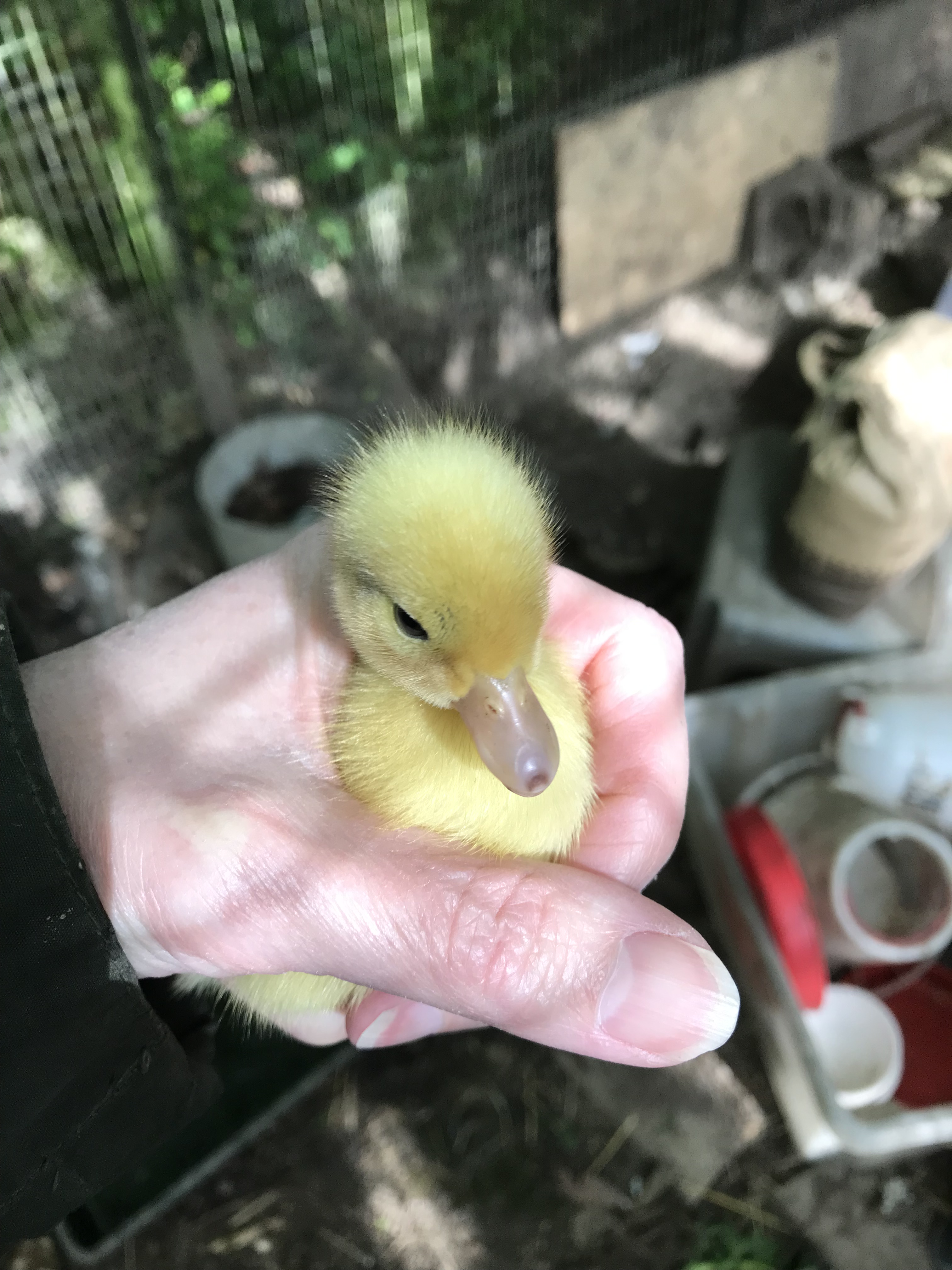
Last year’s hatch.

I don’t have a huge amount of time for duck or daughter sorting, as I am preparing the proposal for my thesis. I want to tell you all about it, but I have to be careful—apparently ‘self-plagiarism’ is a thing. If I write and publish something, I cannot then put it into the thesis. So I can only tell you snippets, and nothing in academic language. Basically, I want to look at why the Leviathan, which is clearly not a crocodile (because it breathes fire/smoke) changes Job’s attitude in the Book of Job. What does it represent? I’m reading lots of books by scholarly authors, and have discovered ‘monster theory.’ Who knew that was a thing! Apparently, all cultures have monsters, and you can learn a lot about cultures, and what they valued, by examining their monsters. In a time/place of physical uncertainty, the monster might be extreme weather-monsters, or lions; before medical advances, the monster might represent disease; when there were warring nations, the monster might be violent. I wonder what our monsters today might be—loss of control? Racism? Mental disorders that result in unpredictable violence? The films/books we read seem to have lots about psychopaths and historical racism at the moment. When I was a teenager, there was lots about evil spirits/demon-possession (with films like ‘The Exorcist’). You don’t see so much about that now, maybe our monsters are changing.

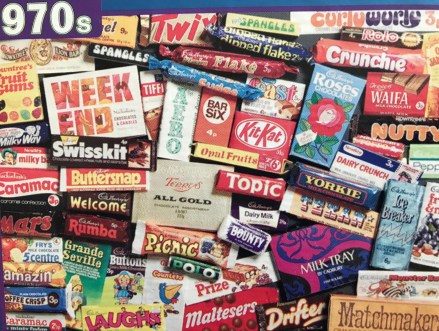
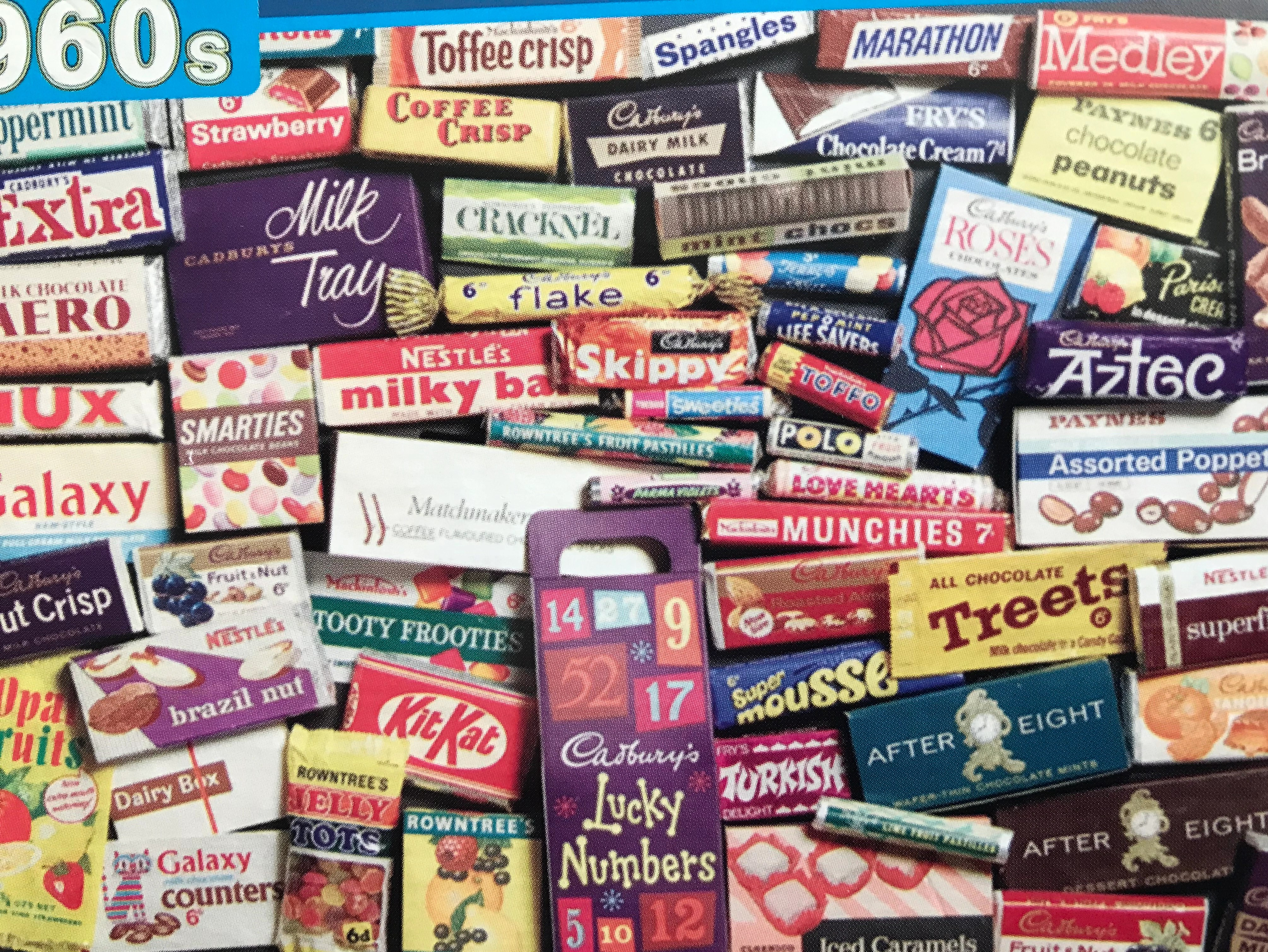
The other thing you don’t see so much of now are—complete change of subject coming, so brace yourself: some of the sweets I ate as a child! My mum is doing a jigsaw, and on the back are photos of sweets from the 40’s, 50’s, 60’s and 70’s. I will leave you with them—how many do you recognise? Fruit gums have always been my favourite, though I am also keen on a bar of Cadbury’s milk chocolate.

Hope you have a good week, that has a manageable amount of stuff, and no monsters. Maybe there’ll be some sweets too.

Thanks for reading. Take care.
Love, Anne x