A Sword-Pierced Heart


I watched my son die today. My beautiful boy, beaten, battered and left to die. And my heart broke.

I held my cloak close and I remembered the weight of him as a babe, like a boulder on my hip, wriggling to be free, to jump and climb and to run.

Those legs will run no more. Those long limbs—I was so proud when they grew. I remember when he grew as tall as me, then taller even than Joseph. I remember watching him, stretched out as he ate, those long limbs seemed to go on forever. “I grew him,” I used to think with pride. But those limbs will not sprawl, relaxed, in my home ever again.

I watched his hands, the hands that used to pat me cheekily on the head when he’d grown tall. Those strong hands which laboured with wood, which helped me carry heavy loads, which lifted young children playfully.

They are no longer strong. I saw them bang nails through the flesh, felt that I heard the sound of bone shattering over the thump of the hammer, heard his ragged breath as they forced the cross upright. And I wondered if I too might die.

But I watched. I am his mother and I would not leave him alone.

When they tried to take me home, when they told me to shield my eyes, avert my gaze, I did not. For he was my son. I would never leave him alone, not at a time of such anguished need. Others watched. Some women were there, terrified and hanging back. Not me, I am his mother. I stood with John, where he could see me. What could they do to me that was worse than this?

Some watched who hated him. They mocked and spat and called abuse. “It can’t hurt him now,” I thought, “let them shout.”

“He trusts in God,” they called, “Let God save him now,” and they laughed, even as he died, they laughed.

Yet even God deserted him by the end and that was hardest to bear. He called out with a loud shout, asking why God had turned from him.
“My God,” he called in anguish, “why have you forsaken me?”

But I was there. I did not leave. I saw them crucify him, naked upon a cross. No mother wants to see her grown son naked, but still I did not look away. I was there at the beginning, I would stay with him until the end.

The soldiers took his clothes, for fabric is costly and even that of a criminal should not go to waste. Most they tore and shared between them, but not his tunic. They cast lots for that, not wanting to spoil something precious. Yet my son was precious and they destroyed him.

It began last night. They woke me from my sleep and warned me there was trouble. He had been arrested, taken from a meal with his friends and questioned by the temple authorities. They feared the invaders, so he was then referred to a court of Godless law, a place that feared no God. They told me that he was scourged, beaten with whips that removed chunks of flesh as they struck. He was mocked and abused, then brought to this place.

I came, stumbling through streets full of people, full of noise and smells and fear and hatred. I came to this place, this Godforsaken hill beyond the city wall and I saw my son, my boy, diminished, shrunken somehow. I saw that what they had told me was true, smelt the repugnant stink of excrement mingle with the metallic stench of blood. I heard the shouts of abuse, the curses of the guards, the screams from the prisoners, the wails from friends. And him, like an oasis of calm amidst the turmoil, suffering but at peace.

And he saw me. Those dark eyes that as a baby had watched me intently when he fed. Those eyes that twinkled merrily when he teased me and became serious when he wanted to explain something important. Those eyes, red rimmed with exhaustion now, turned to me. Even hanging there, with parched mouth and dried lips, he spoke to me. His voice was hoarse, for he had refused the wine they offered, but I heard him well. A mother knows her child’s voice. I stood with John and my son told me that this was to be my son now and he was to care for me as a mother. Even in his torment he cared for me, fulfilled his duty as my son. Still I would not leave.

Then it ended. The sky had turned as black as my world and he drew his last breath. It was finished.
Those who had mocked became silent, some cried, some beat their breasts in despair. The blackness of the sky frightened them and many fled, wondering at what they had done.

I left, I let them lead me away. My soul was broken and my heart beat even though I bid it stop. My boy was gone, my firstborn, special baby, was no more. I carried that knowledge like a rock within me, I would have rather died in his place. How can I live, continue with my life knowing he is gone? There will be no more sunshine or laughter, nothing matters now. The core of me has gone. I cannot even cry.

Afterwards, I could not rest and I heard strange stories. They said the soldiers pierced his side, to check there was no life in him. His blood had separated so they took him down, a solid corpse that had no life.

A man came and took the body, they said they followed and knew where he lay, in a tomb that was guarded. They told me of strange things, of the temple curtain torn in two, of dead men walking and boulders breaking open. I do not know. I only know my boy is gone. That is all that matters.

It should not have been like this. It was so recently that people praised his name, sang and danced before him, treated him like a king. It should not have ended like this.

And yet, I recall a song, it comes persistently to mind, sung often in the synagogue. It speaks of one forsaken by God in his time of need, scorned by many. He belonged to God from before he was born, then suffered at the hands of many. They sung of bones poured out like water, a heart of melted wax, that is how my boy would have felt. They sung of hands and feet pierced like his and enemies gloating over him. They sang of lots being cast for clothing and of God’s ultimate victory. They sung of remembering him for ever, not just now but families of every nation, even those presently unborn. For he has done it.

Is this my son’s song? Were the words written for him? Are these the words he whispered while he died?

He spoke of his death often, he tried to warn me that he would die. But not like this, not before my own time has come. No mother should bury her child, it goes against what is natural and right. Though, he showed no fear, he knew what his end would be. And he told me there was more.

As I turn now to sleep, I wonder at his words. Will he truly return somehow and will I know?

Has he finished what he was sent to do?

*****
anneethompson.com
*****

Visiting The Saatchi Gallery


We went to the Saatchi Gallery in London, to see their exhibition, Flowers: Flora in Contemporary Art and Culture. It’s there until 5th May, and worth the visit if you have time. My sister was visiting from Canada, and we thought it would be a fun day out, so we caught the train to Victoria and walked to the gallery. As soon as we left the main road the volume of traffic dropped, and we could have been in a country town—birds singing, flowers in window boxes, pretty houses clustered in Mews. I love walking through this part of London, it’s peaceful and beautiful, and full of history. We walked for about 20 minutes, then walked through the archway at the entrance to the gallery gardens and discussed whether we should have prebooked tickets. We hadn’t, and there was a queue for people who had pre-booked, and I wondered whether we would shortly be on our way home! But all was fine. I don’t know if it’s usually busier, but we bought tickets at the entrance and went inside immediately. (The tickets are £18 plus a £2 donation which would be hard to avoid; or £10 if you’re over 65 or a student.)

The gallery is open from 10 til 6 every day, and the nearest underground (in case it’s raining) is Sloane Square.

The flower exhibition is wonderful, and not at all boring (not even for me, who is not actually very keen on paintings of flowers). The first view was Van Gogh’s Irises which is huge, and purple, and full of Spring. It was placed on the wall, behind a sculpture of his Sunflowers. I am interested to know two things: 1. What is the correct way to pronounce his name? (I am English, so say ‘van-goff’ but my Canadian sister says ‘van-go’). Any Dutch readers, do tell which is correct. 2. Is the Saatchi painting the original or a copy? I went in circles online, and couldn’t be sure of the answer. It’s lovely, whether painted by—or inspired by—Van Gogh (/ff/o).

There were sculptures, and fabrics (and a small boy who had worn a flowery jacket and who looked as if he was part of the display—but wasn’t). My favourite was a painting, beautifully realistic but with long straight drips, which dribbled across the canvas and over the mount to the frame. It was bright and beautiful and incredibly clever, and the sort of painting you could stare at for hours.

Another highlight was the Rebecca Louise Law room (which had inspired our visit, as we share uncles even though we are not related). I have seen her work a few times, but this was different as it filled a whole room. It was like a gigantic upside-down tree, made from dried flowers, and we could walk through the upside-down branches, and stare up to the upside-down trunk, and it was clever and calming and brilliant. (It was also full of people taking selfies!) My pictures do not represent it properly, you need to visit if you can.

After enjoying the gallery for longer than expected, we went to a small Italian restaurant and ate lunch in the sunshine. Altogether a pretty perfect day out.

I hope you have a perfect day too. Thank you for reading.
Take care.
Love, Anne x

PS. If you are Dutch, please let me know how to say ‘Van Gogh’ correctly!

Are Trump’s Tariffs Fair?


In an attempt to not believe what politicians tell me without fact-checking, I tried to unravel the new tariffs from the US. I am taking the view that President Trump is trying to do the best for his country, you can decide for yourself whether you believe this. His rhetoric is that in the distant past things were more fair, since then the US has been plundered, and he now wants to even the score.[1] But is this true? The perception elsewhere is that since this time, the US has become a world power, and this is due in part to free trade.

Free trade (I am reliably informed by the economists in my world) is when countries have trading partners and allow goods and services into and out of their countries with relative ease. Economists seem to agree that free trade is what makes strong economies. With free trade, everyone has an easier life. But, have other countries eroded this (as Pres. Trump states)?

Well, to some extent, from what I can discover, there have been some limits to free trade. Sometimes a country wishes to protect its citizens from something considered unhealthy. (In the UK, only toys that meet a certain standard can be sold for children–so some toys from China are rejected. In the UK, we dislike genetically modified beef, so refuse imports based on that. And so on.) Countries also add their own taxes. (In the UK, we have VAT—a tax that is added to goods before they are sold—which in the US is called ‘sales tax’—but VAT is applied to those good wherever they come from, even if made in the UK. So to list these as a ‘tariff on the US’ would be untrue.) Some countries have made sale agreements: My understanding is that car manufacturing is particularly cosmopolitan, with different components being added in different countries, so a car may pass between Canada and Mexico and the US, getting bits added, until it is finally ready to sell. Each time it has a part fitted in a new country, there has been agreement that no extra tax will be added to the final cost.

Now, despite what Pres. Trump said, the US has actually benefited from the global economy. Evidence for this is found in things like: Any country in the world will accept dollars (we take dollars when we travel to India). The US is seen as powerful, and is included in talks concerning climate or security. Services from the US have prospered; in the UK, Amazon is huge, so is Google, and Apple, and Microsoft, etc. American banks are strong. Across the globe, countries have welcomed companies like McDonald’s. Normal people in the US have benefited from this, it has supported their own economy. Yes, there has been a decline in certain industries—this is true everywhere. In the UK, whole towns were built on coal or steel, and they have needed to diversify, and find new industry, and this has not always been easy or smooth. But the US has sold many services abroad, and overall has grown stronger. Therefore, it seems the world has not ‘raped’ the US, but rather the US has done very nicely out of free trade, thank you very much.

I looked into what tariffs have actually been set, and why. It seems they are based on trade deficit—this is when the country sells less of a product than it buys, it’s a number. (US buys 100 televisions, it sells 40 televisions, therefore the trade deficit is 60.) Pres. Trump took the trade deficit with each country, divided it by the number sold, then divided by 2. (In my example, 60/100 divided by 2) However, he has only looked at the trade deficit of goods (actual stuff) not services (like Amazon, or banks, or IT) so it is rather skewed. And my understanding is that his method is ‘deeply flawed.’[2] Never mind the human cost, because breaking trade agreements does not make you an attractive partner in the future.

My conclusion therefore is that, from the evidence I can find, the new tariffs are not wise. They are not ‘fair’ because they are based on faulty economics, and they will not benefit people living in the US. But they may isolate the US from the rest of the free world.

The advice to the rest of the world appears to be that we should assume the US is ‘going it alone’ and we should make fresh deals with non-US partners. (As I showed yesterday, some supermarket shoppers now avoid goods from the US.) This potential decline seems a shame to me, I like the US, I have no wish to see its economy slump. I think there is a real danger that poverty in the US will increase, which often leads to more crime and unrest. I find this very sad.

I also worry about the impact on less developed nations. The US was generous towards those countries struggling with HIV, it helped to keep peace in the world, it was a good country. I worry that the loss in aid will be devastating for the poorest in our world. Never mind that we will have to pay more for Apple products (and will probably switch to non-US ones)—that is insignificant. What will happen to the poor in our world? Those are who we should be fighting for, and I hope that the people in the US, who are mostly good people (in my experience) will remember they have a privileged place in helping to restore balance in the world.

Thanks for reading. If you have further insight, do add to the comments.
Have a good week, and take care.
Love, Anne x

anneethompson.com


[1] Trump ‘glorifies’ the ‘era of the late 19th century’ and hopes to return to this economy. Zanny Minton Beddoes, Economist Online, April 2025. See also point (1) from yesterday’s blog.

[2] Financial Times Online, April 2025.

Being Aware


I rarely write blogs about political issues, but I find the news very unsettling at the moment. As you know, we studied a little politics in our Ethics class at Spurgeon’s, looking at how fascism grew in the past. It grew quickly, centred around one individual, and I doubt if most people realised what was happening. The parallels with today are alarmingly similar.

This partly came to my attention last week, at a family dinner. As I listened to one family member telling about her experience in Canada, and another family member comparing his news of Mexico, I realised that in the UK we are very complacent. I had no idea that people in these countries (and I’m guessing Greenland) are genuinely worried. They see a threat to their sovereignty. Mexico and Canada are fighting back. But what about those countries with unsettled economies? Who is speaking for the poor?

 I didn’t realise that shops in Mexico and Canada now label the country of origin for their products, people are encouraged to buy local produce and to reject things from the US. Maybe this will help. Do you think we should support them in this? Do we need to buy from the US when there are alternatives? If one man attempts to stamp on the rest of the world, maybe the world should join together in their response. The world today is a global community, and putting your own country first when that means alienating everyone else, is not such a good idea. And what will happen to the poor? Do we just allow them to be sucked down in a whirlpool of powerful economic battles? Who is speaking for the poor?

Shelves in a Canadian Supermarket

One aspect of the news that worries me is the motivation behind what politicians are saying. It used to be that when a politician spoke, you could hear them pandering to popular opinion, they cared about what the voters thought. (This created problems of its own.) But now I hear something else behind the words, now I hear them pandering to an individual—and this has been seen in history. Listen carefully when you hear the news—who do you think the politicians are most aware of when they speak? Who are they trying to impress—and is this healthy? Does this leader show any compassion for the poor of the world?

I leave you with the key points of fascism from Jason Stanley (author of How Fascism Works). As you read the list, which can you apply to the news today?

  1. A Great Mythical Past. A fascist leader will talk about how things used to be better in the past. They ignore all the problems that were actually in the past, and focus on a mythical ideal.
  2. Propaganda. A fascist leader will promote their own message and say that any alternative view is a lie. Hitler and Mussolini both did this, saying that things reported in newspapers were untrue, telling the population that their opponents were liars. The idea of accusing the media of ‘fake news’ goes way back in time.
  3. Anti-Intellectualism. Fascist leaders appeal to people with limited education, the speeches are not necessarily clever (because truth doesn’t matter) and they appeal directly to emotions. They dislike, and try to discredit, academics (because they will offer a counter view, or question the authenticity of the claims being made). Experts are shunned, people are told to ‘think for themselves’ which really means, ‘don’t question what I am telling you and don’t listen to someone who might have studied this issue.’ (I think we should be wary of people who tell us ‘the experts don’t know what they’re talking about.’ In my experience the ‘experts’ usually know more than the rest of us!)
  1. Unreality. This is another interesting one—apparently fascist leaders tend to love conspiracy theories. They always have an enemy who is trying to sabotage them, talk of subterfuge is encouraged, they want people to be paranoid. They also blame past leaders.
  2. Hierarchy. Fascist leaders always have a dominant group of loyal followers, those who are ‘true to the leader.’ Anyone who questions the general message is eyed with suspicion, and removed from the ‘inner group.’ As stated earlier, everything focusses on the leader. [Listen to what they are saying—who are politicians trying to please?]
  3. Victimhood. Fascist groups always state that they are the victims of another group—they have been oppressed, or made poor, or cheated—and this has been caused by a definable ‘other.’ (Hitler blamed the Jews, gay people and Roma, but other groups held to blame over the years include black people, feminists, immigrants.)
  4. Law and Order. Fascists declare that they want a return to law and order, and the group against them are the criminals. The ‘other’ people are the ones to blame for crime, for stealing, for rape, for drugs, for violence. [In the introduction of any emergency measures to combat ‘a risk to security,’ the ‘risk’ should be fact-checked.]
  5. Anti-Decadence. Fascists claim that the moral fibre of society is under threat (blaming the ‘other’ group). Only they, and their followers, have good morals. Anyone not supporting them is described as a bad person.
  6. Work Ethic. Fascists claim that the ‘other’ group are lazy, mere parasites of society. Fascists claim they are hard-working, deserving of better.
  7. Nationalism. Fascists promote great nationalism, and shun other nations. They strive to make their country ‘great again’ and nothing else matters. This gives a great sense of belonging to the followers of fascism. [But in a global community, what are the consequences of this? We need to be shrewd.]

I add to this the current policy of saying what you want to be true, as if presenting it as true makes it true. It does not. It is still a lie, however loudly you say it. We can fact-check statements, and test whether they are really true.

I hear President Trump say that the US has been ‘cheated’ in the past, the new tariffs are to make trade fair for the US. Is this true? We shouldn’t simply accept a statement just because someone says it loudly or repeats it several times. Personally, I know very little about tax and tariffs. I shall do some research and let you know tomorrow what I discover.

Please be wise, wherever you live. Please make good choices. I doubt if anyone in power reads my blog, but we have a voice even if no one listens. Let’s stand for what is right, because ‘those who are noble plan noble things, and by the noble things they shall stand.’ We need to be shrewd. We need to watch out for liars–just because someone says something, it doesn’t make it true.

Thanks for reading.
Take care.
Love, Anne x

There is a lot on social media at the moment, mocking the people in power. Maybe this is one way that people are ‘fighting back.’ Maybe things seem less scary if we make them a joke. Certainly it is good to laugh, but let us not forget what is serious.

When someone includes you in a military chat by mistake.

The McDonald Islands have a tariff. There is not a human population there (apparently) but the penguins are confused.

Link to previous post:
 https://anneethompson.com/2022/11/28/what-is-fascism-and-are-you-a-fascist/

Sign up below to follow my blog.
Then you won’t miss my post exploring whether the tariffs are fair or sensible and wise.
anneethompson.com
****

Jamaica Warmth


Thursday

I was tired, and I twisted my ankle yesterday when getting into the sea, so I walked rather than ran in the exercise room this morning. It’s a very good exercise room—everything works (not always the case!) and there are remote buttons to work the air-con and telly, clean towels, wipes to clean the machines, a water dispenser and rubber mats for stretching afterwards. I think it would be too hot to run outside (plus we would probably be hit by a car on the crazy roads).

After breakfast we went back to the supermarket to buy more water. It was busier today, with security guards at the carpark entrance (free parking for 2 hours, but we needed to get the ticket stamped in the supermarket). We looked at the shops in the small precinct. Lots of bright clothes, a barber shop, two book shops, a shop of spare engine parts. Plus a toy shop—which displayed white babydolls in the window. Why white? Nearly everyone here is black. Makes no sense to me.

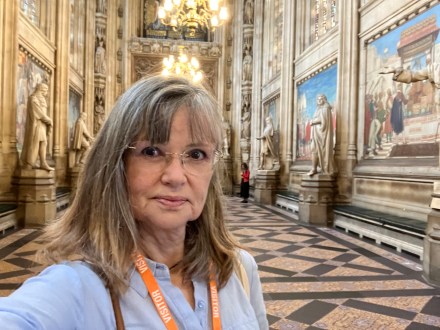
After the supermarket we went to look at a ‘craft fair’ opposite. It was full of stalls, all selling the same thing (as far as I could see)—brightly coloured dresses and hats, fridge magnets, beads, knitted goods, carved wooden goods. It reminded me of a similar craft fair we visited in Zambia. All the stall holders encouraged us to look at their goods (even though they were identical to the stall next door) and asked us to name our price. I checked the price of their fridge magnets (in Jamaican dollars). Most were $1,000 (about £5) though some were double and some were half that price. One lady was nice—friendly but not pushy, and her price was $600, plus she had some nice wooden magnets rather than just plastic ones. I bought one, and asked for a photograph. She was called Dianna. You can look for her if you ever visit Ocho Rios—I liked her.

One stall had an open Bible on the table. I asked the man serving what he was reading. He told me it was a Bible, and he had it open to encourage good vibes. I felt like I should say something—to maybe encourage him to read it, or to ask him what he believed—but it felt inappropriate. Not the time for a deep discussion, and I thought it might appear intrusive. (I tend to react against the ‘scalp-hunting’ mentality that typified my teenaged religious experience.)
We drove home without incident. It was a fun little excursion, and I feel more comfortable now. I am used to being the only white person.

Friday

Another lovely day in Jamaica. After running in the gym, we had breakfast next to the sea. I had pancakes. The menu lists the food—so it said banana pancakes with caramalised banana and maple syprup. I have learnt that when I order food here, I need to include the whole description, otherwise half the dish is missing. (So when I ordered grilled fish and veg, I received grilled fish and veg—but not the potatoes or sauce listed in the menu), Today I forgot, and asked for pancakes. Therefore I received plain pancakes. Luckily I relised my error and snaffled a banana from the fruit plate. Nice breakfast.

As we walked back to our room I threw some leftover toast into the sea (I have watched other guests doing this). Lots of striped ffish (I think called Sargeant Major fish) scurried over (can fish scurry? These could!) to eat it. Fun.

We chatted to one of the hotel managers, who spotted that we are new guests (most people have been coming here for years, and the staff also tend to stay, so it has a family atmosphere). The hotel is relatively small (50 rooms) and there is a sense of space and privacy even when (like this week) there are no vacant rooms. It has also hosted a few famous faces (Marilyn Monroe honeymooned here).

We heard there is a deserted beach further along the coast, so drove there. Driving in Jamaica is quite an adventure—massive pot holes to avoid, while someone sits inches from your bumper (sometimes beeping) and drivers whiz towards you on the wrong side of the road. Husband is very calm in these situations, and we arrived without incident (but personally, I would never drive here). We followed Google Maps to Duncan beach, and parked on the verge of an unmade road, near to where some houses are being built. There was a pathway, towards the sea. It looked private, but we went along it anyway. At the end, a man was leaning against a tree, watching us. We asked if we were allowed there—was this the right way to the beach? He smiled, and waved us on, and said yes, we were welcome, have a great day. This typifies my interaction with people here—they have mostly all been friendly, smiley, and helpful.

The beach was narrow, with volcanic rock beneath the surface of the water—the water was turquoise, and warm, and completely clear. We walked along the beach for a while, looking for shells, finding washed-up coconuts, and saweed, and lots and lots of plastic bottles. In the sea, tiny fish darted (these were not the scurrying kind) and crabs scuttled away from us. It was very sunny, so we didn’t stay too long (I have already managed to burn one arm, which was very silly of me). We ate a picnic of digestive biscuits and water before driving back to the hotel.

As we drove, I tried to take photos, to capture a flavour of the place. This part of Jamaica (St, Anns/Ocho Rios) has some luxury resorts, and some fairly basic-looking housing. Everywhere has bright colours. Goats and dogs wander next to the road. There are a few places with heavy industry, linked to the bauxite quarrying. (Bauxite is a metallic mineral, and it’s the only source of extractable aluminium.) Bauxite is a soft red clay, and as we drove near to where it was being loaded onto ships, the road and trees were tinged with the red dust. I worry it might not be too healthy for people living nearby. I didn’t manage to capture photos of the fishing boats bobbing on the sea, or the children playing, or the animals. But you can see how green everywhere is, with lush plants filling almost every space, and trees covered with vines and air-plants.

I have enjoyed Jamaica, even though we have seen very little of it. Maybe next time we will do more touring, and try to see more of the island, but even this short week has given us a flavour of the place (and a warm flavour of rum and smiles). The service here is warm and relaxed, and you have to lean into the pace and forget the English schedules. Jamaica is a place to relax.

I hope you find time to relax too this week. Thanks for reading.
Take care.
Love, Anne x

I am going to miss the fruit punch!

anneethompson.com

More Jamaica Inn


I am beginning to relax into the rhythm here. I wake about 5, and lie in bed, listening to the frogs (which are very loud—they sound like the ceiling fan is struggling to turn, a volley of squeaks—they start at sunset and continue until dawn). At 6 am an urn of Blue Mountain coffee is put out on the veranda. It’s super-strong, and kick-starts the day wonderfully. Today as I stood on the veranda, looking across the palm trees to the sea, something wafted, very quickly, overhead, then disappeared behind the branches. Pretty sure it was a ghost, pale grey, silent, floating at speed. Began to wonder what, exactly, might be in the coffee. Then the ghost reappeared, did a speedy lap of the bar and library before floating back towards the sea. A huge grey bat. It was light grey, and much bigger than the mouse-like bats we have living in our garden at home. I don’t know much about bats, or whether they bite people, so I went back to the room. (Later research found it was probably a fruit bat.)

The library, sans bat.

I persuaded Husband to come to the exercise room, and ran for half an hour. Then we had a quick dip in the pool before breakfast. We have freshly squeezed orange juice, strong coffee, and a whole selection of food. I’m trying to not eat too much fat (many meals here, so bit of a losing battle). I tend to order mint tea, porridge (called oatmeal) and fresh fruit. Then I eat bits of Husband’s Egg Benedict or pastries or toast, and steal sips of his coffee. He has started moving his food further along the table…

Breakfast room.

There are activities here, which Husband is keen to investigate and I am keen to avoid. He has already made friends with some croquet players, and today he plans to go out in a boat and snorkel. I want to stay in the room, staring at the beautiful view, reading theology books. Today, by chance, I have started to read a book by J.Richard Middleton, about the image of God or imago Dei. He begins by explaining that as a white man growing up in Jamaica, surrounded by mainly black friends and neighbours, he felt unsure about his identity, which led to his research into the imago Dei.  (Genesis describes humans being created ‘in the image of God’ and people have decided this is what defines us—and they then argue about what exactly ‘the image of God’ might be!) It feels very appropriate to be reading a book written by a Jamaican, about an aspect of creation, while being in Jamaica, surrounded by Eden-like beauty. I will let you know what he writes (unless it’s boring—some theology books are best forgotten).

While reading Mr. Middleton’s book, a waiter appeared on the veranda, delivering drinks to the room next door. He asked if we had had our complimentary drinks, and said we are entitled to a free drink every day, after 11, from the bar. I’m not sure if this is true. He then said he would collect us some—would I like a rum? Well, it would have been rude to refuse. He yelled to the man in the beach bar, telling him to bring us a complimentary rum. (Husband had an orange juice. You can make a man retire, but you can never remove the accountant within.) I drank my rum. It was strong. Feeling very fuzzy. Mr. Middleton is now not making as much sense as he did 10 minutes ago!

Tuesday

We spent the day at the hotel. It’s too perfect to want to leave.

We have to dress smartly for dinner here—men must wear long trousers and a shirt with a collar. It’s quite fun.

This evening they set up the beach area for a gala. There were drinks on the terrace then a buffet on the beach. Lanterns were strung from the trees, and a band played. I had bit of a headache, which was a shame. They let us take our food back to the room—a waiter carried a tray and set up the table on our veranda with a cloth, salt and pepper, cutlery and napkins, glasses of iced water, a basket of fresh bread—as well as the plates of food we had collected. We could see the beach, with lanterns hanging from trees, and hear the band playing. It was a shame to miss it, but where we ate was still beautiful. This is one of the things I love about this hotel—they seem to genuinely want you to have a lovely time, there are very few ‘rules’ and if you prefer to eat alone on your private veranda, well that’s fine, and they will carry your food and set your table, and do everything they can to make it special.

I hope you have something special today, wherever you are. Thanks for reading.
Take care.
Love, Anne x

Jamaica Inn


Day 6

A travelling day. Never fun. Miami airport was quite difficult to negotiate, with various steps which were not obvious. We flew with American Airlines, which involved checking-in at the airport (using a screen, but it needed a person to verify our documents so not possible to check-in ahead of schedule in the hotel). Then we had to add the labels and drop our bags ourselves, which always makes me nervous. But all was fine. The security check was as rude as most security checks in the US, with officials snapping instructions, and our stuff whisked away on the conveyor belt before we were ready, and then it arrived in a heap the other side, with no time to snatch our belongings before the rude person operating the machine dumped another lot of belongings on top—so we lost a nail (but not a finger) and nearly lost a passport, and the man next to us couldn’t find his backpack and all was confusion and stress.

To enter Jamaica we needed to complete an online form—the website was at the airport (though not advertised in advance, so was unexpected). We used our phones to complete the form while we waited for our flight, and then when we landed in Montego Bay we used the machines to scan our passports, and it photographed us and printed out a thin document, which allowed access to the country. It was very efficient.

One of the declarations on the form asked whether we had an fruit or veg. I had a packet of walnuts and almonds to snack. Did that count as fruit? I seem to remember that the outbreak of foot and mouth in the UK a few years ago was due to a lorry driver throwing away a ham sandwich. But I don’t know how anyone would know that, so possibly a myth—though the fact I had heard it made me wonder whether it was possible, and therefore whether carrying nuts—even processed ones from a supermarket—might be a problem. I decided I was too scared of security guards to not declare it, and too scared of Husband being annoyed because we would be delayed at the airport if I did declare it, so I threw them away before we left Miami. What a waste.

We arrived in Jamaica, picked up a hire car, drove to Jamaica Inn. Beautiful spot. It was like giving birth—instantly forgot the pain of travel in the wonder of being somewhere beautiful. I won’t remember it properly until I have to travel again, and then the horror of airports will come flooding back!

Day 7

I am writing this in our outside sitting area. We have never had one of these before, the hotel room is a suite, with the doors from the bedroom leading to a covered patio with sofas, dining area, fridge and lamps. The open side looks across the garden to the beach. Rather lovely. It’s currently raining. It seems to rain a lot here—warm wet showers that make the banana leaves glisten. In a few minutes it will stop, the sun will break through the clouds and the air will be warm and moist. Easy to relax in a place like this.

After breakfast on the terrace, we went to find a supermarket. Most were shut (it’s Sunday) but we found one online with a big car park, about 10 minutes from the hotel. Driving there was easy but we needed to be aware—lots of potholes in the road, fast drivers coming towards us and the car behind sitting inches from our bumper. We are the only people in Jamaica who obey the speed limits (but we’re foreign, I don’t expect they would be kind if we were caught speeding).

The supermarket was a mini adventure in itself. Supermarkets in other countries are always unfamiliar; this one had high shelves, and narrow aisles. We took a shopping trolley from outside, and searched the shelves for bottles of water and bread for lunch (because the hotel provides breakfast, tea and dinner, but we didn’t want to pay extra for lunches too). I felt very foreign, I was the only white person, and I was aware that people spoke very fast in a dialect that was hard to understand, so I walked round smiling at people but trying to look as if I knew what I was doing. At the checkout, the shop assistant told us we couldn’t take the trolley outside, there were other ones for going to the car. I went outside, found a metal trolley, started to take it into the shop, but a man stopped me, said it wasn’t allowed. I explained the situation, apologised, went back inside. The assistant told me I could not take the trolley outside. Another assistant appeared with a metal trolley, said she would push it, customers were not allowed. Now, this was difficult. In all probability, there was a system which we did not understand—but it was possibly a scam and the person pushing the trolley for us would expect to be tipped and be nasty if we refused. Difficult. Husband (who also spotted the possibility of a scam) politely refused, said we were fine, he could carry the water, our car was nearby. They looked confused (which probably indicates it wasn’t a scam) and let us carry our groceries. At the door, we were stopped by the man who wouldn’t allow me to move the trolley, and asked for our receipt. He took it, wrote something on it, handed it back. Husband checked it, we said thank you, left. I noticed as we left that the man who was behind us in the checkout also showed his receipt as he left. There was obviously a system here, which we didn’t understand. Maybe if you pack your own bag you need to show your receipt before you leave. I don’t know. We left, feeling foreign, got in the car, locked the doors—though nothing had been at all threatening, we just didn’t know the system. Drove back to the hotel without incident.

The hotel is lovely, too beautiful to describe though I’m hoping the photos give some idea. It’s not cheap—it’s Husband’s birthday treat, a once-in-a-lifetime trip. Most of the guests are English or American, and mainly white. The staff are all local, and I can’t help wondering what they think of us, a whole hotel of mostly white-skinned guests visiting their lovely island. I don’t know why I am noticing this. In SriLanka we were the only white people, and on some of our trips to India and to China. But it feels different here—I wonder if it’s because I know there was a history of slavery here, or because in the UK some of the dark-skinned people at university talk a lot about the history of slavery and systemic racism—whereas those of Chinese or Indian ethnicity do not, so I am less aware of the difference, less worried about how they view me, a white person. I don’t know.

We are right on the coast, but behind us are mountains. Everywhere is lush with plants. The coast seems to be full of resorts, with private coves and fancy hotels. The roads are less plush, and many of the buildings are either half-built or falling down (it’s sometimes hard to tell which one). There are brown dogs wandering around (not sure of the breed—maybe thin golden retrievers) and goats, and thin horses. Not sure why the horses are thin, as there’s lots of grass, maybe they are naturally lean, like the herd of cracker cows we saw in Florida which survive the heat because they are thin and muscular rather than fat. The road is lined with large billboards, often faded by the sun.

The island is very beautiful, and the people seem friendly and helpful. I will tell you more in another post. I have never stayed in such a luxurious resort, it’s such a treat.

Hope you have some treats planned too. Thanks for reading.
Take care.
Love, Anne x

Florida in February


Day 3 of Road Trip

Woke about 5 am (definitely changing my internal clock now). Drank coffee, went for run about 7am, which was around dawn, so it was light enough to feel safe. We ran along the dock, with several other runners/walkers (people here don’t say hello to strangers, and most seemed to be deep in conversation with their mobile phones). Breakfast in a cafe attached to the hotel (not great). There is a conference here, so steered Husband past the rather nice breakfast put out for people wearing purple tabards.

We went shopping for shoes. Not a usual thing for us to do, but Husband’s trainers are falling to bits. We found an excellent shop, with an excellent assistant, and bought two pairs in the sales. Then we looked for a bagel shop, because I hankered for a cinnamon bagel that I could eat outside, somewhere pretty. We failed on this one, though as we wandered around the docks area we did see lots of pretty places. Returned to Fresco’s Waterfront Bistro for an early lunch. I had a fish burger (again) which was nice (would have been nicer if I actually liked fish, which I don’t much, but I am trying to not eat meat). It was a pretty place to sit, right on the water, with flags and lights and blue umbrellas to shade us from the sun.

Then we wandered to the Salvador Dali museum, which we visited in 2019 and both enjoyed. The gift shop has very attractive merchandise, which is as lovely to look at as the pictures, not that I would actually want to own any of it, but it’s fun to look at. Then we walked up the spiral stairs to the galleries and were amazed again at Dali’s skill, enjoying the colours and images, especially the paintings that had images within images. I felt that Dali enjoyed telling a story, or making a statement, or sometimes just enjoying the science of how the brain detects images. The best (in our opinion) display of 2019 had gone, which was a shame—previously there had been an audio-visual digital display explaining the paintings, helping you see what was hidden within them.

In the evening we went to a bar. We found the same bar where we sheltered in 2019 during a typhoon, and ever since I have wished we had drunk shots rather than cokes. It was raining again when we walked there, so was very reminiscent. I had an espresso martini, which was very tasty but tasted as if there was very little alcohol in it (which was fine, it still felt very grown-up to sit at a bar and sip a martini). It was ‘happy hour’ so a martini and a beer only cost $5.

Dinner was at The Ford’s Garage restaurant, which has a car suspended over the bar, and has oil rags as napkins and sauces in buckets. The food is good—fresh veg and not giant portions, which suits me. I drank still lemonade, and as I finished the waitress replenished it, which is always a nice thing and one of the things that makes US service the best in the world. Lazy evening, I watched Rebecca on Netflix while Husband planned tomorrow. He likes planning.

Day 4 of Road Trip

Woke at 2. Went back to sleep (sort of) until 5am. Made coffee. After looking at various options, and discussing different attractions we could visit, I suggested that we just drove. So we chose a route that avoided motorways and meandered through small towns, and we set off, heading down the centre of Florida.

We like driving. Husband enjoys driving the Mustang, with the roof down, on the wide straight roads that cover most of the US. I can cope with the wind and draughts by wrapping in several layers and wearing a cap to stop my hair knotting up, and I enjoy being driven, and looking. Just looking. Seeing unfamiliar things, and half-forgotten things—like the yellow school bus with it’s flashing lights, which means all the traffic, on both sides of the road must stop, while the small boy hops down and runs with his school bag across his lawn and into his house. Or the long lawns of green grass, with the houses set right at the back of the plot (so everyone can see how much land you own, whereas in the UK we put our houses at the front of the plot, and fence the back, so no one can see and it’s all very private). We drove past lakes, which would be full of alligators. And the trees hung with Spanish moss (named after the wispy beards of early Spanish settlers, not because the air-plant originated in Spain). We drove through acre after acre of orange trees, laden with fruit, with smaller younger trees wrapped in protective plastic. We passed areas of swamp, and palm trees, pine trees, scrubland. We were passed by big trucks, and giant lorries with their exhaust pipes sticking up next to the driver’s cab, and cars with outsized wheels. But mainly trucks. Lots of trucks, with a flat bed at the back, and a high cab at the front for a cowboy (but usually a woman, or a family, or a couple of teenagers).

I needed to buy swimwear (because we go to Jamaica next week, and after 20 years, the elastic in my swimwear has died, leaving me exposed in unfortunate places!) We visited a T.J. Maxx (the US version of TK Maxx in the UK) where I liked to shop when we lived here because they sell end of season stuff, so you can buy good quality things at cheaper prices. I selected a few swimming costumes to try on, but the fitting rooms were shut. They told me to buy them, and return them for a full refund. Which doesn’t work as well when you’re travelling. So I bought them (I could tell Husband was feeling anxious as I paid about $400 for a big selection of swimwear) and then I went to a different shop, tried everything on in their fitting rooms, returned most of them to T.J.Maxx. It seemed to work, and I now own a couple of nice things to wear on the beach.

We stopped for lunch at a diner Husband found online. It looked a bit seedy as we approached, but inside was magnificent. Egg City is a 50’s diner, and the turquoise and white decor was full of memorabilia— juke boxes and records and shiny lights. The washrooms were labelled eggs or sausages which made me laugh! I ate pancakes, which of course were much too much, so I took the leftovers with me in a polystyrene box.

We (Husband) decided to stop at Bok Gardens. I am not a fan of public gardens (except in Japan, where they are a work of art). Usually they are filled with plants that excite gardeners but don’t really interest me, and I much prefer the wild countryside or farmland to organised gardens. These were particularly boring, as most plants seemed to be dead (with fake ones to show what was supposed to be there!) Not my kind of thing. There was a tower, which was beautiful, and inside (we couldn’t go inside) was an instrument made of bells, which a man played. We watched a film—it looked like he was playing an organ keyboard. I suspect a campanologist would be fascinated. I was not. It was just noisy. [*Fun fact: Did you know that a campanologist is someone who studies bells? A bell ringer is called a … bell ringer! Or possibly a carillonneur if you want to be annoying.] 

We drove to Sebring, and our next motel. This one is a ‘Residence Inn’ and our ‘room’ is actually a small flat, with a kitchen area and sitting room. It’s lovely, overlooking a lake. We had dinner at Cowpoke’s Watering Hole which was on a very busy road, full of marshals for the motor-racing tomorrow, and extremely well run. They served hundreds of people, very efficiently, and the food was very nice. We sat in their straw-roofed outside area, and there was music from the 80’s, and friendly waiting staff, and the drinks and salad and garlic bread were ‘bottomless’ so they kept topping them up until we were completely full.

Went to bed but unfortunately didn’t sleep, as there is a fan, which is not operated by the thermostat, and it blew cold air over the bed all night. Very annoying, and a shame, as the room (apart from that) is perfect.

Hope your day has no annoying things. Thanks for reading.
Take care.
Love, Anne x

If you let your eyes fuzz—or view from a distance, you should be able to see Abraham Lincoln. Very clever.

Alligators and Herons on Babcock Ranch


Day 2 of Florida Road Trip, Feb. 2025

Woke up in the Four Points by Sheraton in Punta Gorda. Waited for Husband to wake, then went for a run. It was still dark, and I worried about crocodiles and snakes and criminals. Some of the walkways were well-lit, with fairy lights wound up the palm trees (very pretty). But the main cycle path, which was attractively placed next to the water, was very dark and I was too nervous to run that way. So we had a not-great run mainly next to the main road. Arrived back at the hotel without being murdered/eaten, which I considered a success.

Breakfast in the hotel. We had a voucher, which covered everything we ordered except a $2.75 order of extra toast. I was interested that they charged us for this (Usually Husband’s  loyalty card means breakfast is included—even the toast.) Very nice hotel though, with no broken ice-machine roaring outside our door all night, so no complaints.

We packed and left. I really dislike constantly having to rummage through a suitcase when we travel, and I find I waste a lot of time looking for things. I therefore organised everything into smaller bags: A bag of everything I need at bedtime, a bag of electricals, a bag for when we go out for the day, a bag of running clothes, etc. Not everything fitted back in the suitcase, but I decided it didn’t matter if I needed to do a couple of trips to unload at the next hotel.

We set off for Babcock’s Range, East of Punta Gorda—a find in the guidebook. (We are old, we still use guidebooks.) It was a ranch in the middle of nowhere, but they advertised ‘eco-tours’ which Husband decided would be worth doing (I wasn’t so sure—we don’t usually like tours because it’s impossible to make the guide stop talking and they are usually very irritating). We arrived, drove down the long driveway, and parked. There was a gift shop (with a rude woman serving, who did not pause her phone call to serve me, but I spotted a mug and a fridge magnet that I fancied, so I bought them). There were also washrooms (always welcome after a long drive). We were directed onto a school bus, which had been painted green and had the windows and side supports removed. One of the other tourists remarked that this made the bus structurally unsound should it roll, which was not reassuring when combined with a big sign stating that under Florida law, eco-tours were not liable in the case of death or injury. We sat at the back (I don’t like being breathed on.)

The driver/tourguide was a fairly cynical ex-fireman, and I liked his style. He drove us round the ranch, pausing to show us various features, and described the natural world that we were seeing. It was actually very interesting (I am much more interested in the life-cycle of an alligator than the history of the rich ranch owner.) It’s dry season here, and we drove through swamps that had no water, looking at the stubbs of cypress trees which form sort of ‘tent pegs’ to secure the underground roots in the wet soil when the swamp is flooded. We passed marshes, with alligators sleeping while water birds walked between them. (A swamp is standing water, so dries up. A marsh is moving water, so lasts unless the stream dries up.) 

Apparently the alligators and great blue herons cohabitate areas, each allowing the other to eat their young. Most young alligators are eaten by herons, and the herons will toss a couple of chicks to the alligators because they hatch more than they can find food for. In return, the adults ignore each other. Nature is a grisly affair, even without human intervention. But we didn’t see this, we saw peaceful ponds where gators and birds slept and fished side by side. It was lovely (though we weren’t tempted to go paddling).

The ranch also has ‘cracker’ herds, which are cows introduced by the Spanish. Most cattle died due to the heat in Florida, but this herd survived. They are small and thin, and no good for beef, but they are bred today as an historical herd and sold for rodeos (where cowboys show their skills at catching cows—which is still necessary on the vast ranches). I like the idea that some cows are bred today not for beef. We also saw wild pigs, which are common in Florida, and from the bus they were cute and funny (but I understand that pigs are way more vicious than alligators if you encounter them in the wild).

We heard that humans have tried introducing crocodiles in Florida (crocodiles are salt water animals). Crocodiles live much longer than alligators and grow much larger. Alligators are not generally a threat to humans because they never grow to be big enough for humans to be easy prey—they prefer small mammals like racoons and dogs and baby pigs. But recently there have been cases of hybrid alligator/crocodiles found in the everglades, which is very worrying because a huge alligator would definitely see humans as prey—and alligators are everywhere in Florida (we even saw one in a pool at a motorway rest area). There is now a reward for anyone who hunts the hybrid species, as they hope to stop it reproducing. Which is yet another example of humans interfering and messing up the natural order of the world and then trying to put it right when they realise how it negatively impacts them. Humans seems to constantly mess things up. Frustrating.

After the eco tour (as we were still alive) we drove to Arcadia, a nearby ‘cowboy town.’ Didn’t see any cowboys, though several shops sold hats and boots and saddles. We ate in Myshelly’s Kitchen, which was clean and friendly. The menu included things like ‘Bison Burger’ and ‘Gator Bites’ and ‘Boars Head Pastrami.’

Drove to St.Petersburg. Checked into the Hilton. They insisted on valet parking, so my multiple small bags instead of a single large suitcase proved rather embarrassing as we hurried to unload everything we would need before the car was whisked away. Room was nice, and we could see the waterfront from the window. Dinner in a nearby Italian restaurant (Gratzzi Italian Grille). Another good day. Went to bed about 8pm, so gradually converting to US time. Slept well.

Hope you stay safe today. Thanks for reading.
Take care.
Love, Anne x

Day 1, Florida Road Trip 2025


I’m writing this in a happy fuzz of espresso martini treat. This is my current drink of choice, and it’s always fun to see whether the order brings a look of joy or fear in the bar tender’s eyes. Sometimes it’s a very long time in arriving and I wonder if they have gone to search the recipe on the internet! I’m thinking of doing a survey—which place in the world serves the best espresso martini? So far the winner would be the King’s Head near Rye. Today’s entry was in Punta Gorda, Florida. It was nice, but very strong. I was quite giggly by the end. When I had finished the waitress came to offer me a second one, and Husband said No! in a very definite voice. He told me I was the same colour as my shirt. (I was wearing pink.) Tasty though.

I will try to remember the rest of the day through the blur. I woke at 2 am, stayed in bed until 3am, because I have decided to adjust to US time an hour a day. Made a coffee, and read until 6am, when the business lounge opened (they serve breakfast). Very nice breakfast. I had porridge, because it’s healthy and I am reducing my cholesterol. Then had a muffin, and a cake, so it didn’t finish so well. Husband went straight to the fried stuff, so he’s worse.

First job was to collect the car (a Ford Mustang convertible—treat for Husband’s birthday). It took a long time to walk to the correct place (which was right opposite the hotel) and even longer to drive back, because we kept missing the turning and all the roads were fast and multi-carriageways. Made it while still friends.

We left the hotel and drove to Sanibel. It was cold. Husband wanted the roof down on the Mustang, which was very chilly. Stopped at a nature reserve to use the washroom and walked along a raised walkway, looking at alligators and exotic water birds, and turtles and huge fish. Very peaceful with an undercurrent of threat. Didn’t actually see anything attacking anything else, but felt it was imminent.

Sanibel was devastated by a hurricane a couple of years ago, and some parts were still broken. Our favourite cafe (The Sanibel Cafe) had reopened, so we ate lunch there. It’s very nice. I ate a fish burger. Then we drove to Sanibel Moorings, where we have stayed a few times, and it was being rebuilt, though some apartments were already open. Walked along the beach, and saw scary looking puffer fish that had washed up in the tide and were drying on the beach, their spiky backs waiting to catch bare feet. I chose a pretty shell to keep. The weather was warmer, and it was fun to have the roof down. Sanibel is so pretty. It’s a bit false (really it should be covered in sand or swamp I suspect) but full of plants and flowers rather than plastic false, so I like it.

We drove north to Punta Gorda. Husband used his initiative a few times, which makes map reading more of a challenge, but we arrived eventually, I was really tired. We had an early dinner in the hotel. (Staying at the Four Points by Sheraton, Harbourside,) Nice meal, friendly staff. After dinner we walked along the dock. Saw a boat that had been wrecked by the hurricane, lifted from the water and smashed into the dock. Didn’t see any crocodiles or mosquitoes, but I’m guessing they were there somewhere. Lurking out of sight, waiting to bite us.

Went back to the room. Nice day.
I hope you have a nice day too. Thanks for reading.
Take care.
Love, Anne x