QuaranTime to Read. . . Chapter Twenty


Chapter Twenty

In the safety of the bathroom, Jane opened the envelope and peered inside. There appeared to be a printed leaflet. Frowning, she slid it from the envelope.

“Alcoholics Anonymous” was the title. It was a small printed tract, giving venues and times of their meetings. Someone had printed her name across the top.

“I don’t understand,” she said, confusion replacing her fear. She stood, her heart rate returning to normal, unlocked the door, and went back to the kitchen. She showed the pamphlet to Peter.

“I don’t know why I’ve been sent this,” she said. “It’s got my name on it, so it can’t be a mistake.”

“Probably someone wants you to go and help,” suggested Peter, turning to make the tea.

The door opened and Christopher appeared. He took a hesitant step towards his mother and paused. She rose hurriedly to meet him.

“I feel…” he began. Then was promptly sick all over the floor.

Jane shut her eyes for two seconds, then with a deep breath she moved to carry him upstairs.

***

They carried their coffee outside to some shiny metal chairs and placed it gingerly on a small round table that wobbled. Had they been more practical, thought Jane, they would have fiddled with folded paper and matchboxes until they had a suitable wedge to solve the problem. Instead, they sat carefully, and held their coffees with both hands. The cups were large, more like bowls and were heavy to lift. There was something incongruous about sitting in the middle of a High Street, as though pretending they were in the South of France, with neither the scenery nor the relaxed pace. However, the day was sunny and warm, and it was not an unpleasant place to be.

Jane was almost bursting with her news and she launched into it.

“I met Matthew,” she told Suzie.

“Matthew?” frowned Suzie, “The labourer?”

This irritated Jane. He was not a ‘labourer’, he was a perfectly intelligent human and he was her friend. She found the description demeaning.

“The guy who built our extension, yes. I met him by chance but he suggested that we meet up sometime.”

“We being just you, or you and Peter?” asked Suzie.

“Me,” said Jane, “I hardly think Peter would approve. He has his own friends, anyway—all the people at work. His work-colleagues, a whole myriad of people who I have never met and never hear about—his own friends in his own world. Matthew is my friend. I assume I am allowed friends too. If Peter can have his own friends, many of whom will be female, friends who he jokes with, has coffee with, spends time with—a part of life that is separate, almost secret, from us and our marriage—then so can I.”

Suzie balanced her coffee back on the saucer and looked hard at her friend. She was not quite sure what she was being told.

“And where is this going to lead?” said Suzie, “What are you planning will happen?”

“I don’t know,” admitted Jane. She leant forwards and confided in a low voice, “And I don’t care. It’s exciting. It makes me happy just thinking about it.”

She sat back, satisfied. She had been longing to tell Suzie, and so had arranged to meet her for coffee. She was certain her friend, ever fun-loving, would be captivated by the story, and had looked forward to confiding, laughing, making plans together. She was also hoping for a reliable alibi should the need arise.

The two women had been friends for years, meeting at antenatal classes when expecting their sons. It had been an easy friendship, rooted in those early weeks of motherhood when even combing their hair had been a task to remember. They had worried together before labour, wept together through sheer exhaustion after sleepless nights, and shared potty training traumas. The bond was deep. Jane felt that anyone willing to befriend you during those emotionally turbulent months when you resembled a slug and smelt of cheese, was a friend indeed.

“I think,“ she whispered, “that I am possibly going to have an affair.” She waited, smiling.

“Think?” queried Suzie, with narrowed eyes.

“Well,” admitted Jane, “nothing has happened yet.” She replaced her cup on the swaying table and resumed her story.

“You must remember Matthew,” she urged, wondering why her friend wasn’t eating up this delicious piece of news. Suzie nodded, and Jane continued in a rush. “Well, I’ve been thinking about him loads, couldn’t stop. And I really missed him when he left, felt sort of lonely. We’d become friends you see. He’s not just a labourer, he’s intelligent and funny, and we shared—I don’t know—a connection, I guess. We talked a lot—all the time really,” Jane swallowed. “Then I saw him again, at the Summer Fete.” Jane leant forward, lowering her voice, staring into the depths of her cup.

“I think maybe he came specially, looking for me. And we chatted a bit and then he suggested that we meet somewhere. And I think it means that he’s interested in me. That perhaps we could continue the relationship…”

Jane trailed off uncertainly and glanced up.

Suzie’s face was hard. She was silent for a long time, just looking at Jane.

“You’ll be a complete fool if you do!” Suzie said at last. Her voice was quiet, but the intensity shook Jane.

She was shocked. She had been sure that Suzie would share her secret with delight. Suzie was always playful, loved to be outrageous and laughed easily—it was not like her to be strict or moralising. Jane had thought her friend would want to be involved in this game, would share the fun of it, would be on Jane’s side.

Suzie sipped her coffee.

“It’s up to you, I guess,” Suzie said at last. “We are, after all, the generation of choice. We all got an education, we can decide if we want to work, if and when we want children. We all think we’ve got a God-given right to happiness and fulfilment, don’t we?” Suzie sat straighter, as if warming to her theme, deciding to be honest with her friend.

“Well, I for one don’t think we do, not really, not if it means hurting other people. That’s what animals do, not people, not grown-ups.” She took a sip of coffee, allowing herself time to think, to plan her attack.

“Did you love Peter, really love him, when you got married?”

Jane nodded. This was going horribly wrong; she had not intended to be lectured.

“And does he hit you?” asked Suzie, “Abuse the kids? Keep you locked up? Mentally torture you?”

“Well, no,” admitted Jane, “but there is Izzy…”

“Oh bollocks!” declared Suzie. “You don’t know for sure that anything’s going on. That’s just something silly we liked to laugh about—that was a game. This isn’t, not if what you say is true, not if you intend to do something stupid. And until this stud appeared, you were content enough anyway, even if you were unsure about Izzy. If you loved him once, you can again. If you fell out of love, you can fall back in again. Feelings are just fickle, they’re no judge of what’s really going on and they’re not worth trusting. Marriage is lonely sometimes, and boring and tedious. That’s why we make promises at the beginning.

“Are you really willing to just chuck a perfectly okay marriage out the window? For what? A few laughs and better sex once in a while? It’s not just about you anymore.”

Suzie paused, not sure if Jane was listening or just planning a defence. This was important, she wanted to get it right.

“Maybe Peter won’t find out,” Jane said, “I’m hardly going to announce it!”

“Jane, they always find out,” sighed Suzie. “Listen, think hard Jane. Think about the consequences and don’t be stupid, please. You are better than that.

“And say that you did manage to keep it quiet, is that what you really want? Skulking about, never being honest? Always wondering if you’ve been seen, desperately trying to remember lies? And you would end up lying to everyone, not just Peter. You’d have to lie to the kids, your mum, friends.

“And what if it continued, what if you fell in love? Are you going to rip apart your family? You can never be rid of Peter you know; you will share those children for the rest of your life. So you can look forward to arguments over birthdays, Christmases, weddings. The children will be caught in the middle, not wanting to take sides, all confused and insecure and wondering if it’s their fault. Is that what you want?”

“No,” whispered Jane, “but I’ve been so unhappy lately. I feel like I’m invisible.” She swallowed, feeling close to tears. This was horrible. She had thought it would be fun, they’d laugh and plot together. Instead she was being painted as some loose woman, someone nasty. And she wasn’t nasty, she was a good person. But she was so lonely, and she needed something, someone, more. Suzie didn’t understand, she wasn’t listening to what Jane was saying. She hadn’t looked for this, but it had happened, and it made her happy. She had a right to feel happy, she was sure she did. She fiddled with her cup, unable to meet her friend’s eyes.

“Oh Jane! We all feel like that sometimes. But don’t throw away what you’ve got. You and Peter have shared so much, survived the whole baby thing, built your lives together.

“Maybe Peter isn’t happy either,” Suzie suggested, “perhaps you need to talk, sort out what you both want. Have you tried telling him how you feel?”

“Yes,” mumbled Jane, staring at the table, “but he doesn’t hear what I’m saying. He has his own life, his world of work peopled by intelligent interesting attractive people. He dips in and out of our shared life, leaving me there on my own. I am invisible,” she said again.

Suzie could see that Jane was near to tears. She reached over and squeezed her hand.

“Poor old you, you are having a rough time. Marriage isn’t like they tell you when you’re young, is it? It’s about lonely evenings and dirty socks mainly! But it’s also about sharing, and having someone you can rely on. It’s about trust…

“Think carefully Jane,” she said. “Marriage is horrid sometimes, that’s why people talk about working at it. Doesn’t mean it’s not worth it though.

“Anyway,” Suzie added, “aren’t you religious? Can’t you pray about it or something?”

“Sure,” said Jane, feeling irritated now. She wished she’d never said anything, not tried to involve her friend. Perhaps she wasn’t such a good friend after all. Maybe things were only fun if Suzie thought of them. Jane hadn’t noticed that before.

“Okay, enough,” conceded Suzie. “Bit of a lecture that, wasn’t it? I’ll stop. I’m only saying it because I care.”

They talked for a while about safer topics, the fair, holidays, and a new television drama. However, the atmosphere was false and their conversation tense, so they did not order fresh coffee, and soon Jane glanced at her phone and announced it was time that she left.

“That went well,” thought Suzie with an ironic smile as she watched her friend leave. Then her eyes stung with unexpected tears and she began to frantically sort the coffee cups, determined to control her emotions. Jane was her friend; she didn’t want to hurt her. But she couldn’t joke about this, couldn’t just sit back and be party to something destructive.

Suzie knew well the stigma attached to a child of an unfaithful mother. It was not a topic she ever discussed, burying it safely in the past. Her own parents had divorced when she was ten and she and her brother had followed their mother to live with ‘Uncle Steven’. She remembered long nights of silent tears in a bed that smelt foreign, longing to return home. At school she had appeared sullen and uncooperative as she struggled to understand why her parents had split so abruptly, a nagging fear deep within that if she had been better, brighter, less trouble, then maybe both parents would have loved her enough to stay together. No one ever criticised her mother to her face, but she heard the whispered discussions at family gatherings, saw the snide expressions on the faces of her father’s relatives.

Once, just once, did she encounter her father’s rage. As a teenager she had overstayed her curfew and crept home late when she had been staying with her father. As she tiptoed to her room the hallway had been suddenly, cruelly illuminated and her father had faced her, grey eyes flashing in anger.

“Sorry I’m late,” she began, “Gary’s car broke down and…”

She got no further. His hand slapped the side of her face and she fell hard against the wall.

“You’re just like your mother!” he spat and marched to his room.

She had stood, frozen like stone for a long time. The grandfather clock ticked loudly in reprimand, marking each cold minute that passed. Then, like a robot, she went to bed. She washed her face. She cleaned her teeth. She brushed her hair. She changed into a pink nylon nightdress. She lay on her bed, in her father’s house. She never forgot those words.

All through an awkward breakfast, their stilted conversation pretending all was normal, she remembered. As she sat through lessons—history, biology, art—those words seared into her brain. She felt as if she were branded, like cattle headed for market.

“Just like your mother.” “Just like your mother.”

Down long years, those words remained. As an adult she could finally understand her mother’s desperate loneliness, the pain of living with a husband who didn’t restrain his moods, who flared with anger when he was disobeyed. She could also empathise with her father’s feeling of hurt betrayal, the unexpected loss of the woman who he loved. Yet she could never shake off the fear that some gene of unfaithfulness had been passed on to her, was part of her. It made her cling to the man who adored her trustingly, determined to never be: “Just like your mother.”

Now, as Suzie watched Jane leave, she almost wished she too knew how to pray.

“Don’t do it,” her mind pleaded, “Just don’t bloody do it.” She sniffed and stood, extracting a shopping list from her bag. Then she headed towards the supermarket.

***

Jane walked quickly to her car. She felt like a small child who had been reprimanded. She fumbled crossly for her keys.

“She’s just jealous,” she muttered, throwing her bag onto the back seat. “I didn’t ask for her opinion anyway. She doesn’t understand me, or how my life is. It was a mistake telling her, and I won’t make the same mistake again. This is my life, my business, and I can make my own decisions.”

She drove home, glaring at the other cars; ignoring the lump that seemed to be permanently lodged in the lower part of her chest.

To be continued on Thursday.

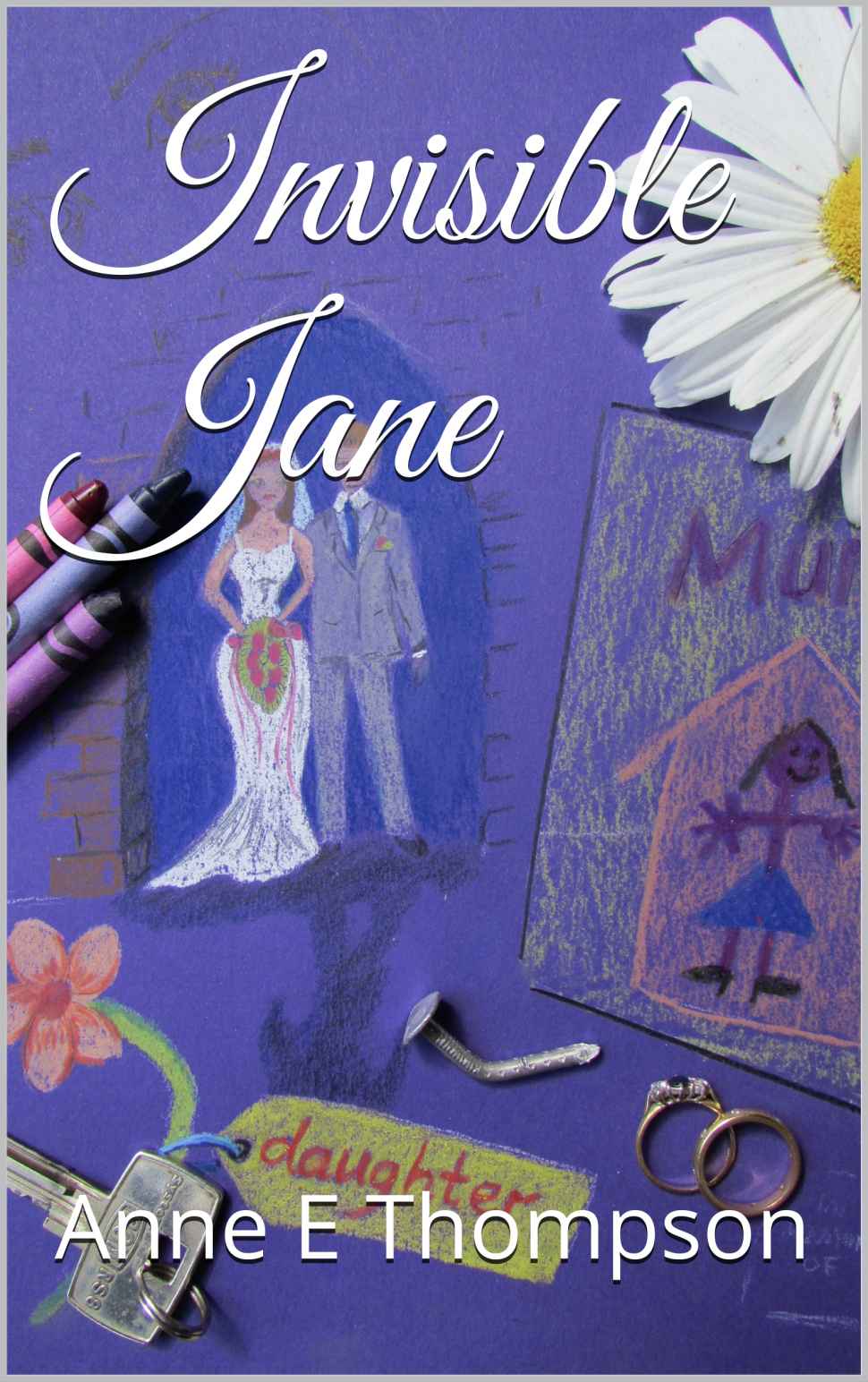
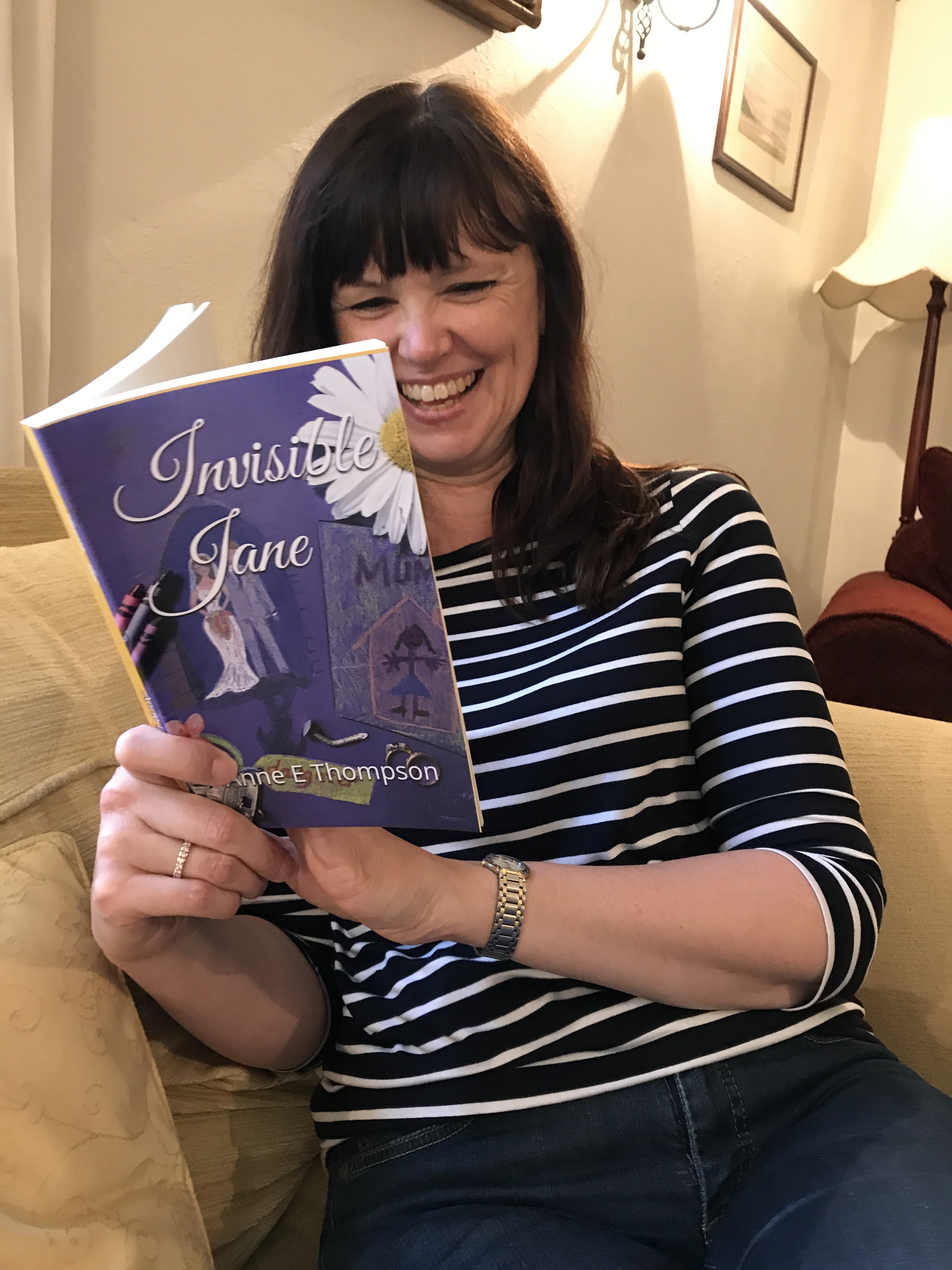
If you are enjoying the story, you can buy a copy for a friend. Invisible Jane by Anne E. Thompson — available from an Amazon near you. UK link here! 
Thanks for reading.
Why not sign up to follow my blog so you don’t miss the next chapter?
anneethompson.com

***********************************************************************

Wishing for Water


I should be in Italy. Whenever I have a trip away planned, I write a blog ready to post in my absence, and then write about the trip when I’m home again. Obviously, we had to cancel the trip to Italy, but I rather liked this blog, so am posting it anyway. It was written ages ago, long before I had even heard of Covid-19. Enjoy.


Water

Woke yesterday morning, jumped in the shower, noticed the water pressure was slightly less than expected. Thought no more of it.

Went to sort the poultry. Refilled their water and noticed the hose wasn’t working too well. Thought no more of it.

About midday, made a jug of coffee. Noticed the kitchen tap definitely had less water pressure. Decided I would ask Husband when he got home from work.

By lunch time, the water in the taps had slowed to a steady trickle—enough to fill a kettle or wash your hands, but you wouldn’t have wanted to shower under it. Phoned the waterboard.

The woman who eventually answered the phone, after I had listened to numerous recorded messages and pressed a variety of keys, took my details, and said we probably had a leak somewhere on our property. I was given an appointment for an engineer in about 6 weeks time.

I searched the property. No sign of a leak. Water was now barely trickling from taps at all. Phoned unhelpful waterboard lady again. I was told that as we still had water (all be it not very much) then we did not count as an ’emergency’. I could cope for a few weeks.

About 2pm, the taps were empty. Checked with nearest neighbours—they had no water either, so fault was not on my property. I walked up and down the lanes near the house, looking for signs of water bubbling up. Only found puddles. Returned to house to phone unhelpful woman again.

I was told that I was now on the emergency list, and an engineer would visit shortly. I asked how long that would be. She didn’t know. I asked if it would be today. She didn’t know, but thought that it probably would be. I asked how long, legally, I could be left with no water. I was told 12 hours. There was a knock at the door, so I carried the phone, with unhelpful woman still talking, to the door.

There was a water engineer. I was impressed!

Thanked potentially helpful woman (actually, I think their arrival was unrelated, as they were checking the water in the area due to several complaints).

Engineer checked water pressure (none) and went off to try and find the problem. He was very friendly and apologetic and promised someone would deliver some bottled water, but he had no idea why we had no water.

 About 5:30, a delivery of bottled water arrived. As water to drink, it was loads. For cooking—not so sure. For washing hands, crockery, muddy dogs—it was a mere drop in the ocean. Decided everything would stay dirty. Hoped taps would fill again soon, and contacted relatives to discuss the possibility of an early morning shower at their house.

As I began to cook dinner, I realised how much water I usually use—and the amount that I regularly waste. Instead of reaching for the most convenient saucepan, I chose the one which was as small as possible and would still hold the vegetables. Instead of peeling potatoes, rinsing them, cooking them in a depth of water, I tipped in enough water to cover them, and put them on to boil. The main thing I noticed was how often I usually rinse my hands when cooking, how often I usually wipe the work-surface (rinsing cloth under the tap between each wipe). When things cooked, I usually sloosh water into the empty saucepans and tins, so they soak before they can be washed. This time I had to use the water that the veg had cooked in, straining them straight into dirty meat tins and using the ‘stock’ to soak the pans.

After dinner, we discussed a plan for the night. At some point we would need to flush the toilets, so Husband heaved buckets of pond water down to the garage. We stuck notes on the upstairs washrooms, reminding forgetful/tired/drunk off-spring that they couldn’t use the upstairs loo in the night!

The dog was shut in the utility room, covered in mud. She had ignored my instructions to stay clean on the walk.

At about 10pm, just as I was thinking about going to bed, Husband shouted to say the water was on! I ran to a tap, watched it choke and hiss out, expelling the air, gushing clean and cold into the sink. The relief was immense. I appreciate my plumbing in a whole new way!

I  am lying in bed, when I hear Husband open the door to a cheerful waterboard man who wants to check the water. Husband asks if he would mind removing his shoes. “Oh yes,” laughs dirty water man, “you don’t want to know where I’ve been today!” I hear Husband, and sewer water man head for my clean kitchen. What will sewer man touch? Where will he place his sewer toolbox while he works? Why the heck is Husband taking him into the KITCHEN???? I leap into a dressing gown and rush downstairs to monitor placing of hands, tools, dirty coat. Dirty sewer man puts his toolbox on my cooker hob (clearly a good place for a dirty toolbox) then turns on the kitchen tap. He collects samples of water, and tests it for clarity, and chlorine content, and possibly other things–I am more concentrating on what he touches. He tells us that the problem was in another town, which our water happens to be routed through.
Cheerful sewer man then leaves. I go to work with my detox spray, cleaning everything that has been touched, while Husband looks on, bemused.

Hope you have a nice clean day. Thank you for reading.

Take care.

Love, Anne x

Thank you for reading
anneethompson.com
Why not sign up to follow my blog?


Invisible Jane continues tomorrow. . .


QuaranTime to Read. . . Chapter Nineteen


Chapter Nineteen

The day of the Summer Fete arrived all too quickly. Jane was cooking with two other mothers. She recognised their names but didn’t really know them. She had been told that everything would be provided, she just had to bring an apron.

Peter promised to take good care of Christopher and Abigail. He planned to bring them both later, and was now busy sorting money. He had emptied a huge jar of loose change, collected over several months, onto the table.

“Good opportunity this,” he remarked cheerily, making piles of pennies and two pence pieces, then putting them into sandwich bags when he had a pound of each.

Jane eyed the mass of coppers dubiously. She was not entirely sure that a pound’s worth of pennies would be welcome at each stall. She decided not to comment and rummaged in a drawer for an apron. It was green and flowery and had a hard lump of old pastry stuck to the pocket. She was late, it would have to do. She said goodbye and left.

***

The barbecue pitch was in the corner of the playground, next to an inflated pool of floating ducks. The ducks had small rings attached to their backs, ready for young children to fish them out with hooked poles. Many of them were floating upside down, and a rather harried mother was attempting to readjust their weights. It was not an easy task and the yellow ducks persisted in floating with their silly faces submerged. A football bounced across the playground and landed in the pool. The mother glowered damply. It was followed across the tarmac by a bouncy father.

“Sorry!” he yelled happily. “Nice warm day to get splashed though. I’ll return this to the ‘Beat the Goalie’ stall—maybe we should rename it ‘Beat the Ducks.’ Ha!”

He retrieved his ball and bounded away. Jane heard dark mutterings from the duck lady and smiled. She was busy weighing down paper napkins and plates on a table. It was breezy, and they fluttered as though trying to escape. There were several bottles of tomato sauce—the cheap runny stuff that tastes of acidic sugar—and a fat tube of mustard. Jane left her task and went to find the meat.

Sausages and burgers were stored in cool boxes beside the barbecues. Jane was working with May and Alice. Both wore smart navy-and-white striped aprons, and were brisk and well organised. May had attached the gas to the barbecues, and was now heating them. Alice was deciding how much meat to cook initially.

“You do the sausages Jane,” said Alice, glad to have someone to organise. “Start with about thirty and see how you get on. The barbecues should be ready in about ten minutes.”

Jane began counting sausages, pulling them from the box in strings.

“What are you doing?” asked May.

“Getting them ready…” hesitated Jane.

“Oh. Well, you could separate them I suppose” said May, sounding doubtful. “It is much too early to start cooking them though. And do try and keep them off the cloth, we need to keep raw meat away from where we’ll be serving. Obviously.”

“Obviously,” agreed Jane, coiling the string of meat onto a plate. She needed to separate them, but wasn’t sure how. Frozen sausages were already separated. She didn’t have a knife. She took the first sausage and pulled hard. It slithered, greasy, in her hand, depositing a blob of sausage meat on the tablecloth.

“Here.” May passed her a knife. Jane cut through the skin.

“You need to prick those,” said Alice.

“No, it’s best not to,” contradicted May.

Jane had no opinion at all, so covered them with a napkin and went to wash her hands.

To the left of the barbecue was a trestle table laden with mouldering books. The covers were faded and the pages brown, many showing unevenly at the sides where they had come away from their binding. Jane recognised some titles from the book stall at the Christmas Fair. The parent manning the stall was making neat piles of adult books, with children’s titles spread out at the front. He surreptitiously sidled one back into the box. Jane wondered if the title was deemed too racy or if he fancied reading it himself.

She passed a tombola, a bouncy castle, and a table spread with a treasure island. There was a candy-floss seller, signs beckoning her to guess the weight, guess the name and have a lucky dip. One mother had dressed as a gypsy with red headscarf and hooped earrings, and was offering to read palms. Another was busy arranging face paints on a small table.

There was a cake stall, laden with sponges sweating in cellophane and plates of smaller cakes ready to be eaten. Someone was unloading two grumpy donkeys from a horse box. Jane could hear the chairman of the governors testing the microphone as she entered the school and went in search of the girl’s toilets.

***

When she emerged from the school, people were beginning to arrive. Excited children hurried through the gate, followed by cautious parents who stopped to pay their one-pound entrance fee and collect a photocopied programme.

“Where have you been?” said Alice, as Jane arrived back at the stall.

“She washed her hands,” said May.

“Oh. We can’t keep disappearing,” said Alice, frowning. “Here!” She handed Jane a pack of disinfectant hand wipes.

“Of course,” said May, “those are only good for killing germs on clean hands. They will not actually remove any dirt. Proper dirt needs to be washed away with soapy water.”

“Better start cooking,” said Alice, ignoring her.

“Probably better to wait a while,” said May. “We’ll begin in ten minutes.” She looked at her watch, as if absorbing the time.

Jane decided not to point out that ten minutes would make very little difference. She spied Peter coming through the gate. He held a purple carrier bag and was laboriously counting pennies into the patient hand of the parent on the gate.

He saw her and hurried over. Alice and May were busy, placing meat on the barbecues.

“We made it!” said Peter, as if this was unexpected. He was not often in sole charge of the children.

“Yes, well done,” said Jane. She moved closer, “You will keep an eye on Christopher won’t you? Don’t let him wander off on his own.

“Abi does country dancing at two, so she’ll need to change into plimsolls before then. Listen for the announcement.”

“We’ll be fine,” said Peter. “We’re raring to go, aren’t we Chris?”

Christopher grinned up at his father. He was clutching an orange bag, which Jane feared was also full of pennies.

“Don’t let them eat too many sweets,” she pleaded. “And definitely nothing that’s not wrapped.” She lowered her voice again. “Some of the little cakes look a bit dodgy,” she said, “can you make sure the kids don’t buy them?”

“We’ll be fine,” repeated Peter. “Come on Chris, donkey ride I think before the queue gets any longer.”

Jane watched them walk away, then turned to the sausages and began to add them to the barbecue.

***

There was little time for conscious thought for the rest of the afternoon. The women had a steady stream of customers at their stall and Jane worked hard, turning sausages, placing them on the outstretched rolls, turning down the heat to a mere glow.

May was busy with burgers, flipping them every few minutes, then turning to check Jane’s progress with the sausages.

“These are a bit slow,” she worried, turning the heat up to full. “They need to be cooked quickly.”

Jane passed a sausage to a waiting child. Alice fished for change in her money pot. Then she moved back to check the meat.

“We don’t want them to cook on the outside before the middle is heated through,” she said, turning the heat back down to its lowest setting.

Jane saw Abigail arriving, laden with bottles.

“Dad’s on the tombola,” she informed Jane, passing her some olive oil and bright green bubble bath.

“It takes him ages to count out the money,” she giggled. “Can you hold these?”

Jane bent and hid them under the table. May leant over her and turned up the heat on the barbecue.

“Don’t forget it’s country dancing later,” said Jane, as Abigail skipped away. She returned to the sausages. A few were beginning to turn black.

“You must keep turning them,” chided May.

“That heat’s too high,” observed Alice, reaching to turn it down.

Jane began to slice a fresh batch of finger rolls. Abigail returned, this time carrying a bottle of rum and some cheap red wine.

“Dad says his luck is improving,” she told Jane, passing her the bottles.

“You can’t keep those here,” said Alice, “they’ll be in the way.”

“I thought they could go under the table,” said Jane.

Alice and May exchanged looks. Either one was helping to run a stall, or one was not. Bottles were an unnecessary hindrance. They said nothing. They didn’t need to—their expressions were eloquent.

Jane paused.

“They can go in your locker Abi,” she decided, “we can get them later.” She passed them back to her daughter.

“And don’t run with them!” she called, as Abigail hurried towards the school with her latest prizes.

May turned down the heat on both barbecues and began to move the cooked sausages to the edge. Jane handed two sausages to a parent, then tried to open a new sauce bottle. The foil seal under the lid was firmly stuck down and she could not lift it. She scratched at it for a while, then grabbed a fork and stabbed through it. Red sauce squirted out, splattering her fingers and the table.

“Well that’s one way of doing it,” said a familiar voice. Jane whirled around. There, standing behind her, was Matthew.

He stood close, smiling down at her. Jane felt herself blush with surprise as she returned his smile.

“What…” she began.

“I saw the posters,” explained Matthew, “wondered if you’d be here. Though not,” he admitted, “at this particular stall. Cooking..?” He raised an eyebrow.

Jane laughed, her heart singing. The whole world felt brighter.

“Be careful, or I’ll sauce you!” she threatened, wiggling her red-coated fingers towards his face.

“I need to wash these,” she said, and began to walk towards the school, ignoring Alice as she waved wet wipes at her.

Matthew followed, chatting easily. She didn’t look at him, but was aware of his proximity, aware that he was with her.

They went into the school, gloomy after the brightness of the sunny afternoon. The corridor was deserted, everyone outside at the stalls. Their footsteps sounded loud in the quiet building, it felt forbidden to be inside, as if they were breaking some rule. Still Jane did not look at him. She could feel her heart, was very aware of everything, especially how alone they were. How unseen.

Their feet were loud in the deserted corridor, clattering on the wooden flooring. Jane passed paintings of summer flowers, smelt the glue and paper smell of the school, the odour of stale air and many bodies. Her senses were alive, and she knew, without looking, exactly how close to her Matthew was walking, her ears attuned to the deep echo of his voice.

They reached the sinks, and she paused. She looked at her hands, red with sauce. Matthew reached down, over her, to turn on the tap for her. He was leaning very close, looking at her face. She could smell him now, that soapy smell she knew so well. She opened her mouth to thank him for turning on the tap.

“I missed you!” she blurted out, the tension of the moment controlling her words.

She was immediately mortified. What would he think of her? He would think she was some desperate, clingy housewife. She felt her face burn and thrust her hands under the water, washing them frantically, wondering what she could say to make it sound less odd, less blunt. Trying to make the moment casual, like it didn’t really matter.

“Hey,” he said softly, seeing her confusion. He was still looking at her, trying to read her expression, she could feel his gaze on her, almost feel his eyes burning her skin, searching her face.

“I missed you too,” he said, as if trying to take the tension from the exchange, to stop her embarrassment. “I used to enjoy chatting with you,” he said, “we had fun didn’t we?”

Jane nodded. She wanted so badly to salvage the situation, to turn this back into a light conversation between casual friends. But he was too close. She was too aware of him, her emotions were spinning, she could barely draw breath and she could feel tears welling behind her eyes. She folded her lips and bit down, trying to distract herself, to calm her feelings.

He paused, as though considering an idea. He moved even closer, they were almost touching, and when he spoke, Jane could feel his breath on her cheek. She thought, for one wild moment, that he might be going to kiss her.

“We could meet, if you want,” he murmured, so quietly that Jane could hardly hear him. He was still looking at her, an intense stare, holding her eyes with his own—eyes so bright that one could drown in them—a gaze so strong, he was seeing, Jane felt, into the depths of her.

She nodded, not trusting herself to speak. The corridor where they stood felt full of electricity, all was fuzz and static, only this moment, the two of them, was real.

Jane broke his gaze and looked around. The sink had splatters of powder paint around the edges and smelt of damp newspaper. Everything looked normal. Nothing had changed.

She shook the drips from her fingers and turned off the tap.

“Okay,” he said. He reached up, tucked a stray hair behind her ear. Jane thought she might melt. She kept very still, not daring to breathe. Something had changed between them, unspoken but tangible.

“I’ll text you, in a few days, arrange something?” he said, raising an eyebrow.

Jane nodded, smiling now.

“I’d better go,” he said, “can I trust you not to kill anyone with that sauce bottle?”

The tension was gone, they were back in familiar territory.

“I think so,” grinned Jane.

She watched him leave. She stood at the small children’s sink, and watched this man, this man who she desired, as he walked the length of the corridor. Tall, broad shouldered, moving with fluid ease, looking as out of place in a primary school as a film star. Then through the door, and he was gone.

Jane dried her hands on the rough green paper towel, and dropped it into the open bin beside the sink.

“He came to see me.” Her thoughts were a whirl, tumbling in a muddle with her emotions.

“He still has my mobile number,” she realised. “He wants to see me. It was his idea, he suggested it, he wants to see me. I matter.”

Feeling somewhat shell-shocked, she returned to her stall. Along the corridor, back into the sunlight. No sign of him now, as she passed the cake stall, the books, parents queuing at the tombola. She walked, dream-like, through the crowd. Nothing felt real, it was as if Jane had evaporated, and some shell, which looked exactly like Jane, was now acting in her place. She was behaving like the old Jane, she spoke and responded like the old Jane, but it was all pretend. Jane, the real Jane, was somewhere else.

Several customers were waiting for sausages. Alice had taken their money but felt unable to serve them—for health and safety reasons, she explained. One should not handle both money and food. May had disappeared to use the toilet.

Jane screwed the lid onto the rather sticky sauce bottle and reached for the tongs. She lifted the sausages onto the waiting rolls with a polite smile, apologising for the delay.

Abigail appeared. She pushed her way through the queue.

“I’ve lost a plimsoll,” she announced.

Jane stopped, feeling confused, sausage suspended in midair.

“He must like me, really like me,” she had been thinking, “to risk coming to a school fair.”

“What?” she asked, slightly dazed.

“My plimsoll,” repeated Abigail loudly. “I have lost my plimsoll. And I need it for dancing. Now!”

Jane became aware of the voice crackling from the loud speaker.

“Could all our dancers please join Miss Mott next to class four, for the country dancing.”

“Oh, I see,” said Jane.

“It should be in my locker,” said Abigail, growing more agitated, “someone has stolen it.”

“I expect it’s there somewhere,” mumbled Jane, wondering if she could abandon Alice again to help her daughter. However, the decision was unnecessary as Hilary and George appeared in the centre of the playground.

“There’s Gran!” said Abigail, “She can help.”

She ran across to her grandparents, who looked relieved to see her.

“Ah, Abigail,” said Hilary, “we were wondering where you were. Your father said to come at two o’clock.”

“And we were here on time,” added George.

“I’ve lost a plimsoll,” Abigail said, “and I need it for country dancing, which is now. Can you help me find it?—Please,” she added, as an afterthought.

“Can’t you dance in shoes?” asked George. “It’s only skipping really.”

“Oh George, of course she can’t,” said Hilary. “Right, you go and find Peter,” she said to her husband. “Abigail, show me where your gym shoe should be, we’ll start there.”

“Plimsoll,” corrected Abigail as she led her grandmother into the school.

They passed a mother and child as they left the toilets but the rest of the corridor was empty. It seemed strangely dim without the strip lighting turned on, and Abigail felt it was a little frightening being here alone. Her grandmother’s heels clicked authoritatively beside her as they walked past giant collages of multicoloured birds.

They went to the cloakroom and she pointed to her locker. It was a red cubbyhole, one of several against the wall opposite the coat pegs. There was a number six painted above it.

“That’s mine,” she said, “but no plimsoll.”

Hilary opened the door, and decided the best method would be to empty it completely. It had the look of a cupboard that had been rummaged through. She began to remove items and pass them to Abigail. Navy blue shorts were tangled with a white tee shirt.

“That’s what we wear for PE,” said Abigail, being helpful. There was a pink folder with torn covers. “That’s History.” Next came a black plimsoll, with a white sock tucked inside. “That’s the one I already found,” she said, folding her arms.

Then, jammed safely at the back, were two bottles. The rum was standing upright, its lid nearly touching the top of the locker. The wine was on its side, wedged with a sock and a sweatshirt.

“Those are Mummy’s,” said Abigail. “She’ll get them later I expect.”

Hilary paused, said nothing. Instead, she knelt down and felt beneath the unit. Her hand closed around a soft shoe. She extracted the rather dusty plimsoll and handed it to Abigail, who beamed at her.

“Just in time!” she said, pushing it onto her foot.

“Thanks Gran,” she called as she ran back to the playground. Hilary folded the clothes and placed them tidily in the locker before closing the door and returning to her husband.

***

George was standing with Peter and Christopher on the edge of a ring of parents. A large space had been cleared in the centre of the playground, and the first class was skipping in pairs to their starting positions. Music, slightly off-key, was blaring from the loud speaker and a teacher was gesticulating wildly, trying to encourage the children to smile. They frowned back at her as they stood in lines, waiting to begin.

Jane hurried over as the dance started.

“You smell of sausage,” said Peter.

“Why is Chris eating a fairy cake?” hissed Jane. “You don’t know how many people have breathed on that. He’ll be ill.”

“He’ll be fine,” said Peter. “Look, here comes Abi. Dances like a donkey!”

It seemed to Jane that the dancing lasted a very long time. It consisted primarily of skipping in a circle, with the odd exchange of partner along the way. The music was unpleasant and jarred her nerves. Most parents were clapping enthusiastically whilst staring with unseeing eyes.

“What is this dance?” queried Hilary, “I don’t recognise it.”

“Gay Gordons, I think,” said Peter.

“Well, they are doing it wrong,” observed Hilary.

“Perhaps they tried to simplify it,” said Peter.

“No,” she said, “it’s not simplified, it’s just wrong. And that boy has his shoes on the wrong feet. I’m very surprised his teacher didn’t make him change them.”

“Perhaps she didn’t notice,” said George.

“It’s her job to notice,” stated Hilary.

“This music is giving me a headache,” complained George. “Can’t they turn it down a bit?”

Jane, who until this moment had also found it unpleasantly loud, felt irritated.

“I like it,” she said, “it’s happy.” She began to clap with renewed vigour. The children continued to skip, some of them frowning with concentration, some smiling at their parents. A few looking as bored as the audience.

“I might,” began Christopher, pulling at her sleeve with sticky fingers, “I might, be going to wet myself.”

“Right,” said Jane, glad to escape, “let’s go quickly. Hold it in until we get there.”

They pushed through the crowd and hurried into the school.

“Hold it in, hold it in,” chanted Christopher, enjoying the echo of the corridor. “Hold it in!”

They arrived in time. Jane rushed to wash his hands and get back to the dancing before she missed her daughter. She felt cross, now she thought about it, that Hilary had let her take Christopher rather than offering to help so that Jane could watch the dancing.

In the playground, Abigail was doing her final courtesy. She grinned up at her mother in triumph. Jane waved and passed Christopher back to Peter. He was chewing a hot dog.

“Bit crisp,” he said, “but edible.”

“I think we’ve finished,” said Jane, “I’d better help clear up. Can you take the kids?”

“Sure,” mumbled Peter through a mouthful of sausage.

***

Alice and May were removing the last pieces of meat from the barbecues. Alice flapped the wet wipes at Jane as she approached.

“Health and safety,” she said.

Jane failed to see how it mattered as they were clearing up but she wiped her hands obediently.

“We need to cool these grills and then scrub them,” said May.

“No,” said Alice, “better to shut them and turn up the gas to full. Burn off all the fat.”

Jane returned the bread rolls to their bags and began throwing away soiled napkins.

“I’ll count the money,” offered Alice. “It will take me a long time, thanks to that man.”

“Yes,” said May, her voice outraged, “while you were gone Jane, a father bought three hot dogs and paid for them in pennies.”

“Pennies!” repeated Alice, “Pennies! Can you imagine how long it will take me to count them all? Never mind the weight!”

“Thoughtless,” said May.

“Very,” agreed Alice.

“Oh well,” thought Jane, “at least they agree on something.” She decided not to reply.

***

By the time they had cleared up, most people had left. Peter wandered over to say that they were leaving and would see Jane when she got home. She nodded, pushing a paper table covering into a too full dustbin liner.

“Wait!” said Christopher, “My stuff—we mustn’t forget my stuff.”

“Oh yes,” said Abigail, “he did very well.”

He ran back towards a nearly empty stall and heaved two big bags from underneath.

“I gave him some money,” said Peter.

“He got some real bargains,” added Abigail proudly.

Jane’s heart sank. She knew from previous fetes that the second-hand toy stall was always left with broken, dirty toys. Things that people had discarded but did not want to throw away were regularly dumped at school fairs. Now, as she watched her son struggle excitedly towards her, she knew that much of this rubbish was heading towards her home. The mother manning the stall was sweeping up, determinedly not looking at Jane. She sighed.

“I’ll see them at home,” she said.

***

As she finally drove away from the school, Jane felt tired. It had been a busy day, but mainly emotionally draining. A new knot had formed in her stomach and she could feel the tension in her muscles.

“Matthew.”

She wondered when he would contact her, where they would meet. She felt excited, but not, if she were honest with herself, particularly happy. She knew there were thoughts at the back of her mind that she was refusing to face.

“I don’t need to think about this,” she decided, “I’ll just wait and see what happens.” She arrived home and opened the door. Grubby toys were strewn across the floor. Odd jigsaw pieces lay next to a doll’s head beside a plastic castle, which was missing a turret.

Jane stepped carefully into the kitchen.

“I need tea,” she said.

Peter looked up and grinned at her. He was at the kitchen table, reading the front of the local newspaper. He looked rather pleased with himself.

“Chris is happy,” he said. “Oh, and this came for you.”

It was a plain white envelope with her name handwritten across the front. She did not recognise the writing, nor was she expecting anything. She froze. Peter was watching her curiously. Was it from Matthew? Was it possible that he had gone to text her, realised he had deleted her number, and had written her a note instead? Would he be that stupid?

“I’ll open it later,” she said, keeping her voice flippant and filling the kettle with an unsteady hand, “I need some tea first.”

“Poor old thing,” smiled Peter. “Here, you sit down and open your letter, I’ll make the tea.”

Jane slumped in a chair. Peter was watching her; she didn’t really have a choice. She felt nauseous as she slowly tore the envelope, something cold and hard spreading through her stomach. Every nerve was screaming and she felt like her blood carried shards of ice. For the first time in her life she knew what it was to feel frightened. Peter, the boy she had married, laughed with, shared her life with; in one simple stroke, he turned from her best friend to her enemy. Instead of wanting to share everything, she wanted to hide, to deceive him.

“Actually, I’m desperate for the loo,” she said, standing up. “Be back in a minute”. She hurried from the room, knocking her elbow on the doorframe as she left, crumpling the letter in her hand as if distracted.

In the safety of the bathroom, with the door locked, she perched on the toilet and finished opening the envelope. She peered inside.

To be continued on Tuesday.

If you are enjoying the story, why not buy a copy for a friend? Available from an Amazon near you. UK Link Here  

Thanks for reading.
Why not sign up to follow my blog so you don’t miss the next chapter?
anneethompson.com

**********************************************


QuaranTime to Read. . . Chapter Eighteen


Chapter Eighteen

The following Thursday, Jane took Christopher to the park. It was a beautiful Summer’s day, with a high blue sky and a gentle breeze. She had parked in the small car park near the swings, and now they walked hand-in-hand across the grass. Max was in an ecstasy of sniffing under a wooden bench. The sun glinted off the paint of the large red slide, and she could feel Christopher skipping at her side. Her bag bumped against her hip. She needed to buy white cotton on the way home so that she could reattach buttons to Abigail’s school blouse.

School was not a happy thought at the moment. She had been summarily telephoned following her evening out and told: thank you for volunteering, you are manning the barbecue at the Summer Fair. Burgers! It was bad enough having to cook at home, now she would be burning food for the whole school. She sighed, at least she had nothing to prepare and it was only one day.

She lifted Christopher onto a swing and pulled it back. It was wooden and heavy, with a thick metal chain. She released it, watching it swing free, then braced for its return. Christopher wiggled his legs.

“Higher! Higher!” he chanted.

“That’s enough Chris,” she sighed after a few minutes. “You play on the roundabout; I need to find Max.”

She left her son climbing onto the orange wheel and went in search of the dog. He lumbered over when she called, tail swaying, stick in mouth. She obediently threw the stick a few times, watching her son as he played in the low-fenced enclosure. He too had found a stick and was poking beneath the roundabout. She walked over to where he was.

Red faced and frowning, Christopher was peering under the roundabout, making frantic sweeps with a thin branch.

“I can nearly get it,” he said in frustration.

At last, with one long swoosh of the stick, his prize was dislodged and tumbled over the grass in the sunlight.

“It’s magic!” he cried.

“It’s dirty!” she said.

It was a whiskey bottle, drained empty and flung under the child’s toy with drunken disregard. The golden label sparkled in the sunlight enticingly. Before she could stop him, Christopher had snatched it up.

“Can I keep it?”

“No,” said his mother, “it’s got germs on it. Don’t touch it.”

The boy inspected it closely. No germs could be seen. The glass was very smooth and the lid was made of gold. The label was beautiful, and seemed to have secret writing on it. It was clearly magic. He glanced at his mother. Her face looked cross and he could tell she did not understand the importance of his treasure. He felt his bottom lip begin to quiver.

“Please mummy, it’s mine now.”

Jane looked into the deep pools of his pleading eyes. ‘How am I supposed to not give in?’ she wondered. She knelt down and put an arm around his narrow shoulders. He gazed trustingly at her.

“Chris, it’s not clean,” she began. His eyes began to fill with tears. “Alright, we can take it home and wash it I suppose.”

She removed it from his grasp, deciding it would be easily disposed of later, when he had forgotten about it. She called the dog and clipped on his lead, then told Christopher that they needed to buy cotton before they went home. Not having a hand free to hold his, she sighed, and slipped the bottle into her bag, hoping it was not as dirty as she feared.

They moved to the road and stood waiting as traffic passed. Jane watched the cars impatiently, wanting to go home.

Suddenly, with heart-lurching familiarly, she recognised Matthew’s car. He glided down the road towards her. She searched for his face. He saw her, raised a hand in salute and continued past.

“That was Matfew!” announced Christopher.

“Yes,” said Jane, watching the car until it disappeared.

“Mummy, we can go,” said Christopher, waggling her hand so that she would notice the road was clear. Trance-like, she led him across.

She was a blur of emotion. She had seen him. He had waved. Their contact was not completely severed. Maybe she would see him again one day. Perhaps, now he knew they visited the park sometimes he would drive past again.

Or perhaps not.

She took a deep breath and gave herself a mental shake. This was silly. She was like a teenager with a crush on a celebrity. This obsession was getting out of hand.

“Come along,” she said and led the way to the hardware shop.

***

Leaving the dog tied miserably to the post outside, they entered the gloom of the shop. It smelt of glue and fabric. The floor was grey cement, and the air felt cold after the warmth of outside. Narrow aisles were precariously stacked to the ceiling with a jumble of products.

“Don’t touch anything,” Jane instructed.

She led him past cans of paint, a display of brushes perched above an array of door locks. Helpful signs warned of guard dogs, not to park in front of entrances, and a request to close the gate. Christopher put out a finger and traced their cold letters. They walked around stacked plastic buckets, and passed mops that bent shaggy heads towards them. His finger trailed across rough doormats, and onto shiny saucepans that stood in pyramids above his head. They passed boxes of electrical appliances, which nestled against a display of scissors. Bolts of coloured fabric were piled almost to the ceiling. He reached out and stroked pink fur, then poked a finger through some white lace.

“You’re touching!” his mother hissed, “Fold your arms.”

Jane had stopped beside a rack of coloured cottons. Selecting a reel of white, she guided him back towards the door to pay.

The counter was very high, much taller than his head. Behind it was a tiny man with a white beard. Christopher was fairly sure he was an elf. His mother seemed to have not noticed, and was searching for her purse. He moved behind her. There was an interesting display of tools hanging from the wall. Bright orange handles with comfortable grips, connected to grim looking blades. Saws of various sizes hung like crocodile jaws. He reached out a hand. His mother was busy paying. He pointed a finger and ran it along a blade. He snatched back his hand. Dark red blood oozed through his fist. It stung. He screamed.

“Mummy!”

Jane turned. She heard the cry, turned while pulling her purse from her bag, saw the blood and leapt towards her child. Off balance, her foot caught on the edge of a broom, which began to tumble, bringing another broom with it. She tripped. As she fell, she put out a hand to save herself, pulling a large tin of emulsion to the concrete with her. Jane, brooms, a brush and the tin all fell to the floor with a crash.

For a long second, all was still.

Jane was lying on the floor; Christopher standing above her, his crying suspended; the shopkeeper, watching.

Then they all moved as one. Christopher began to wail and Jane sat up, opening her arms for him. The shopkeeper hurried towards them, full of defensive concern.

“Madam, you really shouldn’t let your little boy touch things,” he clucked anxiously.

Jane ignored him and inspected the wound. It was very minor and had stopped bleeding already. She put his finger in her mouth and sucked to clean the wound. Then she wiped his tears with her fingers and kissed his nose.

“Stop crying, you’re alright,” she said quietly, reassuring him.

“It bit me,” he whispered.

Jane smiled, “You shouldn’t have touched.”

“I do think you should watch him more closely in future,” said the shopkeeper. “This is not a toy shop.”

Jane declined to comment and began to get up off the floor. All was fine—until she put weight on her right ankle. Pain shot up her leg. She sat again quickly, waves of nausea washing over her.

“Are you alright?” asked the man. “You really should have looked where you were going. Luckily, I do not believe anything was damaged, so I won’t have to charge you.”

He picked up a couple of brooms and replaced them on the stand, then retrieved the paint.

“It’s lucky this lid stayed on,” he said. “You would have made no end of mess if that had come off. You can’t rely on that you know. Manufacturers do not guarantee that lids won’t come loose. Paint should always be stored upright you know.”

He paused.

The woman was still sitting on his floor. She did seem rather pale. He did hope she would not faint. It would not be good for business.

“I’m afraid I need you to move,” he said, his voice rising a pitch. “I will have other customers shortly and you are rather in the way.”

‘Customers,’ he thought, ‘who will buy more than a single reel of cotton and who will create a lot less fuss.’

Jane remained on the floor. She really was unsure if she could stand. Her ankle hurt a huge amount and she felt quite ill with pain.

Then, as if she were in some ludicrous farce, the shop door opened and in walked Hilary.

Her gaze swept across the tear stained child, the flustered shopkeeper and Jane, who was sitting on the floor.

“And what happened here?” she asked.

“This woman did not have her child under appropriate control and he handled the merchandise” the man hurried to explain. “Then she did not give due care and attention to her actions and she fell over. Nearly damaging more goods, may I add.”

“I see,” said Hilary. “Jane, can you stand?”

“It hurts,” said Jane, “I don’t know.” She looked at the shopkeeper. “Do you have a stick I could lean on?”

“She could purchase a walking stick,” he informed Hilary, deciding that Jane was best not spoken to and realising the two women were acquainted.

“Right, please fetch one,” the older woman commanded, “and Christopher, please sit on this chair and hold my handbag with both hands.”

Christopher obeyed. He was reassured by her presence, and now she was clearly in charge of the situation he was extremely interested to see what would happen. His finger only hurt a little bit now, the pain eclipsed by the excitement of seeing Jane on the floor. He wondered if Nana would tell her off for getting dirty. He clutched the bulky bag. It was shiny black leather and very full. He longed to peek inside and investigate the contents but felt sure someone would then tell him off. Instead, he held it close to his chest, feeling the hard shapes inside. He found he could make his finger bleed again if he pressed it very hard, and he amused himself creating a line of round red spots across the width of the bag.

The man reappeared with a selection of sticks.

“Which would madam prefer? Lightweight steel or more traditional wood? Or perhaps one with a seat incorporated into the handle?”

Hilary pointed at a wooden stick with a plain curved handle.

“That one is suitable,” she said. She looked at Jane, “You can reimburse me later.” She handed her credit card to the shopkeeper.

They both helped Jane to stand and she tested her weight on the stick. She could walk, but it was painful. Driving would be difficult, so Hilary agreed that she would drive them all home. When she realised that a dog was involved she bought a long length of thick polythene. She then spent several minutes lining the footwell of her car while Jane sat awkwardly in the shop, Christopher standing close.

Jane thanked the shopkeeper uncertainly.

“Yes, he responded, “well, I hope this has been a lesson to you, young lady. One needs to take more care in life if one is not going to be an inconvenience. Perhaps you will take better care of your child in future.”

The child in question gave him an angelic smile, and placed a tenth bloody fingerprint on an unseen white tea towel before following his mother out of the shop.

Hilary had driven round to the shop front, so Jane had to hobble only as far as the curb. She lowered herself into the passenger seat. Christopher climbed in beside her. There was no child seat, which worried Jane, but she decided the journey was short enough to merit risking an adult’s seat belt. She pushed her coat under him, to act as a booster seat. Hilary, sighing loudly, was loading the dog.

They drove to Jane’s house in near silence. At one point she tried to thank her mother-in-law and explain what had happened. Hilary waved a hand dismissively. Jane was unsure if this was at the thanks or the explanation.

When they arrived, Hilary leant across for Jane’s bag.

“Let me take that for you,” she said, “then I can unlock the front door and come back to help you.”

She walked down the path then stood by the door and unzipped the bag. There, at the top, was a bottle. Slowly, Hilary removed it. A whiskey bottle. An empty whiskey bottle. Her daughter-in-law had been at the park—with a bottle of whiskey—and then had fallen over. She looked back at the car. Mother and child were both watching her. With a frown she found the keys and unlocked the door.

“I think this discussion is best kept for another time,” she decided, placing the bag on the hall table. Then she went back to help Jane.

Later, Jane sat on the sofa sipping tea. Hilary had advised her to bind the ankle tightly, cover it with a bag of frozen peas and raise it on a cushion. She had collected Abigail from school and offered to help the following day if necessary.

“I hope it won’t be necessary,” thought Jane, “I feel such an inconvenience when she helps me.”

She smiled at the memory of her unexpected appearance. Then her thoughts wandered to her glimpse of Matthew.

“Of all the moments when he could have passed,” she thought, “it was just as we were crossing. It’s like it was fate, like our paths were meant to cross.” It was a comforting idea and she settled against the cushions. “I wish I could tell him what happened,” she yearned. “He would laugh with me, make me feel better about that horrible man.

“There’s no one to tell,” she realised. “Peter will just tell me I’m silly, and then rush to thank Hilary. Once he’s spoken to her, he’ll be convinced I’m inadequate. They will make me feel like it was my fault, they won’t be sympathetic. He never sides with me against his mother. He won’t defend me to her, he won’t laugh about her with me. I am the outsider.”

A shot of loneliness pierced her and she felt close to tears.

“Oh Matthew, I do miss you,” she thought, “when will I see you again..?”

To be continued on Sunday.

Thanks for reading.
Why not sign up to follow my blog so you don’t miss the next chapter?
anneethompson.com

******

If you are enjoying this novel, you can buy a copy for a friend. Available from Amazon. UK Link Here

**********************************************************

QuaranTime to Read. . . Chapter Seventeen


Chapter Seventeen

What if…a happily married woman falls in love with someone else?


If you are enjoying this story, why not buy a copy for a friend? Amazon Link Here!

Thanks for reading.
Why not sign up to follow my blog so you don’t miss the next chapter?
anneethompson.com

*******

Due to the KDP rules on Amazon, I am not allowed to upload a whole book anywhere other than on the KDP site. I can therefore share chapters with you, but must remove them when read.


If you would like to read the whole story, or perhaps buy a copy for a friend, it is available from an Amazon near you. The link to my author page is below:

Amazon Link Here!


Secrets Every Mother Should Know


Here is one of my earlier posts. I hope you enjoy it, and will share it. It makes me smile, as all my children are now adults, and parenting is still wonderful and challenging and full of adventure, as I explored in my novel: Ploughing Through Rainbows — have you read it yet? Amazon Link Here!

Mummy Secrets

1.Boys (of all ages) never look in the back of drawers. This is true. They open the drawer about half way, have a quick look and then tell you that what they are seeking is not in there. This can be used to your advantage if, as in my house, they frequently a) misplace their own scissors and b) borrow yours and don’t replace them. If I keep my things at the back of the drawer, even the drawer where they have always been kept, then they don’t find them. Things at the back are safe. Worth remembering.

2.When they ask which child you love best, pick one. I spent years trying to explain that I loved them all equally, that I could never choose which one I loved best, etc etc – they just kept asking. So one day I picked one and gave an outrageous reason:”Bea, because girls are better than boys,” “Jay because he’s the nicest,” “Emm, because he’s clever,” They still asked occasionally (and I did try to switch which one I chose) but it put them off for a long time and always ended the conversation pretty fast.

3.When your children argue with their siblings, always be the most unreasonable. I always wanted my children to be friends with each other, not least because one day I wont be here to care for them and I want them to look out for each other. All children argue with their siblings, that cannot be avoided. However, when there was no clear reason for the dispute, I would try to be much more unreasonable than any of them. Comments like, “Right, that is no television ever again” or “I am banning all chocolate, forever” would so outrage my children that they would mutter darkly about me – together – and forget all about whatever they had been arguing about. After an hour or so they would ‘persuade’ me to modify my punishment to a more sensible one.

4.Forcing your child to eat something will not make them less fussy eaters. I am an adult now, all grown up, but I still feel sick when I smell rhubarb or gooseberries cooking and I am sure it is because I was forced to eat them as a child. I did initially try the same parenting technique with my own children (most of us copy our parents to some extent) but I abandoned it when I found peas thrown out of the window and half a piece of steak blocking the toilet. If my children did not like something, they were not forced to eat it. They did have to taste it every so often, in case their taste-buds had changed, but they were happy to do that because they knew they could choose to not eat it, if they didn’t want to. They are all adults now and they all have a varied diet. You do of course need to ensure that they have a balanced diet. However, if your child does not eat vegetables, fruit is just as healthy.
 Also, occasionally check the ingredients of what your child is eating. If the list is full of stuff you are more likely to find in a chemistry lab than a supermarket, do you really want to feed it to your child?

5.You cannot reason with an angry boy. When girls are angry, the adrenaline stimulates the speech part of their brain and they want to talk. Sometimes for many hours non stop. The opposite happens with a boy. When they are angry, the speech part of their brain shuts down and they are more likely to hit out than discuss. Something to do with testosterone. I don’t understand the biology but I do know that it is true because I have seen it many many times with my sons and my pupils. So, if a boy is angry, do not bother explaining anything until he has calmed down. If he is small, pick him up and put him somewhere safe. If he is big, put yourself somewhere safe (the washroom is a good place. Even an angry boy will not want to risk seeing his mother using the toilet and there is usually a lock on the door.) When he is calm, then you can explain to him why he was wrong, why you behaved as you did, what is an appropriate punishment, etc.

6.You cannot raise a child on your own. We all need help, mothers especially. In an ideal world, a child is raised by two parents and four grandparents and a whole world of friends, teachers, neighbours. Ours is not an ideal world, but whatever your situation, recognise that you have limitations and get help when you need it. Lots has been written about this, about “it takes a whole village to raise a child”, or even films like “About a Boy”. It is true. When you get to the absolute limit of what you can cope with, get help. I am a sometimes praised for how nice my children are and was a successful teacher, but sometimes I couldn’t cope. I recall one evening when I phoned my brother and told him I could not cope with my teenage son. He talked to him for a while (I think they just agreed that women can be very irrational at times! But it didn’t matter, it broke a cycle that I wasn’t coping with.) Don’t let things get beyond what you can cope with, that’s when horrible things happen. If you need help, get help. It is the wise thing to do.

7.When they bring home a crap picture, tell them its crap. If you always praise them they will a) never trust you to be honest and b) always feel the need to do brilliantly. I firmly believe that if you teach your children how to fail well, then they will do well in life. One of my proudest parenting moments was when my daughter lost a race in the school sports event. She was last by a considerable margin and ran the last lap with the hugest grin to huge cheers from the crowd. She was not a sporty child, she knew she was not good at running and that was fine. In other areas she excelled and she knew that my praise was genuine. If I say something is good, they can trust that it is.

8.Treat your children differently. You can treat them equally without having to do exactly the same thing for each child. For example, I can never understand the parents who buy a gift for the other child on a sibling’s birthday. Letting someone else have a turn at the treat is a good learning point, this is life, they will not always be the one who gets the promotion/job/top mark etc. This is the same when choosing a school, clubs etc – see them as individuals especially if they have different talents.

9.Don’t be fooled when your child tells you that you are either the best or the worst mother in the world. You are not. When they are about five and they tell you that you are the best mummy ever, that is very nice. Write it down and hold on to that memory. It wont be too long before they tell you that “all the other mother’s let their children do/have/go to, whatever” and they will reliably inform you that you are the worst mother ever. Brace yourself and ride the storm, taking regular peeks at the diary entry when they told you how wonderful you are and remembering that ALL good mothers are told this at some point. You are their mother, not their friend. They don’t have to like you all the time. You have to make decisions for what is best for them, not what they will necessarily want. Be brave, it is not easy. But you are the best mother that they have, so they will have to get over it. I regularly told my children, “I am not like other mothers.”

10.Do go with your gut feeling and monitor how long your child plays computer games or watches television, or uses their phone. They can stunt creativity and the ability to communicate and keep track of real life. It wont kill your child to be bored sometimes. Or even (horrors) read a book. Decide what works for you. I found that most games, whilst addictive, also needed a certain amount of time for them to be played satisfactorily. So in our house we had ‘computer weeks’. For one week, they could play computer games for as long as they liked (not including homework times, meal times and bed times, which were rigid unless they were ill.) Then, the next week, there was no computer at all. After a couple of days, they adjusted to the lack of life support and actually managed to enjoy something like cooking or reading or playing in the garden.

We never had the tricky decision of how old is old enough to have a phone–because they didn’t exist when my children were little. I don’t really agree with the ‘phones are bad’ lobby, but like everything, it can be abused and parents have a responsibility for teaching their children how to use a phone appropriately. Is having a phone at a meal table a good idea? Or when they should be concentrating on something else? Is it polite to glance at a phone when having a conversation with someone? I recently watched a programme exploring whether phones are addictive (another blog to follow). Since researching this, if I had a child with a phone, I would definitely go to settings and have the screen set to ‘greyscale’.

11.When your child is a teenager, have difficult discussions in public. This was one of the best things that I discovered. So, if I wanted to discuss with my fifteen year old his bed time, the amount of time spent on homework or any other ‘tricky issue’ I would take him out for lunch or even a to nice coffee shop. Somewhere public. Somewhere that having a meltdown would be embarrassing for him. The social pressure helped him keep a lid on whatever anger he would like to vent and we managed to have a few very sane conversations. It was well worth the price tag.

***

It should perhaps be noted, that when I began writing this article I asked my daughter if she could remember any of my parenting strategies. She informed me that:
I regularly told her she was adopted and suggested she could go and find her real parents (she looks EXACTLY like me, so this was never a problem for her.)
If something hurt, I told her it would probably fall off.
I wanted to burn down her primary school.
I made her move traffic cones that were blocking the road when I wanted to drive down it.
I also always told them that even if they did things that were rubbish, I would love them anyway (they liked that one.)

On reflection, I may have been a slightly rubbish mother. However, all my children have grown up to be happy, sane and good company. Maybe being rubbish doesn’t matter too much. God chose you to raise your child, He has confidence that you can do it. I remember reading: you don’t have to be a perfect mother, you only have to be good enough. There is hope for us all. . .

Thank you for reading. Enjoy your day.

Love, Anne x

Anne E. Thompson has written several novels and one non-fiction book. They are available from book shops and Amazon. She writes a weekly blog at: anneethompson.com

My novel explores the fun and problems when parenting adults (being a parent never ends…trust me!) A heart-warming family saga that will make you smile.

A hilarious family saga set on a farm. Being a parent has no end-date, as Susan discovers when her adult sons begin to make unexpected choices in life.
A warm-hearted, feel good novel that will make you smile.

Available from an Amazon near you — why not buy a copy today?

US Amazon link here

UK Amazon link here

Amazon Germany link here

QuaranTime to Read. . . Chapter Sixteen


Chapter Sixteen

What if…a happily married woman falls in love with someone else?


Thanks for reading.
Why not sign up to follow my blog so you don’t miss the next chapter?
anneethompson.com

**********

Due to the KDP rules on Amazon, I am not allowed to upload a whole book anywhere other than on the KDP site. I can therefore share chapters with you, but must remove them when read.


If you would like to read the whole story, or perhaps buy a copy for a friend, it is available from an Amazon near you. The link to my author page is below:

Amazon Link


QuaranTime to Read. . . Chapter Fifteen


Chapter Fifteen


Due to KDP rules, I cannot share the whole book anywhere other than Amazon. Therefore, although I can post chapters on my blog, I must remove them when read.

If you are enjoying the novel, you can buy a copy for a friend from an Amazon near you. UK link here!


*****

QuaranTime to Read. . . Chapter Fourteen


Chapter Fourteen

The day of the funeral was dry but dull. It seemed appropriate that there should be no sun, as if the grey sky reflected Jane’s mood. Christopher was safely installed with a neighbour, and she drove alone to the large Anglican church near the school. She abandoned her car with a long line of others, which were parked in the narrow lane.

A gaggle of playgroup mothers hovered near the church entrance, wearing somber colours and careful lipstick. They huddled against the cold and the occasion, wanting to be together but studiously avoiding each other’s eyes.

One mother had taken upon herself the role of host, and was speaking too loudly. She hugged Jane when she arrived and meaningfully asked how she was. Hardly knowing her, and therefore somewhat nonplussed, Jane muttered noncommittally and sidled over to Suzie.

“Shall we go in?” she whispered.

Suzie nodded. “The playgroup teachers are already inside,” she said, “we were just waiting for you and Lynne.”

The last mother could be seen hurrying towards the church in unfamiliar heels. Her white petticoat was slightly longer than the black skirt, making her appear oddly indecent. She smiled an embarrassed apology for arriving last.

“Ah Lynne,” the loud mother enthused, “We were wondering if you were coming. How are you dear? Isn’t this just awful? To think, it could be any one of us you know. One can’t judge poor Tricia.”

Suzie made a low growl and grimaced at Jane. “Let’s go in,” she said, and led the mismatched group through the arched doorway.

The interior of the church was cool. The religious familiarity of high roof, stained-glass windows and stone floor was oddly comforting. There was something solid about the building, it had seen it all before, even such as this.

The line of women processed up the aisle towards an empty pew, heels clicking on the ancient floor. The church was full. People sat, either staring rigidly ahead or with head bowed, in prayer or distress.

Their pew was near the back and they shuffled crab-like along its length, then sat slightly squashed, with shoulders almost touching. The loud mother, now subdued, was observing which people were not in attendance. Jane could feel Suzie bristling beside her and wondered if she would intervene. They both sat, silent and uncomfortable beneath the span of the high beamed ceiling.

Jane’s knees brushed against a garishly embroidered kneeling pad, hung for convenience on a small metal hook. She wondered who had decided orange was a good colour for a dove. Red prayer books were stacked in pairs on the narrow shelf in front of her. She crossed her legs carefully, wishing her black skirt was longer and cautiously raised her eyes, not sure if she really wanted to see what lay at the front of the church.

At first glance it was filled only with flowers. White lilies and chrysanthemums, tight pink rose buds, fronds of delicate greenery. Wreaths, and complicated arrangements full of bows and ribbons. Then, with a heart-stilling jerk, she realised the coffin also rested there. Tiny, white, almost doll like in its petiteness.

“It’s Christopher sized,” she thought and her eyes pooled with unbidden tears. “Don’t look,” she told herself. “Don’t look. Don’t think.”

The service was short and Jane heard very little. She watched Tricia’s back for a while, sagging towards the man Jane assumed was her husband. A lady in a hat kept careful vigil and constantly passed her tissues. How was this bearable? Each time that Jane felt the emotion rising, started to imagine how it would feel to lose a child, she rammed those feelings back inside, down somewhere deep.

“Don’t look. Don’t think.”

The vicar swooshed around in his pristine gown, speaking in deep tones about things that Jane shut her ears to. God felt so far away from that female jammed pew, and she did not want to let him in. She was in a dark place, and she wanted to wallow there alone. Anything else was too dangerous.

“Don’t look. Don’t think. Don’t listen. . .”

The congregation rose awkwardly to sing childhood hymns, the familiar tune blasting brightly from the organ. Only the vicar could muster any volume, most of the congregation following the words mutely. Jane stared rigidly at her hymnal throughout, not trusting her voice.

The age-old scent of the church mingled with the heavy perfume of lilies and she felt faintly sick. She concentrated hard on her queasiness, forcing physical worries to overcome emotional ones.

“Don’t look. Don’t think. Don’t throw up.”

People sat, easing carefully back onto the hard wooden seats. The vicar began to talk about Sophia and the child’s face, happy, alive, flooded Jane’s brain. The warmth of her little body, her bright eyes, the way she ran, still chubby where she was only just growing from a baby’s body, her enthusiasm.

“Don’t think. Don’t look. Don’t listen.”

People bowed with shoulders hunched as the vicar prayed. There were murmurings and stifled sniffs as people fought to control their grief. There was no abandon here, no distraught wailing or heart-rending sobs. The great body of the church was still, quiet, subdued; dignified even in the face of such tragedy.

“I wonder what everyone’s thinking,” thought Jane, “the ones who don’t believe in God. What are they thinking when they bow their heads?”

She said an automated “Amen” and relaxed her shoulders. She could not pray, not here, not yet. To pray would be to open her mind and emotions, to be starkly honest. She felt too fragile. Even to pray for Tricia would be too dangerous, opening herself to too much light. Safer to huddle inside herself for a while longer, to hide until she could cope.

“Don’t look. Don’t think.”

The service ended. The people rose and two young men walked forwards to claim the coffin. Red rimmed eyes showed they had an attachment to the child, and Jane wondered if they were uncles. They were very young, not much more than teenagers. Too young for such a heavy burden.

They lifted their weightless load with care and walked, one careful step after another, to the church door.

“Don’t look. Don’t think.”

Gradually gaunt-faced family followed them; a stream of bewilderment clad in black. There was a pause, almost a holding of breath, as though the congregation was testing the reality of the afternoon, trying to find a way to assimilate what had been experienced. Then slowly, as though given a cue, people began to move, to shuffle from their places and to filter out of the church, returning to their lives.

The women followed.

“Lovely service!” Jane heard, “I did think Tricia did well, don’t you? And such a good number here. Though I am surprised Emma Smith didn’t make it, I wonder if…”

Jane turned away, following the other women. They all wanted to leave, fleeing to the safety of their private lives. A few wanted to talk, to verbalise what they had experienced, but most wanted simply to escape. Jane felt like she’d been through a mangle.

Suzie touched her arm, “You okay?”

Tears welled, mirroring those of her friend’s. She paused.

“How is this bearable?” she began, then stopped. She took a breath, and nodded. “I’ll call you.”

She walked down the uneven path, her hand searching her pocket for car keys, intent on leaving, trying to make her thoughts follow some kind of order again.

Towards the back of the graveyard, huddled near the wall, she could see the forlorn group of mourners. Their grief was freer now—more tears, more arms flung in support around trembling shoulders.

“How can anyone bear this?” she repeated to herself. “How can you survive losing a child?” She averted her gaze and hurried to the sanctuary of her car.

“Don’t look. Don’t think.”

For a moment she simply sat, trying to calm her emotions. Then she glanced at the time. Three o’clock. Matthew would still be working. The desire to see him was almost overwhelming. Still close to tears, she turned the key and started the engine.

She drove home blindly. No one honked her, or screeched to a halt, so she assumed she must have stopped at junctions and driven safely, but she was aware of nothing until she turned into her road. Several cars were parked nearby—but not Matthew’s.

She slowed to a halt outside her house. The building work was nearly complete and the new room sat smugly against the existing house. From outside it looked too clean, but finished. Inside, pipes were laid, wires in place and plaster smoothed across the bricks. Matthew came less often now but he had been there when she left, and he had planned to work all day. All day. That meant at least four o’clock. Not before three o’clock.

An irrational rage surged through her. She had wanted to see him. She had needed to see him. He would have been kind, sympathetic, supportive. She had been on the brink of tears. Maybe she would have cried as she told him about her horrible afternoon. Perhaps he would have comforted her. Put an arm around her, held her close. How dare he just leave? He had said “all day,” did she not have the right to expect him there? Could she rely on no one?

She flung herself from the car and slammed shut the door. Then she realised her house key was in the glove box so she had to clamber back inside. She banged her head against the rear-view mirror and cried out with pain and frustration.

She banged shut the glove box and it fell open again in protest. She glowered at it darkly. Leaving it hanging open, she heaved herself out of the car and glared up the road, reciting swear words in her head.

Her neighbour’s door opened and a concerned face appeared.

She thought about saying the swear words aloud.

“Oh Jane, I heard a car, and wondered if it was you. Did it go alright? I’ll call Christopher for you; he’s been ever so good.”

Jane showed her teeth in an effort to smile and forced herself to breathe. Her anger dissipated as quickly as it had appeared, leaving her drained of energy and close to tears. Christopher arrived, pink faced from watching too much television. He put his hand in hers, confident she was pleased to see him. She thanked her neighbour, and took him home.

***

It was not until later that day, as they were driving Abigail home from school, that Christopher mentioned the funeral.

“Did you see Sophia go to heaven?” he said.

Jane glanced at him in her rear-view mirror. He seemed relaxed, just interested.

“Well, not really—” she began.

“You don’t see people going to heaven,” Abigail interrupted, “You put them in a coffin and bury them.”

“Under the ground?”

“Yes.”

Jane saw fear begin to cloud his eyes. “Abigail,” she said, “It’s not like that at all. Sophia is in heaven, Chris, but she didn’t need her body anymore so her mummy put it in a special box to keep it safe.”

There was a pause as he considered this. “Where?” he asked.

“In the churchyard,” said Jane quietly.

“Can I see?”

Jane didn’t know. “Be open and honest” had been the advice, but how open? She knew that the children had been close friends, unusually so for their age. Plus, Christopher was a thoughtful child who liked direct answers to his questions and worried if he thought he was being evaded.

She decided she would take him. Today, now. He could see the grave while the flowers were still fresh, he would like that.

“Get it over with,” she decided, “help him to understand.”

She turned the car towards the church, driving in silence until they were parked. She twisted in her seat and faced Abigail.

“Do you want to wait in the car or come too?” she asked.

“I’ll come,” said Abigail, “I want to see too.”

They walked past crumbling gravestones, along the moss-patched pathways towards the section reserved for more recent deaths next to the wall. Jane held Christopher’s hand lest he should run across the grassy mounds. Abigail followed.

The sun was beginning to shine, and afternoon shadows reached across the graveyard. A bird fluttered from the old stone wall, indignant at the disturbance, and a warm breeze moved the leaves on the ancient chestnut tree. Somewhere a wood-pigeon hooted.

Jane had been concerned that mourners may still linger at the graveside, but they were alone, free to approach the fresh heap of soil strewn with flowers. There were fresh graves on either side, slightly older, but still littered with bouquets and messages. The mounds of earth were bigger than Sophia’s grave, but the flowers were fewer. A small wooden cross named the plot and they stood close together, smelling the earth and watching a bee as it collected pollen from the bouquets.

“Can she still come and play?”

“No Chris, I told you, she’s in heaven now.”

“In the clouds?”

“Yes.”

“With God?”

“Yes.”

“Did she take her bike?”

“No. Maybe God has bikes though.”

“Oh.” He thought carefully. “Can she catch all the balloons that blow away?”

“I don’t know Chris, maybe..”

“Come on Chris,” said Abigail, suddenly restless. “She’s in heaven, and she’ll be fine. Let’s just go home.”

She turned and walked away. Jane began to follow, when Christopher jerked his hand away from her.

“Wait,” he said. “I need to do something.”

Jane watched. He marched straight to another grave, his short legs determined, a frown on his face. Then he knelt, his sturdy arms reached for a yellow rose, which he tugged free from a wreath, crushing bows and flowers as he did so. He marched back to Sophia’s grave and stopped. He again knelt, and very gently laid his prize next to a display of lilies.

As he knelt on the damp soil, his chubby fingers splayed on the mud, he peered intently downwards.

“Bye, bye, Sophia,” he whispered. “Save a place for me.”

Abigail began to giggle—halting abruptly as she turned to her mother’s face.

Jane was completely still, warm fat tears falling to her chin and dripping onto her scarf. Something inside was breaking, and she didn’t know how to stop it.

Abigail took her brother’s grubby hand and led the way silently back to the car.

***

Peter arrived home late. Jane was yet again wiping surfaces, trying to remove still more plaster dust. It seemed to settle everywhere, a constant stream emerging magically in the air. Even now, weeks after they had applied the plaster, a fine veil of white had settled on the window ledge.

She heard Peter’s key in the lock, the slam of the door and the bump of his briefcase landing in the corner. She poured herself a glass of water as he hung his coat in the cupboard, before pushing open the kitchen door. Side-stepping the cat, he moved to kiss her head.

“Ugh, what a day,” he groaned, pulling cheese from the fridge and reaching for a knife.

Max’s tail began a rhythmic thump on the floor and he scratched the dog’s ears absently. “I had back to back meetings all morning, and spent the afternoon playing catch up. Then the trains were up the creek due to a jumper at Waterloo. Honestly Jane, you don’t know how much I envy you, here at home all day.”

He trimmed a slice of cheese, perfectly even, and laid it across his bread. Jane wished he would use a plate. She offered him coffee and rose to fill the kettle. He noticed her face.

“You okay?”

“It was the funeral today, Christopher’s friend.”

“Oh yes,” he said, remembering. He frowned. “You didn’t take him did you? Bit tough on a child, don’t think that was a good idea. . .”

“No, no,” said Jane quickly. “I went on my own. I did take him to the grave afterwards. He asked to go. I thought it might help him,” she finished defensively.

“Can’t say I agree,” Peter muttered, cutting another slice of cheese and admiring how perfectly symmetrical it was. “Best forgotten I’d have thought. He’s only little, you could say she’s moved away or something if he asked.” His tone was disapproving.

Jane dumped his drink on the table in front of him, splashing some over the edge. It formed a milky rim, sealing the cup loosely to the table. Peter sighed and reached for the roll of paper towel.

“After all,” he said to her departing back, “It’s not as if she’s a relative or anything.”

To be continued on Thursday. Sign up to follow my blog so you don’t miss the next chapter: anneethompson.com

If you are enjoying this novel, and want to buy a copy for a friend, it’s available from Amazon. UK link here 

*******

Into Perspective: A View of Coronavirus


Into Perspective: A View of Coronavirus

(Image: (c) Alfred Pasieka/Science Photo Library via Getty Images)

I am having trouble getting into perspective—from both a personal angle and globally—the impact of coronavirus. Each evening, I check the latest stats (while Husband mutters in the background about my having a new fixation) and I look to see how many people have died in the UK. Which I realise is somewhat morbid, but it helps me to understand a little about the impact that the virus is having. Or does it? I am not checking rates of death by other causes, so can a daily update on one cause, in one country, really indicate anything? I decided to look a little wider, and was shocked by what I found.

There are many different ways of collecting and presenting stats, but for the sake of comparison, I used one site, worldometers.info and compared several different statistics. I am writing this article a few days before I post it, so all the data will be slightly out of date by the time you read, but it gives you some idea. As I write, there are 2,753,385 coronavirus cases globally, and there have been 192,301 deaths. In the UK, as I write, there have been 19,506 deaths from the virus, which is frankly scary. The deaths were (until lockdown) increasing exponentially, which means the increase each day is more than previously (more on this later). Given these rather scary numbers, what should my reaction be? Should I be taking action to prevent catching the virus, to prevent my family catching the virus? Should I be campaigning for more resources for the NHS? Should I be trying to source a ventilator? And oxygen tank? My overwhelming feeling is that I want to protect my family.

Before I fill my garage with medical supplies and kidnap a nurse, let’s look at some other statistics. How many people die from other things each year? If we look at just this year, there have been 152,707 deaths from seasonal flu; 13,343,461 abortions; 527,656 deaths from HIV/AIDS; 2,577, 889 deaths from cancer; 336,591 suicides; 423,708 deaths from traffic accidents; and a horrible 3,510,459 deaths due to hunger. Hunger. A little shocking, isn’t it?

Now, obviously we are in unknown territory with the coronavirus, and potentially those numbers could rocket in the next few months, overtaking everything else. But when we look at where we are now, and compare them with other factors, it makes me question whether my perceived reaction is correct. (Maybe I shouldn’t kidnap the nurse, after all.) We also need to take into account the effect of the lockdown. The government needed to juggle our mental health, and the economy, with the consequences of letting too many people catch the virus all at once, and overrunning the capabilities of the NHS. We all know this, because ‘Save the NHS’ has become our new catch-phrase. However, there is more to consider than simply whether we have enough beds. As soon as the lockdown was put in place, the exponential curve charting the increase in deaths began to flatten, the increases became less big, and in some cases started to decrease. At the same time, the chart plotting the decline in economy started to increase. As the coronavirus curve dropped, the fall in economy started to rise—except no one was plotting that one in neat little stats, like the deaths of people in hospital, because it’s not so easy to chart.

What are the implications of a drop in economy? Well, obviously some companies will go out of business, leading to unemployment. Even people with jobs are likely to have reduced opportunities for promotions and pay rises. The stock markets will fall, which impacts pensions. People with less money will spend less, so more companies are impacted. Less earnings mean less tax, so investment in things like the NHS will decrease. And so on. All rather depressing, and of course, depression is a big factor too—are we protecting people’s physical health at the expense of their mental health?

So, what can governments do? One possibility is to borrow money to cover the current debt. Where will they borrow it from? The future. This has happened for generations, governments overspend, and save the debt for the next generation—which is why we had ‘austerity’ in the first place. Are we comfortable spending now, so that our grandchildren can pay later?
In some places, such as Sweden, there has been no legal lockdown, and although many people are practising social distancing, schools and pubs etc are all still open. Will the number of deaths in Sweden overtake other countries? Or will they develop a ‘herd immunity’ and their economy survive intact while ours plummets? And is ‘herd immunity’ even a thing? I have read reports from Asia showing that people who have recovered from the virus, and had two negative tests, have then tested positive again. Is coronavirus something you can only catch once? (At the moment, scientists are investigating whether they can extract cultures from these recovered patients, to grow in a lab. At the moment, they can’t, which suggests that the virus has possibly been dormant and flared up again, but not enough to infect someone else; but who knows?)

It all looks very gloomy, and I have asked a lot of questions, and have no real answers to offer. I guess my conclusion is this: Coronavirus is horrible, but so are all the other causes of death that impact the world. And how can so many people be dying of hunger in our modern world? Hunger for goodness sake!

While our scientists are learning about the disease, we need to be cautious, and therefore things like lockdowns are sensible. But they need to be balanced with both the economy and people’s mental health. This takes wisdom—more than I possess. People talk about the NHS as the new religion of England, the one thing that brings the population together, something we all think is good. The NHS is great, and worth protecting, but perhaps it’s time we looked back to something bigger, perhaps it’s time we again considered God, and the possibility that we, as mere humans, need more wisdom than we’re capable of. Perhaps it’s time to admit that we do not have all the answers, and there are some problems too big for us. Perhaps the  most important question you should think about is: when did you last pray?

I hope that you are safe, whatever the problems you face this week. Take care.
Love, Anne x

Thank you for reading.
Why not sign up to follow my blog?
anneethompson.com

***

Another chapter from Invisible Jane will be posted  tomorrow.

***