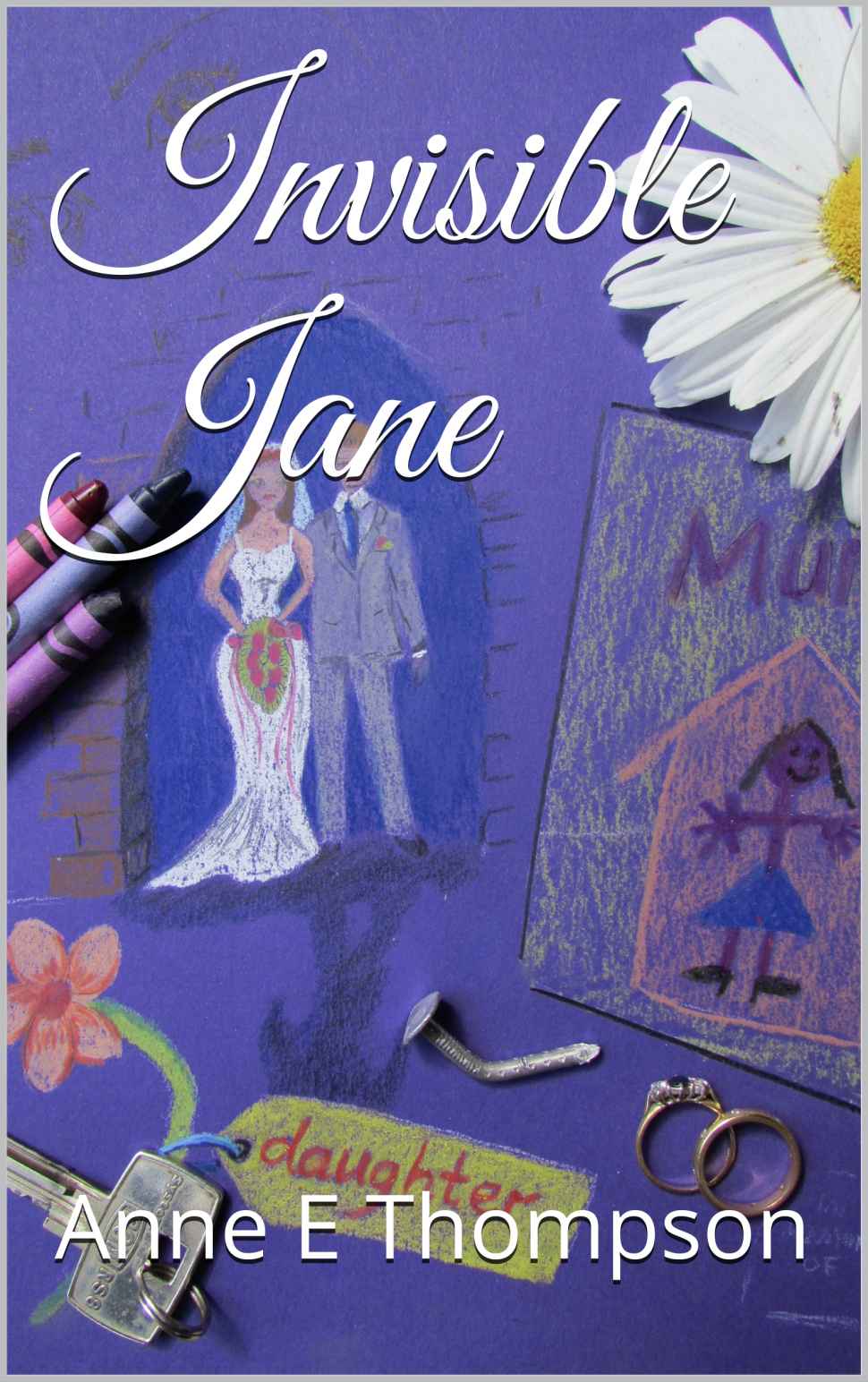
What if…a happily married woman falls in love with someone else?
Chapter Thirteen
May sunshine streamed through the bedroom window, illuminating the pile of neatly folded laundry. Jane was pairing socks. A comforting task that busied her hands whilst allowing her mind to float free, lost in a conversation with Matthew. She was remembering his face as she had related an account of shopping with two children in tow, how one corner of his mouth turned up more than the other.
“I wonder where he lives,” she thought. She had a vague knowledge of the approximate area but not the specific address. It suddenly became important to know. Leaving the washing, she slipped downstairs and removed the telephone directories from the stack in the hall. She carried them quietly to the lounge and sat guiltily in a puddle of sunlight on the carpet. Her heart beat faster and a smile played on her mouth. Feeling like a naughty child, she searched for his name.
First, she tried the directory of local tradesmen. She flicked through the pages of builders, recognising the names of people who had provided quotations for their project, but no Matthew.
She heaved the larger directory onto her lap and turned the thin pages, chanting the alphabet as she sought his surname. E, F, G. Ga, Ge, Go. Her finger ran down the list of names then stopped. There it was. Half way down the list on the page labelled “private residential” was his name.
Reaching for a pen, she copied the address onto the back of a flyer advertising cheap food at a new discount supermarket. She touched the words she had written, wondering what his home would be like. It was not in an area she had ever visited, though she had driven fairly near a few times when visiting one of Peter’s aunts. Perhaps she could go there one evening, not to visit, but just to look. If it was evening, the lights might be on but the curtains open, she could watch him, see how he behaved in his own space when no one was there. She could stand outside, watch what he did. Though, it might be hard to explain what she was doing if someone noticed her. It might make her look a bit odd. She would have to be careful.
Humming, she returned the directories to their slot in the corner of the hall, on a shelf below the telephone. Then she carried the flyer into the kitchen. It occurred to her that it would be impossible to explain why the address was there, should anyone notice it. It was easily remembered and she walked to the kitchen bin, tearing through the picture of lemonade and biscuits.
Abigail wandered through the open door. “What’s that?” she asked, seeing her mother tearing up brightly coloured paper.
“Just rubbish. It’s from that new shop near the library. Advertising cheap biscuits and stuff.”
Abigail watched as her mother thoroughly shredded the paper until it resembled confetti, then she opened her hands and the tiny scraps drifted into the bin.
“I guess she really did not want cheap biscuits,” thought Abigail, then knelt to stroke the dog.
***
It was early summer when it happened and the day began much like any other. The building work was almost finished and Mr. Bobb’s appearances were becoming fewer each day. Jane guessed he had started his next job and was leaving Matthew to complete the Wood’s house. Jane had settled into a comfortable routine that involved a minimum of housework, with frequent visits to the garden to chat. She found herself declining offers of coffee-mornings, or pleas for help at church and schools, using the rather lame excuse of: “The house needs so much work at the moment.”
She was still unsure of her standing with the builder and only felt able to disturb him when offering coffee or passing on some information. However, she was ever aware of his proximity and when not actually with him she was inventing witty comments or reliving past conversations. She found she could accomplish a whole plethora of tasks whilst allowing her mind to meander through previous dialogues, remembering tones and gestures and savouring each glance. She was living more and more inside her own head. If Peter noticed her preoccupation, he declined to comment, though Jane was aware of Abigail watching her sometimes, as if trying to fathom her thoughts.
On the day it happened, it was mid-morning and Jane had just entered the kitchen, smiling, with arms full of the never-ending laundry. The telephone rang. It was Suzie. She was crying.
Jane listened, numb, as her friend related the harsh facts: Sophia had run into the road. She had been hit by a car. She had died before reaching hospital.
There was no way to soften the account and Jane could think of no response. She gradually realised that she was holding her breath.
“How’s Tricia?” she said, realising she should respond in some way.
“No one seems to know. Jenny Shaw phoned me. They don’t know when the funeral is or anything. Playgroup will send flowers. They want some money from everyone. Do you think we should phone her? It’s only just happened, but you know how we all are…” She gave a soft laugh, awkward, forced. “When something happens, whoever hears first starts telling everyone else. It’s all soon common knowledge.”
Jane nodded, even though Suzie couldn’t see her. Broken legs, broken marriages, lost jobs—the news whizzed round, sometimes embellished along the way, but known by most people within a few hours.
But nothing like this. This wasn’t juicy gossip; this wasn’t something to sigh over and tell each other how awful it was, and perhaps the person should’ve seen it coming. This was bigger than the gossip chain.
Jane realised she hadn’t answered her friend’s question and tried to think.
“No. I don’t know. I expect she just wants to be left on her own. What would you say anyway?” She could hear Suzie crying again.
“It’s just so awful,” said Suzie between snotty gulps, “and I feel so guilty. I never liked her and now this has happened. It could’ve been any of us Jane, any of the children could do it. It only takes a second…”
“I know,” agreed Jane. She wondered if she should invite Suzie to the house, or arrange to meet her; but she felt irritated. Jane had not wanted this news, and she did not want to be disturbed at home. It was her time with Matthew.
“I need to go,” she said, “I’ll phone you. Let me know if you hear any more.”
“Oh!” Her friend sounded surprised. “See you at pick up then…”
Jane disconnected the phone and tried to marshal her thoughts. She felt nothing. Nothing.
“I should feel sad,” she thought, “or guilty that it’s not me. But I don’t. I don’t feel anything. I just don’t want the news to get in the way of my time with Matthew. He’s not here for much longer. And really, it doesn’t have anything to do with me.”
She turned towards a sound in the new doorway. Matthew stood there, leaning an arm against the peach coloured plaster and watching her.
“It doesn’t ring if you just look at it!” he joked.
Jane realised she was staring trance-like at the phone.
“No,” she said, trying to smile. “I had some bad news…”
She stepped backwards, knocking the dog’s bowl and water slopped onto the tiles.
“A little girl at Christopher’s playgroup,” she continued. “One of his friends, she had an accident. Ran in front of a car…”
And then, without warning, Jane did feel something.
Perhaps it was having to say the words, perhaps it was the image that rushed into her mind, or the memory of that warm weight leaning against her on the playgroup carpet. But the finality, the unexpectedness, the very bigness of it, suddenly hit her like a physical wave.
“She’s…she didn’t…she’s…”
Jane stopped, feeling her lips quiver. Her mind could not force her mouth to say the words.
Matthew crossed the kitchen in one fluid movement. He took her elbow and guided her to a chair.
“Sit,” he commanded. Jane resisted the urge to lean into him and sank obediently.
“You’ve had a shock,” he said, “I’ll make you a drink. Got any brandy?”
Jane shook her head. “I’m okay. Really I am. Just a bit shaken. I don’t like brandy.”
“Tea then,” said Matthew. “My mother swears by it.”
Jane watched him move easily around her kitchen. It pleased her that he was so familiar with the space, that he knew where to find mugs and tea, was comfortable using her sink, her kettle. He placed the tea in front of her and sat next to her at the table. She felt the warmth of his knee touching her own, and she did not move away. Neither did he—though she could not be sure that he had noticed.
He gazed questioningly at her. “Should I phone someone for you?”
“No,” said Jane, not voicing that his was the only company she wanted. She liked him being so close, wanting him nearer but not daring to move. She could feel the tiny space between them, could almost feel the warmth from him reaching her. They sat in silence for a while then he rose.
“I’d better get on,” he said, “Is there anything else I can do?”
“Yes,” thought Jane, “Put your arms around me and hold me and comfort me.”
“No,” said Jane. “Thanks for the tea.”
***
Jane left home earlier than necessary to collect Christopher. Something within her needed to check her own children, to reassure herself that they were safe. When she arrived, she found somber-faced mothers huddled in small groups. Several were crying and they spoke in hushed tones. Hungry for information they quizzed each other for facts, most of which seemed to originate from one of Tricia’s closer friends. The same sentences were repeated, modified, repeated again. A bee-hive of information.
Suzie waved Jane to where she stood with another mother. It seemed that Sophia had been leaving her home for playgroup when the accident happened. The car had been parked on the road and Sophia had decided to walk around to the passenger door rather than sit in the back. She had darted from the rear of the car just as a delivery lorry had rushed past.
“She didn’t stand a chance,” a woman was saying, “and there was nothing that Tricia could do. She was only distracted for a second. She didn’t even know that Sophia wasn’t getting into her seat in the back. She was probably being naughty for a joke, you know what they’re like.”
Jane was relieved when the playgroup door opened, signalling the children were free to leave. Mrs. Brown stepped outside and beckoned to the waiting carers.
“Now, I expect you have all heard the terrible news,” she began, her voice authoritative. “We were told ourselves just after registration, and we decided it would be best to carry on as normal. We have not told the children because it’s much better that they hear from you.
“I recommend that you tell them the truth as simply as you can. Try not to give them too many details at first, not unless they ask, but do be prepared for a lot of questions. And do not be surprised by their reactions.” She glanced at some of the red-eyed mothers. “Children all react in their own way. They might not be as emotional as you would expect, especially initially. Sometimes these things take time to sink in. Let the children’s responses guide you into how much to say. If they don’t seem interested, then don’t worry—they might want to know more another time.”
She looked around, not sure if all the women would take her advice. She was concerned about her charges, didn’t want them frightened by silly mothers who gave them every tiny detail. Nor did she want this avoided, so the children were left insecure, not knowing whether to believe their mummy who said Sophia had gone on holiday, or Jimmy who was giving lurid descriptions of a horrific death.
“Try to keep things simple,” Mrs. Brown repeated, “it’s easy to frighten children with details that only adults need to know. If they don’t ask, don’t say. If they do ask, answer them honestly.”
She turned and went back into the classroom. “Right children, your mummies are ready. Let me see who’s sitting on the carpet ready to go. Put your coat on properly Samuel. Tommy, let me help with that shoelace. Hanky, Jemima!” Her voice faded as she moved towards the children. No one listening would have guessed how anxious she was, how keen to be relieved of her duties that morning so she could go home and have a good cry in private, away from watchful eyes.
The mothers edged forward, wanting to see their off-spring. Jane found she had an almost physical need to hold Christopher, to see for herself that he was unharmed. His face was subdued as he came towards her, sensing that something was wrong. Jane hugged him and he tried to wriggle away.
“You’re squashing me,” he protested, “and now you’ve got green on you.”
Jane saw that a deep green smear from his painting had been transferred to her sleeve.
“Don’t worry, it will wash off.” She led him to the car, firmly holding his hand and strapped him into his seat.
“Can Tommy come to play?” he asked, adding, “Sophia didn’t come today. I ‘spect she’s got mumps!”
***
Jane waited until after lunch to tell Christopher. She sat him on her lap and held him close, unsure of how to begin.
“Christopher love, there’s something that Mummy has to tell you.”
He twisted on her knee so he could look at her and gazed deep into her eyes, trusting her completely. There was a serious tone to her voice, and he wanted her to know he was listening. He liked when they had special chats.
“There was an accident this morning, and Sophia was very hurt. She died darling…”
Jane felt tears welling and her voice faltered. She coughed, forcing herself to continue. This mustn’t be about her. “Sophia is in heaven now with God.”
Christopher frowned, trying to understand what his mother was telling him.
“Can we go and see her?” he asked.
“No Chris,” Jane paused. “We can’t see her anymore now. Not until we are in Heaven—when we’re old,” she added, as if saying it could ensure her own child stayed safe.
Christopher was still. He knew what dead meant, because he’d seen dead animals. But it did not seem possible that state could apply to Sophia. He also knew that people died when they were very old, and that they went to live in heaven. That also seemed irrelevant. Obviously this was something important, because of the way he was being told, but he could not quite grasp the fact of what was being said. He decided to think about it later. It upset him that his mother was sad so he wound his arms around her neck, pressing his face against hers.
“I love you,” he whispered into her cheek. “Can I get down now?”
Jane released him and he slithered to the floor. She leant back into the chair, fighting to control emotions that were now crowding in, threatening to overwhelm her. She watched her son as he stood. He was so perfect, such a mix of baby and boy. She could not bear to lose him… She stood abruptly, determined not to cry and cause him to be upset on her behalf. She wanted his sorrow, if any ever came, to be for his lost friend, not merely a reflection of adult suffering which he did not understand.
“Come on,” she suggested, wanting him to stay close, “let’s make some cakes together before Abigail comes home.”
They traipsed into the kitchen and Jane began accumulating bowls, spoons and recipe while Christopher pushed a chair to the sink. He stood on it while washing his hands, wrinkling his nose when the water soaked his sleeve cuffs. He pushed the chair back to the table and watched the growing heap of ingredients, poking each one with a finger as it arrived on the table. Butter, bags of flour and sugar and a tall carton of cocoa.
“What are we making?”
“Chocolate buns,” mumbled Jane, as she flicked through the recipe books. She weighed butter into a bowl, then placed it into the microwave to soften while she spooned sugar onto the scales. After three spoonfuls, an angry sizzling alerted her to boiling liquid butter in the microwave, much of which had sprayed the interior. She lifted out the hot bowl, warning Christopher not to touch it. She would clean the microwave later. Probably.
Christopher was busy placing paper cases into the bun tin, several to each hollow, while humming tunelessly. He watched Jane tip sugar into the melted fat. She passed him a large wooden spoon and invited him to stir. His chair was too low, so he decided to kneel, but the hard pine hurt his knees. He tried standing on the chair, but was then too high. Jane was searching the fridge for eggs so he cautiously lowered his bottom onto the table. This felt comfortable if rather daring and he continued stirring the mixture.
Jane turned, eggs in hand. “Christopher! You shouldn’t sit on the table.”
“Ov-erwise I can’t reach,” he pleaded.
Jane let it pass. She cracked the eggs into a cup then found a teaspoon to retrieve fragments of broken shell.
“Mummy?”
“Mm?” Jane chased the shell around the cup. She managed to ensnare it with the spoon but it always slithered free before she could raise it to the rim of the cup.
“Can Sophia be un-deaded again?”
Jane stopped fishing and placed the spoon on the table. She looked at Christopher. He was still diligently stirring, so she emptied the egg (complete with shell particles) into his bowl.
“No Chris, when we die it lasts forever. Sophia lives in a different place now, with God.”
The boy was stirring furiously, enjoying the slippery feel of the mixture in the bowl.
“Can we eat these today?” he asked.
“When they’re cooked,” answered Jane, somewhat bemused by the subject change. She spooned flour onto the scales then removed the rather greasy spoon from her son. “I’ll have a turn now,” she said, “you finish the cases.”
Christopher returned to the box of muffin cases and continued to line the tin. It was more difficult now as they stuck to his fingers and he was glad when the task was complete.
“All done!” he declared, and pushed the tin along the table. The cases floated in the draught like snowy autumn leaves, and rested in a heap at one end. “Oops,” giggled the boy.
He watched his mother add flour to the bowl, stirring slowly to combine the ingredients. He noticed the large tub of cocoa and pushed his nose inside. He found he could fit both his nose and chin into the container. It smelt warm and chocolatey. He sniffed. The fine powder swept into his nostrils and he sneezed, spraying the table with droplets of moist cocoa.
“Christopher!” said Jane, going to get a cloth to wipe both the boy and the table. She added cocoa to her mixture then moved to the kettle.
“You can finish stirring while I take Matthew a coffee.”
She carried the drink into the new extension. Matthew knelt at one end, fixing skirting board to the wall.
“Oh thanks.” He gazed around the room. “Well, what do you think? Almost finished now.”
Jane looked at the dusty floor, the plaster speckled window, and the conch pink walls. She imagined the cleaning, the painting of coat after coat of paint and the work to revive her garden.
“It’s nice,” she said, “but it’s been so long, I can’t imagine it finished. It doesn’t feel like part of the house, I will always think of it as a building site.”
“You’ll like it when it’s finished, and we’ve gone and left you in peace. Try to imagine it with carpet and curtains.”
Jane turned to return to the kitchen. “Oh Chris!”
Like a small brown monkey, Christopher was perched on the table, legs swinging free. The bowl was in his lap and his fingers were in his mouth. Jane crossed the room and removed the bowl from his sticky hands.
“There’s only enough mixture left for two cakes,” she protested. “You’ll be sick.”
“He looks like he needs a shave,” laughed Matthew, following her into the kitchen and observing the chocolatey rim that surrounded Christopher’s mouth and coated his chin. “What are you making?”
“A mess, mainly,” said Jane, rinsing the cloth in warm water.
“Chocolate buns,” announced the boy, “but not for Sophia, because she’s dead.” He stopped uncertainly and frowned. “Do people eat in heaven?”
“Ah,” said Matthew, “Your mum told me about your friend. Not sure I know much about heaven, but I expect people eat—but only nice food.”
“No veg-e-tables!” said Christopher, wriggling as Jane scrubbed his face. He held out his hands to be wiped, wishing the cloth was less rough.
“Probably,” agreed Matthew. He sat on the only clean chair and watched Jane as she spooned the remaining batter into two bun cases and carried them to the oven.
“What do you know about heaven?” said Christopher.
“Not much really, only that it’s nice. And full of good people.”
“Do you think the accident hurt Sophia?” The child was serious now, concern flooding his face as he considered this new thought. “Do you think she cried?”
Matthew’s voice was very gentle, “Well Chris, we don’t really know, but I shouldn’t think so. I expect it happened very quickly and Sophia suddenly found herself in heaven. Her mummy will be sad, and you will miss her sometimes, but I think Sophia is alright. Who knows, maybe she’s watching you bake cakes.”
Christopher grinned, glad to be reassured. Jane lifted him from the table and began to clean it. She scooped the worst mess into the bin, then returned with a cleaner cloth to wipe the rest. She stretched down to wipe the chairs, and could feel Matthew watching her. She moved slowly, pretending to concentrate. His tone of voice caused her stomach to flutter and whilst his theology was probably flawed, she was impressed by his manner towards her child.
“I wish…” she began to think, then stopped herself. Some thoughts were too dangerous.
She carried the dirty utensils to the sink and ran hot water over them. Christopher was now telling Matthew about his morning, but she could feel the builder still watching her. She turned and met his gaze. He smiled, very slowly, then bent to talk to her son.
***
At three-thirty, Abigail trundled towards the car, surprised that her mother was on time. Her bag was laden with a history project and she carried it awkwardly, bumping against one hip. It was a sunny afternoon, though still cool, and long shadows fell across the windscreen, obscuring her mother’s face. She reached the car and stepped across the muddy grass verge into the back seat.
“Hi,” she said, “you’ve got brown stuff in your hair.”
“We made cakes,” said Christopher. “But mummy burnt them.”
“Lovely,” sighed Abigail. She caught her mother’s eye in the mirror and smiled. “Never mind, it’s nice of you to try.”
“How was your day?” said Jane.
“Okay, got lots of homework though.”
“We have some sad news,” began Jane, pausing to negotiate a roundabout and narrowly missing an elderly lady pulling a shopping trolley. A group of teenagers saw her coming and walked purposefully into the road. She resisted the urge to accelerate and slowed while they straggled across the street. She wondered if she would make it home before Matthew left for the day.
“There was a road accident,” she continued, turning abruptly into the High Street. “One of Christopher’s friends was killed.”
Abigail’s eyes widened. “Was Chris there? Did he see it? Is he okay?” She looked searchingly at her younger sibling, checking for signs of trauma.
“No, no,” said Jayne, “it happened at her home. Chris is fine. Just sad,” she added uncertainly, not entirely sure of her son’s feelings.”
“Oh, I am sorry”
Jane was surprised by her daughter’s concern, and felt rather proud of her thoughtfulness. She sped through an orange light and turned down the hill towards home. Christopher leaned back in his chair and gave a large yawn, stretching his mouth as wide as he could. He was aware that he was receiving more attention than usual and felt decidedly content. He wondered if Abigail would like her cakes. He was troubled that the burnt edges were shiny, but perhaps Abigail wouldn’t notice.
***
Matthew left later than usual that day. He appeared in the kitchen as Jane was defrosting pizza for tea.
“I’m off now. Just wanted to check you’re okay before I go. I know you’ve had a rough day.”
Jane basked in his sympathy, searching her mind for a reason to encourage him to stay but could find none.
“No, I’m fine,” she admitted, “but thanks for asking. Do you want a cake?” She gestured towards the two cakes, sitting forlornly on the plate. Abigail had looked at them and announced she was not hungry.
Matthew paused. The cakes sat solidly together, icing dribbling over the paper cases. They had smeared the icing on them when they had cooled, but it had run into the dip in the centre and they now appeared varnished rather than iced. The edges were very black.
“Oh thanks. They look, well, I think Christopher enjoyed making them. Maybe we should leave them for him to eat.”
He turned and faced Jane, his mood becoming serious. “You’re a good mummy you know,” he said softly, “sometimes I wonder if you deserve to be happier…”
Jane was motionless, willing him to continue.
The door burst open and Abigail stomped in.
“All the ink has run out,” she stormed, “I’ve got tons of homework and no pen to write with. What do you suggest?”
Jane sighed. “Maybe we could add water to the bottle and shake it a bit.”
Matthew grinned and turned to leave. “Bye,” he mouthed.
Jane watched him leave. He walked to his car and climbed in with easy movements. The engine sounded, and he was gone. Soon he would leave for good. The thought disturbed her and she tried to push it away as she poured water into the nearly empty ink bottle.
When the extension was finished, in a few days’ time, she might never see him again. She screwed the lid on the bottle, and shook it, then passed it to Abigail. She watched her fill her pen with the diluted ink and test it on an envelope. The blue was very pale and barely legible.
“Matthew will be gone, moved on to the next thing, and I’ll still be here. I won’t have anything left,” thought Jane. “I’ll be invisible again. I’ll just be the person who helps everyone else have a life.”
“It’s a bit faint,” remarked Abigail, “You can hardly see it. But it works, so I guess I won’t worry.”
“Will anyone notice?” wondered Jane.
To be continued on Tuesday.
Thanks for reading.
Why not sign up to follow my blog so you don’t miss the next chapter?
anneethompson.com
***