Bible Blog 5 – continuing my read through the Bible…


I am still ploughing through Exodus – fairly boring in parts, but there are some nuggets of interest. Here are some thoughts:

Exodus 21 – laws concerning slaves. This bit I don’t understand at all. It seems like God is saying that owning, in fact, mistreating, slaves is okay – as long as you don’t hit them so hard they die. This does not, in any way, reconcile with my understanding of the nature of God (which is why it’s so dangerous to read a snippet of the Bible and then say, “Ah, this proves such and such.” It probably doesn’t!) So, how to make sense of this bit? – I am open to suggestions. All I can think is either we just cannot, in our English version, thousands of years later, really understand what was originally meant by these words. Or, perhaps when they were written, the abuse of slaves was very extreme, and these words were a moderator, toning down the abuse, until such a time as society had progressed enough for everyone to be treated properly. Sometimes God allows people to progress slowly, and maybe society of those days wouldn’t have coped with being told “no slaves”. But I’m clutching at straws, really, I have no idea what this bit means. It seems especially ironic when you consider it was being given to people who, until very recently, had been slaves themselves.

Nor do I understand why they were told not to boil a young goat in its mother’s milk. I think this is the basis for Jews today not eating cheese and meat in the same dish, but I don’t know why it mattered.

Then we have the details of how to build the tabernacle, a special tent for God to ‘dwell in’. It’s very detailed – not especially thrilling to read. It does however raise some questions. The materials were costly and beautiful – why? God had better beauty in nature: flowers, sunsets, stars, seas. Why would he want a tent, even an expensive one? Obviously the point was that it was not ‘for’ God, it was for the people, so they had a special place to worship. I wonder if we’re missing that today. Perhaps having a place that is special, that’s our very best, is important. Maybe we physical beings need reminding that God is worthy of more than we can offer, and we should designate somewhere suitable to worship him. Yes, when we have no time, we can pray anywhere (when you have toddlers and babies, sometimes the only place you can think for a second is in the bathroom.) But when life is not so extreme, should we be making more effort? If we snatch times to pray when in bed, or at the kitchen table, are we missing something of the holiness of God? I wonder if other religions, such as Muslims who wash before prayer, have something to teach us here. Yes, we need to be careful that the ritual doesn’t become an end in itself, but I wonder if we have lost something by rejecting rituals so completely. Even our churches tend to be a bit shoddy. We have an attitude of “take the cheapest biscuits to have with coffee, it’s only church”. I think we should take more care to only bring the best, because it helps to remind us that the God who we claim to worship is worth our best. Always.

In Exodus 29 we have the consecration of Aaron and his sons. They are told to “…lay their hands on the head of a bull. Then you shall kill the bull…” We often have bulls in the fields near us. They are huge. These instructions are no simple thing. It also means the priests were in essence, butchers. They would smell like your local butchers shop – not especially pleasant. I wonder if they could wash the clothes they were told to wear?

Talking of smells, in Exodus 30 there is the recipe for a perfume. I read this weeks ago, right after I had visited Floris, the exclusive perfumery in London (see blog). So I was extremely interested that there was a special smell used for the place where people were to worship. The part of your brain that deals with smells is right next to the part that stores memory, which is why smells can evoke such strong memories. For me, one whiff of Old Spice aftershave in a supermarket, and I’m a little girl again, being hugged by my Dad. So, for people to have a smell that they associated with worship, would be very special. I guess that’s why they were forbidden to use the perfume anywhere else – it was only to be associated with God. Smells, memories, emotions, would all be intermingled when they came to their special place. I know some people light a candle when they pray. Maybe keeping a special scented one, not to be burnt at other times, would also be helpful. God never forgets we are physical beings, even if we like to sometimes. I’m not sure we should ignore all this as much as we do.

In fact, we tend to see gifts from God in mainly spiritual terms. But in Exodus 31, there’s a chap called Bezalel (unfortunate name) who is “filled with the Spirit of God” and is therefore intelligent, artistic, and a skilled craftsman.

I’ll post more of my notes next week. Thanks for reading. (If you sign up to follow my blog, you won’t miss the other things I discover.)

anneethompson.com

The Red Light District of Mumbai


So, deciding to be brave, I went to the red-light district of a Mumbai slum. Husband was working, so I contacted Tearfund, and they arranged for me to visit one of their projects. Beforehand, I was very nervous about going on my own, but I am so glad I did it.

I was met by Max, who is the director of Sahaara. We’ve never met, so it was a little like a spy story -“I will be under the arch with a pink carnation in my buttonhole” (Well, actually, he just told reception who he was and we met in the hotel lobby, but you get the idea.) We then got a taxi to Turbhe, the area of the slum he works in. We chatted in the car, and I could check on a few things I’ve included in my latest novel (which is set partly in the slums of Delhi).

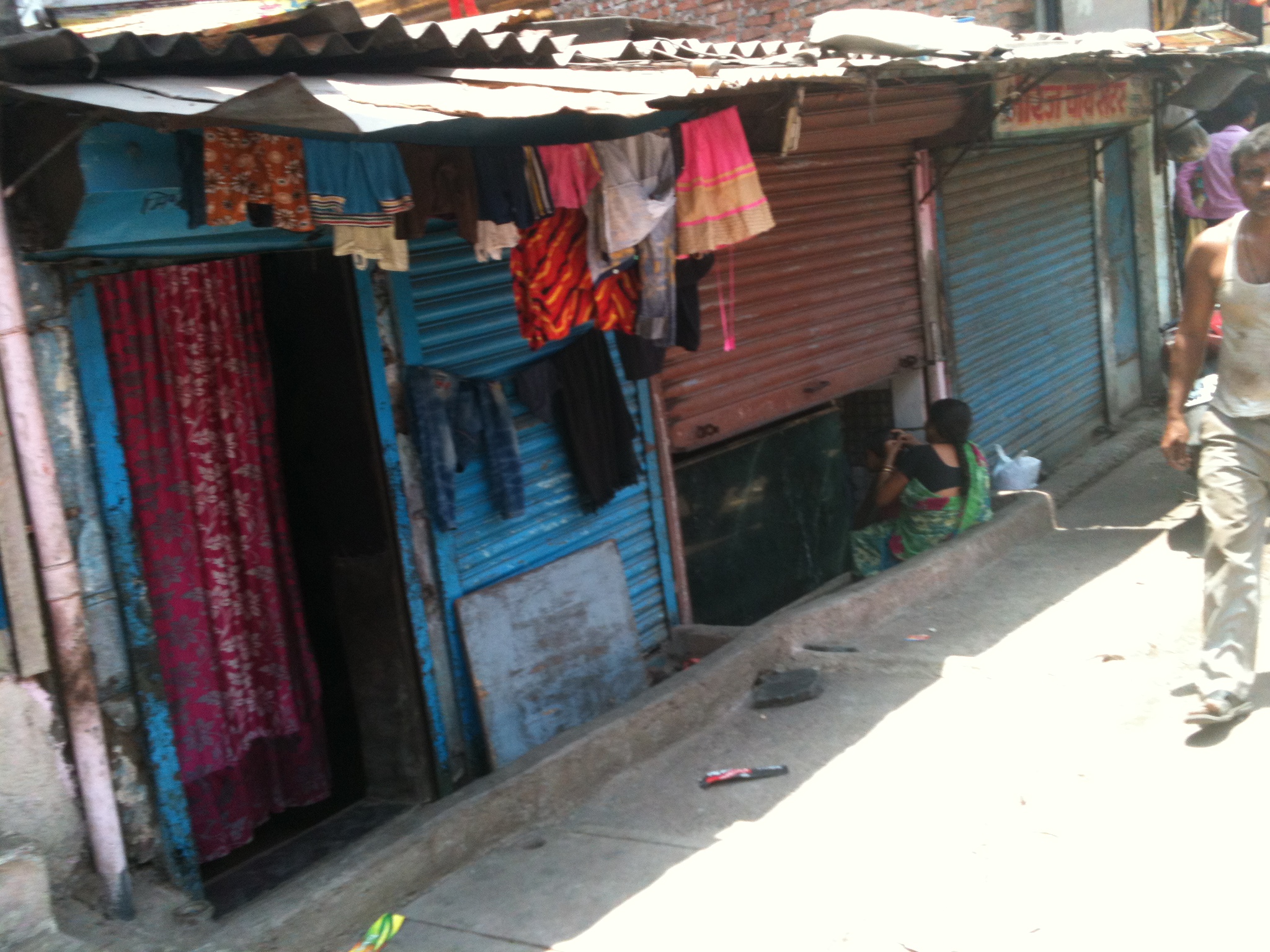
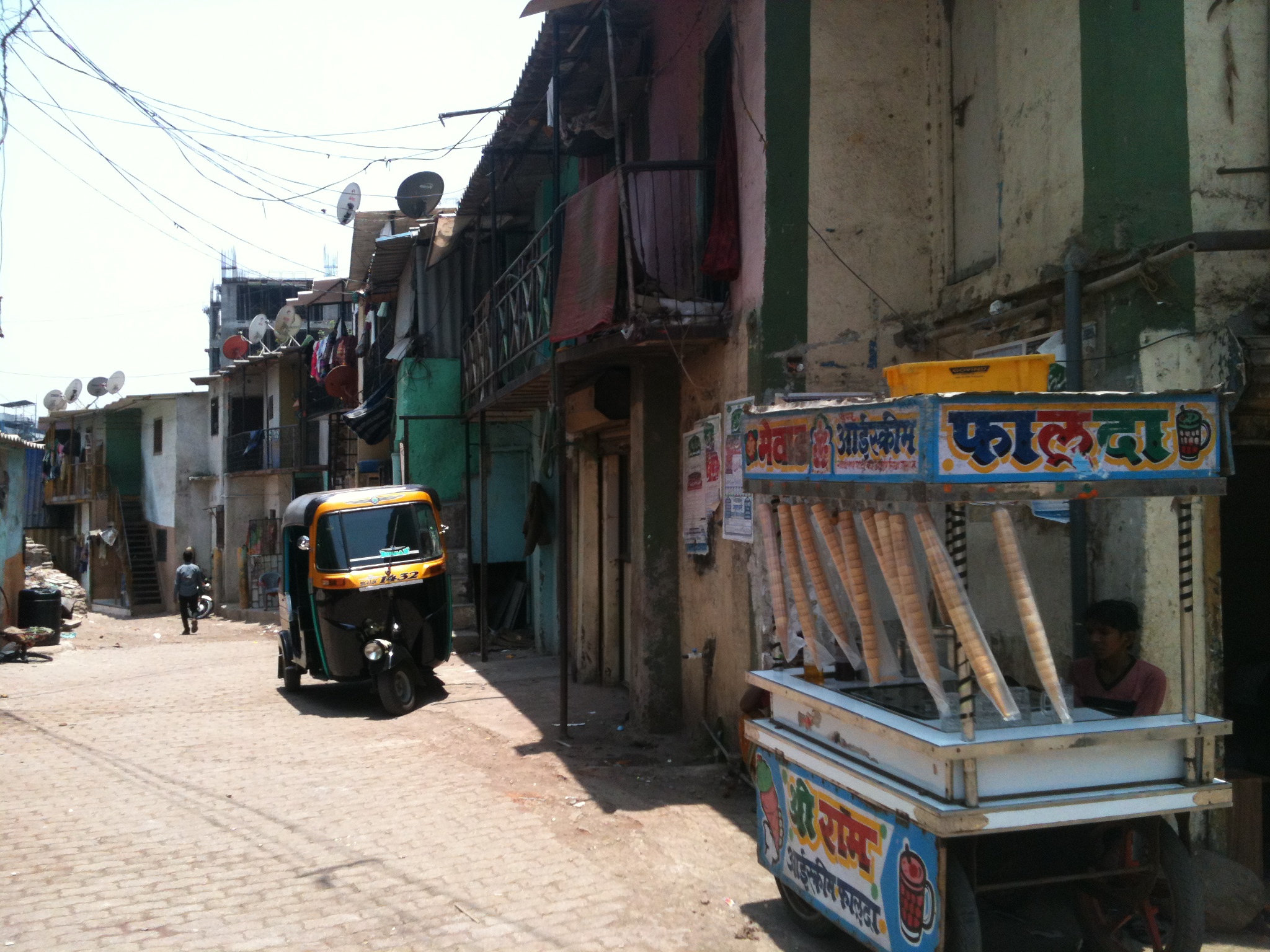
As we walked through the slums, it was all very similar to places I saw in Delhi: homes made from scavenged materials, uneven walls, unglazed windows, corrugated iron roofs. The hard mud paths were litter strewn – in a couple of weeks they’ll be quagmires of wet mud.


Roads were pot holed, narrow, stalls and heaps of rubbish making obstacles for vehicles to inch around. At one point the road was blocked as a lorry driver was asleep, curled up over the steering wheel, oblivious to the honking from other drivers who were unable to pass.


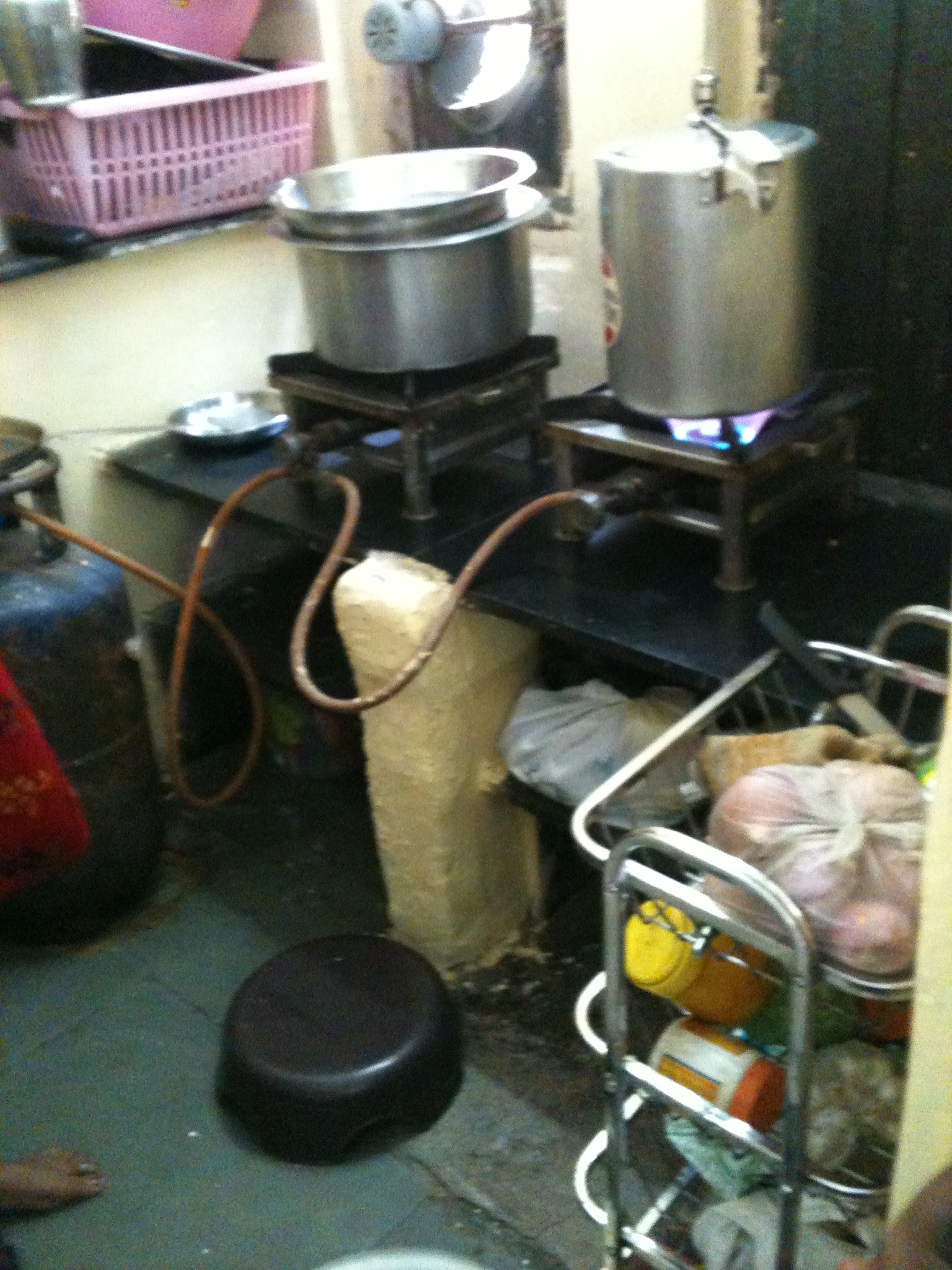
We first went to a building (actually, it was really just a narrow room) which is a feeding centre/education room. In May, everything closes (due to the heat) but they were still providing a mid-day meal. They had two gas burners, one with a pressure cooker of dhal, one with a vat of rice.


image

There was a bowl of hard boiled eggs, which they must’ve cooked earlier. No work-surface (no idea how they chop vegetables – they must do it in their hand, on a plate balanced somewhere). No sink, no running water. There were cupboards, some of them very high. At one point a woman climbed, a foot on a shelf, other foot on the top of a cupboard door, to reach plates from a top cupboard. Metal plates were stacked on a drainer.


image

They were washed in a bucket on the floor, the water carried in from an outside water butt.
Water is piped into the slum once in the morning, once in the evening, and people fill containers to use throughout the day.

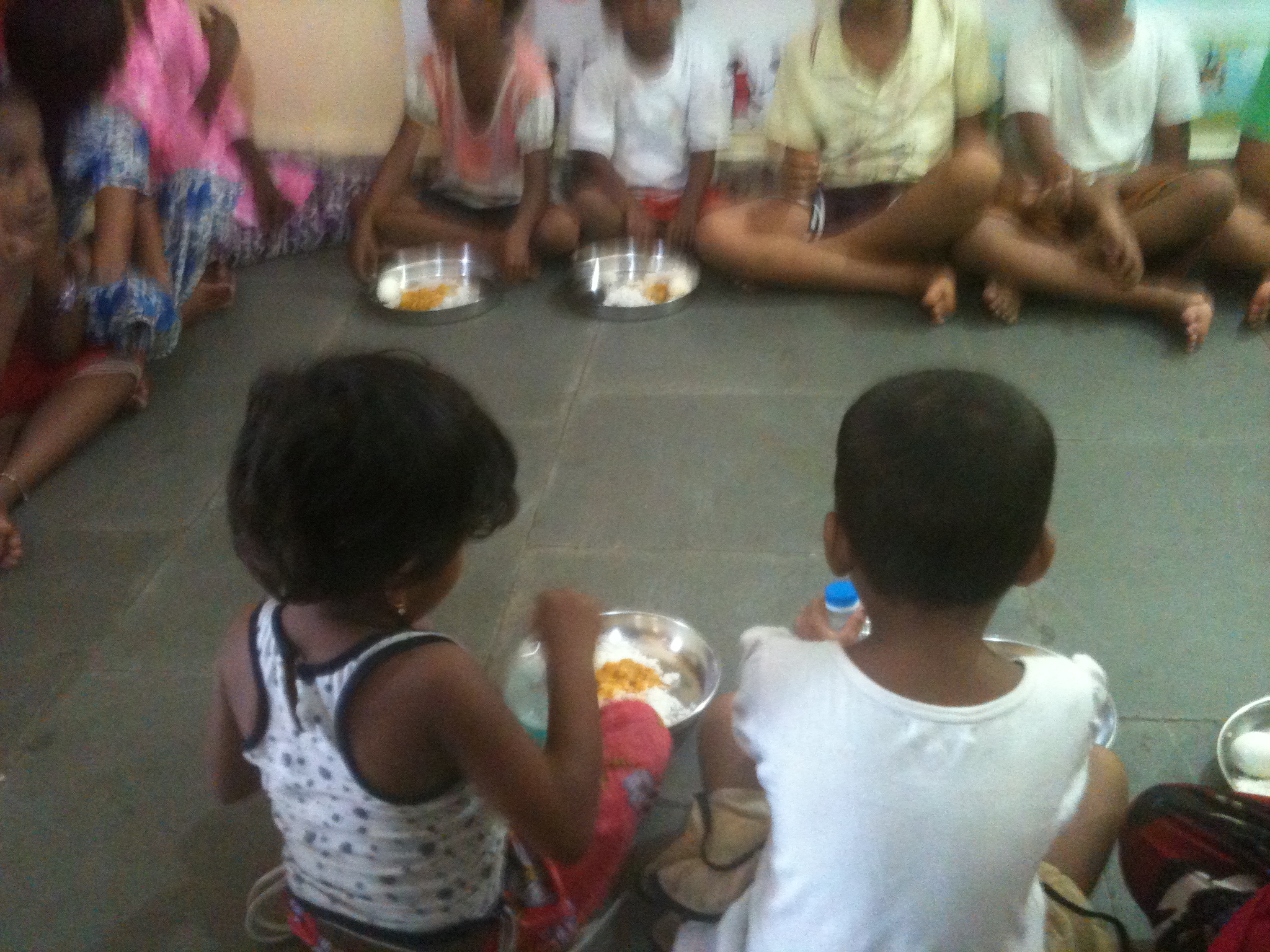
The children arrived. Black-eyed, smiling, interested to see a big white woman sitting in their room (I feel huge in India. Everyone is smaller than me. Husband is a giant here.) I took lots of photos, but I’m uncomfortable about publishing them here, as most of the children had mothers who were sex workers. I will include fuzzy ones of backs, but not include faces, and hope that preserves their anonymity (we were on the edge of the red light district, I could photograph houses on the left, not on the right.)

These children were growing up in an environment where prostitution is the norm. Sahaara is educating them, so they don’t follow their mothers into the same profession, so they will have choices in life.
Previously, they found that some children arrived only for the food. Sahaara therefore made a rule: if the kids don’t attend lessons, they can’t eat. People complained, but now they all come to lessons. Seems a wise decision to me – if we just feed the poor, they will always be poor. (This is why I like Tearfund/Sahaara – they sometimes make unpopular decisions if it is for a greater good.)

IMG_2095They showed me the toilet – a room with a drain, a bucket, and a ladle. Absolutely no idea how it should be used (thankfully, was just a morning visit, I didn’t need to use a loo). Max told me that families are more likely to have a mobile phone than a toilet. There was also a fridge (not in the toilet, just in the room).
While we were there, the power went out. This happens every Friday. There isn’t enough electricity, so different areas of the slums have no power for certain times during the week. They never know how long the power-cut will last, sometimes a few hours, but when I was there it came back on after about 30 minutes. The fridge whirred back into life and the ceiling fan stirred the warm air. It would make the fridge pretty useless for anything other than drinks though.

We walked through the red light district. The houses here were slightly better, I guess it pays well. Each little house had 3 or 4 women outside, just sitting on chairs or on the floor. I thought they were sitting in the shade, chatting to each other. (Later, realised they were soliciting customers – am a bit naive about such things). Sahaara has a second centre in the heart of the red light district.

Here, they chat to the women, teach them skills like sewing, hairdressing, making things from junk – enabling them to have life choices if they want to choose a different career.
Max said it’s about caring for the women, showing them that God loves them, that they have worth, that they matter. Sahaara has a 9 point plan, starting with recognising the women, then greeting them, then befriending them, then inviting them to the centre, then the women coming on their own…. until, hopefully, they will decide they want to leave. If they do, then there are safe houses they can go to, to adjust to life outside the red light district, somewhere they can start to rebuild their lives.

Usually the centre is shut during May, but they opened it to show me inside. When they saw it was open, a couple of women came in, to see what was happening.

Back at the other centre, about 35 children sat on the floor. One child said grace (I think it was in English, which seems bizarre, as they all spoke Hindi. But I was tired, brain was fuzzy by then, so maybe was imagining it).
They ate from the tin plates, no cutlery, scooping the food with their right hands. The women were busy, one dishing up the food on plates, the others taking it round to the kids. I nearly offered to help, but then I realised, it was like Lunch Club at home. Everyone had a role and knew what they were doing, the last thing they wanted was some big foreign woman getting in the way!

We got a taxi back to the hotel, and Max delivered me safely to the lobby. I was so glad I had been, met the women, seen the children. It makes it easier to support the work and talk about it to others. Everyone has a different story. Some of the women would have been trafficked as children, some had gone into prostitution by choice, because their options were very limited. Max said they work with everyone, the prostitutes, their children, the pimps. They all need to be cared for.

It would be easy to judge, but their lives are tougher than ours, we are not so very different inside. If Sally finds she cannot make enough money from rent, she may well decide to go back to her village, to buy a young girl, to act as her pimp, so she can feed her own child. Not because she is more wicked than you or me, but because she has grown up in a harsher place, where survival means hard choices.

Sahaara is trying to show that God loves them, wants a better life for them and their children, and is teaching them the skills so they can make that choice. But the decision has to be theirs. All Sahaara can do is give them the choice. All we can do is help to provide the resources, and pray.

Thank you for reading. If you would like to help support Sahaara or learn more about their work, go to tearfund.org for more details.

anneethompson.com


I have included some of the women’s stories in my latest novel:
CLARA – A Good Psychopath?
Available from bookshops and Amazon, as both a paperback and Kindle book.
Why not buy a copy today?
UK link below

Mumbai, India


 I am writing this in Mumbai. Husband has to work in India for a few days, and travelling on work expenses is always rather nice (I pay for my travel & food, but the hotel is no extra, and they’re nice!) so I tagged along. Plus I love India, it’s possibly my favourite country (not that I have seen more than a snippet of it -but what I’ve seen, I like.)

We arrived late Wednesday night, having woken early that morning (left home 5.45 am), so I was tired. We had to go through different immigration, as I was travelling on a tourist visa, and husband had a work one. The woman at the desk was very pleasant, and when husband pointed out for the sixth time where he would meet me, she laughed. When he went off to his work visa desk, she commented that he seemed very worried about me.

“Yes,” I smiled, “he thinks I’m incompetent.”

Immigration officer then asked for my visa. I gave her the print out with the hotel details on. (They look the same, both printed from the computer.) She politely asked if I also had a visa.

She then asked where I had come from. I was surprised, but gave my full postal address. I even remembered the postcode, which often defeats me, so felt rather pleased with myself. Immigration officer looked confused and asked for my boarding pass. It was somewhat crumpled, but I dug it out from the bottom of my bag, then realised my mistake. “Heathrow!” I said, ” You wanted me to say Heathrow, not my address, didn’t you!”

Immigration officer continued to smile. We then had trouble making the fingerprint machine work (but I don’t think that was my fault.) Eventually I was allowed into India. I think Immigration Officer went for a tea break.

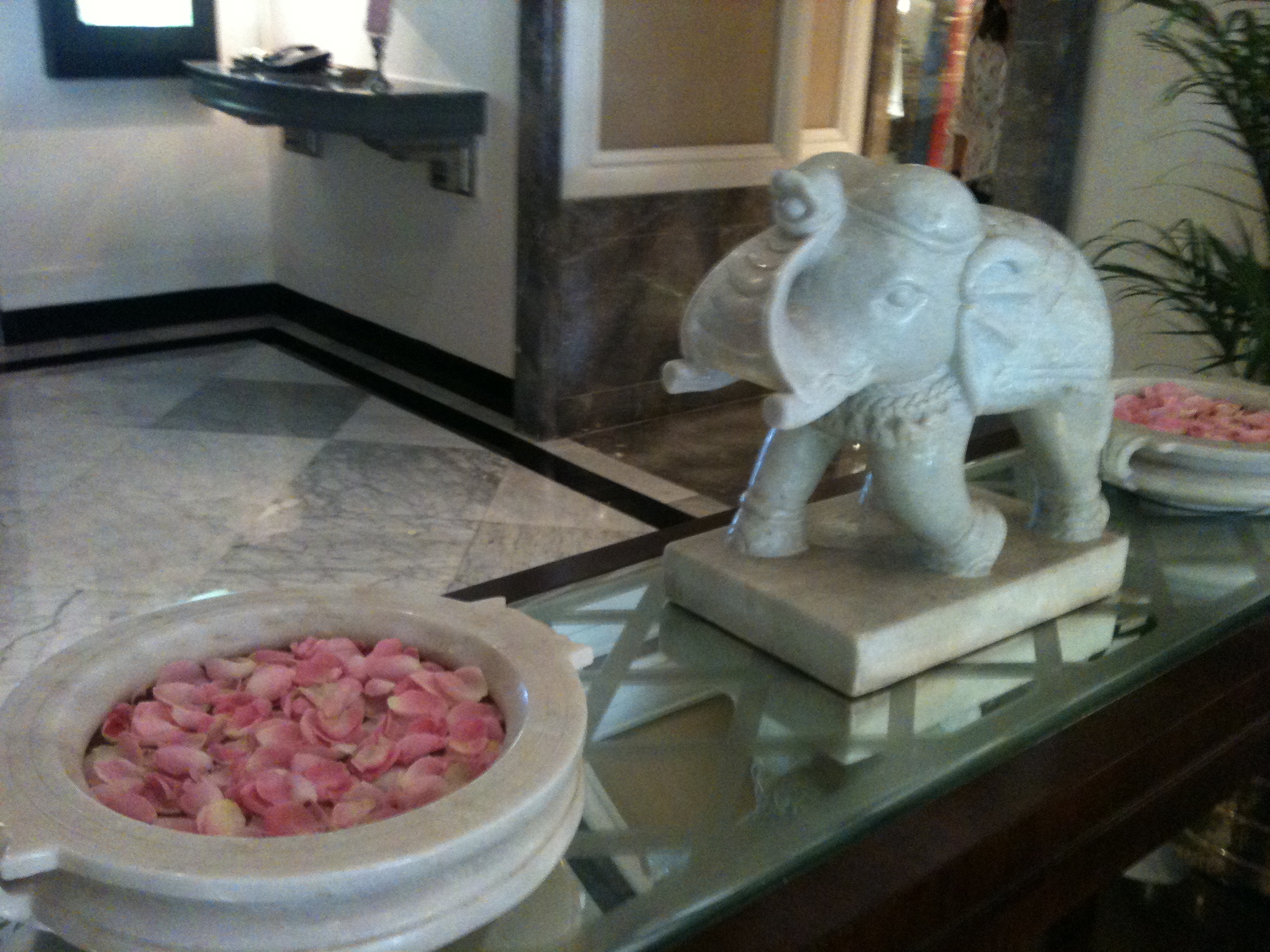
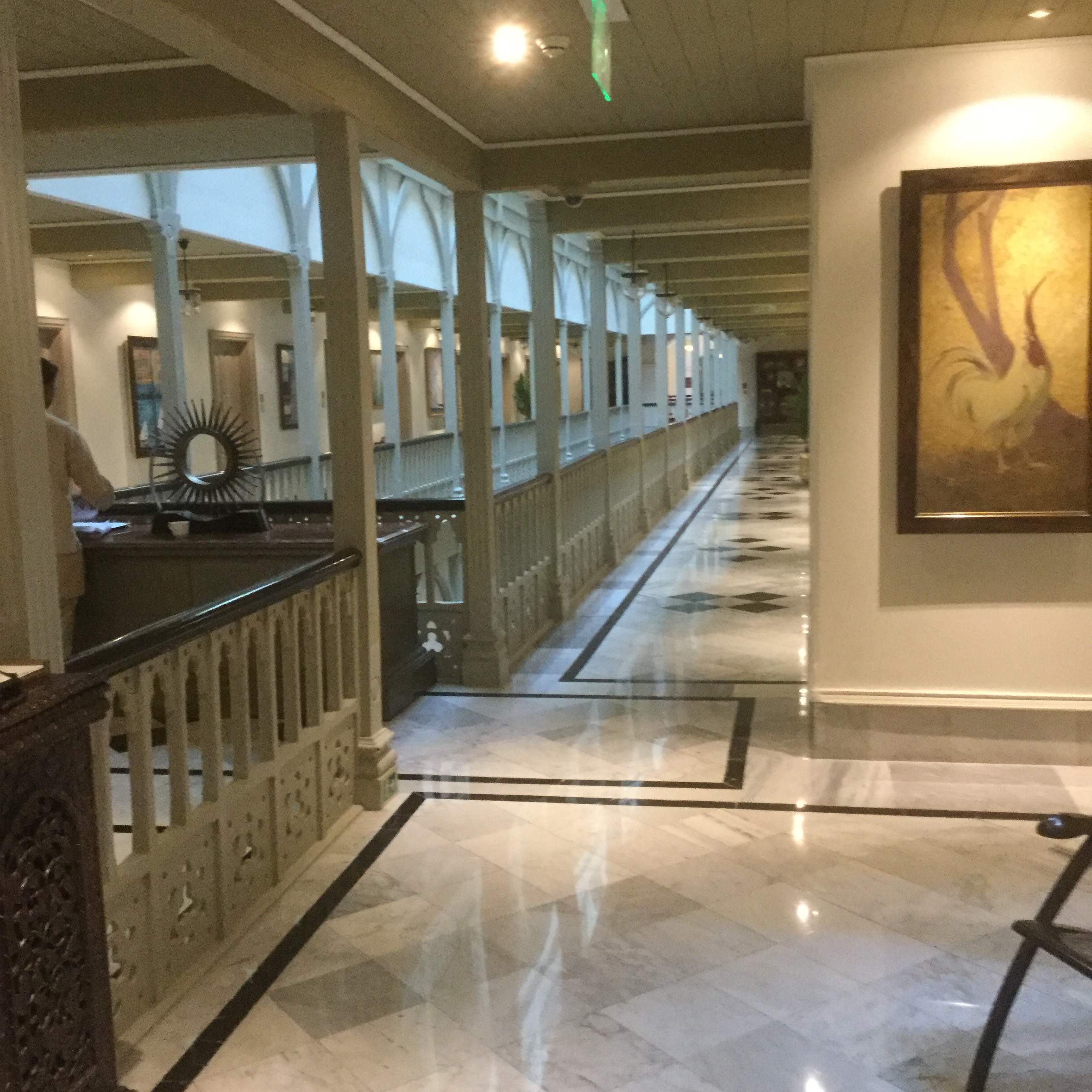
We’re staying at the Taj Mahal Palace Hotel. It’s beautiful. There was a mix up with our booking (also not my fault) and as a goodwill gesture, they upgraded us to a suite. The hotel really is beautiful. There are flowers and candles everywhere, and the corridors are all open, with lots of carved lattice work.

When we returned yesterday evening, there were patterns of flower petals everywhere, so pretty. (Romantic husband referred to them as ‘vegetation on the floor’ ).


Walked to Gateway to India. Lots of people there, some were catching ferries across the sea. It was previously owned by Portugal, (the Portuguese for good is ‘bom’ and its a bay, hence was called Bombay).


We went to a market and bartered for some trinkets. I am not very good at bartering, especially when the crafts are actually very pretty, and the price seems to be low to start with. Tradesmen smile a lot when I shop (and tell me not to bring my husband next time, because he’s cannier than me!)

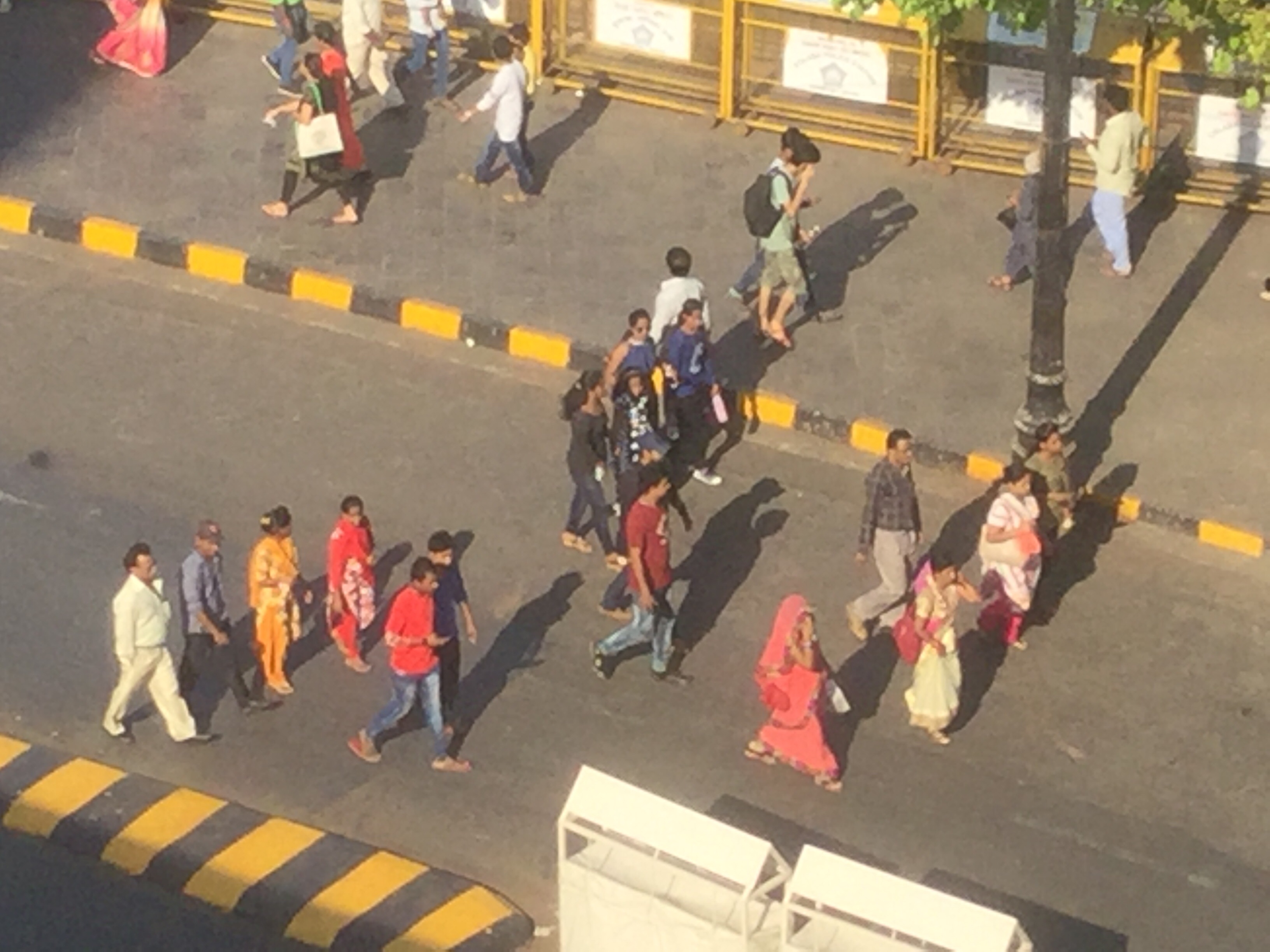
Wandered around the city. I love the faded colonial buildings covered in vines, the huge plants, the colour everywhere. Every sense is bombarded, so much noise and smell (not always pleasant), and so hot. We met some friends for lunch. They said that in a couple of weeks the rain will come, sometimes raining for several days continually, which cools everything down.

I also visited the slums on the mainland, where I was shown around by Sahaara, one of the projects Tearfund works with. I went on my own, as Husband is working (very brave of me!) I will write up what I saw and post it later this week. Right now, I need a shower!

Excuse the bleary photos -all taken with my ancient phone.
Take care,

Anne x

Why not sign up to follow my blog?
anneethompson.com


If you enjoyed this, you will love my new book: The Sarcastic Mother’s Holiday Diary.
I have always written a diary on holiday, so last Christmas, I decided to find all my old diaries and blogs, and make a book for my children. However, several other people also asked for a copy, so I have written a public version – it’s available on Amazon and has been described as “The Durrells meet Bill Bryson”!

Why not buy a copy today? I think it will make you laugh.

The US link is here:

https://www.amazon.com/Sarcastic-Mothers-Holiday-Diary-ebook/dp/B07N95281F/ref=sr_1_1?ie=UTF8&qid=1549015525&sr=8-1&keywords=the+sarcastic+mothers+holiday+diary

The India link is here:

https://www.amazon.in/Sarcastic-Mothers-Holiday-Diary-ebook/dp/B07N95281F/ref=sr_1_1?ie=UTF8&qid=1549015429&sr=8-1&keywords=the+sarcastic+mothers+holiday+diary

The UK link is here:

https://www.amazon.co.uk/Sarcastic-Mothers-Holiday-Diary-ebook/dp/B07N95281F/ref=sr_1_2?ie=UTF8&qid=1549014970&sr=8-2&keywords=the+sarcastic+mothers+holiday+diary


Bible Blog 4


After the plagues, Pharaoh decides to let Moses take the Israelites out into the wilderness to make sacrifices to God. I found it interesting that Moses was still pretending they planned to return – he at no point told Pharaoh they were leaving for good. Does this mean dishonesty is okay in some situations? Not sure, certainly Moses gave canny answers to people, he was a good politician.

Pretty soon after leaving Egypt, God tells the people they need to celebrate the Passover every year – a festival with special food and rituals, to remind them that God saved them. Sometimes I think Christians today have forgotten the importance of rituals – especially in non-conformist denominations. Other religions are better at this. We are physical beings, we need to do physical things to help us remember. I guess that’s why times like Christmas and Easter are so important, and the sacraments (communion, baptism). I think ‘occasions’ are important. We try to celebrate them in our family, to recognise things like exams, birthdays, graduations, (my book launch!) with family meals. Also important to make spiritual ‘occasions’ I think.

Then we get to the part about the people following a pillar of cloud and fire, the parting of the Red Sea and the drowning of the Egyptians. Now, several years ago, I watched a documentary on BBC, which was examining the physical evidence of the events of Exodus. It was very interesting, but I can’t remember most of it now. One thing they said was they thought the Israelites crossed the Sea of Reeds, not the Red Sea (which is possible, if you look at the Hebrew words). They made quite a strong case for the miracles being a result of volcanic activity in the area. If you read the descriptions while thinking about volcanoes, this does seem likely. Movement of the earth’s plates could cause a tidal wave, which would (I understand – I’m not a geographer) first draw the water back, so the Israelites could cross the sea, and then cause a tidal wave which fits with the Egyptians seeing the wall of water that’s described, and being swamped. The Exodus account implies all this happened at night, which would be completely terrifying.

The pillar of cloud/fire also fits with the stuff that’s expelled from a volcano, and certainly the later descriptions of Moses up the mountain are incredibly similar to the terrifying experience of being on an erupting volcano.

The journalists tried to plot the route of the Israelites, assuming they had crossed the Sea of Reeds, and they decided the mountain that most people today think was Sinai was wrong, and it was one in Saudi Arabia – for which they couldn’t get permission to test for historical eruptions. So, what do you think? As I said in a previous blog, I believe God made the world with all its natural phenomena, so it seems logical to me that he would use those. It doesn’t, for me, make it any less miraculous. In fact, if ancient people are describing so accurately what they encounter when a volcano erupts, surely we should also give credence when they describe hearing God speak directly to them.

When God sends the manna for the people to eat, we get another reminder of the law to keep the Sabbath as a day of rest. Interesting to note that the Sabbath was “given to” them – it was a gift. Although Christians keep Sunday rather then Saturday, it seems to be important that for one day we rest, think about God. I have read that in the early days of communism in the old Soviet Union, they tried to introduce longer weeks, but they found that productivity actually decreased. Not sure if that’s true, but there does seem to be some evidence that we are physically designed to need to rest every 7 days. So you might as well enjoy it!

There was lots of moaning from the Israelites. Just 3 days after they watched the Egyptians destroyed, they started to complain. Every time things got a bit tough, they complained. They also tended to blame Moses, even though they surely recognised that he was simply relaying messages from God. Always easy to blame the leader when things go wrong….

One of my favourite parts is when Jethro, Moses’ father-in-law arrives. Moses welcomes him and tells him what’s been happening. Jethro is not a Jew, he doesn’t even believe in the same God (he was a priest of another religion.) Yet Moses doesn’t tell him he’s wrong, he doesn’t even try to persuade him, he simply tells what God has done for him. He then listens. He takes advice from the priest of another religion. This is so rare today, we are so determined to convince people that our way is best, everything else is wrong, that we don’t even listen to good advice when we hear it. There is a time to learn from other people, even if they believe different things to us. It goes well with the verse in Matthew which says, “…be as shrewd as snakes and as innocent as doves..” Sometimes Christians today forget the shrewd bit.

Smelling Like Marilyn….


Ah, the problem of what to wear. I had been invited to London, which is pretty much a foreign country as I go there so rarely. I knew the day would involve some walking, then a lunch in a posh dining room – so what should I wear? I was fairly confident muddy jeans and wellies weren’t appropriate. Perused wardrobe and began sorting outfits. In the end, I was restricted – in both senses of the word – by finding clothes that actually fit. My weight tends to fluctuate (joys of being an older woman) and I’m having a ‘fat tummy phase’. I eventually leave in a too-tight skirt and a silk blouse that gapes. I carry heels and wear flats. I so wish I was a man sometimes.

Arrived in Grosvenor Street, where we were meeting, on time. Nice walk from Victoria. We then met our guide, Cindy, who gave us a quick introduction. The plan was to visit a few shops in Savile Row and Jermyn Street – tailors to the rich and famous. No, we weren’t shopping (phew) we were having a tour. It turned out to be very interesting.

First stop was Floris, one of the oldest perfumeries in the world (apparently). We met Edward, who is the 9th generation of his family to own the shop. They have 17 royal warrents, and we saw the ledger showing the perfume the Queen orders (she pays by cheque or postal order). We also smelled the perfume that both Winston Churchill and Eva Peron wore (I didn’t much like it).

We were invited into the back room, where a lady with lilac coloured hair described the bespoke service the shop offers. As we stood in the old, low ceilinged room, surrounded by glass cabinets from a former age, I felt like I’d walked into a Harry Potter film and was choosing a magic wand.

For a mere £450, you can have a 2 hour appointment with Madam Lilac Hair (not her real name) and design your own perfume. She used lots of phrases like “main notes” and “complementaries” to describe the process, which starts with 60 different bases.

The perfume should be kept in a box, and preferably in the fridge. It should last for a year, after which time, the alcohol base starts to ‘go off’ and smell bad. (I didn’t tell her that I have perfume from about ten years ago).

As we left, I was chatting to the guide about the perfume Marilyn Monroe wore. She sneaked me into a side room, opened a drawer, and sprayed some on my wrist. How exciting! I feel very desirable now….

We then popped to Turbull and Asser in Jermyn Street – the makers of bespoke shirts for royalty. They showed us how they use patterns drawn on brown paper, which are then sent off in “shirt bags” (which are really just big envelopes) to a factory where they are digitalised. Their customers include Charlie Chaplin, Churchill, and a certain American president who asked for them to be made without the label, so no-one would know they were made in England!

All the shirts are cotton, and they don’t glue the fabric to the stiffener in the collar, as apparently this shortens the life. (Someone needs to tell Mr M&S that. Or perhaps they have…) It costs £255 for a shirt, but a new customer is expected to order at least six.

Next stop was Gieves and Hawkes (pronounced with a hard ‘g’). They make both made-to-measure and bespoke suits. (Made-to-measure is fitted onto a basic block, and the customer then has it fitted and chooses the fabric. Bespoke begins with brown paper, cut into a pattern.) A bespoke suit starts at £6,000 and will take 12 weeks.

We were taken upstairs to the archive room. Glass cases ran along one wall, filled with the red coats and gold helmets of the Queen’s bodyguards. They make, maintain and fit the uniforms. We were allowed to hold a helmet, which was surprisingly light (it’s made from brass and coated in gold, with a gold filigree pattern moulded on). We were told not to take photographs (shame) as they would be fired. The red coats are made from a heavy wool cloth, so it doesn’t warp when the epaulets and sword are added. They must be boiling hot to wear, and summer is a busy time due to garden parties and state visits (the next one is a visit from the Prime Minister of Spain). The uniforms are worn 12 times a year, and you have to be a rank of major or above to be body guard to the Queen.

Our final stop was Huntsman, who make hunting clothes. It was the shop that inspired the film “Kingsmen”. We arrived in the reception area, which had heavy leather chairs, newspapers, chocolates and drinks, and peonies in a vase. All very dignified. Below us, 14 people were working in the basement, making suits for people like Nicole Kidman and the royal family.

Actually, these places aren’t called ‘shops’. A little history: in 1666 there was the great fire of London. Afterwards, everyone was very keen to blame the French (English people still like to blame the French for everything. It’s not considered racist, though I’m not sure why. Perhaps because they once beat us up and we have very long memories.) Anyway, King Charles II wore French fashions, lots of frills, and this was politically a bad move. So he switched to an English made suit, which included a waistcoat. Yep, the first three-piece suit was apparently Charles II’s fault (even though Husband assures me only Germans wear waistcoats today.)

Anyway, following this, the coffee houses grew up. Men met, and instead of getting drunk, they became stimulated (all that caffeine) and began to plan insurance companies and such like. They regularly met their friends for coffee, and discussed business; but sometimes, someone would arrive who they didn’t like. So they created a membership system – hence the birth of gentlemen’s clubs. As lots of men were gathering in a fairly small area of London, there also grew up brothels (a surprising number for the area under discussion.) The place then became almost exclusively the domain of men, and women of a certain profession. As the men walked between the clubs and the brothels, they went along Jermyn Street, so it became the place that high class tailors set up shop. They then wanted to expand, into Savile Row, but that was an exclusive residential area, which didn’t want tradesmen. So the tailors had ‘houses’, not ‘shops’. Not everyone was invited to buy from them, and at one time, you needed two letters of introduction before a tailor would see you.

However, I found everyone to be charming and helpful, and very happy to show us round and explain things. I expect it was because I smelled like Marilyn….

xxxxx

Thank you for reading.

If you enjoyed this, why not sign up to follow my blog?

anneethompson.com

Bible Blog 3


This week I read the beginning of Exodus – the stories of Moses and Pharaoh and the plagues. I guess it makes for an interesting read, and probably most people know the stories because it’s a fun one to teach in primary schools.

The bits I found interesting were:

End of chapter 2, when it’s saying what a rough time the Israelites were having, and it says, “and God knew.” We tend to forget that, when things are going particularly badly, we assume God doesn’t know. But this shows that even if he’s not actually doing anything obvious, there is still a plan, we’re just not privy to it.

There’s a bit in chapter 3, where God says he knows Pharaoh won’t let the people go unless he’s forced. This balances later chapters, where it says “God hardened Pharaoh’s heart” – which makes it look as if Pharaoh had no choice. But he did, and God knew what that choice was beforehand.

In chapter 4, Moses is told to throw his staff on the floor, watch it turn into a snake, and then pick it up by the tail. The tail bit is important – even I know that you pick up a snake by the head so it can’t bite you. (Well, actually, I think it’s best to NOT pick up a snake at all, but you get my point.) This was a relatively small test for Moses, to show he could trust God. I think God does that today too – he gives us small challenges, before he gives us big things to cope with. God takes us slowly.

However, Moses still doesn’t trust he can do the talking (big lack of self-confidence going on here, which also shows he thinks he can mess up what God has planned, which people never can.) God is angry, but also kind, and lets him take his brother. This bit reminds me of my boys, because they’re very good friends and I think if one had to do something scary, he’d want to take his brother along for support too. I like when we see the ‘human bits’ of the Bible. Moses’ brother was 3 years older, so presumably was born before all the ‘killing of the baby boys in Egypt’ bit.

Then we get to the plagues. The bit I’m not sure about is that, the first couple of plagues (water turned to blood, frogs appearing), the Egyptian magicians could also do. We skipped that in Sunday School when I was a child. What does it mean? Is this ‘proof’ that there are effective evil forces in the world, or that ‘magic’ is real? Not sure what I think about that (if you have a view, write it below!)

One really interesting/funny bit is after there are frogs everywhere (most unpleasant) and Moses tells Pharaoh he can ask God to get rid of them (so presumably the magicians could only produce frogs, they couldn’t then make them disappear). Pharaoh says, “Tomorrow”. Why would he say that? Did he fancy another night with the frogs?! I can think of two reasons.

Firstly, he wanted to see for a bit longer if they would go naturally. Perhaps Moses was tricking him and knew the frogs were about to disappear, so he thought, wait until tomorrow, see if I really need God’s help. I guess people do that today too – they have a problem (probably not frogs, more likely to be an illness or relationship problem) and they think, I’ll wait a bit first, see if it gets better on its own before I ask for help (especially God’s help).

The other reason is simply procrastination. Which again, people do today. They plan, at some point, to think about God, and what accepting him might involve, but not today. They’ll think about it tomorrow.

There does feel like there’s a natural order to the plagues. First, the river turned to blood. That would cause all the frogs to leave it. Then the frogs die, the land stinks, and lots of gnats appear. Then bigger flies came (perhaps they ate the gnats), which wouldn’t be very hygienic, so all the animals dying might be expected. Lots of dead animals wouldn’t make for a great environment, so then people developed skin problems. The hail storm wouldn’t be a result of that, but the hail might well have driven locusts from surrounding places to Egypt looking for food. Then there’s darkness, and finally death, which cannot be explained naturally. But the fact that some can, I think, shows that God sometimes works through the natural order of the world. If God created the world (through evolution or in 7 days, whichever you believe) then he must have instigated the laws of physics/nature that we see today. So it makes sense for him to use those.

My last thought on the story is when the Israelites leave Egypt, they take all their herds and flocks. Flocks. What are these – ducks? Geese? Chickens? I know about herding ducks and chickens. It’s very slow, and they’re likely to run off in all directions. It says they were “on foot”. This was not a quick exit….

I have read lots more – I’m at Exodus 29 now, but to comment on anything more will make these posts more like essays. I’ll continue to write comments as I read, and post them each week – even if my own reading has moved on. I’ll let you know at the end where I’m actually up to. Which will work quite well as I’m guessing some books will simply be endured, with nothing to say at all!

xxx

Thanks for reading. I’ll let you know what I discover next.

anneethompson.com

Guardians of the Galaxy (No spoilers!) and Life in General


It was Bank Holiday Monday, raining (of course) so we decided to go to the cinema. They were showing Guardians of the Galaxy 2, what could be better?

The cinema was full, but we got there in plenty of time and found our pre-booked seats. I knew it was going to be a good film right from the beginning, when a cute little tree man dances through the opening credits while a war rages around him. The film was visually pleasing, with lots of colour and pretty scenes (makers of Star Wars should take note). Lots of attractive women who were strangely coloured. It made you want to go home and paint yourself green.

After about 10 minutes, we were distracted by two elderly women entering the cinema. They carried huge boxes of popcorn and had trouble walking in the dark. They made their way down the aisle, peering along each row, stood for several minutes in the centre, then wandered out again. Perhaps they had wandered into the wrong cinema. Or maybe the cinema is haunted and they were the ghosts from a previous audience.

We then got back to the film. Really, the overwhelming impression was pretty, funny, with lots of music. I enjoyed it. Even the spaceships looked like massive sewing machines (not that I enjoy sewing, but it made a change from the normal flying saucer). There was lots of killing, but somehow it’s okay when accompanied by 50’s music.

There were a few weird storylines, which felt like they were copied from other sources, and not really developed. But to be honest, the story didn’t matter. It was a jolly sort of film, perfect for watching on a rainy bank holiday Monday.

Of course, the day after Bank Holiday was warm and sunny. I tried to brush the dog, who’s moulting like crazy. She hates it, and will stand still for about 2 seconds before running off. All the cats come to watch – I’m sure they’re laughing at me.

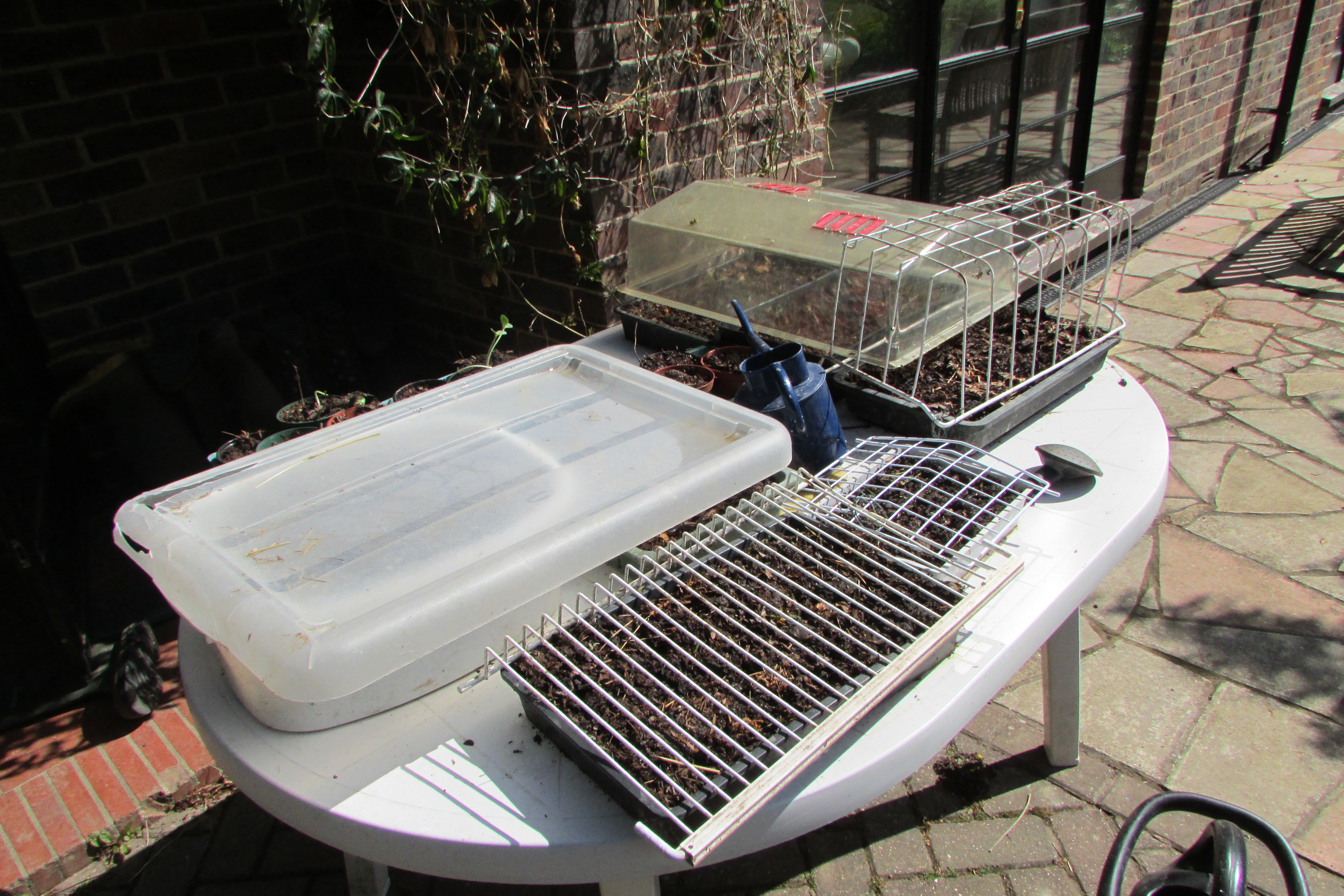
I also decided to plant some seeds. I like planting seeds, and am quite good at watering them and watching the seedlings grow. Then I tend to lose interest, so they don’t always make it into the garden. I’ve planted a few pots and trays and put them on the patio – well defended against the cats, who’d enjoy digging them up.


Now, here’s a secret, so don’t tell anyone. Next to our house is a field, which is sometimes used for crops and sometimes has animals. The farmer has recently plowed it, added lots of lime, and drilled it (which I think means he has planted seeds). Last year he grew sweetcorn. I had some seeds of my own – some sunflower seeds – so, when I was walking the dog, I planted three of them in the corner of the field. Not sure if this is allowed.

But if they grow, they will look really good, three sunflowers smiling at everyone in the lane as they drive past. Hopefully they will grow taller than the crop, so everyone will see them. I will let you know.

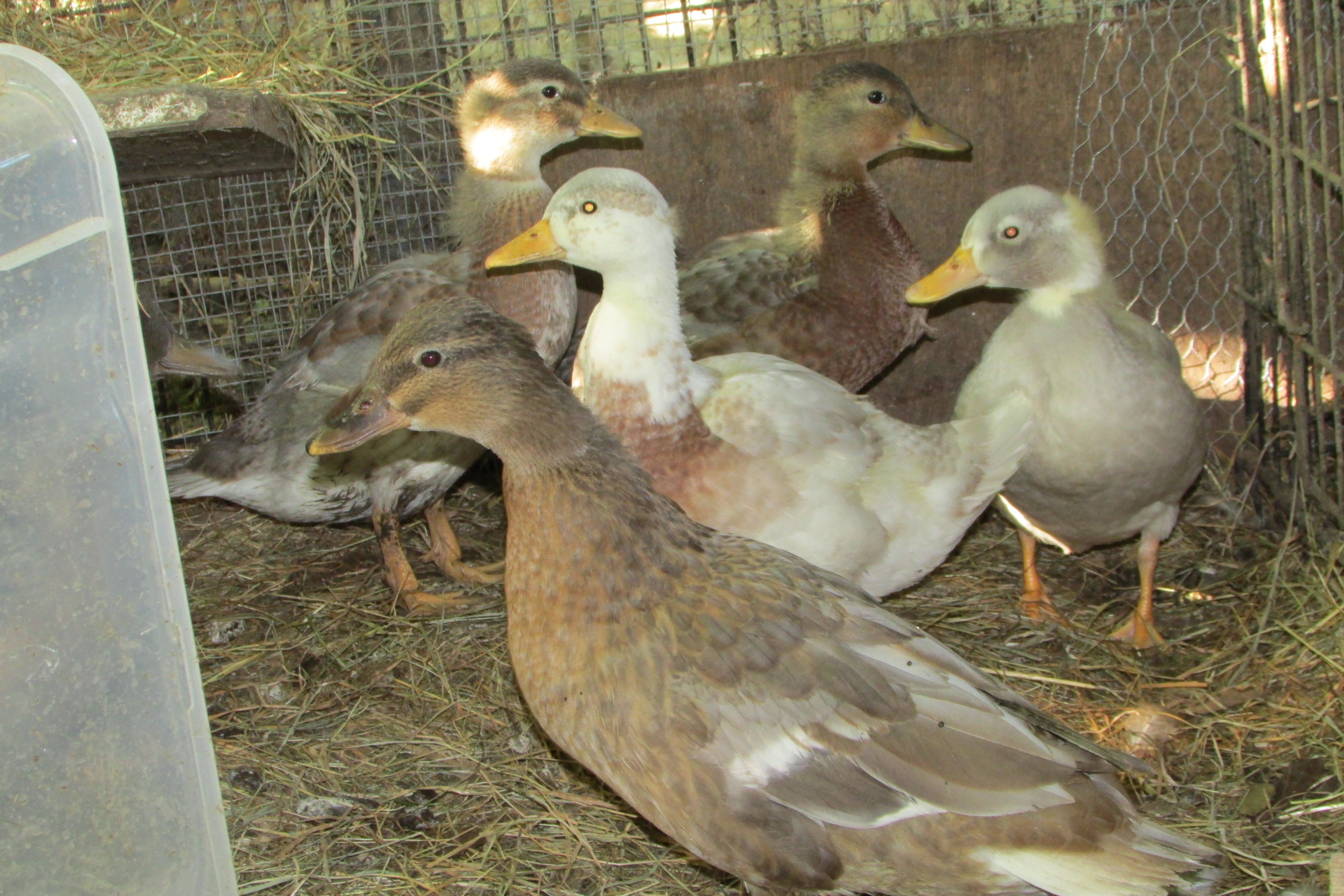
The ducklings have grown as big as their mother. They still have some fluff, but are growing straggly feathers now. When the feathers have grown enough for them to be able to fly, I’ll let them back on the pond. There are another couple of nests around the pond. No idea if the eggs are alive, or if the ducklings will survive should they hatch. Probably depends on whether I manage to catch them or not.

Have a good week.

Anne x

xxx

I’ve just been sent a copy of the local paper, which features JOANNA again. The journalists in town have been very kind, my books have been mentioned several times now. I still hate seeing my photo in the newspaper, but I think it’s one of the downsides to being an author. In this one, I am desperately trying to stop the poster behind me from falling down!

Bible Blog 2


I continued my read through the Bible. I’ve started adding notes to the margins, so I don’t forget things as I discover them. It makes it scruffy, but I’ve always thought that it’s the content of the Bible that’s important, not the physical book. (Unlike some other religions, where the book itself is holy – I know for example the Jews will not even touch the Torah with their hand, and use a gold pointer to follow the words.) Not sure if I’m right on this – let me know if you have an opinion, I’m interested.

I read the stories in Genesis about Jacob and his wives. Was rather interesting to read that his father, Isaac, didn’t much like his daughter-in-law, Judith. It’s funny when you read about relationships hundreds of years ago that mirror modern day ones – people really have not changed very much.

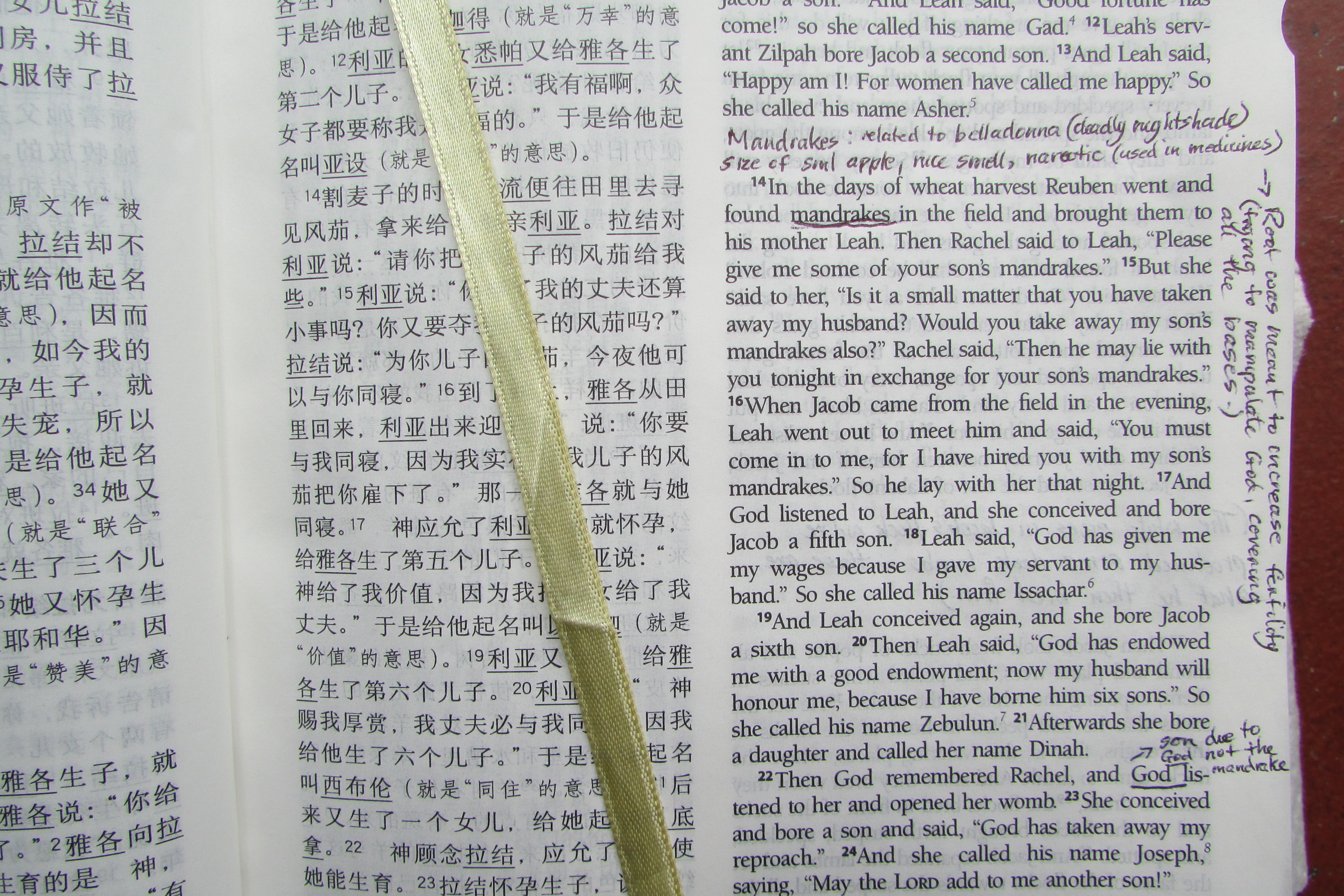
I read the part about Jacob’s two wives vying to have babies, and there was a story about Rebekah asking Leah (who was cross-eyed) for some mandrake. What is a mandrake? I thought it was an imaginary plant from the Harry Potter books! Apparently, it exists in real life too, is the size of a small apple and has a lovely aroma and narcotic properties (it’s related to the belladonna, deadly nightshade, plant.) It was also thought to increase fertility. Which makes you wonder if Rebekah was covering the odds, she’d asked God for a baby, now she was trying to improve the situation herself – first by eating dodgy plants, and secondly by giving her servant as a womb substitute. I guess sometimes we do that too. Not the dodgy plant bit (well, you might, I’ve never gone that route). Nor the offering a servant as an available womb. But the covering our odds bit. Do I sometimes ask God about something and then worry about it and look for other avenues? A bit like the teenager asking God for help with study and then wearing his ‘lucky socks’ to the exam, just in case.

The thing is, all these characters seem very flawed. I don’t think I would like them much. They deceived each other, looked for ways to get what they wanted and pretty much ignored God. But God used them anyway, he didn’t change his plans, even when they tried to sidestep him, even when they got it wrong. God had decided to work through them, so he did, even though they proved many times that they weren’t good enough. I find that reassuring.

There are more lists of names. Chapter 36 of Genesis is weird, because there’s a list of names, and in the middle is a mention of Anah, who found the hot springs in the desert while pasturing his Dad’s donkeys. Why??? I tried to research this, and found a few opinions about whether ‘donkeys’ represented stubborn people or if ‘hot springs’ is the best translation, but it felt like people were just trying to be clever and actually no one knows why this is included. I suspect as I read on, there will be several texts that I’ll put in the ‘don’t understand’ box, some bits are just odd. I guess the decision we all have to make is, does not understanding part of something make the whole thing irrelevant? I don’t think so. I don’t understand lots of things – like how gravity really works, or why if space is a vacuum we’re not all sucked up into it, or how a bulb knows when to start growing – but the bits I do understand are still useful.

I have read to the end of Genesis now. Whilst some of it was weird, it was interesting. I have a feeling some of the next books might be rather heavy going.

If you want to follow my progress as I read through the Bible, why not sign up to follow my blog?

anneethompson.com

Thanks for reading

xxx

The Dead Bag


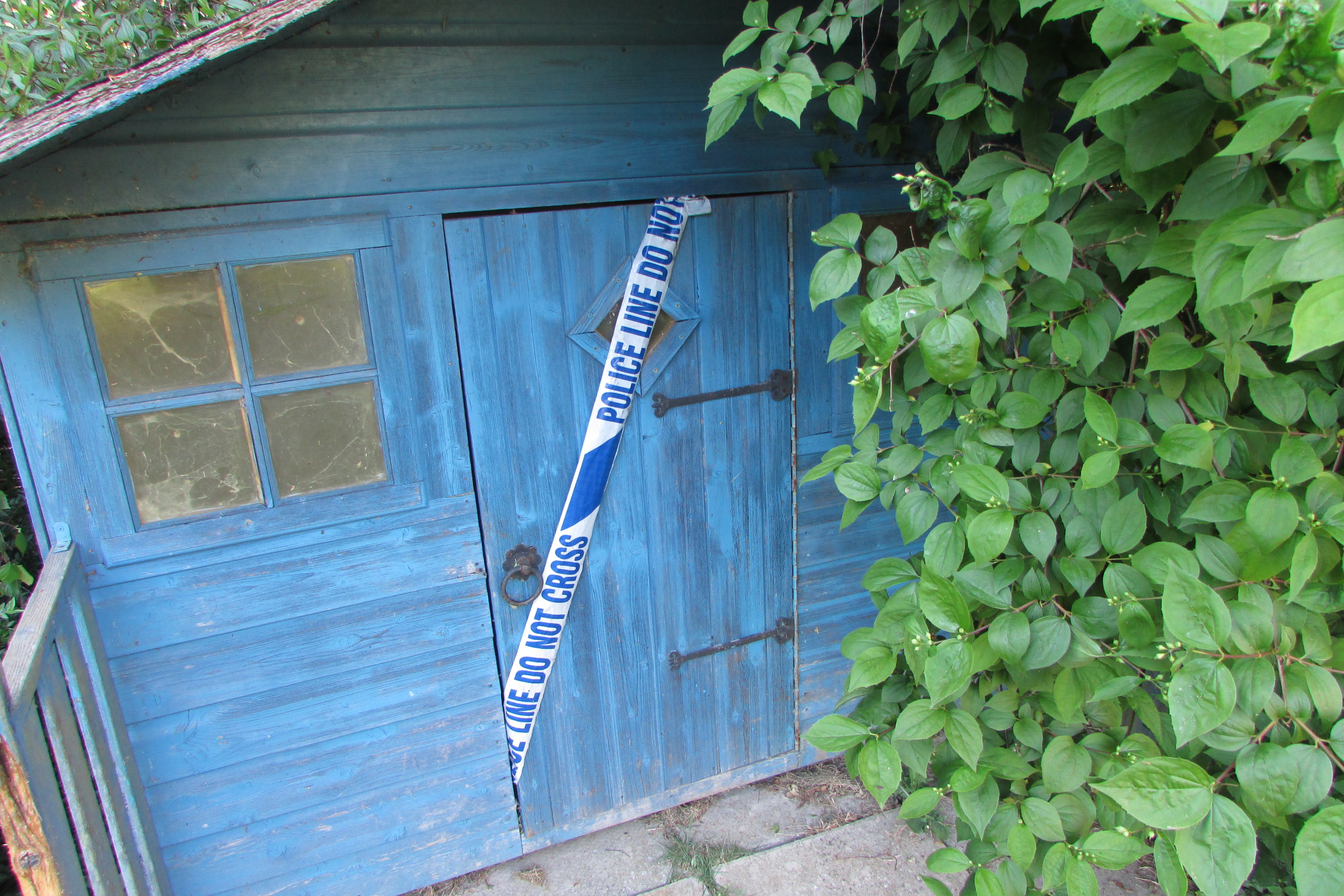
What do you keep in your shed? Bikes? Old chairs you will mend one day? Flower pots? I keep a Dead Bag in my shed – which my children find deeply disturbing. I should clarify, before you phone the serious crime office, it does not contain body parts. Well, not human ones anyway. You see, if you live in a town, you probably have a romantic image of springtime in the country as being full of new life, beautiful flowers, chicks, blossom. Which it is. But it’s also full of death, much of which I have to clear up. And there’s lots of it, so it’s easier to keep a bag in the shed, which I hygienically dispose of at regular intervals, than to triple bag every single corpse that appears.

As I say, lots of dead things. There are the bodies that have been killed by predators. The Springtime is when foxes go a bit bananas looking for mates, so they cast caution to the wind and will even run through gardens which have a big dog living there. Which results in a quick massacre of any ducks before said dog arrives and chases them off. Then there are the cats, who leave regular dismembered rats and mice and baby birds for me to clear up. And because it’s Spring, lots of baby birds are hatching, which the crows and magpies catch and carry off, but sometimes drop mid flight, so I have to clear up those.

Baby birds themselves are pretty fragile. Ducklings frequently die for no apparent reason soon after hatching, or die mid hatch. Plus there are the eggs that never get as far as the hatching stage, so are abandoned in the nest with a dead duck inside. All of which go into my Dead Bag. So you see, it’s not such a bad idea to have one, as long as it gets emptied regularly (otherwise it stinks. I know what death smells like – sure to be useful at some stage in a novel.) Worth remembering before you buy that country cottage or go to live on a farm; new life also tends to entail some gore or death. (There is a sermon here, but I’ll let you work it out for yourself.)

I have to admit, I have felt pretty near to death myself this week. I’ve had a nasty cold – aren’t they just the worse? You know it’s nothing serious, but everything aches, your nose won’t stop running, sneezing makes you dizzy and you feel wretched. Even my teeth itched, so I wanted to chew my gums. Most unpleasant. I decided to give myself an easy day and stay in the warm and watch Netflix all afternoon. I scanned the options and decided to watch ‘Survivors’, as I’d missed it when it was shown on telly and it looked interesting. Bad choice. It began with scenes of everyone in England catching flu and then dying. I began to fear my Dead Bag wouldn’t be big enough! You’ll be pleased to know I am recovering nicely, but I’ll let you know if things deteriorate.

To be honest, I can’t really complain, because Husband has been a huge help. I asked him to buy some tissues and he came home with both a box of tissues and lots of information. I now know the exact size and price of each individual tissue in every box sold in Morrisons (I know you’re dying for this information, but I’m saving it for another blog. In another life.) He also cooked dinner. This involved removing pies from the freezer, reading the instructions and placing them in the oven. It also involved a complicated time-plan, compiled on the computer using an Excel spreadsheet. Impressive – why have I never thought of doing this myself each day?

Have a good week.

Anne x

xxx

Thank you for reading.

If you enjoyed this, why not sign up to follow my blog?
anneethompson.com

Bible Blog


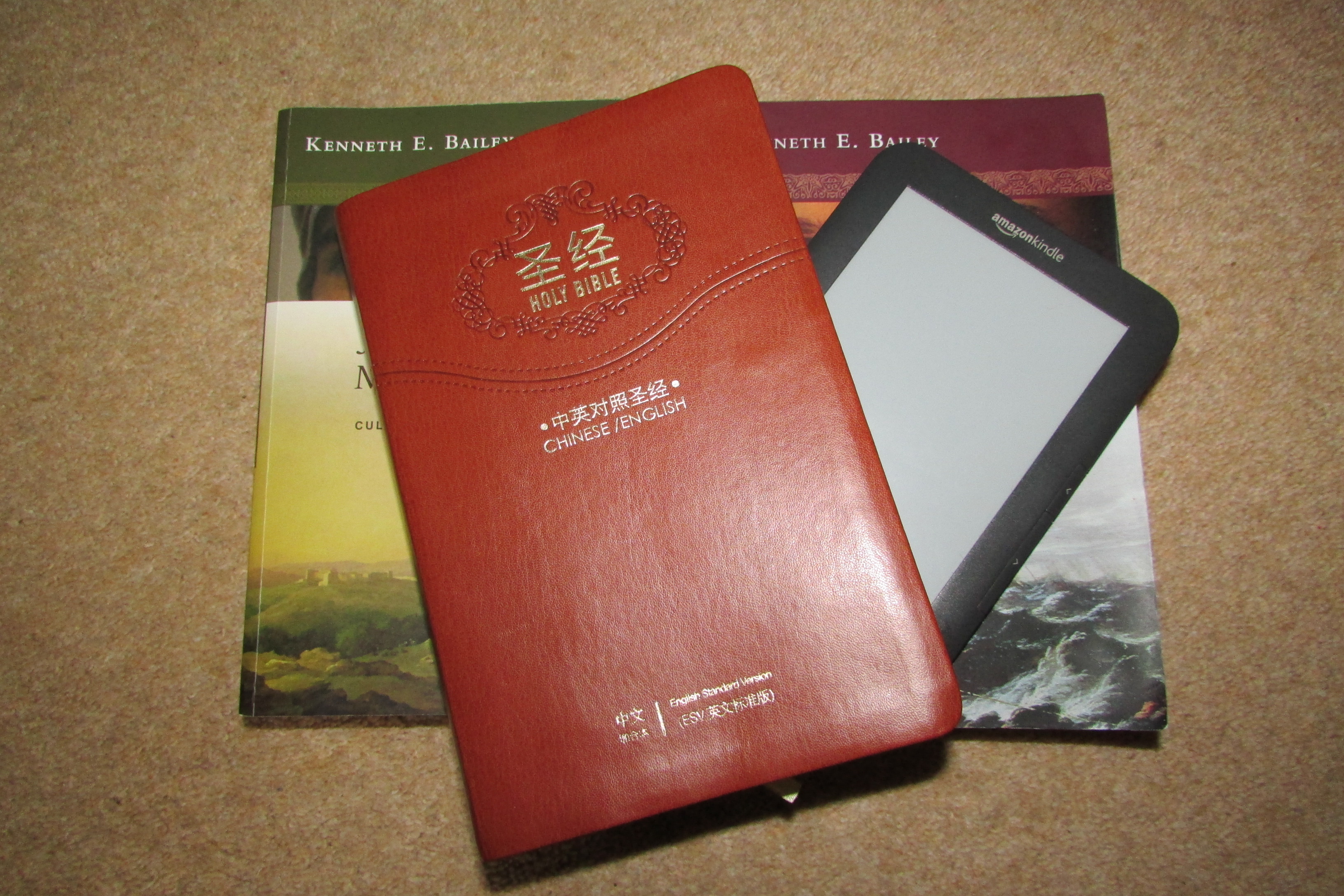
I’ve decided to read through the Bible. I have, since childhood, read various parts of the Bible many times, but I have never read through it, beginning to end. So I thought it was time that I did. I don’t have ‘a system’ – I’m not that sort of person. I’m just going to read, in order, from beginning to end, as time/enthusiasm allows.

I will try to post each Sunday a short update about how I’m getting on. Partly to motivate myself, and partly because you might be interested. (If you’re not, you can just skip the blogs headed Bible Blog each week – I will still continue to post my newsy, family, travel blogs every Monday.) I’ll be honest about what I read and think, I won’t just regurgitate churchy views.

April 30th

I started at the beginning (which is actually, NOT a good place to start if reading the Bible for the first time! Better to begin in the New Testament, with Mark’s book.) Here are my thoughts/ramblings thus far:

There are two different stories about creation. I have studied these before, when teaching RS, so could really write a whole blog on them alone. However, my only comment here is I think it’s important to remember what question they are answering – they are not explaining HOW God made the world, they are explaining WHO and WHY. I think they are pictures, illustrating ideas, clearly showing that God was the creator. They were told at a time when there were lots of stories from the Babylonians, about dragons using things to create the world, so the point about God creating it from nothing, using just his word, is important. Personally, I don’t think it’s meant to be taken literally. Things like plants being created before light just seem too illogical.

Having said that, the first bit of Genesis is still weird. It is full of pictures and giants and strangeness. It is, on first glance, every bit as unbelievable as the myths that other cultures and religions have about how the world began. I think to understand it properly, you need to do further reading. One excellent book (I think) is Creation or Evolution, do we have to choose?

After creation comes the flood. Most old cultures have a flood story, which is interesting – who knows, perhaps it really did happen. Certainly the instructions for building the ark (about the size of a multi-storey carpark) are detailed, if not especially interesting. After the flood, there’s a story about Noah getting drunk and his son having sex with him (they didn’t cover that little gem in Sunday School when I was a kid!)

There are many lists of genealogies. No idea why, they don’t make for an interesting read. However, recently I watched “The Good Lie”, about children being rescued in Sudan. One clip showed the children reciting all their ancestors. Perhaps in some cultures it’s important.

Next are the stories about Abram, Lot, Isaac. These seem more historically factual, they read like real events about actual people. One part that interested me was when Abraham plants a tamarisk tree. I did some research into what this was. It’s a tree that’s very unusual because it puts down very deep roots, and so can reach deep water tables. It uses a lot of water, so starves the surrounding soil of moisture, so other plants cannot grow near it. It also is able to take up salt, which it expels as a salty layer on its leaves. When they fall, this makes the soil salty, which again means no other plants can grow near it. So, it is a lonely tree, very different to other plants and not able to mix with them. It was introduced to the western states of America, where it flourished and is now seen as a pest, but hard to kill due to its deep roots. Now, Abraham is seen as ‘the father of the Jews’. It seems to me that the tamarisk tree makes a good metaphor for how the world views the Jewish race.

Another story I found interesting was the one where Abraham sends his servant to find a wife for his son. He feels that he wants his son to marry from his own people, so makes a plan. However, he also has a backup plan, he tells the servant to come home without a woman if she isn’t willing to go with him. So, he was doing what he thought God wanted, but if he was wrong, he had made a decision about what to do instead. He hoped he was right, that he was following God’s plan, but he didn’t assume it. Of course, when the servant did find the wife, Rebekah, it all proved to be what God wanted. But I found it interesting that Abraham didn’t know that for sure, he was just doing his best, doing what he thought was right. Which sometimes, is all that we can do.

xxx

Thanks for reading. I’ll let you know how I get on in the next week.

If you’re interested, why not sign up to follow my blog?
anneethompson.com

xxx