Scary Hen


Hello, how was your week?

I am feeling somewhat ruffled. Let me explain. A few weeks ago, a fox came into the garden and ate a cockerel and my favourite big black hen. Hard to not hate foxes (though actually, even I am appalled that there is a suggestion we might legalise fox-hunting again – but that is a different issue).

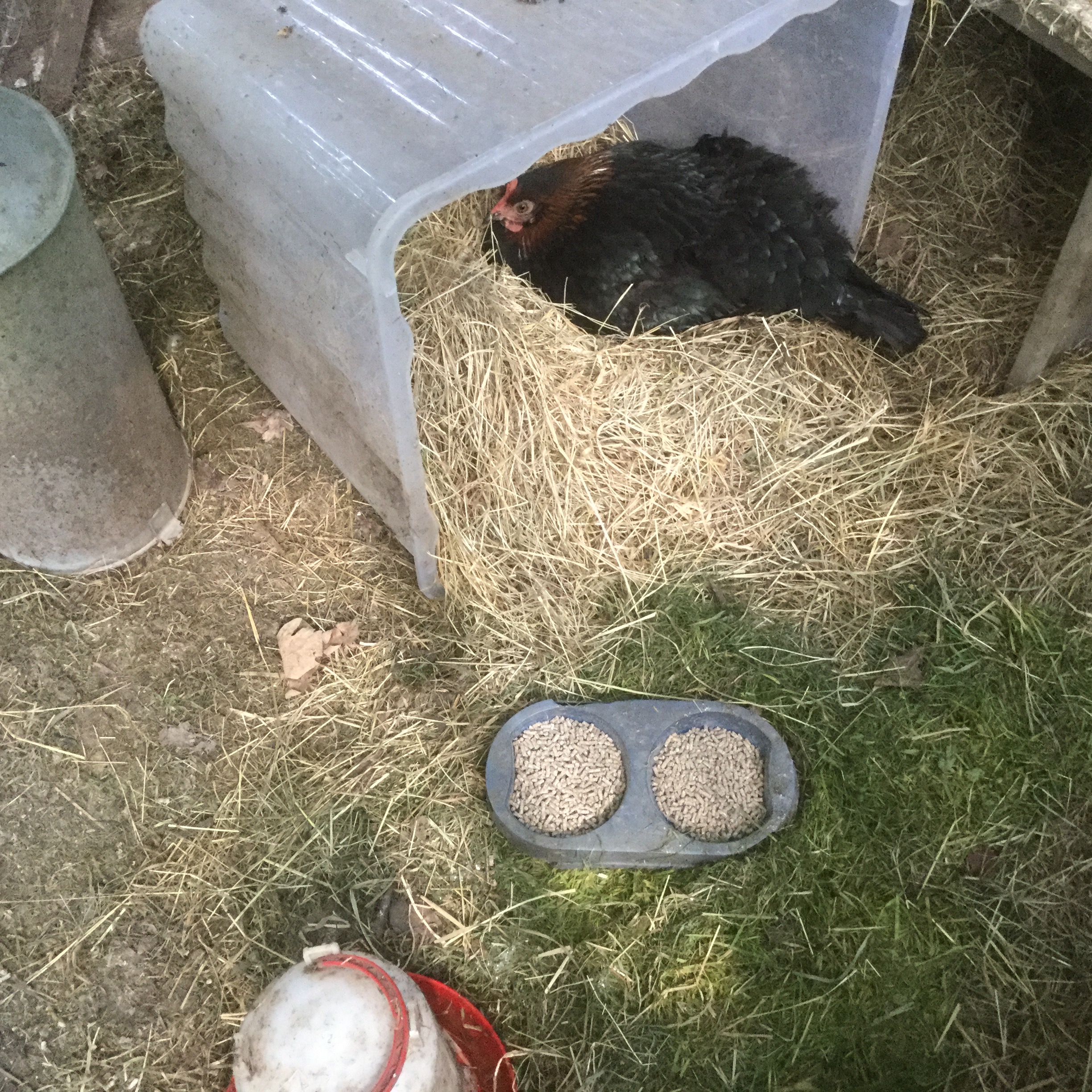
Anyway, at about the same time as the above massacre, one of my other hens started to get broody, to collect the eggs the other hens laid as soon as they left the laying box, and to refuse to budge. I collected the eggs every day (because most of them were bantam eggs, and I don’t want more bantams) but she was very fierce. Have you ever encountered a cross hen? They fan out their tails, and fluff up their wings, and when you come within striking distance, they zoom in and peck you. Very hard. Enough to form a red blood blister, even through gloves. Scary.

Also (if that isn’t bad enough) one broody hen tends to remind the other hens that they too want to be mothers, so they all stop laying and you have no eggs, whilst still having to pay a fortune for their food and cleaning up stinky poop each day.

So, I decided I would move said broody hen into the duck aviary (as I think I mentioned in a previous blog) and give her the eggs I still had, from the lovely big black hen which had been eaten. Good plan. Except, that was several weeks ago, and chicks take 3 weeks to hatch. Exactly 3 weeks. So something was wrong. Scary hen was still firmly on her nest, but there was no sign, whatsoever, of hatchlings.

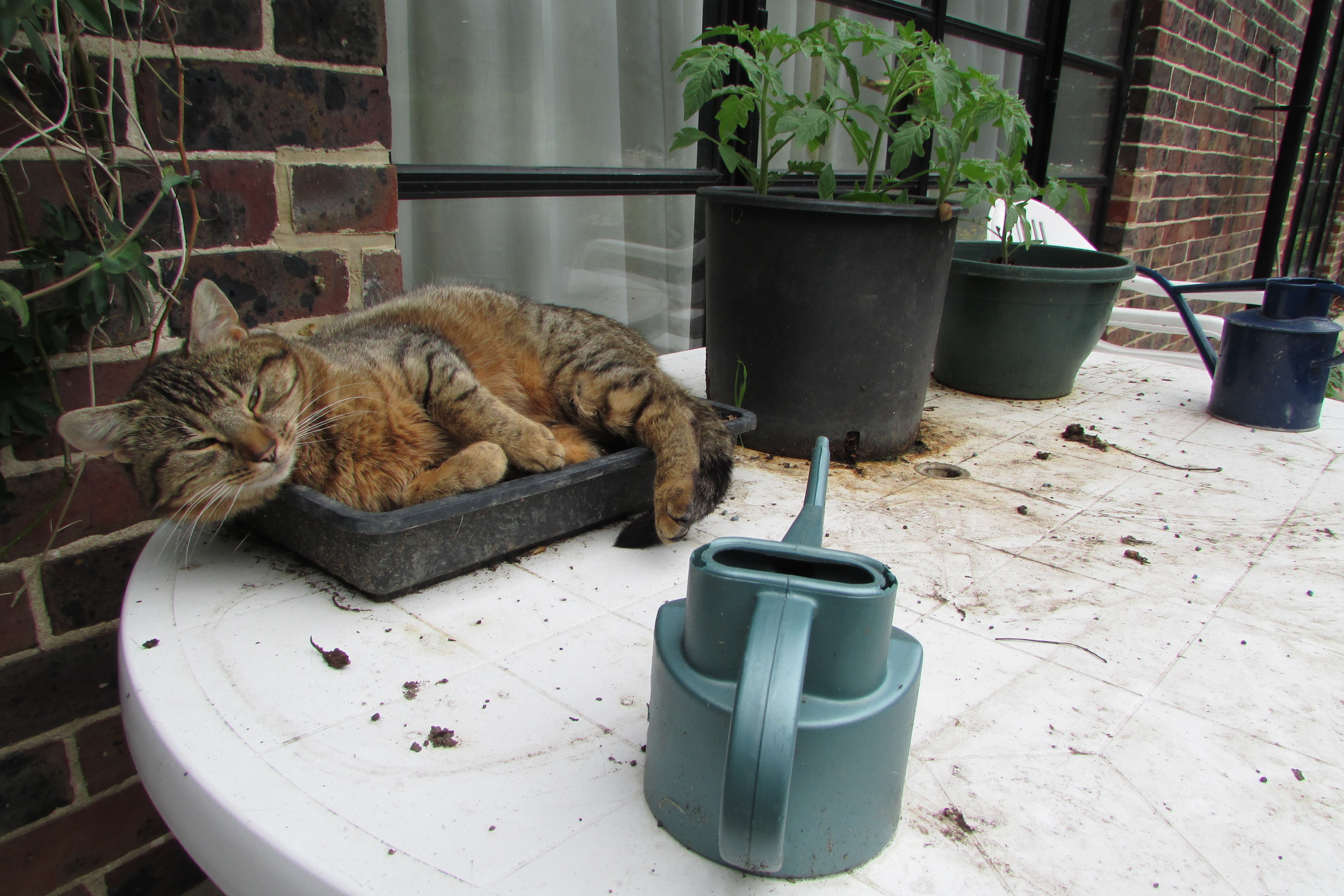
So this morning, I decided I needed to act. I donned my protective Marigold gloves and a thick coat, and went to discuss the issue with the hen. She was not impressed and still refused to let me investigate. I left her for a few minutes, while I fed the ducks, and noticed that, because she thought I had left, she was no longer sitting on her nest. I dashed back and managed to corner her. Catching her was loud and violent (towards me, she was completely unharmed if somewhat cross). I was cheered on by the cat, who was watching on top of the cage and at one point reached through and patted the top of my head for encouragement. The dog was less helpful, as she chased around the cage barking, which did nothing to calm the situation. All the chickens in the other cage squawked their disapproval, and I had a row of ducks on the bank who were trying to watch.

Managed to catch her, only one deep wound (now covered with a Mr Happy plaster) and she was carried, still trying to peck any available flesh, back into the chicken coop. I checked her nest. There were bits of shell, and one remaining egg, which was cold. I think she must have eaten the others.

I like having chickens, but only when they are free. I love being in the garden when a flock of birds wanders through it, I like that they come to watch me garden, will investigate anything new, and spend hours digging through the compost heap. I do not like animals in cages. Until the foxes stop being randy and doing daredevil raids past the dog into the garden, the chickens have to stay in their cage. Am not enjoying this at all. Ducks are so much nicer.

Hope your day goes better than mine has so far. Time for my morning coffee now. Thanks for reading.

Take care,
Anne

If you enjoyed this, why not sign up to follow my blog?

anneethompson.com

xxx

I am pleased to announce that JOANNA is finally available as a Kindle book. If you search for JOANNA by Anne E Thompson in whichever country you live in, it should be available. The UK link is below:

Bible Blog 8 – Into Numbers


Numbers is well named – someone did an awful lot of counting. It is not an easy book, as the first part seems to be mainly lists of genealogies, and the second part has stories which I do not understand at all. I will tell you about the few snippets which seem to make some sense – the rest you can find someone wiser than me to explain. (I’m not sure if the problem is the English translation is dodgy, or if the books that were lost would explain more of the background.)

Basically, the book is a continuation of the laws in Leviticus, with lots of strange sounding rituals, a few rules, and some common sense (like, a boy isn’t old enough to fight until he’s 20, and not sensible enough to serve in the temple until he’s 30, but by 50 things are deteriorating, and he should be relieved of his duties!) There is a clear emphasis on worship, and the tabernacle was always the first thing to get sorted, before the wandering Israelites set up camp. Moses continues to lead, and is mostly wise, asking for help from God and people as necessary.

The people seem to complain a lot, but life must have been fairly tough. At one point they were sent manna, to eat. This looked, apparently, like bdellium. I’d never heard of that, so have found you a photograph to show you what it looked like. Not especially appetising to look at, if I’m honest. They also wanted meat, so God sent quail. Soon after this there was a plague, which makes you wonder if the birds were carrying the disease.

Moses has a rough time, and is blamed every time the people are discontent. In my experience, this still happens – people like to moan about the leader. Either the sermons are too long, or certain things (their favourite bits) are not preached on enough, or young/old/families are not being reached. Rarely do churches, even today, see a problem and look to themselves, to see what they need to be doing differently. Much much easier to blame the leadership. Moses had the added disadvantage of having his own siblings as followers. Does anyone ever, really, truly honour their little brother?

We meet Joshua, who was really called Hoshea but Moses changed his name. No idea why. (“Hello, what’s your name? Hoshea? Wow, that’s a silly name, let’s call you Joshua instead…”)

Then we have the bit about spying out the land, and the people not trusting God to give it to them. After they were punished, they were sorry (people are often sorry when facing punishment) but they still didn’t really grasp that the issue was not accepting that God is God, not them. This is still a problem today (especially amongst adolescent males – ask any school teacher). So, even when people claim to ‘return to God’, they still usually want that to happen on their terms, like God owes them. Hard for us to really understand that God is worth worshiping because he is God, not because of what we can get. This crops up a lot in the evangelical churches, where people are promised peace, joy, love in return for turning to God. Then when the divorce still goes through and they lose their job and someone precious dies, they feel short-changed, like God didn’t do his part.

Chapter 15 is definitely in the wrong place. Someone got in a muddle there.

Now, here is something which I find very challenging/do not understand. Quite often in Numbers, things are given holy status. So, the bad priests’ censers were hammered into plates, but those plates were holy. Later, in Chapter 19, water is blessed and then has special qualities. Is this right? Can things (and presuamably places) in themselves carry something of the holiness of God? I was raised as a good non-conformist, we shunned all icons, were told that it was our relationship with God that mattered, that places and things were simply ‘stuff’, nothing was special. But is that correct? I find this slightly worrying, as I have never credited any mere thing as holy, not even the Bible – to me this is just a book, the meaning is special but not the pages (in fact, when I was reading the Bible to a friend and translating it into Mandarin, I ripped out the book of Luke, so she could have a copy for herself). Is this wrong? What do you think? Obviously there is a danger that the things might become objects of worship themselves, which is clearly wrong. But is the opposite view also incorrect? Should we be careful with the Bible; behave differently in an empty church simply because it’s a church; believe that some places are actually holy? I know Catholic people have lots of icons/holy places. Are they right?
That is enough confusion for one week, so I’ll finish. The end of Numbers is next, then into Deuteronomy. Hoping they don’t raise too many new problems….

Thanks for reading.
Take care,
Anne

xxxx

On a different note…I spent yesterday putting JOANNA onto Kindle (not a stress-free activity!) It should now be available to buy as a Kindle book, if you search for it on Amazon, in whichever country you live in. JOANNA by Anne E Thompson. (If it’s not there, it should appear in a few hours, depending on when Amazon manage to make it ‘live’.)

If you live in the UK, the link is below (and if you could please please please add a quick review, it would mean so much. Thanks):

Bees, Builders and Babies……


Hi, how was your week?
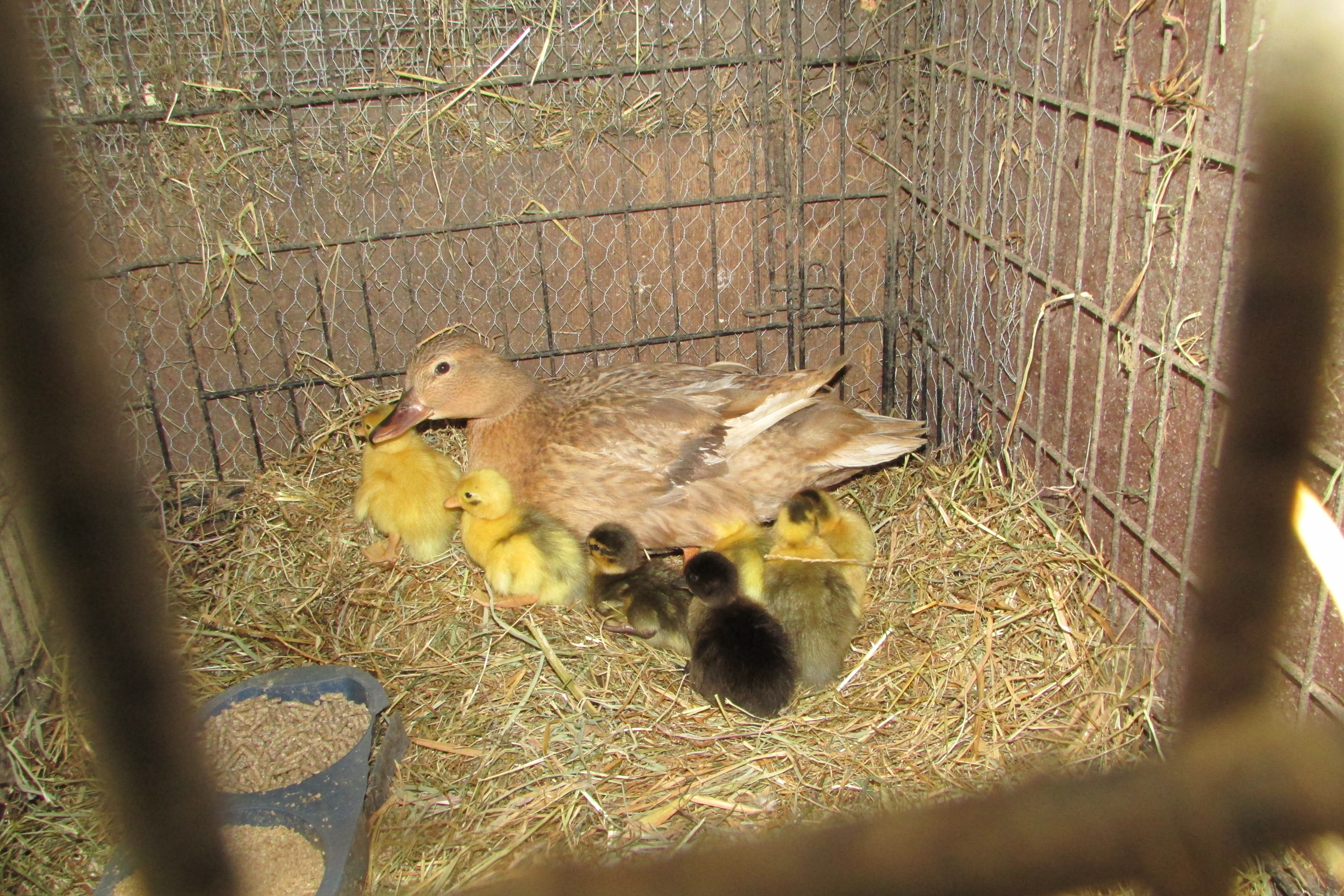
Now, could you let these babies die? I decided that I could. The mother duck had nested in a particularly hard place to get to, she is not an especially pretty duck, and I have 3 other nests being sat on – I don’t need more ducks. I decided I would, absolutely, let them take their chances. If the mother couldn’t protect them, I would not interfere. Definitely. Except, of course, when I found 3 abandoned ducklings left in the nest, and 2 more frantic on the pond looking for their mother, and another 2 desperately trying to keep up with her as she climbed over tree stumps while the crows circled and the cats moved closer…..well, it was hard to not get involved…. After crawling through hedges and brambles and wading through muddy water, I need a cup of tea. Fraught mother is safely in a cage with 7 ugly ducklings. The mother is completely ungrateful, and makes a sort of hissing noise through her nose whenever I go near. But she is looking after them now, which is a relief as I don’t have to bother with heat lamps.

The bees have decided to nest in the cavity wall, right next to a door. They are surprisingly scary when you want to use the door. They go and in and out of an air-brick, which leads to a grill into the larder (keeps the food cold). My understanding is that we are not meant to kill bees (despite their scariness) and so we are trying to persuade them to move house. I have been playing music to them, via the grill in the larder (Radio Kent, at full full volume – it would make me want to move out). Dog unimpressed. Bees refusing to move.

 Not sure if you can see fuzzy bees waiting outside for queen to emerge.


As I write this, we also have builders here. Can life get more fun? They arrived at 7:50 this morning, van loads of them. They’re building some shelves, replacing a shower screen and tiles, and putting in an extractor fan – I was expecting one bloke (husband organised this, not me – I was completely happy with a slightly dangerous shower door and having to open a window afterwards.) They are now everywhere, they emerge from unexpected places. And leave doors open. All of them. Why is it necessary for the front door to be wide open at all times, even while they’re in the loft, and the bathroom, and bringing mugs back to the kitchen, and eating sandwiches in the garden. The only one who seems to be enjoying them is the dog (so I suspect she may have shared the sandwiches). To be fair, they are doing their best. It is not, I suppose, possible to drill and saw quietly. They also put down dust sheets to protect the carpet when they arrived (though I have a sneaky suspicion that when they leave I will have all the dust from the previous jobs on my carpets – they do not look like they get put in the washing machine overly often.) I do hope they finish soon and aren’t here for days on end. Otherwise I too might start hissing through my nose….


Hope you have a good week.
Take care,
Anne x

xxxx

If we can’t see you, you don’t exist.

Thank you for reading. Is it too soon to buy something new to read on holiday?

JOANNA, available from bookshops and Amazon .


There seem to be sunflowers growing in the corn field…..!

xxx


Bible Blog 7 – Continuing my read through the Bible.


Does God have a name?

I continued to plough my way through Leviticus. Not easy reading. Much of it seemed random. There are whole lists of laws, many of which are repeated, with no real explanation as to why they are laws. There may, originally, have been documents that explained them, but they have since been lost so we can only guess. Some of the laws are to do with being separate – the Israelites were called to be different to the surrounding tribes, and this was underlined by not mixing other things. No garments made from mixed fabrics, no sowing of mixed seeds in fields, no mixing of different types of body fluids.

One thing I discovered while researching Leviticus, was that the people were not monotheistic – they did not believe there was one God, they believed there were several, but they were only to worship one. This explains the “No gods before me” rules. I was a bit shocked by this, it was something we skipped in Sunday School. Is it okay to believe there are other gods, as long as we only worship God? If so, how do you know which God you are worshipping? Could the gods of Hinduism actually be the God of Christianity under a different name? Is Allah the same deity as Jehovah?

In the early books of the Bible, there seem to be different names for God. There is the name Jahweh (or Yahweh – which is usually written without vowels : JHWH) This comes from the Hebrew for “to be” – which is what God told Moses to call him in the burning bush. I think I read somewhere that Jahweh is translated into the English Bible as LORD (all in capitals). Have a look at your Bible – is it written in capitals? But when I went back to check that, I couldn’t find it again (the joys of internet research).

There is also the name Elohim, which comes from the Semitic root “el” which means “god” and is found in names like “Beth – el” (which means “House of God”). It is also the root of “Allah” (the name for the Islam God). This name was later perverted into “Ba’al” – which became an idol.

The name Adonai, meaning Lord, or master, is also used.

In Genesis the name Elohim is used, which is unusual as it is plural, while being used to describe a single deity.

Then there are the terms of address which are more descriptive : Mighty, Counsellor, Father, and so on. When Christians pray, most have their own term of address, sometimes the one they used when taught to pray as a child.

I’m not sure of the significance of all this. I absolutely believe that God is real. I am also increasingly aware that I know very little about him in terms of knowledge, though as life goes on I am learning more and more about the character of God. I can tell you that he is holy, is worthy of our worship; he loves us, supports us, wants us to acknowledge him. As to which name he should be called by, or whether he would prefer we ate beef and not lobster – this I cannot say.

Next week I’ll let you know how I get on in Numbers.

Thank you for reading.

Letters to an Agent….


I was pleased with Hidden Faces as a book. It is a ‘gentle’ story, one to make the reader smile, with characters they would recognise. A book you could give to your aunty. JOANNA however is different. It is grittier, faster paced, and delves into how people react in very extreme situations. It will, I hope, have much wider appeal.  So I would like a publisher to take it on. Which means I need an agent to approach one for me (because in the UK, mere writers are unable to speak to publishers, they will only work through an agent). So, I sent my manuscript to a few agents. Not many, because I am fairly fussy still, and if I only ever sell the books I have published myself, it doesn’t really matter.

In October 2016, I posted (yes, posted – they don’t take emailed submissions) my manuscript to David Higham Associates. They are the agents for The Girl on the Train, which is a book very similar in style to JOANNA. So I thought they might be willing to represent me. I read all their submission requirements and sent (by post) everything they required. Which was both costly and a hassle. As they had stipulated that I should include a stamped addressed envelope, I fully expected a reply. Even a standard, thanks but no thanks, reply. But no, nothing. Is this agency running a scam to obtain free postage from desperate authors? These are the actual emails I subsequently sent.

January 2017
Dear David Higham Associates,

I posted a submission to you, as per your instructions, in October 2016. As this included a stamped addressed envelope, and I have not yet heard from you, I wondered if perhaps the manuscript had become separate from the postage (which you said sometimes happens.)

My submission is a thriller, entitled JOANNA, by Anne E Thompson.

Please could you check and let me know if this is still under consideration, or when I might expect to hear from you.

Thank you for your help.

Yours faithfully,
Anne Todd
#

February 2017
Dear David Higham Associates,

I posted a submission for your consideration in October 2016. A novel called JOANNA – the story of a psychopath, by Anne E Thompson. It was written after extensive research on the condition of psychopathy, involving in-depth reading of books and papers by neuroscientists. I interviewed both psychopaths and their families, and spent many hours listening to convicted serial killers. I now consider myself something of an expert on psychopathy. I wrote the novel in the first person, giving the reader insight into how a psychopath views the world. I also showed how her family felt, what it is like to love a psychopath and how one copes with the aftermath of their actions. It is an easy read work of contemporary fiction.

As I said, I now consider myself to be something of an expert. In fact, I was interviewed this week by a journalist from the local newspaper, and have been asked if I would be able to speak on both Meridian Fm and BBC Radio Surrey. People are very interested in psychopaths – and I hope JOANNA will be a popular novel. Which brings me to my reason for emailing. When I submitted my manuscript, I included a stamped addressed envelope, as per your instructions. I assumed this meant you would be posting, at the very least, a standard reply. But alas, no such letter has been forthcoming. I am hoping that by now you have managed to read my submission, have loved it, and are in the process of making an offer to represent me. I am assuming this meant you were too busy to reply to my email of January 2017. I trust therefore, that I will soon receive my letter, in the envelope provided.

I look forward to hearing from you.

Yours sincerely,
Anne Todd
#

1st March 2017
Dear David Higham Associate,

Every day when the post arrives, I rush to inspect the envelopes, which lie in a muddle of dirty shoes and discarded socks (I have sons). I am searching for a slim white envelope. The white envelope which I stamped and addressed myself, one day way back in October. Actually, I know the exact date – I posted it to you on 26th October 2016 – but I’m trying to appear casual. I sent it with the first few pages of JOANNA, which were double spaced as requested, a synopsis of the novel (which is very similar in style to The Girl on the Train) a CV, and a covering letter. You see, I had read your instructions very carefully, I am that kind of person. Thorough.

However, every day I search to no avail. Your reply has not arrived. I have since sent you a few emails, hoping to jog your memory, to perhaps spur you into action. But no, it seems I am destined to remain ignored. Not even a standard letter has been forthcoming. I admit, I am no longer expecting a response from you, and my reason for writing is to ask for your permission to use these emails on my blog. They illustrate so wonderfully the sort of things – or rather, lack of things – that a new author can expect when struggling to find their way into the world of publishing. Given your inability to reply thus far, I will assume that unless I hear otherwise, I have your full permission to use my emails to you, on my blog, and in other areas of social media. I will publish them, probably at the end of March.

March will be a good time to publish them, as it will coincide rather nicely with the launch of JOANNA. Whilst waiting for you to not reply, I have not been idle. My manuscript has been edited, and was then passed to a typesetter, who prepared a file for the printer. I commissioned a talented young photographer to produce a cover (see below) and now have a book. It will appear in bookshops shortly, and these emails can become part of my advertising on social media. Should you have a change of heart, I would still love to hear from you. I very much hope that people will enjoy JOANNA, and that my sales figures will rise accordingly. As I discovered with my previous books, the supplying of books to shops is time-consuming. I am currently writing my next book, and if you felt able to represent me, to find a mainstream publisher who could reprint JOANNA and make it available to a wider audience, that would be wonderful.

I have of course, pondered on the reasons for your lack of reply. Possibly, you lost the envelope. More likely, you have sufficient clients already, and simply ignore all new submissions. There is also the slim possibility that you are running a postal scam. My research for JOANNA has involved many hours studying the behaviour of psychopaths. To manipulate vulnerable people (new authors) into certain actions (sending you stamps) for your own gain (selling said postage for a profit) would of course, fit the psychopathic profile rather well. However, if I’m honest, the thought of David Higham being a mere front for a little man in an office steaming stamps from the front of envelopes, seems unlikely. I will therefore assume you are simply too busy to reply.

It has been lovely chatting with you.

Yours, ever hopeful for a reply,

Anne

PS. I attach the planned cover of JOANNA, to help you to consider the possibilities awaiting.

cover-sample

xxxxx

The agent has missed out on JOANNA, but you don’t have to!

xxx

Bible Blog 6 – continuing my read through the Bible


 I have read to the end of Exodus and into Leviticus. They smoothly run each to each other, as if written at the same time, by the same author (like the Harry Potter books!) I wanted to know if this was correct, so did some online research. I learned that yes, they had been written, supposedly by a priest, and were therefore labelled by scholars as having been written by the source ‘P’. The first five books of our modern Bible make up the Pentateuch- the first of three divisions in the Hebrew Bible.

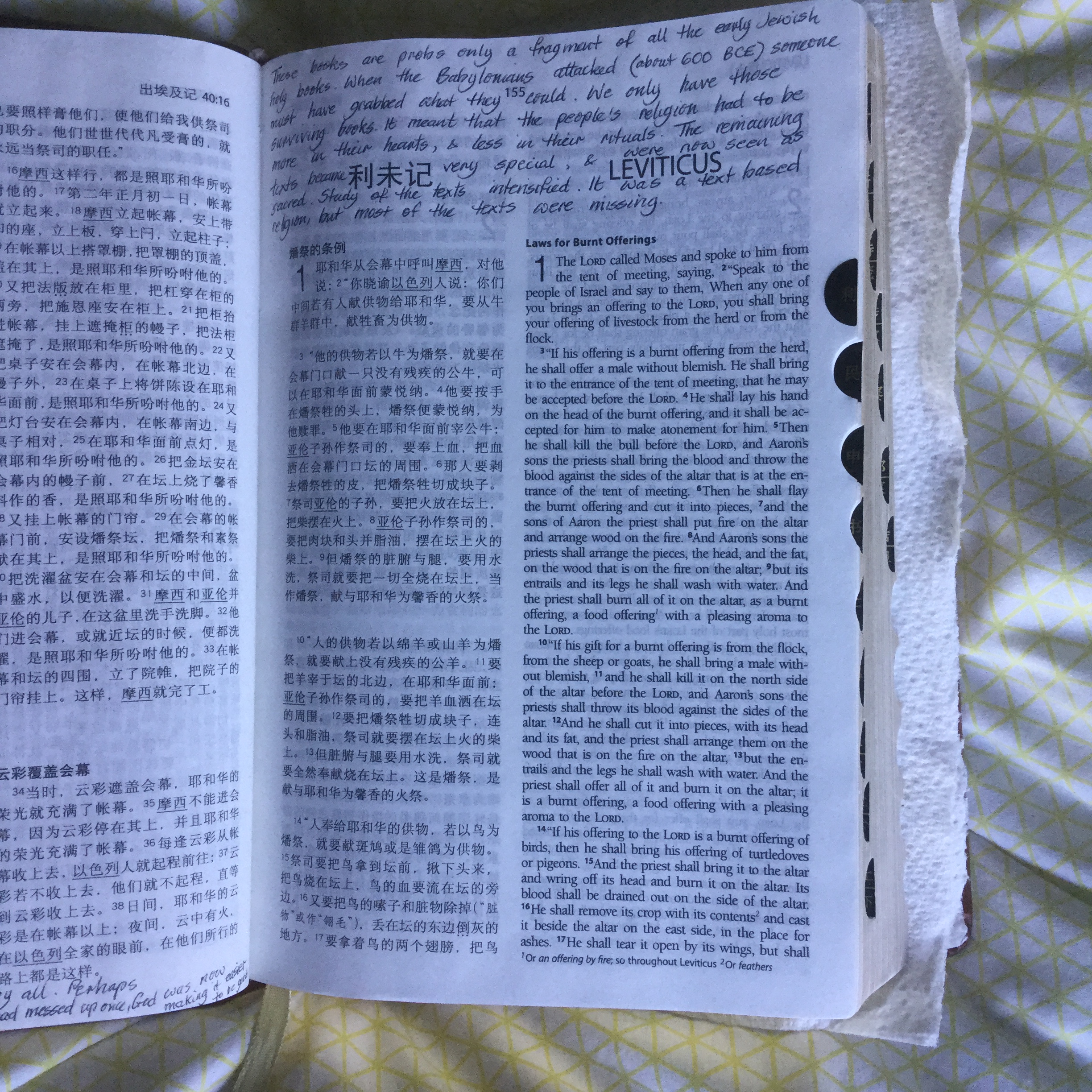
Now, what I didn’t know, is that actually, there were probably lots more of these early books. They are full of rules and measurements and descriptions (so I, for one, am not sorry they no longer exist.) However, it would mean that the Jewish religion, which is the basis of my Christian religion (and also seems to overlap hugely with Islam) went through some changes. Initially, it would be very ritual based – all the instructions were clearly laid out in multiple books. Then, in about 600 BCE, the babylonians attacked, and destroyed pretty much everything they could, including all the holy books. At the time of the attack, someone must have grabbed what they could carry, and managed to save the books that exist today. The Jews were taken into exile to Babylon, and their religion would have had to be more in their hearts, and less in their rituals. Those texts that they managed to save would have been incredibly special, and they began to view them as sacred (things always seem more precious when we only have a tiny bit). They would have studied these texts, trying to remember the parts that had been lost, striving to make sense of what remained. It had become a text based religion, but most of those texts were missing.

I found this enlightening. It explains why later Jewish scholars, those who lived hundreds of years later during New Testament times, focussed so much on the letter of the law. Something precious had been snatched from their culture, so they were clinging to the remnant (and had rather lost their focus of what it was actually for along the way.) The books we now have, though incredibly boring to read today, held huge significance. But they were only a fragment. We should remember that, when quoting a few Bible verses to prove a point – we too only have a fragment. They help to point us towards God, they are not the absolute last and complete word of God. Especially when translated into English. God has to be the focus, not our own understanding of the words of our holy book.

But, back to basics. The end of Exodus is full of instructions for the construction and use of the tabernacle. It is not a thrilling read. There’s one part, when Moses finally constructs the tabernacle in Chapter 40, which reminds me so much of camping as a child. We had a big family tent, and we had to all help sort the poles, then my parents screwed the basic shape together. We all had to stand at a corner (except my little brother, who was fairly useless) and when my Dad gave the signal, we raised the tent. When the poles were in place, the canvas was draped over the top. Something similar happened with the tabernacle. (I have no clever message relating to this, it just reminded me of camping as a child!)

The end of Exodus talks again about the cloud being in the tent, and when it rose up, the people packed up and followed it. At night, it was full of fire. I can find no natural reason for this, it was a physical miracle that all the people could see. Perhaps they needed to see, to be sure. They had messed up once, and made a golden calf to worship instead of God. Now God was making it easier for them, giving them something they couldn’t ignore to remind them who he was. I guess he does that with us too. I have (more than a few times) messed up, done things I shouldn’t, lost sight of what I believe. God always made it easy to go back to him, he helps us follow him, if we will let him.

I’ll discuss Leviticus in my next Bible blog. It’s bound to be thrilling…..

Thanks for reading.

Going to Seed at the Chelsea Flower Show


Husband works with the husband of someone who organises the Chelsea Flower Show, who kindly gave us tickets. Very exciting! I have always wanted to go, the weather was perfect, so off we set. Some worry over the dress code – looked at Google images and everyone seemed smart, so we decided jeans were probs not the thing to wear. (Actually, it wouldn’t have mattered, there were a whole range of outfits.)

The tube station was shut, so we walked from Victoria station. I wondered if there’d be loads of security, as the Manchester bombing was so recent, but it was fairly low key, and certainly didn’t spoil anything. Nor did we get attacked (which would have spoiled it more).

The show was good – but not what I was expecting. I have seen telly programmes about some of the gardens, and I thought we would walk past about 40 little gardens, all with different themes. There were actually very few. Not sure if this is because we didn’t pay £10 for a map, and so we missed them, or if there are only about 10 gardens each year. The event is sponsored by M&G Investments, and their garden won (which I thought was rather funny!)

The main impression is clever. The gardening is very very clever. Each one looks as if it has been established for several years, with mature trees, wild flowers growing between paving stones, everything carefully planned. There are also lots of people. Millions of them. It’s hard to get photos of the gardens without several stray arms and ears in the frame. After a while, I stopped photographing flowers and started to photograph the people. I could make up whole stories for some of them. Most women wore flowers: flowery skirts, flowers in hats, flowers attached to hair combs. If you stood still and listened, there was a whole symphony of sneezing.

We didn’t see many gardens, but we did see lots of stands selling interesting garden related stuff. If you like garden centres, Chelsea Flower Show will be paradise for you. Husband got rather side tracked and somehow managed to buy a shed when I wasn’t looking. He kept wandering off and talking to people – there were lots of people to talk to, guides who could tell you about the gardens or direct you to the pimms stall.

I liked the inside arrangements. We found the dahlia stand (my Dad grew dahlias) and they were all perfect. We found a display of potatoes, and a stand with carnivore plants. All the flowers were straight stemmed, fresh blooms, bright colours. Not a nibbled leaf in sight.

It was all very clever. But it wasn’t very real. I guess people don’t want to pay to see real English gardens. Next year, Husband is going to pay (£8,000) for a stand (apparently). He is going to represent a real garden – with weeds and slugs and flowers that are a bit squashed. He will sit in the middle in a deckchair with a handkerchief on his head. Perhaps I will incorporate a dead bag of decapitated birds to complete the image. We’ll call it “Gone to Seed”. Do look out for us if you visit….

Okay, brace yourself for a few fuzzy photos taken on ancient phone:

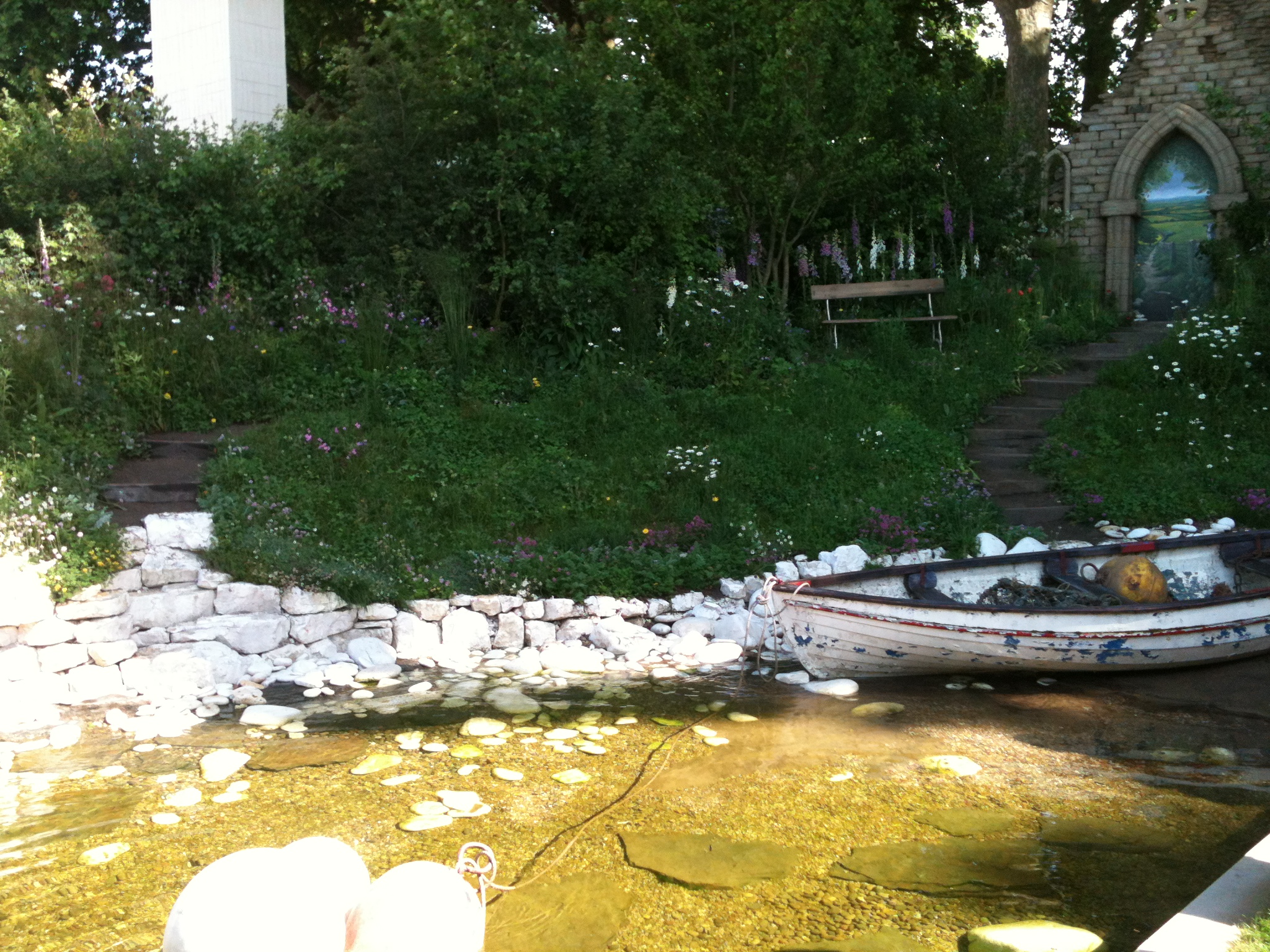
This is my favourite garden. 

 Some cool sculptures you could buy. If you are rich enough.


 Animals, which looked cute, but were just covered in fake grass, so I didn’t really see the point of them.


 People

 More people

 Indoor displays

 Parking was a problem.


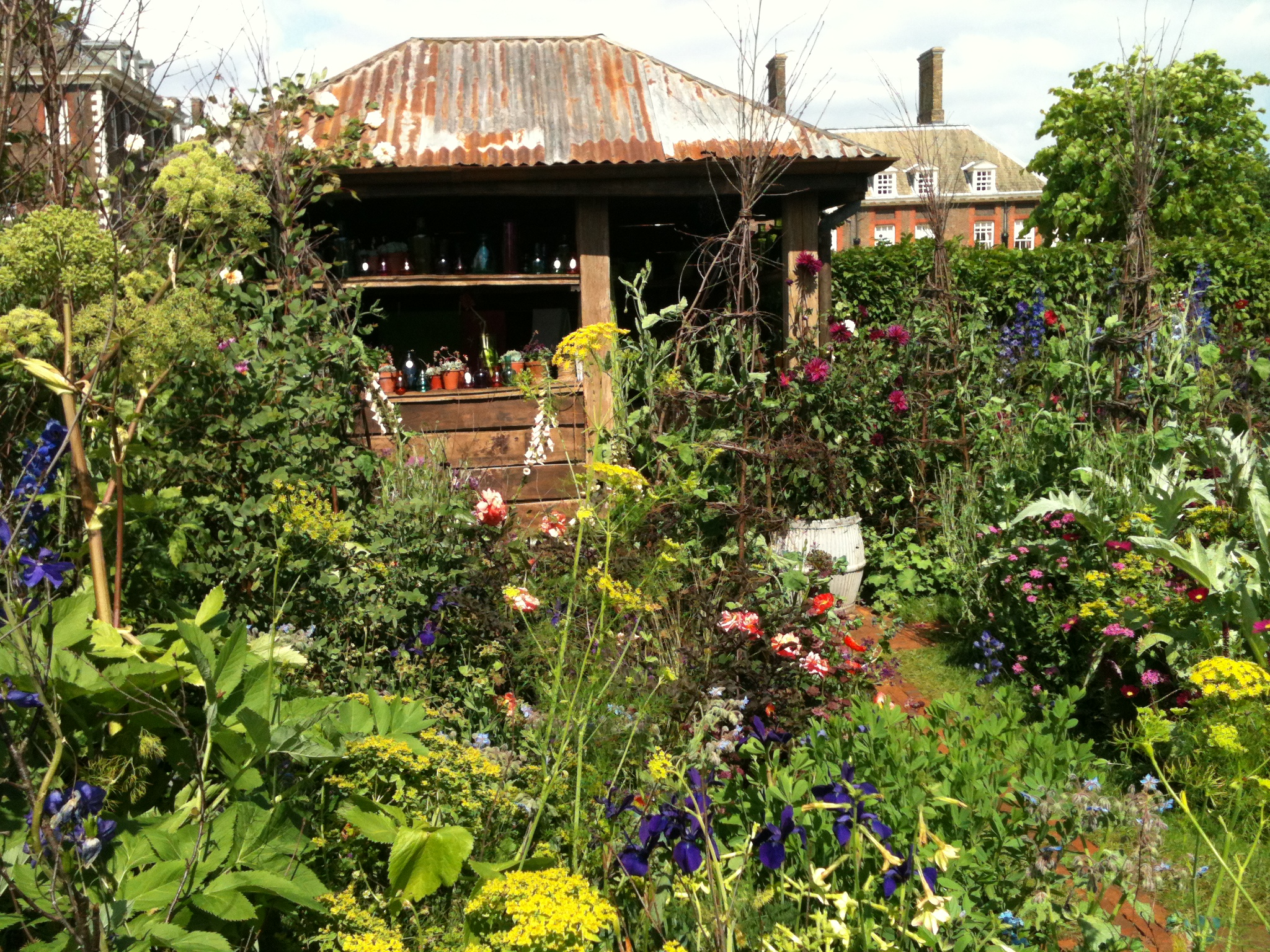
 More gardens.


 Arty stuff.

  Mostly, lots of people….

 Dahlias – some of which were as good as the ones my Dad used to grow.

Thank you for reading.

anneethompson.com

xxxx


Bible Blog 5 – continuing my read through the Bible…


I am still ploughing through Exodus – fairly boring in parts, but there are some nuggets of interest. Here are some thoughts:

Exodus 21 – laws concerning slaves. This bit I don’t understand at all. It seems like God is saying that owning, in fact, mistreating, slaves is okay – as long as you don’t hit them so hard they die. This does not, in any way, reconcile with my understanding of the nature of God (which is why it’s so dangerous to read a snippet of the Bible and then say, “Ah, this proves such and such.” It probably doesn’t!) So, how to make sense of this bit? – I am open to suggestions. All I can think is either we just cannot, in our English version, thousands of years later, really understand what was originally meant by these words. Or, perhaps when they were written, the abuse of slaves was very extreme, and these words were a moderator, toning down the abuse, until such a time as society had progressed enough for everyone to be treated properly. Sometimes God allows people to progress slowly, and maybe society of those days wouldn’t have coped with being told “no slaves”. But I’m clutching at straws, really, I have no idea what this bit means. It seems especially ironic when you consider it was being given to people who, until very recently, had been slaves themselves.

Nor do I understand why they were told not to boil a young goat in its mother’s milk. I think this is the basis for Jews today not eating cheese and meat in the same dish, but I don’t know why it mattered.

Then we have the details of how to build the tabernacle, a special tent for God to ‘dwell in’. It’s very detailed – not especially thrilling to read. It does however raise some questions. The materials were costly and beautiful – why? God had better beauty in nature: flowers, sunsets, stars, seas. Why would he want a tent, even an expensive one? Obviously the point was that it was not ‘for’ God, it was for the people, so they had a special place to worship. I wonder if we’re missing that today. Perhaps having a place that is special, that’s our very best, is important. Maybe we physical beings need reminding that God is worthy of more than we can offer, and we should designate somewhere suitable to worship him. Yes, when we have no time, we can pray anywhere (when you have toddlers and babies, sometimes the only place you can think for a second is in the bathroom.) But when life is not so extreme, should we be making more effort? If we snatch times to pray when in bed, or at the kitchen table, are we missing something of the holiness of God? I wonder if other religions, such as Muslims who wash before prayer, have something to teach us here. Yes, we need to be careful that the ritual doesn’t become an end in itself, but I wonder if we have lost something by rejecting rituals so completely. Even our churches tend to be a bit shoddy. We have an attitude of “take the cheapest biscuits to have with coffee, it’s only church”. I think we should take more care to only bring the best, because it helps to remind us that the God who we claim to worship is worth our best. Always.

In Exodus 29 we have the consecration of Aaron and his sons. They are told to “…lay their hands on the head of a bull. Then you shall kill the bull…” We often have bulls in the fields near us. They are huge. These instructions are no simple thing. It also means the priests were in essence, butchers. They would smell like your local butchers shop – not especially pleasant. I wonder if they could wash the clothes they were told to wear?

Talking of smells, in Exodus 30 there is the recipe for a perfume. I read this weeks ago, right after I had visited Floris, the exclusive perfumery in London (see blog). So I was extremely interested that there was a special smell used for the place where people were to worship. The part of your brain that deals with smells is right next to the part that stores memory, which is why smells can evoke such strong memories. For me, one whiff of Old Spice aftershave in a supermarket, and I’m a little girl again, being hugged by my Dad. So, for people to have a smell that they associated with worship, would be very special. I guess that’s why they were forbidden to use the perfume anywhere else – it was only to be associated with God. Smells, memories, emotions, would all be intermingled when they came to their special place. I know some people light a candle when they pray. Maybe keeping a special scented one, not to be burnt at other times, would also be helpful. God never forgets we are physical beings, even if we like to sometimes. I’m not sure we should ignore all this as much as we do.

In fact, we tend to see gifts from God in mainly spiritual terms. But in Exodus 31, there’s a chap called Bezalel (unfortunate name) who is “filled with the Spirit of God” and is therefore intelligent, artistic, and a skilled craftsman.

I’ll post more of my notes next week. Thanks for reading. (If you sign up to follow my blog, you won’t miss the other things I discover.)

anneethompson.com

The Red Light District of Mumbai


So, deciding to be brave, I went to the red-light district of a Mumbai slum. Husband was working, so I contacted Tearfund, and they arranged for me to visit one of their projects. Beforehand, I was very nervous about going on my own, but I am so glad I did it.

I was met by Max, who is the director of Sahaara. We’ve never met, so it was a little like a spy story -“I will be under the arch with a pink carnation in my buttonhole” (Well, actually, he just told reception who he was and we met in the hotel lobby, but you get the idea.) We then got a taxi to Turbhe, the area of the slum he works in. We chatted in the car, and I could check on a few things I’ve included in my latest novel (which is set partly in the slums of Delhi).

As we walked through the slums, it was all very similar to places I saw in Delhi: homes made from scavenged materials, uneven walls, unglazed windows, corrugated iron roofs. The hard mud paths were litter strewn – in a couple of weeks they’ll be quagmires of wet mud.


Roads were pot holed, narrow, stalls and heaps of rubbish making obstacles for vehicles to inch around. At one point the road was blocked as a lorry driver was asleep, curled up over the steering wheel, oblivious to the honking from other drivers who were unable to pass.


We first went to a building (actually, it was really just a narrow room) which is a feeding centre/education room. In May, everything closes (due to the heat) but they were still providing a mid-day meal. They had two gas burners, one with a pressure cooker of dhal, one with a vat of rice.


image

There was a bowl of hard boiled eggs, which they must’ve cooked earlier. No work-surface (no idea how they chop vegetables – they must do it in their hand, on a plate balanced somewhere). No sink, no running water. There were cupboards, some of them very high. At one point a woman climbed, a foot on a shelf, other foot on the top of a cupboard door, to reach plates from a top cupboard. Metal plates were stacked on a drainer.


image

They were washed in a bucket on the floor, the water carried in from an outside water butt.
Water is piped into the slum once in the morning, once in the evening, and people fill containers to use throughout the day.

The children arrived. Black-eyed, smiling, interested to see a big white woman sitting in their room (I feel huge in India. Everyone is smaller than me. Husband is a giant here.) I took lots of photos, but I’m uncomfortable about publishing them here, as most of the children had mothers who were sex workers. I will include fuzzy ones of backs, but not include faces, and hope that preserves their anonymity (we were on the edge of the red light district, I could photograph houses on the left, not on the right.)

These children were growing up in an environment where prostitution is the norm. Sahaara is educating them, so they don’t follow their mothers into the same profession, so they will have choices in life.
Previously, they found that some children arrived only for the food. Sahaara therefore made a rule: if the kids don’t attend lessons, they can’t eat. People complained, but now they all come to lessons. Seems a wise decision to me – if we just feed the poor, they will always be poor. (This is why I like Tearfund/Sahaara – they sometimes make unpopular decisions if it is for a greater good.)

IMG_2095They showed me the toilet – a room with a drain, a bucket, and a ladle. Absolutely no idea how it should be used (thankfully, was just a morning visit, I didn’t need to use a loo). Max told me that families are more likely to have a mobile phone than a toilet. There was also a fridge (not in the toilet, just in the room).

While we were there, the power went out. This happens every Friday. There isn’t enough electricity, so different areas of the slums have no power for certain times during the week. They never know how long the power-cut will last, sometimes a few hours, but when I was there it came back on after about 30 minutes. The fridge whirred back into life and the ceiling fan stirred the warm air. It would make the fridge pretty useless for anything other than drinks though.

We walked through the red light district. The houses here were slightly better, I guess it pays well. Each little house had 3 or 4 women outside, just sitting on chairs or on the floor. I thought they were sitting in the shade, chatting to each other. (Later, realised they were soliciting customers – am a bit naive about such things). Sahaara has a second centre in the heart of the red light district.

Here, they chat to the women, teach them skills like sewing, hairdressing, making things from junk – enabling them to have life choices if they want to choose a different career.
Max said it’s about caring for the women, showing them that God loves them, that they have worth, that they matter. Sahaara has a 9 point plan, starting with recognising the women, then greeting them, then befriending them, then inviting them to the centre, then the women coming on their own…. until, hopefully, they will decide they want to leave. If they do, then there are safe houses they can go to, to adjust to life outside the red light district, somewhere they can start to rebuild their lives.

Usually the centre is shut during May, but they opened it to show me inside. When they saw it was open, a couple of women came in, to see what was happening.

Back at the other centre, about 35 children sat on the floor. One child said grace (I think it was in English, which seems bizarre, as they all spoke Hindi. But I was tired, brain was fuzzy by then, so maybe was imagining it).
They ate from the tin plates, no cutlery, scooping the food with their right hands. The women were busy, one dishing up the food on plates, the others taking it round to the kids. I nearly offered to help, but then I realised, it was like Lunch Club at home. Everyone had a role and knew what they were doing, the last thing they wanted was some big foreign woman getting in the way!

We got a taxi back to the hotel, and Max delivered me safely to the lobby. I was so glad I had been, met the women, seen the children. It makes it easier to support the work and talk about it to others. Everyone has a different story. Some of the women would have been trafficked as children, some had gone into prostitution by choice, because their options were very limited. Max said they work with everyone, the prostitutes, their children, the pimps. They all need to be cared for.

It would be easy to judge, but their lives are tougher than ours, we are not so very different inside. If Sally finds she cannot make enough money from rent, she may well decide to go back to her village, to buy a young girl, to act as her pimp, so she can feed her own child. Not because she is more wicked than you or me, but because she has grown up in a harsher place, where survival means hard choices.

Sahaara is trying to show that God loves them, wants a better life for them and their children, and is teaching them the skills so they can make that choice. But the decision has to be theirs. All Sahaara can do is give them the choice. All we can do is help to provide the resources, and pray.

Thank you for reading. If you would like to help support Sahaara or learn more about their work, go to tearfund.org for more details.

anneethompson.com


I have included some of the women’s stories in my latest novel:
CLARA – A Good Psychopath?
Available from bookshops and Amazon, as both a paperback and Kindle book.
Why not buy a copy today?
UK link below

Mumbai, India


 I am writing this in Mumbai. Husband has to work in India for a few days, and travelling on work expenses is always rather nice (I pay for my travel & food, but the hotel is no extra, and they’re nice!) so I tagged along. Plus I love India, it’s possibly my favourite country (not that I have seen more than a snippet of it -but what I’ve seen, I like.)

We arrived late Wednesday night, having woken early that morning (left home 5.45 am), so I was tired. We had to go through different immigration, as I was travelling on a tourist visa, and husband had a work one. The woman at the desk was very pleasant, and when husband pointed out for the sixth time where he would meet me, she laughed. When he went off to his work visa desk, she commented that he seemed very worried about me.

“Yes,” I smiled, “he thinks I’m incompetent.”

Immigration officer then asked for my visa. I gave her the print out with the hotel details on. (They look the same, both printed from the computer.) She politely asked if I also had a visa.

She then asked where I had come from. I was surprised, but gave my full postal address. I even remembered the postcode, which often defeats me, so felt rather pleased with myself. Immigration officer looked confused and asked for my boarding pass. It was somewhat crumpled, but I dug it out from the bottom of my bag, then realised my mistake. “Heathrow!” I said, ” You wanted me to say Heathrow, not my address, didn’t you!”

Immigration officer continued to smile. We then had trouble making the fingerprint machine work (but I don’t think that was my fault.) Eventually I was allowed into India. I think Immigration Officer went for a tea break.

We’re staying at the Taj Mahal Palace Hotel. It’s beautiful. There was a mix up with our booking (also not my fault) and as a goodwill gesture, they upgraded us to a suite. The hotel really is beautiful. There are flowers and candles everywhere, and the corridors are all open, with lots of carved lattice work.

When we returned yesterday evening, there were patterns of flower petals everywhere, so pretty. (Romantic husband referred to them as ‘vegetation on the floor’ ).


Walked to Gateway to India. Lots of people there, some were catching ferries across the sea. It was previously owned by Portugal, (the Portuguese for good is ‘bom’ and its a bay, hence was called Bombay).


We went to a market and bartered for some trinkets. I am not very good at bartering, especially when the crafts are actually very pretty, and the price seems to be low to start with. Tradesmen smile a lot when I shop (and tell me not to bring my husband next time, because he’s cannier than me!)

Wandered around the city. I love the faded colonial buildings covered in vines, the huge plants, the colour everywhere. Every sense is bombarded, so much noise and smell (not always pleasant), and so hot. We met some friends for lunch. They said that in a couple of weeks the rain will come, sometimes raining for several days continually, which cools everything down.

I also visited the slums on the mainland, where I was shown around by Sahaara, one of the projects Tearfund works with. I went on my own, as Husband is working (very brave of me!) I will write up what I saw and post it later this week. Right now, I need a shower!

Excuse the bleary photos -all taken with my ancient phone.
Take care,

Anne x

Why not sign up to follow my blog?
anneethompson.com


If you enjoyed this, you will love my new book: The Sarcastic Mother’s Holiday Diary.
I have always written a diary on holiday, so last Christmas, I decided to find all my old diaries and blogs, and make a book for my children. However, several other people also asked for a copy, so I have written a public version – it’s available on Amazon and has been described as “The Durrells meet Bill Bryson”!

Why not buy a copy today? I think it will make you laugh.

The US link is here:

https://www.amazon.com/Sarcastic-Mothers-Holiday-Diary-ebook/dp/B07N95281F/ref=sr_1_1?ie=UTF8&qid=1549015525&sr=8-1&keywords=the+sarcastic+mothers+holiday+diary

The India link is here:

https://www.amazon.in/Sarcastic-Mothers-Holiday-Diary-ebook/dp/B07N95281F/ref=sr_1_1?ie=UTF8&qid=1549015429&sr=8-1&keywords=the+sarcastic+mothers+holiday+diary

The UK link is here:

https://www.amazon.co.uk/Sarcastic-Mothers-Holiday-Diary-ebook/dp/B07N95281F/ref=sr_1_2?ie=UTF8&qid=1549014970&sr=8-2&keywords=the+sarcastic+mothers+holiday+diary