Letters to a Sister : 24


When I packed for the flight from Bangkok to Singapore I decided to take some nice bubble-bath I had bought. I put my swimming costume next to it in the case, as it wouldn’t get ruined should bubble-bath leak. Then realised it was potentially embarrassing – I might be the lady swimming in the hotel pool followed by a trail of bubbles…..

Flight to Singapore uneventful. I was in economy, next to a man who twitched continually and behind a woman who pushed her seat right back as soon as we’d taken off and then kept stretching her arms up and putting her hand over the screen in front of me. Resisted urge to slap both of them.

Also resisted the meal: plastic scrambled eggs. I just ate the bread roll and dessert, which was garnished with a strange plastic looking fruit. I bit it. Think it really was plastic.

St. Regis hotel in Singapore pretty much exactly the same as the one in Bangkok. But the staff less ‘polite’ – in Bangkok everyone puts their hands together and does a little bow, which I kinda liked (though it’s hard to do when carrying stuff, I kept dropping things.)

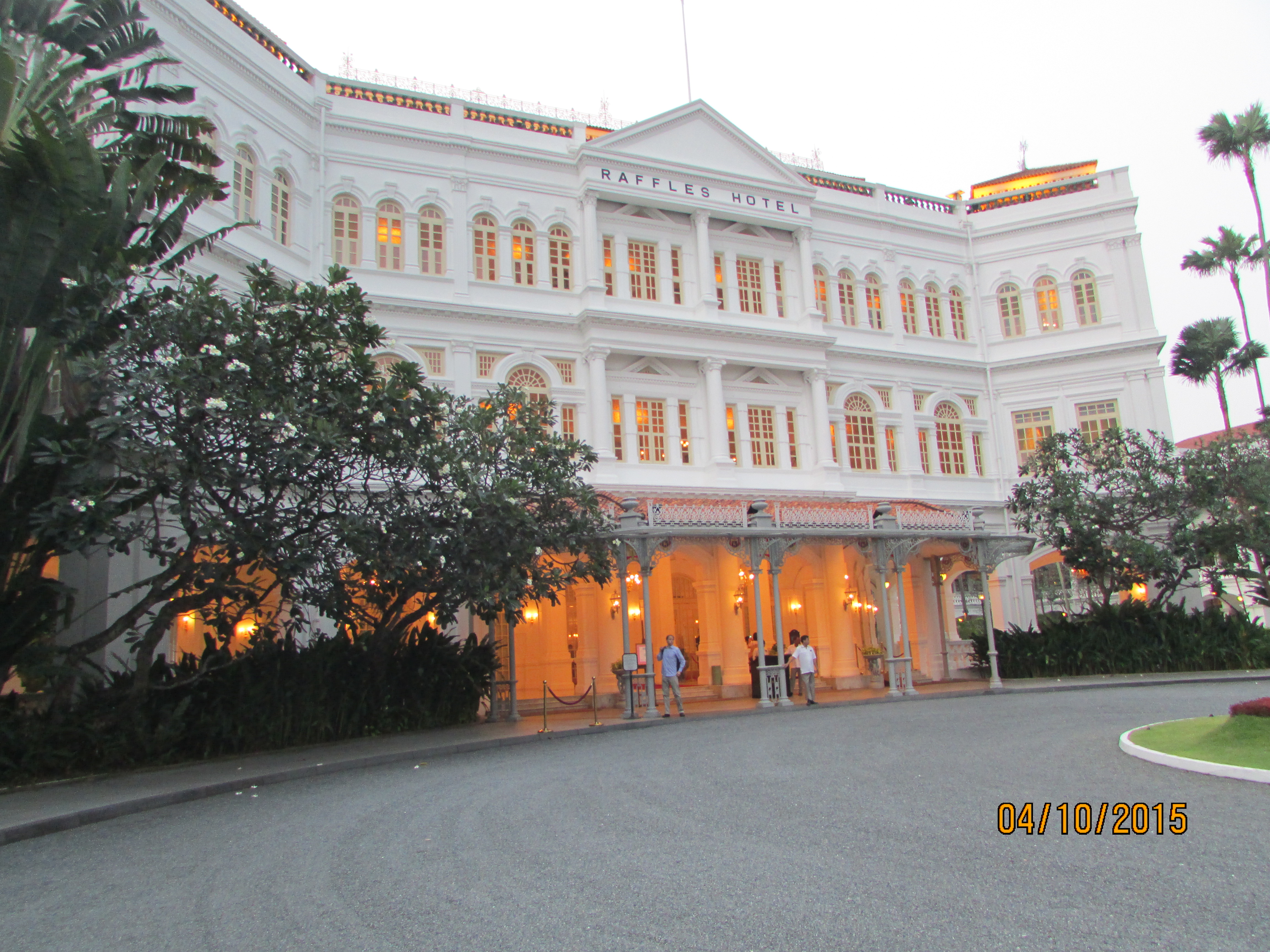
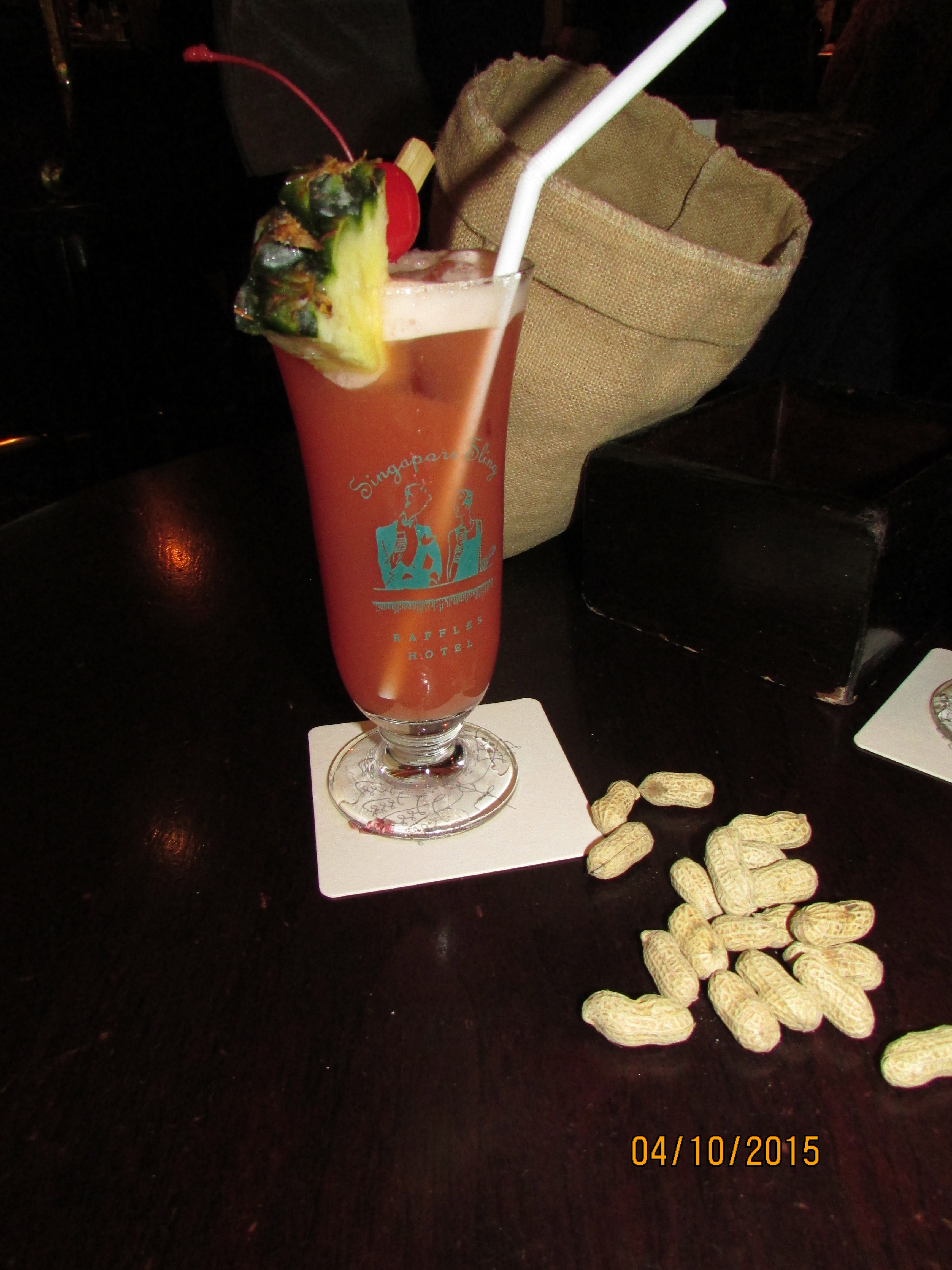
I slept most of the afternoon. Then we got a taxi to the old part of town to an old colonial hotel, Raffles, famous for the cocktail Singapore Sling. Had one in the long bar – very traditional in a sort of Disney, pretend way. It was very pleasant, all clean and very atmospheric with lots of dark wood, ceiling fans, sacks of nuts on the table with nut husks all over the floor. The cocktail is tall and sticky with froth on top and served with a pineapple chunk and a cherry. Mine was sadly lacking in discernible alcohol.

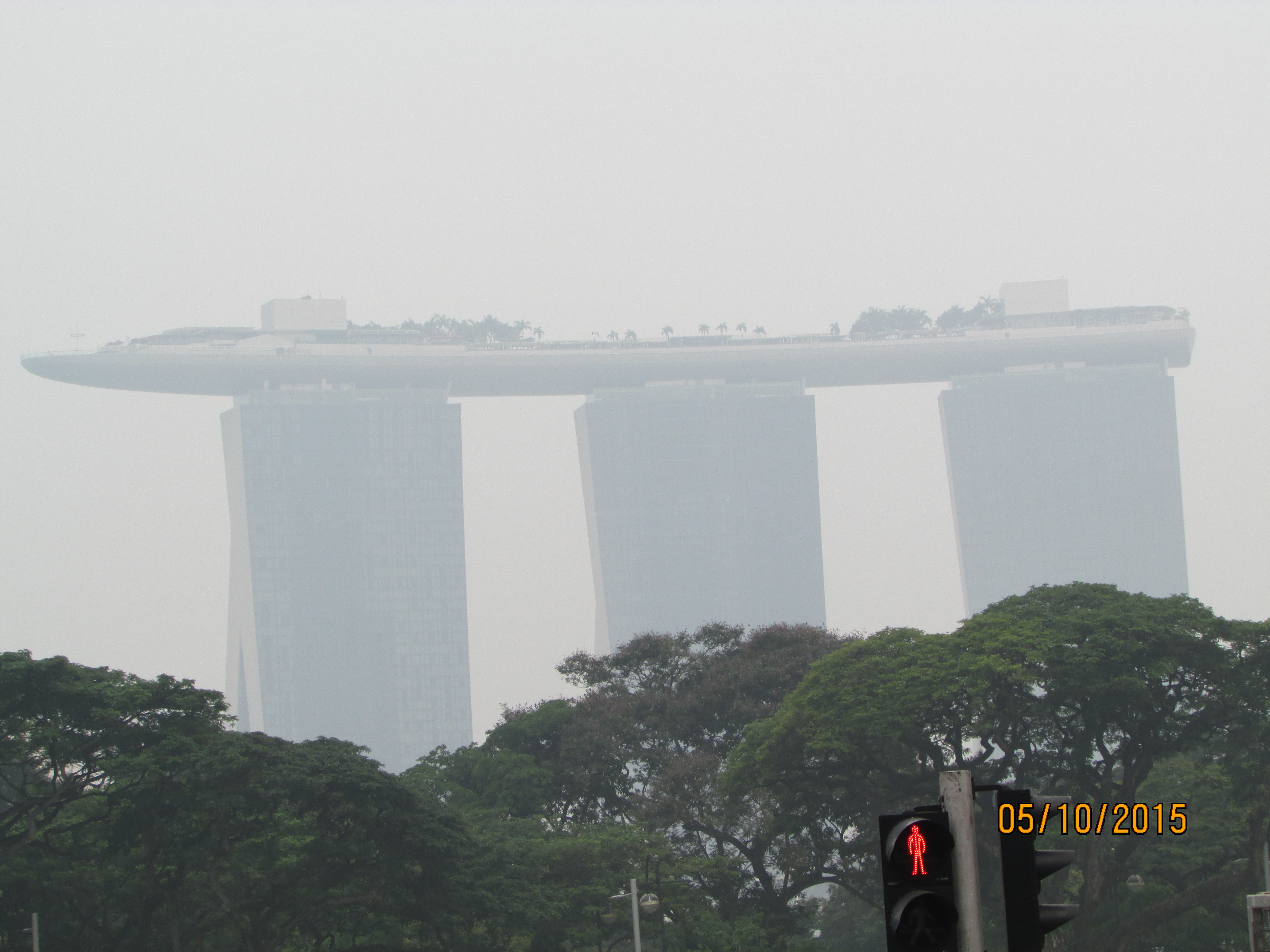
There is currently a lot of air pollution in Singapore – a ‘haze’ as they call it (it looks misty all the time.) This is pretty bad and causes itchy eyes and breathing problems when it’s at its worst. It’s caused by people burning great swathes of land in Indonesia. They do this for a couple of reasons: it’s much cheaper to clear land for crop planting to burn stuff rather than to cut and clear it, it is also a way of attacking your neighbours when there are disputes over who owns land (a problem due to how forests cannot be registered) and also, peat bogs, when they dry out, are very flammable.

The people in Singapore and Malaysia are furious about this, especially as it happens every year. They have to close schools, cancel flights and avoid going outside when the pollution is at its worst. The Indonesian government are making plans to stop the problem but from reading the papers (which are in Singapore, so possibly a bit biased) they make plans but don’t actually change anything. This is a problem that seems to have occurred every year for about forty years. The funniest report I read was where a politician in Indonesia said that rather than complain, the people of Singapore should thank Indonesia for their clean air the other eleven months of the year. Not sure that helped relations much…..

On Monday I walked around the historical part of the city. I got a taxi to Raffles hotel, then walked past St Andrew’s cathedral – I could have been in England.

I arrived at the National Gallery but couldn’t work out the doors. They appeared to be bolted shut from top to bottom. The sign said the gallery was open but I tried pushing, pulling and sliding the glass doors – they did not move. I suspect this was my fault. However, peering through the glass, the gallery did look very empty, so perhaps other people had problems getting inside too. Seems to be bit of a design fault for a door to not open (is rather the defining point of a door, separates it from a wall.)

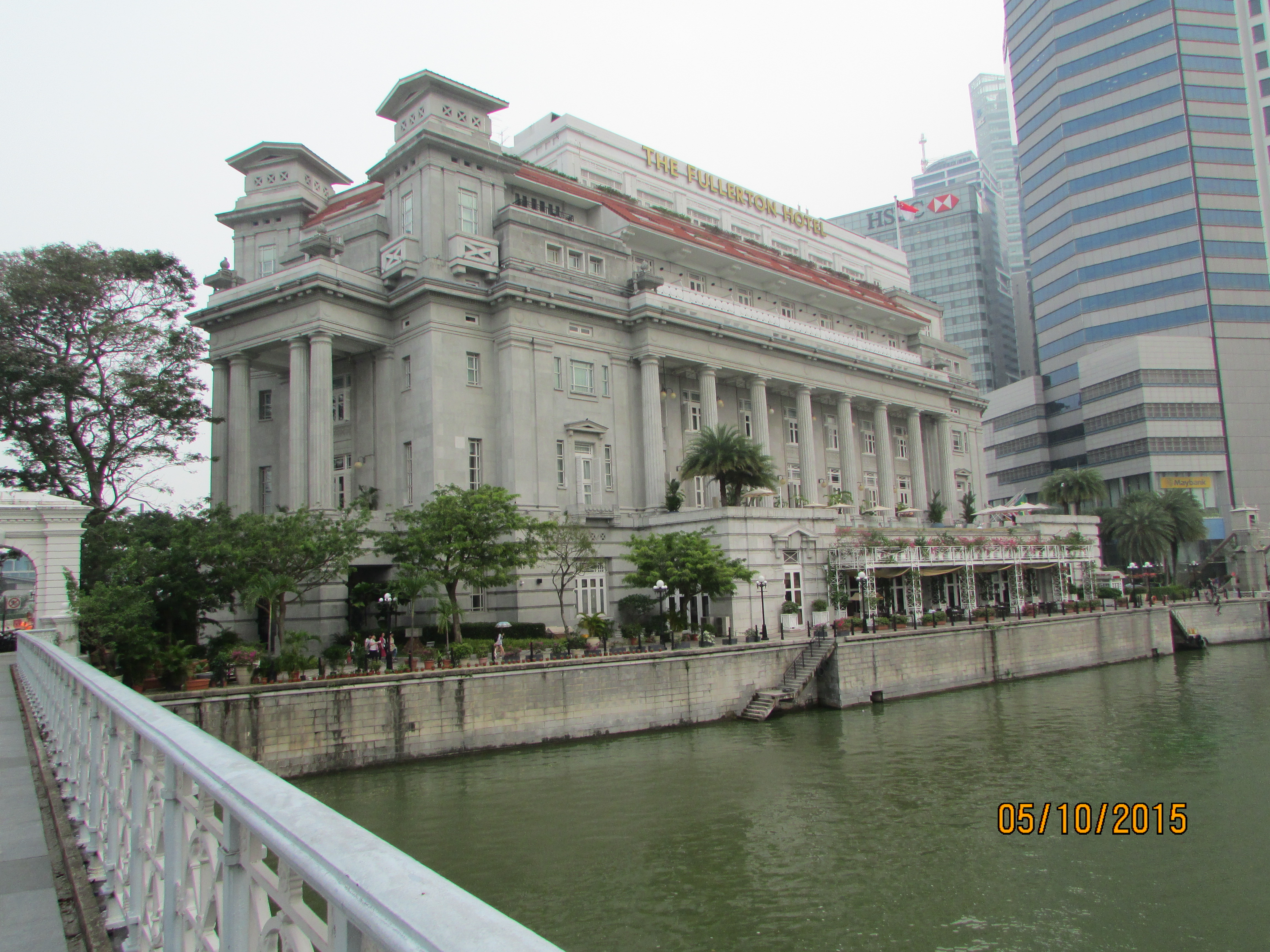
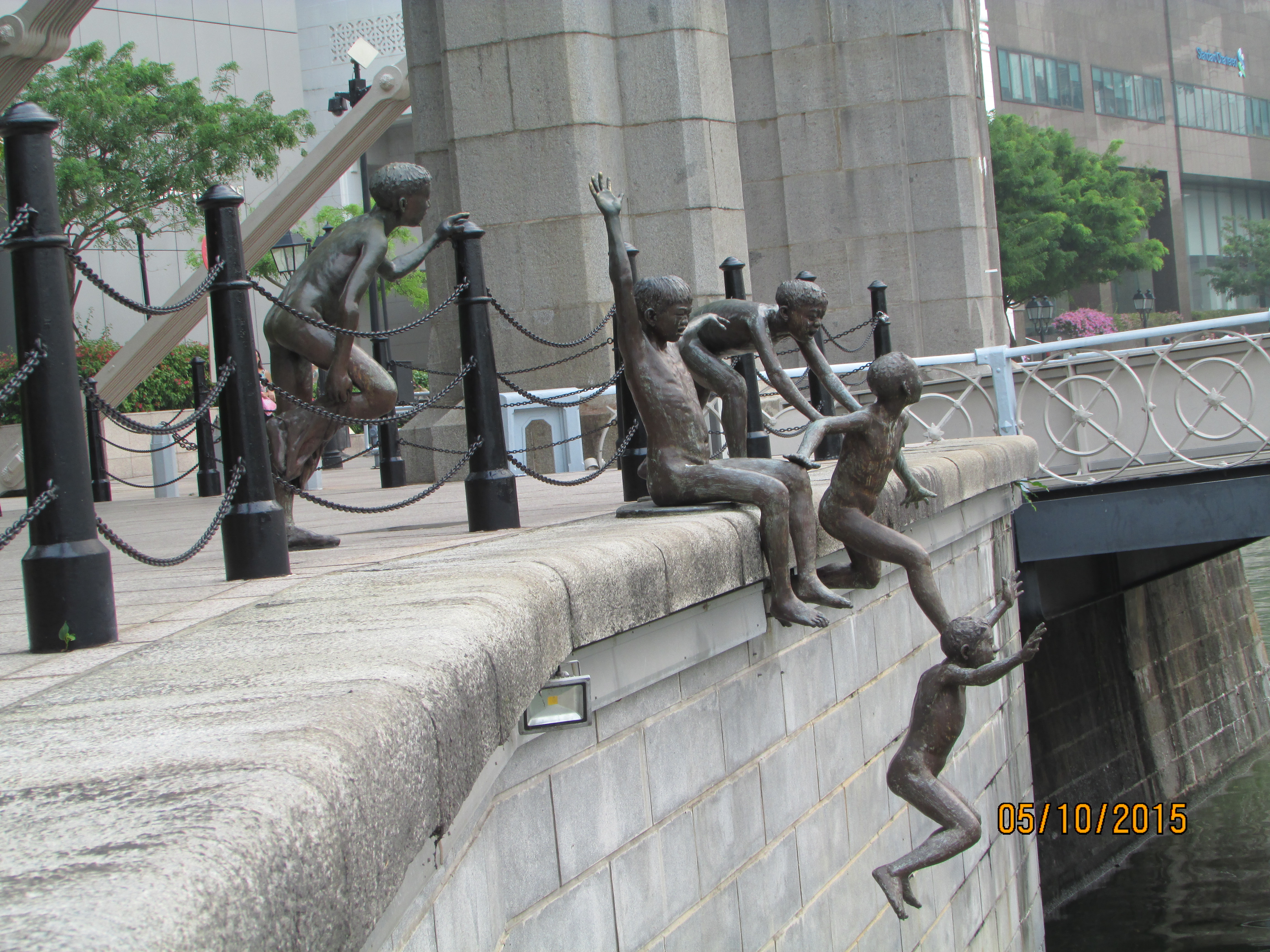
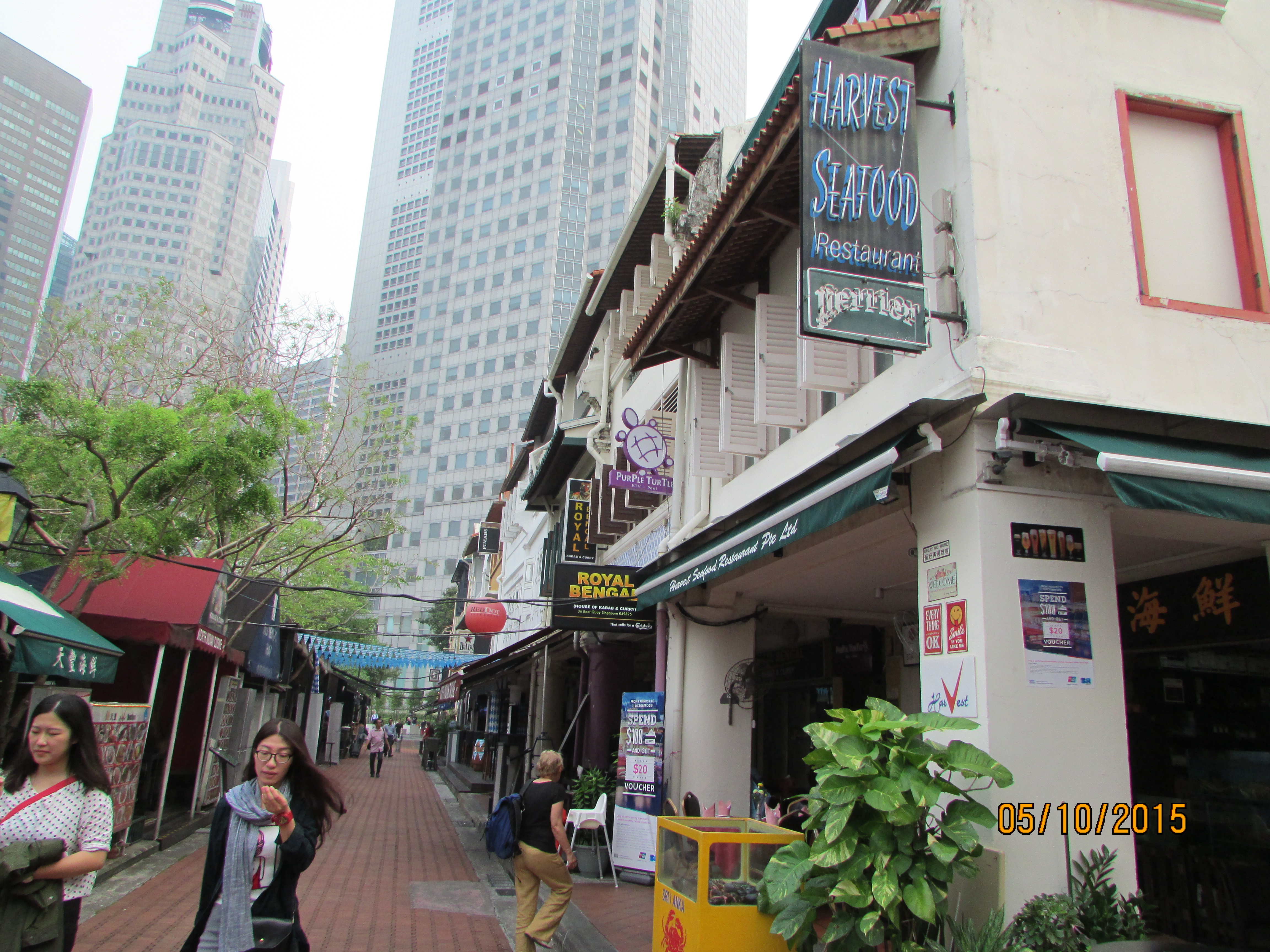
Abandoned non-opening doors and walked to river, crossed a bridge to Fullerton Hotel. This has the absolutely best sculpture outside. Walked along quay. There are lots of tiny restaurants, the whole world in one lane. I passed English pubs, Spanish tavernas, Chinese restaurants (these had the biggest shellfish outside in great glass tanks). It was a little like being in the Epcot Centre at Disney. There were good views of the Marina Bay Hotel (which looks like it has a giant boat perched on its roof) but it was too hazy for a decent photo. Several people were wearing face masks to keep the pollution out.

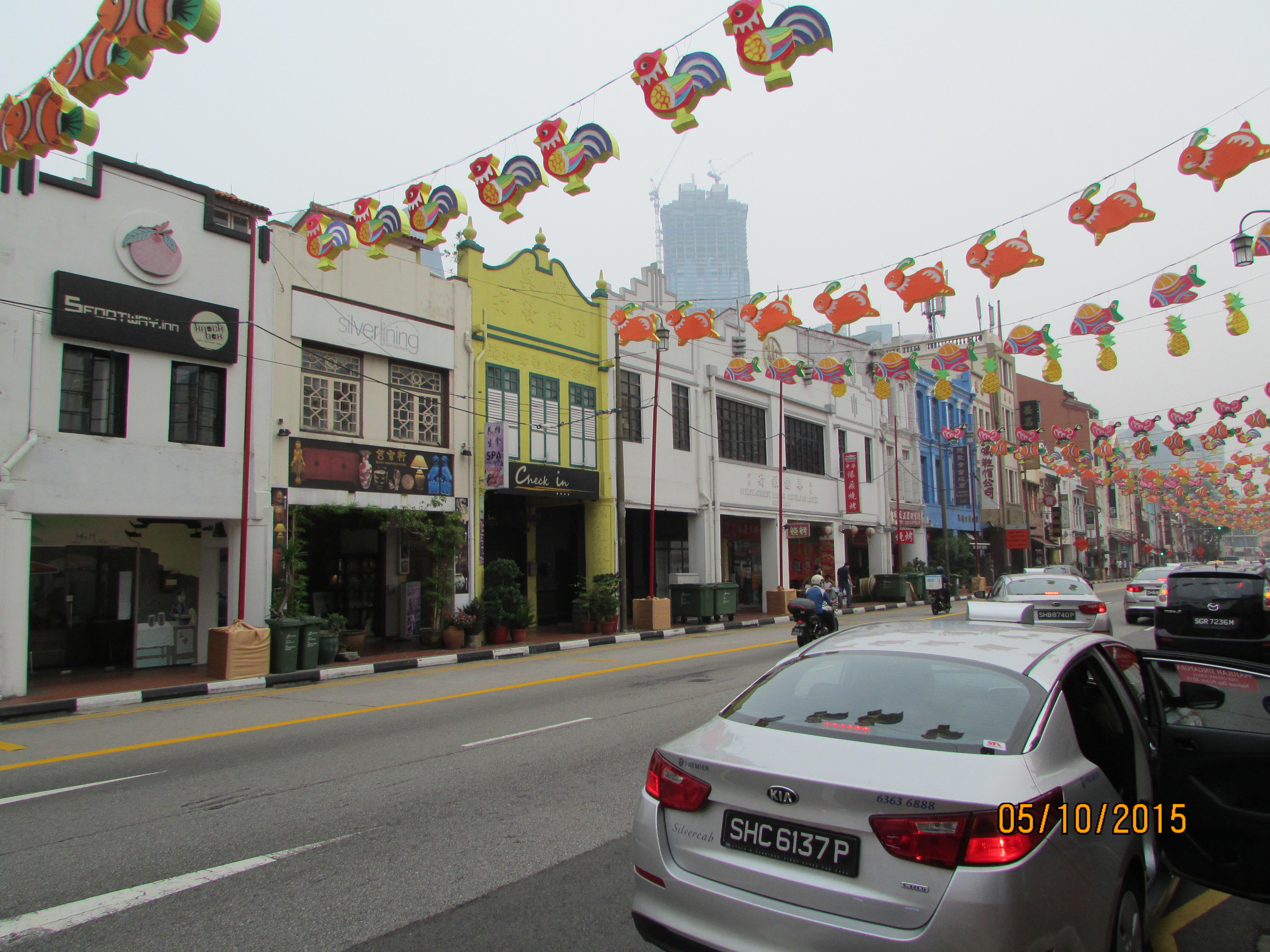
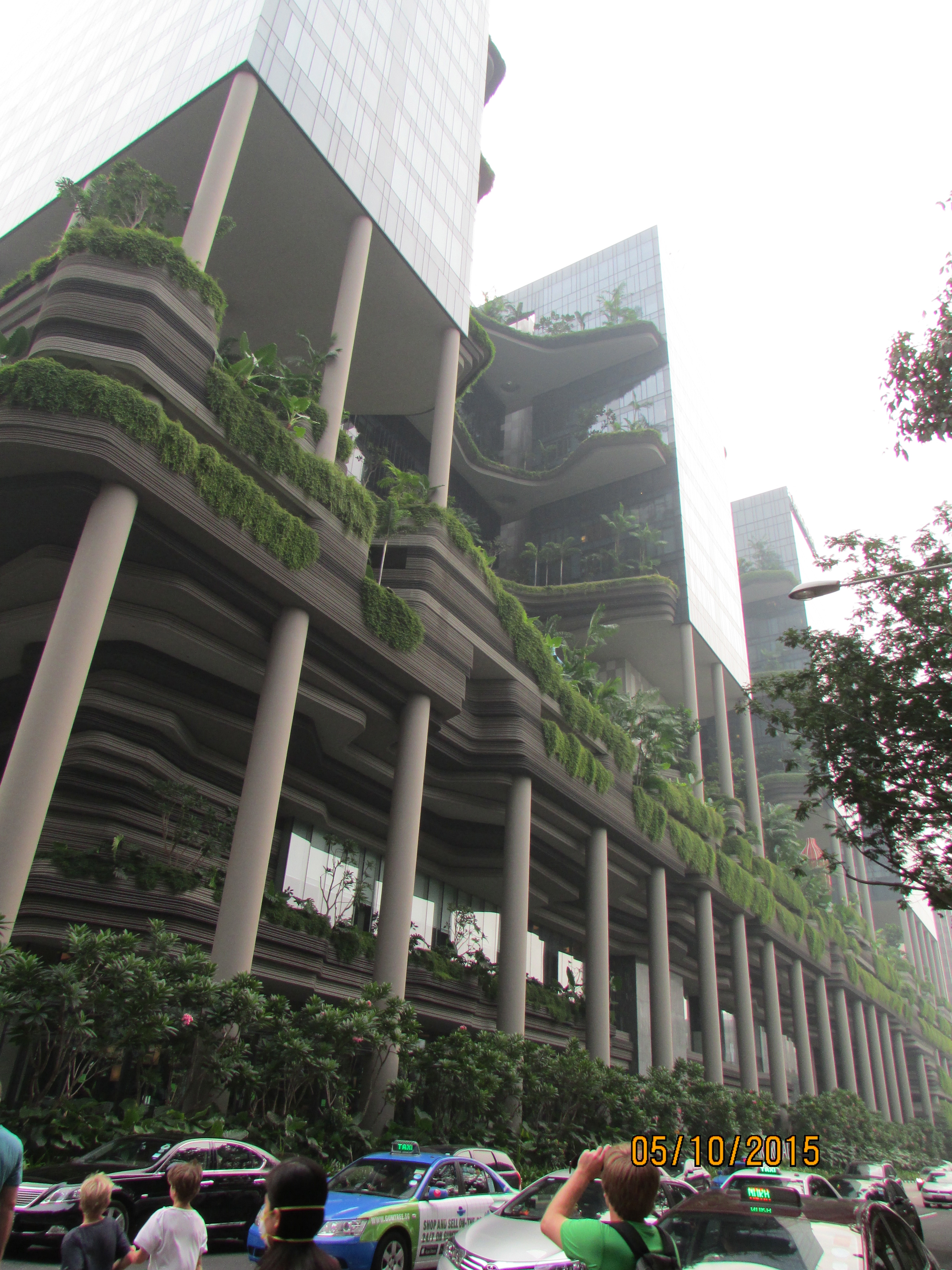
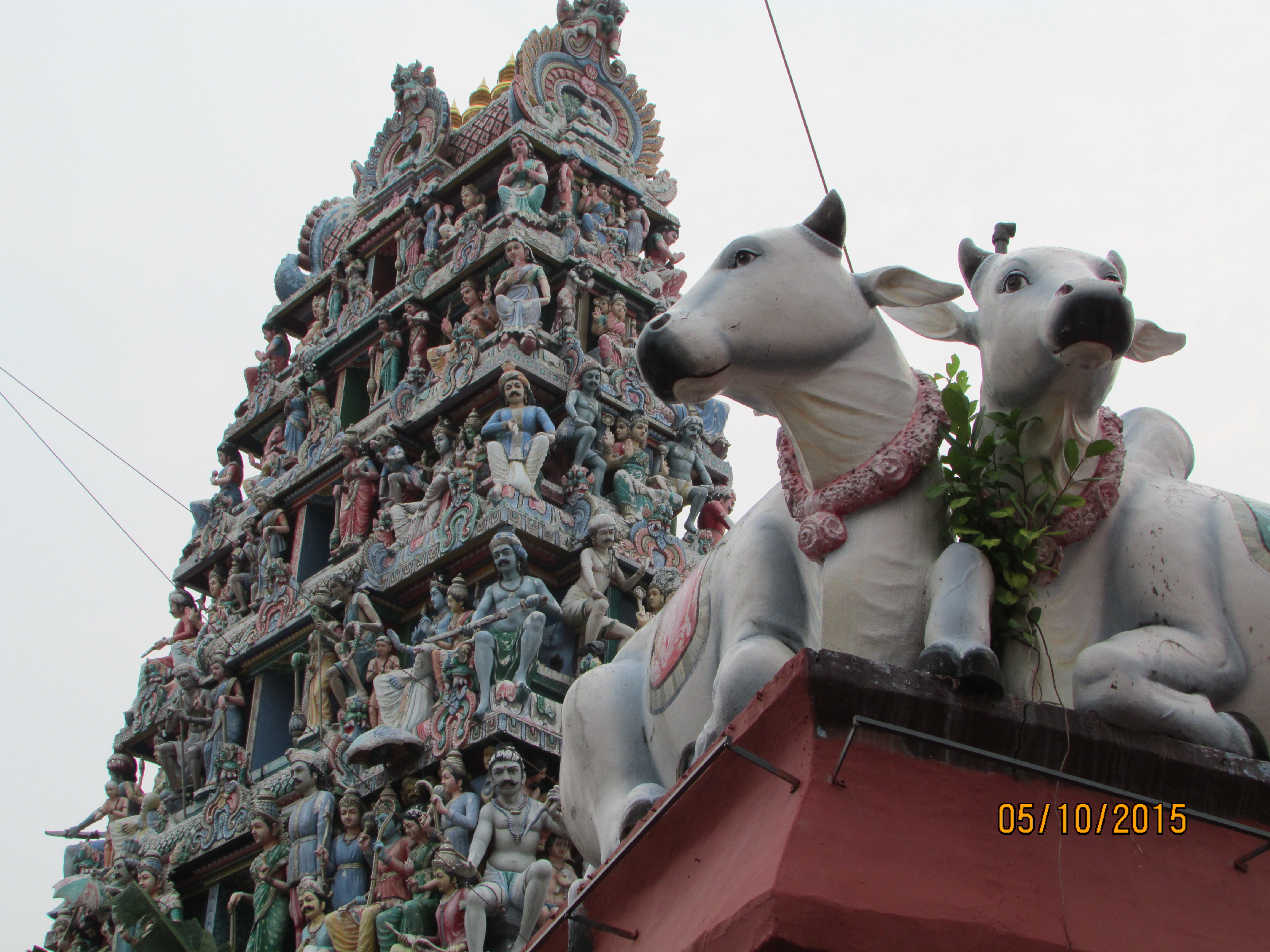
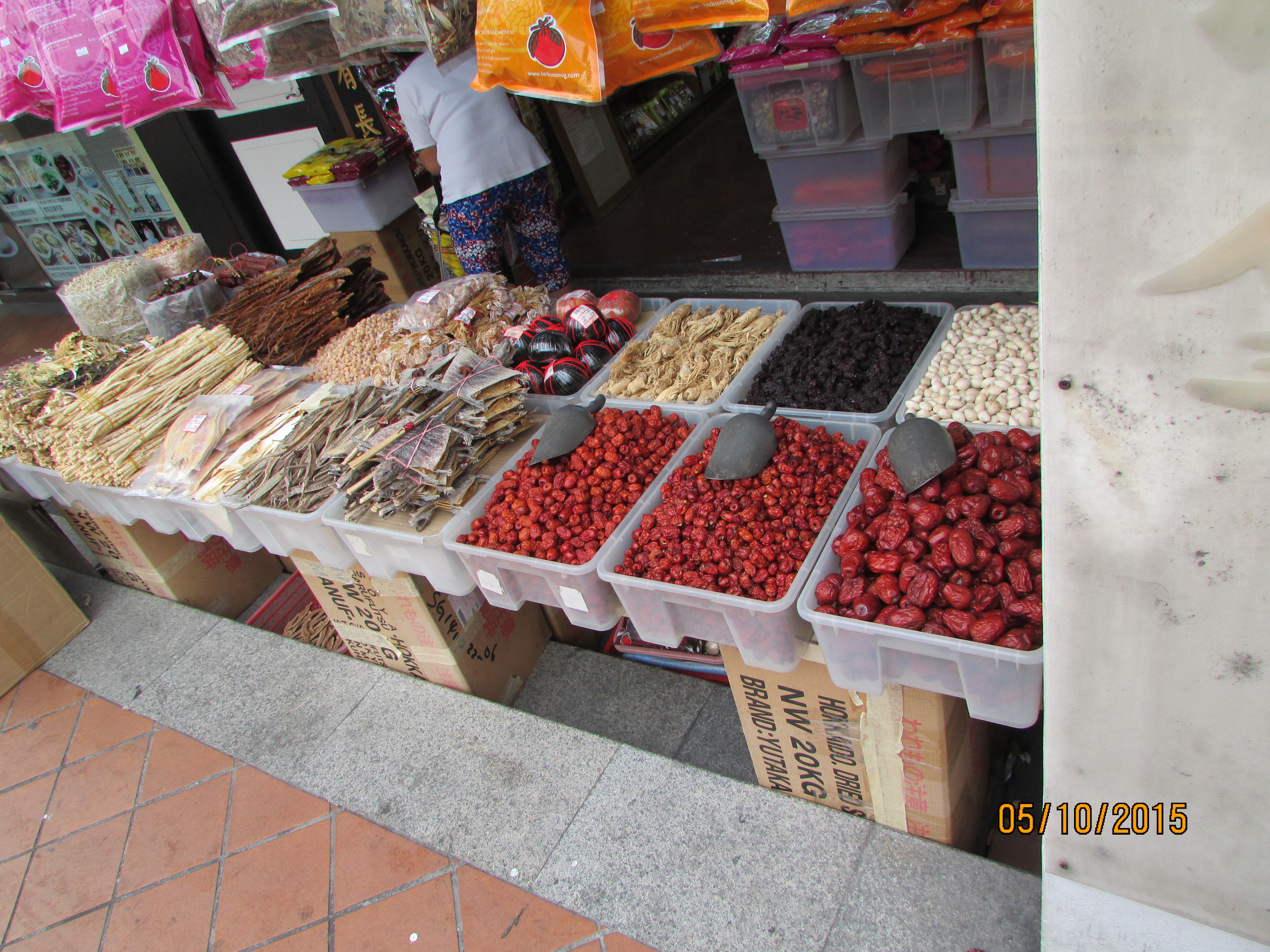
I followed South Bridge Road up to China Town, passing Park Royal Hotel. This is opposite Hong Lim Park, but actually there was more stuff growing on the hotel than in the park – green blankets of plants spilling over every balcony. I passed tailors claiming they could make a suit in six hours, Chinese sign-painters with canaries singing in cages, a Hindu temple with shoes littering the street outside, stalls selling silk, beads, masks, key-rings, lots of street food.

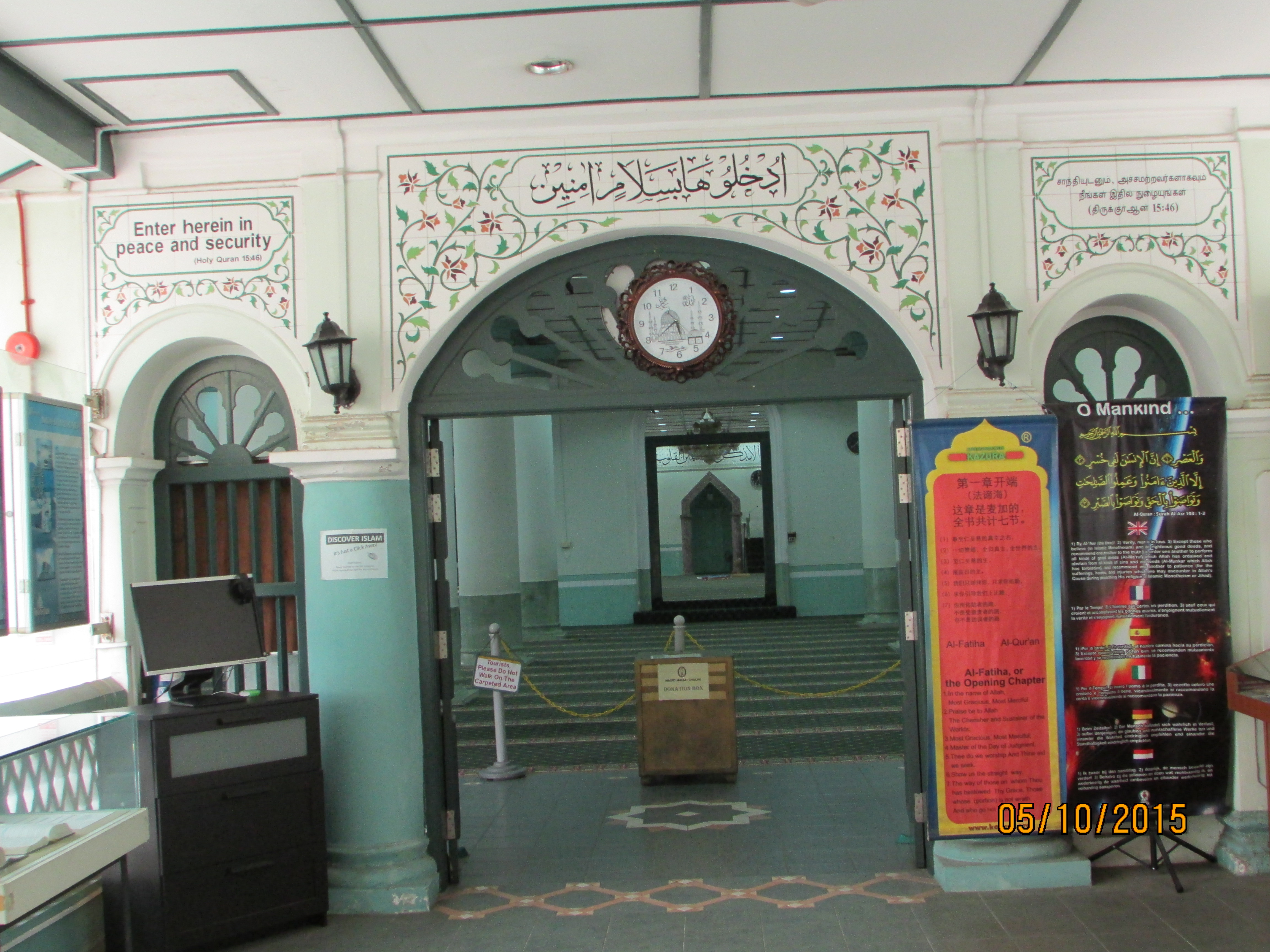
There was a mosque with a big sign outside, declaring that Islam is a peaceful religion and should not be judged by the actions of a few terrorists. I thought that was rather sad.

It was hot and humid, so I walked back to the park and drank a Sprite before getting a taxi back to hotel. In Singapore you cannot hail taxis in the street (I spent a long time trying to do that on a previous visit. They ignore you.) You have to wait at a designated taxi stand, which is a lot like a bus stop. It’s easiest to just go to a hotel foyer and wait for one to arrive. Singapore has a lot of hotels.

Singapore is clean and safe and has lots to see that is interesting. I did not though feel that I had seen the ‘real’ Singapore, I have left with no impression of the people who live there. Perhaps it is harder in a more developed city to see how people live and work, to glimpse the real culture beneath what is presented to visitors. I wonder if the same could be said of London, I wonder what visitors see when they tour our tourist attractions.

Take care,
Anne xx


xxxxxxxxxxx

IMG_3502 IMG_3504Raffles Hotel

IMG_3511 IMG_3512Fullerton Hotel

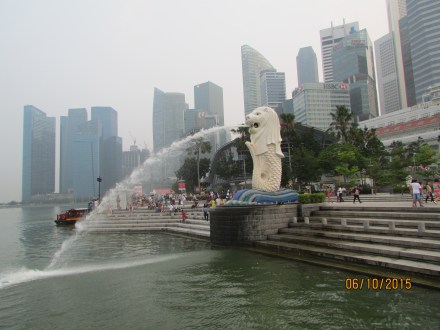
IMG_3509Marina Bay Sands

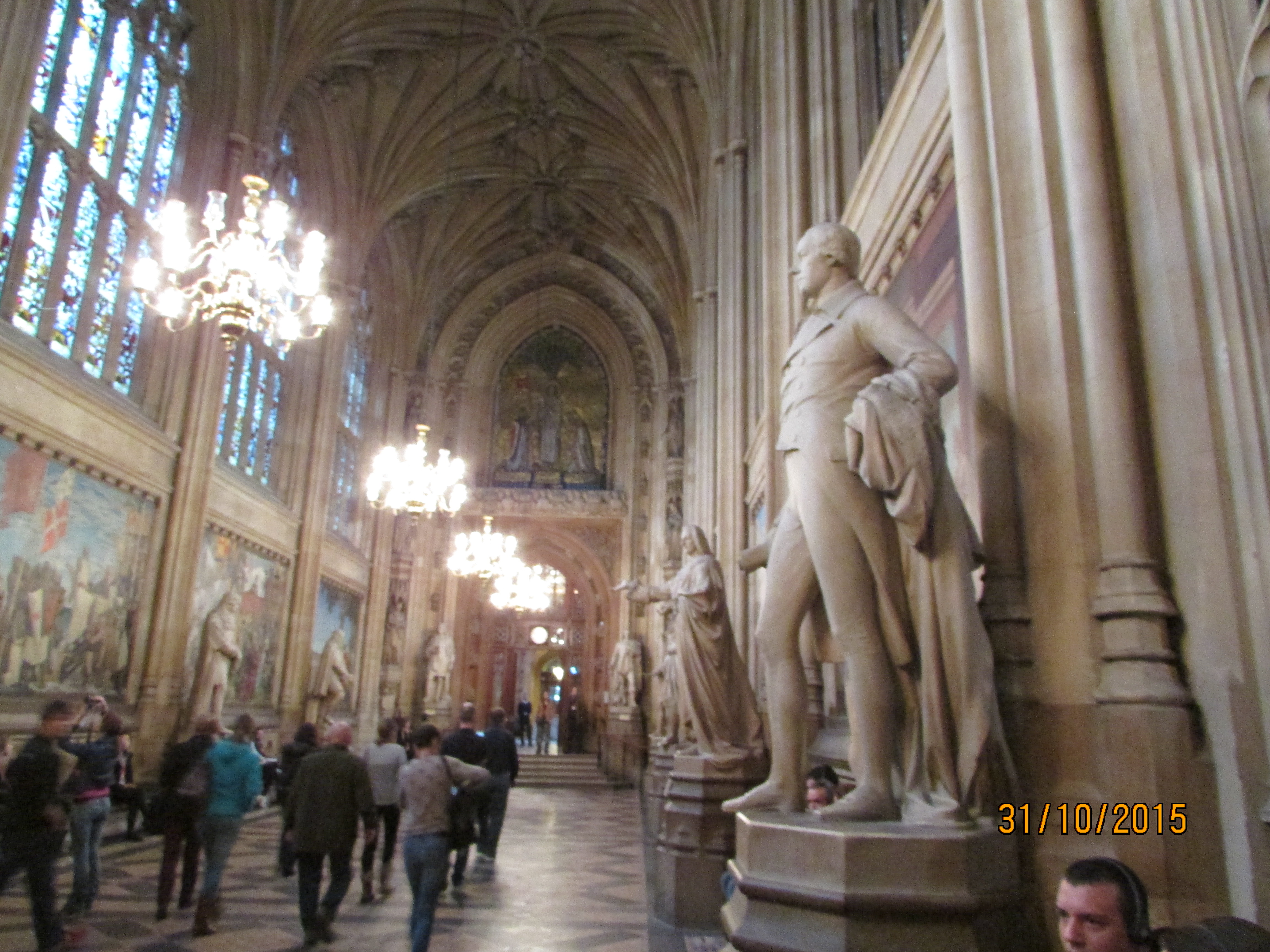
IMG_3515 IMG_3519 IMG_3521

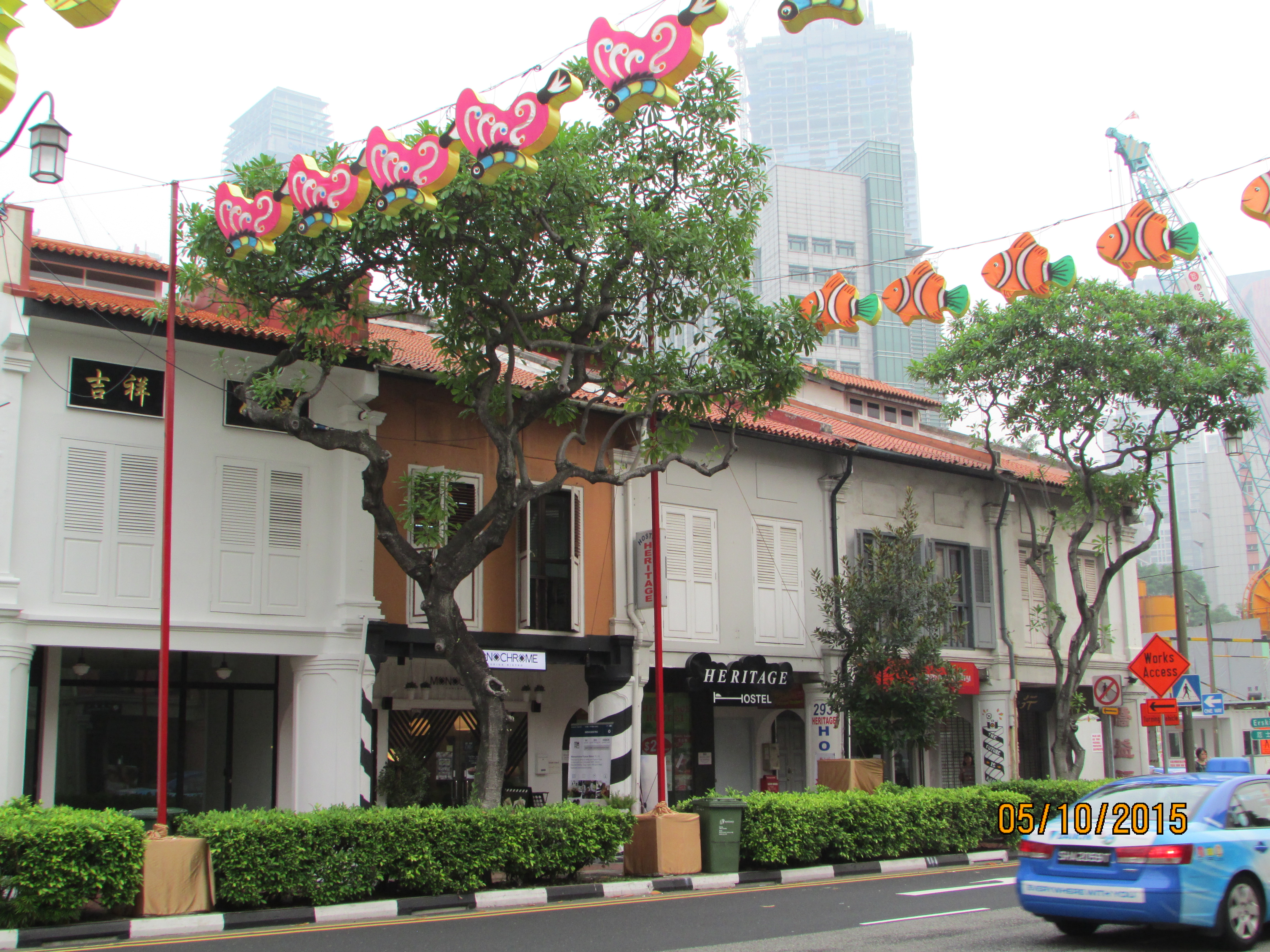
Lots of two storey buildings with shutters. Was like going back to the 19th century – until you looked up at the sky line.

IMG_3517Park Royal Hotel

IMG_3518Mosque

IMG_3520Hindu Temple

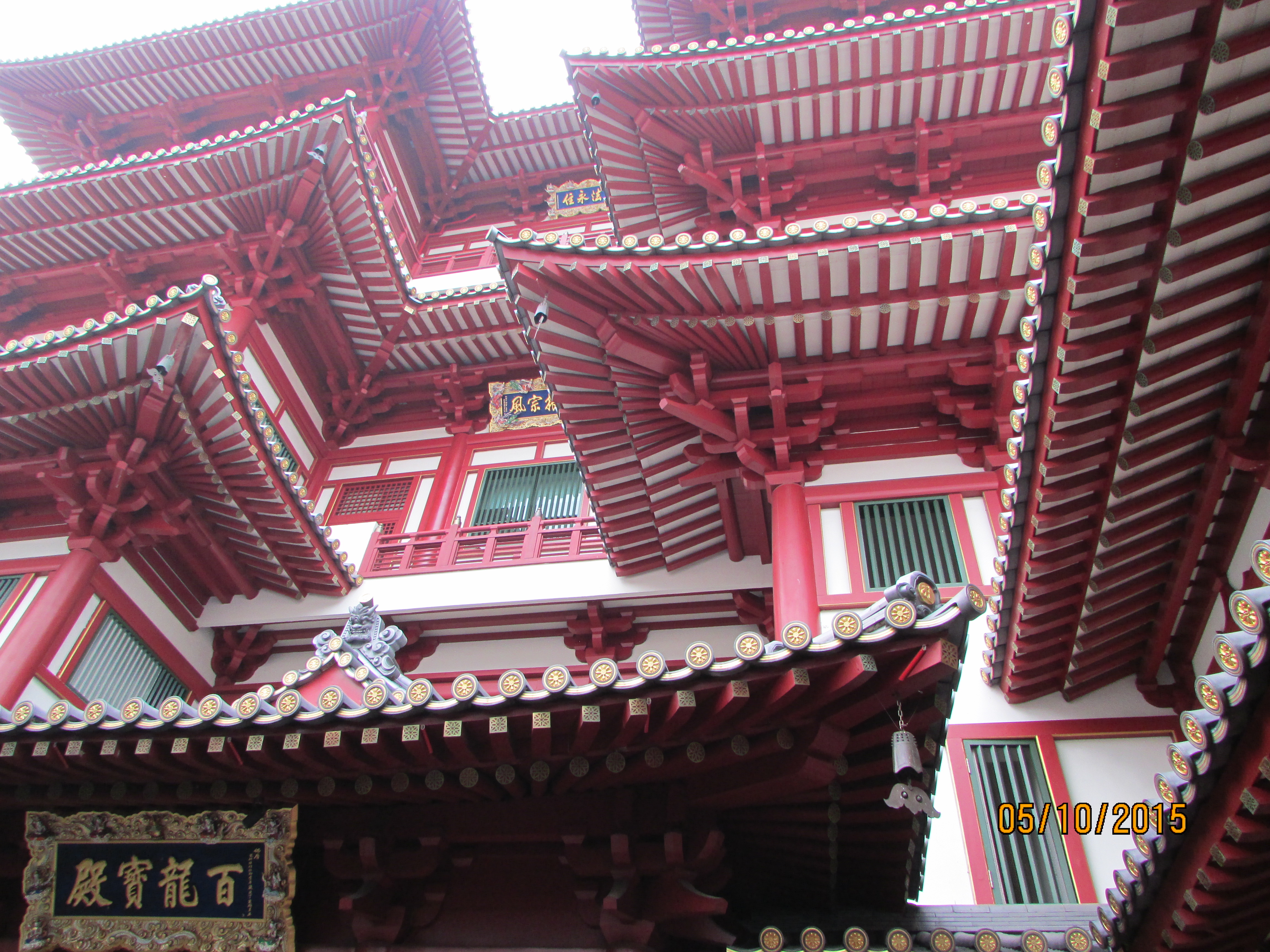
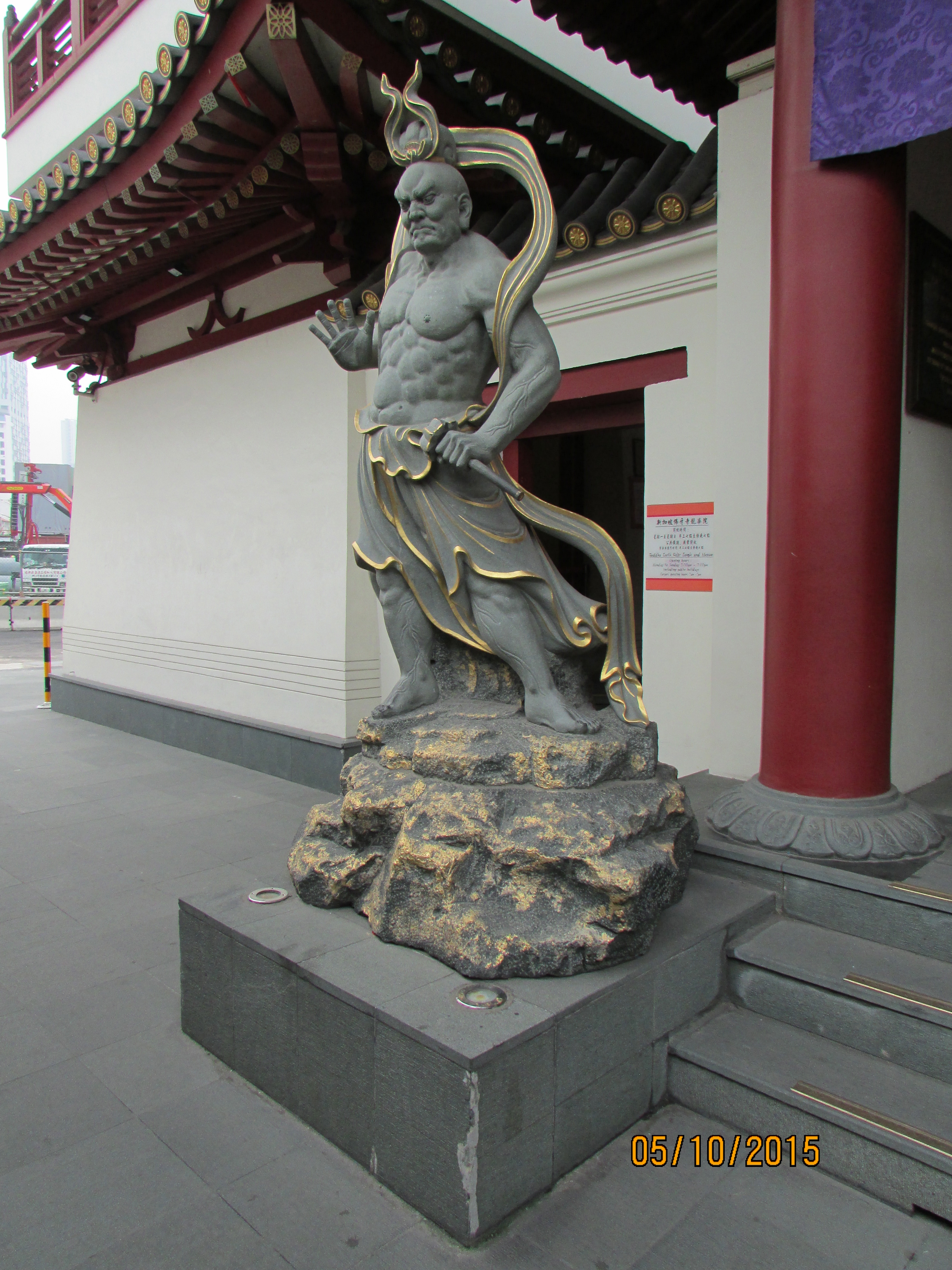
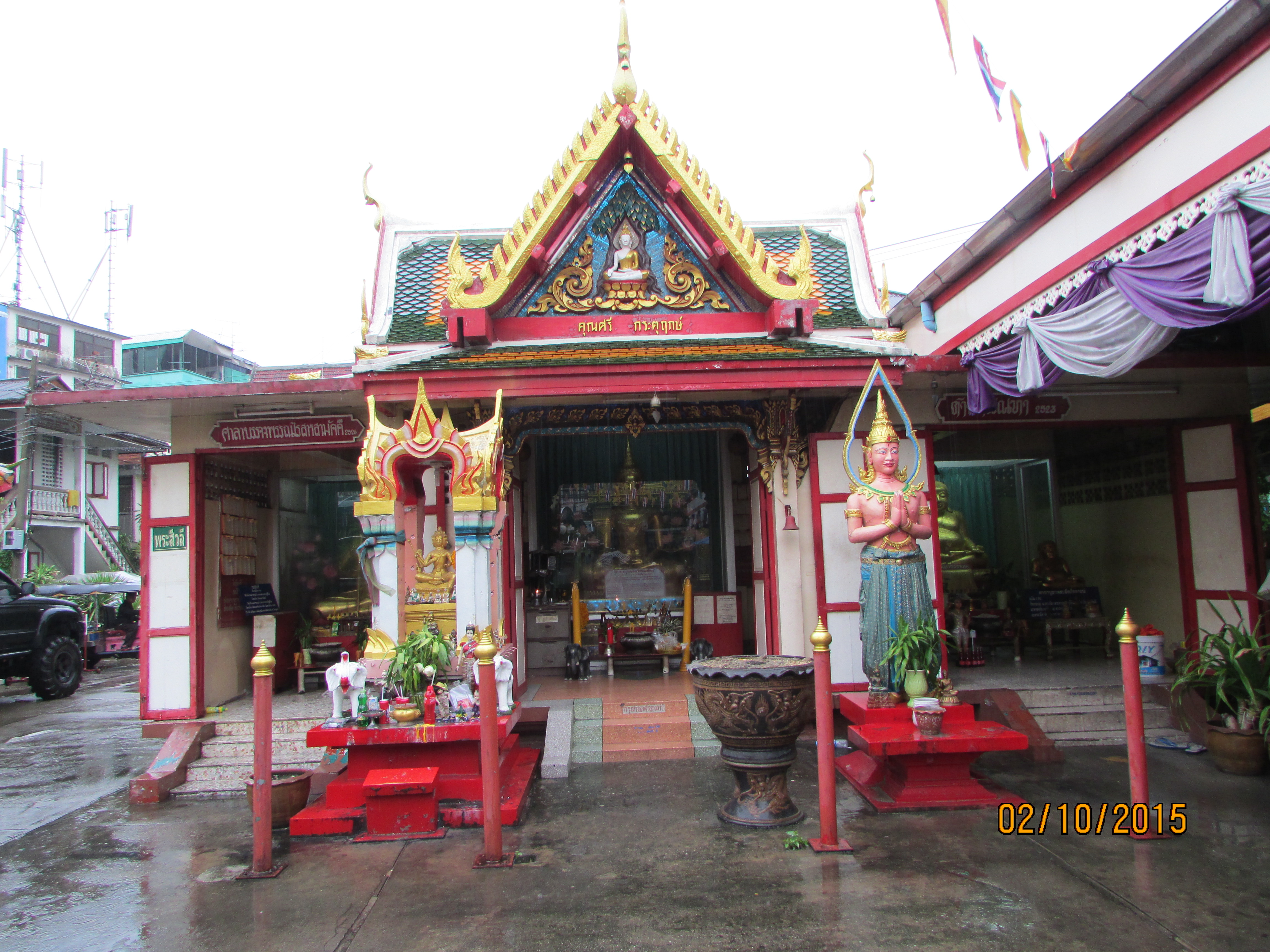
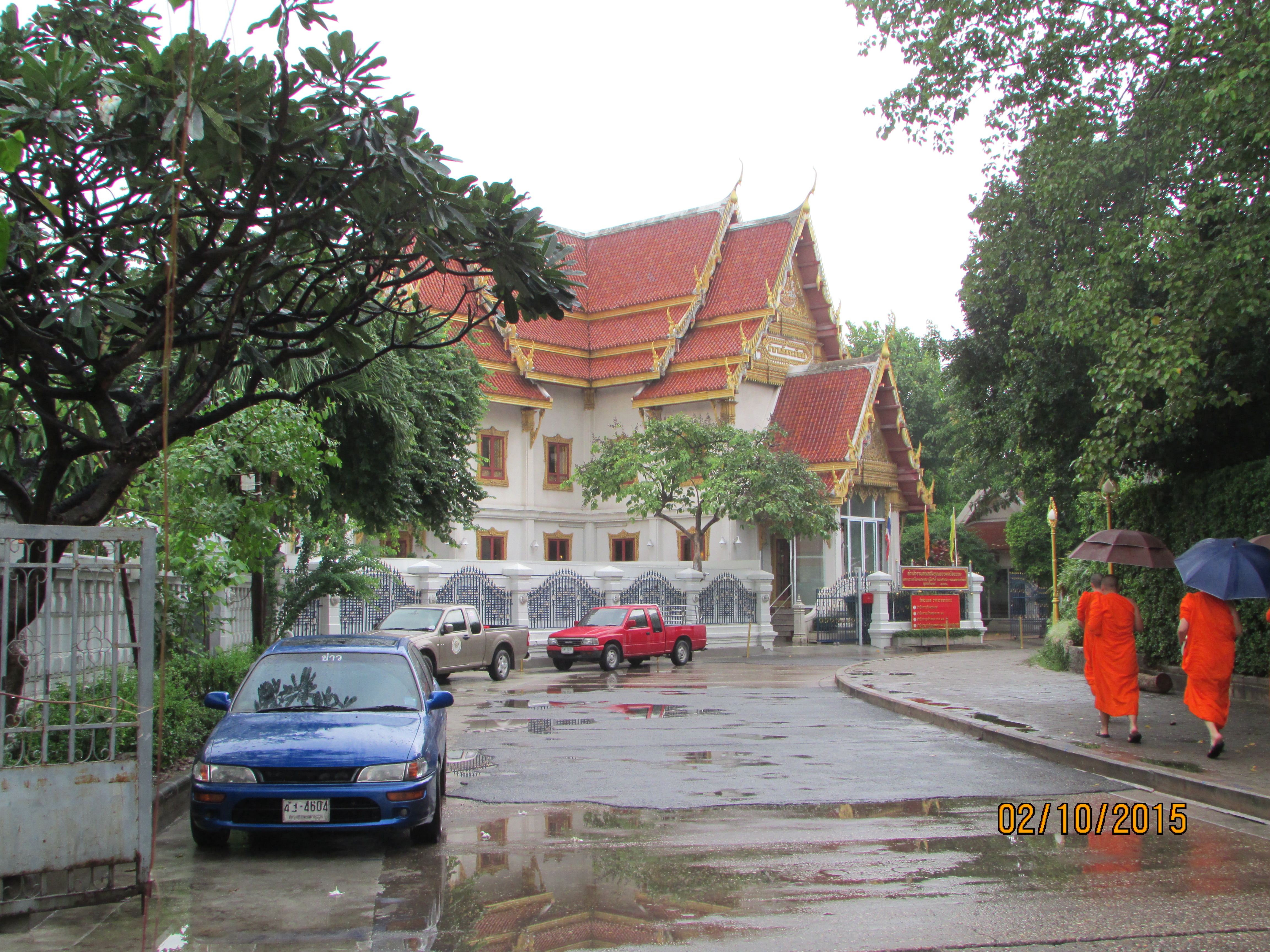
IMG_3523 IMG_3524 Buddhist Temple

IMG_3522

Thanks for reading…..
If you enjoyed this, why not sign up to follow my blog? 
Then you will receive all my posts by email (usually two per week.)

xxxxxxxxxxxxxxxxxx

If you enjoyed this, you will love my new book: The Sarcastic Mother’s Holiday Diary.
I have always written a diary on holiday, so last Christmas, I decided to find all my old diaries and blogs, and make a book for my children. However, several other people also asked for a copy, so I have written a public version – it’s available on Amazon and has been described as “The Durrells meet Bill Bryson”!

Why not buy a copy today? I think it will make you laugh.
The US link is here:

https://www.amazon.com/Sarcastic-Mothers-Holiday-Diary-ebook/dp/B07N95281F/ref=sr_1_1?ie=UTF8&qid=1549015525&sr=8-1&keywords=the+sarcastic+mothers+holiday+diary

The India link is here:

https://www.amazon.in/Sarcastic-Mothers-Holiday-Diary-ebook/dp/B07N95281F/ref=sr_1_1?ie=UTF8&qid=1549015429&sr=8-1&keywords=the+sarcastic+mothers+holiday+diary

The UK link is here:

https://www.amazon.co.uk/Sarcastic-Mothers-Holiday-Diary-ebook/dp/B07N95281F/ref=sr_1_2?ie=UTF8&qid=1549014970&sr=8-2&keywords=the+sarcastic+mothers+holiday+diary


Letters to a Sister :23


I went to Bangkok for a couple of days. Husband was working there, so I decided to tag along.

We arrived Thursday night, COMPLETELY exhausted. It was a bad moment, 10 hours into the flight to Singapore, when I thought, “Ah, two more hours and we’ll be there and I can get to the hotel and sleep…” then realised that we weren’t doing that and we were catching another flight after we landed. Felt awful. I was flying premium economy (on airmiles – which is why I went via Singapore, direct flights get booked up) so the seat wasn’t tiny but it was so noisy. Didn’t sleep at all.

Then the lady next to me fell asleep and I needed the loo but didn’t like to wake her. I figured the arm rests were pretty wide, I could stand on them and climb over her without waking her. I had forgotten that I was near the front of the plane and about 100 people would be watching me. Embarrassing.

Anyway, flight to Bangkok (2 hours) seemed completely insignificant, more like a taxi ride. Going through customs was okay but long.

There was a sign at passport control, telling people that Thailand is a Buddhist country and the things that are disrespectful/illegal (like wearing a tee shirt with a picture of Buddha on it, buying a Buddha head, having a tattoo of Buddha.) I thought it was a good idea – it’s easy to cause offence by mistake.  Decided at that point to not get the tattoo after all, I know you’ll be disappointed but I didn’t want to offend anyone.

Hotel is lovely. Quite plain, but very clean and luxurious. We had a nap for a couple of hours, then went for a walk. It reminds me a lot of Xian, lots of people being busy, quite a dirty place but with an ‘honest’ feel to it – nothing pretentious. By the time we went to dinner, I had got over the long journey and had decided it WAS worth coming.    Dinner was nice, just ate normal food in hotel restaurant – too tired to be adventurous.

Went to bed about 8pm, slept really well for two hours, rest of the night bit of a struggle. (I think we are 7 hours ahead of UK time.)

     Friday morning, husband went to work early (was in the office at 7:30 am. ) I went back to sleep until 8:30. Then I decided to be brave and go to breakfast on my own. I hate doing stuff like that! I was standing in the lobby looking lost when a man asked if he could help. I said I just wanted a pastry and a coffee, not a full breakfast. He told me I could go and get a pastry from the buffet and he would bring me a take-out coffee. I sat in the drawing room – big comfy sofas, lots of dark wood – and ate my pastry. Much nicer than being in scary dining room on my own. I went to give nice man my room number but he said he didn’t really need it for just a pastry and a coffee. What a nice man! I like this hotel – St Regis, Bangkok.

I went for a walk to see some Buddhist stuff. Not quite brave enough to use train or taxi on my own, so just walked. Everyone here speaks Thai, which sounds like Mandarin but is completely different and the writing looks like squiggles. Weather is cloudy/rainy/hot and humid. Walked for hours, brilliantly interesting. Lots of small industry – people carving doors, welding, etc. Everyone very friendly, feels safe here. Found some Chinese people to talk to. Not many foreigners apart from in the tourist attractions.

It rained hard, more rain than I’ve ever seen before, was paddling as I walked, the water went right over my shoes, was glad I was wearing short trousers. I had an umbrella but it did very little to stop the rain, which gushed down the edges and splattered me as I walked. It was warm though, too hot for a coat. I rather liked it. Husband’s map disintegrated so I’ll have to try and find him another one before he finds it. There was a covered walkway, so some of the way was relatively dry.

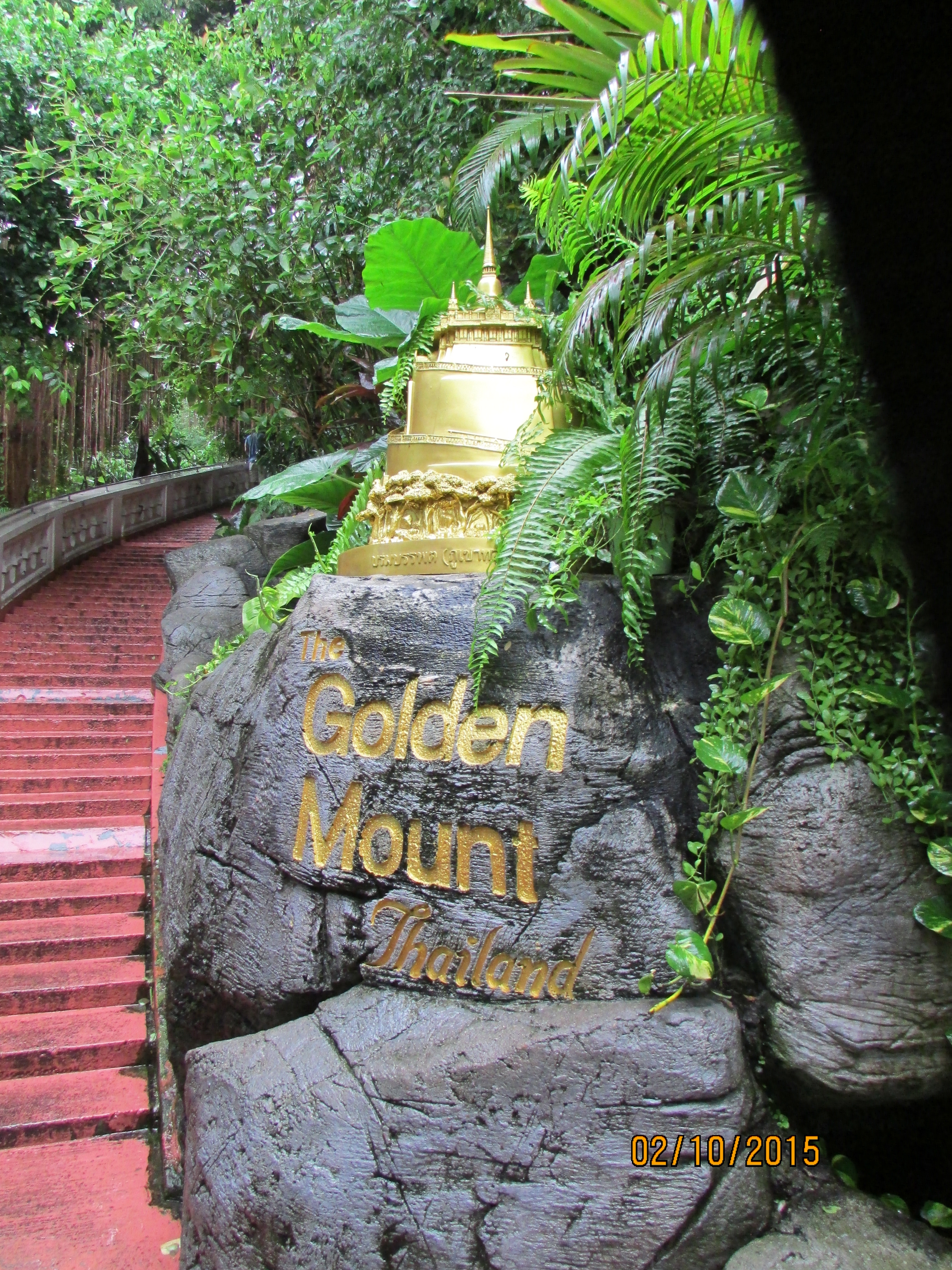
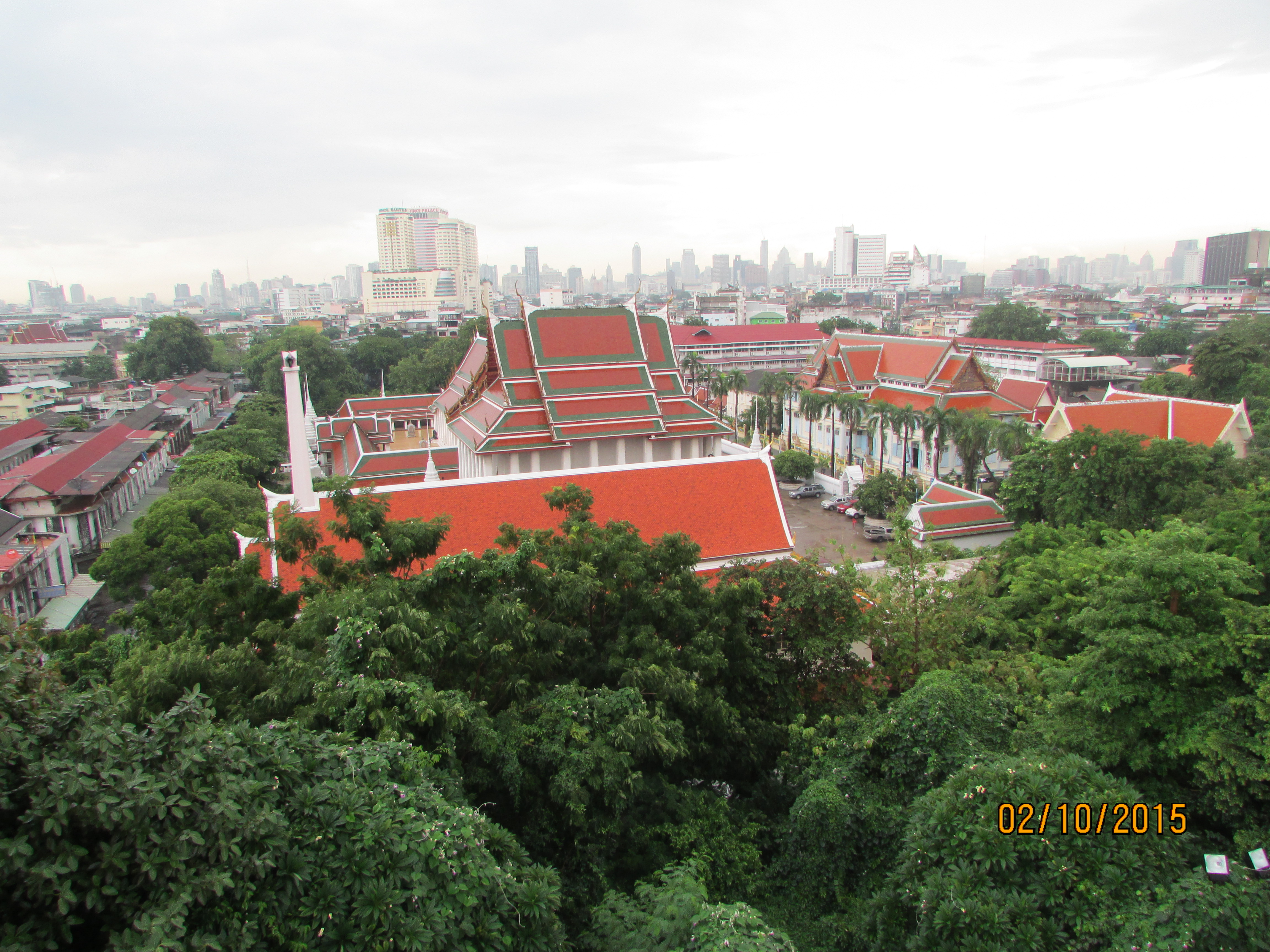
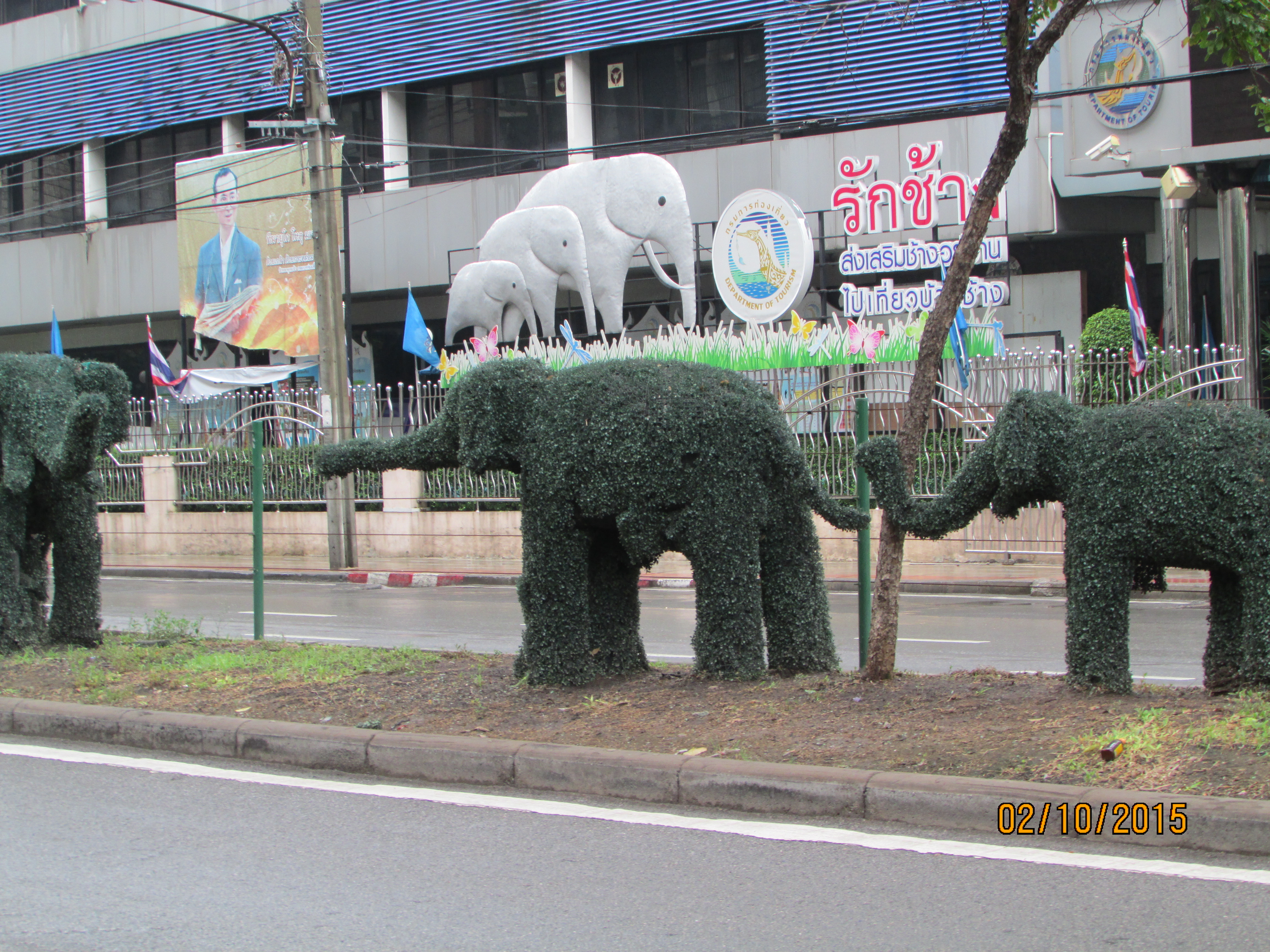
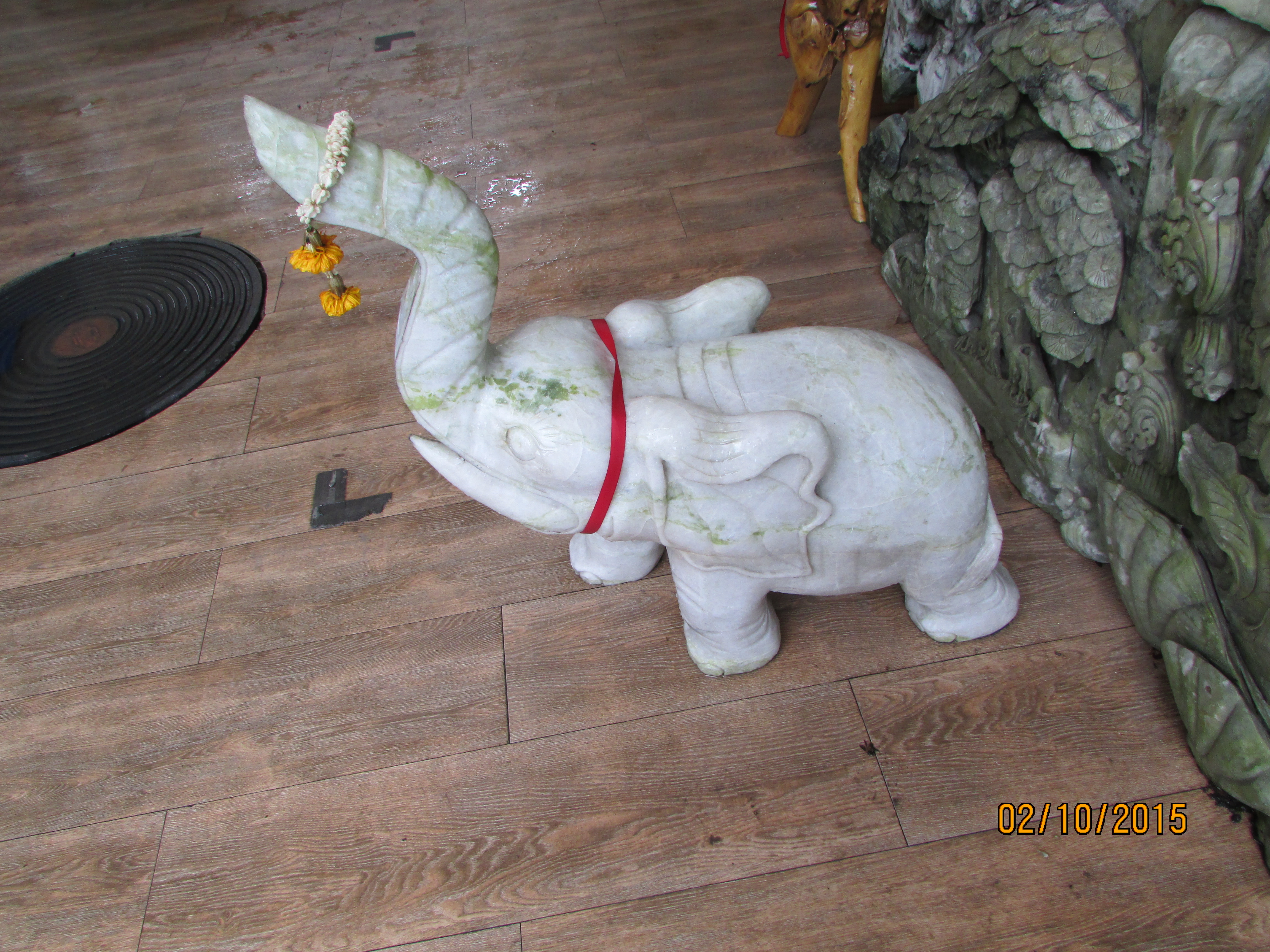
There are lots of elephant statues everywhere. I went to Golden Mount, which is a man-made hill with a Buddhist temple on top. Had very good views of Bangkok. Also had a coffee shop near the top, it seemed slightly incongruous to see Buddhist monks in their orange robes, drinking in a coffee shop.

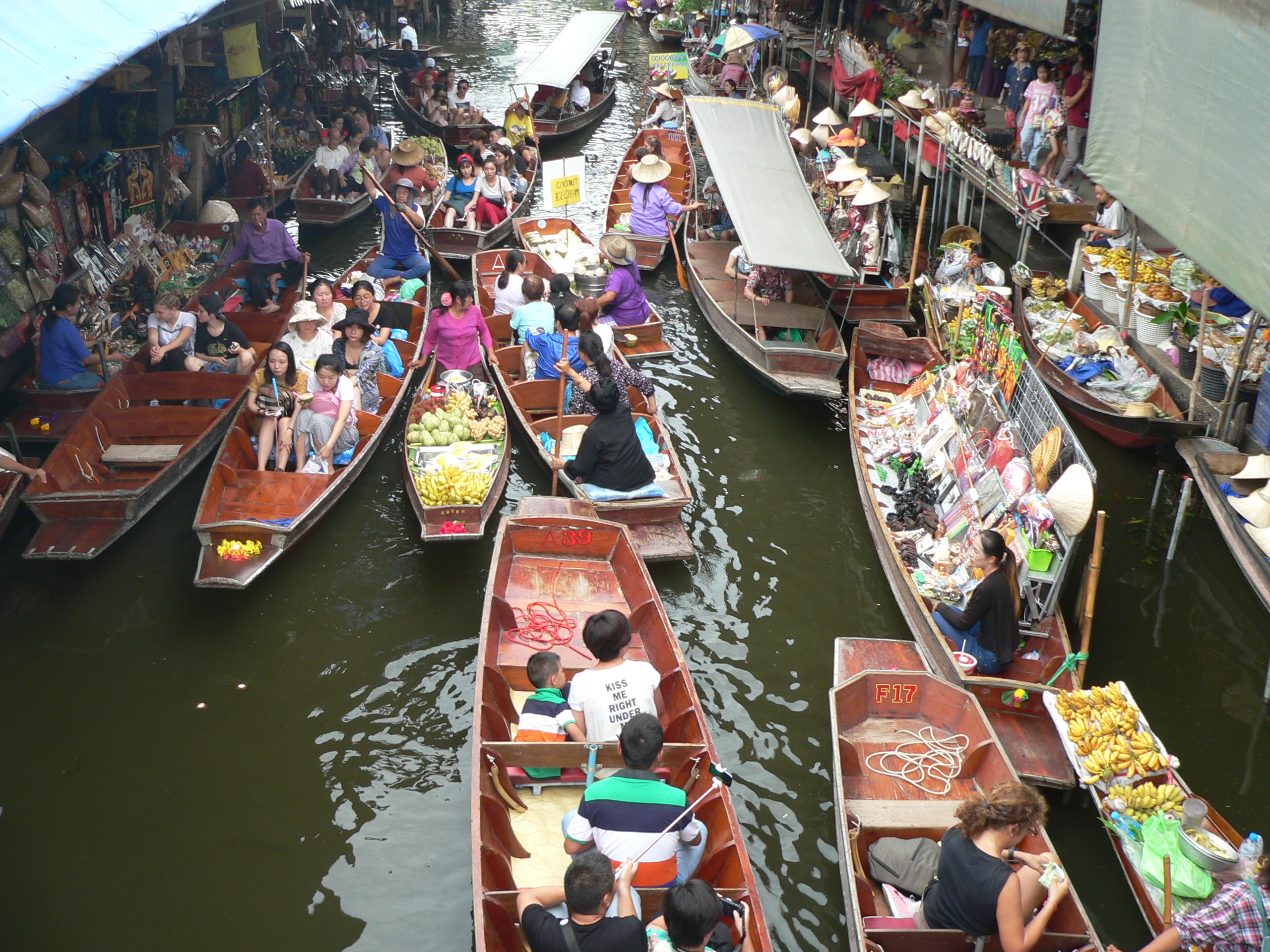
      Saturday we got a taxi to a floating market (two hours out of Bangkok.) It was really interesting, so glad it didn’t rain. There were lots of stalls around the edge of the river. If you showed any interest in anything, they put out a hook and towed your boat in! There were also floating stalls and boats selling snacks. Not sure how they managed to deep fry dumplings on a boat, but they did!

It was really crowded, sometimes the boats got jammed and had to be pushed apart. Lots of colour and smells and noise. Everyone is meant to turn off their motor when they enter the market and use paddles but our boatman didn’t, which spoilt it a bit.

Afterwards we were offered the chance to go and ride on an elephant. It was very tempting, I would love to do that. I just had this feeling though that the elephants wouldn’t be kept very well and that possibly it was cruel. I felt I didn’t want to ride on an abused elephant. It would have been upsetting to see, I like elephants, so we declined.

Had lunch at hotel then decided to go to Royal Palace. Arrived just after it shut, tried to blag way inside, failed. Walked around a bit. Lots of big photos of royal family on various buildings. The Thai people are very patriotic, we saw several cars with “Long live the king” as bumper stickers. I also read that it’s a huge insult if foreigners don’t stand up for the national anthem when it’s played in cinemas.

Went to Wat Pho, the oldest and biggest temple in Bangkok. I expect if you had not recently been around several other temples, it would be rather spectacular. I’m afraid it just felt like ‘another museum’ for me. The art was amazing but I am a bit beyond being amazed by temple art now.

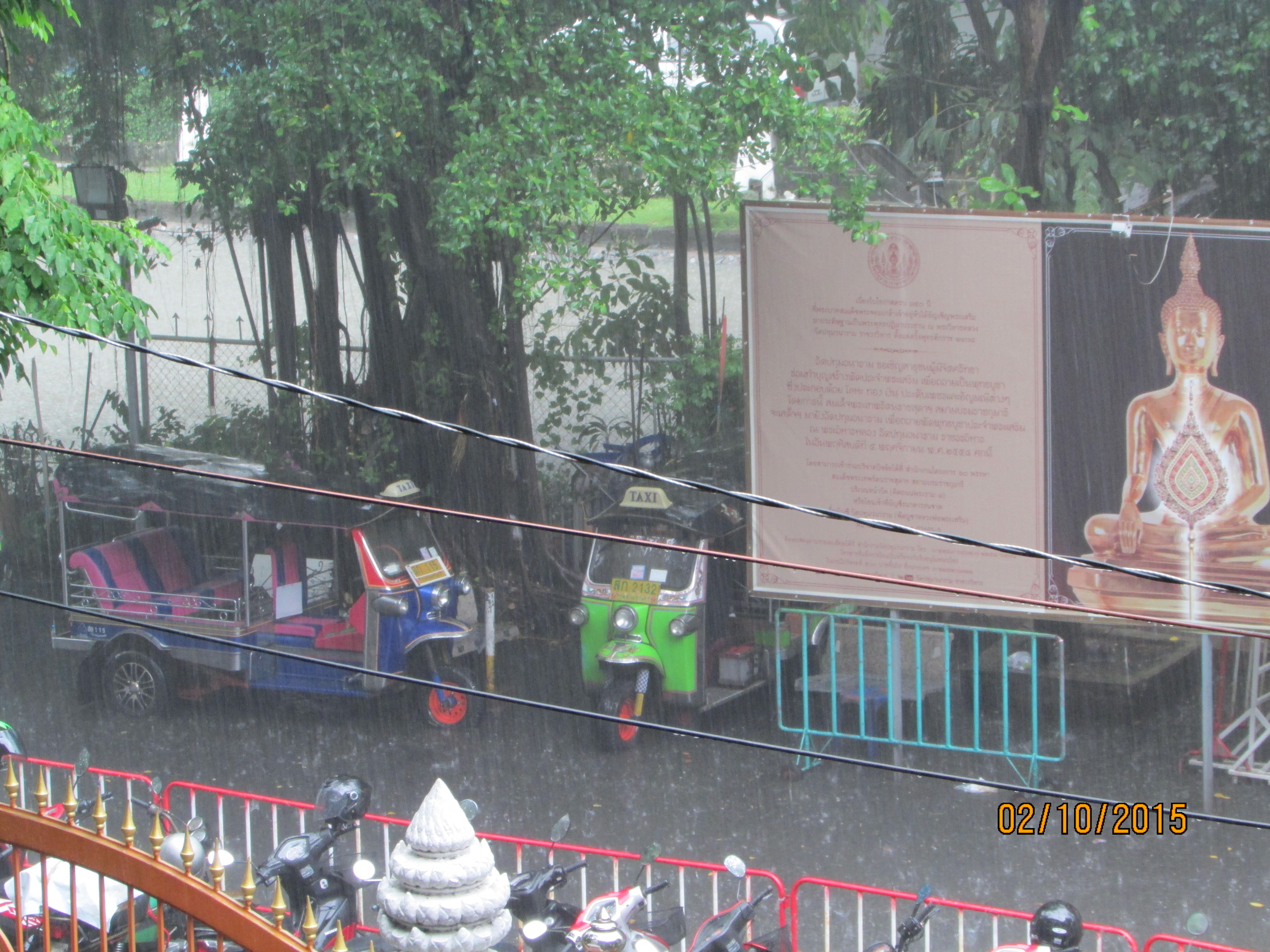
Tried to get water boat back to hotel but it was all a bit confusing and we were tired. Got a taxi. They all refused to do it by meter and wanted 300 baht to take us (always good to negotiate fares in Bangkok before a trip, especially the tuk-tuks, which are well known as rip-off men.) Decided that as 300 baht is only £6, we would take one anyway.

Sunday, early trip to airport. Seems like I arrived a week ago. I like Bangkok. The people were all friendly and smiled a lot and I felt very safe walking around on my own. I probably wouldn’t feel so comfortable with young children – you did have to be aware all the time. (I was nearly run over by a motorbike at one point. I was on the path and he came up behind me to avoid the traffic. He smiled and called “sorry, sorry” so I didn’t really mind, but I was glad I wasn’t walking with a child.)

Maybe I will try to come for longer next time….

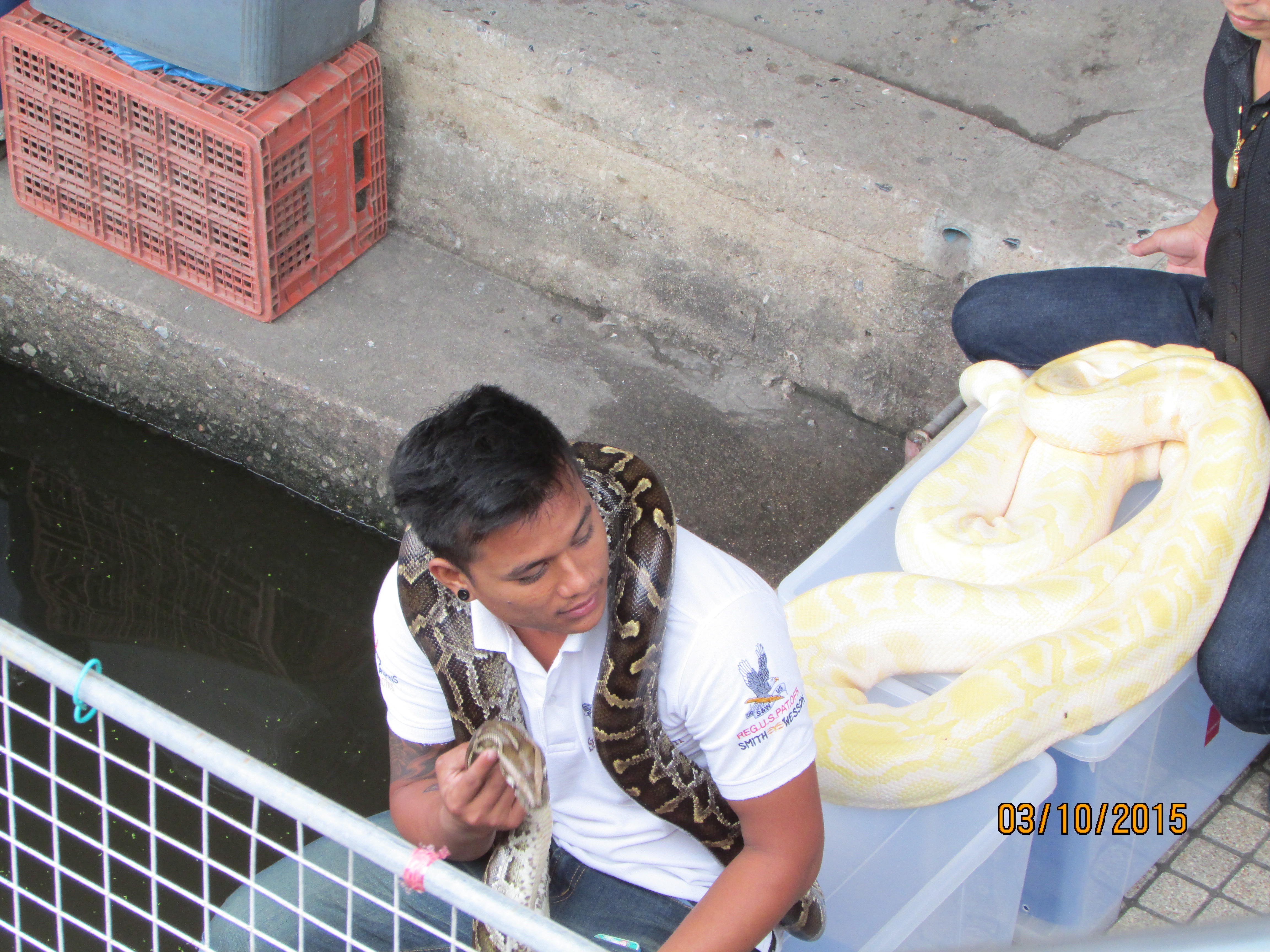
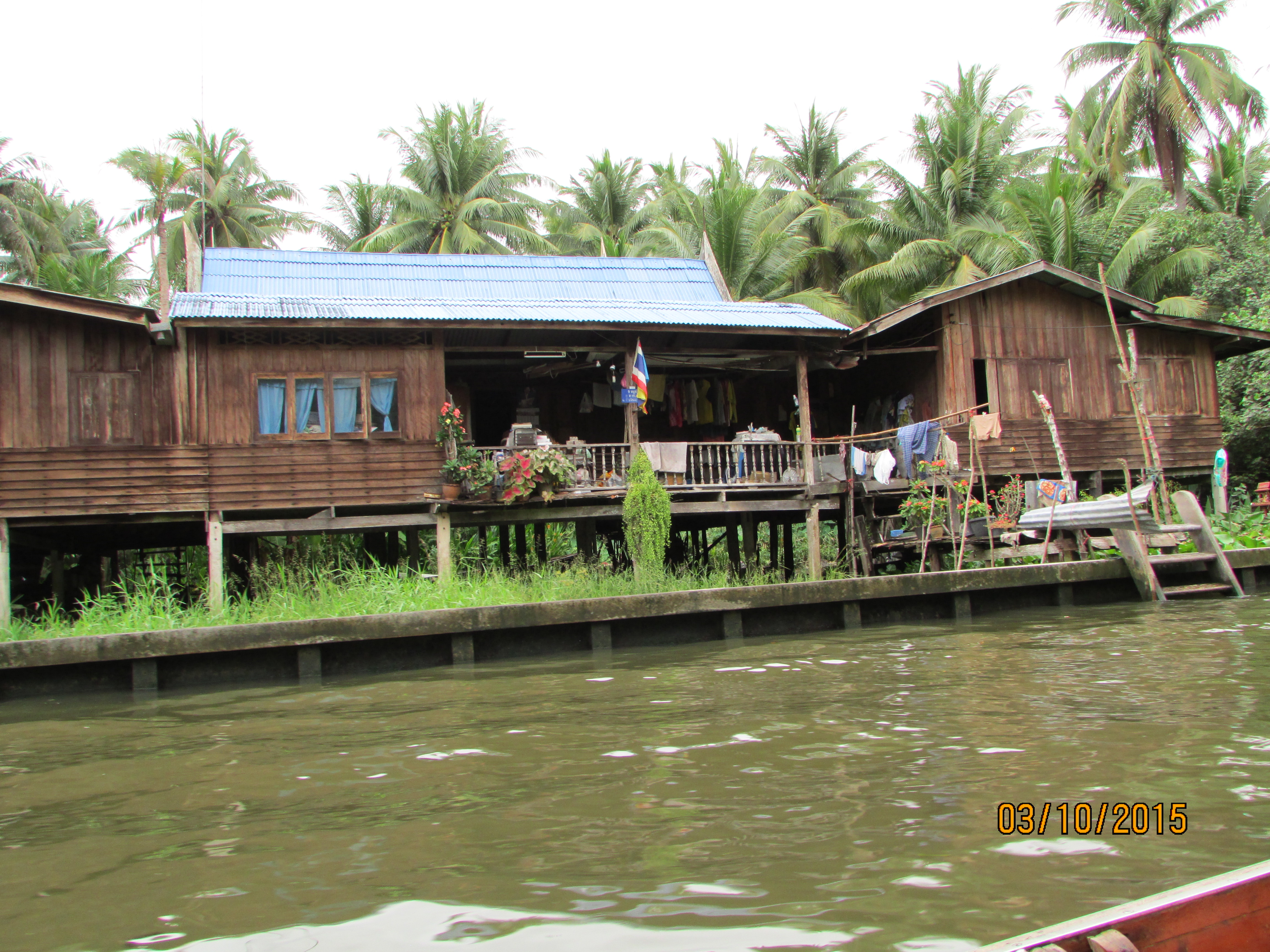
IMG_3358 IMG_3354 IMG_3377 IMG_3381 IMG_3388 IMG_3374 P1090430 IMG_3445 IMG_3455 IMG_3458 IMG_3460 IMG_3463 IMG_3473

IMG_3407 IMG_3491 IMG_3484

IMG_3411 IMG_3408 IMG_3405

xxxxxxxxxxxxx

Thanks for reading…..

If you enjoyed this, why not sign up to follow my blog?
Then you will receive all my posts by email (usually two per week.)

xxxxxxxxxxxxxxxxxx

Letters to a Sister : 22


So, I was asked if I would consider helping with the Sunday School. Actually, it’s not called Sunday School, it’s called Boulders, but everyone knows what I mean if I give it the old fashioned title. If it happens, it will be hugely exciting. I did help with the group about a year ago, before I was ill. It was tremendous fun, I (and I think the kids) enjoyed it immensely. This might be my second chance.

When we were children, did you enjoy it? Mum and Dad dutifully sent us every week, but I think for me it was a bit too much like school. I did learn though, much of my Bible knowledge today is based on what I learnt as a child in those classes, despite my main aim being to kick off the shoe of the teacher when she crossed her legs. I remember one teacher who I loved because she let us draw stick-men instead of writing the story. We were simple souls.

Of course, if I am the teacher, I can be as imaginative as I want. Last year I taught about the plagues in Egypt, Moses, Pharaoh, God leading his people to the promised land. I was very keen that it shouldn’t be like school, a ‘sit down and write’ lesson. So I made it as real as I could. I felt it was important to source some of the plagues. Husband (somewhat reluctantly, I must say) helped with this.

First was blood – I did wonder about asking cousin the nurse if she could get me some but thought that maybe there would be health risks with using human blood. So we used food colouring and coloured some water red. It was more pink to be honest. Fear the children may now think all Jewish people were anaemic.

Next was frogs. I tried the local ponds but they were very hard to catch. Father-in-law came up trumps. Apparently his pond had too many and he needed to lose some. Gave me a tupperware box full of bouncing amphibians. I put them in the garage in a very big box covered in netting with a ‘pond’ in an empty ice cream container. Was getting excited now.

Flies were easier than you might think – my window sills had a good supply of dead ones that could be put into an envelope. The joys of living on farm land. I decided the smaller ones could double up as gnats.

Locusts were also easily sorted. The local ‘exotic pets’ shop sold them in boxes as food for the lizards and things. They were alive (apparently lizards and things do not like to eat dead things.) We put them into another big crate in the garage. You would be amazed by how much green stuff a locust can eat. We had about twenty of them. Husband then got rather enthusiastic. He ‘decorated’ the crate to make a nice environment for them. Lots of leaves and branches, areas of soil, etc.

The boils were lipstick spots with ‘tumours’ of lumps of cold porridge. The hail was crushed ice cubes. The dead animals were found in my daughter’s long forgotten farm set in the loft. The darkness was a big blanket everyone could hide under.

Death was harder, we had to just act that. Even I felt that using a corpse might be going too far. And be illegal. And damage the children beyond repair.

Anyway, we had a terrific time. We learned about the story, then made a short film, using mobile phones. It would probably win some Oscars if I released it. I will send you a copy.

Afterwards, the frogs went into my pond (still see them occasionally) and the rest of the stuff went back into cupboards.

The locusts were a problem. They had grown huge (we only had them a week) and husband had bonded with them. Super. Son 1 did suggest we could release them into crops next door but that was clearly wrong. Eventually we found someone with a big lizard thing which ate big locusts, so we gave them to him. Think husband was rather sad but we coped.

Am very much hoping it happens. Husband has banned me from teaching about Noah’s Ark. But I think it has potential.

Take care,
Anne x

xxxxxxxxx

Did you enjoy this post?
Why not sign up to be a ‘follower’, then you will receive all my posts
(usually two per week) by email.

IMG_1354

Letters to a Sister : 21


So, Mum took me for a ‘treat’ this week. We had lunch at Burswood, which is a lovely stately home. It is now used as a healing centre (unexpected.) I was told there would be a quick, half hour service, then we’d have lunch.

I didnt realise it is also a hospital, so we had coffee with people in pyjamas. Feeling somewhat awkward by this point, sipped my coffee and tried to look as if I was visiting a patient.

We went with an old lady who used to work there. Everyone greeted her and asked if she’d seen Daisy yet. She kept telling them that no, she hadn’t yet, but she would pop in before she left. Eventually, in the bookshop she saw Daisy and introduced me. Daisy is a stuffed sheep. It was that kind of day.

The service lasted one hour, fifteen minutes. At the end, everyone – absolutely everyone- went forward to be prayed for by the healers. I stayed in my pew feeling somewhat uncomfortable. Mum appeared to be asking her ‘healer’ for directions to somewhere. There was lots of arm waving.

We then had lunch, which was lovely. We came home ( after we had gone to say goodbye to Daisy).

The last treat mum took me on, we went to a cafe run by disabled people. We were the only customers and we drank coffee in an empty room while a man ( who I assume/hope was a patient) shouted at us.  I have requested that we don’t have anymore treats for a while. I need recovery time.

We took the boys back to uni, I can hardly believe the Summer is over. I will miss them loads. Maybe not the relationship advice though. This was very evident even as we drove Son 2 back.
Husband remarked, “It’ll be just us tomorrow.”
I lovingly replied, “Yes, it will be nice to have some time together.”
Voice from back said, “She’s been practising that sentence all week: YES, it will be nice….. Yes, it WILL be nice……”

When we later had a slight disagreement over the route, there were sounds of son shooting himself on the back seat.

However, most of the trip went to plan. There was bit of delay when we realised that Son 1 had given us the wrong postcode, so we couldn’t find his new house to drop off his stuff. It then transpired that actually, he had given us the wrong road name as well. Easy mistake, apparently. We found each other eventually.

Another slight mishap was sorting bags of bedding. We thought all was finished when Son 2 phoned to say that we had left him with three duvets and no pillows. One was the duvet with no feathers, so perhaps that was not such a problem. More of a problem for Son 1 who was left with four pillows and no duvet. Did a quick shopping trip before we left him.

We then spent the night at Premier Inn before the long drive home. I really like Premier Inn. They are clean and have comfortable beds, the sort of food that you actually feel like eating and you don’t pay for a lot of stuff that you don’t want. Excellent idea by someone.

We got home to a calm house and happy animals – Mum had housesat for us. I have now moved the outside kittens to the garden. They have been free during the night (when there are practically no cars) but I’ve been keeping them secure during the day. Have decided they are probably big enough now to be free all the time. They have grown noticeably thicker coats than Mungo, who we’re keeping inside as a house cat.

We did have one incident when Midge climbed a tree and couldn’t get down. It was really interesting to watch his Mum go up and get him. She kept going to him, then showing him which branches to jump onto to get down. She got very cross when he ignored her and went even higher – she chased up after him and told him off. There seemed to be a lot of biting of legs involved. Perhaps I should have tried that as a parenting technique.

Take care,
Anne x

PS. Mum has been told by the doctor to drink less tea. She has rationed herself to three cups per day. They are the biggest cups I have ever seen, I think she must have gone to a ‘super-size mug’ shop. Not sure that’s quite what the doctor meant. I will let you have that conversation with her. Ax


xxxxxxxxxxx

Did you enjoy this post?
Why not sign up to be a ‘follower’, then you will receive all my posts
(usually two per week) by email.

IMG_3345

Letters to a Sister :20


I finished writing my novel. This is big and very scary. It is actually my second one. The first I wrote years ago but was too scared to do anything with it so I put it in a filing cabinet. I found it again a year ago, read it, decided it was good and tried to get it published. This is when I discovered that trying to get a first book published when you are a normal, non-famous person, is rather hard. It is, I assume, like trying to be an actress or singer. The ability seems to be a minor factor, who you know (nobody in my case) and your ability to ‘sell’ seems much more important.

No publishers in the UK will take manuscripts from new writers, so first you have to find an agent. The initial approach is a covering letter. This involves a lot of sweat, tears, many rewrites while you try to adopt a casually witty style. I clearly never got it right because my first book remains in the filing cabinet. I was something of a literary snob. I felt that if my work was good enough, someone would pay me to publish it, there was no way I would self-publish. I am less of a snob now, I just want my book to be read. If no one likes my covering letter (and it does seem to be this rather than the actual book that is important) then I shall publish it myself. I will let you know how I get on.

On a completely unrelated topic, have you ever cooked with quinoa? I keep seeing it on tele but have never actually tried it. Am thinking of having a try. This fills my family with dread. I do tend to have passions for things in the kitchen. There was the time my mother-in-law gave me a rather nifty garlic press, the sort where you don’t do any peeling or chopping, you just squeeze the bulb through the grill. Immensely satisfying. We had garlic, a lot of it, with everything for a while. That phase did not get too many complaints. The next one did.

I discovered couscous. It was when I was teaching, had three children at different schools, was stressed and exhausted. The thought of a carbohydrate that required no peeling of potatoes or straining of rice was wonderful. There is after all a limit to how many frozen chips you can serve in a week. So I started adding couscous to most meals. The family complained, but they tend to complain a lot, so I ignored them. Looking back, I did perhaps over do it a bit.

The real low point was when it overlapped with my chilli phase. I grew little red chillies from seeds on my kitchen window sill. They were very pretty and I felt rather trendy adding them to dishes. Again, I did perhaps overdo it. Anyway, the meal which has gone down in family history was a chicken casserole, cooked on a day that had gone particularly badly. Teaching had been stressful, collecting the family from their respective schools had been a hassle, I was tired, had reports to write, just wanted dinner to be cooked, eaten and forgotten. It has never been forgotten.

I added too much chilli to the casserole, it was completely inedible. Never mind, I thought, I will add some couscous, that might dilute it a bit. It did not, it was now just burning hot and thick. My next brainwave, one that I really ought to copyright, was to add milk. Please don’t ask me why, but I had this idea that adding milk would neutralise the chilli. I think I was getting in a muddle with adding it to tomato sauce to neutralise the acid (which DOES work.) Anyway, I served the family a sort of hot chilli porridge. They say they can still remember the moment, my angry eyes flashing, them all trying to not say or do anything wrong and being faced with a plate of hot (in the spicy sense) porridge. As I said, a real low point in my culinary experience.

Of course, when I sat down and tried it I realised it was ghastly, impossible to eat and announced we were throwing it all away. Much to the relief of my children. I cannot remember now what we did eat that night but I don’t think any of them will ever forget that dish. I bet Mary Berry has never tried it. Maybe I will write a recipe book next.

Take care,
Anne x

Refugee Crisis


I admire all those kind people who are offering spare rooms or rental cottages to the refugees. We have all seen the pictures and I doubt anyone is unmoved. How can we ignore those families desperate enough to risk their lives to try and find somewhere safe to live? To see children who have drowned, children who look like my own boys did at that age, is too horrible for words. My heart weeps for them. But, I have a problem.

Whilst all the above is true, completely true, why do we find it so easy to ignore other people in dire need? Why have these immigrants touched us when so many others have not? Why am I moved almost to tears at a photograph of a small boy lying dead in the sea, when I have watched film after film of children in Africa who are wasting away for want of food and clean water? What is the difference?

These are not rhetorical questions, I really would like to know the answer. I am mystified by my reaction and yet I see it multiplied time and again in the media. Is it because these people have actually arrived at our door, are a step away from being in the UK? Is it because the children resemble so closely my own, so I can relate to them more easily than to those who look different? I do not know.

An interesting element in all this is that we were told about these very same refugees months and months ago, when the war first broke out in Syria. I was invited by charities such as Tearfund and Save the Children to send money to help provide food and shelter for these same children. And I did, I dutifully sent off something to help. But I didn’t cry. I didn’t wonder if I could have a couple living in my spare room. What has changed?

Do you think it is the media attention? Am I just being manipulated into feeling things that otherwise would pass me by? I do not think so. I think it is good that their plight has been brought to our attention. It is easy to live in our cocoons of comfort and fail to notice those who need our help.

However, I do think that we need to use our brains here, to react emotionally but also to behave sensibly. Is it better to home refugees in the UK or to provide safe places in their own land? I do not know. I do know that there are several charities who have been working since the crisis began to try and do just that. It is easy to ignore them and to think that we know best, we know what to do.

I don’t have any answers here but I do think we all need to think about these questions. What actually makes a Syrian child touch us when an African one does not? Do we somehow value one over the other? I do hope not.

Letters to a Sister : 19


Have you seen on facebook that people often include a ‘past event’, “this day five years ago I was….” ? As you know, being an IT dinosaur, I only got fb fairly recently, so I don’t have any such gems to offer. It did make me start thinking though, about where I was a year ago.

A year ago, life was really rather difficult. I was a couple of months post op and everything was hard work. Did I ever tell you the details of my op? (Look away now if you’re squeamish!) They shaved my hair, cut a window into my skull, cut through my brain to the centre and took out the rather annoying cyst (which would have killed me if left alone.) They then patched me up with some titanium and stitches and sent me on my way. Pretty amazing really. Also amazing that I now look normal, have hair again and don’t sit in the corner dribbling (no more than I used to, anyway.)

The thing is, I look normal, but inside I am different. When I saw my first post op MRI, I asked what the black line was that went through my brain. I was told that was the gap, where the knife went. I did a bit of research. Apparently, as I understand it, scar tissue in the brain never heals, it just sits there, blocking the flow of neurons that allow us to think. However, the brain is pretty spectacular. It cannot use the same pathways, so it makes new ones. Gradually it learns to rethink, to redo all the things that it used to do.

When I say gradually, I mean gradually, very very slowly. Enough to pull out your hair (if you have enough left) slowly. The first time I tied shoe laces it was like being three years old again, I just could not make different hands do different things. While I was still in hospital, before they decided whether I was well enough to go home, they took me to a kitchen and asked me to cook a plate of pasta. It is, by far, the hardest thing I have ever cooked. Just filling the pan with enough water, remembering to light the hob, timing the pasta when it was boiling. Oh, the effort, the mental strain. It was exhausting, I slept deeply for an hour afterwards. But I did it, passed the test, was allowed home.

As time went on, everything improved. Now, a year later, most things are (roughly) back to normal. The point is (I do have a point, trust me) unless I used my brain, tried to do things like tying laces, kept going even though it was difficult, the brain would never make those new pathways. I had to attempt it before I could do it, the ability came second. Okay, hold that thought.

Now, quick subject change. I have been reading in the Bible about all the ‘gifts’, the things that Christians are meant to be good at. Things like forgiveness, self-control, patience. I have to admit, I’m pretty rubbish at all of them. Much nicer to have a quick shout at someone when they’re annoying or avoid the people who I think are nasty than do all that christian stuff. Plus, when I do pray, ask God to “help me to forgive Stacey because she’s a nasty piece of work and really I would like to slap her face,” I do not feel especially flooded with forgiveness. I still want to slap her face, so I avoid her.

However, it has been bothering me lately that actually, these behaviours are not optional extras. God does not say that when we are christians, if we feel like it, we should love and forgive the nice people we come across. It’s kinda in the sign-up sheet. If I claim to be a christian I have to be different, a better person than I would be if I weren’t one. So what to do?

Well, I have realised recently, that just like my brain had to start doing things to be able to do them (if you see what I mean) so I have to put these things into practice for them to be real. Sitting on my chair and asking God to ‘help me forgive’ and then waiting for me to feel like I had, just doesn’t work. I never felt like that. No, I had to ask God to help me, then trust that he had and actually start to behave and think like he had. I didn’t know if I could cook pasta until I did it. It was hard and I made some mistakes. Once I started behaving like I could, the skill caught up, now it’s easy. If I ask for the ability to forgive, then I have to start behaving like I have forgiven them, stop thinking about slapping them, start saying things that show I have forgiven them. Then the ability and the feelings, will catch up.

Okay, lecture over. But do you agree? Do you think that might be right?

Take care,
Anne x

Immigrants are Stealing our Jobs : True or False?


I’m sure you have seen the awful photos of the people fleeing from their countries and trying to enter others. It is heartbreaking. It is also a little worrying. What will happen to our country if we allow all these people in? There has already been a lot of talk about immigration, about the impact on our economy and employment figures. What will happen?

It is a big topic, so this article will look at one small area. What is the impact of immigration on unemployment? I live in the UK, so will narrow it further: what is the impact of legal EU immigrants on UK unemployment? My assumption is that more immigrants equals more unemployment for British people. I asked my economics advisor if that was true. This is what he said.

He looked at legal EU immigrants between the age of 16 and 60 who come to the UK for work related reasons. So, either they have come to look for work or they are with someone (like a spouse) who intends to find work. He also looked at the UK unemployment rate. This is the percentage of the population who are willing and able to work (so not your toddler or great granny) but cannot find jobs.

The effect of immigration on unemployment is dependent on the ‘substitutability’ of immigrants and native labour. If they are ‘substitutes’ they will be able to do the same jobs, ie they will take the jobs from the British citizen (and increase unemployment.) If they are ‘complements’, having skills which we lack, they will decrease unemployment, increase the GDP and the country is better. So, are EU immigrants complements or substitutes?

All previous research of similar countries with similar demographics of immigrants show that there is very little long term rises in unemployment. However, there were very significant rises in the short term. (These studies include Mexican immigration into the US.) My advisor took these studies, built a model that was a compromise of all the methodology to see if the results were consistent with the UK and EU immigrants. The method is rather complicated, so I have included it at the end of this article (for those readers who enjoy a bit of economics.)

The results showed that the method worked and was statistically significant. It showed that a year after immigration, there was a rise in unemployment. Two years after that increased immigration, unemployment was at the same level that it would have been if there had been no immigration. So, if in 1980 there was high immigration, in 1981 there would be high unemployment but by 1982, the unemployment rate would have settled back to where it would be if no immigrants had arrived. Why would this happen?

Well, initially, those immigrants are unemployed (but not part of the ’employment statistics’.) So why is there a one year delay? This is because it takes a year for the employers to notice. You see, the bargaining power of immigrant labour is very low, they have very few ‘rights’. This means they are not in trade unions, their lifestyle at home was cheaper so they will accept lower wages, they are easier to ‘exploit’, so employers prefer them. After a year of immigration, employers notice they are surrounded by an available work force. They realise they can employ people for less money, easily replace workers if they leave and so on. Hence unemployment (of British people) increases (because the immigrants have been given jobs that Brits could do.)
However, after two years, something interesting happens. Companies spend a lot of money on labour, especially if they employ relatively unskilled workers. As their labour costs become lower (because they pay immigrants lower wages) the companies make more profit. This then enables the company to grow. A bigger company employs more people, which in turn reduces unemployment. This is helped by the fact that mobility within the UK is easy. People can move to where there are jobs, companies can expand to new places and the work force can follow.

However, we began the article by discussing Syrian refugees, not EU immigrants. Is that the same? Well, because Syrian refugees will be a similar demographic to migrant EU workers, they will have a similar impact. After two years of them immigrating, we can expect unemployment to be back to the levels it is at now.

So, I asked, that is good then? Lots more people but no big rise in unemployment after two years, so no big problem?

I was told that no, that was not true. The one year ‘blip’ after they first immigrate, that rise in unemployment, although temporary, could be potentially very damaging to the UK economy. If we take lots of refugees then it needs to be managed very carefully. The government needs to introduce them to the work force gradually, perhaps staggering the time that they can begin to find work in the UK. This article has only looked at one, very specific area, of immigration. It is a potential minefield of problems, all of which need to be carefully managed. So glad that I am not Prime Minister…….

xxxxxxxxxxxx

Methodology used to reach the conclusion: (not for the faint hearted…I have included it because I am told mathematicians and economists will find it interesting.)

The core of the model is a basic OLS regression model. This will show to what extent the independent variable of EU immigration (X) and the dependent variable of UK unemployment (Y) are correlated. However this correlation will not necessarily robustly prove any degree of causality between EU immigration and UK unemployment. To test this, modifications must be made to the model.

The first of these modifications will be to introduce control variables to address the problem of omitted variable bias. These will be factors that economists know to affect the unemployment rate. When these are accounted for model will explain more of the variation in Y.. This formula will use four such control variables – unemployment benefit, union density, real GDP growth and the interest rate. Next dummy variables are added into the model, used as ‘impulse dummies.’ This is where an effect takes place over a specific time period that would significantly affect the model, however at the end of that time period the effect would end and the model would return to normal.

By using dummies, the effect can be compensated for in solely the periods which it is active, therefore not changing the whole curve. There are three dummy variables added to the model to increase its usefulness. The first will be equal to one over the period of the financial crisis of 2007/2008 as the recession had a large effect on the UK economy, including on unemployment. The remaining two dummy variables will be the two separate years where a large amount of additional countries were added to the free movement of labour policy – 1994 and 2004.

Time lags will then be added. There are several reasons for this. Firstly, this will allow immigration in past time periods’ effect on unemployment can be analysed. Secondly it is assumed that the series are not completely non-stationary, in other words that past relationships have some relevance to the present economy. Finally, adding lags to the model will help to reduce reverse causality, a problem which is likely to be relevant. This is because the present state of the UK economy (of which unemployment is a large factor) will be included in a potential migrant’s migration decisions, therefore affecting immigration levels. 2 lags of X will be used in the t-1 and t-2 periods. This will give results of the immediate effect of immigration in period t, the relatively short term effects in t+1 and the long term effects in t+2.

The resulting model:

Image

Letters to a Sister : 18


Okay, so I have a problem. A church/christian related problem, but I guess it could apply to work or schools just as well. It’s about Aid Agencies/Charities.

Now, I think you’ll agree, there are a lot. Wherever you go, there seems to be an opportunity, if not almost an obligation, to give to poor people. When there is a disaster, like the earthquake in Nepal, the High Street is full of people with buckets or selling sad looking cakes, all eager to part you from your money and send it to those in need. The motives behind all this bucket waving are undoubtedly good. My problem is, are the agencies that actually receive the money the most efficient?

I started this saying it was a church problem because from what I’ve seen, churches are chock full of well meaning people who want to help alleviate suffering (which is good) and so start a charity. Not so good. Most people do not have the first idea how to best run an aid agency, however well motivated they are. I have laid out my feelings about this very clearly in the article ‘How to Choose an Aid Agency’.

My problem is that when someone, who is very nice, very Godly, very caring, comes to church and gives a plea for money, what should we do? My gut feeling is that I should stand on my seat and shout, “Don’t give him any money! He’s a nice bloke but a large percentage of the money will be wasted.”

I have learned, over the years (with much help from my family) that following my natural instincts is not always right. So I don’t. I sit there, fuming as I hear how his tiny organisation is working in 57 different countries. And I do nothing. I do not stand on my chair. I do not even approach him afterwards and ask him just how, exactly, his little charity ever checks that the money is being spent appropriately – does he live on an aeroplane travelling between countries, looking for fraud or misspent cash? Nope, I do nothing. Because I am not really sure what the appropriate response should be.

You see, these people ARE good people. They see a need and want to help. They probably do help a lot of people. My point is, if the same money went to a bigger, better run agency (like Tearfund or Oxfam, someone part of the DEC) then so many MORE people would be helped. By asking for money, they are diverting that giving from other places. They are, in effect, costing people lives. Yes, they might help 100 people. But if Tearfund could save 150, they have wasted 50 lives. It makes me angry. Too angry to trust myself to tackle it actually.

I know that God sometimes uses the people who are available, rather than those who are the best. However, there ARE good agencies out there. There are people who know how to provide aid in developing countries. To set up a small, inefficient agency is not kind, it is short-sighted. To continue running one, rather than handing it over to a larger agency, becoming part of something better, feels egotistical.

Imagine this: Someone comes to church and during a hymn they fall over, having a heart attack. I feel desperately sorry for them, I want to help, they are in a lot of pain. I also have my ABC first aid card. So I rush forward and offer to help. I don’t really know exactly what to do, but I have some knowledge and I want to help. Plus, I am better than nothing. There is a doctor at the back of the church. The doctor also begins to walk to the front. But my friends say, “Don’t worry, Anne is helping him.” The people know me, they know I am kind, so they want to support what I am doing. They ask the doctor to stand back, so I have room to work. They help to pass me the things I ask for. But at some point, shouldn’t someone say, “Get out of the way Anne, there is a doctor here and they are better at this than you are.”

At what point is it right to criticise a person or a charity that is making mistakes? Yes, they are kind, yes they are Godly, yes, they are honest. But if there are better, more professional options out there, shouldn’t we lovingly tell them to butt out? I honestly don’t know. What do you think?

Take care,
Anne x

The full version of this can be read at: https://anneethompson.com/christian-tearfund-materials-and-poems/a-problem/

The link to my article is:

How to choose an Aid Agency/ Charity


The Chinese Economy


Will the Chinese Economy Collapse? Since I published the article, ‘The Hiccups of the Chinese Stock Exchange’, there have been dramatic changes to the Chinese economy. If you look at share prices, they have dropped by another 20%. On ‘Black Monday’ there was a huge drop in a single day which knocked stock markets around the world and they too lost value. So, could the whole Chinese economy collapse? If it did, what would be the impact on normal people (you and me)?

The Chinese government has taken measures to try and stabilise their economy. They have lowered interest rates and cut the exchange rate. (You will understand how that works from the article ‘Interesting Interest Rates’) However, will it work?

To answer this, we need to understand a little about China. Firstly, it is huge. Look at an atlas (okay, google maps). It owns a massive amount of land. Secondly, there are loads of Chinese people. Loads. This means that what China does is slightly different to the rest of the world, an elephant moves differently to an ant.

If we go back twenty-five years, the idea that China could totally collapse was a real possibility. Why? Well, have a look at what all those Chinese people do, how they live. In the past, when there were 1.1 billion people in China, 800 million of them lived on farms. They were subsistence farmers, surviving on what they could grow. Think about it, that was one sixth of the world’s population, living in rural China, dependent on their own piece of land for survival. This made for a very unstable country. If there had been a drought, for example, 800 million people would have up sticks and moved. Imagine if they had rioted! This would create something of a crowd control problem.
Now, that didn’t happen and since that time, China has been increasing industrial development and urbanising such that today under half of its population lives in rural communities. (That is still 10% of the world’s population but it is significantly less than it was.) This makes the country more stable, there are more safety nets if there is a disaster.

As an interesting aside, if you look at world poverty, China, through urbanisation, has done more to move more people out of poverty than any single aid agency. You might not agree with how that has been achieved but it still makes for an interesting fact.

So, if we go back to our original point, will China collapse, then no. A complete melt down now seems unlikely. Okay, but could it still have a serious wobble? Could they be heading for a massive recession? Could the Greece thing happen but on a hugely magnified scale? Could the growth of the last 15 years come to a grinding halt?

Well, let’s look for a minute at how that growth came about. Firstly, China has a stable government. Again, you might not like the way it runs the country, but it is stable and that is good. That government has incentivised the massive population so that they leave their little rural areas and move to the cities. They have encouraged people to start businesses, to be entrepreneurs. They have unlocked innovation and allowed huge growth. They have done this by largely ignoring: the environment, human rights, health and safety. You might think the costs are too high. But it worked. The Chinese economy grew very large very fast. At least, it worked in the short term. However, there are weaknesses.

The weakness can be seen if you take a train ride from Beijing to Shanghai. You will pass empty city after empty city. All the infra structure is in place, massive stations, sky scrapers, office blocks, housing, roads, electricity. But no people. They are like ghost towns. Why?

Well, the local governments have had a policy that “if we build it, they will come”. They have built cities and when they are complete, people have moved from the rural areas and opened business, run factories, made money. They have filled the cities with tax paying workers, that tax has been used to pay back the loans from the banks, everyone is happy. It fueled development on a huge scale. It was also like a lot of spinning plates, if you could keep them spinning it was great, if they start to slow down you have a problem. The plates are beginning to slow down.

If people stop coming to the empty cities, if they remain empty, then no one will pay tax, the local governments will default on their loans. Then the small banks will need help from the big banks. The big banks will need help from the government. In real terms, for real people, what would that mean?

In 2008, the UK had a banking crisis which led to a recession. People lost jobs, businesses stopped growing and so stopped recruiting (even good graduates could not find work anywhere, it was bit of a shock!) The housing market slumped, people had less money. It was an uncomfortable time, one we are still recovering from, but the country did not collapse. At the same time, in Ireland, they had a bigger banking crisis and there was a much bigger recession. Their economy collapsed and the IMF had to bail them out.

Now, my guess is that China will be more like the UK in recession than like Ireland. It has not, as a country, borrowed much from other countries, it is fairly self-sufficient. They do buy a lot of raw materials, which will impact the markets, some stock exchanges may have a dip. However, we will not see a disaster like Greece has seen. Which is good because on the scale that China is, that would be devastating.

Image