A Charlie Bigham Banquet


We had big excitement this week, when Husband discovered there was a Charlie Bigham Banquet happening.
I will explain: On Wednesdays, when I have my Mandarin lesson, Husband kindly cooks dinner. I hugely appreciate it, so I need to be careful what I write here, but he is not really what you would call an accomplished chef. In fact, his cooking doesn’t go much beyond opening the oven door and placing things inside for a specified amount of time—but he does that bit very well.

I therefore have been looking for meals that involve this amount of cooking, and I discovered Charlie Bigham meals. Have you seen them? They are very expensive, but rather delicious, and when you add chips, and peas in the microwave, it makes a complete meal—one that doesn’t feel as unhealthy as most ready-meals.

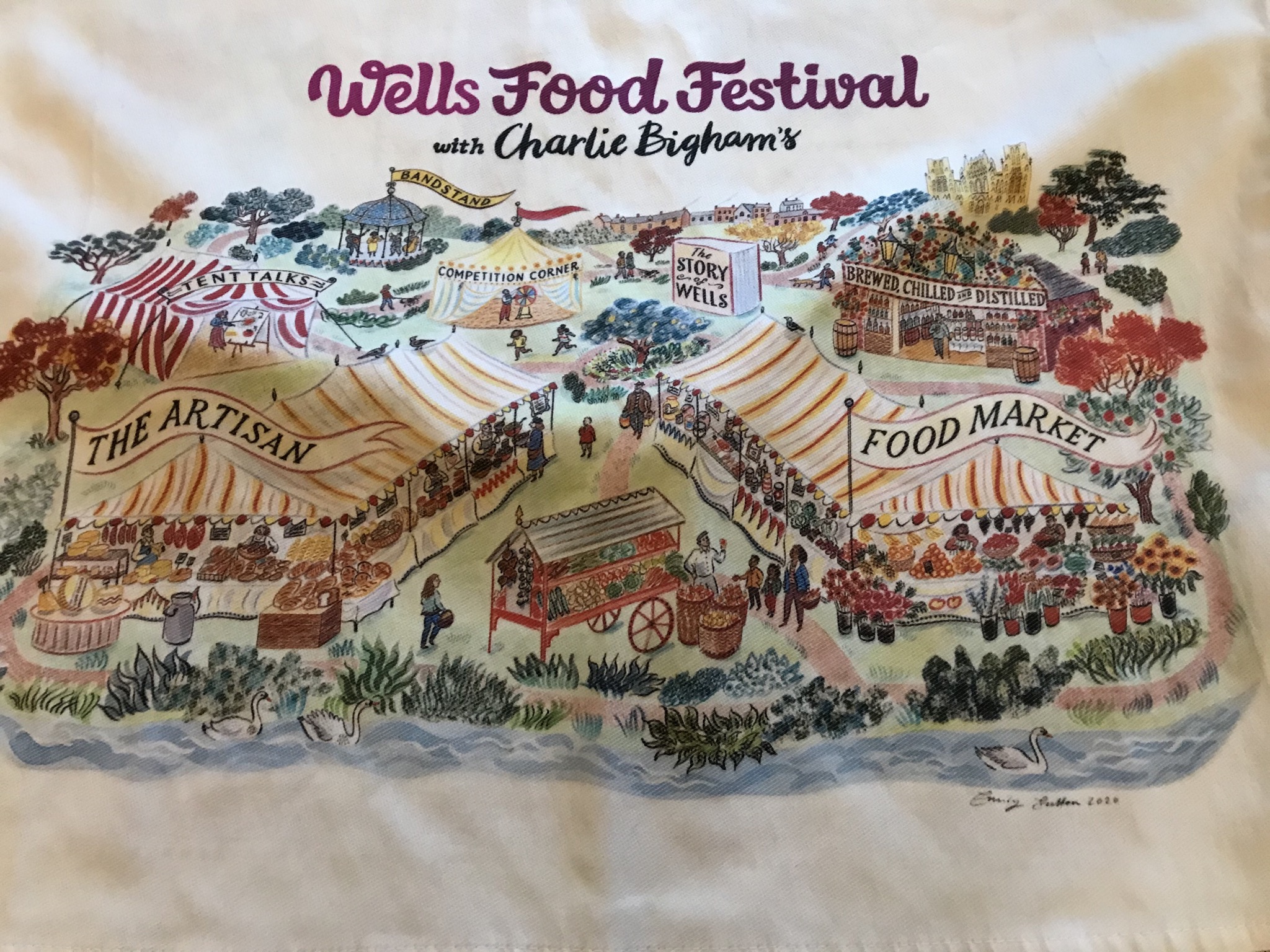
We were therefore very interested when we discovered there was a Charlie Bigham Banquet. It was in aid of the Wells Food Week (I didn’t know there was such a thing) and the idea was that you signed up online, bought the list of ingredients they sent, and then on Saturday, log into an online cookery class, where renowned chefs would show you how to turn the ingredients into a banquet. The money raised supported a charity that send chefs into school kitchens, so a worthy cause. What could possibly go wrong?

Husband sent me the list of ingredients, and I bought the ones we didn’t have in the cupboard. I improvised on some (I mean, who has fingers strong enough to grate parmesan cheese when you can buy it ready-grated??) and didn’t buy the things that I don’t like to eat (seemed reasonable to me). Husband audited my shopping, and went to buy the things I had got wrong. We invited another couple for the evening, and I figured that at worse I could get quietly drunk and let Husband lead the cooking—after all, it was his idea.

A package arrived, addressed to Husband. It contained an apron, a tea towel, and a small booklet of instructions. I glanced at it to check there was no equipment that might surprise me, and threw the tea towel into the washing machine. It came out slightly pinker than before (possibly due to the red towel I washed at the same time) but at least it was clean.

On the day of the banquet, we had some things to prepare during the morning. A printed sheet told us to core and peel the apples, cut them into chunks, and dry them out in the oven for 3 hours. But what size chunks? We were not sent entire recipes, all would be revealed later, which partly made it fun and partly was rather difficult as we had to guess things. We also needed to roast the beetroot—but should we peel and chop it first? I guessed from the timings given that whole beetroots wouldn’t work, so we cut them, but someone with no cooking experience could easily have gone wrong at this point. Perhaps there was a minimum level of cooking experience expected—I hoped it wouldn’t be very high.

The kitchen filled with wonderful smells, as the venison marinated in garlic and rosemary, the beetroots roasted (with a few added potatoes because I know the appetite of real people, and half a beetroot as the entire carb was not going to be filling anyone up!)

At the specified time we set up the computer and watched a couple of men—not quite Ant and Dec but they were trying—as they chatted about wine and introduced the chefs. I felt slightly bored, with a sense of foreboding as I waited for what I assumed would be a school cookery lesson. I was wrong.

The evening was tremendous fun—the best evening I’ve had in ages! The chefs were in their own homes, and did a little chat, then cooked a course of the meal. They cooked it very quickly, explaining almost nothing, and we raced to keep up. It was like trying to complete one of those escape rooms—four adults scurrying to solve the task. There was no recipe, so we had to watch intently to see what was being added. Sometimes they went off-piste and added things we didn’t have, like a sudden side-salad made from garden flowers and herbs. (I only have a few late dahlias and dead sunflowers in my garden, so they would be less good.)

There was a lot of shouting as we spotted things. The first course involved raw salmon, put briefly into a brine to pickle it. Some of us worried about the safety of eating raw salmon and shoved it into the microwave. We had a mishap with the brine as the person watching the screen was calling out the ingredients, I was mixing, and brown sugar was mentioned. I added it, but that was for the pears, so we tipped it away and started again. There was a topping of sourdough crumbs and hazelnuts—ours was somewhat darker brown than the chef’s. We placed it all on the plates, and sat at the table feeling somewhat shellshocked, then took a mouthful. It was delicious. Really, the flavours all combined perfectly, it was like eating fine cuisine in an expensive restaurant and suddenly I realised what made these chefs special. They couldn’t teach, but wow! they could cook.

Then there was a chef making a starter with mushrooms and pancetta. He stood in his kitchen with a glass of wine and chatted about mushrooms. Was he drunk? He chatted for a long time. We saw the Ant-and-Dec men pass each other post-it notes, they clearly wondered if he was drunk too! Eventually he started cooking, we raced to keep up, the food was delicious.

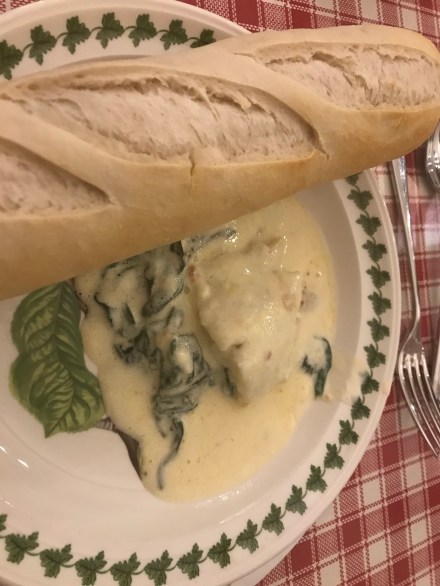
Next was smoked haddock. Would that be raw too? It was placed over spinach, covered in sour cream and parmesan (luckily ours was already grated) dotted with tabasco sauce and placed under a hot grill. Served with bread: delicious.

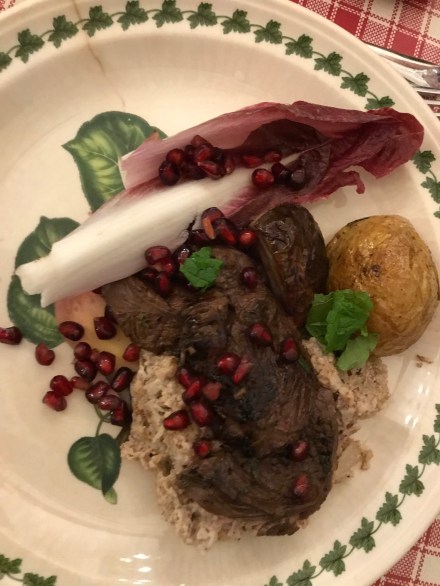
The main course was venison. The chef showed us her kitchen, and chatted, while next to her an empty frying pan smoked on the hob. Had she forgotten it was there? The fire alarm sounded, she rushed off, the camera cut to another chef, who struggled to take over her slot but he forgot bits and plated it up wrongly. We made a paste from liquidised almonds and pine nuts and burnt onions and garlic. The venison was sliced on top, and surrounded with roasted beets. It was wonderful.

The pudding was sticky apple cake with toffee sauce. I made the sauce, which had a whole pack of brown sugar, enough cream for the whole of Christmas and a month’s worth of butter. The chef multi-tasked and made the cake batter, so someone else made that, grabbing my mixer to try and keep up. When would he add the apple soaked in tea? Would he drain them first? Had he added the sultanas? We watched, he was holding a bowl—what was in it? In it went—quick! Add the sultanas! Then the apples—not drained, tip in the cold tea too… We had been told to prepare muffin trays, so I had laid out 8 paper cases in the tray. We made enough mixture for about 150, so abandoned the muffin tins and poured it into loaf tins instead.
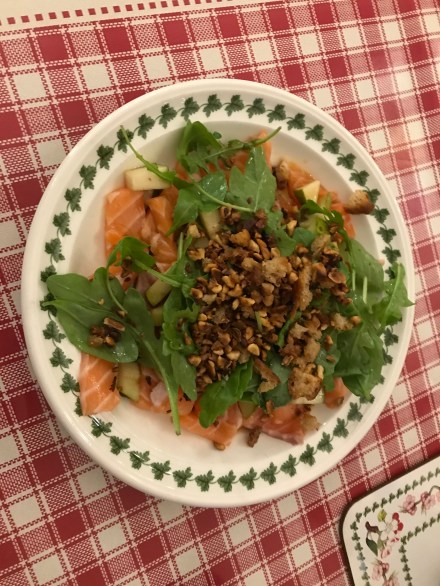
My kitchen was full of shouting and laughing and rushing to grab ingredients and throwing away rubbish and washing equipment so it could be reused. As I said, it was like trying to solve a very complicated puzzle within a time limit. But the food we produced was far superior to anything I have ever cooked before. Those chefs knew how to create wonderful dishes. A few things were a bit ‘amateur,’ such as the fire alarm going off, the complete lack of teaching, the (possibly) drunk chef. But to be honest, it added to the charm of the event, and trying to keep up was so exciting!

By the end, we were completely full of fat and sugar, and the kitchen looked as if a bomb had exploded. We thanked out guests, and went to bed. Such a fun evening.

Anne E. Thompson
Thank you for reading anneethompson.com Why not sign up to follow my blog?
Look on your device for this icon (it’s probably right at the bottom of the screen if you scroll down). Follow the link to follow my blog!

***********
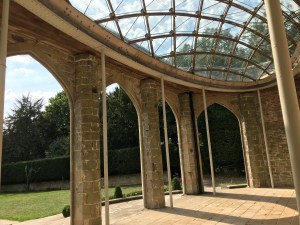
A Town Open Day


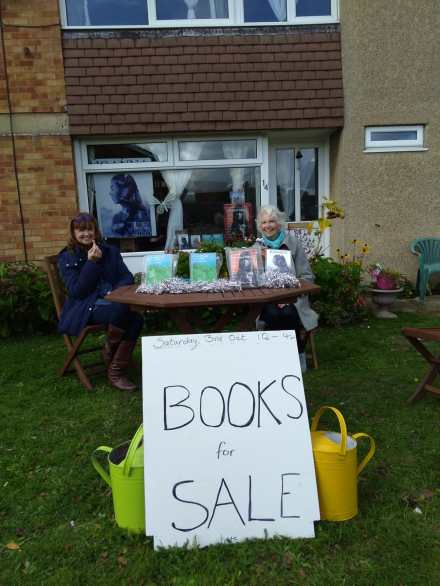
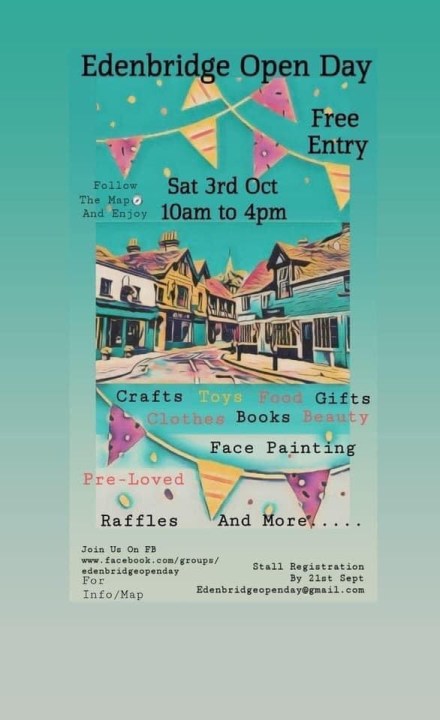
My town decided to have an open day. I don’t know who had the idea originally, but it was suggested on our town Facebook group (the one that usually moans about broken traffic lights and daft planning laws). The idea was simple: People could sell things at the end of their garden.

Enthusiasm grew, and people offered their services. Someone produced a map, showing where all the stalls would be. People shared advice about how they were ensuring their pitch was covid-safe—some provided hand sanitiser, some made a one-way system, some invested in a card machine for cash-free payment.

We were all responsible for our own area, and we were sent links to government websites with the latest advice (always a scintillating read!) The date was planned for 3rd October, between 10am and 4 pm, and the enthusiasm grew.

Some businesses offered space outside their shop, or in their pub garden for people who didn’t want to use their own garden. Shops joined in, with special offers for people who popped in during the day. An artist designed a poster, which was emailed to everyone who signed up, and we could print copies to advertise the event. Photos appeared on the Facebook page: painted stones, Christmas decorations, homemade soap, freshly baked cakes, greetings cards—all the things you might find in a craft fair (which have all been cancelled this year) plus some people were selling second-hand items. The enthusiasm grew…but would anyone actually come to buy?

I was very keen to take part, mainly because absolutely every event I have planned this year has been cancelled. Here was an event which couldn’t be cancelled because each stall was responsible for their own pitch, no one could suddenly deem it was unsafe (unless, of course, the government introduced another lockdown in our area, and 2020 being what it is, that was far from impossible!)

Then the ‘rule of 6’ was introduced. Would this affect the event? I thought it extremely unlikely that I would have more than six people vying to buy books all at the same time, so decided that it wouldn’t affect me. Some people made signs, telling people to queue sensibly if they needed to wait before approaching the stall.

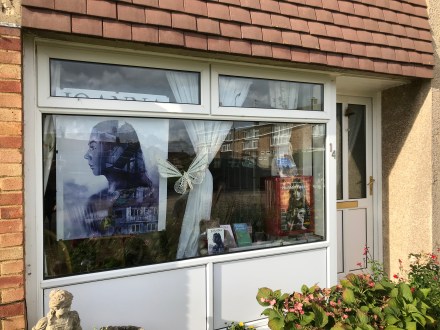
My house isn’t near the centre of town, so I asked Mum if I could use her garden (it’s prettier than my garden too—has fewer weeds and scary animals wandering around). Mum kindly agreed and suggested I put up posters. My only posters are quite large—ideal for book-signings in big shops, not so good for sitting-room windows. Mum said they were fine, I placed them in the window, she lived in semi-darkness for a few days.

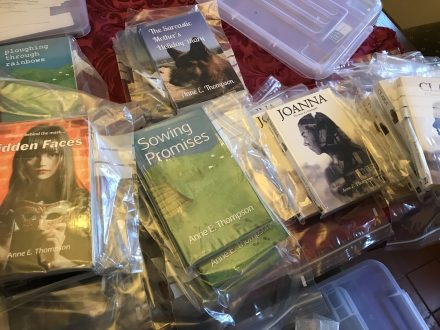
I printed some fliers from the poster we were sent, and Mum delivered them to her neighbours. I bought some ziplock bags, and placed each book into a bag, making them covid-safe. Husband printed copies of the back page, so that people could read them without handling the books. I considered printing off some sample pages, because most people like to read some of the book before buying—but if I’m honest, I wasn’t sure whether anyone would actually come so I didn’t want to waste too much time.

Now, I live in England. In England, it rains and it’s daft to assume that any day in the year won’t have rain. I watched the forecast, and the tail-end of a storm was predicted. Super. I decided that I could sit in the lounge, next to my over-sized posters, and run to the door if anyone braved the weather to visit. It was disappointing, but at worst I would be spending the day chatting to Mum, so the day would be fun anyway.

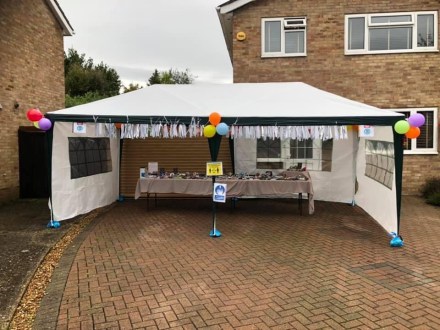
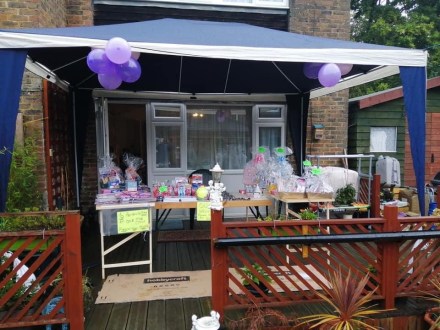
The day arrived. As I drove down to Mum’s house, I passed several houses setting up stalls at the end of their gardens. Most seemed to be whole-family affairs, with parents and children setting up gazebos and carrying boxes of items, ready to sell. There were balloons and posters and a general air of excited expectation that was weirdly infectious. I began to feel excited!

We set up our stall, and I decided to leave most of the books inside the house, as although it wasn’t actually raining there were a lot of black clouds. Then I snuggled into my big coat, and waited. Would anyone come?

Well, yes! Despite the awful weather, people did come. Some people drove round, obviously following the map that had been put on the town Facebook page, slowly touring all the stalls. Sometimes they waved as they passed, sometimes they parked and bought a book. Other people walked round, mothers with pushchairs and old men with shopping bags and young people with their friends. Sometimes they showed me the soap or painted stones they had bought, or told me they were on their way to look at the stalls in the pub garden or the churchyard. People were happy, entering into the spirit of the event, glad of something to do on a wet October day in a year of cancelled plans. Some people wore masks, but we were outside, it was easy to keep a sensible distance—as long as we washed our hands afterwards it was very safe.

The day, for me, was brilliant. I sold 20 books, but more importantly, I spoke to a whole range of people who live in my town (I have to say, I think my mother possibly knowns everyone who lives in town, and if she doesn’t know them, she knows their aunty/sister/cousin). I felt very proud of my town, of the community spirit, the number of people who wanted the day to work. All it takes is a little enthusiasm, a few people prepared to take the risk, and something very positive is produced. In a year of disappointments, this was a very good day.

I hope you have a good day too. Thanks for reading.

Take care.

Love, Anne x


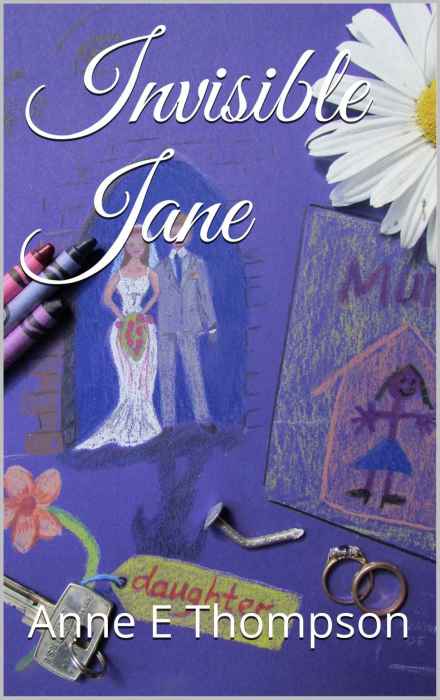
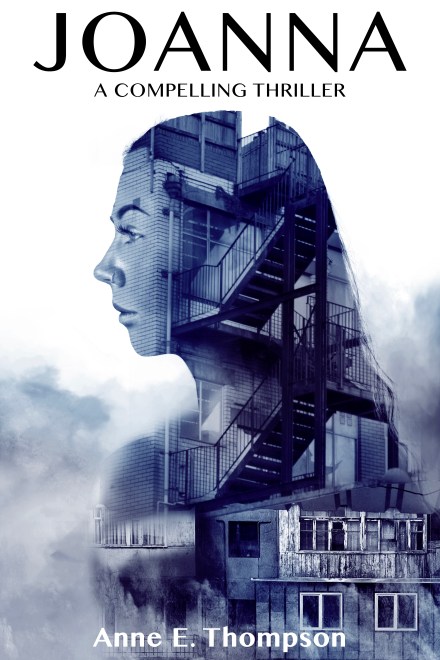
PS. If you weren’t able to visit my town in Kent on 3rd October, all my books are available in bookshops and from Amazon. Here is a selection:

You can order through my Facebook page, or Amazon link here: https://www.amazon.co.uk/kindle-dbs/entity/author/B07CL8HV95?_encoding=UTF8&node=266239&offset=0&pageSize=12&searchAlias=stripbooks&sort=author-sidecar-rank&page=1&langFilter=default#formatSelectorHeader

Anne E. Thompson
Thank you for reading anneethompson.com Why not sign up to follow my blog?
Look on your device for this icon (it’s probably right at the bottom of the screen if you scroll down). Follow the link to follow my blog!

Trying to Learn the Greek Alphabet and other interesting stuff


Interesting Greek Facts

A Greek Temple

As I write this, I have managed to survive the introductory ‘Orientation Week’ at Spurgeon’s College and am about to embark on a term of Greek lectures. So far, it has been fine, as the main thing that would terrify me is the logistics—the whole ‘what if the traffic is bad,’ ‘where will I park?’ ‘how do I know where to go/sit/eat,’ ‘what if my brain runs out of energy before the end of a session?’ You can imagine the type of thing. Therefore a term (at least) of all lectures being online, is perfect for me.

Learning Greek

Greek Text Book

I haven’t had any proper lectures yet, but I have enthusiastically started reading the book they sent, and searched the resources they sent for interesting YouTube clips. I have to say, it has proven to be a very interesting week. I hadn’t realised how much of the English I speak has its roots in ancient Greek. Here are some fascinating facts:

The New Testament part of the Bible is written in Koine Greek. ‘Koine’ simply means ‘common’ because it was the common language for about 600 years. Obviously languages evolve—so if I wanted to read Chaucer, I would need to understand the language spoken in that period, whereas Henry VIII spoke a slightly different English. “Ah,” you might say, “but if it’s an ancient language, how do you know how to pronounce it?” Well, I thought the same thing, and the answer is brilliant. Historians study as many sources of the writing as possible—on tombs, and carved onto monuments, and written on manuscripts. They then compare them, and the spelling mistakes give clues about how the words were spoken. Isn’t that great? If you take an English example: “I read the book yesterday,” and find that in 200 instances, the word “read” had been misspelt as “red” then you could conclude that “ea” can be pronounced as the “e” in “red.”

When you learn the Greek alphabet, there are some letters which are very weird, and listed as sounds that we don’t say in English, like Psi. However, the Greek words have evolved into the words that we use today, we simply ignore the bits that we don’t pronounce. So the letter Psi gave us the words for psychology and psychopath and pseudo. (Now you know why they have odd spelling.)

There is a symbol in Greek called a breathing which looks like a tiny ‘c’ and floats above some vowels: αͨ εͨ ιͨ οͨ. When it’s backwards, it’s not pronounced (I don’t yet know what purpose it serves, that will have to be a later blog). But when it’s the correct way round (c) and it’s over a vowel at the start of a word, it adds an ‘h’ sound to the start of the word. In Greek, the letter P is called ‘rho’ and it is apparently a vowel (but only sometimes—again, I can’t yet explain this). This is interesting though, because when it has the breathing over it, an ‘h’ is added to the pronunciation. In English, we don’t say the ‘h’ but it is hidden in words like rheumatism and rhesus and rhetoric.

νόμος (sounds like nom-us) is the Greek word for law. If you add alpha (which looks like a fishy ‘a’ letter) to the front, it means the opposite. So νόμος = law and ανόμος = lawless. We still do this today with some words: symmetrical vs asymmetrical.

The word οͨ means ‘the’ when the word is masculine (I guess like ‘le’ in French, when ‘la’ is feminine) it’s pronounced ‘ho’ because the little ‘c’ adds an ‘h’. The word for God is θεος (‘Theos’) and in the places I’ve found it, it is preceded by the masculine ‘the’—so although I think God is genderless, certainly the Greek word was always masculine. The word θεος appears 1300 times in the New Testament, so I haven’t yet checked them all.

Learning the Greek alphabet in order is, I have decided, impossible. I have managed to learn the letter names (which gives a clue to how they sound) and the symbols for the lower-case letters. Everything I have read so far says not to bother learning capital letters at this stage as they are rarely used, so I have taken this to heart and ignored them completely. What is impossible though is learning the alphabet in order.

α alpha (sounds like ‘a’)

β beta (sounds like ‘b’)

γ gamma (g)

δ delta (d)

ε epsilon (e)

ζ zeta (z)

η eta (a long ‘e’ sound like in ‘air’) this one always confuses me!

θ theta (th)

ι iota (i)

κ kappa (k)

λ lamda (l)

μ mu (m)

ν nu (n) this is a tricky one too

ξ xi (x) easy to remember if you notice it looks like a pair of boobs so is ‘sexy’!

ο omicron (o) I always forget this one. Always.

π pi (p) brings back horrible memories of school mathematics

ρ rho (r) another tricky one because it pretends to be a ‘p’ and really it’s an ‘r’

ς σ sigma (s) this has two symbols, depending on whether it comes in the middle or at the end of a word. It is very hard to remember that σ is ‘s’!

τ tau (t)

υ upsilon (u,y)

φ phi (ph)

χ chi (ch)

ψ psi (ps)

ω omega (o, but a long one like in ‘bone’)

To be honest, I struggle over the order of letters in the English alphabet, and it’s only ever useful when I’m filing (which is never) or looking in a dictionary (which is rare) so why bother? I have tried making useful rhymes to help with the tricky bits: ‘epileptic zebras eat thick ice kittens’ and ‘lovely male nurses x-ray other people’ but I find I start to muddle up the rhymes too. I am shelving it for now and hoping that by the time I do an exam, the lecturer will have moved onto more complicated things and won’t bother to test us for the alphabet.

I sent one of my children a few words written in Greek, wanting to show-off a little. He was able to name all the letters, which was very disappointing (I long for the day I will know something my children don’t know—something beyond what temperature to use on the washing machine or how to hatch an egg). Apparently the Greek alphabet is used a lot in Physics, so he learnt all the letter names and symbols at uni. I think learning to read the language is much more interesting than Physics though, so I have decided that doesn’t count.

I hope you have something interesting too this week.

Thanks for reading. Take care.

Love, Anne x

Anne E. Thompson

Thank you for reading
anneethompson.com
Why not sign up to follow my blog?

Look on your device for this icon (it’s probably right at the bottom of the screen if you scroll down). Follow the link to follow my blog!

*****

How to Fail


Do You Know How to Fail?

Fear of Failure Can Prevent Us Succeeding

When I was teaching primary children, I noticed that most mothers were very good at teaching their children how to succeed. If, for example, Jimmy won a race at sport’s day, his mummy would smile and clap and tell him: “Well done! You were brilliant!” If Jimmy went on to do a victory dance in front of his class and make a ‘loser’ sign to the child who came last, his mummy would tell him no, that’s not the right way to behave, you mustn’t be a big-head.

I watched children being praised and taught not to be conceited when they passed exams, starred in performances, and painted wonderful pictures. Parents seemed to do a pretty good job of teaching their children how to succeed.

But what about when they failed? What about when Polly came last in the race? Or failed her piano exam? Or wasn’t given a part in the school play? Or painted really awful pictures? How did parents react then, and were the children taught how to fail well? Mostly not. Mostly, the parents made excuses as to why it wasn’t Polly’s fault, or why the system was unfair—or else they lied, and said that Polly was the best anyway, and that her grey/green splodged picture was beautiful.

Do you think it matters? I personally think that it’s a big problem, both for individuals and for society. For most of us, failing at things is a big part of life, and we are more likely to fail than succeed and if we know how to fail, then it doesn’t knock us on our backs, we simply accept that we have failed and carry on.

I am very aware of this as I start to learn Greek as a mature (very mature!) student. I might fail. It’s a long time since I took an exam or tried to learn a new skill, and I might not succeed. But knowing that I might fail shouldn’t stop me trying. If I fail, it will be because I am not intelligent enough. Sometimes, we are not clever enough—this is an excellent thing to learn.

Our society likes to make excuses. It seems to be an innate part of being human. Way back at the beginning of time in the book of Genesis, we read about people failing and making excuses. Whether you think Genesis is a book to take literally, and Adam was a man who physically existed, or whether you think it’s a story to show us why relationships exist as they do, the first story is very clear. Adam messed up (he ate a forbidden fruit) and when challenged he made an excuse: “The woman YOU gave me made me do it.” It wasn’t his fault. Except, it was.

If we always make excuses—the teacher was rubbish, I didn’t have time to study, I couldn’t afford the right textbooks—then things are never our fault. And when we blame others, we start to feel resentment. I think this causes all sorts of problems for society. If the bus drivers, shop assistants, manual workers all think that they are as intelligent and capable as people with more interesting jobs, then they will resent those people, and feel angry at the pay discrepancies. If people have not learnt to fail, they will avoid competition in case they don’t win. They will feel defeated when they don’t get the job or promotion they feel they deserve. They will feel angry with the world for the things they don’t achieve.

Fear of failure also makes people stop trying. They won’t sing the song they composed, they won’t audition for the fashion show, they won’t try for the promotion at work because they might fail.

I am not talking about whether society is fair. I realise that in some cases, people have underachieved due to an unfair system, but not always. Sometimes people fail at school because they don’t do their homework, or because they are not very clever. Sometimes people come last in all the races at sport’s day because they never practise, or they eat unhealthily, or they are simply born with an uncoordinated body that is rubbish at all sports. People fail music exams because they don’t practise or they have no talent.

I believe these problems start in childhood. Some parents at one school I worked in suggested that we shouldn’t have ‘winners’ at sport’s day, and everyone should receive a rosette. How does that help to prepare a person for not always winning? Some parents will buy all children a gift on a sibling’s birthday, because they don’t want the younger brother to feel left out. They always let their children win at games. Everything the child produces is praised. When the child messes up, they make excuses on their behalf. The child is not being taught how to fail. They are being taught that failing is wrong.

Parents, when you play games with your child, don’t let them win. You can play badly, so they enjoy the game, but don’t always let them win—that is not what will happen in real life and it’s sort of lying. (My own mother absolutely believed this, and would always completely annihilate us when we played cards with her!) Acknowledge that your child is not very good at sports/art/music/maths or whatever. Encourage them to still try, but let them know that not being the best is okay. If they fail at something because they didn’t study, or practise, or try, then be honest about that. Let them get used to knowing that yes, they failed the spelling test, and yes, it was their fault because they played on the computer instead of learning the words—but you love them anyway. Teach your children to say sorry. When we are adults, we will sometimes drive badly and bump a wall, or be tired and snap at someone rudely, or forget someone’s birthday. We should accept the fault and say that we are sorry. It is so much easier to accept and forgive another person’s mistakes if they acknowledge the fault and apologise, rather than making excuses.

Accepting that we fail does not stop us trying to achieve, but perhaps it helps us to aim more realistically. I have trouble learning unrelated facts and symbols. I also find abstract concepts difficult to understand and manipulate. Hence, I will never be a great physicist. There’s nothing wrong with that, it is partly the way I was made, and partly because I was lazy at school and never bothered to learn the fundamentals. You too will have things that you can’t do—and that too is possibly partly your own fault and partly not. I think we are much healthier and happier when we accept our failures, try to learn from the experience and move on, rather than perpetually making excuses and self-justifying.

This week, I challenge you to acknowledge your failures—and think about how you could possibly correct them in the future. And if you have children, please teach them how to fail well. It might make them better, happier, adults.

Thanks for reading—and do share your own views in the comments below.

Love, Anne x

Anne E. Thompson

Thank you for reading
anneethompson.com
Why not sign up to follow my blog?

Look on your device for this icon (it’s probably right at the bottom of the screen if you scroll down). Follow the link to follow my blog!

*****

Ironically, I have just ‘failed’ when posting this blog! I always write blogs ahead of time, and this was meant to be posted mid-October. But I forgot to change the date before completion, and so it went to all my followers today. Which must feel like spam as they have already received one blog from me today! Apologies.

Visiting Chiddingstone Castle and Village


Chiddingstone Castle

A Lazy Day in Kent

visiting Chiddingstone castle

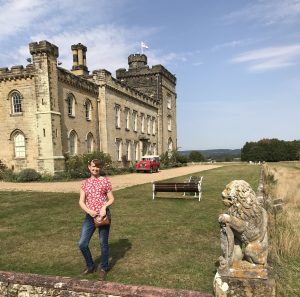
The Castle and a gargoyle
(I’m the one in red!)

We had a few hours for an outing and decided to visit Chiddingstone Castle. This is one of the few local attractions which is actually open on Tuesdays—except only the grounds are open, the house is open on Sundays and Mondays. We have never visited before, despite it being practically on the doorstep, so we explained to the dog that we were leaving her at home (not quite sure why I always need to explain to the dog why I am leaving the house without her) and off we set.

Chiddingstone is between Tonbridge and Edenbridge, and is a tiny Tudor village. We parked in the castle grounds, put our £2 entry fee in the honesty box, and began to wander.

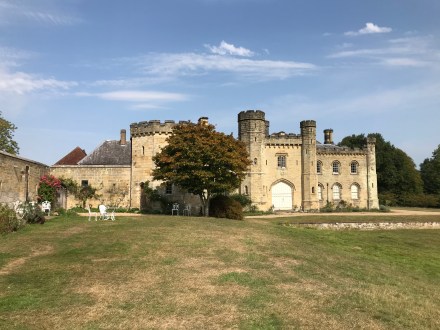
The castle is pretty, with turrets and the remains of an orangery. There are wooden bridges over the river, and ducks on the lakes and expanses of lawn (so I could have taken the dog, but she would have had to stay on the lead). There was an area set out like an Egyptian garden: The Fields of Eternity—though to be honest this was just random pathways cut into long grass, and the area meant to resemble Tutankhamun’s tomb was simply a sand tray that had been well used by the local cats. I didn’t see any actual garden as in flower beds, but perhaps they are within the walls and only accessible when the house is open.
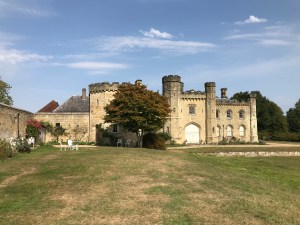
The castle was originally a Tudor house. Then, in the 1800’s it was bought by Henry Streatfeild (all those vowels are the wrong way round, so a difficult name to write.) He demolished the old manor house, replaced it with a castle and diverted the road so none of the villagers could go on his land. I bet he was popular! Though to be fair, I share his desire to have turrets on my house.

In 1955 the castle was bought by Denys Eyre Bower (no relation to Jane) and he was a great collector of stuff. He set up collections of Egyptian antiques and various art collections, which he displayed in the castle for people to see (more popular with the locals than Henry Streatfeild I’m guessing). When he died in 1977, a charitable trust was set up to preserve his collections and continue showing them. I’m thinking of copying this idea with my cushion collection, my children will be thrilled.

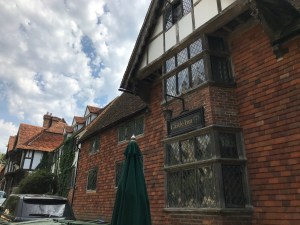
Castle Inn, Chiddingstone

Castle Inn, Chiddingstone

We left the grounds and wandered up the main road of Chiddingstone. There was a narrow path, an old church, and classic Tudor houses. The village shop is full of gifts and frozen Cook food and sweets in old-fashioned jars (maybe more of a shop for people renting holiday homes than people actually living in the village). old fashioned sweets displayThe village has been bought by the National Trust. In Tudor times, the father of Anne Boleyn (of beheaded fame) owned property here. Currently the village is often used by film companies who want an authentic Tudor setting.
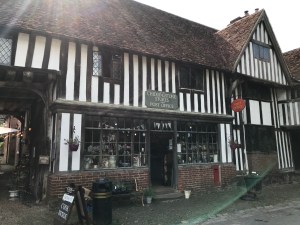
A Tudor village

Authentic Tudor buildings.

There is a school, which we passed at Playtime and was particularly noisy. The children were all wearing coloured caps, segregated into coloured pens, with coloured equipment and an appropriately coloured-clothed teacher standing guard. They are clearly attempting to be covid-aware, though whether the children all clustered in a tree were social distancing was uncertain.

the ancient Chidding Stone

Chidding Stone

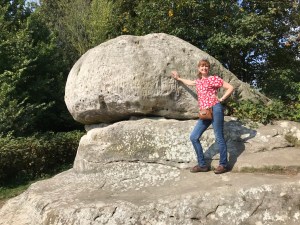
We also found the Chidding Stone—the footpath there is marked by a signpost on the main road. A big lump of granite, people have been guessing its connection to the village name for centuries. Theories include: Used by the Druids as a religious place, or the place of judgement—nagging wives and petty criminals were taken there for general ‘chiding’ by the village, or a Saxon boundary, or the homestead of Cidda’s family—hence ‘Chidding tun.’ In the 12th century the village is listed as Cidingstane, so take your pick. I favour the chiding stone theory, and when you visit you can imagine the whole village standing round it to shout abuse at a nagging wife.

Chiddingstone village and castle is a fun place to visit if you have a couple of hours free and you happen to live in Kent. Next time we’ll go when the house is open, and I can get some ideas for the best way to display my cushion collection.

I hope you have a nice day too. Take care.

Love, Anne x

Next week I will tell you all about the start of my new course at college, learning ancient Greek. It is such fun!

Anne E. Thompson

Thank you for reading
anneethompson.com
Why not sign up to follow my blog?

Look on your device for this icon (it’s probably right at the bottom of the screen if you scroll down). Follow the link to follow my blog!

*****


A Greek Temple

Learning Greek


Returning to Education When I am Really Rather Old:

Starting to Learn Greek

You might remember that a couple of weeks ago, I mentioned that I plan to learn the languages that the Bible was originally written in—ancient Hebrew and Greek. I enrolled in a course at Spurgeon’s College, was accepted, and the term is now about to begin. It is a long time since I attended a college. It has all been very scary! These are the most terrifying points to date:

I received an email, saying we need to rearrange the timetable as one member of the class works on Thursdays. Wednesday was suggested, but I have my Mandarin lesson on Wednesdays—should I admit that I am learning another language or will that be seen as a conflict? I decided to say I was busy that day but not give a reason.

After much pondering, when a form arrived asking if I have any special needs, I indicated that I do (one of the diffy students, as my family put it). Since my brain surgery, there are a few things I cannot manage—like concentrating for more than about two hours without a break. But how to communicate that in a way that showed I was still an intelligent human, I simply need a ‘brain break’ to recharge? I therefore ticked the ‘special needs’ box, explained that this simply meant I might need to go and sit in my car for 20 minutes to recharge (I sounded like a synth in Humans!) and waited to see what would happen. A very nice email came back, saying they had made a note of my potential need, and I should let them know if I need anything. Very kind.
The college have their own website thing: Moodle and I was told how to log-on. This was extremely scary, as it is full of acronyms which I didn’t understand, and a complex array of colours and links. I looked at it, then shut it down again quickly.

The following day, I forced myself to log-on again and try to make sense of some of it. I managed to find the timetable for my course and printed it off (it is comforting to have something written on paper when you’re my age). This then directed me to some pre-course preparation that I was meant to complete.

I went back to Moodle, and watched the Principle giving a short speech. Logged off.

Returned when I had recovered, and found a short test that I needed to complete. It is a long, long time since I have done an exam. It was all done online, and it had to be completed within an hour, so there was a little clock ticking away in the corner of the screen to add a further element of stress. I didn’t know whether I could return to pages once they were complete, or if it would wipe my answers, so I tried to completely finish and proof-read each question before going to the next page. The time whizzed past. Husband was especially noisy, so I yelled at him to shut his door. A telephone rang. My pulse was racing, I forgot to breathe. But the questions were fine. Some were very quick (put the correct word into the space) and some took longer (add punctuation to an essay). It was all very churchy, but I guess that’s to be expected at a Bible college, even though it was an English test. I finished, within the hour, and sent it off. Went for a cup of tea.

Learning Greek

Greek Text Book

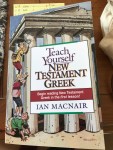
The next excitement was a parcel. I have been sent a ‘Teach Yourself New Testament Greek’ book (doesn’t show much faith in the tutor, but maybe they’re covering their backs!) It looks fabulous, and I am dying to dive in. The first chapter is called Read This First so of course I ignored that and flicked straight to the alphabet page. What fun! I am chanting every time I go upstairs now, it’s like teaching the children the alphabet when they were small, but without the annoying tune: Alpha, Beta, Gamma, Delta, Epsilon, Zeta…

When I did go back and read the first chapter, it was brilliant. As you know, when I was too ill to be able to do anything else, I learnt Mandarin. I was never able to learn languages at school, so I tried to teach myself differently, surrounding myself with the language and not worrying too much about making progress or understanding everything as I went. I now speak very bad, but pretty fluent, Mandarin (it’s good enough for me to have coffee with a friend who speaks no English and we manage pretty well to discuss our children and mothers-in-law). Anyway, this book suggested all the things I had discovered as a way to learn a language—like not trying to completely understand everything before moving on to the next thing (the opposite of how you would learn maths) and attempting to read things that are ‘too difficult’ so your brain can work them out, and not studying for too long because the brain assimilates information when you are ‘resting’ rather than studying. I was very excited! I went and bubbled about it to Husband. He has now set a time limit on how long I am allowed to tell him about my Greek lessons. But that doesn’t matter, because I can tell you instead.

I will let you know in a future blog how my Orientation Week and first lectures go. It’s all being done virtually this semester, so I’m planning to wear my killer heels and a pink wig.

Hope you have some excitement this week too. Thanks for reading.

Take care.

Love, Anne x

Anne E. Thompson

Thank you for reading
anneethompson.com
Why not sign up to follow my blog?

Look on your device for this icon (it’s probably right at the bottom of the screen if you scroll down). Follow the link to follow my blog!

*****

cockerel and hen

A Confused Cockerel and other complaints. . .


He Fancied His Mother, So We Named Him Pharaoh

cockerel and hen

Hello, how are you getting on with this very strange year of 2020? I keep thinking I am used to it—I  have come to terms with the fact that every book-signing and fair has been cancelled this year and I really am not going to be selling many books—and then something else is cancelled, and all the frustration returns. I am obviously not alone, because our town is planning to have an ‘open day’ on 3rd October. It was planned through our town Facebook group (usually the place for people to rant about potholes and inconsiderate parking). Lots of people make crafts, or are artists, and we are all discouraged by the lack of places to sell our work. So, on the 3rd October, we are all going to place stalls at the end of our gardens, and people can walk or drive around town, looking at what’s on offer. To be honest, I doubt if I will actually sell any books, but it’s rather nice to have something in the diary, isn’t it?

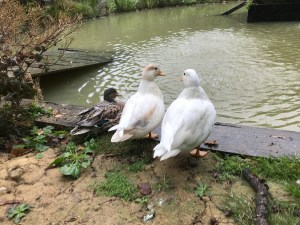
Of course, all my animals are completely unperturbed by Covid-19. The ducklings are now on the pond, and—wonders!—they are all female. (You might remember that last spring, all my females flew away in the search of mates, and I was left with a pond full of obviously unattractive drakes.)

The chicks I hatched are a cross between the white Leghorn chickens and my grey Legbar. I am really hoping that the females will lay blue eggs, but they are still too little to lay at the moment. The Legbar cockerels are no more, as they started to get vicious. I only have one full-grown cockerel at the moment, and he is very beautiful but rather sad, as his mate died last week. He keeps running to all the places she used to go and calling for her—so my garden is very noisy at the moment. The relationship was a confused one, as she was also his mother, so I named him Pharaoh, because marrying siblings and fathering children with daughters seems to have been quite a thing in ancient Egypt. I was very confused when I was studying the lineage of the Pharaohs, as there are so many weird couplings—they have a very narrow family tree—it’s probably just as well many of them were sterile and the line died out.

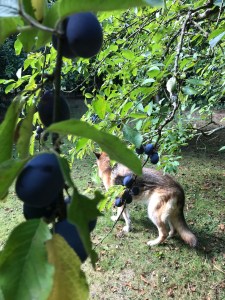
We went to the beach last week. I was feeling depressed with life, so Husband rearranged his schedule, and we zoomed off to Camber with the dog. Kia loved it, and it ‘did my soul good’ as my granny would say, to see her running through the waves. When she had her twisted stomach at the start of the year (really—what an awful year this has been!) my fear was that after such a big operation, she would never enjoy life again. But I can report, that whilst she is beginning to feel her 13 years, Kia is still tremendously excited by sea and sand and seagulls.
On the way home, we had lunch in a pub (The King’s Head in Playdon). There was hand-santiser strategically placed, and the staff wore masks, and the tables were well spaced, and every customer had to leave their contact details. It all felt very safe, and encouraged me to think that eating out doesn’t have to be risky.

But then we went to Ashdown Park Hotel for lunch on Sunday, and that was entirely different! The staff did nothing at all to guard against Covid. They didn’t wear masks, we were given the same menu folders as other tables, they placed the food and drink directly on the table, and I wasn’t aware of any extra wiping or washing or screening at all. Such a shame, especially when they must be struggling to cover their costs and need customers to return. It was a lovely venue, but annoying they aren’t doing more to stop another peak.

My fears for society are reflected in the vocabulary in Mandarin I am learning so that I can chat with my friends:

Jingji weiji shi hen dou gongsi daobi, ye shi hen dou ren shiqu le gongzuo.

经济危机使很多公司倒闭,也使很多人失去了工作。

Which reminds me to tell you: I have decided to study ancient Greek and Hebrew. I often feel frustrated when I discover that something I thought I understood in the Bible has a completely different meaning when you look at the original language it was written in. I realise that if I don’t start to study the things I want to study now, then suddenly I will wake up and I’ll be too old. I have signed up for a course that begins at the end of September, and I am very excited about it. I shall tell you all about it when I start.

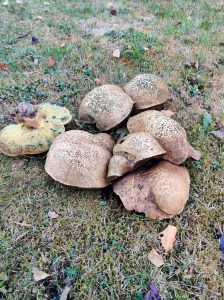
On another brighter note, the plum trees have loved the weather this year and my freezer is now full of plum crumble. When I walk, the hedgerows are teeming with blackberries and fat acorns are dropping from the trees. weird fungus There are also a whole new lot of weird fungus growing on my lawn. We might have had a rubbish year so far, but nature remains beautifully abundant.

I hope you have a positive week. Thank you for reading.

Love, Anne x

Anne E. Thompson

Thank you for reading
anneethompson.com
Why not sign up to follow my blog?

Look on your device for this icon (it’s probably right at the bottom of the screen if you scroll down). Follow the link to follow my blog!

*****

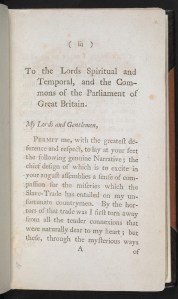
The book by Olaudah Equiano.

Memoir of a Slave


Learning About the Slave Trade

The Life of a Slave

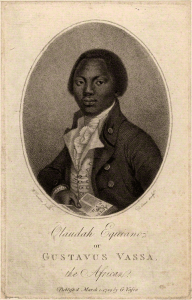
The Life of Olaudah Equino or Gustavus Vassa, The African

The book by Olaudah Equiano.

The book by Olaudah Equiano.

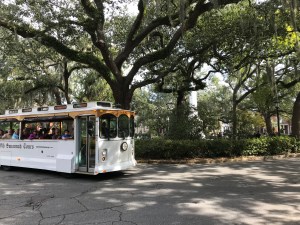
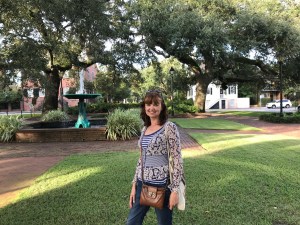
a square in Savannah.

Beautiful Savannah, with echoes of the slave trade whispering in every lovely square.

Way back when the world was normal, I went to Savannah in Georgia, US. You cannot visit the southern states without hearing the echoes of the slave trade, and I wrote about it in my blogs at the time: Blog about trip to Savannah here!

 I also found some books, written during the time of the slave trade, and I tried to learn why and how it had happened—what made people treat others like commodities? How did it ever become acceptable to own another human being?

One of the most enlightening books I discovered was written by one of the slaves. Olaudah Equiano was born a prince—the son of a chief—in the land of Eboe, which is now (I think) Eastern Nigeria. He was kidnapped when young, and sold as a slave and taken to the West Indies (the Caribbean) and then to the US. He managed to earn some money, and eventually bought his freedom and came to England. He learnt to read and write, married an English woman and wrote a book. This is the book I read, and it was illuminating.

The first copy I bought was a Kindle copy, and it read as if written in a different language and put through Google-translate. The language was difficult to understand, and I needed to read slowly and concentrate on extracting the meaning. But although it was slow, it also conveyed a sense of who Olaudah was, how he spoke, what he thought was important. It was hugely interesting to see how the language of 1789 has changed; for example, he spoke of making bricks that were “difficult” (meaning “hard”) enough to use for building.

I wanted to reread sections and make notes, so I later bought a paperback copy of the book. This didn’t have the charm of the ancient language, and when I read the small print, it said it was an “unabridged and slightly corrected republication” of the original. I much preferred the uncorrected version (so read the small print before you buy!)

So, what did I learn? Well, my first surprise was that in Eboe, while Olaudah was free, his family owned slaves. Slavery was common, it was how they punished people for things like adultery (though mainly only the women, as men were expected to have more than one sexual partner). This was shocking! Owning slaves was a normal part of African society.

Now, Olaudah justifies this, saying that the slaves were not mistreated, they were sometimes treated as part of the family and even, on occasion, married one of their master’s children. However, the fact is that they owned people, the slaves were not free to leave, they were forced to obey and had very few rights. It was used as a form of punishment, I guess the equivalent of today putting criminals in prison. The slaves could be sold, and although they mostly seem to have been treated well, they don’t seem to have had any rights. They were possessions.

The book describes other aspects of life in Eboe. They were very clean, they had strict hygiene rules, an organised society. When I compare this to the arguments used by slavers at the time, about removing ‘savages’ from an unstructured environment, it simply wasn’t true. These people were different, but their traditions and lifestyle were organised.

Olaudah and his sister were captured by slave-traders (Africans) and sold into slavery. It wasn’t unusual for young people to be kidnapped and sold as slaves, and it was something they feared even before it happened. For a while, he was owned by people in Africa, and although he longed to be free, he was not mistreated (if owning someone and making them do unpaid work and keeping them captive can be described as ‘not mistreated’!) Then he was sold again, to international traders, and put onto a slave ship. The things he described on the ship were barbaric, we would not allow animals to be transported in such awful conditions, and it’s not surprising that many of the slaves died before they even reached their destination. Olaudah describes his fears, especially of the white men, who at first he thought might eat him.

Gradually, even the abuses of the slave-traders became ‘normal’ and Olaudah stopped being terrified every time he sees a white person. He learns to speak English, and persuades someone to teach him to read.

Olaudah was sold several times, and he describes how slaves were often mistreated by their owners, their lack of rights, their complete lack of worth as humans. He describes a dispute with another owner (because sometimes he was hired out by his master, like we might let someone hire our lawnmower for a fee) and how the man said: “he would shoot me and pay for me afterwards.” The owners who hired him were less likely to treat him well, and sometimes he wasn’t fed or allowed to rest (they wanted their money’s worth!) There’s a section in the middle of the book when he describes some of the abuses, things that made difficult reading, like the owner who cut off a slave’s leg because he tried to run away. The law provided no protection, especially if the abuse was done as a means of ‘punishment’. In fact sometimes, the abused slave was expected to thank his master afterwards, to actually say thank you for teaching him to behave better. Even when a slave was abused for no reason, the law only stated: “…if any man shall out of wantonness or only out of bloody-mindedness, or cruel intention, wilfully kill a negro, or other slave, he shall pay into the public treasury £15 sterling.”

Married couples sometimes tried to hide their marriage, as an owner could force the husband to beat his wife ‘if she needed punishment’. Many children were born who were the off-spring of the owner, and they joined the slaves and were possessions, even though they were the children of the owner. Olaudah calls them “mulattoes” and they were shunned by the slaves as being “not properly black.” I have heard similar insults today, and it reminds me of the Jews, who have derogatory names for off-spring of Jew and non-Jew liaisons. Even the oppressed will oppress other people it seems. No race is above abusing another, everyone likes to think they are superior, every culture defends their own wrong practices.

All the time, Olaudah is planning to buy his freedom. He was a good sailor, and often went from island to island, and he used this to trade simple possessions like fruit or drink and gradually to build savings. He visited Philadelphia for a while, and saw Rev. George Whitfield preach. He writes:

“When I got into the church I saw this pious man exhorting the people with the greatest fervour and earnestness, and sweating as much as I ever did while in slavery on Montserrat-beach. I was very much struck and impressed with this; I thought it strange I had never seen divines exert themselves in this manner before.” Olaudah buys a Bible, and converts to Christianity.

Olaudah Equiano

An educated man, Olaudah bought his freedom.

When he had enough money, and after persuading his owner to sign the papers, he was free. He travelled to England, because the anti-slavery lobby there was gaining momentum, and he knew that a free black man in England had more rights than one in the US.

In England, he continues to work as a sailor, though he worries that hearing the crew swear all day will encourage him to swear too, and that this will mean he goes to hell. (The sermons preached in the 1700’s were slightly more ‘hell-fire-and-damnation’ than those preached today!) He describes working as a sailor, often alongside slaves even though he was a free man. When he was in Spain, some of the sailors were bitten by poisonous snakes, and were cured by the doctor who made them drink strong rum with a lot of cayenne pepper in it. (Might be a useful tip if ever bitten by poisonous snake—don’t blame me if it doesn’t work!)

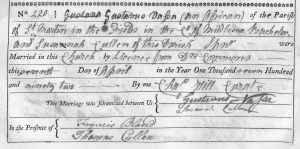
After Olaudah had written his book (and become relatively well-known) he married Susannah Cullen, a woman who lived in Soham, Cambridgeshire. He added this detail to all subsequent printings of his book. The marriage certificate is in his other name: Gustavus Vassa (slaves were renamed by their owners, though he was beaten for refusing to accept new names as he grew older).
Throughout the book, Olaudah longs for the abolition of the slave trade. His dream is that instead, Britain will trade fairly with Africa, sharing wealth in exchange for resources. How sad is it, that today, in 2020, Britain still does not trade fairly with Africa. We are still unwilling to pay a fair price for our food, and clothing, we still prefer to use slaves—and we don’t feel guilty because we can’t see them—in return for ‘bargain’ prices. Blog about modern day slavery here.

I like to think the world is better, a fairer place, than it was in 1745. I like to think that all people are protected by laws, and that our complex society has moved away from making profit from other people’s abuse. But sometimes I wonder. . .

I hope no one abuses you today. Be kind.

Thanks for reading.

Love, Anne x

Next week, I will write about some more slaves I have been researching–those these lived centuries before Olaudah. They have been the subject of many stories and films and historical debate, and next week I’ll tell you what I have discovered.

Thank you for reading.
Why not sign up to follow my blog?
anneethompson.com

Look on your device for this icon (it’s probably right at the bottom of the screen if you scroll down). Follow the link to follow my blog!

****

Is It Worth Reading Reviews?


How to Get Book Reviews

Who Writes Book Reviews?

And are they worth it?

Do you check Trip Advisor before you choose a restaurant? Flick through the reviews on Amazon before you buy a book? Check out the comments before you buy that new kettle online? I do too. But we might not be reading what we think we are. And the flip-side, of course, is how does a lowly author persuade people to review their own books?

I recently saw a conversation on Twitter, where one author (well-known on Twitter, if not in bookshops) was laughing at authors who only have a handful of reviews. I kept very quiet, and hung my head in shame—I am one of those authors. It’s not that I don’t manage to sell books, I do. But however many people ‘promise’ to write a review, in actual fact it is about 1% of people who actually do. Therefore, when I see that Miss Twitter Author has 204 reviews, mostly 5* (and this is something often posted on Twitter by people advertising their books) well; why do I bother? It makes me want to curl up under the stairs with a Mars bar (which is not an uncommon feeling at the moment).

I belong to some Facebook groups for writers, and the people there are sometimes willing to read and review a new book. But even those people don’t always write a review when it actually comes to it! (Some do, and I am hugely grateful for the people who kindly gave their time to read my work and then review it.) But compared with 204 reviews? I am a worm.

However, all is not lost. I recently learnt that all these reviews might not be what they seem. It is possible that 204 reviews is not 1% of a LOT of sales, or that Miss Twitter’s books stimulate more reviews than mine, because it is possible to pay for reviews. I have been approached twice now, by different organisations, asking if I would like to pay to have my book reviewed. Maybe some of the books with a lot of reviews have paid for them!
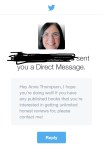
It works like this: You agree to pay a fixed price (there are several packages to choose from) and then you send a digital copy of your book to a reader. The reader then posts a review, on either Goodreads, or Amazon, or both. They say they will be honest reviews, but I somehow doubt that an author will return to buy more from a site that has left them 1* reviews.

Is this fair? Well, I guess there’s nothing wrong with paying to advertise your work, and I suppose that reviews are sort of advertising. But I think most people assume the reviews are honest, written by unrelated readers who are giving honest feedback about a book. If someone has paid money, it feels less authentic.


This buying of reviews is not just limited to books. I know of businesses who pay professionals to manage their online image. This basically means that people are paid to write good reviews for restaurants they have never visited, and products they have never bought. I understand why it happens. If a restaurant has a bad review, it can influence whether new customers will visit. It is therefore part of good management to watch out for nasty reviews from competitors, or unfair reviews from Mrs Moan-a-Lot. Many sites do not allow you to remove an unfair review, so the only solution is to flood the site with good feedback, so the bad review is buried, which is time-consuming, so they pay someone else to do that for them. There is no way for us, the consumer, to see whether a review is legitimate or paid for. Which makes trusting reviews bit of a gamble.

I don’t like the practice of buying reviews, and prefer to stick with my handful of genuine ones. They really matter to an author, so if you haven’t ever written one, please spend a couple of minutes scribbling one on Amazon. It doesn’t need to be long. Even the negative ones are useful—they show people have read the book, and sometimes I will still buy a book after reading a negative review.

Do reviews make a difference? Hard to say. I am influenced by them, and will scan them before buying a book on Amazon. However, I think they only count for a tiny proportion of the overall advertising push, and it depends where they are. My books have been reviewed in newspapers, and on the radio, and by magazines. I would say they have made no discernible difference to my sales. The reviews on Amazon have helped persuade people to buy (plus they are very precious to the author!) as do reviews on some social media—though my books have been reviewed on other people’s blogs, and I have not noticed any increase in sales.

The absolute best reviews are the casual, word of mouth, ones. If a woman at the bus-stop talks about a book she has loved, or if your friend mentions a book worth reading, then you are more likely to buy it.

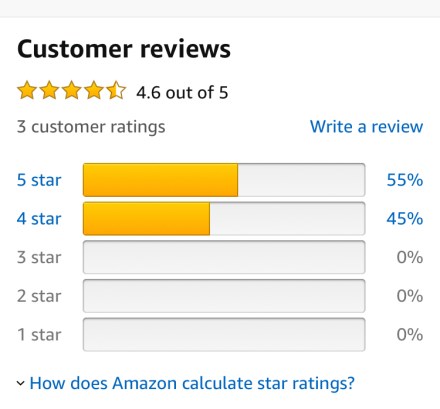
I flicked open my Amazon page this week, to glance at the reviews of Sowing Promises. I planned to launch this book in the spring, but then lockdown happened, and hardly anyone has bought it. And yet, to my surprise, there were a couple of reviews, and they warmed my heart. I don’t know who wrote them (it wasn’t my mum!) and they cheered my day and made me smile. Which for me, is the most important thing about reviews.

Thanks for reading. If you have any tips for encouraging people to write reviews, do add them to the comments below.

Have a good week. Stay safe.

Love, Anne x

Anne E. Thompson

Thank you for reading
anneethompson.com
Why not sign up to follow my blog?

Look on your device for this icon (it’s probably right at the bottom of the screen if you scroll down). Follow the link to follow my blog!

*****

Amazon reviews

A lovely surprise! Some encouraging feedback from readers on Amazon.

Next week, I will be reviewing a book written by a slave in 1745. There were some surprising facts!

*****

Would You Buy Clothes Made By Slaves?


Who Made The Clothes You’re Wearing?

Do Boots, M&S, Primark, John Lewis or Morrisons Use Slave Labour?

You need to buy some new pyjamas, but you’re short of cash—is it okay to buy some from the cheapest shop in the high street?

It’s daft to pay more than you have to for clothes, there’s no reason not to buy jeans from the cheapest shop available—do you agree?

It’s wrong to waste money, you have a duty to spend your cash wisely—do you agree?

All people are equal, no matter what their skin colour—do you agree?

The lives of all people matter, not just people in America or Europe, but all lives in the world: no one should be forced to work in terrible conditions, slavery is wrong—do you agree?

Please answer the quick quiz above.

If you answered “yes” to all of the questions, you might have a problem. Most of us would agree that child labour is wrong, that people who are forced into debt and then not able to leave an abusive employer is wrong, that people working excessive hours, not allowed to use the washroom, not paid enough to cover their rent, is wrong. And yet, if we don’t actually see those things, they can be ignored. It is all too easy for us to benefit from those situations, and by doing so, to perpetuate their existence.

I doubt you would go to a dirty shack, and see children being forced to work long hours, and feel comfortable buying your clothes there because they are cheap. But if we never look at where the clothes in our shops come from, this is exactly what we are doing.

So, what we can we do to ensure we don’t keep the slave trade profitable? Well, it’s not easy! The shop you enter may have an excellent record as an employer, the people who work in their overseas factory may be treated fairly, but the farm where the cotton is produced might use child labour or debt-bound workers. It’s not simply the shop, the whole supply chain matters, and discovering what happens further up the chain is a challenge.

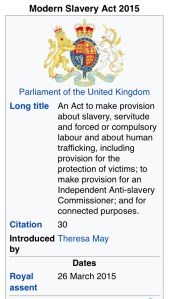
But there are a few things that help. For example, did you know that in 2015 the Modern Slavery Act was passed in the UK Parliament? This means that every business that has a turnover of £36 million has to have a public slavery policy. The policies are there, you will find them for every high street shop, sitting on their website, waiting for you to read them. They do not make for very exciting reading, so I thought I would read a few, and give you the highlights. I am not a lawyer, I may have misinterpreted what some of them say, but this is my understanding of how a few shops deal with slavery. I looked at Boots, M&S, H&M, Primark, John Lewis (which includes Waitrose) and Morrisons. Take a deep breath, and wade through some policies with me:
Boots

This is what got me started on the topic! There I was, paying for an online order, when I happened to notice they had a slavery policy sitting on their home page. I clicked it open, and started to read. They talked about checking their supply chain, having “zero tolerance” for slave labour. I was impressed. Their policy states they do regular audits, which I assume means someone actually goes and checks how their raw ingredients are produced. It seemed clear and encouraging. Well done Boots.

M&S

I wanted to know how one of my favourite shops fared (I am of that age). Could I comfortably still buy gifts of baby clothes, a blouse for my mum, a delicious sandwich? Again, it all looked fine. It was easy enough to find their slavery policy, and they used clear language, it was easy to understand what they’re doing. They check their supply chain, and take responsibility for everyone linked to their stores. This even includes the people who wash cars in their car parks—the shop tried to ensure the car wash bosses weren’t forcing illegal immigrants to work for very low wages, were unable to verify this, and so now will only offer car-washing licences to businesses where they are sure the workers are treated fairly.
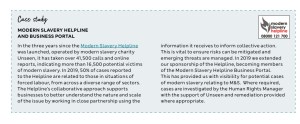
I was interested to read they also have their 2019/20 policy in place (some shops seem to only have a 2019 one available—though it’s been a weird year, perhaps it’s understandable).

As part of due diligence, M&S identify which countries are most at risk in terms of unfair working conditions for their supply chain. They audit these in person: a person actually goes and checks what the conditions are. They admit it is challenging, especially as they go further down the supply chain, to find how the cotton they use in their factories is grown, how it is transported. However, they do seem to be trying. They ask for anonymous feedback, in workers’ own dialect, to check standards are being maintained. They are also part of a charity, which seeks to identify and help workers who are being abused.

I feel comfortable to continue shopping in M&S.

H&M

Finding the slavery policy for H&M was more of a challenge. They have various policies, and it was sometimes unclear which one I was reading, as they tended to cross-reference. There were links to other articles, and the links didn’t seem related. They used long sentences with vague language, so sometimes I read to the end of a page and had no idea what it had said. They also wrote in general terms:

“We do recognise that the risk of modern slavery exists, in various ways, in all countries and sectors and across value chains, and therefore it is relevant for any company to understand and address this risk in its supply chain as well as its own operations. See our Sustainability Report 2019 for more information about the risks and impacts identified throughout our value chain, and how we address these, as well as full disclosure on our Salient Human Rights issues and related strategies and actions (see chapters Vision and strategy and How we report).” (sic)

I thought all would be made clear when I followed the links to their other reports—they even in one place directed me to page 10 of the report, but there was nothing specific that I could find. What do H&M actually do to ensure that slaves or child labour are not used in their supply chain? I am not entirely sure.

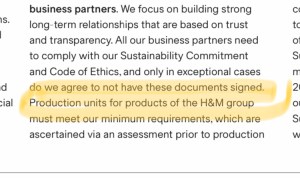
In one report, they say that all their partners need to comply with their ‘Sustainability Commitment and Code of Ethics’ but I was never clear what exactly this entailed. They also say that “only in exceptional cases do we agree to not have these documents signed.” Which I assume means that sometimes their partners might use slaves?

The Modern Slavery Act has been in place since 2015. I think if a company is still talking in non-specifics, is still identifying risk but not actually making firm commitments to not use abused workers, then something is wrong. I do not think I can shop in H&M with a clear conscience.

Primark

Now, I have seen several claims in social media that Primark uses slave labour, that it does not audit its supply chain, and that it sells cheap products because its workers are maltreated. When I did an online search for ‘Primark, slavery’ I found lots of articles. However, they were all about 10 years old. I found no evidence after 2008 of Primark using slave labour. Have they improved their practices? I read their slavery policy.

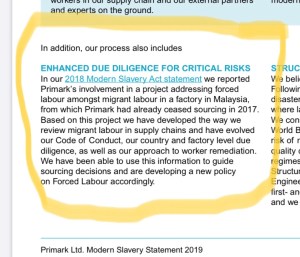
Primark’s slavery policy is easy to find, and runs to many pages—one gets the impression they are keen to display what they have achieved. They have stopped using certain suppliers (no more cotton from Uzbekistan) and have unannounced audits to check for trafficked workers. They say they aim to support and educate the communities in their supply chain. There is some confusion over what constitutes ‘child labour.’ If a country deems a 14-year-old to be an adult, then they might be employed as such. This feels different to me than employing a 10-year-old, it seems like a subjective issue, not one easily resolved.

However, some of their actions are not yet in place. If you read the wording carefully, some principles are planned as future targets. For example, the ability for workers to raise grievances directly with Primark is a pilot scheme planned to be started in the UK in 2020. It is more than 5 years since the slavery act was passed, surely the statement of things that need improvement should have moved on? Surely in 5 years these policies should be being practised.

Primark, like some other shops, do not own the factories they buy from. They state:

“We do not insist that our suppliers use nominated fabric and sundry suppliers, which allows suppliers to remain flexible and cost-effective and enables them to use local sources. Using nominated-only suppliers can increase lead times and prices, especially in developing countries such as Bangladesh where it may mean importing these goods (which in turn increases the environmental impact) and can undermine development of local capacity.”

While this is undoubtedly true, it also means they are avoiding all responsibility for the workers in the supply chain beyond their direct suppliers. It feels like a cop-out to me. They do talk about training their suppliers about the risks of modern slavery. In 2019, members of the South East Asia team attended training—ten of them. Ten people in South East Asia. Just ten. This seems like very few people.

My view is that Primark are making an effort to improve. They have taken criticism seriously, and changed their working methods. However, I feel there are a few dodgy areas, a few statements that are a little bland, a bit too hard to fully understand. My feeling is that whilst they want to lose the ‘slave-worker’ label, they still need to make improvements—which means you and I need to keep asking questions.


John Lewis/Waitrose

The John Lewis slavery policy was easy to find and clearly written. They are aware of potential problems, especially with migrant workers who harvest fruit, and they are making some effort to maintain employment standards by establishing own-brand supply chains (sort of the opposite to Primark).
If they find a problem, they give the supplier two years to improve working conditions, and then if there is no improvement, they stop using this supplier. They allocate ‘risk ratings’ depending on what they find, and increase or decrease the frequency of audits accordingly. This all sounds good.

They state they have “taken the decision to restrict sourcing from countries in which there is a high risk of poor labour practices.” While this will help to eliminate slavery, it also curtails income for some of the poorest countries. I feel that regular audits and education would be a better solution. However, to be fair, they have also signed up to support the Wilberforce Institute for Slavery, and are looking to change some of their practices. (Though again, surely they should be beyond this stage now? Should the good practices not already be in place after 5 years?)

I feel that on the whole, shopping in Waitrose and John Lewis is pretty safe as regards slavery. However, I didn’t feel they were are thorough as M&S, which as the prices are comparable, they should be. (Pricing makes a difference—to monitor the supply chain and ensure good practice throughout is expensive.)

Morrisons

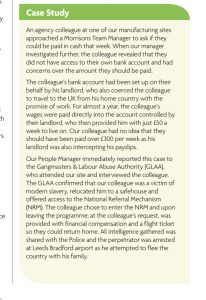
It was easy to find their slavery policy (and it’s illustrated with pretty pictures to make it nicer to read!) They claim to be the only British supermarket to buy directly from farmers and fishermen and process the food through their own manufacturing sites—which should make it easier to keep the supply chain ethical. They have ethical trading policies, and make these available to all their suppliers (would someone employing slave labour read this and change their behaviour?)

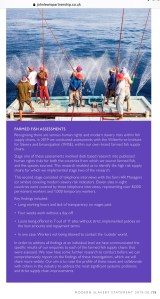
The more I read of the Morrisons policy, the longer the sentences and the vaguer the wording. They are linked to lots of other agencies, and talk a lot about assessing risk, and due diligence, but they seem to rely on third parties to actually go and look at the supply chain. They seem to favour committees, which meet regularly—but I couldn’t find evidence that anyone actually went to look at what was happening. They have posters, in various languages, asking workers to tell them of any problems. They say that: they are aware of the risk of slavery in Asian fishing operations, but Morrisons buys so little from them that they have no influence to change this. (I’m not sure that I agree with that.)

There were examples of bad behaviour being stopped by Morrisons in the UK, though this seemed to be through the actions of individuals rather than something the company instigated. My feeling is that Morrisons is keen on committees, and they produce regular updated reports and new policies, and their intentions are good. However, it reminds me of school staff meetings and church business meetings—lots of talk about aims and objectives but very little is ever achieved. As most of their supplies come from low risk areas, I will still shop in Morrisons. But I don’t feel they are doing things like checking who runs the car wash services in the car park, so I would worry about using those services, and I wouldn’t buy clothes made in Asian countries.

I have only looked at a few shops, and I am feeling pretty goggle-eyed! The policies are often vague and give links to other documents, and are far from user-friendly. If more people checked what shops are doing to ensure their supply chains are fair, then perhaps they would be clearer and more proactive. It is a legal requirement to have a modern slavery policy, but my understanding is that there is no penalty if a company doesn’t check its supply chain. The only penalty will be if we, the shoppers, stop buying items that could have been produced by slaves. Do you care enough to bother?

Thanks for reading. If you have further information, please add it to the comments below. If I discover anything new, or can bear to look at more policies I will let you know.

Have a good day—and shop wisely.

Take care.

Love, Anne x

Next week, I will be writing about reviews: How to get reviews, and what do they signify?

Anne E. Thompson

Thank you for reading
anneethompson.com
Why not sign up to follow my blog?

Look on your device for this icon (it’s probably right at the bottom of the screen if you scroll down). Follow the link to follow my blog!

*****