Comparing Riga and Warsaw


Central Market, Riga

I do like a good market, so when we were in Riga last week, we set off to find Central Market. It is slightly beyond the old town, and you walk under some major roads, and through some fairly dodgy-feeling areas, so I’m not sure that I would walk there on my own. It’s probably as safe as places in other cities, but there were an uncomfortable number of young men standing at corners, staring.

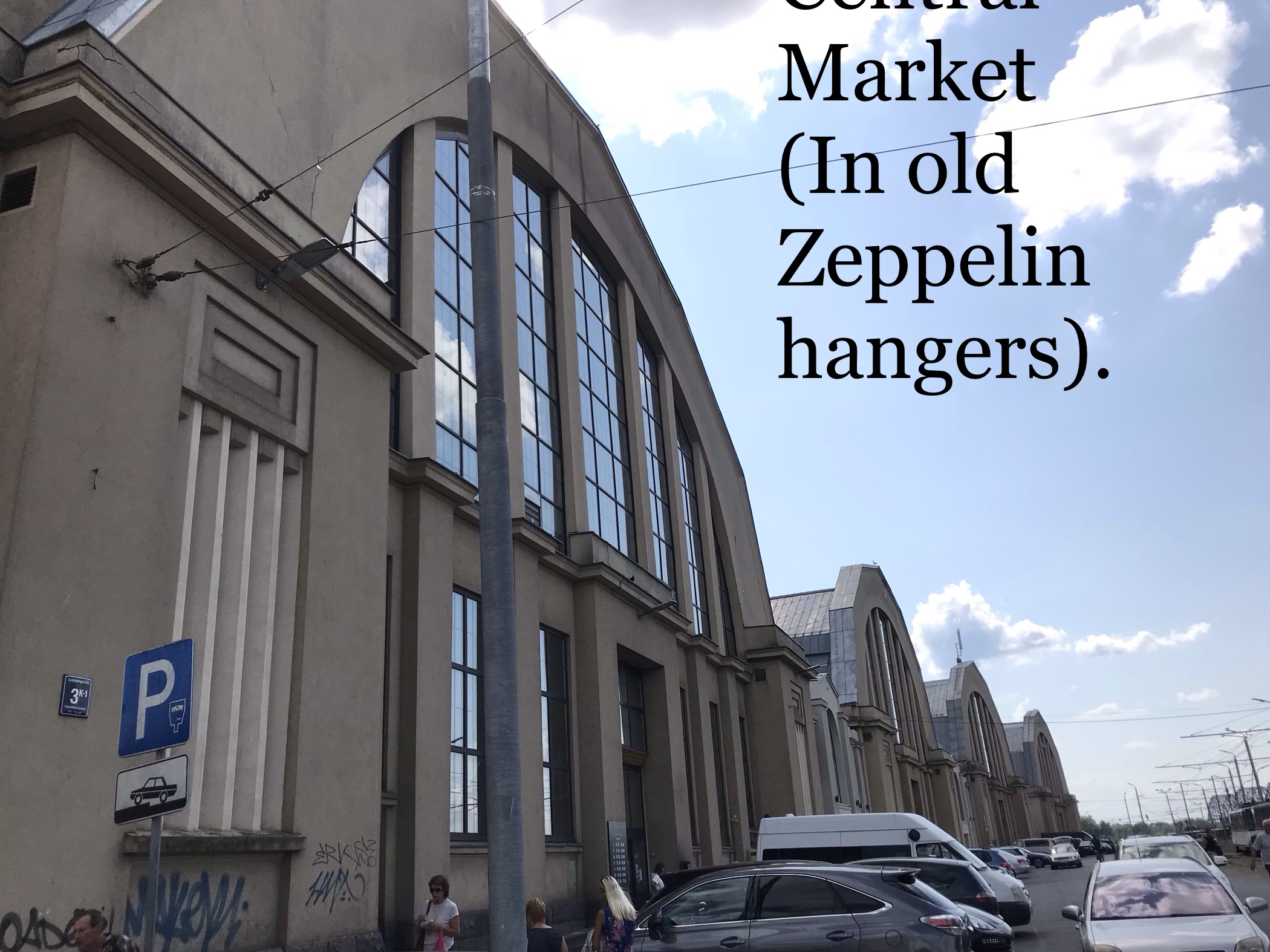
The market is in several huge Zeppelin Hangers (which had previously housed Zeppelins). Before you arrive at the main market there is a big market outside, with stalls selling clothes and hardware and flowers.

The inside market is mainly food stalls. We wandered around, staring at gigantic fish, and arrays of flatbreads, and mountains of olives. There were tables, and people bought things to eat there, sipping strong black coffee and discussing politics.

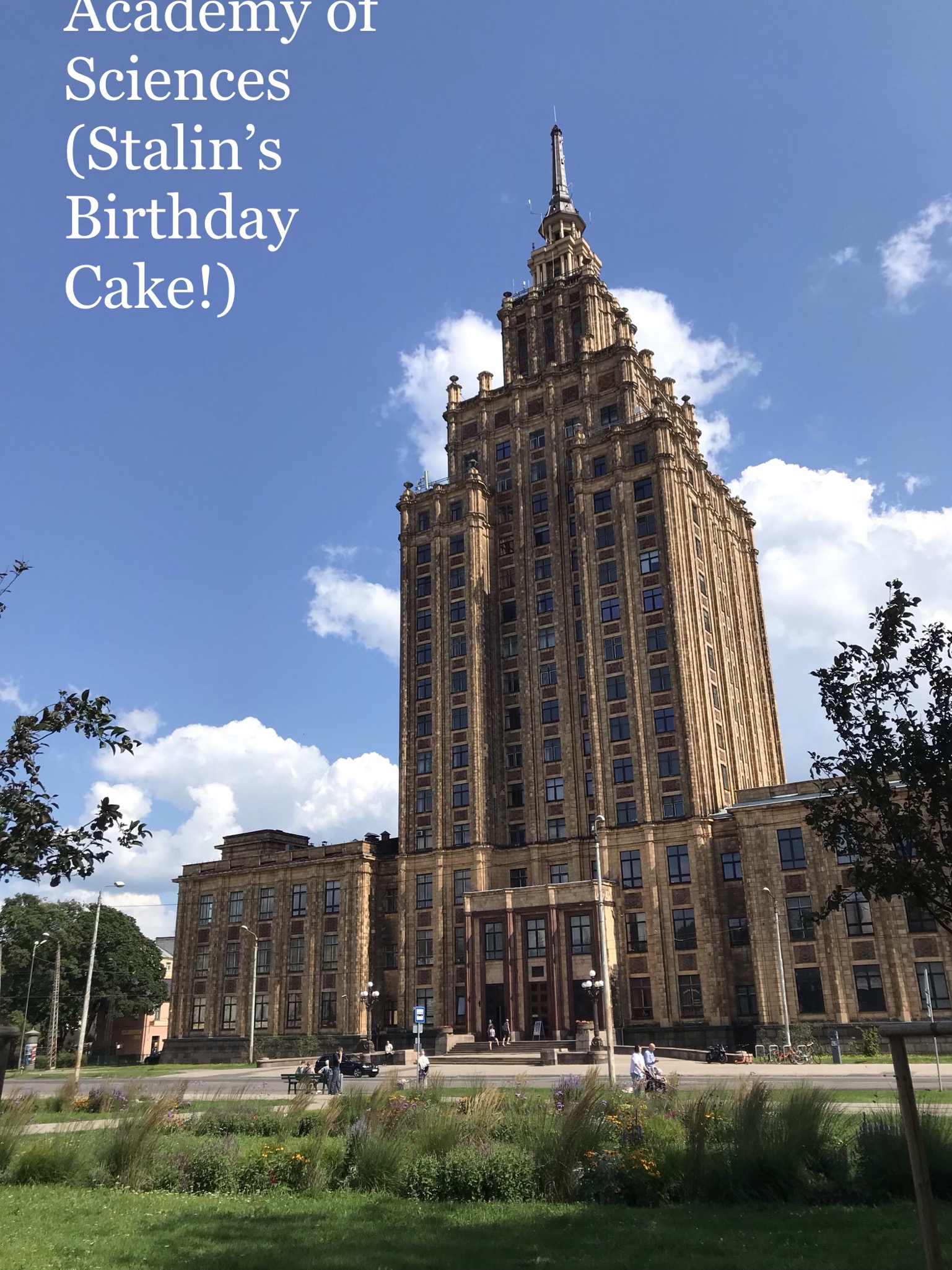
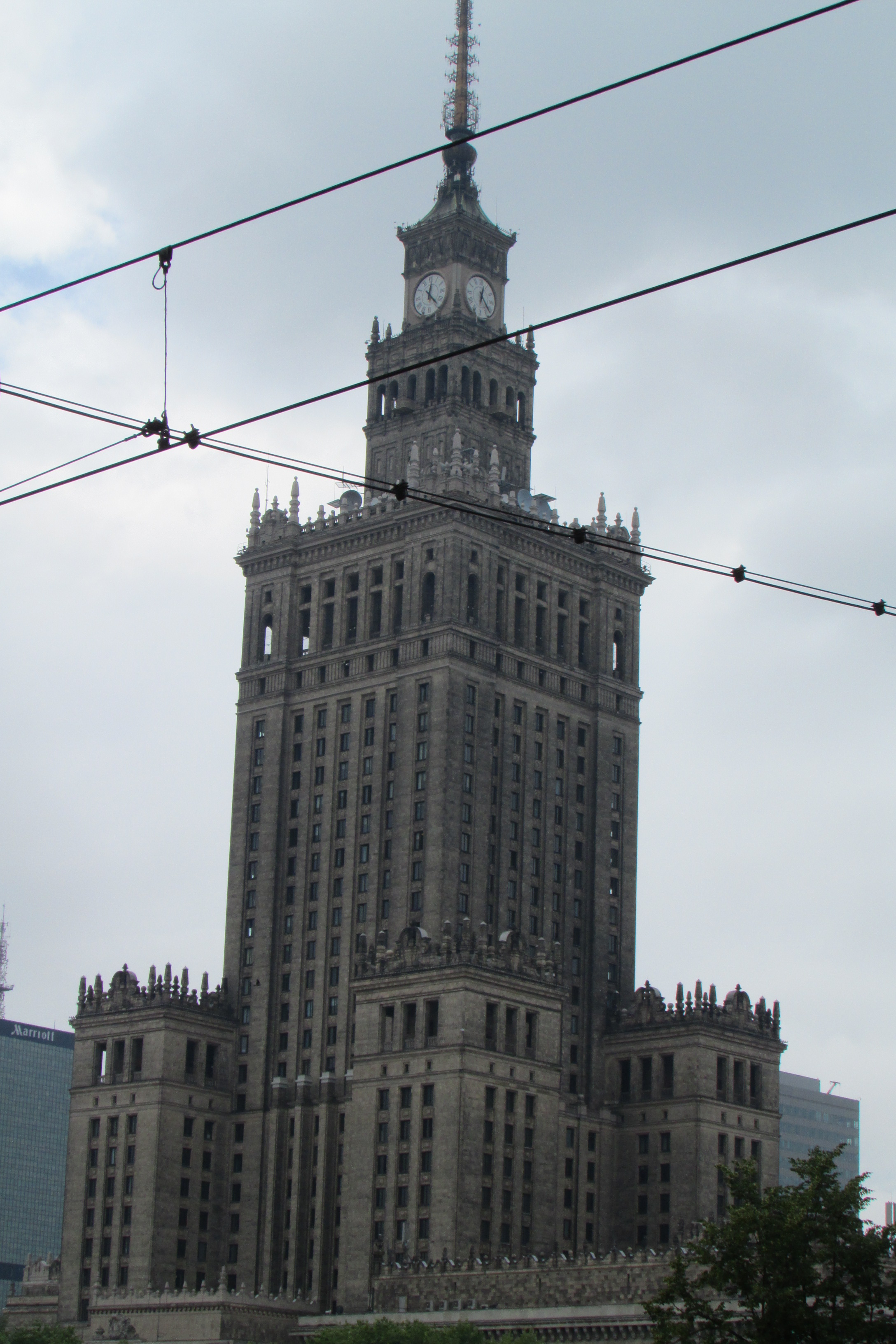
As you leave, you can see the tower of the Academy of Sciences looming above you. This gave me a strange feeling of deja vu, as it’s almost identical to the tower we saw in Warsaw. They even have the same name, as the local people in both cities refer to the towers as “Stalin’s Birthday Cake”. Both were built in the 1950s, both are resented today by local people as being an unwanted reminder of Soviet rule, both are too big and expensive to simply demolish.

We took the lift to the 15th Floor, where there’s an observation deck. I wasn’t hugely reassured when Husband reminded me, as I stepped into the lift, that it was an example of 1950s Soviet engineering; but we didn’t plummet to our deaths. The observation deck sways, but if you don’t mind heights, it’s probably a good place to visit (it costs 5 euros each, so not cheap).

The tower in Riga.

The extremely similar tower that looms above Warsaw.

Actually, there is a lot about Riga that reminds me of Warsaw. Both cities had suffered during the war. Both cities had lost most of their Jews (in 1940, there were an estimated 95,000 Jews living in Riga. In 1945 there were an estimated 1,000 Jews remaining. More about this in a later blog.).

Both cities were heavily bombed during the war, and have rebuilt the old part of their cities, so they are now delightful places to visit, with fine examples of ancient (though rebuilt) architecture. Both cities are still coming to terms with their Soviet past. However, both cities are also welcoming, and people mostly speak excellent English. I enjoyed my visits immensely, they are both worth seeing if you ever have the chance. And of course, both cities have a very good local beer!

Thanks for reading. Enjoy your day.

Anne x

A laugh-out-loud book about travelling the world with a family. From India to South America, and across most of Europe, this book has been described as “The Durrells meet Bill Bryson”!


Have you read a copy of my travel book?

Amazon Link here

The Tangled History of Riga


The Tangled History of Riga

Riga has loads of churches, loads of scooters — and loads of museums. When I was there last week, I decided to break my usual habit, and visit a couple. Latvia has a tangled past, which lurks behind the decorated facades, and colours how people today view their city. I wanted to learn more, so visited the Barricades Museum, which aims to tell the story of the barricades set up in 1991.

The museum was the first floor of a small building, in the middle of the old town, and was spread across three rooms. There was no cost, but a man sat behind a desk, staring pointedly at the donations pot when people entered.

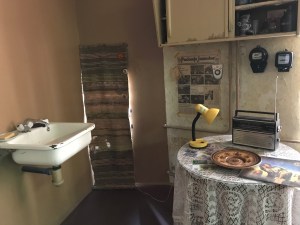
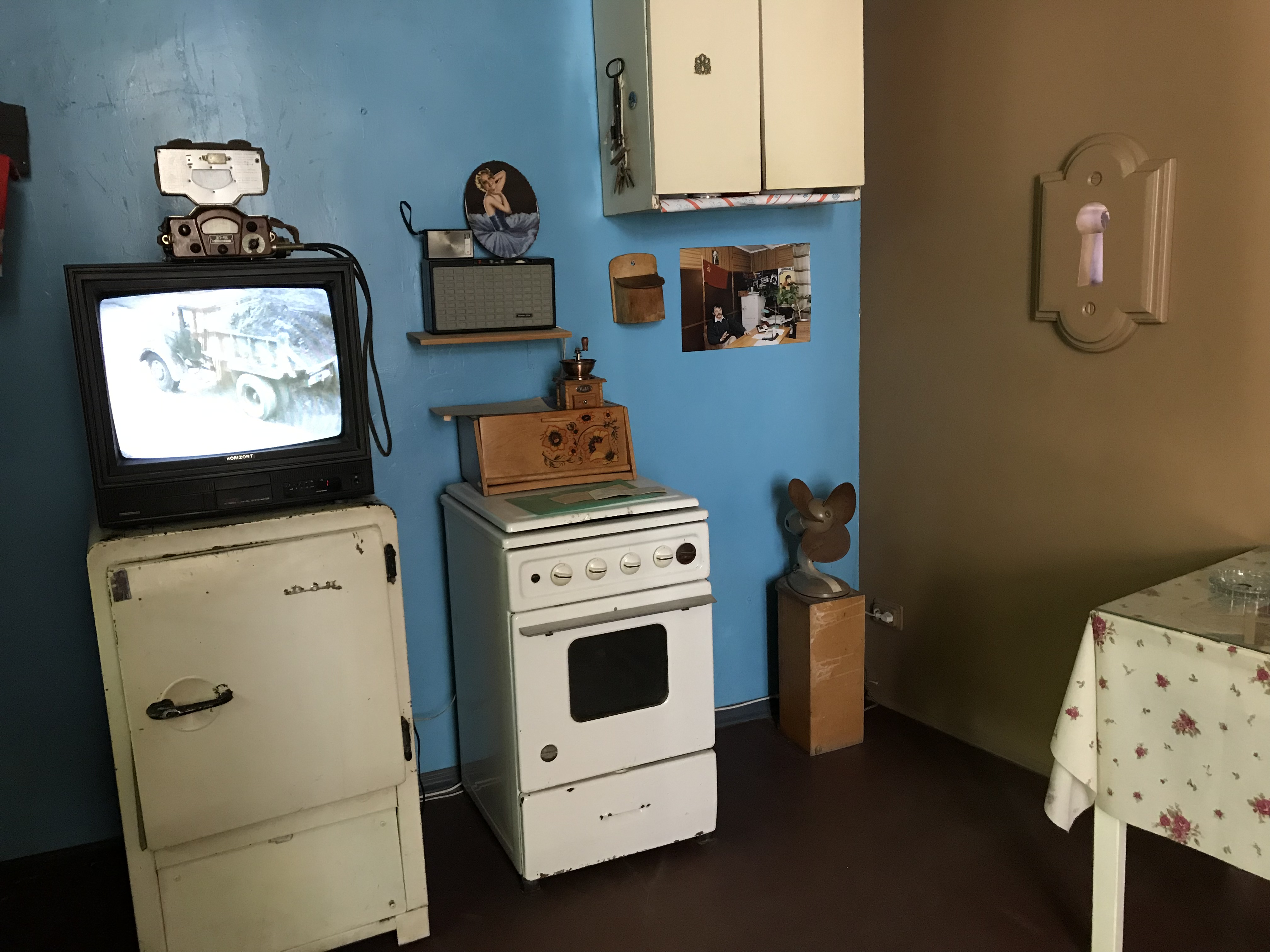
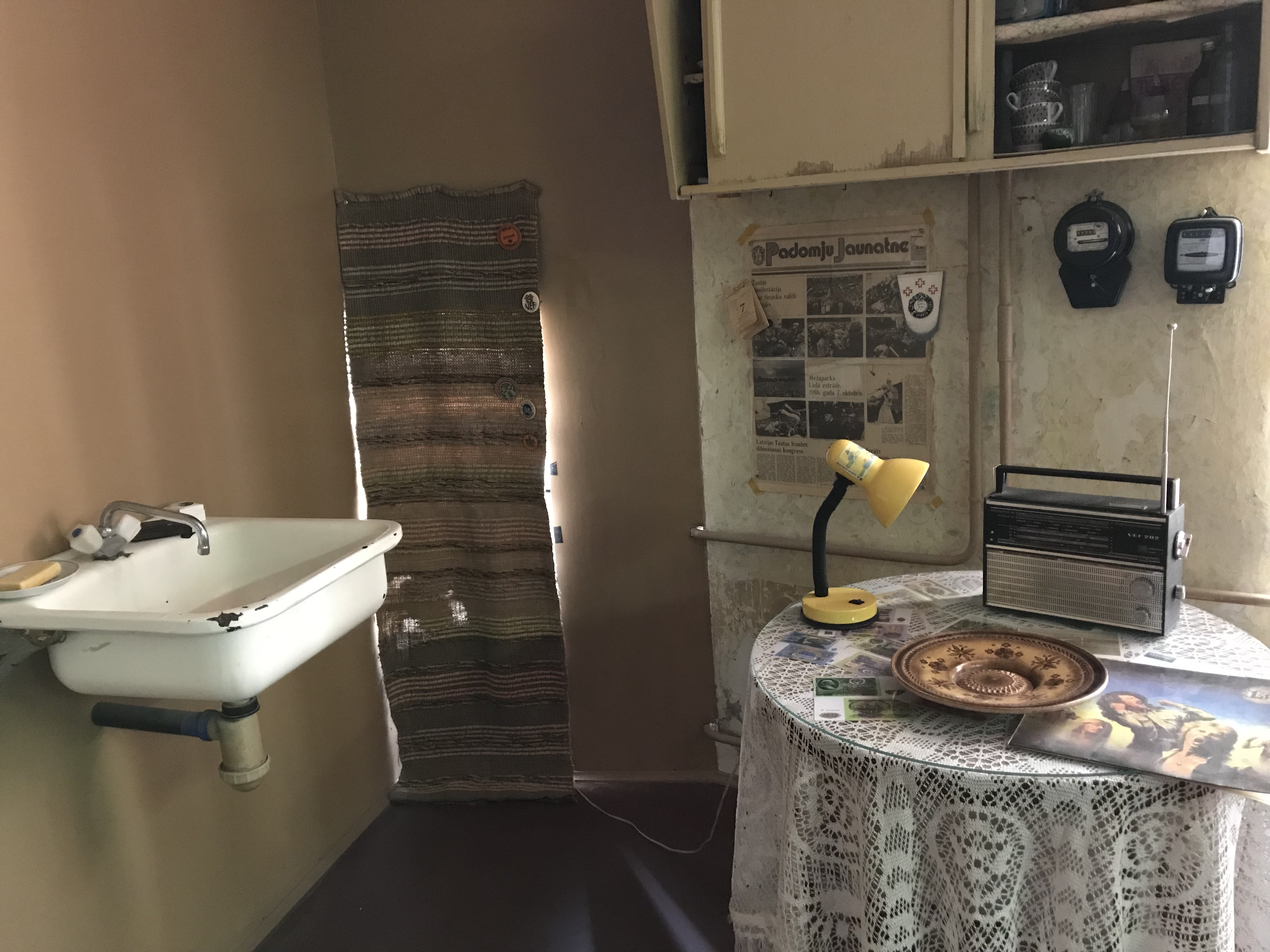
The first room attempts to give a glimpse of life under Soviet rule. Apparently, the Soviet Union attempted to standardise everything, which meant that everyone owned the same furniture and kitchen appliances. A lot of people moved to Riga (from what was previously Russia) and sometimes several families shared the same space. The museum had a reconstructed kitchen, showing what it was like. Arranged around the room were keyholes, and if you peeped into them you could see scenes from the West. They were awkwardly placed, to show how although people were interested by what was happening in the rest of the world, it was difficult to see the whole picture, they just caught wisps of news.

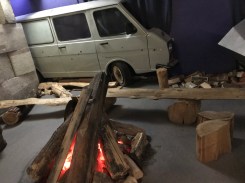
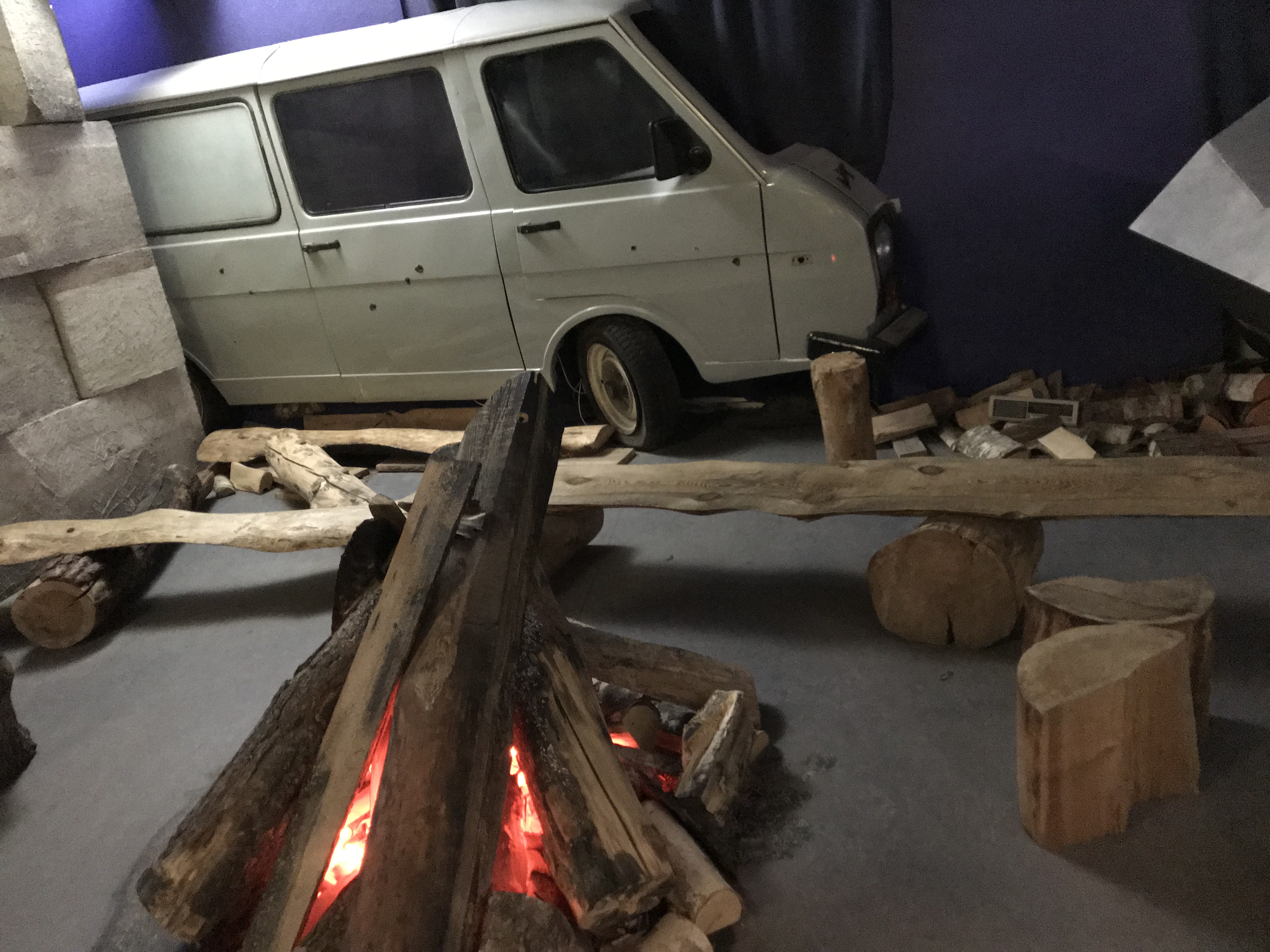
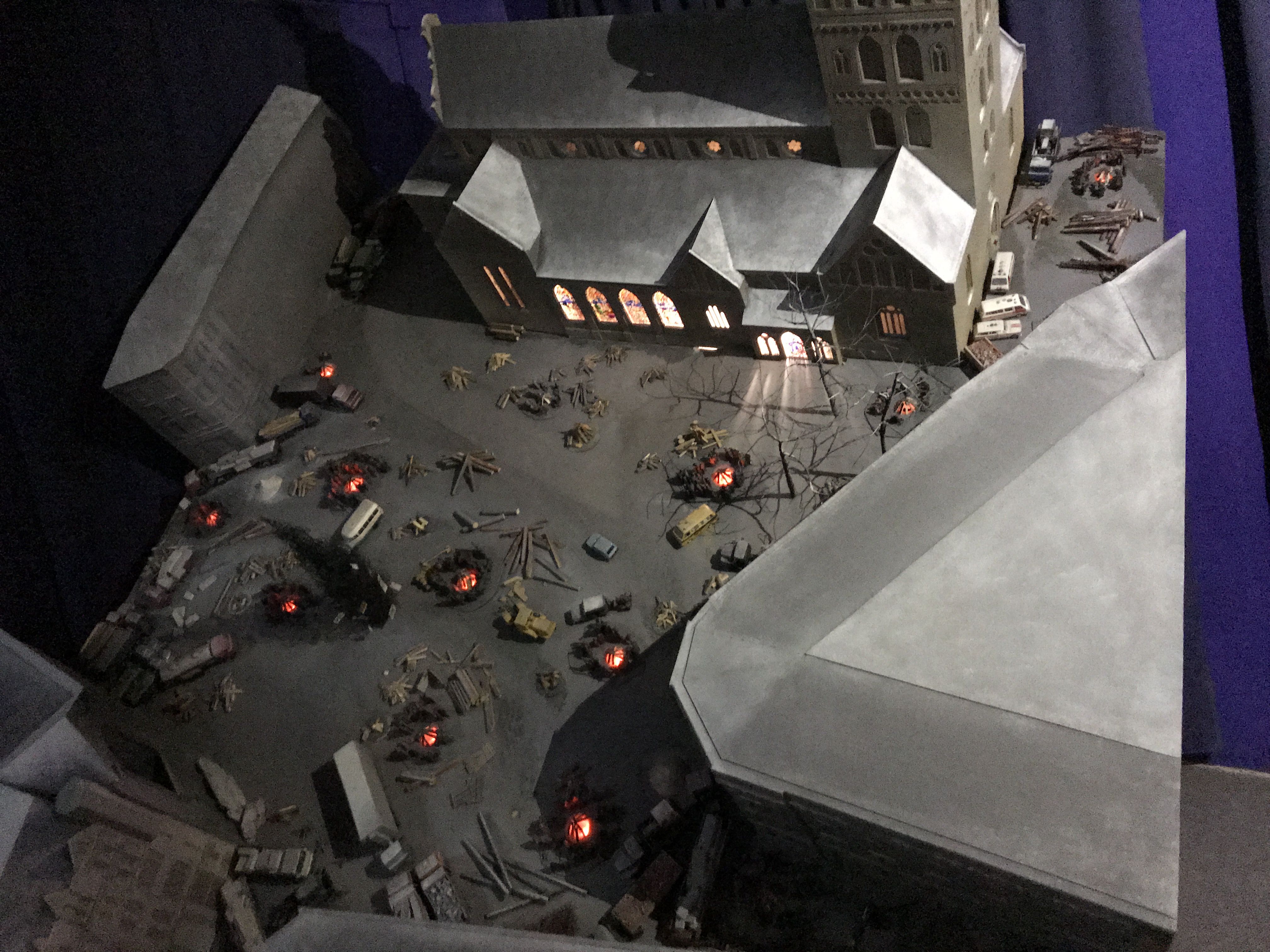
The other rooms consist mainly of photographs and newsreels and paintings of the 1991 barricades. There is also a van (no idea how they got that up the stairs) and lumps of concrete and hunks of tree trunks around tissue-paper bonfires, enabling the visitor to perch on a bench and imagine they are part of the protest. The rooms are dimly lit—some of them so dark that you can barely see the exhibits, and for a moment you might become confused, and think you are shopping with teenagers in Hollister. I am guessing this is meant to add to the atmosphere, but as in Hollister, I simply found it annoying (I am of the grumpy generation). Of course, it’s possible that they had just run out of lightbulbs.

So what, you might be asking, were the barricades of 1991? I had the same question, and it was not properly answered by the museum (perhaps the full explanation was in one of the dark rooms). I knew that it was a protest against Russian occupation, and that after a call to action on Latvian radio, whole families took to the streets of Riga, and set up barricades around key sites (such as Latvian Radio). However, was it to stop the Soviets invading? –I thought Riga was already under Soviet rule?

The history is as follows: After WW II, Latvia was part of the Soviet Union (previously, it had also belonged to Russia, before the revolution). However, in 1989, Latvia gained its independence, as did the other Baltic states (Lithuania and Estonia). Then, in 1991, Russia, overnight, sent tanks into Estonia, alerting Latvia that their borders were vulnerable. Thus they sent out warnings on Latvia Radio, and told everyone to go into the streets of Riga. The idea was that the Russian army was unlikely to open fire on civilians (because the rest of the world was watching) and so they staged a peaceful protest. Everyone flooded to Riga. Farmers arrived with agricultural trucks, builders placed huge boulders of concrete on the roads, so that vehicles couldn’t get past; whole families—from granny down to babies—camped outside strategic sites (like Latvian Radio) protecting them by their presence. There was some shooting, and a few people were killed (I think 14 people) but it was successful, the Russians left, Latvia remained independent.

However, if you talk to Latvian citizens today, the threat remains very real. A lot of people living in Latvia are Russian, and the fear is that Russia will use this as an excuse to invade again, under the pretext of ‘protecting Russian citizens’. This happened in Cyprus, when Turkey invaded. It could happen at any time, and very quickly—it does not take many hours to get from Russia to Latvia. They hope that by belonging to NATO and being part of Europe, the rest of the world will protect them.

If you visit other key places in Riga, you begin to understand the fear. Another museum is in the old KGB headquarters, so I went to look.

The building is, on the outside, beautiful. Part of the Art Nouveau* section of the city, it has carved figurines, decorations, patterns, and was clearly built by someone rich who wanted a wealthy-looking house. But then I went inside.

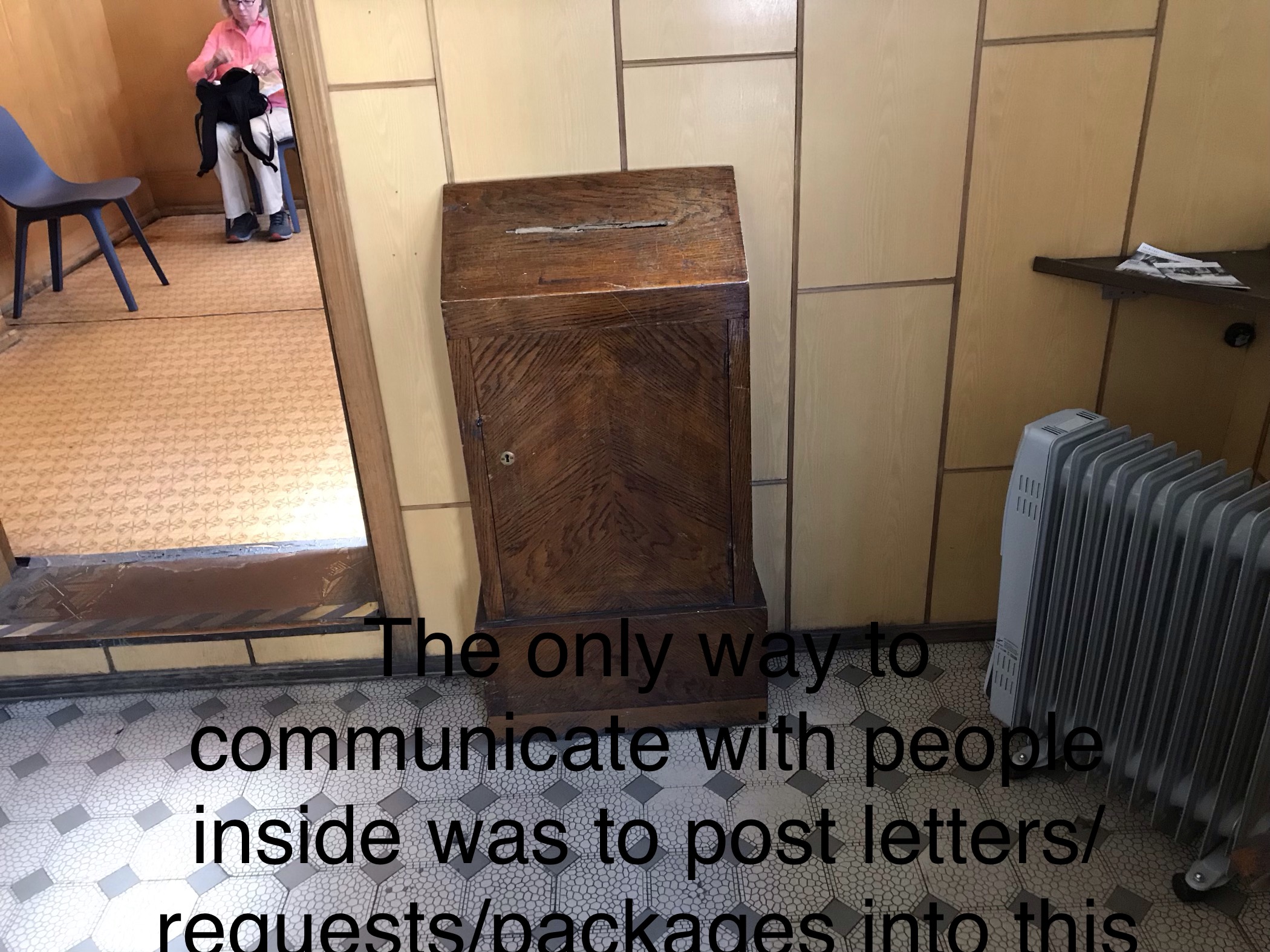
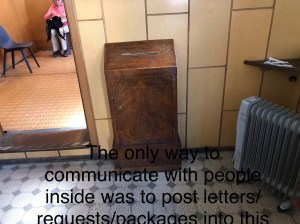
The entrance is a small, heavy door on the corner of the building. Inside is a wooden box. This was the only means of (attempted) communication with people who were taken there. Relatives could place requests for information, or letters or packages inside this box, and hope that they were delivered.
The inside of the building was lined with dark veneer, and was dimly lit. There were bars at the windows (placed there after several prisoners had thrown themselves out, preferring suicide to remaining inside). Boards of photographs showed the people who had ‘disappeared’ after entering the building. There was also a film of an elderly lady, explaining her own experiences as a prisoner. What you heard was a description of mental and emotional abuse, how psychologically cruel the system was.

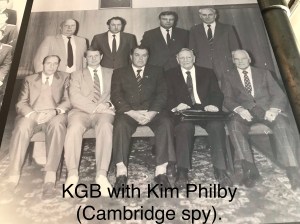
There were also photos of key KGB members, and one featured the famous British spy, Kim Philby.

The prisoners were people who refused to submit to the regime. Religion was outlawed, so although you were allowed to practise your religion, you would be demoted at work, paid less, open to abuse. Many religious leaders were tried in the KGB house before being deported to prisons in the Soviet Union. There were also teachers, journalists, civil servants—anyone who threatened the regime. Western art and culture were deemed to be ideologically harmful, and the people found exploring them were ‘re-educated’. It was not possible to travel outside of the Soviet Union. People simply disappeared, and the only hope of news was through the KGB, as organisations such as the Red Cross were banned. As time went on, even attending a church meant you would lose your job and your children would be excluded from education. Any interest in Latvian history was frowned upon. All written publications were censored.

The museum offered a tour of the cells, and the places where people had been tortured and executed. I declined the offer.

I emerged into sunshine. The sky was blue, the buildings smiled down, all seemed peaceful. I am unable to make sense of the horrors that humans can inflict on each other. Perhaps, now the world is ‘smaller’ and countries are more entwined, we can all help to ensure that small countries are protected from the radicalisation of powerful nations. But I fear it could happen again…

I want to tell you about the Jews in Latvia, but that’s another heavy topic, so tomorrow I will tell you about my visit to the Central Market—that should be a little more cheery!

I hope you stay safe today. Thank you for reading.

Take care.

Love, Anne x

*Art Nouveau is a style of architecture popular in France in the 1890s. It tends to have stylised leaves, vines, flowers etc decorating the building. There is a section of Riga where many buildings follow this style. It should not be confused with art deco, which was popular in 1930s, and tends to be more geometric in style.
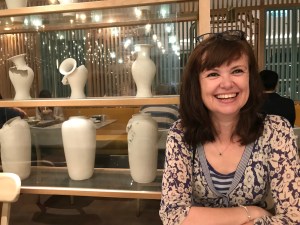
Anne E Thompson has written several novels and writes a regular blog each week. You can follow her blog at:
anneethompson.com

 

Exploring Riga Old Town


Exploring Riga Old Town

Husband was working in Riga (Latvia) so I had tagged along for the ride, and we spent the second day exploring the Old Town (clue in the name!) It is full of pretty squares and interesting buildings, and although much of it was rebuilt after the war, they have preserved the historical feel of the city. It’s a nice place to be. We walked through the park which runs alongside the river, and into the pedestrianised zone. We passed Powder Tower (see yesterday’s blog) and saw The Swedish Gate, which is the only remaining gate from the old city wall, and was built below someone’s house — not sure if they were pleased, somewhat inconvenient to have people traipsing below your house I would have thought.

We arrived at St. Jacob’s Cathedral, which has a monument outside to remember the people who died in the 1991 barricades (more about this in a later blog). St. Jacob’s Cathedral is a red brick building, built outside of the original city wall. It has a cupola on the south side, which once held a bell—not to summon people to prayer, but to let them know that an execution was taking place in the city. The bell is no longer there. I am assuming the executions are also a thing of the past.
 

Opposite the cathedral is the Parliament building (some discussion with Husband about Riga’s flag—I can tell you that it’s red with a white stripe down the middle, and he was wrong. Just saying.)

During World War II, the building was the headquarters for the SS officer responsible for killing the Latvian Jews, gays and Roma. Later it was used by the Supreme Soviet of Latvia. This is an example, repeated around the city, of buildings which were built to look pretty, and later used for a variety of horrible things, and have now returned to simply being buildings. Latvia has a tangled history, and there are traces left wherever you go. I wonder if it’s better to not read any guidebooks or visit any museums, and to simply enjoy the beauty of the place in the sunshine and leave the ghosts in the past.

Around the corner from St. Jacob’s Cathedral is a hidden cafe in a courtyard, which claims to be the most romantic cafe in the world (good marketing strategy!) It offers free hugs at the counter (so I’m guessing it’s run by the church). There was also a Christian bookshop, and I bought my mother a scarf. Riga has lots of linen goods and knitted goods, probably because in the winter it’s usually snowy. This is the city to visit if you want to buy a warm hat that your family will mock.

There are three houses, known as The Three Brothers because they each have a distinct architectural style. Two men busk outside, playing music that the locals recognise and sing along to (I saw them there on several occasions). This means everyone has very confusing photographs, as they are of “The Three Brothers” but they show only two men.

Next on our tour was Dome Square. (To be honest, it wasn’t a very good ‘tour’ as it was simply Husband following a route on a map, regularly waving towards interesting buildings and informing me: “There’s a thing!”) Dome Cathedral has a cockerel on the spire, and the building is lower than the square, as they have raised the land since it was built, to stop the area flooding. (Not sure if this means the cathedral now floods instead—hopefully not.) There was a young girl playing a violin outside. She was very young, and played extremely well, and was receiving a lot of money, as almost everyone passing threw something into her violin case. There are a lot of buskers in Riga, many of them young, most of them excellent musicians. It’s rather lovely to wander around, looking at interesting buildings while accompanied by music.

A laugh-out-loud book about travelling the world with a family. From India to South America, and across most of Europe, this book has been described as “The Durrells meet Bill Bryson”!

Riga has several squares, and many churches/cathedrals. The next square on our tour had a very interesting building: the House of Blackheads—so named because it was a guild for foreign merchants, and their patron was St. Maurice (who was black). I began to realise that many of the buildings, built in the 1500s and 1600s, show how affluent Riga had once been. It was an important trading port, full of rich merchants, and the architecture reflects this. Further from the centre, the buildings were once beautiful, but are now faded, and sometimes derelict, whereas the ones in the centre of the old town have been rebuilt since the war. It must have been a magnificent place a few hundred years ago, and it is still pretty today. You should visit before it becomes too busy. It’s up to you whether you take a guide book and learn about the past, or simply enjoy what you see today.

Tomorrow I will show you some more pretty buildings which have rather nasty history (like the old KGB headquarters)—why not sign up to follow my blog so you don’t miss it?

Hope you have an interesting day.

Take care.

Love, Anne x

Do look at my book: The Sarcastic Mother’s Holiday Diary

Travel with me to Zambia, Malta, Brazil, and explore local traditions while seeing the sights. An amusing collection of diaries, in the style of
Bill Bryson meets the Durrells.

Available from an Amazon near you.

UK Link

Riga in the Summer


Riga in the Summer

Riga is the capital city of the little country of Latvia, and I visited it last week, when Husband was working there. I have never visited Latvia before (I am loath to say that I didn’t even know that Latvia was across the Baltic Sea from Sweden, between Estonia and Lithuania—because that makes me look ignorant!)

Latvia has had a chequered history, belonging at different times to Sweden, Germany and Russia, and more recently being part of the Soviet Union. I had no idea what to expect from the city, but “ex-Soviet Union” musters images in my mind of austere buildings and ugly sculptures; so the pretty architecture and sunny parks were a pleasant surprise (I’ll mention the sculptures later…)

We arrived on Friday, and caught a taxi from the airport. A word of warning here: Taxis in Riga have their prices printed on the outside of the rear door, and there is quite a lot of variation in the price/km charged. There doesn’t seem to be any regulated pricing or official taxi rank at the airport. We chose a taxi with a similar price/km to others we could see, and set off. Husband (who notices these things) realised that the price that was showing on the metre, did not tally with the price displayed outside; you need to keep an eye on what you are being charged. (However, whilst this might be useful information, I have no idea what you do with the knowledge. Next time I am in Riga, if the taxi driver has an over-priced metre, I do not feel inclined to confront him and be dumped in an isolated spot with no transport. But at least you’ll know if you’re being ripped-off and can withhold the tip!) Note, we were later informed by the hotel that we had paid an inflated price. The red taxis (Red Cab) and the lime green taxis (Baltic Taxis) are much cheaper, and cost about .70/km (not 1.99/km, which is what we paid). They park slightly further away from the main exit door at the airport.

We were staying in the AC Hotel, which is an easy walk from the old town. It was okay—I’ve stayed in prettier hotels, and the rooms were as tiny as New York hotel rooms (ie they fitted a bed, but not much else). However, at about £80 a night, it compares to staying somewhere like a Premier Inn on price, and it was much nicer than that!

We set off for a walk to the old part of the city (about 15 minute walk). There was a park, complete with a river and bridges, and outside cafes. There were also lots of people on scooters. These can be rented (information according to Husband, so might be rubbish) and are left and found in random places around the city. They whoosh past you at unexpected times, and must, I imagine, be uncomfortable on the cobbled streets, but they were popular. Very popular.

The park also gave us our first taste of Latvian sculptures, which were as bad as I’d feared. They mostly have the whole cubist-looking Soviet Union chunky-art look. Apparently (read the guide book afterwards) many were put up during the Soviet rule, and many of the ones honouring Soviet people have since been removed. But the ones of famous Latvians remain, staring grimly at tourists, reminding us that the city has not always been a happy place. (Apologies if you actually like the style of Soviet sculptures, perhaps it’s an acquired taste. Everyone looks like Stalin to my eyes.) We did see some more pleasing sculptures, but the dominant ones were very ugly.

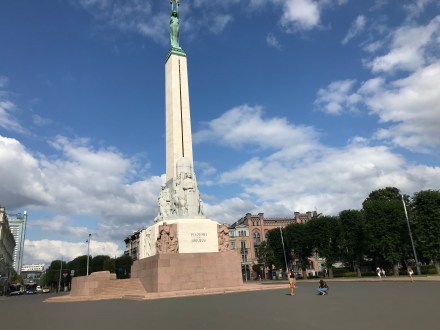
We found the Freedom Monument (called Milda—not sure if that’s her real name) and a woman was busking. During Soviet rule, there was a large statue of Lenin facing the monument, and people were not allowed to place flowers on the monument. Leaving flowers on monuments seems to be a thing in Latvia.

The main street through the old town is pedestrianised, which was good, as although there are crossings at the other roads, you are supposed to wait for the lights to go green, and they took hours. Latvians are very obedient about this. All the streets seem to be cobbled, which is probably helpful in the winter, when there’s lots of snow, but means you need to leave your heels at home.

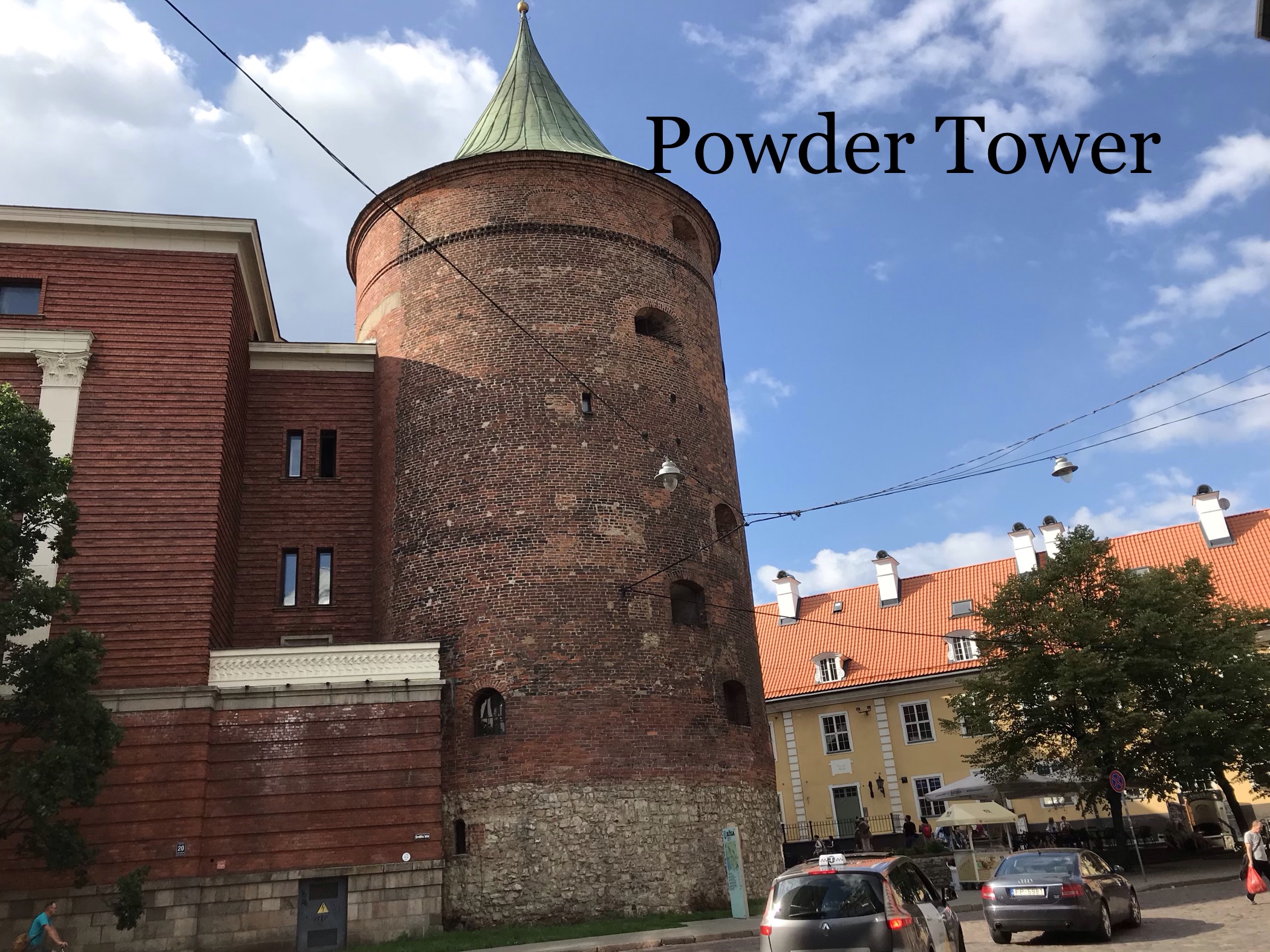
We had coffee and beer next to the Powder Tower, which used to hold gunpowder and is now the war museum. Riga has a lot of museums. The outside of this one is interesting, because you can see cannon balls embedded in the walls, from an ancient battle.

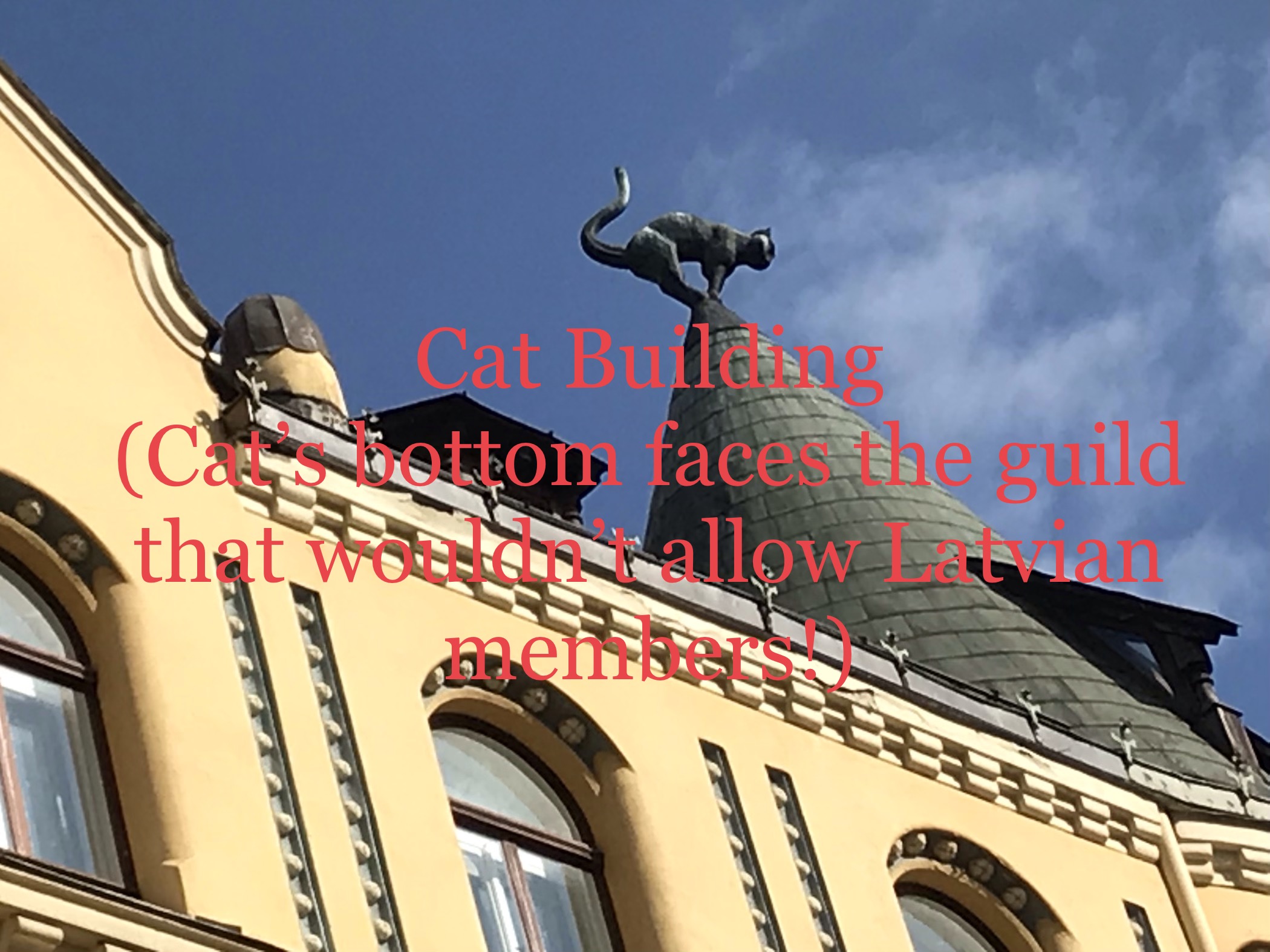
Found ‘Cat House’. This was owned by a merchant who was told he couldn’t join one of the guilds, as it was only open to Germans. He placed two cat statues on his roof, with their tails raised, and their bottoms pointing towards the guild! Later, when the guild finally accepted him, he changed the cat’s position, but they are still on the roof. Many of the souvenirs in Riga have cats on them.

We walked back to the hotel, past lots of churches (Riga has a lot of churches) with scooters whizzing past us, watching our footing on the cobbled streets and waiting many hours at the pedestrian lights.

Riga is very pretty, especially when the sun is shining. I will show you more tomorrow–why not sign up to follow my blog so you don’t miss it?

Thanks for reading.

Take care.

Love, Anne x

anneethompson.com

Thanks for reading.
You can follow my blog at:
anneethompson.com

A laugh-out-loud book about travelling the world with a family. From India to South America, and across most of Europe, this book has been described as “The Durrells meet Bill Bryson”!

If you enjoyed this, why not read The Sarcastic Mother’s Holiday Diary?

Available from an Amazon near you…free if you have a Kindle. A travel diary to make you smile. Buy your copy today.

UK Amazon link

How to Never Sell Any Books


How to Never Sell Any books

If you decide to be an author, there are a few rather spikey lessons which must be learnt along the way. If you want to write, and never be read, then here are a few tips which will ensure that no one ever buys your books. Sit back, and enjoy:

  1. When a bookshop agrees to sell your books, sit back, and do nothing else. This will ensure your book sits, undiscovered, on a dusty shelf, never to be opened again.
  2. If you are cajoled into turning up for a book-signing event, then you can bypass the danger with a few clever ploys:
    1. Do not wear anything even remotely attractive. Try to look as dowdy and uninteresting as possible. If someone should buy your book, it certainly won’t be because they are interested in you, as the author.
    2. Be sure to take your phone, and sit playing games the entire time. Eating something messy, like a burger, is another good ploy.
    3. Do not, whatever you do, make eye-contact, or speak to people passing by. It’s best if you can position a table between you and the potential customers, and sit behind it with your arms folded whenever not playing game/eating (see above).
    4. Don’t plan any kind of ‘speech’ about your book. If someone should interrupt your game/food to ask what the book is about, look confused and mumble something incoherent.
    5. Do not make your table look attractive. Beware of taking posters, or visual aids related to your book. It’s much better to simply dump a pile of books on the table, face-down if possible.
    6. Never offer a book to a potential customer so they can hold it, feel the quality, read a snippet. If possible, keep the books well out of reach.
    7. Do not smile, not even a slight grin. Not selling books is a serious business, and it’s worth having a good scowl at all times.
    8. Never ask potential customers what they like reading, or engage them in conversation. If they insist on trying to chat, and especially if they want to tell you about the book they have written/intend to write (this happens A LOT) then cover your ears and hum loudly until they have left.
    9. Swearing loudly, picking your nose, cutting your toe-nails, will all help to deter potential customers. If you could have a spouse handy for a loud argument, that would be brilliant, otherwise use your phone and pretend.
  3. Avoid all places that might sell your books, and never mention them when you are with other people. Best to pretend that they don’t exist, in case you manage to make them sound interesting by mistake.
  4. When planning the cover of a new book, try to use dull colours, and never use the services of a professional. Do not make them even slightly similar to other books of the same genre.
  5. When printing the book, do not worry about the typesetting. It’s best if you ignore the way professionally published books are typeset, and try to add interesting features, like leaving a line between every paragraph, not indenting the first line of a paragraph, and use a font which will be sure to annoy any potential customers.
  6. Never, ever, allow anyone to edit your work prior to publication. This will ensure that, in worst case scenario someone actually manages to read some of your work when intending to buy it, the number of typos and misspelt words and general bad grammar will ensure that they quickly close the book and move on.
  7. Always make your books more expensive than any other book on the market.


I’m sure you can add to the above with some more excellent ways to ensure that you never sell a book. Good luck.

Thanks for reading. Take care,
Love, Anne x

Thanks for reading.
You can follow my blog at:
anneethompson.com

Secret Heroes


Secret Heroes

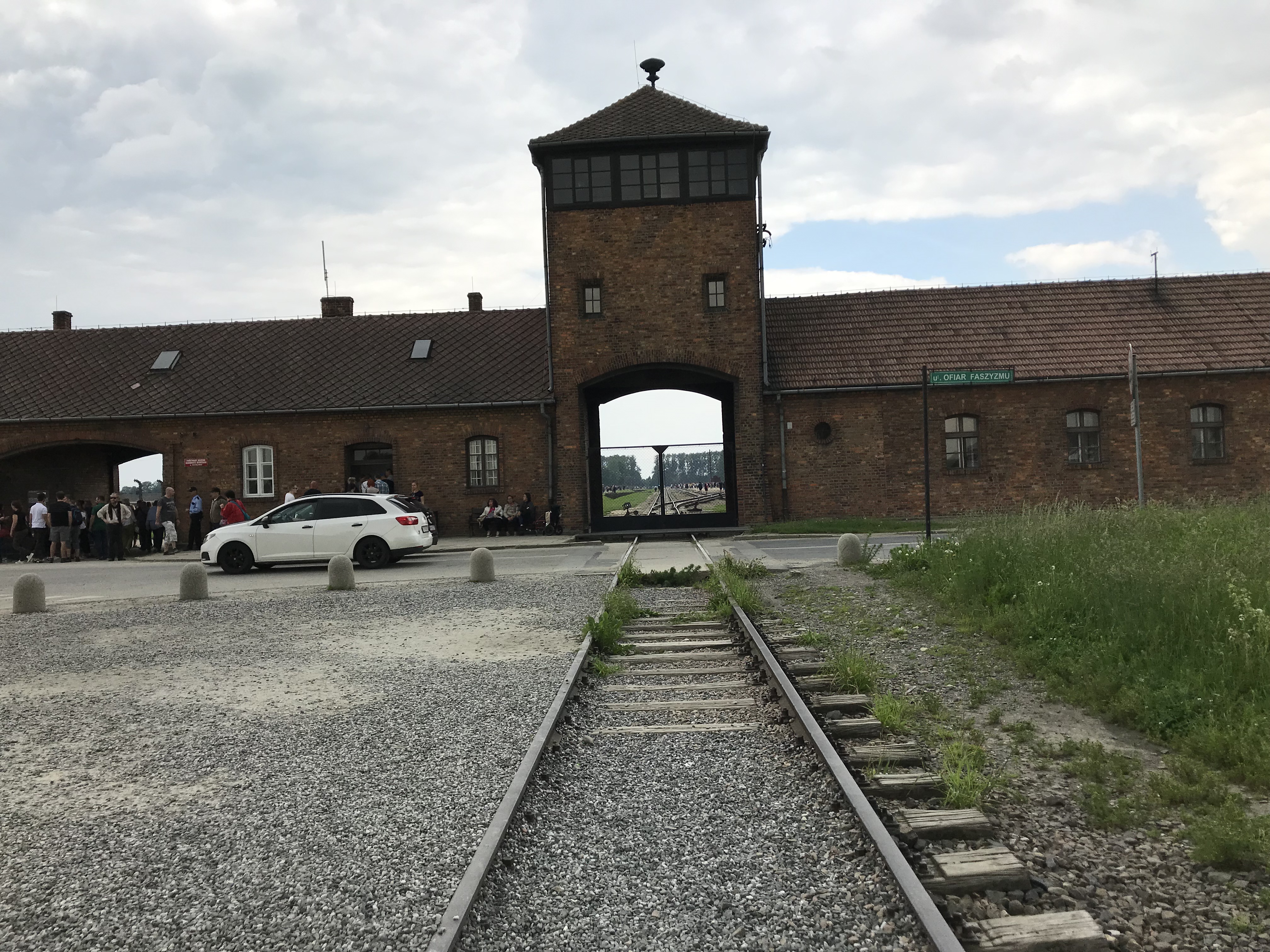
When we visited the death camps at Auschwitz, we were told something which has stuck with me, something which made me realise that some people are incredibly brave, even unto death, and are never recognised for it. Not in this life, anyway.

We were told that as the Nazis refined their killing systems, they realised that the part that took time, that could not be rushed, was the disposal of the bodies. They had learned (the hard way) that having thousands of decomposing bodies in the ground was something of a health risk. The only way to successfully complete their genocide, was to refine the disposal of the bodies, and thus they built the crematoriums. The crematoriums were worked by prisoners, who were themselves killed after a certain period, so that no one knew too much and the scale of what was happening could be kept hidden. (I have no idea how hidden, or how you keep such a thing a secret, but that was their claim.)

Now, Auschwitz Birkenau was something of a model camp, and they increased their killing capacity by building more crematoriums. However, things didn’t go smoothly, as the new crematoriums kept breaking down. The Nazis complained to the engineers and architects, who blamed the Sonderkommando (the prisoners tasked with burning the bodies). Apparently, they said that it wasn’t their fault, the Sonderkommando must be scraping the inside of the ovens when they added bodies, which was breaking the seal, so the furnaces kept breaking.

Now, stop and think about that for a minute. We were told this by our guide in passing, as an interesting snippet of information. But stop and consider. These people were living under huge duress, their job was to load bodies into the ovens, they knew they wouldn’t survive for very long themselves, they had no power to fight the Nazis…and yet they managed to slow down the killing by damaging the ovens. Who did this? We don’t know. Nor do we know how many lives were saved by slowing down the process, but I’m guessing it was thousands because the prisoners could not be gassed until there was a way to dispose of the bodies, so every time a crematorium was out of order, the whole system would slow down, and fewer people would be killed.

I keep thinking about this, about those brave people who managed to find a way, even in their position, to save lives. They must have known that if they were discovered doing it, they would be shot. They would have known that they would soon be killed anyway, and yet they did what they could. In secret. No medals, no honour, no recognition—they may not have even told the people working next to them. I think, of all the stories we heard when at the camps, this was the one which affected me the most. It gives me hope that even in such awful times, individuals were able to be brave and do good. The challenge has to be, would we?

Anne E Thompson has written several novels, which are available from bookshops and Amazon.
Anne also writes a weekly blog — describing her travels, her animals, and life in general — Why not sign up to follow her blog today?
anneethompson.com


The Queen’s Gallery


Leonardo da Vinci

Leonardo da Vinci

I was invited to a lecture about Leonardo da Vinci at the Queen’s gallery, so I dug out some smart clothes and blagged a lift to the station with Husband. The gallery is a short walk from Victoria, and is tucked behind Buckingham Palace. I looked at all the people waiting, but none of them looked like my group, so I went inside and spoke to a very nice young man, who suggested I loiter in the shop and he would find me when everyone arrived.

The lecture was held in a private room above the gallery. A table was laid with white cups and saucers, the cups had gold rims (like the cups we were served with at St James’ Palace a few years ago). There were silver coffee pots and teapots, and a plate of biscuits. The Queen has very nice biscuits.

While drinking coffee, I chatted to the man who was giving the lecture, Martin Clayton. He was a quiet, intellectual sort of chap, very knowledgeable about Leonardo, and in charge of the collection. I asked if they ever lent the collection to other galleries, and he said they do—which must be a nightmare to organise, and I doubt if he sleeps while it’s in transit. Nothing can be replaced if it’s spoilt, I would hate to be responsible for such momentous work. Apparently, someone from the Queen’s Gallery always travels with the collection, but even so, must be terrifying.

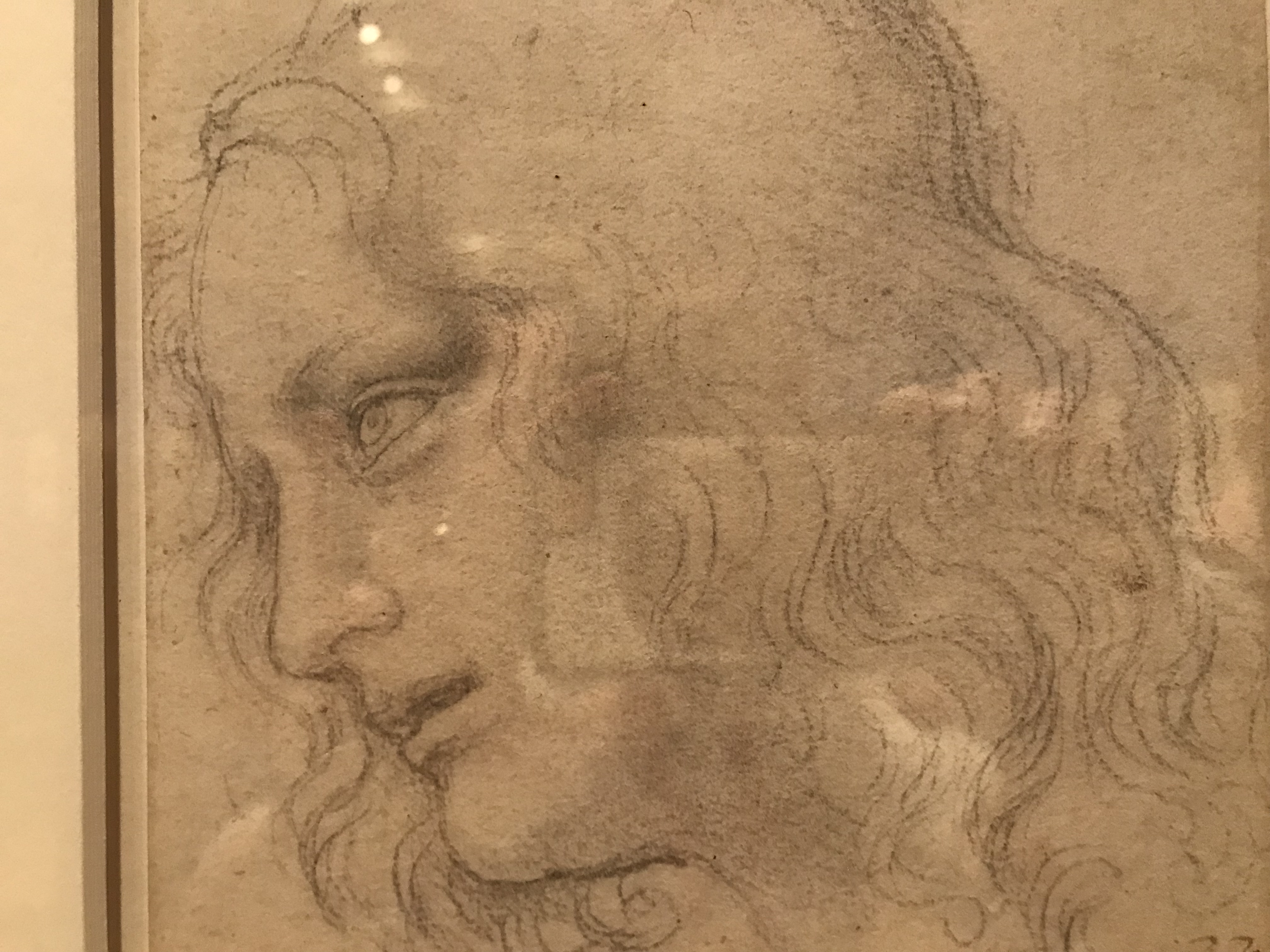
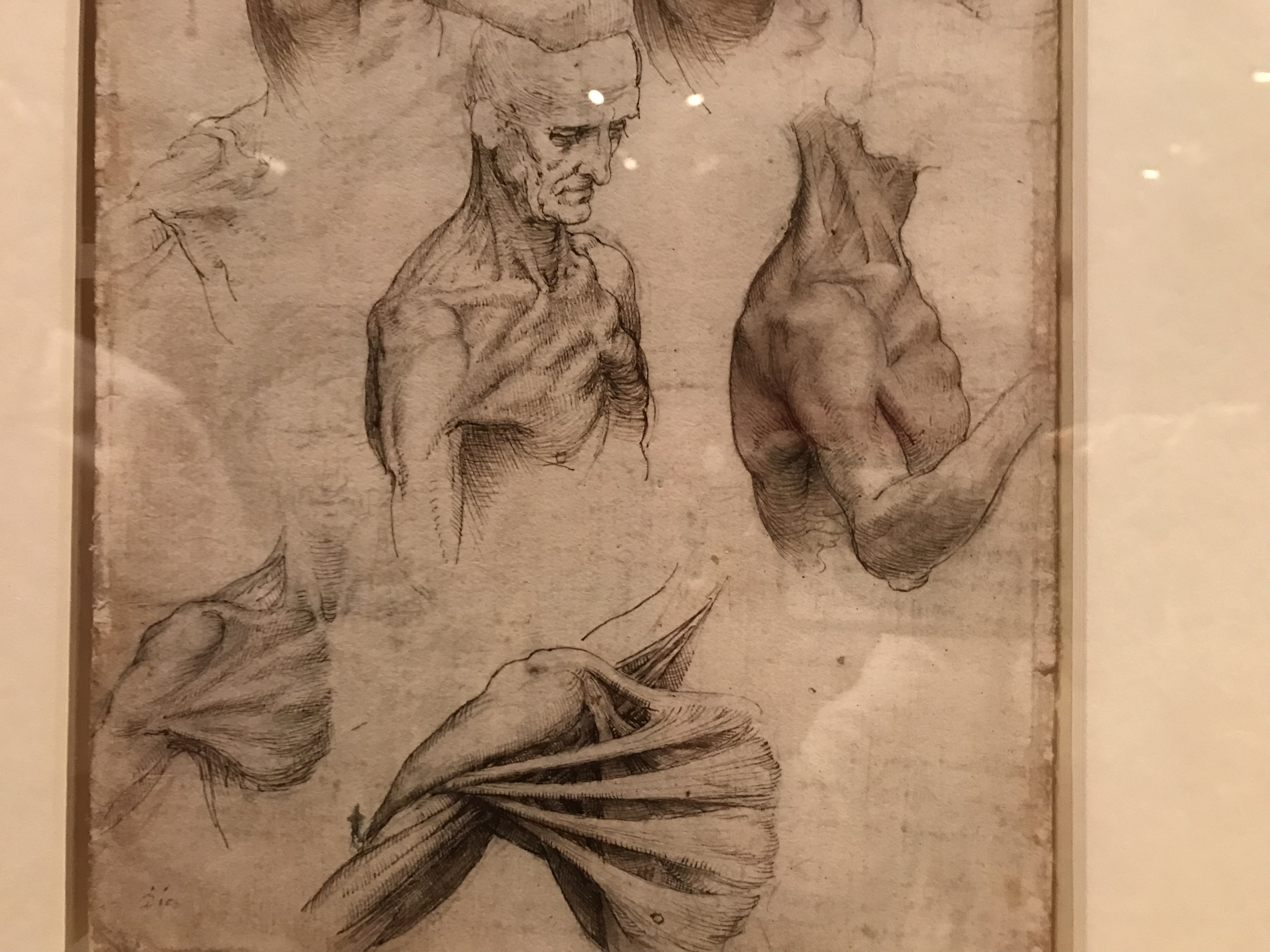
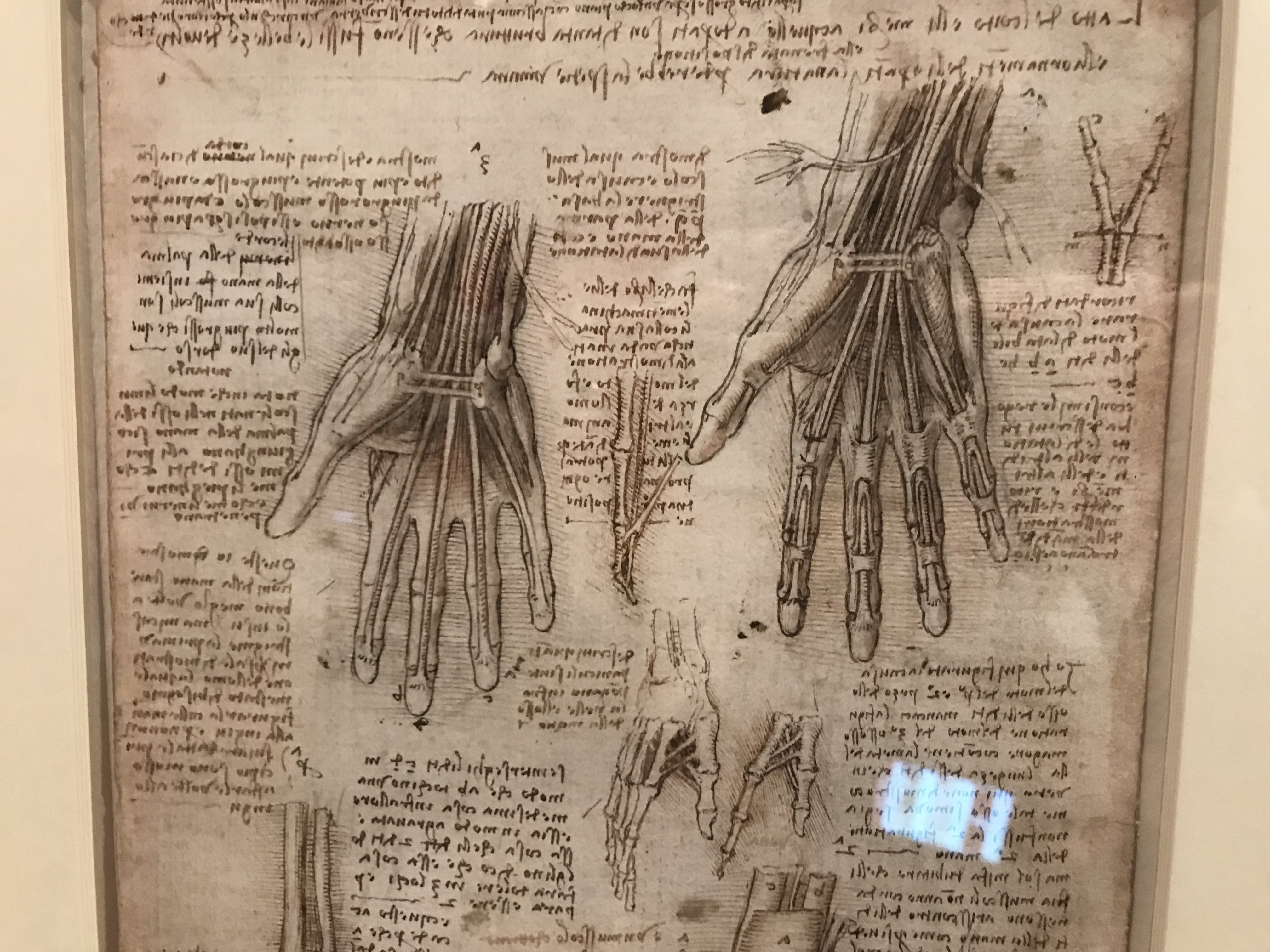
The lecture was fairly short but interesting. Leonardo was born in Vinci in Italy (the “da Vinci” bit means “from Vinci”, it’s not part of his name) in 1452. He was illegitimate, so unable to go to university (but that doesn’t seem to have held him back at all). He was primarily an architect and designer, as well as making sculptures and the occasional painting. He produced copious drawings for all his work, and it is mainly the drawings that have survived. In 1472, printed books were gradually becoming popular, which led to paper becoming an everyday commodity rather than an expensive luxury. For the first time, artists could afford to experiment, to make drawings that would later be discarded. Leonardo drew using a quill pen and ink, and by metal-point (which is when paper is prepared with a thin layer of bone, and is then scraped with a metal point—it produces a brown line-drawing).

Leonardo was left handed, and because it’s harder to push a pen than pull it, he wrote backwards. His writing is very neat, and goes from right to left (perhaps we should teach children today to do this, if they are left-handed. It’s possibly easier.)

Leonardo was fascinated by how things worked, including the human body. Many of his sketches showed the internal organs of bodies, and he dissected dead bodies to find out how the muscles were placed, the chambers of the heart, etc. Much of his work was way ahead of his time. (Personally, I am suspicious as to where he found all his bodies. Some of the drawings, such as those of lungs, are very detailed. I would have thought that lungs collapsed soon after death, so how did Leonardo manage to find so many recently-dead bodies to cut up? Just wondering…)

On 2nd May, 1519, Leonardo died. He left his work to one of his students (he never married, and Martin C suggested he may have been gay). Many of his drawings were bound into a huge album, and this was given to the king in 1670. It has belonged to the Monarch ever since (so the Queen owns them, but only as the ruling Monarch, she cannot sell them).

We then went to look at the exhibition. Apologies for all the reflections on the photos–galleries seem to be unable to have lighting that does not reflect on the glass covering the pictures. Perhaps it’s something to do with preserving them, so they don’t fade, or maybe they need to update their lighting systems.

If I’m honest, I do not really like Leonardo da Vinci’s art. I can see that it’s clever, and his drawings of dissections are very interesting, but I don’t find I have an emotional response to his paintings. I find his people all have a sort of androgynous look to them—the men look effeminate and the women look masculine. I have never seen anything by Leonardo that is pretty or exciting or sad or passionate; they are the sort of highly detailed, very talented, drawings that you might see in an A Level biology portfolio. Even his more famous paintings, like the Mona Lisa or The Last Supper, are not really paintings that make me feel something. Do you like them? Honestly?

Thank you for reading.

Have a good week.

Take care.

Love, Anne x

anneethompson.com

Now is the time to sort your summer holiday reading. Why not take a look at one of my books? Available from an Amazon near you…

A hilarious family saga set on a farm. Being a parent has no end-date, as Susan discovers when her adult sons begin to make unexpected choices in life.
A warm-hearted, feel good novel that will make you smile.

A laugh-out-loud book about travelling the world with a family. From India to South America, and across most of Europe, this book has been described as “The Durrells meet Bill Bryson”!

What if…a happily married woman falls in love with someone else?

This is the story I always promised myself I would write ‘one day’ while I was teaching in an infant school. A light-hearted novel about 3 teachers.

A fast-paced, gritty thriller. This novel tells the story of Joanna, a psychopath, and her mother; because every killer has a mother…


Travel with Clara from an English town to the slums of India, and see how someone bad can achieve something amazing.
An exciting, fast paced novel.
CLARA – A Good Psychopath?
by Anne E. Thompson.
Buy a copy today, and prepare to become engrossed in a whole new world.

An exciting novel, set in the near future. One family shows how they cope with driverless cars, new laws, and schools run by computers.

This tells all the things I wish I had known when first diagnosed. A helpful book for anyone with a potentially terminal illness. It shows how to find a surgeon, how to cope with other people’s fears, how to not be defined by an illness. It also has a few funny anecdotes – because even when you’re ill, it’s good to laugh.
Available from Amazon (you can get it free if you have a Kindle).


Random Choirs


Random Choirs

One thing I miss, now my children are all grown up, are the school concerts and choirs—well the ones from when they were older anyway (I do not, even slightly, miss the cello concerts of 5 year olds, when I spent an hour hearing all my favourite songs being massacred). So, when Bea suggested I might like to go up to the Royal Academy to hear her work-choir sing, I was excited to attend.

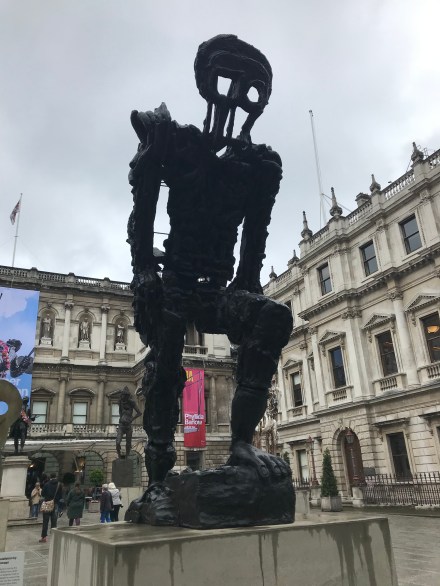
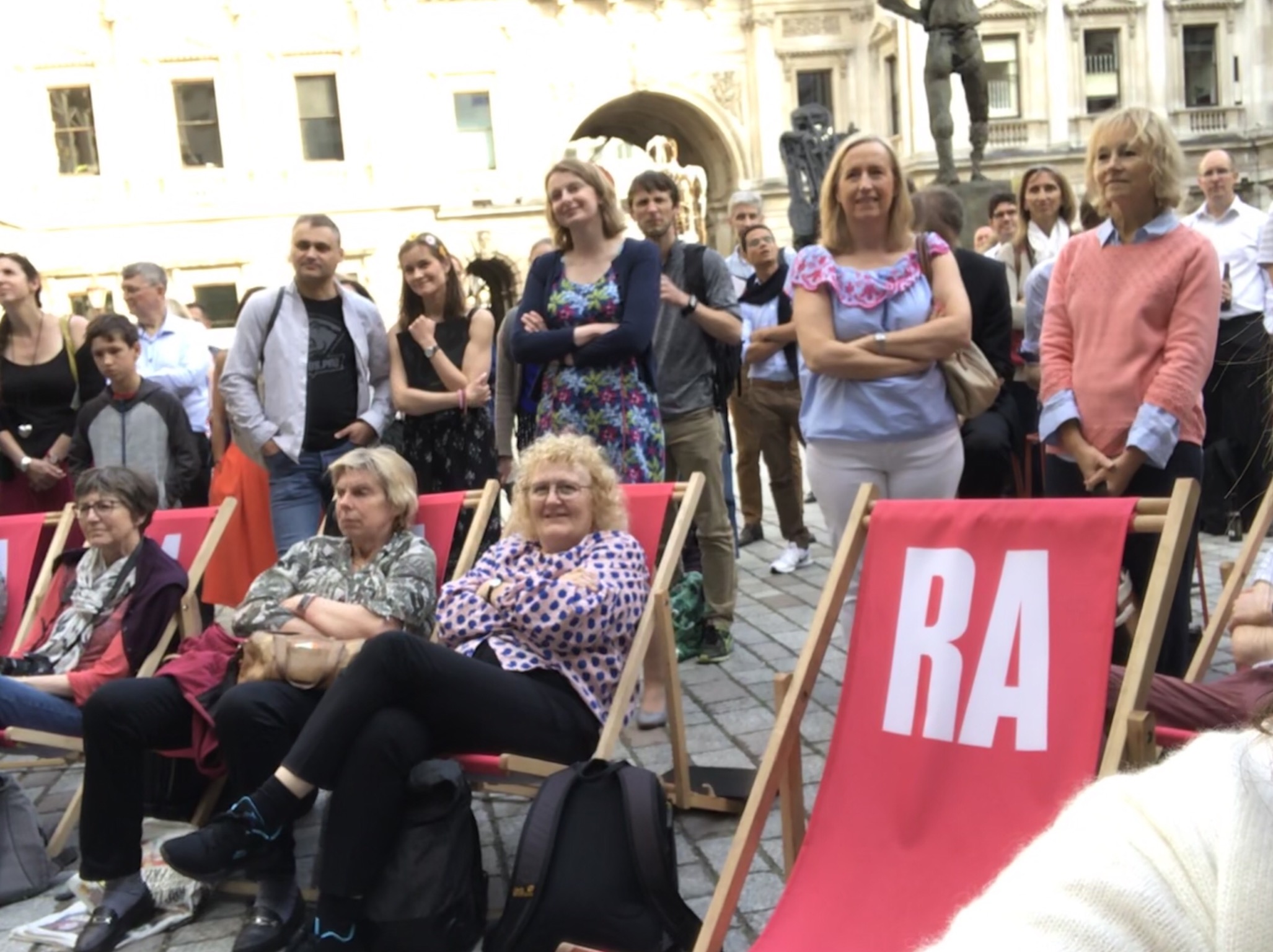
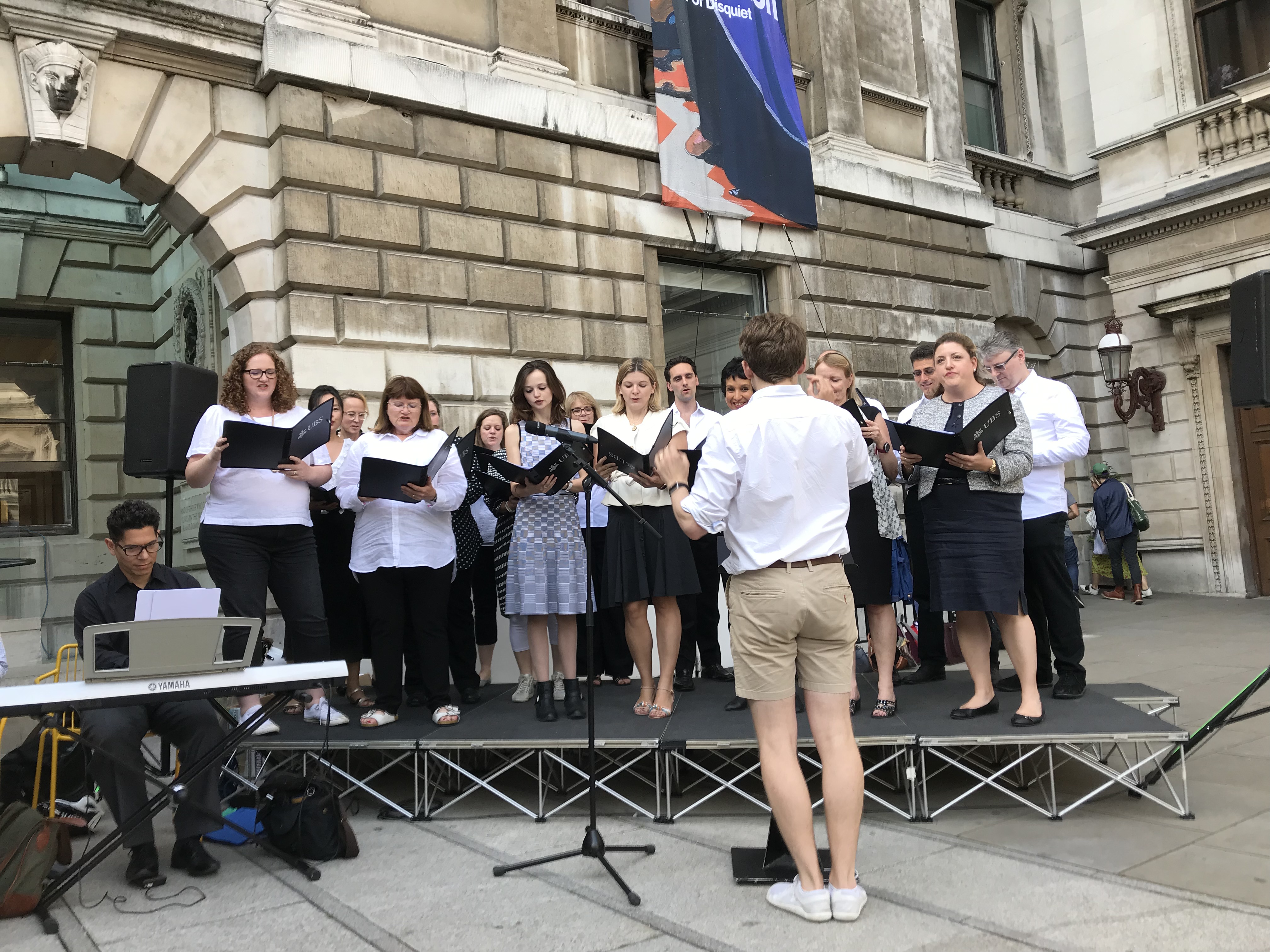
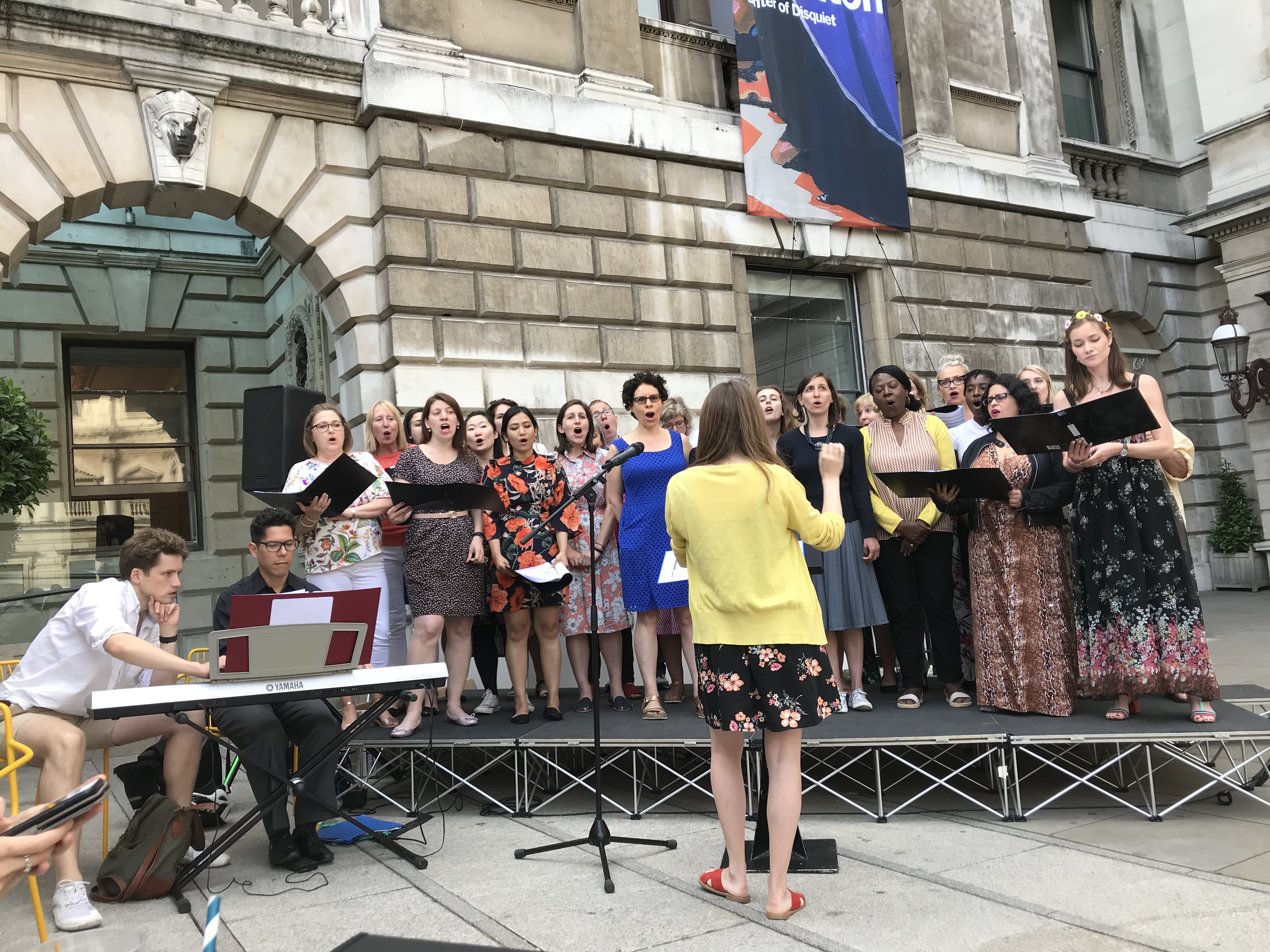
It was a lovely sunny evening, and Bea managed to find me a seat right at the front, and someone kindly bought me a glass of white wine, so things were pretty perfect from the start. We sat in the courtyard of the Royal Academy (beneath what look like giant zombies, but we’ll brush over that weirdness). The evening was a variety of choirs, from a variety of workplaces, who took it in turns to sing 3 songs each. There were choirs from UBS, and Channel 4, and The Telegraph, and a London council, amongst others. Apparently, there are musical people, who go around, and teach choirs at all these businesses. Now that must be a fun job!

It was unusual to be watching amateurs sing—usually I am either watching children, or professionals. These people fell into two categories. There were those who were happy performing, and they focussed on the music, moving slightly as they sang, making eye-contact, and smiling. Then there were the others, those who clearly were not too excited at the thought of singing in public. I guess that they loved singing, but going to choir practise after work and singing with your work colleagues, is very different to then performing to a whole bunch of people who you don’t know. They looked distinctly worried—they stared at the conductor the entire time, and stood as still as statues, while singing. They also, where possible, huddled at the back. I decided that I had a lot of respect for these people, it is very brave to sing in public.

The choirs wore a variety of clothes. The UBS choir had tried to coordinate outfits, with most people managing to wear black and white, though the odd individual managed to sort of keep to the rule but still look different (reminded me of school days again). Other choirs were completely random.

There were three different people who conducted. They were incredibly enthusiastic, and tended to have very wiggly bottoms, which gave you something to watch if you were bored. They were accompanied by a brilliant pianist on a keyboard, who even managed to continue playing when all his music blew away.

Another bit of added entertainment were the children. There was the little boy on his Dad’s lap, who was obviously watching his Mum and who sang every song along with the choir (and his Mum was easy to spot, because she basically sang directly to him the whole time, which I found very touching). Then there was the three-year-old who I’m guessing recently started ballet, who found a space at the front and treated us all to a wonderful impromptu dance, as lost in her own world, she responded to the singing. There was also a toddler, who was quite determined that he was going to get onto the stage, and was almost crushed several times when he stood behind the wiggly-bottomed conductor (always fun to see other people not managing to control their children properly).

An unwelcome distraction, which annoyed me intensely, were the two women who stood right at the front (next to me) and then had a chat in very loud voices. I was itching to complain, but knew my family would be cross with me, so I photographed them instead. (But have since decided that I should not put the picture on here, as it’s easy to make enemies, and harder to repair damage afterwards—but they were very rude.)

Son 2 and Husband met us after work, and we all had dinner before coming home. What a lovely evening.

I hope you have some nice treats this week too.

If you enjoy reading about families, you will love my new book, Ploughing Through Rainbows—why not buy a copy? Set on a farm, it’s full of humour, but also shows the tensions that arise when adult sons make unexpected choices. Susan and Tom raise beef cattle, and have to cope when one son decides to be vegetarian. Another son gets into debt, and then Ben, the youngest, tells them that he is gay…

It’s available from Amazon,  link below:

UK link

US link

India link

Thanks for reading.

Thanks for reading.
You can follow my blog at:
anneethompson.com

An Escape Room in Cambridge


For Husband’s birthday, I gave him a voucher for an ‘Escape Room’—you know, those places where you go to be locked into a room, and then you solve various puzzles until you manage to escape (or you fail miserably and they throw you out because your allocated time has finished). I thought it would be fun if we did one as a family.

Of course, the most difficult part was finding a date when all the family could actually meet, but once that was achieved we were fine. Last Saturday we set off for Cambridge. The second most difficult part was trying to find a parking space in Cambridge, but we even managed that eventually.

We started with lunch in an Italian. I know my family have a tendency to ‘debate’ so I envisioned an afternoon listening to them ‘discuss’ the solution to the puzzle. I therefore decided to drink wine for lunch (I did have some lasagne too, but the wine was the bit that mattered.) After lunch there was a further challenge as we attempted to keep Husband with us while we tried to find where to go (he has a tendency to stride ahead, unaware that the rest of the group is unable to cross the road).

I began to relax once we actually arrived at the Escape Room, feeling that the most difficult challenges were over.

The room was not at all what I was expecting. For some reason, I expected a room, set up like a lounge, with sofas (where I could snooze off the wine) and a table of puzzles for my family to argue over. However, we were met at the entrance by an actor who explained the world was about to be hit by a comet, and then shown into a small room which resembled a cupboard, with a locker (locked) and a desk with a computer, and several posters on the walls. We then attempted to save the world.

In case you’ve never done one of these rooms, you’re not actually locked inside (so you can leave to use the loo or if your family becomes too argumentative). There were also several different aspects to the challenge, so people could try to solve one part, without having to collaborate too much with the rest of the group, and there was no necessity to persuade the rest of the group that you knew the solution, you could simply get on with your own bit—which worked rather well for my family. The puzzles were pretty perfect for us—there were some tricky ones, which it took several people to solve, but it was lots of fun. There was, surprisingly, no heated debate at all, and the whole thing was really good fun.

Oh, and in case you’re wondering, we did manage to save the world…

We visited the LockHouse Games escape room: link here

Thanks for reading, I hope your week has some fun times too. Next week I’ll tell you about my evening listening to random choirs in the shadow of zombies.
Take care,
Love, Anne x

While we were there, I was able to give the family copies of my latest book: Ploughing Through Rainbows. I wanted to write a happy book, so decided to write about a family on a farm, and as I wanted it to be a funny book, I gave the farmer four sons. However, there are also some gritty issues in the book, as it also shows how the mother, Susan, copes when one of her sons tells her that he is gay. Susan is a Christian, and the book shows her journey as she explores what parenting involves when faced with this news.

Please buy a copy, and tell someone else about it. It’s available from an Amazon near you, as both a Kindle book and a paperback. Links below. Thank you x.

paperback link

kindle link

India link

US link

There’s No End-Date to Parenting…


Sometimes, it can feel like you spend ten years teaching your child to be independent, and then twenty years wishing that you hadn’t! When your children are young, you long for them to be strong-minded, independent people who don’t need you anymore. But then when they are adults, and start to make their own decisions about how they will live, that can bring a whole different set of problems.

Meet Susan and Tom. They are farmers raising beef cattle, and their four sons are independent adults. But then they start to make life-choices that their parents find challenging, and Susan and Tom begin to wonder what their own role should be. One son announces he is a vegetarian, one son gets into debt, one is unfaithful and then one son tells them that he is gay.

Before writing the book, I spent a lot of time listening. I listened to farmers, and learnt what it means to raise cattle.

I also listened to parents who had learnt their children were gay, and to gay men and women who are discovering what that means in today’s society. One of the groups that finds this most challenging is the church, and so I also spent time listening to what people in the church think and feel. One aspect that came out (excuse the pun) very strongly, is that sometimes, neither side of the traditional Christian viewpoint seem to actually understand how the other side feels. It seemed to me that there was a lot of talking, of proclaiming of views, and very little listening—because of all other issues, this seems to be the most emotive.

 I wanted to write a ‘nice’ book—something happy that my readers would enjoy (after a few years of learning about, and writing novels about, psychopaths, I still find that my easy-read fun novel about an infant school is the one that people want to buy a second copy of, for their friends). Writing a funny book set on a farm seemed like a good idea. Introducing potentially inflammatory issues was a little trickier. I hope I have achieved a good balance and produced a book which will make you smile whilst also giving food for thought. I worked very hard to represent differing views fairly, and my hope is that by the end you will have heard each viewpoint very clearly whilst not being sure what my, the author’s, view is. Personally, I fell in love with some of the characters, to the extent that when the book was finished, I immediately started to write the sequel!

I hope you think it is a jolly good story and you will recommend it to a friend.

Please buy a copy, and let me know what you think.

Thanks for reading. Take care.
Love, Anne x

anneethompson.com

Ploughing Through Rainbows by Anne E. Thompson

Available from Amazon as a Kindle book and a paperback. UK link below:

paperback link

Kindle link