Genoa, Family Holiday Diary 2019


Saturday August 17th

Our first breakfast in Melia Hotel was in a rather sombre room next to the bar. There was an urn dispensing unappetising coffee and a variety of food-stations tucked into various corners, so collecting breakfast involved lots of walking, and the crockery provided did not necessarily correspond to the food it was next to. There was a good selection of food though, and if you ignored the fruit flies hovering above the watermelon, it was all very nice.

Emm had failed to find a walking tour (our plan for the morning) so I looked online. I was distracted by a review of Giavanni, one of the tour-guides. The review said he spent too much of the tour looking for English words in his dictionary, tended to speak while walking along narrow lanes so no one could hear him, and did not appear to actually know anything about Genova anyway. In his defence, Giavanni said that he had never claimed to have any knowledge! I didn’t feel he was the guide for us, though Bea was quite keen.

I wrote down all the places listed by the walking tours, and we decided to visit them on our own (because one of the main advantages of walking tours is that they show you places you would otherwise miss). Jay plugged the places into his phone, and we set off. We saw lots of interesting buildings, many of them rebuilt in the 18th century, including the apparent birth place of Christopher Columbus.

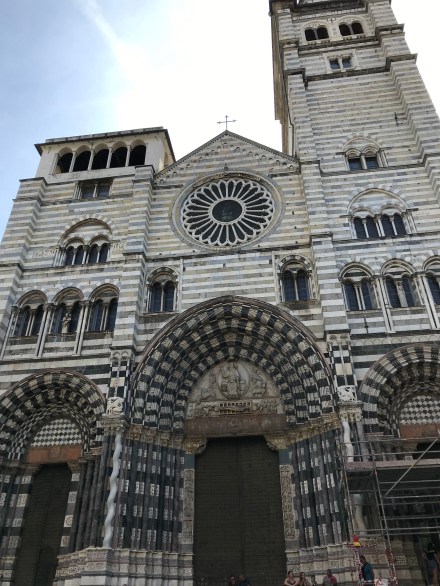
We went into the cathedral, which stands tall and proud in the centre of the city. It claims to hold the ashes of John the Baptist, which were taken there during the crusades (I am making no comment here). The church was very ornate, with lots of gilt and statues and paintings. It didn’t feel very holy to me, and I thought it was a sad place—so much had been spent on decorations when the city was full of slaves.

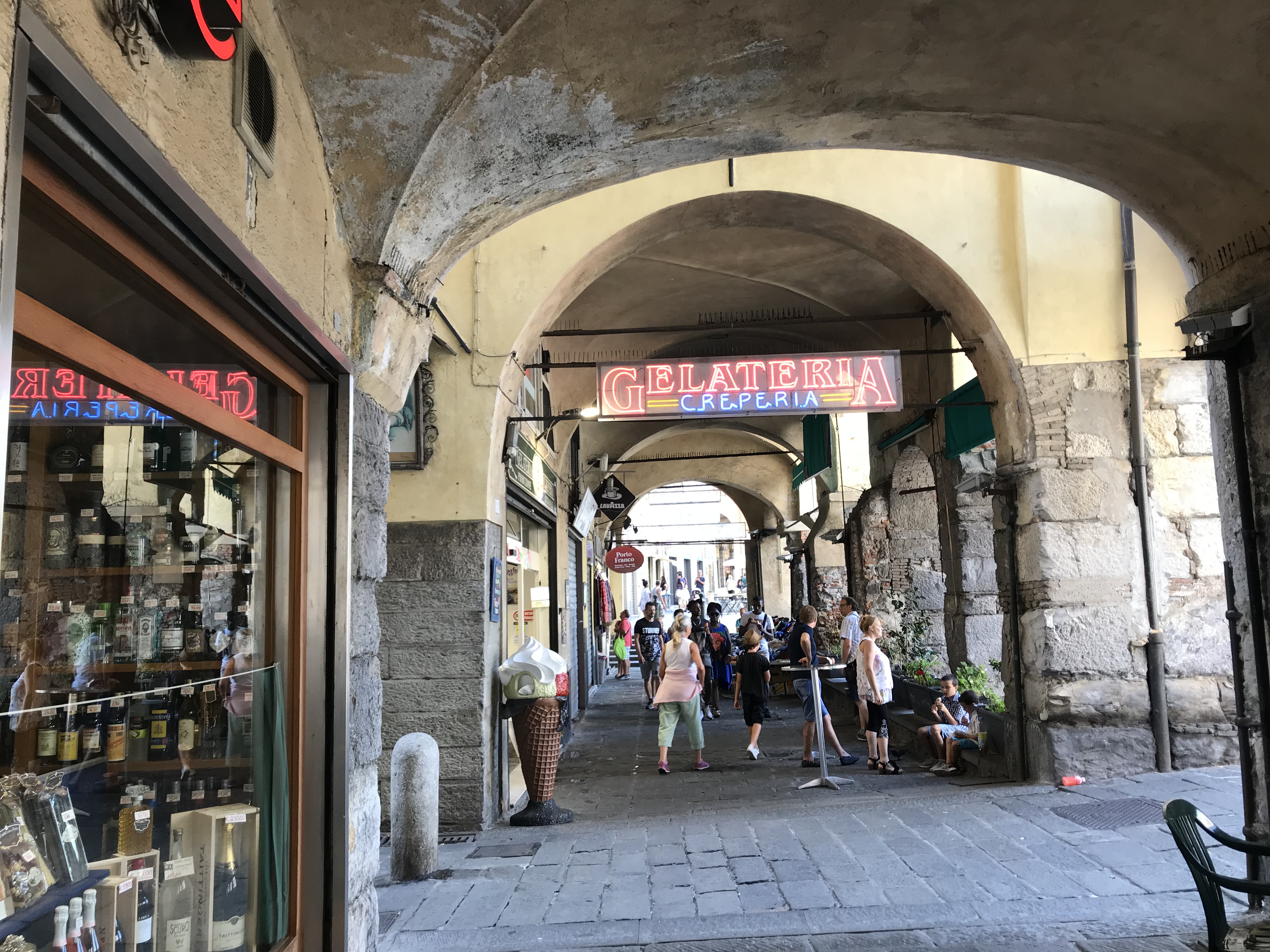
We wandered along narrow lanes, past old houses, through tiny squares—each one with a church. We ate ice-creams before walking up Via Roma, which had coloured windmills strung above it and was lined with expensive shops.

We ate dinner at a Mexican restaurant. It was quite a long walk from the hotel, through an area which did not feel especially crime-free, but it meant we saw more of the city. There were many massive staircases, Genova is built between and on the hills, and your legs get lots of exercise. We passed beautiful flower beds, and the huge arch of Arco della Vittoria, inscribed with the names of the war dead.


Sunday August 18th

Jay and I found an English-speaking church within walking distance and set off after breakfast. The rest of the family went to the aquarium to see the poor trapped dolphins and other fish (no judgement here).

We went to Le Chiesa di Santo, The Church of the Holy Ghost, which is an Anglican church, and I was unsure what to expect. It is the most welcoming church I have ever attended. As we walked in, we were given books, and a brief explanation of how to use them throughout the service. It was a communion service, and we were told that if we wanted to take part we were welcome to, whatever our usual church. The congregation was a whole mix of people, a variety of ages and colours and dress-styles. There was a sermon, by an enthusiastic black preacher, who I couldn’t understand because his accent was very strong, but what I heard I think I probably disagreed with—but somehow, the sermon wasn’t what mattered. What defined this church was how welcoming, how loving, it felt. There was a time when people offered ‘the peace’ to each other, and I think everyone in the church, from the toddlers to the vicars, offered the peace to everyone else. People seemed genuinely pleased to see each other, and genuinely pleased to have visitors amongst them. The singing was almost non-existent (us and the vicar sang, while an excellent musician played the violin, but everyone else sort of mumbled their way through the hymns). The children took the offering, and forgot to go to several pews, and had a minor disagreement half-way round. The building was big, old, and falling down in places. But again, none of this mattered—there was just something holy and loving and attractive about the place. When the service ended, we were offered wine and crisps—but we are English and unfriendly, so we left (and afterwards, as we were walking back to the hotel, we wished we had stayed). If ever you are in Genoa, visit this church. I hope to go again one day.

We ate a picnic lunch on our balcony. Husband and Emm ate Italian bread and olives and cheese and tomatoes (though I think the cheese was Swiss, but they tried). Emm said there were more people than fish at the aquarium, but the dolphins looked very happy in a big tank. Bea said she had needed to set a time-limit on the interesting facts offered by Emm about every fish they saw—and I think Husband had photographed every single fish…they will be looked at many times in the future, I’m sure.

We walked to the Galata museum. This is a museum all about boats, but it’s surprisingly interesting, with a reconstructed galley, complete with slaves rowing, and various interactive displays. One floor was dedicated to emigres, and you could walk through their living quarters on a boat, where they lived during their voyage to America. The museum staff helped with the atmosphere by offering passports to all the children, and we didn’t tease Bea at all when she was given one too…

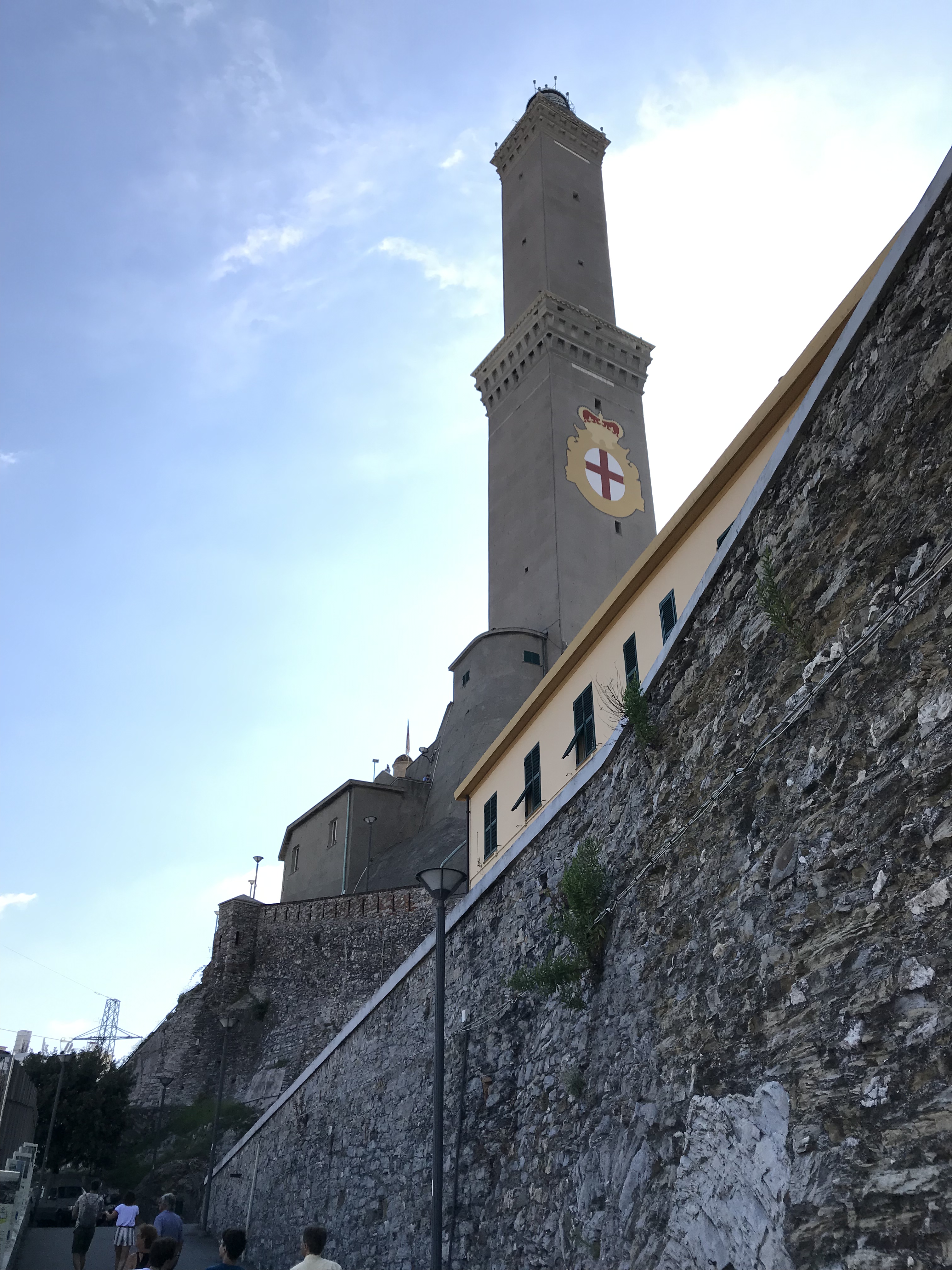
We then walked, in the scorching heat, to the lighthouse. We passed a massive cruise ship leaving the harbour, and a lot of rubbish bins, and we walked under a huge flyover as that was the only shade—so it wasn’t the prettiest walk I have ever been on, though it might have been the hottest. I had thought the lighthouse would be next to the sea, and I could sit outside and read while the family climbed it. However, it wasn’t near the sea at all, so I decided, foolishly, to go inside too. The steps were an open stairwell, so you could see right down to the bottom. It was very scary, especially when passing people on the way down, when you had to cling to the rail and hope you didn’t plummet to your death (there was, to be fair, a metal screen protecting you, but it looked very flimsy to me). However, you will be glad to know that I survived, helped no end by the boys singing to me on the way down, to take my mind off the near-death experience.
We then walked a very long way to a restaurant which was shut (I didn’t make these plans). We then walked even further to a restaurant which was open. I was unsure what to expect, as we walked along a street lined with strip-bars and massage parlours, but actually, the restaurant was lovely. We sat down, and I felt very old because my legs were aching so much. Then I checked my phone app, and saw that I had walked, in the hot sun, for 18.5km and I had climbed 40 floors. I felt that my legs were allowed to ache.

We ate at L’Ostetrattoria, on Via Alessandro Rimassa. It was an Italian restaurant, with deep red walls and tablecloths, and decorated with a clutter of interesting things. The waiter was friendly and helpful, and the food was delicious. I ate pasta, then balls of cod which had been deep-fried, and I drank wine and an ocean of water. It was wonderful.

I slept very well.

I hope you have a lovely day. Thank you for reading.

Take care.
Love, Anne x
Thank you for reading.
anneethompson.com
Why not sign up to follow my blog?

Do you enjoy reading travel blogs? Have you looked at my travel book? The Sarcastic Mother’s Holiday Diary will make you smile, as it describes travel with a family to Malta, and America, and Zambia and China. . .

Available from Amazon, you can read it for free is you have a kindle. Why not have a look today?

Travel with a family…always unexpected.

UK link here


La Thuile to Genova…Family Holiday 2019 continued


Thursday August 15th

Our last day in La Thuile, and we wanted to see more of the mountains—discussed a plan over breakfast while waiting for coffee to arrive. There is plenty of time to make several plans while waiting for coffee to arrive.

I walked into town and bought a fridge magnet while family went on scary ski-lift up the mountain we can see from our balcony. I sat in the sunshine and waited for them. We then went into town to buy a picnic. I used my best Italian to ask baker for a small round loaf of soft bread. He gave me a crunchy stick-loaf, but I couldn’t face trying to explain what I wanted, so thanked him and paid.

We drove to a lake. Parking was a challenge, so we abandoned car with all the other cars, parked partly on the side of the road and partly hanging off the side of the mountain. We found the footpath, and saw lots of walkers wearing hiking gear—but I think I was more comfortable in my cardigan.

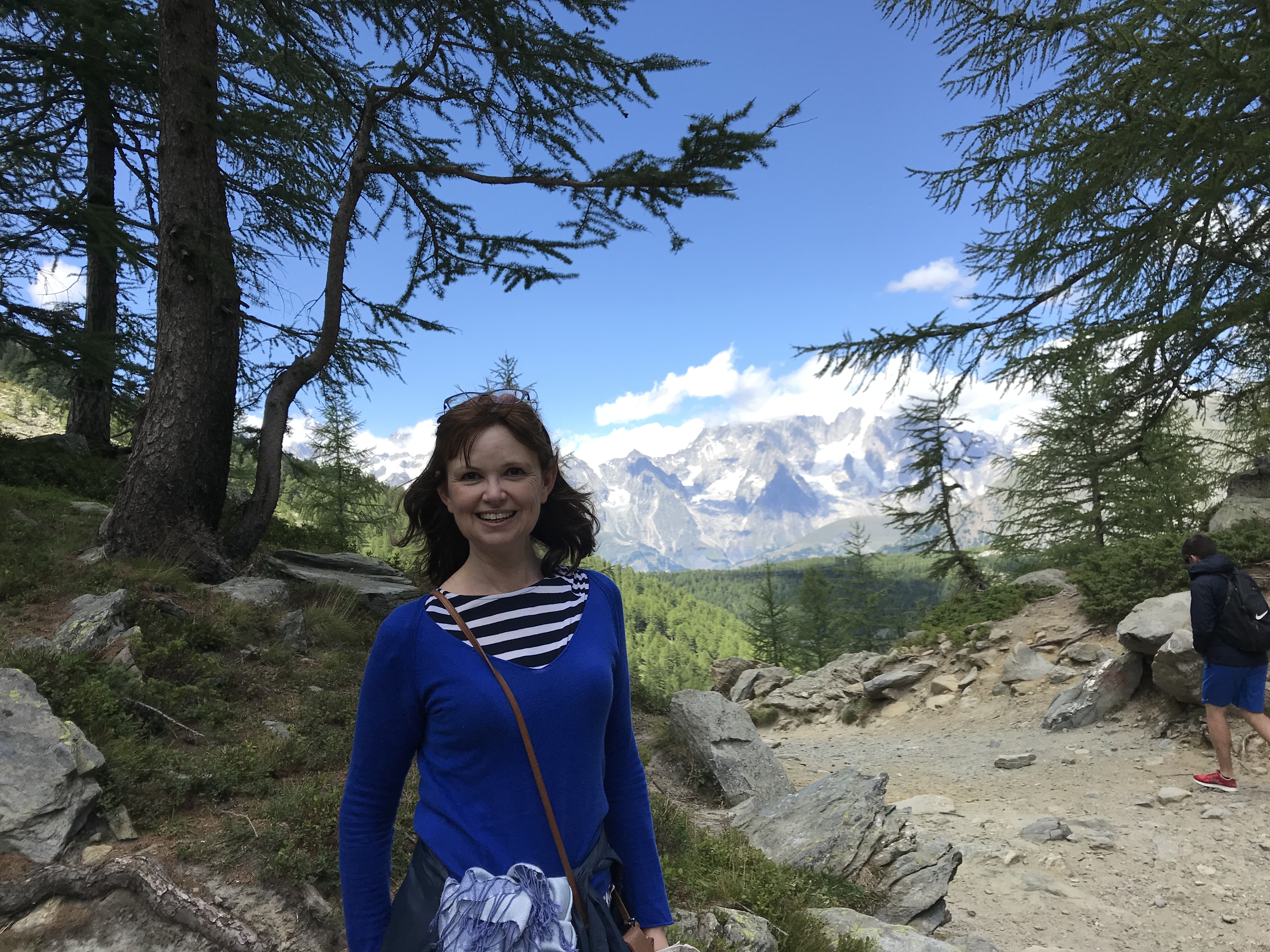
We walked, for about an hour, up the mountain. The path was wide and well-used, and there were many glimpses of the glacier on the adjacent mountain. We were surrounded by trees (possibly spruce) and passed tiny brooks racing down the hillside. Jay said his ankle hurt, so we abandoned him in a bar (he fared better than the car).

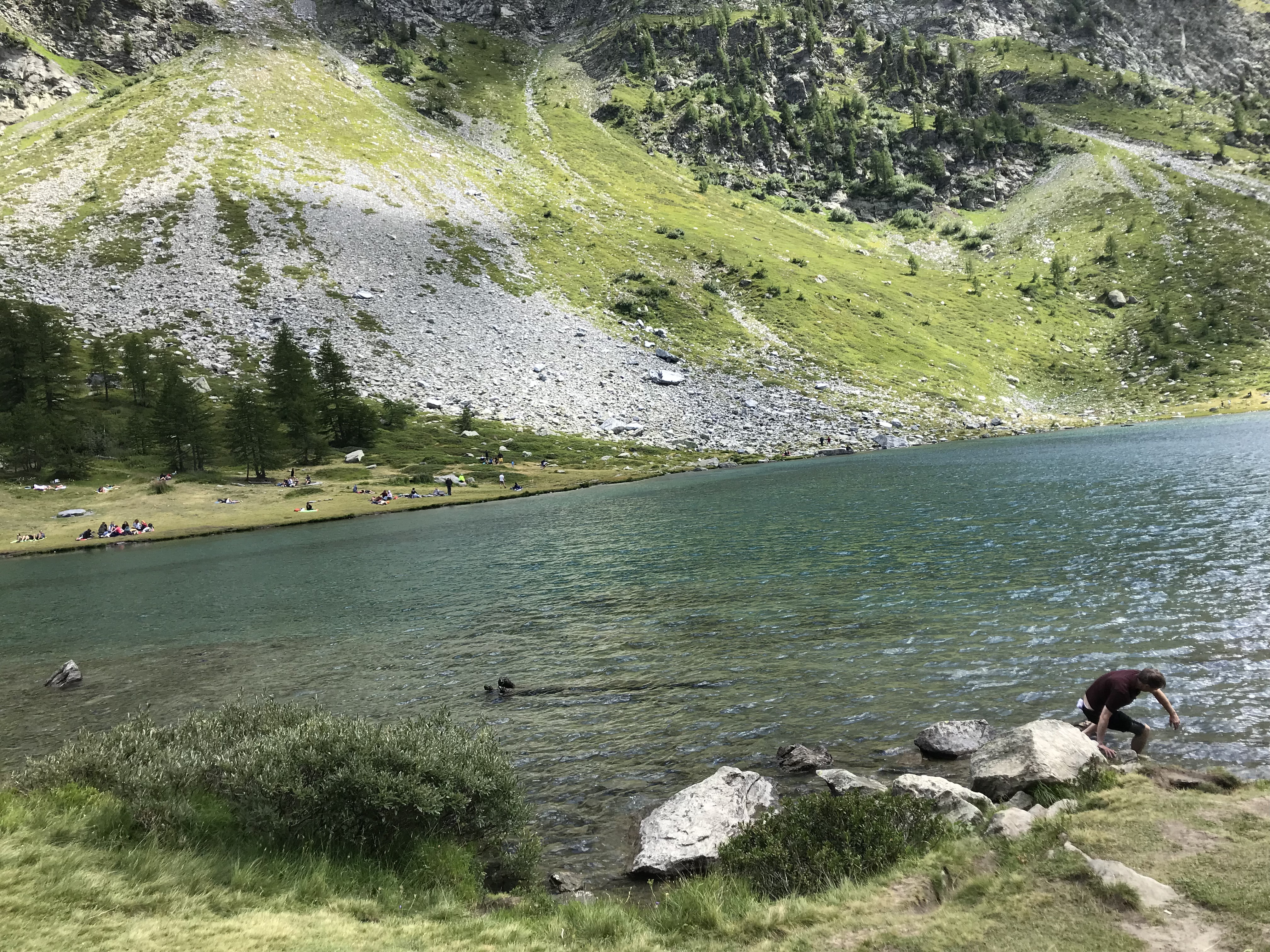
Eventually, we arrived at a mountain lake. It was very pretty, but the best view was across to the glacier on the other mountain. We sat for a while next to the lake. It is really high—2 km above sea level, and we had fuzzy ears. Husband decided he wanted to paddle—so did several dogs, but no other human thought that going into the icy water was a good idea, so we sat and watched him and wondered if he would fall over (he didn’t, which is good, isn’t it?)

We walked back down the mountain, briefly joined abandoned son in the bar, then found abandoned car and drove back to the hotel.

The males went swimming, Bea and I walked to the chocolate shop in town. We had passed it yesterday, and it offered hot chocolates and delicious pastries and seats at little round tables with gorgeous views. Today, it was stuffed full with tourists and motorbike people and harassed-looking staff, and rather resembled a station during rush-hour than somewhere you would choose to be. We queued for several hours and bought tiny paper cups of delicious ice-cream, then walked down the road to an empty bench and ate it looking at the view. Then we walked back to the hotel and had drinks on our balcony in the sunshine.

We had dinner at La Maison again. I had the thick vegetable soup followed by tiramisu, and wondered if I would ever again eat anything as nice. Jay somehow managed to eat three different main-courses, and was then reprimanded by Emm, who told him that it was excessive and showed a severe lack of parental guidance in the past. I drank wine and ignored them. We leave La Thuile tomorrow, I really hope we will visit again one day, it is the most beautiful town in the world (I think).

 *****

Friday August 16th

Our last breakfast at Montana Lodge Hotel. Jay had recovered from excessive eating of yesterday and managed to eat a whole butcher’s shop worth of meat. Vegetarians remained silent. Bea ate pancakes, and stole the strawberries from the garnish. The waiters still failed to fill cups with coffee, though did fill saucers, so perhaps they are trying and failing. Actually, to be fair, the hotel breakfast is very good, with an excellent variety of freshly cooked food, and if the waiters were not inept and unfriendly, it would be perfect. I would happily stay here again.

Staying somewhere with such high altitude has been interesting. When I opened my hair conditioner, it all oozed out, in one long sausage, all over me and the shower until I managed to shut the slippery lid. Although it looks as if it’s at the bottom of the mountain, La Thuile is actually higher than Ben Nevis.

We checked out, and drove to Genova, shedding layers of clothes as we drove south. The journey into the city was a challenge, as the SatNav tried to take us over the bridge which collapsed a year ago, and we had to use Google to find an alternative route. There were lots of massive bridges, hanging onto the side of the mountain and sweeping down to the city. The disaster last year must have been terrible.

We checked into Melia Hotel, which we booked through Citalia. They had messed up our booking (and blamed Citalia for not informing them, which I found irritating—why do people never simply apologise any more?) Husband, of course, had all the information, clearly itemised with names and dates, so they had no choice but to move us to better rooms, but it was a hassle, especially for the boys, who had to move rooms after a day. Our room was very nice, with a big balcony/roof garden.

We walked into the city centre, looking at the interesting buildings. We stopped in Ferrari Square and had an espresso, watching the tourists and the massive fountain and the pretty architecture. Italy does squares really well. The weather is warm, but not excessively so, and I felt pleasantly fuzzily tired.

We went to an indoor market, and I sat and rested while the family wandered around. It was very bright and filled with the rudely bright colours of peaches and oranges and blood-red apples under neon lights, while trolleys rattled past and flies tickled; all underpinned by the metallic tang of death—great heads of swordfish, pink-fleshed skinned rabbits, fat-encased hams hanging overhead. I sat, absorbing it all and waiting.

Family returned and we walked to Il Genovisi, an Italian restaurant, for dinner. It was very nice, with lots of traditional Italian dishes and some rather lovely wine.

I hope you have a good day too. Take care.

Love, Anne x

Thank you for reading.
anneethompson.com
Why not sign up to follow my blog?

If you enjoyed this, you should buy a copy of The Sarcastic Mother’s Holiday Diary. Available from an Amazon near you.

The Alps in the Summer


Tuesday August 13th

We checked out of the Intercontinental Hotel, which has been a brilliant place to stay in Geneva. Emm raved about a pear he had eaten for breakfast. Apparently pears are a thing in Geneva. We had a taxi to the airport, where we were collecting a hire car on the French side. (It’s worth noting that although you can take hire cars into several different countries in Europe, you have to pay a premium if you plan to collect and leave it in different countries, and as we are eventually leaving from France, we wanted to collect it in France.)

The taxi to the airport cost even more than the one we used when we arrived—44CHF. But by now, we are used to everything in Geneva being hideously expensive, partly due to the rubbish exchange rate with the pound.

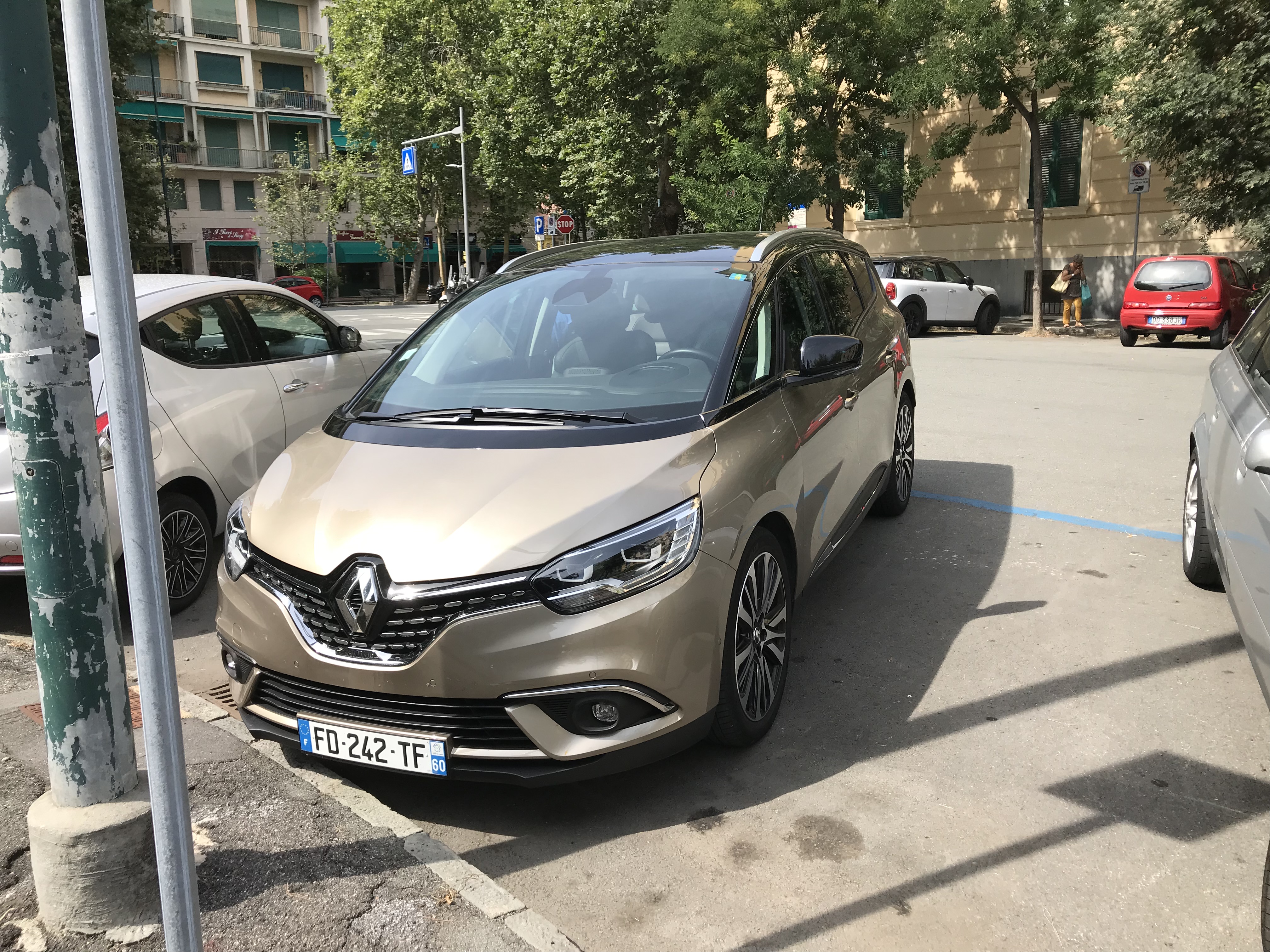
The hire car is a Renault Megan and confusingly automatic. We have an accountant, a law graduate, a scientist and a general computer nerd in the car, but it defeated us. We managed to turn on the SatNav, but the radio seemed to be permanently on, and we never worked out how to turn it off. We listened to classical music as we drove through the Alps, until is became rather irritating harpsicord music, at which point we muted it. But turning it off, I am pretty sure, is impossible. It was a fun drive (I wasn’t driving) and at one point there was one country on one side of the road, and a different country on the other (not exactly hard borders here).

We drove through the Mont Blanc tunnel—there was a long slow queue to pay, and it cost us 45CHF—even leaving Switzerland is expensive. (Actually, to be fair, the tunnel is in France, not Switzerland, but it felt like it was!)

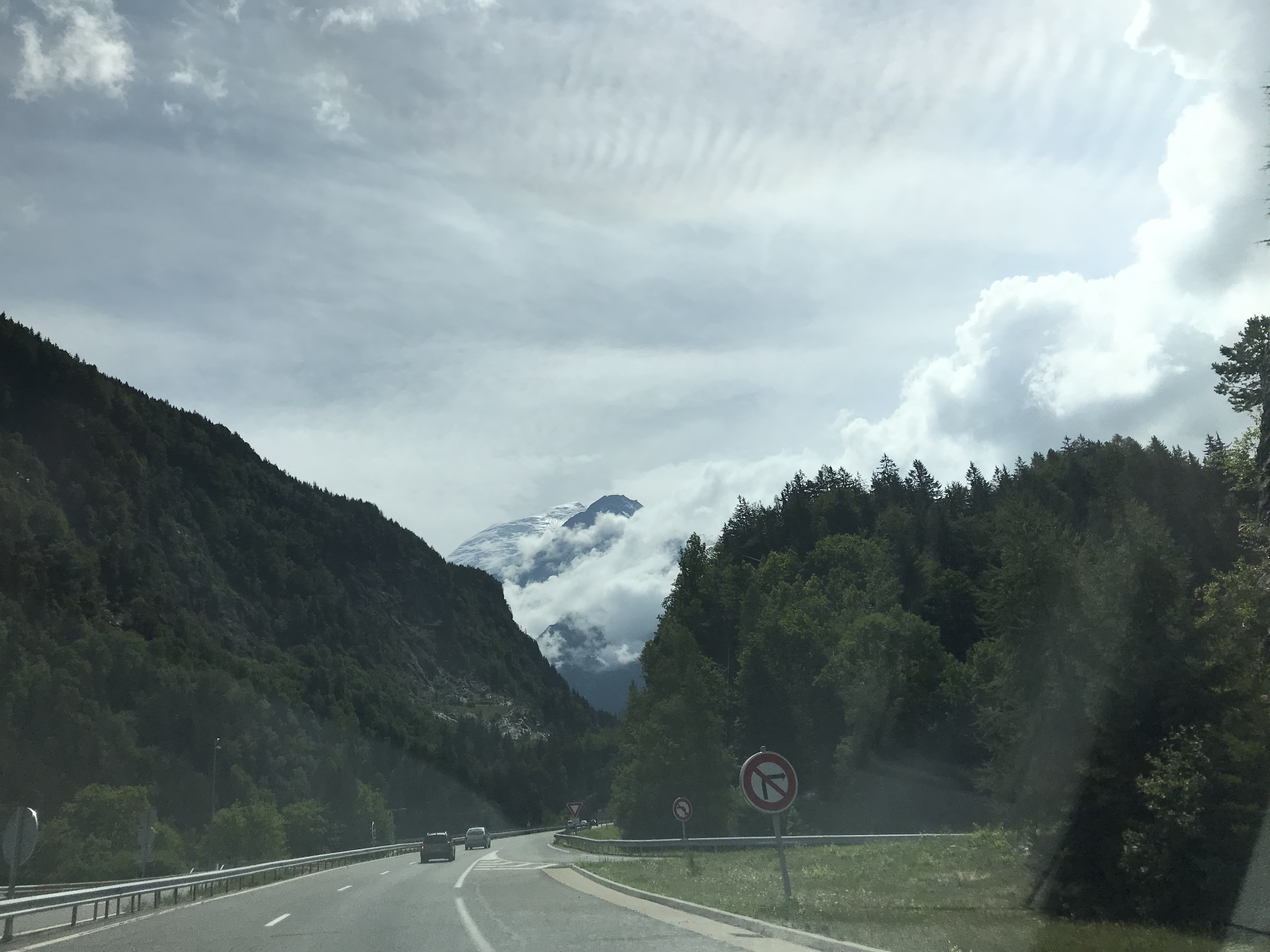
There were the most wonderful views as we drove through the mountains. There was snow, so my family sang Christmas carols (they are never silent, so carols was quite pleasant). There is something exciting about snow on mountains (like there is something exciting about palm trees. Not that there were any palm trees.)

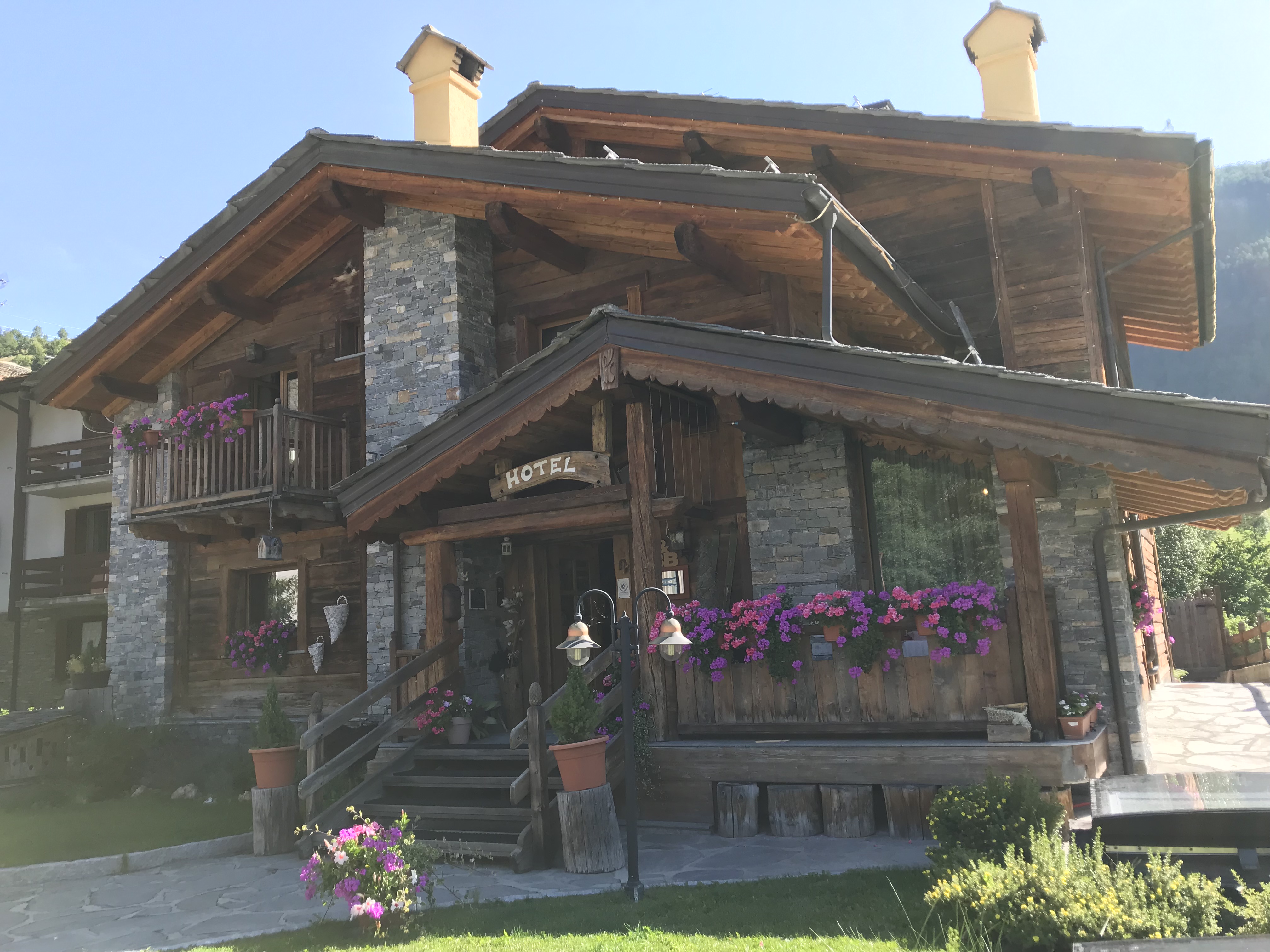
We arrived in La Thuile, and checked into Montana Lodge. Our rooms were nice, and we had a balcony, over-looking the mountains and soaking up the sunshine—it was actually too hot to sit there in the afternoon, as the sun was incredibly warm.

La Thuile feels like a small town at the bottom of the mountains, but actually we climbed quite high before we reached the town. The air is clean and cold and whichever direction you look, there are amazing views. Mountains stretch up on one side, their peak in the clouds, behind you is a mountain with white snow icing the top, on the other side is a mountain pasture dotted with flowers, in front of you is a house made of wood and looking exactly like a musical-box so you feel you could almost lift the roof to hear the music playing. It is, I think, the most beautiful place I have ever visited.
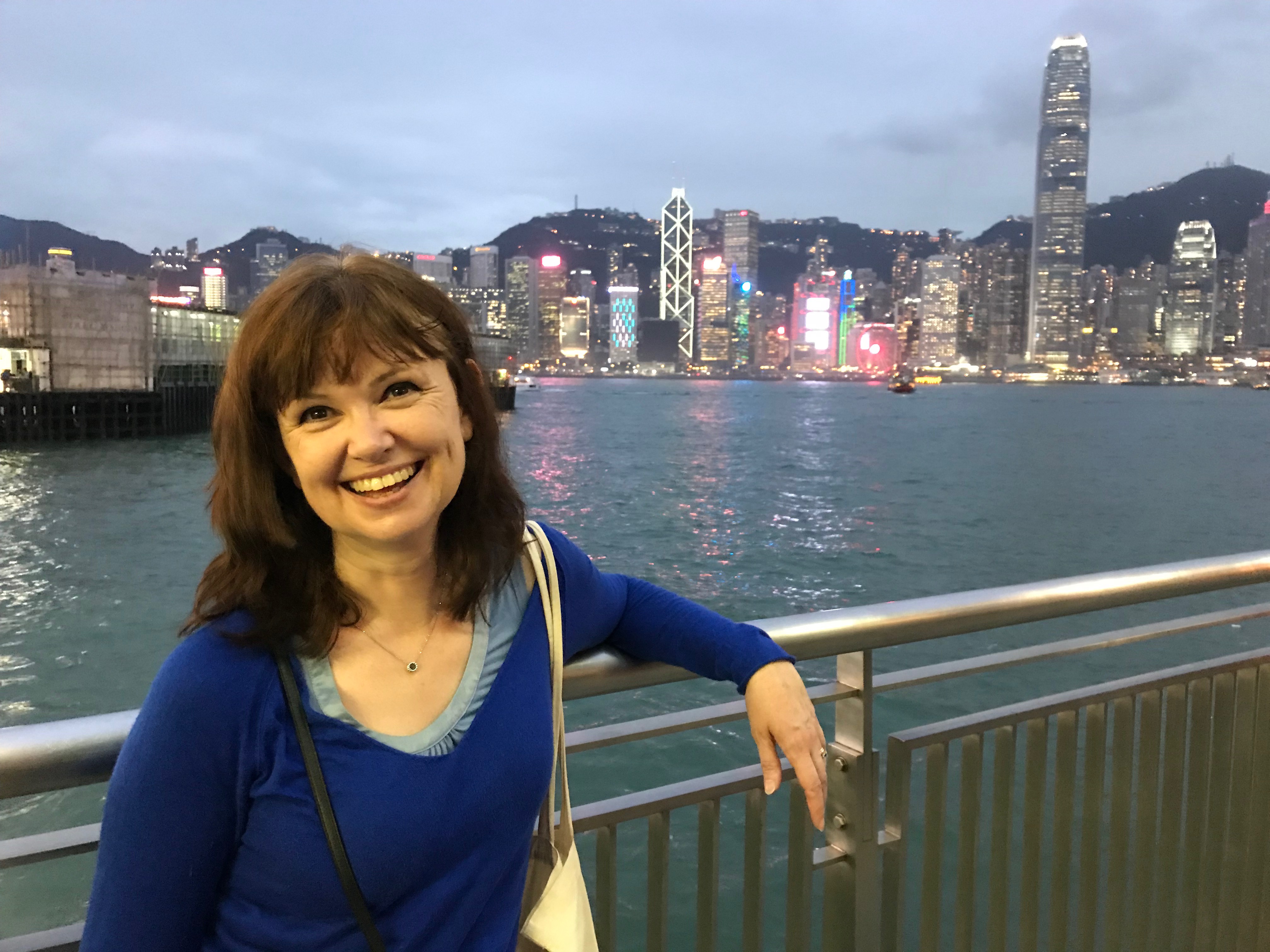
We walked into town. The town has a lot of dogs (which is lovely) and owners who do not clean up after them (not lovely) so, as we walked, we had to be careful not to stare too hard at the beautiful views or we would step in something nasty. When I am king, I shall make a law about this. The centre of town has a river which bubbles and splashes as it tumbles down the mountain, and the hills are covered in trees (possibly spruce) and meadows. The town is full of cafes and tourist shops and places to buy ski clothes. Lots of people walking around were wearing very smart walking clothes (always bring your best clothes when visiting Italy, and it’s against the law to wear wellies…even if letting your dog poop in the street is, apparently, okay).

We ate in La Maison de Laurent. This didn’t look great from the outside, but don’t be fooled. We were seated at a long table down in the wine cellar. It was dimly lit, with a low ceiling  and bottles of wine surrounded us. The menu was full of hearty food, intended to fill up hungry skiers after a day on the slopes. It was completely delicious. I ate polenta (which is a little like mashed potato in taste) and a stew, followed by a salad, and finished with tiramisu. It was all perfect. Emm ate a vegetable soup, which was more like a stew as it was thick with vegetables and was served with lumps of crusty bread. I shall order that tomorrow.
Wednesday August 14th

We met for breakfast at 8:15 (well, most of us did). The breakfast was okay, but it didn’t feel very friendly. The coffee was served by waiters, who only half-filled the cups and then were unavailable for top-ups. There was a good variety of food, but it wasn’t as luxurious as the Intercontinental in Geneva—or maybe I’m just tired. Once the person who always loses his room key had collected it from the breakfast room, we met on balcony to plan the day (always a delight and an apparently essential activity when married to my husband).

We (using term loosely) decided to walk up a mountain (del Rutor). I agreed to come if it did not involve any narrow pathways with a sheer drop on one side. Even though my head knows that fear of heights is completely silly, I know from past experience that my head cannot force my body to behave likewise, and when faced with sheer drop my legs go all quivery and absolutely refuse to move and my lungs stop breathing and heart threatens to stop beating, so I tend to avoid sheer drops when possible to avoid embarrassing situation where I am clinging onto a rock completely unable to move feeling like a total wombat. Family promised no sheer drops.

We visited the supermarket and bought food for a picnic lunch, and chocolate for after the climb, when we would need a sugar-fix.

Drove to carpark and parked car (11.30). Walked towards mountain. Jay was eating his chocolate (11.35). Some things never change in life.

Walked through pine trees, past waterfalls, over little stone bridges, up the mountain. Every so often, we glimpsed snowy peaks above us. There were lots of other people walking, most of them wearing proper hiking gear complete with poles—but I’m sure the people wearing flip-flops were just as comfortable.

After walking up for about an hour, we sat and ate our picnics. I suggested we could walk back to the car. I was ignored.

Continued walking up. Views on all sides completely perfect whenever we emerged from the trees.

The pathway became narrow, and we rounded a corner to find a sheer drop on one side. I said that I needed to go back. The family suggested that I found a rock to sit on, and they would collect me on the way down.

That’s the thing with my family, you have to be quite resilient to be part of it—you can opt out of things, but no one is going to sit out with you. I suppose this is my fault, it’s how I raised them—they could decide to not eat what I cooked, but there were no alternatives offered.

So, I sat, and waited. It felt like a long time, especially when random men spoke to me on their way up the mountain. But the view was perfect, and I wasn’t murdered, and eventually family returned and we all walked down the mountain together.

Dinner at La Maison again. Perfect end to a nearly perfect day. Our next stop is Genova.

Hope your day is almost perfect too. Thank you for reading.

Take care.

Love, Anne x

Thank you for reading.
anneethompson.com
Why not sign up to follow my blog?

Lake Geneva


Monday 12th August

We decided to leave Geneva for the day and explore other towns around the lake. We discussed plans over breakfast (always stressful). Jay was keen to visit CERN (Brief explanation for Mother: This is a very boring science place which has a long tunnel where they can split the atom.) Unfortunately, you can only book tours between 3 and 15 days in advance, and the only other part with public access is a museum which is aimed at children rather than serious scientists (I do not put myself in the latter category). I was not distraught that we were unable to visit. Instead, we decided to catch a train to Montreux, and I was promised a castle.

We bought a picnic lunch in a COOP supermarket, and ate it on the train. Tickets cost 66CHF return, which included a bus to and from the castle, and entry to the castle. This was all explained to us by a very helpful woman in the station ticket office (not the COOP bit, obviously).

People in Geneva all seemed very keen to be helpful, and generally their advice was to be trusted. They all spoke excellent English, though seemed pleased when we made the effort to try and initially speak French. I think this is quite important actually, and I rather despair when I hear English-speakers start a conversation in English, with no attempt whatsoever to even greet the person in their native language or enquire whether they speak English. It seems very rude, in my opinion.

The train took about an hour, and stayed close to the lake, so the views were lovely—lake on one side, mountains on the other (I think there is something rather exciting about mountains, especially when they have snow on top, don’t you?) Catching the bus was easy, and we saw the castle before we reached it, so we knew when to get off.

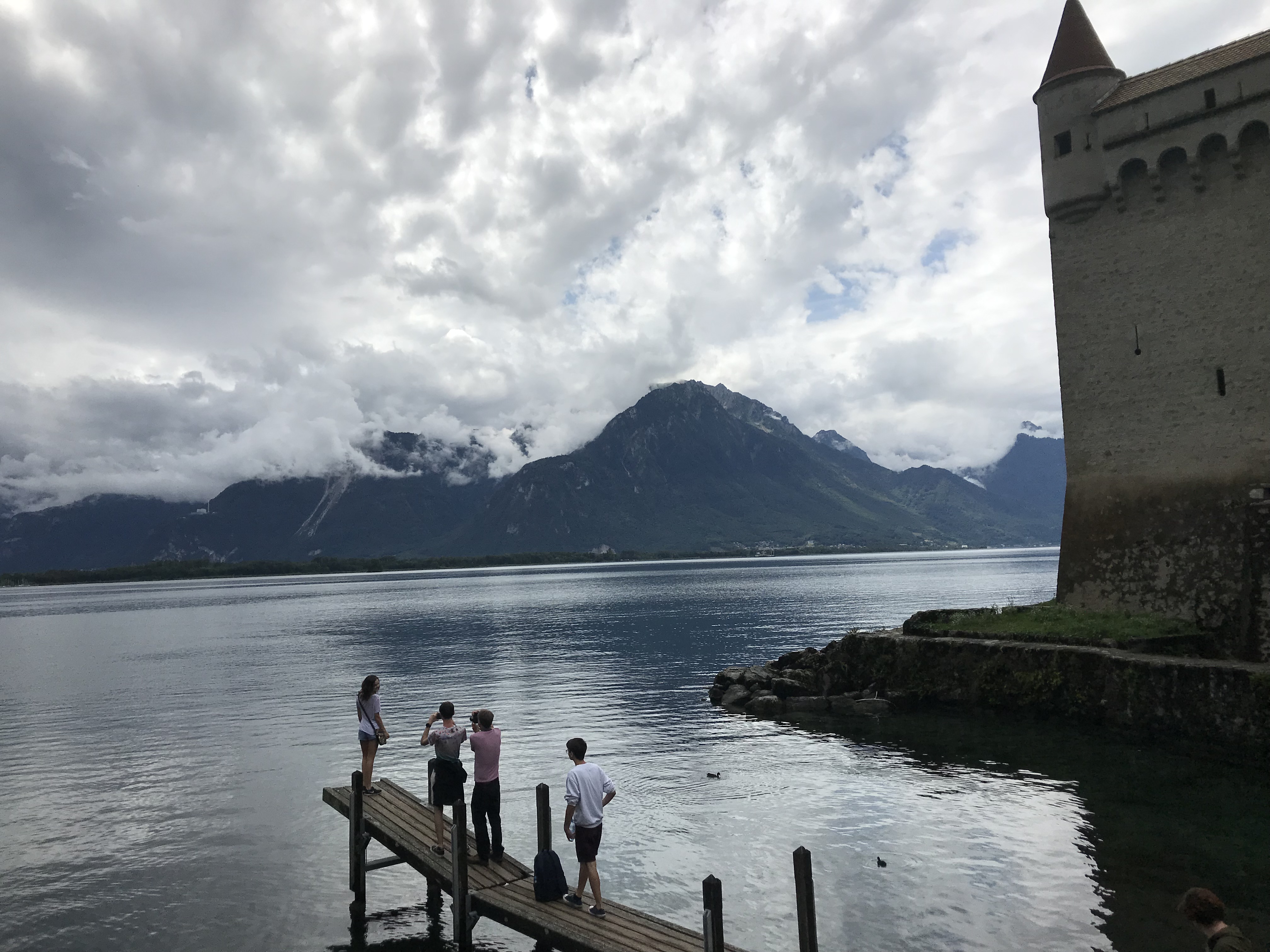
Chillon Castle is right on the lake, and looks like a storybook castle with a princess and a dragon. It’s not derelict (my favourite kind of castle is one where you can wander over the ruins, imagining stories) and it had a slightly ‘museum’ feel to it inside. However, we avoided the audio guide, which meant we could explore freely and avoid the parts squashed with serious-looking tourists. There were lots of ancient wooden walkways suspended high on the walls. Emm felt it necessary to stomp loudly whenever we walked across one, and at one point I was so exasperated with him, that as he followed me down some steps, clonking loudly on each one as if trying to collapse the staircase, I gave him some rather caustic feedback over my shoulder, explaining that it is possible to walk downstairs quietly. When we reached the bottom I turned around to continue my lecture, and found an elderly lady stomping behind me! Embarrassing.

Montreux is a pretty town on the far side of Lake Geneve. It has shops full of cuckoo clocks and cheese shops and expensive clothes shops. Next to the lake is a statue of Freddie Mercury, because he used to live there.

We returned to the Intercontinental Hotel. It has revolving doors, and the boys insist on squashing into them whenever Bea uses them, so they move slowly round, with the concierge watching on with concern wondering whether to explain that only one person should walk in each segment. I always walk in first and pretend I don’t know them.

Dinner was at Cafe du Soleil again. Husband followed his fondue starter with extra cheese fried in batter, so he’s clearly being careful about his cholesterol intake.

Tomorrow we leave for the Alps. I will be sad to leave the hotel, which has been wonderfully clean and comfortable with the most fantastic bathroom…but although I’m glad to have visited Geneva, I haven’t managed to fall in love with it…and snow-capped mountains sound rather fun, don’t they?

Thank you for reading.

I hope you have some fun today. Take care.
Love, Anne x

Thank you for reading
anneethompson.com
Why not sign up to follow my blog?

Have you read my latest travel book? The Sarcastic Mother’s Holiday Diary will make you smile as it describes travel with a family to Zambia, India, Europe, Malta and more. Available from an Amazon near you.

Funny stories about travel with a family.

UK link here

US link here

French link here


Family Holiday Diary 2019 continued


Sunday 11th August

We are staying at the Intercontinental Hotel in Geneva. The day started with breakfast, which was superb, apart from the pancakes which tasted like they had come from a packet. Even Jay couldn’t eat them (and he eats everything).

I looked at the gym. (Looking is a good start…)

We did a free walking tour. These are always a bit varied, as it depends on the tour-guide. Some are excellent, but this one was a bit boring and it was hard to hear/understand the guide. He tended to use very flowery language and every sentence wandered off to the mountains and back before he made his point, which meant that my mind wandered off too, and didn’t always make it back in time to actually hear what his point was. However, we were shown all the most interesting parts of the city.

Some highlights were: the statue of Henry Dunant (who started the Red Cross in Geneva, and who campaigned for executions to be stopped, so his statue is on the old site of execution) and the cathedral and a huge statue of various figures who were big in the Reformation (the carvings were big too) and a cool model of the city, which was right at the top of the museum. Calvin was from Geneva, and we passed several austere looking churches.

I can tell you that Geneva is a clean city full of banks and clocks, fountains, and chocolate. It is expensive and clean and functional and ethnically diverse. It did not, to me, seem very friendly. Personally, I prefer the slightly dirty cities in Italy and France, full of smelly cobbled streets where you are suddenly surprised by a beautiful square filled with music.

We had a McDonalds, which cost as much as a three-course meal at The Ritz in London. My family had a very long debate about computers and I tried to work out how the code on the receipt worked for opening the door to the washrooms.

We wandered very slowly (my family moves at snail-pace) up to look at the water jet, which blows across the jetty when the wind blows (nice when it’s sunny).

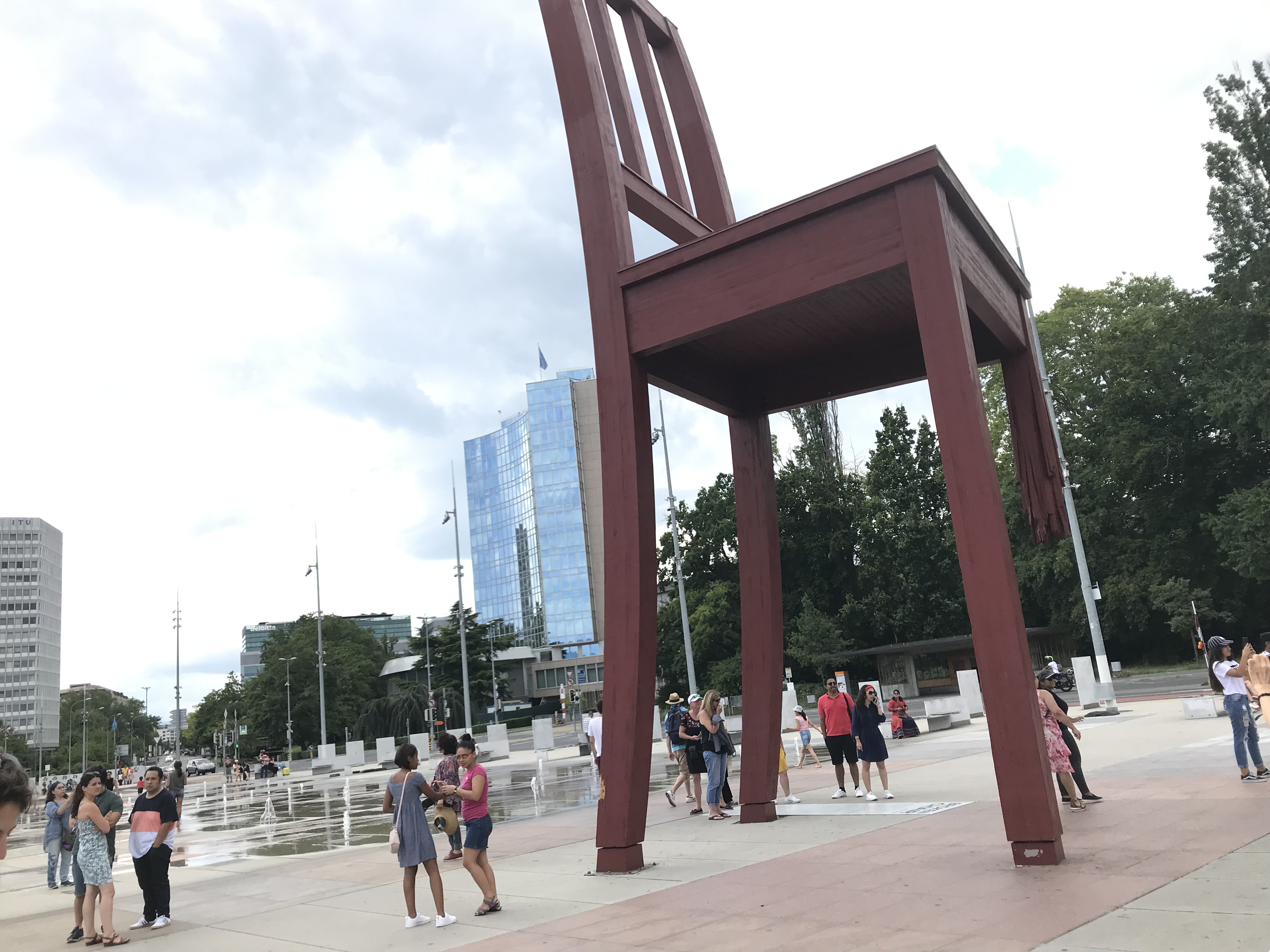
We caught a ferry across the lake and walked back to the hotel via the United Nations building. There are little fountains here, with children running though them, and a huge chair statue. The chair represents both stability and fragility—when the countries in the world work together, the world is a stable place, but we need to support the weaker countries or the whole thing could break down.


We ate dinner in Cafe du Soleil, which was away from the city centre and had more sensible prices (though I still paid the price of a bottle of wine for a single tiny glass). Best of all was the fondue, which they let us share (most restaurants will charge for every person who eats some). It was a mix of cheese and wine and was completely delicious. A very happy evening. I will tell you more about our trip on Monday–thanks for reading.

I hope you have a happy day. Take care.

Love, Anne x

Thank you for reading
anneethompson.com
Why not sign up to follow my blog?

Have you read my travel book yet? The Sarcastic Mother’s Holiday Diary. It will make you smile, and is a great gift for someone you love.

Funny stories about travel with a family.

UK link here

Geneva, Family Holiday Diary 2019


Saturday 10th August

We are all together for our family holiday, despite the best efforts of both British Rail who ground to a halt due to a power-cut, and the British weather which soaked everyone returning from work in London the evening before we flew. The taxi arrived at 5:45, we were all ready (something of a miracle with my family) and off we set for Heathrow.

Arrived at Heathrow and checked in. Breakfast in fancy restaurant (family enjoy spending Husband’s money) then went to gate. Flight delayed because they couldn’t find the pilot (seriously, this is what they told us—unexpectedly honest of them). Buses appeared and we worried a bus-replacement service was being offered, but they took us to a plane, so all was going well.

Arrived in Geneve about 2pm. So did our baggage, despite the best efforts of Jay who had cleverly left his luggage labels from a previous holiday attached to his bag. We found a taxi big enough to carry five people plus bags and went to Intercontinental Hotel. Paid taxi a year’s salary, plus money for carrying our bags (this is a thing, apparently). Checked into rooms.

Our room is wonderful, with a view across Geneva towards the river. It also has a Nespresso machine, and I am rather partial to Nespresso machines (whilst never wanting to own one, because then it won’t be a treat).

We were given free bus passes at the hotel, which I believe is available at all hotels, and covers travel around most of the city. We caught the number 5 bus, and went to the city. We saw a big old clock, walked next to a river, and saw the lake, which is lovely.

In the lake is a sort of fountain, which is not particularly pretty but is very big and is a feature of Geneva (in case, like me, you didn’t know—though I am told by my family that actually, everyone in the world apart from me, knows this). Anyway, the fountain/jet was originally something to do with hydro power in a clock-making factory, but the high pressure needed to be released, so once every day, they would send a jet of water into the air. This gradually became a tourist attraction, and then a feature of Geneva, so now it’s there permanently. Except, sometimes, it isn’t.

We found a big park, with a big fountain, which was pretty. It had a chubby Chinese boy playing in it while his mother shouted at him. Geneva does fountains rather well—there are lots of them. There are also lots of Chinese tourists, and we found another million of them posing in front of the flower clock, which is another feature of Geneva. It is a big clock, made out of flowers (you could have guessed that really, I expect).

We looked at a few restaurants but they were all very expensive. Geneva is expensive. It is even more expensive than Milan, which until now I had thought was the most expensive city in the world. We ate dinner in Vapiano, which apparently is a chain and very well-known (I had never heard of it). It was very nice, and you could stand and watch while they cooked your food (pasta dishes). I had a very nice ricotta ravioli with garlic and chilli sauce, all ordered in my very bad French. It was rather fun.

Caught a bus back to the hotel, and glimpsed fountains and a giant chair as we passed the United Nations building—something to visit another day. Went to bed exhausted but happy. Geneva seems like a nice city, even if everything is hideously expensive. It is very clean, and safe, but I’m not yet sure whether it is friendly. I will tell you more tomorrow.

Hope you have a nice day.

Take care.

Love, Anne x

If you enjoyed this, why not buy a copy of The Sarcastic Mother’s Holiday Diary? An interesting holiday diary which will make you smile, a great book to relax with.

Funny stories about travel with a family.

UK link here 

U.S. link here

A Little Grammar for Authors


I have finally, after four rewrites and several beta-readers, sent the manuscript of Sowing Promises to my editor. The book will be a sequel to Ploughing Through Rainbows, and the first draft of Promises (which at the time felt ‘finished’) was completed many months ago, before I even published Rainbows. My point is this, being an author, and creating wonderful stories is great fun however, before we sell those stories to the public, we need to do a lot of work—work which is mostly boring and frustrating, and in some cases, when an editor tells us that something which we love really doesn’t work, we need to take a big breath and accept the criticism, change the manuscript and move on.

Anne E Thompson has written several novels and writes a regular blog each week. You can follow her blog at:
anneethompson.com

Now, I read a lot of books, of many different genres by both famous and unheard-off authors, and just about the only thing which makes me stop reading a book before the end, is bad grammar. I was not particularly well educated as a child; my English lessons consisted of telling us to ‘be creative’ and very little teaching of formal English grammar. But it matters. It matters a lot. Anyone who plans to publish their work, really needs to invest in an editor who has better knowledge of formal English than they do, and they also need to work hard to improve their own understanding of some of the ‘rules’ (even though, when writing a novel, many of the ‘rules’ can be broken in the name of building tension and creating an atmosphere). I will tell you a few of my pet hates, which is very brave of me because when writing, even when you know the rules, it is so very easy to make an error, and when writing about grammar, someone else is sure to spot them!

One common error is apostrophe s. This one is easy. If something belongs to someone, the someone has apostrophe s. So ask yourself, ‘who does it belong to?’ and add apostrophe s. “The boys shoes”—who do the shoes belong to? The boy? Then write “The boy’s shoes.” More than one boy? So the shoes belong to the boys? Then write “The boys’s shoes”. In English, we don’t like s’s because it looks ugly, so take away the second s but leave the apostrophe: “The boys’ shoes.”

One thing I learnt very recently was the use of superlatives. This is the fancy name for when you have the most of something, and the rule is, you cannot use a superlative unless there are more than two. So, two brothers playing croquet? Neither can be ‘the best’ one can be ‘better than’ the other, or the ‘better player’ –but not ‘the best’. If however, their father plays too, then he can be ‘the best’ because there are now more than two players. If you have two children, one can be the older child, but he cannot be ‘the oldest’ nor ‘the eldest’ because there are only two.

There is another rule about the use of ‘less’ and fewer’. If you can easily count the items, use fewer. If there are too many to count, use less. You will now be irritated every time you visit the supermarket, and see the Express Checkout till, which is sure to be (wrongly) labelled “Five Items or less” (however, we have seen it so many times, that ‘Five items or fewer’ simply seems wrong!)

I hope you write well this week.

Take care.

Love, Anne x

A hilarious family saga set on a farm. Being a parent has no end-date, as Susan discovers when her adult sons begin to make unexpected choices in life.
A warm-hearted, feel good novel that will make you smile.

Game Theory and Supermarkets (nothing to do with Pictionary)


I have been looking through some of my old blogs, and given that I now have many more readers than when I first began writing (thank you) I thought I would repost a couple. Here is one that’s hugely relevant to anyone who ever shops in a supermarket.

Why do Supermarkets Price Match?

      Does your local supermarket promise to price match? Have you heard them offer to refund your money if you can buy it cheaper elsewhere? Why do they do it – are they being nice to their loyal customers? Actually, no. Actually, the price match promise is not even aimed at their customers, it is sending a message to their competitors. To understand why, we need to look at something that economists call ‘Game Theory’ (don’t get too excited, Pictionary and Cluedo do not feature.)

Game Theory is something that John Nash made a big contribution to (you may have heard of him – he was the person who inspired the film A Beautiful Mind. ) He showed that when individuals (you and me) or companies (Sainsbury’s) make a decision, we do not just take into account the things that will benefit us, the things that we want. We also take into account other people and competitors. Companies, when making a decision, guess what other ‘players’ in the ‘game’ might do. Supermarkets know that if they reduce their prices, the supermarket up the road will also reduce theirs. So they will both lose money. They do not want this to happen, so they make their ‘price match’ to their customers. This is sending a clear message to the other supermarkets. It says,

“If you lower your prices, we will lower ours too, so both of us will make less profit and neither will get more customers. So don’t do it.”

Economists call this making a ‘strategic commitment’. (Economists like to make up fancy terms, it makes them feel important.) It means the shop has made itself inflexible, it has limited its own options (because when the customer tells them that baked beans cost less in Asda, they have to match that price, they can’t just say “Oh, we were only joking, sorry, you still have to pay the original price.”) They do this so their competitors will know they are serious. They are making a tough commitment (because they believe it will influence how the other shops behave and everyone will be better off. Except for the customers maybe.)

Supermarkets have been having price wars for years. All of their actions have to be visible (no point in matching prices if your competitor doesn’t know about it) credible (their competitor has to believe that they actually will do it. If Morrisons promise a free BMW with all their loaves of bread, no one will believe that they will actually do that. Well, some people might, but not the sort of people who will be reading this) and understandable.

But why bother with the price match thing at all? Why not just tell the other supermarkets that you will lower your price if they lower theirs, so don’t do it? Well, they are not allowed to. That would be called collusion, which is illegal. We will come to that in a little while.

Firstly, let’s look at another company that has made a tough commitment. I like Kelloggs cornflakes, no other cornflakes are quite the same in my opinion. They are known in the cereal making world as being price leaders. They have always aggressively matched any price of any comparative cereal (not that any other cornflakes really do compare with Kelloggs.) Now, they are not allowed to tell their competitors that they will do this (it would be collusion – illegal remember.) Plus their competitors would probably just laugh and not believe them. However, they have behaved like this for about 200 years (I am guessing the time) and so all cereal manufacturers know what to expect and they behave accordingly. No one tries to out-price Kelloggs, it just is not worth it, everyone loses (apart from the customers. Again.) Economists (the people who like using fancy phrases) would say the cereal companies are in ‘Nash Equilibrium’. They cannot individually change and still succeed because their competitors will step in and lower their prices too until eventually they go bust.

There is another kind of commitment that companies make. This is called a ‘soft commitment’ and it is less aggressive, it more involves sharing the market place. So, Dominoes and Pizza Hut do not open shops in the same town. They have not agreed to do this (that would be collusion) they simply do not do it. They share the customer base rather than trying to force the other company to lower their prices.

Another ‘soft commitment’ can be seen with Sony and Phillips. When CDs first came out in 1982, Sony produced them but Phillips (the main competitor) did not. It let Sony go first, spend lots of money on researching the new technology and then Sony flooded the market with them. It worked to both company’s advantage. Phillips had no risk, it did not invest in a new technology which might never take off, might just be a waste of money. Sony had the advantage of knowing that if it invested in new technology, it would then have an empty market place and could sell lots to recoup its expenditure. It suited both companies.

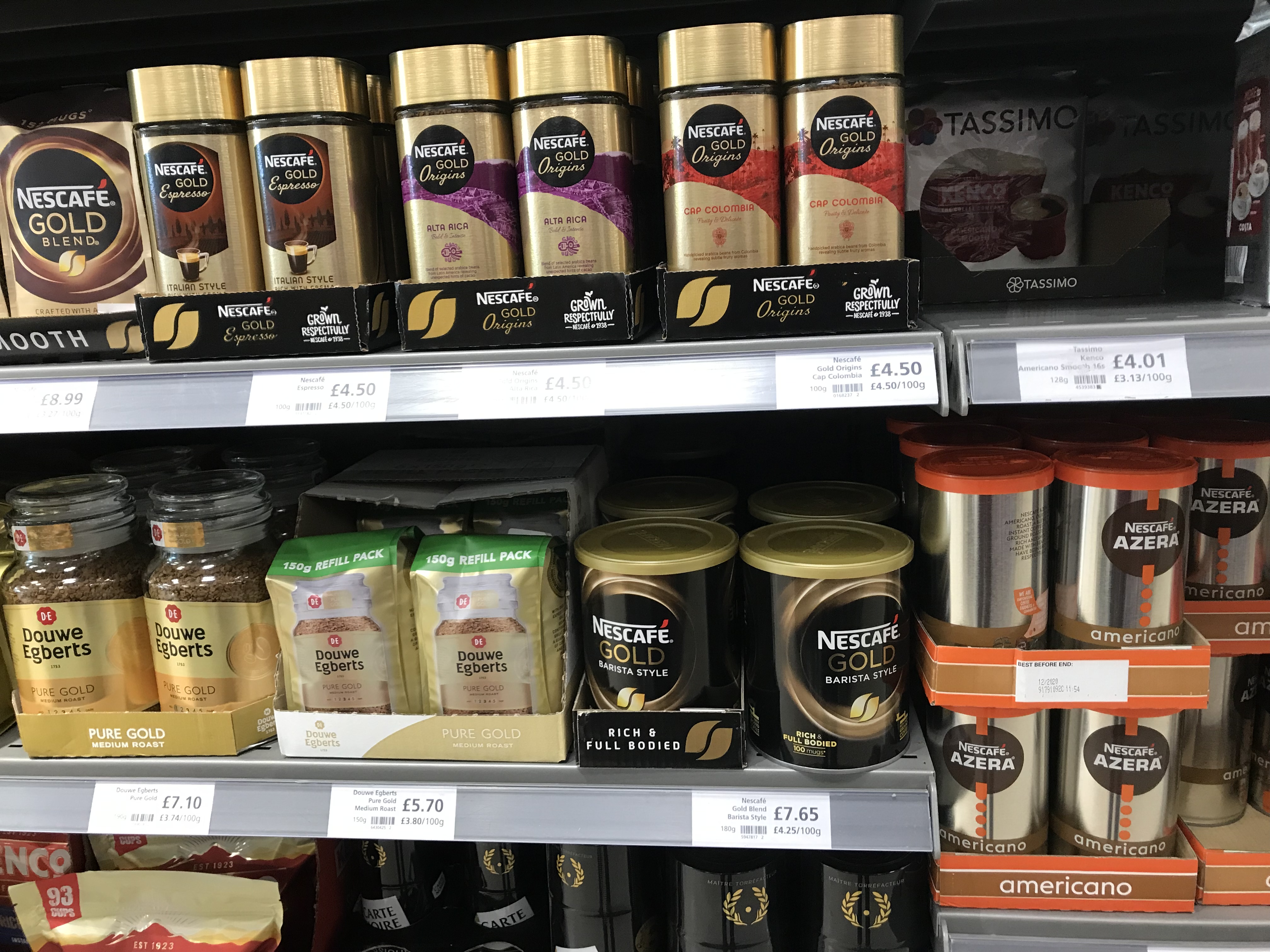
Another way that companies share the market place is by aiming their products at different people. So, Illy makes expensive but delicious coffee, Nescafe makes cheaper but still drinkable coffee, Asda own brand is pretty yukky but very cheap. It is almost a class system for coffee! This is called a ‘fragmented market’. Again, the coffee producers could not agree to do this (collusion) nor was it historical (like with kelloggs) but they could see which areas their competitors were investing in (like growing only highly refined coffee beans or investing in cheap transportation in Brazil) so they could predict what everyone was doing and make their own decisions accordingly. (This got a bit messed up when the US coffee people entered the scene, but it still makes for a good example and I rather like thinking that I prefer ‘upper class coffee’!)

Now, we have kept mentioning ‘collusion’. What is that about? Capitalism works with the belief that the market place works best if there is free competition, if everyone is trying to win the game. People believe this so strongly that they have created organisations to police this. In the UK we have the CMA (Competition Market Authority.) Other countries have different bodies, all trying to ensure a fair market place. Competition keeps the prices down and everything working efficiently.

The exception to this, is oil. The countries that produce oil (note, countries, not companies) do collude. Which is why oil is so expensive. The actual companies don’t talk – BP cannot have a price chat (over a cup of illy coffee) with DNO – but the UK can talk to Norway. They set the price of oil (by adding tax) where they want it. They try to limit how much oil people will use.

If we return to supermarkets, we can now see that their price match promise does not actually help us, the customers, very much. However, they are still trying to entice us into their shop. So, while they may not ever give away a BMW with a loaf of bread (sorry mother) they will offer us other things. We can still enjoy our free coffee and newspaper or our loyalty card or our free knife set. It all makes shopping a little less boring.

I hope you find some bargains this week. Next week I will show you some grammar which most supermarkets continually get wrong!
Take care.
Love, Anne x

Thanks for reading.
You can follow my blog at:
anneethompson.com

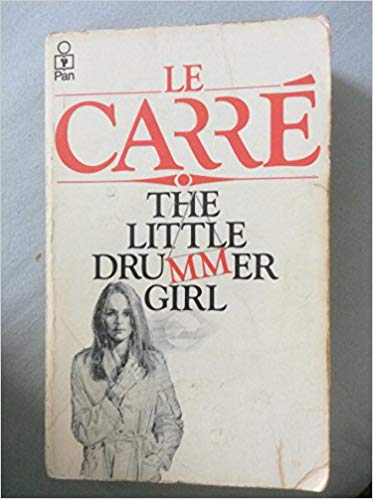
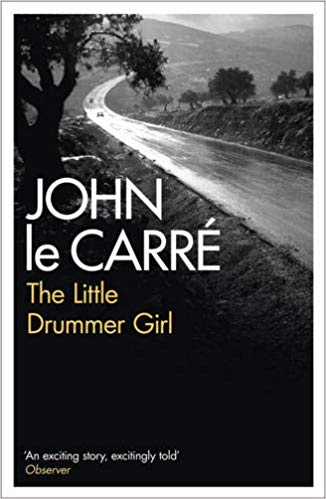
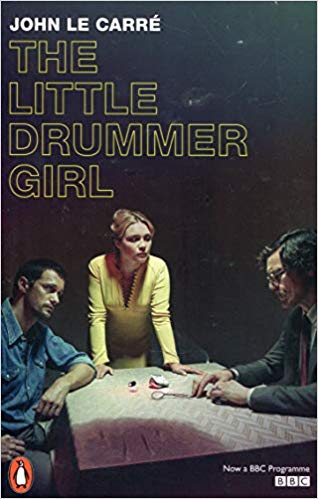
The Little Drummer Girl


The Little Drummer Girl by John Le Carré

(This review contains spoilers!)

I first watched this on an overnight flight from Hong Kong. I planned to sleep, but had the box-set on in the background. It was fascinating, but there was lots which I didn’t understand, so I think I drifted off to sleep for chunks of it. When I got home, I ordered the book on my Kindle, and tried to untangle the confusion. It really is, an excellent book, with a complicated plot.

The story basically charts the training of a spy. She is a young actress, and therefore unknown in the spying world. She is seduced by Zionists, and persuaded that spying is simply acting, with the real world as your stage. The idea is a good one, and probably close to the truth—I guess to spy you are pretending to be someone else.

A cover story is created, which the actress has to ‘live’, so that if she is ever questioned, she will be relying on real memories in her answers. She falls in love with her trainer (so did I, a little, he is the absolute tall dark stranger, a silent strong type).

However, the real interest for me was the exploration of the whole Zionist issue. While the actress is being prepared for her role, she needs to absorb the teachings and propaganda of the Palestinians. Gradually, they change from being simply terrorists willing to kill and maim innocent bystanders, and become real people with a cause. The reader is gradually shown that neither side in the debate is without blame, and that the issue is much more complicated than it first appears.

For example, there is some discussion about the Jews, who were made a faceless non-human by the Nazis, and therefore able to be exterminated. When they then went to Israel, after the war, their view of the Palestinians was not so different. They also considered them as lesser humans, people who had no right to live in the land promised to the Jews. In their minds, they exterminated them. In reality, they took their homes and land, places they had been settled in for generations. The book also talked of the unprovoked violence that peaceful Palestinians encountered, and how it had forced them to become an army, so the rest of the world listened to them.

Now, this is a work of fiction, and therefore one assumes that both the characters and the situations have been romanticised. But it does also ask some real questions, and encourages the reader to look at the issues in the Middle East from both sides. When the actress finally joins the Palestinians, she bonds with them, loves some of them, watches children being killed by the Zionist army. We, the reader, wonder whether she will turn, and instead of spying for the Zionists, will join the Palestinians, and there is a moment of tension when you are unsure which way she will turn (as are her handlers).

I loved this book, even though sometimes I got a little lost and found it difficult to keep each character clear in my head. The issues explored are fascinating, the idea that neither side is perfect, that there is real hurt and despair inflicted on both peoples, and there are no easy answers. Of course, because this is a John Le Carré book, there are also beautiful descriptions, and moments of real humour, and the characters are so real you start to look for them in the street. It is the timeless sort of book that you can read and enjoy more than once.

Thank you for reading. Use your time wisely today.
Take care.
Love, Anne x


Anne E Thompson has written several novels and writes a regular blog each week. You can follow her blog at:
anneethompson.com

Have you read my latest novel: Ploughing Through Rainbows? It’s a great holiday read. Available from an Amazon near you as both a Kindle book and a paperback.

A hilarious family saga set on a farm. Being a parent has no end-date, as Susan discovers when her adult sons begin to make unexpected choices in life.
A warm-hearted, feel good novel that will make you smile.

German Amazon link here

UK link here

U.S. link here

Jews in Latvia


The Jews in Riga

When I was in Latvia last week (that’s a fun sentence to write!) I visited the Jewish Museum. Riga has several monuments and memorials dedicated to the Latvians who died during the 1991 barricades, but there was little reference to the Jews who died during the Nazi occupation. I found directions to the Jewish museum in the guidebook, and set off.

The museum is in a tall building in the Art Nouveau section of the city. The door was locked, and I had to be buzzed inside by a lady in a booth—perhaps even today the Jewish people are unsure of their safety. The museum is in a Jewish Centre, where you can also sign up for Jewish dancing lessons, and language courses.

The displays were all in glass cases (not an attractive museum to visit) but I was given an audio guide in English, which helped. The guide was rather long-winded, and the man speaking was rather pedantic, but there was a fast-forward feature, so I gleaned what I could from his descriptions and muted the other bits (be nice to do this in real-life sometimes). The museum is Jewish, and I guess any museum is likely to have a bias. Whilst what happened to the Jews was unforgiveable and too horrid to properly grasp, I’m not sure if the pre-war Jews were all quite as perfect, fully integrated and wonderful as the museum portrays. It felt a little like when you attend a funeral, and you don’t recognise the person everyone is describing because they sound like a saint but you know they could be an awkward individual when they were alive. Is that right, or should we be more honest? I don’t know. We like our victims/heroes to be perfect and our villains to be completely evil, but life is not like that.  Here is my understanding of the history of Jews in Riga, based on what I saw:

In the early 1900s, the Jews were poor, but rather clever at business. An example was given of a merchant who could initially only afford to employ 3 men, and two years later due to clever business skills he owned 3 factories. However, there were limitations on their social status, and they were only allowed to work in certain areas.

In 1905, during the revolution, there were attempts to suppress Jewish people, and many left the Baltic region at this time.

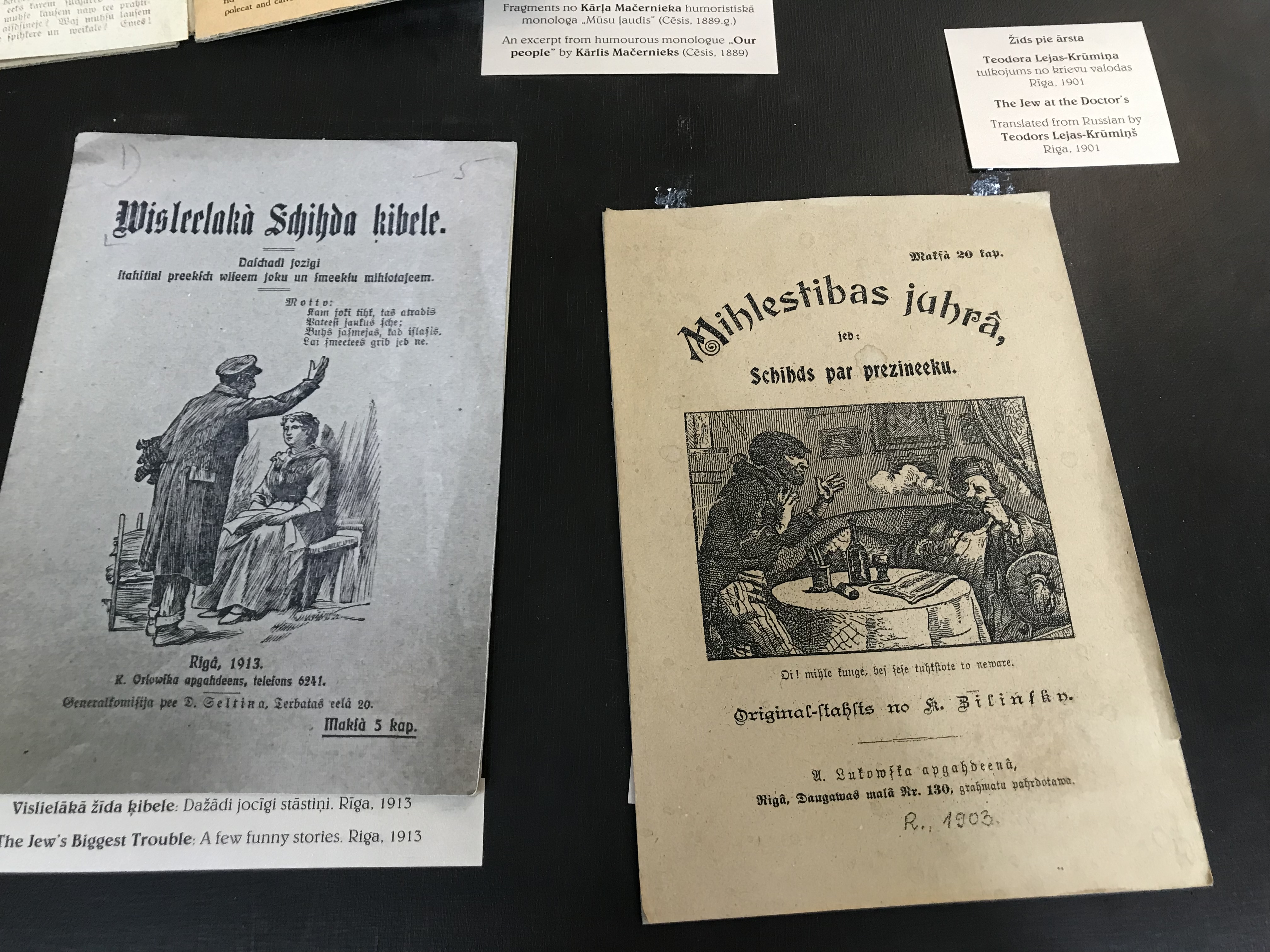
The Jews were part of society, but they were seen as inferior. Literature shows the Jew as a figure of fun, they are portrayed as slightly dim and generally unhealthy and dishonest. They were laughed at, though not particularly disliked. Jews often appeared in children’s stories as a travelling peddler, a thin man with a big nose, who would try to trick you if you weren’t careful.

In 1918, during the Latvian fight for independence, Jews signed up to fight. The Bolsheviks, known as ‘The Red Terror’ were violent and unfair. In 1919, many Jews joined the army, some as young as 15 years old. The museum had medals, showing the awards Jewish soldiers had received for bravery, though it didn’t state what percentage of Jewish men joined the army.

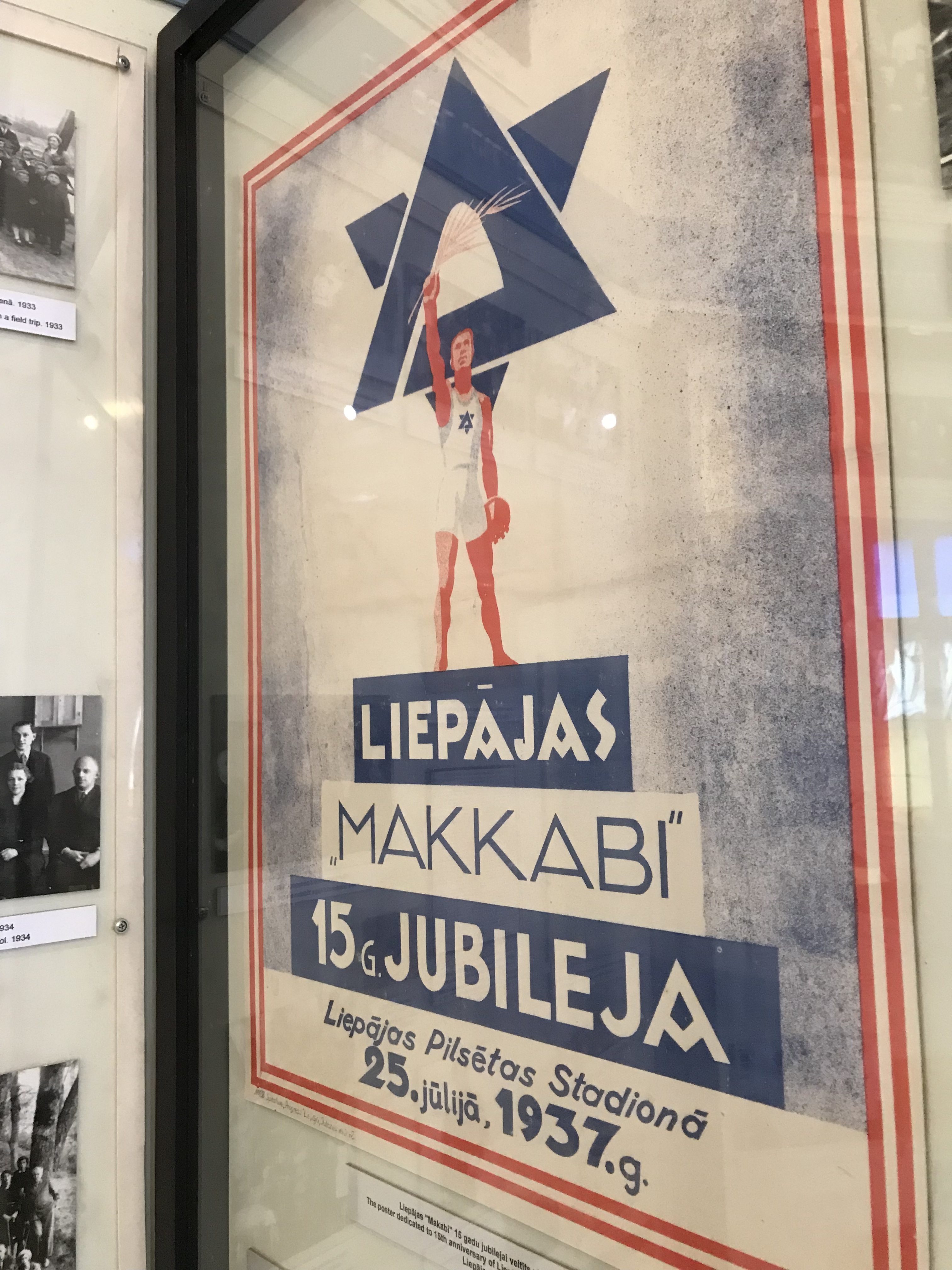
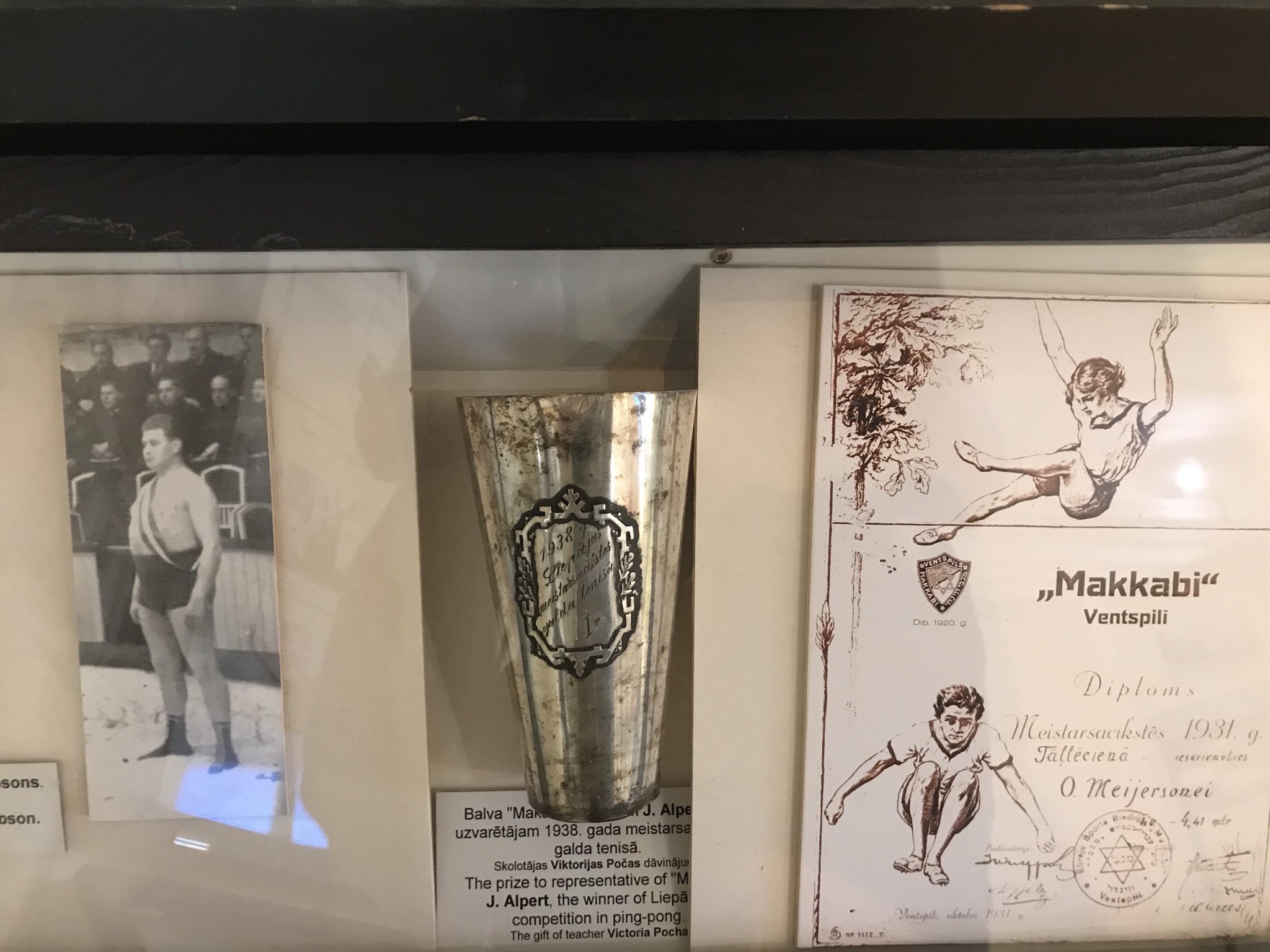
In 1920, rumours began to spread that the Jews were against the new Latvian nation. There were reports that Jews had refused to fight, that no Jews had joined the army, that they were not truly part of Latvia. The Jews attempted to combat this by publishing their own newspapers, in Russian and German as well as Yiddish. Jewish students set up clubs (fraternities) to balance those that were anti-Semitic. Jewish business flourished in free Latvia, and Jewish people owned banks and businesses (though the anti-Jewish cartoons were still around). The Jews took part in sports, to try and dispel the idea that they were physically weak, and set up competitions and tournaments.

When the Nazi party took control of Germany, people in Latvia boycotted German goods in protest. Many Jewish refugees arrived in Latvia, trying to escape the Nazis.

In 1940, the Soviets entered Latvia. All Jewish societies were closed and some Jews were deported to Siberia. Then the Nazis arrived, and the horrors increased.

In August 1941 a Ghetto was set up in Riga. All Jews were forced to leave their homes and live in the Ghetto. Synagogues were burnt—sometimes when filled with people trapped inside. Propaganda depicted the Jews as weak, ugly, thick and greedy. It was said they refused to be part of society, they hid their wealth, they were the cause of all the troubles. The Nazis tried to turn Latvian citizens against the Jews, and they became outcasts.

By the autumn of 1941, the Ghetto had been emptied of all Jews apart from men deemed strong enough to work. Everyone else had been murdered.

The museum even has films of Jews being shot (after being forced to run into a pit). The Nazis were so sure of their absolute supremacy, that they would never be held to account, that they filmed and photographed the killings.

Somehow, seeing these photographs was harder than seeing the ones when I visited Auschwitz. Perhaps because the people were well-dressed and healthy. I found it more shocking, to see attractive teenaged girls being killed, rather than the gaunt pictures of starving people in the camps—it’s always easier to relate to people who look like the people around us, I suppose. And that is the point—these people were like us. They would have been good people, and not so nice people, and some who were kind and others who were rude, just like us.

One display case showed the passage from Psalm 22, used by Jews to express their agony: “My God, my God, why have you abandoned me?” These are familiar words for Christians, but in the later context of the crucifixion.

In 1943, the Ghetto was emptied of men, when they were sent to the death camps. The Riga ghetto was then divided, and became a stopping place for Jews from other countries who were on their way to the camps in Germany and Poland.

I was interested to read that there had been some Jewish resistance to all this. Some people smuggled weapons into the ghetto, hoping either to escape or to at least die with dignity, defending themselves. There was a big escape attempt from the Riga ghetto, but most escapees were later caught and shot, and 80 other Jews were shot in punishment. However, some Jews did manage to escape from the ghettos, and from the death marches.

One area of the museum was dedicated to people who had helped the Jews during the war. Not everyone believed the propaganda, not everyone sided with the Soviets and the Nazis. Some people were brave enough to risk their own lives, and helped Jews to survive. (Would we be wise enough today, to resist the messages in social media, to be able to discern what is actually true?)

In 1940, it was estimated that there were 95,000 Jews living in Riga. In 1945, it is thought that only 1,000 were still alive.

There is a big memorial, in a forest, in memory of the slain Jews. One day, I hope to visit it. Perhaps by remembering the horrors of the past, we can help to ensure we don’t repeat the same evils today.

I recently read a novel, which examines the idea of national bias, set amidst the more recent conflict between Zionists and Palestinians. I’ll tell you about it on Monday — why not sign up to follow my blog so you don’t miss it?

This is my final blog about Latvia for now. Next time we visit will be in the winter, I’m so looking forward to seeing the city with snow.

Live well today.

Take care,

Love, Anne x

Anne E Thompson has written several novels and writes a regular blog each week. You can follow her blog at:
anneethompson.com

A laugh-out-loud book about travelling the world with a family. From India to South America, and across most of Europe, this book has been described as “The Durrells meet Bill Bryson”!

A great book to read on holiday, and you can read it for free if you have a kindle! Available from a Kindle near you.

U.S. link here

UK link here