Meeting the women…


img_5274

We were taken to a house in a relocation area. This is an area where poor people have been relocated, away from the centre of Delhi (so the city centre looks nice when people visit.) Am not sure if that’s true/the whole reason, but that’s what we were told. The roads were unmaintained, covered in litter, with cracked tarmac. Some were wide enough for vendors to have stalls at the sides. Some were narrow, long dusty lanes with houses on each side. The houses were tall, entered through an open doorway. It didn’t seem polite to take photographs, so I will describe it for you.

We went through the doorway and climbed steep steps that twisted, similar to climbing steps in an ancient castle tower. We reached a room, full of people and laundry and noise. We walked through, to another staircase. At the top of this one, in another room, we removed our shoes. I looked around.

There were two closed doors and two open doorways. One had a soaked floor, so I’m guessing that was an area for washing. Water is carried up from taps in the street, or via hosepipes. There are also communal toilet blocks in the street. The other doorway led to a kitchen area. A double ringed hob was powered by a large gas bottle – like a camping stove but bigger. There was a stretch of work surface, with pots and pans and a couple of sacks of what I assumed was food. No refrigerator, no sink.

The charity rents a room in this house. Above us, up more stairs, were two more homes. So people constantly walked through each other’s house. There is not much privacy if you are poor in India. One doorway led to a bedroom, the other to the room rented by the charity. We went in and sat, on rugs laid on the concrete floor.

The room soon filled with women, and they sat and shared their stories. They were very strong people, you had to admire them.

We heard from the woman who, when she married, was required to remain in the house all the time. If she ever left, she had to cover her whole head. She asked her husband for permission to leave the house, which he gave, and she began to meet other women. She knew they were being hit by their husbands, even though they denied it and explained the bruises by saying they had had accidents. Gradually they trusted her enough to tell the truth. I got the impression that this was huge – just getting the women to speak about what was happening in the home. They then formed a sort of support group, a place for women to share their problems with other women. I’m not sure that anything changed physically, but they were no longer alone, they supported each other. They are beginning to campaign for a women’s court, so their legal rights are upheld.

We learned that in India, when a boy is born, there is a big celebration. Everyone visits, they bring gifts and food (it sounded like a Baby Shower in the US.) If a girl is born, it is kept quiet. The mother doesn’t leave the house, the baby is kept hidden, people mourn. These women were trying to change this. When girls are born, they try to persuade the mother to come to a celebration, which they organise. They give a gift, and acknowledge that having a girl is also good. It’s very tough, because the families don’t agree, and family is very important in India. They are also campaigning for girls to be vaccinated, to have health care and decent food, for baby clinics to check girl babies.

Girls grow up knowing they’re not valued. They are encouraged to stay at home, they seem to be very much ‘owned’ by their husbands. This is even though the woman’s family has paid a big price as a dowry – they pay for the man to take the girl. I’m not sure how it’s different in other areas of India, or amongst rich and educated Indians, but this seems to be the case in the relocation area we visited. I wasn’t sure if I had understood correctly, so I did some online research. Apparently, a dowry was historically given to the bride by her family, so she had her own money if her husband mistreated her. This has evolved into it being given directly to the man. Officially, it is outlawed – but it is still commonplace. I then read horrible facts, that if a dowry is too small or withheld, the woman is burnt and her death reported as accidental or suicide. Crimes against women are rarely investigated. It was all too horrible, so I stopped reading.

The women chatted, laughed, told us their stories. They were coping with so much, both physical abuse and emotional damage. Married aged 15, then rejected by the community because they had given birth to girls. They were learning to recover, learning they had value, learning to support each other.
They laughed as they recited a rhyme they all learned in childhood, which repeats a phrase with “abla” in. The word “abla” is sometimes used as a prefix to a name, so ‘Abla Anne’. It means worthless. The women have changed the rhyme, substituting “sabla”(might be spelt wrong) which means the opposite, means ‘of value’. These women are gradually trying to change their little bit of the world. Nothing massive, but even these tiny changes take great strength of character. They are very brave. It was an honour to meet them.

Thank you for reading.

Tomorrow I’ll tell you about our visit to the slums. Why not follow my blog, so you don’t miss it?

anneethompson.com

xxxx

Children’s Day in Delhi


p1100004 p1100006

Today was our first day looking at projects in the poorer areas of Delhi. I woke up nervous, which was annoying. Several toilet visits and lots of praying, and I had myself more or less under control.

First, we went to the charity field office. Various people did presentations, and we learned something about India. I learned about the Dalit people. In India, they have a caste system, which I vaguely knew about. Depending on your name, ancestors and family homeland, you slot into a class of society. The Dalit people are below even the lowest class.

I also learned about Debt Bondage. You are deemed to be responsible for paying the debts that are owed by your ancestors – for the things they might have done wrong ( so not material debts, sort of spiritual debts, owed to society.) These can never really ever be repaid, which in effect means that people are slaves. ( Not sure if I am explaining this correctly – anyone with more knowledge than me, please jump into the comments section below!)

Apparently, the good old British compounded the problem when they ruled here. The British introduced toilets. These toilets needed to be emptied. Only the Dalit people were considered low enough to carry poo, so they came from rural communities into the cities, where they were the poo carriers. The problem (for other people) arose because when they carried poo, they earned money. They then used this money to return to the rural community and buy land. This left no one carrying poo. So the British, in their wisdom, made a law that meant no Dalit people could own land. Hence leaving them available for poo carrying. Even today, Dalit people do 33% of the agricultural work, but only own 1% of the land.

Now, I don’t want to discuss the politics of this. I am fairly sure British Rule made some terrible decisions in its time. I am also suspicious that sometimes countries who have had generations of people since then, like to blame some of their current injustices on the British. However, today people are downtrodden and unfairly treated, and whatever the reasons, this is wrong. The law in India now allows Dalit people to own land. In practice, very few do.

I asked how people know which caste someone is in. I was told that a person’s last name, their family occupation and place their family originates from, all give clues. Plus it is apparently openly discussed. If someone says they don’t know which caste they belong to, they will be upper caste, because the lower castes can never forget the weight of oppression they feel. I thought that perhaps, instead of withdrawing currency, the government could withdraw family names and reissue everyone with a casteless one. But perhaps that kind of sweeping rule is why the British made some bad decisions in the past. Perhaps I should just keep quiet and listen for longer, so I can fully understand this culture.

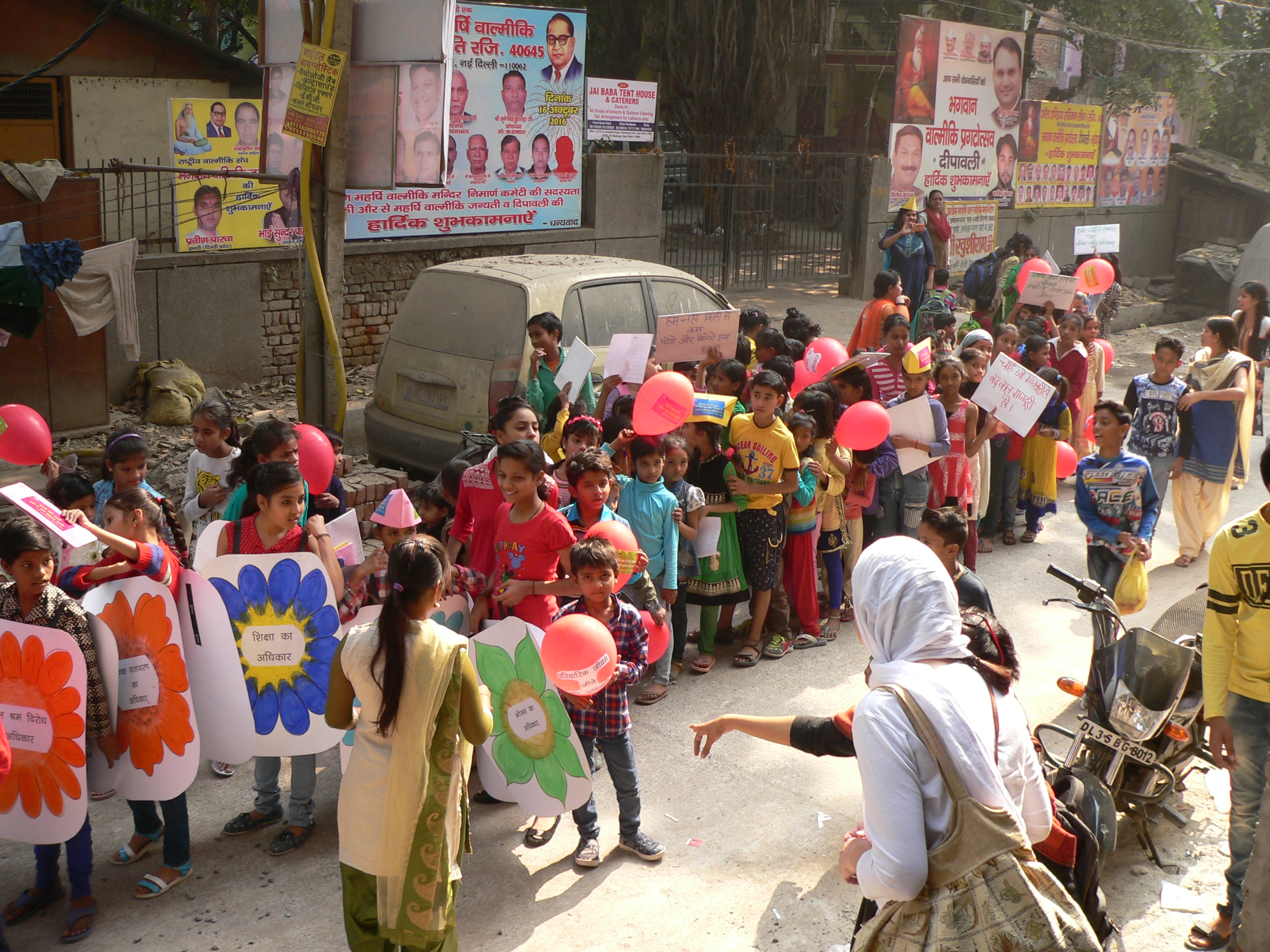
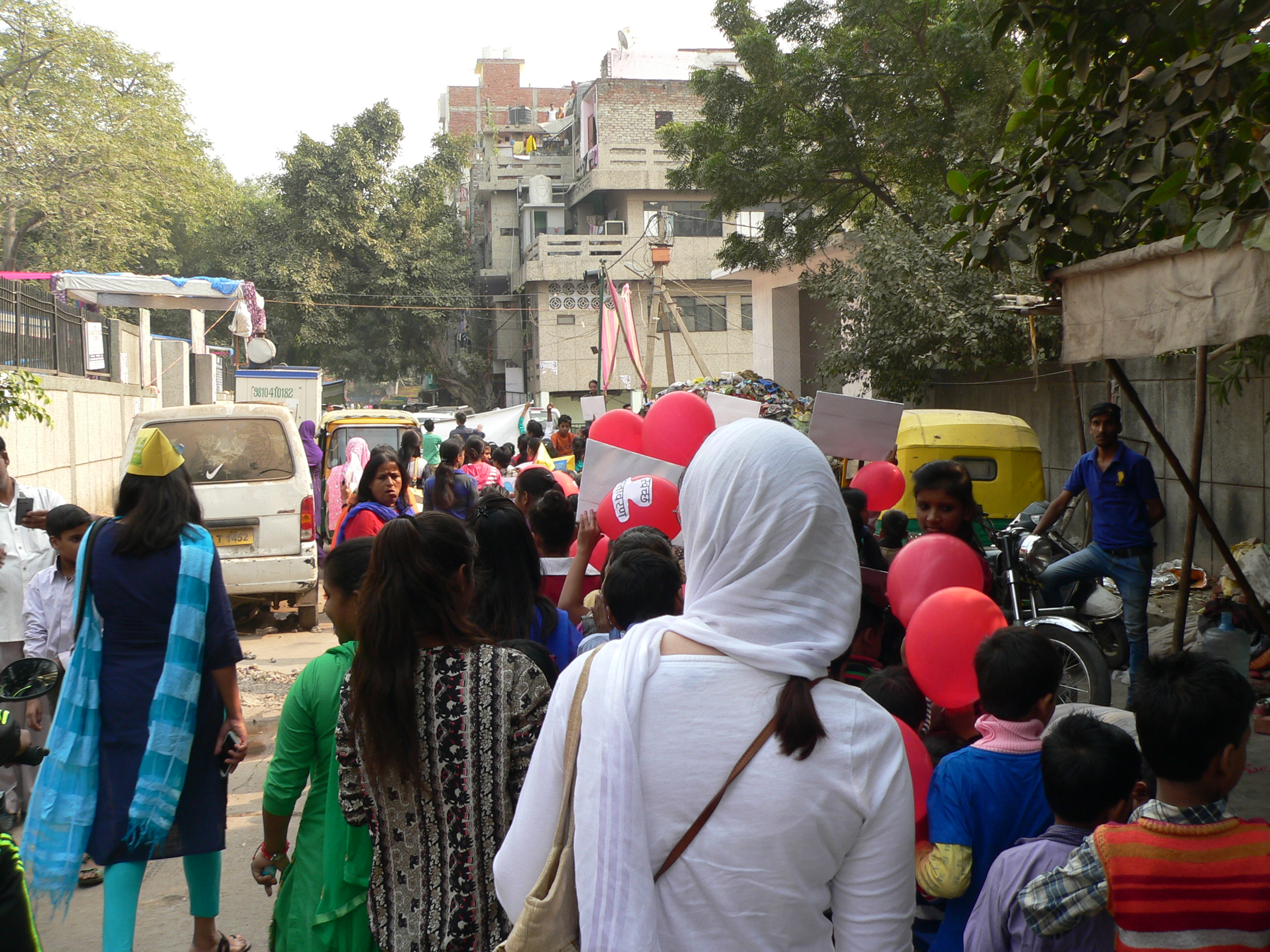
We left the field office and drove to the community centre. This was a room. There were two very steep steps into it from the street. Inside, it was painted and had a few pictures and slogans stuck to the wall. We met the children. It was Children’s Day in India, when schools are usually closed and communities plan treats ( like picnics.) These children were from a poor community and they had planned a protest march. They lined up outside and held signs and banners they had made. Then they all marched through the streets, shouting slogans they had learned. ” We have a right to education.” ” We have a right to food.” ” We have a right to clean water.” “Girls have a right to life.” Makes you think, doesn’t it……

The girl’s right to life is a big one, and something the charity are working on. In India, parents often choose to terminate a pregnancy when they have the ultrasound scan and learn it’s a female. In some areas, very few girls are being born.

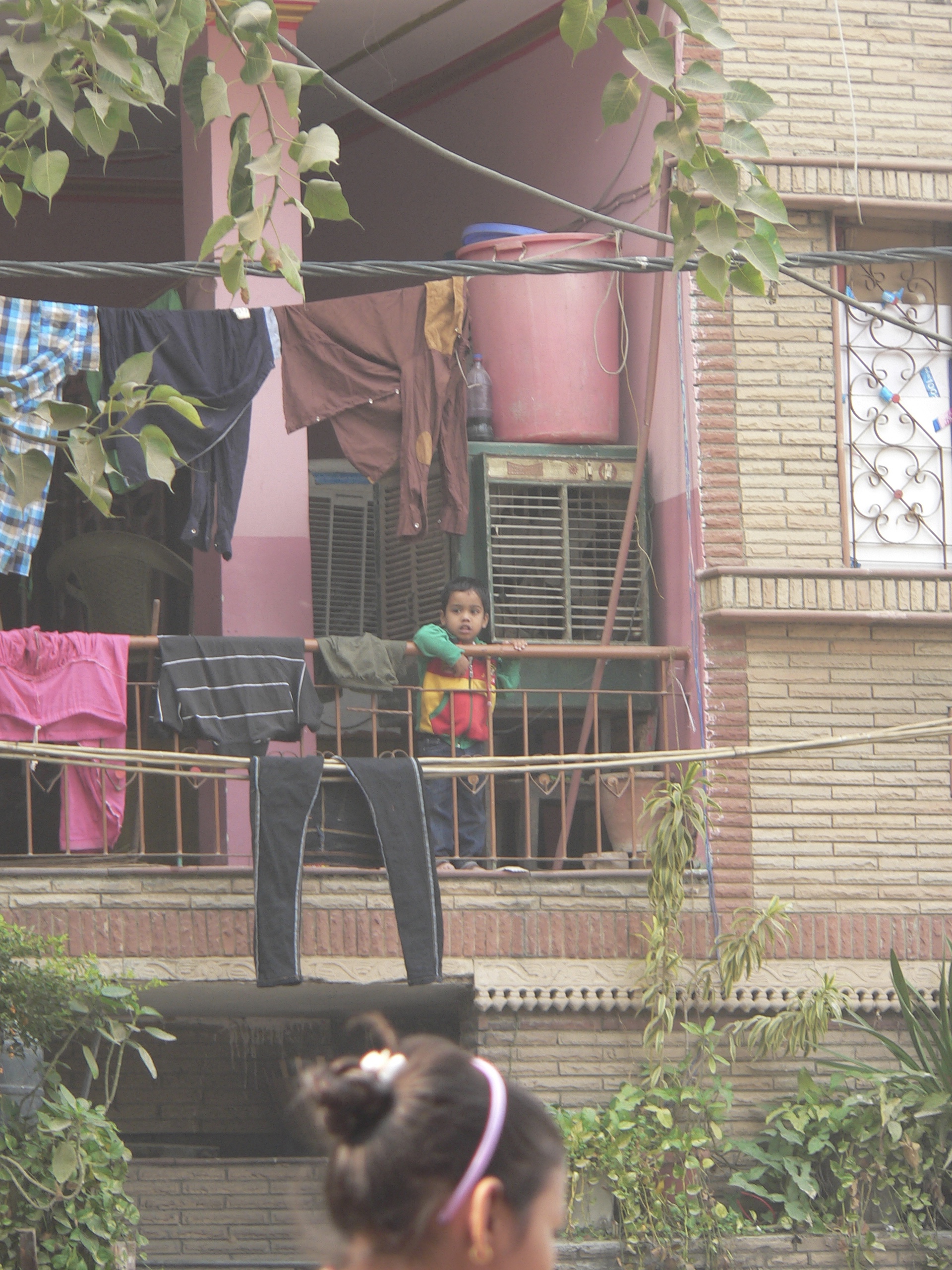
The march finished on an area of scrubland, where they held a rally. Some mothers sat and listened, and a few teenaged boys wandered over. They had hard faces but the same silly haircuts that lots of boys who I’ve taught have, so I felt quite comfortable. We sat on hard dusty seats in the hot sun, while stray dogs fought behind us and clouds of flies floated around. We were surrounded by houses – tall many storied buildings with balconies filled with washing drying and people leaning over to listen. It was very foreign.

The ‘rally’ consisted of a few more slogans chanted, then a brief talk in Hindi. There was then a film, telling the children they had the right to not be abused. Our translator said this was a big problem. Many women stayed in the home all day, they had very few rights. Children were frequently abused by family members. The film was a good one, surprisingly blatant for a children’s film, but very clear – child abuse is wrong and children should tell an adult and call Childline. They then taught the children the Childline number.

Then we were asked if we would speak. There were about 100 children, plus maybe 50 adults, not very different to a school assembly or church service, so I was happy to give a short speech. ( I talked about how special my children were, at every age, and how no one was allowed to hurt them or make them do things they didn’t want to. And these people were special too, whatever their age, they had the same rights.) It was hard to remember to pause, so it could be translated into Hindi. It was also, actually, very hard to not mention God. For me, God is the reason they are special, they are God’s created people and he loves them. But I wasn’t sure what the people I was speaking to believed, didn’t know if they would be angry or offended if I mentioned God. So I didn’t, I tried to tell them what I thought God would tell them, if he was there.

Afterwards, lots of people wanted to touch us and take selfies or say hello. It was strange, we were treated almost like celebrities, even though actually they had given to us, by inviting us to share their day. I got stroked a lot. There are now a lot of terrible photos of me in India, as I was wearing very strange ‘walking through poo’ heavy boots and a mix of Indian tunic with light trousers and a headscarf. And glasses – which make me look like an ageing aunty!

Then we went to a house and met a group of women. Very strong women. I will write about it tomorrow.

Thank you for reading.

Why not sign up to follow my blog?

anneethompson.com

p1100001 The community centre.

p1100003 p1100007 p1100023

Marching through the streets – while cars and lorries passed us and motorbikes squeezed through. A teacher’s nightmare!

p1100029 p1100034p1100027

The place where they held their ‘rally’.

xxxx

Second Day in Delhi


img_5284

Slept well. Breakfast in hotel. I’m trying to only eat hot cooked food and no meat (because I’m told, Indians eat very little meat, so the whole process from animal to table is likely to be less ‘safe’ than in England.) It was hard to resist bacon and a wonderful array of pastries. I did have some milk in my coffee, but didn’t eat the butter, which although was pasteurised had been left on warm table, not in chilled cabinet. Am possibly being too fussy. D ate everything.

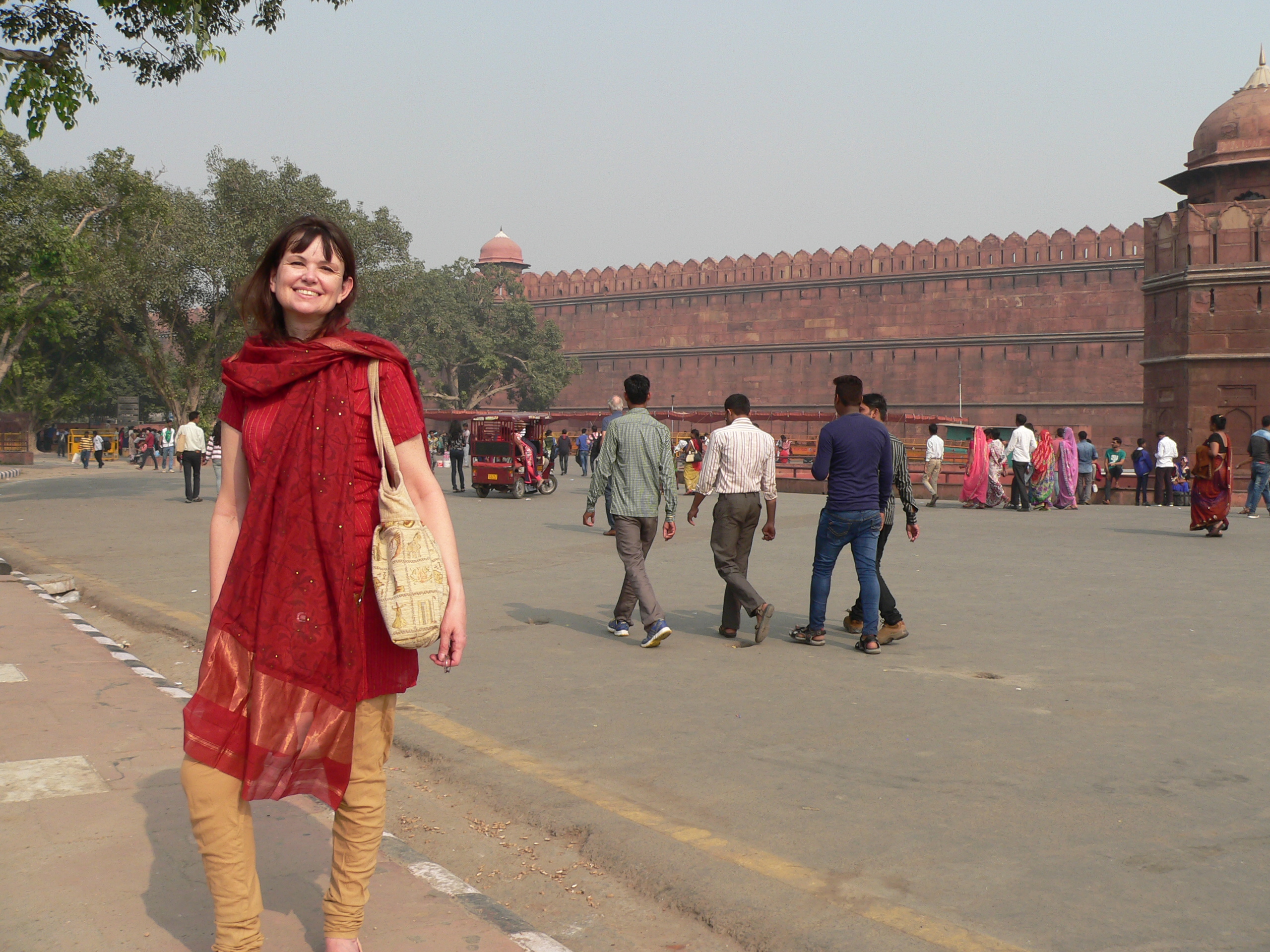
We walked around the old part of Delhi. A few years ago, in Mumbai, I bought an Indian tunic and trousers ( the trousers – baggy at top and tight at ankle are called ‘salwar’. The tunic is called ‘kameez’ and the veil/scarf is called ‘dupatta’.) I felt bit of a wombat in the hotel, which is full of Westerners, but on the street it felt much more comfortable to be dressed the same as everyone else. The clothes are also very comfortable, as the fabric is light and the veil can be used as a sunshade over your head. It also covered my bag rather neatly – being aware of pick pockets is part of being in India.

p1090875

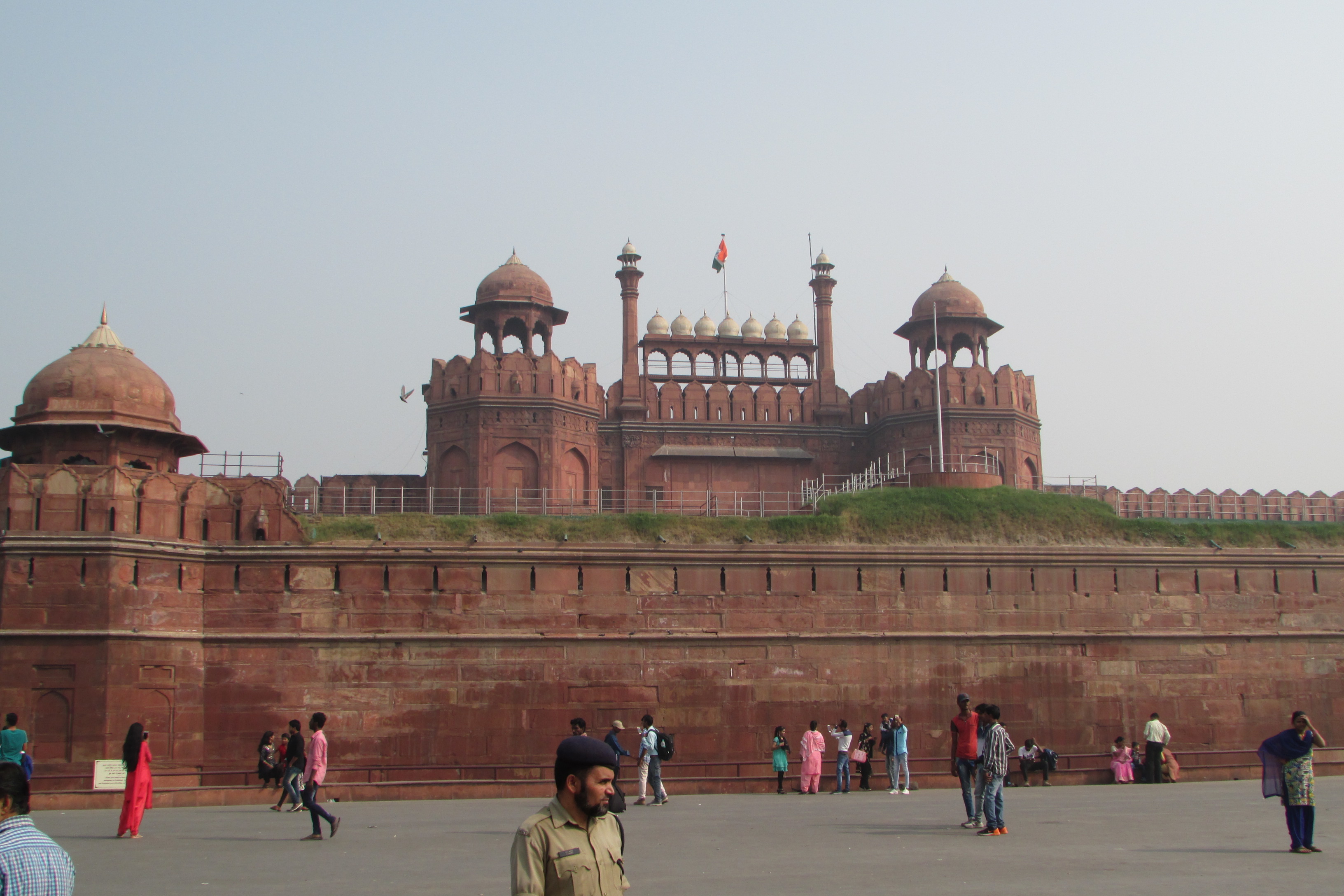
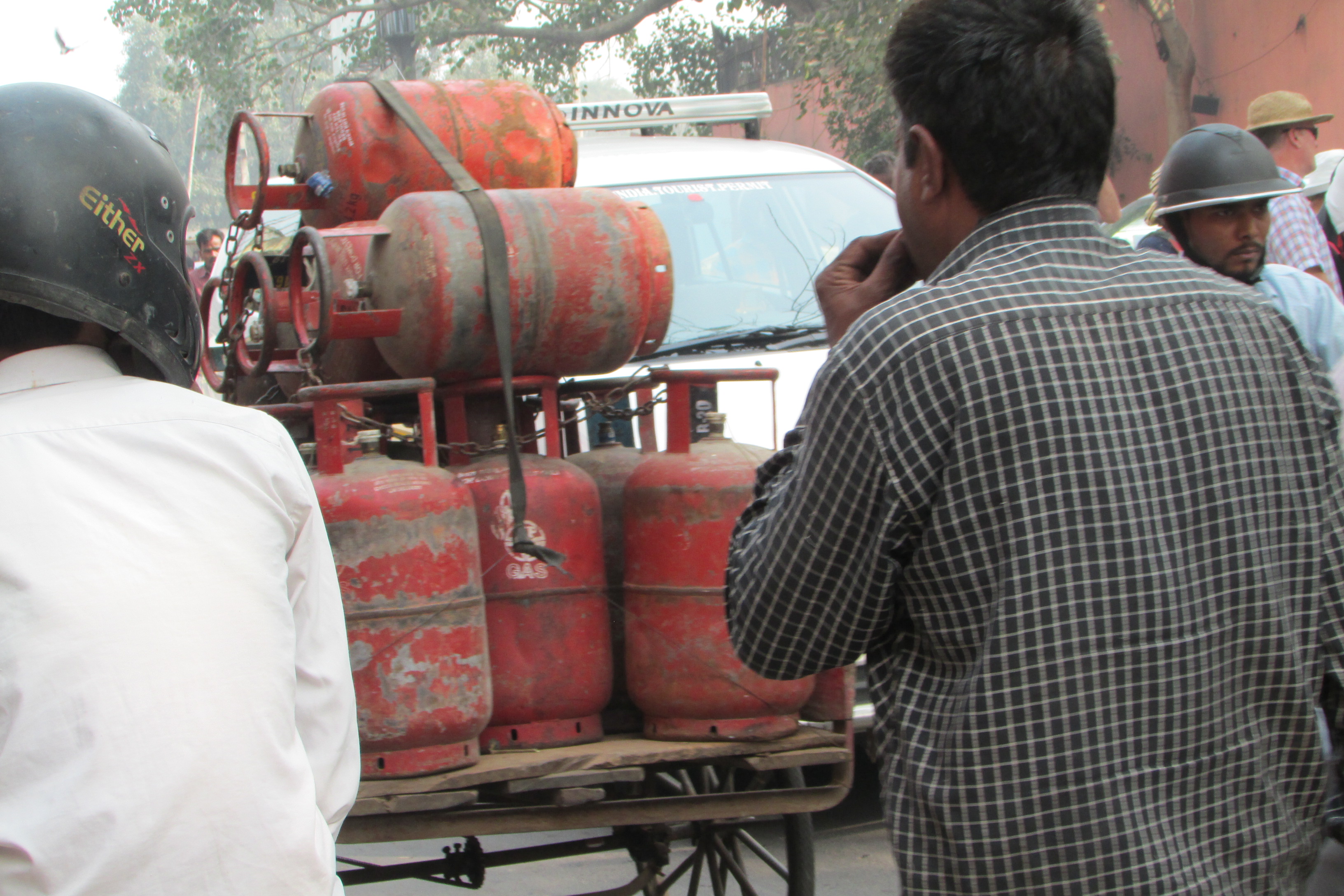
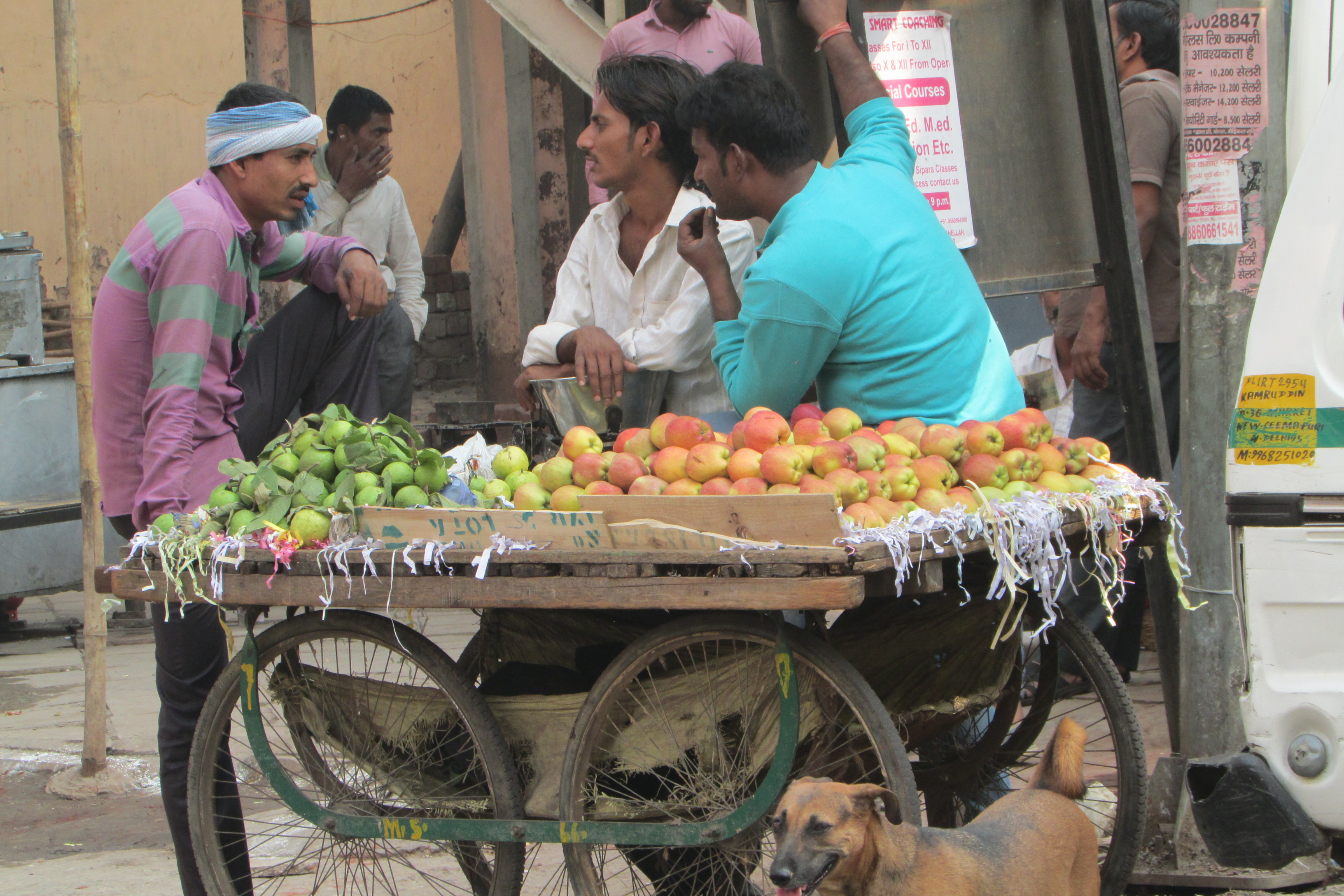
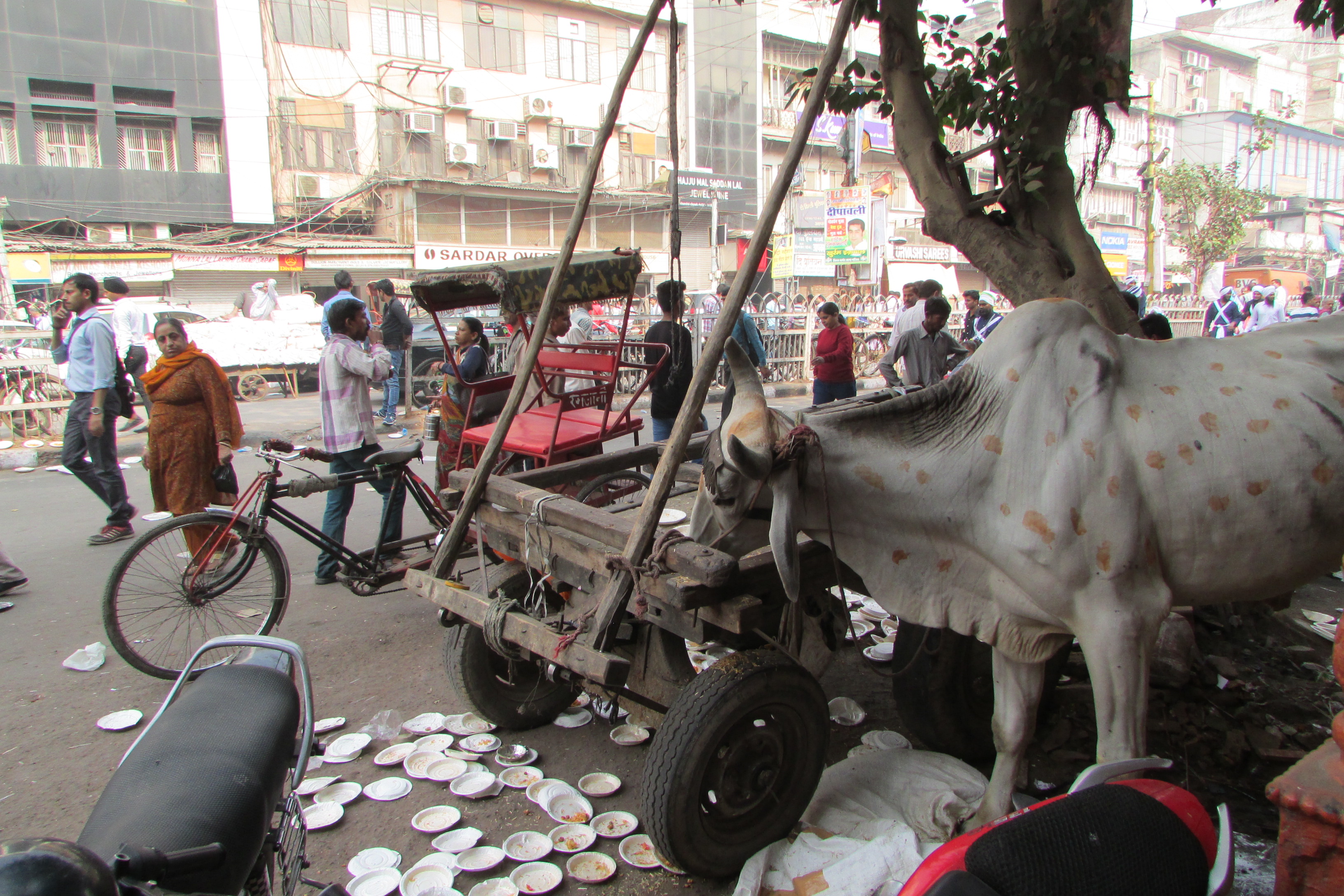
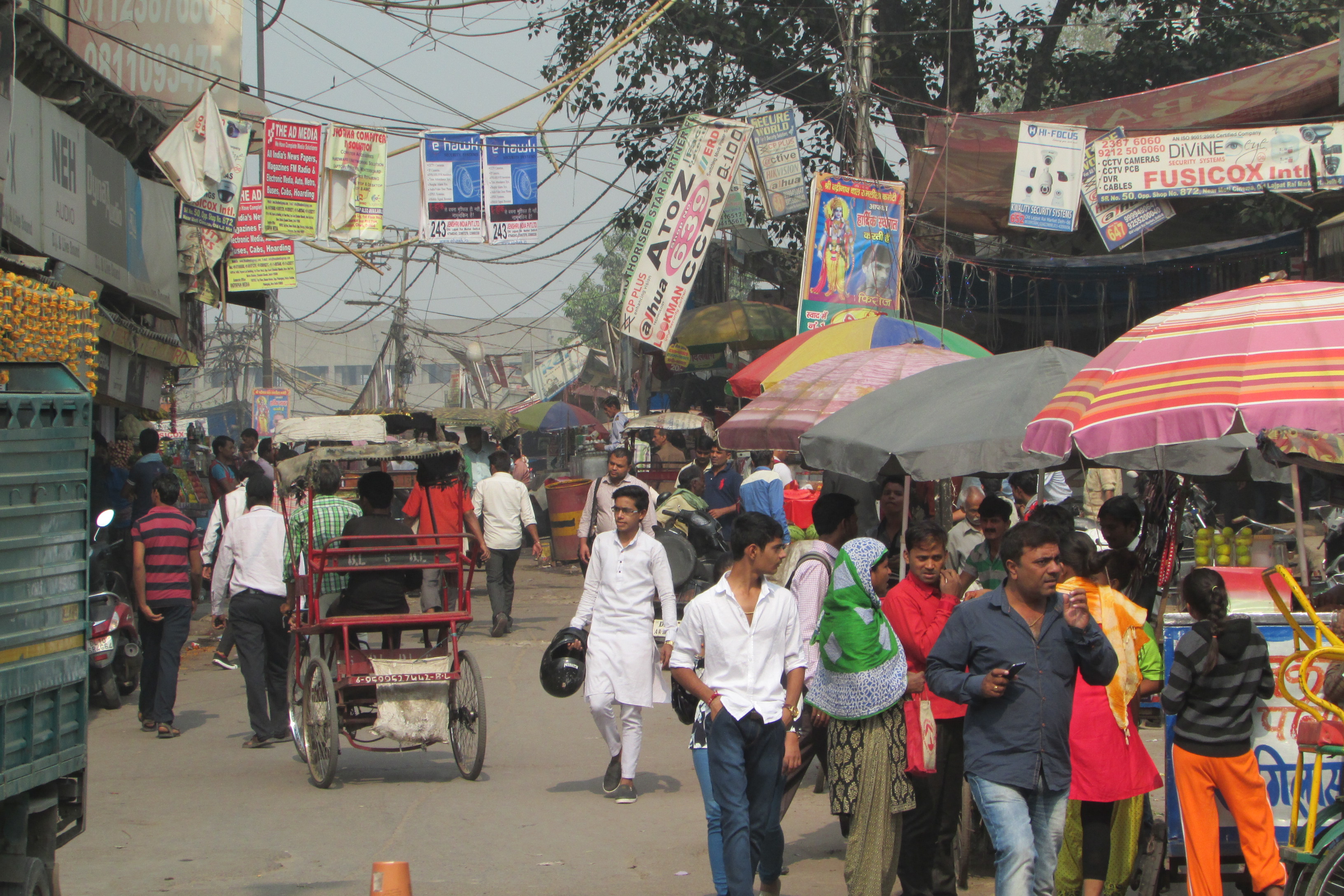
We saw the Red Fort, a big mosque and a market. Best was the market, teeming with people, noisy with traffic and shouts and loud speakers from Hindu temples. There was a constant smell – spices and diesel fumes and sweet food and urine and incense, all in a tangle. The traffic was mostly on the road, but motorbikes and tuktuks sometimes avoided lights by driving along paths, so you had to be alert. It was wonderful and foreign and intense.


img_5254 img_5281 img_5280 img_5276 img_5273 img_5256 img_5234

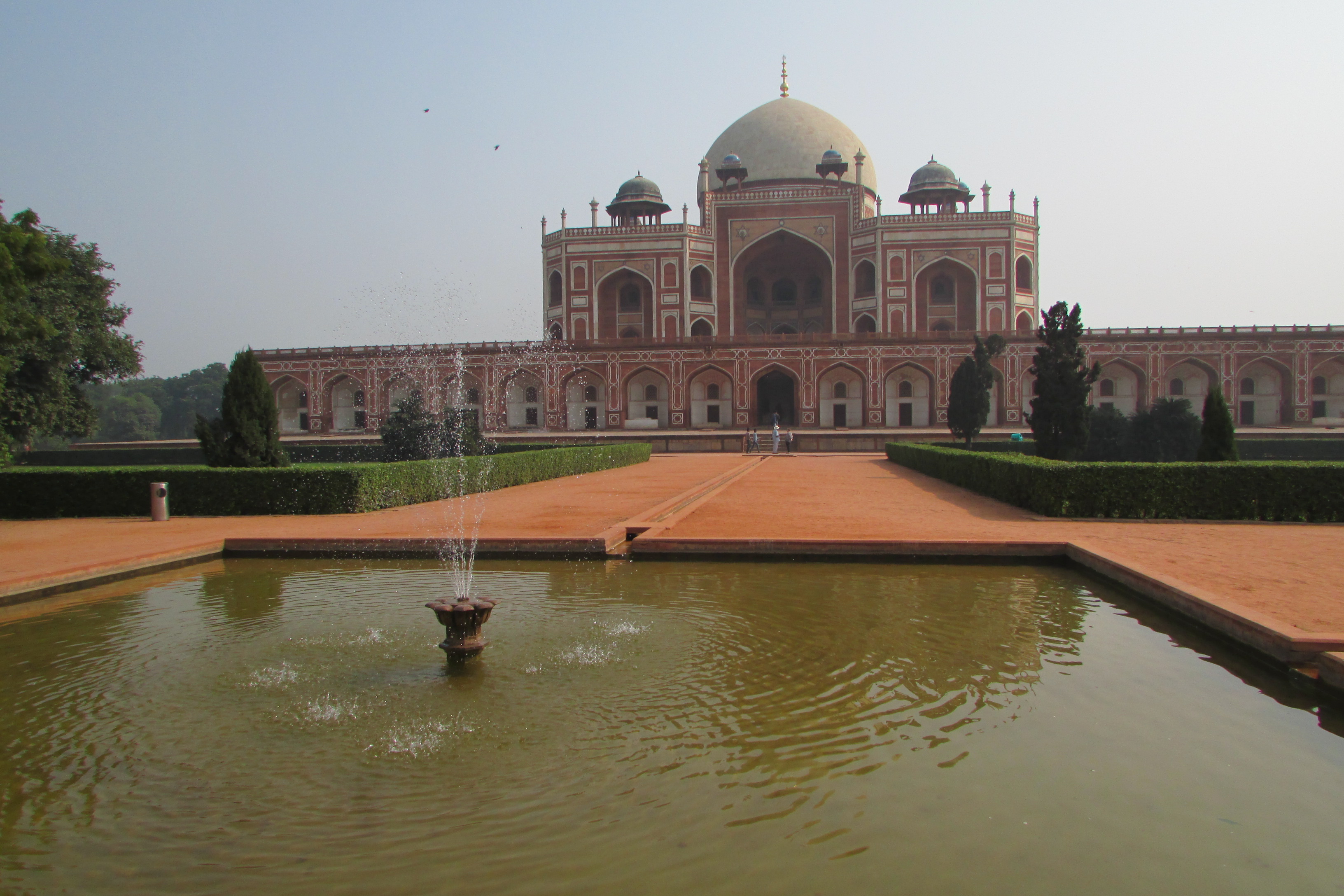
Huymayun’s Tomb was built before the Taj Mahal ( which we also plan to visit.) It was lovely. There was a beautiful domed building, which the Persians had taught them how to build. ( Apparently, to build a huge dome, you need a smaller one inside so it doesn’t collapse. Persians were rather good at building them.) The gardens are an integral part of the monument. They reflect ‘paradise’ and have water and trees and birds. Peaceful. There were lots of stars, which some tourists thought were the Star of David. Our guide told us that as the Persians were Muslim, they wouldn’t allow any depiction of living things, so the Indians used geometric patterns, which included the stars. They have no link to the Jewish star ( just as the many swastikas have no link to the Nazi symbol.)

p1090879img_5334img_5335img_5342img_5343

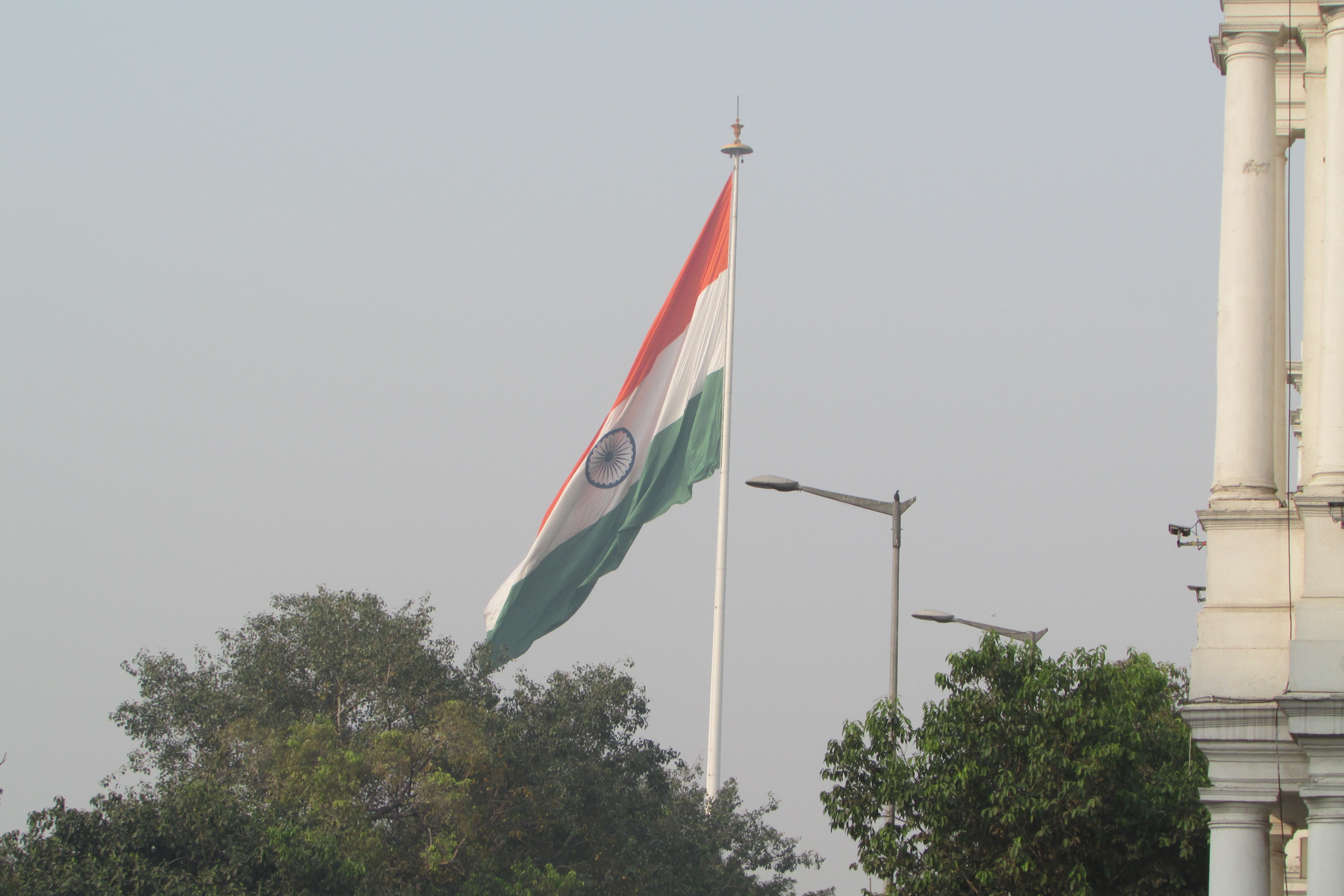
We drove back via India Gate, which is inscribed with the names of Indian martyrs. Opposite, at the end of a long wide road, is the president’s residence, Vijay Chowk. It would be magnificent to look from one to the other, but there was too much pollution haze, so was all rather difficult to see. The round parliament building is also there.


Thank you for reading.

Why not sign up to follow my blog? Then you won’t miss hearing about the other parts of Delhi, the resettlement areas and slums, where few tourists visit…

anneethompson.com

img_5234

xxxx

If you enjoyed this, you will love my new book: The Sarcastic Mother’s Holiday Diary.
I have always written a diary on holiday, so last Christmas, I decided to find all my old diaries and blogs, and make a book for my children. However, several other people also asked for a copy, so I have written a public version – it’s available on Amazon and has been described as “The Durrells meet Bill Bryson”!

Why not buy a copy today? I think it will make you laugh.

The US link is here:

https://www.amazon.com/Sarcastic-Mothers-Holiday-Diary-ebook/dp/B07N95281F/ref=sr_1_1?ie=UTF8&qid=1549015525&sr=8-1&keywords=the+sarcastic+mothers+holiday+diary

The India link is here:

https://www.amazon.in/Sarcastic-Mothers-Holiday-Diary-ebook/dp/B07N95281F/ref=sr_1_1?ie=UTF8&qid=1549015429&sr=8-1&keywords=the+sarcastic+mothers+holiday+diary

The UK link is here:

https://www.amazon.co.uk/Sarcastic-Mothers-Holiday-Diary-ebook/dp/B07N95281F/ref=sr_1_2?ie=UTF8&qid=1549014970&sr=8-2&keywords=the+sarcastic+mothers+holiday+diary


Indian Money Troubles….


I have been learning a little about why the government here withdrew Rs500 and Rs1,000 notes so abruptly (overnight – with no notice.) I can also tell you about the impact we have seen so far on normal people.

So, last week, with no warning, the rupee notes which are most used, were demonetised. That is, everyone was told they now had no value. Cashpoint machines closed, and the only way to change old notes for the new currency was through the banks. This meant that 100 rupee notes soon became scarce, as people needed them. So, even if people had the new bank notes, no one would give them change if they bought something with a higher value note. (Eg. You could buy some apples using a $10 note, but no one would give you any change.)It also meant that no one received tips – which when you’re very poor, matters. So, why did the goverment do this?

There are a whole host of rumours on social media in India, most of which seem to be untrue. There seem to be several different reasons, but two main ones are often mentioned: to stop tax evasion, and to stop money that terrorists/criminals are printing.

India is largely a cash based society. Lots of people have no bank account, they are paid in cash, store their wealth in cash and pay others in cash. This means there is huge potential for tax evasion. A high proportion of the poorest people in India run shops or market stalls. These are automatically taxed ( you pay a ‘market tax’ to have your stall in the street.) So, the poor people are paying tax, even though their income is very low. However, the richer people, those who own businesses, often deal only or partly, in cash ( a bit like plumbers in the UK!) so they have the ability to pay no tax. Which means the government is losing vast amounts of income. This isn’t fair. The vendors who I listened to, approved of the government’s decision, even though in the short term, it made their lives very difficult. It was forcing people to open bank accounts, which enabled the authorities to track cash and stop tax evasion.

India also has a lot of ‘black money’. This is counterfeit money, produced by terrorists and criminals, which has begun to flood the market. One report I read said that terrorists are using counterfeit money in India to fund their campaigns. By withdrawing the currency quickly, with no notice, the government stopped these people from converting their money into gold or other assets. The only way to exchange old currency for new money is through the banks, which criminals and terrorists don’t want to do as they are more likely to be caught.

One report I read said that in India, property is also bought partly for cash. The current currency crisis ( bit of alliteration there) means house prices will probably drop, making them more affordable for the less wealthy. This will lead to an increase in building work, which will produce more work for labourers. Not sure if that’s true, or wishful thinking…

For normal people, this is a difficult time. When we visited the slums in the East of New Delhi, the women were complaining (and laughing) because all their secret cash had now been exposed. They told me that wives tend to hide money, so their husbands cannot drink it. They have now had to reveal all this hidden money, so it can be changed by the banks, which means their husbands now know they have it and can take it from them.

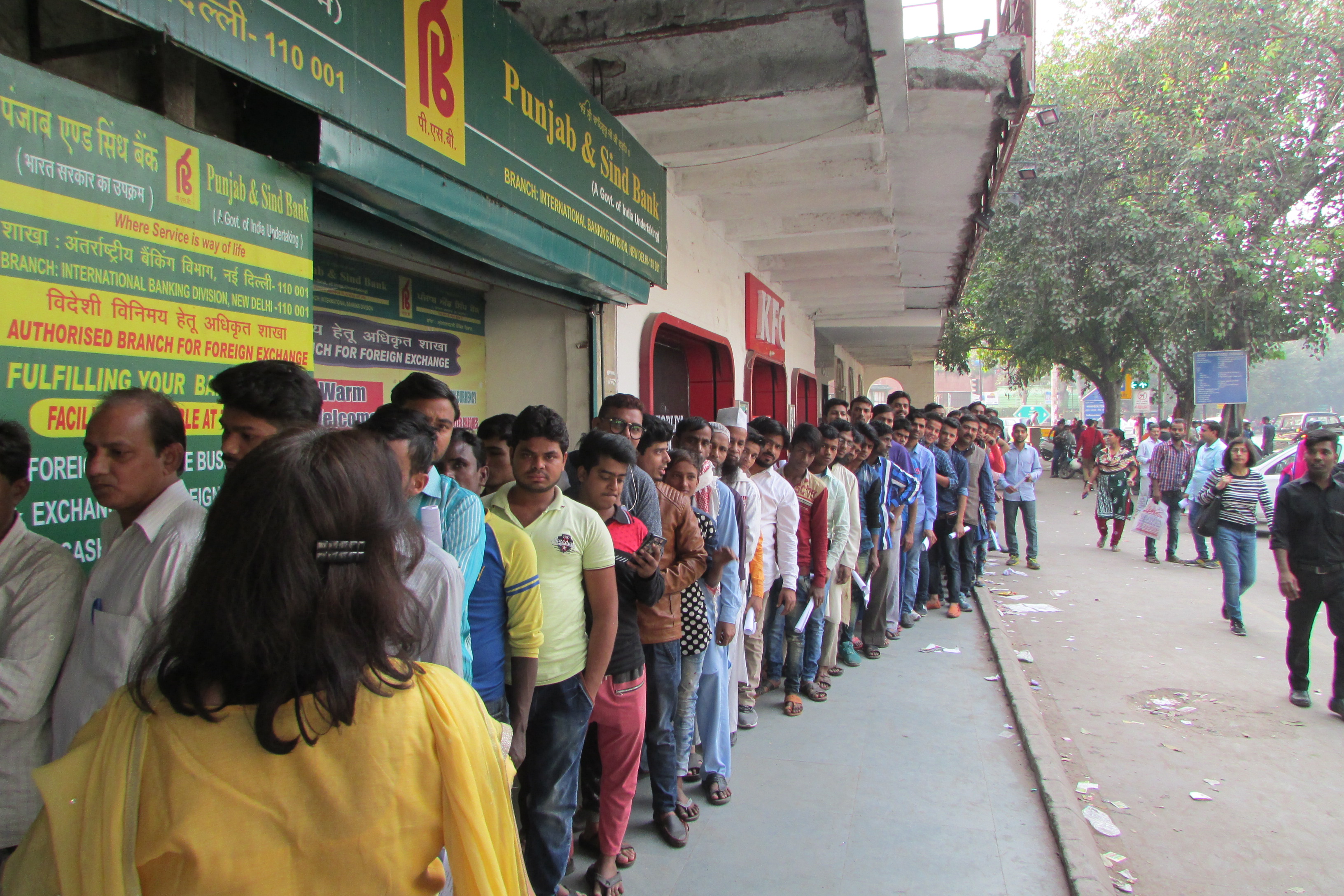
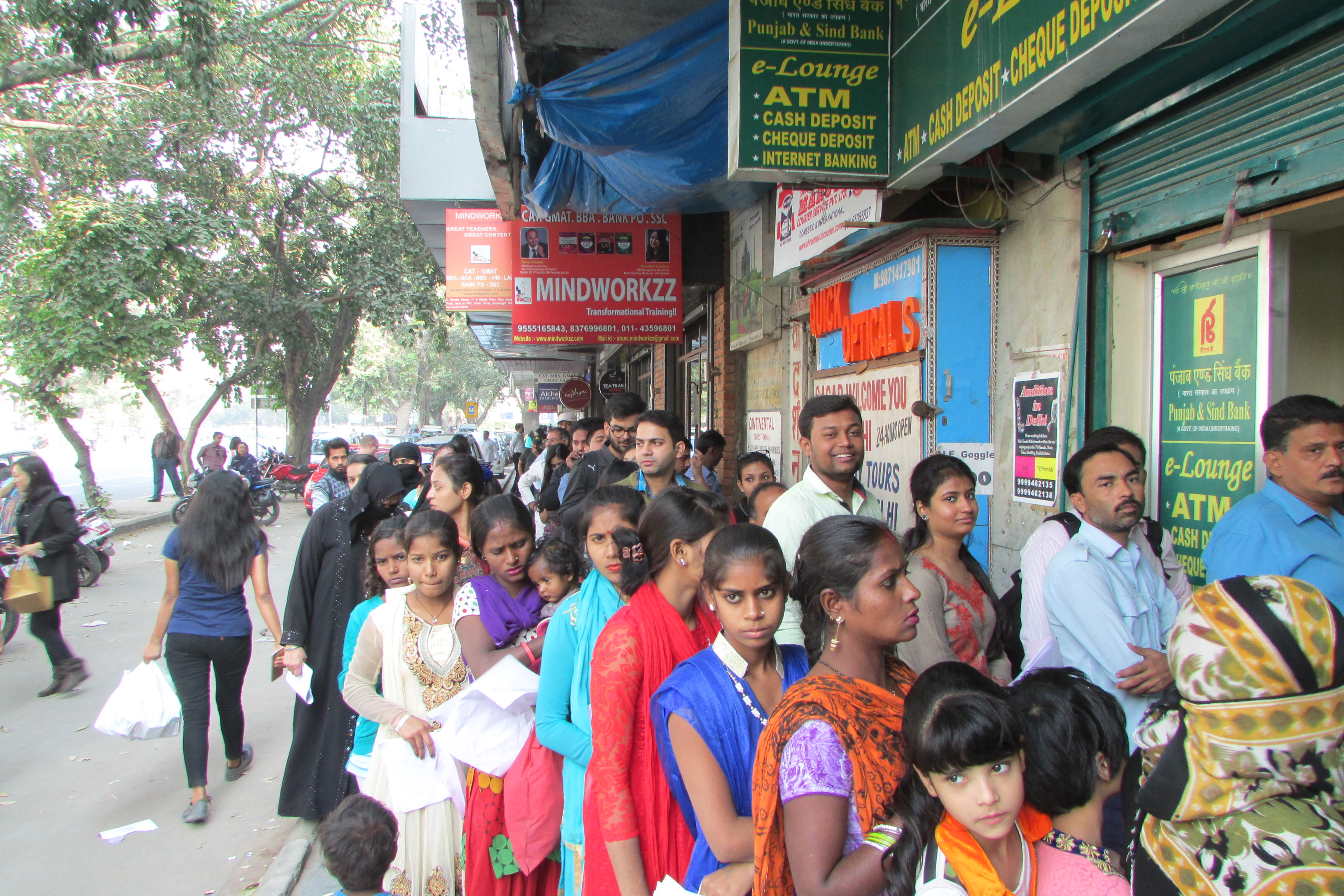
People are not buying cheaper goods, they are not giving money as tips, which impacts the poor people. They also complained that while they are queuing at the banks, they are not working, so are losing pay. Some people pay others to stand in line for them, but this caused disputes too, with those people who were losing work saying it wasn’t fair. If they needed money, people would exchange it for them, but at a bad rate, so they made a loss they couldn’t afford.

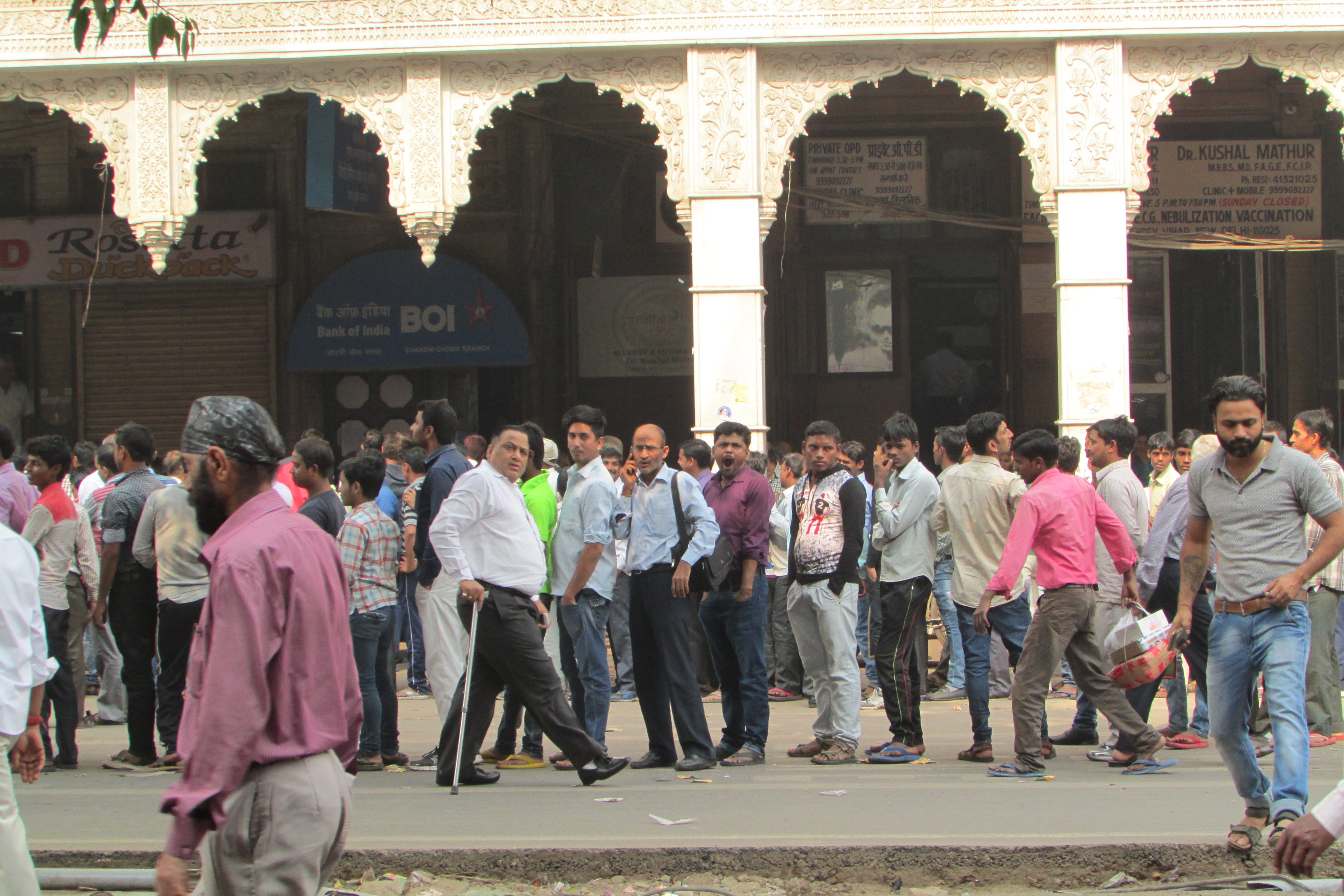
The queues outside the banks are getting longer. We saw one line begin to disintegrate, with people at the front trying to push past the guards and shouting. It could so easily turn to riots. Every bank has a guard on the door, holding at least a stick, sometimes a gun. It’s tough to be poor in India. I hope this doesn’t make life even harder.

img_5355 img_5356 img_5357

Thank you for reading.

I will write more about our trip tomorrow. Why not sign up to follow my blog, so you don’t miss it? We have a day of tourism, then venture into the slums…..

anneethompson.com

Arriving in New Delhi


img_5226

Arrived in Delhi. Had booked hotel car from airport, which was good, as taking a taxi would’ve taken hours. The government has withdrawn all 500 and 1,000 rupee notes, so paying for fare would have been difficult. The money exchange places at the airport had huge queues, they circled the baggage hall, round and round, full of tired people needing money.

I used the washroom at the airport. A young woman came into the cubicle with me, wiped the seat, then waited outside to turn on the tap and pass me a towel. I had no money to give her, none at all. Felt bad. I thanked her, but that won’t feed her family. Not sure how she will cope for the next few days, as even 100 rupee notes are now rare, she isn’t going to be collecting any tips for a while.

As we left carpark, I noticed a sign saying, ” No Sitting. No spitting. No cooking.” A group of men sat below it.

Delhi is noisy. All the tuktuks are green and yellow ( unlike Sri Lanka, where they were multicoloured.) Everyone honks whenever they overtake, which is often. Traffic is chaotic. We saw men in scrumpled shirts, scrubland with tents where people were living, cyclists pulling loaded carts, signs written in both Hindi and English. Street sellers walked between the cars whenever we stopped. There were old scooters with dented number plates, gated communities, and dusty trees in flower. The pollution here is severe, several people wore masks and there was a thick haze. You felt it at the back of your throat.

Arrived at hotel. The car was stopped at the entrance, and the boot and bonnet opened by guards. Then we drove up the driveway to the guards at the door. Our bags went through x-ray machines and we had to walk through metal detectors.

We checked in, and discussed the cash problem with the man at the desk. We had no small currency for tips (no one has.) He was very positive about the situation. He told us that everything in the hotel, including food and cars, could be paid for with credit cards, so it was no problem. He said everything would be sorted out in a few days, so it was no problem. He agreed that it meant no one could really shop in smaller shops, as even if we used high value notes to pay, they couldn’t give us any change, and there was now a shortage of the legal 100 rupee notes ( equivalent to £1.20 in UK money.) However, he said, it was nice for people to take a break from shopping for a few days, so really, it was good, not a problem at all. I began to feel like I was in The Exotic Marigold Hotel. Perhaps the culture here is like in Zambia, when they will always try to tell you what you want to hear ( so if you ask how far away somewhere is, you will be told ” not far”, even if it’s miles away.)

After a quick shower, we went for a walk, to try and change our worthless currency for new notes. The streets were busy, but not as chaotic as in Mumbai. We didn’t see any children beggars, and people didn’t touch us. Though they did stare. I got used to this in China, it’s not rude, it’s simply a different culture. There were lots of men hanging around. I wouldn’t feel comfortable walking around on my own (I would be tempted to wear a burka, like I did in Dubai, just to hide from their watching.) We were approached many times by people offering to help us. Where did we want to go? Did we want a tuktuk or a taxi? Could they help us find our way? It was hard to make them leave us alone. I think not many foreigners walk around – but we had been on a plane for hours and wanted to walk.

The path went through a covered walkway, which we walked through. As we left it, we realised it was the edge of a mosque. A man approached and told us we should have removed our shoes. Apologised, and explained we hadn’t realised what it was. He said if we didn’t know, that was fine, people would understand, but we should be more careful in future.

Found bank. Every bank we passed on the way had huge queues outside. We went to the Delhi branch of our own bank. We told the guards that it was our bank, and were shown to a different entrance. They needed to see passports – I didn’t have mine. They took copies of our visa and passport, and said they could exchange up to 4,000 rupees per person (£40). I waited while D changed his money – he was taken to near the front of the queue. Which was nice for us, but not really fair for the people who had waited in line for many hours. We can only exchange money once a fortnight. So we can return tomorrow and I can change some money, then we will have to wait until we’re back in UK. Hope they will exchange the old notes, have a feeling it might be difficult.

I am also concerned about what the lack of spending money means for the poor people here. At the moment, all the bank queues are peaceful. Can that continue when people run out of food?

Back to hotel (managed to avoid walking through any mosques). Dinner (spicy) and sleep.

I will tell you tomorrow what I have learned about why the money has been withdrawn so abruptly.

imageimg_5240

Thank you for reading. Why not sign up to follow my blog? Then you won’t miss what happens next in New Delhi….

anneethompson.com

Preparing for New Delhi


Today is my last chance to get everything ready. Always stressful.

I need to empty the fridge and take all the food to Mum that will be ‘off’ when we get home. I will also deliver some books, in case anywhere needs restocking. Mum is by far my best salesperson, I feel she rather missed her vocation in life, she has no fear. Some of my author friends have asked to borrow her, so I am keeping her location a secret.

When we’re in Delhi, if it’s anything like Mumbai, we will have children approach us in the street, begging. I find this very difficult. To refuse/ignore an adult, feels uncaring, but to refuse a child just feels wrong. Very wrong. However, I know that usually, the children are not begging for themselves. They are often ‘organised’ by an adult, who then removes whatever they have received. Apparently, there is now a scam where they ask you to buy them a specific product – milk, or pens for school, or bread. They have a deal with the local shop owner, so when you have left, they return the goods to the shop and then give the returned money to the adult. So, it’s difficult. I’m not very good at ignoring them. I know it’s best for the children, if I give my money to an organisation – Tearfund or Actionaid – and let them help properly. But I still find the ignoring bit difficult. I thought I would buy some sweets, something small, that an adult would have no interest in. I can give those out. This might of course, result in me being swamped by hundreds more children. Which will please husband no end. But we shall see. I will let you know.

We’re flying overnight, so I will arrive exhausted and with a headache. Always difficult to know what to wear: cold drive to airport, chilly aeroplane air-conditioning, followed by sweaty heat when you arrive and sort taxis, drive to hotel. I tend to go for layers and scarves, which double as blankets on the flight and sun shades when we’re there. If I’m honest, it doesn’t work very well. The layers tend to ride up when I shuffle, so I have bulky lumps of clothing all flight, then when it’s hot, I have too many shed layers to carry.Everyone else seems to look immaculate in the arrivals hall – I am the sweaty woman with black rings where her eye make-up has smudged carrying a sack full of jumble. Lucky I’m not a celebrity.

We have just learned that the Indian government has today cancelled all notes equivalent in value to £5 and £10 (so the small  £1 equivalent are fine). No warning given, they are now worthless. Of course, ALL our Indian money, bought in advance for our flight tomorrow is £5 and £10. Am thinking having zero cash could be a problem (not even thinking about how much money we have lost if there’s no way to be reimbursed.) Also slightly worried this might result in civil unrest. For us to lose the money is bad, for a street vendor in India it might be their life savings. Literally. Wiped out in a day, with no notice given. Not sure this is fair, nor likely to have a good result. Oh yes, and they have shut all the cashpoints for two days. Trip now taken on a rather unsafe feel…Do hope to be writing again in a couple of days.

Thank you for reading.

Why not sign up to follow my blog so you don’t miss an installment?

anneethompson.com

Hospitals, packing and flight…


Have you ever met a squeamish nurse? I went for my MRI this week (an annual treat) and it was at a new centre – the NHS are obviously outsourcing some of their patients. Went to a very nice surgery in a posh part of London and filled out the usual “I don’t have any metal parts” questionnaire prior to the scan. Except of course, I do, as they rebuilt my skull with a metal plate. So I was explaining this to the nurse, saying that whatever it is that causes MRI machines to explode is not in my head, as I’ve had MRIs since surgery, etc. She was clearly worried about this (I’m wondering if she was new) and she wanted to know how big it was. Well, I have no idea. I was asleep at the time of rebuilding. I told her I didn’t know, but it didn’t feel very big. She then put out a hand, felt the lumps and bumps and dips in my head, shuddered, gave a squeal and moved away quickly. Unexpected.

I’m guessing she was a nurse, because she wore a short blue tunic, and up until this point had behaved like a nurse. Perhaps she wasn’t. Perhaps she was a student or a technician, or someone who had come to mend the photocopier and was filling in because they were short staffed. Whoever she was, I’m sure she’s not meant to react like that with patients. It was actually rather funny, so I giggled and told her she wasn’t meant to do that. Certainly was a change from the normal experience in hospitals.

It has been a busy week because we’re going to India for a few days. Husband is involved with a charity which does lots of work there,  so we are going to New Delhi to look at their work in the slums. Probably you are not meant to call them ‘the slums’ – certainly in Brazil we were told to call them some other name which I now forget. Not sure of the Indian equivalent, but I’ll let you know. It will be interesting to see how the organisation works. I know they do lots of work encouraging people to claim their rights (their rights being things like not being abused, and having clean water to drink.)

First on the list was to put ‘outside cat’ who has been recovering from cut foot, back outside. I anticipated problems. She has loved being inside, sleeping with the dog, purring round our feet in the kitchen, scratching up the carpet…So, I unblocked the cat-flap and put her in the garden, and waited for her to bounce back inside. Nope. Not even a visit. She ran straight back to her family in the workshop, and has ignored me ever since. I rather miss her.

Next I visited the health food shop. I read online that if you take probiotics prior to travel, it helps to build up all the good bacteria in your gut, which improves resistance when the bad ones invade. Not sure if that’s bunk, but figured it was worth a try. I also bought charcoal tablets because also read that IF bad bacteria invade (and India is kinda known for bad bellies) then charcoal caries it out of your system. Again, might be myth, but am hoping I won’t need to test the theory.

It has been rather lovely to dig out my summer clothes again. Weather here has passed the ‘bright pretty autumn’ stage and is mainly cold and wet. Ahhh, for a little sunshine again. Quite hard to know what to take though (packing is never easy.) I need clothes for the slums – so shit proof (sorry mother, but I can’t think of a better word.) I also need smart clothes for the hotel. Plus, when walking around, I need to cover legs and shoulders if I’m not going to attract attention. I do actually have some trousers and a tunic that I bought when in Mumbai, so I’ll take those. And silk scarves rather than sun-hats. Am thinking suitcase is too small…

I will write some extra posts while I’m away, so you can read about what we see. (If they stop suddenly, we might have been kidnapped, so please send help. Or perhaps will be not managing to leave washroom, so perhaps sending more charcoal would be best…)

Take care,
Anne x

img_5221

Thank you for reading.

Why not sign up to follow my blog so you don’t miss my posts about New Delhi?

anneethompson.com

If you enjoyed this, you will love my new book: The Sarcastic Mother’s Holiday Diary.
I have always written a diary on holiday, so last Christmas, I decided to find all my old diaries and blogs, and make a book for my children. However, several other people also asked for a copy, so I have written a public version – it’s available on Amazon and has been described as “The Durrells meet Bill Bryson”!

Why not buy a copy today? I think it will make you laugh.

The US link is here:

https://www.amazon.com/Sarcastic-Mothers-Holiday-Diary-ebook/dp/B07N95281F/ref=sr_1_1?ie=UTF8&qid=1549015525&sr=8-1&keywords=the+sarcastic+mothers+holiday+diary

The India link is here:

https://www.amazon.in/Sarcastic-Mothers-Holiday-Diary-ebook/dp/B07N95281F/ref=sr_1_1?ie=UTF8&qid=1549015429&sr=8-1&keywords=the+sarcastic+mothers+holiday+diary

The UK link is here:

https://www.amazon.co.uk/Sarcastic-Mothers-Holiday-Diary-ebook/dp/B07N95281F/ref=sr_1_2?ie=UTF8&qid=1549014970&sr=8-2&keywords=the+sarcastic+mothers+holiday+diary


Letter – microwaves and frogs


img_5221 img_5225

Hello, how was your week? Mine was a mixture of difficult and nice.

On Tuesday I had a check-up at the dentist. Mum had an appointment at the same time, so we went together, which was mostly nice (though I am a bit grumpy pre-dentist visits, so was possibly not as chatty as she was hoping.) Everything was fine, so I felt much happier coming out. I need to buy different toothpaste though. Apparently, Colgate causes teeth to become overly sensitive. He told me this last time, so I switched to Oral B toothpaste (which had rather strange shiny granules in – was a bit like cleaning my teeth with glittery sand). Apparently, he told me that both Colgate and OralB cause sensitivity, but I had forgotten half of what he said. I now need to find another toothpaste. Can life get more exciting?

On Friday, we held another Film Night at our church. You remember me writing about the last one? – The one which showed drug snorting, nudity and had lots of swearing? Well, this one was very well attended (word had obviously spread!) It was more suitable for church viewing though, so not sure if they’ll come back.

The next film is about Eddie the Eagle. I remember Dad raving about him at the time. I thought the film sounded rather boring, was planning to take a book. Then I discovered Hugh Jackman is a main character. Have put date in diary.

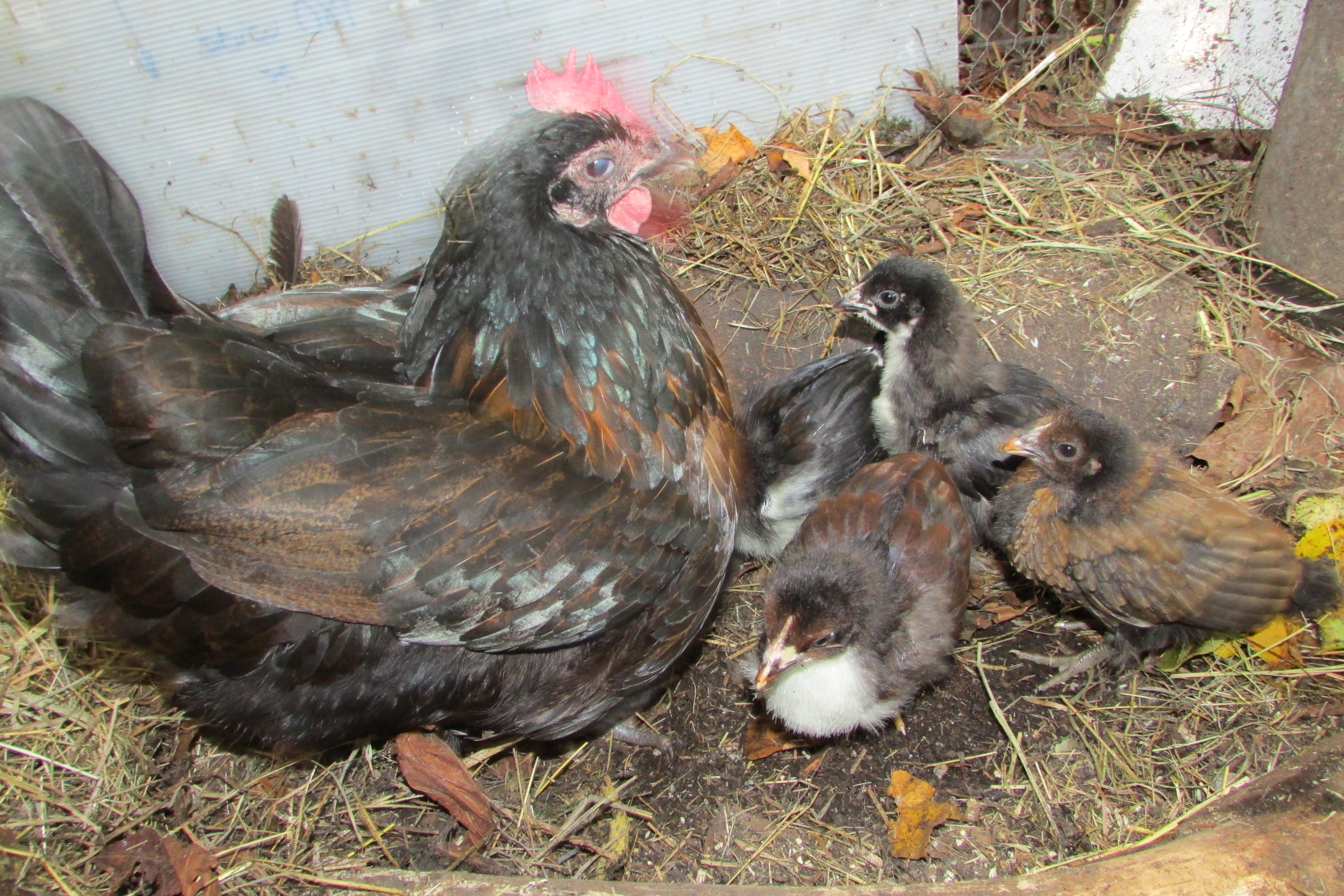
Chicks continue to survive, despite the fact it is not Spring. They fly around the cage like tiny multi-coloured sparrows. Cute.

img_5214 img_5217

I am not really someone who enjoys housework. This week we bought a new microwave. I was cleaning the old one (don’t ask) and I noticed that the shiny paint that covers the plate where the beams zap out from (technical terms) had worn away. It looked rather like it had burnt away. Plus the door had a big crack in it. Hence the beams, once zapped, could escape. I told husband about this and suggested we needed a new one. The microwave is in the utility room (I don’t trust microwaves in the kitchen – all that zapping cannot be healthy.) He asked what shape the cat is (who also lives in the utility room.) The cat has always been a funny shape, so the evidence was inconclusive, but I ordered a new microwave anyway.

My dislike of cleaning rather came to the fore this week when I dropped a grape. We were watching Homeland – yes, we have reached the age where we watch boxsets together – and I was eating grapes. One fell out of my mouth, as they do, and fell on the floor. It had disappeared, so I knelt down to try and find it. Still couldn’t see it, so husband paused DVD and came down to help look. He swept his hand under the sofa and out rolled the grape (excellent) and a dead frog (not so good.) A frog. Completely dehydrated. How does one get a frog under the sofa? I do not like to think of myself as having the sort of lounge where one finds dead frogs under the sofa. But clearly I do.

Husband has decided to work from home today. I am trying to be positive about this. The trouble is, when I am ‘being creative’ I sort of disappear inside myself, go to a different part of my mind and wander around while writing what I’m imagining. This is not especially enhanced by someone arriving for a chat about when the cat vaccines are due. I have suggested a system – when I am ‘disturb-able’, I will leave the door open, when I am ‘in the zone’ and would prefer to only be disturbed for emergencies, I will keep the door shut. Husband responded well to this suggestion. He then asked what system he should use for “I want a cup of coffee now”. Ah.

Thank you for reading.

Have you bought Hidden Faces yet? A Christmas gift for a friend perhaps?

Hidden Faces, is available from bookshops and Amazon.

Hidden Faces final cover 6 July 2016

As Time Goes On – A Poem


Now, and Then

IKEA homeware packed in boxes,
Heaps of stuff litter the hall, then squashed into the back of the car.
Last hugs, cheery goodbyes, the drive to uni.
Snippets of home, spread around the strange smelling room,
The lanky excited-scared almost man says goodbye,
And the mother remembers.
She remembers the feel of the bowling ball weight on her hip when she carried him,
The feel of his tiny hands on her cheeks when he offered snotty kisses,
The snuffle of breath as he slept against her shoulder,
She remembers the child as she looks at the man.
As she wishes him well, holds back tears until she has driven away.

Billycans and clothes stuffed in kit-bag,
A train to London packed tight, then bustle hurry find the right squad.
Last hugs, tearful goodbyes, a band plays on.
Heaving the bag, look around for friends joining too,
The lanky excited-scared almost man says goodbye,
And the mother remembers.
She remembers the feel of the bowling ball weight on her hip when she carried him,
The feel of his tiny hands on her cheeks when he offered snotty kisses,
The snuffle of breath as he slept against her shoulder,
She remembers the child as she looks at the man.
As she wishes him well, holds back tears until he has joined his unit.

The posts on Facebook show new friends and nightclubs,
Texts assure his food is fine, his studies easy.
He doesn’t discuss the drunken evenings, the sleepless nights, the fear of loneliness.
But his mother knows, she reads it in unsaid words and tired eyed photos.
And she waits. As life goes on.

There are no letters and the News shows little,
Bold battles move to the Front, the headlines proclaim.
They do not discuss the fallen comrades, the sleepless nights, the fear of injury.
But his mother knows, she reads it in unsaid words and tired eyed photos.
And she waits. As life goes on.

The war ends. The boy returns home.
Yet, not a boy, become a man.
A man who will not speak of horrors,
Will not discuss the stench of death,
The sight of his friends, falling.
The nights when he still hears the screams, still fears the dark.
But his mother knows, she reads it in sunken cheeks and, eyes so weary.
And she waits. As time goes on.

The term ends. The boy returns home.
Yes, still a boy, almost a man.
A boy who chats and loves to amuse,
Loves to debate the point of life,
Who meets all his friends, laughing.
The nights when they drink, talk at length, sort their beliefs.
And his mother knows, he is safe and content with life, has a future.
And she waits. As time goes on.


by Anne E. Thompson

xxxx
Thank you for reading. I wanted to write a poem as this week is Remembrance Sunday. I always find that a poignant time, I suspect every mother does. The stories and readings are always so sad and I’m guiltily grateful that it’s not my boys who had to fight, had to witness the horrors of war.

 I thought about adding another verse, perhaps linking the two mothers over time, showing how one has allowed the other. But I decided that was too twee, the reader can work it out for themselves. I rather like poems that leave you feeling they are unfinished, that it hasn’t been completely said. I hope you like it.

Another week….


Have you read anything good lately? I’ve just started reading The Girl on the Train by Paula Hawkins, am hooked already. It took me a few pages before I started to like it, I wouldn’t have picked it up in a bookshop, read the beginning and then bought it; but after a couple of chapters it’s pretty addictive. I started reading it because daughter recommended it. So often, I buy books because someone has said they are good. (I am really really hoping that everyone who has enjoyed reading my book has told their friends and family…..authors depend on other people to stimulate sales.)

The Girl on the Train is mainly about Rachel, a girl whose life has fallen apart. As we learn more about her, about what led to her divorce and drinking and apathy with life, it seems as if the main catalyst was not being able to have children. That is so sad. I don’t know if the author has children, but she describes in detail how it feels to be unable to have them. I have no idea how accurate it is, but one thing she describes is feelings of jealousy towards people who conceive easily, and how she will avoid places where there are likely to be young families, even leaving supermarkets if there are too many mothers and babies shopping. So sad.

One strange thing about reading The Girl on the Train, is that the author has a very similar writing style to my own. Even the genre is the same as Joanna, so I felt like I was reading my own work – I found I was proofreading rather than just enjoying the story! She even makes some of the same mistakes (so that she has a tendency to use ‘that’ when it isn’t that necessary.) Very strange. At the end of her book she lists all the people who have helped her, including her agent. Given that her book is so similar to Joanna, I am considering sending the manuscript to them for consideration.

This caused me some stress. I found the agent’s website and looked at their submission policy. As with all these agents, it just seems so rude! It lists all the things they want posted (not emailed) such as cover letter, synopsis, first few chapters. They then tell you to check carefully and send everything they have asked for, or they will recycle it without looking at it. Then they say that after they have received your (hours of) work, if they don’t want to represent you, they won’t bother to reply. My inclination is to not send them my book. If they won’t even be polite, why should they have the opportunity to make money from my hard work? Husband tells me this is silly, this is how business works, I will increase my sales through a mainstream publisher. I like the control of self-publishing. Difficult decision. Perhaps I will do both. Self-publishing is good/excellent/fun until it comes to the selling and advertising – then it gets very difficult.

img_5201

Another stress point this week has been Milly. She was limping, and when I checked her paw, she had cut it badly. Now, I know about cuts (you learn lots of first aid when you have children.) I know that if you clean the wound, smear it with savlon, and cover it, it will heal – as long as you change the dressing every day. I figured the same would work with a cat. Cats however, are less helpful at staying still. Milly does this wriggling twisting manoeuvre whilst using her back legs to shred the skin from your arm. She got away from me and disappeared. Didn’t come near me for the next two days. When I finally caught her again the cut was worse, so I mortgaged the house and went to the vet. He examined her while she lay still and peaceful in my arms (think he must have hypnotised her.) He then dried the wound with a laser, gave her an antibiotic jab and told me to keep her inside for a few days. Sounds easy. But Milly is an outside cat, she lives in the workshop with her family. She does not want to be an inside cat.

I moved her into the utility room with Louise (the cranky old indoors cat – you can imagine how well that went.) I heaped heavy sacks of cat litter in front of the cat flap, and positioned a full watering can outside, with the spout against the flap so it couldn’t be pushed open. Escape proof – I thought. Milly and Louise were both unhappy, and Molly and Midge (other two outside cats) kept prowling around, trying to find Milly. (Mandy is also an outside cat, but not very clever – I don’t think she noticed.)

The following morning I went into the utility room. No cats. They had shredded the sacks of cat litter, so that was all over the floor. Someone had moved the watering can spout, so I think they had help from outside. Milly, Molly and Midge were all missing. Only Mandy was in the workshop, looking confused.

Eventually, I found the escapee, changed the method of catflap blocking and put her back inside. The paw was now filthy, so goodness knows if it will still heal properly. After a couple of days, she got used to the heat of the house and now seems quite contented. She curls up with the dog and sleeps on the sofa…..Am thinking I might have a problem moving her back outside….

img_5202

Take care,
Anne x

xxxx

Thank you for reading.

Have you bought Hidden Faces yet? A good gift for someone who you want to make smile…

Hidden Faces, is available from bookshops and Amazon.

IMG_20160801_113715

xxx