Christmas and Cabbages


Hello and how are you? Did you have a good Christmas? We did. Or at least, most of us did. The chickens had a pretty boring time.

In case you haven’t heard, DEFRA (the animal law people) said that all poultry has to be caged for a month from 7th December. This is because bird flu was in Europe (though not, at that time, in the UK.) This applied to all poultry, even those kept in a garden. The idea being, that if they had no contact with wild birds, the virus wouldn’t spread.

I duly kept chickens in their cage. They were very unhappy about this, and whenever I went to feed them, they tried to force their way out. So I decided to give them some entertainment. The DEFRA website had recommended that you hang a cabbage in the cage, because bored chickens will peck each other (nasty birds.) I bought a cabbage.

Son and I then spent some time trying to make a hole through cabbage (husband was very unkeen for me to use his drill, I don’t know why.) We then spent even longer trying to thread a piece of string through the hole. Never mind the chickens, this was turning into quite an activity for son. We tied a lump of wood on the end, so the string stayed in place, and I hung it in the chicken cage.

Now, what height would you have hung the cabbage? I decided that head height was about right. I’m not sure it worked exactly as the DEFRA advisor had anticipated. The chickens were certainly interested in the cabbage, and rushed to eat it as soon as they saw it. The problem was, they launched at it with a big peck. The cabbage swung away from them, then swung back, like a big green bowling ball. Chickens are not good at dodging. They were somewhat dazed.

The next time I went to check on them, the cabbage was hanging in the corner, and the chickens were all giving it wary looks. I guess it had given them something to think about, and I don’t think any of them were actually knocked out, but it wasn’t what I was expecting.

Hope the rest of your Christmas is full of nice surprises.

Take care,
Love, Anne

Oh yes, nearly forgot – I have written a short story for you. I’ll post it tomorrow, in the ‘Story’ section. I expect you’re very busy this week, so it’s something fun and thoughtful for you to read when you have a coffee break. Hope you like it.

xxxxxxxx

anneethompson.com

xxxxxxxx

Graduation Saga


Do events in your family always go to plan? Ours don’t…..

img_5465

Hello, are you ready for Christmas? I’m not, but the end is in sight, and I am remembering to stop worrying whether or not things are wrapped and posted, and actually enjoy the moments spent with family and friends. Plus I really love everyone else’s Christmas decorations, even if mine are a bit tatty this year!

One special time with family was at son’s graduation. Yes, he did graduate a year ago, but this was his masters graduation. It did not go entirely to plan…

So, first challenge was how to get to the ceremony. Son had, in his wisdom, decided to attend Leeds University. We live a long, long, way from Leeds, about 5 hours in the car if the roads are clear. Husband and son discussed various options, but finally decided to go there and back on the day. This meant an early start, as we needed to allow for possible delays on the motorway. They told me we would be leaving the house at 5am. Yes, that’s right, 5am. Super.

I set the alarm for a 4 number. Animals gave me very strange looks when their breakfast arrived in the middle of the night. I showered, dressed, glanced in mirror….and decided my fringe was getting a bit long. Now, I have no idea why giving my fringe a quick trim when my eyes were still blurry seemed like a good idea. But it did. So I did.

5am arrived, we were all in the car, off we went.

At 9am we stopped for breakfast. We were nearly in Leeds, ready for a ceremony that started at 2pm, but I didn’t say anything. Felt slightly more awake after the coffee and used the washroom at the service station (always a delight.) As I was washing my hands, I glanced in the mirror. My hair was very short at the front, and not very straight. Looked almost as if I had cut it myself when half asleep, very early in the morning, with some nail scissors.

As we got back in to the car, I mentioned my hair to husband. I was hoping for some reassurance.
Me: I’m not sure cutting my fringe at 4am was such a good idea.
Husband: Oh, THAT’S what happened! I was wondering why you had gone for the Ugly Betty look.
Me: Silence. (Actually, I wasn’t silent. I laughed. My husband is an appalling person, but when he says outrageous things it always makes me laugh. Perhaps that’s why I married him.) Did not feel very reassured.

We arrived in Leeds (in very good time) and went to son’s house (which was very nice) and met his housemates (who are very nice) and then got changed ready for the ceremony. It was at this point that son realised his wallet, which contained all his ID, was missing. He needed his ID so he could register at the ceremony and collect his gown. He and husband had a thorough search of the car. No wallet.

We set off for the university. It was now pouring with rain, and we had no idea if they would let son take part in the ceremony as he had no proof of identity. All the graduands lined up, waiting to show their ID and receive the forms necessary to collect the gown and be told where to sit. Husband hovered nearby (he likes to help).

When son reached the front of the queue, he explained that actually, he had no ID, as he had lost his wallet. Husband helpfully added that he had his wallet and could prove who he was, and they would notice the surname was the same, hence proving he was son’s father. Plus he had baby photos. He then removed baby photos from wallet and showed them to person registering the graduands. She looked slightly surprised. Son looked slightly embarrassed. Registrar and son then had a conversation, she asked him for his date of birth, his student number, things like that. She then gave him the necessary forms so he could take part in the ceremony. But I’m sure the baby photos helped.

The rest of the day was without incident. I was very proud of son. It was nice to see all the family groups huddled in corners around the university, all honouring the person who had achieved the degree. I like to mark occasions, I guess it’s part of how we show people have value.

Before returning home, I suggested it might be worth checking the car again for the wallet. Ah. The wallet was, of course, lying where it had fallen. Another time I will help the males look myself. But I won’t cut my own hair early in the morning again…..

xxxx

Thank you for reading.

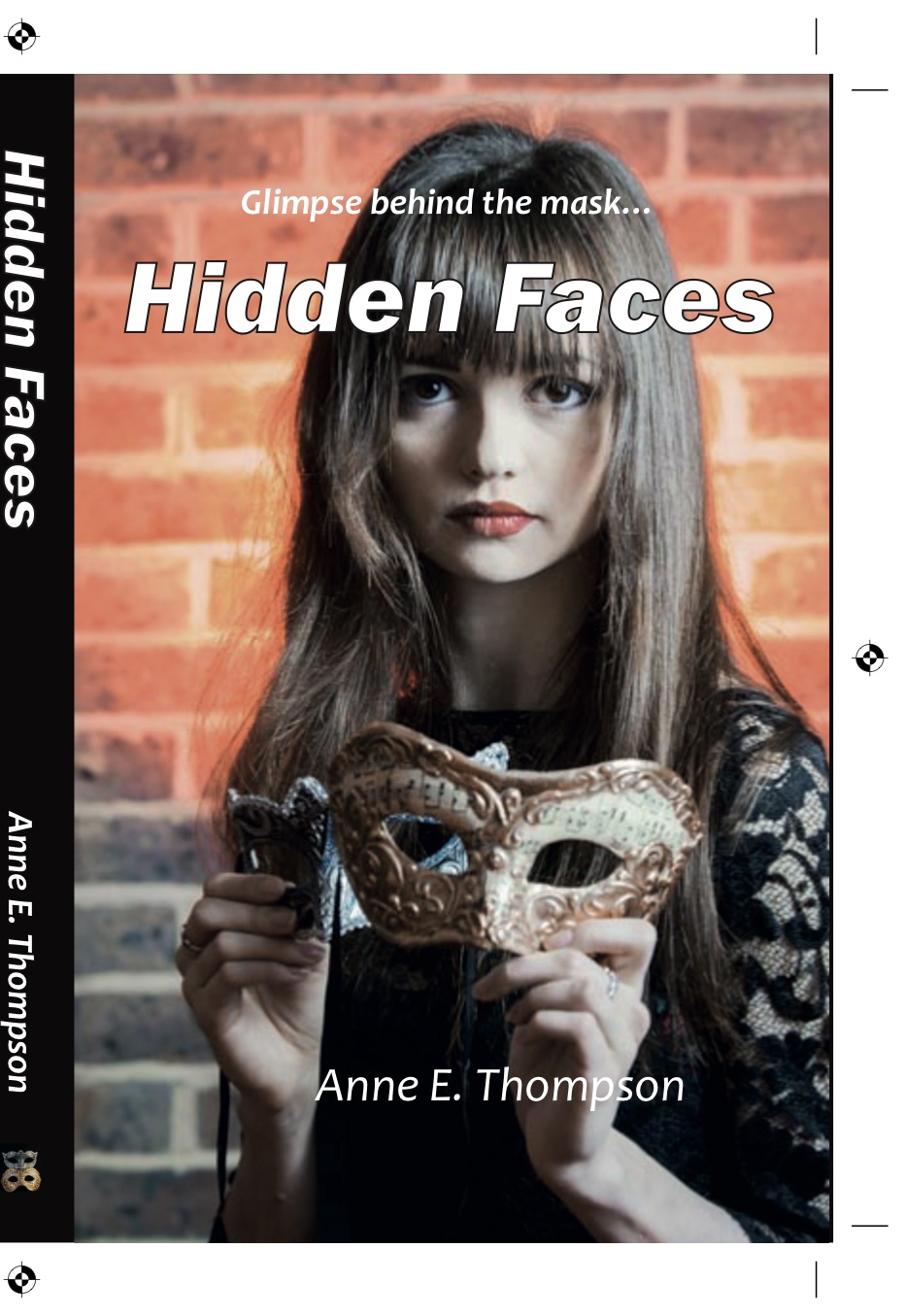
If you enjoyed this, why not buy a copy of my book? Who would you like to make smile this Christmas?

hidden-faces-final-cover-6-july-2016

xxxxxx

Author Update : December 2016


This week, Joanna went to the printer (small fanfare of trumpets please!).

This is always very scary. Any typos that have missed will now be in the final book for all to see, for ever more. We did very nearly have a disaster. The cover was finished – brilliant photo from Chloe my photographer, formatted by Geoff my cover guy – but I was unsure about the colour. It was greys and blacks, and I wanted it to be blues and purples. So both people tried various filters, but it wasn’t the colour I had in my mind.

Geoff (who understands these things having been a printer in a former life) gave me a brief lesson about colour in light (and therefore on my computer screen) being different when transferred to ink (and therefore on my book cover.) It was possible to pay the printer for a fifth ink, whereby I could be picky on the colour. But it would cost extra. I am hoping to break even with this business, so unlike big publishers, I don’t actually have any ‘extra’.

We decided to ask the printer to print one cover and to post it to me, so I could decide if the colour was okay. They kindly did this. Which is when I noticed there was a white margin around the cover photo. I hadn’t noticed it on the proofs I had been sent, but it was absolutely not the look I wanted. It was a horrible moment when I realised that if we hadn’t decided to check the cover colours, we wouldn’t have spotted it, and the cover would annoy me forever (even if possibly no one else would have noticed.)

So, my advice to anyone planning to self-publish, always ask the printer for a cover sample before they print off hundreds (because while it delays things very slightly, it doesn’t cost any extra.)

The colour is still not exactly what I had in mind, but I don’t have the funds to be fussy, so it is staying as it is. It is still an amazing cover. You will love it when you see it, the photo is perfect for a book about a psychopath. Very exciting.

IMG_20160801_113715

My other bit of news is on the selling front with Hidden Faces. We had contacted Gardners, a wholesaler, and they said that if a retailer wanted to sell the book, they would contact me via the Nielsons website and supply it.

I decided to test this before I advertised it, so bought my book from waterstones.com. Waterstones charge £8.95 plus £2.80 postage, so I paid over £11 (for my own book.) I was somewhat perplexed when the following day I was contacted by Bertrams, a completely different wholesaler, and asked to urgently send a copy of my book. Waterstones obviously decided to use them. It then took about 10 days for my book to come back to me, though it was in perfect condition considering it had gone round the country! I have not yet been paid by Bertrams, though they did ask for an invoice to be enclosed with the book. I could, I suppose, have charged them what I wanted for the book, as I don’t have a trading agreement with them. But they would have added a bit before supplying Waterstones, who would then have found the book was costing more than they were making. So although they would have supplied me (as the customer) they would also I assume have deleted me (as the publisher) from their website. I rather like being on there, so sold to Bertrams at a sensible price. It was an expensive experiment.

I notice I am also on the Foyles website. My advice, is set up clear details when you register with Nielsons (who are the people you buy the ISBN numbers from.) Then, every major bookseller will be able to supply your book if people order through them. And it’s rather nice to know your book can be bought through Waterstones and Foyles.

Really though, the best way to actually recoup your costs, is by private sales. Big shops use wholesalers, and everyone wants a cut of the profits, so you receive very little money. I have spent November and December selling books at Christmas Fairs. I even started to enjoy it after a while. I sold loads of books, people bought them because I was local author, or because they wanted to give it as a gift. I would definitely recommend it as a route to sales. I am hoping to find some summer fairs too. If you’re keeping count, I have now recovered half my costs (which is about what I was hoping for in my time plan.) Now I need people who have enjoyed it to tell their friends…..

The local papers have been brilliant. They have given me lots of support and included photos of me/the book a few times now. I was in a third newspaper this week (well, the book was, not me – but actually I prefer that.) It makes you feel very grateful when people help. Setting up any business is scary, we all need people to help us. It’s nice when they do.

xxx
Thank you for reading.

I have now put my earlier posts, which explain the process of publishing a book, on my website in the ‘How to’ section.
https://anneethompson.com/how-to/how-to-publish-a-book-2/

xxxxxx

Hidden Faces by Anne E Thompson

hidden-faces-final-cover-6-july-2016

Available from Waterstones, Foyles and Amazon (cheapest from Amazon!)

xxxxxx

On Monday I will tell about all the things went went wrong when we went to son’s masters graduation. Life is rarely everything you hope…..

Why not sign up to follow my blog?

anneethompson.com

xxxxxxxxxx

Christmas and Cows


I am finding Christmas rather difficult this year. One of the things that’s hard for me, since they chopped through the right side of my brain, is time. This is both short time – so I will do something for a couple of minutes in the morning, and then find it’s 3 pm and I’ve missed lunch,  and long time – where we are in the year. It’s difficult to keep track of where we are. I was doing quite well, reminding myself that we have had Easter and the Summer, and then we went to India. Of course, the days were hot and sunny, I completely forgot where we were in the year! When we got home I washed and ironed our clothes, then left them folded ready to pack in the suitcase for our holiday. Husband pointed out that we have Christmas before the Summer. Bit of a blow. It just doesn’t feel like Christmas. The hens haven’t helped either by producing chicks in November. (They are all doing well, by the way, and are about half sized now!)

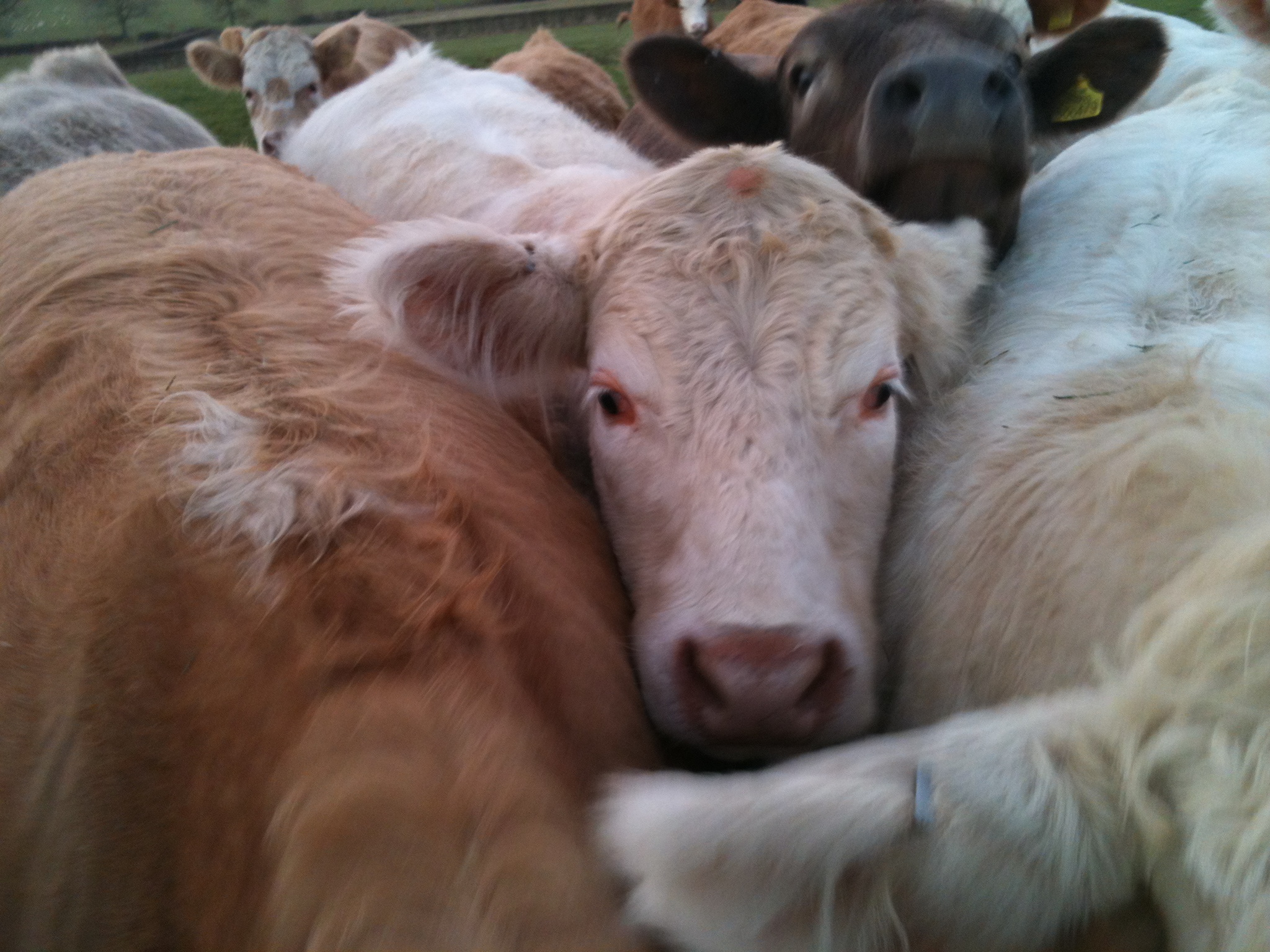
So, I have been trying to have lots of long walks in the winter sun, to get my brain back in the right season. This was more exciting than expected yesterday. The farmer has been moving the animals around, and I noticed the sheep had gone from the field next to the house. What I didn’t notice, until I was half-way across, was that the yearlings have been moved to the field we walk through. There I was, stomping across the mud, when I look up to see this year’s beef cattle staring back at me. I grabbed the dog’s lead and stopped. Now, I am not particularly worried by cows, not even young males. I would never walk through a field with mothers and young, not even sheep, but there were no parents here. I figured they would move back when we advanced. I was wrong.

As we continued across the field, the cattle came nearer. Very near. Like, less than a foot away. I could feel their breath down my neck. They were terribly interested by us, and gradually more and more came, until we were walking across the field with a whole herd of cattle following right behind us. I mean, right behind us. My heart was beating so fast! I wasn’t really frightened, they seemed curious more than anything, but they were huge. If one had kicked out, or decided to butt us, we’d have been like toys. But they didn’t. We made it safely to the other side of the field and climbed over the stile. Kia kept looking at me, with her, “Are you sure you know what you’re doing?” face, but she didn’t bark at them and walked beside me calmly.

Once we were safely on the other side of the fence, I stopped and took some photos. They really are beautiful animals, and they seemed to enjoy their walk with us. I’m thinking of adding them to my Christmas list…..

img_1976

img_1985 Kia touching noses!

img_1986

img_1990

img_1997 This is how they were – a pushing heap of nosey males

following us as closely as they could!


xxxxxxxxxxxx

Thank you for reading.

There is still time to order Hidden Faces before Christmas.

Available from waterstones.com, bookshops and Amazon.

hidden-faces-final-cover-6-july-2016

xxxxxxxxxxxxx

An Extract From ‘Hidden Faces’ (because it’s Christmas….)


The parents were all seated on blue plastic seats, which had been designed for infants. They were much too small to be comfortable, and had been squashed together in an attempt to fit as many parents as possible into the school hall. Now they sat, perched uncomfortably, touching shoulders with people on either side. Some of them looked rather red faced and sweaty as they wore winter coats and the hall was hot.

‘They were told,’ thought Cynthia Mott, ‘to kindly leave their coats in their cars.’ She sighed, they never listened.

Andrew Smyth and Cherry Class had not yet arrived. This was intensely irritating. There was a lot about Mr Smyth that Cynthia found irritating. He was the newly qualified teacher and she was his mentor. It was not a role she enjoyed. He didn’t seem to value neatness or record keeping. Nor did he seem capable of keeping his classes calm and disciplined, which surely was the most important role for a teacher.

Cynthia had known it was going to be difficult when he first showed her his plans for his history lessons. He had decided they were going to focus on the burnings of martyrs during the reign of Henry VIII. He had enthusiastic plans for a large wall display, with tissue paper flames, and showers of gold stars, showing how packets of gun powder, tied to the martyr’s necks, had exploded their heads. It would have been a visual feast, and would no doubt have scarred Cherry Class for life.

Now he was late for the nativity performance. It had been agreed that her class would arrive last, so that the youngest children would have less time to sit before the play began. Mr Smyth taught Year One, so he should have been waiting. Cynthia heard a noise at the door and turned.

Cherry Class stumbled into the hall. Some were not properly dressed and had their costumes draped across their shoulders where they had neglected to fasten the back. Behind them was Mr Smyth. He entered the hall smiling widely, with his shirt untucked at the back. He led his shambolic class to their assigned seating area, tripping over a mother’s legs on his way to his own chair.

Esther Pritchard raised both her hands and eyebrows, then began to play the opening notes on the piano while the children scrambled to their feet. They were mostly all standing in time for the first word. The nativity play had begun.

Miss Mott faced the children, mouthing the words with an exaggerated smile in the hope they would copy her expression. Most of them were looking at the floor of course, or scouring the audience for their parents. Nigel Stott stopped singing to nudge the child next to him, pointing out his mother, who waved back at him.

‘Silly woman,’ thought Miss Mott. She glared at Nigel, who turned red under her gaze, straightened his back and tried to sing with the rest of his class. He joined in loudly but singing the wrong verse. The boy next to him giggled until he too caught Miss Mott’s eye. She looked at the children.

Angel Gabriel was being glared at by Mary, who had a red mark on one arm. Cynthia guessed there had been an argument. It looked as if Mary had been crying and she kept rubbing her arm as though to make a point. Angel Gabriel was grinning triumphantly.

Joseph’s headdress was too large and kept slipping over his eyes. Rather than push it back, he was tilting his head backwards and peering at the audience from under its rim.

One of the shepherds had a cold and no handkerchief. Every time his nose ran, he surreptitiously picked up the fluffy toy lamb, wiped his nose on it, lowered it again. The fluff tickled his nose and nearly made him sneeze. Miss Mott frowned her disapproval and he slowly, slowly, inch by inch, placed the lamb back on the floor.

One of the kings had been ill all week but had returned to school so he didn’t miss the play. He looked decidedly green. Cynthia wondered at the logic behind sending an obviously ill child into school. He appeared sadly uncomfortable. Her only hope was that all the other children would catch it during the holidays and not have to miss school. It was always tiresome to have children absent when you were attempting to teach.

A small girl crawled towards Cynthia and tugged her skirt.
‘I need to go to the toilet,’ she whispered loudly.

‘Can you wait? We did all go to the toilet before we came in,’ she reminded her. The child nodded uncertainly and crawled back to her place, stepping on fingers as she went, receiving scowls and dark sighs. The children glanced at Miss Mott to ensure that she had noticed.
Cynthia  forced herself to focus on the play. She looked around the hall.

Esther Pritchard was avidly following the script from her piano seat. Everything about Esther Pritchard was avid. Her fair hair refused to sit neatly and sprung around her face like a wiry bird’s nest. Her eyes bulged slightly and her mouth was always smiling. She was one of those nice people who Miss Mott found thoroughly irritating. She never swore, never gossiped and always spoke softly. She was married to the minister of the local chapel and this also irritated Cynthia. She should not be earning money and having a separate career. Cynthia was well qualified in this area as her own father had been a vicar.

Next she looked at Jane Lancaster. She was the head teacher and had worn a suit for the occasion. She had not introduced the play, such a shame. Cynthia hoped she would give a short speech at the end. Standards needed to be upheld. Jane Lancaster was a naturally shy person and whilst she was competent when making policy decisions and organising the curriculum, she did tend to avoid confrontation and disliked public speaking. Cynthia considered this to be a failing.

The children were again struggling to stand as the piano played the introduction to the donkey song. They were sitting in much too small a space and it was almost impossible for them to avoid stepping on each other. The donkey set off for his walk around the audience, followed by Mary and Joseph. Mary had thankfully stopped rubbing her arm and was now concentrating on not stepping on her long blue gown.The chairs for the parents had been arranged with small aisles along each side and along the back, so the children could walk around the entire audience. This was a new idea, introduced for the first time this year. Cynthia was not at all sure that it was a good one. She noticed that the donkey was walking much too fast, the threesome were meant to walk for the entirety of the song, they would be finished before the end of the first verse. Parents sitting next to the aisle shuffled even closer together to make room for them, their chairs scraping on the wooden floor.

Without warning, Mary stopped. She had seen her mother. Triumphantly she rolled up her sleeve to reveal red fingermarks.
‘Timmy Beal slapped me,’ she stated in a loud voice. ‘It’s because I told him that angels are really girls. They are, aren’t they?’

The piano continued playing but very few children were singing. They were straining to see what would happen next. This was interesting, not something they had rehearsed in their daily practice. Parents sitting at the front of the hall turned around to watch, some of the children stood on tip toe to try and see what was happening.

Miss Mott rose from her seat and turned towards the indignant Mary.
‘Carry on, Belinda,’ she said, in a voice that expected to be obeyed, ‘we can discuss this later.’

The child obediently continued walking, Joseph trailing behind, the donkey giggling uncontrollably in the lead. The rest of the school continued singing, some of them giggling to copy the donkey, some looking upset because they knew their play had been spoilt. Jane Lancaster looked ready to burst with anger; Esther Pritchard continued to look calmly peaceful. Andrew Smyth was clearly having trouble containing his own laughter and was pretending to blow his nose. There was some whispering when the children sat again and Miss Mott raised her eyebrows in warning. They settled down and the play continued.

Joseph knocked on brightly coloured doors which wobbled alarmingly. They had been made from large cardboard boxes which had been flattened and painted. No one knew what doors looked like in the New Testament era, so they closely resembled the children’s own front doors, complete with numbers and letter boxes.

Excited innkeepers informed them there was no room, prompted by their wives, who knew the script and wanted to share the lines. The last one obligingly offered the couple his stable and they followed him to a different corner of the hall where a manger stood waiting. The school shuffled round to see.

All the angels clustered around the couple, hiding them from view and singing the angel song. It was meant to be sung by only the angels but some of the school forgot and joined in. There was then lots of nudging and loud shushing as they were reminded to be quiet. As the angels moved away, the parents glimpsed Joseph throwing a doll, head first, into the manger. Some of them sniggered, which Cynthia thought was rather rude of them. Then the angels walked across to the area that was meant to be a hillside. They walked slowly in their unfamiliar clothing, keeping their heads upright so their halos remained steady.

As Gabriel approached, Mary saw her chance for revenge. Waiting until he was level with her, she stuck out a black plimsolled foot. It caught his leg and he tripped, sprawling on the floor, pink legs sticking out from his tunic. He banged his head on the manger, a loud crack. Everyone heard it. Blood gushed from his forehead. He lay very still.

‘You’ve killed him,’ stated Joseph, impressed.

xxxxxxx

Thank you for reading.

I thought I would include an extract from Hidden Faces, especially as the beginning is so appropriate for Christmas.
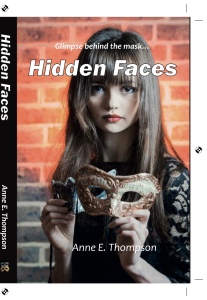
Hidden Faces final cover 6 July 2016


Who could you give a copy to for Christmas?

Available from most bookshops, and Amazon


xxxxxxxxxxxxxxxxx

Being an Author, and other stuff.


Hello, how was your week?

So, we arrived home from Delhi on Sunday. On Tuesday I had my ‘speech’ in London.

I had been invited by KPMG Literacy for Life to speak at a lunch. My link was that, two years ago at a similar event, I had heard Adele Parks (famous author) speak, and this had inspired me to start writing. They invited me to share something of my own story, and to link it to literacy in general. This was fine, I am fairly comfortable speaking in public. That I had to wear a dress and heels and arrive at the venue in London, was more of an issue.

Husband gave me lots of help – tips like, “Check you don’t have any straw in your hair” and (more helpfully) “Don’t forget the trains are on strike, so the timetable is different.” I was slightly nervous. There wouldn’t be many people there, but they are the sort of organised women who wear matching bra and knickers, if you know what I mean. I am not.

However, you’ll be pleased to hear all went smoothly. I was slightly unsure about what colour tights people wear today (I don’t get out much!) and had worn tan coloured ones. On the underground, I noticed that all the young office workers were wearing black tights. Hoped I wasn’t too out of date, but I think it was okay.

There was another author there, Sarah Pinborough. She also gave a speech. I haven’t read any of her books before, but she gave me a copy of the one due out in January, ‘Behind Her Eyes’ and I’m really enjoying it. We both spoke about the importance of literacy as well as a little about our writing (she has written lots more than me, so I felt something of a fraud. But I know more about literacy than her, and have seen first hand the effects on whole families, so I think it was okay.)

One thing that interests me though. On one of her books – one aimed at young adult readers – she had lots of quotes from famous authors. Things like Stephen King saying, “I couldn’t stop reading this book.” Now, my question is, are these real quotes? I have a lot of respect for Stephen King as an author, he is very good at his job. If the quote had said the book was well written (which it was) or unusual (which it was) then I would believe it. But I’m really surprised that he, as an adult, would find a teenager’s book “gripping”. So, how do these quotes work? Lots of books have them. Can a publisher take a quote from one book and put it on all books by that author? Are famous authors paid to give quotes, or is it a condition on being signed up by a big publisher? If you know, do write the answer in the comments. Of course, I could be wrong, perhaps a lot of famous authors DO find young adult fiction compulsive reading.

There was also a very nice man, Lord Michael Hastings, who sort of heads up things. It must be strange being a Lord. I kind of like that we have titles, that we recognise the work someone is doing – and presumably he gets invited to more things because he is a Baron, which will help his charitable work. But it also makes it a bit awkward as to what to call him. Really, he’s just a nice bloke with an excellent speaking voice, doing a good work. But I didn’t know him well enough to call him Michael, and to call him Lord Hastings sounds a bit poncey, like the title is more important than the person. I ended up not really calling him anything.

I also managed to sell some more books at the event, which is always good. (I think I have nearly recouped half my costs now, if you’re keeping track.) A couple of people had already bought copies from Amazon, but I sold 18 more. Hope they enjoy it.
This is a good time of year for selling books, as people are getting ready for Christmas. I am going to a few Christmas Fairs, and the books are selling well. The nicest is when people who have already bought a copy buy another one to give as a Christmas gift.
It can also be ordered from waterstones.com now, which is rather exciting.


Thank you for reading.

If you would like to buy a copy of Hidden Faces, it’s available from Amazon. It can also be ordered from bookshops.

hidden-faces-final-cover-6-july-2016

xxxxxxx

Last Day in Delhi


img_5446

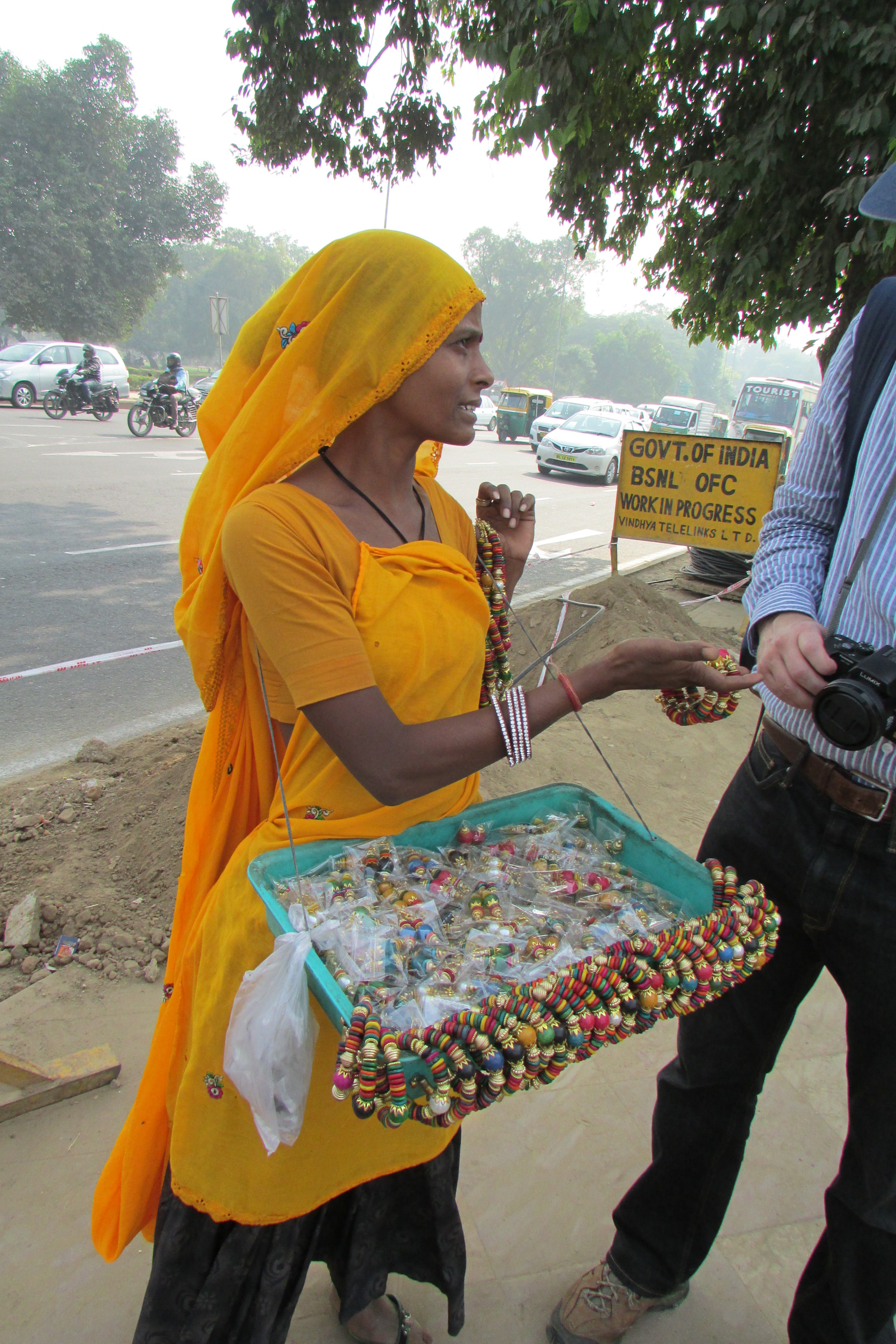
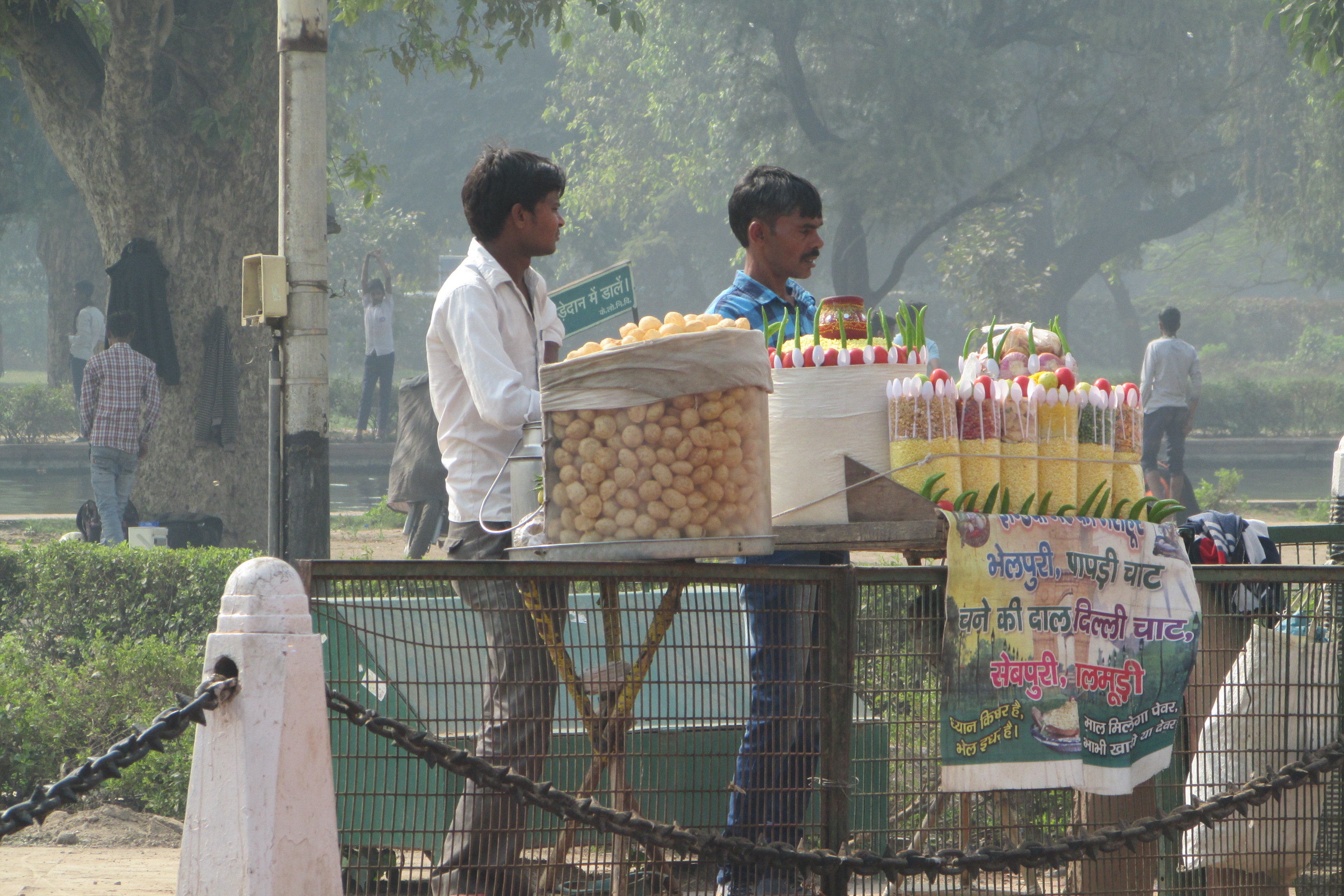
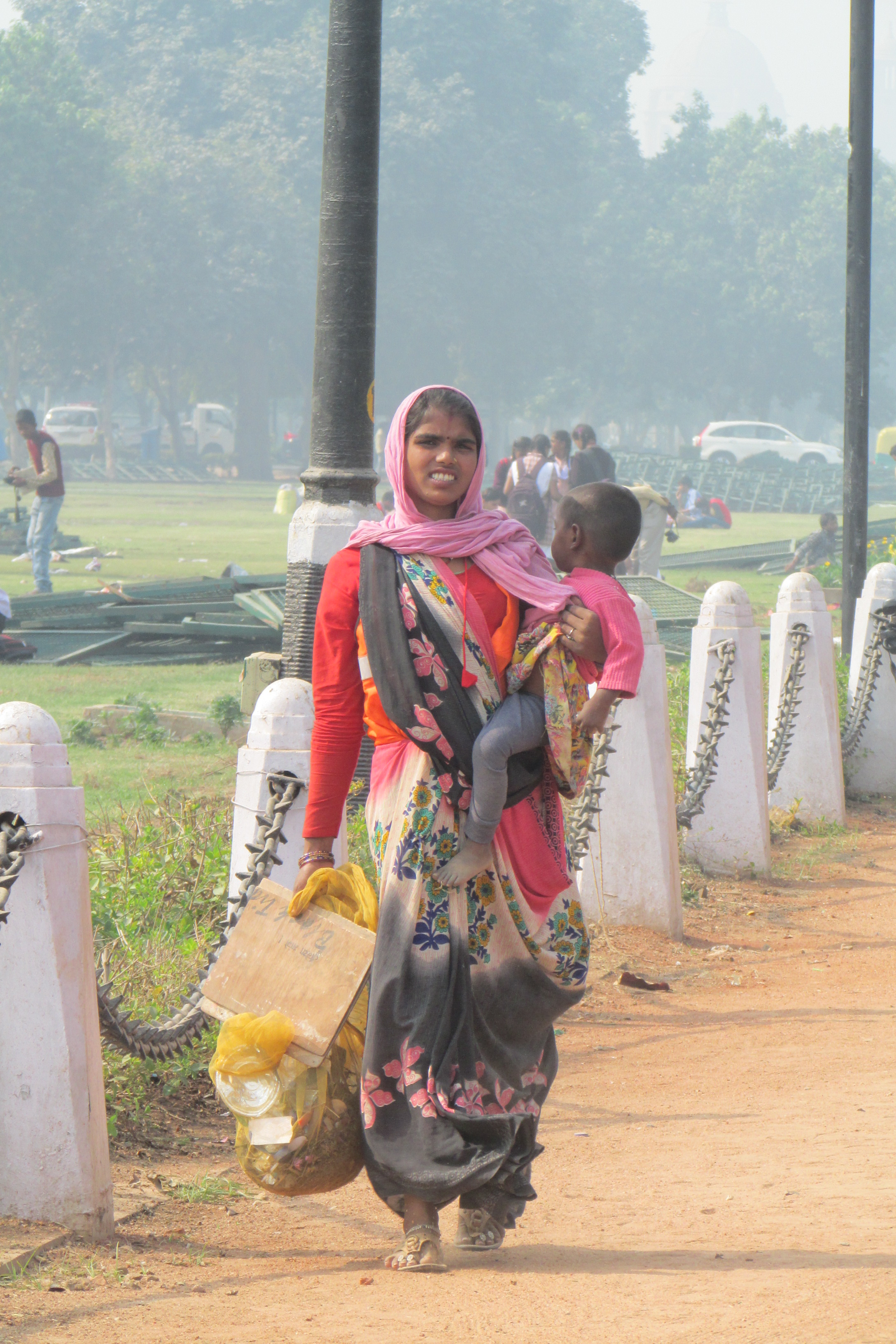
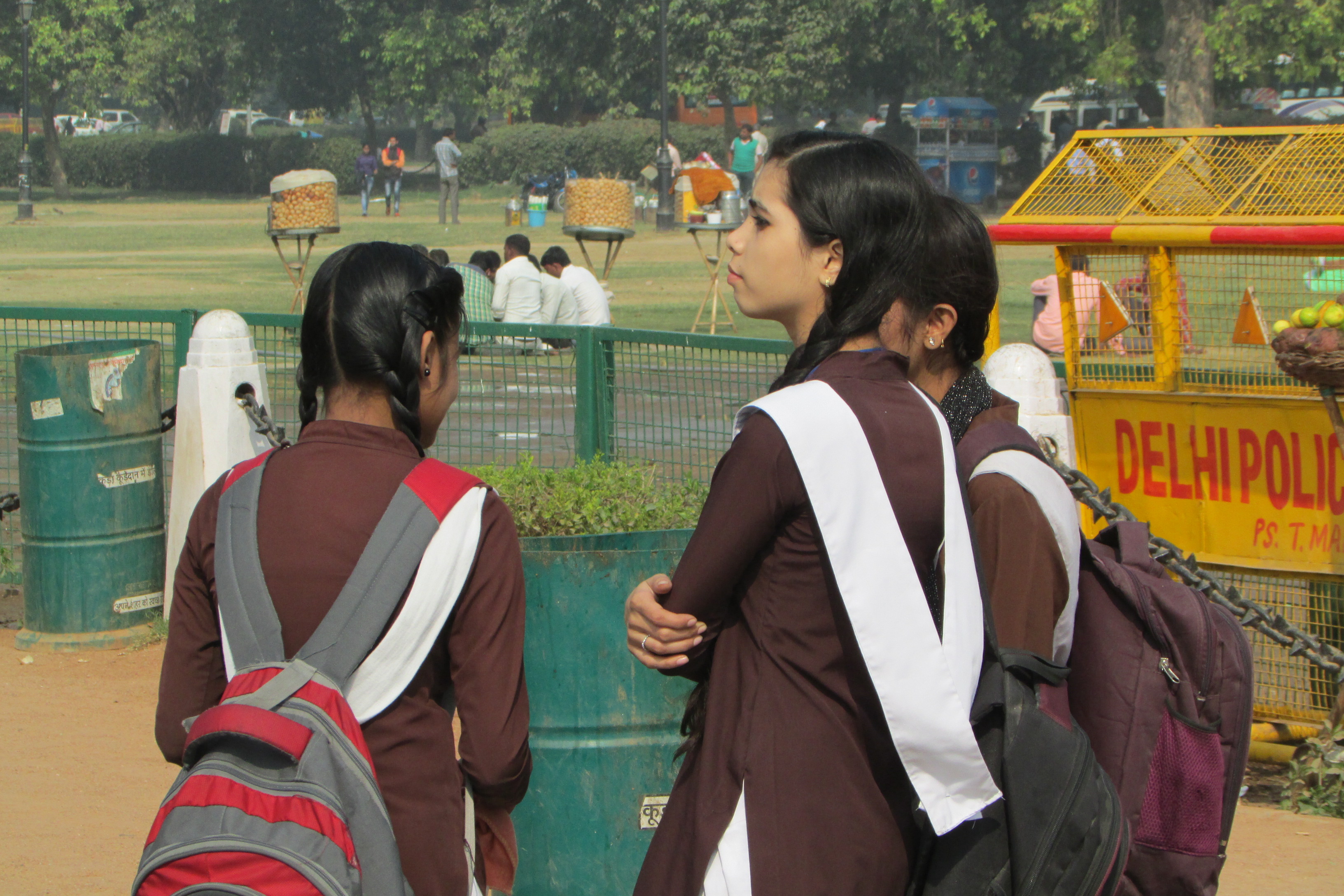
We walked to India Gate. Lots of families and school children were sitting on the grass, and taking photos. Street sellers had stalls of food and drink. Some men sat next to stoves and kettles, selling cups of chai (tea). Women walked through the tourists selling bangles. They were almost aggressive – at one point I realised a bracelet had been clipped to my wrist as I walked and she was negotiating the price!

img_5424 img_5420 img_5413

Walking is quite difficult for white tourists because the tuktuk drivers follow you, offering to take you. They don’t believe you want to walk. After a while, they drive to the end of the street, and offer again when you get there.

Near to the President’s Residence are roads of large bungalows. Each property had a guard on the gate and high walls topped with spikes – only the monkeys could climb over. The gardens were green – lawns and trees and shrubs (didn’t see any flowers.) It was lovely, but easy to be lonely if you lived there I expect, especially for the wives, it was very enclosed.

We saw more monkeys. There was a huge male sorting through the rubbish. We stopped to take his photo, but a man walking past told us we weren’t allowed to. Apparently we were in a military zone (though there were no signs up.) I like that in India, when we do things wrong, people tell us – they don’t shout or fine us, they just inform us we’ve done something wrong. (Shame though, it would’ve been a good photo.)

We went to Janpath Market. There were a mix of stalls in the street, and shop fronts with goods spilling into the road. At one point, everyone began to quickly collect together all their things and move them off the road. I thought perhaps a rainstorm was coming. They laughed, and told us that no, someone had spotted a policeman! Apparently, they are meant to keep all their items within the shop, they could be fined for displaying things on the street.

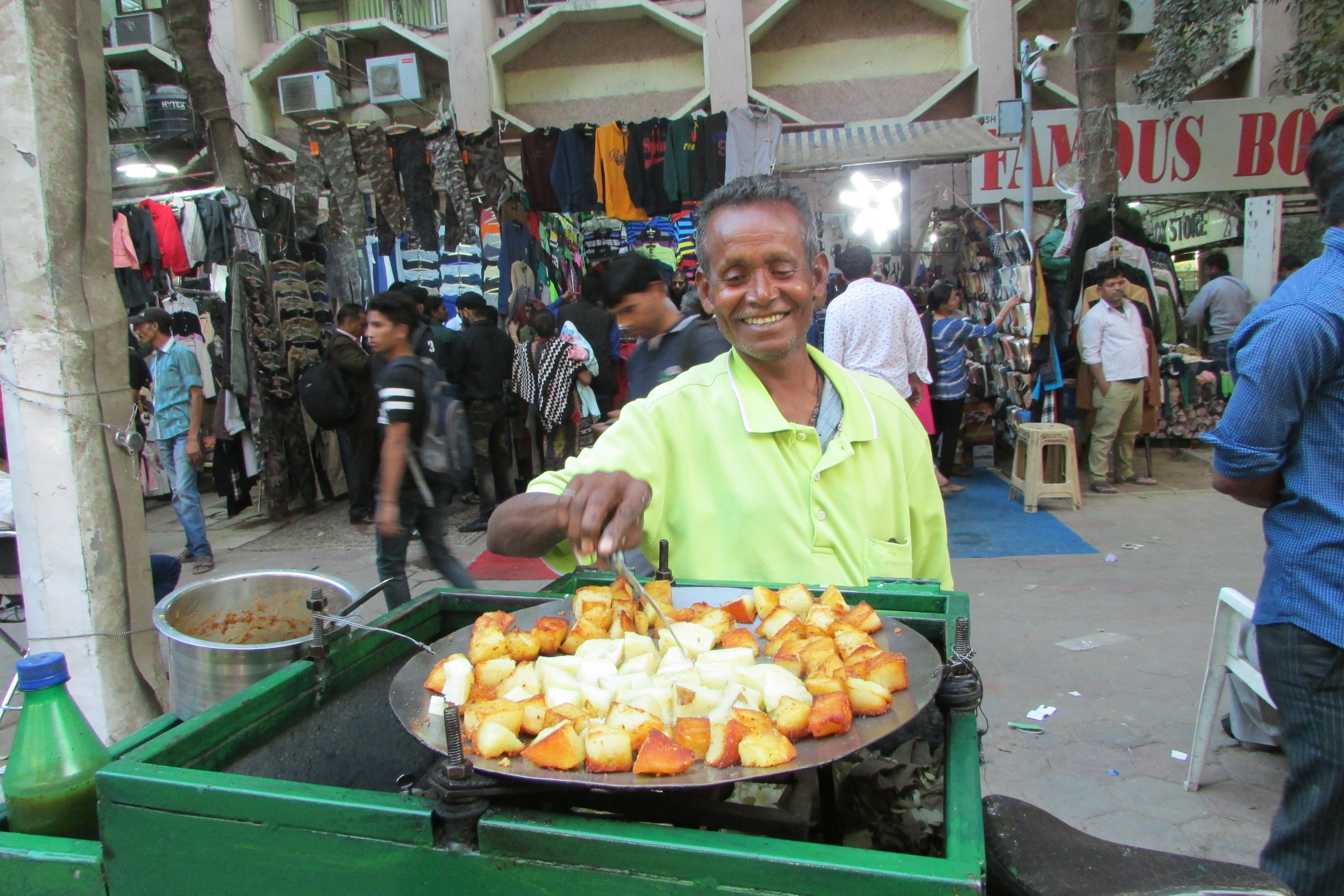
I wanted a photograph of a man frying potatoes, so asked his permission and offered him a few notes (bout 40p in value.) He laughed, and said no. When I walked away, a man rushed up, told me that the food man had changed his mind, then told the food man that he should accept. I have noticed things like this before in Delhi. There is a sort of ‘Mafia’ which runs everything. It isn’t necessarily sinister, but there is definitely an organisation that runs below the surface, mostly unnoticed by tourists. People who run the market, and will direct you towards certain stalls and find change if you have the wrong money. Or taxi drivers who only know the way to certain hotels. Or information offices, who tell you everything is shut except for certain places. It makes you feel slightly wary.

img_5455

I like India. Delhi has been very different to what we experienced a few years ago in Mumbai – it is less intense, fewer random people on the street touched us, there were very few children begging, the traffic seemed less chaotic (it mostly stayed on the road.) But both cities were busy, full of colour and decoration, and the people were polite. You feel that people TRY in India, even in the slums, they weren’t sitting back, waiting for aid, they were actively trying to survive.

The only thing I found really difficult, to the point I don’t think I could live in India, was the pollution. There was a thick haze everyday, and I found walking fast uncomfortable. It actually hurt to draw breath. I’m not sure what India is doing to address this, nor what part Europe and America play in causing it. But something needs to change. On our last morning, there was the Delhi half marathon. I looked online for the route, but mainly saw posts from medics, warning people to be careful if they wanted to run, and advising people with asthma or heart problems, to stay at home. I hope the air pollution can be sorted. Before it’s too late.

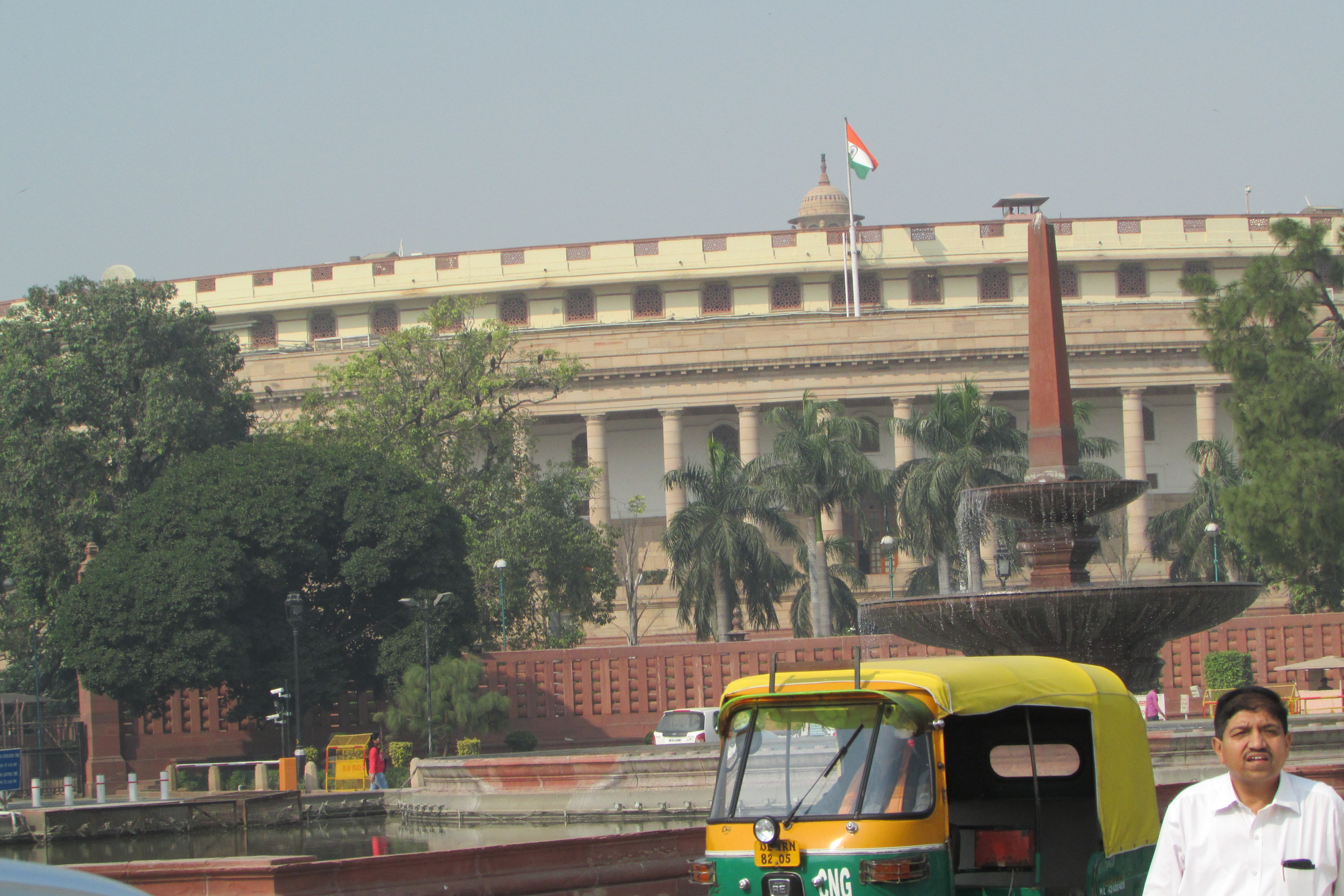
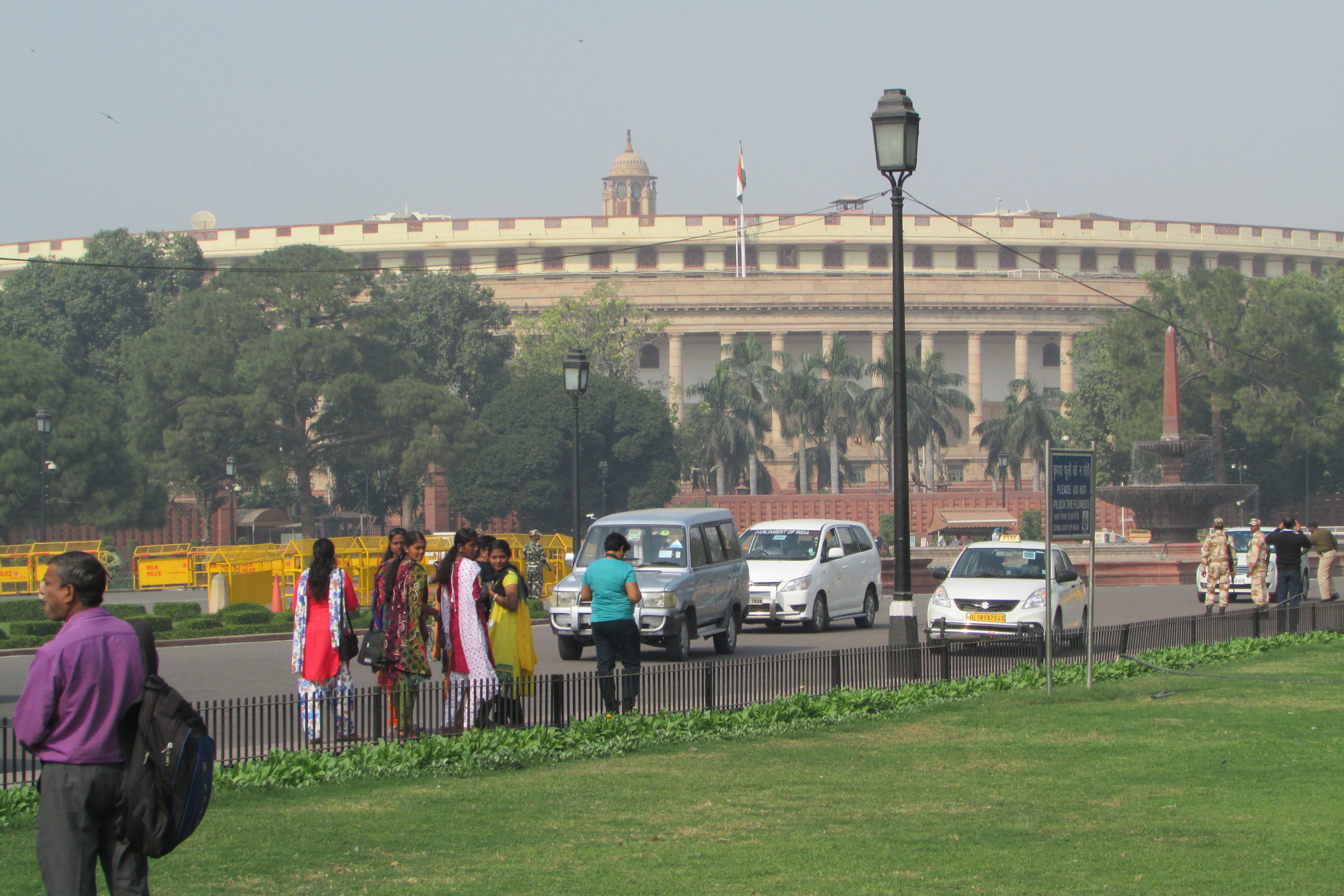
img_5440 img_5437 The round parliament building.

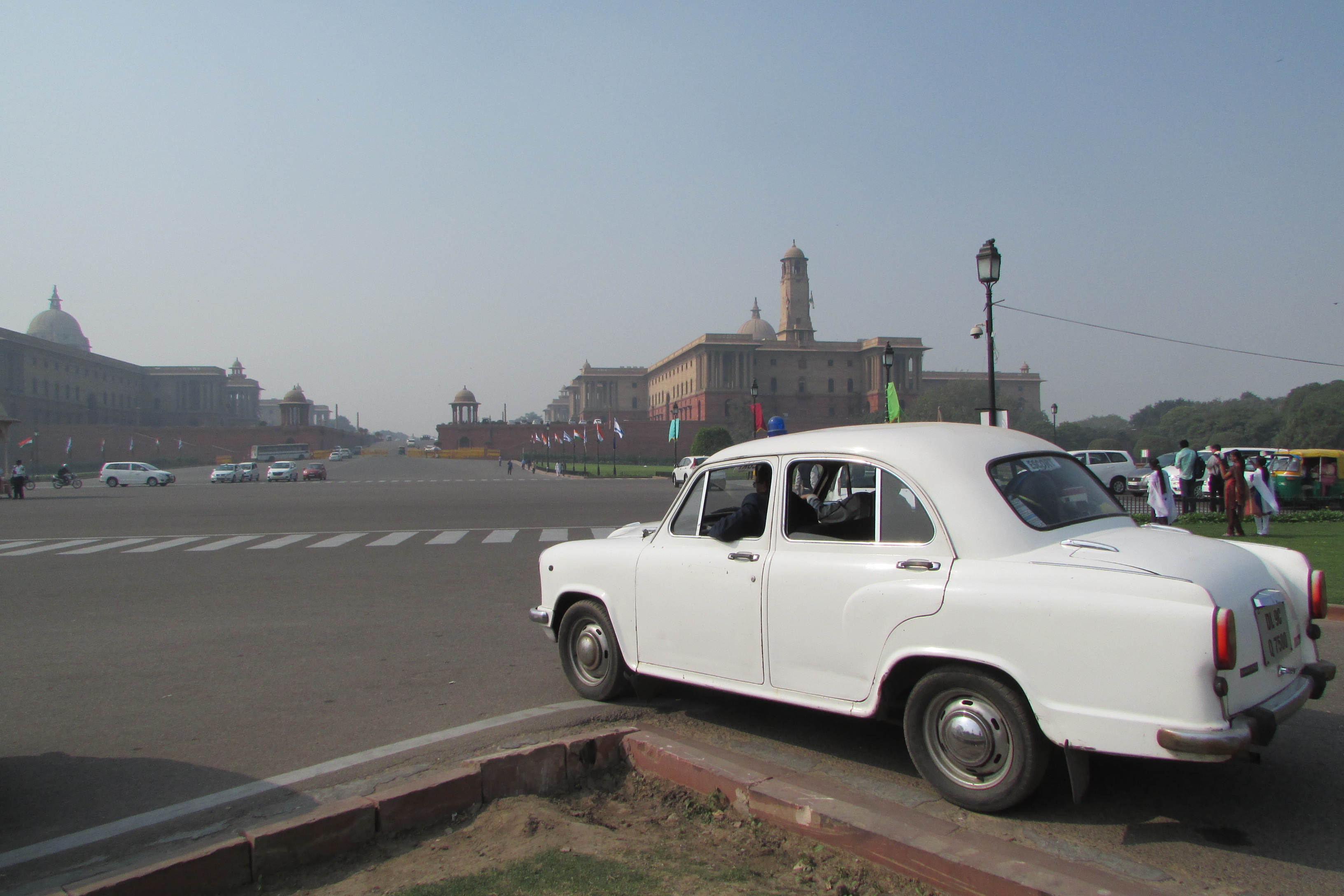
These white cars were everywhere!

img_5433 People enjoyed being on the grass, watching all the tourists.

img_5419 img_5418 Schoolgirls and street sellers

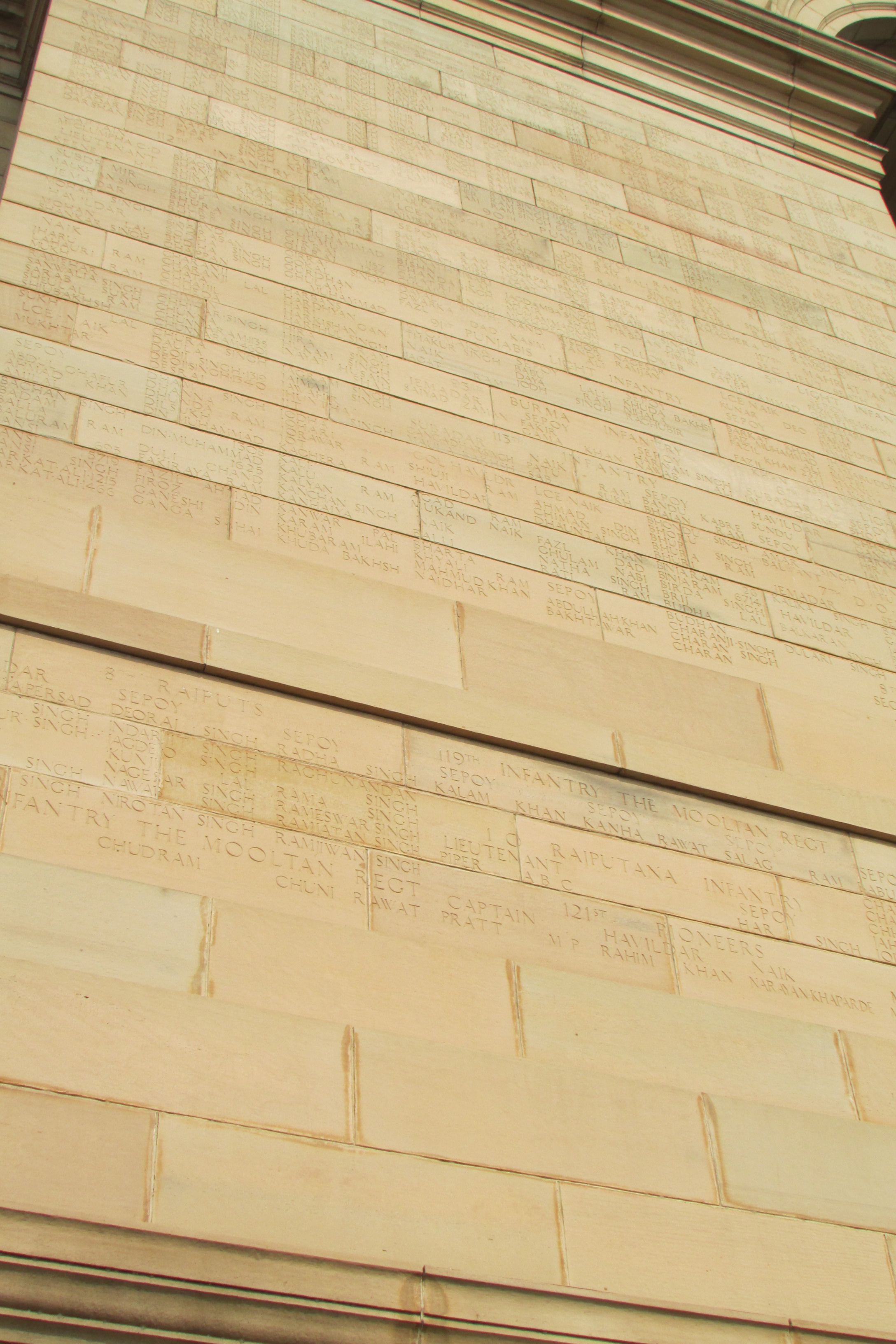
img_5411 img_5416 India Gate, inscribed with the names of martyrs.


xxxx

Thank you for reading.

You can follow my blog at: anneethompson.com

xxxxx
From Delhi to the Taj Mahal


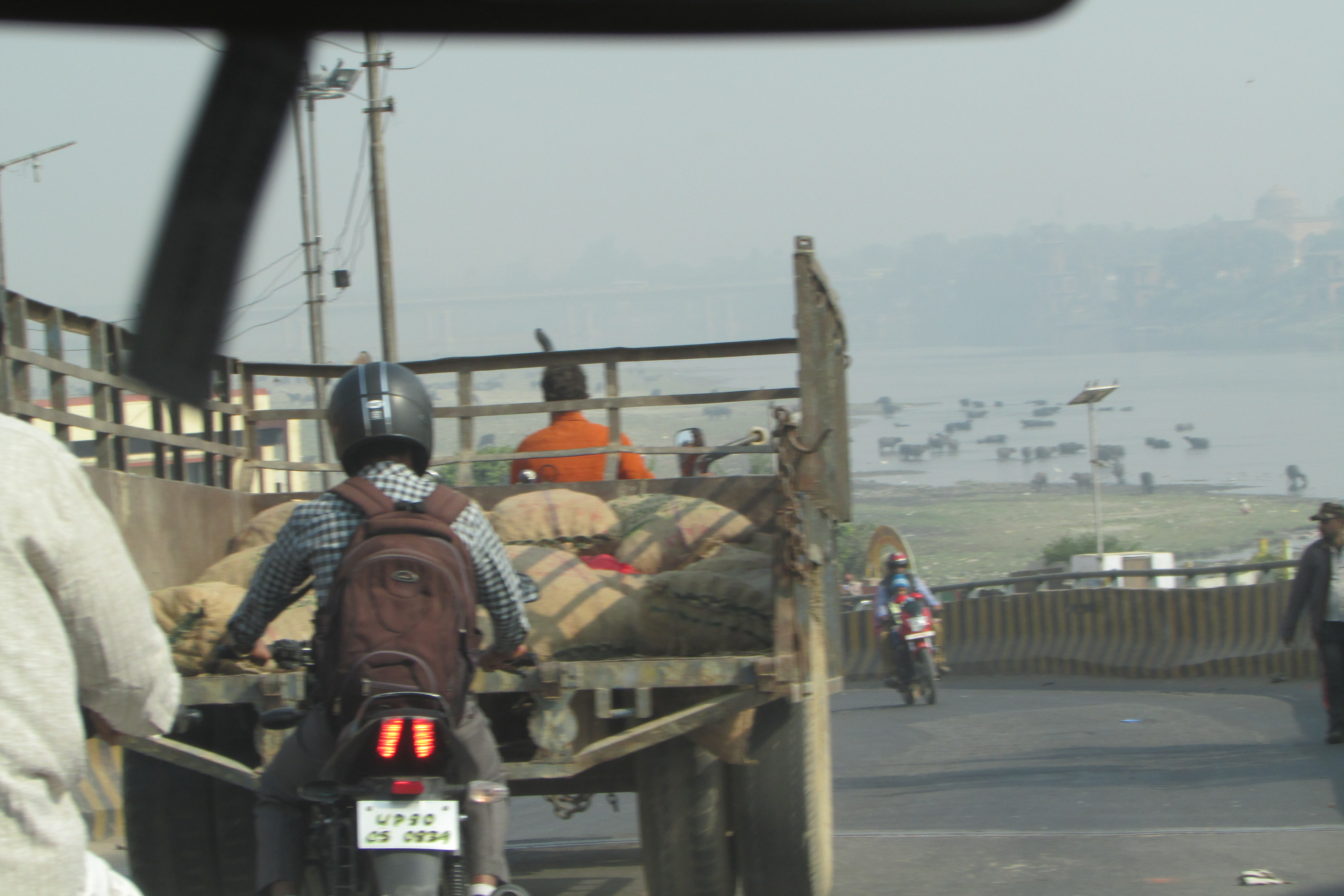
If you like monuments, you should visit the Taj Mahal. If you like seeing different cultures and people, the drive to Agra is fascinating!

p1100108

Woke at 4am. The bed had jolted, so I assumed it was D returning (he sometimes wanders off at night, if he can’t sleep.) Sat up, and realised I was alone, then bed jolted again. Wondered if Delhi was having an earthquake. Located wandering husband and told him he should sit under table if there was an earthquake (which I know after doing online research following earth tremors when we were in Italy 2 years ago.) Husband looked at me as if I were mad. Went back to sleep.

Later, I looked online, and read that Delhi had felt tremors measuring 4.5 on Richter scale.

Car was booked for 7am. Arrived in lobby. Was told, “Yes sir, your car is ready. Please take a seat.” Waited for a while before driver actually appeared. I think, in India, it is considered polite to tell people what they want to hear. It is sometimes almost true.

Drove through Delhi traffic. This is a lot like dancing a tango, lots of tension and near-misses. Seat belts are a necessity. Drove on freeway to a toll booth. Everything completely stationary. Many people honked their horns (no idea why, but Indian drivers use their horns a LOT.) Several people got out of their cars and had a look around. Then the barriers opened, cars surged forwards, people ran back to their cars, avoiding all the lane changing traffic, we were off.

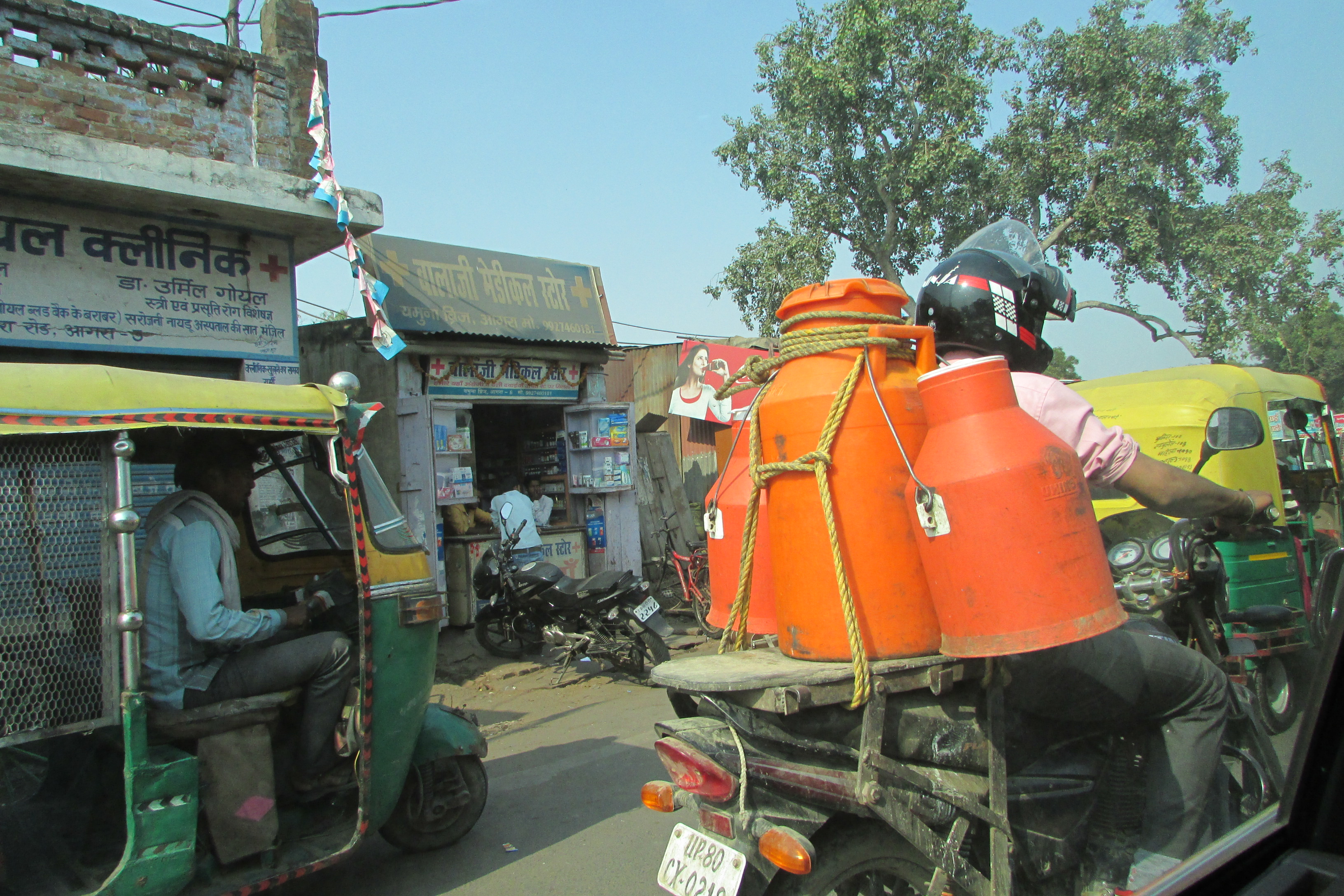
We drove through fields. Passed hundreds of chimneys in a brick making area. Passed green fields with neat crops, people working on ancient tractors or horse and carts. People walked with great sacks on their heads. When we left the freeway, the traffic became more eclectic. Oxen tethered on the back of a too-small truck, tractors pulling trailers stacked high with sacks, lorries with great mounds of grain. All the time bikes and motorbikes and tuktuks, weaving through the traffic, horns sounding.

The drive through Agra was another world. We crossed the wide Yamuna River. On the grassy banks oxen and donkeys grazed while people washed their laundry. Fields of linen were stretched out to dry in the sunshine. Pigs and goats wandered freely, while water birds floated on the river. In the town, the roads were a tumble of traffic, cows, people carrying sacks on their heads. And monkeys scampering across roof tops. I don’t know if the monkeys were introduced by people, perhaps one of the temples, but now they were everywhere. I didn’t entirely trust them when we walked around – they watched us with their clever eyes, darting behind walls then jumping up unexpectedly. It was us who were the novelty, the monkeys were comfortably free.

Left the car in the carpark at Taj Mahal. We had to leave bags in the car, though could take cameras and a handbag. Our ticket price included a bottle of water (which I didn’t trust enough to drink), a bus ride to the monument (though we could have walked, it wasn’t far) and shoe covers. If you don’t have shoe covers, you have to remove your shoes and leave them in an open cubbyhole.

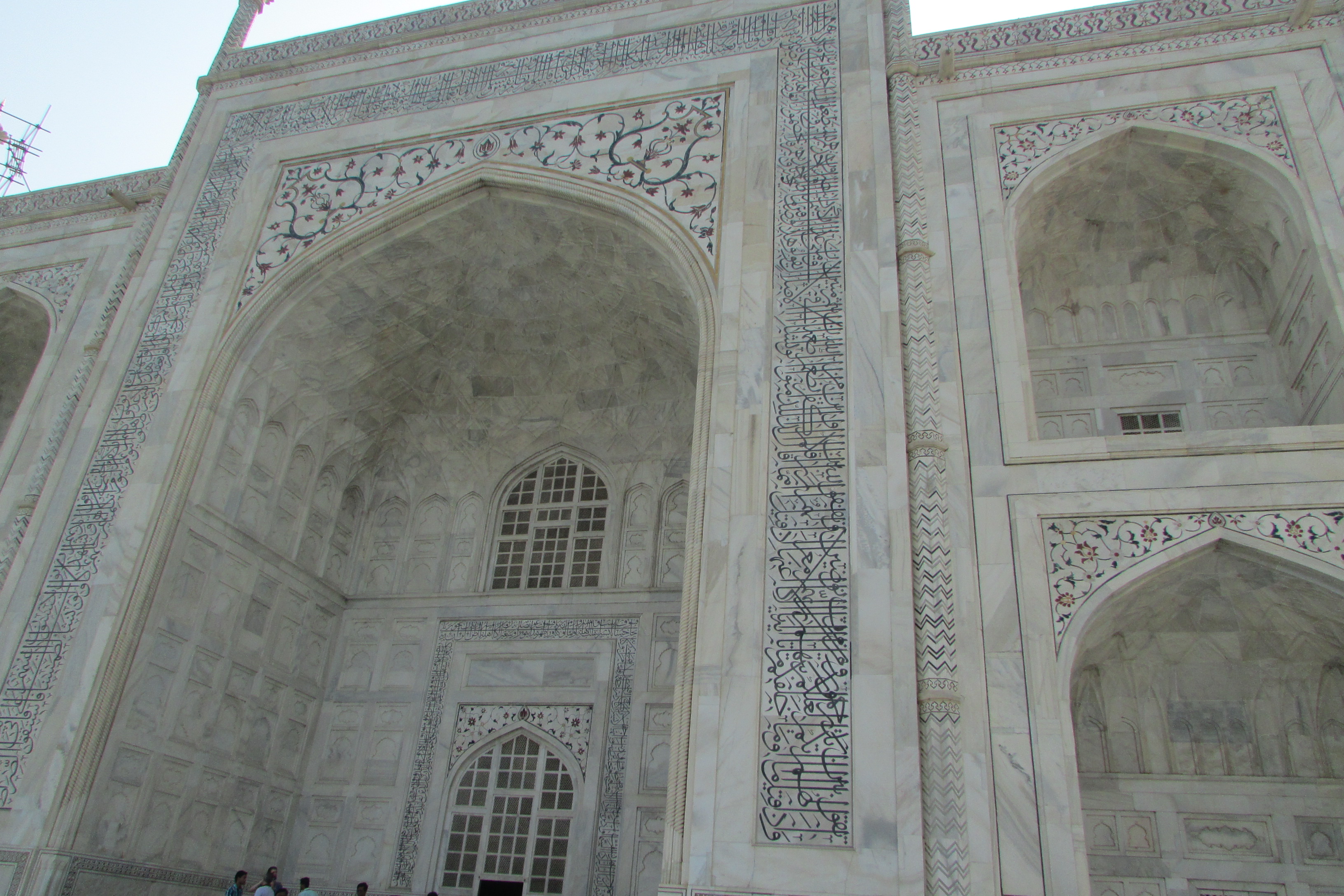
The Taj Mahal is beautiful. Made of white marble, inlaid with precious stones that form floral patterns, surrounded by gardens and fountains. It is the tomb made for a loved wife of an historical ruler. She was the second wife (bit of an insult to the first wife) and she died giving birth to their fourteenth child (so I figure she deserved a nice tomb.) The entrance gate was engraved with an extract from the Koran, written in increasingly large letters as it got higher, so when standing on the ground, it all looks the same size. Clever.

img_5382

All the architecture and craftsmanship was clever. But for me, there was no atmosphere. Perhaps you need to be the only visitor. I would suggest that everyone should first visit Huymayun’s Tomb, so you appreciate how it is meant to feel. But the photos are pretty….

img_5409 Traffic at the toll booths.

img_5396 Lots of milk churns being carried as we drove into rural areas.

img_5390 p1100161 People washing laundry in the river.

img_5373 img_5369 img_5366

p1100127

The Taj Mahal


Who helps the poor in Delhi?


p1100055

We visited the offices of Pardarshita. Pardarshita means ‘transparency’. They have partnered with Actionaid, and are striving for transparency within society. They want basic human rights for women and children in India. Although laws are in place to help people, in reality, many people are unable to claim their rights.

For food, poor people are given ration cards. In theory, there is a basic level of nutrition. However, the scheme is not adequately organised, so many people cannot access it. The same is true of pensions, education, health care. The main problem seems to be administration.

The charity runs workshops, informing women of their rights and helping them to access them. These include:
Enrolment in school for children.
Ration card.
‘Kerosine Free Delhi’ ( they can claim free LPG for cooking, if they have a ration card.)
Voter card (for elections.)
Pension
Birth Certificate.
Income certificate.

The people need to queue for many hours to obtain the above certificates, and they need the certificates to claim their rights. Or, some people pay for a counterfeit one (this apparently, is very common.)

The ration card is given to people ‘below the poverty line’. I think, whatever the country, this is always going to be a difficult one. Who are the ‘poor’ in England? They have far more than these people even dream of owning! Previously, in India, poverty was assessed by calorie intake. I think this seems an accurate guide (often, especially when people are subsistence farmers, the whole “less than a dollar a day” standard is meaningless, as they wouldn’t have anywhere to spend a dollar even if they had one. Money only works in Western countries as a guide to poverty, in my view.)

However, the last census in India took possessions into account. So, if a domestic worker had been given a television to watch, she was considered ‘not poor’. This allows the government to count fewer people as ‘poor’. Which means fewer people can claim their rights.

India has lots of illegal immigrants from Bangladesh. If you are a Muslim and speak Bengali, people will assume you are an illegal immigrant, even if you’re not (in the slums, there were a lot of Bengali speaking Muslims.) They tend to have to bribe an official to be issued with an ID card. If you can prove you have lived in India for 10 years (so have documentation) you can then stay legally.

The rights of domestic workers is another issue. India is famous for cheap labour – everyone in the world wants to take advantage of this. Including Indians. So, most people, even ‘ordinary’ people have domestic staff. They are paid below the minimum wage (because no one checks) and are sometimes treated almost like slaves. No one really wants to change this, because no one wants to pay more for their own cleaner, child minder, cook…. The pay is about 2,000 rupees a month ($30) They are also very vulnerable to abuse. A rich person, with guards on his gate, sometimes feels he is above the law (remember, women have very few rights in India, and courts rarely rule in their favour.) There are some sad stories amongst the women in the slums.

All children have the right to free education in India. The quality of this education varies. We visited a school in a resettlement area. It was a bizarre experience.

We were shown into the headteacher’s office and given chairs to sit on. The chairs were dusty, and I felt I needed to keep moving my feet because as the headteacher (a sensible, intelligent, woman) spoke, mice scuttled about on the floor. Do mice run up trouser legs? I wasn’t sure, but didn’t feel especially relaxed.
The school had 2,000 pupils. There were 15 toilets (you can imagine what that means…) We were told the ratio of teacher to pupil was 1:70 (though actually, the classes we saw were much smaller than this.) The building is used three times during the day, two shifts in the morning and one in the afternoon (completely different head, staff and pupils attend each shift.) This makes for difficult administration when things like budgets are planned.

The women in the slums told us that by age 9, most children could only read very simple Hindi, so they questioned the point of them attending school. If children don’t attend school, they can help their parents, or care for younger siblings so their mother can work. The headteacher told us that teaching quality was variable, because many teachers were demotivated. Paid by the government, they put in the hours, but had no motivation to actually teach. They also are expected to do admin, such as ensure children have ID cards, which takes time, so teaching gets relegated. Another problem is that very few of the pupil’s parents could read or write, so there was no reinforcement at home. This is huge. In England, children take home a book every day, so they can practice at home. Without this, it is much harder for a child to learn to read, especially if their role models never read or write.

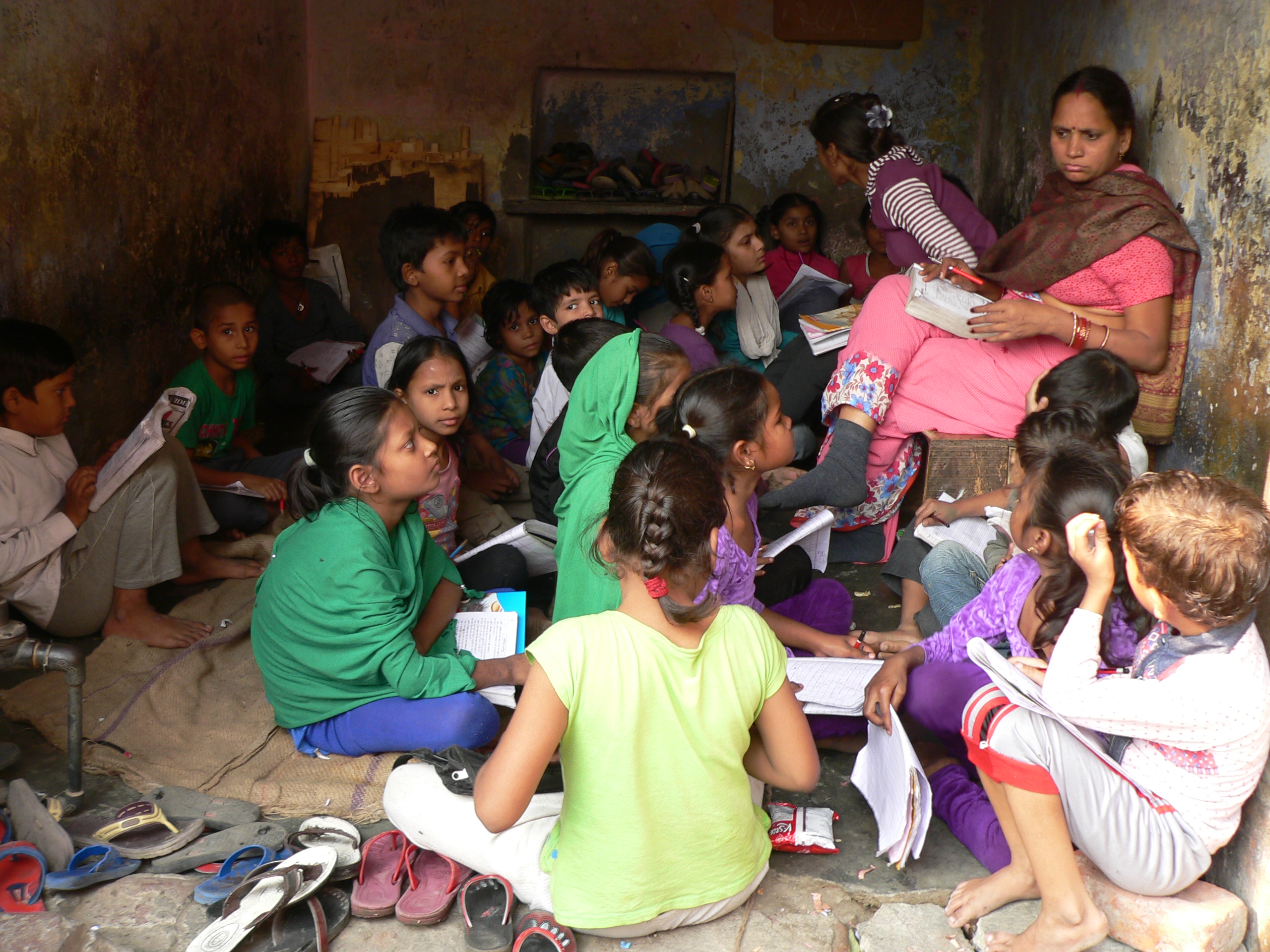
I found the school visit to be a rather depressing experience. The classes we glimpsed seemed completely unstimulating, even the rooms were drab, with nothing displayed. I might be judging unfairly – we only saw a glimpse; and I don’t like mice – but I’m not sure I would have bothered to attend that school. In the slum, we passed a house where a woman was reading to a whole room full of children. We were told it was ‘an education room’. It seemed much more child friendly than the school.

p1100072 p1100080

Thank you for reading.

anneethompson.com

Into the slum….


p1100061

Today we went to the slums (which officially are illegal.) The resettlement areas, where the goverment have housed the poor people, were very poor. The slums are worse. Hard to get your head round the poverty, these people have nothing.

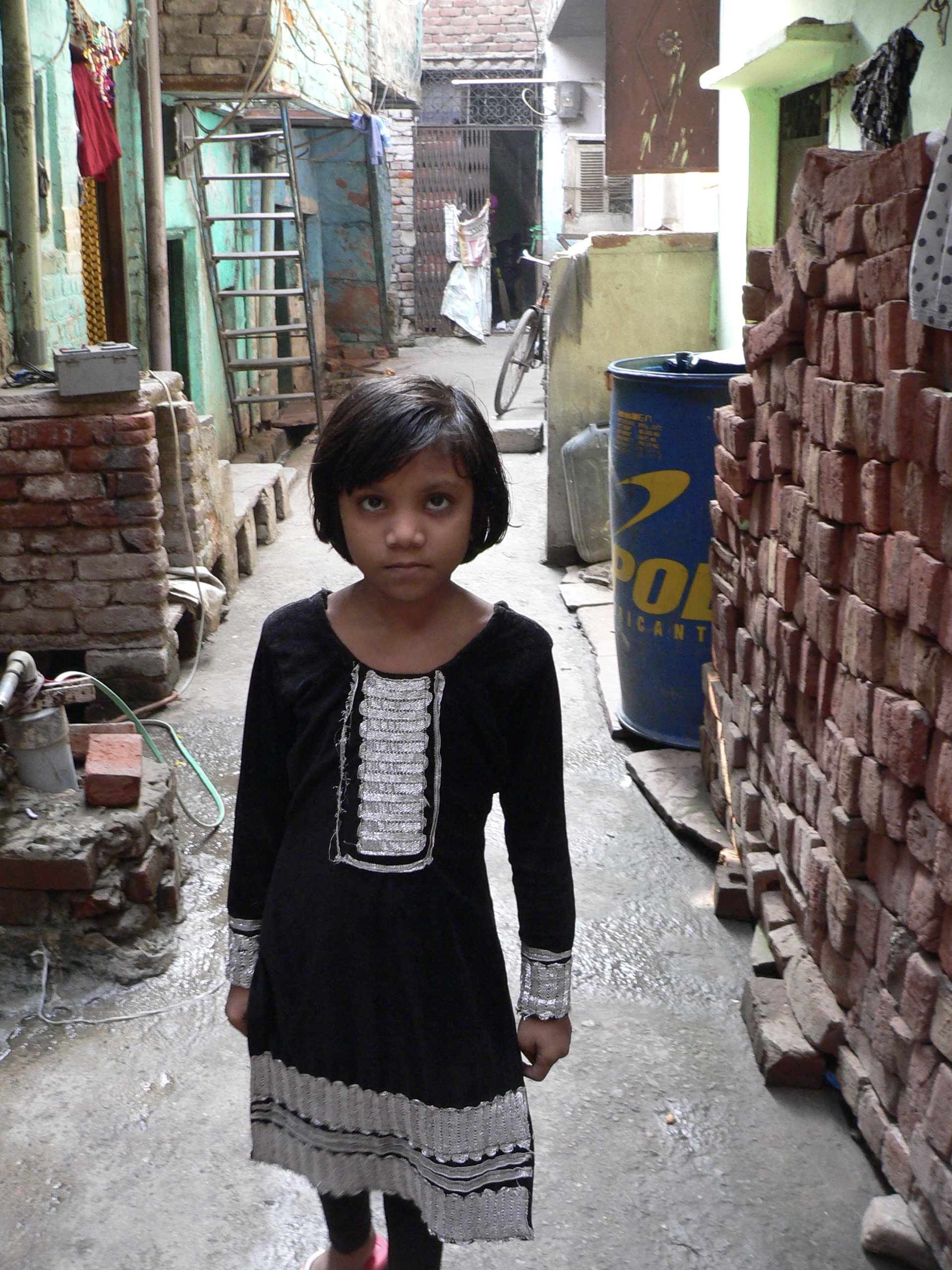
We left our bags in the charity office, though could take our cameras as people are used to the charity taking photos to use in campaigns for help. We left the lanes and walked into the slums. Unfinished buildings in haphazard places, sometimes so close together that it was like walking through a dark tunnel, a 2ft wide pathway with sewage in the open ditch next to you, fat electricity cables in a tangle above you. We had to walk in single file. The houses leant towards each other, there was almost no light, a foul smell, and children playing at the corners.

Their homes were a room in a concrete building, with a rug on the floor and a few possessions heaped into the corners. No furniture at all. It makes you feel a bit lost as to how they can best be helped.

We saw a woman through an open door, sitting on the floor, beating wet washing with a stick. We saw several groups of ‘rag pickers’. They have bought huge sacks of rubbish, which they then sort into bags of paper, plastic, metal. They can then sell this for a small profit. Whole families sat on the ground, sorting rubbish.

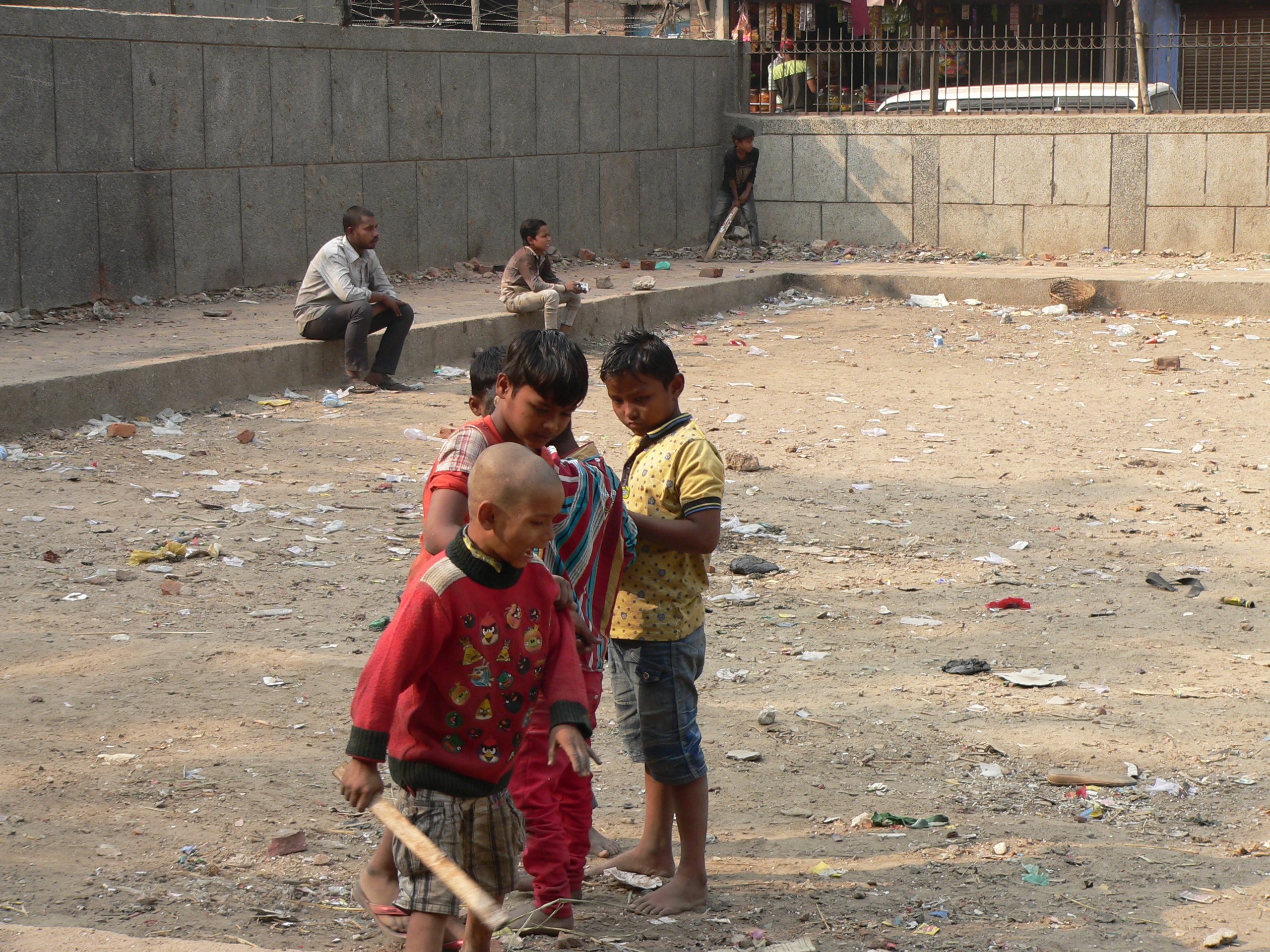
There was a park/children’s play area. A square of litter strewn hard earth surrounded on all sides by buildings. The charity had bought two climbing frames and children hung upside down from them, watching us walk. Three women sat in the corner on a dirty rug. They had bought a sack of nuts (300 rupees – £3) and were sorting the husks from the nuts. It would take them all day. They could sell the sack of sorted nuts for 400 rupees. It cost them 50 rupees in transport, so 50 rupees for a days work (about 60p).

Several buildings had electricity meters on them. The goverment had provided these, to try and prevent the fires breaking out, which were common. In the rainy season, the area floods, carrying the sewage and rubbish into the houses.

The area is home mainly to Bengali speaking Muslims. Some would be immigrants from Bangladesh, some were Hindu Indians. There was a Hindu/Muslim ‘temple’ – a room decorated with fairy lights and flowers and brightly painted pictures. It wouldn’t have been out of place in Vegas! It was a symbol of unity, showing that Hindu and Muslim people were tolerant of each other, trying to work together. It surprised and impressed me.

There is a huge bond between women. I felt exactly the same as the women we met, I kind of knew what they were saying as they showed us around. We had met them at the charity office, and now they were showing us where they lived. They hugged me when we left – I dont know why really, I didnt help them in any way, I just shared a tiny bit of their lives. But I think women recognise something inside of each other, a shared understanding that transcends culture or language or possessions. When I stroked their babies or they held my hand so I didnt trip near the open sewer, we were equal, the same. Not sure if I’m describing it properly, but I hope you know what I mean.

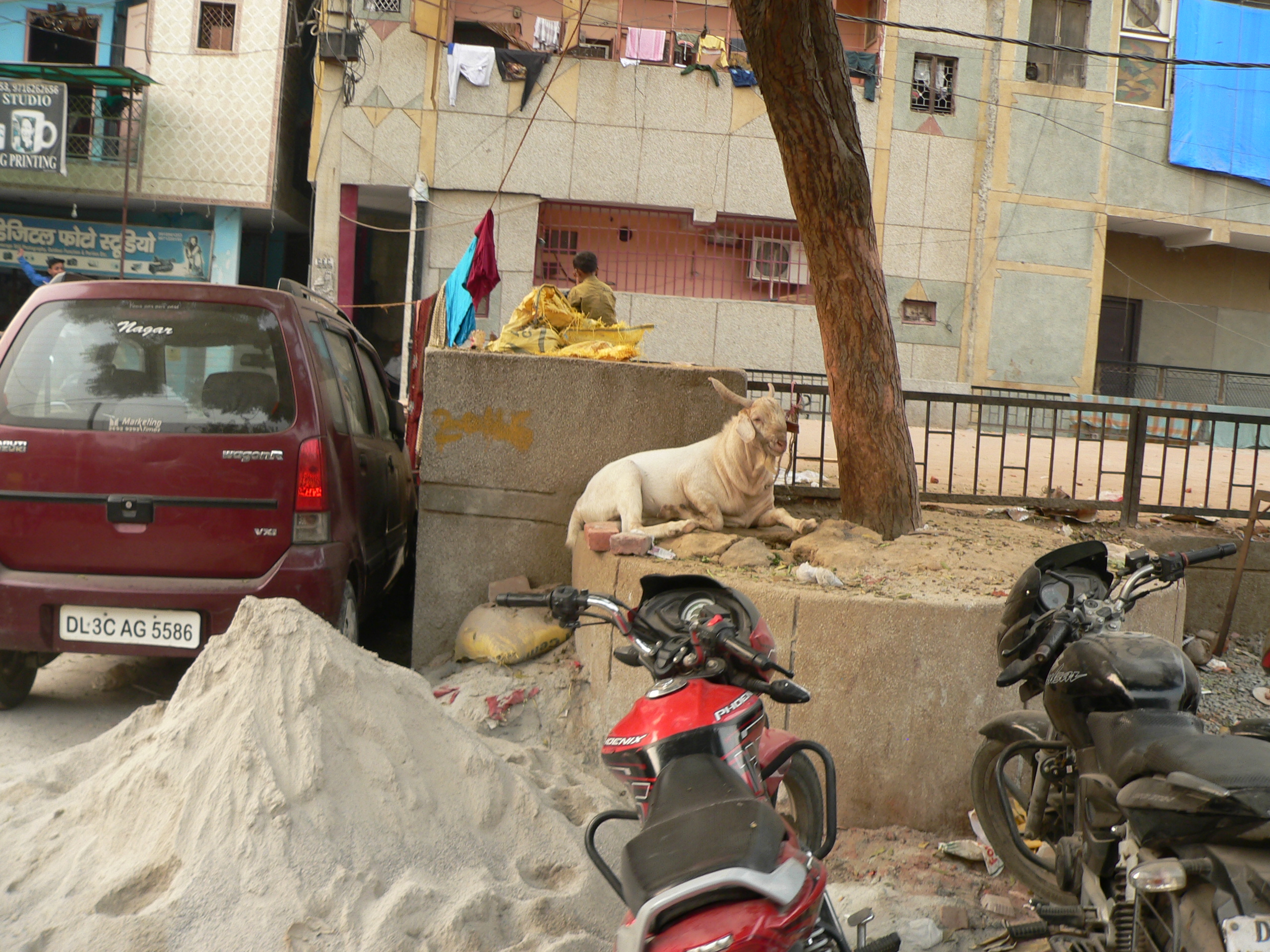
There were lots of children and lots of animals. Goats and dogs mainly, but a few birds too – even a dusty duck searching through the rubbish.  There were chickens, many to a wire cage, stacked on top of each other. You wouldn’t want to be a chicken in India.

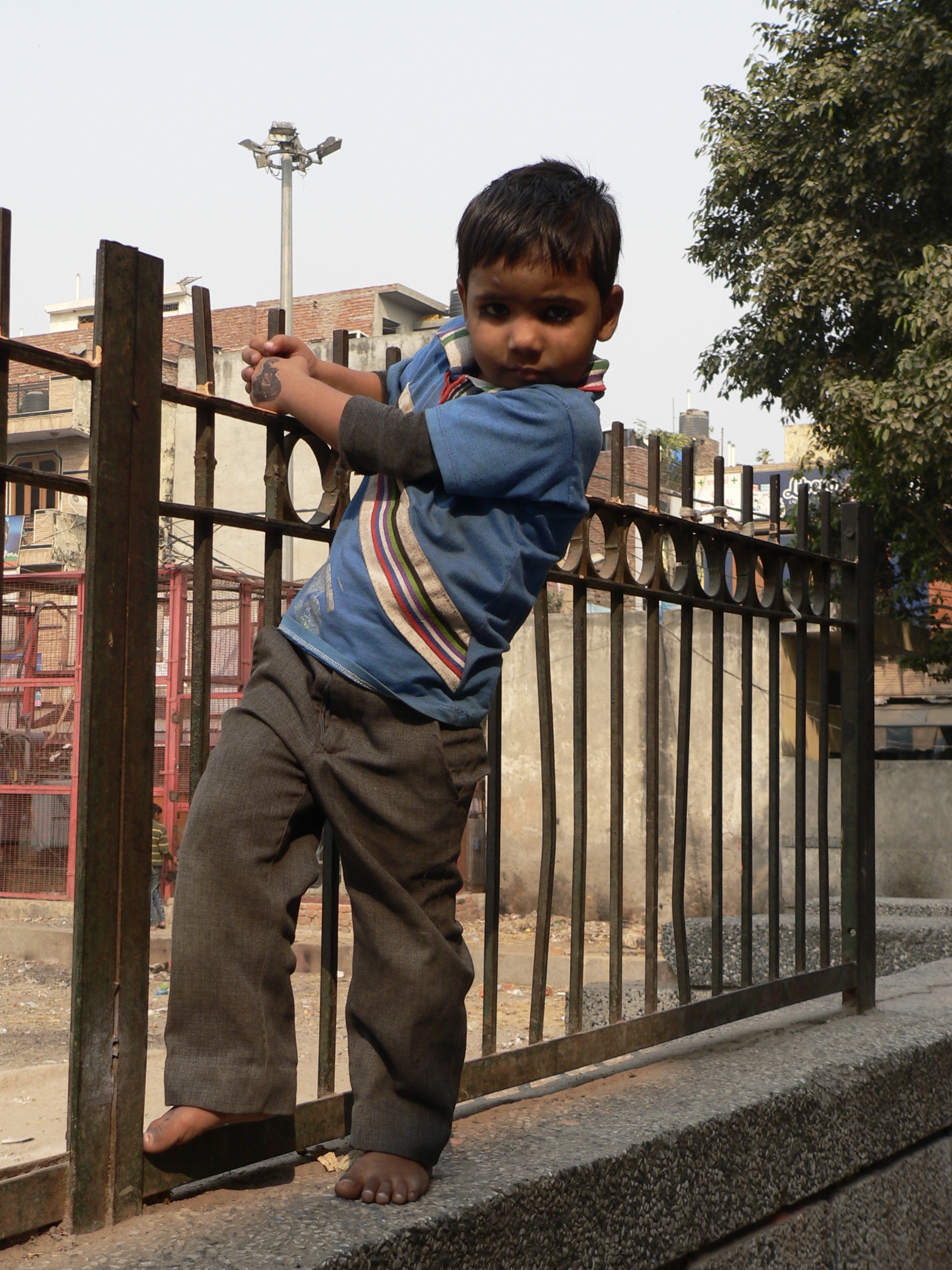
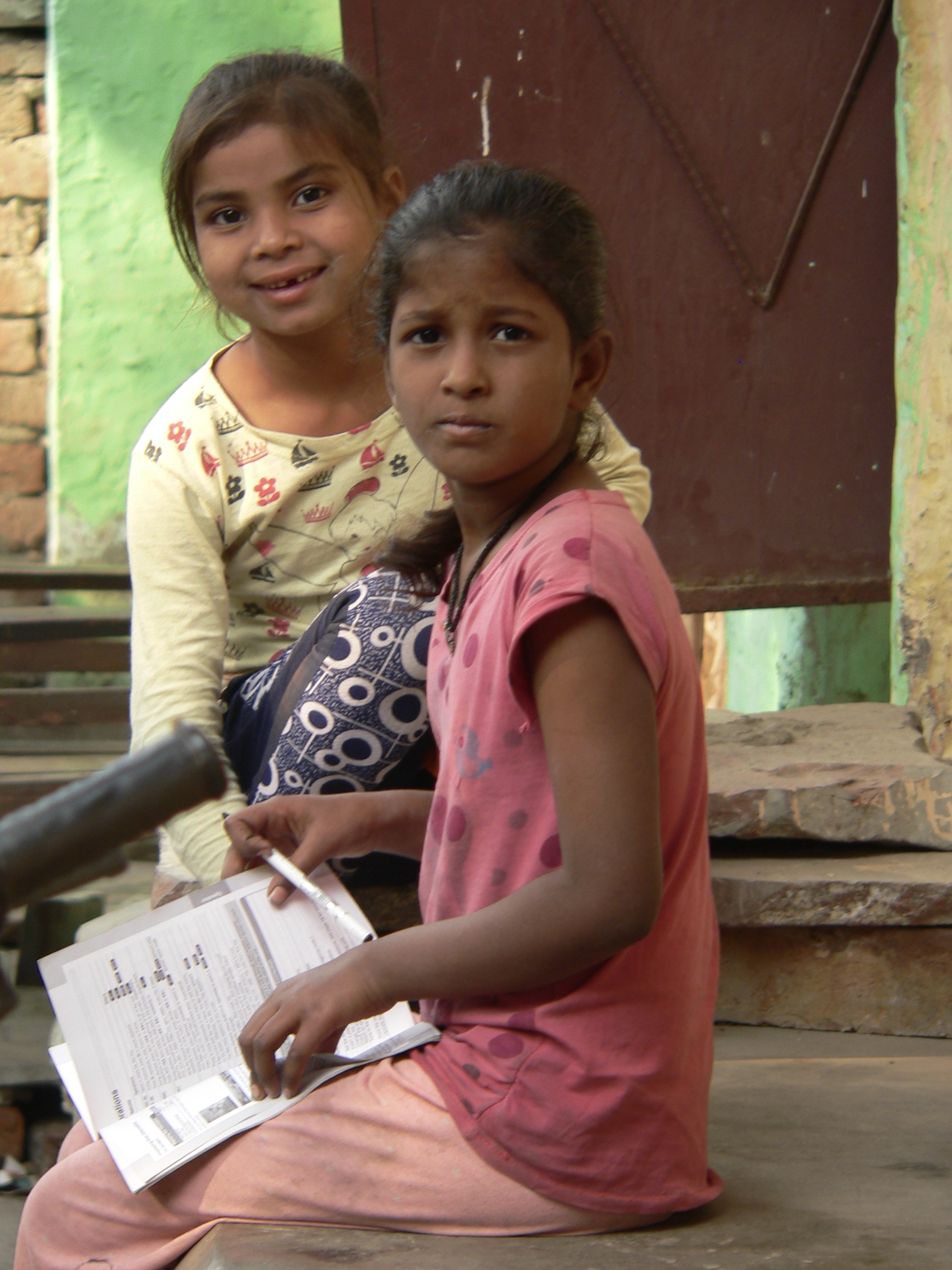
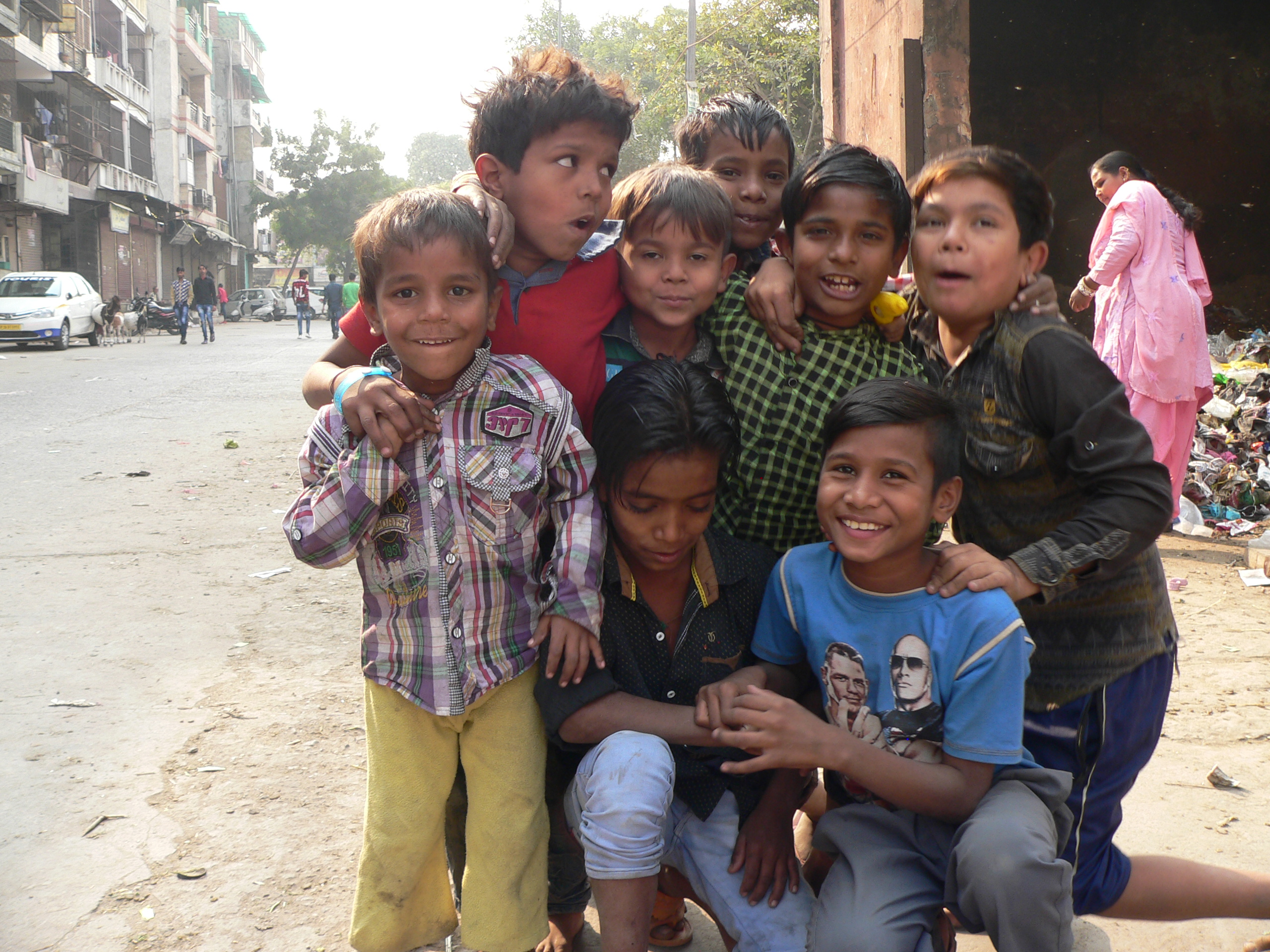
The children were playing. They would be holding a stick, or a piece of rubbish, but you could see they were making up some story in their head. Or else they were teasing each other and laughing. They were, bizarrely, happy. They wanted us to photograph them, and punched the air in triumph when we took one! They were very funny.

So how can these people be helped? Tomorrow I will tell you about the school we visited, and what the charity is actually doing to improve the situation.

Thank you for reading.

anneethompson.com

p1100051 p1100058 The play area.

p1100059 p1100061 p1100063

Rag pickers, sorting the rubbish into type.

p1100065 The narrow lane –  like a foul smelling tunnel, so narrow it was almost dark.

p1100069 Piles of tar and litter and excrement, next to the open sewer.

p1100078 The women sorting nuts from husks. The husks can be burnt for cooking.

p1100087 Wherever we went, there were children playing.

p1100085 The Muslim/Hindu temple

p1100089

p1100093 Boys having a laugh.

p1100095 p1100097

A rubbish tip – but if you look carefully, you can see the children playing. Barefooted.

xxxxx

Sent from my iPad