Fuschlsee, near Salzburg – Family Holiday Diary


Day Three – Fuschlsee near Salzburg

Breakfast 9 am. Managed to sit inside today. Sheraton provides a good selection for breakfast – and S selects most of it. Today he poured chocolate powder over his eggs by mistake (same wrapper as mustard). We, of course, never mentioned it again, because we’re a tactful, understanding, family. R had a boiled egg, which wasn’t. J spent 3 hours cooking a waffle (had to restrain Husband so he didn’t go to “help” him.) But we didn’t break the coffee machine today.

Choices for activities today were: walking, rowing, golf, cycling, swimming. We, of course, had a voting system (20 votes per person) and made an Excel spreadsheet. Sometimes I wonder how I came to be part of this family. Anyway, rowing won.

Hired two boats (€10 per hour) and set off across Fuschl Lake. Made it to a jetty with a fish restaurant and had drinks. Had to walk across a scary floating jetty and down a plank of wood. I don’t generally do well with activities that involve balance. Used washroom – all public conveniences in Austria seem to cost 50 cents. Rowed back. It is harder than you might think to row in a straight line.

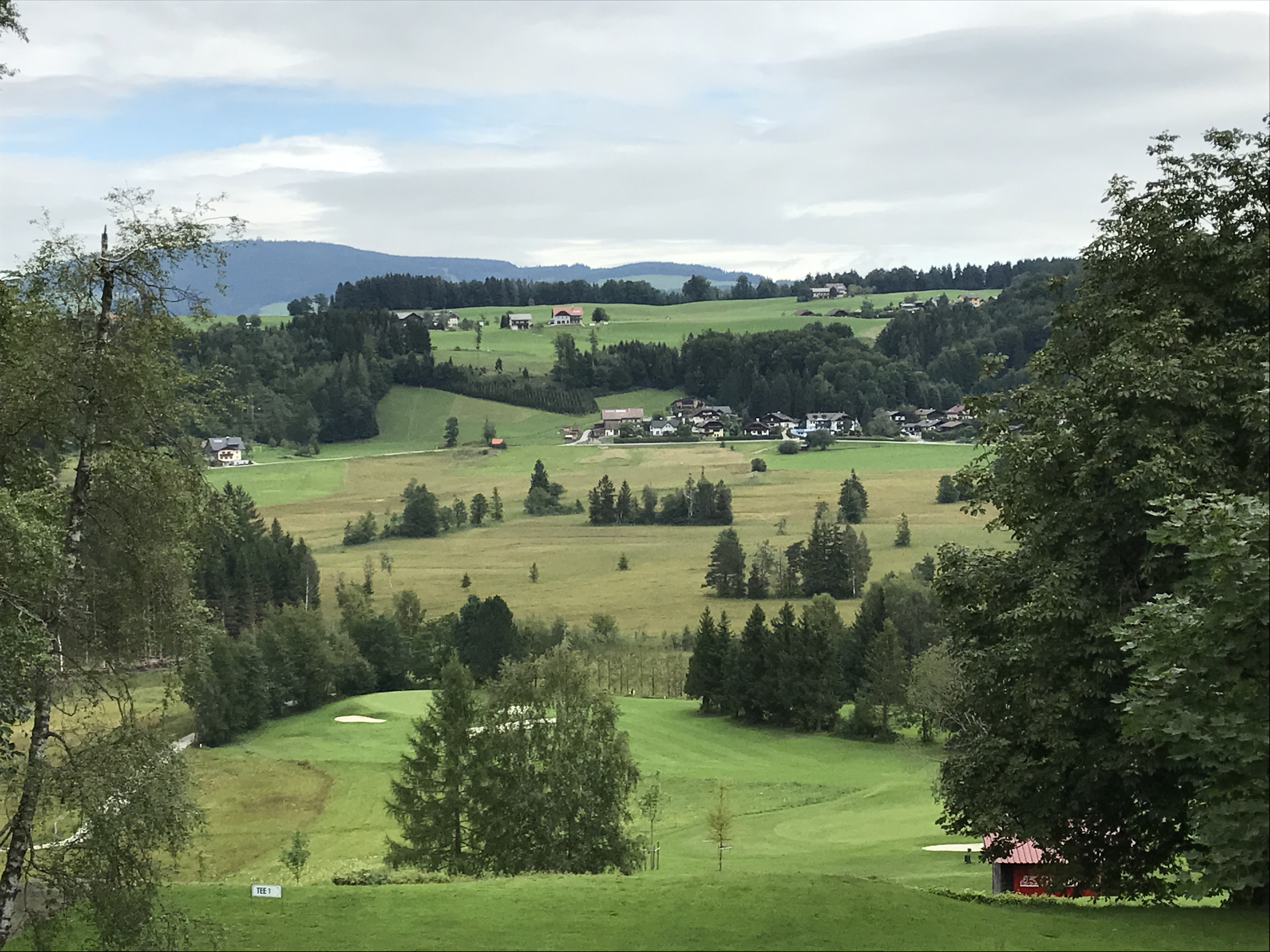
Family played golf (not me). Then we met for hideously expensive drinks in pretty hotel bar.

Had trouble booking anywhere for dinner, as it’s Assumption Day and everywhere is closed (would’ve been nice if hotel had warned us). Ate in The Grill at hotel. Nice food, very friendly waiter.

Day Four

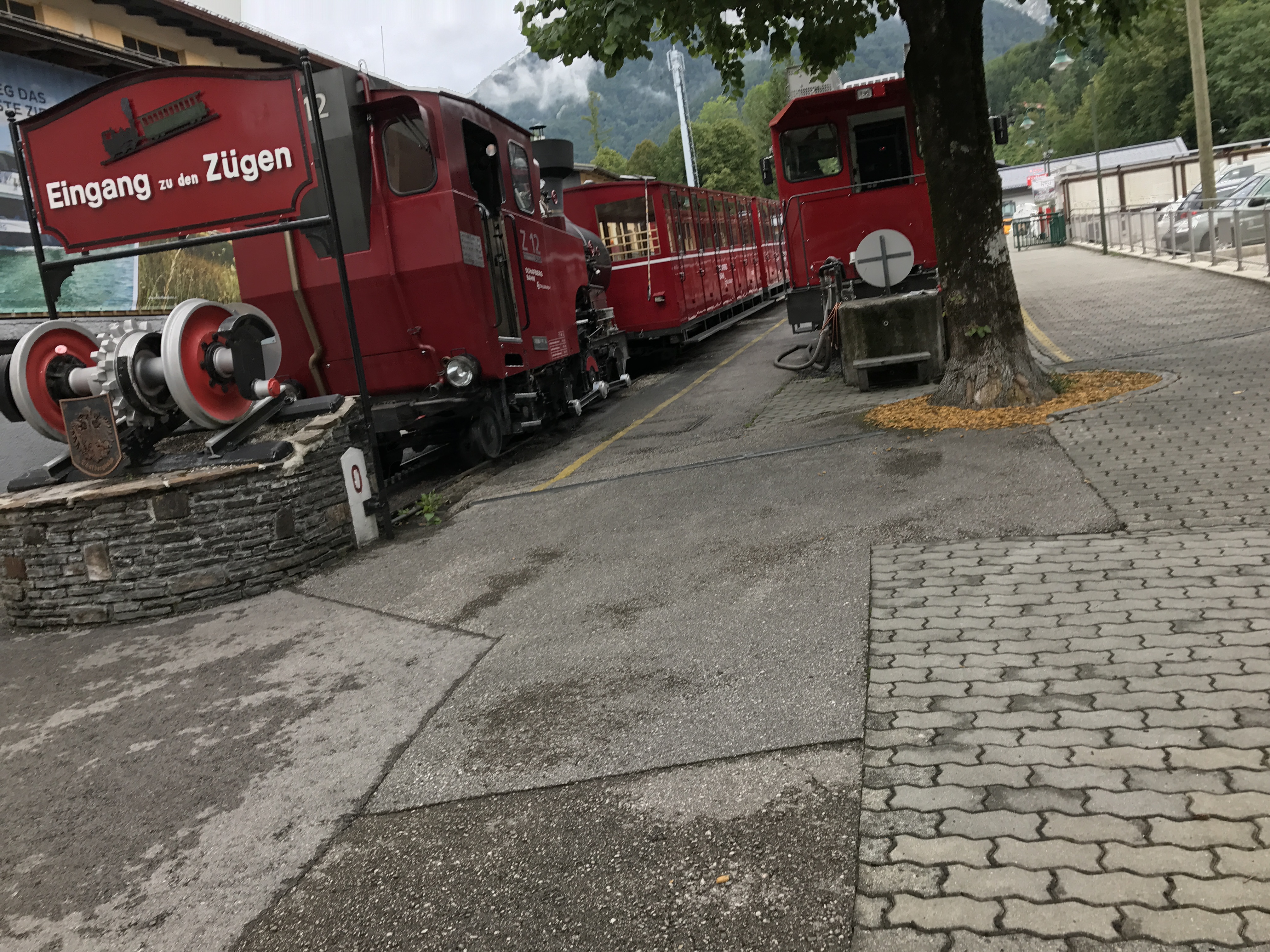
Nice breakfast again. M and H swam before breakfast. ( M has clearly been abducted by aliens who are now impersonating him, but I rather like having a son who gets up before midday, so I don’t mind.) Drove to St Wolfgang and caught tourist train up mountain. Tickets so expensive Husband wouldn’t tell me the price.

Mountain very cold at the top. R wearing summer dress and sandals – interesting decision. We covered her in Husband’s hideous cagoule. Brilliant views, though one side was covered by cloud. The peak looked like a film set for a Nazi film, with a wooden house with flags for secret planning meetings.


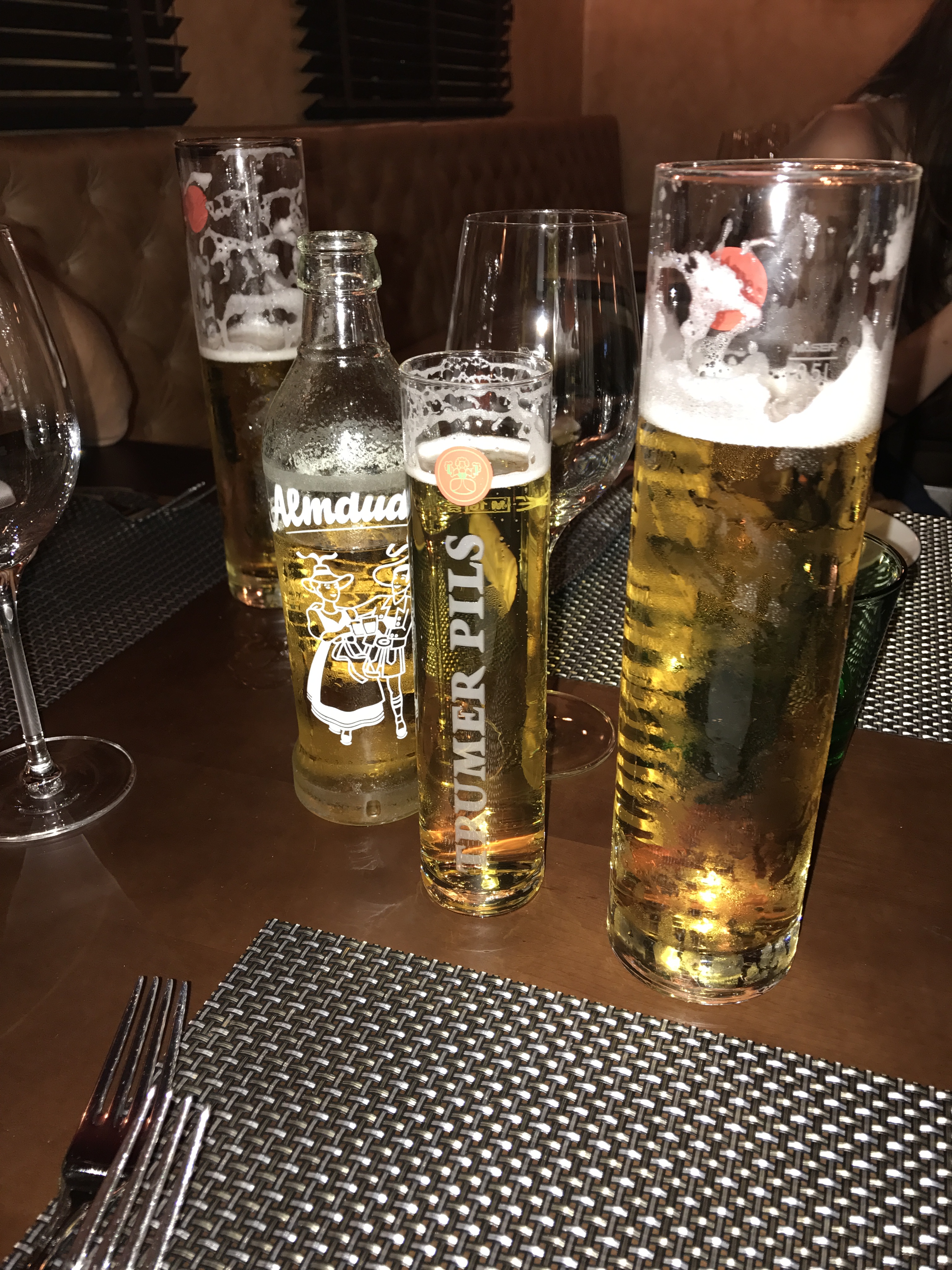
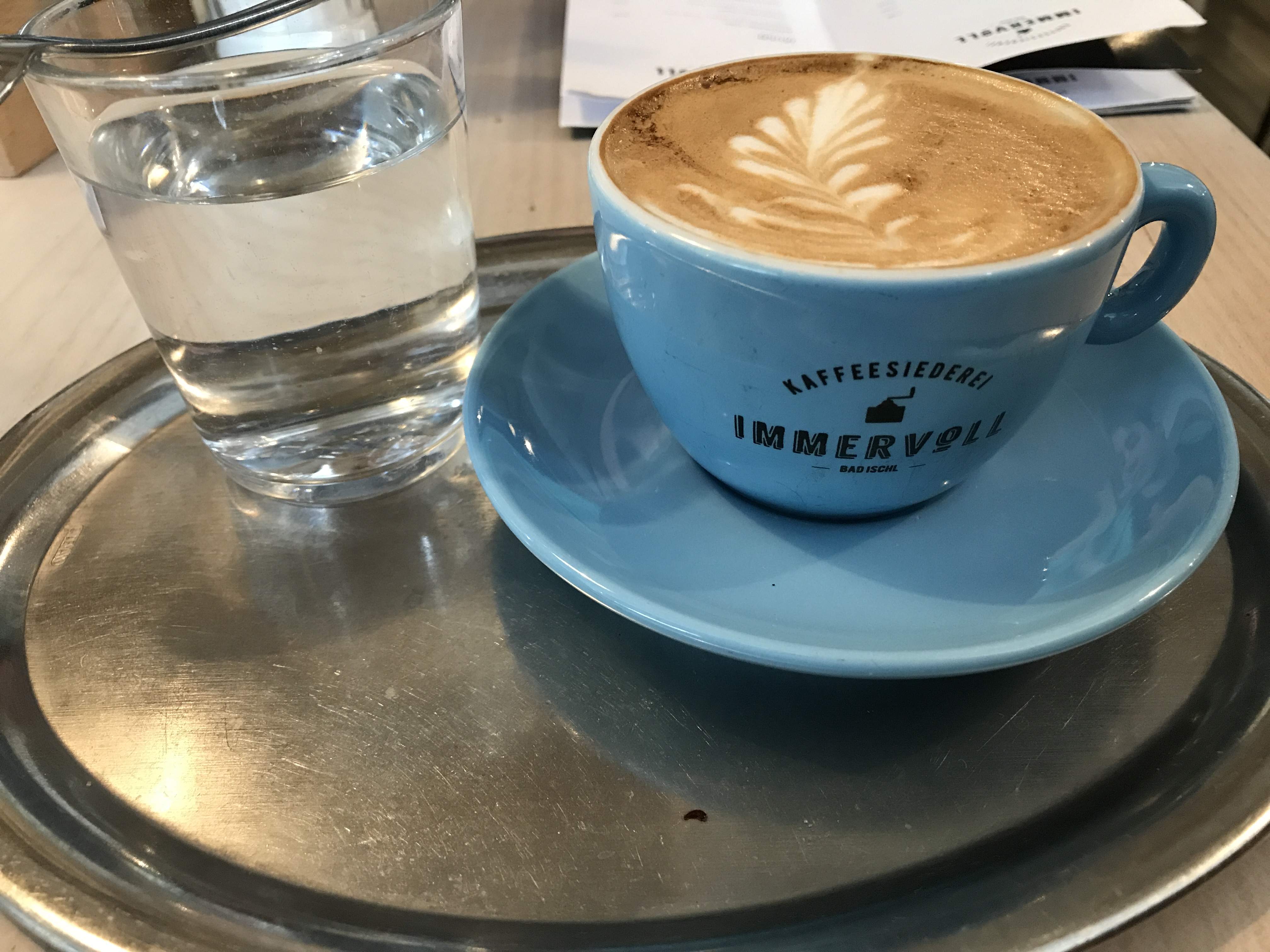
Drove to Bad Ischl to a coffee house recommended by Trip Advisor. (When in Austria, you HAVE to visit a beer garden, a coffee house, and run across an Alpine meadow singing words from The Sound of Music. It’s the law.) Really nice coffee, really grumpy waiter. We wanted lunch, and when we asked if the menu had any vegetarian options, he told us to go to the cafe up the road! Used the washroom, which had a strangely placed mirror – I could not see any purpose for it, do people check their make-up while sitting on the loo? Very nice coffee though….


Saw some red phone boxes. One was filled with bookshelves, and was a ‘book-swap’ place. Nice idea.

It’s our last day in Austria, so I bought a cushion cover for my collection. Tomorrow we drive to Slovenia. Now, I just need to find a meadow to run across……

Thank you for reading.
Take care,
Love, Anne x

Why not sign up to follow my blog? anneethompson.com

Salzburg


Family Diary Continued

Day Three: Salzburg

Only table big enough for seven of us was outside, which was good due to sunshine, and bad due to wasps. It’s a good breakfast, with lots of choice (and S chooses nearly everything. This is good, because Austria is not great for vegetarians, and even menus marked as ‘vegetarian’ sometimes contain fish.)

Drove to Salzburg and parked in a car park dug into the rock. Car parks here are well signed, with each one telling you exactly how many spaces are left.

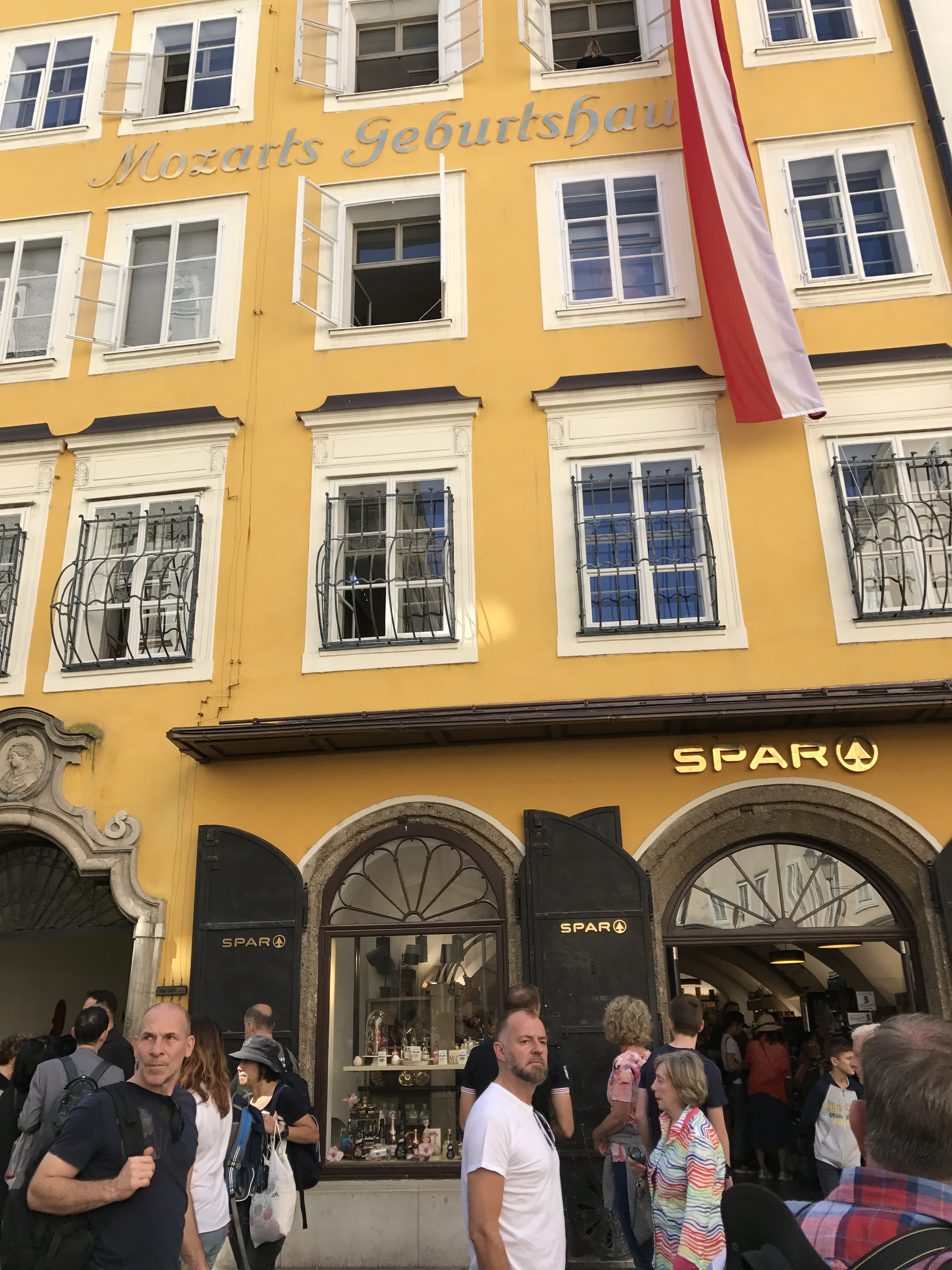
Walked around historical part of Salzburg. Saw where Mozart was born (building now a Spar supermarket, which seems wrong). All the shops sold lots of Mozart souvenirs. Especially small round chocolates. Did Mozart eat small round chocolates? J assured me this was not covered by music A level (which seems a shame).

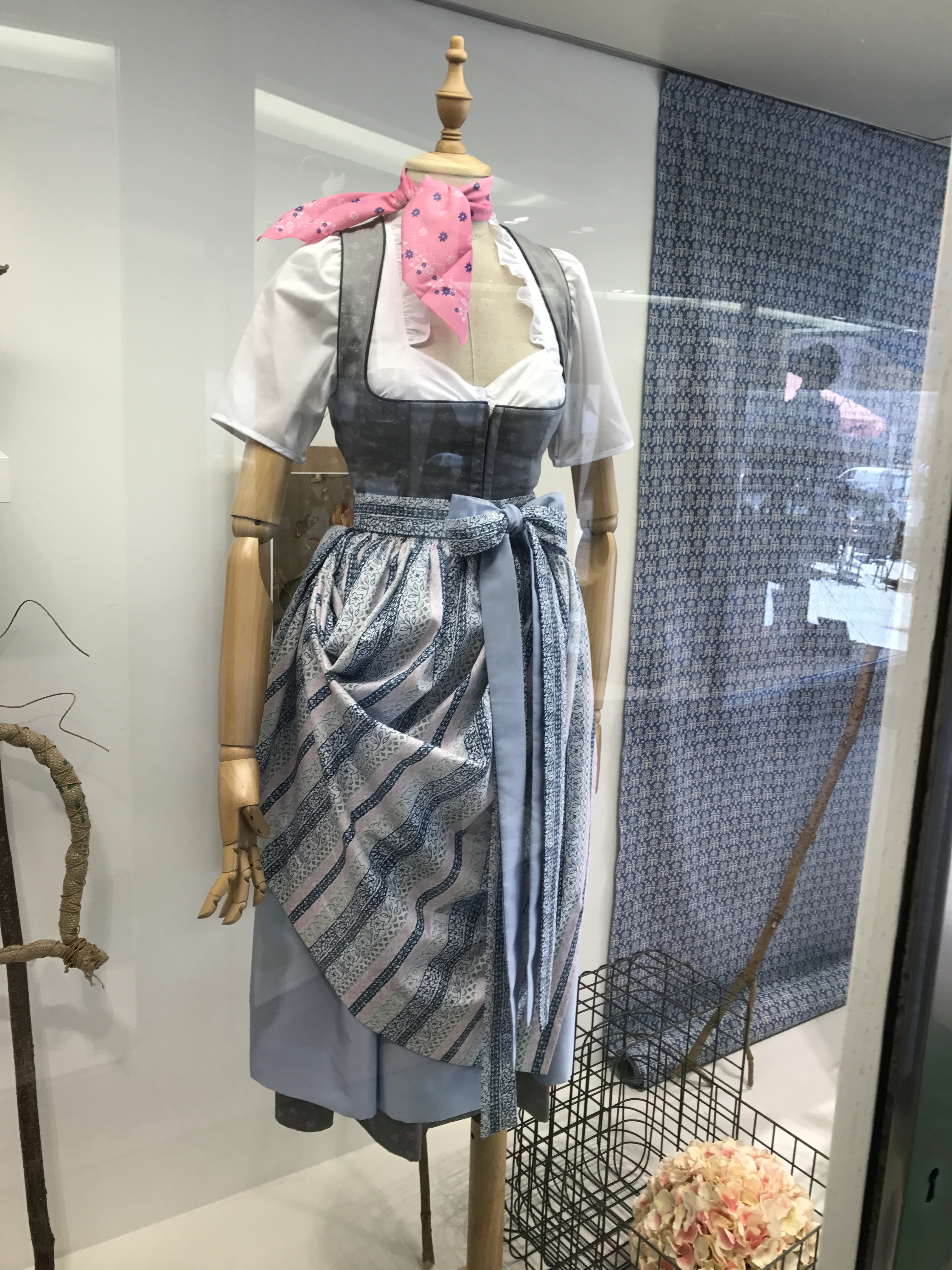
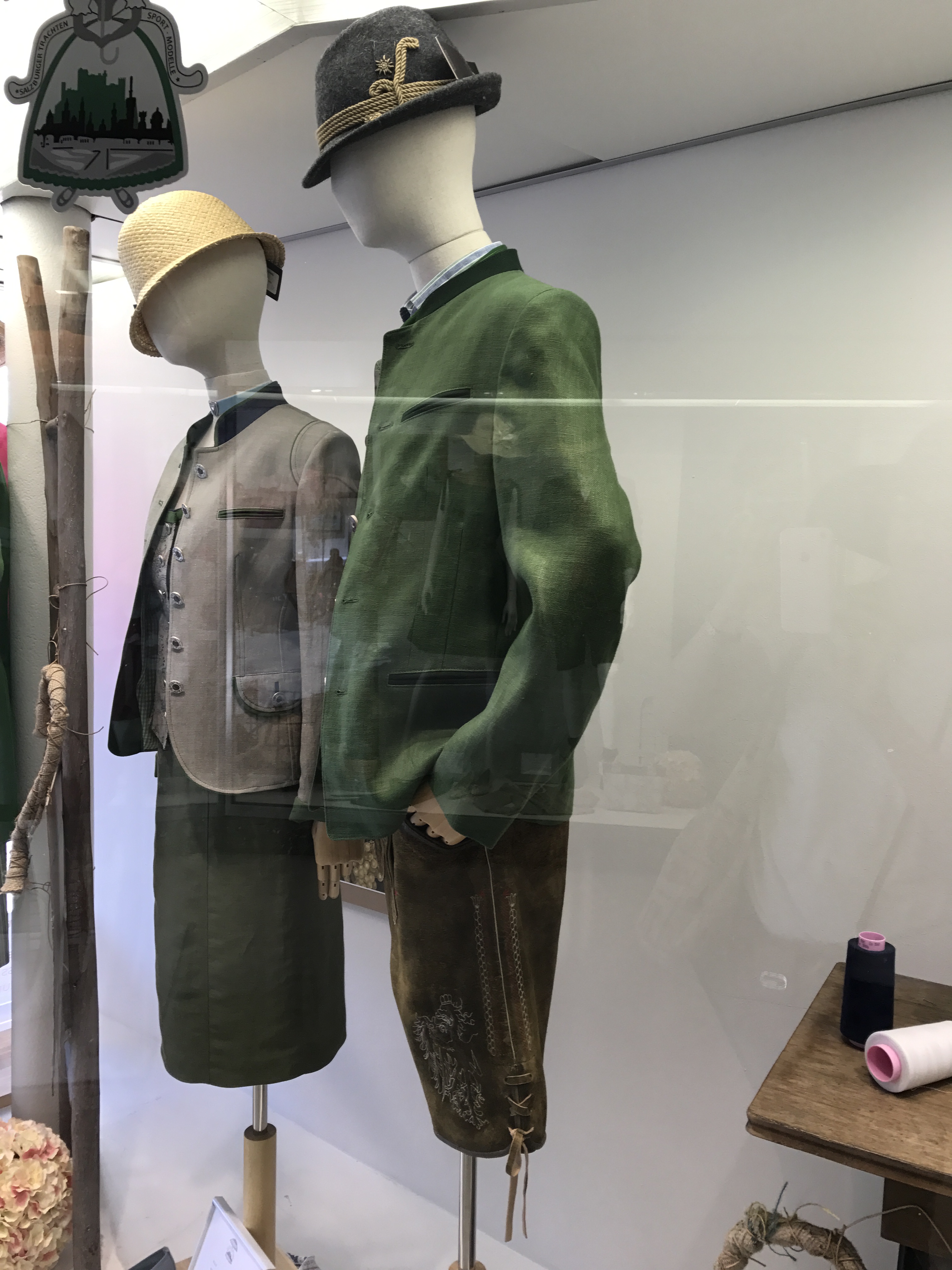
Saw a lot of traditional Austrian dress – the boob enhancing white blouse under pinafore dress for women, and lederhosen for men. I understand why people in tourist shops/restaurants would wear this, but not really why so many other people do. Especially lederhosen. These are leather shorts, and I’m guessing there’s not much ‘give’ in them – I saw a lot of men attempting to walk without moving their legs, they had a sort of shuffle. Not a good look. Also not sure if you can wash them…


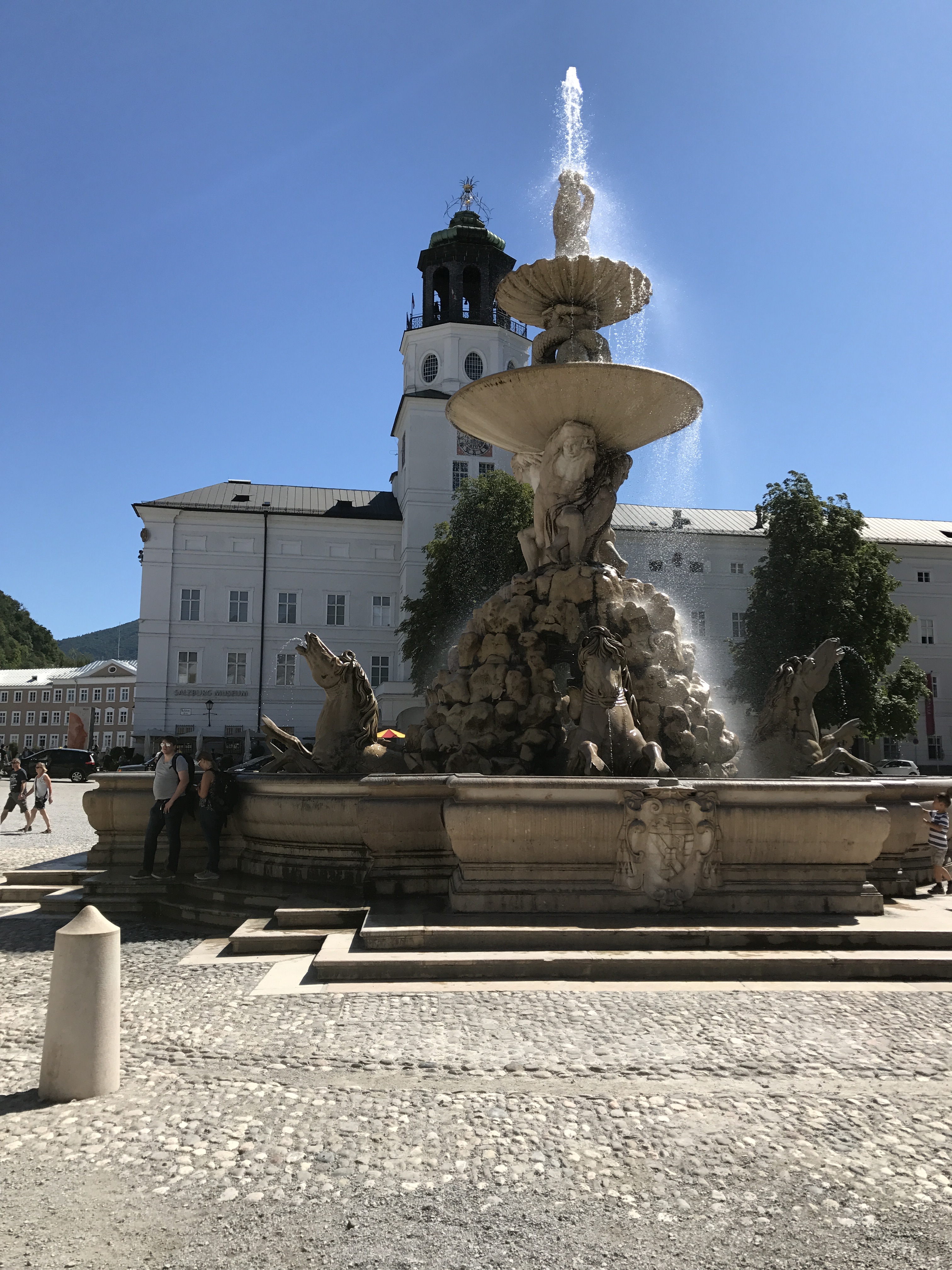
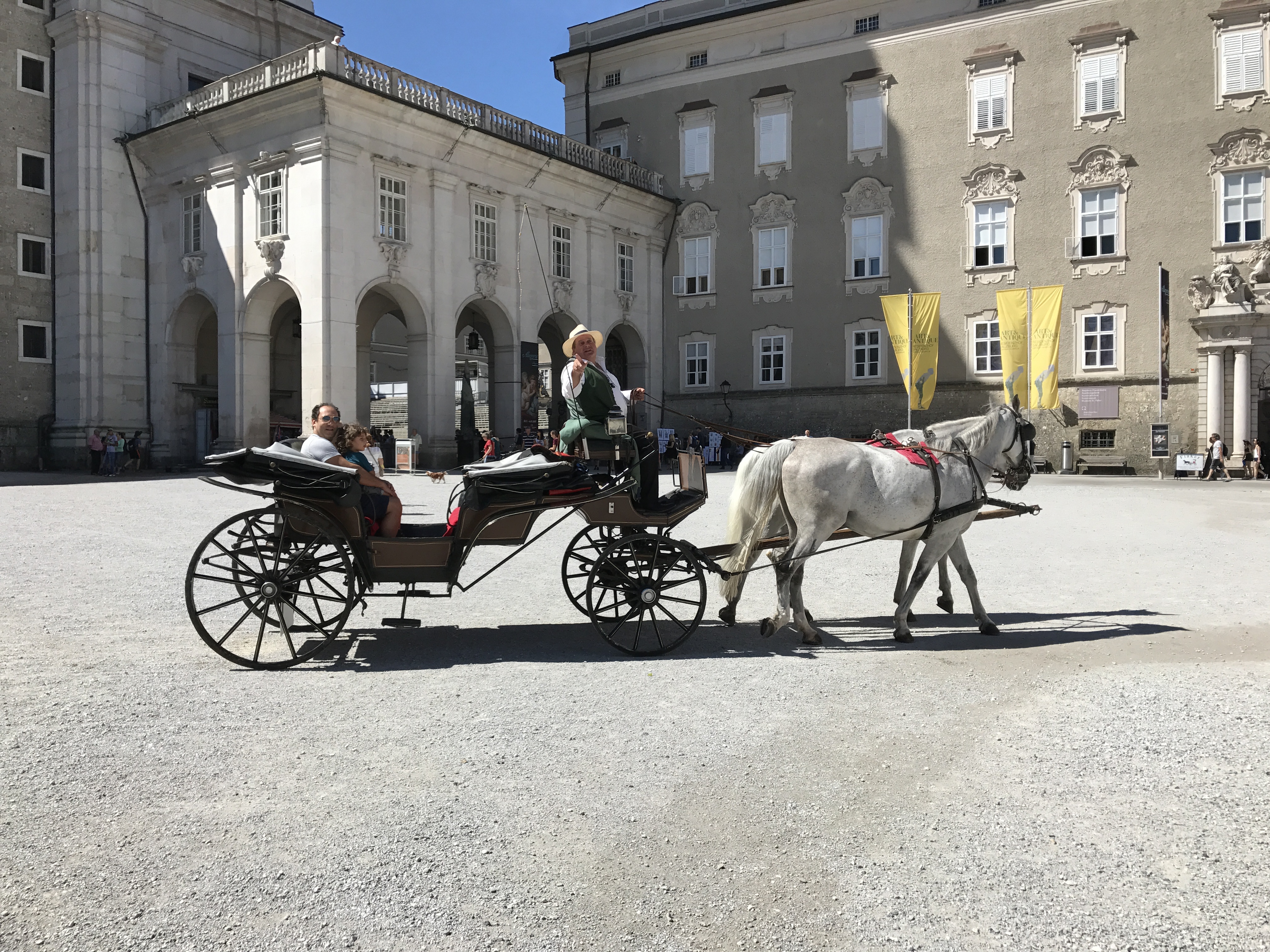
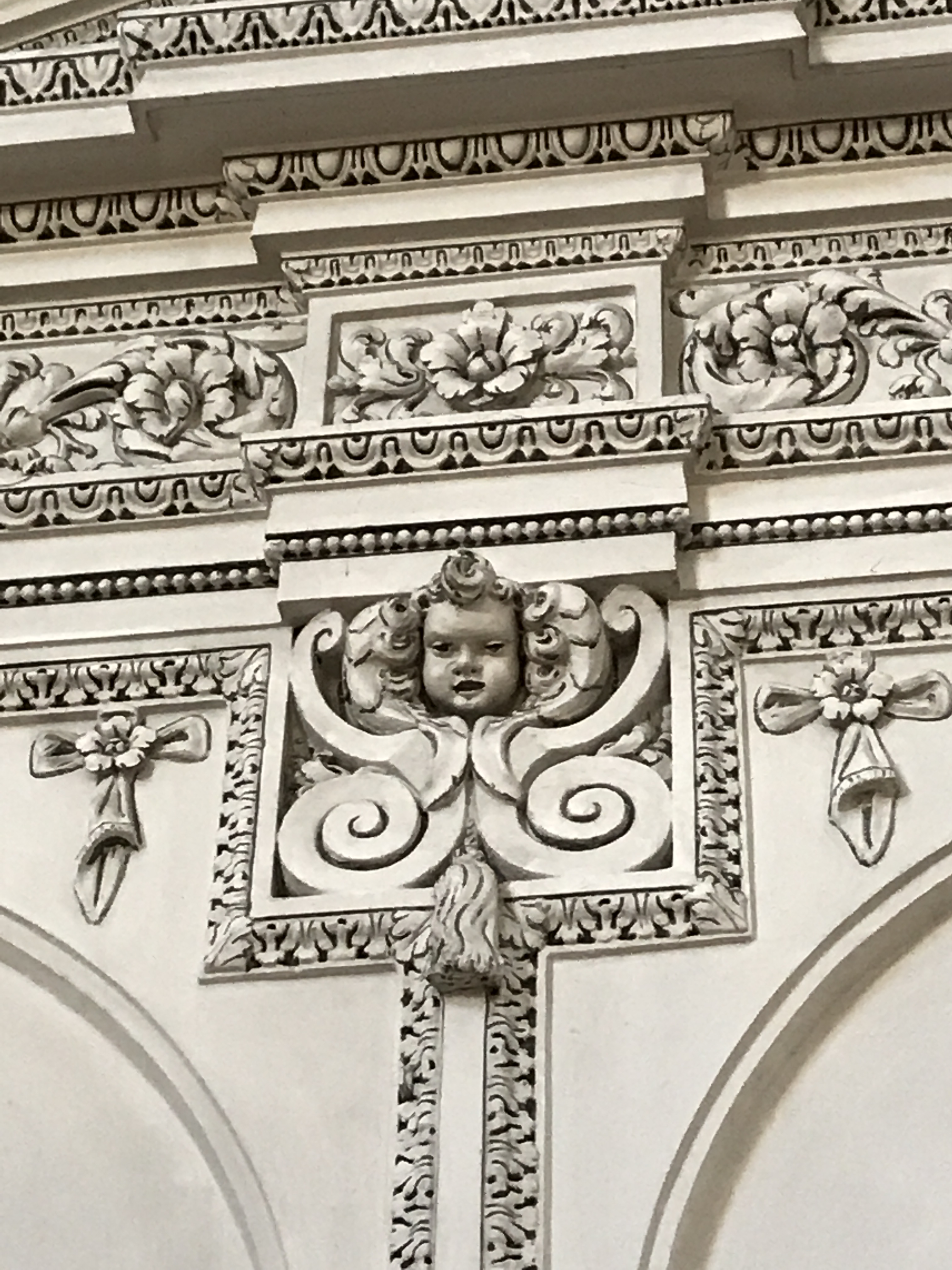
Went to Residenzplatz -saw horses and fountain and cathedral. All very pretty, though the cathedral feels more like an art gallery than a church – was interesting and grand, but did not inspire me to prayer. It also had some very spooky cherub faces in the ceiling.


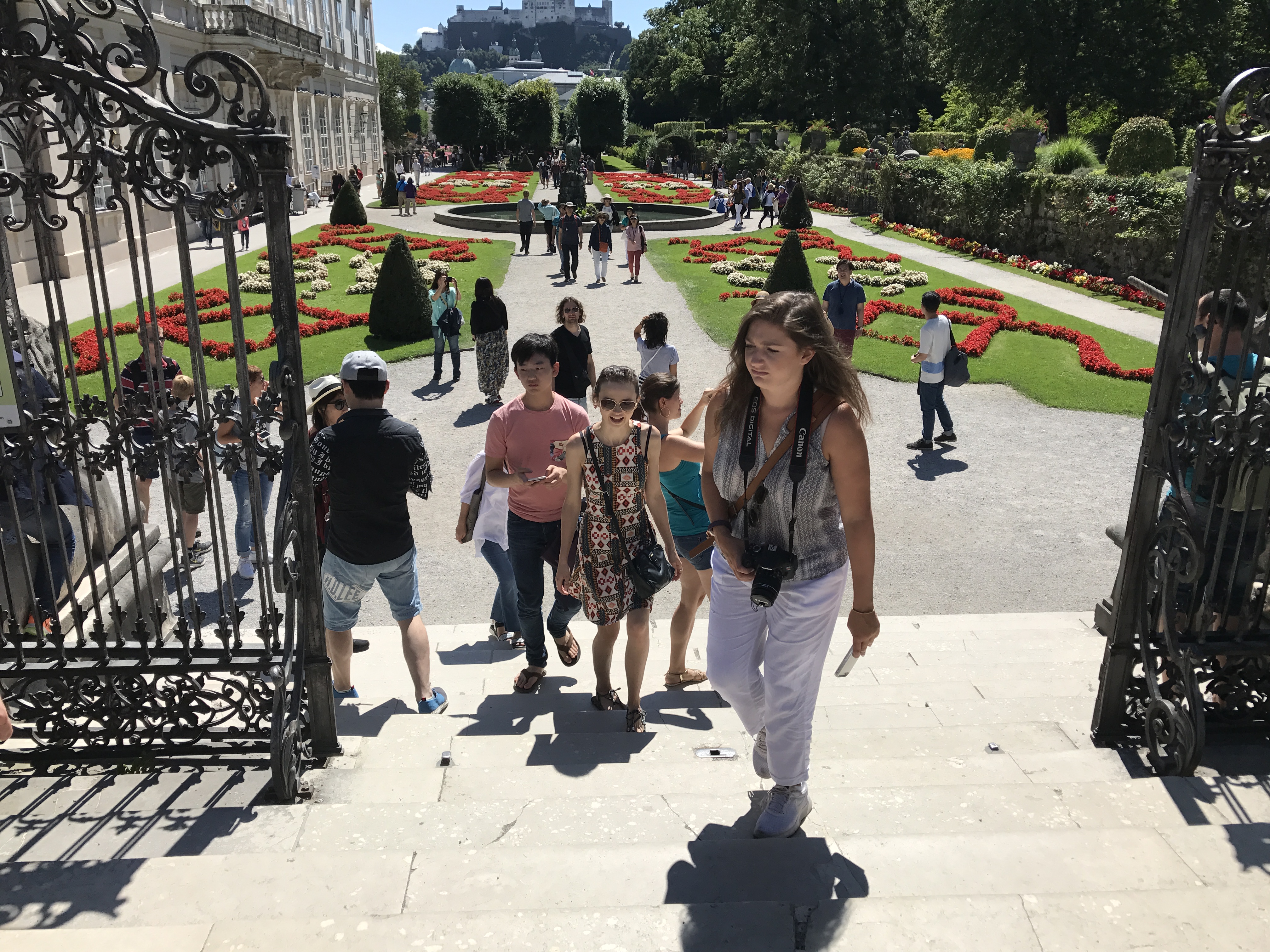
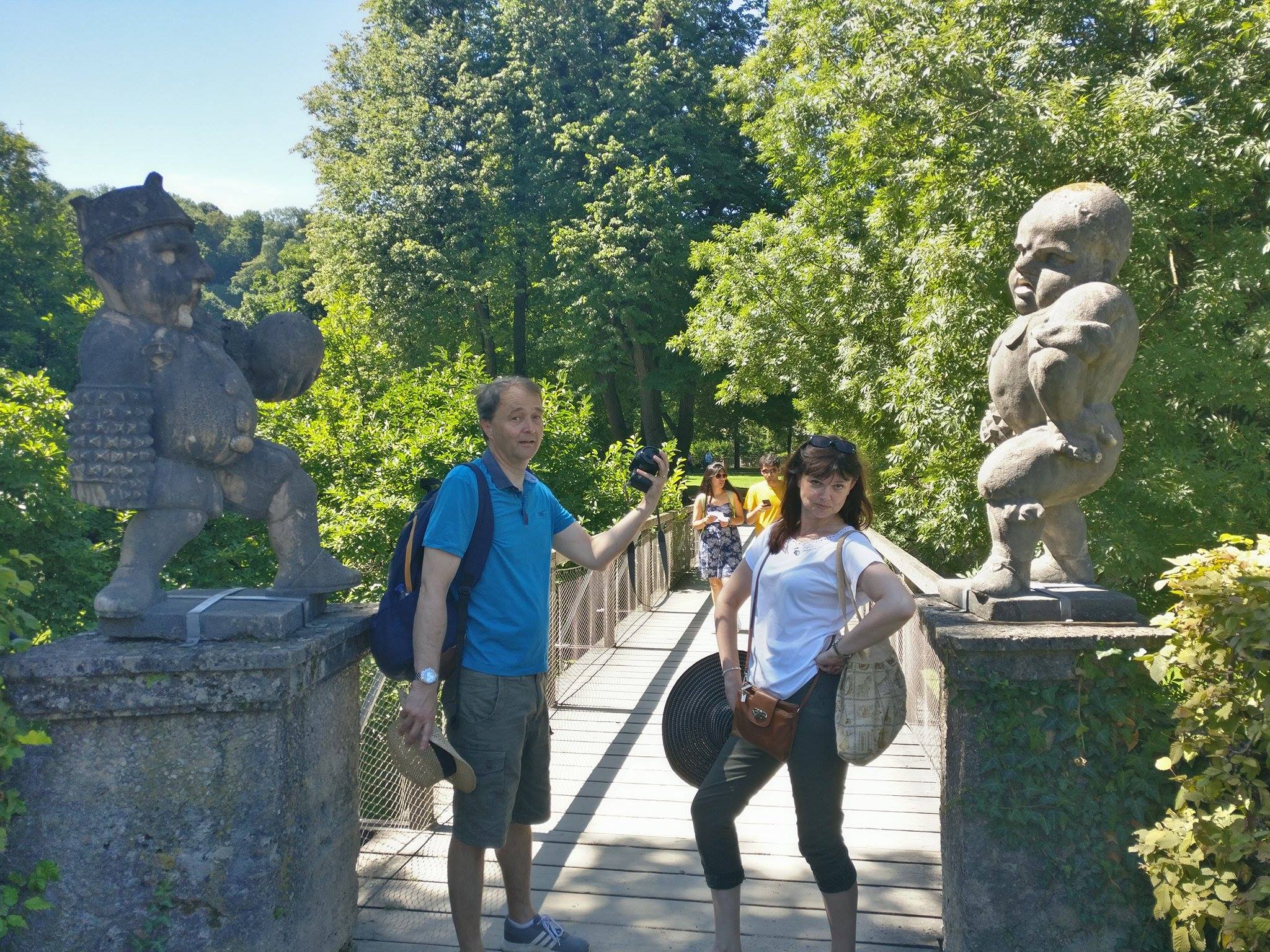
Saw a bridge and steps that I recognised from The Sound of Music. Suggested family could reenact some of the scenes, but they were unkeen. Went to Mirabell Garden (“Do! Doe, a deer..”) and saw some excellent gnomes. I think they represent the children of the owner – I might copy this idea.


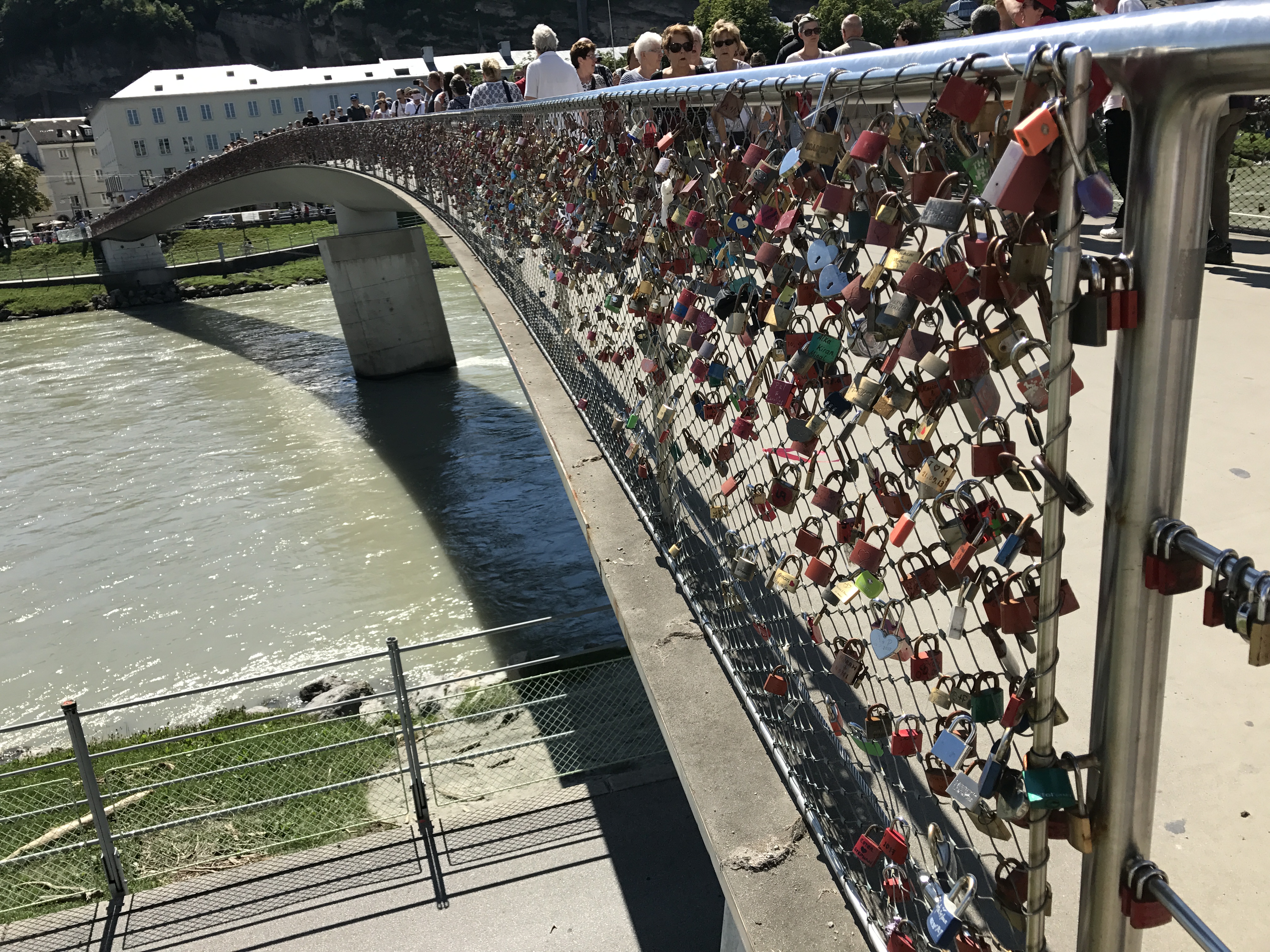
Walked across a bridge covered in padlocks put there by people in love. Sweet idea, but what happens if you fall out of love? Do you sneak back with a metal cutter and remove your padlock?

R and S went off to buy trainers. We received lots of texts from R saying she was hot/thirsty/tired/dying, so we knew she was okay (silence would’ve been a worry). We walked to a viewpoint near castle, and the convent Maria Von Trapp left. The chapel was open, so I went inside. That church DID feel like it had been prayed in, I preferred it to the cathedral.

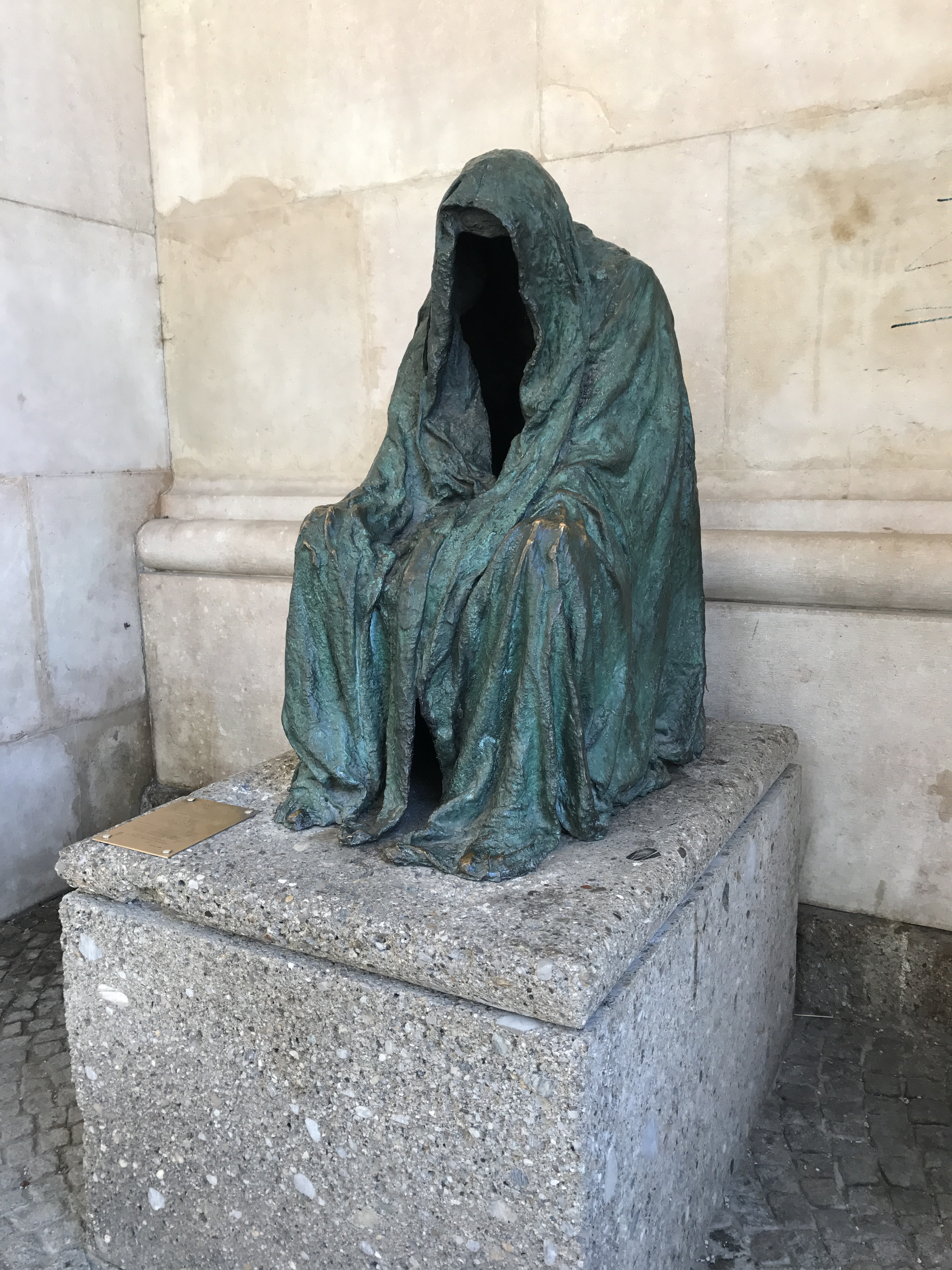
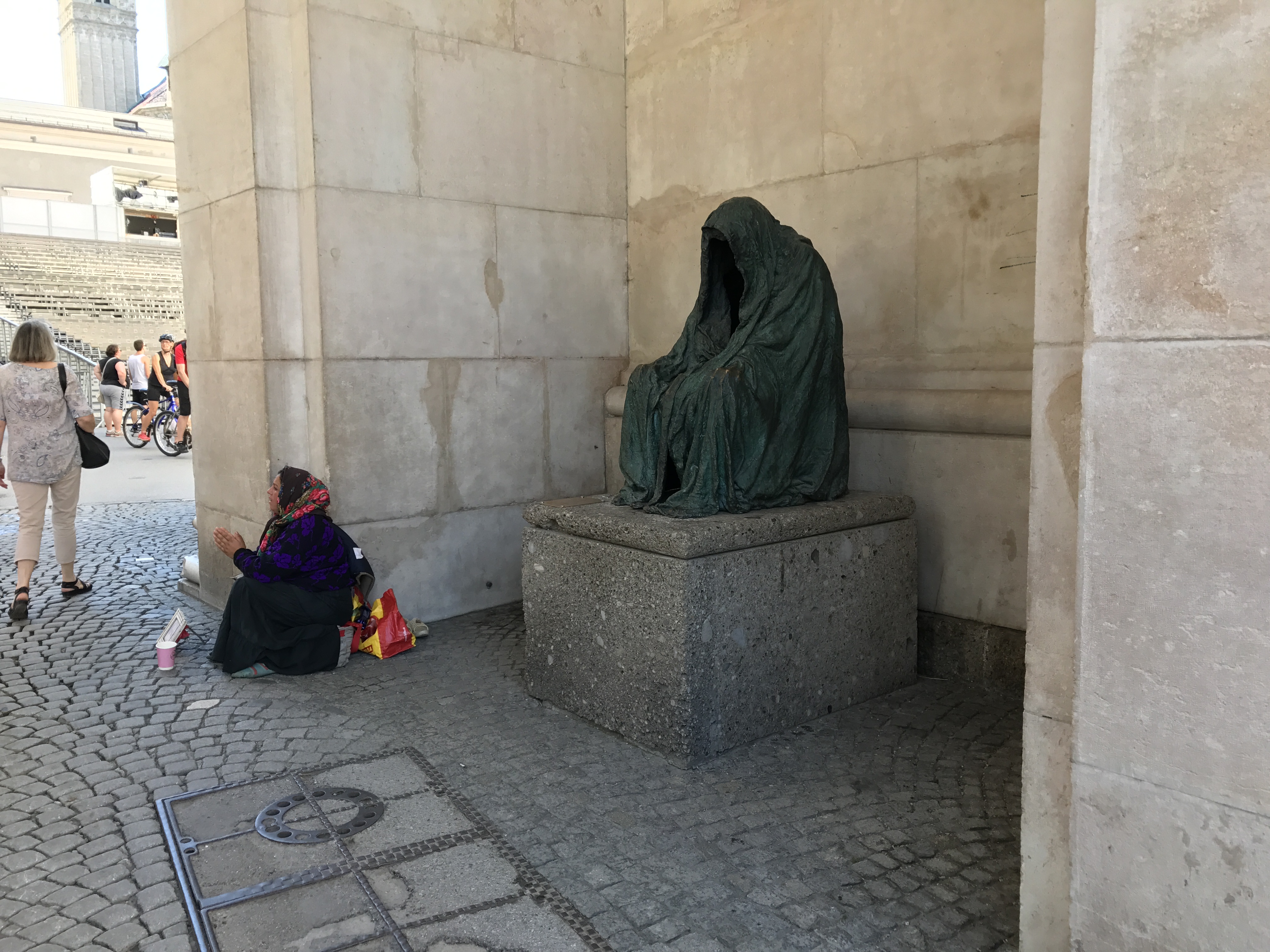
Walked back past the cathedral. Saw a sculpture outside, which was an empty person ( I later learned it was a copy of The Cloak of Conscience by Anna Chromy and is called Pietà, or Coat of Peace). Next to it was a begger – another unseen person, which felt significant given her position – an invisible person next to a sculpture of an invisible person. Perhaps that’s why she chose that spot to sit in. I gave her some money, which I don’t usually do, and held her hand – I wanted her to know she was ‘seen’. We all need someone to see us.

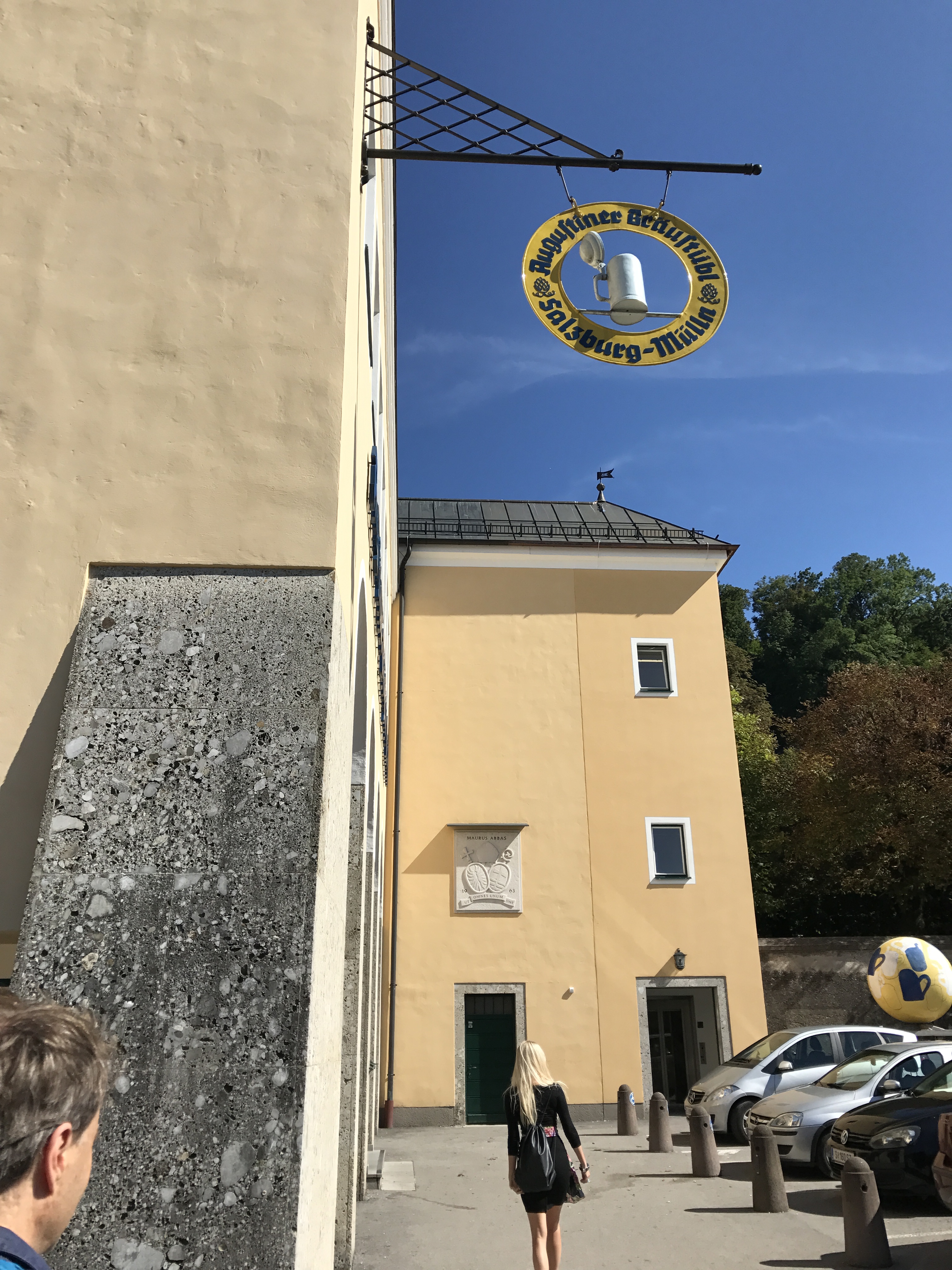
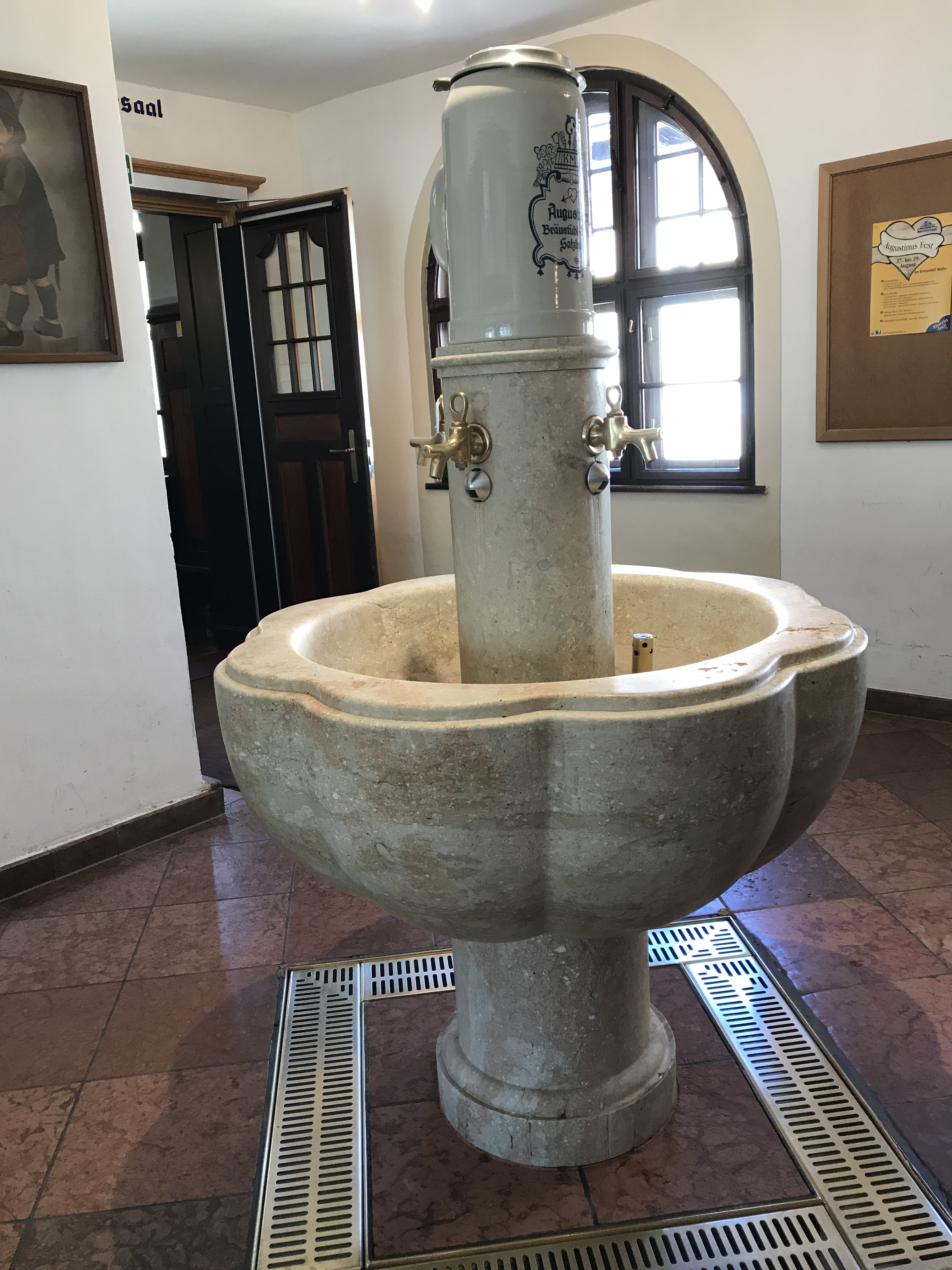
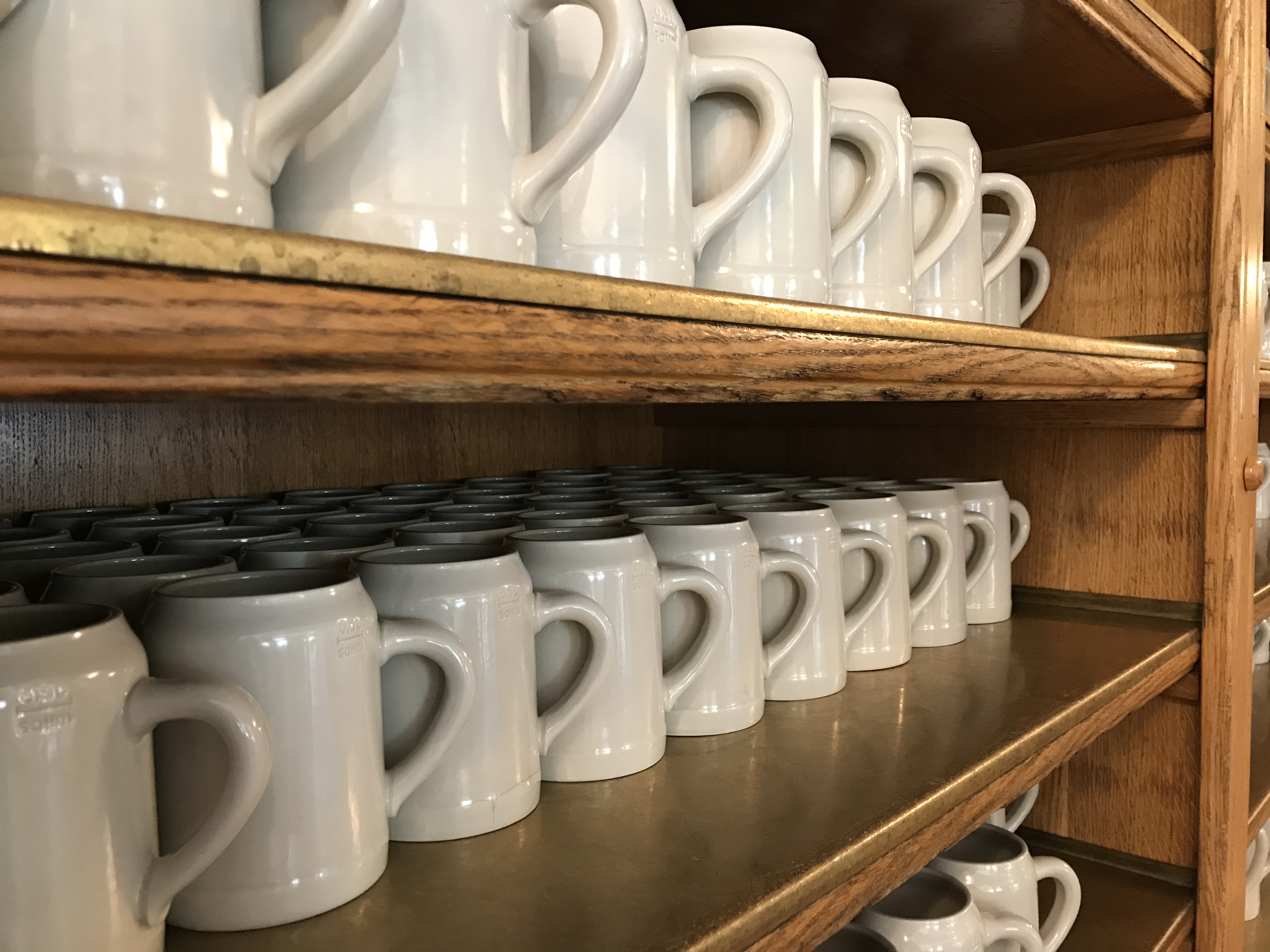
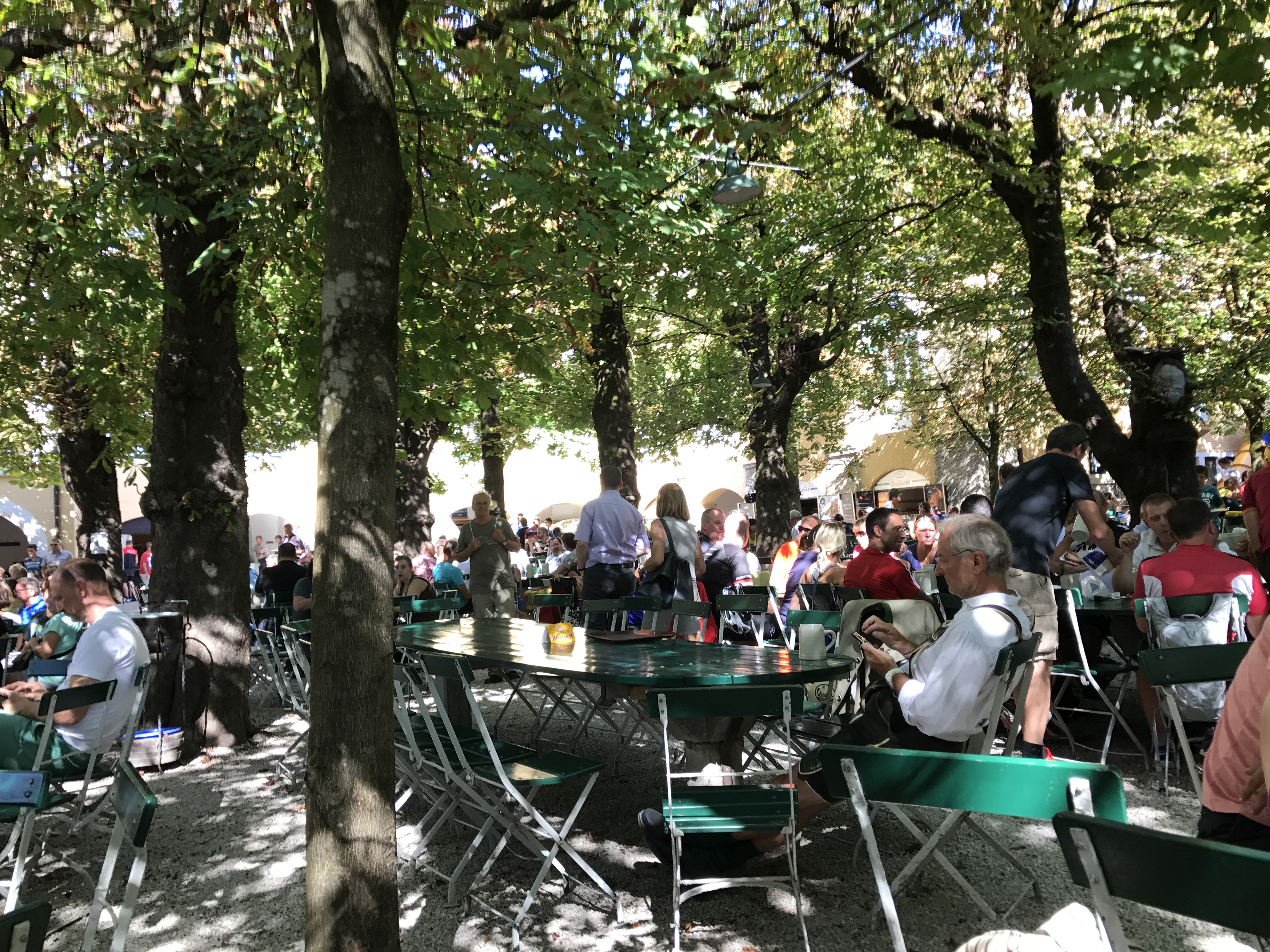
Followed J a long way – a very long way in hot sun – to Lindhofstraße 7, to a beer garden the boys had discovered last summer when inter railing. It was brilliant. There were shelves of pottery beer tankards, which you could dip into a dodgy looking fountain, to increase the head on the beer. You paid a man, took your ticket and tankard to a man with a barrel, and he filled it with beer. You then sat in the garden, under the trees, next to the brewery. You could also buy olives, pretzels, sausages, but most people were just drinking. Great fun.


Thank you for reading.

If you enjoyed this, you will love my new book:

2cdba13e-f433-49fd-9f1e-95b3ee7f87d8

A laugh-out-loud book about travelling the world with a family. Taken from diaries written at the time, this book has been described as “The Durrells meet Bill Bryson”!

Available from Amazon (you can get a copy free if you have a Kindle!)

Why not sign up to follow my blog – then you won’t miss the next instalment of our holiday blog.

anneethompson.com

Take care,

Anne

xxx

Austria – Family Holiday Diary


Day One : Munich to Austria

Car arrived 5am. Everyone ready -unexpected -maybe some of them didn’t sleep. Flew Heathrow to Munich, all went smoothly, and everyone managed the automatic barriers. Eventually.

Collected minivan, and drove Munich to Salzburg. J made redundant from map reading due to rather efficient satnav.

Arrived at Sheraton at Fuschlsee, a lake near Salzburg. Staff at reception predominantly female, wearing national dress, which does make them very buxom. Impossible to avoid mainly noticing bosoms. H told M not to wear his glasses while we’re here.

Dinner in expensive hotel restaurant. Lots of antlers on walls, candles, flowers. Nice meal, but tired (me, not meal.)

  Everywhere here is SO pretty.

Day Two : Hallstatt

Nice breakfast, though I had problems with coffee machine and covered surrounding area with milky froth -rescued by very nice waiter who collected me a mug of coffee.

Drove to Hallstatt. Traffic terrible and nowhere to park, so we abandoned Husband and car, and walked into town. It was full of Chinese people, really full. Coach loads of them. All the signs were written in German and Mandarin, so clearly a regular occurrence. Also full of extremely expensive souvenir shops. Followed signs with a skull on them up a mountain (J in flip-flops, but still faster than people in hiking gear). Signs took us to a cemetery.

Found Husband and ate lovely homemade pizza for lunch. Read guidebook to try and find out significance of skulls and cemetery. Read that apparently, cemetery is very small – due to being half way up a mountain, so when it was full, someone had the good idea that they could dig up the old corpses and replace them with the new ones. Honestly, this was the solution they decided on! Did anyone object? Was there a committee involved? Anyway, this is what they did. While the bodies were waiting to be buried, they decomposed, and the bones were bleached by the sun. The skulls were separated from the other bones, and they are displayed in a side chapel. We HAD to go back and look. There they were, bones stacked neatly, skulls decorated with the name and patterns. Brilliant!

The rest of Hallstatt is also interesting. Lots of cute cottages clinging to the mountainside. Too many tourists and over-priced shops, but well worth a visit.


Walked around a mountain lake, Vorderer-Gosausee. So beautiful. Lake, trees, glacier, mountains.

Dinner in Fuschl. Parked in large town car park, returned after dark, and didn’t know how to pay. Husband set off in the dark to investigate, we sat in car, then decided to send S (largest male) to protect him. S detoured via barrier and tried to lift it manually. Worried he might break it, Husband would return with paid ticket but we’d still be trapped due to broken barriers. R worried there might be zombies (so glad she’s 25 and works in a bank – easy to forget that sometimes). D returned, barrier worked, all good.

Arrived safely back at hotel, despite best efforts of suicidal deer on dark road. Nice day. Tomorrow we plan to visit Salzburg (which is very exciting, as it’s where they filmed The Sound of Music – because it’s where the real family actually lived.)

Thank you for reading.

Why not sign up to follow my blog? Tomorrow I’ll tell you what we saw in Salzburg.

anneethompson.com

xxx

If you like to laugh, why not read Invisible Jane by Anne E Thompson?
A love story with funny bits!

Available from an Amazon near you…..

Packing


  Today will be stressful – packing for the family holiday. If you’re a mother, you will know what I mean. If you’re male (not being sexist or anything), read on…

There is oceans of washing to do. It seems a bad idea to leave dirty clothes to fester in the laundry basket, plus there is all the bedding. I don’t like the idea of returning after two weeks away to sheets that have been slept/sweated/dribbled in for a week and then locked into a room to ferment. Obviously I cannot wash it all the day we leave, but it feels better if it’s washed the day before – so just one night of body fluids sweated into them.

Then there is the animal stuff. Dog and grumpy-cat taken to kennels, their bedding and towels left here. I can leave them – and be welcomed home by the thick odour a la dog, or I can wash them before I go. Thank goodness for washing machines and please can mine not break today. Of course, not everyone has this problem. I have known people (not female) who quite cheerfully shove dirty clothes into a bag before a holiday; and then return with the same bag of dirty clothes at the end. I am not entirely sure if they were worn, or washed, in between, because I didn’t like to ask.

If you enjoyed this, you will love my new book: The Sarcastic Mother’s Holiday Diary.
I have always written a diary on holiday, so last Christmas, I decided to find all my old diaries and blogs, and make a book for my children. However, several other people also asked for a copy, so I have written a public version – it’s available on Amazon and has been described as “The Durrells meet Bill Bryson”!

Why not buy a copy today? I think it will make you laugh.

The US link is here:

https://www.amazon.com/Sarcastic-Mothers-Holiday-Diary-ebook/dp/B07N95281F/ref=sr_1_1?ie=UTF8&qid=1549015525&sr=8-1&keywords=the+sarcastic+mothers+holiday+diary

The India link is here:

https://www.amazon.in/Sarcastic-Mothers-Holiday-Diary-ebook/dp/B07N95281F/ref=sr_1_1?ie=UTF8&qid=1549015429&sr=8-1&keywords=the+sarcastic+mothers+holiday+diary

The UK link is here:

https://www.amazon.co.uk/Sarcastic-Mothers-Holiday-Diary-ebook/dp/B07N95281F/ref=sr_1_2?ie=UTF8&qid=1549014970&sr=8-2&keywords=the+sarcastic+mothers+holiday+diary


Mumbai, India


 I am writing this in Mumbai. Husband has to work in India for a few days, and travelling on work expenses is always rather nice (I pay for my travel & food, but the hotel is no extra, and they’re nice!) so I tagged along. Plus I love India, it’s possibly my favourite country (not that I have seen more than a snippet of it -but what I’ve seen, I like.)

We arrived late Wednesday night, having woken early that morning (left home 5.45 am), so I was tired. We had to go through different immigration, as I was travelling on a tourist visa, and husband had a work one. The woman at the desk was very pleasant, and when husband pointed out for the sixth time where he would meet me, she laughed. When he went off to his work visa desk, she commented that he seemed very worried about me.

“Yes,” I smiled, “he thinks I’m incompetent.”

Immigration officer then asked for my visa. I gave her the print out with the hotel details on. (They look the same, both printed from the computer.) She politely asked if I also had a visa.

She then asked where I had come from. I was surprised, but gave my full postal address. I even remembered the postcode, which often defeats me, so felt rather pleased with myself. Immigration officer looked confused and asked for my boarding pass. It was somewhat crumpled, but I dug it out from the bottom of my bag, then realised my mistake. “Heathrow!” I said, ” You wanted me to say Heathrow, not my address, didn’t you!”

Immigration officer continued to smile. We then had trouble making the fingerprint machine work (but I don’t think that was my fault.) Eventually I was allowed into India. I think Immigration Officer went for a tea break.

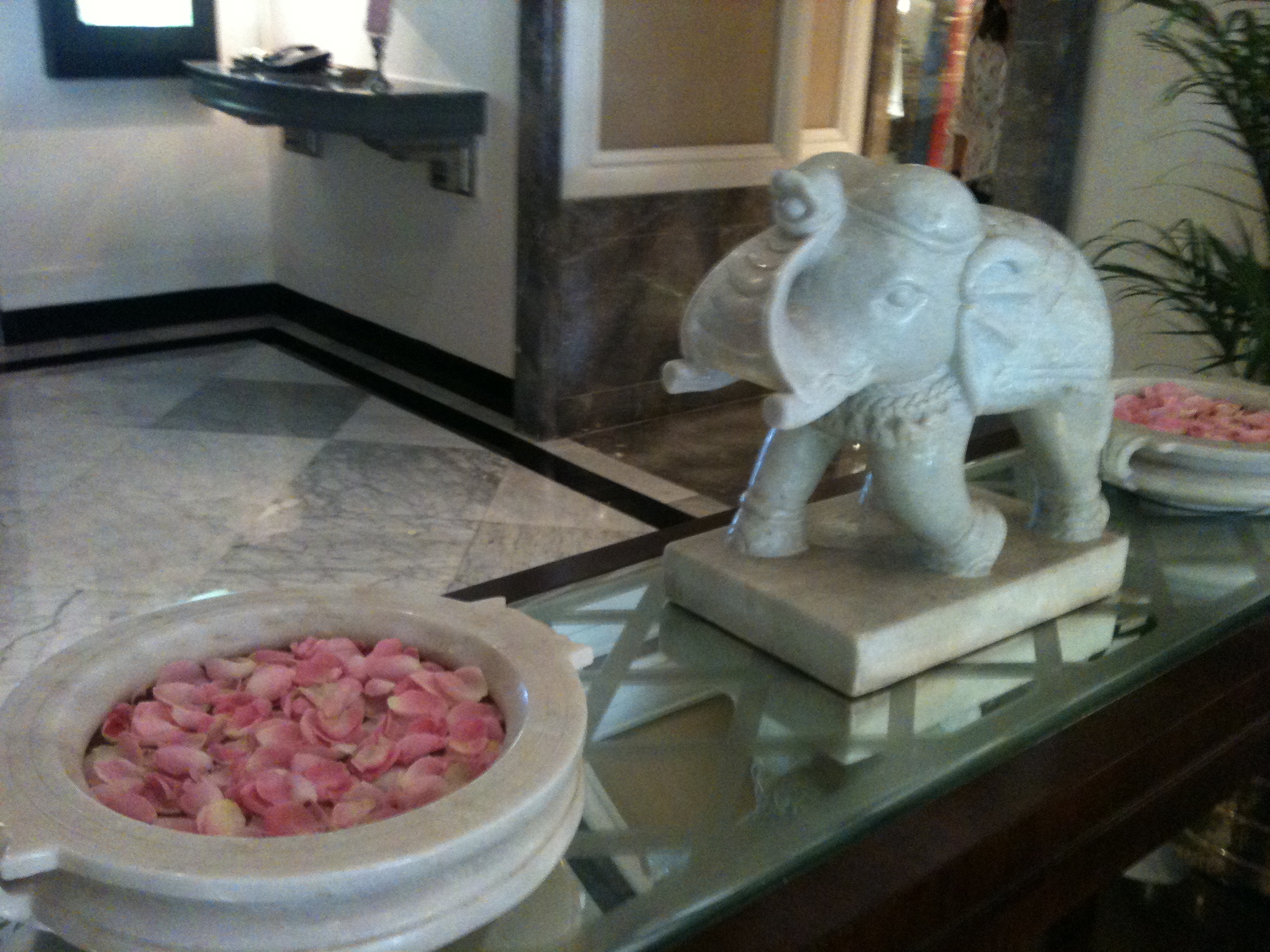
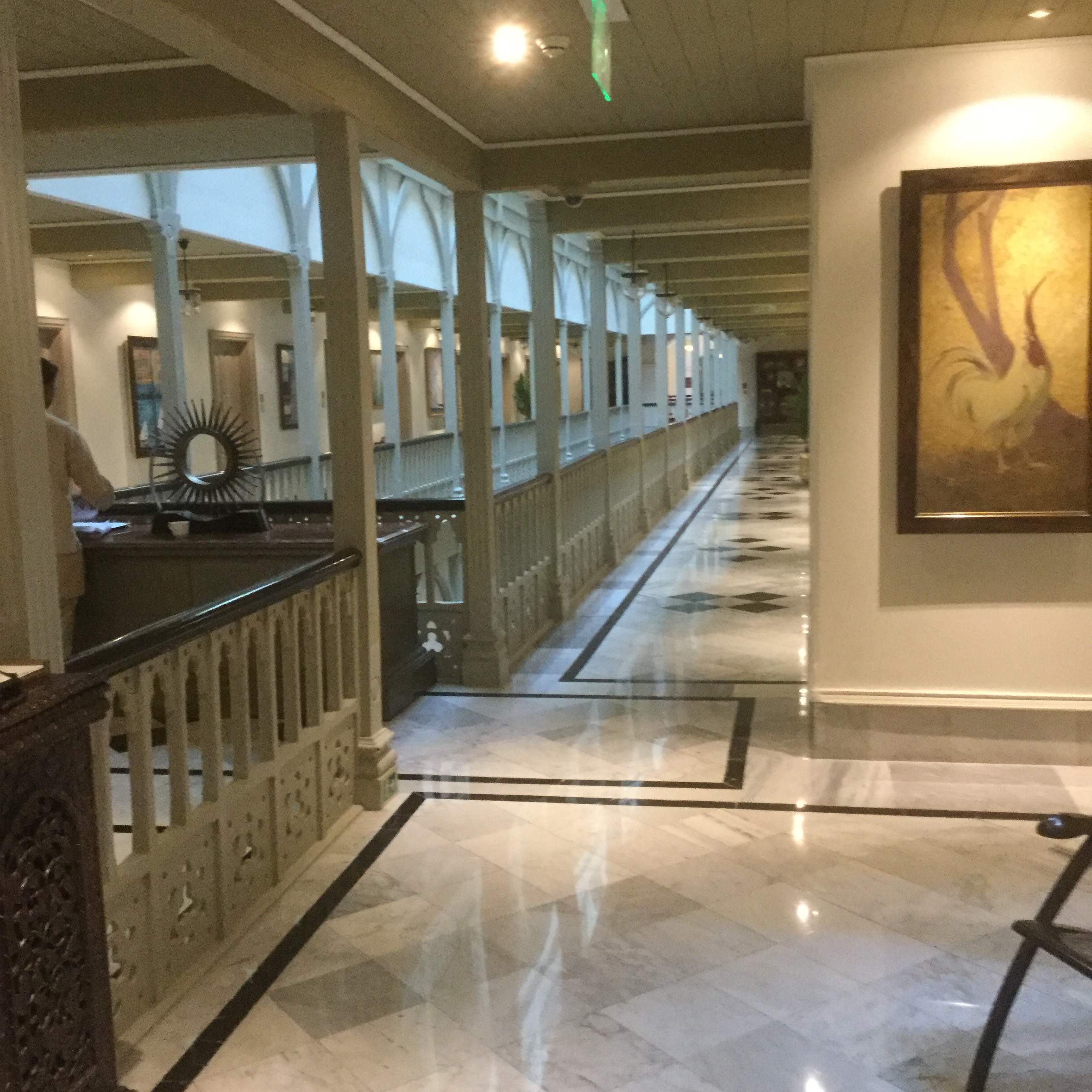
We’re staying at the Taj Mahal Palace Hotel. It’s beautiful. There was a mix up with our booking (also not my fault) and as a goodwill gesture, they upgraded us to a suite. The hotel really is beautiful. There are flowers and candles everywhere, and the corridors are all open, with lots of carved lattice work.

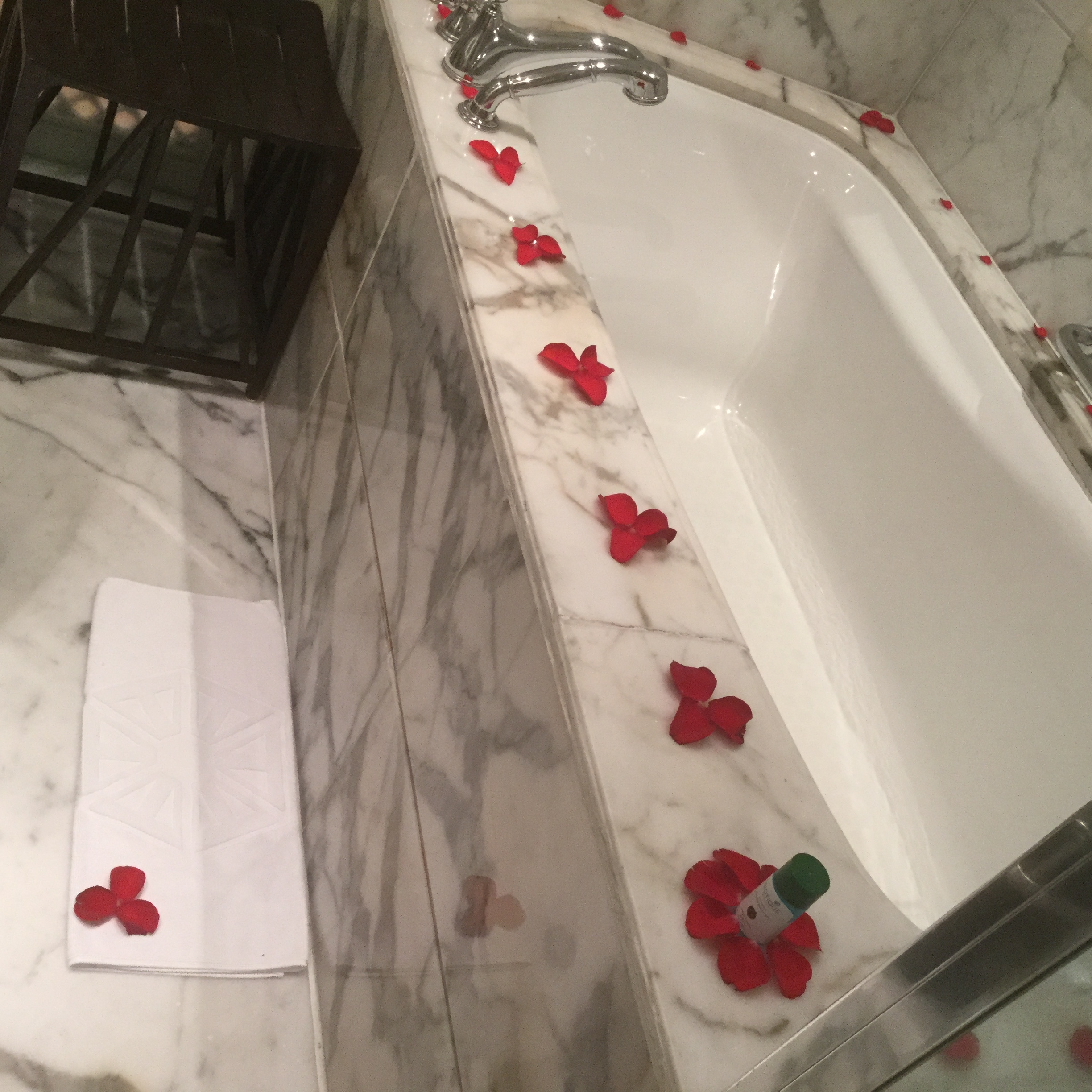
When we returned yesterday evening, there were patterns of flower petals everywhere, so pretty. (Romantic husband referred to them as ‘vegetation on the floor’ ).


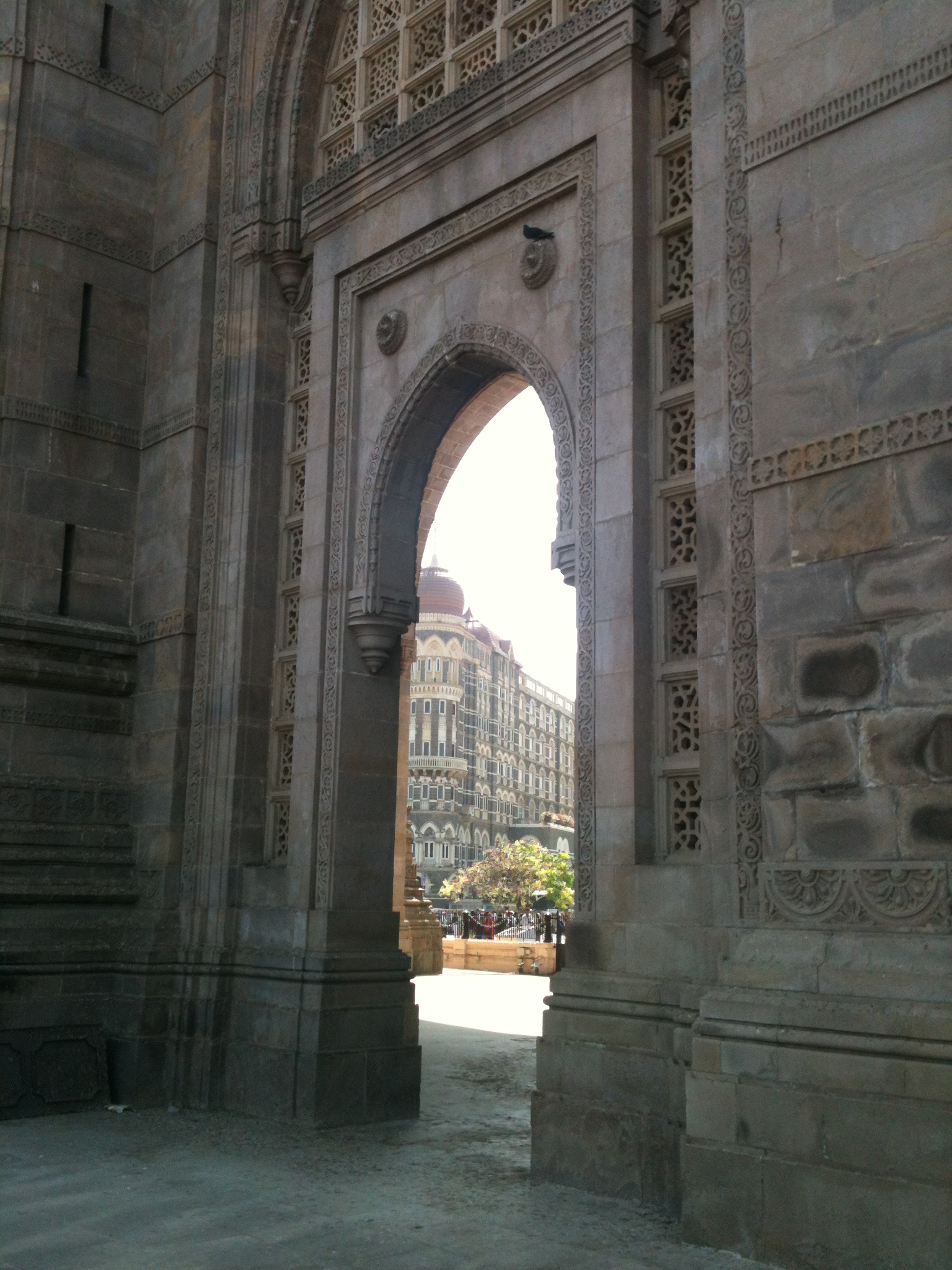
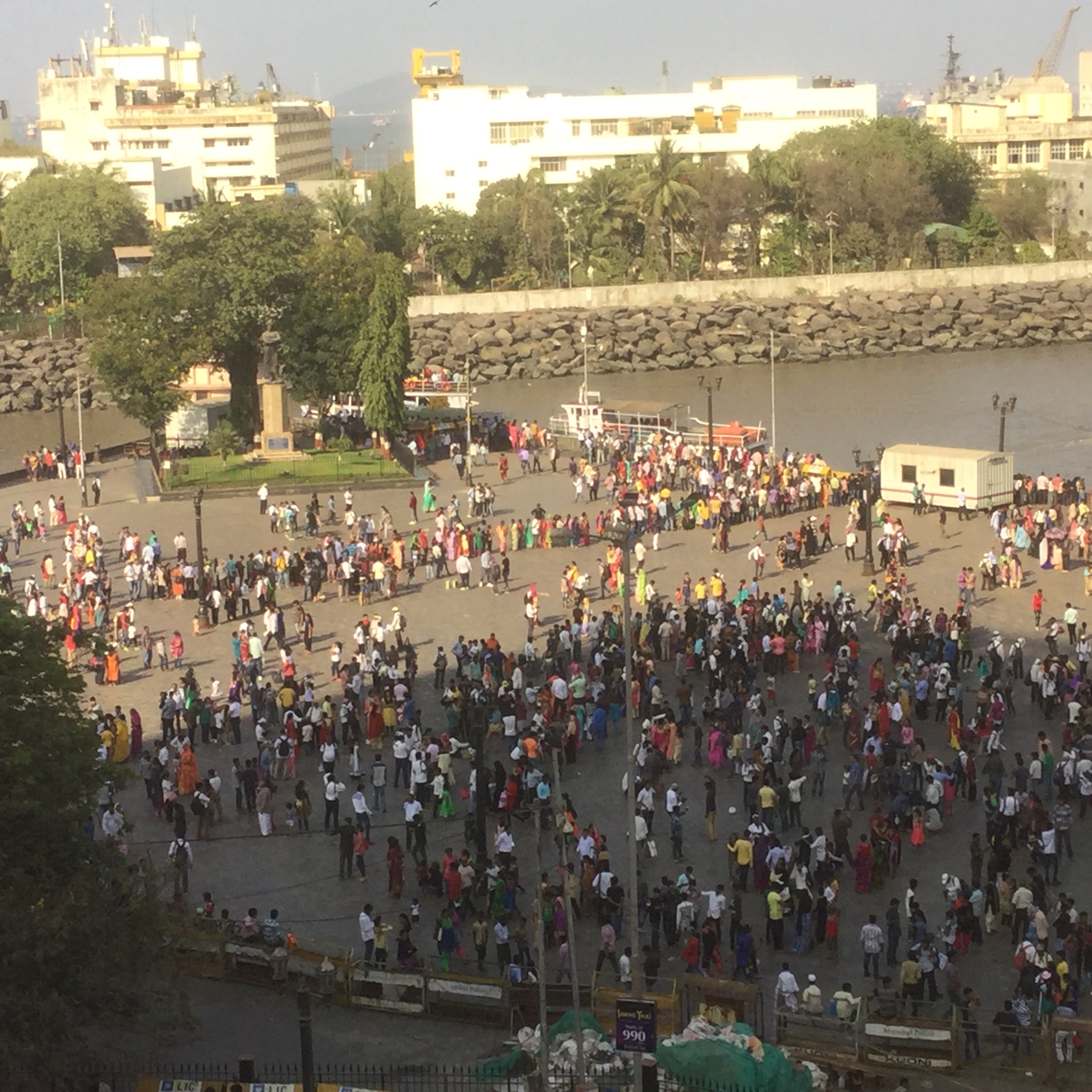
Walked to Gateway to India. Lots of people there, some were catching ferries across the sea. It was previously owned by Portugal, (the Portuguese for good is ‘bom’ and its a bay, hence was called Bombay).


We went to a market and bartered for some trinkets. I am not very good at bartering, especially when the crafts are actually very pretty, and the price seems to be low to start with. Tradesmen smile a lot when I shop (and tell me not to bring my husband next time, because he’s cannier than me!)

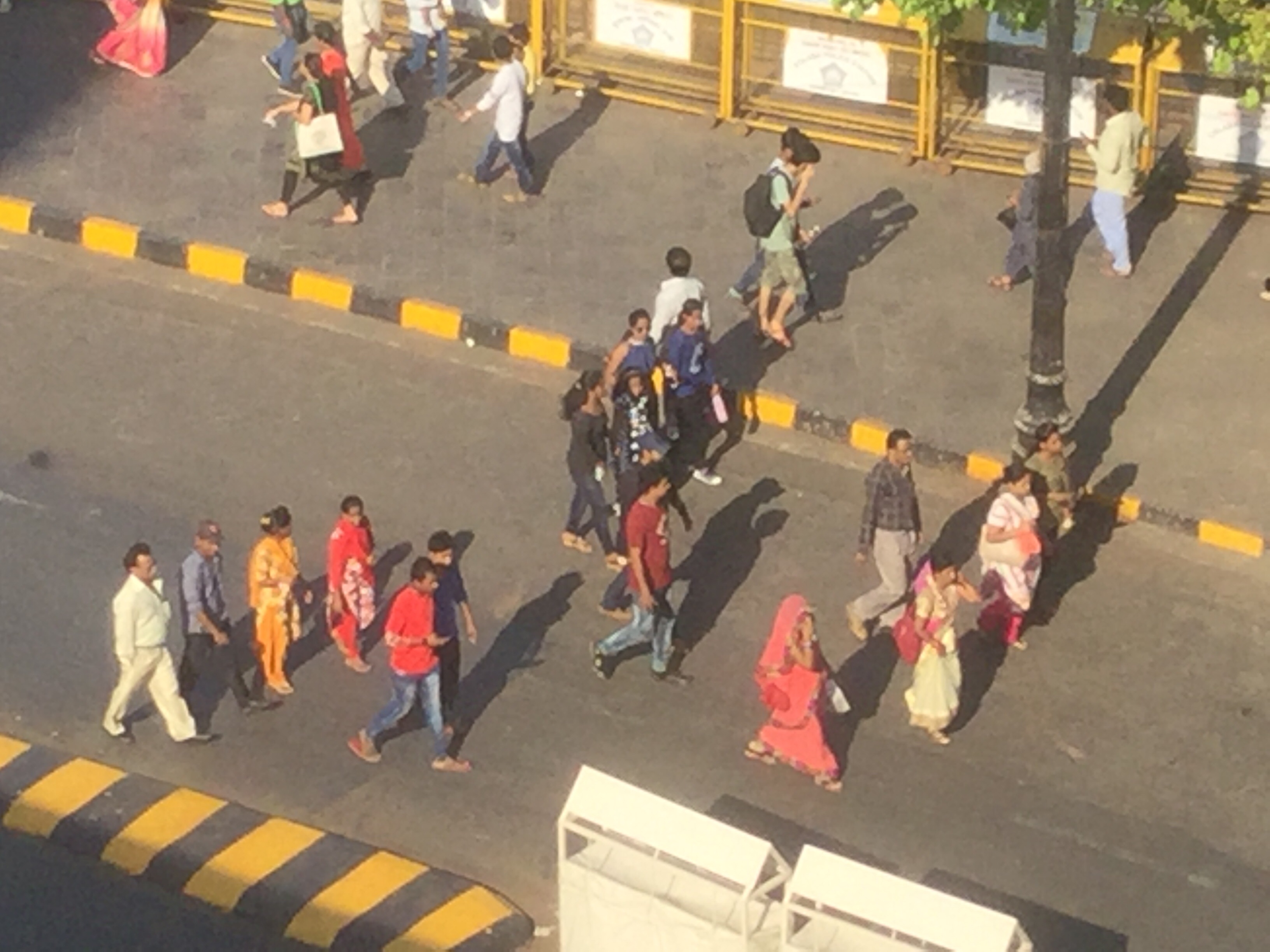
Wandered around the city. I love the faded colonial buildings covered in vines, the huge plants, the colour everywhere. Every sense is bombarded, so much noise and smell (not always pleasant), and so hot. We met some friends for lunch. They said that in a couple of weeks the rain will come, sometimes raining for several days continually, which cools everything down.

I also visited the slums on the mainland, where I was shown around by Sahaara, one of the projects Tearfund works with. I went on my own, as Husband is working (very brave of me!) I will write up what I saw and post it later this week. Right now, I need a shower!

Excuse the bleary photos -all taken with my ancient phone.
Take care,

Anne x

Why not sign up to follow my blog?
anneethompson.com


If you enjoyed this, you will love my new book: The Sarcastic Mother’s Holiday Diary.
I have always written a diary on holiday, so last Christmas, I decided to find all my old diaries and blogs, and make a book for my children. However, several other people also asked for a copy, so I have written a public version – it’s available on Amazon and has been described as “The Durrells meet Bill Bryson”!

Why not buy a copy today? I think it will make you laugh.

The US link is here:

https://www.amazon.com/Sarcastic-Mothers-Holiday-Diary-ebook/dp/B07N95281F/ref=sr_1_1?ie=UTF8&qid=1549015525&sr=8-1&keywords=the+sarcastic+mothers+holiday+diary

The India link is here:

https://www.amazon.in/Sarcastic-Mothers-Holiday-Diary-ebook/dp/B07N95281F/ref=sr_1_1?ie=UTF8&qid=1549015429&sr=8-1&keywords=the+sarcastic+mothers+holiday+diary

The UK link is here:

https://www.amazon.co.uk/Sarcastic-Mothers-Holiday-Diary-ebook/dp/B07N95281F/ref=sr_1_2?ie=UTF8&qid=1549014970&sr=8-2&keywords=the+sarcastic+mothers+holiday+diary


London : Sayings and Stories


A friend called and asked if I’d like to join her on a guided walking tour of London. It was organised by Sevenoaks School, so we were slightly bemused as we’ve had no links with the school since our sons left nearly 5 years ago. However, we haven’t seen each other for ages and it sounded quite fun, so we signed up.

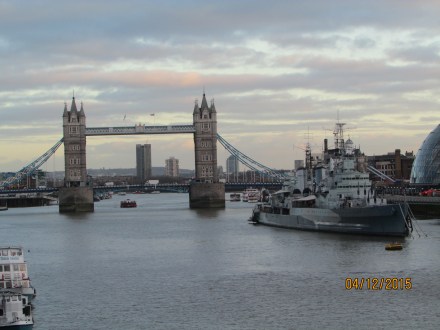
We met near Tower Bridge. Our guide was a nice man, short, carrying a briefcase and umbrella (he looked like the accountant in The Untouchables, but I didn’t mention it.) I was worried he might stick the umbrella into the air for us all to follow – at which point I would’ve left – but it stayed safely in his bag. He was actually very interesting, he remembered a huge number of facts, and told little stories as we walked around. The walk took 2 hours, mainly because we walked very slowly. I thought I’d tell you some of his stories, about the origins of sayings. They might, or might not, be true, but they were interesting.

Near the Tower of London, is the spot where they executed people who were not considered royal enough to be killed within the walls. There were a few plaques, one of which commemorated the husband of Lady Jane Grey (but I’ve forgotten his name. I would not make a good guide!) Lady Jane Grey was queen, after Henry VIII, for 9 days. After this, Mary (Henry’s daughter) rode into London and had Jane locked up in the tower. Hence the saying, “a nine day wonder”.

We also passed the pub, ‘The Hung, Drawn and Quartered’. It’s possible the owners have very bad grammar (paintings are hung, people are hanged). However, on the side is a plaque with a quote from Samuel Pepys, which includes the same words. So perhaps it was Pepys who had bad grammar and the publican was being ironic.

We passed Bakers Hall, owned by the guild of bakers. When they used fire-heated bread ovens, they got it to temperature, then shoved a piece of elm across the opening, to keep the heat in. This was the “stop gap”. The underside of the loaf would be covered in ash, so that was sold cheaply to the poor. Only the rich could afford “the upper crust”.

We went to a small lane, called Lovats Lane (used to be called Lovers Lane). It was very narrow, and led away from Eastcheap (which is where the meat and fish were sold). ‘Cheap’ was the word for ‘exchange’, or a market. In the past, horse-drawn wagons would have used the lane, going from the river to the market. It would be difficult to pass as it was so narrow, and often the wheels would touch and get stuck. Sometimes though, they touched but managed to keep going, hence the saying, “touch and go”.

We walked down to the river, just below Monument (great tall monument which my son has walked past many times without ever noticing! It’s a monument to the great fire of London). Next to St Magnus the Martyr church, you can see the remains of previous London Bridges. There is a lump of wood which was from the original Roman London Bridge. There is the stone that replaced the wooden bridge, which was destroyed in 1014 when London was attacked, and gave rise to the song, “London Bridge is Falling Down”. There is also the stone from the bridge that was replaced in the 70s because it was too narrow. Apparently we sold it to a chap from Arizona who bought the wrong bridge, as he thought he was buying Tower Bridge. Easy mistake. I was quite surprised the current bridge has only been there since the 1970s, I had assumed it was older.

We walked towards St Paul’s Cathedral, passing other guildhalls on the way. All the guilds used to take part in the Lord Mayor’s Show each year. It was held on the Thames, hence each guild entered a “float”. Two of the guilds constantly argued about their position in the procession, so it was decided they would alternate each year between the places six and seven. Hence the saying, “at sixes and sevens”.

We came to Cheapside, which was where in the past you could buy a piglet. So it didn’t escape, it would be sold, wriggling, in a tied sack. Sometimes the dishonest farmer would substitute the pig, and you’d get home, open the sack, and find not a piglet but a cat. If you checked when at the market and opened the sack in the market, you would “let the cat out of the bag”.
During the reformation, Westminster Abbey, which was catholic, was emptied of everything valuable. At the time it was called St Peter’s. The poor people didn’t gain from this though, as all the icons were carried to the anglican church, which happened to be St Paul’s. Hence, they “robbed Peter to pay Paul”.

We went behind The Old Bailey, and peered through some gates to where you can see a wall, which is all that remains of Newgate Prison. Prisoners to be executed would have a last confession to a priest (called shrift), but as they were deemed to be going to Hell anyway, the priest wouldn’t waste too much time on them, so they would receive “short shrift”. They could then have one last drink in the pub on the way to the gallows – hence “one for the road”. The cart that carried them was called a lurch, hence you could be “left in the lurch”. Anyone who didn’t go into the pub to drink was left “on the wagon”.

There was one guy (name escapes me, I’ll call him James) who was stuck for a few years in the debtors prison. He got to know many of London’s criminals. When he was released, a new law was passed, increasing the penalty for buying stolen goods. This meant few people wanted to buy them, and the price went down. James figured that the people most likely to want to buy the stolen goods, were the people who had had them stolen. He therefore set up a system whereby, if you were robbed, you could go to James with a list of stolen goods and he would find them and sell them back to you. When the items were reunited with the owner, James put a cross next to the robber’s name. Sometimes James discovered a robber hadn’t been honest with him, and so instead of buying the goods and selling them back to the original owner, James would tell the police where to find the robber. When that happened, he put two crosses next to the robber’s name. Hence, the robber was “double crossed”. Eventually, James himself was caught and hanged. (But not hung, because he wasn’t a painting…..)
xxxxxx

Thank you for reading.

xxxxxxx

If you enjoyed this, you will love my new book: The Sarcastic Mother’s Holiday Diary.
I have always written a diary on holiday, so last Christmas, I decided to find all my old diaries and blogs, and make a book for my children. However, several other people also asked for a copy, so I have written a public version – it’s available on Amazon and has been described as “The Durrells meet Bill Bryson”!

Why not buy a copy today? I think it will make you laugh.

The US link is here:

The India link is here:

The UK link is here:

xxx

Instow: The Beach for Dog Lovers…


img_0946

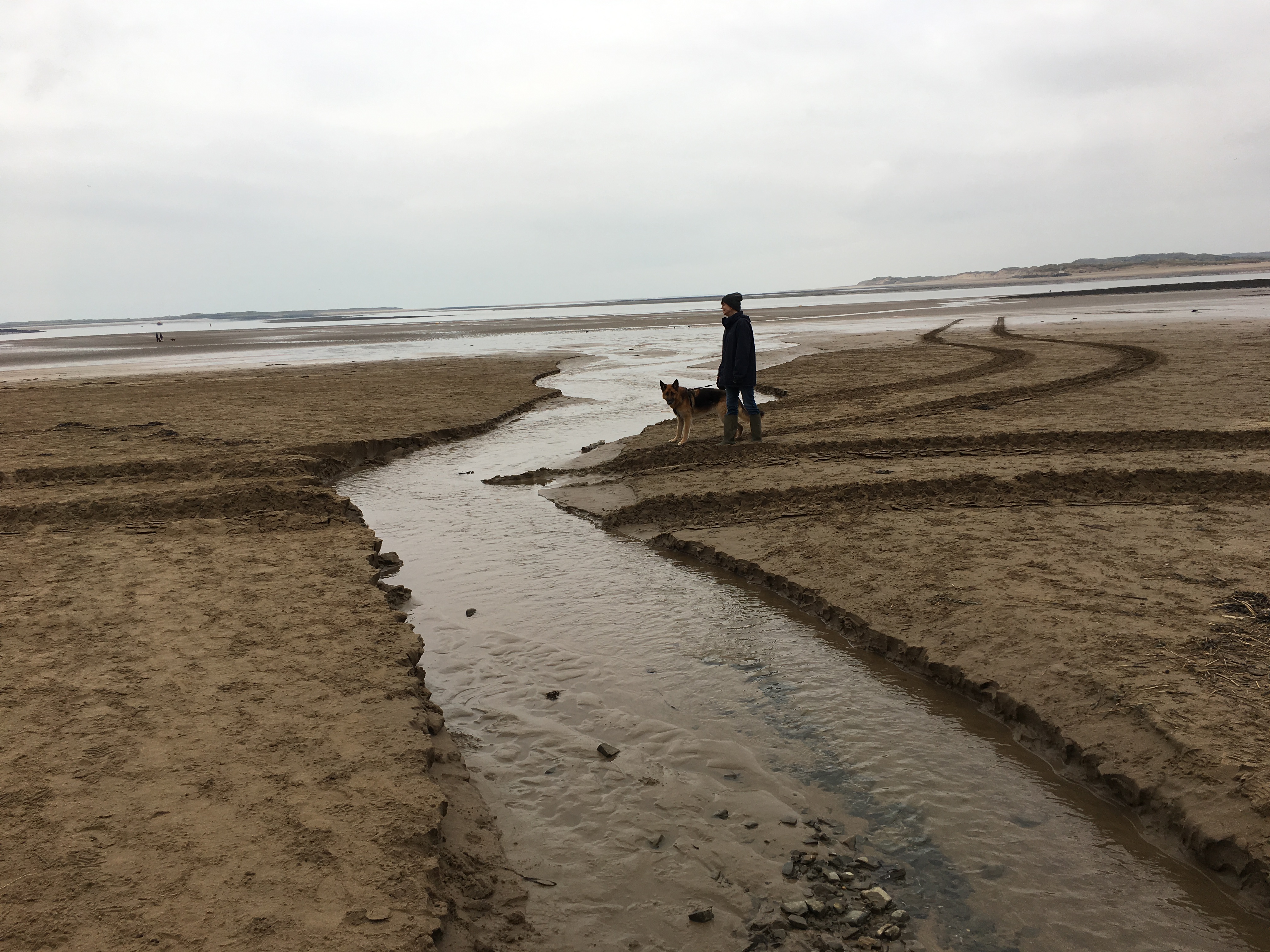
We came for a mini break to Instow, near Bideford in Devon. It is, by far, the most dog friendly place I have ever visited. In fact, if you don’t like dogs, you will find this a difficult village to visit. We loved it.

We hired a cottage (through English Country Cottages) right next to the beach. We looked out, across the estuary, watching as the tide filled the bay and floated the boats, then went out again, leaving them stranded. When the tide was out, the expanse of hard sand was immense. Every dog owner in the world seemed to arrive – I never saw less than 20 dogs on the beach at any time. There were the early morning walkers (who tended to have annoying yappy little dogs) and the midday walkers with children. There were even ‘after dark’ walkers (they tended to have the big dogs).

Husband had brought his gym kit and persuaded me to bring mine. So we could go for runs along the beach. He has recently watched ‘Chariots of Fire’. I fear his image of young men training for the Olympics by running through sea spray was not going to match the reality of a couple over 50 staggering along, trying to avoid tripping on the dog lead. We never went.

Across the bay was Appledore, a pretty Devon village with cottages scattered up a hill. It looked like Toytown from our cottage. Bizarrely, although we could walk to fairly near it when the tide was out, the river was always too big to cross, so without a boat it was unreachable (unless you drove for miles to a bridge, I suppose).

Even the pubs and restaurants were dog-friendly. They also all displayed 5* hygiene ratings (when you feed the public, you start to take note of these things and avoid places with a low star rating.) We ate in a variety of pubs, all within Instow, all very friendly and with excellent menus. If you go in the summer, you probably need to book. We could even take the dog into the cafe on the front, as long as she sat quietly under the table.

Instow has quite a big military presence (as I discovered, if you read yesterday’s blog!) This is due to the US and British military using the Devon coastline to practice for the D-Day landings.

img_0950

Last Day in Delhi


img_5446

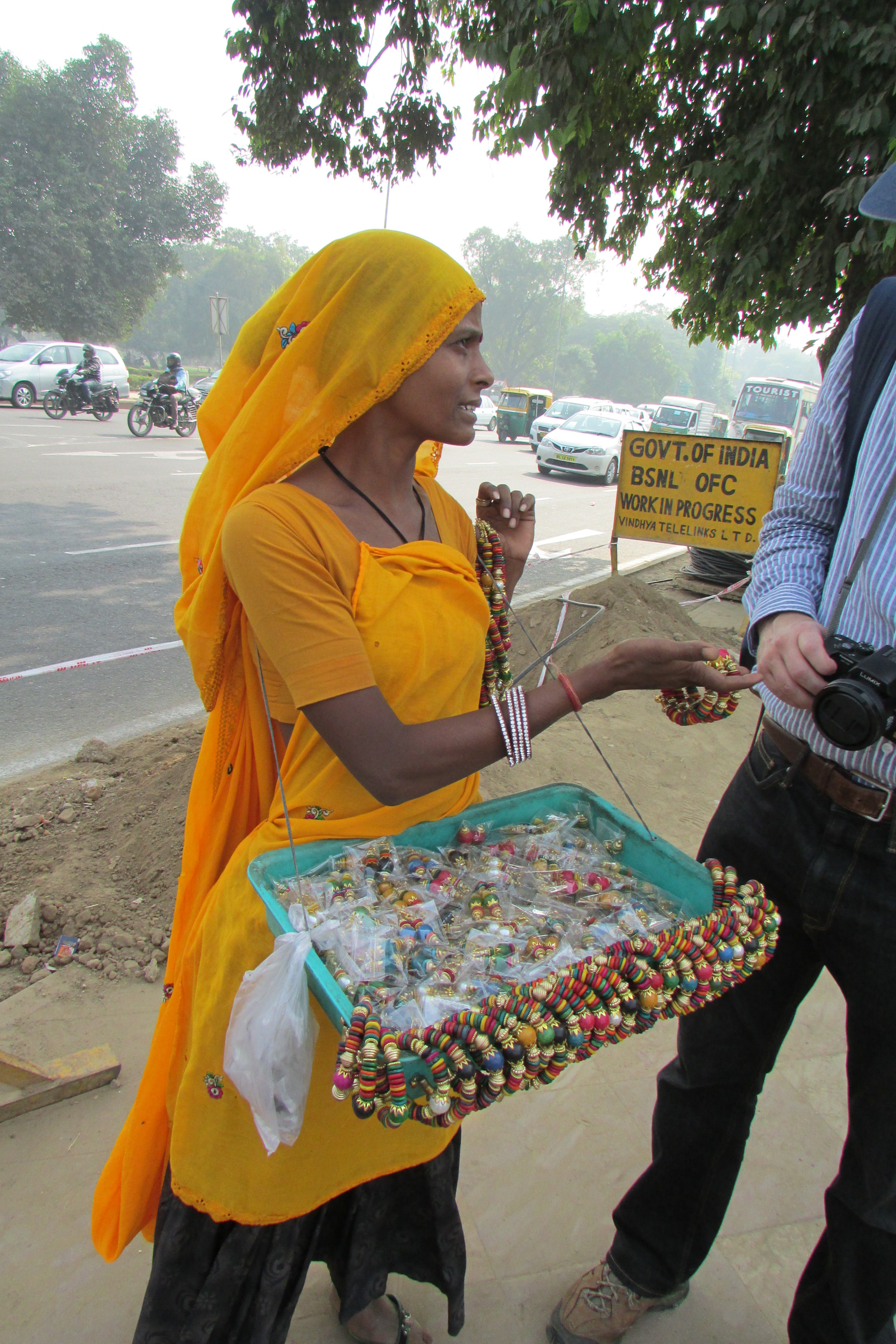
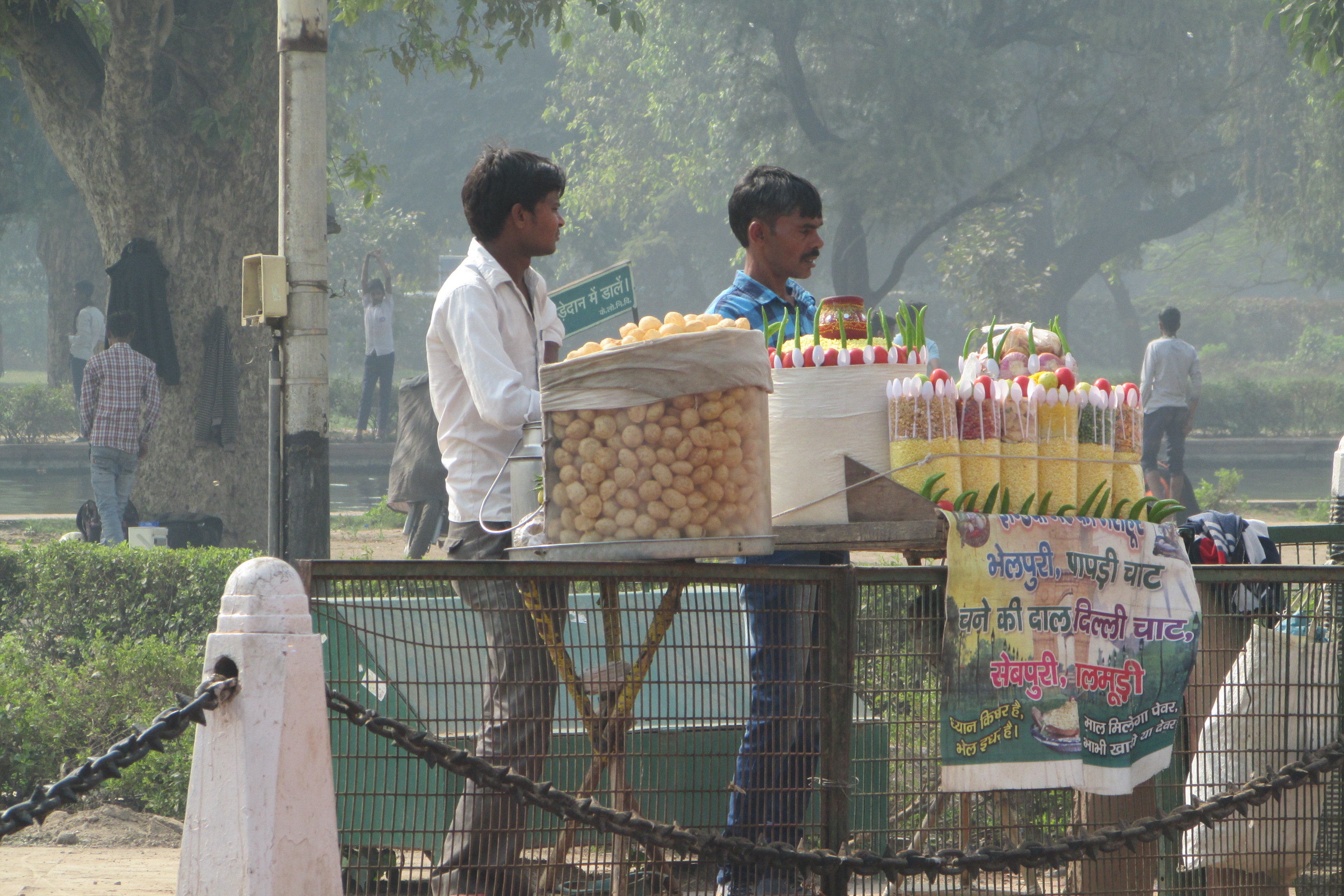
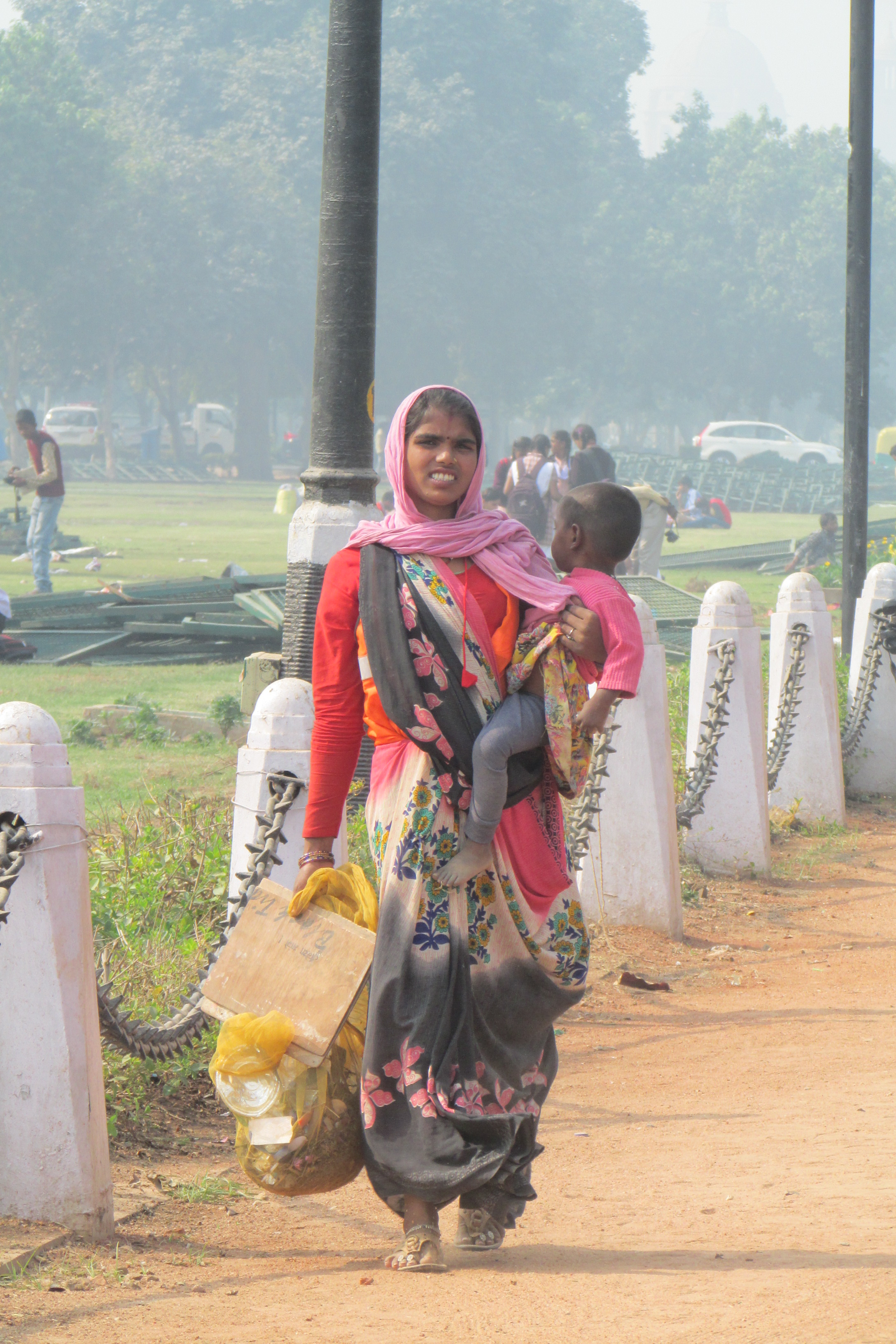
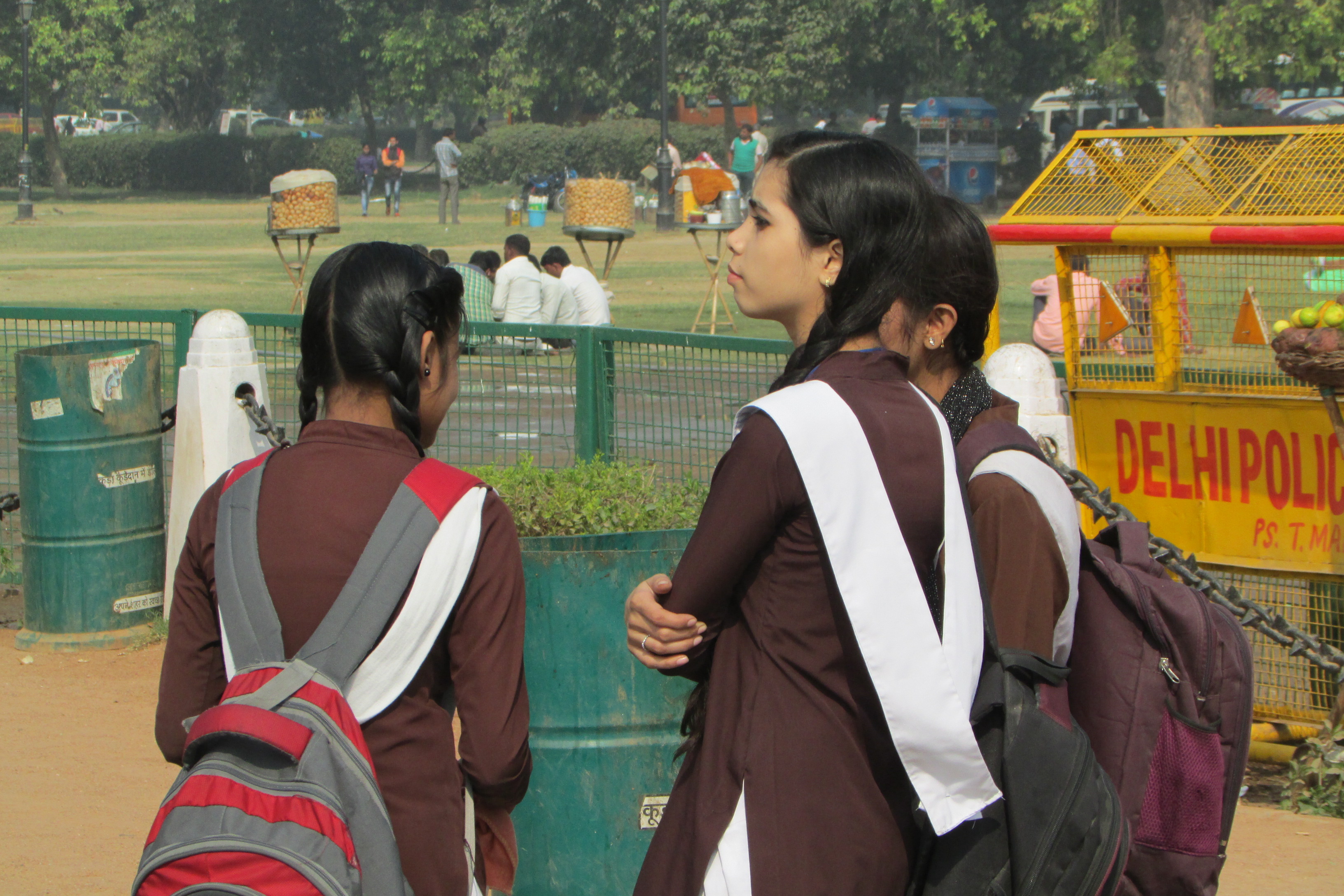
We walked to India Gate. Lots of families and school children were sitting on the grass, and taking photos. Street sellers had stalls of food and drink. Some men sat next to stoves and kettles, selling cups of chai (tea). Women walked through the tourists selling bangles. They were almost aggressive – at one point I realised a bracelet had been clipped to my wrist as I walked and she was negotiating the price!

img_5424 img_5420 img_5413

Walking is quite difficult for white tourists because the tuktuk drivers follow you, offering to take you. They don’t believe you want to walk. After a while, they drive to the end of the street, and offer again when you get there.

Near to the President’s Residence are roads of large bungalows. Each property had a guard on the gate and high walls topped with spikes – only the monkeys could climb over. The gardens were green – lawns and trees and shrubs (didn’t see any flowers.) It was lovely, but easy to be lonely if you lived there I expect, especially for the wives, it was very enclosed.

We saw more monkeys. There was a huge male sorting through the rubbish. We stopped to take his photo, but a man walking past told us we weren’t allowed to. Apparently we were in a military zone (though there were no signs up.) I like that in India, when we do things wrong, people tell us – they don’t shout or fine us, they just inform us we’ve done something wrong. (Shame though, it would’ve been a good photo.)

We went to Janpath Market. There were a mix of stalls in the street, and shop fronts with goods spilling into the road. At one point, everyone began to quickly collect together all their things and move them off the road. I thought perhaps a rainstorm was coming. They laughed, and told us that no, someone had spotted a policeman! Apparently, they are meant to keep all their items within the shop, they could be fined for displaying things on the street.

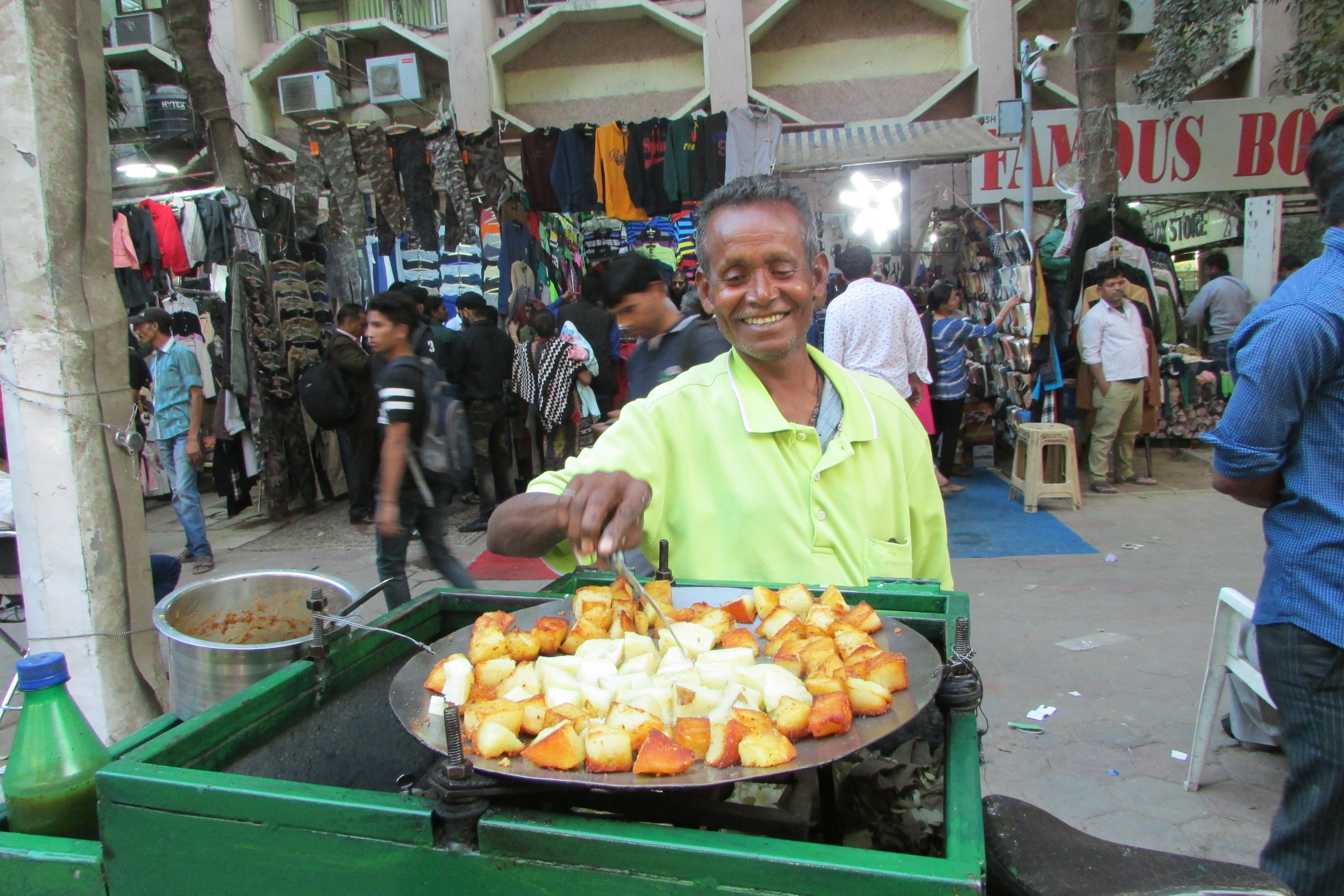
I wanted a photograph of a man frying potatoes, so asked his permission and offered him a few notes (bout 40p in value.) He laughed, and said no. When I walked away, a man rushed up, told me that the food man had changed his mind, then told the food man that he should accept. I have noticed things like this before in Delhi. There is a sort of ‘Mafia’ which runs everything. It isn’t necessarily sinister, but there is definitely an organisation that runs below the surface, mostly unnoticed by tourists. People who run the market, and will direct you towards certain stalls and find change if you have the wrong money. Or taxi drivers who only know the way to certain hotels. Or information offices, who tell you everything is shut except for certain places. It makes you feel slightly wary.

img_5455

I like India. Delhi has been very different to what we experienced a few years ago in Mumbai – it is less intense, fewer random people on the street touched us, there were very few children begging, the traffic seemed less chaotic (it mostly stayed on the road.) But both cities were busy, full of colour and decoration, and the people were polite. You feel that people TRY in India, even in the slums, they weren’t sitting back, waiting for aid, they were actively trying to survive.

The only thing I found really difficult, to the point I don’t think I could live in India, was the pollution. There was a thick haze everyday, and I found walking fast uncomfortable. It actually hurt to draw breath. I’m not sure what India is doing to address this, nor what part Europe and America play in causing it. But something needs to change. On our last morning, there was the Delhi half marathon. I looked online for the route, but mainly saw posts from medics, warning people to be careful if they wanted to run, and advising people with asthma or heart problems, to stay at home. I hope the air pollution can be sorted. Before it’s too late.

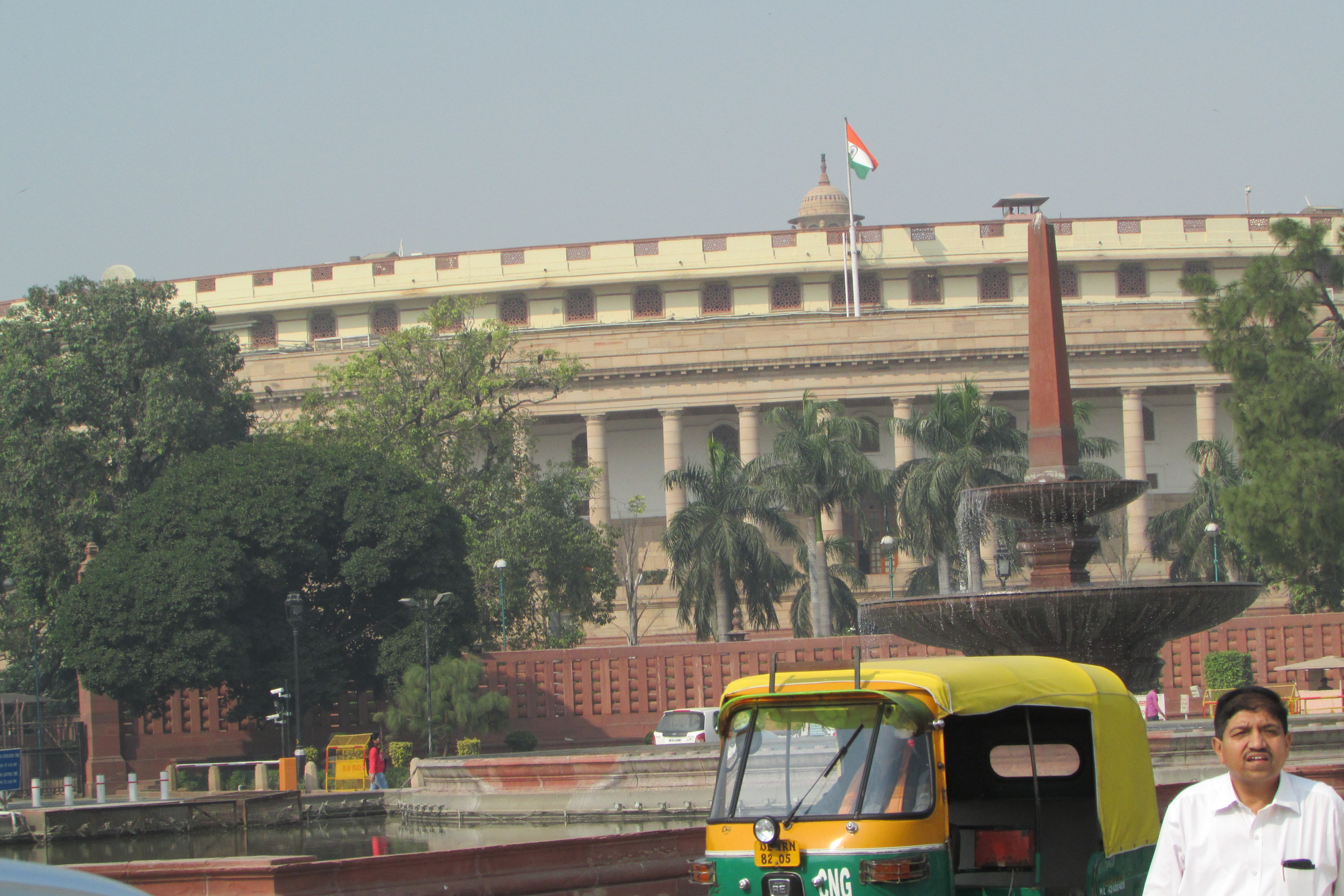
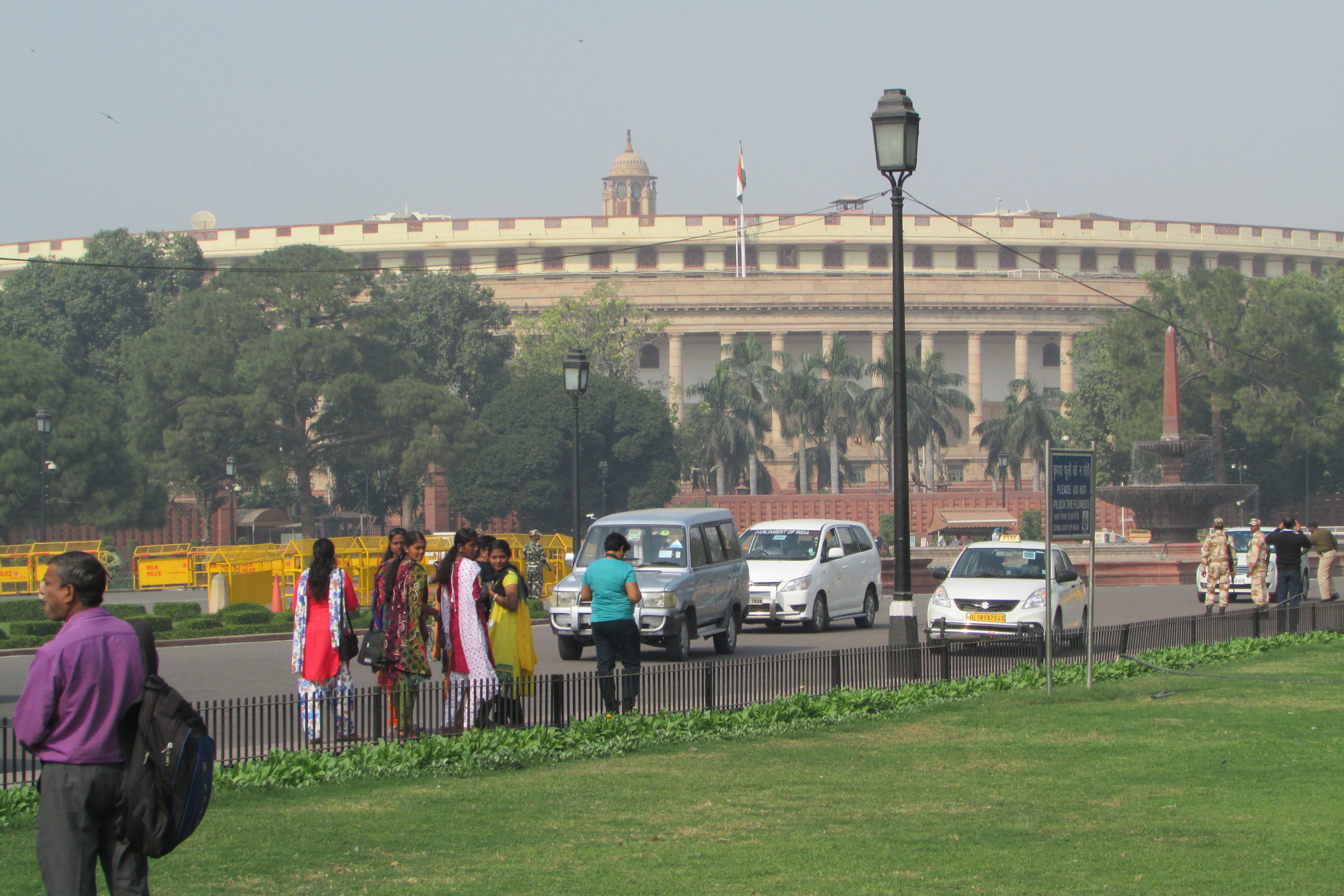
img_5440 img_5437 The round parliament building.

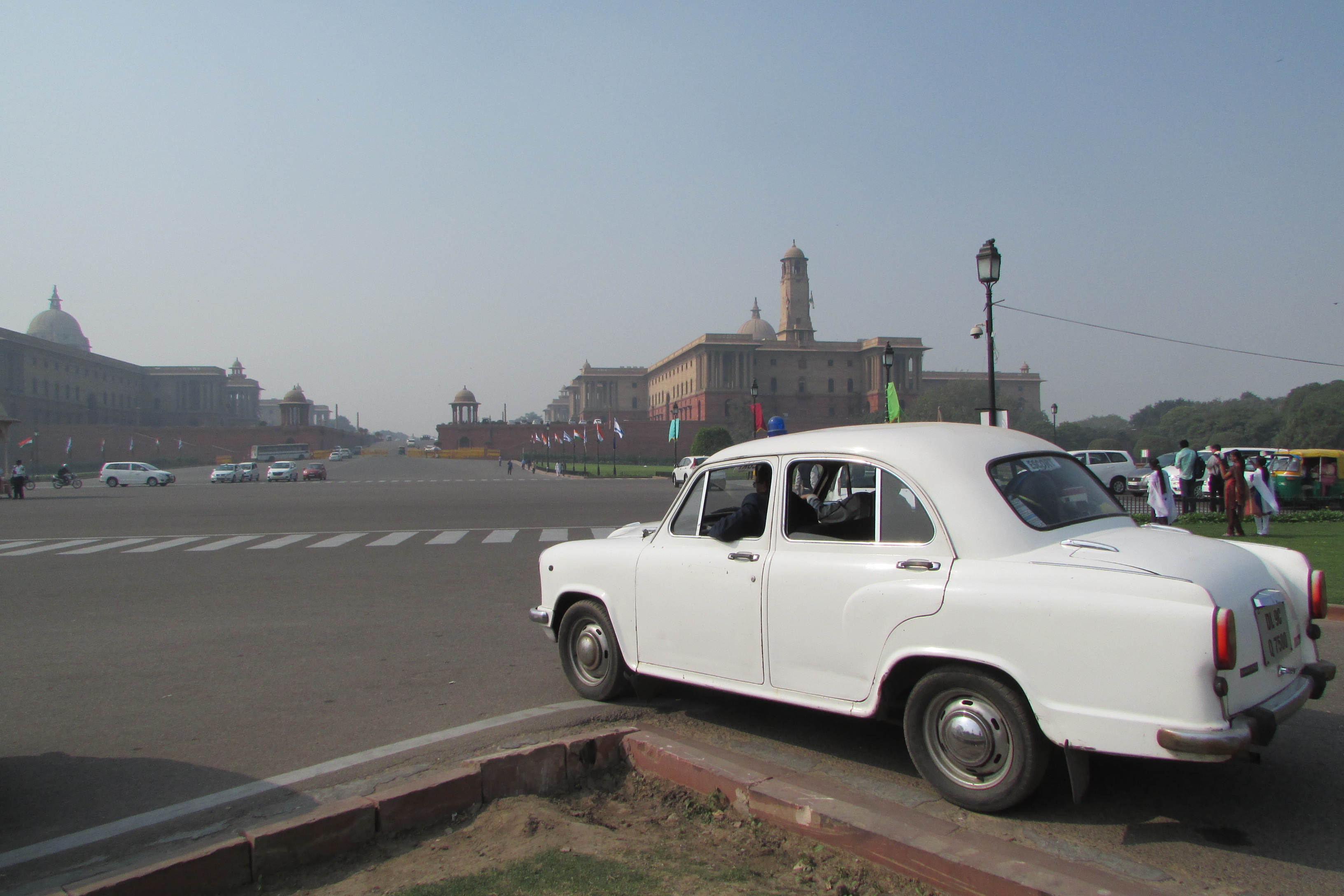
These white cars were everywhere!

img_5433 People enjoyed being on the grass, watching all the tourists.

img_5419 img_5418 Schoolgirls and street sellers

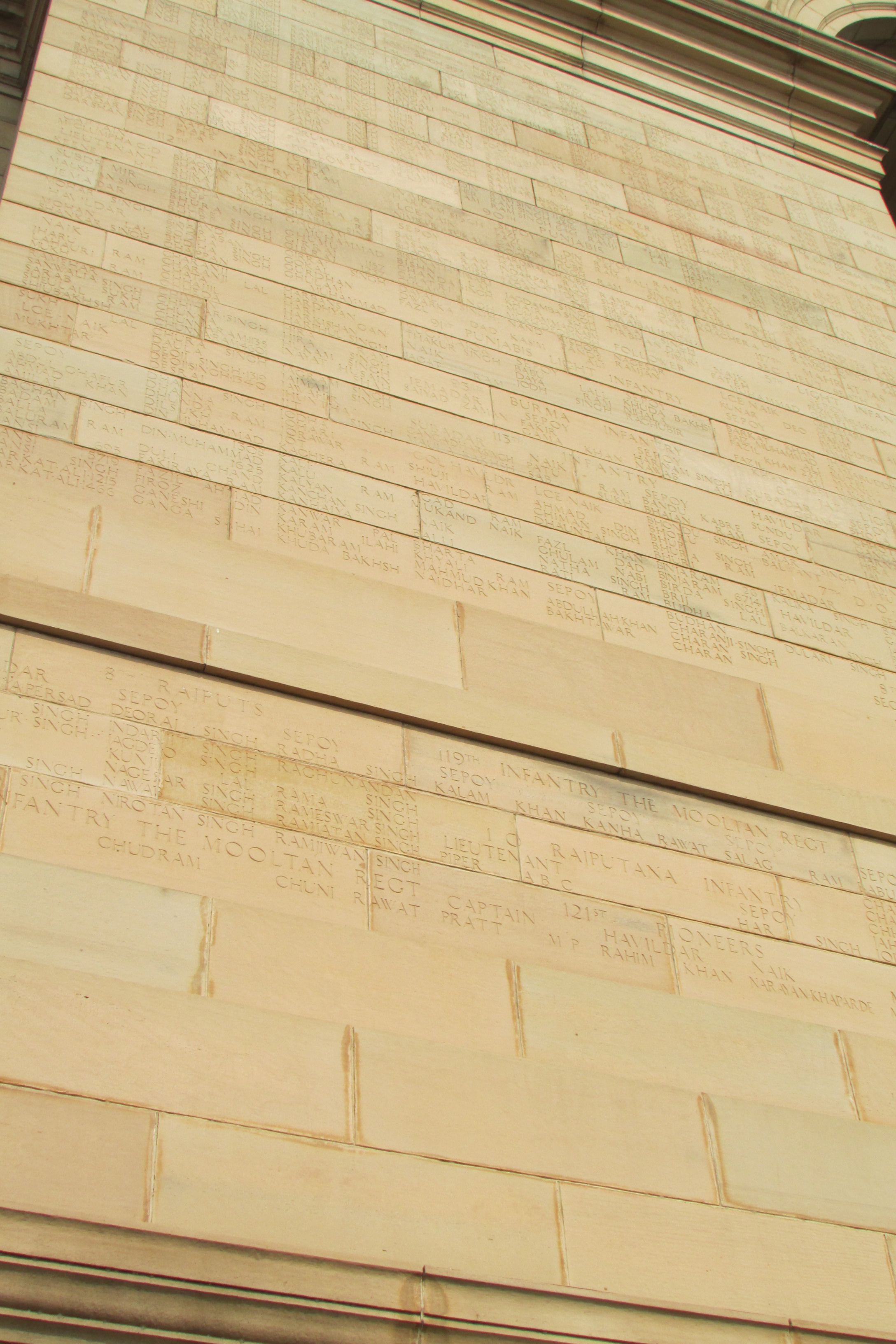
img_5411 img_5416 India Gate, inscribed with the names of martyrs.


xxxx

Thank you for reading.

You can follow my blog at: anneethompson.com

xxxxx
From Delhi to the Taj Mahal


If you like monuments, you should visit the Taj Mahal. If you like seeing different cultures and people, the drive to Agra is fascinating!

p1100108

Woke at 4am. The bed had jolted, so I assumed it was D returning (he sometimes wanders off at night, if he can’t sleep.) Sat up, and realised I was alone, then bed jolted again. Wondered if Delhi was having an earthquake. Located wandering husband and told him he should sit under table if there was an earthquake (which I know after doing online research following earth tremors when we were in Italy 2 years ago.) Husband looked at me as if I were mad. Went back to sleep.

Later, I looked online, and read that Delhi had felt tremors measuring 4.5 on Richter scale.

Car was booked for 7am. Arrived in lobby. Was told, “Yes sir, your car is ready. Please take a seat.” Waited for a while before driver actually appeared. I think, in India, it is considered polite to tell people what they want to hear. It is sometimes almost true.

Drove through Delhi traffic. This is a lot like dancing a tango, lots of tension and near-misses. Seat belts are a necessity. Drove on freeway to a toll booth. Everything completely stationary. Many people honked their horns (no idea why, but Indian drivers use their horns a LOT.) Several people got out of their cars and had a look around. Then the barriers opened, cars surged forwards, people ran back to their cars, avoiding all the lane changing traffic, we were off.

We drove through fields. Passed hundreds of chimneys in a brick making area. Passed green fields with neat crops, people working on ancient tractors or horse and carts. People walked with great sacks on their heads. When we left the freeway, the traffic became more eclectic. Oxen tethered on the back of a too-small truck, tractors pulling trailers stacked high with sacks, lorries with great mounds of grain. All the time bikes and motorbikes and tuktuks, weaving through the traffic, horns sounding.

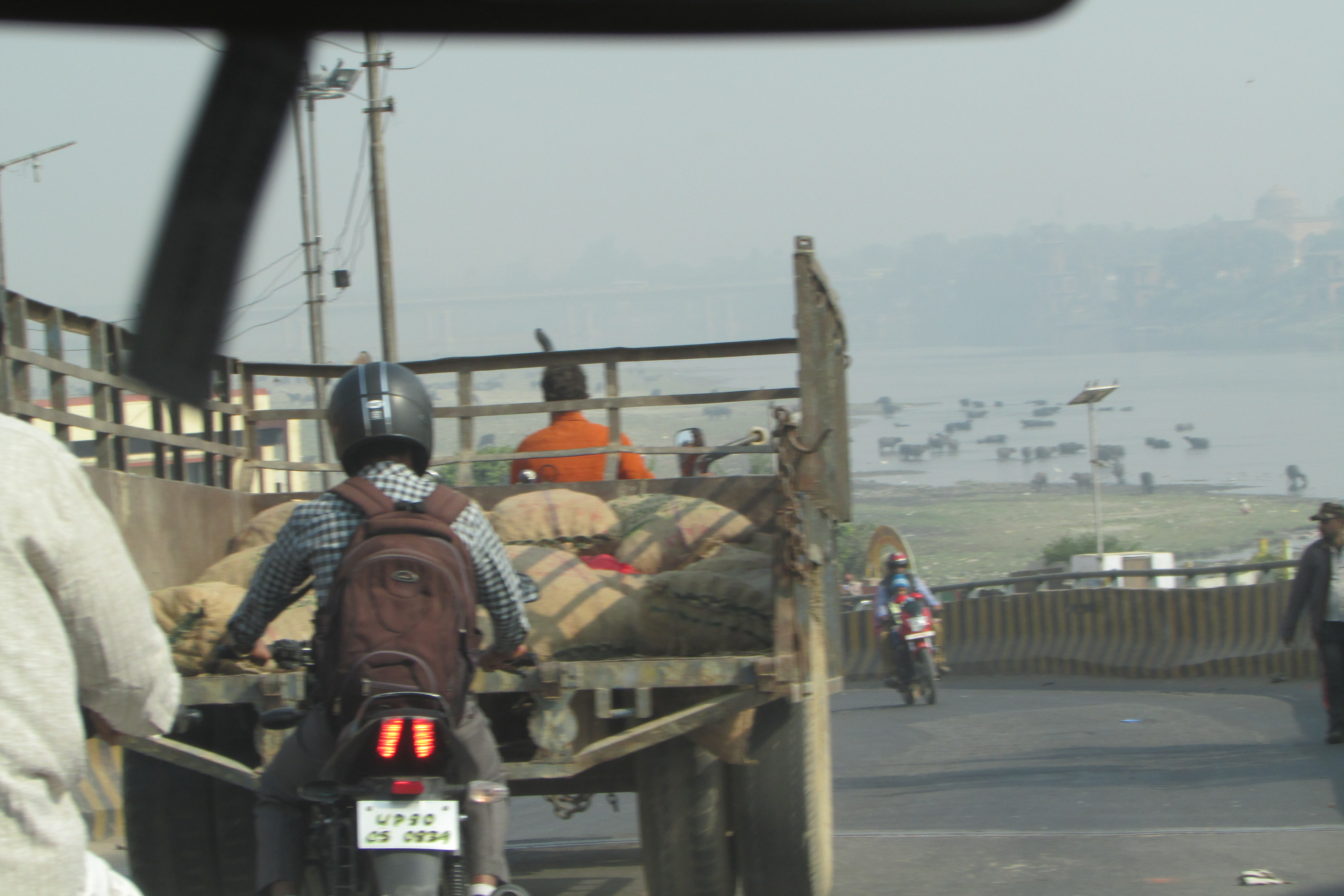
The drive through Agra was another world. We crossed the wide Yamuna River. On the grassy banks oxen and donkeys grazed while people washed their laundry. Fields of linen were stretched out to dry in the sunshine. Pigs and goats wandered freely, while water birds floated on the river. In the town, the roads were a tumble of traffic, cows, people carrying sacks on their heads. And monkeys scampering across roof tops. I don’t know if the monkeys were introduced by people, perhaps one of the temples, but now they were everywhere. I didn’t entirely trust them when we walked around – they watched us with their clever eyes, darting behind walls then jumping up unexpectedly. It was us who were the novelty, the monkeys were comfortably free.

Left the car in the carpark at Taj Mahal. We had to leave bags in the car, though could take cameras and a handbag. Our ticket price included a bottle of water (which I didn’t trust enough to drink), a bus ride to the monument (though we could have walked, it wasn’t far) and shoe covers. If you don’t have shoe covers, you have to remove your shoes and leave them in an open cubbyhole.

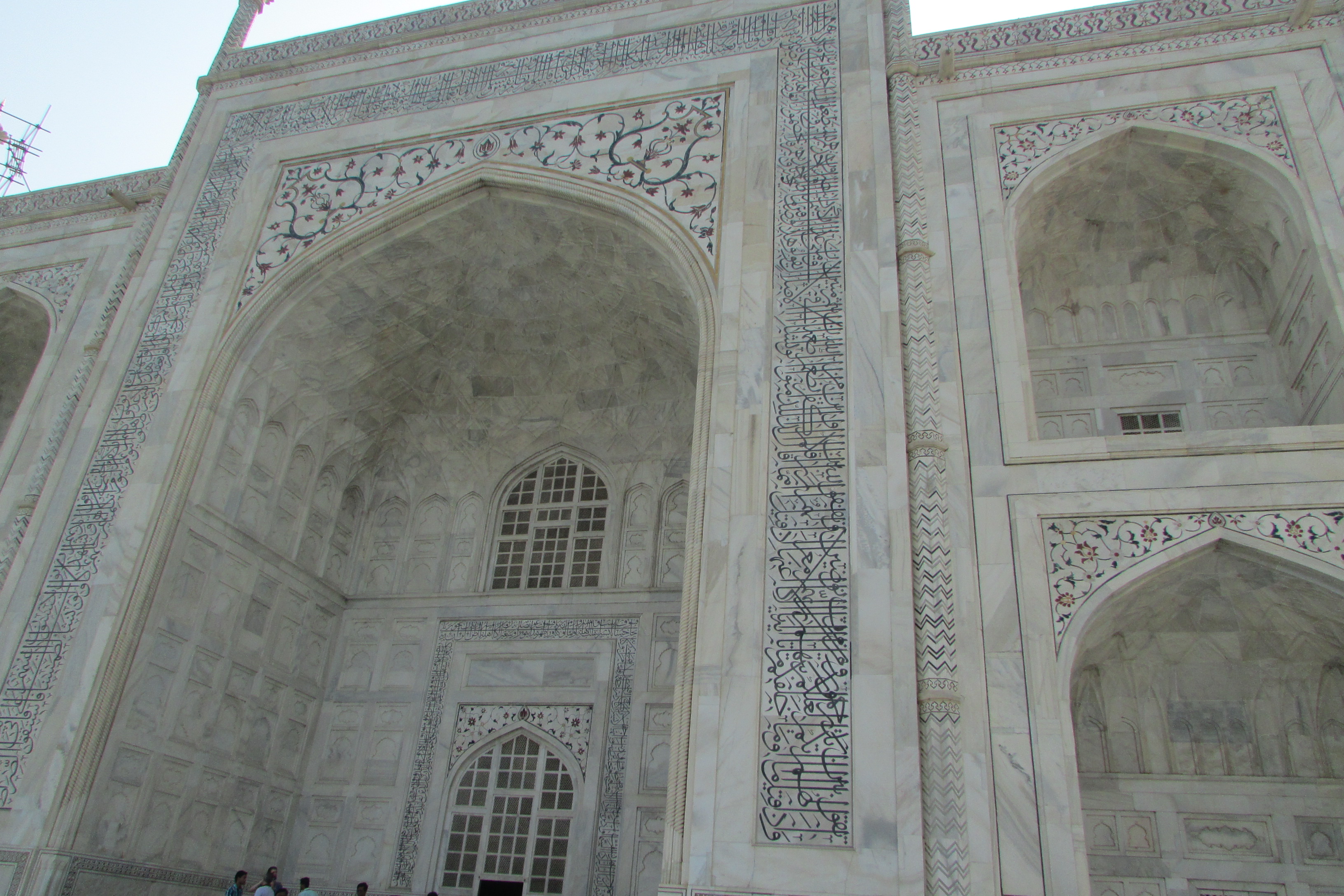
The Taj Mahal is beautiful. Made of white marble, inlaid with precious stones that form floral patterns, surrounded by gardens and fountains. It is the tomb made for a loved wife of an historical ruler. She was the second wife (bit of an insult to the first wife) and she died giving birth to their fourteenth child (so I figure she deserved a nice tomb.) The entrance gate was engraved with an extract from the Koran, written in increasingly large letters as it got higher, so when standing on the ground, it all looks the same size. Clever.

img_5382

All the architecture and craftsmanship was clever. But for me, there was no atmosphere. Perhaps you need to be the only visitor. I would suggest that everyone should first visit Huymayun’s Tomb, so you appreciate how it is meant to feel. But the photos are pretty….

img_5409 Traffic at the toll booths.

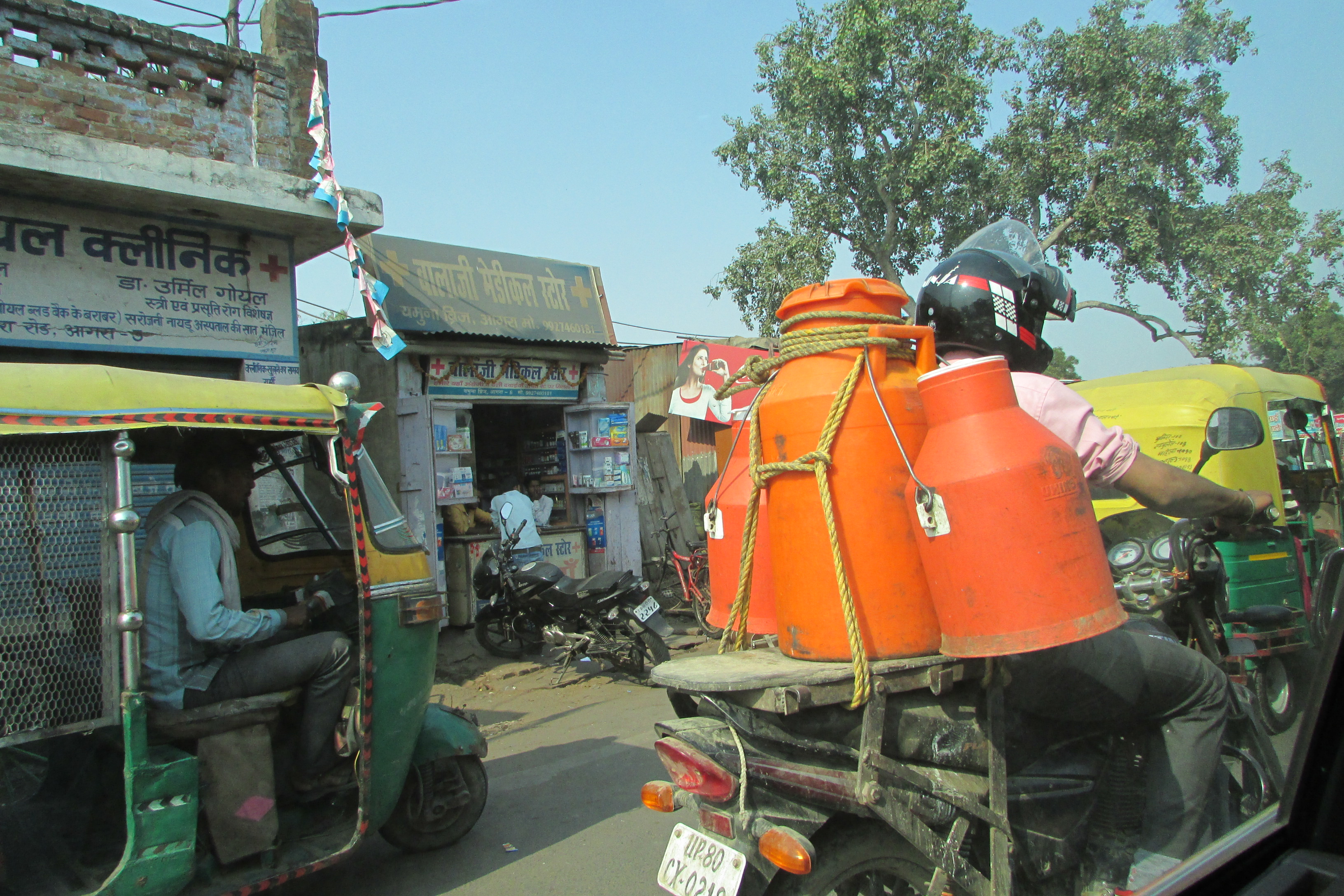
img_5396 Lots of milk churns being carried as we drove into rural areas.

img_5390 p1100161 People washing laundry in the river.

img_5373 img_5369 img_5366

p1100127

The Taj Mahal


Who helps the poor in Delhi?


p1100055

We visited the offices of Pardarshita. Pardarshita means ‘transparency’. They have partnered with Actionaid, and are striving for transparency within society. They want basic human rights for women and children in India. Although laws are in place to help people, in reality, many people are unable to claim their rights.

For food, poor people are given ration cards. In theory, there is a basic level of nutrition. However, the scheme is not adequately organised, so many people cannot access it. The same is true of pensions, education, health care. The main problem seems to be administration.

The charity runs workshops, informing women of their rights and helping them to access them. These include:
Enrolment in school for children.
Ration card.
‘Kerosine Free Delhi’ ( they can claim free LPG for cooking, if they have a ration card.)
Voter card (for elections.)
Pension
Birth Certificate.
Income certificate.

The people need to queue for many hours to obtain the above certificates, and they need the certificates to claim their rights. Or, some people pay for a counterfeit one (this apparently, is very common.)

The ration card is given to people ‘below the poverty line’. I think, whatever the country, this is always going to be a difficult one. Who are the ‘poor’ in England? They have far more than these people even dream of owning! Previously, in India, poverty was assessed by calorie intake. I think this seems an accurate guide (often, especially when people are subsistence farmers, the whole “less than a dollar a day” standard is meaningless, as they wouldn’t have anywhere to spend a dollar even if they had one. Money only works in Western countries as a guide to poverty, in my view.)

However, the last census in India took possessions into account. So, if a domestic worker had been given a television to watch, she was considered ‘not poor’. This allows the government to count fewer people as ‘poor’. Which means fewer people can claim their rights.

India has lots of illegal immigrants from Bangladesh. If you are a Muslim and speak Bengali, people will assume you are an illegal immigrant, even if you’re not (in the slums, there were a lot of Bengali speaking Muslims.) They tend to have to bribe an official to be issued with an ID card. If you can prove you have lived in India for 10 years (so have documentation) you can then stay legally.

The rights of domestic workers is another issue. India is famous for cheap labour – everyone in the world wants to take advantage of this. Including Indians. So, most people, even ‘ordinary’ people have domestic staff. They are paid below the minimum wage (because no one checks) and are sometimes treated almost like slaves. No one really wants to change this, because no one wants to pay more for their own cleaner, child minder, cook…. The pay is about 2,000 rupees a month ($30) They are also very vulnerable to abuse. A rich person, with guards on his gate, sometimes feels he is above the law (remember, women have very few rights in India, and courts rarely rule in their favour.) There are some sad stories amongst the women in the slums.

All children have the right to free education in India. The quality of this education varies. We visited a school in a resettlement area. It was a bizarre experience.

We were shown into the headteacher’s office and given chairs to sit on. The chairs were dusty, and I felt I needed to keep moving my feet because as the headteacher (a sensible, intelligent, woman) spoke, mice scuttled about on the floor. Do mice run up trouser legs? I wasn’t sure, but didn’t feel especially relaxed.
The school had 2,000 pupils. There were 15 toilets (you can imagine what that means…) We were told the ratio of teacher to pupil was 1:70 (though actually, the classes we saw were much smaller than this.) The building is used three times during the day, two shifts in the morning and one in the afternoon (completely different head, staff and pupils attend each shift.) This makes for difficult administration when things like budgets are planned.

The women in the slums told us that by age 9, most children could only read very simple Hindi, so they questioned the point of them attending school. If children don’t attend school, they can help their parents, or care for younger siblings so their mother can work. The headteacher told us that teaching quality was variable, because many teachers were demotivated. Paid by the government, they put in the hours, but had no motivation to actually teach. They also are expected to do admin, such as ensure children have ID cards, which takes time, so teaching gets relegated. Another problem is that very few of the pupil’s parents could read or write, so there was no reinforcement at home. This is huge. In England, children take home a book every day, so they can practice at home. Without this, it is much harder for a child to learn to read, especially if their role models never read or write.

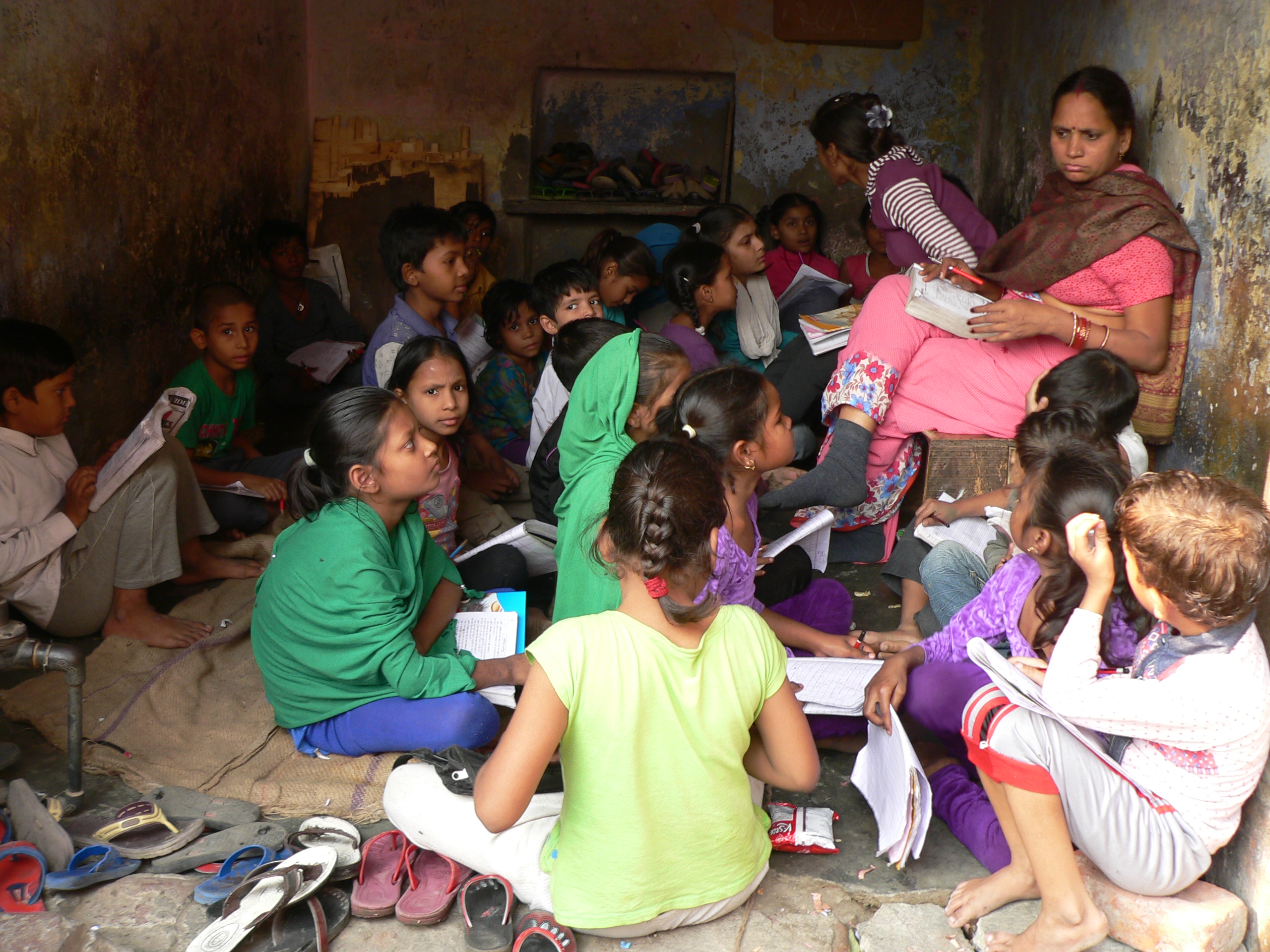
I found the school visit to be a rather depressing experience. The classes we glimpsed seemed completely unstimulating, even the rooms were drab, with nothing displayed. I might be judging unfairly – we only saw a glimpse; and I don’t like mice – but I’m not sure I would have bothered to attend that school. In the slum, we passed a house where a woman was reading to a whole room full of children. We were told it was ‘an education room’. It seemed much more child friendly than the school.

p1100072 p1100080

Thank you for reading.

anneethompson.com