Milan in August


A Day Touring Milan

Our day in Milan was somewhat spoiled by the heat. I think this is unusual, as we’ve visited before and it wasn’t too hot to walk. It felt more like Seville in August than Milan. But we coped, mainly by searching for the coolest places. (Cool as in temperature.)

Our first stop was the Pinacoteca di Brera gallery—which happens to be the source of the most romantic gift ever. About a hundred years ago, when our children were young, we visited this gallery (mainly because we had not understood that to see ‘The Last Supper’ by Leonardo da Vinci required booking tickets months in advance. This was a less-good alternative). We walked to the gallery, and wandered around, looking at lots of religious art (which neither of us appreciate) and wondering why we had bothered, when we entered the very last room. This room displayed art showing life in the 1500’s, and it was much more to our taste. (This might be because, according to a sign, Gerolamo Induno and his brother ‘were the leading exponents of genre painting which used personal, domestic images to draw the uneducated classes to art.’ I am clearly one of ‘the uneducated class’!) I especially liked a painting by Induno, which showed a teenaged girl sitting in her messy bedroom, with a popular poster on the wall, apparently texting (actually, she was looking in a small  compact). I had a teenaged daughter at the time, and this painting struck a cord on many levels. I loved that even though the ‘poster’ was a popular painting by a local artist (‘The Kiss’ by Francesco Hayez) and the furnishings and clothing was different, the girl was not so different to girls today. I looked at the painting for a long time, and chatted about it with Husband, and forgot all about it.

However, Husband, who is not usually given to especially romantic gestures, surprised both of us. Using his work computer (because at the time, we shared one and he wanted it to be a secret) he contacted the gallery, asking if it was possible to buy a print. It was not, but if they were willing to send him a photo for personal study. This was all in Italian, which Husband does not speak. He agreed, and they sent him an invoice and a contract to sign (again, all in Italian, which he does not speak). He signed it (a bit risky!) and sent off a large amount of money (very risky!) and waited for the image to arrive. It never arrived. He then realised that as he was using his work computer, the IT security blocked files of a certain size. He had to contact the IT department, and admit improper use of company computer (luckily he was very senior, so they forgave him) and ask them to release the file. They did, and the image arrived. Husband then printed it off, and gave it to me for Christmas. What a lovely gift. We bought a frame for it, and hung it in the bedroom (because then it really is for personal study, and doesn’t break the agreement). Romantic, huh?

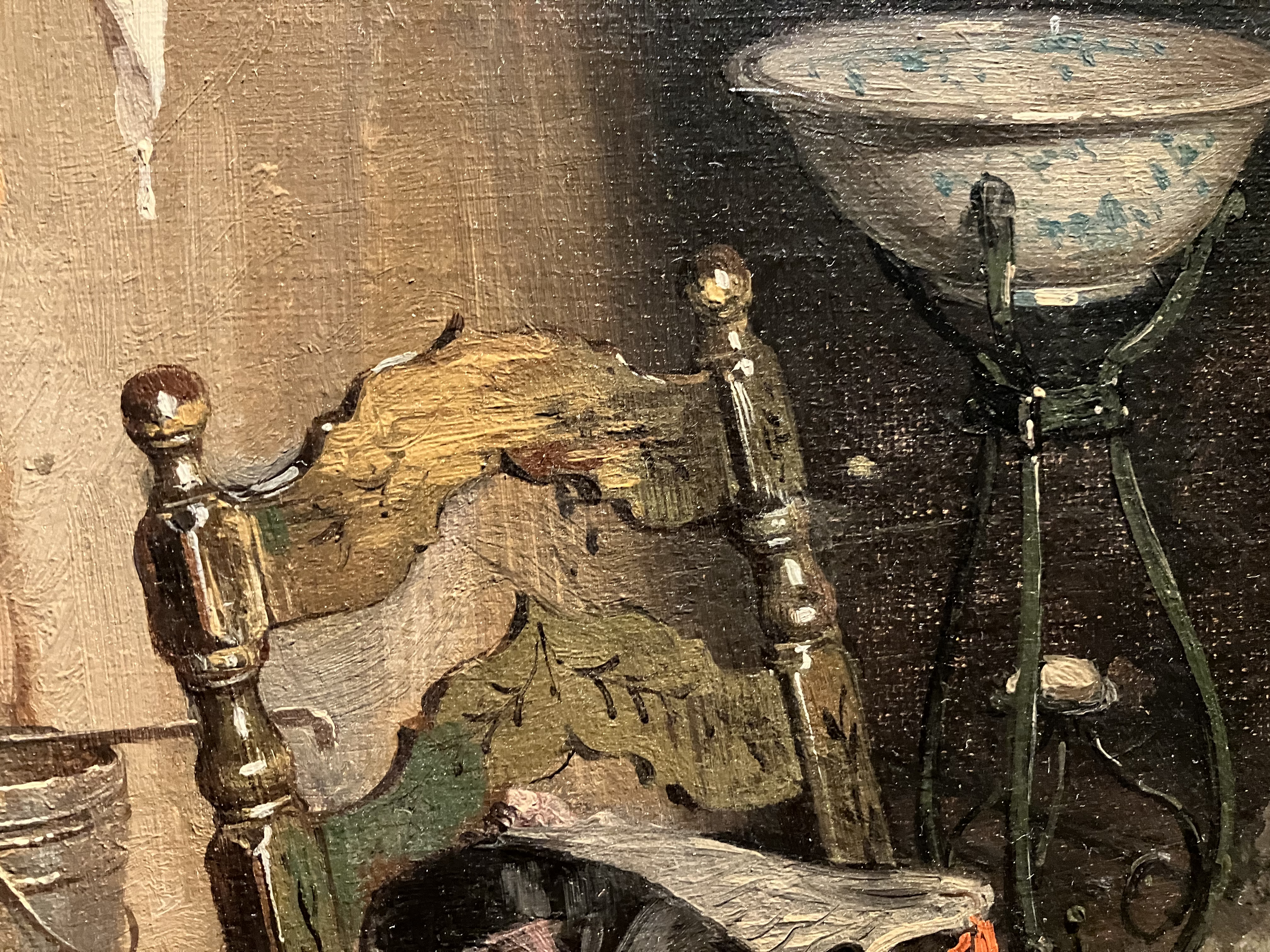
This year, we found the painting again. It was interesting to see the brush strokes (because they don’t show on my copy) and the slight variation in colour. The guard shouted at me for standing too close.

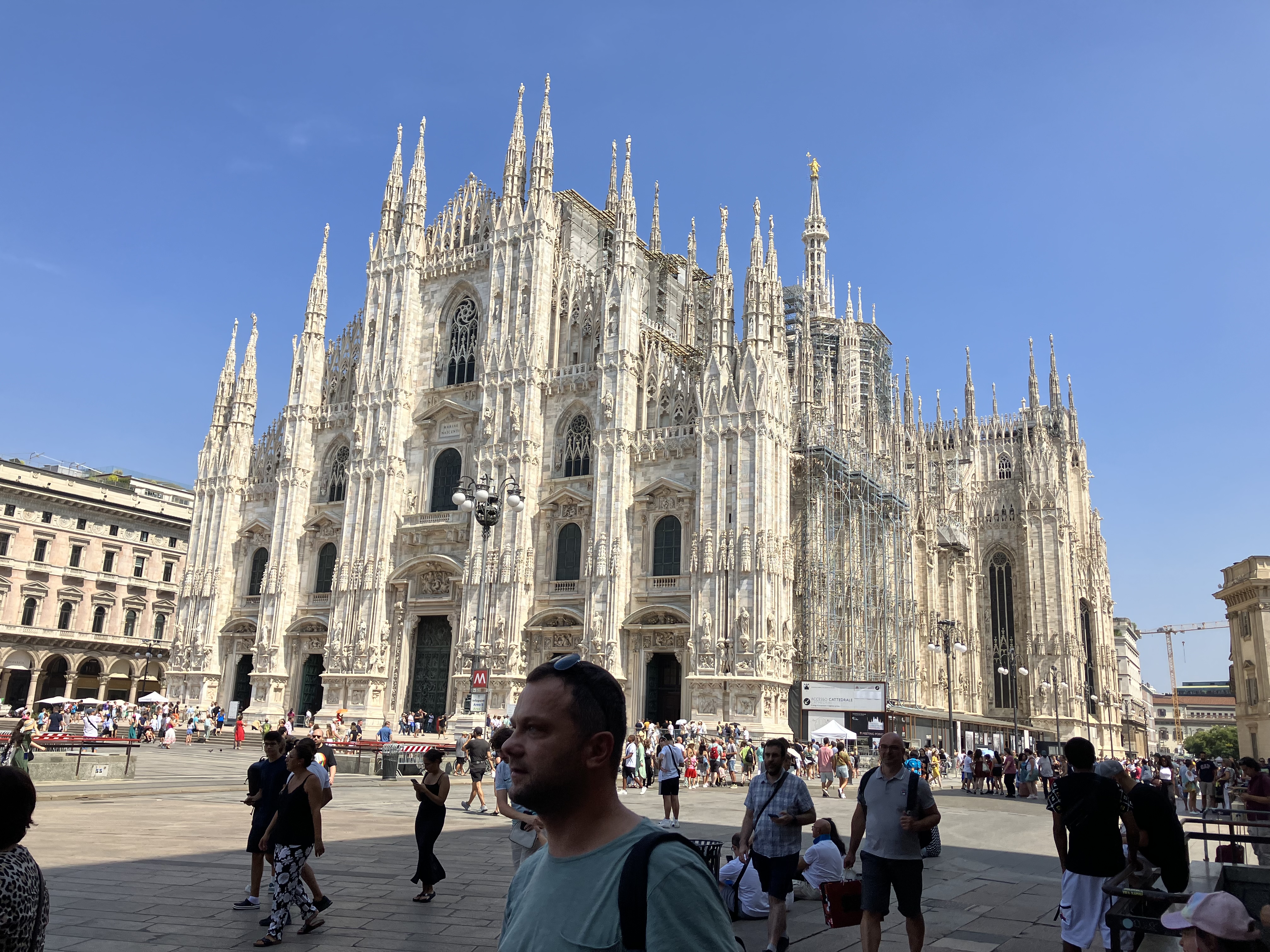
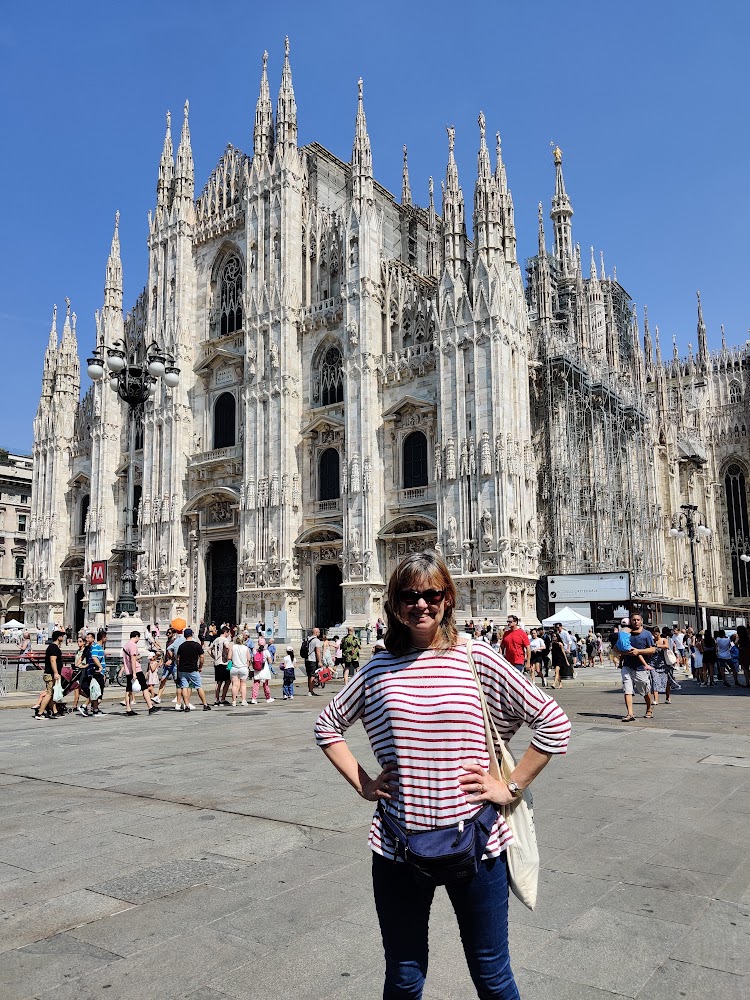
After the gallery we walked past the shopping arcade with the fancy roof, and to the cathedral (the Duomo). The queue for the cathedral stretched out across the plaza, the sun beat down, we decided to just look at the outside. We enjoyed seeing the gargoyles and statues (which I wrote about in my blog on Milan a few years ago). We walked down towards the castle, and I thought I might melt. So hot. We detoured into a lovely cafe, and ordered desserts and drinks, and spent the whole afternoon chatting and eating ice cream. Which frankly, is not a bad way to spend an afternoon.

We ended the day with drinks in the hotel bar (which is rather nice because they brought plates of snacks to eat with the drinks). We ate in a cafe near the hotel. Went to bed tired—it’s surprising how heat saps energy even when you don’t do much. Tomorrow we head for the Alps, where we have a little apartment for a couple of weeks. I am hoping it will be cooler.

Thanks for reading. I hope the weather is good for you today.

Take care.

Love, Anne x

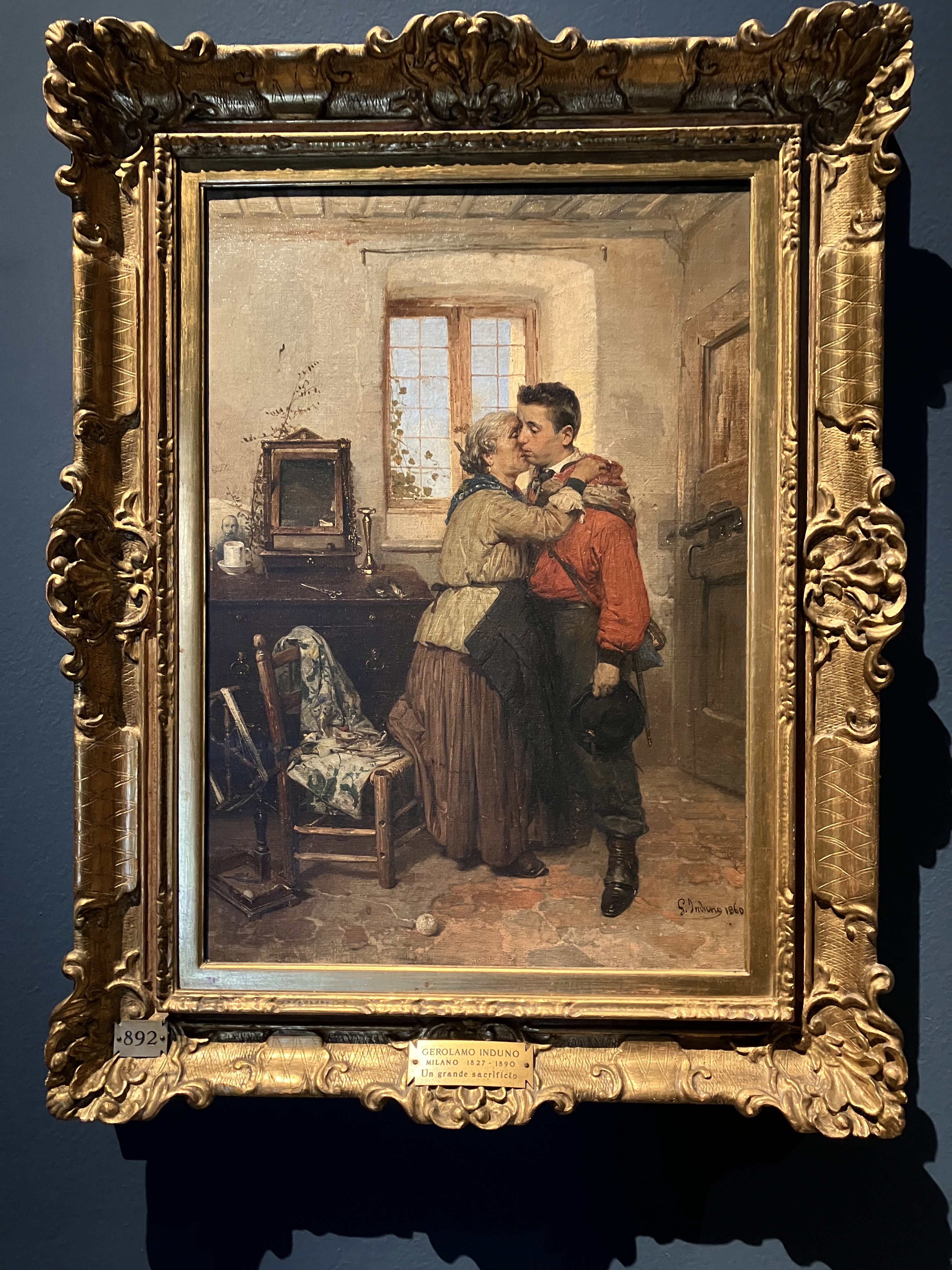
Another painting I like.
It shows a mother saying goodbye to her son as he goes to join Garibaldi’s army.

Thanks for reading.
anneethompson.com
Sign up below to follow my blog.
*****

Milan was Hot


Milan was hot. As in, really, really hot. We flew to Malpensa Airport, with the excellent plan to catch a train to the city centre and then walk to our hotel. The airport part went well. Milan airport has a walkway, which is basically an art gallery, with sculptures and music and atmospheric lighting. An unexpected interlude as you pull your luggage towards the railway station. Only in Italy.

The rest of the plan was less interesting. We managed to buy tickets, and found the correct platform, and boarded the train. But as we perched on seats around the luggage (that we were too worried about leaving in the rack next to the door) we realised the journey was long, and it was past lunch time, and we had been awake since 4am. I tend to wilt when I miss meals, so had brought some snacks, but they were warm and squashed and tasted of plastic.

We arrived at the massive station in Milan, and eventually managed to find the exit (though not the correct one). Walked around the exterior of the station, pulling heavy case over ruts in the paving stones while the sun burned down on us. Followed Husband along many hot streets, over many major roads, with suitcase wheels sticking and clothes soaked with sweat whilst passing pristine-looking beautiful Italian people. Italian people always look like they washed their hair this morning and have dressed in the latest designer clothes and are just taking a break from looking beautiful to meet their friends for an espresso. Felt very English.

Arrived at the end of the slope up to the hotel. It was steep, and cobbled, and I thought I might faint. Luckily, a porter spotted us, and came to the rescue. Usually we bat away porters and cling on to our bags as though they contain the crown jewels; this time I relinquished my luggage with thanks and offered to buy him dinner. (The dinner bit isn’t true, but the emotion was there.)

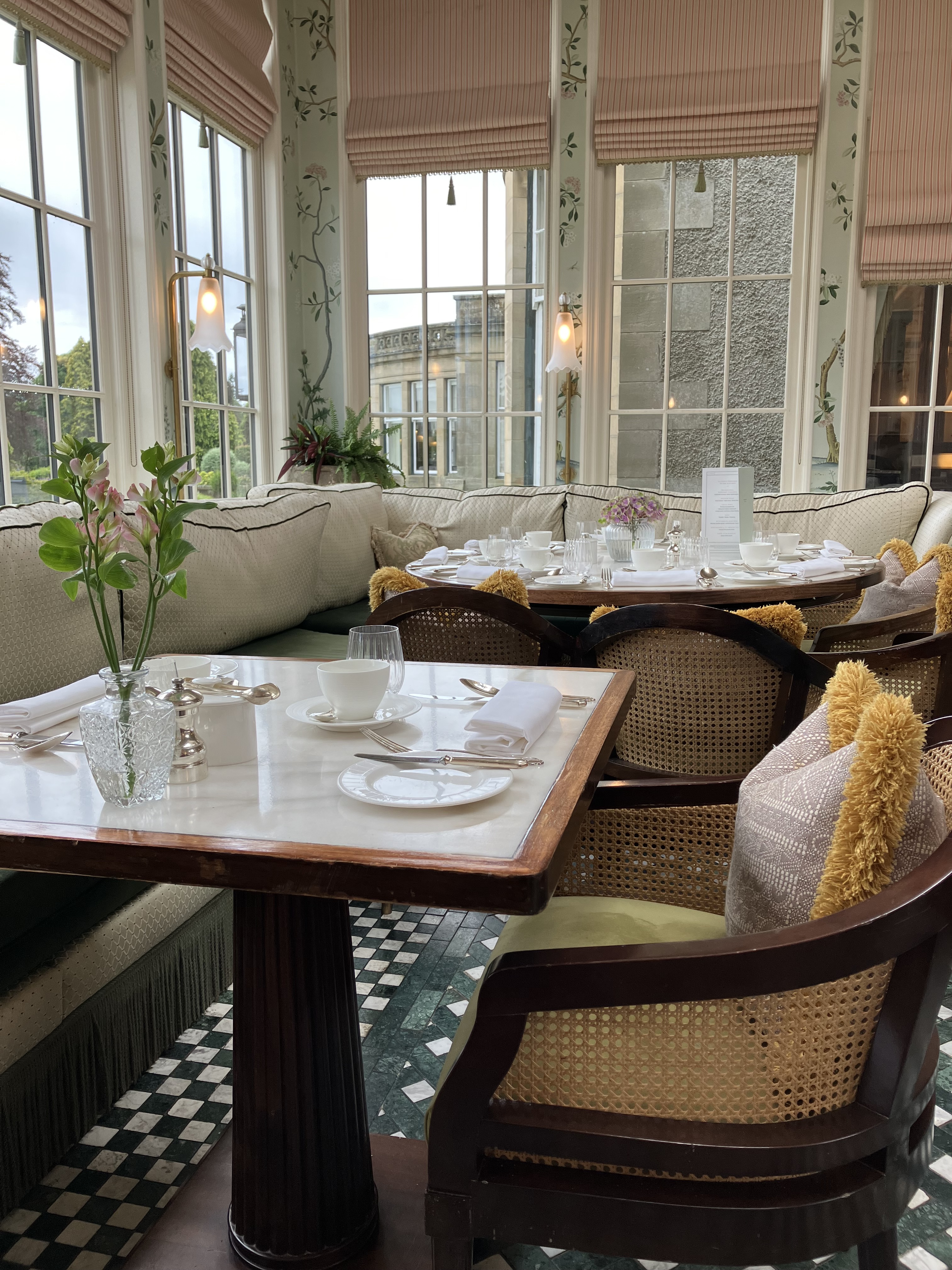
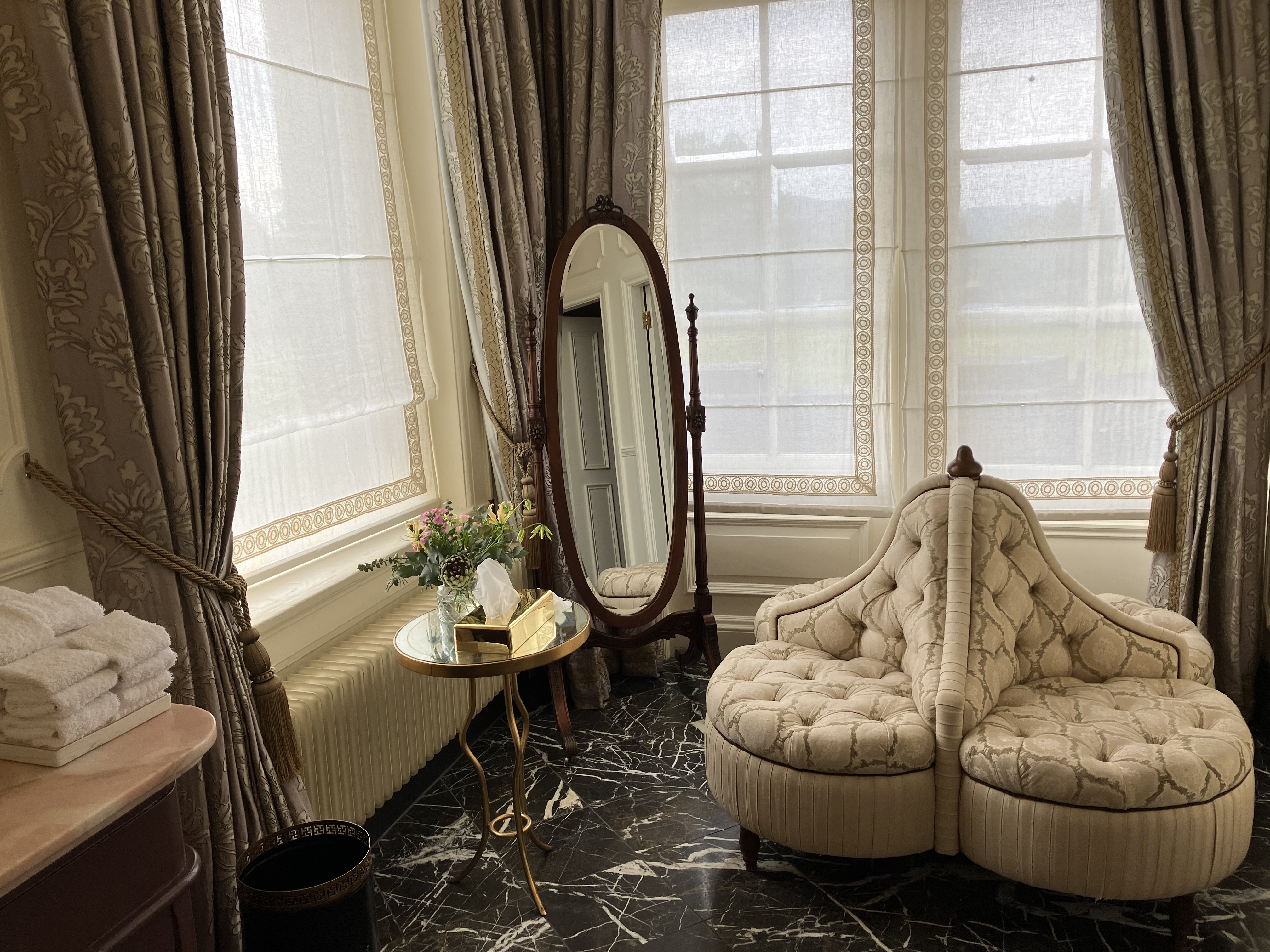
We stayed at The Westin, which apart from the steep cobbled drive, was very nice. Our room was clean and comfortable, and they provided ‘White Tea’ toiletries which I especially like.

After a shower and a change of clothes, we went to meet friends for dinner. I had been very clear when explaining that walking far was not going to happen, and thankfully the restaurant was very near the hotel. We sat  under a sunshade, and had drinks and ice-creams and watched the trams carrying beautiful people to wherever it was they were going. It was still hot, but as long as I wasn’t required to move, it was fun.

Dinner was pizza. I don’t much like pizza, but having said I wasn’t walking more than 2 1/4 minutes from the hotel, I didn’t feel I should give further input. It was actually very tasty pizza. Unfortunately, the local insects also found me very tasty, and in my rush to shower and change, I had forgotten insect-repellent. Luckily, I was so tired that even itchy bites couldn’t keep me awake, and I slept well, ready for a day exploring the sights of Milan.

In my next blog I’ll tell you about the most romantic gift I have ever received, where the coolest parts of Milan are, and how to make an ice-cream last an entire afternoon.

Thanks for reading. I hope you manage to struggle through an difficult parts of your day.

Take care,

Love, Anne x

Thanks for reading.

anneethompson.com

Sign up below to follow my blog.

*****

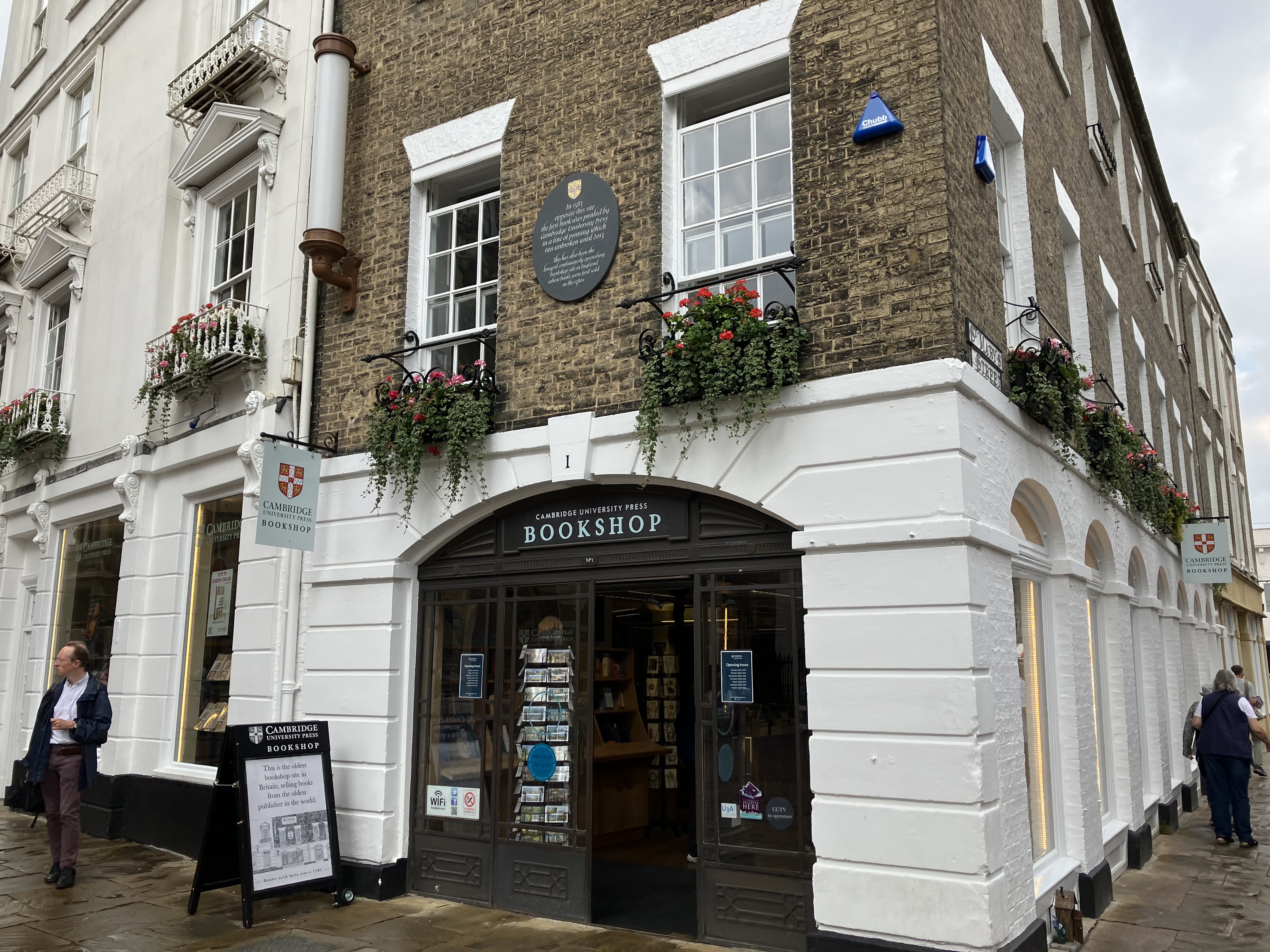
Cambridge Stories


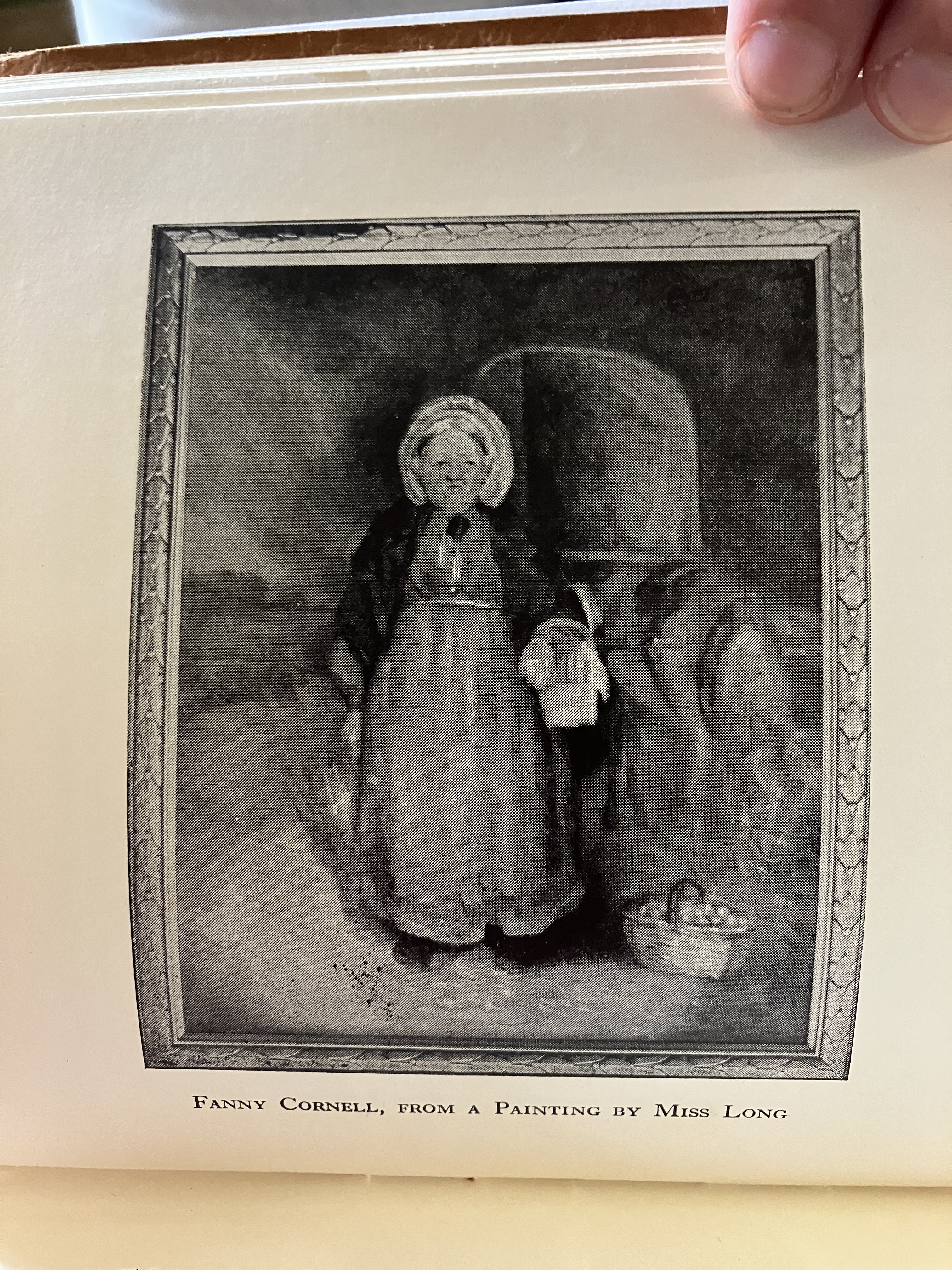
There is a story in my family, about Fanny Cornell. She was my grandfather’s great great grandmother (I may have the number of ‘greats’ wrong) and she was a carrier in Harston. Harston is a small village near Cambridge, and the story goes that Fanny had a horse and cart, and she would regularly transport goods from Harston to sell in Cambridge. I picture market gardeners, lace-makers, weavers — all giving small bundles to Fanny, to be sold at the market. Apparently she couldn’t read or write, and she kept the money folded into separate parts of her handkerchief, and despite the complicated sums and various amounts, she always gave the correct money to the producers in Harston.

However, the most memorable part of the story is that after selling the wares in Cambridge, Fanny would visit The Eagle pub, where she would drink until completely legless. The landlord would then lift her back onto her cart, and the horse knew the way back to Harston. In case of robbers, Fanny kept a large pepper pot on the cart, ready to throw into the face of anyone who tried to delay her. (I’m not quite sure how the ‘brave woman with the pepper-pot’ tallies with the ‘completely drunk being carried home’ description, but family folklore is best if not fact-checked too closely.)

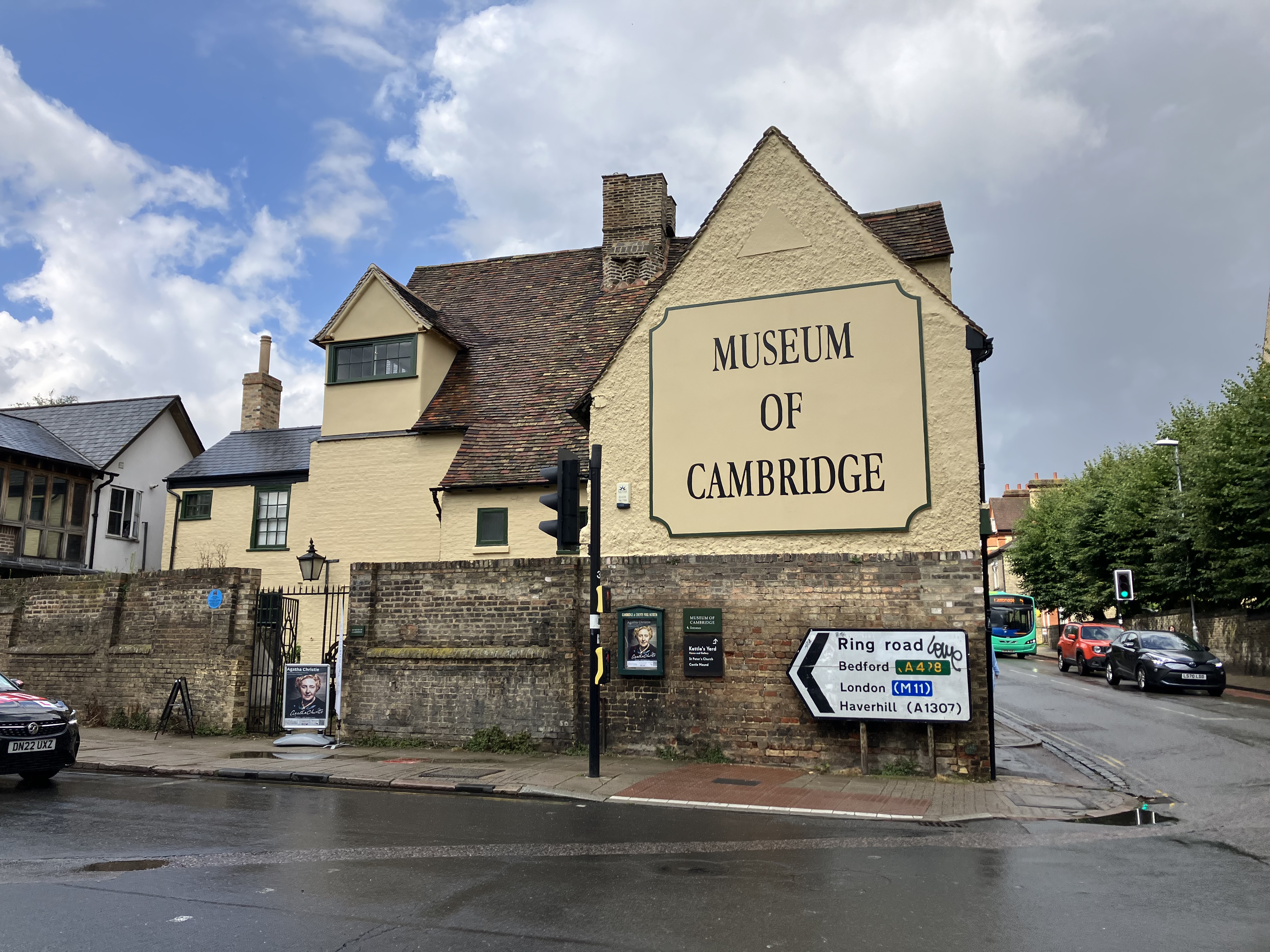
When I mentioned the story to Emm, he was very excited and told me he often drinks in The Eagle as it’s near where he works. We decided to visit and take Ruth before she goes back to Canada. Our aunt thought that we might find the portrait of Fanny in the folk museum in Cambridge, so we went there first.

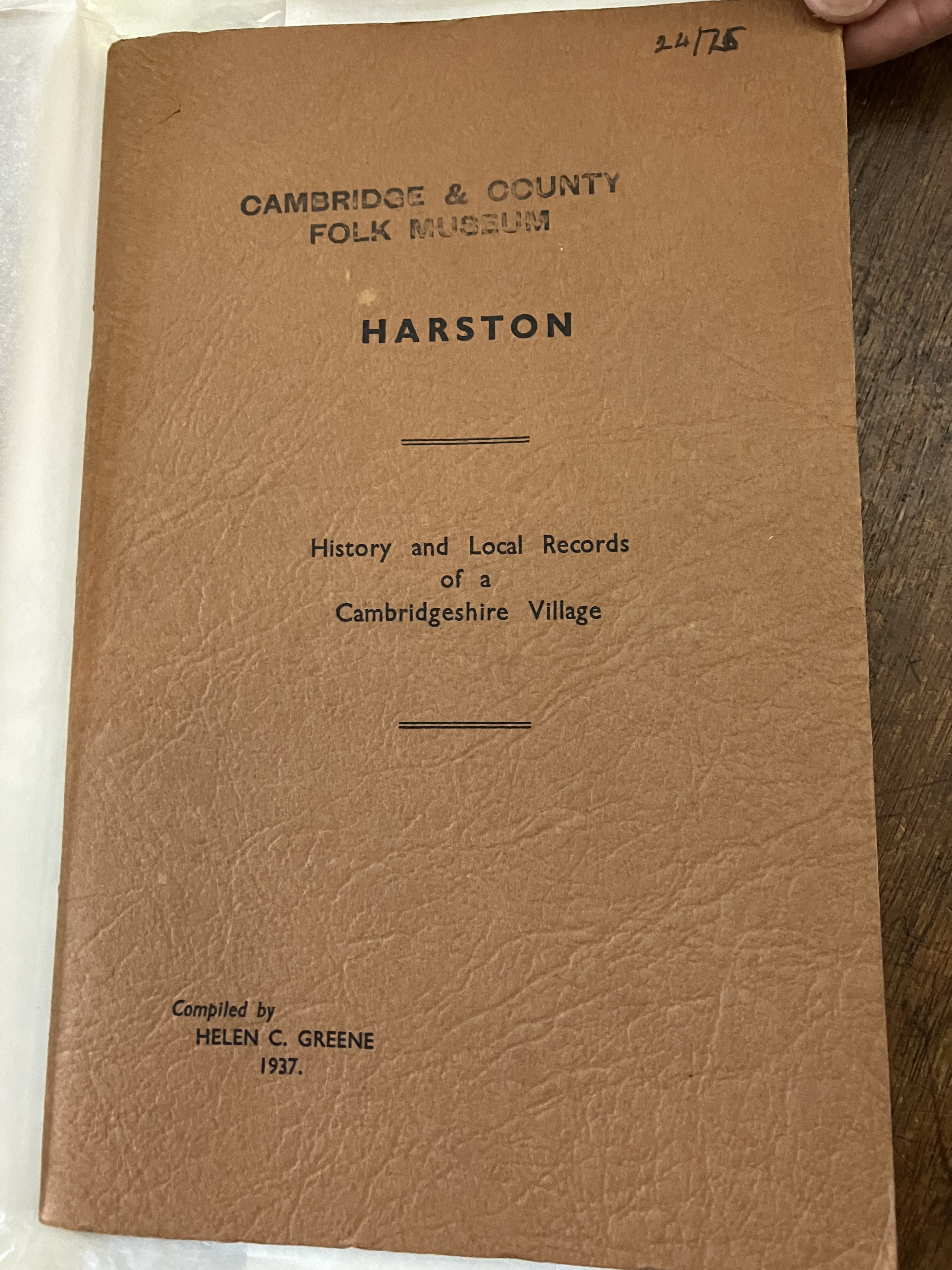
The folk museum is in a building previously used as a pub, and the various rooms display historical Cambridge. There was also an Agatha Christie display, which was interesting because I read all her books when I was young, but I never discovered what her link to Cambridge was. Husband found the museum challenging, because it was reminded him of the Victoria and Albert in London — more like an attic of stuff people don’t want to throw away than an organised archive. But I loved it. The man at the entrance was very interested in our story of Fanny, and contacted the curator for us. I expected an elderly woman with tangled grey hair, but instead an attractive young Canadian girl found us, and said she would look in their store room. She returned, not with a portrait of Fanny, but with a booklet about Harston which had a picture of a portrait. When we read the book, it seems that some of the ‘facts’ about Fanny might actually be merged descriptions of a few different individuals — though I guess there is no reason to assume that the booklet is any more reliable than our family story. (I have learnt a lot about ‘citing from reliable sources’ at college, and neither source is more reliable than the other.) I will believe our family legend until proven wrong.

Next was a trip to The Eagle. The pub has a few stories of its own: There is a window that is never closed since an ancient fire when people were trapped inside, and if it’s ever closed everyone in the pub feels suffocated. There is also table 4, which is occupied by a ghostly man. He happily shares the table when people sit there, but he frequently spills their drinks. Make of the stories what you will, but I think they’re fun.

The window at the top is always left open.

The pub was used by the RAF during the war, and has various insignia stuck to the walls, and the signatures of airmen on the ceiling. It’s also where the discovery of DNA was announced to the world, and there’s a plaque to commemorate the woman, Rosalind Franklin, whose work led to the discovery (even though the men who announced it tried to steal her work and exclude her from the credit). It was also full of modern-day drinkers, and tourists, and it was easy to imagine the bustle of ancient days.

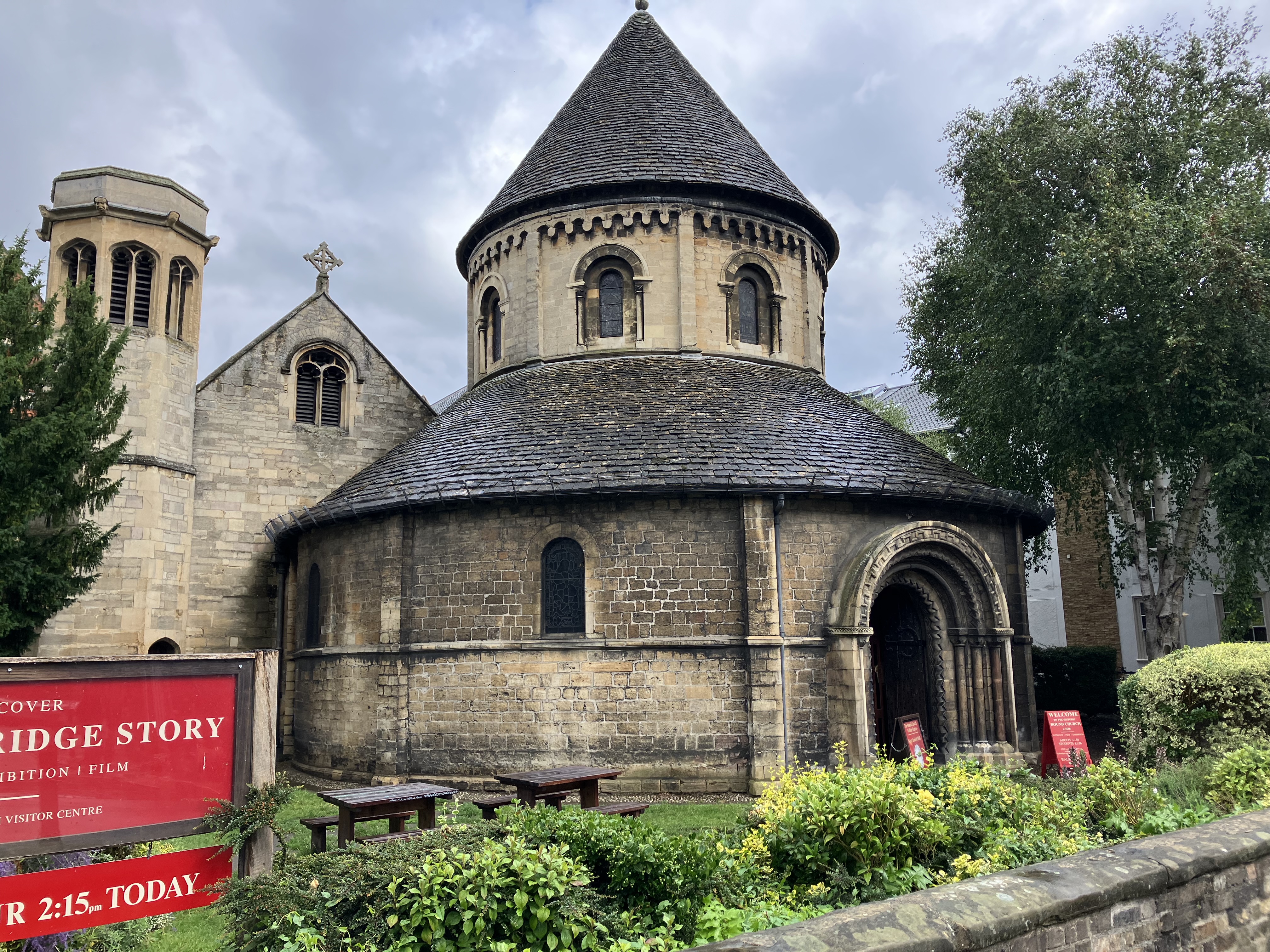
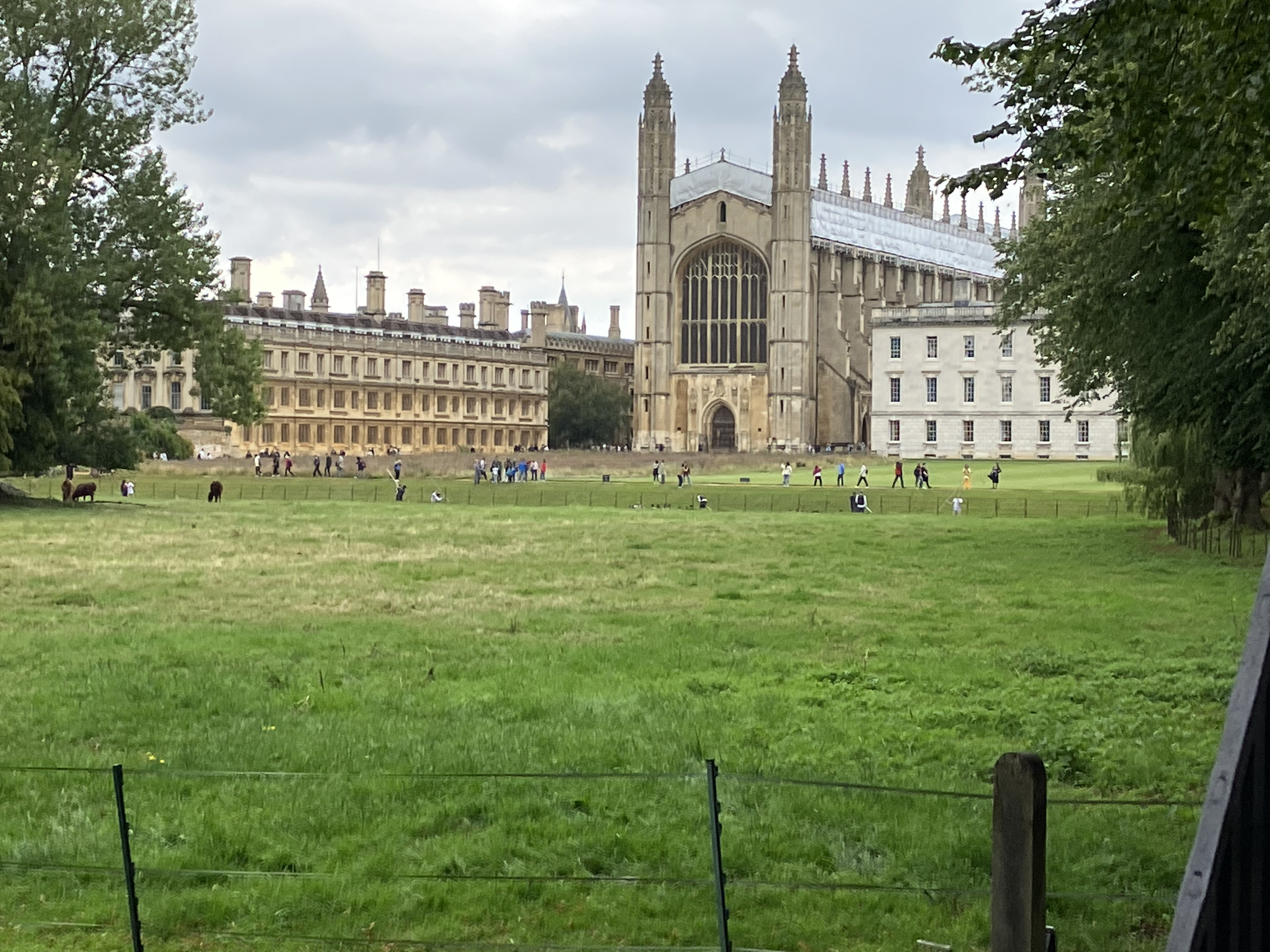
We did, of course, see more of Cambridge while we were there– the sandstone colleges, the ancient houses on modern streets, the university entrances that remind me of Victorian prisons with their high towers and forbidding gates, the tourists, the teashops, the roads full of cyclists. It was raining, and cold, but Cambridge is beautiful.

I hope you hear some good stories this week. Thanks for reading.
Take care.
Love, Anne x

Thanks for reading.
anneethompson.com
Sign up below to follow my blog.
*****

Ruth Days


My sister came from Canada for a family wedding, so we have enjoyed some days out. When she was here last year, we followed a trail around London, looking for garish painted statues. It was unexpectedly fun, so when we saw there is a ‘Tusk Gorilla Trail’ around Covent Garden, we downloaded the map and set off. ‘Setting off’ involves more planning these days, due to train strikes (sooo much I could write here) but the day we chose was lucky for both trains and weather. (English summer weather could be a whole blog.)

We walked from Victoria Station, and avoided the millions of people who had come to see the changing of the guard at Buckingham Palace. I like walking through London with my sister—she’s a photographer (amongst other things) and she makes me notice things I wouldn’t see otherwise. The trails are mainly fun because they take you to streets you wouldn’t normally visit, so although finding ugly gorillas (they were very ugly) is not especially compelling, the side-benefits are definitely worth it. As we followed the map, we met a few other people (all with children) doing the same thing. We shared hunting tips (some were hidden in squares or shops, so not easy to find) and tried not to notice that we were about 40 years too old. Next time perhaps we should kidnap a child to take with us.

*****

Our next trip was to Wakefield Place. This time we took Husband with us. We knew there was a seed bank there—not the baby-making kind. They keep samples of millions of seeds (2 billion, to be exact) in a huge vault under the ground. Visitors can wander around the centre, which has information boards and glass screens to protect the scientists from the tourists.

Apparently, most seeds can be dried out, which preserves their life and keeps successive generations safe. However, some seeds die if they’re dried, so they need specialised storage facilities to preserve them. It is these ‘recalcitrant’ seeds that the seed bank are researching. When you visit, if you are lucky, as well as seeing the information boards, you might see a rare scientist, complete with white lab coat and gloves, studying things (I assume seeds) under microscopes. It’s not unlike visiting a zoo, though only the brashest of visitors would photograph them.

Underground (where visitors are not allowed) they keep the temperature at -20˚C (with a wind chill—produced by fans—of -27˚C). My sister, who teaches in Calgary, was unimpressed by this, as she does outside playground duty in temperatures of  -20˚C most winters. But perhaps the fans are what make it dangerous down there.

After the seed bank, we explored the rest of Wakehurst place. It’s very nice, with lots of different sections to the gardens. I loved the wild areas, especially the ‘Boulder Walk’ which had trees growing over rocks, with their roots displayed. It felt almost indecent, like looking up someone’s skirt. There were some art installations (I am the wrong audience for them) and a very nice teashop. Unlike some properties, I didn’t feel everything was over-priced and designed to fleece the unsuspecting tourist (an annual pass is £35). We shared a pot of tea for £3.50, and sat outside, watching toddlers roll on the grass. If I’d thought about it, we could have come here first and kidnapped a couple to take on our gorilla trail. Maybe next year.

***

We are planning an outing to the beautiful city of Cambridge. I’ll tell you about it in my next blog.

Thanks for reading, have a lovely week.
Take care.
Love, Anne x

Thanks for reading.
Sign up below to follow my blog.
anneethompson.com
*****
Family Holiday Diary continued…


Near Porto, Portugal, July 2023

Tuesday

Went for a run, then a swim. People began to emerge at about 9, we left the house at 10:30.

Drove to Douro Valley, stopped in a little town (Pinhao) and parked somewhat haphazardly on a cobbled street. We found a nice little cafe: Princesa do Douro. Freshly made sandwiches, decent coffee, clean facilities and friendly service. We bought a Pastel de Nata which is a traditional tart, filled with something similar to egg custard. It was very tasty, wish we had bought more. Nice place to stop.

After lunch we tried to wander around the town, but it was too hot and Husband was too antsy, so instead we went to the boat place. This was more complicated than it sounds, as there are several different boat companies and we had booked online. Found the name on a building and went inside. We sat in the company office while they looked for our reservation, enjoyed the air-conditioning, looked at their photos, downloaded their app—then discovered that we were in the wrong company office, so left very quickly! Hunted for the correct company. Found it eventually and waited in line at the little jetty. Worried that people from the arriving coaches might take our places, but all was fine. We boarded the little wooden boat, and sat under a shady awning, looking at the view.

We had a one-hour cruise down the river, looking up at the vineyards on the hillside. Very pretty. The boat had shade, but it was still hot (didn’t need my cardigan). There wasn’t a tour-guide, so we just looked. It was pleasant, but I was happy it wasn’t longer than an hour. Some people were on boats that had come from Porto, and I fear this would be very expensive, uncomfortable and hot. But perhaps I’m wrong.

Drove back. Lots of winding roads, which I don’t feel G particularly enjoyed. It felt like a long journey home. The Douro valley is pretty, and it’s ‘a thing’ so you sort of feel obliged to do it when you’re here, but to be honest, a quick drive would have been enough for me. It was fun to see the tiered vineyards, and to spot the giant signs, like Hollywood signs, marking the different port manufacturers.

I got my mark for my proposal (68). Husband ate a nectarine and then got straight into the pool (these statements are not linked). J and F shared a tiny dessert (we had more, they must have wanted 1 ½ teaspoons each).

Wednesday

We ran to a little chapel, set on rocks at the water’s edge. According to Google, it is open for visitors, but the doors were locked when we were there. As the sea is the Atlantic, which has big waves at the best of times, I can’t imagine how it survives storms.

As we drew close, there were lots of school children arriving, so we slowed down (I am exaggerating) and dodged them as we ran along the boardwalk. Sections of the beach were cordoned off with ropes, and there were little tents where they put their bags. School on the beach must be a thing in Porto. I didn’t see any toilets, but perhaps they have an arrangement with a nearby restaurant.

There were also little tents hired by elderly people. They sat on deckchairs, watching the sea. Much nicer than the ‘meat market’ arrangement that I have seen on Italian beaches, where loungers are laid out with a couple of feet between them and no shade.

The beach here is nice, though probably not great if you like sea swimming, as there are lots of rocks. The sand is fairly soft though, so lots of people use the beach for sunbathing or walking. It has a nice family feel to it. After running, I walked back along the beach, paddling in the sea. There was a lot of sea weed, and a few shells, and some huge black sea-slugs–the size of my shoe–which looked like giant fruitgums. The weather was warm, though most days there was a strong wind coming from the sea, so it never felt hot. Definitely a fun place to have a holiday.

Thanks for reading. Hope you have a good week.
Take care.
Love, Anne x

Thank you for reading.
anneethompson.com
Sign up below to follow my blog.
*****

Family Holiday Diary continued…


Portugal, near Porto, July 2023

Monday

Went for a run, then a swim. Felt very virtuous.

R woke with a headache, which was a shame as today was her choice of activity (port tour) combined with F’s (trip into Porto). She thought she would be okay, so after a slow get up, F and G ordered Ubers and off we went.

We were dropped at the cathedral. Porto reminds me of Rome—lots of pretty squares, old buildings, and music. The cathedral had various buskers, nice atmosphere. Husband suggested he could lead us on a walking tour. After following it for a few streets he was fired/resigned and F took over. We walked across the railway bridge (at the same time as trains, which I found as unnerving as the height of the thing) while M told us how fantastic it is (first ever bridge to double as both a suspension bridge on the lower deck and a sitting-on-a-support bridge on the upper level). It’s not pretty though.

Husband persuaded M to climb a wall, and he grazed his fingers. More blood than expected. I was more concerned than he was. We wandered down to the river, and F suggested a restaurant area, and J found a suitable restaurant on Google, and we sat down for lunch. Patched up M with plasters. Food was really good (I had a cod burger, very tasty). Used the washrooms (because this is often not easy in a city). There was a busker nearby who couldn’t sing, but thought he could. It was painful. G had bites on his hand (I assume a mosquito not R) and his whole hand was swelling. We offered sympathy, but no one had anything more helpful.

Went for a walk. It was hot. M wanted to post a postcard, so went into the Tourist Information to ask where to post it. We were directed to a tiny shop selling trinkets, who had a shoebox-sized box in the doorway. This, apparently, is the box for international mail. It will be amazing if the card ever reaches home.

Went to Calem Port place. Had a tour, which we all remembered from when we did it last time (though it’s actually very well done). Went into the port tasting room. As we are seven people, we asked a couple if they would move so we could sit together. They refused. I photographed them (but family were adamant that I should not post it on my blog). R took some aspirin, which didn’t bode well. However, it turns out that aspirin and port is good for headaches, perhaps I’ll try this next time I’m ill.

We tasted 3 ports: a white, a rosé and a tawny. I preferred the rosé so gave my others away. M ended up with a row of tawnys, J did well with the whites. Husband chatted to the strangers next to him (of course he did). Nice afternoon. Ice creams, then ordered Ubers back to the villa. They arrived in about 5 minutes, it’s a really good service.

Within 3 minutes, at the most, of arriving home, Husband was persuading people into the pool to play  a game. ‘Keepy-Uppy.’ It’s a game that’s very noisy and lasts for about 6 hours. They seemed happy, though I fear Husband might have hyper-active tendencies. R and I tried to read, but it’s hard to concentrate with the noise coming from the pool. Sometimes I think nothing has changed in the last 20 years.

Thanks for reading, I’ll tell you more in my next blog.

Hope you have a fun week. Take care.
Love, Anne x

Thanks for reading.
anneethompson.com
Sign up below to follow my blog.
*****

Portugal 2023


Family Holiday Diary

I am writing this in Portugal, in a rustic house near the coast of Porto. I can see a corner of the ocean as I write, a strip of blue glinting over the hedge between the trees and the house next door, and I can hear it, a steady sweep of waves over rocks providing a constant background to the dog barking, and the birds in the trees and the occasional car. In a nearby tree, a pigeon coos, and seagulls wheel over the garden in their screeching search for food, joined by the crow of a cockerel in a nearby garden.

We arrived yesterday afternoon. We should have arrived in the morning, as our plane landed soon after nine, but the owner had an electrician here (apparently) so it was not possible for us to arrive earlier—not even to drop our bags. After a 3:45 taxi, this was somewhat annoying, though everyone was polite (ish) when Husband told them the news. I noticed that he waited until we had landed before sharing.

It actually wasn’t too bad. We collected the hire cars—less hassle than usual, once we realised the system of getting seats in the shuttle bus before putting our luggage in the back, otherwise our luggage would leave without us (they need to rethink their logistics I feel). We drove (or to be exact, Husband and G drove, while J navigated despite his headache) to a fishing village near the villa. It was an exciting journey, with J doing his best to test G’s driving with lots of cobbled streets, and U-turns in narrow roads, and unexpected roundabout exits. (He claims it was due to closed roads and road works, and we believe him.)

We parked in a surprisingly convenient car park right next to the beach, which was guarded by an old woman under an umbrella who was collecting money for a saint. (Not quite sure which saint, or why the saint needed the money, but the old woman was diligent and shouted something foreign at us when we walked past without donating.) The car park was free. We knew this, because we very quickly ascertained that F speaks Portuguese that people here actually understand (unlike my Portuguese with is excellent but sometimes seems to confuse people) and we sent him off to read signs/ask random people whether there was a fee.

We left the cars and all our possessions except for the suitcase containing secret banking information that would cause the economy to crash if it got into the wrong hands, and walked along the prom.

The beach was wonderful—sand and rocks, fishing boats sheltering behind a sea wall while the waves crashed over it, green nets strewn over the sand, and a chimney way down the beach. No idea what the chimney was for—smoking fish? Alfresco dining?

It started to rain, which made things less pleasant. A friendly fish restaurant allowed us to shelter under their awning while they set up ready for a 12 o’clock opening. When they opened, we went inside. It all looked very nice, and possibly expensive, but it seemed we were eating there.

We had a round table between a display of very ugly fish arranged on ice, and a glass cabinet full of exciting-looking desserts. We were given English menus, and chose a variety of meals—sharing dishes between two was a thing, and they were priced differently. They brought bread and cheese while we ordered, and we gobbled it up pretty fast. The meals arrived in metal dishes, which the waiter served onto plates next to the table. Husband wondered if there were seconds (there were) and coped fairly well with having only a modest amount of food on his plate. Made it harder to plan mouthfuls I guess. I ate fried veg served with tomato rice—very tasty. Most people had fish in some form—J and F shared claws and legs and body parts of various sea creatures, which looked like a hassle to eat (one of them resorted to fingers before the end). We shared dessert and had coffee. F, being almost Portuguese, ordered a drink that sounded like Pingu, and he described as being a small white coffee, and it seemed to please the waiters (who probably get fed-up with inept tourists torturing their language).

We drove to the supermarket and parked. (This was not as easy as it sounds, we had a nice detour round the back of the shop.) I had a well-organised list, with difficult words translated into Portuguese, which I divided between the family. They all gave their list back to me, and told me they were going off to explore, so it was all just as chaotic as normal, with random things appearing in the trolley. I remembered to check the dishwasher tablets really were dishwasher tablets (because we washed crockery in de-scaler last year) and tried to look competent when weighing fruit and adding price stickers. M was very distracted by the stickers. We didn’t buy frozen stuff. We didn’t buy water (because the villa details said they had excellent drinking water).

Arrived at the villa. Very pretty, full of rustic furniture with beautiful grounds. The owner told us the water was safe to drink, but in a way that clearly conveyed that she would not drink it herself! Husband went out to buy some water. We allocated rooms—no one was sure about the very pretty room with a balcony because it was lacking doors—though I think we were all tempted. J and F bravely took the murder suite/separate annex. M had no air-con, so kept the door to the hall open. R co-opted the spare upstairs bathroom as her private shower room.

We walked down to the pizza place on the beach. The view was stunning. I was going to photograph the restaurant afterwards, but it looked too much like a public toilet from the outside, so I will wait and take one inside. They were very friendly, and the meals were delicious, though needed more salt. The blokes mainly drank big beers (served in those tall glasses that have a waist so look bigger than they really are) and the rest of us drank sangria (which involved more choices—in Portuguese—than I was expecting). It was delicious, and I could have drunk the whole jug. Very nice evening.

Today, I woke at 6:30, and waited until 7:30 before waking sleepy Husband and dragging him out for a run. We ran along the boardwalk, past several fat men and fully made-up women exercising next to the sea. Very lovely.

After a quick shower, we played tennis, and I learned that Husband is now almost as rubbish as I am. We changed the game to simply trying to get the ball over the net as many times as possible. It was fun, and I rediscovered muscles I never knew I had. Gradually the rest of the family emerged from their rooms. R took up her post lying next to the pool in the sunshine. M swam round the pool for a very long time. G went for a lonesome walk. We waited (for a very long time) while J showered, and then went for a walk with him and F.

The main coast road is fairly busy, and they have painted the pavement red, which means bikes feel free to whiz along them, and pedestrians don’t really have anywhere safe to walk—which seems like a silly idea. Parallel with the road, across the dunes, is the boardwalk (which is probably where pedestrians are supposed to walk). We walked to look at Galo Petisqueira restaurant, then joined the boardwalk. The beach is very pretty, with big waves and lumps of rock (but probably not a great place to swim).

Stopped at the little shop (open on Sundays, which was a surprise). Husband wanted some fresh bread (fresher than the stuff we bought yesterday) and some more water. No one here seems to speak English—it’s not a place for foreign tourists. Luckily, we have F, our secret weapon, who speaks very good Portuguese. He managed to negotiate that there were bigger water bottles in the store room. He also helped out when the woman was confused by Husband’s mime that he wanted 15 bread rolls. (Hard to know what she thought he meant—5 or 10?)

Ate lunch in the dining room. All agreed that we like this villa. Tried to plan whether we should do any excursions—and did not all agree. M want to do expensive cruise down the Douro valley, R fancies a wine tour, F wants to spend time in the city, I want to drink sangria at a beach cafe, Husband wants to build a dam o a river on the beach. (No one understands Husband’s choice, apart from the boys, who also want to. Genes are a funny thing.)

Males played ‘Small World,’ I read, R sunbathed. Then we tried another game of tennis, this time with M and F. I think we need to change the name of the game to ‘Sorry!’ We were fairly equally matched, but this is not a good thing. Dinner was at the pizza place again. We asked to sit outside, and they thought it would be fine to use a table for six and add a seat on the end. It was cramped. But the view was fabulous. People seemed to enjoy their meals better this time—and F chose very well, so we all intend to copy him next time. Three of us shared sangria, and R was the only one able to pour it without spilling it everywhere. This is now the second time I have shared my drink inadvertently with J (but it’s hard to feel guilty given the history).

I will tell you more tomorrow, we had such a lovely time.

Thanks for reading. Have a fun week, and take care.
Love, Anne

Thanks for reading.
anneethompson.com
Sign up below to follow my blog.
*****

Dale Dyke Reservoir


The weather was grey but dry, so we decided to walk up to Dale Dyke Reservoir. We followed muddy footpaths around Agden Reservoir (this area has a LOT of reservoirs—it’s a good place for water birds). The track rose over a grassy hill, with sheep begrudgingly moving out of our path, and then we saw it—first the steps of rushing water from the overflow channel, and then the reservoir itself, glinting under the grey sky, stretching across the valley.

As we drew near, we saw a strange stone, like a mini gravestone, marked with CLOB, and I wondered whether it was the grave for a dog with a strange name. But then I read the board next to the path, and it took on a new significance. Dale Dyke Reservoir was built to replace another, larger reservoir—which in 1864 burst through the dam, rushed into the valley below, swelled the rivers to Sheffield and killed hundreds of people. We read the story.

Accounts of the incident vary slightly, but it seems that on 11th March, 1864, after several days of stormy rain, a local man, William Horsfield, crossed the dam on his way home from work, and noticed a crack. It was fairly small, but big enough for him to notice, and the dam was new—only recently finished. I wonder what he thought at that point. Did he have a sense of fear, knowing the reservoir was new, it hadn’t been there for years, it wasn’t yet something familiar, something he assumed was permanent. Was he frightened, or merely interested? Did he assume all would be okay? Maybe not, in an age when bad things happened more often, perhaps he was instantly concerned.

One of the dam builders, Mr. Fountain, was still in the area, so William told him, and they both examined the crack. Mr. Fountain thought it was probably nothing to worry about, but just to be cautious, he sent for the main engineer, Mr, Gunson, who lived in Sheffield. (To be accurate, he sent his son—sons have always been useful.)

By the time Mr. Gunson arrived (Sheffield is about 8 miles away, and I am guessing they travelled by horseback) the crack was bigger. Water was beginning to spill over the embankment.

Suddenly, a huge gap opened—30 feet wide—and the water began to gush into the valley. At this point, there was nothing anyone could do to prevent tragedy. The men scrambled to safety as the dam gave way, and 700 million gallons of water swept towards Sheffield. There was no time to warn anyone, no telephones to contact people, nothing they could do but watch in horror.

The water raced along the valley, swelling the rivers Loxley and Don. The River Don ran through Sheffield, and an area called The Wicker was badly flooded. The bridges were choked with fallen trees, destroyed mill wheels, carts and debris. People stood on bridges to watch, unable to stop the flow, helpless. About 250 people were killed.

After walking to the reservoir—which looked placid and innocent when we were there, we decided to visit Sheffield. Great-Grandpa Todd was a vicar in a church there, about a hundred years ago, and we were interested to see his church. It just so happened, that his church was in Wicker, next to the river Don, right where the flood water had been worst. We saw the church, and the river, and on the opposite bank, there is a memorial to those who lost their lives. Some of them are unnamed, just ‘servant, male, aged 27’, or ‘infant, 2 days old’. Some names were of people later found alive. Some people died later of their injuries.

It’s thought to be one of the worst man-made disasters in the UK. It reminded me of Aberfan, the mining town where the slag-heap slid over the school and killed the town’s children in 1966. Except I had never heard of the Dale Dyke disaster—perhaps because it was so much earlier. But the local people have not forgotten. In 2014, on the 150th anniversary, they commemorated the occasion. There were talks by historians and civil engineers, and the local brewery produced a beer named ‘Dam It,’ and they produced a CD of ‘flood songs.’

It is difficult to understand who was to blame for the disaster. Locals blamed the Sheffield Waterworks Company, who commissioned the dam in an attempt to provide clean water to the city. They were not held accountable at the later inquiry. Nor was Mr. Leather, their engineer (though interestingly, his uncle George Leather was the engineer for another reservoir that collapsed, near Leeds, killing 81 people). Maybe the reservoir was too large for the engineering of the times. Maybe (as claimed by the company) there had been unexpected earth movements (though I would’ve thought that their engineers/geologists should have checked for earth stability before building it—but maybe these things couldn’t be predicted in those days). Hard to know. I don’t know whether having someone to blame would help the grieving survivors. 

I do wonder though, how William Horsfield felt afterwards. Although he took immediate action, although it was in no way his fault, did he torture himself with regret? There was time to fetch the engineer from Sheffield, which means there was time to bang on doors, to try and warn people—even though at that point, they didn’t think it would breech. But should they have warned people anyway? Should they have risked looking stupid, of raising a false alarm, of causing unnecessary panic? What would we do? Remember, no one knew what would happen, it remained an unlikely possibility, right up until the time it happened—but would that have been a comfort to poor William? I suspect not.

Today, there are several, smaller reservoirs in the area, feeding water to the city. They look peaceful, places to walk to when on holiday. But water camouflages danger with gentle ripples and inviting cool blue calm. Once the restraints fall, the chaos can begin.

Thank for reading. Have a safe week.

Love, Anne x 

Photos a mixture of my own, from information boards, and the Daily Mail website.

Thank you for reading.
anneethompson.com
Sign up below to follow my blog.

Mini Break in the Peak District


Easter Away Trip

I am writing this in a tiny cottage snuggled in the hills of Lower Bradfield. You might remember that in January I attended a conference for Old Testament Study in Sheffield, and Husband kindly drove me and rented a cottage in the Peak District? I stayed in the cottage for just one night, and was sorry to leave, so when we realised we had a week free after Easter, we decided to return. 

We arrived on Easter Sunday, after lunch with the family in Cambridge. The cottage was warm and comfortable, and after unpacking we strolled up the steep lane behind the house. It was dusk, and an owl was hunting in the fields, swooping over the lane. There was the trill of curlews, who rose above us, warning us not to stray near their nest. Sheep watched from behind stone walls, their lambs snuggled under their legs. In the distance, hills rolled away, dotted with stone buildings and steep fields, up to the moors. It’s a open place, a place where you can breathe, and it feels weird that it’s only half an hour from Sheffield.

Monday morning, my Ocado deivery arrived at 8am. Perfect timing for breakfast. The delivery man was exceedingly grumpy, and told me he had worked all weekend, and no, he had not had a nice Easter. I felt slightly guilty as I unpacked my order. I seem to have ordered a lot of cakes, so won’t be losing any weight this trip.

We walked across Agden Nature Reserve to Canyard Hills. Muddy footpaths, twisted trees, a reservoir in the valley. I wished I hadn’t gone for a long walk a few days before Easter and given myself blisters. I blamed my walking boots (which I left at home) and was stomping along in wellies. Husband hardly mentioned it. We walked for two hours. There were beautiful views—and big black clouds. We got home just before it poured with rain.

It was still pouring after lunch (ate some cake). We went for drive to Castleton—which we both remembered but couldn’t remember why (we are at that age when we can spend a happy half hour trying to remember things). Then we drove through Winnats Pass. This was spectacular, we turned the corner, and there it was—steep rocks rising on either side, tiny streams bubbling down to the valley. The road was single-carriage, and there were lines of cars waiting to pass, so I recommend you don’t visit in peak times. But definitely plan to visit, it’s amazing.

We had dinner at The Plough in Lower Bradfield. It was a ‘pubby’ sort of pub (as opposed to a ‘gourmet’ sort of pub) but after a nice glass of Merlot I decided it was lovely. We chatted about the day, and managed to remember when we last visited Castelton, and I bored Husband with interesting details about the theology book I am currently reading. A good day.

Tuesday, I got up at 6.30. At 9.30 we left the cottage and walked to Lower Bradfield on the footpaths. I was still in wellies. It was okay. The walk was very pretty, we went up the hill to High Bradfield, and the old church with dragon gargoyles and sheep grazing in the graveyard. Then back down, along pretty footpaths under trees and over rivers, to the village. There’s a new cafe, which advertised brunch and coffee, but it was shut. (Apparently it’s always shut on Tuesdays.) Walked back to the cottage for coffee and toast (and more cake).

I spent the afternoon reading my theology book (by a chap called Leo Perdue, about Wisdom Literature—very interesting). Sounds of fighting wafted upstairs. Husband was in the sitting room, watching a cartoon. 

We decided to drive to a cheese factory advertised on Google Maps. We found the lane (very narrow) but not the factory. I think it must have closed. Drove into Hathersage, and I bought some walking boots in one of those outdoors shops that smell of sensible clothes and waxed jackets. These boots fit better than my last ones. And they have pink laces, which is an additional delight.

It was pouring with rain again. We drove home via Snake Pass, but it didn’t compare to Winnats. 

Dinner at The Plough again. We had asked to sit in the same room, but they either forgot or decided to ignore us because they were busy. We were seated in a very ugly room, full of people who seemed to know each other. I ordered fish and chips, and the portion barely fitted on the plate, it would have fed three of me. Especially as I was already full of cake. A pleasant day, but not as perfect as Monday.

I hope your week is fun. And you have cake.

Thanks for reading. Take care.

Love, Anne x

Thanks for reading.

anneethompson.com

Why not sign up to follow my blog?

Talking with a Coptic Christian


As I told you in my last blog, we have been studying spirituality around the world. In our lecture, we spoke to a Coptic Christian from Egypt. ‘Coptic’ is the type of Egyptian writing that came after hieroglyphics, and became the language of Egypt, and therefore the language of the early Christians—people like Origen & Co. The chap we spoke to, spoke to us in English. Not much has been written in the past by Coptic Christians, and we were told that this is partly because it was a difficult place to be a Christian. He spoke about the ancient church in Alexandria, commenting that, “We produced more martyrs than books!”

He explained that the Coptic church is known as the church of the people, and it works with the poor people in Egypt. He said that Christ was found with the poor people, and that is where their focus is. Later, I asked him about all the money, and gilt and splendour, that I had seen in the Coptic churches in Cairo. How does that tally with their aim to work amongst the poor? He told me that it generally is the poor people who provide the money for the beautiful churches, that they want to contribute, to show how much they value God. He also said that in a country where they are the minority religion, it is very important to have a ‘presence’ and to be seen. It would be easy for the media to discount them, for governments to say there were no Coptic Christians—harder to do that when there is a stonking great temple in every city. This is something I hadn’t considered (it’s very easy to judge cultures before we understand them).

As a minority church in the country, their ‘outreach’ has to be different than in Western countries. They strive to do everything well, to live their lives authentically, and to work honestly. This is the way they hope to be noticed, and for people to be attracted to their church. (I think that in an Islamic country, you are not allowed to speak with Muslim people about your faith.) This tallies with what we saw in Cairo, where the Zabbaleen people (who are Coptic) collect the city’s rubbish, and are known for doing it better than anyone else.

When asked about people converting to Christianity, he said that they would only want people to do that who are sure they want to follow Jesus, not because they have been ’persuaded’ into it—because converting from Islam means risking so much.

He showed us his ‘Book of Hours,’ which is a tiny book of Psalms. They read it at regular intervals throughout the day—like when they wake, at mealtimes, when they go to bed. I thought that was a good practice to copy, it’s hard sometimes to even think about God during the day, even, ironically, when studying for an MA in Theology. My Muslim friends are currently fasting during daylight hours for Ramadan, and I admire their determination and wonder whether we have grown too ‘soft’ in our Christian churches. Sometimes a routine/discipline is a good thing. He also spoke about the monastic tradition. He likened this to the Bible story where Moses is praying while Joshua fights a battle. He said the monks are the ones praying, and studying Scripture, aiding the Christians who are outside the monastery. Most people go to the monastery for retreats, when they join the quiet contemplation for a while and learn from the monks (and share with them what is happening in the world). It’s different, but I can see how it would work.

As I said on Monday, we only had one seminar about global Christianity, but even the little we covered challenged some of my preconceived ideas. Churches in different countries need to find the best way to do things within the culture they live in. Often, this will be very different to how we do things in the West.

Thanks for reading. I hope you have a good week.
Take care.
Love, Anne x

Thanks for reading.

anneethompson.com

*****