While we were in Iceland, we tried to run each morning. I never changed my watch (Iceland is an hour behind of English time) so it was easy to get up early. Iceland is a country of flat plains and steep mountains. The city is built on a hill, and I don’t run on hills. Luckily, our Airbnb was near Hijomskalagardur Park, which was flat, so we could could walk down the hill, do a lap of the lake, and run/stagger home. The park had ducks (always good) and swans, lots of interesting statues, and a view back up the hill of the city. In the distance were black mountains with patches of white snow. Wherever we went in Iceland, there were always black mountains with patches of white snow. Panda mountains.
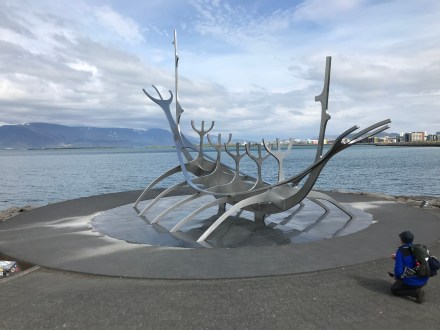
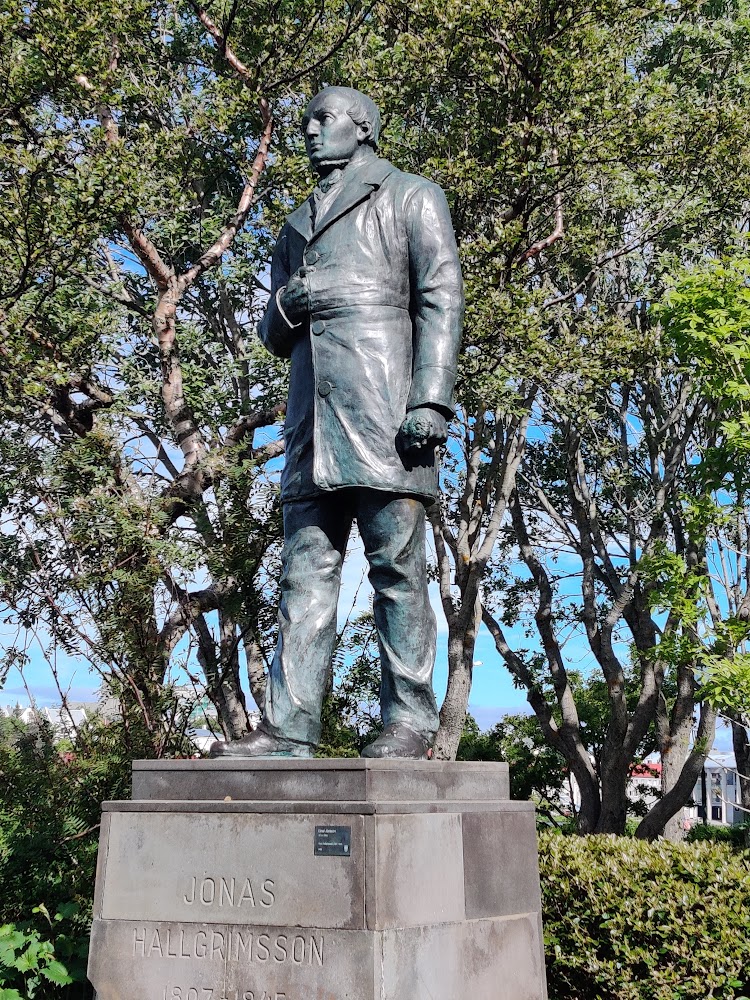
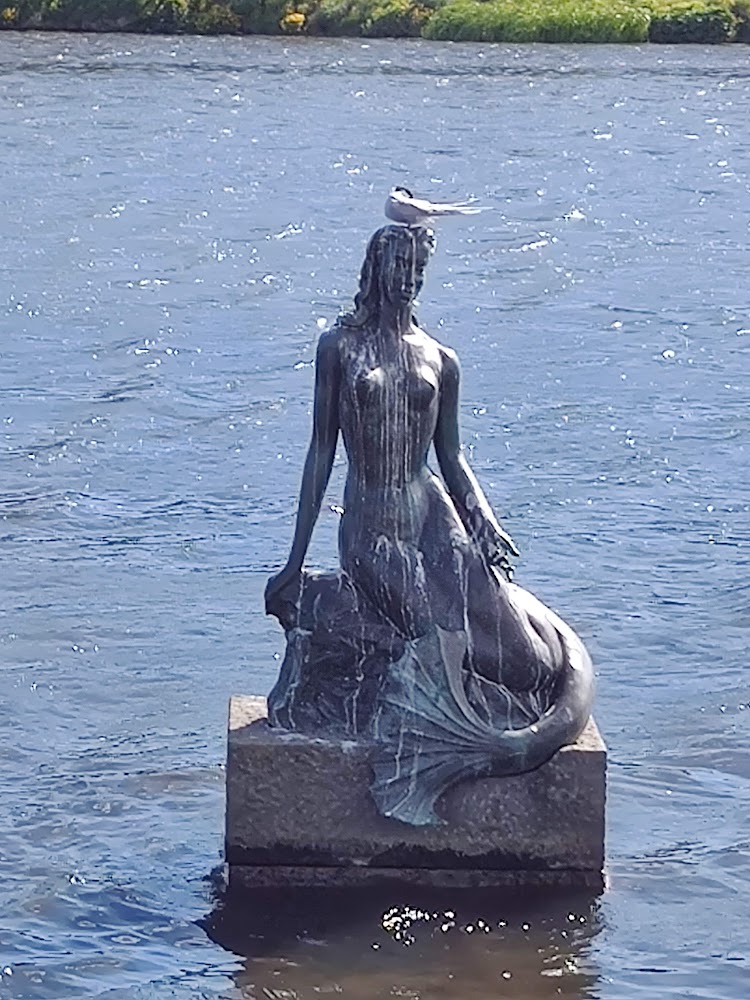
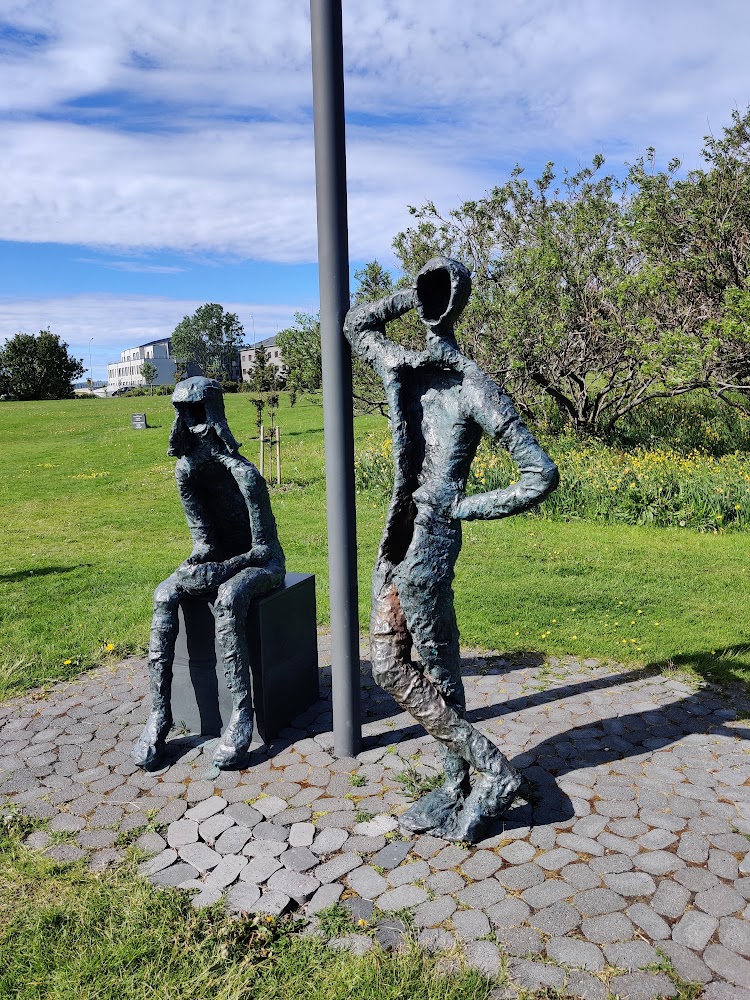
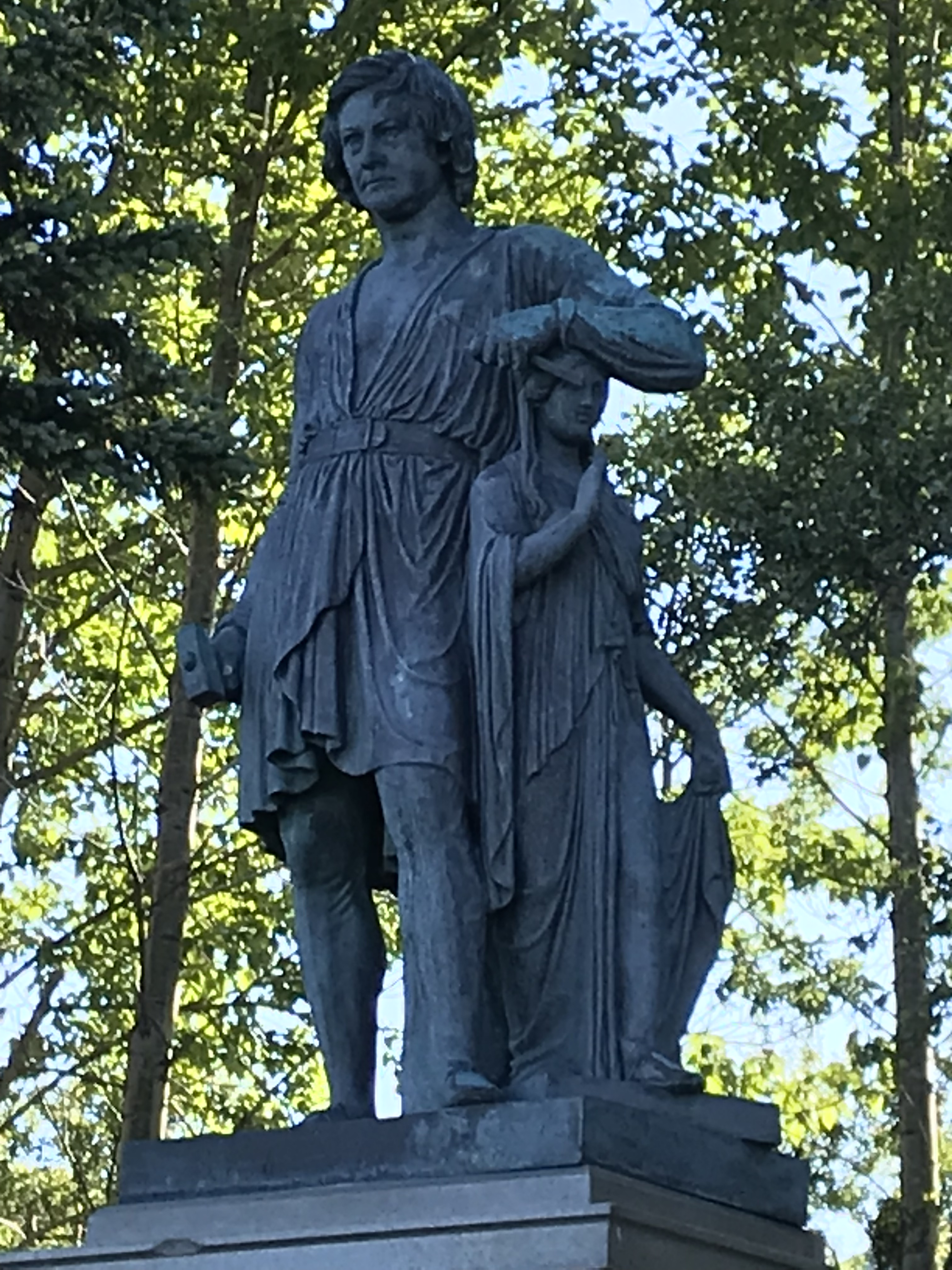
I loved the statues, and made up stories about them as I ran. I took photos to show you:
I loved this one. Make of it what you will, but to me it spoke of the burden of having to work in an office.Pompous man making a speech……while his embarrassed friend listens.Beautiful mermaid (with bird on her head)……besotted admirer despairs of being able to reach her.
Woman uses toilet while wishing her husband would go away! (Reminds me of ‘Out by Ten’. Better read a copy if you don’t understand.)
Big hero with big hammer needs to rest on the strength of a gentle woman.
Man with big shield slays the dragon with his sword and rescues the naked woman (not sure why she needs to be naked) while she keeps hold of her friendly ghost. (I don’t understand the ghost either, maybe the spirit of the slain dragon? Perhaps they were friends and the man misunderstood the situation.)
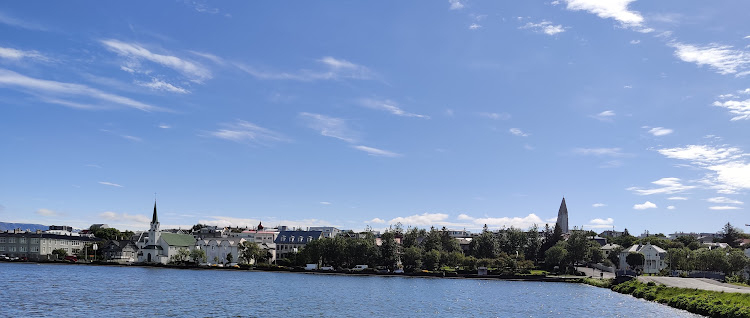
There was also a lovely view of the city, though you can’t see the black mountains in this photo. They’re off to the right.
Reykjavík
While running, I tried to learn some more of 2 Chronicles 7:14. How much can you remember now?
“If my people, who are called by my name, will humble themselves and pray and seek my face and turn from their wicked ways, then I will hear from heaven, and I will forgive their sin and will heal their land.”
‘Iceland is beautiful,’ they said… ‘Iceland is my favourite country in the world,’ they said… ‘You’ve never been?’ they said, ‘You should plan to visit.’ So we did.
I prepared for our trip by watching Icelandic films, hoping to learn the odd phrase and perhaps see a little of the culture. This was a mistake, as I mostly watched crime films. I therefore stepped off the flight, entered the arrivals hall and was confronted by a line of serial killers holding name placards. Luckily we had rented a car, so avoided all the psychopaths and edged our way to the Avis desk. Avis had queues of people, very little space, and lots of signs about wind (the weather version). Wind is a thing in Iceland.
Known as the land of ice and fire, it should also be called the land of blue lupins. They were everywhere, lining the roads, growing on ancient mounds of lava, covering every hill and plain. Iceland in June is blue. Blue and grey. People told me that Iceland is beautiful, and it’s true that many parts were, but there’s an awful lot of grey. As we drove from the airport the landscape reminded me mostly of the groundwork when a new motorway is being built —mounds of grey rubble. Volcanoes are not tidy, and Iceland was produced by a string of eruptions. I guess there’s no point in clearing up the lava flow, so it sits there, pretending to be builder’s rubble, until the lupins move in to cover it in blue.
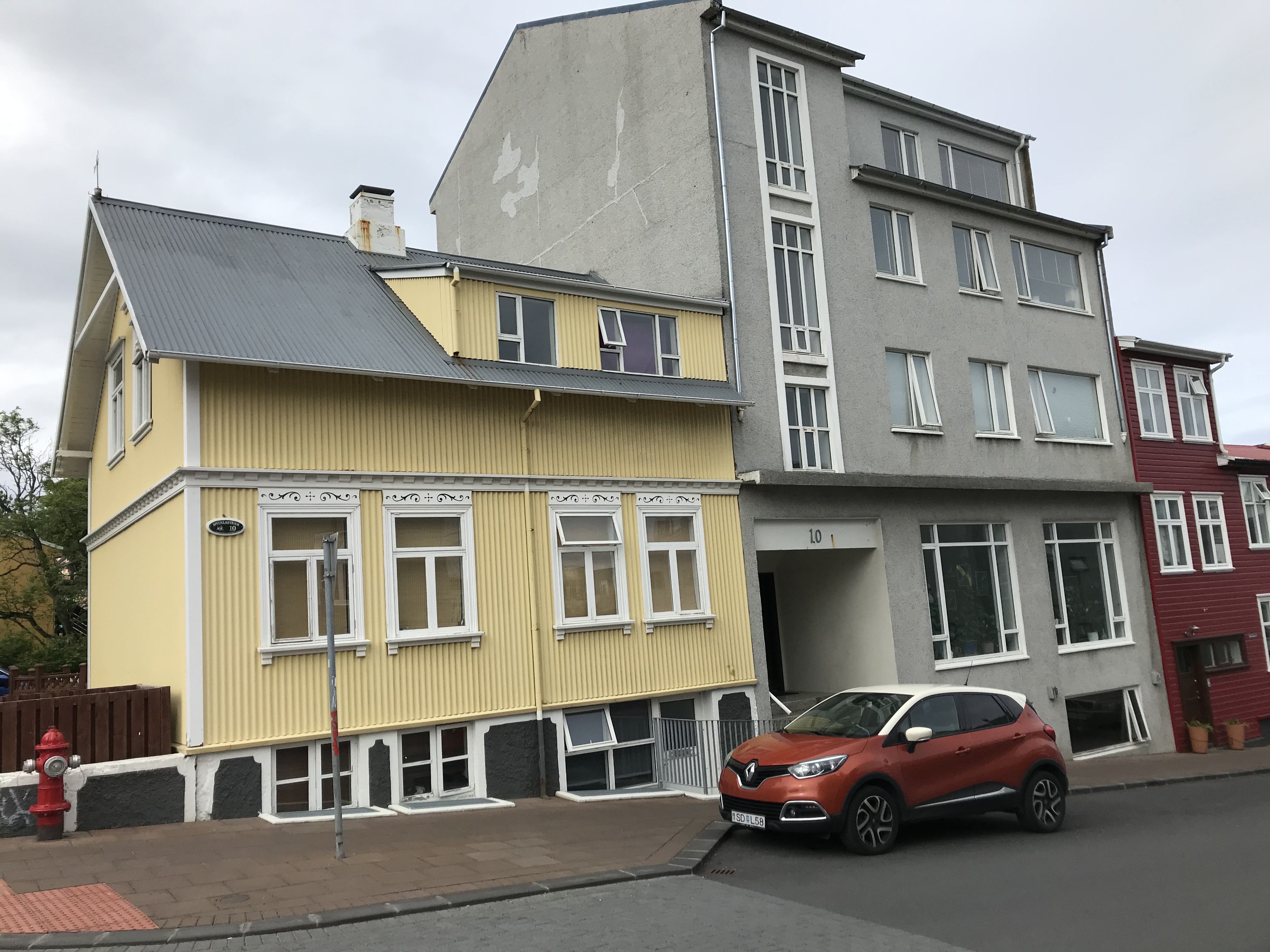
We rented an Airbnb in Reykjavik. This turned out to be wonderful, a converted printing works that consisted of one huge room filled with plants and nicknacks, with separate bedrooms and bathroom. It was used in the Netflix series Sense8, though most of the furniture was different.
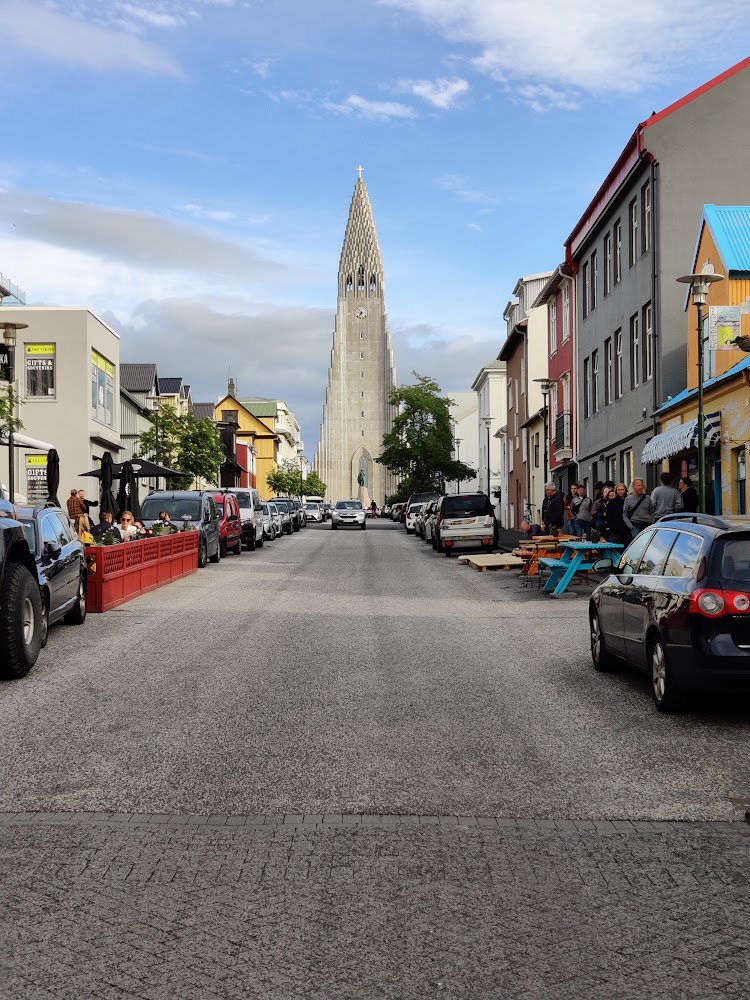
Reykjavik is more town than city, with mostly wooden houses covered in colourful corrugated iron. It has clean streets, happy people in weird clothes (though to be honest, I think the clothes of most people younger than me are weird) and high prices. Iceland is expensive. The city also has a harbour, and a huge church (which looks like a cathedral) high on a hill, seen above the city.
A cool church building, towering over Reykjavík.Pretending to be a Viking, outside the big church.
We were told that in June, it would only be dark for a few hours each night, between midnight and 2 am. This was a lie. I got up in the night to check, and it was never dark. Slightly gloomy perhaps, like a grey day at home, but never dark. I took a photo for evidence…
No streetlights needed: 2am and definitely NOT dark.
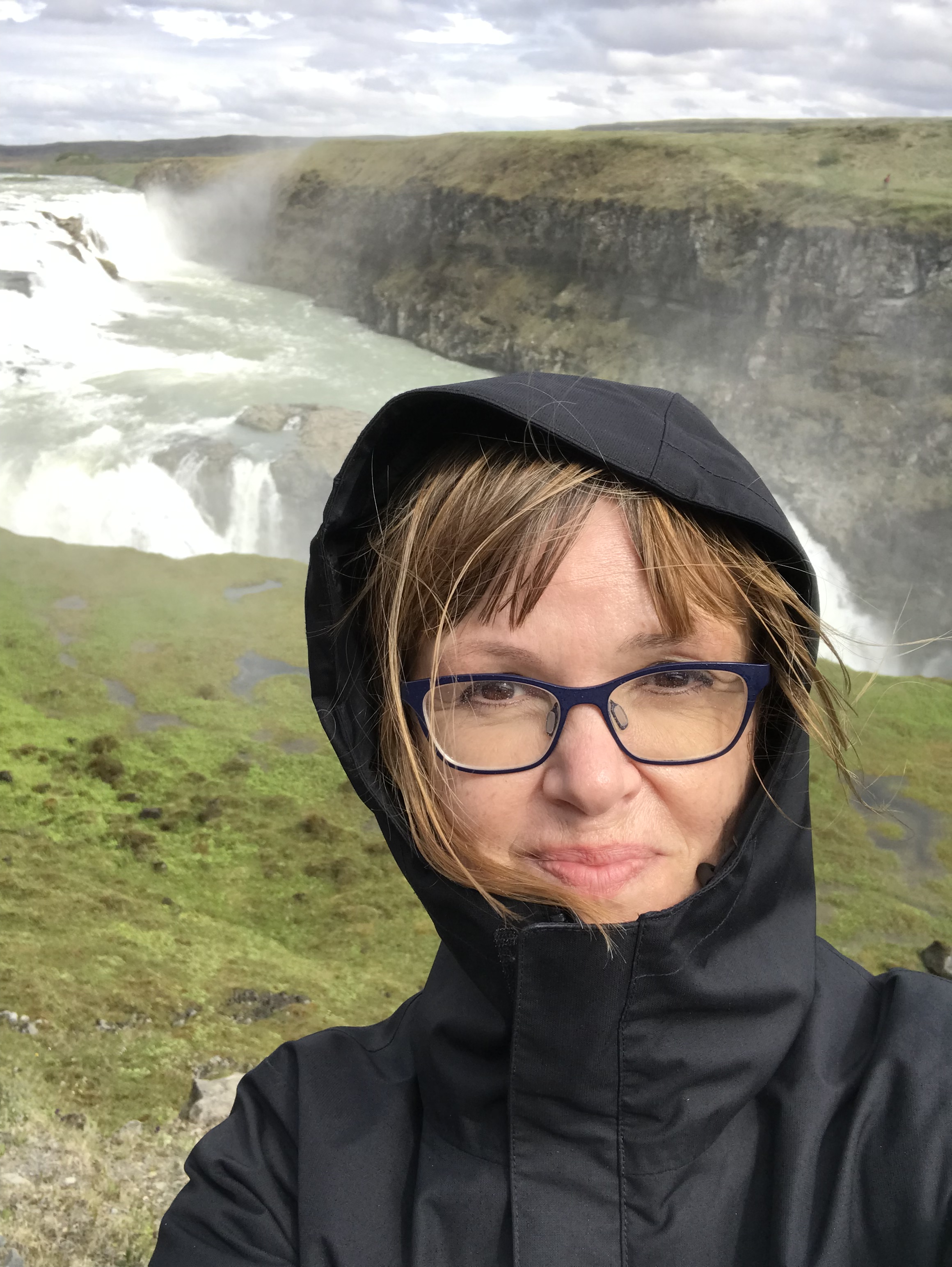
The June weather was cold, but not freezing. I needed a warm sweater and a coat, but not a ski jacket (which is lucky, as I don’t own one!) A woolly hat is fairly essential, not so much for warmth but more for hair control. Husband declined repeated offers to borrow a hat, and the hair style wasn’t good. As I said, wind is a thing in Iceland.
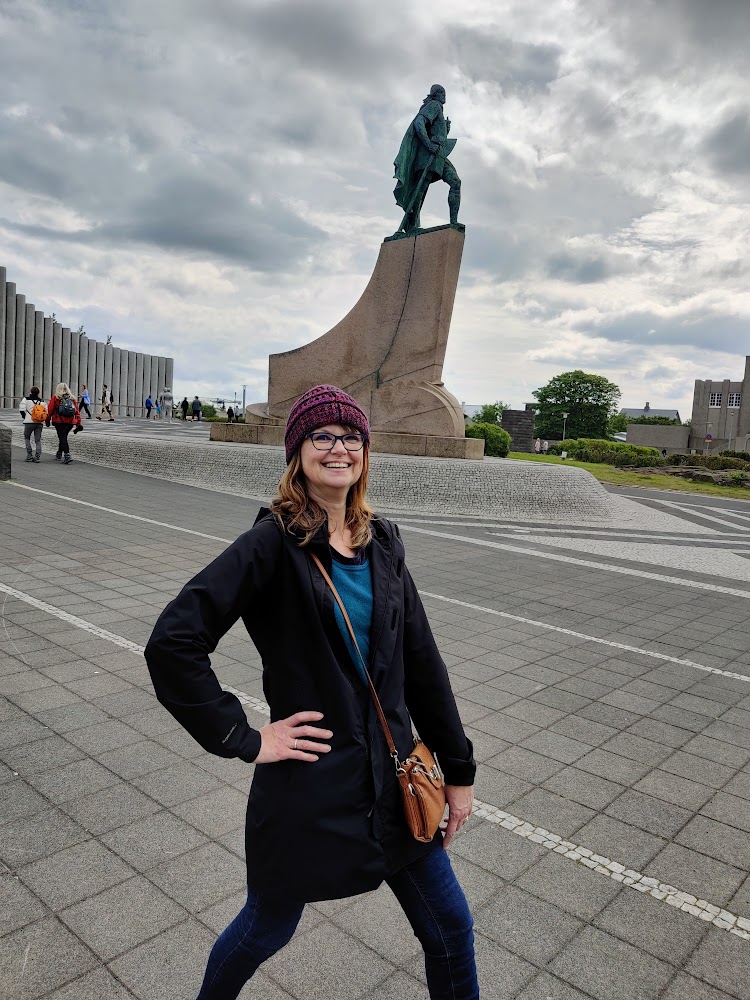
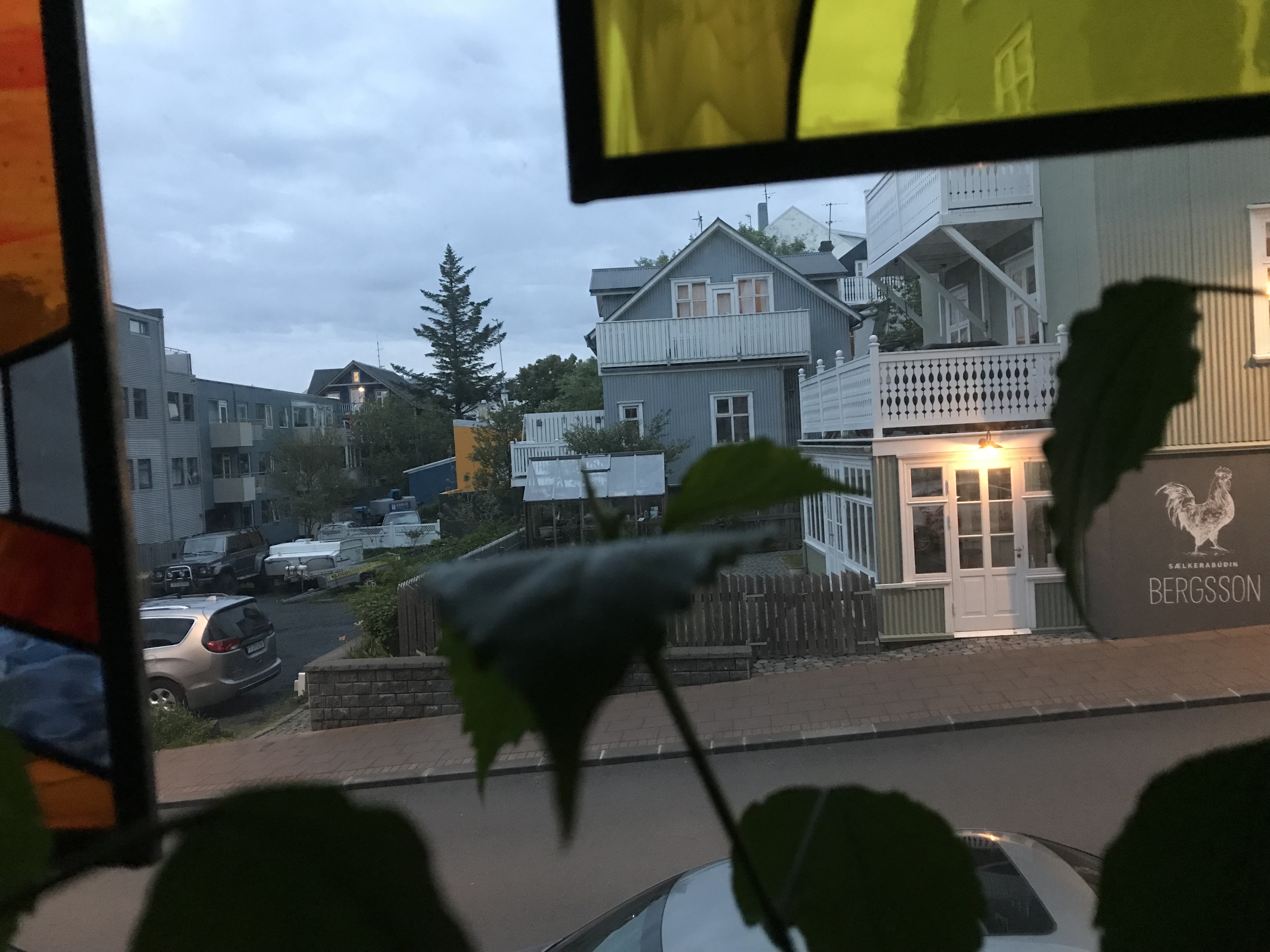
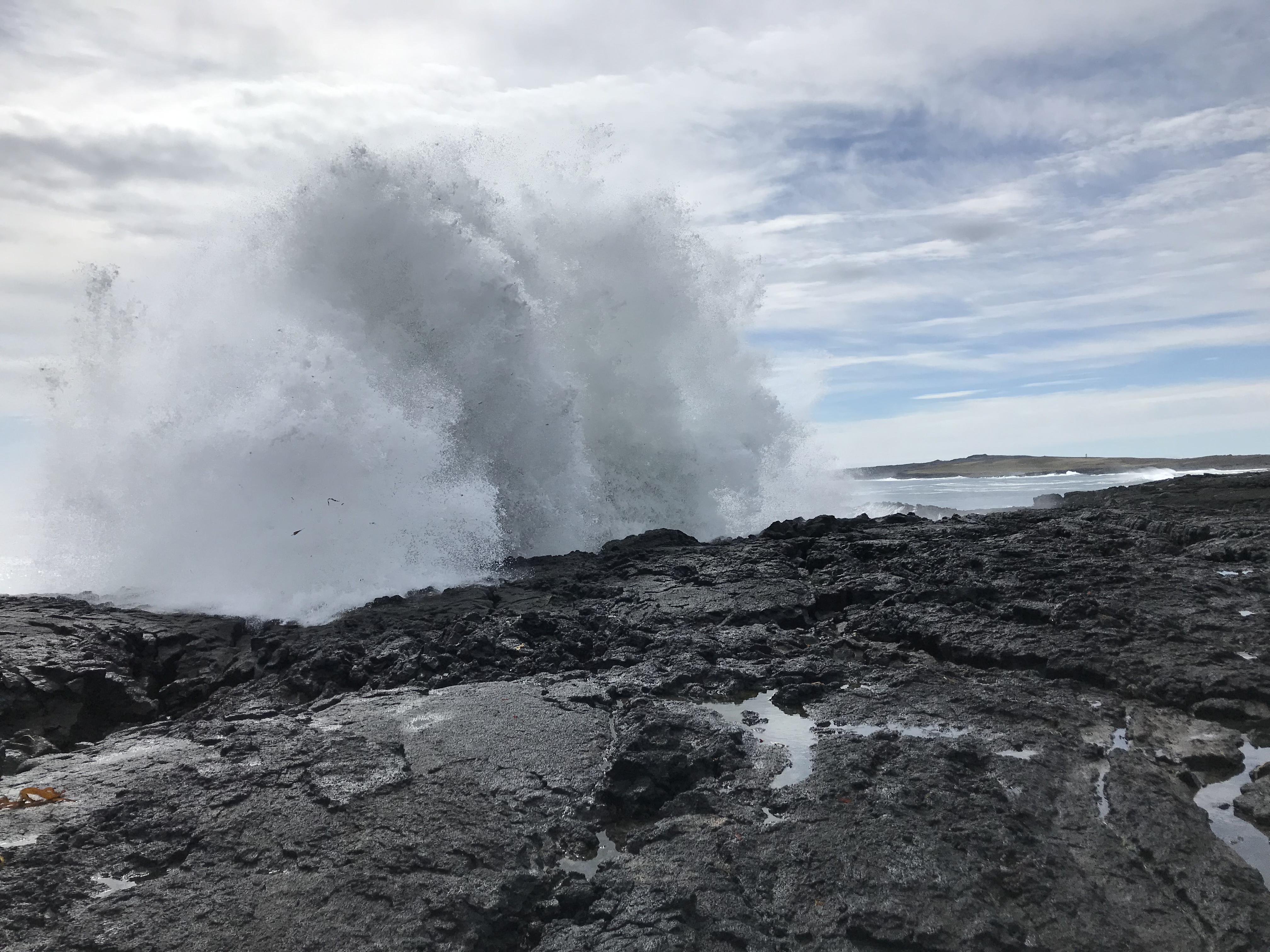
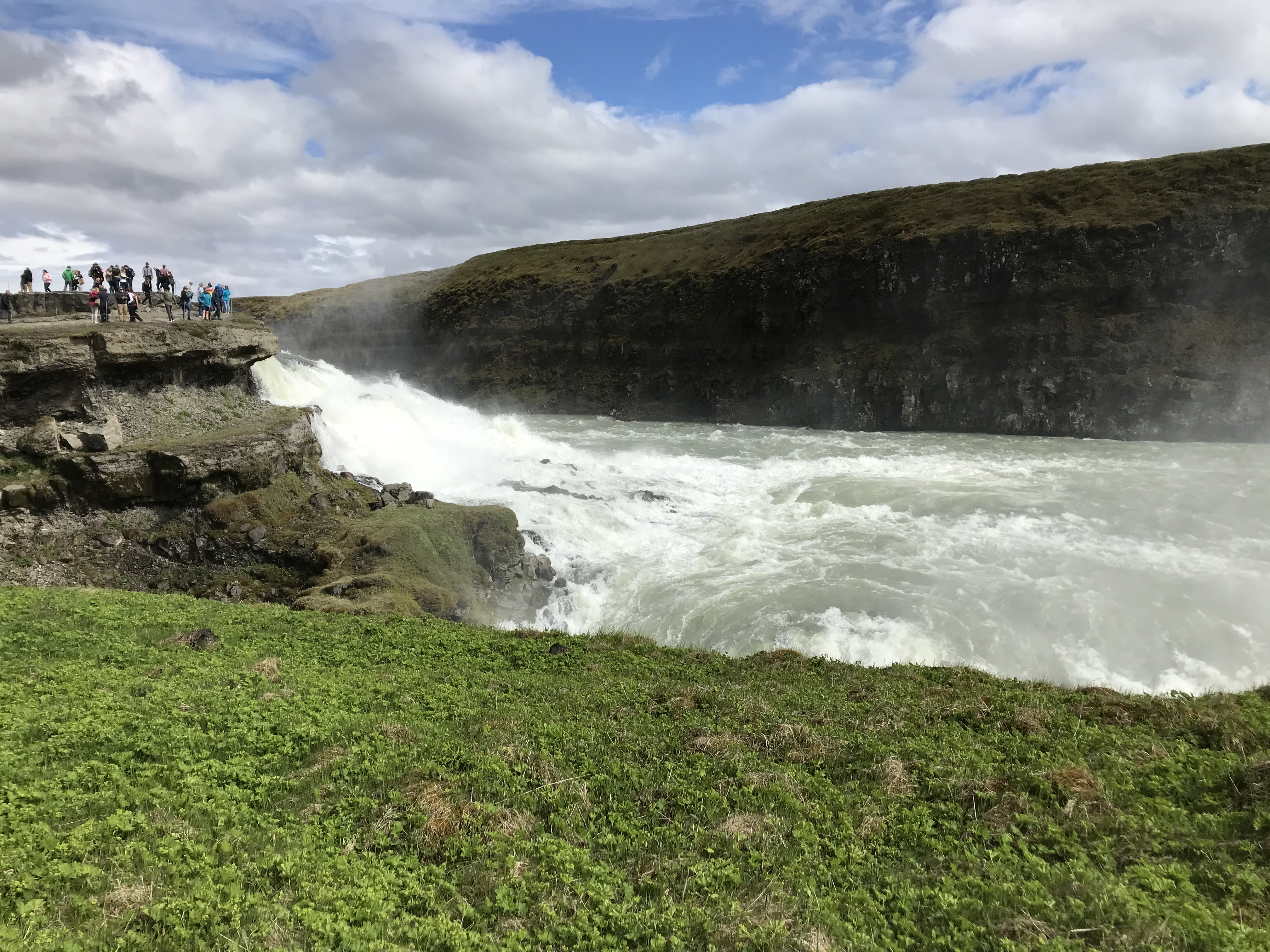
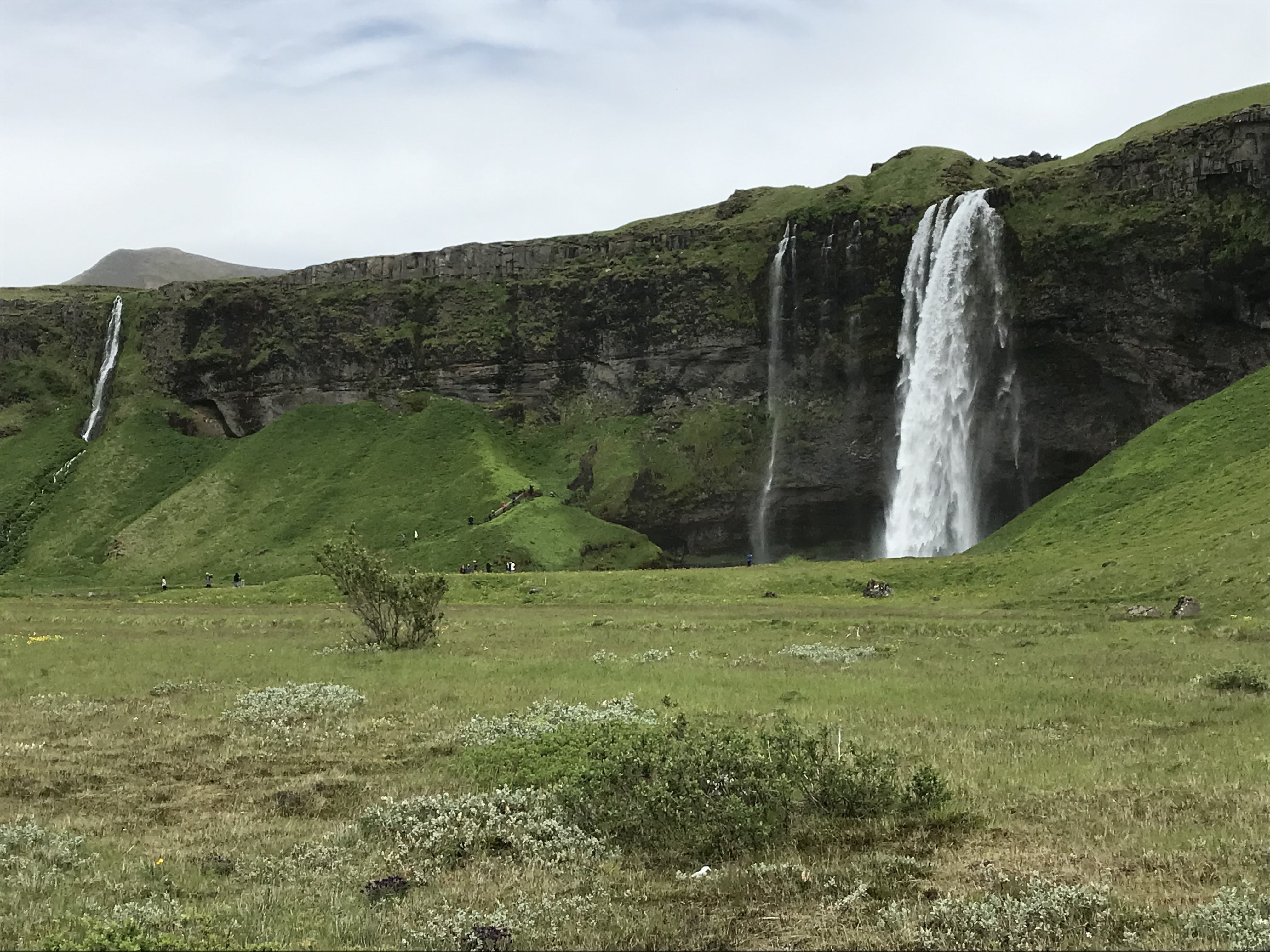
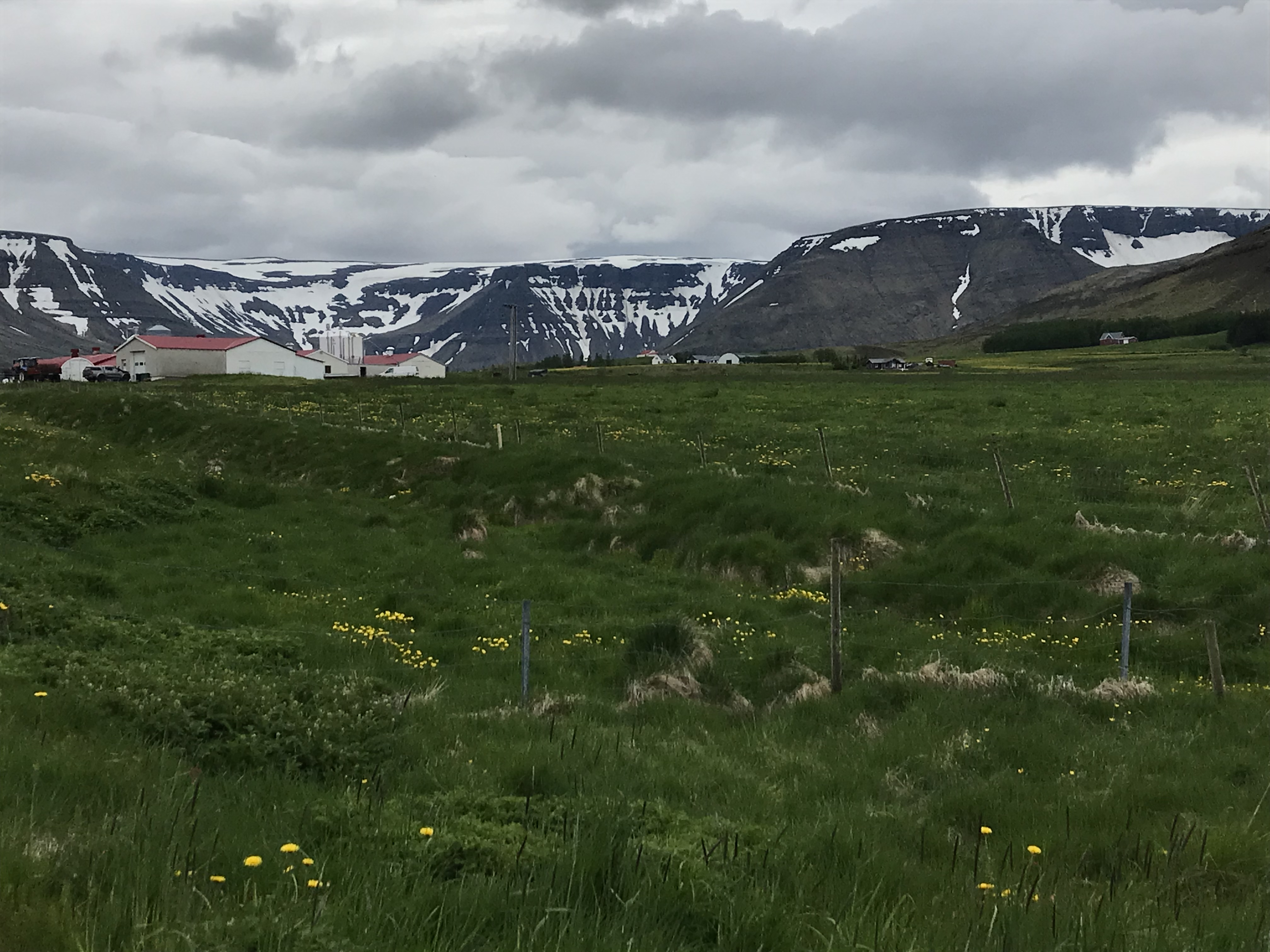
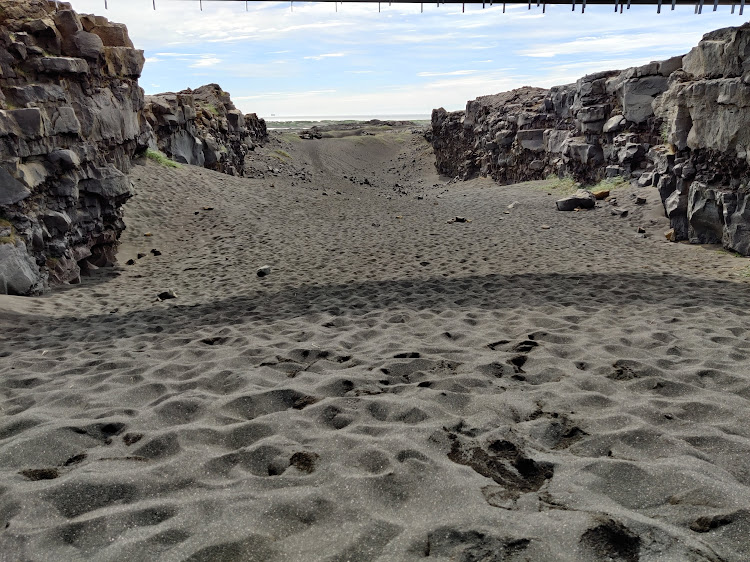
We saw some amazing stuff while we were there, but I’ll tell you about our trips in another blog. Is Iceland beautiful? Beauty is very subjective, and I never really saw past the grey rocks, the black mountains, and the lack of trees. Especially the trees. Most other people have a different view, so I’ll leave you with some pictures and you can decide for yourself.
Thanks for reading. Take care.
Love, Anne x
I try to learn a little more Hebrew whenever I run (it helps take my mind off the pain!) In Iceland I began to learn 2 Chronicles 7: 14. You could try to learn it too? *Note to Mother: Please learn the English version and we can make another Facebook video! I will add it to the end of each Iceland blog:
If my people, who are called by my name, humble themselves, and pray and seek my face and turn from their wicked ways, then I will hear from heaven and will forgive their sin and heal their land.
It was our last day in the Yorkshire Dales, so we made it a good one. We started with a run down the lane (I will miss the lambs in the fields and the stone walls, and the hills surrounding the dale). Then breakfast in Hawes (at Caffe Curlew, which despite the spelling serves excellent food—I had banana loaf with raspberries and yogurt and honey—soo delicious). Later, we went for a drive.
I will never tire of driving through the dales (especially out of season, when the roads are clear, and the views stretch on forever). The roads cling to the side of the hills, rolling up and down with the curves of rock, sometimes with sheep, sometimes mile after mile of nothing but grass. We headed for Kirby Stephen, simply because it looked like a fairly large town not too far away.
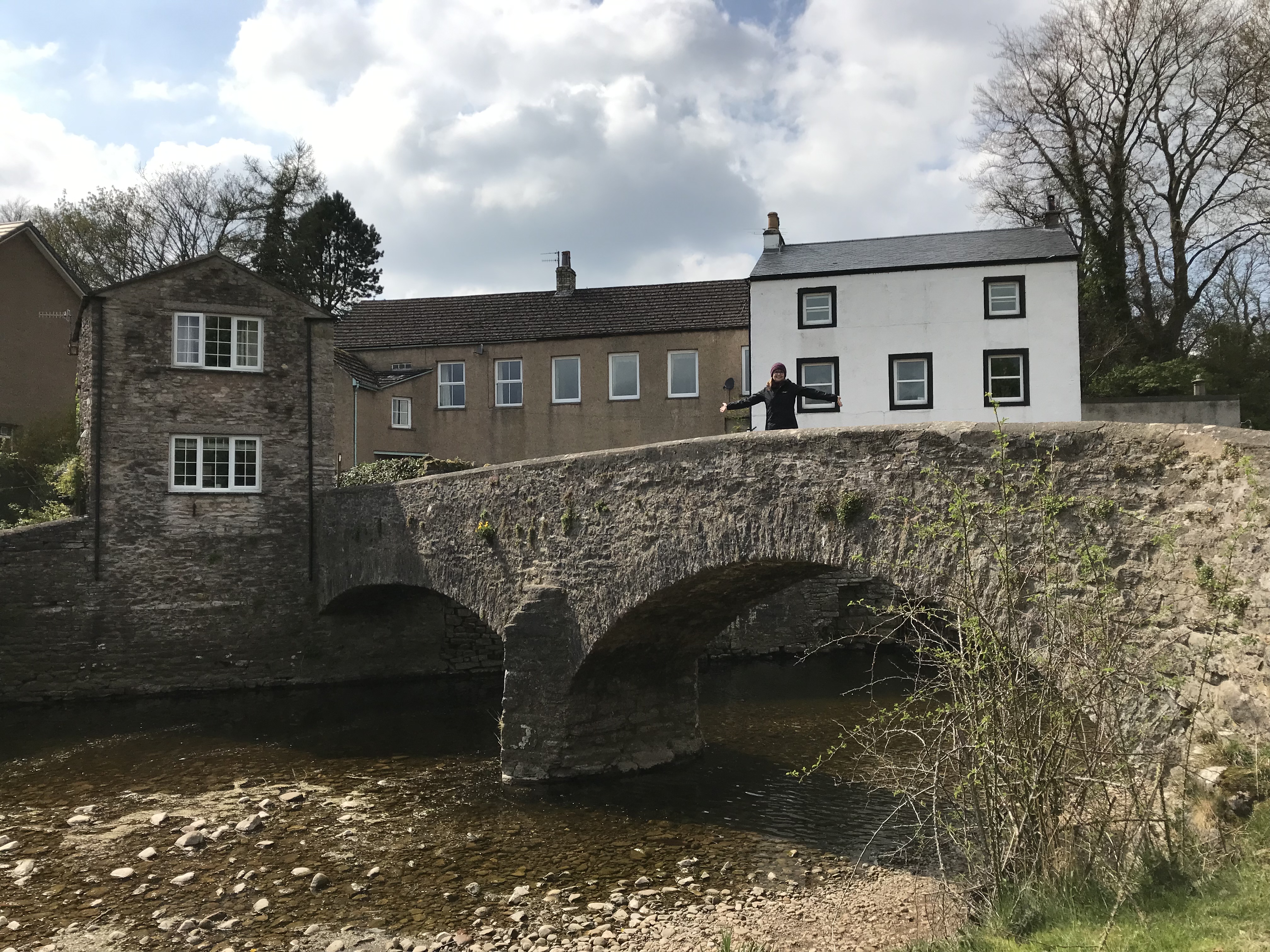
In Kirby Stephen we found Franks Bridge, so I took a photo to send to Uncle Frank (as you do). The bridge was hard to find, in a warren of narrow lanes and crooked houses, and absolutely nowhere to park. Later, I learned that it used to be an area owned by the brewery, and all the cottages are converted brewery buildings.
Franks Bridge is a pretty stone bridge crossing the River Eden (not, weirdly, the same River Eden that runs through the Kent town of Edenbridge). It is the starting point for several footpaths, and was built in the 17th century. The bridge is named after one of the brewers (Francis—or Frank to his friends!)
Franks Bridge hidden behind a maze of old brewery buildings.
We wandered up to the centre of town. In the church I found a glass case with a few old objects. They include a tusk which is said to be from the last wild boar in England (before they were all killed by hunters). There is also the ‘breeches Bible’ which is so named because in Genesis, Adam and Eve sewed breeches. The Hebrew word was traditionally translated as ‘aprons.’
Old Bible in a glass case in the church.
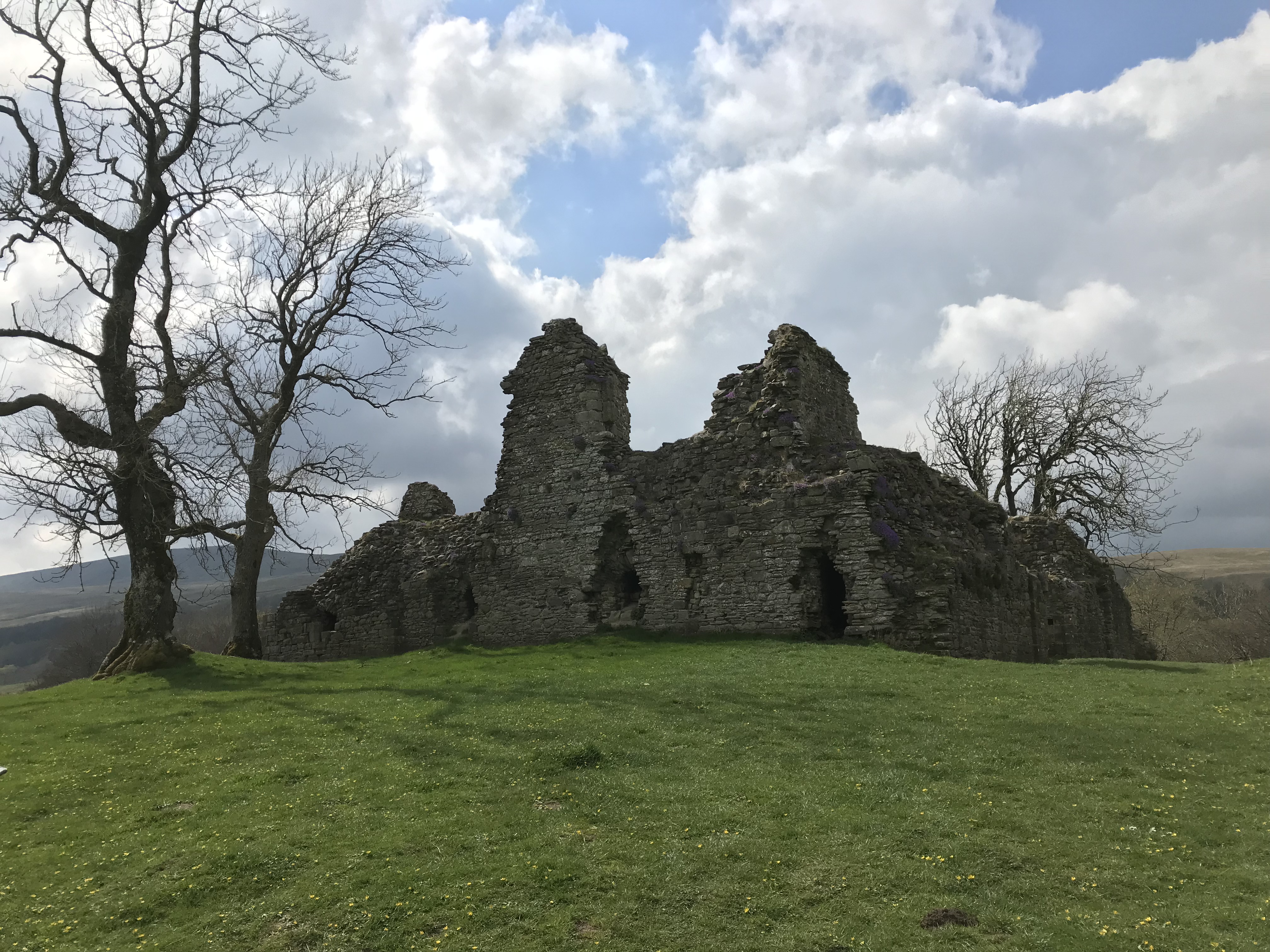
Even older than the church or bridge is Pendragon Castle, which sits next to the road on the way to Kirby Stephen. It dates back to the 12th century, and was apparently founded by the father of King Arthur, Uther Pendragon. (I feel those names would have been confusing when Arthur lived at home, but who am I to comment?) Anyway, Uther came to a sticky end when the well was poisoned by the Saxons, so maybe not such a happy place.
A slightly less romantic version has the castle built by Hugh de Morville or Ranulph de Meschines—accounts differ (still in the 12th century though). Hugh de Morville is one of the men who murdered St. Thomas Becket in 1170, so not a nice chap. The castle was nearly destroyed when Scottish raiders tried to burn it down in 1341 (we could never control the Scottish) but was restored and was later owned by Lady Anne Clifford.
Today however, it is beautiful. The walls are crumbling, and aubretia is growing in the cracks, so if you visit be sure to go in April when it’s flowering. It sits on a little hill, the ditch of a moat around it, birds singing in the trees, sheep nestling next to the river below. Definitely a good place to visit to end our holiday.
Hope you have a good day. Thanks for reading. Take care. Love, Anne x
We were going to visit the rope-makers but they’re shut. Maybe they got to the end of their tether. Or perhaps they were all Methodist, as the impressive Methodist church sported a rather sad sign which said people had worshipped there from 1800s until 2014. They maybe moved to a different building, but that wasn’t the implication. We decided to visit the cheese-making creamery instead, but they were shut too. (Note to future self: Don’t trust the timings on websites.)
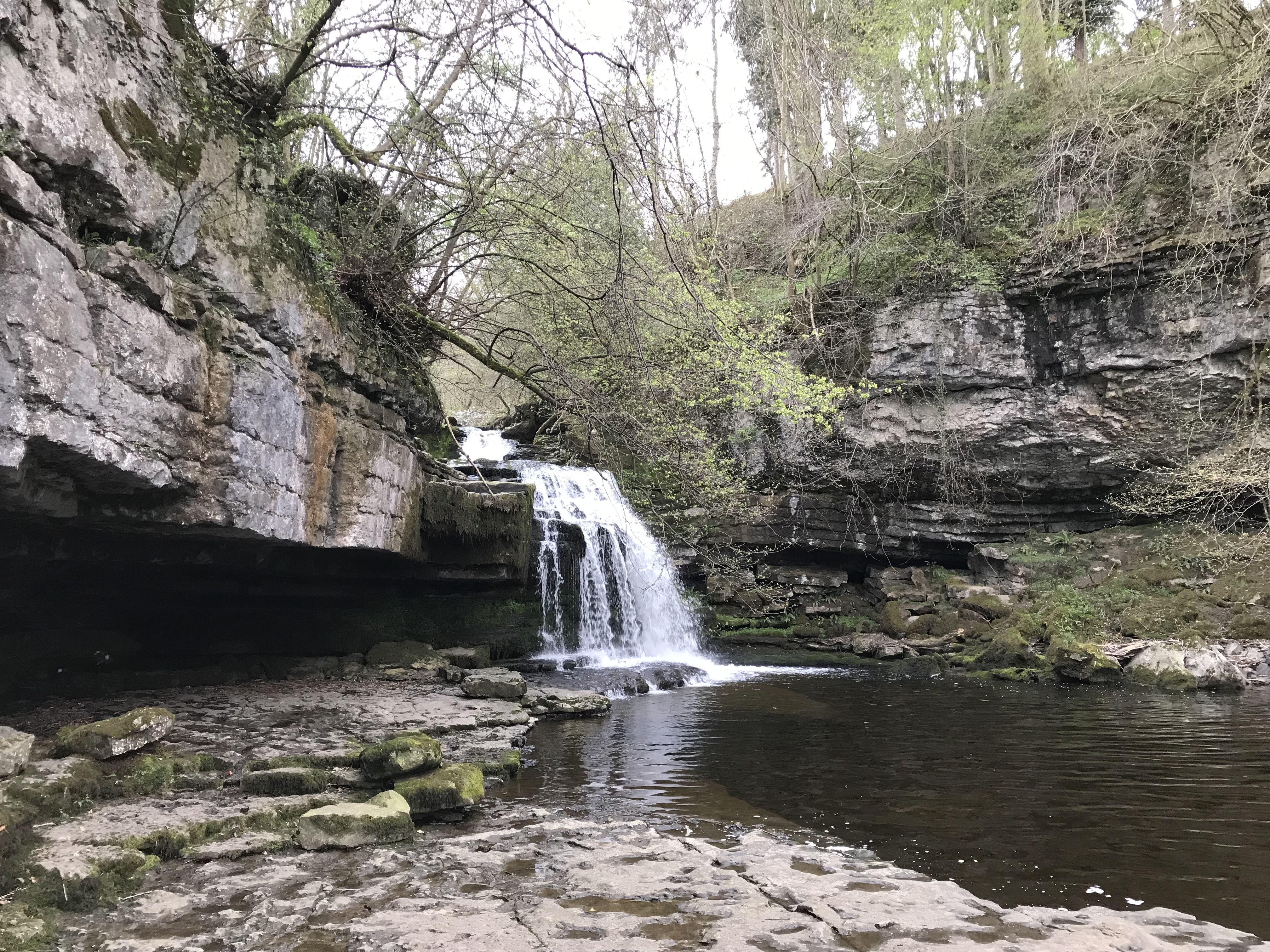
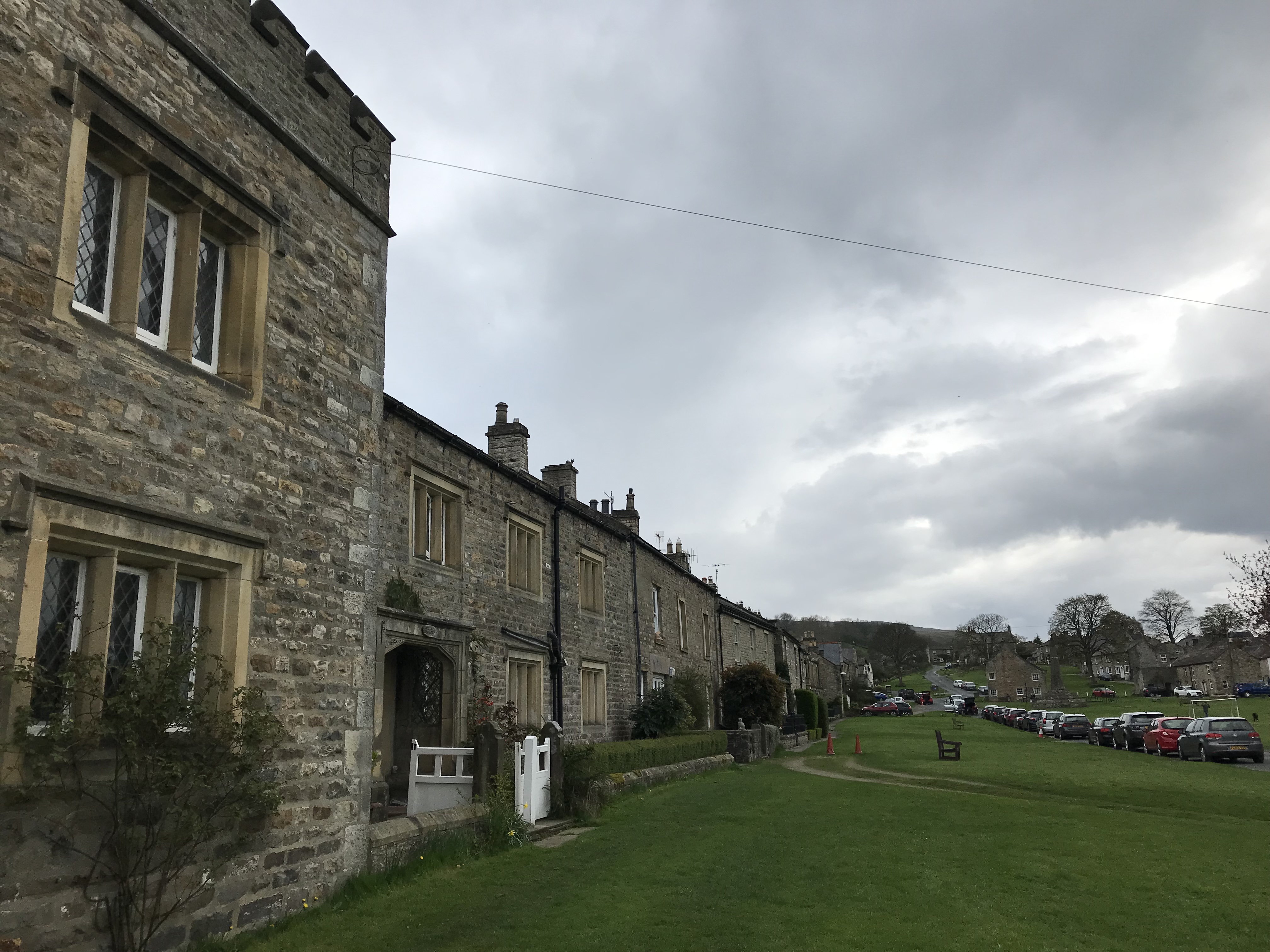
Instead, we drove to a pretty village (we figured they couldn’t shut a whole village). West Burton is a short drive from Hawes and it has a pretty village green, a waterfall and a Methodist Chapel which is open and friendly (it had daffodils on a bench outside and a sign inviting people to take a posy for their friends and neighbours). We wandered around, were impressed by the age of the buildings, drove back to the cottage. Possibly not as interesting as cheese making, though personally I was rather glad the rope-makers were shut.
Bolton Castle
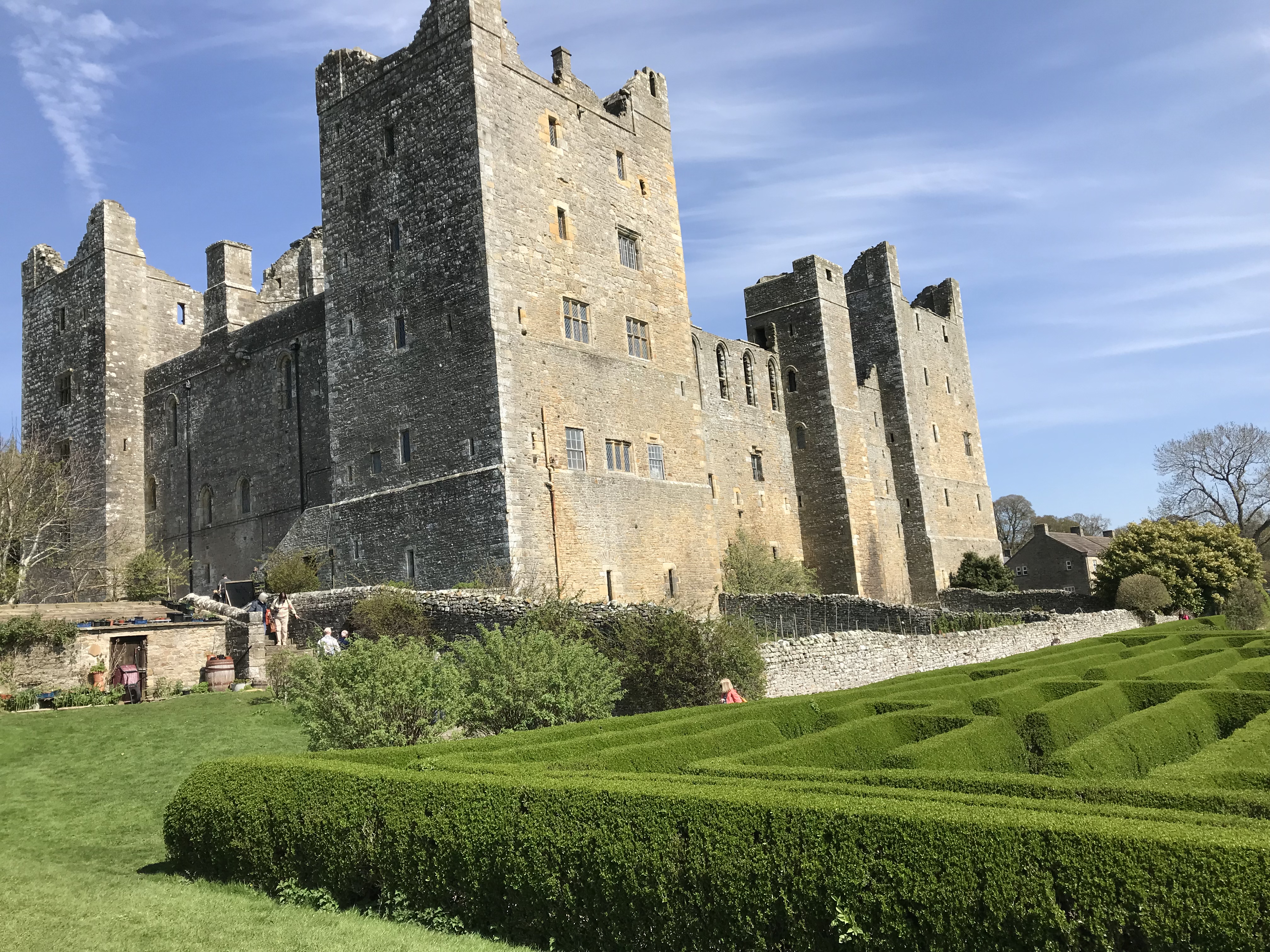
The next day we were better planned and set off for Bolton Castle in Castle Bolton (village is named after the castle in case you’re confused). I was keen to visit as I had read Queen Mary had been held captive there for a while. Husband was keen to visit because he could sort of remember it has a link to Game of Thrones. The facts are:
Bolton Castle was built in the 14th century by the first Baron of Bolton. He rebelled against Henry VIII who tried to burn down the castle (and damaged it). Later (after it was repaired) Mary Queen of Scots was held there for 6 months. She brought with her lots of staff, including a hairdresser, who needed to lodge with locals, and she brought furnishings from other castles, so it doesn’t sound too bad. Apparently she even escaped at one point, so I’m not sure how closely she was guarded—maybe if she had known what was coming she would have tried a bit harder to get away.
The castle is still owned by descendants of the Baron of Bolton today. It has been used for various films, including Elizabeth, and Anne Boleyn and is also where James Herriot proposed to his wife in the tv series All Creatures Great and Small (which used to be on telly Sunday afternoons, and was one of the very few television programmes that we were allowed to watch in my family on Sundays.)
On Game of Thrones one of the houses is called House Bolton and it’s in the north, and hosts a wedding where I believe everyone is killed. I seem to remember that the house did look very similar to the big square Bolton Castle, but I don’t think there’s any other link. The House Bolton are pretty nasty, so I don’t expect the real Bolton family are too chuffed by the similarities.
The castle is worth a visit, but you don’t need too long. It has a nice teashop, and clean loos, plus wild boar (which were hiding) and birds of prey kept in cages (which makes me sad, because birds should be free to fly). It was interesting structurally because you could see in the fallen-down bits how it would have been, and there were enough intact rooms to wander through, but I couldn’t get a ‘feel’ of the place. There were no whispers of ancient people, I couldn’t imagine the people who once lived there and any ghosts left long ago. Pretty views though.
Thanks for reading. Tomorrow I’ll tell you about a much prettier castle, though rather more ruined, that we found beside the road. Take care. Love, Anne x
Why not sign up to follow my blog? anneethompson.com
Thank you for reading
anneethompson.com
Why not sign up to follow my blog?
We are enjoying a few days in the Yorkshire Dales, staying in a 16th century cottage surrounded by fields of sheep. The cottage is simple, but comfortable, and we’re a short walk away from Hawes.
Pretty 16th century cottage
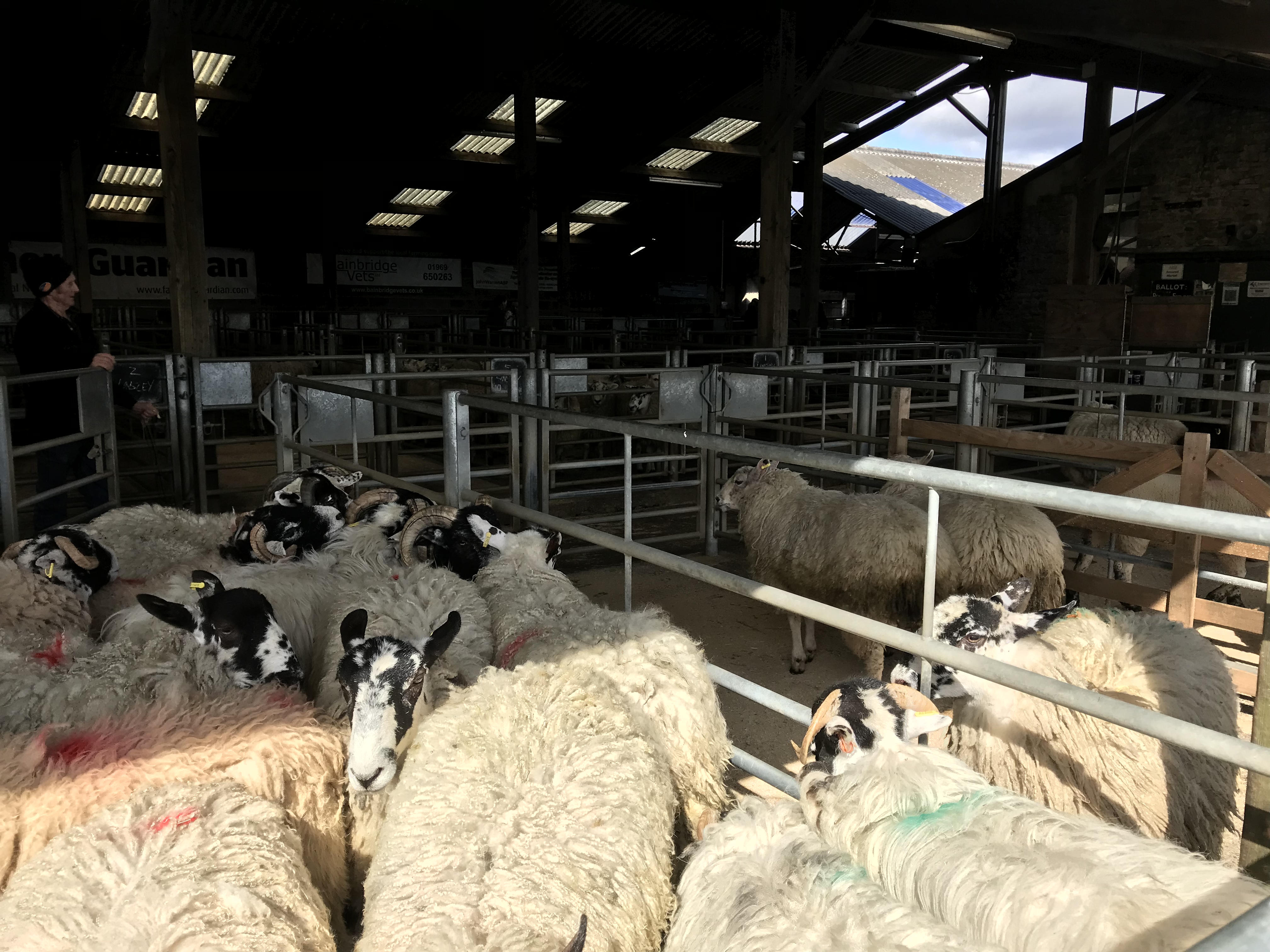
Today we went to see the animal market in action. I’ve never been to an animal auction before, so it was all very interesting. We arrived during the sheep sales—pens of sheep waiting in a barn. We could hear the chant of the auctioneer, and every few minutes a man opened a door, a few sheep ran along an aisle between the pens, stopping when blocked by a gate that another man held open, they then veered into an empty pen, the man closed the door behind them. It was all very organised. I think everyone else was a farmer, either hoping to buy or sell. But no one frowned at us or asked us why we were there, so we decided to venture into the actual auction.
The auction was held in a room with curved seats like an amphitheatre, the auctioneer at a high desk against one wall and an area at the front with a large pen. The animals were herded along walkways into the pen. Men stood there, and they felt the wool of each batch of sheep. (At least, I think that’s what they were doing, I wouldn’t think farmers would stroke sheep for no reason.) The auctioneer chanted in his sing-song voice, banged his hammer, the exit was opened and the sheep ran out. At one point, a sheep had a loop-out and tried to leap over the fence. Instead of giving her lots of space (which is what I would have instinctively have done) the farmers edged closer, so she was trapped in the corner. Which meant that she couldn’t hurt herself by banging against the fence, nor did she have room to jump again. They obviously knew what they were doing.
I was interested to see a couple of young boys, about ten-years-old, in the ring. (Watching, not being sold!) They had tough boots and sensible haircuts and were obviously farmers of the future. One sat eating a sandwich, the other was at the front, feeling the wool as the sheep came through, copying his dad. They had an ease about them, they had been here before, it was part of the job. I suspect they were rather capable kids, would be handy in an emergency.
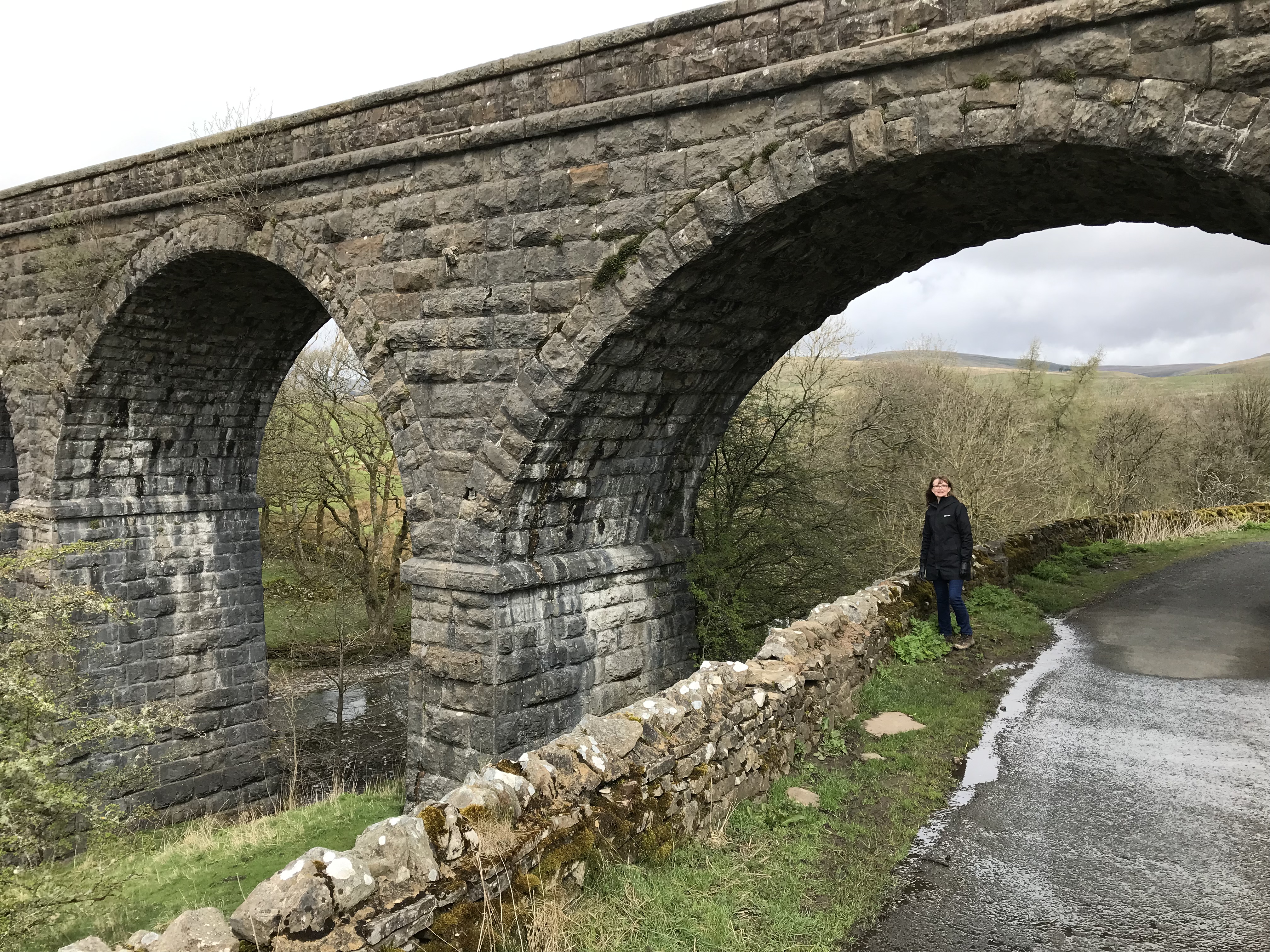
We managed to leave the market without buying anything (which was bit of a shame, but I’m not sure how we’d have got a sheep home with us). We walked back to the cottage across the fields. There were calves in the fields, and lots more lambs, a river bubbled next to us with geese swimming, bees buzzed in the blossom, the disused railway line ran over low stone bridges, and the dales rose on either side. A peaceful place in the sunshine. I’m not sure that anywhere really compares with the English countryside on a warm spring morning.
Yorkshire Dales
Hope you have a great day. Thanks for reading. Love, Anne x
Thank you for reading
anneethompson.com
Why not sign up to follow my blog?
After a fantastic Easter Sunday with the family in Cambridge, we kept driving north for a week away. Despite my vow to never again take elderly dog on holiday, the kennels were all full and so she travelled in a well-prepared boot and all our luggage was on the back seat. Husband had booked an Airbnb, so I told Mum we were off to the Lake District and I would see her in a week.
The roads were empty, so even with a few stops for elderly dog, we arrived at the cottage early evening. Beautiful scenery. No lakes though, so I messaged Mum to say we were in the Peak District.
Our cottage is the middle one behind me. This is my tired face. I need a holiday.
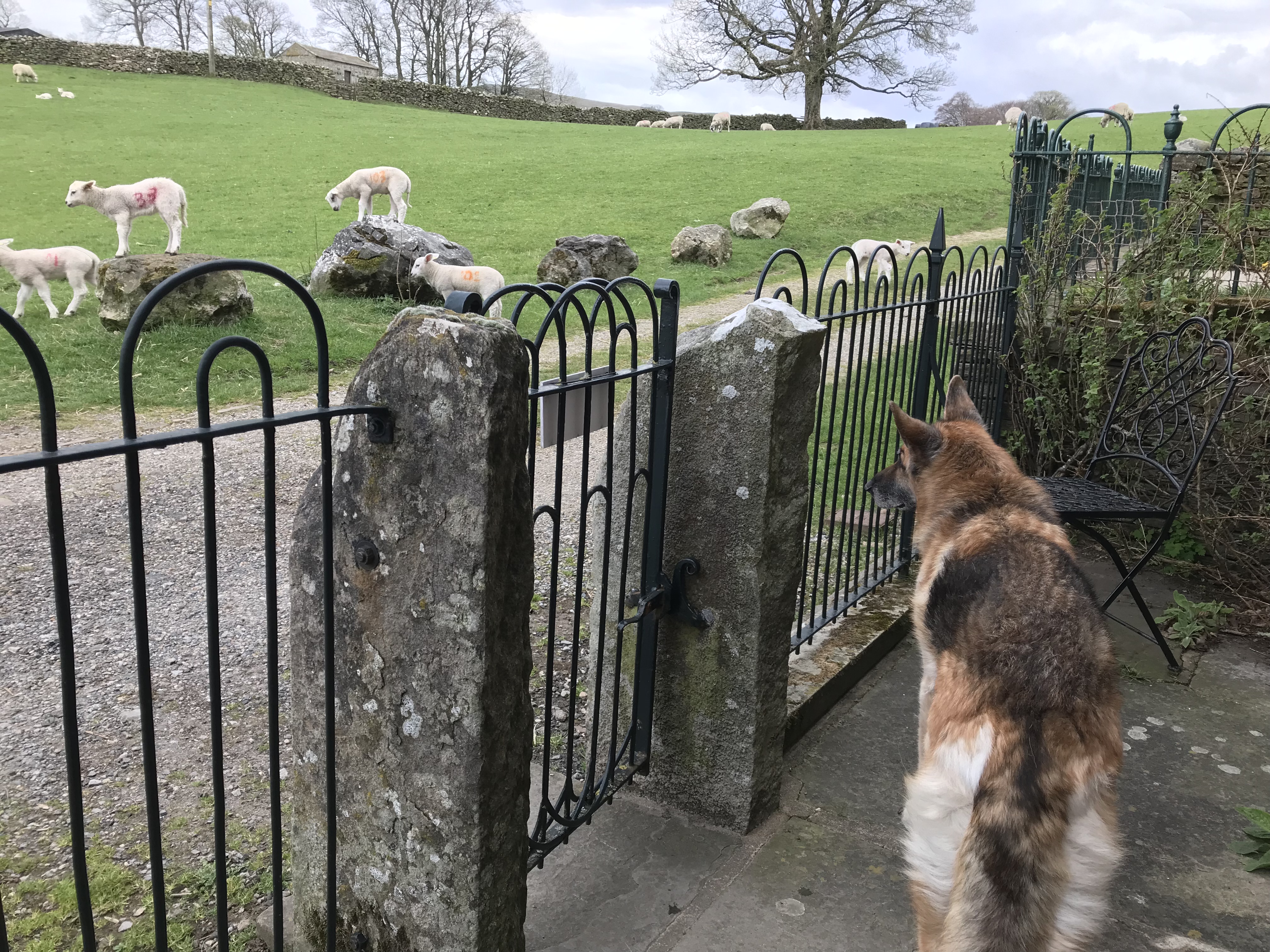
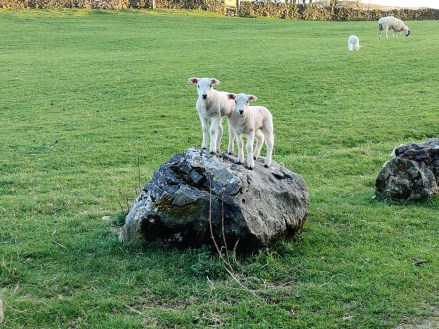
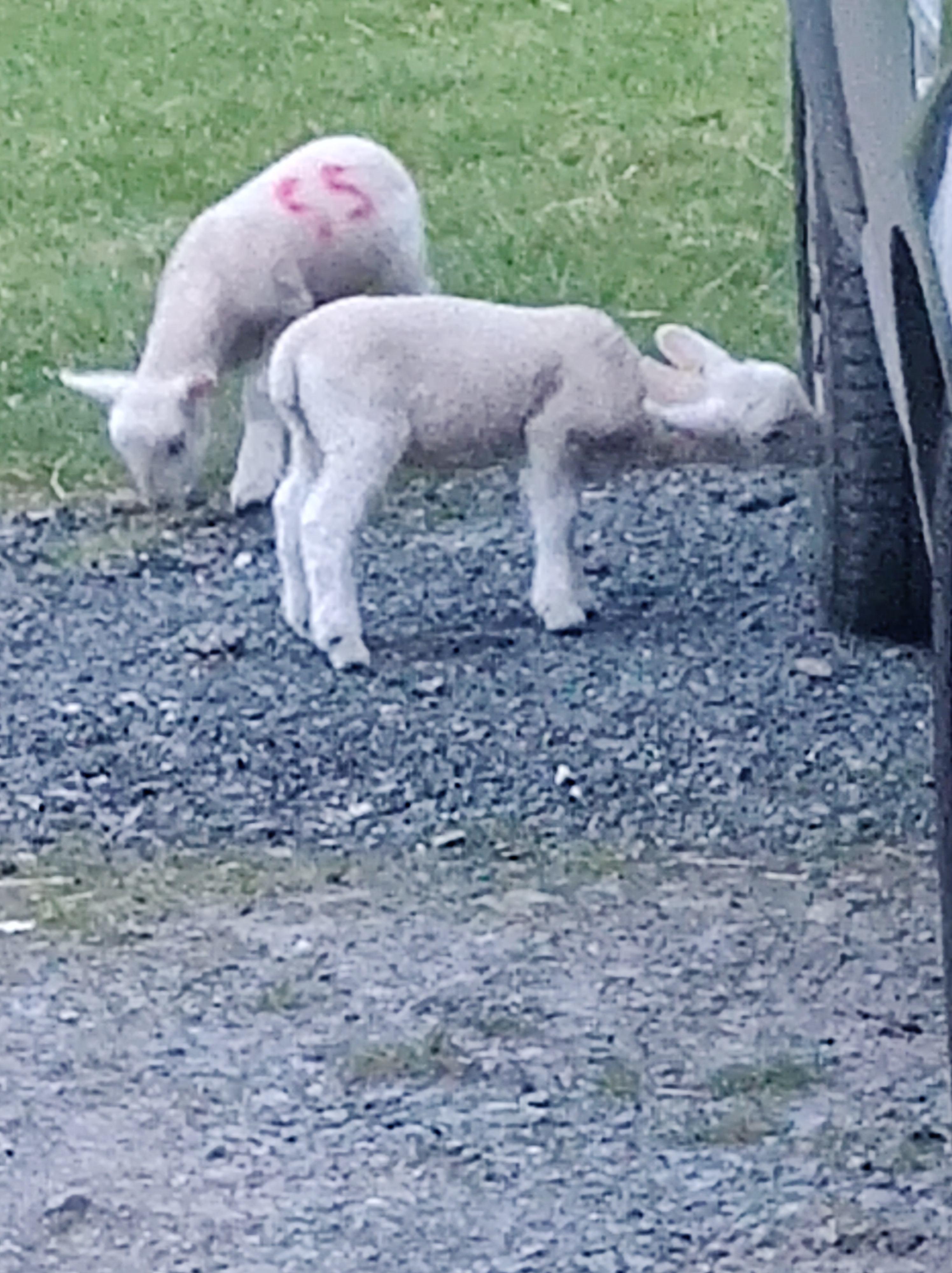
The cottage was lovely, plonked right in the middle of a field with lambs skipping around. There was an enclosed back yard, so even if elderly dog had been at all interested in them, she wouldn’t have been able to reach the lambs. However, the lambs were interested in us—or to be precise, the car. They kept licking the wheels. Husband worried they might nibble something important. I told him lambs don’t have teeth. (This may not be factually correct, but it stopped him worrying.)
Lambs attempting to eat tyres.
On the first day we wandered into town. There were some nice shops selling posh food products. Lots of cheese and wine from Wensleydale. I messaged Mum and told her that actually, we are in the Yorkshire Dales. The nearest town is called Hawes. Husband told me you’d need to be careful not to name your house: The Hawes House, and I nearly fell off the pavement laughing. (This shows the sort of conversations we have when our children aren’t around to correct us.)
The first café we saw advertised bacon butties, so we had a cup of tea and a sandwich. I think it’s a biker café, as everyone else looked slightly like Hagrid, wore leathers and carried a helmet. I’m sure we blended right in though. Very nice bacon butties, so I think we’ll go there every morning.
I attempted a short stroll with the dog. She’s unkeen on hills, so had that ‘tolerant look’ when we set off. Lots of lambs skipped away, but their mothers did not. One mother in particular was very angry that we were in her field, and she walked deliberately towards us, her head lowered. She then stood facing us, and stamped on the ground. I don’t speak ‘sheep’ but the message was very clear. Not sure that elderly dog would fare very well in a stand-off with angry ewe, so we went back to the cottage. Dog returned to her bed with an ‘I told you so’ look. I told Husband he would have to come instead.
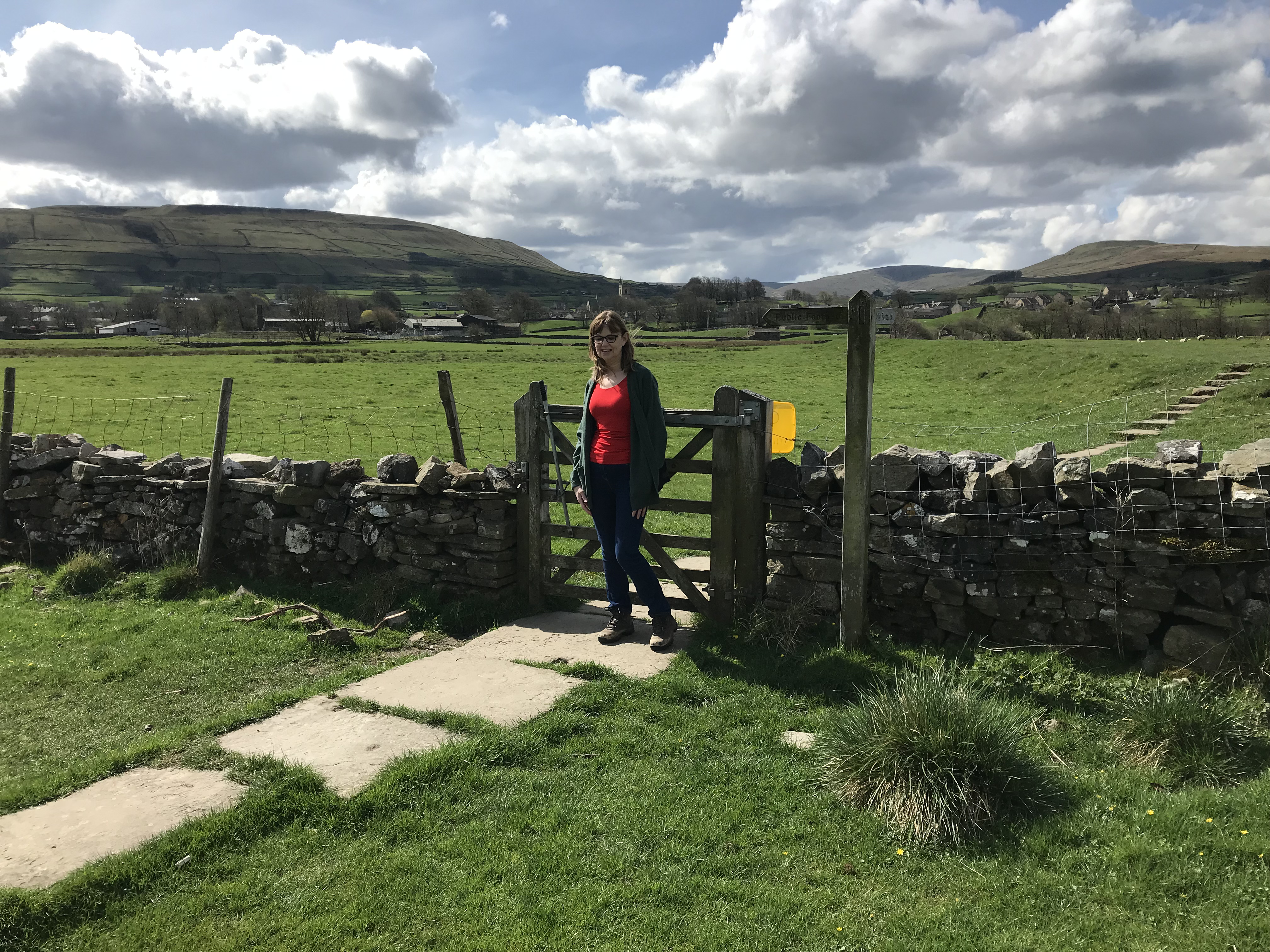
We went for a lovely walk across the fields. Husband wore wellies because it might be wet—he walks quite slowly in wellies. I wore walking boots, because they’re comfy for long walks. I walk very fast in my walking boots. You can guess how that turned out. Husband has a clever ordinance survey app on his phone, so he could give precise directions as we walked. I mostly ignored him and followed the footpath signs. This is how our household works. But the walk was lovely, with lambs everywhere and stone walls with little stiles and far-reaching views over the… lakes…peaks… dales.
Hope you have something lovely today too. Don’t forget where you are… Thanks for reading. Take care. Love, Anne x
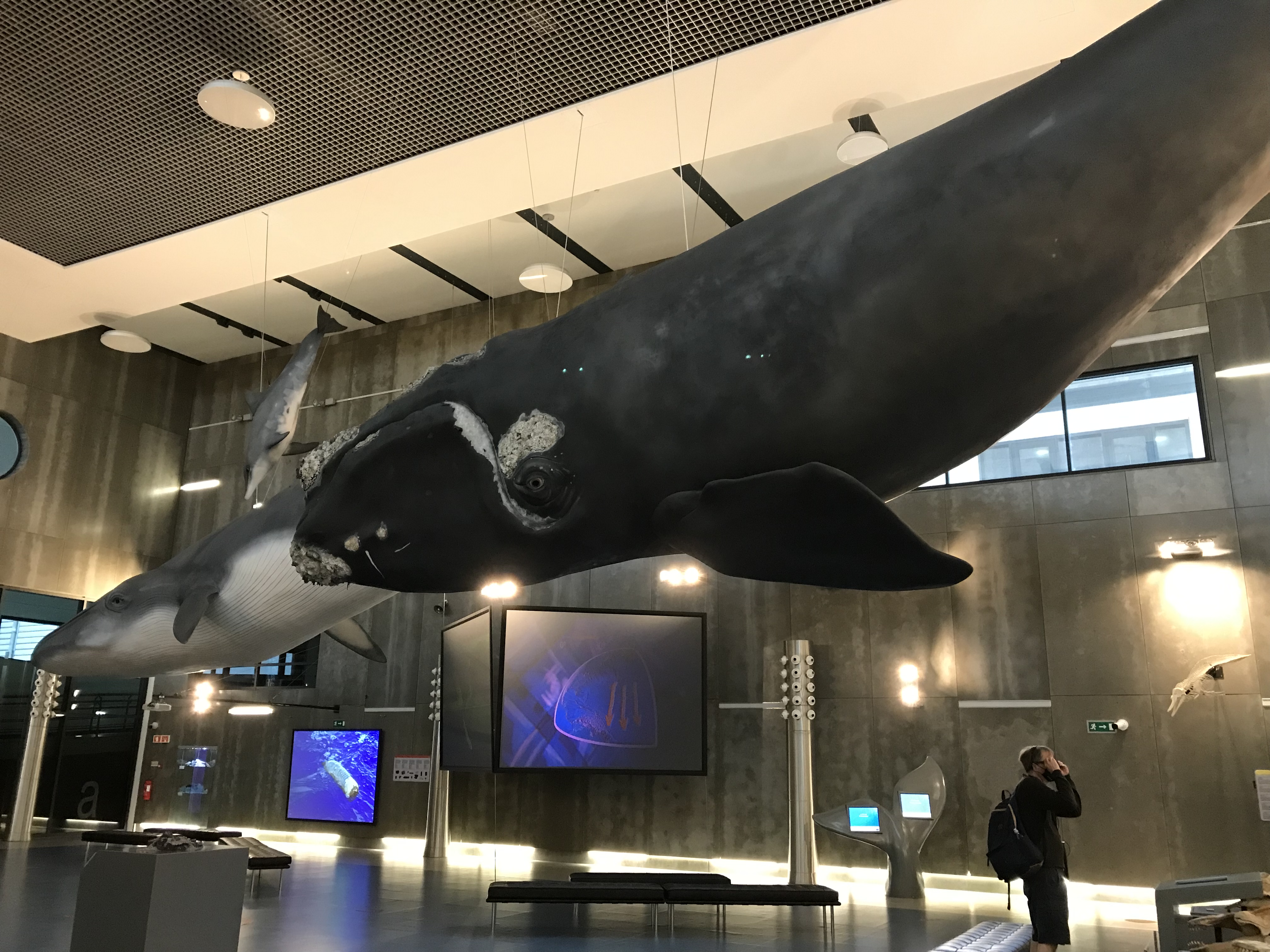
A short drive along the coast from Funchal is Caniçal, which used to be a whaling community but is now, according to the guidebook, at the forefront of whale conservation. We went to have a look.
The best place to start seemed to be Museu da Baleia, which looks like a huge warehouse. The museum had a strict covid protocol, and we were instructed to sanitise our hands, and show our covid certificates before we could enter. We were given headphones, charged 10 euros each, and sent off down a series of ramps to the lower level. The headset was very clever, with the commentary automatically changing as I wandered around, giving the correct information for the display I was standing next to. At one point we were given 3-d glasses, and watched a film about how whales evolved, the land mammals returning to the sea.
I was expecting the museum to be about whales, explaining their habitat, showing how they were protected, perhaps a model that I could stand next to and be amazed by their size. There were models hanging from the ceiling, but too far away to really appreciate their size. Mostly, the museum seemed to be about whaling.
A modern museum, with smart headsets and 3D films.
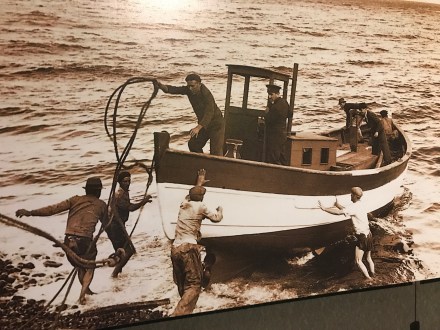
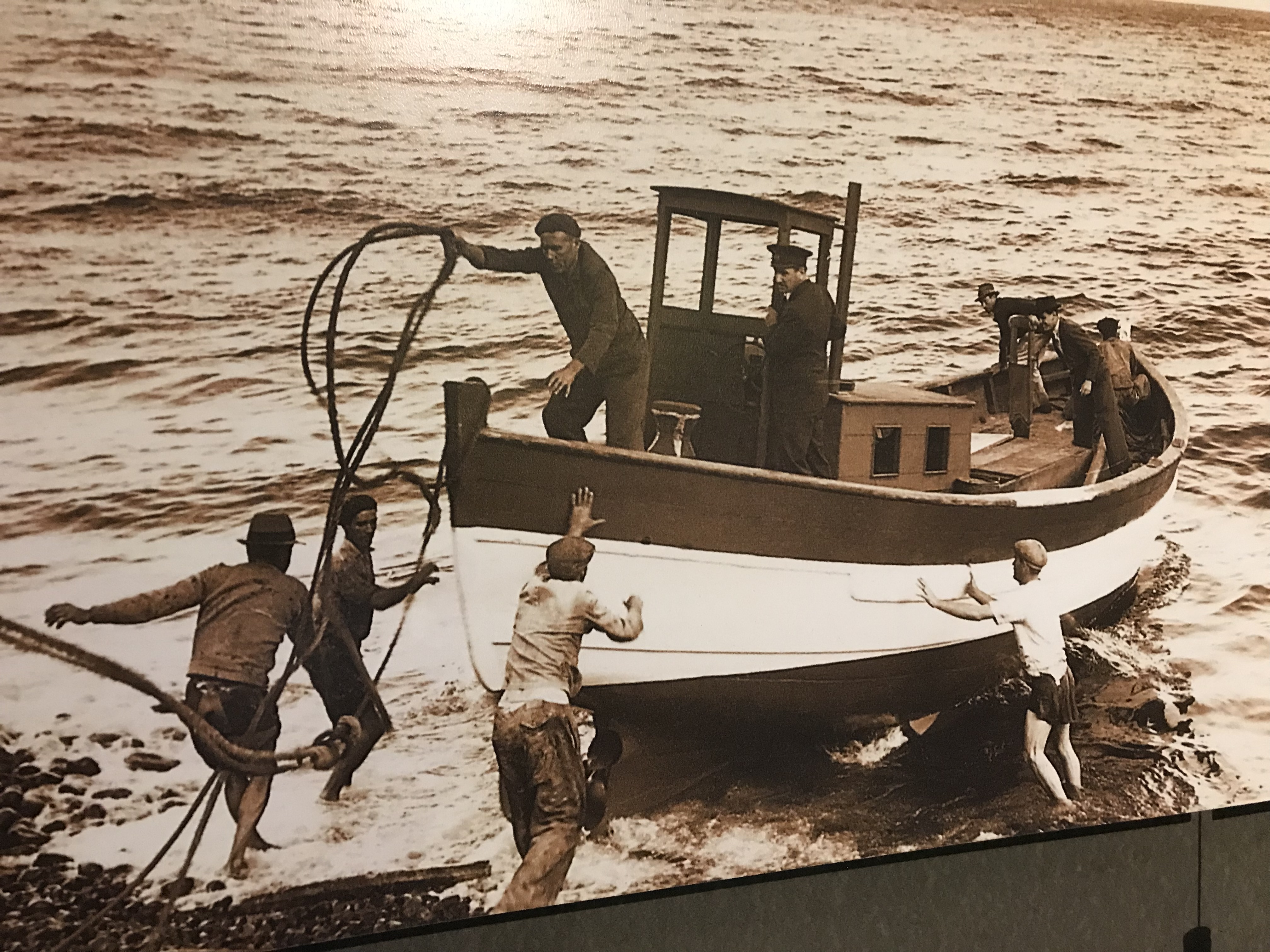
There was a photo wall of whaler portraits. There were models showing the process of stripping the whales after they had been slaughtered, explaining what each component was used for. There was even a film, showing whalers in the 1950s, running to their boats, putting out to sea, harpooning whales. The emphasis seemed to be on the courage of the whalers, the dangers they faced, the difficulty of catching such a huge animal on small wooden boats. It was uncomfortable to watch, like watching a film of hunting elephants. It was also telling that the film was so dated. Nothing from the late 1970s (whaling stopped in 1981) when the boats were more sophisticated, when the whales had no chance of escape. If I had been a ten-year-old on a school trip, I would’ve been impressed by those early sailors, they would appear as brave heroes. Perhaps, at the time, they were.
Whaling in the past.
I guess it’s difficult to know how to portray whaling in a community that until relatively recently has survived due to the practice. School children will know that their grandad was a whaler, the teachers probably grew up in the home of a whaler. I wonder whether my grandchildren will feel the same about me eating meat, and if they will wonder how and why I did such a thing. I wonder if my abhorrence of whaling is hypocritical.
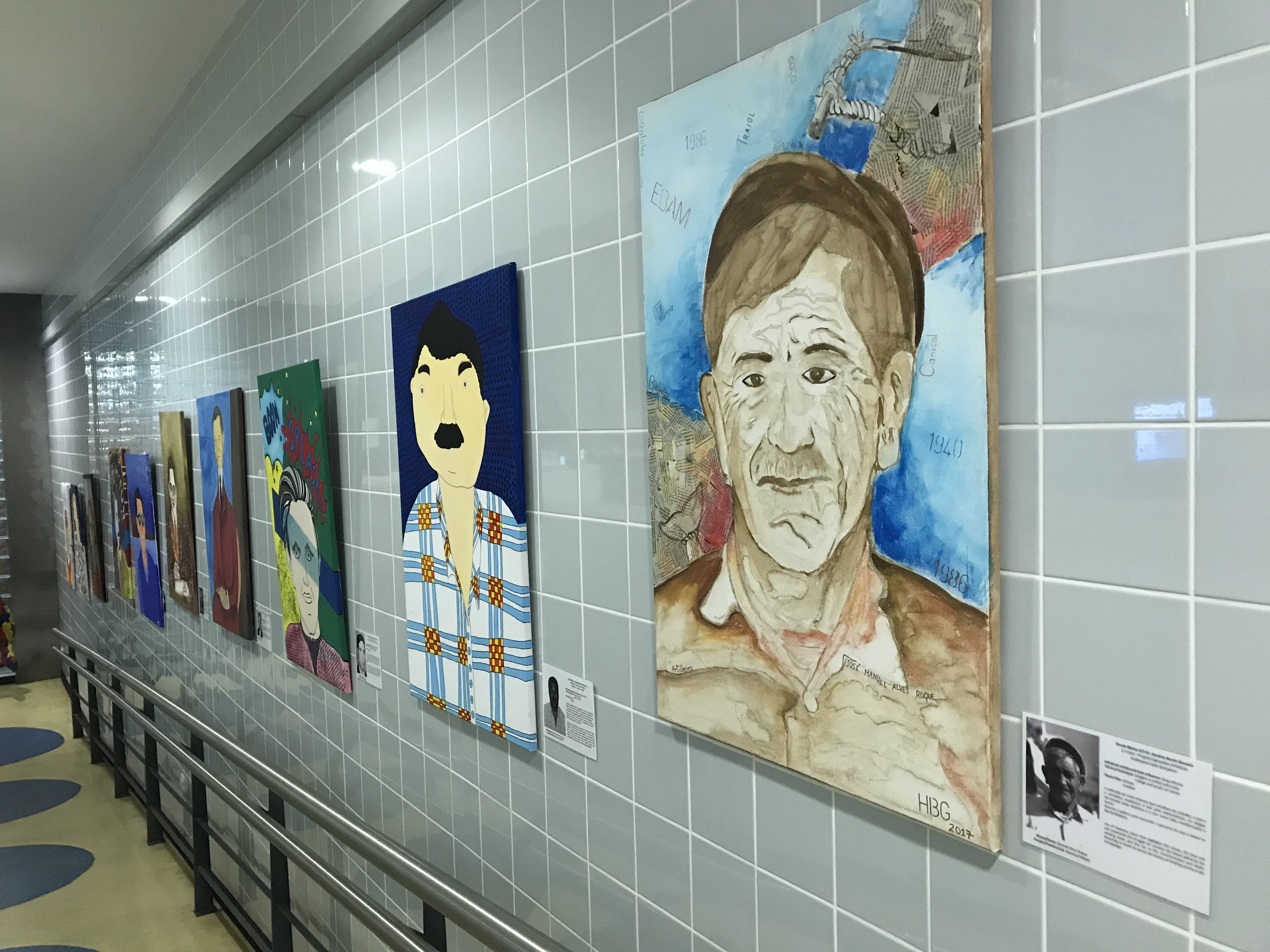
We left, walking up a ramp with portraits of the whalers painted by school children in the style of famous artists. They were clever, the sort of work I would have been pleased to encourage when I was teaching. Though I still felt uneasy with the subject. Were the children honouring their past—and should they have been? But should the community cope with judgement and condemnation when at the time, it was seen as a way of life? I don’t know. But I had hoped to learn more about whales, to stand in awe at their size, to understand how they are faring in today’s world. I had hoped that killing these magnificent creatures would be seen as wrong. Perhaps I was in the wrong town for that to happen, perhaps we need to be further removed from the mistakes of the past before we can face them.
Some talented artwork, portraits of whalers.
Thanks for reading. Take care. Love, Anne x
Thank you for reading
anneethompson.com
Why not sign up to follow my blog?
Exams were over, essays submitted, it was a chance to relax. Husband, who is forever lurking in the background trying to entice me away from home (because his work is mostly online) persuaded me that some winter sunshine would be good for me. I didn’t take much persuading. We went to Madeira.
Have you ever visited Madeira? The only thing I knew about it was that it named a rather nice plain cake. I now know that the cake was invented in the UK, to eat when drinking Madeira wine. I now also know how to make Madeira wine (had a tour of Blandy’s) and that it’s delicious—but more of that in later blogs.
Madeira is a small island (about the size of the Isle of Man) owned by Portugal but actually nearer to Morocco, a drop of volcanic rock in the Atlantic Sea. My brother told me to look out of the window as we approached the airport, and I wish I hadn’t because I saw the rather flimsy-looking runway perched on stilts. I also saw that the island is basically a series of mountains, caused by an ancient volcano and now covered in plants. The plants are fascinating.
We visited right at the end of January, which is sort of their rainy season, though we mostly had glorious sunshine. We rented an Airbnb, which was owned by an agency so fairly plain (individual owners tend to care more and decorate the house a bit) but it was very clean. The main thing was the position, which was brilliant. We were right at the end of the old town, next to an old fort (which someone decided would look nice if painted yellow—a mistake I feel). We overlooked cobbled streets and the sea, and the bright yellow fort.
Driving to the apartment was an adventure. We picked up a hire car ( a small one, thankfully) and set off along the main road. But then the Satnav took us into the city of Funchal and the streets grew smaller and very steep. As we approached the old town, the streets sort of disappeared and turned into narrow cobbled pathways. Very steep narrow cobbled pathways. With blind-bends at the junctions, and parked cars and pedestrians. Some streets had tables spilling out from cafes, for even more excitement. I was map-reading, and we made a few wrong turns, but I decided it was best to not mention it and just to keep talking in a calm voice. We arrived at the apartment, but there was nowhere to park, the narrowed cobbled street/footpath was busy, and a couple of policemen were strolling towards us. Not the time to practice my Portuguese.
Hard to know what to do, so I took charge (I felt Husband had enough on his plate with not killing anyone). I told him to unload me and the luggage and drive off and find somewhere to park, before the policemen reached us. Then he could walk back to help me find the key and lug our bags up to the flat. He left me with the cases and drove off.
I was standing in the entrance to a student residence. The sun shone down, I could hear the sea, the cases were unstable on the old cobblestones. I shuffled into a space next to a wall. Felt conspicuous. Tried to edge cases further from oncoming traffic, and blend into the background. It was quite hot, the street was busy, I had heavy bags, no key to the flat, and limited Portuguese. Felt rather vulnerable and hoped Husband would arrive quickly.
Husband was gone some time. He finally showed up, still driving the car, which was rather disappointing. He told me he had done several laps of complicated one-way system up and down steep, narrow roads, and there was nowhere to park. The flat provided free parking in the town carpark (which cost 40 euros) but the ticket was in the flat. Super.
We left the car sort of jammed in the entrance to the student building and hoped no one (especially the police) would notice. I used the code to get the key, ran up to the flat, grabbed everything that might possibly be linked to parking instructions, and ran back. Husband took the wadge of papers and drove off again. I stood next to heavy bags, feeling things hadn’t really improved.
Eventually Husband returned without the car. Things were getting better. He lugged the bags up to the flat. The view from the balcony made it all worth the effort. I will tell you more in my next blog. Madeira is lovely. But hire a small car.
Thanks for reading. Have a good week, and take care. Love, Anne x
Our Airbnb was the top balcony.Breakfast opposite the park.Cobbled streets of Funchal make for exciting driving!Thank you for reading anneethompson.com
I am writing this in Zurich. My college had a week with no lectures, set aside for reading and reflection, and it coincided rather nicely with Husband having to visit Zurich for work. I had a mountain of reading to do, plus an essay to finish writing, but we agreed that I could work in the room, and breaks would be spent wandering the city and eating meals that I hadn’t had to cook. An excellent plan (which I hoped would turn out better than the Devon ‘excellent plan’ of earlier!)
We arrived late Friday night. As the aeroplane neared Zurich, I could see the Alps, white with snow, shining in sunlight. We appeared to be flying over a sea with islands, but as we dropped, I realised the sea was cloud, and we dropped down, into the misty ‘water’ to the gloom of a city in dusk. The mountains were like a basin of cloud, and the sunlight was hidden from the land below.
As this was a ‘work trip’, our room was a rather lovely suite opposite a park in the city centre. We had the weekend to explore, so after a run round the park and breakfast in the hotel, we set off. (The breakfast was good, but there was a lot of sausage on offer, and I am pretty sure one of the fruit options was coleslaw.) The weather was crisp but dry, and gradually some of the clouds dispersed so we could almost see mountains beyond the city.
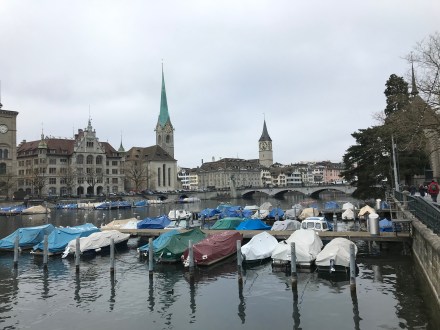
The city has the river Limmat flowing through it and we walked beside it to the large glacial lake, the Zűrichsee. The houses are very Germanic, with pointy roofs and shutters at the windows. It was all very pretty. It was also hideously expensive for British travellers, as the exchange rate is very bad at the moment. There were coffee shops with seats in a pretty square, huddled around patio heaters, all the seats lined with fur to keep people warm. But to pay £6 for a coffee was off-putting, so we enjoyed looking but kept walking. Luckily we had access to the ‘members lounge’ in the hotel, where there was a coffee machine for free.
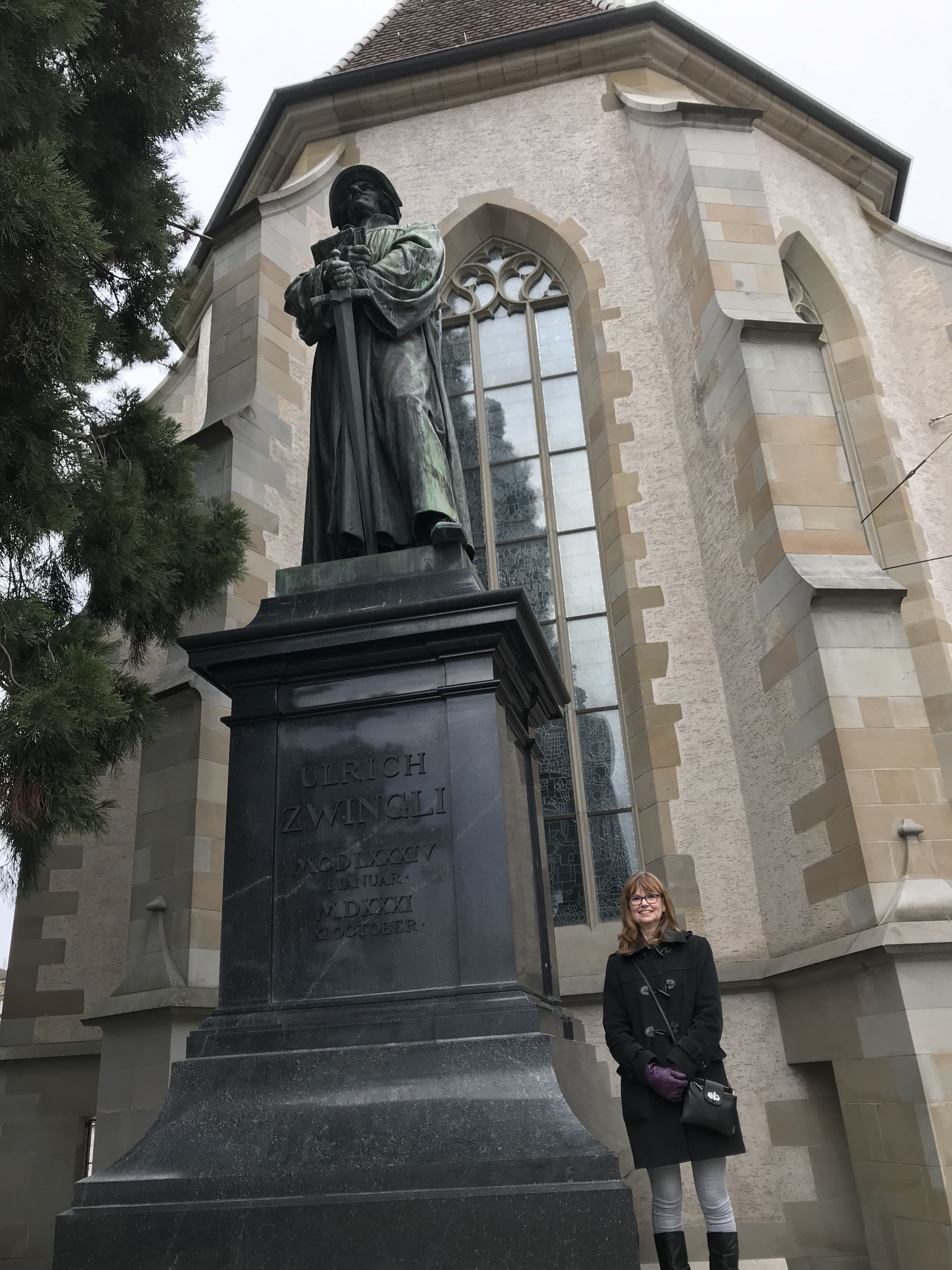
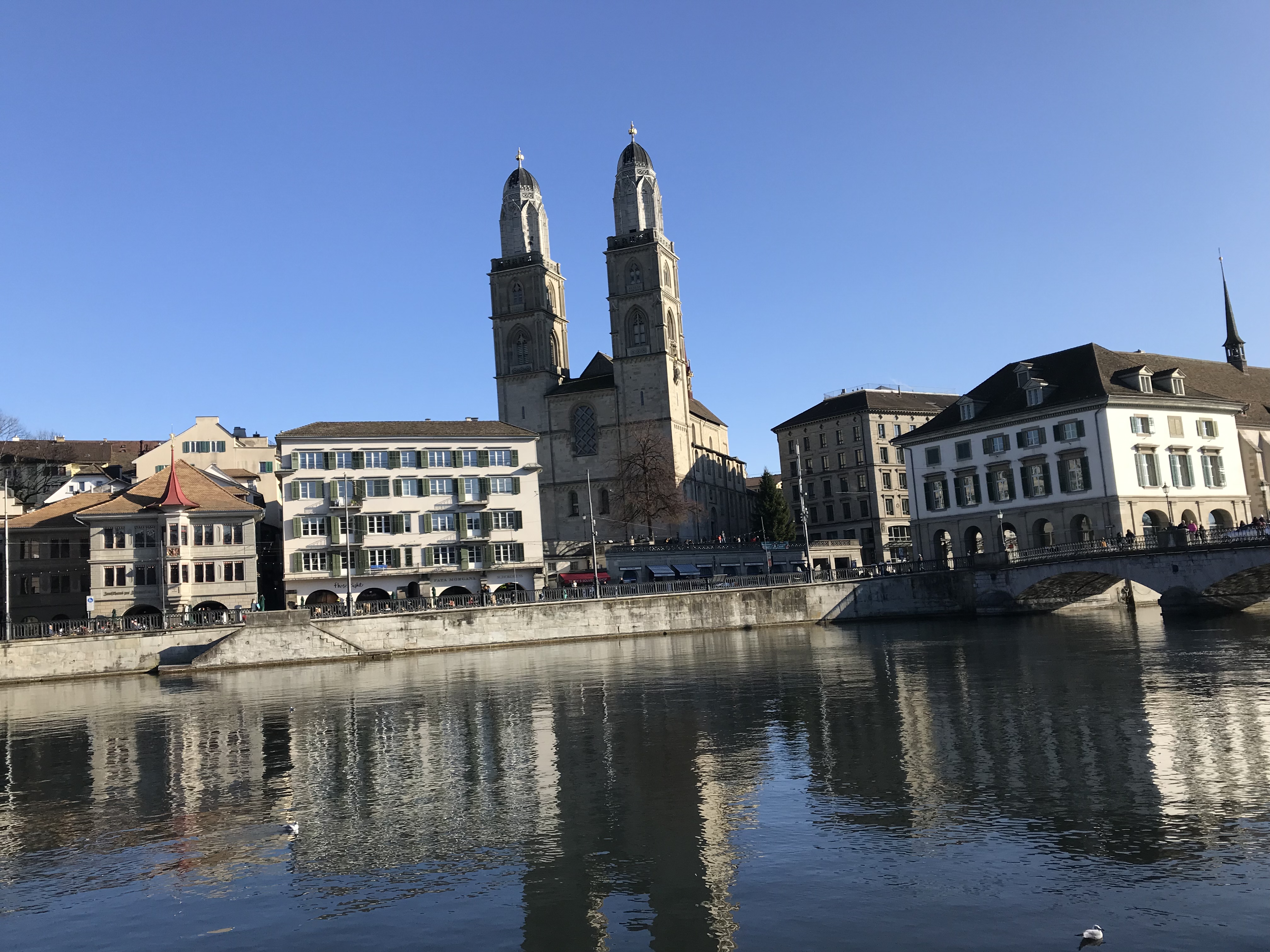
As I am studying theology, I felt that I should visit the church where Zwingli preached. Who, you might ask, was Zwingli? Ulrich Zwingli (not a looker, but you wouldn’t expect him to be with a name like that) was quite a character in the 1500s. He was a priest in the large Grossműnster church, during a time when the church was ruled from Rome and was very powerful. Zwingli began to preach against some of the practices (which made him popular with the people, but not especially liked amongst his clerical peers). He decided that fasting in Lent was wrong, and (somewhat controversially I feel) attended a sausage supper during Lent.
He learnt Greek and Hebrew (so must be a good chap) and sought to find the correct translation to passages that he felt the church had corrupted. He preached against celibacy for priests (which I cannot help but feel sceptical about, as he had a wife at the time so I feel he was perhaps slightly biased). He also tried to rid the church of icons, and told people they shouldn’t worship saints. He was a contemporary of Luther (who is more famous) but they disagreed over the Eucharist, and were never friends. When there was a plague in Zurich, many people left the city but Zwingli stayed to help the sick. He survived the plague, but died during a battle (which I think he partly caused by speaking out against the church).
So, an interesting chap with some strong beliefs. It seems silly now, that he and Luther didn’t work together, simply because they disagreed over one point of doctrine. It seems to me that Christians still do this today, it can feel a little like a club, where if you don’t agree with all the rules some people don’t think you belong. Perhaps that’s why Jesus never tried to start a new religion, he showed people how to live and left them to copy.
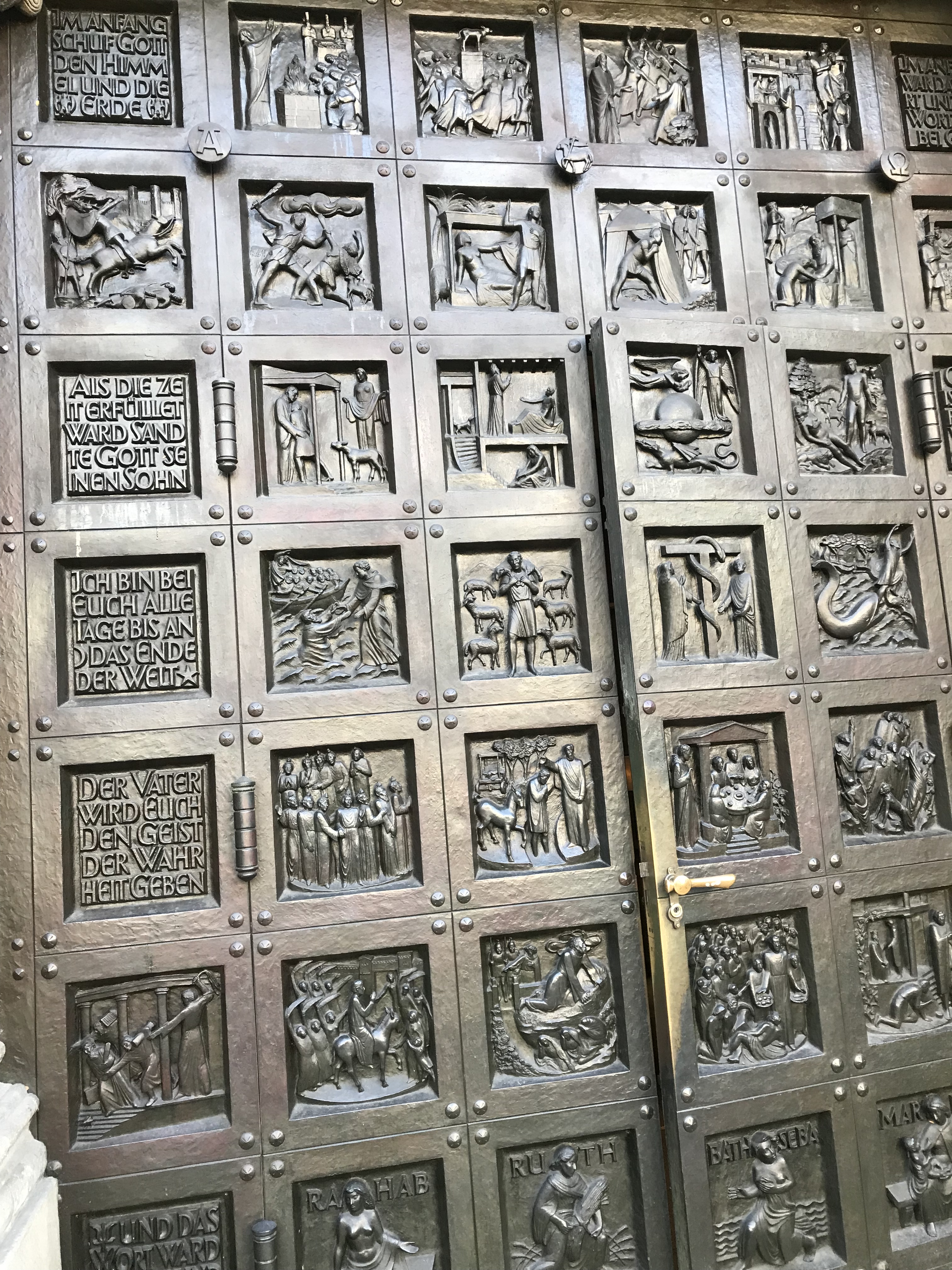
We saw Zwingli’s statue, and went to the Grossműnster, which was very plain because he had removed all the icons and decorations. I blame him a little, for the ugliness of Baptist churches. I understand the sentiment, that we should be worshipping God not the building/statues/icons. But I do feel people go too far. Baptists seem to thrive on very ugly places in which to worship. I find it off-putting.
I will leave you with some photos of Zurich. Lovely clean city, mortgage your house and pop over for a weekend. You will need proof of two vaccines to enter any public building, and people here wear masks whenever they’re inside a public building. Other than that, it’s almost the same as pre-Covid times.
Hope your day is good, wherever you happen to be.
Thanks for reading. Love, Anne x
Beautiful Zurich
*****
Thanks for reading. anneethompson.com Why not sign up to follow my blog?
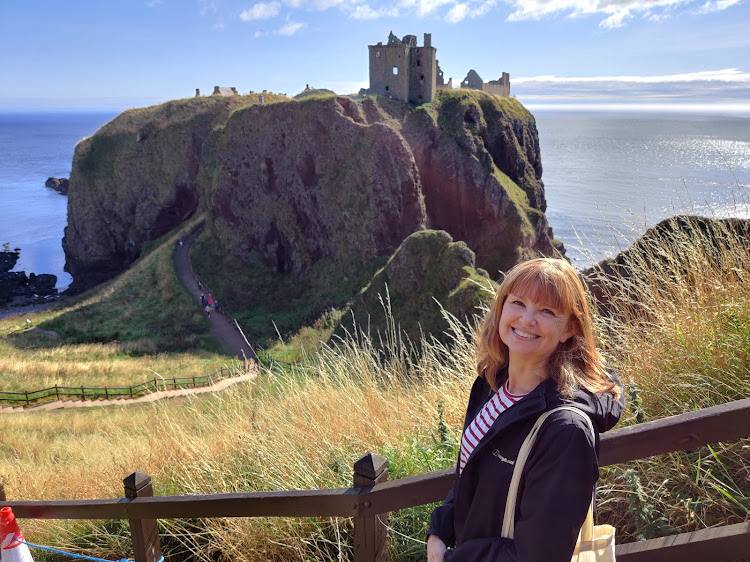
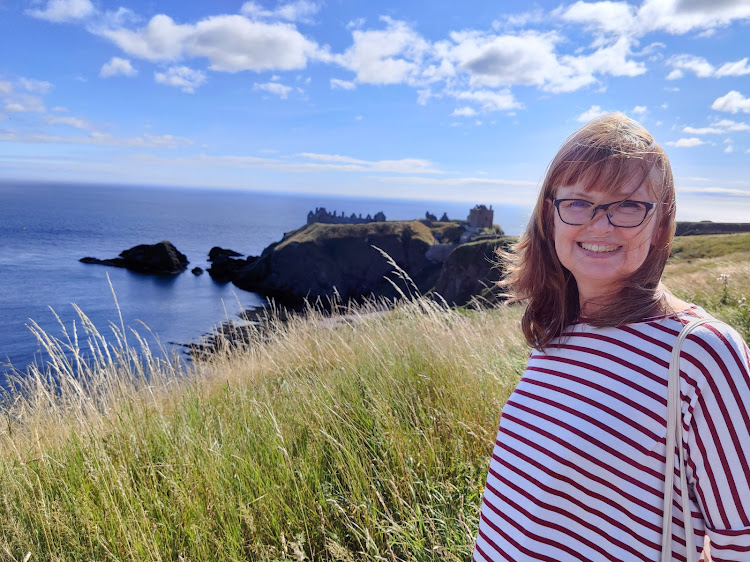
While staying at Thornton Castle, we visited Dunnottar Castle—which is a ruin and is my absolutely favourite castle in the whole world. We visited on a day full of sunshine and wind, and as we left the car park we could see a wind farm which looked as if it was floating above the horizon due to the mist. The castle was reached via steps which drop down from the cliff and then rise steeply to the spit of land housing the castle. The cliff edges are pitted, with large pebbles held by rock, which we were told is called ‘pudding rock.’ It is gradually eroding, so visit the castle quickly, before it tumbles into the sea.
The Perfect Ruined Castle
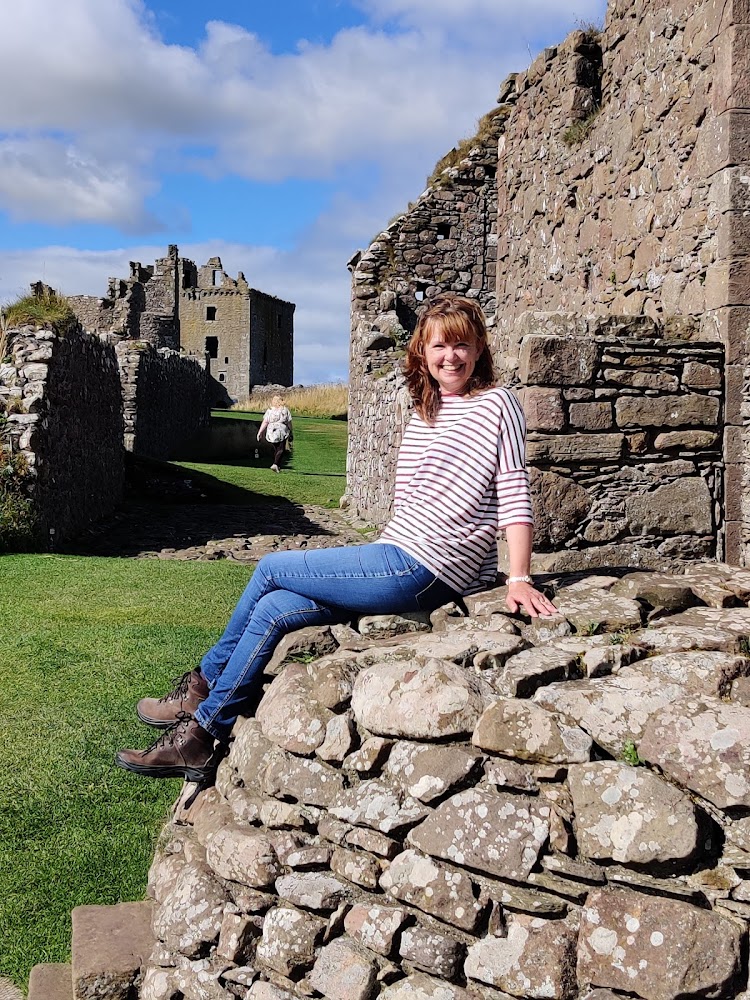
Dunnottar is a complete ruin, the skeleton of the castle reaching towards the sky. Some of the towers still have several storeys, some walls have almost completely disappeared. There are helpful information signs, and we saw the hole where William Wallace (Braveheart) is said to have attacked the British. The dark cavern of the old brewery is said to be haunted by a woman in green who is searching for her children (she has my sympathy, losing children in large buildings like castles/supermarkets is easily done). Seagull cries mingled with tourist’s comments: Mind your head, these guides are beautifully produced for the money, let’s sit here for a bit…
There was a lion’s den in the castle, dating back to Earl Marischal. Apparently his Coat of Arms had a lion, so he thought it would be a good idea to keep a real one in the castle. However, the roaring kept the Countess awake at night, so they got rid of it. Poor thing. The lion, not the Countess.
The surprises of the castle were the well, which is a large pool of fresh water right in the centre of the castle, and the public loos (also right in the centre, and very clean) and the sheer size of the place. It really is the best castle ever.
After visiting the castle, we walked along the cliffs. There is a great walk from Stonehaven, along the cliff top towards the castle. In a couple of places you can climb down to the beach.
Just outside the town, on a hill, is a war memorial. After the first world war, over 200 men from Stonehaven never came home. That would have been a huge percentage of the young men. The memorial looks like a ruined Greek temple, to represent the lives ruined by the war. It also fits very well with the view of the castle, and is very in keeping with the atmosphere of the area. As we walked past, there were several people walking up to look at the memorial, and people running with a dog in tow—it is clearly a dominant feature of the town.
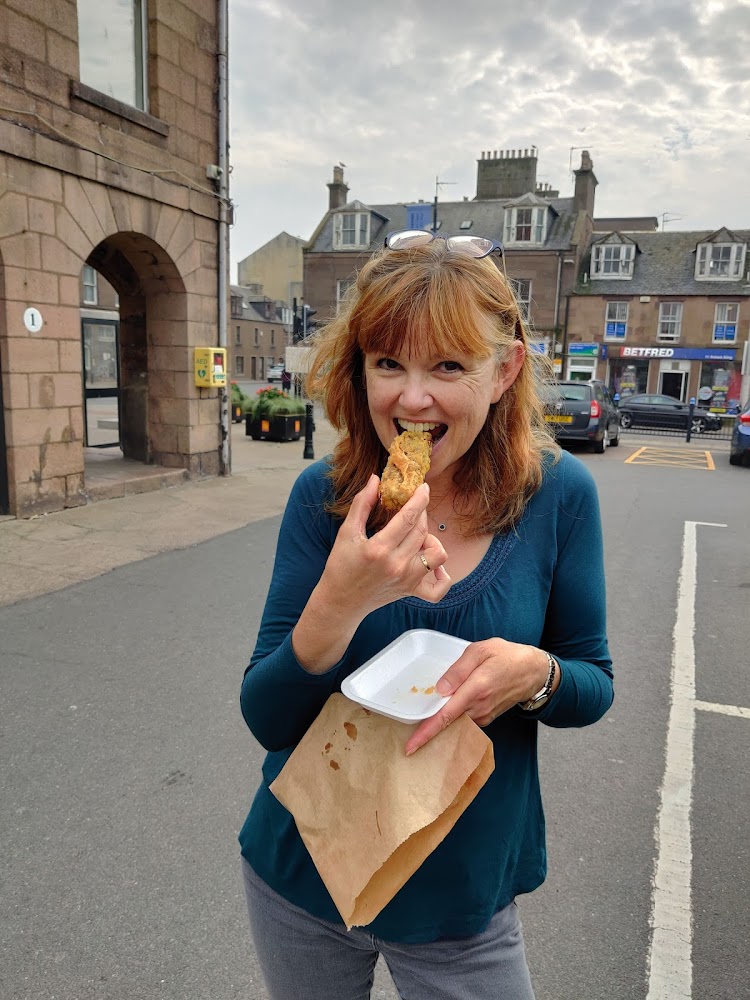
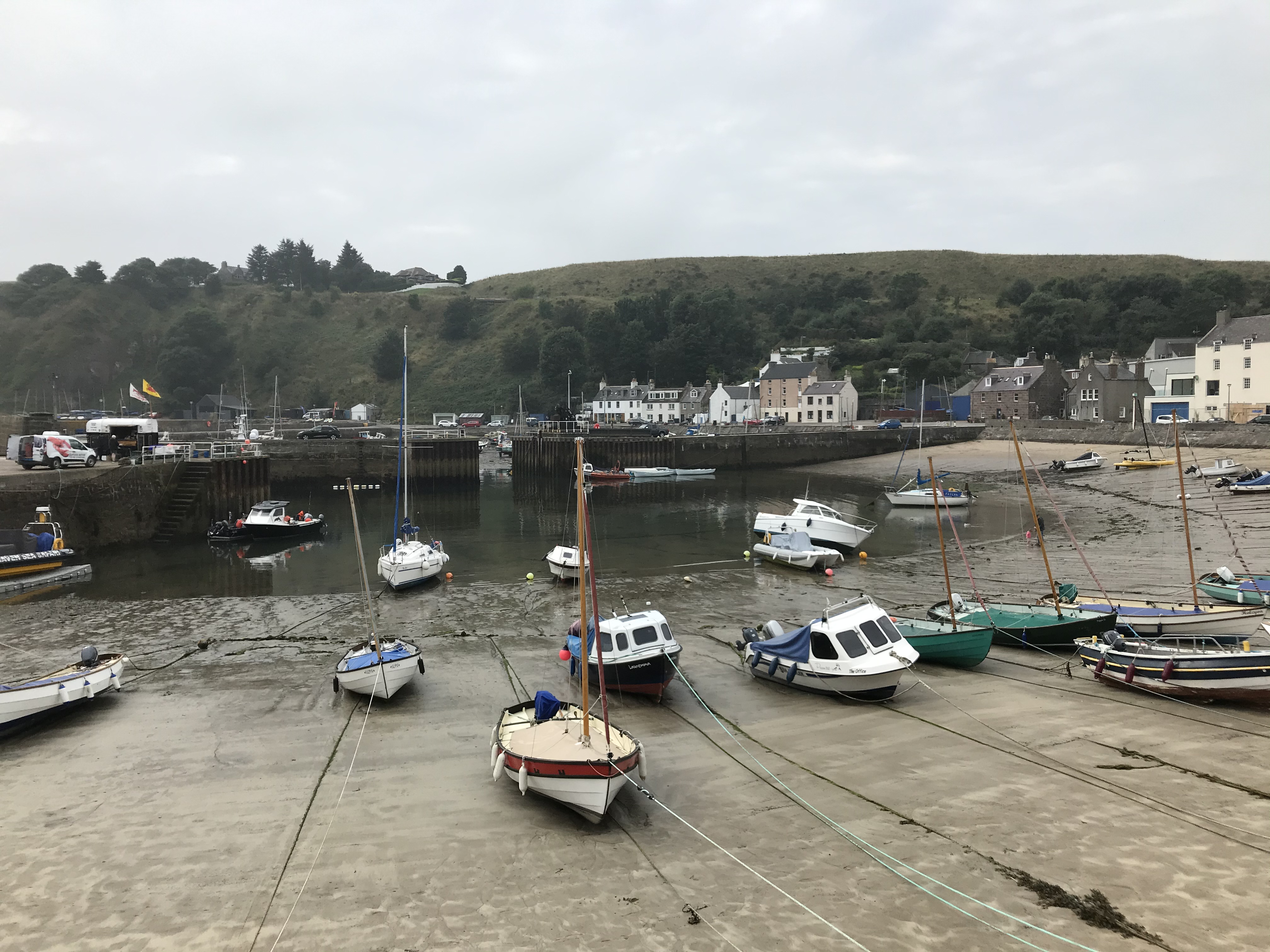
Stonehaven is a fishing town, with a big harbour and some interesting sculptures along the sea front. It is also the home of the deep-fried mars bar, so I insisted that we try it. It was pretty revolting! I think our order was unexpected as it wasn’t tourist season, and so I am guessing that they simply dipped a mars bar into the batter they were using for fish and then fried it in the same vat of oil. It tasted very fishy anyway. Imagine biting into a piece of deep-fried fish, and then finding a melted mars bar inside. The flavours clashed horribly—maybe it would be better with fresh batter, more of a mars bar pancake perhaps.
Tasting a deep-fried mars bar.
Although I cannot recommend the mars bar, Stonehaven is worth a visit. They were busy building sea defences when we were there, so it was quite noisy, but I expect it’s rather lovely most of the time. We found a great bakers to buy lunch from, and then we sat, watching the boats bob on the water and listening to the gulls. A lovely way to finish our holiday.
Thank you for reading about our road trip through Scotland. There are so many places that we didn’t have time to visit, and so many that I hope to return to one day. To be honest, I’m not sure why we spend so much time in Italy and France, when Scotland is easily as beautiful. I guess you just have to be lucky with the weather (and the midges, which were a nuisance when they appeared). But if you have never been, go soon…before the rest of the world realises what a treasure it is.
Take care. Love, Anne x
Thanks for reading. Why not sign up to follow my blog? anneethompson.com *****
Don’t forget, my travel book, The sarcastic Mother’s Holiday Diary, is available from an Amazon near you. It’s a fun read, and makes a great gift.
Now is an excellent time to read my travel book. Happy adventures from around the world. Available from Amazon. *****





































 Anne E Thompson