When we left the little studio flat near Applecross, I wondered what Husband had planned next. We had seen the coast near Glasgow, and enjoyed the canal at Crinan, seen the beauty of Glencoe, and stayed on the islands of Mull and Skye. I doubted that anything in the next part of our holiday could possibly compare. But I was wrong…
On the way to our next location, we passed Eilean Donan castle. I like castles, and Husband had booked us tickets. The castle was like something from a storybook, standing on the shores of a loch.
Eilean Donan Castle (Named after a ship, not a woman!)
Guides told us a little of the castle’s history. Eilean Donan was a ship (not a woman, as I had assumed!) The castle was well maintained, with some rooms furnished to show how they would have been in the past. The guide told us we could see three sea lochs from the window, which excited Husband, who likes canals and heard her say “three sea locks!” Our Scottish still needs some work. The castle was pretty, but again was spoilt by too many tourists. It was hard to imagine how it would have been when walking in a line of people and having to sanitise our hands at the entrance to every room. (I used so many different sanitisers—because the guides insisted we use it—that they started to react with each other and my hands were very itchy!)
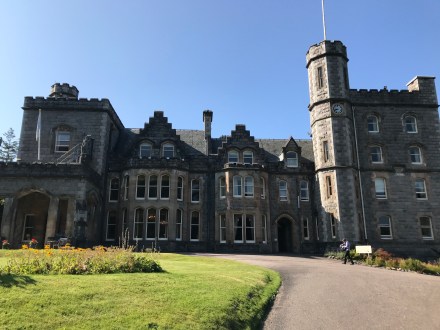
We left the castle and drove to…another castle! Husband had booked a few nights at Inverlochy Castle. Wow! This is a hotel fit for royalty. In fact, Queen Victoria stayed here during her tour of Scotland. What a treat!
Inverlochy Castle What a treat!
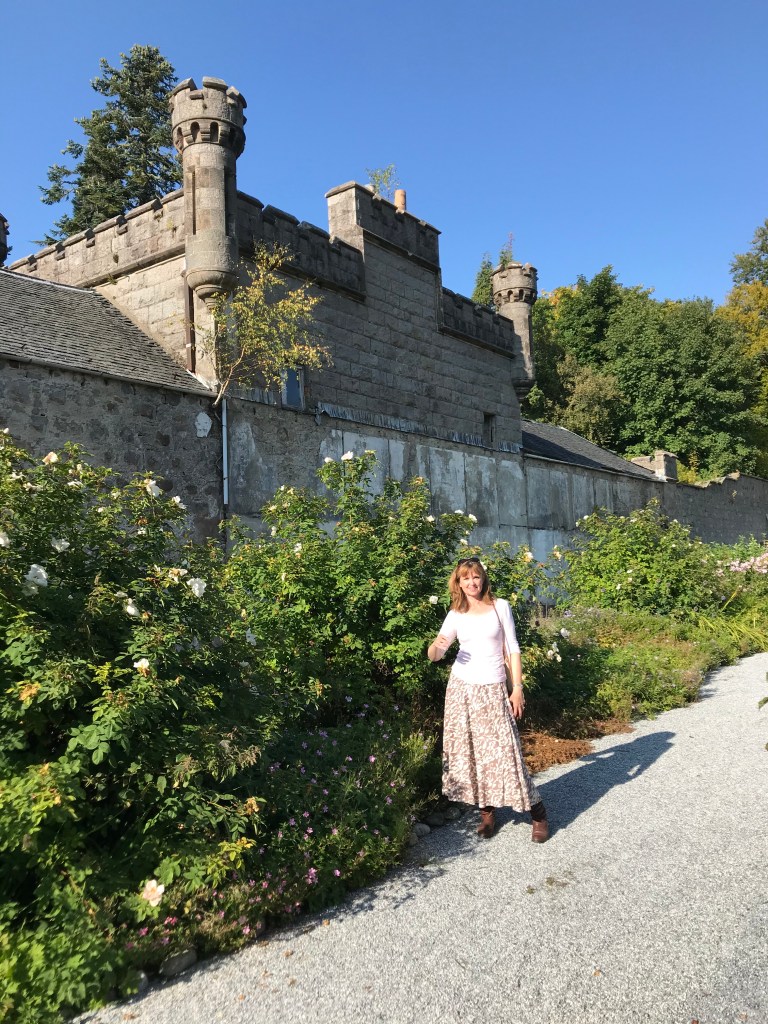
I changed into a skirt so I could swoosh when I walked, and we explored the grounds. They have a walled garden, and a lake with a rowing boat (Husband was keen to row across the lake, but I was too busy swooshing my skirt and pretending to be important.)
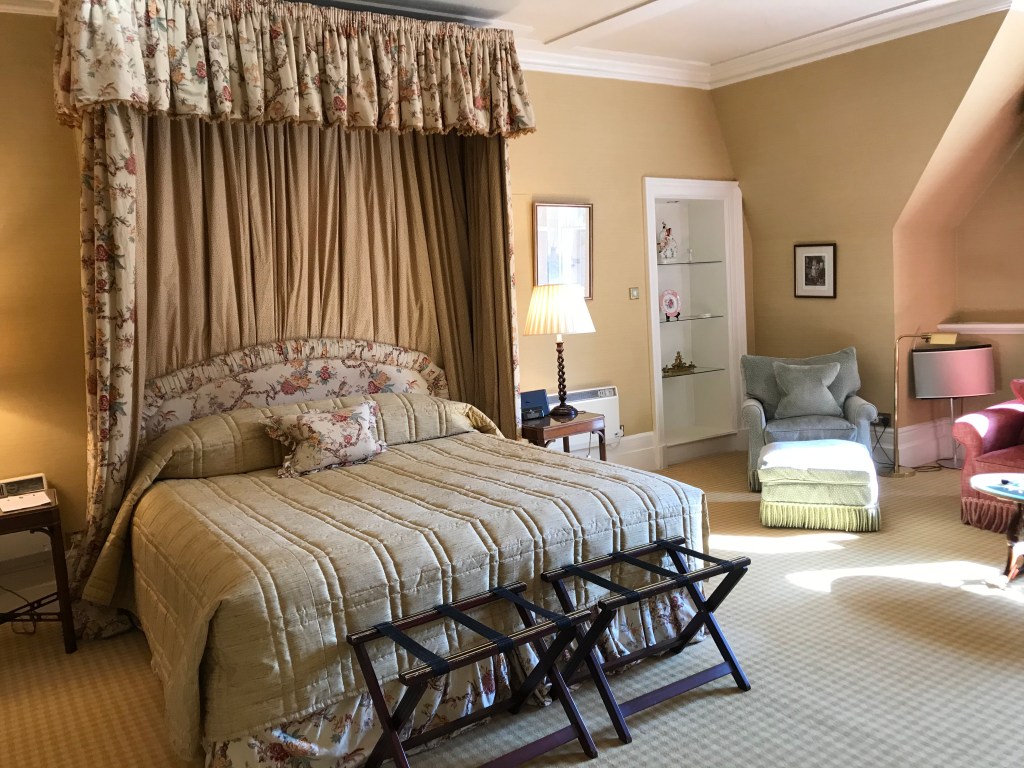
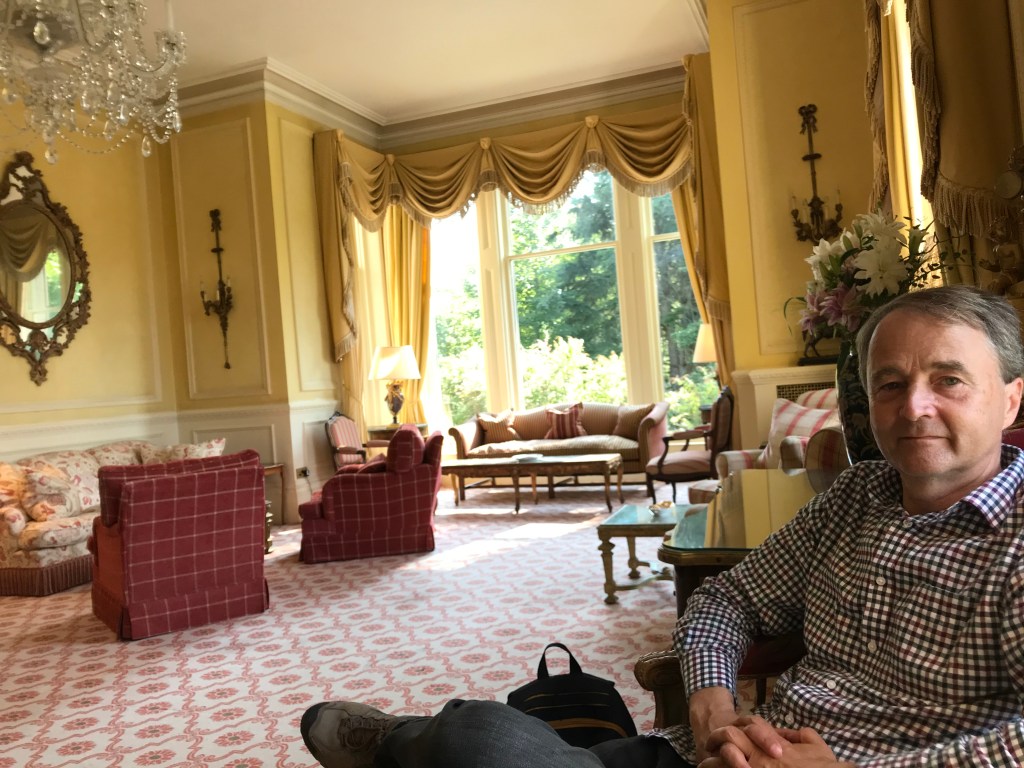
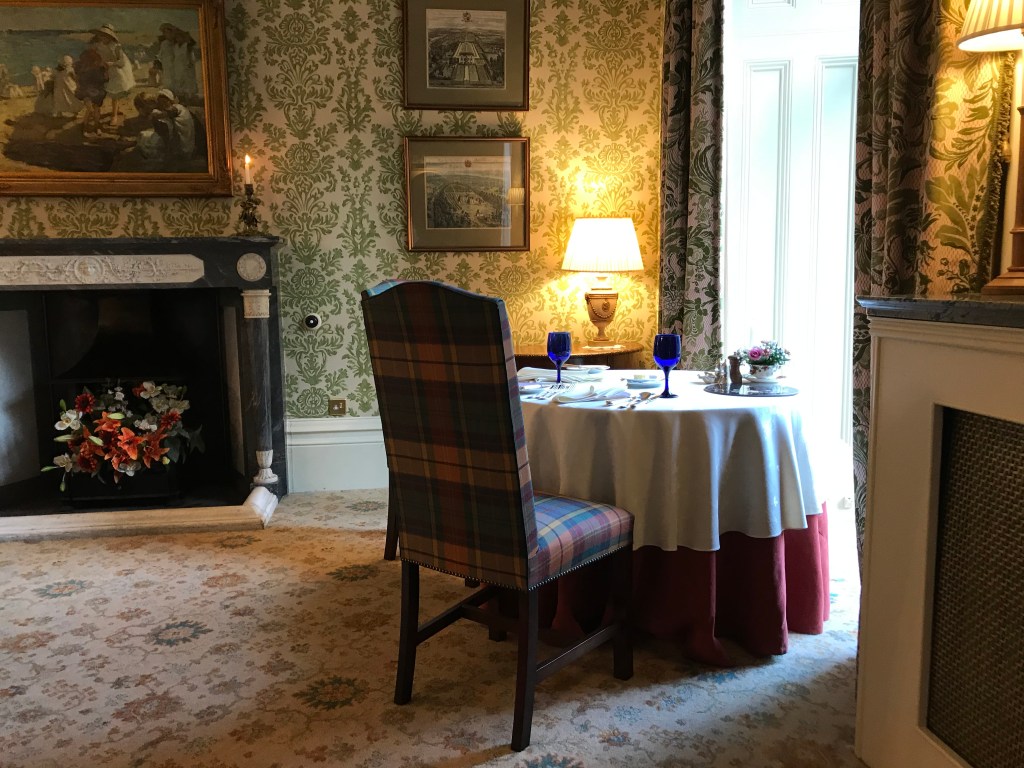
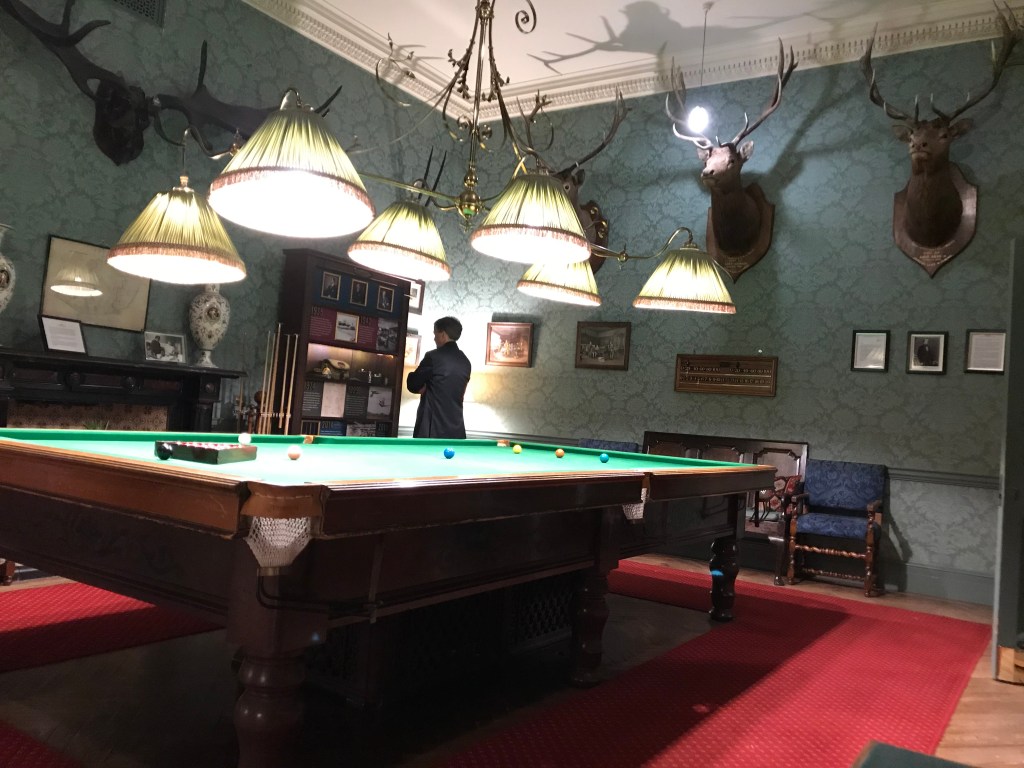
Dinner (6 courses) was in a pretty dining room, and there were drinks first in the sitting room, where there was a fire in the hearth and views across the lawn to the mountains. I don’t usually drink much, and half a bottle of red wine after a G&T was quite a shock to the system! We went back to our room via the rather fine billiards room, but I sat in a big leather chair and wondered if I would make it up the rest of the stairs, so a game of billiards was never going to happen!
Breakfast was an almost silent meal, with silver cutlery and floral china and bit of a headache from the night before. We then walked to the ruins of the old Inverlochy castle. But the road was very busy, and I wanted to just be in our posh hotel and enjoy the luxury of it all.
We had afternoon tea in the lounge, and then went out (somewhere cheaper!) for our evening meal. Breakfast the next day was lovely, and then we packed our bags and left. As we crunched down the gravel drive, I wondered where we were going next. Surely, I thought, it cannot be as extraordinary as staying in this hotel. But I was wrong…
Thank you for reading and sharing our travels.
Take care. Love, Anne x
Thanks for reading. Why not sign up to follow my blog? anneethompson.com
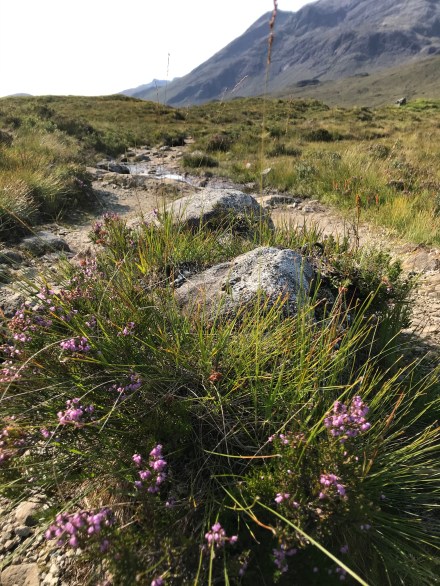
The drive from Skye has everything that is the essence of Scotland: Christmas trees, heather, bracken, lochs and sea and streams, rowan trees, grassy bogs, craggy rocks—all framed by mountains. This is the edge of the Highlands, where long-horned cattle wander across beaches and sheep climb hillocks, and midges swarm round tourists. This is Scotland, and I love it.
We had rented a studio flat with breakfast near Applecross, and we drove there from Portree on Skye. The road (there seems to be only one) was sometimes single-carriage, sharing space with a railway track that ran between us and a loch (or it might have been the sea—my most-asked question was is this the sea or a lake? and sometimes it was only possible to know if we looked at a map).
The mountains were crossed by the same road, twisting round hair-pin bends, rising above the valley, the occasional (too occasional in my view) barrier to stop cars plummeting down the mountain. Then down the other side, the sheer sides of rock blasted by dynamite long ago on one side, slopes of pink heather blowing in the breeze on the other.
Applecross was little more than a road junction, with a few buildings. We followed the road along the coast, past houses that seemed to have been randomly splattered along the cliff edge, until we reached Spindrift, the flat attached to the owner’s house.
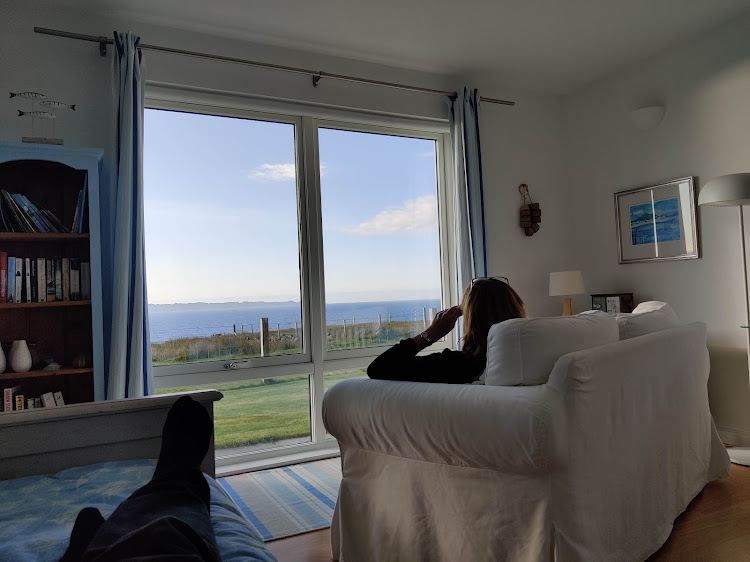
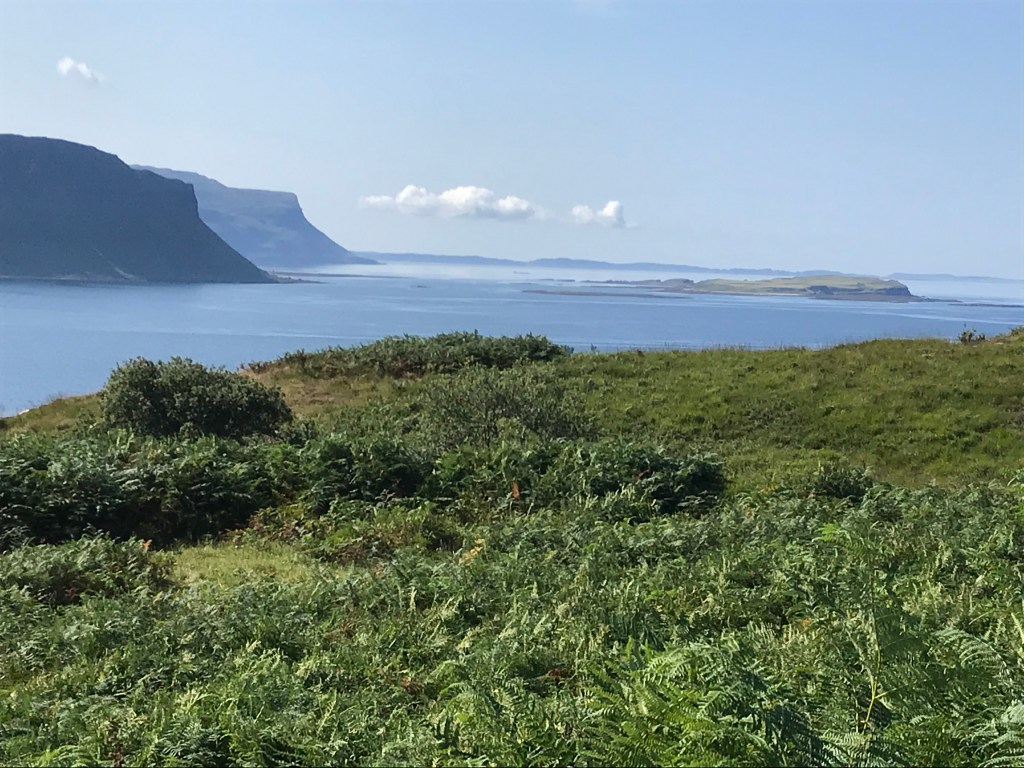
Inside, I walked to the window and stopped. We faced the sea, the sun was shining, and across the water was the island of Rona, with the blue shadows of mountains looming beyond. While I looked, a sheep wandered past the window.
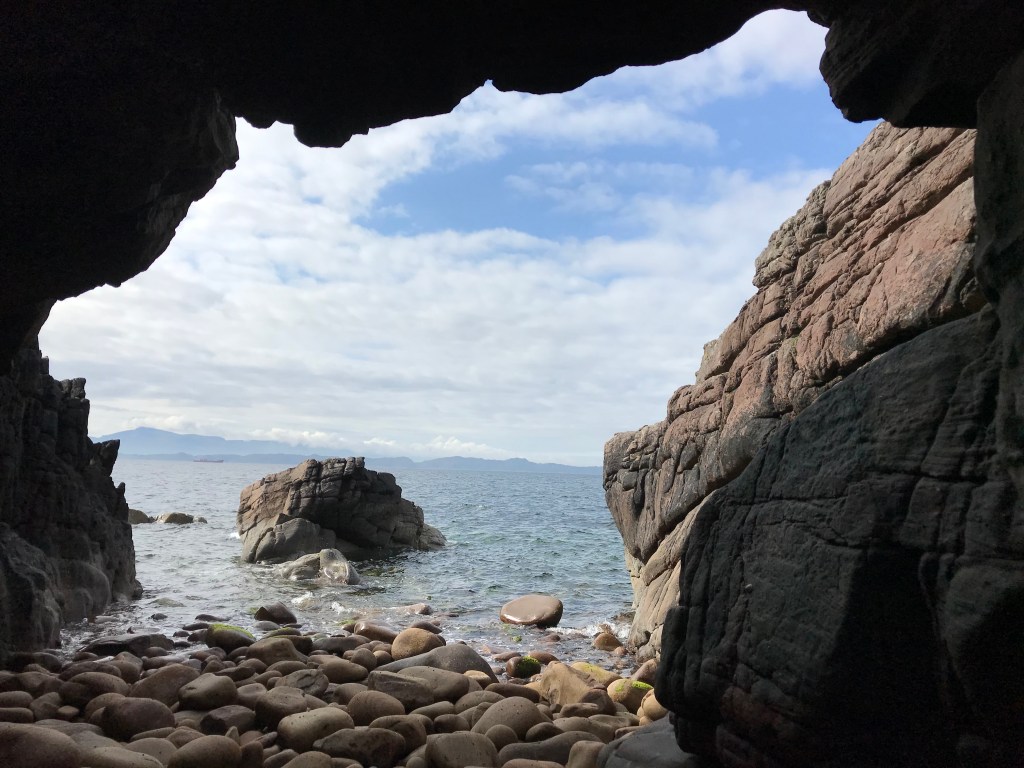
We scrambled down a path (made by sheep I’m guessing) to the beach. There was the tumbled remains of an ancient stone house, and pebbles down to the sea. We walked along, jumping from giant pebble to giant pebble, sometimes detouring to keep our balance when a stone wobbled. After about 200 metres, we arrived at the stone archway, carved by the sea, reaching over a pathway of rocks. We walked into the cold shadow beneath the arch, then out into the sunshine next to the waves. A solitary space.
When we returned to the house, I found my binoculars and scanned the water for whales or dolphins or seals. The waves part and black skin flashes in the sun before gliding back out of sight. I have no idea of perspective, no idea if I am seeing otters or whales, but I am certainly seeing something and that’s exciting enough.
Searching the sea for signs of life. The occasional sheep would wander past the window and stare in at me.
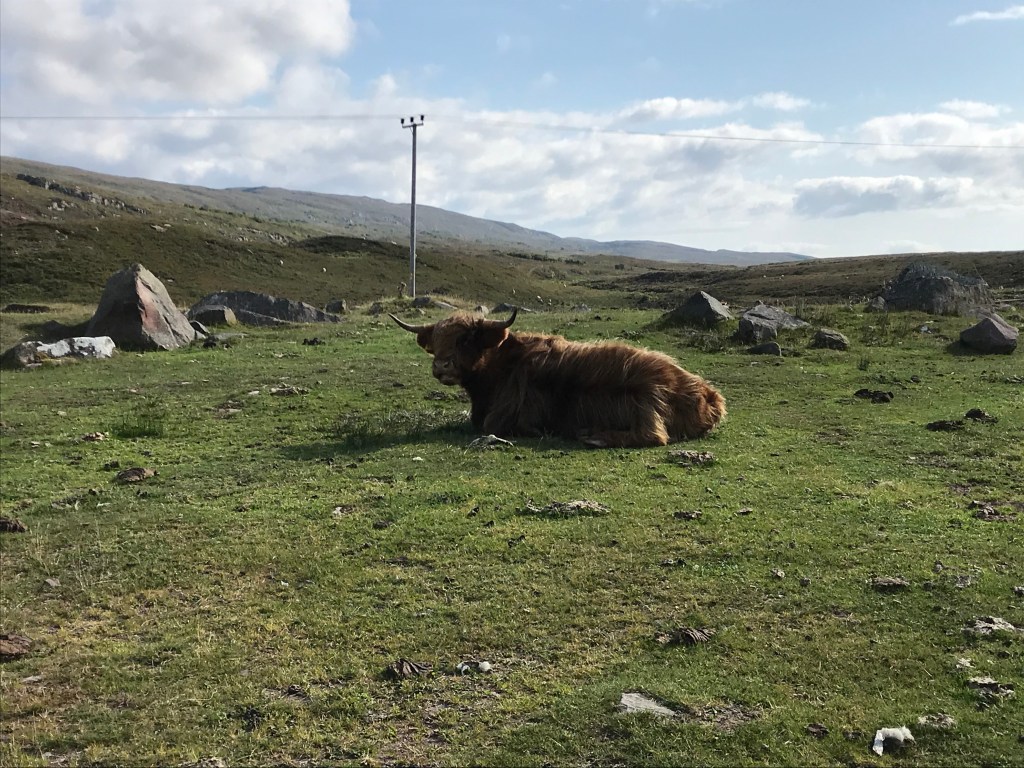
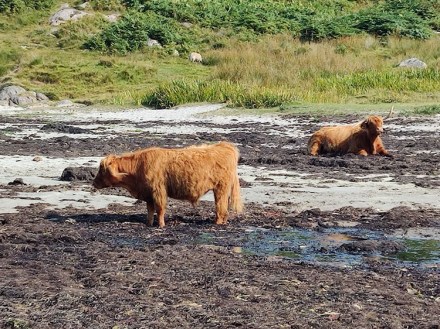
Later, we strolled along the cliff top. Something big and black was in the water—a submarine! We watched it drift away. There were Highland cattle wandering the cliffs, their sharp horns curled like Viking hats. One had a calf, creamy and shaggy and unbelievably cute. Some sheep had settled next to one of the many passing place signs, looking for all the world like they were waiting for a bus. Midges floated around us, but there was a breeze, so we only saw a few and they were only a bother when we stopped walking to look at the view.
This place is perfect, the most beautiful place I have ever visited. The peace is a tangible thing, there are miles in every direction of unspoilt countryside.
When we drove to Applecross for dinner, we could see the jagged mountains of Skye across the water. It is almost more beautiful from here than it was when we stayed there. We ate in The Walled Garden restaurant, where the food wasn’t as nice as the menu, but it was clean and friendly and set in the walled garden of a big house, so the outlook was pretty. I chatted to a couple on the next table, we discussed the beauty of Scotland and the annoyance of midges, and the woman gave me her midge repellent (Smidge) because it was nearly empty and she had plenty more, and because she was very kind.
On the way back to the flat we saw a herd of deer on the hillside, they raised their antlers as we passed and stared back at us, deciding whether to run. Beautiful.
The owner of the property was waiting when we returned, and she gave us warm bread for breakfast tomorrow. She had filled the fridge with salmon and ham and cheese, pots of yogurt and fresh milk. On the shelf was butter and marmalade, sachets of porridge and a bowl of eggs. Tomorrow we will eat salmon and scrambled eggs, with a pot of coffee. The perfection will continue.
Images of Scotland
Thanks for reading. More of my travels through Scotland in future blogs. If you want to stay at Spindrift, it’s a studio-flat, with a tiny kitchen area (sink, fridge, microwave) a modern bathroom, and a view to die for. Breakfast is provided. (spindrift-applecross.co.uk) We booked it through Airbnb.
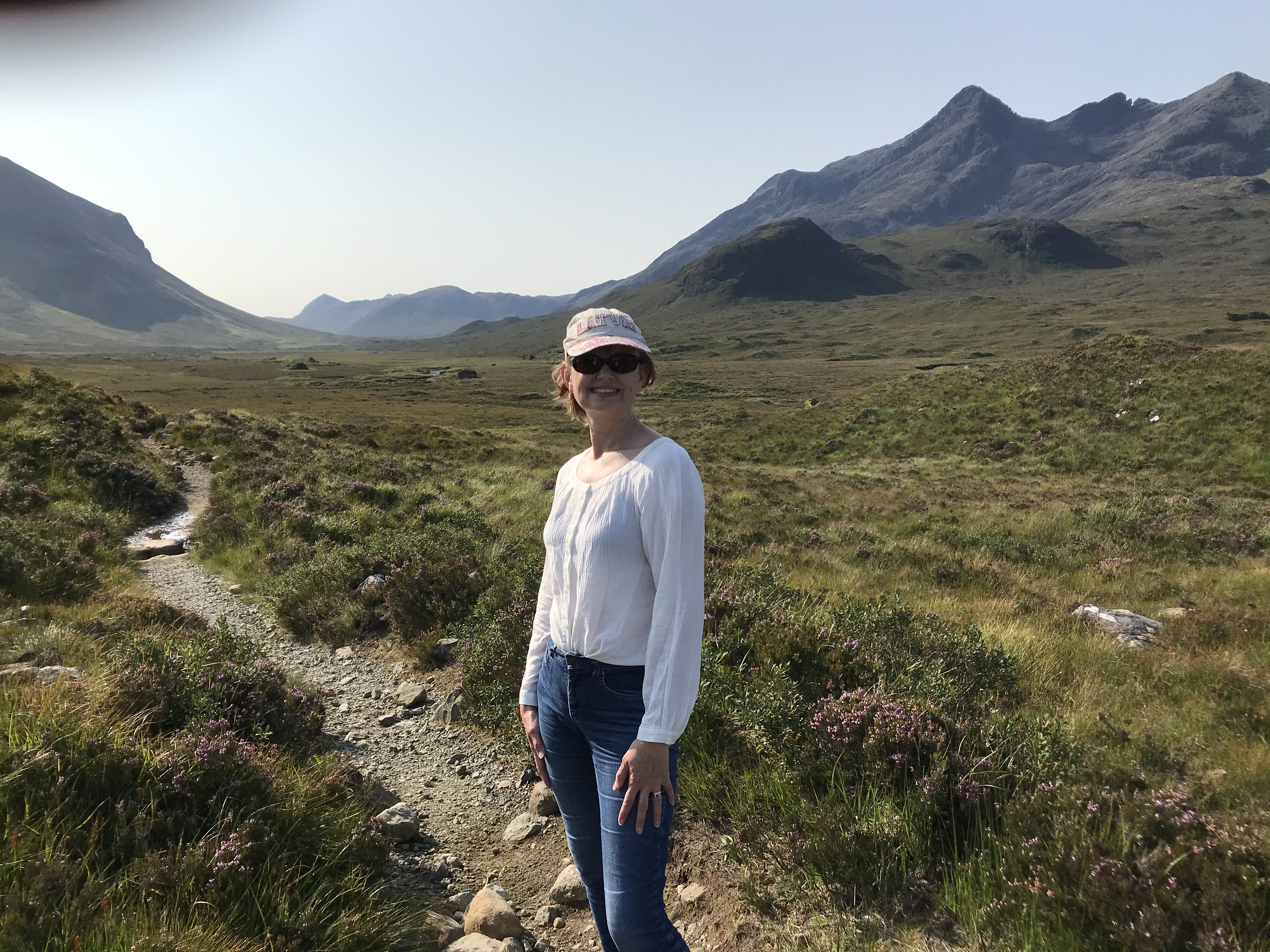
I thought Skye was the most beautiful place in the whole world. Perhaps it is. It was sunny while we were there, with a fresh breeze that blew away the midges, and we walked in the valley between mountains and watched an eagle (a real eagle for goodness sake!) swooping. I have shared my photo, but brace yourself—I’m not the photographer my sister is.
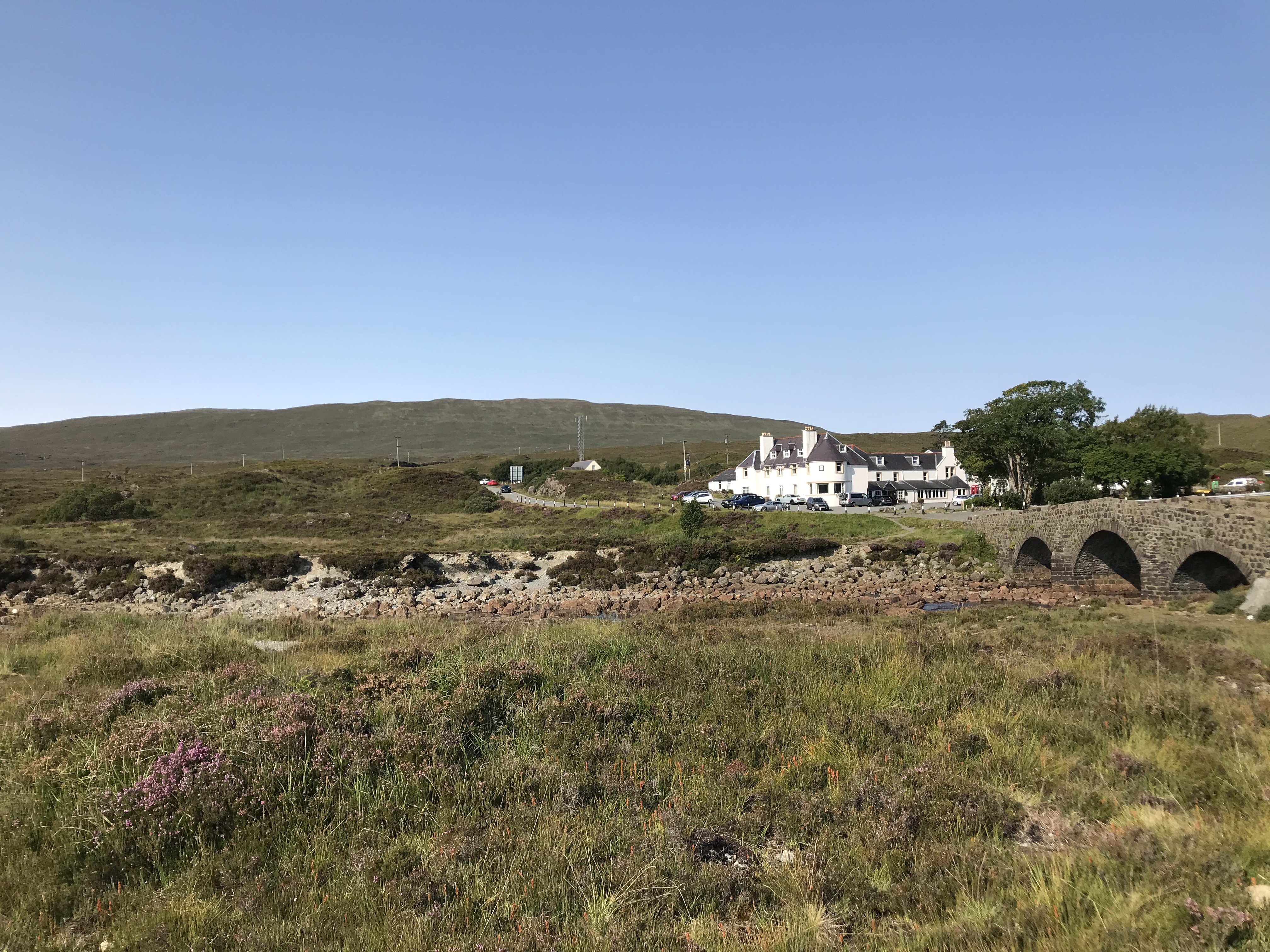
We stayed at Sligachan Hotel for one night, and we had a room in a tower, which was pretty exciting as I have never stayed in a tower before. We then drove to Portree, through more amazing countryside, and stayed for a few days in a little Airbnb on the hill. It wasn’t very fancy, though I was delighted to find it had a washing machine after 2 weeks on the road. It also had a view down to the harbour, and across the hills to the mountains we had walked through. Really, you cannot get enough of looking at those mountains.
Walking at Sligachan.
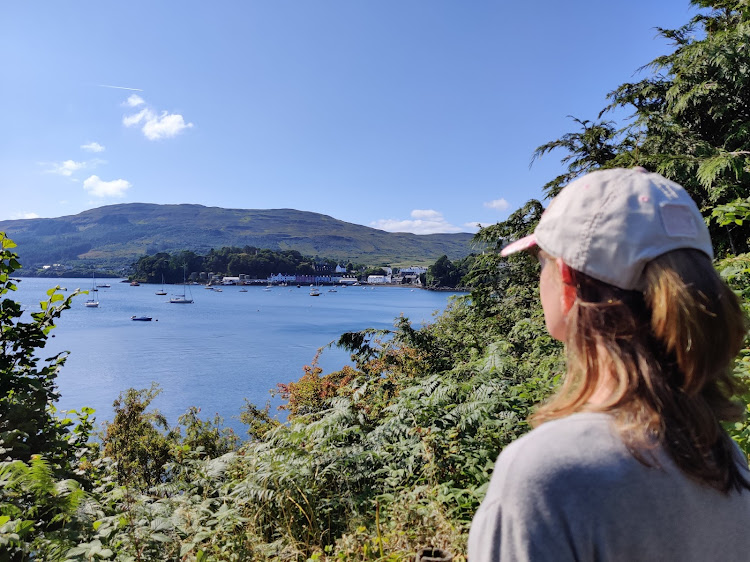
The harbour at Portree is pretty, with painted houses and hills. There’s a lump of land, called The Lump, which today is a viewpoint and in the past was where they used to hang people. Nice place to die.
We drove to the Quiraing one day, which is an area of interesting geology because the earth has sort of slipped off the rocks. We didn’t really see any of that, as the weather was bad (or possibly ‘normal’ for Scotland) and it was misty. There were clouds of midges, but luckily we had bought some clever pop-up hats with midge nets. It was actually quite fun to wear them (and better than having my face covered in midges dying in the Avon oil I had bought). We also saw a dead sheep (but that’s probably not a great incentive to visit).
There were some lovely walks from Portree, with footpaths next to the coast, past fish farms. We looked across the water to islands, searched for otters (didn’t see any) and always those mountains, standing tall in the background. Too beautiful to describe.
There is a waterfall on Skye where the water falls into pools made by the rocks. The Fairy Pools. They are lovely, but when we visited there were so many people it was spoilt. We slogged up the hill feeling hot and avoiding people, then walked back to the car. Better to visit in the winter I expect.
Fairy Pools
Our best dinners were at Dulse and Brose. We shared a wonderful fish platter, complete with pickled herrings and heaps of crab meat. We ate so much good fish in Scotland—worth visiting for that alone.
When we left Skye I promised myself that one day I would return. It was such a beautiful place. I wondered where we were going next, and whether it could possibly be as lovely as Skye. Well actually yes, it was! I will tell you about it in my next blog.
Thank you for reading.
Take care. Love, Anne x
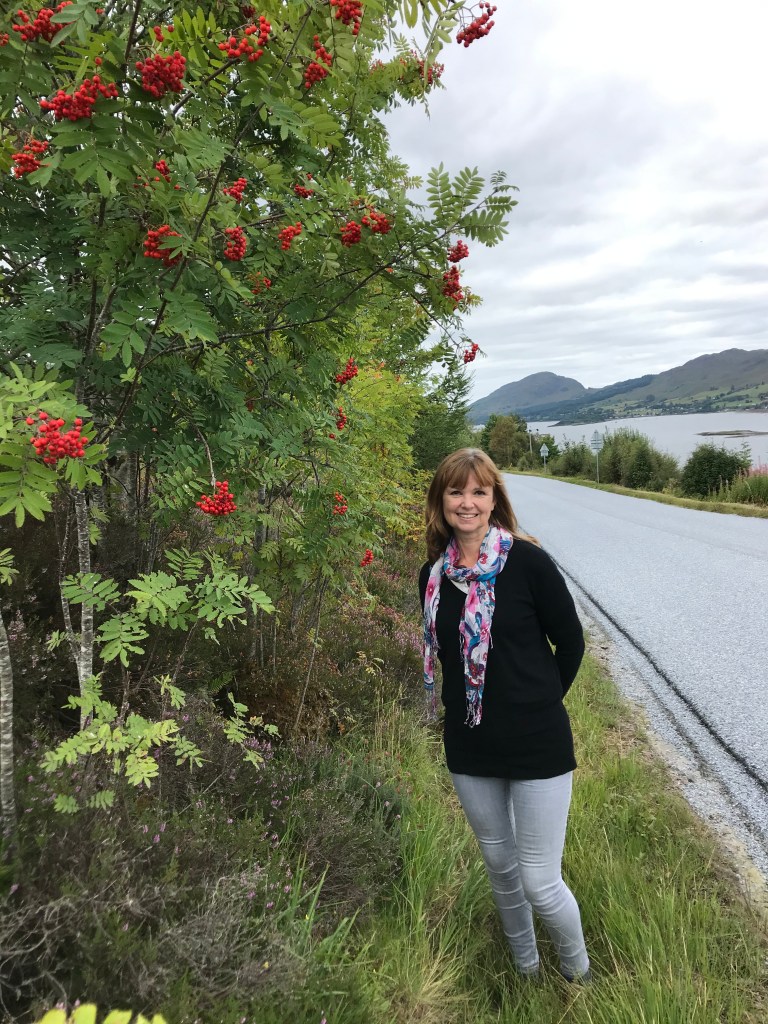
Scotland has lots of Rowan Trees Thanks for reading. Why not sign up to follow my blog? anneethompson.com
We caught the ferry from Oban to Mull. It was very efficient; these ferries cross the water regularly and so although August brings more tourists, the service ran to time. We arrived too early to check into the hotel, so we drove the long way round the island. Mull is beautiful. I had thought Glencoe was the most beautiful place in the world, now I wasn’t so sure.
The sun glinted from the sea at every corner, and tiny islands grew from the surface. Birds swooped, and sea otters dived in the lochs. Actually, we never saw a sea otter, but the rest is true. I spent many peaceful hours searching the waters and not seeing an otter.
The island has about three roads. Only three. They are single track, with passing places and signs telling tourists to use the passing places so the locals can pass. I wasn’t sure the locals especially like tourists. We paused in a passing place—a big one that fitted three cars—and a passing local stopped just so he could shout at us and tell us not to use the passing place to take photos. We hadn’t left the car, and there was plenty of room for several cars to pass—like I said, I’m not sure that locals like tourists.
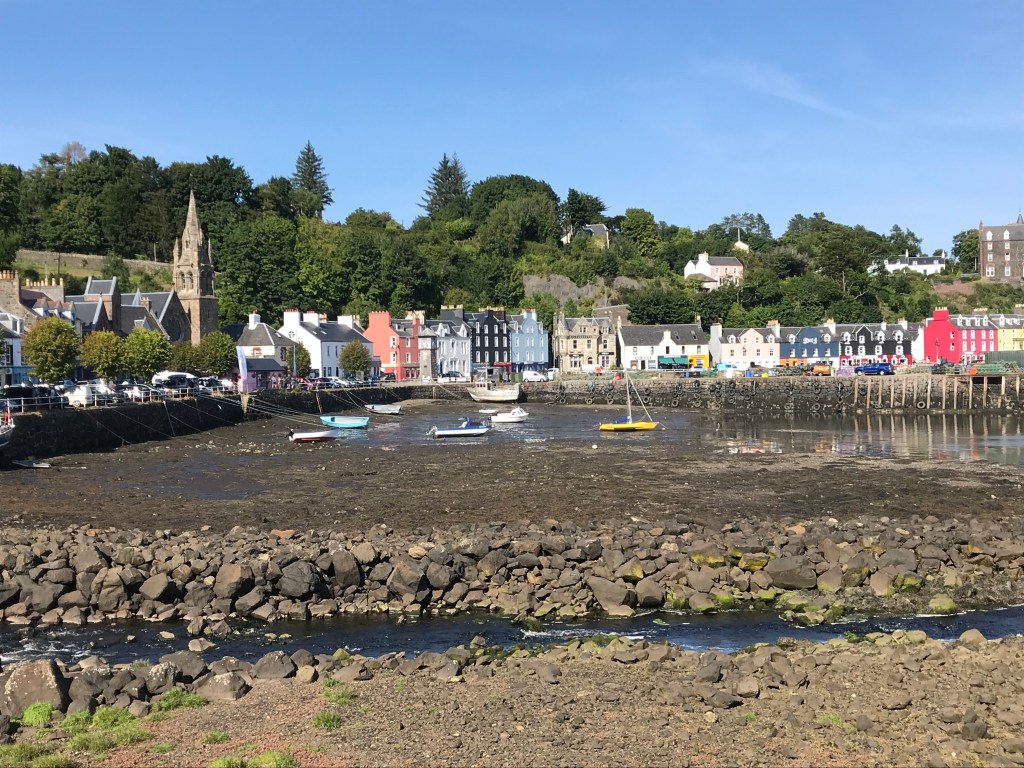
We drove to Tobermory. If you ever watched the children’s show Balamory then you will recognise Tobermory. Same place, but the inhabitants are way less bouncy. We were staying at the Tobermory Hotel (though they wouldn’t let us check in until the correct time—like I said, I’m not sure that locals like tourists). We wandered around the town, with its painted houses and pretty harbour. There were a few gift shops, but everything was hideously expensive. When we were allowed to check in at the hotel, we were shown to a lovely little room, with a view over the harbour. The bathroom window had no blinds, and only the bottom half was frosted, so I hope none of the many people in the harbour ever looked up. Nice view for us though.
The best thing about the hotel (for me) was the breakfasts. Lots of fresh fruit, good coffee, a selection of hot food cooked to order. Husband ate the full Scottish breakfast, I had the porridge. This was very good porridge (I had eaten some pretty rough porridge so far on our trip). Probably not the reason most people visit the island for, but worth bearing in mind if you’re planning a trip.
One day we visited the little Tobermory distillery. The tours were all cancelled (due to Covid) but they offered us some whisky to taste (note: whiskey from Ireland, whisky from Scotland). One tasted much like other whiskies I have tasted, the other was like liquid charcoal. I am not a fan of whisky. Husband bought a bottle of the charcoal variety and raved about how lovely and smoky it was. (I was very pleased, as this unexpected extravagant purchase paved the way for me to buy all sorts of lovely things!)
Our best meal was at Cafe Fish, which is right on the harbour, with boats arriving to unload fresh seafood while we ate. Great place for a good fish dinner.
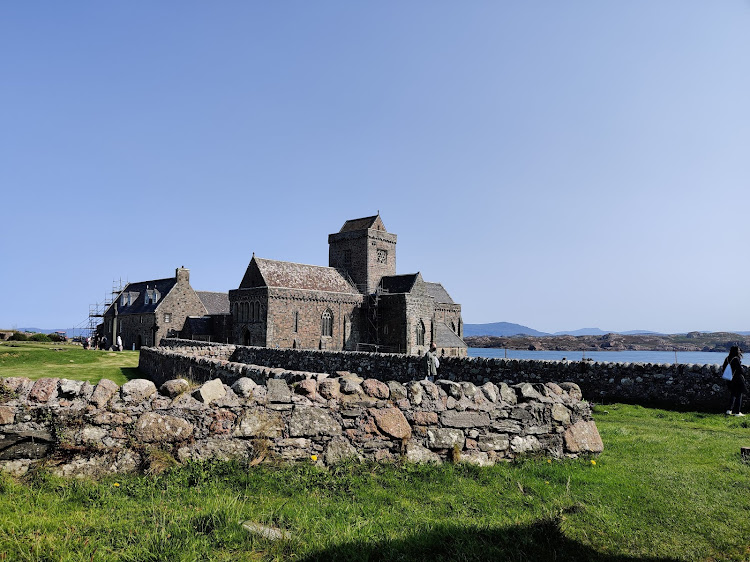
Another day we drove to Fionphort and caught a ferry to Iona Island. This was very small and peaceful and is where St. Columba arrived in 563 and founded an abbey. This was the first time Christianity arrived in the UK, and was not very long after the Christian Bible was compiled, so it is a significant place. It also has seagulls and grassy hills and ruins and a few cottages clustered near the water. The modern-day Abbey is used for ecumenical retreats, because the monks all left in the 1500’s. The island was nice, but I didn’t particularly rave over it. Maybe there were too many tourists. My favourite part was the Highland cattle that had wandered onto the beach.
We left Tobermory and caught the ferry to Skye. I thought the Isle of Mull was the most beautiful place in the world. I was wrong…
Thank you for reading about our road trip through Scotland. I will tell you more in my other blogs. We visited several islands, and even stayed in a castle. Such an adventure!
Take care. Love, Anne x
Thanks for reading. Why not sign up to follow my blog? anneethompson.com
After staying in Crinan, we drove to an hotel in Onich, which overlooks Loch Linnhe. This was the first time (of many) that I asked: “Is this the sea?” because it was hard to know. It joins the sea, but is a lake (or loch, as it’s in Scotland).
We stayed at Lodge on the Loch. This is a hotel that has seen better days, but the rooms were large and clean, and the staff were friendly (there just weren’t enough of them). If they buy some beds that don’t sag in the middle, and employ a few more people, then it could be lovely again because the position is wonderful. Our room overlooked the loch, and we were a short drive from Glencoe (possibly the most beautiful place in the world) and Glen Etive (also beautiful and with fewer people).
In August, as well as beauty, Scotland has midges. Our first walk in Glencoe, once we had managed to find a parking place, we were beset with midges whenever we stopped walking. Tiny insects that float around—later in our travels we had one day when the air was thick with them. I had bought some ‘Skin-so-Soft’ from Avon, which was rumoured to protect against midges. In my experience, it didn’t keep them away, they simply died in the oil, so my skin was covered in oil and drowned midges. Not a highlight.
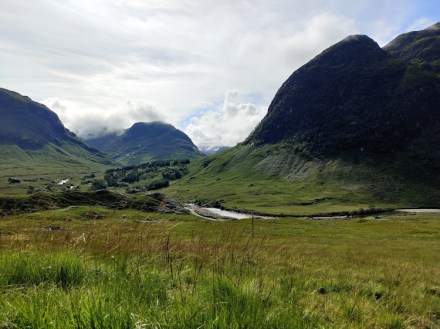
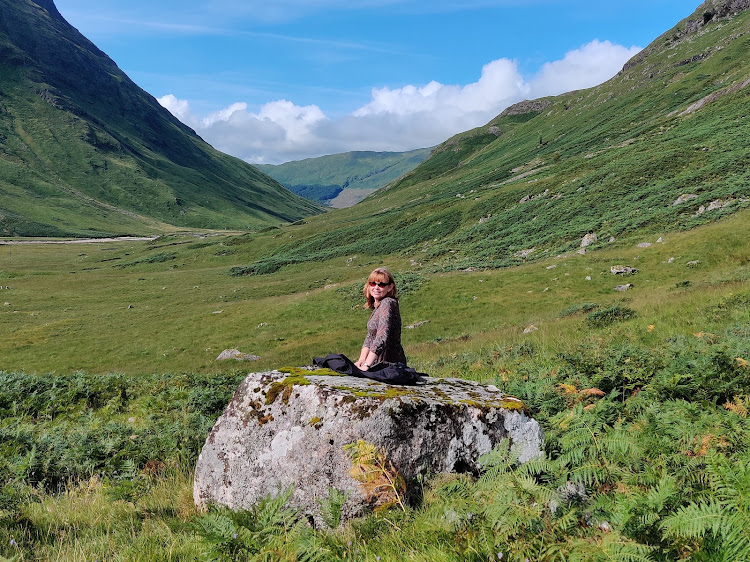
Not much could detract from the beauty of Glencoe though—not midges, nor the swarms of other tourists who were there. Mountains reaching the clouds, green valleys, waterfalls and rivers. Hard to think of a more beautiful place.
Beautiful Scotland
The following day we drove to Glen Etive. More beauty, with mountains, forests, waterfalls. We watched some canoes swooshing down the bubbling river, walked to a waterfall, enjoyed the peace.
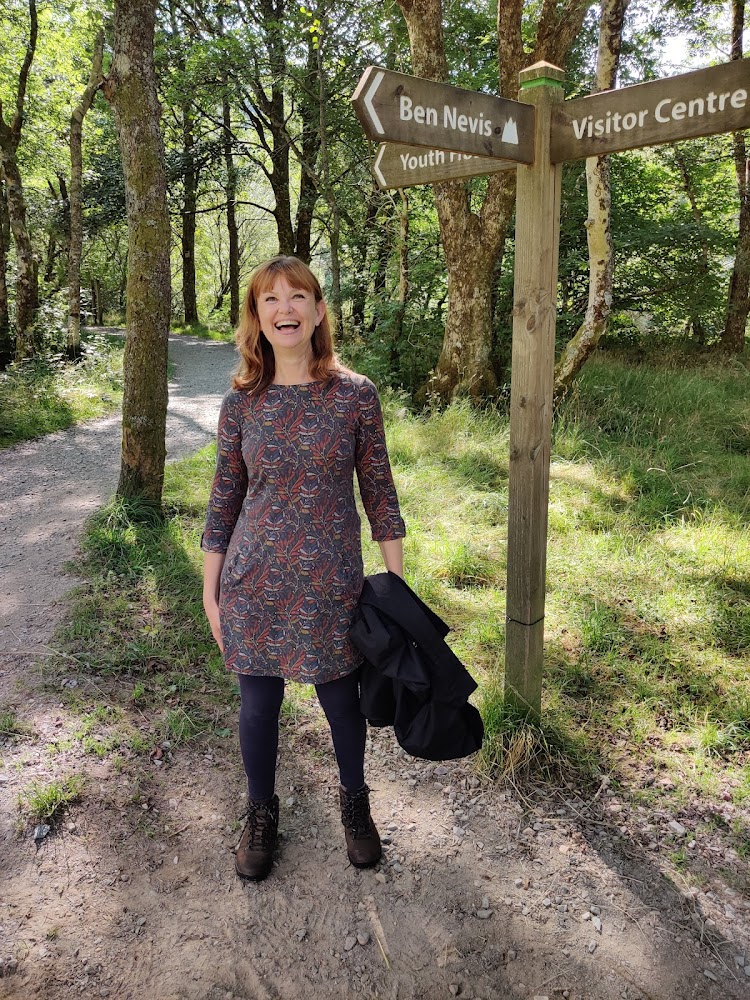
Lodge on the Loch is near Ben Nevis, so I persuaded Husband (who had a headache) that we should stroll up the mountain for a short while. The day was sunny and hot, and we arrived as most people were leaving. The mountain is well-signed, with a clear path (if you choose the easy route) and a cafe at the base. We chatted to a man who had started the climb that morning, and it had taken about 8 hours to the peak and back. He was drinking his fifth can of lemonade.
We joined the flow of people on the path, and walked up for about an hour. It was easy walking, with no scary edges. But in the sunshine, it was very hot. I was wearing a thick dress, and switched it for Husband’s cotton shirt because it was simply too hot to walk. After an hour, we came to a point where the path grew steeper, and although going up would be fine, I knew it would terrify me coming down (plus it was only meant to be a stroll) so we turned back. Probably I cannot claim to have climbed Ben Nevis (not sure a quarter of it counts) but nice to have done it.
Not really properly dressed to climb a mountain.
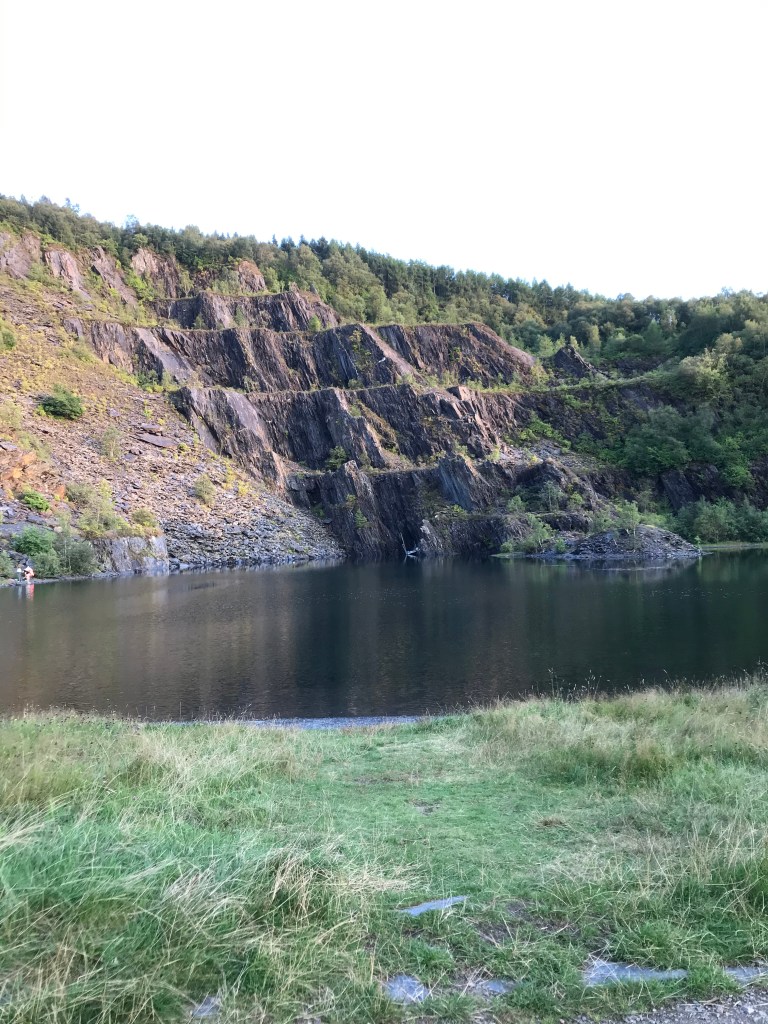
We ate in a lovely pub called Laroch in Ballachulish. Ballachulish was a tiny community that grew up around a slate mine. There were information signs, and we saw the flooded mines, and white worker-houses and imagined a time when their hobnailed boots would have rattled through the village on their way to the mine. The food in Laroch was brilliant—worth a visit if you’re in the area.
We left the hotel at 7 the next morning. My back was painful due to saggy bed, so I wasn’t sure the day would go well. We were due to catch a ferry from Oban to the Isle of Mull. I had thought Glencoe was the most beautiful place on earth, and that I had seen the best of Scotland. I was wrong, so very very wrong…
Thanks for reading. I will post more blogs of our travels through Scotland in the next few weeks. It was all planned as a surprise, and we stayed in some amazing places (including castles) so I hope you enjoy sharing the adventure with me.
Take care. Love, Anne x
Thanks for reading. Why not sign up to follow my blog? anneethompson.com
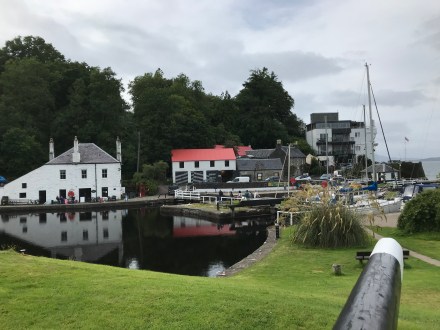
The Crinan Hotel is two hours north of Glasgow. There’s not much phone signal, so Google maps gets confused and places the hotel round the corner, whist it actually has prime position overlooking Loch Crinan off the sound of Jura (look at a map of Scotland, and it’s on the left, about half-way up).
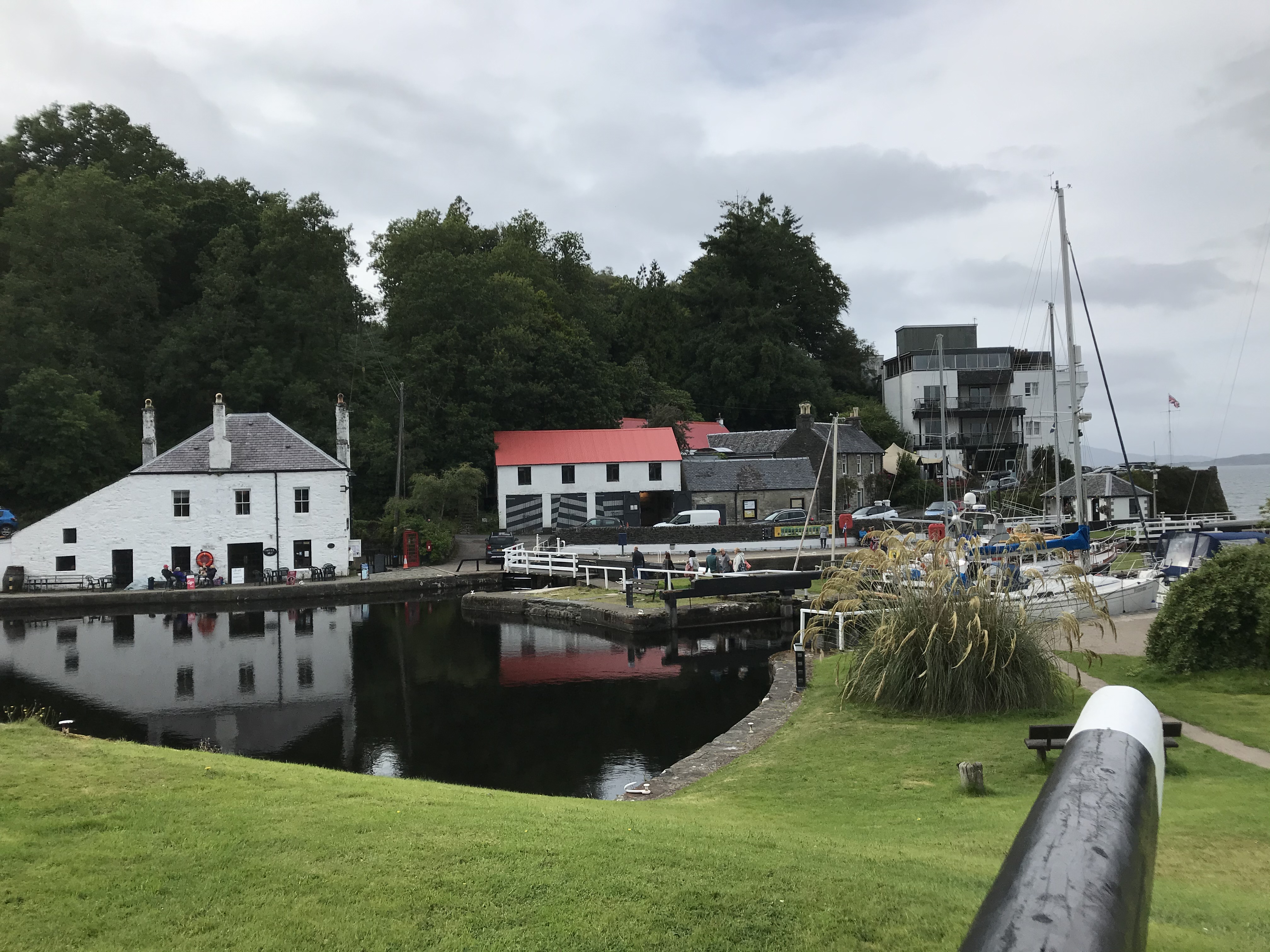
We arrived early afternoon, and followed the winding lane past whitewashed cottages down to the canal, then up to the bend in the road—which is basically the whole of Crinan in a single sentence. There were signs on the hotel door requesting that guests wore facemasks in the hotel, and lots of other signs and photographs and paintings, all muddled together in a visual feast of nostalgia. You knew instantly that this hotel was personal to someone, and they loved it.
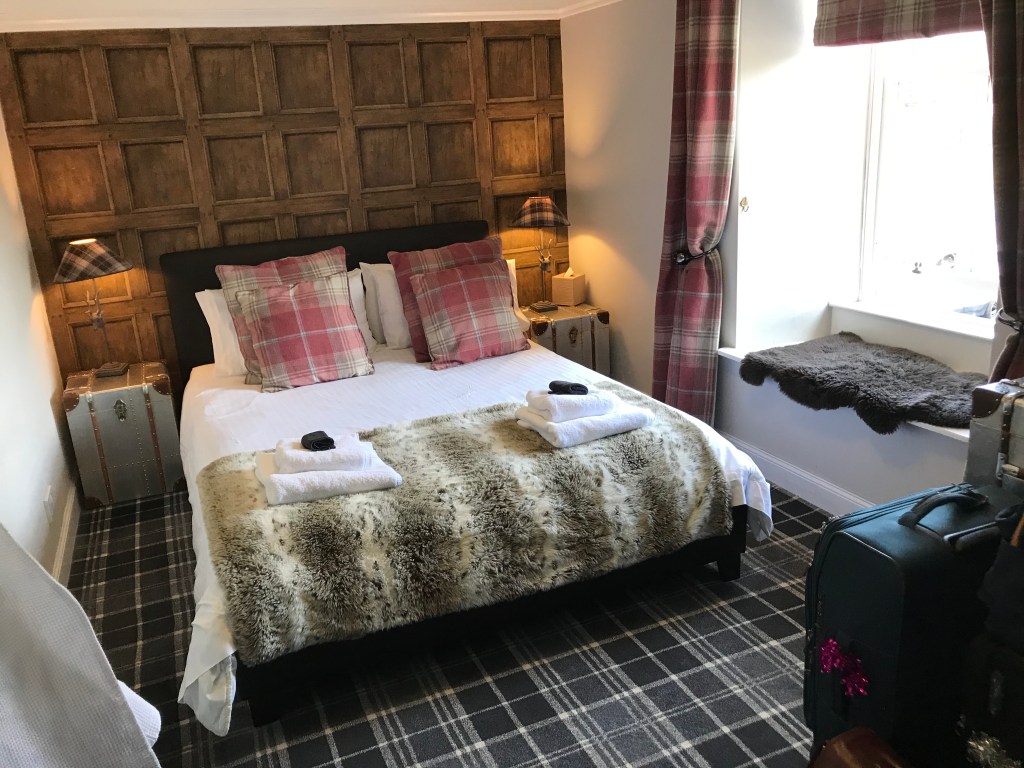
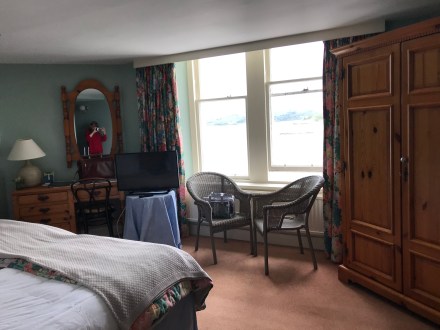
Pretty bedroom.
We checked in, and dragged our cases into the tiny lift (which closely resembled an upturned freezer). Our room was on the second floor, and the metal key was attached to a large, too-big-for-a-handbag wooden fish. The room was lovely, with a large window overlooking the loch. There was wooden furniture, and uneven floors, and a single vase with fresh flowers. In the wardrobe was a tray set with tea things and a tiny kettle, with a note telling us to ask reception for fresh milk. Everything looked clean, cosy, and slightly dated. I loved it. Very Miss Marple. All we needed was a body in the lobby and we would be in the quintessential English novel.
There was no safe in the room, but it all felt very secure so we left our stuff and wandered along the tow path. Husband loves canals, and enthused happily about how many locks would be needed for the boats to climb the hill behind the hotel, and why they had built the entrance to the 9-mile canal in Crinan, and not further round the coast (later investigations showed the water was a giant sandbank, so the canal needed to provide deep water from Crinan onwards). It was easily ignored as cheery background noise while I absorbed the water birds, and reflections on the loch, and the absolute peace of the area.
We ate dinner in Tayvallich (quite an adventure, but for another blog). Spent the evening trying to find Duntrune Castle, which the room information said was opposite the hotel, but all I could see through the binoculars was a big house. Went to bed. Slept well.
The following morning started at 6.30 when the people in the next room began to stomp across the creaky floorboards and turned on the noisy fan in their bathroom. The night had been silent though, so no complaints. We got up and ran along the towpath. Good shower (always excellent when an older hotel installs a decent bathroom) and then we went down for breakfast.
The dining room has bay windows overlooking the loch, and it was simply beautiful. Everything was very hushed, with thick carpets and heavy curtains, damask napkins and silver coffee pots. The waitress brought us juice and good strong coffee and took our order. I opted for porridge and fruit, Husband went the less healthy route—though neither of us were tempted by the kippers. There were a few other guests, but it all felt very proper, with tiny china bowls of butter and marmalade. It wasn’t a room for loud noises.
The hotel room had details of Duntrune Castle, which was fought over by various clans in the past. At one point, a piper from clan A remained after clan B had taken over, and when the way was clear, he played his pipes to alert clan A that they should attack. Clan B were somewhat miffed, so cut off his hands. He died (not unexpected). The ghost of the handless piper is said to haunt the grounds, or so the legend goes. Potentially not true. However, when recent owners were renovating the castle, the builders dug up a skeleton which had both hands cut off.
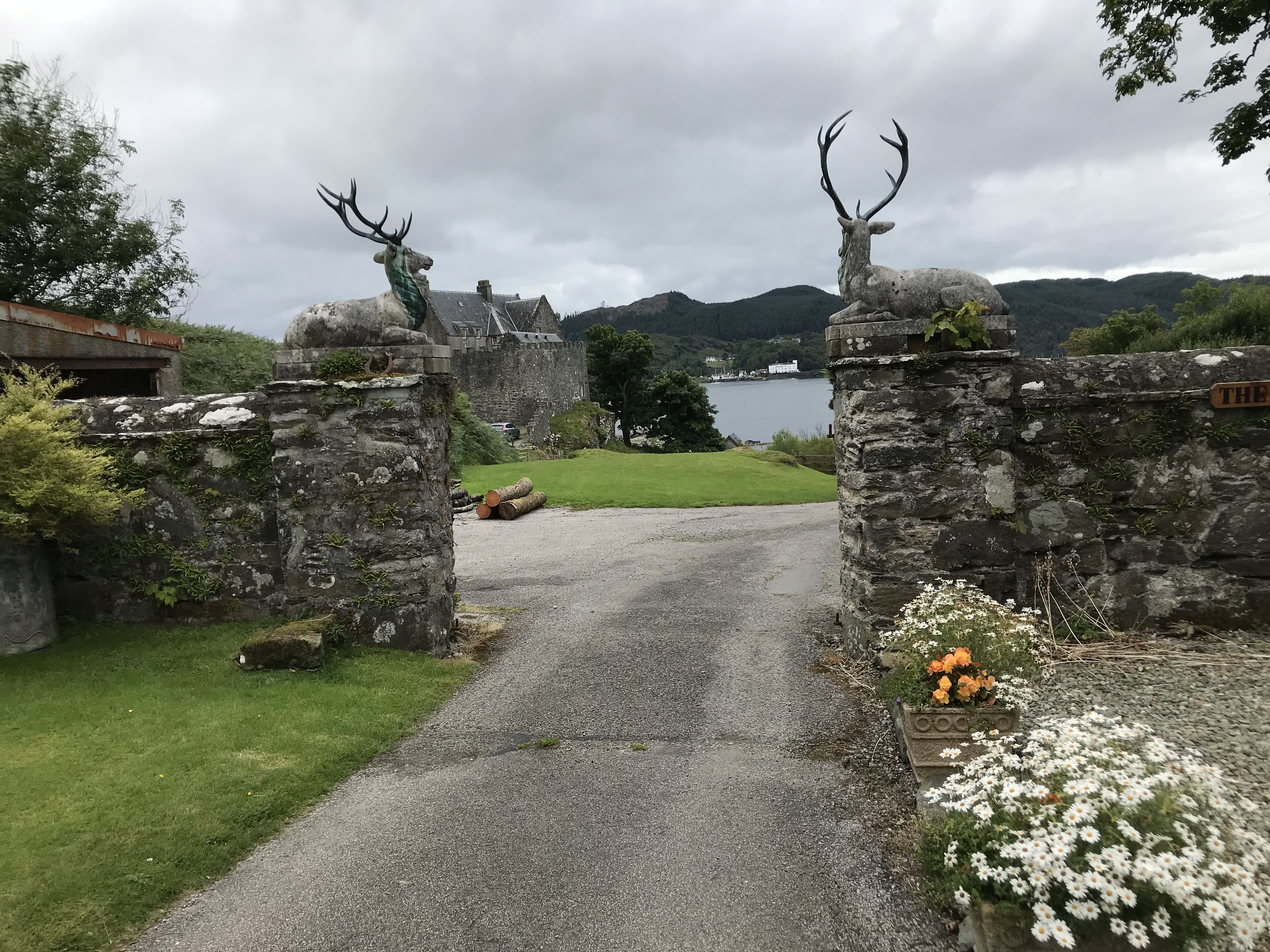
Now, I love a good story, so we had to visit. It’s privately owned, so we weren’t sure how near we could get, but we set off anyway. It was an adventure. Drove across moors, the only car on narrow roads. Wound our way to the castle, and the end of a private road. There are no footpaths in Scotland—instead they have a ‘right to roam’ law which we interpreted as anyone can walk wherever they want to. We parked on a verge, and walked down the road. No one stopped us. We walked right up to the gates of the castle. These gates were the inspiration for the Skyfall house in the James Bond film. The castle is still occupied, and we decided the ‘right to roam’ probably didn’t include walking actually into someone’s house. Was pretty cool though.
Beyond the castle is a garden, with an honesty box for donations to ActionAid and RNLI. We went inside, and they are very beautiful, a mix of wild and clever planting and pretty statues. Worth a visit (good Instagram-photo ops if you like that sort of thing!)
The hotel doesn’t have sandwiches, and even Hungry Husband felt that three cooked meals a day might be pushing it. There’s a little coffee shop (possibly linked to the hotel but in its own whitewashed old building). We wandered down and ordered filled rolls. My BLT was freshly cooked, with good fresh lettuce and tomato—but no mayo or butter. Perhaps you have to specify separately that you want those in Scotland. Or perhaps the coffee shop is linked to the hotel and they saw how much we ate for breakfast!
Thanks for reading. I will post further blogs (in a random order, because that is how I wrote them) so you can share our road trip through Scotland. Hope you enjoy them.
We went to Scotland. We had wanted to go back to the US, to hire a car and travel around for a month, the same as in 2019. But as we watched the governments changing their minds and making (illogical) decisions, we cancelled our flights while we could still get a refund, and changed our destination to Scotland. Husband planned it all, because it was his ‘thing’ and so when we set off, I had only the vaguest idea of where we were going and what we would see. It was quite an adventure!
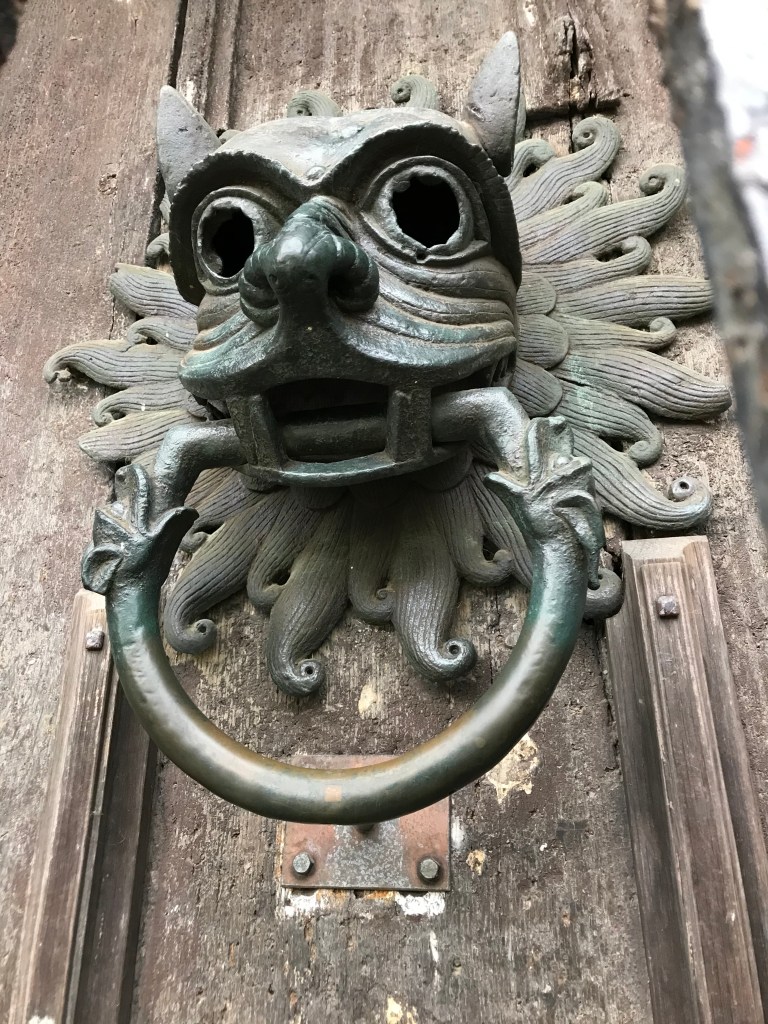
First stop was Durham. Not a city that I know well, but we arrived in time for a wander around and I can tell you that it’s a lovely old city, surprisingly small, with a prison and a university (don’t get those in a muddle) and a very old cathedral. The cathedral is notable for its big knocker, which if criminals managed to touch in the Middle Ages, they could be granted sanctuary for 37 days. I’m guessing it didn’t work very well, as the modern prison is fairly large.
Durham. The cathedral has a big knocker.
The other thing I should mention before we drive to Scotland, is the river. Durham has a lovely wide river, great for running next to in the morning.
We made it to Scotland the following day and drove to Seamill, which is fairly near Glasgow but on the coast. The scenery was pretty, Scotland has lots of bumpy land (not really hills, just bumps) and mountains and water.
We stayed at The Seamill Hydro Hotel, and they were hosting a wedding. We tried very hard to not be in all their photographs, but wherever we went there seemed to be a man with a video camera. The married couple will wonder forever who the strange couple were, looming in the background of every shot!
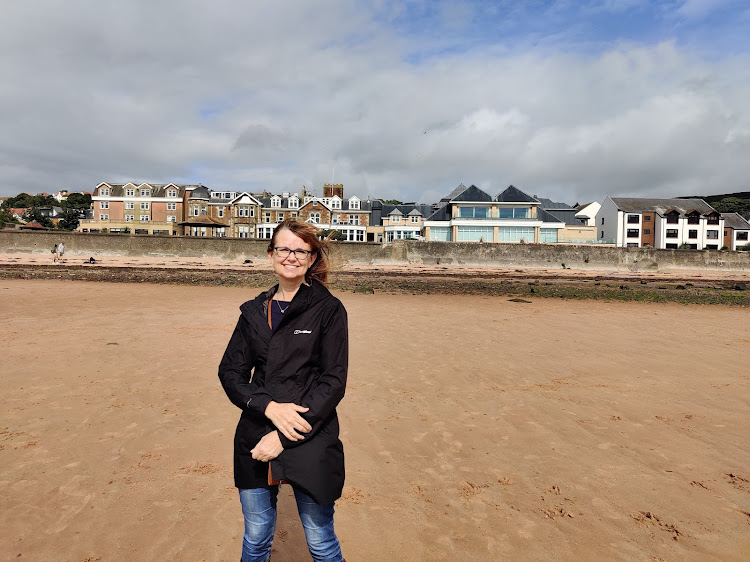
The Seamill Hydro Hotel and a slightly windswept Anne!
The hotel was on the coast, and we walked along the beach. Later, as we travelled through Scotland, my most asked question was: “Is this the sea?” because mostly it was impossible to know. There are so many interconnected lochs, and such rugged coastline, that you could never be sure if you could see the other side of a bay or an island. At Seamill we could see islands. We had booked to visit Arran (which I had thought was the home of the Aran jumper—because I cannot spell!) but our ferry was cancelled due to Covid. Instead we went to Cumbrae. Cumbrae is a small island, and ferries run regularly, like a bus, no need to book, just turn up and go.
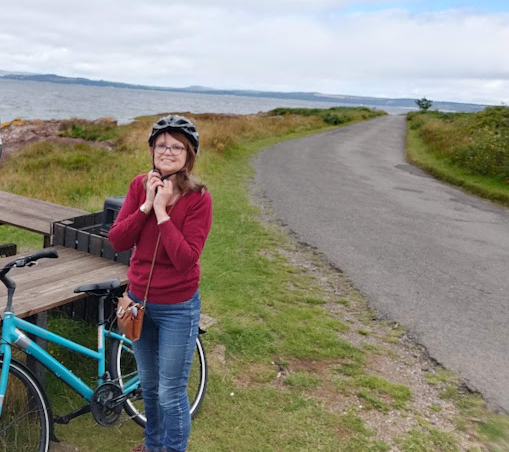
Great to cycle around an island.
We hired bikes and whizzed round the coast, then caught the ferry home. Pretty place, with boats bobbing in the harbour, a few shops, pretty hills.
We left Seamill, and drove north. Our first journey took us past a castle. I love castles, and Scotland has loads. Some are derelict, often the setting for battles between the clans or fights with the English in days gone by. Some are ‘modern,’ built in baronial style (like Balmoral where the royal family holiday) with pretty fairytale turrets.
Scotland also has lots of islands, and most of them have regular ferries pootling between them. Sometimes the distances are vast though, so we only ventured to a few islands off the West coast. Some were amazingly beautiful.
We spent some time driving North, up the Western side of Scotland, sometimes staying on islands, sometimes in glens nestling between mountains. Then we drove across country, through pine forests and over mountains to flatter, empty land. We stayed in posh hotels, and cheap Airbnbs, and hotels that had seen better days. And then, to my surprise, we stayed in an actual derelict/partly renovated castle full of stuffed animals and mice (and probably ghosts) and then a castle which was like a stately home, where I felt as if I was living in Downton Abbey. I will tell you all about it in my later blogs. It was such an adventure, and really fun for me to never know where we were going next.
Thank you for reading. I hope you enjoy travelling through Scotland with me (there are less midges this way!)
Who Needs Theology by Stanley J. Grenz and Roger E. Olson
This is an interesting book, which outlines exactly what theology is, and how it might be applied. Although the beginning is somewhat repetitive, the authors do thoroughly explain things, and if the concepts are new this would be helpful. The writing throughout was clear and easy to understand, and it was regularly smattered with examples from the Snoopy comic.
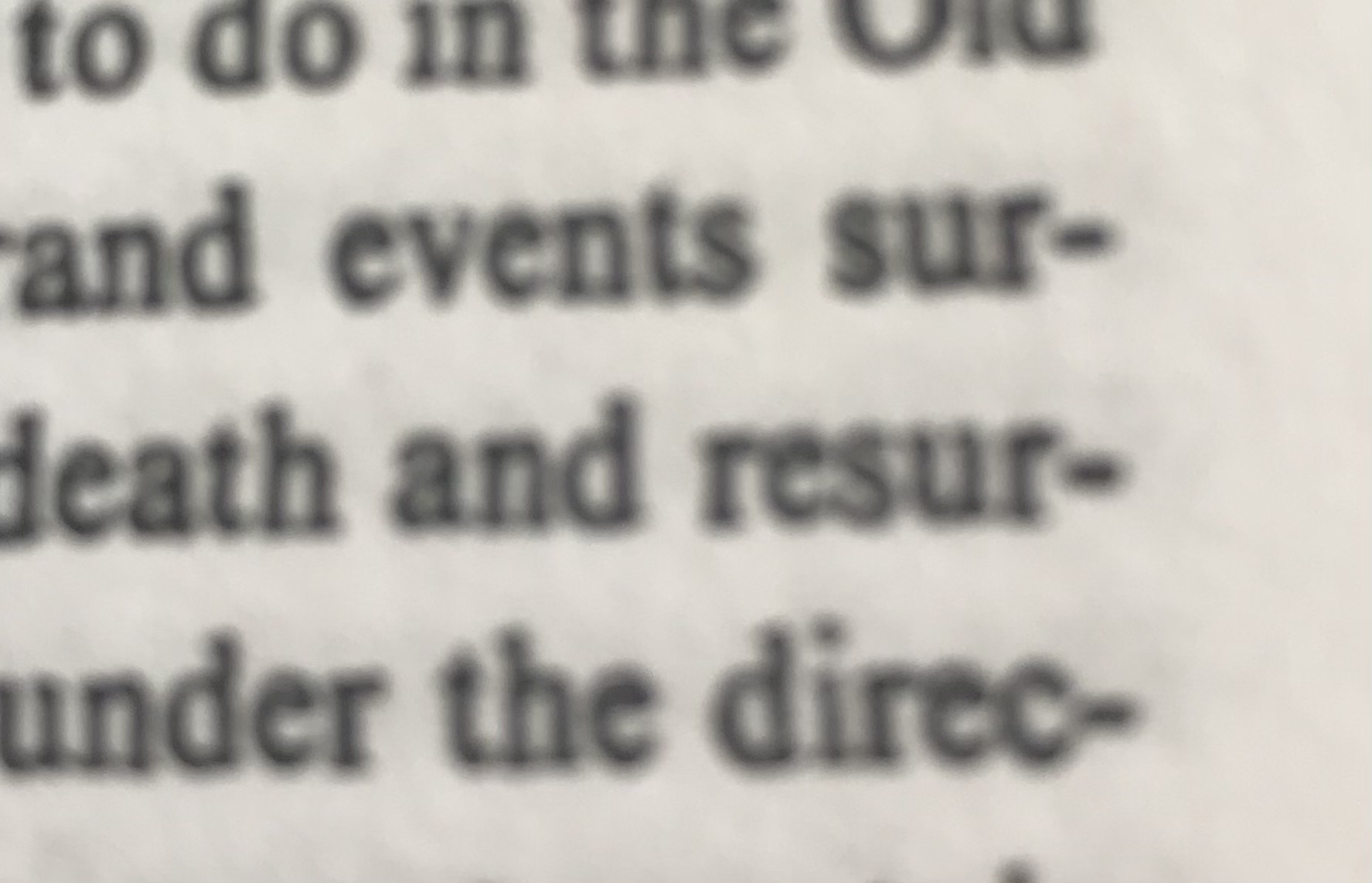
One slightly irritating aspect was the printing of the book. The typesetter had not kept the words complete, and on some pages there were many words split with a hyphen. When reading unfamiliar words, this was unhelpful. (I suspect it was done to reduce the number of pages and therefore the cost, but was, in my opinion, a mistake.) But if you can ignore the physical aspects (and I am being picky so you may not even notice) the content was excellent.
Irritating hyphenated words.
I especially enjoyed the description of different types of belief, such as the explanation of dogma, doctrine and opinion. The Bible contains many truths and rules. Some of these are dogma, i.e., if you don’t believe them, you aren’t a Christian. They include things like that there is only one God (so if you believe there are many gods, you cannot call yourself a Christian).
Then there is doctrine. A doctrine is a belief that is considered important by certain churches, and they would not allow you to be a leader in their church unless you believe them—though you would still be a Christian. For example, some people believe you should be baptised by being fully immersed, when a believer. They would not allow someone who believed in infant baptism to lead their church, though they would recognise them as being Christian.
Lastly, there are some parts of the Bible that are interpreted according to opinion. Two people might both be Christians (same dogma) both belong to the same church (same doctrine) but one might think women should wear a hat to pray, and the other think that’s irrelevant in modern times (different opinions).
Churches/Christians decide what is dogma, and what is doctrine, and what is opinion. Sometimes they disagree. Of course they do! However, it is helpful to keep these categories in mind when discussing issues. I have heard people protest that if you start saying one part of the Bible should be interpreted in the light of contemporary culture, where do you stop? The answer is now clear—you stop when you reach the truths that make up our dogma.
The book also includes a brief outline of church history:
The first Christian emperor, Constantine, called together the leaders of the church from all the Christian cities in the Roman Empire to write a creed stating what it meant to be a Christian. They met in Nicea (because Constantinople was still being built, and no one likes visitors when the builders are in). They wrote the Nicene Creed, which basically said that to be a Christian, a person must accept that Jesus was equal to/of the same substance as God. This was dogma (non-negotiable).
Until 1054, the church was unified.
In AD 1054: the church split into:
1) Eastern Orthodox (who believed that everything that was decided in Nicea in AD 325 and AD 787 constitutes a definitive body of Christian doctrine—so nothing should be changed.)
2)Roman Catholic Church—this includes the ‘Holy Office’ which decides what should be dogma/doctrine/opinion. They decided, for example, that dogma should include the immaculate conception of Mary, and her bodily assumption into heaven. This church has been further split as follows.
In 1517, Martin Luther, a German monk nailed 95 points for debate to the cathedral door. This evolved to become a new wing of the church, which protested the Roman Catholic emphasis of the authority of popes and councils—it was therefore called the Protestant Church. This then split again: Luther founded Lutherism. Zwingli and Calvin founded the Presbyterian church. Cranmer helped establish the Anglican church (when Henry VIII wanted a divorce). Simons led the Anabaptists/Mennonites.
These wings of the church (Eastern Orthodox, Roman Catholic and Protestant) were all Christian. They all believed the same basic dogma.
In the early nineteenth century, modernism arrived. The Protestant church began to view Biblical truths in the light of modern culture—in some cases, refusing to believe things written in the Bible unless they complimented modern thought. The Roman Catholic church rejected modernism, thereby also rejecting scientific discoveries, the rights of humans, and so on. The Protestant church divided into two groups—those called ‘liberal’ who at their most extreme would only believe Biblical texts if they could be ‘proven’ by modern thought (so they rejected miracles as superstition, for example) and ‘fundamentalists.’ Fundamentalists at their most extreme tried to make all belief dogma, producing a tight list of everything found in the Bible and declaring that none was a matter of doctrine or opinion, and to be a Christian everyone must believe exactly the same things.
The book then explores the role of theologians, and how theology might be studied and applied. I found the book very accessible and immensely interesting. It is definitely worth reading if you have any interest in theology, or how the church evolved, and is continuing to evolve today.
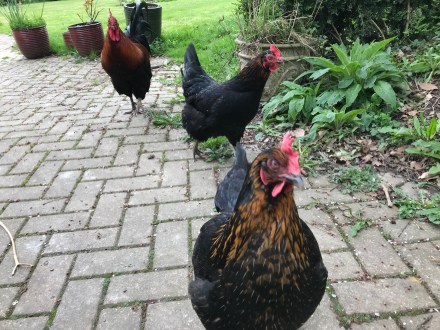
I decided to let the chickens into the garden. They had been shut in their cage for a few weeks while the local fox had cubs, and again while we were in the Lake District, and again while some plants were being established (because chickens like to dig). But it’s much healthier for them to be roam free, to have dust-baths to clean their feathers, and to fly into the trees. I opened their door, and out they rushed.
It was hours later, as I was cooking dinner, that I realised I had never collected the eggs. I left the potatoes bubbling on the stove, and walked up the garden. As I neared the pond area, I smelt the unmistakeable whiff of fox. I started to hurry, peering into the trees for signs of feathers.
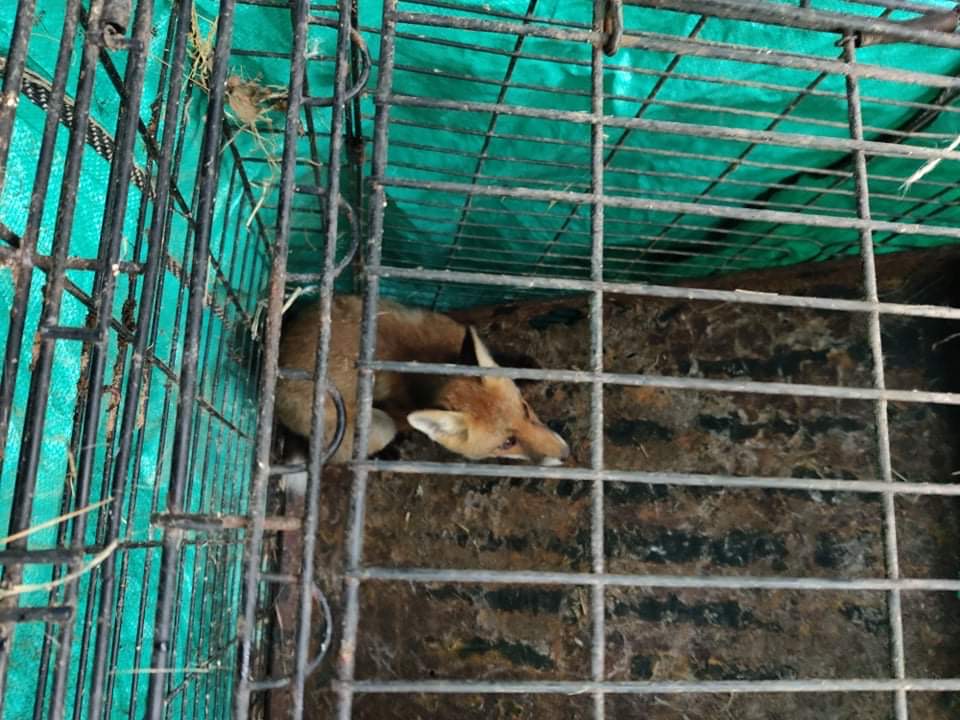
As I reached the chicken coop, I could see all the chickens, peacefully digging in the earth as they searched for tasty bugs. No casualties. But as I rounded the corner, there in the coop, just sneaking through the door, was a fox. Without thinking, I rushed up, slammed shut the door, and locked it.
The fox leapt to the corner of the cage, then turned, eyes flashing, teeth barred, fur raised. It flung itself at the locked door, then leapt for the far corner. It dug at the earth, clawed at the bars, ripped the netting from the sides of the cage. But it was trapped. Now what?
I hadn’t really thought this through. If I released the furious fox, it would almost certainly snatch a chicken or duck as it passed. But I couldn’t keep a wild animal in a cage, and soon it would be dusk and the chickens would want to roost.
I watched the fox as it flung his angry body around the cage, then I went to get reinforcements. Jay happened to be visiting, and Husband was working in his study, so I told them I had caught a fox, and asked if they could help. Both appeared amazingly quickly.
(Later, Jay informed me that this was another instance of my not being normal. Apparently normal mothers do not catch foxes, nor do they ask in very calm ‘please-can-you-empty-the-dishwasher’ type voices if their sons can help with a trapped fox. But I have given up trying to be normal.)
The fox was still angry/upset/terrified. I thought the chances of one of us being bitten was fairly high, and I wondered if foxes, like bats, have rabies. It looked healthy enough. I was impressed with the energy it was expending on trying to rip up my chicken coop, and pleased with how strong the coop was proving to be. I watched the fox as it climbed a vertical wall, traversed the roof upside-down, then dropped to the floor. Agile as a cat, vicious as a hyena.
My animals were not much help. Kia arrived, but I worried she might fight and be hurt, so I took her back to the house. Three cats arrived, and sat staring at the trapped fox. Stupid chickens arrived—it was time to roost—and lined up next to the door, ready to go inside. Did they not recognise a predator? Clearly not.
The problem was: How to remove livid fox from coop in such a way as to ensure no chickens would be hurt? Or ducks. Or cats. Or humans.
We own a couple of metal dog crates. One was inside the coop, used as a nesting box. We got the second one, checked it would fit through the door if the coop, and placed it inside a huge bag used for collecting leaves. This made a dark space, somewhere a scared fox might try to hide. We tied string to the door, so we could shut it from afar. When the fox was at the far end of the coop, we placed this wrapped cage in the coop.
We then used sticks and noise to ‘shoo’ the fox into the wrapped cage. Not as easy as it sounds, but we managed it, pulled the string to close the door, then Husband rushed into coop and closed the latch. Fox was now secure in smaller dog crate.
Jay and Husband carried the dog crate away from the coop, all the chickens went back inside, and I closed the door for the night. Disaster averted.
Note to self: Next time I trap a wild animal, it would be good to have an end-of-plan strategy in place.
Hope you don’t have any disasters this week. Thanks for reading. Take care.
Love, Anne x
P.S. Pleeease don’t feed foxes. They are wild animals, and when they lose their fear of humans, and their gardens, they become a problem.
Thank you for reading
anneethompson.com
Why not sign up to follow my blog?
A book review (sort of—more a glimpse of my own experience with this book).
Leo Tolstoy: “Everybody thinks of changing humanity and nobody thinks of changing himself.”
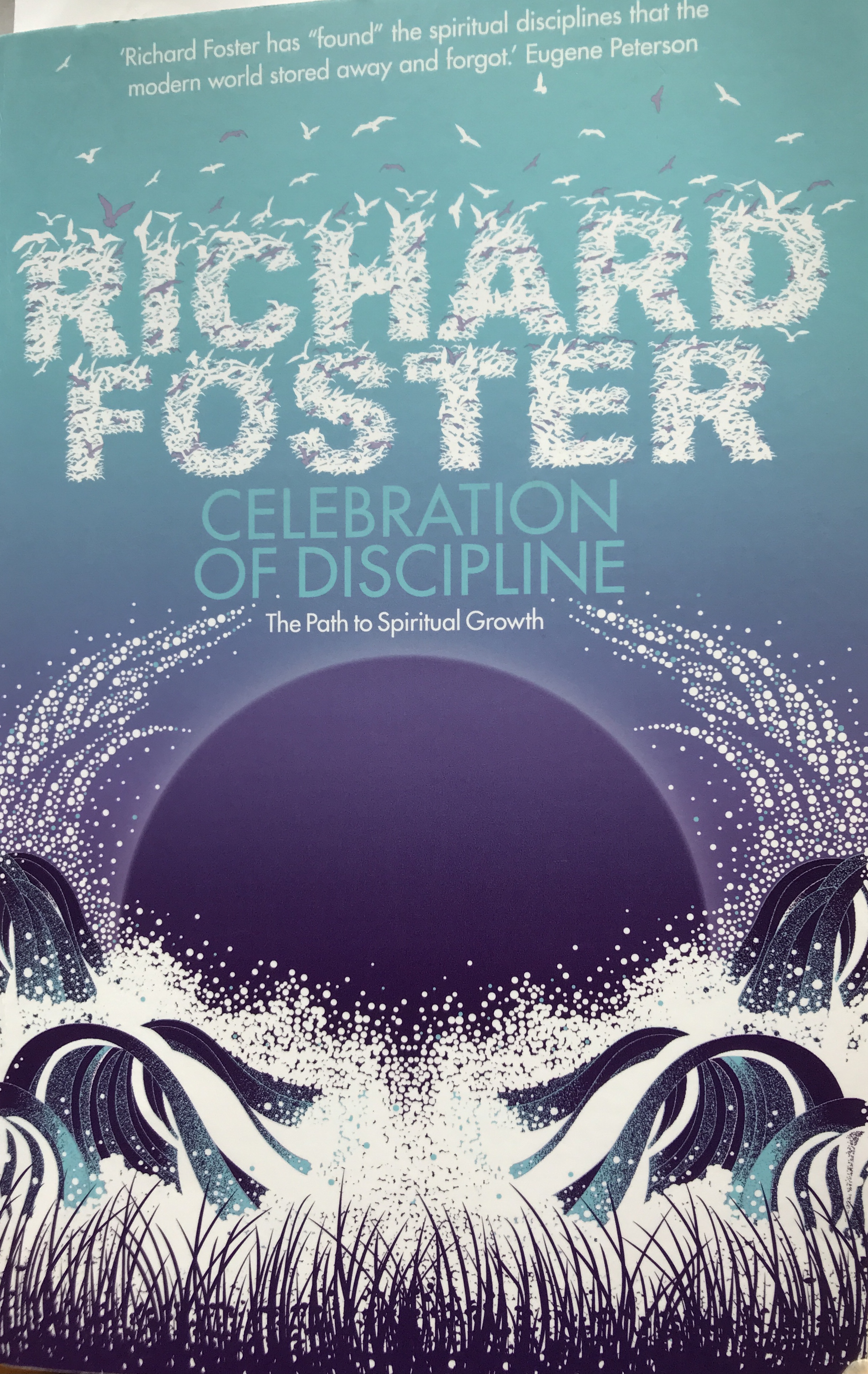
For me, the book didn’t start well. Firstly, there was the cover, which reminded me of a hairy bubble-bath with a planet in the background. “Never buy a book where the author’s name is bigger than the title” is a warning which I have pretty much ignored over the years, yet it still rings in my head. I have no idea who Richard Foster is, and probably he’s a very nice bloke, but the artistic writing of his name with flying birds made me wonder.
I opened the book, none the wiser for the cover but hoping to discover the link between hairy bubble-baths and flocks of birds and the celebration of discipline.
I met the Foreword, which turned out to be an advertisement for the book which I had already bought, so it felt unnecessary. I didn’t read further than the third paragraph.
Then there were the Acknowledgements. Strange positioning. They were dated, showing that the book has been republished many times. Perhaps that explains the large author name, perhaps this is a name that people-who-know-more-than-me look for. The 1978 Acknowledgement mentioned his children. The 1988 Acknowledgement mentioned his wife, who he said the book was dedicated to. This made me smile—images of irritated wife complaining that she had held fort while he dedicated himself to writing and only the kids got a mention. (I searched, but there was no dedication page in my copy, so maybe he changed his mind by the current edition.) The 1998 Acknowledgement was about his friend Bess, who had died. There were encouraging words about death and how it feels, and I began to have hope that this book would be worth reading after all, if only because he quotes both C.S. Lewis and Charles Wesley, who are eminently worth quoting (in my opinion).
The first chapter was very different. Foster stops writing about himself (and his abundant successes) and focusses on how a person can improve. He says that mere will-power is not enough, we can never force ourselves to be righteous, all the debris of selfishness bubbles back up. Righteousness is a gift, but Foster writes that this does not mean we have nothing to do. He quotes Dietrich Bonhoeffer, saying: “Grace is free, but it is not cheap.” Foster describes spiritual growth as being like a seed that is planted, ready to develop; he believes that Disciplines are a means for that development to take place. We cannot earn righteousness, we can only receive it, but we can put ourselves in a place whereby we are ready to receive. Foster warns against making laws, saying: “Once we have made a law, we have an ‘externalism’ by which we judge who is measuring up and who is not.” This rings true, I struggle with churches who seem to primarily want to apply rules to others and who have “a passion to set others straight.” (It is something I was guilty of myself, in the past.)
At this point, I wasn’t sure whether Foster was going to introduce a regime of ‘works’ disguised under the name of ‘discipline,’ but I was interested enough to want to read more. The chapter finished with suggested Bible readings for each day (which I ignored) and questions for discussion—so I guess this would be a good book for a group to study.
Foster makes many points that made me pause. Things like that the well-known text in Romans: “I stand at the door and knock…” was originally written for Christians, not non-believers. It isn’t suggesting non-believers should let God in, it’s showing that Christians have shut him out. Foster argues that we should include meditation as a discipline in our lives. Not the airy-fairy-mystical centring on self, but the conscious decision to centre internally on God.
I did meet a hiccup in the third chapter, about prayer. I agreed with some (but not all) of his views, but then he used ‘sexual deviation’ as an example of something to be prayed about. His definition of this was anything that differed to his own understanding that sex was only right if between one man and one woman. This irritated me intensely, especially in light of his earlier comments about externalism/law/judging others. I understand that this is his view, and I understand why he has formed this view—based on his reading of the Bible, in the same way that some people believe that black people were created to serve white people, and some believe that women have a unique role to support but never lead, and so on—all based on clearly written passages in the Bible. I am always furious when I read Christians stating their viewpoint as fact when they happily contextualise other teaching in the Bible and it is rarely in relation to themselves but rather their interpretation of what God is teaching other people.
At this point I was ready to use the book as kindling. However, I was perhaps over-reacting, and I remembered the saying: “A wise man learns more from the fool than the fool learns from the wise man.” Foster may not be a fool, and certainly wisdom is something I can only aspire to, but the principle holds true. I continued reading in the hope that I would learn something worth learning.
The other chapters covered many valuable subjects, such as: Meditation, Fasting, Solitude, Service, Confession and Worship to name a few. It is tempting to give details of each chapter, but then this becomes a precis rather than a review, so I will stop and let you read it for yourself. Brace yourself to disagree with some views, and try to glean the gold that’s hidden behind the words.
I felt that there was gold to be found, but I never managed to shake the feeling that I would dislike the author. A low point came on page 90, in the chapter on study, when he urges us to “make friends with the flowers and the trees and the little creatures that creep upon the earth.” I felt patronised. He also annoyed me when he writes: “In time we will be unable to pray like the Pharisee, ‘God, I thank thee that I am not like other men…'” It seemed ironic that simply by writing this, he was doing exactly what he claimed would be impossible. If you read this book, I hope you will absorb the wisdom without wanting to punch the author on the nose. I hope you are better than me…
Foster quoted Dietrich Bonhoeffer, so I have bought a copy of his book. A review will follow in due course. Next book on my list is about theology.
I hope you read something good this week. Thanks for reading my blog. Take care. Love, Anne x
Thank you for reading
anneethompson.com
Why not sign up to follow my blog?



































 Anne E Thompson