Secret Heroes


Secret Heroes

When we visited the death camps at Auschwitz, we were told something which has stuck with me, something which made me realise that some people are incredibly brave, even unto death, and are never recognised for it. Not in this life, anyway.

We were told that as the Nazis refined their killing systems, they realised that the part that took time, that could not be rushed, was the disposal of the bodies. They had learned (the hard way) that having thousands of decomposing bodies in the ground was something of a health risk. The only way to successfully complete their genocide, was to refine the disposal of the bodies, and thus they built the crematoriums. The crematoriums were worked by prisoners, who were themselves killed after a certain period, so that no one knew too much and the scale of what was happening could be kept hidden. (I have no idea how hidden, or how you keep such a thing a secret, but that was their claim.)

Now, Auschwitz Birkenau was something of a model camp, and they increased their killing capacity by building more crematoriums. However, things didn’t go smoothly, as the new crematoriums kept breaking down. The Nazis complained to the engineers and architects, who blamed the Sonderkommando (the prisoners tasked with burning the bodies). Apparently, they said that it wasn’t their fault, the Sonderkommando must be scraping the inside of the ovens when they added bodies, which was breaking the seal, so the furnaces kept breaking.

Now, stop and think about that for a minute. We were told this by our guide in passing, as an interesting snippet of information. But stop and consider. These people were living under huge duress, their job was to load bodies into the ovens, they knew they wouldn’t survive for very long themselves, they had no power to fight the Nazis…and yet they managed to slow down the killing by damaging the ovens. Who did this? We don’t know. Nor do we know how many lives were saved by slowing down the process, but I’m guessing it was thousands because the prisoners could not be gassed until there was a way to dispose of the bodies, so every time a crematorium was out of order, the whole system would slow down, and fewer people would be killed.

I keep thinking about this, about those brave people who managed to find a way, even in their position, to save lives. They must have known that if they were discovered doing it, they would be shot. They would have known that they would soon be killed anyway, and yet they did what they could. In secret. No medals, no honour, no recognition—they may not have even told the people working next to them. I think, of all the stories we heard when at the camps, this was the one which affected me the most. It gives me hope that even in such awful times, individuals were able to be brave and do good. The challenge has to be, would we?

Anne E Thompson has written several novels, which are available from bookshops and Amazon.
Anne also writes a weekly blog — describing her travels, her animals, and life in general — Why not sign up to follow her blog today?
anneethompson.com


The Queen’s Gallery


Leonardo da Vinci

Leonardo da Vinci

I was invited to a lecture about Leonardo da Vinci at the Queen’s gallery, so I dug out some smart clothes and blagged a lift to the station with Husband. The gallery is a short walk from Victoria, and is tucked behind Buckingham Palace. I looked at all the people waiting, but none of them looked like my group, so I went inside and spoke to a very nice young man, who suggested I loiter in the shop and he would find me when everyone arrived.

The lecture was held in a private room above the gallery. A table was laid with white cups and saucers, the cups had gold rims (like the cups we were served with at St James’ Palace a few years ago). There were silver coffee pots and teapots, and a plate of biscuits. The Queen has very nice biscuits.

While drinking coffee, I chatted to the man who was giving the lecture, Martin Clayton. He was a quiet, intellectual sort of chap, very knowledgeable about Leonardo, and in charge of the collection. I asked if they ever lent the collection to other galleries, and he said they do—which must be a nightmare to organise, and I doubt if he sleeps while it’s in transit. Nothing can be replaced if it’s spoilt, I would hate to be responsible for such momentous work. Apparently, someone from the Queen’s Gallery always travels with the collection, but even so, must be terrifying.

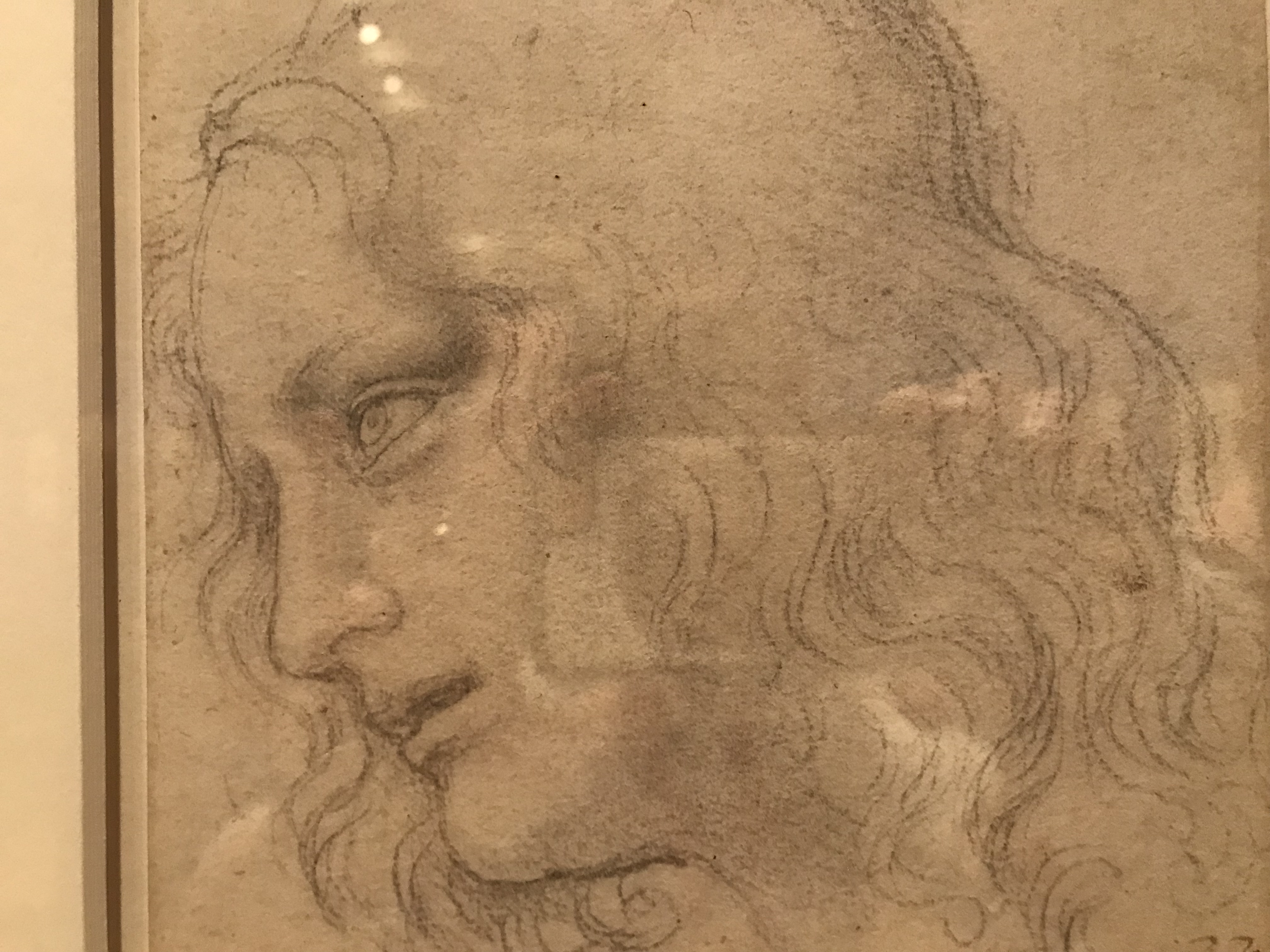
The lecture was fairly short but interesting. Leonardo was born in Vinci in Italy (the “da Vinci” bit means “from Vinci”, it’s not part of his name) in 1452. He was illegitimate, so unable to go to university (but that doesn’t seem to have held him back at all). He was primarily an architect and designer, as well as making sculptures and the occasional painting. He produced copious drawings for all his work, and it is mainly the drawings that have survived. In 1472, printed books were gradually becoming popular, which led to paper becoming an everyday commodity rather than an expensive luxury. For the first time, artists could afford to experiment, to make drawings that would later be discarded. Leonardo drew using a quill pen and ink, and by metal-point (which is when paper is prepared with a thin layer of bone, and is then scraped with a metal point—it produces a brown line-drawing).

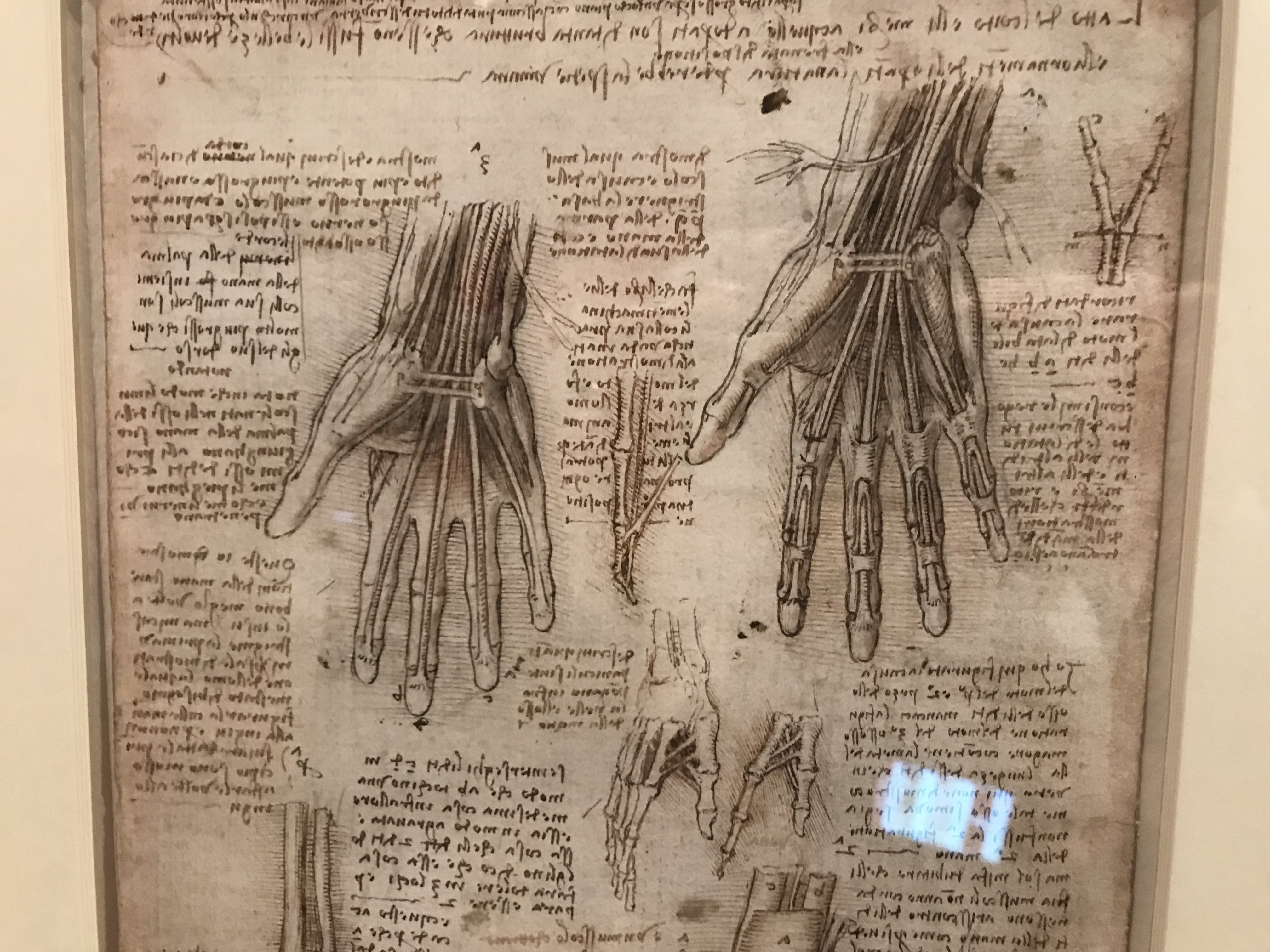
Leonardo was left handed, and because it’s harder to push a pen than pull it, he wrote backwards. His writing is very neat, and goes from right to left (perhaps we should teach children today to do this, if they are left-handed. It’s possibly easier.)

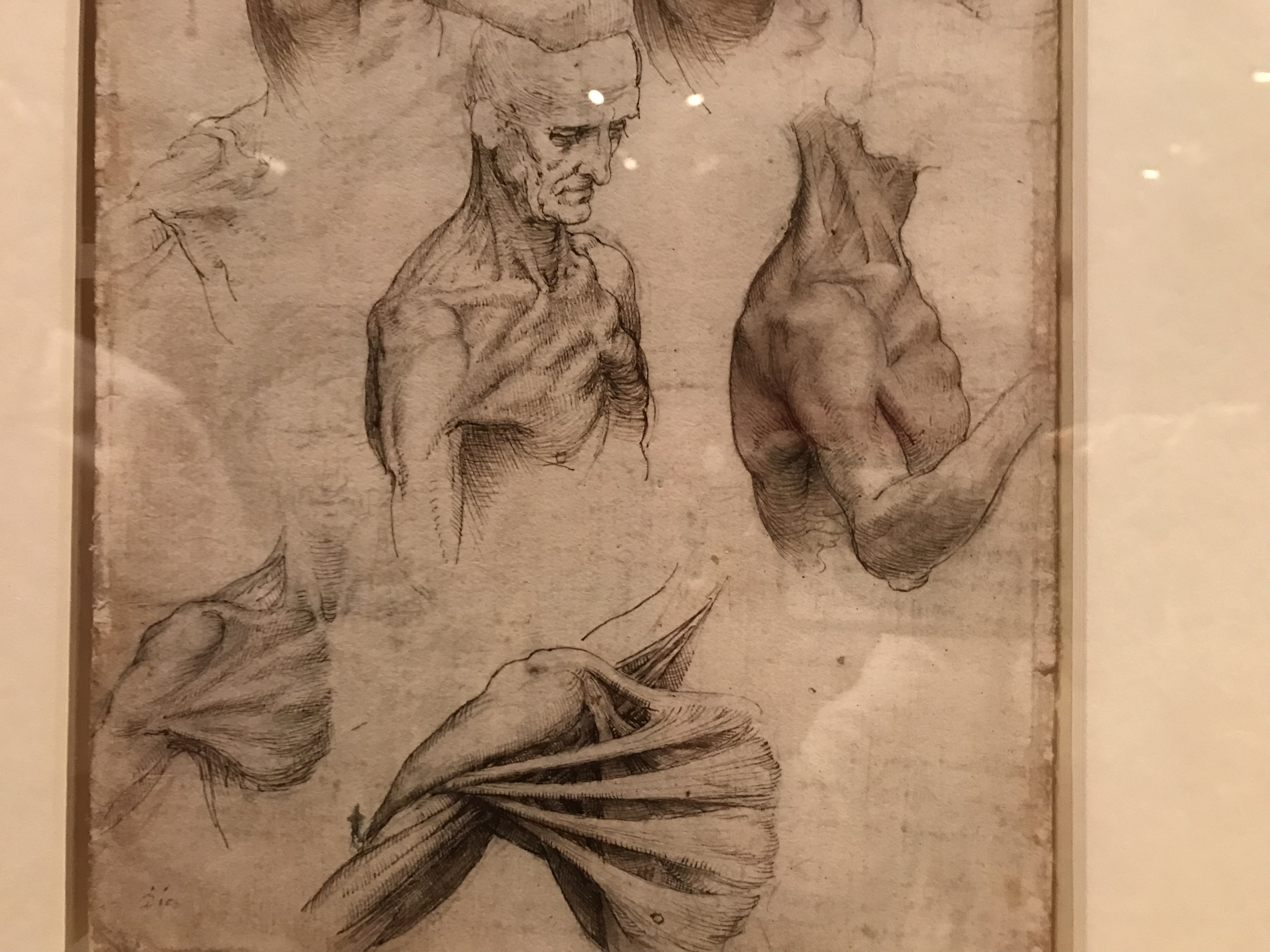
Leonardo was fascinated by how things worked, including the human body. Many of his sketches showed the internal organs of bodies, and he dissected dead bodies to find out how the muscles were placed, the chambers of the heart, etc. Much of his work was way ahead of his time. (Personally, I am suspicious as to where he found all his bodies. Some of the drawings, such as those of lungs, are very detailed. I would have thought that lungs collapsed soon after death, so how did Leonardo manage to find so many recently-dead bodies to cut up? Just wondering…)

On 2nd May, 1519, Leonardo died. He left his work to one of his students (he never married, and Martin C suggested he may have been gay). Many of his drawings were bound into a huge album, and this was given to the king in 1670. It has belonged to the Monarch ever since (so the Queen owns them, but only as the ruling Monarch, she cannot sell them).

We then went to look at the exhibition. Apologies for all the reflections on the photos–galleries seem to be unable to have lighting that does not reflect on the glass covering the pictures. Perhaps it’s something to do with preserving them, so they don’t fade, or maybe they need to update their lighting systems.

If I’m honest, I do not really like Leonardo da Vinci’s art. I can see that it’s clever, and his drawings of dissections are very interesting, but I don’t find I have an emotional response to his paintings. I find his people all have a sort of androgynous look to them—the men look effeminate and the women look masculine. I have never seen anything by Leonardo that is pretty or exciting or sad or passionate; they are the sort of highly detailed, very talented, drawings that you might see in an A Level biology portfolio. Even his more famous paintings, like the Mona Lisa or The Last Supper, are not really paintings that make me feel something. Do you like them? Honestly?

Thank you for reading.

Have a good week.

Take care.

Love, Anne x

anneethompson.com

Now is the time to sort your summer holiday reading. Why not take a look at one of my books? Available from an Amazon near you…

A hilarious family saga set on a farm. Being a parent has no end-date, as Susan discovers when her adult sons begin to make unexpected choices in life.
A warm-hearted, feel good novel that will make you smile.

A laugh-out-loud book about travelling the world with a family. From India to South America, and across most of Europe, this book has been described as “The Durrells meet Bill Bryson”!

What if…a happily married woman falls in love with someone else?

This is the story I always promised myself I would write ‘one day’ while I was teaching in an infant school. A light-hearted novel about 3 teachers.

A fast-paced, gritty thriller. This novel tells the story of Joanna, a psychopath, and her mother; because every killer has a mother…


Travel with Clara from an English town to the slums of India, and see how someone bad can achieve something amazing.
An exciting, fast paced novel.
CLARA – A Good Psychopath?
by Anne E. Thompson.
Buy a copy today, and prepare to become engrossed in a whole new world.

An exciting novel, set in the near future. One family shows how they cope with driverless cars, new laws, and schools run by computers.

This tells all the things I wish I had known when first diagnosed. A helpful book for anyone with a potentially terminal illness. It shows how to find a surgeon, how to cope with other people’s fears, how to not be defined by an illness. It also has a few funny anecdotes – because even when you’re ill, it’s good to laugh.
Available from Amazon (you can get it free if you have a Kindle).


Random Choirs


Random Choirs

One thing I miss, now my children are all grown up, are the school concerts and choirs—well the ones from when they were older anyway (I do not, even slightly, miss the cello concerts of 5 year olds, when I spent an hour hearing all my favourite songs being massacred). So, when Bea suggested I might like to go up to the Royal Academy to hear her work-choir sing, I was excited to attend.

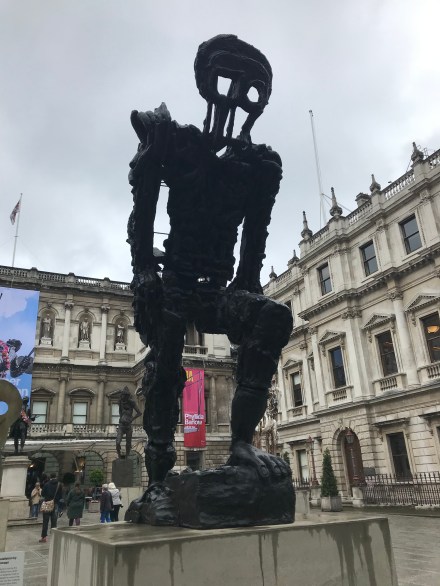
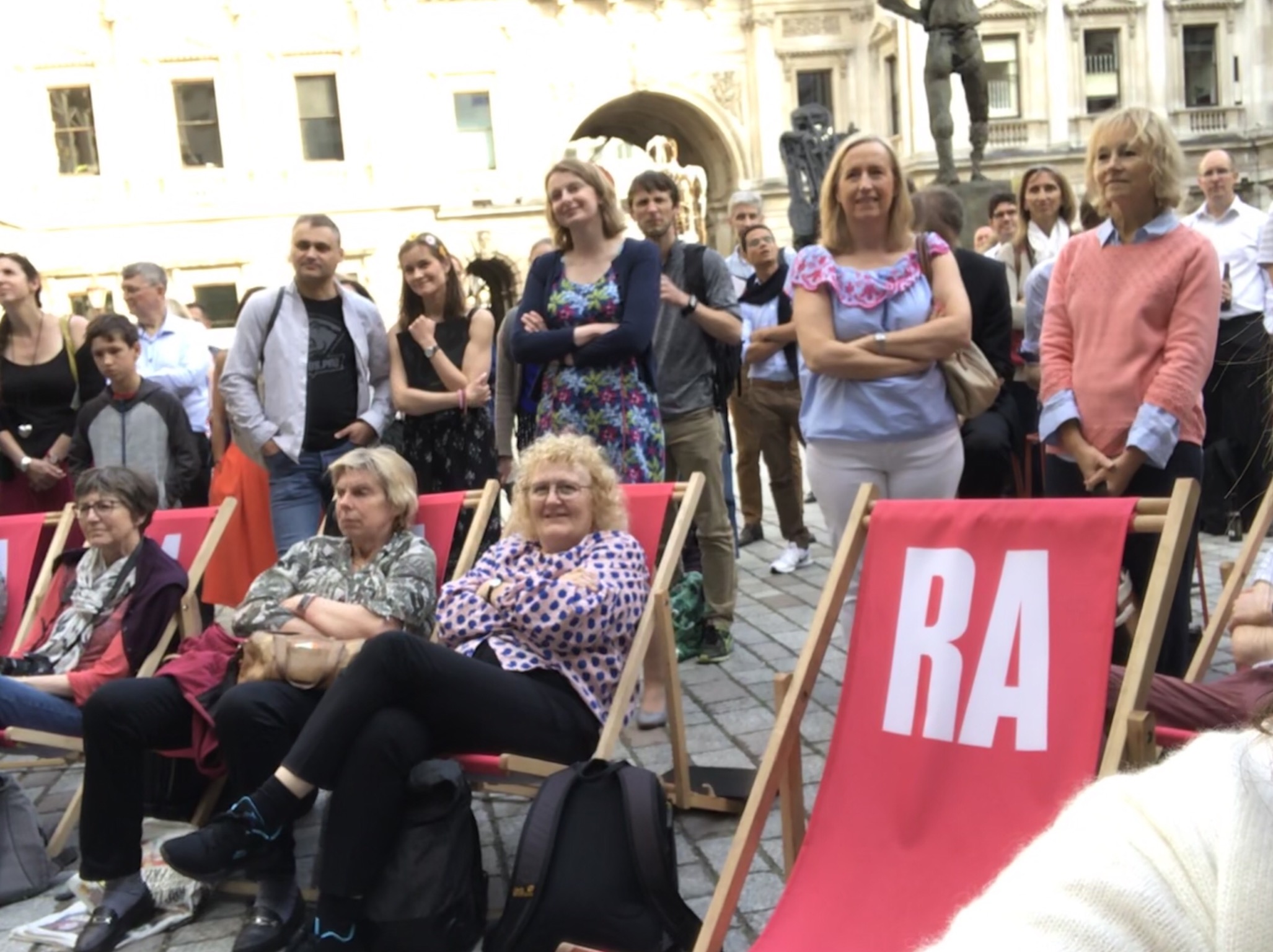
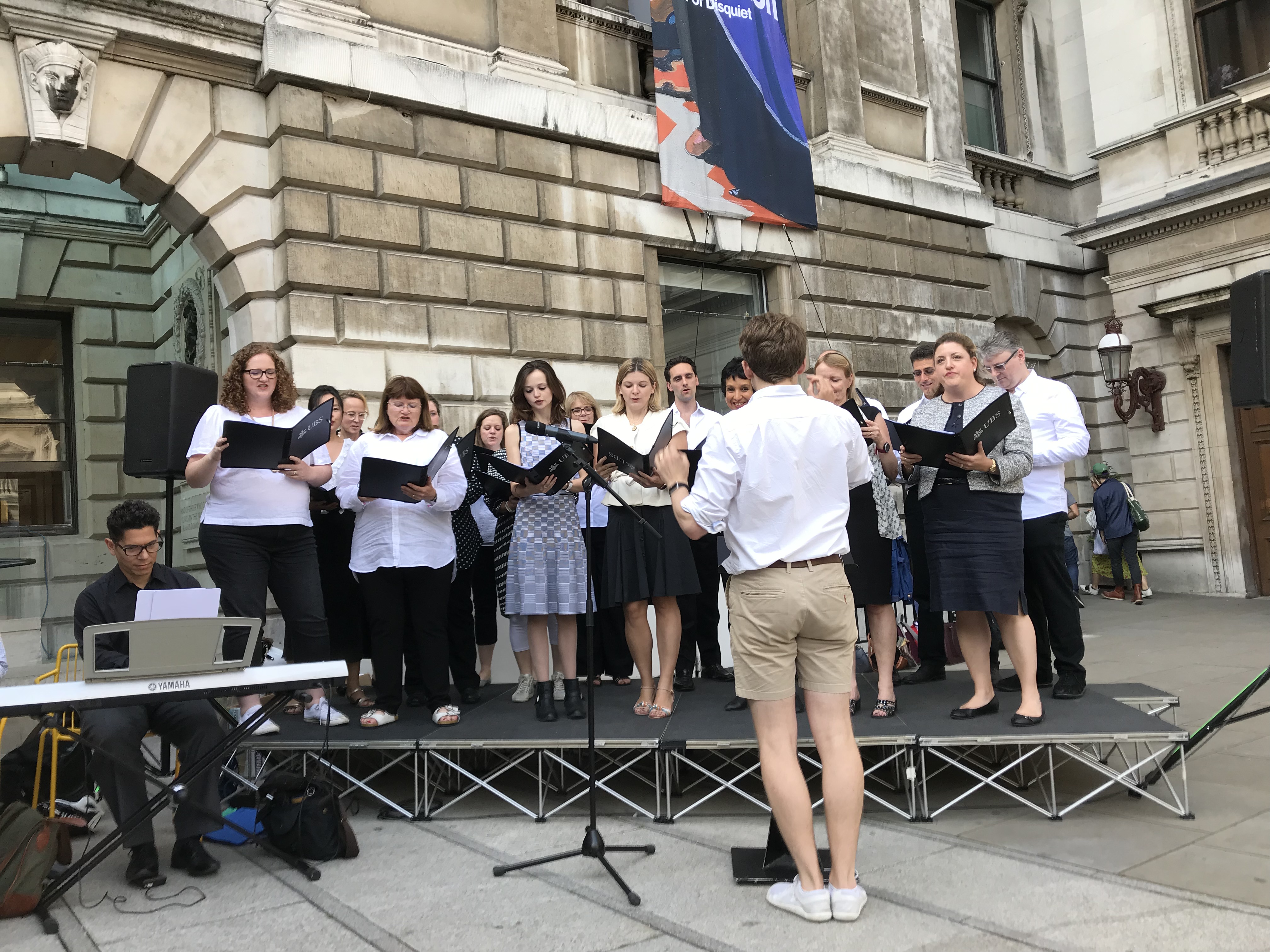
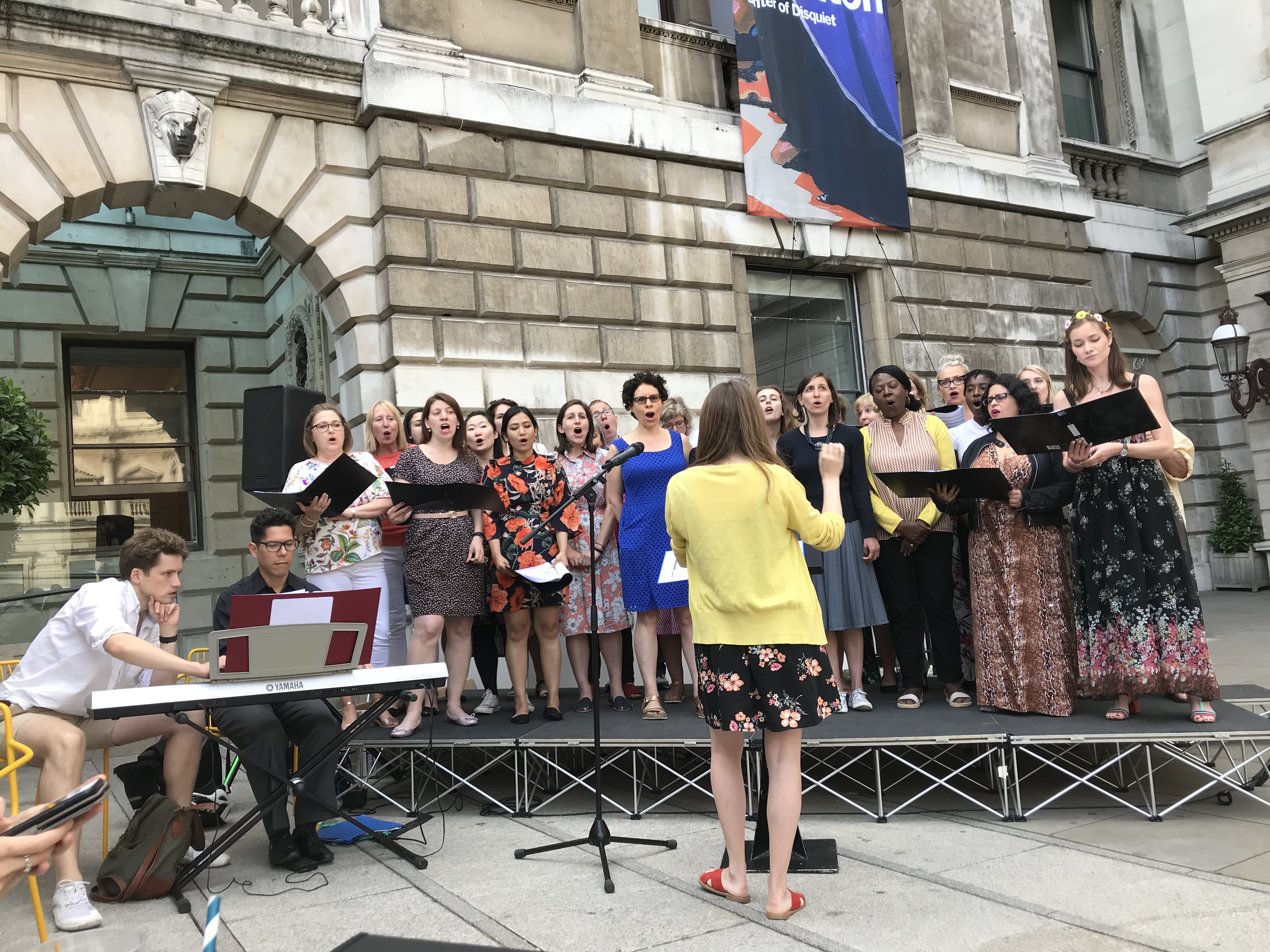
It was a lovely sunny evening, and Bea managed to find me a seat right at the front, and someone kindly bought me a glass of white wine, so things were pretty perfect from the start. We sat in the courtyard of the Royal Academy (beneath what look like giant zombies, but we’ll brush over that weirdness). The evening was a variety of choirs, from a variety of workplaces, who took it in turns to sing 3 songs each. There were choirs from UBS, and Channel 4, and The Telegraph, and a London council, amongst others. Apparently, there are musical people, who go around, and teach choirs at all these businesses. Now that must be a fun job!

It was unusual to be watching amateurs sing—usually I am either watching children, or professionals. These people fell into two categories. There were those who were happy performing, and they focussed on the music, moving slightly as they sang, making eye-contact, and smiling. Then there were the others, those who clearly were not too excited at the thought of singing in public. I guess that they loved singing, but going to choir practise after work and singing with your work colleagues, is very different to then performing to a whole bunch of people who you don’t know. They looked distinctly worried—they stared at the conductor the entire time, and stood as still as statues, while singing. They also, where possible, huddled at the back. I decided that I had a lot of respect for these people, it is very brave to sing in public.

The choirs wore a variety of clothes. The UBS choir had tried to coordinate outfits, with most people managing to wear black and white, though the odd individual managed to sort of keep to the rule but still look different (reminded me of school days again). Other choirs were completely random.

There were three different people who conducted. They were incredibly enthusiastic, and tended to have very wiggly bottoms, which gave you something to watch if you were bored. They were accompanied by a brilliant pianist on a keyboard, who even managed to continue playing when all his music blew away.

Another bit of added entertainment were the children. There was the little boy on his Dad’s lap, who was obviously watching his Mum and who sang every song along with the choir (and his Mum was easy to spot, because she basically sang directly to him the whole time, which I found very touching). Then there was the three-year-old who I’m guessing recently started ballet, who found a space at the front and treated us all to a wonderful impromptu dance, as lost in her own world, she responded to the singing. There was also a toddler, who was quite determined that he was going to get onto the stage, and was almost crushed several times when he stood behind the wiggly-bottomed conductor (always fun to see other people not managing to control their children properly).

An unwelcome distraction, which annoyed me intensely, were the two women who stood right at the front (next to me) and then had a chat in very loud voices. I was itching to complain, but knew my family would be cross with me, so I photographed them instead. (But have since decided that I should not put the picture on here, as it’s easy to make enemies, and harder to repair damage afterwards—but they were very rude.)

Son 2 and Husband met us after work, and we all had dinner before coming home. What a lovely evening.

I hope you have some nice treats this week too.

If you enjoy reading about families, you will love my new book, Ploughing Through Rainbows—why not buy a copy? Set on a farm, it’s full of humour, but also shows the tensions that arise when adult sons make unexpected choices. Susan and Tom raise beef cattle, and have to cope when one son decides to be vegetarian. Another son gets into debt, and then Ben, the youngest, tells them that he is gay…

It’s available from Amazon,  link below:

UK link

US link

India link

Thanks for reading.

Thanks for reading.
You can follow my blog at:
anneethompson.com

An Escape Room in Cambridge


For Husband’s birthday, I gave him a voucher for an ‘Escape Room’—you know, those places where you go to be locked into a room, and then you solve various puzzles until you manage to escape (or you fail miserably and they throw you out because your allocated time has finished). I thought it would be fun if we did one as a family.

Of course, the most difficult part was finding a date when all the family could actually meet, but once that was achieved we were fine. Last Saturday we set off for Cambridge. The second most difficult part was trying to find a parking space in Cambridge, but we even managed that eventually.

We started with lunch in an Italian. I know my family have a tendency to ‘debate’ so I envisioned an afternoon listening to them ‘discuss’ the solution to the puzzle. I therefore decided to drink wine for lunch (I did have some lasagne too, but the wine was the bit that mattered.) After lunch there was a further challenge as we attempted to keep Husband with us while we tried to find where to go (he has a tendency to stride ahead, unaware that the rest of the group is unable to cross the road).

I began to relax once we actually arrived at the Escape Room, feeling that the most difficult challenges were over.

The room was not at all what I was expecting. For some reason, I expected a room, set up like a lounge, with sofas (where I could snooze off the wine) and a table of puzzles for my family to argue over. However, we were met at the entrance by an actor who explained the world was about to be hit by a comet, and then shown into a small room which resembled a cupboard, with a locker (locked) and a desk with a computer, and several posters on the walls. We then attempted to save the world.

In case you’ve never done one of these rooms, you’re not actually locked inside (so you can leave to use the loo or if your family becomes too argumentative). There were also several different aspects to the challenge, so people could try to solve one part, without having to collaborate too much with the rest of the group, and there was no necessity to persuade the rest of the group that you knew the solution, you could simply get on with your own bit—which worked rather well for my family. The puzzles were pretty perfect for us—there were some tricky ones, which it took several people to solve, but it was lots of fun. There was, surprisingly, no heated debate at all, and the whole thing was really good fun.

Oh, and in case you’re wondering, we did manage to save the world…

We visited the LockHouse Games escape room: link here

Thanks for reading, I hope your week has some fun times too. Next week I’ll tell you about my evening listening to random choirs in the shadow of zombies.
Take care,
Love, Anne x

While we were there, I was able to give the family copies of my latest book: Ploughing Through Rainbows. I wanted to write a happy book, so decided to write about a family on a farm, and as I wanted it to be a funny book, I gave the farmer four sons. However, there are also some gritty issues in the book, as it also shows how the mother, Susan, copes when one of her sons tells her that he is gay. Susan is a Christian, and the book shows her journey as she explores what parenting involves when faced with this news.

Please buy a copy, and tell someone else about it. It’s available from an Amazon near you, as both a Kindle book and a paperback. Links below. Thank you x.

paperback link

kindle link

India link

US link

There’s No End-Date to Parenting…


Sometimes, it can feel like you spend ten years teaching your child to be independent, and then twenty years wishing that you hadn’t! When your children are young, you long for them to be strong-minded, independent people who don’t need you anymore. But then when they are adults, and start to make their own decisions about how they will live, that can bring a whole different set of problems.

Meet Susan and Tom. They are farmers raising beef cattle, and their four sons are independent adults. But then they start to make life-choices that their parents find challenging, and Susan and Tom begin to wonder what their own role should be. One son announces he is a vegetarian, one son gets into debt, one is unfaithful and then one son tells them that he is gay.

Before writing the book, I spent a lot of time listening. I listened to farmers, and learnt what it means to raise cattle.

I also listened to parents who had learnt their children were gay, and to gay men and women who are discovering what that means in today’s society. One of the groups that finds this most challenging is the church, and so I also spent time listening to what people in the church think and feel. One aspect that came out (excuse the pun) very strongly, is that sometimes, neither side of the traditional Christian viewpoint seem to actually understand how the other side feels. It seemed to me that there was a lot of talking, of proclaiming of views, and very little listening—because of all other issues, this seems to be the most emotive.

 I wanted to write a ‘nice’ book—something happy that my readers would enjoy (after a few years of learning about, and writing novels about, psychopaths, I still find that my easy-read fun novel about an infant school is the one that people want to buy a second copy of, for their friends). Writing a funny book set on a farm seemed like a good idea. Introducing potentially inflammatory issues was a little trickier. I hope I have achieved a good balance and produced a book which will make you smile whilst also giving food for thought. I worked very hard to represent differing views fairly, and my hope is that by the end you will have heard each viewpoint very clearly whilst not being sure what my, the author’s, view is. Personally, I fell in love with some of the characters, to the extent that when the book was finished, I immediately started to write the sequel!

I hope you think it is a jolly good story and you will recommend it to a friend.

Please buy a copy, and let me know what you think.

Thanks for reading. Take care.
Love, Anne x

anneethompson.com

Ploughing Through Rainbows by Anne E. Thompson

Available from Amazon as a Kindle book and a paperback. UK link below:

paperback link

Kindle link

Designing a Book Cover


I love telling stories, and I love writing stories. However, when I decided to try and sell my stories, I realised that I would need covers for my books. At first, I thought that the cover didn’t really matter, everyone has heard the proverb: “Don’t judge the book by the cover.” If the story was excellent, people would read it. Ah, how wrong I was!

In reality, people do judge the book by the cover. I have learned a few points about book cover design – mainly from Mr. P, the man who runs my local independent bookshop, as he knows exactly what will attract customers, and he has kindly spent hours educating me on all things book-sales-related.

One point is the spine of your book. If you plan to sell through shops, people will only ever see the spine of your book (unless you are a bestseller author in Waterstones, in which case, you don’t need to be reading this!) My first book had nothing but words on the spine, so I was advised to add pictures or colours, to make it more attractive. If you look at commercially produced books, most have more than just words on the spine.

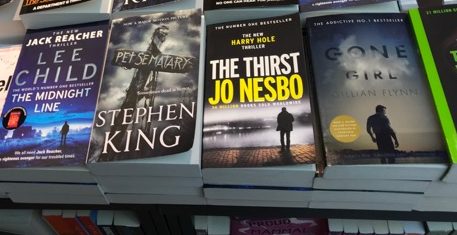
Actually, looking at commercially produced books is an excellent way to learn. Another thing Mr P. told me, was that people buy books which look like books they have previously enjoyed. Is this true? Well, have a look at the covers of books next time you’re in a bookshop.

Lee Child (bestseller) tends to have a photograph of a lonely man on his covers. If you look, other publishers are now copying this.

In fact, some books that are in bookshops are barely discernible from each other, as the covers are almost identical.

Which means that I, as a lowly self-published author, need to take a look at popular books which are similar to mine, and copy their covers.

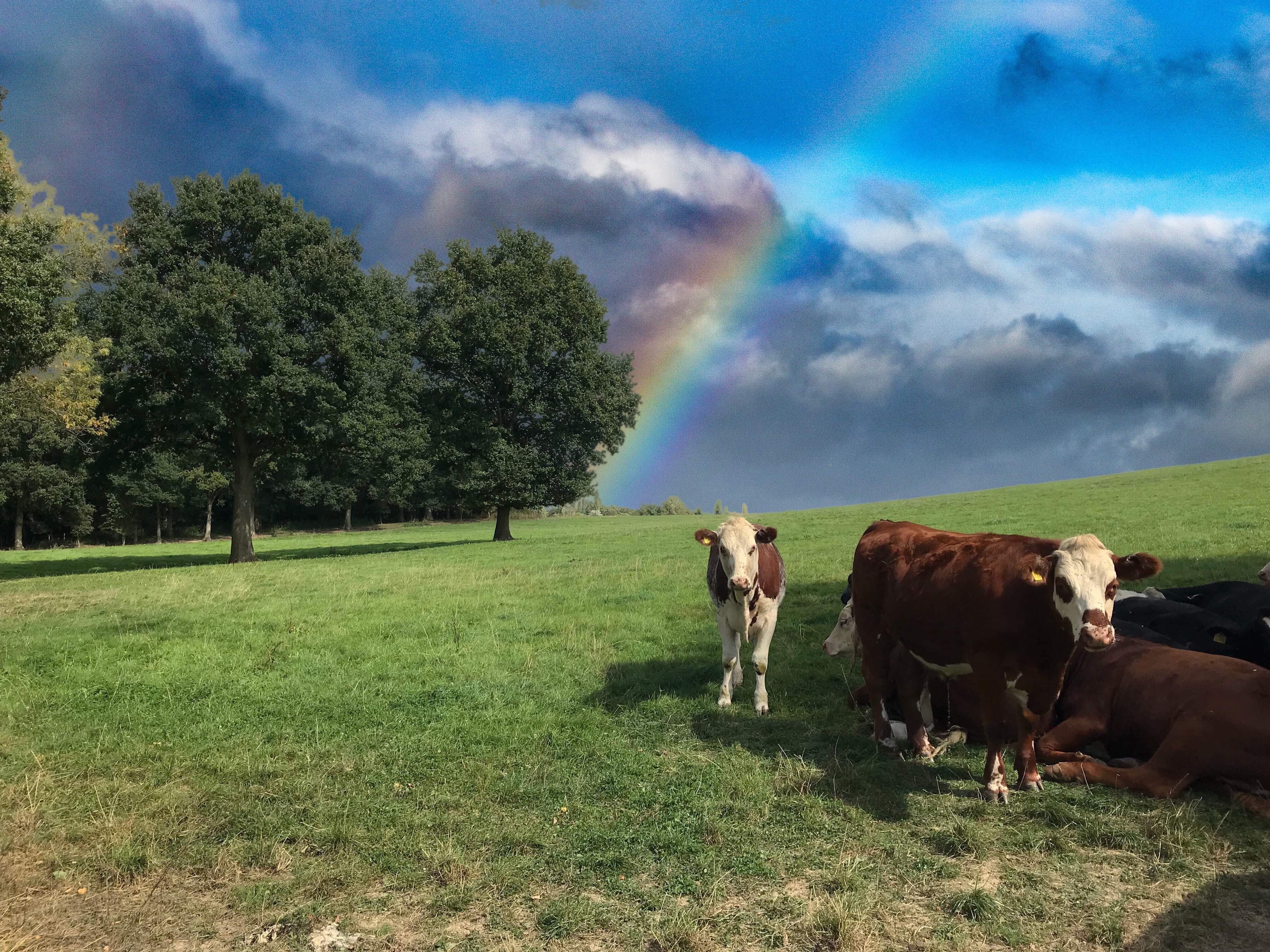
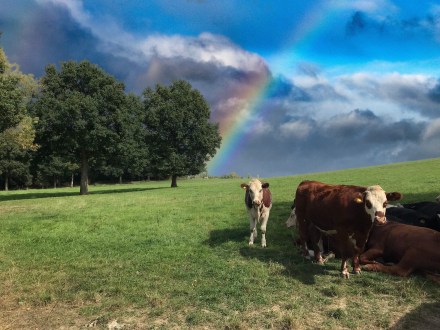
Now, Ploughing Through Rainbows is set on a farm raising cows. I therefore planned to use a photograph of cows on the cover.

After some honest feedback from family members (my family are not the sort who tell me everything is wonderful, they are very happy to point out my errors!) I realised this wouldn’t work. To begin with, there was nothing about the cover which linked with the title. My son then tried adding rainbows. I loved this, felt the cover was sorted. But then I mentioned the advice about having a cover that was similar to covers of famous books. We looked at a few.

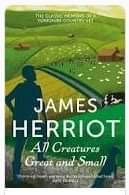
Ploughing Through Rainbows is fairly similar to the books by James Herriot – it will appeal to intelligent readers who want a nice, feel-good book, and the story is about the people rather than action (no murders in this one). James Herriot books have a computer-generated drawing on the front, showing a pastoral scene.

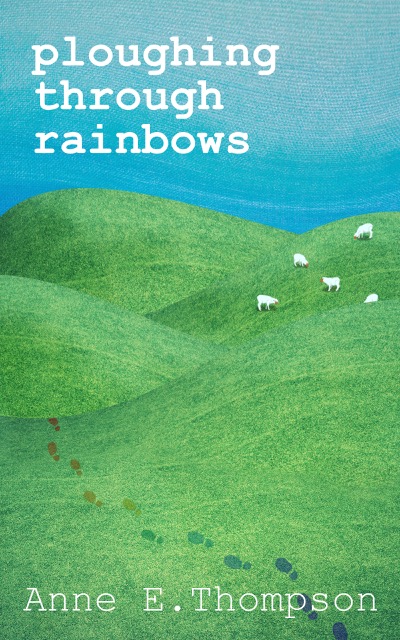
When I looked at other books set in the countryside, they were similar. This was beyond my capabilities, so my son produced a cover for me. I think it looks great, I hope you agree.

 Thank you for reading. Do look out for my new book, it will soon be available from Amazon, and it tells the story of a mother learning how to parent four adult sons. It’s a book to make you smile, whilst also considering some gritty issues.

Have a good week.

Love, Anne x

anneethompson.com


Finding a Publisher…


When I decided to publish my first novel, way back in 2015, I sent the manuscript to a selection of publishers, and sat back to await their offers. Ah, would that I could return to those days of naivety…The sad fact is, people today do not want to pay much to read a book, they want cut-price bargains, special ‘two-for-one’ deals…or to read it for free as an ebook. This means that to cover the cost of editing, and type-setting, and cover photos and printing, publishers have to select their books very carefully. They then have to set a price which will cover their costs, even when the wholesaler has demanded a 65% discount, and bookshops have taken their 35% share…never mind that the publisher might want to eat occasionally.

Hence the sad situation we are in today, where publishers generally only publish books from known authors—people who are practically guaranteed to sell enough books to cover their costs. Which means that new authors find it almost impossible to find someone to publish their work. If anyone asks me how they should best set about ‘being a writer’, I would tell them to find a career either with a publishing agent, or in marketing. I find it telling that one of the latest best-sellers was written by someone with a career in online marketing—these are the people who publishers will be interested in.

However, I couldn’t be bothered at my age to start a whole new career, so I decided to self-publish my books—publishing Hidden Faces in 2016—which has now sold over 500 copies. (There is a section outlining costs under the ‘How to’ section of this blog.) I would though, very much like to be traditionally published, and recently, I thought it might be possible…

I finished writing Ploughing Through Rainbows in November 2018, and began to send it out to publishers (see yesterday’s blog for an insight into my state of mind!) However, I also sent it to someone else. A couple of years ago, a bookseller had been lent a copy of Hidden Faces, and she liked it sufficiently to send me an email, and also to order 40 copies for her bookshop. I decided to send her the manuscript of Ploughing Through Rainbows, in case she had any contacts within the publishing world who might be interested.

This led to the manuscript being read by a publisher, who sent me a 4-page critique, suggesting changes. I rewrote the book, and waited.

Several months later, the publisher replied, saying that due to the reduced market, they now ask the author to buy 500 of the books, at half-price, to help cover costs. This was somewhat of a shame, as one thing I hate about self-publishing is the number of books under my stairs!

However, the thought of being traditionally published was still enticing, so I asked for more details. I also did some research, and found that several smaller publishers ask the author to buy a certain number of books, usually at half-price. I sent a list of questions to the publisher, asking what the actual cost to myself would be, and what the print-run was likely to be (so I could see if he would actually extend the reach of my book). I also asked for the title of a book comparable to mine, so I could check the quality. I then ordered a copy from Amazon.

The price quoted was disappointing, as it was half the RRP of £12.99. Now, I know how this works, because do the same with my self-published books. If you sell through wholesalers and bookshops, they want a 65% discount, so in order to cover your costs, you set the price at about £13. However, when selling in person to customers, the actual selling price is usually nearer to £9. I was therefore expecting the price to me to be half of £8.99, not the recommended retail price.

The book arrived. Although it was published by the publisher, it was an Amazon Kindle book—like my travel book (The Sarcastic Mother’s Holiday Diary). To print a paperback Kindle book, you do not have to pay for them to be printed, nor do you have to order a specific number upfront—you could publish a book and buy just one copy. This left me rather bemused as to why I was being asked to pay such a large cost upfront—even given the editing/type-setting/cover costs, this still seemed unreasonable. Perhaps only the books sold through Amazon were printed by Amazon? Perhaps those ordered directly were printed traditionally? I ordered a second copy, via the publisher’s own website.

The second book arrived. Although it did not say it was printed by Amazon, it was the same quality. When I self-publish, my books are printed with pages in multiples of 16, so the paper is folded before glued to the spine, which makes for a lighter, more robust book. The Amazon books are good quality, they use a decent paper and a thick enough cover—but they are not as nice as books which have been printed traditionally. Nor do they cost as much. The type-setting was also disappointing, with Chapter One starting on page 5 (it’s a fiddle, and involves much swearing when I do it, but it is possible to add section-breaks to the manuscript, so that the title page and copyright pages are not part of the numbered pages). In my opinion, Chapter One should begin on page one.

I was now thoroughly fed-up. Not only was the publisher asking me to pay half the RRP of £12.99 for 500 copies, but the books were no better than those ordered individually through Amazon. I might decide to publish through Amazon—it is a good system—and it won’t cost me £3,000 upfront.

I have decided, with a heavy heart, to self-publish Ploughing Through Rainbows. It’s a good book—set on a farm, it shows the life of a family, exploring a few juicy issues along the way. I know it’s a good book. I know people will enjoy reading it. It will hopefully be available soon…

Tomorrow I will tell you what I have learnt about cover design, and which covers help to sell books. Why not sign up to follow my blog so you don’t miss it?

Thank you for reading.
Love, Anne x

Anne E Thompson has written several novels, which are available from bookshops and Amazon.
Anne also writes a weekly blog — describing her travels, her animals, and life in general — Why not sign up to follow her blog today?
anneethompson.com

When it’s time to submit your manuscript to a publisher…


In November of last year, I wrote the following blog. I never posted it, because after I had calmed down a little, I realised that prospective agents/publishers might possibly look at my blog, and if they read this they might decide I was unsuitable. However, due to a whole lot of different circumstances, I am now about to launch my book, Ploughing Through Rainbows, and as I eventually self-published it, I have nothing to lose. Anyone who has attempted to find a publisher will, I’m sure, relate to the frustrations expressed below. Enjoy…

November 2018: I have started to look at publishers, ready to submit my farm book. It is such a demoralising activity, as everything is stacked in favour of the publisher/agent (even though at the point of submission, it is the author who has done all the work!) Some publishers even seem quite aggressive, and the following paragraph is a good example of what the lowly author can expect to find on their submissions page:

EXTREMELY IMPORTANT. Please read before submitting: Do not query us on a title that is already published. If your book is available (whether for sale or free) anywhere, in any format, in any length, in any iteration, we are not interested in these titles. It will not change our minds if you agree to “unpublish” it in the event we accept the title. We take very few reprints as it is. Reprints are almost always from an author with whom we already have a relationship, and they are always titles that have been out of print and unavailable for a considerable time.
Sorry to be so blunt here, but the note we have on our guidelines page is increasingly being ignored and the number of submissions we are receiving on titles that are, or have been, self-published on Amazon, on Smashwords, on blog posts, etc. is increasing. To submit these titles does nothing but waste your time and ours.

Not exactly encouraging, is it! In fact, there seems to be a distinct lack of information on what, exactly, the publisher is offering. They never seem to mention what they will do for the author – When (if ever) will they be contacted? What services (such as editing) will the publisher provide? When the book is published, will it be entered in competitions? How much will the author be paid? How will the publisher help to promote the work? Will the author be provided with copies to sell, or do they direct friends and family to the local bookshop? Will it even be in the local bookshop?

Some publishers and agents provide a form for submissions (which take about 2 hours to complete). Some ask for a single page synopsis, some want a two-page synopsis. Some want everything double spaced. Some want a particular font, or format; some want an exact word count. Some want a sales blurb, some want a ten-word pitch, some want a rhyming poem full of metaphors to describe your book. (Okay, the last one is a lie, but you get my point.)Why they cannot simply read the manuscript and decide whether or not to publish it defeats me.

So, the author is left wondering if it is worth jumping through all these hoops, only to receive a dozen rejection emails (if anything) in about 3 months time. Or perhaps it’s better to self-publish and have another 600 books in the cupboard under the stairs…

I hate this part of the process (in case you haven’t guessed that). I will let you know what I decide to do–though I have possibly managed to find a way to by-pass the initial submission stage…I’ll tell you tomorrow.

Thanks for reading.

Love, Anne x

Anne E. Thompson has written several novels. They are available from bookshops and Amazon.
You can follow her blog at:
anneethompson.com
Why not sign up to follow today?

Auschwitz Birkenau


Auschwitz Birkenau

The second Auschwitz camp was built in 1941, using prisoners from Auschwitz 1 as labourers. The focus had shifted, the prison was no longer viewed as a work camp for people who opposed the regime, it was primarily a death camp. Although there were still other prisoners, mainly gays, gypsies and Soviet prisoners of war, the vast majority were Jews.

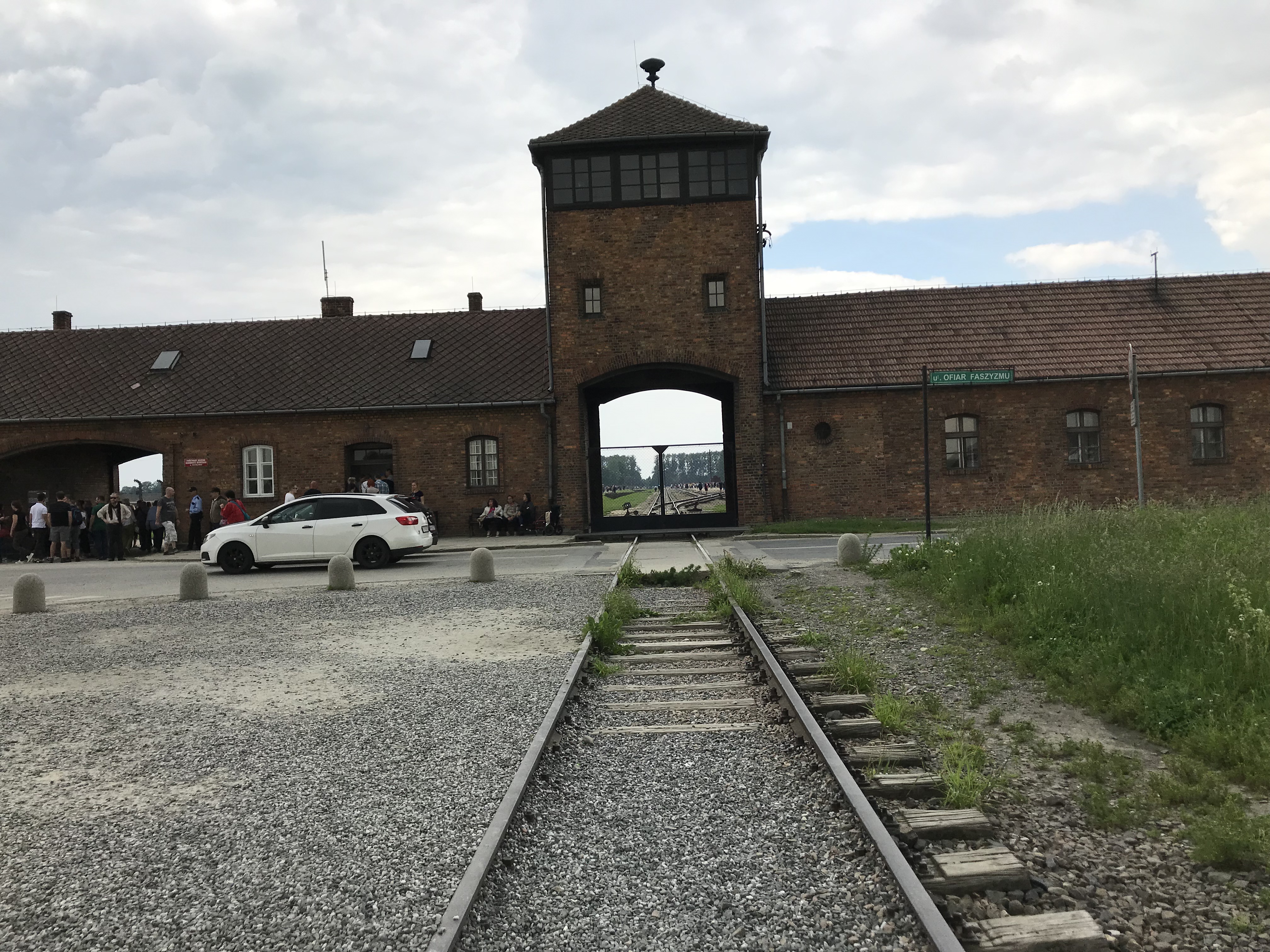
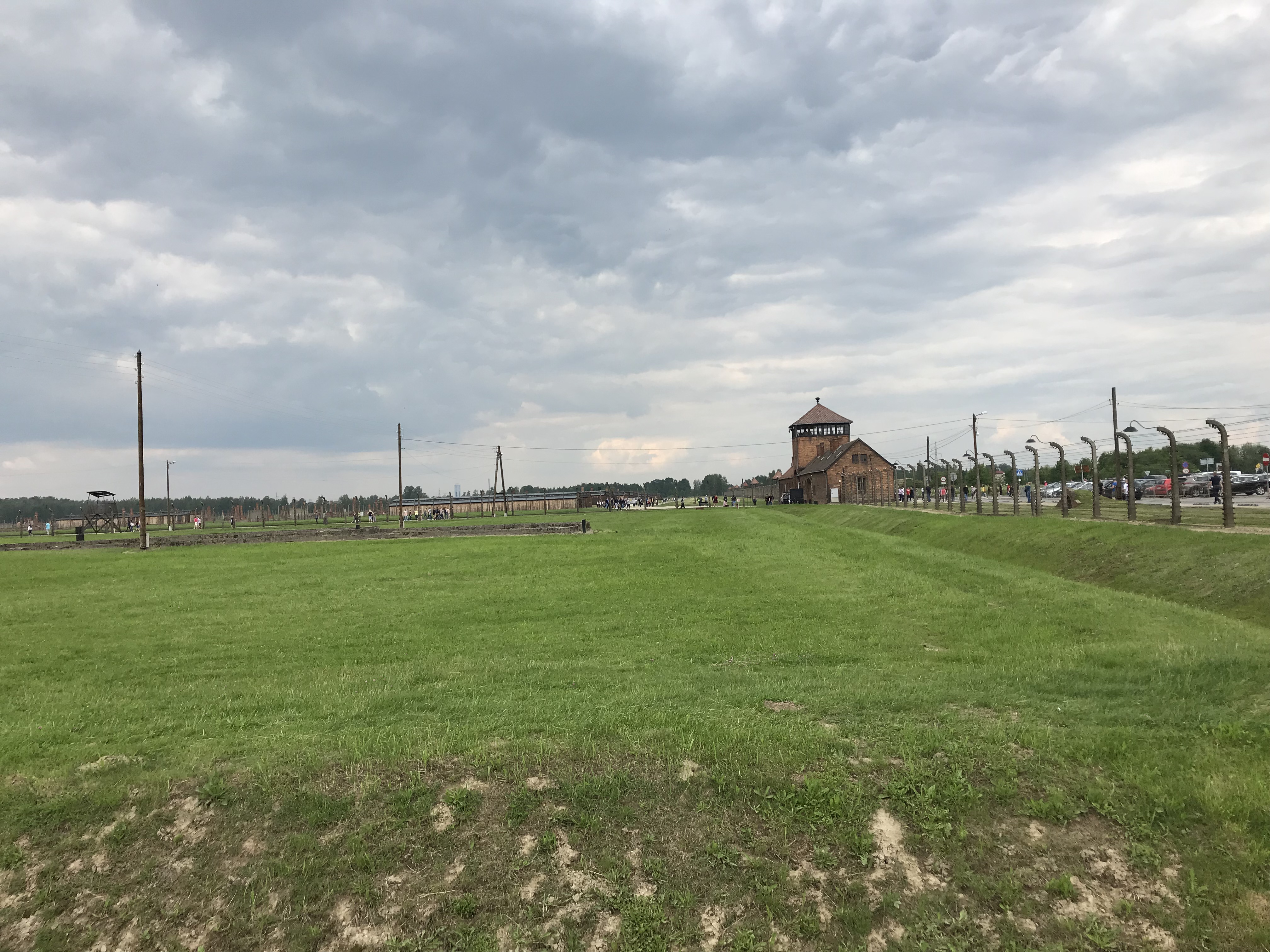
We drove to Auschwitz II, and parked outside the main gate. This is the image so often seen in films, of the cattle trucks on the railway, driving into the camp, and stopping inside where the prisoners are unloaded. In reality, the railway lines finished at the gateway, and were only extended inside the camp in 1944 (or so I understand from what I have read) because the Nazis were losing the war and were keen to exterminate as many Hungarian Jews as quickly as possible.

The thing that struck me first was the size of the camp. After Auschwitz 1, this was a whole village in size, it was death on an industrial scale.

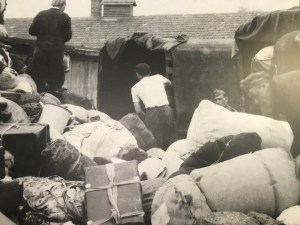
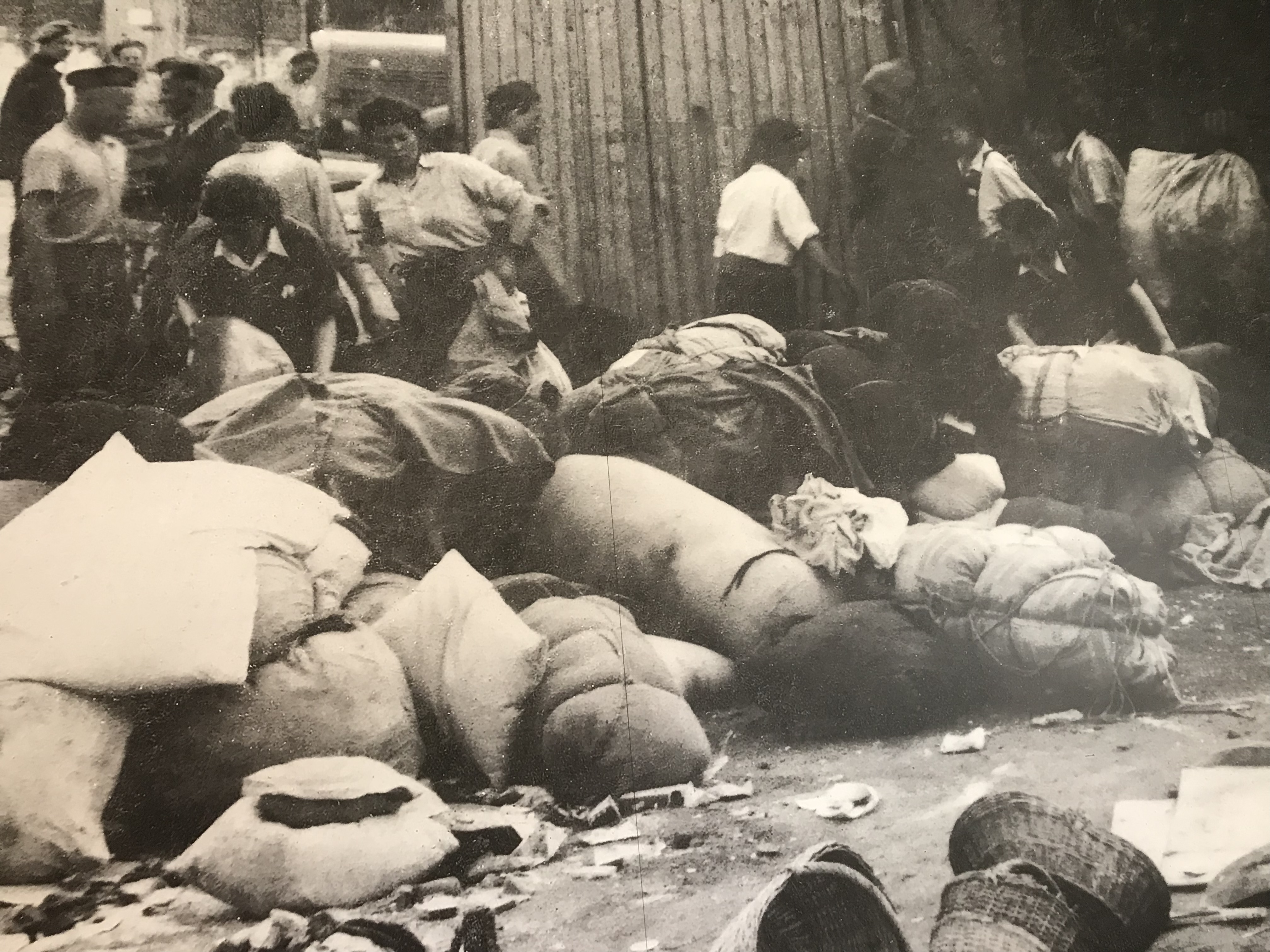
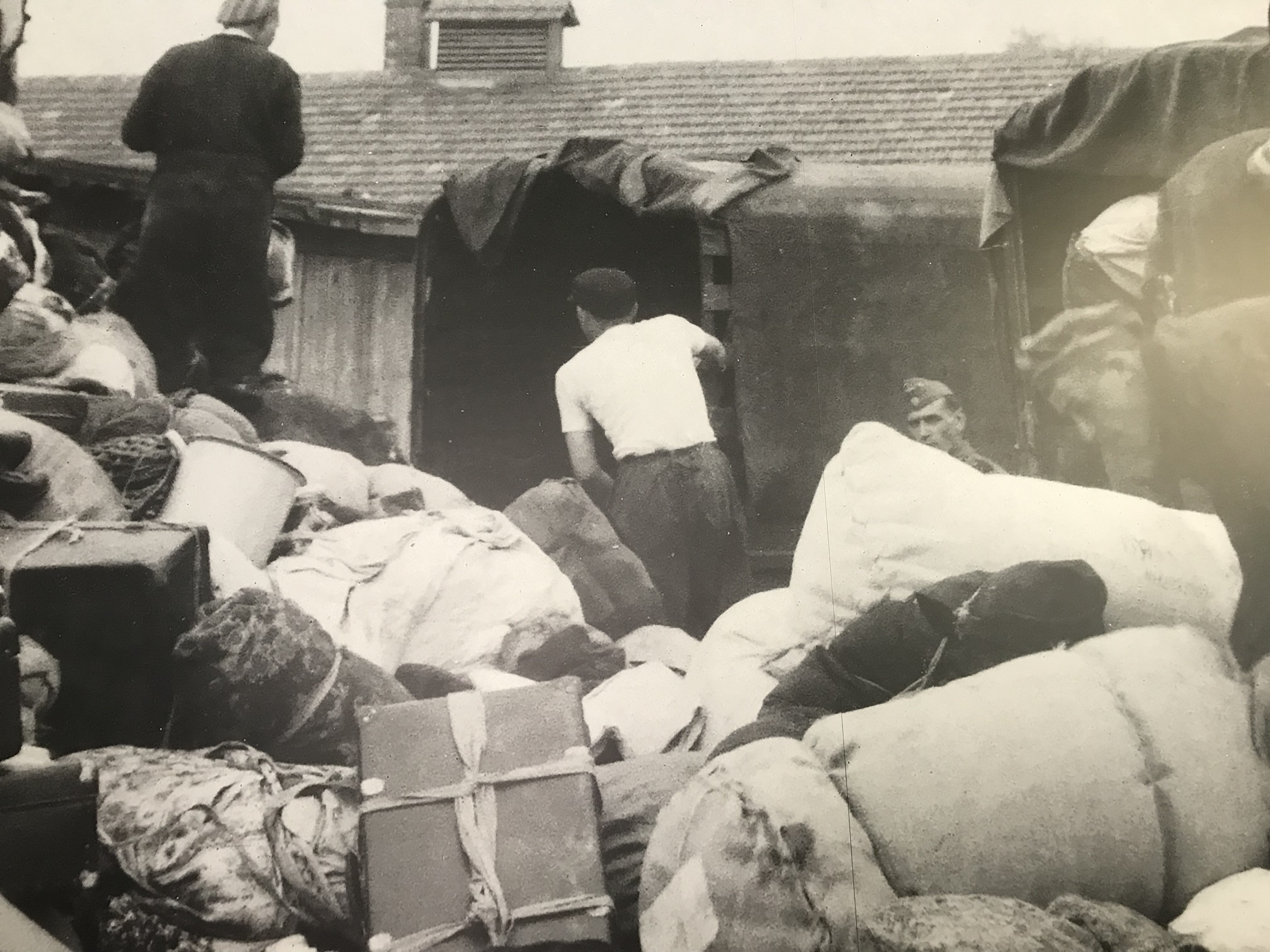
The trains would draw into the camp, the people (who had travelled in awful conditions for several days) would be unloaded, then made into lines of men and women. A doctor would then look at everyone, deciding who was fit for work, and who was not. Those deemed able to work would leave their belongings on the platform, strip, be shaved, showered in disinfectant, and given a uniform and tattooed with a number.

Those deemed incapable of work—the old, the ill, the very young—would be sent to the ‘bathhouse’. These were the crematoriums at the end of the camp, next to the forest. They consisted of an undressing room, a gas chamber, and a crematorium. We went to have a look, though the buildings have now been demolished.

Now, I have read several books about the holocaust. As a teenager, I read all the books by Corrie Ten Boom, and Sophie’s Choice, and more recently I read Schindler’s Ark, The Tattooist of Auschwitz and The Boy in the Striped Pyjamas. I therefore knew a lot of facts, but what I was not expecting, was how weirdly civilised the killing seemed. The photographs show people discussing things with the Nazis, everything appears calm, organised. There is no panic—until later, when they were actually inside the gas chambers, when it would be too late. Right until the end, people thought they were simply being processed, and they were not being forced along at gunpoint.

I was shocked by how almost peaceful, some scenes were. For example, the cremating part of the process took hours, so the Nazis did not have the capacity to murder the thousands of arriving Jews immediately. There are photographs of families waiting their turn. There they are, sitting under the trees, grandparents and children, clearly exhausted from their journey, waiting. There seemed to be no resistance, no screaming; people were waiting calmly, looking serene, wondering how long they would have to wait for. The area was surrounded by tall hedges (to hide what was happening from the neighbours) and is bordered by forest—there would I assume have been birds in the trees, in the summer there was grass to sit on; such things seem incompatible with the horrors of what was happening, and that is my point. Auschwitz was not set on the moon, it existed in the midst of life and nature, which somehow makes it worse.

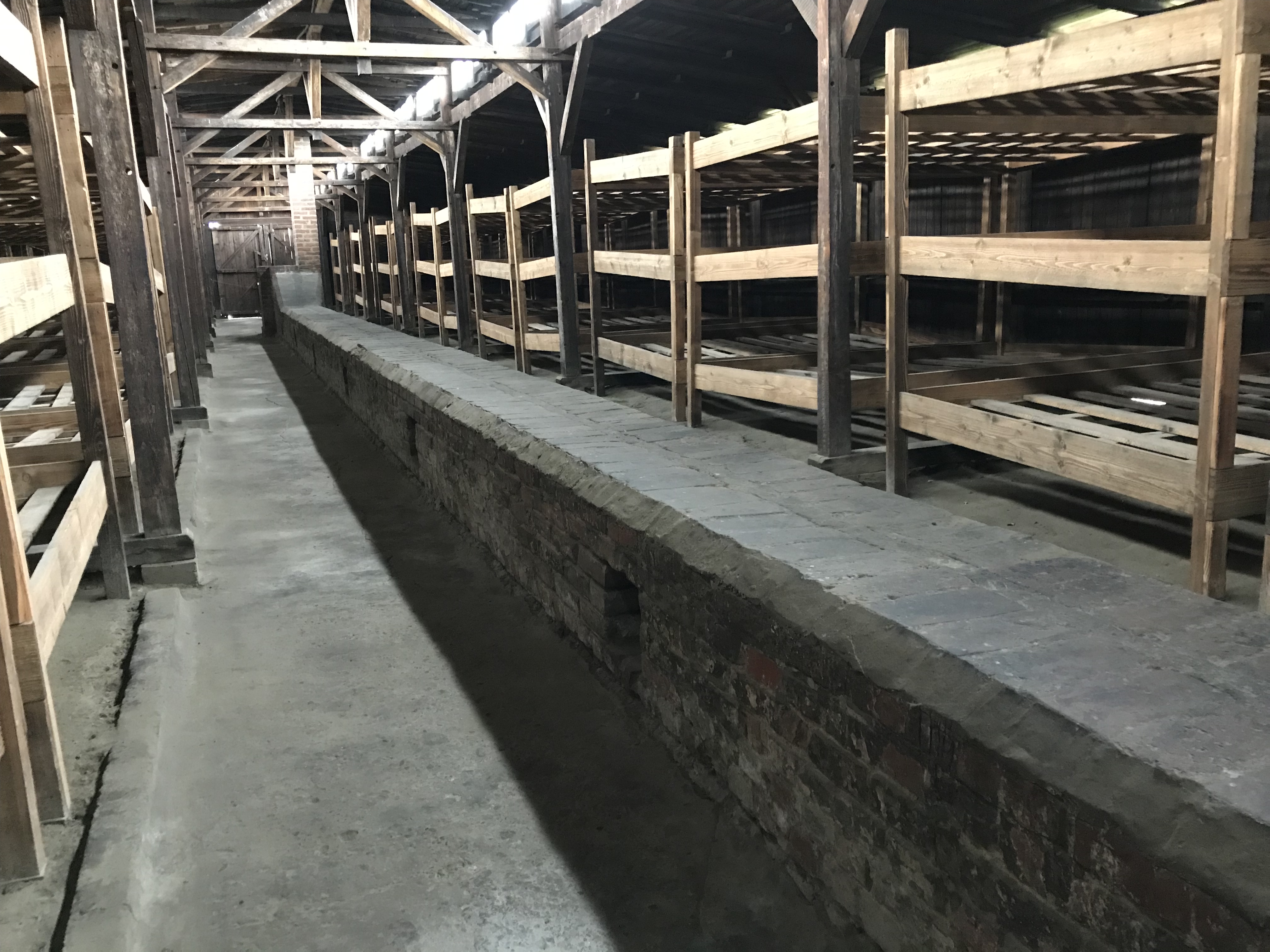
Whereas Auschwitz 1 was very informative, with information and displays, Auschwitz II gave you more idea about how the place would have felt. We saw the brick buildings, which are now beginning to need structural support, crammed with bunks. There were wooden huts—made elsewhere for easy assembly, and designed originally as horse shelters (we saw the rings in the walls for tethering horses). They were designed to shelter 52 horses, they housed 400 people. Many of the huts have disintegrated over time, and all that is left is fields of chimneys, all that remains from their heating system.

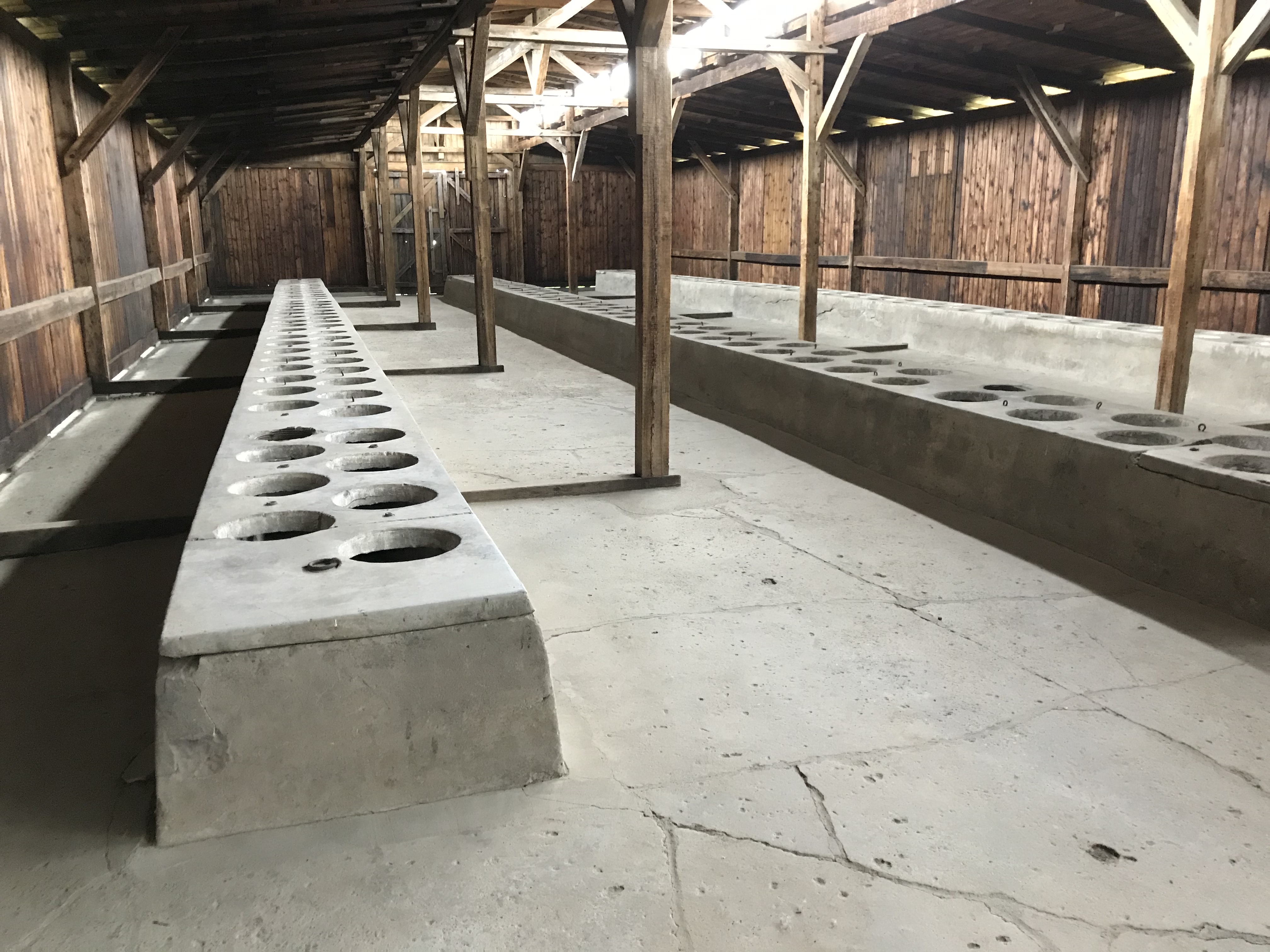
We saw the toilets (2 visits per day allowed) and the brick-floored washing area. The hut has since been rebuilt, and today it smells of fresh wood and creosote.

This was a vast camp, with thousands of people crammed together, in terrible conditions. Many people starved to death, or died when working or due to cold. I knew all this before I visited, but to stand next to the electric fence, and stare at row after row of huts, to imagine those people running between them was something no book could explain. Auschwitz today is a quiet place, where larks sing overhead, and people come to remember. I do not know how we make sense of what happened there, when I stare at the photographs of the guards I do not see evil people but I cannot fathom how they could have been part of such horrific actions. Perhaps the problem starts when we begin to see ourselves and those like us, as better than others. If we begin to think some groups of people are less good than us, do they become slightly less human in our eyes? If we think our race, our religion, our career, somehow makes us better than others, then is that the first step along the road we should never travel again? I don’t know, but I pray that we will learn from our mistakes.

Thank you for reading.
Take care.
Love, Anne x

anneethompson.com

Visiting Auschwitz


Visiting Auschwitz

We followed a long line of coaches and minibuses, alongside the disused railway line, to the car park. It was a huge car park, with hundreds of people. Our guide went to park, and we went in search of washrooms.

The washrooms are in the basement of a brick-built building—we stand in line on stairs which wind downwards, the walls are grey, the steps are concrete, surrounded by people speaking various languages—we pay 2 zloty to the women at the counter—we file into the clean but over-used cubicles. There are lots of people, everyone sombre, all sort of waiting for what comes next on our tour. Which has faint echoes of the past with the immense difference that we are here voluntarily, and only our emotions are at risk.
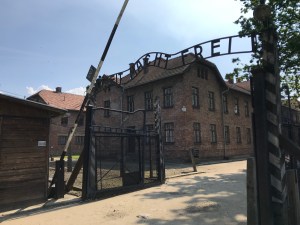
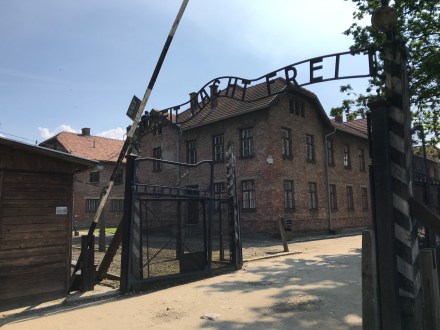
We are at Auschwitz 1 (there were two camps—I’ll explain later). This camp has the iconic gateway, with ‘Work Makes Free’ welded above it. We walk through the gate, into the camp, and look around. My first impression is that there are trees (were there trees when it was a prison, or have they been added since it became a museum?) and that it is relatively small—when you stand in the centre you can see all four corners. It reminds me of a students’ hall of residence, which is perhaps not surprising as it started life as a barracks for Polish soldiers, though was extended by the Nazis.
Auschwitz is the German translation of Oswiecim, a small town in Poland, which before the war had a population of about 70% Jewish Poles. It was chosen because of its position, in an area of forests, near good resources, with excellent transport and several large industries (which could be supplied with workers). The Nazis turned the barracks into a prison, filling it with anyone who was deemed to be an enemy of the state (so initially, mainly Polish people who were resisting the occupation, and later gypsies and Jewish people). It was designed as a work camp, with the prisoners sent out of the prison to work, marching to the nearby factories. As the war progressed, the inmates were gradually starved, abused and finally executed.

Auschwitz is now a museum, and although it’s possible to visit alone, there is more opportunity if you have a guide. When we arrived, we had our bags checked (you can’t take much more than a bottle of water and sunglasses inside) and were given headphones. These connected to a microphone which our guide spoke into, making it easy to hear him, so there was not a general cacophony of noise with various guides all trying to out-shout each other. It also meant that when I wanted to simply think and absorb what I was seeing, I could turn him off (though that probably wasn’t the plan). We did though have to follow the route that the guide chose.

We were taken to the extermination block: Block 4. We filed inside, squashed on all sides by people from around the world, a murmur of other languages, cameras in hands, bags slung on shoulders. The building smelt clean, but of bodies—a bit like a school. The stairs were dipped, worn down by thousands of feet—but during the war, these buildings were relatively new, it is tourists’ feet that have worn things down.

The block has been set up like a museum, with display boards and signs and maps and photographs. (The photographs were found by chance, by a little girl after the war, and were taken by German photographers.) The map showed how people from all over the occupied world were sent to Auschwitz. In 1942, the inmates changed to being mainly Jewish, and it became a death camp. The numbers are so big they begin to lose their meaning. The local town became full of German families, moving into the area.

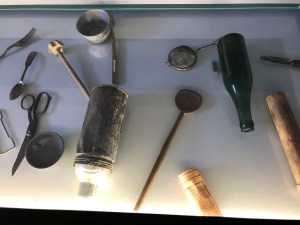
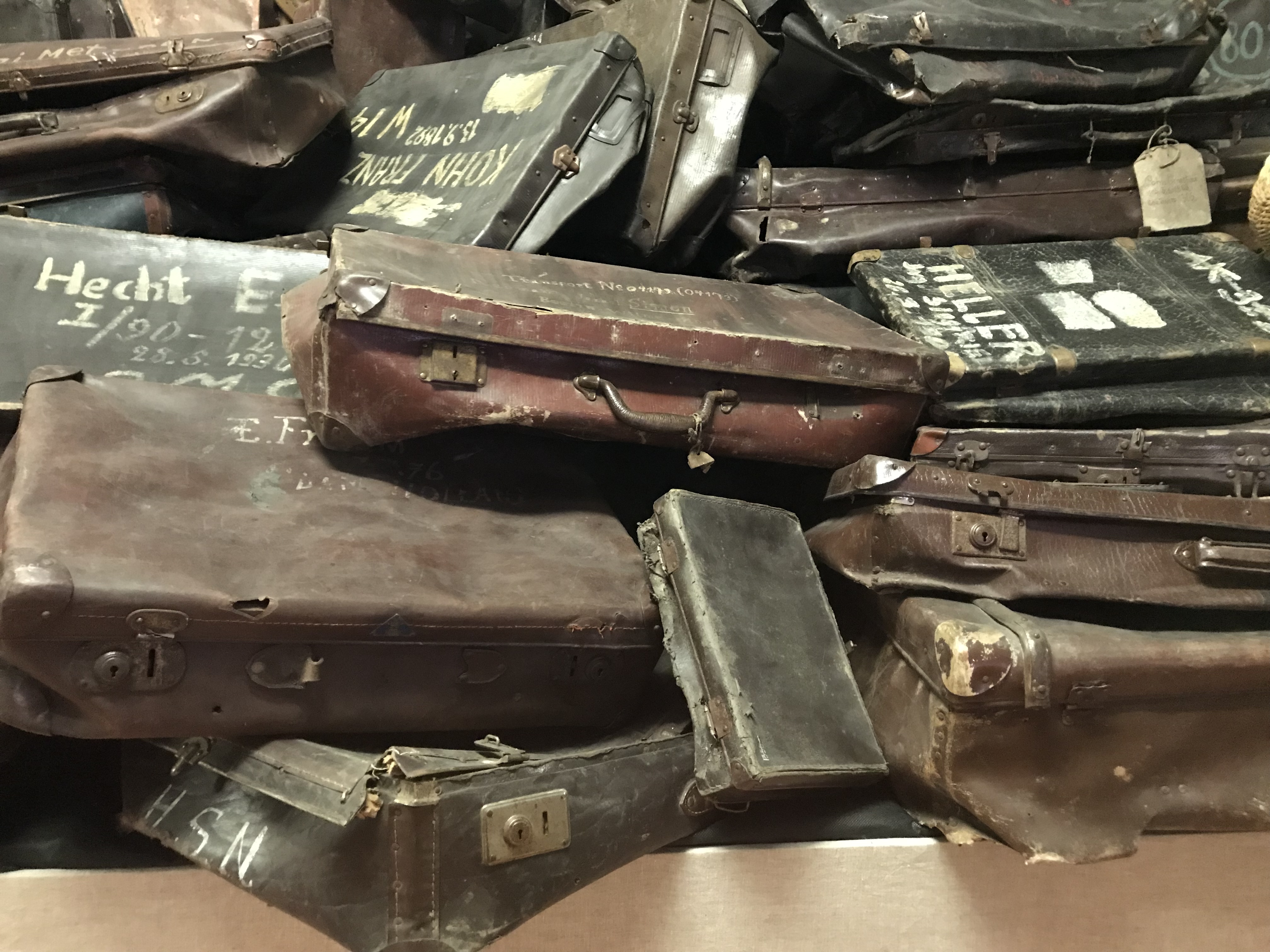
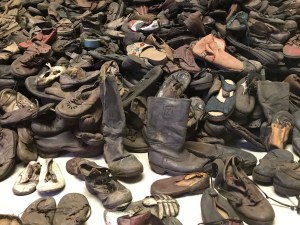
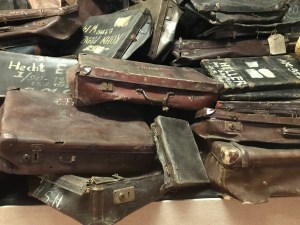
The displays explained facts from both prisons (Auschwitz 2 is much larger). It showed how the Jewish people had been told that they were being relocated, and they paid to buy tickets to Auschwitz. They were told how much they were allowed to bring: up to 25kg of stuff, and we saw displays of their possessions. What, I wonder, would you pack if told to relocate with only what you could carry? There were scissors, and rolling pins, pots and cutlery. On arrival, people were told to leave their bags and go to be disinfected. We saw heaps of their luggage, briefcases and baskets. There was another display of their clothes—a child’s clothing was displayed in a glass case; the clothes were handmade and I wondered who had knitted the socks, who had sewn the trousers? Another display was heaped with shoes, most of which looked faded and dusty, but you could still see fashionable sandals, and fancy heels, and children’s shoes scattered at the front. The inmates were shaved, and there was a display of their hair, faded grey now, and matted with time, so it more resembles old wool than human hair. It was used to make blankets and socks for the war effort. There was a display of crutches and false limbs, which made you realise the scale of the operation, and made you wonder how it felt to relinquish these last, necessary, items. There were shaving brushes, and hairbrushes, and brushes (like my dad had when I was young) for polishing shoes. One display was given to prayer shawls.
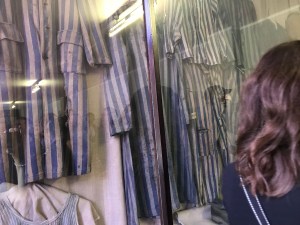
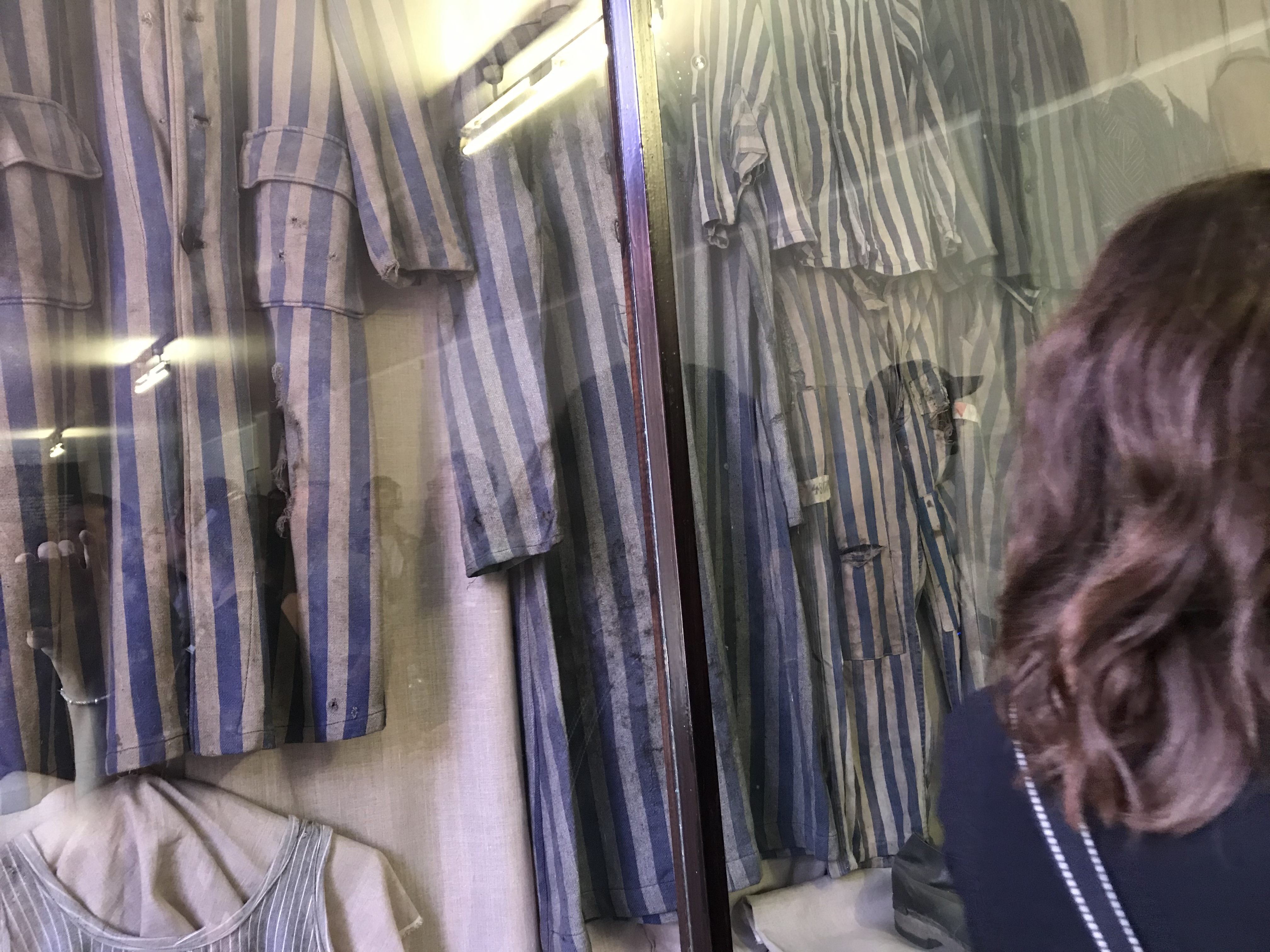
After being shaved and showered, the prisoners were given uniforms—the blue striped pyjamas that we recognise from films. This was their only uniform, so if they couldn’t wait to go to the washrooms (only allowed toilet visits morning and evening) or if it got muddy, it stayed dirty. I guess that dirty, stinky, people are easier to dehumanise.

When they arrived, they gave their profession. It was best to be something useful (like a welder, or jeweller, or cook) rather than useless (like a lawyer or accountant—they were sent off to do hard labour).

We were taken (not my choice) to the ‘judgement block’. Some of the things were heard about were horrid, so I shan’t repeat them. We saw the wall where people were shot (I believe the original wall was destroyed, so this was reconstructed in the same place). This now has flowers and candles, with the Israeli flag flying behind it. People paused for a moment, some crossed themselves, couples held hands, people bowed their heads as if praying. It’s in a sunny courtyard, and we could hear birds singing, and the crunch of footsteps, and the murmur of guides’ voices. Then we walked, though the open wooden gates, away.

The next block was the one which I found the most affecting. It was simply showing home-movies, taken before the war. As the images flickered on the walls: a child learning to ride a bike, a family swimming, a school concert—you remembered that the people who died here had lives which were not so dissimilar to our lives today. This did not happen hundreds of years ago in a strange land. This was Europe, less than a lifetime ago.

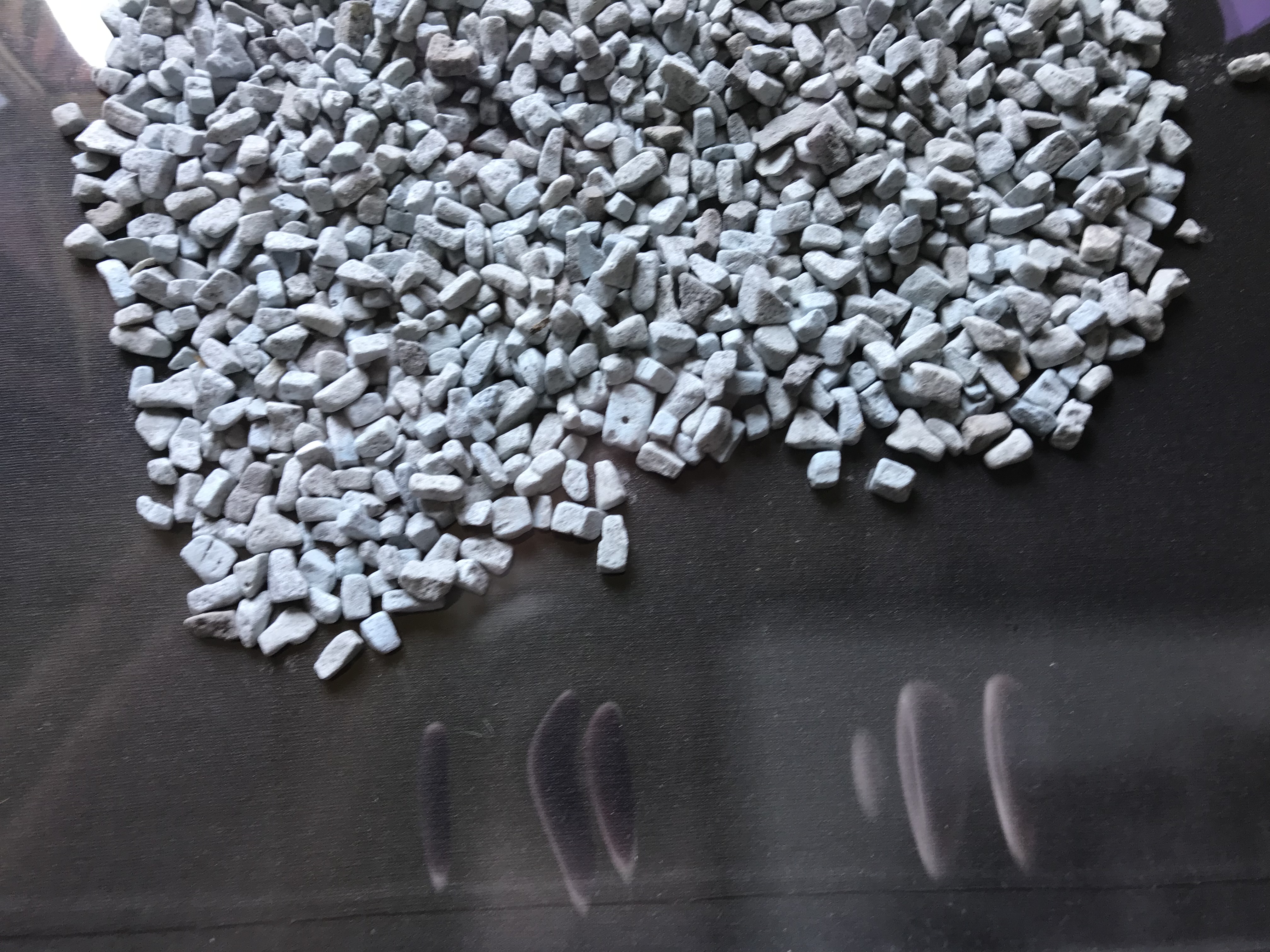
Auschwitz 1 was where the first experiments with gas were undertaken. Zyklon B was used before the war, as a disinfectant. It is blue/grey pellets, and was sent to the camps in tins. I won’t describe how the Nazis refined their techniques, because it was horrible, but they eventually built a concrete gas chamber, and it still stands today.


As we were about to enter, our guide pointed out the corner of a house, next to the camp. This is where Rudolf Höss lived with his family. I cannot imagine raising my children in such a place (clearly what the book The Boy in the Striped Pyjamas was exploring.) We looked at the flat-roofed concrete building used as a gas chamber, and went inside.

There was an outer room, where people would undress (because undressing a corpse is difficult). There were drains in the floor, it was dimly lit, everything was concrete. We shuffled forwards in the line of people, into the main room. Concrete floor, concrete walls, concrete ceiling. There were scratches on the walls (don’t think about it) and drains in the floor and holes in the roof where the gas was added. I expected to feel upset, or claustrophobic, or frightened, but I didn’t. If it reminded me of anything, it brought back memories of changing in a damp concrete changing room at the swimming pool at Letchworth—not a nice place, but still just a place. I didn’t feel the echoes of the people who had gone before, I don’t think their ghosts have lingered.

Then we walked into the area used as a crematorium. There were rails and turnstiles on the floor for efficient moving of heavy bodies, and large brick-built ovens. As we stood, in silence, thinking, a woman started to weep; the only sound was of her sniffs. I touched her arm, and she clung, briefly, to me, needing the comfort of another human. I have no idea whether we speak the same language, but we are both human, and that was all that mattered—which is sort of the point of visiting this place, trying to grasp how humans could lay aside their humanity so easily. One of the saddest things I saw was the photographs of the Nazi soldiers; they were young people. They didn’t look evil, they just looked like the young people who I know and love. How could this have happened?

We went to Auschwitz 2. I will describe it for you tomorrow. Why not sign up to follow my blog so you don’t miss it?

anneethompson.com